
The wondrous truth of the Buddhas is not concerned with writings
諸佛妙理,非關文字
—Huineng
The Western vogue for Zen was already well established when I sought to learn about it in my teens (see here). Alongside the surveys of Christmas Humphreys, Alan Watts, and classics by Eugen Herrigel and R.H. Blyth, I read the works of D.T. Suzuki with an enthusiasm that I now learn was misguided. [1] But as scholarship expanded vastly, I was discovering other fields to plough, drawn towards the ethnography of folk religion in China. Lately I’ve been wondering why the two most popular Western images of Zen are so elusive in China—the koan encounter dialogues and zazen seated meditation. So I’ve resorted to the useful wiki series on Chan and Zen (see also Zen narratives, Koan, and Zazen; cf. the Stanford Encyclopaedia of Philosophy).
Research on religion (both its early textual history and its current state) is clearly quite different from “doing religion”. For historians and ethnographers, participant observation is optional; and practitioners of religion need not be versed in scholarly literature. Indeed, writing about anything is different from doing it—music, for example. I’m not exactly arguing with the concept of academia—even I am not quite so fatuous. But Chinese Chan and Japanese Zen make particularly stimulating examples of the contrast.
* * *
Early Chan patriarchs stressed a “separate transmission outside the scriptures, not relying on words and letters” (cf. early Daoist writings such as Laozi, “The way you can follow is not the eternal way; The name you can name is not the eternal name”). However, quite remote from our modern iconoclastic image of Zen, the doctrinal history of Chan is remarkably verbose and discursive. [2] This contradiction is itself the subject of much verbal analysis!
The modern Western fantasy of Zen is based on the numinous reputation of the Tang dynasty. Much of the evidence for the early history of Chan is based on the transmission texts, sermons, and doctrinal writings of leading patriarchs such as Bodhidharma, Shenxiu, and Huineng—received images of whom are based on their portrayal by Song-dynasty writers. As Mario Poceski observes (Ordinary Mind as the Way: The Hongzhou school and the growth of Chan Buddhism, 2007),
The connection with the glories of the bygone Tang era bestowed a sense of sanctity and was a potent tool for legitimising the Chan school in the religious world of Song China.
From such sources, gong’an/koan “encounter dialogues” and commentaries emerged. The early masters were prolific writers, even if some recognised the dangers: in the 12th century, Dahui Zonggao “is even said to have burned the woodblocks of the Blue cliff record, for the hindrance it had become to study of Chan by his students”. One revealing theme is the many cogent criticisms of the koan system, both within Chan and by modern scholars. Poceski again:
Although Zen is often portrayed as promoting spontaneity and freedom, encounter-dialogue exegesis actually points in the opposite direction, namely towards a tradition bound by established parameters of orthodoxy
—the masters’ exegeses reinforcing their status and authority, and impressing their literati patrons.
Popular image notwithstanding, I deduce that beyond those monks and patrons, penetrating the gnomic aphorisms of the Tang and Song masters has played only a minor role in temple routine. Conversely, Chan Buddhists have always esteemed the Mahāyāna scriptures: even in the Tang, the Laṅkāvatāra Sūtra and Diamond Sūtra were considered important texts.
Among Western scholars, Bernard Faure has an informed view of the broader picture (see e.g. Chan insights and oversights: an epistemological critique of the Chan tradition, 1993). In his Introduction to Chan Buddhism in ritual context (2003) he gives a useful survey of the field.
Chan/Zen studies are, on the whole, divided between textual/ philological and historical approaches on the one hand, and hermeneutical and philosophical approaches on the other. […] We are still lacking works considering Chan and Zen as complex cultural systems and trying to place them in situ
—this more anthropological approach “in reaction against the spiritualist tendency of traditional historiography and against historicist reductionism”. In the same volume, Wendi Adamek notes:
In the eighth century, Chan masters were no longer simply meditation masters and they had not yet become Zen masters, those enigmatic eccentrics who have made their mark in contemporary popular culture.
The modern visitor to Chinese temples may be perplexed by the apparent absence of the “Zen spirit” there. [3] But, far from some recent dilution, ever since the early history of Buddhism in China, Buddhists have put varying emphases on three types of training inherited from India: vinaya, the rules of discipline; dhyāna, meditation; and dharma, mastery of the Buddhist texts. Wiki cites McRae:
Chan was not nearly as separate from these other types of Buddhist activities as one might think […] The monasteries of which Chan monks became abbots were comprehensive institutions, “public monasteries” that supported various types of Buddhist activities other than Chan-style meditation. […] There was never any such thing as an institutionally separate Chan “school” at any time in Chinese Buddhist history.
Thus as Chan was integrated with other schools (notably Pure Land, Huayan, and Tiantai), while leading masters continued to write abstruse treatises, temple life revolved around the discipline of institutionalised religion. Once we grasp all this, the apparent conflict between early and later history becomes less incongruous.
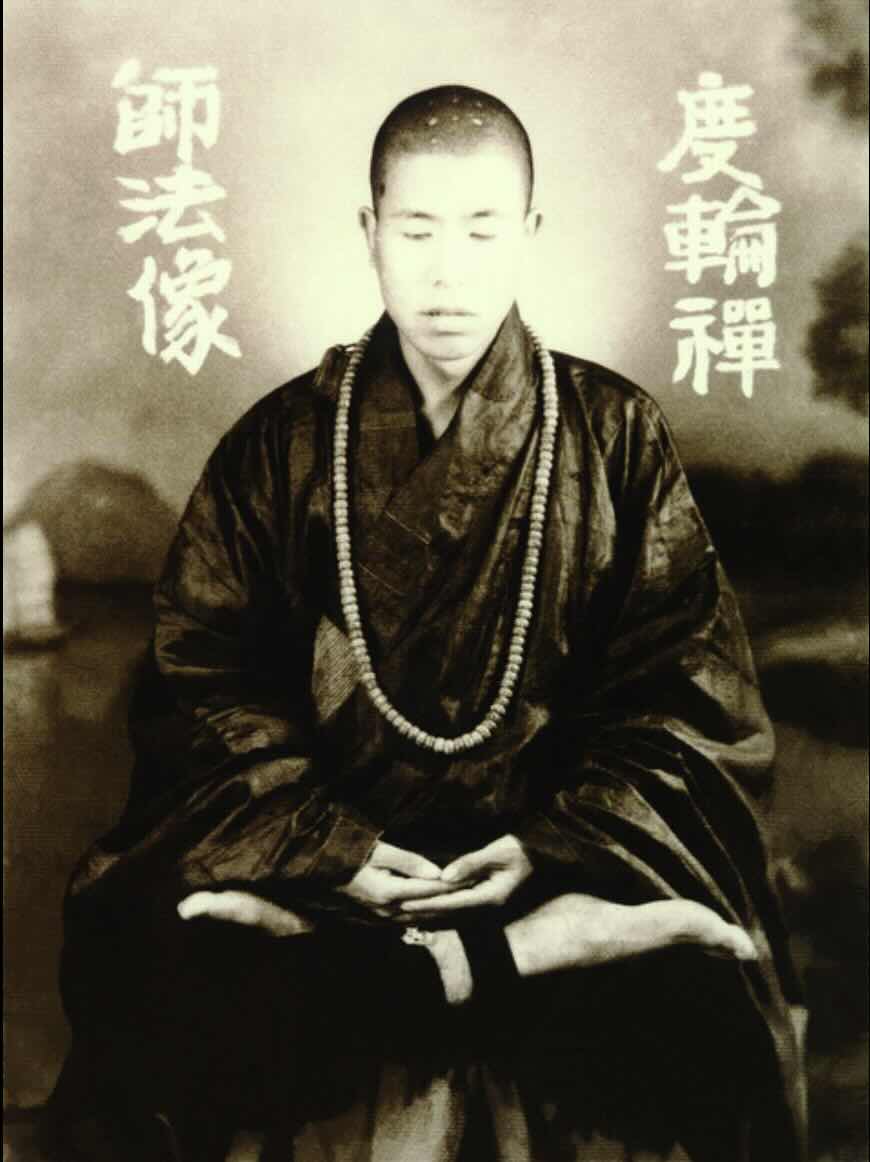
Xuan Hua meditating, Hong Kong 1953. Source: wiki.
Modern reformist Buddhist movements are the subject of much research. Chan is at the core of the teachings of renowned masters in the PRC, Taiwan, and the USA—who are no less generous with words than their medieval antecedents, like Western pundits such as Gary Snyder and Alan Watts (cf. Krishnamurti, and Paths for the reluctant guru).
* * *
Besides the wealth of hermeneutical studies of Buddhism, one finds scant ethnographic material for normative practice—the daily lives of ordinary temple monks (whether today, in the Ming, or in the Tang). For the late imperial era, fiction may provide a useful source (cf. Ritual in the Dream of the Red Chamber).
A basic acquaintance with temple life in modern Chinese society provides the important perspective of physical diversity—from the grand, prestigious temples of cities and mountains, to medium temples with a modest staff, to small village temples with only a caretaker. Children were often given to small local temples as a means of survival; piety on the part of the parents might play a role, but spiritual concerns were often remote.
I’ll end with some impressionistic instances of usage where the term chan may mislead.
Just as chansi 禪寺 refers generally to a Buddhist temple, other uses of the term chan often stand broadly for Buddhism—as in the interdenominational liturgical compilation Chanmen risong 禪門日誦. As Faure observes, ritual has long played a major part in Chan, although he doesn’t seem to address the particulars of liturgical practice (for folk Buddhist ritual, see here).

In Japan, zazen seems to be an intrinsic part of temple life; at outward-looking temples in China and abroad there has been something of a recent boom for meditation classes for laypeople (e.g. here), in response to demand. Chan meditation wasn’t limited to Chan temples, but I wonder how widely it is (and was) practised in local temples.
In temples the term chan is common in chanfang 禪房 or chantang 禪堂, which rather than “meditation room” is now just a common room or assembly room (for basic depictions, see e.g. here, and here). The term chanfang may even stand for the temple itself; found in sources from Li Bai to The Dream of the red chamber, it’s still in common parlance.
At the back of my mind in composing this post was the rough diagram that Li Manshan drew for me of the former Temple of the God Palace (Fodian miao 佛殿廟) in his home village (see Daoist priests of the Li family, pp.47–8, and our film, from 8.35), including a chanfang. Though the temple was quite imposing by the standards of a poor village, its 1876 stele lists only two monks. In many smaller temples, neither formal meditation nor scripture study are necessarily part of the schedule; the daily routine may consist largely of tasks such as sweeping the courtyard, preparing food, and maintenance. Whether or not monks regard such mundane chores as part of their Chan/Zen cultivation, in our times the idea of Zen as pervading worldly activities, from tennis to conducting, has become popular.
Meanwhile for academics, the study of Chan and Zen becomes a career, full of lectures, conferences, bibliographies; practitioners may find such erudite academic discourse alien from their own quest. And I’m just as guilty, adding yet more words on one of the most verbose sites ever. Having grown up with the romantic early image of Chan and Zen, I’m now impressed by all the scholarship unpacking its later doctrinal history. But just to reiterate my glib point, it goes without saying (sic) that historical research is very different from the quest for spiritual enlightenment, and daily temple routine is something else again—illustrating again how our image of the Wisdom of the Mystic East diverges from practice on the ground.
These are some of the issues that I haven’t yet found addressed in the extensive literature. Last word to Alan Watts:
If you are hung on Zen, there’s no need to pretend that you are not. If you really want to spend some years in a Japanese monastery, there is no earthly reason why you shouldn’t. Or if you want to spend your time hopping freight cars and digging Charlie Parker, it’s a free country.
[1] The cogent early criticisms of Suzuki by Hu Shih have been reinforced by David McMahan and John McRae; Bernard Faure describes Suzuki’s writings as “pious verbiage” (for more, see Chapter 2, “The rise of Zen Orientalism” of his Chan insights and oversights). While Alan Watts goes easy on Suzuki, I’m always impressed by his 1959 pamphlet Beat Zen Square Zen and Zen.
[2] I was drawn to this theme by a recent article in Sino-Platonic Papers (no.353!), Ming Sun, “Speaking what cannot be spoken: poetry as a solution to the ineffability in Chan rhetoric”. More generally, Adam Yuet Chau critiques the dominance of the “discursive mode” in “doing religion”.
Sun’s article also led me to “beating and shouting” (banghe 棒喝), practiced from the Tang by Mazu’s Hongzhou school, which
developed “shock techniques such as shouting, beating, and using irrational retorts to startle their students into realisation”. Some of these are common today, while others are found mostly in anecdotes. It is common in many Chan traditions today for Chan teachers to have a stick with them during formal ceremonies which is a symbol of authority and which can be also used to strike on the table during a talk.
These shock techniques became part of the traditional and still popular image of Chan masters displaying irrational and strange behaviour to aid their students.
“Beating and shouting” was revived from the late Ming by Miyun Yuanwu (see e.g. Jiang Wu, Enlightenment in dispute: the reinvention of Chan Buddhism in seventeenth-century China (2008, reviewed here). I’m not familiar with the practice in modern Chinese temples (though it is introduced e.g. on Xing Yun’s site, along with copious commentaries), but it sounds somewhat akin to the enduring practice of ritualised debate in Tibetan monasteries (see under Daoism and standup).
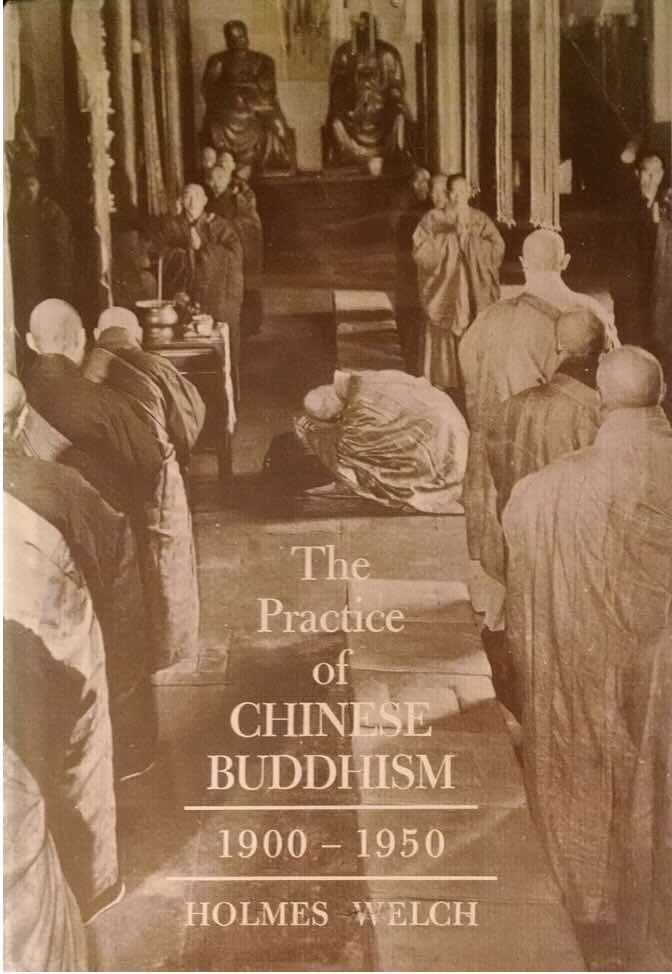 [3] For the practice of Buddhism in modern China, note the trilogy of Holmes Welch. At a tangent is Bill Porter’s quest for the spiritual life of modern clerics and hermits.
Here I won’t extend my remit to Daoist meditation techniques, the wealth of scholarship on which is again introduced on wiki. Of course, the regulated life of Daoist temple priests also stands in contrast to the writings of early Daoist sages popular in the West.
 Stephen Jones: a blog