Mahler at this year’s Proms!

By way of reminding you of my series on the great Gustav Mahler, some brief comments on the three symphonies of his performed at this year’s Proms, while I consult Norman Lebrecht’s handy guide Why Mahler?, marvelling at Mahler’s busy conducting schedule amidst the tribulations of his personal life.
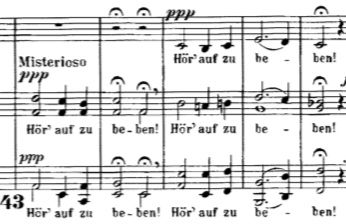
Mahler 2 https://stephenjones.blog/2020/10/18/mahler-2/

Nothing can be so overwhelming as the 2nd symphony, which I heard on what was once called the radio. I find it hard to imagine how Mahler could have written anything after this. As to the 3rd, after the middle movements (akin to those of the 7th), the radiant finale dominates one’s image of the piece.

Hearing a live performance of the 5th is just as moving. The mellifluous Concertgebouw orchstra was conducted by Klaus Mäkelä (for the Concertgebouw’s Mahler 9 in 2022, click here)—it is televised on iPlayer.
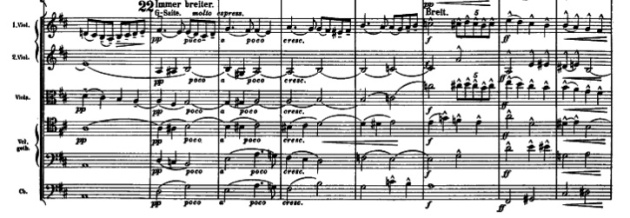
I muse on the ravishing slow movements of this period in Mahler’s life: that of the 3rd as the culmination of the symphony, the Adagietto of the 5th all the more effective within the context of the whole; no less moving are those of the 4th and 6th (the latter, to my taste, still best placed third in the order of movements).

My Mahler series includes performances and recordings of his seminal works by some of the great interpreters. See also The art of conducting.
Proms: Ravel and Stravinsky

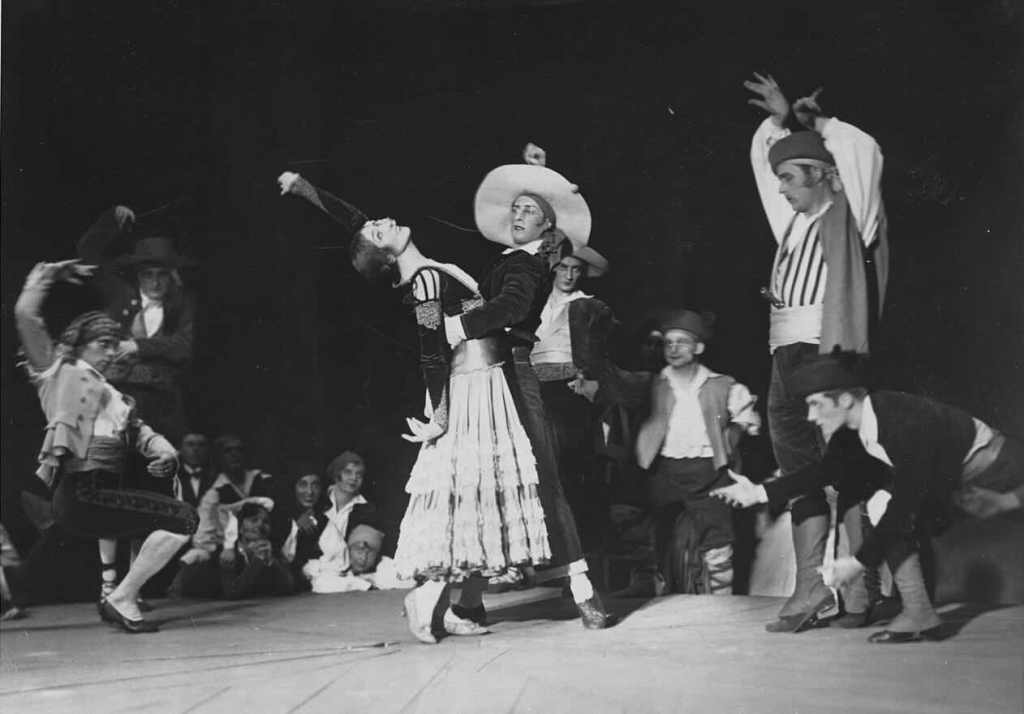
Ida Rubenstein leading the original 1928 production of Boléro. Source.

Ravel’s Boléro and Stravinsky’s The Rite of Spring have become concert “classics”, but they are challenging in very different ways. It was exhilarating to hear both in the same Prom the other day.

For The Rite, I refer you to various posts, starting with my own epiphany under Boulez in The shock of the new. By comparison, Boléro (also composed for a ballet) may merely seem like easy listening, but the concept is just as original, with our ears kept engaged by the rhythmic fluidity of both segments of the melody * over one long, relentless crescendo. I’m reminded of Roger Nichols’ characterisation, quoted in my page on Ravel:

the repetitive obsession that opens out on to notions of death, madness, destruction, and annihilation, as if the composer had had an apocalyptic vision of the end of the world.

Of course listeners will respond in different ways. Even if such a message is merely latent, Boléro can and should be a somewhat unsettling experience.

Again, note my Ravel page, along with posts under Ravel, Stravinsky, and Proms tags. See also Perfect Pitch, and posts on minimalism.


* Another party game: the two sections of the melody are deceptively simple, so one might suppose that after hearing so many repetitions, we would be able to reproduce it quite accurately from memory, even after a single hearing—and most of us have heard the piece many times. It becomes more achievable if we intentionally set out to memorise it (and for some it may help to consult notation), but even then it may still be a challenge—the first half of the opening section alone may prove surprisingly difficult to reproduce by heart. After Hašek, my usual prize of a small pocket aquarium

Of course, it’s not to be compared with memorising a Brahms concerto, but its apparent simplicity, with virtually no harmonic props, make it all the more intriguing as an exercise. Cf. Conducting from memory, and On “learning the wrong music”.

Tico tico

Earworms can be most insistent. For some reason my current one is Tico tico no fubá, composed in 1917 by Zequinha de Abreu. I first got to know it via the Nimbus CD Choros from Brazil by Os Ingênuos, but recently I’ve been listening to a variety of performances.

There’s much to admire in the choro genre (e.g. this intro on YouTube)—which despite its title (“lament”), often displays great exuberance. With its zany syncops, most versions of Tico tico are mildly manic, but the first recording, by Orquestra Colbaz in 1931, is leisurely (cf. ragtime) and beguilingly genteel:

By the time the piece took off internationally it was becoming virtuosic and up-tempo—like this performance from Bathing beauty (1944) with Ethel Smith on Hammond organ:

The Portuguese lyrics came later, as sung by Carmen Miranda in Copacabana (1947)—with Groucho Marx a bemused onlooker:

This sounds seductively chirpy, but unless I’m missing something, you’d never guess at the niche ornithological content of the lyrics. The English-language version (also on wiki), totally reworked, is engagingly amorous—with the Andrews Sisters wisely opting for a more manageable tempo:

More recently Tico tico became a popular encore for symphony orchestras under Dudamel and Barenboim, but most exhilarating is this, from the Bahia youth orchestra:

The piece continues to inspire later generations—like this, with fine accordion and sax solos:

Bird was better known for Ornithology. but he performed Tico tico too. With Messiaen‘s penchant for bird-song, I like to imagine him swinging a leg to Tico tico. Cf. Tango for Messi, and The art of the miniature. Not to be confused with Taco taco