
After my dabblings with Songs of Asia Minor, Road to rebetika, and Folk traditions of Greece, I’m browsing the new volume
- The SOAS rebetiko reader: a selection of papers associated with the Hydra rebetiko conferences 2000-2020 and seminars held at the School of Oriental & African Studies, London (2025) (online here), edited by Ed Emery, tireless aficionado and organiser of rebetiko events.
A substantial English addition to the mainly Greek literature on the topic, it’s the fruit of several conferences over the years (notably the annual gatherings on the island of Hydra), and the creation of various bands.
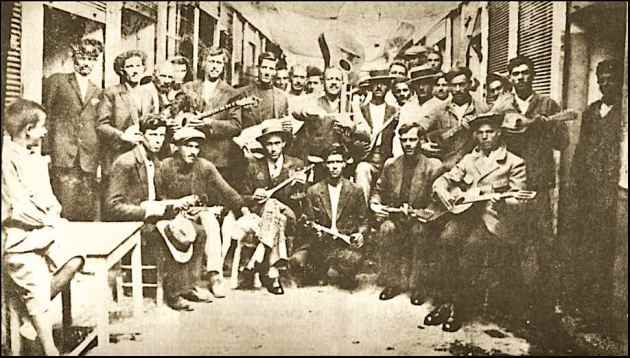
Rebetes in Karaiskaki, Piraeus, 1933. Source: wiki.
The volume contains contributions from well-established academics and informed amateurs, with original source materials in translation, plentiful song lyrics, discographical notes and links to YouTube clips. Besides Istanbul and Athens, topics include the (mostly bygone) rebetiko cultures of Smyrna/Izmir, Saloniki, Crete, and the USA, along with the Jewish connection; Bulent Aksoy unearths Turkish lyrics in early recordings. Two chapters by Gail Holst-Warhaft (on world music and the orientalising of rebetika, and the nationalising of the amanes) sample her thoughtful work since Road to rebetika. Also intriguing are excerpts from the autobiographies of Rosa Eskenazi and Markos Vamvakaris, and chapters on the criminal underworld, addressing heroin, cocaine, and morphine in rebetiko song; coverage of the connection with Sufi tekke lodges; zeybekika dances with zurna shawms feature in articles by Panagiotis Agiakatsikas and Muammer Ketencoglu, and a field report from west Anatolia by Ali Fuat Aydin.
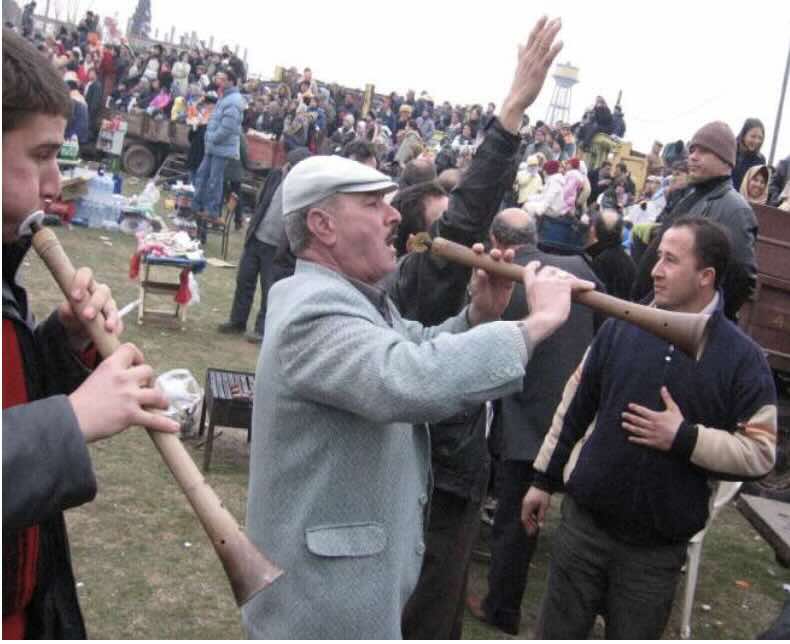
Zurnas play for zeybek dancing, Aydın 2006. Source.
See also west/central Asia: a roundup. Cf. my flamenco series; fado (here, here); and tango.
 Stephen Jones: a blog