
Notes from Istanbul
with photos, and insights, by Augusta
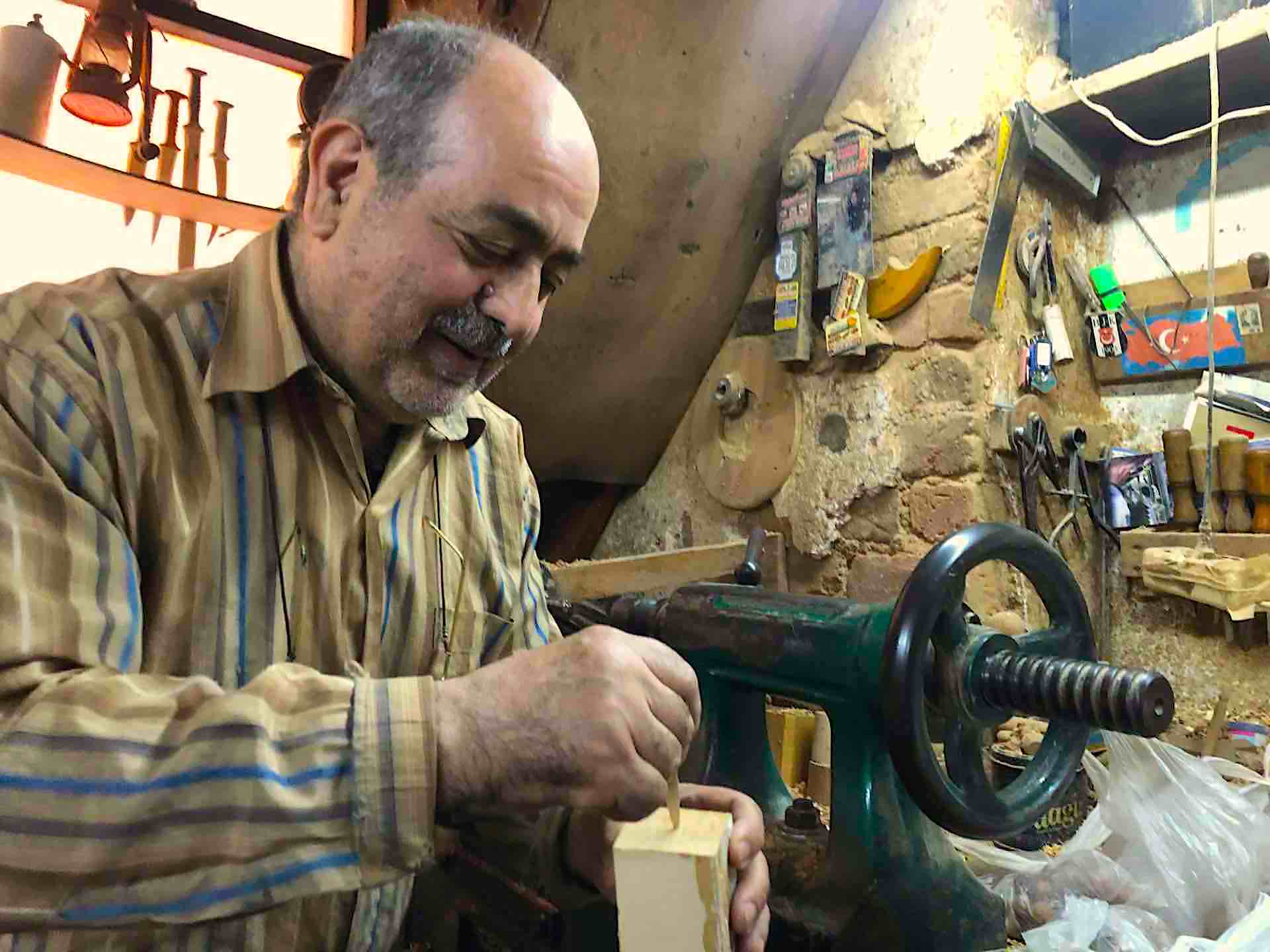
In Beyoğlu, near Galata, the Tophane quarter (here, and wiki) is now home to art galleries, vintage-clothing shops, and vegan restaurants. * But on the steep climb up Kumbaracı Yokuşu street, leading towards the Crimea memorial church, is a little lathe workshop where İsmail Hız (b.1950), one of Istanbul’s few remaining traditional turners (tornacı), still contentedly crafts furniture legs, the floor ankle-deep in sawdust.

My companion Augusta feels perfectly at home here; having grown up in a long line of Swabian watch- and clock-makers, tables and shelves laden with tools attract her like a magnet (and do listen to her father’s spellbinding zither playing!). Moreover, she tunes right into İsmail‘s opening comments on loving what one does and devoting oneself to it—reminding her how our wise local imam evoked the discipline of vocal training with the proverb Aşk olmayinca meşk olmaz “Without [mystical] love, dedication is to no avail”. And as İsmail observes, not only is working in harmony with wood good for the soul, ** but rejoicing in his craft has kept him young at heart.
* * *
Master artisans (usta) were part of the social fabric in Ottoman Istanbul. Carpenters were among the artisan guilds taking part in the huge 1638 procession for Sultan Murat IV, so vividly documented by Evliya Çelebi. Even in the early 20th century, as the crumbling Ottoman empire was giving way to Atatürk’s Republic, the street still bustled with artisan activity. *** Until the 1960s the street was lined with the workshops of engravers and furniture makers—and despite the ethnic cleansings earlier in the century, most were still Greek, Armenian, and Jewish.
Migrants from Anatolia had been settling in Tophane to work in the docks and factories since the early 1900s (images here); with the surge of migration after World War Two, Istanbul’s non-Muslim populations dwindled further, coming to a head with the pogroms of 1955 and 1964. Still, the new migrants coexisted with Armenian and Greek master artisans—İsmail Usta reminds us that many people of these origins had long since Turkified their names in order to assimilate.


Left, Enli Yokuşu, Fındıklı, 1910 (source).
Right, Kumbaracı Yokuşu, 1945 (source).
Among those migrants was İsmail’s father. He was born in 1930 in Kastamonu just inland from the Black Sea, but, separated from his parents, in 1934 he was taken to Istanbul into the household of a master tornacı. He was able to open his own workshop by 1950, the year İsmail was born.
In 1960, after just five years of primary school, İsmail became an apprentice in his father’s workshop, Even then, living conditions were terribly poor. After his father died he carried on the little business; until a few years ago he worked twelve hours a day, and even now, aged 73, he still works from noon till 7. While proudly recalling trips with his wife to Paris and London, he’s content to live modestly, uncomfortable with the material ostentation of younger generations.
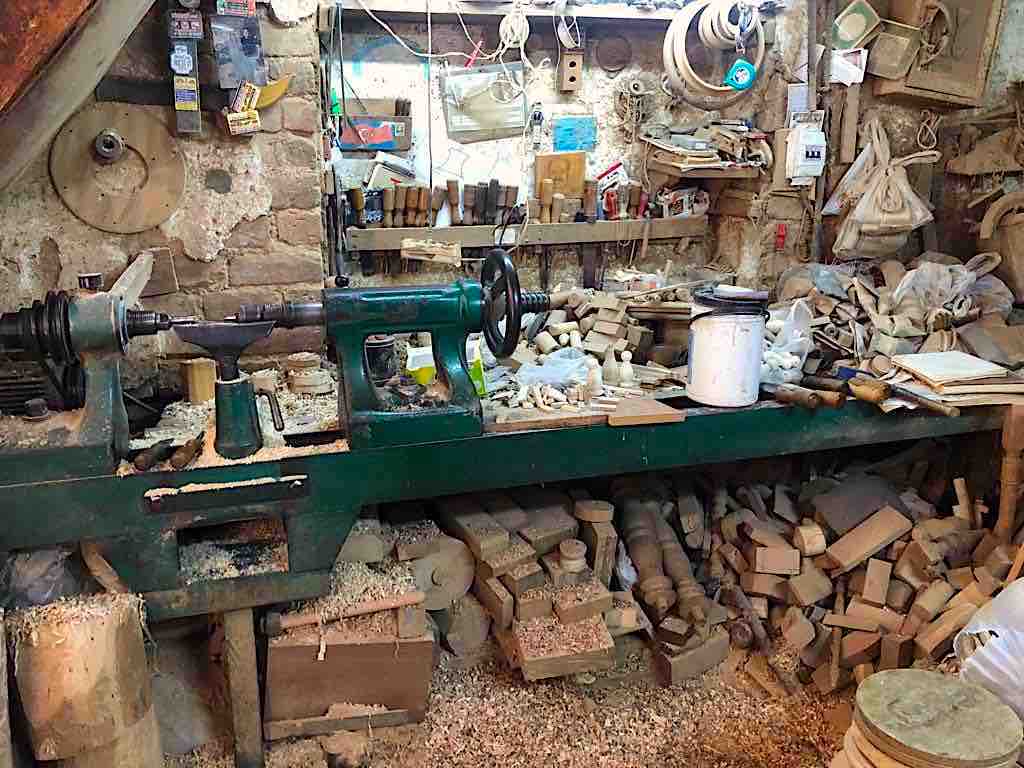
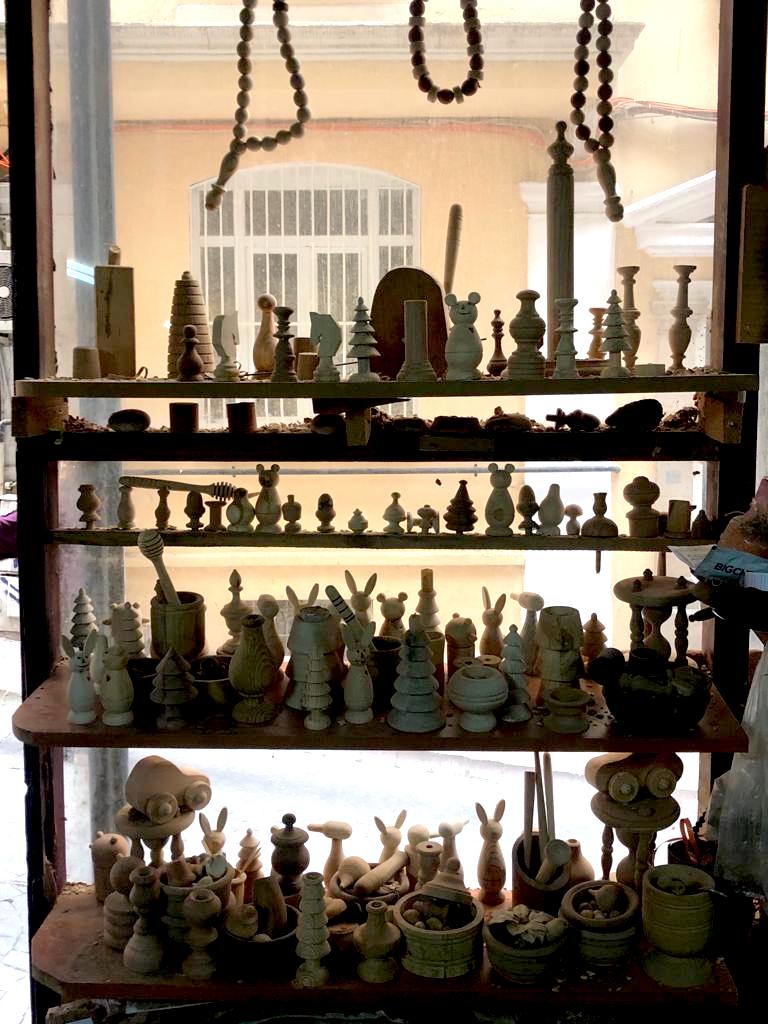
In keeping with his youthful spirit, he has also developed a sideline of toys and spinning tops.


İsmail Usta still embodies the harmonious social values of mahalle life. ****
* * *
Interviews from 2016, 2017, and 2019 include short videos. Here’s a longer one from 2013:
And here he demonstrates his craft:
Cf. The tanners of Zeytinburnu (among many posts on Istanbul), and even Ritual artisans in old Beijing and The art of the sheng repairer.
* For the gentrification of Tophane, note this study; cf. Kuzguncuk.
** Cf. artisans in early Daoist literature, such as Woodworker Qing in Zhuangzi chapter 19.
*** Cf. images of late-Ottoman artisans of Istanbul in Burçak Evren, Osmanlı esnafı (1999; in English, Ottoman craftsmen and their guilds, 2021, translated by Ali Ottoman).
**** To help us imagine the soundscape of İsmail Usta’s youth, he delights in the songs of Zeki Müren—whose first recording was Bir muhabbet kuşu (1951):
He also likes Selami Şahin—here’s his album Aşk biter dostluk bitmez [“Love may not last, but friendship does”] (as playlist):
Further afield, İsmail Usta is very keen on Tom Jones, whose songs he even used to sing in public! Here, instead of choosing from his classic playlist, I can’t resist proposing “a song likely to be popular with” wood-turners—a recent version of Michel Legrand’s enchanting The windmills of your mind:
Round
Like a circle in a spiral
Like a wheel within a wheel
Never ending or beginning
On an ever-spinning reel
As the images unwind
Like the circles that you find
In the windmills of your mind…
 Stephen Jones: a blog