

As you may have noticed, I feel drawn to blind musicians, in China and around the world—notably shawm players and bards. And my jottings on the wonderful Kuzguncuk mahalle of Istanbul have grown into a series (listed here, with more here). Ali Çoban makes a genial presence on the main street, perching unassumingly with his little barrow of knick-knacks. His Facebook page has a good short video; with Augusta we sometimes have a gentle chat over tea, learning a little about his story.
Ali was born blind in 1971, the oldest of five children from a village in Amasya in the Central Black Sea region. “An older friend bought me a bağlama [plucked lute] when I was young, realising my love and aptitude for music. I played well, learning songs by heart just by listening”. But he lacked the support to take it further.
When the family migrated from the village to Istanbul they moved into a run-down place in Esenyurt. Ali couldn’t leave the house for ten years—he felt like a prisoner. After his mother died in 1996, things became difficult between him and his father, but their relationship improved once he learned to be more independent by getting around with a stick. “Today I think his rejection was a good thing as it taught me to fend for myself and have some sort of a life. I’m in a much better position now than I would have been had my father taken care of me then.”
Ali met a blind woman called İnci at a summer camp in Balikesir. Herself a civil servant, she accepted when he told her that he wouldn’t be able to offer her an adequate standard of living. But after marrying in 2009 they lived together in her flat in Kuzguncuk.
Ali is not a practising Alevi, though he occasionally attended cem ceremonies at Karacaahmet. Still, the tenets of Alevism run deep, and eventually religious differences surfaced in his marriage with İnci. She came from a Sunni Muslim family, whereas for the Alevis the human dimension is always uppermost. While Ali stresses the duty to regard others charitably, perhaps he perceives a certain conflict between the noble ideal of Islamic prayer and the sometimes flawed ethical and political behaviour of mainstream society. He hasn’t directly experienced the discrimination that Alevis suffer, but by contrast with Turkey, he is impressed by the German Ministry of Education’s tolerance for Alevi teachings.
I ask how he feels about the call to prayer. “As Alevis we are not against the ezan—it’s just that some muezzin don’t perform it so well! Their level of training is important. Sometimes it’s really beautiful—not that I understand it because it’s in Arabic…” He likes our wise local imam Aydin Hoca and knows that he is well disposed towards him too even though he doesn’t attend the mosque.
Ali’s father eventually returned to the village, dying in 2019. The next year Ali and İnci separated. “It was a difficult period, but I’m thankful to be able to get about, and to be here.” He remains friends with İnci and they help each other when needed.
He tells us, “Never having seen colours, I can’t imagine or understand what they’re like. Everything comes via sound—even my dreams are like sound recordings.” As to his listening tastes, he admires the great bards of yesteryear such as Aşık Veysel and Neşet Ertaş (some tracks here), as well as Aşık Mahsuni Şerif (compilation). He loves the songs of Sezen Aksu and her protégées like Sertab Erener. He mentions the MFÖ band. Of course he knows of the blind accordionist Muammer Ketencoğlu and his radio programmes exploring Balkan music. Ali also enjoys foreign music, like Stevie Wonder, Michael Jackson, and the Beatles. In the video clip he tells how he was stimulated by the song Pes etme (“…never give up”).
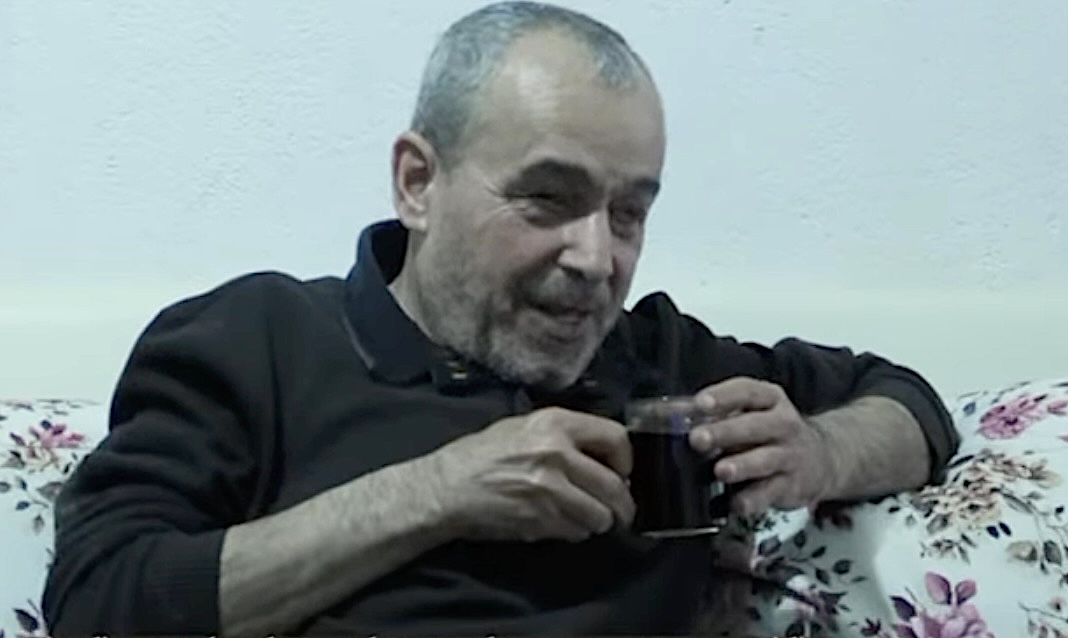
Besides Ali’s meagre income from selling trinkets on the street, he receives a pittance from his father’s pension; he’s not in the best of health, and his siblings, all in different places, rarely visit. Still, he never offers a hard-luck story; indeed, he feels fortunate. However modest his apartment, “I love living in Kuzguncuk and wouldn’t want to leave.” He feels part of the mahalle community, and appreciates all the help provided by shopkeepers and others, feeding him or giving him a reduction. Sometimes locals even help him out with the rent.
Ali is a kindly soul. “I am so glad to be here, to be alive, and independent.” As he says in the film clip, “I seek spirituality, understanding, tolerance, and love”.

 Stephen Jones: a blog