
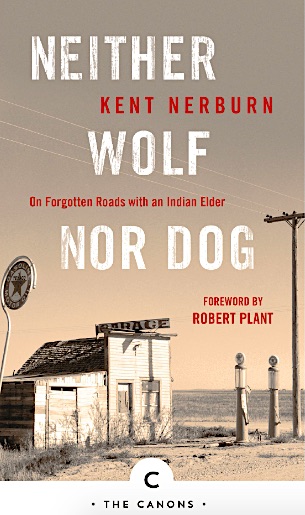
- Kent Nerburn, Neither wolf nor dog: on forgotten roads with an Indian elder (1st edition 1994).
I can only scrape the surface of the wealth of coverage (both academic and popular) of Native American cultures (see this roundup). Within the literature, “as told to” memoirs (mediated by a more or less diligent white amanuensis) make an important way of amplifying the voices of Native Americans. For some early life stories (the field led by the classic Black Elk speaks, 1932), as Arnold Krupat concludes in For those who come after (1985),
Any future examples of the genre will appear in a context increasingly dominated—at least so far as the white world’s awareness is concerned—by autobiographies by Indians who, while deeply interested in the old ways, have become extremely sophisticated in their manipulation of new—Euramerican, written—ways. In their different fashions all of these life histories, and those of their predecessors, deserve study and inclusion in the canon of American literature.
So Neither wolf nor dog belongs to a long tradition. While many of the thorny issues that it poses are basic to fieldwork in many parts of world, this is a famously sensitive area. Nerburn explicitly problematises the relationship between Native American subject and white interlocutor (anger and sadness on one side, guilt on the other). And this, with the road-trip format, gives the book a dramatic impetus, making it more personal and engaging than a dry series of homilies or a litany of white rhapsodies about NA spirituality.
The book’s title comes from Sitting Bull:
I do not wish to be shut up in a corral. All agency Indians I have seen were worthless. They are neither red warriors nor white farmers. They are neither wolf nor dog.
Learning of Nerburn’s previous collection To walk the red road, as NA elder Dan nears the end of his life he contacts Nerburn to ask him to help him commit his insights to paper. While revealing his own conflicts and soul-searching, Nerburn stands up to Dan and his sidekick Grover when they test his endurance and chip away at his values.
I had not come out here to be given an endless series of tests in cultural sensitivity, or to become the butt of some deep and private jokes. Even if the old man didn’t realise it, I was doing him a favor, and at great cost to myself and my family. I was willing to play his Boswell, but I was not willing to play his patsy. And I surely was not willing to have my every action judged, critiqued, and used as the basis to decide if he was going to let me pursue this any further.
As Dan tells him:
White people that come around to work with Indians, most of them want to be Indians. They’re always wearing Indian jewelry and talking about the Great Spirit and are all full of bullshit. […]
Or else they think we need some kind of white social worker telling us what to do. Some of them come here because they can’t find a job anywhere else and end up out on the reservation…
Grover too comments, “White people don’t want real Indians, they want storybook Indians.” Nerburn shares their antipathy to well-meaning hippies and do-gooders. In his Preface he elaborates:
They take on the trappings, they romanticize, they try to right the historical wrong through a great outpouring of cultural compassion, or try to express spiritual solidarity by appropriating Indian values or belief. In the process, they distort the reality of the people about whom they care so deeply, and turn them into a reflection of their own needs.
This is exactly what Dan and Grover and all the others would never let me do in Neither wolf nor dog.
The tragic history has been documented in detail, but Dan’s account is eloquent.
The white people surprised us when they came. […] We had seen other strangers before. But they were just other people like us—other Indians—from different tribes. They would come and ask us to pass through our land. If we wanted to, we would let them. Otherwise they couldn’t.
But you see, it wasn’t our land like we owned it. It was the land where we hunted or where our ancestors were buried. It was land that the Creator had given us.
It was the land where our sacred stories took place. It had sacred places on it. Our ceremonies were here. We knew the animals. They knew us. We had watched the seasons pass on this land. It was alive, like our grandparents. It gave us life for our bodies and the life for our spirits. We were part of it.
So we would let people pass through it if they needed to, because it was our land and they knew it. We did not wish them to hunt or to disturb our sacred places. But they could come to our land if they needed to.
But the new influx soon became a great ocean washing them off their land.
Then something strange happened. These new people started asking us for the land. We did not know what to say. How could they ask for the land? They wanted to give us money for the land. They would give us money for the land if their people could live on it.
Our people didn’t want this. There was something wrong to the Creator in taking money for the land. There was something wrong to our grandparents and our ancestors to take money for the land.
Then something happened that we didn’t understand. The people who came said that we didn’t belong here anymore. […] We thought they were crazy.
As land became property (“We just belonged to the land. They wanted to own it”), Dan goes on,
Your religion didn’t come from the land. It could be carried around with you. Your religion was in a cup and a piece of bread, and that could be carried in a box. Your priests could make it sacred anywhere. You couldn’t understand that what was sacred for us was where we were, because it was where the sacred things had happened and where the spirits talked to us. […]
The worst thing was that you never even listened to us. You came into our land and took it away and didn’t even listen to us when we tried to explain. You made promises and you broke every one.
On naming;
“Do you mind being called an Indian, Dan?” It seemed appropriate, since his granddaughter had just referred to him as an Indian, and it was a question that always lurked beneath the surface when I was involved in conversations with Indian people.
“What the hell else would you call me?”
“Oh, Native American. I don’t know. Something. Anything other than Indian.”
The old man took a deep breath, as if he had explained this many times before.
“It doesn’t bother me. It bothers a lot of our people, though. They don’t like that the name we have was a mistake. Just because Columbus didn’t know where he was, we have to be called Indians because he thought he had found the East Indies. They think it takes away our pride and our identity.”
“That seems like a fair sentiment to me,” I said. The old man waved his hand in front of his face to silence me.
“I guess I don’t mind because we have taken the name and made it our own. We still have our own names in our own languages. Usually that name means ‘first people’, but no-one would ever call us that. So we let people call us ‘Indians’. Does that tell you something about us?”
I wasn’t sure what he was driving at. “It tells me you are willing to accept a certain level of injustice.”
He nodded vigorously. “Sure. What if you called black people Russians or Chinamen? Do you think they’d stand for it?” He laughed at the thought. “Hell, they change what they want to be called every few years.”
“I don’t blame them, though. They’ve been called some pretty bad names. And being called by a color is almost as strange as being called by a place you never lived. But the point is that our people mostly don’t care so much about something like a name. We’re pretty easygoing about things.” […]
“You remember a few years ago? Some Indians decided they would rather be called Native Americans. It’s an okay name; it’s more dignified than ‘Indians’. But it’s no more real than Indians, because to us this isn’t even America. The word America came from some Italian who came over here after Columbus. Why should we care if we’re called Native Americans when the name is from some Italian?” […]
“If some of us want to be called Native Americans, you should call us Native Americans. If some of us want to be called Indians, you should call us Indians. I know it make you kind of uncomfortable, not ever knowing which one is right. But I think that’s good. It reminds you of how uncomfortable it is for us—we had our identity taken from us the minute Columbus arrived on our land.”
In “Junk cars and buffalo carcasses”, another lesson arises from a concern of Nerburn:
I had always been mystified by the willingness of people to live in squalor, when only the simplest effort would have been required to make things clean. I had come to shrug it off to the old sociological canard that it reflected a lack of self-esteem and a sense of hopelessness about life.
But, in my heart, I knew that this was too facile, too middle-class in its presumptions. But it certainly was preferable to earlier explanations—that people who lived like this were simply lazy and shiftless.
Dan gives him another perspective:
“All of these—all these cars and stuff—makes me proud.”
“Proud?”
“Yeah. It means we haven’t lost our traditional ways.”
The anger had faded from his face and been replaced with a placid smile. “We have to live in this world. The Europeans killed all the animals and too all our land. We can’t live our way anymore. In our way, everything had its use then it went back into the earth. We had wooden bowls and cups, or things made of clay.
We rode horses or walked. We made things out of the things of the earth. Then when we no longer needed it, we let it go back into the earth.
“Now things don’t go back into the earth. Our kids leave pop cans around. We leave old cars around. In the old days these would be bone spoons and horn cups, and the old cars would be skeletons of horses or buffalo. We would burn them or leaave them and they would go back to the earth. Now we can’t. We are living the same way, but we are living with different things. We will learn your way, but, you see, you really don’t understand any better. All you care about is keeping things clean. You don’t care how they really are, just so long as they are clean. You see a dirt path with a pop can next to it and you think that is worse than a big paved highway that is kept clean. You get madder at a forest with a trash can in it than at a big shopping center that is all clean and swept.”
Dan and Grover enjoy an old Cowboys ‘n’ Injuns movie on TV:
“My God,” I said. “How can you watch this? Doesn’t it make you crazy?”
“Hell,” Grover said. “I used to go to the movies as a kid and root for the cowboys. I probably even saw this one.”
“Yep,” said Dan. “In the old show houses everyone used to cheer and boo at movies. We all booed the Indians; cheered when the cavalry came. I really liked John Wayne.”
This leads to another worthwhile discussion. At a truck-stop they find some old hippies, wannabe Indians. Dan bemoans his fellow Indians who sell what is sacred, and the whites who want to buy it:
The white people want to own us spiritually. […] Before you wanted to make us you. But now you are unhappy with who you are, so you want to make you into us.
Dan offers an intriguing perspective on the nature of freedom (an overriding American obsession that most outsiders find mystifying). On the early settlers:
When you got here you got scared and tried to build the same cages you had run away from. If you had listened to us instead of trying to convert us and kill us, what a country this would be.”
And more on images:
For white people there are only two types of Indians. Drunken bums and noble Indians. In the old days, we used to be savages, but that’s gone. Now it’s drunks and noble Indians. I like the white men better who think we are all drunks. At least they’re looking at us as people. They’re saying what they see, not what they want to see. Then when they meet one of us who’s not a drunk, they have to deal with us.
The ones who see us all as wise men don’t care about Indians at all. They just care about the idea of Indians. It’s just another way of stealing our humanity and making us into a fantasy that fits the needs of white people.
In a powerful dénouement, they visit the Wounded Knee memorial.
I must also read the sequel, on the iniquitous boarding school system (introduced here and here).
* * *

While I was swiftly converted by the book, I couldn’t quite imagine how it might adapt as a movie. But Steven Lewis Simpson’s 2016 film turns out to be just as thought-provoking. This is largely thanks to the inspired casting of Dave Bald Eagle (1919–2016) as Dan; 95 years old at the time of filming, before he died he commented “it’s the only film I’ve been in about my people that told the truth”. Grover and Nerburn are well cast too; scenes from the book are carefully handled, like Jumbo who Fixes Stuff, and the alcoholic Indian approaching them in a diner. Dave Bald Eagle’s final oration at Wounded Knee is extraordinary.
Here’s a trailer:
* * *
The dialogue that Dan and Nerburn open up has clearly been well received, at least among wasichu white audiences. Neither wolf nor dog gives food for thought not only to the wannabe Indians and do-gooders but to other wasichu, whether or not they welcome the message (Nerburn’s website has some thoughtful reflections here, and here). How Native Americans feel about it is another matter (though their appraisals too will be diverse); but maybe it can go towards helping everyone come to terms with the appalling tragedy at the heart of the American psyche.
 Stephen Jones: a blog