
I’ve featured taranta in several posts, starting with the 1959 fieldwork of Ernesto De Martino (The land of remorse) and Diego Carpitella in Salento. Reading the new Italian translation of Klaus Voswinckel‘s novel Tarantella oder Hölderlin tanzt (2016), set in the same region, inspires me to seek further leads (see also my tribute to Klaus).
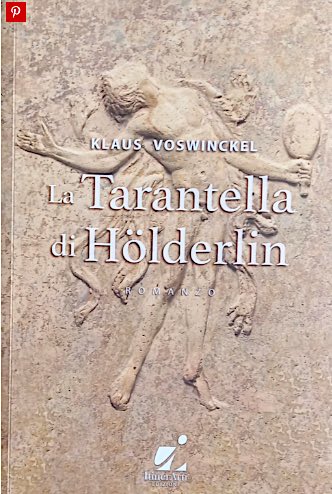
Klaus’s story, a synthesis of his lifelong immersion in literature, music, film, and his devotion to the folk culture of Salento, is animated both by the apparition of authors past (Hölderlin, Novalis, Beckett, Celan) and by living characters in the taranta scene—such as Titina, Maristella, the musicians of Officina Zoè, and notably the singing and charisma of the great Enza Pagliara (to whom I paid homage here). I can’t attempt to convey the depths of the novel, but it’s permeated with evocative accounts of musicking in local communities around Salento, as well as reflections on the changing modern history of taranta.
* * *
It’s important to bring to life the individuality of folk performers immortalised in seemingly anonymous old photos and recordings. Biography has become a popular thread in ethnomusicology; the intersecting of social change and people’s life stories is a major theme of my work on Gaoluo and Daoist ritual.
While the black-and-white images from De Martino and Carpitella’s fieldwork are renowned, I had never sought more on the stories of the musicians shown there. Klaus’s novel led me to the great healer-violinist Luigi Stifani [1] (1914–2000).

Resident in Nardò, Mesciu [Maestro] Gigi started training to become a barber from the age of 8. At first learning guitar and mandolin, he then bought a violin for 2 1⁄2 lire—paying in instalments! By age 14 he was taking part in taranta healing sessions, shutting up shop whenever he was needed to attend a domestic exorcism. [2] Even after the 1970s, as taranta was relocating to the public stage, he was still occasionally required to play on behalf of the mildly possessed.
Over the years following his initial encounters with De Martino and Carpitella, Stifani maintained contacts with scholars and the media, his barbershop becoming a kind of centre for taranta studies (see e.g. this series of interviews from 1998). His own diaries are published in Elenco del tarantolismo: biografie delle tarantolate di Nardò e della provincia e fuori provincia and Io al Santo ci credo.
Among Stifani’s notes is this passage, cited by Klaus:
1959, Rita di Surano, bitten by a black spider, 22 years old. She danced for eight days continuously in the month of August. Her dance was rather swift, but always on the ground. We began playing from 9 in the morning and stopped at 6 in the evening. It was only that she couldn’t see any colours while she was dancing—she only wanted to see black. Indeed, her relatives and neighbours had to wear black. And if someone didn’t, she would chase them and rip off their shirt.
The violin doesn’t always feature alongside the tamburello, organetto, and chitarra, but its invigorating energy can play a crucial role in healing.
 Transcription by Diego Carpitella.
Besides the startling 1959 films (in my original post), here’s the famous 1967 stage performance in Milan in the Sentite buona gente series, curated by Diego Carpitella and Roberto Leydi:
Playlists such as this show his influence on later generations, even as the social function of taranta shifted—such as Mauro Durante:
Mesciu Gigi died on 28th June 2000, the very day of the festa of San Paolo (patron saint of the tarantate), so memorably described in The land of remorse.
* * *
As media awareness of taranta grew, two feature films appeared:
La sposa di San Paolo (Gabriella Rosaleva, 1989)
Pizzicata (Edoardo Winspeare, 1996):
For my notes on recent staged performances, click here and here. See also Italy: folk musicking; Sardinian chronicles; Bernard Lortat-Jacob at 80. Cf. Spirit mediums in China, and Shamans in the two Koreas.
* * *
What survives the transition from domestic ritual to the world-music stage is the essential somatic energy of life: voice, percussion, dance, gathering together. But as with flamenco or ahouach, while musicians can bring vigour to the spectacle of grand festivals, nothing can compare to the ambience of a smaller-scale communal event where the distance between performers and audience dissolves.
[1] Note this article on the useful site of Vincenzo Santoro, as well as Inchingolo Ruggiero, Luigi Stifani e la Pizzica Tarantata (2003), and articles by Luigi Chiriatti and Roberto Raheli in Luisa Del Giudice and Nancy van Deusen (eds), Performing ecstasies: music, dance, and ritual in the Mediterranean (2005). See also e.g. here, and wiki.
[2] Stifani later gave recollections of 29 cases from 1928 until 1972—only a partial list (he also wrote “I have cured over fifty”); and his was just one of numerous such groups in the region.
 Stephen Jones: a blog
Dear Steve,thank you so much. Che gioia di leggere il tuo blog sul mio libro e sulla Pizzica!
LikeLike