
In the same vein as my penchant for subtitled black-and-white movies with amateur actors [zzzzz—Ed.], you can’t beat 1960s’ Soviet-bloc satire, as Stewart Lee would say.

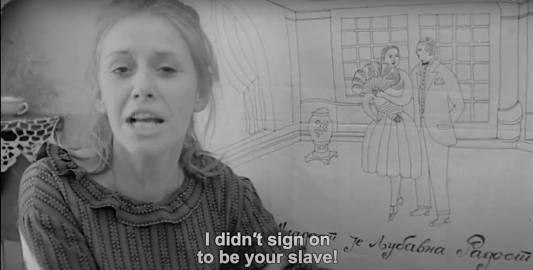
I dimly recall being bemused by W.R.: mysteries of the organism (Dušan Makavejev, 1971) at university, but now, thanks to a recent review by Peter Bradshaw, I’ve been relishing the same director’s 1967 Yugoslavian pulp classic
Makavejev (1932–2019) was a “satirist, political subversive and eroto-evangelist, a performance artist of ex-Yugoslavia’s cinematic Black Wave”. In exile from 1973, his early films are inevitably compared with Godard.

The doomed love affair is between switchboard operator Izabela and Muslim rodent sanitation inspector Ahmed (don’t you love it when you can type a sentence like that?). The film
is about politics, sex and death. Or mostly sex and death. Or mostly sex. Sex is the great rebellion in this film, and the great warning. Izabela is killed by a male figure who for all his own unorthodoxy and boozy indiscipline is a submissive follower of the party line. Sex can be an apolitical form of conflict; it does not explicitly exist in opposition to the government, but the erotic mode is revolutionary by its very nature. This film is a short, sharp shock of exhilaration and artistic dissent.
It’s full of incongruous, stimulating disjunctions. The drama is interlaced with patriotic songs. Izabela may be a “tease”, but Makavejev teases us too. While the seduction is going on, what starts as a scene-setting pan to a TV newsreel of the desecration of churches gets us involved, threatening to distract us from the bedroom action. The camera lingers on bodies, alive and dead.
Roger Ebert’s original review is excellent too, with the fine sentence
He eventually does not exactly hurl her into a deep well.
Makavejev’s first movie Man is not a bird (1965) is on YouTube too:
And his 1994 self-portrait Hole in the soul, for the BBC (fine review here), is no less wacky:
* * *
Also part of the Black wave was I even met happy gypsies (Aleksandar Petrović, 1966; cf. this post, under “Roma”). This upload of the complete film, and these two excerpts, are alas without English subtitles:
Note also the Prague Spring (Closely observed trains, Kundera), Punk in Croatia, and other posts listed under Life behind the Iron Curtain.
 Stephen Jones: a blog