
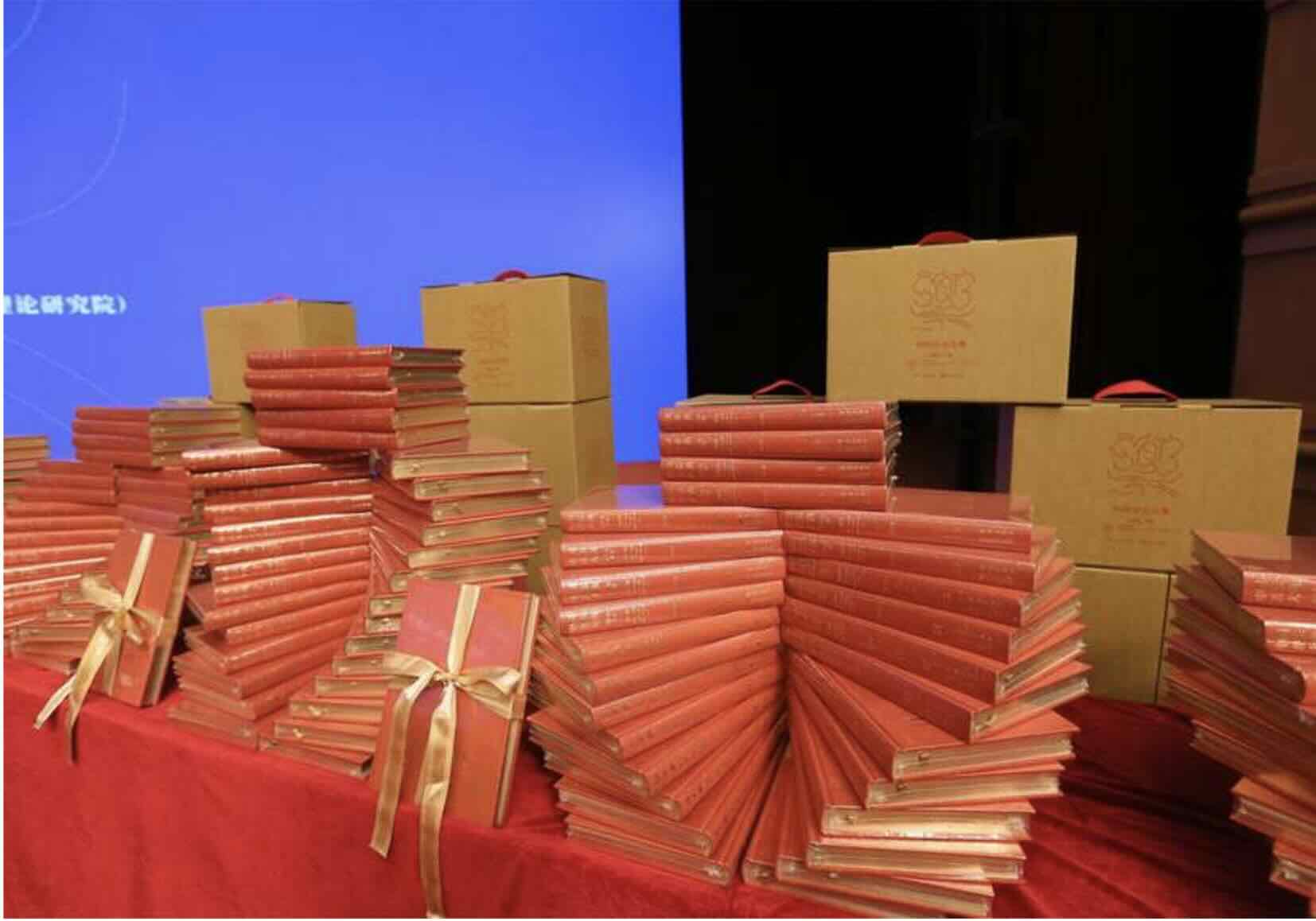
I learn of yet another massive compendium,
- Zhongguo yinyue dadian 中国音乐大典 [Encyclopedia of Chinese music], general editor Wang Liguang 王黎光,
building on the achievements of previous eras—again testifying to China’s extraordinary energy and organisational power in producing encyclopedic reference works. It comprises four overarching rubrics:
- Wenlun bian 文论编 texts
- Tuxiang bian 图像编 iconography
- Yinxiang bian 音响编 recordings (with volumes for xiqu 戏曲 opera and quyi 曲艺 narrative-singing published so far)
- Yuepu bian 乐谱编 notations.
Here I’d just like to introduce the latter project, co-edited by my brilliant mentors Zhang Zhentao and Xiao Mei, whose astute reflections, posted recently on WeChat, I recommend. Zhang gives an authoritative survey of the growing recognition of the importance of notation as we refine our view of Chinese music sources, while Xiao adds details on the organising of such a huge compilation. It’s clearly a massive enterprise—not least in taxonomy, on which both scholars provide salient comments.
The project was initiated in 2017, soon assembling an accomplished team—many of whom were prompted to initiate separate research projects. Standards have risen since the days of the massive Anthology of folk music of the Chinese peoples.
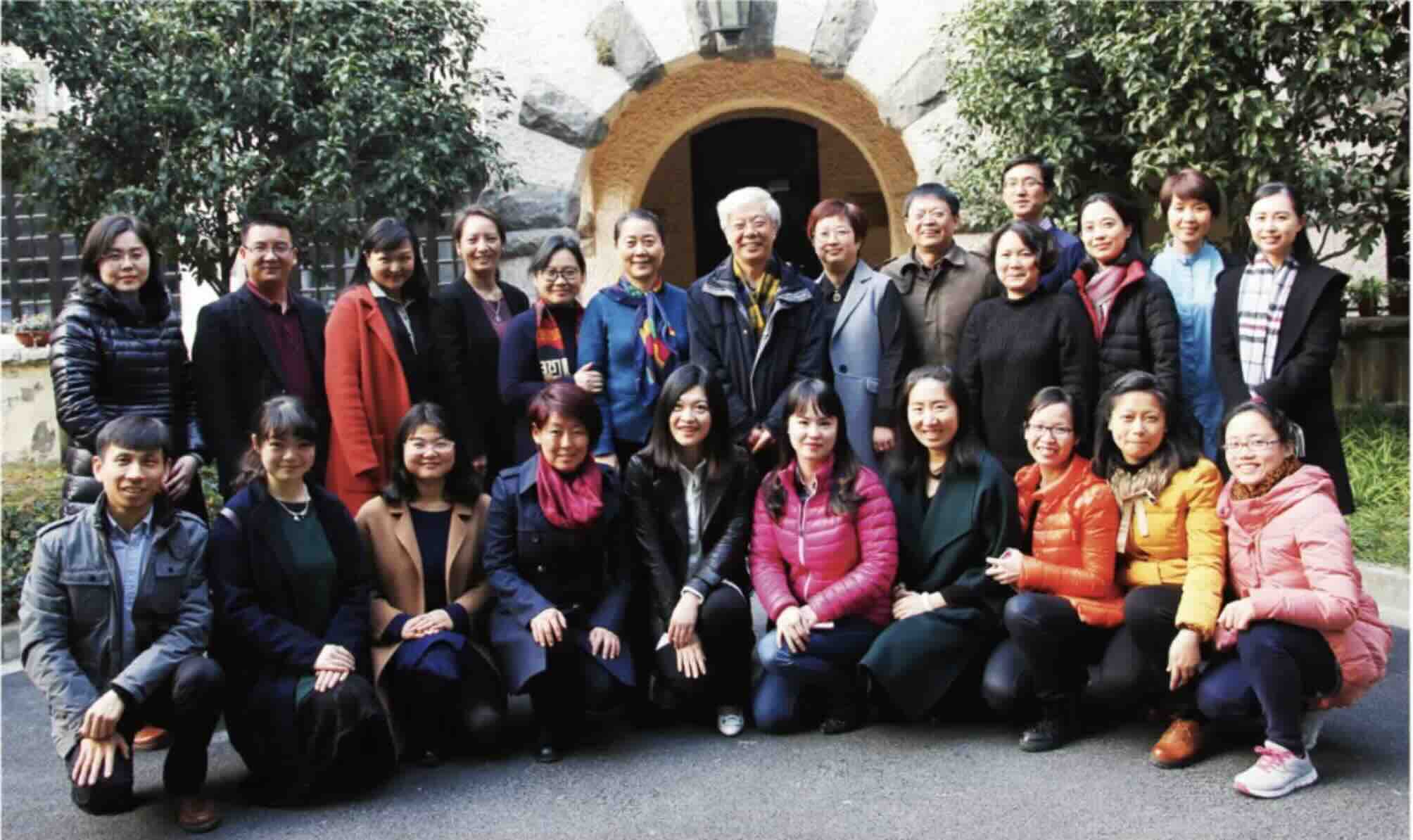 The Yuepu bian team, 2017.
Zhang Zhentao pays tribute to the voluminous scholarship of Yang Yinliu (1899–1984), incomparable master of Chinese musicology, who led major projects before and after the 1949 Liberation; and the blossoming of research after the end of the Cultural Revolution, led by the Anthology. The Zhongguo gongchepu jicheng (Anthology of Chinese gongche scores, 2017), edited by Zhang Zhentao himself, was another major initiative.
On the basis of previous work, this new compendium adds more material from south China and ethnic minorities. It includes
- scores found in canonical works from imperial times
- among local folk traditions, gongche notations of melodic instrumental genres, as well as percussion. Notable among scores of folk melodic instrumental music are those of Xi’an guyue and the ritual associations of Hebei (supplementing Zhongguo gongchepu jicheng with some further material collected during Qi Yi’s Hebei project). Considerable new material for southern genres (hitherto somewhat under-represented apart from the exceptionally extensive scores of nanyin in south Fujian) includes the distinctive ersipu 二四谱 notation of the Chaozhou region, and scores of sizhu in south Jiangsu.
- Han-Chinese folk-song, opera, and narrative-singing
- I’m curious to see how “religious music” is defined and categorised
- the vast repository of qin zither tablatures.
Both scholars discuss the Uyghur muqam—in Xiao Mei’s essay, part of her astute reflections on issues in assembling scores of ethnic minorities, and in handling digital data classification.
While I heartily support the documenting of all these scores, Zhang and Xiao would be the first to concur that folk traditions, based on oral transmission, are far from dependent on them. The challenge is to incorporate notation into our understanding of the soundscapes of local communities and their transmission histories.
 Gongche score, West An’gezhuang village, Xiongxian, Hebei.
Of course, notation is silent: these scores provide the outline of melodies for musician-insiders whose realisations we can hardly imagine from the page. So among the other rubrics, the volumes cataloguing recordings will be crucial. What I await most eagerly—without holding my breath—is a project to make fieldtapes available, such as those that form the basis for the transcriptions of the Anthology of folk music of the Chinese peoples.
For some other compilations reflecting the blossoming of Chinese musicology, see my posts on Yang Yinliu (with a note on Huang Xiangpeng), Qiao Jianzhong, and Yuan Jingfang.


In the first part of this article, 遍 should be 编.
LikeLike
oops, careless, thanks, corrected!
LikeLike