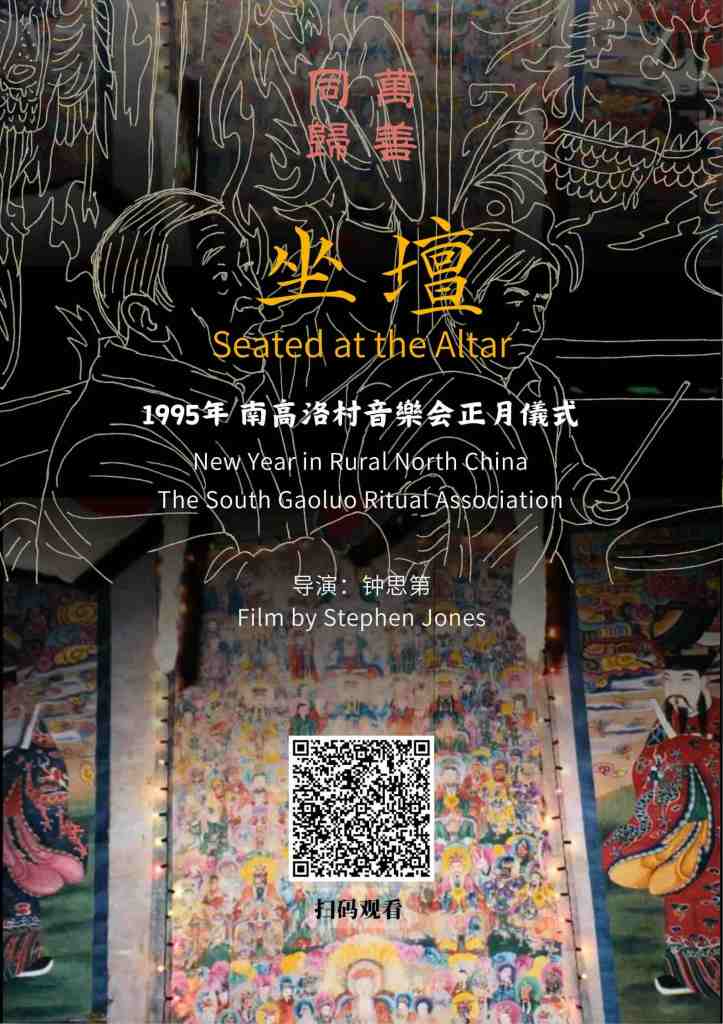
It is far from a literal translation of my English script—I was keen to adapt it to reflect the idiom and way of thinking of the Gaoluo villagers. So rather than the terminology of urban academia, we incorporated local vocabulary like lao guiju 老规矩 (“the old rules”: tradition), dangjia 当家 (“boss”), jiahuo 家伙 (percussion), wentan 文坛 (“civil altar”: vocal liturgy), and songjing 送经 (“escorting the scriptures”). In many ways I find it preferable to the English text—since the original English voiceovers are intact, it’s worth watching even for those not dependent on the translation.
The Chinese version is now available both (in China) on the CDTM website (follow this link) and on my YouTube channel (alongside the English version):
And do browse the posts under Gaoluo in the top Menu! Click here for thoughts arising from presenting the film at SOAS; here for an intriguing Chinese review; and here for a screening in Leiden along with my film on the Li family Daoists.
“Guying yu duju—Zhong Sidi jilupian ‘Zuotan: 1995 nian Nan Gaoluo cun yinyuehui zhengyue yishi’ yingping”, 孤映与独举——钟思第纪录片《坐坛:1995年南高洛村音乐会正月仪式》影评,Zhongguo yinyuexue 中国音乐学 2025.2.
No sooner had I surmised that Chinese audiences might not articulate the stark differences between my (inadvertently) ethnographic perspective and the sanitised, beautified portrayals from the Intangible Cultural Heritage (e.g. here; cf. Gaoluo film: a village screening), Zhang does precisely that.
The social context of Chinese folk musical cultures hardly appears on film. While I had blamed this on the ICH system since 2004, Zhang shows how deeply embedded is China’s history of romanticising and glamorising rural life. Despite Chinese scholars’ exposure to Western ethnography since the 1980s, his comments suggest that social realism has had little impact, and that the habit of self-censorship remains ingrained. I suppose the Party line is that while one may wish to film for one’s own research purposes, such scenes are not fit for public consumption: that we should draw a veil over poverty—over real life. In international visual anthropology the theoretical nuances of the film-maker’s “gaze” are much discussed, but this seems a particularly disturbing impasse.
Even Zhang Zhentao, who evokes village life in detail on the page, seems somewhat perplexed that we might want to display images of it. He finds the style of Seated at the altar consistent with that of my film on the Li family Daoists, and he might also have mentioned the DVDs with my two books on Ritual and music of north China. Playing devil’s advocate, he reiterates the simplistic notion that foreigners choose to depict China in ugly and shameful images, making the Chinese people “lose face”. He queries an apparent lack of “aesthetic” values (shenmei, where mei means “beauty”), adducing scenes from my films showing squalid streets and dwellings, shabby clothes, old women with bound feet, and the decaying architectural remnants of political campaigns. As he explains, such scenes are justified by the ethnographer’s search for “authenticity” and “realism”. *
To dispel China’s victim complex, it should suffice to watch documentaries filmed in India, Africa or Indonesia—and indeed on our own doorstep, such as De Martino’s films on taranta. But Zhang’s comments suggest that documentaries about other parts of the world have little influence in China.
As to fictionalised films, Zhang mentions the classic 1979 Abing biopic Erquan yingyue, as well as the movies of Zhang Yimou (and rather than the beautified images of Raise the red lantern, I much prefer the gritty realism of The story ofQiuju, or Jia Zhangke‘s depictions of small-town life). In between stand movies like Yellow earth or The old well (see here). While “underground” documentaries like those of Wang Bing, Ai Xiaoming, Hu Jie, and Jiang Nengjie, or the subaltern films of Xu Tong, boldly challenge the Party line, investigative Chinese TV documentaries show (or showed?) scenes of real village life, and brief unedited footage on Chinese websites and YouTube makes a useful resource. I wonder how Chinese audiences assess Sidney Gamble’s footage from 1920s’ Miaofengshan. Some non-Chinese scholars have issued documentaries on expressive and ritual culture in rural China, such as Chinese shadows, Bored in heaven, and the films of Jacques Pimpaneau (see this roundup). We might also adduce Ashiq: the last troubadour.
Politics: text and image It’s impressive that Zhang Zhentao broaches the issue of gaze, but he can hardly spell out another respect in which my perspective differs. My films complement my written texts—which though full of detail on the successive social and political upheavals of the 20th century (notably the Maoist era), attract little attention in China because few of them are accessible in Chinese (though see here and here). Politics is the elephant in the room, remaining taboo for music scholars within China; and among Chinese anthropologists too, few go so far as Guo Yuhua in documenting the ordeals of villagers under Maoism (see also here).
Text allows for more detail; film makes a more vivid impact. Whereas the film could only hint at the impact of political campaigns on ritual life in Gaoluo, in my book Plucking the winds I discussed this in some depth—such as the devastating national famine of 1959–61, of which very few images are available, by contrast with propaganda films on the supposed achievements of the Great Leap Forward.
Filming ritual and expressive culture In China, besides the official taboos on showing poverty and discussing politics, the study of religious ritual is largely confined to textual studies of pre-modern history.
Before the ICH (even during the Anthology era of the 1980s–90s), Chinese fieldworkers rarely had the wherewithal to film ritual activity; and even if they did so, such footage could hardly be published. I too filmed merely for my own research purposes, to enable me to document ritual activity in far greater detail than I could achieve through making notes, taking photos, and recording audio; my footage included all too few scenes of daily life, which significantly enhance a film.
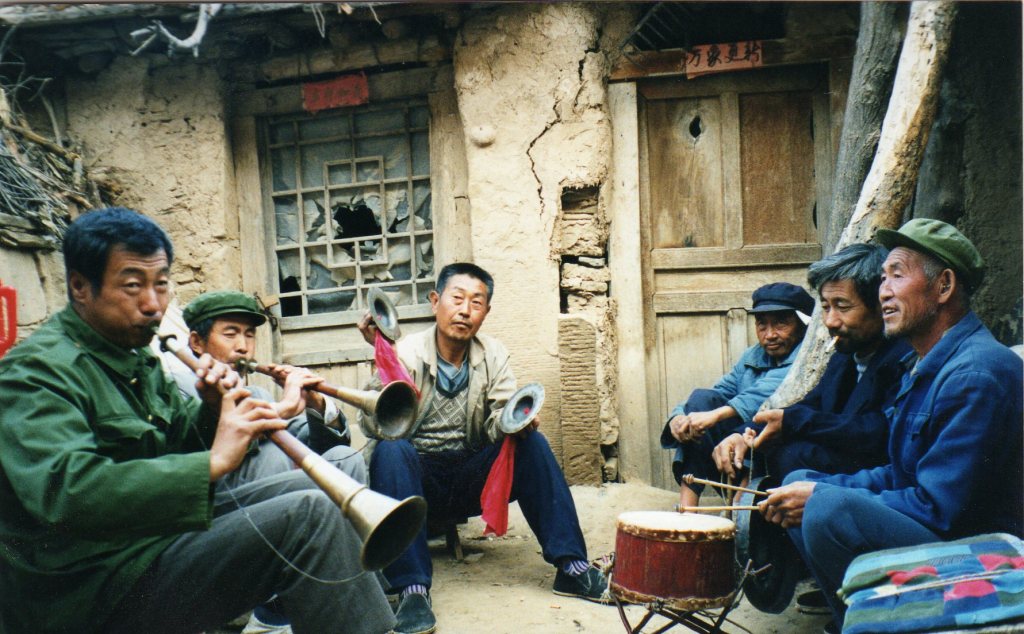
Yangjiagou band, 1999
Shaanbei: scenes from Notes from the yellow earth.
My own films include scenes of lowly shawm bands at village funerals, a blind bard performing for a family blessing, beggars singing at a wedding, and a drunken folk-singing session in a poor peasant home. There is nothing sensationalist or demeaning about all this. If we seek to document rural Chinese communities and their expressive culture, how can we then ignore the conditions in which it takes place? Even if I could think how to sanitise, beautify, and idealise such scenes, it would never occur to me to do so. The social and historical setting matters, but is airbrushed in China. While I see the differences between my approach and that of the ICH, I have no intention of being controversial: I merely seek to document traditional ritual culture as best I can.
Gaoluo: ritual, “music”, and daily life In filming the New Year’s rituals in Gaoluo, my choices were limited, largely consisting not of any grand conceptual vision but of finding physical positions from which to frame the scene.
Knowing these villages so well, Zhang Zhentao seems both impressed and disturbed by my vignettes of daily life there—elderly people relaxing in the sunshine, Cai An at his general store, the family eating dumplings. Wearing their everyday clothes, villagers perform in simple peasant houses decorated only by pinups, or before the god paintings in their humble ritual buildings, with cigarette cartons and thermos flasks placed besides instruments on rickety wooden trestles—by contrast with the ICH format of presenting folk groups in fake-antique costumes performing on the concert stage or in tidy, arid government courtyards. Villagers smoke, they joke; they ride motor-bikes and use mobile phones. Social context is important; to censor the conditions of village life would be mendacious. It should go without saying that my films are made with the utmost respect for my village hosts, serving as a tribute to their resilience. **
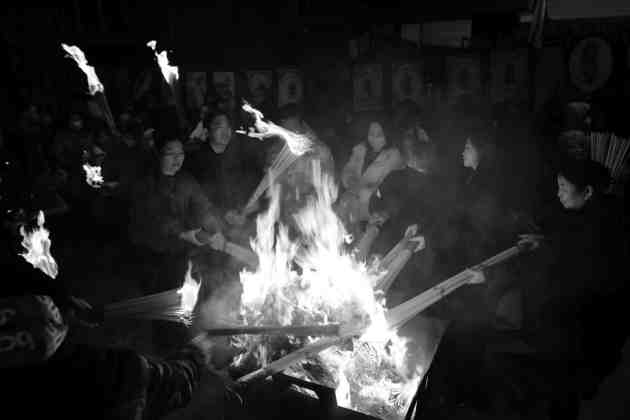
“Music” Zhang Zhentao stresses the contributions that musicologists can make to ethnographic filming, but for me the challenge is the other way round. In reviewing Seated at the altar he focuses on the recitation of “precious scrolls” and the moving performance of the percussion suite—but I see these as inevitable components of documenting the entire ritual process. What I find significant is including scenes that may appeal more to ethnographers than to musicologists, such as (in Li Manshan) choosing the date and siting of the burial, the encoffinment, and informal scenes of the Daoists relaxing between rituals; or (in Seated at the altar) worshippers kowtowing and offering incense, or preparing the soul tablet for the deceased.
Zhang highlights the vocal liturgists’ renditions of the Houtu precious scroll before the gods in the lantern tent. Here he does well to observe that they had only been striving to recreate it in performance since 1993, at our behest; their efforts were less than ideal, and the future of the vocal liturgy still remains precarious. The recitation of the precious scrolls is most distinctive, but to me, just as crucial are the scenes that show their singing of the hymns that punctuate funerals and the New Year rituals, including The Incantation of Pu’an.
Similarly, while Zhang pays tribute to the visceral affective power of the percussion suite, I would also draw attention to the shorter percussion pieces that punctuate rituals. Still, the suite intoxicated me so much that over the years I missed no opportunity to film it during rituals, which taught me to find a suitable position and to zoom and pan at meaningful places. In China it would be unlikely to show the percussion suite within its actual function of ritual performance, but surely even Chinese audiences will find the result beautiful. True, in the Appendix that follows the final credits, our experiment with Cai An and Cai Yurun demonstrating the sections was one that might occur only to musicologists. ***
As to those final credits, Zhang notes the poignancy of the long list of performers, with their dates—many of them having died since the footage was filmed.
* * *
In sum, I simply fail to see how to evoke village ritual life, in either text or images, without providing social and historical context. Yet basic anthropological principles, that to us are self-evident, appear to struggle to gain acceptance in China—all the more under the current ICH regime. Because I’m so impressed by the work of my Chinese colleagues, I sometimes fail to register the constraints under which they operate.
Meanwhile at the Shanghai Centre for Ritual Music, Xiao Mei offers an impressive training in international approaches to ethnographic film-making, making me keen to see how they bridge the gulf—see my further reflections after my film won awards at the 4th Chinese Music Ethnographic Film Festival in Shanghai this July.
* And what if villagers actively prefer to be displayed in glamorous costumes on the concert stage?! So far I have no evidence that they are so allergic to displaying the conditions of their lives as are apparatchiks.
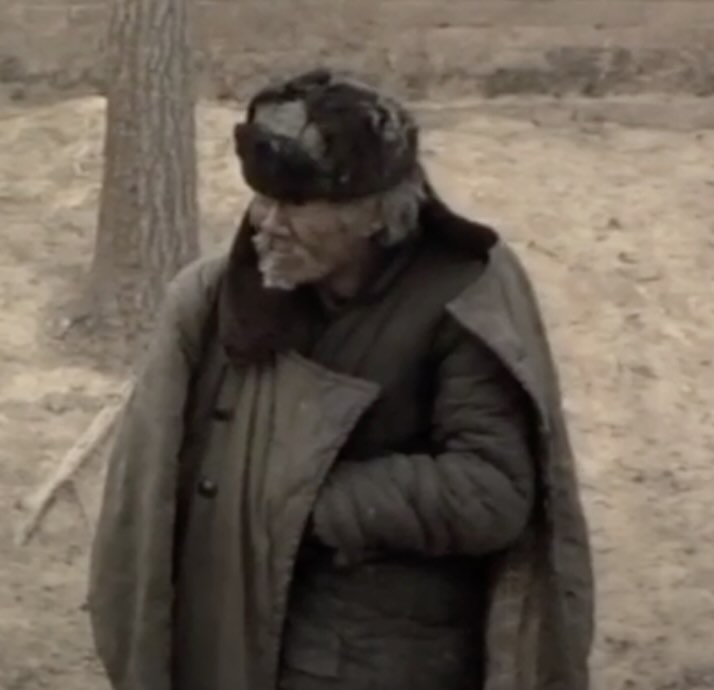
** Partly because I was reminded of the sad decline of revolutionary hero and vocal liturgist Cai Fuxiang, in the film’s funeral scene I included one tiny shot of the village’s only beggar at the time. I regret not chatting with him, because he would have added to our picture of village life, and our visit might have enhanced his self-esteem.
Cf. my sketch of the affable disabled ritual helper Yanjun in Yanggao, whose story I only gleaned at second hand (see under Yanggao: personalities).
In the film I allude to the Catholic minority in Gaoluo since the late 19th century, the 1900 massacre, and their re-evangelisation by Italian priests from the 1920s. Their continuing activity is a sensitive subject, but the scene of their brass band parading at New Year 1995 was so striking that it seemed acceptable to include it.
*** Cf. the complete shawm suite (with useful musical signposts in the voiceovers) at a 1992 funeral that forms the Appendix of my 2007 DVD Doing things.
Presenting my film on Gaoluo at SOAS the other day, and the following discussion, thoughtfully led by Rachel Harris and Feng Jun, prompted me to try and rework some of my thoughts.
My book on Gaoluo was published in 2004, the result of frequent fieldtrips ever since 1989, and it’s full of detail on the lives of villagers through all the social and political upheavals of the 20th century. But I then moved onto other projects, and I only returned to the topic recently, to compile this film from my footage of the 1995 New Year’s rituals, which makes a nice succinct subject—and already a historical one, as I say in the film.
I see ethnography and film as essential complements to library work on imperial history (see here). This kind of subject, though vital to folk society, can’t be addressed only by reading old books in libraries. Actually, the topic hardly appears at all in old books—it’s only revealed by fieldwork. Until the 1950s almost every village in the region had an organisation like this; and many of them still do. While I eventually focused on this one village, we also did a survey of over a hundred village associations nearby (see e.g. under “Hebei” in the main menu, including this survey).
Religion The whole topic of the Hebei ritual associations was only “discovered” by Chinese musicologists in 1986, and it has become a major theme within that discipline—but alas, not in religious studies. I think there are two main reasons for this.
First, terminology. These groups are now commonly known by the umbrella term yinyuehui, which seems to translate simply as “Music Associations”. But it’s confusing: in these villages the term yinyue refers very specifically to the melodic instrumental ensemble that accompanies the rituals of Buddhist and Daoist temples. That indeed was our initial interest, but it’s only one aspect of the associations’ ritual activities, their “instrumental department”, if you like. The term does have an authentic historical pedigree, but tous (both in the West and for urban-educated Chinese) it suggests an unfortunately secular image, like some kind of folk club for entertainment, which encourages Chinese attempts (both in the media and in academia) to downplay the pervasive role of religion (or “superstition”!) in folk society. So I obstinately insist on calling them ritual associations. Despite the gradual decline of vocal liturgy in the region, associations preserve many ritual manuals. And while the melodic instrumental repertoire now dominates, many groups regard these pieces as “scriptures”.
Apart from terminology, folk religion is a sensitive subject. There are some fine scholars in China, but they mainly write about earlier history and written texts, and are cautious about documenting events since 1949, or current activity; whereas we who study expressive culture incline more towards fieldwork. At least, scholars of religion could choose a few villages to clarify the transmission (whether “Buddhist” or “Daoist”) from early temple priests, and study early artefacts such as ritual manuals (not least the “precious scrolls”) and god paintings. While it may now be hard to establish a different image to that of the ICH (see below), the system has legitimised such associations, and they are not subject to the taint of “superstition”—even if scholars of religion may choose to exercise a certain discretion about the early sectarian connections that we documented.
These associations on the Hebei plain are devotional, priding themselves on providing ritual services for their home village without payment. Their ritual sequences are not very dense, but their purpose is to appease the gods. I again put them in the context of other manifestations of religious behaviour in China (such as sects, occupational groups of household Daoists, and spirit mediums). Like my film on the Li family Daoists (which I also encourage you to watch!), this film is set in the north; the soundscapes of the two films are similar, but their social contexts are rather different.
After the end of the main film, the Appendix gives some clues to the workings of the majestic percussion suite, ending with the most moving complete rendition. This is the most convincing illustration of the inadequacy of text, audio recordings, and photos, and it shows the villagers’ deep commitment to the tradition.
All this is a good illustration of how ethnomusicology is based on society and soundscape. Ritual in performance is always animated by sound, so soundscape should always be a major element in our study of ritual. Indeed, most local traditions of “Chinese music” depend on ritual—folk-song, opera, narrative-singing, and dance. One might compare the ritual groups in southwest China studied by Helen Rees, or “song festivals” in the northwest. In Uyghur culture, the pervasive role of Islam is masked by Party propaganda on muqam. The world music industry also remoulds “Sufi music” misleadingly to highlight instrumental music.
Conflict, and the 1949 barrier Politics and social change are major themes of my book and this website. It’s always important to break through the 1949 barrier. We must take modern history seriously. The story always continues, from imperial and Republican times to the Maoist and reform eras, adapting to the changing times. People’s life stories and personalities make a revealing human window onto history and social change. Stories like those that I document—amidst campaigns, conflicts, famine, massacres, thefts—are airbrushed under the current Chinese regime.
Unlike small occupational household groups such as Daoists and shawm bands, these associations are public bodies, which the villages cadres have always played a major role in supporting.
I’m always struck by this amazing image of a former monk training disciples in a nearby village in 1959 (see here, under North Xinzhuang), just as the devastating great famine was occurring—the famine is among crucial topics that can hardly be addressed in China.
Shadows in the field I could only offer superficial responses to Feng Jun’s salient query about how I positioned myself in relation to the people and events I was documenting. It’s a major theme of the book (and of a thesis in Chinese). I was most fortunate to have two excellent fieldwork companions from Beijing, who were totally on board with studying social and religious change. It’s most important to stay in the village, and to take part in their ritual life (neither of which is common for Chinese scholars). The villagers were open in replying to my questions, which Chinese scholars hardly asked.
I never thought of making films for the public domain; I filmed strictly for my own research purposes, and only realised later that some footage could be edited into watchable films. Our visits energised the Gaoluo association, while others were declining, but transmission was a constant anxiety of theirs, and a theme of our discussions. We can now see this as a precursor of the Intangible Cultural Heritage system.
The ICH Since my last visit in 2003, a lot has happened in these villages. They’re no longer so poor. Crucial issues, everywhere, are migration, social media, state education, and the whole emptying of the countryside. And there’s no escaping the ICH system, which has influenced many such village groups. Many authors have described how the system commodifies, secularises, and reifies local traditions (see e.g. here). It’s state propaganda; most “research” under its auspices is superficial. While my film, and the book, inadvertently make a contrast with the celebratory approach enshrined by the ICH, I’m perturbed that Chinese viewers don’t seem to articulate this; they can’t read my book in Chinese, and anyway I’m not sure they would care to dwell on my different approach. With recent Chinese fieldwork dominated by the ICH, it is hard to gain a more in-depth picture.
Although the system uses “music” and “culture” as a smokescreen to downplay religious life, it works both ways; for the communities themselves, it helps protect them, legitimise them. With the tenuous survival of these groups under question ever since the 1980s’ reforms, joining the ICH made a tempting expedient for the association leaders. And faith endures, with villagers using the system to their own ends; the Gaoluo association still does funerals, and villagers still offer incense.
The village’s Catholic minority (whose brass band took part in a “demonstration” on 1st moon 15th in 1995, shown in the film) makes an intriguing sub-plot in the story. In this whole area the relationship between “Patriotic” and underground churches has long been opaque, and without a prolonged stay it would be hard to further our understanding of the shifting scene.
As with my work on the Li family Daoists, the combination of book, film, and website is most instructive.
Marked decline in semicolons in English books, study suggests
To complement the Oxford comma, more fodder for punctuation nerds in Amelia Hill’s entertaining recent Guardian article—complete with quiz.
The first use of the semicolon has been attributed to the Italian scholar and printer Aldus Pius Manutius the Elder in 1494. Abraham Lincoln observed, “I have a great respect for the semicolon; it’s a very useful little chap” (hmm). Virginia Woolf used it over 1,000 times in Mrs Dalloway. Cormac McCarthy included 42 semicolons in his first book, The orchard keeper—but then just one across his next nine novels (and what might we deduce from that, I wonder?!).
Kurt Vonnegut disapproved of it, averaging fewer than 30 a novel, about one every 10 pages. Salman Rushdie, John Updike, and Donna Tartt each used an average of 300 semicolons for 100,000 words. As if other negative reviews of the Fifty shades trilogy weren’t enough, “E.L. James was criticised for repeatedly using commas inaccurately instead of semicolons”.
Perhaps someone can square these two comments for me:
“Semicolon use in English rose by 388% between 1800 and 2006, before falling by 45% over the next 11 years. In 2017, however, it started a gradual recovery, with a 27% rise by 2022.”
“The semicolon seems to be in terminal decline, with its usage in English books plummeting by almost half in two decades—from one appearing in every 205 words in 2000 to one use in every 390 words today.”
For more, see e.g. here. Now I think we should go the whole hog and sing the praises of the colon too.
Much of the pleasure in reading an article like this lies in marvelling at the projects with which academics manage to fill their time. But there’s no limit to the topics for which statistics can be enlisted—I think of Grootaers’ fieldwork survey documenting the declining numbers of temples in north China villages through the Republican era, and the deities to whom they were devoted.
The language of the novel was effectively dramatised by Monty Python:
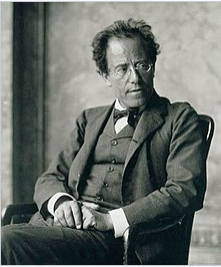
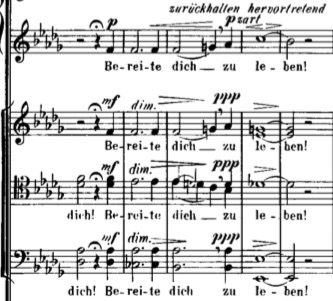
I’ve sung the praises of the music of Gustav Mahler in a series of posts, rounded up here. For anyone within reach of Amsterdam, the Concertgebouw’s current Mahler festival is a blessing: details here and here, with useful links. The comprehensive concert series includes all the symphonies in sequence, performed by some outstanding world orchestras and conductors, with many related events, including the songs with piano.









 Stephen Jones: a blog