In our modern world, the flight booking reference consists of a seemingly random combo of six letters and numbers, so on booking my recent flights for Istanbul I was impressed to find the last three letters
FND
which one might suppose to be a quaint honorific that is tailor-made for a trip to Turkey… Surely a one-off, but charming.
Dede Efendi (d.1846), Mevlevi music master. Source.
The SOAS rebetiko reader: a selection of papers associated with the Hydra rebetiko conferences 2000-2020 and seminars held at the School of Oriental & African Studies, London (2025) (online here), edited by Ed Emery, tireless aficionado and organiser of rebetiko events.
A substantial English addition to the mainly Greek literature on the topic, it’s the fruit of several conferences over the years (notably the annual gatherings on the island of Hydra), and the creation of various bands.
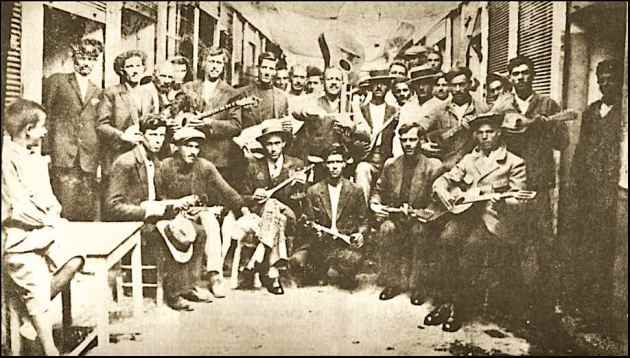
Rebetes in Karaiskaki, Piraeus, 1933. Source: wiki.
The volume contains contributions from well-established academics and informed amateurs, with original source materials in translation, plentiful song lyrics, discographical notes and links to YouTube clips. Besides Istanbul and Athens, topics include the (mostly bygone) rebetiko cultures of Smyrna/Izmir, Saloniki, Crete, and the USA, along with the Jewish connection; BulentAksoy unearths Turkish lyrics in early recordings. Two chapters by Gail Holst-Warhaft (on world music and the orientalising of rebetika, and the nationalising of the amanes) sample her thoughtful work since Road to rebetika. Also intriguing are excerpts from the autobiographies of Rosa Eskenazi and Markos Vamvakaris, and chapters on the criminal underworld, addressing heroin, cocaine, and morphine in rebetiko song; coverage of the connection with Sufi tekke lodges; zeybekika dances with zurna shawms feature in articles by PanagiotisAgiakatsikas and Muammer Ketencoglu, and a field report from west Anatolia by Ali FuatAydin.
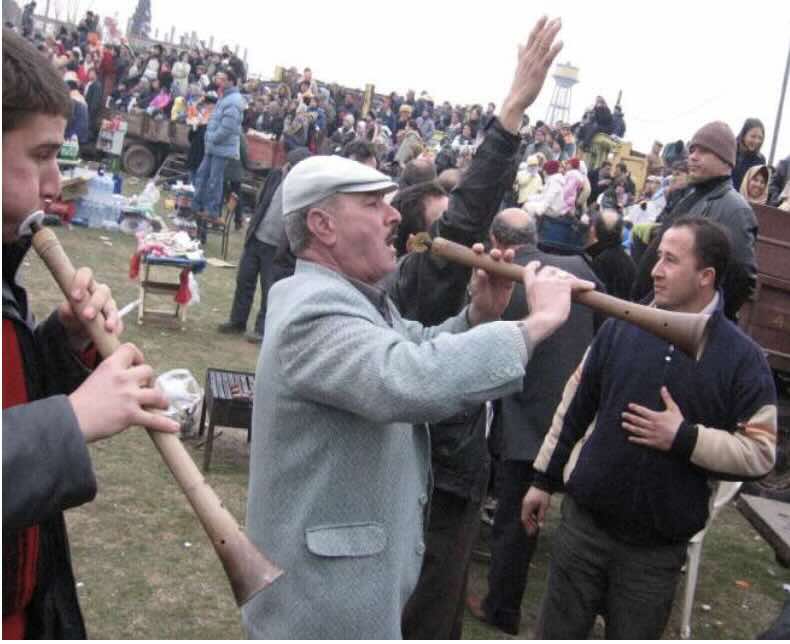
Zurnas play for zeybek dancing, Aydın 2006. Source.
On Sunday SOAS hosted a grand celebration of the life of the great ethnomusicologist David Hughes (1945–2025), who died in May. Among many notices online, see this by Rachel Harris and Hwee-san Tan; Frank Kouwenhoven wrote eloquently in the CHIME newsletter.
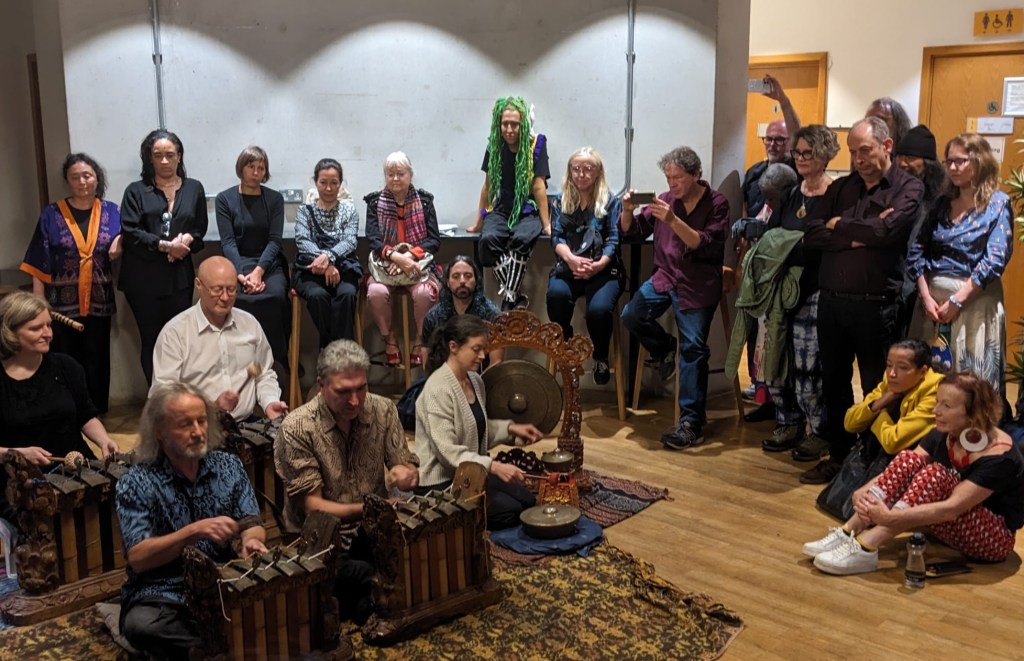
After embarking on a PhD in ethnomusicology at Michigan under William Malm, from 1977 David thrived on fieldwork in Japan, together with his wife Gina Barnes. In 1981 they came to Cambridge (England!) to further their research, and it was there that I first met him as we consulted Laurence Picken. David went on to teach Japanese and Southeast Asian music at SOAS, becoming Head of Music and building a vibrant performance culture in a wide range of genres (he covered some of these topics, engagingly as ever, in this playlist). So the SOAS event resembled a retrospective of three decades of world music at SOAS and in Britain, with many of David’s former students performing; apart from copious Japanese music, among other featured groups that David supported and inspired were lively renditions of Cuban music and gamelan. And videos of his own performances were on display at the reception.
David was a co-founder of the British Forum for Ethnomusicology, and offered wise perspectives as a member of the CHIME board. Along with his in-depth research on Japanese folk-song, he had an authoritative grasp of Japanese musical cultures, as shown in his co-editing of The Ashgate research companion to Japanese music and his chapter on Japan for The other classical musics; he received several awards in Japan for outstanding contributions to Anglo-Japanese understanding. His lively and informal presence offered a welcome antidote to the more traditional British style of academic presentation—as a jovial performer, he was the life and soul of the party, delighting in language, an inspiration to many students. As is the nature of such things, the one person who would most have relished the event could not be present. David is much missed.
I’m most gratified that my film Seated at the altar, on the 1995 New Year’s rituals in Gaoluo village, was awarded two prizes at the Chinese Musics Ethnographic Film Festival (CMEFF) International Biennial of Audiovisual Ethnomusicology, held in July at the Shanghai Conservatory of Music. In addition to the Bronze Award, it received the Intangible Cultural Heritage Music Documentation Award—which, given my trenchant critiques of the ICH system, has a fine irony!
Zheng Zhentao, in his stimulating review of the film, highlights the contrast between my method (representing ethnographic standards in the West, I’d say) and the glamorised reification that is de rigueur within China in the portrayal of folk culture—an established tradition long before the ICH. So I’m gratified to find that there are those in China who appreciate my approach, as confirmed both by the discussion at the festival and the film’s reception at the screening in the village. The mere fact that I filmed New Year’s rituals and funerals in the village—rather than choosing staged settings such as the concert hall—seems to be original. However, such a verismo method looks unlikely to gain ground in China.
My films should always be viewed in conjunction with my writings—for Gaoluo, my detailed diachronic ethnography Plucking the winds. In the latter, far more broadly than mere “music”, the main themes of ritual, poverty, politics, and conflict are far more explicit. As I stressed here, “music” is merely a prism through which to document ritual and social change.
While I was doing fieldwork I was educating myself on rural Chinese society through modern regimes as revealed through Western scholarship (see e.g. here), such as Chen village, Gao village, and the studies of Friedman, Pickowicz, and Selden, as well as the work of Jing Jun, and (in Chinese) Guo Yuhua. These were my major inspirations.
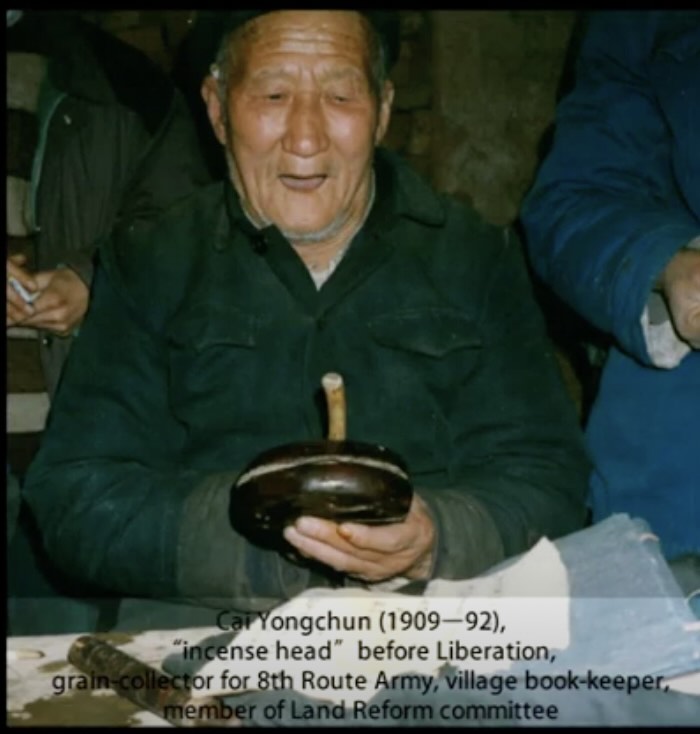
It is easier to depict history on the page than in film. While the film hints at political aspects through photos and voiceovers, showing the village cadres’ support for the ritual association amidst the upheavals before and after the 1949 “Liberation”, this will only become clearer by reading my book (see e.g. this excerpt, and the history of the village Catholics). Yet these topics can hardly be broached under the current climate in China, where early history is idealised and modern history sanitised, in both text and film. Self-censorship is inevitable; even the word “politics” is largely taboo (cf. Ritual studies mildly censored).
So returning to the film, I’m still curious to know how Chinese audiences perceive the contrast between their romanticised image and ethnographic verismo. And I still wonder how Chinese film-makers manage to glamorise their rural themes.
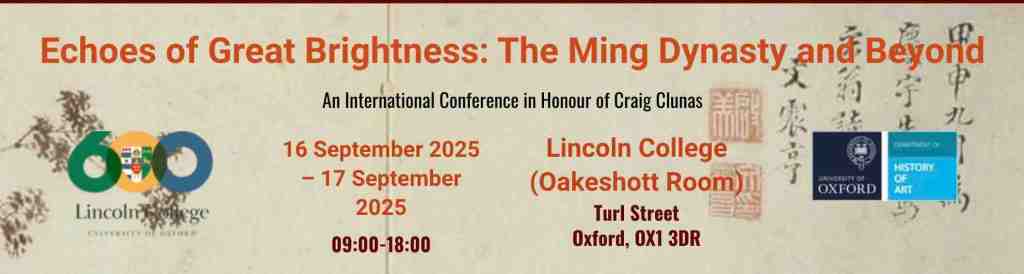
An international conference in honour of Craig Clunas will be held on 16–17 September at Lincoln College, Oxford, bringing together leading scholars in the field of Ming studies and art history.
The Ming period (1368–1644) is central to our understanding of Chinese art, both as the time when many key texts and objects from preceding centuries were edited or curated into the forms in which they have come down to us today, and as the era to which much subsequent artistic practice and discourse has looked back for validation and inspiration. No one would dispute that Professor Craig Clunas pioneered the application of social history to the study of the Ming dynasty and Chinese art history. His innovative methodology has positioned the study of the Ming dynasty as one of the most dynamic and engaging areas in both art history and sinology. With more than a dozen monographs to his name, his international research and publication profile is unparalleled among art historians in the United Kingdom. In 2018, he retired from his position as the Statutory (Distinguished) Professor of Art History at the University of Oxford.
The presentations will address issues and ideas inspired by Professor Clunas’s research, encompassing a wide range of topics, periods, locations, and media—from the Wei-Jin dynasties to 21st-century Chinese art, from paintings and prints to teapots and furniture, from gardens and boats to maps and diplomacy, and spanning regions from Jiangnan China to Edo Japan and Europe.






 Stephen Jones: a blog