A slender but magical clue

zhs-1954

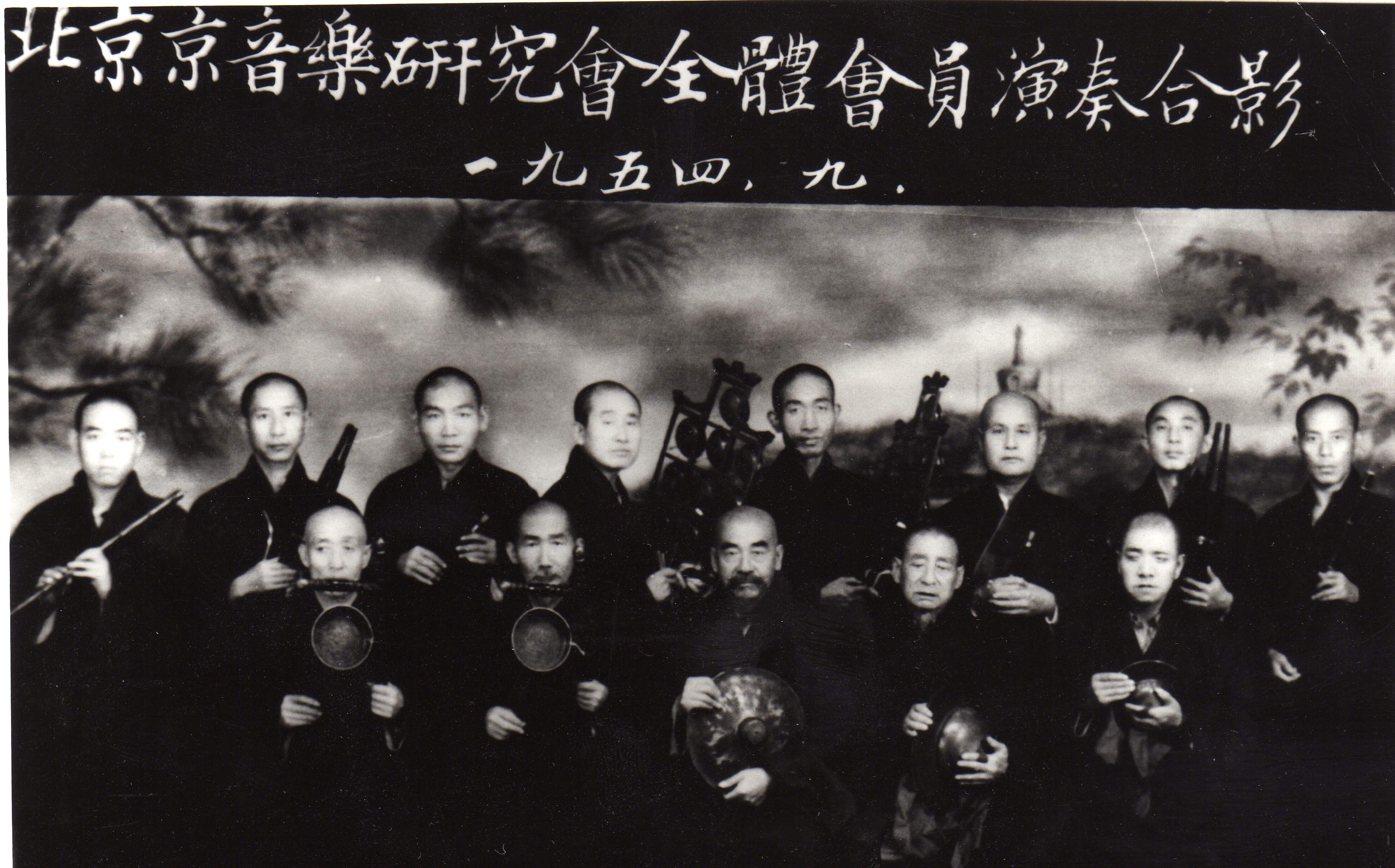
Former monks of Beijing, September 1954.

The whole topic of amateur ritual associations on the Beijing plain, and indeed north Chinese ritual, was first suggested by a 1953 monograph, slim yet astounding, by the great musicologists (and musicians) Yang Yinliu and Zha Fuxi on the shengguan music of recently-laicised Buddhist monks throughout the north and east of Beijing city, commonly associated with the famous Zhihua temple—just at a time when they found themselves in difficult circumstances after the radical social transformations around Liberation, suddenly deprived of their ritual livelihood. [1]

You can hear a haunting track from Yang’s 1953 recordings in the playlist in the sidebar, #14 (commentary here). For a roundup of posts on the Zhihua temple and related ritual activity, see here.

One of the most moving sections of the monograph [2] is a remarkably frank and perceptive letter that Zha Fuxi wrote to the former monks, dated 30/12/1952. As a qin master and scholar, his aesthetic world was remote from theirs, but he deeply valued their music, and quite understood how disgruntled they were.

While I realize that you are trying to pursue your livelihood on the basis of your knowledge of the new society, you will try to consign your repertoire to the cultural sphere… […]

But you bitterly regret that you shouldn’t have to sacrifice your youth of studying this music to the point of damaging your health and wasting your opportunities to study culture [sic]. You are particularly resentful that because you are uncultured [sic] you can’t express how these heritages of your elders in the temple—its two great arts of intangible music and material architecture—are worth preserving.

Zha goes on to itemise all the respects in which their music was such a valuable resource for musicology, partly seeking to bolster their self-esteem. He concludes by recognising how very tough their learning process was, and suggests patience, in the hope that

even if some people in the old society despised you, their moral character has been raised in the new society and they will gradually recognize you.

But of course he was unable to suggest how their position in the new society might be practically ameliorated; the ritual business of their youth would never be restored. Under Maoism both the monks and the scholars would suffer in various ways (for ritual artisans at the time, see here).

Fast-forward to the reform era since the 1980s. For two decades, whenever I returned to Beijing from the countryside, I would go and visit the former monks, notably the late lamented Benxing, and by the 1990s they were training a new generation—a group of teenage boys from Qujiaying village.

But they continued to feel resentful, despite social liberalizations and the ongoing efforts of well-meaning scholars and cultural officials to reinstate the prestige of their music, with frequent conferences and TV appearances, propaganda for the whole “living fossil” “cultural heritage” shtick. Media publicity was one thing, the reduction of their busy ritual “rice-bowl” since 1949 quite another. Today the new recruits are rather good; led by the bright Hu Qingxue, they even manage to do folk rituals as well as obligatory tourist “performances” of the shengguan music at the temple.

beijing-yankou

Former monks performing a funerary yankou ritual, Beijing suburbs 1993

This film features cameos from Hu Qingxue and our revered master Benxing, but also illustrates the current media style of presenting such culture…

* * *

Anyway, I digress. The 1953 monograph soon attained an iconic status in Chinese musicology, as indeed did Yang Yinliu and Zha Fuxi themselves. [3] But Beijing and the Zhihua temple are only the tip of the iceberg. In his monograph Yang Yinliu mentioned a hereditary sheng-repairer (dianshengde 點笙的) called Qi Youzhi, who used to mend and tune the instruments of the Zhihua temple. Thoughtfully, he even provided Qi’s address:
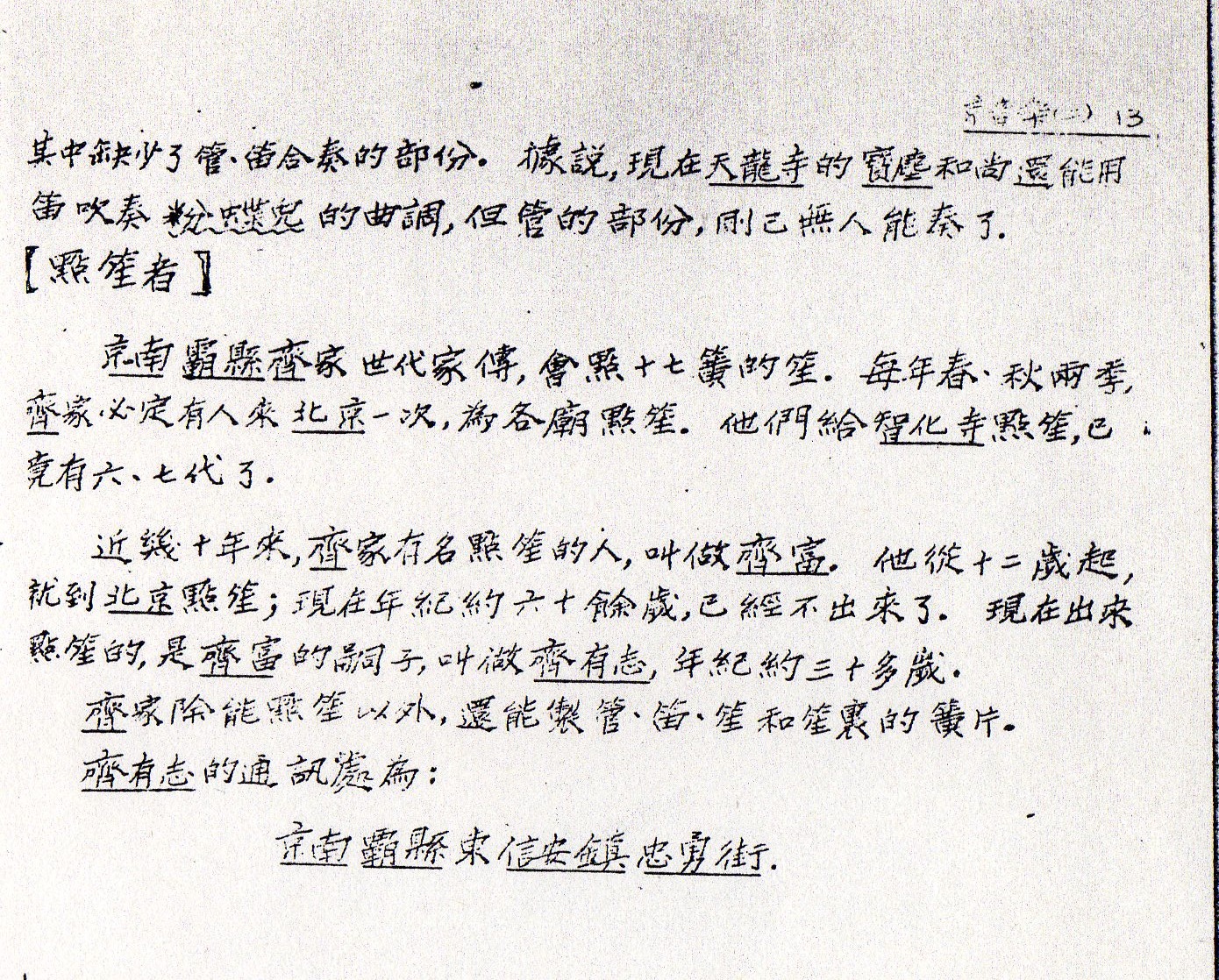
yyl-1953-address

South of the capital, Baxian county east, Xin’an town, Zhongyong street.

Thirty-six years later in 1989, with my brilliant fieldwork companion Xue Yibing I began a survey of ritual associations on the plain south of Beijing. Baxian county was to be on our route, so I copied the page—just on the off-chance that anyone there might still remember Qi Youzhi. Arriving in Xin’an town, as soon as we mentioned him, the members of the ritual association exclaimed, “Sure! We’ll go and get him for you!” He was still only 70 sui, a mere youngster by the standards of many ritual specialists we were now finding everywhere. Our chats with him yielded some interesting material on the transmission of shengguan music throughout the area.

QYZ 1989.jpg

Qi Youzhi (right) with Xue Yibing, Xin’an 1989.

The Qi family was among many lineages of sheng-repairers active around Beijing and the countryside just south. According to Yang Yinliu, Qi Youzhi was the sixth or seventh generation of sheng-repairers in his lineage—though he told us he was the fourth. His grandfather Qi Baoshan had worked for the imperial palace lamas in Beijing. Before the fall of the Qing dynasty in 1911, Qi Youzhi’s father Qi Lanpu used to play sheng in the Tianqiao district of Beijing. Later, through contacts with palace eunuchs, he learnt to repair sheng, building a reputation with temple musicians. His older brother Qi Lanting and his oldest son Qi Youcai also took up the business, and they also repaired sheng in Tianjin.

Qi Youzhi, Qi Lanpu’s second son, [4] was born in 1920. In 1929 he began to play sheng in the Shifan association in Xin’an town, and from 1931 until the Japanese invasion in 1937 he helped his older brother with his sheng business in Tianjin and Beijing. There he learned to make and repair sheng; they also made guanzi oboes, dizi flutes, and shawms (laba).

They used to go out to find work repairing sheng, making the rounds of all the Buddhist and Daoist temples. At the North Great Gate of Tianjin, Qi Youzhi recalled, the Buddhist monks at the “Buddhist temple” and the Daoist priests at the Chenghuang miao had many sheng. We asked him if nuns (called “juvenile monks”, youseng!) also played shengguan music; indeed, the Qi family used to tune sheng for the Taishan miao nunnery and the one in Xiaomalu (“Small road”). They used to go to tune sheng not only for the Tianjin and Beijing temples, but also throughout the villages, tuning and mending sheng for both types of ritual association, “northern” and “southern”—the latter also known by the fine terms qie 怯 (“rustic”) and kua 侉 (“with an outsider’s accent” or “bumpkin”); he maintained sheng for shawm bands too. But after the Japanese invasion in 1937 their activities were highly restricted.

Based in Xin’an in the mid-1940s the family resumed its work, apparently even through the 1946–7 civil war. Twice a year Qi Youzhi used to go on a long trek by foot to Beijing with his uncle, staying in villages on the way and tuning sheng wherever there was work. In Beijing, he recalled that temples like the Guandi miao in Sitiao, and the Guangji an at Chaoyangmenwai dongdaqiao, used the classic “capital” (“northern”) shengguan music. But the Baita si, Huguo si, and Longfu si temples seem to have been “rustic” or “southern” in style, since they included small shawms (laba) in their shengguan ensemble. This whole landscape of old Beijing has been destroyed gradually, and bulldozed most radically since the 1990s.

After the 1949 Liberation, Qi Youzhi could no longer find work in Beijing, since priests were returning to lay life and temples were now largely inactive—but significantly there was still plenty of work repairing sheng for the village ritual associations. Indeed, this work continued until the Four Cleanups in 1964. By 1980 Qi Youzhi was 61 sui, and, despite the revival, seems to have been much less active.

We went to see him again in 1993, between visits to two amazing village ritual associations near Xin’an: Gaoqiao (Buddhist—another sheng-making/repairing lineage; audio playlist track 8, and commentary) and Zhangzhuang (Daoist).

By then our team was joined by Zhang Zhentao, who has since published detailed work on the sheng and its history. Meanwhile Yuan Jingfang made detailed studies of the Zhihua temple style, further adding to the list of its clerical exponents.

Everywhere we went on the Hebei plain, we made a point of seeking out sheng-repairers—often they were themselves members of a ritual association, but anyway they always knew precisely where other groups were active in the area. We also valued sheng players, always most knowledgeable about scales and pitch systems—in Hebei, Shanxi, and throughout north China.

* * *

I still marvel at that miraculous thread which linked us so vividly to Yang Yinliu’s time with the Zhihua temple monks, and further back to the world of palace eunuchs and the ritual life of the Qing dynasty.


[1] Yang Yinliu (1953) Zhihuasi jing yinyue caifang jilu [Record of visits to the capital music of the Zhihua temple], 3 parts, Beijing: Zhongyang yinyuexueyuan Zhongguo gudai yinyue yanjiushi, mim., now available in his complete works. This post is based on my In search of the folk Daoists of north China, p.146. For Buddhist and Daoist ritual life in Beijing and Tianjin, see ibid., Appendix 1, whose citations include Vincent Goossaert’s splendid 2007 book The Taoists of Peking, 1800–1949. As I note in the Appendix (p.222), only five of the nineteen former monks assembled came from the Zhihua temple. On ritual life in old Beijing I must also mention the works of Chang Renchun 常人春; for many more links, click here.
[2] Part 2, pp.40–45, signed with his other name Zha Yiping.
[3] Cf. Tian Qing, “Shijimo huimou: Zhihua si yinyue yu Zhongguo yinyuexue” [A fin-de-siecle retrospective: the music of the Zhihua temple and Chinese musicology], Zhongyang yinyuexueyuan xuebao 1998/2: 38–45.
[4] As you see from the page from Yang Yinliu’s notes, he had learned that Qi Youzhi was adopted son of Qi Fu, another distinguished sheng-repairer. We didn’t clarify this—such family relations can be hard to elicit on a brief acquaintance.
[5] See In search of the folk Daoists, pp.145–55.
A tribute to Laurence Picken

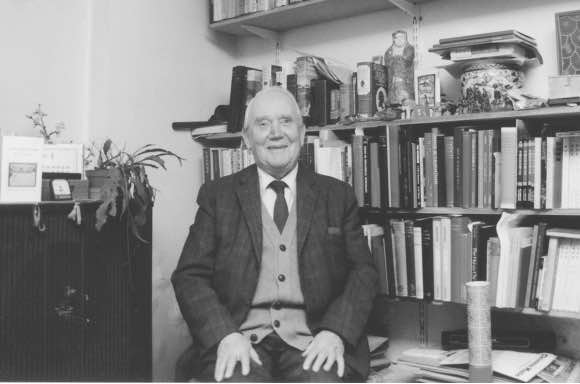
I was one of Laurence Picken’s more tangential disciples, but he remains among the great inspirations of my life. [1]

Picken

I know several of us have fond memories of turning up for lunch at his little house overflowing with books, a sherry followed by a carefully prepared meal, listening to him explaining, non-stop for four or five hours (for all his encyclopaedic erudition, he knew nothing of small-talk; see also here) how the marker to the right of the column in some 11th-century Japanese zither manuscript had been misinterpreted—with liberal asides on plainchant, birdsong, and medieval Sogdian viniculture—to which I occasionally managed to interject “I say, fancy that…” And that’s how it went, every couple of months for about twenty-five years.

Apart from his immense scholarly arsenal, he was a true amateur, an enthusiast. He maintained a network of like-minded people, communicating extraordinary enthusiasm for a topic that, even by the high standards of obscurity of those topics that many of us here today pursue, was pretty arcane. His devotion to scholarship was nothing to do with conforming to institutional demands; as a bit of a Lone Ranger myself, I now realise where I got it from.

He corresponded indefatigably with scholars all over the world (not least Eastern Europe)—he had to wait far too long for the invention of email. Though I think his influence on Western scholarship on Chinese music has been disappointingly slight, his work on Tang music had echoes in that of Chinese scholars, including He Changlin and a group of musicologists in Shanghai, from Ye Dong and Chen Yingshi to a newer generation. Senior scholars like Yang Yinliu, Huang Xiangpeng, Ren Erbei, and Yin Falu were themselves engaged in similar work through the 1950s, and would have relished a chance to exchange ideas with Laurence (cf. Soundscapes of Dunhuang).

MTC

Having assisted him with his magnum opus Music from the Tang court for many years, I finally began going to China in 1986. The reason for my first visit was to seek clues to Tang performance practice in living traditions there—how to recreate his transnotations in a convincing style. Except for his early and late visits, most of his life coincided with a period when few foreigners could gain meaningful access to living traditions in the PRC. And immediately I discovered a vast unknown treasury of living folk and ritual music, soon putting historical musicology to one side in favour of contemporary ethnography (see e.g. my Plucking the Winds, pp.169, 184–5). But what I really appreciate is that Laurence entirely understood, and was immensely generous and supportive of this churlish choice of mine.

A special edition of Early Music, edited by Richard Widdess, includes my succinct thoughts on the relation between “early music” and living traditions in China, with thoughts on notation and recreation:

  • “Source and stream: early music and living traditions in China”, Early Music August 1996: 375–88.

As I published a lengthy analysis of some of the pieces from the Hua family shawm band’s suites introduced in my 2007 book (and the accompanying DVD, and an amazing CD; cf. Dissolving boundaries), it reminded me that while Chinese and Western scholars have described the scales and macro-structure of Chinese instrumental music, few have done any serious analysis of its melodic progression—so Laurence’s project with Noel Nickson (however traditional in style) on the Tang repertoire remains a bold, comprehensive, and detailed body of work. My only reservation is that I’m not so keen on analysing old scores when we can’t hear how they actually sounded; doing fieldwork in rural China, I’m happy if we can make an educated guess—within a living tradition—about how a score no longer in use was performed 100 years ago, let alone 1,000!

A distant relative of the Cambridge early music movement (Dart, Munrow, Hogwood…), Laurence’s Tang music project was controversial, not least in Japan, where it challenged deeply-held assumptions about the sanctity of gagaku[2] Most striking is his theory that in Japan the Tang scores were gradually retarded—ending up being played up to sixteen times more slowly, robbing the melodies of their melodic coherence. Generally this remains convincing, though our later experience of living genres in China like the temple music of Beijing, or nanguan in Fujian, might prompt us to refine it.

Unlike some scholars, I quite accept that the Tōgaku scores that Laurence collected do indeed represent Tang music. But I wish I could debate with him now. His tenet that we should read the scores “with no more information than that given in the manuscripts themselves” [3] may seem at odds with his following comment, “the attempt to determine what an ancient text meant at the time when it was written”. So I think he might concur with my response:

I agree absolutely that we mustn’t assume the way a piece is performed now is the way it was performed before; this was his way of explaining an alternative to the passive acceptance of modern-day gagaku performance practice in Japan. However, one cannot possibly “use only the information contained in the scores themselves”! Recreations of European medieval music (a tradition to which Laurence belonged) always try to extract as much information as possible from early instruments, treatises, anecdotal literature, iconography, society, and so on—and also, notably, from living traditions which have remained relatively stable, as performers of European medieval music do for folk singing and instrumental heterophony in Europe and North Africa. All such material is abundant for the Tang, and Laurence would have loved to make more use of it; one cannot possibly treat the score (a skeletal outline) as if it provides all the information necessary to performance (it doesn’t even do that for Bach or Mozart!), in some kind of cultural void. Of course, we need to select judiciously which cultures we use as our material. Music is never merely notes on a page! See also More Silk Road soundscapes.

Laurence remained committed to the qin zither after his initial studies in wartime Chongqing, along with Robert van Gulik (imagine…). In the 1960s he provided notes for John Levy’s Lyrichord recordings of Daoist and Buddhist ritual in Taiwan and Hong Kong, a rare initiative for the time—Laurence would have been excited by later projects on the mainland. (I note, en passant, that one online catalogue, under Genre listing, gives “Non-music”!)

The interminably long titles of his articles were endearing—my prize goes to

“The musical implications of Chinese song-texts with unequal lines, and the significance of nonsense syllables, with special reference to the art songs of the Song dynasty”.

And his language was charming, with formulations like

In this context, sheng 聲 is to be understood as an acoustic phenomenon with extension in time—something organized so that (again in time) it may be complete or incomplete; in fact, a tune.

Apart from his chamber music gatherings, I have another cherished memory of Laurence playing Bach on the clavichord—above which a magnificently garish framed picture (gift from a friend in China) of the workers, peasants, and soldiers clutching the Little Red Book, celebrating the “achievements” of the Cultural Revolution.

* * *

And for what it’s worth (not, you realize, for what it’s not worth), here are my notes for Laurence’s memorial service:

Music from the Tang court:
Qinghai bo (Waves of Kokonor)

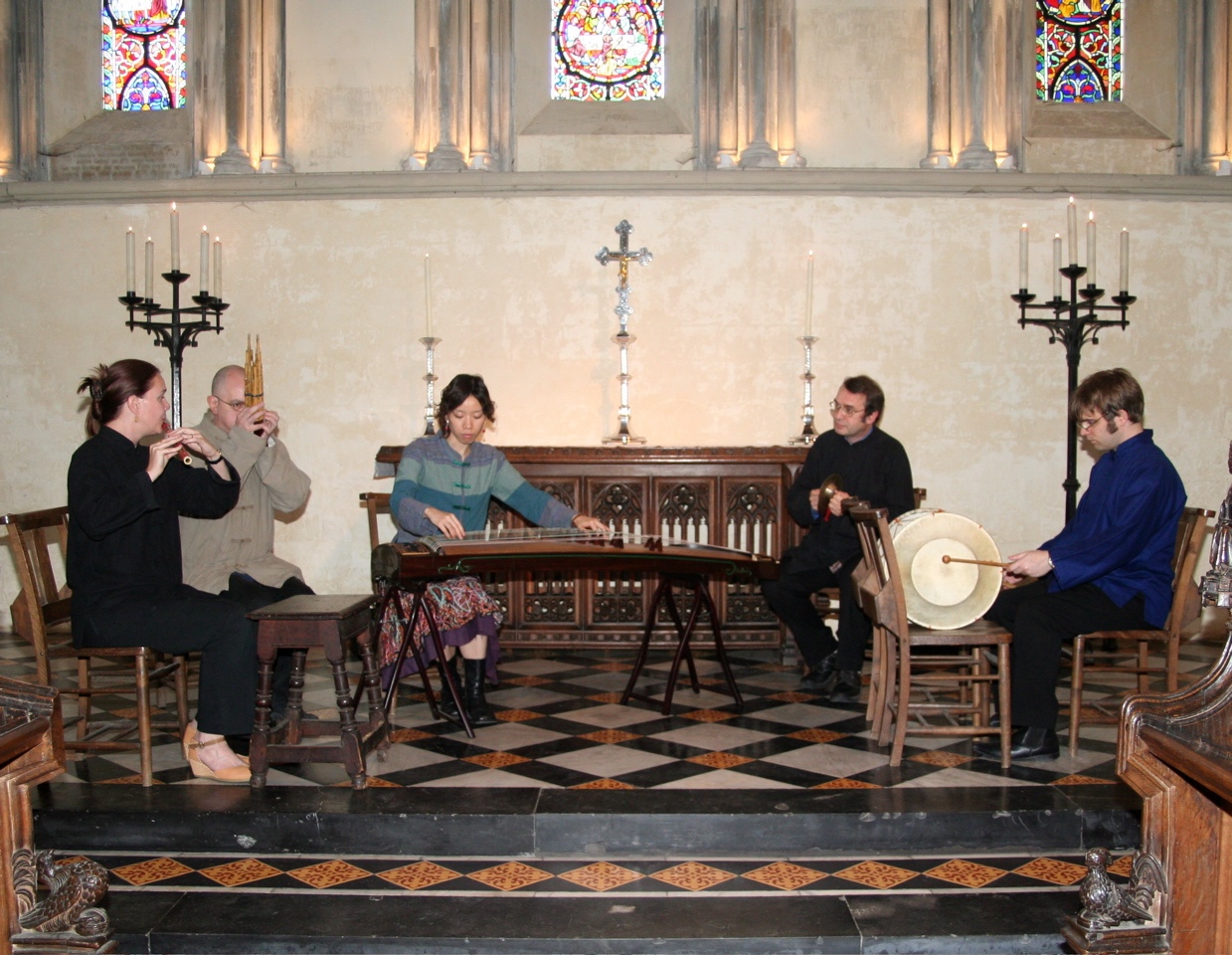
lp-memorial
Rachel Harris (dizi flute)
Stephen Jones (sheng mouth-organ)
Sun Zhuo (zheng zither)
Richard Widdess (bo cymbals)
Simon Mills (changgo drum)

Laurence worked for several decades on recreating the Tang court music of the early 8th century. His insights from deciphering scores exported from Tang China to Japan still deserve wider recognition.

We tried playing these transcriptions in the 1970s, with more enthusiasm than ideas about Tang performance practice, or indeed any Chinese performance practice—given that this was during the Cultural Revolution, when we had virtually no access to the practice of traditional music in China. I still have little idea of Tang practice, but trying to play such pieces under the influence of “ancient” genres still performed today for rituals in the north Chinese countryside—notably the shengguan wind ensemble of ritual specialists around Xi’an, Wutaishan, and Beijing—yields what I find rather attractive results.

Laurence changed the course of my life. I first went to China in 1986 in search of clues from living music there about how to perform these scores, and he was most generous, as ever, in understanding my rapid conversion to the documenting of living traditions in China, postponing historical reconstruction—well, until now.

In returning to the piece Qinghai bo (Waves of Kokonor), we ornament the simple outline of the tune, in 12 bars of 8/4, as Laurence suggested; we model our version on shengguan music, and are also influenced by our playing of Shanghai teahouse music. Whereas Laurence convincingly showed that Japanese performance practice had retarded the melody substantially, we begin with a very slow ornamented version, and gradually strip the ornaments away as we speed up, as they still do in Shanghai. I have no evidence that this practice was used in the Tang—given that the piece seems to be in 8/4, the first, slow, version is most likely to be “original”, but the faster versions are closer to the way that Laurence would have heard it, so these successive versions are more like alternatives.

Today we use dizi flute, sheng mouth-organ, and zheng zither, all of which have early scores for this melody; accompanied by a small Korean changgo drum (a rough approximation to the Tang jiegu), and a pair of small cymbals, as in north Chinese ritual music today.

Laurence didn’t allow purism to delay his exploratory renditions of these pieces: one of my enduring memories of him is his playing of the melodica, with a completely straight face—I’m sure he would have recognised that modern ritual specialists’ style on the sheng, with its addition of fifths and octaves to the melodic line, might make a more suitable model.

While this is far from a historically informed rendition, it marks an advance from our versions of the 1970s; Laurence would doubtless have many comments! The music at last sounds Chinese—if not necessarily Tang Chinese…

For the work of Allan Marett, another pupil of Laurence, click here and here. For more gagaku, see Messiaen in Japan, and Toru Takemitsu. And for Laurence’s work on folk instruments of Turkey, see note under Bartók in Anatolia.


[1] Just a few partial references:
https://www.theguardian.com/science/2007/jun/06/guardianobituaries.booksobituaries
http://www.tandfonline.com/doi/pdf/10.1080/17411910802343803
https://www.dropbox.com/sh/ybltn8wbquzycmf/AAAK8MU1jp2hk5SpTTv3QNR2a?dl=0&preview=CHIME+Journal+4+Autumn+1991.pdf
On film, a charming interview from 1983:

See also
https://www.youtube.com/watch?v=Hr1irFTGjQk
https://www.youtube.com/watch?v=_DWzh-1WOwc
https://www.youtube.com/watch?v=GV3tg3GF-Ok

[2] Among much discussion, Richard Widdess provides context: “Historical ethnomusicology”, in Helen Myers (ed.), Ethnomusicology: an introduction (The New Grove handbooks in music), pp.219–37.

[3] Ibid. p.221.