
From shabi to zhuang bi to yabi,
with reference to diaosi, sang, tangping, and neijuan

In a post on an enigmatic shop-sign in pinyin I’ve written about the useful term shabi (“fuckwit”), followed in Changing language by zhuang bi (“poseur”). Subcultures have thrived ever since the 1980s’ reforms, but have taken off with the internet. There’s some impressive coverage of popular recent buzzwords reflecting countercultural trends of disillusionment, from “loser” (diaosi 屌丝) and “mourner” (sang 丧) cultures to “lying flat” (tangping 躺平). Of course, like the subaltern subjects of Xu Tong’s films, such news makes a welcome counterpoint to reports on the glorious triumphs of the latest Party Plenary session.
The progression of these concepts is the subject of a substantial article by Zhu Ying and Peng Junqi, “From diaosi to sang to tangping: the Chinese DST youth subculture online” (2024). We corduroyed, monocled professor types [Speak for yourself—Ed.] may find the distinctions between such tribes as arcane as their own jaded adherents will regard the taxonomy of ritual segments of a Daoist funeral. (For “mourner” culture—apathy, rejection of the treadmill—see e.g. here; “lying flat”, subject of another Sixth tone article, struck me as a potential wacky Olympic sport. See also this article by David Cowhig.)
An interview with anthropologist Xiang Biao and a New Yorker article by Yi-Ling Liu further introduce “involution” (neijuan 内卷)—feelings of burnout, ennui, and despair. Xiang Biao scores points (with me, at least) for alluding to Prasenjit Duara’s theory of state involution. He refers to the pressures of Confucianism, but I haven’t seen wuwei cited as prototypes for the dropout generation, or early Daoist recluses such as the Seven Sages of the Bamboo Grove.
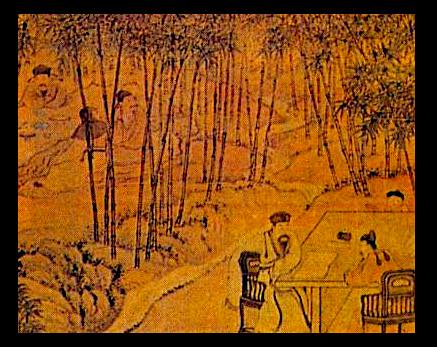
The Seven Sages of the Bamboo Grove.
Alienation has always been a theme of Chinese culture. Under Maoist campaigns, one finds hints in the memoir of Kang Zhengguo and it’s evident in much fiction, as well as the films of Jia Zhangke, masterpieces of small-town ennui in the early years of reform. Still, returning to the internet age,
According to Professor Huang [Ping], lying down can be seen as the opposite of involution—a decades-old academic term referring to societies becoming trapped in ceaseless cycles of competition that resurfaced last year [2020] as an online buzzword in China. “In a relatively good social environment, people may feel involuted, but at least they’re trying,” he said. “If it’s worse, people will tangping.”
And Yi-Ling Liu observes tellingly:
China’s crisis is unique in the severity of its myopia and its methods of entrapment. The young high schooler, disillusioned with the monotony of school, cannot easily access subversive subcultures or explore alternative ways of living, because, increasingly, that information is deemed “vulgar” or “immoral” and banned by the government, scrubbed from the digital sphere in the name of “promoting positive energy.” The delivery driver, seeking better working conditions, can’t protest his grievances or organize his fellow workers in an independent union, because he rightly fears that he will be detained. The disillusioned office worker, instead of taking action, will more likely sink deeper into his desk chair. Involution is a new word that helps keep an old system, and those who control it, in place.
* * *
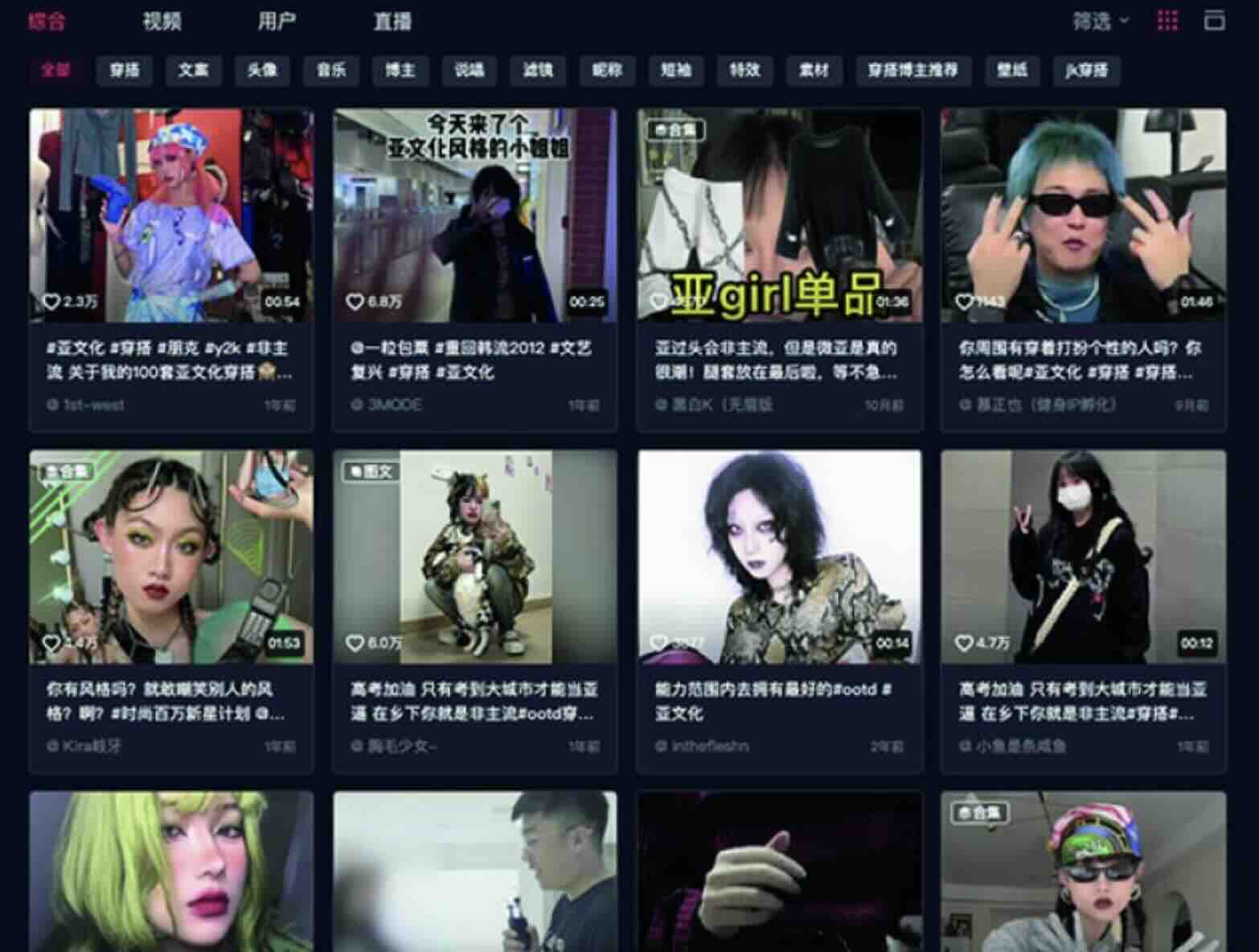
For the new kid on the ennui block, Made in China journal has an intriguing article by Casey Wei, “The involution of freedom in yabi subculture”, with analyses based on class and gender as well as a useful list of further readings.
In yabi 亚逼 the bi is shabide bi, prefixed by ya (Asia, inferior: the “sub” of yawenhua 亚文化, “subcultures” that develop among “like-minded people” 同温层 tongwenceng). * Yabi signifies “subcultural resistance under a heavily repressed authoritarian regime, […] a post-internet hotchpotch, influenced by (but not limited to) punk, otaku, e-girl, cybergoth, K-pop and J-pop, Asian babygirl, hip-hop, rave, and techno styles from across the globe”. I’m not sure how relevant are Wei’s ambitious historical perspectives on the “feminine supernatural”, from early imperial history through to the Maoist era (“From goddesses and fox spirits to Holding up half the sky”).
I like the opening line of Made in China’s Twitter blurb for the article:
The yabi subculture is often deemed messy and superficial.
Anyway, I’ve penned a couple more haiku (see here):
So much for wuwei
Lying flat is so old hat
Time now for yabi
Not gonna zhuang bi
Lie flat, fold in?—bit too much
I’m just a shabi
* * *
Even in our own societies, it’s a challenge to absorb changing culture and language, all the more so with the explosion of digital media. In analysing Brahms manuscripts or medieval Daoist ritual manuals, the ivory tower of academia is estranged from the practical issues of Real Life. Moreover, the vocabulary of those of us who make intermittent study visits to somewhere like China is always going to be partial, based not only on our particular study topics (political, cultural, and so on) but also on our early exposure, and we may find it hard to keep up with a rapidly changing society. **
I have no illusions that I could possibly keep up with UK youth culture (see Staving off old age, Cleo Sol, New British jazz, and so on). Still, chagrin and curiosity combine to encourage us to learn just how far we have fallen behind; and however traditional the topics we study in China, the attitudes of new generations will be influential. Even if we’re hoping to “salvage” Daoist ritual, our fieldwork takes place not in a social vacuum but within an ever-changing context. With the slogans of Maoism long replaced, popular culture and urban ennui seep into rural values, as grandchildren surf their phones on visits back to the countryside to attend family funerals.
* * *
Even ethnomusicologists documenting traditional culture need an overview of urban soundscapes and the wider cultures in which they mingle (OK, I’ll say it—”in the urban bazaar”) (note The hidden musicians)—Istanbul, for instance, is far more than genteel Ottoman ensembles, the call to prayer, and Alevi ritual, as rap replaces arabesque… Whereas the Anglo-American “classical” and pop worlds manage to ignore each other, it’s worth registering the musical diversity of Beijing and Shanghai in the 1930s and 1990s, popular genres (e.g. Shanghai jazz, and New musics in Beijing) co-existing with drum-singing, silk-and-bamboo, Daoist ritual, the qin zither, and indeed WAM (see e.g. Fou Ts’ong).
* My own coterie being those who will be amused when I identify which kou character I’m referring to by explaining “Yuqie yankoude kou“. Speaking of ya 亚, I love the creative misgrouping of the elements in Lunda YaFei xueyuan 伦大亚非学院 (SOAS) by one of the Li family Daoists!
** Again, my personal lexicon remains based on an incongruous mix of folk ritual terminology and the trite political slogans of the 1950s’ village Party Secretary (here, under “Rapport”).
 Stephen Jones: a blog
Another great article. Sixth Tone has changed its tone and does not even pretend to provide unbiased information about modern Chinese society, so thank you for sharing your thoughts and insights.
LikeLiked by 1 person