
Kundera and Pawlikowski
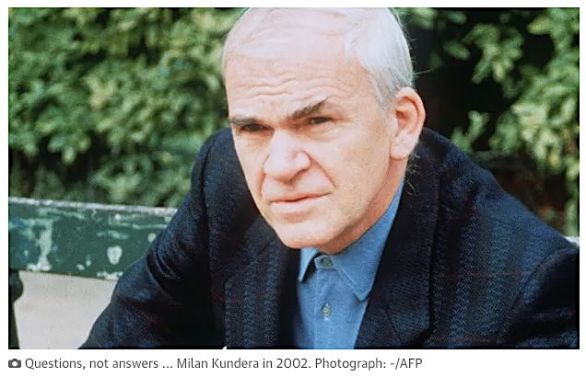
In memory of Milan Kundera (1929–2023; wiki, obituary), a favourite of mine is his first novel,
- The joke (Žert, 1967).
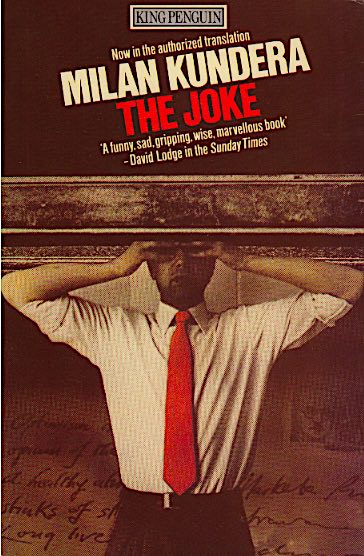
Kundera worked on the book in the years following his expulsion from the Party in 1950. Published briefly before the Prague Spring was crushed, it shows personal and political to be enmeshed, as well as the degradation, nihilism, and duplicity of life under state socialism—through a brilliant exposé of the “fakelore” indignities to which the regime subjected traditional culture in Moravia.
For insights on the musical elements of The joke, I recommend
- Michael Beckerman, “Kundera’s musical joke and ‘folk’ music in Czechoslovakia, 1948–?”, in Mark Slobin (ed.), Retuning culture: musical changes in central and eastern Europe (altogether a useful volume—see under Musical cultures of East Europe).

With The Ride of the Kings pageant as the novel’s climax, Kundera saw through the propaganda:
… Tereza, when she met the chairman of the collective farm at the spa, conjured up an image of the countryside (a countryside she had never lived in or known) that she found enchanting. It was her way of looking back, back to Paradise. […]
The state supported folk music and festivals in an attempt to show, quite simply, that in this “people’s paradise” the folk, at least, were alive and well.
Cynical as Kundera’s alter ego Ludvik is, he has a genuine attachment to the folk culture that was now being distorted. But his revenge is hollow. Here’s an excerpt from the 1969 screen adaptation by Jaromil Jireš:
Just as fascinating is Jireš’ short film about the Ride of the Kings:
* * *

All this, and more, is brilliantly evoked in the Polish movie
- Cold war (Zimna wojna, Paweł Pawlikowski, 2018)
(interview; reviews e.g. by Peter Bradshaw and Mark Kermode), which I’ve finally managed to watch on Mubi.
Ravishingly filmed in black-and-white, it’s a visual and musical tour de force. The early scenes, soon after the Communist takeover, are revealing in themselves. Fieldworkers Wiktor and Irena avidly record folk musicians in the countryside, then help develop the sanitised style of the “Mazurek” song-and-dance ensemble (based on the real-life Mazowsze troupe), until the folk ethos is further compromised by numbers in service of the Party agenda.


My post on folk traditions of Poland opens with this brief period of energy in the collection of folk music after the Communist takeover. The soundtrack, masterminded by Marcin Masecki, illuminates the whole drama. Opening strikingly with a gutsy song accompanied by bagpipe and fiddle in a snowy village, the early scenes, with Irena and Wiktor inspired by the project, communicate the whole excitement of discovering folk culture through fieldwork (see also Musics lost and found).
As in The joke, prescriptive apparatchiks play a disturbing role. Their companion Kaczmarek, soon to become director of the new state troupe, doesn’t share their enthusiasm; this revealing exchange is horribly familiar to me from meetings with cultural cadres in China:
You’re not afraid it’s too crude, too primitive?
No, why?
Where I come from, every drunk sings like this.
Kaczmarek is also a believer in racial purity. Listening to a beautiful recording they’ve just made:
What language are they singing in?
Lemko.
Thought so. Shame.
Why?
That it’s not ours.
Mr Kaczmarek, whether it’s ours or not is none of your business.
They record a young girl singing an unadorned Dwa serduszka (Two hearts)—a song which punctuates the story in successive reincarnations:
Kaczmarek soon becomes director of the new state troupe, spouting sonorous platitudes. As Peter Bradshaw comments:
Of course, they are not “welcoming tomorrow”—they are welcoming the past, a hyperreal, state-sanctioned, quaintly fabricated time of “folk” tradition that will combine Soviet obedience and ethnic conformity. […]
This kind of genteel artistic display is vital for foreign diplomacy, for establishing relations with Russia and a prestigious display for the west. It is a world of privileged foreign travel, with fears of defection.
Auditioning for the troupe is young singer Zula. Though she looks the part, she’s “a bit of a con”— not from politically-correct peasant stock, on probation, and choosing to sing a song learned from a Russian movie. Himself resistant to ideology, Wiktor is charmed by her energy, spirit, and originality. As Zula goes “from victim to victor and back again”, their fatal attraction now unravels over fifteen years from Poland to East Berlin, Paris, and Yugoslavia.

While many peasants were nonplussed by the state troupes’ misappropriation of their culture, the film does well to observe that this new sanitised style was welcome to some audiences who perhaps (like Kaczmarek) found folk music unpalatable in its raw form. After one glossy spectacle, an audience member comes up to Wiktor and Irena:
I never believed in all this folky stuff. But this—it moved me. You are a genius. To take something so… and make it so beautiful. Thank you both—this is the most beautiful day of my life!
At a tense meeting a stony-faced Party Boss dictates the direction the troupe is to take:
In your repertoire you access priceless treasures of our People’s culture. This is highly commendable. We want you to become a living calling-card for our Fatherland. But I think it’s time for you to add something new to our repertoire—about Land Reform, World Peace and the threats to it. A strong number about the Leader of the World Proletariat. And we, in turn, will do everything in our power to show our gratitude. […]
Irena politely protests:
I would like to express gratitude on behalf of the whole ensemble for your appreciation of our hard work. But when it comes to our repertoire, it’s based on authentic folk art. The rural population doesn’t sing about Land Reform, Peace and Leaders—simply doesn’t do it, so it would be difficult.
But the canny Kaczmarek hastily reassures the Boss:
Comrade Bielecka, I assure you that our nation is not so ignorant, including its rural elements. Quite the contrary. And it will sing about those issues—as long as it is encouraged, and given direction. This, I believe, is exactly what I believe the role of our ensemble should be.
The principled Irena soon quits, while Wiktor (a male archetype straight out of a Kundera novel) bides his time as musical director—and as Zula’s lover. Not to toe the new ideological line could destroy lives.
And all that’s just in the first half-hour—essential viewing for the impact of state socialism on expressive culture, more eloquent than volumes of worthy academic analysis.
While the ensemble is in East Berlin on tour in 1952, Wiktor defects, going on to eke a living at a jazz club in Paris. Over the following years the lovers’ brief encounters become ever more bleak as they come together and pull apart, until the degradation of their final meetings back in Poland, crossing paths again with Kaczmarek. Peter Bradshaw again:
A love affair thrashes and wilts in the freedom of a foreign country, and then begins to submit to the homeland’s doomy gravitational pull.
Cold war richly deserves all the praise it has gained. Now I’m also keen to watch Pawlikowski’s 2013 film Ida (trailer here), set in 1962.
Under Life behind the Iron Curtain, see also Czech stories, Madonna pilgrimage in Communist Poland, and Polish jazz, then and now.
* * *
The state’s manipulation of folk culture that Kundera and Pawlikowski evoked was a common element throughout the Soviet bloc, such as sharovarshchyna in Ukraine—and also a major theme in China.
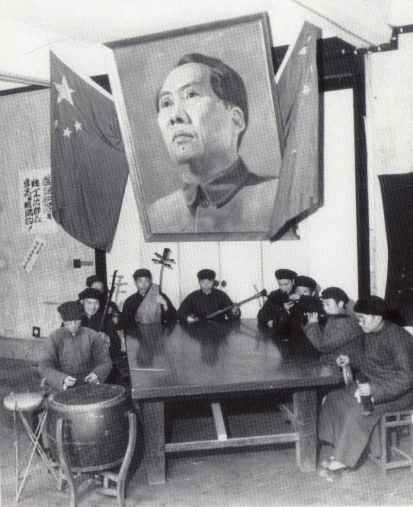
The great Yang Yinliu made wise comments as early as 1953 on the gulf between folk and conservatoire styles—ideological tensions that were replicated in countless county-towns (for a renowned peasant ensemble “blowing with the wind” during the 1958 Great Leap Forward, see Ritual groups of Xushui, under Qianminzhuang; cf. A Daoist serves a state troupe).
And the impasse has continued in the “Golden Age” myth, idealising the Glorious Past (see Debunking “living fossils”). Even in cases where local cultures have not been explicitly targeted by the state for remoulding, scholars may unwittingly impose their own agendas, notably in the flummery of “Intangible Cultural Heritage“. See also Different values, and The politics of ethno-trad.
 Stephen Jones: a blog