Is Western Art Music superior?

In ethnomusicology—if not in the echelons of Western Art Music—a canonical text is
  • Judith Becker, “Is Western Art Music superior?” (Musical Quarterly 72.3, 1986) (text here).
As she observes,

Among musicologists, music educators, and even some ethnomusicologists, the doctrine that Western European art music is superior to all other musics of the world remains a given, a truism. […]

A more subtle form of this dogma is the concept that Western art music is intrinsically interesting and complex, while other musical systems need their social context to command our serious attention. According to this version of the theory of Western superiority, some exceptions are allowed, and music systems such as Persian classical music, Hindustani and Carnatic music, or Javanese gamelan music are classified among those musics which can stand on their own, be usefully extracted from context, are susceptible to intricately complex analyses, and are aesthetically satisfying in their own right. This, the most liberal edge of the theory of Western music superiority, has adherents of great persuasiveness among scholars who are deservedly respected within the disciplines of musicology and ethnomusicology.

 I’ve noted such “exceptions” as the Beatles, Indian raga, and jazz, besides posts like Joining the elite musical club. Becker lists three main axioms that underpin the claimed superiority of WAM:

1) that Western music generally, and art music in particular, is based upon natural acoustic laws, the natural overtone series providing a link between man and nature, that is between culture and the phenomenal world; this intrinsic bond provides a physical and metaphysical base (with its Pythagorean transcendental orientation) which informs all music so created;

2) that Western art music is structurally more complex than other music; its architectural hierarchies, involved tonal relationships, and elaborated harmonic syntax not only defy complete analysis but have no parallel in the world;

3) that Western art music is more expressive, conveys a greater range of human cognition and emotion, and is thus more profound and more meaningful than other musical systems in the world.

She goes on:

No-one, I think, denies that Western art music has a foundation in the natural world, is very complex, and is deeply meaningful to its musicians and audiences. The problem lies in denying these attributes to other peoples’ music. Because we often cannot perceive it, we deny naturalness, great complexity, and meaningfulness to other musical systems. Despite all protestations to the contrary, to deny equivalences in all three pillars of belief -that is, naturalness, complexity and meaningfulness, to the musical systems of others-is ultimately to imply that they are not as developed as we are. The doctrine of the superiority of Western music is the musicological version of colonialism. Thus the issue is not only an intellectual problem, it is also a moral one.

Becker takes the three axioms in turn, showing how naturalness, complexity, and meaningfulness are common attributes claimed or evident in musical cultures around the world. For nature and acoustics she adduces the musical bow and mbira in southern Africa. Furthermore,

To say that a musical system is “natural” is to endow it with a kind of necessity, a kind of power which it otherwise might not have. One way musical systems gain “naturalness” is to be conceptually linked with some other realm of discourse which is highly valued and whose validity is unquestioned. The linkage of music with acoustics, that is, science, is to create a coherence between a very powerful realm of discourse (science) and a less powerful one (music). Another way of linking music with a highly valued system is the interpretation of music as the setting of texts, as in logocentric Arabic cultures. Another powerful linkage, this time metaphoric, is found in the idea that music is mimetic and imitates the sounds of nature. Music as the organisation and elaboration of the sounds which would be in the world even if men were not is a theory fairly widespread in China, Indonesia, Melanesia, and ancient Greece. […]

What is felt to be natural, correct, and true depends upon the correspondence between the musical event and some other realm of human experience. Naturalness has to do with relationships, with what aspect of the world outside of man is believed to be intimately connected to musical expression: natural, believed iconicities between music and the world outside music.

As to complexity,

We tend to equate complexity in music with one particular kind of complexity, and then look for that kind in other musics. Not finding it, we designate that music as simpler.

and

Calculated, deliberate alteration of pitch, duration, rhythm, overtone structure (tone quality), attack, or release according to prescribed constraints creates a kind of complexity in a single line which is as demanding of the artist as any single passage in a Beethoven symphony. A Japanese shakuhachi player or a solo singer of a Mongolian “long song” are particularly striking examples of this kind of complexity. Closer to home are the iterative songs of many American Indian traditions…

Noting complexity in polyphony and polyrhythms, she presents an initiation chant from Benin: Benin chant That musicologists were slow to appreciate all this reflects both ignorance and a prejudice against cultures seemingly lacking in notation or theory. Becker cites Hugo Zemp’s work on the panpipe ensembles of the ‘Are ‘Are in the Solomon Islands (preview here).

Like a violin, a digeradoo [sic] may be played simply or complexly. All degrees of complexity of intent, along with degrees of ability to carry out complex intent, exist in all cultures. If, with or without instruction, we cannot readily perceive the complexity of a digeradoo performance, the fault does not rest with the musician. One must always assume that a musician of another culture is as sensitive to fine musical distinctions, is as caring about tone, attack, and phrasing, as our good musicians are. Not all are, of course, but variations in complexity of intent, and skill in carrying out intent, are not determined by geography, race, or culture.

As to meaningfulness, Becker starts with WAM:

Two ideas of musical meaning predominate in Western Europe, both in the scholarly and philosophical literature and in the common everyday realm of the intuitions or expressed concepts of lovers of Classical music. One is that music has no meaning outside of itself, that meaning is inherent in its structure. The other is that music expresses human emotions. While it might seem that one could hold both these views simultaneously or sequentially, in the history of musical scholarship of the past century and a half they have tended to be mutually exclusive and antagonistic.

Kaluli

Meaning is diverse among different cultures. Steven Feld’s study of the Kaluli people of Papua New Guinea has become a routine exhibit. Becker concludes:

Individual reactions to Western Classical performance may be as intense as among the Kaluli, but musical performance is more commonly felt to be somewhat abstracted from a personally felt emotion. We feel the sorrow or the joy vicariously, through the skill of the composer and performer, and we are not required to make any direct introspection of our own past.

One cannot say which music is more expressive, or meaningful, or which refers to a greater range of human cognition. Each should be studied and understood on its own terms; one cannot usefully be evaluated against another.

Evaluation is only viable within a culture, particularly within a genre. Standards of excellence are as stringent and as clear cut for a gisalo performance as for Schubert lieder. Expressiveness appears to be closely related to skill in all cultures. The difficulty with comparison and evaluation arises when one compares an intimately known musical genre with one barely understood. Musical systems are radically contextualised and intermeshed with other realms of culture and demand particularised analyses. Western art music is neither superior nor inferior to other musical traditions. Musical systems are simply incommensurable.

NettlThis way of thinking has also given rise to impressive ethnographies of Western Art Music by scholars such such as Ruth Finnegan, Henry Kingsbury, Christopher Small, Kay Shelemay—and Bruno Nettl, most articulate advocate for the equality of the world’s musical cultures (among many expositions, see e.g. his reflections on Blackfoot aesthetics).

The theme that Becker spelled out underlies my reflections in What is serious music?!; note also posts under Society and soundscape. And of course, one should take the critique further: as the anthropologist (big brother of the ethnomusicologist) would say, the claimed superiority of “Western culture” rests on an assumption that the whole “civilisation” of the Western bourgeoisie is itself superior—leading us to pundits such as Edward Said and the many critics of colonialism…

Crazy

Billie 1949
Billie Holiday arriving at a preliminary court hearing in 1949. Source.

If I had to choose just one song by Billie Holiday (click here and here for my main tributes)… I couldn’t. You’re my thrill is a contender, as is Don’t explain, and Fine and mellow, filmed for TV in 1957, is just adorable—but I’m increasingly infatuated by Crazy he calls me:

Sentenced for possession of narcotics in 1947 (as she wrote, “It was called ‘The United States of America versus Billie Holiday’. And that’s just the way it felt”), Billie was released from prison in 1948; losing her New York City Cabaret Card prevented her from working anywhere that sold alcohol—but she soon came back with a show at Carnegie Hall. Meanwhile she had split with both her husband and her drug-dealing lover, but she was busted again in January 1949. She made the very first recording of Crazy he calls me (Carl Sigman, to lyrics by Bob Russell) in October that year—in the same Decca sessions as You’re my thrill.

Billie Decca 1949
Decca Studios, New York 1949.

Any jazz ballad invites rubato, but this song is a classic instance of Billie’s utter freedom from rhythmic parameters, going with the poetic flow; and just as astounding is her freedom in pitch, always bending the notes of the scale. No-one else can match this! With the modulation into the middle section (“Like the wind that shakes the bough…”), she’s just as irresistible. Like much of her repertoire, it could be quite saccharine, but her timbre in every phrase encapsulates joy and pain, at once intimate and detached—I can only resort to the cliché “bitter-sweet”. *

Many other singers went on to record the song (listen here), but not even Aretha’s version can compare. Still, I do have a lot of time for Patsy Cline’s Crazy (1961) (in my post on Country). My Playlist of songs includes not only Billie, Chet Baker, Michel Legrand, and the Beatles, but fado, taranta, Bach, Mahler, Ravel, and Barbara Hannigan…


* I could listen to Billie singing the opening lines all day long: “I say I’ll move the mountains, and I’ll move the mountains, if he wants them out of the way”. Many jazzers found it useful to study notation, but like many of the great musicians in the world, Billie never learned to read music. In most cases she would have been familiar with other versions of a song before she began reworking it, so for this new tune I imagine Carl Sigman or someone would have played it to her. Notation can be ridiculous (see here, scrolling down)—of course it’s only an approximation, but most scores of the opening read more or less like this:

Crazy score

Take me for a pint sometime and I’ll do my impression of Pavarotti singing it from the score… A few written versions attempt to convey basic syncopation, but they just look pedantic. Most jazzers found notation useful at some stage, and some latter-day sax or guitar players learn a lot from meticulous transcriptions of solos by Bird or Hendrix; but in simpler cases like this, far better just to listen…

BTW, those opening lines recall a dictum that has been attributed to Flann O’Brien, perhaps apocryphally: “I don’t like mountains, because they get in the way of the view”. 

Another sax legend

David Murray

Part of my “strangely extensive” jazz series!

Murray 2

The London Jazz Festival crams so many fabulous events into just over a week that one inevitably misses a lot. I didn’t even manage to hear Ron Carter, Aynur, or Hiromi, but I delighted in young musicians’ tribute to Tomasz Stańko.

After Ronnie Scott’s (NB my post on Ray Man, covering a lot of ground!), another site for Soho jazz history is the conducive ambience of Pizza Express in Dean street. Besides the endless subtleties of the rhythm section, I’ve always delighted in trumpet playing (see e.g. Fats Navarro, Clifford Brown, Lee Morgan, and several posts on Miles, to be found under A jazz medley), but it’s good to refocus on the sax, in the hands of the great David Murray (b.1955). Raised in Cali, in 1975 he moved to New York, taking part in the loft scene; soon he founded the World Saxophone Quartet. Like Rahsaan Roland Kirk, he benefits from circular breathing. Since 1998 he’s spent periods living in Paris (working on projects such as Banlieu Blues), and collaborating with Afro-Cuban musicians. No longer an enfant terrible, and not yet quite a veteran, he’s constantly exploring.

I relish this, live at the Village Vanguard in 1986, with Ed Blackwell (drum), Fred Hopkins (bass), and John Hicks (piano):

In 2018 Murray formed Class Struggle (see e.g. here) with his son Mingus (guitar), Rashaan Carter (bass), Russell Carter (drums), Craig Harris (trombone), and Lafayette Gilchrist (piano).

Murray 1
Source.

In this interview he reflects:

As tenor players get older, we tend to play fewer notes, but with more authority. We play the truer tones. Even in the kind of music I play, I feel my notes are getting more selective. I don’t have to fool around with unnecessary notes. Some of my predecessors—Archie Shepp, Paul Gonsalves, Lester Young, Coleman Hawkins—got a chance to mature in their sound. Part of the maturation process on the tenor is to become more frugal with your note selection. Some notes ring on the tenor saxophone more so than on other instruments. There are certain notes inside of a chord—if you hit the right tones in the measure, you don’t need to spell out every note inside of a chord. It takes experience to do that. You have to tell a story on the tenor saxophone. A young musician won’t tell the same stories as an older musician—a musician who has been through divorces, who has been through the travails and tribulations of life. Some of the truest stories in jazz have been told on the tenor saxophone. When you hear a story being told, you take note.

Fred Jung called him “the Madonna of jazz, reinventing himself in a contemporary union with the times”. Murray laments the lack of individuality in the factory approach and the Lincoln Center treadmill. He speaks highly of Jerry Garcia and the Grateful Dead.

Blues for Memo (2018; playlist), with rapper Saul Williams, was recorded in Istanbul (see here). It’s a tribute to Turkish jazz promoter, Mehmet “Memo” Uluğ. “We try to remember him with this album. He was a bass player and he and his brother, Ahmet, owned the Babylon jazz club and Positive Productions. They’ve done great things in Istanbul” (cf. Nardis, and Jazz in Turkey). Here’s an introduction, opening with the sounds of kanun zither:

Here’s a “teaser” for the documentary I’m a jazzman (Jacques Goldstein, 2008):

* * *

For how jazz musicians learn and develop their voice and style, it’s always going back to Paul Berliner, Thinking in jazz. Jazz genealogies are notoriously hard to trace (dig the trumpet family tree here)—for the sax, see e.g. this basic outline. Murray may sound “avant-garde”, but he recognises his influence from players of previous generations such as Paul Gonsalves, Lester Young, Coleman Hawkins, and Dexter Gordon. From the next generation, he’s inspired more by Albert Ayler and Ornette Coleman than by Coltrane. The sax lineage moves on through the likes of Pharaoh Sanders, Wayne Shorter, Art Pepper, Sonny Rollins, and Archie Shepp, then extending to Britain with musicians like Courtney Pine and Nubya Garcia.

At the LJF gig Murray appeared with Luke Stewart (bass), Russell Carter (drums), and Marta Sanchez (piano). His gutsy honking in the bass contrasted with some amazing squealing way up the top of the register, just like a high trumpet. He ended with vocals reminding us of his advocacy for the African-American cause. Here’s his 2004 album Gwotet with the Gwo-Ka Masters and Pharaoh Sanders:

The creativity of jazz never ceases to astound me. David Murray exudes an air of authority, at once dynamic and benign—it was a delight to hear him.

In memory of Nicolas Robertson

Nick 1
Source.

Alas, Nicolas Robertson died in Lisbon earlier this month, after many years of chronic illness.

A fine tenor (“cheap at the price”, as we would say), after his early years in Cambridge Nick became a long-term member of early-music groups such as the Monteverdi Choir, the Tallis Scholars, and the Sixteen. As a Bach scholar, he worked assiduously in assisting John Eliot Gardiner‘s research, and I pray that Nick’s own studies of Bach may yet see the light of day.

Nick 2Mozart with the Monteverdi Choir in Barcelona, 1991:
Nick back row, centre.

Notwithstanding his bookish demeanour, the touring life gave him ample opportunity to sample the richesses of continental beverages; a denizen of sleazy bars in every port, he was an unlikely pinball wizard. Marrying his soulmate Lidia in 2003, they lived together in Lisbon. At the end of 2008 Nick declared himself bankrupt (“one of the best things I ever did, as well as a fascinating experience”). I suppose he never recovered from losing first their house (in a fire, 2009) and then Lidia (to cancer, 2013). He died on her birthday.

Softly spoken, even reserved, Nick’s conversation was erudite, arcane, and hilarious, making him a somewhat unusual drinking buddy. A devotee of Oulipo and Perec, he delighted in language (or rather, languages). The gnomic tales that he concocted out of anagrams provided by fellow choristers on tour (mostly composers’ names, like Gran visits York [Igor Stravinsky] or Nubile gorilla [Lili Boulanger], and Mozart operas, like Noon? Gad–vini! [Don Giovanni], are just extraordinary—a kind of Esperanto fiction, creating spiralling worlds of fantasy. I was honoured to post a series of these tales on my blog. Nick’s meticulous system of indents, single and double quotes, long and short dashes, italics, and so on offers the reader crucial clues to the possible meaning of the arcane text, so typesetting was fiendishly complicated—Lear (Bacon), aka Barcelona, is a good example—and our correspondence about such minutiae provided us with hours of harmless nerdy fun. I’ve listed the tales here, and they’re among the treasures of this site. Now I really must edit some of the remaining stories, “compiled without regard to expense or the feelings of the public”, in the words of our inspiration Flann O’Brien.

As a keen football aficionado, another ongoing project in which Nick delighted was collecting drôle headlines about Jesus (“Jesus is very happy with his eleven”, and so on).

I didn’t actually spend much time with him on tour. For reasons that may be apparent by now, I have only a hazy recollection of our encounters in said hostelries. During the Paris legs of our annual Mozart opera tours in the 1990s he took up residence in the little dive next to the Châtelet, which boasted one of his favourite pinball machines; after concerts in Lisbon, I knew he was just the guide for the tiny holes in the wall where you could hear amateur fado singers, away from the pomp of the fancy restaurants; and, unlike most of the choir (alas), he was always up for flamenco bars in Andalucia.

After decades of quiet Bacchic indulgence, eventually his taste for the grape caught up with him. Already ailing seriously the last time we met in Lisbon, he remained fascinating company. His emails were a constant source of abstruse giggles.

See also this tribute from his colleague Richard Savage; more on Nick’s Facebook page.

We both chortled over this line from Vivien Stanshall:

If I had all the money I’ve spent on drink… I’d spend it on drink

—and I think Nick might have approved of it as a suitable epitaph.

A streamlined Chinese studio

Loft best new

I don’t know how often sinologists, or other bibliophiles, overhaul their groaning shelves, but it’s been a delight to reorganise my Chinese library over the last year—part of a thorough decluttering of all my Worldly Goods as the entire house is renovated.

  • First, I resolved to slim down the collection, radically—a process which itself took several months. This, of course, involves deciding which books and recordings I am actually likely to refer to ever again, and which I might possibly seek one day for a reference…
  • Then I found Good Homes for many of the volumes and recordings with which I could bear to part—one main recipient being the CHIME library in Heidelberg.
  • Then, along with all the other aforementioned Worldly Goods, I put everything into storage for six months.
  • Next, with a brilliant team, devising a loft (now a generous space) that would take the remaining material (China books in English, including religion, anthropology, and literature, mostly belonging on the ground floor).
  • Then—at last!—unpacking all the heavy boxes and adorning the loft.

So what for forty years had steadily grown into a random, grimy accumulation of books, journals, * offprints, fieldnotes and fieldtapes, instruments, CDs and DVDs, spread over various rooms, has now become a compact shrine that reflects the enchantment of doing fieldwork in China since 1986, including precious volumes from the Maoist era, along with a modest selection of meaningful artefacts. Far more than a dry repository of arcane academic material, it’s become a tribute to generations of Chinese peasants and scholars, along with the whole history of fieldwork in the PRC.

Although I have no illusions of doing further fieldwork in China (both out of decrepitude and as a futile moral stance against worsening repression), my three decades studying there make an enduring perspective on my whole worldview, and I will continue to reflect on their significance, in both Chinese and global contexts.

left, 1956 facsimile of 1425 Shenqi mipu tablature for qin zither;
right, Yang Yinliu‘s report from 1956 Hunan field survey.

With many books double-parked yet still accessible (and a multitude of loose documents neatly stored in brightly-coloured box-files on another wall!), the classification goes something like this:

  • a little collection (again pared down) on the qin zither (see e.g. here, here), and
  • general surveys, encyclopedias, early history, and so on

—all tastefully adorned with posters from tours with the Li family Daoists, one of their exquisite sheng mouth-organs (made by Gao Yong), the lovely little folding stool that Li Manshan made in the late 1960s; shadow puppets, god statuettes from Fujian, gifts of calligraphy, fieldwork photos… 

Loft 5

My fetish for taxonomy is reflected in several posts (starting here, with links to the joys of indexing and the Sachs-Hornbostel system…). The loft is just one locus for taxonomy—where do table mats and salad bowls belong, for instance (or, more ambitiously, All Things Bright and Beautiful)?!

Renovating the whole decrepit little house has been a gruelling but hugely rewarding project. The result is just exhilarating. As to the loft, it’s far from a mere cosmetic exercise: sure, I’ve managed amidst chaos for forty years, but a conducive environment creates headspace—heartspace—for focused thought. So the new Chinese studio is now a tranquil haven that I, and perhaps visitors too, can relish—to sit, browse, study, relax, play violin or even erhu

京西微玄觀內碧雲罐庵
Priory of Azure Cloud Bottle within Belvedere of Tenuous Obscurity


* I had a substantial collection of the major PRC musicology journals for c1980 to 2000, largely superfluous as they became available online—at least until CNKI toed the Party line of closing China off to the world again. Anyway, by now personal libraries should be increasingly manageable, with many books also available as pdfs. Still, without rigorous self-control, collections tend to expand…

LJF: a tribute to Tomasz Stańko

POSK poster

Following my own tribute to the great Polish trumpeter Tomasz Stańko (1942–2018), the splendid POSK Jazz Cafe in Hammersmith was packed for an evening celebrating Stańko’s music, as part of the London Jazz Festival. If I was first drawn to Stańko by the crime novels of Michael Connelly, others—like Rob Luft—were turned on to his music by his soundtrack to Homeland

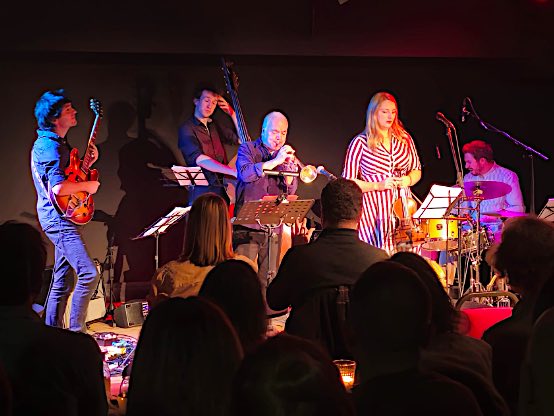
The tribute was offered by a talented quintet of Chris Batchelor (trumpet), Alice Zawadzki (vocals, violin), Rob Luft (guitar), Misha Mullov-Abbado (bass), and Jay Davis (drums)—making an opportunity not just to revisit Stańko’s work, but to admire the creativity of British jazz today.

POSK Stanko gig
Image: POSK, via Twitter.

Rob Luft was ever-creative, and Misha Mullov-Abbado dynamic, if over-amplified; Jay Davis’ drums might sometimes have emerged rather more from the texture. Alice Zawadzki blended her vocal timbre sensitively with the ensemble, particularly with the trumpet; while her violin playing is based in classical, she’s part of an impressive Polish fiddling tradition from folk fiddlers to jazz contemporaries of Stańko like Michel Urbaniak and Zbigniew Seifert (see under Polish jazz, then and now). But I was most transported by Chris Batchelor’s unassuming central presence in the Stańko role; thinking of what Miles should surely have said, he didn’t just do something, he stood there. If reverb is doubtless the authentic sound of the psychedelic style to which the band was paying homage, it came at the expense of a certain clarity and balance; the contemplative numbers worked well. A most invigorating evening!

For Turkish jazz at last year’s LJF, click here. For a roundup of my “strangely extensive” jazz series (featuring not just the Golden Age but also Ethiopia, Japan, and Spain), see A jazz medley.

Gansu: connecting social trauma and expressive culture

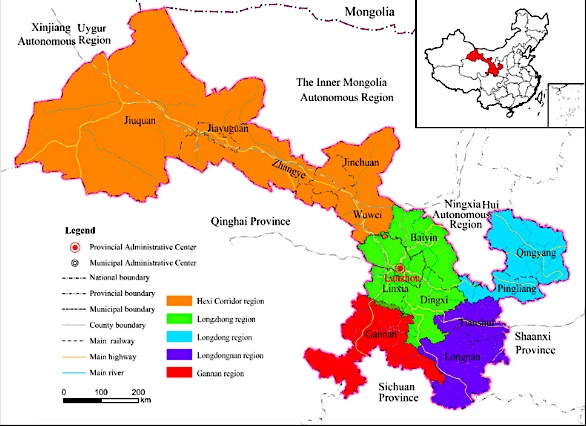
Gansu map
Gansu: regions. Source.

The province of Gansu was chronically poor even before the horrifying abuses its people suffered under Maoism, culminating in (but not limited to) the Great Famine from 1959 to 1961. Nor should we forget the non-Chinese ethnic inhabitants of the region, who were targeted just as brutally through the period—see under Recent posts on Tibet, notably for Amdo (e.g. Labrang, here and here).

I was again reminded of Gansu by Ian Johnson’s fine book Sparks, highlighting a brave group of students in Tianshui denouncing the heartless, mendacious Party during the 1960 famine. Here I’ll reiterate themes that I began to explore in China: memory. music, and society, the Maoist labour-camp system, Famine and expressive culture, and Cultural Revolutions.

Many documents on Gansu are to be found in Yang Jisheng’s definitive exposé Tombstone, as well as the China famine 1959–1961 site. Before the studies of Frank Dikötter (Mao’s great famine) and Xun Zhou, Jasper Becker already gave a useful introduction to the disaster in Gansu in his 1996 book Hungry ghosts.

The Hexi corridor, leading deeper into the oasis towns of Central Asia, is perhaps most widely known by the early Buddhist cave complex of Dunhuang, projecting a proud image of the glories of ancient Chinese culture. So again Ian Johnson does well to remind us of the memoirs of Gao Ertai, revealing bitter political turmoil there in the 1960s.

Qingshui Daoists

Looking again at this undated image (in the “Instrumental music” [sic] volumes of the Anthology) from the Qingshui Bureau of Culture (“Welcoming Water ritual of Huashan Daoists” 清水道教华山派科仪中的“迎水”), I surmise it was taken in the 1980s.

I’ve long felt that Gansu was a major lacuna in coverage of household Daoist ritual. I’ve noted recent developments in Wuwei (Another Daoist debate), and in Jingyuan county northeast of Lanzhou (Maoist worship in Gansu). Counties where some of the most active Daoist groups are based, such as Zhangye, Jingtai, and Tongwei, are among those where the famine was particularly severe (for the famine in Tongwei, see e.g. Dikötter pp.307–9).

Gansu Daoists https://stephenjones.blog/2018/09/15/mao-worship/

More images from the “instrumental music” volumes of the Anthology for Gansu:
Daoists of the Daode guan temple, Zhangye county;
Cao Jixiang’s Daoist band performing the Ten Offerings ritual, Jingtai county;
Cao Jixiang’s band seated.

However, most scholars of Daoism still gravitate to the image of imperial grandeur, focusing on manuscripts with ancient ancestry rather than documenting transmission history since the mid-20th century, or people’s lives. But whether we’re interested in Daoist ritual before 1949 or before the Song dynasty, the condition in which we find it today is permeated by the bitter experiences of its practitioners and patrons since the 1950s.

The range of expressive culture in Gansu—folk-song, narrative-singing, opera, shawm bands, and so on, embodies the sound of suffering. Vignettes on some genres include

For Gansu in recent Chinese movies, see

In such extreme conditions of social disintegration, it seems most unlikely that anyone could muster any energy to perform, either for ceremonial or entertainment—but even in extremis (indeed, particularly in extremis), villagers resorted to their religious traditions, staging rituals to alleviate adversity and to resist collectivisation (note The temple of memories); and (as in Hunan and Hebei) refugee groups banded into itinerant folk performing troupes in a desperate bid to survive. Not just local archives, but some published county gazetteers (like that of Yanggao in north Shanxi), give impressively frank accounts of the famine years.

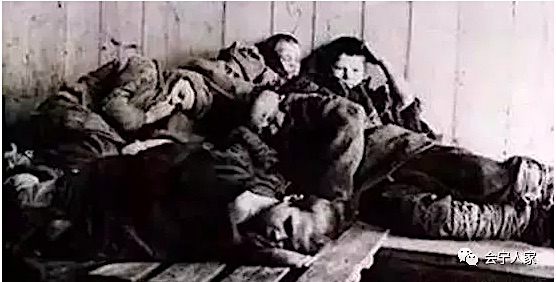
Gansu famine
Source.

The great Anthology of folk music of the Chinese peoples may be flawed, but if used selectively it can yield useful material—particularly the Monographs on Opera and Narrative-singing (as I explain in my extensive review of the whole project, cited here). The Appendices of the Narrative-singing Monograph for Hunan reproduce concerned documents from regional Cultural Bureaus over the period, providing startling evidence of social disruption. I discuss the equivalent volume for Gansu in a separate post, but the Opera Monograph (Zhongguo xiqu zhi, Gansu juan 中国戏曲志, 甘肃卷 [1995]) doesn’t include such documents. The introductory Overview, under “Opera in Gansu since the founding of the PRC” (pp.25–34) has terse hints at the crisis.

Right from the 1949 “Liberation”, Gansu was part of the national drive to “rescue” the rich heritage of regional genres, led by the new cultural units set up at county, regional and provincial levels (for brief accounts of a plethora of state-funded and amateur groups, note pp.436–524) . But from 1957, Party “rectification” was infecting such institutions, and the ensuing Anti-rightist campaign was bitter and destructive. Even as society collapsed further with the 1958 Great Leap, leading to the famine, opera workers were regimented to create new dramas reflecting the agenda of high socialism.

The 1959 “celebrations” around the 10th anniversary of the founding of the PRC featured new items from eleven genres—not just qinqiang and Peking opera, but regional folk styles like shadow-puppetry of south Gansu 陇南影子腔, qingshui quzi 清水曲子, Yulei huadeng xi 玉垒花灯戏, Wuwei xianxiao 武威贤孝, and daoqing from east Gansu 陇东道情. The latter was now adapted into the staged form Longju 陇剧, with a newly-formed state troupe embarking on a prestigious national tour. But

From 1960, Gansu suffered a succession of natural disasters [sic], and opera work went into crisis; with a great increase in the proportion of sick and injured, many opera troupes were unable to maintain regular activity.  Some troupes used the pretext of touring to go to Xinjiang in search of food.

Again, fleeing to the northwest was a common measure—indeed, at the time, many Uyghurs were taking refuge even further northwest in the USSR (cf. the long migration of the Dungan people).

By 1962, in a common pattern throughout China, many county-level troupes were laid off, and many artists migrated or changed trades. At the same time (cf. Hunan),

some opera troupes and informal folk opera groups used the opportunity to perform bad and forbidden operas such as Shazi bao 杀子报 and Da shangdiao 大上吊, and in some regions harmful customs (louxi 陋习) from the past like “exorcising the stage” (datai 打台, jitai 祭台, pp.594–5), and singing holy dramas (chang shenxi 唱神戏) were revived, creating an adverse social influence. After the general improvement over the whole province from 1963, this was corrected [sic].

The “chronicle of major events” for 1959 to 1964 (pp.70–75), supplemented by lists of official opera festivals for those years (pp.684–98), has a typical list of glamorous official events, giving no hint of the unfolding disaster. As ever, we have to read between the lines. With a basic awareness of the disastrous social climate, even the roster of official festivals over the period makes disturbing reading. Those chosen for the state performing troupes were in a small minority of folk artists throughout the countryside. Life in the urban troupes might provide them with a tenuous lifeline as long as they were still able to function, but institutions were becoming ever more vulnerable: with political campaigns targeting “rightists” and anyone who dared speak out, they too lived in a climate of fear. One can only imagine that even the state performers would have been severely malnourished, at the risk of being sent to labour camp, while their families back in the countryside were starving (cf. household Daoist Li Qing in north Shanxi).

Gansu page

Even before the imminent casualties of the early Cultural Revolution, death rates around 1960 among folk performers would have been just as high as among the general population. Although I don’t find such dates prominent among the biographies of celebrated artists in either the Opera Monograph or other volumes for Gansu, among the countless lives cut short there are doubtless tragic stories to be told—like those of (p.674, above) qinqiang performers Xin Xing’an (1930–59), who died after being “struggled” at the height of the Anti-rightist campaign, and Chen Huiying (1930–61), portrayed as working herself to death in the spirit of self-sacrifice.

* * *

Like Henan and Anhui, Gansu was an extreme case, but most of the senior performers I was meeting in other regions from 1986 to 2018 shared similar experiences that were none too simple to elicit. The adjacent region of Shaanbei, with its barren loess hills, shares a history of poverty and famine, not least under Maoism: among posts listed here, note the work of Guo Yuhua.

The famine, and the whole Maoist era, are major themes in my own work on the Gaoluo village ritual association and the Li family Daoists, and in our fieldwork in Hebei and Shanxi (see under Local ritual). There’s always a complex story to be told, as in this extraordinary 1959 image of former Buddhist monk Daguang with his young ritual disciples in North Xinzhuang village in the Beijing suburbs—at the height of the Great Leap and the famine:

North Xinzhuang 1959

Zen and haiku: R.H. Blyth

Blyth 1

Reflecting on the popularity of Zen in the West, and my own youthful explorations, in my post More East–West gurus I gave a brief introduction to R.H. Blyth (1898–1964) (wiki, and useful sites here and here), but he deserves more.

The initials stand for Reginald Horace—both the given names and the initials being a sign of the times. Always of an alternative bent, a vegetarian and adherent of George Bernard Shaw, in 1916 he was imprisoned in Wormwood Scrubs as a conscientious objector. A musician, he was a devotee of Bach—I’m not aware that he ever encompassed noh and kabuki drama, or the shakuhachi, but it’s an intriguing idea.

Blyth zazen

“Fed up with the rigidity of Britain’s class system” * (Robert Aiken’s recollections are worth reading), in 1925 Blyth went to live in Korea, teaching English at Seoul University, learning Japanese and Chinese, and studying Zen. By 1940 he had moved to Japan, teaching English at Kanazawa University, but in 1941 he was interned again, now as a British enemy alien. After the war, “he worked diligently with the authorities, both Japanese and American, to ease the transition to peace”. In 1946 he became professor at Gakushuin University.

Like his mentor the great Zen master D.T. Suzuki, Blyth’s work influenced the post-war Beat generation like Gary Snyder, Jack Kerouac, and Allan Ginsberg. Besides Alan Watts, other devotees of Blyth’s work included Aldous Huxley, Henry Miller, and Christmas Humphreys (another challenging dinner party), all of whom I admired in turn. For Steinbeck’s and Salinger’s absorption in oriental mysticism, see here. Salinger wrote:

Blyth is sometimes perilous, naturally, since he’s a highhanded old poem himself, but he’s also sublime.

In my teens I was much taken by

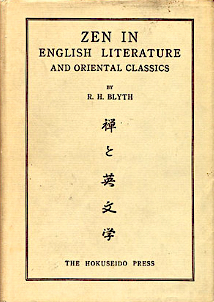
  • Zen in English literature and Oriental classics (1942), written while he was interned in Japan (446 pages, full text here).

Blyth Zen in cover

Blyth finds “expression of the Zen attitude towards life most consistently and purely in Shakespeare, Wordsworth, Dickens, and Stevenson, adding “numerous quotations from German, French, Italian, and Spanish literatures”. He devotes a whole chapter to Don Quixote, and four chapters to Non-attachment; further chapters cover Death, Children, Idiots and Old Men, Poverty, and Animals.

I was already far more amenable to the oriental classics (notably haiku, his main exhibit) than to all the Shakespeare and Wordsworth, but I got the point that enlightenment didn’t necessarily have to be sought in remote oriental mountain hermitages—as the Daoist and Zen masters indeed remind us.

The flaws in his ouevre are recognised. The most pervasive criticism, which leaps out from every page, is that, in the words of Patrick Heller, “Blyth’s work exhibits a fundamentally distorted Orientalist view of Japanese literature and religion”. And, according to wiki:

Some also noted that Blyth did not view haiku by Japanese women favourably, that he downplayed their contribution to the genre, especially during the Bashō era. In the chapter “Women Haiku Writers” Blyth writes:

Haiku for women, like Zen for women—this subject makes us once more think about what haiku are, and a woman is…Women are said to be intuitive, and as they cannot think, we may hope this is so, but intuition…is not enough… [it] is doubtful… whether women can write haiku.

Discuss (not). Oh well—that was then, this is now. 

* * *

Besides Zen and Zen classics (five vols, 1960–70), Blyth went on to publish Haiku (four vols, 1949–52) and History of haiku (1964—five of eight planned volumes).

Haiku covers

And a spinoff that is more significant than I realised is his work on senryū, ** the cousin of haiku penned from a more humorous, human angle (pdf of his 1949 book here).

Blyth’s immersion in Japanese culture was admirable, and he exerted a considerable influence on the post-war generation in search of the Wisdom of the Mystic East…

See also this roundup of posts on Japanese culture, including some largely jocular haiku in English—a later trend of which Blyth may or may not have approved.


* Blyth’s search for a less rigid class system would seem to be a case of “out of the frying pan into the fire”, but if the class system of his new home was just as rigid, at least it wasn’t British?!

** I’ve awarded italics to senryū, whereas haiku has surely become roman—cf. sarangi and sitar?!

Lives of Chinese women

Two new books

Among many stimulating articles on the site of the China Books Review, two caught my attention, on the lives of Chinese women.

It’s an important topic, much studied—when socialist revolutions always promise more for women than they deliver. [1] Both reviewers point out the increasing sensitivity of broaching such issues: as Irene Zhang observes, such works are all the more notable “in a Chinese media landscape increasingly hostile to feminists, and with state organs intent on stamping out grassroots activism”.

That comment comes from Zhang’s review of

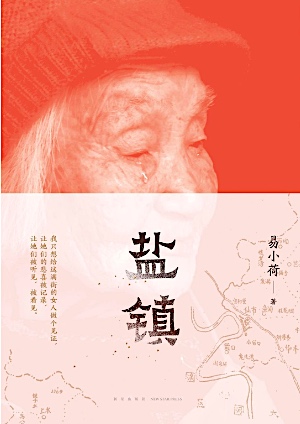
  • Yi Xiaohe 易小荷, Yanzhen 盐镇 [Salt town] (2023).

Yan zhen cover

The book gives “profiles of ten women of different generations, occupations, and social statuses” in the small town [2] of Xianshi in Sichuan—“a former brothel madam, a cotton fluffer’s wife, a hotelier, a lesbian village cadre, a struggling mother, a butcher’s daughter, a beautician, a divorced university dropout, an orphaned migrant worker, and a 17-year-old prostitute.”

Zhang observes:

Interwoven through the ten profiles are themes that define rural womanhood: discrimination, domestic violence, family duty, and resilient entrepreneurship. 

As Yi Xiaohe sums up,

Life in Salt Town is a series of tiny cuts and open wounds. Women are trying to stanch the bleeding, while men are adding salt to the wounds.

Zhang’s review makes some salient [sic] critical points, concluding:

Rural Chinese women live with deep intergenerational trauma from centuries of deprivation and state violence, with few guarantees of institutional protection. They still struggle to move upward in a stubbornly discriminatory society all too happy to exploit their labor. While tackling the topic is commendable, in Salt town the big-city writer looks at the small town the same way we look at this history today—from a safe distance. What hurts Xianshi’s women is still at large.

* * *

In the same issue is a review by Zheng Churan—one of the “Feminist Five”:

  • Zhu Xiaobin 朱晓玢, Tade gongchang buzaomeng: shisanwei nügong dagong shi 她的工廠不造夢 ──十三位深圳女工的打工史 [Her factory makes no dreams: the working stories of thirteen Shenzhen female workers] (2022).

Zhu Xiaobin cover

Whereas Salt town soon became a bestseller in the PRC, Zhu’s book, published in Taiwan, is banned in mainland China. It tells the stories of thirteen women—as Zheng observes, a more diverse sample than in Lesley T. Chang’s 2008 book Factory girls: from village to city in a changing China.

Her Factory Makes No Dreams tells the stories of individual rebellion by female workers: escaping from arranged marriages; choosing to live alone instead of in abusive domestic situations; going on strike against unfair working conditions; and defying patriarchal society by participating in feminist movements against sexual harassment.

The review goes on:

Reporting the stories of female factory workers inevitably touches upon sensitive topics that can provoke the ire of authorities: gender inequality; exploitation of workers; “stability maintenance” measures to crack down on protest; an unfair household registration system; and shocking wealth disparity. 

In conclusion, Zheng writes:

Where once the voices of female workers were heard, now the Chinese state has dismantled these windows into their lives. This is lamentable for the Chinese people, not only because they no longer have the opportunity to hear the stories and demands of workers from different classes, but because a greater crisis lurks ahead. With declining employment rates in China, low birth rates and escalating social conflict—when stability maintenance policies can no longer quell the anger of those who face injustice—without these bridges to the public, will the people still be able to navigate their difficulties peacefully and without violence?


[1] Among many authors to read in in English are Elisabeth Croll, Gail Hershatter, Harriet Evans, and Leta Hong Fincher. For my paltry observations on the lives of women in China (mainly in the rural north) and elsewhere, click here; see also Chinese translations of Elena Ferrante and Sally Rooney.

[2] Small towns (zhen), or townships, between the county-towns and the villages, are an important nexus: see e.g. Dong Xiaoping here.

Aretha

Aretha

I’ve accompanied some amazing singers In My Time, like Mark Padmore, and I’ve heard some great folk artists from around the world (such as flamenco, or dhrupad), but I just have to remind you of the divine inspiration of the great Aretha Franklin (wiki; YouTube), whose songs I’ve featured in several posts (Detroit 67; Amazing Grace; most recently, under Ray Charles). So if you’re not up for selections by more knowledgeable pundits (like 30 songs ranked here, or 50 here), here’s a succinct roundup of some of her most enchanting tracks.

  • Respect:
  • I say a little prayer:
  • Amazing Grace:
  • Spirit in the dark:

Barack Obama in 2015:

Aretha 2Nobody embodies more fully the connection between the African-American spiritual, the blues, R&B, rock and roll—the way that hardship and sorrow were transformed into something full of beauty and vitality and hope. American history wells up when Aretha sings. That’s why, when she sits down at a piano and sings “A Natural Woman”, she can move me to tears […] because it captures the fullness of the American experience, the view from the bottom as well as the top, the good and the bad, and the possibility of synthesis, reconciliation, transcendence.

Among all the inspired genius of the soundtrack of the 60s and 70s (Beatles, Coltrane, Hendrix…), Aretha will always stand out. Note also my fabulous, eclectic Playlist of songs, and for a great Long Read, What is “serious music”?!.