Got my mojo working

As we bandy around the word “mojo”, its origins in African ritual aren’t necessarily uppermost in our mind.

The wiki article makes a useful introduction. In African-American Hoodoo, mojo is among many terms for a protective amulet consisting of a flannel bag containing magical items, deriving from Islamic practices of West and Central Africa. In West Africa a generic term is juju bags. The gris-gris pouch of the Mandingo spread from West Africa via slavery to the southern States and Haiti, fusing with African-American Christianity (and making a link with Native American cultures). In the 1930s mojo bags were part of Zora Neale Hurston‘s ethnographic research. See also America over the water.

mojo 2

Mulatto ex-slave in her house near Greensboro, Alabama, 1941 (wiki). Caption:
African-American women sewed charms and mojo hands into their quilts for spiritual protection. Newspaper is placed on the walls to ward off evil spirits.

Minkisi

Minkisi, Kongo/Central Africa (World Museum, Liverpool) (wiki). Caption:
Minkisi cloth bundles were found on slave plantations in the United States in the Deep South.
Minkisi bundles influenced the creation of mojo bags in Hoodoo.

* * *

Muddy Mojo

Since the 20th century, the word spread in American culture in movies and songs, coming to refer to sexuality and virility, and more broadly to motivation in general. It became a theme of blues, such as

Little did I realise that Bo Dudley’s “Mama’s got a brand new bag, gonna groove it the whole night long” had such a pedigree.

Chinese folk religion: “belief”

People like Li Wenbin and He Qing perceived no conflict between worshipping the gods and supporting Mao’s broad social goals.
Screenshot

My new film on the 1995 New Year’s rituals in Gaoluo prompted a recent post on the tenacity of rural tradition. Still reflecting on my fieldwork, it’s worth revisiting my remarks in Plucking the winds (pp.277–85, with minor edits) on “belief”—referring to devotional village-wide groups like those of Gaoluo

By 1995, as throughout its history, the association had a patchwork of ritual artefacts made at various times over the last century. The previously bare and unprepossessing “public building”, once fully adorned, becomes a place of great beauty, a fitting backdrop for the association’s ritual performance. But since the 1980s’ liberalisations, unlike many villages in north and south China, and indeed nearby such as Niecun just across the river, Gaoluo has not sought to build new permanent temples.

What beliefs do such artefacts symbolise? Aside from popular belief in Houtu and the God of Prosperity, formidable He Qing, always a fine source for old traditions, said the association worships Dizang, god of the underworld, as the association is said to go back to “the Tang king’s tour of hell”. Members have often said this was a Daoist association, even that Gaoluo was a Daoist village. We must understand this in the context of a dilution of the term Dao, meaning simply ritual. The senior He Yi recalls a tradition that their [melodic instrumental] music was learned long ago from Daoists (laodao), for what it is worth; perhaps a priest attached to the temple of North Gaoluo or the temple of South village. In fact, where one can distinguish, their ritual manuals have a substantial Buddhist component, and they also claim to believe in the Buddhas (fo). Fo and Dao are often interchangeable in these villages.

Association members themselves do not generally worship, regarding participation in ritual activities itself as a form of worship. In fact, women are altogether more prominent as worshippers, despite being excluded from active participation in the association. Incidentally, the name “music association” (yinyuehui, see here and here)  seems to be used less than terms like huitong 会统 “association” and zaijiaode 在教的 “those in the teachings”. Ritual function is paramount: in discussing the activities of the association, villagers also often talk of the scriptures, with terms like “taking out”, “escorting”, or “offering up” the scriptures (chujing 出经, songjing 送经, fengjing 奉经).

Masters of the vocal liturgy: left, Cai Yongchun; right, Li Wenbin.

As to the ritual specialists, while they practise the rituals with considerable intensity, few of them claim to “believe” deeply in the gods. This is a difficult area—my efforts to elicit insights often recall Nigel Barley’s bemusement in Cameroon. Genial Shan Yude, himself a member of the “civil altar” reciting the scriptures, recalled the previous generation frankly: “Cai Fuxiang didn’t really believe, he just learned the liturgy when he was young and got attached to it, like me; he was a Party member. Cai Yongchun believed—he didn’t join the Party.” In these cases there seemed to be a certain negative correlation between Party membership and religious faith.

But it was complex, for few sought or gained admission to the Party, but many more, including Cai Yongchun, were leading participants in the revolution. Anyway, after Cai Fuxiang’s decline, his belief in the gods, or the habit of ritual, endured, but that was not the cause of his later expulsion from the Party. And there were some people, whether Party members or not, who had no time for religious traditions at all, like Shan Yude’s own father: “He didn’t believe in any gods—he was always doing things for the Party, but he didn’t join.” But throughout the area we have found leading local Communist cadres preserving the tradition of reciting their villages’ ritual manuals. People like Li Wenbin and He Qing perceived no conflict between worshipping the gods and supporting Mao’s broad social goals. Whether or not they joined the Party, people’s commitment to the new society was just one element in their psychological make-up: there was no simple correlation between religious belief and identification with the ideals of the new society.

Shan Yude also claimed “Most people in this area aren’t so superstitious, but my grandparents’ generation was more devout.” This may be broadly true: on the Hebei plain, so near the modern ideas of Beijing, faith may have declined more over the 20th century—gradually, note, not abruptly upon Liberation—than in some more remote mountainous regions of inland central China. But again the point needs qualifying. As we saw, belief was already variable among the previous generation of ritual specialists, and continues to be so today. Cai Haizeng’s father Cai Fulü practised the rituals, but with no great commitment; but now, villagers say, Haizeng is a believer, certainly more than his father. Yude himself observed, “Cai Ran and Haizeng are more devout than me. He Qing also believed, but he had a lively mind.”

Yude even admits to not believing at all, like his father. Still, if so, then he practises the ritual with utter commitment: we should distinguish belief in gods and belief in tradition, in the morality of convention. Cai Yurun made a comment that reveals the new social tolerance: “whether villagers believe or not, it’s harmless”. Though it was only officially considered harmless after about 1980, under the Maoist climate of the previous decades private worship might have become rarer, but belief was hard to assess; after all, public rituals had persisted. Very limited scientific advances and an increasingly secular climate had only partially obviated the need for the gods, and people continued to feel vulnerable.

A facile comparison with Europe springs to mind. Regional variations in industrialisation and literacy may partly explain different levels of religious belief, but within particular societies, and between generations, the situation is uneven; north Italy may generally be less “superstitious” than south Italy, but young and old people in both regions may or may not believe. Our problem for China is to recognise variation and put the supposedly dominant control of ideology in perspective. […]

Cai Yurun pointed out: “The saying goes that when they’re folded away the god paintings are just cloth, but when they’re hung out they’re gods. Don’t pay too much attention to our bullshitting normally—as soon as we Open the Altar we’re pretty serious.”

guanfang 1998The lantern tent, New Year 1998, with new and newly-copied donors’ lists.

On pp.304–5 I observed:

As to ordinary villagers, though there are more women than men offering incense, quite few of the people are elderly: young and middle-aged women and young men seem to be more active in this. Many pray silently to the goddess Houtu for a healthy son, or for the health of their aged parents; more generally, people pray for good luck and prosperity. One couple were offering incense for the safety of the husband, who is a driver—even for the most diehard atheist, recourse to divine help is particularly tempting on Chinese roads. The atmosphere is highly jocular as people enter the courtyard. As they go to offer incense and kowtow they look embarrassed, but then when they are actually doing it they become extremely serious. Then as they get up and dust down their trousers, they look all embarrassed again, and, avoiding meeting the gaze of all the onlookers, they leave the area, often going into the “temple”.

So in many such villages over previous decades, the driving force behind the maintenance of ritual practice seems to have become not so much “religious belief” (itself an alien term) as the “old rules” (lao guiju 老规矩) of tradition. Devotional associations provide ritual as a service for the needs of the community. Under “Note on sources” in my introduction to these groups, see also my articles “Chinese ritual music under Mao and Deng” (1999) and “Revival in crisis” (2010).

Besides groups like these, this may even apply to occupational groups of household Daoists such as the Li family in north Shanxi. With the Maoist decades followed by the assaults of popular media and migration, ritual groups in some regions (including Hebei) are now further vulnerable to the secularised commodifications of the Intangible Cultural Heritage. But it would be interesting if one could somehow compare communities further south like Fujian (see under “Elsewhere” in main Menu), where religious faith appears to be a still more pervasive catalyst for popular culture. And of course faith in the gods is still evident in the popularity of spirit mediums, pilgrimages, and so on.

See also Catherine Bell on ritual.

The tenacity of local ritual traditions

Screenshot

Pondering the wider significance of my new film on the 1995 New Year’s rituals in Gaoluo, it strikes me that a major theme is the tenacity of mainland Chinese peasant communities in maintaining their ritual traditions “amidst massacre, invasion, civil war, famine, political campaigns, theft, destruction, banditry, and religious rivalry”—a history detailed in Plucking the winds.

It’s a theme I noted in this post with reference to the different modern histories of the PRC and Taiwan, and it’s all the more relevant today amidst the sanitised packaging of traditional expressive culture from the Intangible Cultural Heritage.


Ritual life around Xi’an: an update

I’ve just made some small but important updates to my early article Ritual life around Xi’an. Besides introducing the devotional societies there, urban and rural Buddhist and Daoist temples, former rain pilgrimages, the great Daoist priest An Laixu, the lifelong research of Li Shigen, and my own visits, I’ve at last added some rare film footage unearthed by David Badagnani—all the more precious for predating the flummery of the Intangible Cultural Heritage.

To help negotiate the new Menu, the page is now under “Elsewhere”—here’s a screenshot!

Screenshot

Note also the series on Shaanbei in the same Menu!

My YouTube channel!

I wonder how the new Menu is going down… Under “Roundups” there you’ll also see Playlists. I’ve never even noticed that I have a YouTube channel, but now—with the stimulus of publishing my new film on Gaoluo there—I’ve begun the long process of creating new content.

YT

In due course I’ll upload my other documentaries on Chinese ritual cultures. Meanwhile I’m gradually adding playlists to reflect some main topics of this site, so far including

This exercise might seem a tad nerdy, but I naively imagine the selection in the playlists may lead the listener [singularEd.] to the numerous posts in which I expand on them—hmm, I spend all my time going on about how silent immobile text isn’t enough, and I now find myself pointing out that film isn’t enough—No Pleasing Some People…

A new menu!

umbrella

Now that I’ve supplemented my  portrait film of Li Manshan with precious footage from the 1995 New Year’s rituals in Gaoluo, I feel it’s time to rearrange the deckchairs on the Titanic by revamping the Menu.

Here’s an instance of the submenus:

Screenshot

With a personal selection of some main topics, I hope it’s now more user-friendly. It’s work in progress, and doubtless I will continue refining it in the coming months, so please Bear With while I edit links throughout the site. It may take us all a while to get used to it—do keep using the search box too.

The new sequence (with many sub-menus to explore) goes

  • Home (also under reconstruction!)
  • POSTS
  • Li family Daoists
  • Gaoluo
  • Hebei
  • Elsewhere (Shaanbei, Gansu, Fujian…)
  • Themes (Zhengyi/Quanzhen, Fieldwork, Ritual, Famine…)
  • Roundups (including folk traditions around the world)
  • Western Art Music

Good luck! Feedback welcome.

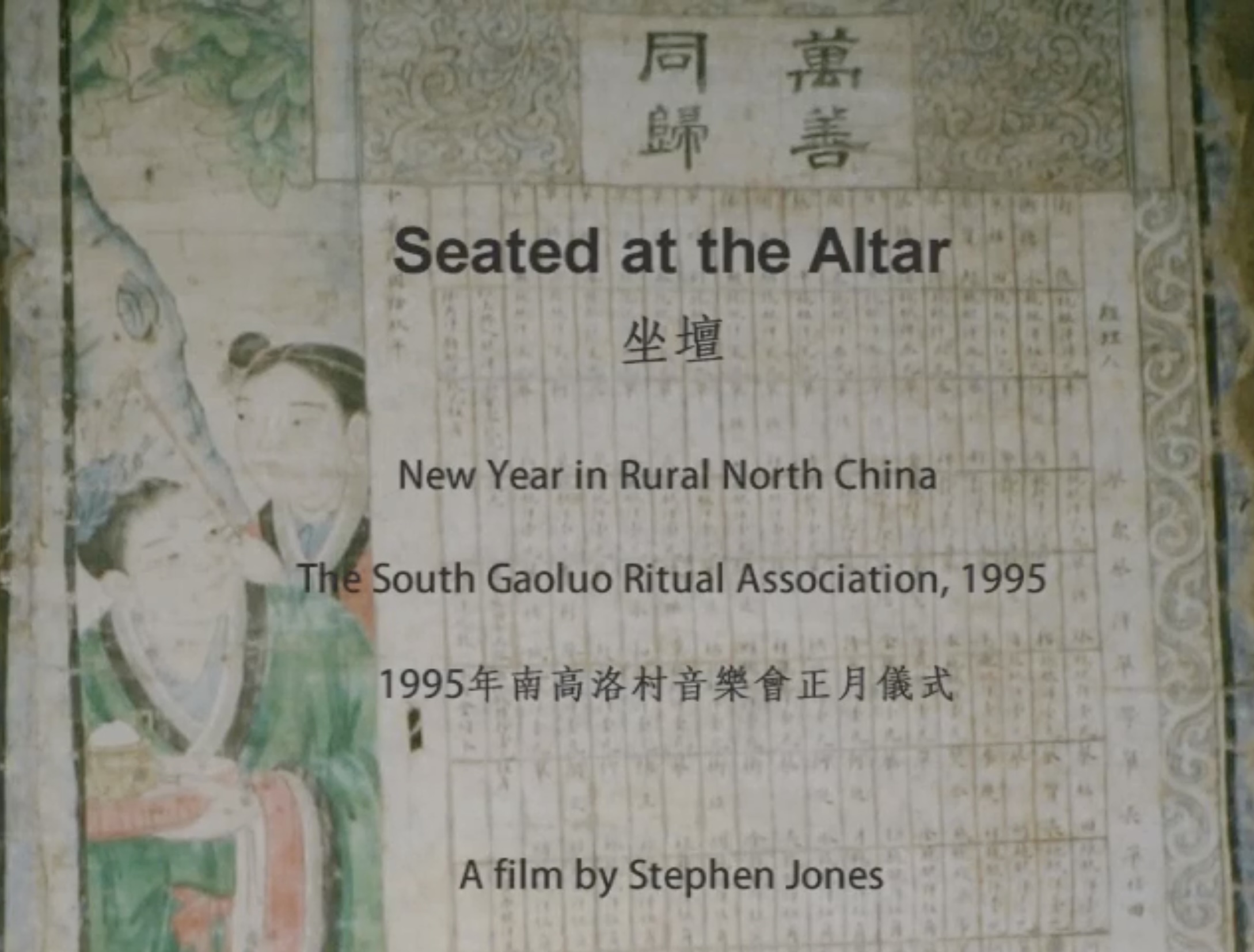
Gaoluo 1995: new film!

Screenshot

YAYY, I’ve finally got round to publishing my new documentary on the 1995 New Year’s rituals in the village of Gaoluo just south of Beijing!!! Click *here* for the film and commentary—a page under the new Gaoluo rubric that now forms part of a totally revamped Menu. The film link is to my (currently small but perfectly formed) YouTube channel.

Yazz Ahmed at the LJF

Yazz

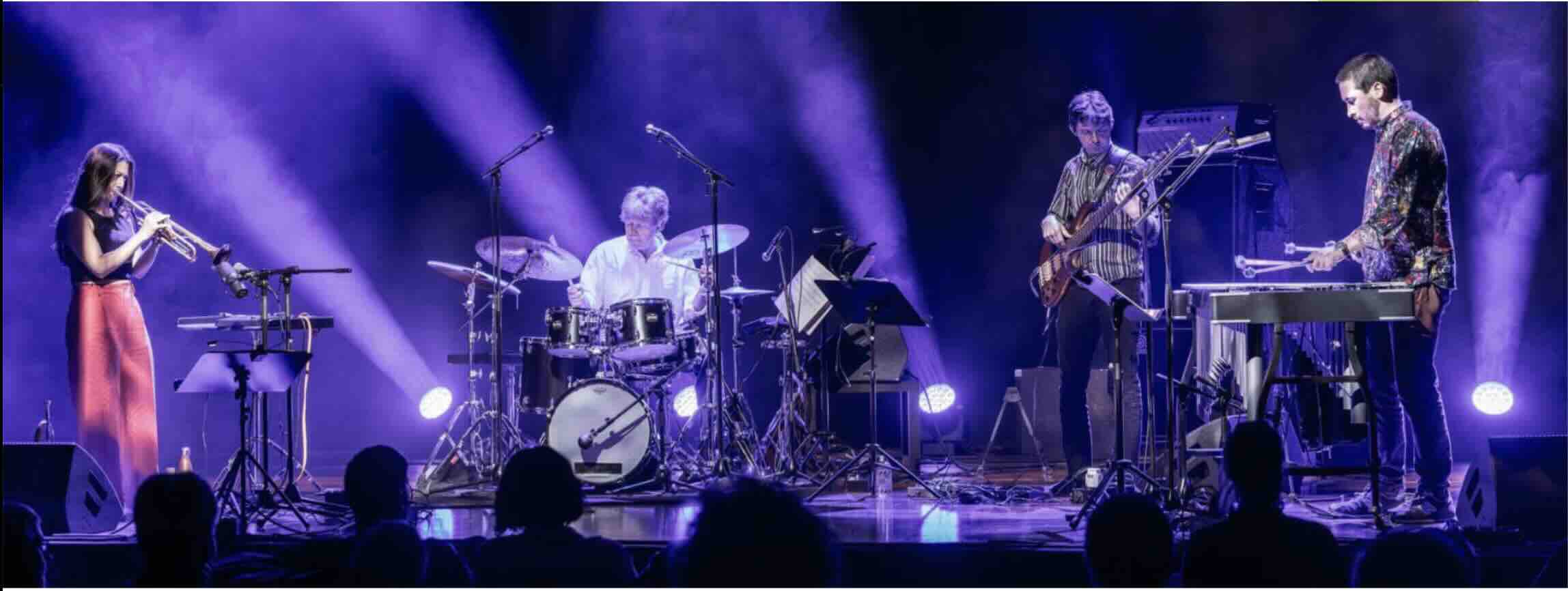
In my post on New British jazz I mentioned Yazz Ahmed (site; wiki), so I was glad to hear her quintet at the London Jazz Festival this Saturday.

“High priestess of psychedelic Arabic jazz” is an alluring tagline, but doesn’t do justice to such a serious composer. Grand Junction in Paddington, a former church, made a striking venue, suitable for the reflective mood of her work, its architecture compensating for the intimacy of many jazz venues.

With her British-Bahraini background, Yazz Ahmed reflects in interview on exploring her Arabic heritage, but not limited to an ethnic bubble, she creates her own voice. Focusing on collaboration, she plays an unassuming role on trumpet and flugelhorn, modulating timbres with the aid of a Kaoss pad, highlighting ensemble textures—besides drums and bass guitar, the quintet is enriched by vibes and bass clarinet, joined in the second half by vocalist Randolph Matthews.

YazzSource.

Here’s her first album FInding my way home (2011) (playlist):

La Saboteuse (2017) (playlist):

Her studio album Polyhymnia (2019) is a six-movement suite devoted to “six women of exceptional qualities, role models with whom she felt a strong bond”: Rosa Parks, Malala Yousafzai, Ruby Bridges, Haaifa Al-Mansour, Barbara Thompson, and the Suffragettes (playlist):

And a foretaste of her forthcoming album A paradise in the hold:

In This Day and Age™, while it would be churlish to write off new creativity in Western Art Music, I find far more relevant all the activity going on beneath the broad umbrella of “jazz”—further enhanced in live performance by the major factor of atmosphere. I’ve explored the theme of “serious music” at length here

For a wide range of classic and world jazz, see this extensive roundup. And you can work through the plethora of posts under the world music category in the sidebar, including not just China and India but flamenco, Turkish music, and much more…

“Alevi music” in Turkey

Faruk Zoom

Despite my lamentable lack of background in Turkish cultures, I have dabbled in Alevi ritual—on which scholarship is clearly thriving (for Istanbul, see here and here; for Anatolia, here). Last week I learned from a talk at the Orient-Institut in Istanbul, when Faruk Çalışkan (Istanbul Technical University) introduced his research, based on his recent PhD thesis.

His work focuses on the music of Alevi âşık minstrels with their bağlama plucked lute, who have a long history of performing songs separately from their role in accompanying the vocal hymns of the dede ritual leader at cem ceremonies, coming to wider fame through the recording industry (see e.g. articles by Thomas Korovinis and Ulaş Özdemir in Landscapes of music in Istanbul, and studies of bards such as Aşık Veysel and Neşet Ertaş).

Referring to concepts such as Actor-Network Theory, Çalışkan’s work is amply theorised. And as an experienced bağlama player, he gains much from participant observation, navigating between the roles of listener, performer, and scholar:

As a listener, he observes how differently âşıks are imagined; as a performer, he experiences how âşıks imagine themselves, their positions, roles, and legacies; and as a scholar, he observes the wide network of mainstream artists and folk music performers, including bağlama players and instrument makers.

While the music of the âşıks has been popularised since the days of cassettes, Çalışkan examines commercial and non-commercial recordings across various genres that circulated on digital platforms since the 2000s. The video market, with TikTok and Instagram, must also be substantial, as well as online forums. 

This dynamic process involves a broad spectrum of actors—singers, bağlama players, collectors, archivists, and the music industry itself. By tracing these re-enactments and the roles of various human and non-human actors, his thesis reconsiders the circulation of âşık music in a kaleidoscopic manner and highlights its multidimensional presence and influence.

In his work he pays attention to the legacies of âşık Nesimi Çimen (1931–93, who died in the Sivas massacre) and âşık Mahzuni Şerif (1939–2002).

Âşık Mahzuni (left) and âşık Nesimi.

Their recordings can be found online—for âşık Mahzuni, e.g. this:

And âşık Nesimi:

I am reminded of my caveats in Unpacking “Daoist music”; rather than a separate topic to be outsourced to musicologists, soundscape should always be part of our studies of ritual and culture. But whereas “Daoist music” is a misleading concept imposed by outsiders, a distortion of the underlying ritual fabric of the whole Han-Chinese population, the Alevis are an embattled minority actively creating their own images. The song lyrics are clearly crucial. For China, perhaps a more apposite parallel might be daoqing 道情 narrative-singing, with its Daoist origins later absorbed into popular expressive culture, no longer limited to ritual.

Outsiders like me need to keep trying to grasp basic issues. While the bağlama is far from exclusive to the Alevis, they attribute a particular significance to it, setting forth from its ritual function. Similarly, the whole âşık phenomenon extends to non-Alevis (Kurdish, Turkish, and beyond)—besides subsuming a range of behaviour beyond “music”. * I also wonder about similar marketing ploys like “Sufi music” or “dervish music”.

Çalışkan continues to unpack definitions of “Alevi music”, a theme pondered by scholars such as Ulaş Özdemir and Ayhan Erol. As he suggests, for older generations the terms “Alevi” or “music” were largely redundant. But the recording industry has enhanced the identity and visibility of the Alevis—influential instances that Çalışkan cited include the 1980s’ Muhabbet albums and the work of Arif Sağ, the Kalan series Aleviler’e (see e.g. this playlist), and Kızılbaş albums with their theme of resistance. Still, Çalışkan reminded us of the evolving tradition of Alevi communities around Anatolia, and their whole social and cultural identity. So while “music” and its commodification are clearly important, we should bear in mind the over-arching topic. Yet another world into which I shouldn’t presume to venture…


* For Uyghur ashiq, see here.

Bella ciao

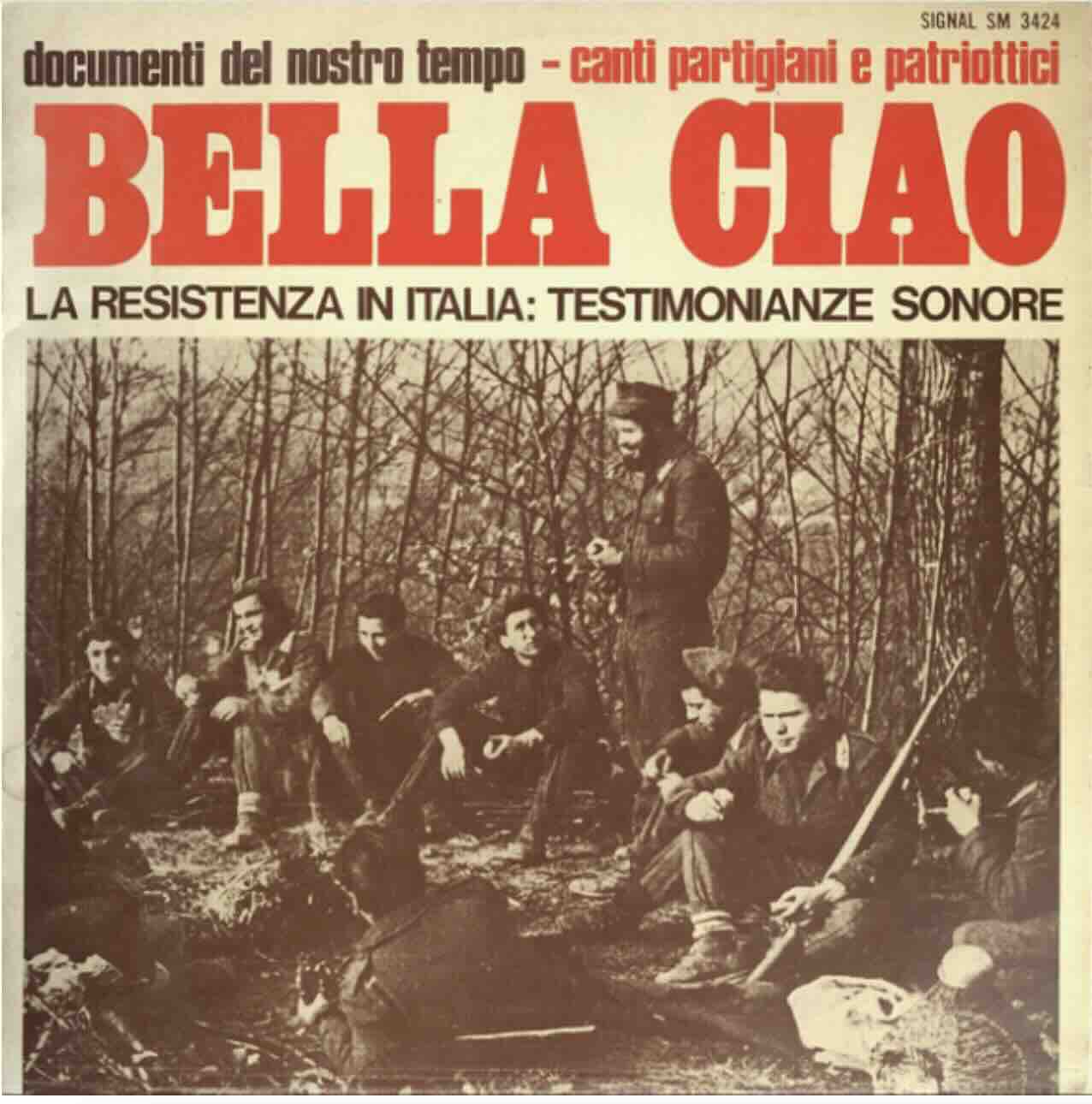
Bella Ciao album

Attempting to trace the origins and diffusion of a folk-song always amounts to detective work, as Bruno Nettl illustrates with typical clarity in Chapter 8 of Ethnomusicology: thirty-three discussions, on tune-families (“The most indefatigable tourists of the world”).

The story of the “anti-fascist anthem” Bella ciao is relatively simple, but there is still much to unpick. The roots of the melody have been traced to French, Yiddish, or Dalmatian folk music. The oldest known recording (without lyrics) was made in 1919 by the Odesa-born klezmer accordionist Mishka Ziganoff:

(BTW, do read Annie Proulx’s Accordion crimes!)

More confusing is the fame of Bella ciao since the partisan resistance to Nazi occupation. A rival version of the song’s origin gained credence, claiming that it is based on the folk-song “Alla mattina appena alzata”—part of the mondina genre sung by female rice-weeders in north Italy, whose themes often lamented harsh working conditions and cruel padroni. Here’s a documentary from 2022 on the mondine in Cremona, with archive footage and sources listed in the final credits:

A recent Guardian article refers to Luigi Morrone’s 2018 article in La Corriere della Sera detailing the song’s “invented tradition”, citing Giorgio Bocca:

In the twenty months of the partisan war I never heard Bella ciao sung, it was an invention of the Spoleto Festival.

Spoleto 1964Source.

So here’s an evocative film of the influential group Nuovo Canzoniere Italiano at the 1964 Festival dei Due Mondi in Spoleto—with Giovanna Daffini, herself a former mondina:

Morrone’s article further debunks popular myths by describing the controversy concerning Daffini’s claim over the mondina version.

* * *

Whatever the song’s “original” function, as the Guardian article continues,

In the cold war era, Bella ciao, with its vaguely-defined enemy and stress on romance over ideology, became a more consensual anthem by which to remember the fight against fascism.

Apart from endless commercial versions (the wiki section on international covers is impressive), the song continues to be sung worldwide as a hymn of resistance to tyranny, such as at the 2013 Gezi Park protests in Istanbul; in Iran and Ukraine; and most recently, to oppose Viktor Orbán at the European Parliament.

See also Italy: folk musicking.

In memory of Du Yaxiong

DYX 1
Source.

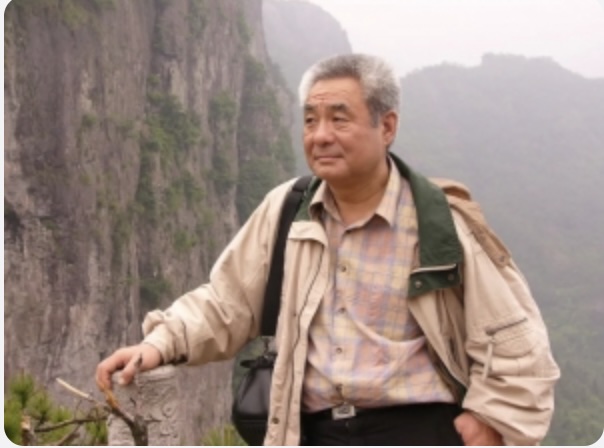
I was sad to learn of the death of the distinguished Chinese musicologist Du Yaxiong 杜亚雄 (1945–2024). Here I reproduce an eloquent tribute in the recent CHIME news bulletin:

One of China’s finest and most prolific ethnomusicologists and music educators, Du Yaxiong (杜亚雄), has passed away from illness on 7 October, 2024. We mourn his loss, not only as a fine pioneer scholar in realms of Chinese and ethnic minority musical studies, also as a warmhearted and flamboyant personality, a committed promotor of traditional music, a gifted and infectious speaker at academic conferences (including several editions of CHIME), and an author of many important studies (more than twenty monographs and 200 articles were published in English, in Hungarian and in Chinese). He was a respected scholar and very inspiring colleague. Du also had a big heart for primary and secondary music education in China, and was very active in this field until his very final years, greatly inspiring young people in Hangzhou and publishing a landmark set of his own teaching materials in 2016.

Du Yaxiong grew up in Lanzhou in a family of doctors. He graduated from the Music Department of Northwest Normal University in 1965, and received a Master of Arts degree from Nanjing University of the Arts in 1981 under Gao Houyong, after which he joined the China Conservatory of Music in Beijing as a Professor of Music. Later he studied at the University of British Columbia in Canada and obtained a doctorate in philosophy.

His parents did not understand music, but they respected their son’s professional career choice. They had noticed very early on how much music affected their son: during his years in elementary school, Du won the first prize in a children’s singing competition, and also learned to play the bamboo flute. As a flutist he acquired a preliminary understanding of structural principles of folk music. He eventually gave up any idea of becoming a doctor, instead joining music classes at the Lanzhou Art College, where he also began to compose songs and piano pieces. Later (when that college merged into Northwest Normal University) he shifted his major to music education. A defining experience was his participation in a folk-song collection mission in the Hexi corridor in Gansu Province. It set him firmly on the trail of ethnomusicological research: from 1963 onwards, he recorded hundreds of Yugur folk songs and mimeographed them.

At the China Conservatory, Du Yaxiong served as the Head of the Department of Musicology for thirteen years, and he maintained close connections with this institution also afterwards. From 2003 he was active as a lecturer at various institutions in Hangzhou, first at Hangzhou Normal University, and from 2014 at the Hangzhou Greentown Yuhua School, where his music-educational projects left a deep impression.

Du conducted extensive fieldwork on traditional and folk music, not just in China, but in over ten countries. He served as a visiting professor at the Institute of Music of the Hungarian Academy of Sciences, the Victoria University of Wellington in New Zealand, the Institute of Folklore of Indiana University, and the School of Performing Arts of Youngstown University (Ohio) in the USA. In 1986, he was awarded the title of National Expert by China’s State Council for his outstanding achievements in teaching and research.

Among other things, Du explored at length the relationship between Chinese and Hungarian folk songs, and published a book on it in 1989: A Comparative Study of Chinese Folk Songs and Hungarian Folk Songs. The incentive for this went back all the way to 1963, when he began his long-time research on Uygur dialect songs in Gansu (he mastered the Uygur language to perfection) and found that it was not hard to detect the close relationships between local Uygur (Yugur) melodies and the Hungarian folk tunes collected and published by Bartók and Kodaly.

During his stay 1991-92 at the Institute of Folklore at Indiana University, he took the opportunity to study and collect Native American music. He was twice awarded the Rockefeller Foundation’s Bellagio Residency, in 1996 and in 2008, and it was in the USA that he completed two of his major publications, Traditional Chinese Music Theory (中国传统乐理教程) and Traditional Music Culture of Chinese Minorities (中国少数民族传统音乐文化). His range of research also included northern Chinese village rituals, music of the Silk Road, Hua’er folk songs of northwest China (about which he published in the CHIME journal), and analytical studies of Chinese pentatonic scales and a number of historical subjects.

We remember him for his excellent work and original mind, but also for his congenial smile and radiant presence in academic meetings. May he rest in peace.

* * *

DYX 2
Source.

[SJ:]
I made a few brief fieldtrips with Du Yaxiong to the countryside just south of Beijing in the 1990s, when he introduced me to the Buddhist-transmitted ritual association of North Xinzhuang (see under Ritual groups of suburban Beijing).

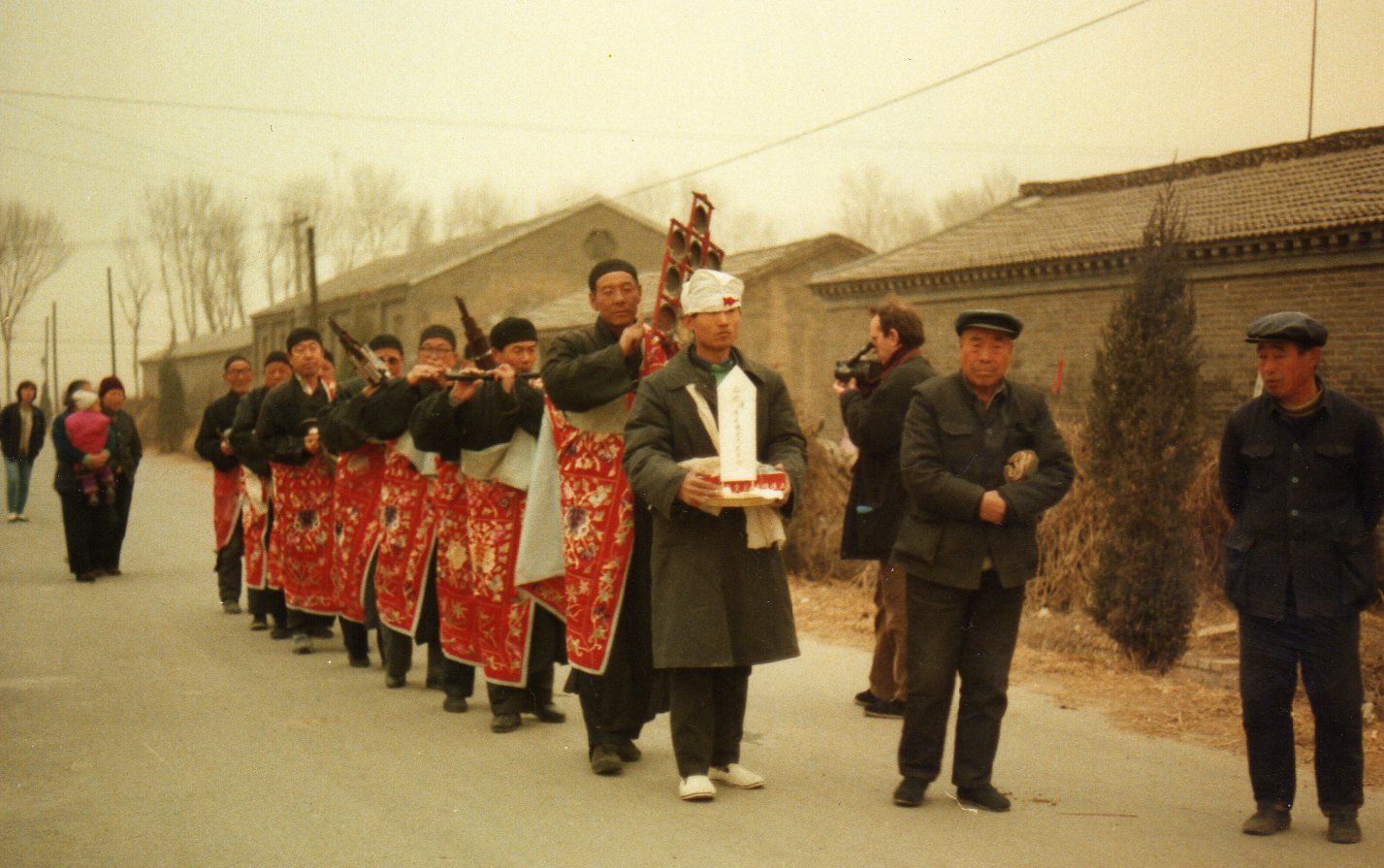
n-xinzhuang-processionEarly morning procession to the soul hall, North Xinzhuang 1995. Photo: Du Yaxiong.
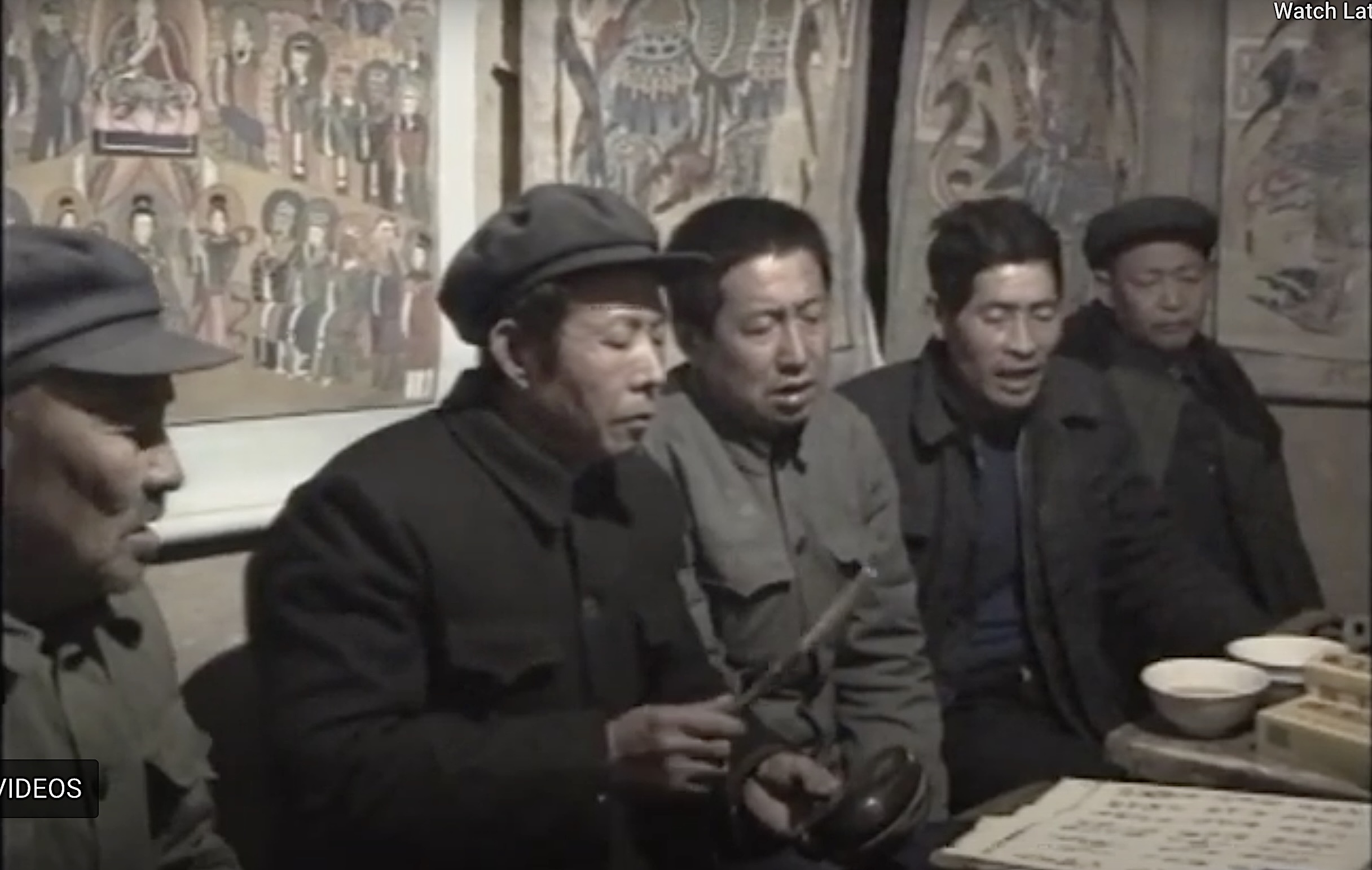
I often chuckle over a story he told me about his student years, just as traditional music and scholarship were reviving after the downfall of the Gang of Four. The great Huang Xiangpeng was delivering an erudite lecture on the arcane systems of modes and scales documented in ancient sources. In conclusion he encouragingly commented, “In fact, I’m just using a very complicated language to describe something very simple!”, whereupon the young Du Yaxiong put up his hand and said, “Excuse me, Teacher Huang, but could you possibly use a very simple language to describe something very simple?!”.

For some other luminaries of Chinese musicology, see my posts on Yang Yinliu, Qiao Jianzhong, and Yuan Jingfang.

Kennedy plays Hendrix and Bach

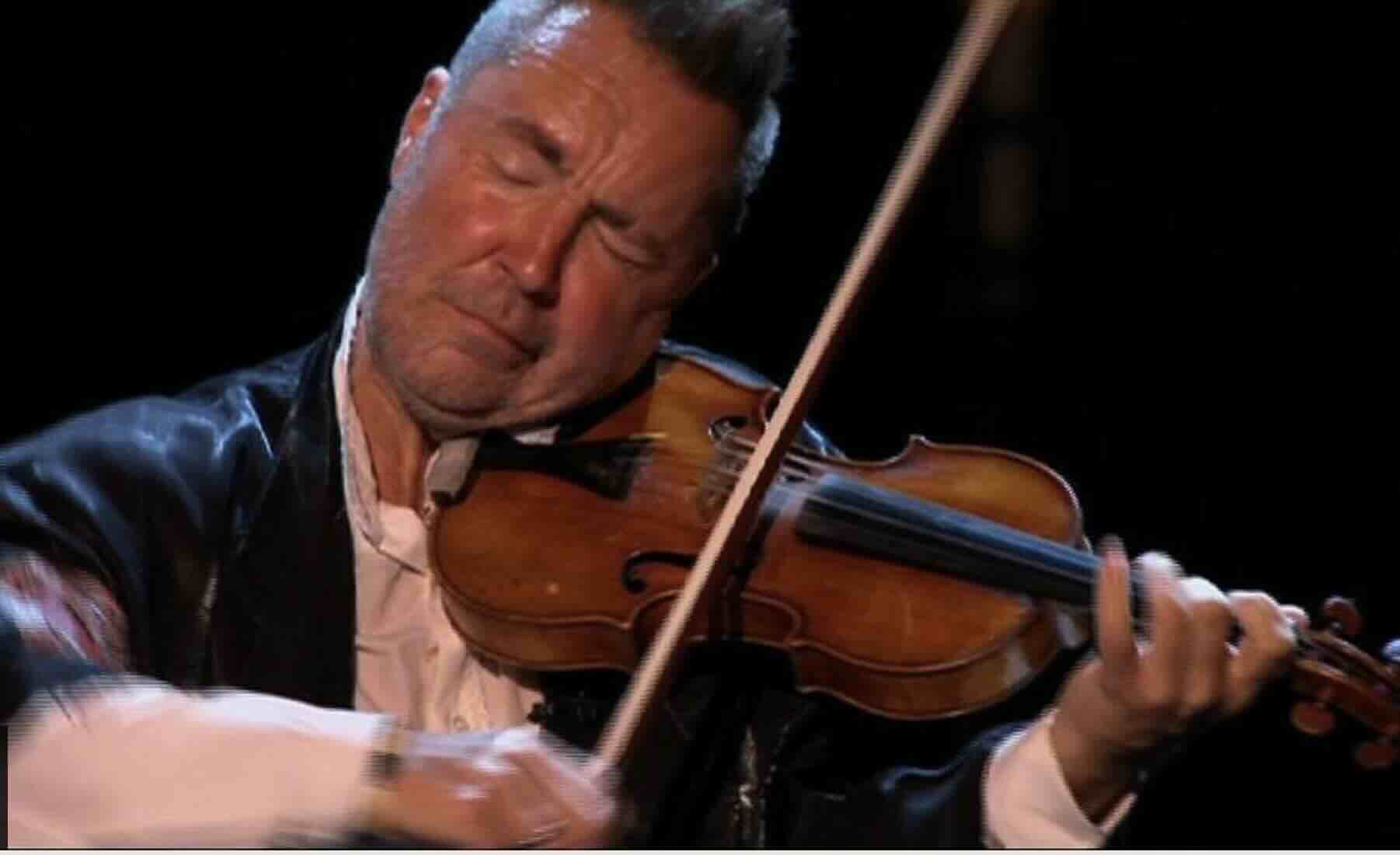
Nige 1

Nigel Kennedy began stirring up the WAM scene quite early, reminding us of the importance of maintaining the creative vibe of live musicking, irrespective of genre. But now that he is no longer an enfant terrible, his tastes are heartfelt and refreshing, for all the hype.

In the absence of Hendrix and Bach themselves, here are a couple of clips.

A homage to Jimi from 2016:

And Bach at the Proms in 2011:

I’m never crazy about the violin in jazz or rock, but however one feels about the results, it’s really great that he does this kind of thing.

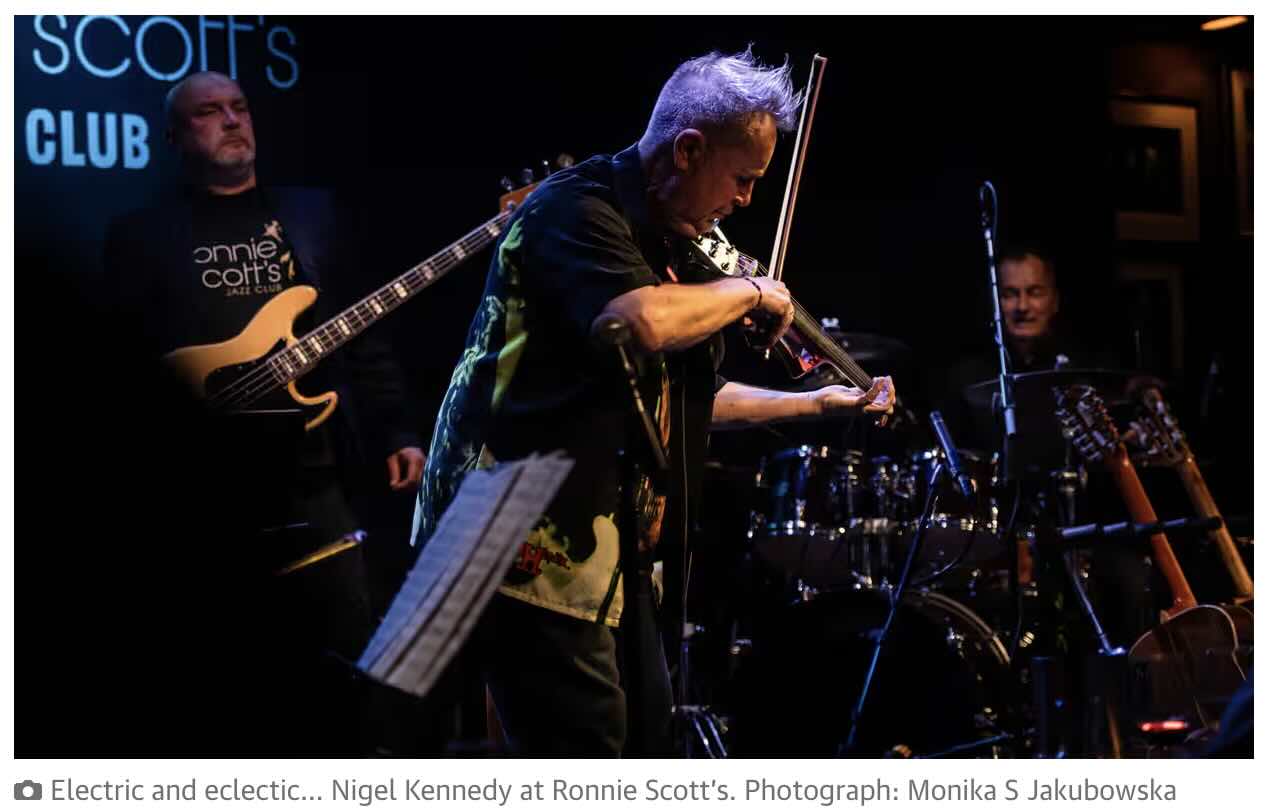
Nige 2

Source.

My Bach series includes a sampling of world-music versions; and among many posts on fiddle playing around the world (rounded up here) is Jazz fiddling—also part of my extensive jazz series. Pursuing Kennedy’s Polish connection, see Polish jazz, then and now, Folk traditions of Poland, and under Resisting fakelore.