Dinner of herbs

Documenting life in rural Anatolia

Herbs

As I work my way through the splendid travel catalogue of Eland publishers—such as Three women of Herat, an anthology of Evliya Çelebi (under Musicking in Ottoman Istanbul), and Nigel Barley—I’ve been appreciating

  • Carla Grissmann, Dinner of herbs: village life in Turkey in the  1960s.

Her year-long stay in a rural hamlet east of Ankara in the late 1960s was curtailed when she was expelled from the village by tedious visa regulations, so she wrote up the story in frustration soon after returning to New York, but it was only published in 2001.

It’s another outsiders’ view of rural poverty that includes classics such as Christ stopped at Eboli, Let us now praise famous men, and so on (see under Taranta, poverty, and orientalism). Always partial to village studies since my time in Gaoluo, I might not have high hopes for the book as ethnography, since she arrived untrained, learning Turkish as she went along—and yet I concur with Maureen Freely and Paul Bowles that it’s most impressive. Anatolian villagers may not easily relate to a single and childless foreigner:

Through all the months I was at Uzak Köy there was hardly a flicker of curiosity about who I myself was, where I had come from, what I had done before or was thinking of doing next. That I had lived in many places, had worked for a magazine, a newspaper, had taught school meant nothing, except perhaps they could vaguely picture a mud schoolhouse similar to their somewhere in the world. What impressed them was that I was an only child, that I had never known my grandparents, that my mother and father lived separately in different countries and that I had no husband and no children. […] In their experience of life my own life was empty.

But while Grissmann’s natural ability to engage with the villagers recalls Bruce Jackson’s thoughts on rapport, her sojourn was not “doing fieldwork”, but living among people.
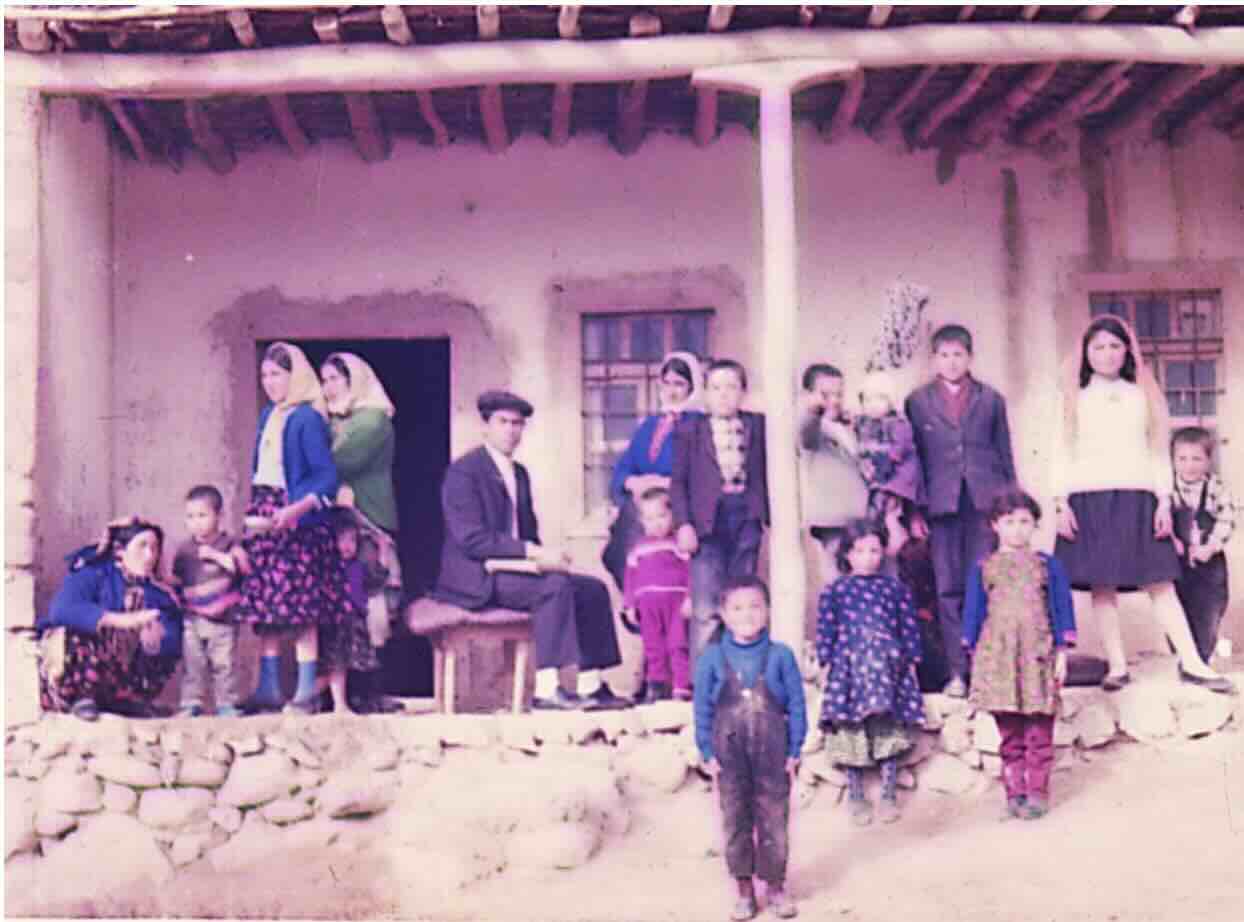
Herbs 2“People were in and out of each other’s houses from dawn until bedtime.”

She immerses herself in her companions’ challenging routine of cooking, cleaning, childbirth and childcare. “There was always music”—songs with saz, lullabies, the village story-teller, a wedding band, all part of social life, and the conviviality of sharing cigarettes. She obliges an old woman who wants her to record a song, weeping as she sang how one of her sons had killed the other “after that quarrel over nothing”.

On topics such as healthcare and education (and indeed, village latrines, or the dependency of the bride in her new home) I’m reminded of the basic concerns of people in rural China.

Although in the village, being able to read and write was of no great usefulness, it was nevertheless acknowledged that some form of non-religious education, at least for the boys, was of value. It gave them an advantage during their military service, and would always be a safeguard against being cheated by the outside world.

Grissmann sees the wider picture:

Turkey had come so far. Much of the population after the First World War had been lost through battle, disease, and starvation. No proper roads existed, only one railway from Istanbul with a few dead-end branches into Anatolia. Malaria and typhoid still broke out. There were no industries, no technicians or skilled workmen, in a country 90% illiterate, with no established government. The heaviest liability, however, of Ataturk’s derelict legacy from the Ottoman Empire was the great mass of benighted peasants, rooted in lethargy, living in remote poverty-stricken villages untouched by the outside world. Ataturk was determined to loosen the hold of Islam on the people, which he believed was the major obstacle to modernization, and to awaken a sense of Turkish national pride. He fought fiercely for the emancipation of women, denouncing the veil, giving them the right to vote and to divorce.

Still, living in the village, such initiatives seemed remote. Confronted by apathy and prejudice, the village schoolteacher had a daunting task:

On every side the teacher faces the wall of tradition, of the older generation. The masses of Turks obediently took off the fez, yet in their vast rural areas they are still bound to their mosque, fetishism, holy men, and superstitions. Women still cover their face. The men believe that women should indeed be veiled, that girls should not go to school, that sports and the radio are the intrigue of the devil. Illness is cured by words from the Koran, written out and folded into a little cloth bag and pinned on a shoulder, or by having the Imam blow on the diseased or ailing parts. The old men sit in rows fingering their beads and say that what their village needs is a new mosque, not a new road. An new mosque, not a new school.

When she offers money from friends in the USA to install basic amenities, 

They only partially understood; they could not really visualize the source of this wealth in any tangible, significant way. It was providential, immense, incredible, and yet it remained simple. There was no embarrassment of gratitude. 

As to Grissmann’s access to the outside world:

Sometimes a group of children, mute with importance, brought a letter at the crack of dawn, right up to my bed. Most of. these letters had been opened in a friendly way, which I didn’t mind at all. In one fashion or another, everything seemed to arrive, although I never divined any discernable postal system at work or the hand of an actual  postman anywhere in the background.

She ponders the process of learning to communicate:

When you are learning a new language I think you inevitably use a great deal of pantomime and mimicry, and develop small speech idiosyncracies, much of which is inevitably expressed through the comic. Beyond the clownish aspect of this can lie true humour, and if you can genuinely share this most subtle and personal sensibility, I think you have won half the battle of human communication. Although the people in the village were extremely reserved in their speech and their manners, and did not seem to express themselves with gesture or emotion, they were an enthusiastic audience and instantly caught the slightest flicker of whimsy and the allusive point of any story. We built up between us a special way of teasing that never ceased to move me, even after endless repetition. Their teasing of me and each other was a warm human thing and seemed to me to be a part of wisdom, an open, guileless generosity of heart.

Dinner of herbs is a work of great empathy.

Carla Grissmann (1928–2011) led a colourful life. Turkey proved to be a stepping-stone from Morocco to her long-term base in Afghanistan. The 2016 Eland edition contains a vivid afterword by her lover John Hopkins.

* * *

This led me on a preliminary foray in search of further ethnographies of Anatolian life. Grissman mentions Mahmut Makal‘s trenchant A village in Anatolia (1954), as well as Yaşar Kemal’s 1955 novel Memed, my hawk. On Makal and later village websites, see this thesis, as well as wiki on the short-lived Village Institutes.

Following Brian Beeley (Rural Turkey: a bibliographic introduction, 1969, and hisMigration and modernisation in rural Turkey”, in Richard Lawless, ed., The Middle Eastern village: changing economic and social relations, 1987), note the work of Paul Stirling (here, with full text of Turkish village, and papers; he also edited the 1993 volume Culture and economy: changes in Turkish villages). This article introduces some other international anthropologists in the field in the late 1960s; here Chris Hann reviews works by Carol Delaney, Julie Marcus, June Starr, and (for urban arabesk) Martin Stokes. I trust there’s much more out there from Turkish ethnographers. My search continues for documentary films on rural Anatolia (cf. Everyday life in a Syrian village). 

My series on West/Central Asia includes posts on the social life and expressive cultures of rural areas, such as Musicking of the yayla, Bektashi and Alevi ritual, Bartók in Anatolia, Rom, Dom, Lom, A rural woman singer, and Some Kurdish bards. See also Following Miss Bell.

With thanks to Caroline Finkel and Pat Yale,
who are entirely innocent of blame for my rudimentary explorations.

A Buddhist centre in Peckham

Master Miao Jiang,
Wutaishan through successive regimes,
and religious life around Datong under Maoism

I got to know the Buddhist monk Kuan Guang 宽广 (b.1974) while he was doing his PhD at SOAS—guided by Tim Barrett—about the mountain temple complex of Wutaishan, epicentre of Buddhism in north China, where he trained.

Originally from Baoding south of Beijing, he is blessed with a calm and benevolent nature—such as one doesn’t always find among clerics, or indeed among the household ritual specialists whom I have consulted in north China. In addition, his deep, sonorous voice conveys his authority and wisdom.

So it’s wonderful to catch up with him. Apart from furthering his research on the history of Wutaishan in the Ming dynasty, he has created the Qingliang Buddhist Centre at a former church in Peckham, south London. Inspired by his venerable master Miaojiang 妙江法师 of the Bamboo Grove temple 竹林寺 on Wutaishan, Kuan Guang has undertaken this complex enterprise in the spirit of “expedient means” (Sanskrit upāya, Chinese fangbian 方便).

* * *

In both old and new societies, entering the clergy was often ascriptive, rather than a spiritual choice; poor families would routinely give a young son to a local temple as relief from adversity. However, in the case of Miao Jiang, his parents (surnamed Liu) were devout lay believers (the following account is based on this online biography; in English, see here).

Liu Jiang (his original name) was born in 1953 in Yanggao county (home of the Li family Daoists!) just east of the grimy coal city of Datong, in West Yaoquan village in Gucheng township. * The daily domestic worship of his family environment made a stark contrast with the escalating political campaigns of the 1950s. When he was only 3 years old, his parents, busy with agricultural chores for the collective, sent him to a nearby temple, where his master Chang Rong 常荣, himself only 15, lavished exceptional care on his bright young disciple.

In 1959, just as food shortages were becoming desperate, Liu Jiang’s mother took him to Datong to pledge allegiance at the Shanhua temple 善化寺. ** While receiving a rudimentary secular education at his village primary school, he prudently refrained from divulging that he was devoting most of his energies to his parallel cultivation of the dharma—praying with his mother before the family shrine, studying Buddhist texts such as the Pumen pin 普门品 scripture, and learning to recite the Dabei zhou 大悲咒 mantra. At a time when villagers were desperately foraging for food, when the meager crop from the autumn potato harvest was being divvied out among the brigade team, he would only take home his share after the others had chosen the best ones. As he later recalled, “I would eat whatever Old Budda Elder ate” (老佛爷吃啥我吃啥).

Shanhua siThe Shanhua temple during the 1933 fieldtrip of the architectural scholar Liang Sicheng.

Lin Huiyin
Lin Huiyin, architect wife of Liang Sicheng, Wutaishan c1937.
Source: Sixth Tone.

In Datong after the Japanese occupation and civil war, the extensive buildings of the imposing Upper and Lower Huayan temples 上下华严寺 were under restoration through the 1950s, and were designated as national cultural relics in 1961. As the Cultural Revolution broke out in 1966, while religious sites and clerics all over China were being assaulted, some of the major Datong temples were safeguarded under the aegis of a Bureau Chief, a Buddhist believer from Wutaishan. *** Although the Red Guards chased off most of the remaining monks, the Bureau Chief gathered some former monks—in plain clothes—to keep watch over the temples. So amidst all the chaos, the Upper Huayan temple became a clandestine meeting place where youngsters like young Liu Jiang and his fellow believers could seek instruction in the dharma

The Huayan temples, 1939:
left, Lower temple; right, grounds of Upper temple.
Source (colourized).

It was at the highly unlikely time of 1968 that he had his head shaved to become a monk, at the behest of his master in the Shanhua temple. With a group of senior monks officiating, they locked the gate early, and around midnight held his formal ceremony. Shortly afterwards, when his master returned from the nearby Buddhist cave complex of Yungang, the teenager was given the Buddhist name Miao Jiang.

Such biographies require us to adjust our simplistic view of the blanket destruction of religion though Maoism and the Cultural Revolution (for another instance, see Kang Zhengguo‘s account of his Buddhist grandfather).

After the liberalizations around 1980, five more members of Miao Jiang’s family over four generations joined the clergy: both his parents (in 1983), followed by two sons and a granddaughter in his older sister’s family. Popular opinion was full of praise for their exceptional devotion.

In 1973, when Miao Jiang was miraculously unscathed by an accident while repairing a reservoir, he considered it a sign of the protection of the Bodhisattva Mañjuśrī (Wenshu pusa 文殊菩萨). This was the inspiration for him to turn further south in Shanxi towards Wutaishan, around which his mature life has revolved. He has been based there since 1980, as the mountain opened up to a massive reinvigoration of “incense fire” (xianghuo 香火) after the depression of the Maoist era. Through those early reform years, he served as abbot in several temples, which thrived under his leadership. As Wutaishan became ever more commodified by tourism and heritagification, he was fêted with official titles—but he has remained aloof from worldly affairs.

Miao Jiang’s reputation grew, not by preaching but through the influence of his practice—”bodily instruction” (shenjiao 身教) rather than “verbal instruction” (yanjiao 言教). Still, after the challenges of practising Buddhism under Mao, it has been a very different kind of test to spread the dharma and maintain its integrity in the brash, mercenary new society. Eschewing the lifestyle of official banquets, he adheres to a simple Buddhist diet, while sponsoring charitable and relief projects.

See also Yanggao: a distant Daoist connection.

* * *

Kuan Guang formally joined the Buddhist order under the guidance of Miao Jiang in 1993. After Maoism and the reforms in China, nurturing the dharma in multicultural Peckham presents yet another kind of challenge. Apart from a programme of events at the Qingliang centre, such as guided meditation and calendrical rituals, Kuan Guang now plans to open a Buddhist vegetarian canteen there. He was always wise, but he too has now become a veritable master, whom his disciples can look up to. While I’m not generally predisposed towards Buddhist centres in Britain, this is a most admirable enterprise. In praising Kuan Guang, I’m reminded of the old Krishnamurti paradox: his efforts are selfless, devoted entirely to promoting the dharma (cf. Paths for the reluctant guru).

* * *

It also occurs to me that while I often come across devotional sects in my fieldwork (such as the Bright Association 明會 in Yanggao, scrolling down here), I have had little contact with jushi lay Buddhist adherents. In Yanggao since the 1980s, rather few temples have been restored: but in those temples which are active, their keepers were often ordained as Buddhist monks or spent time “roaming the clouds” in Wutaishan or Datong—such as the gentle Zhang Zheng, who helped Li Manshan decipher a stele at the Zhouguantun temple in Yanggao. ****

Having immersed myself in Zen in my teens, I rather lapsed, although for several years after first visiting China in 1986 I would regularly kowtow before the altar on entering a Buddhist or Daoist temple—mainly the grander ones of the cities and sacred mountains (Wutaishan was one of my first ports of call in 1986). But I came to feel a bit of a poseur, and later, frequenting small village temples, it hardly seemed appropriate…

* * *

In another post I explained why field studies of folk ritual in China mainly focus on household Daoists. While they dominate the rural ritual scene, when we find Buddhist ritual specialists, they may also perform similar rituals; the toolbox required to study the two is similar, and we shouldn’t compartmentalise our studies. Buddhism is more dominated by institutions (the major temples); formerly, Buddhist clerics worked mainly from their temples, and the 20th-century waves of laicization and temple destruction were more of a blow to the Buddhists than to the Daoists. The Buddhists perhaps tended to cater more for elite patrons, and were less able to survive during times of economic recession; state policies of the 1950s came as a double blow to them, as apart from laicizations and temple destruction, their former patrons also vanished. Conversely, the Daoists had long lay and household traditions, alongside any institutional base; they were more adaptable to local religious life, more all-embracing. The difficulty of regulating them has always been their hidden strength.

So I rarely encounter exalted Buddhist masters like Miao Jiang and Kuan Guang. But when I do, I am deeply impressed. While I have the utmost respect for the wisdom of more down-to-earth peasant ritual specialists like Li Qing and Li Manshan (see my film), around whom my fieldwork has revolved, in the presence of great temple clerics I feel a certain embarrassment that my path has led me away from the quest for spiritual enlightenment towards documenting the “heat and noise” of folk ritual; yet somehow my early background in that quest has formed an enduring foundation.

See also A Tang couplet, and Buddhism tag.


* Indeed, his disciple Kuan Guang was able to give me valuable help in 2011 when I struggled to decipher the dialect of Yanggao peasants on my fieldtapes. I am consoled and amused that when I screen my film for urban Chinese students, with Li Manshan’s own voiceovers, most of them have to rely on the English subtitles!

** Not long before Li Manshan’s trip to visit his father Li Qing at the Datong Arts Work Troupe

*** Around Datong the worst vandalisations only occurred in 1968; still, the Huayan temples soon resumed life as a museum—until the 1980s’ reforms, since when religious observances have had to compete with tourism.

**** My film, from 36.01; cf. my Ritual and music of north China: shawm bands in Shanxi, pp.71–8, and Daoist priests of the Li family, pp.50–51.

Qiao Jianzhong: Chinese folk music studies since the reform era

In Beijing after the 1949 “Liberation”, the Music Research Institute (MRI) of the China Academy of Arts was headed by the great Yang Yinliu (1899–1984). From the early 1980s, as the Maoist era gave way to the liberalisations of the early years of reform, Qiao Jianzhong 乔建中 made a worthy successor to Yang’s enlightened leadership, steering the MRI wisely through a new phase.

hxp-qjzWith Qiao Jianzhong (right) and Huang Xiangpeng, MRI 1989.

Soon after arriving in China in 1986 I was adopted by the MRI, finding Lao Qiao 老乔, as he was known, endlessly supportive as I mined the rich archives (helped by gentle library assistant Li Wenru) and arranged fieldtrips. Those of us who recall the old MRI at Zuojiazhuang are most nostalgic for its dilapidated corridors. The extraordinary energy of scholarship there through the troubled times of the 1950s still animated the building—perpetuated by seniors like the great Yuan Quanyou, unassumingly labouring to produce major anthologies of Chinese music iconography, and Wang Di, successor to the qin master Guan Pinghu. The MRI became my home base, from where I made forays to the countryside to learn the basics of fieldwork under the guidance of Qiao Jianzhong and his talented protégés.

QJZ wenji

A voluminous anthology of Qiao Jianzhong’s lifelong work has just been published:

  • Qiao Jianzhong wenji 乔建中文[Collected writings of Qiao Jianzhong] (2023, 10 volumes),

providing yet another opportunity to admire the fruits of fieldwork and research since the 1980s’ reforms. Here I can do no more than list some of the articles that have captured my attention so far. Qiao’s own reflections on his lifetime of study are found in vol.1, pp.31–53 and vol.5, pp.440–53; also useful are the chronology of his life, and an impressive list of his fieldtrips (superfluously reproduced in most volumes, like the introductory tributes). Vol.10 consists of articles by Qiao’s colleagues on the significance of his work.

As an important complement to the text, those with WeChat (perhaps everyone except me) can scan QR codes to access a range of audio/video material and further images, although the process seems to be laborious.

Qiao QR

* * *

Qiao Jianzhong was born in 1941 in the Shaanbei town of Yulin, heartland of Mao’s wartime CCP base area; in 1947, during the civil war following the defeat of the Japanese he took refuge with his family in Baotou before it was safe to return to Yulin.

Qiao family 1962

The Qiao family, Yulin, 1962; Qiao Jianzhong (back row, centre) the oldest of eleven siblings
(see Amateur musicking in urban Shaanbei).

Qiao’s early years bear all the hallmarks of the tribulations of artists and intellectuals through the Maoist era. In 1958, aged 17, he managed to move to the provincial capital Xi’an, soon studying at the conservatoire there—with rural interludes as political campaigns increased. By 1964 he gained admission to the Chinese Conservatoire in Beijing, but as the Four Cleanups campaign escalated he was sent down to communes in Xi’an and Hebei. After graduating in 1967 he could only intermittently manage to pursue his growing interest in folk music; but for several years from 1973, assigned to Ji’nan in Shandong, he took part in fieldwork on folk-song, opera, and shawm bands of the Heze region—the latter, even before the end of the Cultural Revolution, a particular concern of local scholars, which would bear fruit in the 1980s after the collapse of the commune system. Having married in 1972, the couple celebrated the end of the Cultural Revolution with the birth of their daughter Xiao Bei.

At last in 1979, aged 38, Qiao was able to return to Beijing pursue a bona fide career in music research. After graduating in 1981 from the Research Students’ Department of the Chinese Academy of Arts (he pays tribute to Guo Nai’an’s lectures in vol.5, pp.510–24), he did further fieldwork in Shandong (the co-authored 1982 Luxinan guchuiyue xuanji 鲁西南鼓吹乐选集 was one of the earliest volumes on local traditions published after the Maoist era); and he became closely involved in folk-song studies, with important early fieldtrips to Guangxi (for minority polyphony) and Gansu/Qinghai (huar) in 1982–83.

In 1988 Qiao Jianzhong succeeded Huang Xiangpeng, another distinguished scholar, as Director of the MRI. Coming from such a lowly provincial background, his ascent was impressive, his sincere and modest character shining through. Despite all the burdens of admin, meetings, and laborious missions to fund the institute’s projects amidst the challenges of a radically new economic climate, Qiao still managed to find time for fieldwork and research.

In 1952–53 Yang Yinliu and Zha Fuxi had studied the shengguan wind ensemble of the Zhihua temple in Beijing (for my series of posts on the temple “music”, click here; for Qiao’s 2009 reflections on its tenuous survival, see vol.4, pp.139–59). On 28th March 1986 the MRI made another groundbreaking fieldtrip just south to Gu’an county: thanks to Qujiaying village chief Lin Zhongshu’s relentless visits to scholars and pundits in Beijing, the MRI “discovered” its ritual association; for my brief introductions, see here, and sequel). Revealing his special bond with the lowly yet tenacious Lin, Qiao Jianzhong’s 2014 book Wang: yiwei laonong zai 28 nianjian shouhu yige minjian yueshede koutoushi 望:一位老农在28年间守护一个民间乐社的口述史 is reproduced in vol.7, pp.121–284, commenting at length on Lin’s own oral accounts of the story—one of the collection’s most impressive sections, full of useful detail.

The “discovery” of Qujiaying led to our major project through the 1990s, again headed by Qiao Jianzhong, with my splendid colleagues Xue Yibing and Zhang Zhentao, that opened the door onto the world of amateur village ritual associations throughout the Hebei plain. With Qujiaying soon becoming a media circus, I focused on the nearby village of Gaoluo, whose ritual contexts were better maintained and where I could make a base (dundian 蹲点, see under “Rapport” here) informally.

QZJ with LZS 2013 low-resQiao Jianzhong (left) and Lin Zhongshu (2nd left), 2013,
documenting nearly three decades of tireless work on Qujiaying.

In 1992 I arranged for Qiao to visit the National Sound Archive in London with Xue Yibing to copy some of the MRI’s precious early recordings—a visit which resulted indirectly in the 2-CD set China: folk instrumental traditions (AIMP, 1995), some of whose tracks feature in the audio gallery on the sidebar of this site, with commentary here.

It was perhaps significant that Qiao’s retirement in 2001 coincided with the relocation of the institute to sanitised modern buildings in Xinyuanli, bereft of the personal histories of the old MRI. But despite losing his wife in 2008, Qiao has been no less active in his later years, with a busy itinerant schedule of teaching and lecturing in Shanghai, Beijing, and Xi’an, as well as Fuzhou, Hangzhou, and Taiwan, supervising many PhD students—and still doing fieldwork (Gansu, Qinghai, Inner Mongolia, Shaanxi, Shanxi, Liaoning, Jiangsu, Hubei, Hunan, Zhejiang…). Since 2013 his main bases have been the Xi’an Conservatoire and his old home Yulin—where he headed a new museum of Shaanbei folk-song and celebrated his 80th birthday in 2021.

* * *

Gansu miaohui FK

Temple procession, south Gansu, June 1997.
Photo: Frank Kouwenhoven. © CHIME, all rights reserved.

Qiao Jianzhong is best known for his research on folk-song cultures (see here, and here), particularly on Shaanbei and huar in the northwest, but with such wide field experience his national surveys are also valuable. His influential book Tudi yu ge 土地与歌 (1998; revised edition with A/V 2009) forms the nucleus of the present anthology (note also the essential CD sets of archive recordings from the MRI that he masterminded, especially the folk-song disc).

Tudi

Through the 80s and 90s, Qiao’s studies coincided with the fieldwork and editorial tasks for the monumental Anthology of folk music of the Chinese peoples, on which he has many insights (cf. my major review, cited e.g. here). Inevitably, too, since 2004 he has had to reflect on issues surrounding the Intangible Cultural Heritage project, sounding notes of caution.

While the themes of the ten volumes seem rather loosely grouped, with my own focus on ritual I find volume 5 particularly salient. As Chinese music scholars are well aware, life-cycle and calendrical rituals form the constant backdrop to all folk genres in social life: folk-song, narrative-singing, opera, instrumental music, and dance; and as I keep saying, soundscape should be an essential component of ritual studies. While the senior generation in China couldn’t necessarily latch onto the anthropological approach and thick description that began to develop there from the late 1980s, fieldwork inevitably immersed them in “ritual music”. Qiao has wise words on projects to document ritual traditions (pp.380–96). He was closely involved in the major series edited by Tsao Poon-yee, Zhongguo minjian yishi yinyue yanjiu 中国民间仪式音乐研究 [Chinese folk ritual music]; I learn from his substantial survey (pp.531–79) for the East China volume, and he was a major contributor to the Northwest volume (see under Rain rituals in north China; vol.1 (pp.240–69) contains Qiao’s notes on a temple fair in Hengshan county in Shaanbei, “Xinyang yu jianshou” 信仰与坚守  (“Faith and perseverance”, 2012). As a native of Shaanxi, Qiao has also promoted the long-term research on the ritual groups around Xi’an, initiated by Li Shigen in the early 1950s (e.g. the valuable survey “ ‘Xi’an guyue’ yanjiude liushinian” 西安鼓乐研究的六十年, vol.5, pp.486–509).

Always cultivating the research of promising younger scholars, Qiao Jianzhong gradually handed over the reins to my brilliant fieldwork colleagues Xue Yibing and Zhang Zhentao, and the illustrious Tian Qing—all of whom take “religious music” as a crucial theme. Another outstanding scholar trained at the MRI is the music anthropologist Xiao Mei (see her excellent tribute to Qiao, vol.1, pp.12–19), who went on to establish the Centre for Ritual Music in Shanghai. In Beijing, besides the MRI, research at the conservatoires also thrived, with another senior scholar, Yuan Jingfang, at the Central Conservatoire. Despite an inevitable caution over broaching social/political issues, younger scholars have published a plethora of theses under their guidance, based on fieldwork.

I find it deeply satisfying to browse this collection—a tribute to both Qiao Jianzhong and the MRI, and an essential general education in the whole range of Chinese music studies, continuing that bequeathed by Yang Yinliu.

Chinese translation now on WeChat.

Mahler 3 with MTT

*Part of my series on Mahler, introduced here!*

MTT Barbican

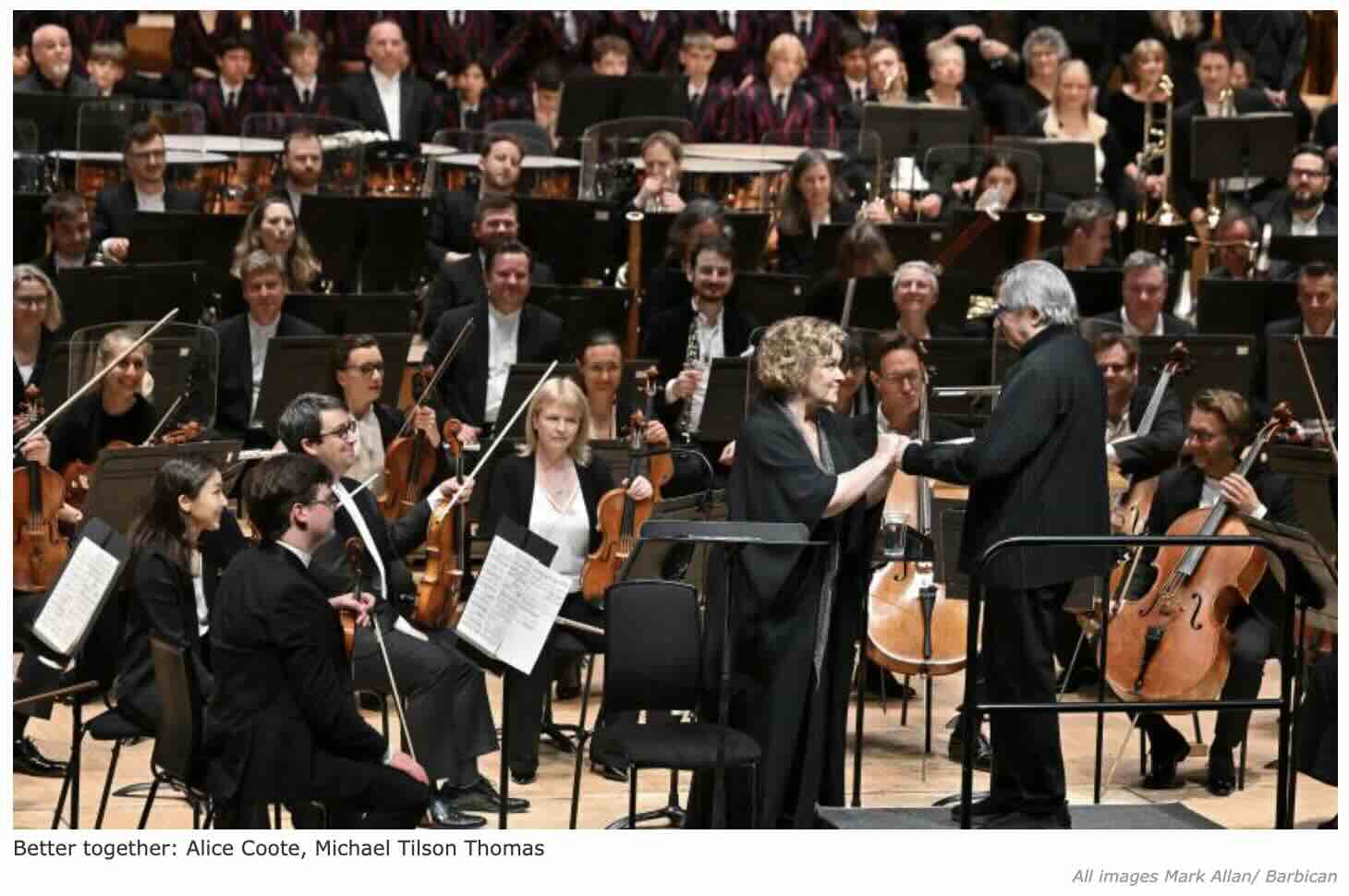
I’ve celebrated Mahler 3 in an earlier post, featuring great recordings by Bernstein, Tennstedt, Abbado and others. Last week, just after coming back from Milan and Erlangen, immersed in my fieldwork videos of Chinese village ritual, I went along to the Barbican to relish another overwhelming rendition of the symphony, with the LSO conducted by Michael Tilson Thomas (website; wiki) in the second of two performances.

Music Director Laureate of the San Francisco Symphony and Conductor Laureate of the LSO, at the age of 80 MTT is severely ill with brain cancer (see under the Slipped Disc website). Musicking is always about context—and Mahler 3 is always a moving experience. Just as the Mahler concerts of Tennstedt and Abbado were all the more deeply affecting in their later years, the aura of last week’s concerts was intensified by MTT’s frailty, sidelining any suspicions of West-Coast suavity. As this review of the first concert comments,

Programme notes for Mahler’s monumental symphonies will often blithely chat about the works’ epic struggle between life and death, creation and destruction, joy and dread. In a comfy hall with a slick orchestra and a polished maestro, all of that can feel abstract and remote. Not last night at the Barbican.

MTT was a protégé of Bernstein, following in his footsteps. This story, from an article that also includes a chat between MTT and James Brown, is relevant:

Thomas had the opportunity to get to know another great musician, Leonard Bernstein, after winning the Koussevitzky Prize, which is awarded to outstanding student conductors. Bernstein came to a performance of Mahler’s 5th symphony that Thomas was conducting early in his career. After the concert, Thomas recalls asking Bernstein what he thought of the performance, and he replied, “What did I think of it? I think that when you really have made up your mind what it means to you, and what you intend to do about it, it won’t matter to you what I think or anybody else thinks.”

In 2012 MTT pondered his own bond with Mahler and the challenges of conducting the symphonies:

He explores Mahler’s origins and legacy in two documentaries, accessed here and here (part of a series on the, um, Great Composers).

Here he is in the final movements of the 3rd symphony with the Verbier Festival Orchestra in 2016:

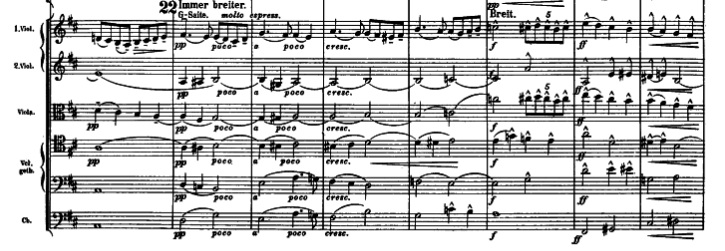
As often with Mahler, I tend to focus on the incandescent finale (those quintuplets!!!)—but you have to experience the whole, um, Journey. As with the 2nd symphony, the first movement is monumental too, and as in the 7th symphony, some passages of “sonic goulash” (MTT’s fine term) recall Ives—whose music Mahler used to conduct (see e.g. here). The middle movements also encapsulate Mahler’s world, and Alice Coote’s singing of Nietsche’s text in the fourth movement was intensely moving (cf. her Kindertotenlieder). The LSO was brilliant as ever, with outstanding brass solos—in what must have been an exceptionally demanding concert. MTT, the LSO, and the audience all pulled together to celebrate Life… It’d be most interesting to learn how the players felt about the concerts.

Mahler 3

See also Mahler 2 with MTT!.

* * *

MTT

I can’t resist mentioning MTT’s From the diary of Anne Frank—both to complement Mahler’s Jewish identity and for some of the most radiant images of MTT with Audrey Hepburn:

Another film screening

Erlangen blurb

Just back from Erlangen, where I presented my film Li Manshan: portrait of a folk Daoist (watch here).  The event was part of a stimulating series at CAS-E, devised by the socio-cultural anthropologist Raquel Romberg, research coordinator of the project Alternative Rationalities and Esoteric Practices from a Global Perspective; her own publications on Puerto Rican healers look fascinating.

Erlangen made a suitable and nostalgic venue for the film, having been the scene of the last concert on the delightful 2013 German tour of the Li family Daoists—my post on which I’ve just augmented. I even stayed in the same hotel, bringing back many fond memories of them.

courtyard

Partly because I can now take a further step back, and partly because I’ve just been editing my new documentary about Gaoluo, I’m all the more aware how demanding the Li Manshan film is—longer, I think, than the new one will be. But I remain amazed at all the technical and personal detail it contains, and all the work that went into it.

In the discussion following the screening, the bright audience made stimulating comments. Among them was Fabrizio Pregadio, * scholar of early Daoist internal alchemy, whose own work as editor of The encylopedia of Taoism and an invaluable reference guide to the Daoist canon doesn’t render him unmoved by the modern practice of peasant Daoists in the poor countryside of north China!

Click here for more thoughts arising from screenings of my film, here for reflections on the Erlangen showing, and here for a roundup of posts on the Li family Daoists.

Left: outside the hotel, where the Li family Daoists relaxed in 2013
Right: Bell Street, after my Chinese name


* I often wonder if his surname predestined him to become a scholar of religion!

An Italian renaissance

Along with the pleasures of editing my new film on Gaoluo with Andrea, it’s wonderful to be back in Italy.

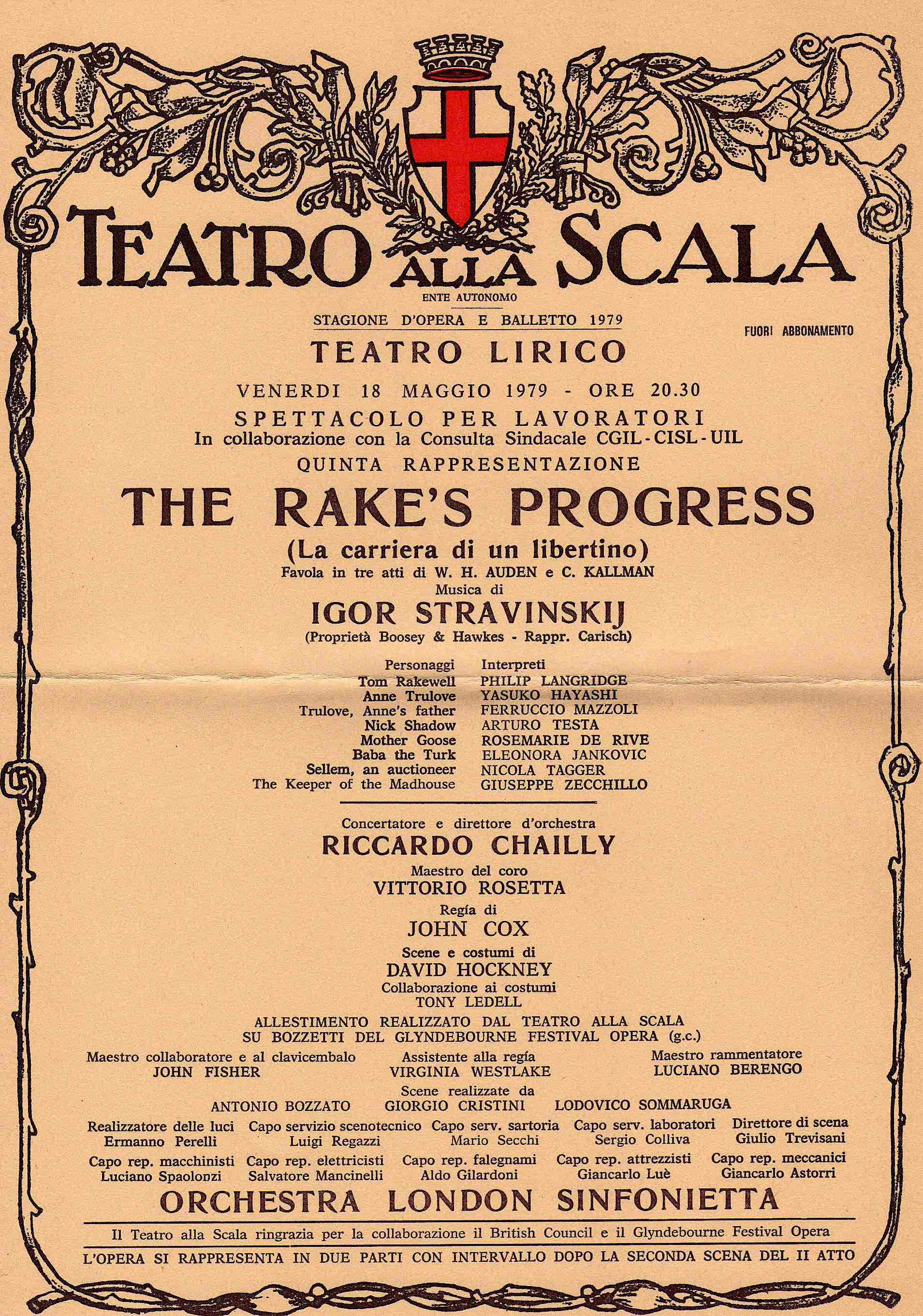
Rake 1979

My first proper opportunity to savour the delights of Italian life was an extended stay in Milan in 1979 to play The rake’s progress, which afforded me time to explore the nearby hill-towns. Over the following years I got to know the picturesque little towns around Tuscany and Umbria (cf. Italy: folk musicking), and through the 1990s I relished summer sojourns in Parma and Ferrara playing Mozart operas with John Eliot Gardiner; but Spain became a more regular venue for orchestral tours (allowing me to explore the exhilarating anguish of flamenco!), so I only got to do occasional gigs in Milan—the Brahms Requiem at La Scala, again with Gardiner, springs to mind.

img_2434With Li Manshan and his Daoist band at the Gallerie, Milan 2012.
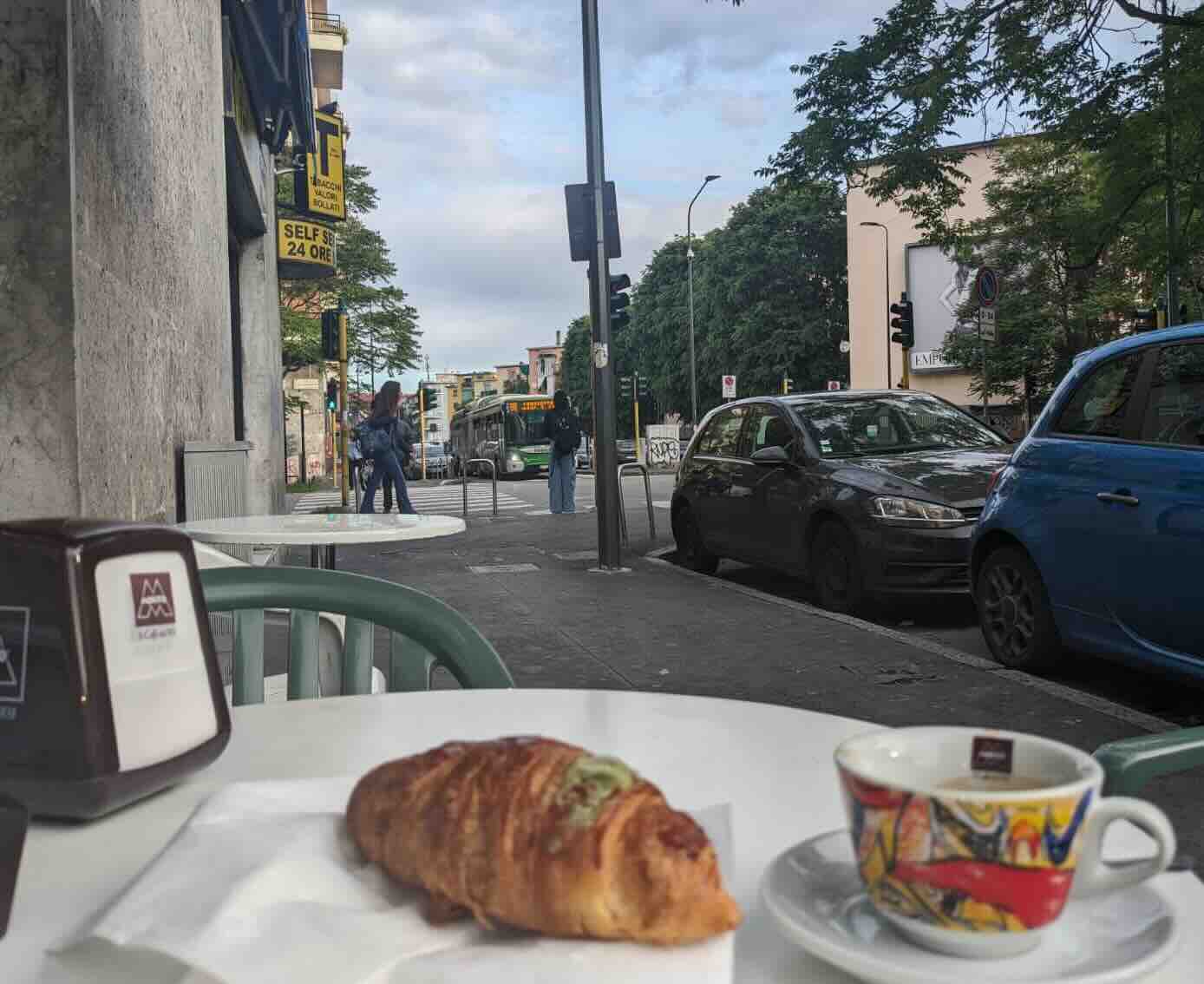

My last visit was in 2012 on our memorable Italian tour with the Li family Daoists! Having made negligible progress with Turkish on my many recent visits to Istanbul, it’s been good to be back in a culture where I can communicate a bit more efficiently. Indeed, staying in a mixed quarter of Milan has something of the vibe of a migrant mahalle in Istanbul, and takes pressure off my efforts to regain my former semi-fluency in Italian.

Last breakfast

Not the Last Supper, but my Last Breakfast.

Last supper

Taking a break from editing to watch the big Champions’ League match between Real Madrid and Bayern Munich, Andrea tells me he went to school in Modena with Carlo Ancelotti. When he tells people, they couldn’t be more impressed if he told them he was at school with Leonardo Da Vinci—”Da Vinci? Never heard of him, what team does he manage then?”

Alongside the numinous medieval hill-towns near Milan, the city may feel somewhat bland—but after a long absence, Italian street life still feels like a blessing.

See also Italy tag.

market

New film in the making: Gaoluo, New Year 1995

PTW cover

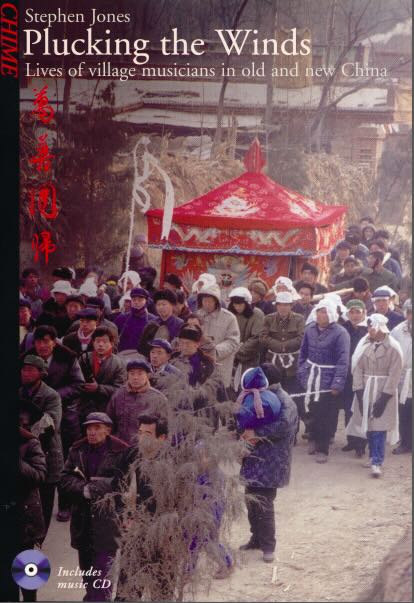
Our fieldwork through the 1990s documenting amateur ritual associations in villages on the Hebei plain bore fruit in my book Plucking the winds (2004), a diachronic ethnography of the village of Gaoluo in Laishui county, on which you can find many posts here. It’s recently been the subject of a new wave of attention in China.

The book comes with an audio CD—but its taken me all this time (Like, Hello?) to realise that from my video footage I could create a beautiful film devoted entirely to the 1995 New Year’s rituals around 1st moon 15th—my first extended stay in the village.

So I’m admiring the creative editing skills of the splendid Andrea Cavazzuti 老安, himself a fine film-maker. Long resident in Beijing (see this interview; for his photos from the early 80s, click here), and an old friend of the Li family Daoists in Shanxi, he’s currently spending time in Milan, so I’ve just spent a few intensive days with him there crafting a rough cut, while relishing the joys of Italy after a long absence.

It’s been inspiring to revisit the 1995 footage, nostalgic to recall the kindness and good humour of the villagers, and fascinating to collaborate in editing.

gl baihui 98

Alongside the “heat and bustle” (cf. Chau, Religion in China, pp.67–8) of the village’s four ritual associations exchanging New Year’s greetings as they parade to their respective “lantern tents” adorned with exquisite god images, are the shengguan wind ensemble, the “civil altar” (wentan 文壇) singing hymns (as well as the Houtu precious scroll)—and in particular the moving, exhilarating percussion suite, led by the great Cai An. It’s also moving to see senior masters like He Yi, Li Shutong, and Yan Wenyu, who maintained the village’s ritual life through the tribulations of Maoism. But ritual activities in Gaoluo already belong to another era…

UPDATE: you can now watch the film here, making a worthy companion to my portrait film on the Li family Daoists!

Following Miss Bell

Bell cover

It’s not all beer and skittles, travelling, you know.

—Gertrude Bell, 1911.

Several biographers have told the remarkable story of archaeologist, writer, and traveller Gertrude Bell (1868–1926), who “came to be associated with crude ‘lines in the sand’ used to conjure nation-states from the territory of the defeated Ottoman empire”. Moving swiftly on from Nicole Kidman’s portrayal in Werner Herzog’s 2015 movie Queen of the desert (cogently trashed here),

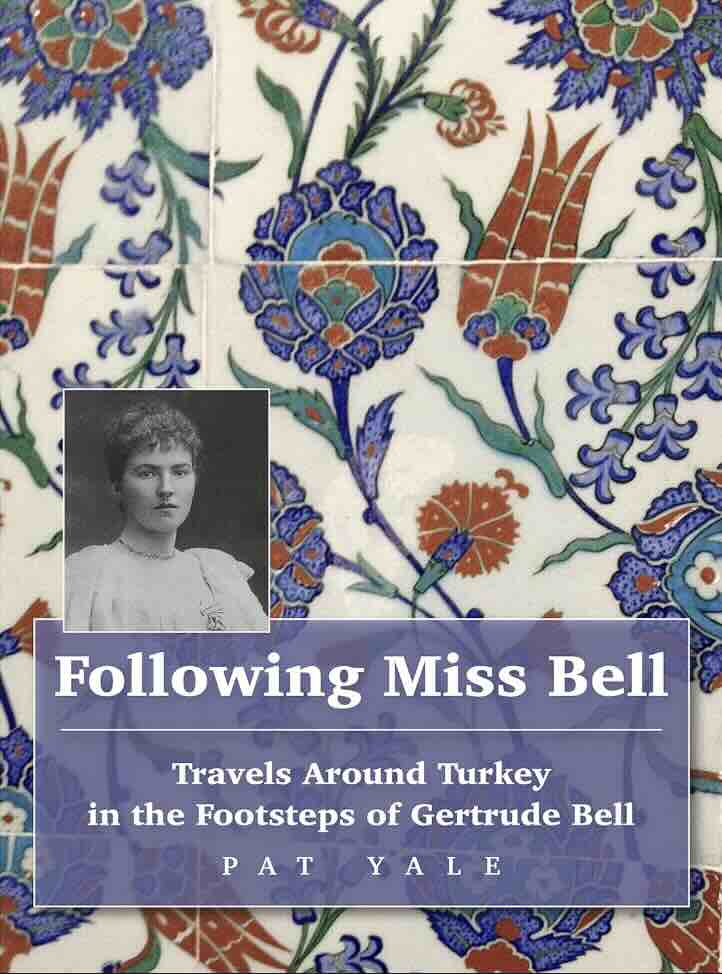
  • Pat Yale, Following Miss Bell: travels around Turkey in the footsteps of Gertrude Bell (2023)

makes an engaging, personal read, focusing on Bell’s earlier years delving into the ancient artefacts of remote corners of Anatolia, which have been largely overlooked, despite her two books The thousand and one churches and The churches and monasteries of the Tur Abdin. Yale bases most of her account on the rich material now available in the Gertrude Bell Archive of Newcastle University. Besides encouraging you to read the book, I recommend reviews by far better-informed authors than myself: Caroline Finkel and Arie Amaya-Akkermans, as well as pertinent comments from Sara Wheeler. See also Yale’s website.

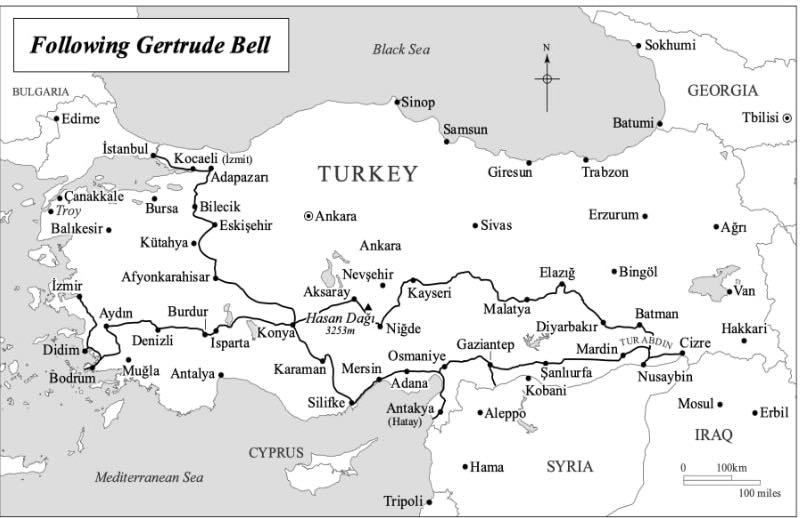
Following Miss Bell interweaves explorations a century apart. Having grown up in a hidebound Victorian society, after Bell’s first visit to Constantinople in 1889, she undertook her main Anatolian expeditions from 1905 to 1914; Yale, long resident in Turkey, retraced most of the route in 2015—a journey already fraught by severe tensions in Kurdish areas and the fragile situation near the Syrian border.

Bell went in search of Byzantine architecture, also finding traces of Roman, Hittite, and Selçuk cultures at sites such as Ephesus and Aphrodisias. At Carchemish in 1911 Bell first met T.E. Lawrence (“an interesting boy, he is going to make a traveller”). Yale colourfully translates onto the page her own contacts with people along the road—enlisting taxi drivers and local planning officers who share her taste for Bell’s expeditions. Taking in her stride the modern landscape of flyovers, factories, and supermarkets, Yale makes dogged enquiries, her refrain often rewarded:

At the teahouse in the main square I cast around for the oldest men present, then strike up a refrain that is to become so routine that I almost wish I could record it: “Hello. I wonder if you could help me. Just before the First World War there was an English traveller who was travelling around Turkey on horseback taking photographs. I’m following her travels. Her diary says she stayed at your village…”

Bell map

Besides the archaeological remains that Bell discovered, Yale seeks sites where Bell pitched her tent, and the urban hotels where she stayed. Bell first visited the bustling port city of Smyrna in 1899, staying several times before the devastating fire of 1922 and expulsion of the Greeks. Yale finds modern Izmir “a secretive city, lumbered with a history in which the glorious victory over the Greeks that it wants to celebrate sits uneasily atop the cataclysmic destruction of the past that it knows is so unattractive to visitors”.

Yale revisits towns such as Konya, where Bell met “the great love of her life” Dick Doughty-Wylie, later killed at Gallipoli. Bell’s travels south and east through troubled towns such as Adana, Urfa, Mardin, Diyabakir, Harput, Elaziğ, and Talas attest to growing tensions on the eve of the Armenian genocide—a region now beset by the PKK’s conflict with Turkish state forces and darkened by the Syrian civil war, refugees from which Yale encounters. The book contains useful maps.

Bell TomarzaLost Armenian monastery of Surp Asdvadzadzin at Tomarza,
Gertrude Bell 1909.

The clandestine survival of Armenian culture in Anatolia reminds me to consult Avedis Hadjian’s Hidden nation again.

As Bell travelled further south, she documented remote Syriac Orthodox monasteries, also evoked by travel writers such as William Dalrymple. Tur Abdin was the heartland of Syrian Orthodoxy until the ferman, local term for the 1915 genocide.

While much of their work consisted of reimagining the ancient culture of silent stones, Yale finds traces of the culture of dengbej bards.

Bell Midyat

“Gertrude Bell sometimes struggled to complete her work because of the crowds that assembled to watch, as here in Midyat in 1909”.

On her occasional returns to creature comforts, Bell gives interludes on expat society—bridge, Patience, polo, croquet… The penultimate chapter on her return to Istanbul has vignettes on the Bosphorus villages, the Princes’ Islands, the inevitable Pera Palace Hotel, and Vita Sackville-West. Yale only reflects in passing on Bell’s attitude towards women:

Gertrude is often accused of having been a man’s woman, casually putting down the wives of colleagues as “little” women; and it has always seemed particularly odd that someone whose adventures cast her as the perfect feminist icon should at the same time thrown her energy into campaigning for the Anti-Suffrage League.

And Yale’s comments on urbanization remind me of China:

It’s a story I hear repeated all over Turkey, a story of the pell-mell emptying of villages, leaving them as glorified old-people’s homes, waiting rooms for an empty future. In Gertrude’s day perhaps 85% of Anatolians lived in villages, a figure that has now been inverted. Even the reassuring claim that around 25% of the population still lives in villages is deceptive since it fails to mention the age of those hanging on.

For other intrepid early female explorers, see Undreamed shores and The reinvention of humanity. See also under West/Central Asia: a roundup.

Sarangi site updated!

Sarangi site

Having long admired Nicolas Magriel’s encyclopaedic website on the sarangi (see under The changing musical life of north India), I note that he has been avidly redesigning and expanding it, partly stimulated by the publication of his magnum opus Sarangi style in Hindustani music.

As Nicolas explains, he created the site “rather idiosyncratically” in 1997 during the internet’s early days. It became an archival treasure chest in 2014, containing (in his words):

  • A mammoth archive documenting over a hundred sarangi players whom I worked with when doing my PhD research in India in the 1990s. This includes biographical and anecdotal information, but most importantly, videos and audio. As of March 25, 2015 there were 300 videos of 52 sarangi players on the site as well as some rare audio of great sarangiyas of the 20th century.
  • Information about the sarangi, its history and social significance, its construction, maintenance and repair, and its technique.
  • Information about my own musical journey as well as about my research on South Asian music. My articles and PowerPoint presentations and links to my other publications will appear in due course.
  • Information about my teaching of sarangi, vocal music and other instruments in London and online. The video archive includes videos of my own lessons with several masters of the instrument and videos of me teaching my own students in London.

As he explains, the site “has remained unique on the internet. There is no site that comprehensively  surveys the diversity of players of sitar, sarod, tabla or any other Indian instrument in this kind of detail.” In particular, no other site documents the home life of Indian musicians as in the videos:

People in India sometimes know the public face of sarangi—on the concert stage or how it is represented in Bollywood films. They know nothing about the life of sarangi players, about the gruelling practice sessions, about the intimate relationship sarangi players have with their instruments—repairing and maintaining them themselves. Because I am a sarangi player myself and have enormous sympathy with the plight of sarangi players, both musically and socially, when I was doing my fieldwork in the 1990s, I had unprecedented access to their homes. This video archive comes a long way towards illuminating the real world of sarangi players and sarangi life.

tawayaf

He goes on:

This website also pays tribute to the world of tawayafsthe courtesans whom sarangi players traditionally accompanied, the singing and dancing women who in the words of my dear ustad Abdul Latif Khan “kept this music alive for the last four hundred years”. These women have been excised from the history of Indian classical music as part of the crusade to make the music respectable and suitable for middle class consumption—a crusade which began to take shape in the latter half of the 19th century in tandem with aspirations for Indian independence and statehood.

We are promised further videos of mujhras, courtesan performances in Banaras, Mirzapur, and Calcutta.

Impressively, Nicolas has now created a new supplementary section, “Sarangi Players in 2024“,

which introduces, auspiciously, 108 new videos of young contemporary sarangi players, including some breathtaking pop/fusion sarangi and also some lamentable garbar. Partially because of financial necessity and partially out of a genuine enthusiasm for a more popular music idiom, a few players have moved in really surprising directions, and we see some wild videos—with high production values—in terms of  both sound and image. The sarangi is alive and well in 2024, but it has had to adapt—most sarangi players can no longer make a living by accompanying classical vocalists.

See also under A garland of ragas, as well as Indian and world fiddles, and fiddles tag.

Hunan: ritual and expressive cultures

map

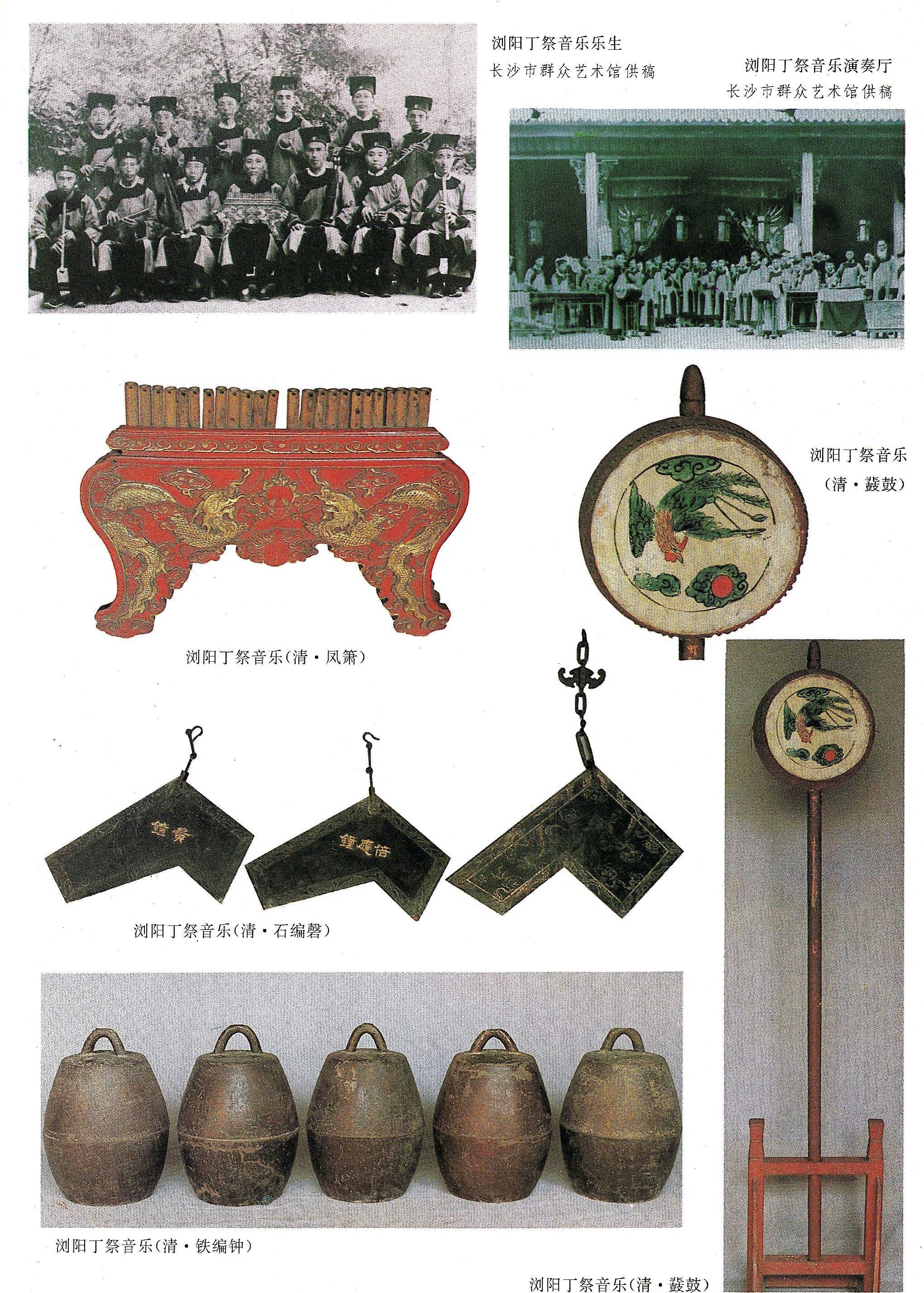
To remind you of my mini-series on Hunan province—its ritual and expressive cultures, the famine, and social issues:

LY JC

  • The famine, and glimpses of the early 1960s’ cultural revival in response to desperation (for more on the national famine, and Ukraine, see here, and under the famine tag)

  • Ritual and masked drama
  • Enduring social issues: the films of Jiang Nengjie—with a note on mining elsewhere (now with a link to Hu Jie’s bleak film set in the mountains of Qinghai).