Folk ritual of Tianjin, and its soundscapes

The Anthology provides another gateway

Like Beijing nearby, the municipality of Tianjin encompasses a large region, much of it still rural. On ritual and its soundscapes there, my previous articles include

So at last I’ve been trying to digest the relevant volumes on instrumental music of the great Anthology of folk music of the Chinese peoples:

  • Zhongguo minzu minjian qiyuequ jicheng, Tianjin juan 中国民间器乐曲集成, 天津卷 (2008) (2 vols; 1,475 pages),

which as ever contain substantial material on ritual traditions. To remind you of my introduction to a similar recent survey for Fujian province in southeast China,

Ritual pervades all genres of folk expressive culture: in the Anthology, it is a major theme of the volumes for folk-song, narrative-singing, opera, and dance. In the instrumental music volumes, even genres that lack explicit liturgical content are also invariably performed for ceremonial occasions—but a further reason to consult them is that the specific rubric of “religious music” has been consigned there. I’ve described the flaws of the Anthology project in my

  • “Reading between the lines: reflections on the massive Anthology of folk music of the Chinese peoples”, Ethnomusicology 47.3 (2003), pp.287–337.

Apart from the Anthology‘s valuable Monographs for opera and narrative-singing and brief textual introductions to genres, its volumes consist mainly of transcriptions, of limited value without available recordings. Conceptually its classifications are rudimentary, but it opens up a world of local cultures.

Tianjin map

It’s important to grasp the geography of the large regions covered by such surveys (cf. Layers of fieldwork). At the time of compilation the greater Tianjin municipality comprised four suburban areas (east, west, south, north), five counties (Wuqing, Jinghai, Ninghe, Baodi, * Jixian), and three districts (Tanggu, Hangu, Dagang), all of which had distinctive local traditions.

Useful as always are sketches of some leading groups (pp.1327–39) and brief biographies (pp.1340–56), containing promising leads to further ritual associations and sects.

Volume 1 is entirely devoted to “drumming and blowing” (guchui yue 鼓吹乐). Here the rubric of “Songs-for-winds associations” (chuige hui 吹歌会) is misleading (see under Ritual groups of Xushui), compounded by the sub-categories of leading instrument (guanzi, suona, sheng, dizi). While many musicians are versatile on wind instruments, this masks the important distinction between occupational shawm bands and devotional ritual associations led by guanzi. However, there is some valuable historical information bearing on the “classical” style of amateur ritual groups (often known as “music associations” yinyuehui) serving ritual, such as the Tongshanhui 同善会 of Huanghuadian in Wuqing county (p.1336; brief mention here, under “Further leads”). Such groups were to become my main focus (see Menu, under Hebei and Gaoluo).

Xuande naoboNao and bo cymbals of the Tianxing dharma-drumming association,
inscribed Xuande reign, 5th year (1429). Besides museums,
folk performing groups preserve important evidence for
the material culture of imperial China (see China’s hidden century).

Shawm bands always occupy a substantial part of the Anthology coverage. Here the summary introduces traditions for all the municipality’s regions, notably in the north around Baodi and Jixian (pp.36–8, 41–2; groups pp.1338–9, biographies p.1343–4, 1355).

Tianjin Dayue

The “great music” of Tianjin.

Still under the heading of “drumming and blowing”, a separate rubric introduces the imposing “great music” (dayue 大乐, though here I seem to recall it should be pronounced daiyue) of the Tianjin region. These shawm bands, derived from the Qing court (cf. longchui and Pingtan paizhi in Fujian), were transmitted among the folk through the Republican era until the 1950s, mainly in urban districts but also in the suburbs; but later they became largely obsolete, so the Anthology fieldwork was largely a “salvage” project.

The impressive introduction (pp.599–610) refers to documents from the late Qing, including material on the “imperial assembly” (huanghui 皇会), supplementing that of the dharma-drumming associations), and details the use of the genre at weddings and funerals. Besides recordings made for the Anthology in the 1980s, the appetising transcriptions (pp.611–78) utilise early discs that I’m keen to hear—Pathé (Baidai) from 1908 and the 1920s, Shengli 胜利 from the 1930s. Cultural cadres recorded senior artists in the 1950s and even “in the mid-70s”. By the 1980s, surviving musicians were recorded for the Anthology, and took part in the Boxer movie Shenbian 神鞭 (Holy whip, 1986).

Tianjin shifanShifan band, 1930s.

Volume 2 opens with an introduction to the mixed ensemble shifan 十番 (text pp.679–701, transcriptions pp.702–875; further material on the late Qing societies Siru she 四如社 and Jiya she 集雅社 on pp.1327–8). Related to the better-known genres of south China, notably Jiangnan, shifan bands are also found in a few northern regions including Hebei (see my Folk music of China, pp.206–8). In Tianjin, where shifan was part of the thriving Kunqu scene before Liberation, the major figure in documenting the tradition was Liu Chuqing 刘楚青 (1909–99) (pp.1341–2), who used his youthful immersion in the culture to compile a major volume in 1987.

Notable among percussion ensembles (pp.876–1138) are the dharma-drumming associations (fagu hui 法鼓会), which my mentors at the Music Research Institute (MRI) in Beijing were excited to discover in 1986 and 1987 while attending major folk music festivals in Tianjin. These groups commonly subsumed a shengguan melodic ensemble—from the 1986 festival, listen to the MRI’s audio recording of the Pudong “music and dharma-drumming association” in Nanhe township, Xiqing district 西青南河镇普东音乐法鼓会. These events led us to the fieldwork of local scholars—notably Guo Zhongping 郭忠萍, author of the valuable overview in the Anthology (pp.876–97; transcriptions pp.898–1009; see also groups pp.1328–34 and biographies pp.1347, 1349), based on her more detailed early publication Fagu yishu chutan (1991). 

This section also introduces the percussion of “entertainment associations” (huahui 花会): “flying cymbals” (feicha 飞镲), stilt-walking (gaoqiao 高跷), dragon lanterns (longdeng 龙灯), and flower drum (huagu 花鼓).

“Religious music”
As always, despite my criticism of the term, this is a substantial category in the Anthology, subsuming some major traditions of Buddhist and Daoist ritual.

Tianjin templesJinmen baojia tu shuo (1846).

For major insiders’ accounts by temple clerics Zhang Xiuhua and Li Ciyou before and after the 1949 “Liberation”, see n.1 here, leading to Appendix 1 of my book In search of the folk Daoists of north China and the research of Vincent Goossaert.

Tianjin Daoists
Daoist band, Tianjin. Tell us more…

For “Buddhist music” (pp.1141–52) and “Daoist music” (pp.1274–9) the introductions can only serve as a starting point for more sophisticated fieldwork—like the transcriptions (pp.1153–1273 and 1280–1326 respectively). There are slim pickings here—although the section on Daoist temple music provides a remarkable vignette from 1972 (!) on a Pingju opera musician’s visit to Zhang Xiupei 张修培, elderly (former?) abbot of the Niangniang gong temple, to notate his singing for the purposes of “new creation”. This section also introduces Li Zhiyuan 李智远 (1894–1987) of the Lüzu tang and Tianhou gong temples; though laicized after “Liberation”, from 1985 he was able to support the renovation of the Lüzu tang. More promising are the rural areas, where there are always household Daoist bands to explore. The transcriptions end with three items of vocal liturgy from the Western suburbs (pp.1313–26): the popular “Twenty-four Pious Ones” (Ershisi xiao 二十四孝), the “Song of the Skeleton” (cf. the Li family band in north Shanxi), and Yangzhi jingshui 杨枝净水.

Xiangta laohui JCI

The accounts of many folk groups offer glimpses of the sectarian connection. In Yangliuqing township (known for its nianhua papercuts), the Incense Pagoda Old Association (Xiangta laohui 香塔老会, above) of 14th Street (which we visited all too briefly in 1989) had scriptures including Hunyuan Hongyang baodeng 混元弘陽寶燈 and Linfan jing 临凡經. Tracing their transmission back eleven generations to the Wanli era (1572–1620) of the Ming dynasty, they have remained active exceot for the hiatus of the Cultural Revolution. In the western suburbs the Tianxing dharma-drumming association (pp.1331–2) belonged to the Tiandimen sect, and groups in Dagang district (p.33) also derive from Tiandimen and Taishangmen sects.

For all its flaws, the Anthology remains a valuable resource; but as ever, the groups introduced there call for fieldwork from scholars of folk religion as well as musicologists.


* Rural Baodi is known to Beijing musicologists and other intellectuals for its “7th May Cadre Schools” (Wuqi ganxiao 五七干校), wretched sites of exile during the Cultural Revolution—for scholars of the Music Research Institute at Tuanbowa (Jinghai), scroll down here.

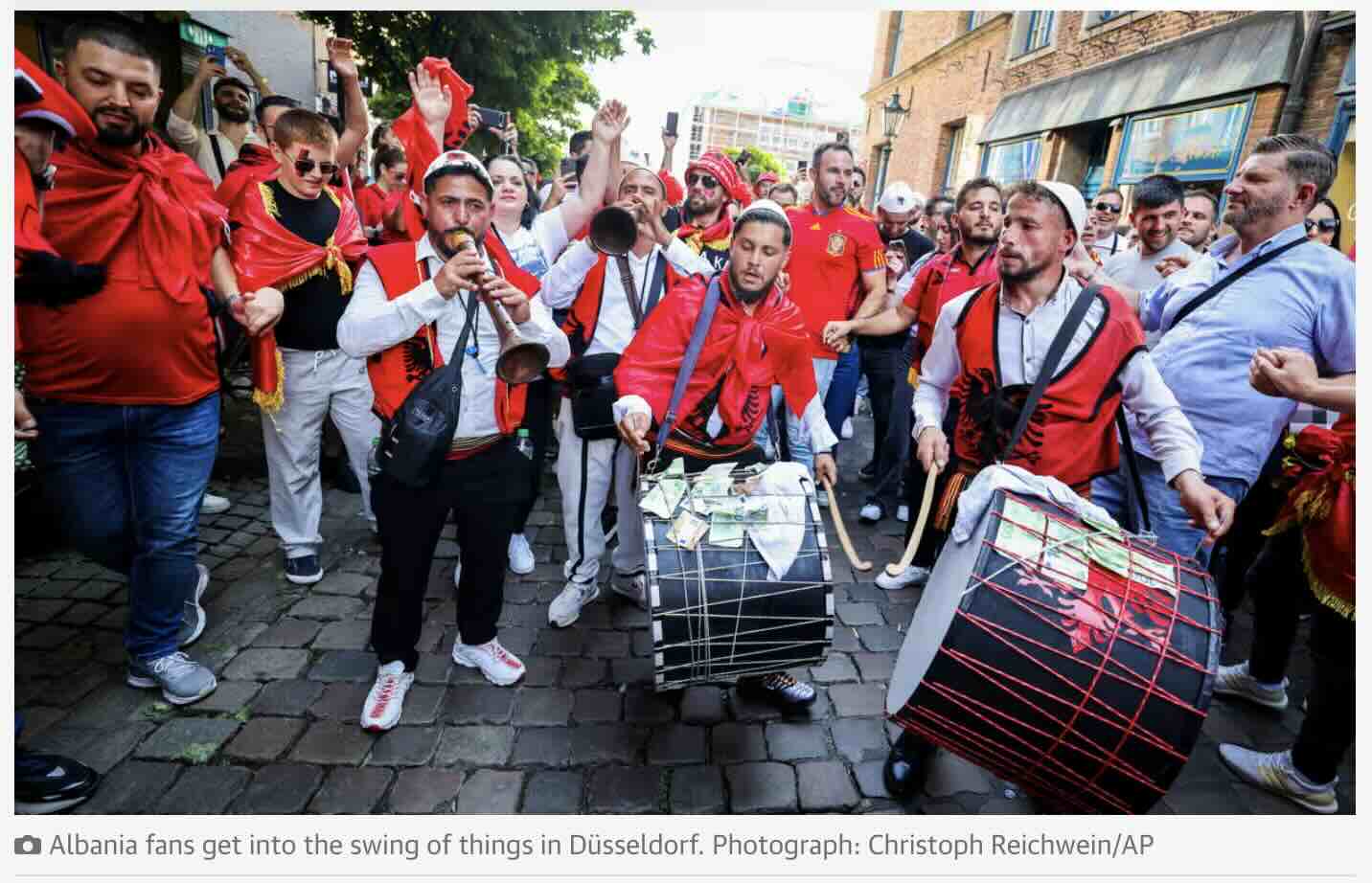
A folk playlist for Euro 2024!

*First in a series on folk cultures of Europe!*

Euro teams

Maybe it’s just me, but just as everything else in Europe is falling apart, Euro 2024 seems an exceptionally exciting showcase for football, with a sense of passion accompanying some great matches and brilliant goals.

All—well, almost all—the twenty-four teams in the six groups have inspiring regional traditions of folk music, which (let’s face it) may not be uppermost in the thoughts of most fans. So before we bid farewell to some of the teams, here’s a niche alternative playlist, largely compiled from other posts on this blog.

Albania Euro 24Albanian zurna shawms with dauli drums, a widespread festive combo.
Easy to sample, and exhilarating, are the traditions of east Europe and the Balkans:

  • Albania (Shqipëria!)
  • Croatia (Hrvatska!)
  • Serbia (Srbija)
  • Hungary (Magyarország!)
  • Romania (disappointly, România)

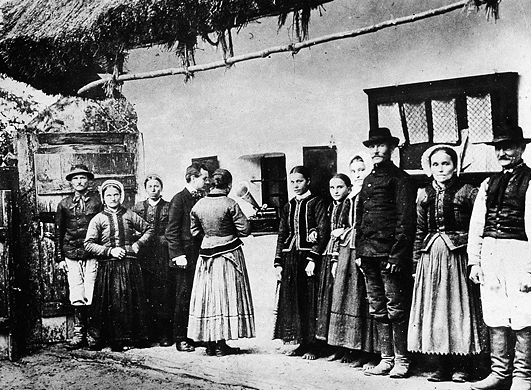
With long histories of discord, national allegiances often remain fractious—chronic enmities are still exposed in the fans’ behaviour at the Euros (see e.g. here). Boundaries having changed over the history of recording, here (based on this article) I will merely offer a few tracks that charm the ear, to encourage us to pursue the soundscape of the whole region:

Bartok 1907
Béla Bartók recording Slovak peasants in 1907.

Other boundaries may be sensitive too:

Note also Resisting fakelore under state socialism in former Czechoslovakia and Poland.

The playlists for other nations pose a different kind of challenge:

  • The Netherlands: by extension, how about this Batak hymn from Sumatra, from the ear-scouring Frozen brass CDs!
  • Belgium: this track comes from the Ocora CD Belgique: ballades, danses et chansons de Flandre et Wallonie (1981)
  • France: pursuing my fetish for shawms (see above), here’s the Bréton bombarde, with accordion
  • England: Morris dancing might not spring to the mind of some fans…
  • Scotland: though perilously close to the “tartan and shortbread” image, pibroch is not to be sneezed at—besides the ubiquitous fiddle, the bagpipe (not so much a dark horse as a black sheep?) is among other instruments commonly played in most nations under consideration—see this list.

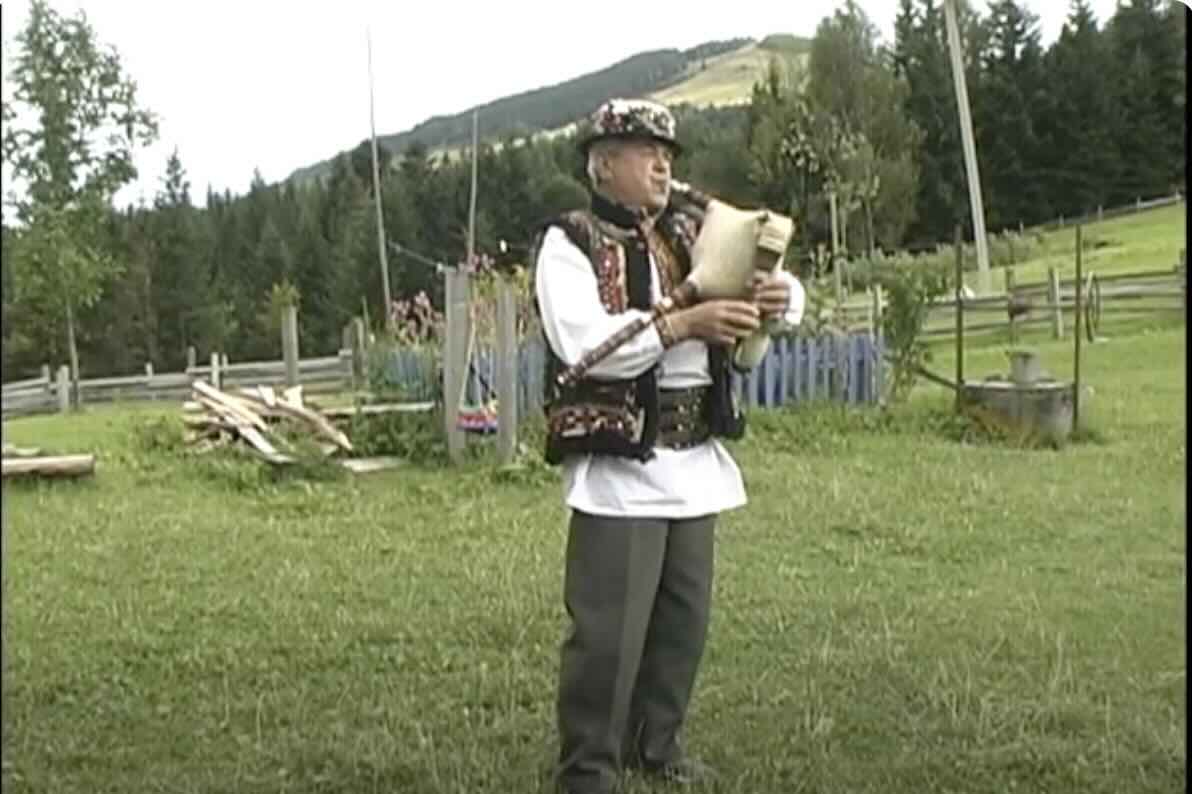
Ukraine bagpipeUkraine: Mykhailo Tafiychuk on volynka bagpipe of the Hutsuls.
Several posts on football can be found under A sporting medley: ritual and gender, including my wonderful playlist for Emma and Leylah.

More Chinese crime fiction

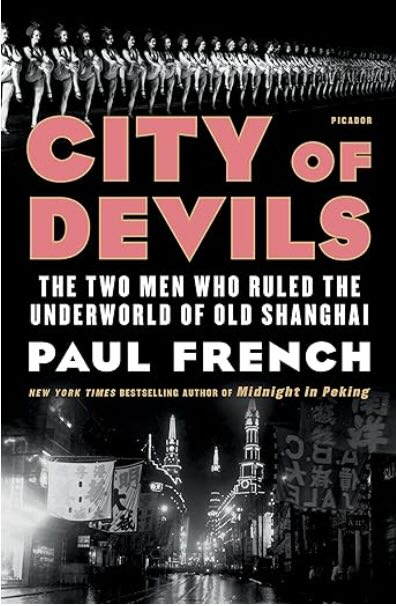
My series on crime- and spy-fiction (ranging from The big sleep, Bosch, and Leaphorn and Chee to Weimar Berlin—Stasi—Russia—Hungary) introduces the novels of Qiu Xiaolong, set in Shanghai. Now I’ve been spellbound by two true crime novels by Paul French, his purple prose immensely readable, interweaving a crash course on modern Chinese history.

City of Devils

  • City of devils: a Shanghai noir (2018).

Based on extensive archival research, it’s

the story of “Lucky” Jack Riley, the Slot King of Shanghai, and “Dapper” Joe Farren, owner of the greatest clubs and casinos. It tells of their escape from American prisons and Vienna’s ghetto, their rise to power, and the trail of destruction they left in their wake.

The backdrop is looming war, the spectre of the invading Japanese, bombings and massacres, gangster king Du Yuesheng, and the dreaded Kempeitai with their torture chambers at 76 Jessfield Road. As French explains,

I’m drawn to the flotsam and jetsam, the impoverished emigrés and stranded refugees, transient ne’er-do-wells and washed-up chancers, con men and female grifters. I seek out those foreigners who came to the China Coast and preferred to exist in the city’s criminal milieu, to disappear into its laneways and backstreets. They’re not distinguished or heroic. Invariably they’re liars and cheats. They’re rarely anything close to good, and all are terribly flawed, often living in Shanghai because they were one step ahead of the law and, invraibly, other options were few and far between. But many of them had a certain style, panache; their own particular flair. […]

Shanghai between the two world wars was a home to those with nowhere else to go and no-one to take them in. Its International Settlement, French Concession, and Badlands district admitted the paperless, the refugee, the fleeing; those who sought adventure far from the Great Depression and poverty; the desperate who sought sanctuary from fascism and communism; those who sought to build criminal empires; and those who wished to forget.

The subaltern underbelly of society (cf. the films of Xu Tong, or Jamyang Norbu’s factual stories of old Lhasa) is a major theme both of noir and popular music studies (blues, flamenco, fado, rebetika, tango). City of devils makes a salient counterpoint to the romantic nostalgia for the Shanghai jazz age, Zhou Xuan, and the early film industry (see e.g. Andrew Jones, Yellow Music, and this site, as well as here). There are musical cameos from “Slick” Jack Carter and his Serenaders, Valaida Snow (singing Someone to watch over me in 1926), Lilly Flohr, and notably Buck Clayton and the Harlem Gentlemen. French’s vivid accounts never reduce this world of sex and drugs, gambling and dancing—and violence—to mere glamour; the motley expat community was an enclave surrounded by poverty, starvation, and genocide (“the neon-lit city feeds off its host of four hundred million peasants barely surviving in China’s fetid hinterlands and laughs at their degradation”).

The men and women who’d come to Shanghai—from Mexico City, the Marseille Panier, London’s East End, the slums of Lisbon, the American Midwest, New York’s Lower East Side, across the Russian steppes from Bolshevism, the Jewish ghetto of Vienna and all points in between—create a gangsters’ paradise, sanctioned by the Japanese Imperial Army…

French ends with a sobering afterword tracing the fates of the characters—chancers, collaborators, war criminals; figures such as Sasha Vertinsky (back in the USSR) and dancer-turned-poet Larissa Andersen (most long-lived, in France).

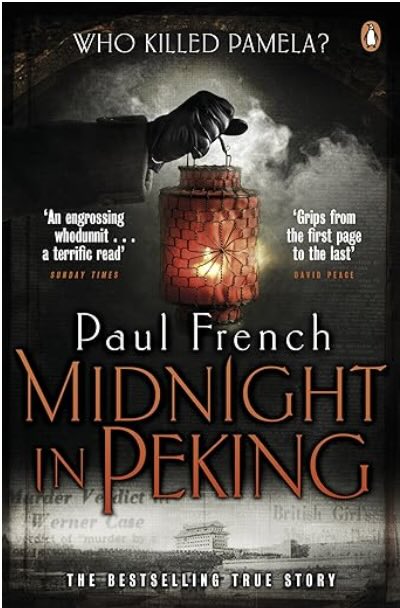
Midnight in Peking

Paul French’s earlier book,

  • Midnight in Peking: the murder that haunted the last days of old China (2012)

is just as vividly recounted, but more subdued. Set around the Legation Quarter and the Badlands against the backdrop of the Japanese invasion of north China and rumours of “fox spirits”, French reopens the gruesome, unsolved case of the murder of Pamela Werner, teenage daughter of an eccentric British consul, on the basis of the father’s relentless search for the culprits amidst official stonewalling. Among the cast are Edgar Snow and his wife Helen. Again French updates us on the later stories of the characters.

Both books are gripping—tales of two cities with their utterly different landscapes: that of Shanghai naturally full of glamour and sleaze amidst all the degradation, while that of Peking, an unresolved mystery, is both more sombre and more personal:

From the start, I thought it important that Pamela Werner not be forgotten, and that some sort of justice, however belated, be awarded her.

Seemingly utterly removed from all this were the regional microcosms of the qin zither; the silk-and-bamboo clubs and Daoist rituals of Shanghai (see e.g. Beyond silk-and-bamboo), as well as the “classical” Western culture of Fu Ts’ong and his father Fu Lei (Richard Kraus, Pianos and politics in China); and the drum-singing clubs and temple fairs of Beijing. Yet these too were irrevocably scarred by warfare and politics.

Now I really must read French’s Destination Shanghai and Destination Peking.

* * *

Night Heron

Moving on to contemporary China,

  • Adam Brookes, Night heron (2014)

(also well reviewed by Paul French) is an enthralling novel on espionage, its confused protagonist “a prisoner on the run with secrets the world will kill for”.

A BBC veteran, Brookes opens with an escape from a Qinghai labour camp (cf. links under Gansu). The suitably labyrinthine plot is full of convincing detail on a rapidly changing China. With an aside on British journalist Philip Mangan’s attempt to investigate the suppression of a religious cult in Yunnan, the dénouement takes place in coastal Fujian province. Much of the action takes place in an austere, enigmatic Beijing, with one tense scene at the Zhihua temple—which is quite enough to recommend any book to me.

The male dominance of public performing

heying

Members and helpers of the South Gaoluo ritual assocation, 1995.

This group photo, taken on the final day of the New Year’s rituals, is deeply nostalgic for me—but it makes a stark reminder of the male dominance of public performing in China.

Women in public performance:
left, Herat, 1970s
right, spirit medium, Houshan 1993.

Gender is one of the main themes in ethnomusicology (as in all Walks of Life…)—see a very basic sample of readings under this post in my flamenco series. I introduced gender issues in expressive culture and ritual in China here, including shawm bands, opera troupes, itinerant bards, and spirit mediums. The old public/domestic division of labour serves as a simple framework.

Two astounding—yet male—performances:
left, Bernstein with the LSO, 1973
right, Kleiber with the Vienna Phil, 1991.

Much has been written on gender in the rarefied echelons of WAM: whereas female soloists have long been common, the male monopoly of conducting has only been broken in recent years. And as to the orchestral musicians…

Maybe we take this for granted in old videos, as I guess we did at the time, but now I’m shocked when I watch the amazing films of Bernstein’s Mahler. When he performed Mahler 2 with the LSO in 1973, the orchestra had only two women (the harpists, of course) among 102 players. By the time they recorded excerpts for Maestro around 2022, despite going to such lengths to achieve historical authenticity, they inexplicably used the players of today’s LSO, 45% of whom are women. The New York Phil admitted its first female section player in 1966; by 1992 it included 29 women.

The Berlin Phil began recruiting the occasional woman in 1982, but by 2003 there were only 14 female members out of 120 positions. The Vienna Phil made a token effort from 1997, but by 2013 still had only 6 women, and 17% by 2024. (For the disturbing Nazi histories of these two orchestras, click here.)

See also under Gender: a roundup.

Yet more drumming

Mastery of the drum is achieved when the drummer no longer needs the drum
Going beyond mastery is when the drum no longer needs the drummer.

Rowan Atkinson has been credited, perhaps spuriously, with this kōan-esque aphorism, but it’s clearly inspired by his brilliant sketch, c1992—here with a transcription, to boot:

However they managed to synchronise the audio, it must have taken major preparation.

For more on Daoist non-action, see here (Walt Disney!) and here (Castiglione!).

Just as astounding is Fred Astaire (Damsel in distress, 1937), albeit with a real drum-kit:

From air drumming to air writing, how about writing Daoist talismans in the air.

For other posts on drumming, see Doof Doof, Tambourin chinois, the opening of the Beethoven violin concerto, and an anonymous conductor‘s faux pas.

with thanks to Selim!

The changing ritual scene of Xiongxian

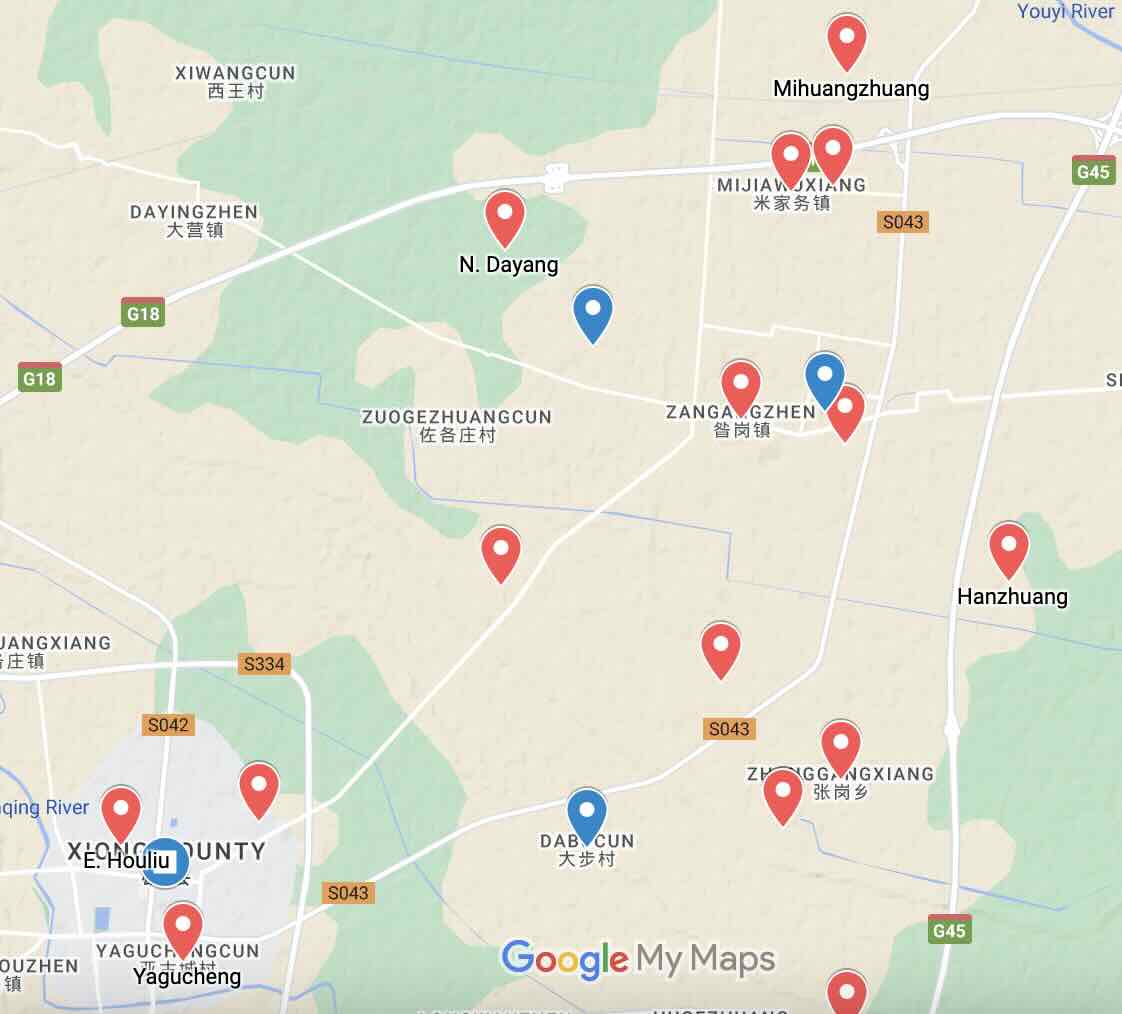
Our 1990s’ project on village ritual groups on the Hebei plain just south of Beijing (overview; fieldnotes listed in the Menu, under Hebei) revealed a wealth of evidence for sectarian activity. Our visits to Xiongxian county (click here, with map) focused on the ritual associations of Hanzhuang, Gegezhuang, and Kaikou villages, but on a “gazing at flowers from horseback” trip to the Mijiawu district in 1995 we could see that there was much to learn there too. I’m prompted to revisit our notes after reading a recent article in Sixth tone, subject of the second half of this post.

Xiongxian map detail

Of the five villages in Mijiawu, both East and West villages formerly had Great Temples (dasi 大寺). The Laofomen 老佛門 sectarians in North village had learned from the Buddhist monks of the Great North Temple in West village, who performed rituals among the folk. But the temple, and the monks’ instruments, were destroyed during the Japanese occupation.

Mihuangzhuang 1

At Mihuangzhuang the senior Cheng Wanxiang made an articulate guide to the history of the village ritual association (known by the confusing term yinyuehui 音樂會, “music association”—as well as my overview, note my comments on recent Chinese attention to my work on Gaoluo). The members were originally Laofomen sectarians. The repertoire of their shengguan wind ensemble music derives from three nearby villages: Mijiawu, Hanzhuang, and Bandong. After the end of the Cultural Revolution they restored around 1981, despite a lack of support from the village brigade and the disapproval of the county authorities. Cheng’s family were poor, but they forked out the money to buy sheng mouth-organs, so the others were moved to bring out their grain to buy a drum and other instruments. As he commented, “Village life is so monotonous—the association helps us handle (tiaojie 调节) life, but the brigade won’t support it. The association’s raison d’etre is to do good, and learn proper behaviour (xingshan 行善, xue guiju 学规矩).” Cheng Wanxiang himself went to invite his fellow villagers to study the music—ironic, as he notes, the teacher inviting the pupil! But still no-one cared to learn. Even so, in 1995 there were fifty or sixty households “in the association”.

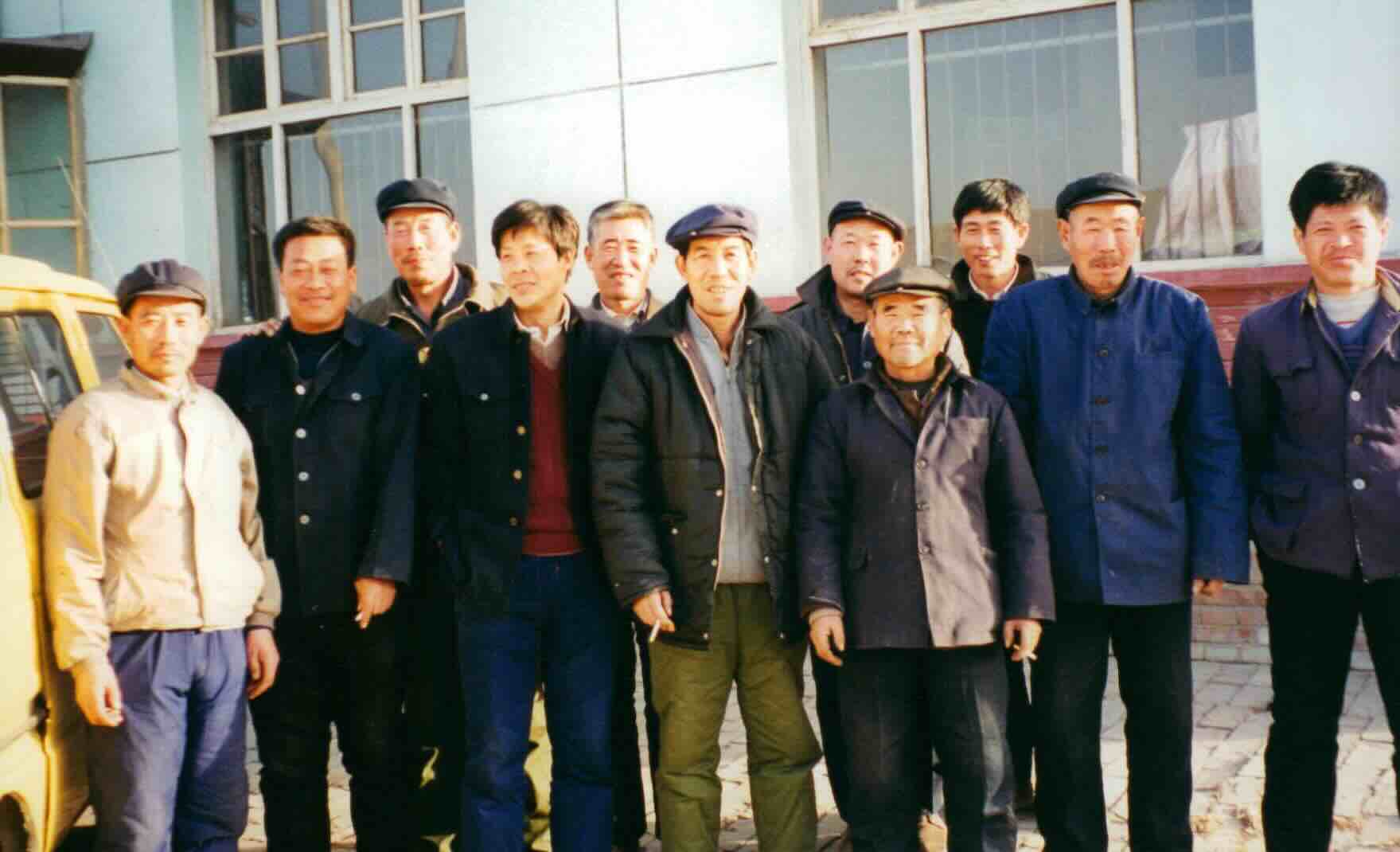
Mihuangzhuang 2Some association members.

Like Xie Yongxiang in Hanzhuang, Cheng Wanxiang made some fine distinctions. The temple fair over three days around 3rd moon 15th was known as Granny Assembly (Nainai hui 奶奶會) or Favourable Incense Assembly (Shunxiang hui 顺香會), made up of old women. A tent was set up, with paintings of Wusheng laomu and “Granny” (Houtu) (see The Houshan Daoists), and the association helped out. Again, the purpose of the Favourable Incense Assembly was to “do good” (a common theme, as villagers denied “superstitious” elements), but they stopped activity in 1937. The association hadn’t made the pilgrimage to Houshan, but some of the old women had.

The Laofomen sect was also distinct. They cured illness by using tea-leaves and qigong, not incense. They too “did good”, not accepting gifts; there was no charge—they even fed members. Their main scriptures were Dafa jing 大法經 (for Presenting Offerings, shanggong 上供), “precious scrolls” to the God of Earth and the Ten Kings (Tudi juan 土地卷, Shiwang juan 十王卷), as well as the ubiquitous Incantation to Pu’an (Pu’an zhou 普庵咒). Some were “recited scriptures” (nianjing 念經), some “wind-music scriptures” (chuijing 吹經). They kept performing them after the Japanese invasion, but less well. So the yinyuehui also served the Laofomen. After Liberation the Laofomen was suppressed, but its members continued curing illness. Their scriptures were burned at the start of the Cultural Revolution.

* * *

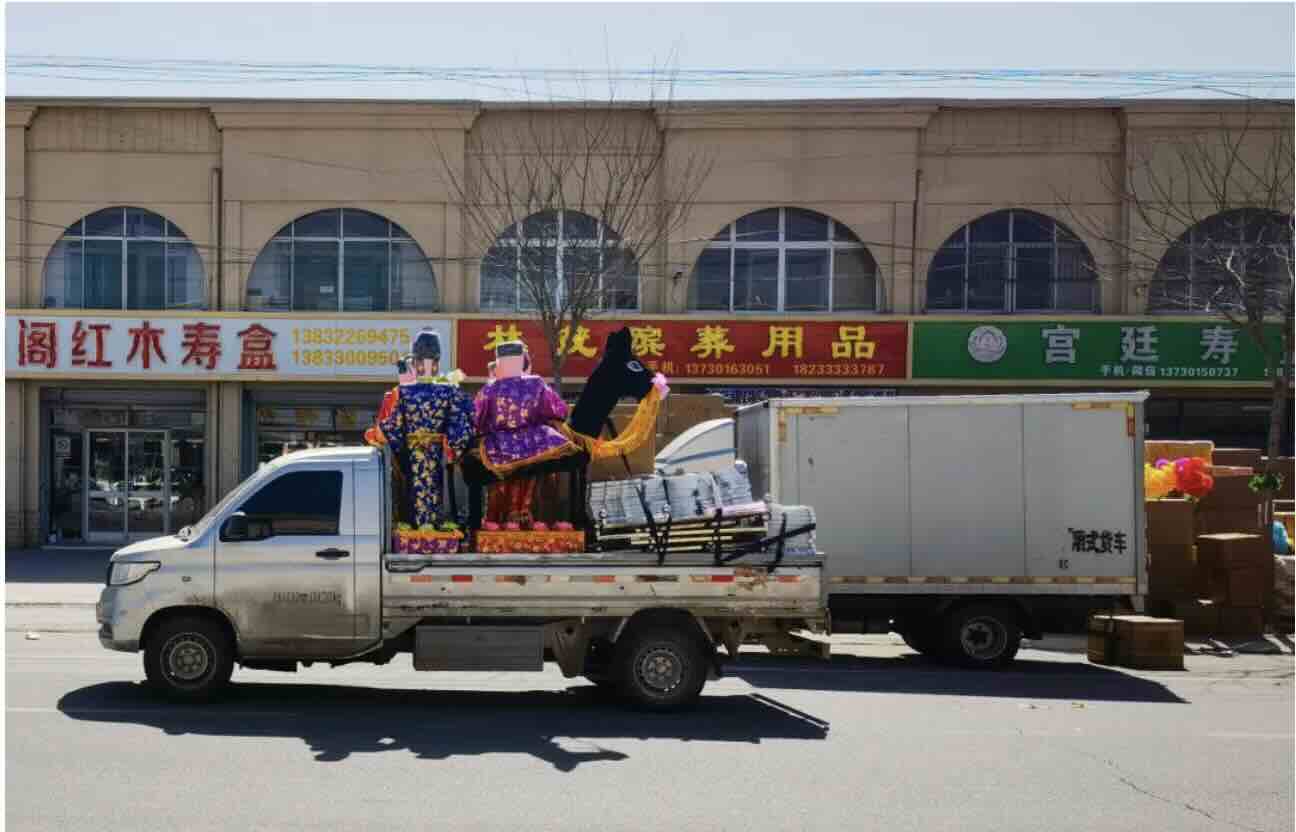
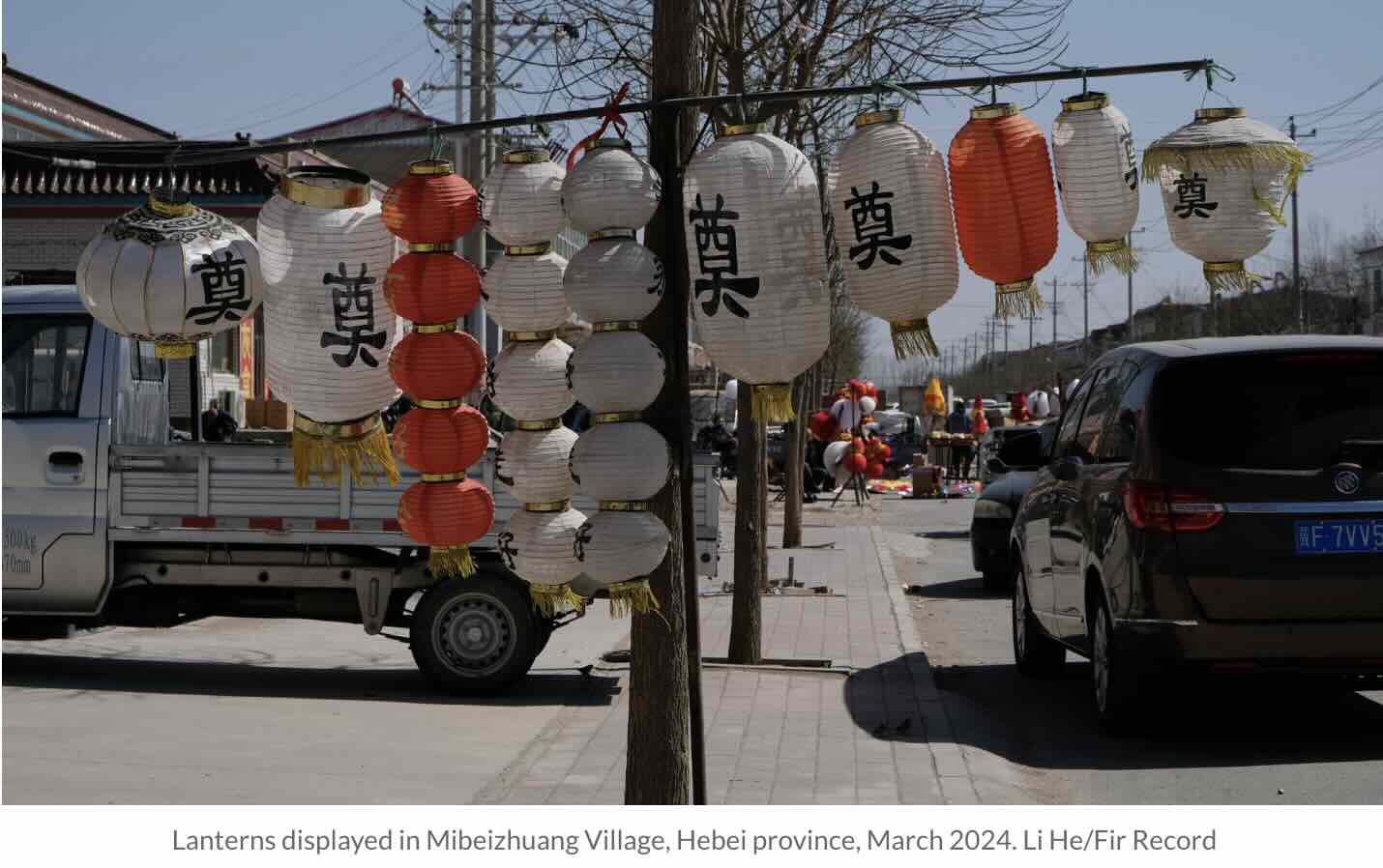
I’m reminded of these notes not only because since 2016, these villages are being swallowed up in the vast new XiongAn airport, but since Mibeizhuang is the subject of a recent article in Sixth tone about the village’s erstwhile thriving trade in funeral paraphernalia.

Welcome to the so-called “Wall Street of the underworld,” where businesses stock approximately 10,000 different types of goods, such as paper flowers, effigies, and elegiac couplets, for traditional Chinese funerals and memorial ceremonies.

Mibei shop

In villages, towns, and cities around China, individual familes (such as household Daoist Li Bin with his wife in Yanggao, north Shanxi) often open funeral shops, and some run thriving businesses. In Mibeizhuang the local memorial supply industry didn’t begin to take shape until around 2003.

Elderly residents credit this transformation to Yang Wenyuan, who at the time was Party secretary of Xiong County, where the village is located. He oversaw development of the main street, attracted suppliers and buyers, and helped organize the local workforce, dividing labor between production and sales.

I’m incredulous to read that Mibeizhuang “accounts for 90% of China’s funeral supplies market, recording an annual output of about 1 billion yuan ($137.94 million)”.

Forty-something Li and his wife used to sell donkey meat burgers in downtown Baoding, but they decided to return to their native village in 2014, renting a 60-square-metre space to open a one-stop supermarket offering “almost anything one might need in the afterlife.” The shelves are stocked with all kinds of paper products: beverages, vegetables, cell phones, televisions, cooking gas cylinders, electric-powered farm tricycles, and passports. The store also receives orders for custom-made products, such as full-size replica camouflaged tanks; luxury goods including Lamborghinis, Porsches, Mercedes, and Harley-Davidson motorcycles; and even a scaled-down three-story villa with a butler, maids, and a courtyard.

Mibeizhuang street

However, recently there has been a downturn in the market,

stemming from two major factors: policy and progress. In recent years, local authorities across the country, including in Baoding, have introduced “civilized memorial” regulations targeting the manufacture or sale of “feudal and superstitious” goods such as spirit money and other paper offerings. […]

In late March, local vendors received a text notification about the Baoding Civilized Memorial Initiative on their cell phones. Like similar policies rolled out by cities in Jiangsu, Shandong, Guizhou, Hunan, Shaanxi, and other provinces, the initiative aimed to prohibit the production and selling of “feudal and superstitious” memorial supplies. The penalties for violating these new regulations include steep fines and the confiscation of goods.

While this directive is having an impact on business, “there are too many traders, so it’s difficult to tackle everyone,” and people are quick to find ways to bend the rules. I’ve discussed the influence of official directives on local ritual cultures in posts on Shandong and Shanxi.

In addition, the emergence of new technologies is providing people with cheaper and more sustainable options for funeral and memorial ceremonies.

Anyway, after our notes on the history of sectarian activity in Xiongxian, I was intrigued to find this further update on the constantly shifting ritual scene there.

We are Lady Parts

Lady Parts

Still vainly seeking a handle on Yoof Kulture (cf. Staving off old age)—and taking a break from working out the mnemonic captions for the percussion suite in my new film on the New Year’s rituals in Gaoluo—I’ve been relishing Nida Manzoor’s TV drama We are Lady Parts on Channel 4 (here), catching up on the first series before watching the second.

As the characters of the all-female Muslim punk band subvert stereotypes, it’s both hilarious and provocative. The plot is enhanced by brilliant tracks such as Ain’t no one gonna honour kill my sister but me, Bashir with the good beard, Voldermort under my headscarf (on this playlist), Malala made me do it, and Glass ceiling feeling (“Stuck in the master’s house / With the master’s tools /Supercalifraga-racist sexist-xenophobic”).

Here’s a trailer for the first series:

And for the second:

This roundup of posts on punk features Viv Albertine, Riot grrls, and The Linda Lindas, as well as bands from the GDR, Spain, Croatia, Iran, and China. Cf. Voice of Baceprot.

Like I’d know…

My work on Gaoluo: recent Chinese attention

There is no such thing as art that is detached from or independent of politics

—Mao Zedong

WeChat heading

For those with access to WeChat, the CDTM音网 public account there is clearly a major resource for Chinese music studies. On their recent post is a substantial introduction to my 2004 book Plucking the winds, a diachronic ethnography of ritual life in Gaoluo village just south of Beijing (see this roundup)—just as I finally get round to working on a new film on the 1995 New Year’s rituals there!

The WeChat article is based on a review of my book by Zhang Lili—though it was originally published in 2019, she is more thoroughly familiar with my work on Gaoluo than anyone in China, and the CDTM editors have done an attractive job, adding colour images as well as tracks from the audio CD that comes with my book.

While I’m both honoured and diffident at finding Chinese scholars taking note of my work, I like to cite the (satirical) saying 外来的和尚会念经 “The monk from outside knows how to recite the scriptures”: after all, there are plenty of fine Chinese ethnographers from whom we can learn (such as Guo Yuhua and Xiao Mei).

And it reminds me how hard it is for PRC scholars to absorb Chairman Mao’s wise words “There is no such thing as art that is detached from or independent of politics”. I addressed this issue in the Coda of Plucking the winds (pp.344–355; Chinese translation in Zhongguo yinyuexue  2005/3), and in this post on self-censorship.

Through the period that I was doing fieldwork, I came to feel that such topics were not entirely out of bounds in the PRC, but now I understand that it is increasingly impossible to air them. This is not the fault of Chinese scholars—even before any higher authority can censor their work, they instinctively censor themselves (cf. Tibet: ritual singing in an Amdo community).

So in China, all this talk of “social context” largely steers clear of politics. The WeChat review mentions “campaigns” in passing, but at the heart of my historical account is the travails of the Maoist decades: the trauma of collectivisation, the breakdown of revolutionary hero and vocal liturgist Cai Fuxiang, the famine, the brief revival of 1961–64 before the Four Cleanups and Cultural Revolution. A good introduction to these themes, based on my book, is my post South Gaoluo: a tribute to two ritual leaders.

In the earlier chapters of Plucking the winds, other topics that PRC scholars instinctively downplay (again, quite understandably) are the 1900 Boxer massacre and the story of the Catholics. I also emphasise the support of village cadres—through all regimes—for their local cultures. And I continue to observe crises and conflicts for the period since I made my base in Gaoluo—theft, ideological disputes within the association, and so on.

South Gaoluo:
left, the 1930 donors’ list;
right, the 1931 Catholic church.

So if Chinese musicologists are indeed searching for what is special about my work, how it differs from that of their own, then it is this inclusion of politics in the story. * If my book has any importance, then that is it; it could point the way for Chinese scholars, but in the current climate, such a perspective can only remain opaque. I’m not complaining, and I’m not so naive as to expect more coverage of these topics in China—just saying, like… And perhaps my own emphasis on politics in my posts on this blog is in part an attempt to fill the gap (e.g. Memory, music, society, and Gansu: connecting social trauma and expressive culture).

sgl-oldies

Senior members of the ritual association, 1995.

* * *

Another recurring theme of mine is that research on such groups shouldn’t be confined to musicological circles (see e.g. Unpacking “Daoist music”). As I explain in my overview of our Hebei project, despite the misleading name yinyuehui 音樂會, these are ritual organizations, and as such they are the proper subject of scholars of folk religion (ample evidence in our fieldnotes, under “Hebei” in the Menu). At the same time, as I also keep saying, soundscape should always be a major aspect of such study.

So yet again I find myself having to bang on about that term yinyuehui! Having used the literal translation “Music Associations” in Plucking the winds, I later avoided the term, since both its components are likely to confuse urban-educated people:

  • yinyue 音樂 refers not to any “music” (and certainly not to any secular music), but strictly to the solemn shengguan wind ensemble that serves funerals and calendrical rituals in conjunction with vocal liturgy and percussion—all transmitted via Buddhist and Daoist temples. Sure, that’s quite a mouthful…
  • nor is hui 會 a secular term—it’s not an “association” in the modern sense of xiehui 协会 (as in “Chinese Musicians’ Association”, and so on), nor is it a cosy amateur entertainment “club”; rather, it’s the hui of huidaomen 會道門, so they are ritual organizations descended from sectarian groups (such as Hunyuan, Hongyang, and LaoFomen) under the umbrella term of “White Lotus” religion. (The term huidaomen, of course, may alarm timid PRC students, since CCP propaganda generally prefixes it with the adjective “reactionary”!)

So a narrow focus on “music” entirely fails to capture the essence of these ritual groups. Yet besides politics, folk religion too is an increasingly sensitive issue in the PRC; scholarship there looks ever more sanitised.

The CDTM editors prepared the review with impressive urgency, and I didn’t have time to haggle over the title—to better reflect my own approach to the topic, I might have suggested

The travails and soundscape of folk religion in north Chinese society
华北民间宗教社会活动的风波与音声


* Perhaps I should specify. In Western studies of Chinese music, I feel that the ideology of elite theorists plays an excessive role, from the writings of Confucius to textual sources on the Tang court, Ming imperial Daoism, and notably the revolutionary operas and songs of the Maoist era. What I discuss is not that whole apparatus, but thick ethnographic description of the impact of campaigns on the lives of ordinary people and the ability of grassroots communities to maintain their local traditions.

Sherlock Holmes and Ottoman Istanbul

Andy cover

Seeking a basic education on Turkish society, I found Andrew Finkel‘s book Turkey: what everyone needs to know a valuable resource—and now I’ve been admiring his debut novel The adventure of the second wife (2024) (see this short video clip).

It’s “a clever, compelling mystery about a Sherlock Holmes enthusiast who with the help of a brilliant Turkish professor, tries to solve the enigma of Arthur Conan Doyle’s dying words only to upend his life in the process”:

Strange that Abdülhamid II, the last great Ottoman Sultan, would have Sherlock Holmes stories read to him before he went to sleep. Even stranger is that his obsession helped change the course of history.

The explanation lies in the mystery of Sir Arthur Conan Doyle’s dying words, that the one Sherlock adventure still to intrigue him was that of “The Second Wife”. For no such story exists… Or does it?

Apart from what I trust is a captive audience of Sherlock Holmes fans and aficionados of Turkish culture, I hope the novel can find a wider audience. Rich detail—for Conan Doyle nerds, on Victorian and late Ottoman society, and on a rapidly changing modern Istanbul—is spiced with dry humour, impressive pastiche, vignettes on topics such as the Raj and the Constantinople exhibition at Olympia in 1893–4, and evocative illustrations. As befits a mystery thriller (has the baffling plot of The big sleep ever disturbed us?!), The adventure of the second wife is a challenging read, crammed with erudite and arcane digressions in virtuosic language.

In the ethnic Conan Doyle bazaar, I remain attached to Jamyang Norbu’s well-informed Tibetan fantasy The mandala of Sherlock Holmes.

See also The Janissary tree, The kiosk in Turkey and Europe, and other posts on Turkish culture under West/Central Asia.

In memoriam Klaus Voswinckel

Klaus

The great film-maker and novelist Klaus Voswinckel died recently in Munich on his 81st birthday. His life is commemorated in this obituary.

In his prose he “dances weightlessly between narrative, essay, poetry and sensual philosophy”. He created a wealth of vivid TV films, often with his wife Ulrike, portraying a wide range of musicians—such as The divine drummer: a journey to Ghana, Winterreise: Schubert in Siberia, Steve Reich: music in the words, and A step towards my longing: the composer Sofia Gubaidulina.

Dividing his time between Germany and Italy, Klaus would visit his accomplished daughter Esther and her family in Istanbul, where I was among a multitude inspired by his kindly, gentle soul and wise, good-humoured company. His heart was in Salento, whose popular culture he also documented on film. He was enchanted by taranta—a theme of his novel Tarantella oder Hölderlin tanzt, which I introduced here. So perhaps it’s suitable to send Klaus off with the passionate, intoxicating songs of his friend Enza Pagliara:

Daoism, society, and women in the Tang

Tang book

Wang Yongping 王永平, Xinyang yu xisu: shehui wenhuashi shiyexiade Tangdai daojiao 信仰與習俗—社會文化史視野下的唐代道教 [Beliefs and customs: Tang dynasty Daoism from the perspective of socio-cultural history] (2023; 725 pages).

Judging by a review by Franciscus Verellen (on which this post is based), this bulky recent tome looks as if it might revive my long-dormant interest in the culture of the Tang dynasty. That is where I came in, under the aegis of Denis Twitchett and Laurence Picken at Cambridge—at a time when we had no access to the PRC, and when scholarship there was in abeyance (see Ren Erbei).

From 1986, as I finally began visiting China, I soon defected from dry, silent ancient history, plunging into fieldwork on living rural traditions (see e.g. here). But I’m curious to dip my toes back in the stream, to see how I now feel about Tang scholarship—whether I can find early historical research meaningful, as scholars explore new perspectives.

Were I to retread this path, Wang’s ouevre alone would keep me busy—books such as Tangdai youyi 唐代游艺 (Tang entertainments, 1995) and Daojiao yu Tangdai shehui 道教与唐代社会 (Daoism and Tang society, 2002). Verellen summarises the main themes of this latest volume, which he calls “a monumental contribution to both Daoist and Tang studies”, exploring “the broad impact of Daoism on the everyday life of Tang society” under four main themes:

  • Daoism and the Tang social order, with special reference to the place of women
  • the trajectories of selected Daoist priests and their networks of social relationships
  • Daoism in daily life under the Tang, notably the Daoist imprint on seasonal festivals, folk customs, and popular practices
  • the interaction and different degrees of integration between the Three Teachings (Daoism, Confucianism, and Buddhism).

Chapter 1 demonstrates the vogue for the immortality cult. If Wang claims that the influence of Daoism was significantly greater on the upper than on the lower classes, and that its influence among women was exceptionally high, I’d like to see these points qualified in detail.

His emphasis on the role of women is welcome, although Verellen comments that Wang hardly takes the growing international scholarship on Tang Daoism into account—such as Jia Jinhua’s Gender, power, and talent: the journey of Daoist priestesses in Tang China (2018). And I wonder if Wang has absorbed the groundbreaking early work of Laurence Picken on Tang music—again including Daoist influences and the role of female performers.

53e35-a1

Wang documents lives and legends of Tang female immortals in the writings of Du Guangting and the Taiping guangji. While he pays ample attention to courtly Daoism, later chapters turn to folk customs (spells and incantations, supplications, offerings, talismans, and so on—techniques to expel ghosts and banish evil, seek good fortune, and avoid calamity) and the “folklore” of Daoist methods of prayer, divination, and the Retreat-Offering ritual.

Wang notes the Daoist imprint on annual festivals and customs, arguing that through the Tang there was a particularly close relationship between Daoist worship of deities / immortals and folk beliefs, due to the fact that the pantheon venerated by Daoists was constantly replenished by deities derived from folk religion. Such research reveals constant change—in society, deities, festivals; the culture of imperial China was not timeless, as the confrontation with CCP secularization might tempt us to suppose. Fashions for deities such as the Jade Emperor, the City God, the Stove God, Wen Chang, and Erlang have long fluctuated.

Verellen makes an interesting point:

Without denying the fundamentally religious character of Daoism, Professor Wang’s approach coincidentally accords with the policy of the CCP, of which he is a member, to valorize Daoism as popular culture and national heritage.

This seems somewhat harsh: the current slogans of “popular culture” and “national heritage” may have a somewhat insidious influence, but they can also go towards protecting local ritual traditions; and Party membership is an entirely routine insurance for almost any career in the PRC. Still, Verellen goes on:

Skirting the pitfall of reductionism, the book presents a wealth of valuable materials, drawn from an impressive range of contemporary Tang sources.

Of course history and ethnography are different animals. But admirable as all this looks, until we discover ciné footage from the Tang I don’t think silent, immobile early textual sources can compete in my attention with observing the “heat and bustle” of folk religious life at close quarters, or seeking the guidance of ritual specialists in person.

Like most early expressive culture, Tang music—not just courtly genres, but all kinds of musicking in folk society—remains elusive. Kitsch modern “recreations” for the concert platform only exacerbate the problem (cf. Chinese clichés: music).

See also this roundup of posts on Tang culture.