At this time of year I like to rearrange the deckchairs on the Titanic by organising some of my more notable posts from the past year under particular themes. As ever, many belong under multiple tags, so below I make some whimsical choices.
Keeping company with my film on the Li family Daoists, most important is my *new film* on the 1995 New Year’s rituals in Gaoluo (Chinese review here). It also prompted me to devise a new Menu, and even a YouTube channel (with playlists reflecting my diverse tastes as well as my own films). For now I still resign myself to Twitter, but I’m posting on BlueSky too, so let’s all migrate there!
Homages to the genius of three friends who greatly inspired me:
You can find any posts I’ve neglected in the monthly Archive as you scroll waaay down in the sidebar. All this suggests that it would be a sensible New Year’s resolution for me to burden you with fewer of these ramblings—but first I plan a major series inspired by the Gaoluo film…
A substantial Chinese review of my new film on the 1995 New Year’s rituals in Gaoluo has appeared on the WeChat public account of the CDTM 中国音网, headed by the enterprising Wei Xiaoshi—
Following CDTM’s earlier review of my book on Gaoluo and its audio CD, access to the film within China should clarify my emphasis on the ritual function of such groups on the Hebei plain, over a decade before the Gaoluo ritual association came to fame as their image was remoulded by the Intangible Cultural Heritage.
Naturally, I hope the villagers themselves will be gratified to see vignettes of life in Gaoluo thirty years ago—many of them will hardly remember that era, and youngsters should be intrigued to see their grandfathers taking part in these rituals. As to scholars, it would also be good if the film finds an audience not only among musicologists but also in the fields of religion and folklore.
You can now watch the Chinese-subtitled version on my YouTube channel and here, and (in China) on CDTM (follow this link).
After a trip to LA, a renowned English cricketer hires a car. Speeding happily along a straight, endless, empty road through the Nevada desert, he is flagged down by two bored traffic cops parked idly at the roadside. One walks over to him and drawls,
with a seasonal tinge— and fieldwork as resistance to fascism
Screenshot
Screenshot
Our image of Portuguese music is so dominated by fado (see here and here) that it’s easy to forget the abundance of folk traditions in rural communities there.
The archive (mostly filmed from 1971 to 1974) is on YouTube, as well as a playlist of excerpts. As in China, major themes are work songs (The Land! e.g. 50—not forgetting fishing), solo and a cappella singing, and church festivals; drums and fifes, bagpipes; stick-dances (e.g. 51, from São Martinho de Angueira) recall our much-maligned Morris dancing. Of particular note are the regions of Trás os Montes in the northeast, and the Alentejo. Here’s a compilation of religious music (45):
Mainly from the ritual repertoires, a few highlights:
In the Alentejo, the village of Venda holds the Festa da Santa Cruz (2–4) in Mayto celebrate spring (cf. Maggio in Tuscany, under Italy: folk musicking). This introduction refers to major studies by Morais and Fitas.
The group that goes down towards the crossroads is led by the Mordoma, dressed in white and carrying in her hands the Holy Cross, decorated with gold lent by the residents; the group that goes up to the meeting place is led by the Madanela, dressed in black and carrying in her hands a cloth with the face of Christ crowned with thorns. Both comprise a central female figure, two godmothers, four female singers with tambourines, and three male rifle-shooters. After the “meeting” of the Cross and the Cloth, they come together (beijo, “kiss”) to form a single group going up the village. Once at the Casinha da Cruz, Madanela and Mordoma present the Cross together. The next day, the Cross will leave the Casinha, remaining in the Mordoma’s house until the following year.
Nativity singers of Alpalhão (23–5); around Portalegre, Castelo Branco, Beja and Faro (30, 31), the cycle of Janeiras and Rios songs for the twelve days from Christmas to Epiphany, as well as the choral Oração das Almas in São Bento do Ameixial (9, 10).
The tamborileiros of Baixo Alentejo (17–22):
This documentary features a surreal viola (from 3.45):
Given the belated economic progress of the last half-century, I suppose this counts as salvage ethnomusicology—some of these traditions were already in decline, but others prove resilient amidst change (cf. Musics lost and found).
* * *
Some audio recordings of note include Musical traditions of Portugal(Smithsonian, 1988), and Tras-os-Montes: chants du Blé et cornemuses de berger (Ocora, 1978)—here’s a track:
* Someone must have pondered this, but I wonder how such fieldwork tangibly helps further the revolution. As in Yellow Earth, it might merely depress the visitor at the enormity of “backward” thinking—not least conservative religious values—among the people they hope to help. See also Taranta: poverty and orientalism.
The amazing Hua family shawm band 滑家鼓乐班 playing the suite Da Yanluo 大雁落 for a funeral, Zhuanlou village, Yanggao county, north Shanxi, August 1992 (here).
From the DVD Doing Things with my book Ritual and music of China: shawm bands in Shanxi (2007).
The Hua band’s repertoire (“Ming dynasty bebop”) is heard on the ear-scouring CD Walking Shrill (Pan Records, 2004). Note also this detailed comparison of shawm bands with the qin zither, and this piece in particular! For more on shawm bands in China, see Walking Shrill, and for shawm bands around the world, here.
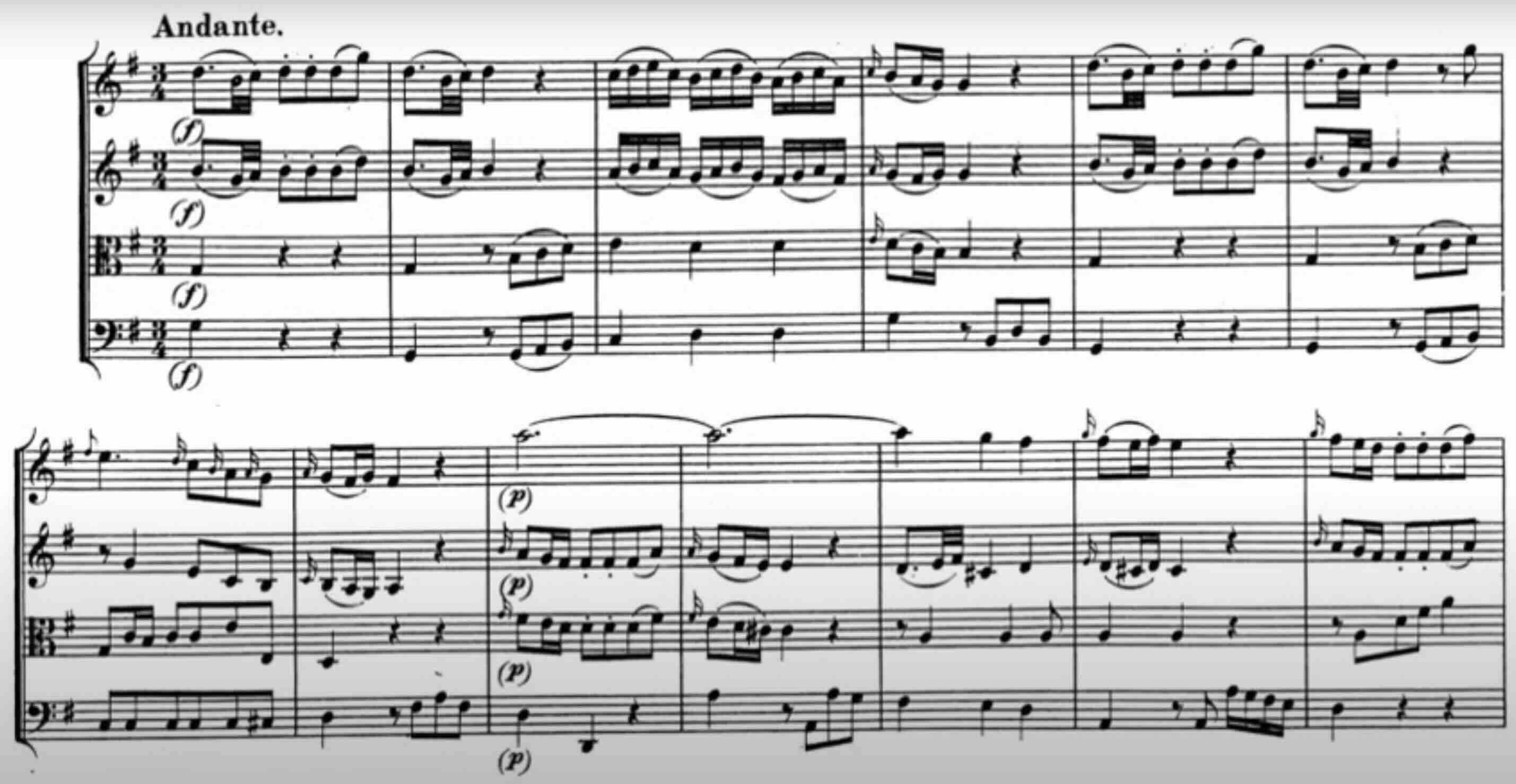
Even while I’m immersed in the Gaoluo New Year’s rituals and Persian chamber music, the luminous slow movement of Mozart’s D major Divertimento suddenly comes to mind—here’s the Amsterdam Baroque Orchestra with Ton Koopman, always a good choice: *
Written in Salzburg when Mozart was 16, doubtless still basking in his recent tours of Italy, it’s just as delightful to play as to listen to. For me it recalls a US tour twenty-some years ago with Andrew Manze (not the same tour as when he incapacitated me with the Finnish loo story, I think)—wholefood supermarkets on the highway, small-town bookstores, blues bars. Whatever the mundane challenges of negotiating airports, motels, and Life, this oasis of radiant tranquillity was always there to revive our spirits. Gems like this remind us to just Be in the Moment, embodying the effortless grace of sprezzatura and wuwei [Another Pseuds’ Corner entry, bravo!—Ed.] [Oh come on, gimme a break—SJ], in a way that no-one but Mozart can do (cf. the moving scene in Amadeus)—remote from Beethoven’s bludgeonings.
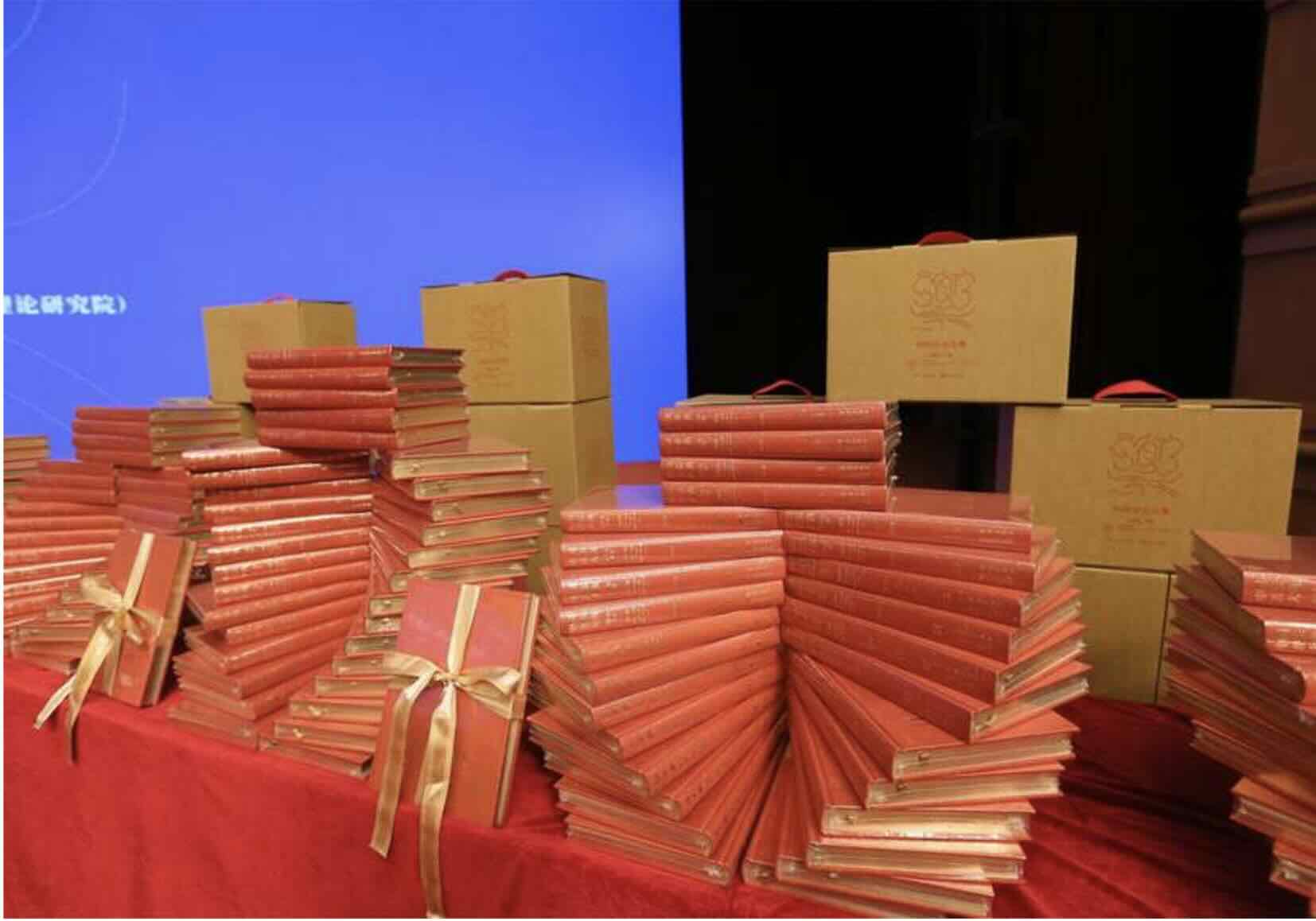
Zhongguo yinyue dadian 中国音乐大典 [Encyclopedia of Chinese music], general editor Wang Liguang 王黎光,
building on the achievements of previous eras—again testifying to China’s extraordinary energy and organisational power in producing encyclopedic reference works. It comprises four overarching rubrics:
Wenlun bian 文论编 texts
Tuxiang bian 图像编 iconography
Yinxiang bian 音响编 recordings (with volumes for xiqu 戏曲 opera and quyi 曲艺 narrative-singing published so far)
Yuepu bian 乐谱编 notations.
Here I’d just like to introduce the latter project, co-edited by my brilliant mentors Zhang Zhentao and Xiao Mei, whose astute reflections, posted recently on WeChat, I recommend. Zhang gives an authoritative survey of the growing recognition of the importance of notation as we refine our view of Chinese music sources, while Xiao adds details on the organising of such a huge compilation. It’s clearly a massive enterprise—not least in taxonomy, on which both scholars provide salient comments.
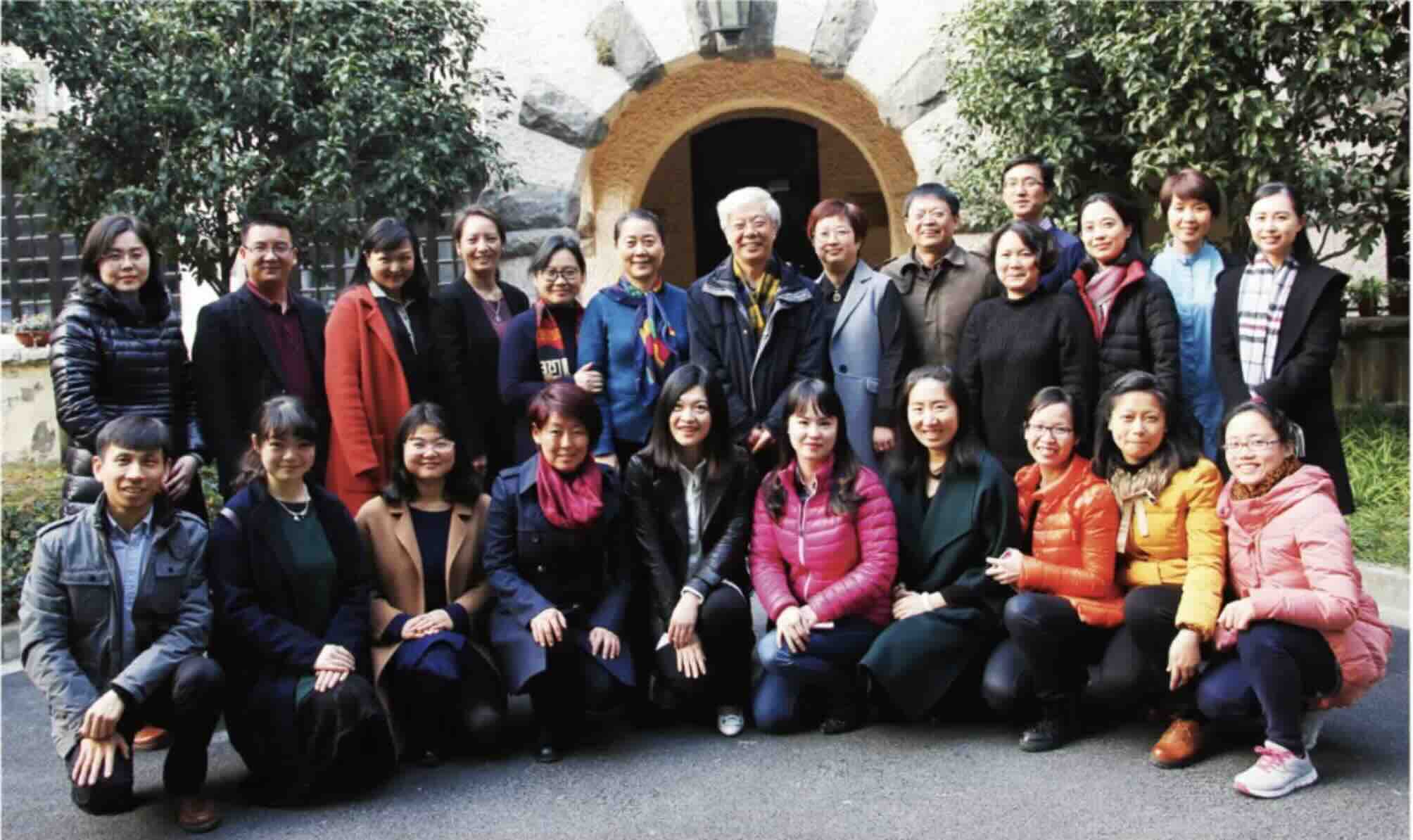
The project was initiated in 2017, soon assembling an accomplished team—many of whom were prompted to initiate separate research projects. Standards have risen since the days of the massive Anthology of folk music of the Chinese peoples.
The Yuepu bian team, 2017.
Zhang Zhentao pays tribute to the voluminous scholarship of Yang Yinliu (1899–1984), incomparable master of Chinese musicology, who led major projects before and after the 1949 Liberation; and the blossoming of research after the end of the Cultural Revolution, led by the Anthology. The Zhongguo gongchepu jicheng (Anthology of Chinese gongche scores, 2017), edited by Zhang Zhentao himself, was another major initiative.
On the basis of previous work, this new compendium adds more material from south China and ethnic minorities. It includes
scores found in canonical works from imperial times
among local folk traditions, gongche notations of melodic instrumental genres, as well as percussion. Notable among scores of folk melodic instrumental music are those of Xi’an guyue and the ritual associations of Hebei (supplementing Zhongguo gongchepu jicheng with some further material collected during Qi Yi’s Hebei project). Considerable new material for southern genres (hitherto somewhat under-represented apart from the exceptionally extensive scores of nanyin in south Fujian) includes the distinctive ersipu 二四谱 notation of the Chaozhou region, and scores of sizhu in south Jiangsu.
Han-Chinese folk-song, opera, and narrative-singing
Both scholars discuss the Uyghurmuqam—in Xiao Mei’s essay, part of her astute reflections on issues in assembling scores of ethnic minorities, and in handling digital data classification.
While I heartily support the documenting of all these scores, Zhang and Xiao would be the first to concur that folk traditions, based on oral transmission, are far from dependent on them. The challenge is to incorporate notation into our understanding of the soundscapes of local communities and their transmission histories.
Gongche score, West An’gezhuang village, Xiongxian, Hebei.
Of course, notation is silent: these scores provide the outline of melodies for musician-insiders whose realisations we can hardly imagine from the page. So among the other rubrics, the volumes cataloguing recordings will be crucial. What I await most eagerly—without holding my breath—is a project to make fieldtapes available, such as those that form the basis for the transcriptions of the Anthology of folk music of the Chinese peoples.
For some other compilations reflecting the blossoming of Chinese musicology, see my posts on Yang Yinliu (with a note on Huang Xiangpeng), Qiao Jianzhong, and Yuan Jingfang.
The affectionate “Jazz Club” spoofs from The fast show are collected here:
A regular item over six years in the 90s, the series (scripted by Charlie Higson) is recalled in a 2016 article by presenter John Thomson—a genuine jazz aficionado and drummer. Alongside the smugly cool persona of the jazz pundit, the earnest critical vocabulary, the TV set, the language of jazz filming, and the well-observed costumes (“Buddy Rich rocked the polo-neck look”), the musical parodies are impressive—
not that we ever had any trouble getting musicians to appear. In my experience, musicians have a much better sense of humour than many comedians. We’d use session musicians who were all incredibly good—they had to be, because some of the music Phil Pope wrote for the sketches was really tough.
They’re augmented by other Fast show regulars, like Paul Whitehouse (on fiddle at 5.49, channelling Nigel Kennedy!), and the homage to John Cage that follows.
In his article Thomson praises Stanley Clarke’s album Schooldays, and he offers a playlist, based on jazz funk.
In vino veritas, or rather Imitation is the Sincerest Form of Flattery. For more irreverence, see my spoof on Indian raga, and this story about the Matthew Passion (with a bonus of Always look on the bright side of life). For musos’ humour, click here.
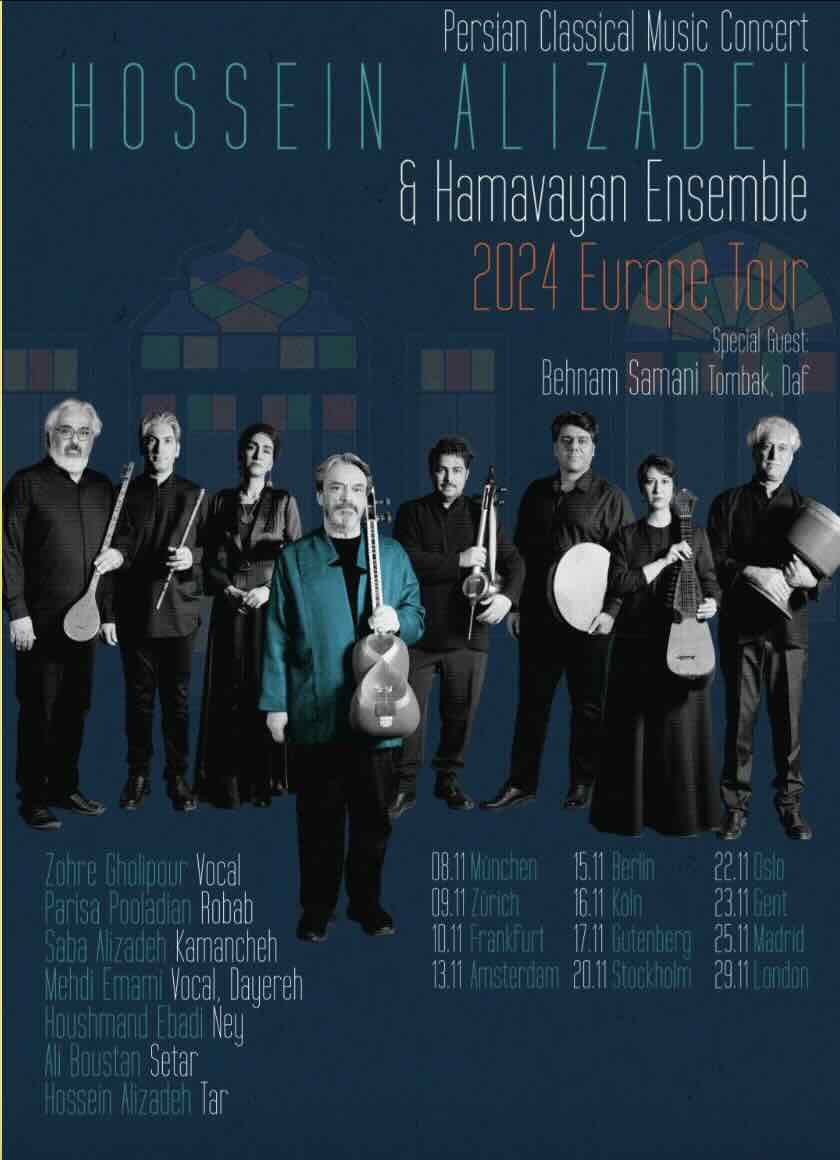
Regent Hall, tucked away right by Oxford Circus, is said to be a promising venue for world music. Indeed, last Friday, straight after Pouyan Biglar’s fine performance at the British Museum Silk Roads event, I hurried off there to hear more art music of Iran, with Hossein Alizadeh and the Hamavayan Ensemble (samples on YouTube e.g. here and here).
The current octet is led by Alizadeh on tar, with Houshmand Ebadi (ney), Hossein’s son Saba Alizadeh (kamancheh), Parisa Pooladian (robab), Ali Boustan (setar), and Behnam Samani (percussion). After the concert at SOAS last month I was glad of another chance to hear the vocals of Mehdi Emami, dovetailing with female singer Zahre Gholipour.
Master musicians have long been subtly adapting the radifs and dastgahs of traditional Persian muqam. Hossein Alizadeh (b.1950) is a prominent star in this lineage, reaching out to wider audiences over several decades. Modern tastes for a rather larger ensemble leads to more polished arrangements; Call Me Old-Fashioned, but I prefer the intimacy of a smaller group.
Still, the musicians’ demeanour on stage is entirely without ostentation, and their programme for the current tour mostly eschews the more popular repertoire heard on some of their CDs. Such is Alizadeh’s reputation that the largely Iranian audience listened with reverence through all the long free-tempo sections—far from easy listening, and surely remote from their daily tastes in rock or rap, whether in Tehran or London. Not all migrant communities elsewhere in the world show such devotion to their own traditional music, but Iranians in exile doubtless feel a need for emblems of Persian culture. In a week when two harrowing new BBC documentaries on Iran became available, it is hard for outsiders like me to connect the cachet of this refined tradition with changing currents in modern society and the ongoing unrest.
Last Friday, following the British Library Dunhuang concert, in the latest stage on the Silk Road caravanserai the British Museum hosted a series of musical events, wisely curated by Rachel Harris in association with SOAS as part of the public programme supporting the BM Silk Roads exhibition until 23rd February.
Besides the current exhibition, I’m always amazed by the inexhaustible riches of the galleries. Three of them made the setting for the musicians, the ambience of the surrounding artefacts lending a more palatable, less formal atmosphere than the concert stage—albeit still remote from social life along the medieval Silk Roads. So while the tension between medieval and modern soundscapes can never be resolved, I found the whole experience more satisfying than the BL concert. On a gratuitous historical note, I muse idly that chairs are a feature of later eras…
The performances comprised
South Asian and Afghan pieces on sarod and rubab (close cousins) with William Rees Hofmann, setting forth from enchanting alap
Iranian classical dastgah with the outstanding Pouyan Biglar, in the Albukhary Gallery of the Islamic World. Here he is at SOAS earlier this year:
Funeral procession (detail), Afrasiab (modern Samarkand) murals South wall. Wiki.
Inspired by the 7th-century murals from the Sogdian Hall of the Ambassadors, the event opened in the Hotung Gallery, with its numinous arhat, featuring recreations of melodies from the medieval culture of Sogdiana, heard at the capital of the Tang court in Chang’an. Directing the SOAS silk-and-bamboo ensemble, Hwee-San Tan gave a cogent introduction to Laurence Picken‘s great project to recreate the Tang scores exported to Japan, where they were soon retarded and overladen with the bewilderingly gorgeous patina of sound heard in gagaku. This, the event’s only attempt at “recreating” the medieval soundscape, made a fitting venture—though having long defected from early Chinese music sources to groups serving living folk communities, I now feel bemused by the complex issues involved in trying to perform such repertoire. In the absence of recruiting Chinese folk musicians from venerable folk traditions such as Xi’an guyue, academic reconstructions tend to resort to the unsatisfactory compromise of silk-and bamboo ensemble style around south Jiangsu—among the most junior of Han-Chinese folk traditions. Inheriting Picken’s transnotations as we do (this was the only intrusion of music stands!), the result could only sound twee by comparison with the other living folk traditions on display. *
Context is everything: we may have become used to attending Afghan, Uyghur, and Persian musics in concert, but one can at least imagine them in a more personal social setting—whereas academic recreations, however worthy, seem doomed to the staid atmosphere of the concert hall, remote from that of medieval Sogdian wine bars.
Regarding the performers, as Rachel Harris observed, it’s a privilege to work in a city where such people share their gifts with us.
* Sogdians held influential positions at the Tang court. Their music and dance—and wine bars—were all the rage there, influencing elite society further afield in north China (note the research of Chinese scholars such as Ren Erbei; on a lighter note from the great Tang scholar Denis Twitchett, see here). Topics to ponder include the degree of sinification of Central Asian ensembles at the Tang court, and how they differed from those of the oasis towns further northwest (clues here).
Musicians on camel, Tang dynasty. National Museum of China, Beijing.
Perhaps the most ambitious attempts at reconstructing the Tang repertoire result from the research of Zhao Weiping 赵维平 in Shanghai (here and here, among several related items featured on David Badagnani’s YouTube channel—the drastic retardation of the pieces in gagaku is quaintly illustrated here and here). I still feel the way forward is to approach early notations in the light of the varied ways in which folk musicians of diverse regional traditions decorate their skeletal gongche scores. Even for a relatively recent tradition like the “suite-plucking” of Qing-dynasty Beijing, this recording of the great Pu Xuezhai is far more convincing than later conservatoire recreations.
If it’s hard to find suitable Chinese musicians to recreate the Central Asian component of the Tang repertoire, perhaps a more radical project might involve shashmaqom musicians, in similar vein to early-music specialists like Jordi Savall.
Still, I approve David Urrows‘ comment on recreations of music from a later era:
In my experiences in China studies, when it comes to music repertoire in the missions from the late 16th century onwards, most of what people write—and then perform—is 10% based on documentation, and 90% based on fantasy, resulting in a kind of musical chinoiserie of a New Age type. I don’t want to promote, much less add to this pile of pseudo-scholarly dreaming, pleasant as it is to listen to…




 The Yuepu bian team, 2017.
 Gongche score, West An’gezhuang village,


 Funeral procession (detail), Afrasiab (modern Samarkand) murals South wall.
 Stephen Jones: a blog
