Some Bosphorus ferry piers

Among the myriad delights of Istanbul are the iskele piers serving vapur ferries. The smaller iskeles along the Bosphorus are especially charming, like Beylerbeyi:


Most vapur have cafés on board, but some iskeles also have cafés and even libraries—like those at Karaköy and Beşiktaş, a welcome refuge from the surrounding bustle:


The Kadikoy iskele is charming, but most picturesque is at Moda:


Even the Kuzguncuk iskele (from where the Greek bishop throws a cross into the Bosphorus to be retrieved at Epiphany!), despite its sparse ferry schedule, has a popular cafe and library:


Here’s the Paşabahçe iskele in 1910:


Many of these piers date back to the mid-19th century, and have been regularly modified, but the addition of cafés and libraries is part of recent initiatives—the Moda iskele, for instance, had so few passengers that it was closed from 1986, reopening in 2001 and revamped since 2022.

Ara Güler’s classic photos of the vapur and life on the Bosphorus are evocative, like this image from 1956:


For more on Istanbul (including Kuzguncuk), see under West/Central Asia.

More vocab for the dentist’s

For some handy expressions at the dentist, to follow my post on Gallipoli and Ljubljana, idly consulting the relevant section of my Turkish phrasebook, my imagination is captured by the expression

Bitmedi, tekrar gelmelisiniz
Come back, I haven’t finished!

This reminds me of Nigel Barley’s comment on his first fieldtrip to Cameroon (The innocent anthropologist, p.109–10), as he emerges bloodied after having his two front teeth pulled out with pliers:

I had fallen into the obvious trap that anyone in a dental surgery, wearing a white coat and prepared to extract teeth, was a dentist.

Cf. David Sedaris, “When you are engulfed in flames”. Also under Language learning: a roundup, note especially That is the snake that bit my foot.

On “Sufi music”

With general relevance to the conceptual confusion caused by “world music” marketing strategies, I highly recommend a review by Michael Frishkopf of The Rough Guide to Sufi music (Asian music 43.1, 2012, online here). It’s important background for several of my fumblings on the cultures of West/Central Asia, such as Bektashi/Alevi ritual (here, here) and the Naqshbandi order, and is instructive for traditions further afield—including China, where concepts like “religious music” and “Daoist music” may also confuse.

While praising the CD’s “wonderful collection of stellar performers and powerful performances”, Frishkopf trenchantly criticises its scant twelve pages of liner notes, “replete with misleading stereotypes, Orientalist-inflected, market-driven verbiage (alongside some outright errors)”.

First he addresses “world music”, itself a problematic category—an industry marketing label for musical performances from “elsewhere”, often combining elements (sonic, textual, or contextual) unfamiliar to Western listeners with others conveying reassuring familiarity (notably percussive grooves, or the timbres of Western popular music).

With the noble exception of labels aimed at the non-pecuniary goals of preservation, scholarship, or education, “the typical marketing strategy for this world music includes techniques for selection and description designed to maximise sales, not representational accuracy”.

In search of sales, most world music representations are biased—in both sound and description—to conform to the expectations for the world music idea, underscoring unfamiliarity by stressing features such as exoticism, ecstasy, trance, and spirituality, oſten emphasizing physical aspects (movement, dance, possession), and de-emphasising text in favour of the (supposedly) more transcultural power of musical sound.

On such compilations, the process of abridging original liner notes compounds rather than corrects representational errors. And “connections between different tracks typically cannot be intelligently described because such connections are not present anywhere in the source material; their interpretation requires knowledge of the broader musical scene that has already been omitted in the original re-presentation.” Moreover,

radically different kinds of world music—in this case Sufi music from field recordings, studio recordings, live performances from the world music circuit, fusions with scant existence outside of world music circles—are oſten juxtaposed without comment, simply because they were marketed under the same labels by the chosen source CDs. Some artists are widely known in their home country, others enjoy only local fame, while still others have built careers in world music and aren’t known back home (the essential elsewhere with which they are associated) at all. In the case of music identified as spiritual, some performers are recognised as religious authorities, while others are masters of music alone. Some performances are intended as spiritual utterances, while others have been denatured as a staged art.

Next Frishkopf turns to “Sufi music”, problematising both words (cf. Rectifying names):

First, one must consider the different perspectives on music (both as word and as phenomenon) and related concepts (e.g., sama’, spiritual audition; ghina’, singing) in Islam, and in Western discourse about Islam. In my opinion, the crux of this problem is not that the word music must never be used to describe the sounds of Islam—certainly the semantic scope of this English word is broad enough to encompass that which many cognates (e.g., Arabic musiqa) do not—but simply that this status, and discourse, must at least be discussed, and the etic use of the word music acknowledged. The present CD does not problematise the term at all.

Second, and perhaps more critically, is the slippery concept of Sufi, a word whose ethnocentricism is masked by its status as a legitimate Arabic word describing certain particularly pious Muslims of mystical inclination. Sufism, on the other hand, is an English neologism; the corresponding Arabic term is tasawwuf. In fact, as scholars such as Carl Ernst and William Chittick have recently observed, the current English sense of Sufism (like the terms Salafism and even Islam) has been shaped and promulgated by Orientalists, as a blanket term to designate diverse phenomena—from theosophy to voluntary religious associations (turuq), from ritual ecstasy to simple veneration (madih) of the Prophet Muhammad—throughout Muslim lands, in contrast to an imagined orthodoxy. Yet no single term covers such a vast range of phenomena in the languages of the Muslim majority regions, and indeed until the modern rise of Islamism, Muslim societies did not distinguish two spheres now known as Sufism and Islam; what is now called Sufism permeated rather than counterposed Islamic belief and practice. Sufi thus appears as a crypto-etic term. My point here is not that the term Sufi music should never be used, but rather that such a term (and its constituent parts) should be problematised, however briefly, considering its etic status and Orientalist genealogy, and (consequently) the ways it tends to mask difference.

He lists some examples on the CD. Whereas in most Muslim practice (Sufi or otherwise) language is foregrounded, in such packages instrumental music is stressed more than poetry.

In the cover statement “Islamic mystics harness the power of music”—sometimes true, though certainly not always—the sensory is transformed into the sensational, a technique for selling CDs. On page 3 of the notes booklet appears the phrase “hypnotic and trance-inducing”—an exemplary instance of world music marketing.

Following scholars of religion, Frischkopf queries the notes’ use of terms like “sects” and “orthodoxy”. And commenting on “the religious orthodox have tried to keep music out … but the Sufis have harnessed the power of music … and turned it to the service of God”,

this statement misleads in several directions at once. First, if music is taken in its broadest sense, even most Sufi writers tended to object to music in general and would approve of particular forms of chanting and—occasionally—instrumental performance only in carefully prescribed and regulated contexts. Second, if music is taken to include religious chanting, even the orthodox have always accepted certain kinds of music such as the cantillation of the Qur’an (tilawa), the call to prayer (adhan), and the recitation of religious poetry (inshad), provided that its themes remain within the bounds of religion, that the musical practices focus on text rather than emotion, and that men and women do not mingle.

Moving on to the second paragraph of the notes (!),

one finds further representations of Sufism through rituals and festivals that are described as exotic, dramatic, extreme, and ecstatic; a bodily spirituality reaching heights of bliss while radiating agony and death, evoking both Eros and Thanatos; ironic transfigurations of similar discourses today deployed—harshly—by so-called Muslim fundamentalists, the Salafiyya, for whom such features constitute adequate proof that Sufi ritual is a wholly illegitimate bid‘a (heresy; literally, innovation), having nothing to do with true Islam. Orientalist fantasies and fundamentalist critiques, both drawing on Sufi stereotypes, are thus unwittingly paired.

Frishkopf sums up:

All the artists and recordings presented here are aesthetically outstanding, though the relation of performers and performances to Sufism is quite variable. Most tracks appear to be concert or studio performances (oſten in international world music contexts) rather than field recordings, a limitation which could easily be excused if it were at least acknowledged. The selection is limited in range (so many regions and traditions have been omitted, while others are overrepresented), and biased toward instrumental music (though sung poetry nearly always prevails in Sufi contexts). Finally, the notes, which appear to rely entirely on texts drawn from source CDs (thus repeating and compounding their errors), suffer from serious inadequacies. Worse than unscholarly or error-prone, they are badly afflicted by overgeneralizations, unproblematized categories, essentialisations, and world music stereotyping, echoing Orientalist discourses, presenting misinformation, and failing to suggest important connections. Finally, understanding is severely curtailed by the absence of poetic translations. It is a rough guide to Sufi music, indeed.

His conclusion is almost comically tactful:

As a result, this album can only be recommended for teaching music, ethnomusicology, or Islamic cultures under two conditions: (1) if it is supplemented by additional readings and critical classroom discussions; or (2) if it is presented as an instance of the world music phenomenon, to be interrogated as such. For the listener, however, these tracks present a rich aesthetic experience, one that can easily be extended by recourse to the generally available source CDs, and beyond. For this service, and for highlighting the work of these remarkable musicians, the editors and publishers of The Rough Guide to Sufi music deserve commendation.

Frishkopf doesn’t interrogate a second edition (on 2 CDs) curated by William Dalrymple (cf. his film Sufi soul—see under From the holy mountain).

Silk-and-bamboo: update

Silk-and-bamboo, Shanghai: teahouse 1987, conservatoire 2024.

Frank Kouwenhoven always writes engagingly about Chinese music. In the recent CHIME Newsletter (38; subscribe here) he contributes several useful notices , which I’ll discuss separately (for now, see Temple festivals in Gansu).

He introduces new initiatives in Jiangnan sizhu, the silk-and bamboo ensemble music of teahouses in Shanghai and environs. I outlined the style here; since Witzleben’s classic 1985 ethnography,  note also the Anthology fieldwork, and Qi Kun’s fine study. For Chinese updates, there is always much to learn on WeChat.

For at least a century, has been an aesthetic gulf between teahouse and conservatoire styles (see e.g. here, and here). As Frank explains,

the “academic” style of silk and bamboo playing at the conservatoire differs considerably from that of folk artists who play their music mostly in teahouses and at private homes: the conservatoire style is much more polished, less rough in its heterophony, and more rigid in its dependence on written scores. The near-absence of folk-style improvisations and the use of well-tempered (Western) tuning also make the conservatoire way of playing more arty, more “classical” in atmosphere.

There is also a gulf within the conservatoires, between “ethnomusicologists” and performers—the former (including foreign students) seeking to document folk traditions, the latter part of a more recent style modelled on the polished values of Western Art Music for the concert platform.

In 2023, at the behest of the brilliant music-anthropologist Xiao Mei, a project was initiated at the Shanghai Conservatoire introducing a more traditional style of Jiangnan sizhu to the curriculum. (I’m naively perturbed that such a modest undertaking should require funding “as an ICH-marked genre” from the Pudong Securities Asset Management Fund, the Shanghai Trust and the Aide Foundation.)

The students receive regular instruction from elderly musicians, participating in informal gatherings.

The only aspect in which the students are not yet on a par with their folk counterparts is that they never switch instruments. Many folk artists happen to be multi-instrumentalists, equally at home on lutes, fiddles, flutes, and perhaps even dulcimer or mouth-organ. They pick up a different instrument from time to time, to change perspective. But this would be too demanding for the conservatoire students, who already have a tough task, playing in traditional tuning, and on silk strings, and attempting to improvise. Very few professional musicians in China would readily accept such a challenge. […]

Notwithstanding the modest nature of the project, with just four students joining in, it may well mark the beginning of an important new trend in academia: to establish a closer rapport with tradition, to adhere more faithfully to historical aesthetics, and ultimately, to play more freely, and with more fun.

sizhu CD

Meanwhile, Frank also reviews a recent studio album, with senior musicians of the Shanghai Changqiao Jiangnan Sizhu Ensemble joined by the young dizi-player Fan Linfeng. Trained in Shanghai (and a devotee of HIP early-music performance practice), Fan has formed her own Jiangnan sizhu group at the Central Conservatoire in Beijing, also inspired by the traditional style. For this repertoire it is easier to find recordings of conservatoire ensembles than of folk groups, but this one sounds rather different. Still, Frank’s review begins with suitable nostalgia:

How wonderful it was, the relaxed atmosphere of Shanghai teahouses in the early 1980s. Men, dressed in green or blue Mao suits, would chat away, smoke pipes, drink tea, and pay no more than casual attention to the group of musicians seated around a table in the corner, playing that easy-going, radiant ensemble music known as “silk and bamboo”: pleasing, mellifluous, joyful, an unmistakeable blend of nasal bamboo flute flourishes, plucked string sounds, hammered dulcimer, sonorous mouth-organ chords and small percussion. In those days musicians didn’t care whether you, as a visitor to the teahouse, listened or not, and the constant buzz of teahouse conversations formed a natural backdrop to the pieces, almost as if it were a part of the music.

This ambience can no longer be found in Shanghai, not quite in this way at least. Silk-and-bamboo still exists, but it has become serious business. Teahouses now tend to line up their chairs like in a concert hall, telling visitors to keep their mouths shut, pay proper attention to the music, and applaud at the end.

This may be largely true; anyway, I’d like to see a restudy of active clubs over this period of constant social change. Have informal gathering places over tea with a live musical background really been superceded? Are the pleasures of playing seated around a long table no longer valued?!

In another post I’ll introduce Frank’s comments on recent fieldwork in Gansu and Zhejiang.

Fish n chips

Fish n chipsSource.

An intriguing letter from Rob Wills in the LRB (26th December 2024):

Bill Lancaster mentions his friend John Walton’s search for the first fish and chip shop in England and that he discovered a likely candidate in the East End (Letters, 24 October). This location is supported by The Epicure’s Almanack, Ralph Rylance’s comprehensive guide to eating and drinking in London, published in 1815. Reporting on Shoreditch, Rylance noted: ‘Here are Israelitish butchers, fishmongers and cooks. The latter exhibit in their windows fish fried, or rather, perhaps, boiled in oil until they look brown and savoury.’ The book’s modern editor, Janet Ing Freeman, adds that the food ‘may have been some version of the battered fish fried in olive oil popular among Sephardic Jews, often named as an ancestor of today’s fish and chips’. As for the chips, the earliest mention in English is in William Kitchiner’s cookbook The Cook’s Oracle (1817), though Belgium and France remain locked in furious dispute as to who actually invented them.

The two components seem to have become a winning combo by the 1860s. By 1910 there were 25,000 fish-and-chip shops in the UK. For more, see e.g. here, here, and here. Cf. the first curry house in London (1810, under Bloody foreigners), and the ancestry of pizza, under You say tomato.

Fish and chips wrapped in newspaper (probably not the LRB) is one of the classic tropes of Binmenism. I note with pleasure that transliterated into Turkish, chips would come out as cips, and fish as fiş (actually representing the French fiche!)—cf. şef, chef or conductor.

Boulez, Benjamin, Brahms

On Thursday at the Barbican I heard the LSO celebrate S-Simon Rattle’s 70th birthday.

The concert opened with Éclat by the great composer-conductor Pierre Boulez, marking the centenary of his birth. As Rattle observes here, Boulez was a seminal influence on our generation. While Éclat (1964–5) may not be everyone’s idea of a jaunty little overture, it’s exquisite, basking in the sonorities of fifteen instruments in two groups (piano, vibraphone, xylophone, harp, cimbalom, guitar, mandolin, tubular bells, timpani; and alto flute, cor anglais [“english horn”, as Boulez liked to call it], trumpet, trombone, viola, cello). As Jo Buckley comments in the programme notes,

It is as though we were examining an exquisite cut-glass bowl, glittering in its beauty and complexity, that is dropped and shattered into thousands of pieces. Some of these shards catch and sustain the light, others glint briefly as you pass them, but the whole itself is never restored.

Boulez 1958

For Rattle it’s “one of Boulez’s seminal pieces, […] where you not only conduct, but you almost compose as you go along. It’s a piece you can only do with a group of musicians who really trust you, and vice versa.” In this 2016 Prom he conducted the Berlin Phil:

Here’s Boulez conducting the work:

Maybe this is intrinsic to the impersonal atmosphere of the concert hall, but much as I love the textures, I miss the human interaction of “improvisation”.

When Boulez conducted Éclat in Leningrad in 1967, “the audience had never heard anything like it before and demanded an instant encore. ‘It was packed,’ says Lilian [Hochhauser], ‘they were hanging off the balconies’. ”

Rattle Hannigan

Then we heard the world premiere of George Benjamin’s Interludes and Aria, from his opera Lessons and Love and Violence (2018), a gift for Rattle’s birthday. In this coherent suite of seven brief movements, dramatic and unsettling, the central aria was sung by the imperious, magnificent Barbara Hannigan—how blessed are composers to have such an interpreter! Here she sings the aria in the opera itself:

For previous collaborations between Hannigan and Rattle, click here and here.

Having willingly eaten our greens, we earned a pudding. Brahms 4 may be familiar, but it’s always irresistible, right from the sigh of the descending third that opens the piece, on which Hugh Maguire dwelled lovingly as he coached us in the NYO.

Brahms 4

The gorgeous slow movement is among my exhibits in the incandescent key of E major.

S-Simon conducted the symphony from memory, always an immersive experience. And as with composer-conductors such as Mahler, Boulez, and Salonen, there’s something special about hearing classics performed by specialists in contemporary music. In his Lexicon of music invective Nicolas Slonimsky reminds us that it can take time for new music to be appreciated: critics of the day found Brahms 4 “intolerably dull”, with “a profuse lack of ideas”. So there.

For a less driven version of Brahms 4, try the iconic Furtwängler (1948). Cf. Carlos Kleiber (1996)—here, with an amazing Brahms 2 as well!!!

More Brahms e.g. here and here.

Bobby McFerrin

McFerrinSource.

The human voice is the most remarkable instrument. Thinking of the diverse ways it’s used around the world (note the fine survey on the CD-set Les Voix du monde), an astounding vocalist is Bobby McFerrin (b.1950) (website; wiki; YouTube channel).

Here’s his solo album The voice (1984):

Besides his Don’t worry, be happy (1988), note also his Circlesongs project.

Here’s a clip from Bach and friends:

And here he is in concert with Chick Corea:

Among many related posts, see my Playlist of songs, A cappella singing, Strings and voices, Flamenco, Meredith Monk, Two guttural vocalists, Nina Hagen, Barbara Hannigan, and Counter-tenors.

Anarchy in the PRC

To follow New musics in Beijing

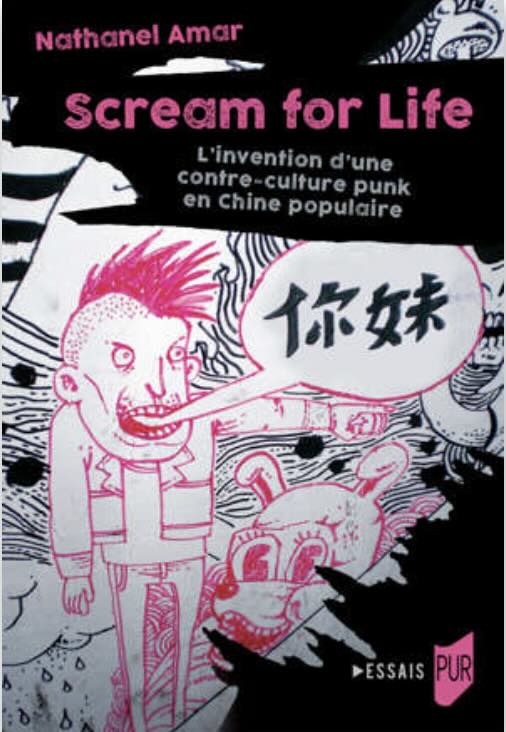
Amar Scream cover

Party propaganda may appear to be ever more pervasive, but this is a deceptive image. While the gloriously ear-scouring Chinese punk scene has long captured media attention, I look forward to reading a recent book (now available in OpenEdition) by Nathanel Amar,

  • Scream for life: L’invention d’une contre-culture punk en Chine populaire (2022)
    (reviewed e.g. here),

a definitive survey, focusing on Beijing and Wuhan. Amar’s useful website links to many articles (listed here), complemented by his YouTube channel Chinese Alternative Music Project.

It’s good to dip my toes in life waay out of my comfort zone—which, mysteriously, happens to be fieldwork in dusty north Chinese villages documenting funeral rituals. Traditional folk culture too is an alternative scene, even as the Intangible Cultural Heritage system strives to render it toothlessly patriotic.

Brain Failure’s Anarchy in the PRC is an early classic: 

Note also the documentary This is our Utopia! Punk collectives in China.

All this may be remote from the kitsch Spring Festival Gala, and that’s just what makes it so valuable. The PRC punk scene offers a countercultural alternative, contesting the CCP monopoly on truth and memory (cf. Ian Johnson’s book Sparks on China’s underground historians). It’s part of young people’s cultural world—as I observed in my previous post, students returning from city colleges to attend the rural funerals of their grandparents may be listening to such gritty urban sounds on their phones.

Amar’s article “Drunk is beautiful” (Boire au bord de l’eau: usage de l’alcool dans la communauté punk chinoise) suggests a link to Inebriation and the qin zither, and Deviating from behavioural norms. Read his review of releases in 2024 here (extending to Taiwan and Hong Kong), including the album Kachakacha by Xiaowang/Sonic Baby (playlist). And do pursue his link to this page on the record collection of the iconic Liu Yuan (1960–2024).

See also Punk: a roundup—including the GDR, Croatia, Spain, and Iran. I look forward to post-post-punk.