
On Thursday at the Barbican I heard the LSO celebrate S-Simon Rattle’s 70th birthday.
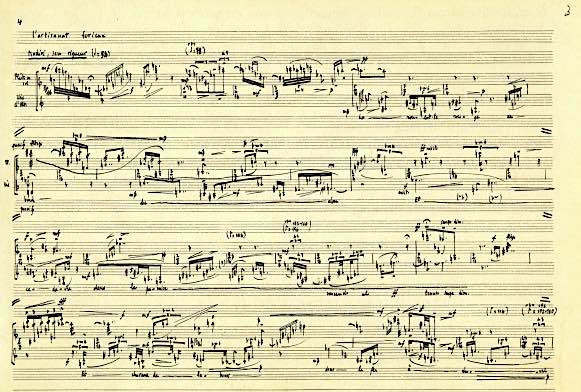
The concert opened with Éclat by the great composer-conductor Pierre Boulez, marking the centenary of his birth. As Rattle observes here, Boulez was a seminal influence on our generation. While Éclat (1964–5) may not be everyone’s idea of a jaunty little overture, it’s exquisite, basking in the sonorities of fifteen instruments in two groups (piano, vibraphone, xylophone, harp, cimbalom, guitar, mandolin, tubular bells, timpani; and alto flute, cor anglais [“english horn”, as Boulez liked to call it], trumpet, trombone, viola, cello). As Jo Buckley comments in the programme notes,
It is as though we were examining an exquisite cut-glass bowl, glittering in its beauty and complexity, that is dropped and shattered into thousands of pieces. Some of these shards catch and sustain the light, others glint briefly as you pass them, but the whole itself is never restored.

For Rattle it’s “one of Boulez’s seminal pieces, […] where you not only conduct, but you almost compose as you go along. It’s a piece you can only do with a group of musicians who really trust you, and vice versa.” In this 2016 Prom he conducted the Berlin Phil:
Here’s Boulez conducting the work:
Maybe this is intrinsic to the impersonal atmosphere of the concert hall, but much as I love the textures, I miss the human interaction of “improvisation”.
When Boulez conducted Éclat in Leningrad in 1967, “the audience had never heard anything like it before and demanded an instant encore. ‘It was packed,’ says Lilian [Hochhauser], ‘they were hanging off the balconies’. ”

Then we heard the world premiere of George Benjamin’s Interludes and Aria, from his opera Lessons and Love and Violence (2018), a gift for Rattle’s birthday. In this coherent suite of seven brief movements, dramatic and unsettling, the central aria was sung by the imperious, magnificent Barbara Hannigan—how blessed are composers to have such an interpreter! Here she sings the aria in the opera itself:
For previous collaborations between Hannigan and Rattle, click here and here.
Having willingly eaten our greens, we earned a pudding. Brahms 4 may be familiar, but it’s always irresistible, right from the sigh of the descending third that opens the piece, on which Hugh Maguire dwelled lovingly as he coached us in the NYO.

The gorgeous slow movement is among my exhibits in the incandescent key of E major.
S-Simon conducted the symphony from memory, always an immersive experience. And as with composer-conductors such as Mahler, Boulez, and Salonen, there’s something special about hearing classics performed by specialists in contemporary music. In his Lexicon of music invective Nicolas Slonimsky reminds us that it can take time for new music to be appreciated: critics of the day found Brahms 4 “intolerably dull”, with “a profuse lack of ideas”. So there.
For a less driven version of Brahms 4, try the iconic Furtwängler (1948). Cf. Carlos Kleiber (1996)—here, with an amazing Brahms 2 as well!!!
More Brahms e.g. here and here.





 Stephen Jones: a blog