For Daoist ritual in north Shanxi, in addition to my works, and those of Wu Fan, the recent book of Chen Yu 陈瑜 is useful:
Jinbei Daojiao keyi yinyue yanjiu 晋北道教科仪音乐研究 [Daoist ritual music of north Shanxi] (Beijing: Shehui kexue wenxian chubanshe, 2015).
It provides details of groups in the counties of Yanggao, Datong xian, Guangling, Hunyuan, Tianzhen, Shuozhou, Yingxian, Shanyin, and Xinzhou, going beyond Part One of my In search of the folk Daoists of north China. I’ve introduced many of these groups in articles listed under Local ritual.
While written in the dry format of Yuan Jingfang’s “music-genre” system (see my book, p. 365), it gives details of ritual sequences, beyond the narrow pigeonhole of “music”.
Notably, for scholars of ritual texts, Appendix 5 (pp.282–377) contains a useful collection of manuals from various groups.
One little caveat: the title of the opening manual in the Li family collection is a fiction. Lacking a title on the cover (or any memory of one), they call it “hymn volume” (zantan ben), as I explain in my book (pp.208–9, 375); while it does indeed contain many texts related to the yankou, Chen’s title is made up.
There is still plenty more to explore in the region—even the Shuozhou Daoists deserve a multi-volume study of their own.
Here I further explore my first post on Chinese shawm bands. This is going to be not so much a review of a review, but rather continuing reflections on taxonomy and the sacred—secular continuum.
In his 2012 review of my 2007 (!) book Ritual and Music in North China: Shawm Bands in Shanxi (BSOAS 75, pp.208–9), David Johnson (author of several fine works on north Chinese ritual) gives a good description of the book, but seems to think I shouldn’t have bothered writing it. I’ve done this kind of thing myself—wishing a book had been on another topic appealing to my own personal taste. But revealing his sinological agenda, he seems to suggest that only religious texts are important in social life—not even religious or ceremonial activity.
Some ethnographic projects attempt a rather broad overview of cultural life for their chosen fieldsite, as I went on to do in my 2009 book on Shaanbei. More common is to case the joint roughly in an introduction before focusing on one particular genre, like folk-song, or Daoists—or (as I said in my most recent book, p.363) hairdressing in Barnsley, street gangs in Chicago, shamans in Brazil, and so on.
Johnson observes that I am “deeply attached” to such rural music. Fair enough, but it’s not quite the point; “delighting in all manifestations of the Terpsichorean muse”, ethnographers are likely to find value in their chosen research topics, while seeking to be descriptive rather than prescriptive.
Johnson makes some interesting points about the role of shawm music in local cultures, but his deduction,
that Jones devotes an entire book to music that the villagers regard as little more than noise shows that it is really the music he is interested in, not its ritual or communal meaning,
is amply disproved throughout the book, and all my publications! Indeed, a closer reading of my pp.59 and 114 (that he cites) would show the necessity of understanding the shawm music in both its social context and musical detail. In general my work is far more focused on social change than on musical analysis, although I did go on to write a detailed analysis of the repertoire of the Hua family shawm band:
“Living early composition: an appreciation of Chinese shawm melody”, in Simon Mills (ed.), Analysing East Asian Music: patterns of rhythm and melody, Musiké vol.4 (Semar, 2010), 25–112 (with a sequel here),
My book that he reviewed did precisely what it said on the tin: I was describing ritual and music in Yanggao (funerals and temple fairs), with a focus on the shawm bands. Wu Fan later did this more thoroughly in Chinese. We were both aware that Yanggao people associate their ritual/ceremonial life with yinyang gujiang, Daoists and shawm bands: patrons require both.
So whilst I quite agree that “the Daoists are clearly the central actors in the rituals of Yanggao county”, it’s unfair to comment that I have “little to say about them”. Given that the focus of my book was the shawm bands, it already contained considerable material on the Daoists, on the basis of what I knew then, before I was able to devote a detailed study to them in turn—perhaps, again, not to Johnson’s sinological satisfaction.
It’s also a bit rich to accuse me of neglecting the Daoists when he never mentions them at all in his field sites of south Shanxi or south Hebei, which happen to be some of the richest for Daoist ritual life. But I won’t (quite) take him to task for ignoring it, since the focus of his research there was on other genres. And he reveals the paleographical blinkers of the sinologist by complaining that I hadn’t read any ritual manuals. Indeed, it’s true that, in Yanggao at least, I hadn’t—then. But nor have most of the practising Daoists there; like them, I focused on actual ritual practice. But all that’s neither here nor there; to repeat, my book wasn’t primarily about the Daoists: it was about the shawm bands!
You might as well criticise an ethnography of the Manchester Hacienda for not discussing Beethoven manuscripts and the history of the Hallé.
Otherwise, he almost had a point. Like all the Daoists in his fieldsites about whom he is silent, the Yanggao Daoists did indeed richly deserve a detailed study, and Johnson wasn’t to know that by the time his review came out (belatedly, in 2012) I was deeply engaged in precisely that work.
My two books on Shanxi (2007) and Shaanbei (2009), focusing on the shawm bands but also adducing other major genres, were indeed quite a lengthy interlude between my detailed studies of one village (2004) and then one household (2016).
And once I was able to devote my attentions to the Li family Daoists again, I made a point of first unearthing their ritual manuals (since they had no practical use for them, this meant cajoling Li Manshan into finding them, a long process over several visits); and then reading and exploring with him their relation with changing practice— their mismatch with rituals as performed. You (and Johnson) can read all about it in my recent book, and still more vividly, film.
For mature and generous pensées on recent works about religion in north China, including Johnson’s and mine, see the review essay by Vincent Goossaert,
As field reports on Daoist ritual in southeast China continue to amass, I’m all agog (a complete gog) to read studies of the innumerable local Daoist traditions of north China. These are the theme of my 2010 book In search of the folk Daoists of north China and many posts on this blog (notably those collected under Local ritual), but there is still much to explore.
Of course it applies widely to world cultures (cf. Italy). Even under the umbrella of WAM, there’s a fluid canon changing over time, with many outer rings; socially too, it’s not just the professional symphony orchestras. And Indian music is far more than sitar solos.
As to Daoism, it’s far more than the Daoist Canon and the White Cloud Temple; and far more than wise southeastern Daoists doing their mystical sublimation in the course of a jiao Offering. And Daoist ritual—over China, north China, Shanxi, north Shanxi, and even in the north-eastern central area of Yanggao county, is far more than the Li band!
Shawm-and-percussion bands play a major role in folk ceremonial around the world, notably in the Islamic world and Europe (see this roundup, as well as this sample playlist). In China, male shawm bands are byfar the most common form of instrumental music, performing mainly for life-cycle and calendrical rituals—in extreme contrast to the media image of glamorous female soloists on the concert platform.
Bands are widely known as “drum music bands” (guyueban 鼓乐班), the players as “blowers-and-drummers” (chuigushou 吹鼓手) or just “blowers”. In north Shanxi they are called “drum artisans” (gujiang 鼓匠). There they alternate with household Daoists, and often go on procession together. But overall they are more ubiquitous and indispensable at funerals and temple fairs than groups of ritual specialists.
To give you an idea of just how common these bands are in China, take the Anthology volumes on instrumental music for Liaoning province. No solo pieces are documented, nor any pieces for strings; instead the coverage comprises four wind ensemble genres:
the music of the shawm bands (guyue 鼓乐);
shengguan 笙管 pieces (here a subsidiary repertoire of the shawm bands)
yangge 秧歌 pieces (again played mainly by the shawm bands); and
“religious music” (sic), with subheads for Buddhist and Daoist music, including vocal liturgy, percussion, and shengguan pieces.
This overview for one single province contains 1,491 pages, of which 1,113 pages are devoted to the shawm bands—and as ever, the material published on them was only a tiny proportion of that collected.
That’s an outline for one whole province. In 2001, within the single county of Mizhi in Shaanbei, a local band boss estimated that there were 138 bands working at least part-time there. Again, contrast the qin, with its tiny elite coterie of players, and its vast media presence.
It’s the majestic timbre, heterophony, and complex repertoire of long suites of northern bands, played on XXL shawms, that appeals to me particularly. While my main focus has always been Daoist and Buddhist ritual, its vocal liturgy accompanied by shengguan ensemble, I realised I had to give serious attention to the shawm bands too. So from 1999 to 2005 I took some lengthy time out to document them. My two books Ritual and music of north Chinaare largely about such bands, in north Shanxi and Shaanbei respectively; both include DVDs. [1]
Status and disability Shawm bands were always at the bottom of the social pile. Virtual outcasts, they were often illiterate, bachelors, opium smokers, begging in the slack season, associated with theft and violence. Freelance like household Daoists and carpenters, they had difficulty adapting to the straightjacket of the commune system, but revived by the 1980s.
At least until recently, shawm players often had some disability, notably visual. In north Shanxi, in Yanggao town alone, blindmen Liuru (c1931–2007), Erhur (b.1946), and Yin San (b.c1947), were all fine players and delightful people (for more on blind shawm players in Yanggao, see here; for posts on blind musicians, here).
Liuru (left) and Yin San, 2003.
In China and much of the world, blind musicians are thought to have special musical gifts. Erhur learned, and loves to sing, the gongche solfeggio, but pointed out playfully, “Only a stupid musician needs notation”! Take that, qin players (see also here)!
Erhur, 2003.
Elderly Liuru, living in pitiful conditions, was also devoted to the gongche of the suites.
Liuru’s shack in Yanggao county-town, 2003.
I also met several stammering shawm players. Like the fraternity of one-legged men in The third policeman, as a stammerer myself I naturally identified with fellow sufferers like Yuanr, the young shawm band boss in Zhenquan township, Shaanbei—bluntly known as “The Stammerer” (Jiekazi). When I introduced myself he thought I was taking the piss. Both his colleagues and mine had a terrible time trying to conceal their mirth once we got ch-ch-chatting. Imagine the number of tapes you’d need to record the interviews.
Blind boys also often become itinerant bards. For Shaanbei, see here; for a harrowing tale of blind bards in Zuoquan, Shanxi, here; and for blind bards in Gansu, and great songs on the Coronavirus by stammering folk-singer Zhang Gasong, here.
North Shanxi I studied the Hua family shawm band in Yanggao county (also home of the Li family Daoists) on and off from 1991 to 2005. Over the years I got to know many other bands in Yanggao too; since 2011 it’s been a pleasure to continue meeting them at funerals. Yang Ying, a regular dep for Li Manshan’s Daoist band, is also the leader of his own family shawm band, one of the finest in the area. Shi Ming, Li Qing’s friend from their days in the regional troupe, led a great band in Wangguantun just west.
Shi Ming’s band, Wangguantun 2001.
The Hua band played magnificently, despite being totally dysfunctional as a family. Led by two senior brothers on shawm and drum who were barely on speaking terms, they played in perfect ensemble, with complex heterophonic melody, and meticulously graded tempi. I still admire their artistry as much as I admire the Li family Daoists.
We did some great tours together (Washington DC, Holland, England), and made the most spectacular CD, Walking shrill, that should be part of everyone’s collection—go on, order it, it’ll blow your head off! Otherwise, there’s this playlist:
While we’re about it, I wrote a long detailed analysis:
“Living early composition: an appreciation of Chinese shawm melody”, in Simon Mills ed., Analysing East Asian music: patterns of rhythm and melody, Musiké vol.4 (Semar, 2010), pp.25–112.
Only slightly less complex is this intriguing excursion—and there are two tracks (#5 and 11) on the audio playlist in the sidebar, with commentary here. See also these notes on our first visit.
Here the classic style consists of long suites for large shawms. But since soon after I began visiting (“Typical!”), as my books show, such majestic music has largely become a casualty of the “big band” pop style adding trumpet, sax, electronic keyboard, and drum-kit. Hey ho.
Shaanbei
Chang Wenzhou’s big band at village funeral, Mizhi 2001.
Further west, the barren loess hills of Shaanbei (see under “Elsewhere” in main Menu), heartland of the revolution, are renowned inter alia for their shawm bands (chuishou). We met many bands there.
Shawm players from Mizhi county, assembled for a regional festival in 1981.
Scholar Huo Xianggui, who began collecting Shaanbei shawm music as early as 1971 (!), had regular contacts with some of the great players, including Jin Wenhua, Hao Yongfa, and Chang Wenzhou. In another a revealing story about status, revealing the chuishous’ own sense of inferiority, he tells of an incident with the great shawm player Li Daniu—a poor illiterate opium-addicted bachelor. The Party hoped to cultivate Li’s talent by recruiting him for a state troupe, but he found it hard to adapt. One morning Huo invited Li Daniu to his room, and wanted to take him out for breakfast, but Li wouldn’t go. As Huo was about to go off to get food to bring back, Li insisted on squatting outside to wait for him, with the room locked; only half-joking, he said, “How am I supposed to explain if something in your room goes missing?”
By the 1990s, most distinguished of shawm players in the area was Chang Wenzhou, also a fine luthier, though he could be almost as difficult as the Hua brothers. Li Qishan’s rival band was also very fine.
By contrast to the mercenary atmosphere in Mizhi county-town, I enjoyed my time in the hill village of Yangjiagou with the lowly and unsung village band there. Of no great technical distinction, they merely supplemented their livelihood by doing occasional funerals. The two leading shawm players there, Chouxiao and “Older Brother” (on the left of the photo), semi-blind, were delightful unassuming people.
The Yangjiagou band playing for a village funeral there, 1999.
The 1999 funeral sequence from Yangjiagou is one of the highlights (§B) of my DVD Notes from the yellow earth, that comes with my 2009 book.
The northeast As a kind of footnote, both to this post and to my account of our 1992 fieldwork, in summer 1992, just after our trip to Shanxi, we visited southern Liaoning province to seek shawm bands there.
Northeast China is also renowned for its majestic bands with large shawms. [2] The editor of the Anthologyfor Liaoning (see above), Yang Jiusheng 杨久盛, had a rare grasp of the material—like his fine colleague in Jilin province, Li Laizhang 李来璋.
Through Yang Jiusheng we found a wonderful young scholar in Panjin county called Li Runzhong 李润中. He was himself son of a fine shawm player—so he had already done rather well for himself. Besides making the usual transcriptions from his recordings, he had diligently collected rich material on social contexts (including photos, maps, and diagrams), and written brief biographies of some of the leading shawm band players and ritual specialists in the county. Locally published in several thick volumes, his work, like the music of his county, is likely to remain unknown.
This was a period when the Anthology was in full swing, but it was also an insecure time after the chipped “iron rice-bowl” of the commune era. Under Maoism people, in their villages and secure work-units, knew they were screwed; now they had to go out and fend for themselves, and would probably still get screwed. But Li Runzhong, like our friends in Hebei, was passionate about doing the fieldwork.
A vast archive of precious recordings for the Anthology languishes unpublished. Perhaps it was then that I realised someone would have to document this major aspect of Chinese musical life for outsiders.
Liu Yongqing (b.1922) at funeral, Liaoyang city, 1992: #6 in Audio gallery, with commentary here.
Here are two pages of images from the Anthology volume on Jilin province:
Further south many bands play a rather light repertoire, though there are some fine genres. Fujian province, not commonly associated with shawm bands, is full of them, as shown in the Anthology coverage—such as the longchui 笼吹 of south Fujian (#15 on playlist in sidebar, with commentary here); the Shiyin bayue 十音八乐 of Putian, better known for its “civil” ensemble with strings, also has a ceremonial repertoire for shawms:
Technique Using circular breathing, the two shawms play continuously in heterophony, often an octave or two apart. Home base (cf. the sheng) is the lowest note, do in the basic scale; the upper player often “walks shrill” with soaring and searing high notes. With drum, cymbals, and gong thwacking away too, the sound is deafening even from a hundred metres away, but sitting in the band is a serious yet intoxicating challenge to the ears.
Our SOAS shawm band Now from the sublime to the ridiculous.
Having taken part occasionally, and sketchily, in the ritual associations of Hebei on yunluo gong-frame and even sheng, I eventually took the plunge with the shawm too. Shawm music is much harder to learn than either the ritual shengguan ensemble of the Daoists or their vocal liturgy; the instrument itself is a challenge (certainly for a baroque violinist…), and the wild improvised decorations can only be learned through prolonged exposure from young. But hey—I knew it would help me get a handle, however rubbish I was.
I accompany Hua band for funeral, Wangzhuang village 2001. Photo: Chen Kexiu.
At first I didn’t try taking part with the Hua band, but when I got to Shaanbei in 1999 I thought I might have a go on the shawm. Chang Wenzhou showed me the ropes, and I tried a few pieces out with Dage and Chouxiao in Yangjiagou.
With Feng Xiaoping’s band, Yulin 2001.
In 2001, after more fieldwork in Shaanbei with my Beijing colleagues, I spent some time alone in Yulin, the regional capital. Putting aside my scruples about such a culturally inappropriate context, I went for daily “lessons” several times a week, one-to-one with a younger folk player, Feng Xiaoping. He got his band together for an informal “graduation concert” in his courtyard for bemused neighbours (well, they didn’t have much choice). After getting through a little suite I was completely knackered. The place names used at the dentist sprung to mind. As in Teach yourself Japanese, I drank a little beer.
In Yanggao with the Hua band in 2003, I mainly stuck to cymbals or gong—like their sons do from aged six!
In 1999 I had come down from the mountain, like Moses (also a stammerer, I note), with a whole set of instruments made by Chang Wenzhou. At SOAS I now had a little coterie of like-minded ethnos: Rachel Harris, Simon Mills, Manuel Jimenez, and Morgan Davies, all fine musicians, experts in their own various genres (Uyghur, Korean, Indonesian, Indian), and great mates. So, just for fun and our own instruction, we boldly decided to have a go at learning a few pieces. This is not like learning the erhu in a conservatoire—they are wild complex long semi-improvised pieces.
We made enough progress to give the occasional gig for suitably uncritical audiences—at CHIME conferences in Venice and Sheffield (not Scunthorpe), at SOAS, and even on procession (aha!) at the Lord Mayor’s Parade. We strung a few pieces together in little suites, and had a lot of fun.
Later I also bought a set of instruments in Yanggao (like “the music itself”, they vary from region to region—it’s no good playing Shanxi repertoire on Shaanbei shawms, or vice versa!). We all loved the Hua band’s wild repertoire, but it was considerably more daunting than that of Shaanbei. Still, I had all my recordings and videos, and I was making transcriptions anyway, which served as a useful crutch—another compromise, since picking it up entirely by ear would have been a challenge too far for us. Rachel, Simon, and I took turns on the two shawms, and since the drum is always an anchor, we relied heavily on the intuitive brilliance of Manuel Jimenez.
Then in 2005 I managed to get the Hua band invited for a tour of England. My old friend Bureau Chief Li, from the Datong regional Bureau of Culture, who had acted as “group leader” on the band’s 2002 DC trip, came along for the ride again.
Bureau Chief Li has always been most tolerant, nay supportive, of my fascination for folk culture—like a bemused dad baffled by his son’s obsession with Aston Villa. On the National Mall in DC, taking one look at all the performance tents set up for a mind-blowing array of groups from all over the Silk Road, he exclaimed, “Hey Steve, you bring us all this way and they’re supposed to play for another bloody temple fair?!” In England our most delightful gig was in Portesham Village Hall in Devon, home to a great jazz series. This time Bureau Chief Li chuckled, “WTF?! You’ve gone and done it again, Steve—this time you’ve got us a gig in the sodding village brigade headquarters!”
Anyway, during this visit, SOAS impressively invited the Hua band for a brief residency. We solemnly assembled daily in a little recording studio in SOAS and took turns joining in with the band on all the various instruments. One evening Morgan and I took a couple of the youngsters to a blues bar—though no strangers to the considerable vices of Yanggao town, they seemed a little nonplussed.
Now that we’re dispersed to the far corners of the globe, or at least of England, we’re all deeply nostalgic about those years. It’s not that we did it at all well—it could sound excruciating—but we learnt a lot, and it was the perfect way to work up a thirst for a good session in the nearby art-deco bar of the Tavistock Hotel, not least in memory of hosting the Hua band there in 2005.
Alas, the Hua band has since gone the way of many “blower-and-drummer” families. Drummer Hua Jinshan survived a stroke onstage in Amsterdam later in 2005. Falling ill there doubtless saved his life: if it had happened back home in Yanggao, it would have been curtains. As he recovered in hospital, I could only obey his pleas to wheel him daily to the courtyard for sneaky fag along with a motley crew of inmates. But his younger brother Hua Yinshan died of cancer, and Wuge, Yinshan’s son, was stabbed to death in an unsavoury brawl.
My usual rant (For a similar one, see here; see also this). If you’ve heard me go on about this before, then go and pour yourself a large G&T.
None of what we tried at SOAS could possibly happen in a Chinese conservatoire. Sure, plenty of folk musicians have become professors there, but once enshrined in the big city they have to develop a more, um, “scientific”, more breezy repertoire. No-one there would dream of learning long suites of up to an hour, in the style of local folk genres, or emulating a bunch of peasants.
The brief of anthropologists/ethnomusicologists is to study people in all levels of society, and to show that all kinds of music-making are valid aspects of social activity, local cultures, in constant flux. Different genres have different aesthetics, all based on social practice.
So we mustn’t assume that state education is the norm. Among all the kinds of music in the world, WAM is rather exceptional, in its notation-based classroom training system and its domination by “concerts”. But that’s the ethos of the conservatoire. All kinds of musicians learn in different ways.
Vocal music too is rarely dependent on the state educational system. In England, aspiring bluespeople, like Mick and Keef, learned their art in art schools. Jazz was only seriously institutionalized from the 1980s, though school bands were always an influence. Elsewhere traditional music may be adopted in similar fashion: there are schools for flamenco, Irish music, muqam, and so on, but often they change the flavour of folk style—and anyway they only represent a miniscule tip of the iceberg.
My old friend Matt Forney, long-term Beijing resident whose towels I have often darkened in between my trips to the countryside, is a fine old-time banjo player. How do spirit mediums in Guangxi, or indeed punks in Beijing, learn? Such folk performers have no need of notation, training classes, WAM theory, and so on. It may be a continuum, but we shouldn’t confuse one for the other.
As to instrumental music: solos are rare in China, as you can see from the Anthology. Solos for erhu, pipa, and zheng are neither a norm nor an ideal. Notable aspects of traditional music-making include oral transmission, versatility, flexibility, and not performed for “concerts”. Folk instrumental music remains male-dominated, whereas since the 1980s the conservatoires have become dominated by women.
So look at these differences between local shawm bands and conservatoire suona soloists: different society, different values, different aims, different music. Even the names of the instruments are different: the urban term suona (found in historical sources) is rarely heard in rural China: instead they use a variety of local names, like weirwa, wazi, or laba. That’s why I fall back on the English word shawm.
Shawm bands (chuigushou 吹鼓手, guyueban 鼓乐班)
suona soloists
By far the most common form of instrumental music in China.
Not so numerous, even in conservatoires.
Weddings and funerals.
Concerts on stage; film sessions.
(formerly) Family training, from young; largely oral training, in course of rituals. Some blind or disabled; they may beg in the off season. Partial to liquor and drugs.
Even if from a rural background, they now learn with a “teacher” in the conservatoire. Notation plays a role. Upwardly mobile!
(formerly) Long complex suites derived from imperial tradition.
Short simple pieces derived from 20th-century modern urban values.
The upwardly-mobile conservatoire suona soloist will never aspire to the social context of the blowers-and-drummers. The most one can hope is precisely what does happen: maybe the former will pick up a few techniques from the latter.
Learning in a classroom, whether in China or elsewhere, is very different from the participant observation of the ethnographer. This difference is clear in China, where the former is done in conservatoires, the latter not at all.
If we learn shawm pieces, we’re unlikely to do it for the same reasons that a young boy in a shawm band family does; his reasons are not the ideal for us—we don’t want their lives. The rural bands may be occupational, but it’s not the kind of professionalism to which conservatoire musicians aspire. Suona soloists in conservatoires learn with a view to doing concerts on stage, or making money in pop/film studio sessions, not doing weddings and funerals.
I should stress again that notation may be a badge of elites, but is not so common either in China or elsewhere, nor is it a criterion for superiority! Notation is not at all important as a learning tool in China or elsewhere, though it may be a totem/fetish for those seeking to establish a “canon”. Of course it may be a useful tool for our analyses…
Yang Der-ruey’s study of a Daoist training school in Shanghai (anyway an exceptional case: most Daoists learn through hereditary family training in the course of rituals) shows the school’s break with tradition, and its irrelevance once they begin working in the real world, collaborating with temple patrons and spirit mediums. Even for amateur genres like Shanghai silk-and-bamboo, the point of learning isn’t to win prizes or even to “perform” in stage “concerts”; it’s a social activity, not to be judged by conservatoire standards.
The kinds of music promoted in conservatoires are very selective: mainly solos that can be taught, with precise scores, one-to-one, like a Brahms concerto or a Chopin étude. The flexibility of traditional ensembles, folk-singers, or a spirit medium, is not required here. But this gives people a very narrow picture of what Chinese music is about, both musically, socially, and historically. One may attempt to create a “canon”, but within the whole field of Chinese or world music it will be no more significant than that of WAM. Such a discourse may even play into a dangerous nationalistic, patriotic, narrative.
In China some examples of the chasm between folk and conservatoire aesthetics are the rare attempts by conservatoire musicians to render traditional music; in failing to subscribe to its aesthetic, they entirely lack the “flavour” that makes it effective, as with their polished stage renditions of the shengguan music of the Zhihua temple, or silk-and-bamboo: meticulously rehearsed from fixed parts, with graded dynamics, and so on.
In general, though, conservatoire musicians neither want to nor could learn local folk traditions. They learn a fixed version of “the dots”, overlooking style, and entirely removed from the social context that nurtures it. They may consider this superior, “improved”, more “scientific”. The musical style of rural shawm bands is also ridiculously difficult—but the point is that there’s no reason at all why conservatoire students would want to learn long shawm suites like this.
In sum, the conservatoires do what they do, and that’s fine. It’s just that as ethnomusicologists we seek to offer a broader soundscape and a broader social range. And anyway, for a sensitive musician, the intensity and grandeur of the folk style will be far more rewarding than those cute little conservatoire pieces.
So after all this discussion of urban (and urbane) concert performance, we should return to the rural ceremonial setting by watching the Hua band playing their hearts out at a funeral—see my lengthy analysis here.
[1]See also my Folk music of China, ch.10, and the CD with the 1998 papreback edition, as well as the 2-CD set China: folk instrumental traditions. In Chinese, my colleague Zhang Zhentao has also written well on them. Cf. my “Men behaving badly: shawm bands of north China”, in Gender in Chinese Music, pp.112–26. [2] See my Folk music of China, ch.10, and §4 of the CD. Note also two CDs from François Picard: Chine, Hautbois du Nord-Est, musiques de la première lune, and Chine, Hautbois du Nord-Est, la bande de la famille Li (Buda, Musique du Monde, 1995).
The upcoming CHIME conference in LA (29 March to 2 April), presided over by the excellent Helen Rees, looks like a fine event, though I can’t make it. The theme this time is festivals.
Of course, festivals and pilgrimages all over the world are a major theme of ethnography: not just Uyghur meshreps and mazar, and Tibetan monastery festivals, but Indian melas, Sufi festivals, the Mediterranean (Andalucian fiestas, south Italy…), Moroccan ahouach, you name it. Bernard Lortat-Jacob’s 1994 book Musiques en fête is charmant, with wise and vivid words about Morocco, Sardinia, and Romania (¡¿BTW, why do French books put the list of contents at the back?! ¡¿Typical Gallic contrariness?!)
To adopt the metaphor of “the whole dragon” again, there is a long continuum between folk festivals, based on ritual (often calendrical) observances, and secular events for a largely urban audience.
So I too am going to link up diverse themes like temple fairs, ritual, famine, village names, Eurovision, and propaganda. It does make sense, though—trust me, I’m a doctor.
Traditional events in China` Funeral rituals have been my main topic in China for thirty years, but of course it’s not easy to plan visits much in advance. The calendrical dates of temple fairs (often known as miaohui) may seem easier to anticipate. Again, scholars of religion tend to home in on their specifically religious elements, as in the great jiao Offering—though note Ken Dean’s fine film Bored in heaven. But like funerals they are multivalent, embracing all kinds of activity: ritual, opera, folk-song, pop, commerce, “hosting” and “red-hot sociality” (Chau!)…
But the dates of calendrical rituals, like temple fairs, may not be easily vouchsafed to the outsider either. The temple fairs on the Houshan mountains in Yixian county southwest of Beijing, mainly in the 3rd and 7th moons, are much less well known than those of Miaofengshan, but they also draw huge crowds, both local and from further afield.
To work all this out you have to spend time around the villages of Liujing and Matou in the foothills around Houshan, and then observe who goes where when and does what. Although Chinese villagers are a rich source of ritual and musical information (far more than any silent library), they often speak prescriptively rather than descriptively, telling us on what occasions a jiao Offering ritual should be performed, whether or not is has been performed since the 1940s. They don’t necessarily volunteer information on change, preferring (like some officials and scholars) to present their traditions as constant, eternal—even if contexts and repertoires have evidently changed in their lifetime. On our first visit to Liujing we rather assumed that villagers’ descriptions of ritual pilgrimages related to “the past”— but we soon found that they were very much alive.
The Songs-for-winds associations: propaganda and catastrophe What got me “thinking” (I use the word loosely) about all this was that 1950 visit to Tianjin of the “Songs-for-winds” band from Ziwei village, in what later became Dingxian county.
The Central Conservatoire (as it was then) was then still based at Tianjin, of course. The work of Yang Yinliu and Cao Anhe on the Songs-for-winds may be considered a prelude to that on the more solemn ritual style of the Beijing temples that Yang undertook from 1952, a topic that was to expand vastly after 1986. But the Songs-for-winds groups, more popular than the ritual style that is my main focus, are worth a little detour here.
We should bear in mind that such wind ensembles were quite unfamiliar to southerners like Yang and Cao. Having invited the Ziwei band to the conservatoire, they recorded their repertoire on a Webster wire recorder. The band went back some six generations, and under the leadership of the celebrated Wang Chengkui, they had invited the great wind player Yang Yuanheng to teach them in the winters of 1945 and 1946. Yang Yuanheng, a former Daoist priest in a little temple in Anping county, was himself appointed professor of guanzi oboe at the conservatoire in 1950. [2] Yang Yuanheng, like the Buddhist monk Haibo, was a major influence on many shengguan ritual associations in the area: we would hear their names from many village associations.
Yang and Cao’s monograph on the Ziwei band, published in 1952, consists mainly of transcriptions, with little of the social detail that they covered for the Wuxi Daoists or Yang’s 1956 Hunan fieldtrip. Ziwei would go on to supply wind players to many state troupes for decades to come.
Secular New Year’s huahui parade, Langfang city, 1991.
During the 1958 Great Leap Forward (or Backward, as it’s known), Dingxian and particularly Xushui counties became model counties for the relentless drive to full communization. [3] At the height of the Leap back in August 1958, Chairman Mao visited communes there. In Dasigexiang district just southeast of Xushui county-town, Dasigezhuang village was now renamed the 4th August brigade. Notable for its revolutionary fervour at this time was the “Great Leap Forward Songs-for winds association” of Qianminzhuang brigade in Xushui, which performed for this visit.
The propaganda of the Leap makes a stark contrast with the grim realities of the period, with villages throughout the area suffering from crop failure, famine, and social disruption.
Our visit to Qianminzhuang in 1993 was the only time I’ve ever had a police escort—to take me there for a change, not to drag me away! Predictably, such an effusive welcome for me as a “foreign guest” indicated close supervision and censorship of our fieldwork.
Striking a pose with the leaders, Qianminzhuang 1993
In 1995 we visited some of the senior musicians independently, with much more useful results.
Xushui’s favoured status did nothing to prevent many starving to death there in 1960—but just near Qianminzhuang, the Gaozhuang ritual association still managed to restart in 1961. Religion revived in China precisely at moments of political crisis such as the famines of 1960 and the Cultural Revolution, albeit with great difficulty. It may provide solace, or a focus for resistance—both against Maoism and later against the insecurities ensuing its demise.
The Gaozhuang ritual association was one of many in Xushui villages that used, and use, the older more solemn shengguan style. Ritual associations throughout the area commonly claim transmission from either Buddhist monks (heshangjing 和尚經) or Daoist priests (laodaojing 老道經)—the Gaozhuang association is Buddhist-transmitted. In another common taxonomy, the association divides into “front altar” (qiantan, the shengguan instrumental ensemble, and “rear altar” (houtan, vocal liturgy).
Despite its revolutionary image, Xushui county has remained a hotbed for religion, notably the cult of the sectarian creator goddess Wusheng laomu. Associations there commonly hang out ritual paintings, like the Ten Kings (Shiwang) or Water and Land (Shuilu) series, and they use “precious scrolls” and other ritual manuals. They too are within the catchment area of Houtu worship—they used to make the pilgrimage to Houshan. Even the revolutionary Qianminzhuang band told us that their former tradition was to recite the scriptures, performing only as a social duty for funerals, not for weddings. And certainly not to accompany mendacious parades to report a bumper harvest…
In 1994 the Gaozhuang association built an Ancestral Hall to Venerable Mother (Laomu citang), occupying about one mu, stylish and grand. It cost around 60,000 kuai to build; the stele lists 132 donors, who gave from 50 up to 3,000 kuai. The altar has Wusheng laomu in the centre, Wangmu niangniang and Songzi niangniang to the right, Cangu niangniang and Houtu niangniang to the left.
The village Party Secretary told us that sources of support included incense money from the Great Tent Association (Dapeng hui, a common term in the area for a ritual association) and from the temple, and money from fortune-telling and curing illness. He reflected, “A dozen or so women kept on coming to see me about building a temple. I had no choice—the brigade couldn’t refuse, so I gave them a plot of land. Believing in the gods and having a temple is no bad thing, it’s not as if you stop production if you believe in it!”
In all, the flamboyant (and readily secularized) Songs-for-winds style remains a common image of wind bands on the Hebei plain, but since all our fieldwork through the 1990s it is clear that ritual practice, with its more solemn shengguan instrumental style, is both older and more common. It is resilient too. This persistence of tradition, both in religious and musical practice, is all the more striking in such a once-revolutionary county as Xushui.
Mao was impressively modest about his limited success when he admitted to Nixon in 1972:
“I haven’t been able to change [China]—I’ve only been able to change a few places in the vicinity of Peking.” [4]
But he wasn’t modest enough: in some ways even a county so near Beijing, such a focus of the revolution, has remained resistant to Maoist ideology, predating and outliving it. Still, disruption was severe. For more on Xushui, see here.
Official festivals in the 1950s Meanwhile, the new government, in its own way, was promoting local culture through the medium of regional folk festivals (diaoyan, huiyan). First, local festivals were held to select representatives for major performances in the regional capitals. Some laicized priests were even assembled to perform as “troupes“, sometimes for the first time in many years—such as Baiyunshan Daoists (1955), Wudangshan Daoists (1956 and 1957), Wutaishan Buddhists (1958). For such performances, inevitably, their shengguan instrumental music was plucked out of its ritual context. I haven’t heard stories as distressing as the fate that befell kobzari blind minstrels in Ukraine when summoned for an official festival in the early 1930s; but folk ritual specialists were still anxious about performing for officials around 1980.
These festivals served partly as auditions for the state song-and-dance troupes then expanding all over China. Daoist and Buddhist ritual specialists had a deserved reputation as outstanding instrumentalists. Many, like our very own Li Qing (my book pp.113–25), were recruited as musicians to state troupes around 1958—and then sent home again as the state apparatus collapsed in 1962.
While such festivals stimulated the collection and documentation of folk music, we must balance this with the ongoing assaults on its traditional context. The background ( beginning from the 1940s) was campaigns against “feudal superstition”, terrifying public executions of sectarians, and the destruction of temple life.
The reform era Urban festivals featuring rural groups—perhaps related to a conference—make a convenient recourse for busy academics into whose holidays they fit nicely. From the 1980s, the secular arts festivals of the Maoist era were remoulded into more glossy events. In 1990 the Li family Daoists took part in a festival of religious music in Beijing.
By the 21st century the new ideology was confirmed in the regular staged “living fossil” presentations of the Intangible Cultural Heritage. The latter project, with its whole bureaucratic workings, has now become a major research topic on its own, at the expense of studies of the local traditions that it is supposed to assist (my book pp.331–3). Note also the Qujiaying bandwagon.
I tend to steer clear of conferences, but in May 2016, as a pretext for going to hang out yet again with Li Manshan in Shanxi for a couple of weeks, I accepted an invitation to take part in a conference celebrating the 80th birthday of my esteemed teacher Yuan Jingfang in Beijing (for the resulting volume, see here).
It was a déjà-vu experience. Apart from a sequence of eulogies, the event also featured staged performances from three representatives of Yuan Jingfang’s long-term research areas: the Hanzhuang ritual association from Xiongxian in Hebei (near Xushui), the Zhihua temple group, and a ritual band from near Xi’an.
Filming the Hanzhuang association in their ritual tent, 1993 (photo: Xue Yibing). Rear centre: two frames of ten-gong yunluo.
It made me feel my age, reminding me of all our visits to these very groups between 1986 and 2001. Taking time out of the conference to chat with the Hanzhuang group outside by the lake, we recalled their kindly association leader Xie Yongxiang 解永祥, father of the present leader, and another of those wise sheng masters. We had learned a lot from him in 1993 and 1995.
Xie Yongxiang, 1995
But returning to the conference—the object of admiration, inevitably, was their “music”, detached from its enduring social context. I already missed hanging out with Li Manshan in the scripture hall.
All the glossy stage presentation has many Western parallels—flamenco on the Terry Wogan show, WOMAD, Songlines, prizes, urbane discourse explaining its “cultural value” to outsiders… The fancy costumes and dry ice of many Chinese events are reminiscent of Eurovision; they may seem like a Disneyland version of the Chinese heritage.
That photo comes from a recent ICH “performance” of the Baiyunshan Daoists, no less.
Now, I adore opportunities to present the Li family Daoist band on the concert platform (see e.g. this post and a whole related series of vignettes from May 2017), but while it is of course a compromise, we take care not to tart them up—we can hardly do otherwise, so solemn is their demeanour. The ambience and acoustic of churches makes a fine setting, the Daoists’ sheng mouth-organs filling the Peterskirche in Heidelberg on our 2013 tour (cf. Buildings and music):
The Li family Daoist band in concert, Heidelberg April 2013.
Still, their regular “rice-bowl”—day in, day out—is always performing funerals for their local, not global, clientele.
What is dodgy is when people begin mistaking the staged events for the Real Thing, or some kind of ideal. Urbanites may do so, but villagers know better. Of course those staged events are themselves a legitimate, and popular, object of scholarly analysis. But I worry that it creates a fait accompli, like the way that in old-school WAM musicology the Great Composers were the main story (as deconstructed by McClary, Small, Nettl)—“this is what we find, so it must reflect the real picture, and so this is the object of study”. As always, “modern” secular performance doesn’t replace traditional activity: they co-exist.
The CHIME conference in LA will doubtless turn up many instances of what I’m struggling not to call “contested negotiation”. Anyway, staged events can give us a lead, rather like using the photos in the Anthology, otherwise flawed, to draw us towards folk activity.
For thoughts on the theme of the 2021 CHIME conference, see here.
[1] For more, see Frank Kouwenhoven, “Love songs and temple festivals in northwest China: musical laughter in the face of adversity”, in Frank Kouwenhoven and James Kippen eds., Music, dance and the art of seduction. [2] For this whole section, see my Folk music of China, pp.48–52, 195–203; “Chinese ritual music under Mao and Deng”, British Journal of Ethnomusicology 8 (1999): 27–66; “Reading between the lines: reflections on the massive Anthology of folk music of the Chinese peoples”, Ethnomusicology 47.3 (2003): 287–337. See also my In search of the folk Daoists of north China, pp.166–7, 183–4, 188–90. [3] As correctives to all the Xushui propaganda, see e.g. the brilliant works of Friedman, Pickowicz, and Selden, Chinese village, socialist state and Revolution, resistance, and reform in village China—describing a commune not far from Xushui. Note Chinese village, socialist state, pp.215–20; Dikötter, Mao’s great famine, pp.40, 47–9, 68–70; and estimable analysis online in Chinese, e.g. http://mjlsh.usc.cuhk.edu.hk/book.aspx?cid=6&tid=184&pid=2269. For the model commune of Greater Quanshan in Shanxi, precursor of Dazhai, and temporary “home” to the Li family Daoists, see my Daoist priests of the Li family, pp.122–3, and here, under “Famine in China”. [4] Also reported by Henry Kissinger in Newsweek, 3rd March 1997, p.31.
Partly to remind myself that I don’t only do jokes, here are some more fieldnotes.
I’ve already noted the differences between our early fieldwork in the 1990s and conditions more recently. So I thought I’d give you a flavour of one of those earlier fieldtrips.
Over the hot summer of 1992, following hot on the heels of the Wutaishan Buddhist group’s visit to England, Xue Yibing and I made a three-week trek from Taiyuan northwards through Wutai, Xinzhou, Daixian, and Hunyuan, finding ritual activity all along the way, en route for another rendezvous with the great Li Qing in Yanggao. Our last stop was nearby Yangyuan county, just in Hebei.
Since our fruitful initial survey of ritual associations in Hebei over New Year in 1989, this was my fourth fieldtrip with Xue Yibing. Before we could return to the Hebei plain, and before I began to focus on particular villages and families, this was still only a partial survey of central and north Shanxi—for what became Chapter 12 of my book Folk music of China.
We had a van and a driver from the MRI at our disposal, and for parts of the trip we were accompanied by Shanxi scholars Jing Weigang and Wang Bin, whose local knowledge was valuable. We were mostly unencumbered by the need to “kowtow to the Gods of the Soil”, except when we knew there was a knowledgeable scholar—like the senior Liu Jianchang in Taiyuan, who was studying the Buddhist ritual music of the Wutaishan mountains through the 1950s whenever political conditions allowed. All along the way we found local traditions, differing significantly from each other. [1] Power cuts were frequent. And before motorways, our progress was often far from smooth; even on the main roads we generally found ourselves crawling along behind long lines of coal lorries.
Dongye township In central Shanxi, I had already visited central Wutaishan, so I was interested to explore the outlying areas. While we found many shawm bands (here called gufang 鼓房), our main interest was in ritual shengguan bands (here called xiangda 响打). Though they were rarely ritual specialists with vocal liturgy, some bands performed a fine repertoire of long suites related to the temples of Wutaishan and Beijing—the kind of groups found by the great Yang Yinliu in 1953, in whose steps we were now following.
Funeral procession, South Daxing, Dongye.
We spent time with one such band, led by Xu Yousheng in Dongye.
It soon became clear that this whole area was also a hotbed for female spirit mediums, including Xu Yousheng’s wife. These mediums did exorcistic rituals as a group, singing ritual songs a cappella. In this photo, at Xu Yousheng’s house near Dongye, his wife and her fellow medium pose before ritual paintings commissioned by him.
This page from Xue Yibing’s precious notebook lists the gods on the pantheon to the right in the photo.
In this detail, the “young soldier god” features because a medium had divined that he once saved the life of Xu’s son while he was in the army:
For more on such pantheons, see the remarkable website of Hannibal Taubes.
The Xinzhou region In this large and mountainous region we found more household Daoists (this time of the Complete Perfection branch!), as well as a thriving community of Catholics who also used shengguan music to accompany their rituals.
The Ekou Buddhists After digging our van out of the mud yet again, we reached Ekou township in Daixian county, in the northern foothills of Wutaishan. I was hoping to see Chengde, lovely former Buddhist monk whom I had hosted in England a few weeks earlier. But he was doing a temple fair some distance away—so we had a chat with his older brother, who provided us with useful detail on local ritual life there. This was one of rather few occupational household Buddhist groups that we found.
Old pantheon at Chengde’s house.
Hunyuan Arriving hot and sweaty in the (then) cosy little hill town of Hunyuan (at the foot of Hengshan, the northern marchmont of Daoism), we checked into a modest hostel. On the guest registration form, under “Level of Culture” (wenhua chengdu 文化程度) I wrote “None” (wu 无), as is my wont.
After a long drive and many days in scorching temperatures without running water, we were delighted to find that not only did our room have a bath, but that hot water was promised (typically “after 8pm”, which often means either “never” or “from 3.30 to 3.35 am”).
The bathroom wasn’t exactly hygienic, but hey, we weren’t fussy—ruxiang suisu, “when in Rome…”. Xue Yibing rashly took the plunge first, and he was just sinking into the water in ecstasy when the ceiling (exhausted by unprecedented strains on the plumbing above) promptly caved in, covering him in rusty debris (or is that the name of a Country singer?). Adopting what Nigel Barley calls “fieldwork mode”, we both burst out laughing. He came out a lot dirtier than he went in.
Next day we found no ritual activity at the Hengshan mountain temples, but in town we found yet another great family of household Daoists.
Page from ritual manual: end of Fetching Water ritual and opening of Dispensing Food.
This group belonged to a lengthy Orthodox Unity lineage. By the time I went back to see them in 2011 with the wonderful Li Jin, significant changes had taken place in their practice (see fieldnotes here).
The north After a brief visit to more Orthodox Unity household Daoists in Datong county, we reached Yanggao, where I was delighted to find Li Qing again, performing a funeral with his ritual band. He also managed a long session with us, providing detailed accounts of ritual sequences, augmenting my notes from the previous year.
After a brief and rather unedifying stop-off in Yangyuan county, we made our way back to Beijing. Upon my return, I once again (as usual) sought out former monks, before we set off once more for Liaoning in the northeast, finding majestic shawm bands there too…
* * *
Such early fieldtrips with Xue Yibing were an important training for us both, before we launched into more in-depth study of the Hebei ritual associations. I always treasure his notes, but however brief our visits on that Shanxi trip, the three hand-written volumes he copied out for me are full of wonderful ethnographic detail on folk religion.
Since 2011, having profited from collaborative fieldwork for twenty-five years, I have largely engaged with the Li family Daoists on my own, regaining a certain self-esteem—except for the occasional mishap…
[1] For more detail on most of these sites, see my In search of the folk Daoists, pp.65–81; Chen Yu, Jinbei minjian Daojiao keyi yinyue yanjiu, pp.65–90 and passim. For a richly-illustrated overview of folk customs throughout Shanxi, see Wen Xing 文幸 and Xue Maixi 薛麦喜 (eds.), Shanxi minsu 山西民俗 (Taiyuan: Shanxi renmin cbs, 1991).
Since I mentioned Yang Yinliu’s groundbreaking work on the Zhihua temple, he too richly deserves a tribute. Indeed, since soundscape is such a basic aspect of Chinese culture, his work should form a basic training for us all.
Yang Yinliu 楊蔭瀏 / 杨荫浏 (1899–1984) is often described in mediaspeak as “the Chinese Bartók”, but Bartók should rather be described as “the Hungarian Yang Yinliu”. A fine musician and fieldworker, erudite historian, and incidentally a Protestant, Yang’s whole oeuvre was remarkable.
Brought up in the final years of the Qing dynasty in the milieu of the Daoist instrumental music and the refined Kunqu vocal dramas of the Wuxi area near Shanghai, Yang was a fine exponent of qin zither, pipa and sanxian plucked lutes, and the ethereal falsetto singing of Kunqu (I haven’t yet found my copy of the precious recording from the 1920s found recently in Berlin). He learned instruments from Daoist priests (including Abing) from the age of six, joining the elite Tianyun she society.
In Wuxi, under the tuition of the American missionary Louise Strong Hammond, he studied English and Western music theory. He also became an active Christian. He went on to gain a cosmopolitan education in Shanghai, attending St John’s University from 1923. After returning to Wuxi in 1926, he was married in 1928, becoming a professor at Yenching University in Beijing in 1936. Offered a job in the USA heading a Chinese music institute there, he commented, “I can do nothing if I leave Chinese soil, where Chinese music lives.”
After the Japanese occupation in 1937, and through the troubled 1940s, not inclined to join the Communist base area in Yan’an, Yang moved from Nanjing to posts in Kunming and Chongqing, always continuing his research.
The Wuxi Daoists Yang and his cousin Cao Anhe returned regularly to Wuxi, where they were engaged in a long-term project studying the music of the local Daoists. Of their two major books on the theme, their work on Shifan gu was first published in 1957, Yang’s on Shifan luogu not until 1980 (cf. the shifan of Tianjin and Hebei).
In some respects Yang seems like a traditional historical musicologist rather than an ethnographer; but he was well aware of complex social issues. This passage on the position of Daoists in Wuxi society illustrates his sophisticated interest in ethnography and ritual practice, besides his more traditional “musicological” concerns: [1]
In the past [?!], Buddhists in south Jiangsu divided into two types, Chan school (chanmen) and Auxiliary school (fumen).
Those of the Chan school were completely vegetarian, and didn’t have families. They only used percussion like woodblock, bowl, nao and bo cymbals, and tonggu drum to punctuate their vocal liturgy; they didn’t play any melodic instrumental pieces. They never took part in production, living in their temples, some of which had large estates.
The Auxiliary school ate meat and had families. Few in number, they lived scattered in the villages, taking part in agriculture and only reciting the scriptures and litanies as an auxiliary occupation. Among the Buddhists, they are the only ones who play the fanyin [melodic instrumental repertoire] and [separate] percussion items.
Among the Daoists, the Complete Perfection (Quanzhen) school (belonging to the Qingchengshan style of Sichuan) were similar to the Buddhist Chan school, not using separate percussion items or silk-and-bamboo instruments. Those who played the fanyin and separate percussion items mostly belonged to the Zhang Heavenly Masters school of Longhushan in Jiangxi.
Among the latter group, there was a further clear class distinction. A minority of abbots possessed ritual titles of the Zhang Heavenly Masters, like “Master who Guard the Way” (daoweishi) or “Ritual Master” (fashi), and mostly owned land. They didn’t take part in production. They interacted with landlords and the bourgeoisie in the cities and villages, taking ritual work and contacting and hiring the common village Daoists to take part in major rituals (daochang fashi).
These common Daoists mostly took part in agricultural production, being hired ad hoc: performing for rituals was an auxiliary occupation for them. In both agriculture and Daoism, they were an exploited class. These common Daoists—even the indispensable drummers and flute players, with their excellent musical technique—only got a tiny wage for a whole day’s work.
Conversely, the “Masters who Guard the Way” and “Ritual Masters”, having only taken responsibility for quite brief ritual segments of a few hours like Issuing the Talismans (fafu), Reporting the Memorial (zoubiao), and Flaming Mouth (yankou), claimed a reward many times higher than that of the others. Those who played music were mostly the common semi-peasant Daoists; very few of the “Masters who Guard the Way” and “Ritual Masters” could do so. This shows that in the past it was agricultural life that produced and developed music.
Never mind the diplomatic PC spin (for “reading between the lines”, see my article cited under Hunan below), Yang had already observed the important distinctions common to local ritual cultures all over China, long before the major projects on local Daoist ritual since the 1980s. [2]
Shifan gu and Shifan luogu, c1962.
Nearby, the Daoist rituals of Suzhou were also thoroughly documented in an amazing 1956 project. Following such early work, major studies of the Daoist rituals of Suzhou, Wuxi, and Shanghai have been made since the 1990s. [3]
The Music Research Institute After the 1949 “Liberation” Yang’s erudition was much needed. Managing to adapt to the new Communist regime, he was appointed director of the newly-formed National Music Research Institute of the Central Conservatory of Music (predecessor of the Music Research Institute [MRI] of the Chinese Academy of Arts), beginning a golden age for research there. Under his committed guidance they accumulated a large archive of field recordings and traditional notations.
A qin player himself, he was closely involved with all his eminent colleagues’ research on qin (see my series on The qin zither under Maoism, starting here).
In due course the MRI was given a new building (typically, soon dilapidated) in Dongzhimenwai in the northeast of the city. Even in the 1980s, when it became my home base between field trips, its bare dingy corridors were animated by the spirits of the old masters. The new compound, further out in Huixinxijie, is less characterful.
Yang Yinliu and Cao Anhe at the MRI, 1961.
Both before and after Liberation, until the early 1960s, in collaboration with other fine scholars—notably his cousin and lifelong companion Cao Anhe (1905-2004)—Yang managed both to perform remarkable research on a range of living traditions and to compile major collections and transcriptions of traditional notation. Just as important was his monumental history, first in draft from 1944, covering with unique erudition the whole of Chinese music history, and elite as well as folk genres, albeit couched in the language of its time.
His most renowned recording—on another trip home to Wuxi in summer 1950—of pipa and erhu solos by the blind beggar Abing, is perhaps his least interesting. Abing was once among the Daoists whose company Yang kept in his youth, but the 1950 recording was a casual event, on a day off from working with the Daoists who were his main focus.
His work on the Zhihua temple followed on from his 1952 monograph (with Cao Anhe) of the “Songs for Winds” band from Ziwei village in Hebei during their 1950 visit to Tianjin—a band still active when Xue Yibing and I visited them from 1989. In summer 1953 Yang made an important visit to Xi’an to investigate the music (and scores) of local ritual groups; and he drew attention to the ritual music of Shanxi, notably the Buddhist mountains of Wutaishan—also later to become major scholarly themes in China. [4] With Cao Anhe and Jian Qihua he also took part in a project to transnotate a rare score of the “suite plucking” repertoire of old Beijing. For more evidence of his good taste, see here.
Hunan, 1956 Along with his historical research, Yang Yinliu did all kinds of fieldwork. Just as remarkable as his studies with the Wuxi Daoists was a major fieldwork trip he led to Hunan province in 1956, amidst escalating collectivisation. There Yang Yinliu headed a team documenting all kinds of ceremonial music-making, notably ritual and customary musics. Despite the politically correct language of the published volume, they seem to have taken what they found. The resulting “Report on a survey of the musics of Hunan” (Hunan yinyue pucha baogao, 1960) has 618 pages, besides separate mimeographs on Confucian and Buddhist ritual. I’ve written about it at greater length here.
This, the first general survey of all the genres of a given area, was an influential blueprint for later regional surveys from the 1980s, notably the Anthology of folk music of the Chinese peoples, on which see my
“Reading between the lines: reflections on the massive Anthology of folk music of the Chinese peoples”, Ethnomusicology 47.3 (2003), pp.287–337.
The energy of those times at the MRI, in the midst of increasing political control, was remarkable. Also wide-ranging was an early fieldtrip to Fujian for two and a half months in the winter of 1961–62, led by Li Quanmin, and published in 1963. [5]
In 1962 Yang Yinliu published a masterly overview of Chinese notation in his Gongchepu qianshuo 工尺谱浅说.
All this extraordinary work was carried out under the most taxing conditions. Worse was to come: academics and peasants alike, as representatives of the “Four Olds”, suffered grievously after the Four Cleanups campaigns began in 1963. In May 1965—after the end of the campaigns, when over thirty MRI employees had undergone Socialist Education in Chang’an county, Shaanxi—they celebrated their temporary freedom with a visit to Huashan:
In the row behind, fifth from left is the trusty Li Wenru (for whom, see here). Source: Yang Yinliu jinian wenji.
As the Cultural Revolution broke out, even in the Hebei village camp where Yang and others were sent for “re-education” he furtively continued research, including studies (along with Huang Xiangpeng, another distinguished colleague) of the 1972 excavation of the Han tombs at Mawangdui (see e.g. Micic, p.104). During this period Yang’s colleagues members of the elite qin fraternity were also given permission to continue their studies.
“How to assess religious music”
Within the confines of the day, Yang Yinliu paid just as much attention to “literati” and “religious” culture as to more popular genres (paceJoseph Lam). Indeed, Yang was perhaps predisposed to studying early music history; and it wasn’t so much post-Liberation ideology that drew him to popular living genres, but his own training in performance (Kunqu, Daoists and so on).
he discusses Yang’s own article “Ruhe duidai woguode zongjiao yinyue” 如何对待我国的宗教音乐 [How to treat religious music], Wenhui bao 1961.3 (also reproduced in the 2013 Yang Yinliu jinian wenji), written just as a very brief lull in extreme leftist policies followed the climb-down after the terrible famine.
Meanwhile scholars had been discussing the classification of genres; their framework was enshrined in the 1964 Minzu yinyue gailun [Survey of Chinese music]. Despite the separate and subsidiary place of “religious music”, they were aware that ritual practice pervaded all genres of rural performance. Indeed, Yang seems to have been the first to use the term “ritual music” (yishiyinyue ) in China. [1] From 1959 he also spent many years revising his masterwork Zhongguo gudai yinyue shi gao [Draft history of Chinese music], which was finally published in 1981. Covering literati, palace, folk, and religious traditions required him to take great care over how to couch his language.
So in his 1961 article he was subtly, and boldly, justifying the very need to study ritual traditions, using the language of class struggle while attempting to refine it. It will hardly satisfy modern anthropologists of religion; indeed, it makes a rather severe test of our ability to interpret writings of the time. Of course, in the 1950s the tenets of ethnomusicology were still far from common even in the West. Yang’s use of language shows the hoops that scholars had to jump through in order to get on with documenting the diverse genres.
After the downfall of the Gang of Four in 1976 and the demise of the commune system, Yang Yinliu finally saw his great history formally published, and cultural and academic life restored. Though he lived long enough to witness the revival of tradition, he could hardly have imagined how widespread it would become, and how important the study of ritual and its soundscape was to be. How he would have delighted in the renewed energy of the Anthology and later fieldwork projects! His interests may have been more directed towards the “salvage” of genres common in his own youth and throughout imperial history, but I think he would have understood the value of documenting their fortunes since Liberation, even if that was still to remain a sensitive subject.
The Protestant hymns of Yang Yinliu Unlike Bartók, Yang wasn’t also a composer. Except…
As a coda to this little tribute, the 2-CD set from Wind Records ends with a touching hymn that Yang wrote in 1934, a simple harmonization of the qin piece Yangguan sandie:
I was most moved to hear the Beijing Protestant Church Choir sing it at a memorial concert for Yang in November 1999. His Christian background has long been recognized, but only with the liberalizations since his death did it become possible in China to admit, sotto voce, that he remained a Christian all his life. This makes his hymns all the more moving, especially bearing in mind all the silent tribulations since the 1940s of Chinese Christians, along with artists, intellectuals, and peasants.
* * *
Along with my Chinese friends, some of whom were his pupils, I can’t help feeling a deep nostalgia for the golden days of the MRI. Yang Yinliu’s combination of encyclopedic knowledge and musicianship are likely to remain unmatched. If only my other great mentor, Laurence Picken, had been able to confer with him!
Like many ethnomusicologists, I no longer want to be limited by the narrow association with “music”, but while Yang Yinliu’s writings are wide-ranging as well as profound, his focus on “music” was also admirable.
Finally, two suitable quotes from a junior colleague of Yang and a pupil, who were also to become my mentors:
Yang Yinliu was a large tree full of lush leaves and branches reaching high into the sky. I can only caress each branch and leaf with my hands.Yang was a bridge between the ancient and the modern, Chinese and foreign. I’m still walking along that bridge that Yang built. —Huang Xiangpeng [6]
Through him, Chinese music history was freed from the shackles of the text, allowing the music and the musicians to take centre stage. —Qiao Jianzhong
With two distinguished successors of Yang Yinliu at the MRI, 1989: Huang Xiangpeng (left) and Qiao Jianzhong.
Alas, I arrived in Beijing in 1986 a couple of years too late to pay homage to Yang Yinliu in person. But his spirit animates us all.
Zhongguo gudai yinyue shi gao [Draft history of ancient Chinese music] (Beijing, 1981)
Yang Yinliu yinyue lunwen xuanji [Selected articles by Yang Yinliu on music] (Shanghai, 1986)
Qiao Jianzhong and Mao Jizeng, eds.: Zhongguo yinyuexue yidai zongshi Yang Yinliu (jinian ji) [Yang Yinliu, master of Chinese musicology, commemorative collection] (Taipei, 1992)
Chuancheng: Yang Yinliu bainian danchen jinian zhuanji/Heritage: in memory of a Chinese music master Yang Yinliu (2-CD set, Wind Records, 2000) [with detailed booklet]
Yang Yinliu quanji [Complete works of Yang Yinliu] (13 vols, Jiangsu wenyi chubanshe, 2009)
Yang Yinliu jinian wenji [Collected articles commemorating Yang Yinliu] (Beijing, 2013)
Han Kuo-huang, “Three Chinese musicologists: Yang Yinliu, Yin Falu, Li Chunyi”, Ethnomusicology 24.3 (1980), pp.483–529
Stephen Jones, “Yang Yinliu”, in The new Grove dictionary of music and musicians (2001)
Peter Micic, “Gathering a nation’s music: a life of Yang Yinliu”, in Lives in Chinese music, ed. Helen Rees (University of Illinois Press, 2009), pp.91–116. Note also references.
[1]Sunan chuidaqu, 1957 edition, pp.11–12. This passage was cut from the 1982 edition. There may be a story to tell here: perhaps such material was still more sensitive when they revised the text around 1980 than it had been even in 1957.
[2] See also Meng Fanyu 孟凡玉, “Lun Yang Yinliude yishi yinyue yanjiu” 论杨荫浏的仪式音乐研究, Yinyue yishu 2017.6.
[3] For a simple introduction to the musical and ritual culture of south Jiangsu, see my Folk music of China, pp.246–8.
[6] Cited in Peter Micic, “Gathering a nation’s music”, pp.105–106. For Huang Xiangpeng, see e.g. Micic’s article “Value is proven in the fire”; Huang Xiangpeng jinian wenji黄翔鹏纪念文集 (2018); Zhang Zhentao 张振涛, “Yinyuexuejia Huang Xiangpeng he tade yishu rensheng”” 音乐学家黄翔鹏和他的学术人生.
In connection with my film on the Li family Daoists, I already recommended the verismo fictional films of Jia Zhangke贾樟柯 about the alienating changes of life in small-town Shanxi through the reform era. Of many appreciations, this is good, and this. For antedecents of his style, see Chinese films of the early reform era.
His brilliant Platform (Zhantai 站台, 2000) shows how the members of a now-rootless arts-work troupe experiment with changing fashions as they struggle to adapt to the loss of their “iron rice-bowl”.
In one of many moving scenes (from 1.21.45) the illiterate Sanming, desperate for a job, turns up at a doddery coal mine to enlist for a daily wage of 10 kuai. His friend reads out for him the brief, shocking, contract he has to sign, opening:
Contract of life and death: 1) Life and death are a matter of fate, prosperity depends on Heaven. I am willing to work in Gaojiazhuang mine. Management accepts no blame for accidents. 生死合同。第一,生死由命,富贵在天。本人自愿在高家庄煤矿采煤,如遇万一,与煤矿无任何关系。
Just that opening phrase Life and death are a matter of fate, prosperity depends on Heaven resounds with the peasant mindset, if less so with modern law. The contract, and Sanming’s uncomprehending acceptance of it, are at once convincing and tragicomic.
Do go on to watch his other films, including Xiao Wu 小武 (1997), Unknown pleasures (Ren xiaoyao 任逍遥, 2002), The world (Shijie 世界, 2004), and Still life (Sanxia haoren 三峡好人, 2006). Now we also have an open-access volume of his interviews with Michael Berry. See also the films of Wang Xiaoshuai.
* * *
Shanxi province (apart from its fine household Daoists!) is also notable for its mining accidents. From my book on neighbouring Shaanbei:
Back in the county-town, returning to our hostel one evening, we switch on the TV to find a documentary about coal-mining accidents, which are reported nightly. There are some rather fine investigative programmes on TV these days, and the main theme of this one is how the response of the village Communist Party leadership to the disaster, rather than considering improving safety measures, has been to give funds to construct a new village temple in the hope of divine protection. OK, in this case the programme happens to fit into an agenda of rationalism against superstition, a view we sometimes feel inclined to challenge, but tonight I can only go along with the presenter’s lament.
Only later did I put together further pieces of a grisly jigsaw. Under the tradition of posthumous marriage (minghun), revived in northwest China, within five years after the death of an unmarried male over the age of 15 sui, a suitable dead unmarried female is found. Indeed, shawm bands often perform, and a Daoist may officiate. The unnatural deaths of many men in unregulated mines were bad enough, but newspaper reports in 2007 revealed that women (often disabled, or from poorer provinces) were being murdered to cater for this market.
Hesi prelude and opening of Qi Yan Hui suite: score showing melodic outline in gongche solfeggio, West An’gezhuang village, Xiongxian county, Hebei.
It was Yoyo Ma who put me onto playing the Preludes of Bach cello suites as a kind of alap. Actually, that’s how he introduced the Allemande, the second movement of the sixth suite, playing it al fresco as thanks for our group of helpers at the amazing Smithsonian Festival of the Silk Road in 2002, which he was curating.
As I come to adapt the Bach cello suites for violin, I consider how to play the opening two movements of the sixth suite on their own. Should I play the Allemande first, as a kind of alap? Or else take Bach’s opening movement with majesty rather than virtuosity, at an exploratory rather than hectic pace, as a kind of prelude to the alap of the Allemande… Either way can work.
For wise words on, not to say wonderful renditions of, the cello suites, we can turn to Steven Isserlis (click here for the CD set). Here he is playing the fifth suite (the Prelude here unambiguously meditative, like both the later Allemande and Sarabande):
For another Bach Allemande that seems to suit an alap-esque style, see here.
My brilliant friend Paola Zannoni likens the bariolage of the Prelude to the marranzanu Sicilian jew’s harp. The sixth suite, of course [sic—Ed.], was written for a five-string cello, but—in the current spirit of austerity—I make do with four.
While learning Bach (or indeed shengguan ritual melodies), one has to take care not to take a wrong turning. Like driving in Birmingham, if you take a false exit then you can find yourself going round in circles for hours.
Anyway, free-tempo movements (known as sanban 散板 in educated Chinese) are more commonly associated with solo genres like folk-song and qin—unlikely bedfellows. Apart from alap, one thinks of Middle Eastern taksim (see here, here, and here) and the Uyghur muqaddime (the singing of the latter ideally accompanied by the wonderful satar long-necked bowed lute). In these genres, the term “free-tempo” isn’t precise, since they do indeed have a underlying pulse.
Slow ensemble preludes called pai’r are also an exquisite feature of the lengthy suites of Buddhist and Daoist ritual shengguan ensembles. As with shengguan suites altogether, the pai’r in Hebei (see e.g. here, under West An’gezhuang) are best heard with a small ensemble, like the fantastic group of Gaoqiao village in Bazhou (audio playlist #8, from Plucking the Winds, CD #14—see commentary; this movement actually follows the opening pai’r, but itself opens with its own lengthy sanban prelude), where the heterophony of the four melodic instrument types can be best appreciated.
Such preludes are also a feature of ritual suites around Xi’an. But they are strangely absent from the suites of Daoist ritual repertoires in north Shanxi like those of the Li family—which are otherwise clearly related to the suites of old Beijing, still played in Hebei.
And don’t miss Aretha’s extraordinary alap to Amazing Grace! And the exquisite expositions of dhrupad!!!
I mentioned the splendid Li Jin 李金 briefly in my book (p.20):
I also made a couple of brief trips doing a reccy of Daoists in the nearby counties, assisted by my saintlike old friend Li Jin, bright young scholar Liu Yan, and feisty Driver Ma, all delightful company. No-one will ever accept any reward for all their work as my amanuensis. Elif Batuman’s fine adage about her time in Samarkand rings true: “We were either trying not to give money to people who were trying to take it, or trying to give money to people who were trying to refuse it.”
Li Jin (right), with Jiao Lizhong (centre) and driver (and polymath!) Ma Hongqi, Hunyuan county-town 2011.
Li Jin is indeed a treasure. I only realized quite recently that he was once a celebrated performer—but it’s his infinitely generous sincerity that strikes all who meet him. In this he resembles the great Li Qing, but his story differs in that the Li family Daoists always strived to keep under the radar, maintaining their independence from official control, whereas Li Jin’s life has been shaped more directly by the vicissitudes of the Party. In many ways his story is unexceptional, but while my accounts of Yanggao generally concern folk more than state, [1] it reminds us of the presence of the latter—and the presence of Good People within it.
A year older than Li Manshan (but not related to the Li family Daoists), Li Jin was born in 1945 in the poor village of East Shahe just southwest of Tianzhen county-town. He had two older brothers, and at first his family thought to give him away to a close friend, a childless local doctor, but in the end they kept him. Their grandfather was the patriarch. He had gradually accumulated over 30 mou of land, and with the three brothers helping in the fields, their life was quite comfortable until “Liberation”. In the land reform of 1947–48 they were classified as middle peasants (cf. my book pp.95–9); in the 1964 Four Cleanups campaign they were stigmatized as “rich peasants”, and only rehabilitated in 1982—not unlike the Li family Daoists.
When a basic primary school system was established, Li Jin went to school in the converted Dragon King temple. He recalls the fine opera stage opposite it, where an opera troupe would perform for the gods on the 18th of the 6th moon. The stage remained intact—young Li Jin himself remembers performing the item “Playing the flower drum” (Da huagu 打花鼓) there when he was 10 sui.
By the time he graduated from six years of primary school he was a favourite of the teacher. He became prominent in school performances; what he calls his “silly look” was popular. In 1959 he passed the exam to enter secondary school in Tianzhen county-town—no easy feat. It was life-changing for him. On his very first day there, he was thrilled by the flag-raising ceremony in the school’s huge exercise ground. He began learning Russian enthusiastically, dreaming of becoming a translator. But he was soon chosen to do an audition in Yanggao county for a new state-run troupe that was to perform the popular skittish local duet “little opera” errentai.
So in the 2nd moon of 1960, when only 16 sui, he was chosen to join the new county folk opera troupe (Yanggao xianzhi p.468). This, indeed, was soon after Li Qing was chosen for the regional arts-work troupe in Datong (my book pp.113–118), and at the height of the famine.
Later Li Jin heard that he had nearly got the county mayor into trouble. None other than Jing Ziru, head of the Bureau of Culture and the (only) brilliant local historian of Yanggao (my book p.50), told him that at his audition, the mayor had taken exception to his two “wolf-teeth”, but the others pointed out they could be taken out—indeed, in 1962 he had them extracted by a quack dentist while they were performing in Zuoyun county. Rather him than me.
Li Jin soon went on to become a celebrated performer. The troupe’s expenses were to be footed by all the people’s communes in the county, so it was ponderously named Shanxi sheng Yanggao xian renmin gongshe lianshe minjian gejutuan 阳高县人民公社联社民间歌舞团. If there was a sign at the gate of the compound, it must have collapsed under the weight of its own lettering…
Li Jin remembers those early days in the troupe fondly, with its twelve performers and six musicians. Of course it was a terribly tough time, but the troupe was doing well, and led a somewhat less tenuous existence than the common folk, “like being in kindergarten”. Still, he only earned 18 kuai a month.
The leadership praised their first hastily-rehearsed programmes of Da jinqian 打金钱, Zou xikou 走西口, Gua hongdeng 挂红灯, and Gusao tiaocai 姑嫂挑菜. At first Li Jin was chosen to specialize in the handsome sheng roles, but with his “silly look” he found it too much of a challenge, and he soon gravitated to the chou clown role.
The character is meant to make people laugh, but once he made himself corpse. Playing the role of a clown county official, one day he got the words wrong and couldn’t help bursting out laughing. The troupe leaders gave him a kicking backstage but he still couldn’t stop laughing. At the next meeting he was criticized and his 3 mao supplement for the day was withheld. This is the kind of story that musos delight in.
They were on tour all year round. I was surprised to learn that tickets were for sale—so they had to try and control villagers without tickets trying to sneak a look, no simple task.
Following the mood of the times, the troupe soon began performing modern items instead of their original classical stories, so Li Jin’s clown roles were now mainly “negative” characters like spies or traitors, not the more sympathetic (or at least neutral) roles of old. Despite the troupe’s popularity with audiences, and Li Jin’s own reputation, in the Lesser Four Cleanups campaign of 1963 they were banished to the countryside for “tempering through manual labour” (laodong duanlian). As the campaign intensified, they were active in Tianzhen county as a Four Cleanups work troupe. At first Li Jin was excluded from taking part in such “battle teams” (zhandoudui) by his bad class background, but soon the order came down that everyone had to join in, so for the next two years he was part of a group of a dozen or so “Red Flag warriors”.
By 1967 a new directive descended on them, warning them that their performances since the formation of the troupe, glorifying “ox demons and snake spirits, scholars and beauties”, contradicted the agenda of the Party. The leadership decided to amalgamate the troupe with the county’s other opera troupe (for the classical opera Jinju), at the same time reducing the personnel. By 1968 even this new combined troupe was abolished. Li Jin was assigned to work as a cook. His wife was sent to work in a troupe in Xinzhou, rather far south—so even his family was being broken up. He’s grateful that she managed to return after some time.
In 1970 the county established a Mao Zedong Thought Propaganda Team. All the recruits had to do was to be able to hum a few phrases and not be too ugly, and they were in. But the authorities soon realized the standard wouldn’t do, and had recourse to the disgraced former troupe members. So Li Jin now found himself taking part in simple cheerleading performances, trapped in “a bottleneck of monotony”. But they did raise standards, and their performances enjoyed a certain popularity.
The scene changed quickly from 1976, with more traditional genres regaining a position among modern styles. In 1979 the county “folk opera troupe” (minjian gejutuan, later called Errentai jutuan) was restored, with both new and old styles reflected. Supported by the county leadership, their reputation again spread. Li Jin, still only in his mid-30s, got back to work conscientiously, going on to become Director of the troupe. In 1988, as “popular voting” came into vogue, he stepped down after a close-fought election.
In 1989 he moved to the county Bureau of Culture, a radical change in work style—and a challenge upon which he embarked with typical enthusiasm. He was glad to broaden his experience of local culture. Since then, privately-run errentai groups have bloomed in the countryside, taking a major role at weddings and funerals. I don’t suppose Li Jin is always impressed by the pop style that now dominates there, but he is proud of playing a role in the recognition of the Li family Daoists and the Hua family shawm band in the Intangible Cultural Heritage roster. Despite my reservations about the ICH, I can appreciate his satisfaction.
In a climate since the 1990s whereby most cadres seem to spend their time staggering around pissed from one state-funded banquet to the next, [2] Li Jin seemed to be the only one who ever got any real work done. And he at once understood that I was there to work too, inconspicuously doing all he could to help me—like biking through the snow to convey an obscure foreign message on my first trip.
In recent years, while staying with Li Manshan and following him round funerals, I make occasional visits back to the town for a shower and a nice quiet informal meal with Li Jin. Since his retirement, though not in great health, he has returned to his beloved errentai, taking place in regular amateur meetings.
He is affable and generous with everyone, and accepts people (even me) as he finds them—embodying the noble virtues that the system often trampled on. He has always believed in humanity, social justice, and the aims of the Party.
* * *
This is the kind of life that books like those of Dikötter, single-mindedly focused on tragedy, cannot reflect. Whereas the more focused ethnography of Friedman, Pickowicz, and Selden is also unflinching, it is based on fieldwork, and so can’t help showing a certain empathy. But more general trawls through the archives like those of Dikötter can only be partial, another kind of propaganda. One can hardly challenge his details—indeed, the tragedy lies precisely in the way that sincerity was repressed, and it does need documenting—but one needs a more nuanced, perspective.
My account may make Li Jin sound a little like one of those selfless cadres of yore, by contrast with the self-serving crew that holds sway today. But there really were, and are, people like that… See also Yanggao personalities.
There is nothing like a quiet chat over a simple bowl of noodles with Li Manshan and Li Jin.




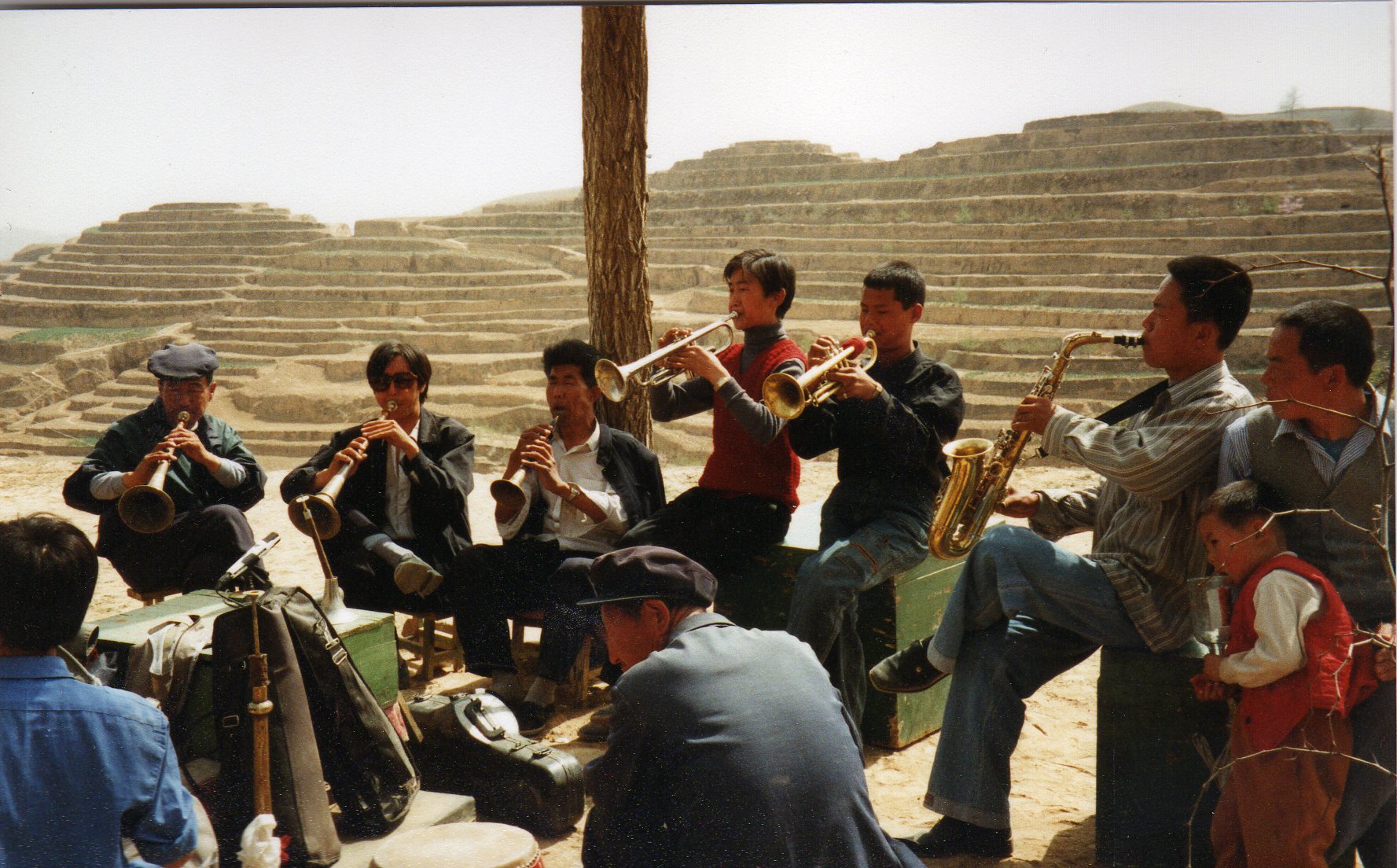
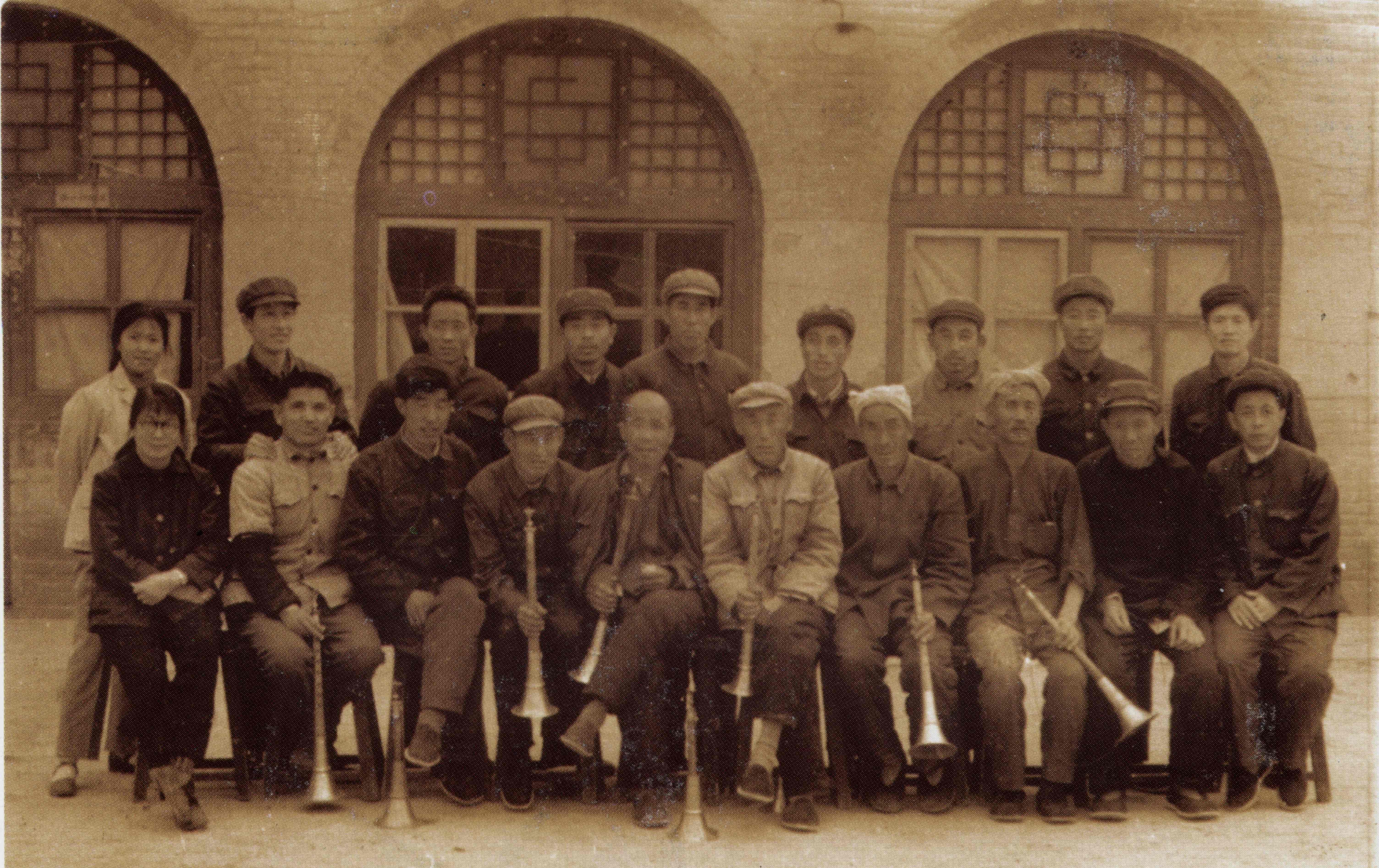 Shawm players from Mizhi county, assembled for a regional festival in 1981.
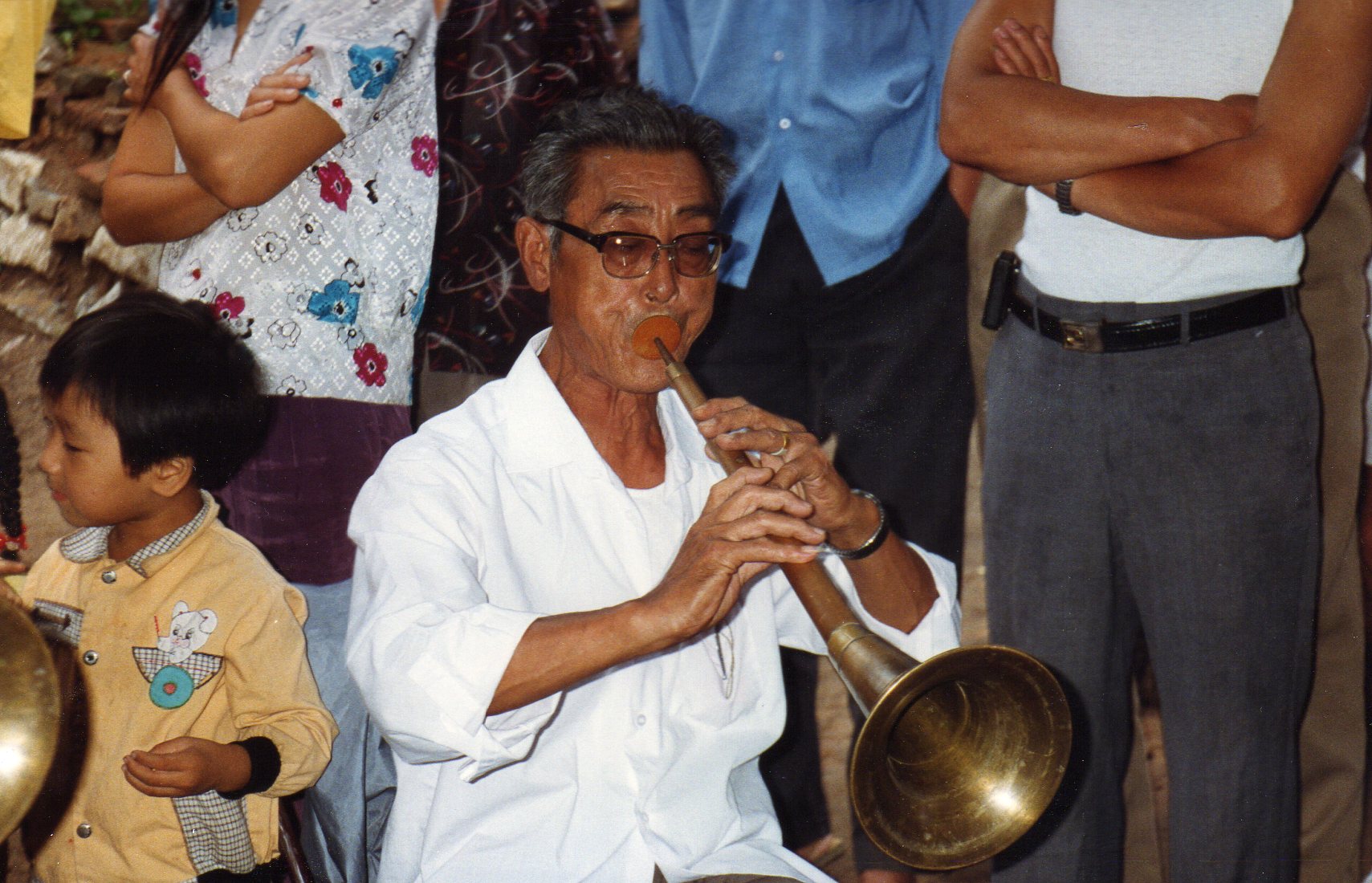


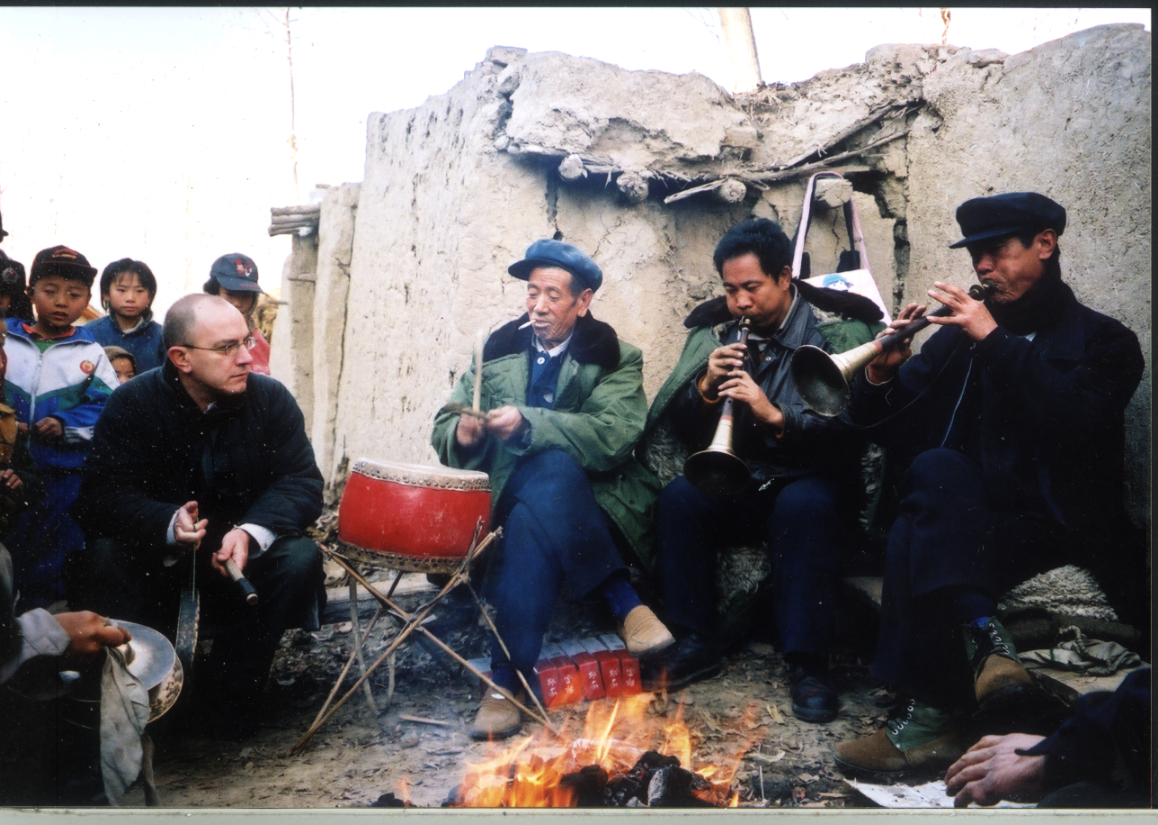


 Temple procession, Xincheng, south Gansu, June 1997.


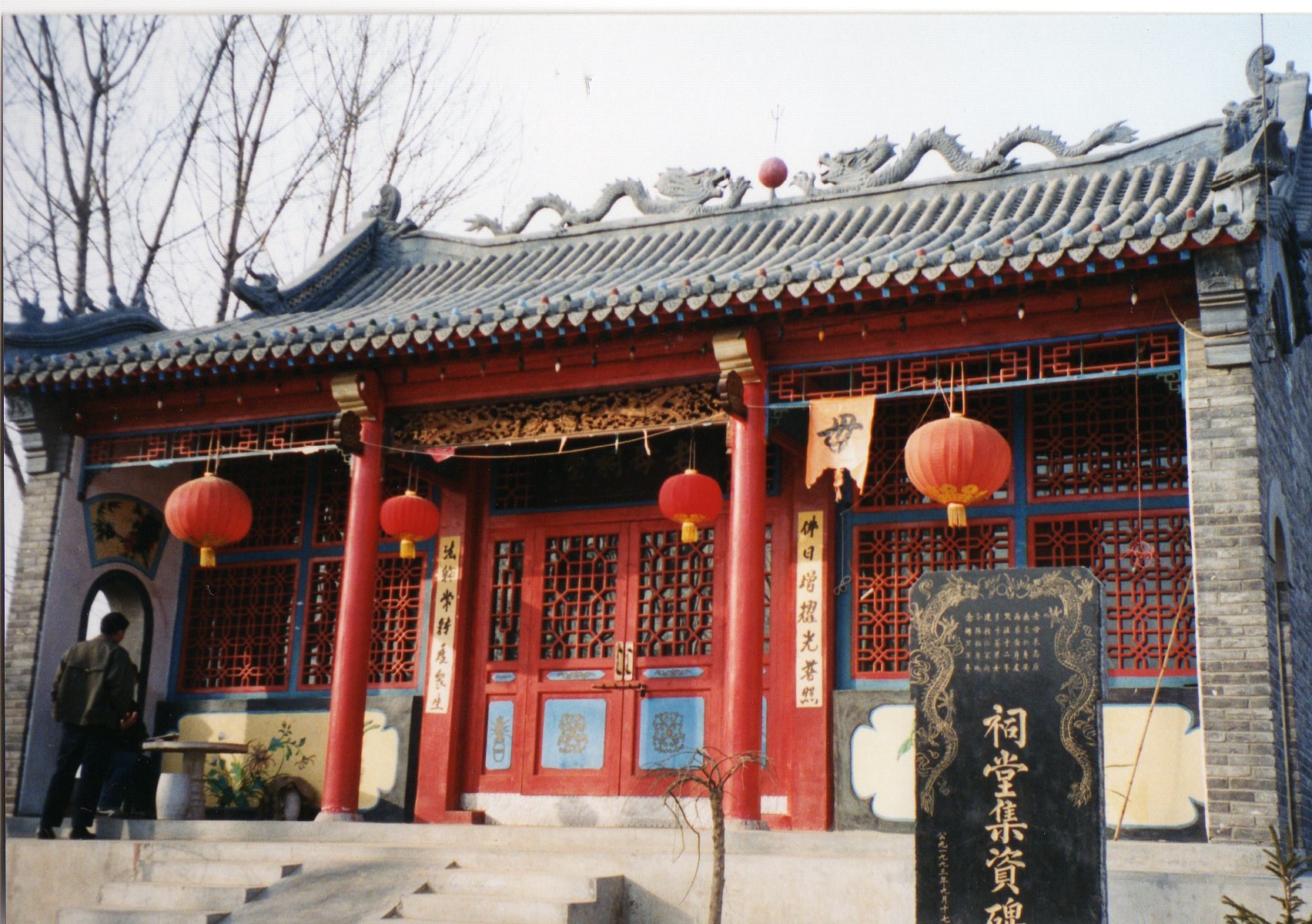

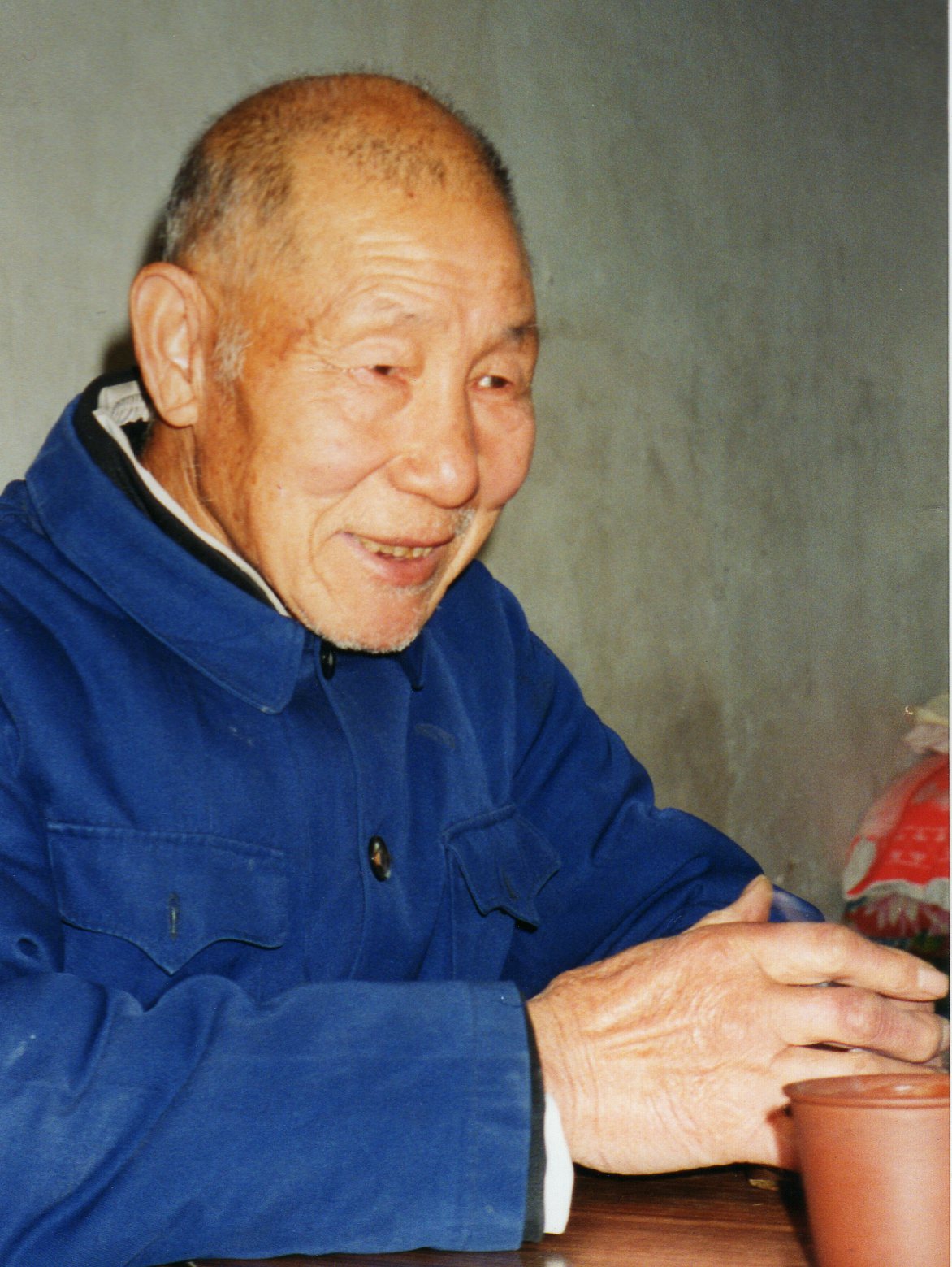
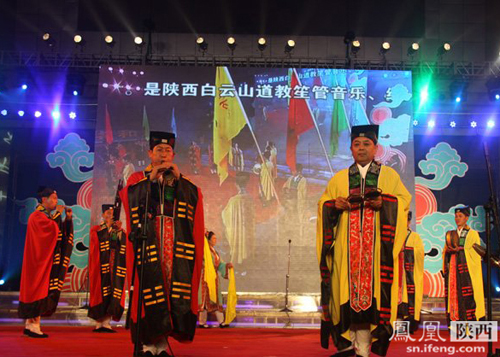
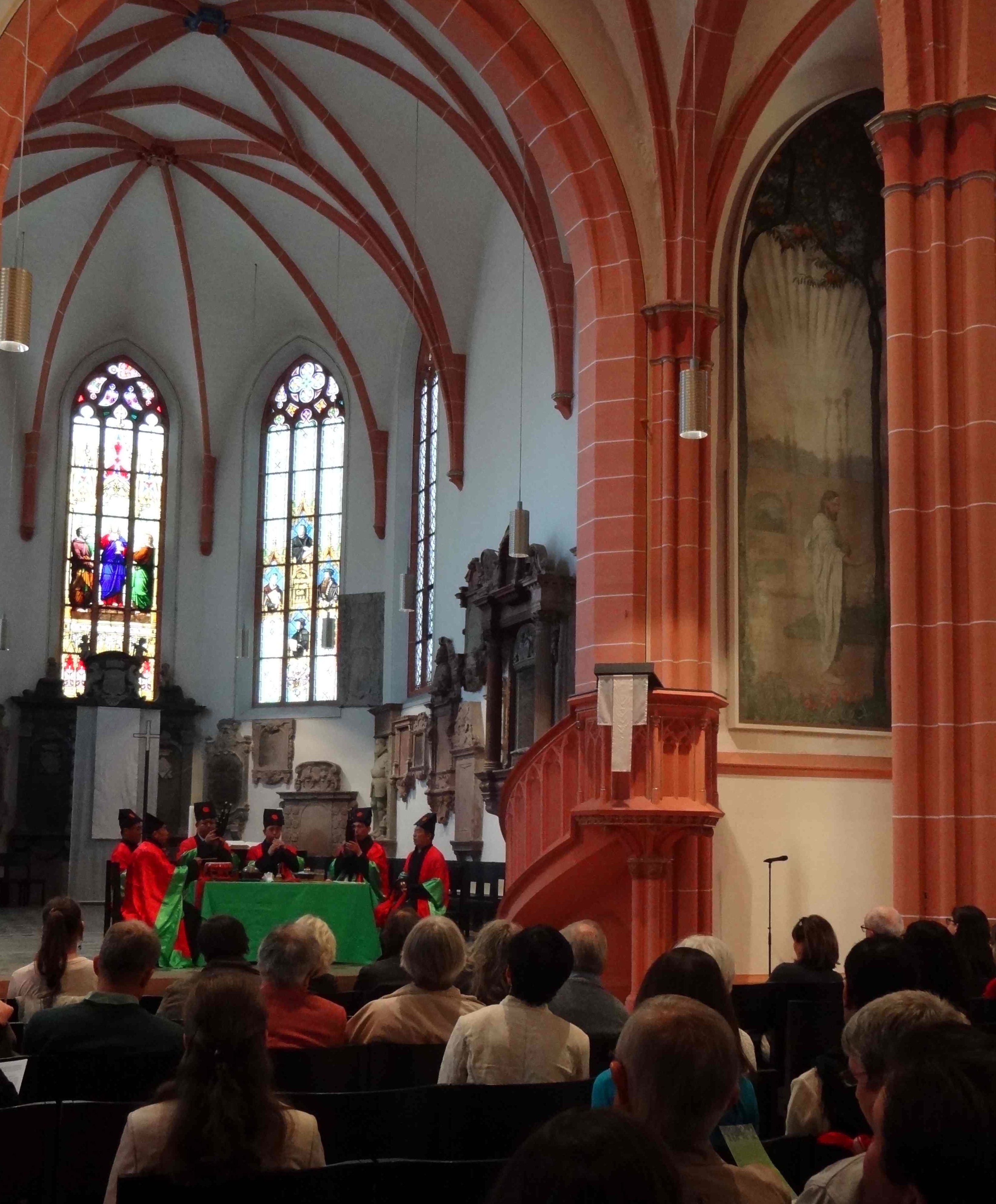


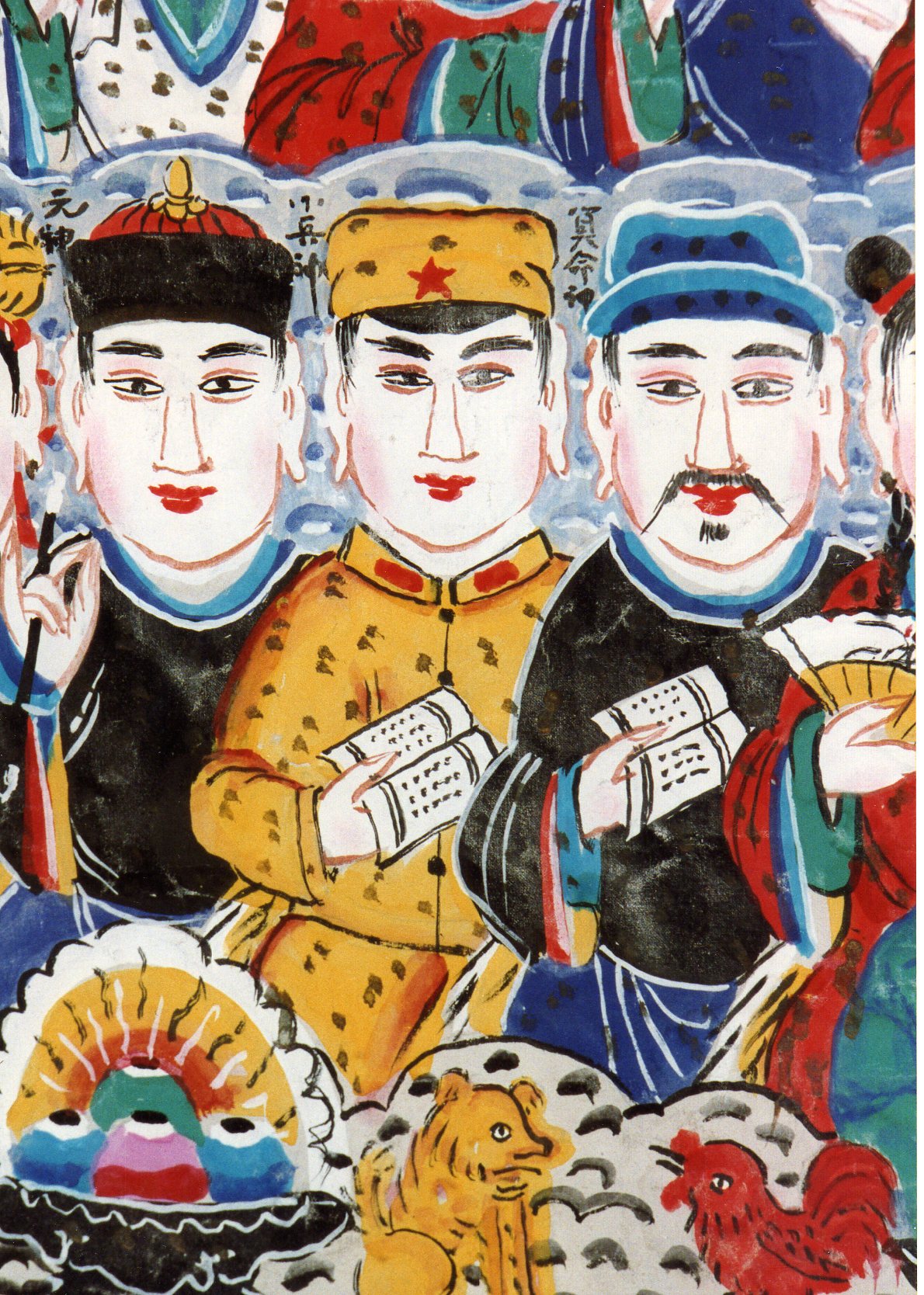


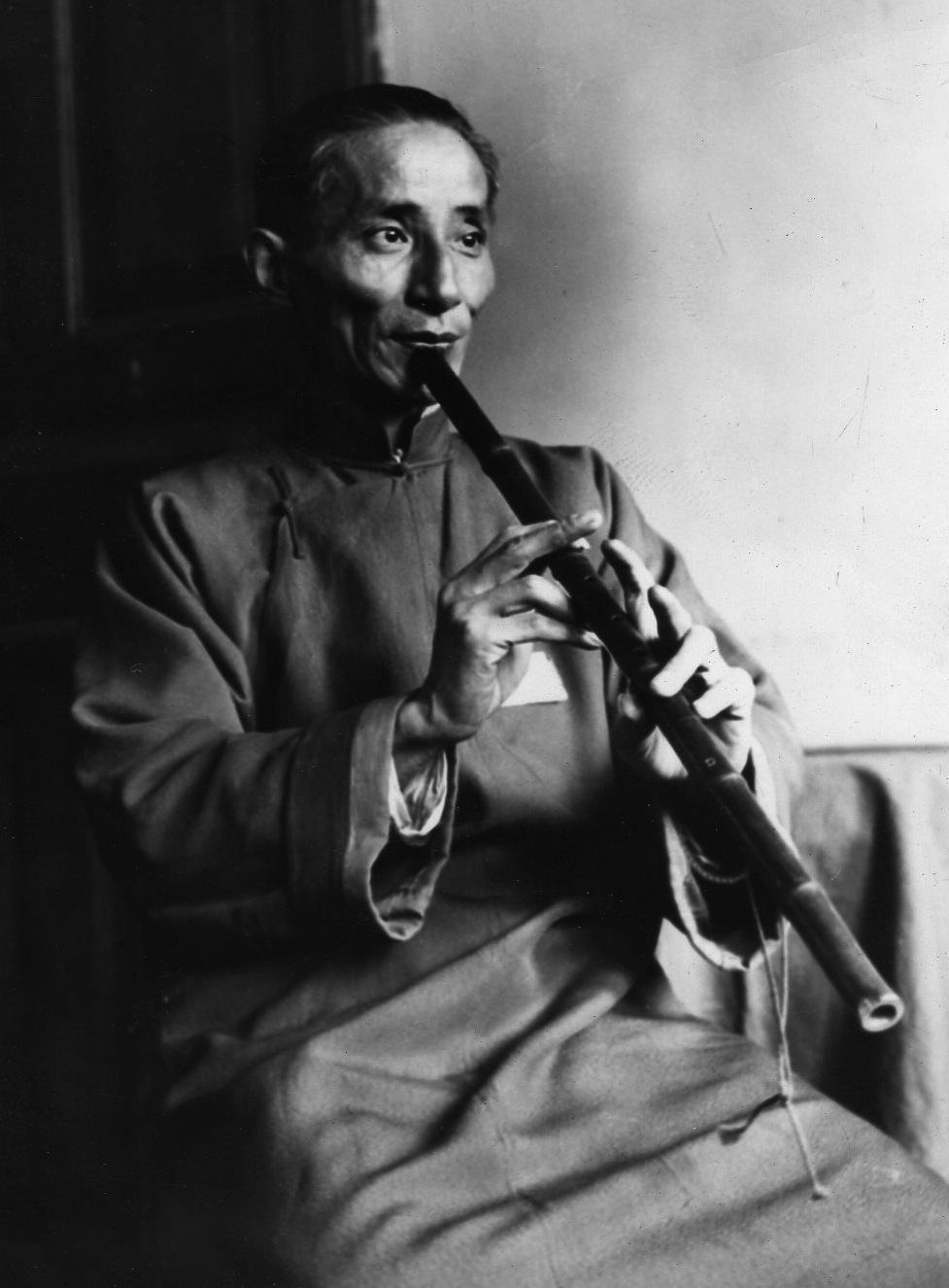
 In Wuxi, under the tuition of the American missionary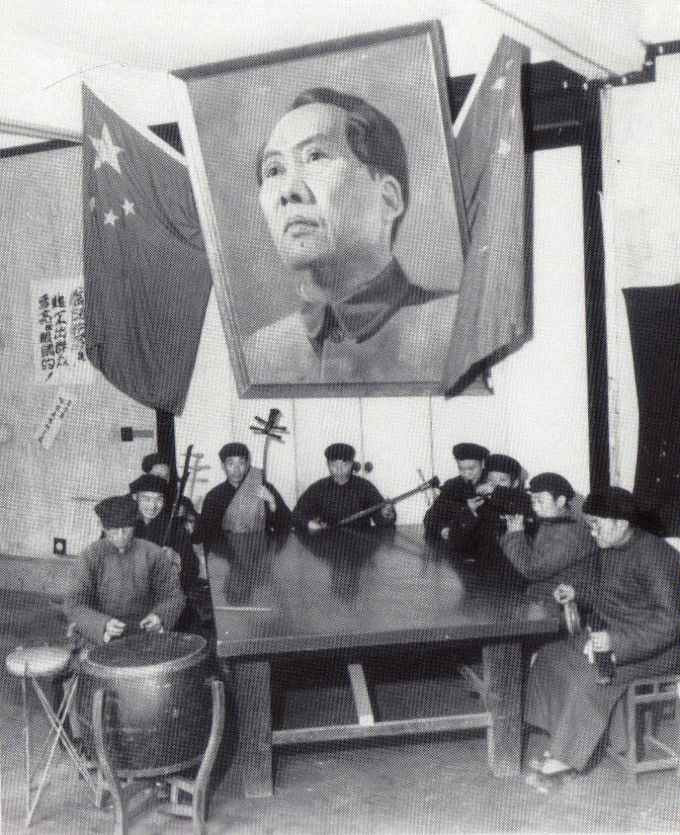




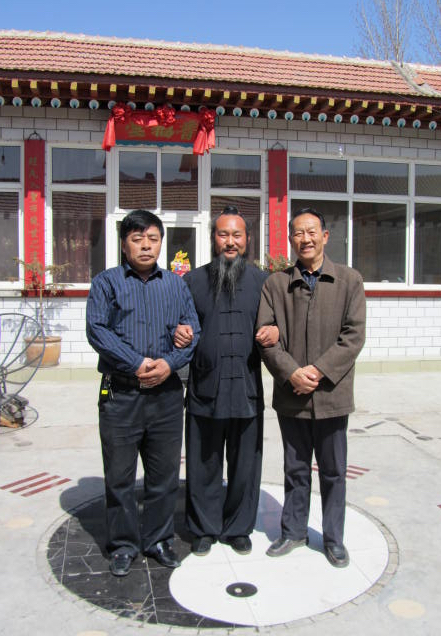
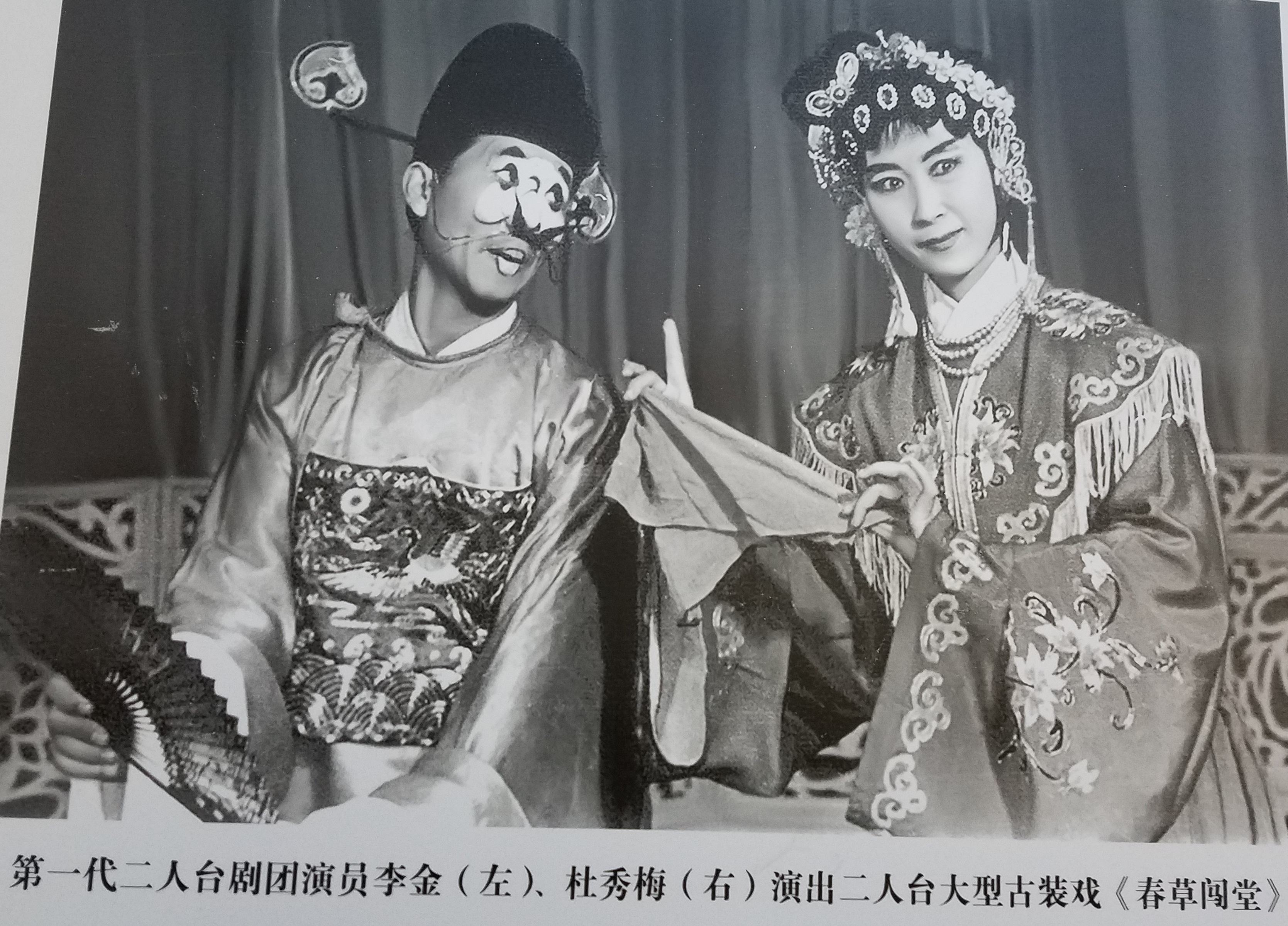

 Stephen Jones: a blog