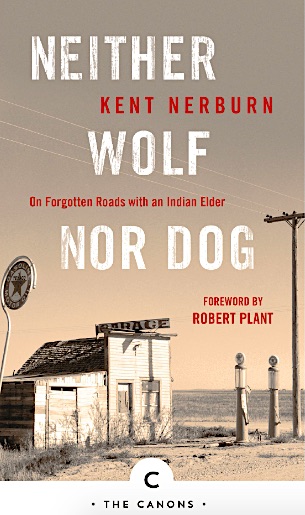
Neither wolf nor dog

Wolf cover

  • Kent Nerburn, Neither wolf nor dog: on forgotten roads with an Indian elder (1st edition 1994).

I can only scrape the surface of the wealth of coverage (both academic and popular) of Native American cultures (see this roundup). Within the literature, “as told to” memoirs (mediated by a more or less diligent white amanuensis) make an important way of amplifying the voices of Native Americans. For some early life stories (the field led by the classic Black Elk speaks, 1932), as Arnold Krupat concludes in For those who come after (1985),

Any future examples of the genre will appear in a context increasingly dominated—at least so far as the white world’s awareness is concerned—by autobiographies by Indians who, while deeply interested in the old ways, have become extremely sophisticated in their manipulation of new—Euramerican, written—ways. In their different fashions all of these life histories, and those of their predecessors, deserve study and inclusion in the canon of American literature.

So Neither wolf nor dog belongs to a long tradition. While many of the thorny issues that it poses are basic to fieldwork in many parts of world, this is a famously sensitive area. Nerburn explicitly problematises the relationship between Native American subject and white interlocutor (anger and sadness on one side, guilt on the other). And this, with the road-trip format, gives the book a dramatic impetus, making it more personal and engaging than a dry series of homilies or a litany of white rhapsodies about NA spirituality.

The book’s title comes from Sitting Bull:

I do not wish to be shut up in a corral. All agency Indians I have seen were worthless. They are neither red warriors nor white farmers. They are neither wolf nor dog.

Learning of Nerburn’s previous collection To walk the red road, as NA elder Dan nears the end of his life he contacts Nerburn to ask him to help him commit his insights to paper. While revealing his own conflicts and soul-searching, Nerburn stands up to Dan and his sidekick Grover when they test his endurance and chip away at his values.

I had not come out here to be given an endless series of tests in cultural sensitivity, or to become the butt of some deep and private jokes. Even if the old man didn’t realise it, I was doing him a favor, and at great cost to myself and my family. I was willing to play his Boswell, but I was not willing to play his patsy. And I surely was not willing to have my every action judged, critiqued, and used as the basis to decide if he was going to let me pursue this any further.

As Dan tells him:

White people that come around to work with Indians, most of them want to be Indians. They’re always wearing Indian jewelry and talking about the Great Spirit and are all full of bullshit. […]

Or else they think we need some kind of white social worker telling us what to do. Some of them come here because they can’t find a job anywhere else and end up out on the reservation…

Grover too comments, “White people don’t want real Indians, they want storybook Indians.” Nerburn shares their antipathy to well-meaning hippies and do-gooders. In his Preface he elaborates:

They take on the trappings, they romanticize, they try to right the historical wrong through a great outpouring of cultural compassion, or try to express spiritual solidarity by appropriating Indian values or belief. In the process, they distort the reality of the people about whom they care so deeply, and turn them into a reflection of their own needs.

This is exactly what Dan and Grover and all the others would never let me do in Neither wolf nor dog.

The tragic history has been documented in detail, but Dan’s account is eloquent.

The white people surprised us when they came. […] We had seen other strangers before. But they were just other people like us—other Indians—from different tribes. They would come and ask us to pass through our land. If we wanted to, we would let them. Otherwise they couldn’t.

But you see, it wasn’t our land like we owned it. It was the land where we hunted or where our ancestors were buried. It was land that the Creator had given us.

It was the land where our sacred stories took place. It had sacred places on it. Our ceremonies were here. We knew the animals. They knew us. We had watched the seasons pass on this land. It was alive, like our grandparents. It gave us life for our bodies and the life for our spirits. We were part of it.

So we would let people pass through it if they needed to, because it was our land and they knew it. We did not wish them to hunt or to disturb our sacred places. But they could come to our land if they needed to.

But the new influx soon became a great ocean washing them off their land.

Then something strange happened. These new people started asking us for the land. We did not know what to say. How could they ask for the land? They wanted to give us money for the land. They would give us money for the land if their people could live on it.

Our people didn’t want this. There was something wrong to the Creator in taking money for the land. There was something wrong to our grandparents and our ancestors to take money for the land.

Then something happened that we didn’t understand. The people who came said that we didn’t belong here anymore. […] We thought they were crazy.

As land became property (“We just belonged to the land. They wanted to own it”), Dan goes on,

Your religion didn’t come from the land. It could be carried around with you. Your religion was in a cup and a piece of bread, and that could be carried in a box. Your priests could make it sacred anywhere. You couldn’t understand that what was sacred for us was where we were, because it was where the sacred things had happened and where the spirits talked to us. […]

The worst thing was that you never even listened to us. You came into our land and took it away and didn’t even listen to us when we tried to explain. You made promises and you broke every one.

On naming;

“Do you mind being called an Indian, Dan?” It seemed appropriate, since his granddaughter had just referred to him as an Indian, and it was a question that always lurked beneath the surface when I was involved in conversations with Indian people.

“What the hell else would you call me?”

“Oh, Native American. I don’t know. Something. Anything other than Indian.”

The old man took a deep breath, as if he had explained this many times before.

“It doesn’t bother me. It bothers a lot of our people, though. They don’t like that the name we have was a mistake. Just because Columbus didn’t know where he was, we have to be called Indians because he thought he had found the East Indies. They think it takes away our pride and our identity.”

“That seems like a fair sentiment to me,” I said. The old man waved his hand in front of his face to silence me.

“I guess I don’t mind because we have taken the name and made it our own. We still have our own names in our own languages. Usually that name means ‘first people’, but no-one would ever call us that. So we let people call us ‘Indians’. Does that tell you something about us?”

I wasn’t sure what he was driving at. “It tells me you are willing to accept a certain level of injustice.”

He nodded vigorously. “Sure. What if you called black people Russians or Chinamen? Do you think they’d stand for it?” He laughed at the thought. “Hell, they change what they want to be called every few years.”

“I don’t blame them, though. They’ve been called some pretty bad names. And being called by a color is almost as strange as being called by a place you never lived. But the point is that our people mostly don’t care so much about something like a name. We’re pretty easygoing about things.” […]

“You remember a few years ago? Some Indians decided they would rather be called Native Americans. It’s an okay name; it’s more dignified than ‘Indians’. But it’s no more real than Indians, because to us this isn’t even America. The word America came from some Italian who came over here after Columbus. Why should we care if we’re called Native Americans when the name is from some Italian?” […]

“If some of us want to be called Native Americans, you should call us Native Americans. If some of us want to be called Indians, you should call us Indians. I know it make you kind of uncomfortable, not ever knowing which one is right. But I think that’s good. It reminds you of how uncomfortable it is for us—we had our identity taken from us the minute Columbus arrived on our land.”

In “Junk cars and buffalo carcasses”, another lesson arises from a concern of Nerburn:

I had always been mystified by the willingness of people to live in squalor, when only the simplest effort would have been required to make things clean. I had come to shrug it off to the old sociological canard that it reflected a lack of self-esteem and a sense of hopelessness about life.

But, in my heart, I knew that this was too facile, too middle-class in its presumptions. But it certainly was preferable to earlier explanations—that people who lived like this were simply lazy and shiftless.

Dan gives him another perspective:

“All of these—all these cars and stuff—makes me proud.”

“Proud?”

“Yeah. It means we haven’t lost our traditional ways.”

The anger had faded from his face and been replaced with a placid smile. “We have to live in this world. The Europeans killed all the animals and too all our land. We can’t live our way anymore. In our way, everything had its use then it went back into the earth. We had wooden bowls and cups, or things made of clay.

We rode horses or walked. We made things out of the things of the earth. Then when we no longer needed it, we let it go back into the earth.

“Now things don’t go back into the earth. Our kids leave pop cans around. We leave old cars around. In the old days these would be bone spoons and horn cups, and the old cars would be skeletons of horses or buffalo. We would burn them or leaave them and they would go back to the earth. Now we can’t. We are living the same way, but we are living with different things. We will learn your way, but, you see, you really don’t understand any better. All you care about is keeping things clean. You don’t care how they really are, just so long as they are clean. You see a dirt path with a pop can next to it and you think that is worse than a big paved highway that is kept clean. You get madder at a forest with a trash can in it than at a big shopping center that is all clean and swept.”

Dan and Grover enjoy an old Cowboys ‘n’ Injuns movie on TV:

“My God,” I said. “How can you watch this? Doesn’t it make you crazy?”

“Hell,” Grover said. “I used to go to the movies as a kid and root for the cowboys. I probably even saw this one.”

“Yep,” said Dan. “In the old show houses everyone used to cheer and boo at movies. We all booed the Indians; cheered when the cavalry came. I really liked John Wayne.”

This leads to another worthwhile discussion. At a truck-stop they find some old hippies, wannabe Indians. Dan bemoans his fellow Indians who sell what is sacred, and the whites who want to buy it:

The white people want to own us spiritually. […] Before you wanted to make us you. But now you are unhappy with who you are, so you want to make you into us.

Dan offers an intriguing perspective on the nature of freedom (an overriding American obsession that most outsiders find mystifying). On the early settlers:

When you got here you got scared and tried to build the same cages you had run away from. If you had listened to us instead of trying to convert us and kill us, what a country this would be.”

And more on images:

For white people there are only two types of Indians. Drunken bums and noble Indians. In the old days, we used to be savages, but that’s gone. Now it’s drunks and noble Indians. I like the white men better who think we are all drunks. At least they’re looking at us as people. They’re saying what they see, not what they want to see. Then when they meet one of us who’s not a drunk, they have to deal with us.

The ones who see us all as wise men don’t care about Indians at all. They just care about the idea of Indians. It’s just another way of stealing our humanity and making us into a fantasy that fits the needs of white people.

In a powerful dénouement, they visit the Wounded Knee memorial.

I must also read the sequel, on the iniquitous boarding school system (introduced here and here).

* * *

Wolf film

While I was swiftly converted by the book, I couldn’t quite imagine how it might adapt as a movie. But Steven Lewis Simpson’s 2016 film turns out to be just as thought-provoking. This is largely thanks to the inspired casting of Dave Bald Eagle (1919­–2016) as Dan; 95 years old at the time of filming, before he died he commented “it’s the only film I’ve been in about my people that told the truth”. Grover and Nerburn are well cast too; scenes from the book are carefully handled, like Jumbo who Fixes Stuff, and the alcoholic Indian approaching them in a diner. Dave Bald Eagle’s final oration at Wounded Knee is extraordinary.

Here’s a trailer:

* * *

The dialogue that Dan and Nerburn open up has clearly been well received, at least among wasichu white audiences. Neither wolf nor dog gives food for thought not only to the wannabe Indians and do-gooders but to other wasichu, whether or not they welcome the message (Nerburn’s website has some thoughtful reflections here, and here). How Native Americans feel about it is another matter (though their appraisals too will be diverse); but maybe it can go towards helping everyone come to terms with the appalling tragedy at the heart of the American psyche.
Summertime

Postcard from Istanbul

Since the carefree Italian musical jaunts of my youth, I’ve become resigned to enduring the English “summer”—resenting long periods of showers and Arctic temperatures, alternating with the occasional stifling heatwave, before the long drab grey August decline.

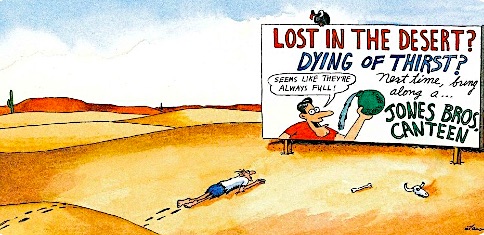
So—pace global warming, which despite the demurrals of many fuckwit politicians is actually A Thing—how delightful it is, around an island interlude, to spend an extended period in a region (thanks to my enforced homelessness) where heat is just a given, and one’s body just gets into the rhythm, finding shade, working at sensible times of day (if you have a choice, that is), and actually Enjoying Life, freed from the vain, desperate annual scramble to change colour—one of the afflictions of Being English.

desert
Gary Larson.

Of course, such a sentiment would never have buttered any parsnips for the tanners of Zeytinburnu, nor will they for a waste collector in Tarlabaşı pulling a heavy load up a steep hill at midday (see e.g. here, here). And meanwhile in London, heroic NHS nurses are still slaving away, saving the lives of others, catching crowded buses and juggling childcare; in China and India, peasants are still tilling the fields, seeking water, dreaming of escaping hardship by migrating to urban apartment blocks.

* * *

Plucked from Porgy and Bess, Gershwin’s song has become such a cliché (“the most covered song in the world“) that it rarely moves me. As always, Billie Holiday transforms the song—here’s her 1936 recording, when it was still new:

And it keeps inspiring musicians—here’s Miles in 1959:

Mahalia Jackson in 1960:

And the brilliant Andrea Motis with mentors of the Sant Andreu Jazz Band in 2013:

On a linguistic note, I like Stephen Sondheim’s observation about the opening line:

That “and” is worth a great deal of attention. I would write “Summertime when”, but that “and” sets up a tone, a whole poetic tone, not to mention a whole kind of diction that is going to be used in the play; an informal, uneducated diction and a stream of consciousness, as in many of the songs like My man’s gone now. It’s the exact right word, and that word is worth its weight in gold. “Summertime when the livin’ is easy” is a boring line compared to “Summertime and”. The choices of “ands” [and] “buts” become almost traumatic as you are writing a lyric—or should, anyway—because each one weighs so much.

For a fine Native American weather story, click here.

Black and white

The elephant in the room
or
The ivory tower

Ivory
Source.

Today we take for granted the colour scheme of the piano keys, with white “natural” notes and black “chromatics” . But the layout was only standardised after around 1810; on most early harpsichords, fortepianos, and organs, the colours are reversed. [1]

Left: harpsichord by Andreas Ruckers (Antwerp, 1646),
remodelled and expanded by Pascal Taskin (Paris, 1780).
Right: fortepiano by Johann Andreas Stein (Augsburg, 1775).
Source: wiki.

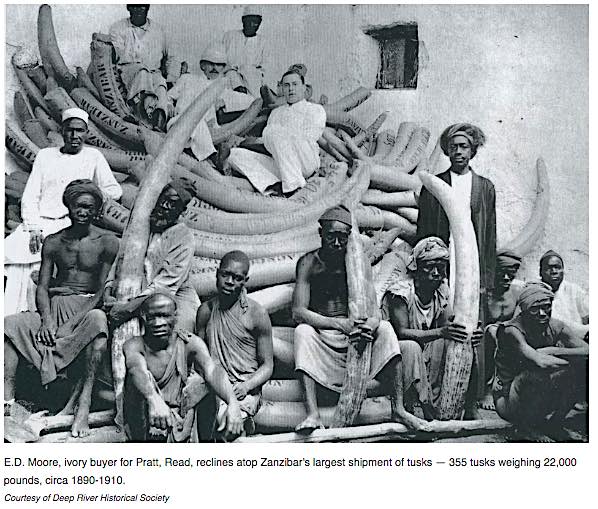
Historians are showing ever more clearly how the prosperity of Western imperial nations was built upon slavery (e.g. here; see also the note in Hidden heritage). And as ivory became a prized symbol of affluence,

with the establishment of the early-modern slave trades from East and West Africa, freshly captured slaves were used to carry the heavy tusks to the ports where both the tusks and their carriers were sold.

Meanwhile, worthy efforts are being made to write black composers and performers into the story of Western Art Music (WAM). However, such discussion as I’ve found of the reversal of the keyboard’s colours comes from within the rarefied echelons of musicology—still largely a bastion of “autonomous music” divorced from society (with some honourable exceptions, under Society and soundscape; note also recent initiatives such as this). So even those who take note of the colour reversal (e.g. here, and this) suggest innocent explanations, ignoring the elephant in the room. It’s not exactly a conspiracy of silence, just a scene dominated by white people in their ivory tower. While I can’t see the wider picture here, I’d be intrigued to see what historians of colonialism and the global slave trade might make of this.

Within WAM, some ingenuous commentators seek to explain the change by the practical reason of visual clarity: supposedly, when the adjacent (“natural”) keys were black, they were hard to distinguish since the space between them was also dark, so the new scheme made them easier to identify. Implausibly, this seems to suggest that master performers like Bach and Mozart just couldn’t help playing fistfuls of wrong notes, and that modern players of historical instruments rashly run the same risk.[2]

Mozart piano
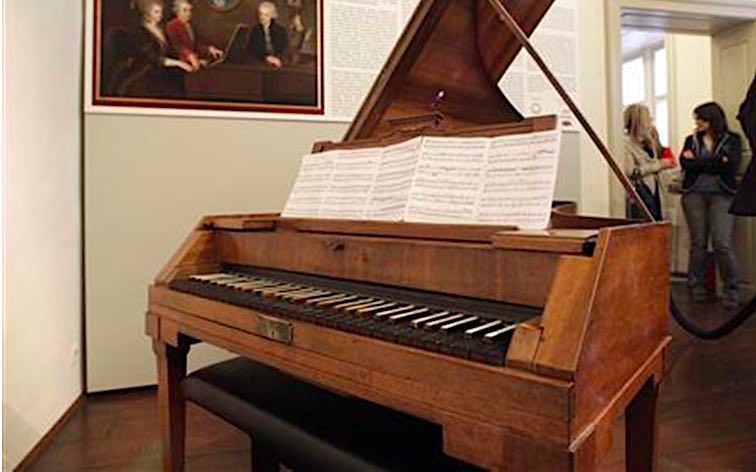
Mozart’s piano, by Anton Walter—played in our times by the brilliant Robert Levin
e.g. here. [3]

Surely such an explanation falls between the cracks. While keyboards with white naturals and black chromatics were quite common (such as those depicted by Vermeer), [4] the reverse system was well-established and long-lived—anything but a fleeting experiment before makers “got it right”. This more common early layout seems to make economic sense: the “natural” keys were larger, longer, and more numerous; black keys were made of ebony (promising article here) or rosewood, while white keys were covered with ivory, which was more scarce and more costly.

But after a couple of centuries of colour diversity, the scheme of white naturals and black chromatics became standardised from the early 19th century, and this coincided with several factors that I have yet to see spelled out. As importing ivory became more efficient (I surmise) it must have become rather less expensive (cf. fluctuating costs of ebony manufacture?); and as industrial production developed, the piano market surged—notably among the social classes making lucrative profits from slavery and the ivory trade. So we might want to find out how piano prices and incomes changed over the period, for German, French, Dutch, and English producers and consumers.

An article on one corner of American piano manufacture since the mid-19th century suggests the kind of approach I’m seeking.

Ivory 2

It may be hard to find out how white supremacy came to be inlaid onto the piano keyboard within a couple of decades early in the 19th century. Doubtless both aesthetic and socio-economic factors played a role; but it’s an interesting coincidence that the change occurred just as profits from the trade in ivory and slaves were soaring. So I hope this post will read not so much as a Guardian-reading tofu-eating wokerati rant but as a plea for broader-based and informed research (cf. Empireland).

* * *

Returning to more purely aesthetic concerns, a friend also wonders if a predominantly white keyboard was considered more pleasing in salons and concert halls where musicians wore dark suits and audiences sat at a distance. Another, later story (that, mercifully, I won’t attempt to cover) is the overall contours of the instrument’s body: how the varied shades of elegantly decorated wood yielded to the modern concert grand—massive, impersonal, shiny, and black (white instruments appealing mainly to the tastes of such as R. Clayderman and D. Trump).

It’s hard to gauge if playing on one or the other keyboard had, or has, any effect on performers or audiences—for instance, if modern players who use both early and later models are influenced in some obscure way by playing on instruments of one or the other type.

As a relief from such meretricious speculation, let’s rejoice in one of the funkiest keyboard solos ever:

You will note that this colourised version of The chronicle of Anna Magdalena Bach (featured in my post on Susan McClary’s stimulating political analysis of the cadenza) shows Gustav Leonhardt apparently playing a harpsichord with white natural keys and black chromatics—as is a 1640 instrument by Johannes Ruckers in Antwerp played by Richard Egarr, seen and heard in the same post. Tickling the ivories was never an entirely black and white issue…

Hazel Scott

Let’s play out with Hazel Scott (in The heat is on, 1943)—the piano on the left presumably a novelty one-off, specially manufactured:


[1] Wiki articles on Harpsichord, Piano, Fortepiano, and Musical keyboard make useful introductions. BTW, in the Sachs-Hornbostel taxonomy of instruments the piano is classified as a subdivision of §31, alongside musical bows and zithers.

Frances Cole[2] What about blind players, one might ask? An even more dodgy claim is that “the custom of having the naturals a darker colour was said to have originated in France to show off the player’s hands to better advantage”.

Left: Frances Cole (1937–83).

Another aside: although the old theory that Beethoven was black sometimes gets exhumed on social media (and is soon reburied), it can still lead to interesting conversations, like this

[3] More Mozart pianos concertos here. For the different timbres of early pianos—even up to the 1950s—see my note here on Beethoven’s wondrous Op. 109 sonata. For a modern performance of Brahms on a piano of his time, click here. In my tribute to Fou Ts’ong I refer to Richard Kraus’s fine study of pianos and politics in China.

[4] So was this layout, which only achieved a monopoly considerably later, more common in the Netherlands—and if so, might that be because since the Dutch empire prospered earlier than its rivals, its keyboard makers had earlier access to ivory? Maybe someone can direct me to a large image database for early keyboards.

Resisting fakelore

Kundera and Pawlikowski

Kundera

In memory of Milan Kundera (1929–2023; wiki, obituary), a favourite of mine is his first novel,

  • The joke (Žert, 1967).

Joke cover

Kundera worked on the book in the years following his expulsion from the Party in 1950. Published briefly before the Prague Spring was crushed, it shows personal and political to be enmeshed, as well as the degradation, nihilism, and duplicity of life under state socialism—through a brilliant exposé of the “fakelore” indignities to which the regime subjected traditional culture in Moravia.

For insights on the musical elements of The joke, I recommend

  • Michael Beckerman, “Kundera’s musical joke and ‘folk’ music in Czechoslovakia, 1948–?”, in Mark Slobin (ed.), Retuning culture: musical changes in central and eastern Europe (altogether a useful volume—see under Musical cultures of East Europe).

Joke film

With The Ride of the Kings pageant as the novel’s climax, Kundera saw through the propaganda:

… Tereza, when she met the chairman of the collective farm at the spa, conjured up an image of the countryside (a countryside she had never lived in or known) that she found enchanting. It was her way of looking back, back to Paradise. […]
The state supported folk music and festivals in an attempt to show, quite simply, that in this “people’s paradise” the folk, at least, were alive and well.

Cynical as Kundera’s alter ego Ludvik is, he has a genuine attachment to the folk culture that was now being distorted. But his revenge is hollow. Here’s an excerpt from the 1969 screen adaptation by Jaromil Jireš:

Just as fascinating is Jireš’ short film about the Ride of the Kings:

* * *

Cold War

All this, and more, is brilliantly evoked in the Polish movie

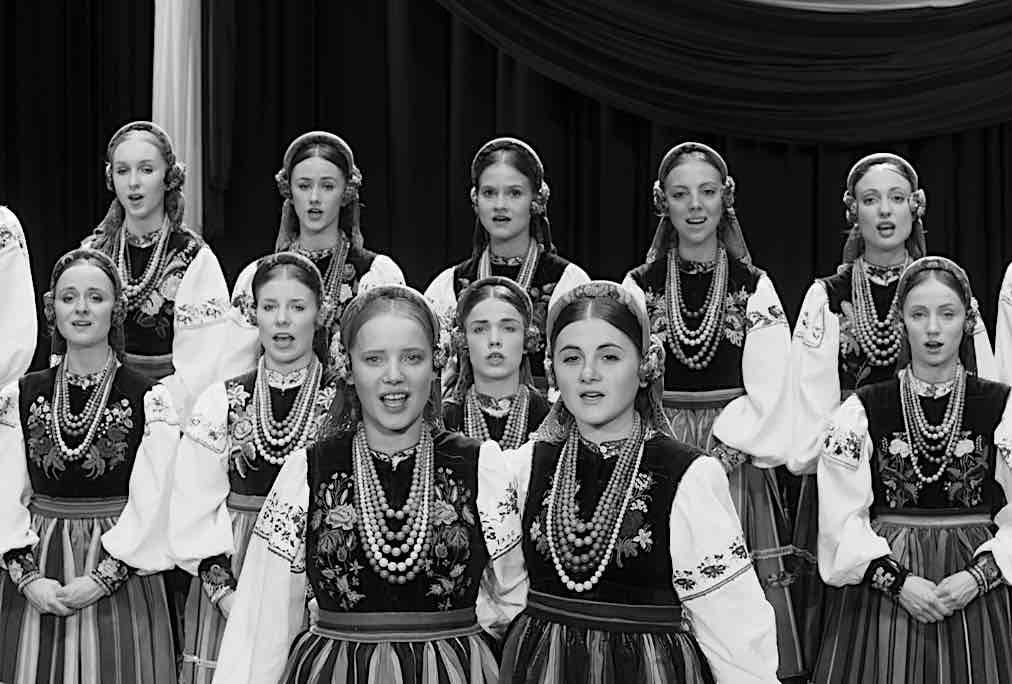
Ravishingly filmed in black-and-white, it’s a visual and musical tour de force. The early scenes, soon after the Communist takeover, are revealing in themselves. Fieldworkers Wiktor and Irena avidly record folk musicians in the countryside, then help develop the sanitised style of the “Mazurek” song-and-dance ensemble (based on the real-life  Mazowsze troupe), until the folk ethos is further compromised by numbers in service of the Party agenda.

My post on folk traditions of Poland opens with this brief period of energy in the collection of folk music after the Communist takeover. The soundtrack, masterminded by Marcin Masecki, illuminates the whole drama. Opening strikingly with a gutsy song accompanied by bagpipe and fiddle in a snowy village, the early scenes, with Irena and Wiktor inspired by the project, communicate the whole excitement of discovering folk culture through fieldwork (see also Musics lost and found).

As in The joke, prescriptive apparatchiks play a disturbing role. Their companion Kaczmarek, soon to become director of the new state troupe, doesn’t share their enthusiasm; this revealing exchange is horribly familiar to me from meetings with cultural cadres in China:

You’re not afraid it’s too crude, too primitive?
No, why?
Where I come from, every drunk sings like this.

Kaczmarek is also a believer in racial purity. Listening to a beautiful recording they’ve just made:

What language are they singing in?
Lemko.
Thought so. Shame.
Why?
That it’s not ours.
Mr Kaczmarek, whether it’s ours or not is none of your business.

They record a young girl singing an unadorned Dwa serduszka (Two hearts)—a song which punctuates the story in successive reincarnations:

Kaczmarek soon becomes director of the new state troupe, spouting sonorous platitudes. As Peter Bradshaw comments:

Of course, they are not “welcoming tomorrow”—they are welcoming the past, a hyperreal, state-sanctioned, quaintly fabricated time of “folk” tradition that will combine Soviet obedience and ethnic conformity. […]
This kind of genteel artistic display is vital for foreign diplomacy, for establishing relations with Russia and a prestigious display for the west. It is a world of privileged foreign travel, with fears of defection.

Auditioning for the troupe is young singer Zula. Though she looks the part, she’s “a bit of a con”— not from politically-correct peasant stock, on probation, and choosing to sing a song learned from a Russian movie. Himself resistant to ideology, Wiktor is charmed by her energy, spirit, and originality. As Zula goes “from victim to victor and back again”, their fatal attraction now unravels over fifteen years from Poland to East Berlin, Paris, and Yugoslavia.

Cold War 3

While many peasants were nonplussed by the state troupes’ misappropriation of their culture, the film does well to observe that this new sanitised style was welcome to some audiences who perhaps (like Kaczmarek) found folk music unpalatable in its raw form. After one glossy spectacle, an audience member comes up to Wiktor and Irena:

I never believed in all this folky stuff. But this—it moved me. You are a genius. To take something so… and make it so beautiful. Thank you both—this is the most beautiful day of my life!

At a tense meeting a stony-faced Party Boss dictates the direction the troupe is to take:

In your repertoire you access priceless treasures of our People’s culture. This is highly commendable. We want you to become a living calling-card for our Fatherland. But I think it’s time for you to add something new to our repertoire—about Land Reform, World Peace and the threats to it. A strong number about the Leader of the World Proletariat. And we, in turn, will do everything in our power to show our gratitude. […]

Irena politely protests:

I would like to express gratitude on behalf of the whole ensemble for your appreciation of our hard work. But when it comes to our repertoire, it’s based on authentic folk art. The rural population doesn’t sing about Land Reform, Peace and Leaders—simply doesn’t do it, so it would be difficult.

But the canny Kaczmarek hastily reassures the Boss:

Comrade Bielecka, I assure you that our nation is not so ignorant, including its rural elements. Quite the contrary. And it will sing about those issues—as long as it is encouraged, and given direction. This, I believe, is exactly what I believe the role of our ensemble should be.

The principled Irena soon quits, while Wiktor (a male archetype straight out of a Kundera novel) bides his time as musical director—and as Zula’s lover. Not to toe the new ideological line could destroy lives.

And all that’s just in the first half-hour—essential viewing for the impact of state socialism on expressive culture, more eloquent than volumes of worthy academic analysis.

While the ensemble is in East Berlin on tour in 1952, Wiktor defects, going on to eke a living at a jazz club in Paris. Over the following years the lovers’ brief encounters become ever more bleak as they come together and pull apart, until the degradation of their final meetings back in Poland, crossing paths again with Kaczmarek. Peter Bradshaw again:

A love affair thrashes and wilts in the freedom of a foreign country, and then begins to submit to the homeland’s doomy gravitational pull.

Cold war richly deserves all the praise it has gained. Now I’m also keen to watch Pawlikowski’s 2013 film Ida (trailer here), set in 1962.

Under Life behind the Iron Curtain, see also Czech storiesMadonna pilgrimage in Communist Poland, and Polish jazz, then and now.

* * *

The state’s manipulation of folk culture that Kundera and Pawlikowski evoked was a common element throughout the Soviet bloc, such as sharovarshchyna in Ukraine—and also a major theme in China.

sfg-50s

The great Yang Yinliu made wise comments as early as 1953 on the gulf between folk and conservatoire styles—ideological tensions that were replicated in countless county-towns (for a renowned peasant ensemble “blowing with the wind” during the 1958 Great Leap Forward, see Ritual groups of Xushui, under Qianminzhuang; cf. A Daoist serves a state troupe).

And the impasse has continued in the “Golden Age” myth, idealising the Glorious Past (see Debunking “living fossils”). Even in cases where local cultures have not been explicitly targeted by the state for remoulding, scholars may unwittingly impose their own agendas, notably in the flummery of “Intangible Cultural Heritage“. See also Different values, and The politics of ethno-trad.

Tomorrow

After Yesterday, here’s Tomorrow…

Shirelles

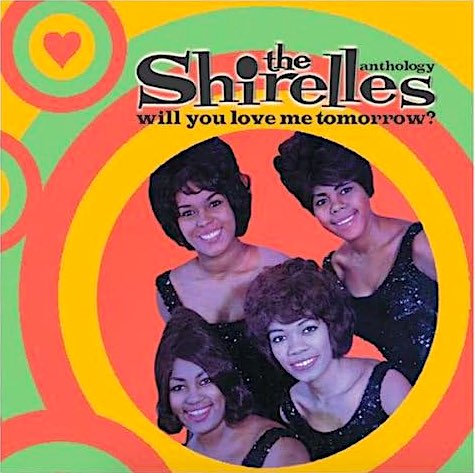
Will you [still] love me tomorrow (Carole King, with lyrics by Gerry Goffin) was a big hit for the Shirelles in 1960, the first song by a black all-girl group to reach no.1 in the USA. While I’m all for evocative string backing arrangements (She’s leaving home, The windmills of your mind—I rest my case), this one is rather naff—still, it’s a wonderful track:

For her own version in 1971 the song’s composer Carole King sang it slower, “less like the pleas for gentleness on the part of a trembling virgin and more like a mature woman requiring parity in a relationship”:

Amy

Among numerous covers, no singer can ever compare to Amy Winehouse, who recorded the song for the soundtrack of Bridget Jones: the edge of reason in 2004 (between her albums Frank and Back to black), only released in 2011 on her posthumous album Lioness: hidden treasures:

For my tribute to Amy, click here. See also Detroit 67, Memphis 68, and Northern soul, as well as Walk on by. Do also bask in my eclectic Playlist of songs!

Some rare recordings

Edison

Early recordings can be inadvertently hilarious, like the French folk-song from 1860 that made Charlotte Green corpse on a BBC news report. The first known recording of Western Art Music is more bemusing than funny. Recorded on wax cylinders (“Mr Edison’s phonograph”) at a grand concert at Crystal Palace on 29th June 1888, it apparently contains excerpts from Handel’s Israel in Egypt—but not so you’d know. The review comments interestingly on the revival of the piece that was then under way:

It is now almost as well known to our choirs in various parts of the country as the “Messiah” itself.

Recalling our own times, the review also notes mixed responses to an audience member:

Among the distinguished persons present at to-day’s performance was Mr Gladstone, who occupied the Royal box, and who on rising at the end of the first part was saluted with marks of approbation, which, originating in the Handel orchestra, soon spread throughout the vast assemblage. The applause was varied here and there with a few hisses, which, strange to say, seemed to proceed in all cases from ladies.

Curiously, the detailed review compliments the solo singers but doesn’t mention the conductor, August Manns, “directing an orchestra of some 500 musicians and a choir of over 4,000 voices, in front of an audience of 23,722 people”.

Handel 1888

Here are the salvaged fragments, ingeniously identified in the comments:

The tempi, albeit hard to detect, are very slow, in the romantic fashion that persisted until the spread of the early music movement (e.g. Mengelberg’s 1939 Matthew Passion—link in my post on Richard Taruskin). If someone could make a better restoration, it’d be fascinating to hear. Perhaps we’re fortunate that

Colonel Gouraud, who made the experiment, did not attempt to record any solo pieces, feeling that the phonograph was too distant from the vocalist.

So to recover, may I suggest Michael Chance singing Thou shalt bring them in—as good as it gets…

* * *

Trane Dolphy
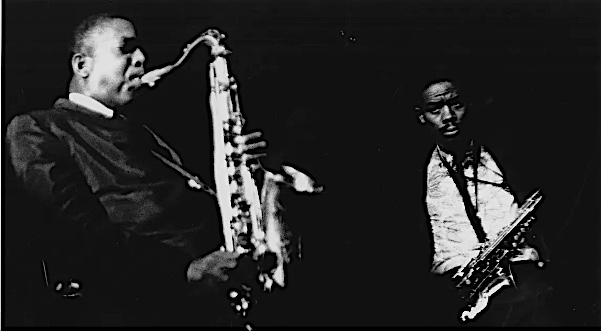
John Coltrane with Eric Dolphy. Image: Herb Snitzer.

While we can hardly derive any musical satisfaction from the 1888 cylinders, further recordings of the great John Coltrane continue to surface. Complementing his complete Village Vanguard recordings, long-lost live tapes from Trane’s 1961 residency at the Village Gate have just been released, with Eric Dolphy alongside Elvin Jones, McCoy Tyner, and Reggie Workman. Here’s Impressions:

and Greensleeves:

A more traditional pairing with Handel would be Jimi Hendrix, who were neighbours in London, though not quite at the same time…

Anatolia: a rural woman singer

Sultan Baci 2

In traditional societies, most public performers are male; women’s musicking—largely considered under “domestic” contexts—can be quite hard to discover (for some readings, see Flamenco 2, under “Gender”; for China, see e.g. here).

In rural Anatolia, some Kurdish dengbêj bards are female. And in Çaltı village in the southwestern municipality of Denizli, Sultan Bacı (Sultan Torun) comes from a nomadic family, overcoming prejudice in her youth to accompany her songs on bağlama plucked lute. Typically (again, for Turkey and much of the world) she sings of hardship. Recent videos of her singing for village gatherings, or as she herds the goats, have made her something of a media celebrity (e.g. here, and here), the mise-en-scène feeding into urban images of picturesque rural life.

Sultan Baci 1

From her YouTube channel, videos like these have become popular online:

Even as outsiders, such plaintive songs remind us of the depth of folk culture. As we begin to absorb ourselves in the musical style, we might also seek to learn more about the diverse genres in the soundscape of the region. It’s worth pondering the public/domestic continuum further; while women sing in a range of informal contexts, perhaps Sultan Bacı’s accompanying herself on bağlama is considered more of a public statement? However alluring such soundbites may be, ethnographies of changing societies are always to be desired.

More Anatolian folk music under West/Central Asia: a roundup, including Bartók in Anatolia, Musicking of the yayla, Alevi ritual, and Rom, Dom, Lom—as well as recent adaptations such as New sounds from Anatolia and Anatolian bards rock.

Wimbledon: protest and suffragism

At Wimbledon, the backdrop to astounding feats of sporting virtuosity is a benign celebration for the middle classes (as I remarked here—and do let’s dust off the classic Vitas Gerulaitis story!!!), its genteel image (blazers, straw boaters, flowery dresses) carefully fashioned by the BBC. Everyone knows how to behave (“being British for the British, in front of the British”).

protest

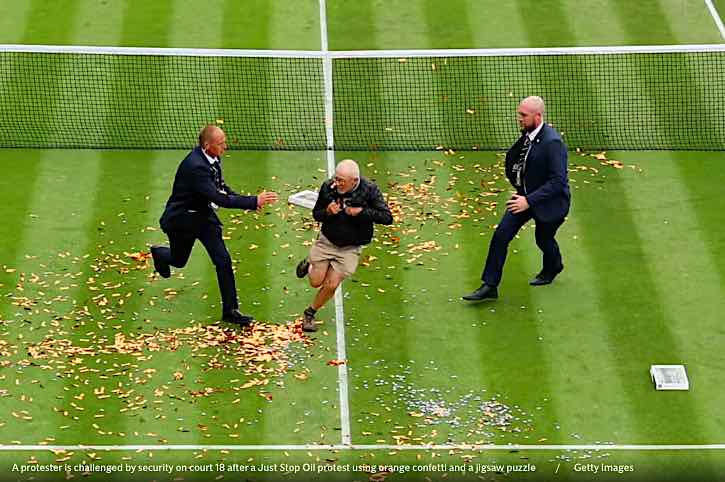
Even the style of this week’s climate protests seemed genteel, when Just Stop Oil activists briefly disrupted matches by scattering a Wimbledon-themed jigsaw and environmentally-friendly orange confetti glitter onto the grass. The planet may be on the brink of extinction, but predictably, “Home Secretary” Cruella Braverman considered the protesters “selfish” (cf. Going too far).

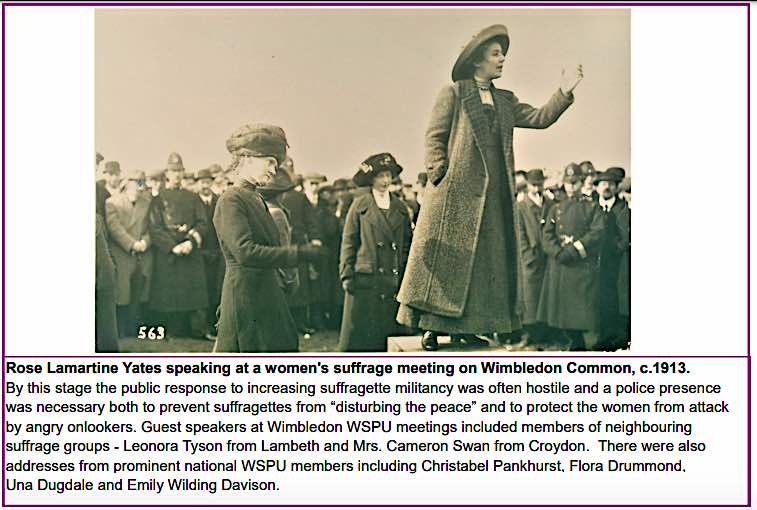
Tucked away on the BBC sport website is an intriguing article on a failed attempt by suffragettes in 1913 to burn down the grounds (see also here)—one of many such incidents that year at major sporting events. The Wimbledon chapter of the WSPU was a hotbed of suffragette activity, led by Rose Lamartine Yates.

Yates 1913Source.

Having been educated [You were educated?—Ed.] in Wimbledon myself, I had no idea of all this; I wonder if such local history is taught in schools today.

Yates 2

* * *

The suffragette movement was widely recognised by its colours, adopted in 1908: purple representing loyalty and dignity, white for purity, and green for hope. The following year the Wimbledon tennis tournament also chose purple and green for its emblem; but no debt has been acknowledged.

Just as there’s no clear link between the colours of Wimbledon and the suffragette movement, the image of the movement itself (“the largest domestic terror organisation who ever operated on British soil”) has long lost the taint of terrorism—as tends to happen with successful terrorist campaigns. Upon the outbreak of World War One the suffragettes’ arson and bombing campaigns were suspended, and after the war women gradually gained the vote without resorting to further violence.

For the suffragettes’ adroit use of humour, click here. More on tennis under A sporting medley; see also my Roundup of posts on gender.

“China’s first orchestra”

The story of how European missionaries introduced Western Art Music to the Qing court in Beijing has been well documented. But there has been no scholarly consensus on how or when WAM was taken up by a wider pool of Chinese performers.

Urrows cover

A recent book,

  • David Francis Urrows, François Ravary SJ and a Sino-European musical culture in nineteenth-century Shanghai (2021),

is introduced in Sixth tone by Zhang Xiaoyi, librarian at Xuhui District where material has been discovered.

Ravary 1

As she observes, some have traced the “first Chinese orchestra”

to the formation of the Shanghai Public Band (now the Shanghai Symphony Orchestra) in January 1879, which was headed by Jean Rémusat—“Europe’s premiere flautist”—and composed largely of Filipino musicians. Others argued that Sir Robert Hart’s brass band, founded in 1885, should be considered the earliest Western orchestra in China because its members were Chinese. And a few pointed instead to a music course taught by American missionaries at Shandong’s Tengchow College in 1876.

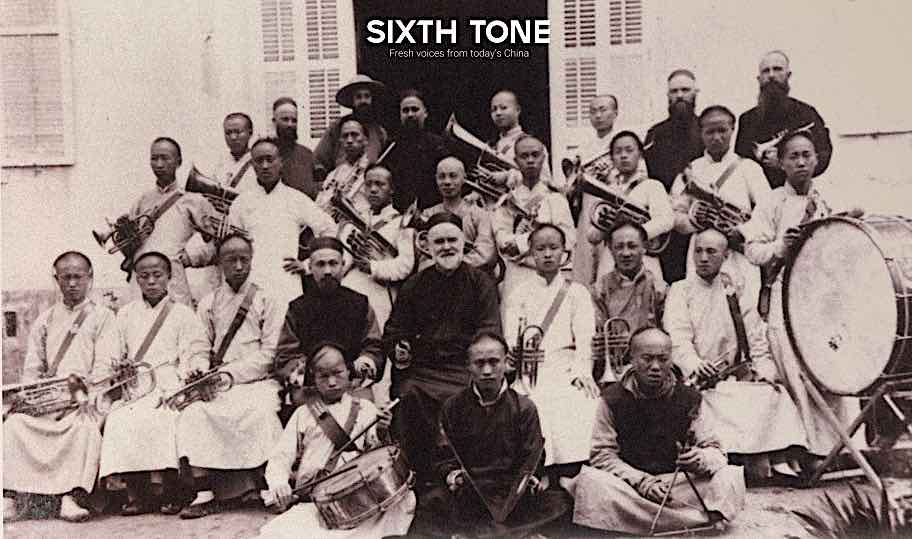
The French Jesuit missionary François Ravary (1823–91) arrived at the Collège St. Ignace in the Xujiahui (“Zikawei”) district of Shanghai in 1856 to direct the school choir. Now, thanks to Urrows, we know that he founded an orchestra there, using instruments shipped from Europe by Ravary’s friend Hippolyte Basuiau, a violinist-turned-Jesuit.

Ravery 2

Together with fellow Jesuits Louis Hélot and Léopold Deleuze, Ravary also made his own instruments, setting up a workshop in what was then St Ignatius Church and recruiting four Chinese carpenters to help them build a pipe organ out of bamboo, modelled on the sheng mouth-organ.

organ 1

organ 2
Organ made by Léopold Deleuze and his team.

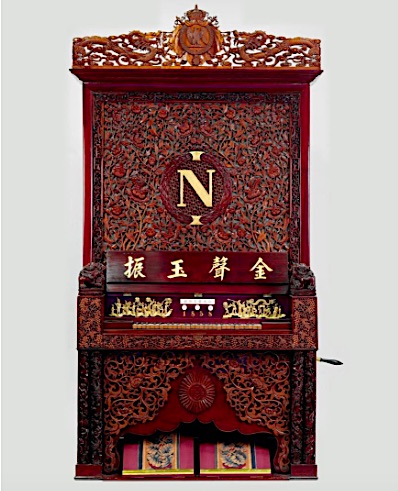
Deleuze and a team of Chinese craftsmen later built another organ, this time with three special stops to reproduce the sound of the Chinese xiao end-blown flute, di transverse flute, and sheng. Dedicated to the son of Napoléon III, then king of France, it is now preserved at the Musée de la Musique in Paris, though the pipes have rotted and can no longer produce sound.

Once his instruments were ready, Ravary began recruiting Chinese students to take lessons in Western music. In 1864, when a group of orphans was moved near the school in advance of the opening of T’ou-Sè-Wè orphanage, he included them in his orchestra training as well.

After their first performance, Ravary wrote “It is fortunate that in this country, people’s ears are not as discerning as they are on the Champs-Élysées”. Once the performance ended, the nervous student-musicians gorged themselves on steamed buns.

By 1871 the orchestra was more assured: an Austrian baron enthused, “Haydn played in China by the Chinese! … We were all deeply moved.”

Ravery 3

Still, regarding repertoire Urrows avoids getting carried away:

In my experiences in China studies, when it comes to music repertoire in the missions from the late 16th century onwards, most of what people write—and then perform—is 10% based on documentation, and 90% based on fantasy, resulting in a kind of musical chinoiserie of a New Age type. I don’t want to promote, much less add to this pile of pseudo-scholarly dreaming, pleasant as it is to listen to…

When Ravary was transferred from Xujiahui, the orchestra declined—until 1903, when the Shanghai-born Macanese Francisco Diniz and his friends organised a military band at the T’ou-Sè-wè orphanage known as the Fanfare de Saint Joseph. With Joseph Tsang, Diniz also co-edited Rudiments de musique, a textbook in question-and-answer format to teach students to play wind instruments like trumpets and tubas—apparently China’s earliest known textbook on Western instrumental music, and the earliest such book written in the Shanghai dialect.

In 1907, Louis Hermand, a Western music teacher who worked with the band, predicted that “In a few decades … we will see a Chinese child take their place among masters like Gounod and Wagner.”

Hermand sax

All the while, of course, Shanghai was home to a wealth of musicking, including silk-and-bamboo clubs, Daoist ritual, shawm bands, local opera, narrative-singing, and puppetry. See also China’s hidden century.

My impertinent editor

Editors can play a most constructive role—such as gently suggesting that it might be inadvisable to use the word “wombat” three times in the same sentence, or explaining the legal repercussions of slagging off evil xenophobic Tory bigots. On my blog, however, as the attentive reader [singular, eh? Mrs Ivy Trellis I presume—Ed.] will have noticed, the main role of my imaginary editor is to constantly snigger at my pretentious ideas and take the piss out of my slavish devotion to PC.

So perhaps we can find some clues to the character and tastes of this elusive figure—like Elena Ferrante, being of indeterminate gender, I like to think of her/him as Ermintrude or Algernon.

ritual-masters

The notional editor likes to nominate me for a Pseuds’ Corner Award for passages such as:

I was just admiring Messi weaving his way through yet another helpless defence, and recalling his time at Barcelona, comparable only to Bach at Leipzig…

or in my tribute to Stewart Lee:

he reformulates motifs from previous work, just like Bach and Miles Davis.

Waxing lyrical about Dream a little dream of me,

reminiscent of Mahler’s sudden revelation of alpine pastures adorned with cowbells, or an incandescent Messiaen meditation suffused with ondes martenot [Steady on—Ed.].

Pondering my early exposure to the ouevre of Godard:

my musical tastes were already imbued with Ravel, Messiaen, and Boulez [Weirdo—Ed.]

On flamenco:

Like Lorca, [Name-dropper—Ed.], my taste draws me to the intensity of cante jondo deep singing”.

In one of my posts on cuisine, Ermintrude/Algernon sniggers at

my legendary dinner parties [legendary in the sense that they never existed?—Ed.]…

Stein

On the 94 bus:

As the fleet plies its trade between East and West, like a medieval caravan along the Silk Road weaving its way through the bustling markets of oases like the fabled Bush of Shepherds [That’s enough now—Ed.]

Some of my finest fantasies are met by a suggestion of inebriation:

“I didn’t get where I am today” [at home with a bottle of Bombay Sapphire—Ed.] by peddling such flapdoodle.

Often when I seem to overreach myself, a sarcastic put-down suffices—such as a raised eyebrow when I claim familiarity with these new-fangled Popular Beat Combos:

my new acquaintance with Turkish-German rap [Yeah right—Ed.]

The editor’s disinterested eye can be useful, as here:

We shouldn’t allow our fascination with iconography [Speak for yourself—Ed.] to detract from documenting people’s actual religious observances.

Ermintrude/Algernon tries to keep me in check:

One evening after doing the Monteverdi Vespers, or should I say Vespas [No you should not—Ed.]

On Tibet:

Could it be that emissaries called out “da-yig!” to announce their arrival, a custom that eventually found its way to Venice via the Silk Road, becoming the gondolier’s cry of O-i? [No it couldn’t. Stop it.—Ed.]

My obsession with Chinese folk music surfaces in the most unlikely places, like this on Irish fiddlers:

What a wealth of creative wisdom under all those nimble fingers, immersed in the style, each with their own lineages and influences, full of regional and personal variation—like shawm players in north China [I was afraid you were building up to that—Ed.].

Some comments hit home:

[Noteauthor’s source for popular culture appears to derive almost entirely from the demure echelons of the BBC—Ed.]

I may be rebuked for levity, as in this aside:

the iconoclastic early punk band Seven Sages of the Bamboo Grove [Behave yourself, Dr Jones—Ed.]

But sometimes Ermintrude/Algernon seems to join in the fun:

I’m always tickled pink [Best possible colour to be tickled—Ed.] by

and on visual culture:

Craig and any other art historians who have managed to read this far might care to exact revenge by writing Specious Flapdoodle [famous 19th-century Baptist pastor—Ed.] about early music or Daoist ritual…

Flann

In my tribute to Myles:

His intolerance of cant (and doubtless Kant) has brought him a cult following [Autospell running amok?—Ed.].

On film criticisms by GDR censors:

the buildings look sad, inhospitable, dirty, and unkempt [Tripadvisor review for Tory Britain?—Ed.]

My elusive critic sometimes takes a rather laidback stance on grammar, as here:

I found myself on the courtyard outside SOAS at midday, where whoM [Pedant—Ed.] should I bump into but…

Ermintrude/Algernon’s rebukes over my sexism seem to be tongue-in-cheek—such as this comment on some favoured limericks:

The young man from Calcutta, The young man from Japan, and The old man from Peru [Typical bias against the middle-aged woman—Ed.]

or

the splendidly-named Ronald Binge, creator of Mantovani’s “cascading strings” effect [Persontovaniplease!—Ed.]

And I am just as likely to be criticised for being unduly Woke, as in my choice of baroque composers:

we should adjust from our image of Barbara Strozzi and Artemisia Gentileschi [PC gone mad—Ed.]

Even my violin playing comes in for sarcasm:

… it feels great to Become One with the instrument again [Again?—Ed.]

At times Ermintrude/Algernon can be rather too literal:

Call me a nerd [You’re a nerd—Ed.], but taxonomy and indexing can be so funky…

Under this constant bombardment, I sometimes get a tad shirty at the editor’s comments:

I climbed aboard at Chiswick High Road to find an old codger [Around your age?—Ed.] [Look, I’ve warned you about this—SJ]

I’m always intoxicated [Now read on—Ed.] [That’s enough of your lip—SJ] by the mood of Irish music.

But in all, I feel most fortunate to have such a tolerant editor, something of a kindred spirit…[Philately will get you nowhere—Ed.] [Hey, that’s my line!—SJ]


At least no confusion in proofreading arises such as befell Guangdong Arts and Crafts when preparing their half-page advertisement for the China Daily:

cliché