How wonderful to see the Women’s FA Cup Final on BBC1, showing that progress continues despite misogynistic reactions around the globe. The schoolgirls who, this time last year, wrote those brilliant letters to the FA (“We aren’t brainless Barbie dolls”) will be delighted—not a pink fluffy football in sight.
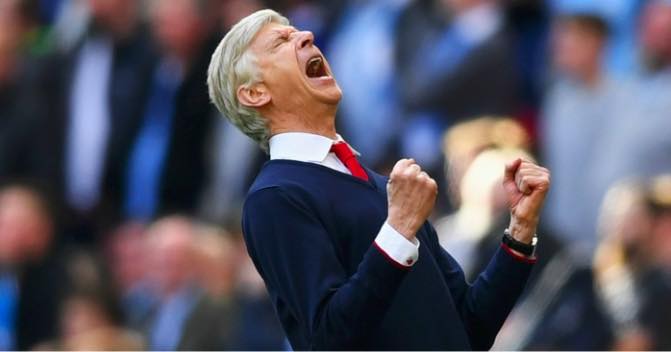
MANCHESTER, ENGLAND – SEPTEMBER 23: Arsene Wenger, manager of Arsenal looks on ahead of the Barclays Premier League match between Manchester City and Arsenal at Etihad Stadium on September 23, 2012 in Manchester, England. (Photo by Laurence Griffiths/Getty Images)
It’s all very well me swanning off to China (see flurry of posts since 14th March) and Germany, but one has to keep up with the domestic news. OK, the Windrush affair is shameful, but on a lighter note:
The imminent departure of Arsène Wenger from Arsenal has finally produced the tributes he deserves (for his classy send-off, see here). Football will never see his like again. And if you haven’t noticed my post on Daoist football, then DO!
And meanwhile in the snooker, the gorgeous and inspired Ronnie is back in action!!! I’m getting this in early (his next match is on Friday), as one never knows, but beholding him is always a thing of magic. Whether or not he progresses further, here’s my occasional reminder that you just have to watch his 147 maximum break from 1997—I will accept no excuses.
And I have another episode of Cunk in Britain to catch up on too!
One morning in Maida Vale studios, as the great Pierre Boulez was rehearsing the BBC Symphony Orchestra, he stopped and said suavely,
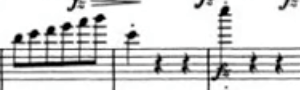
“Please, we play again from measure* 180.”
Brilliant cockney percussionist Gary Kettel, from the back of the orchestra, punched the air gleefully and screamed out,
“ONE HUNDRED AND EIGHTYYY!!!”
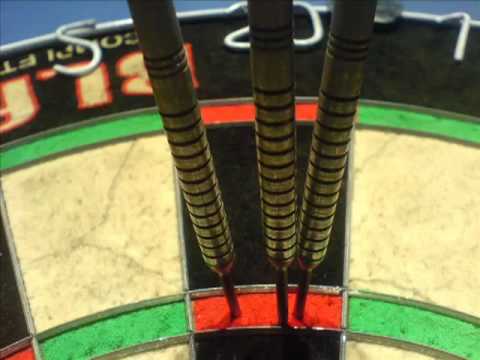
Since Boulez’s broad erudition didn’t stretch to the world of UK darts, he was somewhat nonplussed [‘Ow you say in French?] by Gary’s recondite allusion to the fabled score of three triple 20s. Still, he and Gary always had the utmost respect for each other’s musicianship.
*Boulez always used the French word for “bar”. Endearingly, he called the cor anglais “ze English ‘orn”.
UPDATE: Cosmic Justice has at least temporarily proved itself amidst a troubled world—I wrote this in the early stages of the UK tournament, but now Ronnie’s won it yet again in another inspiring display!
With his natural grace, Ronnie O’Sullivan is often compared to Roger Federer, but he’s in a league of his own, transcending sport. If you haven’t watched his maximum break from 1997, then do—it’s not merely a world record that is likely to stand for all time, but a thing of exquisite fluent beauty, reminiscent of the nuanced touch of a great musician.
After the morose introspection of yesteryear, Ronnie has come through the early years of obsession and addiction (lessons here for the claustrophobic hothouse of WAM virtuosos), and he’s on great form these days, with a kind of earthy Daoist detachment.
More from the diaries of Alan Bennett. I’m filing this 2009 entry under heritage:
23 August. […] I’m glad I’m not a theatregoer living in Elsinore. All they must ever get are productions of Hamlet, while what they’re probably longing for is Move Over, Mrs Markham or Run For Your Wife.
His keen eye for footballers’ physiognomy is in evidence again (2010):
7 April. The open mouth of Frank Lampard, having scored a goal, is also the howl on the face of the damned man in Michelangelo’s The Last Judgement.
This entry depends on a certain cultural knowledge that might challenge translators:
5 July. A child in Settle is said to have asked what the Mafia was and his grandfather said, “It’s like the Settle Rotary Club, only with guns.”
And he often shows his political involvement. When a speech in favour of the NHS from his early play Getting on is well received, he is encouraged to go on:
25 July, Yorkshire. […] whereas nowadays the state is a dirty word, for my generation the state was a saviour, delivering us out of poverty and want (and provincial boredom) and putting us on the road to a better life; the state saved my father’s life, my mother’s sanity and my own life too. “So when I hear politicians taking about pushing back the boundaries of the state I think”—only I’ve forgotten what it is I think so I just say: “I think… bollocks.” This, too, goes down well, though I’d normally end a performance on a more elegiac note.
As Kate Fox observes, the creativity of the English language reveals itself at multiple levels.
The fragrant Gary Lineker recalls how the the team-mates of the footballer Kiki Musampa called him Chris (think about it). There are more where that came from, like Fitz Hall—known as One Size.
Brian Smith, a “straight” symphony-orchestra violinist who became a semi-detached admission to the rarefied early music scene in the 1980s, had a whole series of drôle nicknames for his new colleagues, making his conversation surreal: “I think Identikit’s gone off with Ironing Board”. Once word got round that I was making regular trips to China, I became The Missionary. He only used the real names of musos who had a life outside early music and thus qualified as Real People.
Conductors’ nicknames are another rich vein under the rubric of maestro-baiting. The great Charles Mackerras was known as Slasher—not an allusion to his conducting technique, but an abbreviation of his anagram: Slasher M. Earcrack.
Some gems from Alan Bennett’s 2005 diaries, in his recent collection Keeping on keeping on (if it’s not known as KOKO, then I hereby patent the acronym):
1 May. Martha, Charlotte and James’s youngest, has been slow to read but now aged eight is making great strides, particularly enjoying spelling. She is being given additional tuition by the father of a friend, a retired teacher who is also employed by Manchester United; the foreign half of the squad he is teaching to speak English, the English half he is teaching to read and write.
8 December. I buy a bottle of organic wine at Fresh and Wild and looking at the label see that it says “Suitable for Vegetarians and Vagrants”. Momentarily I think, “Well, that’s thoughtful, someone admitting that winos deserve consideration like everyone else”, before realizing, of course, that it says not “vagrants” but “vegans”.
16 December. Roy Keane has the face of a mercenary. Meet him before the walls of fifteenth-century Florence and one’s heart would sink.
The Schubert string quintet is one of those pieces that is always there when you need it. The slow movement in particular is deep in the heart of many musicians (and gratifyingly, it’s also one of those pieces that recurs on Desert Island Discs), but it’s all amazing.*
I’ve been appreciating the 1941 studio performance by the Budapest Quartet with Benar Heifetz—part of their amazingly busy recording schedule, and just as bebop was evolving:
Indeed, the group’s history makes a fascinating history of the metamorphoses of a string quartet under the conditions of the 20th century.
Benar Heifetz was the older brother of Jascha—who is quoted as saying:
One Russian is an anarchist. Two Russians are a chess game. Three Russians are a revolution. Four Russians are the Budapest String Quartet.
Which reminds me of the old Cold War joke:
What’s the definition of a string quartet?
A Russian symphony orchestra after a tour of the West.
BTW, the long eclipse of WAM in Desert Island Discs since 1942, while not a sample of the general population, makes an interesting window on changing tastes.
*PS Any fiddle players got a good fingering for the ending of the Scherzo?
I’ve got a sneaky one, but hey—what do I know? Available on request… The last note may be “hit and hope”; Hugh Maguire said he had about a 70% strike rate—better than in football, where the long high ball upfield in the direction of Peter Crouch’s head is even less reliable. But how to negotiate the preceding run is debatable too.
While we’re on football, in the notorious and grandly-named Saipan incident in the run-up to the 2002 World Cup, Roy Keane’s spat with the Republic of Ireland team manager Mick McCarthy evokes the principled hauteur of an illustrious Ming-dynasty court official going into voluntary exile rather than serving under the new Manchu regime.
The confrontation between player and manager allegedly culminated in this fine rant from Keane:
“Mick, you’re a liar… you’re a fucking wanker. I didn’t rate you as a player, I don’t rate you as a manager, and I don’t rate you as a person. The only reason I have any dealings with you is that somehow you are manager of my country and you’re not even Irish, you English cunt. You can stick the World Cup up your bollocks.”
Reporting the story, the Guardian came out with the magnificent headline
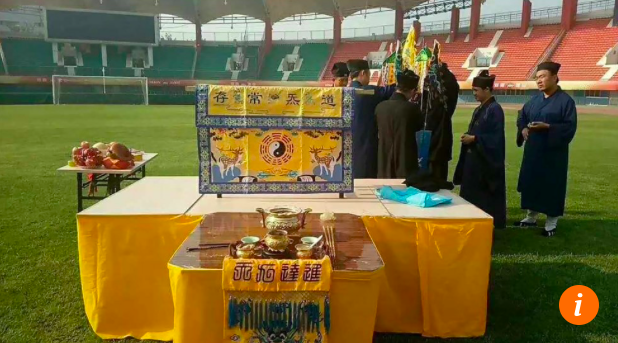
WOW. Following my post on the Haka, Chinese football has just gone one better. On 23rd September a Henan team had a Daoist ritual performed on the pitch, going on to get their first home win in months—and getting a slapped wrist from the Chinese FA, what’s more:
Sure, unlike the Haka, in this case it’s not the players themselves who perform the ritual—yet.
Chinese Twitter is buzzing with discussion. Daoist fans aren’t taking the stern rebukes lying down: pointing out that Daoist ritual is protected under the brief of the Intangible Cultural Heritage, they deftly play the old “culture, not feudal superstition” card.
Others worry that it may give rise to competitive rituals in which the other team employs their own ritual specialists to break the magic of the opposition’s Daoists. Of course, it has long been common to hire two or more groups (Buddhist, Daoist, Tibeto-Mongol lamas…) for a single ritual event—competing between each other but not for rival patrons.
Another article defends the move by pointing out various international instances of teams seeking divine assistance (for a recent one, see here).
For a related debate, see here; note also the rebuttals of local government’s restrictions on funeral observances in Shandong.
Early Chinese versions of football were popular, though I’m not going to devote much time to searching for specific blessing rituals in Song-dynasty ritual compendia… Not will I detain you here with a discussion of the constant historical adaptations of Daoists to their patrons…
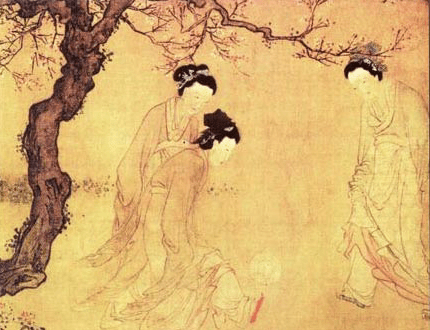
Chinese women’s football. Du Jin, Ming dynasty.
I note that during the Song dynasty only one goal post was set up in the centre of the field—now that would be an intriguing modification to the FIFA rules. Further to the magnificent ripostes of young female footballers to the British FA, at a match in the Tang dynasty
records indicate that once a 17-year-old girl beat a team of army soldiers.
YAY! Could it have been after this match that the men shifted the goalposts? Typical!
Under Maoism a leading CCP apparatchik (can anyone put a name to this fine pundit?) observed twenty-two players chasing around after one ball, and in a spirit of egalitarianism, unhappy with the conventions of what he supposed was a misguided capitalist invention, declared grandly:
“We’re a socialist country now—why not give them a ball each?”
Anyway, my new dream is for the Li family Daoists to perform a ritual to help Arsenal win the Champions’ League.
Since I am wont to make blithe analogies between the performances of ritual and sport, the pre-match haka of the All Black rugby team makes a fine illustration, also revealing the enduring depth of folk culture. In its constant adaptations, both in sporting and other ceremonial versions, it’s deeply impressive.
The wiki articles on the traditional and sporting versions make a useful introduction, and there are many fine YouTube clips.
As a Māori ritual war cry the haka was originally performed by warriors before a battle, proclaiming their strength and prowess in order to intimidate the opposition. But haka are also performed for diverse social functions: welcoming distinguished guests, funerals, weddings, or to acknowledge great achievements, and kapa hakaperformance groups are common in schools. Some haka are performed by women.
Its social use has become widespread. In 2012 soldiers from the Royal New Zealand Infantry Regiment performing a haka for fallen comrades killed in action in Afghanistan; and in 2015 hundreds of students performed a haka at the funeral of their high-school teacher in Palmerston, New Zealand:
In 2016, on the 15th anniversary of 9/11, New Zealand firefighters honoured the victims with a powerful haka.
And here’s a moving recent wedding haka:
In 2019 students performed a haka to commemorate the Christchurch shootings:
And the haka was performed for the Standing Rock protests of 2016 (link here if it doesn’t respond below):
* * *
The New Zealand native football team first performed a haka against Surrey (!) on a UK tour in 1888. The All Blacks have performed it since 1905. After witnessing the haka in Paris in 1925, James Joyce adapted it in Finnegan’s wake. For the 1954 version at Twickenham and evolution in the wake of TV, see here. The sequence below begins with 1922 and 1925 renditions, passing swiftly over the comically inept low point of 1973, to the increasingly choreographed versions of recent years:
So it’s no “living fossil”, being subject to regular adaptation. In 2005, to great acclaim, as an alternative to the usual Ka matethe All Blacks, led by Tana Umaga, introduced the new hakaKapa o pango, modified by Derek Lardelli from the 1924 Ko niu tireni:
Its adaptation to the sporting event compares favourably with Chinese concert versions of ritual. However it’s done, it never descends to the kitsch of such adaptations—it’s always performed with great intensity and integrity, giving an impressive glimpse of a serious ritual world. The pride that they take in performing it with such practised commitment contrasts strangely with the casual way in which they sing the national anthem that precedes it—even the Brazilian anthem doesn’t inspire its footballers to such intensity.
As a spurious link to a fine story, I note that the team performed a kangaroo version in July 1903:
Tena koe, Kangaroo How are you, Kangaroo Tupoto koe, Kangaroo! You look out, Kangaroo! Niu Tireni tenei haere nei New Zealand is invading you Au Au Aue a! Woe woe woe to you!
* * *
From the sublime to the ridiculous… Several YouTube wags have suggested suitable responses from opposing teams: a burst of Riverdance by the Irish team, or (from the English) the hop-skip-hand-behind-the-back routine in Morecambe and Wise’s Bring me sunshine.
Morris dancing might unsettle the All Blacks too (music added later; in memoriam George Butterworth, killed in the Great War):
Not quite à propos, and Don’t Try This at Home—or in the Matthew Passion:
As a further riposte to the haka, even I can’t quite imagine the Daoist “Steps of Yu” (Yubu 禹步), but how about the Sacrificial dance of The Rite of Spring, complete with Roerich’s costumes and Nijinsky’s choreography? That really might take the lead out of the All Black pencil.
But we should celebrate the deeply serious nature of folk culture, and the evolving transmission of performances like the haka.
I’ve already posted a wonderful performance of Rachmaninoff’s 2nd symphony, but the recent Prom included another moving version, conducted by Thomas Dausgaard. I Like the Cut of his Jib, as Adrian Chiles observed prophetically about Guus Hiddink’s managing of the South Korean football team in 2002. Nor is the BBC Scottish to be sniffed at—I loved their Mahler 5 at the 2015 Proms, with Donald Runnicles.
With typical Proms flair, the concert opened with concert versions of Orthodox liturgy sung by the Latvian radio choir. After Rachmaninoff’s 3rd piano concerto, the encore of Vocalise led me to his own 1929 studio recording of his orchestral version:
Of all versions, you can’t beat it on theremin—here’s the divine Clara Rockmore:
And the theremin might lead us to Messiaen‘s ondes martenot…
Following my Wimbledon post, what a treat to admire Jo Konta, mature and focused (and object of patriotism—confused, in some less enlightened quarters). Only the stately Venus was worthy to vanquish her, and in the final the sunny Garbine Muguruza made a suitably classy victor in turn.
And then there’s the sublime Roger Federer, magisterial and fluent like Li Qing or Ronnie—utterly different as they are away from the ritual arena.
Just remind me who said women’s tennis (read: sport) was boring? More on the perennial sexism debate here.
As I learn more Bach on the erhu, swimming always helps me. I’m just learning to internalize putting my clasped fingers into the water more horizontally, beginning the back-pull more immediately and maintaining the power.
When I get home, I take up the erhu, calibrating my motor-movements—string crossings, changing positions, breathing—in the service of my sound-ideal. Still sounds a bit rubbish, but hey. Practice makes perfect.
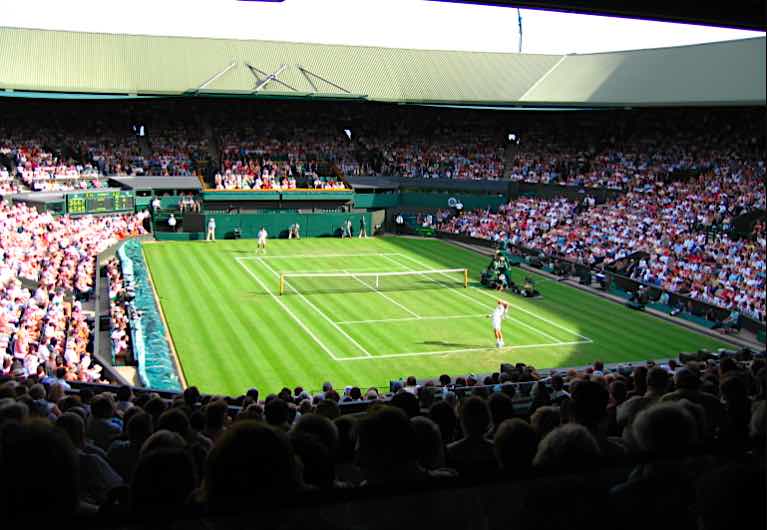
The annual Wimbledon ritual is well under way again.
Never mind the tennis, the Beebs’s own line-up is impressive enough—Brits like Trusty Tim, always playing with a straight bat [?—Ed.], and the demure Sam Smith, obligatory Funny Foreigners led by generally lovable but sometimes off-message Mac, wise Tracy Austin and Martina Navratilova, with the ever-hot Pat Cash. It’s entertaining to see how the stalwart female commentators maintain patience with the hapless male pundits negotiating the sexist minefield in the wake of the Inverdale–Bartoli fiasco.
Quaintly more antiquated than the other Majors, it’s a benign celebration for the middle classes (including me—I went to school nearby, and sold ice-creams there). As a Guardian review observed in 2022, the event comes with
that familiar sense of something performative, theatrically static, being British for the British, in front of the British.
Like any ritual, indeed any performance, Wimbledon confirms Correct Behaviour (not least to keep those errant Foreigners in line); and it will mean different things to different people. But it’s a visual treat, despite the retro ritual costumes; and as to the ritual soundscape, the ping-pong [sic] of the ball makes a fine soundtrack too—along with the spectators’ Wimbledon groan.
The Beeb gets it just right by clinging on to the old signature tune (like child chimney-sweeps and Morris dancing) by Leslie Statham (aka Arnold Steck)—here in all its extended glory:
Doubtless this old story will be revisited during the longueurs between matches:
Vitas Gerulaitis lost his first sixteen matches against Jimmy Connors. After finally defeating him at the 1980 Masters, he proudly declared:
“Nobody beats Vitas Gerulaitis seventeen times in a row!”
Leibniz in goal, back four Kant, Hegel, Schopenhauer and Schelling, front-runners Schlegel, Wittgenstein, Nietzsche, and Heidegger, and the mid-field duo of Beckenbauer and Jaspers. Beckenbauer obviously a bit of a surprise there.
For the Greeks, “Chopper” Sophocles, and Aristotle, “very much the man in form”…
When Nietsche disputes the referee’s call, Confucius He Say “Name go in book”. Despite Marx coming on as a late substitute, Socrates scores a late winner, whereupon
Hegel is arguing that the reality is merely an a priori adjunct of non-naturalistic ethics, Kant via the categorical imperative is holding that ontologically it exists only in the imagination, and Marx is claiming it was offside.
As the wiki article eruditely observes, the linesmen St Augustine and St Thomas Aquinas were Roman African and Italian respectively. The article also describes a live replay in 2010.
As if the visit of the Li family Daoist band to Paris wasn’t enough, now we can cheer 20-year-old Jelena Ostapenko’s fearless hard-hitting victory in the French Open tennis final. Another victory for hope against fear, perhaps—and the power of the young.
Again, we need to note the power of sport as ritual.
Of course nationalism* is suspect (as in Macron’s fine rebuke “Let’s make the Planet great again”), UKIP St George flags and all that. When Andy won Wimbledon, “ending a 77-year wait” (“blimey, he’s getting on a bit”), sure it was wonderful, but I couldn’t help feeling, “So that’s what’s been missing from British history, eh—never mind defeating Nazism and setting up the NHS, apparently our constant sense of ennui has resided solely in our failure in a tennis tournament…”
So the thrill of Ostapenko’s win is mainly about her, but in this case it’s cool to get a vicarious pride for Latvia too. So let’s all go and educate ourselves about its modern history!
* With all due respect to Dr Johnson, “nationalism is the last refuge of the scoundrel” would have been better—patriotism is generally defined as more benign, though indeed we do need to keep a careful eye on that too.
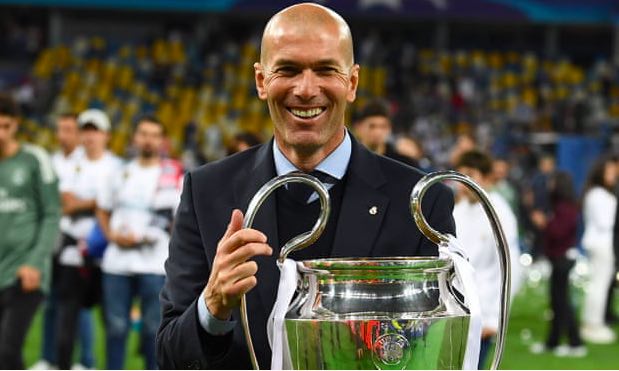
After my words of praise for Arsenal and Wenger, the victory of Real Madrid and the gorgeous Zidane in the Champion’s League was even more inspiring.
Sure, we should always remember the artistry of Barcelona and Messi (the latter all the more since he “looks like he works part-time on Saturdays in a video rental shop”).
And Zidane’s headbutt in the final of the 2006 World Cup remains iconic. After all, players like him must be so used to being wound up on the pitch, yet not rising to the bait. With just minutes to go before he could be fêted, canonized, his rash act seems like an even higher form of art, a worthy sacrifice—never mind mundane celebrity, he just had to do it, like in a bullfight. For a fantasy script to the, um, discussions leading up to it, see here.
Following a heady week with the Li family band, Mahler 9, and Turangalîla, the FA Cup final is another Grand Ritual, which evenI hesitate to compare with the Daoist jiao Offering.
After such a difficult season for Arsenal, I’m so happy for Arsène Wenger that they won. His victory also confirms my renewed infatuation with French culture. For me, in an age when Premier League managers last about as long as Italian prime ministers, Wenger—the archetypal wise father-figure—exemplifies the continuity and values of tradition, and our culture stands or falls with him. I’m delighted that Alan Bennett (still less of a football fan than I) expresses the same pleasure in his diary.
While Sanchez is driven and divine, Theo Walcott comes and goes, and Mesut Özil, “floating, vulnerable muse”, is sometimes rather too languid, his inspiration elusive and intermittent (see also under Futbol in Turkey). If someone doesn’t translate his autobiography Die Magie des Spiels soon, then I’m seriously going to have to learn German—as if Nina Hagen and the Matthew Passion weren’t enough of a stimulus.
Ronnie can lose games too—but it’s the principle (Oops, I nearly came out with “It’s not whether you win or lose, but….”). Like Daoists, he and Wenger negotiate expediencies and maintain a core of inspiration in a mundane cutthroat society. Like Li Manshan, Wenger adroitly juggles a pool of performers—OK, this was expediency, but however did he come up with Mertesacker on the bo cymbals (Shurely shome mishtake?—Ed.] after all this time?! Génial!
While I’m about it, amidst a plethora of mercenary fuckwits posturing on the media stage, the Premier League has seen a sudden and unlikely flowering of civilized generous continental managers, pleasantly marginalizing the former Chelsea incumbent—sulky, pouting, self-obsessed, throwing his toys out of the pram. “Remind you of anybody?”
My secondary education was inspirational, with several brilliant eccentric teachers in Classics, Music, and English. However, having excelled at football at primary level, at my secondary school we played rugby rather than football. Otherwise I would now (Now??? Come off it—Ed.) be joining Sanchez, Özil, and Walcott in the Arsenal forward line-up (cf. this dream), and you would all be spared my crazed ramblings on Daoist ritual and WAM… The rest wouldn’t be history. And isn’t really anyway.
Amidst all the recent plague of misogynistic claptrap—exemplified by the Neanderthal spewings from Tweety McTangerine—all is not lost.
One of the very most inspiring stories of recent months concerned the brilliant ripostes (here) by indignant young female football players at a County Durham primary school to the Football Association’s advice (“naïve rather than sexist”???) on ways of recruiting more girls to the sport. Call me a Guardian reader if you will, but FFS, even The Sun expressed wholehearted admiration for the girls’ protests!
Their letters are just brilliant.
We aren’t brainless Barbie dolls.
Whether or not they’ve read the feminist classics yet (in pretty pink covers, perhaps, FA?), or even listened to Bridget Christie, they’re on the case, making mature cogent arguments way beyond the infantile rants of the leader of the Free World. There’s hope yet.
How thrilled they must be about England’s victory in the 2022 Euros! For more on women’s football, click here; for ancient Chinese female footballers, here.
Also inspiring is a recent complaint by a 7-year-old girl about a sexist road sign. For more hope for our future, see here.
As Ronnie glides into the second week of the snooker, it’s also worth tipping our notional hats to the erudite commentators (themselves veteran performers, unlike most scholars of, um, Daoist ritual), full of brilliant detail on both the mechanics and psychology of the event—like good ethnographers (there I go again).
Not quite like this:
In WAM concerts, such detailed information is relegated to a printed programme, and unable to respond to the incidents of performance. This is remedied by PDQ Bach (from his LP):
Talking of calendrical rituals, the World Snooker championship rarely overlaps with Easter, but Ronnie was on divine form again on Easter Day. Sure, he can lose matches, but when he’s at the table we’re in the presence of a genius. The World event is most satisfying in its two-week span and the length of the individual, um, ritual segments, like a grand jiao Offering…
However troubled Ronnie’s personal history, the fluency of his technique and the sheer ease of his style recall those of a master musician.
Sometimes on early morning swims I have the pool to myself for a while. It doesn’t get much better than that (“or does it?“).
As I swim, I think of Bach, and Daoist ritual [unbeatable Pseuds’ Corner entry—Ed.] Some aspects of swimming may intermittently involve the brain—like in crawl, concentrating on getting the hand shape right as it enters the water, pushes forwards, and starts to pull back; aligning the pull-back of the arm with the body, and so on.
In Daoist ritual, far from the cerebral, conceptual, philosophical, or spiritual learning of texts, physical memory plays a major role—motor movement, muscle- and (for sheng,guanzi, cymbals) finger-memory, the body; internalizing through ritual practice, experience, starting from young, like boys in any hereditary folk tradition such as the Li family Daoists.
Learning violin pieces is more of a private affair. Apart from physical practice, I’ve always internalized them silently too—while walking, dozing, swimming, and so on. Even away from the instrument, it’s a physical exercise: my fingers are always moving—like those of guanzi oboe players in north China. This has always accounted for quite a lot of “practice”—for me, anyway. I didn’t get where I am today.
But so much learning consists of simple repetition. I note that in French and Italian the word for rehearsal is répétition/repetizione (for more, see note here). So while swimming I engage the mind for a while and then empty it to let my body take over.
In the wonderful song Jerusalem, rather like those questions they ask you at the airport check-in desk, you think all the answers are going to be “No”, but you have to keep on your toes (sic, see below) just in case.
Great that it’s tipped for our new national anthem, to replace the meretricious God save the Queen (although the version here is fine)—but we have to take care not to “leave it unattended at any time” in case it gets hijacked by “Paul Nuttall and the UKIPs”.
Mind you (and talking of keeping on your toes), if I had an anthem like this (Wow! Italian opera at its most intoxicating! 1831-ish, see here)
I was in Washington DC with the amazing Hua family shawm band in 2002 when Brazil won the World Cup (click here). We all crowded into the hotel bar early in the morning to cheer them on, suitably lubricated with A Pint of Plain—It’s Your Only Man.
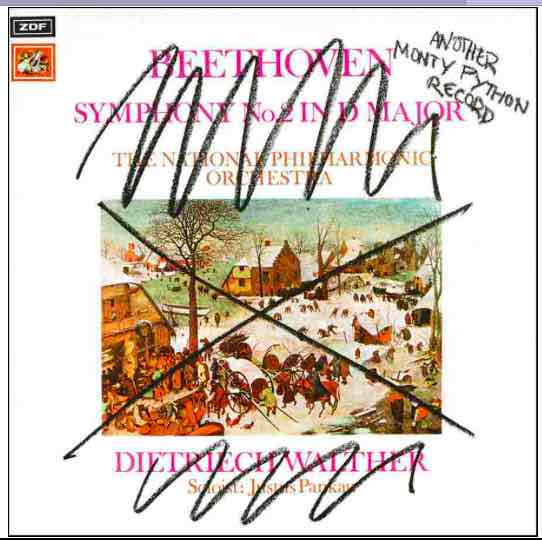
Only more serious scholars of the Python oeuvre may be aware of the LP Another Monty Python Record (1971), cunningly packaged as “Beethoven Symphony No.2 In D Major”.
The album contains some of the great classics (Spanish Inquisition, Spam, and so on)—”But That’s Not Important Right Now“. Here I’d like to highlight its “serious” liner notes on the back, which eventually degenerate into a commentary on Beethoven’s Wimbledon debut.
After a lengthy and erudite account of the composer and the symphony, little comments begin to slip in inconspicuously:
The important part of the first subject is Beethoven’s almost disdainful use of the high lob, forcing Hewitt to play right up to the net.
[…]
In all the Allegro is a compact and closely argued musical proposition, which would have been impossible on a hard court.
[…]
The second tune, which Beethoven said on his arrest was “just a harmless bit of fun”…
[…]
Beethoven now goes on to Forest Hills for the American hard court championships, and if this boy can repeat the devastating lobbying and volleying which he has shown on grass, but at the same time control his tendency to swing away on his second service and backhand returns, he could earn his position as No.2 seed behind the burly Roger Chopin of Puerto Rico.
For Beethoven’s creative tribulations, click here; for his dogged refusal to write a tune, here; and for a justly neglected composer, here.
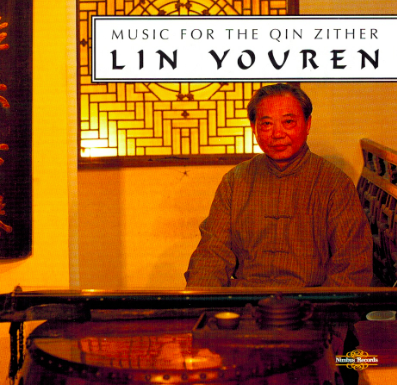
So here I’ll just add a few of my own memories of Lin Youren.
Excerpts from my liner notes with the CD:
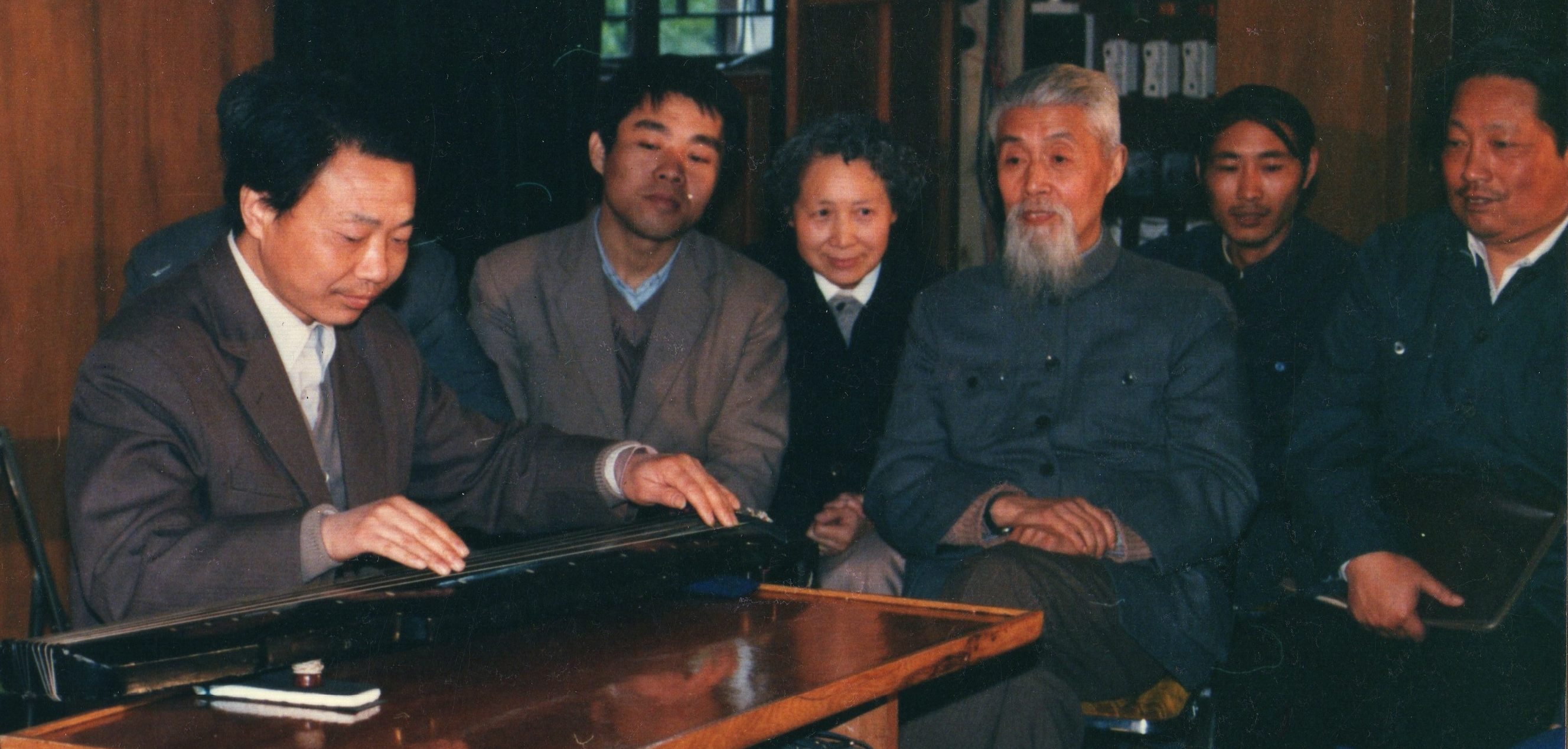
Lin Youren is a true eccentric. [Here I’m thinking of the Seven Sages of the Bamboo Grove]. His story contains intriguing contrasts, since he learned and taught the qin under the conservatory system, but came to find the juxtaposition incongruous, quietly subverting it from within. […]
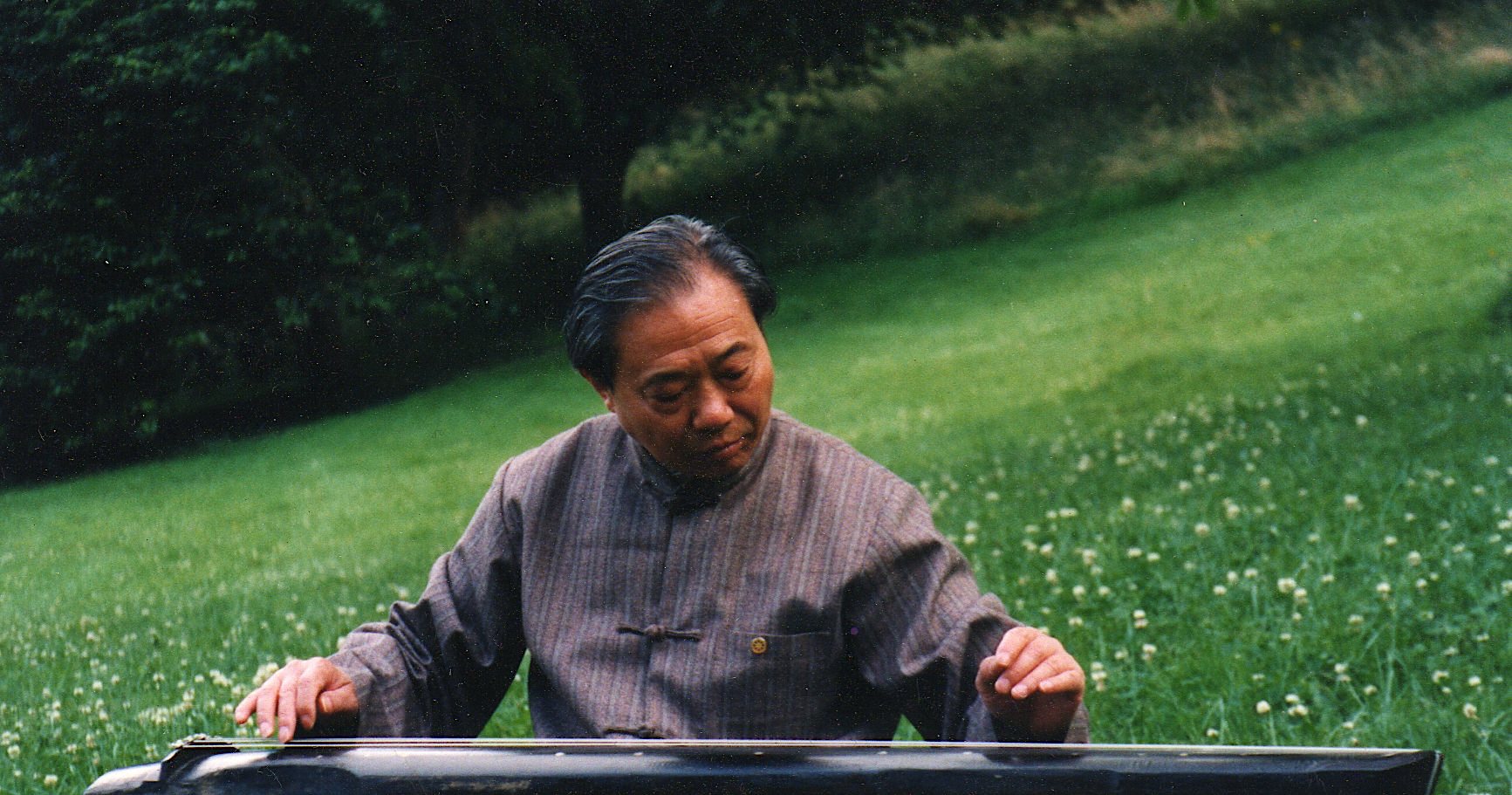
His preferred way of playing is alone with a few friends—and, in another ancient tradition of the qin player, a bottle or two of Shaoxing wine. […]
If his playing roams the clouds of Daoist selflessness, his conversation is quirky, cryptic and full of puns.
The CD is very fine—here’s the opening track, “Evening song of the drunken fisherman” (Zuiyu chang wan 醉漁唱晚):
One unusual feature is its inclusion of his “Improvisation for Michael Owen”. More from the notes:
I’m not sure you really want to know this, but the musical germ of this fantasia was the singing of exhilarated English fans in my local pub after we relished Michael Owen’s superb goal against Argentina in the 1998 World Cup. Lin found the famous football song reminiscent of the singing of Miao tribespeople in southwest China (“Not a lot of people know that”, I mused as we emerged from the pub), but by the time we got to the recording session he had wholly internalized it for the intimacy of the qin.
Actually, since Lin Youren was staying with me, he tried it out for the first time as soon as we got back from the pub. A couple of days later we took the train for the recording session at Nimbus’s fine studio near Monmouth. To help him feel at home we plied him with Shaoxing wine; and he felt it would further help the vibe if I sat with him as he played, so he would have a real, and empathetic, audience. He improvised for much longer than the version on the CD, which is edited down—not quite to his satisfaction. Still, this CD was his favourite among all his recordings.
At Nimbus, 1998.
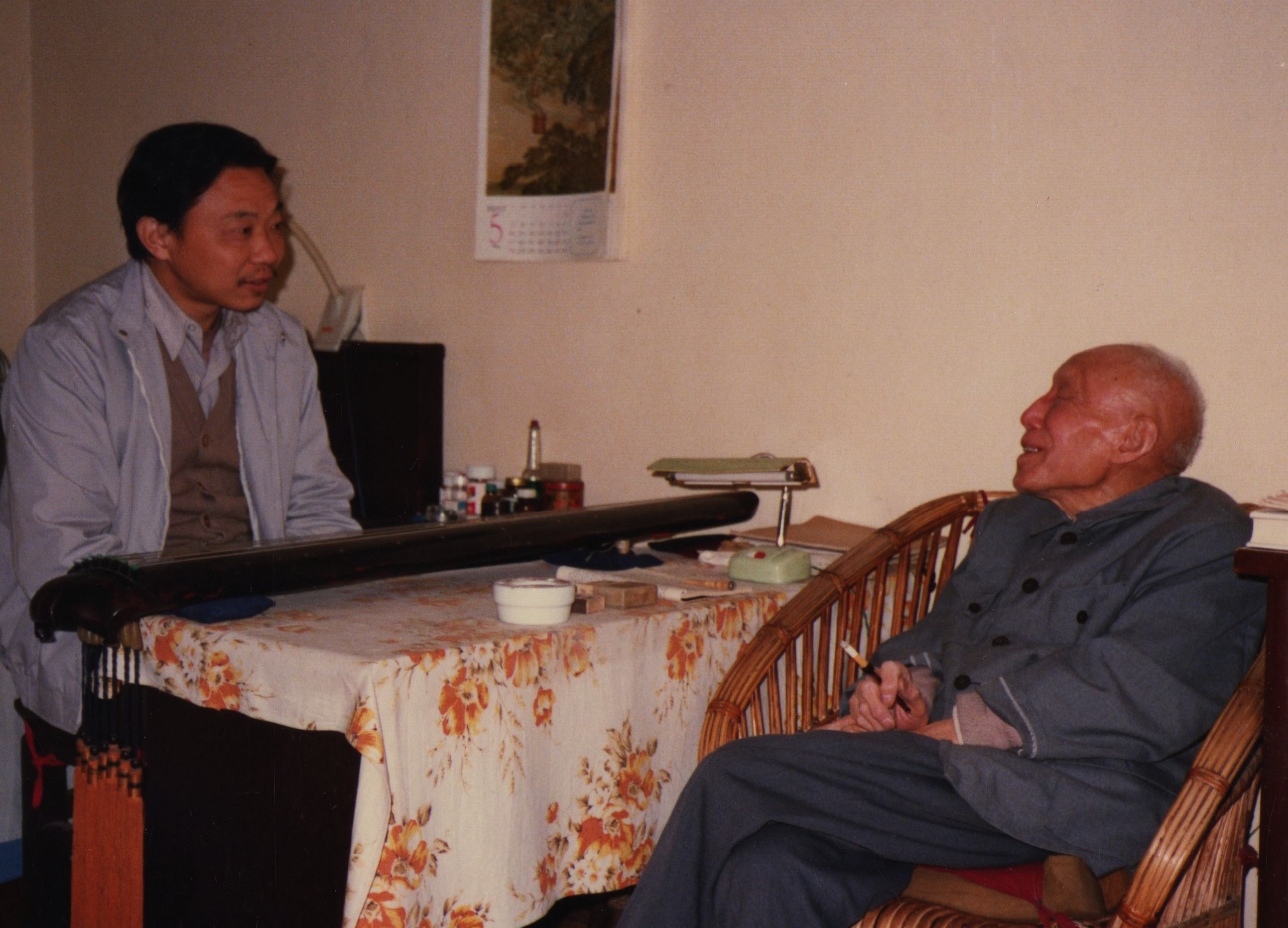
With qin master Zhang Ziqian, 1987.
Qin gathering, 1987. With beard is Suzhou qin master Wu Zhaoji.
For the Beijing qin scene, see here, and my series on the fortunes of the qin under Maoism; for my own mixed feelings about the qin, here. For a meretricious speculation on the rudra vina in India, see n.2 here. See also the qin tag.
Of all the beautiful things you can do in 5 minutes and 20 seconds (like playing Yellow Dragon Thrice Transforms its Body at the end of the Transferring Offerings ritual), the divine Ronnie’s 1997 maximum is likely to remain unmatched in human history:
Beats 4’33” any day, with all due respect to John Cage.
I shouldn’t need an excuse for showing this, but here it is. After taking Li Manshan to a conference in Hong Kong (my book, p.333), I was staying with him in a posh hotel in Beijing when we switched on the TV to find Ronnie playing in the world masters snooker. Snooker has become staggeringly popular in China, but Li Manshan hadn’t seen it before, and his amazement was delightful. So I showed him this 147, which is flabbergasting even if you don’t quite know how ridiculously difficult it is…
After the lavish banquets in Hong Kong, at which we both felt rather uncomfortable, we were happy to eat a simple bowl of noodles in peace together in a little caff over the road. Next day I took him to the station to take the train home and get on with his routine of determining the date, decorating coffins, and funerals.
My favourite expression of snooker commentators is “he’s eying up a plant” (see here, and here). Tang poetry is all very well, but I wonder how you say that in Chinese…
Since Ronnie is often described as the Mozart of snooker, I note that Mozart enjoyed a game of billiards.










 Stephen Jones: a blog