The brilliant Mark Padmore, Passion Evangelist par excellence (see here, and here), made a suitable guest on the Easter edition of Private passions.
He began by reminding us of the liturgical context of Bach’s own performances, pointing out that Bach only heard the John Passion four times, and as he constantly revised his works, it was not simply about new composition but also about adapting elements of the whole tradition. All of which, surprise surprise, reminds me of Daoist ritual and Li Qing.
Mark went on to choose Lorraine Hunt Lieberson singing Mahler’s Ich bin wer Welt abhenden bekommen (cf. the version here), ending with another kind of devotional singing—from Mahalia Jackson.
My brief outline of Catholicism in north China reminds me that one fascinating sub-theme of my Plucking the Windsis the Catholic minority in South Gaoluo. I describe their troubled history in a separate new page, adding to my accounts of the Hebei religious scene under the Other publications top menu.
For an introduction to Catholicism in north China, see
Richard Madsen, China’s Catholics: tragedy and hope in an emerging civil society (Berkeley: University of California Press, 1998).
For Shanxi, I already mentioned a Catholic village in Xinzhou. Villages just south in central Shanxi are the subject of
Henrietta Harrison, The missionary’s curse and other tales from a Chinese Catholic village (Berkeley: University of California Press, 2013).
See also her article
“Global modernity, local community, and spiritual power in the Shanxi Catholic church”, in Adam Yuet Chau (ed.), Religion in contemporary China: revitalization and innovation (2011).
Talking of Catholicism in Shanxi, after William Hinton’s remarkable Fanshen, on the land reform in Longbow village in Changzhi municipality, southeast Shanxi, it comes as a surprise to learn in his sequel Shenfan that around 20% of the village’s 2,000 population is Catholic; in nearby Machang the figure is over 80%.
Hinton’s daughter Carma continued his work with some fine films.
As ever, we should bear the whole religious context in mind. South Shanxi is also a focus for studies of the “music households” (yuehu), mainly shawm bands with strong ritual connections. [1] And again, household Daoists are common.
Hebei province is also a hotbed for Catholicism. I discuss the Gaoluo Catholics in a separate page. And for missionaries at the Qing court, see here.
[1] Xiang Yang (2001) Shanxi yuehu yanjiu, Beijing: Wenwu chubanshe, 2001; Qiao Jian, Liu Guanwen, and Li Tiansheng, Yuehu: tianye diaocha yu lishi zhuizong, Nanchang: Jiangxi renmin chubanshe, 2002.
Further to my remarks on temple fairs and Houshan, one of Ian Johnson’s main topics in The souls of Chinais the pilgrimage to Miaofengshan just northwest of Beijing.
It’s been a popular subject ever since the early study of Gu Jiegang (a stammerer, I now learn!), published in 1928. The fine film-maker Patrice Fava has just made a handsome film about it too, for the Chinese Ministry of Culture—making an intriguing comparison with Ian’s own recent footage. Rather than idealizing the temple fair, Ian takes a more personal ethnographic approach, documenting the changing nuances of people’s lives.
How wonderful to see Sidney Gamble’s footage from 1927! Visitors to Miaofengshan in 1925 included not only Gamble with Li Jinghan but also Gu Jiegang’s team. Even then, despite the wealth of devotional performing associations (huahui, xianghui etc.), they found hardly any performance of complex liturgical sequences. Gu Jiegang’s list of 99 associations making the pilgrimage in 1925 contains only one yinyuehui ritual association—which he, like most educated urbanites, would have assumed to be an entertainment group; his list mainly consists of huahui and “incense associations” (xianghui), mostly voluntary pilgrim groups from Beijing.
Note the outstanding work of Yue Yongyi on Miaofengshan, Cangyanshan, and Fanzhuang.
* * *
A misleading image may arise of north Chinese religious life, whereby liturgical sequences performed by occupational ritual specialists and amateur sectarian associations are downplayed. By contrast, on the Hebei plain, the Houshan temple fair has many more ritual associations alongside the huahui. [1]
From my experience of ritual life around Beijing and on the plain to the south, the dominance of semi-secular “entertainment associations” at sites like Miaofengshan seems curious. I think, for instance, of the temple fairs on Houshan in Yixian county southwest of Beijing, so much less publicised in the media. Unlike on Miaofengshan and the other sacred mountain sites just north of Beijing, Bixia yuanjun is a minor deity in this region, which instead is dominated by the cult of Empress Houtu.
But the differences aren’t only their respective deities. The two major annual fairs of Houshan are also attended by vast throngs. Apart from the diverse huahui performing groups (martial arts, stilts, and so on) that one finds on Miaofengshan, amateur ritual associations from many villages throughout the area (our project through the 1990s) also make the pilgrimage. They perform devotional hymns to the patron goddess Houtu, as well as their solemn style of shengguan instrumental suites. The elders recall performing in full the “precious scroll” (baojuan) to Houtu—a lengthy process, though this may have lapsed on the mountain itself. But as I noted in Plucking the winds (p.363),
Despite considerable interest in village sects in imperial times and even until 1949, we find rather little on the observed performance of ritual. One scholar wrote laconically in 1948:
During the recitation of canons and divine rolls [viz. precious scrolls] musical instruments were probably used. In the country districts in North China there are still some similar organizations. They perform on musical instruments when they recite their canons.
Why write “were probably used” when he could have gone and observed them performing the scrolls?!
Houshan is also heavily patronised by spirit mediums, many of whom also have “precious scrolls” from which they perform devotional songs.
I note en passant that whereas the “tea-tents” on the route to Miaofengshan are precisely that, in the Xushui–Dingxing–Xiongxian area south of Beijing the Tea tent association is often an alternative name for sectarian groups like Hunyuan and Hongyang associations; and they perform complex rituals with vocal liturgy and shengguan instrumental music.
The more popular, quasi-secular entertainment groups tend to influence our image of north Chinese religious activity; the cliché is that ritual life is far more complex in the south than in the north. I don’t dispute this (my Daoist priests of the Li family, pp.367–8)—some scholars of southern Chinese religion will ask “Where are all the grand jiao Offering rituals?” But we should bear in mind that in the north too, complex vocal liturgy, such as one finds further south in China, is widely performed by groups of occupational Daoist and Buddhist household ritual specialists and amateur ritual associations (see my In search of the folk Daoists of north China).
In other words, it’s another case of “customs differ every ten li” (shilidi butong su). Of course, whether or not we find complex ritual sequences, we still need to document all kinds of activity.
As I noted for Houshan and Baiyunshan, state departments compete with local interests for economic control of the substantial profits from such temple fairs.
* * *
There’s also a puzzle that I mentioned in In search of the folk Daoists. We know there were constant transmissions, in both directions, between Buddhist and Daoist temples in metropolitan Beijing and Tianjin (on the one hand), and (on the other) the myriad local temples and amateur sectarian ritual associations in the surrounding areas. But from our material so far it looks as if these exchanges were largely limited to the plain south, hardly in other directions—like northwest, in the case of Miaofengshan. I surmise that this is related to topography, trade links and transport. Northwest of Beijing the land is hilly and poor. The plain to the south, while also poor, was at least more accessible, and on trade hubs.
But there’s always more fieldwork to be done!
[1] For further sources, see my In search of the folk Daoists of north China, p.118 n.3. [2] See ibid., p.8 n.14.
He took a sponge, filled it with sour wine and put it on a reed, and offered it to Him to drink.
On a lighter Easter note, an enterprising young adman, asked to come up with an ad for Chumley’s vinegar, used a painting of Christ on the cross averting his face from the proffered sponge, with the fine caption
Take it away—it’s not CHUMLEYS!
That was in the days before Aceto balsamico di Modena, “sourcing”, and “drizzling” were obligatory. “If Jesus were alive today…” See also Jesus jokes; and for John Wayne as centurion, click here.
No less tasteless is the use of a contemporary icon by the arms trade, providing Mark Thomas with the title for a fine book:
These heavy-duty leg-irons are made in South Africa, and are the same type used on the famous Nelson Mandela.
Further to my thoughts on festivals, today is the focus of the round of Bach Passion performances, now a kind of secular pilgrimage very different from the original liturgical context—not just of Good Friday but of the whole calendar (note John Eliot Gardiner, Music in the castle of heaven, ch.9, “Cycles and seasons“). Different too are our ears, bodies, world-views, experiences, sanitation…
Mark Padmore, incomparable Evangelist in the Passions, makes some thoughtful points here (cf. this article). Do watch his Matthew Passion as staged by Peter Sellars. And here he is in the John Passion (cf. Passion at the Proms)—how he sings und ging heraus und weinete bitterlich (from 33.48), and how Bach composed it, is miraculous:
Also in the John Passion is one of Bach’s most moving arias is Zerfließe, mein Herze:
Zerfließe, mein Herze, in Fluten der Zähren Dissolve, my heart, in floods of tears Dem Höchsten zu Ehren! to honour the Almighty! Erzähle der Welt und dem Himmel die Not: Tell the world and heaven your distress: Dein Jesus ist tot! your Jesus is dead!
While Protestants do their thing, let’s not forget Holy Week in Spain, with solemn hooded processions, soaring trumpets, and saeta devotional songs for the images of Christ and the Virgin (for more saeta, along with other moving cante jondo songs, see here):
Indeed, for me one of the benefits of being a touring muso was being able to combine both Bach Passions and flamenco. In southern Spain flamenco only tends to get going in the small hours, but concerts also begin at 10pm or later. So by the time we had played the final chorus of the Matthew Passion in Seville, there was plenty of time to stroll over the bridge to the wonderful Anselmas bar in Triana, downing a few G&Ts before the flamenco began to get in the groove.
Meanwhile it’s a busy period in the Chinese ritual year calendar too. [1] On the Hebei plain, apart from everyone taking part in the lineage observances for the Qingming festival, Catholics are busy holding Masses and making pilgrimages—not least evading police road-blocks (see here, and for the Gaoluo Catholics, here). It is also the time of the 3rd-moon festival for the goddess Empress Houtu, when many villagers go on pilgrimage to the Houshan mountain temples to revere her.
The Houshan pilgrimage, which under the commune system had been observed only by a tenacious minority through the 1960s and 70s, began reviving in the 1980s; by the 1990s it was attracting around 100,000 pilgrims for its 3rd-moon temple fair. We met several village ritual associations on the mountain for the festival in 1995, though Gaoluo village no longer organizes a group; in recent years “people’s hearts are in discord”, as association leader He Qing lamented. In some places the Houtu festival has been revived within the village: for the 3rd-moon festival in 1996, for instance, we visited Shenshizhuang, south of Yixian county-town, whose four ritual associations all celebrate the Houtu festival in their separate ritual buildings in the village.
Altar to Houtu, Shenshizhuang West association 1996.
Many villagers make the pilgrimage in small groups on their own initiative. Their vows are pledged to Houtu. One can climb to the Houshan temples to offer incense and pledge a vow, or just make it at home; the vow often used to include a promise to “look after a banquet” for the ritual association.
So the red flag which one often sees adorning truckloads of villagers in the 3rd moon now heralds a group of pilgrims rather than any political campaign—another sign of the changing times. But despite the lengthy impoverishment of ritual and faith, the power of Houtu is still strong: even in 1997 Gaoluo friends reminded me “Here we believe in the Empress Houtu, so a lot of people offer incense”.
* * *
For the dispassionate (sic) observer, some photos may distinctly suggest a stress on masochism in Easter observances around the world. Meanwhile on a visit to the Saudis, celebrated defenders of religious values, our Prime Minister gets herself embroiled in a futile dispute about Easter eggs with the notoriously subversive National Trust. Indeed, this “We’re not even allowed to celebrate our own culture any more” fatuity is itself becoming an annual ritual. Hey-ho.
This week at the Cadogan Hall (among few London concert buildings that I find conducive), luminaries of the early music scene assembled to pay homage to the late great Francis Baines (1917–99) in a concert of music reflecting his wide-ranging tastes.
All-round eccentric and bon viveur, Francis was a true renaissance man, on double bass (sometimes deposited in left-luggage at Victoria because he couldn’t get it onto his barge), viols, hurdy-gurdy, and as composer. Despite being in constant demand on the professional scene, he was a true amateur at heart, a servant of music almost like an ashiq—a dervish whirling with his bass.
From the late 1970s, as the early music world became ever more polished, fragrant, and marketable—the inevitable transition from “knit your own yogurt” to Chanel No. 5 (see also here, and here)—one might imagine him finding his amateur ideal going against the tide, yet being both pragmatic and other-worldly, it never cramped his style. He always maintained a sense of both mischief and awed discovery.
He is also lovingly remembered in a beautiful book Francis Baines: musician of several parts, with reminiscences, both moving and hilarious (including more fine maestro-baiting stories), from a variety of distinguished musicians—a contribution to the ethnographic history of musical life in 20th-century Britain.
I’ll limit myself to one story from the book:
Nimbus recording session sometime in the 1980s. Mozart symphonies, Hanover band. Complete takes of whole movements being the modus operandi of this recording company, the rather inexperienced producer emerged from the box to report back on the first take. He said something along the lines of
“It started off well, and then became a bit confused and not so clear in the middle, but towards the end it got better and finished well.”
In my book I prefaced my outline of the ethnography of Daoist ritual with some general background:
Ethnographers may study any people—a hairdresser in Barnsley, shamans in Brazil, a street gang in Chicago, and so on.
While the Barnsley hairdresser was a fantasy (I can’t find one online—an ethnography, I mean, not a hairdresser—but who knows?), Chicago street gangs have long been a popular theme of anthropologists.
After the more weighty tomes of the Chicago school,
Sudhir Venkatesh, Gang leader for a day (2008, reviewed here, here, and here),
based on a decade’s troubled engagement, is the kind of pop ethnography that I admire. He does for Chicago what Nigel Barley did for the Dowayo.
He also lays bare moral dilemmas that are a constant concern for ethnographers. To repeat, all kinds of social activity are their proper domain. For China, this would include not just ritual specialists but cadres and sex workers—who somehow seem like a suitable pairing.
As a stammerer, I’m all for a good stammering joke. Now as a limerick this is no big deal:
But sung as a round, in the fine melody to which it was set, it can be brilliant, with its syncops and manic pile-ups of unconnected final words.
I say “can be”… It sounds great sung in the gentle polished affectionate tones of my Oxbridge chums, one to a part. But for us stammerers, the regimented impersonal nature of such a rendition by a large school choir may seem mesmerizingly traumatic. One imagines poor stammering schoolkids cowering red-eyed with fear in the corner, their anxious parents in the audience. Anyway, let’s just imagine it sung kindly with humour… As usual, it’s all about context, and the intentions of performers and audiences.
It’s easy for you to say that, Steve…
It’s well known that stammerers can sing fluently—indeed, most can do silly voices too, although that’s hardly a long-term solution. I note too that stammering is predominantly male; and that it is also common in Japan, another highly pressurized island culture.
And further to the collation of Daoist texts, a note on textual variation: some versions open “There was an old man from Calcutta”. Stammering tends to decline with age—though for sufferers like me it takes variant forms. One wonders whether the old man was an expat, or native to Calcutta; if the latter, his fondness for dairy products may be merely an Raj-esque affectation, or else it may indicate a predilection for paneer and ghee—but that would scupper the p-p-poem.
For a more avant-garde take on stammering, see here; and for the brilliant fugal pastiche Donald Trump is a wanker, here.
You’ll be glad to know that our encyclopaedic resident publication TheChina Dailycovers stammering too:
Feng Kezhi, a 24-year-old garage worker, suffered stammering so much that he once stood in the pouring rain and kept slapping his face but this didn’t cure him. It was Wang’s clinic that brought back his confidence. “There are many people like Feng who need a helping hand and I must try my best to help them”, Wang said.
China presents a fine challenge for stammerers like me. When the English are confronted by a ferocious bout of stammering, polite embarrassed sympathetic reactions are de rigueur—immortalized by the finely-observed scene in A Fish called Wanda:
Conversely, the Chinese just tend to burst out laughing, a nice honest response.
What’s more, whereas in England we fiendishly covert stammerers can usually get away with limiting our conversations to one or two people, in China one is rarely in a group of less than a dozen; so short of feigning dumbness or unconsciousness, it’s not really possible to avoid public talking. It’s rather good shock therapy: “We have ways of making you talk”—which was of course the motto of the S-S-Stammering Association (hence also the name SS). Progress is only possible once one begins to stammer openly.
It’s good to hear Ed Balls talking (openly, and fluently) about his stammer (see also here):
The excellent British Stammering Association used to run a cartoon series called Stammering Stan, which was somewhat controversial. But this will be evocative for stammerers:
Li Manshan has a brilliant stammering joke, which he loves telling me—but it’s best if you hear him tell it himself…
For more stammering songs, click here and here. See also the stammering tag, including this post on chipping away at the iceberg of fear.
* Update: 13-year-old stammerer Brayden Harrington just made a powerful speech for the 2020 Democratic National Convention:
* Anotherupdate: in The speaking voice, do listen to the brilliant Amanda Gorman, erstwhile stammerer, at the 2021 Inauguration!
Coming out of Goldhawk road tube late on a rowdy Friday night, the station speakers regale me with the moment where the sun clouds over near the opening of the slow movement of Mozart’s 21st piano concerto. Here it is played by Malcolm Bilson:
I don’t linger, I have an onward bus to catch. Fortunately I’ve been accompanying the concerto for several decades, so I can fill in the tranquil opening and the whole progress of the movement; and it evokes memories of many performances over various stages of my life. So even that tiny fragment, in such an incongruous context, is full of meaning for me. It’s another of those pieces that can’t be ruined by their use in film music (in this case Elvira Madigan). But what if you don’t know the piece? The project wasn’t aimed at people like me.
Ian Johnson’s fine new book The souls of Chinacontains many evocative descriptions, not least of our very own Li family Daoists in Yanggao county. His accounts make a valuable supplement to my book and film.
I like his focus on the young Li Bin, forging an innovative path in the county-town while his father Li Manshan remains in the village. He gives further vignettes on “determining the date” (cf. my book pp.186–9). He describes the chain of events that led the Li family Daoists to wider fame—from Chen Kexiu and me to the inconsequential initiatives of the Intangible Cultural Heritage (cf. my book pp.174–9, 331–3, 341–2).
Left: Yuan Xiwen, 2013. My photo.
Right: Shi Shengbao with Li Manshan, 2018. Photo: Li Bin.
Ian gives a sympathetic account of a fine local ritual leader, Shi Shengbao in Yangguantun. But he got an unfortunate impression of the great Yuan Xiwen, distinguished temple leader in Lower Liangyuan (my book p.50, 240; film from 57.49). The guanxi involved in booking Daoists for the temple fair there may be complex, but both local people and Li Manshan himself respect him deeply.
Also most germane is Ian’s focus on the patrons, as well as on other performers, such as spirit mediums. I find myself having to speak up for the shawm bands again. His belittling of them is understandable, given the simple repertoire that they were performing by the time he found them. But a glance at my 2007 book and film reveals that their traditional repertoire was magnificent and complex right until the 21st century; even groups like that of Yang Ying (erstwhile Daoist with the Li band) still perform the old style with searing intensity.
Along with my own work and that of Wu Fan, this all adds to our picture of changing religious life in Yanggao.
Tomorrow Ian Johnson begins an impressive tour into the new Heart of Darkness, as well as China, to Spread the Glad Tidings about his new book The souls of China. Do check out his website, including links to some great video clips.
The author astutely discusses a range of religious and spiritual practices in modern China, linking the present to the past, and the personal to the political. Our very own Li family Daoists play a considerable role (see here), besides pilgrimage groups and qigong cults around Beijing, and Christians in Chengdu—alternate chapters on each building up a fascinating picture of modern Chinese society. We meet a diverse supporting cast of mystics, outlaws, reformers, hustlers, peasants, and bigwigs.
While academic studies of religion in modern China have flourished recently (in both Chinese and Western languages), this book is well researched but reader-friendly, at once more humane and critical than some pious or detached treatments. Benefitting from the author’s long-term residency in China, it will make a valuable resource.
Constantly expanding my frontiers like a caveman playing with a motor-bike, I’ve just added an audio playlist in the sidebar, with some amazing tracks. Detailed notes on this page in the top menu.
On brief trips to Venice, the dream of timeless aesthetic delight may override reflection on social change. My 2012 stay there with the Li band was largely untrammelled by such thoughts—partly because I was preoccupied with my daily tasks as minder, roadie, and stage manager. Like most visitors, I was just thrilled to be there, especially with them.
Some months later, staying with Li Manshan in his village, I go online to show his next-door neighbour some images of this magical place, unimaginable to Yanggao dwellers. As I reinforce the myth, the Li band’s visit there indeed seems like a miracle.
But Venice makes a notable example of the conflict between image and ethnography. Among the vast corpus of writings, Jan Morris’s Venice is a classic. I realise I should also seek writings by Venetians, or at least Italians, to supplement the outsider perspective. But here I’ll dip into Polly Coles’s book The politics of washing: real life in Venice (2013), which explores “the uneasy relationship between the Venice in which a few thousand people live out their daily lives and the Venice that is an impossibly beautiful stage set”.
It may seem like living in a museum, or a theme park. Most of the twenty million visitors each year are day-trippers. Over the past three decades the fixed population has dwindled from 120,000 to 55,000—fewer than a thousand years ago.
Yet despite the constant fall in population, real people also live here. One may dismiss their real lives as merely “hideous encounters with domestic necessity”, to cite Compton Mackenzie’s wonderful recollection of his meeting with Henry James. Beset by ordering washing machines and taking the kids to school, Polly Coles begins to feel guilty about the sheer quantity of art that she has not looked at since she became a resident. “The Venetian dream lasts only as long as you can keep it detached from reality and, most particularly, from the reality of modern Italy”. Finding a haberdashery shop shutting down, Polly Coles observes the ineluctable usurping of the variety of suppliers of daily needs by shops selling pizza, ice cream, glass, and masks—a monoculture in which “people are constantly re-enacting the same limited roles: as purveyors or consumers of the city as museum or playground”. “What kind of beauty is barren? Is dead beautiful?”
Squiero at San Trovaso. My photo, 2012.
After a while one almost forgets “the inestimable privilege of a daily life without cars”. Greetings between friends are no less gentle, kind, and humorous than in any Italian town. Given that thousands of strangers are traipsing through their living room (literally) every day, I’m amazed how courteous and laidback Venetian dwellers are; one feels no more ripped off than elsewhere. While they are long accustomed to outsiders (they have no choice), perhaps it’s partly because one can never be in a hurry here—although residents and “infantilised” tourists can still be recognised from their pace, their whole body language. As Polly Coles observes, the shared necessity of walking lends an illusion of classlessness.
By contrast, she also comments well on the wider issue (in Italian, and other European languages) of choosing lei or tu, as opposed to the deceptively classless English “you” (pp.155–9). Meanwhile, the Venetian language (rather than dialect) seems cool, indeed zany (an English borrowing from Venetian), with lots of z and weird stuff going on (see also here). I like drio (“busy”). And do read Some Venetian greetings.
Not only are the sestieri like separate villages, but even recently I heard of a 100-year old woman who had only ventured twice as far as San Marco.
While Venice has long been celebrated as a racial and cultural melting-pot, Alexander Lee’s The ugly Renaissance can warn us against celebrating its multi-culturalism too naively. Polly Coles goes on to note the current ethnic contradictions, with its white tourists serviced by East European cleaners and African street vendors (163–70). She’s good on ritual too—like her dissection of Midnight Mass in San Marco during acqua alta, “neither hushed nor holy”, with a “general air of distraction” (pp.111–113). And Carnival: “somebody has organized an enormous party in your backyard but it’s not your party and you don’t know any of the guests”.
After my stay there with the Li band in April 2012, I went back that August to flat-sit on the Guidecca for friends, allowing me time both to reflect on Venice and continue writing my book.
From my diary:
Senses heightened, changing light—large drops of rain, clouds, sunset, gulls bobbing on the waves. Simple pleasures. How long might it be before one began taking for granted the panorama of churches and pastel palaces and windows and balconies and bridges? Even the street signs are delightful.
I emerge from a narrow vicolo into a broad campo. Many canals are as narrow as alleys too.
Just using the wooden shutters is a delight, with their little head of a man, like a chess piece, to hold them in place.
Where does all this arty sensibility get us? How does listening to Monteverdi in an elegant flat on the Giudecca differ from listening to Abba in a council flat on the North Circular with flying geese on the walls? The shared goal, presumably, is happiness.
Supposing some waggish sculptor decided to pre-empt the pigeons by designing a pigeon on top of Our Lord’s head at the apex of a church, would a pigeon come and perch on that too? How many pigeons would he have to sculpt on top of each other for the pigeons to decide, “Stuff this for a lark“? Or would it only be grist to their mill?
It comes as a relief to see some typical ugly modern buildings on the Giudecca, tucked away behind the elegant facade. The walk to my local supermarket, through miniature courtyards bedecked with flowers, has to be the most picturesque ever—but once inside, the standard produce of daily necessities brings a welcome semblance of normality.
From a certain distance on what passes as terra firma, the sight of passengers on a vaporetto evokes a silent search for truth, some mysterious voyage, a pact. I don’t think this comes entirely from Don’t Look Now. Of course it’s not quite like that for the passengers on the vaporetto (cf. Coles, pp.118–24).
Cruise liners have become common, another nail in the coffin. One morning as I emerge from the flat I have a surreal vision. Usually I’m blessed with a wonderful glimpse of the Zattere across the canal through the archway at the end of my narrow alleyway, but today all I can see is a gleaming white tower-block, seemingly constructed overnight, obliterating the pristine view, blocking out the sky “like a genetically reconstructed dinosaur that has escaped from Jurassic Park and is wreaking havoc in the world of human beings” (Coles). And it’s moving too—or is it the Giudecca moving?
If the wholehearted Chinese adoption of tourism is hardly an unmitigated blessing, the march of “progress” and “development” seems unstoppable—compounded by the commodifying agendas of cultural heritage projects. All this is one reason why even scholars of Daoism might pause before adding to the unchanging image of ancient grandeur, rather incorporating ethnography into their accounts.
Thinking back to my student years, I feel rather bad how I took Cambridge for granted—not least its architecture, such as the astounding ancient edifices that served as concert venues for us. Buildings like King’s College chapel only came to mean more to me later, when we were often condemned to performing in slick soulless concert halls—the airport lounges of WAM, where mere scientific “acoustics” rule OK. Of course, some of the older concert halls have acquired a patina—I think of Alan Bennett’s attachment to Leeds Town Hall (for the journey home, see here).
In Oxford I always loved the miniature Holywell music room, but again I somehow took it for granted. Built in 1748, it’s probably the oldest purpose-built music room in Europe, and Britain’s first concert hall. Wood is good—anyway it’s a wonderful room, both intimate and austere.
Not for the usual reasons, I remember rather little about the 60s (as they say), but I did go to a beautiful concert there around 1972 with the Allegri string quartet, led by my teacher Hugh Maguire. I love the way Hugh played the Mendelssohn A minor quartet. Actually, I love the way he played everything—here’s my tribute to him.
Oxford is also blessed with Christopher Wren’s Sheldonian theatre, where I’ve done many memorable concerts.
And then in London there’s the Royal Albert Hall—its in-the-round shape, with the arena, again encouraging a close relationship with the Proms audience (cf. the 18th-century Rotunda). Both building and audience somehow produce a special kind of silence. In Barcelona, the Palau de la Música Catalana has a wonderful atmosphere.
Broadening the theme to sporting performance, the Centre Court at Wimbledon is an exhilarating arena.
Indoor venues are contradictory. In the concert hall, where one “shares intimate and personal cultural moments with strangers“, the very size of the venue seems to mitigate against such intimacy, all the more since the audience is seated in long impersonal rows. The atmosphere of a jazz club, sitting cosily with drinks around little tables, is far more conducive; but economics, and snobbery, make it an unlikely format for WAM.
Of course, rather little music-making in the world takes place in purpose-built concert halls, and not so much of it even indoors. Try Chinese temple fairs, Moroccan ahouach, Andalucian flamenco, or the various ritual sites at a Navajo ceremony… And dingy low-ceilinged basements can host magical events too; venues like the Łódź YMCA, the Wigan Casino, or a church hall may make numinous locations for meaningful performance.
For the late great Christopher Hitchens—never one for blind hagiography—the deaths in quick succession of Princess Diana and Mother Teresa (“a simpering Bambi narcissist and a thieving, fanatical Albanian dwarf”) were like a red rag to a bull:
How cute that Hitchens was unfairly misquoted as calling Teresa “a lying, thieving Albanian dwarf.” Not lying, merely thieving and fanatical—so that’s all right then…
“Dragging the icon to the trash” is also a suitable metaphor for some biographies, such as Tony Palmer’s film (and book) Menuhin: a family portrait.
Last year Ian Johnson described the staggeringly vast plan for the economic expansion of Beijing and Tianjin into Hebei, creating a megalopolis of 130 million people.
More recently, south of Beijing a new planned Special Economic Zone called Xiongan has been announced, enveloping the Hebei counties of Xiongxian and Anxin. On a par with Shenzhen and the Pudong New Area of Shanghai, it is projected to cover 2,000 sq km—nearly three times the size of New York.
This is the very area where our 1990s’ fieldwork revealed some of the most lively village ritual traditions, now described in my two major articles on Xiongxian and the Baiyangdian lake region.
The news is not just stimulating property developers and investors from all over, but most locals will inevitably be excited about the transformation this will bring to their economic circumstances. Not just 100 or 50 years ago, but when we were doing fieldwork there in the 1990s, it was a poor rural area.
Online, jokes were made about how Xiongan men were suddenly the most desirable in the country thanks to their newfound wealth.
One post that went viral on social media showed a man jauntily posing for the camera, purportedly advertising himself as marriage material.
“Xiongan New Area marriage notice: Male, 53 years old… has two acres of land in Xiongxian,” the caption read.
For Daoist ritual in north Shanxi, in addition to my works, and those of Wu Fan, the recent book of Chen Yu 陈瑜 is useful:
Jinbei Daojiao keyi yinyue yanjiu 晋北道教科仪音乐研究 [Daoist ritual music of north Shanxi] (Beijing: Shehui kexue wenxian chubanshe, 2015).
It provides details of groups in the counties of Yanggao, Datong xian, Guangling, Hunyuan, Tianzhen, Shuozhou, Yingxian, Shanyin, and Xinzhou, going beyond Part One of my In search of the folk Daoists of north China. I’ve introduced many of these groups in articles listed under Local ritual.
While written in the dry format of Yuan Jingfang’s “music-genre” system (see my book, p. 365), it gives details of ritual sequences, beyond the narrow pigeonhole of “music”.
Notably, for scholars of ritual texts, Appendix 5 (pp.282–377) contains a useful collection of manuals from various groups.
One little caveat: the title of the opening manual in the Li family collection is a fiction. Lacking a title on the cover (or any memory of one), they call it “hymn volume” (zantan ben), as I explain in my book (pp.208–9, 375); while it does indeed contain many texts related to the yankou, Chen’s title is made up.
There is still plenty more to explore in the region—even the Shuozhou Daoists deserve a multi-volume study of their own.
Two novels over half a century apart give a flavour of changing Chinese experiences in Britain.
Mr Ma and son Lao She (1899–1966) wrote Mr Ma & Son: a sojourn in London in the 1920s—while he was a young lecturer at SOAS, indeed. At a time when Chinese in the West were represented by “yellow devil” stereotypes like Fu Manchu and Anna May Wong, he evokes the difficulties of mutual comprehension, and the gulf between Chinese workers in the East End and patriotic students trying to negotiate their place in the world—all still ongoing issues.
Back in China, after leading the All-China Resistance Association of writers and artists during the Japanese occupation, Lao She enjoyed another sojourn in the USA until returning to Beijing in 1949. He perhaps made a more inevitable recruit to the political cause after Liberation than the great musicologist Yang Yinliu, but all such intellectuals had to negotiate a tortuous path. In the 1950s he got to know the Hrdličkas in Beijing.
Lao She’s Afterword (“How I wrote Mr Ma & Son”) is full of sophisticated and modest reflections on the encounter between of classical and vernacular style—all the more impressive in view of the later indignities inflicted by the simplistic prose style of Maoist ideology, not to mention his own brutal fate at the outset of the Cultural Revolution.
Sour sweet Timothy Mo’s 1982 novel Sour sweet is a brilliant evocation of the insecurity of newly-arrived Cantonese immigrants to the UK in the 1960s. Concerned with a different set of questions to intellectuals like Lao She, they seek to survive with their little takeaway business. Little by little, ineluctably, the seemingly separate family worlds of innocent domesticity and Triad brutality clash in shockingly graphic violence.
It’s also very funny. Mo captures the language of new arrivals brilliantly. They put up notices in the restaurant:
MANAGEMENT NOT RESPONSIBLE FOR COOK’S COOKING
TRESPASSER WOULD BE PROSECUTED
Once,
Seeing that Mui and the lorry driver have brought a crate of Coca Cola: “Ah,” said Lily, “Whore Lock!” (or a close phonetic representation to that effect), identifying one of the products in question by its Cantonese name.
‘Eh?’ said the driver, considerably startled.
Lily smiled her charming (for westerners) smile. “You like Whore Lock all the time, too, hah! It’s the real thing!” she quoted enthusiastically. Mui averted what might have turned into major embarrassment all around. “My sister not understand English too much,” she explained. “you please excuse.”
Reminiscent of my mentor Paul Kratochvil’s story is an exclamation that Mui hears from one of the truck drivers:
Far kin aid her!
for which she supplies a suitably Confucian interpretation:
May distant relatives come to her assistance.
(Despite a thorough trawl, I haven’t retrieved the original quote, so this is my memory of it. Anyone?)
And Lily’s alarm when she learns of the Terror Pin at her young son Man Kee’s school:
Lily was horrified but not basically surprised. Typical of the English: their discipline was either lax to the point of non-existence or ferocious—like beating Hong Kong factory workers senseless with truncheons and then giving them free medical treatment. The Terror Pin was kept in a glass box of its own. (Display of force often eliminated need for its exercise.) Occasionally, it was brought out when as an additional refinement of torture the children was actually allowed to handle it! She discovered it when she saw Man Kee taking some winter greens in his satchel, obviously as some kind of propitiatory offering, similar to the symbolic offering of lettuce (money) to the New Year dragon. Concerned, as what mother wouldn’t have been, Lily examined Son’s adorable arms for tell-tale puncture marks but hadn’t found any. Good boy.
For some discussion, see here, and this weighty analysis of the book’s Confucian—and Daoist—themes is intriguing. The Daoist link also features here. For Chinese music in Soho, click here, and for immigration, here.
Ooh! I didn’t know we ’ad a king—I thought we were an autonomous collective.
Of course, joking aside, if the lyrics sound silly to us (OK then—to me), to less irreverent 18th-century ears they would have sounded imposing. Anyway, they are blown away by the music, one of the most exhilarating, spine-tingling openings to a piece ever. It always inspires reverence, even in me:
Further to my early music story, there’s a major sub-genre of “Guess ’oo I ’ad in my cab the other day”, including this:
Know ’oo I ’ad in the back of my cab the other day? That Bertrand Russell geezer! So I asks him, “So what’s it all about then, Bertie?” And do you know, he couldn’t tell me!
In 1948 the great man survived a plane crash into the sea off the Norwegian coast. A journalist phoned him and asked,
“When you were in the water, did you not think of mysticism and logic?”
“No” I said.
“What did you think of?” the voice persisted.
“I thought the water was cold”, I said, and put down the receiver.
After all these years when the common response to a comment on the Uyghurs of Xinjiang was “The WHAT of WHAT?”, their new-found global fame is yet more unfortunate. It’s hard to believe now that the screening of this film, less than two years ago, came at a time when the Uyghurs were little known, when films like this could still be made about groups that were still active, and still seemed relevant; when dedicated Uyghur scholars and performers still had room to maintain their culture. Following their pervasive silencing since then, among a host of fine articles on the appalling current situation in Xinjiang, see here, and here, including Rachel Harris’s comments on the disappearance of Sanubar Tursun. Among many articles on the distinguished ethnographer and film-maker Rahilä Dawut, another victim of the purge, is this. Click here for remarkable videos of Sufi Naqshbandi ritual among the Uyghurs. For more, see my roundup of posts on Uyghur culture.
I’ve left the review below as I first wrote it.
* * *
In my little list of ethnographic films, I mentioned Liu Xiangchen 刘湘晨, an outstanding film-maker based in Urumqi in Xinjiang. On Monday at SOAS, as part of a conference on Islamic soundscapes in China (itself part of an excellent project) [1] he attended a screening of his Ashiq: the last troubadour (2010, 122 mins), one of several films by him on various ethnic groups in Xinjiang.
Filmed mainly between 2003 and 2007, Liu’s four-hour version of Ashiq was shown last year at the splendid Shanghai Centre for Ritual Music, with a detailed discussion (which, ominously, has since disappeared from the web).
Here’s an 8-minute trailer:
and the 2-hour version, with Chinese subtitles:
The “exotic” ethnic minorities are always a more popular research topic than the somewhat mundane Han Chinese; I would say, only I’d sound like the UKIPs, that the Han Chinese have become a minority in their own country—which would be just as absurd, given that, in the face of vast Han Chinese immigration to Xinjiang, it is precisely the Uyghurs who feel threatened. But I envy scholars of the minorities the stunning scenery, and the costumes—and if they no longer wear them, they’re used to being asked to put them on for the cameras.
I’m now a little confused about what ashiq actuallymeans among the Uyghurs. Simply stated, they are Sufi mendicants who congregate at the shrines of Islamic saints. From the YouTube blurb:
Some ashiq are ironworkers, others are beggars, merchants, grave diggers, barbers, woman ashiq, Sheikh (the Islamic clergy) and so on.
As Rachel Harris notes, [2] the term may be a rather modern usage for people once more commonly known as dervishes or qalandar. It’s taxonomy again.
Liu described them as marginalised, a minority themselves, but it looks like a substantial phenomenon. And marginalisation is their very raison d’être: they thrive on flouting social norms (cf. Merriam). The subtitle “the last troubadour” seems unsuitable, not only since the use of a (largely secular) term like troubadour is hardly useful, but because the film doesn’t seem to show that they are dying out. Maybe they are, but it repeats a mantra chanted by anthropologists since early times, claiming to have discovered a pristine tradition that is endangered, rather than noting constant change.
For an outsider, the film, like that of De Martino in south Italy, may also shock. For the total novice, it will just amaze: didn’t the CCP destroy religion over sixty years ago—all the more in Xinjiang or Tibet? At least it shows what a huge task the CCP faces. Are we to celebrate the slow spread of state education and modernization?
The nomination of the ashiq for Intangible Cultural Heritage status is captioned early in the film without comment, though (like that of the Uyghur meshrep) [3] it will seem so very incongruous; perhaps it serves as a kind of amulet to protect the film from official criticism. As with the Han Chinese, a majority of genres selected for the ICH are grounded in ritual, impossible to reconcile with the state’s goals without destroying them—which may indeed be the idea. It is the duty of the ethnographer to reflect such micro-societies faithfully, like any other. It goes without saying that it is no use to regard them purely as “musical cultures” detached from their social roots.
The conceit of academic objectivity may make ethnographers seem to refrain from either celebration or criticism, yet at the same time (to return to De Martino), some may be shocked, pondering the link between religion and poverty—an obstacle to those social changes that can genuinely improve people’s lives, health, life-expectancy, and so on?
I gave an instance for the Han Chinese in my Shaanbei book (p.86):
Back in the county-town, returning to our hostel one evening, we switch on the TV to find a documentary about coal-mining accidents, which are reported nightly. There are some rather fine investigative programmes on TV these days, and one main theme of this one is how the response of the village Communist Party leadership, rather than considering improving safety measures, has been to give funds to construct a new village temple in the hope of divine protection. OK, in this case the programme happens to fit into an agenda of rationalism against superstition, a view we sometimes feel inclined to challenge, but tonight I can only go along with the presenter’s lament.
One doesn’t have to be a Maoist apparatchik to worry about this. Observers will draw their own conclusions.
Returning to the Uyghurs, the gender issue is sobering too. There’s one fine scene of a group of female ashiq, but as Rachel Harris (whose latest book revolves around women’s religious groups) pointed out at the screening, only a female film-maker could get proper access to such groups—like Rahilä Dawut (on whom see here).
The film suggests so many complex issues. It gives full coverage to songs, and texts, not just sonic icing on the cake. The ashiq aren’t big on cake, but some weed helps them commune.
Their basic accompaniment is the sapaye, paired sticks pierced with metal rings, played in a kind of stylized self-flagellation, notable in various degrees in both Islamic and Han Chinese ritual cultures (for one gory instance from Fujian, see Ken Dean’s film Bored in heaven).
The tear-stained faces of the ashiq as they sing may remind us that the expression of suffering is a quasi-universal feature of music-making. But it’s always culturally mediated, with differing implications; Rachel Harris again explores the significance of “performative tears” both for Uyghur and other cultures (for the Bach Passions, see here).
The sudden, startling, introduction of scenes from the bustling modern capital of Urumqi is effective. I didn’t pick up hints to change in the rural scene, which must be constantly occurring too, so the film may seem merely to suggest a contrast between (“backward”?) rural traditions and harsh urban commodification. But the structure works well, right down to the final scenes with a birth and a death, the latter in an extraordinary landscape.
I pen these thoughts as a mere outsider. Talking of which, one also wonders how all this relates to the old rejection of ethnographic outsiders, summarised by Nettl as “You will never understand our music”. But here, as with the late great Zhou Ji 周吉 (1943–2008), one of the consultants on the film, Uyghurs seem to have few reservations about certain Han Chinese (or Westerners, indeed) documenting their lives—as long as they are clearly in sympathy and willing to engage fully. Liu Xiangchen, though not himself Uyghur, was also advised by Dilmurat Omar of the Institute of Ethnology and Sociology at Xinjiang Normal University.
[1] I am grateful to Rachel Harris, estimable authority on Uyghur culture and music, for pointing me towards several sources. As usual, it goes without saying that I am entirely responsible for my interpretations here. [2] “Theory and practice in contemporary Central Asian maqām traditions” (forthcoming). [3] Note this important report. See also under Soundscapes of Uyghur Islam.
By contrast with many stories being published today, here’s an apparently genuine story of the choir of King’s College Cambridge on a tour of Australia around 1980:
On a free day, a few of the more enterprising undergraduate choristers, all dressed up in their fancy Chetwynd Society blazers, hired a car and drove off into the outback. Suddenly a kangaroo leapt out in the road in front of them, and they couldn’t help hitting it. Stopping to assess the damage they found that the kangaroo, though unscathed, was dead. With typical Cambridge drôlerie, one of them took off his blazer and put it on the kangaroo, propping it up so they could take a group photo.
At this point, it transpired that the kangaroo wasn’t dead at all, but merely stunned [Altogether now, the parrot sketch—Ed.]. Coming round, it hopped off at high speed into the distance—with blazer, passport, and chequebook, making excellent its escape (in the words of Flann O’Brien).
It was never seen again—though one imagines it telling the tale as it sips cocktails on a Spanish beach…
If anyone can confirm or refine this story, please do!
The male counter-tenor voice is well suited to the ethereal. In early music, apart from Michael Chance, you can find many brilliant singers—Andreas Scholl, Iestyn Davies, and so on.
Veering somewhat off the beaten track, here’s Klaus Nomi(1944–83) singing Purcell’s Cold song:
Nomi was singing the song shortly before becoming an early victim of AIDS. But it still recalls the vibrant experimentalism of the New York scene, with punk and so on—like Diaghilev’s Paris, or indeed New York after the war. For more on the American minimalist scene, try Alex Ross, “Beethoven was wrong” (The rest is noise, ch.14); and on BBC Radio 3, Tom Service.
Meanwhile England was buzzing too. Apart from punk, we had the films of Peter Greenaway, like The draughtsman’s contract (1982—just before Lost Jockey’s Buzz Buzz Buzz, and Madonna’s stunning debut album!) with Michael Nyman’s exhilarating minimalist take on Purcell:
Meanwhile, over on the other side of the world in a poor village in north China, Li Qing was leading the revival of his hereditary tradition of Daoist ritual, copying a full set of their manuals, preserved by his uncle Li Peisen. Indeed, having noted the importance of percussion for the minimalists, they might enjoy the cymbal patterns of the Daoists, with their complex hocketing.
Later (we’re back in England with the counter-tenor now), Martin Jacques, in The Tiger Lilies, was spellbinding too:
Imagine: you’re better than James Joyce; you end up like Miles Kington.
I take the point, but for many fellow-Flanneurs it may not seem germane. Myles’s oeuvre is Sue E. Generis (if he didn’t say that, then it must have been me), self-standing—which, allegedly, is more than he was.
How can I have been so remiss as to neglect Timothy O’Keefe’s edited volume Myles: Portraits of Brian O’Nolan (1973)? Fortunately, my old friend Rod (himself an honorable, nay upstanding, member of the Royal Society of Flannologists) has stepped into the unsavoury breach of my Stygian ignorance [Hope he wiped his feet afterwards—Ed.], drawing my attention to a fine reminiscence therein by Niall Sheridan:
His interest soon shifted to a suggestion of mine—the All-Purpose Opening Speech. This was to be one endless sentence, grammatically correct, and so devoid of meaning that it could be used on any conceivable occasion: inaugurating a President, consecrating a Cathedral, laying a foundation-stone, presenting an inscribed watch to a long-standing employee. This notion delighted him, and he decided it must be given to the world, translated into every known language. If nation could speak fluently to nation, without any risk of communicating anything, international tension would decline. The Speech would be a major contribution to civilisation, enabling any inarticulate lout who might lever himself into power to emerge (after a brief rehearsal) as a new Demosthenes.
I was to make the original draft in English. Denis Devlin was to undertake the translation in French and Brian himself would do the Irish and German versions.
I can remember only the opening portions of the Speech, which ran (still incomplete) to some 850 words:
“Unaccustomed as I am to public speaking, and reluctant as I am to parade my inability before such a critical and distinguished gathering, comprising—need I say—all that is best in the social, political, and intellectual life of our country, a country, I may add, which has played no inconsiderable part in the furthering of learning and culture, not to speak of religion, throughout all the lands of the known globe, where, although the principles inculcated in that learning and that culture have now become temporarily obfuscated in the pursuit of values as meretricious in seeming as they must prove inadequate in realisation, nevertheless, having regard to the ethnical and moral implications of the contemporary situation, etc, etc, etc.”
When the translations had been completed we had a reading in Devlin’s home. Any rubbish can be made to sound impressive in French, and Denis had produced a superb version, rhythmic, mellifluous and authoritative. It conveyed (to our delight and amazement) even less meaning than the original.
Brian (who delighted in the simplest sleight-of-hand) whipped a walrus moustache from his pocket, fixed it under his nose and read his Irish version, in a wickedly accurate impersonation of our Professor of Irish, Dr Douglas Hyde, later the first President of Ireland.
“What do you think of that?” he asked, looking from one to the other.
Denis told him that he admired his brio but deplored his occasional slurring of consonants. I told him that listening to his delivery was like wading through warm stirabout at one’s feet.
Undeterred by this mixed reception, Brian quickly replaced the walrus moustache with a toothbrush affair and poured out his German translation in imitation of Hitler at a Nuremberg rally. As he ground out the Teutonic gutturals, spitting and snarling in comic menace, he knew that he had made the hit of the evening.
Actually, if the speech wasn’t already in use then, it has since become entirely standard.
After an interlude when my three Ashgate volumes (the first two being part of the fine SOAS Musicology series) suffered a prohibitive price-hike, in April they are being reissued by Taylor & Francis in affordable paperback editions. You can pre-order them here (under “Books”!)
The two Ritual and music books are all the more worth snapping up for their accompanying DVDs—the first makes useful background for my film on Li Manshan.
While I’m about it, details of my 2016 book Daoist priests of the Li family are here.
Sometimes on early morning swims I have the pool to myself for a while. It doesn’t get much better than that (“or does it?“).
As I swim, I think of Bach, and Daoist ritual [unbeatable Pseuds’ Corner entry—Ed.] Some aspects of swimming may intermittently involve the brain—like in crawl, concentrating on getting the hand shape right as it enters the water, pushes forwards, and starts to pull back; aligning the pull-back of the arm with the body, and so on.
In Daoist ritual, far from the cerebral, conceptual, philosophical, or spiritual learning of texts, physical memory plays a major role—motor movement, muscle- and (for sheng,guanzi, cymbals) finger-memory, the body; internalizing through ritual practice, experience, starting from young, like boys in any hereditary folk tradition such as the Li family Daoists.
Learning violin pieces is more of a private affair. Apart from physical practice, I’ve always internalized them silently too—while walking, dozing, swimming, and so on. Even away from the instrument, it’s a physical exercise: my fingers are always moving—like those of guanzi oboe players in north China. This has always accounted for quite a lot of “practice”—for me, anyway. I didn’t get where I am today.
But so much learning consists of simple repetition. I note that in French and Italian the word for rehearsal is répétition/repetizione (for more, see note here). So while swimming I engage the mind for a while and then empty it to let my body take over.
I’m not even going to try to compete by means of a new series of chapters on Daoist ritual manuals and performance. She’s wonderful. Stellar Stella would be delighted.
In China my vocabulary—acquired at a time when the commune system was still a recent memory—is absurdly peppered with classic expressions from the Maoist era, like “not taking a single needle or thread from the masses”. My Chinese colleagues have been known to exclaim, “Steve, you sound like a bloody village Party Secretary from the 1950s!”
Of course my usage (like much convoluted Oxbridge-speak) is partly satirical—but only partly.
One handy phrase is actually ancient, going right back to Mencius:
Used in imperial times to describe the abysmal sufferings of the common people, it was applied under Maoism [by Mao? source?] to the plight of populations under capitalism, in need of rescue. Elaborating on the motto, here’s an instance of the lively critiques going on these days (this is from a US-based site, but it’s no longer unimaginable within China):
During the Cultural Revolution there was a famous slogan, “The happy Chinese people are deeply solicitous for the American people, who live in desperate plight”. Experience tells us that the standard of living of the American people living in desperate plight far exceeded that of the happy Chinese people, and that the American people living in desperate plight didn’t seem to need the concern of the happy Chinese people. Under the theory of the great class struggle, tens of millions of happy Chinese people starved to death.
Again, when I use the phrase “waters deep, fires raging” about life in the UK or the West, I’m not being entirely satirical. It partly ties in with that “typical” English self-deprecation, and as the above quote shows, the irony of applying it to the USA can have been lost on few Chinese, even under Maoism. But the expression can be genuinely useful—it is worth reminding some Chinese people (who may still have a rose-tinted view of life in the “Western paradise”) about homelessness, alienation, strains on social care, and so on. If we can be honest about our problems, perhaps China can be too—let’s dispense with the platitudes.
Anyway, “waters deep, fires raging” never came in so handy as now—to describe the current turmoil amidst environmental degradation and moral turpitude, with civilized values widely threatened. Finally its time has come.
Still giggling at Stella’s resumé of The Flayed, I must just return to celebrating the original Cold comfort farm.
You might think it would be one of those books that could only be spoilt by being Made Flesh (or at least celluloid, or whatever they use these days, with their new-fangled ungodly ways). But the 1995 TV film is highly regarded, and at a tender age, having recently read the book, I found the 1968 serialization most drôle—such as Alastair Sim as Amos, perfect:
“Ye know, doan’t ye, what it feels like when ye burn yer hand in takin’ a cake out of the oven or wi’a match when ye’re lightin’ one of they godless cigarettes? Ay. It stings wi’ a fearful pain, doan’t it? And ye run away to clap a bit o’ butter on it to take the pain away. Ah, but” (an impressive pause) “there’ll be no butter in hell!”
Then there’s the herd of Jersey cows—Graceless, Aimless, Feckless, and Pointless; and Aunt Ada Doom’s regular use of the dilapidated Milk Producers’ Weekly Bulletin and Cowkeepers’ Guide to smite anyone within reach.
The book also exemplifies the clash of urban and rural cultures that is a major theme of anthropology, not least for China. The Li family Daoists sum it up brilliantly in their joke after the final credits of my film.
Flora takes on the project of Meriam the hired wench, in labour yet again:
And carefully, in cool phrases, Flora explained exactly to Meriam how to forestall the disastrous effect of too much sukebind and too many long summer evenings upon the female system.
Meriam listened, with eyes widening and widening.
“ ‘Tes wickedness! ‘Tes flying in the face of nature!” she burst out fearfully at last.
“Nonsense!” said Flora. “Nature is all very well in her place, but she must not be allowed to make things untidy.”
Meriam’s mother (wife of Agony Beetle, no less) has a plan for her daughter’s growing brood:
“Come another four years and I can begin makin’ use of them.”
“How?” asked Flora. […]
“Train the four of them up into one of them jazz-bands. […] So that’s why I’m bringing them up right, on plenty of milk, and seein’ they get to bed early. They’ll need all their strength if they ‘ave to sit up till the cows come ‘ome playing in them night-clubs.”
Lastly, statuesque sullen ravaged Judith:
I am a used husk… a rind… a skin.
Fragrant Flora’s own personal bible, The Higher common sense by the Abbé Fausse-Maigre, isn’t always up to the challenge posed by the Starkadders. (BTW, one wonders if the Abbé lived at 7 bis, rue du Nadir-aux-Pommes.)
Judith gives a classic rebuke to Flora’s gentle probing:
“By the way, I adore my bedroom, but do you think I could have the curtains washed? I believe they are red; and I should so like to make sure.”
Judith had sunk into a reverie.
“Curtains?” she asked, vacantly, lifting her magnificent head. “Child, child, it is many years since such trifles broke across the web of my solitude.”
She sends up much of the avant-garde—including (sic) Benjamin Britten, whose Peter Grimes had been premiered in 1945. Here she gives a resumé of Bob Flatte’s new opera The Flayed:
For the benefit of readers who are not familiar with the work of Flatte it may be remarked that The Flayed is typical of his latest and most powerful manner, and deals with the tragedy of two types named Stan Brusk and Em Wallow, living in a Bedfordshire village. Em is Stan’s girl, but he loses her to Bert Scarr when the latter comes to work in the local tanning factory. Stan Brusk is a sadist who derives pleasure from tanning hides and has twice been publicly reproved by the foreman for gloating while at work. In a powerful recitative and aria Stan defies the foreman, describes the pleasures of tanning, and at last falls down exhausted under a vat.
A series of sinuous themes follows, intended to represent the smells from the vat winding over his unconscious body. In the dinner-hour Em creeps in with a pie, which she does not know has been poisoned by the fumes from the vat. Bert Scarr then enters. He and Em sing a duet, in which Bert confesses that he has always had a secret craving to be flayed like one of the hides in the factory and Em expresses her horror and scorn of him. At last she falls under the vat on top of Stan, who recovers consciousness and misunderstands her action. Em, Stan, and Bert are then overcome by fumes from the vat, and dream they are in Hell.
The Weeping Skeleton’s song which follows has been said to refute, once and for all, the accusation that Flatte’s operas lack light relief. The song may not represent humour as it is generally understood, but to deny that the theme of four minor chords given out in glissando form by the first violin and repeated in fugue form by solo instruments one after the other until it ends abruptly on the drums is expressive of a rationalised and resigned humour (perhaps most akin to irony) is merely imperceptive.
Em recovers first and revives Bert with a piece of the pie. The foreman comes in accompanied by a chorus of Operatives and Tanners and accuses Bert of slacking. Bert, already poisoned, and driven by his neurosis, jumps into the vatful of skins and is suffocated. Em eats some pie and dies. Stan stabs the foreman with his penknife (a present from his mother on his seventh birthday, and symbolizing her neurotic hold over him) and the foreman dies. While Stan is singing the Flagellation Song and driving out the chorus of Operatives and Tanners with a whip, his mother, Widow Brusk, enters. After she has sung an aria in which she confesses that Stan is the illegitimate son of a taxidermist who seduced her in early youth, thus accounting for her son’s sadistic obsession, Stan symbolically attempts to skin her and they both become insane. The opera then ends. It was to represent English music at the International Music Festival the following year.
Which is as good an excuse as I need to play this:
I’ve finally got round to reading her little-trumpeted* sequel to Cold comfort farm, Conference at Cold comfort farm (1949).
(*Little Trumpeted could be one of her local rural names, like Howling and Mockuncle Hill. Bill Bryson is a clear heir to this niche fetish, with his predilection for [real] names like Seething, Wrangle, Nether Wallop, Thornton-le-Beans, Shellow Bowells, and so on.)
In Conference, written at a time when Britain was going through a revolution in the aftermath of devastating war, with social justice briefly in the air, and in certain circles also cultural innovation, Florarevisits the farm some sixteen years after her earth-shattering initial stay, once again putting things to rights.
The book satirizes both the avant-garde and (some five decades in advance) all the Intangible Cultural Heritage flapdoodle—at a time, remember, when it was neither profitable nor popular (indeed, Stella’s mockery of pretence was akin to that of Myles). A few gems:
Hacke, with his sculptures Woman with Child and Woman with Wind.
And Messe: “Of course, I don’t put him within miles of Peccavi. I should put him somewhere between Pushe and Dashitoffski.”
There’s even a dodgy Oriental Sage.
Meanwhile, Reuben reports to the ever-sane Flora on the visit of a Mr Parker-Poke from Th’ Ministry :
“He—he did say as I were niver agricultoorally eddicated.”
“I am very sorry, Reuben.” Flora laid her hand upon her cousin’s for a moment. “No, you are not agriculturally educated; you only know how to make things grow.”
Who ever supposed Stella was a one-trick pony (and I didn’t say “filly”)? Never seduced by the blathering blandishments of Bloomsbury, Not For Nothing has she been Dubbed [sorry—there’s another one for the Catechism of Cliché, or Molvania] the Jane Austen of the 20th century.
And now there are all her other novels, long neglected, for us to read too.
Here I further explore my first post on Chinese shawm bands. This is going to be not so much a review of a review, but rather continuing reflections on taxonomy and the sacred—secular continuum.
In his 2012 review of my 2007 (!) book Ritual and Music in North China: Shawm Bands in Shanxi (BSOAS 75, pp.208–9), David Johnson (author of several fine works on north Chinese ritual) gives a good description of the book, but seems to think I shouldn’t have bothered writing it. I’ve done this kind of thing myself—wishing a book had been on another topic appealing to my own personal taste. But revealing his sinological agenda, he seems to suggest that only religious texts are important in social life—not even religious or ceremonial activity.
Some ethnographic projects attempt a rather broad overview of cultural life for their chosen fieldsite, as I went on to do in my 2009 book on Shaanbei. More common is to case the joint roughly in an introduction before focusing on one particular genre, like folk-song, or Daoists—or (as I said in my most recent book, p.363) hairdressing in Barnsley, street gangs in Chicago, shamans in Brazil, and so on.
Johnson observes that I am “deeply attached” to such rural music. Fair enough, but it’s not quite the point; “delighting in all manifestations of the Terpsichorean muse”, ethnographers are likely to find value in their chosen research topics, while seeking to be descriptive rather than prescriptive.
Johnson makes some interesting points about the role of shawm music in local cultures, but his deduction,
that Jones devotes an entire book to music that the villagers regard as little more than noise shows that it is really the music he is interested in, not its ritual or communal meaning,
is amply disproved throughout the book, and all my publications! Indeed, a closer reading of my pp.59 and 114 (that he cites) would show the necessity of understanding the shawm music in both its social context and musical detail. In general my work is far more focused on social change than on musical analysis, although I did go on to write a detailed analysis of the repertoire of the Hua family shawm band:
“Living early composition: an appreciation of Chinese shawm melody”, in Simon Mills (ed.), Analysing East Asian Music: patterns of rhythm and melody, Musiké vol.4 (Semar, 2010), 25–112 (with a sequel here),
My book that he reviewed did precisely what it said on the tin: I was describing ritual and music in Yanggao (funerals and temple fairs), with a focus on the shawm bands. Wu Fan later did this more thoroughly in Chinese. We were both aware that Yanggao people associate their ritual/ceremonial life with yinyang gujiang, Daoists and shawm bands: patrons require both.
So whilst I quite agree that “the Daoists are clearly the central actors in the rituals of Yanggao county”, it’s unfair to comment that I have “little to say about them”. Given that the focus of my book was the shawm bands, it already contained considerable material on the Daoists, on the basis of what I knew then, before I was able to devote a detailed study to them in turn—perhaps, again, not to Johnson’s sinological satisfaction.
It’s also a bit rich to accuse me of neglecting the Daoists when he never mentions them at all in his field sites of south Shanxi or south Hebei, which happen to be some of the richest for Daoist ritual life. But I won’t (quite) take him to task for ignoring it, since the focus of his research there was on other genres. And he reveals the paleographical blinkers of the sinologist by complaining that I hadn’t read any ritual manuals. Indeed, it’s true that, in Yanggao at least, I hadn’t—then. But nor have most of the practising Daoists there; like them, I focused on actual ritual practice. But all that’s neither here nor there; to repeat, my book wasn’t primarily about the Daoists: it was about the shawm bands!
You might as well criticise an ethnography of the Manchester Hacienda for not discussing Beethoven manuscripts and the history of the Hallé.
Otherwise, he almost had a point. Like all the Daoists in his fieldsites about whom he is silent, the Yanggao Daoists did indeed richly deserve a detailed study, and Johnson wasn’t to know that by the time his review came out (belatedly, in 2012) I was deeply engaged in precisely that work.
My two books on Shanxi (2007) and Shaanbei (2009), focusing on the shawm bands but also adducing other major genres, were indeed quite a lengthy interlude between my detailed studies of one village (2004) and then one household (2016).
And once I was able to devote my attentions to the Li family Daoists again, I made a point of first unearthing their ritual manuals (since they had no practical use for them, this meant cajoling Li Manshan into finding them, a long process over several visits); and then reading and exploring with him their relation with changing practice— their mismatch with rituals as performed. You (and Johnson) can read all about it in my recent book, and still more vividly, film.
For mature and generous pensées on recent works about religion in north China, including Johnson’s and mine, see the review essay by Vincent Goossaert,
As field reports on Daoist ritual in southeast China continue to amass, I’m all agog (a complete gog) to read studies of the innumerable local Daoist traditions of north China. These are the theme of my 2010 book In search of the folk Daoists of north China and many posts on this blog (notably those collected under Local ritual), but there is still much to explore.
*For a roundup of posts on raga, with a general introduction, click here!*
Kafi, ragamala:
“Holding a delightful rasna-flower and wearing a garland of flowers,
she is a beautiful lady who enjoys the fanning. She has a celestial voice.
Such is Kafi ragini, who enters fully into the exploits of a hero.”
From the late 60s, at a time when it was hardly possible to be amazed by the riches of Chinese traditional music, I was devoted to Indian music—which then meant mainly the solo “classical” traditions, as it mainly still does in the popular image.
If Heart of Glass reminded me fleetingly, impertinently, of rāg Marwa and Nikhil Banerjee, I still treasure his lyrical rendition of rāg Kafi Zila, which appeared magically on BBC Radio 3 in the early 1970s.
It’s an entrancing raga, for the second quarter of the night. Within its basic minor scale with flat 3rd and 7th, it sometimes features the major 3rd degree. Here’s the introduction to rāg Kafi in The raga guide:
The suave BBC announcer’s introduction (citing Alain Daniélou) remains etched in my heart:
Of shining whiteness,
Kafi, who inspires lust,
tenderly sits on the lap of her playmate in the royal palace.
Fond of parrots, she is dressed in blue
and decked with jewels.
She is the image of sensuousness.
In the Lotus of my heart
I cherish her,
lovelier than Lakshmi
the goddess of Fortune.
Of course, as with Bach, I’m just reporting my own infatuation, which is merely a product of a particular place, social milieu, and time—far from the responses of indigenous audiences of various types.
Here’s one of several exquisite versions by Nikhil Banerjee, with Anindo Chaterjee on tabla:
And here he explores Mishra Kafi for over an hour:
Here’s a relatively light, but always entrancing, vocal rendition by the Dagar brothers:
As I observed here, training in Indian sargamsolfeggio is a basic grounding in monophonic musics—far from a mere conceptual exercise, it draws us towards the heart of the music.
One of the few terms in yoofspeak not susceptible to HRT is LOL, never ascending.
OMG is curious: often intoned at a rather high constant pitch, like the first tone in Chinese—and (perhaps through the pervasive influence of Friends) drawn out dramatically: O——M——G…
Another recent entry in the lexicon of tonal variety is that weird announcing thing the female presenters of Strictly do, in mantric unison:
THE JUDGES…
Chanted hypnotically, this time at a rather constant mid-range pitch, it might sound merely jaded, but has been magically rescued from its previous function of expressing sullen apathy to suggest instead some awesome process, divinely decreed. Again, this may be related to gender.
Of course, there’s a wealth of academic discussion about the importance of the semantics of stress and pitch in English. Here’s just one stimulating example, with some inter-cultural comparisons.
Meanwhile, back at Chinese ritual, unlike choral hymns (easily notated, with fixed pitches and tempo), the performance of shuowen solo chanted introits in Chinese ritual doesn’t necessarily attract much musical analysis (or transcription). But again, if we seek to learn how to be a Daoist, we need to pay attention to their rendition—not spoken but parlando, rather fast and high, each phrase descending. Listen again to the way Golden Noble sings this introit at the soul hall before the Invitation procession (my film, from 58.14):
May the deceased souls come to the Bathing Hall, Transforming their shape and countenance to return to the immortal realm. Now dipping into the bowl to bathe their bodies, For an audience with the Three Treasures on the way to the Western Quarter.
Apart from its spacey vibe, there’s one detail of Debbie Harry’s song that Yer Average fan will experience instinctively, but the tedious analytical bent of the musicologist may home in on: the hallucinatory temporary modulation at the end of the third line (find/blind), fleetingly sketching a major triad on la—all the more ironic for the deflation expressed by the lyric.
That harmonic shift reminds me of rag Marwa, with its implied major scale on Dha/la (A major, one might say) over the Sa–Pa/do–so/C–G drone, the flat re (C♯) clashing with the tonic. Sure, Heart of glass hardly compares with the complexities of the ascending and descending scales of the raga, worked through over a long period, but hey.
Most transcendental are renditions in dhrupad style. Here’s Zia Mohiuddin Dagar on rudra vina, in his last year:
And Rahim Fahimuddin Dagar:
Nikhil Banerjee on sitar:
Here’s a sarangi version from Sultan Khan (compliments to the heading ‘Marwa’-lous!)):
For another rendition on sarangi by Ram Narayan, click here. For Amjad Ali Khan on sarod, see under Raga at the Proms; and for Hariprasad Chaurasia on bansuri, see Raga for winds.
For a roundup of my series on raga, with a general introduction, see here.
Of course it applies widely to world cultures (cf. Italy). Even under the umbrella of WAM, there’s a fluid canon changing over time, with many outer rings; socially too, it’s not just the professional symphony orchestras. And Indian music is far more than sitar solos.
As to Daoism, it’s far more than the Daoist Canon and the White Cloud Temple; and far more than wise southeastern Daoists doing their mystical sublimation in the course of a jiao Offering. And Daoist ritual—over China, north China, Shanxi, north Shanxi, and even in the north-eastern central area of Yanggao county, is far more than the Li band!
Further to my remarks on the illusion of “becoming at one with the masses”, I’m always struck by the irony of hanging out with Chinese peasants whose whole life-experience and world-view are totally different from my own. That’s commonly the kind of thing that ethnographers do, of course.
“Stranger value” would be most unlikely to butter any parsnips if a middle-aged English academic were to descend on a bunch of Newcastle punks (cf. my post on vocabulary). They would quite rightly tell me to get lost—although possibly not in those precise words. Chinese peasants are more hospitable.
A trumpeter has enjoyed a convivial night out after a gig. Staggering back to his hotel in the small hours, he manages to recall that the band has an early flight, so (congratulating himself on his clear-headed practicality) he walks unsteadily up to the receptionist and asks her in suave yet slurred tones,
“I say, would you be so kind as to book me an alarm call for 6.30?”
“Certainly sir,” she replies. As he staggers off she calls after him,
“Um—you do know it’s 6.45?”
And one about another trumpeter:
After a gig in New York, he’s fast asleep when the phone rings.
A jaded voice drawls,
“Did you book a wake-up call?”
“Oh, um… yeah.”
“Have you had it yet?”
“Er… No.”
“Well, WAKE UP.”
Cf.
The early bird gets the worm. But the second mouse gets the cheese.
The Qujiaying recruits, and me, learning from former monk Benxing, summer 1993.
Ritual transmission is supposed to have gone from the Zhihua temple to Qujiayingvillage; or rather, from the many temples of old Beijing and Tianjin to the many villages on the plain south. But the Zhihua temple tradition has only been maintained since the 1990s through the initiative of Lin Zhongshu in sending a group of teenage boys from Qujiaying to the temple to learn from the elderly former monks.
And actually this kind of thing was also common before 1949—villagers might spend extended periods based in Beijing or Tianjin temples, performing ritual business with the monks among the folk; later they would return home, now able to use this experience in their own village association. Locally, Buddhist monks like Haibo and Daoist priests like Yang Yuanheng also taught many associations.
And just as Qujiaying needs to be seen in the context of ritual associations throughout the plain, the musicological furore surrounding the instrumental music of the Zhihua temple should be expanded to the ritual practice of its monks—which in turn should be considered within the changing social context of Beijing and Tianjin before 1949 (and indeed since). I outlined the highly complex scene of a variety of ritual service providers in Appendix 1 of my In Search of the folk Daoists of north China.
One Beijing researcher who does this well is Ju Xi 鞠熙. Along with brilliant Daoist scholars Vincent Goossaert and Tao Jin 陶金, we are all inspired in part by the detailed recollections of former Beijing ritual specialist Chang Renchun 常人春, such as
Hongbai xishi: jiujing hunsang lisu 红白喜事——旧京婚丧礼俗[Weddings and funerals: wedding and funeral customs of old Beijing] (Beijing: Yanshan chubanshe, 1993).
Jinshi mingren da chubin 今世名人大出殡[Grand funerals of famous people in modern times] (Beijing: Yanshan chubanshe, 1997).
Chang Renchun.
For a roundup of posts on the Zhihua temple and related ritual activity, click here.
Following my naïve reflections on the general plan for filming, here are a few hallowed film techniques that Get my Goat:
1) The Ken Burns effect. Don’t get me wrong, his series on jazz is like (sorry) the greatest documentary series ever??? But zooming in slowly to focus on the eyes of a photo is such an insistent habit—bludgeoning the viewer into sharing a profound experience of which the object is innocent.
My brilliant editor Michele Banal (or Michele trivial as he is now known) has educated me in the value of movement in showing photos, but he’s obligingly worked round my wish to keep it subtle and avoid such sentimentalizing.
2) Closeups of hands. In a similar vein, lingering shots of the interviewee’s hands are to be avoided. It may be a desperate measure to paper over a dodgy edit, but again it corrals us all into a conspiracy of profundity. Gnarled, clasped in anguish, elegantly manicured, or not, they’re just hands.
3) Slow-mo. I mean, what’s the point? Sure, used subtly it can sometimes be a useful way round a dodgy bit of filming, but why would we want to see people doing stuff at the wrong speed?
3) Filming while moving backwards as the subject walks towards you. It’s a cliché of many movies, often satirized in the standard corridor scene. Watching most dramas I am quite able to suspend my disbelief, but here I keep thinking, “Hey, how can they not have noticed that there’s this film crew moving backwards in front of them?”
No less irritating is the documentary presenter walking into shot, addressing some earnest words to camera, and then floating off again reflectively. Again, this is well satirized.
Qiao Jianzhong (left) and Lin Zhongshu (2nd left) documenting nearly three decades of tireless work in 2013.
Still thinking about Lin Zhongshu—further stimulated by chats this week with Chinese friends. Again, my overview of the Hebei ritual associations may come in handy.
However impressive, and amusing, his tenacity in buttonholing the leadership, the outpouring of grief at his loss among the Chinese musical community is remarkable. The Chinese have long surpassed us laowai in their filial piety.
Lin Zhongshu was just an ordinary poor peasant, and we met many other village ritual specialists and local leaders who were also determined to transmit their local ritual culture. By contrast with the actors in the better-known (and apparently better-preserved) ritual cultures of south China, we came to regard such “obstinacy” as a characteristic of the northern peasant, so little esteemed.
Similar tenacity is also etched on the face of Shanxi household Daoist Li Manshan. Small groups of occupational household Daoists are a rather different case from large amateur ritual groups like the Hebei associations. Whereas the latter perform as a duty mainly for their home village (only occasionally, and without reward), household Daoists like the Li band are in constant demand, eking a living for their families. But again, such unsung local heroes embody the “obstinacy” of peasants maintaining their ritual cultures all over north China.
Perhaps it represents, in part, an attempt to rebalance our whole view of China, dominated for so many centuries by the shift to the south. But aside from all the grandiloquent speeches and official meetings, all who met Lin Zhongshu (even otherwise-dispassionate academics) were moved by his determination.
His efforts in those early days were beset by residual anxiety that such activity might still be considered “feudal superstition”—as we saw in the comments of Liu Fu. Doggedly pursuing “the whole dragon” of official connections, Lin was now seeking to establish a role, a “value”, for folk culture, legitimizing his association within the official discourse—but the price was to marginalize its ritual functions.
My mentor Qiao Jianzhong, the very first to take Lin Zhongshu’s own passion to heart, maintained constant contact with him ever since that historic first visit to Qujiaying in 1986. This culminated in his 2014 book
a beautiful piece of meticulously documented oral history of three decades of striving, with Qiao’s own perceptive comments, all completed in a labour of love. [1]Even his catalogue of Lin’s huge archive is astounding. Apart from the details on the village association, I am impressed by Lin’s reminiscences of his experiences before the Cultural Revolution, and Qiao’s analysis. The training of a group of Qujiaying youngsters at the Zhihua temple in the 1990s, who went on to become the heirs to its shengguan tradition, is also described in detail with help from Hu Qingxue, leader of the temple group.
It’s not exactly narcissistic of me to quote one tiny exchange between Lin and Qiao; rather, it hints succinctly that their chats were not only detailed but also pleasingly informal.
[They’re recalling a 1995 conference for which I submitted an article. Knowing that I had also written for the New Grove Dictionary of Music and Musicians, Lin reflected,]
“Old Jonesy’s a stutterer!”
Qiao: “Old Jonesy’s a great bloke.”
Over the years our colleagues Xue Yibing and Zhang Zhentao also took part gladly in the developing topic. More recently Qi Yi, based at Hebei University in the provincial capital Shijiazhuang, has been no less energetic—I’ve posted on his new project on the Hebei associations, which is an expanded restudy of our own in the 1990s.
Many other eminent musicologists, such as Xiang Yang and Zhang Boyu, were also impressed by Lin Zhongshu’s efforts on behalf of his village culture. You couldn’t not be. He was an unstoppable juggernaut.
Perhaps the Hebei associations needed a figurehead. Qujiaying immediately dominated, and despite all the fieldwork we would soon do in other villages, it has maintained this position in the media throughout. Over the following years all the Great and the Good in Chinese culture were cajoled into making the trek to Qujiaying.
It may be seen as a model for the Intangible Cultural Heritage, but a more detached observer might regard it as a negative example. Just as the Zhihua temple monks came singly to represent a far more complex ritual scene in the Beijing temples of yore, this was unfortunate. While there was already less to explore in the traditional social contexts of Qujiaying than in almost any of the other villages, vestiges of such contexts were inevitable casualties of the new reified brand-marketing.
So virtually the only ethnographic study now possible there was the ethnography of official commodification. Even that would have been difficult at the time, since scholars weren’t invited there to stand back and make detached analyses—all were expected to play their own active role in the propaganda drama. Such events may seem like more glamorous recreations of the secular official festivals of the 1950s.
Only recently have the thoughtful reflections of Qiao Jianzhong and Zhang Zhentao provided this kind of picture. Zhang points out the “presence of the state” (guojia zaichang 国家在场), which has been a fine topic of Chinese anthropologists of religion at least since the volume edited by Guo Yuhua 郭于华, Yishi yu shehui bianqian 仪式与社会变迁. In This Day and Age, such analysis must replace the old “living fossil” clichés.
One thoughtful early article on Lin Zhongshu came from Xiao Mei萧梅, most distinguished of musical anthropologists in China:
“Shouwang qingshazhang” 守望青纱帐, Renmin yinyue 1997/7, reproduced in her book Tianye pingzong 田野萍踪 (Shanghai yinyuexueyuan chubanshe, 2004), pp.80–85. The book makes an instructive read altogether.
So for lionized groups like Qujiaying, and indeed later South Gaoluo, fame has come at a cost—both to them and us. With only finite energy available, research was distracted by all the ritualised visits, homages, and posed group photos. Not only did all this flummery take time, but it also tended to ossify concepts. And as Zhang Zhentao observes, one may react to the host of laudatory inscriptions on display there (at the forlorn “concert hall” that Lin somehow got built) rather as people do to the Wailing Wall—Wang Qinghe’s film also hints at this mood.
Lin Zhongshu’s only goal was the success of the association. He achieved widespread personal recognition belatedly in 2012 when—along with Ravi Shankar and Bruno Nettl, no less—he received the inaugural Taichi [sic] Traditional Music Award in Beijing. Perhaps he set no great store by it—he never had selfish motives in mind—but it can’t have been unwelcome; anyway, his peasant world-view never changed.
In recent years, younger recruits to the amateur associations are both drawn away from the tradition by migration, pop music, and so on, and are also eagerly availing themselves of new technology. There are several Weixin online groups on which they enthusiastically discuss their village traditions, doing all the things that the internet can do. Such connections were unimaginable to all of us until recently, but in the case of poor isolated north Chinese villages, where few even travelled further than a day’s walk away until the late 1980s, it is mind-blowing.
My own hippy resistance to grand formal occasions has long been an amusement and a headache for my dear colleagues, to whom I hereby kowtow in belated apology. Over the years I have managed (mostly) not to bite too fiercely the hand that feeds me, but really all I want to do is hang out with ritual specialists informally, and at funerals and temple fairs—and we’ve actually had great success in bypassing the vacuous platitudes of official encounters. It is to my own cost that I would have been more able to enjoy the company of Lin Zhongshu and others at Qujiaying if the village hadn’t become caught up so soon in the media circus.
One further hope of mine is that the study of the Hebei associations should be incorporated far more fully into that of ritual and religion. To be sure, even apart from the reified commodification of the media and Intangible Cultural Heritage, many such groups have indeed been moving further towards the secular end of the spectrum, but I still see them as part of a network of sectarian associations, so they deserve study way beyond the narrow confines of musicology. The topic should encompass the diachronic study of diverse kinds of religious activity, including recent change. [2]
[1] The brief notice in CHIME 20 (2015, p.208), though suitably enthusiastic, lacks any wider background—thus portraying Qujiaying, not untypically, as some unique miraculous phenomenon. [2] E.g. for a broader coverage for Gu’an county (where Qujiaying is situated), we have a volume of articles by local scholar Zhao Fuxing, in Daniel L. Overmyer [Ou Danian] and Fan Lizhu (eds), Huabei nongcun minjian wenhua yanjiu congshu: Gu’an diqu minsu jilu [Studies of the popular culture of north China villages: folklore records of the Gu’an region] (Tianjin: Tianjin guji chubanshe, 2006).

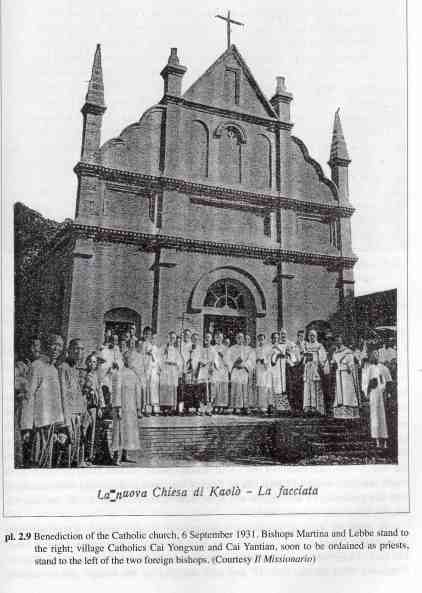
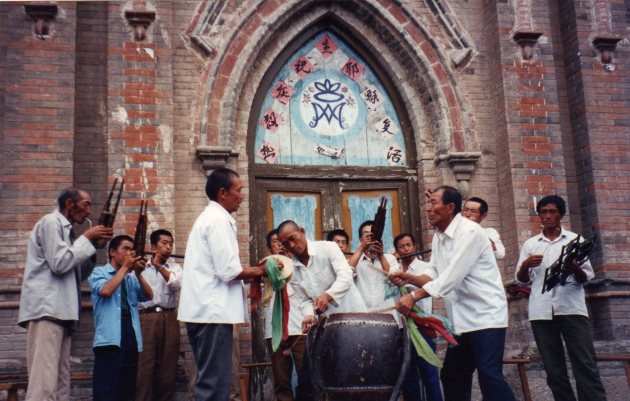



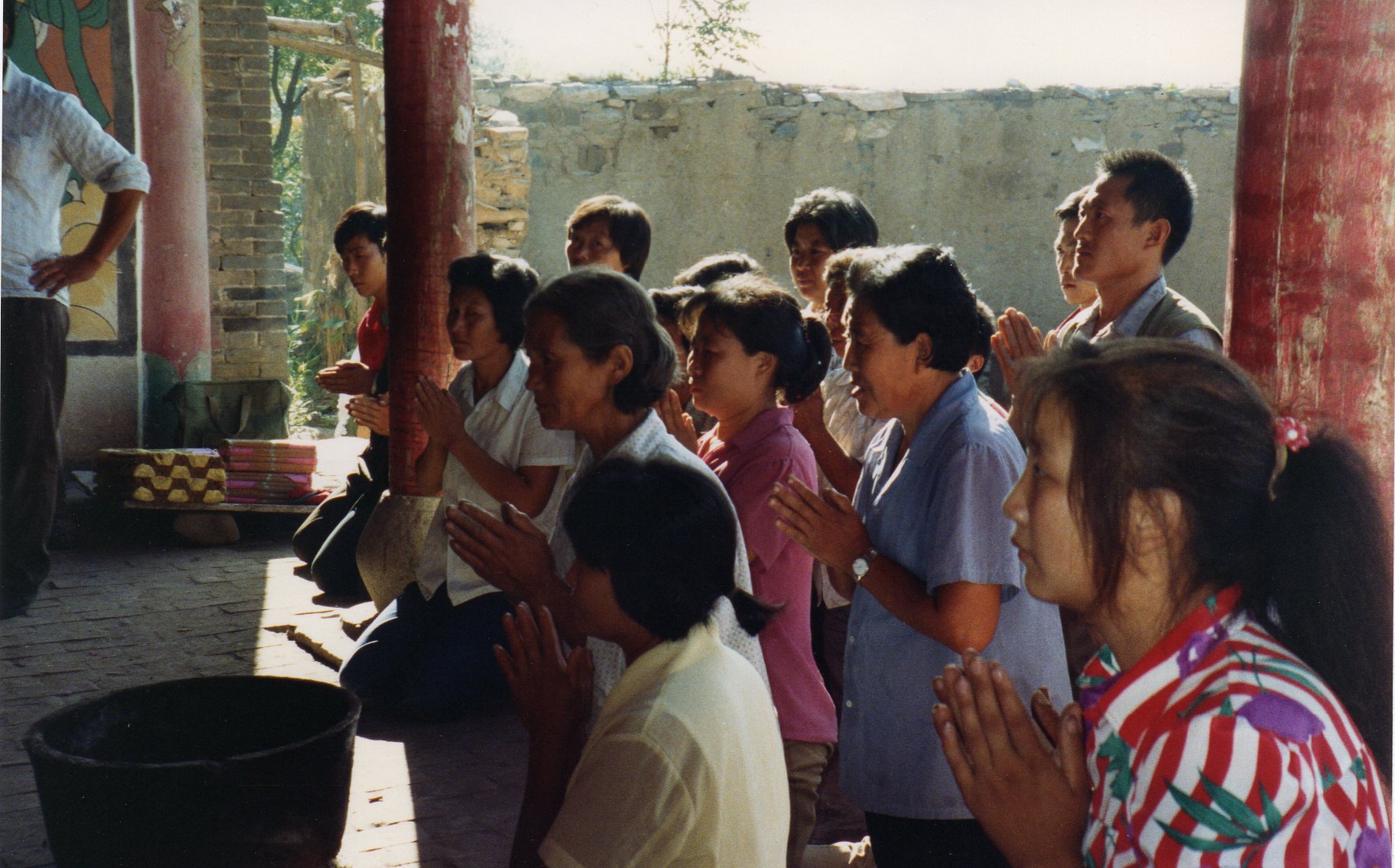


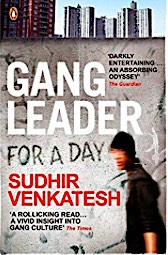


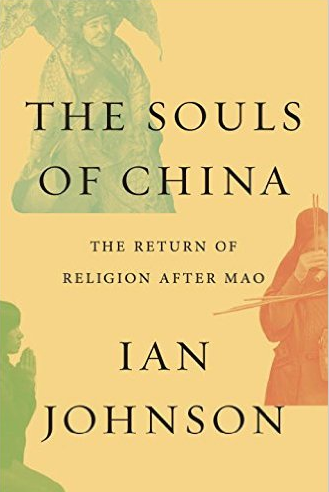


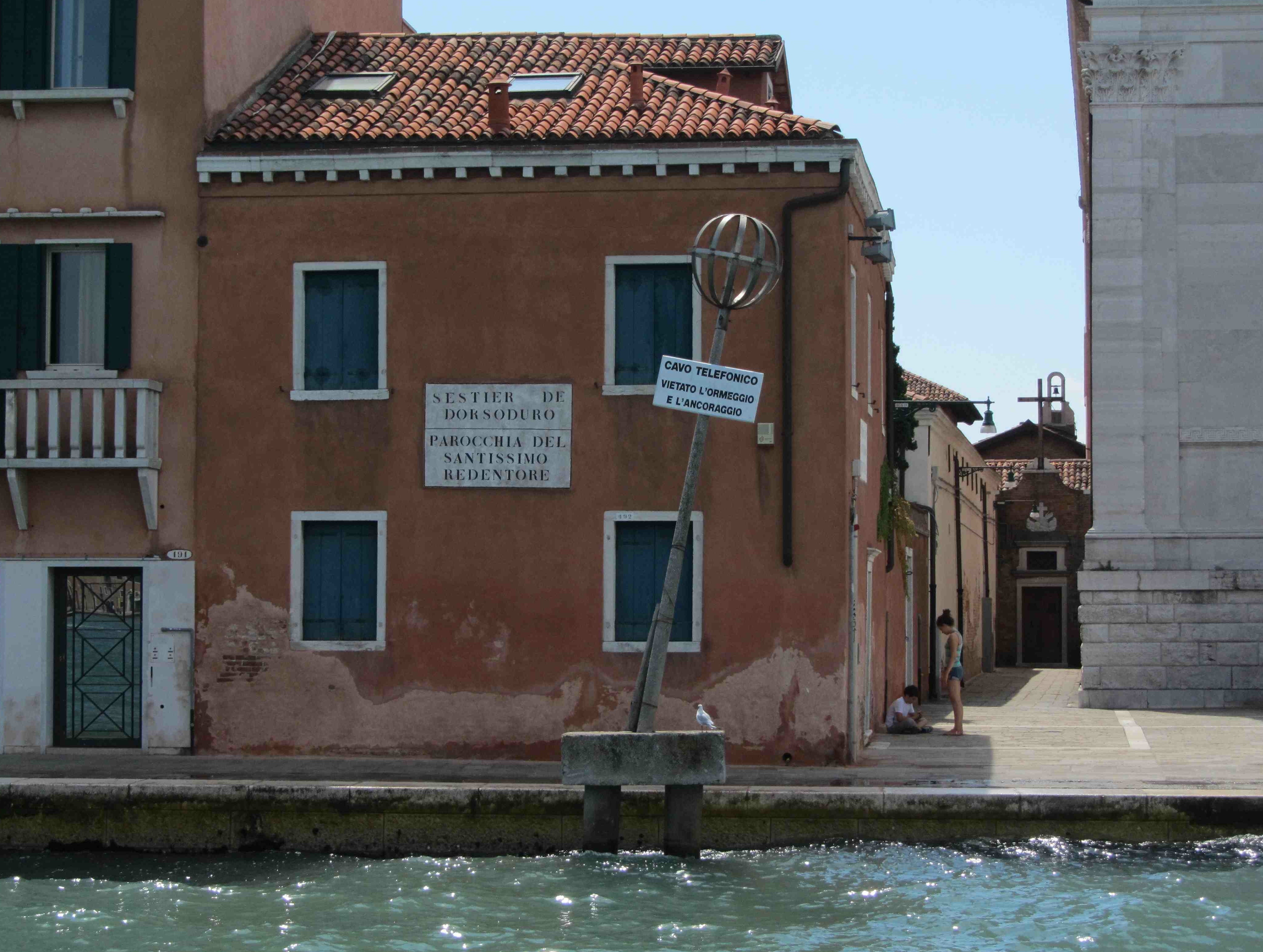

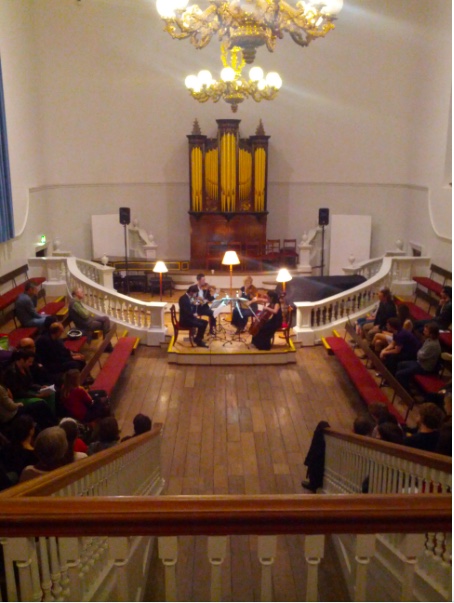


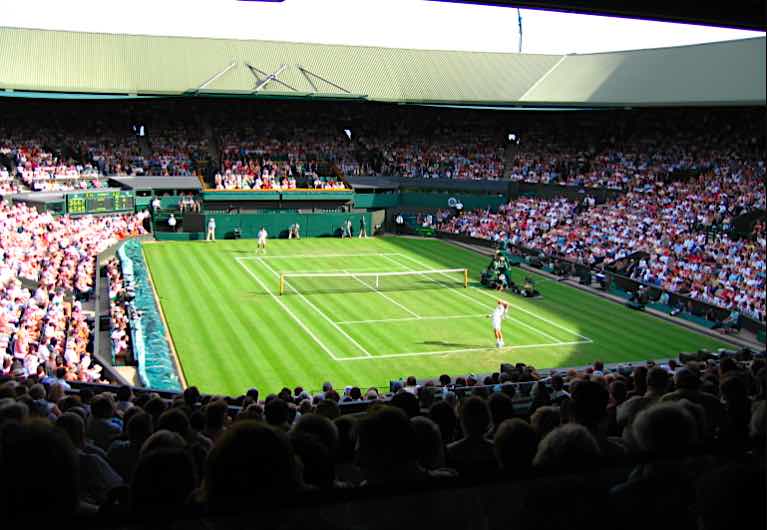


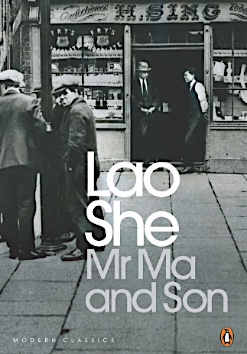



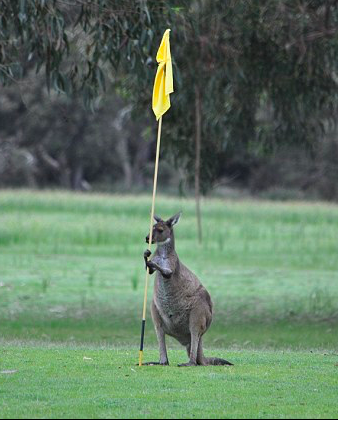





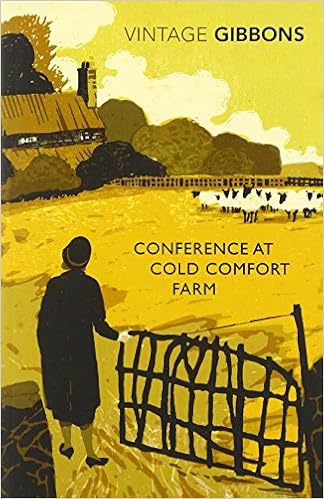


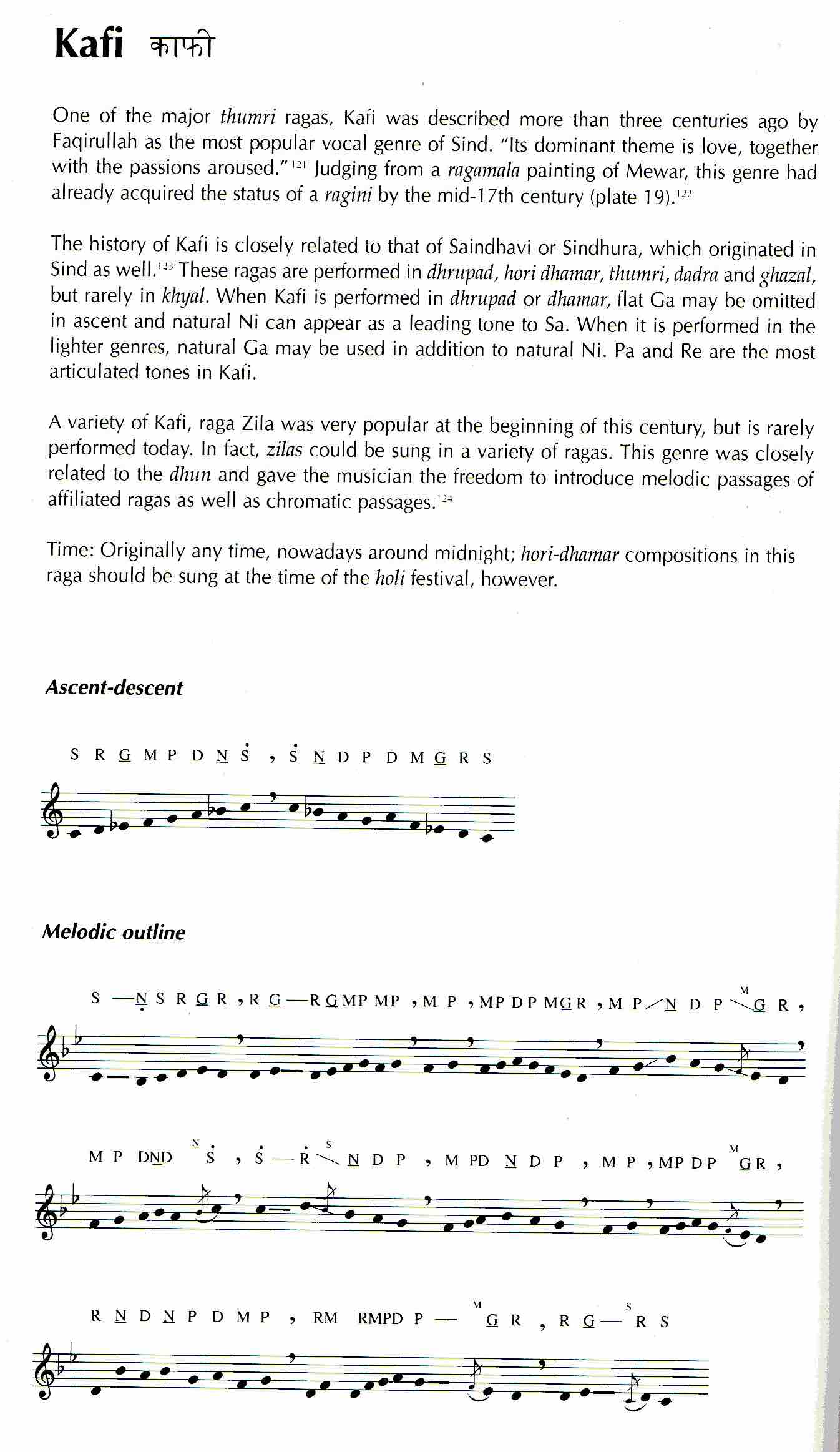

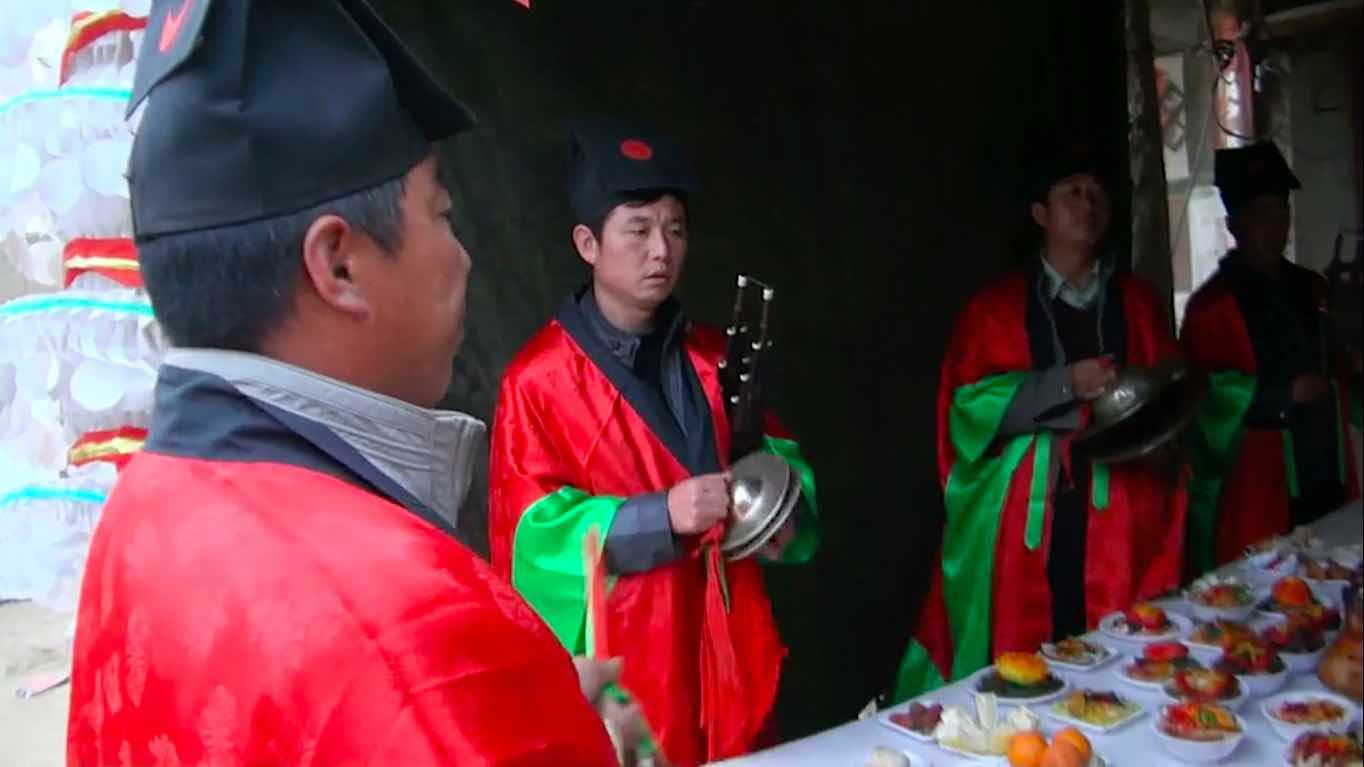

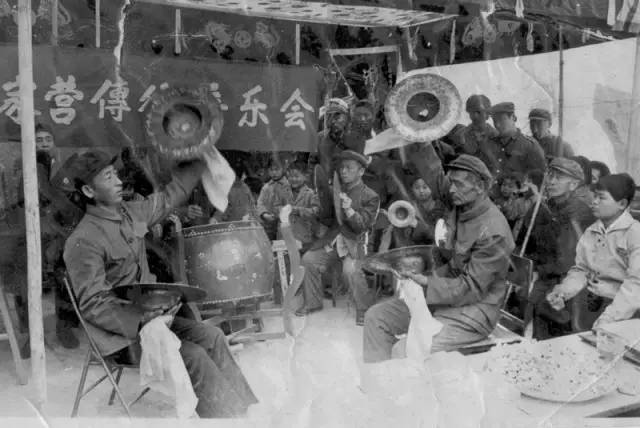
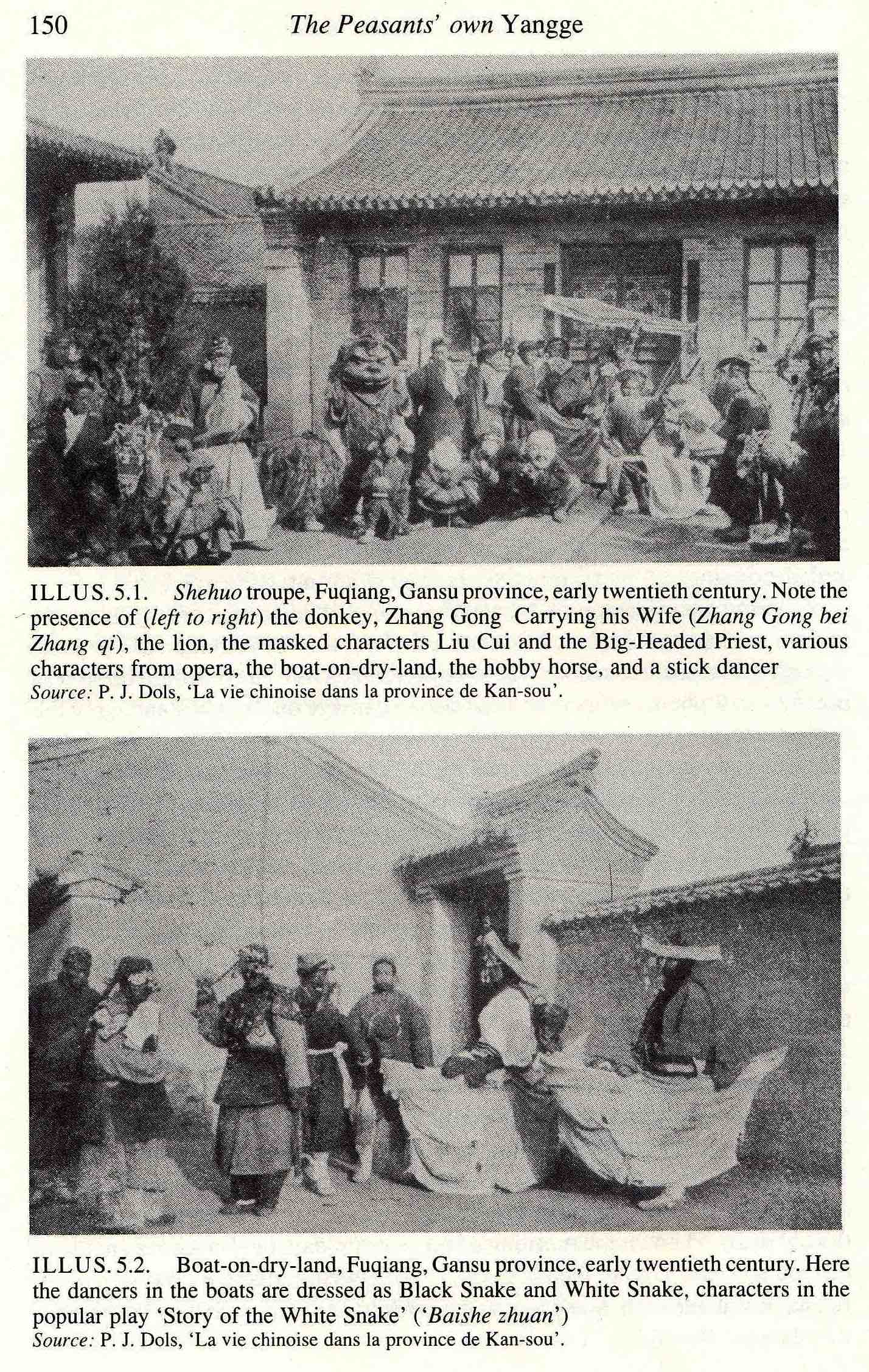
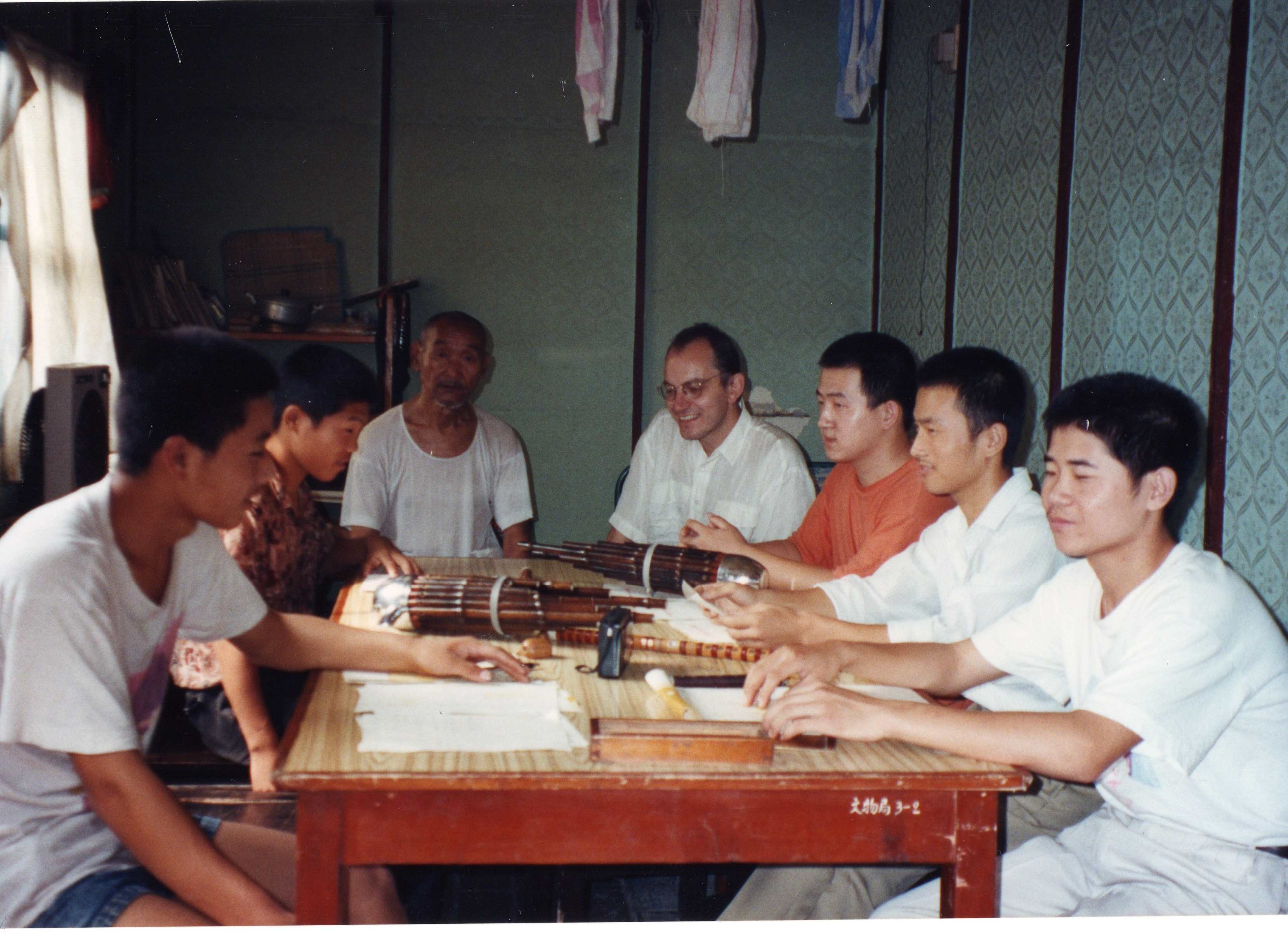
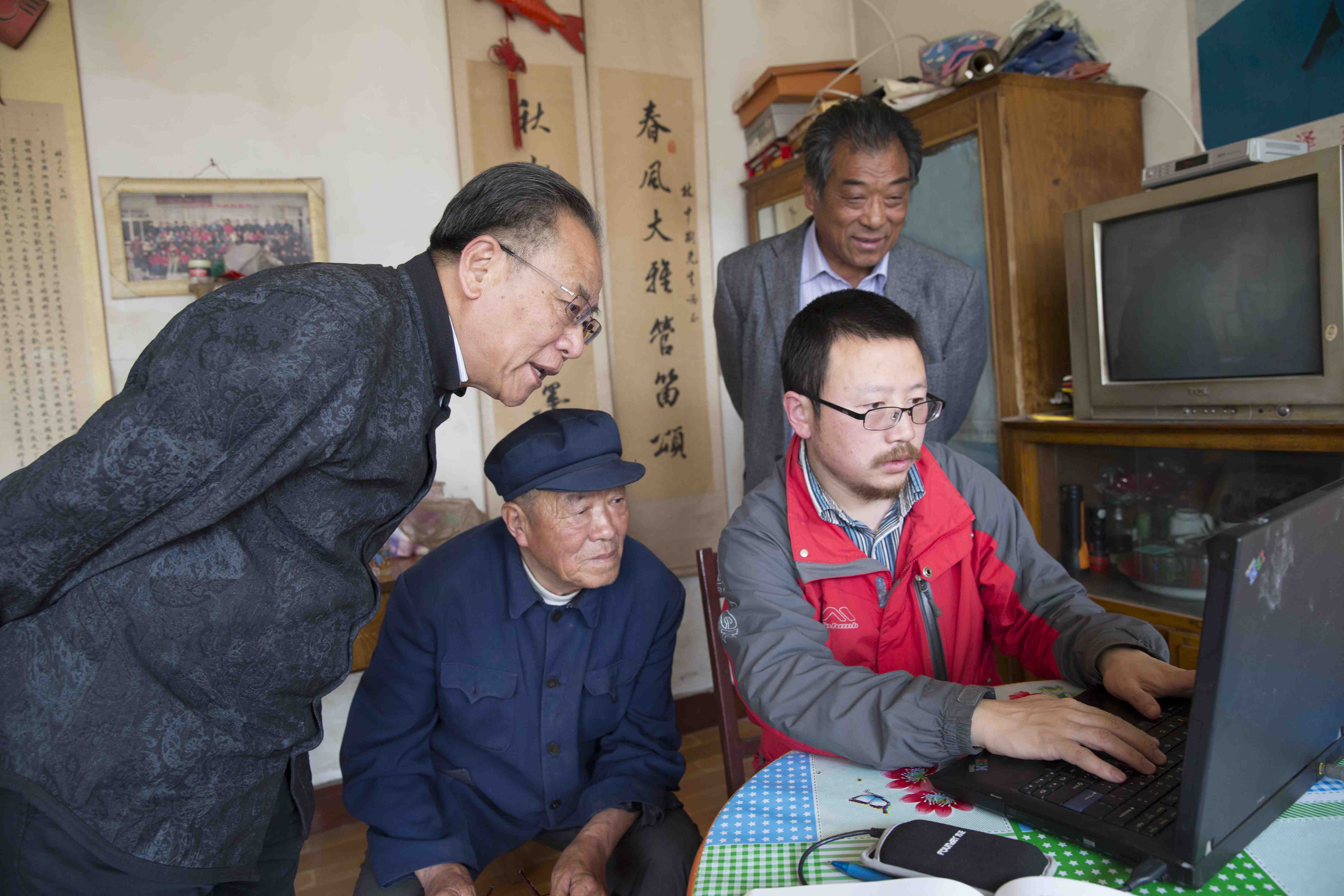
 Stephen Jones: a blog