I’m most gratified that my film Seated at the altar, on the 1995 New Year’s rituals in Gaoluo village, was awarded two prizes at the Chinese Musics Ethnographic Film Festival (CMEFF) International Biennial of Audiovisual Ethnomusicology, held in July at the Shanghai Conservatory of Music. In addition to the Bronze Award, it received the Intangible Cultural Heritage Music Documentation Award—which, given my trenchant critiques of the ICH system, has a fine irony!
Zheng Zhentao, in his stimulating review of the film, highlights the contrast between my method (representing ethnographic standards in the West, I’d say) and the glamorised reification that is de rigueur within China in the portrayal of folk culture—an established tradition long before the ICH. So I’m gratified to find that there are those in China who appreciate my approach, as confirmed both by the discussion at the festival and the film’s reception at the screening in the village. The mere fact that I filmed New Year’s rituals and funerals in the village—rather than choosing staged settings such as the concert hall—seems to be original. However, such a verismo method looks unlikely to gain ground in China.
My films should always be viewed in conjunction with my writings—for Gaoluo, my detailed diachronic ethnography Plucking the winds. In the latter, far more broadly than mere “music”, the main themes of ritual, poverty, politics, and conflict are far more explicit. As I stressed here, “music” is merely a prism through which to document ritual and social change.
While I was doing fieldwork I was educating myself on rural Chinese society through modern regimes as revealed through Western scholarship (see e.g. here), such as Chen village, Gao village, and the studies of Friedman, Pickowicz, and Selden, as well as the work of Jing Jun, and (in Chinese) Guo Yuhua. These were my major inspirations.
It is easier to depict history on the page than in film. While the film hints at political aspects through photos and voiceovers, showing the village cadres’ support for the ritual association amidst the upheavals before and after the 1949 “Liberation”, this will only become clearer by reading my book (see e.g. this excerpt, and the history of the village Catholics). Yet these topics can hardly be broached under the current climate in China, where early history is idealised and modern history sanitised, in both text and film. Self-censorship is inevitable; even the word “politics” is largely taboo (cf. Ritual studies mildly censored).
So returning to the film, I’m still curious to know how Chinese audiences perceive the contrast between their romanticised image and ethnographic verismo. And I still wonder how Chinese film-makers manage to glamorise their rural themes.
It is far from a literal translation of my English script—I was keen to adapt it to reflect the idiom and way of thinking of the Gaoluo villagers. So rather than the terminology of urban academia, we incorporated local vocabulary like lao guiju 老规矩 (“the old rules”: tradition), dangjia 当家 (“boss”), jiahuo 家伙 (percussion), wentan 文坛 (“civil altar”: vocal liturgy), and songjing 送经 (“escorting the scriptures”). In many ways I find it preferable to the English text—since the original English voiceovers are intact, it’s worth watching even for those not dependent on the translation.
The Chinese version is now available both (in China) on the CDTM website (follow this link) and on my YouTube channel (alongside the English version):
And do browse the posts under Gaoluo in the top Menu! Click here for thoughts arising from presenting the film at SOAS; here for an intriguing Chinese review; and here for a screening in Leiden along with my film on the Li family Daoists.
Presenting my film on Gaoluo at SOAS the other day, and the following discussion, thoughtfully led by Rachel Harris and Feng Jun, prompted me to try and rework some of my thoughts.
My book on Gaoluo was published in 2004, the result of frequent fieldtrips ever since 1989, and it’s full of detail on the lives of villagers through all the social and political upheavals of the 20th century. But I then moved onto other projects, and I only returned to the topic recently, to compile this film from my footage of the 1995 New Year’s rituals, which makes a nice succinct subject—and already a historical one, as I say in the film.
I see ethnography and film as essential complements to library work on imperial history (see here). This kind of subject, though vital to folk society, can’t be addressed only by reading old books in libraries. Actually, the topic hardly appears at all in old books—it’s only revealed by fieldwork. Until the 1950s almost every village in the region had an organisation like this; and many of them still do. While I eventually focused on this one village, we also did a survey of over a hundred village associations nearby (see e.g. under “Hebei” in the main menu, including this survey).
Religion The whole topic of the Hebei ritual associations was only “discovered” by Chinese musicologists in 1986, and it has become a major theme within that discipline—but alas, not in religious studies. I think there are two main reasons for this.
First, terminology. These groups are now commonly known by the umbrella term yinyuehui, which seems to translate simply as “Music Associations”. But it’s confusing: in these villages the term yinyue refers very specifically to the melodic instrumental ensemble that accompanies the rituals of Buddhist and Daoist temples. That indeed was our initial interest, but it’s only one aspect of the associations’ ritual activities, their “instrumental department”, if you like. The term does have an authentic historical pedigree, but tous (both in the West and for urban-educated Chinese) it suggests an unfortunately secular image, like some kind of folk club for entertainment, which encourages Chinese attempts (both in the media and in academia) to downplay the pervasive role of religion (or “superstition”!) in folk society. So I obstinately insist on calling them ritual associations. Despite the gradual decline of vocal liturgy in the region, associations preserve many ritual manuals. And while the melodic instrumental repertoire now dominates, many groups regard these pieces as “scriptures”.
Apart from terminology, folk religion is a sensitive subject. There are some fine scholars in China, but they mainly write about earlier history and written texts, and are cautious about documenting events since 1949, or current activity; whereas we who study expressive culture incline more towards fieldwork. At least, scholars of religion could choose a few villages to clarify the transmission (whether “Buddhist” or “Daoist”) from early temple priests, and study early artefacts such as ritual manuals (not least the “precious scrolls”) and god paintings. While it may now be hard to establish a different image to that of the ICH (see below), the system has legitimised such associations, and they are not subject to the taint of “superstition”—even if scholars of religion may choose to exercise a certain discretion about the early sectarian connections that we documented.
These associations on the Hebei plain are devotional, priding themselves on providing ritual services for their home village without payment. Their ritual sequences are not very dense, but their purpose is to appease the gods. I again put them in the context of other manifestations of religious behaviour in China (such as sects, occupational groups of household Daoists, and spirit mediums). Like my film on the Li family Daoists (which I also encourage you to watch!), this film is set in the north; the soundscapes of the two films are similar, but their social contexts are rather different.
After the end of the main film, the Appendix gives some clues to the workings of the majestic percussion suite, ending with the most moving complete rendition. This is the most convincing illustration of the inadequacy of text, audio recordings, and photos, and it shows the villagers’ deep commitment to the tradition.
All this is a good illustration of how ethnomusicology is based on society and soundscape. Ritual in performance is always animated by sound, so soundscape should always be a major element in our study of ritual. Indeed, most local traditions of “Chinese music” depend on ritual—folk-song, opera, narrative-singing, and dance. One might compare the ritual groups in southwest China studied by Helen Rees, or “song festivals” in the northwest. In Uyghur culture, the pervasive role of Islam is masked by Party propaganda on muqam. The world music industry also remoulds “Sufi music” misleadingly to highlight instrumental music.
Conflict, and the 1949 barrier Politics and social change are major themes of my book and this website. It’s always important to break through the 1949 barrier. We must take modern history seriously. The story always continues, from imperial and Republican times to the Maoist and reform eras, adapting to the changing times. People’s life stories and personalities make a revealing human window onto history and social change. Stories like those that I document—amidst campaigns, conflicts, famine, massacres, thefts—are airbrushed under the current Chinese regime.
Unlike small occupational household groups such as Daoists and shawm bands, these associations are public bodies, which the villages cadres have always played a major role in supporting.
I’m always struck by this amazing image of a former monk training disciples in a nearby village in 1959 (see here, under North Xinzhuang), just as the devastating great famine was occurring—the famine is among crucial topics that can hardly be addressed in China.
Shadows in the field I could only offer superficial responses to Feng Jun’s salient query about how I positioned myself in relation to the people and events I was documenting. It’s a major theme of the book (and of a thesis in Chinese). I was most fortunate to have two excellent fieldwork companions from Beijing, who were totally on board with studying social and religious change. It’s most important to stay in the village, and to take part in their ritual life (neither of which is common for Chinese scholars). The villagers were open in replying to my questions, which Chinese scholars hardly asked.
I never thought of making films for the public domain; I filmed strictly for my own research purposes, and only realised later that some footage could be edited into watchable films. Our visits energised the Gaoluo association, while others were declining, but transmission was a constant anxiety of theirs, and a theme of our discussions. We can now see this as a precursor of the Intangible Cultural Heritage system.
The ICH Since my last visit in 2003, a lot has happened in these villages. They’re no longer so poor. Crucial issues, everywhere, are migration, social media, state education, and the whole emptying of the countryside. And there’s no escaping the ICH system, which has influenced many such village groups. Many authors have described how the system commodifies, secularises, and reifies local traditions (see e.g. here). It’s state propaganda; most “research” under its auspices is superficial. While my film, and the book, inadvertently make a contrast with the celebratory approach enshrined by the ICH, I’m perturbed that Chinese viewers don’t seem to articulate this; they can’t read my book in Chinese, and anyway I’m not sure they would care to dwell on my different approach. With recent Chinese fieldwork dominated by the ICH, it is hard to gain a more in-depth picture.
Although the system uses “music” and “culture” as a smokescreen to downplay religious life, it works both ways; for the communities themselves, it helps protect them, legitimise them. With the tenuous survival of these groups under question ever since the 1980s’ reforms, joining the ICH made a tempting expedient for the association leaders. And faith endures, with villagers using the system to their own ends; the Gaoluo association still does funerals, and villagers still offer incense.
The village’s Catholic minority (whose brass band took part in a “demonstration” on 1st moon 15th in 1995, shown in the film) makes an intriguing sub-plot in the story. In this whole area the relationship between “Patriotic” and underground churches has long been opaque, and without a prolonged stay it would be hard to further our understanding of the shifting scene.
As with my work on the Li family Daoists, the combination of book, film, and website is most instructive.
Towards a dynamic approach to material artefacts in diachronic social context
Further to my previous post giving background on material support for amateur ritual associations on the Hebei plain, I now focus on Gaoluo village, whose four ritual associations all preserve a wealth of ritual artefacts. Here our prolonged fieldwork allows us to “break through the 1949 barrier” by incorporating the easily-neglected Maoist era into the wider picture both before the Communist victory and since the 1980s’ liberalisations.
To remind you, both South and North villages have their own ritual association, now commonly known as Music Association (yinyuehui, yinyue referring to the “classical” style of paraliturgical melodic instrumental ensemble); and both villages have their own Guanyin Hall Association (or Eastern Lantern Association, dongdenghui), now known as Southern Music Association (nanyuehui, having adopted the more popular style of “Southern music”). But whereas the misleading term “music association” has since become standard in the region, note that neither the 1930 nor the 1990 lists of South Gaoluo use the term: both texts (like their 1983 gongche score) refer to “Southern Lantern Association” (nandenghui), the 1990 list glossing it as“sacred society” (shenshe). So to stress yet again, this whole topic belongs firmly within the study of folk religion and society, far beyond “musicology”. Do watch my film on the 1995 New Year’s rituals in Gaoluo!
These two donors’ lists from 1930 and 1990 make striking exhibits, but the village’s other associations also suggest clues; having written about them separately, here I rework them into a diachronic account.
A common stimulus for creating new donors’ lists is the expenditure of replacing ritual artefacts (ritual manuals, god paintings, instruments, and so on); besides recording the contributions of named villagers, many lists provide detailed public accounts.
The 1930s For our main ritual association in South village, one such list, which we saw adorning the lantern tent for the 1995 New Year’s rituals, was said to date from the late 19th century, but alas it was so faded as to be totally illegible. Instead, most handsome of the ritual artefacts on display was the 1930 donors’ list—apparently the only surviving list from before Liberation that we have found in the region:
Now if we saw this list on the wall of a museum, it would have limited potential. But since the tradition endures, not only can we witness rituals, hearing the wind and percussion music and vocal liturgy before the gods; but further, the descendants of the people featured in the list were able to provide considerable detail, putting the initiative in the context of the Republican era in the region. To summarise my discussion in Plucking the winds and in Ritual images: Gaoluo, during 1930 both associations in South village undertook a refurbishment of their ritual apparatus—apparently prompted both by the brief restoration of peace in the area after many years of fierce fighting between warlords, and by competition with the renewed energy of the village Catholics.
The 1930 list, entitled Wanshan tonggui (“The myriad charities return to the same source”), commemorates the commissioning of a major series of diaogua hangings from Painter Sun of Doujiazhuang village in Zhuozhou county just north. It records 92 heads of households, surely consisting of most of those then living in the southern half of South village which the association served, though some were doubtless too poverty-stricken to be able to afford even a minimal contribution. For all the beauty of the list, many (including all the womenfolk) were unable to read it.
The donations, ranging from 6 yuan to 5 jiao, totalled 109.83 yuan; the cloth cost 24 yuan, the paintings 61.5 yuan, and other expenses amounted to 33.83 yuan, leaving debts of 9.5 yuan. Five “managers” of the association are named at the head of the list: Cai Lin, Cai Ze, Shan Xue, Shan Chang, and Shan Futian (sketches in Plucking the winds, p.54). As their descendants recalled in the 1990s, all were prominent figures in the village, some of whom were also active as ritual performers.
Later in 1930, in preparation for the following New Year’s rituals, the South village Guanyin Hall Association also made a donors’ list for the commissioning of twelve new ritual paintings, listing four “managers”, two “organisers”, and three “incense heads”. The paintings were again made by Master Sun; the 1990s’ members also say he made new diaogua hangings for their association. In the years before the 1937 Japanese invasion, one Wang Laoguo from South Gaoluo painted more diaogua for them.
Further suggesting the ritual revival of the time, the early Dizang precious scroll of the Guanyin Hall Association in North Gaoluo contains a section recopied in 1932 (the precious scrolls are introduced here, and for Hebei, here and here).
Under Maoism In the decades after the 1949 Communist revolution, many village ritual associations gradually became less active or ceased entirely. However, a close look belies the common notion that ritual life was in abeyance right until the 1980s’ reforms. For this crucial and ever more elusive period, material artefacts serve only as an adjunct to the memories of villagers.
With the new regime in its infancy, peace gave rise to hope for local communities long traumatised by warfare. Even as the collective system escalated, Gaoluo’s new village administration managed to embrace its traditional associations. The production teams used to give a little grain or other goods to support whichever association lay within their patch. The political climate didn’t dampen faith in village ritual associations: they continued to perform funerals and observe the New Year’s rituals in their respective lantern tents. Between 1950 and 1964 several groups of young men were recruited to learn both the vocal liturgy and the instrumental music; new gongche scores of the latter were compiled.
However, I doubt if the associations often dared hang out their ritual artefacts, and the atmosphere must have discouraged the making of donors’ lists. Our association didn’t make one between 1930 and 1990, but in 1952 the South village Guanyin Hall Association converted from their chaozi shawm-and-percussion music to the more popular style of “Southern music”. They invited the locally-renowned musician Hu Jinzhong from nearby West Yi’an village to teach them, giving him food and accommodation through the winter, but no fee, as ever. There was some official opposition to them learning the music, so the association sought no public donations; it still owned some land in the early 1950s, so it could buy instruments independently. Supporters merely “took care of a banquet” for the association, and no donors’ list was made.
The early 1960s From 1961 to 1964, in the brief lull between the famine and the Four Cleanups campaign, ritual associations revived strongly throughout the Hebei plain, training youngsters in both the instrumental ensemble and the vocal liturgy. The latter tradition was in general decline on the plain, with the elders of the “civil altar” dying off. In Gaoluo, the vocal liturgy of South and North village Guanyin Hall Associations effectively came to an end with the deaths of Zhang Yi in 1950 and Shan Yongcun around 1956. Only our South village ritual association had a group of keen teenagers who came forward in 1961 to study the vocal liturgy with senior masters. But elsewhere the shengguan instrumental ensemble increasingly came to represent the scriptures before the gods.
One might imagine the early 1960s’ revival prompting our association to compile a new donors’ list, but perhaps the leaders were wary of creating such a public pronouncement. However, in 1962 the South village Guanyin Hall Association used its 1930 list to add a new list of donors.
And in 1964 the Gaoluo village opera troupe, not inhibited by the taint of “superstition”, commemorated its revival in a donors’ list (composed by Shan Fuyi), with the 280 donors representing the great majority of households in North and South villages at the time. The list records the donation of c450 yuan in total.
For both the ritual associations and the opera troupe, the early 1960s were a cultural heyday such as they had not been able to enjoy since the early 1950s, reflecting the social recuperation after the famine afforded by a central withdrawal from extreme leftist policies. Little did they know that political extremism was once again to disrupt their lives still more severely; the optimism of their declarations was soon to look naive and hollow.
Since the 1980s’ reforms In the Hebei villages, as throughout the whole of China, the last two decades of the 20th century were particular in that their associations were reviving after at least fifteen years of stagnation—and even those that had been active until the eve of the Cultural Revolution had practised somewhat furtively. Thus they needed to replace a considerable amount of their ritual equipment.
In Gaoluo after the liberalisations following the collapse of the commune system in the late 1970s, the village “brigade” (dadui) gave 100 yuan a year to all the village’s main associations, which our South village ritual association spent on getting its sheng mouth-organs tuned. In the early 1980s they commissioned a new ritual pantheon of Dizang and the underworld, and compiled a new gongche score, but they didn’t yet create a new donors’ list.
However, the North village Guanyin Hall Association had a donors’ list made as early as 1981, to commemorate their own revival, written in elegant classical Chinese (text copied in Zhang, Yinyuehui, pp.128–9). This association had a reputation for observing the ritual proprieties, and preserved splendid “precious scrolls” from the 18th century, but their fine tradition of reciting them was going into decline even before Liberation. The first historical material on the list consists of four names (“transmitters of the ritual business”) from the 1920s. Unusually, having originally been a temple-based ritual association based on reciting the scriptures, they had diversified by adopting secular genres, acquiring opera in the 1930s, reformed pingju opera in 1951, “Southern music” in the 1960s (learned from their sister association in South village), and lion dancing in 1981.
The 1990s As the economic liberalisations gathered pace and communal consciousness was attenuated, many village associations that had revived found it hard to maintain activity. In Gaoluo the 1990s were distinctive for the renewed energy provided by our fieldwork (Plucking the winds, pp.189–205).
After our first visit over the New Year’s rituals in 1989, our association now resolved to refurbish their “public building”, which they had reclaimed from the village brigade after the collapse of the commune system. This initiative was led by the then village chief Cai Ran, himself a keen member of the “civil altar”. After writing enterprisingly but unsuccessfully to the Music Research Institute in Beijing to request funding for the project, they managed to be self-sufficient in realising the project, with villagers donating money and labour.
So in 1990 the leaders of our association invited Shan Fuyi to make a new donors’ list. His substantial text outlining the association’s history (see Ritual images: Gaoluo) makes clear that my visit was a stimulus for the project; still, it was written with no guarantee that outsiders would return.
The 1990 list names 270 heads of households. Still, villagers were becoming less conscientious about donating (see Women of Gaoluo, under “Rural sexism”).
From the 1930 and 1990 lists alone, we can hardly perceive change. The association still served the ritual needs of the villagers, and was still supported by most households in its catchment area. Without thick description from fieldwork and interviews, we might never know how ritual and social life were changing.
In the early 1990s there were several thefts of ritual artefacts in Gaoluo—but this served as a stimulus for the association to reclaim those that had been taken off by cultural authorities under Maoism.
The lantern tent of the South village ritual association, 1998, with new and newly-copied donors’ lists.
Our attention to the South village ritual association stimulated another competitive ritual flurry among the two villages’ other three ritual associations. For New Year 1990 the North village ritual association also had new ritual paintings made, of their own pantheon and the Ten Kings of the Underworld (for the donors’ list commemorating this initiative, see under Ritual images: Gaoluo). We also saw a more transient paper list of expenses from New Year 1992, pasted at the entrance to their ritual building, and already decrepit and hard to read by the following summer. They had received 690.47 yuan; they had incurred expenses such as buying coal, meat, vegetables, doufu, oil, salt, tea, firecrackers, tuning sheng, buying cloth bags for sheng, copying scores, and mounting ritual manuals and paintings—all conscientiously recorded. At New Year 1998 we saw their paper lists of income and expenses for the past year. Most of the association’s income had come from the hiring of crockery; donations had also been made when the association performed funerals (the rate being around 100 yuan). Some individuals had donated cash (one as much as 750 yuan), and the village committee had given 200 yuan. They had received 3,638.2 yuan (including 939.8 yuan brought forward from the previous year) and spent 2,992.2 yuan.
After the demise of the commune system, the South village Guanyin Hall must have revived along with the other associations by about 1980. Following our 1989 visit and the revamping of the ritual associations of North and South villages, they too had a surge of energy. For New Year 1992 they made a new donors’ list (image here) for the rebuilding of their humble ritual building, with this inscription:
The Eastern Lantern Association of South Gaoluo rebuilt its public building in 1992 AD under the People’s Republic of China, with the aid of the donors listed above. Total expenditure 2,984 yuan 4 jiao; 15 yuan surplus.
The list shows 215 household heads giving sums from 20 yuan to 2 yuan.
Conclusion In all, community support for ritual life had not waned despite successive social upheavals. But new challenges were taking their toll: migration to the towns in search of work, state education, and popular media culture. Since my last visit in 2003, Gaoluo has continued to be transformed—notably by the arrival of the Intangible Cultural Heritage system, which I will address soon.
Static, silent material artefacts are most instructive when we can use them in conjunction with fieldwork and interview, helping us connect them to changing social life, filling in the gaps, learning more about practice and personalities over time. This is where the ethnographer has an advantage over the historian. I wish we had been able to find yet more detail—for instance on the 1950s: how funerals were changing, how calendrical rituals became less frequent, the decline of the vocal liturgy, and so on. We were lucky to be able to consult people who had taken part in the events commemorated in donors’ lists; but as time goes by, fewer villagers remain who can recall the early years of Maoism, let alone the “old society” before 1949.
[1] See the index of Plucking the winds, under “donations and donors’ lists”; Zhang Zhentao, Yinyuehui, pp.116–35, copies and discusses all the Gaoluo donors’ lists. On this site, note also the series of articles under the Gaoluo rubric of the main Menu.
Stone, cloth, paper: economic support for village ritual associations
My new film on Gaoluo prompts me to revisit our fieldwork the ritual associations of the Hebei plain—a task further stimulated by the recent reification of these groups under the Intangible Cultural Heritage system. I now wish to outline economic support for such ritual organisations under the successive political regimes of modern times—”breaking through the 1949 barrier”.
First, in this post I expand on some themes from my survey of ritual associations on the Hebei plain; and in a sequel I focus on Gaoluo, where we found a wealth of ritual artefacts to accompany our prolonged fieldwork and discussions with villagers. Both essays are mere samples of the material we collected through the 1990s—please excuse the considerable overlap with many of my previous writings, both on the ritual associations and on Gaoluo. [1]
Introduction Living traditions of Chinese folk ritual provide a rich source of material artefacts dating back several centuries (cf. China’s hidden century). Still, they are mere snapshots of particular moments: one hopes to be able to augment them by fieldwork on observed ritual practice and the oral accounts of villagers throughout living memory.
In rural China, as everywhere, ritual and cultural life depends on moral and economic support from local communities. Patronage, in cash and in kind, depends on the nature and scale of the enterprise.Occupational family-based groups such as household Daoists and shawm bands (as well as individual intermediaries like spirit mediums) are paid for a particular event such as a funeral, and have successfully adapted to changing patterns of social support in the post-reform era.
In the religious sphere, alongside local temples, the composite term huidaomen (used pejoratively by the Communist state—hui Association, dao “Way”, and men “Gate”) subsumes both ascriptiveamateurvillage-widedevotionalassociations and voluntarysectariangroups. On the Hebei plain, the two broad categories overlapped (see e.g. our notes on Xiongxian and Xushui counties).
Priding themselves on not accepting payment, ascriptive ritual associations have long relied on recouping their expenses through donations from the village communities whose ritual needs they serve. But whereas support for voluntary sectarian (as well as Catholic) groups remains grounded in enduring faith, the ascriptive associations have faced a particular crisis in the new economic climate since the 1980s.
Temples and temple fairs, ritual associations and the “public building” Temples have always been an important focus of community life, and in many regions they remain so, such as in south China (Fujian, Jiangxi, Hunan, and so on) and the northwest—although much research there has focused on the imperial legacy rather than modern change.
On the Hebei plain, temples were ubiquitous until the 1950s. Village ritual associations learned from Buddhist or Daoist temple clerics, or from other nearby associations that had done so, at various times since the Ming dynasty; they existed mainly to serve the village temples. But in a long process over the 20th century, temples were destroyed or abandoned; rather few have been rebuilt since the 1980s’ liberalisations, and still fewer have any regular staff apart from a temple-keeper. So the main venue for the reduced calendrical rituals of such villages became the “public building” (guanfangzi: Zhang Zhentao,Yinyuehui, pp.181–204), an inconspicuous building only adorned with god paintings and other ritual artefacts, easily stored away, during calendrical rituals on behalf of the community. Besides the long-term decline of active temples in the region, this may suggest insecurity among village communities through political upheavals.
Villages that have restored their former temples are in a minority, but in such cases the refurbished temples seem to provide a greater focus, visited and tended more often, as in Gaozhuang (Xushui county) and two villages in Xiongxian county, Hanzhuang and Kaikou. Still, their annual ritual calendar remains quite sparse (see my survey, under “Ritual duties”).
Even once we recognise the importance of the “public building”, a major part of the duties of these associations is to supply funeral rituals at the homes of deceased villagers.
Donors’ lists Alongside the wealth of material artefacts that we found among the Hebei village ritual associations (ritual paintings, ritual manuals, scores, and so on) are donors’ lists (beiwen碑文), documenting support over the previous year, or for a major initiative. Displayed alongside the god paintings in the ritual building, they proclaim the associations’ support among their community for providing calendrical observances and funerals, symbolising the village’s sacred core. As Zhang Zhentao notes, local terms like beiwen and bushi布施 (“donating”) remind us of the living connection of these groups with the tradition of supporting Buddhist and Daoist temples.
More ephemerally than the stone steles of temples, the donors’ lists of Hebei village ritual associations are commonly inscribed on cloth; but many are even more perishable, written on paper, pasted on the wall of the ritual building over the New Year’s rituals—when new donations (often in cigarettes and tea) are recorded daily. Thus they might never be documented unless some ethnographer happened to be there to take photos at the time.
Throughout China, paper documents are commonly pasted up announcing temple fairs, temple inaugurations, and particular rituals; some of these may record donors and amounts contributed. Even for weddings and funerals, scribes record gifts. The donors’ lists of the Hebei associations are rather different, recording the names of household heads—thereby establishing them as members of the association not just for particular rituals but throughout the year—and amounts contributed. Since these associations were responsible for performing rituals on behalf of the whole village, their leaders sought donations from virtually every household. Besides a few more affluent patrons, most families could only afford a token contribution.
While village ritual associations were inextricably linked to their local temples, there is no direct transition from the stone steles of the latter to the cloth and paper memorials of the former. Most associations must have made donors’ lists ever since their founding, generally in the Qing dynasty or even the Ming, but alas they don’t survive. Even if they did, we couldn’t make a simple comparison.
For those Hebei temples that have been rebuilt since the 1980s’ liberalisations, we found a rare instance of a stone inscription listing donations on the back of the 1993 stele for the inauguration of the Ancestral Hall to Venerable Mother (Laomu citang) in Gaozhuang, Xushui county—led by the village’s ritual association.
Whatever the material on which such lists are written, the Hebei associations are mostly village-wide public bodies, perhaps encouraging them to openly display both their expenditure and the names of their patrons. Still, many of these groups have sectarian ancestry, so I wonder if such lists have been documented among sectarian groups elsewhere in China—leads welcome.
Lists of expenses Also often detailed on such lists is the expenditure of the association, justifying the leaders’ probity on behalf of their patrons. Expenses documented include replacing instruments or maintaining them (notably tuning and repairing sheng mouth-organs), commissioning new ritual paintings; buying other equipment (tables, pennants, incense, candles, lanterns, paper, food for banquets); “utility bills” for the ritual building or rehearsal venue (coal for rehearsals, oil for lanterns, electricity); and New Year’s expenses such as firecrackers. For example, again from Gaozhuang is a paper list of expenses from 1995:
Here’s a 1994 list of expenses from Kaikou village (Xiongxian county) for the revival of the temple and its association (Zhang, Yinyuehui, pp.140–43):
Beiwen with written histories Rather as temple steles from imperial times might also document successive renovations, some donors’ lists include brief histories. Some associations even composed separate histories, such as a 1990 banner from Xin’anzhuang, Renqiu county:
Was this prompted by some interest from county cultural workers, I wonder? It clearly constituted some kind of public declaration; but the preludes of some gongche solfeggio scores of the paraliturgical melodic ensemble, whose readership was limited to the performers themselves, also contain brief histories of the association, like those of Longhua from 1963 and 1980 (for both Longhua and Xin’anzhuang, see under Ritual groups around the Baiyangdian lake).
Intriguingly, the instances that we documented were written since the 1949 revolution. Under state socialism, did political anxieties now prompt ritual associations to proclaim or justify their history, portraying the tradition as “culture”, downplaying religion? Re-reading the brief texts that head some donors’ lists, I find them diplomatic, distancing the associations from sectarian connections, claiming a place within the official discourse long before the Intangible Cultural Heritage. This seems to complement the innocuous appearance of the “public building”, the easily-concealed ritual artefacts, and indeed the growing prevalence of the shengguan instrumental ensemble over the vocal liturgy.
Still, such histories can make a useful starting point as we compile more detailed accounts from villagers’ oral recollections.
Some further examples Apart from the Gaoluo associations (to be discussed in a separate post), Zhang Zhentao (Yinyuehui, pp.130–50) details donors’ lists from other village groups we visited on the Hebei plain. These include two 1992 paper lists from North Qiaotou in Yixian county (Zhang, Yinyuehui, pp.136–40; see my discussion here)—a donors’ list introduced by a text in praise of the association’s benevolent virtue:
and their list of expenses:
In Xushui county, on our visit to North Liyuan in 1995 we found donors listed on a blackboard:
Also under my page on Ritual groups of Xushui is material on the rebuilding of village temples in East Zhangfeng (§8) and Xiefangying (§9). Zhang Zhentao further documents lists from Zhaobeikou on the Baiyangdian lake, and Fuxin in Wen’an county.
Many of these groups were of sectarian ancestry—the North Qiaotou association derived from a Hunyuan sect, for instance. As I suggested above, perhaps this made their public proclamation of charitable virtue still more apposite, counteracting state suspicion of “superstition”.
Summary Static, silent material artefacts only provide snapshots in the life of these groups. They are most instructive when we can use them in conjunction with fieldwork, helping us connect them to changing social life, filling in the gaps for the intervening periods, learning more about practice and personalities over time, using the frozen material evidence to prompt recollections from villagers, building up a picture of the longer term. This requires prolonged familiarity—as we gained in Gaoluo, subject of the following post.
And to repeat my point yet again, whereas the topic was discovered by musicologists, it belongs firmly within the study of folk religion and society.
[1] For the Hebei ritual associations, see this survey, and many pages under the Gaoluo and Hebei rubrics of the main Menu. Besides my 2004 book Plucking the winds, as well as “Ritual music under Mao and Deng” and “Revival in crisis”, note in particular Zhang Zhentao’s 2002 book Yinyuehui: Jizhong xiangcun lisuzhongde guchuiyueshe 音乐会: 冀中乡村礼俗中的鼓吹乐社. Like his discussions of the “public building” and gongche scores (pp.181–204, 365–407), his chapter on donors’ lists (pp.115–80) is excellent; following perceptive discussions of particular lists, he analyses the material on pp.150–79, including the role of the local gentry in supporting ritual associations, and comparison with the opaque economics of the mercenary shawm bands.
My new filmon the 1995 New Year’s rituals in Gaoluo has recently been screened at a grand event (billed as a conference) in the village itself, thanks to the enterprise of Wei Xiaoshi (CDTM) in collaboration with Cai Yurun, who has long served both as leader of the ritual association and the village. A detailed review of the occasion has just appeared on the CDTM WeChat site (click here).
I’m delighted that my old fieldwork companion Xue Yibing could take part—we witnessed the New Year’s rituals in the village together for the first time in 1989, and his careful fieldnotes on Gaoluo and other villages over the next decade were invaluable (see mainly under Hebei in main Menu).
Gaoluo: our first visit to the Lantern Tent, New Year 1989.
One of my sessions with village litterateur Shan Fuyi, displayed on his daughter-in-law’s mobile.
I trust the film was well received, giving younger villagers an opportunity to glimpse their parents and grandparents in the days before the reified commodification inculcated by the Intangible Cultural Heritage began to influence their practices. With sonorous speeches inevitably the order of the day, the constraints of the occasion made me nostalgic for the informality of our fieldwork. The very setting, in a revamped Party Committee office, suggested how material conditions in the village have improved since my visits.
South Gaoluo New Year’s rituals, 2025. Images: Wei Xiaoshi.
Still, the religious context has not been lost: the New Year’s rituals still attract the village faithful, and the association still performs funerals for them. But the authoritative Cai Yurun voiced concerns that ICH support still can’t guarantee the future prospects of the association—in particular the vocal liturgy (which has been in a wider decline on the Hebei plain for many decades). It would take a further period of lengthy immersion in the villagers’ lives to learn their true perceptions (perhaps prompted by the film) on social and ritual change over these last thirty years. My film didn’t seem to prompt comments on how significantly the ethnographic perspective differs from the sanitised media approach typified by the ICH, but Zhang Zhentao has now published an intriguing review on this topic. Inevitably, whereas my book Plucking the winds stresses the constant tribulations of such villages under successive regimes, the prevailing congratulatory mood within China discourages such an approach.
Enbedded in the review of the event, the performance of the percussion suite in the courtyard, while still technically accomplished, inevitably lacks the spirit of the 1995 rendition before the gods. I doubt that this derives merely from the official secular context of the event; the total commitment of masters of yore like Cai An and Shan Rongqing seems to have been diluted.
Above: the association with helpers, 1995 Below: members of the association with connference delegates, 2025.
The Chinese version of the film will soon be available both on my YouTube channel (alongside the English version) and (in China) on the CDTM website. And do browse the posts under Gaoluo in the top Menu!
Click here for recent screenings in Leiden of my films on the Li family Daoists and Gaoluo.
As I often stress (e.g. here), the study of both topics belongs firmly within the realm of religious studies, even if it has been dominated by Chinese musicologists. Sure enough, the distinguished sinologist Barend ter Haar graced us with lively comments, and I was delighted to see Tao Jin, formidable authority on Daoist ritual, on a visit from Beijing via Paris (see under Ritual life around Suzhou, and here).
With Tao Jin.
With both films concerning ritual life in north China, their subjects and soundscapes may appear somewhat similar, but the differences are significant (click here for differences in approach that emerge from studying with the two types of group). The Li family Daoists are
occupational, in a small group of five or six
active in a small radius around their home village; constantly busy, mainly for funerals,
with dense ritual sequences,
whereas Gaoluo is
among many amateur devotional associations, village-wide (cf. Xi’an, Yunnan, Jiangsu, and so on)
mostly serving the village itself, and not busy except at New Year,
its ritual sequences less dense.
My most focused fieldwork with the Li family Daoists was from 2011–18, with previous trips in 1991–2 and 2001–3; the film mainly shows footage from 2011 to 2015. My fieldwork in Gaoluo took place from 1989 to 2003, the film footage showing three weeks in 1995.
While the impact of the Intangible Cultural Heritage on the Li family Daoists has been negligible (cf. here), in village ritual associations like Gaoluo it has been major—which makes the 1995 footage even more significant.
I look forward to introducing both films further to live audiences in the coming months. Meanwhile, do watch them online!
On 21–22 February, to mark the closing of the exhibition A Silk Road oasis: life in ancient Dunhuang, the British Library is to hold a two-day symposium (also livestreamed online)—full programme here.
Besides religion and art, literature and languages, topics among a wide range of fascinating papers include the Buddhist slave trade, medicine, costume, and everyday life. And to follow October’s concert curated by Wei Xiaoshi (cf. the British Museum event), he will elaborate on the multi-faceted musical life of Dunhuang.
Complementing updates by Frank Kouwenhoven in the new CHIME newsletter (subscribe here, under Newsletter) on silk-and-bamboo music, I also appreciate two further field reports from him, again written in his communicative style. First he writes on huar 花儿 song festivals in Gansu and Qinghai provinces of northwest China. [1]
Part of the wider phenomenon of shan’ge “mountain songs”, huar has long been a hot topic in Chinese folk-song studies. With his late lamented partner Antoinet Schimmelpenninck, Frank made fieldwork trips there from 1997 to 2009. Do read his substantial chapter
“Love songs and temple festivals in northwest China” in Music, dance, and the art of seduction (2013, soon also to appear on his website), which he co-edited with James Kippen—altogether a fine volume, with a particular focus on India.
In a rapidly changing society, Frank has recently embarked on a restudy, which he outlines with engaging vignettes in the newsletter.
Though huar (an umbrella term) has long been commodified, with leading singers recruited to regional song-and-dance troupes to perform on stage, [2] Frank characterises its local folk basis as part of “the universal triangle of music, sex, and religion”. As often, the study of such festivals should be carried out not only by musicologists but by ethnographers and scholars of ritual. They should also be incorporated into the thriving field of Amdo studies, [3] addressing a complex ethnic mix—Han Chinese, Tibetans, Hui and other Muslim groups, Dongxiang, Bao’an, Salar, as well as various Monguor-speaking groups. Under the current censorship regime within China, and for a region long troubled by ethnic tensions and poverty, one can hardly expect frank coverage of religion or sex—or indeed politics.
In 1993 Xi Huimin listed nearly one hundred festivals for Gansu and Qinghai (reproduced in Qiao Jianzhong, vol.1, pp.125–8); by 2013 Frank provided a map of 213 festivals in south Gansu alone (Music, dance, and the art of seduction, p.158). The largest and best-known festival is that of Lianhuashan. As he observes, the content of every festival is shaped by local needs and circumstances. Motives for attending include entertainment, contact with the gods, political affairs, and solving social problems, all closely intertwined.
Festivals are not merely places for pilgrimage, prayers, and chance encounters with strangers. They are major social events, combining markets, opera plays, disco dancing, kung fu movies, sooth-saying ceremonies, acrobatic shows, horse races, ritual processions of local gods, prayer sessions and a great deal more.
But the Chinese media
usually present these songs as a harmless form of musical entertainment, and often refer to the temple festivals in which they are sung as ‘hua’er festivals’, as if the songs are unrelated to the ritual settings, and void of religious connotations.
Still,
Some scholars who ignore or deny connections between hua’er and temple worship may do so not out of real conviction, but mainly in order to protect hua’er culture: religion is a politically sensitive topic in China, and in the past several local ritual traditions are known to have been forbidden by the authorities after details about them had been published in academic studies.
Frank also notes the Buddhist and folk-religious songs performed inside the temples, as at the Upper Bingling temple festival (pp.127–34).
As ever, it would be good to glean material on the maintenance of such local events through the Maoist decades (cf. Sparks). Even
during the Cultural Revolution, people went on singing at the risk of being arrested or attacked by Red Guards. Complete battles took place between hua’er singers and Red Army soldiers at Lianhuashan after the government had forbidden the festival there.
Frank’s chapter goes on to discuss courtship and sex, sacred singers in mythology, and fertility cults; power, authority and competition at temple festivals; and ethnicity.
Hornblowers at the head of the annual procession of the eighteen gods in Xincheng, 1997.
His recent fieldwork focuses on the festivals at Erlangshan (Minxian) and Xincheng. As in his earlier chapter, he notes how processions of the gods often result in violence. In Xincheng,
We recorded violence between three such groups at one spot near the south gate, resulting in bloodshed, chaos, people squeezing one another, and furious quarrels flaring up between individual men. A big police force had been kept on standby. It soon arrived on the scene, some twenty, thirty men including national guards, but they were unable to calm down the mob.
A bunch of daredevils had used their sedan chair as a weapon, pushing and chasing another sedan chair down the road. It was as if the gods themselves were taking up a fight. The dense crowd began to move, shouting, gesturing, and the assembled policemen were involuntarily pushed along.
Among recent changes on Erlangshan, Frank notes that some singers themselves now favour amplification:
It made their singing much louder, but obviously undermined the option for most people to join in spontaneously with a phrase or a couplet, precisely the thing that had made the whole tradition so endearing: the free-flowing exchange of lyrics, an ever ongoing battle of wits… Now, the person in a crowd holding the microphone would decide whom to give it to for a reply, with all others essentially being excluded from the sung conversation.
Frank also documented devotional songs in nearby villages. While musicological analysis is always desirable, I’m keen to see more research on the ritual aspects of these cultures in changing society.
In Minxian he also attended a grand stage show, illustrating the secularisation and commodification of local culture—leading nicely to his next topic, which I introduce here.
[1] Frank’s 2013 chapter includes a useful bibliography of works on hua’er in Chinese and English. Among publications are several surveys by Qiao Jianzhong (in vol.1 of his works), as well as studies by Du Yaxiong and regional scholars such as the folklorist Ke Yang. One should also consult the Anthology folk-song volumes for Gansu and Qinghai. Rather than the conventional rendering hua’er, I favour the form huar. Links to further posts on Gansu here.
[2] Among such “stars” of huar was Zhu Zhonglu 朱仲禄 (1922–2007), subject of several CDs (and tracks on the archive set Tudi yu ge); this documentary, though straight-laced, is representative of the official image.
A substantial Chinese review of my new film on the 1995 New Year’s rituals in Gaoluo has appeared on the WeChat public account of the CDTM 中国音网, headed by the enterprising Wei Xiaoshi—
Following CDTM’s earlier review of my book on Gaoluo and its audio CD, access to the film within China should clarify my emphasis on the ritual function of such groups on the Hebei plain, over a decade before the Gaoluo ritual association came to fame as their image was remoulded by the Intangible Cultural Heritage.
Naturally, I hope the villagers themselves will be gratified to see vignettes of life in Gaoluo thirty years ago—many of them will hardly remember that era, and youngsters should be intrigued to see their grandfathers taking part in these rituals. As to scholars, it would also be good if the film finds an audience not only among musicologists but also in the fields of religion and folklore.
You can now watch the Chinese-subtitled version on my YouTube channel and here, and (in China) on CDTM (follow this link).
Zhongguo yinyue dadian 中国音乐大典 [Encyclopedia of Chinese music], general editor Wang Liguang 王黎光,
building on the achievements of previous eras—again testifying to China’s extraordinary energy and organisational power in producing encyclopedic reference works. It comprises four overarching rubrics:
Wenlun bian 文论编 texts
Tuxiang bian 图像编 iconography
Yinxiang bian 音响编 recordings (with volumes for xiqu 戏曲 opera and quyi 曲艺 narrative-singing published so far)
Yuepu bian 乐谱编 notations.
Here I’d just like to introduce the latter project, co-edited by my brilliant mentors Zhang Zhentao and Xiao Mei, whose astute reflections, posted recently on WeChat, I recommend. Zhang gives an authoritative survey of the growing recognition of the importance of notation as we refine our view of Chinese music sources, while Xiao adds details on the organising of such a huge compilation. It’s clearly a massive enterprise—not least in taxonomy, on which both scholars provide salient comments.
The project was initiated in 2017, soon assembling an accomplished team—many of whom were prompted to initiate separate research projects. Standards have risen since the days of the massive Anthology of folk music of the Chinese peoples.
The Yuepu bian team, 2017.
Zhang Zhentao pays tribute to the voluminous scholarship of Yang Yinliu (1899–1984), incomparable master of Chinese musicology, who led major projects before and after the 1949 Liberation; and the blossoming of research after the end of the Cultural Revolution, led by the Anthology. The Zhongguo gongchepu jicheng (Anthology of Chinese gongche scores, 2017), edited by Zhang Zhentao himself, was another major initiative.
On the basis of previous work, this new compendium adds more material from south China and ethnic minorities. It includes
scores found in canonical works from imperial times
among local folk traditions, gongche notations of melodic instrumental genres, as well as percussion. Notable among scores of folk melodic instrumental music are those of Xi’an guyue and the ritual associations of Hebei (supplementing Zhongguo gongchepu jicheng with some further material collected during Qi Yi’s Hebei project). Considerable new material for southern genres (hitherto somewhat under-represented apart from the exceptionally extensive scores of nanyin in south Fujian) includes the distinctive ersipu 二四谱 notation of the Chaozhou region, and scores of sizhu in south Jiangsu.
Han-Chinese folk-song, opera, and narrative-singing
Both scholars discuss the Uyghurmuqam—in Xiao Mei’s essay, part of her astute reflections on issues in assembling scores of ethnic minorities, and in handling digital data classification.
While I heartily support the documenting of all these scores, Zhang and Xiao would be the first to concur that folk traditions, based on oral transmission, are far from dependent on them. The challenge is to incorporate notation into our understanding of the soundscapes of local communities and their transmission histories.
Gongche score, West An’gezhuang village, Xiongxian, Hebei.
Of course, notation is silent: these scores provide the outline of melodies for musician-insiders whose realisations we can hardly imagine from the page. So among the other rubrics, the volumes cataloguing recordings will be crucial. What I await most eagerly—without holding my breath—is a project to make fieldtapes available, such as those that form the basis for the transcriptions of the Anthology of folk music of the Chinese peoples.
For some other compilations reflecting the blossoming of Chinese musicology, see my posts on Yang Yinliu (with a note on Huang Xiangpeng), Qiao Jianzhong, and Yuan Jingfang.
I’ve just made some small but important updates to my early article Ritual life around Xi’an. Besides introducing the devotional societies there, urban and rural Buddhist and Daoist temples, former rain pilgrimages, the great Daoist priest An Laixu, the lifelong research of Li Shigen, and my own visits, I’ve at last added some rare film footage unearthed by David Badagnani—all the more precious for predating the flummery of the Intangible Cultural Heritage.
To help negotiate the new Menu, the page is now under “Elsewhere”—here’s a screenshot!
Note also the series on Shaanbei in the same Menu!
YAYY, I’ve finally got round to publishing my new documentary on the 1995 New Year’s rituals in the village of Gaoluo just south of Beijing!!! Click *here* for the film and commentary—a page under the new Gaoluo rubric that now forms part of a totally revamped Menu. The film link is to my (currently small but perfectly formed) YouTube channel.
I was sad to learn of the death of the distinguished Chinese musicologist Du Yaxiong 杜亚雄 (1945–2024). Here I reproduce an eloquent tribute in the recent CHIME news bulletin:
One of China’s finest and most prolific ethnomusicologists and music educators, Du Yaxiong (杜亚雄), has passed away from illness on 7 October, 2024. We mourn his loss, not only as a fine pioneer scholar in realms of Chinese and ethnic minority musical studies, also as a warmhearted and flamboyant personality, a committed promotor of traditional music, a gifted and infectious speaker at academic conferences (including several editions of CHIME), and an author of many important studies (more than twenty monographs and 200 articles were published in English, in Hungarian and in Chinese). He was a respected scholar and very inspiring colleague. Du also had a big heart for primary and secondary music education in China, and was very active in this field until his very final years, greatly inspiring young people in Hangzhou and publishing a landmark set of his own teaching materials in 2016.
Du Yaxiong grew up in Lanzhou in a family of doctors. He graduated from the Music Department of Northwest Normal University in 1965, and received a Master of Arts degree from Nanjing University of the Arts in 1981 under Gao Houyong, after which he joined the China Conservatory of Music in Beijing as a Professor of Music. Later he studied at the University of British Columbia in Canada and obtained a doctorate in philosophy.
His parents did not understand music, but they respected their son’s professional career choice. They had noticed very early on how much music affected their son: during his years in elementary school, Du won the first prize in a children’s singing competition, and also learned to play the bamboo flute. As a flutist he acquired a preliminary understanding of structural principles of folk music. He eventually gave up any idea of becoming a doctor, instead joining music classes at the Lanzhou Art College, where he also began to compose songs and piano pieces. Later (when that college merged into Northwest Normal University) he shifted his major to music education. A defining experience was his participation in a folk-song collection mission in the Hexi corridor in Gansu Province. It set him firmly on the trail of ethnomusicological research: from 1963 onwards, he recorded hundreds of Yugur folk songs and mimeographed them.
At the China Conservatory, Du Yaxiong served as the Head of the Department of Musicology for thirteen years, and he maintained close connections with this institution also afterwards. From 2003 he was active as a lecturer at various institutions in Hangzhou, first at Hangzhou Normal University, and from 2014 at the Hangzhou Greentown Yuhua School, where his music-educational projects left a deep impression.
Du conducted extensive fieldwork on traditional and folk music, not just in China, but in over ten countries. He served as a visiting professor at the Institute of Music of the Hungarian Academy of Sciences, the Victoria University of Wellington in New Zealand, the Institute of Folklore of Indiana University, and the School of Performing Arts of Youngstown University (Ohio) in the USA. In 1986, he was awarded the title of National Expert by China’s State Council for his outstanding achievements in teaching and research.
Among other things, Du explored at length the relationship between Chinese and Hungarian folk songs, and published a book on it in 1989: A Comparative Study of Chinese Folk Songs and Hungarian Folk Songs. The incentive for this went back all the way to 1963, when he began his long-time research on Uygur dialect songs in Gansu (he mastered the Uygur language to perfection) and found that it was not hard to detect the close relationships between local Uygur (Yugur) melodies and the Hungarian folk tunes collected and published by Bartók and Kodaly.
During his stay 1991-92 at the Institute of Folklore at Indiana University, he took the opportunity to study and collect Native American music. He was twice awarded the Rockefeller Foundation’s Bellagio Residency, in 1996 and in 2008, and it was in the USA that he completed two of his major publications, Traditional Chinese Music Theory (中国传统乐理教程) and Traditional Music Culture of Chinese Minorities (中国少数民族传统音乐文化). His range of research also included northern Chinese village rituals, music of the Silk Road, Hua’er folk songs of northwest China (about which he published in the CHIME journal), and analytical studies of Chinese pentatonic scales and a number of historical subjects.
We remember him for his excellent work and original mind, but also for his congenial smile and radiant presence in academic meetings. May he rest in peace.
[SJ:]
I made a few brief fieldtrips with Du Yaxiong to the countryside just south of Beijing in the 1990s, when he introduced me to the Buddhist-transmitted ritual association of North Xinzhuang (see under Ritual groups of suburban Beijing).
Early morning procession to the soul hall, North Xinzhuang 1995. Photo: Du Yaxiong.
I often chuckle over a story he told me about his student years, just as traditional music and scholarship were reviving after the downfall of the Gang of Four. The great Huang Xiangpeng was delivering an erudite lecture on the arcane systems of modes and scales documented in ancient sources. In conclusion he encouragingly commented, “In fact, I’m just using a very complicated language to describe something very simple!”, whereupon the young Du Yaxiong put up his hand and said, “Excuse me, Teacher Huang, but could you possibly use a very simple language to describe something very simple?!”.
Despite all its flaws, the vast Anthologyof folk music of the Chinese peoples remains an essential starting point to survey the ritual life and soundscapes of regional folk cultures. For the province of Henan, I’ve written posts on bards and spirit mediums; now, while bearing in mind the volumes on folk-song, narrative-singing, opera, and dance, I’ve been skimming the Anthology volumes on instrumental music, where much of the material on ceremonial and ritual life appears (cf. my surveys for Fujian, Liaoning, and Tianjin, as well as Two local cultural workers):
Though the great bulk of the volumes consists of musical transcriptions (never very helpful in the absence of available recordings), and the quality of the textual essays is even less satisfactory than in many of the other volumes, clues may be found in the terminology for regional genres and names of bands and musicians.
While the early history of musical cultures in Henan is reflected in a wealth of iconography and excavations (for which, see further Zhongguo yinyue wenwu daxi, Henan juan中国音乐文物大系, 河南卷, 1996), the main material is based on fieldwork on living traditions. Major themes in the modern transmission of local cultures, always suppressed in PRC historiography, are poverty and the memory of trauma (cf. Memory, music, society, and Sparks). But the Anthology rarely offers glimpses of this submerged history; in the narrative-singing volumes for Hunan province I found some passages bearing on the famine around 1960 (here, and here), but Henan suffered even more grievously, and looms large in studies of the national catastrophe. *
Shawm bands By now we are used to finding the Anthology‘s most substantial coverage devoted to “drumming and blowing” (guchui), referring to shawm bands serving life-cycle and calendrical ceremonies. After the general survey (pp.9–11), the introduction to these bands (pp.29–35) preceding the many transcriptions is brief and formulaic.
Bands are commonly known as xiangqiban响器班, and the shawm as dadi⼤笛, often supported by the related wind instruments xidi锡笛 and menzi闷⼦. Many bands have added the sheng mouth-organ since the 1930s.
The introduction confirms the lowly outcast status of the musicians in the “old society”. Locals distinguish those who only play shawm (qingshui清水) and those who also work as barbers (hunshui混水). In Zhoukou municipality alone, 300 bands were documented at the time of compilation.
In sections near the end of vol.2, following introductions to the Song family shawm band of Kaifeng (a kind of folk academy for the state troupes) and the shawm band of Shibukou in Lankao county (pp.1422–23), brief biographies (pp.1425–35) contain further clues. Many of these musicians came to the attention of collectors through being absorbed into the state troupes, but any of their lives would make an illuminating in-depth social study—incorporating the history of Maoism, the famine, and the 1980s’ reforms.
Guanzi player, Tianshan village, Longmen, Luoyang Xun ocarina player, Puyang Shang Yuanqing on shawm, Neixiang Shengguan players, Xinzheng.
Chuida in Neixiang county, and Bayin louzi of Zhoukou Sixian luogu, Shangcheng county Shipan, Yima municipality.
Also subsumed under the rubric of “drumming and blowing” are groups in central and northwestern Henan led by guanzi oboe or dizi flute: the shipan⼗盘 of the Luoyang–Sanmenxia region (named after its ten-gong yunluo, and akin to ritual shengguan ensembles just north); the amateur bayin hui⼋⾳会around Jiaozuo (with a more diverse instrumentation)and bayin louzi⼋⾳楼⼦ of Zhoukou municipality (named for their processional sedan), once patronised by Shanxi merchants.
Clues to the Shanxi origins of the Bayin louzi in Zhoukou.
String ensembles By comparison with wind bands, string ensembles (“xiansuo”) are rather under-represented in modern Chinese folk cultures (see e.g. Amateur musicking in urban Shaanbei; Musicking at the Qing court 1: suite plucking). In Henan the main genre isbantou pieces 板头曲 (pp.724–894), along with their zheng zither repertoire, largely collected around Zhengzhou (cf. The zheng zither in Shandong)—the instrumental component of the dadiao vocal tradition, based on 68-beat variants of the folk melody Baban.
Cao Dongfu.
Despite biographies of the celebrated zheng masters Wang Shengwu (1904–68), Ren Qingzhi (b.1924), Cao Dongfu (1898–1970) and his daughter Cao Guifen (b.1938), one gains little impression of the recent maintenance of this tradition.
Blowing and beating Without acquaintance of “blowing and beating” (chuida) pieces around the Funiushan and Dabieshan mountains, I’m unclear how they differ in style from the shawm bands discussed above. In Shangcheng county on the northern slopes of Dabieshan, mixed ensembles with strings and percussion (sixian luogu) are found. The famine around 1960 was particularly devastating in the Xinyang region; bands there, derived from shadow puppetry, are said to have “developed” greatly in the 1950s.
Festive percussion ensembles are introduced in a rather good article (pp.1061–66), including tongqi she铜器社 societies (cf. Xi’an) originally serving temple fairs (with 87 groups active in Xuchang municipality alone at the time of compilation), and the funerary jiagu架鼓 of Taiqian county, northeast Henan.
More solo pieces are identified than for most other provinces (pp.1197–1334), although most perhaps belong under ensemble and vocal categories: for dizi flute, regional types of bowed fiddles (zhuihu, zhuiqin, sihu, “soft-bow” jinghu), the rare bowed zitheryazheng, zheng plucked zither (related to the bantou tradition), and sanxian plucked lute.
“Religious music” Noting that the very concept of “religious music” is misleading, I often wish that local music collectors would engage with folk ritual practice—and scholars of religion with its soundscape. For regions such as Fujian, on whose local Daoist “altars” scholars have published detailed monographs, little can be learned from the sections on “religious music” in the Anthology; but for regions where serious scholarship is deficient, these sections at least promise some preliminary leads. Despite the long-term social impoverishment of communities in Henan, folk ritual practice there appears to maintain its vigour, yet the minimal Anthology fieldwork yielded disappointing results, and the topic still doesn’t seem to have attracted scholarly attention.
Transcriptions of Buddhist pieces, mostly instrumental, come from Yuanyang, Qixian, Minquan, Zhengyang, and Wuzhi counties, with only two vocal items (from Xinxiang municipality). This section strangely neglects the prominent Xiangguo si temple in Kaifeng, whose “music” was commodified even before the Intangible Cultural Heritage era, although the temple’s Republican-era gongche solfeggio score is reproduced in an Appendix (pp.1441–85). Daoist pieces are transcribed from Yanling, Xunxian, Pingyu, and Huaibin counties; the introduction (p.1378) also mentions a household Daoist group in Gegang district of Qixian county.
[Household?] Buddhist ritual specialists, Xinxiang municipality Buddhist monks, Lingshan si temple, Luoshan county Household Daoist presides over funeral, Tongbai county.
Hints of ritual life come in the guise of two brief biographies of wind players who were recognised at regional and provincial festivals in the 1950s:
Zhang Fusheng 张福生 (Daoist name Yongjing 永净, b.1918) came from a hereditary family of Daoists; he fled the 1942 famine along with his father and seven Daoist priests to make his home at the Guangfu si temple in Yanling county (p.1428).
Sun Hongde 孙洪德 (Buddhist name Longjiang 隆江, b.1927) came from a poor village in Minquan county; when he was young his mother gave him to the village’s Baiyun si temple, and later he moved with his master Canghai to the Tianxing si temple in Jiangang district of Shangqiu municipality (p.1430).
So far I have found few clues online to augment this paltry material, though a brief 2004 article on “Daoist music” in south Henan (where the officiants are commonly known as daoxian 道仙) is based on fieldwork with six “altars” (tan 坛) there. Further leads welcome!
* * *
A/V recordings of such folk traditions are hard to find online; some brief clips appear on douyin, e.g. “folk ritual from Xinyang” here. Perhaps still more than with local traditions of instrumental music further north and northwest, most of these genres are inseparable from folk-song, narrative-singing, and opera—as a reminder of the importance of vocal music, here’s a clip of “wailing for the soul” (kuling) for the third anniversary of the death:
In the Shaanbei revolutionary base area in the 1930s, cultural cadres struggled to valorise folk performing traditions that were so inextricable from the “feudal superstition” which the CCP was seeking to overthrow (see here). The long process of sanitising such traditions has now reached its nadir in the dumbing-down of the ICH. So, however unsatisfactory, the Anthology remains an essential starting point for fieldwork on local traditions of expressive culture in China, allowing us to adjust our perspective from the “national music” of the conservatoire style, through facile epithets (coined in the 1950s) standing for the music of a large region (Hebei chuige, Jiangnan sizhu, and so on), right down to grassroots fieldwork—town by town, village by village.
While the Henan volumes contain useful material on late imperial and Republican history, what we now need are detailed ethnographies for the whole period since the 1949 “Liberation”, as the social fabric of local communities served by such traditions struggled to survive political and economic assaults.
* For Henan, see e.g. Ralph Thaxton, Catastrophe and contention in rural China (2008), and Peter Seybolt, Throwing the emperor from his horse (1996). For more sources on the famine, see under Cultural revolutions.
Shawm-and-percussion bands occupy a lowly but vital position in folk cultures around the world. Throughout rural China they are the major performers for life-cycle and calendrical rituals, as is clear from the monumental Anthology of folk music of the Chinese peoples. *
For folk expressive cultures, our evidence for change before the early 20th century is limited to the inspection of historical documents and iconography; for the whole modern period since the Republican era, our sources are hugely enriched by fieldwork. Continuity with the imperial heritage tended to be obscured by the political interventions of the Maoist era, but was revealed again by the massive revival of local traditions in the early reform period of the 1980s—documented in the Anthology and coinciding with my own fieldwork.
In two books (with DVDs) I introduced shawm bands of north Shanxi (2007) and Shaanbei (2009)—see under Other publications. In my survey Walking Shrill I outlined their lowly milieu: however indispensible,
shawm bands were always at the bottom of the social pile. Virtual outcasts, they were often illiterate, bachelors, opium smokers, begging in the slack season, associated with theft and violence.
For the period before and after the 1949 Liberation, some players were visually impaired, as shown in the rich material of the Anthology; while I still came across senior blind musicians during my own fieldwork in north Shanxi and Shaanbei through the 1990s, fewer remained active (similarly, sighted bards were encroaching on the livelihood of blind performers). But most sighted players still had a somewhat unsavoury reputation, partial to alcohol and amphetamines.
Coinciding with the revival, the Anthology fieldwork came at the most opportune time to document local traditions. But today’s society is already very different from that of the 1990s, with pervasive changes escalating . So I’m curious to learn how widely the outcast status of shawm bands still applies. We certainly can’t draw conclusions about the broad picture on the basis of the ideology of the urban troupes and conservatoires—the mere tip of a vast iceberg. Much of my work documents underlying rural customs that resist or circumvent such values—as they did even during the Maoist era. A different mode of state intrusion (or shall we say “presence”—e.g. Guo Yuhua ed., Yishi yu shehui bianqian) may now apply, but it’s never the whole story.
Chang Wenzhou’s big band at village funeral, Mizhi 2001.
I was not entirely oblivious to recent change. I described how shawm bands were turning to pop music, incorporating the “big band”, adding trumpet, sax, and drum-kit, in north Shanxi (2007, pp.30–38) and Shaanbei (2009, pp.149–53); and for the latter region I gave a vignette on the image presented by an urban troupe (pp.210–12, recast here). I have noted how the new wave of pop culture since the 1980s promised to be more successful in erasing tradition than political campaigns during the decades of Maoism.
* * *
Detailed ethnographic updates are scarce. At SOAS, Feng Jun has just completed a fine PhD thesis on paiziluo shawm bands in southeast Hubei—an instrumentation which, perhaps exceptionally, dispenses with drum in favour of gongs.
Left, paiziluo after dinner at funeral. Right, two paiziluo bands performing simultaneously in the ancestral temple. Images courtesy of Feng Jun.
Feng Jun discusses the role of these bands in funerals and ancestral ceremonies, which still require a largely traditional repertoire—whose modal variations she analyses in detail. But she also highlights weddings, which have long featured more innovative popular pieces (cf. my Shaanbei book, pp.188–9, and DVD §D2). Performers now “selectively appropriate diverse musical spectacles, particularly through the national Spring Festival Gala, and project their own re-imagining of these spectacles in the ceremonial spaces of village rituals.”
Left, brass band performing for village wedding. Right, dancing to the song Rela nüren (“Hot and spicy women”).
The increasing participation of women is another trend that I haven’t kept up with. I noted how shawm-playing men might encourage their daughters to take part in the family band, at least before marriage, since the 1980s; but in Hubei, with men often absent as migrant labourers in distant towns, married women now not only take part in paiziluo groups but form their own brass bands—another radical innovation. Feng Jun goes on to unpack the practical impact of the Intangible Cultural Heritage (ICH), now an unavoidable topic—where a plethora of detached academic analysis detailing its negative effects never manages to convey just how damaging it is.
In Hubei Feng Jun found no such prejudice against shawm-band musicians as has been documented in north China—which she explains by the greater lineage cohesion of southern society. This makes me wonder if their exclusion from mainstream society is less widespread than my material suggests. So we might consider two caveats referring to space and time: differing long-term regional customs, and recent social change. For the former, we might go back to other provincial volumes of the Anthology for more clues. As always, there will be regional variations, depending partly on the poverty and insularity of a locale. For the mid-20th century, I suspect my impression still holds good for the north and northwest, and for the Shandong–Henan region; perhaps less so as one goes further south.
And even in more backward areas, as the country has become more affluent and villages further depopulated by migration to the cities, peasants seek upward mobility through education while the influence of national trends expands greatly through social media. For some shawm families, other more reliable and salubrious livelihoods beckon; but those younger generations who still take up the trade of their elders tend to spruce up their former lowly image.
Musical change is perhaps more evident in public events (including temple fairs), that can be exploited by cultural authorities, than in domestic rituals such as funerals or the activities of spirit mediums. Household Daoists are also invited for funerals in southeast Hubei—their rituals doubtless also changing, if less obviously than those of the shawm bands.
All this is probably a question of emphasis: pop music was already part of the rural scene by the time the Anthology was being compiled, but was mentioned there only in passing. Innovations that I still considered minor only twenty years ago would now be a significant part of our description.
* * *
In Walking Shrill I outlined the minor presence of the suona in the conservatoire (cf. jazz, which has also gained admission to the academy since the Golden Age). Indeed, while the term suona is used in historical sources, it now belongs to the conservatoire, folk musicians preferring a variety of local terms; where they do adopt the word, it is itself a badge of modernity.
Though the shawm lacks the suave image of erhu, zheng, or pipa, it has long had a foot in the conservatoire door. Under Maoism since the 1950s, state-funded Arts Work Troupes featured suona solos by celebrated “folk artists” such as Ren Tongxiang (heard e.g. on the archive CD Xianguan chuanqi). After the 1949 Liberation, some shawm players from hereditary traditions became conservatoire teachers, training younger generations from similar backgrounds—like Liu Ying, who found his way from rural Anhui to join the Shanghai Conservatoire soon after the downfall of the Gang of Four in 1976. And far more than other instrumentalists in the conservatoire, Liu Ying’s pupils tended to come from a poor rural background, the Shandong–Henan region (see here, and here) remaining the heartland for such recruitment.
Even if rural musicians won’t necessarily make a lot more money in this new environment than they would back home (cf. Ivo Papazov—see here, under “Bulgaria, Macedonia”), they will naturally leap at any prospect of upward mobility. The troupes and conservatoires make a promising route to urban registration, an escape from a tough life (cf. The life of the household Daoist); still, they will never be able to absorb more than a minor intake.
As to the shawm band musicians who remain in the poor countryside serving life-cycle and calendrical ceremonies, their lives and livelihoods are changing. But thanks to the internet, the polished style of the conservatoire virtuosi is one strand among a range of new images to emulate.
Chinese scholars write academic theses on regional shawm-band traditions—although they are surely at a disadvantage under a system that still discourages the participant observation that is routine in Western ethnomusicology. So I suppose the idea of a PhD in suona studies, combining performance and writing, shouldn’t seem so comical to me. “China’s first suona Ph.D. is ready for her solo” is perhaps only a clickbait headline for the likes of me (cf. this more detailed article in Chinese).
A young Liu Wenwen performs with her parents. Source.
At the Shanghai Conservatoire, Liu Ying’s pupil Liu Wenwen (b.1990—no relation!) recently gained China’s first PhD in suona, for which she had to perform three solo recitals and write an original dissertation. Her father Liu Baobin is descended from a shawm lineage from southwest Shandong, and is said (here) to be a pupil of Ren Tongxiang; her mother Liu Hongmei comes from a long line of shawm players in Xuzhou in northwest Jiangsu. Unlike in the northwest, in the Shandong–Henan region the custom of absorbing female players into family bands appears to date back several decades. Practising from childhood under her parents’ guidance, Liu Wenwen began making journeys to Shanghai for lessons with Liu Ying, and by the age of 15 she enrolled at the conservatoire to study formally with him.
As household Daoist Li Qing found in north Shanxi when he escaped the worst of the famine by taking a job in the regional Arts Work Troupe, the conservatoire style consists largely of quaint “little pieces”, often using kaxi techniques to mimic bird-song. This repertoire never approaches the complex grandeur of traditional shawm suites (note Dissolving boundaries); and even when “little pieces” are a significant component of rural practice, they are performed (and creatively varied) within the context and rules of lengthy life-cycle and calendrical ceremonies.
In the troupes and conservatoires we also find change through different eras—not least in the spin put on the rural background. Under Maoism the suona soloists of the Arts Work Troupes fostered the image of peasants nobly toiling for the common cause, whereas publicity for today’s suave virtuosi deflects the political spin for a more glamorous image, with aspirational hype about “ascending to the hall of great elegance” (deng daya zhi tang) on the concert stage, trumpeting the success of modernisation. In both images the actual conditions of the countryside are irrelevant.
Left, village band performing for funeral, Shaanbei 1999. Right, Liu Wenwen accompanied by Tan Dun. Source.
In the case of Liu Wenwen, gender again plays a role in innovation. On the international stage, her playing has made another bandwagon for composer Tan Dun. The differing contexts entail adaptations in costume; the headscarf of the male peasant, emblem of the revolution, is now only paraded for kitsch staged performances and the ICH. **
It’s worryingly easy for the conservatoire tip of the iceberg—and the ICH—to obscure both local traditions and the pervasive changes taking place in the countryside, revealed in fieldwork like that of Feng Jun.
** I wrestled with this issue in presenting the Hua family shawm band on stage; after teething issues in Washington DC in 2002, I was able to opt for suits without ties, a cool look that doesn’t conflict too much with their casual local attire. The band may have been gratified by their brief residency at SOAS in 2005, but, free of pressure to glamorize their image or simplify their repertoire, it was very different to the long-term cultural shift embodied by players like Liu Ying and Liu Wenwen.
BTW, when visited by academics, peasants may initially appear impressed; once they discover that we’re totally hopeless at any useful, practical task, their respect may turn to consternation as our credentials prompt envy at our mystifying ability to cadge an “iron food-bowl”. This is an element in the Li family’s magnificent Joke, which follows the final credits of our film!
The Li family Daoists perform the Pardon ritual at village funeral, Yanggao 1991.
My first visit to Yanggao in 1991 began an enduring relationship with the Li family Daoists and other ritual specialists of the otherwise unprepossessing county in north Shanxi. The great Li Qing (1926–99) was the seventh generation of household Daoists in the lineage, his son Li Manshan the eighth (besides my film and book, posts are rounded up here, including More Daoists of Yanggao, and Yanggao personalities).
Earlier this year I wrote about the venerable Buddhist monk Miao Jiang, also born in Yanggao. Now, thanks to Yves Menheere, I’m intrigued to learn of another native of the county: Li Wencheng 李文成 (no relation to our Daoist lineage!), an “old revolutionary” who miraculously became General Secretary of the Chinese Daoist Association in his 60s. He has just died at the age of 97, prompting nationwide memorial ceremonies (clearly secular services!).
Focused on the PRC, the Bitter Winter website’s coverage of (abuses of) religious liberty and human rights is important, even if I sometimes quibble with its stance (such as here). To augment its obituary of Li Wencheng I’ve gone back to the (selectively) detailed interview by the Chinese Daoist Association in 2021 (and this shorter eulogy, even more conformist). Bitter Winter is indeed frosty:
The former General Secretary of the Chinese Daoist Association knew nothing about religion but was made by the CCP first into a Catholic and then a Daoist leader. […] Li was a crucial figure in the history of government-controlled Daoism. His life and career shed a light on how the CCP selects the personnel it calls to lead the country’s religious organisations.
There can be no doubt about the subservience of state religious departments to the Party. Normally I would give short shrift to such high-ranking apparatchiks; while CCP religious policy is a perfectly valid research topic, it may obscure grassroots practice. Since Li Wencheng’s life makes an intriguing contrast with those of my Daoist masters in the county, here I will intersperse his story with that of the Li family Daoists on the eve of Liberation, under Maoism, and since the 1980s’ reforms (again, covered in my book and film); as well as with that of the eminent Miao Jiang. Despite my own aversion to officialdom, my interpretation will be rather less polemical than that of Bitter Winter.
* * *
With my field experience in Gaoluo, I was keen to document the early years of revolution on the plain just south of Yanggao county-town (for the disparity between my fieldwork methods in the two sites, see here). But I never found any “old revolutionaries” there who could describe the period in detail.
One could hardly expect upright cadres like Li Wencheng to volunteer frank reminiscences of the events surrounding the trauma of land reform. But his account makes a rather more personal supplement to that of the 1993 Yanggao county gazetteer. [1]
Some sites in the partial overlap between Li Wencheng’s war years and (in red) household Daoist bases. Cf. map here.
Li Wencheng in 2021. Cool trousers, eh. Source: Weibo.
Li Wencheng was born in Gucheng village in 1927, the year after the great Li Qing. From July 1945, just before the surrender of the Japanese invaders, he “engaged in revolutionary activities” further south in Yanggao, joining the motley armed militia of 2nd district, a mere couple of dozen men. The militia was soon disbanded, whereupon he was transferred to the county lianshe 联社association (forerunner of the gongxiaoshe Supply and Marketing Cooperatives). He gained admission to the CCP in March 1946.
Ritual life in Yanggao had persisted even under Japanese occupation. A 1942 stele commemorating the Zhouguantun temple fair lists the names of five Daoists from the Li family, who dutifully “offered the scriptures”—including Li Qing, then 17 sui. Li Qing recalled, “Our ritual business didn’t suffer during the occupation—the troops, themselves devout, even made donations when they came across us doing Thanking the Earth rituals! The local bandits didn’t interfere either”. He married in early 1945; his son Li Manshan was born in 1946. Li Qing’s Daoist father Li Peixing was shot dead accidentally by Nationalist troops in 1947.
After the Japanese surrender the Communists briefly took over Yanggao town, but by autumn 1946 Li Wencheng joined them in retreating south to the hills to engage in guerilla activity when Fu Zuoyi’s forces occupied the area. Fording the Sanggan river, they traversed the mountains of Guangling and Lingqiu counties to reach safety in Fanshi. Though travelling in only two trucks, they had to take cover from bombings by KMT planes. In Fanshi Li Wencheng took part in the initial stages of land reform, training for three months in Hunyuan county-town, base of the North Shanxi district committee.
All these counties also had active groups of household Daoists, intermittently serving the ritual needs of their local communities (Guangling, Hunyuan, as well as the household Buddhists of Fanshi).
Li Wencheng’s first mission to implement land reform was doomed to failure, sent all alone to a mountain village on the very southern border of Yanggao county. In December 1947, while still involved in guerilla warfare, he was deployed to Yanggao 1st district, serving as financial assistant (cailiang zhuli财粮助理) for the imposition of land reform in Upper village (Shangbu 上堡) just north of Dongjingji.
The CCP county administration had moved south of the Sanggan river, but the district base was just south of Gucheng at Dongxiaocun, a large village of over a thousand households, its Upper Fort (where they set up) towering over the Lower Fort. But it was sandwiched nervously in between the KMT strongholds of East Jingji township, just 20 Chinese li (10 km) east, and Xubu to the west. The guerillas often had to flee from KMT cavalry raids.
Shanxi-Chahar-Hebei frontier zone, Wutai county 1st district “small team” militia. Source. Note the headscarves, archetypal emblem of the revolution.
By 1948 the Communists could look forward to victory, and the Party government was able to move back to Yanggao town. In the autumn, with Yanggao already “liberated”, Li Wencheng was sent to “support the front line” (zhiqian支前), providing supplies for the troops around the Sanggan river, Fengzhen and Jining further north, and Zhangjiakou.
Li Peisen and his wife Yang Qinghua, late 1940s?
In 1947 in Upper Liangyuan, household Daoist Li Peisen, former village chief, perhaps realising that land reform was imminent, quietly moved his family to his wife’s natal village of Yang Pagoda in the hills just south, taking his sets of ritual instruments and costumes, as well as two trunks full of scriptures handed down in his branch of the lineage. People from “black” families tended to encounter less scrutiny outside their home village. The family of Li Peisen’s wife were well-off and well connected; both he and his wife are remembered as highly intelligent. Their move was clearly an astute way of sidestepping any investigations into his background—his economic standing, and his connections with the vilified Japanese and Nationalists. Yang Pagoda might make a safer base from which to survey the lie of the land under the new regime—the potential sensitivity of practicing ritual would have been a minor issue.
Li Peisen’s cave-dwelling in Yang Pagoda village.
Anyway, Li Peisen wasted no time in displaying his political correctness. Amazingly, he now gains an honorable mention in the county gazetteer. In March 1949—just as family members back in Upper Liangyuan were being stigmatised with a “rich peasant” label—he was the very first in the whole county to organise a mutual aid co-op, consisting of three households. Li Peisen’s move to this tranquil village, and his wife’s careful assertion of local status, were to play a major role in enabling the lineage to preserve its Daoist traditions.
Most of the household Daoist traditions in Yanggao county were based on the plain just south of the county-town; in the hills further south in the county, such groups seem to have been quite few even before the 1950s (I listed some groups in my book, p.63).
Under Maoism From early 1949 Li Wencheng took up a series of administrative posts in Yanggao, then part of Chahar province, serving as secretary of county and regional propaganda departments. In 1950 he married Zeng Hua in Yanggao town. She came from East Chang’an bu village, just southwest of Upper Liangyuan. Their three children went on to find work further afield, whereas Li Wencheng’s four siblings continued tilling the land in Yanggao.
By 1952 Li was assistant editor of the financial team of the Chahar Daily, but later that year Chahar province was abolished and he was transferred to Beijing with over twenty other journalists, where they found themselves under-employed. With two others he was soon selected for the Religious Affairs Department of the Cultural and Educational Committee of the State Council. For six months in 1954 he was trained in “religious history, religious policies, and the domestic and foreign religious situation”. He then took part in a study class for Catholic clergy in the Church of the Saviour (Xishiku) in Beijing, along with over a hundred priests and bishops. As he recalled, they mainly studied patriotism and anti-imperialism, on the basis of articles opposing religion by Fang Zhimin 方志敏, a Red Army military commander executed by the KMT in 1935. Whatever the truth of the incident leading to Fang’s execution, [2] this hardly made a promising introduction to the subject. Li Wencheng now worked loyally for the Chinese Patriotic Catholic Association and the Religious Affairs Bureau. Bitter Winter:
By his own admission, he was a Marxist who knew precious nothing (sic) about religion.
But in contrast to all the detail on the War of Liberation, the interview has a typically glaring lacuna between 1954 and 1984. Through successive political campaigns, even Party loyalists had to be very cautious; serving as a cadre was an unenviable task that could easily lead to labour camp, even before the violence of the Cultural Revolution. The interview doesn’t broach Li Wencheng’s duties in monitoring Catholicism through the 1950s and early 60s—a stressful period. After the arrest and imprisonment in 1955 of Bishop Gong Pinmei along with several hundred priests and Church leaders, the official Chinese Catholic Patriotic Association was founded in 1957, marking a schism with the Vatican, but underground house-churches continued to function. Nor does the article mention Li Wencheng’s experiences during the Cultural Revolution. We may never learn the story of how he weathered the period.
The Catholic church, Gaoluo (just south of Beijing)—built in 1931, destroyed in 1966. The village’s Catholic families maintained their faith through the decades of Maoism, reviving since the 1980s but still resistant to the “Patriotic Church”.
Back in rural Yanggao, Miao Jiang (b.1953) came from a devout Buddhist family in West Yaoquan village, somehow maintaining his faith through campaigns, having his head shaved in Datong to become a monk at the extraordinary time of 1968.
While the Li family Daoists kept performing after Liberation, encroaching collectivisation led to ever more desperate poverty, and by 1958 Li Qing was happy to take a state job in the North Shanxi Arts Work Troupe based in Datong city, even though their tours of the countryside were tough. He returned home when the troupe was cut back in 1962, after the worst of the famine. Despite a brief revival, Daoist ritual was silenced by 1964, and through the Cultural Revolution the Li family lived in fear, vulnerable by virtue of their “black” class background.
Even less palatable for a Party stalwart like Li Wencheng would be sectarians and spirit mediums, many of whom somehow maintained clandestine activity under Maoism despite campaigns to suppress them soon after Liberation. In Yanggao, village adherents of the Bright Association (Minghui) and Yellow Association (Huanghui) recited lengthy “precious scrolls” as part of rituals for their own followers; the leader of one such group even transmitted the liturgy to his teenage son early in the Cultural Revolution. Since the death of Mao and the downfall of the Gang of Four, both sectarians and mediums revived, broadly tolerated by the local authorities.
Since the reforms
Miao Jiang has been based at the Buddhist mountain complex of Wutaishan since 1980, as the mountain opened up to a massive reinvigoration of “incense fire”after the depression of the Maoist era. His devotion to restoring temple life there was soon recognised as he was fêted with official titles.
But in utter contrast to Li Wencheng, he has remained aloof from worldly affairs: his allegiance has always been to the dharma, and any organisational responsibilities grew out of his faith. Eschewing the lifestyle of official banquets, he adheres to a simple Buddhist diet, while sponsoring charitable and relief projects. Still, religion needs organisers…
The Li family Daoists had begun to resume activity from around 1980 (see Testing the waters, and Recopying ritual manuals), and were soon busy “responding for household rituals”. In autumn that year, Li Manshan took his first train trip to Beijing, with his cousin Li Xishan. They wanted to buy a sewing machine, not available (or at least substandard) in Datong, but in the end they couldn’t find a good one in Beijing either—so Li Manshan bought a big bag of socks instead.
As Li Wencheng recalled, as he approached his 60th birthday he was expected to retire. But somehow in 1986 he was chosen to serve as General Secretary of the Chinese Taoist Association. Though at first reluctant, being in good health he was happy to keep working. He stayed in the post for thirteen years until retiring in 1999.
Fourth conference of the Chinese Daoist Association, 1986. Source.
Through his early years around Yanggao, first as guerilla, then as cadre, Li Wencheng can hardly have had any contact with folk ritual activity—and like his comrades, had he chanced upon it, he would surely have disdained it. Once on the Party ladder in Beijing the only experience he gained of religion was overseeing CCP policy towards Catholicism. While many devout and prestigious Daoist and Buddhist clerics were recruited to official religious bodies after Liberation, they were often “mobilised” (coerced) as figureheads.
Li Wencheng now found himself responsible for state policy towards Daoism at a time of a spectacular religious revival (for a fine study of the grassroots revival in Fujian, click here). He helped found the Chinese Daoist Academy and the magazine Zhongguo Daojiao, mouthpiece of Party policy; he re-established the system of ordination in Beijing and elsewhere, working with Wang Lixian 王理仙, respected abbot of the Eight Immortals temple in Xi’an. But he doesn’t mention the great Min Zhiting, who was also summoned to the White Cloud Temple around this time (cf. Zhang Minggui, abbot of the White Cloud Temple in Shaanbei, whose efforts to maintain worship on the mountain ever since the 1940s have always involved negotiating local politics).
In 1990 Li Qing led a group of his Daoist colleagues to perform at a major festival of Buddhist and Daoist music in Beijing. The Li family Daoists were lodged in the White Cloud Temple along with several other Daoist groups from elsewhere in China invited for the festival, doing five performances (not rituals) for private invited audiences over fifteen days in the temple and at the Heavenly Altar. Some apparatchiks were opposed to the event, but influential senior ideologues like He Jingzhi and Zhao Puchu supported it. In the end, the Religious Affairs Bureau and the Chinese Daoist Association must have been among the official bodies sponsoring the festival. I wonder if Li Wencheng attended—would he have been curious to encounter Daoists from his old home of Yanggao, or would he have distanced himself from such household ritual specialists?
And I wonder how often he returned to Yanggao to visit his siblings and their children. For funerals there since the late 80s, it has again become routine to hire Daoists to perform rituals—events that Li Wencheng’s relatives would doubtless often attend.
Great Open-air Offering ritual, White Cloud Temple, Beijing 1993. Source: Weibo.
Another comment in the Bitter Winter article that I find rather too stark: perhaps not exactly that Li Wencheng “used Daoism to spread CCP propaganda in Hong Kong and Taiwan”, rather that Daoism could indeed make a useful tool to further diplomatic rapprochement. To this end a significant step in 1993 was his organising of a Great Open-air Offering (Luotian dajiao 罗天大醮) ritual at the White Cloud Temple, bringing together Daoist priests from temples around the PRC—with representatives from Hong Kong and Taiwan. Clips can be found online, such as this by the Daoists of the Xuanmiao guan temple in Suzhou.
In 2015, for the 70th anniversary of victory in the War of Resistance against Japan, Huang Xinyang (left), Deputy Chief of the Chinese Daoist Association, presented Li Wencheng with a commemorative medal. Source.
2018: Li Manshan with Shi Shengbao (b.1948), ritual director of Yangguantun village, Yanggao.
* * *
Li Wencheng’s responsibility in later life for marshalling CCP policy towards Daoism was quite serendipitous. Bitter winter again:
What is most interesting in this biography is that Li changed religions as others change shirts. He was first non-religious, then Catholic, then Daoist.
Interesting indeed, but the comment is somewhat misleading. Li Wencheng was surely never “religious”, and his task of monitoring Catholicism and then Daoism didn’t imply “belief”, any more than it does for ethnographers of religion; no conversion was involved (and anyway, Buddhist and Daoist deities can happily coexist in folk pantheons!). The article goes on:
This did not really matter since his job was to serve the CCP, not religion. He was sent to different religious organisations to “implement the Party’s religious work policies”. He was a typical example of the bureaucrats the CCP selects for the five authorised religions. Many of them do not believe in God or religion. They are there just to control religion on behalf of the Party.
Most appropriately, the official press release celebrated Li as somebody whose life was “an unremitting struggle for the cause of Communism”—not of Daoism or any other religion.
The Party’s efforts to control temple clerics were extensive, and effective; Buddhism was always based mainly in temples, and temple-dwelling Daoist priests too could be efficiently overseen too. But the life of Daoism depended less on temples, and the countless household Daoists throughout the countryside were harder to control—even if Li Wencheng was doubtless involved in the successive efforts to register them.
* * *
One could find similar grassroots religious activity in the home county of any secular Party apparatchik (all the way up to Chairman Mao and his Hunan origins)—I’ve just given these vignettes from my experience of Yanggao. The Li family Daoists remain busy performing rituals in the nearby villages; Miao Jiang, a devout Buddhist since his early youth, found himself becoming a revered master on Wutaishan; Li Wencheng, who never had any sympathy with religion, somehow ended up overseeing major Daoist projects from his Beijing office.
Conversely, Party overseers often lament cadres’ persistent adherence to “feudal superstition”. At the local level, it is perfectly routine for village cadres to consult household Daoists (like Li Manshan) or spirit mediums to “determine the date” or identify an auspicious site; some such cadres may even be ritual specialists themselves. But cadres higher up the Party ladder too may consult “superstitious practitioners” (e.g. here).
Even among those who were earmarked to represent Party religious policy, we find a range of ideology. Some, like Li Wencheng, were entirely secular in their thinking, their sole mission to serve the Party. Temple priests invariably have to pay lip service to the CCP cause; like the broader population, they are used to compartmentalising public and private spheres. Back in the countryside, “faith” may play a certain role for some household Daoists (such as Jiao Lizhong in Hunyuan) but for others it is a minor issue, compared to the mundane exigency of feeding their families while serving the local community.
As evoked movingly in Tian Zhuangzhuang’s 1993 film The blue kite, everyone was trying to survive, subject to the whims of Party campaigns. Some were able to escape the poverty of rural life by finding an “iron food-bowl” with a Party career, while others remained tied to the land and its rituals. Both were common trajectories. And both the CCP and religious observance, in all their diverse manifestations, are part of the fabric of life in China.
[1] Though I haven’t yet found Li Wencheng’s name in the county gazetteer, it’s a useful source for both the civil war and “revolutionary heroes”, with considerable detail on the period (mainly on pp.15–20 and 50–54), which I haven’t attempted to collate with Li’s own account.
Like Beijing nearby, the municipality of Tianjin encompasses a large region, much of it still rural. On ritual and its soundscapes there, my previous articles include
which as ever contain substantial material on ritual traditions. To remind you of my introduction to a similar recent survey for Fujian province in southeast China,
Ritual pervades all genres of folk expressive culture: in the Anthology, it is a major theme of the volumes for folk-song, narrative-singing, opera, and dance. In the instrumental music volumes, even genres that lack explicit liturgical content are also invariably performed for ceremonial occasions—but a further reason to consult them is that the specific rubric of “religious music” has been consigned there. I’ve described the flaws of the Anthology project in my
“Reading between the lines: reflections on the massive Anthology of folk music of the Chinese peoples”, Ethnomusicology 47.3 (2003), pp.287–337.
Apart from the Anthology‘s valuable Monographs for opera and narrative-singing and brief textual introductions to genres, its volumes consist mainly of transcriptions, of limited value without available recordings. Conceptually its classifications are rudimentary, but it opens up a world of local cultures.
It’s important to grasp the geography of the large regions covered by such surveys (cf. Layers of fieldwork). At the time of compilation the greater Tianjin municipality comprised four suburban areas (east, west, south, north), five counties (Wuqing, Jinghai, Ninghe, Baodi, * Jixian), and three districts (Tanggu, Hangu, Dagang), all of which had distinctive local traditions.
Useful as always are sketches of some leading groups (pp.1327–39) and brief biographies (pp.1340–56), containing promising leads to further ritual associations and sects.
Volume 1 is entirely devoted to “drumming and blowing” (guchui yue 鼓吹乐). Here the rubric of “Songs-for-winds associations” (chuigehui吹歌会) is misleading (see under Ritual groups of Xushui), compounded by the sub-categories of leading instrument (guanzi, suona, sheng, dizi). While many musicians are versatile on wind instruments, this masks the important distinction between occupational shawm bands and devotional ritual associations led by guanzi. However, there is some valuable historical information bearing on the “classical” style of amateur ritual groups (often known as “music associations” yinyuehui) serving ritual, such as the Tongshanhui 同善会 of Huanghuadian in Wuqing county (p.1336; brief mention here, under “Further leads”). Such groups were to become my main focus (see Menu, under Hebei and Gaoluo).
Nao and bo cymbals of the Tianxing dharma-drumming association, inscribed Xuande reign, 5th year (1429). Besides museums, folk performing groups preserve important evidence for the material culture of imperial China (see China’s hidden century).
Shawm bands always occupy a substantial part of the Anthology coverage. Here the summary introduces traditions for all the municipality’s regions, notably in the north around Baodi and Jixian (pp.36–8, 41–2; groups pp.1338–9, biographies p.1343–4, 1355).
The “great music” of Tianjin.
Still under the heading of “drumming and blowing”, a separate rubric introduces the imposing “great music” (dayue大乐, though here I seem to recall it should be pronounced daiyue) of the Tianjin region. These shawm bands, derived from the Qing court (cf. longchui and Pingtan paizhi in Fujian), were transmitted among the folk through the Republican era until the 1950s, mainly in urban districts but also in the suburbs; but later they became largely obsolete, so the Anthology fieldwork was largely a “salvage” project.
The impressive introduction (pp.599–610) refers to documents from the late Qing, including material on the “imperial assembly” (huanghui皇会), supplementing that of the dharma-drumming associations), and details the use of the genre at weddings and funerals. Besides recordings made for the Anthology in the 1980s, the appetising transcriptions (pp.611–78) utilise early discs that I’m keen to hear—Pathé (Baidai) from 1908 and the 1920s, Shengli 胜利 from the 1930s. Cultural cadres recorded senior artists in the 1950s and even “in the mid-70s”. By the 1980s, surviving musicians were recorded for the Anthology, and took part in the Boxer movie Shenbian神鞭 (Holy whip, 1986).
Shifan band, 1930s.
Volume 2 opens with an introduction to the mixed ensemble shifan十番 (text pp.679–701, transcriptions pp.702–875; further material on the late Qing societies Siru she 四如社 and Jiya she 集雅社 on pp.1327–8). Related to the better-known genres of south China, notablyJiangnan, shifan bands are also found in a few northern regions including Hebei (see my Folkmusic of China, pp.206–8). In Tianjin, where shifan was part of the thriving Kunqu scene before Liberation, the major figure in documenting the tradition was Liu Chuqing 刘楚青 (1909–99) (pp.1341–2), who used his youthful immersion in the culture to compile a major volume in 1987.
Notable among percussion ensembles (pp.876–1138) arethe dharma-drumming associations (fagu hui法鼓会), which my mentors at the Music Research Institute (MRI) in Beijing were excited to discover in 1986 and 1987 while attending major folk music festivals in Tianjin. These groups commonly subsumed a shengguan melodic ensemble—from the 1986 festival, listen to the MRI’s audio recording of the Pudong “music and dharma-drumming association” in Nanhe township, Xiqing district 西青南河镇普东音乐法鼓会. These events led us to the fieldwork of local scholars—notably Guo Zhongping 郭忠萍, author of the valuable overview in the Anthology (pp.876–97; transcriptions pp.898–1009; see also groups pp.1328–34 and biographies pp.1347, 1349), based on her more detailed early publication Fagu yishuchutan (1991).
This section also introduces the percussion of “entertainment associations” (huahui花会): “flying cymbals” (feicha飞镲), stilt-walking (gaoqiao高跷), dragon lanterns (longdeng龙灯), and flower drum (huagu花鼓).
“Religious music” As always, despite my criticism of the term, this is a substantial category in the Anthology, subsuming some major traditions of Buddhist and Daoist ritual.
Jinmen baojia tu shuo (1846).
For major insiders’ accounts by temple clerics Zhang Xiuhua and Li Ciyou before and after the 1949 “Liberation”, see n.1 here, leading to Appendix 1 of my book In search of the folk Daoists of north China and the research of Vincent Goossaert.
Daoist band, Tianjin. Tell us more…
For “Buddhist music” (pp.1141–52) and “Daoist music” (pp.1274–9) the introductions can only serve as a starting point for more sophisticated fieldwork—like the transcriptions (pp.1153–1273 and 1280–1326 respectively). There are slim pickings here—although the section on Daoist temple music provides a remarkable vignette from 1972 (!) on a Pingju opera musician’s visit to Zhang Xiupei 张修培, elderly (former?) abbot of the Niangniang gong temple, to notate his singing for the purposes of “new creation”. This section also introduces Li Zhiyuan 李智远 (1894–1987) of the Lüzu tang and Tianhou gong temples; though laicized after “Liberation”, from 1985 he was able to support the renovation of the Lüzu tang. More promising are the rural areas, where there are always household Daoist bands to explore. The transcriptions end with three items of vocal liturgy from the Western suburbs (pp.1313–26): the popular “Twenty-four Pious Ones” (Ershisi xiao 二十四孝), the “Song of the Skeleton” (cf. the Li family band in north Shanxi), and Yangzhi jingshui 杨枝净水.
The accounts of many folk groups offer glimpses of the sectarian connection. In Yangliuqing township (known for its nianhua papercuts), the Incense Pagoda Old Association (Xiangta laohui 香塔老会, above) of 14th Street (which we visited all too briefly in 1989) had scriptures including Hunyuan Hongyang baodeng混元弘陽寶燈 and Linfan jing临凡經. Tracing their transmission back eleven generations to the Wanli era (1572–1620) of the Ming dynasty, they have remained active exceot for the hiatus of the Cultural Revolution. In the western suburbs the Tianxing dharma-drumming association (pp.1331–2) belonged to the Tiandimen sect, and groups in Dagang district (p.33) also derive from Tiandimen and Taishangmen sects.
For all its flaws, the Anthology remains a valuable resource; but as ever, the groups introduced there call for fieldwork from scholars of folk religion as well as musicologists.
* Rural Baodi is known to Beijing musicologists and other intellectuals for its “7th May Cadre Schools” (Wuqi ganxiao 五七干校), wretched sites of exile during the Cultural Revolution—for scholars of the Music Research Institute at Tuanbowa (Jinghai), scroll down here.
Our 1990s’ project on village ritual groups on the Hebei plain just south of Beijing (overview; fieldnotes listed in the Menu, under Hebei) revealed a wealth of evidence for sectarian activity. Our visits to Xiongxian county (click here, with map) focused on the ritual associations of Hanzhuang, Gegezhuang, and Kaikou villages, but on a “gazing at flowers from horseback” trip to the Mijiawu district in 1995 we could see that there was much to learn there too. I’m prompted to revisit our notes after reading a recent article in Sixth tone, subject of the second half of this post.
Of the five villages in Mijiawu, both East and West villages formerly had Great Temples (dasi 大寺). The Laofomen 老佛門 sectarians in North village had learned from the Buddhist monks of the Great North Temple in West village, who performed rituals among the folk. But the temple, and the monks’ instruments, were destroyed during the Japanese occupation.
At Mihuangzhuang the senior Cheng Wanxiang made an articulate guide to the history of the village ritual association (known by the confusing term yinyuehui 音樂會, “music association”—as well as my overview, note my comments on recent Chinese attention to my work on Gaoluo). The members were originally Laofomen sectarians. The repertoire of their shengguan wind ensemble music derives from three nearby villages: Mijiawu, Hanzhuang, and Bandong. After the end of the Cultural Revolution they restored around 1981, despite a lack of support from the village brigade and the disapproval of the county authorities. Cheng’s family were poor, but they forked out the money to buy sheng mouth-organs, so the others were moved to bring out their grain to buy a drum and other instruments. As he commented, “Village life is so monotonous—the association helps us handle (tiaojie 调节) life, but the brigade won’t support it. The association’s raison d’etre is to do good, and learn proper behaviour (xingshan 行善, xue guiju 学规矩).” Cheng Wanxiang himself went to invite his fellow villagers to study the music—ironic, as he notes, the teacher inviting the pupil! But still no-one cared to learn. Even so, in 1995 there were fifty or sixty households “in the association”.
Some association members.
Like Xie Yongxiang in Hanzhuang, Cheng Wanxiang made some fine distinctions. The temple fair over three days around 3rd moon 15th was known as Granny Assembly (Nainai hui 奶奶會) or Favourable Incense Assembly (Shunxiang hui 顺香會), made up of old women. A tent was set up, with paintings of Wusheng laomu and “Granny” (Houtu) (see The Houshan Daoists), and the association helped out. Again, the purpose of the Favourable Incense Assembly was to “do good” (a common theme, as villagers denied “superstitious” elements), but they stopped activity in 1937. The association hadn’t made the pilgrimage to Houshan, but some of the old women had.
The Laofomen sect was also distinct. They cured illness by using tea-leaves and qigong, not incense. They too “did good”, not accepting gifts; there was no charge—they even fed members. Their main scriptures were Dafa jing 大法經 (for Presenting Offerings, shanggong 上供), “precious scrolls” to the God of Earth and the Ten Kings (Tudi juan 土地卷, Shiwang juan 十王卷), as well as the ubiquitous Incantation to Pu’an (Pu’an zhou 普庵咒). Some were “recited scriptures” (nianjing 念經), some “wind-music scriptures” (chuijing 吹經). They kept performing them after the Japanese invasion, but less well. So the yinyuehui also served the Laofomen. After Liberation the Laofomen was suppressed, but its members continued curing illness. Their scriptures were burned at the start of the Cultural Revolution.
* * *
I’m reminded of these notes not only because since 2016, these villages are being swallowed up in the vast new XiongAn airport, but since Mibeizhuang is the subject of a recent article in Sixth tone about the village’s erstwhile thriving trade in funeral paraphernalia.
Welcome to the so-called “Wall Street of the underworld,” where businesses stock approximately 10,000 different types of goods, such as paper flowers, effigies, and elegiac couplets, for traditional Chinese funerals and memorial ceremonies.
In villages, towns, and cities around China, individual familes (such as household Daoist Li Bin with his wife in Yanggao, north Shanxi) often open funeral shops, and some run thriving businesses. In Mibeizhuang the local memorial supply industry didn’t begin to take shape until around 2003.
Elderly residents credit this transformation to Yang Wenyuan, who at the time was Party secretary of Xiong County, where the village is located. He oversaw development of the main street, attracted suppliers and buyers, and helped organize the local workforce, dividing labor between production and sales.
I’m incredulous to read that Mibeizhuang “accounts for 90% of China’s funeral supplies market, recording an annual output of about 1 billion yuan ($137.94 million)”.
Forty-something Li and his wife used to sell donkey meat burgers in downtown Baoding, but they decided to return to their native village in 2014, renting a 60-square-metre space to open a one-stop supermarket offering “almost anything one might need in the afterlife.” The shelves are stocked with all kinds of paper products: beverages, vegetables, cell phones, televisions, cooking gas cylinders, electric-powered farm tricycles, and passports. The store also receives orders for custom-made products, such as full-size replica camouflaged tanks; luxury goods including Lamborghinis, Porsches, Mercedes, and Harley-Davidson motorcycles; and even a scaled-down three-story villa with a butler, maids, and a courtyard.
However, recently there has been a downturn in the market,
stemming from two major factors: policy and progress. In recent years, local authorities across the country, including in Baoding, have introduced “civilized memorial” regulations targeting the manufacture or sale of “feudal and superstitious” goods such as spirit money and other paper offerings. […]
In late March, local vendors received a text notification about the Baoding Civilized Memorial Initiative on their cell phones. Like similar policies rolled out by cities in Jiangsu, Shandong, Guizhou, Hunan, Shaanxi, and other provinces, the initiative aimed to prohibit the production and selling of “feudal and superstitious” memorial supplies. The penalties for violating these new regulations include steep fines and the confiscation of goods.
While this directive is having an impact on business, “there are too many traders, so it’s difficult to tackle everyone,” and people are quick to find ways to bend the rules. I’ve discussed the influence of official directives on local ritual cultures in posts on Shandong and Shanxi.
In addition, the emergence of new technologies is providing people with cheaper and more sustainable options for funeral and memorial ceremonies.
Anyway, after our notes on the history of sectarian activity in Xiongxian, I was intrigued to find this further update on the constantly shifting ritual scene there.
There is no such thing as art that is detached from or independent of politics
—Mao Zedong
For those with access to WeChat, the CDTM音网 public account there is clearly a major resource for Chinese music studies. On their recent post is a substantial introduction to my 2004 book Plucking the winds, a diachronic ethnography of ritual life in Gaoluo village just south of Beijing (see this roundup)—just as I finally get round to working on a new film on the 1995 New Year’s rituals there!
The WeChat article is based on a review of my book by Zhang Lili—though it was originally published in 2019, she is more thoroughly familiar with my work on Gaoluo than anyone in China, and the CDTM editors have done an attractive job, adding colour images as well as tracks from the audio CD that comes with my book.
While I’m both honoured and diffident at finding Chinese scholars taking note of my work, I like to cite the (satirical) saying 外来的和尚会念经 “The monk from outside knows how to recite the scriptures”: after all, there are plenty of fine Chinese ethnographers from whom we can learn (such as Guo Yuhua and Xiao Mei).
And it reminds me how hard it is for PRC scholars to absorb Chairman Mao’s wise words “There is no such thing as art that is detached from or independent of politics”. I addressed this issue in the Coda of Plucking the winds (pp.344–355; Chinese translation in Zhongguo yinyuexue 2005/3), and in this post on self-censorship.
Through the period that I was doing fieldwork, I came to feel that such topics were not entirely out of bounds in the PRC, but now I understand that it is increasingly impossible to air them. This is not the fault of Chinese scholars—even before any higher authority can censor their work, they instinctively censor themselves (cf. Tibet: ritual singing in an Amdo community).
So in China, all this talk of “social context” largely steers clear of politics. The WeChat review mentions “campaigns” in passing, but at the heart of my historical account is the travails of the Maoist decades: the trauma of collectivisation, the breakdown of revolutionary hero and vocal liturgist Cai Fuxiang, the famine, the brief revival of 1961–64 before the Four Cleanups and Cultural Revolution. A good introduction to these themes, based on my book, is my post South Gaoluo: a tribute to two ritual leaders.
In the earlier chapters of Plucking the winds, other topics that PRC scholars instinctively downplay (again, quite understandably) are the 1900 Boxer massacre and the story of the Catholics. I also emphasise the support of village cadres—through all regimes—for their local cultures. And I continue to observe crises and conflicts for the period since I made my base in Gaoluo—theft, ideological disputes within the association, and so on.
South Gaoluo: left, the 1930 donors’ list; right, the 1931 Catholic church.
So if Chinese musicologists are indeed searching for what is special about my work, how it differs from that of their own, then it is this inclusion of politics in the story. * If my book has any importance, then that is it; it could point the way for Chinese scholars, but in the current climate, such a perspective can only remain opaque. I’m not complaining, and I’m not so naive as to expect more coverage of these topics in China—just saying, like… And perhaps my own emphasis on politics in my posts on this blog is in part an attempt to fill the gap (e.g. Memory, music, society, and Gansu: connecting social trauma and expressive culture).
Senior members of the ritual association, 1995.
* * *
Another recurring theme of mine is that research on such groups shouldn’t be confined to musicological circles (see e.g. Unpacking “Daoist music”). As I explain in my overview of our Hebei project, despite the misleading name yinyuehui 音樂會, these are ritual organizations, and as such they are the proper subject of scholars of folk religion (ample evidence in our fieldnotes, under “Hebei” in the Menu). At the same time, as I also keep saying, soundscape should always be a major aspect of such study.
So yet again I find myself having to bang on about that term yinyuehui! Having used the literal translation “Music Associations” in Plucking the winds, I later avoided the term, since both its components are likely to confuse urban-educated people:
yinyue 音樂 refers not to any “music” (and certainly not to any secular music), but strictly to the solemn shengguan wind ensemble that serves funerals and calendrical rituals in conjunction with vocal liturgy and percussion—all transmitted via Buddhist and Daoist temples. Sure, that’s quite a mouthful…
nor is hui 會 a secular term—it’s not an “association” in the modern sense of xiehui 协会 (as in “Chinese Musicians’ Association”, and so on), nor is it a cosy amateur entertainment “club”; rather, it’s the hui of huidaomen 會道門, so they are ritual organizations descended from sectarian groups (such as Hunyuan, Hongyang, and LaoFomen) under the umbrella term of “White Lotus” religion. (The term huidaomen, of course, may alarm timid PRC students, since CCP propaganda generally prefixes it with the adjective “reactionary”!)
So a narrow focus on “music” entirely fails to capture the essence of these ritual groups. Yet besides politics, folk religion too is an increasingly sensitive issue in the PRC; scholarship there looks ever more sanitised.
The CDTM editors prepared the review with impressive urgency, and I didn’t have time to haggle over the title—to better reflect my own approach to the topic, I might have suggested
The travails and soundscape of folk religion in north Chinese society 华北民间宗教社会活动的风波与音声
* Perhaps I should specify. In Western studies of Chinese music, I feel that the ideology of elite theorists plays an excessive role, from the writings of Confucius to textual sources on the Tang court, Ming imperial Daoism, and notably the revolutionary operas and songs of the Maoist era. What I discuss is not that whole apparatus, but thick ethnographic description of the impact of campaigns on the lives of ordinary people and the ability of grassroots communities to maintain their local traditions.
Erlangen made a suitable and nostalgic venue for the film, having been the scene of the last concert on the delightful 2013 German tour of the Li family Daoists—my post on which I’ve just augmented. I even stayed in the same hotel, bringing back many fond memories of them.
Partly because I can now take a further step back, and partly because I’ve just been editing my new documentary about Gaoluo, I’m all the more aware how demanding the Li Manshan film is—longer, I think, than the new one will be. But I remain amazed at all the technical and personal detail it contains, and all the work that went into it.
In the discussion following the screening, the bright audience made stimulating comments. Among them was Fabrizio Pregadio, * scholar of early Daoist internal alchemy, whose own work as editor of The encylopedia of Taoism and an invaluable reference guide to the Daoist canon doesn’t render him unmoved by the modern practice of peasant Daoists in the poor countryside of north China!
Click here for more thoughts arising from screenings of my film, here for reflections on the Erlangen showing, and here for a roundup of posts on the Li family Daoists.
Left: outside the hotel, where the Li family Daoists relaxed in 2013 Right: Bell Street, after my Chinese name…
* I often wonder if his surname predestined him to become a scholar of religion!
The book comes with an audio CD—but its taken me all this time (Like, Hello?) to realise that from my video footage I could create a beautiful film devoted entirely to the 1995 New Year’s rituals around 1st moon 15th—my first extended stay in the village.
So I’m admiring the creative editing skills of the splendid Andrea Cavazzuti 老安, himself a fine film-maker. Long resident in Beijing (see this interview; for his photos from the early 80s, click here), and an old friend of the Li family Daoists in Shanxi, he’s currently spending time in Milan, so I’ve just spent a few intensive days with him there crafting a rough cut, while relishing the joys of Italy after a long absence.
It’s been inspiring to revisit the 1995 footage, nostalgic to recall the kindness and good humour of the villagers, and fascinating to collaborate in editing.
Alongside the “heat and bustle” (cf. Chau, Religion in China, pp.67–8) of the village’s four ritual associations exchanging New Year’s greetings as they parade to their respective “lantern tents” adorned with exquisite god images, are the shengguan wind ensemble, the “civil altar” (wentan 文壇) singing hymns (as well as the Houtu precious scroll)—and in particular the moving, exhilarating percussion suite, led by the great Cai An. It’s also moving to see senior masters like He Yi, Li Shutong, and Yan Wenyu, who maintained the village’s ritual life through the tribulations of Maoism. But ritual activities in Gaoluo already belong to another era…
UPDATE: you can now watch the film here, making a worthy companion to my portrait film on the Li family Daoists!
Taipei: Daoist priests working for the Hsien-miao altar 顯妙壇, led by master Chu K’un-ts’an 朱堃燦, “open the eyes” of a god statue damaged in a temple fire. All images courtesy of Yves Menheere. [1]
Yves Menheere, The Way and its powers: an ethnographic account of Taoist practice and religious authority in northern Taiwan (2020),
a lucid study which helps further my education on a topic that I previously found somewhat indigestible.
The Introduction sets the tone for Menheere’s enquiry:
Why do people put their faith in religious specialists? Why are some people considered to be more adept at communicating with deities, explaining scriptures, blessing objects, or solving problems with ghosts and other malevolent forces?
Contrasting rituals that are “supposed to work” with those that are meant to be carried out “in the correct way”, Menheere finds that “neither efficacy nor proper performance can explain why people put more faith in one particular priest and not another”. In exploring authority and charisma he considers the work of Max Weber, Stephan Feuchtwang and Wang Mingming, Vincent Goossaert, and Pierre Bourdieu.
His useful summary of previous research starts with J.J.M. De Groot in late-19th-century Xiamen (in mainland Fujian); and for Taiwan under Japanese rule (1895–1945), studies by Japanese scholars and colonial administrators, notably a 1919 report under the supervision of Marui Keijirō. After World War Two, the pioneering work of Kristofer Schipper (on south Taiwan) and Michael Saso (for Hsinchu in the north) was continued by John Lagerwey for both north and south. Taiwanese scholars have also been industrious, from Liu Chi-wan and Lee Fong-mao to Lü Ch’ui-k’uan, followed by Lin Chen-yuan and others. As Menheere notes, the main focus of such studies has been the description of rituals and the search for the origins of particular practices and traditions; however, scholars adopting more anthropological approaches include Stephan Feuchtwang, David Jordan, John McCreery, Robert Weller, and Chang Hsun.
For ritual studies, I’ve outlined how by the early 1980s, as the PRC opened up after three decades of Maoist repression, the scope of fieldwork at last expanded to mainland China—fanning out from south Fujian (ancestral home of the Taiwanese Daoist altars) in a succession of major projects, mostly led by scholars with experience of the religious scene in Taiwan. So whereas previously the island was almost the only accessible site where scholars could study the riches of Daoist ritual, a wealth of local traditions now beckoned all over the vast expanses of the PRC, “if not eclipsing the reputation of Taiwan’s heritage, then at least putting it into perspective”, as I wrote (cf. The resilience of tradition).
However, it’s always worth paying attention to the ritual life of Taiwan, subject to fewer disruptions than in the PRC—with research now enriched by access to traditions shared with the southeastern mainland. And since scholarship on both sides of the strait, though based on fieldwork, has stressed the early origins of rituals rather than social ethnography (cf. Debunking “living fossils”—combining these approaches for Fujian, though, is Ken Dean), Menheere offers a fresh perspective.
* * *
The distinction between Redhead (ang-thau 紅頭) and Blackhead (o-͘thau 烏頭) ritual specialists is particular to Taiwan and Fujian; while much discussed, it remains complex. In north Taiwan, Blackhead priests specialise in performing mortuary rituals, and are either Sek-kau 釋教 Buddhists, or Daoists sometimes described by the name Numinous Treasure (Leng-po / Lingbao 靈寶). Redhead Daoists—Menheere’s focus, whom he describes as “the Northern Priests”—refrain from performing funerals. While belonging to the Cheng-it / Zhengyi 正一 branch (like Daoists further south in Taiwan), they
carried out rites in ways that were broadly similar, and they were able to work together in ritual performances, which frequently occurred. Their way of working set them apart from priests from central or southern Taiwan, who performed rituals in different ways and were generally unable to work in concert with priests from northern Taiwan. These priests agreed that they belong to the same phai 派 or “branch” of Taoism and that priests from central and southern Taiwan belonged to a different branch. [2]
As Menheere observes, authority is relational: “it depends on the position of the individual priest in a wider network of priests, and it is always socially constructed and cannot be reduced to a particular priest’s personality or individual qualities”.
Between the Introduction and Conclusion, the book is arranged in six unnumbered chapters, to which I will award numbers here.
Chapter 1 (“Gods, ghosts and ancestors”) opens with a description of an exorcistic ritual intended to deter malignant forces of the road (lo-͘soah 路煞) from causing traffic accidents and other misfortunes besetting the community. Menheere goes on to give an overview of the religious environment in which the Northern Priests operate. Apart from large-scale temple ceremonies like the Chio / Jiao 醮 Offering, brief “minor rites” (sio-hoat 小法, or “little things” sio-su-a 小事) are also a regular part of the priests’ duties, often requiring only a single officiant. (I was glad to learn that priests in Taiwan describe the performance of ceremonies as “doing things” (cho-su 做事), cf. banshi 办事 in north China).
Always favouring practical grassroots perspectives above historical theory, Menheere unpacks the meaning of Cheng-it (Zhengyi)—”a term used by priests who shared their particular way of working, which presumed knowledge of two particular sets of rites; and did not perform funerary rites”.
By contrast with Schipper’s account for south Taiwan (e.g. his influential 1985 article), where “classical” and “vernacular” rites are carried out by different specialists, the Northern Priests practise a hybrid tradition, with two categories of rites, the “Way” (Tō / Dao 道) and “Methods” (Hoat / Fa 法): “two separate systems of rites, different in their performance, but referred to by the priests as complementary and sometimes even overlapping”. So Menheere ponders Schipper’s classical / vernacular dichotomy in the northern context, under the headings of language, pantheon, transmission, and the “mental states” of meditation and trance. Again working from the practical standpoint of the priests themselves, he confounds any simple distinction between the two types. Valuably, he notes contingency and modern change:
When we consider the meaning of Tō and Hoat and their associated ritual traditions, we must account for how the terms take shape in local practice and acquire different meanings, rather than ascribe them meaning devoid of social and historical context.
Still, “whether a rite was Tō or Hoat did not, for the priests at least, depend on its historical origins, but on the type of ceremony with which it was associated and on the way it was performed”. Noting that priests freely made use of the two categories during both exorcisms and offerings, Menheere illustrates this with Tō and Hoat versions of the “Worshipping the Lord of Heaven” ritual segment (pai Thin-kong 拜天公).
Chapter 2, a history of the Northern Priests from the Qing dynasty through the Japanese era to modern times, is full of detail on modern developments in their practice, showing that it is not immune to change. For the period since the 1980s, Menheere notes a shift away from healing rituals towards large-scale Offerings—which was attributed to perceived modernisation, notably in medical care. Thus “knowledge of the Tō rites for multiple-day Chio […] was slowly acquired by priests who initially performed mostly Hoat rites”. Moreover,
The expanding ritual market of the 1980s enabled several altars that at the time had only recently been established to rise to prominence. Indeed, some of the most successful and notable altars I observed doing fieldwork only began conducting offerings on a regular basis in the 1980s.
He also suggests a rather recent shift in the way the priests referred to themselves, with the autonym Cheng-it becoming more common.
Chapter 3, “Work and training”, looks at how ceremonies are performed and how the required knowledge to do so is transmitted. Menheere provides a good discussion of the role of “altars” (toan / tan 壇, an important term in south China that is seldom applied to household Daoists in the north), the physical and conceptual locus of a Daoist family tradition; and he gives a useful account of hierarchy and roles within the ritual group. As to personnel,
composition of groups varied from altar to altar and depended on the position of the priest in the field. Priests with more successful altars usually limited hires to their apprentices and a small group of priests that worked almost exclusively for them. Priests with fewer apprentices or fewer opportunities to organise ceremonies, however, had to look outside their immediate ties.
Menheere notes that “family was the principal source of knowledge for a small majority of the priests I observed”, but “recognising a master” from an unrelated family was also rather common. As to training in practice, he again finds variety, followed by a section on how priests assess competency:
A priest’s skills were described with the word kang-hu [gongfu] 功夫, and priests who lacked the physical attributes of the ideal priests—priests that were too short, for instance—could compensate for such perceived shortcomings with their kang-hu.
He continues with a most salient reminder:
It is perhaps worth noting that being familiar with the intricacies of Taoist doctrine as found in its classical texts did not play a role in the training of the priests or judgment of their competency.
The following two sections discuss the major ceremonies associated with the two ritual traditions. Chapter 4 explores the links between authority and the correct performance of rituals through a discussion of changes in the programme of the Chio Offering over the past century (with rich material in Appendix A listing sequences for ten such rituals).
After introducing the old “orthopraxy” trope and considering factors inhibiting change, Menheere argues “that despite the importance attached to correct performance, priests did occasionally—at least to a certain degree—have the ability to change the contents of rites and ceremonies and that such changes would not necessarily affect a priest’s authority”.
While the structure of three-day Chio seems quite constant over the century for which we have evidence, five-day Chio (an expanded version of the three-day programme) have also become increasingly common. The main addition here was the fast chanting of various [nationally standard] jing 經 scriptures—which household Daoists in north China have tended to omit in modern times, even though they comprise a major part of their ritual manuals (e.g. Daoist priests of the Li family, pp.211–13, 375–8).
Menheere continues with a detailed account of versions of the recently-elaborated ritual segment Ascending the Platform (teng-tai pai-pio 登台拜表) as interpreted by three different priests (cf. my account of Li Qing’s Pardon ritual):
All priests who performed the versions of the rite had access to Zhang Enpu’s text, yet none chose to follow his text to the letter. Even Master Tiong, who adhered to it most strictly, chose to add elements, attempting to, as he indicated in our discussions, make the rite more “correct”. It is possible that the priests in the other two cases chose to perform a much shorter rite because it was more convenient, not only for themselves, but also for all lay participants, who had to stand and watch the rite throughout.
He concludes the chapter thus:
The example of “Ascending the Platform” demonstrates that priests did have flexibility in revising rites in ways that did not transform them altogether. They were the experts, and as long as the performance of particular rites fulfilled expectations, the patrons neither grasped minor changes nor challenged a priest’s authority.
Scene from the Great Improvement of Luck ritual: the patron blows out a flame to send away the im 陰 fire.
Chapter 5 focuses on the links between authority and efficacy in the exorcistic Toa-po-͘un 大補運 Great Improvement of Luck, the major healing ceremony of the Northern Priests, when the patron often suffers from a serious medical condition. While careful not to add further layers of anthropological abstraction to the complexities of the ritual system itself, Menheere again begins with theoretical perspectives; [3] then, setting forth from the research of Hsu Li-ling, he moves on to elements in the adaptable programme for the Great Improvement of Luck ritual, and five vivid case studies from his own fieldwork (note the lists of ritual segments in Appendix C).
If patrons were not familiar with the logic of the Toa-po-͘un, they were generally free to interpret the ceremonies in ways not directly derived from the meanings enacted in the rites. For patrons, the “effective meaning” was found, not so much in the symbolism of the rite, but in the fact that a priest, possessing a body of specialised knowledge to which they had no access, was involved and employed his knowledge to interact with and implore deities to intercede. Such an attitude, combined with the spectacle of the ceremony and the impressions it left on the spectators, predisposed observers to connect the performance to any event during or after the ritual proceedings.
Menheere ends the chapter by considering efficacy (ling 靈)—the core of Chinese popular religion, according to Valerie Hansen and Adam Yuet Chau:
Patrons did not hire priests to conduct Toa-po-͘un because they knew the rituals would work. They hired priests because they believed in the potential of the ritual and that it was the right course of action. These beliefs were bolstered by, not so much prior successes in Toa-po-un performances, but by a priest’s connections with institutions and trusted individuals.
He argues that
efficacy was the product of authority, rather than the other way around. A priest did not become a great priest because he cured his patients, he came in the position to cure his patients—or not—because he had become a great priest.
The Wei Yuan Altar 威遠壇 in suburban Taipei, with Lin Ch’ang-tung 林昌桐 (1947–2019) presiding.
In Chapter 6 Menheere further ponders the way the organisation of ceremonies is distributed and how this relates to the idea of a field of priests. Recurring occasions include
ceremonies organised in honour of a deity’s anniversary; Worshipping the Dipper ceremonies, which many temples organised once or twice a year; ceremonies conducted for the construction of a new temple, the restoration of an old one, or the consecration of a new statue; and ceremonies held to feed the hungry ghosts during the seventh lunar month. Priests also commonly performed exorcisms […] as well as temple ceremonies held for the benefit of the ancestors of the faithful. On some of these occasions, temples could also choose to organise a Chio, but this was less common.
While he notes some exceptions,
more common, recurring ceremonies were typically conducted by the same priest; that is, the priest responsible for a ceremony on one occasion returned to perform the ritual again.[…] In some cases, relationships between temples and altars spanned multiple generations.
He finds that “patrons unconnected to either a priest or a temple resorted to other ways to find a priest”, mainly through local or personal networks.
Priests occasionally recounted how territorial claims were violently enforced in the past, but during my fieldwork, I was not aware of any violent incidents. Still, priests could be visibly displeased when they felt other priests were infringing on their perceived territory and would try to use their own local connections to displace the infringing priests if they felt that this was indeed happening.
Menheere details various procedures in organising the Chio Offering—“the most elaborate and important ceremonies in the Northern Priests’ repertoire”, which (nonetheless) few of them had a chance to organise during their career. There was considerable competition between priests for the task of presiding over this ritual. Temples might appoint a chief priest directly, solicit bids, or appoint through divination.
Knowledge of particular forms of ritual was a prerequisite to conduct ceremonies, but knowledge in itself did not guarantee success. The most knowledgeable priests were not necessarily those conducting the most ceremonies.
Still, “priests who inherited a successful altar had the best chances at claiming a dominant position in the field”. He ends the chapter thoughtfully by suggesting further factors that may need including:
It would probably be easier to develop new contacts and lead a flourishing altar in areas where fewer priests operated than in an area with many active priests. We must also consider historical conditions and change. The situation was quite different in the 1980s, when the market for religious services, including the ceremonies of the priests, was quickly expanding and a priest’s method of entering the field may have been less important.
In his Conclusion, Menheere reminds us that
terms like Tō, Hoat, Chio, and Cheng-it (and their Mandarin equivalents) have specific meanings that are locally and historically embedded, can change over time, and should not be taken for granted. […] Ritual practices can change, even if they are part of a tradition that highly values correct practices and sees immutability as a defining feature of what actually constitutes correct practice. While such changes can be triggered by external factors, specialists themselves do play an important role in shaping changes.
* * *
Time for my inevitable spiel: after silent, immobile text, nothing can compare to experiencing the “heat and bustle” (cf. Chau, Religion in China, pp.67–8) of Daoist ritual for real—here, for instance, is a “Great Improvement of Luck” ritual in 2022, just one of many online videos uploaded by the Wei Yuan Altar:
And to sample the more “classical” Tō tradition, click here for a 1977 introduction to a temple inauguration, filmed by Patrice Fava (another scholar whose grounding in Taiwanese ritual bore fruit on the mainland)—see his Un taoïste n’a pas d’ombre: mémoires d’un ethnologue en Chine (2023), pp.30–31, 53.
* * *
While I’m in awe of their erudition, some scholars of Daoist ritual seem so committed to the Wisdom of the Ancient Sages that their accounts may seem more prescriptive than descriptive, almost evangelical; in both Chinese and English, they can speak only to a highly limited audience. Instead Menheere, with his clear style, refrains from unduly mystifying either the priests or their rituals.
The Way and its powers is valuable for incorporating ethnography, modern change, and ritual theory—all largely absent from the field as it took shape—into the established concerns of scholarship on Daoist ritual, which (first for Taiwan, later for the PRC) has come to be dominated by the salvage of medieval ritual structures and texts. The study of ritual traditions in mainland China might look quite different if the ethnographic approach had found more of a voice in Taiwan.
[1] Sadly, Menheere’s original PhD thesis (2017) contains a mere three images (the published version has none!), so I’m grateful to him for helping me illustrate this post with some of his splendid fieldwork photos. Images by Patrice Fava are found in John Lagerwey’s attractively-illustrated book Le continent des esprits (1991); though the captions don’t give locations, I’m told that they show rituals and priests from both north and south Taiwan.
For transliterations of terms and names I have followed Menheere’s practice, based (for Taiwanese) on the “Church” romanization and (for Mandarin) on Wade-Giles, with some pinyin equivalents added for terms with wider significance (such as Cheng-it / Zhengyi 正一).
[2] Menheere comments further: “Taoist Blackhead priests were active in different areas in northern Taiwan, but only in locations such as Hsinchu and Tamsui would they regularly carry out other ceremonies in addition to funerals. In both areas, however, they had to compete with the Northern Priests”. Michael Saso gave an early taxonomy of the ritual life of Hsinchu in “The Taoist tradition in Taiwan” (1970).
Similar distinctions are commonly found in mainland south China, e.g. in Hunan; in the north I don’t recall hearing of household Daoists who refrain from performing funerals—if there are any areas where they do so (also for regions such as south Jiangsu), then I’m keen to learn. In north Shanxi the Li family Daoists used to perform rituals for both the living and the dead, but mortuary rituals now comprise the great majority of their business (see Ritual change in north Shanxi, and my film). Note also my major rethink of the Zhengyi–Quanzhen dichotomy.
[3] Here, besides the sources that he cites, it’s worth consulting Catherine Bell’s surveys of the field of ritual studies.
I still find it worth reminding you of my page Rethinking Zhengyi and Quanzhen, for its fundamental rethink of Daoist ritual practice.
In my book In search of the folk Daoists of north China (2011) I began exploring the false dichotomy between Orthodox Unity (Zhengyi 正一) and Complete Perfection (Quanzhen 全真) branches(note especially pp.17–18). The page on my blog augments the material there in the light of further fieldwork.
Whereas the household Daoist groups of south China have dominated previous research, numerous groups of household Daoists are also active throughout the north—and they may nominally belong to either Orthodox Unity or Complete Perfection branches. But such simplistic pigeonholing may distract us from the details of their ritual practice; in both their rituals and ritual manuals I can rarely discern any significant distinction between them. When the Complete Perfection branch evolved in the 12th century, its priests (both temple and household) inherited a long tradition of Orthodox Unity ritual practice: as John Lagerwey once observed to me, “that was the only show in town”. And while a distinct Complete Perfection literature did evolve (see my book, pp.203–207), their ritual practice never developed into a separate corpus of Complete Perfection ritual texts.
That explains why such an august Complete Perfection temple priest as Min Zhiting was constantly citing Orthodox Unity ritual manuals from the Daoist Canon; and why the best mainstream source for the ritual texts of the Li family (Orthodox Unity) household priests in Yanggao is the repertoire of modern “Complete Perfection” temple practice like the Quanzhen zhengyun and Xuanmen risong.
Household Zhengyi Daoists of the Li family, Shanxi.
In some places now—since around 2000—the picture is further confused by a certain “centripetal” tendency. With wider access (such as the internet), some groups that have always been Orthodox Unity may be exploring ways of “legitimising” themselves by seeking manuals from prestigious central sites like the White Cloud Temple in Beijing, and having costumes and hats made which make them appear to be Complete Perfection Daoists. They may even reform their “local” ritual practice by adopting elements from the “national” White Cloud Temple.
The local ritual scene is further obfuscated by a tendency among some scholars (both local and central) to assume that if a group is household-based, then they must be Orthodox Unity—a problem I have already queried. We really must debunk this assumption. Among my articles on Local ritual, the household Daoists of Changwu in Shaanxi turn out to belong to the Huashan branch of Complete Perfection, and the household Daoists of Guangling in Shanxi appear to come from a Longmen tradition. Actually, this is not so clear-cut—even non-Quanzhen priests might adopt Longmen titles (note sources by Vincent Goossaert cited in my In search of the folk Daoists, p.18 n.34).
So while both the ritual texts and ritual sequences of the two notional branches are rather similar, what always makes local traditions distinctive is the way in which the texts are performed. Even here there’s another erroneous cliché that needs debunking. Generations of scholars of Daoist music have parroted the notion that in style the “music” of Orthodox Unity (conceived narrowly as “household” or folk) Daoists is more popular and lively, whereas that of Complete Perfection (again, conceived narrowly as austere monastic) Daoists is solemn, slow and restrained. This derives entirely from an unfounded theory about household and temple practice. We only need to watch my film about the Li family band to realise this simply won’t do. The basic style of Orthodox Unity Daoists (exemplified by the zantan hymns that permeate all their rituals) is extremely slow and solemn—but as you can hear, it is indeed punctuated by exhilarating moments. The idiom of (household!) Complete Perfection Daoists is certainly no more “solemn”. Both branches may use melodic shengguan instrumental ensemble—and if anything, that of the Orthodox Unity groups tends to be more slow and solemn.
Indeed, when I showed Li Manshan my videos of funeral segments by the Complete Perfection household Daoists in Shuozhou just south of Yanggao, he found their performance “chaotic” (luan). Orthodox Unity groups in Yanggao like that of Li Manshan pride themselves on the “order” (guiju) of their performance. My only ongoing note on this is that several household Complete Perfection groups (such as in Shuozhou and Guangling) may have preserved the element of fast tutti a cappella recitation of the jing scriptures better than in some Orthodox Unity traditions like those of Yanggao. But that doesn’t bear on the false stylistic dichotomy. Like Life, It’s Complicated… We always need to expand our database and use our critical faculties, rather than parroting outdated clichés.
Do refer to my original page, with its greater detail! More essays on conceptual issues in Chinese ritual under Themes in the top menu—besides many fieldnotes on Local ritual…
If you appreciate our film Li Manshan: portrait of a folk Daoist (*watch here*), then the book is an essential companion—further augmented on this site by a series of vignettes and updates, rounded up here.
Introduction, and reviews from Ian Johnson, Stephan Feuchtwang, and Vincent Goossaert:
Seeking clues in the monumental Anthology of folk music of the Chinese peoples, in my first post I cited the Monograph on Opera for Gansu; here I address the Monograph on Narrative-singing (Zhongguo quyi zhi, Gansu juan 中国曲艺志,甘肃卷)—with less than satisfactory results.
In studying Chinese expressive culture, the neat categories of folk-song, narrative-singing, and opera are porous, and best understood as a continuum, from solo singing through small-scale dramatic storytelling to fully-staged drama—onto which we might also map the spectrums of ceremonial–entertainment and amateur–occupational (see also my roundup of posts on narrative-singing).
I introduced the Anthology at length in
“Reading between the lines: reflections on the massive Anthology of folk music of the Chinese peoples”, Ethnomusicology 47.3 (2003), pp.287–337.
As I outlined in my review (NB §4.8), whereas much of the other volumes is dominated by musical transcriptions whose value it is hard to assess in the absence of recordings, the monographs on narrative-singing and opera contain some of the richest material for the imperial and modern histories of a wide variety of folk genres.
Across all volumes of the Anthology, the abilities and enthusiasm of collectors and editors varied widely by province (see e.g. Hebei, Liaoning). Of course the general tone of PRC publications is sanitised, but whereas some volumes of the monographs afford glimpses of the social trauma that people suffered under Maoism, my high hopes of the Gansu narrative-singing volume were deflated; there’s a remarkable lack of references to the single defining period in people’s lives, the famine and political terror of the late 1950s.
To understand such variations in coverage and tone, one would have to learn about political conditions in Gansu cultural departments over the period it was compiled—the allegiances of officials and their stance towards the Maoist era. The opera monograph (which alludes only a little more frankly to political traumas of Maoism, as you see from my previous post) was published in 1995, and the volume on narrative-singing music (Zhongguo quyi yinyue jicheng, Gansu juan中国曲艺音乐集成, 甘肃卷) in 1998. However, the work for the narrative-singing monograph was fruitlessly protracted. It began in 1986; a draft was produced by 1996, but the work was interrupted from 1997 to 2003, and not until 2005 was a final version completed, its 855 pages published at last in 2008 (see Afterword, pp.827–8). Still, the text appears to contain no dates since 1985. From here I can’t assess the balance of lethargy and controversy in the long delay, but one suspects that political ghosts from the early reform era still lurked—even before the more thorough clampdown on expression under XI Jinping.
* * *
On early 1950s’ attempts to “reform” the old occupational troupes (Overview, p.15)—
one of numerous passages requiring us to read between the lines.
The Overview (pp.3–21) outlines historical periods from early imperial times right through to the 1980s’ reform era. The style of the section on the early years of the PRC is bland, falling entirely within the boundaries of acceptable CCP historiography. Upon Liberation, cultural officials made efforts to register and control the mass of locally active groups (notably “narrative-singing festive bands and itinerant artists” quyishehuodui yu liusan yiren 曲艺社火队与流散艺人).
During the campaign to Eliminate Feudal Superstition, some ancient genres and traditional items ceased to be performed. In the struggle against Anti-Rightists, some artists and narrative-singing workers were classified as Anti-Rightist elements and suffered politically. These abnormal phenomena were not corrected until 1962. (p.18)
As elsewhere (e.g. Gaoluo in Hebei, such as here, under “The 1961–64 restoration”) there was indeed a brief lull in the early 60s between extreme leftist campaigns, but any “correction” was highly precarious. Most glaringly, this section avoids any mention of the famine.
Official sources have long been more able to make limited acknowledgement of the casualties of the Cultural Revolution than of the preceding fifteen years of Maoist campaigns. Still in standard terms, the Overview goes on to describe the assault on traditional culture and its representatives from 1966—the closure of teahouses, the banishing of cultural workers to the countryside, the destruction of a wealth of material collected since Liberation, and some cases of victimisation and murder.
In particular regions, the phenomenon appeared of people being paraded, sentenced, and even persecuted to death for secretly performing, secretly watching, secretly narrating, or secretly listening to traditional narrative-singing.
At least this suggests that there were plenty of people indulging in such illicit activities—indeed, they must have been commonly taking such risks ever since the mid-1950s. An instance, again from the Cultural Revolution: like errentai performer Guo Youshan in Inner Mongolia (see Xu Tong‘s film Cut out the eyes), in the section on Liangzhou xianxiao (p.73, see below) we learn that the blind performer Zhang Tianmao 张天茂 (b.1935) was struggled for “singing in secret” (touchang 偷唱). (Zhang survived to become a celebrity of the genre in his 80s, lauded for the reified Intangible Cultural Heritage (ICH) project (see e.g. here), performing on stage and issuing many CDs. Such reversals of fortune were commonplace throughout the society).
Rather than documenting the escalating desperation throughout society as collectivisation and the commune system were enforced, CCP historiographers have always found it far more comfortable to toe the line by latching onto the firm dates of prestigious official events. As in the opera monograph, the “Major events” section (pp.25–52) documents the grand official festivals, with new troupes performing new items throughout the whole period—when the only major events that could have mattered to people were constant hunger and threat of arrest. By contrast with the revealing material in the Appendices of the Hunan (and Henan, n.1 there) volumes, I learn little from the few documents between 1956 and 1962 from the Gansu Bureau of Culture (pp.815–20).
Dai Xingwei, transmitter of the Hexi baojuan tradition, copying a scroll. Source.
A major context for rural narrative-singing, obscured by the propaganda of state modernisation, is ritual. Gansu is among the main regions where “precious scrolls” (baojuan 宝卷) are still performed (see e.g. recent studies by Li Guisheng 李贵生 and Wang Mingbo 王明博, Cheng Guojun 程国君, and Liu Yonghong 刘永红; see also under Ningxia; cf. Hebei). Known in Gansu as “reciting scrolls” nianjuan 念卷 (pp.67–70, 625–6) or “morality tales” shanshu 善书, since 2006 these genres have been reified for the ICH project, resulting in the publication of many early manuscripts (see e.g. this survey by Cheng Guojun 程国君; for largely literary perspectives in English, see the work of Victor Mair and Wilt Idema)—while avoiding references to the traumas of their senior transmitters.
Similarly religious in content and context are the “virtuous and filial” xianxiao 贤孝 genres, notably “Hezhou xianxiao” (pp.95–7) around Linxia, and “Liangzhou xianxiao” (pp.71–3) around Wuwei (such official names, coined since the 1950s, are generally misleading—e.g. Xi’an guyue, Jiangnan sizhu, Hebei chuige). Meanwhile “religious music” was cannily redefined as instrumental ensemble music for performance on stage.
The Monograph proclaims the CCP cultural authorities’ attempts to reform and “develop” the ritual genres of Gansu, but as fieldwork in Shaanbei shows, such efforts were sporadic, and traditional contexts obstinate. Many such genres were dominated by blind performers. In 1984 a national musical contest for blind artists was held in Beijing (p.73).
A passage on “singing fengshui” (chang fengshui 唱风水) around Qingyang in east Gansu (pp.83–5) provides a tiny clue to the surreptitious survival of ritual:
After the founding of the PRC, since large-scale activities like jiao Offerings, rain prayers, and temple rituals came under suspicion for their colouring of feudal superstitious activities, they went underground (xiaosheng yinji 消声隐迹). But small-scale activities organised by household heads, like mortuary rituals (祭祀亡灵), pacifying the dwelling and house-building (anzhai jianfang 安宅建房), still persisted. Whoever suffered a death in the family, whether rich or poor, they would invite a fengshui master to sing a few sections of scripture. […] The reward was agreed in advance by both sides.
(“Rewards” were always a matter of negotation; at such horrific times, performers would have been desperate for any kind of remuneration. Peasant families in Tianzhen, north Shanxi, still managed to invite Daoists in the “years of difficulty”—but even the village cadres came to lift the coffin just so they could get some free gao paste to eat.)
One even wonders how a solo genre like “telling of spring” (shuo chun 说春) (pp.122–4), auspicious New Year’s songs apparently sung byitinerant beggars, could have fared during times of extreme adversity. In these monographs, other useful sections bearing on traditional activity include “Performing customs” (yanchu xisu) (pp.622–34) and “Anecdotes and legends” (Tiewen chuanshuo) (pp.641–61).
Even the Biographies (pp.777–807) contain slim pickings. We can only imagine the tribulations of performers like Zhang Huixian (1892–1970, above), one of few female baojuan performers, based in a village in Jingchuan county (p.790).
But no-one was safe—neither poor itinerant peasant performers nor the officially-recognised representatives of the state troupes; neither obstinate traditionalists nor enthusiastic Party reformers. Wen Bingheng 文炳恒 (1913–58, p.801), organiser of folk performing groups in Heshui county, took part keenly in CCP cultural projects before and after the 1949 “Liberation”. But during the Three Antis (sanfan) campaign of 1951, in blowing the whistle on the corruption of “a certain cadre” he was erroneously classed as a counter-revolutionary element; in 1958 he was sentenced to death.
A different kind of danger: Yang Wensheng 杨文生 (1933–58, pp.806–7), performer of xiangsheng skits with the PLA, was “martyred” in the south Gansu region during a campaign against “bandits”—presumably referring to Tibetan insurgents (among my posts on Tibet, see e.g. here) (we’re not told about Tibetans who perished under the Chinese onslaught).
Of course the biographies can only be selective, featuring just some of those whom the collectors and editors identified as leading bearers of tradition; the mass of lowly performers in the countryside remain largely unsung. Despite the vast loss of life around 1960, death dates at the time are not prominent in the biographies—though one feels almost as bad for those who survived the horrors of Maoism.
* * *
I still regard the Anthology as an essential basic source to open doors onto the depth of folk expressive culture in China. Besides the wealth of data on early history in the monographs, I suppose it’s stating the obvious to observe that for more rewarding material on the Maoist era we would have to seek out unofficial memoirs (see Ian Johnson’s excellent recent book Sparks), which are in short supply.
Alas, it’s already getting late to rectify the glaring omissions of official sources by doing fieldwork. One might decide to write a biography of one folk performer, or document one genre over a defined period; documenting the transformations of the scene since the 1980s’ reforms would make a valuable project in itself. We might even find a senior artist, perhaps born in the 1940s, to offer clear recollections of the late 1950s. Even as the Maoist era recedes, the famine and the whole political climate of the time will always be the elephant in the room.
The province of Gansu was chronically poor even before the horrifying abuses its people suffered under Maoism, culminating in (but not limited to) the Great Famine from 1959 to 1961. Nor should we forget the non-Chinese ethnic inhabitants of the region, who were targeted just as brutally through the period—see under Recent posts on Tibet, notably for Amdo (e.g. Labrang, here and here).
Many documents on Gansu are to be found in Yang Jisheng’s definitive exposé Tombstone, as well as the China famine 1959–1961 site. Before the studies of Frank Dikötter (Mao’s great famine) and Xun Zhou, Jasper Becker already gave a useful introduction to the disaster in Gansu in his 1996 book Hungry ghosts.
The Hexi corridor, leading deeper into the oasis towns of Central Asia, is perhaps most widely known by the early Buddhist cave complex of Dunhuang, projecting a proud image of the glories of ancient Chinese culture. So again Ian Johnson does well to remind us of the memoirs of Gao Ertai, revealing bitter political turmoil there in the 1960s.
Looking again at this undated image (in the “Instrumental music” [sic] volumes of the Anthology) from the Qingshui Bureau of Culture (“Welcoming Water ritual of Huashan Daoists” 清水道教华山派科仪中的“迎水”), I surmise it was taken in the 1980s.
I’ve long felt that Gansu was a major lacuna in coverage of household Daoist ritual. I’ve noted recent developments in Wuwei (Another Daoist debate), and in Jingyuan county northeast of Lanzhou (Maoist worship in Gansu). Counties where some of the most active Daoist groups are based, such as Zhangye, Jingtai, and Tongwei, are among those where the famine was particularly severe (for the famine in Tongwei, see e.g. Dikötter pp.307–9).
More images from the “instrumental music” volumes of the Anthology for Gansu:
Daoists of the Daode guan temple, Zhangye county;
Cao Jixiang’s Daoist band performing the Ten Offerings ritual, Jingtai county;
Cao Jixiang’s band seated.
However, most scholars of Daoism still gravitate to the image of imperial grandeur, focusing on manuscripts with ancient ancestry rather than documenting transmission history since the mid-20th century, or people’s lives. But whether we’re interested in Daoist ritual before 1949 or before the Song dynasty, the condition in which we find it today is permeated by the bitter experiences of its practitioners and patrons since the 1950s.
The range of expressive culture in Gansu—folk-song, narrative-singing, opera, shawm bands, and so on, embodies the sound of suffering. Vignettes on some genres include
In such extreme conditions of social disintegration, it seems most unlikely that anyone could muster any energy to perform, either for ceremonial or entertainment—but even in extremis (indeed, particularly in extremis), villagers resorted to their religious traditions, staging rituals to alleviate adversity and to resist collectivisation (note The temple of memories); and (as in Hunan and Hebei) refugee groups banded into itinerant folk performing troupes in a desperate bid to survive. Not just local archives, but some published county gazetteers (like that of Yanggao in north Shanxi), give impressively frank accounts of the famine years.
The great Anthology of folk music of the Chinese peoples may be flawed, but if used selectively it can yield useful material—particularly the Monographs on Opera and Narrative-singing (as I explain in my extensive review of the whole project, cited here). The Appendices of the Narrative-singing Monograph for Hunan reproduce concerned documents from regional Cultural Bureaus over the period, providing startling evidence of social disruption. I discuss the equivalent volume for Gansu in a separate post, but the Opera Monograph (Zhongguo xiqu zhi, Gansu juan 中国戏曲志, 甘肃卷 [1995]) doesn’t include such documents. The introductory Overview, under “Opera in Gansu since the founding of the PRC” (pp.25–34) has terse hints at the crisis.
Right from the 1949 “Liberation”, Gansu was part of the national drive to “rescue” the rich heritage of regional genres, led by the new cultural units set up at county, regional and provincial levels (for brief accounts of a plethora of state-funded and amateur groups, note pp.436–524) . But from 1957, Party “rectification” was infecting such institutions, and the ensuing Anti-rightist campaign was bitter and destructive. Even as society collapsed further with the 1958 Great Leap, leading to the famine, opera workers were regimented to create new dramas reflecting the agenda of high socialism.
The 1959 “celebrations” around the 10th anniversary of the founding of the PRC featured new items from eleven genres—not just qinqiang and Peking opera, but regional folk styles like shadow-puppetry of south Gansu 陇南影子腔, qingshui quzi 清水曲子, Yulei huadeng xi 玉垒花灯戏, Wuwei xianxiao 武威贤孝, and daoqing from east Gansu 陇东道情. The latter was now adapted into the staged form Longju 陇剧, with a newly-formed state troupe embarking on a prestigious national tour. But
From 1960, Gansu suffered a succession of natural disasters [sic], and opera work went into crisis; with a great increase in the proportion of sick and injured, many opera troupes were unable to maintain regular activity. Some troupes used the pretext of touring to go to Xinjiang in search of food.
Again, fleeing to the northwest was a common measure—indeed, at the time, many Uyghurs were taking refuge even further northwest in the USSR (cf. the long migration of the Dungan people).
By 1962, in a common pattern throughout China, many county-level troupes were laid off, and many artists migrated or changed trades. At the same time (cf. Hunan),
some opera troupes and informal folk opera groups used the opportunity to perform bad and forbidden operas such as Shazi bao 杀子报 and Dashangdiao 大上吊, and in some regions harmful customs (louxi 陋习) from the past like “exorcising the stage” (datai 打台, jitai 祭台, pp.594–5), and singing holy dramas (chang shenxi 唱神戏) were revived, creating an adverse social influence. After the general improvement over the whole province from 1963, this was corrected [sic].
The “chronicle of major events” for 1959 to 1964 (pp.70–75), supplemented by lists of official opera festivals for those years (pp.684–98), has a typical list of glamorous official events, giving no hint of the unfolding disaster. As ever, we have to read between the lines. With a basic awareness of the disastrous social climate, even the roster of official festivals over the period makes disturbing reading. Those chosen for the state performing troupes were in a small minority of folk artists throughout the countryside. Life in the urban troupes might provide them with a tenuous lifeline as long as they were still able to function, but institutions were becoming ever more vulnerable: with political campaigns targeting “rightists” and anyone who dared speak out, they too lived in a climate of fear. One can only imagine that even the state performers would have been severely malnourished, at the risk of being sent to labour camp, while their families back in the countryside were starving (cf. household Daoist Li Qing in north Shanxi).
Even before the imminent casualties of the early Cultural Revolution, death rates around 1960 among folk performers would have been just as high as among the general population. Although I don’t find such dates prominent among the biographies of celebrated artists in either the Opera Monograph or other volumes for Gansu, among the countless lives cut short there are doubtless tragic stories to be told—like those of (p.674, above) qinqiang performers Xin Xing’an (1930–59), who died after being “struggled” at the height of the Anti-rightist campaign, and Chen Huiying (1930–61), portrayed as working herself to death in the spirit of self-sacrifice.
* * *
Like Henan and Anhui, Gansu was an extreme case, but most of the senior performers I was meeting in other regions from 1986 to 2018 shared similar experiences that were none too simple to elicit. The adjacent region of Shaanbei, with its barren loess hills, shares a history of poverty and famine, not least under Maoism: among posts listed here, note the work of Guo Yuhua.
The famine, and the whole Maoist era, are major themes in my own work on the Gaoluo village ritual association and the Li family Daoists, and in our fieldwork in Hebei and Shanxi (see under Local ritual). There’s always a complex story to be told, as in this extraordinary 1959 image of former Buddhist monk Daguang with his young ritual disciples in North Xinzhuang village in the Beijing suburbs—at the height of the Great Leap and the famine:
Craig Clunas gleefully spotted this clip (posted by Tong Bingxue on what I still like to call “Twitter”), performed by the Yuzhang Daoist Music Troupe 豫章道乐团 (original here):
The troupe (YouTube playlist) is based at a temple in Nanchang (in Jiangxi province, where some of the most vibrant household traditions of Daoist ritual are to be found, BTW)—but regional style is irrelevant here. There are two issues in need of unpacking:
First, Beethoven—much as I like to blame him, in this case he’s obviously Not Guilty (cf. Monty Python: “the second tune, which Beethoven said on his arrest was ‘just a harmless bit of fun’…”). Anyway, the Yuzhang Daoist Music Troupe clearly aren’t in the market for a Beethoven work that might evoke a suitably profound and abstruse mood, like the HeiligerDankgesang of the A minor string quartet—rather, they’ve gone for the ultimate cliché, Für Elise—such a heavy albatross around the necks of generations of hapless piano students. And if we have to hear it yet again, this arrangement has a certain charm, I suppose, in a cutesy chinoiserie kinda way—a step up from its use for the garbage trucks of Taiwan (“Whenever I hear Für Elise, I feel like I need to take out the garbage as well”).
But quite apart from the choice of piece, far more insidious is the style of instrumental ensemble itself. Adopted in recent years by such “Daoist music troupes” (a concept that I dismantled here!), it’s based on the modernised “national” conservatoire style.
In both musical and religious affairs, it would clearly be wrong to expect central authorities to have more taste than local cultural officials. Since the White Cloud Temple in Beijing led the way, * the chimera of the Intangible Cultural Heritage also plays a dodgy role in encouraging this kind of style, with Disneyfied staged performances of “Daoist music” given by temple groups such as the White Cloud Temple in Shaanbei.
So here we have a mixed-gender ensemble (itself an affront to tradition, but hey) playing modernised sheng, erhu, yangqin, ruan—a Veritable Smorgasbord™ of kitsch. The style is garish enough when it’s just accompanying Daoist hymns, but with this video, what ARE they thinking?! To imagine that Furry Lisa (as it’s known in the biz) would be just the thing to enhance their international credibility—just picture the troupe’s apparatchiks in a meeting:
After decades creating a debased concept of “Daoist music” to delude the ignorant masses, what more can we do to consolidate our reputation? Aha, I know!!!
Beat that, Richard Clayderman. One can only look forward to a Yubu Can-can. Re-education required (though not in a 1958-labour-camp kinda way). Meretricious (and a Happy New Year)!
I mean, Don’t Get Me Wrong, I’m all for experimentation—in a suitable context (e.g. “world music” versions of Bach). Of course there is a certain audience for this kind of thing in China, and even abroad; some listeners whose taste monitor isn’t programmed for China may find it charming, and It’s a Free Country (Yeah right—Ed.]. It is what it is. The ethnographer may feel obliged to document all kinds of activities, but whether or not we believe in the Wisdom of the Ancient Sages, it’s our solemn duty to ridicule such folly, which distorts and cheapens the whole notion of Daoist ritual and its soundscape [Go for it—Ed.].
Meanwhile, away from the concert platform, household Daoists like the Li family in Shanxi continue to perform life-cycle and calendrical rituals for their local communities—and so do temple priests, even in Shanghai and Beijing.
The only way I can bear to hear Furry Lisa is with the brilliant Two Set Violin (complementing their Mahler 5 and Pachelbel’s capon):
* Under the misguided rubric of “Daoist music”, the style was “developed” in the 1980s at the White Cloud Temple (Baiyun guan 白云观) in Beijing, headquarters of the national Daoist Association and official showcase for the acceptable face of Daoism under Party control. By 1985 the venerable Min Zhiting (1924–2004)—whose former priestly career had hitherto been based in Shaanxi—was chosen to teach at the temple, going on to serve as figurehead of the Daoist Association. But despite his great wisdom, the temple authorities were adept at serving the demands of Party conformity.
There’s a certain merit in the temple’s performance of the daily services, or occasional rituals such as Flaming Mouth (yankou), as they still practise the tradition of vocal liturgy accompanied only by percussion—albeit in the “southern style” that has been widely promoted in recent years. Among many videos on YouTube, here’s the final part of a yankou in 2015:
The current floods in north China are severely affecting counties on the Hebei plain such as Zhuozhou, Laishui, Bazhou, Xiongxian, and Anxin, whose villages were our fieldbase through the 1990s (see Menu underHebei).
1930 donors’ list, South Gaoluo.
While the climate crisis intensifies, faith in the protection of the gods has diminished under the assaults of Maoism and capitalism. Those villages relatively unaffected by natural disasters traditionally attributed such immunity to the divine blessings afforded by their ritual association—as in Gaoluo, where the floods of 1917 and 1963 are still part of popular memory. The 1963 flood came during a brief cultural restoration between famine and the Cultural Revolution (see Cai An’s story here).
But whether or not villages still have active ritual associations, the current flooding is devastating people’s lives and livelihoods. Political decisions made to protect key economic areas (e.g. here, here) have also led to protests.
* * *
Conversely, the main affliction of north China is drought—as Li Manshan observes at the start of our film, “nine droughts every ten years”. For this the folk recourse for villagers was to make collective processions to pray for rain. Hence the importance of the Dragon Kings and their temples (note images on the website of Hannibal Taubes), and related deities like Elder Hu in north Shanxi.
Rain procession, Shaanbei.
As in much of the third world, for the fieldworker it is a salutary reminder of the precarity of life to wash one’s hands and face over the day in a single shared enamel bowl of water fetched from the well.
Fetching Water, Zhuanlou village funeral, Yanggao 1991.
Template of memorial for Fetching Water to Release the Deceased, no longer displayed. From Li Qing’s volume of miscellaneous ritual documents.
As to ritual, Fetching Water (qushui 取水) or Inviting Water (qingshui 請水) segments are common throughout China, for temple fairs, domestic blessings, and funerals, parading to a nearby well or stream. One might expect them to be especially meaningful in the drought-prone north. Inviting Water is common in temple ritual and in south China (e.g. Hunan), but I have hardly heard of it in northern folk ritual, where Fetching Water is standard (for Yanggao in Shanxi, see my film Li Manshan, from 41.06, and the DVD Doing Things; see also Daoist priests of the Li family, pp.67–8, 209–10).
The text on the right (“I declare, sprinkling the ritual water of the three lumens”) is a shuowen introit preceding the Gātha to Water on return to the soul hall.
Though running water has gradually been reaching more villages since the 1980s, such rituals continue to be a significant component of the whole symbolic repertoire of ritual sequences, perpetuating historical memory.
Following the flummery of the Coronation, I keep finding myself perplexed by the ways in which elites dominate images of society.
Exhibition catalogue.
The new exhibition at the British Museum, China’s hidden century, is a splendid idea. If the Qing dynasty is a poor cousin of the Ming, the 19th century has suffered by comparison with the long and glorious early-Qing reigns of the Kangxi (1661–1722) and Qianlong (1736–95) emperors. So it’s a worthy mission to reinstate the period, “often defined—and dismissed—as an era of cultural decline”, amidst economic crisis, uprisings, and foreign invasion. The Opium Wars of the 1840s marked the beginning of a “century of humiliation”, the late Qing making one of several instances of hitherto thriving empires that now suffered in turn at the hands of foreign imperialism (cf. Pankaj Mishra on the wider context of Ottoman modernization, at end of this post).
Attending a preview of the BM exhibition, I’m reminded that museums and art galleries, and indeed libraries, depend largely on material that reflects the values of a tiny minority of urban educated people (mainly men). This approach was long standard for most societies, but it’s clearly one that more recent historians have been seeking to refine. And of course, like books, artefacts are silent and immobile. Now I don’t mean to give you another of my “What About the Workers?” rants; I quite understand the brief of museums, and the culture of elite minorities has a rightful place alongside those of other social groups. But as anthropologists and ethnomusicologists seek to engage fully with the “red and fiery” nature of performance in local society, the limitations of both museums and elites soon become apparent (see e.g. Society and soundscape, and What is serious music?!).
So I’m grateful to the exhibition for stimulating me to revisit some of my own material from the field. In this I’m always in awe of the incomparable erudition of Yang Yinliu (1899–1984). Brought up in Wuxi during the final years of the Qing dynasty, Yang learned instruments from Daoist priests from the age of six, going on to join the refined Tianyun she society and to become a fine exponent of qin zither, pipa and sanxian plucked lutes, while supplementing his training with an education in Western culture.
In his research he had a rare grasp of both early and later imperial history, and at the helm of the Music Research Institute in Beijing after the 1949 “Liberation” he embodied continuity with Qing traditions of performance and scholarship, as well as directing major fieldwork projects.
I’m used to people (often local officials, indeed) citing this saying to explain
the inability of Communist policies to penetrate the countryside (an instance here),
but of course its original usage referred to imperial society.
In her online essay, exhibition curator Jessica Harrison-Hall asks,
How did Chinese cultural creativity demonstrate resilience in the face of unprecedented levels of violence in the long 19th century?
In the countryside some ritual and other performing groups suffered interruptions from warfare. Around Jiangsu, the Taiping rebellion must have disrupted some groups; but rather few local traditions were affected by military conflict, and those that were, recovered quite soon. The ritual association of Hejiaying village just south of Xi’an was caught up in conflict soon after the outbreak of the Hui rebellion in 1862, with instruments and scores destroyed and performers killed. The association was only able to relearn much of its repertoire in 1915 from the nearby village of South Jixian; both groups are still active today. I’d like to learn more about reasons for this remarkably long period of inactivity—much longer, for instance, than that between the 1949 Communist takeover and the 1980s’ reforms.
Xi’an village festival, 1950s.
Through the 19th century a major change in local societies was the arrival of Christian missionaries, vividly documented for Shanxi by Henrietta Harrison. By 1900, as the Qing regime went into terminal decline, tensions with traditional religious communities led to the Boxer uprising, when Catholics around Beijing and Tianjin were massacred (as in Gaoluo)—with village ritual associations supporting the Boxers against the Allied armies. Senior villagers whom we met in the 1990s had heard many stories about the events from their parents.
The exhibition has five main themes: court, military, artists, urban life, and “global Qing”. As the online introduction explains,
The show illuminates the lives of individuals—an empress, a dancer, a soldier, an artist, a housewife, a merchant and a diplomat.
Visitors will glimpse the textures of life in 19th-century China through art, fashion, newspapers, furniture—even soup ingredients. Many people not only survived but thrived in this tumultuous world. New art forms, such as photography and lithographic printing, flourished while technology and transport—the telegraph, electricity, railways—transformed society.
This makes sense as far as it goes; but while seeking to reach beyond the elite, whose culture is only the tip of the iceberg in any era, it can hardly address the poor rural areas where the vast majority of the population lived—so any attempt to broaden the topic rather depends on “going down” to the countryside. The evidence for material and expressive cultures may also invite significantly different perspectives. When Dr Harrison-Hall writes “Representing the millions of people who were not wealthy is a challenge as so little survives”, she refers to the material culture preserved in museums. Among the folk, local traditions of ritual and music that endured throughout the troubled 20th century go back multiple generations; many groups preserve early artefacts such as instruments, scores, ritual paintings, and pennants, but more importantly they transmit life-cycle and calendrical rituals that were being modified in ways that can rarely be glimpsed—even in the wealth of field reports for Hebei, Shanxi, and elsewhere in my series on Local ritual.
This reflects another common difficulty: we often seek to document history through major, exceptional events, whereas for peasants customary life is more routine. And apart from artefacts, much of the history of this (or any) period lies in oral tradition—which doesn’t lend itself so well to exhibitions.
Nor do women play a greater role in the traditions I’m about to outline; while we regularly came across elderly women with bound feet, they had hardly been exposed to the public activities of the village with which we were concerned (for posts on gender in China and elsewhere, click here; right, women of Gaoluo).
The elite solo art of the qin zither is a close ally of museums, having an intrinsic bond with calligraphy, painting, and poetry. Again, qin scholars tend to focus on tablatures from the Ming and early Qing, but John Thompson’s definitive site lists around fifty such volumes from the 19th century. Within this tiny coterie, collections like the 1864 Qinxue rumen 琴學入門 and the 1876 Tianwen’geqinpu 天聞閣琴譜 must have been in more common circulation than were early manuscripts.
Xiansuo beikao score, copied by Rong Zhai in 1814.
It’s also worth observing that there was constant interplay between folk and elite traditions. In Beijing the Manchu-Mongol court elite, such as prince Rong Zhai, were patrons of lowly blind itinerant street performers, with whom they performed a recreational chamber repertoire. For the 19th century we have names (and not much else) of musicians like the blind sanxian player Zhao Debi, and Wang Xianchen, a protégé of the empress Cixi.
“Musiciens Chinois. légation a Pékin”, Paul Champion, 1865/1866.
In 19th-century Shanghai, the paraliturgical instrumental ensemble of Daoist temples gave rise to the new secular style of silk-and-bamboo, with amateur clubs thriving right down to today. And we can even listen to recordings of music from the late Qing, such as those made by Berthold Laufer in Beijing and Shanghai. Even later releases (e.g. here) reflect an tradition that was unbroken from those times.
* * *
Former Buddhist monks from Wutaishan with the exquisite arhat at the British Museum, 1992.
As to local temples, again we tend to focus on early dates when they were founded rather than on their social life thereafter, with steles commemorating their periodic renovation. In the temple network of imperial Beijing, traditions of shengguan ensemble which served ritual were inter-related. The Zhihua temple, built in 1443 as the private temple of a Ming eunuch, is famed for not only for its architecture but for its shengguan music, for which we have a precious gongche score from 1694.
Here it’s worth clarifying a significant misapprehension. As with notations for other genres (for the qin zither, the Beijing entertainment repertoire, or the village ritual groups we meet below), the date of copying was always long after the pieces came into currency. Scores were not consulted during performance, but constituted a prestigious artefact for their custodians. So the 1694 score of the Zhihua temple was not “composed” then; moreover, through the 19th century, long after the temple had lost its imperial prestige, the musical monks (yiseng 藝僧) of a network of Beijing temples continued to exchange and recopy scores—an energy that we can only imagine (I eagerly await the publication of Ju Xi‘s research on the evolution of the temple, in the next volume of the major EFEO series Epigraphy and oral sources of Peking temples). Meanwhile, temples in not so distant towns like Chengde and Shenyang were also acquiring new ritual repertoires.
South of Beijing, most village ritual associations on the Hebei plain seem to have been attracted by the same myths as the elite, tracing their history back to the Kangxi and Qianlong eras, or even the Ming—mostly on the basis of long oral tradition or early artefacts. While fieldworkers tend to dismiss the Chinese scholarly fashion for seeking “living fossils” in local traditions, when we extend our enquiries beyond contemporary observation to the past, perhaps we too are guilty of focusing on such early clues, rather downplaying references to 19th-century reign-periods:
Yet despite the successive upheavals of the 20th century, visiting such groups in the 1990s we gained an impression of remarkable continuity.
Recopyings of shengguan scores transmitted by Miaoyin,
including Tongzhi 13th year (1874). Hanzhuang village, Xiongxian, 1920. Photo: 1993.
Mostly we have to imagine Buddhist and Daoist priests arriving in rural temples to invigorate village ritual associations. In villages around Xiongxian county, the Buddhist monk Miaoyin transmitted a magnificent repertoire of shengguan suites in 1787, whose gongche scores were periodically recopied over the following 150 years.
Base of yunluo gong-frame with a Guangxu-era date equivalent to 1903,
South Shilipu ritual association.
Around the Baiyangdian lake, members of the Buddhist-transmitted association of Greater Mazhuang recalled an account in their old scriptures that in the Xianfeng era (1850–61) an elderly monk called Runan, from the Xingfu si temple in Libao village in Mancheng, came here regularly for three years to teach them. Nearby in Xin’anzhuang, a 1990 history of the association lists three changes of pennant over the previous two centuries and more: Daoguang 12th year [1832], Guangxu 3rd year [1877], and Republic 26th year (1937).
Ritual artefacts, South Gaoluo:
left, dragon placard, Guangxu reign 1st year [1875] 3rd moon 15th day,
at the behest of ritual leaders Heng Yun and Shan Wenrong;
right, ritual curtain, 1892.
In the village of Gaoluo, my main fieldsite through the 1990s, a new temple built in 1844 proclaimed the identity of a separate south village. In 1875 a “dragon placard” asserted allegiance to the new emperor, and a ritual curtain from 1892 was still displayed in the lantern tent for the New Year’s rituals in the 1990s (see early history, and ritual images).
Among ritual associations in this region the popular “southern music” that competed with the “classical” shengguan instrumental ensemble is commonly dated to the early 20th century, but Qianminzhuang in Xushui county (later famed during the Great Leap Forward) was among several village associations said to have learned in the Xianfeng era (1850–61) when the Daoist priest Wang Leyun came from Nangong county to transmit the style.
Genealogy of the Li family Daoists, from Li Fu, first in the lineage to learn Daoist ritual
in the 18th century (see also Customs of naming).
Our perspectives change once we engage with living traditions. By the 1990s, when we met senior ritual specialists born around the 1920s, they could often list the names of their forebears back five or more generations. Even if we can rarely do more than document their names, they would naturally feel more of a connection with their grandfathers than with earlier ancestors. For Shanxi, I think of hereditary household Daoist traditions like that of the Li family Daoists in their home village of Upper Liangyuan; if only we could learn more about the life of Li Qing‘s great-grandfather Li Xianrong (c1851–1920s), some of whose ritual manuals the family still preserves.
Left: manual for Presenting the Memorial ritual, copied by Li Xianrong.
Right: Li Manshan discovers temple steles.
Temples continued to be restored throughout the late Qing. The village’s Temple of the God Palace (Fodian miao) fell into disuse after Liberation (see our film, from 08.25), but we found a stele composed in Guangxu 6th year (1880), the year after the villagers completed a new bell tower and four priests’ rooms in gratitude for the end of a drought following a rain procession in Tongzhi 6th year (1867). But severe droughts again afflicted Shanxi from 1876 to 1879, so perhaps the stele further offered gratitude for this second recovery.
Another instance from Shanxi: we can trace the hereditary transmission of the Zhou lineage of Complete Perfection household Daoists in Shuozhou county. Of the third generation, probably active from the late 18th century, Zhou Laifeng was a temple Daoist, his younger brother Zhou Lailong a household Daoist.
Their descendant Zhou Erdan showed us a manuscript Yuhuang shangdi beiji (above, probably copied by his uncle Zhou Fusheng), that reproduces an 1813 stele of the Yuhuang miao temple in Shuozhou town, mentioning the brothers’ fine calligraphy.
From Qing-dynasty Tianjin Tianhou gong xinghui tu 天津天后宫行會圖.
Yet another instance of a tradition maintained through from the 18th to the 20th centuries is the “imperial assembly” of Tianjin, in this case among folk dharma-drumming associations.
* * *
Wanhe tang musicians, 1993, heirs to an illustrious tradition.
As to local traditions of narrative singing and opera, the respective provincial monographs of the great Anthologyof folk music of the Chinese peoples (Zhongguo quyi zhi, Zhongguo xiqu zhi) contain much evidence for both material artefacts and oral tradition (e.g n.2 here; further citations in posts under Chinoperl). Near Suzhou, the Wanhe tangKunqu association was founded in the second half of the 19th century, performing largely for life-cycle ceremonies.
In Shaanbei, the Yulin “little pieces” are said to have been transmitted outside the regional court in the Daoguang era (1821–50) by Li Diankui and his son Li Fang—and the brief biographies throughout the volumes of the Anthology introduce many locally-renowned 19th-century performers. The style of the “little pieces” is thought to be influenced by opera troupes brought by Qing-dynasty regional governors from the Jiangnan region; some local scholars claim that it was based on the opera of Hunan, which may have been brought during the Tongzhi reign (1862–74) by a company attached to a division of Zuo Zongtang’s Hunan army on campaign in the region.
Nanyin in Quanzhou, 1986.
Further evidence is to be found in the riches of Hokkien culture of south Fujian, such as the exquisite nanguan (nanyin) ballads—the study of which is again rooted in the search for early origins rather than its vibrant later life. Similarly, scholars of Daoist ritual set their sights firmly on Tang and Song texts, but monographs on local household altars around south China also contain material on 19th century transmissions, including particularly rich collections of ritual paintings and manuals.
Late Qing murals are characterised by strong use of blue and white. While all of the old themes continued to be painted, a variety of new types of painting appeared in this period, some of them seemingly unrelated to anything which had come before. Important new developments include: new genres of opera-stage murals, often incorporating Western architecture, figures, or text; paintings connected to the Yellow River Formation 黃河陣 ritual; and a large number of rather eccentric Buddhist murals commissioned by charismatic wandering monks.
* * *
Given its parameters, the BM exhibition is very fine; here I’ve just offered a few suggestive instances of the potential for documenting grass-roots history through local fieldwork. Much as we may hope to broaden the social base of our enquiries, it’s often hard to say much more than this: despite growing challenges, rural and urban ritual and performing groups, founded in the 18th century or earlier, maintained activity not only through the late Qing and Republican eras, but even after the 1949 “Liberation” and the convulsive campaigns of Maoism. Still, as the exhibition reminds us, it’s important to join up the dots between the late Ming/early Qing and the 20th century; and whether or not we spell it out, the late imperial period makes a constant backdrop to our fieldwork.
Click here for politicised criticisms of the exhibition by Chinese academics.
Journalists in search of a soundbite sometimes claim rashly to have discovered “the last” exponent of some precious ancient genre; even ethnomusicologists may be prone to this faux pas (e.g. Balkan bards; the lama mani of Tibet; cf. Ishi, “the last wild Indian”). [1] There may be some cases of this, but it seems to misinterpret constant change in folk cultures.
I was reminded of the hallowed clickbait by a recent article on zhuizi shu 坠子书 narrative-singing of Henan province in central China. Despite the title “The last blind folk storytellers”, it’s an interesting piece. As it points out, narrative-singing, along with fortune-telling and massage, remains the most reliable means for blindmen to make a living, a traditional form of “poverty alleviation” not just in Henan but throughout China (e.g. Shaanbei, and note Liu Hongqing’s book on blind bards in Shanxi, which makes an even more harrowing version of the story told in the article on Henan).
The blind female performer Zheng Yurong 郑玉荣 (b.1985) was taken in by a poor couple after being abandoned as a baby. She took up zhuizi shu in the hope of making a living after losing both her foster-parents when she was young. As I learn from a 2022 article, after befriending another blind performer in 2011, they felt such an affinity that, utterly unlikely as it sounds, DNA tests determined that he was in fact her younger brother—though he too had been abandoned, his foster parents had survived to bring him up well. As Zheng Yurong made a name for herself, they sought their birth parents through the auspices of Zhengzhou TV, but without success. She had gone on to marry her accompanist Feng Guoying 冯国营 (43), also blind, and they raised two sighted children in a flat provided by the government in Lushan county-town.
Blind performers are no longer considered so auspicious—and then came Covid. Faced by rising household bills and the cost of their children’s education, Feng has had to take up fortune-telling again, from a rented flat.
The economic climate since the 1980s’ reforms has certainly affected the livelihoods of folk performers. Still, unlike narrative-singing in regions such as Shaanbei, zhuizi shu as never been limited to blind people (for posts on blind musicians in China and elsewhere, click here). And none of this justifies portraying them as “the last” bearers of the tradition. It feeds into the widespread yet powerless laments of well-meaning pundits about the decline of traditional culture—laments that, again, have a long history.
* * *
Henan has long been poor; but the most desperate famine there came in the “three years of hardship” following the Great Leap Backward. In recent decades the province has been hard hit by the HIV/AIDS scandal (see.e.g. here, and here).
I’ve mentioned Henan in posts on the zheng plucked zither (cf. the yaqinbowed zither) and spirit mediums (including refs. in n.3). Without the benefit of fieldwork, I thought I’d seek a basic acquaintance with the zhuizi shu, equipped with the great Anthology (click here, leading to my review “Reading between the lines”), whose monographs on narrative-singing Zhongguo quyi zhi 中国曲艺志, province by province, are among the most impressive of the whole vast project—further complemented by the Zhongguo quyi yinyue jicheng 中国曲艺音乐集成 volumes on narrative-singing music (for the folk-song volumes, see also here).
Despite the poverty of the region, one of the most notable survivals of its literati heritage is to be found in its folk narrative-singing. As shown in the Henan volume (1995), the genre known as zhuizi shu (named for its distinctive bowed fiddle zhuizi) is just one of thirty-five genres of narrative-singing identified around the province, including guzi qu 鼓子曲, dadiao quzi 大调曲子, sanxian shu 三弦书, pingshu 评书, dagu shu 大鼓书, daoqing 道情, shanshu 善书 morality tales (pp.93–4), and lianhualao 莲花落.
As always with these monographs, one has to piece together material distributed around various rubrics. The framework for zhuizi shu is presented in a brief overview (pp.65–70), which packs in some impressive historical documentation, supplemented by sections on performance contexts (pp.373–4) and venues (pp.456–497). Defined by the zhuizi fiddle, it emerged in the 19th century on the basis of other genres, notably sanxian shu and daoqing, spreading from Kaifeng to the southwest of the province and beyond. In its early days stories were delivered by one or two itinerant performers, invited for the redeeming of vows huanyuan shu 还原书, a common context in Henan (pp.498–9) and elsewhere, and for temple fairs (again, cf. Shaanbei).
Traditionally a solo male performer accompanied his own singing on fiddle, but by the early 20th century the roles of fiddle player (waikou 外口) and vocalist (likou 里口) were sometimes separate, and soon afterwards female vocalists began to emerge on the little stages of tea-houses, with simple props. By the 1920s (in a typical process) some groups featured both male and female vocalists, emulating the style of “little opera”, further enshrined by professional troupes after the 1949 Liberation.
The genre was performed as far afield as Tianjin and Beijing. The first recordings seems to date from 1928, and by the 1930s several companies were issuing 78s; click here for one of several recordings online of the influential singer Qiao Qingxiu 乔清秀 (1910–44). Another section of the Anthology volume documenting various types of organisation features zhuizi shu groups active in the Republican era: those of Wang Yulan 王玉兰, Lu Yuancheng 鲁元臣, Liu Weiran 刘蔚然, and the Fan 范 family (pp.418–20).
But it is rare for new styles to simply replace the old (note the wise words of Bruno Nettl): the itinerant, unstaged format persisted in the countryside. As the Anthology notes, while the state troupes came to be dominated by short excerpts from female vocalists, in the countryside itinerant male artists prevailed for much longer, performing lengthy stories (whose plots, related to other genres of narrative-singing and opera, are outlined in a separate section, pp.128–200). I’d be keen to document the enduring activities of story-tellers performing for poor rural families redeeming vows, and at temple fairs (you know me…).
The New Year’s narrative-singing at the Horse Street festival in Baofeng county.
Before we consult the Zhongguo quyi yinyue jicheng, the Zhongguo quyi zhi has a succinct outline of musical features (pp.205–21), identifying melodic and metrical aspects of eastern, western, and northern styles, with transcriptions.
As well as a detailed chronology for genres, the material I enriched by biographies of celebrated zhuizi shu performers. [2] It introduces a wealth of studies over the decades preceding publication, such as the 1951 book Henan zhuizi shu (quyi zhi, p.531) by Zhang Changgong 张长弓 (1905–54; quyi zhi, pp.638–9), as well as official documents (pp.665–701) for imperial, republican, and Communist eras—the latter in particular offering illuminating vignettes on social change (cf. Hunan).
* * *
More recently, click here for lengthy footage from Baofeng county from 2022, and here for a documentary on the life of Xia Lingshan 夏玲珊, reflecting changing styles of presentation. And here’s a busker. For the same genre in nearby Shandong, there is film footage online of blindman Guo Yongzhang 郭永章 (b.1945), such as: [3]
Long before the Intangible Cultural Heritage sank its fangs into zhuizi shu, performance on the concert stage has become common—as usual, supplementing rather than replacing traditional folk contexts.
Even if we can’t refine the picture through our own fieldwork, the Anthology confounds the simplistic, reified image of the whole range of Chinese performance arts, showing the wealth of activity before, during, and since Maoism—supplemented by articles suggesting the precarious survival of poor families through all three periods. For instrumental and ritual traditions in Henan, click here.
[1] Ishi’s songs were wisely studied by Bruno Nettl in “The songs of Ishi: musical style of the Yahi Indians” (1965).
[2] Including (I’ve marked female performers—who emerged only later—with *): Liu Weiran (1878–1956), Li Mingyi (1888–1979), Gao Liankui (1889–1956), Zhang Zhikun (1889–1975), Liu Zhongtang (1890–1955), Zhao Yanxiang (1891–1963), Chen Yongqing (1891–1971), Chen Zhikui (1893–1939), Hou Wenming (1894–1942), Zhang Hongyu (1894–1947), Zhao Cuiting* (1897–1960), Gao Xuebin (1898–1945), Meng Zhifa (1899–1974), Fan Mingyan (1898–1980), Cheng Liyan (1900–1975), Li Zhibang (1901–83), Bi Liduan (1903–43), Zhu Yuanli (1907–76), Wang Gancheng (1908–60), Zhang Quanyou (1909–77), Zhang Yuqing (1914–79), Zhang Xiushan (1914–69), Wang Shuangqi (1914–85), Chen Fuzeng (1917–85), Liu Mingzhi* (1920–77), Zhao Yuqin* (1921–81), Zhao Yuanxiu (1923–84), and Ma Yanqiu* (1933–77). And that’s just the more celebrated names for whom the edited publication found space…
As I struggle to declutter my library, many books were easy enough to hand over to a new home within the CHIME collection in Heidelberg, but I was reluctant to part with a set of nine mimeographed volumes which Li Shigen 李石根 (1919–2010) gave me on my first fieldtrip to China, entitled Xi’an guyue quji 西安鼓乐曲集. So they too make up part of the bulky haul that I’ve just shipped off to Germany.
in advance of my first stay in China, Raffaella Gallio had given me clues to Li Shigen’s work (as I explained in my page on ritual life around Xi’an); and so early in 1986, soon after arriving in Beijing, I took the train to Xi’an to consult him. He made a hospitable, generous teacher, giving me daily seminars as well as taking me to visit and record groups in the city and countryside—my first glimpse of the fabled workers and peasants.
Li Shigen (2nd left) with Yang Yinliu (2nd right), 1953.
Li Shigen had devoted himself to the ritual music of Xi’an and its environs since the 1950s, under the testing conditions of Maoist campaigns. After the end of the Cultural Revolution he was able to salvage his work, while furthering his studies by visiting the urban and rural groups that had revived after the collapse of the commune system.
These volumes, which later formed the core of Li Shigen’s magnum opus Xi’an guyue quanshu (2009), consist largely of cipher-notation transcriptions of the scores in gongche notation handed down in the various groups of the city and surrounding countryside—with social and ritual context a sensitive topic until the 1980s, transcription was the main agenda of early fieldwork. But Li Shigen and others now began publishing articles to augment the purely musical documentation.
Mimeographed on flimsy paper like a more legitimate kind of samizdat, suggesting the tenuity of both folk activity and research, the set has a particular sentimental attachment for me—and I think it makes a valuable addition to the CHIME library, reflecting the resolve of Chinese scholars in the early days of the revival.
On my travels in the days before the monumental Anthology began to be published, province by province, I soon began acquiring many other mimeographed drafts that wouldn’t necessarily make it to the edited volumes. Another one, for the instrumental music of Laishui county in Hebei, would lead me to the ritual associations of Gaoluo village.
Meanwhile as the Music Research Institute in Beijing took me under its wing, at the archive there (cf. Li Wenru) I discovered a wealth of early field-reports from before the hiatus of the Cultural Revolution (Hequ 1953, Suzhou 1956, Hunan 1956, Fujian 1961, and so on), revealing the tenacity of folk music research through the first fifteen years after Liberation.
Among the numerous topics that have since amplified my blog, it’s always worth bearing in mind that its original raison d’être was to advertise my film Li Manshan: portrait of a folk Daoist (watch here!!!). It complements my book on the Li family, and numerous vignettes and updates on the blog (roundup here).
An initial round of screenings was followed by a lull during Covid, so I was happy to introduce it the other day for the Music Department of Bristol University, at the enterprising initiative of Michael Ellison, a composer with a strong focus on transcultural performance, in particular Turkish music (see e.g. here).
It was good to watch my film in company again. In my intro I observe that this kind of subject can’t be addressed only by reading old books in libraries: books are silent and immobile—fieldwork is the key! As I like to say, it’s not only about Daoism, it’s an everyday story of country folk—a bit like The Archers. So this isn’t some obscure academic subject, or some exotic remnant of ancient oriental wisdom—it evokes the basic concerns of local communities, and how they handle life and death.
Audiences will approach the film from different backgrounds: Daoist ritual (often with an emphasis on “salvage“), religious studies, ethnomusicology, anthropology, sinology, modern China, and so on. In my book (and on this blog) I try to show that all these strands have to be integrated. Students studying ethnomusicology (rather than “music”) will find it easier to grasp my comment that the film can’t be neatly pigeonholed under music; conversely, for students of Daoism (and even Daoist ritual) I stress that sound is the vehicle through which ritual texts are conveyed and animated; it should go without saying that soundscape must always be a major element in our study of ritual.
Watching the film again at a certain distance from my initial flurry of work, I worry that it may be somewhat tough going (Like, Hello?). For those eagerly awaiting the “red and fiery” bustle of ritual (Chau, Chapter 3), the opening sequence that sets the scene before we get to the funeral makes quite a lengthy prelude, and once the ritual begins the opening hymns (even abbreviated) are slow and perhaps a tad arcane for the uninitiated.
The pace gathers as we follow the sequence of funeral segments; the scenes with pop music, and the afternoon clowning, make suitable interludes; and viewers are reminded of the human personalities who have maintained the tradition through thick and thin, with vignettes on the great Li Qing (including his 1991 Pardon ritual) and the reminiscences of his widow being particularly moving. Li Manshan’s own voiceover is illuminating. So I still feel this is the way the film has to be…
Again, watching it at a certain remove, I recall with a certain amazement all the work involved in providing the translations for the vocal liturgy (with original texts shown on screen), and karaoke-style captions for the mnemonics illuminating the percussion patterns—culminating in the exhilarating Yellow Dragon Thrice Transforms Its Body, coda to the Transferring Offerings ritual (from 1.07.55). And I constantly admire Michele Banal’s fine editing.
While I point out that compared to some such groups in the south, the ritual practice of groups like the Li family band is quite simple, I still find it remarkable that they still do so much, even if it’s still a pale reflection of what they did 80 or even 20 years ago. Audiences tend to be interested in the future of the tradition, which I address in The life of the household Daoist. Other relevant posts from my roundup include
The Invitation ritual, a good illustration of the variety the Daoists need to master in rendering ancient texts (even a cappella with percussion, and even without the shengguan wind ensemble).
Anyway, DO watch the film (including the excellent joke after the end of the credits!), and spread the word!
In 1950, soon after “Liberation”, the great Yang Yinliu and Cao Anhe invited a wind band from Ziwei village (in what later became Dingxian county, Hebei) to record in Tianjin, coining the term “Songs-for-winds” (chuige 吹歌), which soon became a standard—and misleading—image for wind bands in Hebei (click here). But they never managed to go to Ziwei, and Yang soon began work on the ritual music of the Zhihua temple in Beijing.
By the late 1980s, as fieldwork resumed after the hiatus of the Cultural Revolution, Yang Yinliu’s successors in Beijing were clarifying the “northern” and “southern” styles of wind ensemble serving amateur ritual associations on the Hebei plain. The “northern” music accompanying ritual referred to the solemn classical style of temple ensemble (led by small guanzi oboe), and this was to be our main focus in the villages. The more popular repertoire of the “southern” style (with large guanzi) sounded more secular, and was more readily recruited to political campaigns—but as we later learned, it too served funerals and temple fairs. Both styles had been used in the temples of Beijing, Tianjin, and the Hebei plain (see e.g. A slender but magical clue, and under Festivals) since the early in the 20th century.
Stimulated by the 1986 “discovery” of the Qujiaying village ritual association, I began working with the Music Research Institute in Beijing to document the similar groups all around the Hebei plain just south. Our fieldwork began to develop with a reccy over the New Year period in 1989, before the Tiananmen protests got under way.
By the early 1950s Ziwei was a large village with over a thousand households; by the time of our visit it had doubled. The origins of its wind ensemble were in the classical style. Even before Liberation they had been providing wind players for professional troupes in Beijing, Tianjin, and elsewhere in the region, and they kept doing so through the Cultural Revolution.
We accompanied them on a trip to perform for a wedding at a township in nearby Lixian county, and on our return to Ziwei we held a recording session. Whereas the membership of most ritual associations is male, here unmarried women also play the wind instruments. The association’s repertoire included breakdancing (piliwu 霹雳舞), recalling Taiji, and a pop singer—both highly serious in demeanour (cf. rebetiko). After decades of isolation, pop had spread from south China as the commune system disintegrated (see Platform), along with a major restoration of ritual life.
We got another glimpse of the secular end of the continuum on a 1991 trip to Langfang city. And during our fieldwork around Xushui county in 1993 and 1995, where the temple connection was evident yet again, we found more material on the “southern” style. Some villages like Gaoluo had both northern and southern ritual associations.
The Qianminzhuang association, Xushui 1959.
Still, the southern style was always subsidiary, both in the villages and in our fieldwork—see our reports, county by county, under Local ritual.
A sad recent loss is Daniel Overmyer (1935–2021), who devoted his career to the study of Chinese popular thought, religion, and culture (see this UBC tribute).
His work on the history of Chinese sects and “precious scrolls” (baojuan 寶卷) since the Ming dynasty was further informed by fieldwork, first in Taiwan and later in mainland China. His early books include
Folk Buddhist religion: dissenting sects in late traditional China (1976)
The flying phoenix: aspects of chinese sectarianism in Taiwan (1986, with David K. Jordan
Precious volumes: an introduction to Chinese sectarian scriptures from the sixteenth and seventeenth centuries (1999).
Concerned to view the wider picture, in 2003 he edited a special issue of the China Quarterly entitled Religion in China, with articles by Ken Dean, Fan Lizhu, Paul Katz, Lai Chi-tim, Raoul Birnbaum, Dru Gladney, Richard Madsen, and others. Other useful surveys are
Local religion in north China in the twentieth century: the structure and organization of community rituals and beliefs (2009), with chapters on rain rituals, history and government, leadership and organisation, temple festivals, gods and temples, beliefs and values
Ethnography in China today: a critical assessment of methods and results (2009, with Shin-yi Chao), with thoughtful reviews of volumes in the series Studies in Chinese ritual and folklore and the ever-growing corpus of regional studies (see e.g. Dong Xiaoping’s review of field reports on west Fujian).
With Fan Lizhu 范丽珠, he was editor-in-chief of a useful four-volume series in Chinese on folk culture in rural Hebei, Huabei nongcun minjian wenhua yanjiu congshu 华北农村民间文化研究丛书 (2006–7).
In 2009 Philip Clart and Paul Crowe edited a festschrift:
The people and the Dao: new studies in Chinese religions in honour of Daniel L. Overmyer (introduction here).
* * *
Dan’s memoir, written for his grandchildren in 2010, is fascinating, full of detail—so please forgive me this brief summary, focusing on his engagement with China.
His father Elmer was an Evangelical missionary, assigned to China in 1940; so Dan’s first stay there began at the age of 5, when his parents took him to Hunan with his baby sister Mary Beth. They reached Changsha by a tortuous route. Vulnerable to Japanese raids, they had to flee, first to Hengyang and then to the smaller town of Youxian, where they visited Mount Nanyue.
Hunan, 1943.
They had to leave in a hurry in 1944, reaching India by plane via Kunming, and then by ship back to the USA; Elmer stayed behind for another year. Eventually they were reunited, setting up home in Hartford, Connecticut.
After the end of the war, they returned to Changsha in 1946, spending more time on Nanyue. By 1948 Dan was at boarding school in Hong Kong, where the rest of the family joined him in 1949 before travelling to Manila. By 1952 they were back in the States, ending up in Princeton; while the rest of the family embarked on another term in Manila, Dan attended college in Iowa.
Despite never having been inclined to follow in his father’s footsteps, he now felt drawn to religion, becoming a pastor in Chicago, engaging with social issues. As his interest turned towards the history of religions, he studied at the University of Chicago—the start of his work on Chinese religion. He married Estella in 1965.
In 1968 they went with their baby to Taipei, where Dan studied Chinese language, somewhat helped by his childhood memories of Hunan. The next year he resumed work for his PhD on “heretical” sects. Having conceived it as a historical subject, while in Taipei he happened to hear a group of Hall of Compassion sectarians (who venerate the creator goddess Wusheng laomu) performing a ritual—a formative experience that began leading him to enrich his library studies with fieldwork. With Estella Dan returned to the States in 1969, where he soon found a post at Oberlin. They returned to Taiwan in the summer of 1973, before Dan took up a position at UBC in Vancouver.
His first trip back to mainland China since his childhood came in 1978. In 1981 he went in search of sectarian manuscripts in Nanjing, Suzhou, and Shanghai, also returning to Nanyue. By this time scholars were just becoming aware that the PRC was not only accessible again but a rich field for the study of local ritual cultures (see e.g. here). While teaching in Hong Kong in 1997 he met John Lagerwey, who soon took him on a trip to Fujian to give him a glimpse of the vibrant ritual scene there. This inspired him to see if there was similar work being done in north China—a path he pursued after retiring in 2000, working with Chinese colleagues. Meanwhile his environmental concerns were reflected in his involvement with nature conservation projects in Vancouver.
Southwest of Beijing, just north of Yixian county-town, the main staging points en route to the Houshan mountain pilgrimage are the villages of Liujing and Matou, both of which have lively ritual associations.
The four leaders of the Liujing ritual association, 1995; left, Zhang Dejin.
Like other local communities throughout China, Liujing enthusiastically revived traditional religious observances in the wake of the Cultural Revolution—with liturgist Zhang Dejin (b. c1936) heading an energetic group of huitou association leaders.
Zhang Dejin (on yunluo gong-frame) leads the procession through the ritual maze,
New Year 1989.
We shouldn’t limit our attentions to the pantheons themselves; in the ritual tent they are surrounded by images of individual deities, and (for both calendrical rituals and funerals) such pantheons often appear with paintings of the Ten Kings of the Underworld (see e.g. Ritual images: Gaoluo, including a fine pantheon from 1930).
The New Year’s ritual tent, Liujing 1989. From Xue Yibing notes.
Top: paintings of
Tongtian jiaozhu—Dizang pusa—Pantheon—Houtu temporary palace—Taishang laojun;
“civil” and “martial” (melodic–percussion) tables for band on either side of altar table;
lower right: Ghost King painting.
(For another of Xue Yibing’s diagrams of ritual tents, see Ritual groups of Xiongxian, §1).
Liujing’s Ghost King painting is dated 1982, 12th moon 15th, so perhaps we can assume that the pantheon was painted around the same time, soon after the revival. The pantheon depicts 111 figures; while we can often identify the deities shown on such pantheons by consulting with senior villagers, in this case the painter has obligingly given many of them captions.
But such painters were not always highly literate; this one had only a basic grasp of Chinese characters, and not only are many of the captions miswritten but misattributions are common too. Older paintings from a more literate milieu may be desirable, such as those to be admired in museums and galleries; but they are removed from their social context—what is valuable here is that the image is part of a living local tradition (to be sure, ritual practice in south China may preserve a, um, higher level of culture).
Finding the pantheon on display in the ritual tent on our first visit to Liujing during the New Year’s rituals in 1989, Xue Yibing listed the gods depicted.
My photos here are from the 3rd-moon Houtu festival in 1995. With the help of Hannibal Taubes (who also created the composite image above), we can characterise the main deities of each row:
1: Ancient culture-heroes/ancestral progenitors, flanked by astral deities (sun, moon, and so on)
2: Major deities of the three religions
3: The Jade Emperor and his attendants
4: Bodhisattvas: Avalokiteśvara (Guanyin) flanked by attendants; Mañjuśrī, and Samantabhadra, plus figures from popular Buddhist myth
5: The Three Heavenly Officials, plus deities involved with geomancy, including the directional gods, gods of the earth, and of wealth
6: Dragon Gods and other gods involved in precipitation.
Here “Wusheng laomu” (3rd from left) may appear to be a miswritten form of 無生老母, the creator divinity in “White Lotus” sectarian worship, still common in this area (see again The Houshan Daoists). But since it’s quite common for an illiterate artist to draw the figures and someone else to come along and write the labels, Hannibal wonders if some of the minor characters have been mislabeled, as here; this deity is more likely to be another rain god. (I guess it would be too fanciful of me to suggest that Wusheng laomu, then perhaps still too sensitive a figure to be publicly proclaimed, is being smuggled in with an ingenious disguise?! We need to go back and ask!)
6th row, centre: “Wusheng laomu”—miswritten, and bearded!
7: Goddesses presiding over health: Houtu, and the Goddess of Taishan (Bixia yuanjun); the goddesses of fertility and eyesight, and so on
8: The Medicine King and other deities
9: Lord Guan, Zhou Cang, and Guan Ping (from the Romance of the Three Kingdoms), plus sundry other deities
10: Deities of the underworld, centred around Dizang (Kṣitigarbha), flanked by the Yama Kings of the Ten Courts, as well as the City God and Earth God who report on the deeds of the living; guarded by Ox-head and Horse-face.
For comments on the pantheons of village ritual associations in the region, see Zhang Zhentao, Yinyuehui, pp.282–5 (his list for Liujing apparently documenting another pantheon from Liujing that I didn’t see).
The pantheon clearly serves as a spiritual focus during rituals. But while it seems fruitful to have a conspectus of the sacred world for such a village, my caveat about such work is that we can’t simply list these gods as some abstract quorum for religious faith. For worshippers, only the major figures among these gods are of great practical significance—and that perhaps applies as much to imperial times as to today. They are mainly concerned to gain the blessings of Houtu; they have recourse to deities like the major Daoist and Buddhist gods, along with Tudi, Songsheng, and Yanguang; but the others are bit-players. So I prefer to anchor our studies in religious practice. Perhaps the list best reflects the realm of spirit mediums, who occupy this world—see here (also with a vignette from Houshan), as well as the main post on Houshan, and under Women of Yanggao 2.
We didn’t ask, but I assume that the Liujing pantheon was based on the memory of an earlier painting, with village elders inviting the artist to depict the deities on the basis of their recollections. People’s allegiance and recourse to deities may change over history—in the case of spirit mediums, over a single generation; I wonder if we have any indications of this for one particular locale, with pantheons from different eras.
Of course, the study of Chinese religions is, um, a broad church: some scholars focus on ancient manuals, some approach the topic as anthropologists, while others attempt to combine ethnography and history. We are all “blind people groping at the elephant“. With my own perspective, the relation of such deities to rituals performed by the Hebei associations remains distant; while Houtu, Guanyin, Dizang, and so on are among the gods whose stories are recited in “precious scrolls” (see under The Houshan Daoists, and The Houtu scroll), few of the other deities depicted play any liturgical role. We shouldn’t allow our fascination with iconography [speak for yourself—Ed.] to detract from documenting people’s actual religious observances.
In China, the “orthodox” vocal liturgy of both Buddhist and Daoist temples has been thought to be properly accompanied only by ritual percussion (see e.g. here, and here)—just as in Islam and Christianity.
Although many temple and household ritual groups further incorporate melodic instrumental ensemble, the core practice among household ritual specialists is vocal liturgy with percussion.
For the Li family Daoists in north Shanxi, see my film, and e.g. The Invitation ritual, Pacing the Void 2, and audio tracks ##1–3 on the playlist (in the sidebar, with commentary here). Other instances of vocal liturgy with percussion include the Daoists of Changwu (Shaanxi), the performance of “precious scrolls” in Hebei (playlist #7), as well as ritual groups in Jiangsu and all around south China. So in order to understand religious practice in China, we must take into account how ritual texts are performed—through singing.
Further west, note Byzantine and Gregorian chant cultures, and examples from Eritrea and Athos, as well as Ukraine. Around the world, a cappella singing (both liturgical and secular) is perhaps the dominant means of expression; see e.g. Sardinia, and Albania.
Some of these styles even dispense with percussion, and a cappella singing is a notable feature of religion-inspired WAM —some instances:
Some of the WAM pieces were composed for church services (and I haven’t even begun to broach the riches of Bach motets…); but as we move through the 19th century, pieces also began to be written for the quasi-secular setting of the concert stage.
Change of tone: for the Bolton Choral Society’s unsuccessful attempt to summarise Proust, click here.
I wonder how long it might take for us to totally reverse our perspectives on “doing religion” in China—privileging oral, largely non-literate practices and relegating elite discourse (including the whole vast repository of early canonical texts) and temple-dwelling clerics to a subsidiary place?!
A recent article,
Adam Yuet Chau and Liu Jianshu, “Spirit mediumism in Shaanbei, northcentral China”, in Caroline Blyth (ed.), Spirit possession and communication in religious and cultural contexts (2020),
supplements research on both spirit mediums and Shaanbei-ology, building on Chau’s previous work.
In many regions women comprise the majority of mediums, but in Shaanbei they are mainly men; their tutelary deities may be either male or female. The Shaanbei mediums (generally known as “horse lads” matong 马童—horse imagery is often heard) belong to two main categories, wushen 巫神 (“medium deity”) and shenguan 神官 (“divine official”). The wushen are possessed by “proper gods”, often wielding a three-pronged sword; the shenguan are vehicles for “low-level” deities, and often use a heavy drum of wrought iron and goatskin, suggesting a link with Mongolian shamanism just north.
Among many problems for which mediums are consulted, they are mainly consulted for “wayward illnesses” (xiebing 邪病)—as well as for protecting children, a circumstance that Chau and Liu illustrate with a vignette about a family consulting a wushen for help curing the eye ailment of their young son.
Mediums often initiate the building of temples for their tutelary deities; séances are held both in domestic settings and in the temple.
Evening séance at the home of a medium (possessed by the Ancient Buddha 古佛).
His wife (on the left) serves as the attendant, burning incense and paper money and preparing ritual implements. The medium has in his hands a cleaver and a dough-kneading rod; he also uses the three-pronged sword for exorcism. Shaanbei, 2016. Photo: Adam Chau.
The authors describe a kind of managed spirit possession:
The initial choice by the deity to possess a person is not willed or predictable, but once the person agrees to serve as the medium of the deity, subsequent possession episodes are all managed; the deity is invited to “come down” and possess the medium for planned séances, such as during a general consultation session or at the bequest of a particular client/worshipper.
The chapter also discusses the process of “medium succession”:
Becoming a medium is not a matter of personal desire. Only the deity can choose who will serve as his or her medium. Sometimes a person suffers from a serious and inexplicable illness (the kind that cannot be diagnosed or treated by the hospitals) [cf. Henan], and a deity might ask him or her to be the spirit medium in exchange for getting cured of the illness (in other words, the person is fulfilling a vow once they are cured). Sometimes a person is chosen by the deity because of karmic connections between the two. Even though serving the deity as a medium is seen as an honour for the person and the whole family, most people would rather not have such an honour because the medium is perceived to suffer a lot, especially the frequent exhaustion resulting from séances. Sometimes the deity decides that one family will have two or three generations of mediums serving him, in which case one of the male descendants will “take up the baton” when the older medium retires, in which case there is no need for a fresh search for a successor medium.
A divination palanquin carried by four men. A worshipper, kneeling, consults the Sanguandadi outside the temple hall. Standing in front of the palanquin, behind the worshipper, is the temple cult leader, who addresses the deity with questions. Shaanbei, 2016. Photo: Adam Chau.
When the previous incumbent becomes too weak or dies, a ritual consultation is held, led by the temple cult leader with the aid of a divination palanquin (as in rain rituals; cf. Temple festivals in Gansu).
An individual chosen by the deity to be a medium may sometimes try to decline the privilege. During the Maoist period, [the deity] Sanguandadi chose a [villager] to be his medium, but this person pleaded to Sanguandadi to let someone else do the job. He was working for the government and was afraid of any conflict between his work and his medium duties due to the government’s attitude towards all “superstitious” practices. Sanguandadi let him off the hook and eventually chose another person. But normally, it is very difficult to refuse “the calling.” Although high social status is not an official prerequisite for becoming a medium, there are times when the community refuses to accept the deity’s choice of medium by virtue of the person’s questionable repute or some other factors. In these cases, the deity’s choice can be challenged, such as by insisting on further confirmations of the choice by divination. Sometimes the person chosen can be so obsessed with the idea of becoming a medium, or the potential profit to be gained from this role, that he will defend his newly-acquired status against any challenges.
During the 1960s and 70s only a few courageous spirit mediums and yinyang masters practiced their trade clandestinely. Whether they had to be jailed and re-educated depended on the relationship he (usually he) had with local officials. One medium claimed that, while nine out of ten “practitioners of superstition” had to go to jail, he did not because he had cured the relatives of many of the top officials so they protected him. Also, very poor (thus of good class background) yinyang masters and mediums were not bothered too much by the campaigns. Chau also outlines the ability of mediums and their patrons to circumvent state control.
This kind of study was already suggested in the 1970s by David Jordan for the self-mortifying tang-ki mediums in Taiwan.
As ever, it’s important to glean a flavour of such rituals through film footage. Filmed in Fugu county in 2011, these two short clips of a Shaaanbei medium Inviting the Gods (qingshen 请神) and Opening the Gods (pishen 披神) are subtitled—note the pantheons.
* * *
In another article, yet unpublished, Chau and Liu explore the theme of the attendants who serve the mediums’ deities, providing notes on a temple complex in Hengshan county and a local family of mediums, as well as a 1962 rain procession during the brief lull between campaigns.
As they describe (spoiler alert…), the role of attendant is largely voluntary. He will be a pious devotee of the temple association, quite active in helping with all its affairs. Serving as attendant is a rather onerous task: being around the temple so much, and sometimes traveling away from the village, the chores of his own family will often be left unattended; he should be brave enough to work with both the deity and the medium, as well as to confront evil powers; and he should be comfortable communicating with people. Normally he will be at least semi-literate, since an important task is to take down all the instructions from the medium during the séance. The attendant serves as intermediary between the medium and the client, translating the utterances of the deity, and acting on the medium’s instructions.
Some scholars and readers will look upon the religious practices discussed in this chapter as “magic,” “sorcery,” or “superstition,” not quite belonging to the category of “religion.” However, this kind of distinction between “proper religion” and “primitive magic” is a product of epistemological biases that privilege particular “modalities of doing religion” and hinders greatly a broad-based understanding of religious life in any society. Such a bias grants more dignity and legitimacy to religious traditions that are believed to be “higher” on an imagined evolutionary trajectory of religions, denigrating those that are supposedly less institutionalised, less systematic, more “ritualistic,” therefore “primitive” and “lower” (if not barbaric and repulsive). This is a well-known Protestant triumphalist prejudice that unfortunately still pervades most understandings of religion. Discarding this prejudice is essential for any sympathetic yet objective understanding of religious life.
By contrast with most research on Daoist ritual, change over the three modern eras (before Liberation, under Maoism, and since the 1980s’ reforms) is a constant theme of my work. These recent posts, elaborating on my film and book on the Li family Daoists, make a useful series:
You can search further under the sub-heads of the Li family category in the sidebar.
Ritual change has become a significant theme within ritual studies; in Chinese, a classic on ritual and social change is the 1999 volume Yishi yu shehui bianqian 仪式与社会变迁 edited by Guo Yuhua.
My first experience of the New Year’s rituals in the Lantern Tent,
South Gaoluo 1989.
Under the Gaoluo sub-menu (Other publications > Gaoluo) I’ve just added a page on the early history of the village, like so:
Apart from those pages in that menu, there are many more posts under the Gaoluo tag in the sidebar; for a basic roundup, see here.
My 2004 book Plucking the winds, an ethnography of Gaoluo and its amateur ritual association, mainly concerns the village’s fortunes under Maoism and since. Since history may seem to have been obliterated by the successive turmoils of the 20th century, I felt glad enough to be able to sketch the story as far back as the Republican era and even the late Qing. And thanks largely to talented village litterateur Shan Fuyi(b.1940), I went on to learn clues to the village’s founding in the Yuan–Ming transition and its fortunes through the Qing dynasty. The new page provides notes on the main lineages, local temples, the “parish” 社, “precious scrolls” 寶卷, and early ritual life.
The story of the Republican era continues with Ritual images: Gaoluo. But first, remarkably, a major trauma in the village in May 1900 is substantially documented in official sources, a story told in my post on the village Catholics.
All this was the background to the ritual associations that I got to know through the 1990s. It’s hard enough to reach definitive conclusions about ritual life today, but in this case at least we can observe, and ask…
Today the great majority of the Li family Daoists’ ritual work is for funerals. As to rituals for the living, they now rarely perform for temple fairs, and the Thanking the Earth ritual, once commissioned by families for domestic blessing, has not been required since 1953 (see my Daoist priests of the Li family, chapter 12).
The Yanggao Daoists now perform almost solely for funerals, but before Liberation the ritual they did most often was Thanking the Earth (xietu 謝土). [1] Held over two days during the winter, it was a domestic ritual for an individual household of certain means. The head of such a household might pledge a vow (xuyuan 許願) in the summer, and fulfil it (huanyuan 還願) by commissioning a Thanking the Earth ritual in the winter. The request was commonly prompted by illness or crisis, or in thanks for a good harvest or success in business. It could be held in the family household, or in a temple.
In 1991 the great Li Qing, oblivious to the Party line, recalled the Japanese occupation in the 1940s:
Our ritual business didn’t suffer during the occupation—the troops, themselves devout, even made donations when they came across us doing Thanking the Earth rituals! The local bandits didn’t interfere either.
Li Qing’s colleague Kang Ren (1925–2010) recalled performing Thanking the Earth rituals forty to fifty times every winter from the age of 15 sui (when he “graduated” as a Daoist) until he was 30 sui in 1954. Given the poverty of the area, this sounded a lot to me. Just west of Kang Ren’s house, poor peasant Li Cunren (1915–2013) recalled that only people with money could afford to commission the ritual—and even before the 1950s there were few of them. But Li Manshan believes Kang Ren’s account: even two or three moderately affluent household patrons for twenty or so villages would suffice to keep the Daoists busy. Forty to fifty such rituals meant eighty to a hundred days work each winter, not counting funerals, which were also most frequent then; they must have been busy virtually every day.
Even after the Communists took control in 1948 some households were still able to commission a Thanking the Earth ritual until 1953; but as the economy was levelled, beleaguered former “landlord” and “rich peasant” families could no longer afford to do so. Previously the ritual had involved making vows for prosperity and the health of their livestock, but now prosperity was unimaginable, and livestock collectivised.
By the 1990s, following the liberalisations after the collapse of the commune system, plenty of relatively affluent households began to re-emerge. But now that they could afford to hold Thanking the Earth rituals again, they were no longer inclined to do so. Whereas families still dutifully invite Daoists to perform funeral rituals, and still believe strongly in fengshui and determining the date, a lesser faith in divine aid to protect their crops and livestock has now rendered the Thanking the Earth ritual obsolete. So documenting it requires considerable reconstruction.
The Memorial The memorial for Thanking the Earth doesn’t get burned, as it is for the living; the family keeps it after the ritual.
Li Qing’s uncle Li Peisen made a copy of one such memorial in 1981, for a ritual commissioned by his father Li Tang in the late 1920s, entitled “Document for good fortune, with genealogy, recopied” (Jixiang ruyi wen jiapu chongchao 吉祥如意文家譜重抄). Such genealogies often contain a genealogy, a useful resource (cf. Customs of naming):
Li family genealogy, detail from Li Tang’s memorial.
Thanking the Earth memorial with genealogy, Li Qing 1989.
I was also lucky to be shown another memorial preserved by the Ren family in Apricot Orchard village nearby, with the more formal title of “Memorial for supplementing and thanking the five earths” (Buxie wutu yiwen 補謝五土意文), dated 1942—the very year that the Li family Daoists’ participation in the Zhouguantun temple fair is documented:
Thanking the Earth memorial, Xingyuan village 1942.
Comparing the three memorials reveals a basic standard format. It opens with the date, the place, the purpose of the ritual (to fulfill a vow and guarantee well-being, expressed in a standard formula), and the name of the male head of household commissioning it. It then lists the names and birthdates of the family taking part. There follows a general description of the ritual, including titles of some of the ritual segments to be performed. Finally, after another request for well-being that includes the orphan souls, there comes a list of deceased kin—minimally the three generations of ancestors (sandai zongqin).
Among the ritual documents that LI Qing copied in In the early 1980s is this placard for Thanking the Earth:
On separate occasions, both Li Manshan and I asked the elderly Kang Ren to describe the former sequence for Thanking the Earth. The older generation, who recalled the “old rules” of ritual life before Liberation, had steered the group through the revival of the early 1980s (see my film, from 40.22), but in turn they passed away; after the death of Li Qing (1999) and Li Zengguang (2000), Kang Ren was the sole survivor, and he still continued “responding for household rituals” with Li Manshan’s band.
Kang Ren (left) with Li Manshan and junior Daoists, 2001; right middle, Golden Noble.
Apart from the vocal liturgy, note how Kang Ren detailed the instrumental pieces, both the long suites and the shorter melodies accompanying particular segments:
Communicating the Lanterns (guandeng) to Bestow Blessing (cifu).
Day 2 4–7am:
Opening Scriptures (kaijing): rising at the fifth watch (qi wujing); then “seven litanies”, including six-line hymn; “words of blessing” such as Zhenxin qingjing daoweizong; and scriptures including Yuhuang jing and Bafang zhou
exit the yard and play shengguan piece Qiansheng fo
enter yard and sing “words of blessing”: Huangdiye wansui
Parading the Streets (shangjie) to each temple, burning incense and paper, reciting mantra for offering paper and playing dizi flute
shengguan suite 4 Pu’an zhou
Shenwen Announcing Text
shengguan suite 5 Da Zouma
exit the yard playing shengguan piece Sizi zhenyan
on return, burn yellow paper (huangbiao) in the house
noon:
recite Noon Thanksgiving Ritual (Xiewu ke)
shengguan piece Langtaosha
pm:
recite scripture Zhenwu chan
shengguan suite 6 Ma yulang
depict the earth altar and recite Thanking the Earth Manual (Xietu ke), including scripture Bafang zhou and Yubu<cosmic steps
eve:
Offering to the Stove (jizao)
Bestowing Food (shishi) and Spreading Fowers (sanhua)
Escorting Away the Orphan Souls (songgu); Settling the Gods (anshen).
The first six of fifty couplets for Thanking the Earth in Li Qing’s Couplet volume.
First the chief Daoist had to write couplets from the series of fifty for this purpose within the Couplet Volume, to be pasted up around the site, as well as all the “god places” to the Three Pure Ones (sanqing) and Three Officers (sanguan), Lord Lao, the Heavenly Masters (tianshi), and Elder Emperor (Huangdiye).
As in the three-day funeral, the two major nocturnal rituals were Communicating the Lanterns and Bestowing Food. But whereas for funerals most ritual segments (including the seven visits to Deliver the Scriptures) feature sung “hymns of mourning,” the Thanking the Earth sequence included instead a repertoire of “words of blessing” (zhuyan 祝言), sung a cappella with percussion accompaniment, as well as a sequence of fast chanted scriptures. Note also the lengthy “rising at the fifth watch” on the second morning, and the six long shengguan suites in fixed sequence.
This is yet another case of the gulf between textual study and practical accounts. If we relied only on manuals, we might suppose the ritual consisted only of the Xietu ke, apparently the only relevant manual. And even once we learn which manuals were used, they describe neither the ritual business (like how to use the earth, or the mandala), nor how the texts are delivered.
Template for the mandala for Thanking the Earth in Li Manshan’s blue notebook, 1990s.
The Earth Citadel The core procedure of Thanking the Earth, on the second afternoon, is “depicting the earth citadel” (hua tucheng 畫土城, or just “depicting the citadel” huacheng; or “depicting the earth altar” hua tutan 畫土壇), on the floor of the central room before the god images. The texts performed here are those in the Xietu ke, a long manual of 17 double pages, apparently mostly for fast chanting on symbolic visits to the five quarters.
According to Li Manshan, the “Diverse rituals for joyous scriptures” (Xijing zayi 喜經雜儀) manual was for earth scriptures rather than temple fairs. At 27 double pages it is quite long, and its title suggests a compendium containing various optional sub-segments (like the funeral manual), not a manual to be performed complete. It contains some of the “words of blessing” mentioned in Kang Ren’s account (see below); a long sequence for Fetching Water, similar to that in the hymn volume; a series of eulogies (zan, not hymns here); and it concludes with a long series of thirty-five hymns in the classic six-line structure. As with the funerary manuals, there are lengthy sections here that even the senior generation seem not to have performed. There are several mentions of the Divine Empyrean (shenxiao 神宵), but Buddhist as well as Daoist elements look prominent.
The words of blessing When Kang Ren talked me through the Thanking the Earth ritual in 2001, I mechanically wrote the term “words of blessing”, without querying it further. Only later did I find that these words of blessing were the equivalent for earth and temple scriptures of the funerary “hymns of mourning” (for vocal liturgy, see under Pacing the Void 2). From the late 1980s, when Li Qing taught his disciples, including his nephew Golden Noble (see film, from 53.15), he included the words of blessing in their training, but by the 1990s the rituals that required them were hardly needed, so that later the young recruits could barely recall them.
Not long before Kang Ren died in 2010, Golden Noble went to see him, using his mobile to record him singing a series of words of blessing, which Kang Ren recalled well despite hardly having occasion to sing them for over half a century.
Golden Noble’s list of contents for his recordings of Kang Ren, 2010.
Li Qing didn’t include any of these “words of blessing” in his cipher-notation score in the 1980s, but later Golden Noble found some loose pages that Li Qing wrote just before his stroke in 1996.
Huangdiye wansui, opening.
Golden Noble did all this purely out of his own curiosity, before my own increasing attention to the ritual repertoire. For the recording Kang Ren marked the main beats with a woodblock, including the syncopated cadences, though making sense of them was doubtless easier for the Daoists than for us. Still, at our hotel in Beijing in 2013 we tried to record the songs with the aid of Kang Ren’s tapes, but it didn’t work out. (For Golden Noble’s exquisite leading of the Invitation ritual, see here, with my film, from 58.15.)
Here are Kang Ren’s recordings of the two “words of blessing” Zhenxin qingjing daoweizong[2] and Huangdiye wansui:
Though the texts are quite few, they make a precious addition to our impression of ritual as once performed. In melodic style they seem similar to the funerary hymns—although being sung a cappella, they would be sung rather faster. Golden Noble noted that their sections (gu 股) are punctuated by interludes on nao and bo cymbals.
This labour of love impresses me, even if it illustrates the tenuity of transmission; for more on ritual impoverishment, see Recreation. As usual, scholars of Daoist ritual will be content to have the texts, unencumbered by the messy realities of modern social change; but becoming a Daoist priest depends on learning how to perform the texts.
Apart from the compendium, the manuals for Communicating the Lanterns and Bestowing Food (the yankou), and the chanted scriptures, we have Li Qing’s manuals for three more of the ritual segments specified: Announcing Text, the Noon Thanksgiving, and the Offering to the Stove. Note that we need to consult a range of manuals even in order to gain a full picture of the texts used in the Thanking the Earth ritual; and even this is no substitute for witnessing it in performance.
[1] For Shanxi, I gave a bare outline in In search of the folk Daoists of north China, pp.77–9. In Shuozhou just south of Yanggao, Daoists still perform jiao rituals pledged by individual families. For a description from a temple Daoist, see Ren Zongquan 任宗權, Daojiao keyi gailan 道教科儀概覽 (2012), pp.13–16. In south China there are many common terms for such domestic rituals, such as Settling the Dragon (anlong 安龍), and they are still commonly performed; for Thanking the Earth in Hunan (in the text-based style common in scholarship on religion in south China, free of modern social change), see the recent MA thesis by Tian Zeren 田泽人, Sheshu rudao: Hunan Xinhua xian minjian daotan xietu yu xiefen keyi yanjiu 摄术入道: 湖南新化县民间道坛谢土与谢坟科仪研究 (2021).
[2]Yet another text used in the daily services of Complete Perfection temples: Xuanmen risong pp.11–15, Quanzhen zhengyun puji pp.17–18.
Here I expand on a charming vignette in my film Li Manshan: portrait of a folk Daoist (from 35.45), and my book Daoist priests of the Li family (pp.60–61), illustrating how fieldwork can help us not just to observe current activity and collect historical material, but to illuminate earlier practices.
One morning in April 2011, at home in Upper Liangyuan village with Li Manshan, he casually told me that he knew of a stele at a nearby village temple which listed some names of his Daoist forebears. So after lunch we set off to the temple just northwest, known simply as “the Zhouguantun temple,” though it is rather distant in the fields to the north of the village (see maps here and here).
When we arrive, the temple grounds appear to be empty. Finding two weather-beaten stone steles planted on either side of the main entrance, we spend ages trying to make out the names of Li Manshan’s forebears. Eventually we go to disturb the siesta of the solitary temple keeper Zhang Zheng. Most affable, he helps us draw some water from the well so we can smear it over the stone to bring out the engraved characters.
Zhouguantun temple keeper Zhang Zheng.
Slightly lame, Zhang Zheng is a bachelor. Brought up in Zhouguantun, he was attracted to Buddhism, spending time at Wutaishan; his master is now in Datong. As he “roamed the clouds” (yunyou, cf. the Hunyuan Daoist Jiao Lizhong), he came to look after this temple in 1998 (well before it was refurbished), becoming a monk in 2000 with the Buddhist name Shi Zhengci 釋正慈.
As Zhang Zheng tells us, the temple is now formally called Foxian si 佛仙寺; its original name was Zhangdenghe miao 張登河廟, to the deity Zhang laoxian shen 張老仙神. Its three annual temple fairs are on 3rd moon 3rd, 6th moon 6th, and 9th moon 9th.
As we apply water, the steles become easier to decipher. At last we can make out the date: they commemorate donors for the restoration of the temple in 1942, the 31st year of the Republican era—confirming that religious life was still thriving despite the Japanese occupation. If local people were seeking the protection of the deity at a time of crisis, it seemed to work, for today he is considered to have protected them then. Though the temple was destroyed under Maoism, it was refurbished in 2010, and is still considered very efficacious.
And sure enough, in a row near the foot of the right-hand stele, facing the temple, is a heading “Upper Liangyuan” followed by the names of five Lis; unclear at first, they scrub up nicely with plentiful applications of water, and eventually we make out the names of the three brothers Li Peiye, Li Peixing, and Li Peilong, as well as Li Peiye’s son Li Tong (then 33 sui) and Li Peixing’s son, our very own Li Qing (then 17 sui). The brothers’ cousin Li Peisen isn’t listed—he led a separate band. Here’s my genealogy of the nine generations of Daoists in the Li family, from Li Fu, first in the lineage to learn Daoist ritual in the 18th century:
The stele doesn’t list any monetary donations from the Lis; as Li Manshan explains to me, this means that they were not mere donors, but were performing rituals for the temple fair as a “dutiful” (yiwu) offering of scriptures—a devotional act for which they would have been recompensed with donations over the course of the event. At the time, temple fairs were still known by the term jiao 醮 Offering, which is now little known in Yanggao.
Nowadays a band of six Daoists is standard in this area south of the town; but until around 2003 they still commonly used seven (as in my 2007 DVD Doing things, §B6). So the 1942 stele lists only the five adult Daoists; there were probably a couple of unspecified junior recruits too, playing percussion as they learned the ropes (see also here).
This shows how fieldwork with living people can teach us about the past. It’s one thing to document early steles, listing dates and names of donors, but only acquaintance with Daoists like Li Manshan can reveal such clues. Who knows how many names of Daoist bands languish unremarked on old steles? Early artefacts are silent, immobile records of a vibrant ritual life.
Alas, the stele doesn’t record the sequence of rituals that they performed—such lists were commonly made, but on transient paper placards pasted up at the temple (cf. Changing ritual artefacts). Today the great majority of the Li family Daoists’ work is performing mortuary rituals; they still perform for a few temple fairs in the area (see the DVD with my 2007 book, §B), but the ritual sequence is less elaborate than before the 1950s, and has become quite similar to that of funerals (see my book, chapter 12). Most of the former segments have since become obsolete here, but we can glean clues from the ritual manuals that Li Qing and his uncle Li Peisen recopied upon the revival in the early 1980s (for a list, see Appendix 2 of my book), together with Li Manshan’s comments.
In 1942 the ritual segments would have included not only a cappella hymns and fast chanted scriptures such as Scriptures for Averting Calamity (Rangzai jing 禳災經), but also all six long shengguan suites for the instrumental ensemble. Apart from standard morning, noon, and evening segments, the Yanggao Daoists performed two major nocturnal rituals—temple-fair versions of rituals also used for funerals: the nocturnal “Bestowing Blessings” Communicating the Lanterns (cifu guandeng 賜福觀燈) and yankou 焰口; as well as Announcing Text (shenwen 申文), Presenting the Memorial (jinbiao 進表) and Stepping the Cosmos (tagang 踏罡), Inviting and Sending Off the Gods (qingshen, songshen 請送神); perhaps also Prior and Latter Invocations (qian’gao 前誥, hougao 后誥).
Moreover, Willem Grootaers and Li Shiyu were doing fieldwork in the region at the very time—how I would love to discover ciné footage of the 1942 temple fair at Zhouguantun!
It has been a pleasant, instructive afternoon. Before we leave, Zhang Zheng reads my hands. Bidding him farewell, we call a friendly local cab driver to take us back home to Upper Liangyuan. When we arrive, the main gate of Li Manshan’s house is locked, and his wife is out. We stand outside smoking contentedly in the early evening sunshine, waiting for her to return, until eventually I look at Li Manshan and ask him casually, “Do you, um, have a key?” He takes a leisurely drag on his cigarette and goes “Er… yeah.” We smoke some more, digesting this news. Me: “Ah… right.” Further long pause. “Um… Care to open the gate then?” Li Manshan shrugs nonchalantly: “OK then.”
Though the two main temples of Upper Liangyuan were demolished in the 1950s and never restored, on my 2013 stay in the village, thanks to the elderly Li Xu, we discovered steles lying abandoned and forgotten in ditches—again, see my film (from 8.18) and book (pp.46–9). The stele of the Temple of the God Palace (Fodian miao) is dated 1880; that of the Palace of the Three Pure Ones (Sanqing dian) is from 1942, like that of the Zhouguantun temple—again suggesting recourse to divine aid in times of crisis.
Li Manshan inspects the abandoned stele of the Temple of the Three Pure Ones,
with Li Bin (left) looking on.
Chinese scholars have been diligent in copying early steles in Shanxi; for me, such historical work merely provided punctuation for a daily schedule following Li Manshan’s band around the area as they performed funerals.
Second recording session with the Hua family shawm band, March 1991: the afternoon entertainment repertoire (Walking shrill CD, §4). Hua Yinshan on shawm, Hua Jinshan on yangqin; sheng player on left is blindman Duan Guanming.
In early March 1991 I took the train from Beijing to Datong, accompanied by local scholar Chen Kexiu, for the first of many fieldtrips to Yanggao county, whose unprepossessing exterior cunningly concealed a wealth of ritual life.
Visiting the great household Daoist Li Qing at his home in Upper Liangyuan, we made a date for a grand funeral the following day at Greater Antan village, where he would be presiding over the Pardon ritual with his Daoist band (my film, from 48.35, cf. my book pp.246–50).
The other main object of my studies in Yanggao was to be the Hua family shawm band, whom we first met one afternoon at their home in Yangjiabu village north of the county-town. We were already impressed by the solicitude of kindly Yanggao cultural cadre Li Jin, whom I have extolled here. He was working at the office in town that day. By the time I began to record the shawm band, most of the villagers were crammed into Hua Yinshan’s courtyard. As I sat there blown away (“literally”, as one says nowadays) by the band’s Ming-dynasty bebop (e.g. sidebar playlist §5, commentary here), Li Jin rode up on his bicycle bearing an urgent message for me.
David Adams, fixer for the English Baroque Soloists, was renowned for his persistence, and somehow he had managed to track me down to Yanggao, seeking to book me for some EBS dates. David had phoned my partner in London, with whom I had left the phone number of the Music Research Institute in Beijing, so he called them; I have no idea how they managed to communicate, but he got hold of the number for the Yanggao Bureau of Culture. No-one in Yanggao spoke any English, but again Li Jin surmised that the phone-call must be from England, and it must be for me (cf. Comrade Paul); and he gamely, if approximately, transcribed David’s name with its unfamiliar letters—Russian was the preferred foreign language when he was studying at school in the 1950s, and pinyin was still little known.
In light snow, Li Jin then promptly set off to Yangjiabu on his bicycle (a contraption that had only become common in Yanggao in the 1980s); somewhat bedraggled, he handed over this important message to me, whatever it meant, before the bemused villagers. Alas, I can’t now find Li Jin’s pencilled note, but the message read something like DEWUEDADAAMS. I was impressed.
Immersed as I was in Daoist ritual sequences and shawm suites, early-music touring already seemed rather remote to me, but it was a pleasant reminder of my other life. In those days, still before email, it was hard enough to make a phone-call from Yanggao to Beijing; it was clearly out of the question to try one of the few landlines in the village, and hey, I was busy… Even when we returned to the dingy county-town, making an international call looked most unlikely. I don’t recall how I eventually got through to David—I guess only on my return to Beijing the following week, in between attending folk Buddhist funerals there. Anyway, I must have hastily pencilled in dates for my diary, perhaps even our Barcelona trip for the Mozart anniversary the coming November?! (Contrast “Can you come and do a Messiah next Monday night in Scunthorpe? There’s no fee, but there’ll be a jolly good tea.”)
Like my early run-ins with the local constabulary, this story soon became a popular source of mirth among my friends in both China and London. Though my forays to the Chinese countryside were far from the utter isolation of early fieldworkers in remote climes like New Guinea or Easter Island, on my early fieldtrips I cheerfully gave up any notion of keeping in touch with home (cf. Laowai, on my 1999 Long March with Guo Yuhua in Shaanbei). Those were the days.
Keen as I was to learn more about ritual life in Yanggao, I made it one of our destinations on a tour of Shanxi the following year with Xue Yibing. For the rest of the 1990s I was busy with a major project on the ritual associations of Hebei (see outline of the progression of my work in the second half of this post); but those early trips to Yanggao made an important basis for my more in-depth studies there from 2001 (for the Hua band) and 2011 (for the Li family Daoists).
The Li family Daoist band tending their motor-bikes and mobiles between funerary ritual segments, Houguantun 2011.
By around 2004 the ritual “food-bowl” of Daoists and shawm bands began revolving around motor-bikes and mobile phones, which allowed them to “respond for household rituals” far more promptly than their forebears over the previous centuries. By 2013, whereas my own phone had already stopped ringing, on our European tours with the Li family Daoists (see e.g. France 2018) Li Manshan and his son Li Bin were busy fielding calls on their mobiles from Yanggao villagers asking them to determine the date for burials and arrange their funeral rituals—a rather similar circumstance to mine in 1991, albeit more convenient.
The northwestern province of Shaanbei (see sidebar tag) is a popular venue for the discussion of the interplay of politics and traditional culture, its iconic image as “a revolutionary mecca of modern China with colourful folk cultural traditions and scenic landscape” contrasting with the changing complexities of local reality.
Just in case you haven’t noticed, the top menu (under the Other publications sub-menu!) has a page on Shaanbei-ology, introducing splendid studies by David Holm, Adam Yuet Chau, and Ka-ming Wu;
and most notably, the ethnography of Guo Yuhua (must-read page here) on the hill village of Yangjiagou, detailing the peasant’s own views of the periods before, during, and since the coercive Maoist era.
My own work on Shaanbei is mainly presented in my 2009 book, leading to a series of posts on this site, including
To follow my article on Pacing the Void hymns, what I didn’t attempt there was to discuss the musical style of modern renditions of the genre. It’s clearly important to document the soundscape of ritual: the most basic argument for taking it into consideration is that ritual is about performance, andsound is the means through which silent texts are animated and ritual expressed.
However, I find it hard to find clues that might help differentiate styles within vocal repertoires (such as notional “archaic” elements), or to suggest how Pacing the Void hymns may be distinguished from other items—either among temple or household Daoists.
Scholars of ritual tend to discuss whole segments and whole ritual manuals, rather than the individual elements within them. But it’s not just music scholars who focus on the detail: collections of musical transcriptions from current temple practice reflect the emic views of Daoists themselves (both temple and household) in documenting individual hymns. Since the same text is often used in different rituals, we may call such texts “floating” hymns.
I find more of the Li family’s Orthodox Unity texts in modern Complete Perfection temple practice than in the Daoist Canon or the Daozang jiyao; most come from the daily services and the yankou. At least nine of the texts sung by the Li family today appear in the “Orthodox melodies of Complete Perfection” (Quanzhen zhengyun) (cf. Rethinking Zhengyi and Quanzhen).
In a ritual corpus like this we have three types of text, some highly standard and national, others apparently distinctive and regional, even local:
ritual manuals: now hardly performed; few sources in the DaoistCanon or elsewhere, either whole or in part
individual hymns still in use today: few appear in the Canon, but many are found in modern temple sources like the daily services and the nocturnal yankou ritual—which are now known mainly in Complete Perfection versions
scriptures (jing 經) and litanies (chan 懺), which the Li family no longer performs: nationally standard, ancient, and found in both the Daoist Canon and modern temple sources.
In content, Pacing the Void texts can’t be neatly distinguished from those of other hymns. Many of the same hymns may now be used for several different ritual segments. As I explained in my previous post, the Li family’s Pacing the Void hymn is performed at the central pole for Hoisting the Pennant (yangfan 揚幡) and just before the coffin is taken out of the house to be buried.
In structure and style there is no clear difference between song types, like hymns (zan 讚) , mantras (zhou 咒), and gāthas (ji 偈) (such as Hymn to the Three Treasures, Mantra to the Three Generations, Gātha to Water), so such titles provide few clues. Here the terms zhou 咒 and zhenyan 真言 (mantra) seem to be used interchangeably; and despite its title, Sanbao zan 三寶讚 isn’t a “hymn” in the classic six-line structure of 4-4-7-5-4-5 words, common to both Daoist and Buddhist ritual (for an extensive collection of such texts in the syncretic tradition of Lesser Huangzhuang village south of Tianjin, see here).
As to textual structure, some hymns are in regular verse with lines of five or seven words—such as Recitation to the Great Supreme (Taishang song 太上誦, our Pacing the Void hymn Taiji fen gaohou 太極分高厚) and Diverse and Nameless (Zhongzhong wuming 種種無名) respectively—but most are in verses of irregular lines. Some hymns are strophic, with a recurring melody for successive verses, though that of the opening line is usually somewhat different. Two textual structures with several different lyrics are sung to the same two melodies: the six-line hymns, and the Lantern structure. More often, one just has to learn them individually.
For the seven visits to the soul hall over the day to Deliver the Scriptures (songjing 送經) , some hymns are prescribed, others a free choice. The hymns sung at the five poles for the Hoisting the Pennant segment are prescribed, but their texts are not specific to the ritual; and those for Transferring the Offerings (zhuanxian 轉獻) are a free choice, with only the brief shouted instructions to the kin between the sequence of hymns relating to the ritual itself. Such flexibility might seem like an impoverishment, but we find similar versatility in the elite temples, where many of the same texts may be used within different rituals.
Sound For contrasting reasons, the texts of both hymns and scriptures are barely intelligible to the human ear: whereas the former are sung very slowly with melisma, the latter were chanted very fast, isorhythmically.
In Chapter 14 of my book I went on to discuss the Li family Daoists’ vocal liturgy in some detail.
What the Daoists learn is not so much ritual manuals to be recited complete, as how to perform rituals—acquiring the building-blocks and learning how to put particular hymns together within the context of the ritual segments required.
Daoist and Buddhist traditions, both temple and household, use a variety of styles of vocal delivery along the continuum from speech to song. The Yanggao Daoists now distinguish only shuowen 說文 solo recited sections and zantan 讚嘆 sung hymns; they are all “recited” (nian 念), though for visiting scholars they may explain that the hymns are “sung” (chang 唱)—a word usually denoting popular secular singing. “Reciting” can mean singing a cappella, accompanied only by the ritual percussion; when a hymn is further accompanied by the shengguan wind instruments, they call it chui 吹 “blowing” (see Unpacking “Daoist music”)—the singing goes without saying. Before focusing on the sung hymns that are now the main content of the Li family’s ritual practice, we should note other vocal styles:
short chanted shuowen solo introits (film from 32.19)
fast chanted mantras (film from 35.00)
reciting documents (solo) (film from 1.02.55)
silence (rare!).
As an instance of variety within the seemingly narrow parameters of vocal liturgy, I analysed the Invitation (zhaoqing 召請) segment performed at dusk at the edge of the village.
Focusing on the hymns, most are sung in unison by the whole group—either all six Daoists (formerly seven) when singing a cappella with percussion accompaniment only, or three (formerly four) when accompanied by the shengguan wind ensemble.
Whereas the melodies of the shengguan ensemble are recorded in gongche solfeggio notation, vocal liturgy is not traditionally notated. But as I seek to identify a core melodic style in the latter, the useful cipher-notation score (see here, under 3rd moon 4th), compiled by Li Manshan’s father Li Qing while he was recopying the ritual manuals upon the revival of the early 1980s, lists a group of several hymns with similar or identical melody. Of these, still performed are A Lantern (Yizhan deng 一盞燈, film from 27.30) and Mantra of the Wailing Ghosts (Guiku zhenyan 鬼哭真言, sung a cappella for Redeeming the Treasuries huanku 還庫, film from 1.03.58), as well as Diverse and Nameless, based on the same melodic material. Li Qing further listed four other hymns to the same melody that have not been performed since the 1950s. Also closely related in melody is the Mantra of the Skeleton (Kulou zhenyan 骷髏真言), used to Open the Scriptures in the afternoon (film from 56.08).
Some hymns are only sung a cappella—I haven’t heard a shengguan version of the Hymn to the Three Treasures (Sanbao zan 三寶贊), first hymn to Open the Scriptures in the morning (film from 22.02) though Li Qing notated it. Li Manshan observes that the a cappella versions must be primary; and that “six-line hymns” are hard to sing with shengguan.
Conversely, some other items seem to be performed only with shengguan, like our Pacing the Void hymn Recitation to the Great Supreme; Diverse and Nameless is rarely sung a cappella; and A Lantern could presumably be performed a cappella (as are some other hymns with the same melody and textual structure), but the Daoists never do so.
To the casual listener it’s not at all clear how a cappella and shengguan versions of the “same piece” align. In my score below, the upper stave shows Mantra of the Wailing Ghosts, the lower stave A Lantern—they may look quite similar, but note that the latter is performed very much slower than the former!
Today one of few hymns still regularly heard in both a cappella and shengguan versions is Mantra to the Three Generations (Sandai zhou 三代咒). My film shows the contrast between the a cappella rendition sung at the gate on the return from the Invitation (from 1.06.08; cf. Playlist in sidebar, §§2 and 3, with commentary here) and the magnificent slow decorated version with shengguan in Transferring the Offerings (from 1.08.01); again, this is how the openings of the two versions align:
In Chapter 14 I went on to discuss cadences and melisma; repeated words, text-setting and timbre; vocal contour, register, and tempo progressions. The percussion accompaniment on drums and cymbals follows the same rules across the sung hymns (for the melody and accompaniment of the opening of Diverse and Nameless, see here, and here).
If we listen again to the Li family’s Pacing the Void hymn (with the aid of my score), while it contains some phrases from the core melodic repertoire, it also uses phrases not heard there. The patchwork of melodic elements has to be learned hymn by hymn.
* * *
In sum, there are many sonic distinctions to be made within any Daoist ritual corpus: the sung hymns, fast chanted sections, and so on. But I find little to distinguish the Li family Daoists’ Pacing the Void hymn from their other vocal liturgy: it belongs firmly within the general stylistic parameters of their repertoire. Any distinctive melodic, or even textual, identity is elusive. So we should treat it not as some exotic ancient remnant, but rather as a part of a living ritual tradition.
At the same time, a reminder: ritual is about performance, andsound is the means through which silent texts are animated and ritual expressed!
For ritual traditions elsewhere in north Shanxi, see under Local ritual.
While I generally go for living embodiments of traditional culture, Shanxi province is a rich field for iconography, temples, murals, opera stages, and steles—for all periods of imperial history. Besides the major early sites, neglected little village temples also contain a wealth of murals since the Ming dynasty.
North Shanxi has long been one of my main bases for fieldwork (see under Local ritual). Traces of the Northern Wei dynasty (386–534), with its capital at Pingcheng (modern Datong), attract many visitors to the region—most famously, the Buddhist grottoes of Yungang just west of Datong city. The elite Daoist Kou Qianzhi 寇謙之 (365–448) is often wheeled out by scholars as an instance of the illustrious ancestry of Daoist ritual in north Shanxi.
Such elaborate tombs were made for the elite; while archaeologists still commonly excavate tombs from the period, it can be hard to relate them directly to ritual life today. And even before the modern disappearance of the old elite, the furnishing of tombs changed over more than two millennia.
Still around Datong, many tombs from the Khitan Liao dynasty (907–1125) have also been excavated. The Wohuwan site in the northern suburbs of Datong (c1119) was discovered in 1961–62—reminding us of the energy of archaeologists even under the difficult times of Maoism (cf. musicologists). More recent finds in the vicinity are introduced here, here, and here.
Liao tomb: left, entrance; right, constellations—again, a living feature of Daoist ritual in the litanies of stellar lords (xingjun 星君).
The new incarnation of the Datong museum (founded in the dark days of 1959) looks most impressive, with plentiful exhibits of early tomb art and artefacts. The compendium Yicai qiannian: Datong diqu muzang bihua熠彩千年: 大同地区墓葬壁画 (2019) includes images from the Northern Wei, Liao, Jin, and Yuan dynasties.
* * *
Now, I’m underwhelmed by the fetish for blithely claiming connections between modern and ancient culture, flitting from millennium to millenium, as is popular in Chinese musicology—though I did make an exception for Li Qing and ancient sheng masters. In Daoist (and Buddhist) studies too, ritual archaeology is more popular than living ethnography (see Debunking “living fossils”).
For the wealthy families who had such early tombs built, elaborate mortuary rituals would have been held too—Daoist, Buddhist, perhaps both. The recent Northern Wei excavations naturally remind me of my times following Li Manshan round nearby villages as he determines the date, supervises the encoffinment, chooses the grave site, decorates the coffin, writes the tomb tile, and presides over the burial (all shown in my film, from 13.38). In between all the initial solo activities and the burial come the group rituals of the Daoist band that he leads—with repeated visits to the soul hall, as well as rituals in a more public arena, to a numinous source of water, and to the edge of the village at dusk, in prescribed ritual sequence.
Of course, today the main clientele of household Daoists like the Li family is the ordinary peasantry, by contrast with the imperial elite whose tombs are revealed by archaeologists.
Left, Li Manshan decorating a coffin; right, an assistant placing the tomb tile over the bow-and-arrows on the coffin.
In modern times graves are only just big enough for the coffin itself, no longer containing any artefacts, apart from the tomb tile covering the little bow-and-arrows placed on top of the coffin—in Li Manshan’s own words (my film, from 1.18.12),
to protect against grave looting, the common people imitating the real bow and arrows used for the tombs of imperial princes of old.
But he and his son Li Bin do decorate the coffin (huacai 畫材), painting it with elaborate motifs such as “qin, chess, calligraphy, and painting” (qinqishuhua 琴棋書畫)—again emulating the culture of the imperial elite.
The Li family’s base of Yanggao county is just east of Datong; even closer to the Northern Wei site at Qilicun is Datong county, where we also found active household Daoist groups.
So artefacts are all very well; but one wants to relate them to people’s lives, and deaths. With finds like Qilicun, what I lack is knowledge of Northern Wei burial practices. Indeed, for folk ritual life in north Shanxi, it’s none too easy to glean firm clues right through from early medieval to late imperial times; for the period since the late Ming it is mainly through fieldwork that we at last begin to find clues to the forebears of the household Daoists practising today.
One fine study is
Jeehee Hong, Theater of the dead: a social turn in Chinese funerary art, 1000–1400 (2016),
focusing on a lively period for the evolution of drama—again, still a major aspect of modern expressive culture in Shanxi. With material on Shanxi (though not the Datong region), Hong uses tomb artefacts as evidence of the funerary practices of the day, and paying attention to the artisans who created them.
Mural from Xuanhua tombs, 1116. Reproduced in Yuan Quanyou 袁荃猷 (ed.), Zhongguo yinyue shi tujian 中国音乐史图鉴 (1988), p.109. This image ingeniously created by Hannibal Taubes from his own photo.
As to the soundscape of mortuary rituals, tomb murals and statuettes have long provided rich evidence for music historians—such as the above Liao-dynasty mural, a forebear of the shengguan ensemble still used by household Daoist bands in the region today. The pipa lute and paixiao panpipes were perhaps only common in the elite groups of regional courts, and were no longer used as ritual groups distilled the instrumentation to sheng mouth-organ, guanzi (bili) oboe, dizi flute, and yunluo gong-frame, with drum and cymbals. For some later murals of musicians from the region, see here. Of course, such images can only furnish scant clues to the vocal liturgy, the main component of ritual. Amidst all the artefacts within an ancient tomb, what is fatally lacking is video footage of the activities surrounding the event.
Anyway, the practices surrounding tombs of the medieval elite are quite remote ancestors of the mortuary rituals of common folk today—it just strikes me with my explorations in the region (“you dig?”), traipsing round gravelands and peering into freshly-dug graves. Fieldwork among living ritual specialists and their clientele can give us concrete images of the kinds of details we would like to learn about early practices—one way of coaxing ancient artefacts from their frozen silence.
*For main page, click here!* (under Hebei in Menu)
Having written about the 1990s’ UK tours of ensembles from Wutaishan (Buddhist) and Suzhou (Daoist), my articles on dharma-drumming associations and sectarian groups around Tianjin now remind me to introduce a household Buddhist group based in the Southern suburbs there.
As tradition revived with the 1980s’ reforms, the group was guided by former temple monks, long laicised. I reflect on their 1993 UK tour and the resulting Nimbus CD Buddhist music of Tianjin.
Yet another instance of the variety of ritual performance around Beijing, Tianjin, and Hebei
Just southeast of Beijing, the municipality of Tianjin is vast, with extensive suburban and rural regions. I’ve only made brief forays there (notably to sectarian groups around rural Jinghai), but it’s a remarkably rich area for fieldwork, both for ritual traditions and for various genres of narrative-singing.
In many villages in the Western and Southern suburbs, large “dharma-drumming associations” (fagu hui 法鼓會), perform for mortuary observances, calendrical rituals for the parish (she 社) temple fairs, and rain prayers; processions for popular entertainment, and formerly the grand ceremonies of the elite.
Tianjin is a major centre for maritime trade, so it has long been a rare northern outpost for the worship of the seafarers’ goddess Mazu, such a pervasive element in the cultures of south Fujian and Taiwan.
Also known as the “Imperial assembly” (huanghui 皇會) since the patronage of the 18th-century Qianlong emperor, it is the subject of considerable research—not least on its heyday before Liberation, suddenly a legitimate topic after the 1980s’ reforms. Since 2005 it has become an object for the commodifying agenda of the Intangible Cultural Heritage, along with the dharma-drumming associations.
This is to direct you to yet another vignette on the ritual association of South Gaoluo, based on my detailed historical ethnography Plucking the winds. Focusing on the transmission of the vocal liturgy through the first fifteen years of Maoism and since the 1980s’ revival, my main purpose here is to illustrate the close relation of ritual and political authority both before and after the Communist revolution, with sketches of the vocal liturgists (“civil altar”) of the association, and their strong hereditary backgrounds, from the 19th right through to the 21st century.
The new page (to be read in conjunction with Two ritual leaders) features the great masters Cai Fuxiang, Cai Yongchun, and Li Wenbin, who steered the vocal liturgy through the early years of the revolution; and their young students from 1961 to 1964, Shan Mingkui, Shan Yude, Cai Ran, and Cai Haizeng, who have represented the “civil altar” in performing for funerals and calendrical rituals since the 1980s.
Do explore the wealth of further material on Gaoluo (as well as its tag) and the many other village ritual associations on the Hebei plain (also in the top menu)!


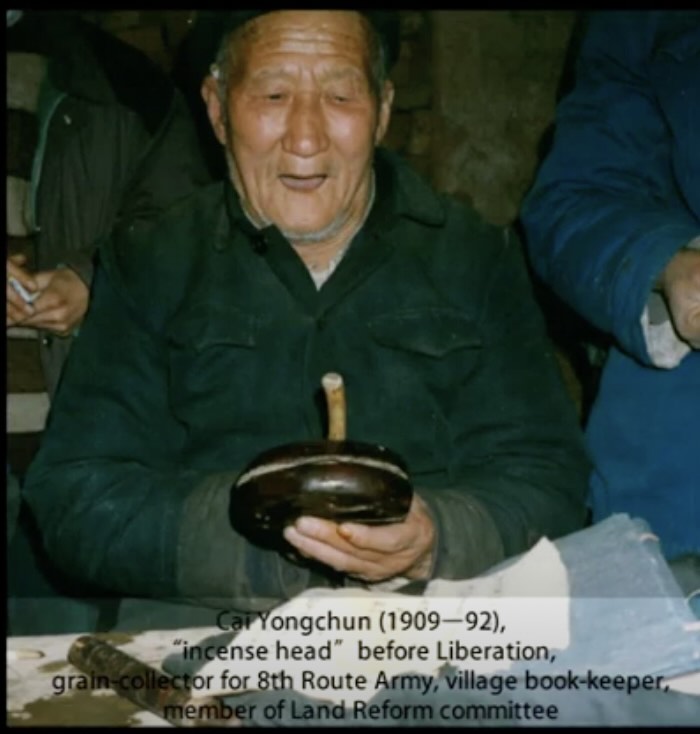
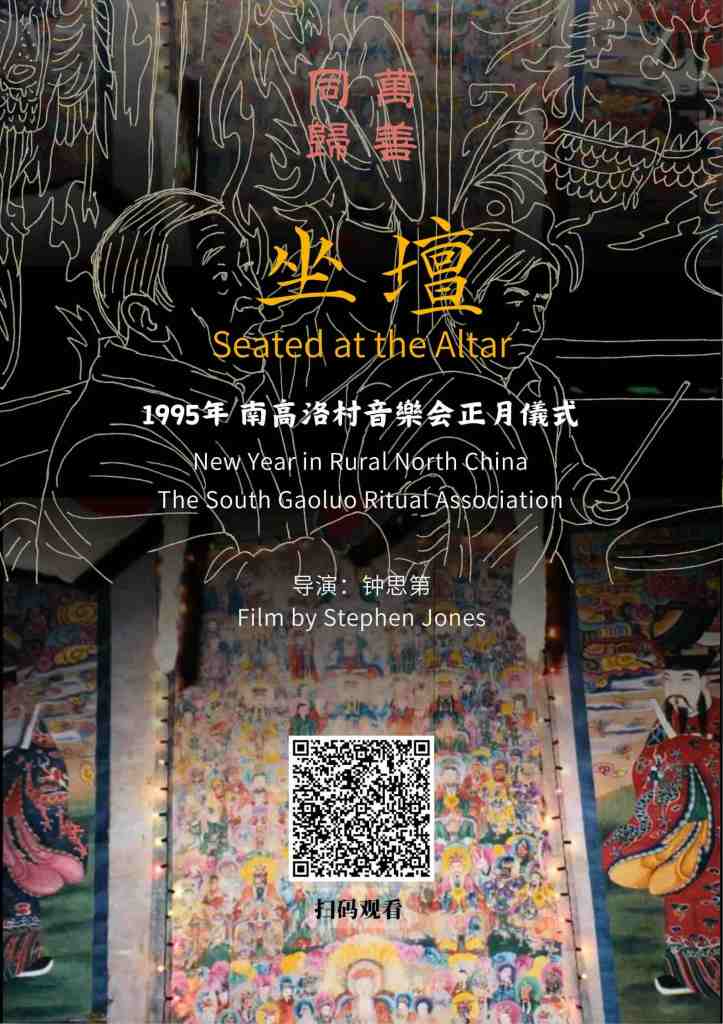


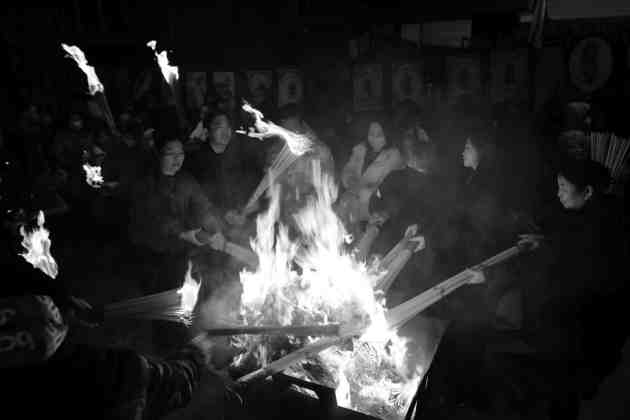


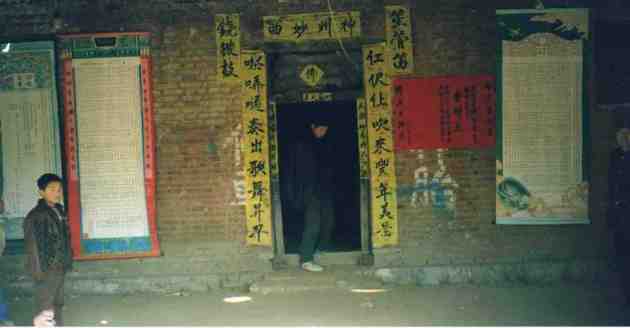
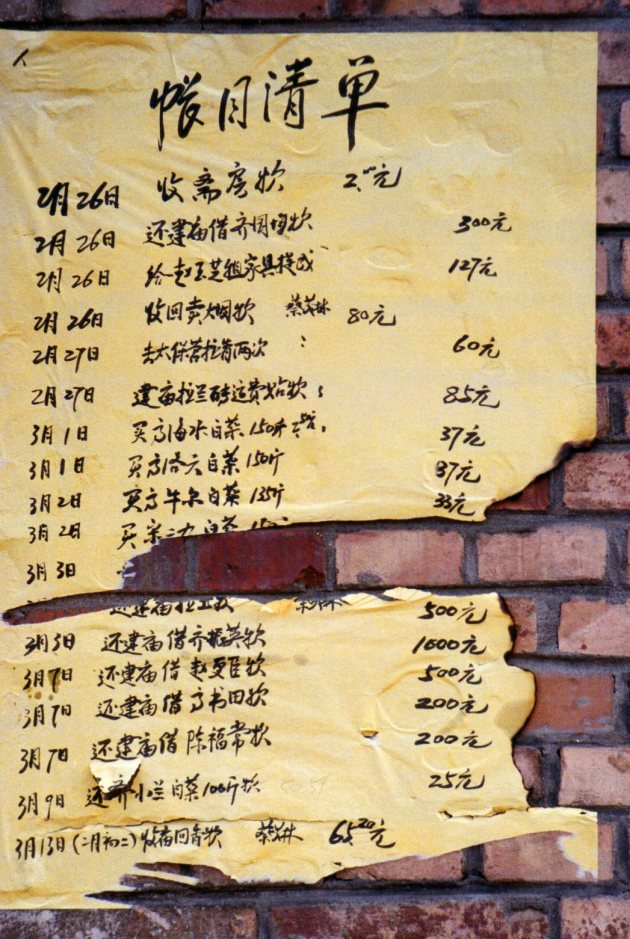

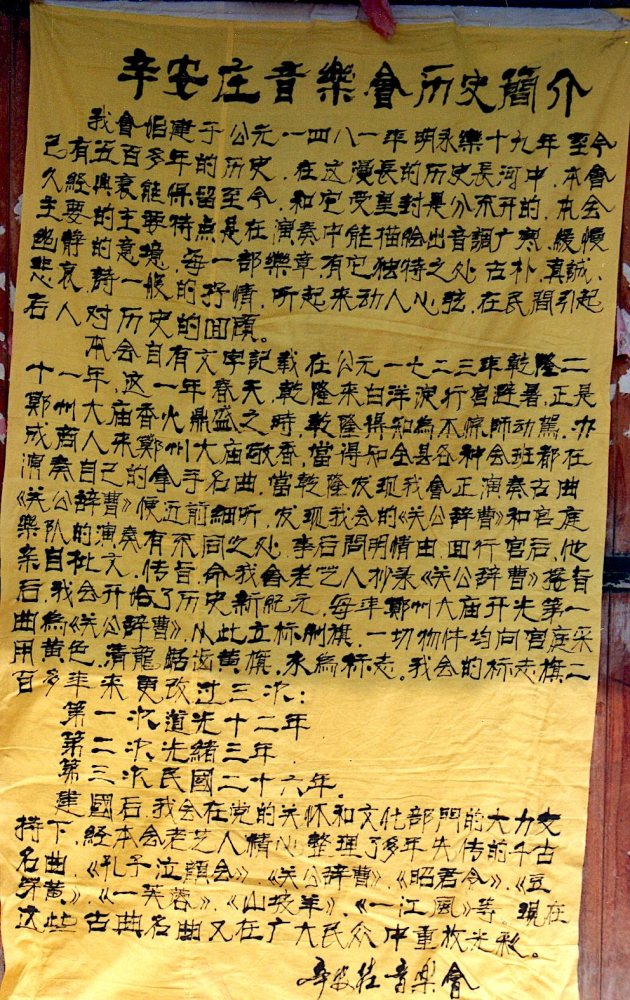


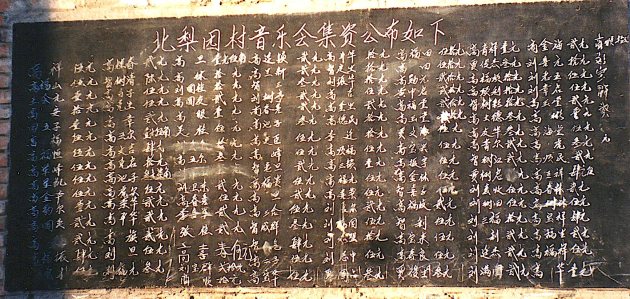
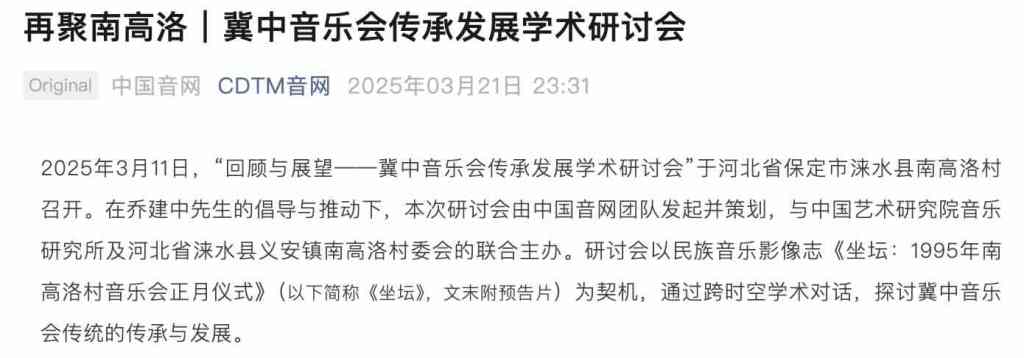


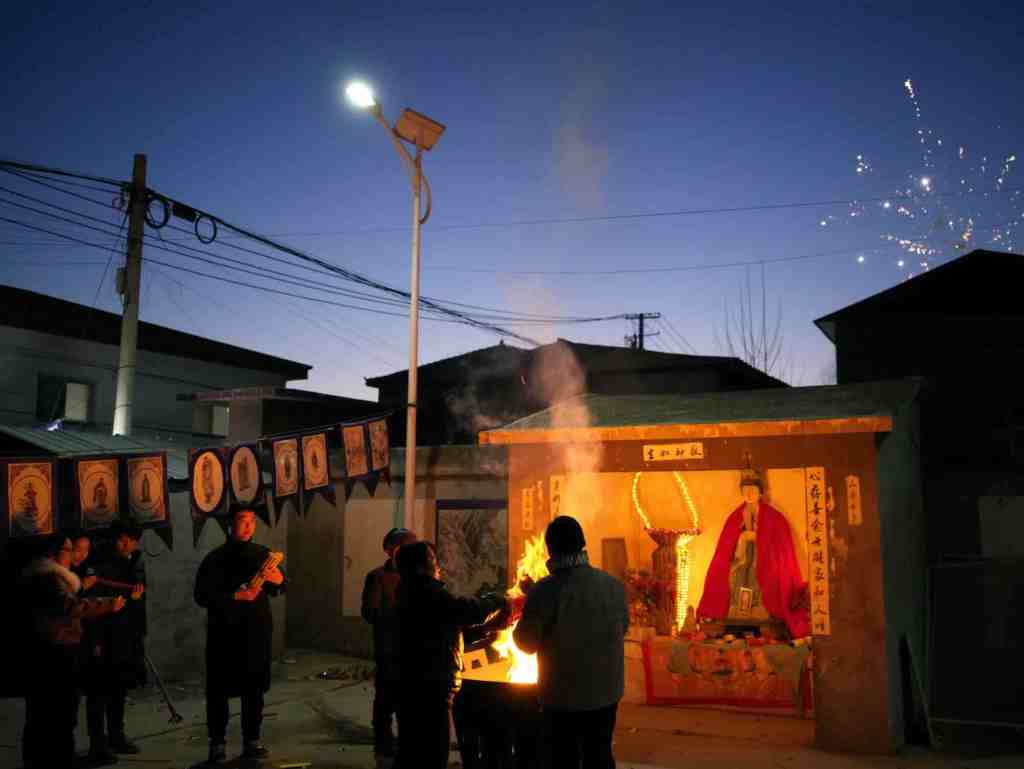


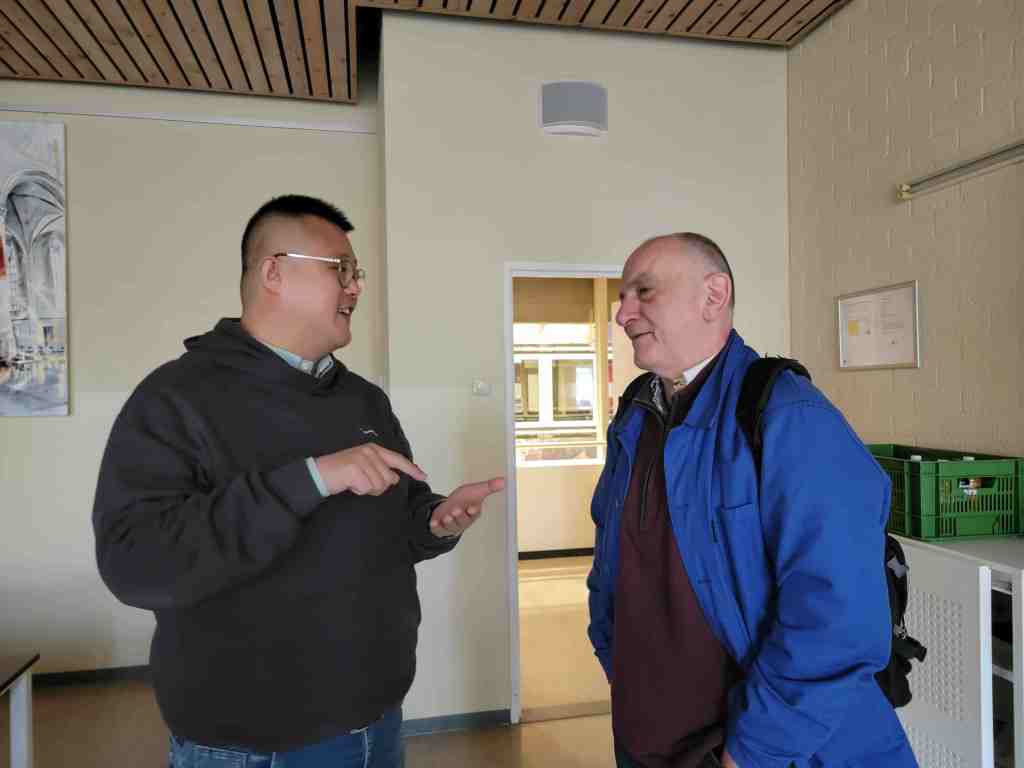

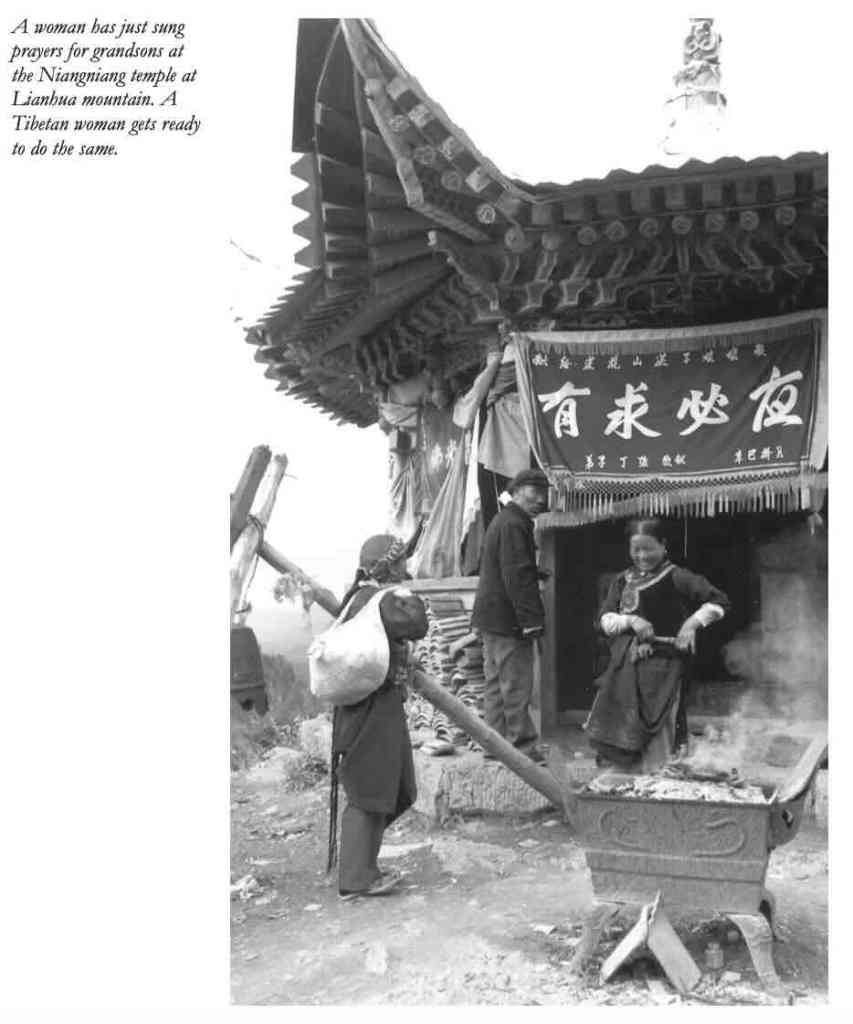

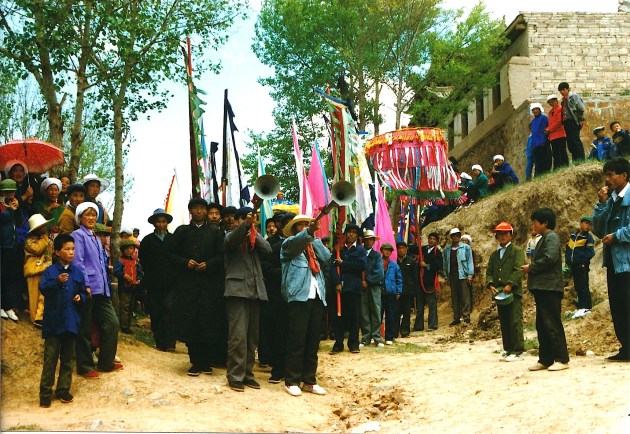


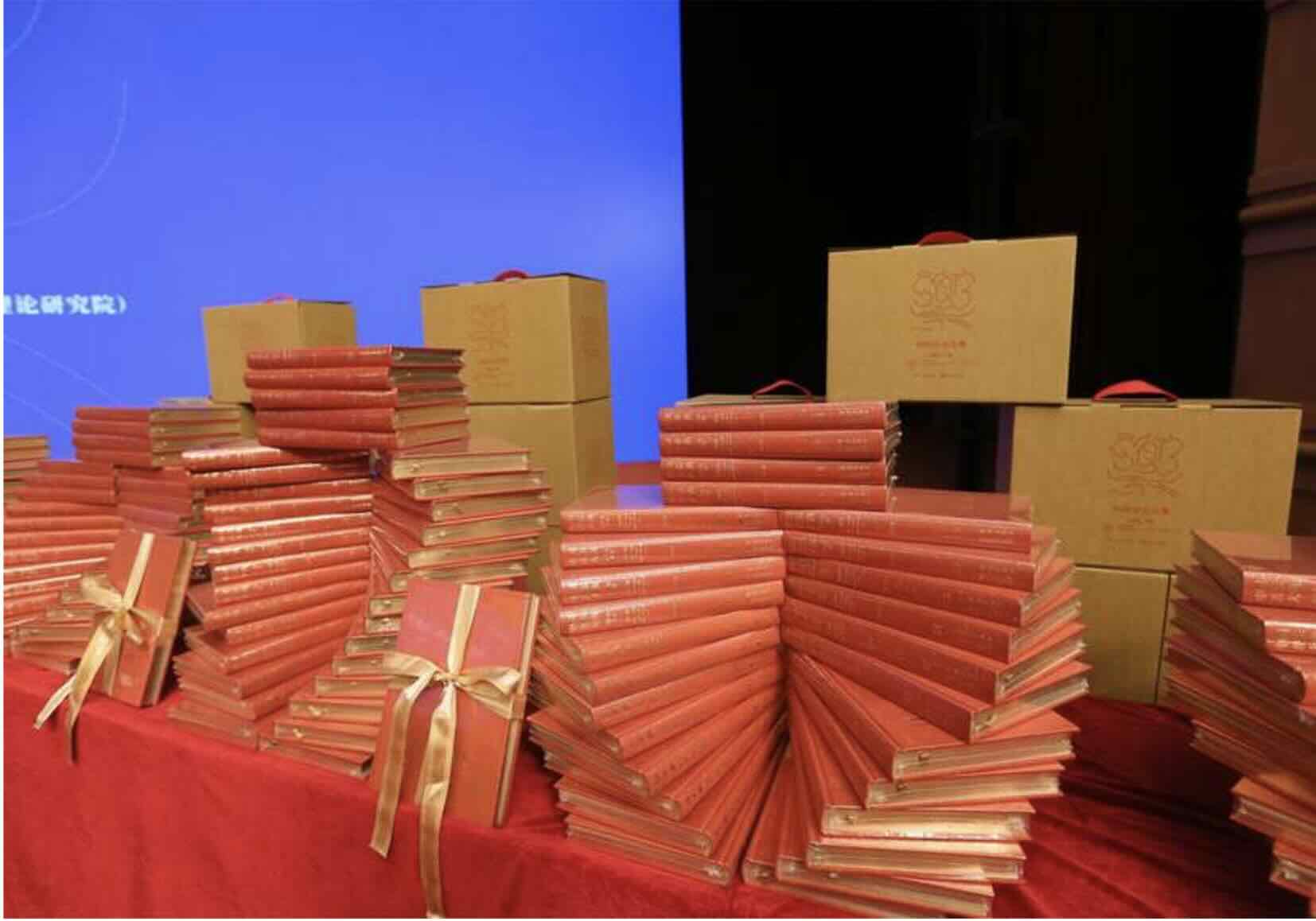
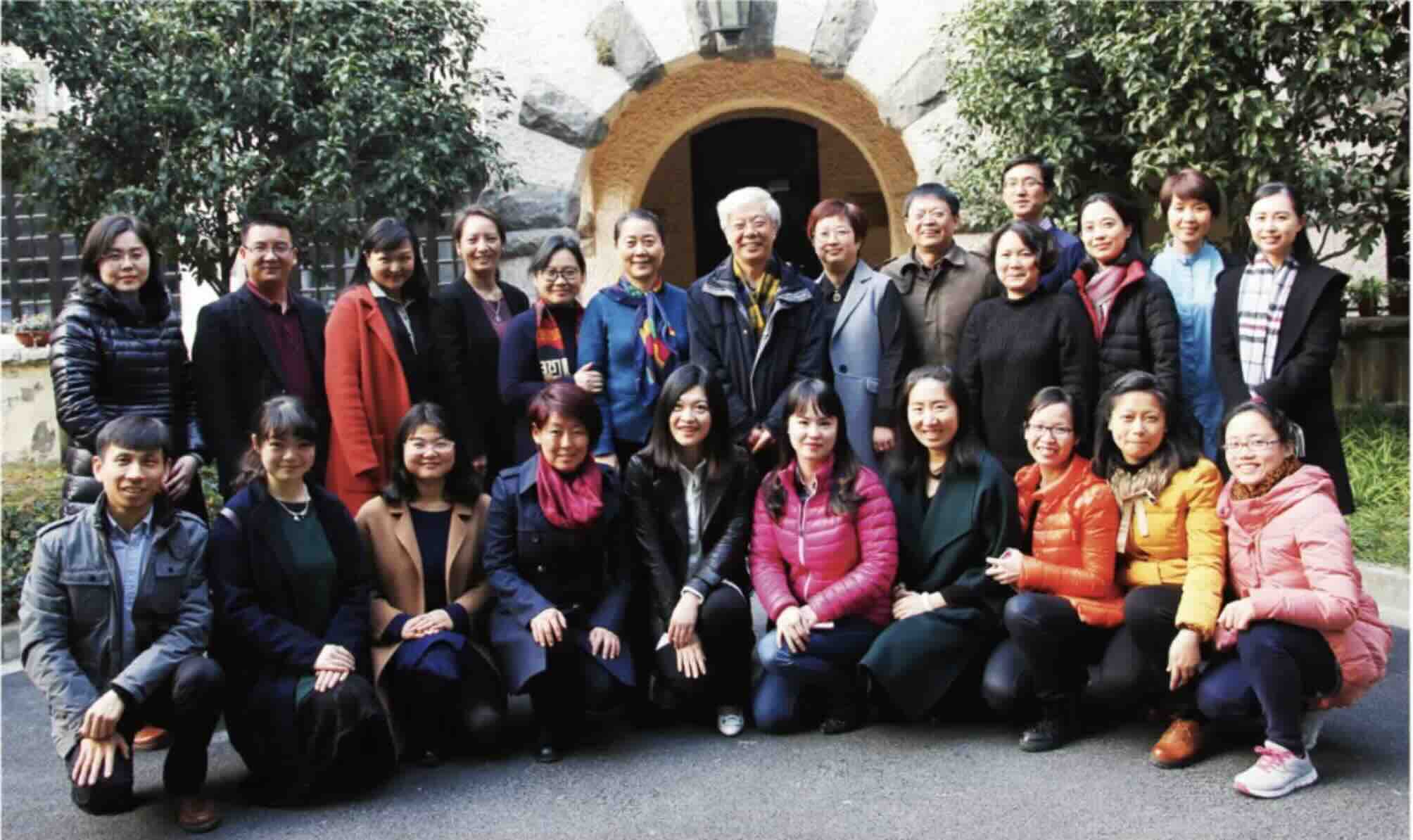 The Yuepu bian team, 2017.
 Gongche score, West An’gezhuang village,


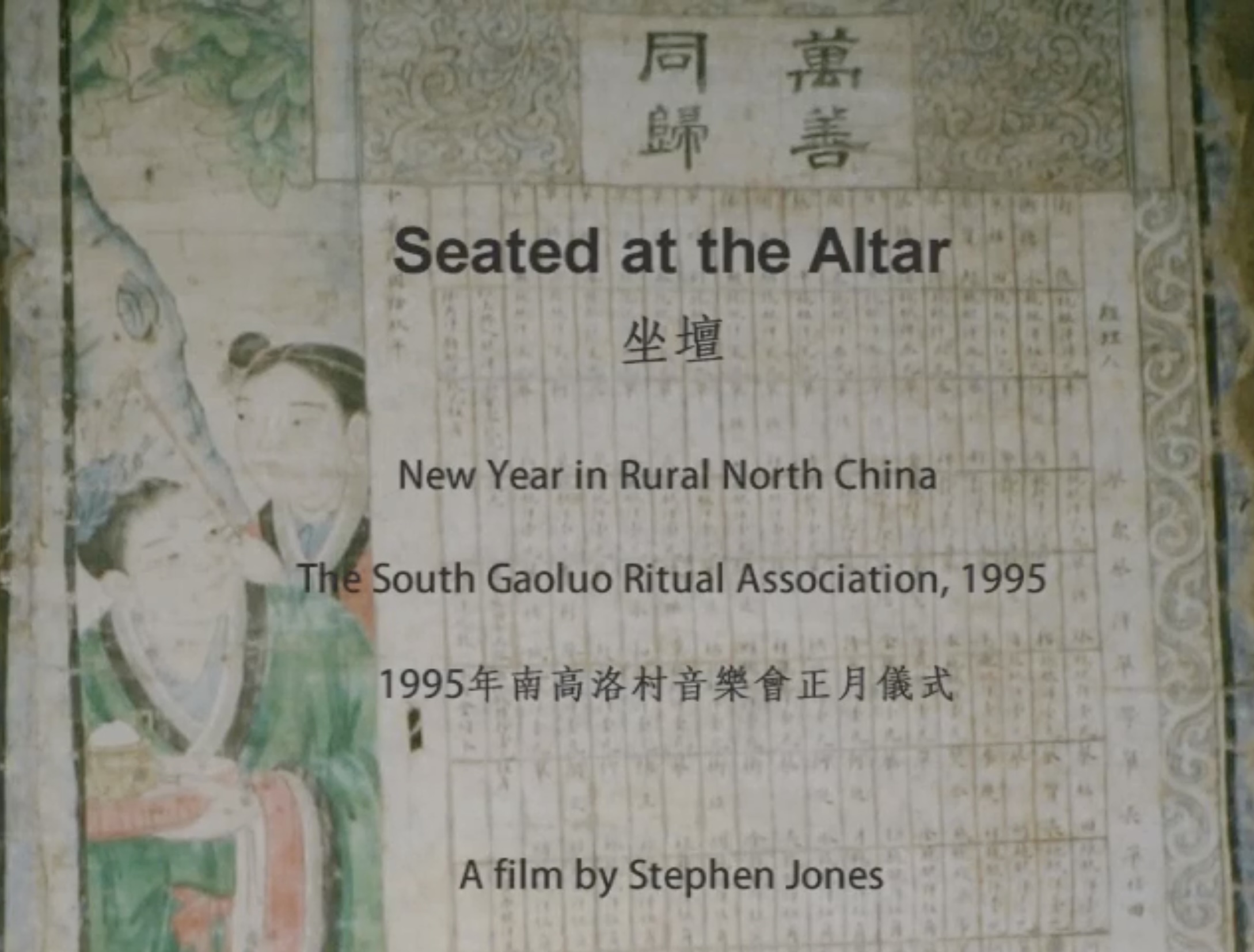

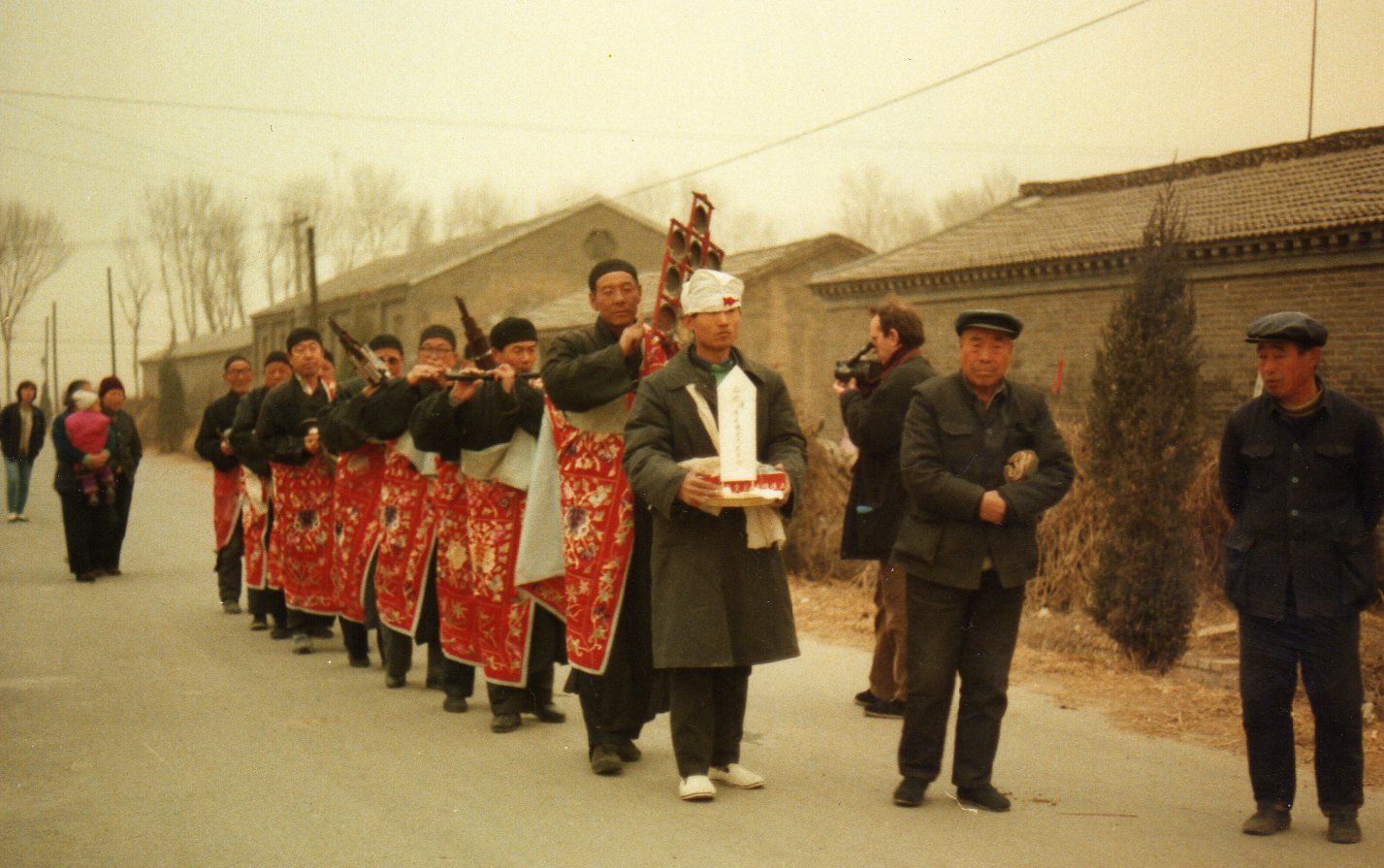 Early morning procession to the soul hall, North Xinzhuang 1995. Photo: Du Yaxiong.
 Henan municipalities.


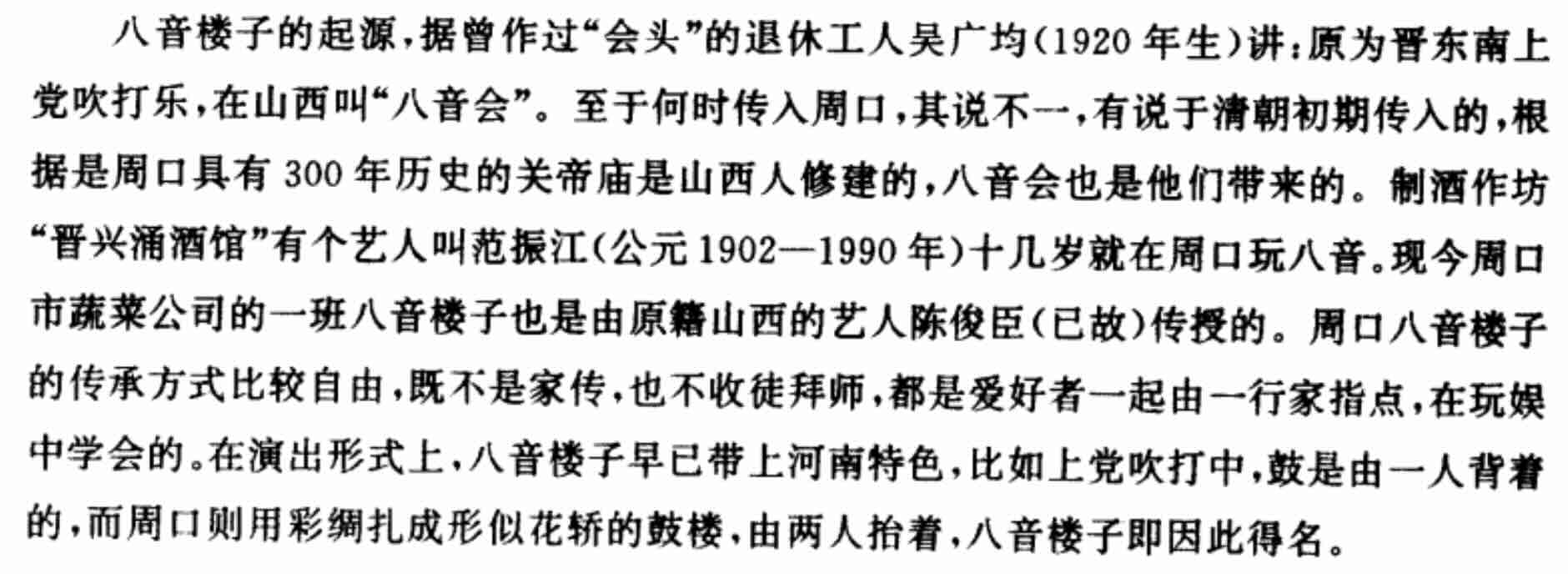

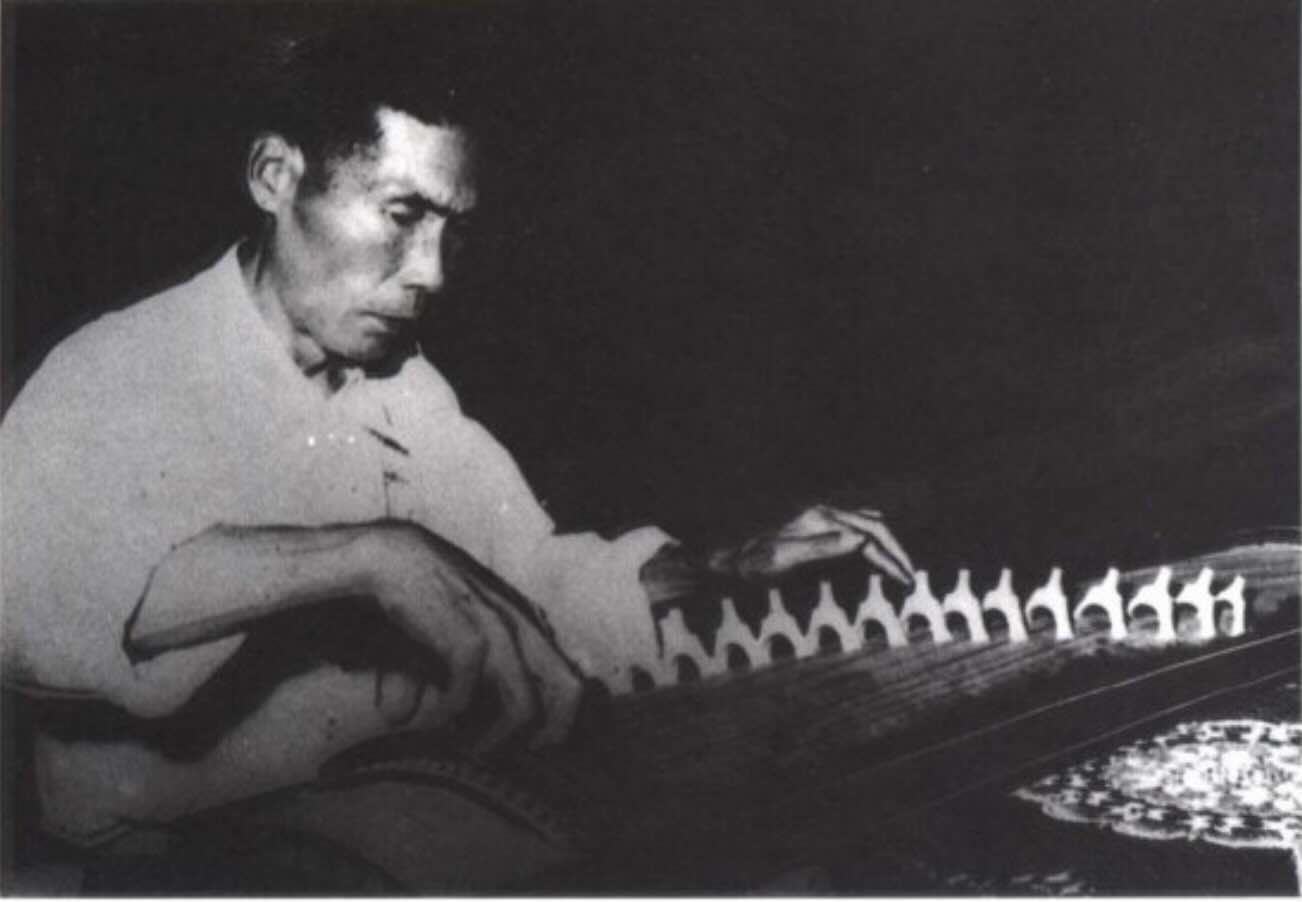
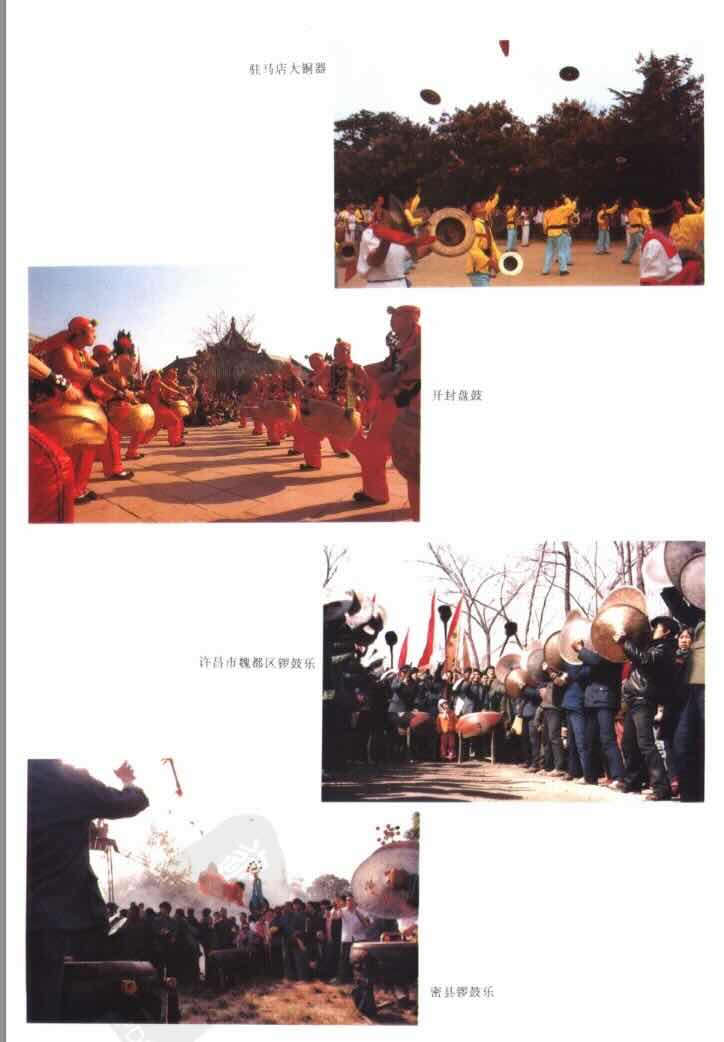

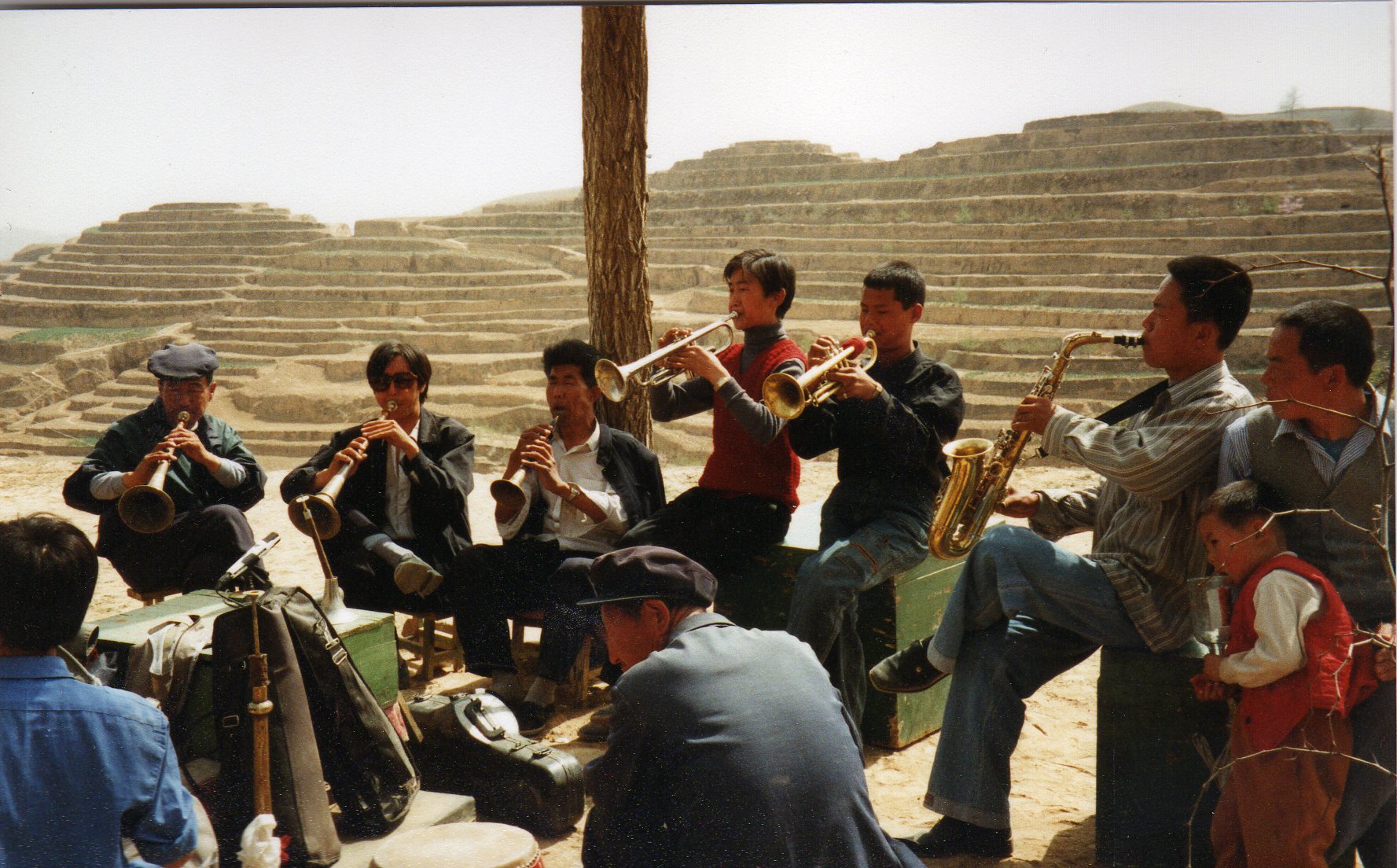 Chang Wenzhou’s big band at village funeral, Mizhi 2001.


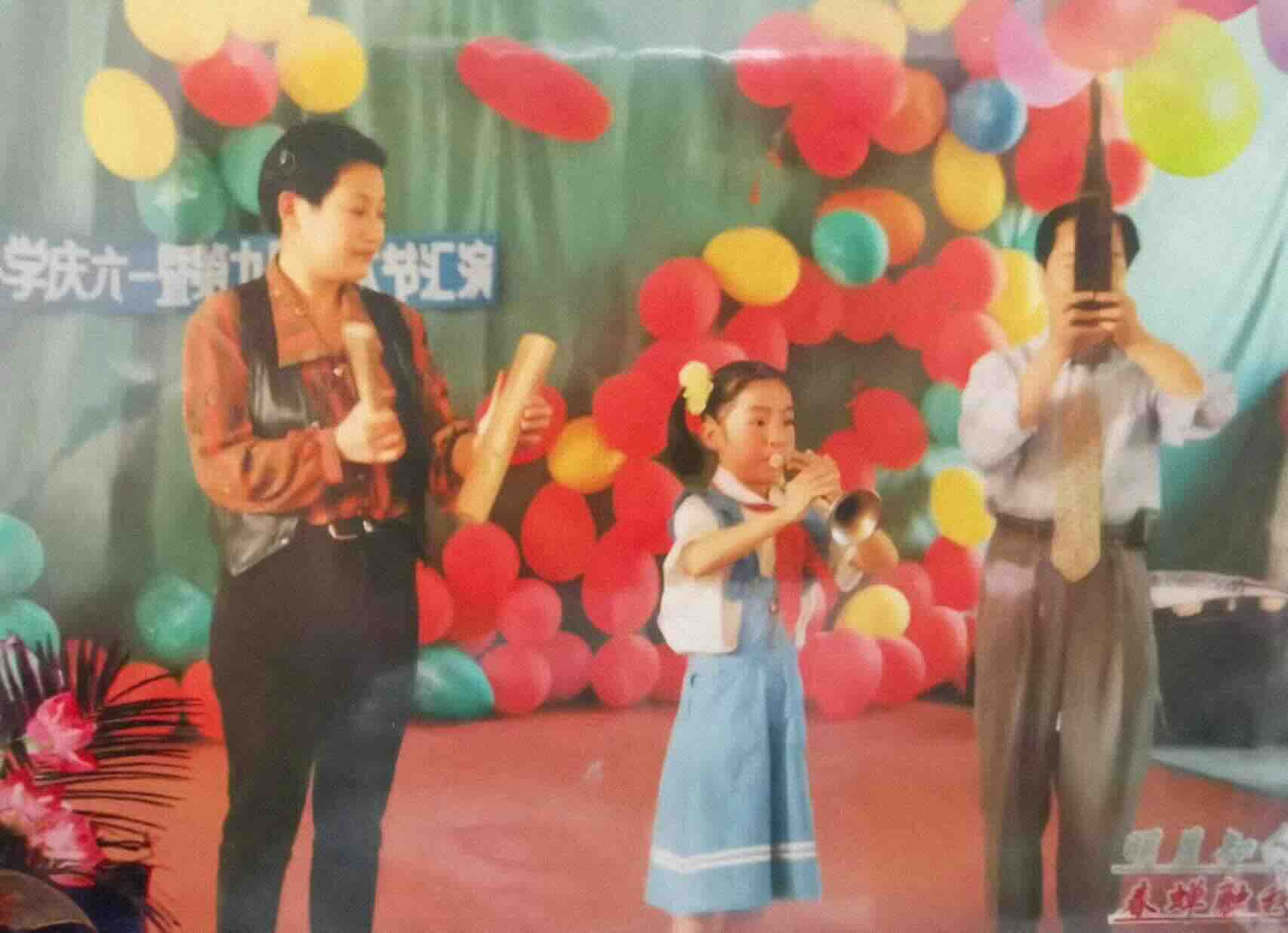 A young Liu Wenwen performs with her parents.

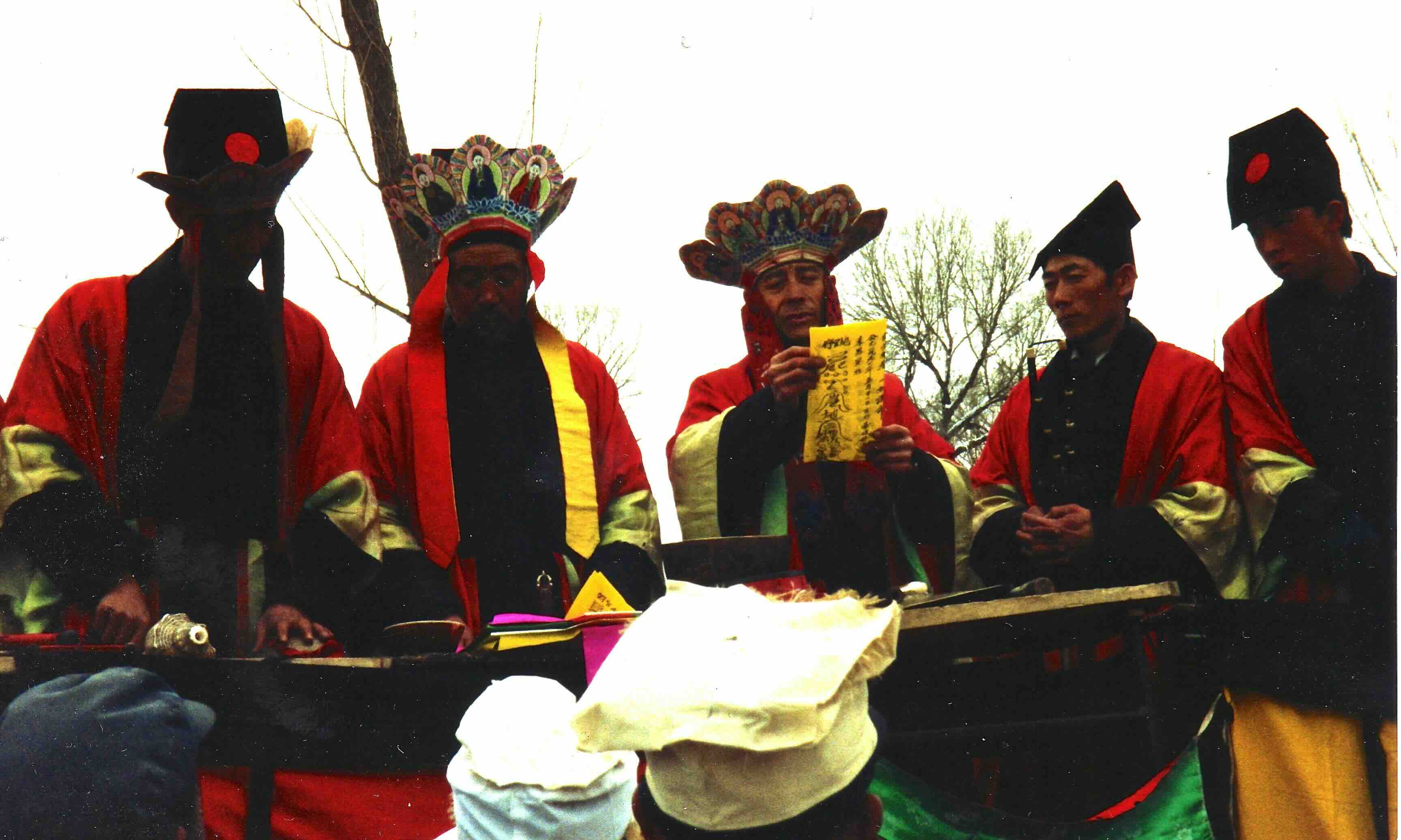 The Li family Daoists perform the
  Li Wencheng in 2021. Cool trousers, eh. Source: Weibo.

 Li Peisen’s cave-dwelling in Yang Pagoda village.
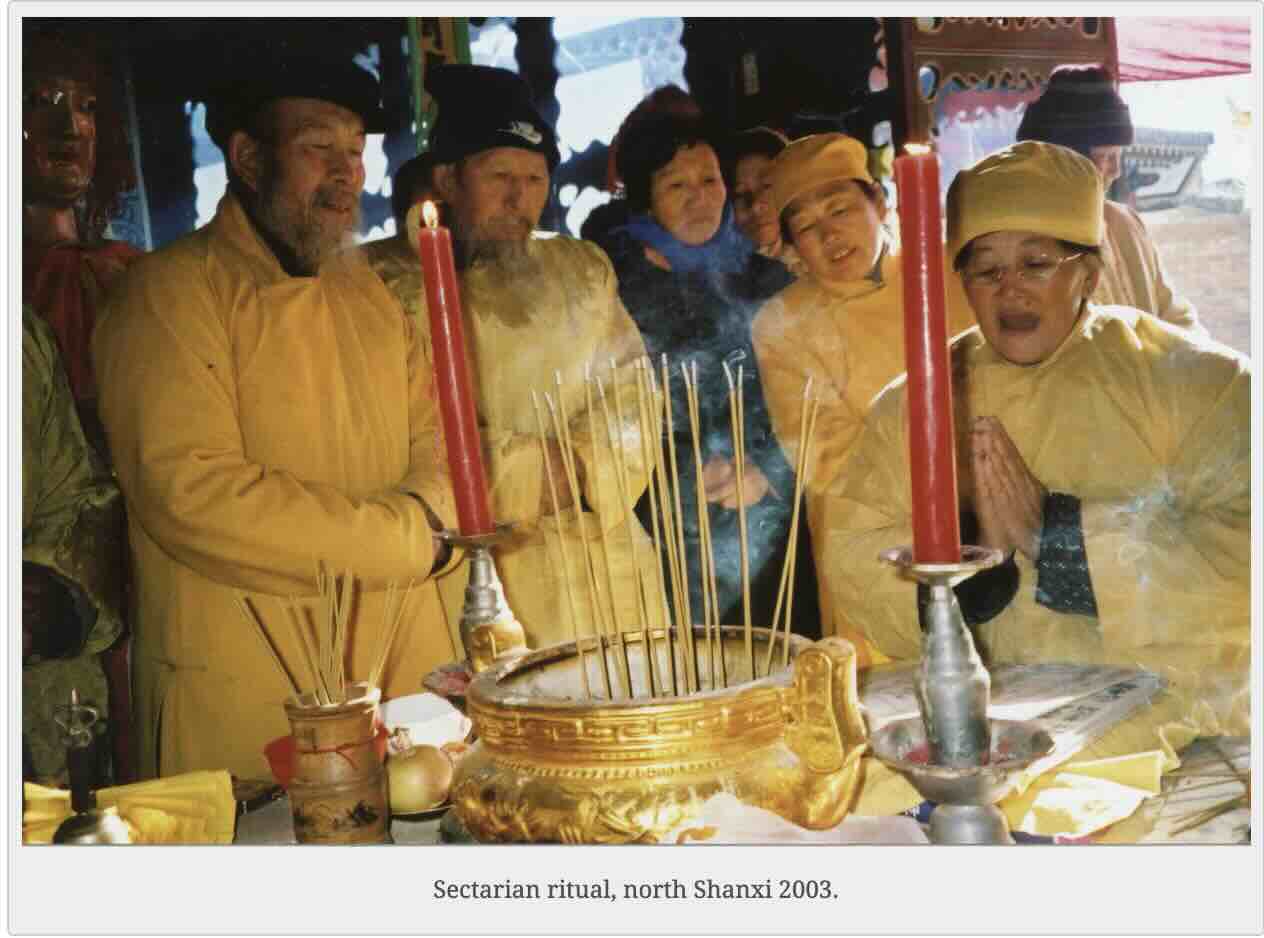

 Great Open-air Offering ritual, White Cloud Temple, Beijing 1993.


 Nao and bo cymbals of the Tianxing dharma-drumming association,
 Shifan band, 1930s.
 Jinmen baojia tu shuo (1846).

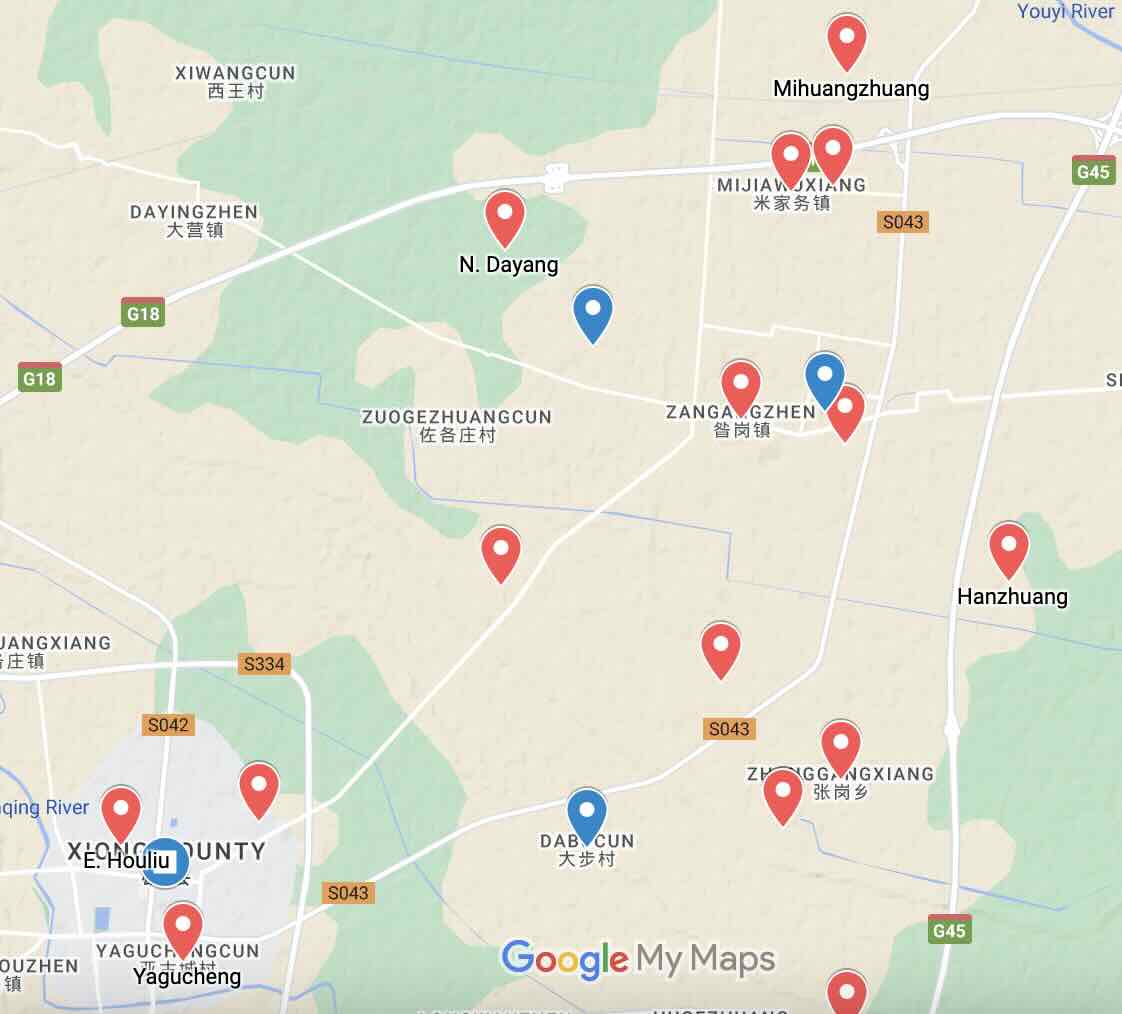
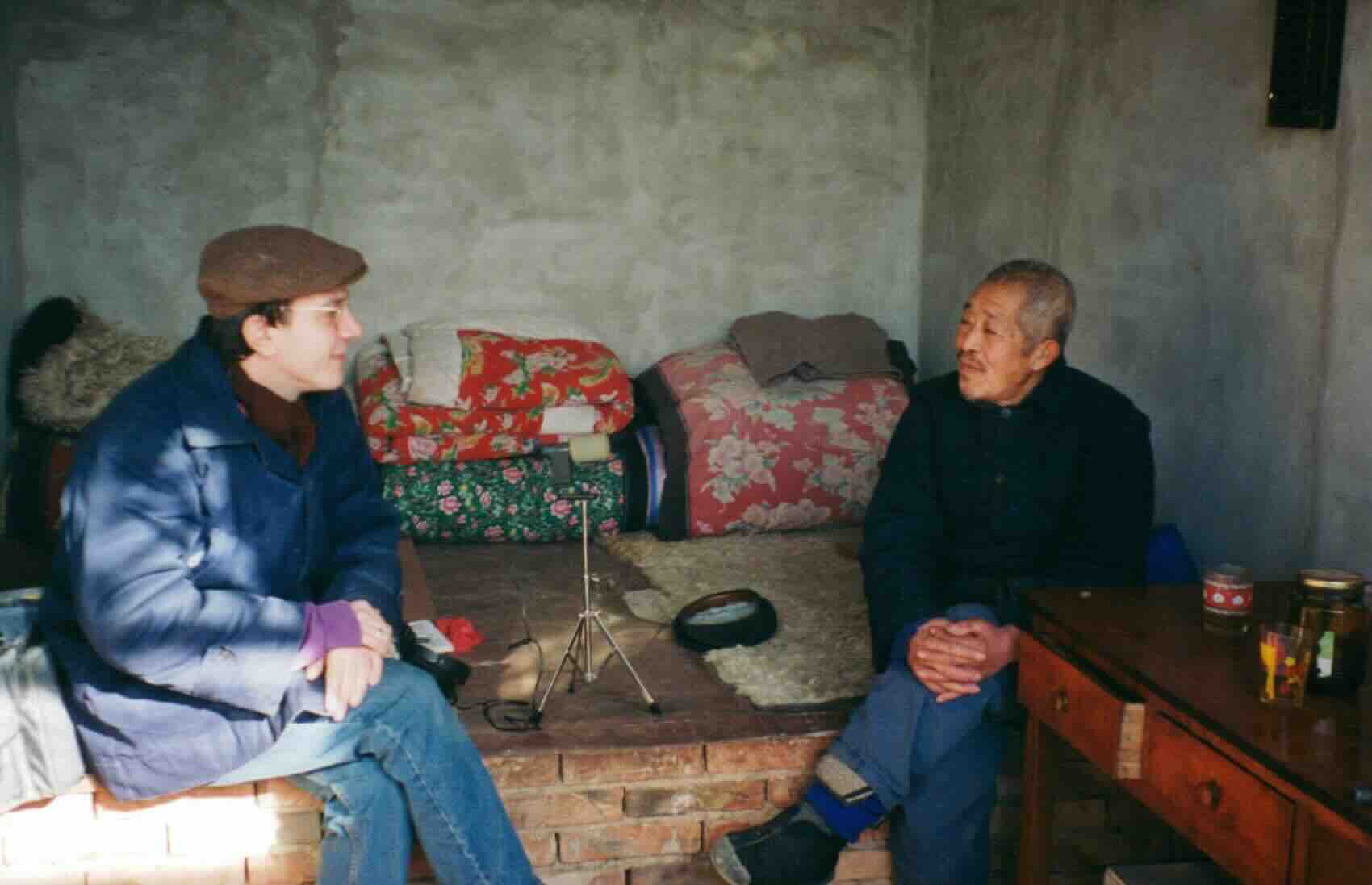
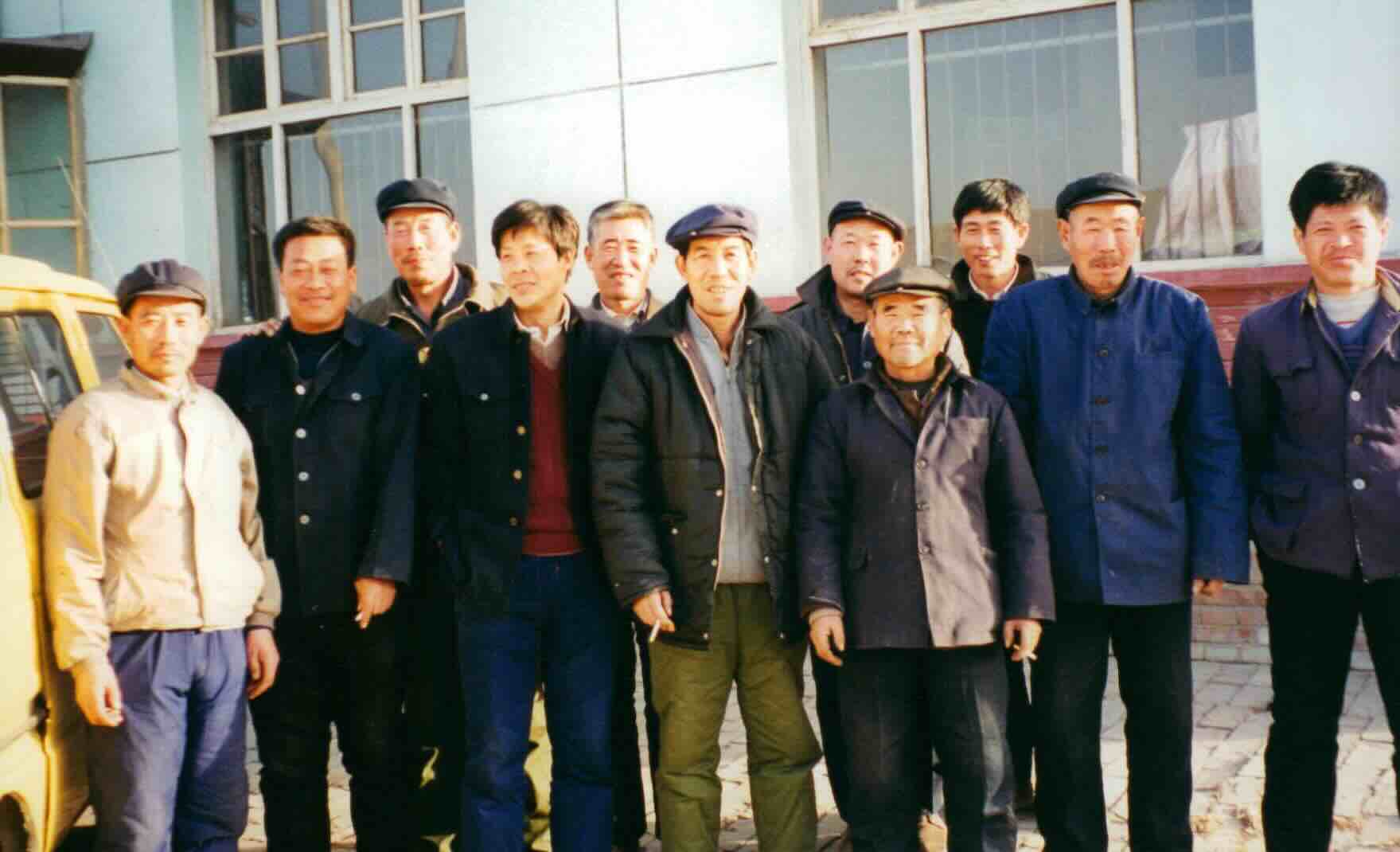 Some association members.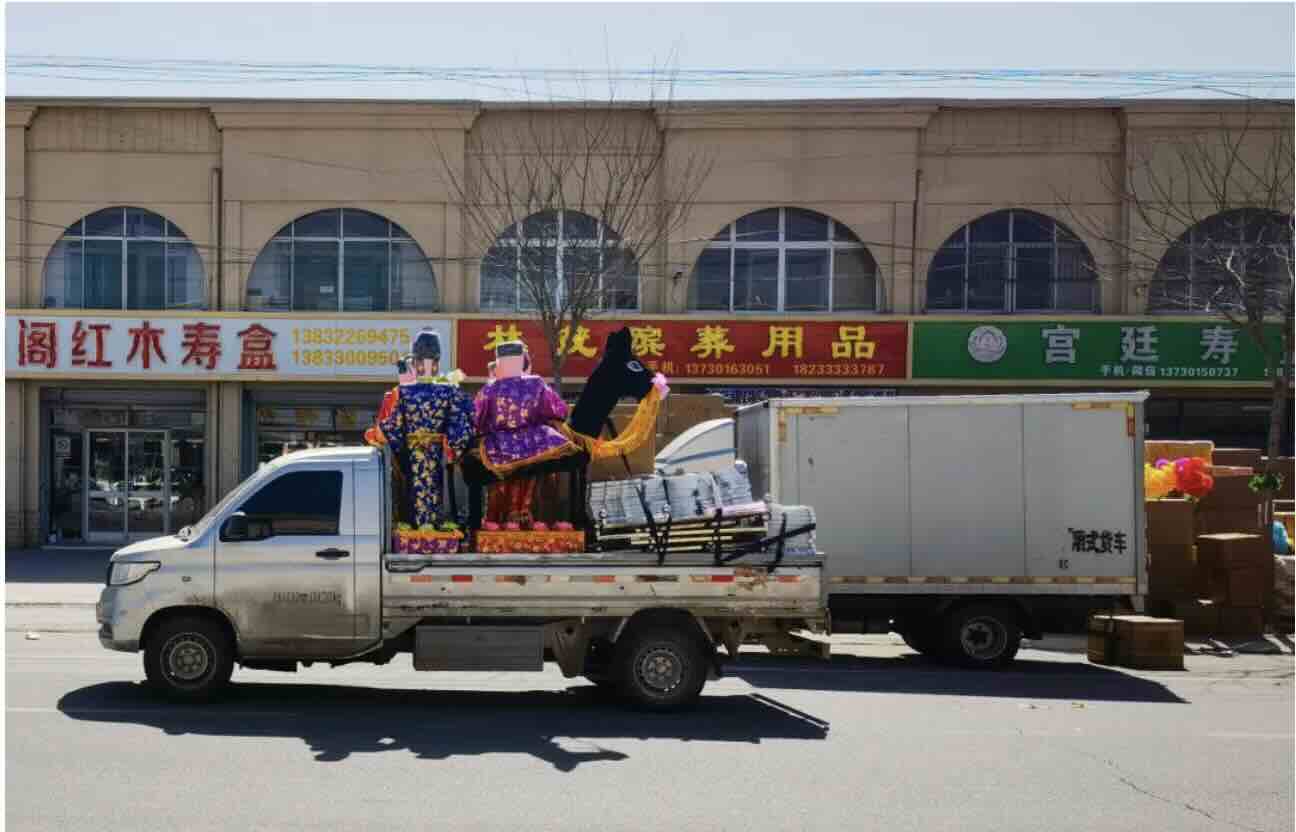
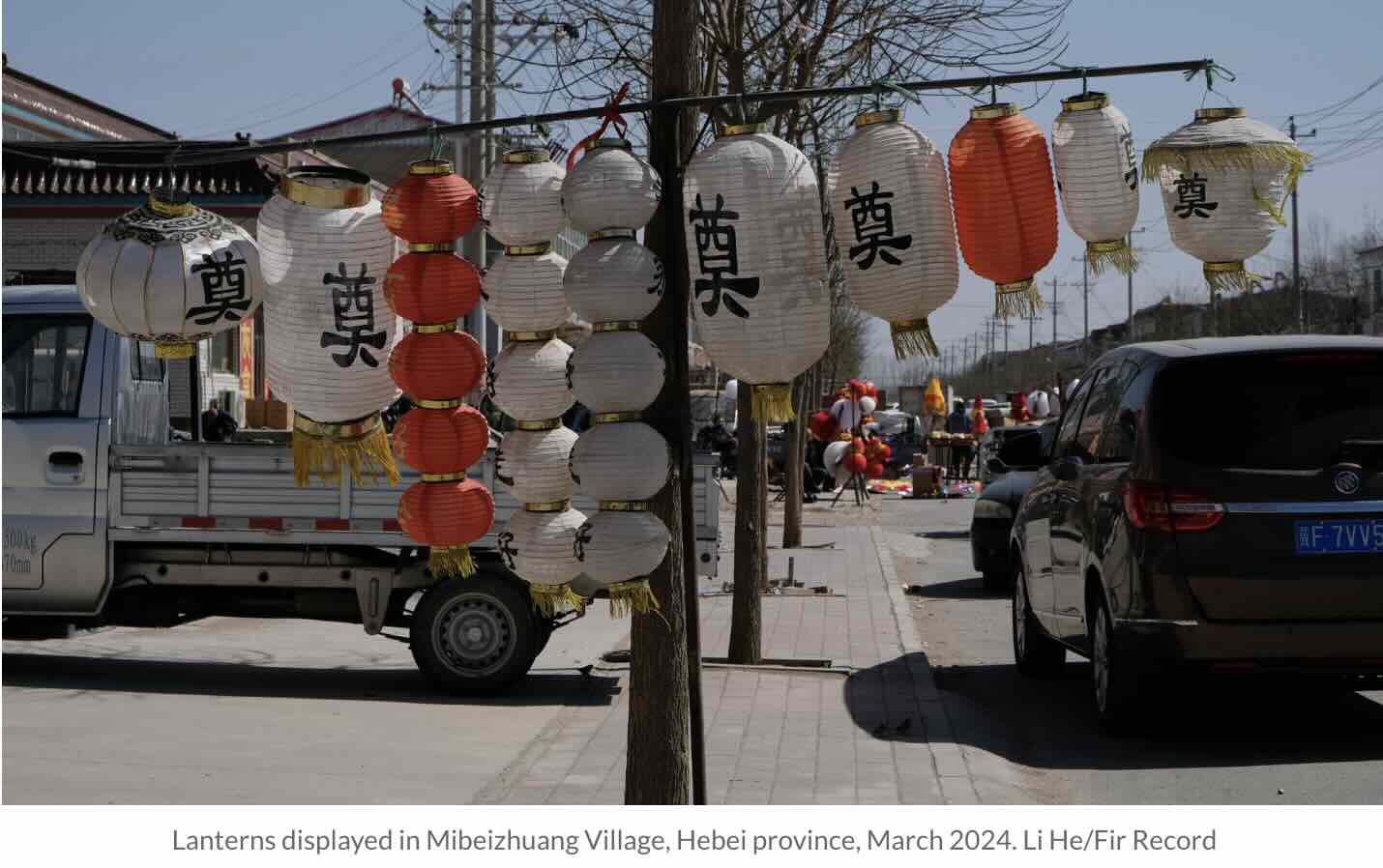


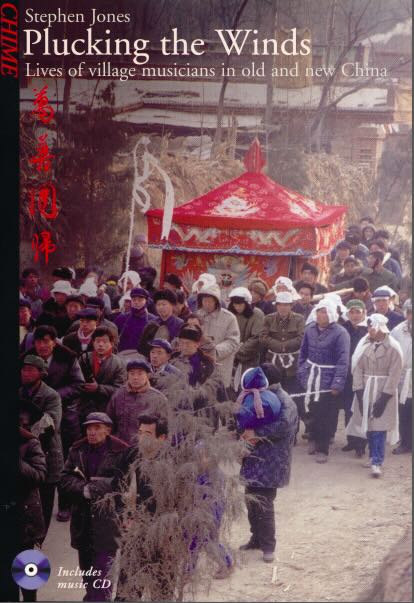




 Scene from the Great Improvement of Luck ritual:
 The Wei Yuan Altar 威遠壇 in suburban Taipei,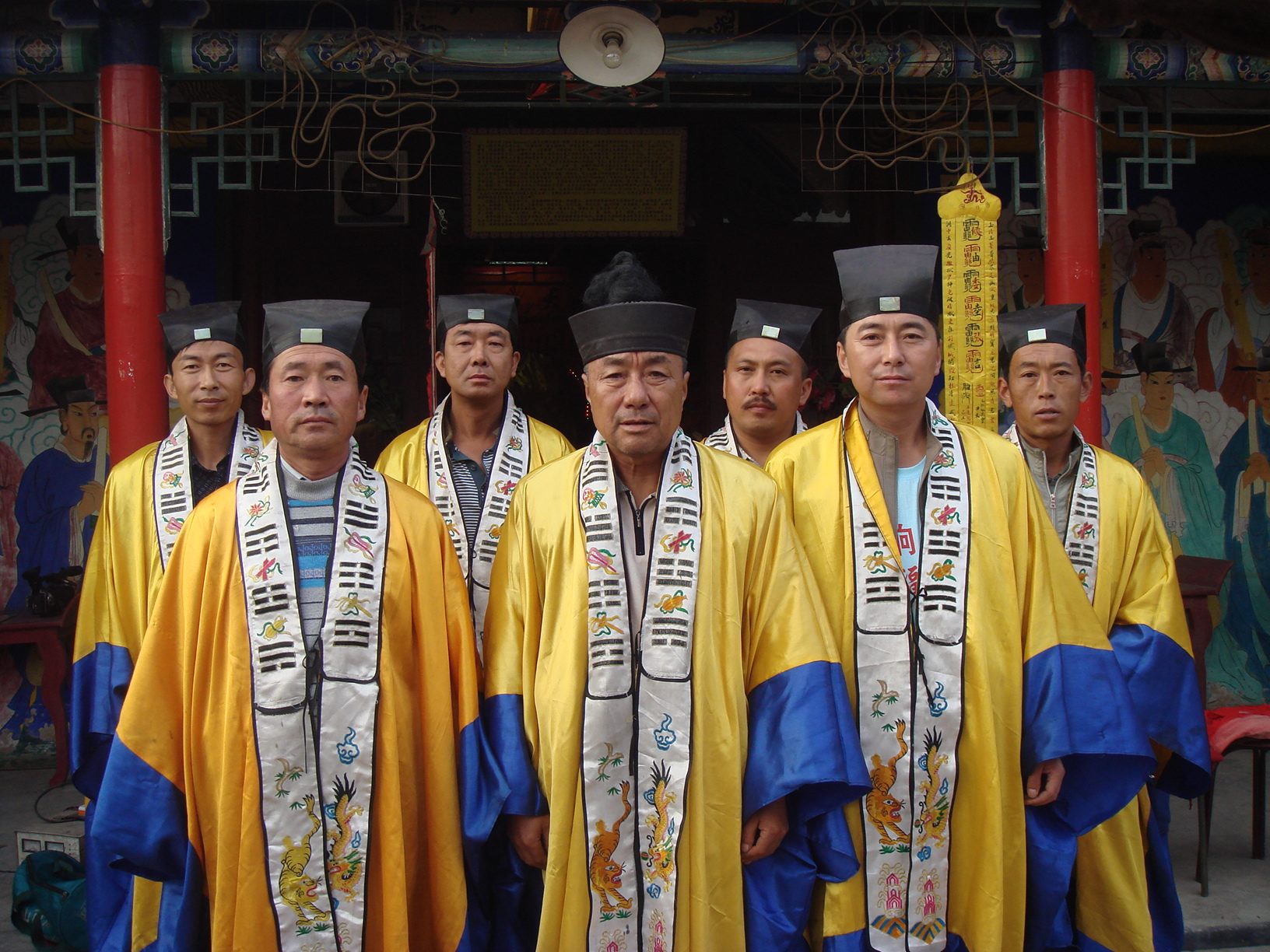


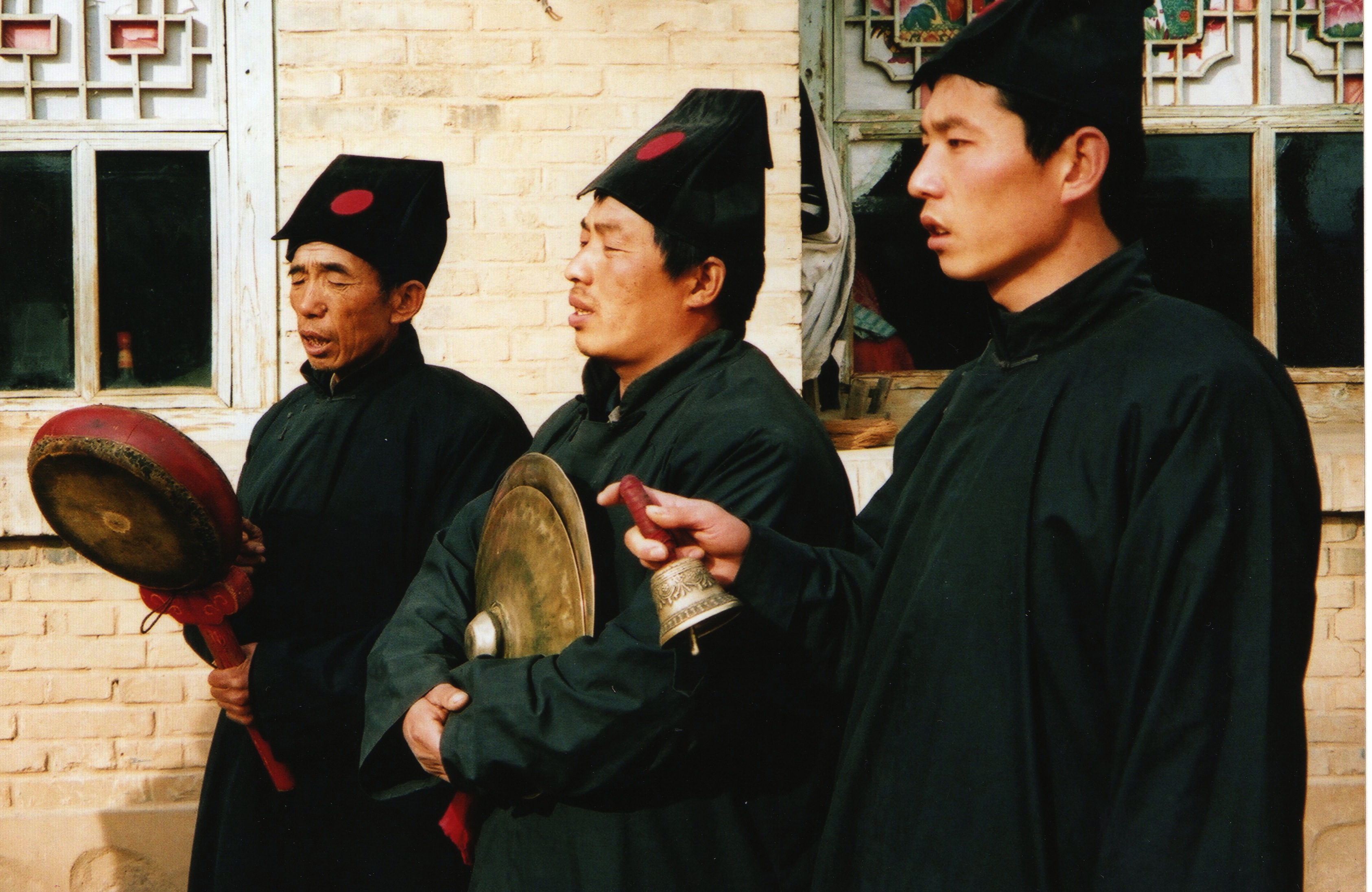
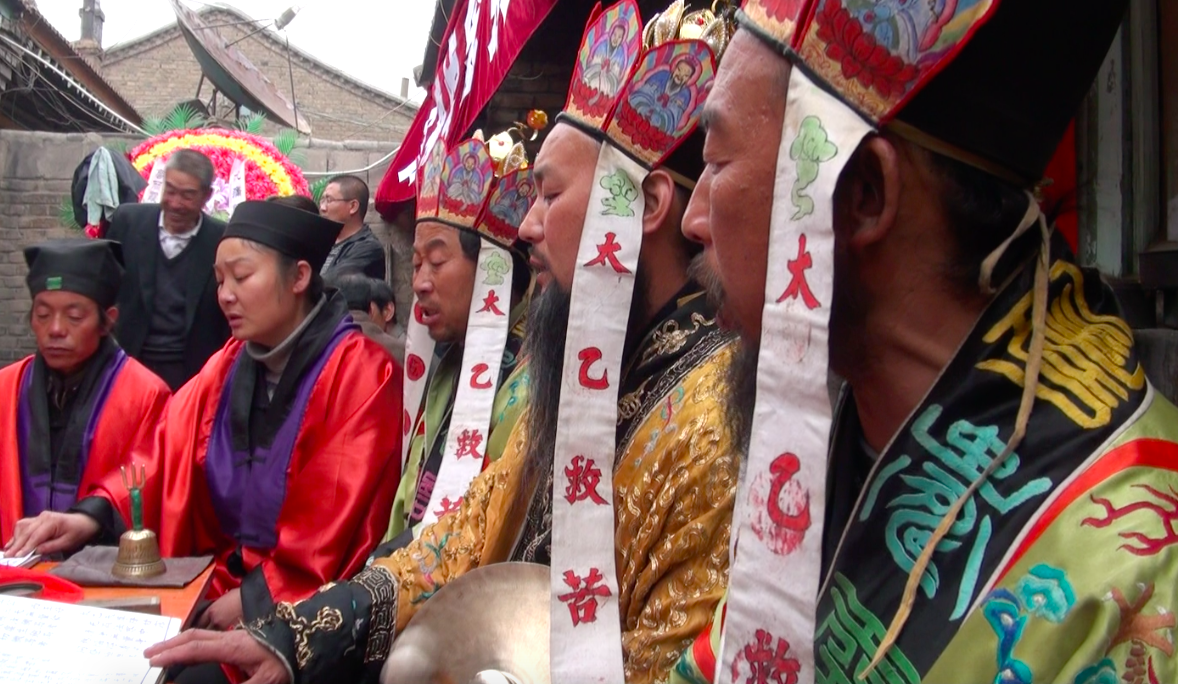


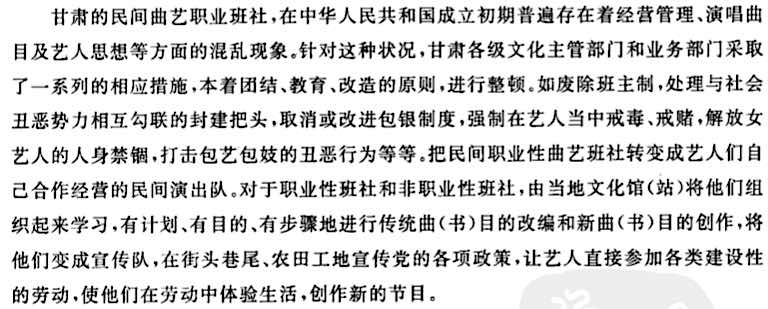
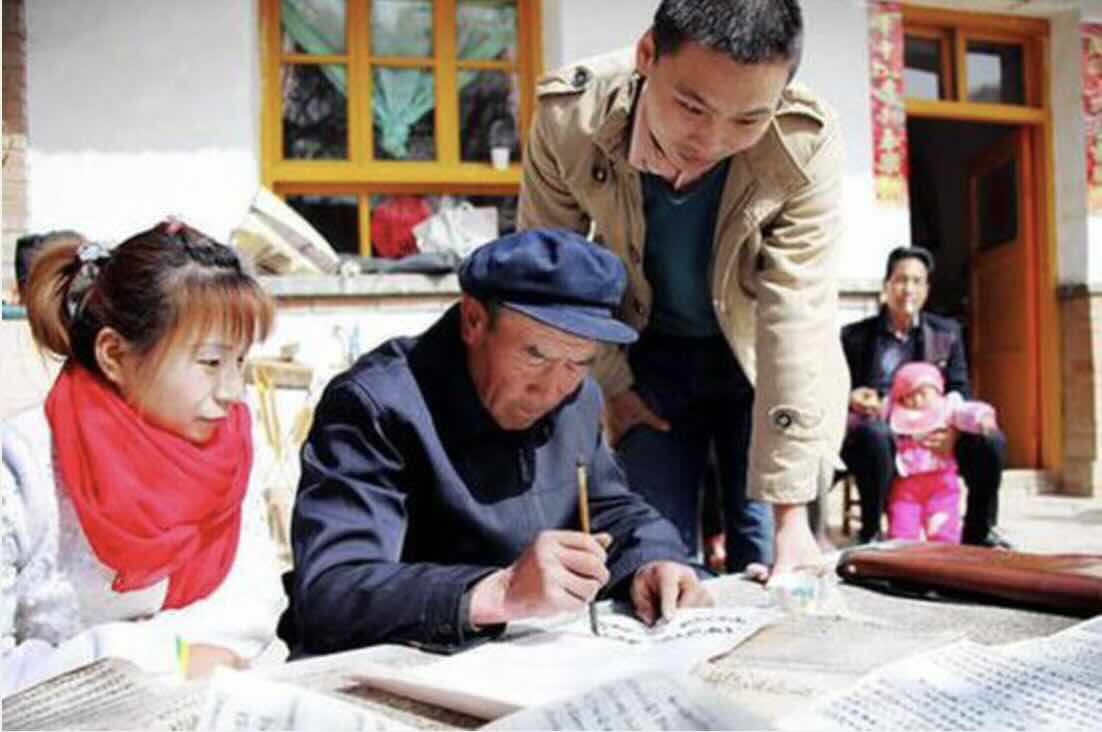


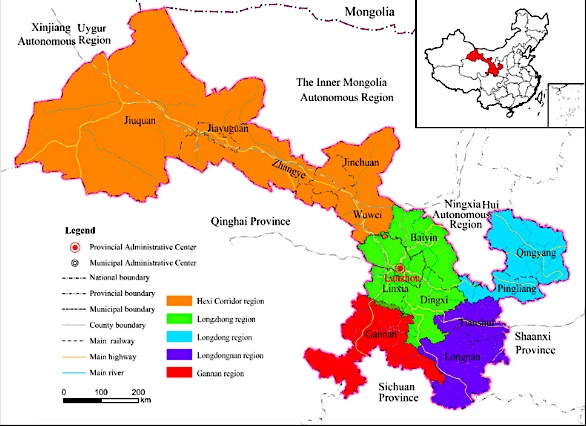


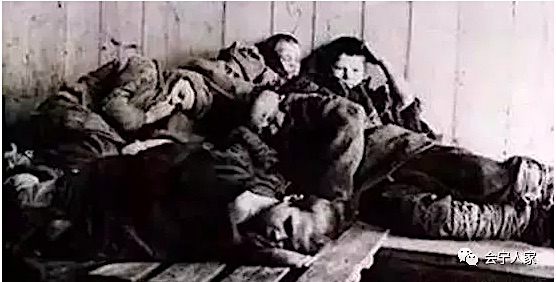


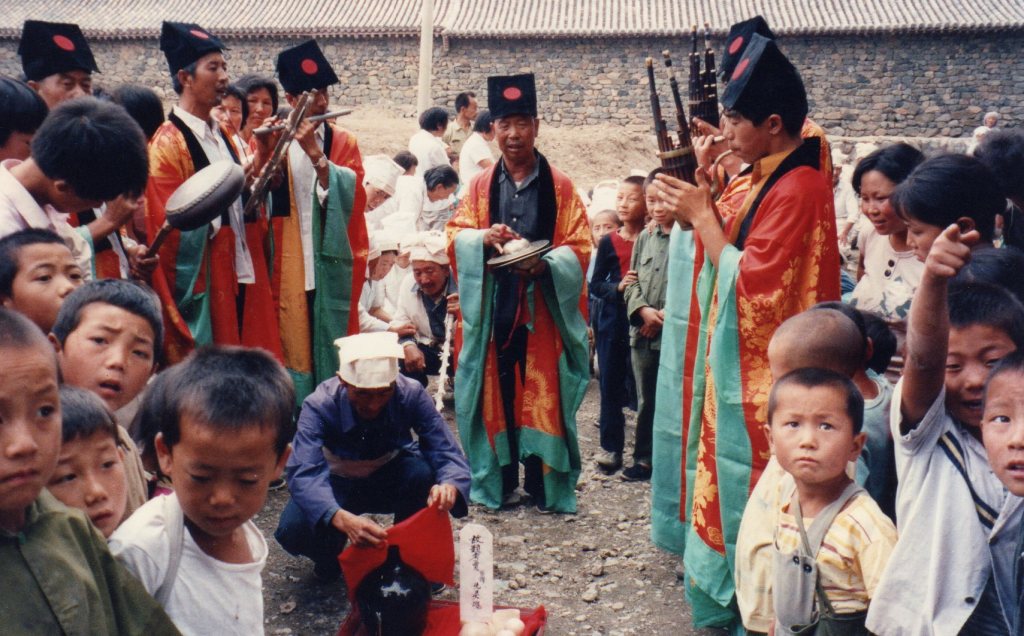
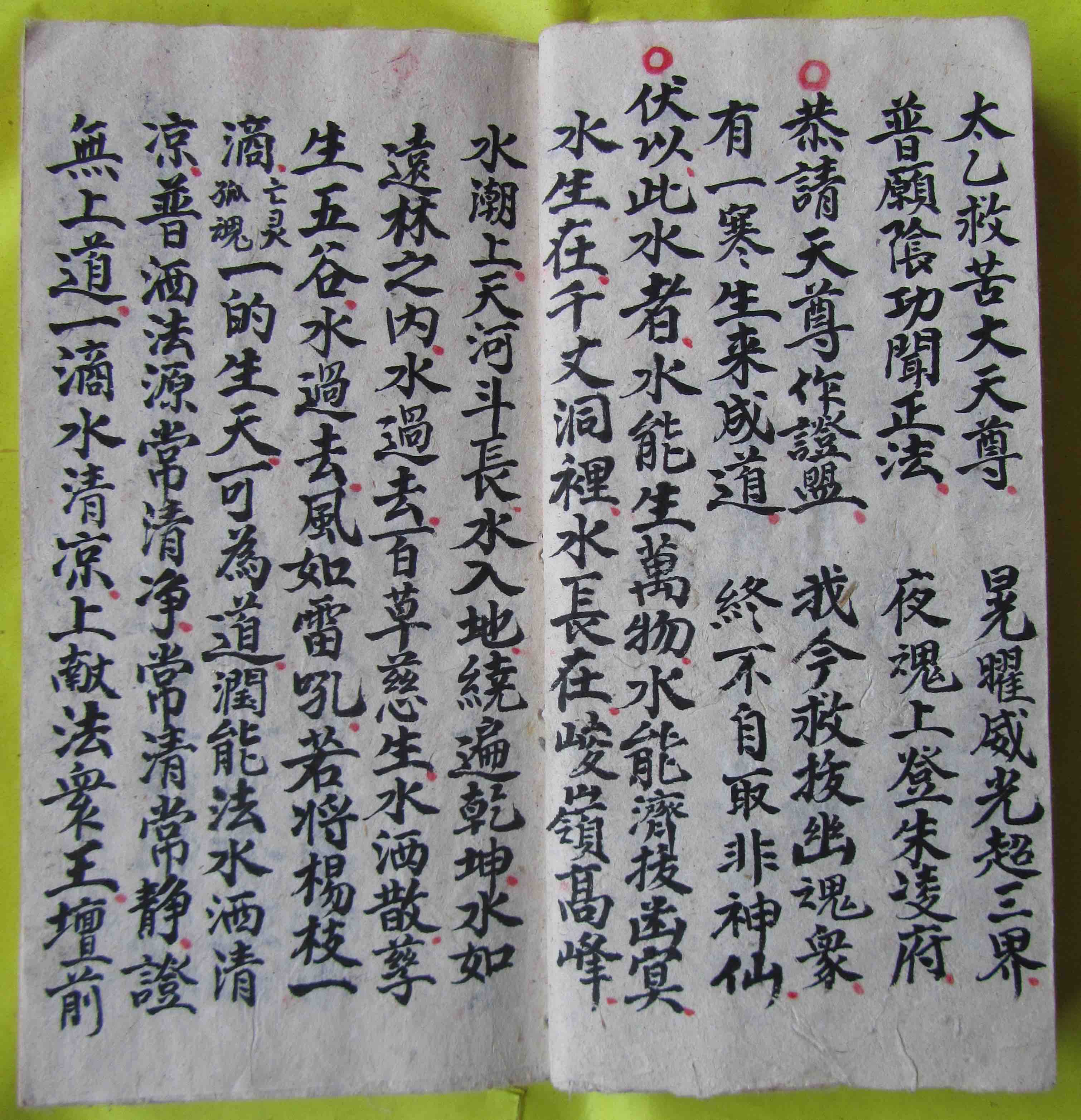
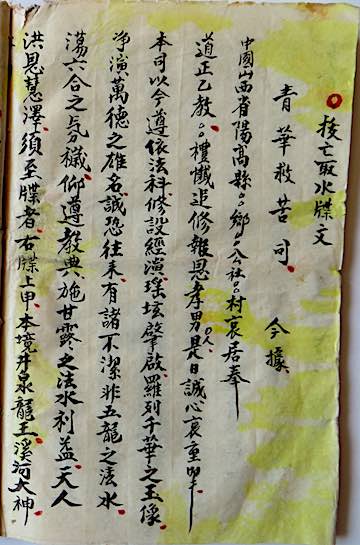
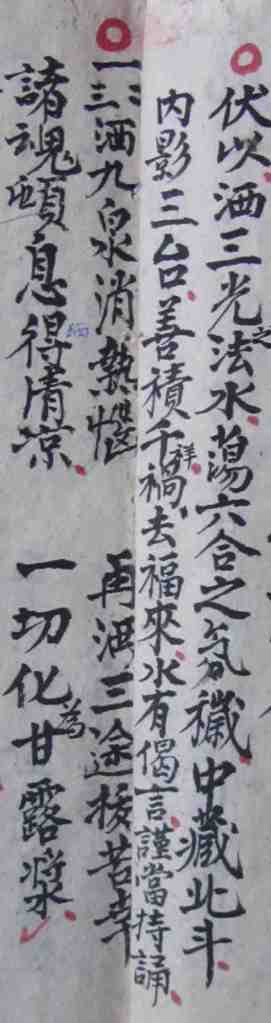
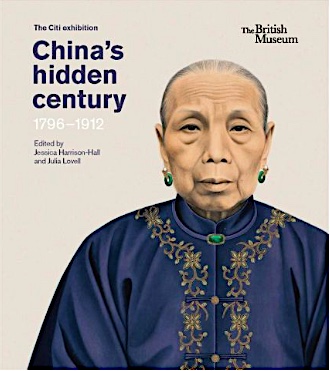
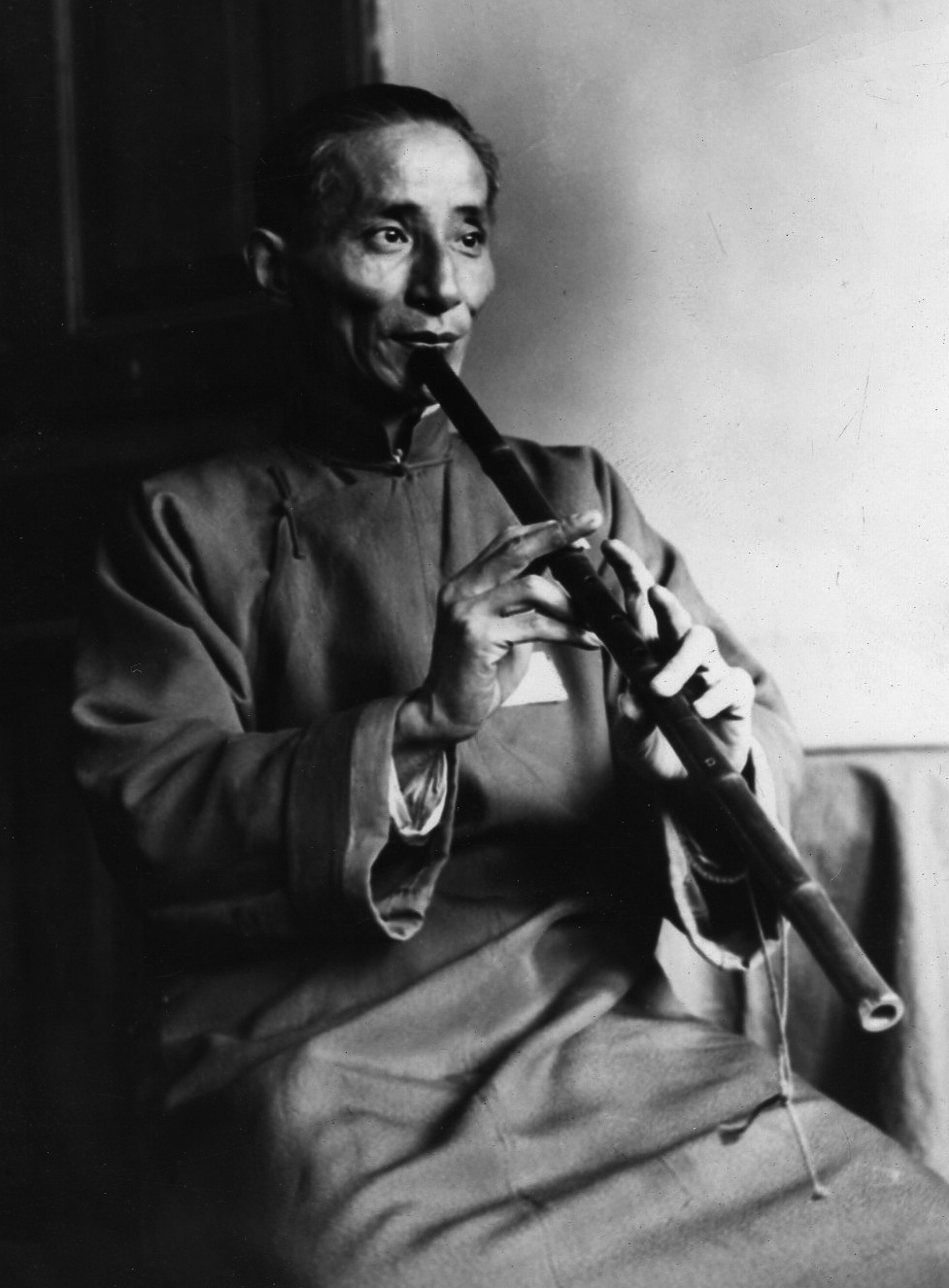 So I’m grateful to the exhibition for stimulating me to revisit some of my own material from the field. In this I’m always in awe of the incomparable erudition of
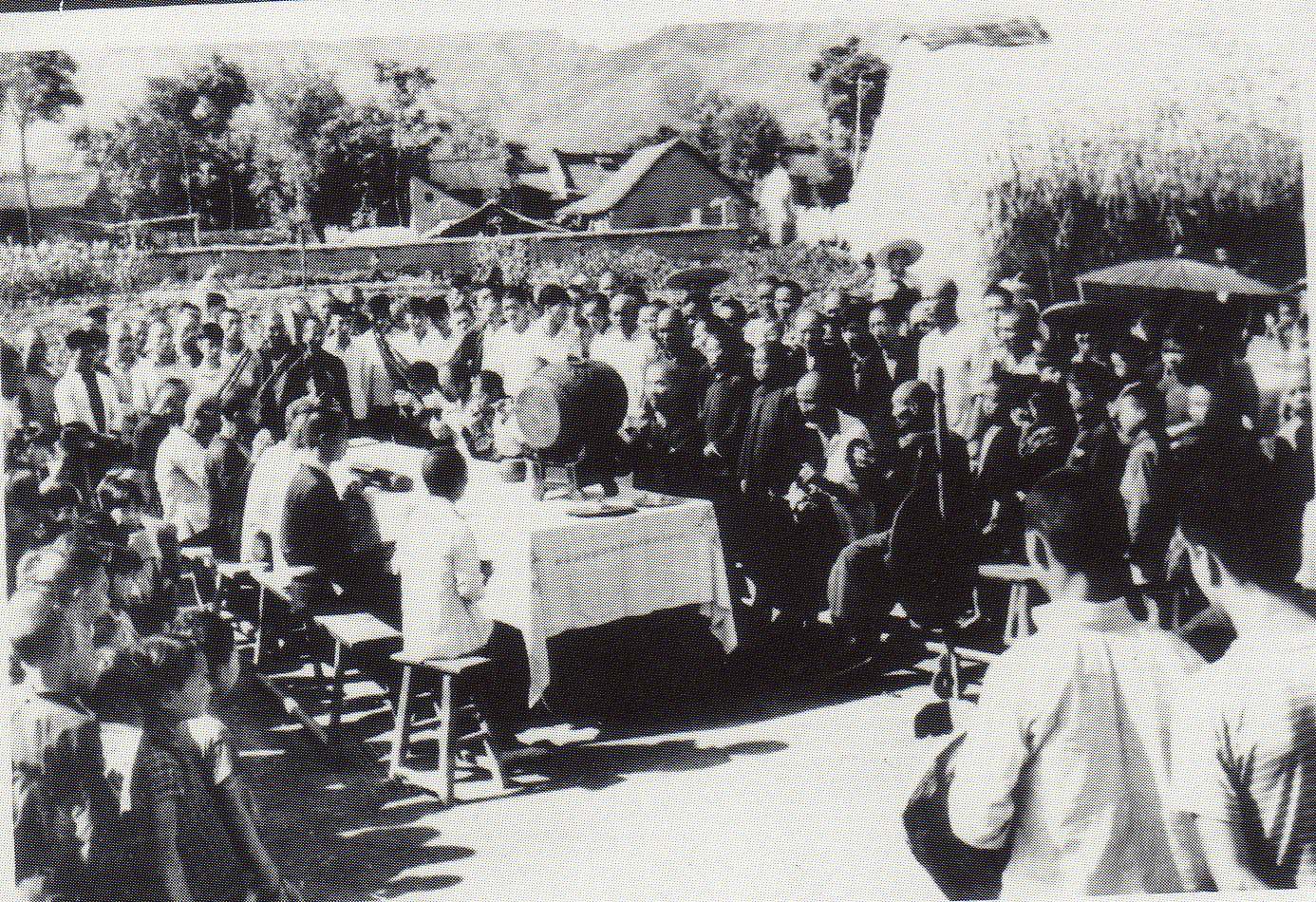
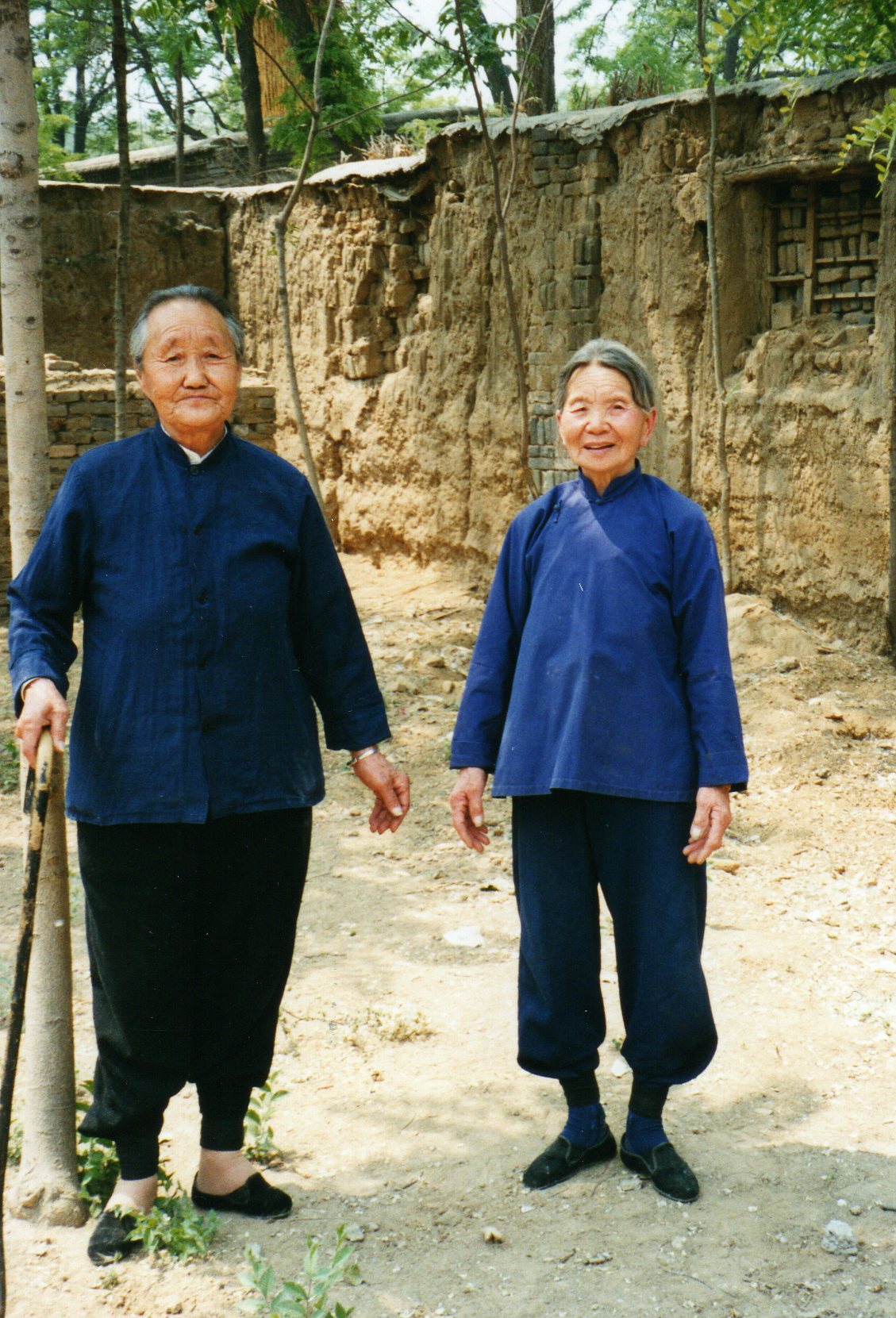 This reflects another common difficulty: we often seek to document history through major, exceptional events, whereas for peasants customary life is more routine. And apart from artefacts, much of the history of this (or any) period lies in oral tradition—which doesn’t lend itself so well to exhibitions.
 From
From 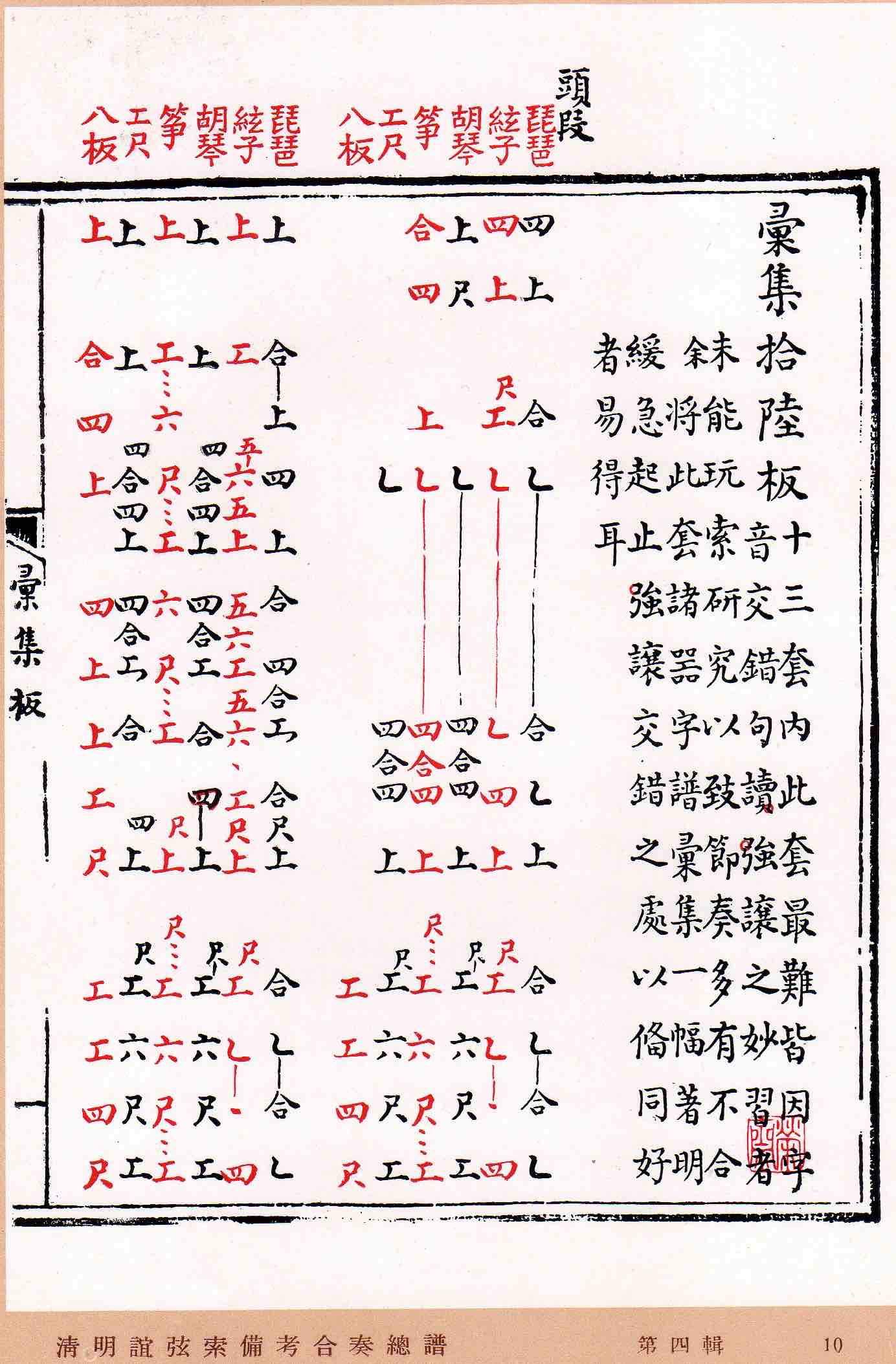
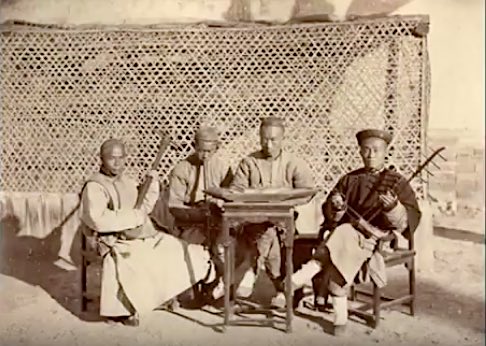


 From Qing-dynasty Tianjin Tianhou gong xinghui tu 天津天后宫行會圖.
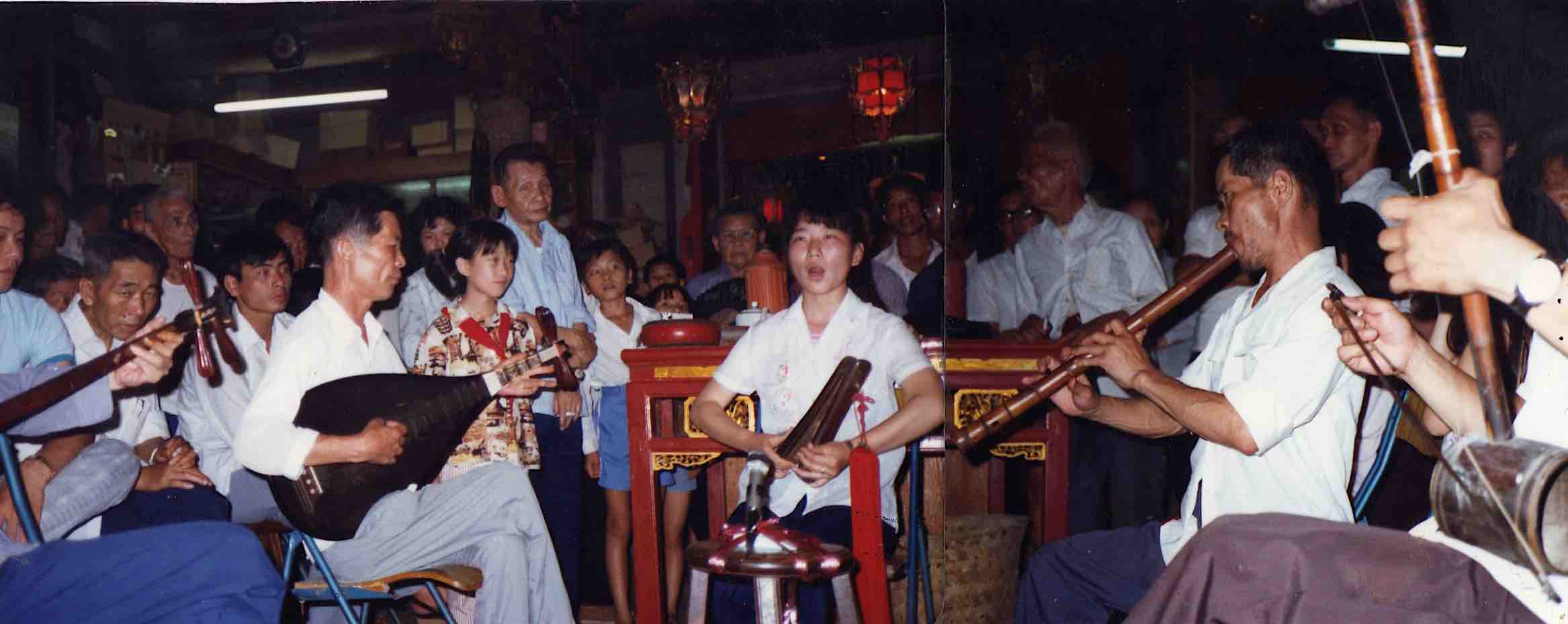
 Mural (detail),
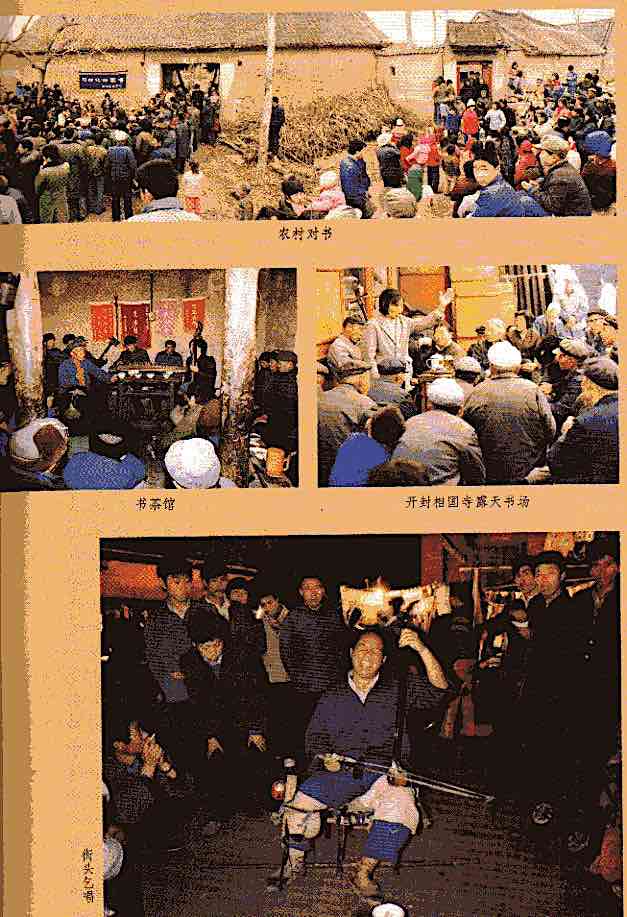

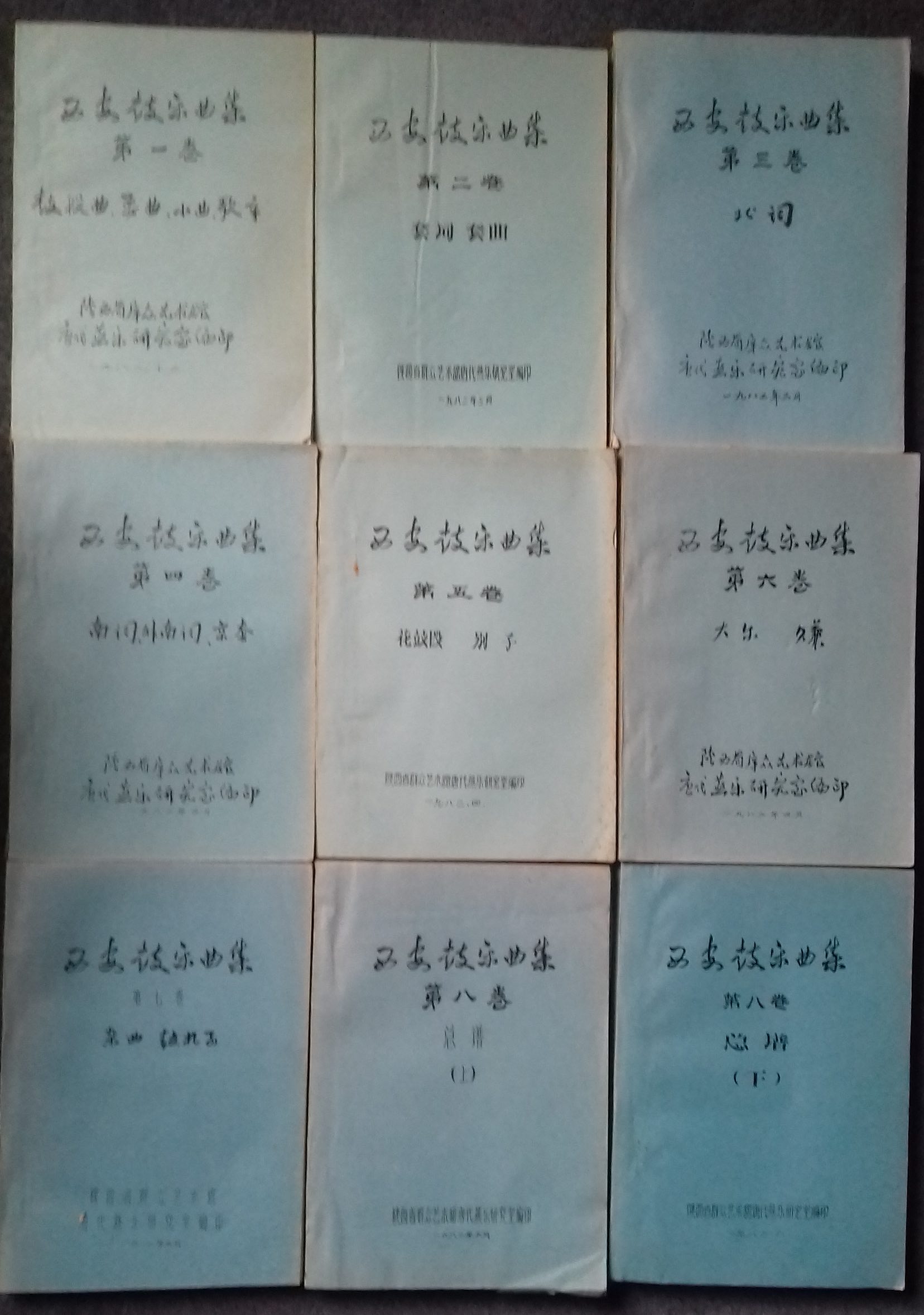
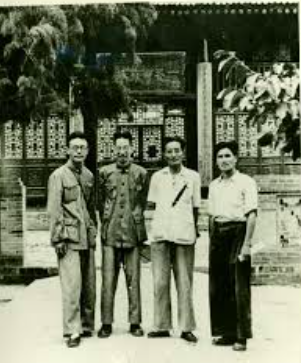


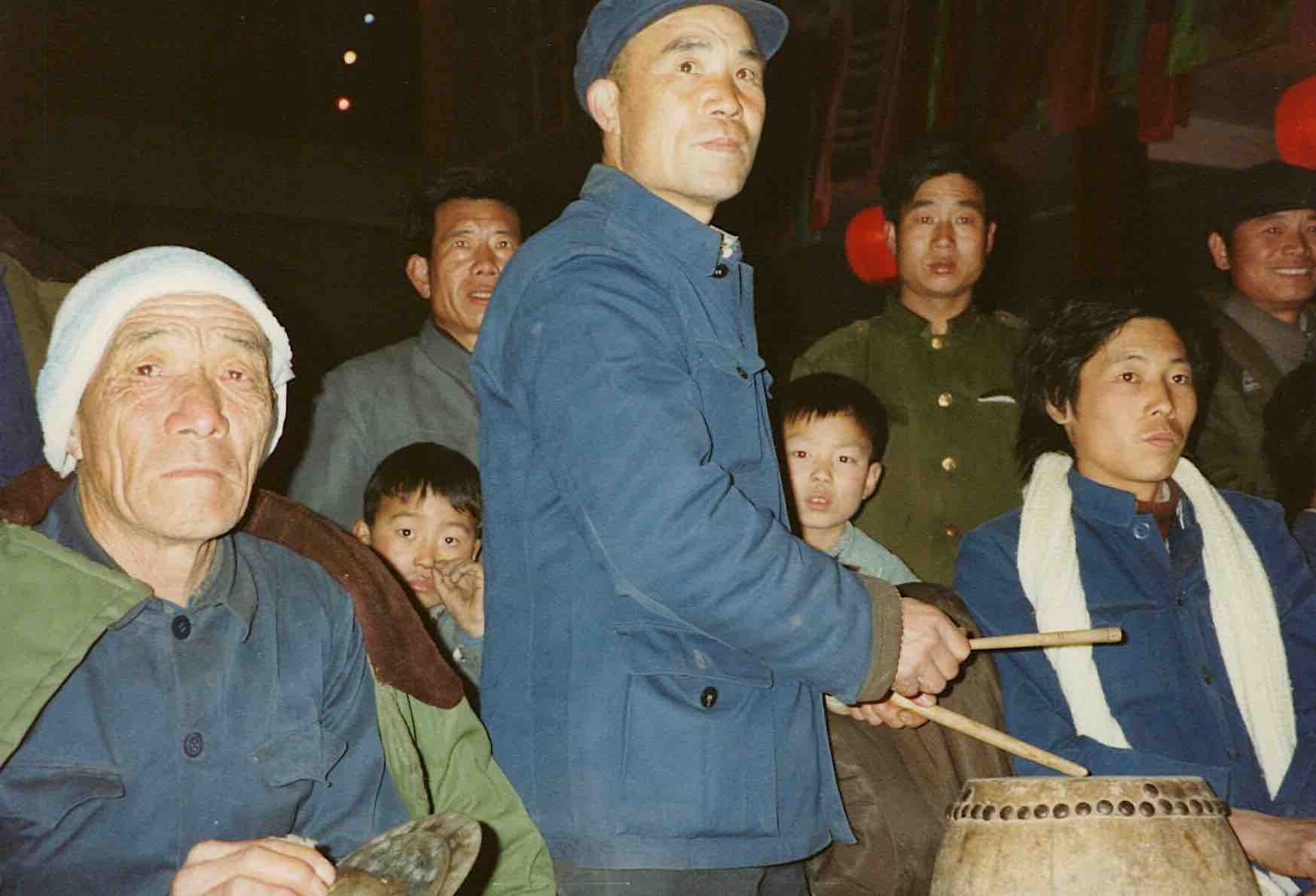


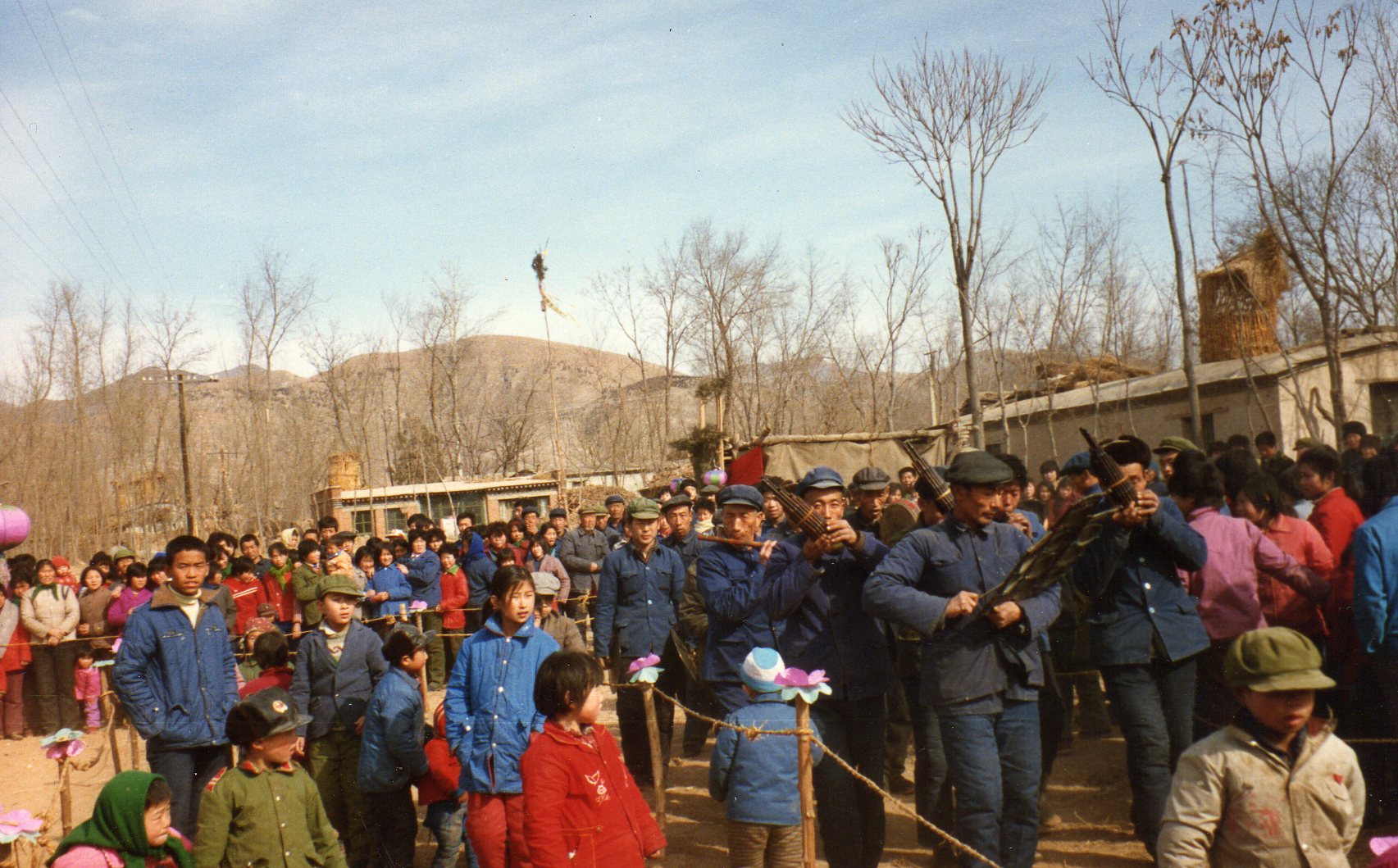

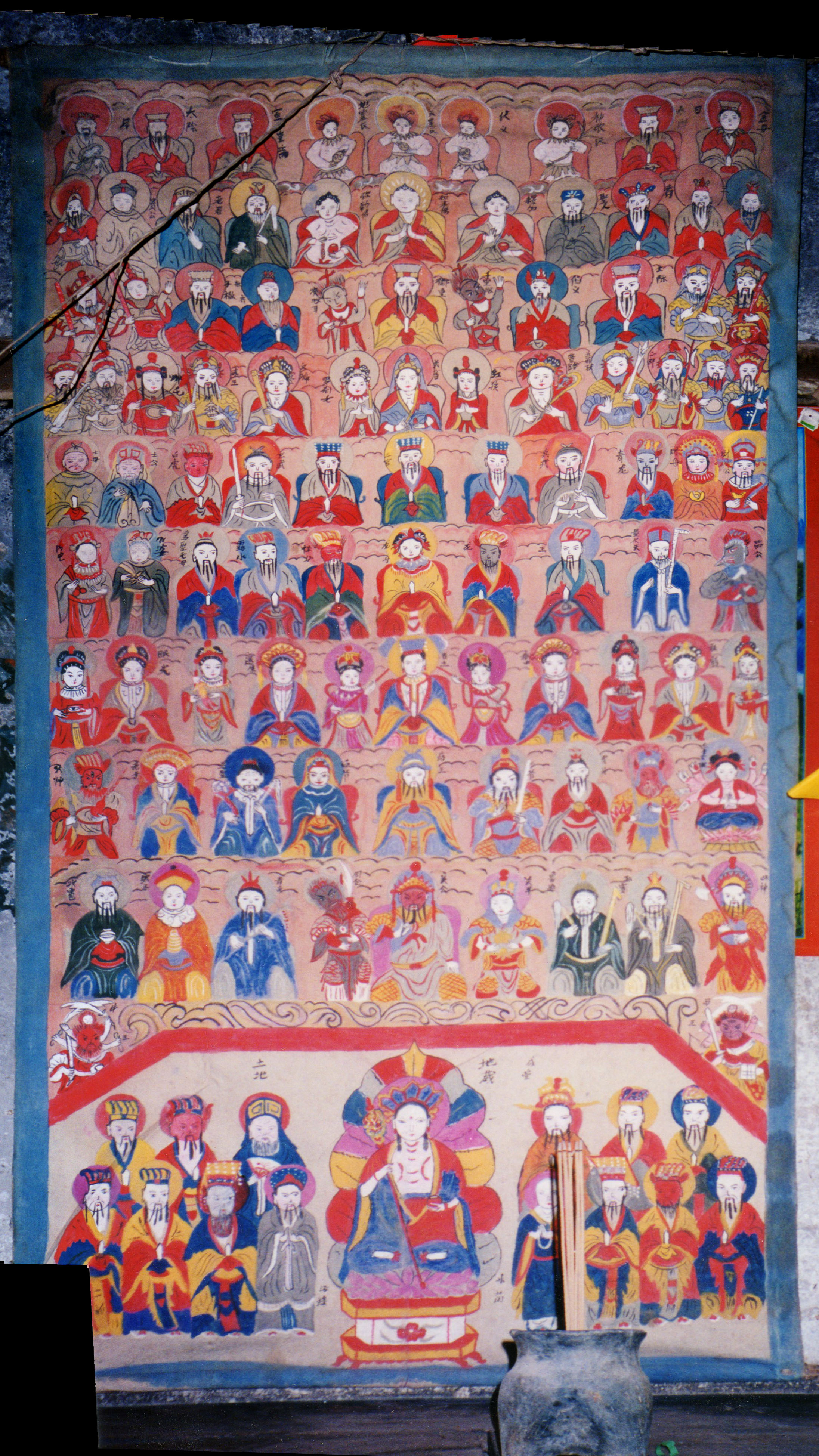

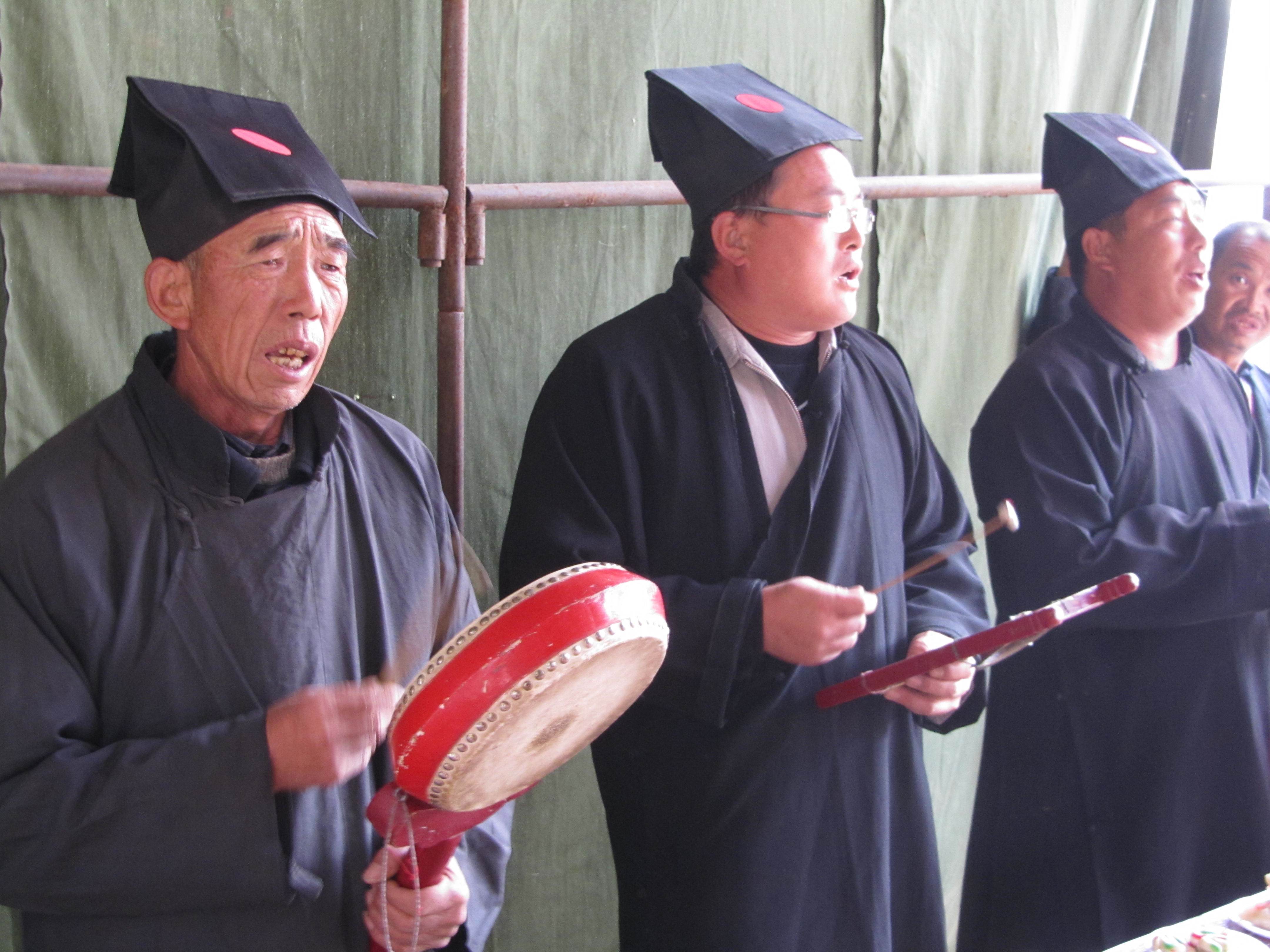

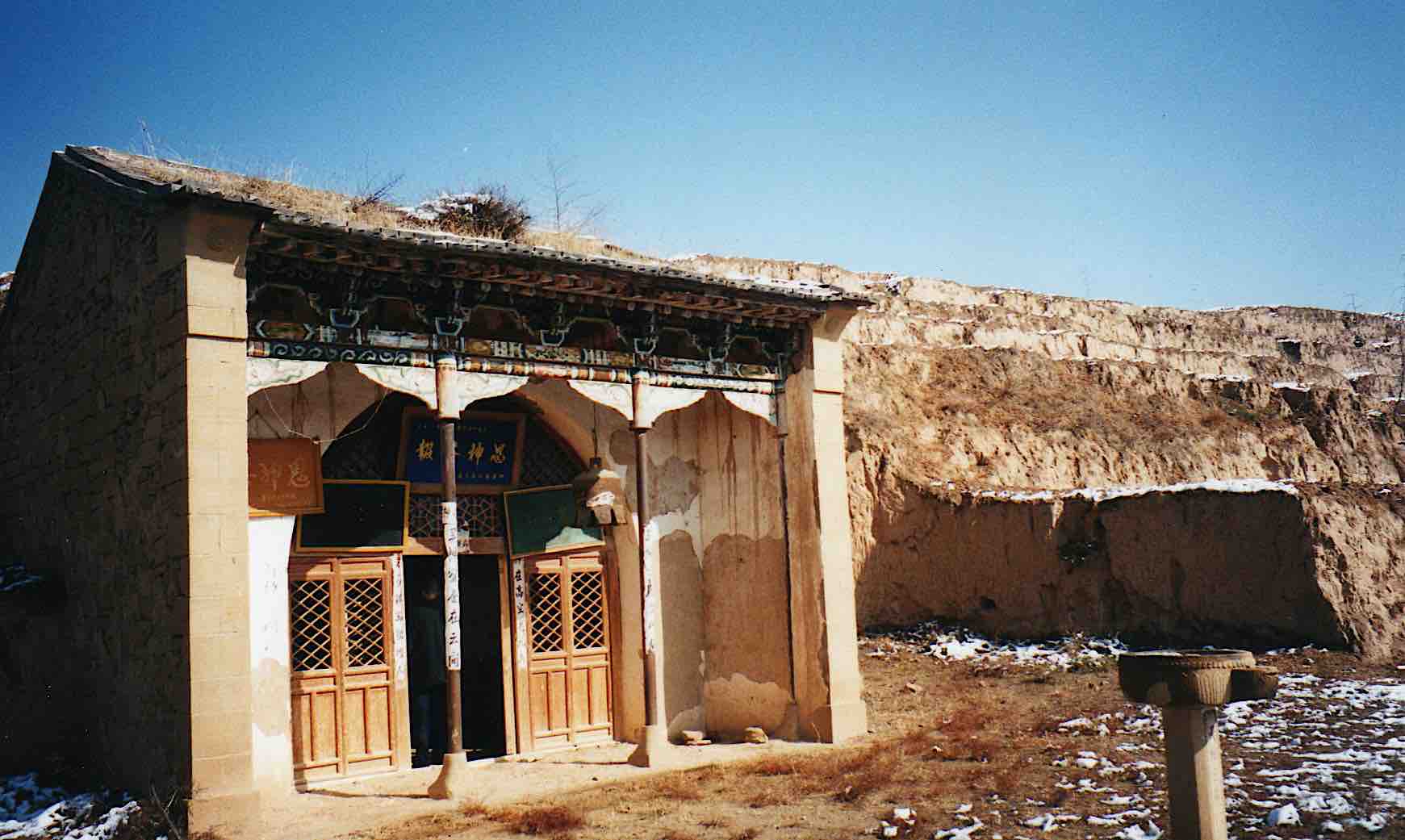
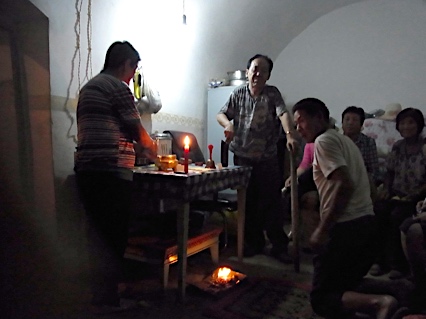
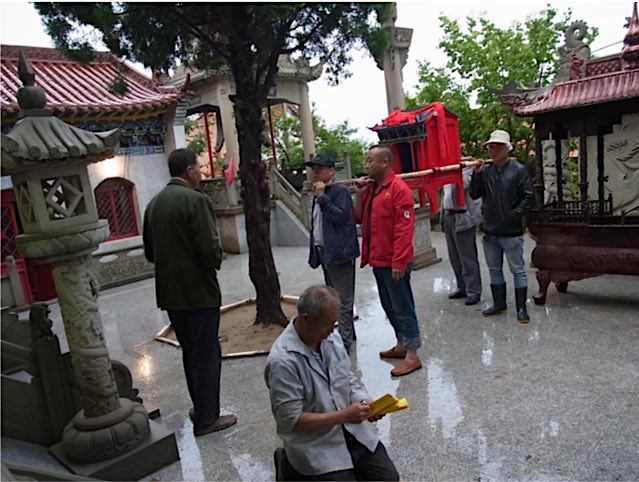


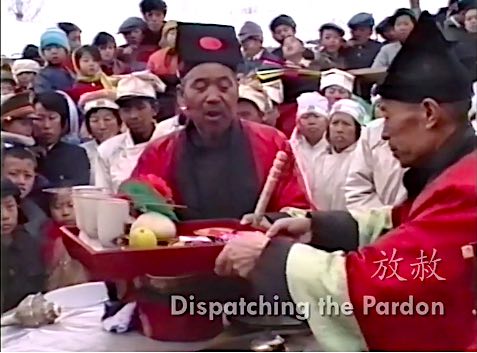
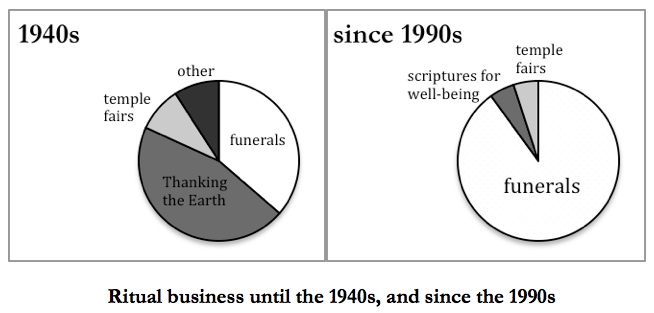


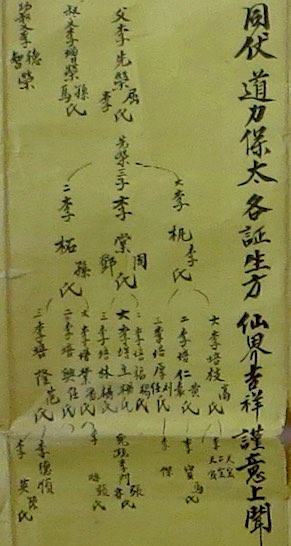


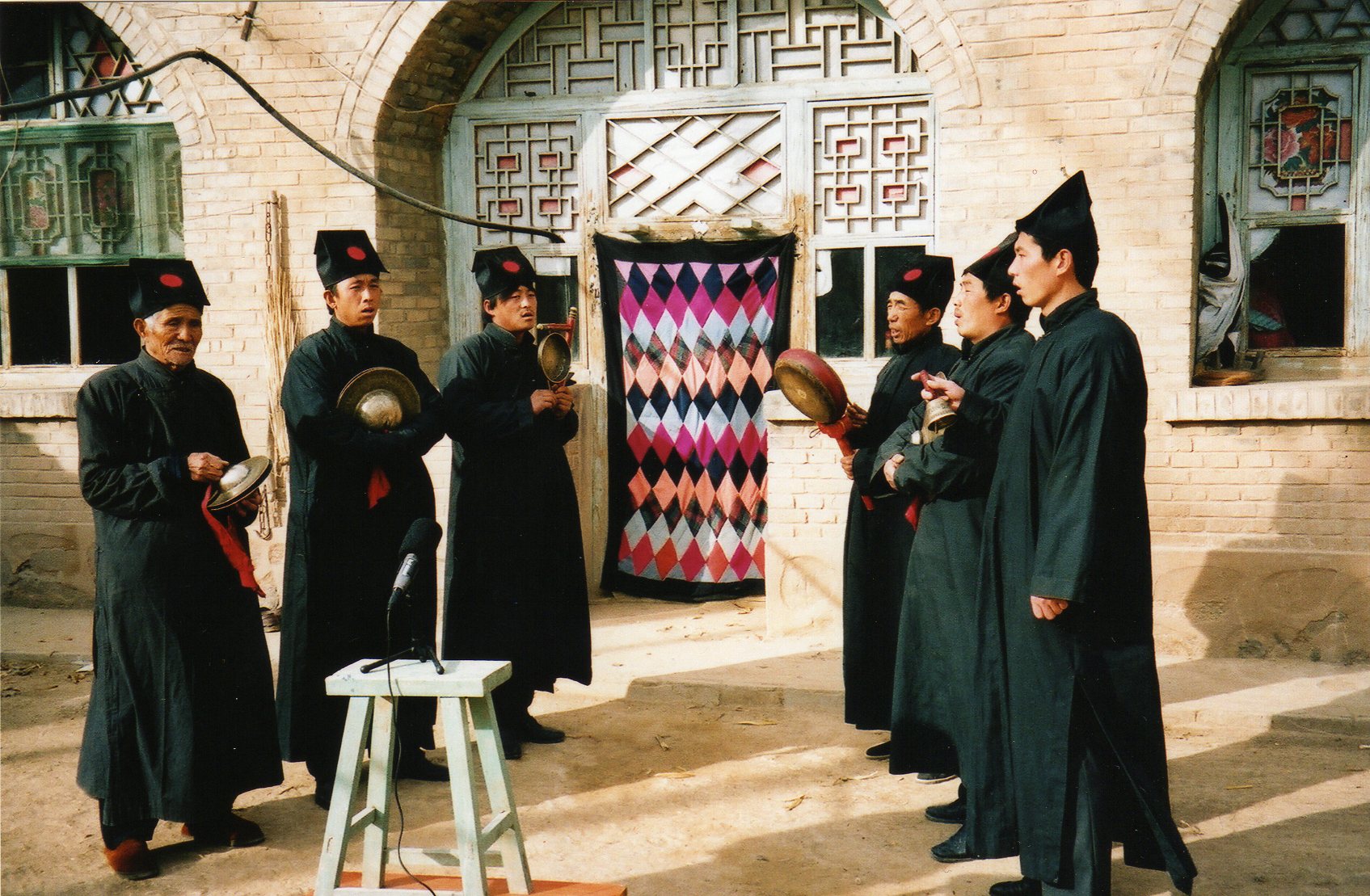

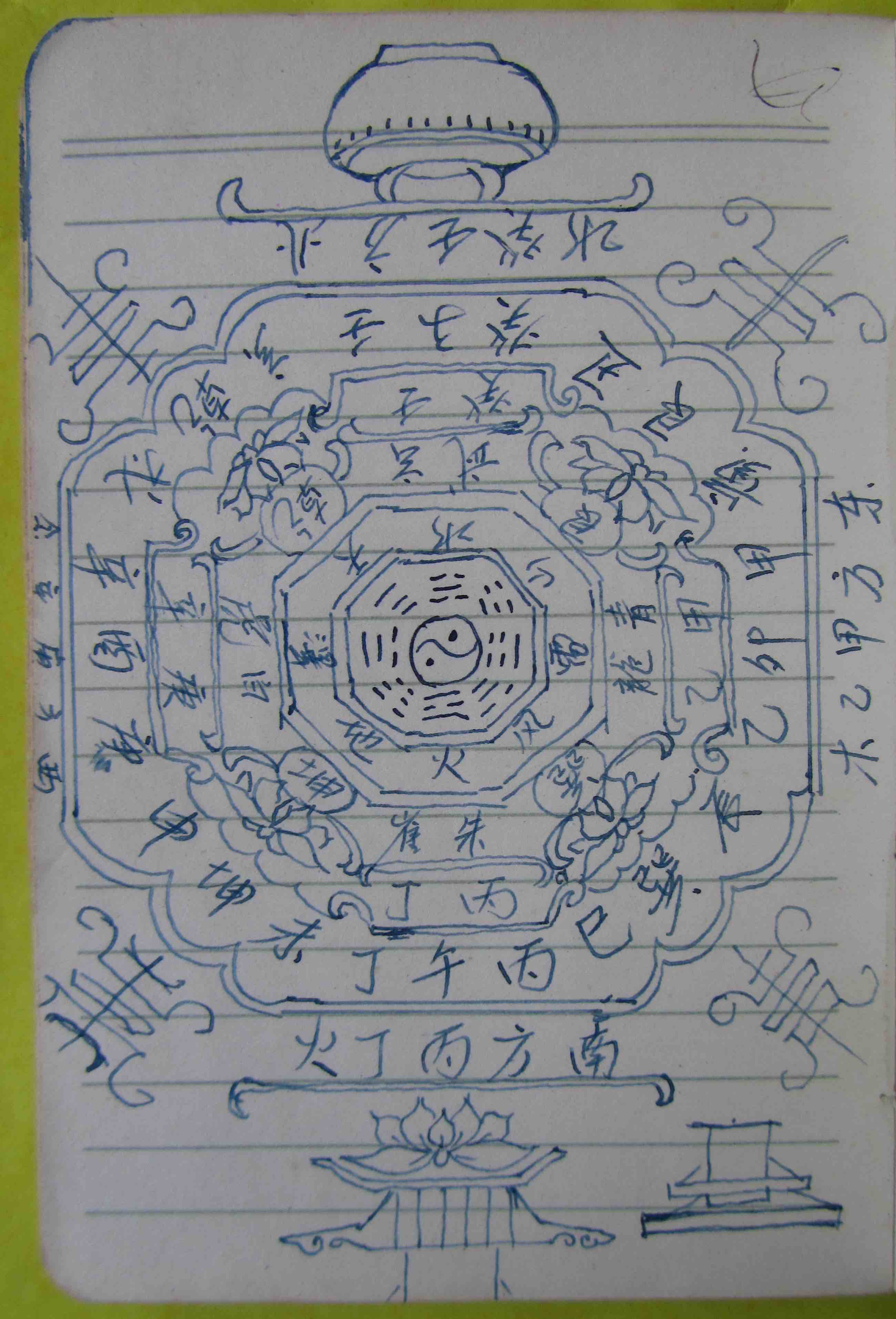
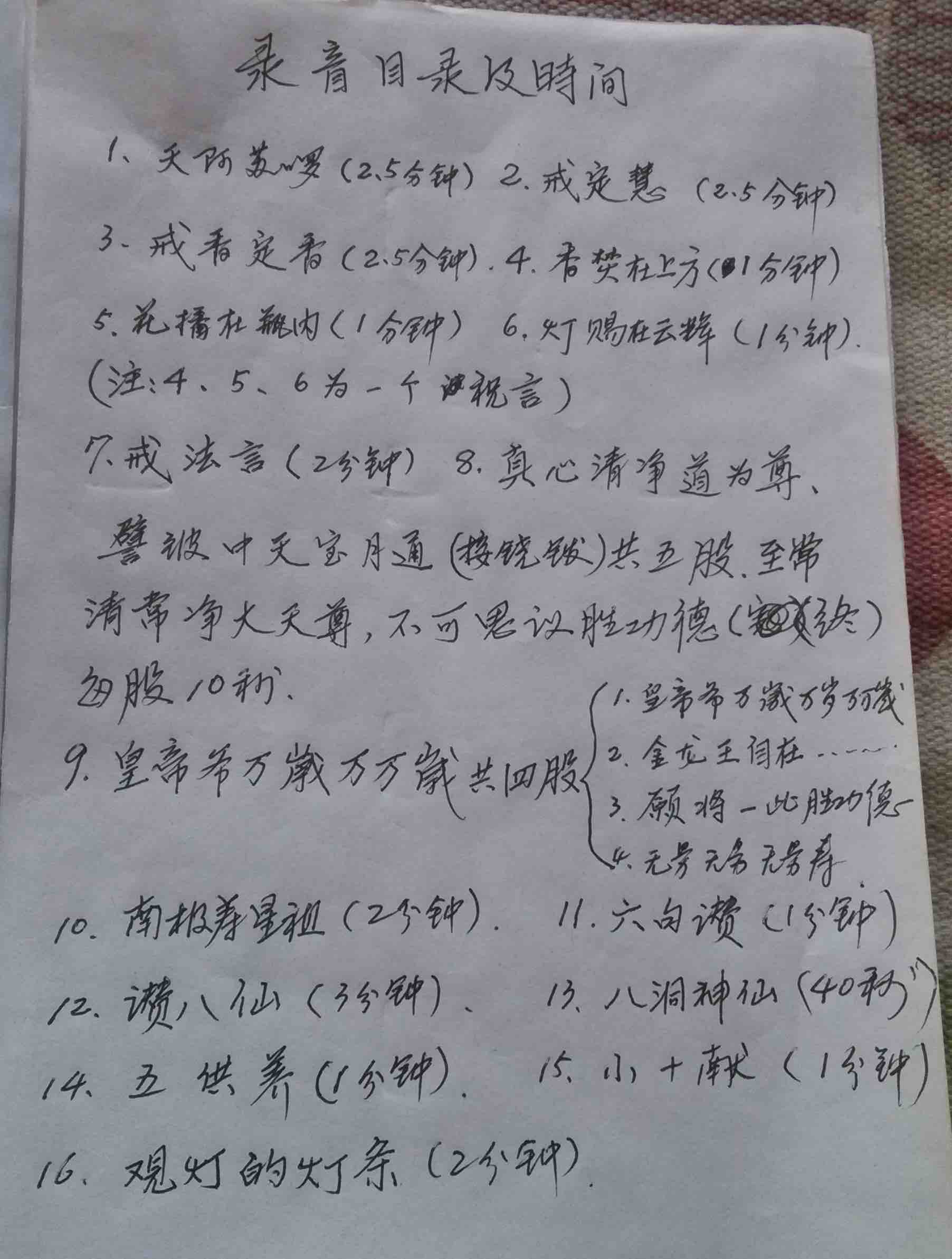
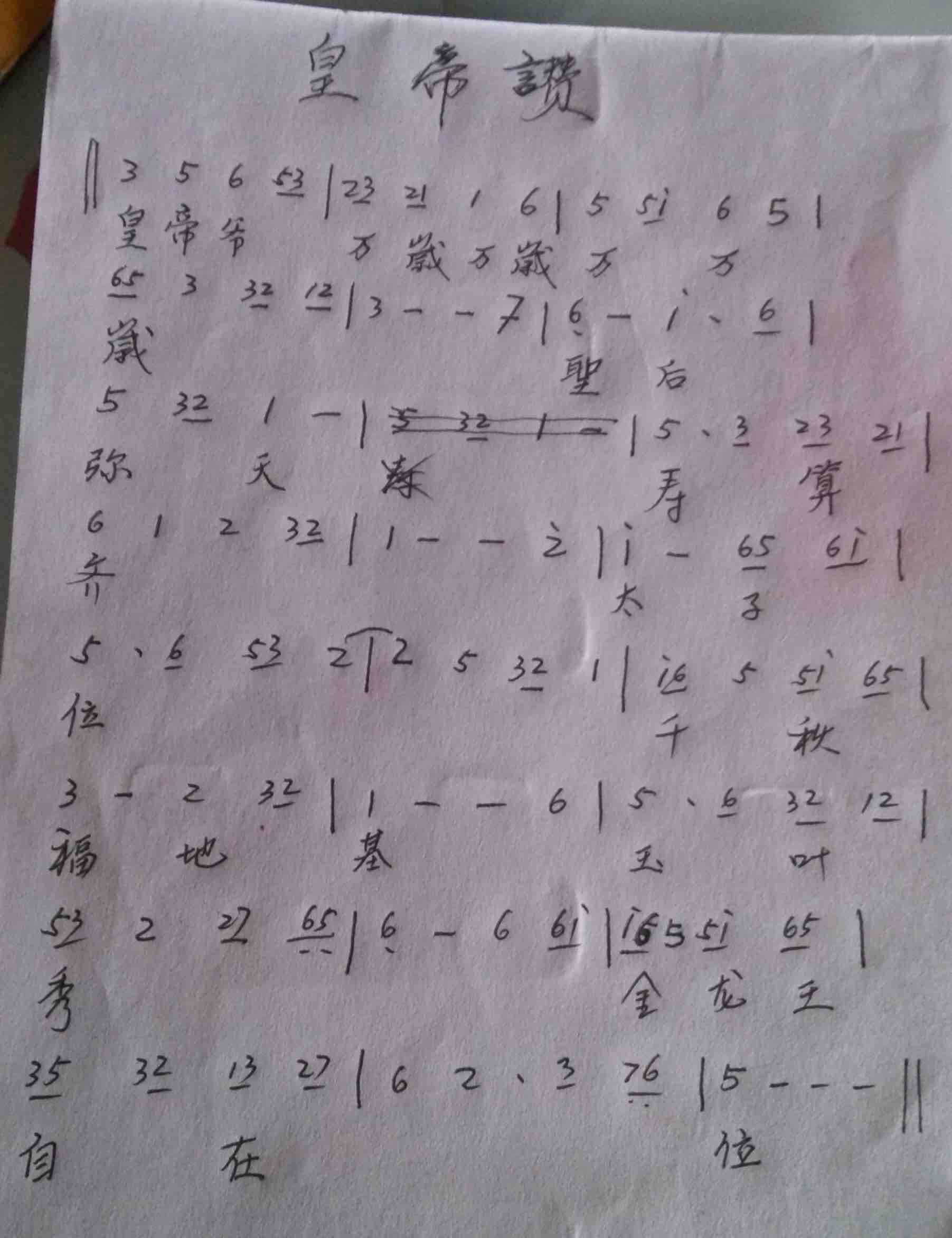


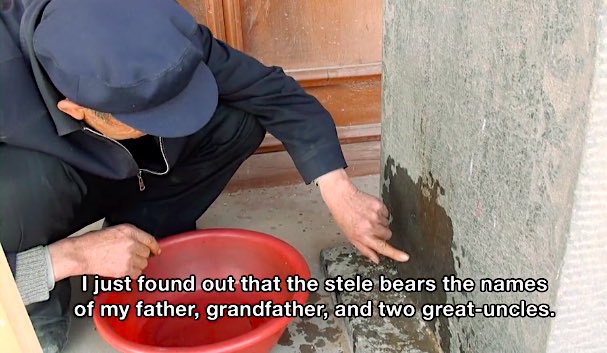


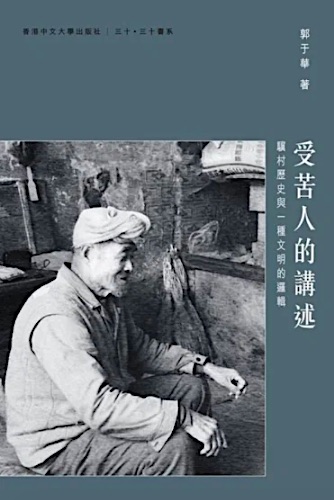


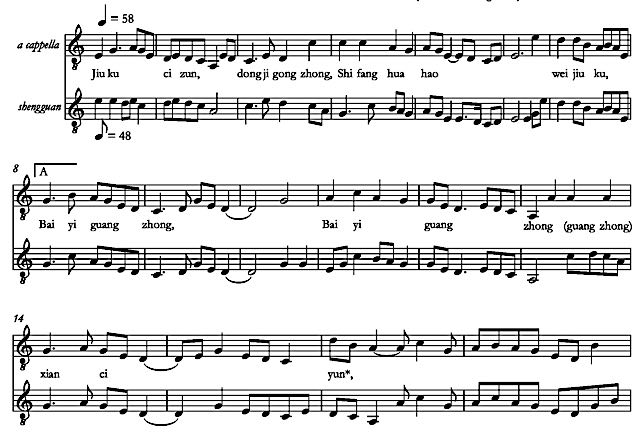


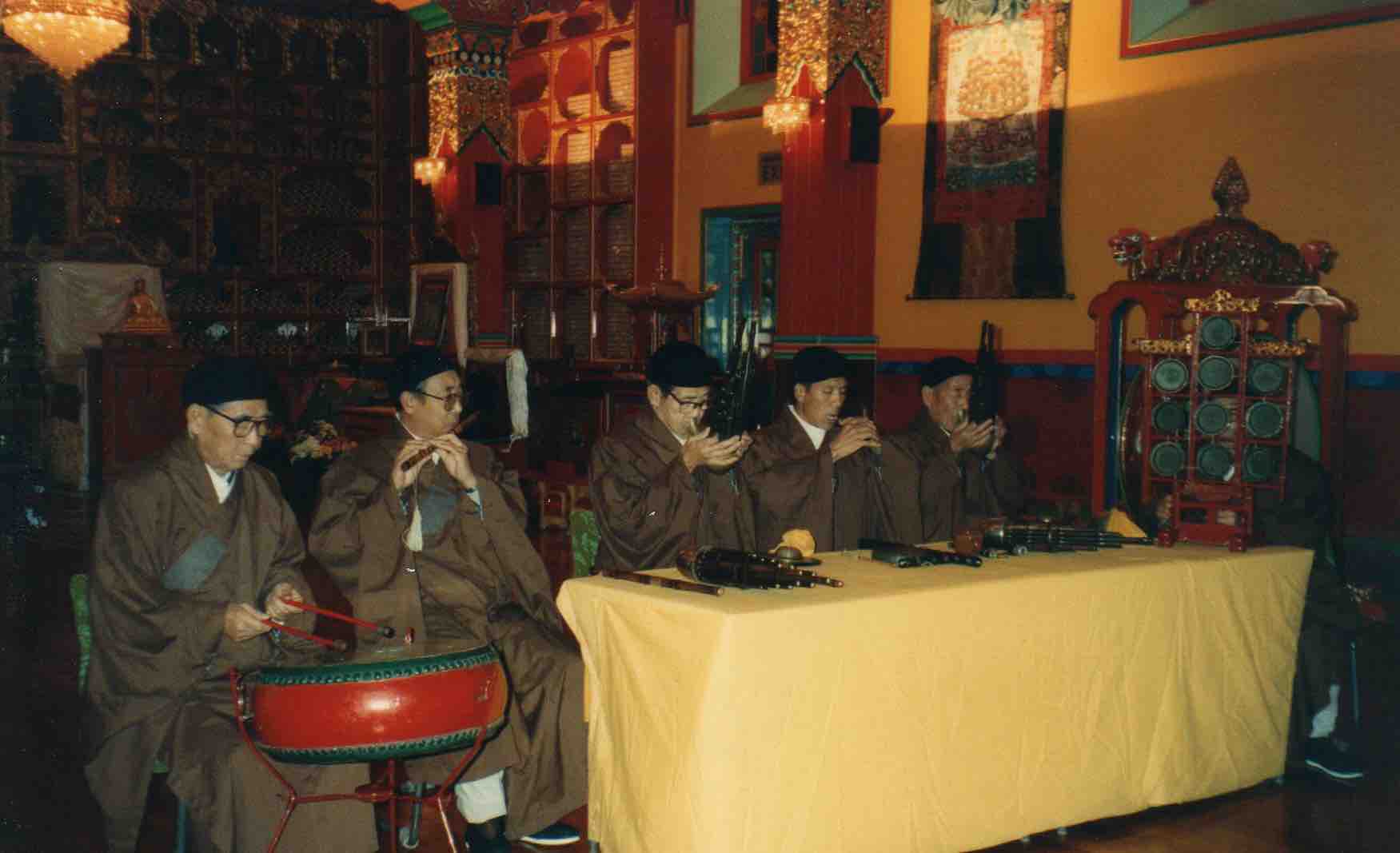


 Stephen Jones: a blog