Mahler at this year’s Proms!

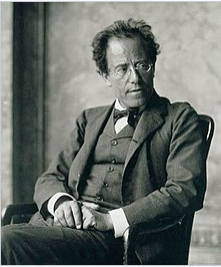
By way of reminding you of my series on the great Gustav Mahler, some brief comments on the three symphonies of his performed at this year’s Proms, while I consult Norman Lebrecht’s handy guide Why Mahler?, marvelling at Mahler’s busy conducting schedule amidst the tribulations of his personal life.

Mahler 2 https://stephenjones.blog/2020/10/18/mahler-2/

Nothing can be so overwhelming as the 2nd symphony, which I heard on what was once called the radio. I find it hard to imagine how Mahler could have written anything after this. As to the 3rd, after the middle movements (akin to those of the 7th), the radiant finale dominates one’s image of the piece.

Hearing a live performance of the 5th is just as moving. The mellifluous Concertgebouw orchstra was conducted by Klaus Mäkelä (for the Concertgebouw’s Mahler 9 in 2022, click here)—it is televised on iPlayer.

I muse on the ravishing slow movements of this period in Mahler’s life: that of the 3rd as the culmination of the symphony, the Adagietto of the 5th all the more effective within the context of the whole; no less moving are those of the 4th and 6th (the latter, to my taste, still best placed third in the order of movements).

My Mahler series includes performances and recordings of his seminal works by some of the great interpreters. See also The art of conducting.

Proms: Ravel and Stravinsky

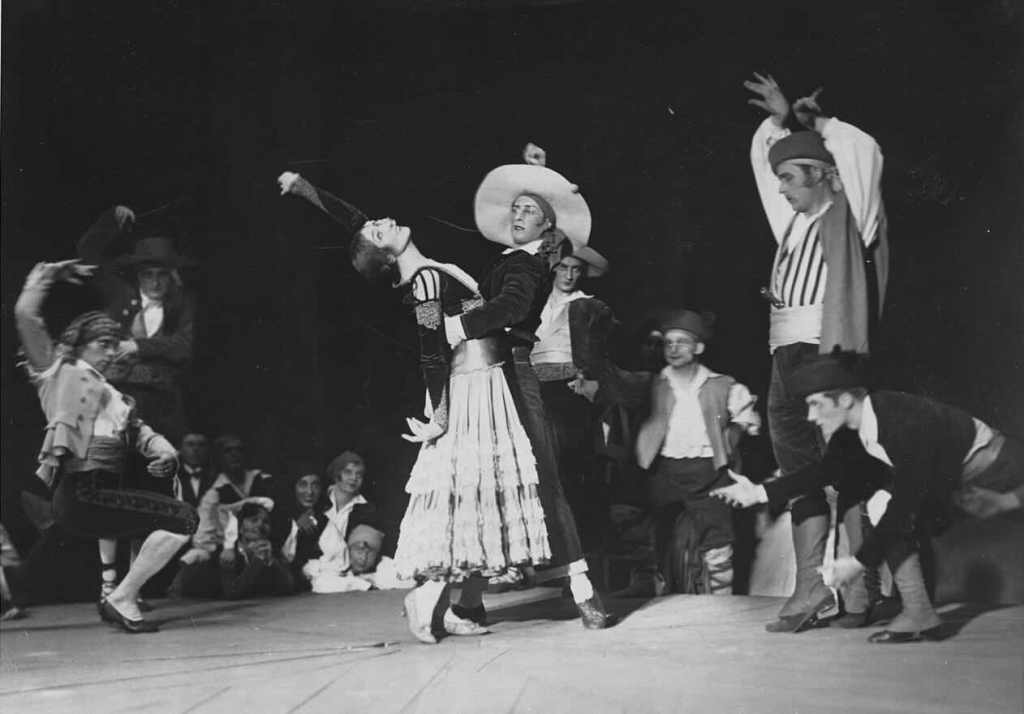
Ida Rubenstein leading the original 1928 production of Boléro. Source.

Ravel’s Boléro and Stravinsky’s The Rite of Spring have become concert “classics”, but they are challenging in very different ways. It was exhilarating to hear both in the same Prom the other day.

For The Rite, I refer you to various posts, starting with my own epiphany under Boulez in The shock of the new. By comparison, Boléro (also composed for a ballet) may merely seem like easy listening, but the concept is just as original, with our ears kept engaged by the rhythmic fluidity of both segments of the melody * over one long, relentless crescendo. I’m reminded of Roger Nichols’ characterisation, quoted in my page on Ravel:

the repetitive obsession that opens out on to notions of death, madness, destruction, and annihilation, as if the composer had had an apocalyptic vision of the end of the world.

Of course listeners will respond in different ways. Even if such a message is merely latent, Boléro can and should be a somewhat unsettling experience.

Again, note my Ravel page, along with posts under Ravel, Stravinsky, and Proms tags. See also Perfect Pitch, and posts on minimalism.


* Another party game: the two sections of the melody are deceptively simple, so one might suppose that after hearing so many repetitions, we would be able to reproduce it quite accurately from memory, even after a single hearing—and most of us have heard the piece many times. It becomes more achievable if we intentionally set out to memorise it (and for some it may help to consult notation), but even then it may still be a challenge—the first half of the opening section alone may prove surprisingly difficult to reproduce by heart. After Hašek, my usual prize of a small pocket aquarium

Of course, it’s not to be compared with memorising a Brahms concerto, but its apparent simplicity, with virtually no harmonic props, make it all the more intriguing as an exercise. Cf. Conducting from memory, and On “learning the wrong music”.

Mahler festival!!!

I’ve sung the praises of the music of Gustav Mahler in a series of posts, rounded up here. For anyone within reach of Amsterdam, the Concertgebouw’s current Mahler festival is a blessing: details here and here, with useful links. The comprehensive concert series includes all the symphonies in sequence, performed by some outstanding world orchestras and conductors, with many related events, including the songs with piano.

Boulez, Benjamin, Brahms

On Thursday at the Barbican I heard the LSO celebrate S-Simon Rattle’s 70th birthday.

The concert opened with Éclat by the great composer-conductor Pierre Boulez, marking the centenary of his birth. As Rattle observes here, Boulez was a seminal influence on our generation. While Éclat (1964–5) may not be everyone’s idea of a jaunty little overture, it’s exquisite, basking in the sonorities of fifteen instruments in two groups (piano, vibraphone, xylophone, harp, cimbalom, guitar, mandolin, tubular bells, timpani; and alto flute, cor anglais [“english horn”, as Boulez liked to call it], trumpet, trombone, viola, cello). As Jo Buckley comments in the programme notes,

It is as though we were examining an exquisite cut-glass bowl, glittering in its beauty and complexity, that is dropped and shattered into thousands of pieces. Some of these shards catch and sustain the light, others glint briefly as you pass them, but the whole itself is never restored.

Boulez 1958

For Rattle it’s “one of Boulez’s seminal pieces, […] where you not only conduct, but you almost compose as you go along. It’s a piece you can only do with a group of musicians who really trust you, and vice versa.” In this 2016 Prom he conducted the Berlin Phil:

Here’s Boulez conducting the work:

Maybe this is intrinsic to the impersonal atmosphere of the concert hall, but much as I love the textures, I miss the human interaction of “improvisation”.

When Boulez conducted Éclat in Leningrad in 1967, “the audience had never heard anything like it before and demanded an instant encore. ‘It was packed,’ says Lilian [Hochhauser], ‘they were hanging off the balconies’. ”

Rattle Hannigan

Then we heard the world premiere of George Benjamin’s Interludes and Aria, from his opera Lessons and Love and Violence (2018), a gift for Rattle’s birthday. In this coherent suite of seven brief movements, dramatic and unsettling, the central aria was sung by the imperious, magnificent Barbara Hannigan—how blessed are composers to have such an interpreter! Here she sings the aria in the opera itself:

For previous collaborations between Hannigan and Rattle, click here and here.

Having willingly eaten our greens, we earned a pudding. Brahms 4 may be familiar, but it’s always irresistible, right from the sigh of the descending third that opens the piece, on which Hugh Maguire dwelled lovingly as he coached us in the NYO.

Brahms 4

The gorgeous slow movement is among my exhibits in the incandescent key of E major.

S-Simon conducted the symphony from memory, always an immersive experience. And as with composer-conductors such as Mahler, Boulez, and Salonen, there’s something special about hearing classics performed by specialists in contemporary music. In his Lexicon of music invective Nicolas Slonimsky reminds us that it can take time for new music to be appreciated: critics of the day found Brahms 4 “intolerably dull”, with “a profuse lack of ideas”. So there.

For a less driven version of Brahms 4, try the iconic Furtwängler (1948). Cf. Carlos Kleiber (1996)—here, with an amazing Brahms 2 as well!!!

More Brahms e.g. here and here.

Bobby McFerrin

McFerrinSource.

The human voice is the most remarkable instrument. Thinking of the diverse ways it’s used around the world (note the fine survey on the CD-set Les Voix du monde), an astounding vocalist is Bobby McFerrin (b.1950) (website; wiki; YouTube channel).

Here’s his solo album The voice (1984):

Besides his Don’t worry, be happy (1988), note also his Circlesongs project.

Here’s a clip from Bach and friends:

And here he is in concert with Chick Corea:

Among many related posts, see my Playlist of songs, A cappella singing, Strings and voices, Flamenco, Meredith Monk, Two guttural vocalists, Nina Hagen, Barbara Hannigan, and Counter-tenors.

***Roundup for 2024!!!***

film title

At this time of year I like to rearrange the deckchairs on the Titanic by organising some of my more notable posts from the past year under particular themes. As ever, many belong under multiple tags, so below I make some whimsical choices.

Keeping company with my film on the Li family Daoists, most important is my *new film* on the 1995 New Year’s rituals in Gaoluo (Chinese review here). It also prompted me to devise a new Menu, and even a YouTube channel (with playlists reflecting my diverse tastes as well as my own films). For now I still resign myself to Twitter, but I’m posting on BlueSky too, so let’s all migrate there!

China:

Chu Chien-ch'eng

Finnegan cover

cruz

You can find any posts I’ve neglected in the monthly Archive as you scroll waaay down in the sidebar. All this suggests that it would be a sensible New Year’s resolution for me to burden you with fewer of these ramblings—but first I plan a major series inspired by the Gaoluo film

YouTube channel: new playlists

Playlists

On my YouTube channel, besides the videos of the Li family Daoists, the 1995 New Year’s rituals in Gaoluo, and the Hua family shawm band in 1992, I continue to add sample playlists to lead you to some of the main themes on my blog. Among them, most basic are

and

Recent additions include

I’m also keen on

The qin zither is exceptionally well represented online, but I rather like my succinct playlist.

I’ll keep adding to these samples. Meanwhile, don’t forget the Roundups folder in the main Menu!

A radiant Mozart Andante!

Screenshot

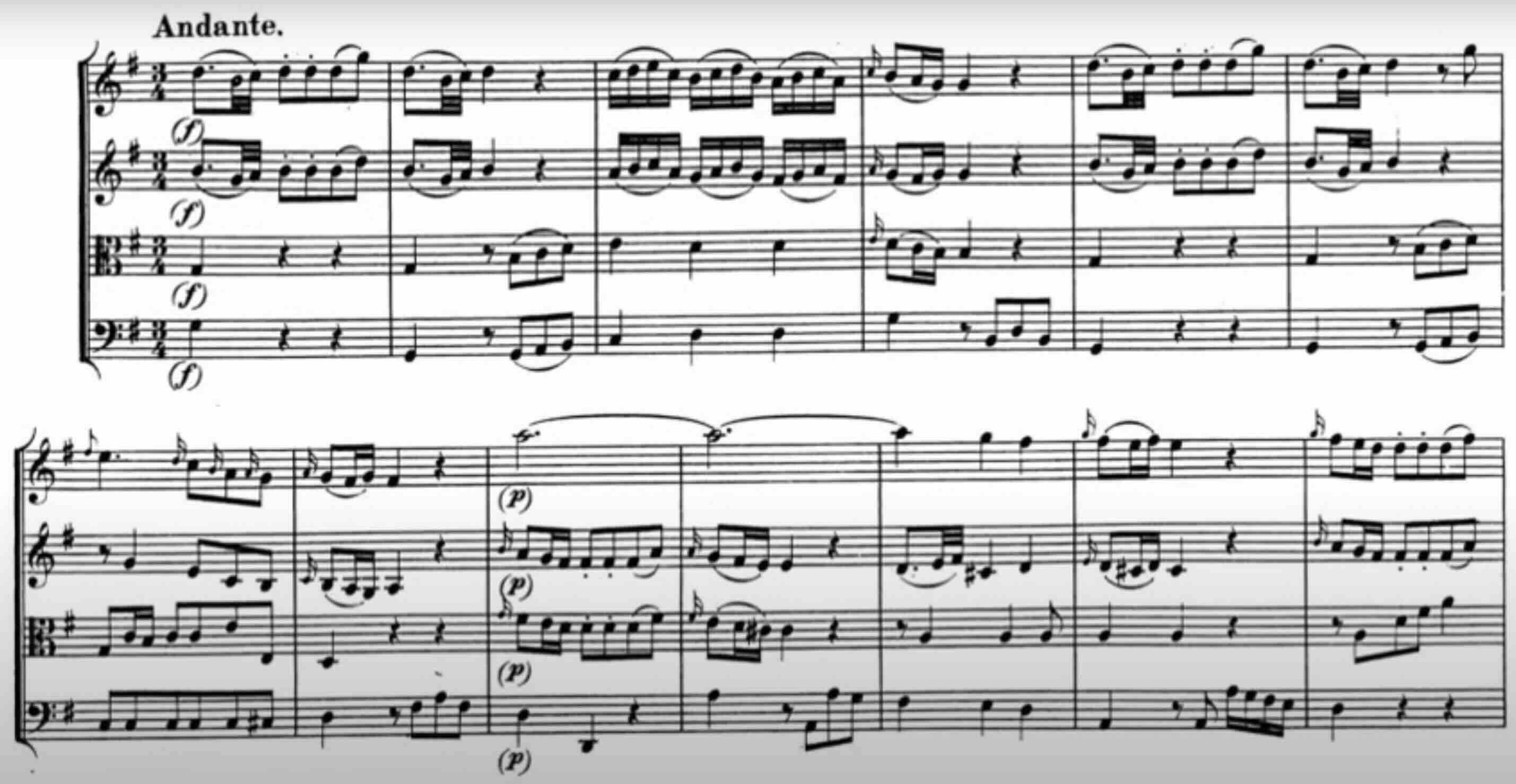
Even while I’m immersed in the Gaoluo New Year’s rituals and Persian chamber music, the luminous slow movement of Mozart’s D major Divertimento suddenly comes to mind—here’s the Amsterdam Baroque Orchestra with Ton Koopman, always a good choice: *

Written in Salzburg when Mozart was 16, doubtless still basking in his recent tours of Italy, it’s just as delightful to play as to listen to. For me it recalls a US tour twenty-some years ago with Andrew Manze (not the same tour as when he incapacitated me with the Finnish loo story, I think)—wholefood supermarkets on the highway, small-town bookstores, blues bars. Whatever the mundane challenges of negotiating airports, motels, and Life, this oasis of radiant tranquillity was always there to revive our spirits. Gems like this remind us to just Be in the Moment, embodying the effortless grace of sprezzatura and wuwei [Another Pseuds’ Corner entry, bravo!Ed.] [Oh come on, gimme a break—SJ], in a way that no-one but Mozart can do (cf. the moving scene in Amadeus)—remote from Beethoven’s bludgeonings.

Good to add to my Mozart series—now also with a playlist on my YouTube channel!


* For their Bach, see e.g. here and here.

My YouTube channel!

I wonder how the new Menu is going down… Under “Roundups” there you’ll also see Playlists. I’ve never even noticed that I have a YouTube channel, but now—with the stimulus of publishing my new film on Gaoluo there—I’ve begun the long process of creating new content.

YT

In due course I’ll upload my other documentaries on Chinese ritual cultures. Meanwhile I’m gradually adding playlists to reflect some main topics of this site, so far including

This exercise might seem a tad nerdy, but I naively imagine the selection in the playlists may lead the listener [singularEd.] to the numerous posts in which I expand on them—hmm, I spend all my time going on about how silent immobile text isn’t enough, and I now find myself pointing out that film isn’t enough—No Pleasing Some People…

Kennedy plays Hendrix and Bach

Nige 1

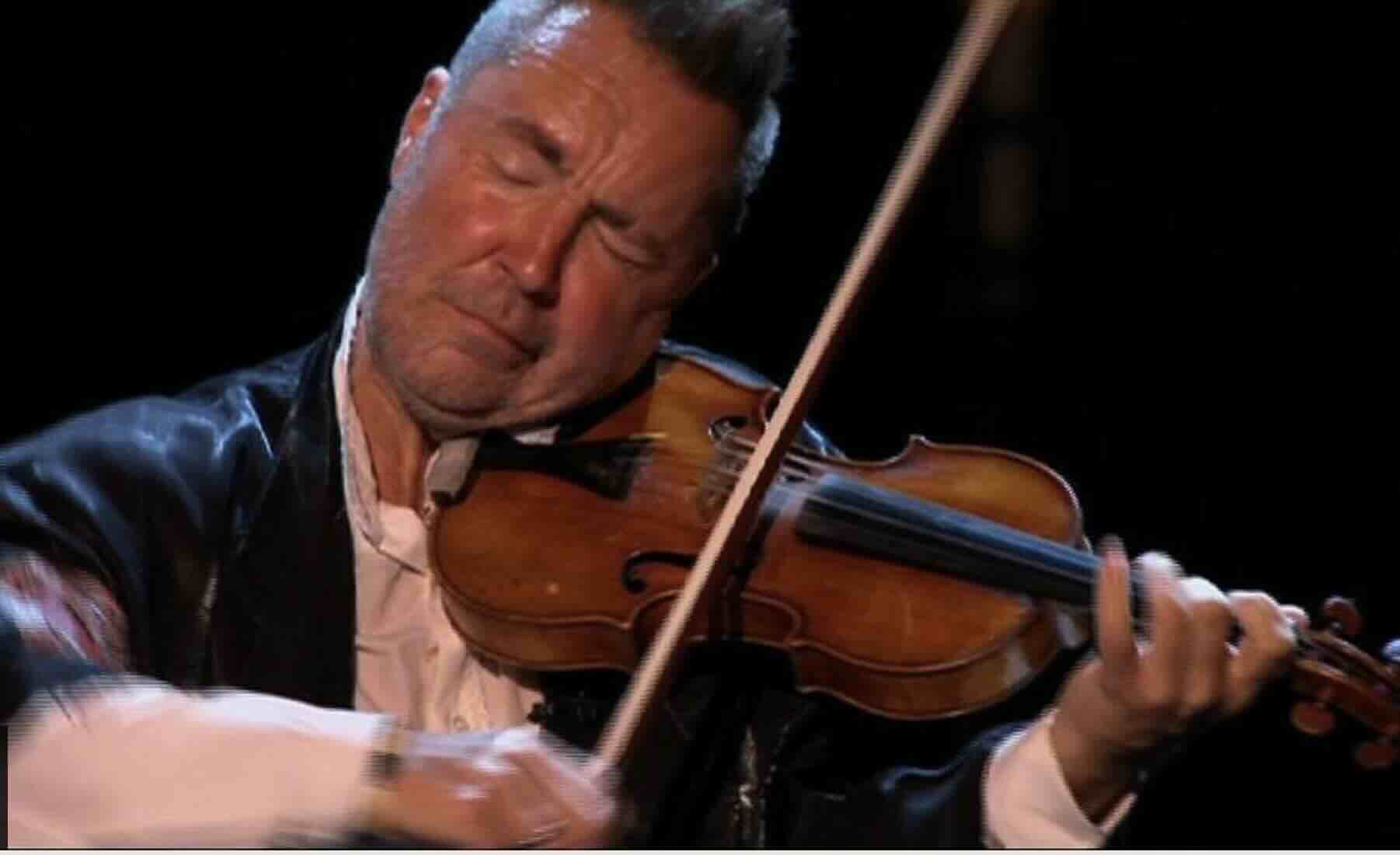
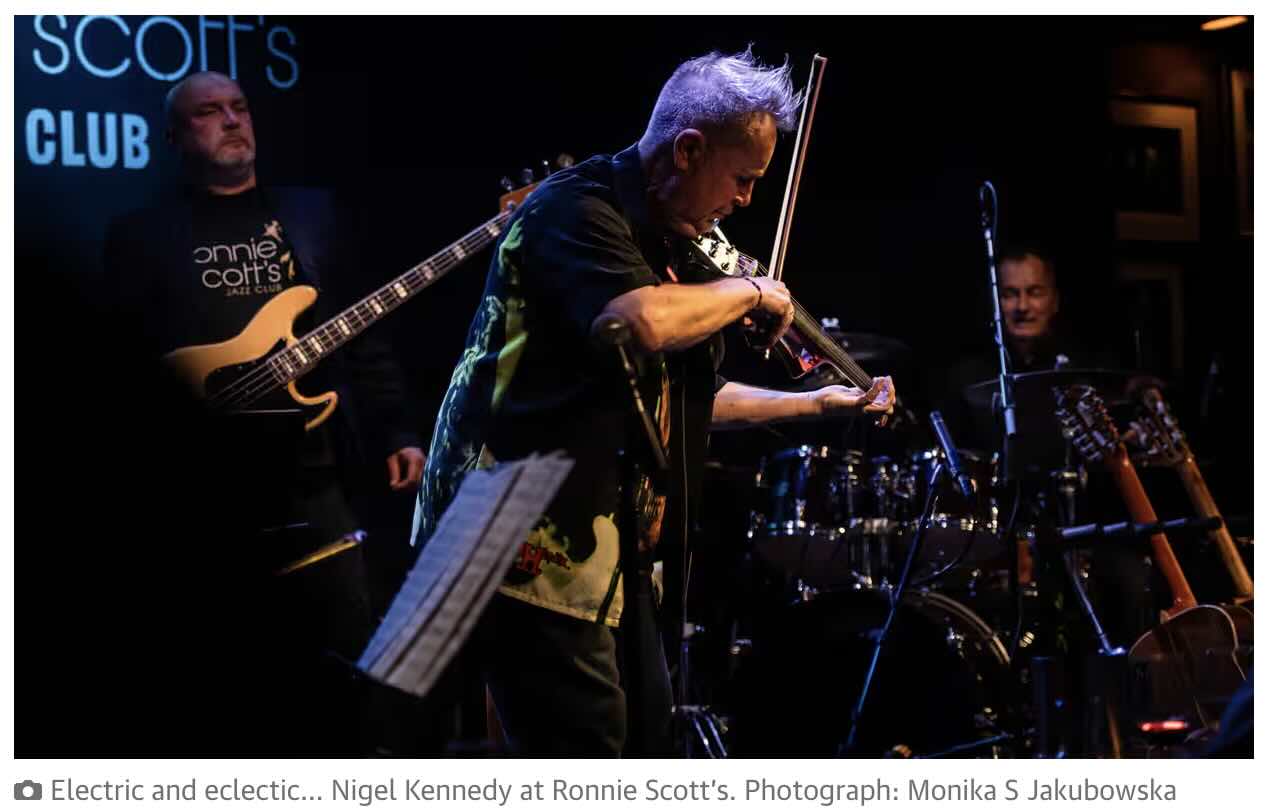
Nigel Kennedy began stirring up the WAM scene quite early, reminding us of the importance of maintaining the creative vibe of live musicking, irrespective of genre. But now that he is no longer an enfant terrible, his tastes are heartfelt and refreshing, for all the hype.

In the absence of Hendrix and Bach themselves, here are a couple of clips.

A homage to Jimi from 2016:

And Bach at the Proms in 2011:

I’m never crazy about the violin in jazz or rock, but however one feels about the results, it’s really great that he does this kind of thing.

Nige 2

Source.

My Bach series includes a sampling of world-music versions; and among many posts on fiddle playing around the world (rounded up here) is Jazz fiddling—also part of my extensive jazz series. Pursuing Kennedy’s Polish connection, see Polish jazz, then and now, Folk traditions of Poland, and under Resisting fakelore.

Mahler 2 with MTT!

*Yet another post in my Mahler series!*

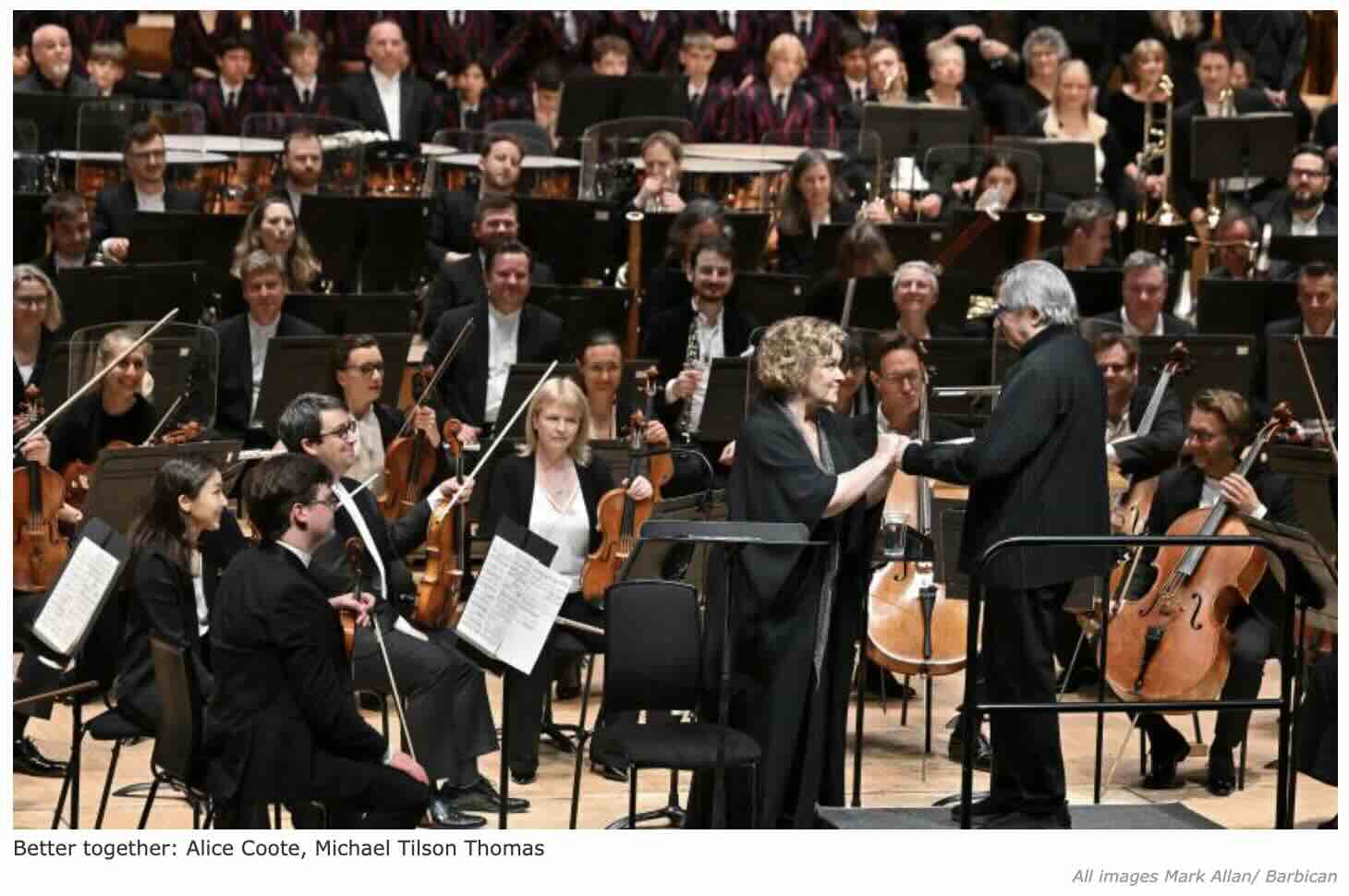
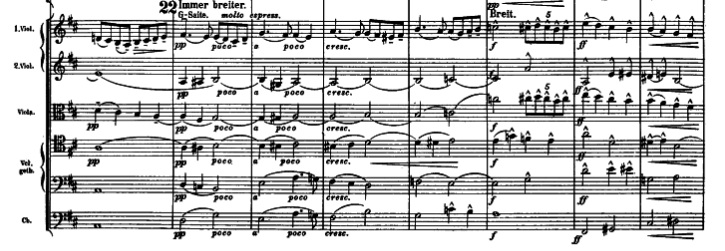
To follow Mahler 3 with Michael Tilson Thomas and the LSO earlier this year, I just heard them giving the first of two performances of the 2nd symphony (main post here) at the Barbican.

Screenshot

© LSO | Mark Allan. Source.

While Mahler 2 in concert cannot fail to be overwhelming, on Sunday its power was conveyed as much by the fervent communal devotion of performers and audience as by the elderly, frail conductor. As this review of the 3rd symphony in May commented, MTT “more or less held it all together… signalling a few entries and giving some directions. That, however, was the full extent of his input, a distant cry from his earlier years where he would have been athletically bouncing around and being criticised by some for his micro-management.”

M2 before choir

The orchestra must have risen gladly to the challenge of having to negotiate so much of the detail. The singers were also fine—Alice Coote in a rapt Urlicht, joined for the monumental finale by Siobhan Stagg and the London Symphony Chorus. As others have noted, the standing ovation was not so much for this concert as a homage to MTT’s lifelong music-making.

* * *

Immersed as I am in another round of editing my new film on the New Year’s rituals in the poor village of Gaoluo, the symphony made an extreme contrast, even if both rituals are in service of the divine. *

For Bernstein and Mahler, see Maestro.


* Another entry in my Martian ethnography (see e.g. here):

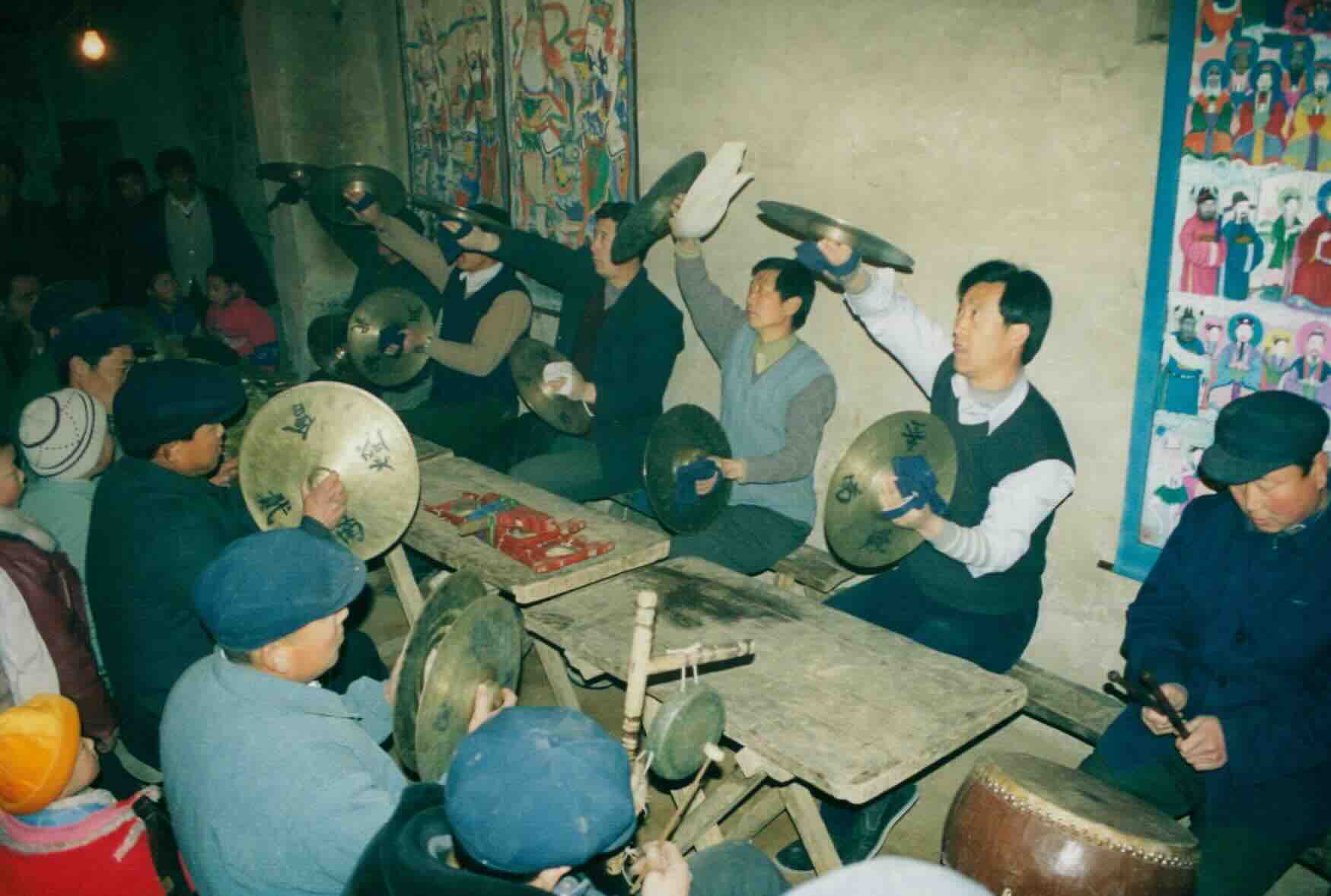
As I suggested in Plucking the winds, whereas cymbal players in WAM feel impelled to milk the rare climactic moments when they are required, in Gaoluo the great percussion suite, with all its solemn and balletic complexity, demands stamina, skill, and memory.

GL FDZ

Another stopgap

There I was, hoping to publish some thoughts today on our (or at least my) misapprehensions about images of Chan/Zen, I find it’s gonna have to wait a while before I add to the already vast mountain of writings on the topic. So meanwhile, for anyone desperate to be entertained (yeah right), I’ll just remind you of some diverse posts that I’ve been retweeting recently:

I’m sure that’s more than enough for now…

Berlioz: a love scene

Berlioz Romeo

If you’ve recovered from the fiddlers of the Dauphiné, my main passions in French music are for Ravel and Messiaen, not forgetting Rameau and Debussy, Michel Legrand, Françoise Hardy, and Barbara Pravi. But Berlioz makes guest appearances on this site too:

Berlioz CD

And I just recalled the pleasures of playing Berlioz’s “dramatic symphony” Roméo et Juliette with John Eliot Gardiner in 1995. Here he conducts it complete at the 2016 Proms—long after my time:

The Scène d’amour is enchanting—I’m also attached to Esa-Pekka Salonen, as much for his wise and forensic conducting as for the wonderful story of his interview for the LA Phil job, so here’s a 2023 concert:

While our EBS repertoire with Gardiner revolved around Bach, Handel, and Mozart, pieces of later early music that I enjoyed playing with him and the ORR include the Brahms German Requiem and Verdi’s Four sacred pieces.

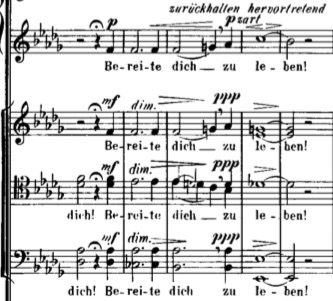
A German requiem

How we respond to any music has a lot to do with the associations of our personal reception history.

The Brahms German Requiem (Ein deutsches Requiem, nach Worten der heiligen Schrift, 1865–68)—humanist rather than Christian—was one of the first major choral works that I got to know, playing it quite regularly around suburban London with amateur orchestras and choral societies while I was at school (just as I first performed the Bach Passions, far from the HIP performances of my later “career”).

Finnegan 245

From Ruth Finnegan, The hidden musicians (1989).

I went on to play the German Requiem at Cambridge—where a group of us liked to stagger back from the pub to be amazed by Barenboim’s 1972 LP, with the LPO and the Edinburgh Festival Chorus, Edith Mathis and Dietrich Fischer-Dieskau:

concluding here (followed by the Vier Ernste Gesänge): *

By the time I was playing professionally in London, the Requiem had (sadly) become a rather routine experience, with (happily) minimal rehearsal (cf. Ecstasy and drudge), a bread-and-butter gig akin to doing a Messiah in Scunthorpe.

I write this post because until quite recently I felt twice removed from such works—after all those years in the early music business, with the further distraction of becoming immersed in Chinese fieldwork, I might expect to have grown out of such romantic warhorses. But somehow early bonds remain deep.

* * *

Klemperer’s 1961 recording is widely praised, with the Philharmonia Chorus and Orchestra, Elisabeth Schwarzkopf and Dietrich Fischer-Dieskau:

After this recording of Mengelberg’s 1940 concert (with the Concertgebouw and Amsterdam Toonkunst Choir, Jo Vincent and Max Kloos), here’s Furtwängler in 1948, with the Stockholm Phil and Chorus, Kerstin Lindberg-Torlind and Bernhard Sönnerstedt:

and Celibidache, live in 1981 with the Munich Phil and Choir, Arleen Auger and Franz Gerihsen:

In 1984 Tennstedt made two recordings with the LPO and Choir—a studio recording with Jessye Norman and Jorma Hynninen:

and a live performance from the Proms, with Lucia Popp and Thomas Allen:

As the early music movement became flavour of the month (see here), musos like me, who had washed up on the shores of baroque music as a refuge from the stormy seas of symphony orchestras, again found themselves playing some of the same pieces from the mainstream repertoire—now re-invigorated by a notional cachet of “authenticity”.

Brahms Requiem JEG

I was glad to revisit the German requiem for John Eliot Gardiner’s first recording of the work in 1990, with the ORR and the unmatchable Monteverdi Choir, Charlotte Margiono and Rodney Gilfry:

For Gardiner’s second recording (with Katharine Fuge and Matthew Brook, recorded in 2007–08), click here.

Assessing the balance between intense and ponderous will be subjective, depending on one’s own reception history and degree of veneration for particular maestros (note The art of conducting). Now, I’m keen on slow tempi, emphasised by most conductors here; but I find the choices of Furtwängler or Barenboim far more convincing than those of Celibidache—though FWIW, among the singers, I am moved by Celi’s team of Arleen Auger and Franz Gerihsen.

Anyway, it’s taken me all this time to feel blessed (selig) by the soul of Brahms. **

Among a wide range of scholarship, see e.g. chapter 5 “Performance issues in A German Requiem” of Performing Brahms: early evidence of performance style, cited in Brahms, tempo and timbre. See also Hélène Grimaud‘s renditions of the piano concertos; Der englische grußand *don’t miss* Kleiber’s Brahms 2!!! Try also the Mozart Requiem, and Funeral music. For other forays into later early music, cf. Berlioz’s Symphonie fantastique and Roméo et Juliette, the Four sacred pieces of Verdi, and even The Rite of Spring.


* which sounds more, well, serious, than “Four serious songs” (cf. Richard Strauss, here and here). Cf. What is serious music?!.

** It’s always worth consulting Slonimsky’s Lexicon of musical invective for withering reviews of the day. George Bernard Shaw in 1892:

Brahms’s Requiem has not the true funeral relish: it is so execrably and ponderously dull that the very flattest of funerals would seem like a ballet, or at least a danse macabre, after it.

Philip Hale in 1900:

Page after page of his Requiem is saturated with indigo woe, and the consolatory words are set to music that is too often dull with unutterable dullness.

Cf. More musical criticism.

Perplexity

Not so much moaning as perplexed:

Two of my main themes are Bach and Mahler, and you recently made history by showing an impressive lack of interest in my post on the John Passion Prom with Masaaki Suzuki and the Bach Collegium Japan, even with its fantasy of a world-music version of the Passions! And readers (or rather, non-readers) have been even more underwhelmed by my post on S-Simon Rattle’s Mahler 6 Prom—my first ever totally-unread piece!!! I realise Western Art Music has a rather niche clientele, but WTAF!

Many subscribers to this site may be interested mainly in my China coverage, but other topics usually attract a certain attention too, such as Western Art Music, jazz, world music, film, and so on—as shown in this list of my most popular posts, pleasingly diverse:

posts

I listed some of my own favourite posts here, including A playlist of songs and That is the snake that bit my foot. While I’m here, I note that very few people take advantage of my playlists and roundups to click on the copious links—but hey…

Twitter (as I still like to call it) is now just as disappointing as a vehicle to spread glad tidings. I understand that it has become totally useless under deranged new management, and that people only go there to scroll for cute pics of cats and racist bigotry (ideally combined); but still, one would think that just a few readers might be drawn to such posts by hashtags like #SimonRattle, @BRSO#Mahler, #BBCRadio3, @bbcproms, #Bach, @MSuzukiBCJ, and #worldmusic. But far from it!!! Hey-ho…

Another Mahler 6 at the Proms!!!

*Yet another post in my Mahler series!*

Rattle Prom 2Source.

At last season’s Proms S-Simon Rattle conducted a moving Mahler 9 for his final concert as Musical Director of the LSO. Since leaving the UK for Germany, he has become chief conductor of the Bavarian Radio Symphony Orchestra. Last week in the first of two visits to this year’s Proms they played Bruckner 4 and a UK premiere by Thomas Adès. The next evening I went to hear them in Mahler 6 (listen on BBC Radio 3).

Rattle Mahler 6 CDI wrote about the symphony here, after a performance at the 2017 Proms, and featuring recordings by Mitropoulos, Barbirolli, Bernstein, Tennstedt, and Abbado.

The Bavarian orchestra is just as deeply immersed in Mahler as S-Simon, having regularly performed the symphonies over many decades (from the cycle with Kubelik, here‘s the 6th, from 1966) and in recent years with Mariss Jansons and Daniel Harding. S-Simon has been touring it with the Bavarians this year (on You Tube, their recent live recording starts here—finding the other movements there is more of a challenge).

After the first movement, with its juxtaposition of prophetic jackboots (cf. Mahler 10), “yearning” Alma theme, and Elysian cowbells, for the two central movements S-Simon (like most conductors) favours Mahler’s revised movement order, with the wonderful Andante second; but I still feel there are sound musical reasons for placing it third, as explained in my original post. And then the immense, tragic finale, with its extraordinary hallucinogenic opening. In his revision Mahler removed the controversial third hammer-blow:

Mahler 6 MSSource (cf. here).

I always feel that S-Simon’s rapport with his players—and audiences—is much enhanced by his conducting from memory. The Bavarian players sound wonderful, like every orchestra he conducts.

Rattle Prom 1

I ran out of superlatives for Mahler long ago—do keep consulting my roundup!

* * *

Some other Proms that I relished this season:

For previous years, scroll through the Proms tag; and it’s always worth browsing the Proms Performance Archive. See also The art of conducting.

French music at the Proms

French PromStéphane Denève accompanying Laurence Kilsby in Lil Boulanger’s Vieille prière bouddhique.
Via Twitter.

Always enthralled by French music, at the Proms earlier this week (following the Orchestre de Paris playing Berlioz, Debussy, and Stravinsky) I went to hear Stéphane Denève conducting the BBC Symphony Orchestra and Chorus in a programme of Lili Boulanger, Fauré, and Ravel, with vocal solos by Golda Schultz, Laurence Kilsby, and Jacques Imbrailo (listen on BBC Radio 3).

Lili B

Despite her sadly short life, the music of Lili Boulanger (1893–1918) has grown in reputation—her name now ranking alongside that of her sister, the influential pedagogue Nadia. The concert opened with Lili’s Pie Jesu, dictated on her deathbed to Nadia (whose 1968 recording with Bernadette Greevy and the BBC Symphony Orchestra can be heard here).

Boulanger was a pupil of Fauré, and her Pie Jesu made an apt bridge to his Requiem, at whose heart is a setting of the same text. The Requiem is so over-exposed that it deserves to be heard with fresh ears. A subjective comment: whereas for some works like the Brahms German Requiem I can overrride my youthful experience of accompanying amateur choral societies, in this case I still can’t fully engage, even if I can now appreciate Fauré’s originality.

More from both composers after the interval: Fauré’s Pelléas et Mélisande, a popular theme for composers of the day—notably Debussy, Schoenberg, and Sibelius. Then came Lili Boulanger’s Vieille prière bouddhique, with tenor and choir * singing a text translated from Pali—a “prière quotidienne pour tout l’univers” whose goal is as distant now as it was in 1917. Dominated by a somewhat portentous tritone interval, it adds to our list of fin-de-siècle orientalism.

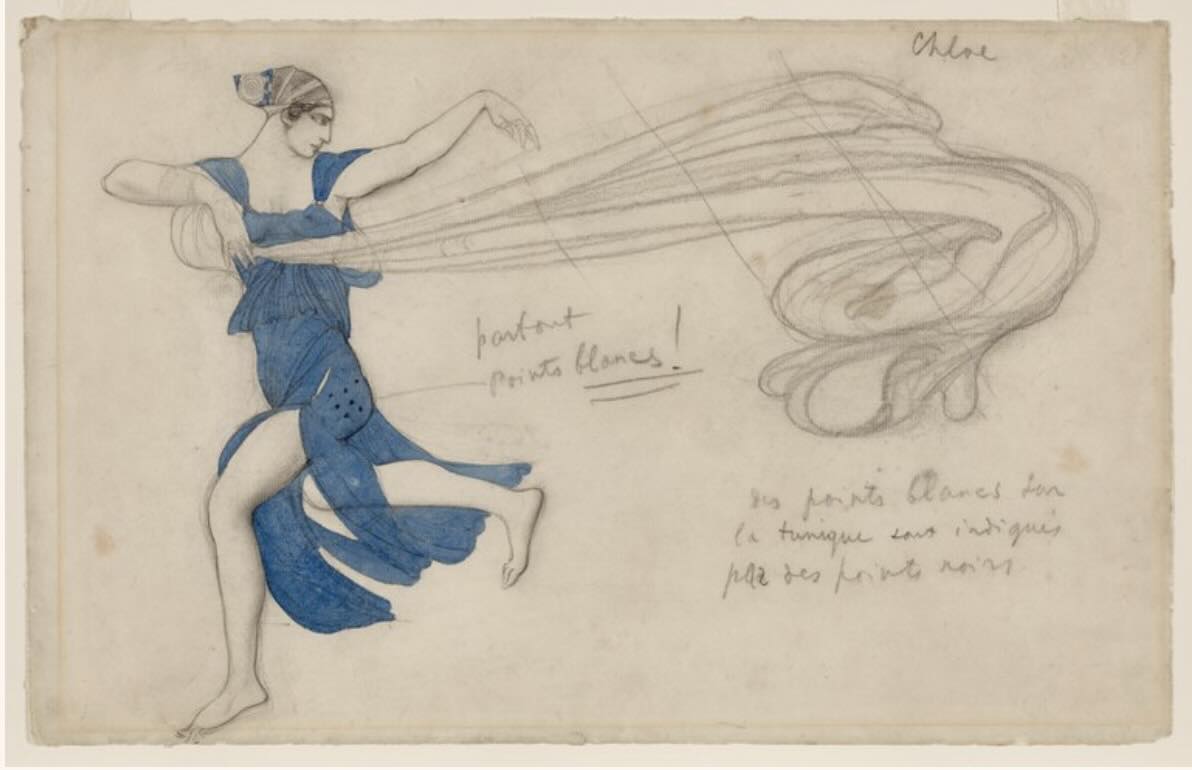
Chloe design

Léon Bakst, costume design for Tamara Karsavina as Chloé, 1912. Source

Just predating both the Boulanger pieces, Ravel’s Daphnis and Chloé (see my main page on Ravel) is exquisite. Ideally it should be heard in the complete version, but the 2nd suite makes a popular concert finale (here it was enhanced by wordless choir, usually considered too extravagant). The opening is always enchanting—I like this story (anyone have an original source?):

Ravel, when asked how it was that his famous musical evocation of sunrise had been penned by someone who never got up before 10.30am, replied, reasonably enough, “I used my imagination”.

To follow the flute solos of Pelléas and the Prière, Daphnis and Chloé is a glorious showcase for the woodwind, with Stéphane Denève at last free to conduct with balletic nuance and bacchanal abandon.

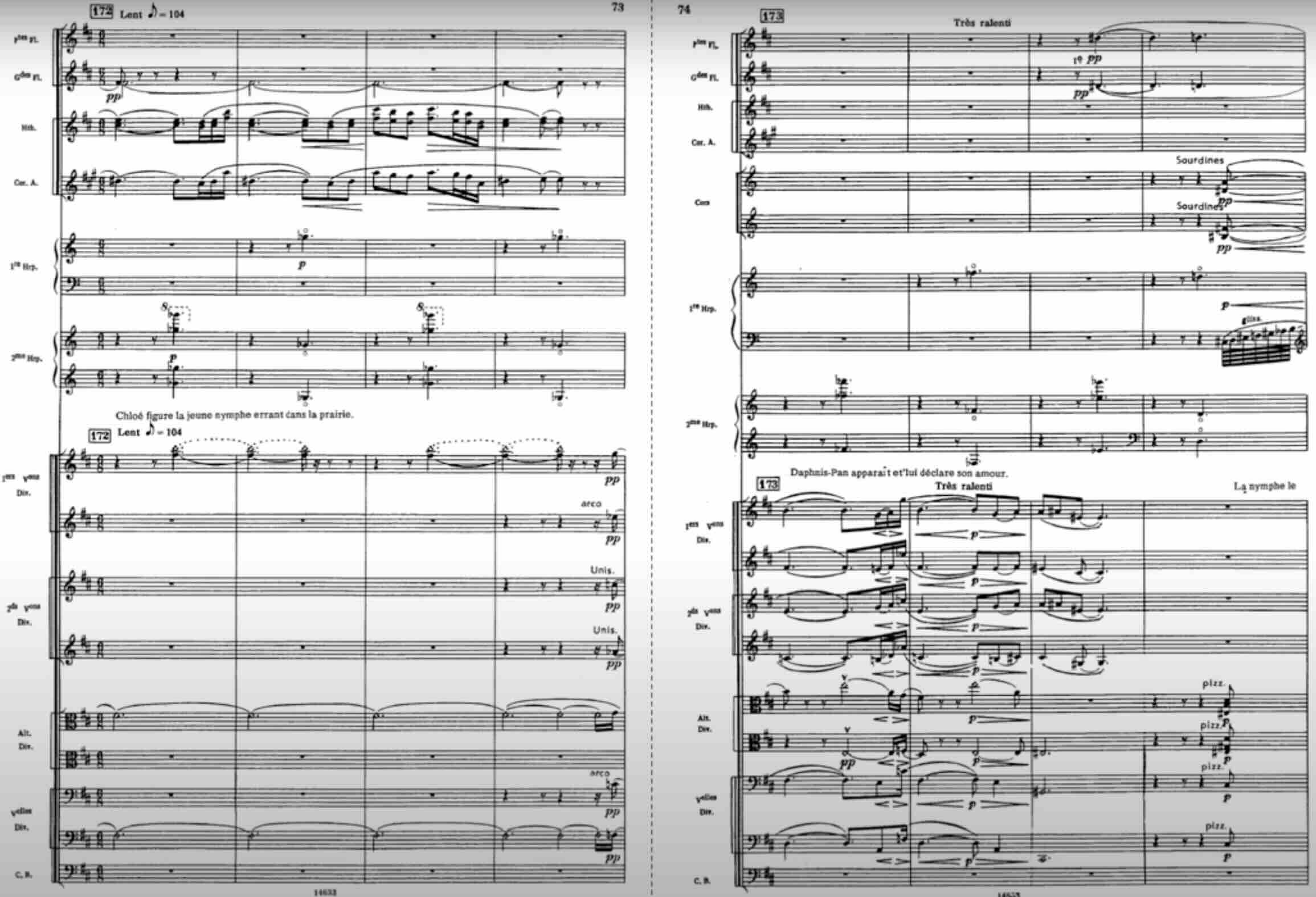
Screenshot

A most exquisite passage—from 5.43 in S-Simon Rattle’s live performance with the LSO here.


* The late lamented Nicolas Robertson was part of the Monteverdi Choir for John Eliot Gardiner’s 1999 recording, inspiring him to create one of his most moving anagram tales—192 anagrams of Lili Boulanger that he wove into yet another fantastical plot (the title Nubile gorilla an anagram that vies with Gran visits York for Igor Stravinsky!).

Ways of playing the violin

A companion to Indian and world fiddles.

Djoko violinImage: Paul Childs/Reuters. Source.

This summer, after yet another victory, Novak Djokovic paid homage to his daughter’s early steps learning the violin (video here!). This inspired me to survey the multiple ways of playing “our” Western violin, in Europe and around the world.

There are several issues in posture. How the instrument is positioned—roughly horizontally (on the shoulder or chest) or roughly vertically (on the thigh); and the bow hold. All of these are variable.

For over a century, the violin, along with the symphony orchestra, has been firmly established in urban middle-class milieus around the world (cf. Bach from Japan, and A Shanghai Prom). The Djokovices were more likely to choose the violin for their daughter, I concede, than the Serbian one-string gusle (featured here under “Bards”). But neither the violin that we now find in orchestras nor the way it’s played there is timeless; both are something of an anomaly, in both time and space. 

me on tiny violinLeaving aside the many other kinds of bowed fiddle (such as kemence and lira, or Indian sarangi, all commonly played on the leg), ways of playing the “Western violin” vary by period and region, class and context.

How musicians engage with their instrument depends largely on genre and style—the kind of music they play for what kind of activity. A technique that evolves within an oral tradition—among friends, blending in ensemble, or for social dancing—is likely to differ from formal conservatoire training with a view to “performing” on the concert stage. Musicians find ways of playing that seem conducive to the sound-ideal they seek, coming to feel at one with the instrument so that it becomes part of the body. 

Memling

Detail from Hans Memling, Musician angels, c1480.

In Europe, following medieval bowed fiddles like rebec and vielle (amply represented in iconography), precursors of the “modern violin” began to emerge in the early baroque, a period of great flux in Western Art Music. Treatises by leading player-pedagogues of the day reveal a range of views whether the instrument should be positioned on the chest or collar-bone, or under the chin. Among a wealth of discussion in the wake of David Boyden’s 1965 classic The history of violin playing from its origins to 1761, this article by Richard Gwilt makes a thoughtful introduction, with a second part here. The Essential Vermeer site also has a useful overview.

Left, Michel Corrette, L’Ecole d’Orphée, 1738
Right, Leopold Mozart, Violinschule, 1756.

Change continued through the 19th century, with research taking a lead from Robin Stowell. As composers and venues kept posing greater challenges on players, the instrument and its technique kept changing, adding more apparatus—chin-rest, shoulder-rest, elongated fingerboard, and so on. The bow evolved, and eventually metal strings replaced gut and silk. *

* * *

In folk traditions, ways of playing the violin have changed less than in Western Art Music. In many parts of the world, living folk styles may adapt techniques from early indigenous fiddles, or preserve those of the period when the violin was first introduced, often via colonialism. Here’s a little selection of many regional variants (note Peter Cooke, “The violin—instrument of four continents”, in The Cambridge companion to the violin, 1992, and for both WAM and folk traditions, The New Grove dictionary of musical instruments).

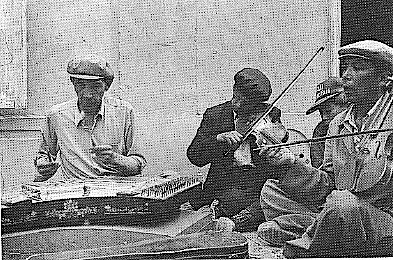
tanchaz 93String trio with cimbalom at the Meta táncház, Budapest 1993. My photo.
Besides the fiddle, note the supporting kontra.

Folk styles have been resilient in Transylvania (see under Musical cultures of east Europe). Do watch this amazing clip (from Bernard Lortat-Jacob, Jacques Bouët and Speranţa Rădulescu, A tue-tête: chant et violon au pays de l’Oach, Roumanie). And allow me to remind you of this splendid way of sounding the strings:

Still in Transylvania, this clip from Gyimes also features the gardon—a most distinctive way of playing the cello!

String bands are also at the heart of Polish folk traditions:

Polish fiddler

Józef Bębenek. Image from the excellent Muzyka Odnaleziona site; listen e.g. here.

Mhaonaigh

Irish fiddlers use some fine bow holds—my personal award going to Mairead Ni Mhaonaigh (above).

taranta
Taranta: Luigi Stifani healing with violin in the heel of Italy.

I gave a little introduction to folk fiddlers of the Dauphiné in my playlist for Euro 24!

Violon traditionel CD cover

Folk fiddling traditions are common throughout north and south America.

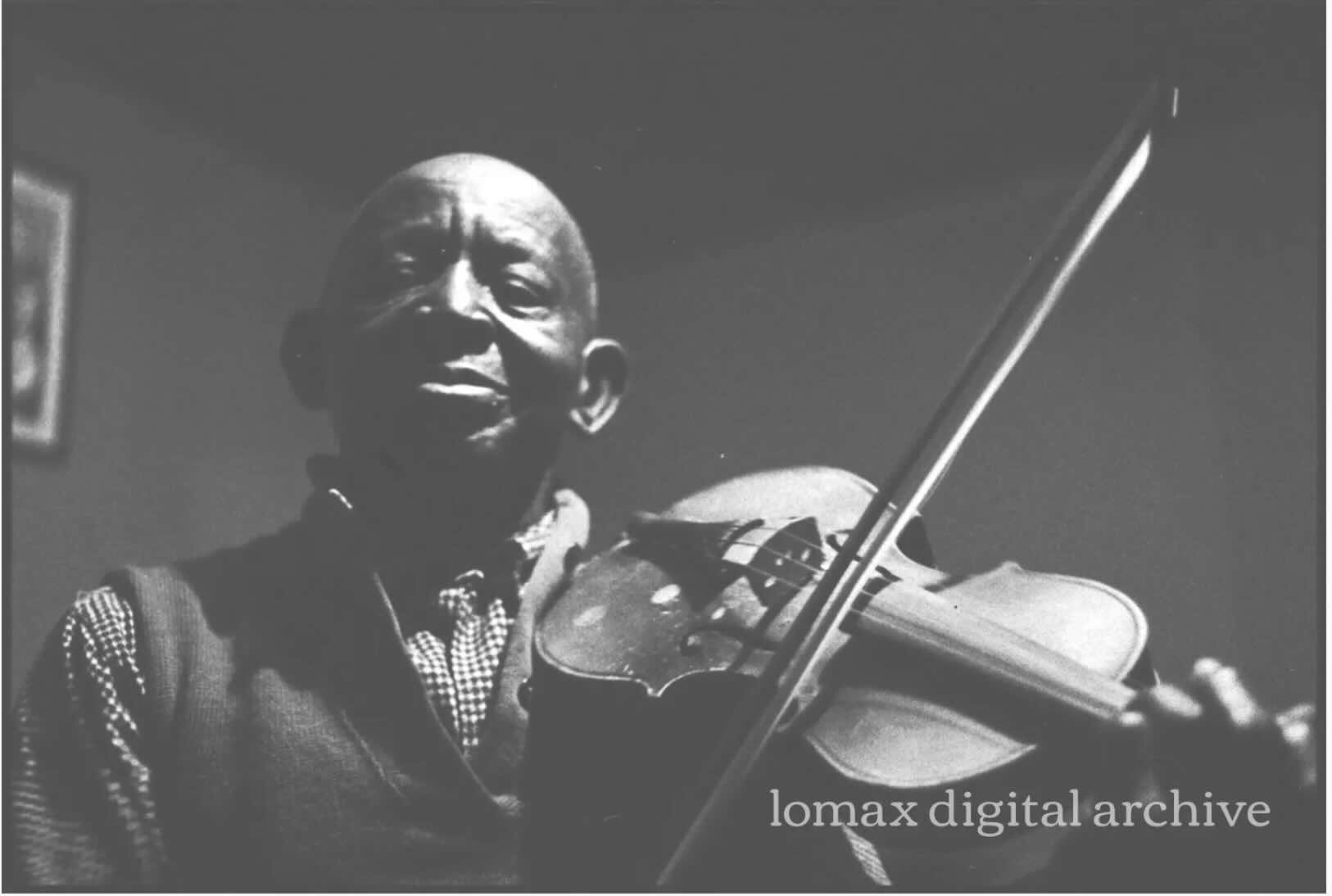
fiddler Lomax“Unidentified fiddler” in the southern States. Source: Alan Lomax Archive.
See America over the water, and under Country.

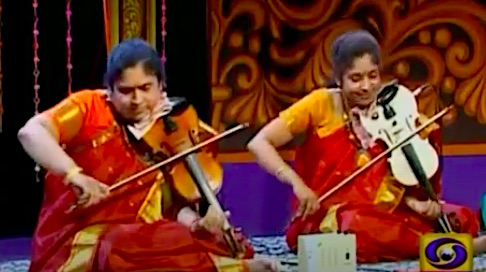
In India (mainly in the southern Carnatic tradition) the violin is most exquisite both in posture and effect, players dispensing with the chair (cf. the qin zither) and seated on the floor, with the scroll resting on the right foot:

Indian violin
Sisters M. Lalitha and M. Nandini.

Peter Cooke comments on Bruno Nettl’s taxonomy of musical change:

The violin’s rapid adoption in Iran along with Western solistic tendencies suggest to him a basic compatibility with Western music, whereas in India the violin was only slowly absorbed into a strong, viable musical tradition—a case of modernisation of instrumentation rather than westernisation of style.

In north Africa, such as Morocco (listen here), and west Asia, such as rural Turkey (listen here), the violin is often played on the leg, like their indigenous fiddles—and like some early European fiddles, as well as members of the viol family (intriguing explorations by Fretwork here).

Uyghur musicians, complementing the ghijak and satar, also sometimes play violin on the leg, though more commonly they play it on (or off) the shoulder:

Sabine Kashgar

Wedding band, Kashgar 1988.
From booklet with 2-CD set Turkestan chinois/Xinjiang: musiques Ouïghoures.
See under From the holy mountain.

In my original roundup I featured some fine Uyghur violin playing in this recording of Raq muqam:

The players’ sound-ideal will be the major factor, whatever instrument they choose.

* *  *

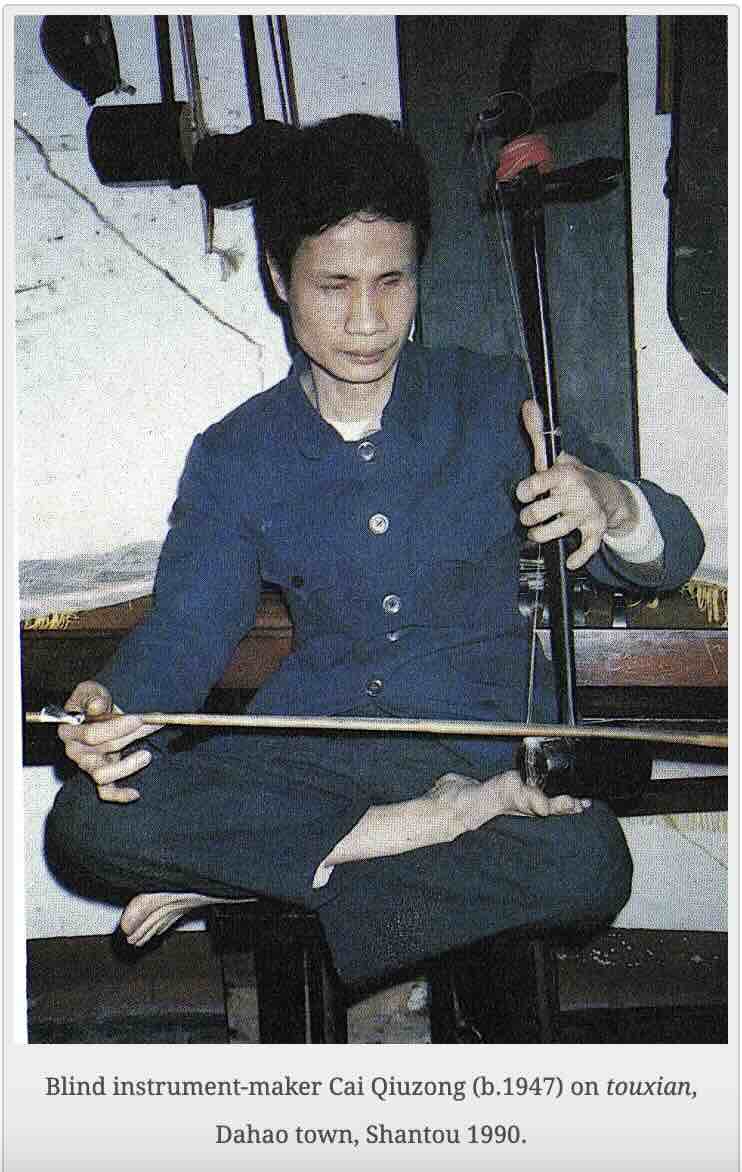
Chaozhou blind touxian

At a tangent, ways of playing Chinese fiddles have not always been so standardised as with the erhu of the modern conservatoires.

There’s a multitude of posts under the fiddles tag—on a lighter (yet instructive) note, try The Mary Celeste, and Muso speak: excuses and bravado (“It was in tune when I bought it”) .

Strad in bed

Cf. Frozen brass.


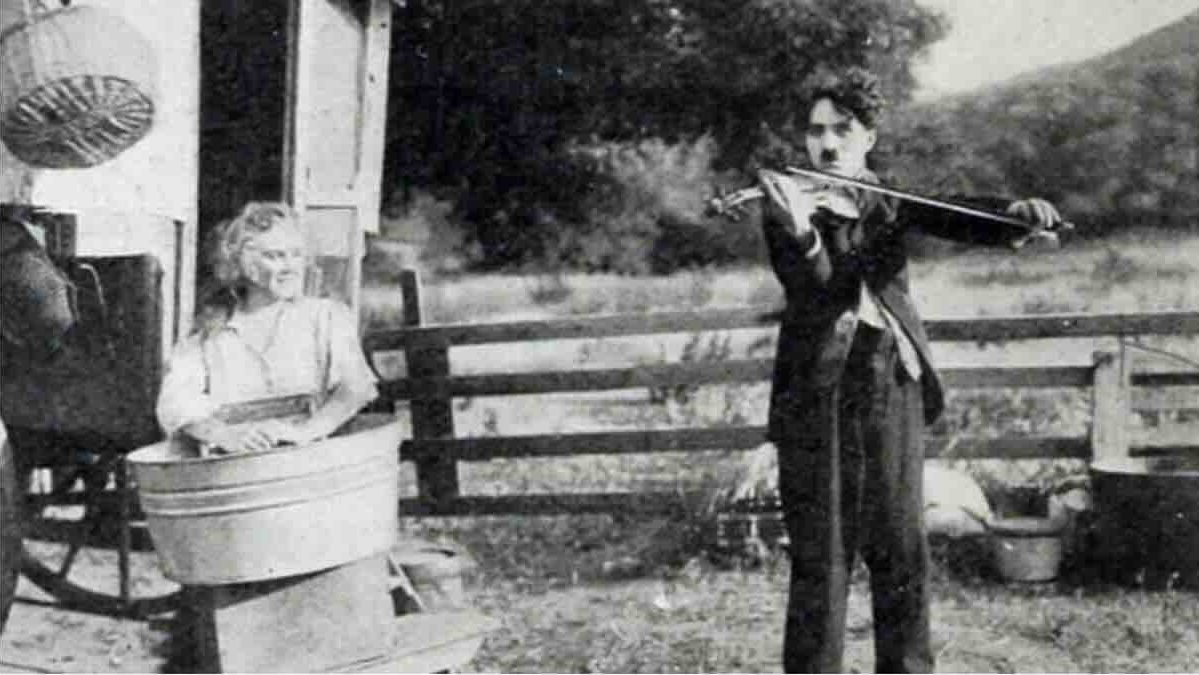
* We take it for granted that the left hand stops the strings while the bow is held in the right hand. Charlie Chaplin was one of rather few left-handed violinists:

chaplin

A still from Chaplin’s 1916 film The Vagabond. Source.

Bach from Japan

with a not entirely meretricious fantasy on world-music Passions…

Suzuki Prom 2©BBC/Mark Allan. Source: Artsdesk review.

This year is the 300th anniversary of the Leipzig premiere of Bach’s John Passion. * After John Butt’s performance at the 2017 Proms (more links to the Passions here), I’ve just returned to hear it with Masaaki Suzuki (b.1954) directing the Bach Collegium Japan, which he has led since 1990 (listen here—with an instructive interval talk thankfully replacing the interminable original sermon). Whereas performers these days know the work intimately, it must have been a serious challenge for Bach’s Leipzig forces (cf. this post); even to today’s listener it still sounds startingly modern—imagine how it must have sounded to the 1724 congregation!

Having studied with Ton Koopman in Amsterdam, Suzuki became a leading advocate for the early music movement in Japan. Joining several other complete recordings of the Bach cantatas (links here), his cycle with BCJ was completed in 2014. It’s most remiss of me not to have kept up, missing Suzuki’s previous visits to London, both with his own ensemble and as guest conductor of the Age of Enlightenment. Far from inscrutable, his style is dramatic, expressive, rather evoking that of Koopman, or perhaps Richard Egarr—both of whom direct from the keyboard, whereas Suzuki has gravitated to conducting from the podium, leaving the harpischord and organ to dedicated musicians (given which, he might go further and cede close control over the recitatives?).

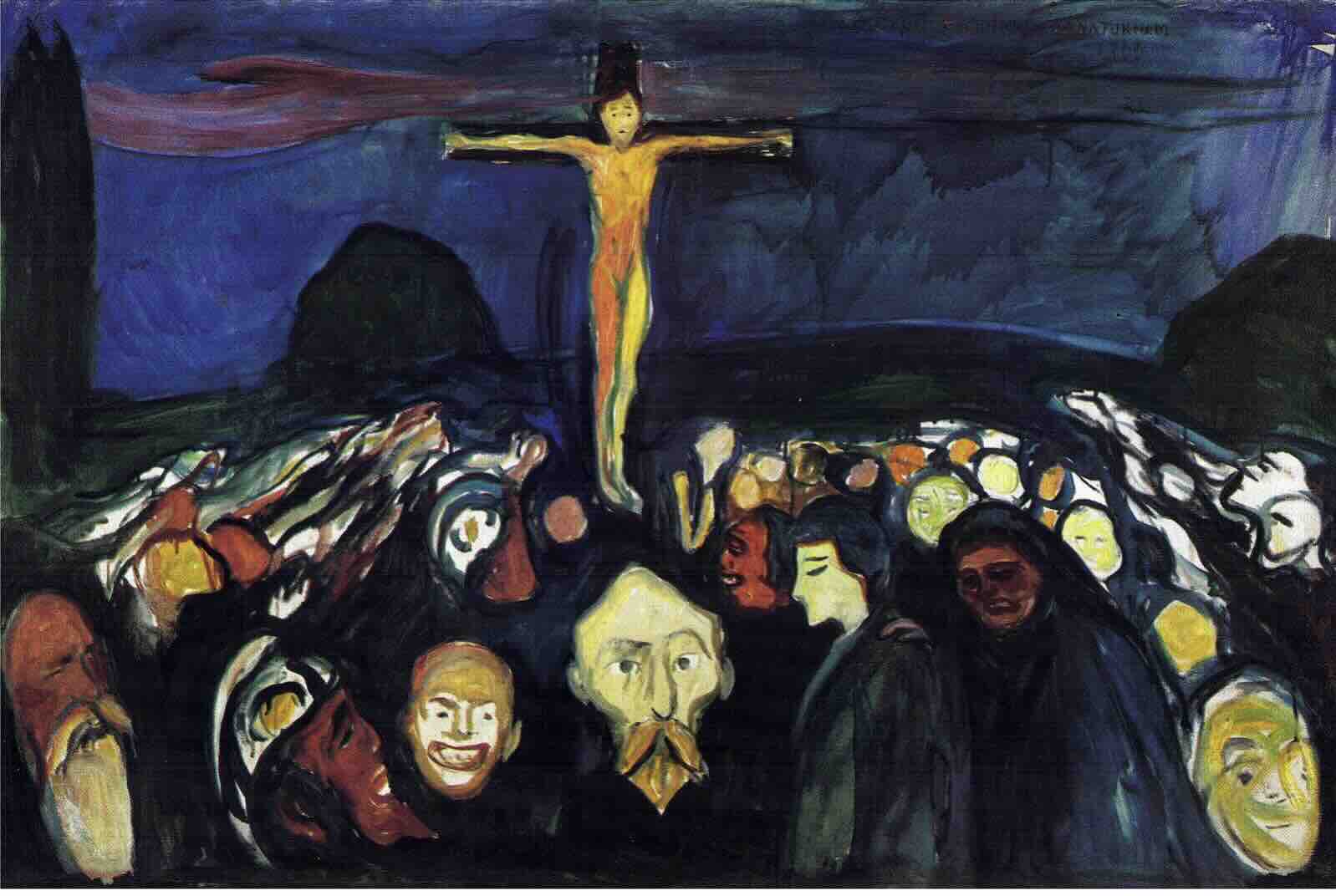
Munch Golgotha

Bold idea of the programme booklet: Edvard Munch’s Golgotha (1900),
in which he represented himself as the Christ figure,
with the foreground figures casted as the seven deadly sins. Source: wiki.

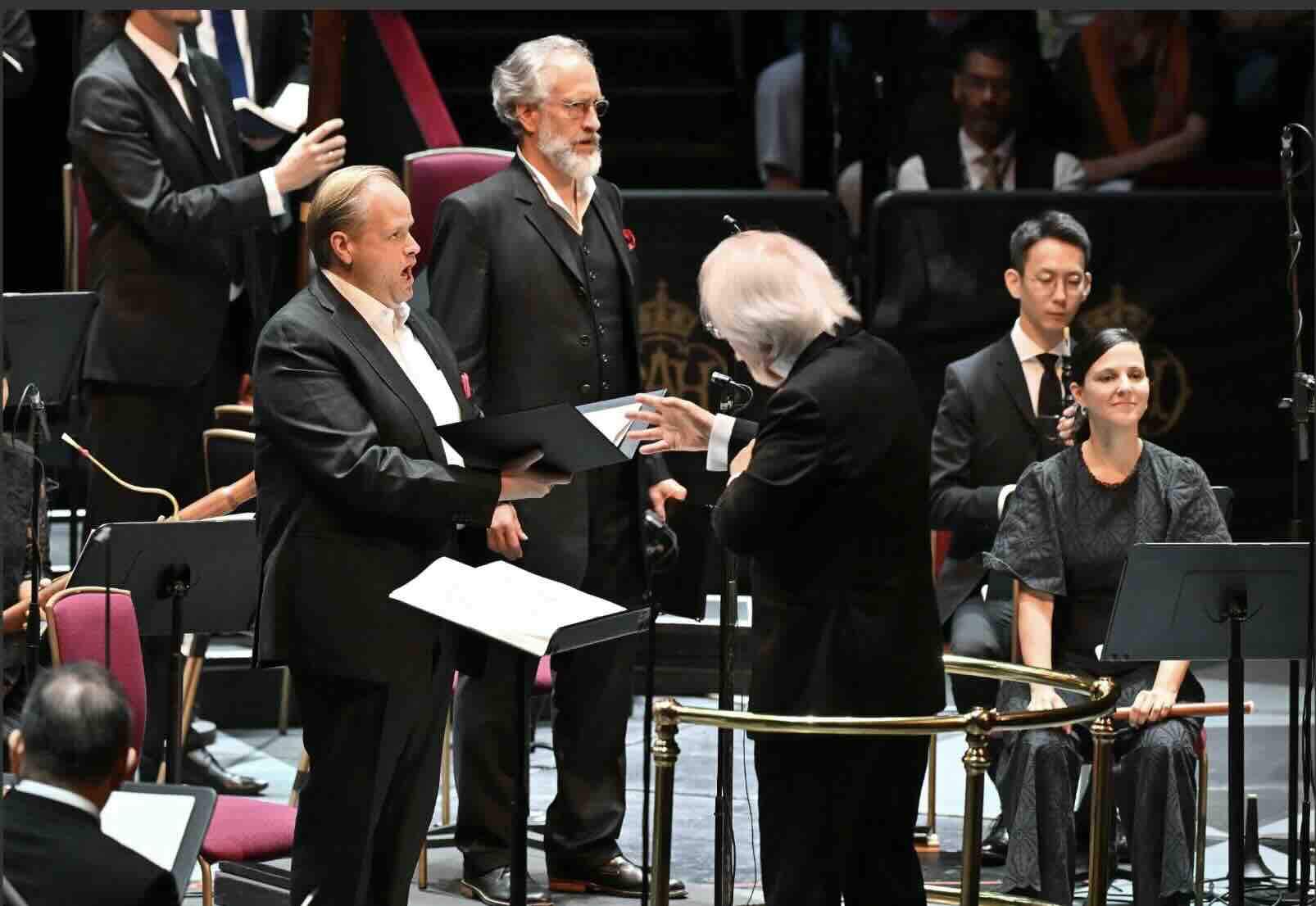
Benjamin Bruns was the Evangelist to Christian Immler’s imposing Jesus. The choir sounded fabulous, with twenty singers in an arc, including soloists who emerged for the arias. Carolyn Sampson (whom I used to accompany on Bach tours with The Sixteen) was exquisite in Zerfließe, mein Herze, as was Alexander Chance in the counter-tenor arias—succeeding his father Michael, whose singing, such as Erbarme dich, enriched our own performances with John Eliot Gardiner; excellent too were Yusuke Watanabe and Shimon Yoshida. Following HIP style, Suzuki favours small instrumental forces—wackily augmented by a towering contrabassoon (as in Bach’s fourth version); oboes and flutes, seated front stage on the right, were well highlighted.

Suzuki PromBenjamin Bruns, Christian Immler, Masaaki Suzuki.
©BBC/Mark Allan. Source: Bachtrack review (with the fine heading “Promenading on Golgotha”).

Suzuki and BCJ  have long experience of performing and recording Bach (watch a John Passion from 2000 here); their Proms visit this week was part of a European tour—it’s a highly seasoned, accomplished ensemble.

Nothing can compare to the awe of being plunged into the opening chorus, with throbbing, turbulent strings overlaid by anguished suspensions on oboes.

John MS

Returning to the Bach Passions regularly over a lifetime (referring, perhaps, to Gardiner’s Music in the Castle of Heaven) is an essential part of our self-cultivation.

* * *

In This Day and Age™ there’s nothing remarkable about a Japanese ensemble excelling in Bach; even if we can resist projecting orientalist fantasies (with Suzuki as Zen Sage-Mystic), their taste for Historically Informed Performance somehow seems quite appropriate. Perhaps no-one else will even think of gagaku, another genre that was imported, from Tang China—and then radically slowed down until it was no longer recognisable.

I’ve long had a fantasy of staging a world-music version of the Passions (cf. Bach, um, marches towards the world), held at a cosmic site like the Grand Canyon (cf. Messiaen). Amidst sand mandalas, the Dalai Lama with his own halo of deep-chanting Tibetan monks accompanied by their cymbals, drums, and booming long trumpets, as well as ethereal ondes martenot or theremin… Mark Padmore sharing the role of Evangelist with a searing cante jondo singer… Uyghur bowed satar and Persian ney flute as obbligato instruments for the arias, a gamelan to embellish the choruses, and the catharsis of an Alevi sema… One day I’ll do a detailed programme, unfettered by funding or logistics.

A slightly less daunting project would be a Japanese staging of the Passions based on Noh drama. As continuo to the pilgrim/Evangelist visiting the site of an ancient mystery, the dialogue of the two drums, their eery kakegoe cries summoning the spiritual world… the Noh chorus both evoking the crowd and offering redemption… Augmented by the timbre of gagaku, magically transforming the wind music of the choruses and arias (Bach’s own timbre for Zerfließe is already not so distant—and with an archlute joining the continuo, the affinity would be even closer). While some Westerners have trained intensively in Noh, it’s more common, and must be easier, for Japanese musicians to learn to perform Bach (cf. Jazz in post-war Japan)—though it might be hard to find musicians who would be up to (or up for) the task.

At the heart of both these stagings will be Bach’s original music, devotedly illuminated by compatible traditions from around the world.

See also under my roundup of posts on Japanese culture—including some spellbinding Bach on a mile-long xylophone in an empty forest!


* After all this time, I still have reservations about my choice to imitate Bach’s original omission of the “St” before John Passion (Passio secundum Joannem) and Matthew Passion (Matthäus-Passion, or even Passio Domini nostri J.C. secundum Evangelistam Matthæum), with its apparent breezy familiarity—”The name’s Matthew, but call me Matt”). But Was ich geschrieben habe, das habe ich geschrieben, as Pilate observed pithily (a foretaste of “It’s what it is”, suggesting that Robert De Niro might be well cast for the role, albeit too late to join John Wayne as centurion for the crucifixion).

Selected readings on WAM

BTW, I suspect a WordPress glitch may have failed to notify email subscribers of
my recent post on Nicolas Slonimsky’s wonderful memoir Perfect pitch
and it’s Jolly Good, just saying…

I’ve just revised my introductory page on Western Art Music, with the addition of an off-piste selection of general writings that I find stimulating.

It extends from works within the field itself (Taruskin, Ross, Slonimsky, McClary, Butt, Lebrecht) to the broader perspectives of ethnomusicology (Becker, Small, Nettl) and ethnography (Finnegan, Cottrell, Tindall, Warnock).

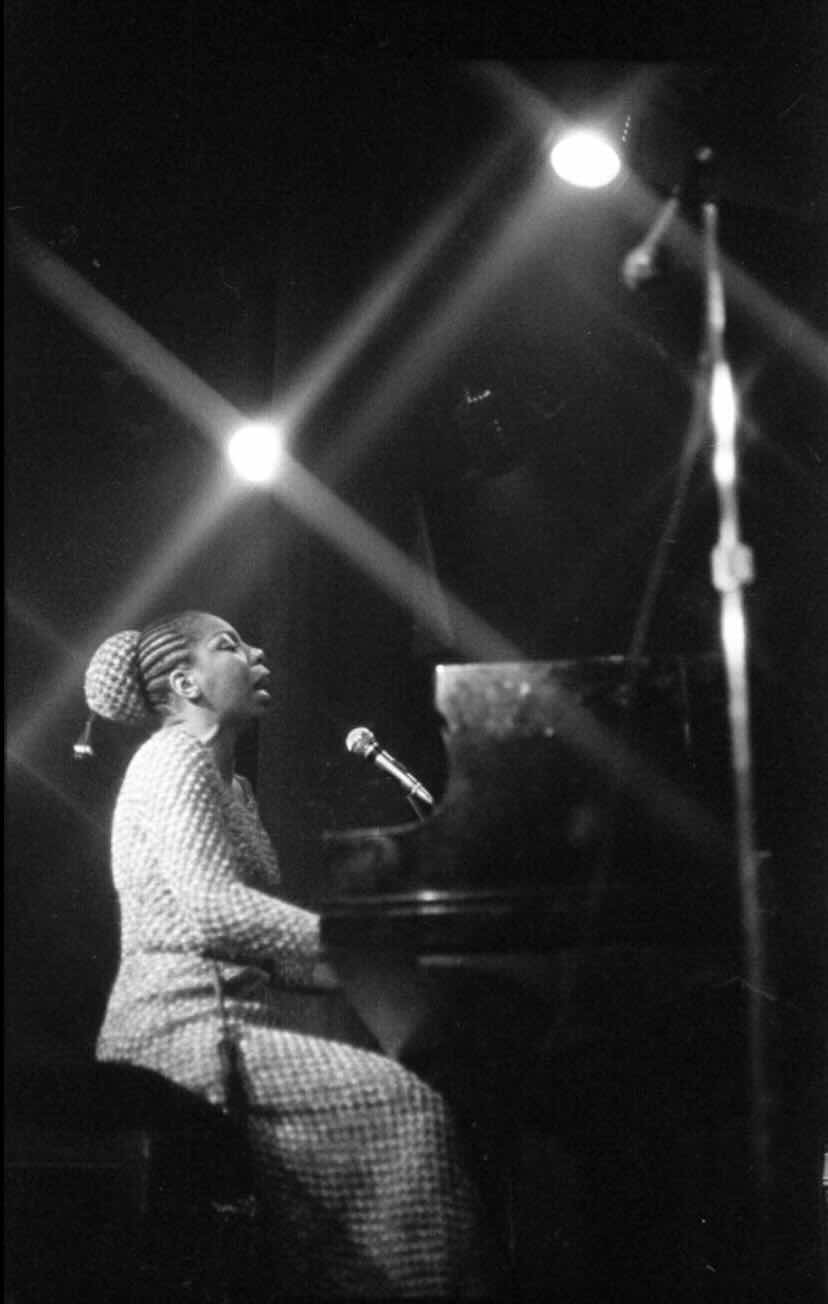
Nina Simone

*Part of my strangely extensive jazz series!*

NinaSource.

Such is my devotion to Billie Holiday that I’ve never quite been able to warm to Nina Simone (1933–2003). But my interest has been revived by listening with rapt admiration to Feeling good (1965). It opens with an all-too-brief free-tempo alap, brusquely interrupted by the incongruous sleazy riff: *

The title isn’t so ironic as it sounds. Written by (white) English composers Anthony Newley and Leslie Bricusse for the musical The roar of the greasepaint—the smell of the crowd, satirising the British class system, the UK premiere was given by Cy Grant in the role of “the Negro” singing the song as he “wins” the game; it was described as a “booming song of emancipation”. When the show transferred to New York the following year, the role was taken by Gilbert Price. Nina utterly transforms the song, but the optimism of its lyrics is remote from the activist songs that were becoming the core of her repertoire just at that time.

* * *

Within the milieu of the day, few musicians were angels. Jazz biographies from the, um, Golden Age tend to follow a depressingly familiar trajectory of self-destruction: pain, drugs, exploitation, disastrous choice of partners, violence, disillusion, and legal woes. Despite all these features, Miles’s autobiography is strangely inspiring, tough but never helpless (for a lengthy sample, see Miles meets Bird). White musos could be no less self-destructive—few more so than Chet Baker.

For Nina, besides wiki and ninasimone.com, I’ve been reading

  • David Brun-Lambert, Nina Simone: the biography (2005).

Among documentaries is Nina Simone: the legend (Frank Lords, 1991), What happened, Miss Simone? (Liz Garbus, 2015; trailer), and The amazing Nina Simone (Jeff L. Lieberman, 2015; trailer).

The sixth of eight children in a poor North Carolina family, Nina was a child prodigy at the piano; “Bach made me dedicate my life to music”. After graduating from high school in 1950, she seemed destined to become “the first black American concert pianist”. So the original, lasting, deep wound in her psyche was being refused admission to study at Curtis—which she attributed to racism. Thwarted in her classical ambitions, she continued to study privately with Curtis professor Vladimir Sokoloff for several years, funded with a regular gig at a nightclub in Atlantic City—only taking up singing because the job demanded it.

While Nina’s classical piano training would later give her a cachet among respectable white audiences, I seem to have reservations about singers accompanying themselves at the piano, like Ray Charles. Distinctive and original as her playing was (e.g. her “destabilising” 1969 album Nina Simone and piano), it was at a tangent from jazz: stark, based on melody, hardly admitting any harmonic interest—by contrast with her cohorts in the jazz scene like Monk, Herbie Hancock, or Bill Evans. But this musical simplicity threw greater focus on her political message.

By the late 50s, as her career was taking off, her dream of fame as a classical pianist had evaporated. The civil rights movement was growing. In Greenwich Village she began hanging out with James Baldwin, Langston Hughes, LeRoi Jones, and Lorraine Hansberry. Her 1961 visit to Lagos with Baldwin, Hughes, and others as part of a delegation of the American Society for African Culture was her first time in Africa.

Now married to a violent husband and manager, she gave birth to her daughter in 1962. Her entry into the civil rights struggle was embodied in her 1963 song Mississippi goddam. Nina’s activism, and the wider civil rights background, is extensively covered by Brun-Lambert, with detail on her involvement with Martin Luther King, Malcolm X and the Nation of Islam, Miriam Makeba, the Black Panthers, riots, marches, and the whole ferment in black popular music through the 1960s.

By 1970, exhausted and disillusioned, Nina seemed to have reached the end of the road. In later life she largely avoided the USA for fear of legal battles; while still touring, she sought refuge in Barbados, Liberia, Switzerland, Holland, and France, lonely and estranged from her daughter, her relationships fraught and short-lived; among a succession of managers, some had better intentions than others. Her mood-swings and behaviour on and off stage had long been volatile, becoming ever more apparent; the diagnosis of bipolar disorder was belated. Brun-Lambert describes her as “leading a double artistic life, unable to find her own place anywhere”.

* * *

Nina Pastel cover

Turning to Nina’s songs—as ever, there’s a vast selection on YouTube, notably this channel—below I give a mere sample.

In her early years she sounds benign enough, like the New York Town Hall concert in September 1959, “still without trace of savagery or sexuality”, as Brun-Lambert puts it:

Still, her interpretations, such as Summertime, are distinctive. Billie Holiday had died in July that year; a couple of years earlier she had immortalised Fine and mellow in the most enthralling TV film ever. Nina sang it for her Town Hall finale.

“Her first song with explicitly black consciousness” was Flo Me La at the Newport festival in 1960 (from 20.52):

Among several appearances at Carnegie Hall, here’s her 1964 concert (as playlist):

The programme introduced activist songs such as Old Jim Crow, Go limp, and Mississippi goddam into the genteel surroundings. And she is just right for Brecht/Weill songs like Pirate Jenny!

Singing The house of the rising sun at the Village Gate in 1961, she sounds rather mellifluous:

By 1968, live at the Bitter End Café, her voice is harsher and more experimental:

The final number on her troubled 1965 album Pastel blues (here, as playlist) is Sinnerman, “about despair, disenchantment, disillusionment in the face of a situation that offers no alternatives but flight or prayer” (Brun-Lambert). Before that comes Strange fruit, just as visceral as Billie’s 1939 recording and 1959 performance. Nina’s concert in Antibes that year included some songs from the forthcoming album—opening with a disjointed intro that segues into Strange fruit:

And here’s Four women, live in 1965:

After the assassination of Martin Luther King in 1968, she sang Why? (The king of love is dead)—here’s a full version live that year:

In 1967 she recorded I wish I knew how it would feel to be free—here’s her 1976 Montreux performance:

Again, I find some of these casual piano accompaniments, and even her voice, disconcerting—but maybe that’s the point.

That’s probably enough to outline the story of Nina’s heyday; in her later career she largely repeated such standards—after the original creative impetus had diluted, and as her mental troubles escalated. She had been touring in England since 1967—it’s worth hearing her live at Ronnie’s in 1985:

To encapsulate ecstasy and pain, for me it’s always going to be Billie… I may be romanticising the devotion of jazzers to their art (cf. the wonderful image of Donald Byrd practising on the subway), but I detect no inkling of any such devotion in Nina: any musical discipline that she practised seems to have been at the keyboard. She formed no bonds with her fellow musicians.

While one gets little impression that she honed her vocal skills, in early recordings like Black is the color of my true love’s hair and Wild is the wind (in the 1959 Town Hall concert) she sounds genuinely intimate, even sweet—far removed from her later image. Still, music is about society: Nina’s voice developed into a genuine expression of the troubled times, part of the necessarily strident style that emerged from the civil rights struggle.

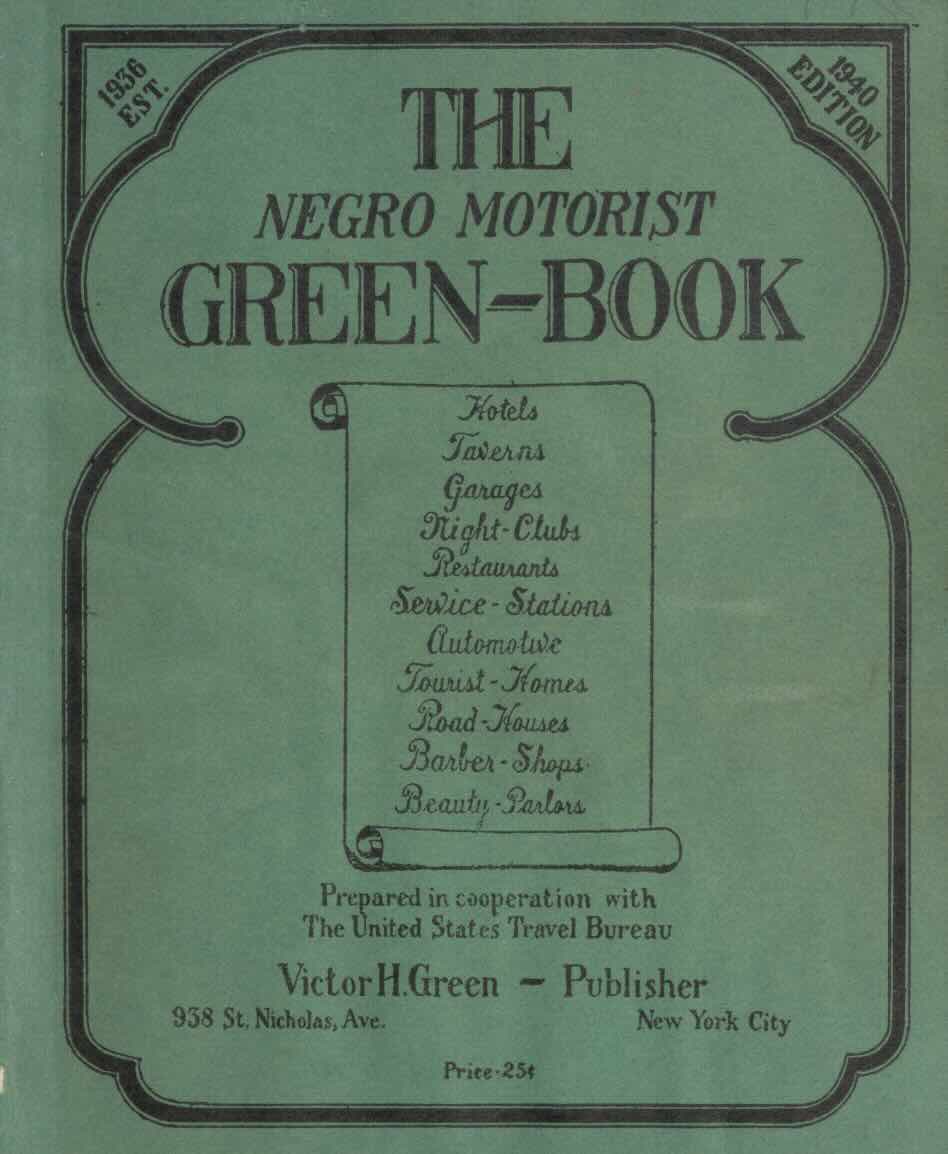
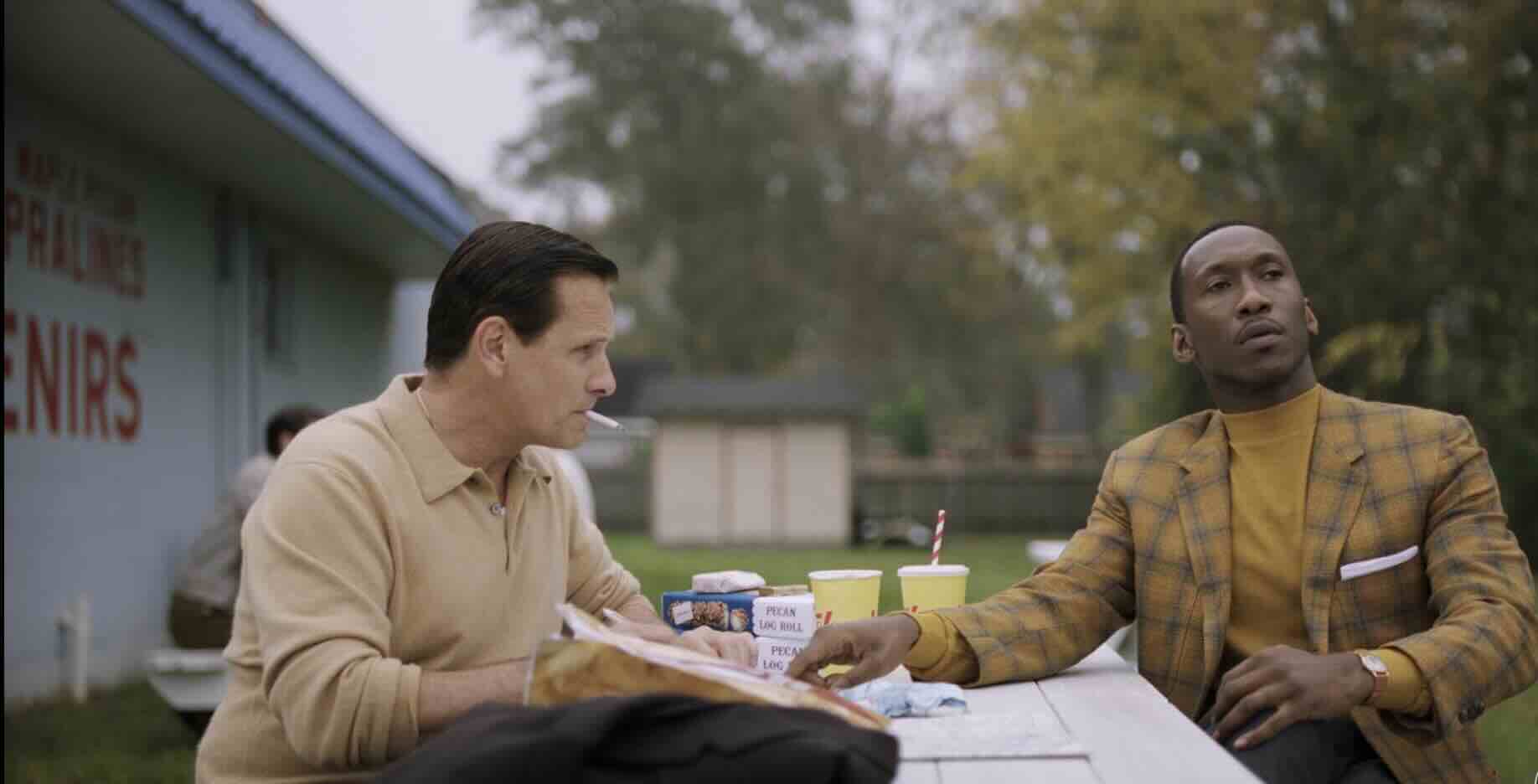
Under A jazz medley, see e.g. Green bookDetroit 67 and Memphis 68, as well as A Hollywood roundtable, The Tulsa race massacre, and Black and white.


* Feeling good has been much covered—rather than featuring other versions, here’s Trane in 1965:

And although nothing can compare with the raw emotion of being black in those years, here’s Andrea Motis in 2012:

Not being pedantic or anything [Uh-ohEd.], the title seems to be cited more commonly as Feeling good than as Feelin’ good (zzzzz). Cf. I got a woman, note here.

Another Turangalîla at the Proms!

Prom Messiaen

Photo: Chris Christodoulo. Source.

One should never miss a live performance of Messiaen’s ecstatic Turangalîla-symphonie!!!

My Messiaen page has links to many posts on Messiaen, and a tribute to Turangalîla—with the NYO’s 2012 Prom performance, and some hilariously uncomprehending reviews of the 1949 premiere (“Dorothy Lamour in a sarong […] Hindu Hillbillies”, “straight from the Hollywood cornfields”).

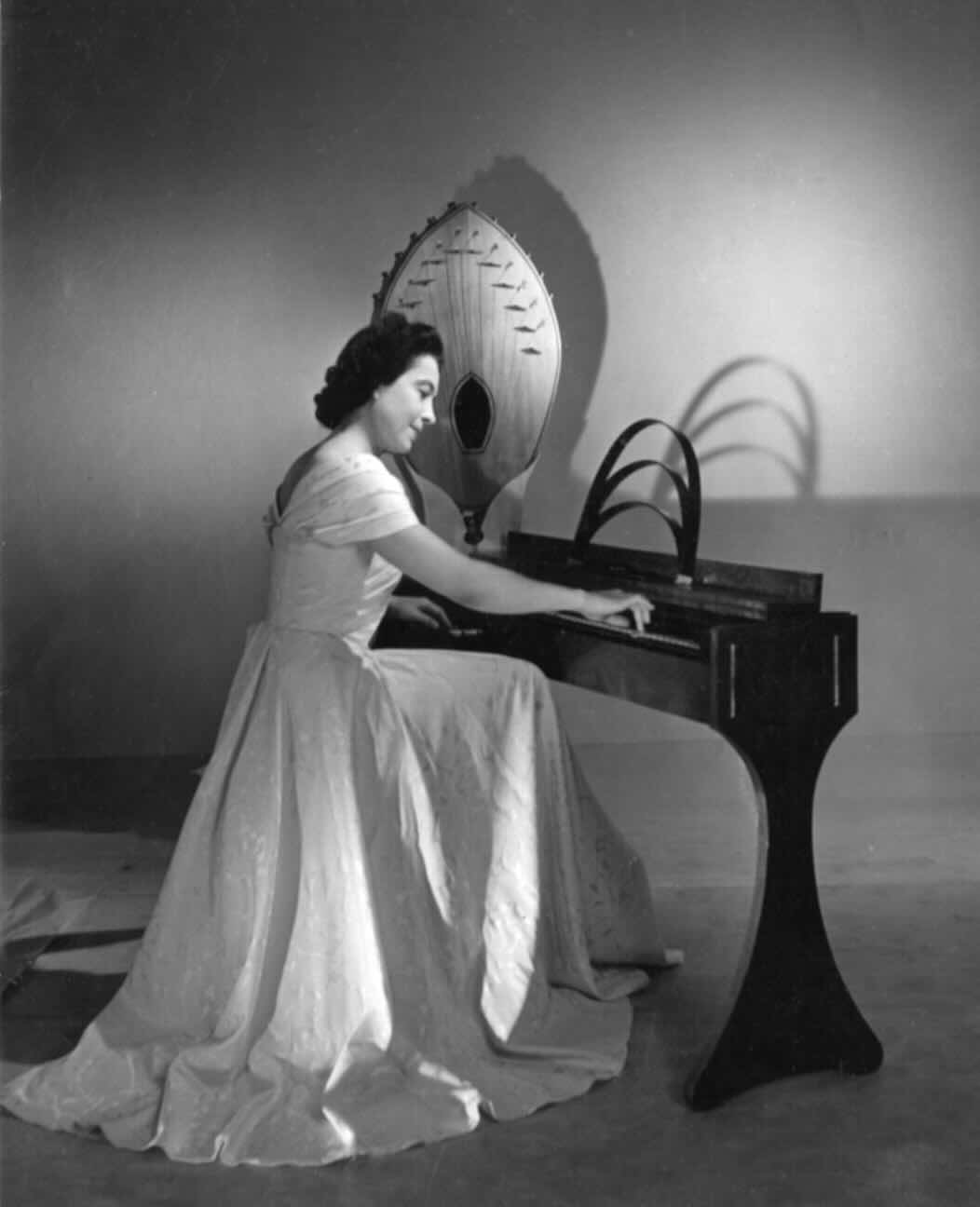
ondes

Ginette Martinot, who gave the premiere of Turangalîla. Source.

Last week at the Proms it was directed by the enterprising Nicholas Collon, with the BBC Philharmonic (British orchestras dominating so far; European and US bands can wait till later in the season). Cynthia Millar, veteran of the ethereal ondes martenot, added yet another radiant performance of a piece she has played around 200 times, including several Proms since 1986—for players limited to such a small repertoire, * Messiaen is a blessed gift (see Millar’s tribute to Jeanne Loriod). Steven Osborne relished Messiaen’s unique piano writing, with a niche backing-group of celesta and glockenspiel right behind him. I’m always entranced by the hushed coda that concludes the 4th movement, before the exhilarating Joie du sang des étoiles. Sensuous orchestral timbres abound.

Tlila 6

Source.

While experiencing Turangalîla live is extraordinary, for balance it’s worth listening on BBC Sounds, and it’s on iPlayer too. At the Proms it was first heard in 1969, with Musica Reservata performing Renaissance music in the first half (surely I was there, so why isn’t it indelibly etched in my memory?!). This time the prelude was the world premiere of Anna Clyne’s The gorgeous nothings, with the seven-piece a cappella Swingles, amplified, joining the orchestra—reminding me to acquaint myself with the poetry and reclusive life of Emily Dickinson. For a groovy encore (Erica Jeal asks pertinently “Is it bad etiquette to give an encore that upstages the main work?”) the Swingles launched into their joyous arrangement of the Bulgarian dance piece Bučimiš (studio version here; its metre is 2+2+2+2+3+2+2, BTW—see Taco taco taco burrito!). An encore after Turangalîla seems inconceivable—but in 2012 the NYO found a perfect one—Anna Meredith’s Handsfree!

Fans of the ondes martenot will want to hear the theremin too! Many more a cappella gems here; more Bulgarian folk under Musical cultures of east Europe.

Other recent Proms treats include Ravel‘s delightful piano concerto (with Ives’s Three places in New England), and Gershwin’s Rhapsody in blue (Steven Osborne again).


* This site mentions 1,200 works (!), although the core concert repertoire consists of pieces by a mere 27 composers.

Ondes octet

The hidden musicians

Finnegan cover

  • Ruth Finnegan, The hidden musicians: music-making in an English town
    (first edition 1989, revised 2007).

In several posts I’ve praised Finnegan’s classic work en passant—and revisiting it now, I find it even more impressive. I struggle to encapsulate its virtues without citing every paragraph.

Its subject is local grass-roots musicking in Milton Keynes, mainly at the amateur end of the amateur–professional continuum, so often taken for granted. It’s a model of participant observation: Finnegan was a long-term resident of the area, with most of her material collected from 1980 to 1984. Writing in an accessible style, she constantly debunks facile assumptions.

Having started out by studying oral performance in Africa, Finnegan now embarked on a project concerning doorstep (rather than armchair) ethnomusicology. The hidden musicians soon became core reading for the ethnomusicological study of musicking in Western societies, including Western Art Music (for which she abides by the traditional term “classical music”).

An attention to “ordinary musicians” was already implicit in the ethnomusicological approach to more “exotic” societies (note Bruno Nettl’s masterly survey of the field), but it is all the more revealing for a culture so near to home. In The hidden musicians, references to research on other world cultures, standard for such studies, might have been instructive, but the economy of theory and jargon is welcome. Among Finnegan’s main inspirations is Howard Becker’s 1982 study Art worlds. In 2022 her work inspired a BFE conference (in Milton Keynes, to boot, where the Open University is fortuitously based) on “ordinary musicians”, addressing topics in societies around the world.

The opening of the book anticipates that of Christopher Small’s Musicking (1998), observing the diverse ways in which music-making pervades people’s lives. Like Small, she focuses on “musical practices (what people do), not musical works (the ‘texts’ of music)”—seeking processes rather than products. She finds “an invisible but organised system” that lies at the heart of our cultural lives.

After an important chapter unpacking gradations on the amateur–professional continuum, in Part Two Finnegan outlines the diverse yet overlapping musical worlds of classical music, brass bands, folk music (including ceilidh and Morris bands), musical theatre (amateur operatic societies, panto, and so on), jazz, Country and Western, rock and pop. She disputes the “mass society” theory that ”envisages a passive and deluded population lulled by the mass media and generating nothing themselves”, as well as simplistic socio-economic or age-based analyses. She challenges assumptions, such as “high culture”, and, taking a descriptive rather than prescriptive approach, she finds

several different musical worlds, […] each having its own contrasting conventions about the proper modes of learning, transmission, composition, or performance. Because the pre-eminent position of classical music so often goes without saying, the existence of these differing musics has often simply been ignored.

If the pre-eminence of classical music was only notional by the 1980s, her material does indeed seem to confirm this unspoken assumption. Conversely, social scientists have emphasised “popular” or “lower-class” activities such as rock. But

each musical tradition—classical, rock, jazz, or whatever—can be studied in its own right. When no longer judged by the criteria of others, each emerges as in principle equally authentic and equally influential in shaping the practices of local music.

Part Three, “Contrasts and comparisons” opens with an insightful chapter on learning music (cf. the Growing into music film project). While Finnegan largely concurs with the notional dichotomy in training between the worlds of classical and popular musics, she notes commonalities. “Performances and their conditions” perceptively compares the conventions of events belonging to different musical worlds, noting aspects such as preparation and audience behaviour. In “Composition, creativity, and performance” she investigates degrees of dependence on written texts (cf. studies of “improvisation”, for which we can again consult Nettl as a handy guide). And in Chapter 14, preparing the ground for her later metaphor of “pathways”, Finnegan refines the concept of musical “worlds”, noting their plurality, with a certain overlap, and wider connections further afield; they are “relative, shifting, and situational”.

Part Four, “The organisation and work of local music”, contains chapters on the home and school; the churches; clubs and pubs; a case study on the organisation and administration of the Sherwood Choir; small working bands; resources, rewards, and support (including music shops and recording studios—with more on the amateur–professional continuum, and patronage).

With amateur music, people’s time and work are often as important as their money. So too are non-monetary rewards such as aesthetic enjoyment, the pleasure of performing, status, the sense of creativity, or even just the symbol of having earned “a fee” irrespective of its actuall monetary price. This in turn chimes in with a series of commonly held values: the high worth commonly attached to “performance”, to “music”, and to working for a “good cause”, as well as the view held by many people that “doing your own thing” has something inherently valuable about it—or, at the least, that the various groups organised to pursue different ends are an acceptable part of modern life.

It would be too simple just to assert—as some do—that local music is supported by “the community” or to speak of it as essentially “community music-making”. There are too many different interests, sections, conflicts, and unfamiliarities to take that romantic picture. Nevertheless there is a grain of truth in this view. For local musical activities only remain possible through the support of a complex network of institutions, many of them essentially realised by local participants at the local level whatever their wider links: not only the continuing moral, social, and financial (as well as musical) input of local musicians, but also the local music shops, studios, businesses, special interest groups, bands, performers, musical societies, pubs, personalities, fund-raising groups, schools, churches, and charities.

In Part Five, “The significance of local music”, Finnegan asks

Are there wider implications that can be drawn out from this system of local music-making? This part builds on the earlier ethnographic material to explore such questions as what local music practice and its pathways mean for those who live out their lives in the urban (perhaps impersonal?) setting of modern society or for the rituals and functioning of our society and culture more generally. Finally—and on a more speculative level—are the many many small acts and decisions which, however little recognised, lie behind the continuance of music-making of any wider significance for the fundamental experience and reality of humankind?

Again, she never falls back on untested assumptions. Critical of the familiar paradigms of the city as inimical to personal control or warmth, and of the romantic sense of “community”, she finds diversity in terms of education, wealth, and occupation—though she does conclude that gender roles remain hard to break through. She reflects on participation by age; and on the ordering of time, noting regularity—along with “rehearsals”, “concerts” and “gigs”, life-cycle and calendrical events (my term, not hers) are important social contexts.

She elaborates on “pathways” in modern living, stressing that they “depend on the constant hidden cultivation by active participants of the musical practices that, with all their real (not imaginary) wealths and meanings, keep in being the old and new cultural traditions within our society.” Finally, in “Music, society, humanity”, she broaches concepts such as sociability and the search for value; and she ponders, with typical detachment, whether music is somehow different from other social activities.

* * *

In her Preface for the 2007 edition, Finnegan reflects on golden-age nostalgia, change, ebb and flow rather than decline, new technologies, immigration. She outlines gaps in her study, and how one might update it: she might now pay more attention to mass media, constantly expanding since the 1980s, and the role of cultural, religious, and ethnic “minorities” (then less evident in Milton Keynes than in many English cities) would certainly now play a greater role, including South Asian, Irish, Italian, Polish, Vietnamese, and Somali subgroups.

While it’s an urban study, Finnegan’s book has influenced ethnographers in diverse fields, including my own study of Gaoluo village. As she comments, in a passage that applies verbatim to my work there and on the Li family Daoists, her research

enlarged and challenged my own preconceptions, […] tied in to an activity to which I attached real value, and presented me with some complex intellectual, methodological, and moral challenges. […] I was dealing with something that I personally enjoyed and found inspiring. Most of all it involved human beings, not just abstractions or generalisations, and the complex and diverse pathways they both trod and created irrespective of the ways scholars thought they should be behaving. In the end, I still like this study because it is about real people in a real, not pseudonymous, place that existed and exists: about people actively engaging in intensely human practices in which they took trouble and pains, in which they experienced disputes and sociability—and, rightly, delight.

Note the roundup under Society and soundscape, particularly What is serious music?! and Is Western Art Music superior?. See also Just remind me again, what is music?! and Old and new musics. Cf. Das Land ohne Musik, and for lowly tennis players and “ordinary Daoists”, here.

Perfect Pitch

Perfect pitch cover

I’ve often cited Nicolas Slonimsky’s brilliant Lexicon of musical invective. So I enjoyed reading his fascinating memoir

  • Perfect Pitch,
    in a revised third edition from 2023, ably edited by his daughter Electra Slonimsky Yourke.

Written with wit and wisdom at the age of 94, and first published in 1988, it’s a captivating blend of substance and gossip, packed with wonderful anecdotes—a Who’s Who of figures that seemed to matter at the time, part of a niche zeitgeist.

Nicolas Slonimsky (1894–1995) (fine website, with A/V; books, including Writings on music, 4 vols., 2005; wiki) was “a typical product of the Russian intelligentsia”—in the early chapters he gives a detailed account of his Russian family history and political turmoil. Already by 1912 his early musical facility led him to describe himself as a “failed wunderkind”.

In autumn 1918 he left St Petersburg. After stays in Kiev and Yalta, in 1920 he reached Constantinople (pp.85–90), where he found many musicians among the throng of Russian refugees. Lodging with a Greek family, he accompanied Russian dancers, and played for restaurants and silent movies. He composed Obsolete foxtrot and Danse du faux Orient, later included in his Minitudes. After following a girlfriend, a Russian dancer, to Sofia, by late 1921 he arrived in Paris—also inundated by Russian emigrés. There he worked for Serge Koussevitzky for the first time, who introduced him to Stravinsky in Biarritz. Koussevitzky, sorely challenged by irregular time signatures, * asked him to rebar The Rite of Spring for him. Despite moving in cultured circles, Koussevitzky (like Tennstedt later) was not a great reader.

Slonimsky was impressed by Nikolai Obukhov, a “religious fanatic” who made a living as a bricklayer. Inspired by Scriabin, and an unlikely protégé of Ravel, his magnum opus Le livre de vie for voices, orchestras, and two pianos (Preface here) contained “moaning, groaning, screaming, shrieking, and hissing”. He dreamed of “having his music performed in an open-air amphitheatre, perhaps in the Himalayas or some other exotic place”. He developed the croix sonore, a prototype of the theremin.

In 1923 Slonimsky docked in New York, travelling on a Nansen passport, “an abomination of desolation, the mark of Cain, the red spot of a pariah”. He soon found work as opera coach for the new Eastman School of Music in Rochester, at the invitation of Vladimir Rosing. He now confronted the challenge of learning English. Indeed, the book is full of gleeful comments on language learning. Taking advertising slogans as his textbook, Slonimsky’s arrangements (particularly Children cry for Castoria!) became popular. America seemed a fairy-tale land. At Eastman he found a kindred soul in author Paul Horgan.

In 1924 Koussevitzky replaced Pierre Monteux as conductor of the Symphony Orchestra (whose musicians were mainly German, French, and Russian), and the following year he invited Slonimsky to become his secretary (feeling more like a “serf”). Koussevitzky was in awe of Rachmaninoff’s genius, and despite his withering assessments of rival conductors, he did promote Mitropoulos and Bernstein; he was dismissive of Arthur Fiedler’s Boston Pops (cf. the splendid Erich Leinsdorf story). Much as he valued Slonimsky’s talents, his insecurity meant that his young protégé always had to tread carefully, and in 1927 they parted company.

Still, he now enjoyed a “meteoric” conducting career. With no illusions about his rudimentary technique, he founded the Chamber Orchestra of Boston, promoting contemporary composers—notably Henry Cowell, Edgard Varèse, and Charles Ives. After a performance of a work by Cowell, they rejoiced in the headline “”Uses egg to show off piano”. Slonimsky introduced Aaron Copland to George Gershwin. After Cowell introduced Slonimsky to Charles Ives, they became close.

Cowell Ives 1952
Henry Cowell with Charles Ives, 1952.

Slonimsky was full of praise for Ives:

I learned to admire the nobility of his thought, his total lack of selfishness, and his faith in the inherent goodness of mankind. […] He inveighed mightily against self-inflated mediocrity, in politics and art alike. The most disparaging word in his vocabulary was “nice”. To him, it signified smugness, self-satisfaction, lack of imagination. He removed himself from the ephemeral concerns of the world at large. He never read newspapers. He did not own a radio or a phonograph, and he rarely if ever attended concerts.

In 1931 (the year he gained US citizenship), Slonimsky gave the première of Ives’s Three places in New England in New York. Promoting the work with passion, in Perfect pitch he waxes lyrical about its genius.

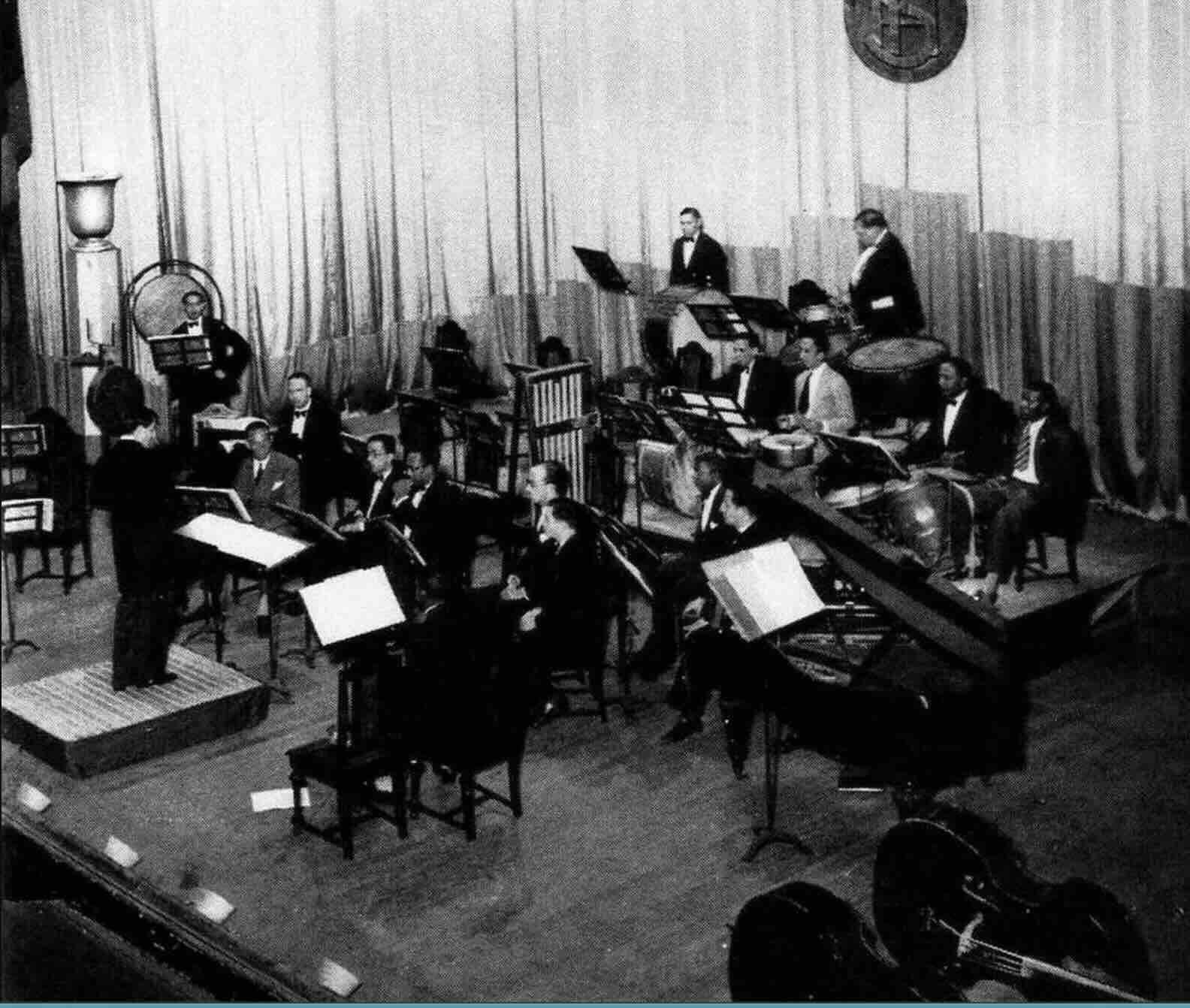
Slonimsky in HavanaSlonimsky conducting Varèse’s Ionisation in Havana.

He was invited to conduct in Havana, his first experience of modern Cuban music. He conducted revelatory concerts in Paris, sponsored by Ives, encouraged by Varèse. There too he married Dorothy Adlow.

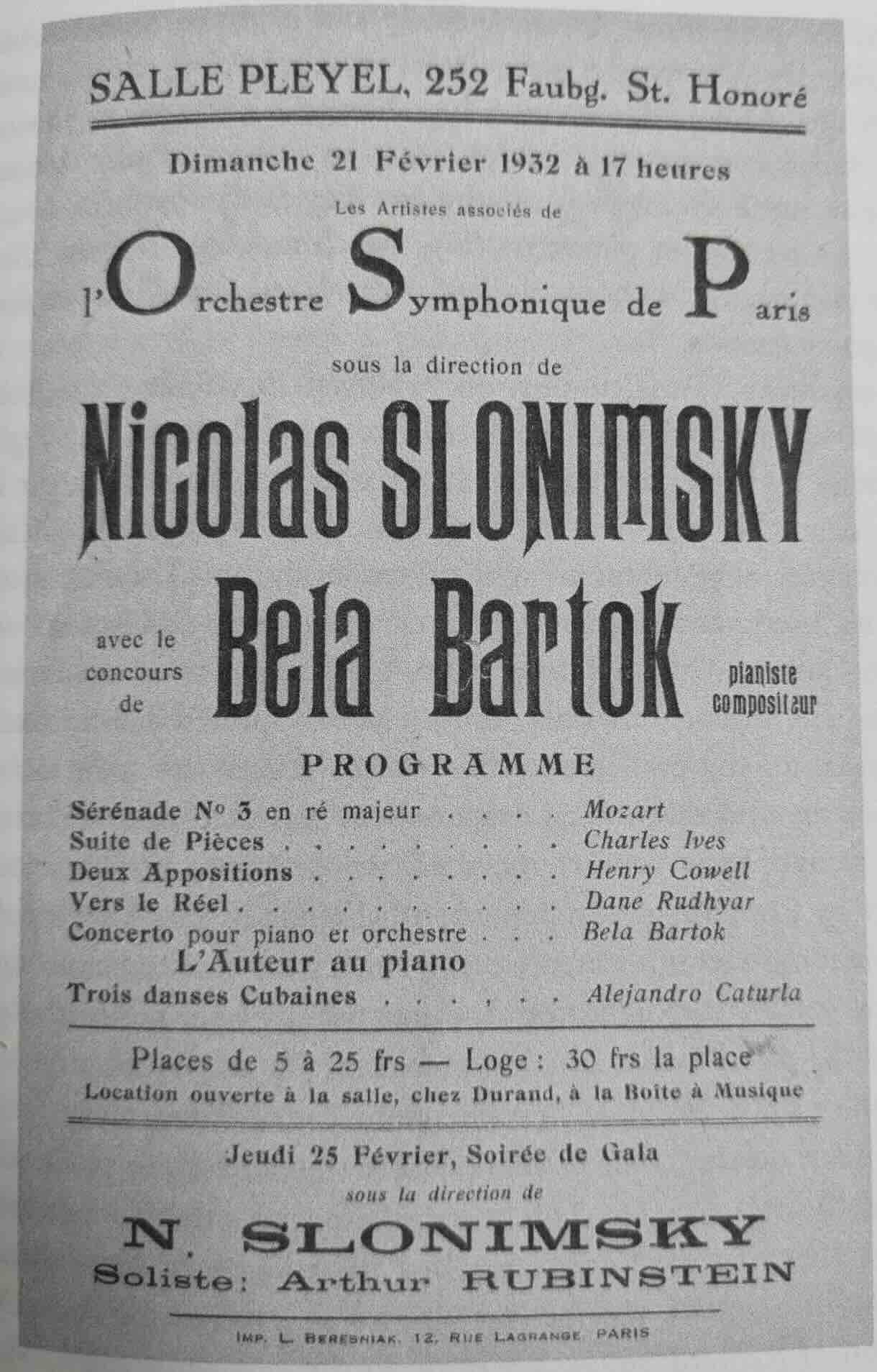
Slonimsky Bartok 1932

He returned to Europe for more concerts in 1932—with Bartók giving the Paris premiere of his 1st piano concerto, and Rubinstein playing Brahms’s 2nd piano concerto!!! In Berlin (in the nick of time before the grip of Nazism) he conducted the Berlin Phil in a modern programme including Three places in New England and Varèse’s Arcana. He repeated the programme in Budapest.

He reflects on this ephemeral phase of his career:

The art of conducting is paradoxical, for its skills range from the mechanical to the inspirational. A conductor can be a semaphore endowed with artificial intelligence, or an illuminating spirit of music. The derisive assertion that “anyone can conduct” is literally true: musicians will play no matter how meaningless or incoherent the gestures of a baton wielder may be. In this respect, conductors stand apart from other performers. A violinist, even a beginner, must be able to play on pitch with a reasonable degree of proficiency. A pianist must have enough technical skill to get through a piece with a minimum of wrong notes. But a conductor is exempt from such obligations. He does not have to play; he orders others to play for him.

This leads him to some wonderful stories about badly-behaved conductors (cf. Viola jokes and maestro-baiting); Toscanini, Klemperer—and this story, evoking the unwelcome posturings of many a later maestro:

Mengelberg once apostrophised his first cello player with a long diatribe expounding the spiritual significance of a certain passage. “Your soul in distress yearns for salvation,”, he recited. “Your unhappiness mounts with every passing moment. You must pray for surcease of sorrow!” “Oh, you mean mezzo forte,” the cellist interrupted impatiently.

I’m eternally grateful to Slonimsky for relating some classic Ormandy maxims (now joyously expanded here by members of the Philadelphia orchestra)—OK then, just a couple:

Suddenly I was in the right tempo, but it wasn’t.

Who is sitting in that empty chair?

In “Disaster in Hollywood” he tells how his first appearance with the LA Phil in 1932 ended in tears. When the programmes for his eight-week season at the Hollywood Bowl in the summer of 1933 proved far too challenging for the “moneyed dowagers”, his conducting career came to an inglorious end. He takes consolation in the later admission of the works that he championed to the pantheon (cf. the fine story of Salonen’s interview for the LA Phil!). Meanwhile in New York he conducted, and recorded, Varèse’s revolutionary Ionisation.

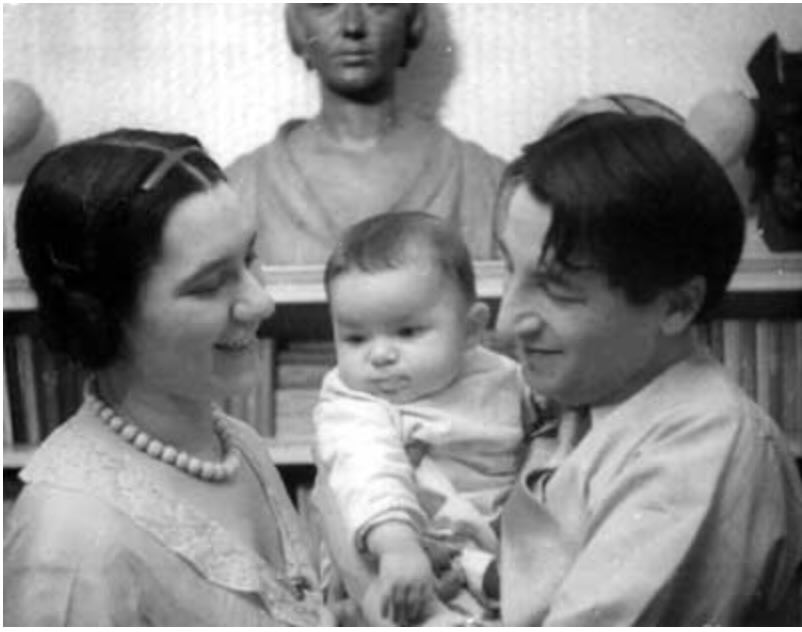
with Electra

With typical linguistic flourishes, he devotes a proud chapter to the birth of his daughter Electra, editor of the volume. He rearranged a limerick:

There was a young woman named Hatch
Who was fond of the music of Batch
It isn’t so fussy
As that of Debussy
Sit down, I’ll play you a snatch.

He would have enjoyed these limericks, and one by Alan Watts, n.2 here.

“Like gaseous remnants of a shattered comet lost in an erratic orbit”, occasional conducting engagements still came his way. In “Lofty baton to lowly pen” he recalls his transition to musical lexicography. He met fellow Russian emigrés Léon Theremin (whose life was to take a very different course) and the iconoclastic theoretician Joseph Schillinger. As Slonimsky compiled his book Music since 1900 (1937!), he became interested in the savage reception of new music, leading to his brilliant Lexicon of musical invective.

Still, he was never tied to his desk. His appetite whetted by his trips to Cuba, in “Exotic journeys” he recalls his 1941–42 tour of Brazil (hearing Villa Lobos’s tales of his Amazonian adventures), Argentina, Chile, Peru, Ecuador, Columbia, Panama, Costa Rica, Nicaragua, Guatemala, and Mexico. His book Music of Latin America was published in 1945.

Returning to Boston, he was plunged into family duties. In 1947 he published Thesaurus of scales and melodic patterns.

In 1935, armed with a US passport, he returned to his birthplace, now called Leningrad, visiting long-lost relatives. He reflects on the death of his mother in 1944, and the life of his aunt Isabelle Vengerova (1877–1956), who became a legendary piano teacher in the States.

After the war, with Russia in vogue in the USA, Slonimsky enjoyed revising his proficiency in his mother tongue, updating old manuals to teach students and taking on work as translator. While he was largely free of McCarthyite suspicion of sympathising with Communism, back in the USSR his brother Michael was at far greater risk for being suspected of opposing it (for Soviet life, note The whisperers).

Dissatisfied with previous compendia and nerdily meticulous, he found a new mission in updating Baker’s biographical dictionary of musicians. He was proud of his 1960 article “The weather at Mozart’s funeral”. In 1956 he achieved unprecedented celebrity through appearing on the quiz show The big surprise.

In “The future of my past” he describes another trip to the USSR and the Soviet bloc in 1962–63, funded by the State Department—an Appendix to the third edition provides a detailed account. He visited Poland, Czechoslovakia, Hungary, Romania, Yugoslavia, Bulgaria, as well as Greece and Israel.  On his meetings with musicians, he was inspired by the energy of Ukrainian and Georgian composers.

His diary is punctuated by his curiosity about language, starting in Moscow:

To my Americanised ears, the new Soviet language sounded almost theatrical in its emphasis, deliberate articulation, and expressive caesuras. I also noticed a proliferation of diminutives….

In Prague he learned the vowel-less tongue-twister Strc prst skrz krk:

I used this phrase as the supposed title of a choral work by the mythical Czech composer Krsto Zyžik, whom I invented and whose name I was tempted (I ultimately desisted) to include as the last entry in my edition of Baker’s.

But soon after his return to Boston his wife Dorothy had a heart attack, which was to be fatal. Bereft after her death in January 1964, he welcomed the offer of a post at distant UCLA. He composed musical limericks for his students’ benefit, but was not always impressed by their aptitude, citing gems from their essays such as “A piano quintet is a piece for five pianos”.

After two seasons he reached compulsory retirement age, but he was never going to go quietly. In LA he enjoyed a wide social circle. Besides many “flaky” composer friends was John Cage, now a guru (Slonimsky cites Pravda: “His music demoralises the listeners by its neurotic drive and by so doing depresses the proletarian urge to rise en masse against capitalism and imperialism”!).

With John Cage, and Frank Zappa.

Back in LA, he made friends with Frank Zappa, who invited him to play at his gig.

Dancing Zappa, wild audience, and befuddled me: I felt like an intruder in a mad scene from Alice in Wonderland. I had reached my Age of Absurdity.

Meanwhile with perestroika in the Soviet Union, Slonimsky was becoming quite a celebrity there too, making several more visits and admiring composers’ creativity in new idioms.

* * *

Far more than a mere entertainer, Slonimsky was a major figure in promoting new music. With his eclectic tastes, I can’t help thinking that he would have enjoyed gravitating to ethnomusicology, questioning the wider meanings of “musician” or “composer” (see e.g. Nettl); but he was deeply rooted in the WAM styles of Russian classics and the American avant-garde. Still, within the world of WAM literature it makes a most fascinating memoir.

For some reason it fills me with joy to learn that a Japanese translation of Lexicon of musical invective has been published.


* Even 5/8 was too much for Koussevitzky:

He had a tendency to stretch out the last beat, counting “one, two, three, four, five, uh”. This ‘uh” constituted the sixth beat, reducing Stravinsky’s spasmodic rhythms to the regular heartbeat. When I pointed this out to him, he became quite upset. It was just a luftpause, he said. The insertion of an “air pause” reduced the passage to a nice waltz time, making it very comfortable to play for the violin section, who bore the brunt of the syncopation, but wrecking Stravinsky’s asymmetric rhythms.

To be fair, Koussevitzky did manage to conduct the 5/4 Danse générale of Ravel’s Daphnis and Chloé (1942 recording here; he first conducted it in 1928).

Mahler, Brahms, Schoenberg

Prom MahlerSource: review.

Just days after the Zemlinsky and Schoenberg Prom, I went back to the Albert Hall for another course of late Romanticism, with the talented Ryan Wigglesworth conducting the BBC Scottish Symphony Orchestra (listen on BBC Sounds).

I don’t think I ever played Brahms 3 (make what you will of that uncertainty…). Well-received at the time, but now perhaps the least popular of his symphonies (I can’t miss any opportunity to remind you of Kleiber‘s Brahms 2!), it always deserves a re-hearing. l’ve been getting to know it better by listening to some classic recordings—

Bruno Walter and the Vienna Phil, 1936:

Furtwängler with the Berlin Phil, 1949:

Abbado fifty years later, again with the Berlin Phil (still largely a woman-free zone):

Then we heard Schoenberg’s tone-poem Verklaerte Nacht (1899) (wiki, and here), in the string orchestra version that he later arranged from his string sextet. The latter was premiered by the augmented Rosé quartet—here are members of the Ensemble Intercontemporain with Boulez, c1985:

And this is Mitropoulos with the strings of the Vienna Phil in 1958:

The Prom ended with Mahler’s Kindertotenlieder (1904, to texts by Rückert), movingly sung by Alice Coote. Here’s her recording from 2017 (along with the Rückert Lieder):

And here’s Janet Baker’s classic recording with Barbirolli, 1969 (cf. their Nuits d’été):

* * *

Back at the Prom, a more conventional sequence might have opened with Verklaerte nacht followed by the Mahler songs, with the Brahms symphony as a traditional second half; but the chronological order made a lot of sense, intensifying Mahler’s prophetic, tragic vision. All three pieces end quietly. I still don’t quite get a sense of coherence from Brahms 3, but it’s growing on me—Wigglesworth conducted it without the score, bringing out its chamber music elements. Despite its portentous opening, and hints that the finale might become grandiose, it’s largely elegiac, its middle movements unassuming yet affecting.

The second half was full-on in its intensity. Verklaerte nacht is a major work, long predating Strauss’s Metamorphosen; “filled with crepuscular angst” (as the BBC website has it), the writing especially favours the violas (always good to hear). BTW, and FWIW, the ever-stimulating Richard Taruskin (The danger of music, pp.325–6) doesn’t buy Schoenberg’s resort to extolling “pure” music in his attempt to deflect the misogyny of Richard Dehmel’s poem (“an immanently sinful modern Eve forgiven and redeemed by a godlike magnanimous man”). Finally, Alice Coote’s dramatised grief was perfect for the Kindertotenlieder (for her Mahler 3 with Michael Tilson Thomas earlier this year, click here). For me, the brief coda to the final song doesn’t suddenly sweep aside the anguish of the cycle—it seems more spooky than serene.

Ryan Wigglesworth’s serious, sincere musicking seems to convey a feeling of trust, free of the dubious trend for the flashy wizzkids who have replaced the dour, autocratic maestros of Yore. The composer-conductor combo doesn’t always yield results, but when it does it’s deeply satisfying, as with Salonen, Boulez—and clearly Mahler. But now that I observe the WAM scene as a mere outsider, I’m no longer privy to the more salient assessments of the musicians themselves.

For all my immersion in “world music” and its diverse social contexts, having been Promming since the 1960s, I always find it a blessing that concerts like this generate such attention and enthusiasm—nightly over nearly two months.

Proms: Zemlinsky and Schoenberg

Zemlinsky concert 1905

For my first Prom this season, I went to hear Ryan Bancroft directing the BBC National Orchestra of Wales in Zemlinsky’s Die Seejungfrau and Schoenberg’s Pelléas und Melisande, premiered at the same concert in 1905. Having already written about both works, I was glad to hear them live.

In my youth, besides Ravel‘s Daphnis and Chloé, Schoenberg’s Pelléas left a deep impression on me, attending rehearsals and concerts in the fluid hands of Boulez; with his choices there was always a sense of discovery. At this week’s Prom I could only summon up fleeting glimpses of that magic, but (within the niche of ominous late-Romantic angst) Pelléas is perhaps rather more accessible, so it probably made sense to open the concert with it, building the audience’s attention for Die Seejungfrau after the interval. But either order could work. Ryan Bancroft, brought up in LA, directed fluently—like Boulez, conveying the music with his hands rather than a baton.

Prom BancroftSource.

You can hear the concert on BBC Sounds for the next two months. A sumptuous fin-de-siècle opening to the season, then—the previous evening Mark Elder conducted Mahler 5 in his Proms farewell to the Hallé after 25 years with them (available on BBC iPlayer). Even if Mahler towers over just about everyone (do consult my series!), it’s always rewarding to explore the work of his contemporaries and disciples, and to immerse ourselves in the whole culture of early-20th-century Vienna. Though the hall was less than packed, how wonderful that Prom-goers devote such attention and enthusiasm to the less familiar aspects of the symphonic repertoire.

Just a few days later came another fine late-Romantic Prom.

Curse of the Ninth

*Latest in my Mahler series!*

Curse

Ever since the very first episode in 2014, the BBC TV comic-noir series Inside No.9 (website; wiki) has been consistently brilliant. Written by and starring Steve Pemberton and Reece Sheersmith, it features cameos from a succession of fine actors. The plot twists are ingenious, the mood sinister and enigmatic.

The penultimate episode of the ninth (and final!) series (watch here) takes its title from the Curse of the Ninth, attributed to Mahler’s fruitless efforts to trick fate. Typically macabre, it’s “an Edwardian chiller in which a talented piano-tuner is forced to confront the power of a centuries-old curse by the owners and servants of a large country house.” As the drama unfolds, we hear well-chosen excerpts from the 1st movement of Mahler 9.

Curse 2

The wiki article on the curse gives instances of composers unable to complete their 10th symphony—but also lists counterexamples of others who did manage to do so. So there.

* * *

No.9

A random selection of (nine!) other stimulating episodes from Inside No.9:

The very final episode Plodding on is ingenious…

The purgatory of the tennis circuit

tennisConor Niland after losing to Adrian Mannarino at Wimbledon 2011.
Ben Stansall/AFP/Getty Images.

The life of the concert soloist may seem glamorous, though the routine of airports, hotels, concert halls, and receptions must wear thin. Still, it contrasts with that of rank-and-file orchestral musos (cf. Mozart in the jungle, and Ecstasy and drudge). Apart from The Money, I note the irony of the soloist being condemned to churning out the same three or four concertos all their lives while the orchestral musos are constantly playing a variety of wonderful music (Mahler—you know that’s who I meant).

LMS

By the same token, following Vincent Goossaert’s search for “ordinary Daoists” (theme of his The Taoists of Peking, 1800-1949: a social history of urban clerics), it’s not all about the Du Guangtings and Chen Rongshengs, or about the elite mystical sages of yore. Hence my own search for household Daoist groups like the Li family.

Nor is tennis all about the superstars, the Federers and Świąteks, with their ritzy entourages. An interesting Guardian Long Read by Connor Niland, “I’m good, I promise: the loneliness of the low-ranking tennis player”, describes life at the bottom of the top. Formerly No.1 Irish player, he tells a sad story.

He outlines the three tiers of men’s professional tennis: the ATP Tour for the top 100 male tennis players in the world, the Challenger Tour, mainly by players ranked between 100 and 300—and the Futures tour, “tennis’s vast netherworld of more than 2,000 true prospects and hopeless dreamers”, which

sometimes felt like a circle of hell, but in practical terms it’s better understood as purgatory: a liminal space that exists only to be got out of as quickly as possible.

As he explains,

Surviving on the Futures and Challenger tournaments isn’t just about being good at tennis. It’s about being able to cope with the strange bedfellows of regular boredom and constant uncertainty. Not many succeed.

He felt trapped:

I phoned Mum from the airport in Geneva, telling her I was tired and would skip Edinburgh and fly home instead. She wasn’t having that. “This is your job now, Conor,” she said. “You can’t just not turn up because you’re tired.” I remembered my friend and one-time tennis partner Pat Briaud’s words: “Your parents don’t mess around.” I turned up and made the semi-final, losing a feisty two-and-a-half-hour match to Britain’s Jamie Baker. It was my 24th match in five weeks. Exhausted, I collected my prize money: $480, before 20% tax.

By contrast with the constant media exposure the stars have to endure, loneliness and isolation are the fate of the rank-and-file.

I made virtually no lasting friendships on tour through my seven years, despite coming across hundreds of players my own age living the same life as my own.

And he describes the difficulty of finding a practice partner. At least the life of orchestral musos is leavened by an embattled camaraderie—and they share a bond in maestro-baiting and deviant behaviour.

I almost never went sightseeing on a day off. That was partly to conserve energy, partly because I had nobody to go with. And in many of the one-horse towns that hosted Futures events, there weren’t any sights to see. […]

I would return to Ireland from three-week trips to these exotic places with no notable stories or experiences. “How was Morocco?” I would be asked. “Fine,” I would say, with nothing else to add. […]

The true unfortunates, though, were the ones who were talented enough to rationally hope to advance. These were people who grew up as the best tennis players in their country, but were stuck between 300 and 600 in the world, not quite contending for the Challenger Tour nor the qualifiers at grand slams, but winning just often enough to keep their tennis dream faintly alive. A Futures tournament referee in the US became infamous for his straight-talking to 28-year-old players: “C’mon man, what are you still doing here?” He was straying out of his lane, but his intentions were good. And he was usually right.

Niland ends with a depressing account of a fruitless Challenger event in Uzbekistan. It all sounds a bit like doing a Messiah in Scunthorpe for a jolly good tea. Whether in music, religion, or sport, ethnographic perspectives like this are always valuable.

Under Sporting medley: ritual and gender I list several posts on tennis.

The male dominance of public performing

heying

Members and helpers of the South Gaoluo ritual assocation, 1995.

This group photo, taken on the final day of the New Year’s rituals, is deeply nostalgic for me—but it makes a stark reminder of the male dominance of public performing in China.

Women in public performance:
left, Herat, 1970s
right, spirit medium, Houshan 1993.

Gender is one of the main themes in ethnomusicology (as in all Walks of Life…)—see a very basic sample of readings under this post in my flamenco series. I introduced gender issues in expressive culture and ritual in China here, including shawm bands, opera troupes, itinerant bards, and spirit mediums. The old public/domestic division of labour serves as a simple framework.

Two astounding—yet male—performances:
left, Bernstein with the LSO, 1973
right, Kleiber with the Vienna Phil, 1991.

Much has been written on gender in the rarefied echelons of WAM: whereas female soloists have long been common, the male monopoly of conducting has only been broken in recent years. And as to the orchestral musicians…

Maybe we take this for granted in old videos, as I guess we did at the time, but now I’m shocked when I watch the amazing films of Bernstein’s Mahler. When he performed Mahler 2 with the LSO in 1973, the orchestra had only two women (the harpists, of course) among 102 players. By the time they recorded excerpts for Maestro around 2022, despite going to such lengths to achieve historical authenticity, they inexplicably used the players of today’s LSO, 45% of whom are women. The New York Phil admitted its first female section player in 1966; by 1992 it included 29 women.

The Berlin Phil began recruiting the occasional woman in 1982, but by 2003 there were only 14 female members out of 120 positions. The Vienna Phil made a token effort from 1997, but by 2013 still had only 6 women, and 17% by 2024. (For the disturbing Nazi histories of these two orchestras, click here.)

See also under Gender: a roundup.

In memoriam Klaus Voswinckel

Klaus

The great film-maker and novelist Klaus Voswinckel died recently in Munich on his 81st birthday. His life is commemorated in this obituary.

In his prose he “dances weightlessly between narrative, essay, poetry and sensual philosophy”. He created a wealth of vivid TV films, often with his wife Ulrike, portraying a wide range of musicians—such as The divine drummer: a journey to Ghana, Winterreise: Schubert in Siberia, Steve Reich: music in the words, and A step towards my longing: the composer Sofia Gubaidulina.

Dividing his time between Germany and Italy, Klaus would visit his accomplished daughter Esther and her family in Istanbul, where I was among a multitude inspired by his kindly, gentle soul and wise, good-humoured company. His heart was in Salento, whose popular culture he also documented on film. He was enchanted by taranta—a theme of his novel Tarantella oder Hölderlin tanzt, which I introduced here. So perhaps it’s suitable to send Klaus off with the passionate, intoxicating songs of his friend Enza Pagliara:

Mahler 3 with MTT

*Part of my series on Mahler, introduced here!*

MTT Barbican

I’ve celebrated Mahler 3 in an earlier post, featuring great recordings by Bernstein, Tennstedt, Abbado and others. Last week, just after coming back from Milan and Erlangen, immersed in my fieldwork videos of Chinese village ritual, I went along to the Barbican to relish another overwhelming rendition of the symphony, with the LSO conducted by Michael Tilson Thomas (website; wiki) in the second of two performances.

Music Director Laureate of the San Francisco Symphony and Conductor Laureate of the LSO, at the age of 80 MTT is severely ill with brain cancer (see under the Slipped Disc website). Musicking is always about context—and Mahler 3 is always a moving experience. Just as the Mahler concerts of Tennstedt and Abbado were all the more deeply affecting in their later years, the aura of last week’s concerts was intensified by MTT’s frailty, sidelining any suspicions of West-Coast suavity. As this review of the first concert comments,

Programme notes for Mahler’s monumental symphonies will often blithely chat about the works’ epic struggle between life and death, creation and destruction, joy and dread. In a comfy hall with a slick orchestra and a polished maestro, all of that can feel abstract and remote. Not last night at the Barbican.

MTT was a protégé of Bernstein, following in his footsteps. This story, from an article that also includes a chat between MTT and James Brown, is relevant:

Thomas had the opportunity to get to know another great musician, Leonard Bernstein, after winning the Koussevitzky Prize, which is awarded to outstanding student conductors. Bernstein came to a performance of Mahler’s 5th symphony that Thomas was conducting early in his career. After the concert, Thomas recalls asking Bernstein what he thought of the performance, and he replied, “What did I think of it? I think that when you really have made up your mind what it means to you, and what you intend to do about it, it won’t matter to you what I think or anybody else thinks.”

In 2012 MTT pondered his own bond with Mahler and the challenges of conducting the symphonies:

He explores Mahler’s origins and legacy in two documentaries, accessed here and here (part of a series on the, um, Great Composers).

Here he is in the final movements of the 3rd symphony with the Verbier Festival Orchestra in 2016:

As often with Mahler, I tend to focus on the incandescent finale (those quintuplets!!!)—but you have to experience the whole, um, Journey. As with the 2nd symphony, the first movement is monumental too, and as in the 7th symphony, some passages of “sonic goulash” (MTT’s fine term) recall Ives—whose music Mahler used to conduct (see e.g. here). The middle movements also encapsulate Mahler’s world, and Alice Coote’s singing of Nietsche’s text in the fourth movement was intensely moving (cf. her Kindertotenlieder). The LSO was brilliant as ever, with outstanding brass solos—in what must have been an exceptionally demanding concert. MTT, the LSO, and the audience all pulled together to celebrate Life… It’d be most interesting to learn how the players felt about the concerts.

Mahler 3

See also Mahler 2 with MTT!.

* * *

MTT

I can’t resist mentioning MTT’s From the diary of Anne Frank—both to complement Mahler’s Jewish identity and for some of the most radiant images of MTT with Audrey Hepburn:

Cem Mansur and Western Art Music in Turkey

Concert

On visits to Istanbul, the curious outsider like me may be inclined to sample a menu of traditional Turkish expressive culture—steering well clear of the commodified Whirling Dervishes, I’ve dabbled in the rituals of the Sufi tekke and Alevi cemevis, rejoiced in the ezan call to prayer (as no locals seem to do), the exhilarating sounds of davul-zurna drum-and-shawm, and so on. Jazz clubs also beckon, and the less geriatric might seek out hip-hop and club culture (see under Landscapes of music in Istanbul).

Back in London, alongside the thriving “world music” scene, I haven’t grown out of my classical background, still regularly attending WAM concerts—but somehow this makes an unlikely choice for me in Istanbul. Still, it’s all part of the city’s cultural scene, with its own history since the late Ottoman and Republican eras (see two articles on the useful History of Istanbul site, here and here).

salon 1915
Beethoven in the harem (1915). See The kiosk in Turkey and Europe.

* * *

SureyyaMy photo.

Sureyya 1Source.

So I sallied forth to the Süreyya Opera House in swinging Kadiköy for a concert in which Cem Mansur directed the strings of the Gedik Philharmonic Orchestra.

The conductor (şef!) Cem Mansur trained in London, and as a student of Leonard Bernstein in Los Angeles. Besides wiki, here we read:

Mansur coverMansur is passionate about the importance of music as a powerful tool for affecting change. Through his concept “The Laboratory of Democracy” (an open rehearsal session) Mansur engages both orchestras and audiences in issues such as co-existence, different levels of leadership, the nature of authority, of individual and collective responsibility as well as the difference between hearing and listening, leading and following. The sessions explore the basic concepts of democracy: individual worth, majority rule with minority rights, compromise, personal freedom and equality before the law, all demonstrated through the model of the orchestra as a miniature society. Mansur’s work on the peace-building role of music has also found expression of his conducting of the Greek/Turkish and Armenian/Turkish [youth] orchestras over several years.

He expounds this philosophy in an eloquent informal talk published bilingually as Müzik, İnsan ve Barış / Music, Mankind and Peace (2013), adducing the examples of El Sistema, the West-Eastern Divan Orchestra, and MIAGI in South Africa.

Apart from appearing as guest conductor around the world, Mansur has devoted himself to cultivating the WAM scene in Turkey—most admirably as founder of the Turkish Youth Philharmonic Orchestra (wiki; website; Cornucopia), with major support from the progressive Sabanci Foundation. This 2017 performance of the Sinfonia from Verdi’s Forza del destino gives an impression of their vitality; and here they are joined by Gökhan Aybulus at the Berlin Konzerthaus in Rachmaninoff’s 2nd piano concerto (cf. Historical ears and eyes):

My own training in WAM having taken wing in the National Youth Orchestra of Great Britain, notably under Pierre Boulez, I can just imagine the inspiration that young Turkish musicians gain from such experiences and opportunities.

At the concert last week, Mansur opened by introducing the programme, as he often does—such a good way of establishing rapport with the audience, reminding me of his mentor Bernstein; his remarks were enthusiastically received by the audience (and even by me, although I doubt that he employed any of the dozen eccentric words that I have mastered in Turkish). He was joined on stage by composer Sadık Uğraş Durmuş (b.1978), the world premiere of whose Çengi no.2 opened the concert. Trained in the Netherlands, Durmuş is now on the faculty of Istanbul University. The çengi of the title referring to female dancers of Ottoman times, he evokes an imaginary dance scene, with singing and some shouting from the orchestra.

The new Turkish work led aptly to the neo-classical Concerto in D for strings by Igor Stravinsky (aka Gran visits York!), composed in Hollywood in 1946, commissioned by Paul Sacher for the 20th anniversary of the Basler Kammerorchester. Though not designed as a dance piece, it’s akin to the “Balanchine” works of Stravinsky’s middle period—and Mansur recommended the fine ballet The cage that Jerome Robbins set to the concerto in 1951.

The concert ended with the substantial Concerto for piano, violin, and string quartet by Ernest Chausson (1855–99). To the uninitiated, Chausson may seem like a one-trick pony—and even as a violinist I was somehow immune to his Poème—but it’s good to be reminded of the bridges leading to Debussy and Ravel. The soloists Gökhan Aybulus and Esan Kıvrak were accompanied by the string orchestra; even in the original version with string quartet, the piano tends to dominate over the solo violin. Here it is with Kathryn Stott and Janine Jensen in 2011:

I admired the audience’s enthusiasm for such a niche programme; and maybe I’m just in a good mood, but emerging into the nightlife of Kadiköy, I relish the relaxed confidence of this diverse society.

See also under West/Central Asia: a roundup, and Society and soundscape—including What is serious music?! and Is Western Art Music superior?.

Source.

Green book

Green book 1

Green book 1940Green Book (Peter Farrelly, 2018) may be flawed, but it’s a good watch, as long as you’re white.

It’s inspired by the true story of African-American pianist Dr Don Shirley’s fraught 1962 concert tour of the Deep South, for which he employed Italian-American bouncer Frank “Tony Lip” Vallelonga as his driver and bodyguard. On the road, Tony makes use of The Green Book, a guide for African-American travellers through the segregationist era.

Don is alienated from both his own culture (whatever that means) and from white society. Tony is himself no proponent of civil rights, despite being the object of a lesser racism—but as he experiences the shocking degradations to which his boss is subjected on tour, gradually they bond.

Green book 3

In the words of Rotten tomatoes, it’s “an excessively smooth ride through bumpy subject matter”. Some reviews (e.g. rogerebert.com, and the Guardian) note the film’s problems but are inclined to downplay them, and sterner critics too concede that the portrayals from Mahershala Ali and Viggo Mortensen are compelling.

But several reviewers, like Melanie McFarland, have more detailed critiques of the “lazy, feel-good take on race”. She notes how the movie combines “the white saviour trope with the story of a bigot’s redemption”, and that the movie “presents violent manifestations of racial animus as an unfortunate element of a distant past” (cf. this even more scathing appraisal).

Green book 2

The climactic scene in a black blues bar (where Don begins by winning the crowd over with Chopin—really?) is both cheesy and exhilarating (still McFarland: “the part we’re meant to note is Shirley’s only natural expression of joy comes near the end of the movie when let loose on a cheap and worn piano in a deep-South blues joint among his own people. You know, where he belongs.”) Such

escapist Social Progress tales drawn from a mythologized version of history […] reassure mainstream white audiences of how far we’ve come as a nation despite the headlines about a spike in hate crimes, the rising white nationalist presence within law enforcement and in politics, racially motivated mass shootings and widening wealth gaps between whites and non-white minority groups.

In similar vein are reviews in Vox and Vanity fair.

It’s a not infrequent experience to enjoy a work of art before (and even after) someone quite rightly points out that you shouldn’t… However well-meaning (or canny) its attempts to atone for racism and sexism (cf. Barbie), Hollywood remains an unlikely source of enlightenment.

See also The Tulsa race massacre, America over the water, A Hollywood roundtable, and An Indigenous people’s history of the United States.

* * *

Still, it’s good for Don Shirley’s ouevre to reach a wider audience. Some samples:

Orpheus in the underworld (as playlist):

Among several Greatest hits albums:

A live version of My funny Valentine:

How high the moon live on TV:

Yesterday:

and this short interview.

See also under A jazz medley, including Black and white and Nina Simone.

On “learning the wrong music”

Impertinent ethno-lite reflections

Pires

In 1998 Maria João Pires * received a last-minute phone call asking her to stand in for another pianist at a lunchtime performance the next day in the form of an open rehearsal directed by Riccardo Chailly at the Concertgebouw. Only when the orchestra started playing, before a live audience, did Pires realise she had prepared the wrong Mozart piano concerto—not K466 but K488. The film—part of Attrazione d’amore (Frank Scheffer, 1998)—shows “an extraordinary moment of pained realisation and miraculous recovery, that has gone viral several times over the last ten years”. **

The core of the concert was Mahler 5; as Chailly observes, “Mahler was a great Mozart conductor”, so he scheduled the D minor concerto K466, whose agitated mood is somewhat akin to that of the Mahler symphony.

Classic FM’s Joanna Gosling shared the video on Twitter and reinstated its place in the Internet hall of fame all over again. A few days later, Joanna sat down with Maria to speak about the famous incident, and the thoughts that were racing through her mind during those crucial moments at the piano, 25 years ago.

I don’t find the interview (here) so revealing. WAM pundits inevitably make it into another story of triumph over adversity—the classic ethos of the romantic concerto (see Zen in the art of the baroque lute, under Beethoven). To be sure, it’s a high-risk test of brain memory and muscle memory.

It recalls the classic Larson cartoon The elephant’s nightmare, resembling recurring dreams of my own (one in cod Portuguese, another featuring Mozart; branching out, the Tibetan ancestry of I will survive and My World Cup debut thwarted). At least Pires is a pianist…

I totally agree that in terms of seeking complete fidelity to the notes dictated in the score (like a canonical sacred text), it’s a remarkable feat. Modern WAM audiences expect “perfection”—in this narrow sense (cf. Rhapsody in blue). Now, don’t get Me Wrong: I love Pires’s musicking, I love Mozart, and once she sets forth on the tightrope it’s really moving; *** it just got me thinking outside the box in that ethno-lite way that sometimes befalls me (e.g. here, and under Mahler 3)…

In the audience, some listeners might know the piece, others might not; most will be familiar with Mozart’s style. This wouldn’t help Pires relax much. But pianists like her will have known most of the Mozart concertos since at least their teens, and performed them regularly ever since; her fingers and brain would be instinctively attuned to playing pieces in D minor in the classical style, with all their harmonic, melodic, and expressive permutations, all the predictable sequential modulations. As she explains, she had performed K488 a couple of weeks before, K466 not for about ten months. I wondered if the Concertgebouw librarian might have rushed to their archive find the score for her.

While Mozart couldn’t have played any of his concertos nearly so often as a modern soloist, he would surely have been happy to rise to the challenge; to some extent, in concert he would expect to diverge from the score—as does his modern avatar Robert Levin, such as on his recording of K488 (!) (try the slow movement), and notably in his improvised cadenzas.

Anyway, in that video the challenge for Pires was to regain memory, not to respond by creating something new and original. I’m just curious what might happen if one just went with long experience and built on it, as in jazz (such as Kind of Blue, one of the great unrehearsed albums). Pianists might welcome the challenge more readily with a solo sonata, but it becomes hard with a rigid orchestral accompaniment—perhaps it could work with string quartet. The tuttis, and the accompanied passages, would at least help the pianist recognise the harmonies which she is to embellish.

It probably wouldn’t sound quite like this:

Back with the Concertgebouw incident, Pires doesn’t appear so keen to join in with all the celebration:

Gosling: How do you feel about it, in terms of where it sits in your career? Is it a high moment for you?
Pires: No.

* * *

Even with meticulous preparation, memory lapses are quite common among WAM soloists, such as Richter, Schnabel, Arrau, and Curzon—and critics leap on them. Here’s an arcane one from Rubenstein:

The pros and cons of soloists performing with or without the score have been much discussed in articles such as this—where I love the shock-horror heading

Advantages of using a score in concert
People might think you’re improvising otherwise!

The niche of WAM (highly pressurised whether or not you know what you’re going to play) is inflexible, reified—or rather, it has become so. In this it seems rather exceptional among traditions around the world (see Unpacking “improvisation”), in which (whether or not they have notation to consult) there are always rules, but a certain creative latitude is built into the performance event (some examples: maqam, folk-song, shawm bands).

Still, even in north Indian raga, I imagine some singers who, having practised (say) rāg Malkauns from young, might be disconcerted to be asked to perform it at short notice, when it’s not a regular part of their repertoire. Does anything similar happen in rock? It seems unlikely in blues; in jazz the amount of “improvisation” and rehearsal varies quite widely. If a bandleader calls up a trumpeter to stand in with a solo in A night in Tunisia but she mistakenly brushes up on A night in Milton Keynes [Fictitious Glen Miller numberEd.], I doubt it would be such a big deal (among many discussions of the role of memory in music, see e.g. Daniel J. Levitin, This is your brain on music, Chapter 7).

Another impertinent culinary analogy: **** rather than opting for a restaurant where the chef picks vegetables fresh from the garden to create a delicious dish, WAM audiences have ended up ordering a pre-packaged ready-meal.

But I try your patience. For good measure, here’s Maria João Pires in later years with a beautiful, prepared performance of the (“right”!) concerto, with socially-distanced orchestra:

See also A Mozart medley, Conducting from memory, and Is Western Art Music superior?. For the colours of the keyboard on Mozart’s own piano, see Black and white—requiring guidance from scholars of colonialism and slavery.


* On the Iberian nasal ão sound, note Ogonek and Til—complete with limerick.

** I still can’t quite imagine the scene. Sure, Pires probably went directly from the airport to the hall, but you’d think conductor and soloist would have a minute or two before going on stage, just to hum through tempi for the three movements; and anyway, if it’s an open rehearsal, surely they can stop, and explain to the audience (charmingly) that there’s been a mix-up but that Pires will do her best?

*** BTW, leading into the pianist’s first entry, a passage like this is an instance of what makes playing Mozart’s 2nd violin parts such a joy:

K466

It’s even more gorgeous in the major the second time round (from 6.00 in the complete video).

**** This complements my critique of over-reliance on silent manuals in the study of Daoist ritual (Daoist priests of the Li family, p.371, cited here):

Scholars of Daoist ritual who avoid addressing music (or more coyly, disclaim expertise in it) are fatally limiting their ability to engage with ritual. It’s like someone with a fine kitchen and loads of glossy cookbooks, who draws the line at handling food or cooking.

Zen in the art of the baroque lute

Wuwei
For Roger Federer, click here.
In snooker, another instance of “effortless grace” is Ronnie O’Sullivan.

Always (nonchalantly) on the trail of non-action, I came across the stimulating article

While Daoism and Zen have long become glib buzzwords in the West, some such as R.H. Blyth and Alan Watts have given informed treatments, and some like Gary Snyder embody the ethos. In another post I alluded to Daoist wuwei while feeling sad that we can’t attribute the expression “Don’t just do something, stand there!” to Miles Davis.

Helen De Cruz contributes a thoughtful study from her background as performer and scholar of baroque lute and archlute. In studying a Zamboni prelude with her teacher, she elaborates on his advice “Be more Zen”:

to give shape to the extemporising, improvisatory nature of a prelude one should achieve more with less, giving an air of effortlessness to quick runs using difficult and sometimes awkward grips. The composition of a prelude embodies the aesthetic of studied effortlessness: at first, the notes sound spontaneous, searching, reaching, as if the player is merely tuning her instrument and improvising. But then, as the harmonies are given increasingly definite shape through blossoming arpeggios, the ear inclines to expect the next note with increasing confidence, and finally it all comes together: the earlier hesitant notes get their meaning, and the mind discerns the cohesive whole—it turns out not a single note was coincidental.

The term sprezzatura * (akin to “effortless grace” or “studied carelessness”) was introduced by the Italian Renaissance philosopher and diplomat Baldassare Castiglione in his etiquette manual Il Cortegiano (1528), written for the “small but chic” court at Urbino. Essential skills for the courtier included dancing, wrestling, fencing, horse riding, sports (such as tennis), and playing a musical instrument. The goal was “to steer away from affectation at all costs, […] to practice in everything a certain nonchalance [sprezzatura] that shall conceal design and show that what is done and said is done without effort and almost without thought”.

While the concealment of art can be affected, the aesthetic is still prized today—for instance,  in men’s fashion,

where one aims for an appearance of effortless grace in what is in reality a carefully curated wardrobe. It is part of how athletes are judged. […] The aesthetician Tom Cochrane equates sprezzatura with the aesthetic of cool, which he describes as containing “elements of aesthetic power or sublimity, specifically an elevation above the passions and indifference to danger.” The graceful courtier is (seemingly) unconcerned with the effect he has on the audience.  Ultimately, he is unconcerned with himself, he has lost all self-consciousness in the intrinsic beauty of his actions.

De Cruz notes that early discussions often focused on the practice of ritual. “To achieve true mastery, you must lose yourself in a skilled task that harmonises you with your physical and mental environment, and you will achieve mental quietude as a result.” Inevitably, I think of my great household Daoist mentors Li Qing and his son Li Manshan, both lowly peasants; this is also a question of charisma, not always a major theme of studies of Daoist ritual…

The early Daoist classic Zhuangzi evinces the art of the bell-stand maker, wheelwright—and butcher: as de Cruz explains a much-discussed passage,

Lord Wenhui watches in silent admiration as his butcher (who is also his cook) is cutting up an ox: “every move of his feet, every thrust of his knee—zip! zoop! He slithered the knife along with a zing, and all was in perfect rhythm, as though he were performing the dance of the Mulberry Grove or keeping time to the Jingshou music [ancient ritual items, the former part of rain ceremonies].

“Ah, this is marvelous!” said Lord Wenhui. “Imagine skill reaching such heights!”

Cook Ding laid down his knife and replied, “What I care about is the Way [dao], which goes beyond skill. When I first began cutting up oxen, all I could see was the ox itself. After three years I no longer saw the whole ox. And now – now I go at it by spirit and don’t look with my eyes.”

“Perception and understanding have come to a stop, and spirit moves where it wants. I go along with the natural makeup, strike in the big hollows, guide the knife through the big openings, and follow things as they are. So I never touch the smallest ligament or tendon, much less a main joint.” 

Zhuangzi also tells the story of a man swimming in fast-running currents, who tells Confucius:

 I have no way [無道 wu dao]. I began with what I was used to, grew up with my nature, and let things come to completion with fate. I go under with the swirls and come out with the eddies, following along the way the water goes and never thinking about myself. That’s how I can stay afloat.

De Cruz comments astutely:

Note the details in this story: the man has long hair that streams down, rather than being tied up in a knot, indicating he is of lower class. He sings not in a ritual context, as the Confucians would require, but out of sheer, unadulterated joy. Confucius is the main Confucian sage but (in Zhuangzian fashion) cannot fathom how someone is able to make such a dive and come out alive. Rather than a specific affectation, the swimmer has “no way.” He exhibits the essence of sprezzatura in his graceful movements and his indifference to danger.

Vermeer luteFor both folk and art music in the time of Vermeer, click here.

She cites the 17th-century English lutenist Mary Burwell:

One must then sit upright in playing to show no constraint or pains, to have a smiling countenance, that the company may not think you play unwillingly, and [to] show that you animate the lute as well as the lute does animate you. Yet you must not stir your body nor your head, nor show any extreme satisfaction in your playing. You must make no mouths, nor bite your lips, nor cast your hands in a flourishing manner that relishes of a fiddler [!]. In one word, you must not less please the eyes than the ears.

And Rameau in 1724:

the aptitudes for which [playing the harpsichord] calls are natural to everyone—much like in walking, or, if you like, running.

She cites the flow theory of Mihaly Csikszentmihalyi:

Self-forgetting opens the mind to the intrinsic beauty of skills we exhibit in the flow state,

explaining

In Zhuangzi’s butcher and swimmer and in Mary Burwell’s lutenist, the practitioner refuses to be identified with their performance, thus overcoming the self-centredness that often accompanies achievement.

This may be one reason why I became so resistant to Beethoven, for whom struggle—audible struggle—was central, becoming dominant in the romantic aesthetic of the virtuoso concerto soloist, striving to overcome.

De Cruz concludes:

We achieve an overall pleasing effect when we are in harmony with our physical constraints. When we achieve wuwei in skilled performance, we deliberately submit ourselves to our environment and to the limitations of our bodies—we place our actions rather than ourselves centre stage. We can say that sprezzatura presents a philosophy of life, an approach to our environment and our surroundings that acknowledges our bodily imperfections and our situatedness, and that yet enables us to achieve through non-action and mental stillness a kind of perfection that our audience can delight in and enjoy. Sometimes the beauty and wonder we bring into the world has more to do with our non-action than with our action.

I find this virtue in some exponents of Bach, such as David Tayler on archlute or Steven Isserlis on cello. Cf. the art of a wood turner in Istanbul.


*  Italian sprezzo/disprezzo “disdain” is another instance of the expressive Italian negative s.

Maestro: Bernstein and Mahler

Maestro

Infatuated as I am with Mahler (series here), my posts on his symphonies inevitably include performances by Leonard Bernstein (see under The art of conducting). So I just had to watch Maestro (Bradley Cooper, 2023: in cinemas and on Netflix).

Movies about musicians are notoriously prone to faux pas (for some TV clichés, see e.g. Philharmonia, and Endeavour). Bernstein’s passion as a communicator brought an unprecedented popularity to WAM that it could never again achieve; Maestro is admirable for bringing him (if not his musical genius) to a wide modern audience.

Norman Lebrecht shrewdly observes Bernstein’s place in the roster of Great Conductors (The maestro myth pp.180–87, 192–5, and, confounding the myth that he rescued Mahler’s music from obscurity in Vienna, 198–205). Heart on sleeve, OTT, Lenny was an archetype for his era—by contrast with the austere Maestros of Yore, or indeed the benign, banal middle-managers and Early Music semi-conductors of later years.

As to Maestro, Alex Ross comments in the New Yorker:

Because Bernstein’s career unfolds in the background of his marriage, the film is relieved of the dreary trudge of the conventional bio-pic, which checks off famous moments, positions them against historical landmarks (the Cold War, the Beatles, the Kennedy assassinations). […]
By and large, Maestro benefits from what it leaves out. Some viewers have complained that such major achievements as On the Town, West Side Story, and the Young People’s Concerts are mentioned only in passing. But Bernstein’s life was so stuffed with incident that nodding to each one would have drained the movie of momentum. One omission, though, left me perplexed: the studious avoidance of Bernstein’s radical-tending politics.

The roles of Lenny (Bradley Cooper himself) and his wife Felicia (Carey Mulligan) are brilliantly played, with all the tortuous public/private psychologies of their relationship. But indeed, the film omits their considerable social activism through a period of change; Cooper had intended to include the notorious “radical chic” 1970 party, but (as he explains in this podcast) he found it would have detracted from his main theme. So the screenplay invariably chooses the personal over the political. And I agree with other reviews that lament the wider avoidance of social history (e.g. another New Yorker article; myscena.org; The critic)—a tasteful script wouldn’t have to make such scenes into a “dreary trudge” at all.

* * *

Moreover, as a Guardian review comments,

What there is very little of is music. We barely see him conduct, we hear only snatches of his own compositions, and there are frustratingly few glimpses of his passion for communicating—through performance and education—the wonders and riches of classical music.

Mahler 1907

Bernstein’s own music does play a considerable role, without quite engaging us. But the most regrettable casualty is Mahler. Despite a scene that I’ll discuss below, the movie never broaches Lenny’s deep passion for his fellow conductor-composer—he must have seen himself as a reincarnation. In Lebrecht’s words (The maestro myth, p.185; cf. Why Mahler?, pp.239–41 and passim), Mahler was

a visionary who fought against humanity’s rush to self-destruction. “Ours is a century of death and Mahler is its musical prophet” [see e.g. my fanciful programme for the 10th symphony], he proclaimed, seeking to find himself a similar role.

Apart from the moving evidence of his performances, Lenny missed no opportunity to promote Mahler’s vision, and irrespective of the movie, it’s well worth returning to his extraordinary lectures on the topic. * Without hijacking the film’s main theme, one longs for a mention of Mahler’s name, or an image—although I quite see the risks of composing a line like “Oh Felicia, what would I do without you and Mahler?”!

Lenny and Mahler

Lenny ElyWe get to hear some of the Adagietto, though it’s such a staple of movie soundtracks that for many viewers it may sound merely like generic film music rather than the work of Lenny’s alter ego. Then the long scene of the monumental ending of the 2nd symphony at Ely Cathedral in 1973 is the perfect choice, and it should be overwhelming. But if the uninitiated don’t know what it represents (for Lenny and, well, for Western civilisation!), then again one might just think it’s some random piece of dramatic romantic music; or if you love Mahler as deeply as Lenny did, then you’ll be shocked at how the lack of context largely deprives it of impact—the scene’s main point seems to be his reunion with Felicia in a make-up kiss as he comes off stage.

Cooper, having learned assiduously to impersonate Lenny’s conducting for the Ely Cathedral scene under the guidance of Yannick Nézet-Séguin, looks admirably impressive on the podium—but it’s also a salient lesson in how impossible it is to mimic the art of an experienced conductor. The Guardian review cited above has details of how the scene was filmed, with comments from members of the LSO:

Every detail of the 1973 performance was painstakingly reproduced, from where each player sat (“more squashed than we generally are today!”), to the mocked-up programmes, even though these were never in shot.

Players who wore glasses were asked to provide prescriptions so they could be given new ones in old-style frames—and they were all asked to let their hair grow. “Most of the guys had been asked to grow beards,” says Duckworth, “and those with very short hair had been asked not to cut it.”

And (WTAF) despite going to such lengths to achieve historical authenticity, the film used the players of today’s LSO, 45% of whom are women—whereas the 1973 LSO had only two women (the harpists) among 102 players. Is this, finally, PC gone mad?!

Despite these cavils, I admire the way Bradley Cooper has brought Bernstein’s personality to a wider audience. Perhaps it’s too much to hope that Maestro might also turn on a new generation to Mahler.


* After his 1960 talk at the televised Young People’s Concerts (wiki; complete list on YouTube here—weekly audiences for his broadcasts estimated at ten million!), more illuminating is “The unanswered question” in his 1973 lectures at Harvard:

Late in “The 20th century crisis”, from 1.37.58:

And a 1985 essay:

DO go back to Humphrey Burton’s wonderful films of Bernstein’s performances of the symphonies… Burton also filmed him rehearsing—and commenting on—the 5th, the 9th (“Four ways to say Farewell”), and Das Lied von Der Erde with the Vienna Phil (1971–72):

Rugby balls and violin strings

rugby ball
Source.

Glued to the Six Nations rugby, I’m wondering if negotiating the shape of the ball, * with its unpredictable bounce, might be compared to going on stage with a violin whose strings never stay in tune—like playing baroque violin in an overheated concert hall (he said with feeling—see The Mary Celeste).

On the plus side, concerts are less muddy, with fewer injuries, and you don’t get sent off so often. As to referees (Confucius), musos’ attitude to conductors is more like that of footballers than rugby players.

Dali
Salvador Dali, The persistence of memory (1931).

Such a degree of unpredictability is rarely built into the design of the game—as if tennis rackets were crafted from blancmange. Nor did elliptical balls catch on with other sports, like snooker. To cast the net wider, it’s like a steering wheel that offers few clues to the direction of the car, or a novel whose pages the publisher prints in a random order.

This is part of mini-series on rugby under A sporting medley: ritual and gender, featuring the haka and some arcane rules. For more on the perils of tuning in Western Art Music, see under Hugh Maguire, and Muso speak: excuses and bravado (“It was in tune when I bought it”). More unlikely inventions here.


* Apart from unseemly anatomical explanations involving the shape of the pig’s bladder, and posh public-school twats, some suggest that it’s harder to dribble with the feet as in football, and that the oval ball is easier to carry with one arm, leaving the other arm free to push adversaries away—reminding me of the shakuhachi flute as potential weapon (komusō monks rebuked for “meddling in earthly affairs and not the emptiness of being”).

Kali Malone

Kali Malone

Another reason to rejoice in the pipe organ, besides Bach and Messiaen (see also French organ improvisation!), is Kali Malone (website; wiki; YouTube topic; interview).

Raised in Denver, since 2012 she’s been based in Stockholm, fertile soil for her experiments. The extreme austerity of her ouevre, using electronic technology to the full, somehow gains rave reviews far beyond the organ cabal; I find it a weird and wonderful cause for celebration that there are tribes for this kind of thing. As with much minimalism, my need to listen to all her work may be partly because I keep wondering if something is ever going to happen, or if I will notice it happening while still semi-conscious—or perhaps rather it’s that I want to rise to the challenge of internalising her time-frame. This music makes Noh drama (links here) seem positively action-packed.

Organ dirges 2016–2017:

Cast of mind (2018), with wind and brass (as playlist):

On organ, The sacrificial code (2019) (as playlist):

Living torch album (2022), which one might hardly notice is “an organ-free zone”:

On Does spring hide its joy * (2020/2023), Malone plays sine-wave oscillators, with Stephen O’Malley on guitar and Lucy Railton on cello—another album that has achieved remarkable popularity in this age of fragmented attention:

The three variations span over 300 minutes—still more compelling, With All Due Respect, than the interminable ramblings of George Gurdjieff on harmonium.

Malone Spring

Her latest album is All life long (2024), again incorporating hieratic vocals and brass (playlist):

In his review, Alex Petridis splendidly describes Malone’s interviews as

very much the place to go if you’re interested in the cultural contexts of 15th-century meantone organ tuning…

Her partner Stephen O’Malley plays guitar in SUNN O))) (listen e.g. here), a band that blends doom metal, drone, black metal, dark ambient, and noise rock (more taxonomy!), their style “characterised by slow tempos, distorted guitars, lack of rhythm and melody, and alternative tunings” (YAY).

In the best possible way, this music “really messiaens with your head”—you might need to take an occasional break… I think we can safely discount rumours (again in my head) of a collaboration with Katherine Jenkins for a Christmas album of catchy hits from the shows.

For earlier, and more eventful, avant-garde soundscapes, see e.g. Meredith Monk. See also The right kind of spirituality?.


* I wonder if this a kind of rhetorical non-question, perhaps to be completed by HELLO.

In memory of Seiji Ozawa

The great Seiji Ozawa died last week (tributes; obituaries e.g. NYT; see also nippon.com). *

Born in 1935 to parents based in Mukden (Shenyang) during the Japanese occupation of Manchuria, he returned with his family to Japan in 1941. His rise to conducting stardom was meteoric. A pupil of Hideo Saito (1902–74), in 1959 he won a conducting competition in Besançon. This led to an invitation to study with Charles Munch and Pierre Monteux in Boston, where he soon won the Koussevitzky Prize; this began his close association with the Tanglewood Festival. Gaining a scholarship to study with Herbert von Karajan in West Berlin, he was spotted by Leonard Bernstein, who made him assistant conductor of the New York Phil in 1961. Here Bernstein introduces Ozawa conducting the overture to The marriage of Figaro in 1962:

Ozawa remained the only conductor to have studied under both Karajan and Bernstein (cf. Unlikely bedfellows).

Messiaen Ozawa 1962
Meeting Messiaen and Yvonne Loriod on their honeymoon in Japan, July 1962.

In 1963, still little-known in the USA, Ozawa appeared on What’s my line (cf. Anna Mahler on You bet your life, 1952!). By the late 60s, in contrast to the staid, ageing Teutonic maestros to whom concert-goers were accustomed, he exuded a rock-star vibe that no-one has since been able to emulate (NYT: “with his mop of black hair, his boyish demeanor and his seemingly boundless energy, he captured the popular imagination early on”; Peter Gelb: “a symbol of male beauty on the podium that I don’t think the world had seen before.”) As Norman Lebrecht commented (The maestro myth, pp.137–41):

Ozawa sported a Beatle fringe, flowery shirts and cowboy boots, and wore a roll-necked sweater instad of a dress-shirt at concerts. His appointment was clearly aimed at rejuvenating the Symphony Hall subscription list. Oriental mysticism was all the rage among the East Coast college kids who escaped conscription to Vietnam; and Ozawa was, they said, something else.

Ozawa 1973

In the early 70s I too basked in his charisma at London concerts, hearing him conduct an exhilarating Symphonie fantastique, as well as November stepsTakemitsu’s music becoming known partly thanks to Ozawa’s advocacy.

Ozawa LennyBaseball with Lenny, Japan 1970.

Here Ozawa directs Maki Ishii’s Sō-Gū II for Gagaku and Orchestra (1971):

Ozawa acted as music director of the Boston Symphony from 1973 to 2002, a tenure that “many thought too long for anyone’s good: his own, the orchestra’s or the subscribers’ “.

Screenshot

According to the NYT, he played a role in easing tensions between China and the USA in 1979, when the Boston Symphony toured China, still emerging from the Cultural Revolution (cf. the 1973 visits of the Philadelphia and London Philharmonic). Peter Gelb, then the orchestra’s publicity director, said that Ozawa had been crucial in making the tour happen, Chinese officials feeling “a connection with him since he had spent part of his childhood in China” (hmm, I wonder how that worked…).

Noting Ozawa’s fine ear for timbre and nuance, some magical selections:

Ravelthis playlist, with the Saito Kinen orchestra that he nurtured, contains his 2015 recordings of both L’enfant et les sortilèges and Shéhérazade (cf. my main Ravel page, and links). Here’s Pavane pour une infante défunte, from a concert in 2007:

Ozawa’s 1968 recording of Messian’s glorious Turangalîla, with Jeanne and Yvonne Loriod (on 2 LPs, with November steps), is on this playlist—here’s the fifth movement Joie du sang des étoiles (Gramophone: “turbo-thrusted to the point of kinky delirium”):

and the sixth, Jardin du sommeil d’amour (“an early window into Ozawa’s ear for obsessive detail and softer-than-soft textures”):

Ozawa also conducted the 1983 premiere of Messiaen’s monumental opera Saint François d’Assise.

All this can only be matched by Mahler 2, live in 1995 for a Nagasaki peace concert:

In 2016 Ozawa’s conversations with Haruki Murakami were published as Absolutely on music (introduced here and here). See also this Gramophone roundup from 2014, and the magazine’s review of his complete DG recordings. For more maestros, see The art of conducting: a roundup.


* As I write, the regular Guardian is strangely devoid of an obituary—a gap filled by the East London and West Essex Guardian, whose readers seem rather less likely to be avid tofu-eaters. Update: Guardian notice here.

More musical chinoiserie

Bantock 1
Source.

The going was tough for the members of the BBC Symphony Orchestra in the years following the regime of William Glock. A rigorous, ear-scouring diet of avant-garde music was leavened only occasionally by returns to the core symphonic repertoire, as well as dutiful lip service to the “cowpat” school of early-20th-century English composers—although I recall being impressed by Arnold Bax’s Tintagel.

Following Berlioz’s distaste for the music of the not-so-mystic East, I’ve touched on musical chinoiserie in posts such as Mahler and the mouth-organ. Among other composers whose work Angela Kang discusses in her 2011 thesis are Purcell, Gluck, Roussel, Puccini, Debussy, and Stravinsky—see also Ravel, and this article on the American composer Charles Griffes (more here). Cf. Lili Boulanger’s Vielle prière bouddhique, and Kreisler’s Tambourin chinois.

Granville Bantock (1868–1946) was one of the English composers whose work we must have played, somewhat casually, in the BBC SO. I’ve only recently clocked his 32 Chinese songs, a substantial series that he wrote from 1918 to 1920, inspired by the exotic East—Arabia, Japan, Egypt, India, and Persia (note also his vast suite Omar Khayyám) (see also here).

Bantock Persia
Great designs, eh? Well done, Breitkopf & Härtel…

Lute of jadeThe first cycle of Five songs from the Chinese poets (score) set English texts by Bantock’s friend the euphoniously-named Launcelot Cranmer Byng, after Tang poems by Zhang Zhihe, Du Fu, Li Bai, Tong Hanqing, and Sikong Tu. All but one appear in A lute of jade (1909)—one of the first collections of Chinese poetry that I bought (probably from Watkins) while still at school. The cycle was arranged for string quartet in 1933 as In a Chinese mirror. According to this post, some of the lyrics of Songs of China were written by Bantock’s wife Helen.

From the second set (score), here’s John McCormack singing a version of a text by the Tang poet Cen Shen in 1927:

* * *

Bantock also composed Chinese-inspired works on a larger canvas. Besides Choral suite from the Chinese (1914, again to texts by Cranmer Byng), I note the orchestral Four Chinese landscapes (1936)—the latter mostly directed by Walter Collins in 1946:

To the modern ear, such sketches are no more enticing than the works of Chinese composers trained in the WAM idiom such as Xian Xinghai, Nie Er and He Luting (a focus for much ideological wrangling in China over the following decades). But “it is what it is“: Bantock and others were part of a lasting European fascination with the Mystic East (see e.g. More East–West gurus), as yet largely uninformed by later fieldwork in the folk cultures of a vast region.

For later Eastern-inspired works, see e.g. Messiaen, and the ambivalent reaction of Toru Takemitsu to Japanese tradition. For the great Bruno Nettl‘s taxonomy of responses to the growing hegemony of Western musics in developing societies, click here. For Tang poetry, see under A Tang mélange.

Old and new musics

More on taxonomy

new music

I may seem like a fully-paid-up member of the Guardian-reading, tofu-eating wokerati, but the Guardian‘s end-of-year cultural lists can be mystifying, serving largely to enhance my sense of becoming an Old Fogey (cf. Staving off old age).

Now, I’m all for the demotion of the hegemony of WAM, whose claim to a fictive prestige has long been obsolete (note What is serious music?!, Is Western Art Music superior?, Just remind me again, what is music?!, and Feminine endings). Sure, the Guardian does give “classical” a look-in (here, and here). But I can’t help being amused by the niche sense of “old music” in this roundup—there I was, expecting a roundup of medieval ballads, Tallis, or dhrupad

Discuss, with reference to a cab driver’s interpretation of “early music” and the oeuvre of Bruno Nettl.

old music
Old music, allegedly.

stile nuono
New musics, Caccini 1601. Source.

As to “new music” (an article with the peak Guardian comment “it’s been an incredible year for Brazilian baile funk”), WTAF?! For me, still catching up on the stile nuovo (n.1 here), even an end-of-year playlist for 1707 (Bach, Handel) would be rather modern—and how about the New Music of the Tang dynasty, eh, with Sogdian dance grooves All the Rage through the reign of Xuanzong. Take THAT, Guardian!

global

And then The best songs of 2023 … you may not have heard (How did they guess?). The Guardian concept of “folk” seems a tad limited; and the jazz list for 2023 reminds me how paltry are my attempts at educating myself. Or we can try the Songlines-esque “best global albums”—sure, all this partly revolves around the concept of “album”, not uppermost in the minds of Moroccan herders on the way to an ahouach festivity. OK, I’m just ranting against commercial hype.

Don’t get Me Wrong, I do Delight in all Manifestations of the Terpsichorean Muse—it’s just that I’m ever more aware of being excluded from a lot of them.

Among my Mélange of playlists (raga, Chinese, jazz, Mahler, flamenco, and so on), there’s no beating my Playlist of songs, old and newish—not even quite as ethnic as it could be… Also delightful is A playlist for Emma and Leylah.

The sound of early singing

Tallis

The Tallis Scholars.

As an Early Music performer manqué, I (along with most of my colleagues) never delved deeply into theoretical issues. Akin to factory workers, we were more concerned with turning up for the gig, getting the notes right, and keeping together. Only quite recently have I begun to admire the work of scholars like Richard Taruskin and John Butt.

Andrew Parrott’s book The Pursuit of Musick (2022) is astutely reviewed for the LRB (“Hickup over the Litany“) by Peter Phillips, based on his own experience in the Early Music world as director of the Tallis Scholars over half a century. Phillips opens by observing:

One of the abiding mysteries in presenting music from the past is what the singers sounded like. There is no evidence for it, apart from written descriptions, all of which fall far short of telling us anything precise.

Citing a description of the singing in the Chapel Royal in 1515, written by the Venetian ambassador to Henry VIII’s court: “More divine than human; they were not singing but jubilating [giubilavano]”, Phillips comments: “the exact meaning of ‘giubilavano’ has been long debated, to no avail”. He goes on to ask

And what does this résumé of national styles, written in 1517, tell us? “The French sing; the Spaniards weepe; the Italians, which dwell about the Coasts of Genoa, caper with their Voyces; the others bark; but the Germanes … doe howle like wolves.”

Thus in recreating the sounds of early music, instrumentalists had more to build on than singers:

Performing on copies of old instruments produced cleaner textures. Research indicated lighter and quicker tempi, and suddenly the colours inherent in the orchestration became apparent, like the colours concealed under centuries of varnish on Old Master paintings. Singing followed suit. Romantic slush became almost morally unacceptable, when it was realised that vibrato in singing, as in playing, had gone too far by the 1960s. The only difference was that the instrumentalists were building on solid foundations, and the singers on what was sometimes no more than guesswork.

He refers to Parrott:

In 1707, Thomas Brown wrote that some of the singing men at St Paul’s Cathedral and Westminster Abbey “dayly come wreeking hot out of a Bawdy-House into the Church; and others Stagger out of a Tavern to Afternoon-Prayers, and Hickup over a little of the Littany, and so back again”.

—observing that “at times one wonders whether Parrott, after all, isn’t out to persuade us that standards in the past weren’t as high as they are now”.

Whereas Parrott was always more radical, sometimes even contrary, Phillips is among those choral directors who concluded that

the cake isn’t worth the candle, and one might as well go back to basics, look at the music carefully and create a sound which seems to suit what the composer may have wanted, as seen through his scores, and which pleases a modern public.

He notes the common accusation that

the reinvention of the past was doing no more than anaesthetising and colonising it, to give modern people a comfortable sense of nostalgia and possession. And in fussing about minutiae of detail, which might have been misleadingly reported and interpreted, it could distract performers from giving themselves wholeheartedly to a convincing, living interpretation.

Indeed, the Early Music revolution gave way to box-office pragmatism (see e.g. here, and here).

Among those criticising the Early Music movement was Pierre Boulez—here he offered a more recent example:

It is not clear that one would really be pleasing the composer […] by re-establishing performance circumstances that could never have been entirely satisfactory. Stravinsky asserted the unique documentary value of his own recordings and maintained that future interpreters should study them and be obliged to refer to them. Unfortunately, though, his precarious gifts as a performer, the circumstances and time pressures under which the recordings were made and the quality of the forces at his disposal do not let us regard this evidence as any sort of absolute model. In any case, can there be such a thing? Every interpretation conveys an essentially transitory truth.

Along with notes on falsetto, and pronunciation, Phillips cites Richard Sherr on the Sistine Chapel Choir in Palestrina’s time,

when it was the premier choir in Christendom. What indeed would Palestrina say, given the standards of the choir that habitually sang his works at the time, if he could hear modern performances? His music, so perfectly formed, so gleaming, cries out for the kind of choral discipline which is rare today, but must then have been non-existent. [Sherr:] “What is surprising, perhaps, is the number of papal singers throughout the 16th century who were thought by their contemporaries not to have been competent.” […]

The adjectives used to describe them include “harsh” (aspra), “hoarse” (rauca), “dissonant” (disona: “untuned”) … and they are occasionally associated with the noun imbecillitas (“weakness”). Many of them were routinely ill, or absent, some were very old but couldn’t be sacked, and some had been admitted without taking an audition. “In short,” Sherr concludes, “we may really not want to hear the music the Sistine Choir sang in the age of Palestrina in the way that they sang it.”

Phillips too reflects,

I have no doubt that if we were really to recreate an evening with an 18th-century orchestra, or a service with a 16th-century choir, we would be horrified by the standard of performance, and disgusted by the smells.

Phillips adduces Parrott’s 1987 recording of Allegri’s Miserere, shorn of its famous high C:

He moves on to the earliest surviving recordings of (WAM) singers—Caruso, and (also eschewing vibrato) this remarkable 1904 version of Ave Maria by Alessandro Moreschi, then 45 “and reportedly past his prime”:

(Moreschi was part of the Sistine Chapel Choir when they recorded Mozart’s Ave verum corpus in 1902, but not so you’d hear..).

Sistine 1898
Sistine Chapel Choir, 1898; Alessandro Moreschi (4, middle row, centre)
among seven castrati. Source.

As Phillips observes:

If trends can change that much in a century, how much more must they have changed in five hundred years?

His review ends gloomily:

You are left with the impression that old music, when presented narrowly, is for old people.

* * *

Of course, the sound of early singing is still with us, perhaps not so much in the world of Western Art Music as in folk and popular musics (cf. Peter Burke on Popular culture in early modern Europe), in “world” traditions (e.g. Peter Jeffery for liturgy) —and, one might say, in daily life (on a lighter note, click here for a London taxi-driver’s interpretation of the term “early music”). I’m also keen to learn what Phillips has to say about the way that vocal and instrumental sounds of North Africa and the Middle East have been incorporated by interpreters of medieval music, such as Jantina Noorman with Musica Reservata, or in the work of Jordi Savall and Hespèrion XX. And in European regional folk genres we might find clues in living traditions to the way “Spaniards weepe” in the cante jondo of Andalucian flamenco, or how “the Italians, which dwell about the Coasts of Genoa, caper with their Voyces” in trallalero (under Italy: folk musicking). However imprecise, such oral/aural material may supplement early textual sources, adding further pieces to the jigsaw.

Roundup for 2023!

As I reflected in last year’s roundup,

like a suburban Sisyphus doing and undoing a jigsaw, having gone to great lengths to mix up the daily sequence of my diverse topics in a stimulating fashion, it’s that time of year when I try and reassemble them into some kind of thematic order.

In order for this exercise to be worthwhile, you’ll have to click on the links! Ideally, spread the word by reposting on one of those “Social Media” Thingies They Have Nowadays… Even if you only read a dozen of these posts, then my labours will not have been in vain!

I’m going to adopt Stella Gibbons’ drôle device in Cold Comfort Farm, drawing attention with *** to passages (mostly posts, in this case—indeed, the book’s protagonist is Flora Poste) Not To Be Missed. And this list isn’t even exhaustive—the committed masochist can consult the monthly archive in the sidebar, scrolling waaay down.

I’ll begin with Nicolas Robertson, who alas joined the Heavenly Choir in November (see my tribute). His extraordinary anagram tales (introduced and listed here***), a kind of fantasy Esperanto fiction, are among the highlights of this blog, and in further tribute to his brilliant mind I have recently added two more:

So here are listings under some main themes (many, of course, belong under several themes, which is the point of giving them categories and tags, listed in the sidebar):

China (culture and ritual, Maoism and politics):

East Asia, other:

This year’s additions to my education in Tibetan and Uyghur cultures:

Turkey and West/Central Asia (see roundup):

Modern Europe:

Ethnomusicology and world music:

Jazz (see roundup***):

Pop:

Western Art Music:

Sport (see roundup):

Film/TV:

Loft best new

Arising from the transformation of my home:

Other:

For roundups of previous years’ musings, see 2018201920202021, 2022. And here’s a roundup of roundups! The homepage is always useful for navigation.

And it’s always worth reminding you to watch my portrait film***
on the Li family Daoists,
 raison-d-être of this whole blog!

Guest post: Salzburg

by Nicolas Robertson

For links to the complete anagram series, click here.

Prelude—SJ
Since Nick has Ascended to the Great Pinball Table in the Sky, I’ve found two more of his mind-blowing anagram tales. Alceste, which I posted recently, is relatively economical; this one—among stiff competition—is surely his most virtuosic, fantastical (and lengthy) creation. Even the introduction is highly challenging, before we reach the “story” and the final gnomic anagram tale itself. In the absence of Nick’s eagle eye, formatting his text has also been a severe challenge.

Nick’s penchant for tombstones as a medium to connect with the spirits of the past, especially evident here, now seems all the more poignant.

* * *

SALZBURG

Leonore, first version of opera by Beethoven, 1805; shelved and reworked in 1814 as Fidelio.

Fidelio was one act shorter with reordered music; and had a brand new overture. Beethoven commented “almost no musical piece remained the same, and more than half of the opera had been completely reworked”—a description I’ve attempted to reflect.

Staged performances by soloists, Monteverdi Choir and Orchestre Révolutionnaire et Romantique, directed by John Eliot Gardiner, including at Salzburg Festival 1996. Archiv recording, issued 1997.

An introduction, the “story”, and lastly the anagrams themselves, of Beethovens “Leonore” followed by Beethovens “Fidelio”.

[Elements written recently—between 2017 and 2020—principally the “apparatus”, are set in blue to distinguish them from the original 1996 text, augmented in 2012. There are three textual notes, marked in red. Photos were taken later, in 2012 and 2014—one did not have phones with cameras in 1996.]

______________________________________________________________________________

“I hope we English will long maintain our ‘grand talent’ pour le silence”
—Thomas Carlyle, “On Heroes and Hero-Worship”, vi.

Salzburg, summer, Festival and Festung. By day, monsoons and the heavy sun of Mitteleuropa; fading into night, a great still, bulging moon, hanging like a distant punchball, haunting the baroque fountains of a city with too much to remember. Here, one dreams—and sings—of escape: Mozart, from Archbishop Colloredo; Florestan, from prison, and Leonore from half-life to bliss.

Perhaps it was no more than normal for the times, but I could not but be torn by the silent witness of those who escaped far too soon, from a world which had hardly begun to hold out its arms to them. St Sebastian’s Friedhof is a lovely shaded cemetery in a cloister on the other side of the Salzach, and just look what memories call to us from it: of Constanze Weber, Mozart’s wife, yes, and his father Leopold too, but also of the great-grandchildren (I surmise) of stone-cutting master Johann Doppler:

Maria and Anna, born 2 November 1859, died 23 November and 4 December 1860; Otto, 17 February 1868–30 January 1870, and Rudolf, 13 April 1865–5 February 1870 (Johann could have had the melancholy task of engraving their stones, had he not died, aged 45, in 1838). And look, too, Therese Patera, b.1859, d.1861, “geliebtes Kindlein”,
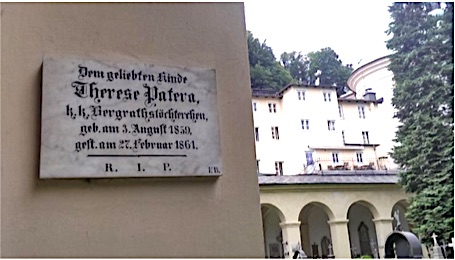
3

and, without even such ado, “Egbert Almeric Henry-Henry / born Feb 22 1859 / died March 22 1859” (the stone, high up and reticent, is inscribed, without any other words than these, in English).
4

What was happening in Salzburg in the mid-19th century? Paracelsus, buried in the same St Sebastian’s church in 1541, would have plunged in, reckless of his own health, to fortify the unprotected, even though he well knew that

All, what is, lives.
Nothing is annihilabl,
even Mouldering is transition to new life.

5

(Tomb of Dominic Oberlechner, d.1821 aged 23, St Peter’s Friedhof, Salzburg—and in English, though you will find a similar text on the same monument in German, French, Latin, and Greek…)

6

This has, to me, a profound assonance with these words of Claude Lévi-Strauss (as quoted by Douglas Hyde, and printed in the latter’s Guardian obituary, where I read them on the day I wrote this, 22 September 1996):

“Nothing is settled; everything can still be altered. What was done but turned out wrong can be done again. The Golden Age, which blind superstition had placed behind (or ahead of) us is in us.” [1]

[1] “Si les hommes ne sont jamais attaqués qu’à une besogne, qui est de faire une société vivable, les forces qui ont animés nos lointains ancêtres sont aussi présentes en nous. Rien n’est joué; nous pouvons tout reprendre. Ce qui fut fait et manqué peut être refait: «L’âge d’or qu’une aveugle superstition avait placé derrière (ou devant) nous, est en nous.» I’m not sure from where Lévi-Strauss is quoting (Rousseau?); the whole passage in context is cumulatively inspiring. [Tristes Tropiques, 1955, p.471.] The English version above is as used for the epigraph to Alexander Cockburn’s book of essays The Golden Age Is In Us (1995).]

What is this but the quiet request of the Zen master, Hōgen Daidō: “Why not here? Why not now?”, which translated into the high art terms of the western world would find its parallel in the manifesto of Hölderlin quoted by Geoff Boycott later in this story. But, though I happen to be writing these last (preliminary) words in Japan, I find it more appropriate to round the little life of this squib with the Biblical version of that long sleep which was written on the very slab of Johann Doppler (Steinmetzer, der unvergesslicher Gatte)’s descendants; for it’s worth knowing where we came from, even if we don’t know where we’re going (an apothegm which could well apply to this whole anagram lark):

“Der Herr hat sie gegeben, der Herr hat sie genomen,
der Name des Herrn sei gebenedeit!
Wie es dem Herrn gefallenhat, alsoistesgeschehen.” (Job 1.21.)

* * *

There’s a more dynamic, equally important, side to this theme, though:
 “Soltai os encarcerados!” (“Let loose the prisoners!”)—when Lídia (die ferne Geliebte) sang these words of Gil Vicente in the tiny eponymous theatre in Cascais in 1969, she was banned, along with the play (“Um Breve Somário da História de Deus”) and the recording made of the songs, by Salazar’s nervous jackboots. But now we’re in the realm of heroes (and heroines, I prefer not to draw the distinction, after all Hero was—is—a girl’s name): the world of Carlyle, of Nietzsche’s Übermensch—not remotely, let us be clear, to be equated with the dummkopf Siegfried whose only quality is that he is “freer than the god”: Nietzsche, and his superman, win their status by thought—as well as, rather engagingly, superior nutrition. (Paracelsus to a T.) *

* [What do I make of the fact that in Salzburg I am staying in the outreach of Himmelreich?—is this not Paracelsus?—whose given names are, Theophrastus Bombastus von Hohenheim. What a place to site an airport… “Ich fühle Luft von anderen Planeten”—so wrote Stefan George, Rosicrucian, Paracelsan poet; another Stefan, Zweig, author of Beware of Pity (thank you to the one who lent me this book those years ago, a lucid notion on her part) eviscerated the Hapsburg heritage, counted the human cost of the dereliction immanent in those huge Tartar plains, and has a -Weg named after him, directly overlooking St Sebastian’s Friedhof, on the Kapuzinerberg where he lived.

7The bust, now, to be found at the airport, of Christian Andreas Doppler (can I guess him to be a relative of Johann?—I haven’t been able to do all the necessary research, there must be allowed some holes, to breathe through)—born within metres of Mozart’s Wohnhaus, in 1803, died in Venice fifty years later—is cast however in bronze, not the familiar stone. Furthermore his phenomenal description, known to the English as the “Doppler Effect”, is here called “Doppler-Prinzip”. Cause and effect are not as automatic a sequence as we’d like to think. Cause and effect (I descend from A440 to A430 as the repeating sound waves lengthen) are not as automatic a sequence as we think we’d like… as likeable a sequence as we automatically think…]

I was talking about heroes, heroics. Napoleon was once a hero to Beethoven, until he declared himself Emperor and had to be scratched from the title page of the Eroica—written at the same sort of time as Leonore. It’s maybe not so curious, then, to find echoes of this preoccupation with great men (and women) amongst the jumble of possibilities offered by a shake-up of Beethoven’s Leonore and Beethoven’s Fidelio (to be roughly precise, 230 shake-ups, Fidelio having the tiny edge). Less to be expected, though logical enough if you care to dwell on it, is that one should begin in an atmosphere half-Carlyle (“The Hero can be Poet, Prophet, King, Priest or what you will, according to the kind of world he finds himself born into”—Heroes and Hero-Worship, iii.) and half-Kipling. I append, first, a “translation” (one of finitely many possible) of the jumbly text, and, last, the (re)strained artefact itself.

I owe thanks, indirectly to Nicholas McNair and John Eliot Gardiner (who laid on the raw material), directly to Charles Pott, consistent finder of most of the best individual anagrams (including the title), and essentially to Louis d’Antin van Rooten, author of Mots d’heures, gousses, rames, to Georges Perec, of course, and to those—or the One—responsible for Himmelreich.

Finally, for any who wonder if I shouldn’t indicate the point where “Leonore” anagrams give way to “Fidelio”—I draw the line at that.

____________________________________________________

O BENEVOLENT HEROES

Stalky & Co. M‘Turk, perhaps, is sounding forth about national values, and after teasing poor Beetle pours derision (in his Irish accent) on the Corsican stomach-marcher. Shoving the hapless Beetle forward, he suggests that a music-loving Roman emperor would draw the line at fellow Italian modernists: too subversive, and what’s more unacquainted with Nordic countries.

The same, apparently, could be said for the gifted, unhappy rulers of Ferrara, not least the lovely one who became married to Gesualdo. The only thing to do is concentrate on the job in hand, whittle a snowy-weather vacuum-cleaner which runs on glue. Tony Benn, who’s certainly not to be likened, in his loose diction, to C.S. Lewis’s wonderful talking horse, boy do you stir things up:
“The only pershon to be compawed to Newo ish Beethoven!”
He’s not listened to: there’s more urgent matter. The very vacuum-cleaner’s been nicked: I don’t believe it, I retreat into my shack (the super cabana I staked out myself) and weep.

A multi-national cricket (hockey? football?) competition is a severe rival to track athletics, especially when the star Kenyan’s injured his foot. He goes so far as to contemplate suicide, in Grecian mode, but Helen, dear reposeful one, rules this out, on pain of calling off her Anglo-Saxon lessons. This threat is not esteemed by a couple of more-or-less heavyweight members of the ecclesiastical hierarchy, who call upon a patriarch for help, but it’s left up to the Stage Manager, [2] alert, honourable, to pace around scenting trouble and sorting it out. When I say “pace”, I properly mean “jet”: he checks out Lancashire, the Home Counties, young navvies in south-east Asia, Italy, Africa… where an Afrikaner, salivating with envy, asks if he’s stayed in an Ibis hotel. Of course he has—but not in Egypt, probably only on the outskirts of a French provincial capital.

[2] The Monteverdi stage manager at this time was Noel Mann (see * below).

The African connection turns up a more sinister figure: a Ugandan dictator, whose hurly-burly discourse bears nasty connotations of genocide (though pertinently pointing out that Beethoven’s heroine is not in fact Italian), hardly mitigated by attempts at Shakespeare. His interlocutors, perhaps maliciously taunting him with the Othello role he’d have loved, callously ditch him when another mountainous actor drops by. Trans-sexual badinage involving Spartan slavery and a voracious Russian threatens mayhem; but you only need to regard one bordel, one low-cut tee-shirt, to see that eroticism and spiritual affection aren’t remotely separate—they’re the same thing, whether in English or ancient Greek!

* * *

Behold an oboist at rest: except he never is, worrying about his reeds, his obbligato, the last to be heard still practicing in his hotel room before the bus leaves [this passage is inexplicably interspersed with culinary quotidia, as well as uncalled-for speculation on intra-musical relationships]; opining on tempi in what passes for early music nowadays, multiple instrument-making by an eccentric on the South Coast. Lazily he exhorts Sven (who will reappear) to rock on, man (though mistrusting the quality of his sound system, which appears antiquated), calls on my brother to drink to Robert Burt’s exhilarating song to freedom—and, to placate the authorities, ends up paying homage to the author of “La Disparition”, where no “e” is used, proposing a variety of fun lipograms, including “o” and “c”, all of which are turned down, most forcibly by an American law-enforcement agency:
“You can’t trust your alumni, dammit, they can’t spell and they cover up their sloth by using the duplicating machine.”

A Belgian woman, her accent influenced by long residence in the southern hemisphere, says Davie [3] —a friend of hers—gets very upset by not being able to use another vowel, but reckons he’s nothing better than a golfer who can’t complete a round, having played the first 7/18 of the course like an automaton.

The Ryder Cup captain, recalling unexpected speculation on waterbirds, agrees. So much for Divie.

[3] See n.9 and ** in second part, amongst the anagrams.

* * *

Less is known than should be, perhaps, about the Gothic king who was born an Australian woman, descended from the celebrated gin family: who despite his/her facility for dismembering Celtic émigrés gained a reputation as a good man (/woman). Thus do sanguinary impulses and high culture go hand in hand; even the most austere of Japanese art-forms is welcomed.

Yet the threat of plague hangs over his house. Bovine spongiform encephaly has been identified in one of his pet hares—surely it can’t have reached Cornwall? A jumble of thoughts whirls around Otho’s brain, thus:
“Get rid of that rodent Sussexman [4] on TV, he must of done it, I’ll make the old retainer sort him out. Or… was it an insect bite in Nevada? or the early closing times in Rostock? One’s friends’ girlfriends? Disappointment on Merseyside? Devil take it, even the best come to grief. Ooh…” (here a lateral thought carves a wolfish smile across his/her care-worn features) “Game, eh? Well, if not hare, then hoopoe? three poussins? tandoori venison?… oh, praise my Yugoslav aide’s heavenly logic! We dream of Eden, where the classics are easily available in authoritative parallel texts, and great Venetian painters’ (yes, including the one who did St Antony preaching to the fish) works can be enjoyed inalienably, without fear of predatory preemptions by the Getty Museum.” It’s an honourable vision.

[4] Noel Osborne, distinguished Chichester publisher, bass singer and Cathedral volunteer (see n.10, among the anagrams)

* * *

 “Is it really you?” Eve gasped.
“It is,” Noel replied, “but do you mind if I call you Joyce? You’ve come to my help at such moments of need, as he did.”
“Then – let me call you Dedalus! You’re so good to cyclostomes out in Dublin Bay, and you single-handedly keep the bar running. I’m only sorry you haven’t persuaded them to do dawn sugar-cups.”
“You’re not telling me – oh, that cupbearer, ye Gods! She’s Greek, you see, she doesn’t seem to understand what I say. But – don’t take it into your own hands – ” Too late. Eve flung her bouquet of roses at Noel’s face, and, missing him, caught Liz, standing isolated apart, snagging her shirt.
“Eve, don’t!” she cried, “these chapel flowers ruin my outfit!” And it’s ruined alright.
“Yes, Eve, it’s all very well…”
Ethel broke in adventitiously, “ ’Ere, I do think Noelene idealises Noel, don’t you?” But Noel, intent on Eve, and spotting that the sun was over the yard-arm, offered her crustaceans; and, giggling, she was his.

* * *

I wish it weren’t the case that traditional Japanese theatre left even distinguished bass singers cold. But, mi love, don’t take it as a slur on west country mores, for there’s more at stake than you think – I speak now für Elise

______________________* * ______________________

It’s Elise who enters, but she stands for all Beethoven’s unrealisable loved ones, poetesses, countesses, nephews, ideals, half-perceived splendours, renunciations… Elise has the dubious advantage of being here, in the flesh; knowing herself to be paradise personified…

Well, she lived dangerously, while he never risked enough. Was the din of the spheres sufficient compensation for his half-hearted amorousness? First, let’s consider the problem of right and wrong. The latter: Satan, yes, and wretched diseases like Aids (it has been suggested that a hot mustard bath might help); Satan’s hand is seen too in the beef crisis—but I resist, I’m determined to keep on eating meat, be it only well-hung vermin.

Ben asked if I didn’t know a thing or two about fish, as a matter of fact. This is mere provocation. I refuse to plump for one side or the other, between the totems of sky and earth, land and water; I prefer like Jonah to rest my weary head under a grape trellis.

There’s always going to be men who’ll interfere with even this harmless pleasure, who’ll shred the arbour rather than let someone else enjoy it—yet still a dove could fly with an olive leaf in its beak, to find resting place on a sedged nest cocooned by bees. And in the course of time, this first testimony of freedom from the vengeful god expanded. The hive’s roof became covered with ornament; people worked at the reclaimed soil, patiently levelling out the acres granted them, they took the fruit of the olive trees and stoned them, in generations to come they drew out the sting from angry films made by their own offspring. These sturdy, self-reliant people, they thought little of Wall Street reports, they’d be happy that their already pregnant daughters show themselves in public, and would contentedly wear galoshes because they make sense. The marsh folk.

Quite a different world was inhabited by E. Nesbit, author of Five children and it. Lewisham was her background, the bricky parapets of bourgeois southeast London, its gardens full of buddleia run to seed, rudely kempt hortensias amidst sandpits of nettles. But she escaped, at least once, to one of the best hotels in Venice, in search of some clarity of mind. “ ‘Keep apart’, I told myself,” (she wrote) “ ‘if not, you’ll go mad. Could I have joined in union with the Irishman? Would my faith bear it?’ ” Then, there was the cost of the abysmal accommodation, serried ranks like cows. And yet – she knew of a phoenix, she knew of a miraculously-transforming Psammead, she knew of many things…
Allow me a reflection on hotels. “Old Faithful’s Guide” says you can eat well in one upmarket continental chain. Pity me! if that’s the case my public school was a sheep’s bedroom. I ran, when I saw that silky red sheen on the veal—a sure sign of putrefaction, cancel that meat INSTANTER. There’s always wholemeal bread. Just watch the film German TV made about the state of cows’ meat!

Some food, I’m glad to say, is not only healthy but also delectable. Amongst such I include Simon Davies’ buckwheat dropscones, piled up with raw onion, sour cream and caviar. Theo tried this recipe on Eve, as a way of persuading her to drop her silly eating restrictions, not least her refusal to contemplate pied de cochon—Valéry Giscard d’Estaing’s favourite dish, after all.
But Steven has opinions about French public figures. He accuses the incumbent of unnatural toilet practices, as well as political immaturity –
“Look at your enemy: don’t do what he does!” But falling into the same error, he invokes an early historian of western Christianity, only to discover him to be as flawed as the rest; and with a guttural, choking cry Steven admits that really it’s the romantic Jewish–Teuton poets whom he adores, thus allying himself with the libertine movement and so, according to some, the party of the Enemy.

I don’t think it’s so, fair-headed Steve, but perhaps it’s not your fault in thinking that passion inextricably involves sleeping with people half your age, that that’s where love is; some American states have endorsed this, after all, and so has a British columnist. Adam, though, the first man, has the right to say: “Eve! Self-indulgence running riot! – is your blood boiling? – then feed the dog. Are you obsessed by your circulation?”
“Yah,” cries Steven, catlike in his happy acceptance of the public’s disapprobation, “Ho!” He’s like a teenage pin-up himself now, do you remember the sort of hero-worshipping books one used to read, “The Story Of A Boy”—a boy who certainly went on to public school –
– but there’s dirtier work afoot. A cover-up, no less, disguised by a performance of The Beggar’s Opera, and further prevarications as to the use of Latin in Robinson Crusoe—a conversation with van Gogh’s long-suffering brother reveals a mutual dissatisfaction with Defoe’s meisterwerk. And yet, Theo admits to a devotion to Ben Gunn, the Treasure Island hermit, admits it even to the FBI whose job it is to eradicate any such romanticism –
“Yeah. We know about this ‘passion’ business. It won’t do, it’s the same as sentimentality about cows: sing your sonnets as you will, we say it’s safer to drink powdered milk.”

* * *

   “Do you think life is worth living?” Frustrated, somehow, he plugged on. “I mean—can’t you say life is good, and death is, well – ”
I was too tired to follow up this argument, I watched the sports. The wonderful Scandinavian would get my vote every time, but ‘No’ snaps the snake-master, my great- uncle Ionides, 5 I look after his outrigger, am careful about giving him the respect he deserves.
“You wish to placate the Evil One? – OK, but be quiet about it, there are certain Tokyo spin-offs to be taken advantage of, just remember that when a priest says ‘Credo’ you repeat the words loudly and IMMEDIATELY, all right? We don’t want to be involved with sea-food poisoning or Dutch food embargoes.”

By implication: root out the pupil who won’t behave, even if he’s jealously holding onto a pentatonic recorder (which he won’t play), even if he’s got no spots, prefers to spend his pocket money on deodorants –

– but he’s an innocent beside Sven, Sven’s appetite. Why, Sven alone could retake Thebes, yes, I know that seven were required, but what’s one “e” between friends… Here we have (as well as Sven-Olof):

Fido, the Faithful Hound
Eli – who gives Biblical credibility
Seth – similarly, a son of Adam to boot
Fidel – to remind us this is a genuinely revolutionary enterprise
Niobe – because, finally, it’s always the women who suffer, who lose their children and have to continue doing the housework, shot through with arrows as they are –
and a Presidential candidate who proposes himself for this task, alas, which requires seven-times-over godly efforts –
well, good luck, Robert Dole, let’s just hope you were doing what a man’s got to do.

_________________________________________________

A   “Did you lose yourself in summer’s heat?
B    Slump to slumber in the Lisbon sun?”
A    “Well, perhaps you could call it a treat,
B    To blow on aeroplanes the fees you’ve won.”
C   “But surely – pictured on the glowing screen?”
D   “You think one TV payment pays one’s lunch?
C   What if Fidelio’s source had only been
D   A dream, a joke, a scream (yes, after Munch)?”

E   Some German singers merit more applause
F   Than is afforded by a hostile trade:
G   They’re chosen, do their best, let’s hope their skin
E   Is tough enough to weather what their flaws
F   Imply, like English colleagues, thus afraid:
G  “At least I brake my shakes with wine, not gin.”

[5] Well, he was family, by marriage—and an extraordinary character, game-hunter-turned-snake- protector, in East Africa, whom it would be a shame to forget.
[SJ: I can’t For the Life of Me find the note cue here, but I cant bear to sacrifice the note… Some intrepid reader might like to supply it…]

Another try at this sonnet (and this time, with a more properly Burgessian rhyme scheme, in feeble honour to another hero):

A  “Did you lose yourself in summer’s heat,
B   Slump to slumber in the Lisbon sun?”
B  “Then waste on aeroplanes the pay I’d won?
A  It’s doubtful even you’d call this a treat.”
A  “But if you’re dining ’mongst the screen’s elite?”
B  “Eating your own wallet’s not much fun.”
B  “You’re telling me ‘Fidelio’ couldn’t run
A  To sponsoring your ‘gourmand appetite’?”
C  “I’m German. Speak in English, if you please.”
D  “Your skin’s that thin? Go on—Beethoven knew
E   That ‘slow of hearing’ doesn’t mean ‘obtuse’.”
E  What prejudices blight one’s hope for truce
D  ’Tween sheep and goat (and cow!) – your thought’s askew:
C  They’re all washed down by wine (there go one’s fees).

_____________________________________________________

I was sitting in front of the TV in the Long Room, with Ray, Fred, Geoff, the late Brian, E.W. and the lads.
“You see?” groaned Ray, “he never gave his all, the wretch. He preferred the theatricals, the palm-slapping and name-dropping, to a decent job of hard work.”
“But if you only go by the satellite image,” I reasoned, “you may stop them getting away with daylight robbery, but you’ll go to the grave without winning the Ashes.”
“That’s just it,” broke in Geoff—the scope of the discussion was widening—“you put the right bloke in the wrong place, like Wagner in Bloom’s, and you’ll soon find something’s a-missing – ”
“You’re the one who’s missed out, thee…” cried Fred…
“Wait—can’t you feel it?” I said, “there’s a C sounding somewhere…”
“It’s that violinist the committee hired for concert intervals,” Geoff told me. “She gets a ridiculous salary, but there you are! At least when there’s a barn dance she’ll get ’em jumping!”
“That reminds me, it’s time for evensong,” intoned John Arlott. “A manuscript Latin hymn in fa, and an anthem by Délibes.”
“Did you know Délibes was a Foreign Office spy?”
“Got a gong for supporting freedom movements, so I heard.”
“I heard that your brother-in-law’s setting of a Robert Graves poem was found in the Indian laundry!” [6]

Shades of Ravel’s Introduction and Allegro! Careful as he was, obsessive even, rigidly counting each bean, keeping fellow Basque gastronomes one short of a quorum while sating them with extra virgin cold pression olive oil…

[6] & * William Godfree’s song cycle Her restless ghost, settings of Robert Graves, includes the poem whose first line is “O Love, be fed with apples while you may”. I mixed this with memories of “dhobi” and the Ravel story—one doesn’t often find two laundry items in one place (not my responsibility—it was the anagrams, guv) (see * below).

   “Look, could Beethoven really not hear? ” asked “Jim” Swanton.
“By that stage he wasn’t Beethoven at all, he’d been swapped for a Russian nabob who used deafness as an excuse to write just anything…”

I looked out of the window, watching the afternoon sun slant across the Lords’ turf. At this hour, I reflected, the Grecian mainland was drenched with the deep shades of late afternoon, the last rays of sunlight touching that so-fought-over town with a glance of lavender… And inwardly looking, as I was, there crept over me a shiver of unspeakable joy.
“But he loved Hölderlin, didn’t he?” I heard Geoff saying. “Just hear this – oh Diana, do you mind putting out the silage for the buffalo? – ‘Thus enlightened and unenlightened must finally join hands, mythology must become philosophical for the people to become reasonable, and philosophy must become mythological in order to make the philosophical sensuous. Then eternal unity will reign among us. Never again the contemptuous glance, nor the blind trembling of the people before its wise men and priests. Only then will equal development of all powers, of each and every individual, await us. No power will be suppressed any more.

‘Then general freedom and equality of spirits will reign ! – A higher spirit sent from heaven must found this new religion among us, it will be the last, greatest work of mankind.’ [7]
“Grand, eh? That’ll make ’em sit up in the Yorkshire committee room!”
“Actually,” said Di, breaking the spell that had settled over us with this uncompromising declaration, “the buffalo’d probably have preferred tuna.” 
Well, I might prefer honey. What’s that to do with us now? “Give the food to our Scandinavian friend,” I said.
“Do you think I should? Will he hit me if he doesn’t like it?”
“Who are you asking?” Thinking about it, I wasn’t thrilled with this reply, but was exonerated by the Swede himself, who entered spreading his hands and generously crying, “Anything you can find to eat is fine by me!”

Fine? Does he “love” food in the same way one “loves” one’s pets – buffalos, fish, be they what they will – or Beethoven? If there were no “E” in the language suddenly, or in the musical scale, you might be surprised to find you loved it too, had done all along. “Liebend ist es mir gelungen, Dich aus Ketten zu befrei’n.” It’s through love we know which are the chains, the assumptions, we can break apart – and those we accept –

like, knowing you’re tired, and retiring

(believe, once and for all, every ambiguity is deliberate, exact, even the ones I haven’t noticed)

Not just fine, but,

Fin

(It’s th’ end.)

[7] I’m aware this manifesto is attributed also to Schiller; from what (little) I know of both of them, I feel instinctively its sunlit airiness belongs more properly to Hölderlin, as Nicholas McNair’s original programme article describes, though it’s possible Schiller took it up (as who wouldn’t?). I ́m also aware its presence here isn’t strictly generated by the anagrams, but it is by the opera.

8

O BENEVOLENT HEROES

“Vote Nelson be hero! Even one-horse, Beetle… Nepoleon? Bonee? SHET!” ’E shove Beetle on. “Nero vetoes Nono [8]: rebel he, he nev’r been to Oslo.”
“Nero? Este, love. Bone, hone, bore the solvent sleet hoover” – E. Benn. (O thee, no sloven Bree.) “Nero’s lone Beethoven.” “Hoover? ’E been stolen.”
“E’en Hoover been stolen?” Enter hovel, sob: “No! ” Best hovel ore, e’en one Robertson hoe; eleven elevens bother Rono, sever heel bone too.

“O, see the obol.”
“No, never. Lethe snob? Oo, never.”
“Eh?”
“Verboten. Else no OE,” vetoes Helen, o the serene love.
“Then boo! ”
“No!” – Leon the obese. Rev. ‘Elven’ Oberst: “Ho! Noé!” ’E bother Noel* even so: ’e hover tense, noble, o, ’e rove N. Bootle, E. Sheen, Esher, Bolton even, o, E. Borneo teen shovel, ’e been Vérone, Lesotho…
Boer: “He seen Novotel?” So – Novotel – been here. Thebes rôle even? Noo. E. Rennes hovel.
Obote: “One Serb hotel oven, Eve – ” (best ‘Leonore’: no ‘eh’) “o three-oven Belsen, seventeen-hobo role. To be or no… ”
“E’en shelve Robeson? Loth. Eee…” (Nev.)
“Ben, Nev’s here!” (O’Toole.) “He’s Renée…”
“Novel. Boot even seen Helot boor, even no hetero-lesbo, Ebeneser Leontov.”
“Ho. See one brothel, one vee, Eros, love – both one!” (ἕν..)

[8] I seem to have swapped vowels between adjacent anagrams, as indicated. I’ve left it, for clear reasons, but sorry, it won’t happen again.

* * *

Robson, toe élevé, lone NH oboe Everest: shove oboe, relent, ennerve, hone solo. (“Beet broth,Selene?” “O no, Eve.”)
 O, lento ne’er behoves eleven neo-theorbos. Tenor – love Nobes? Hee… R. Holton v. Nobes? Eeee… Svelte horn, oboe, e’en no bore-hole (vet lens), lone Hove nose-beret. Throb on, Sven, olé!
“Eee ! He be no novel stereo, honest. (Role, one ‘beve’?) Even the Rob solo, ‘Nee…’?”
“O no. See throne? Bevel revel behest: no ‘E’, no ‘O’.”
“No ‘see’?”
“Veto ‘ ’hernobel’.”
“NO ‘SEE’??”
“ ’heviot…” FBI led [9] revolt. “ ‘See’! Oh, none be honest élève. Roneo be sloth veneer.”

Boone (Esther Boone, Loeven) : “Divie bleets of no ‘eh’ ** – boo, seventeen-holer, e’en seven-hole robot.”
Seve: “ ’E bet heron, loon.”
Severe.

* * *

Otho ‘le Bon’, né Noelene Booth, sever Slovene Breton, ho! Eesee. “Noh? Bon.”Oleveret, one BS Eleveret, oh no! ’e BSE even North Looe? Evern Lee, OBE, shoots Noel Osborne [10] (he be TV vole, honest): Reno bee, no Slovene beer o’ the Elbe (o sh, Oenone, Trev – e’en Everton lose…). Hob seethe, von Bono leer. Soon Evoe, treble hen, stone-oven-Rehe, loben Evo’s Booléen ether. Eothen, so noble rêve! Loeb, Veronese (no, the ‘eel’ Veronese, both on ‘no veer’ behest).

[9] and ** The two preceding 17-letter anagrams belong to the second, “Fidelio” half. I can’t tell at what stage they became incorporated here, but, here they are. Perhaps the game with “c”, unavailable in either anagram set, was too absorbing to interrupt.

[10] See note 4 above.

** Here, as promised, the line is drawn.

* * *

“O, Noel !”
“O, Eve! Lebensnot hero!”
“Steven Hero, eel boon, lover to one shebeen! No sherbet levée.”
“O no? Hebe never on toes. Lo!”
“Eve, no!” Beth sore, lone: thorn been sleeve, oo.
“No, Eve – no Bethel rose!” Oo, her bonnet sleeve!
“Bon, Eve…”
Ethel: “ ’onor, ’e’s Noelene Booth’s rêve…”
“Eve?… Noon. Lobster?”
“Heee…!”

O. Noh even bore Steele. Severn blot, o honee? O no.

ENTER SHE, BELOVE *|* D OF BEETHOVEN

’Lise: “I : the visible Eden.”

Oof, she fêted oblivion: ’e lived ’s if he been too feeble. Doth noise vie his fèble devotion? Define evil: Hob, so, et HIV (défense: boil toe), the Devil! Beef! Soon I even bit vee of solid, foetid vole.
 Ben: “Is he noble fish devotee?” I heed not visible foe. Odin/Eve fé shiboleth, footle beside vine.
“Fie! Bleed vine shoot!”
Bon, i.e. the dove flies to solid fen beehive: festoon beehive lid, hoe, bevel finite sod, bone olive, de-fetish bolshie teen video. FT feeble shine, ovoid fen deb, shoe ‘E’.

Tivoli, Vénise: be ’loof, Edith Nesbit – “O folie! He, Dev? I bet he’d love sin – o fé…” Hotel bovine Dis fee, beside.

Novotel: “If he envies food elite…” (H.B. ‘Fidelis’.) “Oh vé! Eton be ovine shed. Flee bit o’ beef, too livid sheen: believe nosh foetid, beef deletion.” Hovis; Holstein beef video.
Theo fed blini. “So, Eve, diet be foolish? Even edible hoof? I…”
 Steven:
“He, fool, envies bidet. Behold foe: évite sin.” Fool, he invites Bede – o the evil sin of Bede! – (sob’d, tief ) – “Love Heine!” Evident Soho belief, i.e. be son of the Devil!

O, blond Steve! If thee, oh, if love is teen bed, fondle, Steve, be Ohio – Levin’s Ohio bed fête…
“Eve! Hedonist foible! – Vein seethe? lob Fido blood. Vein fetish?”
“Ee, the boos feel divine,” boo’d feline Steve, “hi!”. Teen idol he,‘Bevis’ of Eton. “Hide files, be vobis ‘Felon Thieve Ode’.”
“ ‘Vobis ’ ?”
“ ‘Thine’. Defoe, el Isle…”
“O, Defoe be v. thin, Theo.”
“I love Ben, Feds, I – ”
“ – in love ?? Shit. Beef ode. I? I beve Nestlé food.”

* * *

He: “Life is ’bove deth, no?” ’E be foiled – oh, invest. “Life is v. bon – deth? O – eee… ”
I behold Eton fives: Sven-Olof, bei thee I’d…

“Veto!” (Ionides – befehl boot, defensive ‘heil’.)
“Soothe Devil – be fine!”
“Sh! I love Edo benefit. Oh, no deist ? (f) BELIEVE! Hob denotes evil, fie! iodine fob het vlees.”
Boot fiendish élève: he’d five silent oboe, e’en he, divest of boil (b.o. – I’ve invested hole). Ee, the libido of Sven. One v. Thebes? Fido, Eli, Seth, Fidel, Niobe – o vé! Seven-folio Thebeid, sevenfold Hebe, Io, it…”
“… it behoves Dole – fine.”

She: “Fed été oblivion?”
He: “O, I’ve fêted Lisbon.”
“The Lisbon video fee?”
“Vision: hotel feed be.”
“So – if Beethoven lied?”
“So ? ’E felt bovine hide.”
“Oh – is Detlef bovine?”
“Ee! – ist vine flood he be!”

* * *

“Oi, Devon, feeble shit! He believe in soft do : ‘Hi five!’ D. Boon, Steele…”
“Heed television, fob thieves, die of Nobel.”
“O, if Beethoven’s deli void ‘E’ – ” (the ‘E’ snob file…)
“I feel tense doh vib…”
“O, bête violin fee, dosh – hoedo’n: visible feet!”
“Be Ovid in F (sheet), Léo Délibes.”
“The FO envoi!” (Ed.: ‘leftish envoi, OBE’.)
“ ‘O love, be fed’ is in the dhobi.”* O, tensile fève! – eleven foodies bit his oil. “Beethoven def?”
“He Leonid B., Soviet effendi.”

(O Thebes, olive-violet be she.)

“O fine. Di, love, feed the bison.”
“ ’E’d fish volonté.” I, bee
“Feed Bo.”
“Is he violent?”
“Isn’t he?”

Bo: “I love feed!”

He love? ’E??

To bed.

Finis.

May–November, 1996
Nicolas Robertson
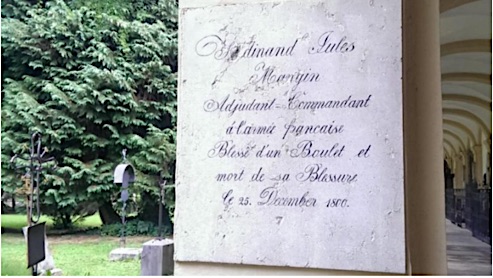
9

Messiaen Nativité live!!!

Nativité score

I’ve written about the nine meditations of Messiaen’s monumental organ work La nativité du Seigneur (1935), but only last week did I hear it live, played by Roger Sayer (replacing Samuel Ali) at St John’s Smith Square, * making the building resound (like the mouth-organs of the Li family Daoists in Heidelberg…). Organ recitals may not lend themselves to rapport (that of Vingt regards sur l’enfant Jésus on piano being more conducive), but after a break from Messiaen, it’s always astounding to enter his unique sound-world again.

To encourage you to bask in this amazing piece, here’s the glorious finale, Dieu parmi nous:

And don’t miss the remarkable film of Messiaen himself at the organ of Saint-Trinité (under French organ improvisation!). My Messiaen series begins with a post on the mind-blowing Turangalîla, where you can find links to more of his most cosmic masterpieces. Along with Bach, Mahler, and Ravel, Messiaen remains my deepest engagement with Western Art Music…


SJSS* St John’s Smith Square has happy memories for me, both of memorable concerts (Bach Passions…) and recording sessions (Mozart piano concertos…). In My Day the posh restaurant in the crypt made a comical contrast with the ludicrously cramped backstage facilities, never designed to accommodate an orchestra and choir—an issue I doubt if the recent revamp can have solved.

Dating from 1728, the church was gutted by fire after a bombing raid in 1941. It was eventually restored as a concert hall in 1969. Deconsecrated, it’s not quite a church, but has more atmosphere than a concert hall (see Buildings and music).


Guest post: Alceste

Nicolas Robertson

For a general introduction to the series, click here;
for Nick’s sad demise, here.

Prelude—SJ
Having posted nine of Nick’s extraordinary anagram tales, we thought we’d give the reader [still singular, eh?—Ed.] a bit of a break, but now that he has, alas, become “late and lamented”, I find a couple more of his stories that I think I can lick into shape. They will have to stand as a posthumous tribute to his brilliant mind. Here’s the first, with Nick’s own introduction:

ALCESTE
Opera by Gluck. Staged performance in the Théâtre du Châtelet, Paris, 1999, staging by Robert Wilson, with soloists, Monteverdi Choir (offstage, in the pit) and English Baroque Soloists, directed by John Eliot Gardiner. CD recording, and TV and DVD film directed by Brian Large.

Alceste CD cover

This is the last of the “anagram stories” I compiled before the watershed year of Bach’s 250th commemoration year, 2000, and arose from a substantial residence in Paris (we also performed and recorded Orphée et Eurydice, the choir this time on stage); which accounts for the strongly French admixture in the anagrams.

I always hope that these exercises can speak for themselves, as it were. I would like to mention though that the “tsetse éclat escale” image of a clambering insect on a barred jersey was inspired by one of the most beautiful passages of prose I ever read, in Nabokov’s Bend Sinister; and that Nathan Astle, in 2002 (thus after I wrote the anagrams and the story), surprised the world, and perhaps himself, by scoring the fastest Test match double century in history, against England in Christchurch. Looking him up now, I see this is not the only prescience among the anagrams: another of Astle’s records is for the most ducks (5) in World Cup matches—it’s not said if any of them were wild. (Nabokov preferred tennis; Ibsen’s preference is unknown, to me anyway.)

“Alceste” provided the least number of letters I’d elected to work with to date, which posed different challenges, and led me to think it could be worth including a list of the resulting anagrams, in exactly the order used. There are 91 (92 if you include the name “Alceste” itself). I must add, again, that I didn’t use, have never used, any artificial aid, such as a computer programme, in deducing the anagrams, that would be to undermine the whole idea, which is meant to be the exemplification of chance (perhaps not entirely chance) within a random (well, not quite random) set of coordinates.

Alceste anagrams

SELECT A CAST

“Lee, cas télé: Lee scat, EEC lats, le acest.”
Clea? “T’es sec late, ’élas”, etc.
“Cale? – est ‘le Astec’, L*tèce as.”
“Ale sect, ’élas” (etc.).
“EEC salt!”
“Stale EC” – slate CE.
“Cal? Tees ace.”
“Let’s act. Else Elsa, et C.. – ”
“–Claes?”
“–et‘alc’Este –”
“Least! C’è l’ascète!”
“ – steal ce castle.”

Este??
___________________________________________________________

ALEC:                    Tae slec. Elastec. Set lace, cast eel. Celt sea, celte as ce à l’est,
Sète lac, cet Alès.

CELESTA (sec):    ’Alte ! Scélé’at! Sâle ’tec! Tel cas elects ease –

     ÉCLAT

’ÉCATE [LSE] :     L’ecstase – ÉCLAT – et secla [aet. CL] est ce seal,
La’ Tse, ce stèle act.

[Escale; ecseat L.]

_____________________________________________________________________________________________________

Las, ce été, LA sect elates Cal secte, ‘el caste’, acelets lactées (case let see talc, l’été sac caselet, saclet e cesta). Le eel sac taste clé, sleet, ace cleats. Ecsel at easel, TC, sat Clee (teasle ç’a clé: tsetse éclat escale – scale ‘te’ – et escalate le scale → C).

“Est-ce Sal? et Léa? C’est Astle?”
“C’è else cat, Elsa, cette – ”
“Las! Ecce–’elastteal!”

_____________________________________________________________________________________________________

Ces EC tales.

* * *

How does one set about choosing the line-up for an international opera production? The minutes of a recent committee meeting have been passed to me, and confirm that the criteria are more mixed than might, idealistically, have been expected. Here’s an excerpt:

“I’d say we go for Lee, in case the TV recording goes ahead. He can vocalise very convincingly without the words, and has terrific torso muscles, as good as any in Europe. He’s got to be the number one choice.”
“Okay. Now, do you think I – can take on Alceste?”
“Oh, Clea, I wish I could say yes – but you’re always a fraction behind the beat.” (An example of the speciously ‘objective’ excuse.)
“I think we might try bringing in an old rock star from Velvet Underground as Charon, que tel ? He’s a bit of a Central American god here, in fact a star in Paris – ”
“But he drinks beer as if there were no tomorrow” – and other stock denigrations are brought out (see above).
“No, but he’s really the best in Europe!”
“Europe’s old hat.” And so the Church of England is written off.
“What about Cal? He sweeps the board on Tyneside.”
“It’s time for decisions. Otherwise Elsa, and the sculptor whose name I can’t pronounce, Oldenburg, thank you, he and his ‘soft harps’, as well as that Ferrara girl whose yard-arm is always well below the sun – ”
“ – Hang on! Beatrice? But she’s the most spiritual being I know! – ”
“ – will come and storm our citadel, our châtelet.”

What on earth did he mean, talking like that about Beatrice?

Beatrice
Portrait of a woman, inscribed Beatrice d’Este, c1500–10,North Italian artist (Uffizi). Source.

___________________________________________________________________

We were filming on the Breton coast. Alec had done his research, of course, so knew that this bitter moorland, with its marshy sedges which gave the technical team such trouble in achieving the mobility they needed, was supposed to hide the “Youdic”, one of the entrances to Hell. Or perhaps he only thought of this in terms of metaphor. At any rate, even during the takes he seemed to half wish we were somewhere else. That last afternoon he complained abruptly, in his raw Glasgow accent, about our work—too loose, pulling apart then coming together again too sharply. “This is being filmed through a muslin filigree, remember?Is it in place? Cal–throw the bait into the sea, so that the shadow falls on the menhir behind you. Think of Melusine, if you like, calling to you from the waves—but I don’t want a Celtic twilight, people are the same here or anywhere, this scene could be set in the blue basins of a Languedoc fishing-port, or under the ashlar of the Pont du Gard – ”

Celesta’s voice cut across the sea-washed stillness, dry and harsh: “Stop! You retch! You’re like some sort of sordid private eye! The way you lump all these together just shows how lazily you – ”

An incandescent flash split open the earth and for a moment fixed the grey sky as if in negative. The calvary poised at the intersection of the three paths above le Yeun Elez (“le marais des roseaux”, the marsh of reeds) flung its arms backwards as the setting sun caught the bones of its carved face skull-like in a spiralling cartwheel, and from where it had stood arose a creature which sucked in the elements spinning around it, and from the vortex (which reminded me of the impasse I faced in my finals exams at University) seared us with a voice unspeakably beyond our imagining,

<The bliss you seek > – another shattering burst of lightning – <is made up of centuries> (I thought stupidly, this Hecate’s face looks about 150 centuries old) <and each one bears my mark. It’s written in the Tao (in James Thurber’s version) [1] No, o ! the words are graven in stone! >

[1] I understand the reference to be to “The Wonderful O”, where the letter is banned owing to the sad fate of the principal’s mother, who became stuck in a porthole : ‘They couldn’t pull her in, so they had to push her out’. The prohibition had horrible effects, not least for Ophelia Oliver, everyone’s sweetheart hitherto. [Add to Perec’s Oulipian category of “Plagiary by anticipation”.]

The rocks at our feet suddenly tipped up, and as I sprawled amongst the armeria and sea fennel and samphire the earth gaped open to reveal a dizzying stairwell, down which Hecate plunged, disappearing south-east, in the direction of Carnac. Alec was nowhere to be seen.

Hecate
Hecate, Attic red-figure lekythos, 5th century BCE (Hermitage Museum). Source.

____________________________________________________________________

We were tired, that last summer in California, of trying to feel different. The weight of what seemed to us to be history, or rather the end of it, the inevitable progression from the luxury of striking individual poses to the acceptance of group mores, vitiated our tentative forays into anything that could pass for independent thought. We felt obscurely guilty about this, and thus some of us, anyway, were thrilled when a new Los Angeles group seemed to offer ready-made the transcendence our own mental ambitions shied at. Unashamedly elitist (though not of their own volition: they had been “chosen”), these Hispano-Franco-Americans saw themselves, and thus us, as every one a single star in the Milky Way, powdered with a celestial shimmer we should each carry with us, in a little French pouch and a Portuguese wicker basket.

So far, so exquisite, but the angel was in the details. For, following the divinatory rituals of a Greek tribe in iron-age Thessaly, whose priest-queen Alceste, it seems (the legend has come down to us in a jumbled form), had for the first time defied the ancient rigid formalities and refused the seven-yearly sacrifice of the young king, Admète, the clan had located the essence of rejuvenescence not in the shed blood of a royal representative, but in the organs of the lamprey, a cyclostome much appreciated by gourmets and whose formidable richness in nutritional terms can see one safely through the coldest of winters as if clad in 7-league boots. (Part of their lore also included the folk-memory of how it was that Apollo, protector of Alcestis, came from Thessaly to dispossess the earth-mother/serpent cult at Delphi, replacing her with his own oracle—in short, the worship of sky-gods which accompanied the Achaean invaders from Central Europe into Greece, ousting the old chthonic deities: [2] hence the specific emphasis on summer, “l’été sac”, and celestial phenomena, “acelets lactées”. And underlying this, it struck us, the first tentative emergence of the individual, as if from the chrysalis of uniformity, realising the possibility of asserting individual choice in the face of tribal orthodoxy …)

[2] See Robert Graves, The Greek Myths.

But the members of our sect were clever enough to leaven their powerful teleology with art. The boss, known as Top Cat, was a brilliant painter and had even done a portrait of Paul Klee (TC’s spelling was all over the place, it only endeared him to us all the more, as if proof of his sincerity) in Tunisia. He used to point proudly to a burr on his Breton mariner’s top, which he said had been stuck there ever since his visit to North Africa—and this was the key to his and our undoing, for one weird day we saw the “burr” set off shakily up the staves of his striped shirt, at the same time shouldering away its tufty carapace, until with an almost audible crack the chrysalis shattered and a gleaming mature tsetse fly sidled with its smugly crossed wings into TC’s world, pricked his throat and took him down, leaving us lost, into the long sleeping sickness. I will never forget his cry, indignant at first – “Is it a bee?” – then higher pitched, “Oh, see –”. And I can never again think of a rising semitone as optimistic.

“Is that you, Sally? and Léa? is that Nathan? We need a good number 7,” murmured TC, softly, from a deep, dark maze—somehow, in extremis, reaching out to the memory of a hero from his native New Zealand cricket team.
“No, but instead we’ve got the cat who walked by herself, the lioness Elsa, born free like all the sons of Adam. There’s nothing for you to fear –”
“Alas, but look: he’s become at the end like the wild duck!” – pure symbol of freedom, brought low by stupid material ‘reality’ …

_____________________________________________________________________
[One in a series of recastings of European traditional stories: No 91]

**************************************************************************************************

Paris – London, September–October 1999
slightly revised 2015 and 2021
Nicolas Robertson

Ankou
Ankou, messenger of death, Notre-Dame de Bulat, Côtes d’Armor, Brittany.

Is Western Art Music superior?

In ethnomusicology—if not in the echelons of Western Art Music—a canonical text is
  • Judith Becker, “Is Western Art Music superior?” (Musical Quarterly 72.3, 1986) (text here).
As she observes,

Among musicologists, music educators, and even some ethnomusicologists, the doctrine that Western European art music is superior to all other musics of the world remains a given, a truism. […]

A more subtle form of this dogma is the concept that Western art music is intrinsically interesting and complex, while other musical systems need their social context to command our serious attention. According to this version of the theory of Western superiority, some exceptions are allowed, and music systems such as Persian classical music, Hindustani and Carnatic music, or Javanese gamelan music are classified among those musics which can stand on their own, be usefully extracted from context, are susceptible to intricately complex analyses, and are aesthetically satisfying in their own right. This, the most liberal edge of the theory of Western music superiority, has adherents of great persuasiveness among scholars who are deservedly respected within the disciplines of musicology and ethnomusicology.

 I’ve noted such “exceptions” as the Beatles, Indian raga, and jazz, besides posts like Joining the elite musical club. Becker lists three main axioms that underpin the claimed superiority of WAM:

1) that Western music generally, and art music in particular, is based upon natural acoustic laws, the natural overtone series providing a link between man and nature, that is between culture and the phenomenal world; this intrinsic bond provides a physical and metaphysical base (with its Pythagorean transcendental orientation) which informs all music so created;

2) that Western art music is structurally more complex than other music; its architectural hierarchies, involved tonal relationships, and elaborated harmonic syntax not only defy complete analysis but have no parallel in the world;

3) that Western art music is more expressive, conveys a greater range of human cognition and emotion, and is thus more profound and more meaningful than other musical systems in the world.

She goes on:

No-one, I think, denies that Western art music has a foundation in the natural world, is very complex, and is deeply meaningful to its musicians and audiences. The problem lies in denying these attributes to other peoples’ music. Because we often cannot perceive it, we deny naturalness, great complexity, and meaningfulness to other musical systems. Despite all protestations to the contrary, to deny equivalences in all three pillars of belief -that is, naturalness, complexity and meaningfulness, to the musical systems of others-is ultimately to imply that they are not as developed as we are. The doctrine of the superiority of Western music is the musicological version of colonialism. Thus the issue is not only an intellectual problem, it is also a moral one.

Becker takes the three axioms in turn, showing how naturalness, complexity, and meaningfulness are common attributes claimed or evident in musical cultures around the world. For nature and acoustics she adduces the musical bow and mbira in southern Africa. Furthermore,

To say that a musical system is “natural” is to endow it with a kind of necessity, a kind of power which it otherwise might not have. One way musical systems gain “naturalness” is to be conceptually linked with some other realm of discourse which is highly valued and whose validity is unquestioned. The linkage of music with acoustics, that is, science, is to create a coherence between a very powerful realm of discourse (science) and a less powerful one (music). Another way of linking music with a highly valued system is the interpretation of music as the setting of texts, as in logocentric Arabic cultures. Another powerful linkage, this time metaphoric, is found in the idea that music is mimetic and imitates the sounds of nature. Music as the organisation and elaboration of the sounds which would be in the world even if men were not is a theory fairly widespread in China, Indonesia, Melanesia, and ancient Greece. […]

What is felt to be natural, correct, and true depends upon the correspondence between the musical event and some other realm of human experience. Naturalness has to do with relationships, with what aspect of the world outside of man is believed to be intimately connected to musical expression: natural, believed iconicities between music and the world outside music.

As to complexity,

We tend to equate complexity in music with one particular kind of complexity, and then look for that kind in other musics. Not finding it, we designate that music as simpler.

and

Calculated, deliberate alteration of pitch, duration, rhythm, overtone structure (tone quality), attack, or release according to prescribed constraints creates a kind of complexity in a single line which is as demanding of the artist as any single passage in a Beethoven symphony. A Japanese shakuhachi player or a solo singer of a Mongolian “long song” are particularly striking examples of this kind of complexity. Closer to home are the iterative songs of many American Indian traditions…

Noting complexity in polyphony and polyrhythms, she presents an initiation chant from Benin: Benin chant That musicologists were slow to appreciate all this reflects both ignorance and a prejudice against cultures seemingly lacking in notation or theory. Becker cites Hugo Zemp’s work on the panpipe ensembles of the ‘Are ‘Are in the Solomon Islands (preview here).

Like a violin, a digeradoo [sic] may be played simply or complexly. All degrees of complexity of intent, along with degrees of ability to carry out complex intent, exist in all cultures. If, with or without instruction, we cannot readily perceive the complexity of a digeradoo performance, the fault does not rest with the musician. One must always assume that a musician of another culture is as sensitive to fine musical distinctions, is as caring about tone, attack, and phrasing, as our good musicians are. Not all are, of course, but variations in complexity of intent, and skill in carrying out intent, are not determined by geography, race, or culture.

As to meaningfulness, Becker starts with WAM:

Two ideas of musical meaning predominate in Western Europe, both in the scholarly and philosophical literature and in the common everyday realm of the intuitions or expressed concepts of lovers of Classical music. One is that music has no meaning outside of itself, that meaning is inherent in its structure. The other is that music expresses human emotions. While it might seem that one could hold both these views simultaneously or sequentially, in the history of musical scholarship of the past century and a half they have tended to be mutually exclusive and antagonistic.

Kaluli

Meaning is diverse among different cultures. Steven Feld’s study of the Kaluli people of Papua New Guinea has become a routine exhibit. Becker concludes:

Individual reactions to Western Classical performance may be as intense as among the Kaluli, but musical performance is more commonly felt to be somewhat abstracted from a personally felt emotion. We feel the sorrow or the joy vicariously, through the skill of the composer and performer, and we are not required to make any direct introspection of our own past.

One cannot say which music is more expressive, or meaningful, or which refers to a greater range of human cognition. Each should be studied and understood on its own terms; one cannot usefully be evaluated against another.

Evaluation is only viable within a culture, particularly within a genre. Standards of excellence are as stringent and as clear cut for a gisalo performance as for Schubert lieder. Expressiveness appears to be closely related to skill in all cultures. The difficulty with comparison and evaluation arises when one compares an intimately known musical genre with one barely understood. Musical systems are radically contextualised and intermeshed with other realms of culture and demand particularised analyses. Western art music is neither superior nor inferior to other musical traditions. Musical systems are simply incommensurable.

NettlThis way of thinking has also given rise to impressive ethnographies of Western Art Music by scholars such such as Ruth Finnegan, Henry Kingsbury, Christopher Small, Kay Shelemay—and Bruno Nettl, most articulate advocate for the equality of the world’s musical cultures (among many expositions, see e.g. his reflections on Blackfoot aesthetics).

The theme that Becker spelled out underlies my reflections in What is serious music?!; note also posts under Society and soundscape. And of course, one should take the critique further: as the anthropologist (big brother of the ethnomusicologist) would say, the claimed superiority of “Western culture” rests on an assumption that the whole “civilisation” of the Western bourgeoisie is itself superior—leading us to pundits such as Edward Said and the many critics of colonialism…

In memory of Nicolas Robertson

Nick 1
Source.

Alas, Nicolas Robertson died in Lisbon earlier this month, after many years of chronic illness.

A fine tenor (“cheap at the price”, as we would say), after his early years in Cambridge Nick became a long-term member of early-music groups such as the Monteverdi Choir, the Tallis Scholars, and the Sixteen. As a Bach scholar, he worked assiduously in assisting John Eliot Gardiner‘s research, and I pray that Nick’s own studies of Bach may yet see the light of day.

Nick 2Mozart with the Monteverdi Choir in Barcelona, 1991:
Nick back row, centre.

Notwithstanding his bookish demeanour, the touring life gave him ample opportunity to sample the richesses of continental beverages; a denizen of sleazy bars in every port, he was an unlikely pinball wizard. Marrying his soulmate Lidia in 2003, they lived together in Lisbon. At the end of 2008 Nick declared himself bankrupt (“one of the best things I ever did, as well as a fascinating experience”). I suppose he never recovered from losing first their house (in a fire, 2009) and then Lidia (to cancer, 2013). He died on her birthday.

Softly spoken, even reserved, Nick’s conversation was erudite, arcane, and hilarious, making him a somewhat unusual drinking buddy. A devotee of Oulipo and Perec, he delighted in language (or rather, languages). The gnomic tales that he concocted out of anagrams provided by fellow choristers on tour (mostly composers’ names, like Gran visits York [Igor Stravinsky] or Nubile gorilla [Lili Boulanger], and Mozart operas, like Noon? Gad–vini! [Don Giovanni], are just extraordinary—a kind of Esperanto fiction, creating spiralling worlds of fantasy. I was honoured to post a series of these tales on my blog. Nick’s meticulous system of indents, single and double quotes, long and short dashes, italics, and so on offers the reader crucial clues to the possible meaning of the arcane text, so typesetting was fiendishly complicated—Lear (Bacon), aka Barcelona, is a good example—and our correspondence about such minutiae provided us with hours of harmless nerdy fun. I’ve listed the tales here, and they’re among the treasures of this site. Now I really must edit some of the remaining stories, “compiled without regard to expense or the feelings of the public”, in the words of our inspiration Flann O’Brien.

As a keen football aficionado, another ongoing project in which Nick delighted was collecting drôle headlines about Jesus (“Jesus is very happy with his eleven”, and so on).

I didn’t actually spend much time with him on tour. For reasons that may be apparent by now, I have only a hazy recollection of our encounters in said hostelries. During the Paris legs of our annual Mozart opera tours in the 1990s he took up residence in the little dive next to the Châtelet, which boasted one of his favourite pinball machines; after concerts in Lisbon, I knew he was just the guide for the tiny holes in the wall where you could hear amateur fado singers, away from the pomp of the fancy restaurants; and, unlike most of the choir (alas), he was always up for flamenco bars in Andalucia.

After decades of quiet Bacchic indulgence, eventually his taste for the grape caught up with him. Already ailing seriously the last time we met in Lisbon, he remained fascinating company. His emails were a constant source of abstruse giggles.

See also this tribute from his colleague Richard Savage; more on Nick’s Facebook page.

We both chortled over this line from Vivien Stanshall:

If I had all the money I’ve spent on drink… I’d spend it on drink

—and I think Nick might have approved of it as a suitable epitaph.

Maestros behaving badly

JEG

Few “Great Artists” are angels. Occupational musicians around the world are prone to “deviating from behavioural norms”—not just those of lowly social status, or rank-and-file orchestral musos letting off steam on tour, but composers, maestros and prima donnas throwing their toys out of the pram.

After last month’s incident involving the “venerated” John Eliot Gardiner was exposed on Slippedisc, it soon went viral (e.g. here), making clickbait even for the tabloids. We riff-raff seem to derive particular pleasure from deflating authority figures; orchestral musicians, only too aware that maestros can be difficult, find a paltry safety valve in maestro-baiting.

Celi viola
Celibidache!

Setting forth from Norman Lebrecht’s stimulating The maestro myth, Michael Landor Brodeur has written a perceptive article in the Washington Post. With the age of the dictator largely over (he cites Solti, Reiner, Szell, Ormandy, Böhm, Toscanini—“bullies with batons”—do watch the “scary and fascinating” video clips of rehearsals here), recent decades have seen a general improvement in behaviour. As Richard Morrison wrote in The Times, “young conductors today tend to be well-schooled, well-mannered technocrats, good at their jobs but rarely making outrageous demands.”

JEG

While Gardiner is highly demanding, generally he is the soul of charm, most cordial with singers and players. Still, for musicians who have worked with him (and I played for the English Baroque Soloists and the Orchestre Révolutionnaire et Romantique for nearly two decades—see e.g. The Mary Celeste) the incident came as no surprise (see e.g. here). Brodeur cites this 2013 talk by Gardiner:

The article goes on:

Listen to him talk about that composer’s own “combative” personality and “deeply flawed” character. Listen to him rail against the “deplorable tendency” among biographers to omit this side of Bach, and in doing so, “imply that great music requires a great man and a great human being and a great personality to be behind it.”

“Of course great music requires a creator, but he doesn’t have to be a paragon of virtue,” Gardiner says to the viewer. “And Bach certainly wasn’t.”

It’s hard not to hear him pleading his own case.

After the Incident the language of Gardiner’s press releases may seem formulaic—withdrawing from engagements to focus on his mental health while engaging in a course of counselling, taking a step back in order to get the specialist help I recognise that I have needed for some time. I want to apologise to colleagues who have felt badly treated and anyone who may feel let down by my decision to take time out to address my issues. […] I am heartbroken to have caused so much distress and I am determined to learn from my mistakes”. Still, he appears genuinely contrite—by contrast with Tory ministers today, who would never dream of apologising for anything.

Musicians agree that Gardiner’s concerts are astounding, albeit unduly stressful. I can’t help contrasting S-Simon Rattle—who, when a passage doesn’t sound quite right in rehearsal, will work out how to communicate better, rather than blaming the musicians for deliberately sabotaging his artistic vision.

For Gardiner’s journey in performing early music, click here; for his brilliant book Music in the castle of heaven, here and here; his recordings feature in many posts listed under A Bach retrospective. For what the future for early music may hold without him, click here. See also The art of conducting: a roundup. For Freud and Mahler, see Men behaving badly.

Mahler 9 at the Proms!!!

Rattle Mahler 9

At the Proms last week, to follow Mahler’s 3rd and 7th symphonies, S-Simon Rattle marked his final concert as Musical Director of the LSO with the 9th.

Do watch it on BBC4!!!
(radio broadcast here).

I wrote about the 9th symphony in my Mahler series soon after observing his climactic use of quintuplets, “struggling to emerge from the stone”; I reflected here on a Barbican performance last year with Daniel Harding and the Concertgebouw. The chamber arrangement, far from a mere curiosity, is also most affecting.

Mahler 9 has inhabited me since my teens, even when I wasn’t actually listening to it. How amazing to get hold of tickets—”of all the performances I’ve heard in my life,” that was one of them—no really, it’s always overwhelming, but nothing could be so as Rattle bidding farewell to London with this symphony, the LSO in fabulous form. Yet again, conducting from memory made the occasion even more intense. The Prommers extended the silence of the long final Abschied.

* * *


S-Simon began the concert with Poulenc’s challenging Figure humaine, an a cappella hymn to Liberté from occupied France to texts by Paul Éluard. It was brilliantly sung by the BBC Singers, who gave the first performance in 1945. Rattle began another Mahler concert with the piece in April this year, in solidarity with protests over the philistine government’s threat to axe the choir—his speech then is well worth reading.