The SOAS rebetiko reader: a selection of papers associated with the Hydra rebetiko conferences 2000-2020 and seminars held at the School of Oriental & African Studies, London (2025) (online here), edited by Ed Emery, tireless aficionado and organiser of rebetiko events.
A substantial English addition to the mainly Greek literature on the topic, it’s the fruit of several conferences over the years (notably the annual gatherings on the island of Hydra), and the creation of various bands.
Rebetes in Karaiskaki, Piraeus, 1933. Source: wiki.
The volume contains contributions from well-established academics and informed amateurs, with original source materials in translation, plentiful song lyrics, discographical notes and links to YouTube clips. Besides Istanbul and Athens, topics include the (mostly bygone) rebetiko cultures of Smyrna/Izmir, Saloniki, Crete, and the USA, along with the Jewish connection; BulentAksoy unearths Turkish lyrics in early recordings. Two chapters by Gail Holst-Warhaft (on world music and the orientalising of rebetika, and the nationalising of the amanes) sample her thoughtful work since Road to rebetika. Also intriguing are excerpts from the autobiographies of Rosa Eskenazi and Markos Vamvakaris, and chapters on the criminal underworld, addressing heroin, cocaine, and morphine in rebetiko song; coverage of the connection with Sufi tekke lodges; zeybekika dances with zurna shawms feature in articles by PanagiotisAgiakatsikas and Muammer Ketencoglu, and a field report from west Anatolia by Ali FuatAydin.
Zurnas play for zeybek dancing, Aydın 2006. Source.
The same journal soon elaborated on the theme of ritual under Communism in a useful special issue (11.1, 2002) edited by Rachel Harris and Barley Norton, entitled “Red ritual“. Predating the Intangible Cultural Heritage razzmattazz, which further thickens the plot, it includes chapters on carnival in the Peruvian Andes (Jonathan Ritter), god processions in Cuba (Katherine Hagedorn), spirit mediums of northern Vietnam (Norton), Uyghur mazar festivals (Harris, with Rahilä Dawut—cf. this roundup), mortuary rituals in Fujian, China (Hwee-San Tan), and the Jewish service in Communist Hungary (Judit Frigyesi).
In their cogent Introduction the editors outline approaches to ritual, the contexts and functions of “ritual music” (focusing on performance), as well as revivals and recycling. Since they mention Kundera’s polemic against the state “bastardisation” of folk culture, we might now add the movie Cold war (see Resisting fakelore). See also Shamans in the two Koreas, Madonna pilfrimage in Communist Poland; and note Maoism tag. With local ritual practices often perceived as a counter-hegemonic threat to the state and a vehicle for political resistance, such studies confirm “the failure of Communism’s modernising mission. Ritual music continues to play a central role in religious expression and has the capacity to enact social memory, to forge ethnic identities, and to both propagate and challenge political and nationalist ideologies”.
The maintenance of ritual practice under authoritarian regimes is a theme that continues to engage me. Still, I find myself ever more wary of the rubric “ritual music”. While soundscape is always a crucial element animating ritual, and some of the most apposite fieldwork on performance comes from ethnomusicology, I still wish that scholars of religion and society could naturally consider soundscape without it having to be pigeonholed under “musicology” (cf. Bigenho). If the study of ritual subsumed soundscape and society, then it would be unnecessary to create a separate niche for “ritual music”.
It is far from a literal translation of my English script—I was keen to adapt it to reflect the idiom and way of thinking of the Gaoluo villagers. So rather than the terminology of urban academia, we incorporated local vocabulary like lao guiju 老规矩 (“the old rules”: tradition), dangjia 当家 (“boss”), jiahuo 家伙 (percussion), wentan 文坛 (“civil altar”: vocal liturgy), and songjing 送经 (“escorting the scriptures”). In many ways I find it preferable to the English text—since the original English voiceovers are intact, it’s worth watching even for those not dependent on the translation.
The Chinese version is now available both (in China) on the CDTM website (follow this link) and on my YouTube channel (alongside the English version):
And do browse the posts under Gaoluo in the top Menu! Click here for thoughts arising from presenting the film at SOAS; here for an intriguing Chinese review; and here for a screening in Leiden along with my film on the Li family Daoists.
“Guying yu duju—Zhong Sidi jilupian ‘Zuotan: 1995 nian Nan Gaoluo cun yinyuehui zhengyue yishi’ yingping”, 孤映与独举——钟思第纪录片《坐坛:1995年南高洛村音乐会正月仪式》影评,Zhongguo yinyuexue 中国音乐学 2025.2.
No sooner had I surmised that Chinese audiences might not articulate the stark differences between my (inadvertently) ethnographic perspective and the sanitised, beautified portrayals from the Intangible Cultural Heritage (e.g. here; cf. Gaoluo film: a village screening), Zhang does precisely that.
The social context of Chinese folk musical cultures hardly appears on film. While I had blamed this on the ICH system since 2004, Zhang shows how deeply embedded is China’s history of romanticising and glamorising rural life. Despite Chinese scholars’ exposure to Western ethnography since the 1980s, his comments suggest that social realism has had little impact, and that the habit of self-censorship remains ingrained. I suppose the Party line is that while one may wish to film for one’s own research purposes, such scenes are not fit for public consumption: that we should draw a veil over poverty—over real life. In international visual anthropology the theoretical nuances of the film-maker’s “gaze” are much discussed, but this seems a particularly disturbing impasse.
Even Zhang Zhentao, who evokes village life in detail on the page, seems somewhat perplexed that we might want to display images of it. He finds the style of Seated at the altar consistent with that of my film on the Li family Daoists, and he might also have mentioned the DVDs with my two books on Ritual and music of north China. Playing devil’s advocate, he reiterates the simplistic notion that foreigners choose to depict China in ugly and shameful images, making the Chinese people “lose face”. He queries an apparent lack of “aesthetic” values (shenmei, where mei means “beauty”), adducing scenes from my films showing squalid streets and dwellings, shabby clothes, old women with bound feet, and the decaying architectural remnants of political campaigns. As he explains, such scenes are justified by the ethnographer’s search for “authenticity” and “realism”. *
To dispel China’s victim complex, it should suffice to watch documentaries filmed in India, Africa or Indonesia—and indeed on our own doorstep, such as De Martino’s films on taranta. But Zhang’s comments suggest that documentaries about other parts of the world have little influence in China.
As to fictionalised films, Zhang mentions the classic 1979 Abing biopic Erquan yingyue, as well as the movies of Zhang Yimou (and rather than the beautified images of Raise the red lantern, I much prefer the gritty realism of The story ofQiuju, or Jia Zhangke‘s depictions of small-town life). In between stand movies like Yellow earth or The old well (see here). While “underground” documentaries like those of Wang Bing, Ai Xiaoming, Hu Jie, and Jiang Nengjie, or the subaltern films of Xu Tong, boldly challenge the Party line, investigative Chinese TV documentaries show (or showed?) scenes of real village life, and brief unedited footage on Chinese websites and YouTube makes a useful resource. I wonder how Chinese audiences assess Sidney Gamble’s footage from 1920s’ Miaofengshan. Some non-Chinese scholars have issued documentaries on expressive and ritual culture in rural China, such as Chinese shadows, Bored in heaven, and the films of Jacques Pimpaneau (see this roundup). We might also adduce Ashiq: the last troubadour.
Politics: text and image It’s impressive that Zhang Zhentao broaches the issue of gaze, but he can hardly spell out another respect in which my perspective differs. My films complement my written texts—which though full of detail on the successive social and political upheavals of the 20th century (notably the Maoist era), attract little attention in China because few of them are accessible in Chinese (though see here and here). Politics is the elephant in the room, remaining taboo for music scholars within China; and among Chinese anthropologists too, few go so far as Guo Yuhua in documenting the ordeals of villagers under Maoism (see also here).
Text allows for more detail; film makes a more vivid impact. Whereas the film could only hint at the impact of political campaigns on ritual life in Gaoluo, in my book Plucking the winds I discussed this in some depth—such as the devastating national famine of 1959–61, of which very few images are available, by contrast with propaganda films on the supposed achievements of the Great Leap Forward.
Filming ritual and expressive culture In China, besides the official taboos on showing poverty and discussing politics, the study of religious ritual is largely confined to textual studies of pre-modern history.
Before the ICH (even during the Anthology era of the 1980s–90s), Chinese fieldworkers rarely had the wherewithal to film ritual activity; and even if they did so, such footage could hardly be published. I too filmed merely for my own research purposes, to enable me to document ritual activity in far greater detail than I could achieve through making notes, taking photos, and recording audio; my footage included all too few scenes of daily life, which significantly enhance a film.
Yangjiagou band, 1999
Shaanbei: scenes from Notes from the yellow earth.
My own films include scenes of lowly shawm bands at village funerals, a blind bard performing for a family blessing, beggars singing at a wedding, and a drunken folk-singing session in a poor peasant home. There is nothing sensationalist or demeaning about all this. If we seek to document rural Chinese communities and their expressive culture, how can we then ignore the conditions in which it takes place? Even if I could think how to sanitise, beautify, and idealise such scenes, it would never occur to me to do so. The social and historical setting matters, but is airbrushed in China. While I see the differences between my approach and that of the ICH, I have no intention of being controversial: I merely seek to document traditional ritual culture as best I can.
Gaoluo: ritual, “music”, and daily life In filming the New Year’s rituals in Gaoluo, my choices were limited, largely consisting not of any grand conceptual vision but of finding physical positions from which to frame the scene.
Knowing these villages so well, Zhang Zhentao seems both impressed and disturbed by my vignettes of daily life there—elderly people relaxing in the sunshine, Cai An at his general store, the family eating dumplings. Wearing their everyday clothes, villagers perform in simple peasant houses decorated only by pinups, or before the god paintings in their humble ritual buildings, with cigarette cartons and thermos flasks placed besides instruments on rickety wooden trestles—by contrast with the ICH format of presenting folk groups in fake-antique costumes performing on the concert stage or in tidy, arid government courtyards. Villagers smoke, they joke; they ride motor-bikes and use mobile phones. Social context is important; to censor the conditions of village life would be mendacious. It should go without saying that my films are made with the utmost respect for my village hosts, serving as a tribute to their resilience. **
“Music” Zhang Zhentao stresses the contributions that musicologists can make to ethnographic filming, but for me the challenge is the other way round. In reviewing Seated at the altar he focuses on the recitation of “precious scrolls” and the moving performance of the percussion suite—but I see these as inevitable components of documenting the entire ritual process. What I find significant is including scenes that may appeal more to ethnographers than to musicologists, such as (in Li Manshan) choosing the date and siting of the burial, the encoffinment, and informal scenes of the Daoists relaxing between rituals; or (in Seated at the altar) worshippers kowtowing and offering incense, or preparing the soul tablet for the deceased.
Zhang highlights the vocal liturgists’ renditions of the Houtu precious scroll before the gods in the lantern tent. Here he does well to observe that they had only been striving to recreate it in performance since 1993, at our behest; their efforts were less than ideal, and the future of the vocal liturgy still remains precarious. The recitation of the precious scrolls is most distinctive, but to me, just as crucial are the scenes that show their singing of the hymns that punctuate funerals and the New Year rituals, including The Incantation of Pu’an.
Similarly, while Zhang pays tribute to the visceral affective power of the percussion suite, I would also draw attention to the shorter percussion pieces that punctuate rituals. Still, the suite intoxicated me so much that over the years I missed no opportunity to film it during rituals, which taught me to find a suitable position and to zoom and pan at meaningful places. In China it would be unlikely to show the percussion suite within its actual function of ritual performance, but surely even Chinese audiences will find the result beautiful. True, in the Appendix that follows the final credits, our experiment with Cai An and Cai Yurun demonstrating the sections was one that might occur only to musicologists. ***
As to those final credits, Zhang notes the poignancy of the long list of performers, with their dates—many of them having died since the footage was filmed.
* * *
In sum, I simply fail to see how to evoke village ritual life, in either text or images, without providing social and historical context. Yet basic anthropological principles, that to us are self-evident, appear to struggle to gain acceptance in China—all the more under the current ICH regime. Because I’m so impressed by the work of my Chinese colleagues, I sometimes fail to register the constraints under which they operate.
Meanwhile at the Shanghai Centre for Ritual Music, Xiao Mei offers an impressive training in international approaches to ethnographic film-making, making me keen to see how they bridge the gulf—see my further reflections after my film won awards at the 4th Chinese Music Ethnographic Film Festival in Shanghai this July.
* And what if villagers actively prefer to be displayed in glamorous costumes on the concert stage?! So far I have no evidence that they are so allergic to displaying the conditions of their lives as are apparatchiks.
** Partly because I was reminded of the sad decline of revolutionary hero and vocal liturgist Cai Fuxiang, in the film’s funeral scene I included one tiny shot of the village’s only beggar at the time. I regret not chatting with him, because he would have added to our picture of village life, and our visit might have enhanced his self-esteem.
Cf. my sketch of the affable disabled ritual helper Yanjun in Yanggao, whose story I only gleaned at second hand (see under Yanggao: personalities).
In the film I allude to the Catholic minority in Gaoluo since the late 19th century, the 1900 massacre, and their re-evangelisation by Italian priests from the 1920s. Their continuing activity is a sensitive subject, but the scene of their brass band parading at New Year 1995 was so striking that it seemed acceptable to include it.
*** Cf. the complete shawm suite (with useful musical signposts in the voiceovers) at a 1992 funeral that forms the Appendix of my 2007 DVD Doing things.
Towards a dynamic approach to material artefacts in diachronic social context
Further to my previous post giving background on material support for amateur ritual associations on the Hebei plain, I now focus on Gaoluo village, whose four ritual associations all preserve a wealth of ritual artefacts. Here our prolonged fieldwork allows us to “break through the 1949 barrier” by incorporating the easily-neglected Maoist era into the wider picture both before the Communist victory and since the 1980s’ liberalisations.
To remind you, both South and North villages have their own ritual association, now commonly known as Music Association (yinyuehui, yinyue referring to the “classical” style of paraliturgical melodic instrumental ensemble); and both villages have their own Guanyin Hall Association (or Eastern Lantern Association, dongdenghui), now known as Southern Music Association (nanyuehui, having adopted the more popular style of “Southern music”). But whereas the misleading term “music association” has since become standard in the region, note that neither the 1930 nor the 1990 lists of South Gaoluo use the term: both texts (like their 1983 gongche score) refer to “Southern Lantern Association” (nandenghui), the 1990 list glossing it as“sacred society” (shenshe). So to stress yet again, this whole topic belongs firmly within the study of folk religion and society, far beyond “musicology”. Do watch my film on the 1995 New Year’s rituals in Gaoluo!
These two donors’ lists from 1930 and 1990 make striking exhibits, but the village’s other associations also suggest clues; having written about them separately, here I rework them into a diachronic account.
A common stimulus for creating new donors’ lists is the expenditure of replacing ritual artefacts (ritual manuals, god paintings, instruments, and so on); besides recording the contributions of named villagers, many lists provide detailed public accounts.
The 1930s For our main ritual association in South village, one such list, which we saw adorning the lantern tent for the 1995 New Year’s rituals, was said to date from the late 19th century, but alas it was so faded as to be totally illegible. Instead, most handsome of the ritual artefacts on display was the 1930 donors’ list—apparently the only surviving list from before Liberation that we have found in the region:
Now if we saw this list on the wall of a museum, it would have limited potential. But since the tradition endures, not only can we witness rituals, hearing the wind and percussion music and vocal liturgy before the gods; but further, the descendants of the people featured in the list were able to provide considerable detail, putting the initiative in the context of the Republican era in the region. To summarise my discussion in Plucking the winds and in Ritual images: Gaoluo, during 1930 both associations in South village undertook a refurbishment of their ritual apparatus—apparently prompted both by the brief restoration of peace in the area after many years of fierce fighting between warlords, and by competition with the renewed energy of the village Catholics.
The 1930 list, entitled Wanshan tonggui (“The myriad charities return to the same source”), commemorates the commissioning of a major series of diaogua hangings from Painter Sun of Doujiazhuang village in Zhuozhou county just north. It records 92 heads of households, surely consisting of most of those then living in the southern half of South village which the association served, though some were doubtless too poverty-stricken to be able to afford even a minimal contribution. For all the beauty of the list, many (including all the womenfolk) were unable to read it.
The donations, ranging from 6 yuan to 5 jiao, totalled 109.83 yuan; the cloth cost 24 yuan, the paintings 61.5 yuan, and other expenses amounted to 33.83 yuan, leaving debts of 9.5 yuan. Five “managers” of the association are named at the head of the list: Cai Lin, Cai Ze, Shan Xue, Shan Chang, and Shan Futian (sketches in Plucking the winds, p.54). As their descendants recalled in the 1990s, all were prominent figures in the village, some of whom were also active as ritual performers.
Later in 1930, in preparation for the following New Year’s rituals, the South village Guanyin Hall Association also made a donors’ list for the commissioning of twelve new ritual paintings, listing four “managers”, two “organisers”, and three “incense heads”. The paintings were again made by Master Sun; the 1990s’ members also say he made new diaogua hangings for their association. In the years before the 1937 Japanese invasion, one Wang Laoguo from South Gaoluo painted more diaogua for them.
Further suggesting the ritual revival of the time, the early Dizang precious scroll of the Guanyin Hall Association in North Gaoluo contains a section recopied in 1932 (the precious scrolls are introduced here, and for Hebei, here and here).
Under Maoism In the decades after the 1949 Communist revolution, many village ritual associations gradually became less active or ceased entirely. However, a close look belies the common notion that ritual life was in abeyance right until the 1980s’ reforms. For this crucial and ever more elusive period, material artefacts serve only as an adjunct to the memories of villagers.
With the new regime in its infancy, peace gave rise to hope for local communities long traumatised by warfare. Even as the collective system escalated, Gaoluo’s new village administration managed to embrace its traditional associations. The production teams used to give a little grain or other goods to support whichever association lay within their patch. The political climate didn’t dampen faith in village ritual associations: they continued to perform funerals and observe the New Year’s rituals in their respective lantern tents. Between 1950 and 1964 several groups of young men were recruited to learn both the vocal liturgy and the instrumental music; new gongche scores of the latter were compiled.
However, I doubt if the associations often dared hang out their ritual artefacts, and the atmosphere must have discouraged the making of donors’ lists. Our association didn’t make one between 1930 and 1990, but in 1952 the South village Guanyin Hall Association converted from their chaozi shawm-and-percussion music to the more popular style of “Southern music”. They invited the locally-renowned musician Hu Jinzhong from nearby West Yi’an village to teach them, giving him food and accommodation through the winter, but no fee, as ever. There was some official opposition to them learning the music, so the association sought no public donations; it still owned some land in the early 1950s, so it could buy instruments independently. Supporters merely “took care of a banquet” for the association, and no donors’ list was made.
The early 1960s From 1961 to 1964, in the brief lull between the famine and the Four Cleanups campaign, ritual associations revived strongly throughout the Hebei plain, training youngsters in both the instrumental ensemble and the vocal liturgy. The latter tradition was in general decline on the plain, with the elders of the “civil altar” dying off. In Gaoluo, the vocal liturgy of South and North village Guanyin Hall Associations effectively came to an end with the deaths of Zhang Yi in 1950 and Shan Yongcun around 1956. Only our South village ritual association had a group of keen teenagers who came forward in 1961 to study the vocal liturgy with senior masters. But elsewhere the shengguan instrumental ensemble increasingly came to represent the scriptures before the gods.
One might imagine the early 1960s’ revival prompting our association to compile a new donors’ list, but perhaps the leaders were wary of creating such a public pronouncement. However, in 1962 the South village Guanyin Hall Association used its 1930 list to add a new list of donors.
And in 1964 the Gaoluo village opera troupe, not inhibited by the taint of “superstition”, commemorated its revival in a donors’ list (composed by Shan Fuyi), with the 280 donors representing the great majority of households in North and South villages at the time. The list records the donation of c450 yuan in total.
For both the ritual associations and the opera troupe, the early 1960s were a cultural heyday such as they had not been able to enjoy since the early 1950s, reflecting the social recuperation after the famine afforded by a central withdrawal from extreme leftist policies. Little did they know that political extremism was once again to disrupt their lives still more severely; the optimism of their declarations was soon to look naive and hollow.
Since the 1980s’ reforms In the Hebei villages, as throughout the whole of China, the last two decades of the 20th century were particular in that their associations were reviving after at least fifteen years of stagnation—and even those that had been active until the eve of the Cultural Revolution had practised somewhat furtively. Thus they needed to replace a considerable amount of their ritual equipment.
In Gaoluo after the liberalisations following the collapse of the commune system in the late 1970s, the village “brigade” (dadui) gave 100 yuan a year to all the village’s main associations, which our South village ritual association spent on getting its sheng mouth-organs tuned. In the early 1980s they commissioned a new ritual pantheon of Dizang and the underworld, and compiled a new gongche score, but they didn’t yet create a new donors’ list.
However, the North village Guanyin Hall Association had a donors’ list made as early as 1981, to commemorate their own revival, written in elegant classical Chinese (text copied in Zhang, Yinyuehui, pp.128–9). This association had a reputation for observing the ritual proprieties, and preserved splendid “precious scrolls” from the 18th century, but their fine tradition of reciting them was going into decline even before Liberation. The first historical material on the list consists of four names (“transmitters of the ritual business”) from the 1920s. Unusually, having originally been a temple-based ritual association based on reciting the scriptures, they had diversified by adopting secular genres, acquiring opera in the 1930s, reformed pingju opera in 1951, “Southern music” in the 1960s (learned from their sister association in South village), and lion dancing in 1981.
The 1990s As the economic liberalisations gathered pace and communal consciousness was attenuated, many village associations that had revived found it hard to maintain activity. In Gaoluo the 1990s were distinctive for the renewed energy provided by our fieldwork (Plucking the winds, pp.189–205).
After our first visit over the New Year’s rituals in 1989, our association now resolved to refurbish their “public building”, which they had reclaimed from the village brigade after the collapse of the commune system. This initiative was led by the then village chief Cai Ran, himself a keen member of the “civil altar”. After writing enterprisingly but unsuccessfully to the Music Research Institute in Beijing to request funding for the project, they managed to be self-sufficient in realising the project, with villagers donating money and labour.
So in 1990 the leaders of our association invited Shan Fuyi to make a new donors’ list. His substantial text outlining the association’s history (see Ritual images: Gaoluo) makes clear that my visit was a stimulus for the project; still, it was written with no guarantee that outsiders would return.
The 1990 list names 270 heads of households. Still, villagers were becoming less conscientious about donating (see Women of Gaoluo, under “Rural sexism”).
From the 1930 and 1990 lists alone, we can hardly perceive change. The association still served the ritual needs of the villagers, and was still supported by most households in its catchment area. Without thick description from fieldwork and interviews, we might never know how ritual and social life were changing.
In the early 1990s there were several thefts of ritual artefacts in Gaoluo—but this served as a stimulus for the association to reclaim those that had been taken off by cultural authorities under Maoism.
The lantern tent of the South village ritual association, 1998, with new and newly-copied donors’ lists.
Our attention to the South village ritual association stimulated another competitive ritual flurry among the two villages’ other three ritual associations. For New Year 1990 the North village ritual association also had new ritual paintings made, of their own pantheon and the Ten Kings of the Underworld (for the donors’ list commemorating this initiative, see under Ritual images: Gaoluo). We also saw a more transient paper list of expenses from New Year 1992, pasted at the entrance to their ritual building, and already decrepit and hard to read by the following summer. They had received 690.47 yuan; they had incurred expenses such as buying coal, meat, vegetables, doufu, oil, salt, tea, firecrackers, tuning sheng, buying cloth bags for sheng, copying scores, and mounting ritual manuals and paintings—all conscientiously recorded. At New Year 1998 we saw their paper lists of income and expenses for the past year. Most of the association’s income had come from the hiring of crockery; donations had also been made when the association performed funerals (the rate being around 100 yuan). Some individuals had donated cash (one as much as 750 yuan), and the village committee had given 200 yuan. They had received 3,638.2 yuan (including 939.8 yuan brought forward from the previous year) and spent 2,992.2 yuan.
After the demise of the commune system, the South village Guanyin Hall must have revived along with the other associations by about 1980. Following our 1989 visit and the revamping of the ritual associations of North and South villages, they too had a surge of energy. For New Year 1992 they made a new donors’ list (image here) for the rebuilding of their humble ritual building, with this inscription:
The Eastern Lantern Association of South Gaoluo rebuilt its public building in 1992 AD under the People’s Republic of China, with the aid of the donors listed above. Total expenditure 2,984 yuan 4 jiao; 15 yuan surplus.
The list shows 215 household heads giving sums from 20 yuan to 2 yuan.
Conclusion In all, community support for ritual life had not waned despite successive social upheavals. But new challenges were taking their toll: migration to the towns in search of work, state education, and popular media culture. Since my last visit in 2003, Gaoluo has continued to be transformed—notably by the arrival of the Intangible Cultural Heritage system, which I will address soon.
Static, silent material artefacts are most instructive when we can use them in conjunction with fieldwork and interview, helping us connect them to changing social life, filling in the gaps, learning more about practice and personalities over time. This is where the ethnographer has an advantage over the historian. I wish we had been able to find yet more detail—for instance on the 1950s: how funerals were changing, how calendrical rituals became less frequent, the decline of the vocal liturgy, and so on. We were lucky to be able to consult people who had taken part in the events commemorated in donors’ lists; but as time goes by, fewer villagers remain who can recall the early years of Maoism, let alone the “old society” before 1949.
[1] See the index of Plucking the winds, under “donations and donors’ lists”; Zhang Zhentao, Yinyuehui, pp.116–35, copies and discusses all the Gaoluo donors’ lists. On this site, note also the series of articles under the Gaoluo rubric of the main Menu.
Stone, cloth, paper: economic support for village ritual associations
My new film on Gaoluo prompts me to revisit our fieldwork the ritual associations of the Hebei plain—a task further stimulated by the recent reification of these groups under the Intangible Cultural Heritage system. I now wish to outline economic support for such ritual organisations under the successive political regimes of modern times—”breaking through the 1949 barrier”.
First, in this post I expand on some themes from my survey of ritual associations on the Hebei plain; and in a sequel I focus on Gaoluo, where we found a wealth of ritual artefacts to accompany our prolonged fieldwork and discussions with villagers. Both essays are mere samples of the material we collected through the 1990s—please excuse the considerable overlap with many of my previous writings, both on the ritual associations and on Gaoluo. [1]
Introduction Living traditions of Chinese folk ritual provide a rich source of material artefacts dating back several centuries (cf. China’s hidden century). Still, they are mere snapshots of particular moments: one hopes to be able to augment them by fieldwork on observed ritual practice and the oral accounts of villagers throughout living memory.
In rural China, as everywhere, ritual and cultural life depends on moral and economic support from local communities. Patronage, in cash and in kind, depends on the nature and scale of the enterprise.Occupational family-based groups such as household Daoists and shawm bands (as well as individual intermediaries like spirit mediums) are paid for a particular event such as a funeral, and have successfully adapted to changing patterns of social support in the post-reform era.
In the religious sphere, alongside local temples, the composite term huidaomen (used pejoratively by the Communist state—hui Association, dao “Way”, and men “Gate”) subsumes both ascriptiveamateurvillage-widedevotionalassociations and voluntarysectariangroups. On the Hebei plain, the two broad categories overlapped (see e.g. our notes on Xiongxian and Xushui counties).
Priding themselves on not accepting payment, ascriptive ritual associations have long relied on recouping their expenses through donations from the village communities whose ritual needs they serve. But whereas support for voluntary sectarian (as well as Catholic) groups remains grounded in enduring faith, the ascriptive associations have faced a particular crisis in the new economic climate since the 1980s.
Temples and temple fairs, ritual associations and the “public building” Temples have always been an important focus of community life, and in many regions they remain so, such as in south China (Fujian, Jiangxi, Hunan, and so on) and the northwest—although much research there has focused on the imperial legacy rather than modern change.
On the Hebei plain, temples were ubiquitous until the 1950s. Village ritual associations learned from Buddhist or Daoist temple clerics, or from other nearby associations that had done so, at various times since the Ming dynasty; they existed mainly to serve the village temples. But in a long process over the 20th century, temples were destroyed or abandoned; rather few have been rebuilt since the 1980s’ liberalisations, and still fewer have any regular staff apart from a temple-keeper. So the main venue for the reduced calendrical rituals of such villages became the “public building” (guanfangzi: Zhang Zhentao,Yinyuehui, pp.181–204), an inconspicuous building only adorned with god paintings and other ritual artefacts, easily stored away, during calendrical rituals on behalf of the community. Besides the long-term decline of active temples in the region, this may suggest insecurity among village communities through political upheavals.
Villages that have restored their former temples are in a minority, but in such cases the refurbished temples seem to provide a greater focus, visited and tended more often, as in Gaozhuang (Xushui county) and two villages in Xiongxian county, Hanzhuang and Kaikou. Still, their annual ritual calendar remains quite sparse (see my survey, under “Ritual duties”).
Even once we recognise the importance of the “public building”, a major part of the duties of these associations is to supply funeral rituals at the homes of deceased villagers.
Donors’ lists Alongside the wealth of material artefacts that we found among the Hebei village ritual associations (ritual paintings, ritual manuals, scores, and so on) are donors’ lists (beiwen碑文), documenting support over the previous year, or for a major initiative. Displayed alongside the god paintings in the ritual building, they proclaim the associations’ support among their community for providing calendrical observances and funerals, symbolising the village’s sacred core. As Zhang Zhentao notes, local terms like beiwen and bushi布施 (“donating”) remind us of the living connection of these groups with the tradition of supporting Buddhist and Daoist temples.
More ephemerally than the stone steles of temples, the donors’ lists of Hebei village ritual associations are commonly inscribed on cloth; but many are even more perishable, written on paper, pasted on the wall of the ritual building over the New Year’s rituals—when new donations (often in cigarettes and tea) are recorded daily. Thus they might never be documented unless some ethnographer happened to be there to take photos at the time.
Throughout China, paper documents are commonly pasted up announcing temple fairs, temple inaugurations, and particular rituals; some of these may record donors and amounts contributed. Even for weddings and funerals, scribes record gifts. The donors’ lists of the Hebei associations are rather different, recording the names of household heads—thereby establishing them as members of the association not just for particular rituals but throughout the year—and amounts contributed. Since these associations were responsible for performing rituals on behalf of the whole village, their leaders sought donations from virtually every household. Besides a few more affluent patrons, most families could only afford a token contribution.
While village ritual associations were inextricably linked to their local temples, there is no direct transition from the stone steles of the latter to the cloth and paper memorials of the former. Most associations must have made donors’ lists ever since their founding, generally in the Qing dynasty or even the Ming, but alas they don’t survive. Even if they did, we couldn’t make a simple comparison.
For those Hebei temples that have been rebuilt since the 1980s’ liberalisations, we found a rare instance of a stone inscription listing donations on the back of the 1993 stele for the inauguration of the Ancestral Hall to Venerable Mother (Laomu citang) in Gaozhuang, Xushui county—led by the village’s ritual association.
Whatever the material on which such lists are written, the Hebei associations are mostly village-wide public bodies, perhaps encouraging them to openly display both their expenditure and the names of their patrons. Still, many of these groups have sectarian ancestry, so I wonder if such lists have been documented among sectarian groups elsewhere in China—leads welcome.
Lists of expenses Also often detailed on such lists is the expenditure of the association, justifying the leaders’ probity on behalf of their patrons. Expenses documented include replacing instruments or maintaining them (notably tuning and repairing sheng mouth-organs), commissioning new ritual paintings; buying other equipment (tables, pennants, incense, candles, lanterns, paper, food for banquets); “utility bills” for the ritual building or rehearsal venue (coal for rehearsals, oil for lanterns, electricity); and New Year’s expenses such as firecrackers. For example, again from Gaozhuang is a paper list of expenses from 1995:
Here’s a 1994 list of expenses from Kaikou village (Xiongxian county) for the revival of the temple and its association (Zhang, Yinyuehui, pp.140–43):
Beiwen with written histories Rather as temple steles from imperial times might also document successive renovations, some donors’ lists include brief histories. Some associations even composed separate histories, such as a 1990 banner from Xin’anzhuang, Renqiu county:
Was this prompted by some interest from county cultural workers, I wonder? It clearly constituted some kind of public declaration; but the preludes of some gongche solfeggio scores of the paraliturgical melodic ensemble, whose readership was limited to the performers themselves, also contain brief histories of the association, like those of Longhua from 1963 and 1980 (for both Longhua and Xin’anzhuang, see under Ritual groups around the Baiyangdian lake).
Intriguingly, the instances that we documented were written since the 1949 revolution. Under state socialism, did political anxieties now prompt ritual associations to proclaim or justify their history, portraying the tradition as “culture”, downplaying religion? Re-reading the brief texts that head some donors’ lists, I find them diplomatic, distancing the associations from sectarian connections, claiming a place within the official discourse long before the Intangible Cultural Heritage. This seems to complement the innocuous appearance of the “public building”, the easily-concealed ritual artefacts, and indeed the growing prevalence of the shengguan instrumental ensemble over the vocal liturgy.
Still, such histories can make a useful starting point as we compile more detailed accounts from villagers’ oral recollections.
Some further examples Apart from the Gaoluo associations (to be discussed in a separate post), Zhang Zhentao (Yinyuehui, pp.130–50) details donors’ lists from other village groups we visited on the Hebei plain. These include two 1992 paper lists from North Qiaotou in Yixian county (Zhang, Yinyuehui, pp.136–40; see my discussion here)—a donors’ list introduced by a text in praise of the association’s benevolent virtue:
and their list of expenses:
In Xushui county, on our visit to North Liyuan in 1995 we found donors listed on a blackboard:
Also under my page on Ritual groups of Xushui is material on the rebuilding of village temples in East Zhangfeng (§8) and Xiefangying (§9). Zhang Zhentao further documents lists from Zhaobeikou on the Baiyangdian lake, and Fuxin in Wen’an county.
Many of these groups were of sectarian ancestry—the North Qiaotou association derived from a Hunyuan sect, for instance. As I suggested above, perhaps this made their public proclamation of charitable virtue still more apposite, counteracting state suspicion of “superstition”.
Summary Static, silent material artefacts only provide snapshots in the life of these groups. They are most instructive when we can use them in conjunction with fieldwork, helping us connect them to changing social life, filling in the gaps for the intervening periods, learning more about practice and personalities over time, using the frozen material evidence to prompt recollections from villagers, building up a picture of the longer term. This requires prolonged familiarity—as we gained in Gaoluo, subject of the following post.
And to repeat my point yet again, whereas the topic was discovered by musicologists, it belongs firmly within the study of folk religion and society.
[1] For the Hebei ritual associations, see this survey, and many pages under the Gaoluo and Hebei rubrics of the main Menu. Besides my 2004 book Plucking the winds, as well as “Ritual music under Mao and Deng” and “Revival in crisis”, note in particular Zhang Zhentao’s 2002 book Yinyuehui: Jizhong xiangcun lisuzhongde guchuiyueshe 音乐会: 冀中乡村礼俗中的鼓吹乐社. Like his discussions of the “public building” and gongche scores (pp.181–204, 365–407), his chapter on donors’ lists (pp.115–80) is excellent; following perceptive discussions of particular lists, he analyses the material on pp.150–79, including the role of the local gentry in supporting ritual associations, and comparison with the opaque economics of the mercenary shawm bands.
Parry being a self-avowed explorer rather than an anthropologist, his programmes are more entertainment than education. The same formulas recur (contact, ordeals of pain and drugs, sharing food, camaraderie, fond farewells…), with sensationalism obligatory—the price that must be paid to get on TV. Yet the programmes remain attractive in a way that hardcore ethnographic film can hardly match.
It’s worth consulting Anthropology today for some nuanced discussions of the original series:
Pat Caplan, “In search of the exotic: a discussion of the BBC2 series Tribe“,21.2 (2005)
Felicia Hughes-Freeland, “Tribes and tribulations: a response to Pat Caplan”,22.2 (2006)
André Singer, “Tribes and tribulations: a response to Hughes-Freeland”,22.3 (2006)
Adam Fish and Sarah Evershed, “Anthropologists responding to anthropological television: a response to Caplan, Hughes-Freeland, and Singer”, 22.4 (2006).
Caplan sets the critical tone. As she observes, since the halcyon days of the 1970s and 1980s, anthropology has largely disappeared from our TV screens; but “while the genre of ethnographic film has burgeoned and grown in sophistication, it has also now been relegated to specialist festivals and the classroom.” As she observes, anthropologists may be dismissive of such popular searches for the exotic, “their irritation perhaps stemm[ing] in part from having territory they considered their own invaded by ‘amateurs’ “. She doubts that the programmes “banished many of the tribal stereotypes” or “told the truth about their changing lives”. As she observes, many of these societies have been researched by anthropologists, and some are exposed to tourism—despite the impression given that they were virtually “discovered” by the series.
Hughes-Freeland too, while describing Tribe as a “Victorian romp”, wonders how genuine anthropology might gain a popular public profile. Singer is more tolerant:
Bruce Parry is sincere in his desire to understand and attempt to identify with whatever society he finds himself visiting; and he makes no claims to any deep anthropological insights or analysis. He’s an explorer and adventurer, the curious outsider who pretends for a short while to be an insider. It’s a process he enjoys, a sentiment apparently shared by his hosts who frequently make fun of his often inept efforts at trying to be one of them.
Yes, we need to worry about perpetuating the old stereotypes, and yes, there is a “hint of the ‘noble savage’ conceit in the series” but there is also genuine affection, respect (both ways) and empathy with the subjects chosen.
Singer calls for anthropologists to engage effectively with TV rather than standing snootily on the sidelines. Fish and Evershed also defend the series. They note that Tribe “reveals the process of beginning fieldwork rather than announcing the results”, the process of establishing rapport; it “shares more with contemporary trends in reflexive ethnography than with the observational ethnography of the past”. And they note that Parry does indeed feature globalisation and change. “Anthropology’s inability to generate a substantial television audience results from academic elitism”.
Threads of entertainment and education course through Tribe, allowing viewers to braid cross-cultural encounters in a global world. As the boundaries separating the rural and the urban, the wild and the domestic, the provincial and the cosmopolitan are further eroded by the pervasiveness of global media, migration, and macroeconomics, so too will the discrete subjects of anthropologist and television producer, and indigene and viewer, tend to merge.
If anthropology is to have a future in this transnational multimediated world to come, we are going to need to apply our tools of cultural relativity to television programmes, producers, hosts and audiences. Before we become shareholders in the future of anthropological television we must become better ethnographers of the modes of media production and reception.
At least Tribe may lead some curious viewers to do some fruitful Googling to learn a little about groups whose lives are otherwise sidelined in the media.
Click here for some ethnographic documentaries on China and elsewhere. BTW, those same issues of Anthropology today also contain thoughts on Kate Fox’s splendid popular book Watching the English.
Movies about music are a minefield, whatever the genre (for Western Art Music, see e.g. Maestro, Philharmonia, Endeavour). But rewatching The Commitments(Alan Parker, 1991), based on the book by Roddy Doyle, I relished its charm just as much as when it first came out—though it’s less obviously political than Brassed off, and stands in total contrast to Parker’s 1988 film Mississippi burning.
Set in working-class north Dublin, The Commitments evokes the ecstasy and drudge common to a wide range of performers around the world (for a fine ethnography, see The hidden musicians; see also Deviating from behavioural norms), with an inexperienced cast (always a good sign) is full of character, led by Andrew Strong as larger-than-life singer Deco Cuffe.
The Irish are the blacks of Europe. Dubliners are the blacks of Ireland. North Dubliners are the blacks of Dublin.
The film works both in its own right, as a portrayal of the lives of struggling young Dubliners, and as a tribute to the great era of soul (cf. Detroit 67, Memphis 68, Northern soul). It leads me to some original tracks that had (predictably) escaped me, starting with two songs of Wilson Pickett—Mustang Sally:
and In the midnight hour:
Try a little tenderness—Otis Redding:
Take me to the river—Al Green:
Chain of fools—Aretha Franklin (and as if I need to remind you of her Amazing Grace, here it is again!):
My new filmon the 1995 New Year’s rituals in Gaoluo has recently been screened at a grand event (billed as a conference) in the village itself, thanks to the enterprise of Wei Xiaoshi (CDTM) in collaboration with Cai Yurun, who has long served both as leader of the ritual association and the village. A detailed review of the occasion has just appeared on the CDTM WeChat site (click here).
I’m delighted that my old fieldwork companion Xue Yibing could take part—we witnessed the New Year’s rituals in the village together for the first time in 1989, and his careful fieldnotes on Gaoluo and other villages over the next decade were invaluable (see mainly under Hebei in main Menu).
Gaoluo: our first visit to the Lantern Tent, New Year 1989.
One of my sessions with village litterateur Shan Fuyi, displayed on his daughter-in-law’s mobile.
I trust the film was well received, giving younger villagers an opportunity to glimpse their parents and grandparents in the days before the reified commodification inculcated by the Intangible Cultural Heritage began to influence their practices. With sonorous speeches inevitably the order of the day, the constraints of the occasion made me nostalgic for the informality of our fieldwork. The very setting, in a revamped Party Committee office, suggested how material conditions in the village have improved since my visits.
South Gaoluo New Year’s rituals, 2025. Images: Wei Xiaoshi.
Still, the religious context has not been lost: the New Year’s rituals still attract the village faithful, and the association still performs funerals for them. But the authoritative Cai Yurun voiced concerns that ICH support still can’t guarantee the future prospects of the association—in particular the vocal liturgy (which has been in a wider decline on the Hebei plain for many decades). It would take a further period of lengthy immersion in the villagers’ lives to learn their true perceptions (perhaps prompted by the film) on social and ritual change over these last thirty years. My film didn’t seem to prompt comments on how significantly the ethnographic perspective differs from the sanitised media approach typified by the ICH, but Zhang Zhentao has now published an intriguing review on this topic. Inevitably, whereas my book Plucking the winds stresses the constant tribulations of such villages under successive regimes, the prevailing congratulatory mood within China discourages such an approach.
Enbedded in the review of the event, the performance of the percussion suite in the courtyard, while still technically accomplished, inevitably lacks the spirit of the 1995 rendition before the gods. I doubt that this derives merely from the official secular context of the event; the total commitment of masters of yore like Cai An and Shan Rongqing seems to have been diluted.
Above: the association with helpers, 1995 Below: members of the association with connference delegates, 2025.
The Chinese version of the film will soon be available both on my YouTube channel (alongside the English version) and (in China) on the CDTM website. And do browse the posts under Gaoluo in the top Menu!
Click here for recent screenings in Leiden of my films on the Li family Daoists and Gaoluo.
Among journalists based in China through the early years of reform, I admire the work of John Gittings, whose books such as Real China: From cannibalism to karaoke (1996) and The changing face of China (2005) make useful background to our studies.
Stories that appear to be told by still images are beguiling yet facile. I’ve been appreciating Gittings’ recent blogposts (here and here) in which he reflects on the relationship between words and photos in his coverage for the Guardian from 1978 until he retired in 2003.
Looking through my selection, I can see that many fall into one of three different types. There are those that contain visual pointers or signals—perhaps missed by me at the time they were taken—which add meaning to what is shown and what is remembered. A second type invites the viewer to reflect on the hidden history behind their subject matter—a more speculative delving into the past. Then there are a small number that cast retrospective doubt on what I wrote at the time: that can be unsettling.
Alongside telling images of Tiananmen in 1980 and 1989 are photos of his trips further afield. At the Qilin temple, Shandong, in 1997:
Many of the attenders were elderly women such as these, who had been brought from other villages on open-backed tractor-trailers. They burnt incense in front of the temple, and each was given a box of cookies. Studying their faces now, I can see that they are very tired: it may have been a long way back to their homes. And I wonder about their long, hidden, history too. Age is always hard to estimate but the oldest ones may have been born not long after the fall of the Qing dynasty. They would have experienced warlord upheavals, floods and famine, Japanese atrocities, revolutionary war, land reform, the Great Leap Forward, the Cultural Revolution and more. What memories from the past were revived when they attended the re-opening of the Qilin temple?
Anhui, 1982:
The old village houses are built in rows, with packed mud walls, tamped mud floor, and a thick thatched roof now dripping in the spring rain. Small children peer out of front doors, buffalo and oxen huddle close to the back doors. A few chickens scurry in the liquid mud. Fengyang County in Anhui province has always been desperately poor, and is only slowly beginning to change. There had been some improvement after the 1949 Communist victory, but Mao’s Great Leap Forward was a disaster. People ate dogs to survive, and in 1959–61, one in six of the population died “in an irregular manner”—the euphemism for starvation. I have been taken to Kaocheng, till recently a People’s Commune but now part of a pilot experiment for the Commune to be replaced by a new structure that returns power to the local area. It has already been the pace-setter for the rest of Anhui province, trialling a new “responsibility system” that allows peasants some freedoms to farm the land. They are assigned a plot of state-owned land and have to contribute a fixed quota of their produce, but can decide what else to grow and sell it for themselves. The traditional village markets have re-appeared—I saw a huge cattle-fair under way on a dried-up river bed—and small-scale businesses are no longer banned as “sprouts of capitalism”.
Urumqi, 1978:
Sometimes the images that I revisit now do not chime with the words that I wrote then, and the retrospective doubts that this raises are hard to resolve. On my first solo trip to China, I interviewed the imam of the main mosque in Urumqi, which had not long re-opened, and I then took the photo above of him at the mosque entrance, together with members of his committee. In the story I wrote at the time, I described the imam as having given a “cheerful” account of the mosque’s revived fortune. That adjective could not be applied to this photo. Were they just being solemn for the camera, or had I been misled by the “short introduction” (carefully prepared with the relevant authorities) that the imam had just delivered? The photo would not have been developed till I returned to England, and probably after I had written up the story. Does it suggest a rather less “cheerful” situation?
Another image from 1978:
The Muslim minorities, Uighur and Kazakh, in this farthest west corner of China had a hard time during the Cultural Revolution. “They closed the mosques, and would not let people wear their caps”, I am told in late 1978. The Arabic script had been replaced by a Roman alphabet that few could understand, and the history of the minorities was suppressed. Local organisations including street committees were only now being “restored”. I am taken to a new “workers’ home” to see how life is so much better. The bearded patriarch Tuerdi had 82 direct descendants down to his great-grandchildren. His youngest daughter has returned from teacher training college in Wuhan (she is on the right). On the left are Tuerdi and his wife; next to them is the head of the Street Committee whom I describe in my notes as “trying to interrupt whenever possible”. Behind her is a friendly neighbour, the only person who is smiling. The positions adopted in the photo are revealing: the Han Chinese cadre is in the centre background; his Uighur colleague next to him. I also note that Uighur cadres behave “with an air of deference” towards their Han superiors.
Considering a photo he took on a trip to Qinghai in 2003, Gittings reflects:
High up on a dusty plateau in the village of Taktser, Qinghai province, lies the only shrine to the Dalai Lama to be found in China. It is in the house where he was born, and is lovingly cared for by his nephew (shown here). On the altar is a letter written in the Dalai’s own hand. “I was born here with the name of Lhamo Dhundup,” it reads. “I was discovered to be the reincarnation of the previous Dalai Lama and went away. I have never forgotten my home village. I pray for its people and hope they are safe.” A wide valley stretches in the distance to Mount Tsongkhapa whose peak, say the villagers, resembles the Buddha’s head. The balcony outside the house looks across a courtyard decked with prayer flags to a village that has changed very little since 1938, when a search party of high-ranking lamas found the three-year-old Dalai. In 1986 the Chinese government rebuilt the family home, which had been destroyed in the Cultural Revolution, as a gesture in its dialogue with the Tibetan government in exile. Yet no agreement has ever been reached: the house is closed to pilgrims (and as a foreign journalist I am not supposed to be there). “The people of Tibet weep every night and pray for him to return”, I am told. “We are five or six million Tibetans, scattered over a vast land. We can do nothing without him.”
Like journalists, ethnographers often resort to “hit-and-run” visits for surveys of a region. Even when they make a base in one locale over a longer period, photos may give a misleading impression of timelessness—and this is just as true for images of ritual performance. We should always connect “snapshots” to their broader context, as I have sought to do for Gaoluo and the Li family Daoists. Against the backdrop of changing society, there are always personal stories to tell.
As I often stress (e.g. here), the study of both topics belongs firmly within the realm of religious studies, even if it has been dominated by Chinese musicologists. Sure enough, the distinguished sinologist Barend ter Haar graced us with lively comments, and I was delighted to see Tao Jin, formidable authority on Daoist ritual, on a visit from Beijing via Paris (see under Ritual life around Suzhou, and here).
With Tao Jin.
With both films concerning ritual life in north China, their subjects and soundscapes may appear somewhat similar, but the differences are significant (click here for differences in approach that emerge from studying with the two types of group). The Li family Daoists are
occupational, in a small group of five or six
active in a small radius around their home village; constantly busy, mainly for funerals,
with dense ritual sequences,
whereas Gaoluo is
among many amateur devotional associations, village-wide (cf. Xi’an, Yunnan, Jiangsu, and so on)
mostly serving the village itself, and not busy except at New Year,
its ritual sequences less dense.
My most focused fieldwork with the Li family Daoists was from 2011–18, with previous trips in 1991–2 and 2001–3; the film mainly shows footage from 2011 to 2015. My fieldwork in Gaoluo took place from 1989 to 2003, the film footage showing three weeks in 1995.
While the impact of the Intangible Cultural Heritage on the Li family Daoists has been negligible (cf. here), in village ritual associations like Gaoluo it has been major—which makes the 1995 footage even more significant.
I look forward to introducing both films further to live audiences in the coming months. Meanwhile, do watch them online!
While the scene is often adduced as an archetype of romantic love, and the dancing is of course stunning, it’s tricky reacting to the art of bygone ages with modern eyes and ears. Audiences today may find the couple’s “chemistry” elusive, their dynamics pointedly cold. His insistent “wooing”, and her reticent, never-rapturous compliance (“Cut the crap—oh well, at least he can dance”?!), may be standard for the time, but some may find the mood somewhat coercive.
Still, the song itself is brilliant—so we might listen without getting confused about the dance’s sexual politics (cf. racial politics in the filmed version of Only you). As wiki explains, the song’s melody, harmony, and structure are all unusual. In the obsessive opening (often omitted, understandably), after 35 repetitions of the same note (emulating Beethoven?) over a narrow range of chords, the pitch boldly rises twice by a semitone for more repetitions before sliding back to the original pitch for the melody proper. Among several accounts of the song’s origin, this is presumably the source of the reductive orientalist claim that it was inspired by the call to prayer in Morocco (cited here):
The song proper thrives on descending chromatic motifs (cf. Unpromising chromaticisms)–even when we think a regular melody might surface, in bars 44–5 the downward slide continues:
What might be a glorious climactic major 7th leap (making—love, from 1.37, bar 60) may hardly register:
In the dance, just as glorious is the way the band relishes all the rhythmic and melodic flourishes. After the dance, at the very end of the scene, when Astaire asks “Cigarette?”, Rogers still seems underwhelmed—if only she could have anticipated Lesley Nielsen’s immortal riposte in Airplane “Yes, I know”…
Recalling the Lexicon of musical invective is a story that when Porter first played the song for his friend Monty Wooly, Wooly sniffed, “I don’t know what this is you are trying to do, but whatever it is, throw it away. It’s terrible.”
* * *
Among other classic versions, apart from the likes of Ella Fitzgerald and Frank Sinatra, I always treasure Billie Holiday. Encapsulating the heartache of infatuation, she creates a new, angular melody unconstrained by the song’s original chromaticism—here’s her 1939 recording (the band including her constant soulmates Lester Young and Buck Clayton):
Charlie Parker, 1952:
Here’s a lengthy rendition by Stan Getz, live in Kildevælds Church, Copenhagen, 1960:
And Bill Evans in 1959, entirely eschewing the romance of the original—with Philly Joe Jones’s opening drum riff replacing the tom-toms of the lyrics:
In the recent CHIME newsletter (subscribe here, under Newsletter), by contrast with Frank Kouwenhoven’s renewed project on temple festivals in Gansu, he reports on the CHIME “travelling fieldwork conference” last November under the aegis of the Zhejiang Conservatory of Music in Hangzhou.
Such a project may sound attractive, changing the focus from dry lectures to engagement with local performers. But despite the best intentions of the regional organisers, the event turned out to be at the mercy of Heritage kitsch. As Frank recalls, things were a good deal more relaxed and more open-minded in 2006, when CHIME held a similar conference in Yulin, Shaanbei. However, I suspect such brief “hit-and-run” missions with large organised gatherings of foreigners and outsiders are inevitably flawed—as Frank comments, “beset with problems, unwanted side-effects, and distortions of local culture”.
In rural China, soundscapes are based in local ritual. But
sadly, participants were mainly taken to tourist villages, which featured many sanitised and commercialised versions of local traditions. […] Perhaps the higher echelons of the conservatory leadership, who picked these targets, were keen to project first and foremost a “modern”, more glamorous image of China’s rural musical cultures. But was the idea that we, the participants, would view the tourist shows as authentic stuff? Many of us happen to be seasoned music scholars, we have already done quite a bit of field research on local genres, perhaps in other parts of China, and sometimes for years or decades on end. But the rest of us, those mainly engaged in educational work or research outside China, would clearly be just as aware that villages in China do not normally require visitors to buy entrance tickets, nor harbour folk singers who dress up in fancy costumes and make ballet-like movements while they sing.
Why not visit a Daoist temple instead, with priests performing ritual opera, a fascinating genre definitely available in Zhejiang […]? Or why not schedule one trip to a local temple fair, where one might come across a whole range of local folk rituals and ceremonies, not tampered with by professional “stage directors”, village heads, or tourist managers?
At Shengzhou the trip sampled Yueju 越剧 opera (now associated primarily with female performers, also in male roles), comparing the student performances at the professional opera school with an amateur group performing at a nearby temple.
The school students behaved rather nervously, as if they were doing auditions, whereas the amateurs seemed more relaxed. As one might expect, the amateurs sounded more folksy and flexible, more rough also in their use of dialect, their tunes were more angular, less polished, mellifluous or spun-out than the “academic” ones. The amateurs were playing mainly for their own enjoyment, or for us and a small in-crowd of connoisseurs, in contrast to the more official shows which teachers and students of the Yueju school may present at commercial stages for paying audiences. […]
Wuju instrumentalists playing long trumpets.
In Jiangshan they also sampled Wuju 婺剧 (aka Jinhua opera). They found that dividing lines between “professional” and “amateur”, between state-funded and private enterprises, not always predictable or clearly defined.
Perhaps the most inspiring group they encountered was a group of string puppet players, again in Jiangshan.
They turned up once every two weeks at the tourist village to do some shows, which is also where we encountered them, but most of the time they’d perform puppet shows in the framework of local temple festivals.
Frank reflects ruefully:
Whether it is wise to undertake another conference on a basis of “traveling fieldwork” in China remains a question. It may well be that the country, in its current very politicised phase, is not sufficiently open to the full potential of rural musical traditions (especially religiously inspired ones).
* * *
In Hannover and Hildesheim the previous month, CHIME held a more conventional academic conference exploring such issues, with the theme of Sustainability and Chinese music.
The splendid Xiao Mei gave a keynote speech showing how ethnic minority performers have adapted admirably to changing times, with few concessions to the traditional character of their music. Frank summarises:
Mobile phones and modern means of transport have come to play crucial roles in the organising of traditional gatherings, and in the transmission of songs and tunes. It means that the traditional spaces designated for meeting one another and joining musical rituals (e.g. temples, sacred sites, mountain tops etc) have greatly expanded: singers may now also join events online, from a remote distance.
In another fine keynote, Huib Schippers pointed out that China is currently spending more money on Intangible Cultural Heritage than any other country in the world. As he pointed out, local people frequently feel disempowered when dealing with authorities. “Only rarely do we hear stories from anywhere in the world where [members of] communities have a real sense of agency in preserving their music”.
And things may become still more difficult in China because of the strong weight attached there in state propaganda to “progress” and “modernisation”. Schippers quoted Gao Shu, a scholar who states that “when traditional musicians in various regions know they will be visited by the Ministry of Culture and Tourism, they change their performance to match what they think is expected of them, rather than playing the music they and their communities value most, in the way it is valued by them”.
What would this amount to in practice? The description might easily evoke cartoonesque images of local village heads, quickly taking action to dress up their local performers in fancy costumes and push musicians onto a stage, while adding all sorts of “extras”, synthesisers, guitars, amplification, light shows, anything that might enhance the chance of their genre being elected as ICH. After all, it could trigger financial support. One can easily also imagine the musicians themselves taking such steps. Unfortunately, this is not comic fantasy, but a plain reality. Fieldworkers in China have reported many instances of overnight transformations of traditional genres. At times they offer a rather bleak panorama of local ICH projects. Such projects, though intended to support and reinforce centuries-old local heritages, may actually distort or destroy them.
For instance, Frank summarises Gao Inga’s discussion of a group of local puppeteers in Huayin, Shaanxi:
The local authorities told them to do away with their shadow screens and shadow puppets, which the officials presumably thought of as old-fashioned or dull. Instead, the players (who had been a “sitting’”band as shadow puppeteers) were now requested to dance to music on stage, initially music from their own repertoire, but soon new music was added, infused with bass, keyboard and other pop instruments. All of these alterations were decided and directed by a local official, who was not part of the original crew.
It’s fine if local performers take autonomous decisions to modernize their own shows, but if government officials apply the ICH label to justify a complete facelift of a rural genre, as happened in Huayin, it becomes questionable. Even if the performers in this case seemed to be happy in their new roles, and with the regular incomes now allotted to them, one cannot help but judge this as a form of destruction. The case was in no way unique. Several of us have come across similar incidences of local shadow theatre cultures being destroyed by local authorities on the pretext of “developing” and “sustaining” them.
Complementing updates by Frank Kouwenhoven in the new CHIME newsletter (subscribe here, under Newsletter) on silk-and-bamboo music, I also appreciate two further field reports from him, again written in his communicative style. First he writes on huar 花儿 song festivals in Gansu and Qinghai provinces of northwest China. [1]
Part of the wider phenomenon of shan’ge “mountain songs”, huar has long been a hot topic in Chinese folk-song studies. With his late lamented partner Antoinet Schimmelpenninck, Frank made fieldwork trips there from 1997 to 2009. Do read his substantial chapter
“Love songs and temple festivals in northwest China” in Music, dance, and the art of seduction (2013, soon also to appear on his website), which he co-edited with James Kippen—altogether a fine volume, with a particular focus on India.
In a rapidly changing society, Frank has recently embarked on a restudy, which he outlines with engaging vignettes in the newsletter.
Though huar (an umbrella term) has long been commodified, with leading singers recruited to regional song-and-dance troupes to perform on stage, [2] Frank characterises its local folk basis as part of “the universal triangle of music, sex, and religion”. As often, the study of such festivals should be carried out not only by musicologists but by ethnographers and scholars of ritual. They should also be incorporated into the thriving field of Amdo studies, [3] addressing a complex ethnic mix—Han Chinese, Tibetans, Hui and other Muslim groups, Dongxiang, Bao’an, Salar, as well as various Monguor-speaking groups. Under the current censorship regime within China, and for a region long troubled by ethnic tensions and poverty, one can hardly expect frank coverage of religion or sex—or indeed politics.
In 1993 Xi Huimin listed nearly one hundred festivals for Gansu and Qinghai (reproduced in Qiao Jianzhong, vol.1, pp.125–8); by 2013 Frank provided a map of 213 festivals in south Gansu alone (Music, dance, and the art of seduction, p.158). The largest and best-known festival is that of Lianhuashan. As he observes, the content of every festival is shaped by local needs and circumstances. Motives for attending include entertainment, contact with the gods, political affairs, and solving social problems, all closely intertwined.
Festivals are not merely places for pilgrimage, prayers, and chance encounters with strangers. They are major social events, combining markets, opera plays, disco dancing, kung fu movies, sooth-saying ceremonies, acrobatic shows, horse races, ritual processions of local gods, prayer sessions and a great deal more.
But the Chinese media
usually present these songs as a harmless form of musical entertainment, and often refer to the temple festivals in which they are sung as ‘hua’er festivals’, as if the songs are unrelated to the ritual settings, and void of religious connotations.
Still,
Some scholars who ignore or deny connections between hua’er and temple worship may do so not out of real conviction, but mainly in order to protect hua’er culture: religion is a politically sensitive topic in China, and in the past several local ritual traditions are known to have been forbidden by the authorities after details about them had been published in academic studies.
Frank also notes the Buddhist and folk-religious songs performed inside the temples, as at the Upper Bingling temple festival (pp.127–34).
As ever, it would be good to glean material on the maintenance of such local events through the Maoist decades (cf. Sparks). Even
during the Cultural Revolution, people went on singing at the risk of being arrested or attacked by Red Guards. Complete battles took place between hua’er singers and Red Army soldiers at Lianhuashan after the government had forbidden the festival there.
Frank’s chapter goes on to discuss courtship and sex, sacred singers in mythology, and fertility cults; power, authority and competition at temple festivals; and ethnicity.
Hornblowers at the head of the annual procession of the eighteen gods in Xincheng, 1997.
His recent fieldwork focuses on the festivals at Erlangshan (Minxian) and Xincheng. As in his earlier chapter, he notes how processions of the gods often result in violence. In Xincheng,
We recorded violence between three such groups at one spot near the south gate, resulting in bloodshed, chaos, people squeezing one another, and furious quarrels flaring up between individual men. A big police force had been kept on standby. It soon arrived on the scene, some twenty, thirty men including national guards, but they were unable to calm down the mob.
A bunch of daredevils had used their sedan chair as a weapon, pushing and chasing another sedan chair down the road. It was as if the gods themselves were taking up a fight. The dense crowd began to move, shouting, gesturing, and the assembled policemen were involuntarily pushed along.
Among recent changes on Erlangshan, Frank notes that some singers themselves now favour amplification:
It made their singing much louder, but obviously undermined the option for most people to join in spontaneously with a phrase or a couplet, precisely the thing that had made the whole tradition so endearing: the free-flowing exchange of lyrics, an ever ongoing battle of wits… Now, the person in a crowd holding the microphone would decide whom to give it to for a reply, with all others essentially being excluded from the sung conversation.
Frank also documented devotional songs in nearby villages. While musicological analysis is always desirable, I’m keen to see more research on the ritual aspects of these cultures in changing society.
In Minxian he also attended a grand stage show, illustrating the secularisation and commodification of local culture—leading nicely to his next topic, which I introduce here.
[1] Frank’s 2013 chapter includes a useful bibliography of works on hua’er in Chinese and English. Among publications are several surveys by Qiao Jianzhong (in vol.1 of his works), as well as studies by Du Yaxiong and regional scholars such as the folklorist Ke Yang. One should also consult the Anthology folk-song volumes for Gansu and Qinghai. Rather than the conventional rendering hua’er, I favour the form huar. Links to further posts on Gansu here.
[2] Among such “stars” of huar was Zhu Zhonglu 朱仲禄 (1922–2007), subject of several CDs (and tracks on the archive set Tudi yu ge); this documentary, though straight-laced, is representative of the official image.
Party propaganda may appear to be ever more pervasive, but this is a deceptive image. While the gloriously ear-scouring Chinese punk scene has long captured media attention, I look forward to reading a recent book (now available in OpenEdition) by Nathanel Amar,
Scream for life: L’invention d’une contre-culture punk en Chine populaire (2022) (reviewed e.g. here),
a definitive survey, focusing on Beijing and Wuhan. Amar’s useful website links to many articles (listed here), complemented by his YouTube channel Chinese Alternative Music Project.
It’s good to dip my toes in life waay out of my comfort zone—which, mysteriously, happens to be fieldwork in dusty north Chinese villages documenting funeral rituals. Traditional folk culture too is an alternative scene, even as the Intangible Cultural Heritage system strives to render it toothlessly patriotic.
Brain Failure’s Anarchy in the PRC is an early classic:
All this may be remote from the kitsch Spring Festival Gala, and that’s just what makes it so valuable. The PRC punk scene offers a countercultural alternative, contesting the CCP monopoly on truth and memory (cf. Ian Johnson’s book Sparks on China’s underground historians). It’s part of young people’s cultural world—as I observed in my previous post, students returning from city colleges to attend the rural funerals of their grandparents may be listening to such gritty urban sounds on their phones.
Amar’s article “Drunk is beautiful” (Boire au bord de l’eau: usage de l’alcool dans la communauté punk chinoise) suggests a link to Inebriation and the qin zither, and Deviating from behavioural norms. Read his review of releases in 2024 here (extending to Taiwan and Hong Kong), including the album Kachakacha by Xiaowang/Sonic Baby (playlist). And do pursue his link to this page on the record collection of the iconic Liu Yuan (1960–2024).
See also Punk: a roundup—including the GDR, Croatia, Spain, and Iran. I look forward to post-post-punk.
At this time of year I like to rearrange the deckchairs on the Titanic by organising some of my more notable posts from the past year under particular themes. As ever, many belong under multiple tags, so below I make some whimsical choices.
Keeping company with my film on the Li family Daoists, most important is my *new film* on the 1995 New Year’s rituals in Gaoluo (Chinese review here). It also prompted me to devise a new Menu, and even a YouTube channel (with playlists reflecting my diverse tastes as well as my own films). For now I still resign myself to Twitter, but I’m posting on BlueSky too, so let’s all migrate there!
Homages to the genius of three friends who greatly inspired me:
You can find any posts I’ve neglected in the monthly Archive as you scroll waaay down in the sidebar. All this suggests that it would be a sensible New Year’s resolution for me to burden you with fewer of these ramblings—but first I plan a major series inspired by the Gaoluo film…
with a seasonal tinge— and fieldwork as resistance to fascism
Screenshot
Screenshot
Our image of Portuguese music is so dominated by fado (see here and here) that it’s easy to forget the abundance of folk traditions in rural communities there.
The archive (mostly filmed from 1971 to 1974) is on YouTube, as well as a playlist of excerpts. As in China, major themes are work songs (The Land! e.g. 50—not forgetting fishing), solo and a cappella singing, and church festivals; drums and fifes, bagpipes; stick-dances (e.g. 51, from São Martinho de Angueira) recall our much-maligned Morris dancing. Of particular note are the regions of Trás os Montes in the northeast, and the Alentejo. Here’s a compilation of religious music (45):
Mainly from the ritual repertoires, a few highlights:
In the Alentejo, the village of Venda holds the Festa da Santa Cruz (2–4) in Mayto celebrate spring (cf. Maggio in Tuscany, under Italy: folk musicking). This introduction refers to major studies by Morais and Fitas.
The group that goes down towards the crossroads is led by the Mordoma, dressed in white and carrying in her hands the Holy Cross, decorated with gold lent by the residents; the group that goes up to the meeting place is led by the Madanela, dressed in black and carrying in her hands a cloth with the face of Christ crowned with thorns. Both comprise a central female figure, two godmothers, four female singers with tambourines, and three male rifle-shooters. After the “meeting” of the Cross and the Cloth, they come together (beijo, “kiss”) to form a single group going up the village. Once at the Casinha da Cruz, Madanela and Mordoma present the Cross together. The next day, the Cross will leave the Casinha, remaining in the Mordoma’s house until the following year.
Nativity singers of Alpalhão (23–5); around Portalegre, Castelo Branco, Beja and Faro (30, 31), the cycle of Janeiras and Rios songs for the twelve days from Christmas to Epiphany, as well as the choral Oração das Almas in São Bento do Ameixial (9, 10).
The tamborileiros of Baixo Alentejo (17–22):
This documentary features a surreal viola (from 3.45):
Given the belated economic progress of the last half-century, I suppose this counts as salvage ethnomusicology—some of these traditions were already in decline, but others prove resilient amidst change (cf. Musics lost and found).
* * *
Some audio recordings of note include Musical traditions of Portugal(Smithsonian, 1988), and Tras-os-Montes: chants du Blé et cornemuses de berger (Ocora, 1978)—here’s a track:
* Someone must have pondered this, but I wonder how such fieldwork tangibly helps further the revolution. As in Yellow Earth, it might merely depress the visitor at the enormity of “backward” thinking—not least conservative religious values—among the people they hope to help. See also Taranta: poverty and orientalism.
People like Li Wenbin and He Qing perceived no conflict between worshipping the gods and supporting Mao’s broad social goals.
My new film on the 1995 New Year’s rituals in Gaoluo prompted a recent post on the tenacity of rural tradition. Still reflecting on my fieldwork, it’s worth revisiting my remarks in Plucking the winds (pp.277–85, with minor edits) on “belief”—referring to devotional village-wide groups like those of Gaoluo
By 1995, as throughout its history, the association had a patchwork of ritual artefacts made at various times over the last century. The previously bare and unprepossessing “public building”, once fully adorned, becomes a place of great beauty, a fitting backdrop for the association’s ritual performance. But since the 1980s’ liberalisations, unlike many villages in north and south China, and indeed nearby such as Niecun just across the river, Gaoluo has not sought to build new permanent temples.
What beliefs do such artefacts symbolise? Aside from popular belief in Houtu and the God of Prosperity, formidable He Qing, always a fine source for old traditions, said the association worships Dizang, god of the underworld, as the association is said to go back to “the Tang king’s tour of hell”. Members have often said this was a Daoist association, even that Gaoluo was a Daoist village. We must understand this in the context of a dilution of the term Dao, meaning simply ritual. The senior He Yi recalls a tradition that their [melodic instrumental] music was learned long ago from Daoists (laodao), for what it is worth; perhaps a priest attached to the temple of North Gaoluo or the temple of South village. In fact, where one can distinguish, their ritual manuals have a substantial Buddhist component, and they also claim to believe in the Buddhas (fo). Fo and Dao are often interchangeable in these villages.
Screenshot
Association members themselves do not generally worship, regarding participation in ritual activities itself as a form of worship. In fact, women are altogether more prominent as worshippers, despite being excluded from active participation in the association. Incidentally, the name “music association” (yinyuehui, see here and here) seems to be used less than terms like huitong 会统 “association” and zaijiaode 在教的 “those in the teachings”. Ritual function is paramount: in discussing the activities of the association, villagers also often talk of the scriptures, with terms like “taking out”, “escorting”, or “offering up” the scriptures (chujing 出经, songjing 送经, fengjing 奉经).
Masters of the vocal liturgy: left, Cai Yongchun; right, Li Wenbin.
As to the ritual specialists, while they practise the rituals with considerable intensity, few of them claim to “believe” deeply in the gods. This is a difficult area—my efforts to elicit insights often recall Nigel Barley’s bemusement in Cameroon. Genial Shan Yude, himself a member of the “civil altar” reciting the scriptures, recalled the previous generation frankly: “Cai Fuxiang didn’t really believe, he just learned the liturgy when he was young and got attached to it, like me; he was a Party member. Cai Yongchun believed—he didn’t join the Party.” In these cases there seemed to be a certain negative correlation between Party membership and religious faith.
But it was complex, for few sought or gained admission to the Party, but many more, including Cai Yongchun, were leading participants in the revolution. Anyway, after Cai Fuxiang’s decline, his belief in the gods, or the habit of ritual, endured, but that was not the cause of his later expulsion from the Party. And there were some people, whether Party members or not, who had no time for religious traditions at all, like Shan Yude’s own father: “He didn’t believe in any gods—he was always doing things for the Party, but he didn’t join.” But throughout the area we have found leading local Communist cadres preserving the tradition of reciting their villages’ ritual manuals. People like Li Wenbin and He Qing perceived no conflict between worshipping the gods and supporting Mao’s broad social goals. Whether or not they joined the Party, people’s commitment to the new society was just one element in their psychological make-up: there was no simple correlation between religious belief and identification with the ideals of the new society.
Shan Yude also claimed “Most people in this area aren’t so superstitious, but my grandparents’ generation was more devout.” This may be broadly true: on the Hebei plain, so near the modern ideas of Beijing, faith may have declined more over the 20th century—gradually, note, not abruptly upon Liberation—than in some more remote mountainous regions of inland central China. But again the point needs qualifying. As we saw, belief was already variable among the previous generation of ritual specialists, and continues to be so today. Cai Haizeng’s father Cai Fulü practised the rituals, but with no great commitment; but now, villagers say, Haizeng is a believer, certainly more than his father. Yude himself observed, “Cai Ran and Haizeng are more devout than me. He Qing also believed, but he had a lively mind.”
Yude even admits to not believing at all, like his father. Still, if so, then he practises the ritual with utter commitment: we should distinguish belief in gods and belief in tradition, in the morality of convention. Cai Yurun made a comment that reveals the new social tolerance: “whether villagers believe or not, it’s harmless”. Though it was only officially considered harmless after about 1980, under the Maoist climate of the previous decades private worship might have become rarer, but belief was hard to assess; after all, public rituals had persisted. Very limited scientific advances and an increasingly secular climate had only partially obviated the need for the gods, and people continued to feel vulnerable.
A facile comparison with Europe springs to mind. Regional variations in industrialisation and literacy may partly explain different levels of religious belief, but within particular societies, and between generations, the situation is uneven; north Italy may generally be less “superstitious” than south Italy, but young and old people in both regions may or may not believe. Our problem for China is to recognise variation and put the supposedly dominant control of ideology in perspective. […]
Cai Yurun pointed out: “The saying goes that when they’re folded away the god paintings are just cloth, but when they’re hung out they’re gods. Don’t pay too much attention to our bullshitting normally—as soon as we Open the Altar we’re pretty serious.”
The lantern tent, New Year 1998, with new and newly-copied donors’ lists.
On pp.304–5 I observed:
As to ordinary villagers, though there are more women than men offering incense, quite few of the people are elderly: young and middle-aged women and young men seem to be more active in this. Many pray silently to the goddess Houtu for a healthy son, or for the health of their aged parents; more generally, people pray for good luck and prosperity. One couple were offering incense for the safety of the husband, who is a driver—even for the most diehard atheist, recourse to divine help is particularly tempting on Chinese roads. The atmosphere is highly jocular as people enter the courtyard. As they go to offer incense and kowtow they look embarrassed, but then when they are actually doing it they become extremely serious. Then as they get up and dust down their trousers, they look all embarrassed again, and, avoiding meeting the gaze of all the onlookers, they leave the area, often going into the “temple”.
So in many such villages over previous decades, the driving force behind the maintenance of ritual practice seems to have become not so much “religious belief” (itself an alien term) as the “old rules” (lao guiju 老规矩) of tradition. Devotional associations provide ritual as a service for the needs of the community. Under “Note on sources” in my introduction to these groups, see also my articles “Chinese ritual music under Mao and Deng” (1999) and “Revival in crisis” (2010).
Besides groups like these, this may even apply to occupational groups of household Daoists such as the Li family in north Shanxi. With the Maoist decades followed by the assaults of popular media and migration, ritual groups in some regions (including Hebei) are now further vulnerable to the secularised commodifications of the Intangible Cultural Heritage. But it would be interesting if one could somehow compare communities further south like Fujian (see under “Elsewhere” in main Menu), where religious faith appears to be a still more pervasive catalyst for popular culture. And of course faith in the gods is still evident in the popularity of spirit mediums, pilgrimages, and so on.
YAYY, I’ve finally got round to publishing my new documentary on the 1995 New Year’s rituals in the village of Gaoluo just south of Beijing!!! Click *here* for the film and commentary—a page under the new Gaoluo rubric that now forms part of a totally revamped Menu. The film link is to my (currently small but perfectly formed) YouTube channel.
In my post on New British jazz I mentioned Yazz Ahmed (site; wiki), so I was glad to hear her quintet at the London Jazz Festival this Saturday.
“High priestess of psychedelic Arabic jazz” is an alluring tagline, but doesn’t do justice to such a serious composer. Grand Junction in Paddington, a former church, made a striking venue, suitable for the reflective mood of her work, its architecture compensating for the intimacy of many jazz venues.
With her British-Bahraini background, Yazz Ahmed reflects in interview on exploring her Arabic heritage, but not limited to an ethnic bubble, she creates her own voice. Focusing on collaboration, she plays an unassuming role on trumpet and flugelhorn, modulating timbres with the aid of a Kaoss pad, highlighting ensemble textures—besides drums and bass guitar, the quintet is enriched by vibes and bass clarinet, joined in the second half by vocalist Randolph Matthews.
Her studio album Polyhymnia (2019) is a six-movement suite devoted to “six women of exceptional qualities, role models with whom she felt a strong bond”: Rosa Parks, Malala Yousafzai, Ruby Bridges, Haaifa Al-Mansour, Barbara Thompson, and the Suffragettes (playlist):
And a foretaste of her forthcoming album A paradise in the hold:
In This Day and Age™, while it would be churlish to write off new creativity in Western Art Music, I find far more relevant all the activity going on beneath the broad umbrella of “jazz”—further enhanced in live performance by the major factor of atmosphere. I’ve explored the theme of “serious music” at length here.
For a wide range of classic and world jazz, see this extensive roundup. And you can work through the plethora of posts under the world music category in the sidebar, including not just China and India but flamenco, Turkish music, and much more…
Attempting to trace the origins and diffusion of a folk-song always amounts to detective work, as Bruno Nettl illustrates with typical clarity inChapter 8 of Ethnomusicology: thirty-three discussions, on tune-families (“The most indefatigable tourists of the world”).
The story of the “anti-fascist anthem” Bella ciao is relatively simple, but there is still much to unpick. The roots of the melody have been traced to French, Yiddish, or Dalmatian folk music. The oldest known recording (without lyrics) was made in 1919 by the Odesa-born klezmer accordionist Mishka Ziganoff:
More confusing is the fame of Bella ciao since the partisan resistance to Nazi occupation. A rival version of the song’s origin gained credence, claiming that it is based on the folk-song “Alla mattina appena alzata”—part of the mondina genre sung by female rice-weeders in north Italy, whose themes often lamented harsh working conditions and cruel padroni. Here’s a documentary from 2022 on the mondine in Cremona, with archive footage and sources listed in the final credits:
So here’s an evocative film of the influential group Nuovo Canzoniere Italiano at the 1964 Festival dei Due Mondi in Spoleto—with Giovanna Daffini, herself a former mondina:
Morrone’s article further debunks popular myths by describing the controversy concerning Daffini’s claim over the mondina version.
* * *
Whatever the song’s “original” function, as the Guardian article continues,
In the cold war era, Bella ciao, with its vaguely-defined enemy and stress on romance over ideology, became a more consensual anthem by which to remember the fight against fascism.
Apart from endless commercial versions (the wiki section on international covers is impressive), the song continues to be sung worldwide as a hymn of resistance to tyranny, such as at the 2013 Gezi Park protests in Istanbul; in Iran and Ukraine; and most recently, to oppose Viktor Orbán at the European Parliament.
Despite all its flaws, the vast Anthologyof folk music of the Chinese peoples remains an essential starting point to survey the ritual life and soundscapes of regional folk cultures. For the province of Henan, I’ve written posts on bards and spirit mediums; now, while bearing in mind the volumes on folk-song, narrative-singing, opera, and dance, I’ve been skimming the Anthology volumes on instrumental music, where much of the material on ceremonial and ritual life appears (cf. my surveys for Fujian, Liaoning, and Tianjin, as well as Two local cultural workers):
Though the great bulk of the volumes consists of musical transcriptions (never very helpful in the absence of available recordings), and the quality of the textual essays is even less satisfactory than in many of the other volumes, clues may be found in the terminology for regional genres and names of bands and musicians.
While the early history of musical cultures in Henan is reflected in a wealth of iconography and excavations (for which, see further Zhongguo yinyue wenwu daxi, Henan juan中国音乐文物大系, 河南卷, 1996), the main material is based on fieldwork on living traditions. Major themes in the modern transmission of local cultures, always suppressed in PRC historiography, are poverty and the memory of trauma (cf. Memory, music, society, and Sparks). But the Anthology rarely offers glimpses of this submerged history; in the narrative-singing volumes for Hunan province I found some passages bearing on the famine around 1960 (here, and here), but Henan suffered even more grievously, and looms large in studies of the national catastrophe. *
Shawm bands By now we are used to finding the Anthology‘s most substantial coverage devoted to “drumming and blowing” (guchui), referring to shawm bands serving life-cycle and calendrical ceremonies. After the general survey (pp.9–11), the introduction to these bands (pp.29–35) preceding the many transcriptions is brief and formulaic.
Bands are commonly known as xiangqiban响器班, and the shawm as dadi⼤笛, often supported by the related wind instruments xidi锡笛 and menzi闷⼦. Many bands have added the sheng mouth-organ since the 1930s.
The introduction confirms the lowly outcast status of the musicians in the “old society”. Locals distinguish those who only play shawm (qingshui清水) and those who also work as barbers (hunshui混水). In Zhoukou municipality alone, 300 bands were documented at the time of compilation.
In sections near the end of vol.2, following introductions to the Song family shawm band of Kaifeng (a kind of folk academy for the state troupes) and the shawm band of Shibukou in Lankao county (pp.1422–23), brief biographies (pp.1425–35) contain further clues. Many of these musicians came to the attention of collectors through being absorbed into the state troupes, but any of their lives would make an illuminating in-depth social study—incorporating the history of Maoism, the famine, and the 1980s’ reforms.
Guanzi player, Tianshan village, Longmen, Luoyang Xun ocarina player, Puyang Shang Yuanqing on shawm, Neixiang Shengguan players, Xinzheng.
Chuida in Neixiang county, and Bayin louzi of Zhoukou Sixian luogu, Shangcheng county Shipan, Yima municipality.
Also subsumed under the rubric of “drumming and blowing” are groups in central and northwestern Henan led by guanzi oboe or dizi flute: the shipan⼗盘 of the Luoyang–Sanmenxia region (named after its ten-gong yunluo, and akin to ritual shengguan ensembles just north); the amateur bayin hui⼋⾳会around Jiaozuo (with a more diverse instrumentation)and bayin louzi⼋⾳楼⼦ of Zhoukou municipality (named for their processional sedan), once patronised by Shanxi merchants.
Clues to the Shanxi origins of the Bayin louzi in Zhoukou.
String ensembles By comparison with wind bands, string ensembles (“xiansuo”) are rather under-represented in modern Chinese folk cultures (see e.g. Amateur musicking in urban Shaanbei; Musicking at the Qing court 1: suite plucking). In Henan the main genre isbantou pieces 板头曲 (pp.724–894), along with their zheng zither repertoire, largely collected around Zhengzhou (cf. The zheng zither in Shandong)—the instrumental component of the dadiao vocal tradition, based on 68-beat variants of the folk melody Baban.
Cao Dongfu.
Despite biographies of the celebrated zheng masters Wang Shengwu (1904–68), Ren Qingzhi (b.1924), Cao Dongfu (1898–1970) and his daughter Cao Guifen (b.1938), one gains little impression of the recent maintenance of this tradition.
Blowing and beating Without acquaintance of “blowing and beating” (chuida) pieces around the Funiushan and Dabieshan mountains, I’m unclear how they differ in style from the shawm bands discussed above. In Shangcheng county on the northern slopes of Dabieshan, mixed ensembles with strings and percussion (sixian luogu) are found. The famine around 1960 was particularly devastating in the Xinyang region; bands there, derived from shadow puppetry, are said to have “developed” greatly in the 1950s.
Festive percussion ensembles are introduced in a rather good article (pp.1061–66), including tongqi she铜器社 societies (cf. Xi’an) originally serving temple fairs (with 87 groups active in Xuchang municipality alone at the time of compilation), and the funerary jiagu架鼓 of Taiqian county, northeast Henan.
More solo pieces are identified than for most other provinces (pp.1197–1334), although most perhaps belong under ensemble and vocal categories: for dizi flute, regional types of bowed fiddles (zhuihu, zhuiqin, sihu, “soft-bow” jinghu), the rare bowed zitheryazheng, zheng plucked zither (related to the bantou tradition), and sanxian plucked lute.
“Religious music” Noting that the very concept of “religious music” is misleading, I often wish that local music collectors would engage with folk ritual practice—and scholars of religion with its soundscape. For regions such as Fujian, on whose local Daoist “altars” scholars have published detailed monographs, little can be learned from the sections on “religious music” in the Anthology; but for regions where serious scholarship is deficient, these sections at least promise some preliminary leads. Despite the long-term social impoverishment of communities in Henan, folk ritual practice there appears to maintain its vigour, yet the minimal Anthology fieldwork yielded disappointing results, and the topic still doesn’t seem to have attracted scholarly attention.
Transcriptions of Buddhist pieces, mostly instrumental, come from Yuanyang, Qixian, Minquan, Zhengyang, and Wuzhi counties, with only two vocal items (from Xinxiang municipality). This section strangely neglects the prominent Xiangguo si temple in Kaifeng, whose “music” was commodified even before the Intangible Cultural Heritage era, although the temple’s Republican-era gongche solfeggio score is reproduced in an Appendix (pp.1441–85). Daoist pieces are transcribed from Yanling, Xunxian, Pingyu, and Huaibin counties; the introduction (p.1378) also mentions a household Daoist group in Gegang district of Qixian county.
[Household?] Buddhist ritual specialists, Xinxiang municipality Buddhist monks, Lingshan si temple, Luoshan county Household Daoist presides over funeral, Tongbai county.
Hints of ritual life come in the guise of two brief biographies of wind players who were recognised at regional and provincial festivals in the 1950s:
Zhang Fusheng 张福生 (Daoist name Yongjing 永净, b.1918) came from a hereditary family of Daoists; he fled the 1942 famine along with his father and seven Daoist priests to make his home at the Guangfu si temple in Yanling county (p.1428).
Sun Hongde 孙洪德 (Buddhist name Longjiang 隆江, b.1927) came from a poor village in Minquan county; when he was young his mother gave him to the village’s Baiyun si temple, and later he moved with his master Canghai to the Tianxing si temple in Jiangang district of Shangqiu municipality (p.1430).
So far I have found few clues online to augment this paltry material, though a brief 2004 article on “Daoist music” in south Henan (where the officiants are commonly known as daoxian 道仙) is based on fieldwork with six “altars” (tan 坛) there. Further leads welcome!
* * *
A/V recordings of such folk traditions are hard to find online; some brief clips appear on douyin, e.g. “folk ritual from Xinyang” here. Perhaps still more than with local traditions of instrumental music further north and northwest, most of these genres are inseparable from folk-song, narrative-singing, and opera—as a reminder of the importance of vocal music, here’s a clip of “wailing for the soul” (kuling) for the third anniversary of the death:
In the Shaanbei revolutionary base area in the 1930s, cultural cadres struggled to valorise folk performing traditions that were so inextricable from the “feudal superstition” which the CCP was seeking to overthrow (see here). The long process of sanitising such traditions has now reached its nadir in the dumbing-down of the ICH. So, however unsatisfactory, the Anthology remains an essential starting point for fieldwork on local traditions of expressive culture in China, allowing us to adjust our perspective from the “national music” of the conservatoire style, through facile epithets (coined in the 1950s) standing for the music of a large region (Hebei chuige, Jiangnan sizhu, and so on), right down to grassroots fieldwork—town by town, village by village.
While the Henan volumes contain useful material on late imperial and Republican history, what we now need are detailed ethnographies for the whole period since the 1949 “Liberation”, as the social fabric of local communities served by such traditions struggled to survive political and economic assaults.
* For Henan, see e.g. Ralph Thaxton, Catastrophe and contention in rural China (2008), and Peter Seybolt, Throwing the emperor from his horse (1996). For more sources on the famine, see under Cultural revolutions.
On another trip to Milan seeking to finalise the editing of my new film on the New Year’s rituals in Gaoluo with Andrea, taking a break at his local Chinese-run coffee bar makes a suitable backdrop to digest an interview with Grazia Ting Deng on her new book Chinese espresso: contested race and convivial space in contemporaryItaly, based on fieldwork in Bologna.
Over the past four decades, Chinese residents have become one of the most prosperous and economically powerful ethnic and immigrant groups in Italy. The increasing number of “Oriental” faces as well as their products and their storefront enterprises are so visible as to constitute an integral part of the urban landscape and urban life. The seemingly mysterious economic boom of Chinese immigrants in tandem with China’s rise as a global economic power look like a counter current to Italy’s chronic economic stagnation. In Italy’s populist-nationalist discourse, the “China threat” has now taken on a new guise that merges admiration and resentment.
As a Chinese immigrant, Deng experienced institutional discrimination and everyday racism; as a woman, she faced the male/patriarchal gaze—from native Italian men, Chinese men, and other male immigrants. She found that Chinese bartenders are both subject to racialisation and reproduce it.
Chinese entrepreneurs usually purchase an existing coffee bar, often located on the periphery of the cities, embedded in neighbourhood life. Their main patrons are marginalised people, including working-class men of different generations who often have a migrant background from within or outside Italy. So their bars are sites where diverse racial and ethnic groups interact.
There the author found emotion, friendship, care, and a kind of social solidarity. However, as Chinese baristas sought to maintain the sociality of the space they managed, the way they policed their customers conformed to the moral expectations of “good” customers (white Italians) while excluding “bad” customers (foreign migrants) who risked destroying such sociality. This provided a context for tension and conflict.
Chinese baristas’ construction of a convivial social space is a dynamic process that runs in tandem with their own racial formations.
Deng found that social relations do not extend beyond the boundaries of the bar.
Italy’s more liberal sexual mores and pluralistic family structures that Chinese baristas have learned about from their customers seem to have confirmed their negative stereotypes of native Italians’ callousness regarding marriage and family. They contrast this with the traditional value of family integrity espoused by recent Chinese immigrants, who see this also as a prerequisite for upholding a family business and its economic prosperity. […]
Excessive consumption of alcohol and addiction to gambling—two fundamental sources of income for many Chinese-managed coffee bars—somewhat ironically become evidence allowing Chinese baristas, especially those who are Christian, to judge their customers as morally defective.
Coffee bar management has therefore reshaped Chinese baristas’ racialised perceptions of native Italians. […] A civilised, developed, and affluent Western country with only well-educated and respectable white Westerners turned out to be an Occidentalist fantasy.
Social interactions are never gender, class, racially, or ethnically neutral.
Sometimes, they would hire white baristas to submerge the Chinese ownership of a quintessentially Italian social space that they manage. On the other hand, Chineseness itself could also become an effective strategy in dealing with certain social situations. For example, Chinese identity, along with their supposed lack of linguistic skills, provided a good excuse and a strategy for Chinese female baristas to use to refuse unwanted communication and to dodge awkward and embarrassing harassment. […]
The coffee bar space was a kind of prism through which Chinese baristas acquired racial knowledge and produced a racialised world view. Their racialisation of both native Italians and foreign migrants reflects their double disenchantment with Italy, as well as the insecurity of their lives in this host country. […]
Many Chinese with whom I talked even questioned their decision to emigrate to this supposedly affluent and developed Western country. They commonly believed that Italians’ problematic work ethics and other perceived negative qualities were the real reasons for Italy’s economic stagnation, in contrast to the success of both the Chinese in Italy and China in the world. […]
Chinese baristas and many other Chinese entrepreneurs in Italy have been disappointed that their increasing economic prosperity has not translated into social respectability but, ironically, resulted in even more insecurity and exposure to crime. This predicament of being simultaneously economically privileged and socially vulnerable further fuelled Chinese baristas’ ethnic consciousness, while establishing boundaries to the conviviality that they cultivate.
As a cogent survey of the vast topic of ethnomusicology, I never tire of recommending Bruno Nettl’s magisterial survey. To keep up with the state of the field, at the forefront of journals (click here) is Ethnomusicology, under the aegis of SEM. I’m quite resistant to conferences, but browsing the programme for this year’s SEM virtual gathering from 17th to 26th October makes an update on the breadth of research, both daunting and inspiring.
The talks, panels, and films on a wealth of themes subsume much of the globe, including devotional music, jazz, gender, post-colonialism, festivals, the internet, violence and trauma, historical ethnomusicology, and research tools. Just a tiny selection to whet your appetite, inevitably reflecting my own tastes:
There I was, hoping to publish some thoughts today on our (or at least my) misapprehensions about images of Chan/Zen, I find it’s gonna have to wait a while before I add to the already vast mountain of writings on the topic. So meanwhile, for anyone desperate to be entertained (yeah right), I’ll just remind you of some diverse posts that I’ve been retweeting recently:
For the anniversary of German reunification, Red love
Grimaud graces London again!, highlighting the magical Gesangvoll finale of Beethoven’s piano sonata Op.109, in recordings by Neuhaus, Richter, Backhaus, Gould, and Brendel.
Shawm-and-percussion bands occupy a lowly but vital position in folk cultures around the world. Throughout rural China they are the major performers for life-cycle and calendrical rituals, as is clear from the monumental Anthology of folk music of the Chinese peoples. *
For folk expressive cultures, our evidence for change before the early 20th century is limited to the inspection of historical documents and iconography; for the whole modern period since the Republican era, our sources are hugely enriched by fieldwork. Continuity with the imperial heritage tended to be obscured by the political interventions of the Maoist era, but was revealed again by the massive revival of local traditions in the early reform period of the 1980s—documented in the Anthology and coinciding with my own fieldwork.
In two books (with DVDs) I introduced shawm bands of north Shanxi (2007) and Shaanbei (2009)—see under Other publications. In my survey Walking Shrill I outlined their lowly milieu: however indispensible,
shawm bands were always at the bottom of the social pile. Virtual outcasts, they were often illiterate, bachelors, opium smokers, begging in the slack season, associated with theft and violence.
For the period before and after the 1949 Liberation, some players were visually impaired, as shown in the rich material of the Anthology; while I still came across senior blind musicians during my own fieldwork in north Shanxi and Shaanbei through the 1990s, fewer remained active (similarly, sighted bards were encroaching on the livelihood of blind performers). But most sighted players still had a somewhat unsavoury reputation, partial to alcohol and amphetamines.
Coinciding with the revival, the Anthology fieldwork came at the most opportune time to document local traditions. But today’s society is already very different from that of the 1990s, with pervasive changes escalating . So I’m curious to learn how widely the outcast status of shawm bands still applies. We certainly can’t draw conclusions about the broad picture on the basis of the ideology of the urban troupes and conservatoires—the mere tip of a vast iceberg. Much of my work documents underlying rural customs that resist or circumvent such values—as they did even during the Maoist era. A different mode of state intrusion (or shall we say “presence”—e.g. Guo Yuhua ed., Yishi yu shehui bianqian) may now apply, but it’s never the whole story.
Chang Wenzhou’s big band at village funeral, Mizhi 2001.
I was not entirely oblivious to recent change. I described how shawm bands were turning to pop music, incorporating the “big band”, adding trumpet, sax, and drum-kit, in north Shanxi (2007, pp.30–38) and Shaanbei (2009, pp.149–53); and for the latter region I gave a vignette on the image presented by an urban troupe (pp.210–12, recast here). I have noted how the new wave of pop culture since the 1980s promised to be more successful in erasing tradition than political campaigns during the decades of Maoism.
* * *
Detailed ethnographic updates are scarce. At SOAS, Feng Jun has just completed a fine PhD thesis on paiziluo shawm bands in southeast Hubei—an instrumentation which, perhaps exceptionally, dispenses with drum in favour of gongs.
Left, paiziluo after dinner at funeral. Right, two paiziluo bands performing simultaneously in the ancestral temple. Images courtesy of Feng Jun.
Feng Jun discusses the role of these bands in funerals and ancestral ceremonies, which still require a largely traditional repertoire—whose modal variations she analyses in detail. But she also highlights weddings, which have long featured more innovative popular pieces (cf. my Shaanbei book, pp.188–9, and DVD §D2). Performers now “selectively appropriate diverse musical spectacles, particularly through the national Spring Festival Gala, and project their own re-imagining of these spectacles in the ceremonial spaces of village rituals.”
Left, brass band performing for village wedding. Right, dancing to the song Rela nüren (“Hot and spicy women”).
The increasing participation of women is another trend that I haven’t kept up with. I noted how shawm-playing men might encourage their daughters to take part in the family band, at least before marriage, since the 1980s; but in Hubei, with men often absent as migrant labourers in distant towns, married women now not only take part in paiziluo groups but form their own brass bands—another radical innovation. Feng Jun goes on to unpack the practical impact of the Intangible Cultural Heritage (ICH), now an unavoidable topic—where a plethora of detached academic analysis detailing its negative effects never manages to convey just how damaging it is.
In Hubei Feng Jun found no such prejudice against shawm-band musicians as has been documented in north China—which she explains by the greater lineage cohesion of southern society. This makes me wonder if their exclusion from mainstream society is less widespread than my material suggests. So we might consider two caveats referring to space and time: differing long-term regional customs, and recent social change. For the former, we might go back to other provincial volumes of the Anthology for more clues. As always, there will be regional variations, depending partly on the poverty and insularity of a locale. For the mid-20th century, I suspect my impression still holds good for the north and northwest, and for the Shandong–Henan region; perhaps less so as one goes further south.
And even in more backward areas, as the country has become more affluent and villages further depopulated by migration to the cities, peasants seek upward mobility through education while the influence of national trends expands greatly through social media. For some shawm families, other more reliable and salubrious livelihoods beckon; but those younger generations who still take up the trade of their elders tend to spruce up their former lowly image.
Musical change is perhaps more evident in public events (including temple fairs), that can be exploited by cultural authorities, than in domestic rituals such as funerals or the activities of spirit mediums. Household Daoists are also invited for funerals in southeast Hubei—their rituals doubtless also changing, if less obviously than those of the shawm bands.
All this is probably a question of emphasis: pop music was already part of the rural scene by the time the Anthology was being compiled, but was mentioned there only in passing. Innovations that I still considered minor only twenty years ago would now be a significant part of our description.
* * *
In Walking Shrill I outlined the minor presence of the suona in the conservatoire (cf. jazz, which has also gained admission to the academy since the Golden Age). Indeed, while the term suona is used in historical sources, it now belongs to the conservatoire, folk musicians preferring a variety of local terms; where they do adopt the word, it is itself a badge of modernity.
Though the shawm lacks the suave image of erhu, zheng, or pipa, it has long had a foot in the conservatoire door. Under Maoism since the 1950s, state-funded Arts Work Troupes featured suona solos by celebrated “folk artists” such as Ren Tongxiang (heard e.g. on the archive CD Xianguan chuanqi). After the 1949 Liberation, some shawm players from hereditary traditions became conservatoire teachers, training younger generations from similar backgrounds—like Liu Ying, who found his way from rural Anhui to join the Shanghai Conservatoire soon after the downfall of the Gang of Four in 1976. And far more than other instrumentalists in the conservatoire, Liu Ying’s pupils tended to come from a poor rural background, the Shandong–Henan region (see here, and here) remaining the heartland for such recruitment.
Even if rural musicians won’t necessarily make a lot more money in this new environment than they would back home (cf. Ivo Papazov—see here, under “Bulgaria, Macedonia”), they will naturally leap at any prospect of upward mobility. The troupes and conservatoires make a promising route to urban registration, an escape from a tough life (cf. The life of the household Daoist); still, they will never be able to absorb more than a minor intake.
As to the shawm band musicians who remain in the poor countryside serving life-cycle and calendrical ceremonies, their lives and livelihoods are changing. But thanks to the internet, the polished style of the conservatoire virtuosi is one strand among a range of new images to emulate.
Chinese scholars write academic theses on regional shawm-band traditions—although they are surely at a disadvantage under a system that still discourages the participant observation that is routine in Western ethnomusicology. So I suppose the idea of a PhD in suona studies, combining performance and writing, shouldn’t seem so comical to me. “China’s first suona Ph.D. is ready for her solo” is perhaps only a clickbait headline for the likes of me (cf. this more detailed article in Chinese).
A young Liu Wenwen performs with her parents. Source.
At the Shanghai Conservatoire, Liu Ying’s pupil Liu Wenwen (b.1990—no relation!) recently gained China’s first PhD in suona, for which she had to perform three solo recitals and write an original dissertation. Her father Liu Baobin is descended from a shawm lineage from southwest Shandong, and is said (here) to be a pupil of Ren Tongxiang; her mother Liu Hongmei comes from a long line of shawm players in Xuzhou in northwest Jiangsu. Unlike in the northwest, in the Shandong–Henan region the custom of absorbing female players into family bands appears to date back several decades. Practising from childhood under her parents’ guidance, Liu Wenwen began making journeys to Shanghai for lessons with Liu Ying, and by the age of 15 she enrolled at the conservatoire to study formally with him.
As household Daoist Li Qing found in north Shanxi when he escaped the worst of the famine by taking a job in the regional Arts Work Troupe, the conservatoire style consists largely of quaint “little pieces”, often using kaxi techniques to mimic bird-song. This repertoire never approaches the complex grandeur of traditional shawm suites (note Dissolving boundaries); and even when “little pieces” are a significant component of rural practice, they are performed (and creatively varied) within the context and rules of lengthy life-cycle and calendrical ceremonies.
In the troupes and conservatoires we also find change through different eras—not least in the spin put on the rural background. Under Maoism the suona soloists of the Arts Work Troupes fostered the image of peasants nobly toiling for the common cause, whereas publicity for today’s suave virtuosi deflects the political spin for a more glamorous image, with aspirational hype about “ascending to the hall of great elegance” (deng daya zhi tang) on the concert stage, trumpeting the success of modernisation. In both images the actual conditions of the countryside are irrelevant.
Left, village band performing for funeral, Shaanbei 1999. Right, Liu Wenwen accompanied by Tan Dun. Source.
In the case of Liu Wenwen, gender again plays a role in innovation. On the international stage, her playing has made another bandwagon for composer Tan Dun. The differing contexts entail adaptations in costume; the headscarf of the male peasant, emblem of the revolution, is now only paraded for kitsch staged performances and the ICH. **
It’s worryingly easy for the conservatoire tip of the iceberg—and the ICH—to obscure both local traditions and the pervasive changes taking place in the countryside, revealed in fieldwork like that of Feng Jun.
** I wrestled with this issue in presenting the Hua family shawm band on stage; after teething issues in Washington DC in 2002, I was able to opt for suits without ties, a cool look that doesn’t conflict too much with their casual local attire. The band may have been gratified by their brief residency at SOAS in 2005, but, free of pressure to glamorize their image or simplify their repertoire, it was very different to the long-term cultural shift embodied by players like Liu Ying and Liu Wenwen.
BTW, when visited by academics, peasants may initially appear impressed; once they discover that we’re totally hopeless at any useful, practical task, their respect may turn to consternation as our credentials prompt envy at our mystifying ability to cadge an “iron food-bowl”. This is an element in the Li family’s magnificent Joke, which follows the final credits of our film!
While I’ve accumulated something of a library on her life and work, I’ve only just got round to reading a smattering of the vast literature—not exactly that I think it’s enough to “let the songs speak for themselves”, more that it’s become such a huge industry. Such books include
Donald Clarke, Wishing on the moon (1994)
Leslie Gourse (ed.), The Billie Holiday companion: seven decades of commentary (1997)
Farah Jasmine Griffin, In search of Billie Holiday: if you can’t be free, be a mystery (2001), an astute study with the benefits of a black woman’s perspective, unpacking “how we know what we think we know” about her—referring to sources such as Angela Davis, Blues legacies and black feminism
John Szwed*, Billie Holiday: the musician and the myth (2015) (review), which I’ll cite below
and of course the “autobiography” Lady sings the blues (1956), ghost-written by William Dufty (well covered by Griffin, pp.45–55, and in Szwed’s first two chapters; cf. this LRB review). The 1972 biopic (watch here), with Diana Ross as Billie, is even more fictitious; though much criticised, it’s all part of the myth-making (e.g. Szwed, pp.83–94, and wise words from Griffin, pp.56–64).
Billie is just as popular a subject on film. The BBC documentary The long night of Lady Day (John Jeremy, 1984) is highly regarded—although Griffin rightly balks at the entitled white male pundits, still controlling her (and yes, now I’m getting in on the act too…):
I can only apologise for adding to the endless attempts to encapsulate Billie’s genius—but at least there’s lots of great music coming up.
* * *
John Szwed writes:
Given her acknowledged stature as a musician, it is odd that many of the books on Holiday have only secondary interest in her music. But then again, maybe not so odd: music writing today is increasingly focused on lifestyles, as if the events of artists’ lives are enough to explain their music, and the songs they record are treated primarily as documents in support of a given biographer’s argument. […] Most biographers look for those moments in an individual’s life that unlock its secrets or at least sum it up, then weave a narrative that focuses on these moments and ignores or downplays those that don’t support their analysis. […]
My intention was not to deny or gainsay the tribulations and tragedy of her life, but to shift the focus to her art. The consistency and taste she brought to nearly every performance, even those when her body was failing her, display a discipline, an artist’s complete devotion to her work, and a refusal to surrender to the demands of an insatiable world.
Billie’s voice, dreamy but never sentimental, had a unique blend of vulnerability and toughness. Once the microphone became more widely available in 1933, Billie adapted to a more intimate way of using her voice. Her tempi (like those of jazz generally) were partly a function of context—recording, or live; and if the latter, then the position of the song in the programme, and her mood on the night, influenced by that of the audience. Still, even in her early years listeners found her slow tempi a challenge, and as she grew older she tended to sing more slowly, more innig, dwelling on the pain.
Some features of her distinctive style (which among her many imitators can sound like mannerisms):
The way she combined speech and song (far from the contrived sprechstimme of art music—see also Szwed, pp.161–3), bending notes, with pitches often indeterminate; **
Her timing—rhythms lagging behind the beat or just outside it (Szwed pp.156–9), floating freely around the band’s regular metre—and the spaces in between, like the ma of Japanese culture, or Miles;
Jazz musos have a fine sense of how and when to use vibrato (e.g. Miles again). Szwed cites Billie: “When I got into show business you had to have the shake. If you didn’t, you were dead… That big vibrato fits a few voices, but those that have it usually have it too much. I just don’t like it. You have to use it sparingly. You know, the hard thing is not to do that shake.” Her use of vibrato was carefully calibrated—Szwed notes how she would often set a single note in motion by increasing the width of vibrato just before moving on to the next note or phrase.
For every aspect of learning, style, and creativity, it’s always worth returning to Paul Berliner, Thinking in jazz, often cited in my series on jazz.
* * *
So here’s a second playlist to follow my first post—every song a true gem.
I’ll get by, 1937 (Szwed, pp.192–3), the breezy instrumentals belying Billie’s minimalist singing:
All of me, 1941:
Billie’s blues live at the Met in 1944—slower than her 1936 recording (Griffin, pp.134–8):
and 1956, again live at Carnegie Hall, with extreme contrasts:
Three recordings of My man, 1937 (Szwed, pp.249–50):
1948:
and 1952:
Very often her style evokes the Chinese concept “the Great Music is sparse in sound” (dayin xisheng大音希声, often applied to the qin zither)—such as the lapidary How am I to know?, 1944:
with the horns commenting softly on the action “like a Greek chorus” (Will Friedwald, in Gourse, p.126) (contrast Jack Leonard 1939, or Frank Sinatra 1940).
Also from 1944, and just as entrancing in its minimalism, is I’ll be seeing you (Szwed pp.238–40)—where her free-tempo meditation over the band’s slow pulse “almost seems as if she is treating each word as a separate phrase” (again, contrast Jo Stafford, Frank Sinatra, Bing Crosby):
The arrangement is by Eddie Haywood, whose noodlings on piano remind me of Messiaen. Possibly it would only occur to Deryck Cooke that the song’s opening phrases suggest the finale of Mahler 3!
Both songs are highly reminiscent of Embraceable you, featured in my first post on Billie. And yet another 1944 recording, for those stuck in the Casablanca groove—As time goes by.
Gloomy Sunday, 1941 (Szwed, pp.226–9):
I mentioned Strange fruit in my post on Nina Simone, with links to Billie’s 1939 recording and 1959 performance. While I debate whether to impertinently write more in a separate post, the song is much discussed—perhaps starting with Szwed and Griffin, not to mention David Margolick, Strange fruit: Billie Holiday and the biography of a song (2001).
Pundits feel a need to defend or lament the singing of Billie’s last few years. The string backings of Lady in satin (1958) divided fans (Szwed, pp.260–64); though some songs work better than others, her voice will still enchant those without doctrinal axes to grind. And always watch in awe that 1957 TV appearance!
* * *
Bandleaders like Teddy Wilson, Count Basie, and Artie Shaw, as well as a host of pianists and horn players, were unanimous in their deep admiration for Billie (besides Szwed, see Griffin, pp. 17–20). Her own appreciation of them is significant too, shown most movingly in the 1957 TV show. Much has been written about Billie’s deep bond with her musical soulmate Lester Young. Amidst all the myth-making, Griffin (pp.84–93) finds particular value in the recordings of 1955 rehearsals on Songs and conversations (playlist here; cf. Nat Hentoff, in Gourse, pp.108–10).
Szed cites Artie Shaw:
I gave her a record of Debussy’s L’après midi d’un faune. She could sing the whole thing, the top line: Da, da-da-da-da-da-dee***—she could do the whole thing. Didn’t have the range for it—but she had a very good ear.
and adds:
It must have meant as much to her as it did to him: she still had the recording until she died, and often played it for guests.
One afternoon, the harpsichordist Ralph Kirkpatrick invited her to his apartment (Szwed, pp.52–3):
While Billie put away the better part of a bottle of rum, I played Bach for her. Her face registered everything, and no manifestation of the music seemed to escape her… I could have used her like a precision instrument to monitor my performance of the G minor English suite simply by watching the subtle variations of expression on her face show me with an infinitely sensitive instrument to monitor what was coming off and what was not. Her own performances, heard through the haze of cigarette smoke in a nightclub, gave heartrending glimpses of a raw and bleeding sensibility condemned to exploitation on every side, unsustained by the protective bulwarks that education and privilege could have given her, and destined, as I knew from the day I first saw her, to end in the gutter.
Later, the two of them sat together at the keyboard. Since Billie could not read music, he played a piece through once, but only once, so she could sing it. “Holiday had the most extraordinary gift of phrasing that I’d ever heard in a singer”, he said. “Once she heard it, she knew exactly how the tune should go”.
Most jazz musicians have never relied on notation, but find it a useful tool to augment their oral/aural training; but for a singer like Billie it was a blessing to be unhampered by little black dots on the page, both in pitch and rhythm. And having internalised an original song, she would then constantly re-compose it (cf. Unpacking “improvisation”). Her finely-tuned ear is further evinced by Leonard Feather’s blindfold test, where Billie comments on twelve tracks by a variety of performers (Gourse, pp.57–62).
OK, I’ll keep listening, and I trust you will too. My Playlist of songs has some amazing tracks, but no-one, in any genre, can ever compare to Billie…
* Also the author of biographies of Miles Davis and Alan Lomax that I must read.
** I’m not inclined to make too much of Paul Bowles’s comment after hearing her 1946 Town Hall concert, describing her voice as “like modern Greek song, Balkan song, conto [cante!] jondo… Her vocalisation is actually nearer to north Africa than to west Africa”.
*** One too many “da”s has crept in there, but hey!
Such is my devotion to Billie Holiday that I’ve never quite been able to warm to Nina Simone (1933–2003). But my interest has been revived by listening with rapt admiration to Feeling good (1965). It opens with an all-too-brief free-tempo alap, brusquely interrupted by the incongruous sleazy riff: *
The title isn’t so ironic as it sounds. Written by (white) English composers Anthony Newley and Leslie Bricusse for the musical The roar of the greasepaint—the smell of the crowd, satirising the British class system, the UK premiere was given by Cy Grant in the role of “the Negro” singing the song as he “wins” the game; it was described as a “booming song of emancipation”. When the show transferred to New York the following year, the role was taken by Gilbert Price. Nina utterly transforms the song, but the optimism of its lyrics is remote from the activist songs that were becoming the core of her repertoire just at that time.
* * *
Within the milieu of the day, few musicians were angels. Jazz biographies from the, um, Golden Age tend to follow a depressingly familiar trajectory of self-destruction: pain, drugs, exploitation, disastrous choice of partners, violence, disillusion, and legal woes. Despite all these features, Miles’s autobiography is strangely inspiring, tough but never helpless (for a lengthy sample, see Miles meets Bird). White musos could be no less self-destructive—few more so than Chet Baker.
David Brun-Lambert, Nina Simone: the biography (2005).
Among documentaries is Nina Simone: the legend (Frank Lords, 1991), What happened, Miss Simone? (Liz Garbus, 2015; trailer), and The amazing Nina Simone (Jeff L. Lieberman, 2015; trailer).
The sixth of eight children in a poor North Carolina family, Nina was a child prodigy at the piano; “Bach made me dedicate my life to music”. After graduating from high school in 1950, she seemed destined to become “the first black American concert pianist”. So the original, lasting, deep wound in her psyche was being refused admission to study at Curtis—which she attributed to racism. Thwarted in her classical ambitions, she continued to study privately with Curtis professor Vladimir Sokoloff for several years, funded with a regular gig at a nightclub in Atlantic City—only taking up singing because the job demanded it.
While Nina’s classical piano training would later give her a cachet among respectable white audiences, I seem to have reservations about singers accompanying themselves at the piano, like Ray Charles. Distinctive and original as her playing was (e.g. her “destabilising” 1969 album Nina Simone and piano), it was at a tangent from jazz: stark, based on melody, hardly admitting any harmonic interest—by contrast with her cohorts in the jazz scene like Monk, Herbie Hancock, or Bill Evans. But this musical simplicity threw greater focus on her political message.
By the late 50s, as her career was taking off, her dream of fame as a classical pianist had evaporated. The civil rights movement was growing. In Greenwich Village she began hanging out with James Baldwin, Langston Hughes, LeRoi Jones, and Lorraine Hansberry. Her 1961 visit to Lagos with Baldwin, Hughes, and others as part of a delegation of the American Society for African Culture was her first time in Africa.
Now married to a violent husband and manager, she gave birth to her daughter in 1962. Her entry into the civil rights struggle was embodied in her 1963 song Mississippi goddam. Nina’s activism, and the wider civil rights background, is extensively covered by Brun-Lambert, with detail on her involvement with Martin Luther King, Malcolm X and the Nation of Islam, Miriam Makeba, the Black Panthers, riots, marches, and the whole ferment in black popular music through the 1960s.
By 1970, exhausted and disillusioned, Nina seemed to have reached the end of the road. In later life she largely avoided the USA for fear of legal battles; while still touring, she sought refuge in Barbados, Liberia, Switzerland, Holland, and France, lonely and estranged from her daughter, her relationships fraught and short-lived; among a succession of managers, some had better intentions than others. Her mood-swings and behaviour on and off stage had long been volatile, becoming ever more apparent; the diagnosis of bipolar disorder was belated. Brun-Lambert describes her as “leading a double artistic life, unable to find her own place anywhere”.
* * *
Turning to Nina’s songs—as ever, there’s a vast selection on YouTube, notably this channel—below I give a mere sample.
In her early years she sounds benign enough, like the New York Town Hall concert in September 1959, “still without trace of savagery or sexuality”, as Brun-Lambert puts it:
Still, her interpretations, such as Summertime, are distinctive. Billie Holiday had died in July that year; a couple of years earlier she had immortalised Fine and mellow in the most enthralling TV film ever. Nina sang it for her Town Hall finale.
“Her first song with explicitly black consciousness” was Flo Me La at the Newport festival in 1960 (from 20.52):
Among several appearances at Carnegie Hall, here’s her 1964 concert (as playlist):
The programme introduced activist songs such as Old Jim Crow, Go limp, and Mississippi goddam into the genteel surroundings. And she is just right for Brecht/Weill songs like Pirate Jenny!
By 1968, live at the Bitter End Café, her voice is harsher and more experimental:
The final number on her troubled 1965 album Pastel blues (here, as playlist) is Sinnerman, “about despair, disenchantment, disillusionment in the face of a situation that offers no alternatives but flight or prayer” (Brun-Lambert). Before that comes Strange fruit, just as visceral as Billie’s 1939 recording and 1959 performance. Nina’s concert in Antibes that year included some songs from the forthcoming album—opening with a disjointed intro that segues into Strange fruit:
And here’s Four women, live in 1965:
After the assassination of Martin Luther King in 1968, she sang Why? (The king of love is dead)—here’s a full version live that year:
In 1967 she recorded I wish I knew how it would feel to be free—here’s her 1976 Montreux performance:
Again, I find some of these casual piano accompaniments, and even her voice, disconcerting—but maybe that’s the point.
That’s probably enough to outline the story of Nina’s heyday; in her later career she largely repeated such standards—after the original creative impetus had diluted, and as her mental troubles escalated. She had been touring in England since 1967—it’s worth hearing her live at Ronnie’s in 1985:
To encapsulate ecstasy and pain, for me it’s always going to be Billie… I may be romanticising the devotion of jazzers to their art (cf. the wonderful image of Donald Byrd practising on the subway), but I detect no inkling of any such devotion in Nina: any musical discipline that she practised seems to have been at the keyboard. She formed no bonds with her fellow musicians.
While one gets little impression that she honed her vocal skills, in early recordings like Black is the color of my true love’s hair and Wild is the wind (in the 1959 Town Hall concert) she sounds genuinely intimate, even sweet—far removed from her later image. Still, music is about society: Nina’s voice developed into a genuine expression of the troubled times, part of the necessarily strident style that emerged from the civil rights struggle.
* Feeling good has been much covered—rather than featuring other versions, here’s Trane in 1965:
And although nothing can compare with the raw emotion of being black in those years, here’s Andrea Motis in 2012:
Not being pedantic or anything [Uh-oh—Ed.], the title seems to be cited more commonly as Feeling good than as Feelin’ good (zzzzz). Cf. I got a woman, note here.
Ruth Finnegan, The hidden musicians: music-making in an English town (first edition 1989, revised 2007).
In several posts I’ve praised Finnegan’s classic work en passant—and revisiting it now, I find it even more impressive. I struggle to encapsulate its virtues without citing every paragraph.
Its subject is local grass-roots musicking in Milton Keynes, mainly at the amateur end of the amateur–professional continuum, so often taken for granted. It’s a model of participant observation: Finnegan was a long-term resident of the area, with most of her material collected from 1980 to 1984. Writing in an accessible style, she constantly debunks facile assumptions.
Having started out by studying oral performance in Africa, Finnegan now embarked on a project concerning doorstep (rather than armchair) ethnomusicology. The hidden musicians soon became core reading for the ethnomusicological study of musicking in Western societies, including Western Art Music (for which she abides by the traditional term “classical music”).
An attention to “ordinary musicians” was already implicit in the ethnomusicological approach to more “exotic” societies (note Bruno Nettl’s masterly survey of the field), but it is all the more revealing for a culture so near to home. In The hidden musicians, references to research on other world cultures, standard for such studies, might have been instructive, but the economy of theory and jargon is welcome. Among Finnegan’s main inspirations is Howard Becker’s 1982 study Art worlds. In 2022 her work inspired a BFE conference (in Milton Keynes, to boot, where the Open University is fortuitously based) on “ordinary musicians”, addressing topics in societies around the world.
The opening of the book anticipates that of Christopher Small’s Musicking (1998), observing the diverse ways in which music-making pervades people’s lives. Like Small, she focuses on “musical practices (what people do), not musical works (the ‘texts’ of music)”—seeking processes rather than products. She finds “an invisible but organised system” that lies at the heart of our cultural lives.
After an important chapter unpacking gradations on the amateur–professional continuum, in Part Two Finnegan outlines the diverse yet overlapping musical worlds of classical music, brass bands, folk music (including ceilidh and Morris bands), musical theatre (amateur operatic societies, panto, and so on), jazz, Country and Western, rock and pop. She disputes the “mass society” theory that ”envisages a passive and deluded population lulled by the mass media and generating nothing themselves”, as well as simplistic socio-economic or age-based analyses. She challenges assumptions, such as “high culture”, and, taking a descriptive rather than prescriptive approach, she finds
several different musical worlds, […] each having its own contrasting conventions about the proper modes of learning, transmission, composition, or performance. Because the pre-eminent position of classical music so often goes without saying, the existence of these differing musics has often simply been ignored.
If the pre-eminence of classical music was only notional by the 1980s, her material does indeed seem to confirm this unspoken assumption. Conversely, social scientists have emphasised “popular” or “lower-class” activities such as rock. But
each musical tradition—classical, rock, jazz, or whatever—can be studied in its own right. When no longer judged by the criteria of others, each emerges as in principle equally authentic and equally influential in shaping the practices of local music.
Part Three, “Contrasts and comparisons” opens with an insightful chapter on learning music (cf. the Growing into music film project). While Finnegan largely concurs with the notional dichotomy in training between the worlds of classical and popular musics, she notes commonalities. “Performances and their conditions” perceptively compares the conventions of events belonging to different musical worlds, noting aspects such as preparation and audience behaviour. In “Composition, creativity, and performance” she investigates degrees of dependence on written texts (cf. studies of “improvisation”, for which we can again consult Nettl as a handy guide). And in Chapter 14, preparing the ground for her later metaphor of “pathways”, Finnegan refines the concept of musical “worlds”, noting their plurality, with a certain overlap, and wider connections further afield; they are “relative, shifting, and situational”.
Part Four, “The organisation and work of local music”, contains chapters on the home and school; the churches; clubs and pubs; a case study on the organisation and administration of the Sherwood Choir; small working bands; resources, rewards, and support (including music shops and recording studios—with more on the amateur–professional continuum, and patronage).
With amateur music, people’s time and work are often as important as their money. So too are non-monetary rewards such as aesthetic enjoyment, the pleasure of performing, status, the sense of creativity, or even just the symbol of having earned “a fee” irrespective of its actuall monetary price. This in turn chimes in with a series of commonly held values: the high worth commonly attached to “performance”, to “music”, and to working for a “good cause”, as well as the view held by many people that “doing your own thing” has something inherently valuable about it—or, at the least, that the various groups organised to pursue different ends are an acceptable part of modern life.
It would be too simple just to assert—as some do—that local music is supported by “the community” or to speak of it as essentially “community music-making”. There are too many different interests, sections, conflicts, and unfamiliarities to take that romantic picture. Nevertheless there is a grain of truth in this view. For local musical activities only remain possible through the support of a complex network of institutions, many of them essentially realised by local participants at the local level whatever their wider links: not only the continuing moral, social, and financial (as well as musical) input of local musicians, but also the local music shops, studios, businesses, special interest groups, bands, performers, musical societies, pubs, personalities, fund-raising groups, schools, churches, and charities.
In Part Five, “The significance of local music”, Finnegan asks
Are there wider implications that can be drawn out from this system of local music-making? This part builds on the earlier ethnographic material to explore such questions as what local music practice and its pathways mean for those who live out their lives in the urban (perhaps impersonal?) setting of modern society or for the rituals and functioning of our society and culture more generally. Finally—and on a more speculative level—are the many many small acts and decisions which, however little recognised, lie behind the continuance of music-making of any wider significance for the fundamental experience and reality of humankind?
Again, she never falls back on untested assumptions. Critical of the familiar paradigms of the city as inimical to personal control or warmth, and of the romantic sense of “community”, she finds diversity in terms of education, wealth, and occupation—though she does conclude that gender roles remain hard to break through. She reflects on participation by age; and on the ordering of time, noting regularity—along with “rehearsals”, “concerts” and “gigs”, life-cycle and calendrical events (my term, not hers) are important social contexts.
She elaborates on “pathways” in modern living, stressing that they “depend on the constant hidden cultivation by active participants of the musical practices that, with all their real (not imaginary) wealths and meanings, keep in being the old and new cultural traditions within our society.” Finally, in “Music, society, humanity”, she broaches concepts such as sociability and the search for value; and she ponders, with typical detachment, whether music is somehow different from other social activities.
* * *
In her Preface for the 2007 edition, Finnegan reflects on golden-age nostalgia, change, ebb and flow rather than decline, new technologies, immigration. She outlines gaps in her study, and how one might update it: she might now pay more attention to mass media, constantly expanding since the 1980s, and the role of cultural, religious, and ethnic “minorities” (then less evident in Milton Keynes than in many English cities) would certainly now play a greater role, including South Asian, Irish, Italian, Polish, Vietnamese, and Somali subgroups.
While it’s an urban study, Finnegan’s book has influenced ethnographers in diverse fields, including my own study of Gaoluo village. As she comments, in a passage that applies verbatim to my work there and on the Li family Daoists, her research
enlarged and challenged my own preconceptions, […] tied in to an activity to which I attached real value, and presented me with some complex intellectual, methodological, and moral challenges. […] I was dealing with something that I personally enjoyed and found inspiring. Most of all it involved human beings, not just abstractions or generalisations, and the complex and diverse pathways they both trod and created irrespective of the ways scholars thought they should be behaving. In the end, I still like this study because it is about real people in a real, not pseudonymous, place that existed and exists: about people actively engaging in intensely human practices in which they took trouble and pains, in which they experienced disputes and sociability—and, rightly, delight.
Making headlines since 2017, their 2018 single School revolution (lyrics) was remixed on EP in 2022. From VoB’s YouTube channel, their 2023 album Retas (Guardian interview) includes tracks like What’s the Holy (Nobel) today?, God, allow me (please) to play music, and [NOT] PUBLIC PROPERTY. Here’s the playlist:
Warming up for Glastonbury (where they are understandably concerned about the weather and the food…), VoB played in London at Downstairs at the Dome—but it was sold out, so I wasn’t distracted from Euro 24—indeed, I would have felt like a tarantula on a slice of angel food cake, in Raymond Chandler‘s fine simile.
This makes quite a change from Éva Gauthier‘s genteel promotion of gamelan. Note also my roundups on punk (including Croatia, Spain, Iran, Beijing, and the GDR), gender, and West/Central Asia—Like I’d Know…
Members and helpers of the South Gaoluo ritual assocation, 1995.
This group photo, taken on the final day of the New Year’s rituals, is deeply nostalgic for me—but it makes a stark reminder of the male dominance of public performing in China.
Women in public performance:
left, Herat, 1970s
right, spirit medium, Houshan 1993.
Gender is one of the main themes in ethnomusicology (as in all Walks of Life…)—see a very basic sample of readings under this post in my flamenco series. I introduced gender issues in expressive culture and ritual in China here, including shawm bands, opera troupes, itinerant bards, and spirit mediums. The old public/domestic division of labour serves as a simple framework.
Much has been written on gender in the rarefied echelons of WAM: whereas female soloists have long been common, the male monopoly of conducting has only been broken in recent years. And as to the orchestral musicians…
Maybe we take this for granted in old videos, as I guess we did at the time, but now I’m shocked when I watch the amazing films of Bernstein’s Mahler. When he performed Mahler 2 with the LSO in 1973, the orchestra had only two women (the harpists, of course) among 102 players. By the time they recorded excerpts for Maestro around 2022, despite going to such lengths to achieve historical authenticity, they inexplicably used the players of today’s LSO, 45% of whom are women. The New York Phil admitted its first female section player in 1966; by 1992 it included 29 women.
The Berlin Phil began recruiting the occasional woman in 1982, but by 2003 there were only 14 female members out of 120 positions. The Vienna Phil made a token effort from 1997, but by 2013 still had only 6 women, and 17% by 2024. (For the disturbing Nazi histories of these two orchestras, click here.)
Still vainly seeking a handle on Yoof Kulture (cf. Staving off old age)—and taking a break from working out the mnemonic captions for the percussion suite in my new film on the New Year’s rituals in Gaoluo—I’ve been relishing Nida Manzoor’s TV drama We are Lady Parts on Channel 4 (here), catching up on the first series before watching the second.
As the characters of the all-female Muslim punk band subvert stereotypes, it’s both hilarious and provocative. The plot is enhanced by brilliant tracks such as Ain’t no one gonna honour kill my sister but me, Bashir with the good beard, Voldermort under my headscarf (on this playlist), Malala made me do it, and Glass ceiling feeling (“Stuck in the master’s house / With the master’s tools /Supercalifraga-racist sexist-xenophobic”).
It’s “a clever, compelling mystery about a Sherlock Holmes enthusiast who with the help of a brilliant Turkish professor, tries to solve the enigma of Arthur Conan Doyle’s dying words only to upend his life in the process”:
Strange that Abdülhamid II, the last great Ottoman Sultan, would have Sherlock Holmes stories read to him before he went to sleep. Even stranger is that his obsession helped change the course of history.
The explanation lies in the mystery of Sir Arthur Conan Doyle’s dying words, that the one Sherlock adventure still to intrigue him was that of “The Second Wife”. For no such story exists… Or does it?
Apart from what I trust is a captive audience of Sherlock Holmes fans and aficionados of Turkish culture, I hope the novel can find a wider audience. Rich detail—for Conan Doyle nerds, on Victorian and late Ottoman society, and on a rapidly changing modern Istanbul—is spiced with dry humour, impressive pastiche, vignettes on topics such as the Raj and the Constantinople exhibition at Olympia in 1893–4, and evocative illustrations. As befits a mystery thriller (has the baffling plot of The big sleep ever disturbed us?!), The adventure of the second wife is a challenging read, crammed with erudite and arcane digressions in virtuosic language.
In the ethnic Conan Doyle bazaar, I remain attached to Jamyang Norbu’s well-informed Tibetan fantasy The mandala of Sherlock Holmes.
Wang Yongping 王永平, Xinyang yu xisu: shehui wenhuashi shiyexiade Tangdai daojiao 信仰與習俗—社會文化史視野下的唐代道教 [Beliefs and customs: Tang dynasty Daoism from the perspective of socio-cultural history] (2023; 725 pages).
Judging by a review by Franciscus Verellen (on which this post is based), this bulky recent tome looks as if it might revive my long-dormant interest in the culture of the Tang dynasty. That is where I came in, under the aegis of Denis Twitchett and Laurence Picken at Cambridge—at a time when we had no access to the PRC, and when scholarship there was in abeyance (see Ren Erbei).
From 1986, as I finally began visiting China, I soon defected from dry, silent ancient history, plunging into fieldwork on living rural traditions (see e.g. here). But I’m curious to dip my toes back in the stream, to see how I now feel about Tang scholarship—whether I can find early historical research meaningful, as scholars explore new perspectives.
Were I to retread this path, Wang’s ouevre alone would keep me busy—books such as Tangdai youyi 唐代游艺 (Tang entertainments, 1995) and Daojiao yu Tangdai shehui 道教与唐代社会 (Daoism and Tang society, 2002). Verellen summarises the main themes of this latest volume, which he calls “a monumental contribution to both Daoist and Tang studies”, exploring “the broad impact of Daoism on the everyday life of Tang society” under four main themes:
Daoism and the Tang social order, with special reference to the place of women
the trajectories of selected Daoist priests and their networks of social relationships
Daoism in daily life under the Tang, notably the Daoist imprint on seasonal festivals, folk customs, and popular practices
the interaction and different degrees of integration between the Three Teachings (Daoism, Confucianism, and Buddhism).
Chapter 1 demonstrates the vogue for the immortality cult. If Wang claims that the influence of Daoism was significantly greater on the upper than on the lower classes, and that its influence among women was exceptionally high, I’d like to see these points qualified in detail.
His emphasis on the role of women is welcome, although Verellen comments that Wang hardly takes the growing international scholarship on Tang Daoism into account—such as Jia Jinhua’s Gender, power, and talent: the journey of Daoist priestesses in Tang China (2018). And I wonder if Wang has absorbed the groundbreaking early work of Laurence Picken on Tang music—again including Daoist influences and the role of female performers.
Wang documents lives and legends of Tang female immortals in the writings of Du Guangting and the Taiping guangji. While he pays ample attention to courtly Daoism, later chapters turn to folk customs (spells and incantations, supplications, offerings, talismans, and so on—techniques to expel ghosts and banish evil, seek good fortune, and avoid calamity) and the “folklore” of Daoist methods of prayer, divination, and the Retreat-Offering ritual.
Wang notes the Daoist imprint on annual festivals and customs, arguing that through the Tang there was a particularly close relationship between Daoist worship of deities / immortals and folk beliefs, due to the fact that the pantheon venerated by Daoists was constantly replenished by deities derived from folk religion. Such research reveals constant change—in society, deities, festivals; the culture of imperial China was not timeless, as the confrontation with CCP secularization might tempt us to suppose. Fashions for deities such as the Jade Emperor, the City God, the Stove God, Wen Chang, and Erlang have long fluctuated.
Verellen makes an interesting point:
Without denying the fundamentally religious character of Daoism, Professor Wang’s approach coincidentally accords with the policy of the CCP, of which he is a member, to valorize Daoism as popular culture and national heritage.
This seems somewhat harsh: the current slogans of “popular culture” and “national heritage” may have a somewhat insidious influence, but they can also go towards protecting local ritual traditions; and Party membership is an entirely routine insurance for almost any career in the PRC. Still, Verellen goes on:
Skirting the pitfall of reductionism, the book presents a wealth of valuable materials, drawn from an impressive range of contemporary Tang sources.
Of course history and ethnography are different animals. But admirable as all this looks, until we discover ciné footage from the Tang I don’t think silent, immobile early textual sources can compete in my attention with observing the “heat and bustle” of folk religious life at close quarters, or seeking the guidance of ritual specialists in person.
Like most early expressive culture, Tang music—not just courtly genres, but all kinds of musicking in folk society—remains elusive. Kitsch modern “recreations” for the concert platform only exacerbate the problem (cf. Chinese clichés: music).
Carla Grissmann, Dinner of herbs: village life in Turkey in the1960s.
Her year-long stay in a rural hamlet east of Ankara in the late 1960s was curtailed when she was expelled from the village by tedious visa regulations, so she wrote up the story in frustration soon after returning to New York, but it was only published in 2001.
It’s another outsiders’ view of rural poverty that includes classics such as Christ stopped at Eboli, Let us now praise famous men, and so on (see under Taranta, poverty, and orientalism). Always partial to village studies since my time in Gaoluo, I might not have high hopes for the book as ethnography, since she arrived untrained, learning Turkish as she went along—and yet I concur with Maureen Freely and Paul Bowles that it’s most impressive. Anatolian villagers may not easily relate to a single and childless foreigner:
Through all the months I was at Uzak Köy there was hardly a flicker of curiosity about who I myself was, where I had come from, what I had done before or was thinking of doing next. That I had lived in many places, had worked for a magazine, a newspaper, had taught school meant nothing, except perhaps they could vaguely picture a mud schoolhouse similar to their somewhere in the world. What impressed them was that I was an only child, that I had never known my grandparents, that my mother and father lived separately in different countries and that I had no husband and no children. […] In their experience of life my own life was empty.
But while Grissmann’s natural ability to engage with the villagers recalls Bruce Jackson’s thoughts on rapport, her sojourn was not “doing fieldwork”, but living among people.
“People were in and out of each other’s houses from dawn until bedtime.”
She immerses herself in her companions’ challenging routine of cooking, cleaning, childbirth and childcare. “There was always music”—songs with saz, lullabies, the village story-teller, a wedding band, all part of social life, and the conviviality of sharing cigarettes. She obliges an old woman who wants her to record a song, weeping as she sang how one of her sons had killed the other “after that quarrel over nothing”.
On topics such as healthcare and education (and indeed, village latrines, or the dependency of the bride in her new home) I’m reminded of the basic concerns of people in rural China.
Although in the village, being able to read and write was of no great usefulness, it was nevertheless acknowledged that some form of non-religious education, at least for the boys, was of value. It gave them an advantage during their military service, and would always be a safeguard against being cheated by the outside world.
Grissmann sees the wider picture:
Turkey had come so far. Much of the population after the First World War had been lost through battle, disease, and starvation. No proper roads existed, only one railway from Istanbul with a few dead-end branches into Anatolia. Malaria and typhoid still broke out. There were no industries, no technicians or skilled workmen, in a country 90% illiterate, with no established government. The heaviest liability, however, of Ataturk’s derelict legacy from the Ottoman Empire was the great mass of benighted peasants, rooted in lethargy, living in remote poverty-stricken villages untouched by the outside world. Ataturk was determined to loosen the hold of Islam on the people, which he believed was the major obstacle to modernization, and to awaken a sense of Turkish national pride. He fought fiercely for the emancipation of women, denouncing the veil, giving them the right to vote and to divorce.
Still, living in the village, such initiatives seemed remote. Confronted by apathy and prejudice, the village schoolteacher had a daunting task:
On every side the teacher faces the wall of tradition, of the older generation. The masses of Turks obediently took off the fez, yet in their vast rural areas they are still bound to their mosque, fetishism, holy men, and superstitions. Women still cover their face. The men believe that women should indeed be veiled, that girls should not go to school, that sports and the radio are the intrigue of the devil. Illness is cured by words from the Koran, written out and folded into a little cloth bag and pinned on a shoulder, or by having the Imam blow on the diseased or ailing parts. The old men sit in rows fingering their beads and say that what their village needs is a new mosque, not a new road. An new mosque, not a new school.
When she offers money from friends in the USA to install basic amenities,
They only partially understood; they could not really visualize the source of this wealth in any tangible, significant way. It was providential, immense, incredible, and yet it remained simple. There was no embarrassment of gratitude.
As to Grissmann’s access to the outside world:
Sometimes a group of children, mute with importance, brought a letter at the crack of dawn, right up to my bed. Most of. these letters had been opened in a friendly way, which I didn’t mind at all. In one fashion or another, everything seemed to arrive, although I never divined any discernable postal system at work or the hand of an actual postman anywhere in the background.
She ponders the process of learning to communicate:
When you are learning a new language I think you inevitably use a great deal of pantomime and mimicry, and develop small speech idiosyncracies, much of which is inevitably expressed through the comic. Beyond the clownish aspect of this can lie true humour, and if you can genuinely share this most subtle and personal sensibility, I think you have won half the battle of human communication. Although the people in the village were extremely reserved in their speech and their manners, and did not seem to express themselves with gesture or emotion, they were an enthusiastic audience and instantly caught the slightest flicker of whimsy and the allusive point of any story. We built up between us a special way of teasing that never ceased to move me, even after endless repetition. Their teasing of me and each other was a warm human thing and seemed to me to be a part of wisdom, an open, guileless generosity of heart.
Dinner of herbs is a work of great empathy.
Carla Grissmann (1928–2011) led a colourful life. Turkey proved to be a stepping-stone from Morocco to her long-term base in Afghanistan. The 2016 Eland edition contains a vivid afterword by her lover John Hopkins.
* * *
This led me on a preliminary foray in search of further ethnographies of Anatolian life. Grissman mentions Mahmut Makal‘s trenchant A village in Anatolia (1954), as well as Yaşar Kemal’s 1955 novel Memed, my hawk. On Makal and later village websites, see this thesis, as well as wiki on the short-lived Village Institutes.
Following Brian Beeley (Rural Turkey: a bibliographic introduction, 1969, and his “Migration and modernisation in rural Turkey”, in Richard Lawless, ed., The Middle Eastern village: changing economic and social relations, 1987), note the work of Paul Stirling (here, with full text of Turkish village, and papers; he also edited the 1993 volume Culture and economy: changes in Turkish villages). This article introduces some other international anthropologists in the field in the late 1960s; here Chris Hann reviews works by Carol Delaney, Julie Marcus, June Starr, and (for urban arabesk) Martin Stokes. I trust there’s much more out there from Turkish ethnographers. My search continues for documentary films on rural Anatolia (cf. Everyday life in a Syrian village).
It’s not all beer and skittles, travelling, you know.
—Gertrude Bell, 1911.
Several biographers have told the remarkable story of archaeologist, writer, and traveller Gertrude Bell (1868–1926), who “came to be associated with crude ‘lines in the sand’ used to conjure nation-states from the territory of the defeated Ottoman empire”. Moving swiftly on from Nicole Kidman’s portrayal in Werner Herzog’s 2015 movie Queen of the desert (cogently trashed here),
Pat Yale, Following Miss Bell: travels around Turkey in the footsteps of Gertrude Bell (2023)
makes an engaging, personal read, focusing on Bell’s earlier years delving into the ancient artefacts of remote corners of Anatolia, which have been largely overlooked, despite her two books The thousand and one churches and The churches and monasteries of the Tur Abdin. Yale bases most of her account on the rich material now available in the Gertrude Bell Archive of Newcastle University. Besides encouraging you to read the book, I recommend reviews by far better-informed authors than myself: Caroline Finkel and Arie Amaya-Akkermans, as well as pertinent comments from Sara Wheeler. See also Yale’s website.
Following Miss Bell interweaves explorations a century apart. Having grown up in a hidebound Victorian society, after Bell’s first visit to Constantinople in 1889, she undertook her main Anatolian expeditions from 1905 to 1914; Yale, long resident in Turkey, retraced most of the route in 2015—a journey already fraught by severe tensions in Kurdish areas and the fragile situation near the Syrian border.
Bell went in search of Byzantine architecture, also finding traces of Roman, Hittite, and Selçuk cultures at sites such as Ephesus and Aphrodisias. At Carchemish in 1911 Bell first met T.E. Lawrence (“an interesting boy, he is going to make a traveller”). Yale colourfully translates onto the page her own contacts with people along the road—enlisting taxi drivers and local planning officers who share her taste for Bell’s expeditions. Taking in her stride the modern landscape of flyovers, factories, and supermarkets, Yale makes dogged enquiries, her refrain often rewarded:
At the teahouse in the main square I cast around for the oldest men present, then strike up a refrain that is to become so routine that I almost wish I could record it: “Hello. I wonder if you could help me. Just before the First World War there was an English traveller who was travelling around Turkey on horseback taking photographs. I’m following her travels. Her diary says she stayed at your village…”
Besides the archaeological remains that Bell discovered, Yale seeks sites where Bell pitched her tent, and the urban hotels where she stayed. Bell first visited the bustling port city of Smyrna in 1899, staying several times before the devastating fire of 1922 and expulsion of the Greeks. Yale finds modern Izmir “a secretive city, lumbered with a history in which the glorious victory over the Greeks that it wants to celebrate sits uneasily atop the cataclysmic destruction of the past that it knows is so unattractive to visitors”.
Yale revisits towns such as Konya, where Bell met “the great love of her life” Dick Doughty-Wylie, later killed at Gallipoli. Bell’s travels south and east through troubled towns such as Adana, Urfa, Mardin, Diyabakir, Harput, Elaziğ, and Talas attest to growing tensions on the eve of the Armenian genocide—a region now beset by the PKK’s conflict with Turkish state forces and darkened by the Syrian civil war, refugees from which Yale encounters. The book contains useful maps.
Lost Armenian monastery of Surp Asdvadzadzin at Tomarza,
Gertrude Bell 1909.
The clandestine survival of Armenian culture in Anatolia reminds me to consult Avedis Hadjian’s Hidden nation again.
As Bell travelled further south, she documented remote Syriac Orthodox monasteries, also evoked by travel writers such as William Dalrymple. Tur Abdin was the heartland of Syrian Orthodoxy until the ferman, local term for the 1915 genocide.
While much of their work consisted of reimagining the ancient culture of silent stones, Yale finds traces of the culture of dengbej bards.
“Gertrude Bell sometimes struggled to complete her work because of the crowds that assembled to watch, as here in Midyat in 1909”.
On her occasional returns to creature comforts, Bell gives interludes on expat society—bridge, Patience, polo, croquet… The penultimate chapter on her return to Istanbul has vignettes on the Bosphorus villages, the Princes’ Islands, the inevitable Pera Palace Hotel, and Vita Sackville-West. Yale only reflects in passing on Bell’s attitude towards women:
Gertrude is often accused of having been a man’s woman, casually putting down the wives of colleagues as “little” women; and it has always seemed particularly odd that someone whose adventures cast her as the perfect feminist icon should at the same time thrown her energy into campaigning for the Anti-Suffrage League.
And Yale’s comments on urbanization remind me of China:
It’s a story I hear repeated all over Turkey, a story of the pell-mell emptying of villages, leaving them as glorified old-people’s homes, waiting rooms for an empty future. In Gertrude’s day perhaps 85% of Anatolians lived in villages, a figure that has now been inverted. Even the reassuring claim that around 25% of the population still lives in villages is deceptive since it fails to mention the age of those hanging on.
I can’t remember how I came across the name of Éva Gauthier (1885–1958) and the story of how she presented arrangements of Javanese music in her concert recitals.
By the late 19th century the sounds of gamelan were regularly heard at grand exhibitions in the West; Paris 1889 (Exposition Universelle), Chicago 1893 (Columbia Exhibition), and San Francisco 1915 (Panama–Pacific International Exposition) all had a “Javanese village”.
By contrast with Berlioz’s aversion to the music of the Mystic East, Debussy was entranced by the gamelan he heard at the 1889 Exposition. He wrote to a friend in 1895 of “the Javanese music, able to express every shade of meaning, even unmentionable shades… which make our tonic and dominant seem like ghosts, for use by naughty little children.” And in 1913, in a much-cited passage:
There used to be—indeed, despite the troubles that civilization has brought, there still are—some wonderful peoples who learn music as easily as one learns to breathe. […] Their traditions are preserved only in ancient songs, sometimes involving dance, to which each individual adds his own contribution century by century. Thus Javanese music obeys laws of counterpoint which make Palestrina seem like child’s play. And if one listens to it without being prejudiced by one’s European ears, one will find a percussive charm that forces one to admit that our own music is not much more than a barbarous kind of noise more fit for a travelling circus.
(Ravel is also sometimes said to have been impressed by the gamelan at the 1889 Exposition, but he was only 14, and I haven’t yet found a source.)
As to gamelan studies in later years, Michael Church devotes chapter 12 of Musics lost and found to the immersion of Jaap Kunst (1891–1960) and Colin McPhee (1900–1964) in the musics of Java and Bali. On his return from Indonesia to Amsterdam in 1934, Kunst established gamelan as a major theme in ethnomusicology. The Canadian-American composer McPhee lived in Bali through the 1930s; he found the engaging A house in Bali easier to write than his monumental study of the island’s music: “I did not live in Bali to collect material. I lived there because I wanted to, for the pleasure of it”. As Church comments,
he disdained the paraphernalia of scholarship, wanting to purge the book of “all stupid jargon-like aeophones [sic], idiophones beloved by Sachs and Hornbostel”. Yet as Oja points out, his approach to research was fastidious and scholarly.
Such pioneers lay the groundwork for the later gamelan craze; since the time of Mantle Hood few self-respecting ethnomusicology departments are without their own gamelan…
In 1910, disillusioned by being replaced in the opera Lakmé at Covent Garden, she travelled to Java, where she inconsequentially married a Dutch importer and plantation manager. Until 1914 she was based in Surakarta; besides performing there, in 1911 she toured Delhi, Kuala Lumpur, Penang, Singapore, Hong Kong, Shanghai, Tianjin, and Peking, followed over the next two years by Japan, Siam, and India.
But while in Surakarta Gauthier was granted permission to live in the Kraton palace to study its court music. She gained an introduction to this world through the composer and pianist Paul Seelig (1876-1945), former conductor of the royal band, chronicler of gamelan and kroncong. As she learned the basics of gamelan theory, Gauthier’s relations with the all-male gamelan musicians of the court were mediated through the royal wives.
She was taught, for example, that the drum was the “chef d’orchestra”, and that the vocal part “is merely a tone colour in the ensemble, and the singer’s voice counts as another instrument in the orchestra”.
Here’s film footage of a performance at the Kraton from 1912 (part of an interesting playlist):
And here’s the album Court music of Kraton Surakarta (King Records), recorded in 1992:
I sang to them a bit of colorateur and they thought the screaming on the high notes was hideous; they thought I was going to burst. Then I sang to them a melody. But they looked bewildered. They could not grasp it in the least. Then I sang Debussy to them, and they went into raptures.
Anyway,
She became such an enthusiast of Javanese performance that she hatched a plan to produce a tour of Javanese dancers and gamelan to Europe. She was convinced that the srimpi dance would captivate European audiences as much as it had her.
When this plan was thwarted by World War One, Gauthier moved to New York, and began to give recitals of arrangements by Paul Seelig and Constant Van de Wall, inserting short talks on Javanese courtly culture into her programmes. Her 1914–15 recordings of two songs were reissued in 1938:
For a gruelling vaudeville tour of the States she teamed up with the exotic dancer Regina Jones Woody (“Nila Devi”) with an item called Songmotion. As the latter recalled,
We were booed, laughed at, and made targets for pennies and programs. Almost hysterical, Eva and I changed into street clothes and sat down with Mr. Smith [the stage manager] and the conductor to discuss what to do. We had a fifty-two-week tour ahead, but if this was a preview of audience reaction, the Gauthier-Devi act wouldn’t last two minutes in a big city.
The stage manager, Mr Smith, was outspoken. He took Madame Gauthier apart first. “Take off that horse’s head thing you’re wearing and get rid of that sarong with its tail between your legs. Scrap that whiny music. You’re a good-looking woman. Put on your best evening gown, sing the Bell song from Lakmé, and you’ll get a good hand”. Madame promptly fainted.
On being revived, she stalked out of the room, announcing, “We’ll close before I prostitute my art”.
I came next. According to Mr. Smith I look bowlegged as I moved my feet and legs in Javanese fashion. Even he had to laugh. My native costumes were ugly. Why did I have four eyebrows? And if I could really dance, why did I just wiggle and jiggle about? Why didn’t I kick and do back bends and pirouettes?
Substituting Orient-inspired songs by composers such as Ravel and Granville Bantock, they only retained two songs by Seelig and Van de Wall. Gauthier withdrew from the year-long tour after five months, but for Songmotion in 1917, with Nila Devi no longer available, she found another dance partner in Roshanara (Olive Craddock!). This led them to perform in Ballet intime, an altogether more classy affair directed by Adolf Bolm, formerly of the Ballets Russes.
Having premiered Stravinsky’s Three Japanese lyrics in 1913, Gauthier loaned her Java notebooks to Ravel and Henry Eichheim. In November 1917 she premiered Five poems of ancient China and Japan by the talented young Charles Griffes (1884–1920).
and that same year she supplied him with material for his Three Javanese songs:
Much drawn to both French modernism and American popular music, in 1923 Gauthier gave a seminal recital of “Ancient and modern music for voice” at the Aeolian Hall in New York—an early challenge to the boundaries between high and low cultures. In the first half she sang pieces by Bellini and Purcell, as well as modernist works by Bartók, Hindemith, Schoenberg, Milhaud, and others. The second half was still more daring, including pieces by Jerome Kern, Irving Berlin, and George Gershwin (who accompanied these items on piano). This was the first time Gershwin’s music was performed by a classical singer in concert, and led directly to the commissioning of Rhapsody in blue (1924) and his later jazz-classical syntheses.
Through the 1920s Gauthier often performed her “Java to jazz” programme, which typically began with her Seelig and Van de Wall songs, continuing with Beethoven, Bliss, Debussy, and Ravel, and ending with Gershwin, Berlin, and Kern. **
Birthday party honouring Maurice Ravel in New York, 8th March 1928. From left: Oscar Fried, Eva Gauthier, Ravel at piano, Manoah Leide-Tedesco, George Gershwin.
* * *
Griffes is cited as saying “In the dissonance of modern music the Oriental is more at home than in the consonance of the classics”. Cohen again:
Gauthier’s encounters with traditional Asian music, and particularly Javanese and Malay song, at a pivotal point in her career opened her mind to the diversity of world music and made her rethink her cultural values. As she remarked, “It was actually a serious study of all Oriental music that enabled me to understand and master the contemporary or so-called “modern music”.
* For the riches of regional traditions, note the 20-CD series Music of Indonesia (Smithsonian Folkways, masterminded by Philip Yampolsky)—this playlist has a sample.
** From the days before newspaper typesetting rejoiced in the terse and gnomic, the wiki article on Gauthier cites a 1923 headline in the Fargo Forum:
Eva Gauthier’s Program Sets Whole Town Buzzing: Many People Are of Two Minds Regarding Jazz Numbers—Some Reluctantly Admit That They Like Them—Others Keep Silent or Condemn Them
Cf. the over-generous title of an 1877 book cited by Nicolas Slonimsky (in note here). And this roundup of wacky headlines.
Sabahattin Ali, Madonna in a fur coat(serialised 1940-41, first edition 1943)
in a translation by Maureen Freely and Alexander Dawe (2016),
with an introduction by David Selim Sayers.
The teacher Sabahattin Ali (1907–48) (wiki; fuller Turkish version), a protégé of the Sertels and Nazım Hikmet (see The struggle for Turkey), contributed to literary magazines, going on to found and edit the satirical weekly Marko Paşa. Perceived as a dissident author critical of Atatürk and the Republican state, he spent periods in prison. In 1948, while seeking a new life abroad free of state intrusion, he was murdered at the Bulgarian border, apparently at the behest of the Turkish National Security Service.
In Turkey, as Sayers comments, Ali is “a figure of gravitas […], a devastatingly incisive observer who harnessed the power of his prose to expose the country’s social and political injustices”. Writing in 2016, Maureen Freely explains Ali’s enduring relevance:
The fate of Marko Pasha, his satirical weekly, calls to mind the almost 2,000 prosecutions by President Erdoğan’s of those who have dared to mock him. Ali’s murder, allegedly at the hands of an offended patriot, was echoed by the 2007 murder of the Turkish-Armenian journalist Hrant Dink. It also calls to mind the foiled shooting of the main opposition newspaper’s editor, Can Dündar, as he walked with his wife into court to receive a five-year sentence for publishing an article about the ruling party’s involvement in the secret arming of jihadi groups in Syria. This was only a few weeks ago. And it was just the latest episode in a series of increasingly savage attacks on independent publishing and journalism. The suppression of critical voices is now as harsh, if not harsher, than it was during the fascist-dominated single party state that crushed Ali and so many others. When Ali’s readers cry for him, they are also crying for themselves.
By contrast, Madonna in a fur coat is the semi-autobiographical story of a doomed liaison, set largely in Berlin, where Ali himself studied from 1928 to 1930 before returning to Turkey to teach. The protagonist Raif is a “rather ordinary” man “with no distinguishing features, no different from the hundreds of others we meet and fail to notice in the course of a single day”. As this article explains, by the 1970s interest in Ali grew as he began to be considered as a forgotten author coming to light, now distanced from his ideological identity and turned into a “mystical and romantic” figure adopted by both left and right. And the novel’s recent popularity in Turkey is attributable to its promotion by publishing houses amidst changing copyright laws alongside the power of social media, as well as reassessed images of the author himself. But as Freely observes, while Ali’s admirers have regarded the novel as a “puzzling aberration”, a mere love story,
his least acclaimed novel has become Turkey’s most celebrated love story today because it refuses the traditional gender roles that Turkey’s president seems hell-bent on enforcing, not just in the religious heartlands but also in the cities and towns that have been secularising, and liberalising, for almost a century. Anyone who departs from his retrograde norms, he decries as traitors or terrorists in the making. During last year’s election campaign, he went so far as to accuse Turkey’s LGBT community as being in league with Armenians, Kurds, and the hostile foreign powers that funded them. Hardly a day passes without his saying what a woman should be, and what a man—a real man—should do to keep her in her place.
Sayers too makes a determined case for Madonna in a fur coat. While apparently apolitical, the novel subtly critiques the Republican dream. Raif falls in love with Maria ” in the most Ottoman way imaginable, by looking at her picture rather than her person”. As their intense, complex platonic relationship unfolds amidst the decadence of Berlin nightclub life, Maria laments:
Do you know why I hate you? You and every other man in the world? Because you ask so much of us, as if it were your natural right… Mark my words, for it can happen without a single word being uttered… it’s how men look at us and smile at us. It’s how they raise their hands. To put it simply, it’s how they treat us… you’d have to be blind not to see how much confidence they have, and how stupidly they achieve it. […] And our duties? To bow down and obey, and to give them whatever they want….
Such a “refreshingly unorthodox dissection of gender” lies “firmly outside the norms of Western and Turkish society alike, whether in the 20s, the 40s, or today”. Still, while lacking a background in Turkish culture and politics, I tend to side with those who prefer to value Sabahattin Ali for his more avowedly political writings.
For two other Madonnas of whom you may have heard, click here and here.
Among the “underground historians” highlighted by Ian Johnson in his latest book Sparks is the documentarian Hu Jie 胡杰. I mentioned his 2016 film The songs of Maidichong village (Maidichongde gesheng 麦地冲的歌声) in my introduction to the China Unofficial Archives site, but it deserves a separate post (for more, see this review by Max Berwald, cited below).
Here’s the film (you may be able to find an English-subtitled version too):
Opening strikingly with an elderly village woman singing the hymn Amazing grace to camera, the story is told without apparent rancour by stoic, quietly determined peasants and church elders; by an itinerant rural dentist—and in several thoughtful reflections, a veteran cadre, former secretary on the Yunnan Party Committee, who often visited the village on government business during the high tide of Maoist campaigns:
People’s hearts began to change. At first they were close to the Communist Party, because you brought them practical benefits—land reform. But then came the People’s Communes that actually deprived the peasants of what they were given. Moreover, the famine that followed was what they remembered most. I remember the embarrassment going down to the countryside to implement the minorities policy. We asked them to start by pouring out their past woes [suku 诉苦]. When they did that, they all began with the famine during the Great Leap Forward, all about the commune canteen that made people starve.
Screenshot
Screenshot
Maidichong, a Miao (Hmong) village just north of Kunming, was evangelized in 1903 by the English Methodist pastor Samuel Pollard.
Under Maoism, serious repression intensified with the 1958 Great Leap Forward. We learn of the life, works, and martyrdom of Reverend Wang Zhiming, brutally executed late in the Cultural Revolution:
His death marked a moment of violent confrontation between two competing modernization programmes: Christian missionary modernization, itself part of a colonial project, and nationalist, communist modernization. Both were interested in bringing literacy and modern healthcare to Maidichong—both regarded as key social indicators of development to this day—and both claimed the authority to name the sacred.
Both movements, as Berwald comments, promised “modernity in exchange for loyalty to a political project”. He asks, “How can memories of Christian missionary work ever be mobilized on behalf of a history of resistance by oppressed peoples?”
As one Reverend explains to Hu Jie, Christianity appealed particularly to the Hua Miao subgroup, whom he describes as among the most exploited and impoverished of Miao peoples in the region in the late imperial era.
1980, when the central Party leadership finally implemented a more open religious policy.
A theme common among devotional communities: younger generations since the reform era, lured by material prosperity, modern pop and media culture, are losing commitment to the faith; “development”, which once led people to Christianity, is now drawing them away from it. Still, the Yunnan authorities remains wary of such groups, mounting periodic campaigns.
As Berwald observes, the film doesn’t come across as a portrait of a community in crisis; Hu Jie’s questions don’t force a reckoning with a traumatic past (I suppose this is a similar approach that dawned on me in my studies of Gaoluo village and the Li family Daoists). Berwald concludes:
The faith of this community appears starkly contingent, with the film offering neither an indictment of the imperialism of British missionaries or of any state formation. Rather, what we have is a Christian community freely practicing its faith and remembering particular histories. Songs From Maidichong does not stoop to preach, insisting only “this too”, and forsaking polemical fury as it does so. How radical such an approach appears depends on the audience.
Ian Johnson lists many of Hu Jie’s other documentaries in Sparks. I’ve also just been watching Remote mountain, an utterly bleak film set in the barren northwest, cited in n.1 of Social issues in rural Henan. For more on Christianity in Yunnan, see Liao Yiwu, God Is Red: the secret story of how Christianity survived and flourished in Communist China (2012).
* * *
The many rural Christian communities in Yunnan have attracted considerable research, not least from ethnomusicologists. Alongside his studies of Daoist and Buddhist ritual music there, Yang Minkang 杨民康 has published extensively on the topic, e.g. Bentuhua yu xiandaixing: Yunnan shaoshu minzu Jidujiao yishi yinyue yanjiu 本土化与现代性: 云南少数民族基督教仪式音乐研究 (2008).
For the story of a determined community of underground Catholics in north China, click here. Of course, indigenous religious groups too, and indeed the whole of Chinese society, have been subjected to severe traumas, both under Maoism and since the 1980s’ reforms: see e.g. Cultural Revolutions, China: commemorating trauma, and Memory, music, society.
I’m always late to the party, but thanks to the splendid Turkish Airlines, after the spellbinding safety video I accompanied the delicious in-flight meal by watching
Barbie (Greta Gerwig, 2023).
With a cast led by Margot Robbie and Ryan Gosling, it’s both hilarious and sobering. Foremost among the excellent articulations of the current human predicament is America Ferrara’s monologue:
The patriarchy, and mansplaining, are gleefully exposed. But how subversive is it? How feminist? Besides a thorough article on wiki (including sections on “Critical response”, “Feminism”, Masculinity”), and this further survey of reviews, Vogue observes:
While some are praising the film for its tongue-in-cheek approach to girlhood, womanhood and, erm, dollhood, many others have described it as white feminism wrapped up in a pink, Mattel-labelled bow. I’m here to argue that those two things can be true at the same time.
Last week on the eve of Nowruz, just back from Istanbul, I was happy toattend a concert of shashmaqom in the Brunei Gallery at SOAS, featuring two fine musicians from the Academy of Maqam in Dushanbe, Tajikistan: Sirojiddin Juraev on long-necked lutes and Khurshed Ibrohimzoda on vocals and tanbur plucked lute.
As I seek a rudimentary education on this suite repertoire of refined Sufi poetry accompanied by instrumental ensemble, in my explorations below (typically) I merely “gaze at flowers from horseback” 走马观花.
Shashmaqom originated from the numinous cultural metropolis of Bukhara, with related traditions evolving in centres such as Tashkent and Ferghana. For the greater region, Theodore Levin has adopted the term Transoxania, favoured by his fieldwork colleague Otanazar Matyabukov (“OM”)—stressing its “underlying geographic and social coherence rather than its more recent ethnic and political divisiveness”.
From The hundred thousand fools of God.
Basic sources on shashmaqom include an essay by Alexander Djumaev, the Musics of Central Asia site; Will Sumits’ chapter 15 in Michael Church, The other classical musics (cf. Musics lost andfound, chapter 17); “Central Asian Republics” in The Rough Guide to world music: Europe, Asia, and Pacific; and sections in the New Grove Dictionary of music and musicians and TheGarland Encyclopedia of world music.
Rather than attempting to define “classical” (cf. What is serious music?!, Joining the elite musical club, and in the introduction to my series on the Beatles) or to regard shashmaqom as a “living fossil” of courtly art music from a bygone society, it surely makes sense to understand such a tradition as part of the widespread, shifting maqam family of repertoires crossing national and class boundaries, albeit subject to canonisation (“maqām-isation”) even before the interventions of modern state regimes (see Rachel Harris, The making of a musical canon in Chinese Central Asia, pp.9–10, 97–9, 107–8).
Under the Soviet era, while shashmaqom was the object of official posturings about its “national”, “elite”, or “popular” status, it “found itself at the centre of a nationalistic tug-of-war” (in Sumits’ phrase), with competing Tajik and Uzbek versions.
So it’s high time for me to revisit Theodore Levin‘s “pioneering cultural odyssey” The hundred thousand fools of God: musical travels in Central Asia (and Queens, New York) (1996, with CD). Despite its brilliant title, I suppose I was somewhat resistant to the book at first: reading it just at a time when I was deep in Chinese traditions of village ritual that were (then) remarkably unmediated by conservatoire-style remoulding, I found it unfortunate that so many of Levin’s interlocutors were representatives of state ensembles. Whereas Veronica Doubleday and John Baily, living in Herat on the eve of the Soviet invasion, had been able to immerse themselves in the grassroots world of social musicking, Tashkent was different; when Levin arrived there in 1977 his institutional base was doubtless inevitable. On that initial stay he can have had little access to the social milieu that OM later described to him (pp.33–4):
The entire unofficial cultural network and economic system that supported the central events in Uzbek social life—the toy (wedding), âsh (literally, “food”—an early morning quasi-religious gathering of men given separately by the fathers of both bride and groom before every Uzbek marriage), and ziyâfat, gap, gurung, or majlis, as intimate evening gatherings of friends for conversation, food, and music are variously called—had existed all along in the shadow of the official cultural life played out in concert halls and theatres, at public ceremonies and on radio and television.
Source: The other classical musics.
The tradition of gap is related to the Uyghur mäshräp, now the object of a new wave of repression in Xinjiang.
But if Levin too was perhaps frustrated that his initial clues to this elusive world were largely based on second-hand accounts rather than direct observation, he writes most insightfully about his encounters, with revealing stories of senior musicians’ lives. On his later visits to Tashkent with OM from 1990, he was able to attend gap and âsh ceremonies, meeting latter-day abdâl Sufi dervish “fools of God” (cf. Uyghur ashiq).
Back in 1977 Levin regarded the shashmaqom as stagnating—”a musical system propped up from above by the policies of Uzbekistan’s culture apparat” (“Frozen music”, pp.47–51):
Though I couldn’t put my finger on it, something had seemed not right about the performances of Shash maqâm I heard when I first came to Tashkent. Put simply, they lacked life. As taught at the Tashkent Conservatory, the Shash maqâm could have been compared to a dying person being kept clinically alive on a respirator. The respirator was controlled by the Ministry of Culture. It was the Ministry that had approved of the resuscitation of the moribund Shash maqâm in the late 1950s and had stage-managed its ideological repositioning as a leading exemplar of Uzbekistan’s “national” music (this after a near-death experience in the early 1950s in which the Ministry had decreed that the Shash maqâm had been too close to the feudal culture of the emirs, too distant from “the people”, too infused with undercurrents of Sufism, and thus had to be suppressed).
Still, as I learned of the troubled maintenance of folk ritual activity in China through the Maoist decades (see e.g. Gaoluo), I doubted if the turgid state ensembles could really have monopolised the musical market before 1990. Indeed, Levin continues with a vivid section on Turgun Alimatov (1922–2008), whom he met between 1990 and 1994. As Alimatov recalled, after his radio ensemble was disbanded in 1952,
I played at weddings with two brothers named Bâbâ Khan and Akmal Khan Sofixânov. Their father, Sofi Khan, was a famous hafiz [classical singer]. In those years, there were several musical dynasties which had a high calling […]. In contrast to other singers, the Sofixânovs performed exclusively songs with a religious content. They were religious people themselves, even during the time when religion was strictly forbidden. People who rejected religion simply didn’t associate with them, and for their part, the Sofixânovs stayed away from atheists. They were invited to the houses of believers.
Alimatov told Levin how he used to take part in many Sufi zikr-samâ rituals at which the Sofixânovs would perform (cf. Turkey). And he contrasted such devout behaviour with that of a lowly class of musician known as attarchi—with whom he also used to associate (cf. the underworld of old Lhasa). On this CD (Ocora, 1995), recorded by Levin, Alimatov moves from long-necked bowed lute sato to the plucked tanbur:
The ghijak spike fiddle is common to Transoxania and Xinjiang. But whereas in Xinjiang the soulful satar had long been at the heart of the Uyghur muqam, in Transoxania the sato had long been dormant when Alimatov revived it in the 1950s, followed by his pupil Abduvali Abdurashidov in Dushanbe (see below). And here is Alimatov on tanbur in 2001, recorded by Jean During, leading scholar of Central Asian maqam:
Levin continues with a revealing account of Arif Xatamov, another “unrepentant traditionalist who bemoaned the spiritual superficiality of contemporary music”—here’s a 2013 CD from Alchemy (as playlist):
And in the following chapter on Bukhara (note Levin’s CD Bukhara: musical crossroads of Asia [Smithsonian Folkways, 1991] and Shashmaqam: the tradition of Bukhara [New Samarkand Records, 1999]), while learning of the depth of Sufi and Jewish traditions he pursues shashmaqom in greater depth, finding more “frozen music”:
The worker’s state whose goal had been to eliminate class barriers in art had vilified the Shash maqâm as an elite art and tried to expunge it from cultural life. When that had failed, it had then tried to transform the Shash maqâminto a popular art. But Soviet cultural stategists had gotten everything reversed. In Bukhara, the Shash maqâm and other “heavy” music had been a popular art. And when they had tried to turn this music into a “national” folk art, they had inadvertently created an elite art: elite, that is, because it had all but lost its audience. No-one wanted to listen to a music whose soul had been usurped by the state.
The ponderous ideology of the state troupes still persisted in the early years after independence from Soviet rule. But since then, as the concert market has liberalised, shashmaqom has found a niche in the “Heritage” and “world music” industries, affording a home for some fine, creative musicians.
The hundred thousand fools of Godcontinues with chapters on musical life in the south of Uzbekistan, Khorezm, the Upper Zarafshan and Yagnâb, and Shahristan, where Levin encounters a range of musical activity in social contexts—Sufi rituals, weddings, epic singers, healers. The book is another accessible classic of ethnomusicology, valuable both as an account of the nuanced views of musicians striving to emerge from the Soviet-style cultural yoke, and in paving the way for detailed ethnographies of traditional musicking in Transoxania.
* * *
Anyway, if I find a radical gulf (or might I say gap) between folk and conservatoire in Han-Chinese musicking, it seems I should be rather more broad-minded on the journey further west. In 1950s’ China, when “old artists” were recruited to the new state song-and-dance ensembles and arts-work troupes, they often found themselves busy accompanying a bland, politicized repertoire quite divorced from their former folk practice, which they now abandoned. [1] Conversely, prestigious musicians in the Uyghur homeland and in Central Asia, rather separately from their duties in the state ensembles, often seem to have quietly maintained more traditional styles and contexts.
While I’m keen to learn more about shashmaqom-related grassroots social life(however attenuated by modernization), this kind of music is always easier to find online in commodified versions on stage—including this short UNESCO presentation. Here’s a film from the Aga Khan Music Programme, which has played a major role in enhancing the global profile of Central Asian musics, and in sponsoring centres such as the Academy of Maqam:
Invisible face of the beloved: classical music of the Tajiks and Uzbeks. Music of Central Asia, vol. 2 (2006):
Vol. 7, In the shrine of the heart: popular classics from Bukhara and beyond (2010), introduces other regional traditions worth pursuing.
Abduvali Abdurashidov, the main guide in Invisible face of the beloved, leads this fine Tajik chamber ensemble on sato at a 2010 Paris concert, with singer Ozoda Ashurova, [2] Pasha Hanjani on ney—and a young Sirojiddin Juraev, whose visit to SOAS inspired this little survey:
Abdurashidov appears on the CD Tadjikistan: chants et musiques classiques (Ocora, 2013):
I’m enthralled by the CD Shashmaqom: Dugoh maqomi (Inédit, 2002), again recorded by Jean During:
For more, see again here, under Audio and video recordings, §8.
Again (cf. Taiwan), I note that one consequence of a superficial survey like mine is an undue attention to the “star” performers, rather than the unsung participants who are at the heart of grassroots musicking (cf. China).
The hundred thousand fools of Godconcludes in Queens, New York, where a notable Bukharan Jewish tradition of shashmuqom has taken root. The Ensemble Shashmaqam there is comprised of emigrés from Uzbekistan and Tajikistan (heard on Levin’s 1991 Smithsonian Folkways CD Central Asia in Forest Hills); in this concert they celebrate the artistry of three leading women performers who have performed with the ensemble over the years. In 2014 Evan Rapport supplemented Levin’s account in Greeted with smiles: Bukharian Jewish music and musicians in New York.
So much for homework. Since China opened my eyes and ears to musicking as a vital part of social gatherings (life-cycle and calendrical ceremonies, and so on; cf. Society and soundscape), I’ve had conflicting feelings about “concerts”—events that we so easily take for granted. Of course I grew up with Western Art Music in concert (see e.g. here), and I’ve been complicit in presenting Chinese ritual traditions on stage (e.g. here, and on tour with the Li family Daoists—contrast my film); just that I’m sometimes struck by how such reification can skew our impression of the vitality of expressive culture in local society.
As Djumaev observes, while the new academies seek to adapt the traditional master-apprentice (ustod-shogird) system, a range of strategies for transmission has emerged in response to changing times. Still, however sensitively accomplished musicians may devise classroom teaching, I still find it an alien, stultifying environment for such a culture (cf. Training Daoists in Shanghai).
At SOAS last week, the concert and the preceding workshop were engagingly introduced by Saeid Kordmafi, new lecturer in the Music Department. In duet Sirojiddin Juraev (YouTube playlist) and Khurshed Ibrohimzodahave a wonderful understanding, their musicking at once natural and intense, never showy. Ibrohimzoda’s vocal items (some incorporating a vertiginously high tessitura—apparently his personal taste rather than a feature of the tradition) alternated with instrumental solos on plucked lutes and an intimate meditation on bowed sato. For all my concerns about the academy, their spiritual focus would surely have impressed venerable senior masters like Turgun Alimatov and Arif Xatamov. The dancer Madina Sabirova adorned two items, the singing in the lively finale revealing a more popular folk style.
Across the muqam world, as Levin (pp.55–6) notes, “rigidly structured, closed repertoires like the Shash maqâm had given way to autonomous pieces performed in a relatively personalised style”. The innovations of Turgun Alimatov remind him of Jean During’s remarks on modern change in Persian art music, characterising the shift as a “transformation from classical formalism to Romanticism”,
in which music is cleansed of its status as a sacred object in order to become recentred in the interiority of the individual. […] The values of inspiration, creativity, originality, and personality of style and improvisation have become exalted to the detriment of conformity to standards, fidelity to repertoire, and fixed composition.
While I might suspect that this downplays the creative individuality of the master musicians of Yore, it looks like an inexhaustible topic for debate.
In its latest reinvention of tradition for the concert platform, shashmaqom is most beguiling—I just wonder whether it might be creating a new kind of “frozen music”. As always, I’d like to learn about its prospects for a viable social life beyond the concert hall.
[1] See e.g. A Daoist serves a state troupe. Though the opera and narrative-singing troupes were also the objects of intense remoulding (see e.g. my post on Gansu, and sequel), their musicians were often better able to preserve a more traditional style. Re my aversion to the conservatoire, I’m reminded of the Chinese text on the SOAS T-shirt, magnificently misread by one of my Daoist mentors as “anti-academy”…
[2] For the modern admission of female singers into maqam ensembles, see again Djumaev. For the Ferghana tradition, a female star of maqom is Munojot Yoʻlchiyeva (b.1960), also introduced by Levin (pp.77–80). In Europe, CDs have been issued by Ocora (1994, 1998) and World Network (1997). Here she is in concert:
It’s always worth consulting the Taiwan series Minsu quyi (Journal of Chinese Ritual, Theatre, and Folklore”, introduced here). I look forward to reading the two volumes (2023, vols. 221 and 222) of
“Special issue on popular beliefs, religious texts, and local communities in the sinophone world: in memory of Professor Daniel L. Overmyer” 民間信仰、宗教經典與地方社會:紀念歐大年教授專輯.
Indeed, Overmyer would have been much pleased by these studies.
Part One, with an Introduction by Chao Shin-yi and Wang Chien-chuan, has articles on spirit writing and sects in Taiwan, south Jiangsu, and Yunnan. Part Two comprises articles by
John Lagerwey on the history and customs of an Anhui village, focused on its chief temples, ancestor halls, and festivals—in particular, fengshui
Wu Xiaojie and Liu Yun, exploring Pu’an beliefs in anlong xietu (Retaining the Dragons and Thanking Earth) rituals
Chen Minghua on the Luo sect and the Green Gang (Qingbang)
Nikolas Broy on the Taiwanese longhuapai initiation festival and zhaijiao vegetarian sects
Xu Tianji and Luo Dan on the sectarian scriptures of ritual experts in southeast Hebei
Wang Yao on the pantheon emerging from the cult of the General of the Five Paths (Wudao jiangjun 五道將軍) in Hongtong, Shanxi
Ma Zhujun on gender, intimacy, and deity-human relationships in “precious scrolls” about the Lady of Mount Tai in north China, with a focus on gender.
For a survey of ritual and musical traditions in Taiwan, and some background on how their modern histories vary from those of the mainland, click here. Many of my own field reports on local ritual in rural north China are collected here.
It was the first of sixteen film collaborations between the director (1910–98) and Toshiro Mifune (1920–97)—after they parted ways, neither was quite the same again. The film finally opens my eyes to Mifune’s genius—much as I love Seven samurai (1954), for me the hero is the Zen swordsman Kyūzō; I find Mifune’s buffoon persona something of a parody.
Here’s Drunken Angel:
Made while Japan was still occupied by the Americans, the film had to comply with US government censorship rules, which forbade scenes critical of the occupation. As Ian Buruma notes in a fine review, the set
consisted of a filthy sump surrounded by ruined buildings, shabby wooden houses, and the facade of a sleazy nightclub. It was a setting that could have been found almost anywhere in Tokyo in 1948, or any other bombed-out Japanese city where postwar life revolved around the teeming black markets. One of the wonders of the early postwar Japanese cinema was the public appetite for realism, and the pestilential sump, filled with toxic garbage, stood as a symbol for all that was rotten about life in the wake of a catastrophic wartime defeat. The cheap hookers lurking in the shadows, the young thugs fighting over territory, loot, and “face”. To have “face” in a particular district meant that you had the run of the place, taking what you needed for nothing and making huge profits off the backs of Japanese citizens who struggled to survive. Many of these petty (and not so petty) gangsters had been soldiers in a holy war to expand the glory of the Japanese Empire. Kamikaze pilots whose sacred suicide missions were aborted when surrender intervened became criminals exploiting the people for whose honour they had just months before sworn to sacrifice their lives. But some, in a perverse way, transformed their military code of honor into a gangland code that was just as deadly.
Small-time yakuza playboy Matsunaga (Mifune) develops a complex, fractious relationship with the brusque alcoholic doctor Sanada (Takashi Shimura—as Brian Eggert notes, “the first of several Kurosawa pictures where he would play spiritual guide to Mifune’s apprentice”).
The English subtitles are impressive. Sanada shows feminist credentials, protecting his nurse, a former girlfriend of sinister yakuza boss Okada:
You’ve got it all wrong, mister. Times have changed since you went in the cooler. Your feudalistic ways don’t fly now. Want me to spell it out for you? It doesn’t matter what you call her. She’s got to want you. Ever heard of equality?
In the opening scene a lonesome drifter plays a blues before the pestilential cesspool; later his guitar is snatched by Okada, just out of prison (his more genteel number less suitable than Kurosawa’s first choice Mack the knife—the rights to which were too costly). In the nightclub dance scene (53.30), the garish Jungle boogie is an homage to Gilda—for the music, see Michael Harris, ”Jazzing in the Tokyo slum: music, influence, and censorship in Akira Kurosawa’s Drunken Angel”, Cinema Journal 53.1 (2013).
By starting with Shimura’s point of view, we see the gangsters’ moral rot in the context of the entire neighbourhood. Scorsese achieves his critiques of the gangster mentality from intimacy, living within that world exclusively, so we understand the appeal and eventually its hypocrisy, and with The Irishman, its banality as well. Kurosawa achieves the same, but with the distance from it that Shimura’s point of view provides.
Making a valuable corrective to Party propaganda, it’s a repository of alternative sources on the history of modern China,
dedicated to making accessible the key documents, films, blogs, and publications of a movement of Chinese people seeking to reclaim their country’s history. Unlike official government or university archives, the China Unofficial Archives is open, free, and accessible to anyone from any walk of life. The site is fully bilingual in Chinese and English.
The site is still growing, with new sources in the pipeline. The sidebar lists useful rubrics:
Era
Format
Theme
Creator.
Themes—covered by Western academics (see e.g. Cultural Revolutions, and under my Maoism tag), but whose Chinese sources are less easily accessed—include
Land reform before and after 1949
Covid-19
Famine
Farmers’ rights and rural issues
Non-Han ethnic minority groups
Women and feminism,
and (still in progress),
Faith-based persecution and crackdown—including yet another moving film by Hu Jie on the tribulations of a Christian Miao community in Yunnan, Maidichongde gesheng 麦地冲的歌声 (The songs of Maidichong village, 2016), subject of a separate post.
I will doubtless be posting on some topics that particularly interest me—for instance, I’m keen to get to grips with
Fujianprovince in southeast China is one of the most vibrant areas to explore folk and ritual expressive cultures, which its local scholars have been particularly avid in documenting. Its traditions—always rooted in life-cycle and calendrical ceremonies—are known to outsiders largely through the Minnan region in the south of the province, particularly the treasury of nanyin ballads [1]—not least because much of the culture of the island of Taiwan across the strait derives from its Hokkien migrants (click here).
The visits of my early fieldwork years were inevitably superficial, “gazing at flowers from horseback” 走马观花. For background, Li Quanmin’s 1961 field report—during a lull between Maoist campaigns—was already based on collections by local cultural workers. After the hiatus of the Cultural Revolution, Fujian minjian yinyue jianlun福建民间音乐简论 (1986) by Liu Chunshu 刘春曙 and Wang Yaohua 王耀华 made a worthy survey for the early reform era, including both vocal and instrumental genres.
Meanwhile the compilation of the monumental Anthology of folk music of the Chinese peoples was under way; and it’s taken me all this time to get round to browsing the 2,775 pages (!) of the two instrumental music volumes for Fujian,
Zhongguo minjian qiyuequ jicheng, Fujian juan中国民间器乐曲集成, 福建卷 (2001), again with the experienced Wang Yaohua as editor-in-chief.
Ritual pervades all genres of folk expressive culture: in the Anthology, it is a major theme of the volumes for folk-song, narrative-singing, opera, and dance. In the instrumental music volumes, even genres that lack explicit liturgical content are also invariably performed for ceremonial occasions—but a further reason to consult them is that the specific rubric of “religious music” has been consigned there. I’ve described the flaws of the Anthology project in my
“Reading between the lines: reflections on the massive Anthology of folk music of the Chinese peoples”, Ethnomusicology 47.3 (2003), pp.287–337.
Apart from the Anthology‘s valuable Monographs for opera and narrative-singing and brief textual introductions to genres, its volumes consist mainly of transcriptions, of limited value without available recordings. Conceptually its classifications are rudimentary, but it opens up a world of local cultures.
For Fujian, whereas nanyin is amply documented on CD and film, most other genres are unique to the province and hardly known outside their own locale. So I find these volumes a revelation, opening up many perspectives (particularly for the late imperial and Republican eras) and making one of the most impressive introductions to the riches of expressive culture in China. It confirms my observations about the resilience of tradition in the PRC—for all the cultural riches of Taiwan, they are dwarfed even by the single province of Fujian, despite the traumas of three decades of Maoism there.
* * *
The main rubrics adopted for the instrumental volumes of the Anthology (a rough-and-ready national framework, based on the classification developed since the 1950s and later elaborated by Yuan Jingfang) are:
“compound” (zonghexing综合性, referring mainly to a substantial vocal component)
“silk-and-bamboo” sizhu 丝竹
“drumming and blowing” guchui 鼓吹
“blowing and beating” chuida 吹打, with a more diverse instrumentation than guchui
percussion bands luogu 锣鼓
“sacrificial music” jisi yinyue 祭祀音乐 and “religious music” zongjiao yinyue 宗教音乐(Buddhist, Daoist, both temple and household—the latter covered far more comprehensively in separate projects by Chinese and foreign scholars).
Besides all the articles introducing particular local traditions, brief yet instructive sections are appended with histories of some notable groups (pp.2687–99) and biographies of performers (pp.2700–19), sampled below.
As throughout China, social performance is dominated by ensembles (see e.g. Liaoning), some occupational, others amateur. By contrast with the “conservatoire style”, instrumental solos play a very minor role in folk practice—here represented only by pieces for the zheng zither around Zhao’an and Yunxiao (pp.1683–1754), just east of Chaozhou in east Guangdong—another enclave for zheng solo repertoires.
* * *
Even for the Quanzhou region of south Fujian, while nanyin 南音 is a main focus, it is only part of a diverse scene. Nanyin has become a significant cultural element in the rapprochement between Fujian and Hokkien communities overseas. With so much research elsewhere, the Anthology section (pp.31–46, transcriptions pp.37–354) may not detain us long, though we should also consult other volumes, notably those for narrative-singing—both “music” (Zhongguo quyi yinyue jicheng, Fujian juan 中国曲艺音乐集成, 福建卷, pp.45–1102!) and the monograph (Zhongguo quyi zhi, Fujian juan 中国曲艺志, 福建卷).
Beiguan 北管 isa major genre in Taiwan (see again here), but in Fujian (where it is particular to Hui’an county near Quanzhou) it has a far less extensive repertoire (pp.355–60, transcriptions pp.361–97; biographies 2716–18).
Local traditions under “silk-and-bamboo” (a rubric as unwieldy as the others) include
shiyin 十音of the Pu–Xian region (Putian and Xianyou) (aka shiyinbayue 十音八乐, with the added format of shawms and percussion: for video clip, see under Walking shrill)
“guyue” 古乐 of Zhao’an in the southern Zhangzhou region, related to Chaozhou ensemble music and the zheng zither repertoire
shiban 十班 groups around west Fujian.
“Greater guchui” procession in Anxi.
Shawm-and-percussion bands, again serving life-cycle and calendrical observances, are ubiquitous throughout China, including all regions of Fujian—though they are hardly known outside local communities. Under the heading of “guchui” are introductions to
Ningde in northeast Fujian (for a shawm band in Xiapu, see also pp.2696–8).
around Fuzhou, Annan chi 安南伬 (and introduction to a renowned band in Linpu village, pp.2691–2)
in Fuqing south of Fuzhou, jin guchui 金鼓吹
“lesser guchui” of Xianyou and “greater guchui” of the Pu–Xian region.
Biographies of Pingtan paizhi master Wang Shanglong and Chen Renzhen.
Since imperial times, shawm bands were often transmitted through regional military garrisons, such as
longchui 龙吹 around Quanzhou (text pp.784–5, transcriptions pp.786–96), introduced in my Folk music of China pp.312–18, CD #12 (in the sidebar on this blog, audio gallery #15, with commentary here), and another instance is
paizhi of Pingtan island平潭排只 (text pp.663–4, transcriptions pp.665–708; biographies of Wang Shanglong 王尚龙 [1846–1917] and Chen Renzhen 陈人祯 [1911–88] p.2707, with a brief introduction to the latter’s band on p.2695).
shiyin十音 around Quanzhou (Folk music of China, pp.318–20)
naoting 闹厅 of Yongchun (cf. film footage of Yongchun migrants to Malaysia, here)
shawm bands in Anxi and Xiamen
for Changtai near Zhangzhou, greater guchui and lesser bayin—introducing the Qinghe guan 清和馆 society, whose masters trained over fifty groups in the vicinity.
Transmission of Raoping chui in rural Longyan, p.931.
Around west Fujian:
Raoping chui饶平吹 of Longyan (and introduction to a village band pp.2695–6)
shifandiao 十番调 of Yongding
wuyin 五音 of Shanghang
and genres in Wuping, Liancheng, and Changting.
In central Fujian, bands in counties of Sanming municipality.
In the north, shawm bands in counties of Nanping municipality
In the east (opening vol.2), shawm bands of the She minority 畲族 around Xiapu, Fu’an, Ningde, and Yong’an.
“Blowing and beating” Under the rubric of chuida (a more diverse instrumentation than the “guchui” shawm bands):
around the provincial capital Fuzhou, shifan 十番 (for various groups in the region, see also pp.2692–4)
shijin 拾锦 of Fuding, and genres in Fu’an and Gutian
in the Zhangzhou region, Siping luogu 四平锣鼓 of Nanjing 南靖 county (see also p.2696).
in north Fujian, Shifan luogu 十番锣鼓 [2] of Wuyishan, and groups in Pucheng.
Percussion ensembles include
taiping gu太平鼓 around Fuzhou, and
goutou 沟头 of Fuqing
jin guluo 金鼓锣 of Zhouning further north
genres in the south and west of the province.
Ritual As we saw, while all genres of expressive culture are pervaded by ritual, in the Anthology the major rubric of “religious music” has been allotted to the instrumental music volumes. Though the articles of the lengthy section for Fujian (pp.1757—2683) fall far short of detailed monographs elsewhere (e.g. the Daojiao yishi congshu series for household Daoists), they constitute subsidiary references that may yet offer further clues (for early film footage, see Religious life in 1930s’ Fujian).
In the constant struggle with taxonomy (note the thoughtful studies of Catherine Bell), the editors’ ritual categories are unsatisfactory—in folk practice, even the terms “Buddhist” and “Daoist” are porous, as is clear from several volumes of the Daojiao yishi congshu. Before the listings of temple and household Buddhist and Daoist genres under “religious music”, they have inserted a section on “sacrificial music”, comprising
“Three in One” (Sanyi jiao 三一教) groups in the Pu–Xian region (see also biography of Liu Maoyuan 刘茂源, b.1916, pp.2710–11)—note Kenneth Dean, The Lord of the Three in One: the spread of a cult in southeast China (1998)
for the She minority around Ningde and Fu’an, a rather detailed article with the misleading title “music of mediumistic rituals” wushu daochang yinyue 巫术道场音乐 (pp.1837–42, liturgical texts with scores 1843–93; also biography of sixth-generation master Zhong Fuxing 钟福星 [b.1930], p.2718). Known here as wangshi 尫师 (an interesting character, wang), such ritual specialists are Daoist exorcists in the Lüshan or Maoshan tradition, presiding over the complex liturgical sequences of jiao Offering and mortuary rituals (cf. this 2017 article), just like their Han Chinese counterparts elsewhere in the province (below under “religious music” > Daoist > household)—as distinct from the self-mortifying spirit mediums who also play a significant role in Fujian rituals (see e.g. Dean’s splendid film Bored in heaven).
Chanhe ritual, Fuzhou.
For both simplicity and clarity, these sections might rather have been subsumed under the single rubric of “religious music”—which includes
Buddhist:
liturgy of temple monks: Guanghua si temple in Putian, Kaiyuan si in Quanzhou, and Nan Putuo si in Xiamen
household ritual specialists:
chanhe 禅和 amateur ritual societies in Fuzhou (introduced en passant in my Folk music of China, pp.295–6)—another substantial section (see also biography of Xie Guiming 谢桂铭, b.1913, p.2709)
xianghua 香花 household priests in Putian (cf. Meixian in east Guangdong).
Household Daoist rituals, Putian.
Daoist:
liturgy of temple priests: Xiamen and Zhangzhou
household ritual groups in Putian, Xianyou, and Nan’an (for the latter, see also biography of Daoist Li Shi 李湿 [b.1932], pp.2712–13)—the scores useful, at least, for liturgical texts. Again, these sections will merely supplement detailed studies by scholars of religion.
Segments of mortuary rituals, Nan’an (again, cf. Ken Dean).
* * *
Even limiting our scope to instrumental music, it takes considerable conceptual adjustment to broaden our view of the musical culture of Fujian from nanyin to a multiplicity of groups such as shawm bands and ritual specialists. Unsatisfactory as the Anthology may be, beyond merely documenting “pieces” it reminds us that the lifeblood of all these traditions is social—and ritual—practice. Many individual genres are doubtless the subject of articles in Chinese journals since the publication of the Anthology, and one could make a base in any one county, indeed any one village, combining a wealth of material by observing life-cycle and calendrical activities. Meanwhile, even before consulting several thousand further pages of the Anthology for vocal and dance genres, these volumes provide valuable clues to the local ceremonial cultures of Fujian, the life stories of its transmitters, and social change, making a gateway to our studies of ritual life.
For a survey of folk traditions around the Tianjin municipality, again based on the Anthology, see here.
[1] This is a common reductive view. In surveying Chinese expressive culture, we must always beware merely regarding south Jiangsu as silk-and-bamboo, Hebei as songs-for-winds, Shanxi as “eight great suites”, and ethnic minorities as “good at singing and dancing”—just as we may reduce Spain to flamenco, Indonesia to gamelan, and so on.
Infatuated as I am with Mahler (series here), my posts on his symphonies inevitably include performances by Leonard Bernstein (see under The art of conducting). So I just had to watch Maestro (Bradley Cooper, 2023: in cinemas and on Netflix).
Movies about musicians are notoriously prone to faux pas (for some TV clichés, see e.g. Philharmonia, and Endeavour). Bernstein’s passion as a communicator brought an unprecedented popularity to WAM that it could never again achieve; Maestro is admirable for bringing him (if not his musical genius) to a wide modern audience.
Norman Lebrecht shrewdly observes Bernstein’s place in the roster of Great Conductors (The maestro myth pp.180–87, 192–5, and, confounding the myth that he rescued Mahler’s music from obscurity in Vienna, 198–205). Heart on sleeve, OTT, Lenny was an archetype for his era—by contrast with the austere Maestros of Yore, or indeed the benign, banal middle-managers and Early Music semi-conductors of later years.
As to Maestro, Alex Ross comments in the New Yorker:
Because Bernstein’s career unfolds in the background of his marriage, the film is relieved of the dreary trudge of the conventional bio-pic, which checks off famous moments, positions them against historical landmarks (the Cold War, the Beatles, the Kennedy assassinations). […] By and large, Maestro benefits from what it leaves out. Some viewers have complained that such major achievements as On the Town, West Side Story, and the Young People’s Concerts are mentioned only in passing. But Bernstein’s life was so stuffed with incident that nodding to each one would have drained the movie of momentum. One omission, though, left me perplexed: the studious avoidance of Bernstein’s radical-tending politics.
The roles of Lenny (Bradley Cooper himself) and his wife Felicia (Carey Mulligan) are brilliantly played, with all the tortuous public/private psychologies of their relationship. But indeed, the film omits their considerable social activism through a period of change; Cooper had intended to include the notorious “radical chic” 1970 party, but (as he explains in this podcast) he found it would have detracted from his main theme. So the screenplay invariably chooses the personal over the political. And I agree with other reviews that lament the wider avoidance of social history (e.g. another New Yorker article; myscena.org; The critic)—a tasteful script wouldn’t have to make such scenes into a “dreary trudge” at all.
What there is very little of is music. We barely see him conduct, we hear only snatches of his own compositions, and there are frustratingly few glimpses of his passion for communicating—through performance and education—the wonders and riches of classical music.
Bernstein’s own music does play a considerable role, without quite engaging us. But the most regrettable casualty is Mahler. Despite a scene that I’ll discuss below, the movie never broaches Lenny’s deep passion for his fellow conductor-composer—he must have seen himself as a reincarnation. In Lebrecht’s words (The maestro myth, p.185; cf. Why Mahler?, pp.239–41 and passim), Mahler was
a visionary who fought against humanity’s rush to self-destruction. “Ours is a century of death and Mahler is its musical prophet” [see e.g. my fanciful programme for the 10th symphony], he proclaimed, seeking to find himself a similar role.
Apart from the moving evidence of his performances, Lenny missed no opportunity to promote Mahler’s vision, and irrespective of the movie, it’s well worth returning to his extraordinary lectures on the topic. * Without hijacking the film’s main theme, one longs for a mention of Mahler’s name, or an image—although I quite see the risks of composing a line like “Oh Felicia, what would I do without you and Mahler?”!
We get to hear some of the Adagietto, though it’s such a staple of movie soundtracks that for many viewers it may sound merely like generic film music rather than the work of Lenny’s alter ego. Then the long scene of the monumental ending of the 2nd symphony at Ely Cathedral in 1973 is the perfect choice, and it should be overwhelming. But if the uninitiated don’t know what it represents (for Lenny and, well, for Western civilisation!), then again one might just think it’s some random piece of dramatic romantic music; or if you love Mahler as deeply as Lenny did, then you’ll be shocked at how the lack of context largely deprives it of impact—the scene’s main point seems to be his reunion with Felicia in a make-up kiss as he comes off stage.
Cooper, having learned assiduously to impersonate Lenny’s conducting for the Ely Cathedral scene under the guidance of Yannick Nézet-Séguin, looks admirably impressive on the podium—but it’s also a salient lesson in how impossible it is to mimic the art of an experienced conductor. The Guardian review cited above has details of how the scene was filmed, with comments from members of the LSO:
Every detail of the 1973 performance was painstakingly reproduced, from where each player sat (“more squashed than we generally are today!”), to the mocked-up programmes, even though these were never in shot.
Players who wore glasses were asked to provide prescriptions so they could be given new ones in old-style frames—and they were all asked to let their hair grow. “Most of the guys had been asked to grow beards,” says Duckworth, “and those with very short hair had been asked not to cut it.”
And (WTAF) despite going to such lengths to achieve historical authenticity, the film used the players of today’s LSO, 45% of whom are women—whereas the 1973 LSO had only two women (the harpists) among 102 players. Is this, finally, PC gone mad?!
Despite these cavils, I admire the way Bradley Cooper has brought Bernstein’s personality to a wider audience. Perhaps it’s too much to hope that Maestro might also turn on a new generation to Mahler.
* After his 1960 talk at the televised Young People’s Concerts (wiki; complete list on YouTube here—weekly audiences for his broadcasts estimated at ten million!), more illuminating is “The unanswered question” in his 1973 lectures at Harvard:
DO go back to Humphrey Burton’s wonderful films of Bernstein’s performances of the symphonies… Burton also filmed him rehearsing—and commenting on—the 5th, the 9th (“Four ways to say Farewell”), and Das Lied von Der Erde with the Vienna Phil (1971–72):
In vocal traditions of Chinese expressive culture (as I keep harping, or drumming, on), the neat pigeon-holes of folk-song, narrative-singing, and opera disguise a continuum from solo singing though to fully-staged genres with larger forces, all oscillating between a range of points along the ceremonial–entertainment continuum—see my
“Reading between the lines: reflections on the massive Anthology of folk music of the Chinese peoples”, Ethnomusicology 47.3 (2003), pp.287–337, e.g. §4.4.
Within the Anthology, one often needs to consult all three rubrics: folk-song, narrative-singing, and opera—and indeed dance. Along with my focus on ritual traditions and instrumental ensembles, narrative-singing (aka “story-telling”) is often relevant to my studies. So I’ve recently added a tag in the sidebar for shuoshu说书 (aka shuochang说唱, or in official parlance quyi曲艺)—I’ll try and keep updating this roundup.
Another issue of taxonomy in the Anthology: whereas “religious music” is largely consigned to the instrumental music volumes, some ritual groups accompanying their vocal liturgy only with percussion are found within the narrative-singing volumes, such as the household Daoists of Changwu in Shaanxi. Also classified somewhat uncomfortably under “narrative-singing” is the substantial theme of
“precious scrolls” (baojuan)—surveyed here, with links to Hebei, Gansu, and south Jiangsu.
Of course, rather than being constrained by narrow categories, we need to place the variety of expressive cultures in social context. Studies of “narrative-singing” often highlight the refined urban entertainment of urban stages and teahouses, with a largely sinological, literary approach to late imperial history—itself a worthy topic—tending to reify performances that are in fact animated by a strong element of improvisation. And as with folk-singing, opera, and indeed instrumental music, this may distract us somewhat from the ethnography of changing modern society. In rural China, ritual contexts are strong; much story-telling takes place in the context of temple fairs and domestic blessings. The rural perspective is significant across all genres, but I find it particularly salient in coverage of narrative-singing. It may also remind us of the importance of poverty. Itinerant blind performers are prominent.
Salutary instances include these two posts on Shanxi:
Here I introduce Liu Hongqing’s harrowing exposé of the lives of poor peasant families in the Taihangshan mountains, based on a blindmens’ “propaganda troupe”.
Other regions featured on this site, in more or less depth, include
Through the Maoist decades after the 1949 Communist takeover, while the society of mainland China was constantly beset by a succession of iconoclastic traumas, the Republic of China on the island of Taiwan was considered a bastion for the maintenance of traditional Chinese culture.
What I suspect hasn’t always been clarified is that Taiwan cannot embody that culture as a whole: naturally, its heritage largely reflects the traditions of the particular regions from which they were descended on the southeastern mainland—and it was that, until the 1980s, which was the only peep-hole through which we could view the enormity of Chinese culture. *
But then, as “reform and opening” swept the PRC, ritual and other folk performance activity—that outsiders could only assume to have been extinguished there after the Communist takeover of 1949—began reviving on a vast scale, along with an array of central and regional scholars keen to resume fieldwork and research. And at the forefront of discoveries was the region of south Fujian, just across the strait from Taiwan (see e.g. C.K. Wang, Kristofer Schipper, Ken Dean, John Lagerwey). As fieldwork expanded to other parts of the southeast (see Daoist ritual in south China), it soon became clear that there was a vast repository of local traditions of ritual and expressive culture to document all over China (see The resilience of tradition)—if not eclipsing the reputation of Taiwan’s heritage, then at least putting it into perspective. The research of Taiwanese scholars was now able to inspire fieldwork on the mainland.
Still, the main genres of Taiwan have rather little bearing on the kind of ritual traditions that were coming to light in the north Chinese countryside, or even in east-central China; indeed, they only represent a small selection from the diverse range of genres around Fujian, as becomes clear by consulting the volumes of the monumental Anthology (for now, see here, with a further post to follow).
I also think of the transformation of Tibetan studies. After 1950, exile communities (led by TIPA in Dharamsala—see e.g. Zlos-gar, 1986) had been considered as the sole heirs to the culture of Tibet; but by the 1990s scholars began shifting towards the mature ethnographic assessment of its vicissitudes under the Chinese yoke (under Recent posts on Tibet, see e.g. Labrang 1). In her wise article “Easier in exile?, Isabelle Henrion-Dourcy ponders the different challenges of doing fieldwork among Tibetans in Lhasa and Dharamsala (see The enchanting world of Tibetan opera).
* * *
Taiwan Besides the small minority of aboriginal groups (c2%), the main populations of Taiwan are Hoklo (Holo, c70%), Hokkien speakers originating from the Quanzhou and Zhangzhou regions of south Fujian; and Hakka (c15%), descended from the mainland regions of east Guangdong and west Fujian (click here and here for the expressive cultures of both groups). Refugees from elsewhere in China fleeing to Taiwan in the 1940s also brought some staged vocal genres with them.
With Taiwanese society subject to far fewer traumatic social upheavals than on the mainland, cultural forms were certainly better maintained there. But as in any modern society, there are no “living fossils”: besides the island’s complex colonial legacy, performers and patrons have to negotiate the incursions of modernity and popular media (see Society and soundscape, notably the work of Bruno Nettl).
Since the clampdown in the PRC under Xi Jinping, perspectives regarding the mainland and Taiwan are modifying (see The Queen Mother of the West); having myself been busy studying the maintenance of local ritual cultures in the PRC, it’s high time for me to re-assess my approach. So as sometimes happens on this blog (e.g. Precious scrolls, and even A jazz medley), this basic overview of music–ritual traditions is as much for my benefit as yours…
Surveys In English, starting points include articles in The New Grove Dictionary of music and musicians, TheGarland encyclopedia of world music (Wang Ying-fenpp.423–9, Hsu Tsang-houei pp.523–9), Wang Ying-fen in The Rough Guide to world music, Europe, Asia & Pacific (3rd edition, 2009), and even wiki.
At the forefront of studies of traditional music in Taiwan was Hsu Tsang-houei許常惠 (1929–2001), who gravitated from WAM-style composition to fieldwork on folk traditions. ** Among his surveys are Taiwan yinyue shi chugao台灣音樂史初稿 (1991, I think) and (with Cheng Shui-cheng) Musique de Taiwan (1992). See also Lü Ch’ui-k’uan 呂錘寬, Taiwan chuantong yinyue gailun台灣傳統音樂概論 (2005, 2007), in two volumes on vocal and instrumental music.
Genres Among the most popular topics are nanguan and Daoist ritual—both, since the 1980s, informed by fieldwork on either side of the strait. Amateur nanguan 南管 music societies, performing exquisite chamber ballads for calendrical and life-cycle ceremonies, have long been deeply embedded in community life (see this post). Nanguan is the subject of much research, both in Fujian and Taiwan. Wang Ying-fen has published extensively on the Taiwan scene in both Chinese and English—I particularly admire her articles on the risks inherent in state promotion of nanguan (such as this), worthy contributions to studies of the thorny issue of heritage.
Temple fairs, with vibrant processions, remain a major part of life in Taiwan. Regional traditions of Daoist ritual (for the north, click here) are the focus of generations of Taiwanese and foreign scholars. For the former, alongside many distinguished scholars, Lü Ch’ui-k’uan 呂錘寬 has paid notable attention to ritual soundscape (e.g. Daojiao yishi yu yinyue道教儀式與音樂, 1994). Another major theme in ritual studies is the worship of the female deity Mazu, widespread both in Taiwan and around the southeastern coast of the mainland.
The composite genre of beiguan 北管 (good wiki page here, with links) is again performed mainly for calendrical and life-cycle ceremonies, largely by occupational groups; while closely related to vocal drama, it’s best known for its loud outdoor shawm-and-percussion bands. Here’s a short documentary about the master Qiu Huorong 邱火榮 (b.1937):
Most flexible of popular operatic forms is gua-a-hi (gezai xi歌仔戲). And more popular in Taiwan than shadow puppets and marionettes, glove-puppetry (budai xi 布袋戲) has adapted to changing times; the former tradition was transmitted by masters such as Li Tianlu 李天祿 (1910–98), whose early life is evoked in Hou Hsiao-hsien’s 1993 film The puppetmaster.
Narrative-singing is best known through Chen Da陳達 (1905–81) on the Hengchun peninsula. He was “discovered” in 1967 by Hsu Tsang-houei and Shih Wei-liang 史惟亮 as part of their fieldwork for the Folk-song Collection movement, forerunner of several state-sponsored organs in Taiwan. Here’s Shih Wei-liang’s recording from 1971:
In the north of the island, the blind female singer Yang Xiuqing楊秀卿 (b.1934) is also renowned.
(As in the PRC, please excuse me if I fall into the old Songlines trap of giving undue attention to “star performers”—whereas in-depth ethnography soon uncovers the myriad unsung bearers of tradition, such as Vincent Goossaert’s “ordinary Daoists”, or rank-and-file members of festive groups.)
Like beiguan, the Hakka bayin 八音 ensemble is dominated by shawms and percussion. Here’s the CD Taiwan: mountain songs and bayin instrumental music (Inedit, 2006; as playlist):
As in mainland China, the vocal polyphony of minority peoples (notably Amis, Bunun, Tsou, Paiwan, Rukai—around 2% of Taiwan’s population) has attracted much attention, with many recordings issued of aboriginal singing, such as Polyphonies vocales des Aborigènes de Taiwan (Inedit, 1989):
and Taiwan: music of the Aboriginal tribes (Jecklin, 1991) (playlist):
As in mainland China, while such traditions struggle to remain relevant in a modernising society, national cultural bodies have adopted particular genres as symbols of identity. Expressive culture has made a major component in the rapprochement between the PRC and overseas Chinese communities. Wind Records in Taipei issued a succession of CDs of mainland genres in conjunction with the Music Research Institute in Beijing, notably an important series of archive recordings (folk-song, narrative-singing, opera, and instrumental music, as well as minority polyphony), and of the qin zither. The journal Minsu quyi, with its detailed studies (mostly in Chinese) on ritual, theatre, and folklore, also expanded its scope from Taiwan to the mainland.
* * *
Growing political tensions encourage us to pay renewed attention to Taiwan, and to support beleaguered democracy. While it’s fruitful to study the genres introduced above on both sides of the strait, the island remains a conducive environment for both performance and research. Now I’m keen to see someone with fieldwork experience in both societies, such as C.K. Wang, Wang Ying-fen, Ken Dean, or Adam Yuet Chau, expounding the different trajectories of the diverse traditions there, and the challenges that they face.
* Now, none of these comparisons quite work, but… While it’d be far too parochial to imagine the Isle of Wight as a refuge from a radical government in mainland UK, perhaps we might visualise Cuba becoming a liberal sanctuary from a Gilead-style fundamentalist north America (see The handmaid’s tale)—or even Sicily as the sole isolated outpost for tradition while mainland Europe languishes in the grip of authoritarian regimes.
In chapter 10 of In search of the folk Daoists of north China I made a similarly rash comparison, seeking to incorporate north China into our overview of Daoist ritual (cf. this post, again):
It is rather as if our knowledge of Christianity in the whole of Europe were based almost entirely on Sicily and Puglia, with the odd footnote on the Vatican and Westminster Abbey. We may like what we find in those places, perhaps considering it more exalted, mystical, and ancient—but that is another issue.
Without at all playing into the greasy hands of PRC propaganda, one might consider Taiwan (culturally, not politically, since it is clearly an independent nation! Cf. China has always been part of…) as just one among over thirty provinces of China, all of whose forms of expressive culture are dominated by long-established local folk traditions while also featuring some “national” genres and styles from other regions.
** If Yang Yinliu wasn’t the Chinese Bartók, then Hsu Tsang-houei wasn’t the Taiwanese Yang Yinliu (whereas Bill Evanswas the Bill Evans of jazz).
*Part of my education in the travails of modern Tibet*
Bendi Tso, Marnyi Gyatso, Naljor Tsering, Mark Turin, and members of the Choné Tibetan community, Shépa: The Tibetan oral tradition in Choné(2023) (free access here).
Shépa (bshad pa) * is an encyclopaedic repertoire of antiphonal songs performed by ritual specialists and prestigious elders of the Choné people (Co ne pa), a Tibetan subgroup in the Luchu river valley of Kenlho (Kan lho; in Chinese, Gannan 甘南) Tibetan Autonomous Prefecture of Gansu province in northwest China. The region straddles both the Tibetan regions of Amdo and Kham and the Chinese provinces of Sichuan and Gansu, bordering territory managed by the great monastery of Labrang (cf. this post, including further readings on Amdo, and sequel).
Shépa “encapsulates the evolution of Tibetan civilisation through time and serves as a repository of the cultural, religious, and historical knowledge of the Choné people”. As the authors explain, Choné history is profoundly shaped both by intricate interactions with close neighbours (Han, Hui, and Monguor) and by distant political and religious centres. From creation myths to Bon and Buddhist cosmologies and wedding songs, shépa engages with and draws on elements of religious traditions, historical legacies, and deep-seated cultural memories.
“A collaboration with and between members of the local community, including narrators, monks, and scholars”, with its trilingual format (in English, Tibetan, and Chinese) the book’s 778 pages become less daunting.
Bendi Tso’s preface opens with a promising vignette, in what has become a classic juxtaposition (for Chinese instances, see e.g. my film Li Manshan, from 30.32 and 1.07.34):
Leaning against the living room window the night before Sangye Men’s wedding, I felt as if I was straddling two worlds, separated by a thin pane of glass. In the yard, Sangye Men’s friends formed a circle and took it in turns to sing and dance, accompanied by a giant stereo speaker and a rotating rainbow globe light. Their playlist ranged from Tibetan ballads to Chinese songs, and from the traditional Tibetan lute (sgra snyan) to nightclub music. When Arabian Night started, a popular dance song appreciated by younger generations, the guests turned up the volume as high as it would go, swaying their bodies to the music and showing their enjoyment.
Right across the window and inside a living room, four elders were sitting on tsatap (tsha thab / rdza rdo), a raised clay platform where people eat and sleep, drinking Tibetan spirits (bod rag). The flickering rays of the rainbow globe danced on their faces. Occasionally looking out of the window, the elders continued intermittent conversations while singing Shépa. I wondered whether they were able to catch each other’s words on account of the loud noise emanating from the speaker next door.
The co-authored Introduction (pp.1–64 in the English version) gives a nuanced definition of shépa, which has been considered as “poetic recitals”, “speeches”, “oral literature” or “oral tradition”—a combination of verse and prose in recitation and song. In their broad understanding, it is “an umbrella category including all local oral performances that have survived to the present”, on a spectrum from religious to secular. They discuss the relation of shépa to other oral traditions both in Choné and in the wider Tibetan and Himalayan cultural spheres.
Almost every Choné village had an anyé bonpo (a myes bon po) household belonging to a lay Bon priest or an anyé gompa (a myes sgom pa) household of a lay Nyingma practitioner, who would be in charge of performing rituals for individuals and community before the 1950s. Nowadays, ever fewer villages have these priests.
As they surely know, this leap in time begs some basic questions. Again:
Leu (le’u / lhe’u), who appear in Shépa, are a type of anyé bonpo. In Choné, Leu are crucial figures who conduct the protection ritual (srung) during the marriage ceremony. Over the past decades, ever fewer households of anyé bonpo have been in a position to transmit their heritage and duties to the next generation. Based on our current research, there remain only a handful of anyé bonpo, and no leu, in Choné.
The emblem of the anyé bonpo’s ritual expertise is the anyé zhidak (a myes gzhi bdag), “a built-in wooden cabinet designed for storing arrows (mda’) that represent lineage, fortune, and fertility, located beside the main pillar in the living room”.
Among the main performance contexts are wedding ceremonies, as well as horse racing and arrow shooting over New Year (cf. Bhutan). Weddings have “changed significantly over recent decades”, but we are not offered details on the process. Other material on change also begs questions:
These days, almost all of the critical moments in the lives of Choné people now involve Geluk monks and lamas, from naming newborn children to blessing newlyweds to performing funeral rituals. Since the 18th century, the majority of Choné people have become Geluk followers. Major festivals, fairs, and pilgrimage dates in the local calendar are arranged according to the religious schedule of Choné Monastery and its branches. In recent years, with village ritual specialists ageing and passing away, villagers offer their non-Buddhist ritual texts to Geluk monks and ask them to perform rituals that were once conducted solely by anyé bonpo and anyé gompa. Monks usually conduct these rituals with some Buddhist modifications.
I applaud the intent of this study. Salvage projects can be valuable to document a kind of maximum repertoire, and the authors’ diligence in recording the community elders is commendable. But after that promising opening vignette, we are never told if shépa has taken on a new life, perhaps modified in new popular forms, beyond the reified stagings of the Intangible Cultural Heritage—whose many problems they recognise:
In recent years, “traditional” ways to learn and perform Shépa have undergone rapid transformation in the Choné Tibetan community. The transmission of Shépa is increasingly privatised and its performance is becoming standardised in response to the inscription of this oral tradition into the Kenlho Prefectural-level register of the Intangible Cultural Heritage in 2016. The performative setting and standards for what constitutes a “good” performer are fast changing, and this process has also been accompanied by a reconceptualisation of what Shépa was, is, and will be.
The remaining seven sections of the Introduction document texts—myths, ** and wedding songs—without any further social-political analysis of changes in wedding customs and New Year’s observances over the previous decades. The book has no index.
Such research hardly features among the Shépa authors’ references. The book provides useful material on early history (migration, the Choné kings, Bon, Buddhist sects, warfare), but is entirely silent about social and political change since the 1950 Chinese occupation. So this is the last episode in their historical overview:
From the mid-19th century, the Luchu valley suffered several regional wars. The Choné people were at that point the largest Tibetan group ruled by the Choné kings. Time and again, they were either conscripted into the king’s militia to suppress insurgents for the Qing and the Republic of China (1912–49) or slaughtered by insurgents. Throughout this period, the Choné people suffered serious depopulation. Most Tibetan villages on the northern bank of the Luchu River were destroyed in warfare. To collect tax and recruit militiamen, the kings leased destroyed, bankrupted or empty [sic] households to Chinese migrants who had narrowly escaped with their lives from social unrest and natural catastrophes in neighbouring areas. This resulted in a steady inflow of Chinese migrants into Choné. By 1949, the Choné people had already become a minority within an ever-growing Chinese population.
The authors state their goal:
We hope that this book may serve as an entry point for the Choné Tibetan community in support of their goal of Shépa revitalisation and at the same time uplift their linguistic heritage and cultural dignity.
This is laudable, yet while they are well aware of “the socio-cultural dilemma facing all Choné people over the past several decades”, political constraints hamper their analysis. Cultural impoverishment in communities like these is not simply a function of some generalised modernisation; it is also indivisible from political history since the 1950s.
Of course we always have to read between the lines of PRC publications (see e.g. under Cultural Revolutions, and my two recent posts on opera and narrative-singing among Han Chinese communities in Gansu during the famine). The book’s four named authors are all based outside the PRC, and (like Amdo dwellers) doubtless have insights on the radical changes in society following the Chinese invasion in 1950, the devastation of communities as political campaigns escalated from 1956, and the new transformations since the 1980s. Even within the PRC, perspectives on the traumatic history of Tibetans (indeed, particularly Amdowa) under Maoism—and since—have not always been entirely off-limits.
But the period since 2015, when the authors were carrying out their own fieldwork, has been marked by intensified state surveillance amidst a severe deterioration in Tibetan–Chinese relations, with serious conflicts which they also pass over in silence, such as the 2008 unrest (e.g. here, under 15th June) and 2015 self-immolations (cf. Eat the Buddha). Their reluctance to broach such issues doubtless follows in part from their noble decision to involve as co-authors “the members of the Choné Tibetan community”; and the authors themselves, even while based outside the PRC, may not feel secure enough to avoid self-censorship. So my caveats are critical not of them, but of the extent of the climate of fear beyond the PRC.
Given that the book’s whole subject is cultural transmission, for which the era of Maoist extremism was a crucial period, I find it disturbing that discretion has obliged the authors to exclude all but the vaguest of allusions to it. Other topics left unexplored include migration, state education, and the vast influence of pop and mass media. Thus their account of “history” comes to an abrupt halt in 1950. While one must respect their decision, it limits the book’s value. I still wonder if there might be a way of giving some tactful clues to the painful maintenance of shépa; otherwise there’s a glaring lacuna, risking the kind of reified, timeless, rosy portrayals that are de rigueur in the Intangible Cultural Heritage mission.
Since the authors quite rightly esteem the elders of the community such as Grandfathers Meng Tusktor and Zhang Gyatso, * one wants to know more about the vicissitudes of their lives—through the late 1950s’ uprisings, the famine, the Cultural Revolution; did they manage to continue singing shépa in the early 1950s, the late 50s, even the 60s? Were any of them recruited to the new song-and-dance troupes funded by the Chinese state—and what was happening to the traditional contexts for shépa in local communities? Have performers and audiences expressed any opinions about all this?
And of course, apart from silent, immobile texts, we also need accessible audio/video recordings (see e.g. Amdo rituals: early and recent films)—something eminently realisable with online publishing.
Despite such lacunae, there is substantial material here for historians of (pre-1950) Amdo; with its trilingual format, it is designed to serve the Choné community, under the conditions in which they find themselves.
* On the minefield of Tibetan and Amdo transliteration, see Robbie Barnett’s introduction to Conflicting Memories.
** Including the bird-like deity Khyung, and Rübel (Cosmic Tortoise, a name just begging to be taken up by a Choné rock band—cf. the Croatian metal combo Teddy Bear Autopsy).
Rona LIghtfoot (b.1936), inspiration for new generations.
I rarely dip my toes into the folk cultures of these isles (So we’re not good enough for ye, that it? Off cavorting with all them non-nationals—The Plain People of Ireland). I’ve made so bold as to delve a little into Irish music (series here); in an obscure connection with Chinese yangge (Typical!), I learned a little about Morris dancing, and I’ve only recently made a bit of an effort to catch up on English folk-singing. Songlines is good on the changing scene, and I really should listen more to Late junction on BBC Radio 3. I had a passing acquaintance with Irish piping through the sterling work of Séamus Ennis, so now for some Scottish Gaelic piping.
I was reminded to listen up to the Scottish Highland smallpipes by an interview with Brìghde Chaimbeul. While grounded in the Skye tradition, she is pleasantly resistant to the “tartan and shortbread” image—as I am to kilts. From her YouTube channel, here’s her 2019 album The reeling (playlist):
Both the current scene and recordings are dominated by “the great Highland bagpipe” (GHP), but the mellower sound of smallpipes also creates an enchanting timbre. Historical evidence for the smallpipes is just as early: “used for dancing and entertainment in court and castle, later they became popular amongst burgh pipers, and town minstrels [,] until the early 19th century, when the demise of the town pipers led to their disappearing from the record.” But always suited to chamber ensemble playing, the smallpipes have enjoyed a revival since the 1980s.
While I don’t at all propound “the other classical traditions” (cf. What is serious music?!, and Joining the elite musical club), pibroch Is considered as “art music” (ceòl mòr “great music”), as opposed to ceòl beag ”small music” (more popular genres such as dances, reels, marches, and strathspeys). It appears to have been commonly played on the bagpipes since the 16th century. As aristocratic patronage and musical tastes shifted, pibroch migrated over time from the clàrsach harp and the fiddle, which have also taken part in cycles of revival—partly based on early manuscripts notated from canntaireachd oral mnemonics. The pibroch repertoire is common to both the GHP and smallpipes.
Niall Mòr MacMhuirich (c1550–1630), poet to the MacDonalds of Clanranald, didn’t mince his words:
John MacArthur’s screeching bagpipes, is like a diseased heron, full of spittle, long limbed and noisy, with an infected chest like that of a grey curlew. Of the world’s music Donald’s pipe, is a broken down outfit, offensive to a multitude, sending forth its slaver through its rotten bag, it was a most disgusting filthy deluge…
This contrasts aptly with a poem by Alasdair mac Mhaighstir Alasdair (c1695 –1770) in praise of the pipes:
Thy chanter’s shout gives pleasure, Sighing thy bold variations. Through every lively measure; The war note intent on rending, White fingers deft are pounding, To hack both marrow and muscles, You shamed the harp, Like untuned fiddle’s tone, Dull strains for maids, And men grown old and done: Better thy shrill blast, From gamut brave and gay, Rousing up men to the destructive fray…
The simple distinction between large and small pieces, doubtless found in many cultures, reminds me of Chinese instrumental suites—as does the structure of large pieces:
Pibroch is a theme with variations. The theme is usually a very simple melody, though few if any pibroch contain the theme in its simplest form. The theme is first stated in a slow movement called the ground or in Gaelic the ùrlar. This is usually a fairly stylised version of the theme, and usually includes numerous added embellishments and connecting notes.
This passage from the wiki article strikes a chord:
While the conventional accounts of the origins of pibroch are largely characterised by an aggrandising romanticism common to antiquarian appropriations of remnant historical traditions in the late 18th century and early 19th century, there are substantial surviving authentic musical documents that concur with a living tradition of performed repertoire, providing a grounding for any debate over authoritative accounts of the tradition.
While the soundscape of the pipes is beguiling, until we immerse ourselves in the style—monophony with drone, only not recalling Indian raga much at all!—a little goes a long way. Laments, salutes, and gatherings feature prominently in the pibroch repertoire. Among rich documentation for the GHP, a useful starting point is the website of the School of Scottish Studies Archives (introduction, specifically here). On YouTube, here’s a playlist of 209 early recordings:
Among the leading lineages of modern times are Cameron and MacPherson. For the former, here’s an early recording of Robert Reid (1895–1965):

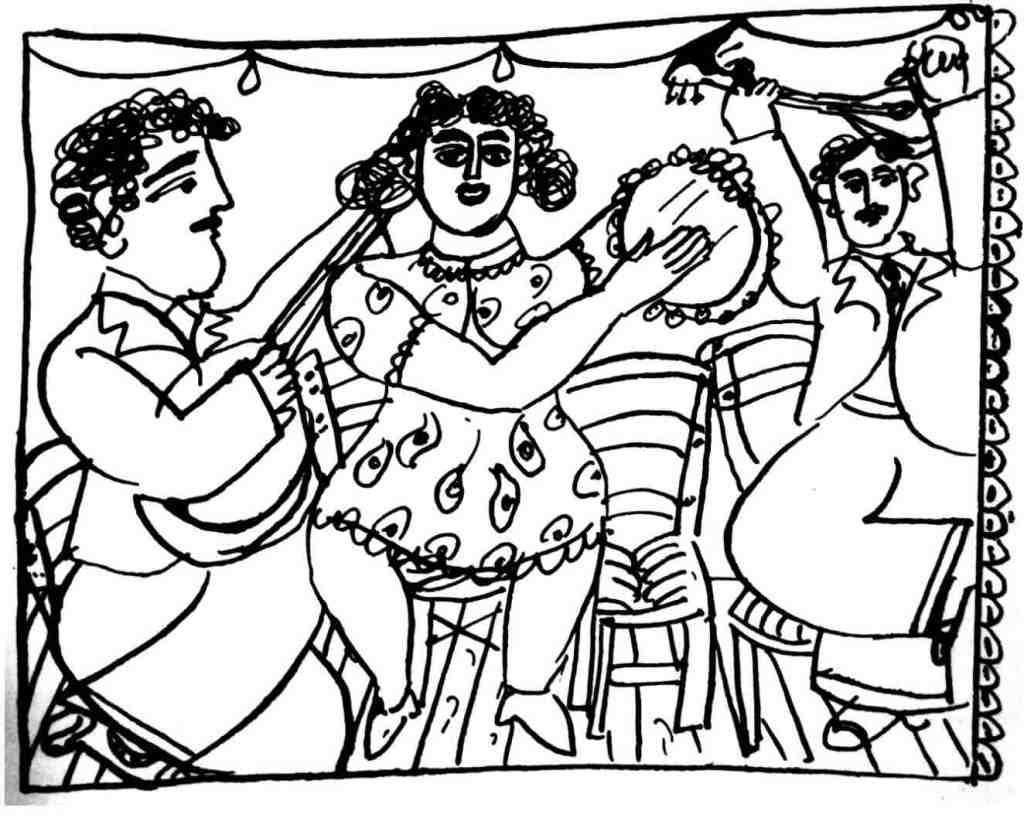
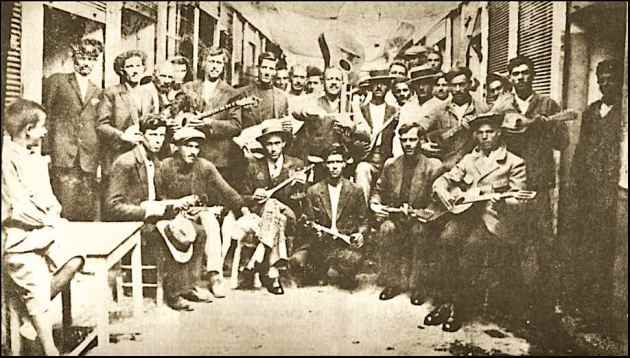
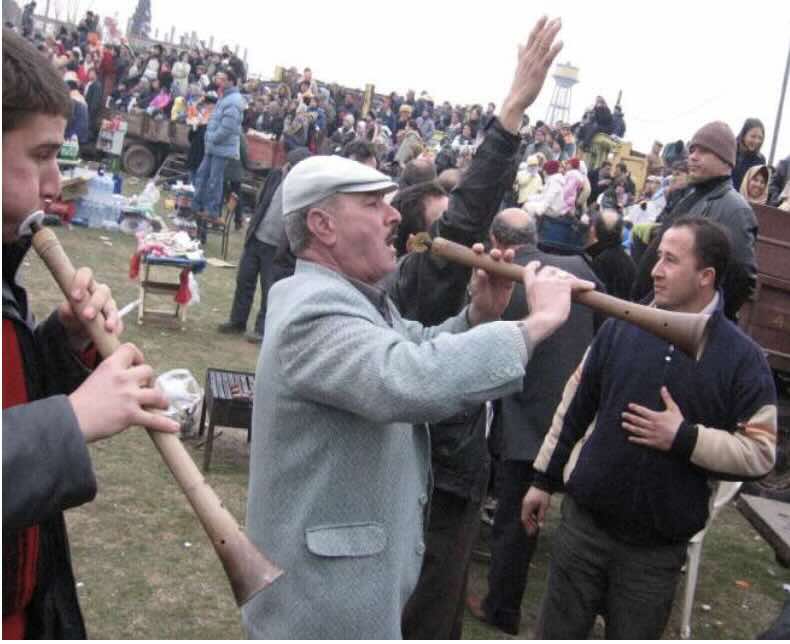

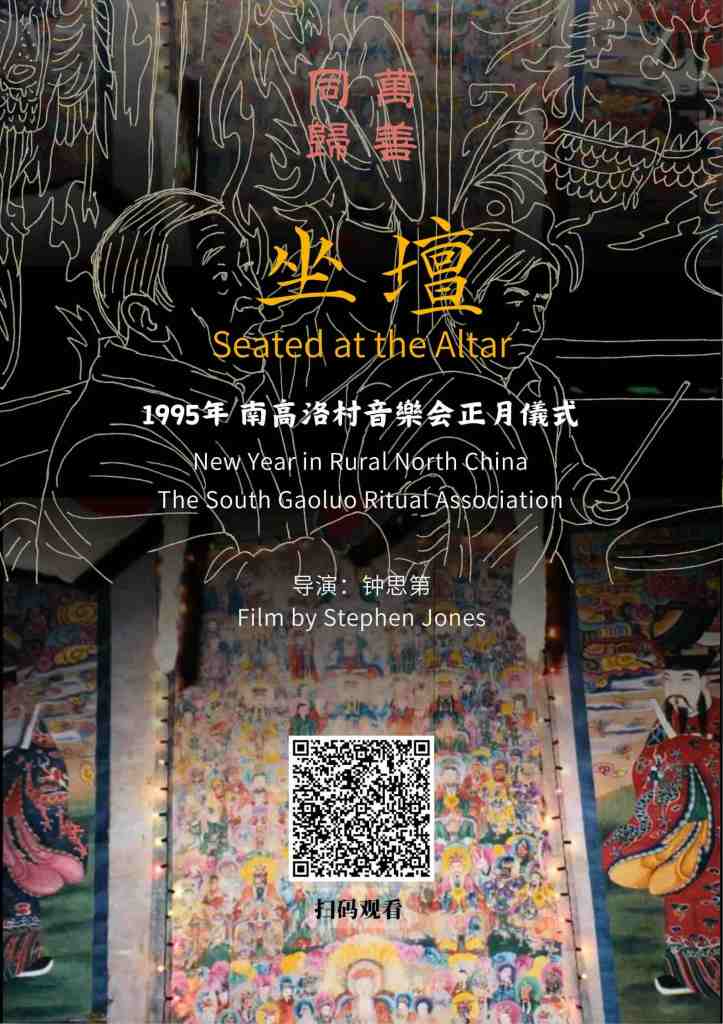


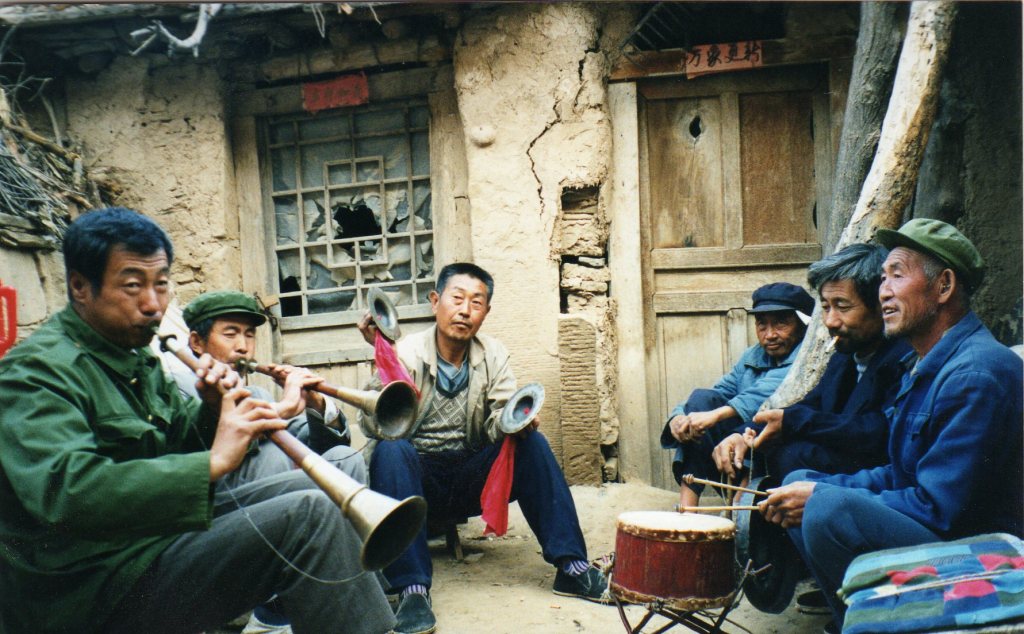


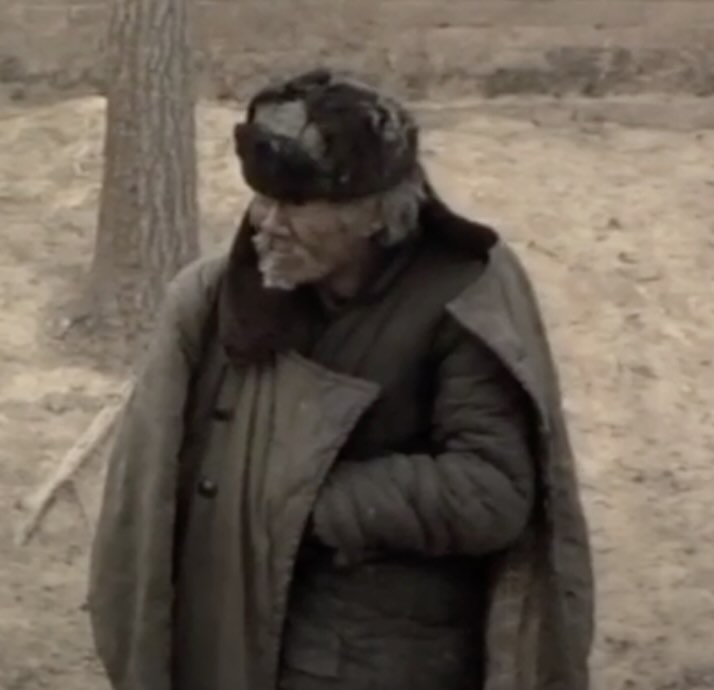


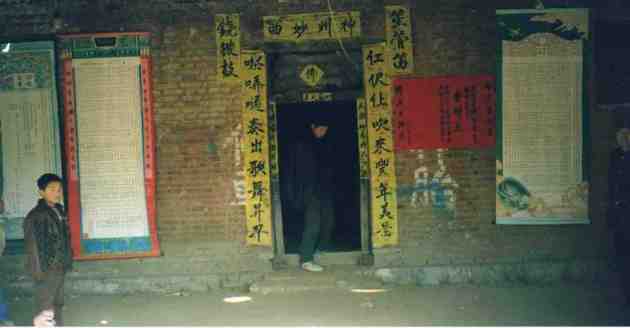
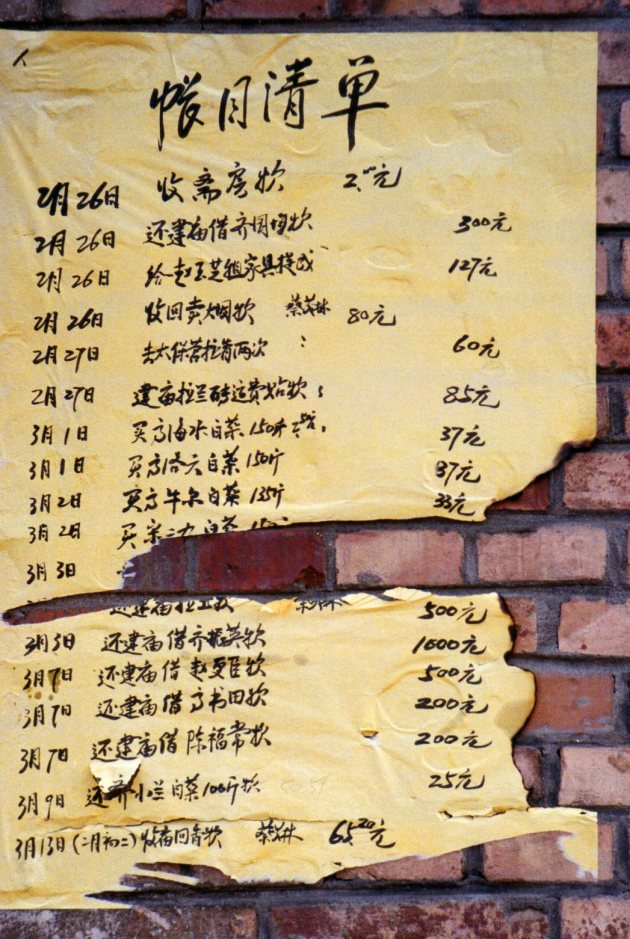

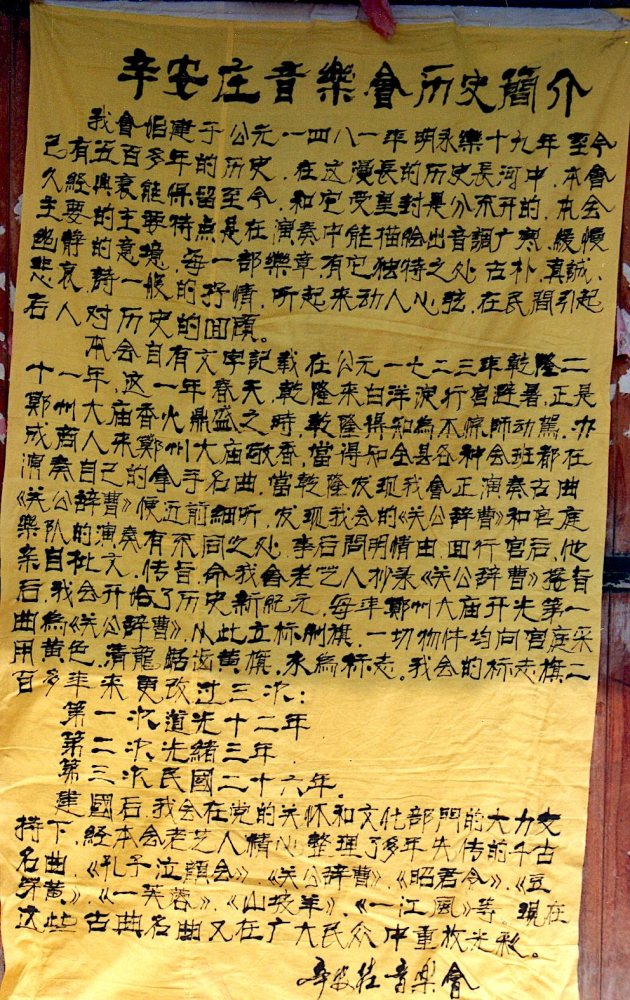


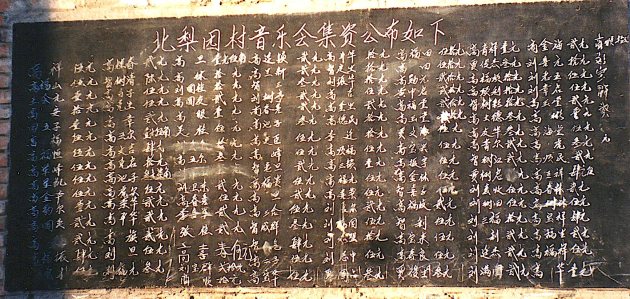




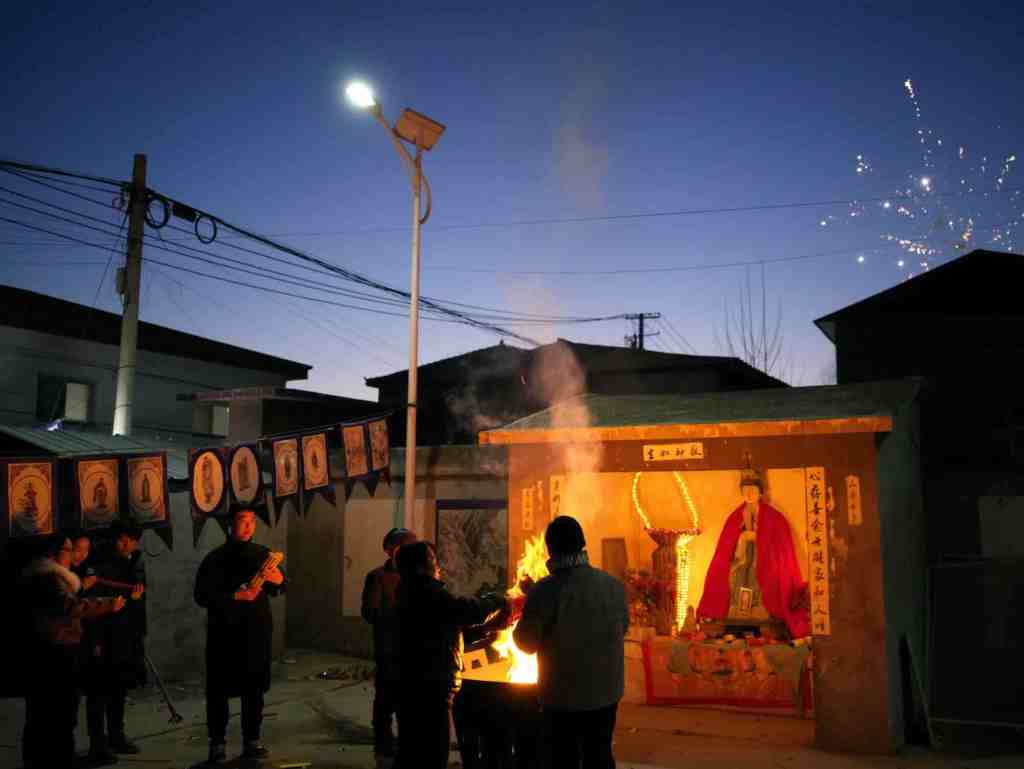




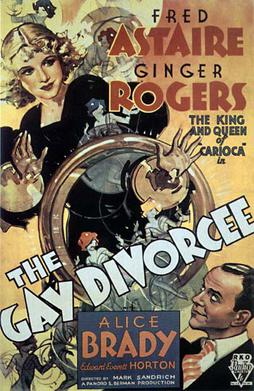
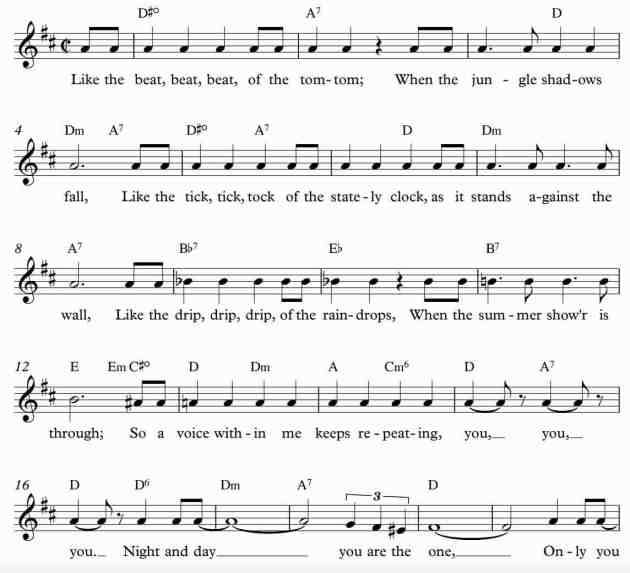
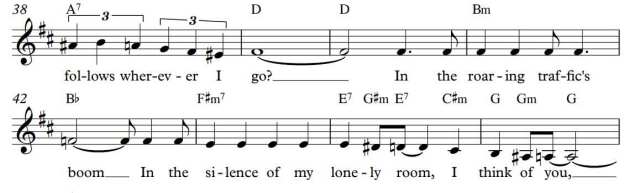

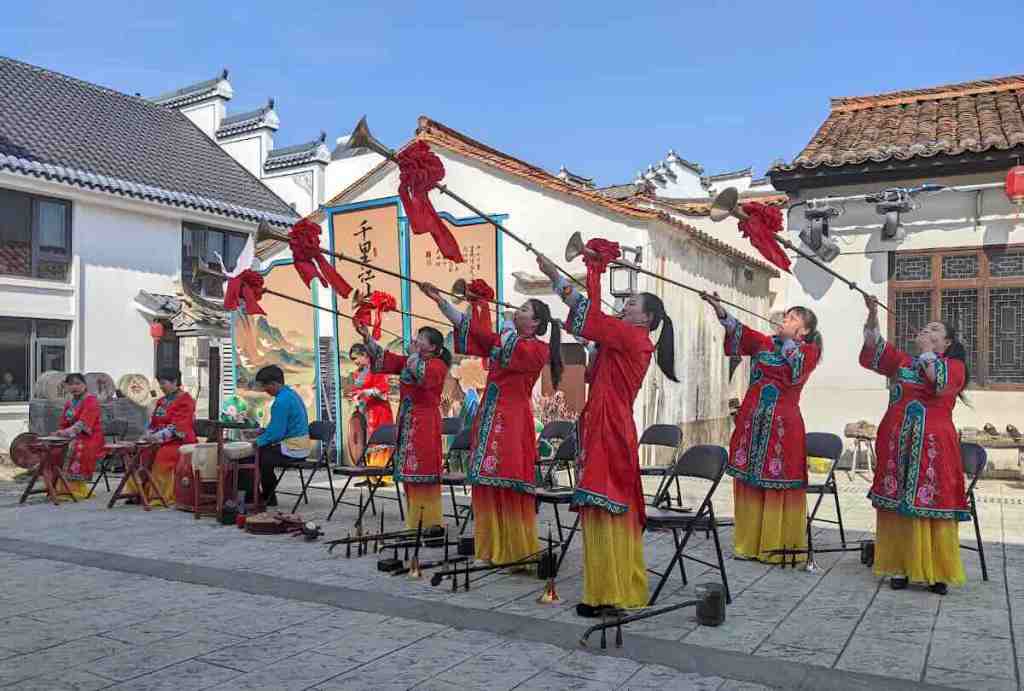
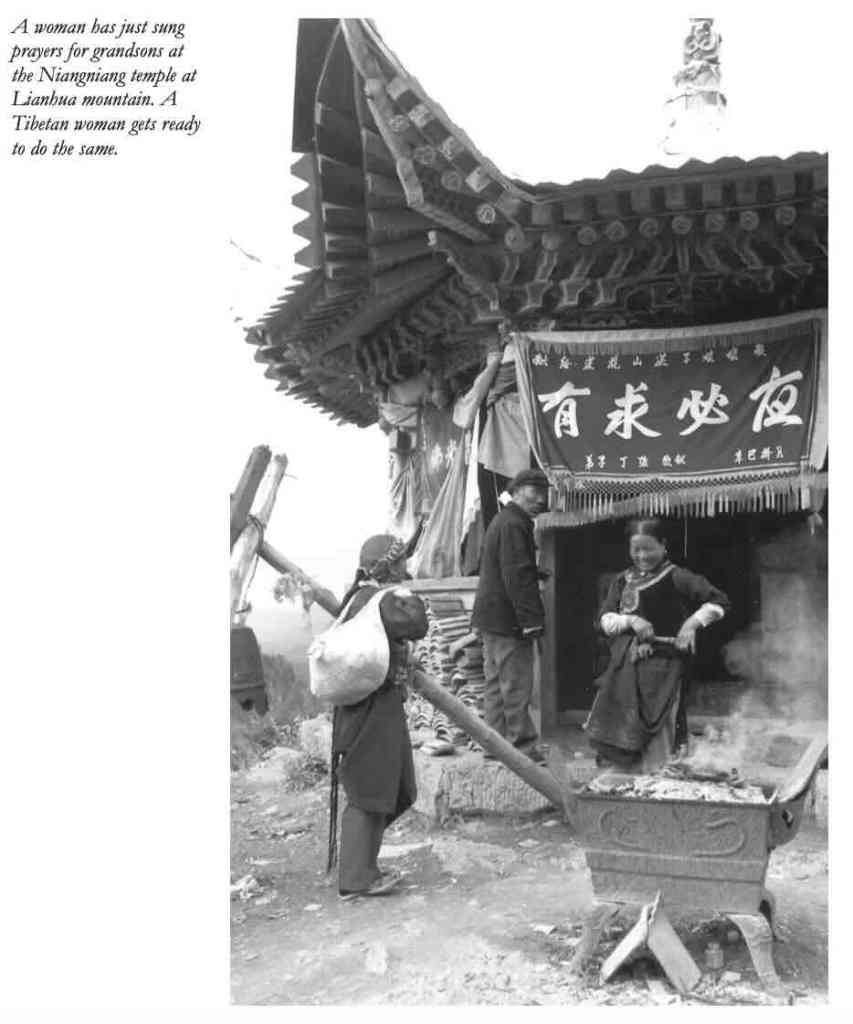

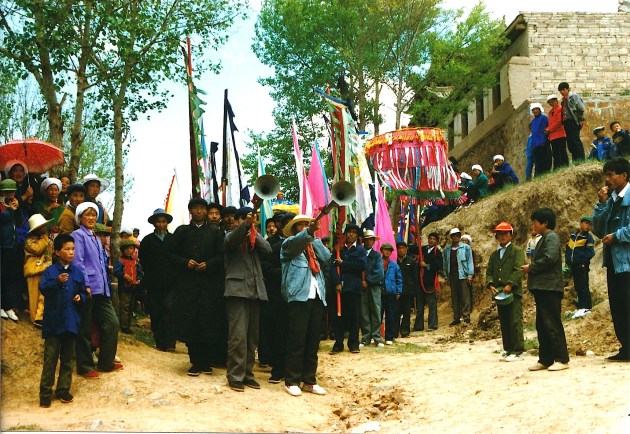




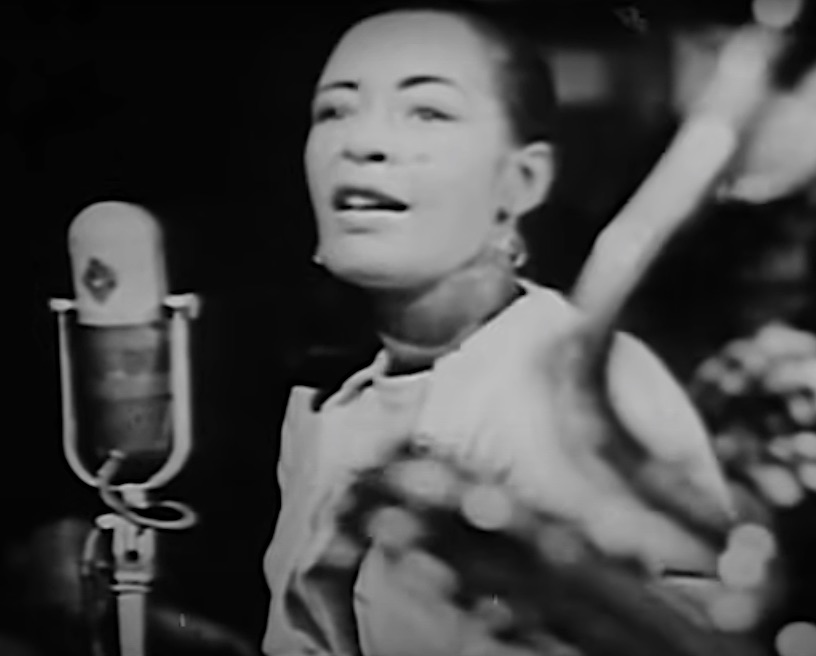


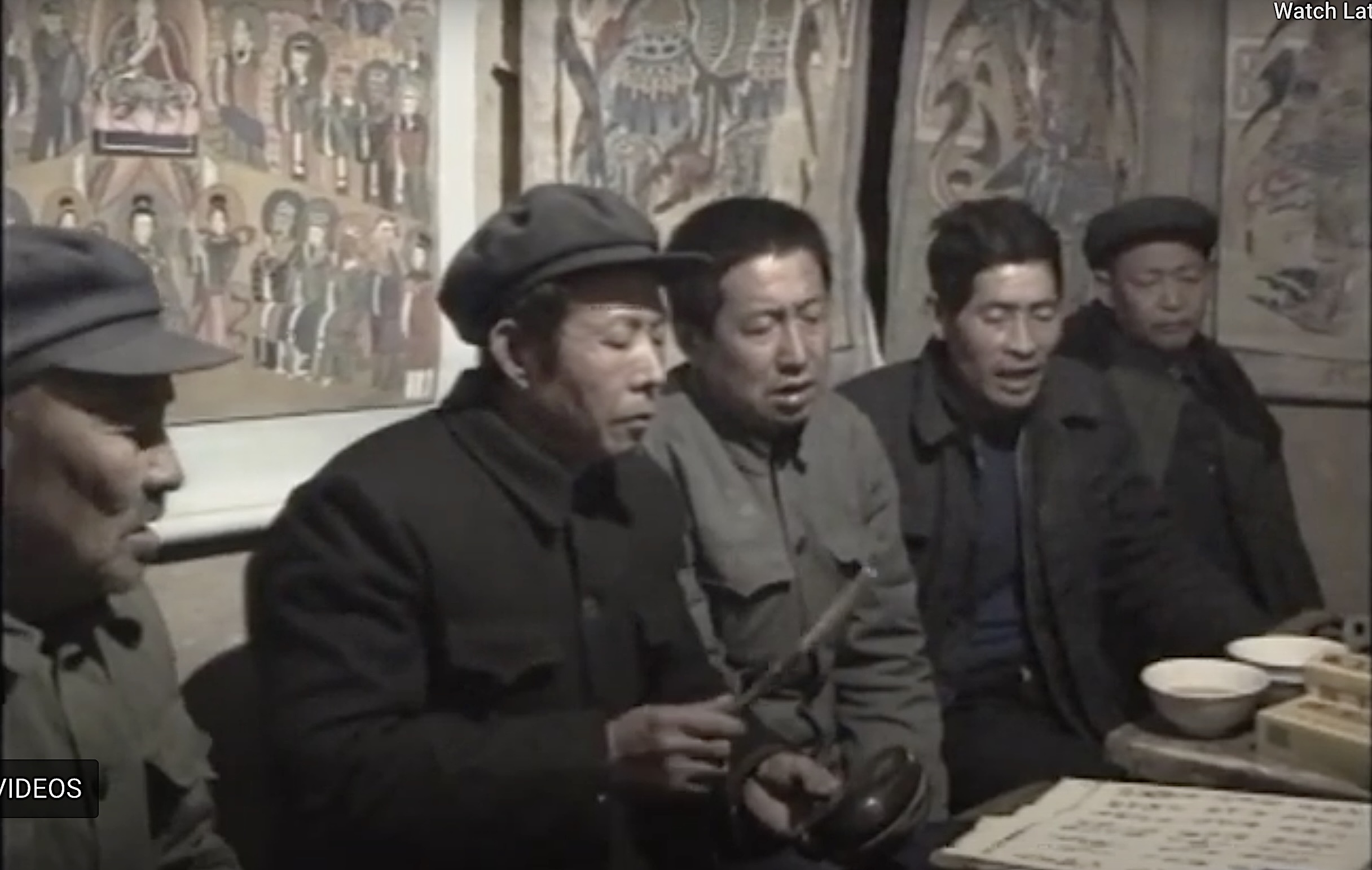


 The lantern tent, New Year 1998, with new and newly-copied donors’ lists.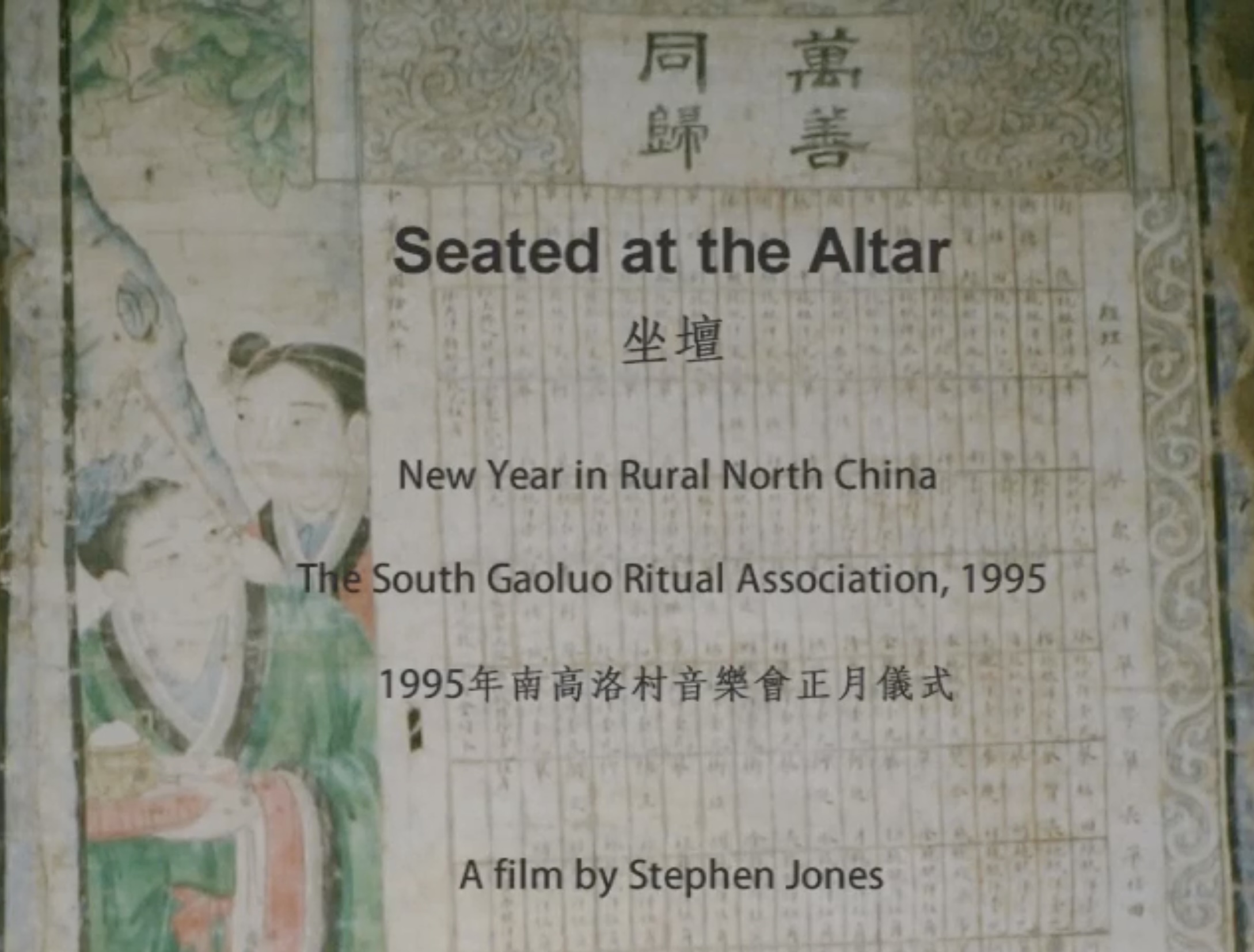

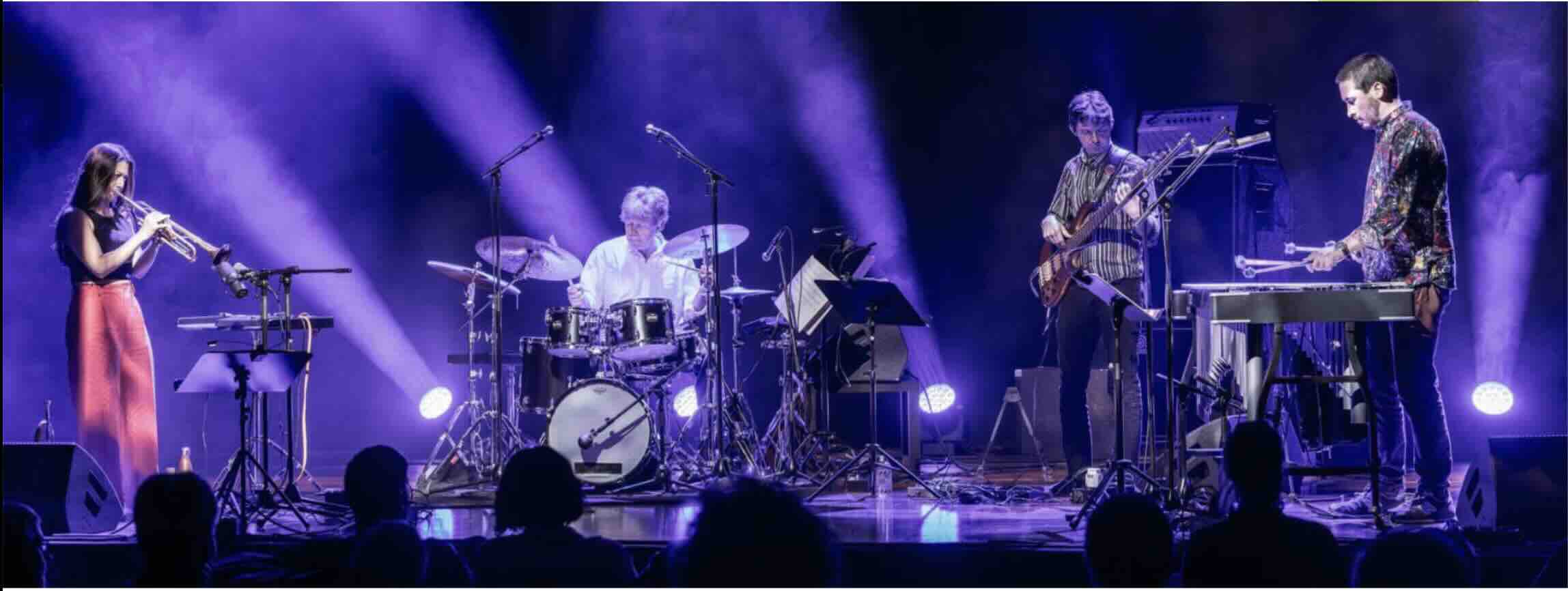



 Henan municipalities.



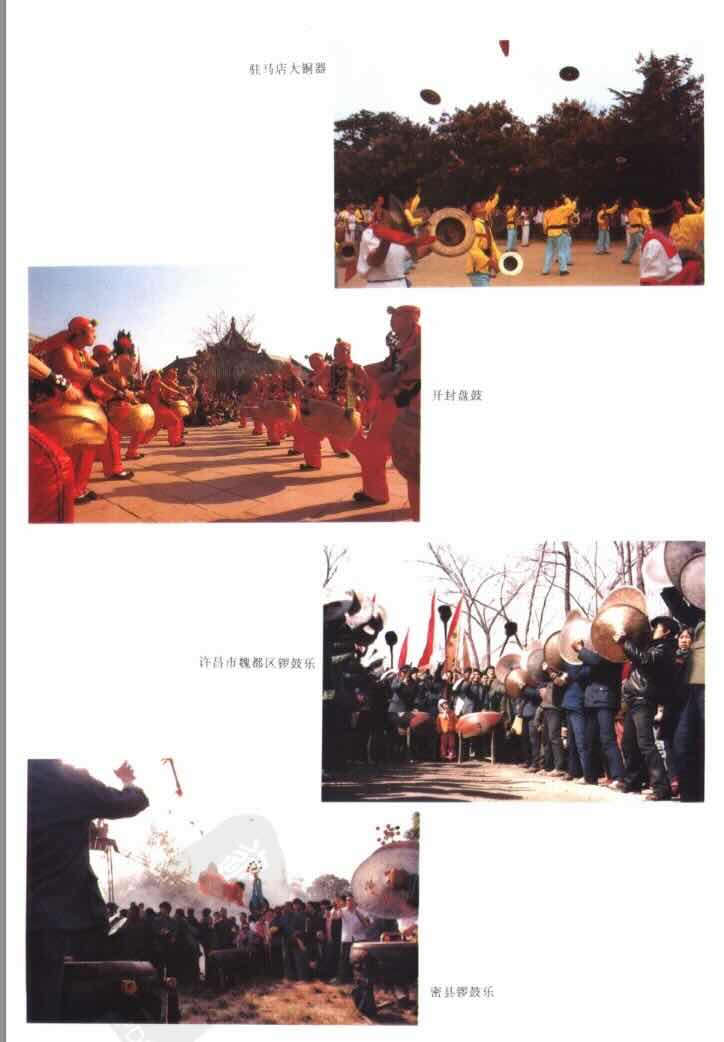



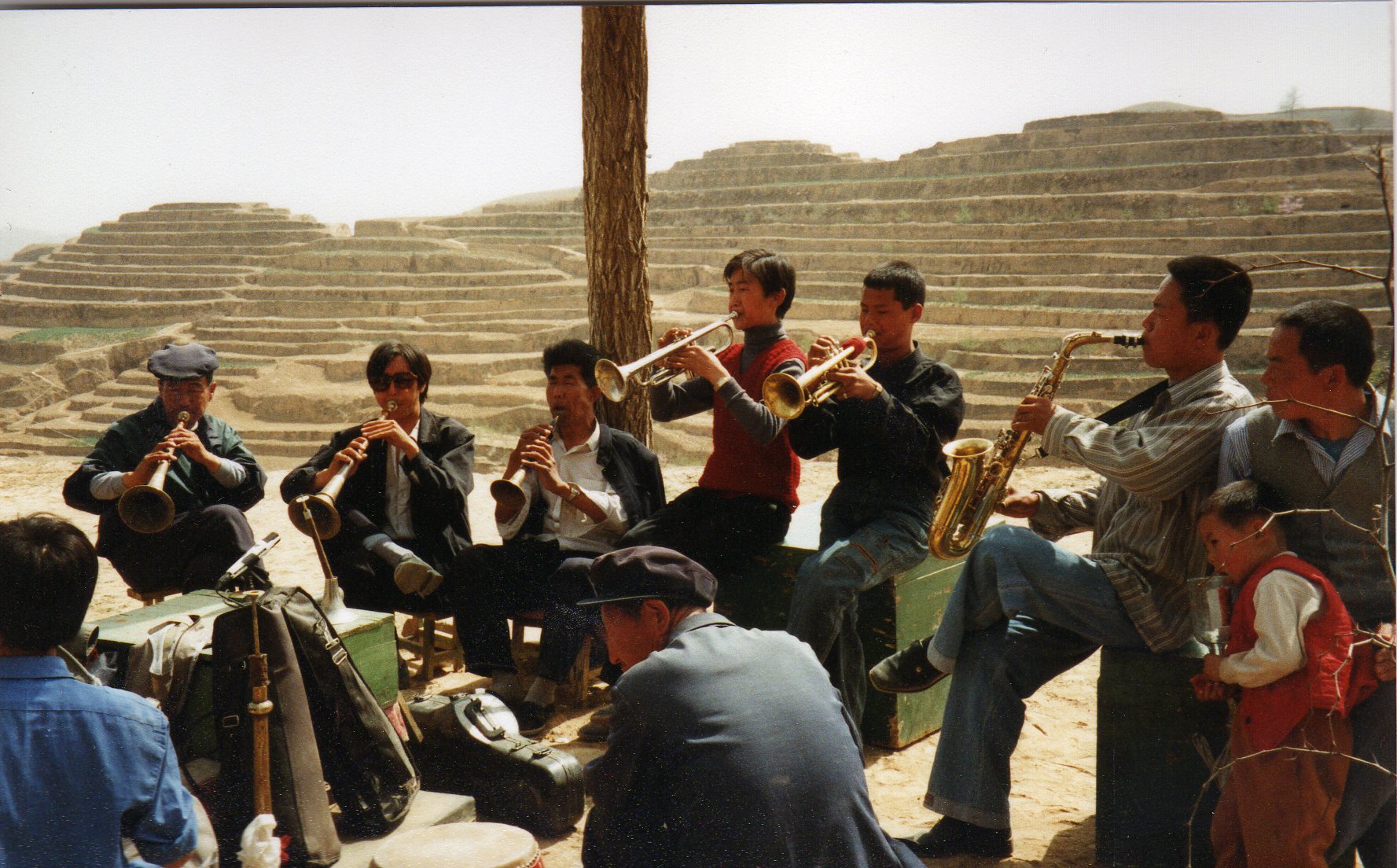 Chang Wenzhou’s big band at village funeral, Mizhi 2001.


 A young Liu Wenwen performs with her parents.



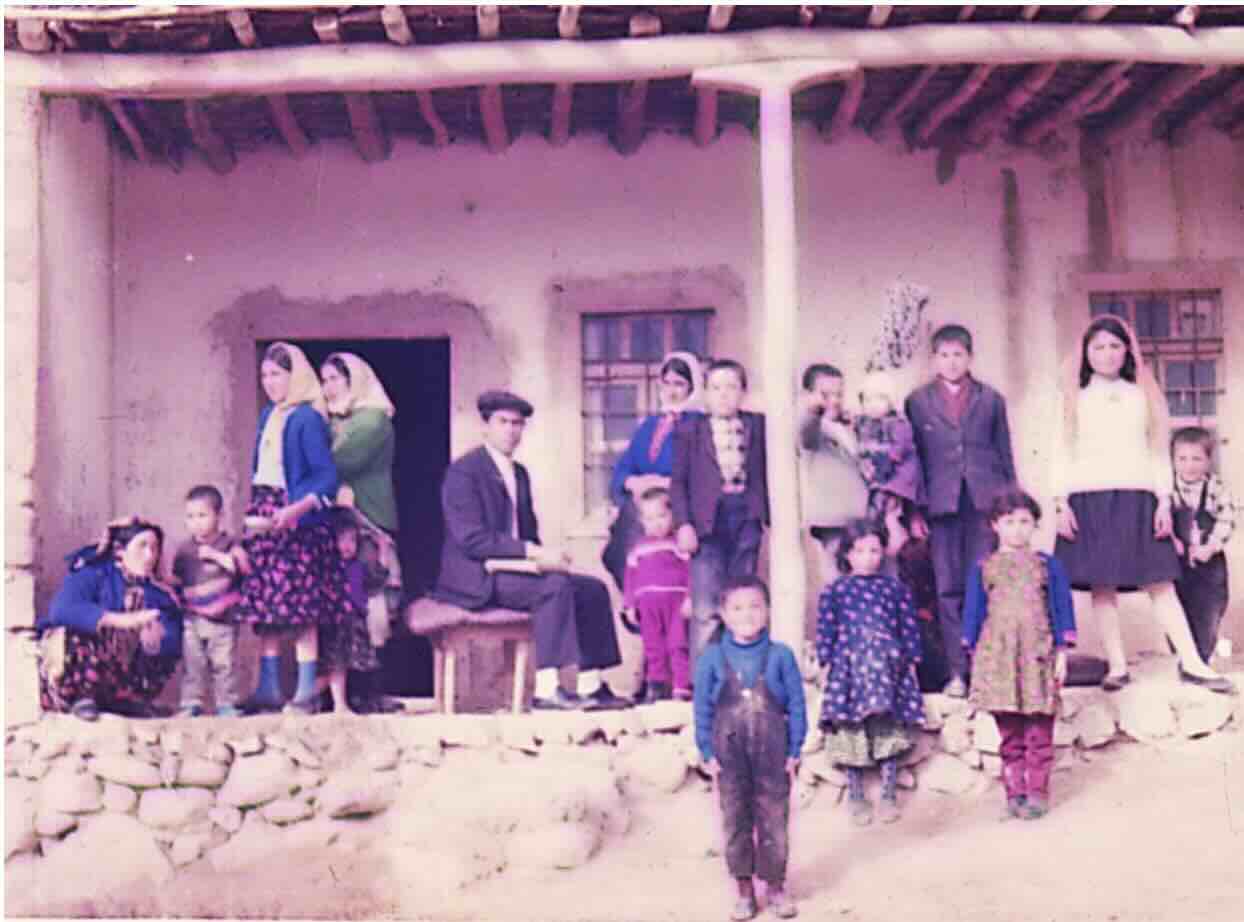 “People were in and out of each other’s houses from dawn until bedtime.”
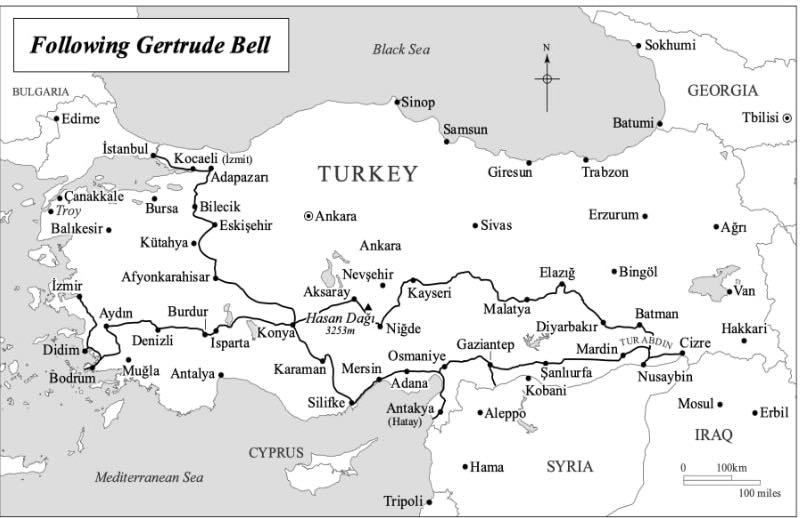
 Lost Armenian monastery of Surp Asdvadzadzin at Tomarza,

 Éva Gauthier, 1905. All images from

 Sabahattin Ali (left) with Nazım Hikmet.




 From The hundred thousand fools of God.





 Biographies of Pingtan paizhi master Wang Shanglong and Chen Renzhen.
 The Qinghe guan society in Changtai.
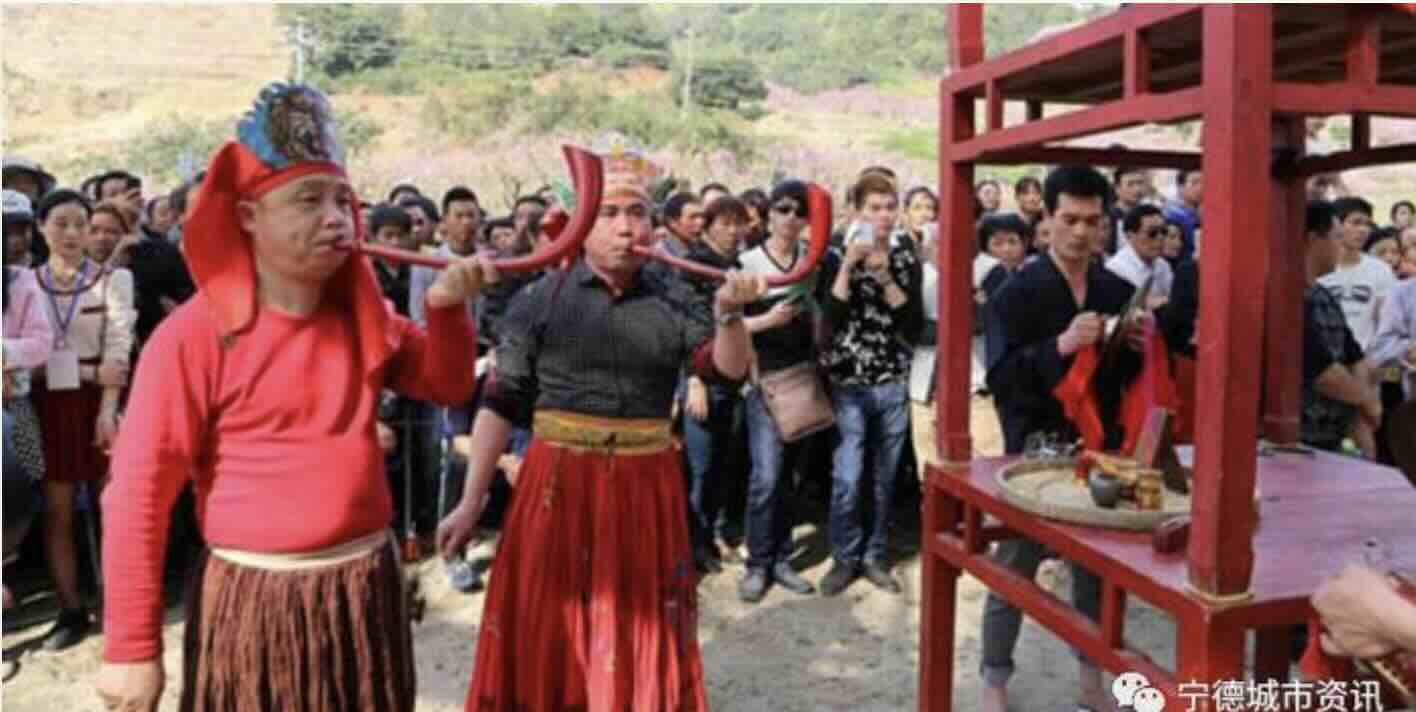

 Household Daoist rituals, Putian.
 Segments of mortuary rituals, Nan’an (again, cf.


 We get to hear some of the


 Stephen Jones: a blog