Expanding our airline theme (Airplane has its own tag), here’s another classic—and apparently true—story handed down in the orchestral world:
On a long-haul flight, as the stewards* are serving refreshments, the captain makes the usual suave and tedious announcement. He then turns to his co-pilot, and—fatally—fails to realize that he hasn’t turned the tannoy off.
So the entire plane hears the captain’s next comment:
“Know what I could really do with right now? A cup of coffee and a blowjob.”
One of the, um, Trolley Dollies, realising the captain’s mistake, interrupts her serving of the drinks and hastily rushes back to the cockpit to alert him that he needs to switch the tannoy off. As she sashays down the aisle, one of the passengers calls out after her,
Another Strange But True story from my mentor Paul Kratochvil, again bearing on the surreal Czech imagination:
In the early 1960s two players in the Prague opera orchestra were locked in a vendetta. Between performances the band used to leave their concert uniform in the green room. Every couple of weeks, one of them, coming in early and unobserved armed with needle and thread, meticulously took up the cuffs of his adversary’s concert trousers by a tiny bit.
It’s a retired person’s table, a desk for TV dinners. This is Trump gradually giving up the pretence he runs a vast country and instead settling into a more leisured life. Like his furniture, he is diminishing before our eyes.
Brass players enjoy, even flaunt, their hooligan image (more “licence to deviate from behavioural norms”)—or at least, UK brass players in a befuddled heyday from the 1960s to the 1990s, still an ongoing hangover today.
Becoming a musician (or indeed a household Daoist) is about far more than “learning the dots”; aspiring musicians also look to the lifestyles of their role models. The intoxicant du jour changes—Chinese shawm players have moved from opium to amphetamines, for instance. But both in jazz and WAM, many musos have learned to their cost that adopting the, um, recreational pastimes of Charlie Parker or John Wilbraham doesn’t necessarily help them play the way their heroes did.
The trumpeter John Wilbraham (“Jumbo”) was legendary. This is a beautiful site well worth exploring—an insider’s ethnography. I came across him when he was trumpet tutor for the NYO, and later in the BBC Symphony Orchestra.
There are also some fine stories on this site, not least about two of my most admired conductors (more maestro-baiting):
“The one thing we do know about Bach for certain, is that he didn’t want it to sound fucking awful!”
—John Wilbraham to John Eliot Gardiner.
(a succinct critique of the Early Music movement?), and
“If I’d wanted to play in front of a clown, I’d have joined the fucking circus.”
—John Wilbraham (Jumbo) on Gennadi Rozhdestvensky (Noddy)
Learning to perform—in any tradition!—requires endless hours of practice (again, it’s the stories about jazzers, rather than WAM musos, that inspire me here). There’s another famous story, which strangely I haven’t yet found among all the online anecdotes:
Before Mahler 5 at the Proms, a music critic was having a drink in the 99, favoured hostelry of Prom-goers. He watched in amazement as Jumbo downed pint after pint, and then picked up his trumpet case to stagger off to the gig. Expecting the worst, the critic took his place in the audience. The symphony opens with a scary exposed trumpet solo, and is challenging throughout. Jumbo played the whole piece perfectly.
After the concert the critic returns to the pub, to find Jumbo already propped up at the bar, more pints lined up. He walks up to him and says,
“You must excuse me, Mr Wilbraham, but may I ask how you manage to play so perfectly when you’re pissed?”
“It’sh perfectly simple,” Jumbo smiles back at him conspiratorially, “I practice pissed!”
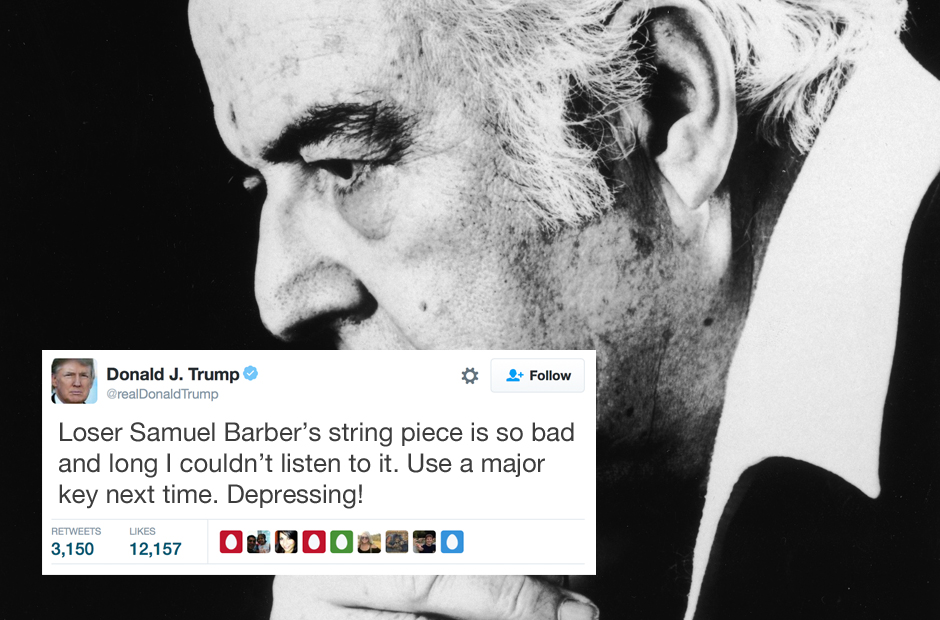
I guess we should be grateful—nothing focuses the mind like having a vindictive sulky misogynistic illiterate baby as Philistine-in-chief in the White House. Some of his advisers were concerned that withdrawing from the climate agreement “might damage his credibility”. Where have they been?
Sure, we have worse things to worry about than his highly peccable aesthetic sensibilities, but they evidently developed early. In “his” 1987 book The Art of the Deal, Trump wrote:
In the second grade I actually gave a teacher a black eye—I punched my music teacher because I didn’t think he knew anything about music and I almost got expelled.
I’d love to know more about this music teacher—just how little is it possible to know about music? Can it be that the young boy’s ire was caused by the inexplicable absence from the syllabus of the late Beethoven string quartets, which as we all know would later form his core listening?
But unseriously though folks, this is a fine spoof. I particularly love
Such is Trumpolini’s classical erudition that he should appreciate this fugue by “W.T.F. Bach” (lesser-known brother of P.D.Q.)—a must for your local choir:
Like Dudley Moore’s psalm, what makes this so brilliant is the incongruity between the juxtaposition of text and the solemn musical pastiche of baroque grandeur.
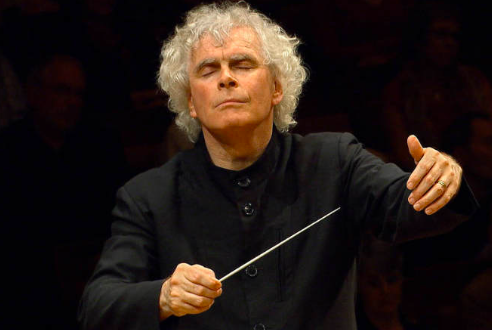
Further to my old theme of our irredeemably modern ears (and here), Simon Rattle,* on one of his early early-music outings with the Age of Enlightenment, was rehearsing Mozart with the band.
After one finely polished phrase, he stopped us and said admiringly,
“Wow! I’ve been waiting all my life to hear it played like that! … Anyway, now I’ve heard it, I don’t like it—can you just play it normally, please?!”
*As a stammerer, I hesitate (sic) to call him Sir Simon Rattle. As in the (real) line from a waggish Radio 3 announcer:
That was Sir Simon Rattle conducting Brahms’s 4th symphony. Next week’s guest conductor is M-Mark Elder.
But I now learn from Felix Warnock, encyclopedic authority for orchestral stories, that this line goes back to Symphony Hall in Birmingham, when both the CBSO and the Hallé were rehearsing on the same day for separate concerts. At the stage door, bumping into an old colleague he hadn’t seen for some time, one muso asks another,
In our daily badinage on orchestral tours of the US of A in the Good Old Days, we got into the habit of handing over to each other by imitating CNN’s signalling style:
And they say there could be more revelations to come. Wolf.
[Wolf Blitzer, [1] of course, was an “anchor”. Considering that Britannia Rule the Waves (just dig that funky optative verb there, folks—”You Wish”, as the Argot of Yoof[2] would have it), it’s curious how we don’t much go in for anchors. [3] I guess we consider them beneath us…]
Usually, rather than an interrogative (“Wolf?”), it’s declaimed confidently in the matter-of-fact descending fourth tone.
It does seem wise to keep such signals simple:
On stage at the end of a concert, among ourselves we would also adopt the brilliant casual signoff,
Well folks, I guess that’s just about it for tonight!
This works particularly well after an obscure or meditative work. Like:
Join us next time for another wacky episode of Ockeghem’s Marian Antiphons!
For an equally zany intro for such pieces, see here; and PDQ Bach is also essential listening. Wolf.
[1] OK, we Brits have our own proud tradition of silly names, but American names are in a class of their own. Following the credits at the end of a Hollywood movie is like reading an avant-garde poem, plunging into an exotic cornucopia containing all the cultures of the world. Though if Tweety has anything to do with it, there will be no more films, no more culture, no more world. Nothing, as Stewart Lee observes.
[2] The Argot of Yoof: a popular media pub, always packed at lunchtime. Near the somewhat quieter Aardvark and Climbing Boot.
[3] Unless you count Piers Morgan, who tries unsuccessfully to lose the initial W.
[4] For me at least, there’s an illicit thrill in uttering the formulation “go eat”. Similarly for “Can I get” instead of “May I have”—a quick web search reveals mainly the usual pompous British indignation yearning for ethnic purity, though one writer suggests rather elusively that “Shakespeare probably would have loved it” (as in the little-known line from Romeo and Juliet: “Can I get a Diavola and a supersize Coke to go?”). Can I get or May I have, that is the question. See also my thoughts on “Who is this?”.
As Ronnie glides into the second week of the snooker, it’s also worth tipping our notional hats to the erudite commentators (themselves veteran performers, unlike most scholars of, um, Daoist ritual), full of brilliant detail on both the mechanics and psychology of the event—like good ethnographers (there I go again).
Not quite like this:
In WAM concerts, such detailed information is relegated to a printed programme, and unable to respond to the incidents of performance. This is remedied by PDQ Bach (from his LP):
This week at the Cadogan Hall (among few London concert buildings that I find conducive), luminaries of the early music scene assembled to pay homage to the late great Francis Baines (1917–99) in a concert of music reflecting his wide-ranging tastes.
All-round eccentric and bon viveur, Francis was a true renaissance man, on double bass (sometimes deposited in left-luggage at Victoria because he couldn’t get it onto his barge), viols, hurdy-gurdy, and as composer. Despite being in constant demand on the professional scene, he was a true amateur at heart, a servant of music almost like an ashiq—a dervish whirling with his bass.
From the late 1970s, as the early music world became ever more polished, fragrant, and marketable—the inevitable transition from “knit your own yogurt” to Chanel No. 5 (see also here, and here)—one might imagine him finding his amateur ideal going against the tide, yet being both pragmatic and other-worldly, it never cramped his style. He always maintained a sense of both mischief and awed discovery.
He is also lovingly remembered in a beautiful book Francis Baines: musician of several parts, with reminiscences, both moving and hilarious (including more fine maestro-baiting stories), from a variety of distinguished musicians—a contribution to the ethnographic history of musical life in 20th-century Britain.
I’ll limit myself to one story from the book:
Nimbus recording session sometime in the 1980s. Mozart symphonies, Hanover band. Complete takes of whole movements being the modus operandi of this recording company, the rather inexperienced producer emerged from the box to report back on the first take. He said something along the lines of
“It started off well, and then became a bit confused and not so clear in the middle, but towards the end it got better and finished well.”
A trumpeter has enjoyed a convivial night out after a gig. Staggering back to his hotel in the small hours, he manages to recall that the band has an early flight, so (congratulating himself on his clear-headed practicality) he walks unsteadily up to the receptionist and asks her in suave yet slurred tones,
“I say, would you be so kind as to book me an alarm call for 6.30?”
“Certainly sir,” she replies. As he staggers off she calls after him,
“Um—you do know it’s 6.45?”
And one about another trumpeter:
After a gig in New York, he’s fast asleep when the phone rings.
A jaded voice drawls,
“Did you book a wake-up call?”
“Oh, um… yeah.”
“Have you had it yet?”
“Er… No.”
“Well, WAKE UP.”
Cf.
The early bird gets the worm. But the second mouse gets the cheese.
À proposorchestral humour, Stewart Lee does a typically labyrinthine riff giving the old sardine joke his signature going-over:
Loath as I am to spoil the fun, in the WAM biz where people used to employ me, this story is famously attributed to the master-percussionist and all-round piss-artist Gary Kettel.
A hooliganesque Cockney, Gary was What They Call “a breath of fresh air” in the staid orchestral scene. During Boulez’s années dorées at the helm of the BBC Symphony Orchestra, conducting many challenging works, he much admired Gary’s musicianship, and they formed a charming and unlikely bond (see this story).
The version of the sardine joke handed down to posterity in the orchestral biz (which beyond Gary’s own recollections has some further effective, if fanciful, detail) goes like this:
Once (this must have been in the mid-70s) he was on tour in South America with the London Sinfonietta, doing the, um, challenging Eight Songs for a Mad King.
So Gary’s at this fancy British Council reception after the gig in Buenos Aires or somewhere, getting quietly pissed in a corner on his own, and this posh bird comes up to him and goes,
“I say, I don’t believe we’ve been introduced—weren’t you playing in the concert? I did so enjoy your delightful rendition of that charming work!” [that’s a nice touch, by the way, if you know the piece, “but that’s not important right now”].
“Do please remind me,” she goes on, “what was it you were playing?”
“Oh, I fool around a bit on the drums, luv,” goes Gary—”So wot you doin’ ‘ere then?”
“I’m here with my husband.” she replies loftily.
Gary goes on, chummily, “An’ wot does your old man do then, darlin’?”
“My husband’s in oil!” she exclaims, proudly.
Gary goes, “What is he, a fuckin’ sardine?”
I like the details here. And the punchline is a good instance of the importance of the word “fuckin’ ”—not least for rhythm and euphony. The story also reflects musos’ own delight in “deviating from behavioural norms”.
Keen as I am on the ancestry of texts (my book ch.11), just as one does in exploring the relation and transmission of Daoist texts (well, I say “one”…), I wonder: Gary’s not sure, but could he have heard it from Tom O’Connor, or did they both get it from someone else, and so on (zzz)?
The Tom O’Connor version is less personal and less funny—which is precisely what makes it a suitable victim for Stew to mangle, a banal ground-bass lying prone for his endless florid divisions, a Goldberg variations from hell…
For further detail, see How I escaped my certain fate, pp.257–69—by now tuned into the De Selby footnotes in The third policeman, (and here), you will find further verbose and erudite annotations there too.
For another reception story, see here, on George Brown, pissed at a reception in Peru.
À proposRavel’s Piano concerto for the left hand: two-handed pianists soon got in on the act, though how to occupy the spare hand must take some thought. In This Day and Age one imagines young pianists saying,
“You know what’s so great about the concerto? You can text your mates while you’re playing it!”
Alternatively one could wear a boxing glove on the right hand, or a glove puppet, making suitably cute gestures to reflect the changing moods.
In Certain Quarters such behaviour might go down like a one-legged man at an arse-kicking party.
Conversely, watching people texting with two thumbs, I think of the mbira.
While we’re on deficiencies in the limb department, apart from the one-legged men in The third policeman, this classic audition springs to mind (Tarzan, “A role that is traditionally associated with…”):
Here’s another true story, that Andrew Manze told me at Chicago airport on a 2003 US tour, rendering me helpless throughout the flight and well into the rehearsal:
A renowned Swedish avant-garde trombone soloist (hmm—take your pick) is doing a concerto in Helsinki. He arrives at his hotel the day before the gig, and when he goes for a pee in his bathroom, the loo doesn’t flush. Same happens again after the rehearsal, so he thinks, I must tell them at reception to get it fixed. But he doesn’t get round to it.
Next morning the loo flushes OK, so he thinks no more of it. But just before going off to the gig, he has a spectacular pre-concert dump, and sure enough the loo again fails to flush. As he’s leaving his room to set out for the concert hall, all dressed up in his penguin suit, he notices a chambermaid outside. So he gestures to her to follow him into his bathroom, points theatrically to the massive turd floating unrepentantly in the bowl, summons up one of his few words of Finnish: “LOOK!”, and pushes the handle as if to flush it.
Which reminds me, a noted baroque conductor (or “semi-conductor“, to use Norman Lebrecht’s term) was rehearsing the opening of a slow aria in the Matthew Passion. One of the wind players suggested he might try subdividing:
“Could you give us 7–8 into it?”
Conductor, indignantly: “I didn’t get where I am today by giving 7–8!”
“I didn’t get where I am today by…” soon became another musos’ snowclone.
When I am asked how I came to play the violin, I’m inclined to cite The Ladykillers(1955):
As the gang is plotting their robbery, posing as a string quintet while they play a recording of the Boccherini Minuet, sweet little old Mrs Wilberforce (Katie Johnson) takes them by surprise—so to maintain the deceit they have to hurriedly pick up their instruments (which they can’t actually play). The magnificently obtuse One-round (Bernard Bresslaw) is clutching a cello like a sledgehammer:
Mrs Wilberforce: “May I ask you where you studied?”
One-round: “…Well, I didn’t really study any place, Lady… I just sort of… picked it up.”
I still can’t help thinking of the scene whenever I hear that minuet.
Stephen Cottrell, Professional music-making in London: ethnography and experience(Ashgate, 2004)
takes a proud place among studies of more “exotic” cultures in the splendid SOAS Musicology series. Complementing the work of Bruno Nettl and Christopher Small, as well as Ruth Finnegan’s classic The hidden musicians, it strikes many a chord with my work on Chinese ritual groups.
As I observed under WAM, it’s not that Western cultures, of any kind, should be a benchmark for discussing other societies (note Is Western Art Music superior?, and What is serious music?!); to the contrary, it’s fruitful to integrate them into a “Martian” view of world cultures, wearing both emic and etic hats. Many of Cottrell’s themes resemble those that an ethnographer like me would explore in studying Daoist ritual specialists:
The practical aspects of earning a living
The importance of “on the job” training, sociability, and oral/aural experience in what seems like a narrowly text-based tradition.
The importance of timbre (pp.44–55), little theorised even in WAM but quite prominent in China for the qin zither, deserves recognition in Daoist ritual and shawm bands.
His account of “depping” (57–76) augments the parallel that I draw for household Daoists (Daoist priests of the Li family, pp.319–26), not least the insecurity of the freelance living—and it’s fascinating to read (Cottrell p.60) an account of depping from 1760s’ Britain.
The modification of dreams: the tensions or discord between early training and ideals (based on solistic individualism and creativity) and the delicate social/practical negotiations, frustrations, and grinding routine of professional orchestral life (42–4, 103–21; cf. also Scunthorpe and Venice, and Ecstasy and drudge); personalities and crisis management within an ensemble (89–90). I should add that household Daoists, as hereditary (almost ascriptive) artisans, don’t experience such a conflict, never setting out with such a spiritual ideal; but the practical exigencies of occupational routine are shared. Here I also think of Yang Der-ruey’s study of the changing training of Shanghai temple Daoists. Cottrell cites a telling comment:
We’re artisans rather than artists. What an orchestral musician is doing is taking someone else’s creative idea which they put down as dots on paper and actually turning it into sound. So we’re more like bricklayers—the architect would do the plan and then they actually put the bricks into place.
And his dissection of the performance event, subsuming ritual, theatre, and play (149–82)—continuing from Small’s account, about which he expresses reservations. He observes diversity within the audience and in their responses (159–64)—a feature that for Chinese ritual is clearly germane, not only today but even in (supposedly more homogeneous) pre-Liberation society.
Cottrell’s discussion of myth and humour (123–47), citing Merriam’s paradigm of low status, high importance, and deviant behaviour—“licence to deviate from behavioural norms” (137, cf. 143)—often reminds me of the Li band (cf. my book p.23); one might also think of other embattled freelancers like actors (“luvvies”). Like household Daoists, musicians are poorly paid. I might add that muso humour (particularly that of the classical muso—or the ritual specialist?!) further serves both to defuse pressure and to deflate pretension. A lot of our stories immortalise hooligan behaviour on tour. Such deviant behaviour—or at least deviant self-image—is a kind of “No, I won’t be a paragon of elite culture for you”, however childish.
Good too to see Cottrell drawing attention to “conductor-baiting”—better described as “maestro-baiting” (cf. his discussion of musos’ sarcastic use of the term maestro, p.139), recounting the famous story “You think I know Fuck Nothing—but I know FUCK ALL!” (135–6) (for variations, see my post on Visual culture). He attributes it to Celibidache, but I’ve heard it about Böhm (both are perfect candidates!); and outside the orchestral context it is usually attributed to director Michael Curtiz. Conductors are an authority figure par excellence. Here’s another story about George Szell:
Talking to Peter Gelb, General Director of The Met, someone was defending Szell against the charge of being a bully, remarking “Of course Szell is his own worst enemy”—to which Gelb replied “Not while I’m alive he isn’t”.
He cogently discusses viola jokes (131, 136, 142, 144–6)—for which whole websites have arisen, of course. In Plucking the winds (p.233) I cited this one:
What two things have the Beatles got in common with the viola section of the BBC Symphony Orchestra? Most of them are still alive; and they haven’t been together since the 1960s.
This dates from a time in the 1980s when at least the first part of the punchline was more applicable; though still funny, the joke now has an added period charm (cf. Musical joke-dating). I’ll limit myself to one more:
What’s the difference between a viola player and a supermarket shopping trolley? The trolley’s got a mind of its own.
Anyway—in all, such ethnographic enquiry is routinely applied to all kinds of world societies, and scholars of Daoist ritual can of course learn much from studies of the “usual suspects” like south Asia or Africa. But it may be stimulating for us to see such approaches applied to an apparently familiar (prestigious? literate?) culture that is easily taken for granted. As with the “great composers” myth, reified ancient Daoist texts can also somehow be taken for granted, tending to dominate scholarly attention at the expense of real changing social performance and experience.
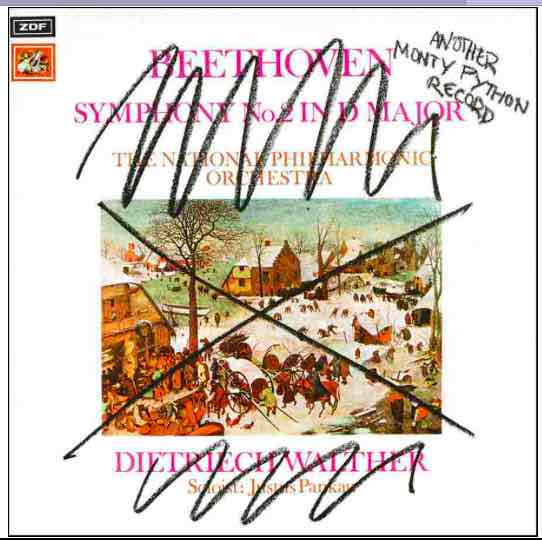
Only more serious scholars of the Python oeuvre may be aware of the LP Another Monty Python Record (1971), cunningly packaged as “Beethoven Symphony No.2 In D Major”.
The album contains some of the great classics (Spanish Inquisition, Spam, and so on)—”But That’s Not Important Right Now“. Here I’d like to highlight its “serious” liner notes on the back, which eventually degenerate into a commentary on Beethoven’s Wimbledon debut.
After a lengthy and erudite account of the composer and the symphony, little comments begin to slip in inconspicuously:
The important part of the first subject is Beethoven’s almost disdainful use of the high lob, forcing Hewitt to play right up to the net.
[…]
In all the Allegro is a compact and closely argued musical proposition, which would have been impossible on a hard court.
[…]
The second tune, which Beethoven said on his arrest was “just a harmless bit of fun”…
[…]
Beethoven now goes on to Forest Hills for the American hard court championships, and if this boy can repeat the devastating lobbying and volleying which he has shown on grass, but at the same time control his tendency to swing away on his second service and backhand returns, he could earn his position as No.2 seed behind the burly Roger Chopin of Puerto Rico.
For Beethoven’s creative tribulations, click here; for his dogged refusal to write a tune, here; and for a justly neglected composer, here.
We board another train to carfree and carefree Venice, where we have four wonderful days. We are staying—virtually alone—at the splendid hostel on the tranquil Isola San Giorgio, home of the majestic Cini Foundation, gazing across the water at San Marco. In the evening we take the vaporetto for our first meal at the excellent trattoria Il Giardinetto. This sure beats doing a Messiah in Scunthorpe for a jolly good tea, as we London musos say.
In the spirit of the sinological footnote, the precise version goes like this:
A fixer calls us up and goes, “Hi—can you come and do a Messiah next Monday night in Scunthorpe? There’s no fee, but there’ll be a jolly good tea.”
(Cf. the more tempting message I received in a Shanxi village in 1991.) For more on Venice, see here. Oh, and here. Not forgetting Monty Python’s sublime guide. For unlikely place-names to find in the index of a book on Daoist ritual, see here. And here I surmise that the wisdom of Nadia Boulanger might not have been in quite such demand had she been based in Scunthorpe.
What do you get if you drop a piano down a mine shaft?
Among classical musos this is a popular story, whose own punch-line often crops up in rehearsals:
A burly murderer, sentenced to life, is doing his Grade V Music Theory in prison. The well-meaning Associated Board examiner (a perfect part for Michael Palin, surely – not that he exactly needs the work) shows up, and goes through all the exam questions nervously in a little room, seated at the piano with the prisoner standing at his side.
It’s all going rather well till they get to the last question, where the candidate has to identify chords. The examiner says pleasantly,
“Now I’m just going to play you a chord—and I’d like you, if you would be so kind, to tell me if it’s a major or a minor triad!”
and plays a major triad with an encouraging smile. The prisoner looks at him dourly and grunts,
“It’s minor”.
The examiner smiles nervously and says,
“Now I’ll just play it again and see what you think…”
Prisoner goes “It’s minor”.
Examiner, with ever more desperate encouragement: “Ah yes, very good… now I’m just going to play it One More Time, and this time I’d like you to pay attention to that teeny little note in the middle—see whether you find it a little on the low side, or is it, perhaps, rather, um, somewhat high, and bright, and happy…?”
The prisoner walks over to the piano, puts his huge gnarled hand on the examiner’s puny corduroyed shoulder, and says slowly and severely,
“I Think You’ll Find—it’s MINOR!”
Often in rehearsal when there is discussion of the appropriate continuo chord in a figured bass line, we all snowclone in chorus, “I Think You’ll Find—it’s MINOR!”
For F hashtag minor, see link here; and for a music lesson from Bill Bailey, here. For more interview stories, click here.
Further to the Sermon, many of us wrestle, in a benign kind of fashion, with Anglicanism. Here’s Dudley Moore again:
Fine as this is in the original “authentic” version of the creator (not Creator), it is also great as harmonised a cappella by a choir on the bus while on tour.
Musos always play this game on tour, but I’m sure it’s common in many walks of life.
On tour in Italy, for instance, we all come back from lunch in our different groups, outdoing each other with stories of an amazing find:
Little trattoria in a tiny backstreet, not even a sign on the door, only locals in there, no menu, they just give you what they’re having, five courses, home-made pasta… Toothless old lady dressed in black treading the grapes… And you know, it was incredibly cheap… And then she invited us to her granddaughter’s wedding, and there was this fantastic band playing zampogna and piffero…
I’d love to know who the conductor was in this story.
A guest conductor is rehearsing for a concert with a London orchestra. He soon stops them in mid-flow to address the timpani player: “Sir, you sound like someone slapping a pillow with a flaccid penis!”
Coming back to rehearse the band next morning, the conductor makes a speech: “Ladies and gentlemen, you must forgive me for my behaviour yesterday, I was unpardonably rude… Nonetheless, I went back to my hotel last night, and I tried it—and I WAS RIGHT!”
In my book (p.280) I observed a subtlety of Yanggao Daoist ritual that may elude us:
Novices soon pick up the short pattern in rhythmic unison on drum, small cymbals and yunluo that opens and closes every item of liturgy, an accelerando followed by three beats ending with a damped sound. This is known as luopu (“cadential pattern”) and it turns out that the number of beats is fixed, 7 plus 4—unless the guanzi player needs a bit more time to prepare his reed!
Much less impressive is Beethoven’s take on this, the four soft quarter-note beats that open his violin concerto (less creative than the EastEnders Doof Doof). The quote from my book is itself just a prelude to the popular story of a famous conductor rehearsing his orchestra in the concerto. Though he was notorious for nit-picking, one might suppose that at least here the band would get up a bit of a head of steam before he started correcting them. But no, sure enough he brings them to a halt even before the oboe can come in.
Turning to the bemused timpanist, he says,
“Can you play that with a little more… magic?”
The timpanist looks back at him sullenly, beats out the four notes again, and goes,
“Abra-ca-fucking-dabra”.
* * *
In Daoist ritual there’s nothing quite akin to “rehearsal”, but during a ritual Li Manshan maintains standards by the subtlest of facial gestures, with a little glare if the ensemble is less than perfect. As I learn, I benefit from such hints.
Like “Meretricious and a Happy New Year”, or “She ran the gamut of emotions from A to B”. This is the kind of meticulous historical work that one expects from the scholarship of Daoist ritual texts.
“OMG” isn’t there, but appears to date from at least 1917 (OMG!)—recalling the brilliant Armstrong and Miller sketches (playlist):
And that’s kinda like a commentary on what we do when we listen to Bach (qv): we can’t help hearing the cadences of our own experience of life in the scenarios of the past. And shit like that. Innit though.
In the Bach Passions, textspeak could generally work for the choral crowd scenes, but actually “Erbarme Dich, OMG” fits worryingly well too:
Or
“He has risen from the dead, YAY!”
YAY being a more economical version of Hallelujah…
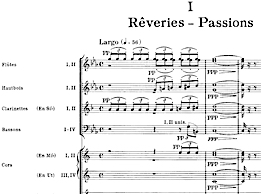
I’m sure you know the Big Tune of the “March to the Scaffold” in Berlioz’s Symphonie Fantastique. Don’t you. Here’s S-Simon again, with the LSO in 2019:
Anyway, among all the spoof lyrics concocted by musicians to fit symphonic melodies, this is my favourite:
What makes it still more delightful (for the ethnographer, ahem) is that one can more or less date it to London in the late 1960s—the thrill of the new… *
For a datable viola joke about the Beatles, see here; for Berlioz on oriental music, here; and for a complete performance of the symphony, here.
Brits were still seduced by the allure of exotic cuisine in the 1990s, as parodied in the classic Goodness gracious me sketch (“What’s the blandest thing on the menu?'”).
* “Curry” appeared on the menu of a coffee house in the Haymarket as early as 1773. By the 1930s one could buy curry powder, poppadoms, and mango chutney in Portobello, and several Indian restaurants opened in Soho, as well as in Glasgow and Cambridge. By 1970 there were 2,000 Indian restaurants in Britain. See under Bloody foreigners.
Allegedly, a lunchtime recital by two fine UK musicians was advertised thus (read it aloud…):
Shades there of “Bach’s Organ Works” too. BTW, in a “proper” index to this blog, more detailed than the sidebar tags, it would give me great pleasure to include Bolton among several numinous place-names in the index to my largely Daoist ouevre:
In the Scunthorpe entry, the page-reference under Messiah is genuine (in my Daoist priests of the Li family); I’ve imagined the others, since (intriguingly) they add to the drôlerie. Do click on the links!
One evening after doing the Monteverdi Vespers, or should I say Vespas [No you should not—Ed.] in St Johns’ Smith Square I had to get somewhere else in a hurry, so I jumped into a taxi.
The driver goes, “So wot you bin up to then?”
Me: “Um, been playing this amazing piece by Monteverdi, it’s, um, like, old stuff—like early music, you know?”
“Oh right—you mean like Frank Ifield an’ that?”
Me: “Er, yeah, that’s the kinda thing…”
* * *
“But you know”, as Alan Bennett’s sermon goes, “he put me in mind of the kind of question I feel I should be asking you here tonight”: what is early music, and is it closing time yet?
For another detached review of early music, see here (among many stories under the humour subhead of the WAM category). And here’s a comment from Larson.

















 Stephen Jones: a blog

