Thankfully, I am rarely the object of interview—far more often the interviewer asking fatuous questions. I mentioned one such encounter where I failed in my task of giving snappy predictable answers, as well as Jack Body’s original take on my stammer.
Far more in-depth in nature is the new PhD thesis
Zhang Lili 张黎黎, Lun Zhong Sidide Nan Gaoluo yinyuehui yanjiu 论钟思第的南高洛音乐会研究 [On Stephen Jones’s research on the ritual association of South Gaoluo] (Beijing: Zhongguo yishu yanjiuyuan 中国艺术研究院 2017),
on my own relationship with the ritual association of South Gaoluo village, and my whole approach. Referring to my book
Plucking the winds: lives of village musicians in old and new China (CHIME, 2004),
she consulted me over a long period with frequent and detailed emails, and it has been most stimulating for me to reflect on my fieldwork. Her thesis (supervised by the illustrious Tian Qing) is enriched by several visits to Gaoluo—allowing her to make what is effectively a restudy, updating my history of the village and its ritual practice in the light of their later adoption into the dreaded Intangible Cultural Heritage (ICH) razzmatazz, with all the problems that it entails.
She explores the association’s memories of my visits—prompting further reflections from me here, leading to this page suggesting my challenge to the official narrative. She also discussed our work on Gaoluo, indeed our whole project on the Hebei ritual associations, with my fellow-fieldworkers Xue Yibing and Zhang Zhentao—a fruitful collaboration that stimulated us all.
Taking part in the New Year’s rituals, 1998.
And my work in Gaoluo (from 1989 to 2001) may be seen as a blueprint for my later in-depth study with the Li family Daoists (going back to 1991, but intensive since 2011). The subject of the former was an amateur village-wide group, whereas the latter are an extended occupational family of household Daoist ritual specialists—but the principles of thick description and participant observation remain similar.
On my own “method”, at first I can’t really see what the fuss is about: isn’t this what anthropologists do?! Even in China there are many fine ethnographers, such as Wang Mingming, Guo Yuhua, Jing Jun; and in music (apart from Xue Yibing and Zhang Zhentao), Xiao Mei, Qi Kun, Wu Fan, and so on. They’re much better equipped than me for such work.
But sure, two decades ago my approach was more detailed, and personal, than was then the norm in Chinese musicology. The anthropologists whose work I was myself only beginning to digest—even those fine Chinese scholars who were later to become leading figures—were still hardly known in China. I was educating myself by reading up on both modern social-political background for China and wider ethnomusicological studies (Plucking the winds, Appendix 1). By now, such an approach is less remarkable, but then I found myself somewhat ahead of the game in ethnography—certainly within Chinese musicology, where the “living fossils” flapdoodle has remained hard to erase. Another approach that I took for granted was participant observation—a routine expectation in ethnomusicology, but still virtually unknown either in Chinese musicology or in studies of Chinese ritual.
Anyway, it will be good to see Zhang Lili’s restudy of Gaoluo, with further illustrations of the perils of the ICH.
I’ve just added a few more photos to the gallery in the sidebar, as is my wont. And now I’ve linked them to particular posts/pages so you can follow them up. Like so:
A new page (under Themes in Menu) introduces changing ritual life around Xi’an, setting forth from my visits since 1986 and the work of the late great Li Shigen.
It accompanies the new track 11 on the audio playlist, with comments here.
As so often for north China, all the musicological studies are very desirable, but there should be far more to it than that. It can’t be left only to musicologists—it’s just as much a topic for historians, ethnographers, and scholars of religion.
As this turns into a lengthy review, I ponder why I’ve been trying, in an amateurish way, to educate myself about the traumas of modern Europe—beyond the obvious answer, that we all must.
I guess it’s related to my studies of China, and my engagement with the lives of people like Li Manshan; a feeling of duty to report the sufferings of ordinary people I encounter in China—including not just their ritual life but their tribulations under Maoism, with famine, struggle meetings, and labour camps; and my growing awareness of the sufferings of Europeans over a similar period. I don’t want to spoil your holidays (or mine), but as we relish the cultures and scenery of these countries, we shouldn’t forget the ghosts that haunt the landscape.
Among the innumerable studies of the Nazi concentration camp system, Primo Levi is justly famed—actually, I find the sequel The truce just as disturbing as If this is a man, after the camp is finally liberated yet their Odyssey of suffering continues, homecoming ever receding. But I’ve also been deeply moved by
Helm’s account is based on amazingly thorough research and interviews with both victims and perpetrators—much of which was submerged until the end of the Cold War. Of course a historian’s account will give different, more holistic, perspectives from those of an individual inmate, but in a way I find Helm’s work even more moving than that of Levi. At 823 pages, it’s hideously readable—both balanced (whatever that might mean) and personal, in a way that ideologically-driven accounts such as those of Dikötter (for the degradations of Maoism in China) can’t achieve. Even the excellent index is harrowing.
I suppose I’m not alone in thinking of the whole catastrophe in terms of a few appalling place-names like Auschwitz and Belsen, but along with the focus on Ravensbrück, over the whole six years of its existence, we see how very extensive was the whole network of camps, subcamps, death camps, work camps, transports and marches, scarring the whole landscape.
At its height, Ravensbrück had a population of about 45,000 women; over the six years of its existence around 130,000 women passed through its gates, to be beaten, starved, worked to death, poisoned, executed and gassed.
The book opens with an arresting and complex image:
“The year is 1957. The doorbell of my flat is ringing,” writes Grete Buber-Neumann, a former Ravensbrück prisoner. I open the door. An old woman is standing before me, breathing heavily and missing teeth in the lower jaw. She babbles: “Don’t you know me any more? I am Johanna Langefeld, the former head guard at Ravensbrück.” The last time I had seen her was fourteen years ago in her office at the camp. I worked as her prisoner secretary… She would pray to God to stop the evil happening, but if a Jewish woman came into the office her face would fill with hatred…
So she sits at the table with me. She tells me she wishes she’d been born a man. She talks of Himmler, who she sometimes still calls “Reichsführer”. She talks for many hours, she gets lost in the different years, and tries to explain her behaviour. (1)
The book goes on to tell the stories of Langefeld, Buber-Neumann (who also had the terrible distinction of already having been incarcerated in a Russian gulag), and a tragic cast of inmates and their tormentors, with chapters focusing on personalities over the years.
Among them were political prisoners, Jehovah’s Witnesses, “asocials”, “useless mouths”, “idiots”, and (later) children; in this camp only around 10% were Jewish. Its shifting population was international, including Germans, Poles (the largest group), Gypsies, Russians, Czechs, French, Hungarians, Scandinavians, and Dutch, all transported there at various stages.
In April 1944 recent arrivals included evacuees from Majdanek, including more Red Army doctors and nurses, as well as 473 Gypsies transferred from Auschwitz. There were Italian partisans, Slovenians, Greeks, Spaniards, and Danes, as well as three Egyptians and seven Chinese. (419)
They were often in desperate straits even when they arrived.
Ravensbrück guards rowing on the Schwedtsee.
Helm also delves into the lives of guards, doctors, and Blockovas (prisoners—at first often criminals—coopted to carry out the day-to-day work of running the camp). The twice-daily Appell roll-call was an ordeal that regularly led to death, as did stays in the Revier “hospital”.
As she observes, the “asocials”, such as prostitutes (pp.56, 96–108, 417–19, and index), have gone largely undocumented:
Unlike the political women, they left no memoirs. Speaking out after the war would mean revealing the reason for imprisonment in the first place, and incurring more shame. […] The German associations set up after the war to help camp survivors were dominated by political prisoners. And whether they were based in the Communist East or in the West, these bodies saw no reason to help “asocial” survivors. (98)
Perhaps the most sickening story (how might one concoct a hierarchy of inhumanity?) concerns the 86 “rabbits” (mostly from a group of 195 women from Lidice near Prague, deported after the 1942 assassination of Heydrich and the punitive razing of the village), objects of unthinkable medical experiments. [1] But it’s also moving for the way in which the whole camp later rallied round to protect them from being murdered so that their terrible story could at least be told—miraculously, 63 of them survived. Again, Holm switches tellingly to the present day:
I found Zofia Kawińska in her tenth-floor flat overlooking the cranes of Gdansk shipyard. She was one of the second group of victims of Himmler’s sulphonamide experiments. A tiny, bent figure, she walks with difficulty, and has done since the war. I ask if she still suffers pain from the experiments. “A little,” she says, as she offers tea and biscuits.
She stoops to show the scars on the sides of her legs. “They put the bacteria in, and glass and bits of wood, and they waited.” She looks up and fixes me with deep brown eyes, as if to see if there is any chance that I understand. “But I didn’t suffer as much as some. Everyone in Poland came home with wounds.” (243–4)
Surviving “rabbits”, 1958.
The smuggled letters of the rabbits were among many acts of defiance.
In similar vein, Nikolaus Wachsmann, in KL: a history of the Nazi concentration camps (perhaps the most authoritative study of the whole system), refines the view of “prisoners as blank and apathetic automatons, drained of all free will”, recognizing the heroism of such agency, “however small and constrained”. But he makes an important caveat:
We must resist the temptation to make our encounter with the concentration camps more bearable by sanctifying the prisoners, imagining them as united, unsullied, and unbowed. For the most part, the prisoners’ story is not an uplifting account of the triumph of the human spirit, but a tale of degradation and despair.
For anthropologists, the most extremely disturbing instance of participant observation is Germaine Tillion (1907–2008), an ethnologist who had done fieldwork in Algeria before being arrested while working for the French resistance. In impossible conditions she comprehensively documented the activities of the camp, somehow managing to hide her notebooks from the guards. After the war she continued her research on “the history of the de-civilisation of Europe”, and returned to her work on Algeria; her distinguished career was recognized by many awards.
While in the camp Tillion even composed and staged an operetta Le Verfügbar aux Enfers, a spoof of Orpheus in the underworld,attempting to help prisoners “resist by laughing” (567). It has been revived since 2007—my post Operetta in extremis includes a complete performance from 2011.
As the camp population grew constantly with prisoners evacuated from camps in the path of the Soviet advance, the 959 French prisoners (known as the “vingt-sept mille” after their camp numbers) who joined Tillion from Paris in February 1944, “jeunes filles biens élevées”, were quite unprepared for what awaited them at Ravensbrück, and adapted badly. Quartered in the “slums” of the camp, soon they were more hated than the Poles; their health quickly failed. Another group of women arrived in August from Warsaw, obliterated after the uprising—reporting to their compatriots, “There is no Warsaw. There is nothing left.” Hungarian Jews were deported to Ravensbrück in October. Babies were soon starved to death.
As it becomes clear that the Nazis are in retreat, the final chapters are just as tense. Desperate to conceal their crimes, with order collapsing, their brutality becomes even more extreme and random. The reader wills the inmates to survive.
By the end of March [1945] the camp was “like a mysterious planet”, said Denise Dufournier, “where the macabre, the ridiculous and the grotesque rubbed shoulders in a fantastic irrational chaos.” Karolina Lanckorońska, watching the crematorium flames shooting higher every night, was reminded of the beginning of the Iliad. She was still giving lectures on Charlemagne and Gothic art as children in Block 27 played a game of selecting for the gas chamber. In the Red Army block the women were making red flags to hang out to welcome their liberators, while the painting gang had been sent to redecorate the maternity block, where, according to Zdenka’s lists, 135 more babies were born in March, of which 130 died. (616)
Despite the shocking complicity of the Red Cross in Geneva, the tireless, heroic work of young Norwegian student Wanda Hjort (1921–2017), using her status to visit the camp and establish contacts, at last achieves results as many prisoners scramble to be taken to safety in the White Buses, with the tense diplomatic negotiations of Folke Bernadotte, Swedish representative of the ICRC, with Himmler.
Wanda Hjort.
But while the buses were being bombed by the Allies, for the majority of women who remained in the camp to await rescue by the Soviet troops, “Liberation” was also horrifying, with widespread rapes perpetrated on women of all nationalities.
* * *
And so into the whole post-war period. Many survivors returning home found there was no home to return to. The Hamburg trials of 1946–8 (a sideshow to Nuremberg)
achieved a great deal. Within a short time the court […] established in the clearest terms the simple fact that everything about the camp was designed to kill. (706)
But the trials were soon followed by amnesia on both sides of the Iron Curtain—and ignominy for the valiant women in the USSR (pp.287–313, 710–11) and the GDR (339–58, 711–14) who had somehow survived only to descend into a new nightmare, now suspected of being traitors. And until 1950, camps like Buchenwald were adopted by the NKVD as gulags for their own prisoners, with many (not only former Nazis) dying in squalor (MacGregor, Germany, pp.468–72).
By 1948 the Allies had lost their appetite for punishing the Nazis and both the war crimes trials and the process of “de-Nazification”—whereby top Nazi supporters were brought to book and denied top jobs—were shut down. (707)
Wachsmann explores the issue in his fine Prologue:
Survivors … were not stunned into collective silence, as has often been said. On the contrary, a loud, polyphonic voice rose up after liberation. … During the first postwar years, a wave of memoirs hit Europe and beyond, mostly searing testimonies of individual suffering and survival.
But as he notes, popular interest soon waned:
Public memory of the camps was being marginalised by postwar reconstruction and diplomacy. With the front line of the Cold War cutting right through Germany, and turning the two new, opposing German states into strategic allies of the USSR and the United States, talk about Nazi crimes seemed impolitic. … Within ten years of liberation, the camps had been sidelined—the result not of survivors unable to speak, but of a wider audience unwilling to listen.
Though popular interest was rekindled to some extent in the 1960s and 70s, more detailed research only took off from the 1990s—with German scholars taking the lead.
By this stage you will be able to decide whether you can face watching this documentary:
* * *
So only now am I beginning to understand the apparent amnesia that took hold all over Europe during my youth—and which still persists in China for the Maoist era (and other more recent events that it’s prudent to bury). Levi explains it well. His If this is a man was published in 1947, but
fell into oblivion for many years: perhaps also because in all of Europe those were difficult times of mourning and reconstruction and the public did not want to return in memory to the painful years of the war that had just ended.
Republished in 1958, it then became exceptionally successful—although even in the 1970s, as Paul Bailey observes in an Afterword, “Primo Levi wasn’t so much forgotten in Britain as totally unknown.”
How did the great humanising traditions of German history—Dürer, Luther’s Bible, Bach, the Enlightenment, Goethe’s Faust, the Bauhaus, and much, much more—fail to avert this total ethical collapse? (473)
In a Postscript to If this is a man and The truce, Levi gives succinct replies to what have come to be called FAQ, like “Were there prisoners who escaped from the camps? How is it that there were no large-scale revolts?” and “How can the Nazis’ fanatical hatred of the Jews be explained?”.
On “ordinary Germans”, I already noted Hans Fallada’s novel Alone in Berlin(now also the subject of a film). Levi expands wisely on the topic “Did the Germans know what was happening?” Observing the authoritarian control of the media (not only in Germany, and not only then), he comments:
Under these conditions it becomes possible […] to erase great chunks of reality. […] However, it was not possible to hide the existence of the enormous concentration camp apparatus from the German people. What’s more, it was not (from the Nazi point of view) even desirable. Creating and maintaining an atmosphere of undefined terror in the country was part of the aims of Nazism. It was just as well for the people to know that opposing Hitler was extremely dangerous. In fact, hundreds of thousands of Germans were confined in the camps from the very first months of Nazism: Communists, Social Democrats, Liberals, Jews, Protestants, Catholics; the whole country knew it and knew that in the camps people were suffering and dying.
Nonetheless, it is true that the great mass of Germans remained unaware of the most atrocious details of what happened later on in the camps. […]
He goes on to cite Eugene Kogon’s Der SS staat:
Even many Gestapo functionaries did not know what was happening in the camps to which they were sending prisoners. The greater majority of the prisoners themselves had a very imprecise idea of how their camps functioned and of the methods employed there. […]
And yet there wasn’t even one German who did not know of the camps’ existence or who believed they were sanatoriums. There were very few Germans who did not have a relative or an acquaintance in a camp, or who did not know, at least, that such a one or such another had been sent to a camp. All the Germans had been witnesses to the multi-form anti-Semitic barbarity. Millions of them had been present—with indifference or with curiosity, with contempt or with downright malign joy—at the burning of synagogues or humiliation of Jews and Jewesses forced to kneel in the street mud. Many Germans knew from the foreign radio broadcasts, and a number had contact with prisoners who worked outside the camps. A good many Germans had had the experience of encountering miserable lines of prisoners in the streets or at the railroad stations. In a circular dated November 8, 1941, and addressed by the head of the police and the Security Services to all… Police officials and camp commandants, one reads: “In particular, it must be noted that during the transfers on foot, for example from the station to the camp, a considerable number of prisoners collapse along the way, fainting or dying from exhaustion… It is impossible to keep the population from knowing about such happenings.”
Not a single German could have been unaware that the prisons were full to overflowing, and that executions were taking place continually all over the country. Thousands of magistrates and police functionaries, lawyers, priests and social workers knew genetically that the situation was very grave. Many businessmen who dealt with the camp SS men as suppliers, the industrialists who asked the administrative and economic offices of the SS for slave-labourers, the clerks in these offices, all knew perfectly well that many of the big firms were exploiting slave labour. Quite a few workers performed their tasks near concentration camps or actually inside them. Various university professors collaborated with the medical research centres instituted by Himmler, and various State doctors and doctors connected with private institutes collaborated with the professional murderers. A good many members of military aviation had been transferred to SS jurisdiction and must have known what went on there. Many high-ranking army officers knew about the mass murders of Russian prisoners of war in the camps, and even more soldiers and member sof the Military Police must have now exactly what terrifying horrors were being perpetrated in the camps, the ghettos, the cities, and the countryside sof the occupied Eastern territories.
Levi adds:
In spite of the varied possibilities for information, most Germans didn’t know because they didn’t want to know. Because, indeed, they wanted not to know. It is certainly true that State terrorism is a very strong weapon, very difficult to resist. But it is also true that the German people, as a whole, did not even try to resist. In Hitler’s Germany a particular code was widespread: those who knew did not talk; those who did not know did not ask questions; those who did ask questions received no answers. In this way the typical German citizen won and defended his ignorance, which seemed to him sufficient justification of his adherence to Nazism. Shutting his mouth, his eyes and his ears, he built for himself the illusion of not knowing, hence not being an accomplice to the things taking place in front of his very door.
Turning to memory, Helm notes:
In the 1950s, as the Cold War began, Ravensbrück fell behind the Iron Curtain, which split survivors—east from west—and broke the history of the camp in two.
…
The abomination wasn’t the only part of the story that was being forgotten; so was the fight for survival.
Even in Britain, where we enjoyed the rare privilege of not enduring occupation, with all its risks and moral compromises, my parents’ generation—even if they hadn’t personally experienced appalling suffering in active service, or in POW and concentration camps—were all scarred by bombed-out buildings, separation and loss, maimings, food shortages, and terrible insecurity. So I shouldn’t wonder that they were relieved to live in peace, unwilling to inflict traumatic memories on children like me, unwittingly blessed to have been born after the war. But there were survivors all around us—like Maria Bielicka, whom Holm visited at her Earls Court flat in 2010:
She said she had rarely spoken of the camp before. When she first came to live in England after the war nobody believed what she had to say. “Nobody here even wanted to know about the camps.” Since then she has “got on with life”, working for Barclays Bank. (175)
How very much more understandable was this amnesia in an utterly devastated continental Europe. So bruised parents retreated to their well-tended gardens and shiny consumer goods, while their children complacently explored the counter-culture of the 60s. For those who cared, politics was about current problems, at home and in the third world. Meanwhile the nightmare continued in East Europe (and China, and the Soviet Union), as the past was buried and distorted even more mendaciously. Victims and tormentors had to coexist.
With all the vast documentation of mid-20th-century abominations that has eventually surfaced, it is hard to comprehend Steven Pinker’s detailed thesis in The better angels of our nature that violence has declined over millenia, and that the two world wars were but minor spikes in the grizzly statistics (see also his website, and FAQ). At least, it seems cruelly irrelevant; of course Pinker himself would be the first to encourage memory of modern trauma.
Further fodder for my distaste of the heritage shtick—thanks again to Helen Rees, my Word on the Street, I’ve been reading an interesting article by Ziying You,
“Shifting actors and power relations: contentious local responses to the safeguarding of Intangible Cultural Heritage in contemporary China”, Journal of folklore research 52.2/3 (2015).
And now she has published a book on the topic, which I look forward to reading:
Hongtong county, in south Shanxi, is always cropping up in studies of local culture in north China—notably since it was used as a huge migration transfer centre to areas further north and northeast that had been depopulated by the appalling dynastic warfare of the early Ming. Like many villages on the plain south of Beijing, Gaoluo, subject of my book Plucking the winds, is said to have been founded as a result of this migration; and Li Manshan’s lineage moved north to Yanggao just around this time. [1]
It’s a long time since we’ve featured The China Daily, so I’m delighted to cite a 2012 article here:
A step into Hongtong county in southern Shanxi province and I found myself transported into a land filled with fairy tales.
YAY! The paper hasn’t lost its old magic, then. It does provide a couple of charming pieces of folklore:
The Chinese term used today to mean “go to toilet” or jie shou is also linked to the legend.
The migrants had their hands tied behind their backs when they migrated. They were only allowed to untie their hands when they needed to relieve themselves. Jie shou, which literally means to untie the hands, gradually became the term used for “go to toilet”. The expression spread widely to the provinces where the Shanxi migrants were sent.
Another interesting tale on Hongtong involves a woman by the name of Su San in the Ming Dynasty, who became probably one of the most well-known prostitutes in Chinese history.
Su met young scholar Wang Jinglong at her brothel. The two fell in love and Wang stayed with Su for a whole year but was later chased out of the brothel because he ran out of money. Su was then sold to another man as concubine. She was framed for murdering the man, imprisoned and was sentenced to death.
Meanwhile, Wang who attempted the imperial examination, did well and was appointed governor of Shanxi. He heard about Su’s case and helped with the investigation to deliver her from death row.
The lovers eventually got married and as how all fairy tales end, they lived together happily ever after.
The story has been adapted as a Peking Opera play The Story of Su San (Yu Tang Chun) and became one of the best-known Peking Opera plays in China. Hongtong county where Su San was imprisoned became well-known through the play.
Although the original prison was severely damaged during the “cultural revolution” (1966-76), the present one restored in 1984 retains all its original features. For example, there is a cave used for dead bodies, and a well with very small mouth to prevent prisoners from jumping in to kill themselves.
Su San’s story has brought fame to the prison, making it a must-see in Hongtong. Today the site is renamed as “Su San Prison”, and her story is presented by a series of wax statues within the site.
Damn, I’m trying to write about the ICH here… Led astray by The China Daily—“typical!”
Anyway, Ziying You’s article concerns Hongtong as the site of an enduring cult to the ancient sage-kings Yao and Shun, in which several villages form a she parish, with temple fairs and processions. [2] For ICH purposes it is nominated as Hongtong zouqin xisu “the custom of visiting sacred relatives in Hongtong” [3] — and yes, sure enough the term “living fossil” rears its ugly head again.
Though not currently on the UNESCO “Representative list” for the ICH, it has been inscribed on the provincial and then national lists since 2006. With typical official razzmatazz, local cultural cadres set up a “Hongtong Centre for the safeguarding of ICH”, niftily bypassing the temple committees which are the lifeblood of the whole tradition.
BTW, as at many such festivals, I see no signs here of liturgical sequences of ritual specialists—only large groups of gong-and-drum ensembles (which are also widespread in Shanxi).
By contrast with the alacrity of cadres,
For most ordinary people, ICH was a foreign term remote from their knowledge and discourse. […] Those who were mobilized to assist in the ICH application expected to receive a large amount of money from the central government to do whatever they wished within their local communities.
Not only has this expectation been unfulfilled—the Yangxie temple committee spent a substantial amount in the extended process of preparing the application. Moreover, the Centre, jockeying for favour with ICH bodies higher up the chain, monopolizes as-yet elusive state funding. And while the local conflicts between the villages did not originate with the ICH application, they were exacerbated in the process. Anyway, the temple committees, true “bearers of the heritage”, have been disempowered.
The ICH project thus became a means for the local ICH centre to exploit the local population and harvest the profits from the state.
Citing Chiara de Cesari, the author comments:
UNESCO frequently ends up reinforcing the power and reach of the nation-state and its bureaucracy, which is contradictory to its own principle of involving local communities and “grassroots”.
Yet again, the ICH machinery appears not to be safeguarding local cultures so much as safeguarding itself.
My encounters over the years with groups earmarked for ICH status—such as the village ritual associations of Qujiaying and Gaoluo, as well as the Li family Daoists—only confirm such findings. But the juggernaut rolls on.
As I write, Haitink’s recent Prom is on the radio, with the Prague symphony. No Mozart balls, just boundless energy and creativity!
I’ve just added a page (under “Themes” in Menu) on
Folk and art music in China: qin and shawm music
Far away from the pop music and cutesy erhu solos that dominate the Chinese media, I’d like to compare two melodies with the common theme of “Geese landing”: the intimate meditative solo Pingsha luoyan 平沙落雁for the elite qin zither, and the searing folk suite DaYanluo 大雁落for two shawms and percussion.
Such utterly contrasting styles may seem to make an absurd comparison, and we shouldn’t suppose that any two pieces with a similar title will have anything in common. In this case it’s more of a convenient pretext to reflect on disparate genres.
One tradition is highly literate, the other non-literate. Yet the incongruous juxtaposition, however polemical, turns out to be illuminating—querying the widely-held myth that qin music, as “art music”, will be more sophisticated and complex than “folk” shawm pieces.
*** Both pieces are illustrated by recordings of master musicians!***
collating my observations on the troubling effects of the Intangible Cultural Heritage juggernaut on north Chinese ritual—also taking in Stella Gibbons, “Mediterranean diet”, the deep-fried Mars bar, and the Lake District…
I once attended a conference on the ICH at which a wry Chinese scholar asked, “So are we going to inscribe Spring Festival, then?!” I hereby nominate Breathing, indeed Life. Beat that.
I began exploring the false dichotomy between Orthodox Unity (Zhengyi) and Complete Perfection (Quanzhen) branches in my book In search of the folk Daoists of north China(note especially pp.17–18). Now that we have more instances, let’s revisit the scene.
In areas of north China for which I have information (see In search of the folk Daoists of north China), household Daoists may nominally belong to either Orthodox Unity or Complete Perfection branches. But such simplistic pigeonholing may distract us from the details of their ritual practice.
In their rituals and ritual manuals I can discern no significant distinction. When the Complete Perfection branch evolved in the 12th century, its priests (both temple and household) took over Orthodox Unity ritual practice: as John Lagerwey once observed to me, “that was the only show in town”. And while a distinct Complete Perfection literature did evolve (see my book, pp.203–207), their ritual practice never developed into a separate corpus of Complete Perfection ritual texts.
That explains why such an august Complete Perfection temple priest as Min Zhiting (see above) was constantly citing Orthodox Unity ritual manuals from the Daoist Canon; and why the best mainstream source for the manuals of the Orthodox Unity Li family household priests in Yanggao is the repertoire of modern “Complete Perfection” temple practice like the Xuanmen risong.
On the evidence to hand, household Complete Perfection Daoists seem rather more likely to recall their place in their particular lineage poem. They may have a clearer family tradition of earlier ancestors having spent time as temple priests. But household Orthodox Unity priests may also possess both these features. Of course the histories of such groups need documenting, but when we come to performance (which, after all, is the heart of ritual) it may be less germane.
And in some places now—since around 2000—the picture is further confused by a certain “centripetal” tendency. With wider access (such as the internet), some groups that have always been Orthodox Unity may be exploring ways of “legitimizing” themselves by seeking manuals from prestigious central sites like the White Cloud Temple in Beijing, and having costumes and hats made which make them appear to be Complete Perfection Daoists. They may even reform their “local” ritual practice by adopting elements from the “national” White Cloud Temple.
The scene is further obfuscated by a tendency among some scholars (both local and central) to assume that if a group is household-based, then they must be Orthodox Unity—a problem I have already queried. We really must debunk this assumption. In my recent posts, the Changwu Daoists turn out to belong to the Huashan branch of Complete Perfection, and the Guangling Daoists appear to come from a Longmen tradition. Actually, this is not so clear-cut—even non-Quanzhen priests might adopt Longmen titles (note sources by Vincent Goossaert cited in my In search of the folk Daoists of north China, p.18 n.34).
So while the ritual texts and ritual sequences of the two notional branches are rather similar, what always makes local traditions distinctive is the way in which the texts are performed.
Vocal trio, 2001: Li Manshan, Golden Noble, Li Bin.
Even here there’s another erroneous cliché that needs debunking. Generations of scholars of Daoist music have parroted the notion that in style the “music” of Orthodox Unity (conceived narrowly as “household” or folk) Daoists is more popular and lively, whereas that of Complete Perfection (again, conceived narrowly as austere monastic) Daoists is solemn, slow and restrained. It derives entirely from an unfounded theory about household and temple practice. We only need to watch my film about the Li family band to realize this simply won’t do. Orthodox Unity Daoists, their basic style (exemplified by the zantan hymns that permeate all their rituals) is extremely slow and solemn—but as you can hear, it is indeed punctuated by exhilarating moments. The style of (household!) Complete Perfection Daoists is certainly no more “solemn”. Both branches may use melodic shengguan instrumental ensemble—and if anything, that of the Orthodox Unity groups tends to be more slow and solemn.
Indeed, when I showed Li Manshan my videos of funeral segments by the Complete Perfection Daoists in Shuozhou, he found their performance “chaotic” (luan). Orthodox Unity groups in Yanggao like that of Li Manshan pride themselves on the “order” (guiju) of their performance.
My only ongoing note on this is that several household Complete Perfection groups (such as in Shuozhou and Guangling) may have preserved the element of fast tutti a cappella recitation of the jing scriptures better than in some Orthodox Unity traditions like those of Yanggao. But that doesn’t bear on the false stylistic dichotomy. Like Life, It’s Complicated… We always need to expand our database and use our critical faculties.
Following my articles on the household Daoists of Shuozhou and Changwu, I’ve now added another page to the “Themes” menu, on a group in Guangling, north Shanxi.
Apart from my work on the Li family Daoists of Yanggao, Chen Yu 陈瑜 led me towards other Daoist ritual groups in north Shanxi. We had leads to most other counties in the region, but Guangling was a blank area on our map of Daoist ritual activity. So Chen Yu’s visit there in May 2015 made a valuable addition to our surveys.
*For a whole host of related posts, see heritage tag in sidebar, and this roundup!*
One of the more entertaining excursions of UNESCO’s Intangible Cultural Heritage (ICH) project is in the field of cuisine, under whose august portals “Mediterranean diet” has been loftily inscribed.
Among many fun BTL comments there is one from a certain Nickov:
Might have a stab at protecting the Bristol Channel Diet: Gregg’s pasties, white cider and chlamydia.
I also eagerly await an application from the Glasgow cultural authorities (whoever they might be) to, um, preserve the venerable deep-fried Mars bar. What of Spotted Dick, I hear you cry? For another caveat on Britain’s belated engagement with the UNESCO heritage bandwagon, click here. And I now note that Fray Bentos is not just a real place, but another UNESCO world heritage site! Recent additions to the list include outdoor chatting and the Berlin techno scene!
I was musing on all this during my recent trip to Lisbon, whose fine cuisine hardly fits into the Mediterranean gastronomic jigsaw.
While we’re on the topic of transmission, this important corrective doesn’t entirely confound the popular cliché that Bach‘s music fell out of use after his death. His sons, and their audiences, might not have taken kindly to being told to continue performing their father’s music—though doubtless ICH funding would have influenced their attitude.
Were one to be at all jocular (Surely not?—Ed.), one could query many ancient cultural traditions. Where might UNESCO stand on * wife-beating? Or indeed FGM? And whatever happened to child chimney-sweeps? Witch-burning, a tradition eradicated in most parts of the world, is also seriously endangered. Molvaniahas nice comments on all this kind of flapdoodle.
Thanks to Helen Rees (herself a great authority on the ICH) for alerting me to this article, succinctly broaching such issues:
Richard Kurin, “Safeguarding Intangible Cultural Heritage in the 2003 UNESCO Convention: a critical appraisal”, Museum 56.1 (2004), pp.66–77.
(pp.69–71:)
The definition, as given in the Convention, can encompass a broader range of activity than the framers assumed. Such cultural forms as rap music, Australian cricket, modern dance, post-modernist architectural knowledge, and karaoke bars all symbolize cultural communities (albeit not necessarily ethnically or regionally) and pass on their own traditions (though not usually genealogically). (69–71)
Not all intangible cultural heritage is recognised for the purposes of the Convention. To be recognised, intangible cultural heritage must be consistent with human rights, exhibit the need for mutual respect between communities, and be sustainable. This is a very high and one might say unrealistic and imposing standard.
Understandably, UNESCO does not want to support or encourage practices inimical to human rights such as slavery, infanticide, or torture. Yet the standard is not without controversy. Is female genital mutilation a legitimate part of intangible cultural heritage to be recognized by the Convention or not? Is a religious tradition that includes Brahmins, but excludes non-Brahmins disqualified as intangible cultural heritage because of its discriminatory quality? Is a musical tradition where only men play instruments and only women sing inequitable, and thus contrary to human rights accords? Determining what is allowable or not as intangible cultural heritage under the Convention will be a difficult task.
Similarly problematic is the “mutual respect” clause in the Convention. Intangible cultural heritage is by definition something used for community self-definition. Many cultural communities though, define themselves in opposition or resistance to others. Their very identity as a people or community relies on their victory over or defeat by others. Their defining songs and tales may celebrate the glory of empire, victorious kings, religious conversion, or alternatively resistance to perceived injustice, martyrdom and defeat—not the mutual respect of peoples. The Convention’s standard is quite idealistic, seeing culture as generally hopeful and positive, born not of historical struggle and conflict but of a varied flowering of diverse cultural ways. Including the “mutual respect” standard can however disqualify much of the world’s traditional culture from coverage by the Convention.
Kurin goes on to query the problematic standard of “sustainability”:
The whole treaty is about safeguarding heritage thought to be endangered to some degree or other. The very fact that a tradition is endangered means that it is not sustainable in its current form or in its current context—hence the need for national or international intervention. Yet by definition a tradition to be recognized as intangible cultural heritage under the Convention and thus worthy of safeguarding, must itself also be sustainable. The provision, though well meaning, is confusing. Sustainability here is an ideal to be achieved, not an eligibility requirement for action.
(pp.73–5:)
Surely no one rationally envisions the Convention as safeguarding the transmission of intangible cultural heritage through such coercive forms as legally requiring the sons and daughters who practise a tradition to continue in their parents’ footsteps. No cultural treaty should ensure results through the denial of freedom promised under human-rights accords, with the opportunity for social, cultural, and economic mobility.
Culture changes and evolves. Practices of the past are discarded when they cease to be functionally useful or symbolically meaningful to a community. UNESCO and Member States need not guarantee through financial and symbolic rewards the survival of those customs and practices, beliefs and traditions that the community itself wants to discard. Nor should they encourage particularly harmful practices, or “freeze” cultural practices in the guise of preserving cultural diversity or defending against cultural globalization.
The Convention tends to reduce intangible cultural heritage to a list of largely expressive traditions, atomistically recognised and conceived. The actions it proposes miss the larger, holistic aspect of culture—the very characteristic that makes culture intangible. This is the intricate and complex web of meaningful social actions undertaken by individuals, groups, and institutions. Thousands of human cultures today face a myriad of challenges. Whether they survive or flourish depends upon so many things—the freedom and desire of culture bearers, an adequate environment, a sustaining economic system, a political context within which their very existence is at least tolerated. Actions to safeguard “tangibilized” inventoried items of cultural production are unlikely to safeguard adequately the larger, deeper, more diffuse intangible cultural patterns and contexts. Saving songs may not protect the ways of life of their singers, or the appreciation due by listeners. Far greater more holistic and systematic action is likely to be required.
Two recent books contain useful case-studies and references:
Michael Dylan Foster and Lisa Gilman (eds), UNESCO on the ground: local perspectives on Intangible Cultural Heritage (2015) (review here)
Christina Maags and Marina Svensson (eds), Chinese heritage in the making: experiences, negotiations and contestations (2018).
The Introduction to the latter gives some nuanced perspectives:
As several authors have pointed out, the adoption of the intangible heritage discourse means that many cultural practices, including religious rituals that were seen as “superstitious” practices in the past, are now celebrated as heritage. In this heritagization process many of them have been reconstructed and reinterpreted, and some have had their religious aspects downplayed or ignored. (18–19)
Heritage listings and management is not an innocent and non-political celebration of heritage and culture, but a selective process that leads to hierarchies and exclusion. It can furthermore be used as a tool of governance to control and manage tradition, cultural practices, and religion, and to steer people’s memories, sense of place, and identities in certain ways. Several scholars have pointed out that the use of culture and intangible cultural heritage can be a softer and less visible way of “rendering individuals governable”. The listing, reification, and celebration of certain cultural practices can thus be a tool of governance, especially when individuals and communities are excluded from decision-making but still come to internalize the validation of the selected practices and behaviours. In the context of China, ICH could be seen as a new form of governance and a way to control religious and ethnic communities in particular. (20)
The heritage boom in China is partly driven by the central state and by local governments that are motivated by both ideological and economic considerations. The top-down heritagization process has, however, given rise to new stakeholders who may have their own agendas and express different views. At the same time, the language of heritage has also opened up space for individual citizens and local communities to celebrate and safeguard their own traditions and local history. Individual citizens and communities are experiencing, performing, and documenting heritage in a more bottom-up way, sometimes outside of the state narrative, at the same time as many actors try to capitalize on the official heritage discourse in order to gain legitimacy for their own history and traditions. (28)
I’m sure theorists have been beavering away at unpacking the prescriptive assumption that all tradition must be “good”. Conversely, ethnography avoids prescription—I prefer to devote my energies to documenting the traditions themselves, as I find them, rather than awarding prizes on questionable aesthetic and theoretical grounds, or leading them down the tortuous path of state institutionalisation and commodification.
Meanwhile I find similar concerns expressed for flamencology:
Something is wrong with any interpretative method that reifies genres and objectifies abstractions to the point that events in the present are reduced to reflections of the past.
So I’m not alone in my reservations. See also e.g. this review of a volume on UNESCO on the ground:
Valdimar Tr. Hafstein, “Intangible Heritage as diagnosis, safeguarding as treatment”, Journal of Folklore Research 52.2–3 (2015),
with its opening
Patient: “What is it, Doctor?” Doctor: “There’s no easy way to break this to you: you have heritage.” Patient: “Heritage? Are you serious? What kind?” Doctor: “Intangible. I’m sorry.” Patient: “Intangible heritage… How bad is it?” Doctor: “It is in urgent needs of safeguarding. It is already metacultural.” Patient: “What’s the prognosis?” Doctor: “Intangible heritage is chronic, I’m afraid.” […]
* * *
Here, and in the thoughtful analysis of Heritage movements by John Butt, there are many lessons for China, which are unlikely to be learned. In the south of Fujian province—alongside the extraordinary Hokkien traditions of Daoist ritual, processions with god statues borne aloft on sedans, and nanyin chamber ballads—vicious chronic inter-village feuds are a hallowed part of the local heritage.
In China at least, one must observe that the ICH is a state agency to trumpet the grandeur of ancient Chinese culture, rather than a dispassionate body supporting scholarly research; except in the most hackneyed of terms, it can hardly confront the most basic aspect of such cultures—their traumatic fortunes through successive upheavals since the 1940s. And where do spirit mediums (anchors in maintaining local ritual life, among both the ethnic minorities and the Han Chinese), cults, and sectarian groups stand here? Perhaps fortunately for them, they seem most unlikely to be offered the poisoned chalice of ICH status.
I’ve introduced Ka-ming Wu’s thoughtful analysis of heritage projects in Shaanbei here. While we always need to understand the involvement/intrusion of the state, I’m still concerned that all the attention that scholars (both Chinese and foreign) currently lavish on a state institution distracts them from studying local cultures themselves (of which ICH may or may not be a part). Even those who are sensitive to the flaws of the system may be driven by the agenda of studying it; even noting the way it may be utilized by local agents, it’s still the focus. In a short space of time, it has dominated the discourse. Contrast, for instance, the vast bibliography on ICH with the virtually non-existent studies of the numerous local Daoist lineages in Gansu province and their rituals in changing society. Look, here I am myself having to go on about ICH when I could be writing about the Daoists!
Conversely, the ICH has recently begun to play a significant role in many local cultures, and it is now likely to be included in the remit of fieldworkers. It has become significant among amateur ritual associations in Hebei (first of my main field sites), which otherwise were becoming partly moribund (though for enduring ritual functions, see here).
But fortunately even the Chinese state seems unable to transform local cultures into one big glossy Disneyland. Much ritual activity tends to be spared the double-edged sword of attention from party-state cultural initiatives.While the Li family Daoists in north Shanxi are nominally part of the ICH system (see in particular here), their livelihood and activities remain almost solely dependent on providing mortuary services for their local clients—for those who are still left behind in the villages, that is.
My concern is still that the ICH is neither so all-pervasive nor as malleable as some studies suggest.
If all this commodification and reification is a distressing distortion of Han Chinese cultures, it’s still worse for minority traditions such as those of the Tibetans and Uyghurs, for whom the political agenda to sinicise and tame is even clearer: for the former, note this article by Isabelle Henrion-Dourcy, and for the former, reports by Rachel Harris.
The guanzi oboe, leader of the shengguan melodic ensemble that accompanies temple and folk liturgy throughout north China, also has a foothold in the conservatoires—though it is far less popular a solo instrument there than the erhu or pipa. Just as I noted for the suona shawm, there is quite a gulf between folk and conservatoire versions of the guanzi.
Back in 1987, my official “unit” for my second half-year stint in China was the Central Conservatoire in Beijing. My main supervisor there was the great Yuan Jingfang, who (resigning herself to my frequent excursions to the countryside) managed to teach me a lot about the instrumental ensemble music on which she is the leading expert (see e.g. my notes from Chengde). My first book Folk Music of Chinawas in large part a result of my studies with her.
While I already realised that folk ritual and instruments were to be learned through constant ritual experience rather than in the arid setting of the classroom, I thought I’d better show willing by taking the odd lesson from the guanzi master Hu Zhihou, himself a pupil of the great Hebei Daoist master Yang Yuanheng in the 1950s.
Turning up for lessons every Monday morning at 8am, the warm-up breathing exercise Teacher Hu set me was to smoke a couple of cigarettes with him. This was a real challenge for me, since at the ripe old age of 33 I had still only succeeded in training myself in the consumption of alcohol—absorbing that aspect of my violin teacher Hugh Maguire’s education but not his cavalier smoking habit.
Even my exploratory first fieldtrips to the countryside in 1986 were conducted without the social lubricant of sharing cigarettes. I was now becoming a fully-fledged yanjiusheng (研究生 “research student”, or 烟酒生 “scholar of fags and booze”)
So, egged on Teacher Hu, I obediently puffed away in the classroom before spluttering into the guanzi, failing to make much progress in coaxing more than a weedy squawk out of the poor instrument. Fiddling around with reeds and working out fingerings certainly stood me in good stead for my later (passive) immersion in the world of folk guanzi playing, but I can hardly claim to have made the most of his wisdom.
When in 2013 I brought the Li family Daoist band to Beijing to give a recital at my alma mater, I was delighted to find Hu Zhihou in the audience.
He had always been a keen student of folk guanzi playing. While I was “studying” with him, he was leading the suave conservatoire version of the Zhihua temple repertoire—albeit rather distant from the haunting original style. And like Yuan Jingfang, he had made an early fieldtrip to Yanggao, where he admired the playing of Liu Zhong in Li Qing’s Daoist band—we were all spellbound by Liu Zhong then, in the days before it transpired that there were other Daoist guanzi players there who were even more respected.
So now I was delighted that Hu Zhihou could relish the brilliant playing of Wu Mei. As I introduced them after the concert, I observed boldly:
“Teacher Hu, I must admit that you never managed to teach me the guanzi! But one thing you did teach me really well, for which I am eternally grateful, is smoking!”
Sure, it’s possible to do fieldwork in rural China without it (I generally refrain from drinking “white spirit” there, for instance, so I don’t completely go native), but the conviviality of the exchange of cigarettes may seem a necessary temporary expedient—a sacrifice for our art.
After an interlude when my three Ashgate volumes (the first two being part of the fine SOAS Musicology series) suffered a prohibitive price-hike, they are now reissued by Taylor & Francis/Routledge in affordable paperback editions. You can order them here (under “Books”!).
The two Ritual and music books are all the more worth snapping up for their accompanying DVDs—the first making useful background for my film on Li Manshan.
While I’m about it, details of my 2016 book Daoist priests of the Li family are here.
First I should give a little overview of gender roles in Chinese performance. [1] In their worthy goal of reinstating women into the story of Chinese music, the two articles by Cynthia P. Wong and Su Zheng in The Garland Encyclopaedia of Music: East Asia volume leave no space to spell out women’s historical and ongoing submission in society (cf. Lulu).
Though I’m happy to accept Zheng’s portrayal of Confucian culture as misogynistic, her “radical view” shouldn’t mean airbrushing the evidence of the submission of women. This is as serious as (and not unrelated to) ignoring the ever-backward supply of water, healthcare, electricity, literacy, and transport available to much of the population. Along with celebrating women’s musical contributions, and for all the complexities of women’s ongoing struggle, it is worth stressing their ongoing exclusion from power and choice in public society, underlining the persistence of patriarchal tradition and the limited scope of modern progress.
Both Wong and Zheng illustrate women’s contributions to early Chinese music history by referring to archeological excavations that show that female musicians were buried alive along with their dead master. A disturbing (if remote) echo of this is in posthumous marriage, which has been reviving in northwest China since the 1980s.
When women were allowed to survive their masters, they often worked as prostitutes. Zheng goes on to observe that, in ancient China, women could also be bestowed as a gift, and bought and sold—another enduring tradition today. What a lot of categories of prostitute upright Confucian men had to choose from—and some were even chosen to be concubines! We should indeed incorporate all this into our account of Chinese music history, but I struggle to see what there is to celebrate here.
Wong and Zheng briefly point out women’s progress in the 20th century. To be sure, foot-binding was successfully stamped out, and arranged marriages became exceptional; female education was no longer limited to a tiny elite.
Yet despite government campaigns, female babies are still routinely murdered or abandoned. Under siege from the draconian birth-control policy, women and men alike attend rituals to pray to the gods to be granted a healthy son. Girls are a burden: since upon marriage they will be lost to another family, rural parents invest mainly in the welfare and education of sons. Economic progress has been uneven since the reform period. Scholars note many instances of regression in women’s status: decollectivization and urban migration have been a mixed blessing. Women are still abducted and sold to poor older disabled men in less impoverished provinces; they continue to be subject to domestic abuse and are largely barred from public roles. Female leaders remain rare—at village, township, county, provincial, and national levels. Prostitution is rampant, though some women now rise to the artistic heights of working as karaoke hostesses.
Our accounts of women’s roles in Chinese music cannot assume that readers know all this. Any study of gender and music in China must include a broad assessment of women’s progress, or regression, and this must be based on detailed local ethnography (both for expressive culture and the society that nourishes it), rather than plucking out instances of female stars. In my chapter (n.1) I further outlined some issues of gender and class, violence and power.
Rural performance: overview As in all areas of study, we should beware describing gender in performance mainly through the prism of urban state troupes.
At the bottom of the social pile, opera performers (xizi), like shawm bands (chuishou), were traditionally part of a litany of outcasts, and also in most places all-male until the 1930s. Along with other low-status men like grave-diggers, coffin-bearers, and cooks, they all play essential roles at life-cycle and calendrical events.
Since at least the 1930s women have gradually played a larger role in opera for life-cycle and calendrical rituals, though they have still little power within the troupe—the troupe bosses are male, making the arrangements with the male temple committee and controlling the fees. And by displaying themselves thus in public women are always vulnerable to moralistic criticism.
The vast majority of narrative-singing traditions in the countryside, given their public nature (not to mention their primary ritual function of invoking blessings from the gods), are still performed by men. Bards in Shaanbei, for example, are traditionally blind and male (see my Ritual and music of north China, vol.2). For Shanxi, Liu Hongqing’s harrowing tale of the dysfunctional families of blind itinerant performing groups in Zuoquan county is revealing of the wretched fate of poor people generally and the burden of care on women. [2]
At weddings and funerals, though laments sung by the female kin (once a means of venting frustration against the Confucian system, however impotently) have become rarer, women are often among small itinerant groups of beggars performing songs, accompanying themselves on clappers and erhu fiddle.
A group of beggars sing auspicious songs facing the coffin before offerings of sheep heads, 2001.
XX: a piece of (field)work Most visible, vulnerable, and innovative on the public stage are the pop singers who perform on a truck outside the gate of the mortuary home (my film, from 30.32 and 1.07.32). These singers, both male and female, have become increasingly accomplished since the 1990s, performing arrangements of local vocal music and pan-Chinese pop as well as sophisticated skits. [3]
Pop outside the mortuary home, 2011.
The evening session, 2015.
On one of my occasional excursions into town, Li Bin has arranged for us to meet up for supper with young star gujiang shawm-player Bobo. I first met him way back in 2003 when he was a teenage pupil of a wonderful cultured gujiang shawm player. Then, he seemed shy and I could never find a way of chatting with him, but now, once we realize we can chat together, he is sweet, relaxed, and funny.
Then femme fatale singer XX shows up, all glammed up. So a Daoist, a shawm player, a pop singer, and a WAM muso take a convivial meal together. Endless joking, largely revolving around the theme of the local beauty (meinü) and the foreigner (laowai). While XX is adept at orchestrating the flirting, she is intelligent, sincere, clearly aware of the delicacy of her public position as a singer, yet not afraid to be seen in our company. Accomplished at presentation—outfit, make-up, hair, perfume—she acts the part, but behind it all there is an alert woman, strong by necessity. Allergic as I am to the word “feisty”, here it is the mot juste: she has to be considered a kind of feminist.
She enjoys showing me the vast library of photos on her smartphone, mostly but not all glam.
The selfie mania: two popular Yanggao singers.
I’m not quite understanding the rules here. My attitude to XX is different from that of my Yanggao friends, who see her at funerals all the time. They’re used to the local language of flirting: she can read their signs and knows how to handle them. Sure, I enjoy it—I can’t shake off my ethnographic instincts, but the context isn’t conducive to getting to know people better, so I go with the flow. My best chat-up line:
Knowing my devotion to Li Bin’s father, she takes this in good spirit.
While XX and I enjoy the banter, we’re both a bit wary since we realise our signs may differ. So she backs off—as even I do; as we stagger out of the restaurant I kiss her hand in farewell, which even after all the banter still takes her aback.
On my next trip into town we all meet up again for supper. One reason for my visits to town is to take a shower at Li Bin’s place—much needed after ten days traipsing round village funerals. XX turns up in her posh black car—“I didn’t even have time to wash my face, only the car!” Still, she’s pretty dolled-up (tiny hot pants, black tights, heels, red coat), yet enigmatic as ever. Other diners come over to our table to share a toast, musicians who know all about me—people still thanking me for introducing Yanggao culture to the world. The son-in-law of a revered Daoist, whom alas I never even met, discreetly pays our bill and goes off before we can protest.
XX is even busier than Li Bin and Bobo, since she does weddings too, as well as acting as hostess for various gigs like yuansuo coming of age parties (see my film, from 5.26). So she drives off to get some sleep before embarking on a heavy series of three days of back-to-back wedding gigs.
By 2017 she had remarried, was pregnant, and no longer singing.
Pop at Yanggao life-cycle events continues to evolve, with both male and female performers constantly innovating; singers like XX are at the vanguard of local modernity, forging a role, negotiating old values.
Conclusion The tiny corner of China that is Yanggao county reminds us that we need grass-roots study, beyond simple images of educated urban milieux. As long as we remain mesmerised by urban stage performances, and by Confucian and Communist propaganda, we will never comprehend gender roles in the expressive cultures of the myriad local communities. But one point is clear: however much we unearth women’s varied roles in local cultures, and for all their “subversive strategies”, as long as girl babies are murdered or abandoned, as long as women are kidnapped from poorer provinces and sold to older (sometimes disabled) men unable to afford a local bride, and as long as women remain excluded from public power, their ability to contribute to expressive culture in the public sphere is likely to remain limited.
[1]Again, much of this is adapted from my “Gender and music in local communities”.
[2] Liu Hongqing, Xiang tian er ge: Taihang mangyiren de gushi (Beijing chubanshe, 2004). Still, the role of women is clearly increasing: see e.g. Zhang Yanqin, “Zhangzi shuoshu jiqi xijuhua qingxiang,” Minsu quyi 151 (2006), on narrative singers in a county in southeast Shanxi.
[3] See also the stimulating article by Zhang Zhentao, “Nü yueshou yu nü changjia,” Xinghai yinyuexueyuan xuebao 2009/3, pp.43–9.
The male domination of rural performance genres appears stark. [1] I’ll outline the overall context in my third article, but for now let’s focus on ritual.
As with most public roles, ritual specialists (such as household Daoists or members of ritual associations) are male—or so it may at first seem. The few exceptions to the male monopoly—nuns performing public liturgy, unmarried daughters taking part in their father’s shawm band—only prove the rule. However, the role of women in ritual transpires to be substantial.
Ritual and religion Ritual, much of it religious, remains the main cultural engine of folk communities.
Again, male domination is apparent—temple committees, household Daoists, funerary officiants, yinyang, and fengshui masters. Women are often said to be unable to represent the community in communicating with the gods—their exclusion is starkly revealed in rain ceremonies, where, considered polluted and inauspicious, females are strictly forbidden even to witness the rituals. [2]
Yet ironically, it may transpire to be through religious behaviour—seemingly a bastion of male hegemony—that women’s power is most efficacious. [3]
Some major female deities are worshipped—notably the Bodhisattva Guanyin and a host of local “Our Lady” (niangniang), “Granny” (nainai), and “old mother” (laomu) or “holy mother” (shengmu) deities—often promising fertility (healthy male births!). Though women are neither part of temple committees nor heads of household for life-cycle rituals, they may comprise a majority of worshippers and patrons. It is perhaps at temple fairs that their role can be discerned most strongly: they are major agents in temple life.
Further, women may be strongly represented in local cults, in which their role as ritual specialists is only slowly becoming apparent. Sectarian and Christian groups may have a mixed membership, including performers of vocal liturgy.
But it is as spirit mediums that I suspect women most commonly subvert male power. Amazingly widespread, both among the ethnic minorities and the Han Chinese, they have begun to attract scholarly attention as a major element of folk religion; [4] and they invariably sing. Though there are male mediums, such as the self-mortifying mediums who skewer their cheeks and flagellate themselves in trance under the direction of Daoists at the temple fairs of south Fujian (Dean, Bored in heaven), in most areas female mediums seem to be in a considerable majority and may indeed possess local charisma. They often practise initially as healers for individuals, but this tends to overlap with public representation, as they instruct their clients (or their clients’ offspring) to donate to the temple of the god possessing them and organize group attendance at temple fairs, often involving ritual singing. This may be a significant area where women forge a public role for themselves, even taking a leading role (for more, see here).
Medium praying to the female deity Empress Houtu, Houshan temple fair 1993.
Medium’s disciples, Houshan temple fair 1993.
Yanggao In Yanggao, mediums (known here as “great immortals” daxian 大仙 or “masters” xiansheng 先生, irrespective of gender) are as common as everywhere else (cf. Ian Johnson, The souls of China, pp.238–43).
Worshippers cluster round mediums in a sideroom at the new temple at Lower Liangyuan, 2011.
In 2003 we met Chang Xiuyun (b. c1956) in a village north of Yanggao county-town. Here I adapt Wu Fan’s original notes—which she made quite unprompted by her male teachers. As she observed, the account contains some contradictions; but it’s still a revealing story.
Now living in Yaozhuang nearby, she originally came from Ningxia. Illiterate, she has three children. People generally come to her when orthodox medicine has failed. She mainly helps people in her home village, seeing them on the hour, two each hour.
The position of medium and patient is determined individually by the immortal (xianjia 仙家) inhabiting the former, but generally she sits on the south side of the low table on the kang brick-bed, by the window, with the patient to the east. At her own home she has an altar to her immortal, who instructed her to use the room to the east for healing there, facing west onto the alley.
A glass of water is placed before the medium. Her immortal occupies her after “three sticks of incense”. Closing her eyes, she feels the pulse of her patient to determine the illness; then (the length of time is determined by seven or eight immortals conferring, usually for five minutes or so) she opens her eyes and begins to speak in a hoarse male voice.
In trance her voice is that of the immortal. In her regular life she neither speaks standard Chinese nor smokes. But through her, the immortal may speak in standard Chinese, and she smokes when her immortal occupies her. At first she would sweat and turn red, but after a year or so she got used to it.
She uses incense ash to heal them, a weekly course. She has to choose the ash herself—it won’t work if others do it. If the immortal can cure the illness, it only takes three days; the ash is just a further precaution. After the end of the session the patient has to return home to offer incense to the ghosts.
While in trance (so her older sister tells her) she sings pop songs and Shanxi bangzi opera melodies. Her own immortal, Li Huaming 李华明, came from Shijiazhuang, where there is a temple for him.
Her immortal once told her in a dream to write a placard (“god place” paiwei) for “Great General Peng Dehuai, Daoist immortal” (Daojia xianjia Peng Dehuai da jiangjun 道家仙家彭德怀大将军, Communist leader who became a thorn in the side of Chairman Mao following the Great Leap Backward) and to put a picture on the wall of him riding a horse. Being illiterate, she had to ask a literate villager (and a Buddhist) to write it for her. In that case she found herself singing songs from Hunan or Hubei, because Peng Dehuai came from the south.
She works on her own, and doesn’t take money, just telling her patients which temple to give money to if their illness is cured—if they don’t do so, they’ll be punished by illness again.
If the immortal can’t cure the patient, he will speak through Chang to tell the patient which hospital to go to—in Datong, Zhangjiakou, or even Beijing. If the illness is incurable, the immortal tells the patient’s companion to summon the children back to take care of them, accurately predicting the death date.
* * *
Some of the mediums also take part in the amateur sectarian groups which are also popular. Of many such groups on the eve of Liberation (commonly known here as “charitable friends” shanyou 善友), two which have outlasted Maoist campaigns are the Bright Association (Minghui) and the Yellow Association (Huanghui) (my book, pp.44–5)—both voluntary intra- and inter-village networks. Whereas the all-male Yellow Association—at least here in Yanggao—used shengguan melodic instrumental music as well as vocal liturgy and percussion, the mixed-gender Bright Association only accompanies its vocal liturgy with percussion.
Sectarian ritual, north Shanxi 2003.
Over a couple of freezing days in December 2003 I attended an impressive two-day ritual of a sect in north Shanxi (see my In search of the folk Daoists of north China, Appendix 3).
They performed precious scrolls (baojuan) in the classic 24-chapter format, that are unique to the sect and not featured in any catalogue or library. Though the sect was among those earmarked for suppression in the 1950s, they were now keen to gain official recognition, and enjoyed a good local reputation—thanks partly to the recognized moral integrity of their leader.
The ritual has been commissioned in fulfillment of a vow, by a woman who finally managed to have a child; not herself a member of the sect, she prepares and helps present the offerings but attends the ritual only sporadically. Over thirty people, both men and women, take part, of whom a dozen or so come from the village in whose temple the ritual is being held. This is not a public temple fair but a private ritual; the temple is only open to ordinary worshippers for temple fairs, and is not open to them now. Unlike ordinary worshippers, the sectarians are expected to observe the five precepts (wujie). For rituals they don yellow robes. Unlike the setting for the precious scrolls in central Hebei, where during the rare performances of the small group of liturgists a large “audience” mills around offering incense, smoking, chatting, and admiring the ritual paintings, here all the sectarians take part devoutly in the recitation, singing the texts and melodies with great gusto—they evidently perform them frequently. See also here; and for an update, here.
My third article on Women of Yanggao is here. And for recent work by Kang Xiaofei and Elena Valussi, click here.
[1] This introduction is largely based on my “Gender and music in local communities”, in Harris, Pease and Tan (eds), Gender in Chinese music, pp.26–40. See also Kang Xiaofei, “Women and the religious question in modern China”, in Goossaert, Kiely, and Lagerwey (eds), Modern Chinese religion II, albeit largely based on rather more literate sources.
[2] Note Xiao Mei 萧梅, “Huwu yujie qi ganlin: Xibei (Shaanbei) diqu qiyu yishi yu yinyue diaocha zongshu” 呼舞吁嗟祈甘霖: 西北 (陕北)地区祈雨仪式与音乐调查综述, in Zhongguo chuantong minjian yishi yinyue yanjiu, Xibei juan 中国传统民间仪式音乐研究·西北卷, ed. Cao Benye (Kunming: Yunnan renmin chubanshe, 2003, with DVD).
[3] See e.g. “Gender and music in local communities”, n.36.
[4] See ibid., n.40, and Xiao Mei’s chapter in the same volume, based on her lengthy article “Chang zai wulu shang” 唱在巫路上 [Singing on the journey of the medium], in Zhongguo chuantong minjian yishi yinyue yanjiu, Huanan juan 中国传统民间仪式音乐研究·华南卷 [Studies of Chinese folk ritual music, South China vols.],ed. Cao Benye (Shanghai: Shanghai yinyue xueyuan chubanshe, 2007, with DVD), vol.2, pp.328–494.
In China, as in most societies, public performance—of all kinds, including ritual—is still largely a male monopoly. In the course of thirty years of documenting ritual groups in the countryside, it has been distressingly possible for me not to meet any women at all; from local cadres to temple committees, from shawm bands to ritual specialists, public roles remain largely monopolized by men. As until very recently in the Vienna Phil, women are invisible. Their absence from our accounts of household Daoist ritual is understandable, yet partial.
It’s not easy for male fieldworkers to engage with rural women. In Yanggao the potential for such study was suggested by the easy rapport (with both genders) of female scholar Wu Fan, whose fine book Yinyang, gujiangled the way in incorporating women into the picture of Yanggao ritual life.
So in this first of three posts I’ll introduce Li Qing’s wife Xue Yumei, Li Peisen’s wife Yang Qinghua, Li Manshan’s wife Yao Xiulian and their second daughter Li Min, as well as Li Bin’s wife Jin Hua. I give the formal names of women in an egalitarian spirit that is quite misplaced—married women’s formal names are hardly heard.
That I can provide such little sketches is thanks to the wonderful hospitality of Li Manshan’s family since 2011.
* * *
In the “old society” (as in Europe until quite recently) women had many children, of whom rather few might survive. Childbirth was itself dangerous for the mother; many Daoists took successive wives after the early deaths of previous partners. In education, attending sishu private school was costly; only a tiny minority of the more affluent villagers could afford to send their sons to school. In Yanggao until the 1950s only very few males were literate—but no females were.
In 1953, at the same time as he was beginning to learn Daoist ritual with his brilliant father Li Qing, Li Manshan, aged 8 sui, also began attending school, then still in the decrepit Palace of the Three Pure Ones. The village of Upper Liangyuan set up a lower primary school, for years one to four. This was the official requisite age to attend lower primary after Liberation, but he was one of few children in the village who went so young—most of his classmates were four or five years older. Impressively, girls now began to attend too, though boys outnumbered them by two to one. In Year One there were around forty pupils, but as they dropped out after failing exams, by Year Four Li Manshan was in a class of only a dozen. Still, the school had around a hundred pupils in all, the beginnings of a modern education system.
If rural girls seldom advanced far in education under Maoism, they made rapid progress since the 1990s. An utterly unscientific survey among the grandchildren at Yanggao funerals suggests that girls are now going on to tertiary education at least as much as boys.
Xue Yumei From 2013 I finally paid visits to Li Qing’s wonderful widow Xue Yumei (1925–2016; see my film, from 36.46).
Early in 1945, with Yanggao still under Japanese occupation, Li Qing was married, at the age of 20 sui. His bride Xue Yumei, one year older (brides were commonly a year or two older than grooms) came from a common family in Houguantun just west. As usual until at least the 1970s, they were introduced by a matchmaker. Like all village girls, she was illiterate; she had bound feet, again like all girls before the 1930s when warlord Yan Xishan’s campaign had some influence in Shanxi. But she was tall, with poise—a local beauty.
The wedding was one of the last grand events of the old society. Wearing a “python costume” (mangpao) with phoenix headgear, the bride was carried in a sedan—by then, sedan weddings were none too common.
The new couple’s first child, our very own Li Manshan, was born in the first moon of 1946. They went on to have three more sons and three daughters: the second son, Yushan (b.1954) later also become a Daoist. They had another son in 1956, but as Li Qing’s wife had no more milk, after three days they had to give him away to a family living opposite; and then having done so, they had no money to buy him back (he now lives in town, and does well—they sometimes see him). After long years of separation and trauma, the couple would have two more children—the youngest son Yunshan (Third Tiger, b.1969) training as a Daoist too. Xue Yumei had to labour in the production team too, despite her bound feet and the burden of childcare—not alleviated (in Yanggao at least) by notional crèches.
Traditionally only sons, not daughters, learn to perform ritual. Like most Daoists, indeed like most rural Chinese, Li Manshan doesn’t approve of girls learning. In recent years, a few Daoists in the area just northeast of the county-town have taught their daughters, but it remains a curiosity, and they never continue after marriage (Wu Fan, Yinyang gujiang, pp.262–7). Li Manshan’s own second daughter Li Min (see below) is highly intelligent, and graduated from senior secondary—not such a common feat in rural Yanggao. She appreciates the Daoist rituals, but it was inconceivable that she might learn.
During the Cultural Revolution she and Li Qing bore their sufferings with dignity. On his deathbed in 1999, recalling their tribulations under Maoism, he was wise and benevolent as ever, enjoining his children: “After I die, you mustn’t curse the village cadres or bear grudges!” When in 2015 I went with Third Tiger and Li Bin to visit Li Qing’s widow in her 90th year, she was clearly still moved to remind them of his entreaty, her own moral compass shining through.
In her old age, like many of the older generation, she preferred to stay on the land, living on a farm estate that Third Tiger runs in the rural southern suburb of town, where his staff could look after her. Though hard of hearing, she chatted with Li Bin as she sat outside on the ground, trimming green vegetables.
Alas I never observed Xue Yumei’s activities in support of Li Qing, but Yang Qinghua, wife of his Daoist uncle Li Peisen (also known as Li Peisheng, 1910–85) was a respected local personality (for more, see my book, and film from 38.44).
Li Peisen had served as village chief under the Japanese occupation. Like his Daoist cousins, he owned surplus land. But in 1947, towards the end of the civil war, perhaps realizing land reform was imminent, he quietly moved his family to his wife’s natal village of Yang Pagoda in the hills just south, taking his sets of ritual instruments and costumes, as well as two trunks full of scriptures handed down in his branch of the lineage.
Moving to the wife’s village was quite a common expedient when her family lacked male relatives. But more significantly, people from “black” families tended to encounter less scrutiny outside their home village. The family of Li Peisen’s wife were well-off and well connected; both he and his wife are remembered as highly intelligent. Their move was clearly an astute way of sidestepping any investigations into his background—his economic standing, and his connections with the vilified Japanese and Nationalists. Yang Pagoda might make a safer base from which to survey the lie of the land under the new regime—the potential sensitivity of practicing ritual would have been a minor issue.
Anyway, Li Peisen wasted no time in displaying his political correctness. Amazingly, he now gains an honorable mention in the county gazetteer. In March 1949—just as family members back in Upper Liangyuan were being stigmatized with a “rich peasant” label—he was the very first in the whole county to organize a mutual aid co-op, consisting of three households. This is the only tiny glimpse of him in the official account, but with his prior experience as village chief in Upper Liangyuan, and as one of very few literate villagers, he went on to serve as brigade accountant in Yang Pagoda right until the Four Cleanups campaign in 1964 (for a 1965 outbreak of smallpox, see here). And meanwhile, when conditions allowed, he continued to lead a Daoist band. His wife helped him organize his schedule. Li Peisen’s move to this tranquil village, and his wife’s careful assertion of local status, were to play a major role in enabling the lineage to preserve its Daoist traditions.
In 2014 the couple’s children erected a stele to their parents.
Yao Xiulian It took me quite a long time to appreciate Li Manshan’s wife Yao Xiulian (b.1951). Even if we managed to understand each other’s dialects, she wasn’t used to conversing with a foreigner, and I couldn’t break the ice.
They were married in the winter cold late in 1971, when he was 26 sui, she 21 sui, with Li Manshan’s family and the whole society under a cloud. Still bearing the hat of “rich peasant,” he had little choice of bride, despite Li Qing’s repute. Li Manshan’s uncle Li Tao lived in Yaozhuang further north, and his bride came from there. She came from a poor-peasant family, and neither she nor her elder sister attended school, but over the years she has gradually picked up a few characters like their names. It was a very simple wedding—in this period even the shawm bands were only able to accompany life-cycle rituals in the more remote hill villages. Li Manshan remains eternally grateful to an uncle who came from Inner Mongolia for his wedding with a sack of white flour to make the prized gao paste for the wedding meal. The new couple lived in Li Qing’s courtyard complex, part of which had been allocated to another family after land reform.
Staying with them since 2011, I came to admire her unassuming hosting skills— not just with me, but her natural rapport with both female and male guests who constantly arrived for a “determining the date” prescription with Li Manshan—putting them at ease, exchanging local gossip, sympathetic. Though not a smoker, she is always ready to offer a cigarette to male visitors.
Yao Xiulian mending Daoist hats, 2015.
While not in great health, she washes and mends the Daoists’ costumes, and helps out with making the paper artefacts for funerals too. Without making a fuss over me, she worked out what kind of food I like, and prepared a range of delicious meals for the family. We eat meat sparingly; the basis is noodles and mostly home-grown vegetables—potatoes, beans, mushrooms, greens, as well as fresh eggs and succulent tomatoes. Actually, Li Manshan is on the road so much that his wife’s cooking duties are usually modest—though his patriarchal background obliges him to disparage her cooking, even with me (I resist the temptation to ask him, “Why don’t you cook for me, then?”).
Li Min
Li Min with Baobao, 2013.
Apart from Li Bin (Daoist son of Li Manshan and his wife), their three daughters are all highly intelligent too. In growing to appreciate Li Manshan’s wife, their second daughter Li Min (b.1975) (see here, and here) served as a bridge when she brought her young son to stay with us, in an astute move to make my visits more pleasurable for all; she not only interpreted for us, but at informal family meals I relished their thoughtful and humorous exchanges.
Jin Hua
Li Bin’s affable wife Jin Hua is an equal partner in running their busy funeral shop in town. With Li Bin constantly away doing prescriptions, decorating coffins, performing rituals, and networking, she is often left to fend alone with the shop; this is a largely female-driven cottage industry. Along with her own chain of female supporters, they provide all the paper artefacts that will escort the deceased to heaven—houses, carts, treasuries, floral decorations, wreaths, “banner to lead the soul”, and so on. Though these artefacts are less elaborate than in south China, the whole process of making them is complex and skillful. I keep them company as they make the two treasuries, using sunflower stalks to make the frames.
As Jin Hua observes, it takes two people a whole day to make the two treasuries, but only one minute to burn them to ashes. I ask her why patrons still demand such complex structures that will go up in smoke, when they are otherwise so lukewarm about ritual. She explains astutely that the hosts have money and can afford to pay people to spend the time making them—but they themselves can’t be bothered to do all the work that is involved in organizing long complex rituals.
* * *
I’m aware that so far we have mainly found such women assuming domestic and supportive tasks, but their contributions should not be neglected. And in the following two posts (here and here) we will observe women taking more independent roles. For the status of women in Gaoluo, see here.
Wu Fan has not only become a brilliant fieldworker, but (sure, this would be related) has a lively mind, with an inexhaustible supply of jokes. Setting off from some casual phrase in conversation, she links stories up in a long chain. Her book is a valuable companion to my publications on Yanggao—as a prelude to one of her classic lines, here I adapt part of my Introduction to it:
When my trusted long-standing fieldwork companion Zhang Zhentao brought along a young female student on our 2003 trip to Yanggao, I was none too pleased. I had a tried-and-tested routine of fieldwork with Zhang, and was afraid that Wu Fan’s lack of experience would get in the way. Coming from a comfortable urban background, she confesses that the conditions of rural Shanxi were a bit of a shock.
But she soon proved well able to endure the tribulations of fieldwork. After a few days staying at the bustling Xujiayuan temple fair—trudging through the mud, trying to handle complicated guanxi among the gujiang shawm bands, chasing around taking in all the diverse festive behaviour while finding time to talk to all kinds of people, after late nights recording the yankou ritual, sleep interrupted by bits of roof falling on our heads and huge moths practising their kamikaze bombing routine on us helpless victims on the kang brick-bed—she was in her element. Shock and novelty give way to familiarity, and soon she was feeling at ease.
It had been a bold move for her to abandon the security of a good job in Wuhan to embark on the dubious rewards of ethnomusicology—I hope she doesn’t regret it! If her background of “Western food” in a large city didn’t prepare her for fieldwork, her experience working in TV did perhaps give her one advantage: she has a natural ease when talking with people, making friends, earning respect, crucial skills that aren’t so easy to learn from a manual on fieldwork technique. Her rapport with people comes into its own when she visits poor blind musicians. Like her elder teachers, she really cares about these disadvantaged people. Apart from all the hard grind, it’s useful if fieldwork can also be fun, and moving. With her, it is—but it never stops her from analysing objectively.
I have always been immensely fortunate in my Chinese fieldwork colleagues, but before my very eyes Wu Fan transformed from a timid pupil into someone whom I could trust to ask all the questions on my mind, and more—to the point that I quickly became even more superfluous than usual, and I now feel I can look forward to an early retirement. Rolling her eyes every time she realized I was about to try and interrupt the natural flow of conversation to suggest an avenue that she already had on her agenda—all in good time, Zhong laoshi… Behind a demure exterior lurks a ferocious intellectual appetite.
I won’t dwell on the difficulties faced by a female fieldworker in a male-dominated society: the scholarly field looks increasingly dominated by women, and Wu Fan has some astute comments on gender issues. One of my most precious videos is of her comical early attempts to forge a bond with a group of tough young gujiang by perching insecurely behind their drum-kit to accompany them in a pop music medley—a sobering instance of participant observation for our times.
If we ever get round to making any useful general observations about Chinese culture, or even north Chinese ritual culture, it will need an awareness of all the local historical, economic, political, and personal factors that make up the experiences of millions of overlapping communities, and will require a whole new army of scholars with Wu Fan’s determination and aptitude.
So on that first trip of hers to Yanggao in 2003, there we were with the Li band at the Lower Liangyuan temple fair, filming the whole sequence of rituals throughout the day and taking the opportunity between them to seek Li Manshan’s wisdom. It had been a long day, but now we were looking forward to the evening Communicating the Lanterns (guandeng 觀燈) ritual. The writing of this term varies: in many ritual manuals it appears as “Closing the Lanterns” (guandeng 關燈)—which in colloquial Chinese means “switch off the light”.
After supper we all retired to the scripture hall to rest, as Li Manshan prepared while Golden Noble adjusted the tuning of their sheng and Wu Mei checked his reeds. We were all tired, but as time went by there was still no sign when the ritual might begin.
Li Manshan’s son Li Bin, always most solicitous for his visitors, asked Wu Fan:
“Aren’t you tired? Wouldn’t you like to go back and get some sleep?”
Wu Fan came out with the classic line, punning on the double meaning of guandeng:
“你不关灯,我怎么睡觉?!”
“How can I get to sleep if you don’t switch out the light?!”
County gazetteers are often a useful source for local dialect. Source: Yanggao xianzhi 阳高县志 (1993).
Among themselves, the Li family Daoists chat (guada 呱嗒) in Yanggao dialect, which is quite tough to understand, in pronunciation, tones, and vocabulary. From my book Daoist priests of the Li family:
Most north Chinese dialects are supposed to be close enough to standard Chinese, but some people from Beijing find Yanggao peasants nearly as hard to understand as I do. Li Manshan sometimes makes an effort to speak with me in something he imagines to resemble standard Chinese (as on his voiceovers for our film), but he generally forgets, which is both flattering and frustrating; and their chat among themselves is largely impenetrable. Weirdly, the only subject on which we can communicate reliably is the titles of obscure medieval ritual sequences and hymns.
Several pronunciations fox my Beijing friends, let alone me. Shi and si, and zhi and zi, are hard to distinguish. Huang sounds like hong, and guang like gong; hou sounds like khio, hao like hou, and yao like you or yu; guo and shuo become gua and shua; li and lai are both close to lei. Baishi (funeral) becomes beisi. Several pronunciations remind me of my time in Shaanbei: hei becomes he, he becomes ha, and hai becomes hei; bai and bei are sometimes closer to bie. As in Hunan, an initial N often becomes L; so “rich peasant” (funong) is fulong. The often-used term kabulei (“fantastic”) would be kebulai 可不赖 in standard Chinese [you can hear bulei in Xu Tong‘s harrowing documentary Cut out the eyes]. I like duohuir (“When?”), more classically economical than the cumbersome standard shenme shihou.
One feature of Yanggao dialect that does strike me is how the descending fourth tone is used with abandon, notably in place of the low dipping third tone, as in hashui (drinking water), pijiu (beer), fanguanr (restaurant), or ritual terms like dagu (playing drum) and xietu (Thanking the Earth)—all with a heavy accent on the final falling syllable. With my notoriously poor grasp of the tones, this becomes something of a relief to me: if in doubt, use the fourth tone!
One more instance: fazhan (develop): I hadn’t noticed this, since it’s not the kind of word peasants use much, but there’s a nice instance in Cut out the eyes, at 16.34.
So on behalf of “cultured” outsiders (see this joke), my Daoist friends sometimes make an effort to speak the Yanggao version of putonghua Standard Chinese, whose acronym is Yangpu 阳普. It doesn’t bear much more resemblance to the standard language than my own crap Chinese—which by the same process I acronymise to Lunpu 伦普, short for Lundunputonghua (London Standard Chinese). When meeting Confucius Institutes, I boldly seek to upgrade this to Lunyu 論語, “The Confucian Analects”. Hey ho.
For the secret language of blind shawm players around Yanggao, see here.
I’ve just added a substantial “page” (here) on the Shuozhou Daoists.
If you recall, it was my film and book on the household Daoists of the Li family in Yanggao who were my original inspiration for this whole blog. Just in case anyone supposes that they are an isolated case, I keep meaning to write a lengthy, detailed article about Daoist ritual activity elsewhere in north Shanxi—but for now, here’s a little introduction to the Shuozhou scene, to whet your appetite (or not). While provisional, it will serve mainly to hint at the riches of Daoist lineages, ritual life, and manuals in this region.
Introduction: Complete Perfection and Orthodox Unity. 1 Shuozhou: 1.1 The Zhou lineage of Gengzhuang; 1.2 The Wang lineage of Muzhai; 1.3 Wang Huarong; 1.4 The Zhang lineage of Shentou. 2 The Pinglu region: 2.1 The Li lineage of Front Anjialing; 2.2 The Yang lineage of Hancun. 3 Yingxian: the Qinglongshan Daoists. 4 Rituals and ritual segments: 4.1 A village funeral; 4.2 Another funerary Hoisting the Pennant; 4.3 Other funerary rituals; 4.4 Rituals for the living. 5 Ritual soundscape. 6 Ritual manuals. 7 Preliminary hypotheses.
On tour in France, spellbound yet again by the Li family Daoists’ performances under the august aegis of the Confucius Institute, who better to cite than the Grand Maître himself:
子在齊闻韶,三月不知肉味,曰: 不图為樂之至于斯也。
《論語·述而》
After Confucius heard the Shao music in the kingdom of Qi, he didn’t notice the taste of meat for three months.* He said, “I had no idea that music-making could reach such heights!”
Analects §7.14.
My comment, precisely 2,534 years later:
鐘注:小子在巴闻道亦是也!
Jones notes: Lil Ol’ Me feels the same on hearing the Way in Paris! [1]
I feel blessed to have found this subject—fieldwork, inspiration, ritual, laughter. And now to take a rocking sextet on tour, all at ease with each other, great mates.
To bring this little French tour to fruition has involved a lot of work. A long chain of people has made it possible, from the Cini people in Venice (2012) and Thomas Roetting in Leipzig (2013) to Adeline Herrou and Hélène Bloch at Nanterre, the brilliant Yan Lu of the Nanterre Confucius Institute, Kersten Zhang our able fixer in Beijing, the Clermont-Ferrand CI team, Nicolas Prevot, the Centre Mandapa, and Li Bin in Yanggao.
Indeed, the roots of our tours, and my whole project on the Li family, go right back to Chen Kexiu’s early research and the 1990 trip to Beijing led by Li Qing.
Again, with the Li band we riff on “Without the Communist Party there would be no new China”:
(me:) Without Chen Kexiu there would be no Steve-and-the-Li-band
(Li Bin:) Without Steve there would be no Li band tours
(me:) Without the Li band there would be no Steve
The audiences go wild, their faces rapt; I love the feeling of turning on audiences to this music that has enchanted me for so many years. Our hosts always latch onto how very special this tour is.
Yan Lu prepared one of the most detailed schedules I’ve ever had in four decades of orchestral touring. And I love it when we’ve done all possible preparation, and then just naturally come together in haste, improvising to make the little details work, carried along on a wave of enthusiasm.
The Daoists fit into it all and always put on an amazing show night after night, so that we and everyone, dazzled by their brilliance, see that it’s all been worthwhile.
Still, all this is merely an occasional interlude for them: their daily “rice-bowl” remains performing rituals for their local community in the Yanggao countryside.
It’s worth rounding off these vignettes of the Li family on tour with some of my daily notes, as a little contribution to the ethnography of one, um, caravanserai on the global bazaar—and also as a further illustration that Daoists are Real People, not mere Faceless Paragons of Ancient Wisdom.
18th May After a long journey from Yanggao via Beijing, the Daoists reach our hotel at 7.30am. Alas, despite my blandishments at the desk, they have to wait all morning for their rooms to become available, but I catch up with them as they rest on sofas in the foyer, letting Li Manshan sleep in my little room.
I take Li Bin, Golden Noble, Erqing, and Wang Ding round the corner to Rue de Rome, helping spendthrift Li Bin buy a preliminary round of gifts for his guanxi network back home: he asks me to help him choose four bottles of olive oil and ten bottles of vin rouge. Confessing my ignorance, I try to muster a little bon goût. He wants to splash out on more posh bottles, but I choose vin pretty ordinaire, trying vainly to control his reckless spending. A friend of Erqing has even asked him to buy him a particular vintage of Château Lafite. I tell him to forget it. Still, imagine—twenty years ago the average annual income for a Yanggao peasant was still only around £100.
We do splash out on an adapter, though. This has become a touring ritual, since they never bring the ones we have bought on previous trips. They keep it busy with recharging their mobiles and i-pods.
At midday we go round the corner to Rue Budapest for Sichuan noodles. They drink Erguotou liquor. We chuckle over our Confucian hosts’ quirky arrangement over expenses: 20 kuai each per meal for them, a mere 15 kuai for me. This causes much mirth: do I get less because I’m too fat?! After lunch, and after a meeting with Teacher Wang, now abbreviated to “hold meeting” (kaihui), their rooms are available—three doubles (sociable types that they are, they wouldn’t even want singles).
It’s so great to be on tour with a brilliant sextet who have been doing rituals together for thirty years, and who are now in the rhythm of touring abroad too. Li Manshan is a wise laissez-faire (wuwei?!) leader, Li Bin an able fixer, Golden Noble and Wu Mei best mates, and Erqing and Wang Ding are cool too. We slot into our secret language, always laughing, dusting off old stories, devising new takes.
At 6pm our hosts Adeline Herrou and Yan Lu, with her assistant Alessandra, come to our hotel to guide us to the conference banquet. Arriving a bit late in a downpour, we are fortunately siphoned off to another quieter restaurant nearby so we can get to know our hosts in peace. Yan Lu is géniale, petite, full of joi de vivre. We give her our favourite ritual couplet written by Li Manshan, and local dried apricots from Yanggao. It’s been a long first day (and their travel from Yanggao itself took nearly 24 hours before that), but after taking the metro home, Li Manshan and I have our usual sweet chat outside the hotel.
19th May We have a good breakfast; they eat plenty of everything, with lashings of coffee. I no longer have to help—they’re even experts with the egg-boiling contraption.
I end up in Golden Noble and Wu Mei’s room, where we have a nice chat. I mention the Wang family Daoists of Shuozhou just southwest of Yanggao. Wu Mei knows Wang Junxi’s guanzi-playing and likes it, having seen his videos online; he has appeared in a secular show with them, but there was nothing much for them to talk about!
Now that my film and book are out, we can relax without my constant pedantic questions. But I’m always in fieldwork mode—I just can’t help taking notes. Li Manshan tells me more about the Temple of the God Palace in the southeast of his village—site of the original settlement Dazhaizhai 大寨寨.
Relaxing in the scripture hall between rituals, Golden Noble and Wu Mei amused by my notebook, 2011.
The Daoists busy themselves preparing for our first gig at the Nanterre conference: while Li Bin packs all the stuff to take, Golden Noble checks their sheng mouth-organs, Wu Mei works on his reeds. Their rooms are scattered with the debris of touring: shavers, battery chargers, mobiles, i-pods, cymbals, a solder (to tune their sheng), fags, pot noodles just in case, cigarette cartons, gifts of dried apricots…
We take the train to Nanterre, and after a canteen lunch the splendid Hélène Bloch takes us on a reccy of our pre-concert route to and through La ferme du bonheur circus on campus—it’s just like being back in Yanggao, as it really is a farm, with sheep, a peacock, and lovely laidback warm people. I dream of running away to join the circus; there’s a new release of La strada just out. The peacock displays for Li Manshan but not for me, a typical show of xenophilia (chongyang meiwai 崇洋媚外)!
La ferme du bonheur. Photo: Hélène Bloch.
After my film screening, the Daoists are waiting outside to lead the audience through the campus to the farm, where we all take a tea-break, and then to the concert hall.
The hall is small, but the gig is amazing, as always. Our encore of the Mantra to the Three Generations, with me joining in, goes well.
For what it’s worth, such northern ritual styles do perhaps lend themselves better to the concert format than many southern Daoist groups, the entrancing wind ensemble supplementing the vocal liturgy and percussion.
We take the train back to our hotel, then go for supper. Li Manshan has given me two bottles of lethal Fenjiu white spirit from Shanxi, which we (all except him—he’s not a drinker) polish off with our meal. I’m TP again. I stagger back to my room to take stock, then around midnight Li Manshan knocks on my door for another “meeting” outside. First we gravitate to my bathroom for me to explain how the taps work, and he tells me his story about a Chinese guy who brought back the hotel soap as a present, and his mate says “Uurgh, this foreign white chocolate tastes disgusting!”.
We adjourn outside for more jokes, and fond reminiscences of Li Qing. As always, our most intimate moments are late at night, tranquil, alone together. These tours just get better and better. Yan Lu and all our hosts love this, and so do we.
My two rules for when the time has come to leave China:
1) when I begin to enjoy drinking baijiu white spirit;
2) when I begin to like Chinese pop.
In the old days such tours were inevitably accompanied by a gaggle of superfluous apparatchiks on a freebie trip abroad. Now the Daoists have their own private passports, and on tour I look after them on my own.
It’s also amazing how much Chinese food abroad has improved over the last couple of decades. “Long gone are the days when” we have to endure sweet-and-sour pork—though even that has a certain nostalgia for me. With a busy schedule, and several good Chinese restaurants on our doorstep, I feel no great need to educate the Daoists in the richesses of French cuisine.
20th May Saturday By 5am I’m chatting with Li Manshan again outside the hotel over a fag. After a quick breakfast we all take the new line 14 to Gare de Lyon. Streetwise Erqing is useful on the metro, noticing our route, watching out for signs—I no longer need to marshall them so closely, but the spectre of losing a national treasure in New York in 2009 still haunts me.
We’re in plenty of time for the 8.59 to Clermont-Ferrand—whose Chinese nameKelaimeng Feilang, preceded by Aofonie (Auvergne) reminds me of one of the Li band’s pseudo-Sanskrit codas, such as the one at the end of the hymn Diverse and Nameless!
I go off with Li Bin to buy lunch for the band to eat on the train.
The lunch-pack of Notre Dame
(How could I resist? Just in case you’re not familiar with this one, it’s the answer to “What’s wrapped in cellophane and goes DONG?”)
Wu Mei and Li Manshan soon nod off, the latter tapping out drum rhythms even in his sleep. Later as I try to photo him chatting with Golden Noble, he tries to mess up my photo with his smelly sock.
They get excited seeing a field. To me it’s just a field. Wisely, they’ve long given up asking me technical questions about European agriculture. Golden Noble and Wu Mei have a beautiful chat—relaxed, thoughtful.
Our train is late, but hey. Valérie Bey-Smith and Wu Yunfeng, our keen Confucian hosts, meet us on the platform. Clermont-Ferrand feels pleasantly remote and eccentric—a bit like one of those Hunan mountain towns (where I’ve never been, BTW). We make hasty preparations for the gig in the conservatoire. After intros from the Confucius Institute and the Chinese consul in Lyon, my talk goes fine, with Valérie translating for me. I’m getting better at this. The gig is great—the audience goes wild.
The concerts only last an hour, but the Daoists are soaked in sweat. Still, it’s no big deal compared to their long rituals in Yanggao. The two sheng players, little trumpeted, have to work especially hard. In the trick sequence, even the way Erqing stays still for Wu Mei to slot the bell of his curved trumpet onto the pipe and then at once starts twirling it, playing all the while, is virtuosic. Wu Mei sometimes gets in a bit of trouble balancing the cymbal on his head, or the false eyes (walnut shells) coming loose, which all adds to the excitement—I observe to him that such little hitches should be a deliberate part of his routine, so as to show the audience how difficult it is, and keep them on edge.
Nanterre. Photo: Nathalie Béchet.
Congratulations from the Chinese Consulate General in Lyon.
I get the usual erroneous compliments from the Chinese about me “discovering” them, and about the Chinese not knowing their own culture. OK, urban educated Chinese may not (I’m no great authority on Morris dancing either), but there has long been a wealth of research from native scholars, which is ongoing; and The Plain People of Yanggao have always been perfectly clear about their local Daoist culture.
After a nice meal with our hosts and innocent young students, they take us for a little tour of town, but we’re all completely knackered, and soon retire to our quaint hotel—next to the Hotel Ravel, I note.
Valérie, like our other hosts, is understandably ému (not Emu, or Rod Hull).
21st May Sunday Up again by 5, I take a little stroll near our hotel with the band, admiring the market, and the murals on the wall next door.
In a nearby square we find five little posts, correctly arranged for a bonsai Hoisting the Pennant ritual (my film, from 44.21) on a future fantasy visit of Li Manshan’s 5-year-old grandson and his schoolmates.
Doing daily travel with a gig is tough—but like my former orchestral life, it incites camaraderie. Our previous tours have been less frantic, but this one is pleasantly condensed.
The touring life. Photo: Wu Yunfeng.
Valérie and Teacher Wu take us to the station, with thoughtful gifts of Gitanes (!) and food for the train. We were also happy to receive Clermont-Ferrand Confucius Institute umbrellas.
Valérie sees us off on the train.
The train ride is fun again. It’s much faster today, so we arrive early at midday, and take the metro to find the Centre Mandapa, a splendid venue for world music since 1978, led by the splendid Milena Salvini.
With Mandapa technician Milou we try out my film for a most successful screening; my intro goes well, and at the end Li Manshan and I take a bow. The Daoists love watching our film too.
It’s a lovely little area, so we have plenty of time to relax. They find the quirky antique emporium over the road. A succession of beggars ask us for fags, which they give gladly. Intriguingly, the Centre Mandapa is also right opposite the 1913 church of the Antoinist cult:
The state stance on “heterodox cults”? My photo.
We set up the stage during a tea-break for the audience, then the Daoists do yet another amazing gig. Though it’s a small room, my fears that the concert will be deafening turn out to be unjustified—it’s a great acoustic. I join them again for the encore (playlist #3, with commentary here).
It’s always good to see friends at our concerts. Several Shanxi people introduce themselves, excited to find the band performing in France; and today fine scholars like Jacques Pimpaneau, Robin Ruizendaal, François Picard, and Nicolas Prevot come along too.
One cultural difference: after a gig, sure we all want to get away, but the Daoists only drink with food, not before or after (usually), whereas we WAM musos make a beeline for the pub as soon as we have taken our final bow.
Our secret language (“black talk” heihua) is as arcane as ever, with all our inside jokes. Recalling a filthy joke that Guicheng told at a hotel party in Leipzig (I can’t possibly tell you that one), I only have to say “Can you sew this up for me?” for Li Bin to burst out laughing. We giggle again at Tian Qing’s “Eat a young monk” joke.
22nd May We have a free day at last before the Daoists’ evening flight home. Last night Old Lord Li had a bath, slept till 1am, watched TV, slept again, and got a call from a family in Pansi village to determine the date for a funeral, so he was up before 4. Meeting up at 5 yet again, I take him to the bar down the road, where Tweety McTangerine comes on TV—Li Manshan hasn’t even heard of him, how enviable! Back to my room together to read Yan Lu’s draft article on the Nanterre events.
Li Manshan calls the Pansi family again at 6am. It’s a village that he likes best, and they most trust him. Then we have a good breakfast.
We stroll down together past the Opéra to the amazing Chinese department of Galeries Lafayette, brilliantly rendered as Laofoye (“Old Buddha Elder”). Li Bin and Erqing buy loads of perfume (“Hey guys, how many lovers have you got?!”)
Later Li Manshan and I buy toys for his young grandson: a trumpet and maracas, to go with the, um, Ming-dynasty instruments I bought him before.
We store our luggage and go for lunch, washed down by Leffe. Old Lord Li is drumming with his chopsticks again. Delightful mood over lunch, as always—everyone chipping in with stories, jokes, reflections. Over delicious yuxiang qiezi, I ask Li Manshan if he has an aubergine tree. Often the subject turns to their hymns, as well as the Zouma suite (playlist #4, commentary here) and funky Yellow Dragon percussion piece, and the whole calibration of the trick sequence—how to improve them, tempi, and so on.
Later we take line 14 to Châtelet, and wander round the little islands. I choose different flavours of Bertillon ice-cream on Île de la Cité for them. After a little guided tour of Notre Dame, we return home for a quick supper of noodles and beer before Adeline and Yan Lu arrive, Lu thoughtfully giving them posh French chocolates. I have to go off to catch the last train back to London, but their taxi for the airport arrives early, so I can wave them off after all, but it’s a hasty parting.
If it’s a quick hop back home to London for me, their journey was not so simple:
22nd: 23.20 flight from CDG to Beijing,
23rd: landing at 15.20, 21.40 train from Beijing station,
24th: arriving in Yanggao at 03.44! But both Li Manshan and Li Bin had to rush off almost immediately to attend to village clients (for Li Bin’s diary after returning, see here).
I’ve been out of love with Paris for a while; the romantic image is hard to square with its gritty realities (rather like China, perhaps?). But this trip with the Li band naturally made me fall in love with it again. In this supposedly homogenised age—as with other cities like Leipzig, Venice, Seville, or Lisbon—we must delight in Parisian culture too!
As I write these notes up, Haitink conducting Mahler 9 comes on Radio 3, live from the Barbican; and then next evening, another live broadcast of Turangalîla! Perfect. I hear echoes of the Li family rituals in both: all the contrasts of monumental tutti and intimate chamber styles that we find in a Daoist ritual. But that’s just me… If only Messaien were still around to hear the Li family in Paris!
Posted at 5am to commemorate daily sessions with Old Lord Li.
Wang Ding learns the ropes, 2011, flanked by Li Manshan and Golden Noble.
Over our various foreign tours since 2005, apart from the core group, we’ve used various people as the sixth member, and Li Manshan’s pupil Wang Ding (on vocals and gongs) fits in well.
Whereas before Liberation the sons of Daoists began learning from the age of six or seven, since the 1990s they only begin when in their 20s at least, whether they start from scratch or adapt from thebackground of gujiang shawm bands. Li Manshan laments that what few pupils he now has only take it up for the money—he considers them unreliable, perfunctory, jobsworths. In 2010 he took a pupil, a twenty-six-sui-old man, but by 2011 he wasn’t “coming out much.”
By then Li Manshan had another pupil who had been learning since earlier in 2011: bespectacled Wang Ding (b.1975), from nearby West Shuangzhai. He left school after junior secondary; by 2013 he had two children. Since West Shuangzhai has its own fine group of hereditary Daoists, he started learning with Yuan Lishan there, but he soon began to get more work with Li Manshan, so informally became his pupil.
Wang Ding takes the job quite diligently. He has a serious demeanour—almost too serious, the Daoists felt. I liked him, but at first Li Manshan didn’t rate him much. It’s not just a question of a talent for singing or instrumental music, or simply looking the part when taking one’s place before the coffin. Fitting in socially is also a major criterion—just as in a London orchestra (or any social group), personality counts.
Happily, by 2013 Wang Ding had grown in confidence. As he learned the ropes, Li Manshan wrote out some hymn texts for him, so he mastered the basic vocal repertoire. As of 2015 he had learned most hymns, and sings well, making a useful addition to the vocals; he sometimes plays the drum on procession, directs the kin for Transferring Offerings, and he decorates altars too. And now he is far more relaxed and sociable; Li Manshan has come to value his diligence and sense of humour, so he too has become one of the lads, and is now a regular member.
After all the complexity, intensity, and exuberance of the main programme, in France we giggle over my inspired idea for an encore in Germany four years ago: the dangdang gong player should come onstage all on his own and solemnly play a solo, one note per slow beat, taking a bow at the end. The audience might even buy it as a somber and austere meditation:
大音希声
The Great Music is sparse in sound
This was Wang Ding’s first trip outside China—indeed, outside Shanxi. It was great to have him in France, and I’m proud for him.
Another essential member of the Li band’s foreign tours is Erqing (formal name Huang Shuangping, b.1978), a son of Li Qing’s oldest daughter, also based in Upper Liangyuan. He dropped out of school at the age of fifteen sui after only one year of junior secondary, and started learning with Li Qing the following year, along with Li Bin.
Physically he reminds me of Li Qing, with his rounded face and occasional wispy whiskers. Apart from singing, he is a fine sheng player, and he’s great on the large bo cymbals in Yellow Dragon. He can play the guanzi well too—he and Wu Mei make a fine team on large and small guanzi on the rare occasions when they use a group of seven Daoists.
Wu Mei and Erqing in ritual performance, 2009.
Performing with great dignity, Erqing would be a core member of the ritual band, but since 2004 he has mainly been doing temporary labor outside; his long-term absence is unfortunate.
If Wu Mei has been persuaded to remain, they couldn’t hang on to Erqing. Alone among the group, Erqing is widely travelled within China. He moved to the county-town in 2004, working as a driver. In 2005 he began finding temporary work outside—as labourer, electrician, driver, and so on, usually working in a team of around twenty Yanggao men. He has worked as far afield as Jiangsu and distant Fujian. He bought a flat in Yanggao town in 2010. He did a little time as a Daoist on visits home in 2012–13, but was mostly working outside, with stints in Inner Mongolia, Shaanbei, Ningxia, and Shandong. Thus he can speak passable standard Chinese when necessary.
Such labouring trips each last about a month. All the places are the same to him: they go to work on the building site, sleeping in grotty communal dormitories with around twenty men; at least they eat OK in restaurants. They just go there and do the gig and take the money. That’s life. From 2009 the Daoists’ fees were increasing modestly, but Erqing was already making at least 6,000 kuai a month, well over twice as much as he could make as a Daoist at home. Perhaps as he gets older he will return to the more modest earnings to be made from doing rituals back home.
He’s cool about taking time out, and says his fee for this tour will be a little more than he usually earns, so I don’t feel bad about insisting that he comes on tour.
When I ask Golden Noble and Wang Ding why they don’t go off to do laboring work, they say they lack the appropriate skills.
Now Erqing only keeps his hand in on his brief returns to Yanggao. But he’s still brilliant. I’m glad he’s making a good living, and maybe he will come back to ritual when he’s older. In Paris he was useful on the metro too. Along with Li Bin, he’s a bit of a foodie.
Wu Mei improvises rainwear with a bin bag, Nanterre.
Wu Mei has become a local star, a true musician renowned for his amazing guanzi playing, just as outstanding as that of his seniors. He plays sheng (if he gets a chance) and percussion too, and sings the vocal liturgy.
Wu Mei on sheng, 2013.
Around 2009 he was often working as a welder in town, having learned the trade from his older brother. For this he received the princely sum of 120 kuai a day, as opposed to 80 kuai for two days working as a Daoist; his monthly earnings as a welder were more than twice what he could make as a Daoist. But during the busy winter season he was still working fifteen to twenty days a month as a Daoist, and seven or eight days a month in the summer. By 2011 he was happy to be working full-time as a Daoist again—not least because as a star attraction he was now able to command an extra half share more than the others.
I’ve described Wu Mei’s constant explorations on the guanzi. I love his new refinements in the exquisite Zouma suite (cf. audio playlist, track 4, from 2013), adding little bits of vibrato on some sultry low passages, like Billie Holiday.
He gets a standing ovation for his trick sequence, and so he should. This year I note a sweet new gesture—yes, it’s an ear trumpet:
Tricks, Clermont-Ferrand.
Nanterre. Photo: Nathalie Béchet.
I’m pleased with myself for thinking of following the exuberance of the tricks with the total contrast of the solemn Invitation ritual, which we first added on our German tour in 2013.
Golden Noble at the soul hall, with conch and flag.
Another indispensable member of Li Manshan’s band is Golden Noble (Jingui, formal name Zhang Shiyu, b.1968).
He is son of Li Qing’s younger sister—so though he is twenty-two years Li Manshan’s junior, they are considered the same generation. Born and raised in Houying village just southwest, he began to learn ritual with Li Qing at the age of twenty-one sui in 1988 after graduating from senior secondary, biking over daily to Upper Liangyuan to study with Li Qing. He has become an outstanding ritual specialist, with a fine voice—his intimate solo recitation of the Invitation verses is so beautiful that Li Manshan always lets him do it. What concert audiences might not realize is that when not required for the vocals, he’s also a fine sheng player. I have come to value him very much.
Li Qing taught both Golden Noble and Li Bin to determine the date, and they decorate coffins too. Wu Mei, being unrelated, wasn’t taught all that solo business.
With his lively interest in ritual, Golden Noble recorded rare vocal items sung by senior Daoist Kang Ren not long before his death in 2010, and he has kept some precious additional notations of Li Qing that he copied (see under Thanking the Earth).
With Li Manshan on the train from Paris to Clermont-Ferrand, 2017.
In France he was good-natured as ever. On tour our concert version of the Invitation ritual is highly condensed; for village rituals, of the twenty verses of “Vowing with hearts at one we Invite” he generally chooses around five, and in concert only three. After the rather long first concert I joked with him that he had sung all twenty! I also noted that he sometimes only went up to top do, whereas usually he descends from a high mi—he’s not even aware of this, which shows how focused he is on delivering the text.
Golden Noble leads the Invitation, Clermont-Ferrand.
Li Manshan’s son Li Bin (b.1977) seems like a typical entrepreneur in the religious market, but he’s a master of all five skills of the Daoist. Ian Johnson writes eloquently about him in his The souls of China.
Li Bin is gradually taking over the reins from his father. For our foreign tours he is our main link to get all the complex paperwork done, and I’m in constant contact with him online. He always answers my queries promptly, in between ritual segments.
Li Bin began learning with his grandfather Li Qing in 1993 after graduating from junior secondary. In awe of the wisdom of his elders, I tended to underestimate him; though seemingly rather concerned with the more mundane aspects of the business, he knows a lot, and his keen sense of humour hints at his acumen. He is not only an anchor on the sheng mouth-organ, but sometimes takes a turn on guanzi or drum, apart from the cymbals and vocal liturgy; he determines the date, decorates coffins and altars, and makes paper artefacts.
Since the 1990s the lineage has spread into the county-town as never before. Li Manshan’s younger brother Third Tiger was first to move to town, to take up a state job around 1990. Since 2006 he has been employed in the county anti-corruption unit, where, with his sincere intelligence, he has risen to high rank. He makes a good living, with several sidelines. But he loves the Daoist rituals, and can offer a lot of detail about the old masters. He even tells me he is keen to get back to ritual practice when he retires!
Since the 1990s it has become common among Daoists for the son to run a funeral shop in town while the seniors remain in the old village home. Of Li Peisen’s sons, Li Huan moved to town in the 1980s to determine the date from a base there; more recently his younger brother Li Hua, and his sons, have opened funeral shops in town as a base for their ritual band; in 2016 Li Hou followed suit. Li Bin moved with his family to the county-town in 2007, initially as a stepping-stone for his son to get a better education—seeing it as a route towards betterment, just as his forebears had done under successive regimes. He went on to buy a first-floor flat there, running a funeral shop with his wife on the ground floor. This is where I stay on my rare forays into town to take a shower and see old friends (in that order)—we call it “the five-star hotel,” as it is handsomely furnished. Li Bin has managed to buy urban registration for his son—that’s always the priority.
In 2010 Li Bin bought a little car for the princely sum of 48,000 kuai. On the bumpy village roads, any car will have a tough time. In 2013 he upgraded to a fine Nissan hatchback, and in nine months had already done 13,000 kilometres, almost all on local business. His car has a posh sound system and, for his rare excursions outside the vicinity, satnav. He did a hundred funerals in 2010, not including countless determining the date sessions, decorating about forty coffins, and all his work in the shop making funerary artefacts. In 2012–13 he did 118 funerals, including eight three-day ones; in the winter he had fifty days’ solid ritual work without a single day off. He knows that Li Manshan’s health is fragile and that he should help him work less as he gets older, but they often have to split into two bands, and don’t like to turn work down. For a diary of Li Bin’s ritual activities after returning from our French tour, see here; for his busy schedule even during the Coronavirus scare, here.
Li Bin has a firm grasp of all aspects of the Daoist arts, but developing his business seems uppermost in his mind, all the more so now that he is based in town. In Adam Chau’s phrase, he is a real “household entrepreneur in the religious market”. Though his earnings can’t compete with those for temporary manual labour, he does quite well (or he would do, if he didn’t spend it all). He has become used to a more comfortable life than those still left behind in the villages. Well connected, he enjoys eating out with a wide network of friends, not only gujiang, singers and members of the county opera troupe, but also cadres, teachers, and so on—a far cry from his father’s tranquil home life.
The diplomat of the group, he is the first port of call for visitors like Chinese and foreign journalists seeking soundbites. He can speak standard Chinese when required, and his “bilinguality” is even evident from the two different kinds of name-cards he distributes—one for his local clientele, one for his diplomatic contacts with visiting dignitaries.
The card he uses locally is headed “Ninth generation of yinyang in Upper Liangyuan,” whereas his diplomatic card reads “Hengshan Daoist music band, Shanxi.” He even uses his elegant given name Bin (“civil and martial”) on his local card, but the more colloquial Bing (“soldier”) on his diplomatic one. The local card reads “the whole chain of supplies for funerals,” with a list of services on the back; instead, the back of his diplomatic card lists their Intangible Cultural Heritage status and foreign tours.
Li Manshan and the others haven’t got a name-card. Neither have I. In a typical exchange one day, I ask him:
“You got a name-card, then?”
“Oh yeah!”
“Um… can you give me one?”
“Sure—whose do you want? I’ve got loads of ’em!”
Li Manshan does have to be a shrewd band boss, maintaining the livelihood of his group. He now goes off to work (rituals, determining the date, decorating coffins, and so on) with a smart shoulder bag bought for him by Li Bin, but he makes a less convincing businessman than his son. Whereas Li Manshan tots up the fees on the paper lining of a cigarette pack, Li Bin works them out on a calculator. Of course all this is a common generational contrast. Li Manshan’s demands on the material world are modest, and he remains firmly rooted in old village culture. He wouldn’t contemplate leaving the village or the land—it keeps him healthy and active, and he doesn’t like the bustle of town life. There’s not exactly a connection with being a Daoist (indeed, urban Daoists are more likely to excel, even without land), but it’s part of his personal discipline.
Remarkably, almost alone among all the rural Daoists whom I know, Li Bin has been devout since his youth. Among various Daoist artifacts that he has ordered from Longhushan (distant headquarters in south China of the Orthodox Unity branch of Daoism) for sale in his shop, he keeps a statuette there of Zhang Daoling, ancient founder of the Orthodox Unity branch. Every morning when getting up at home, and every night on his return, he lights incense before the statuette.
He is simply adapting to circumstances, as Daoists have always done throughout history—competition and syncretism with Buddhism, urbanization and the shift of economic power to the south in the medieval era, and so on.
On our foreign tours, whereas the village-based Daoists carefully hoard their fees, Li Bin spends with abandon on gifts for his guanxi network. In Paris, now dangerously armed with a credit card, he spent with abandon on gifts like vin rouge, olive oil, perfume, watches, and leather bags. To me it seems profligate, when he has a family to support—but I dare say such gifts are a calculated investment for him, consolidating his guanxi. By now he has built up a substantial power-base, and people trust him.
But now Li Bin could well be the last generation of Daoists in this fine lineage. And this is perfectly understandable. Would any of us want our sons to do this job? Many elements mitigate against youngsters taking it up—state education, migration, upward mobility, pop culture… Parents (including Daoists) naturally want their children to do well in school, find a secure well-paid job in town, and get urban registration—whereas working as a Daoist is a tough life, with long days in poor demoralized villages for a rather small fee. I’m not going to pontificate about perpetuating the illustrious ancient Chinese heritage, and nor should anyone else. [1]
I was determined to get to CDG to meet the band off their Air France flight from Beijing, but it arrived early at 5.30am, so in the end I just had to wait for them at our hotel right by Gare Saint Lazare. We met up there at 7.30, Li Manshan giving me a big grin and a hug.
Now 72 sui, he is gradually giving way to his son Li Bin, only doing nearby rituals. But he still can’t turn down requests to go and determine the date, and he still decorates coffins. This process of handing over must always happen, but no-one ever describes it. Personalities within a ritual group, the transmission from father to son as the latter gradually takes over—all such detail is absent from both historical records and most fieldwork reports. If only we could document it in detail for ancient Daoist masters like Du Guangting.
Li Manshan has new headgear, now a more trendy baseball cap, not as sweet as his old one, but hey. He only takes it off, reluctantly, when we enter Notre Dame. He also has a new mobile, the same old make, but with a new ringtone that sounds like The magic roundabout, so another of my names for him is Zebedee—who would have liked the Daoist Pacing the Void. I miss Li Manshan’s old kitsch ringtone of The little wicker basket.
After his lovely gift to me of the old folding stool he made, I gave him a digested translation of The good soldier Švejk, a copy I must have bought in Beijing in the early 1990s. I inscribed it to him:
踏罡步斗的明星李老君
Old Lord Li, superstar Stepping the Cosmos and Pacing the Dipper
“Old Lord Li” references one of our favourite ritual couplets pasted up at the gateway of the scripture hall, hard to translate elegantly:
穩如泰山盤腿座
貫定乾坤李老君
Seated in lotus posture firm as Mount Tai,
Old Lord Li thoroughly resolves the male and female elements.
And Stepping the Cosmos and Pacing the Dipper are rituals in the family’s manual collection.
Old Lord Li is immediately hooked on Švejk. I knew it would be just his cuppa tea—the innocent common man muddling his way jovially through an irrational state machinery. He can’t put it down. Later, suitably, I also give him my old spare toothbrush to use, as he hasn’t brought one.
After catching up together and working out our day, I go off with Li Manshan for the first of many meetings with Teacher Wang, now abbreviated to “hold meeting” (kaihui).
How amazing to be on tour again with this brilliant sextet who have been doing rituals together for thirty years, and who are now in the rhythm of touring abroad too. We use our secret language, always laughing.
In the concerts, the others (like Wu Mei for his amazing tricks on the wind instruments, or Golden Noble with his solo recitation) may attract more attention, but Li Manshan is right at the heart of everything, drumming unerringly, singing intensely, subtly directing. Even the twisting route he improvises on the tiny stage as he leads the final Chase round the Five Quarters, unsheathing the “precious sword” to sketch talismans on the ground, is magisterial.
On the train to Nanterre.
Late at night we have our usual sweet chat outside the hotel. It’s been a long day, but they’re troopers.
Li Manshan is always tapping away on his fingers (even while sleeping on the train) or on his chopsticks as we wait for our meal to arrive.
Clermont-Ferrand: two of my favourite masters.
Following a quick weekend flit to Clermont-Ferrand, after our last gig back in Paris he had a (rare) bath—the concerts are hot work, and they’re all bathed in sweat. He then slept till 1am, watched some TV, slept again, got a call from Pansi village to determine the date after a death, and was up by 4am.
We meet up in the foyer at 5am for fags outside, lovely. I take him to the bar down the road, full of workmen on the early shift, so I can have a café and orange juice as we chat with the Wenzhou people behind the bar. Trump comes on TV—Old Lord Li hasn’t even heard of him, how enviable. Back to my room together to read through a draft article by our wonderful Confucius Institute host Yan Lu that she has just sent me.
Li Manshan calls Pansi again at 6am with more guidance. It’s a village that he likes best, and they most trust him.
After our hectic schedule, we’re all glad to have a final day free for sightseeing and buying gifts. While his son spends a fortune, Li Manshan just wants to find a couple of toys for his young grandson.
With his pupil Wang Ding.
A quick farewell hug, and they embark on their long journey back to Yanggao to resume their busy ritual routine. Hardly had they got back home when both Li Manshan and Li Bin had to rush off to separate villages to determine the date for more funerals, which is the start of another sequence of tasks for them over the next couple of weeks (for Li Bin’s diary after their return, see here).
First concert yesterday on our mini-tour of France, our fifth foreign trip since 2005. Not least, we haven’t seen each other for a year, so it’s great for us to catch up.
After a procession leading the audience through the circus ground on campus at Nanterre, the gig was unforgettable—profound and exhilarating. The audience went wild, and I’m proud for them. They’re right up there with Bird and Dizzy’s band; or with a senior string quartet who have been working together for decades, playing the Heilige Dankgesang on long tours, constantly delving deeper into the inner meaning.
Living the reclusive life that I do, this sudden lurch into serving as their minder, roadie, and stage manager is an invigorating shock to the system. They appreciate all my work—but since I always depend on them when I’m in Yanggao, it’s great for me to able to repay them a bit by looking after them for a change.
In my book (p.335) I wrote about our foreign tours:
Once we’re on the road, looking after the Daoists is an infinitely rewarding full-time job for me. Between sorting out daily logistics with our hosts, shepherding the Daoists round airports, stations, hotels, and restaurants, explaining how things work (showers, coffee machines, and so on), interpreting, helping them buy souvenirs, and keeping everyone in good spirits, I manage to find time to ask further questions about their life stories and rituals. Apart from working as their roadie, I enjoy being stage manager too. Li Manshan observes that they all want to do good concerts for my sake, so I won’t “lose face”; but they take pride in the gigs for themselves, irrespective of my pedantic concert professionalism. Elsewhere I note their high standards back home despite the careless attitudes of their village patrons, and here too they really care about adapting to the demands of a concert. We constantly discuss how to refine their stage presentation, and they get more polished at taking their final bows.
If course one of the insights in spending time in the ”natural habitat” of their home environment is to reveal their humanity. But touring, outside the narrow field laboratory, further helps me relate them to the hubbub of the global bazaar.
They’ve brought me a couple of bottles of Fenjiu “white spirit” from Shanxi, so after our gig we all polished them off over a convivial meal. At midnight Li Manshan knocked on my door and we ended up sharing loads more stories, “having a meeting with Teacher Wang”, and fondly recalling Li Qing, reflecting on this whole amazing story since my first visit in 1991.
Back in Paris tomorrow for our last gig at the Centre Mandapa—for anyone at all nearby, not to be missed!!!
On tour again with Li Manshan and the band! Just wonderful to be with them again. More notes on our trip to follow soon, but meanwhile:
I’ve always been amazed by my Chinese peasant friends’ ability to make things work in straitened conditions back home. Their DIY skills are wide-ranging, from fixing dodgy electrical connections to tweaking the reeds of the guanzi oboe.
One of my favourite illustrations of this (my book, p.21) is the way Li Manshan conscientiously mended his satellite dish—surely a natural skill of Daoists, given their understanding of constellations and experience in Pacing the Void!
Also from my book (p.134):
One day at a funeral as Li Manshan sits calmly on the kang brick-bed of our poor host, preparing yet more documents for ritual burning, I notice the charming paintings on the wall, framed by maze-like decorations. Li Manshan recalls, “I used to like making that pattern—I did some for our house in 1969.”
In 2013 he gave me a lovely little wooden folding stool that he made in the late 1960s. His mates had seen one in in a nearby village, so he walked over there and took a good look at it, drawing a design. Back home, he couldn’t find the right kind of wood, so he talked the reluctant village storekeeper into giving him some. It’s only willow—cypress would be better, as he observes. Anyway, it shows Li Manshan’s versatility.
By now the village little opera band was transformed into a propaganda troupe, known as “club” (julebu), but the cadres were lukewarm about promoting it. Li Manshan, despite his class label, went along sometimes. Assuming that he had sprung from the womb with a fag dangling from his mouth, I was amazed to learn that he only began smoking at this time, when the others kept offering them to him. He has made up for lost time since then. On a brighter note, he began brushing his teeth occasionally.
One day the stool may end up as a priceless museum relic, folk art. For now it’s a lovely gift from an eighth-generation master Daoist to a wannabe foreign disciple; when he made it, it was a little display of creativity and individualism in a period of tedium and repression, by a young man from a family under a cloud, trying to weather the storms of Maoism.
Apart from addressing a vast area of ritual practice that has hitherto been neglected, I haven’t yet noticed scholars taking on board a basic point, that besides our usual image of household Orthodox Unity Daoists, household (not just temple-dwelling) Complete Perfection Daoists are also common.
Just home from Lisbon, where I screened my film for a select and rather posh CHIME conference. How good to have a few days to enjoy cobbled streets, tiles, and little wood-lined trams—authentically scattered, as everywhere, among decrepit building sites.
Back in the 1990s, annual working holidays in Lisbon (as well as Parma, Ludwigsburg, Amsterdam, Paris, and London—happy days) were a regular gig while we were doing Mozart operas with John Eliot Gardiner.
On the same principle as seeking out flamenco in Seville after the Matthew Passion, it was always good to go in search of fado in Lisbon after our concerts there. Fado can be great, as long as we don’t expect it to be flamenco—this is a bit like relationships altogether (tutti, bemused: “This is a bit like relationships”.)
The old-style fado bars, holes in the wall, have become ever more elusive, long outnumbered by glossy tourist restaurants. As ever, a good sign is the lack of a sign.
Fado singing, 1993. My photo.
We found a good little fado dive this time too, rather by chance. And then on our last night our fine hosts kindly took us to the Boteco da Fa in the Alfama, a classy joint that nonetheless has a great atmosphere—it’s just a little room that can pack in around fifty aficionados. We heard Sandra Correia (for a 2022 feature, click here)
and Augusto Ramos:
The quintessential saudade (“missingness”!), a first cousin of the duendeof cante jondoin flamenco (and see several other nice intercultural equivalents under that saudade link), was much in evidence.
Both singers are well-known performers in “concert”, and in a club like this the atmosphere is quite formal (the rather good food can only be a brief diversion between—not even during!—sets), but Augusto also doubles as a waiter there, and they’re pouring their hearts out just a few feet away from you.
Focusing as I was on the intensity of the singing, it took me a while to realise how great the two pluckers were too— Luis Guerreiro, the leading guitarra player, totally at ease, always exploring patterns and harmonies, his riffs even featuring the occasional soupçon of Django.
Brilliant fado pluckers. Photo: Xiao Mei.
Being in Lisbon, we were able to express our appreciation with warm applause—I read that
According to tradition, to applaud fado in Lisbon you clap your hands, while in Coimbra one coughs as if clearing one’s throat.
Could Coimbra have been a British colony?!
Our group from the conference included the brilliant Xiao Mei and two young Chinese conservatoire performers. I relish this recent rapport, this new sense of equality. Xiao Mei, most enlightened among Chinese musicologists, is always in fieldwork mode, lapping it all up, as were the younger musos, recording on their posh smartphones and chatting in breaks with the musos. A wonderful evening— Chinese Twitter will be abuzz with it, and that’s just so inspiring…
Sandra Correia, Xiao Mei, and Enio Souza, dynamic conference organizer.
In a small way, all this reminds us all why it’s worth replacing the vague term Western music with Western Art Music, if that’s what we mean; and observing how European folk traditions are an equally precious part of our heritage. “Music” can be such a misleading little word: just as there’s more to music in Shanghai than its opera house—such as amateur silk-and-bamboo clubs or temple fairs in Pudong—so music in Lisbon is more than the Teatro Nacional de São Carlos. Symphony orchestras and erhu solos are but the tiny shiny tip of the iceberg (cf. here, and my post on folk musicking in Italy).
Whereas the English custard pie is only good for slapstick. Typical…
* * *
Meanwhile at our conference on Chinese music, it’s always good to hear Xiao Mei introducing her work on spirit mediums and trance, with her amazing videos of rituals among the ethnic minorities within the PRC.
Since the conference was held at the Centro Científico e Cultural de Macau, the music of Macau was one theme. With typical impertinence I suggested that studies of music-making in Macau might be inspired by Ruth Finnegan’s seminal book The hidden musicians,exploring all the diverse kinds of musical activity in Milton Keynes, whose population is less than half of that of the Chinese metropolis. Macau’s cultural life outside official institutions remains to be explored—for instance, no-one has yet made the connection with the household and temple Daoists there. [1]
* * *
Back in May 1993, Lisbon was among several wonderful venues for our series of performances of Le nozze di Figaro:
That’s a live concert recording at the Queen Elizabeth Hall after we returned to London. Soon after that I returned to Hebei for my second visit to Gaoluo and further survey of village ritual associations.
On a free day between Figaro shows, I visited the resort of Cascais, a pleasant excursion just west along the coast. On the street I came across a blind busker called Rosa, then 36, from Almada just across the river. She accompanied her songs on the triangle, occasionally checking the lyrics in Braille.
Rosa, 1993. My photo.
I assumed she was just another blind beggar who never comes much to anyone’s attention, unless you count me. So imagine my surprise, today, when none other than Xiao Mei saw my photo and told me that Rosa (now “Dona Rosa“, with a backing band) had come to give concerts in China! And sure enough, she’s now become a star on the world music circuit, having been “discovered” (not by me—I kept her to myself) but since 1999 and more widely since 2004.
How was I to know?! Can I indeed claim to have discovered her, like Yang Yinliu discovered Abing?! Hardly, since I’ve sat on the fruits of my casual fieldwork for 24 years. I am reminded of the occasional blind bard from Shaanbei who materialises, bemused, on glossy Chinese TV extravaganzas.
Here’s one of several YouTube clips of Dona Rosa:
As usual, the exigencies of the world music big band distract from the atmosphere of her solo singing. Try this instead—from a concert at New Year 2008 in the Concertgebouw, no less:
Still, from a BTL comment by fjcnunes I also learn:
It’s sad and lamentable that this great lady is still begging on the street of Rua Augusta, Lisbon. This was the case in June 2014, when I saw her there and took a picture with her. In her words, she gets paid “next to nothing” to play in Portugal and is forced to play on the streets to make a living. Probably the promoters and organizers get the lion’s share of the revenues from her concerts. I wonder if the same would have been allowed to happen to Cesária Évora? If you happen to travel to Lisbon, Portugal, please pass by Rua Augusta and purchase one of her CDs, directly from her. At least you’ll know where the money’s going.
* * *
Anyway, that chance find in Cascais was typical of the kind of superficial yet rewarding little jaunts one can fit in as a touring muso—like flamenco in Seville, dance houses in Budapest, tralallero choirs in Genova, and so on.
The Alentejo region is famed for its folk choral singing. I haven’t caught it live yet, but it’s evidently a rich tradition.
In Cascais I also enjoyed the parade for voluntary fireman’s day.
Parade for voluntary fireman’s day, May 1993. My photo.
All this belongs to my recurring theme of delighting in all manifestations of the Terpsichorean muse. In the present climate, we must relish our cultural diversity all the more. And yes, that does include Mexican migrants and Syrian refugees. All those Brits who find themselves (not) with an extra 350 million squid a year to spend might lavish a bit of it on educating themselves about the traditions of their newly-alien neighbours.
Yangyuan village, central Hunan: above, ritual in action; below, god images.
From Shidaoheyi (see below).
Along with regions like Fujian, Jiangxi, and south Jiangsu, Hunan province is among the hotspots for research on Daoist ritual—which, as elsewhere, is part of a whole range of mutually related ritual and paraliturgical activity, including Buddhist ritual specialists, spirit mediums, and so on.
Any such province represents a vast area, for which it is hard to encapsulate all the individual reports on particular villages or Daoist “altars”. As ever, most such studies, setting forth from sinological historiography, focus on documenting ancient ritual texts and artefacts; less common is detailed ethnography on how ritual life adapts in a constantly changing society—so we learn a lot more about ritual manuals and titles than about migration and motor-bikes. So this vast body of research, that should be of such significance for the anthropology of religion, still seems an autonomous zone fated to remain adrift from wider fields of enquiry,
Much of the scholarship on Hunan has received generous long-term funding from the Chiang Ching-kuo Foundation in Taiwan, with early results published in Minsu quyi.
Outsiders like me may feel in need of an overview. Alain Arrault has edited a useful volume of articles:
Interdisciplinary studies on the central region of Hunan, Cahiers d’Extrême-Asie 19 (2010)
including thoughtful overviews from him and Georges Favraud, including discussions of the thorny issue of “Meishan culture”. Another major topic is statuary, on which there is detailed research by Alain and others (see e.g. here and here).
With Chen Zi’ai 陈子艾, Alain Arrault is co-editor of a substantial related collection derived from a 2006 conference,
Xiangzhong zongjiao yu xiangtu shehui 湘中宗教与乡土社会, still awaiting publication.
One of the most fruitful sites has been Yangyuan village in Lengshuijiang municipality. Apart from the fine work of Mark Meulenbeld, Lü Yongsheng 呂永昇 and Li Xinwu 李新吾 have published major works:
Further volumes are planned in the Daojiao yishi congshu series on the Daoism of the Yao people in Lanshan (on which note also the work of Zhao Shufeng 赵书峰)—the ethnic minorities in the western areas of Hunan also having rich ritual traditions. See e.g. the work of Paul Katz:
Under the rubric of ethnomusicology—which should no longer be considered as a separate topic!—are more ethnographic articles by scholars like Qi Kun 齊琨, such as
A distinct topic is Hengshan in eastern Hunan (the southern Hengshan, not the northern one that has caused such confusion for the Li family Daoists!). Georges Favraud does detailed work on monastic Daoists there. But while the image of Hengshan and its deity is widespread throughout Hunan, its priests have little or no contact with the rituals of the household Daoists elsewhere in the province.
What I’d still like to see is a summary of all this fine work for the non-specialist, addressing groupings of ritual styles among all these bands—and incorporating them within the complex social context of all the periods in which they and their patrons have lived since 1900. For a wide-ranging 1956 survey of expressive culture in Hunan, see here; and for material on the ritual revival of the early 1960s, here; see also Social issues in rural Hunan.
* * *
Meanwhile, as I often observe, studies of Daoist ritual in north China still lag far behind. If only we had such detail for provinces like Gansu, surely one of the most rewarding areas for such research (for preliminary clues, see my In search of the folk Daoists of north China, ch.6, and here).
As Ronnie glides into the second week of the snooker, it’s also worth tipping our notional hats to the erudite commentators (themselves veteran performers, unlike most scholars of, um, Daoist ritual), full of brilliant detail on both the mechanics and psychology of the event—like good ethnographers (there I go again).
Not quite like this:
In WAM concerts, such detailed information is relegated to a printed programme, and unable to respond to the incidents of performance. This is remedied by PDQ Bach (from his LP):
Hugh Maguire (1926–2013) managed to combine his work as leader of orchestras with making some fine chamber music. I share my admiration for his playing with far more distinguished pupils of his. As he caressed the strings lovingly, his way of turning a phrase was irresistible.
In the NYO another important kind of education for me was pub sessions where he and flautist Norman Knight would swap indiscreet orchestral stories over copious G&Ts.
Blessed with a brilliant Irish sense of humour (see also Irish tag), Hugh could be both charming and tough with conductors; it was he who told me the Hermann Scherchen story. This reminiscence of Jacqueline du Pré, with whom he and Fou Ts’ong loved playing piano trios in the 1960s, gives an idea of his sincerity.
Hugh’s playing appears all too rarely on YouTube, but here’s his wonderful 1964 recording of Scheherazade (Rimsky-Korsakov, not the equally ravishing Ravel version) with Pierre Monteux and the LSO:
Pete Hanson, heir to Hugh’s own spirit, recalls his account of a scary moment during the Scheherazade sessions:
Towards the end of a day’s recording, Monteux turned to him after the first take of the finale, with its ethereal high harmonics, and said “Come on Maguire, get it right!”
Hugh too could be as down-to-earth as his playing was sublime. Here’s Pete again, with a couple of choice comments received during lessons:
“You sound great, Pete, all the shapes and feelings are there—but you’ve got to play all the notes!”
“Pete, even if your strings are out, you must play in tune! Just do it wit’ your fingers!”
Nor is the play of fag-ash on ancient instrument the exclusive province of Li Manshan. Yet again, Cieran Carson has a beautiful description (Last night’s fun, p.54):
So I remember fiddle-players with cigarettes poised between two fingers of their bow-hand, and the ash would wave and sprinkle across their trouser-knees; or the cigarette that drooped between a player’s lips would let drop a little grub of ash into an f-hole of a fiddle, where it disintegrated as it crashed into the ersatz “Stradivari” label. The knees were dusted off, someone rosined up, and a fitful shaft of sunlight would illuminate the dust-motes like a dissolute snowstorm souvenir.
This 1968 recording of the Mendelssohn Octet has long been a favourite, with Hugh leading a star cast including Neville Marriner and Iona Brown (or Iona Brown violin, as she’s known):
On the same LP, the poise of Hugh’s playing in the Minuet of the Boccherini Quintet is charming too—with a bold yet tasteful glissando on the cello (0.37, 1.03, and best of all at 3.15):
Boccherini also makes a priceless backdrop for The ladykillers. For an incident in the middle of a string quartet, see here; and for another string quartet, here.
And here’s Hugh leading the Allegri quartet in the Mozart clarinet quintet, with Jack Brymer:
This is not the China we used to know. For decades, we have been used to thinking of China as a country where religion, faith, and values are marginal. Our images of Chinese people are overwhelmingly economic or political; of diligent workers in vast factories, nouveau riche flaunting their wealth, farmers toiling in polluted fields, or dissidents being locked up. When we do hear about Chinese people and faith, it is either about victims—Chinese Christians forced to worship underground—or exotic stories of wacky people walking backward in parks, hugging trees, or joining scary cults.
I would add: one might suppose that all the field reports on local ritual would help correct all this, but they bear little on the issue since they generally avert their gaze from modern society.
Apart from Ian’s chapters on the Miaofengshan pilgrims, the Li family Daoists, the Chengdu Christians, and so on, his fascinating outline of the Eastern Lightning sect (ch.25) calls out for further local fieldwork in its birthplace of rural Henan—none too easy to achieve.
Clearly discerning periods within the reform era since the 1980s, Ian is good on the recent state rebranding of “traditional culture”, the latest exploitation of religion at the hands of commercial interests (e.g. 229, 255, 257, 276–81), and the hijacking of the Clayman Zhang figurines (ch.27) by the “China dream” (358):
The government campaign, he said, is a misuse of culture. If China’s past and its beliefs are presented as static, they are more easily controlled.
In a passage on Miaofengshan (232–3) he gives a fine instance of “What they said and what they meant”, also a popular tradition in the West:
Just as the pilgrimage associations had their flags, the party had its slogans.
Printed on big red banners, they festooned the square:
PROMOTE CULTURAL VALUES, DEVELOP A CULTURAL INDUSTRY, INSPIRE THE VILLAGERS’ SPIRIT.
PROMOTE THE BEIJING PARTY CONGRESS’S SPIRIT, SPEED UP THE INTEGRATION OF XITIEYING WITH THE CITY.
Parsed, these two slogans meant
CREATE NEW VALUES BECAUSE NO-ONE BELIEVES IN COMMUNISM, MAKE MONEY OUT OF CULTURE, MAKE THIS POOR AREA FEEL LESS HOPELESS.
DO WHATEVER THE LATEST PARTY CONGRESS INSTRUCTS, TEAR DOWN XITIEYING AND MAKE IT ANOTHER SUBURB.
An announcer read out the names of the dignitaries present: the head of the Bejing Daoist association, a local representative of the Beijing Municipal Congress, various experts and officials, too numerous to list. Chief among them were representatives from the Intangible Cultural Heritage office. I thought back to the local official from my earlier trip here: it’s not religion; it’s culture. Worshipping a goddess is just culture. Repeat after me.
Such analysis of the nexus and dynamics of power is just the kind of thing historians of religion do for earlier periods like the Tang dynasty; yet it remains rare among supposed ethnographies of contemporary religious life—precisely the period for which we can collect detailed material.
Arriving in a county-town in China in search of leads to ritual activity in the area, far more promising than becoming ensnared at the Bureau of Culture is to visit the funeral shops (shouyidian, zhizhapu, and so on).
Some are actually run by yinyang household Daoists. In Yanggao town, Li Bin’s shop is just one of around half a dozen funeral shops, of which several others are also run by yinyang. Daoists also have many such shops in Tianzhen and Shuozhou county-towns.
Funeral shop in Tianzhen county-town.
Those run by shawm bands tend rather to provide a complete service for weddings—still in Yanggao, Yang Ying and his relatives have a thriving business in Gucheng south of the county-town.
The most remarkable concentration of funeral shops I have seen in the region is in Yingxian county-town. All along East Street, just east of the famous Liao-dynasty pagoda and all the tourist tat, over fifty such shops line both sides of the long road.
For more photos from north Shanxi, see Chen Yu, Jinbei minjian daojiao keyi yinyue yanjiu, pp.93–4.
Whoever runs such shops, they all have close contacts with both ritual specialists and shawm bands, as well as geomancers, cooks, grave-diggers, and so on. They can soon tell you the best bands, and when funerals are coming up.
All this makes platitudinous banquets with local cultural officials pleasantly superfluous.
A Daoist ritual in Guangzong county. Source no longer active, but others available such as this.
Separately from his new book, Ian Johnson has written a vivid article about Chasing the Yellow Demon, a community New Year’s ritual in Guyi village in the Handan region of south Hebei.
He updates work by David Johnson [no relation!]—whose own study was based on the work of local scholar Du Xuede 杜学德.
Ian Johnson, “Chasing the Yellow Demon”, in Journal of Asian Studies 2017, after
David Johnson, Spectacle and sacrifice: the ritual foundations of village life in north China (Harvard University Press, 2009), pp.92–143.
For the latter, see reviews by Vincent Goossaert and Adam Chau, Journal of Asian Studies 70.3 (2011). See also
Daniel L. Overmyer [Ou Danian] and Fan Lizhu (eds), Huabei nongcun minjian wenhua yanjiu congshu: Handan diqu minsu jilu [Studies of the popular culture of north China villages: folklore records of the Handan region] (Tianjin guji chubanshe, 2006), including articles by Du Xuede.
Most impressive is Yue Yongyi’s work on the Cangyanshan temple fair.
* * *
Yet the whole area of south Hebei also remains a major site for occupational household Daoists, not part of David Johnson’s purview—indeed, in finding village ritual largely independent of the practice of Buddhist and Daoist ritual specialists (whom he describes simply as clerical “elites”), he sets himself at odds with scholars of religious life in both north and south China.
In counties throughout the Xingtai and Handan regions, household Complete Perfection Daoists continue to perform impressive jiao Offering rituals for their communities. While we await a new volume in the Daojiao yishi congshu series from Luo Dan and Xu Tianji, see my In search of the folk Daoists of north China, pp.88–94, citing work by local scholars such as Pan Zhonglu 潘忠禄, and major works by Yuan Jingfang 袁静芳.
In one of few ways that peasants could ridicule the rigid political system, some satirised the deprivation of their conditions. A couplet commonly pasted up at the time ran succinctly:
Two three four five, six seven eight nine.
This may not seem like the most inspired piece of poetry, but Chinese is so ingenious—everyone knew that the lack of the numbers one and ten meant that people had no yi (“one,” also clothing) or shi (“ten,” also food)—queyi shaoshi缺衣少食, a proverb that goes back to the Ming dynasty.
One of the Daoists pasted the couplet up and was ticked off by the village cadres. Like naughty schoolboys, villagers joked that so-and-so may have written it but someone else had thought it up. But it was engraved in the sullen sardonic hearts of many peasants.
Still, their impotence reminds me of Peter Cook’s comment:
those wonderful Berlin cabarets which did so much to stop the rise of Hitler and prevent the outbreak of the Second World War.
My brief outline of Catholicism in north China reminds me that one fascinating sub-theme of my Plucking the Windsis the Catholic minority in South Gaoluo. I describe their troubled history in a separate new page, adding to my accounts of the Hebei religious scene under the Other publications top menu.
For an introduction to Catholicism in north China, see
Richard Madsen, China’s Catholics: tragedy and hope in an emerging civil society (Berkeley: University of California Press, 1998).
For Shanxi, I already mentioned a Catholic village in Xinzhou. Villages just south in central Shanxi are the subject of
Henrietta Harrison, The missionary’s curse and other tales from a Chinese Catholic village (Berkeley: University of California Press, 2013).
See also her article
“Global modernity, local community, and spiritual power in the Shanxi Catholic church”, in Adam Yuet Chau (ed.), Religion in contemporary China: revitalization and innovation (2011).
Talking of Catholicism in Shanxi, after William Hinton’s remarkable Fanshen, on the land reform in Longbow village in Changzhi municipality, southeast Shanxi, it comes as a surprise to learn in his sequel Shenfan that around 20% of the village’s 2,000 population is Catholic; in nearby Machang the figure is over 80%.
Hinton’s daughter Carma continued his work with some fine films.
As ever, we should bear the whole religious context in mind. South Shanxi is also a focus for studies of the “music households” (yuehu), mainly shawm bands with strong ritual connections. [1] And again, household Daoists are common.
Hebei province is also a hotbed for Catholicism. I discuss the Gaoluo Catholics in a separate page. And for missionaries at the Qing court, see here.
[1] Xiang Yang (2001) Shanxi yuehu yanjiu, Beijing: Wenwu chubanshe, 2001; Qiao Jian, Liu Guanwen, and Li Tiansheng, Yuehu: tianye diaocha yu lishi zhuizong, Nanchang: Jiangxi renmin chubanshe, 2002.
Further to my remarks on temple fairs and Houshan, one of Ian Johnson’s main topics in The souls of Chinais the pilgrimage to Miaofengshan just northwest of Beijing.
It’s been a popular subject ever since the early study of Gu Jiegang (a stammerer, I now learn!), published in 1928. The fine film-maker Patrice Fava has just made a handsome film about it too, for the Chinese Ministry of Culture—making an intriguing comparison with Ian’s own recent footage. Rather than idealizing the temple fair, Ian takes a more personal ethnographic approach, documenting the changing nuances of people’s lives.
How wonderful to see Sidney Gamble’s footage from 1927! Visitors to Miaofengshan in 1925 included not only Gamble with Li Jinghan but also Gu Jiegang’s team. Even then, despite the wealth of devotional performing associations (huahui, xianghui etc.), they found hardly any performance of complex liturgical sequences. Gu Jiegang’s list of 99 associations making the pilgrimage in 1925 contains only one yinyuehui ritual association—which he, like most educated urbanites, would have assumed to be an entertainment group; his list mainly consists of huahui and “incense associations” (xianghui), mostly voluntary pilgrim groups from Beijing.
Note the outstanding work of Yue Yongyi on Miaofengshan, Cangyanshan, and Fanzhuang.
* * *
A misleading image may arise of north Chinese religious life, whereby liturgical sequences performed by occupational ritual specialists and amateur sectarian associations are downplayed. By contrast, on the Hebei plain, the Houshan temple fair has many more ritual associations alongside the huahui. [1]
From my experience of ritual life around Beijing and on the plain to the south, the dominance of semi-secular “entertainment associations” at sites like Miaofengshan seems curious. I think, for instance, of the temple fairs on Houshan in Yixian county southwest of Beijing, so much less publicised in the media. Unlike on Miaofengshan and the other sacred mountain sites just north of Beijing, Bixia yuanjun is a minor deity in this region, which instead is dominated by the cult of Empress Houtu.
But the differences aren’t only their respective deities. The two major annual fairs of Houshan are also attended by vast throngs. Apart from the diverse huahui performing groups (martial arts, stilts, and so on) that one finds on Miaofengshan, amateur ritual associations from many villages throughout the area (our project through the 1990s) also make the pilgrimage. They perform devotional hymns to the patron goddess Houtu, as well as their solemn style of shengguan instrumental suites. The elders recall performing in full the “precious scroll” (baojuan) to Houtu—a lengthy process, though this may have lapsed on the mountain itself. But as I noted in Plucking the winds (p.363),
Despite considerable interest in village sects in imperial times and even until 1949, we find rather little on the observed performance of ritual. One scholar wrote laconically in 1948:
During the recitation of canons and divine rolls [viz. precious scrolls] musical instruments were probably used. In the country districts in North China there are still some similar organizations. They perform on musical instruments when they recite their canons.
Why write “were probably used” when he could have gone and observed them performing the scrolls?!
Houshan is also heavily patronised by spirit mediums, many of whom also have “precious scrolls” from which they perform devotional songs.
I note en passant that whereas the “tea-tents” on the route to Miaofengshan are precisely that, in the Xushui–Dingxing–Xiongxian area south of Beijing the Tea tent association is often an alternative name for sectarian groups like Hunyuan and Hongyang associations; and they perform complex rituals with vocal liturgy and shengguan instrumental music.
The more popular, quasi-secular entertainment groups tend to influence our image of north Chinese religious activity; the cliché is that ritual life is far more complex in the south than in the north. I don’t dispute this (my Daoist priests of the Li family, pp.367–8)—some scholars of southern Chinese religion will ask “Where are all the grand jiao Offering rituals?” But we should bear in mind that in the north too, complex vocal liturgy, such as one finds further south in China, is widely performed by groups of occupational Daoist and Buddhist household ritual specialists and amateur ritual associations (see my In search of the folk Daoists of north China).
In other words, it’s another case of “customs differ every ten li” (shilidi butong su). Of course, whether or not we find complex ritual sequences, we still need to document all kinds of activity.
As I noted for Houshan and Baiyunshan, state departments compete with local interests for economic control of the substantial profits from such temple fairs.
* * *
There’s also a puzzle that I mentioned in In search of the folk Daoists. We know there were constant transmissions, in both directions, between Buddhist and Daoist temples in metropolitan Beijing and Tianjin (on the one hand), and (on the other) the myriad local temples and amateur sectarian ritual associations in the surrounding areas. But from our material so far it looks as if these exchanges were largely limited to the plain south, hardly in other directions—like northwest, in the case of Miaofengshan. I surmise that this is related to topography, trade links and transport. Northwest of Beijing the land is hilly and poor. The plain to the south, while also poor, was at least more accessible, and on trade hubs.
But there’s always more fieldwork to be done!
[1] For further sources, see my In search of the folk Daoists of north China, p.118 n.3. [2] See ibid., p.8 n.14.
Further to my thoughts on festivals, today is the focus of the round of Bach Passion performances, now a kind of secular pilgrimage very different from the original liturgical context—not just of Good Friday but of the whole calendar (note John Eliot Gardiner, Music in the castle of heaven, ch.9, “Cycles and seasons“). Different too are our ears, bodies, world-views, experiences, sanitation…
Mark Padmore, incomparable Evangelist in the Passions, makes some thoughtful points here (cf. this article). Do watch his Matthew Passion as staged by Peter Sellars. And here he is in the John Passion (cf. Passion at the Proms)—how he sings und ging heraus und weinete bitterlich (from 33.48), and how Bach composed it, is miraculous:
Also in the John Passion is one of Bach’s most moving arias is Zerfließe, mein Herze:
Zerfließe, mein Herze, in Fluten der Zähren Dissolve, my heart, in floods of tears Dem Höchsten zu Ehren! to honour the Almighty! Erzähle der Welt und dem Himmel die Not: Tell the world and heaven your distress: Dein Jesus ist tot! your Jesus is dead!
While Protestants do their thing, let’s not forget Holy Week in Spain, with solemn hooded processions, soaring trumpets, and saeta devotional songs for the images of Christ and the Virgin (for more saeta, along with other moving cante jondo songs, see here):
Indeed, for me one of the benefits of being a touring muso was being able to combine both Bach Passions and flamenco. In southern Spain flamenco only tends to get going in the small hours, but concerts also begin at 10pm or later. So by the time we had played the final chorus of the Matthew Passion in Seville, there was plenty of time to stroll over the bridge to the wonderful Anselmas bar in Triana, downing a few G&Ts before the flamenco began to get in the groove.
Meanwhile it’s a busy period in the Chinese ritual year calendar too. [1] On the Hebei plain, apart from everyone taking part in the lineage observances for the Qingming festival, Catholics are busy holding Masses and making pilgrimages—not least evading police road-blocks (see here, and for the Gaoluo Catholics, here). It is also the time of the 3rd-moon festival for the goddess Empress Houtu, when many villagers go on pilgrimage to the Houshan mountain temples to revere her.
The Houshan pilgrimage, which under the commune system had been observed only by a tenacious minority through the 1960s and 70s, began reviving in the 1980s; by the 1990s it was attracting around 100,000 pilgrims for its 3rd-moon temple fair. We met several village ritual associations on the mountain for the festival in 1995, though Gaoluo village no longer organizes a group; in recent years “people’s hearts are in discord”, as association leader He Qing lamented. In some places the Houtu festival has been revived within the village: for the 3rd-moon festival in 1996, for instance, we visited Shenshizhuang, south of Yixian county-town, whose four ritual associations all celebrate the Houtu festival in their separate ritual buildings in the village.
Altar to Houtu, Shenshizhuang West association 1996.
Many villagers make the pilgrimage in small groups on their own initiative. Their vows are pledged to Houtu. One can climb to the Houshan temples to offer incense and pledge a vow, or just make it at home; the vow often used to include a promise to “look after a banquet” for the ritual association.
So the red flag which one often sees adorning truckloads of villagers in the 3rd moon now heralds a group of pilgrims rather than any political campaign—another sign of the changing times. But despite the lengthy impoverishment of ritual and faith, the power of Houtu is still strong: even in 1997 Gaoluo friends reminded me “Here we believe in the Empress Houtu, so a lot of people offer incense”.
* * *
For the dispassionate (sic) observer, some photos may distinctly suggest a stress on masochism in Easter observances around the world. Meanwhile on a visit to the Saudis, celebrated defenders of religious values, our Prime Minister gets herself embroiled in a futile dispute about Easter eggs with the notoriously subversive National Trust. Indeed, this “We’re not even allowed to celebrate our own culture any more” fatuity is itself becoming an annual ritual. Hey-ho.
In my book I prefaced my outline of the ethnography of Daoist ritual with some general background:
Ethnographers may study any people—a hairdresser in Barnsley, shamans in Brazil, a street gang in Chicago, and so on.
While the Barnsley hairdresser was a fantasy (I can’t find one online—an ethnography, I mean, not a hairdresser—but who knows?), Chicago street gangs have long been a popular theme of anthropologists.
After the more weighty tomes of the Chicago school,
Sudhir Venkatesh, Gang leader for a day (2008, reviewed here, here, and here),
based on a decade’s troubled engagement, is the kind of pop ethnography that I admire. He does for Chicago what Nigel Barley did for the Dowayo.
He also lays bare moral dilemmas that are a constant concern for ethnographers. To repeat, all kinds of social activity are their proper domain. For China, this would include not just ritual specialists but cadres and sex workers—who somehow seem like a suitable pairing.
As a stammerer, I’m all for a good stammering joke. Now as a limerick this is no big deal:
But sung as a round, in the fine melody to which it was set, it can be brilliant, with its syncops and manic pile-ups of unconnected final words.
I say “can be”… It sounds great sung in the gentle polished affectionate tones of my Oxbridge chums, one to a part. But for us stammerers, the regimented impersonal nature of such a rendition by a large school choir may seem mesmerizingly traumatic. One imagines poor stammering schoolkids cowering red-eyed with fear in the corner, their anxious parents in the audience. Anyway, let’s just imagine it sung kindly with humour… As usual, it’s all about context, and the intentions of performers and audiences.
It’s easy for you to say that, Steve…
It’s well known that stammerers can sing fluently—indeed, most can do silly voices too, although that’s hardly a long-term solution. I note too that stammering is predominantly male; and that it is also common in Japan, another highly pressurized island culture.
And further to the collation of Daoist texts, a note on textual variation: some versions open “There was an old man from Calcutta”. Stammering tends to decline with age—though for sufferers like me it takes variant forms. One wonders whether the old man was an expat, or native to Calcutta; if the latter, his fondness for dairy products may be merely an Raj-esque affectation, or else it may indicate a predilection for paneer and ghee—but that would scupper the p-p-poem.
For a more avant-garde take on stammering, see here; and for the brilliant fugal pastiche Donald Trump is a wanker, here.
You’ll be glad to know that our encyclopaedic resident publication TheChina Dailycovers stammering too:
Feng Kezhi, a 24-year-old garage worker, suffered stammering so much that he once stood in the pouring rain and kept slapping his face but this didn’t cure him. It was Wang’s clinic that brought back his confidence. “There are many people like Feng who need a helping hand and I must try my best to help them”, Wang said.
China presents a fine challenge for stammerers like me. When the English are confronted by a ferocious bout of stammering, polite embarrassed sympathetic reactions are de rigueur—immortalized by the finely-observed scene in A Fish called Wanda:
Conversely, the Chinese just tend to burst out laughing, a nice honest response.
What’s more, whereas in England we fiendishly covert stammerers can usually get away with limiting our conversations to one or two people, in China one is rarely in a group of less than a dozen; so short of feigning dumbness or unconsciousness, it’s not really possible to avoid public talking. It’s rather good shock therapy: “We have ways of making you talk”—which was of course the motto of the S-S-Stammering Association (hence also the name SS). Progress is only possible once one begins to stammer openly.
It’s good to hear Ed Balls talking (openly, and fluently) about his stammer (see also here):
The excellent British Stammering Association used to run a cartoon series called Stammering Stan, which was somewhat controversial. But this will be evocative for stammerers:
Li Manshan has a brilliant stammering joke, which he loves telling me—but it’s best if you hear him tell it himself…
For more stammering songs, click here and here. See also the stammering tag, including this post on chipping away at the iceberg of fear.
* Update: 13-year-old stammerer Brayden Harrington just made a powerful speech for the 2020 Democratic National Convention:
* Anotherupdate: in The speaking voice, do listen to the brilliant Amanda Gorman, erstwhile stammerer, at the 2021 Inauguration!
Ian Johnson’s fine new book The souls of Chinacontains many evocative descriptions, not least of our very own Li family Daoists in Yanggao county. His accounts make a valuable supplement to my book and film.
I like his focus on the young Li Bin, forging an innovative path in the county-town while his father Li Manshan remains in the village. He gives further vignettes on “determining the date” (cf. my book pp.186–9). He describes the chain of events that led the Li family Daoists to wider fame—from Chen Kexiu and me to the inconsequential initiatives of the Intangible Cultural Heritage (cf. my book pp.174–9, 331–3, 341–2).
Left: Yuan Xiwen, 2013. My photo.
Right: Shi Shengbao with Li Manshan, 2018. Photo: Li Bin.
Ian gives a sympathetic account of a fine local ritual leader, Shi Shengbao in Yangguantun. But he got an unfortunate impression of the great Yuan Xiwen, distinguished temple leader in Lower Liangyuan (my book p.50, 240; film from 57.49). The guanxi involved in booking Daoists for the temple fair there may be complex, but both local people and Li Manshan himself respect him deeply.
Also most germane is Ian’s focus on the patrons, as well as on other performers, such as spirit mediums. I find myself having to speak up for the shawm bands again. His belittling of them is understandable, given the simple repertoire that they were performing by the time he found them. But a glance at my 2007 book and film reveals that their traditional repertoire was magnificent and complex right until the 21st century; even groups like that of Yang Ying (erstwhile Daoist with the Li band) still perform the old style with searing intensity.
Along with my own work and that of Wu Fan, this all adds to our picture of changing religious life in Yanggao.
Tomorrow Ian Johnson begins an impressive tour into the new Heart of Darkness, as well as China, to Spread the Glad Tidings about his new book The souls of China. Do check out his website, including links to some great video clips.
The author astutely discusses a range of religious and spiritual practices in modern China, linking the present to the past, and the personal to the political. Our very own Li family Daoists play a considerable role (see here), besides pilgrimage groups and qigong cults around Beijing, and Christians in Chengdu—alternate chapters on each building up a fascinating picture of modern Chinese society. We meet a diverse supporting cast of mystics, outlaws, reformers, hustlers, peasants, and bigwigs.
While academic studies of religion in modern China have flourished recently (in both Chinese and Western languages), this book is well researched but reader-friendly, at once more humane and critical than some pious or detached treatments. Benefitting from the author’s long-term residency in China, it will make a valuable resource.
Constantly expanding my frontiers like a caveman playing with a motor-bike, I’ve just added an audio playlist in the sidebar, with some amazing tracks. Detailed notes on this page in the top menu.


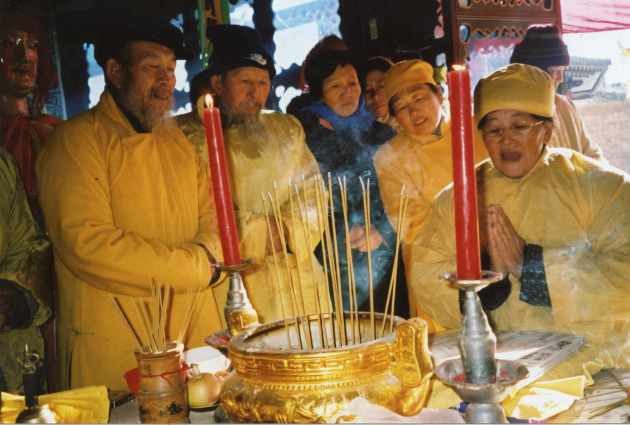
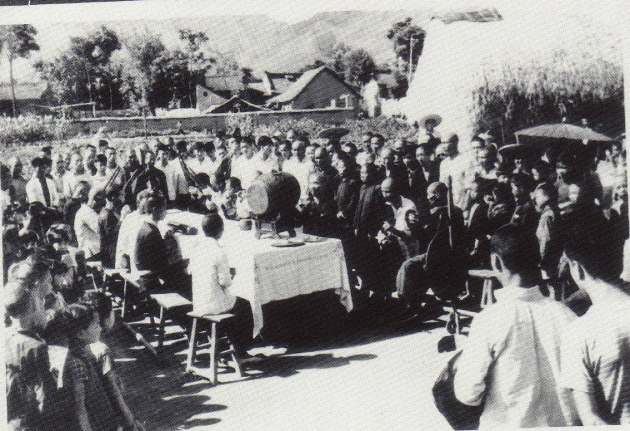


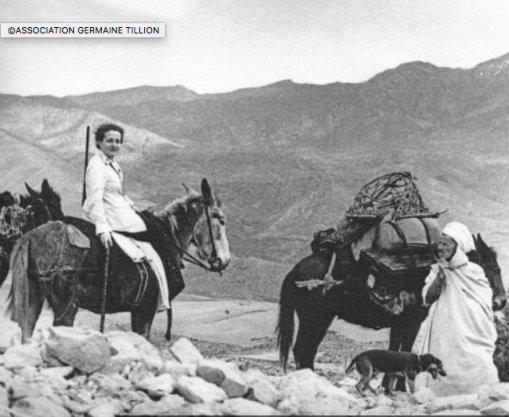


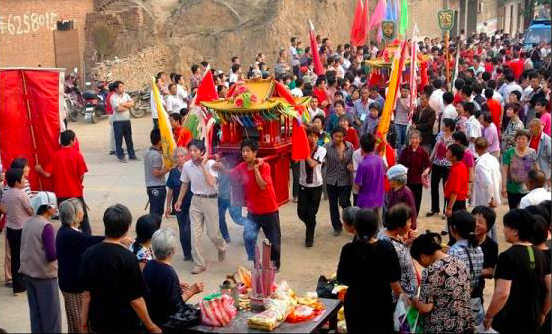
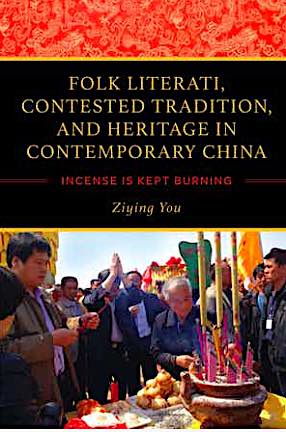


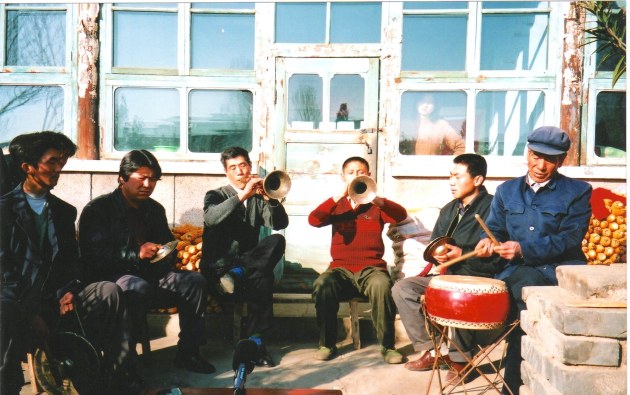

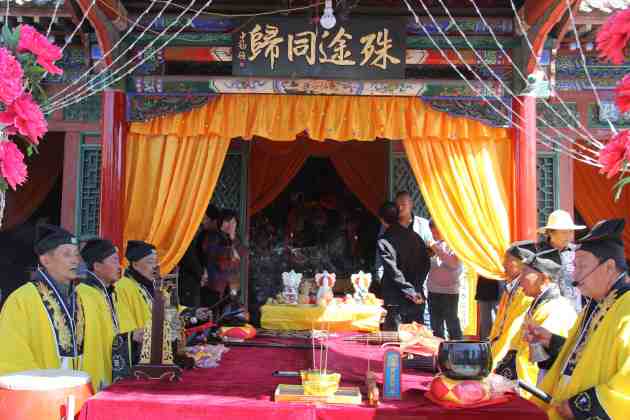

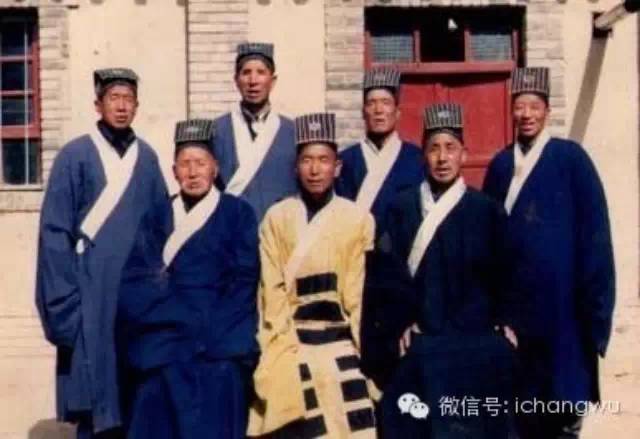
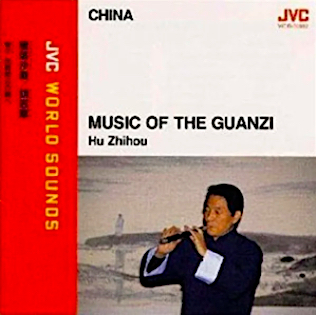




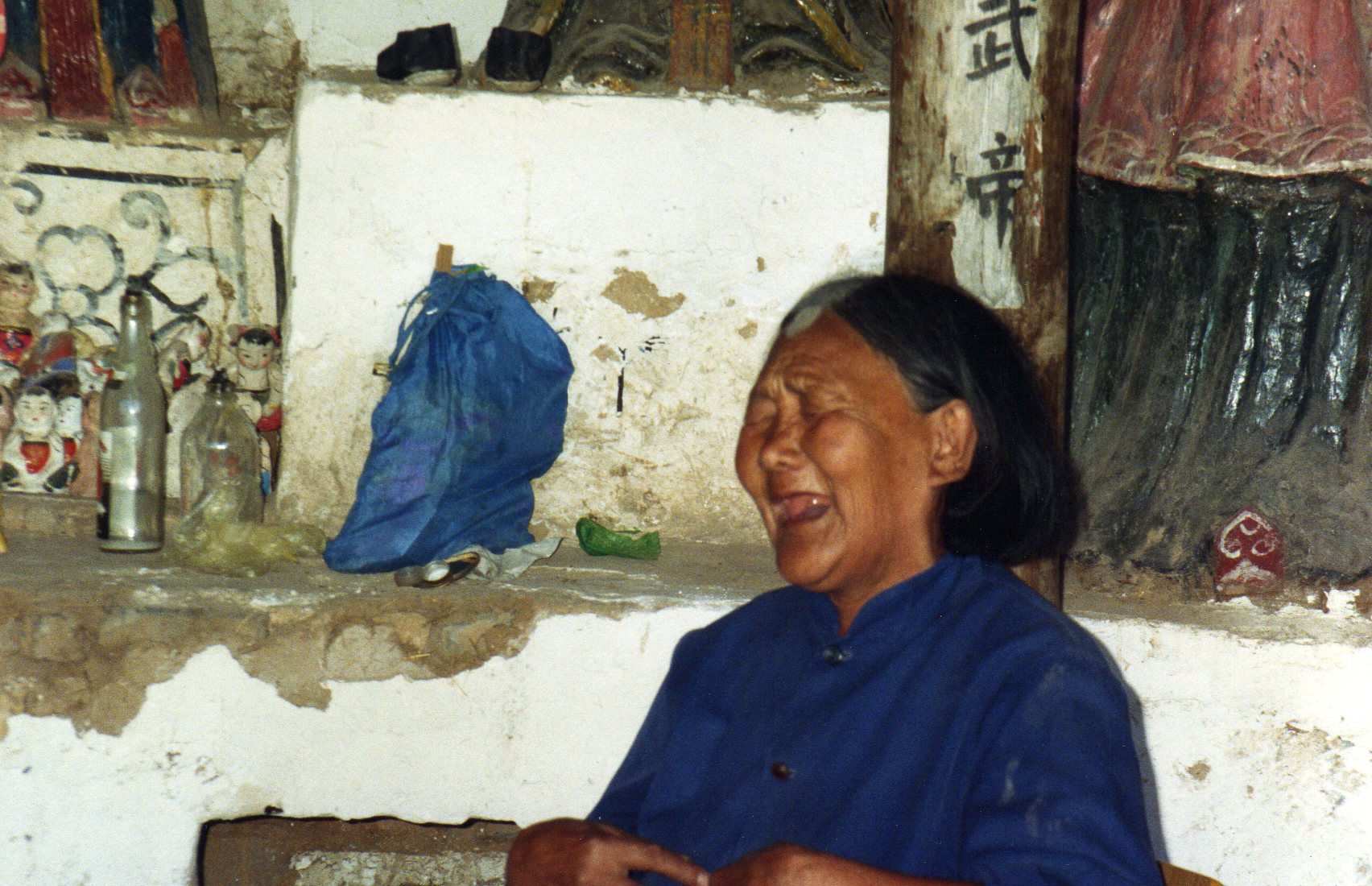
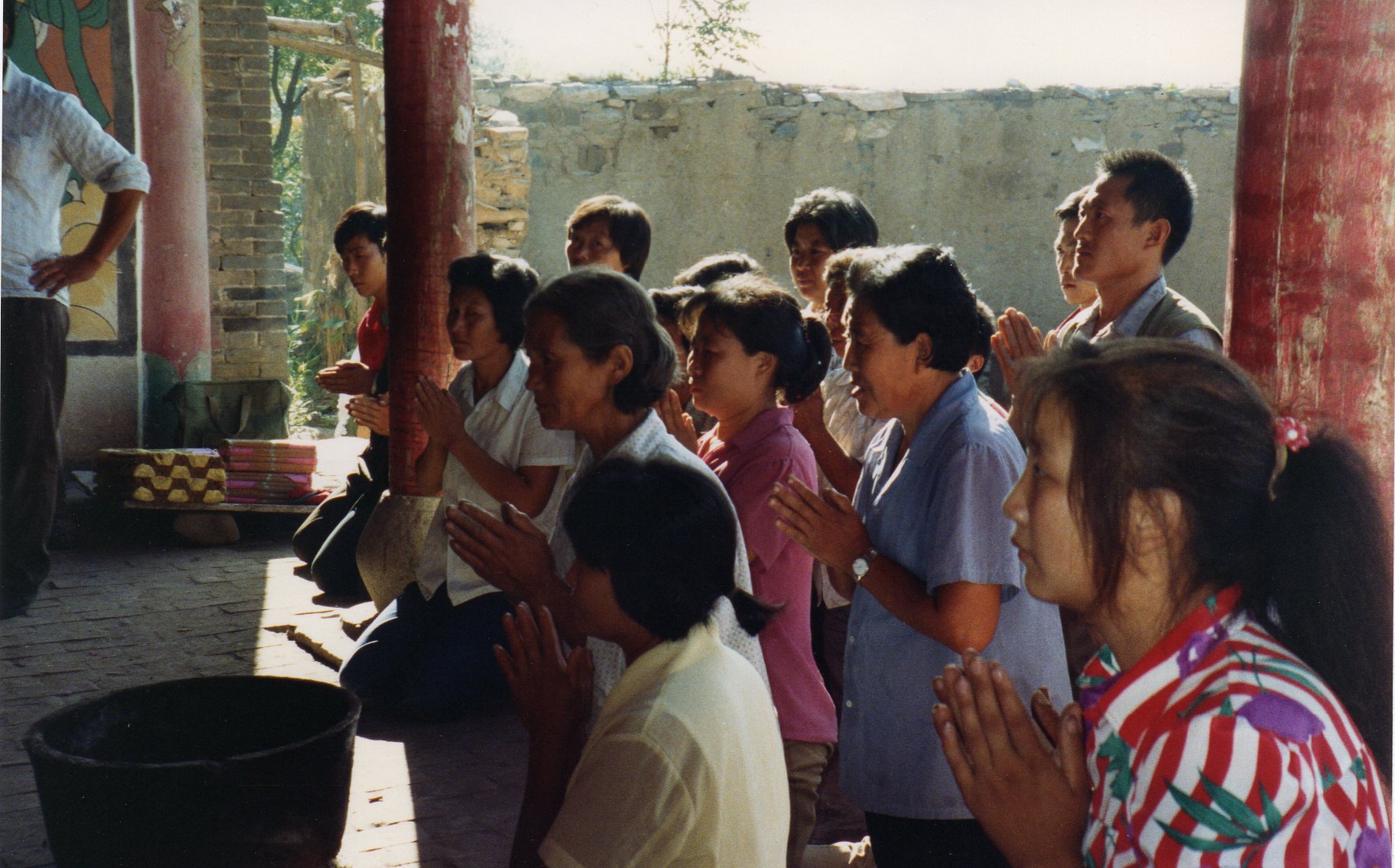
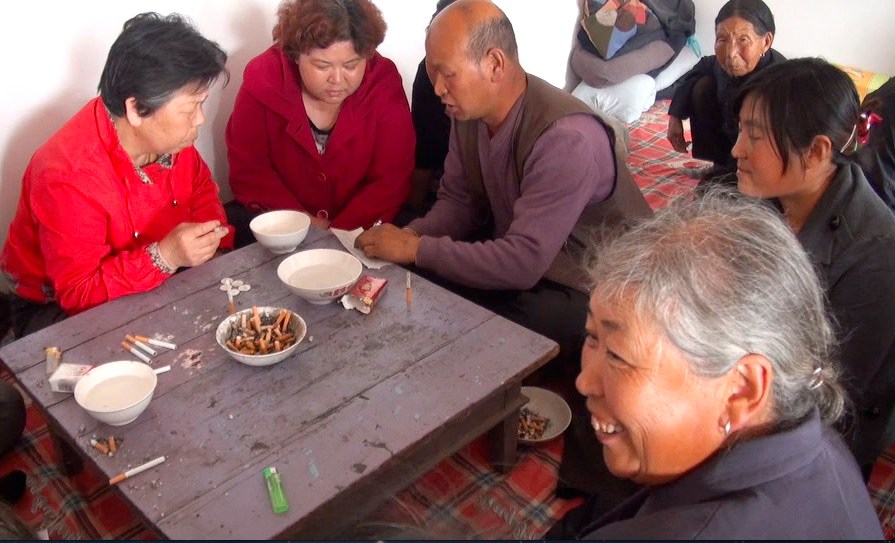


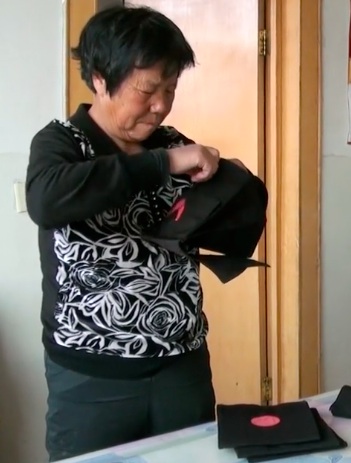
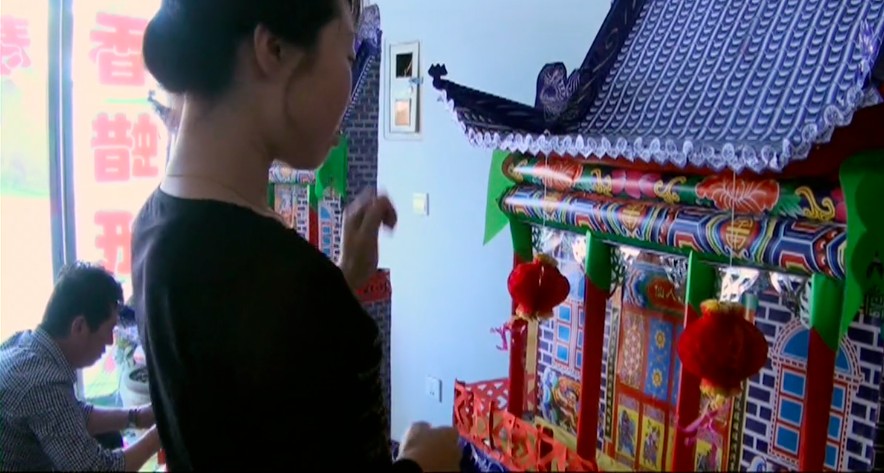
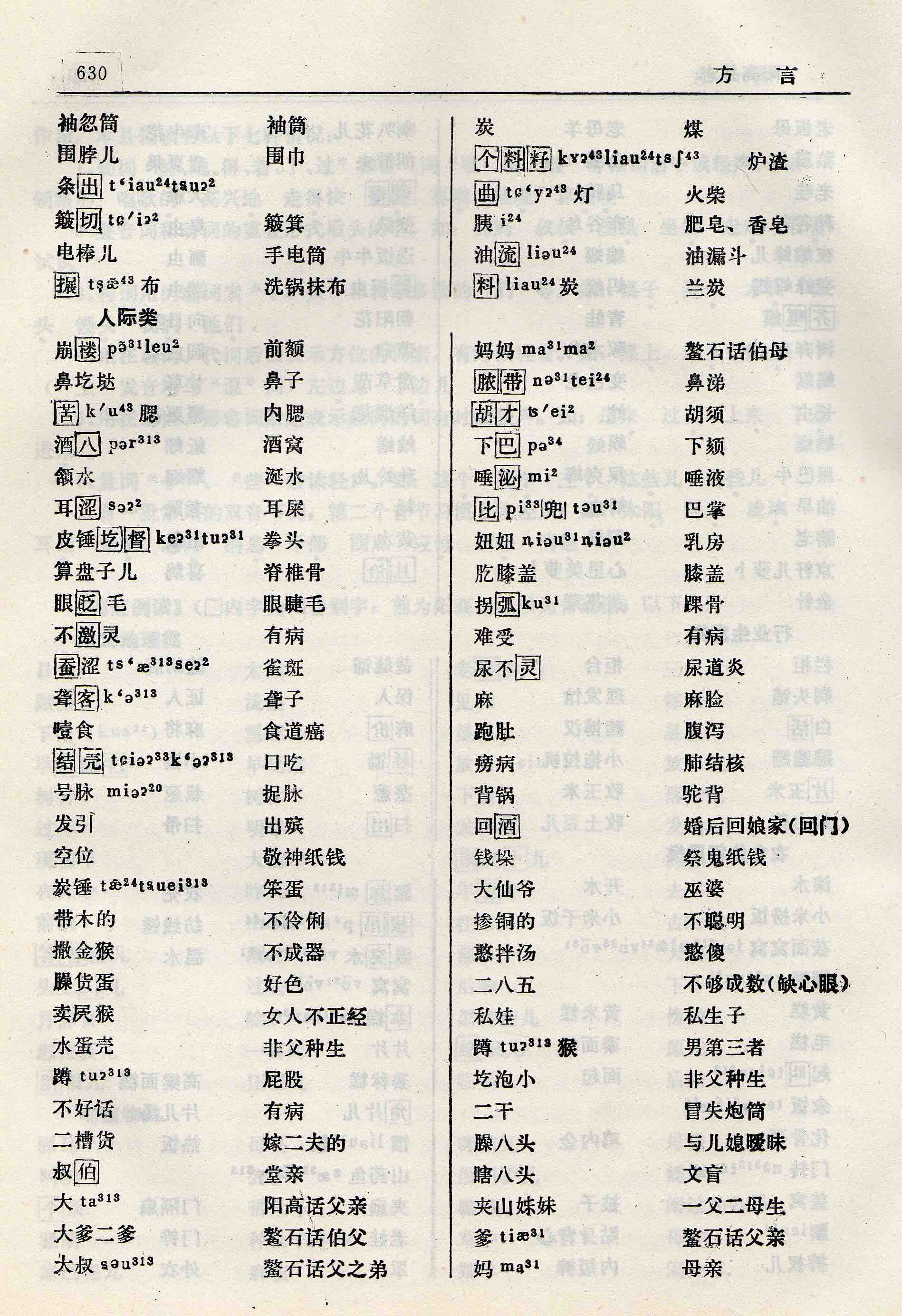

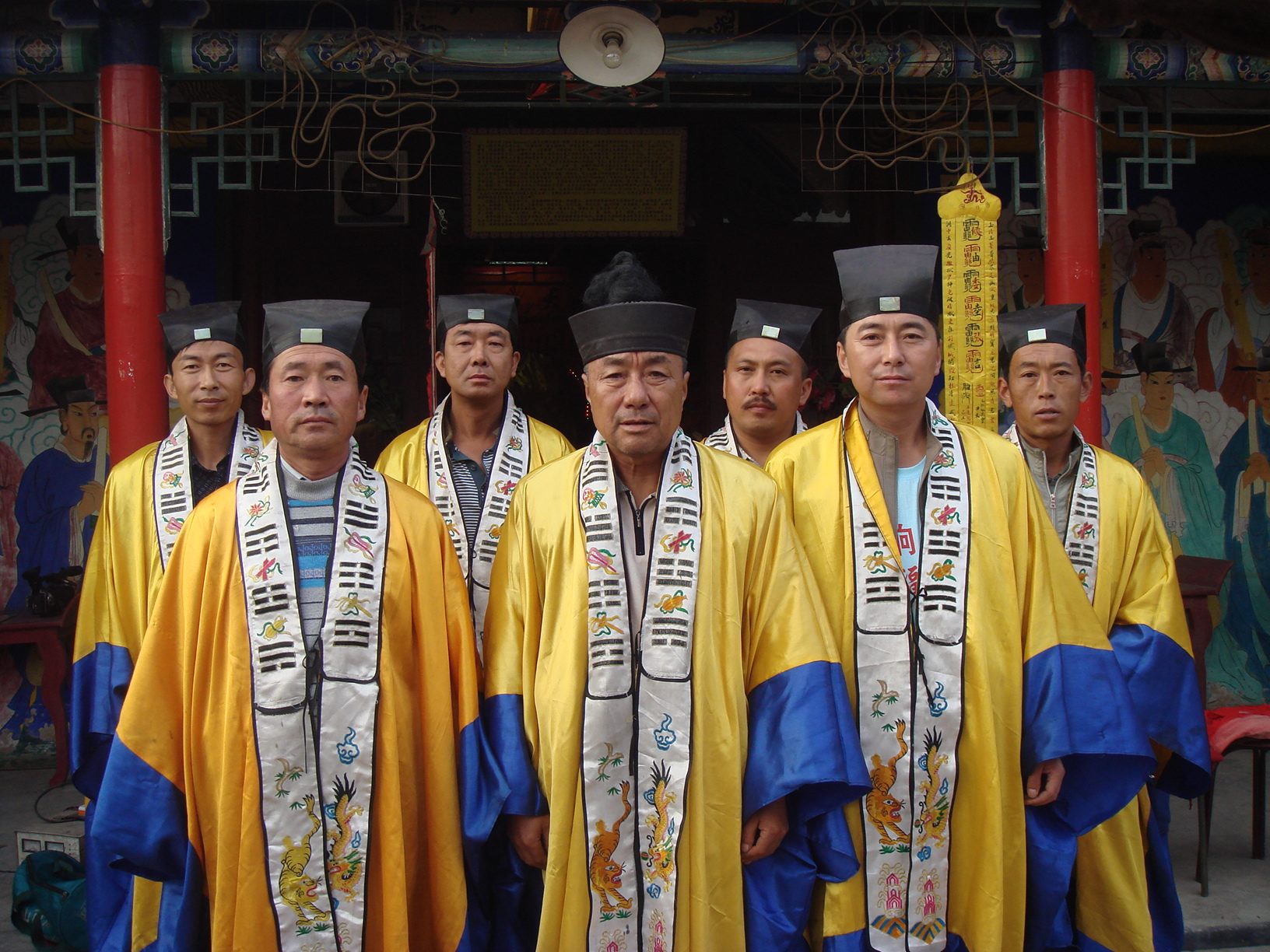


 We’re in plenty of time for the 8.59 to Clermont-Ferrand—whose



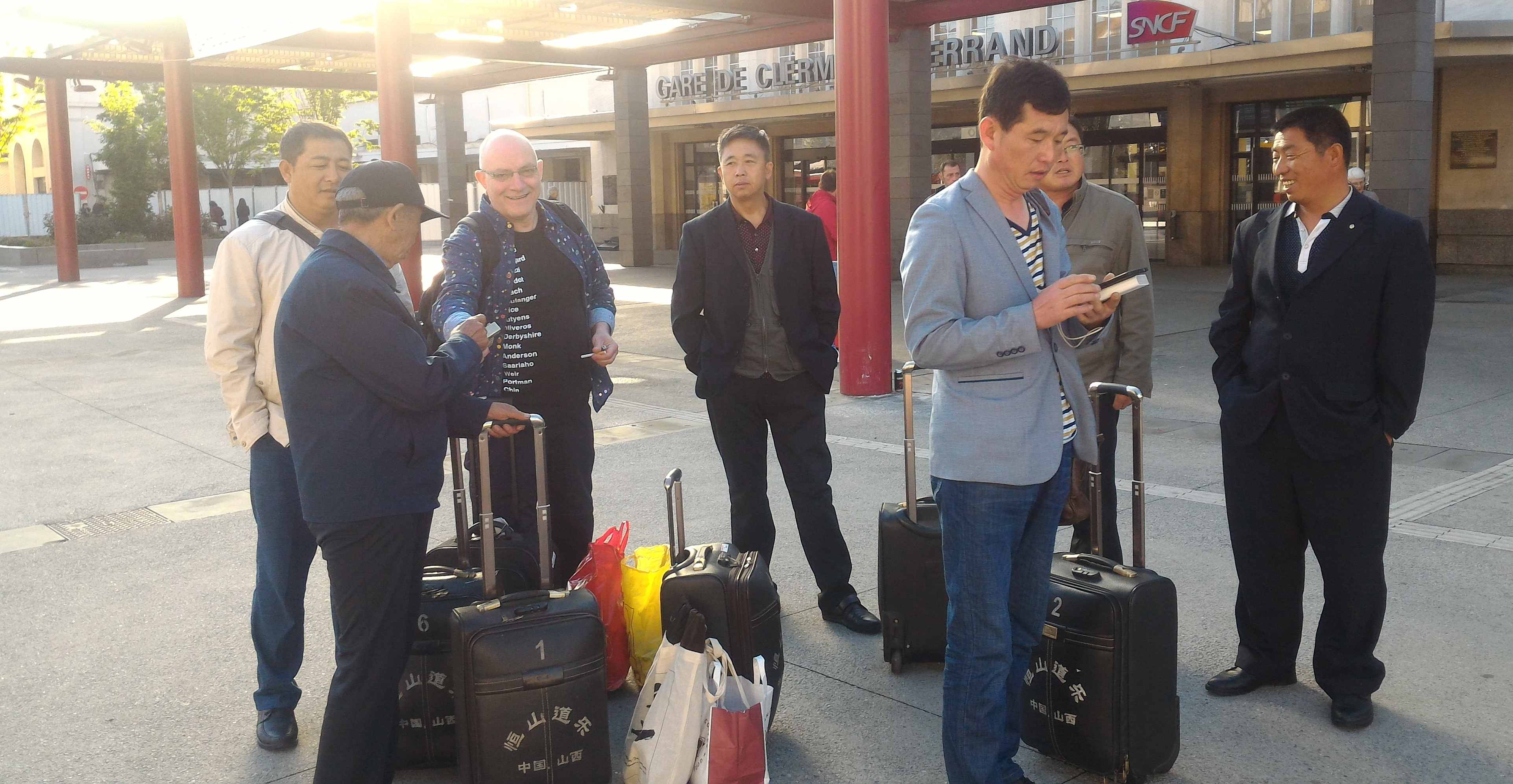



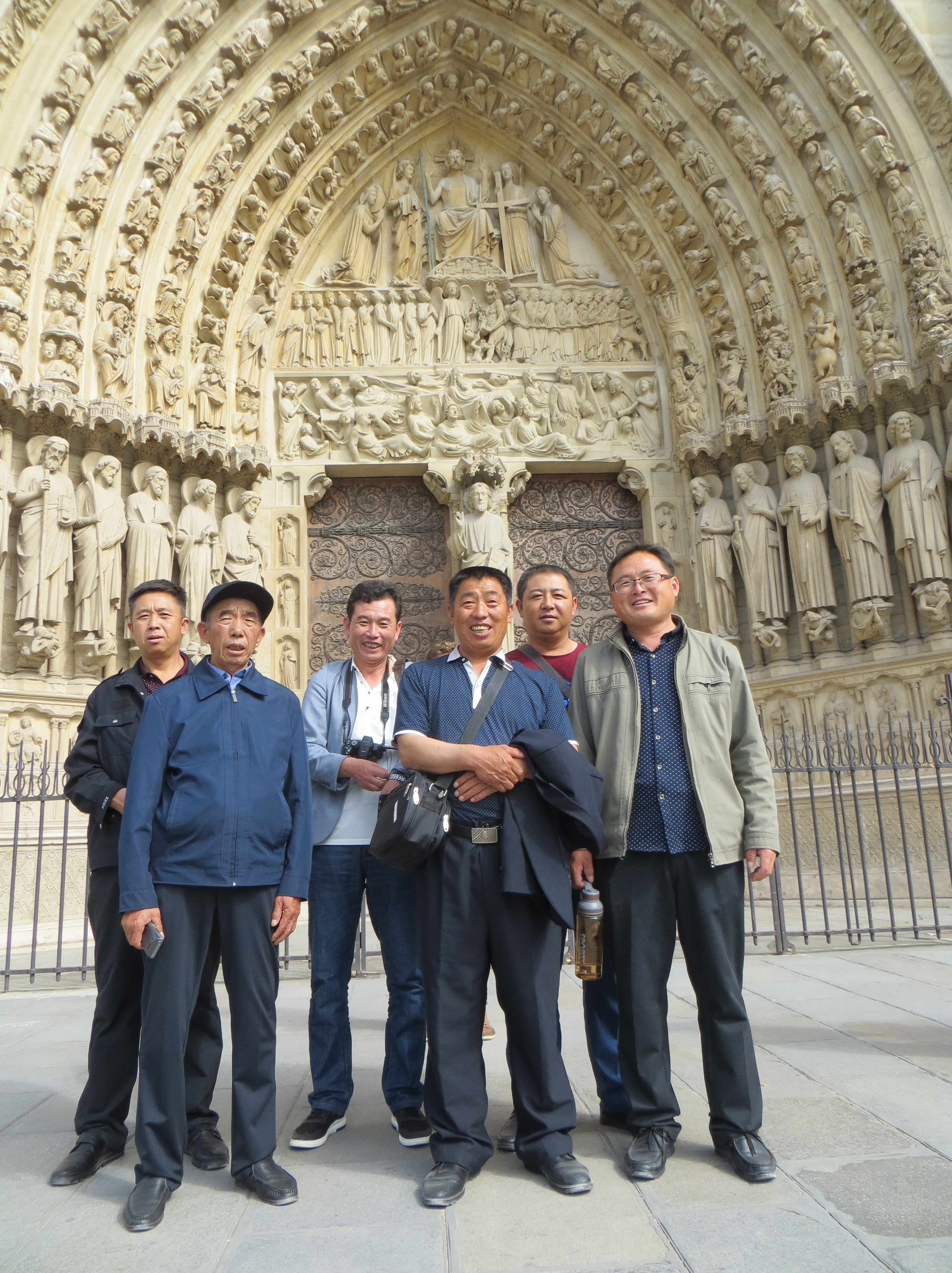
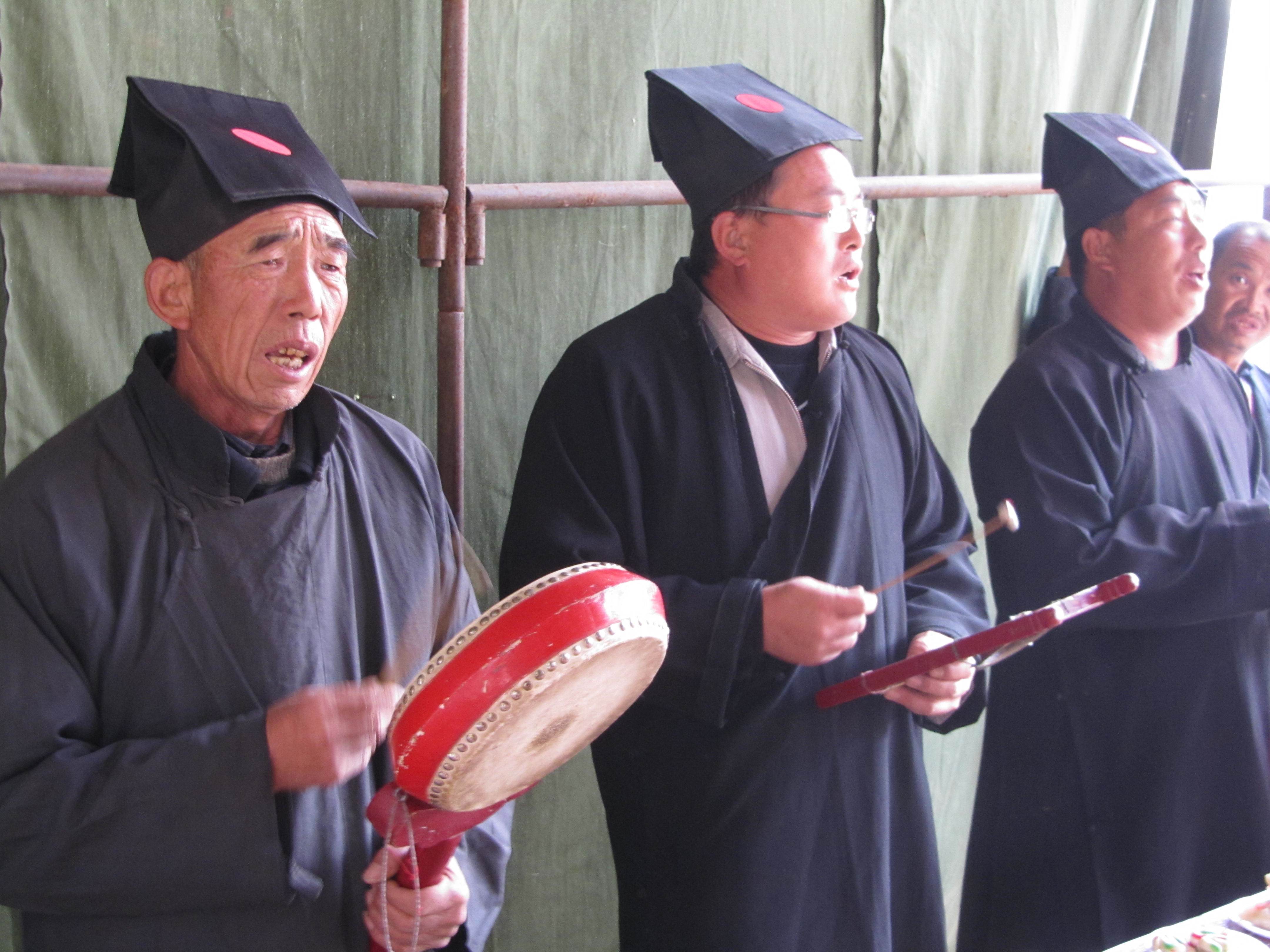
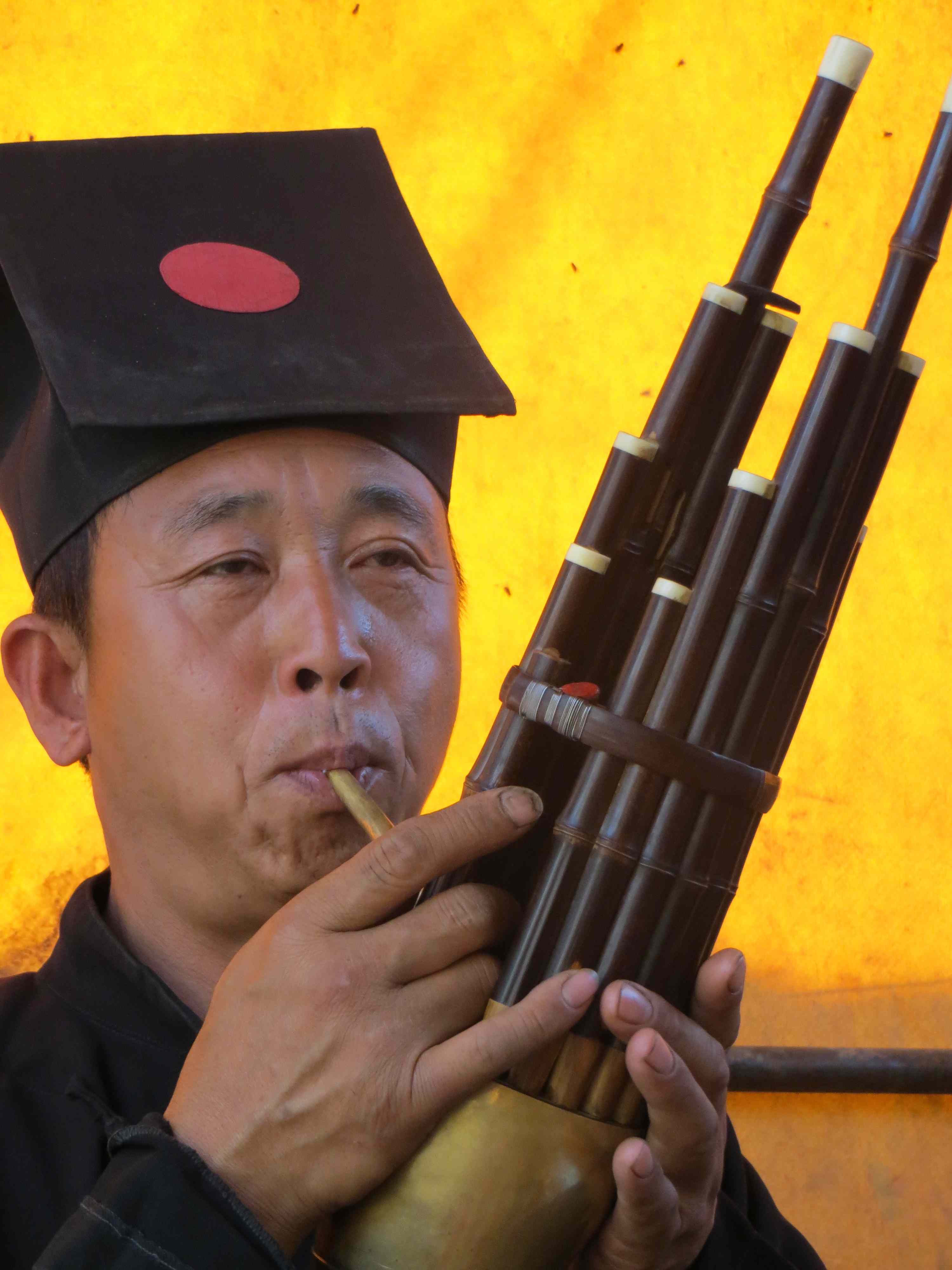
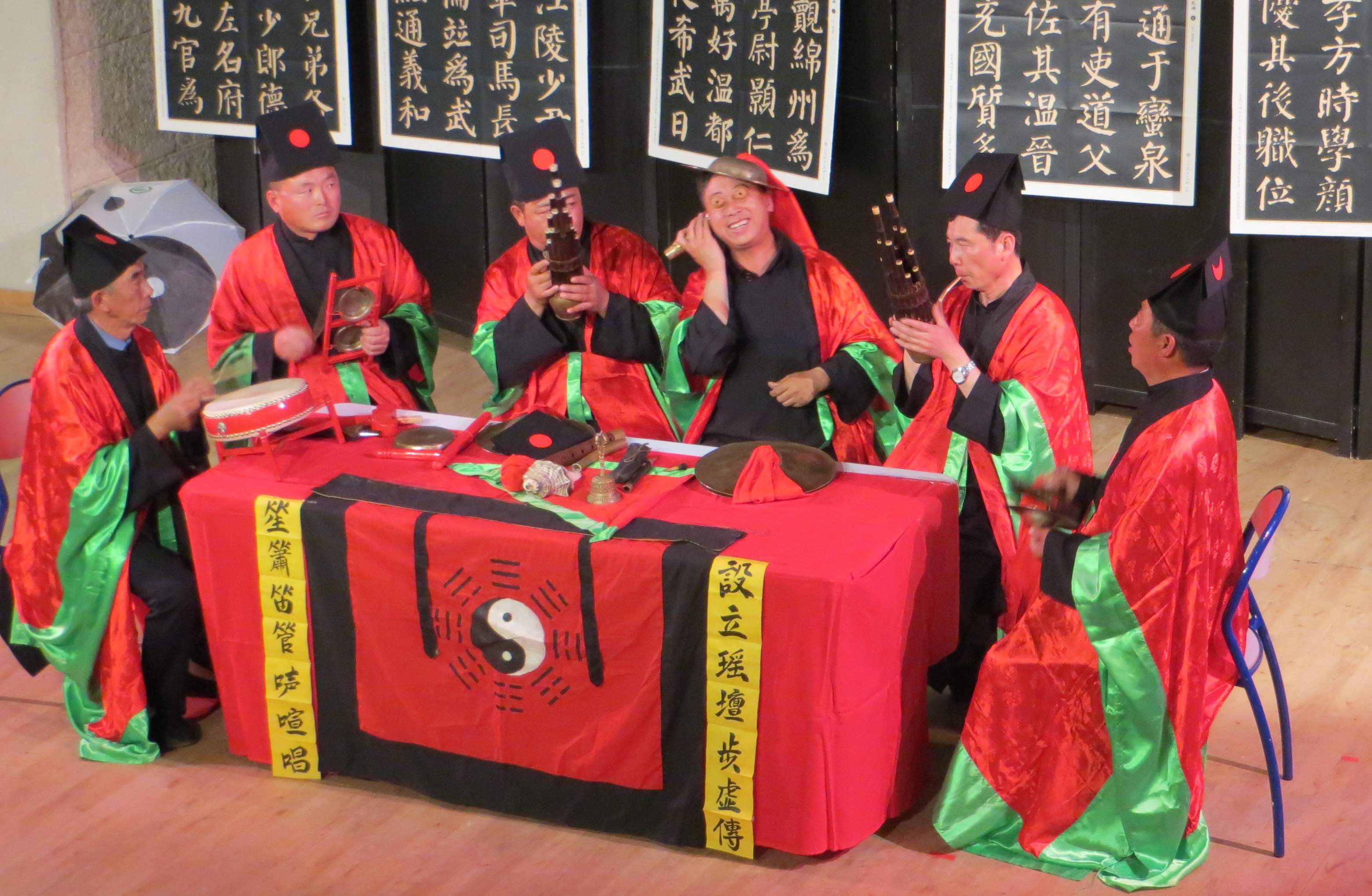

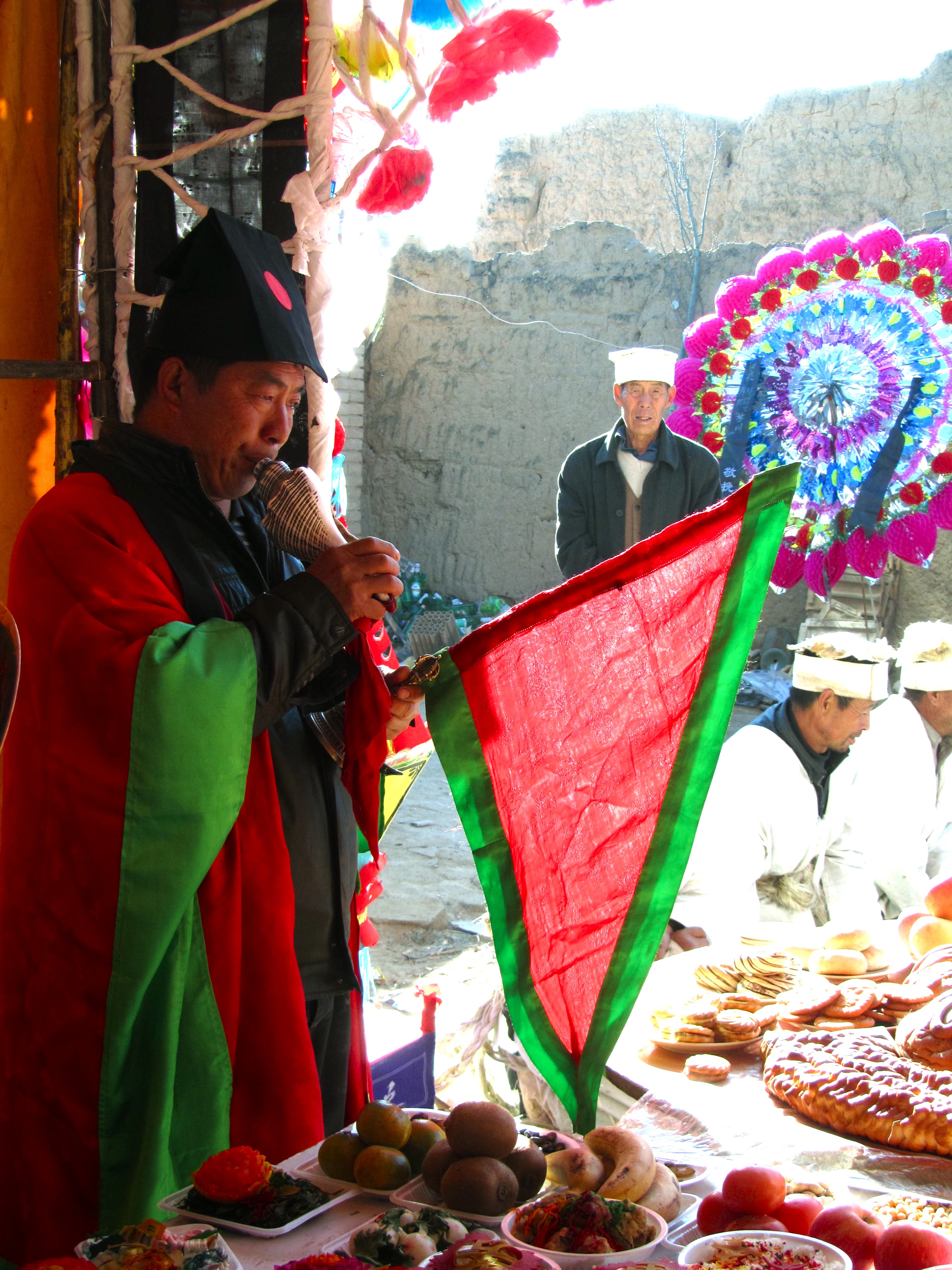

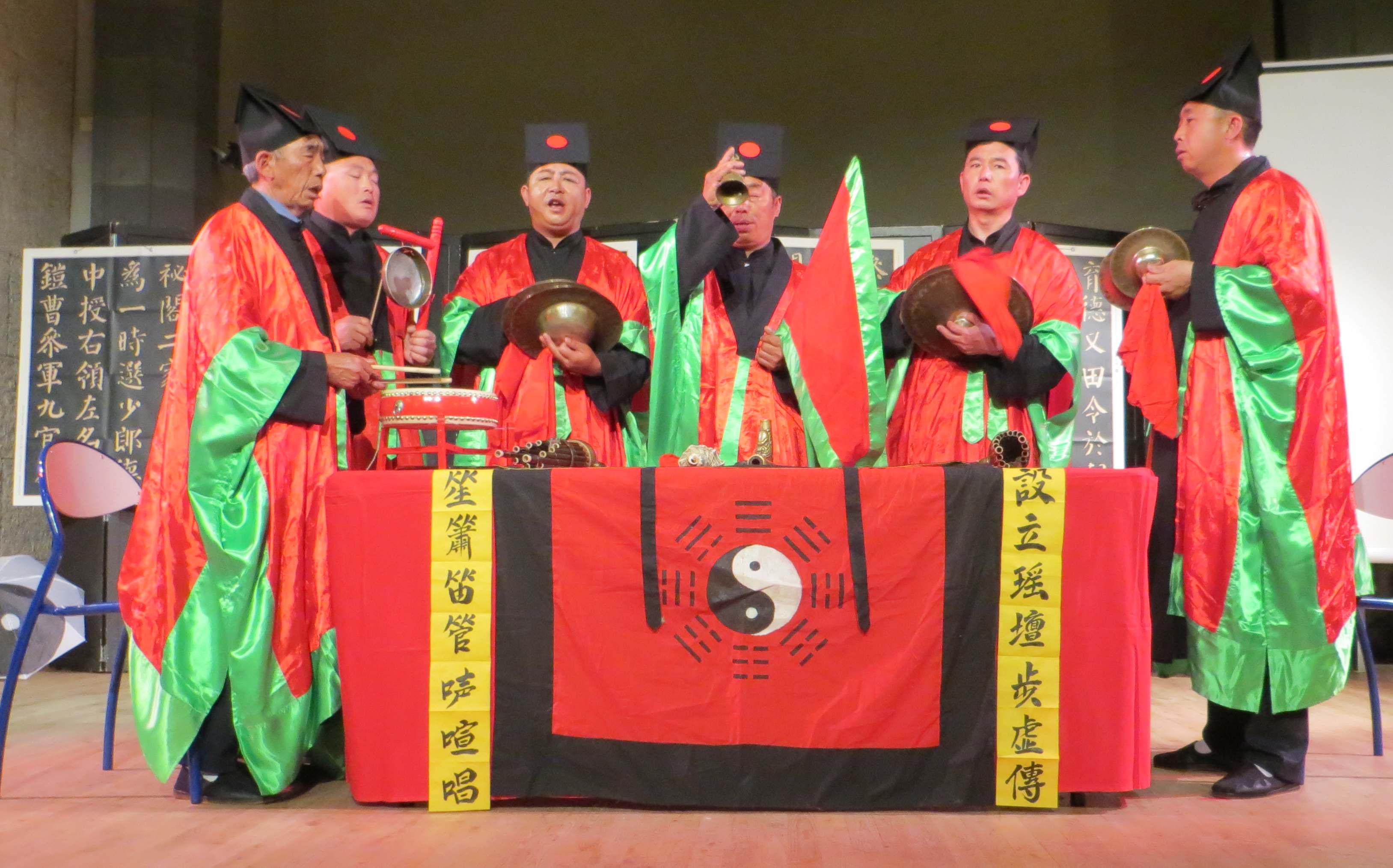




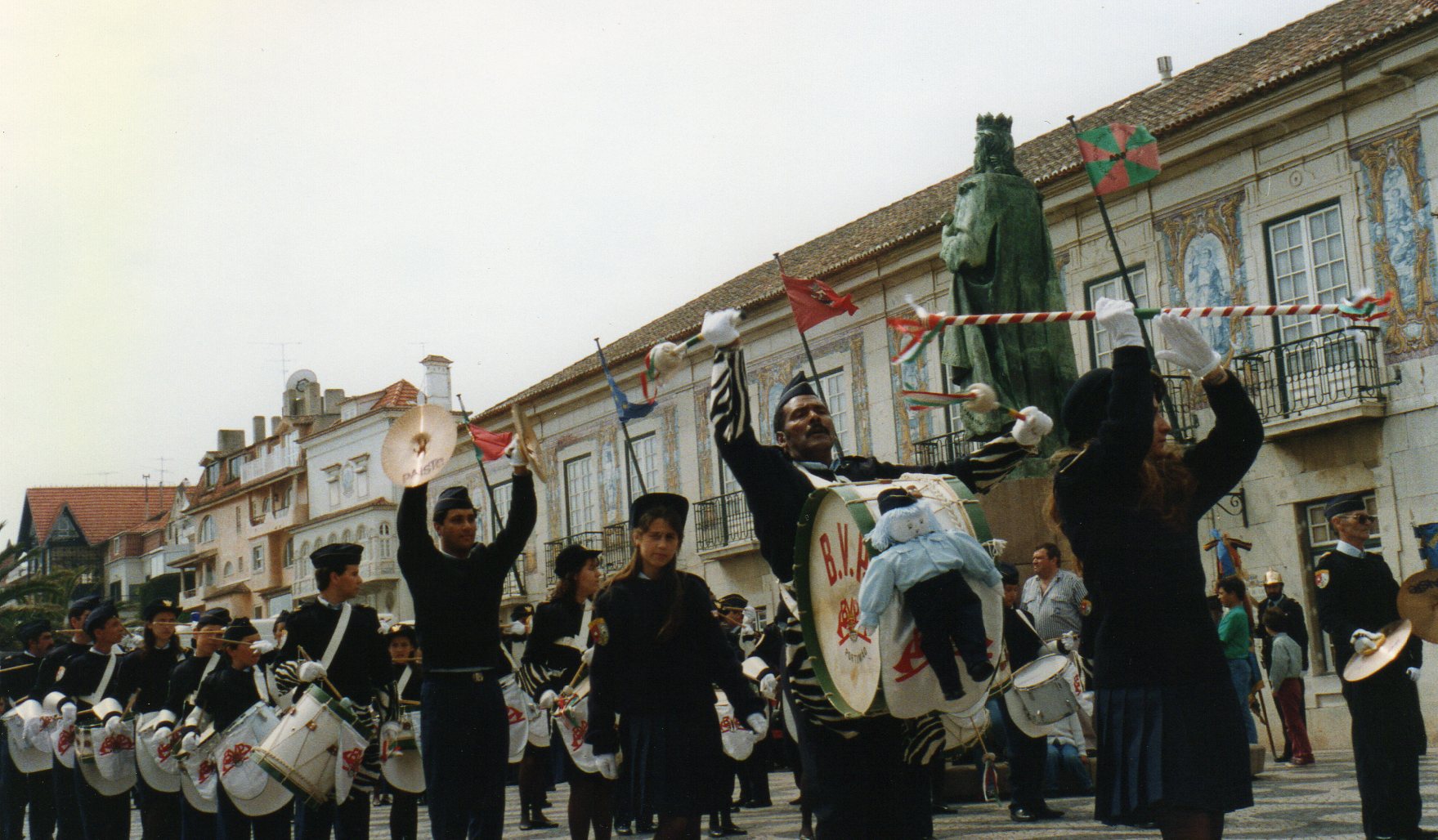

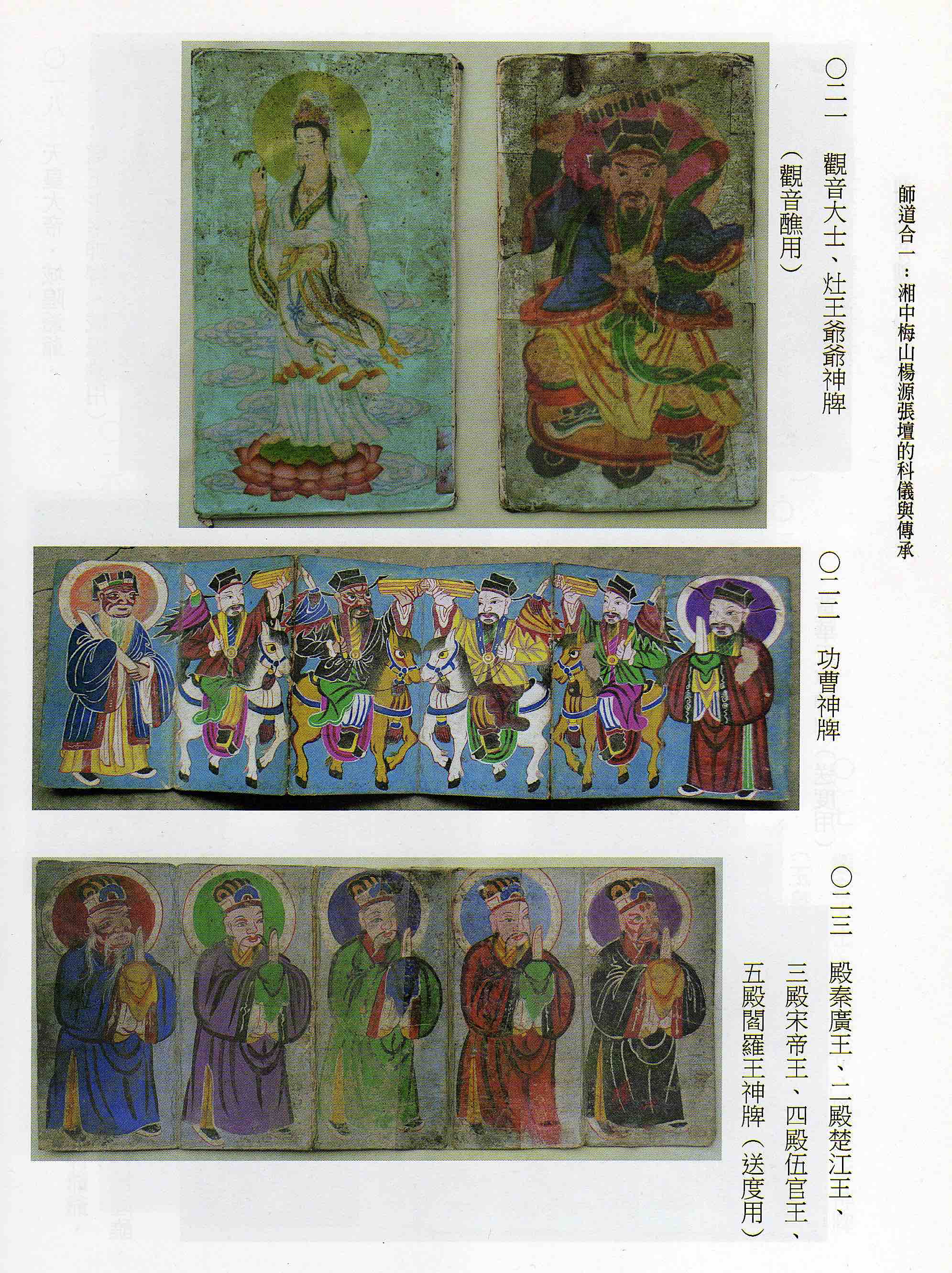 Along with regions like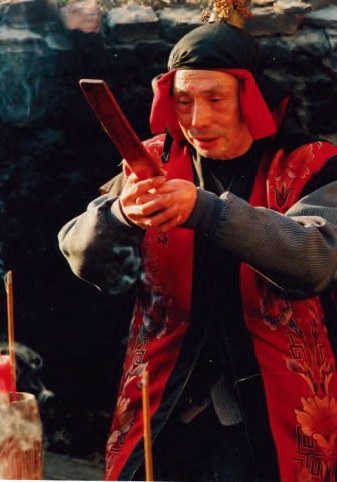
:format(jpeg):mode_rgb():quality(40)/discogs-images/A-843647-1270908146.jpeg.jpg)
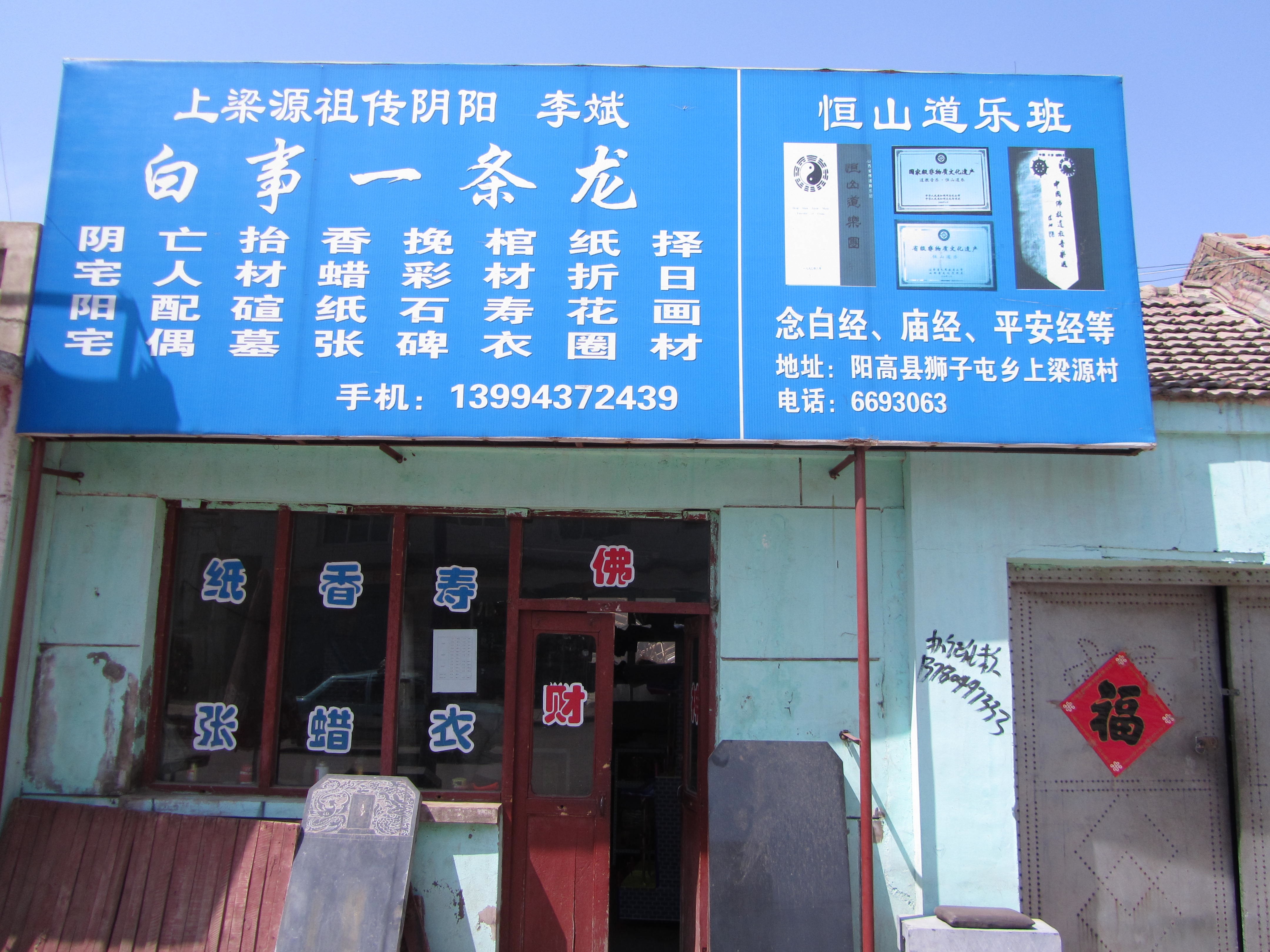


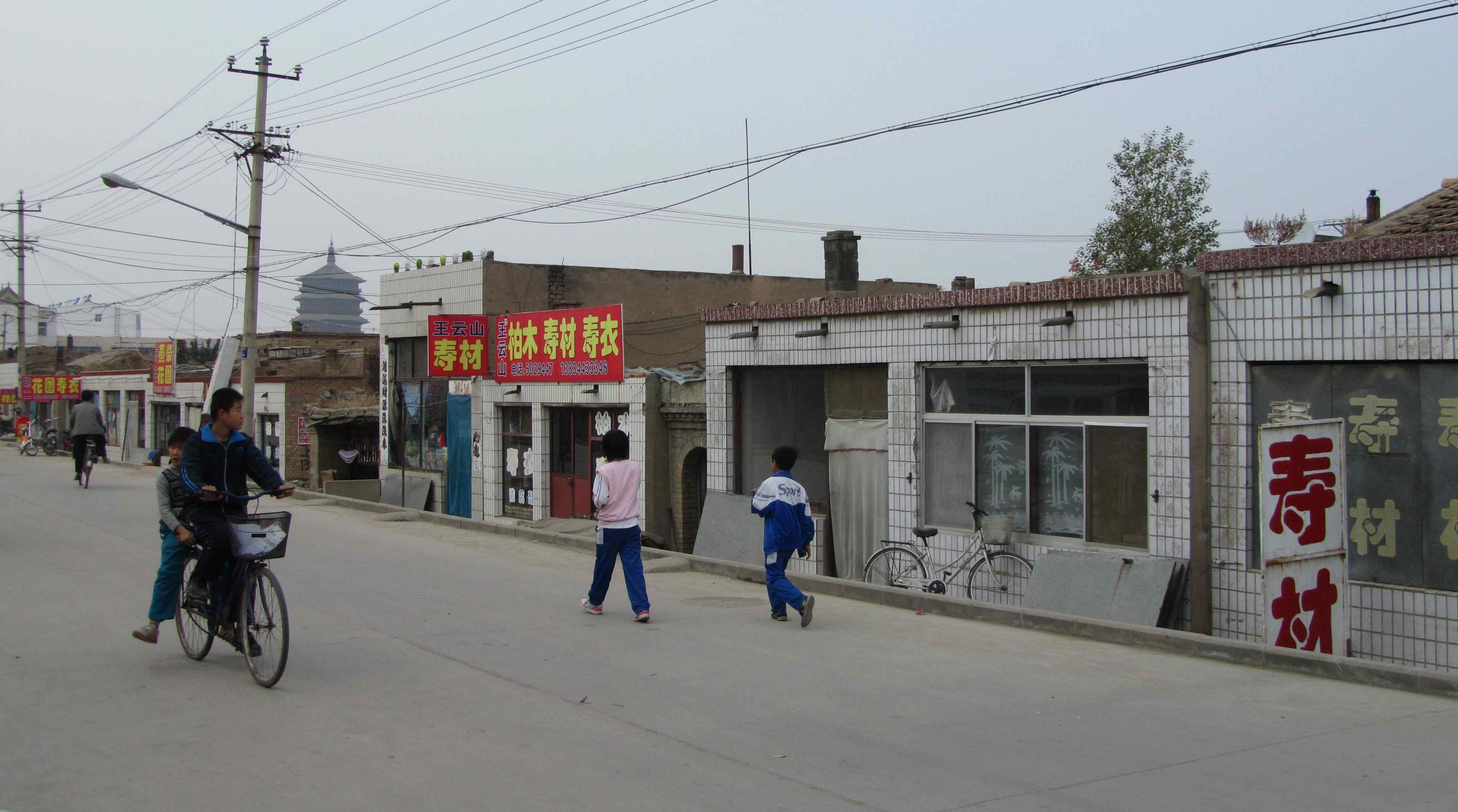
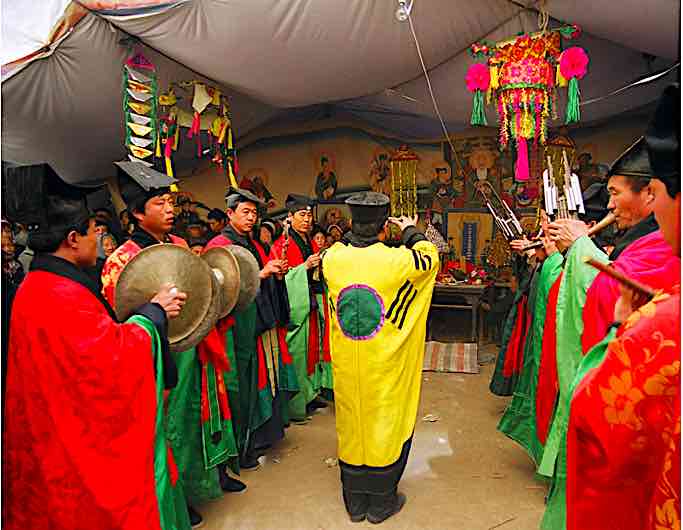




 Stephen Jones: a blog