After all these years when the common response to a comment on the Uyghurs of Xinjiang was “The WHAT of WHAT?”, their new-found global fame is yet more unfortunate. It’s hard to believe now that the screening of this film, less than two years ago, came at a time when the Uyghurs were little known, when films like this could still be made about groups that were still active, and still seemed relevant; when dedicated Uyghur scholars and performers still had room to maintain their culture. Following their pervasive silencing since then, among a host of fine articles on the appalling current situation in Xinjiang, see here, and here, including Rachel Harris’s comments on the disappearance of Sanubar Tursun. Among many articles on the distinguished ethnographer and film-maker Rahilä Dawut, another victim of the purge, is this. Click here for remarkable videos of Sufi Naqshbandi ritual among the Uyghurs. For more, see my roundup of posts on Uyghur culture.
I’ve left the review below as I first wrote it.
* * *
In my little list of ethnographic films, I mentioned Liu Xiangchen 刘湘晨, an outstanding film-maker based in Urumqi in Xinjiang. On Monday at SOAS, as part of a conference on Islamic soundscapes in China (itself part of an excellent project) [1] he attended a screening of his Ashiq: the last troubadour (2010, 122 mins), one of several films by him on various ethnic groups in Xinjiang.
Filmed mainly between 2003 and 2007, Liu’s four-hour version of Ashiq was shown last year at the splendid Shanghai Centre for Ritual Music, with a detailed discussion (which, ominously, has since disappeared from the web).
Here’s an 8-minute trailer:
and the 2-hour version, with Chinese subtitles:
The “exotic” ethnic minorities are always a more popular research topic than the somewhat mundane Han Chinese; I would say, only I’d sound like the UKIPs, that the Han Chinese have become a minority in their own country—which would be just as absurd, given that, in the face of vast Han Chinese immigration to Xinjiang, it is precisely the Uyghurs who feel threatened. But I envy scholars of the minorities the stunning scenery, and the costumes—and if they no longer wear them, they’re used to being asked to put them on for the cameras.
I’m now a little confused about what ashiq actuallymeans among the Uyghurs. Simply stated, they are Sufi mendicants who congregate at the shrines of Islamic saints. From the YouTube blurb:
Some ashiq are ironworkers, others are beggars, merchants, grave diggers, barbers, woman ashiq, Sheikh (the Islamic clergy) and so on.
As Rachel Harris notes, [2] the term may be a rather modern usage for people once more commonly known as dervishes or qalandar. It’s taxonomy again.
Liu described them as marginalised, a minority themselves, but it looks like a substantial phenomenon. And marginalisation is their very raison d’être: they thrive on flouting social norms (cf. Merriam). The subtitle “the last troubadour” seems unsuitable, not only since the use of a (largely secular) term like troubadour is hardly useful, but because the film doesn’t seem to show that they are dying out. Maybe they are, but it repeats a mantra chanted by anthropologists since early times, claiming to have discovered a pristine tradition that is endangered, rather than noting constant change.
For an outsider, the film, like that of De Martino in south Italy, may also shock. For the total novice, it will just amaze: didn’t the CCP destroy religion over sixty years ago—all the more in Xinjiang or Tibet? At least it shows what a huge task the CCP faces. Are we to celebrate the slow spread of state education and modernization?
The nomination of the ashiq for Intangible Cultural Heritage status is captioned early in the film without comment, though (like that of the Uyghur meshrep) [3] it will seem so very incongruous; perhaps it serves as a kind of amulet to protect the film from official criticism. As with the Han Chinese, a majority of genres selected for the ICH are grounded in ritual, impossible to reconcile with the state’s goals without destroying them—which may indeed be the idea. It is the duty of the ethnographer to reflect such micro-societies faithfully, like any other. It goes without saying that it is no use to regard them purely as “musical cultures” detached from their social roots.
The conceit of academic objectivity may make ethnographers seem to refrain from either celebration or criticism, yet at the same time (to return to De Martino), some may be shocked, pondering the link between religion and poverty—an obstacle to those social changes that can genuinely improve people’s lives, health, life-expectancy, and so on?
I gave an instance for the Han Chinese in my Shaanbei book (p.86):
Back in the county-town, returning to our hostel one evening, we switch on the TV to find a documentary about coal-mining accidents, which are reported nightly. There are some rather fine investigative programmes on TV these days, and one main theme of this one is how the response of the village Communist Party leadership, rather than considering improving safety measures, has been to give funds to construct a new village temple in the hope of divine protection. OK, in this case the programme happens to fit into an agenda of rationalism against superstition, a view we sometimes feel inclined to challenge, but tonight I can only go along with the presenter’s lament.
One doesn’t have to be a Maoist apparatchik to worry about this. Observers will draw their own conclusions.
Returning to the Uyghurs, the gender issue is sobering too. There’s one fine scene of a group of female ashiq, but as Rachel Harris (whose latest book revolves around women’s religious groups) pointed out at the screening, only a female film-maker could get proper access to such groups—like Rahilä Dawut (on whom see here).
The film suggests so many complex issues. It gives full coverage to songs, and texts, not just sonic icing on the cake. The ashiq aren’t big on cake, but some weed helps them commune.
Their basic accompaniment is the sapaye, paired sticks pierced with metal rings, played in a kind of stylized self-flagellation, notable in various degrees in both Islamic and Han Chinese ritual cultures (for one gory instance from Fujian, see Ken Dean’s film Bored in heaven).
The tear-stained faces of the ashiq as they sing may remind us that the expression of suffering is a quasi-universal feature of music-making. But it’s always culturally mediated, with differing implications; Rachel Harris again explores the significance of “performative tears” both for Uyghur and other cultures (for the Bach Passions, see here).
The sudden, startling, introduction of scenes from the bustling modern capital of Urumqi is effective. I didn’t pick up hints to change in the rural scene, which must be constantly occurring too, so the film may seem merely to suggest a contrast between (“backward”?) rural traditions and harsh urban commodification. But the structure works well, right down to the final scenes with a birth and a death, the latter in an extraordinary landscape.
I pen these thoughts as a mere outsider. Talking of which, one also wonders how all this relates to the old rejection of ethnographic outsiders, summarised by Nettl as “You will never understand our music”. But here, as with the late great Zhou Ji 周吉 (1943–2008), one of the consultants on the film, Uyghurs seem to have few reservations about certain Han Chinese (or Westerners, indeed) documenting their lives—as long as they are clearly in sympathy and willing to engage fully. Liu Xiangchen, though not himself Uyghur, was also advised by Dilmurat Omar of the Institute of Ethnology and Sociology at Xinjiang Normal University.
[1] I am grateful to Rachel Harris, estimable authority on Uyghur culture and music, for pointing me towards several sources. As usual, it goes without saying that I am entirely responsible for my interpretations here. [2] “Theory and practice in contemporary Central Asian maqām traditions” (forthcoming). [3] Note this important report. See also under Soundscapes of Uyghur Islam.
Still giggling at Stella’s resumé of The Flayed, I must just return to celebrating the original Cold comfort farm.
You might think it would be one of those books that could only be spoilt by being Made Flesh (or at least celluloid, or whatever they use these days, with their new-fangled ungodly ways). But the 1995 TV film is highly regarded, and at a tender age, having recently read the book, I found the 1968 serialization most drôle—such as Alastair Sim as Amos, perfect:
“Ye know, doan’t ye, what it feels like when ye burn yer hand in takin’ a cake out of the oven or wi’a match when ye’re lightin’ one of they godless cigarettes? Ay. It stings wi’ a fearful pain, doan’t it? And ye run away to clap a bit o’ butter on it to take the pain away. Ah, but” (an impressive pause) “there’ll be no butter in hell!”
Then there’s the herd of Jersey cows—Graceless, Aimless, Feckless, and Pointless; and Aunt Ada Doom’s regular use of the dilapidated Milk Producers’ Weekly Bulletin and Cowkeepers’ Guide to smite anyone within reach.
The book also exemplifies the clash of urban and rural cultures that is a major theme of anthropology, not least for China. The Li family Daoists sum it up brilliantly in their joke after the final credits of my film.
Flora takes on the project of Meriam the hired wench, in labour yet again:
And carefully, in cool phrases, Flora explained exactly to Meriam how to forestall the disastrous effect of too much sukebind and too many long summer evenings upon the female system.
Meriam listened, with eyes widening and widening.
“ ‘Tes wickedness! ‘Tes flying in the face of nature!” she burst out fearfully at last.
“Nonsense!” said Flora. “Nature is all very well in her place, but she must not be allowed to make things untidy.”
Meriam’s mother (wife of Agony Beetle, no less) has a plan for her daughter’s growing brood:
“Come another four years and I can begin makin’ use of them.”
“How?” asked Flora. […]
“Train the four of them up into one of them jazz-bands. […] So that’s why I’m bringing them up right, on plenty of milk, and seein’ they get to bed early. They’ll need all their strength if they ‘ave to sit up till the cows come ‘ome playing in them night-clubs.”
Lastly, statuesque sullen ravaged Judith:
I am a used husk… a rind… a skin.
Fragrant Flora’s own personal bible, The Higher common sense by the Abbé Fausse-Maigre, isn’t always up to the challenge posed by the Starkadders. (BTW, one wonders if the Abbé lived at 7 bis, rue du Nadir-aux-Pommes.)
Judith gives a classic rebuke to Flora’s gentle probing:
“By the way, I adore my bedroom, but do you think I could have the curtains washed? I believe they are red; and I should so like to make sure.”
Judith had sunk into a reverie.
“Curtains?” she asked, vacantly, lifting her magnificent head. “Child, child, it is many years since such trifles broke across the web of my solitude.”
I’ve finally got round to reading her little-trumpeted* sequel to Cold comfort farm, Conference at Cold comfort farm (1949).
(*Little Trumpeted could be one of her local rural names, like Howling and Mockuncle Hill. Bill Bryson is a clear heir to this niche fetish, with his predilection for [real] names like Seething, Wrangle, Nether Wallop, Thornton-le-Beans, Shellow Bowells, and so on.)
In Conference, written at a time when Britain was going through a revolution in the aftermath of devastating war, with social justice briefly in the air, and in certain circles also cultural innovation, Florarevisits the farm some sixteen years after her earth-shattering initial stay, once again putting things to rights.
The book satirizes both the avant-garde and (some five decades in advance) all the Intangible Cultural Heritage flapdoodle—at a time, remember, when it was neither profitable nor popular (indeed, Stella’s mockery of pretence was akin to that of Myles). A few gems:
Hacke, with his sculptures Woman with Child and Woman with Wind.
And Messe: “Of course, I don’t put him within miles of Peccavi. I should put him somewhere between Pushe and Dashitoffski.”
There’s even a dodgy Oriental Sage.
Meanwhile, Reuben reports to the ever-sane Flora on the visit of a Mr Parker-Poke from Th’ Ministry :
“He—he did say as I were niver agricultoorally eddicated.”
“I am very sorry, Reuben.” Flora laid her hand upon her cousin’s for a moment. “No, you are not agriculturally educated; you only know how to make things grow.”
Who ever supposed Stella was a one-trick pony (and I didn’t say “filly”)? Never seduced by the blathering blandishments of Bloomsbury, Not For Nothing has she been Dubbed [sorry—there’s another one for the Catechism of Cliché, or Molvania] the Jane Austen of the 20th century.
And now there are all her other novels, long neglected, for us to read too.
One of the few terms in yoofspeak not susceptible to HRT is LOL, never ascending.
OMG is curious: often intoned at a rather high constant pitch, like the first tone in Chinese—and (perhaps through the pervasive influence of Friends) drawn out dramatically: O——M——G…
Another recent entry in the lexicon of tonal variety is that weird announcing thing the female presenters of Strictly do, in mantric unison:
THE JUDGES…
Chanted hypnotically, this time at a rather constant mid-range pitch, it might sound merely jaded, but has been magically rescued from its previous function of expressing sullen apathy to suggest instead some awesome process, divinely decreed. Again, this may be related to gender.
Of course, there’s a wealth of academic discussion about the importance of the semantics of stress and pitch in English. Here’s just one stimulating example, with some inter-cultural comparisons.
Meanwhile, back at Chinese ritual, unlike choral hymns (easily notated, with fixed pitches and tempo), the performance of shuowen solo chanted introits in Chinese ritual doesn’t necessarily attract much musical analysis (or transcription). But again, if we seek to learn how to be a Daoist, we need to pay attention to their rendition—not spoken but parlando, rather fast and high, each phrase descending. Listen again to the way Golden Noble sings this introit at the soul hall before the Invitation procession (my film, from 58.14):
May the deceased souls come to the Bathing Hall, Transforming their shape and countenance to return to the immortal realm. Now dipping into the bowl to bathe their bodies, For an audience with the Three Treasures on the way to the Western Quarter.
Apart from its spacey vibe, there’s one detail of Debbie Harry’s song that Yer Average fan will experience instinctively, but the tedious analytical bent of the musicologist may home in on: the hallucinatory temporary modulation at the end of the third line (find/blind), fleetingly sketching a major triad on la—all the more ironic for the deflation expressed by the lyric.
That harmonic shift reminds me of rag Marwa, with its implied major scale on Dha/la (A major, one might say) over the Sa–Pa/do–so/C–G drone, the flat re (C♯) clashing with the tonic. Sure, Heart of glass hardly compares with the complexities of the ascending and descending scales of the raga, worked through over a long period, but hey.
Most transcendental are renditions in dhrupad style. Here’s Zia Mohiuddin Dagar on rudra vina, in his last year:
And Rahim Fahimuddin Dagar:
Nikhil Banerjee on sitar:
Here’s a sarangi version from Sultan Khan (compliments to the heading ‘Marwa’-lous!)):
For another rendition on sarangi by Ram Narayan, click here. For Amjad Ali Khan on sarod, see under Raga at the Proms; and for Hariprasad Chaurasia on bansuri, see Raga for winds.
For a roundup of my series on raga, with a general introduction, see here.
As I browse the back catalogue of Rusty Debris, I find Rich Hall makes an engaging guide for my latent dilettante interest in Country. He’s also a fine Tweety-baiter, of course, such as this. And his BBC4 film is both instructive and hilarious:
Country may often seem banal to us poncey liberal elite—although we’re on thin ice if we’re going to laugh at the outfits. But like flamenco, or tango (or, come to think of it, almost any genre worth its salt), beyond the cosy domestic image it’s about pain, and poor suffering Hugh Manity.
In time the industry managed to cash in on the outlaw image (at first latent, later a badge of honour) that came to supplement the homely veneer—embodied in The Highwaymen and the great Johnny Cash. And so on to Willie Nelson (“Then one day, thankfully, his house caught fire”).
Rich’s comments on Tom Hiddleston’s ill-advised Hank Williams biopic I saw the light are priceless. He also manages to give short shrift to John Travolta, Taylor Swift, and even Bono.
Like a gen-u-ine ethnomusicologist, he notes the diverse ethnic origins of Country, its local distinctiveness, migration, and patronage. Again, there are some fine taxonomies here. He notes the shift from Nashville to Austin, and the Cosmic Cowboy collision of redneck and hippy. And wow, there’s some hot fiddling.
There are also some nice details on changing instrumental technique—a trademark of the best discussions of music—like “He [Chuck Berry Junior, not the Chuck Berry, R.I.P.!] told him [Waylon ] to replace the top E string with a banjo string to bend it easier, and to shave down the frets on his guitar to get a lower action.”
The secret is to replicate, not to regurgitate.
This quote from the online blurb could be an encapsulation of ethnomusicology:
As he unearths the roots and inner workings of country music, Rich finds it’s more than just music—it’s a lifestyle.
There are loads of wonderful documentaries on such topics, avoiding hagiography while evincing proper respect—but where are all the programmes about shawm bands or Daoists, eh?
Update: Ken Burns now has a major series Country music (cf. his Jazz series), its eight parts now being shown in abbreviated form on BBC4. Just the opening programme, on the early history of Country to 1933, is an aural and visual feast. For more, see here.
Zhang Zhentao with members of the Xiaoniu village ritual association, Houshan temple fair, Yixian 1995.
One aspect of respecting our local hosts, and “abiding by local customs” (ruxiang suisu 入乡随俗), is that fieldworkers should be careful not to inflict their educated vocabulary on locals. Just as you wouldn’t use poncey language in talking to Newcastle rappers, or to old-time musicians in Kentucky (so “harp” rather than “harmonica”)—even if they may understand it, or even adopt it temporarily for our benefit. Vocabulary reflects world-view (yijing 意境, as educated Chinese would say), so we should try and latch onto it.
Some terms are just a matter of basic fluency: one never “plays” (yanzou 演奏) instruments, for example, but (according to their means of sound production) one blows (chui 吹), beats (da 打), bows (la 拉), or plucks (tan 弹) them. In Yanggao, the often-used term kabulei (“fantastic”) would be kebulai in standard Chinese, but bucuo is the standard urban version. I like duohuir (“When?”, actually more like duohuor), more classically economical than the cumbersome standard shenme shihou.
Of course it’d be silly to try and go native; we can only retain our personality. But little efforts to adapt to their world-view pay dividends. Often we will seek a more idiomatic way of expressing our own scholarly vocabulary.
In the table below I give some random examples from my fieldwork experience in ritual and musical life, mainly in north China. Maybe I’ll add to it as I go along—these are just some of the terms I’ve picked up. [1] Of course, it relates to taxonomy. Some terms (such as those for spirit mediums) are gender-based.
But few of these terms can be applied casually across the board: precisely because they are local, one can’t even expect (for instance) to use a Shaanbei term for spirit medium in north Shanxi—still less in Guangxi or Fujian.
Guo Yuhua, in her book on Shaanbei, transcribes villagers’ accounts in their own language with rare precision. But few fieldworkers will be able to master the remarkable secret language (“black talk”) of shawm bands and ritual specialists in Yanggao.
Educated term
English
local term
tuan 团
ensemble, group etc.
ban 班 (ritual:) she 社 tang 堂 hui 会 huitong 会统 foshihui 佛事会 tan 壇 peng 棚 etc. etc.
yanchu 演出 biaoyan 表演
perform
banshi 办事 yingmenshi 应门事 songjing 送经 chuhui 出会 etc.
Norman Lebrecht has long laid bare the links of celebrated senior conductors (as well as Karajan…) to Nazism: it’s one subtext of his fine book The maestro myth.
I just read his review of Fritz Trümpi, The political orchestra: the Vienna and Berlin Philharmonics during the Third Reich.
The book actually takes the story through to our own times. As Lebrecht observes, neither orchestra emerges with any credit—indeed, it’s a shocking account.
For me, as a teenager in the National Youth Orchestra (of GB), another inspiring conductor (apart from Boulez) was Rudolf Schwarz (1905–94). Member of the Vienna Philharmonic in his youth, later inmate of Auschwitz and Belsen, after the liberation of the camps he eventually ended up in Bournemouth, remoulding the orchestra there. His Bruckner 7 with the NYO was wonderful—all the more intense with his laboured conducting style, partly the legacy of a broken shoulder-blade in Auschwitz. Never a superstar in the Karajan mould (which was why musicians appreciated him), he was a formative influence on the young Simon Rattle, my contemporary in the NYO.
Bruckner 7 is in the incandescent key of E major, just like the basic scale of the Li family Daoists‘ shengguan ensemble—I often think of it while I listen to the shengguan piercing the bright blue sky of rural north China (e.g. playlist, #4, with commentary here).
Meanwhile, as Rudi was being dragged through the camps, here’s WilhelmFurtwängler conducting the Adagio with the Berlin Philharmonic in 1942. Like Philippe Sands’ choice of Bruno Walter conducting Mahler 9 in 1938— and just as with Daoist ritual—we have to personalise such seemingly disembodied works, and place them in time.
You can find a newly remastered version here. For Celibidache’s Bruckner 7, see here.
Furtwängler’s relationship with Nazism has been much debated. Generally reluctant to collaborate, he did what he could, even helping some Jews escape, and with close ties to the resistance. Yet inevitably people baulk at his participation in events like this Beethoven 9 for Hitler’s birthday, also in 1942:
Lebrecht sums up his legacy (The maestro myth, p.93):
In Furtwängler the Nazis retained an interpreter who performed German music with undiminished conviction while genocide was committed in his name. By opting to remain, he endowed the Nazis with cultural respectability at a crucial moment in their ascent, and in wartime gave moral sustenance to their cause. In his confrontations with tyranny, Furtwängler proved a feeble adversary who was all too easily manoeuvred into outright collusion. The humanity he expressed in music was traduced and travestied by his paymasters. His legacy as a performer may well be among the most significant in the annals of conducting, but his conduct under political pressure compromised the very profession on which he wielded so formative an influence. [for Lebrecht’s more recent exposé, see here.]
Still, it’s easy for us to say that. Reflecting on the Nazi era from the perspective of our blessed safety from invasion and agonising choices, Neil MacGregor poses the disturbing question “What would we have done?”. In his brilliant 2014 book Germany: memories of a nation (and no less enchanting are his podcasts—the perfect Radio 4 voice!), using both works of art and everyday material objects, he ponders how we can fit the great humanistic traditions of Germany into the same picture with Nazi barbarism. And having suffered throughout this whole period, people of Central and Eastern Europe would still have to continue making appalling moral choices for decades to come.
Apart from MacGregor’s astute discussions of earlier historical artefacts, one can’t help being drawn into those from more recent history—like the slogan (“to each what they are due”) above the camp gates of Buchenwald—just a few miles outside the Weimar of Goethe and Bach:
MacGregor observes the noble lineage of words that had once signified an ideal of justice—the very words that Bach used as the title of a cantata in 1715 Weimar. Indeed, as a prelude to John Eliot Gardiner’s epoch-making Bach Cantata Pilgrimage all through 2000, I played a modest role in the Christmas oratorio at the Herderkirche in Weimar—here’s Part One. Next day we all visited Buchenwald.
I’m not sure we can derive any encouragement from MacGregor’s idea that the stylish lettering of those words above the gate (designed by an inmate, Communist and former Bauhaus student Franz Ehrlich) might be read by fellow inmates as a subtly subversive message that the SS would eventually get their just deserts. By the way, Ehrlich survived, also disturbingly, to become a Stasi informant under the GDR.
MacGregor gives a fine diachronic survey of Käthe Kollwitz’s work,
as well as the incarnations and migrations of Ernst Barlach’s Hovering angel (1926, cf. the 1966 GDR film The lost angel),
But he also discusses movingly the “rubble women” (Trümmerfrauen) who rebuilt shattered Germany after the war, and objects such as a little hand-cart pulled by refugees from Eastern Pomerania in late 1945—now reminding us tellingly of the refugee crises of our own day.
But to return to Trümpi’s book, this tale of two orchestras brings us, shamefully, right up to the lives of my generation and later. It was not until 2013 that the Vienna Philharmonic revoked the Ring of Honour it had bestowed on three leading figures in the Nazi genocide—including Richard Strauss’s patron Baldur von Schirach, who (also in 1942) described the deportation he oversaw of 65,000 Viennese Jews to the death camps as a “contribution to European culture”. Indeed, our feelings about those celebrated Viennese New Year’s concerts can’t help being stained by learning that it was Schirach who instigated them.
As an aside, these orchestras haven’t exactly been at the forefront of gender equality either. Competing hotly in the misogyny stakes with “Rear Admiral” Foley, Karl Böhm (a Great Maestro far more flawed than Furtwängler) is quoted as saying that “the Nazis aren’t that bad—they want to eliminate women from politics.” Digging himself into a deeper hole, he went on, “Of course, not all women are worthless—Rainer Maria Rilke [sic] wrote some good poems.”
And now there are new causes for anxiety, threatening all the liberal values that have been achieved so painfully over several centuries.
Sorry to sound my age, but I may as well weigh in on the plague of HRT (High Rising Terminal), AQI (as we Brits call it in tribute to our Ozzie friends), or even uptalk.
I’m not recommending the confident tones of Military Man, but it sounds so needy??? Like I’m really insecure??? I’m like, maybe you’re an extra-terrestrial alien who doesn’t understand plain English??? Or like I’m just talking bollocks???
It may literally [there’s another one] enter the written language, as in this comment on an article about Barbara Pravi at Roland Garros:
I’m a tennis and Eurovision fan? I was so happy today?
The gender element is important too. Robin Lakoff, in her important book Language and women’s place (1975??? Sorry, that’s not HRT, it’s just surprise that she logged it so early??? Anyway, the 2004 edition has new annotations. Falling tone. So there.) argued that women were socialized to talk in ways that lacked power, authority, and confidence. Her account of “women’s language” interprets HRT as a gendered speech style which both reflects and reproduces its users’ subordinate social status—uncertainty, hesitancy, and indecisiveness.
According to Sharyn Collins, uptalk has also become more popular because of our dwindling attention span. She believes that the rising tones we so often hear in snatches of conversation are in fact people striving to divert their companion’s attention away from their mobile phone. “People are checking as they speak to make sure you’re paying attention,” she says.
* * *
Meanwhile, in standard Chinese, the second ascending tone is one of four that help distinguish one character from another. But in Yanggao, home of the Li family Daoists, it’s not easily heard—siding with us old fogeys??? (Oops, there I go again). Adapted from my book, p.23:
One feature of Yanggao dialect that does strike my cloth ears is how the descending fourth tone is used with abandon, notably in place of the low dipping third tone, as in hashui (drink water: ha not he, note), pijiu (beer), fanguanr (restaurant), or ritual terms like dagu (playing drum) and xietu (Thanking the Earth)—all with a heavy accent on the final falling syllable, not the standard low dipping tone. With my notoriously poor grasp of the tones, this becomes something of a relief to me: if in doubt, use the fourth tone!
Yanggao peasants call a spade a spade. Not “a spade???”
Among the Daoists, apart from Li Manshan, most obstinate in clinging onto his dialect is Wu Mei; his voice is as characterful as his guanzi-playing. The Daoists loved it when I mimicked his question in Milan in 2012, when we were taking the train to Rome. In his version of “Does Milan have an airport?”, the feijichang of “airport” comes out with the final chang descending conclusively. On my trip to Beijing with the Daoists, they do their best to adapt, but I’m reluctant to abandon the dialectal terms I’ve picked up, to the consternation of my urban friends.
Conversely, around Laishui and Yixian counties on the Hebei plain, the descending fourth tone of standard Chinese sounds like an exaggerated third tone, falling and then rising, as in the words si temple and hui association, both often quaintly melodic rather than conclusive—an echo of HRT???
We must resist HRT??? It’s like really irritating???
Shawm-and-percussion bands play a major role in folk ceremonial around the world, notably in the Islamic world and Europe (see this roundup, as well as this sample playlist). In China, male shawm bands are byfar the most common form of instrumental music, performing mainly for life-cycle and calendrical rituals—in extreme contrast to the media image of glamorous female soloists on the concert platform.
Bands are widely known as “drum music bands” (guyueban 鼓乐班), the players as “blowers-and-drummers” (chuigushou 吹鼓手) or just “blowers”. In north Shanxi they are called “drum artisans” (gujiang 鼓匠). There they alternate with household Daoists, and often go on procession together. But overall they are more ubiquitous and indispensable at funerals and temple fairs than groups of ritual specialists.
To give you an idea of just how common these bands are in China, take the Anthology volumes on instrumental music for Liaoning province. No solo pieces are documented, nor any pieces for strings; instead the coverage comprises four wind ensemble genres:
the music of the shawm bands (guyue 鼓乐);
shengguan 笙管 pieces (here a subsidiary repertoire of the shawm bands)
yangge 秧歌 pieces (again played mainly by the shawm bands); and
“religious music” (sic), with subheads for Buddhist and Daoist music, including vocal liturgy, percussion, and shengguan pieces.
This overview for one single province contains 1,491 pages, of which 1,113 pages are devoted to the shawm bands—and as ever, the material published on them was only a tiny proportion of that collected.
That’s an outline for one whole province. In 2001, within the single county of Mizhi in Shaanbei, a local band boss estimated that there were 138 bands working at least part-time there. Again, contrast the qin, with its tiny elite coterie of players, and its vast media presence.
It’s the majestic timbre, heterophony, and complex repertoire of long suites of northern bands, played on XXL shawms, that appeals to me particularly. While my main focus has always been Daoist and Buddhist ritual, its vocal liturgy accompanied by shengguan ensemble, I realised I had to give serious attention to the shawm bands too. So from 1999 to 2005 I took some lengthy time out to document them. My two books Ritual and music of north Chinaare largely about such bands, in north Shanxi and Shaanbei respectively; both include DVDs. [1]
Status and disability Shawm bands were always at the bottom of the social pile. Virtual outcasts, they were often illiterate, bachelors, opium smokers, begging in the slack season, associated with theft and violence. Freelance like household Daoists and carpenters, they had difficulty adapting to the straightjacket of the commune system, but revived by the 1980s.
At least until recently, shawm players often had some disability, notably visual. In north Shanxi, in Yanggao town alone, blindmen Liuru (c1931–2007), Erhur (b.1946), and Yin San (b.c1947), were all fine players and delightful people (for more on blind shawm players in Yanggao, see here; for posts on blind musicians, here).
Liuru (left) and Yin San, 2003.
In China and much of the world, blind musicians are thought to have special musical gifts. Erhur learned, and loves to sing, the gongche solfeggio, but pointed out playfully, “Only a stupid musician needs notation”! Take that, qin players (see also here)!
Erhur, 2003.
Elderly Liuru, living in pitiful conditions, was also devoted to the gongche of the suites.
Liuru’s shack in Yanggao county-town, 2003.
I also met several stammering shawm players. Like the fraternity of one-legged men in The third policeman, as a stammerer myself I naturally identified with fellow sufferers like Yuanr, the young shawm band boss in Zhenquan township, Shaanbei—bluntly known as “The Stammerer” (Jiekazi). When I introduced myself he thought I was taking the piss. Both his colleagues and mine had a terrible time trying to conceal their mirth once we got ch-ch-chatting. Imagine the number of tapes you’d need to record the interviews.
Blind boys also often become itinerant bards. For Shaanbei, see here; for a harrowing tale of blind bards in Zuoquan, Shanxi, here; and for blind bards in Gansu, and great songs on the Coronavirus by stammering folk-singer Zhang Gasong, here.
North Shanxi I studied the Hua family shawm band in Yanggao county (also home of the Li family Daoists) on and off from 1991 to 2005. Over the years I got to know many other bands in Yanggao too; since 2011 it’s been a pleasure to continue meeting them at funerals. Yang Ying, a regular dep for Li Manshan’s Daoist band, is also the leader of his own family shawm band, one of the finest in the area. Shi Ming, Li Qing’s friend from their days in the regional troupe, led a great band in Wangguantun just west.
Shi Ming’s band, Wangguantun 2001.
The Hua band played magnificently, despite being totally dysfunctional as a family. Led by two senior brothers on shawm and drum who were barely on speaking terms, they played in perfect ensemble, with complex heterophonic melody, and meticulously graded tempi. I still admire their artistry as much as I admire the Li family Daoists.
We did some great tours together (Washington DC, Holland, England), and made the most spectacular CD, Walking shrill, that should be part of everyone’s collection—go on, order it, it’ll blow your head off! Otherwise, there’s this playlist:
While we’re about it, I wrote a long detailed analysis:
“Living early composition: an appreciation of Chinese shawm melody”, in Simon Mills ed., Analysing East Asian music: patterns of rhythm and melody, Musiké vol.4 (Semar, 2010), pp.25–112.
Only slightly less complex is this intriguing excursion—and there are two tracks (#5 and 11) on the audio playlist in the sidebar, with commentary here. See also these notes on our first visit.
Here the classic style consists of long suites for large shawms. But since soon after I began visiting (“Typical!”), as my books show, such majestic music has largely become a casualty of the “big band” pop style adding trumpet, sax, electronic keyboard, and drum-kit. Hey ho.
Shaanbei
Chang Wenzhou’s big band at village funeral, Mizhi 2001.
Further west, the barren loess hills of Shaanbei (see under “Elsewhere” in main Menu), heartland of the revolution, are renowned inter alia for their shawm bands (chuishou). We met many bands there.
Shawm players from Mizhi county, assembled for a regional festival in 1981.
Scholar Huo Xianggui, who began collecting Shaanbei shawm music as early as 1971 (!), had regular contacts with some of the great players, including Jin Wenhua, Hao Yongfa, and Chang Wenzhou. In another a revealing story about status, revealing the chuishous’ own sense of inferiority, he tells of an incident with the great shawm player Li Daniu—a poor illiterate opium-addicted bachelor. The Party hoped to cultivate Li’s talent by recruiting him for a state troupe, but he found it hard to adapt. One morning Huo invited Li Daniu to his room, and wanted to take him out for breakfast, but Li wouldn’t go. As Huo was about to go off to get food to bring back, Li insisted on squatting outside to wait for him, with the room locked; only half-joking, he said, “How am I supposed to explain if something in your room goes missing?”
By the 1990s, most distinguished of shawm players in the area was Chang Wenzhou, also a fine luthier, though he could be almost as difficult as the Hua brothers. Li Qishan’s rival band was also very fine.
By contrast to the mercenary atmosphere in Mizhi county-town, I enjoyed my time in the hill village of Yangjiagou with the lowly and unsung village band there. Of no great technical distinction, they merely supplemented their livelihood by doing occasional funerals. The two leading shawm players there, Chouxiao and “Older Brother” (on the left of the photo), semi-blind, were delightful unassuming people.
The Yangjiagou band playing for a village funeral there, 1999.
The 1999 funeral sequence from Yangjiagou is one of the highlights (§B) of my DVD Notes from the yellow earth, that comes with my 2009 book.
The northeast As a kind of footnote, both to this post and to my account of our 1992 fieldwork, in summer 1992, just after our trip to Shanxi, we visited southern Liaoning province to seek shawm bands there.
Northeast China is also renowned for its majestic bands with large shawms. [2] The editor of the Anthologyfor Liaoning (see above), Yang Jiusheng 杨久盛, had a rare grasp of the material—like his fine colleague in Jilin province, Li Laizhang 李来璋.
Through Yang Jiusheng we found a wonderful young scholar in Panjin county called Li Runzhong 李润中. He was himself son of a fine shawm player—so he had already done rather well for himself. Besides making the usual transcriptions from his recordings, he had diligently collected rich material on social contexts (including photos, maps, and diagrams), and written brief biographies of some of the leading shawm band players and ritual specialists in the county. Locally published in several thick volumes, his work, like the music of his county, is likely to remain unknown.
This was a period when the Anthology was in full swing, but it was also an insecure time after the chipped “iron rice-bowl” of the commune era. Under Maoism people, in their villages and secure work-units, knew they were screwed; now they had to go out and fend for themselves, and would probably still get screwed. But Li Runzhong, like our friends in Hebei, was passionate about doing the fieldwork.
A vast archive of precious recordings for the Anthology languishes unpublished. Perhaps it was then that I realised someone would have to document this major aspect of Chinese musical life for outsiders.
Liu Yongqing (b.1922) at funeral, Liaoyang city, 1992: #6 in Audio gallery, with commentary here.
Here are two pages of images from the Anthology volume on Jilin province:
Further south many bands play a rather light repertoire, though there are some fine genres. Fujian province, not commonly associated with shawm bands, is full of them, as shown in the Anthology coverage—such as the longchui 笼吹 of south Fujian (#15 on playlist in sidebar, with commentary here); the Shiyin bayue 十音八乐 of Putian, better known for its “civil” ensemble with strings, also has a ceremonial repertoire for shawms:
Technique Using circular breathing, the two shawms play continuously in heterophony, often an octave or two apart. Home base (cf. the sheng) is the lowest note, do in the basic scale; the upper player often “walks shrill” with soaring and searing high notes. With drum, cymbals, and gong thwacking away too, the sound is deafening even from a hundred metres away, but sitting in the band is a serious yet intoxicating challenge to the ears.
Our SOAS shawm band Now from the sublime to the ridiculous.
Having taken part occasionally, and sketchily, in the ritual associations of Hebei on yunluo gong-frame and even sheng, I eventually took the plunge with the shawm too. Shawm music is much harder to learn than either the ritual shengguan ensemble of the Daoists or their vocal liturgy; the instrument itself is a challenge (certainly for a baroque violinist…), and the wild improvised decorations can only be learned through prolonged exposure from young. But hey—I knew it would help me get a handle, however rubbish I was.
I accompany Hua band for funeral, Wangzhuang village 2001. Photo: Chen Kexiu.
At first I didn’t try taking part with the Hua band, but when I got to Shaanbei in 1999 I thought I might have a go on the shawm. Chang Wenzhou showed me the ropes, and I tried a few pieces out with Dage and Chouxiao in Yangjiagou.
With Feng Xiaoping’s band, Yulin 2001.
In 2001, after more fieldwork in Shaanbei with my Beijing colleagues, I spent some time alone in Yulin, the regional capital. Putting aside my scruples about such a culturally inappropriate context, I went for daily “lessons” several times a week, one-to-one with a younger folk player, Feng Xiaoping. He got his band together for an informal “graduation concert” in his courtyard for bemused neighbours (well, they didn’t have much choice). After getting through a little suite I was completely knackered. The place names used at the dentist sprung to mind. As in Teach yourself Japanese, I drank a little beer.
In Yanggao with the Hua band in 2003, I mainly stuck to cymbals or gong—like their sons do from aged six!
In 1999 I had come down from the mountain, like Moses (also a stammerer, I note), with a whole set of instruments made by Chang Wenzhou. At SOAS I now had a little coterie of like-minded ethnos: Rachel Harris, Simon Mills, Manuel Jimenez, and Morgan Davies, all fine musicians, experts in their own various genres (Uyghur, Korean, Indonesian, Indian), and great mates. So, just for fun and our own instruction, we boldly decided to have a go at learning a few pieces. This is not like learning the erhu in a conservatoire—they are wild complex long semi-improvised pieces.
We made enough progress to give the occasional gig for suitably uncritical audiences—at CHIME conferences in Venice and Sheffield (not Scunthorpe), at SOAS, and even on procession (aha!) at the Lord Mayor’s Parade. We strung a few pieces together in little suites, and had a lot of fun.
Later I also bought a set of instruments in Yanggao (like “the music itself”, they vary from region to region—it’s no good playing Shanxi repertoire on Shaanbei shawms, or vice versa!). We all loved the Hua band’s wild repertoire, but it was considerably more daunting than that of Shaanbei. Still, I had all my recordings and videos, and I was making transcriptions anyway, which served as a useful crutch—another compromise, since picking it up entirely by ear would have been a challenge too far for us. Rachel, Simon, and I took turns on the two shawms, and since the drum is always an anchor, we relied heavily on the intuitive brilliance of Manuel Jimenez.
Then in 2005 I managed to get the Hua band invited for a tour of England. My old friend Bureau Chief Li, from the Datong regional Bureau of Culture, who had acted as “group leader” on the band’s 2002 DC trip, came along for the ride again.
Bureau Chief Li has always been most tolerant, nay supportive, of my fascination for folk culture—like a bemused dad baffled by his son’s obsession with Aston Villa. On the National Mall in DC, taking one look at all the performance tents set up for a mind-blowing array of groups from all over the Silk Road, he exclaimed, “Hey Steve, you bring us all this way and they’re supposed to play for another bloody temple fair?!” In England our most delightful gig was in Portesham Village Hall in Devon, home to a great jazz series. This time Bureau Chief Li chuckled, “WTF?! You’ve gone and done it again, Steve—this time you’ve got us a gig in the sodding village brigade headquarters!”
Anyway, during this visit, SOAS impressively invited the Hua band for a brief residency. We solemnly assembled daily in a little recording studio in SOAS and took turns joining in with the band on all the various instruments. One evening Morgan and I took a couple of the youngsters to a blues bar—though no strangers to the considerable vices of Yanggao town, they seemed a little nonplussed.
Now that we’re dispersed to the far corners of the globe, or at least of England, we’re all deeply nostalgic about those years. It’s not that we did it at all well—it could sound excruciating—but we learnt a lot, and it was the perfect way to work up a thirst for a good session in the nearby art-deco bar of the Tavistock Hotel, not least in memory of hosting the Hua band there in 2005.
Alas, the Hua band has since gone the way of many “blower-and-drummer” families. Drummer Hua Jinshan survived a stroke onstage in Amsterdam later in 2005. Falling ill there doubtless saved his life: if it had happened back home in Yanggao, it would have been curtains. As he recovered in hospital, I could only obey his pleas to wheel him daily to the courtyard for sneaky fag along with a motley crew of inmates. But his younger brother Hua Yinshan died of cancer, and Wuge, Yinshan’s son, was stabbed to death in an unsavoury brawl.
My usual rant (For a similar one, see here; see also this). If you’ve heard me go on about this before, then go and pour yourself a large G&T.
None of what we tried at SOAS could possibly happen in a Chinese conservatoire. Sure, plenty of folk musicians have become professors there, but once enshrined in the big city they have to develop a more, um, “scientific”, more breezy repertoire. No-one there would dream of learning long suites of up to an hour, in the style of local folk genres, or emulating a bunch of peasants.
The brief of anthropologists/ethnomusicologists is to study people in all levels of society, and to show that all kinds of music-making are valid aspects of social activity, local cultures, in constant flux. Different genres have different aesthetics, all based on social practice.
So we mustn’t assume that state education is the norm. Among all the kinds of music in the world, WAM is rather exceptional, in its notation-based classroom training system and its domination by “concerts”. But that’s the ethos of the conservatoire. All kinds of musicians learn in different ways.
Vocal music too is rarely dependent on the state educational system. In England, aspiring bluespeople, like Mick and Keef, learned their art in art schools. Jazz was only seriously institutionalized from the 1980s, though school bands were always an influence. Elsewhere traditional music may be adopted in similar fashion: there are schools for flamenco, Irish music, muqam, and so on, but often they change the flavour of folk style—and anyway they only represent a miniscule tip of the iceberg.
My old friend Matt Forney, long-term Beijing resident whose towels I have often darkened in between my trips to the countryside, is a fine old-time banjo player. How do spirit mediums in Guangxi, or indeed punks in Beijing, learn? Such folk performers have no need of notation, training classes, WAM theory, and so on. It may be a continuum, but we shouldn’t confuse one for the other.
As to instrumental music: solos are rare in China, as you can see from the Anthology. Solos for erhu, pipa, and zheng are neither a norm nor an ideal. Notable aspects of traditional music-making include oral transmission, versatility, flexibility, and not performed for “concerts”. Folk instrumental music remains male-dominated, whereas since the 1980s the conservatoires have become dominated by women.
So look at these differences between local shawm bands and conservatoire suona soloists: different society, different values, different aims, different music. Even the names of the instruments are different: the urban term suona (found in historical sources) is rarely heard in rural China: instead they use a variety of local names, like weirwa, wazi, or laba. That’s why I fall back on the English word shawm.
Shawm bands (chuigushou 吹鼓手, guyueban 鼓乐班)
suona soloists
By far the most common form of instrumental music in China.
Not so numerous, even in conservatoires.
Weddings and funerals.
Concerts on stage; film sessions.
(formerly) Family training, from young; largely oral training, in course of rituals. Some blind or disabled; they may beg in the off season. Partial to liquor and drugs.
Even if from a rural background, they now learn with a “teacher” in the conservatoire. Notation plays a role. Upwardly mobile!
(formerly) Long complex suites derived from imperial tradition.
Short simple pieces derived from 20th-century modern urban values.
The upwardly-mobile conservatoire suona soloist will never aspire to the social context of the blowers-and-drummers. The most one can hope is precisely what does happen: maybe the former will pick up a few techniques from the latter.
Learning in a classroom, whether in China or elsewhere, is very different from the participant observation of the ethnographer. This difference is clear in China, where the former is done in conservatoires, the latter not at all.
If we learn shawm pieces, we’re unlikely to do it for the same reasons that a young boy in a shawm band family does; his reasons are not the ideal for us—we don’t want their lives. The rural bands may be occupational, but it’s not the kind of professionalism to which conservatoire musicians aspire. Suona soloists in conservatoires learn with a view to doing concerts on stage, or making money in pop/film studio sessions, not doing weddings and funerals.
I should stress again that notation may be a badge of elites, but is not so common either in China or elsewhere, nor is it a criterion for superiority! Notation is not at all important as a learning tool in China or elsewhere, though it may be a totem/fetish for those seeking to establish a “canon”. Of course it may be a useful tool for our analyses…
Yang Der-ruey’s study of a Daoist training school in Shanghai (anyway an exceptional case: most Daoists learn through hereditary family training in the course of rituals) shows the school’s break with tradition, and its irrelevance once they begin working in the real world, collaborating with temple patrons and spirit mediums. Even for amateur genres like Shanghai silk-and-bamboo, the point of learning isn’t to win prizes or even to “perform” in stage “concerts”; it’s a social activity, not to be judged by conservatoire standards.
The kinds of music promoted in conservatoires are very selective: mainly solos that can be taught, with precise scores, one-to-one, like a Brahms concerto or a Chopin étude. The flexibility of traditional ensembles, folk-singers, or a spirit medium, is not required here. But this gives people a very narrow picture of what Chinese music is about, both musically, socially, and historically. One may attempt to create a “canon”, but within the whole field of Chinese or world music it will be no more significant than that of WAM. Such a discourse may even play into a dangerous nationalistic, patriotic, narrative.
In China some examples of the chasm between folk and conservatoire aesthetics are the rare attempts by conservatoire musicians to render traditional music; in failing to subscribe to its aesthetic, they entirely lack the “flavour” that makes it effective, as with their polished stage renditions of the shengguan music of the Zhihua temple, or silk-and-bamboo: meticulously rehearsed from fixed parts, with graded dynamics, and so on.
In general, though, conservatoire musicians neither want to nor could learn local folk traditions. They learn a fixed version of “the dots”, overlooking style, and entirely removed from the social context that nurtures it. They may consider this superior, “improved”, more “scientific”. The musical style of rural shawm bands is also ridiculously difficult—but the point is that there’s no reason at all why conservatoire students would want to learn long shawm suites like this.
In sum, the conservatoires do what they do, and that’s fine. It’s just that as ethnomusicologists we seek to offer a broader soundscape and a broader social range. And anyway, for a sensitive musician, the intensity and grandeur of the folk style will be far more rewarding than those cute little conservatoire pieces.
So after all this discussion of urban (and urbane) concert performance, we should return to the rural ceremonial setting by watching the Hua band playing their hearts out at a funeral—see my lengthy analysis here.
[1]See also my Folk music of China, ch.10, and the CD with the 1998 papreback edition, as well as the 2-CD set China: folk instrumental traditions. In Chinese, my colleague Zhang Zhentao has also written well on them. Cf. my “Men behaving badly: shawm bands of north China”, in Gender in Chinese Music, pp.112–26. [2] See my Folk music of China, ch.10, and §4 of the CD. Note also two CDs from François Picard: Chine, Hautbois du Nord-Est, musiques de la première lune, and Chine, Hautbois du Nord-Est, la bande de la famille Li (Buda, Musique du Monde, 1995).
Having suggested suitable T-shirts to go with the book and the film, I just have to cite the wonderful Bridget Christieagain.
In summer 2016 Theresa May came in for what footballers call “a bit of stick”—never so trenchantly as here (from Christie’s A book for her, also excerpted here):
I’m not entirely sure about women wearing a “This is what a feminist looks like” T-shirt. Or men, for that matter. It’s overstating the case a bit, isn’t it? It’s like wearing a T-shirt with “I am not a racist” on it. It makes me suspicious. I assume that most people’s default setting is feminist, until they do or say something that makes me think otherwise. If I went bowling with a friend, for example, and they took their coat off to reveal an “I am not a racist” T-shirt underneath, I don’t think I’d feel relieved at all. On the contrary, it would make me very on edge. I’d spend the whole night worried I was bowling with an ironic racist.
A few years ago, because Tory feminists were in the papers all the time, talking about Tory feminism, it made me think about what Tory feminism was, which fed into the standup in my show War Donkey in Edinburgh in the summer of 2012. This is how it went:
I’ve been trying to work out what a Tory feminist is, because I keep seeing photographs of female Tory MPs in the newspapers, wearing T-shirts with “This is what a feminist looks like” on them. What, like a T-shirt? How can a T-shirt look like a feminist? A T-shirt looks like a T-shirt, doesn’t it? It should say, “This is what a T-shirt with ‘This is what a feminist looks like’ written on it looks like”.
That’s what it says on the front, anyway, of the Tory feminists’ T-shirts that they’re all wearing now. And on the back it says, “Not really, I’m a Tory, you gullible dick”.
Then underneath that it says, “I axed the health in pregnancy grant. I closed Sure Start centres.’”That one’s got a smiley face next to it. “I cut child benefit and slashed tax credits. I shut down shelters for battered wives and children. I cut rape counselling and legal aid.” Winking face.
“I cut funding for CCTV cameras and street lighting, making women much more vulnerable. I closed down all 23 specialist domestic violence courts. I cut benefits for disabled children.” Sad face with sunglasses on. “I tried to amend the abortion act so that women receive one-to-one abortion counselling from the pope before they go ahead with it.” Winking face with tongue out. The back is much longer than the front, by the way. It’s a tailcoat, basically. They’re wearing tailcoats.
Another feast of wonderful programmes to explore on BBC Radio 3 for International Women’s Day—women composers deserving wider attention, like those of Renaissance Ferrara; Fanny Mendelssohn, Ethel Smyth; and young composers right now. Loads more on the website—like this playlist including Amy Beach, Sofia Gubaidulina, Carole King, Sally Beamish, Joan Baez, Judith Weir, Chen Yi, Elisabeth Maconchy, Tineke Postma, Louise Farrenc… or this one, with 34 composers from Hildegard von Bingen right down to today.
Hmm, one hour a day for Woman’s Hour, one day a year for Women’s Day. I do realise that they’re not entirely bound within these little cages, but still…Hey-ho. Somehow this day seems more significant this year, given the need to fight the misogyny of the current White House.
The “PC gone mad” brigade, with bees in their dainty little bonnets, may throw their toys out of the pram yet again. The often-cited riposte to the Neanderthals who bleat “Why can’t we have a Men’s Hour, eh?” is that that’s basically what all the other hours are.
While I’m about it, there’s nothing you can possibly play after Turangalîla, or even after its infinitely growing long final chord—but at the National Youth Orchestra’s Prom in 2012, they did manage to find a wonderful encore that somehow matches the spirit of Turangalîla, channelling its mood, both hieratic and exhilarating:
It’s even moving when the band gets back to clapping the composer as she comes on stage to acknowledge the audience’s clapping…
Further to various comments (collected here), over my three decades doing fieldwork in China the nature of the equipment we use, and fieldworkers themselves, have changed just as much as our objects of study and the rest of the population—of course just like anywhere else, and over earlier periods of ethnographic history.
Never mind all those wonderful fieldtrips of the 1950s; through the 1990s, when my trusty fieldwork companion Xue Yibing and I went on long fieldtrips together (Hebei, Shanxi, Liaoning, Fujian, Guangdong), I used to show up at Beijing train station with a heavy bag full of audio and video tapes, dozens of films for my camera, a bulky array of batteries and chargers, and even a few spare clothes; besides my heavy equipment bag with camera, camcorder, tape recorder, leads, and so on. As you do… And even that was very modest compared with the lists advised by some earnest ethnomusicologists, giving an inventory that would be the envy of British troops invading a third-world country—even Bruce Jackson gives a daunting list. All that is fine if you have an army of docile sherpas, but per-leez…
Meanwhile Xue Yibing just brought a slim shoulder-bag containing only his little notebook, a biro, and a toothbrush. Out of all our combined equipment, it was his notebook that would turn out to be most precious.
Sometimes—not always—we managed to hire a clapped-out old minivan. To find ritual activity, we just had to “go down” to the villages and hope; not only were there no smartphones, very few villages even had a landline. As soon as we “went down”, we were cut off from all contact with the outside world.
Fast-forward to the last few years, and young Chinese fieldworkers take an array of high-class audio and video equipment, laptops, and smartphones, with which few foreign scholars of their age can now compete. Smartphones give fieldworkers instant access to all kinds of information—one could virtually do everything (including photos and recordings) with just a phone. They often drive fancy and robust cars, with GPS to help them navigate and find the villages. The road network is vastly improved; local tracks may still be pretty crap, but motorways have expanded a lot.
And among these young scholars, women are now in a clear majority—bright people like Qi Kun, Wu Fan, and Chen Yu were trained by female scholars of senior generations, like Yuan Jingfang in Beijing and now the brilliant Xiao Mei at Shanghai, ethnographer par excellence. Chinese students also now have some grounding in international ethnomusicology. Of course, one always seeks to do diachronic as well as synchronic work, and our own changing experiences are part of that.
Long hooked on the gritty folk intensity of rural Chinese music-making, I’ve never had much time for the suave polished solos of the conservatoire virtuosos (pipa lute, zheng zither, erhu fiddle…) that dominate the media. In rural China, instrumental solos are virtually non-existent: ceremonial life is dominated by ensembles, often for wind and percussion—such as the searing shawm bands.
And if there’s one thing that Gets my Goat more than erhu solos, it’s erhu solo arrangements of WAM classics. So this isn’t the kind of thing you might expect me to say—but this has to be the greatest ever rendition of a piece that I wrestled with on the fiddle through my teens:
That’s a truncated adaptation, of course (even with Sun Huang’s technique, some of the violin arpeggio stuff just won’t translate). Here she is later, playing a fuller version—still heavily arranged:
Seriously though, this is jaw-dropping stuff. OK, it’s part of the whole conservatoire shtick of extreme emoting (yet more distressing when they play “traditional” Chinese solos), and similarly virtuosic techniques are all too abundant in China. But just compare the versions of Heifetz or any other hallowed violin maestro on YouTube—no-one has ever remotely approached that depth of expression and mastery (it’s hard enough with four strings, let alone two). Both Sun Huang’s left-hand technique (like qigong, utterly internalised within the body, all in the service of the music) and the engagement of her bow with the strings, by turns mellifluous and gritty, are beyond belief.
BTW, as with Švejk(Shuaike 帅克),here we have another fine Chinese transliteration of a foreign name—Saint-Saëns is perhaps flattered by the rendition Shengsang 圣桑 “Sage Mulberry”. It sounds like one of those pre-historic deities. So in another post I just have to posit a link between the two great sibilant sages.
In the first video, note how Sun Huang is deluged beneath an avalanche of cuddly toys at the end. Quite right too. Before we begin agonising over sexist infantilising, if Heifetz had ever managed to play the piece even half as well, he would have deserved a similar bombardment.
From the sublime to the ridiculous, here you can listen to my own rendition of Bach on the erhu, and speculate on musical life at the 18th-century Beijing court. For my baptism on the erhu, click here. For other types of Chinese fiddles, see here.
Predictably, bands from East and West coasts of North America dominate the list. For any China-watchers branching out into Riot grrrl and Bikini kill, look out for the latter’s Rebel Girl as soundtrack to The red detachment of women…
Indeed, Feels blind was released in 1991, the year I first met the late great household Daoist priest Li Qing in Yanggao…
Consider this an addition to my growing category of topics about which I know Fuck All. I guess covering feminist punk in a blog about Daoist ritual is marginally less implausible than the other way round—I do look forward to that, though.
However can I have missed You don’t own me? (Lesley Gore, 1963) all this time? Or at least, how did I miss the 1964 cover by Dusty Springfield?
I’m finally getting why people get so hooked on Country (like you do on the suites of north Chinese shawm bands. Possibly.)—it’s good to see it featuring so strongly here. Kitty Wells, and Dolly Parton—feminist in, um, plain clothes…
How good to include Ethel Smyth’s 1910 suffragette anthem!
(Hmm, given that one seeks to discard outmoded gendered nouns, the term “suffragette” seems a bit ironic… BTW, you don’t hear much about “usherettes” these days, eh? They were a vital part of the Away from it all cinema experience.)
To return to Country: of course, the antithesis of all this is Stand by your man(1968, not great timing), but it’s still a great song, somehow—as long as you ignore the lyrics…
Tammy Wynette spent most of her life vainly trying to defend it. Here’s some more “negative teaching material”—with this quote she just digged herself further into a patriarchal hole:
Personally, I’m not particularly fond of the thought of digging ditches or climbing telephone poles. I’d rather stick with something a little more feminine. I wouldn’t want to lose the little courtesies that we’ve always been extended, like lighting cigarettes and opening doors, and pulling out chairs and things like that. I enjoy that. I guess I just enjoy being a woman.
Oops. Retired Rear Admiral James Foley—so retired he’s dead—will be nodding his head wisely and playfully slapping her cute lil’ ass.
At the time I may not have clocked You don’t own me, but at least I was aware of Dusty (!).* And digressing only a tad from the feminist path, I do vividly remember Cilla’s Anyone who had a heart (1964, her cover of Dionne Warwick’s 1963 version)—but great as both are, you must hear Sheridan Smith’s astounding cover (from the 2014 TV series Cilla):
The sheer creative energy of music in the often-discredited 1960s is an endless topic. But we can always put in wider context—not just civil rights and hippies, but further afield, in Nigeria, or the ongoing struggles of Eastern Europe… And ritual specialists in Chinese villages!
* My friend Rowan points out wisely that I’ve never been aware of anything at the time. Now I’m stillliving in the past, for all my so-called “contemporary ethnography”…
Since I mentioned Yang Yinliu’s groundbreaking work on the Zhihua temple, he too richly deserves a tribute. Indeed, since soundscape is such a basic aspect of Chinese culture, his work should form a basic training for us all.
Yang Yinliu 楊蔭瀏 / 杨荫浏 (1899–1984) is often described in mediaspeak as “the Chinese Bartók”, but Bartók should rather be described as “the Hungarian Yang Yinliu”. A fine musician and fieldworker, erudite historian, and incidentally a Protestant, Yang’s whole oeuvre was remarkable.
Brought up in the final years of the Qing dynasty in the milieu of the Daoist instrumental music and the refined Kunqu vocal dramas of the Wuxi area near Shanghai, Yang was a fine exponent of qin zither, pipa and sanxian plucked lutes, and the ethereal falsetto singing of Kunqu (I haven’t yet found my copy of the precious recording from the 1920s found recently in Berlin). He learned instruments from Daoist priests (including Abing) from the age of six, joining the elite Tianyun she society.
In Wuxi, under the tuition of the American missionary Louise Strong Hammond, he studied English and Western music theory. He also became an active Christian. He went on to gain a cosmopolitan education in Shanghai, attending St John’s University from 1923. After returning to Wuxi in 1926, he was married in 1928, becoming a professor at Yenching University in Beijing in 1936. Offered a job in the USA heading a Chinese music institute there, he commented, “I can do nothing if I leave Chinese soil, where Chinese music lives.”
After the Japanese occupation in 1937, and through the troubled 1940s, not inclined to join the Communist base area in Yan’an, Yang moved from Nanjing to posts in Kunming and Chongqing, always continuing his research.
The Wuxi Daoists Yang and his cousin Cao Anhe returned regularly to Wuxi, where they were engaged in a long-term project studying the music of the local Daoists. Of their two major books on the theme, their work on Shifan gu was first published in 1957, Yang’s on Shifan luogu not until 1980 (cf. the shifan of Tianjin and Hebei).
In some respects Yang seems like a traditional historical musicologist rather than an ethnographer; but he was well aware of complex social issues. This passage on the position of Daoists in Wuxi society illustrates his sophisticated interest in ethnography and ritual practice, besides his more traditional “musicological” concerns: [1]
In the past [?!], Buddhists in south Jiangsu divided into two types, Chan school (chanmen) and Auxiliary school (fumen).
Those of the Chan school were completely vegetarian, and didn’t have families. They only used percussion like woodblock, bowl, nao and bo cymbals, and tonggu drum to punctuate their vocal liturgy; they didn’t play any melodic instrumental pieces. They never took part in production, living in their temples, some of which had large estates.
The Auxiliary school ate meat and had families. Few in number, they lived scattered in the villages, taking part in agriculture and only reciting the scriptures and litanies as an auxiliary occupation. Among the Buddhists, they are the only ones who play the fanyin [melodic instrumental repertoire] and [separate] percussion items.
Among the Daoists, the Complete Perfection (Quanzhen) school (belonging to the Qingchengshan style of Sichuan) were similar to the Buddhist Chan school, not using separate percussion items or silk-and-bamboo instruments. Those who played the fanyin and separate percussion items mostly belonged to the Zhang Heavenly Masters school of Longhushan in Jiangxi.
Among the latter group, there was a further clear class distinction. A minority of abbots possessed ritual titles of the Zhang Heavenly Masters, like “Master who Guard the Way” (daoweishi) or “Ritual Master” (fashi), and mostly owned land. They didn’t take part in production. They interacted with landlords and the bourgeoisie in the cities and villages, taking ritual work and contacting and hiring the common village Daoists to take part in major rituals (daochang fashi).
These common Daoists mostly took part in agricultural production, being hired ad hoc: performing for rituals was an auxiliary occupation for them. In both agriculture and Daoism, they were an exploited class. These common Daoists—even the indispensable drummers and flute players, with their excellent musical technique—only got a tiny wage for a whole day’s work.
Conversely, the “Masters who Guard the Way” and “Ritual Masters”, having only taken responsibility for quite brief ritual segments of a few hours like Issuing the Talismans (fafu), Reporting the Memorial (zoubiao), and Flaming Mouth (yankou), claimed a reward many times higher than that of the others. Those who played music were mostly the common semi-peasant Daoists; very few of the “Masters who Guard the Way” and “Ritual Masters” could do so. This shows that in the past it was agricultural life that produced and developed music.
Never mind the diplomatic PC spin (for “reading between the lines”, see my article cited under Hunan below), Yang had already observed the important distinctions common to local ritual cultures all over China, long before the major projects on local Daoist ritual since the 1980s. [2]
Shifan gu and Shifan luogu, c1962.
Nearby, the Daoist rituals of Suzhou were also thoroughly documented in an amazing 1956 project. Following such early work, major studies of the Daoist rituals of Suzhou, Wuxi, and Shanghai have been made since the 1990s. [3]
The Music Research Institute After the 1949 “Liberation” Yang’s erudition was much needed. Managing to adapt to the new Communist regime, he was appointed director of the newly-formed National Music Research Institute of the Central Conservatory of Music (predecessor of the Music Research Institute [MRI] of the Chinese Academy of Arts), beginning a golden age for research there. Under his committed guidance they accumulated a large archive of field recordings and traditional notations.
A qin player himself, he was closely involved with all his eminent colleagues’ research on qin (see my series on The qin zither under Maoism, starting here).
In due course the MRI was given a new building (typically, soon dilapidated) in Dongzhimenwai in the northeast of the city. Even in the 1980s, when it became my home base between field trips, its bare dingy corridors were animated by the spirits of the old masters. The new compound, further out in Huixinxijie, is less characterful.
Yang Yinliu and Cao Anhe at the MRI, 1961.
Both before and after Liberation, until the early 1960s, in collaboration with other fine scholars—notably his cousin and lifelong companion Cao Anhe (1905-2004)—Yang managed both to perform remarkable research on a range of living traditions and to compile major collections and transcriptions of traditional notation. Just as important was his monumental history, first in draft from 1944, covering with unique erudition the whole of Chinese music history, and elite as well as folk genres, albeit couched in the language of its time.
His most renowned recording—on another trip home to Wuxi in summer 1950—of pipa and erhu solos by the blind beggar Abing, is perhaps his least interesting. Abing was once among the Daoists whose company Yang kept in his youth, but the 1950 recording was a casual event, on a day off from working with the Daoists who were his main focus.
His work on the Zhihua temple followed on from his 1952 monograph (with Cao Anhe) of the “Songs for Winds” band from Ziwei village in Hebei during their 1950 visit to Tianjin—a band still active when Xue Yibing and I visited them from 1989. In summer 1953 Yang made an important visit to Xi’an to investigate the music (and scores) of local ritual groups; and he drew attention to the ritual music of Shanxi, notably the Buddhist mountains of Wutaishan—also later to become major scholarly themes in China. [4] With Cao Anhe and Jian Qihua he also took part in a project to transnotate a rare score of the “suite plucking” repertoire of old Beijing. For more evidence of his good taste, see here.
Hunan, 1956 Along with his historical research, Yang Yinliu did all kinds of fieldwork. Just as remarkable as his studies with the Wuxi Daoists was a major fieldwork trip he led to Hunan province in 1956, amidst escalating collectivisation. There Yang Yinliu headed a team documenting all kinds of ceremonial music-making, notably ritual and customary musics. Despite the politically correct language of the published volume, they seem to have taken what they found. The resulting “Report on a survey of the musics of Hunan” (Hunan yinyue pucha baogao, 1960) has 618 pages, besides separate mimeographs on Confucian and Buddhist ritual. I’ve written about it at greater length here.
This, the first general survey of all the genres of a given area, was an influential blueprint for later regional surveys from the 1980s, notably the Anthology of folk music of the Chinese peoples, on which see my
“Reading between the lines: reflections on the massive Anthology of folk music of the Chinese peoples”, Ethnomusicology 47.3 (2003), pp.287–337.
The energy of those times at the MRI, in the midst of increasing political control, was remarkable. Also wide-ranging was an early fieldtrip to Fujian for two and a half months in the winter of 1961–62, led by Li Quanmin, and published in 1963. [5]
In 1962 Yang Yinliu published a masterly overview of Chinese notation in his Gongchepu qianshuo 工尺谱浅说.
All this extraordinary work was carried out under the most taxing conditions. Worse was to come: academics and peasants alike, as representatives of the “Four Olds”, suffered grievously after the Four Cleanups campaigns began in 1963. In May 1965—after the end of the campaigns, when over thirty MRI employees had undergone Socialist Education in Chang’an county, Shaanxi—they celebrated their temporary freedom with a visit to Huashan:
In the row behind, fifth from left is the trusty Li Wenru (for whom, see here). Source: Yang Yinliu jinian wenji.
As the Cultural Revolution broke out, even in the Hebei village camp where Yang and others were sent for “re-education” he furtively continued research, including studies (along with Huang Xiangpeng, another distinguished colleague) of the 1972 excavation of the Han tombs at Mawangdui (see e.g. Micic, p.104). During this period Yang’s colleagues members of the elite qin fraternity were also given permission to continue their studies.
“How to assess religious music”
Within the confines of the day, Yang Yinliu paid just as much attention to “literati” and “religious” culture as to more popular genres (paceJoseph Lam). Indeed, Yang was perhaps predisposed to studying early music history; and it wasn’t so much post-Liberation ideology that drew him to popular living genres, but his own training in performance (Kunqu, Daoists and so on).
he discusses Yang’s own article “Ruhe duidai woguode zongjiao yinyue” 如何对待我国的宗教音乐 [How to treat religious music], Wenhui bao 1961.3 (also reproduced in the 2013 Yang Yinliu jinian wenji), written just as a very brief lull in extreme leftist policies followed the climb-down after the terrible famine.
Meanwhile scholars had been discussing the classification of genres; their framework was enshrined in the 1964 Minzu yinyue gailun [Survey of Chinese music]. Despite the separate and subsidiary place of “religious music”, they were aware that ritual practice pervaded all genres of rural performance. Indeed, Yang seems to have been the first to use the term “ritual music” (yishiyinyue ) in China. [1] From 1959 he also spent many years revising his masterwork Zhongguo gudai yinyue shi gao [Draft history of Chinese music], which was finally published in 1981. Covering literati, palace, folk, and religious traditions required him to take great care over how to couch his language.
So in his 1961 article he was subtly, and boldly, justifying the very need to study ritual traditions, using the language of class struggle while attempting to refine it. It will hardly satisfy modern anthropologists of religion; indeed, it makes a rather severe test of our ability to interpret writings of the time. Of course, in the 1950s the tenets of ethnomusicology were still far from common even in the West. Yang’s use of language shows the hoops that scholars had to jump through in order to get on with documenting the diverse genres.
After the downfall of the Gang of Four in 1976 and the demise of the commune system, Yang Yinliu finally saw his great history formally published, and cultural and academic life restored. Though he lived long enough to witness the revival of tradition, he could hardly have imagined how widespread it would become, and how important the study of ritual and its soundscape was to be. How he would have delighted in the renewed energy of the Anthology and later fieldwork projects! His interests may have been more directed towards the “salvage” of genres common in his own youth and throughout imperial history, but I think he would have understood the value of documenting their fortunes since Liberation, even if that was still to remain a sensitive subject.
The Protestant hymns of Yang Yinliu Unlike Bartók, Yang wasn’t also a composer. Except…
As a coda to this little tribute, the 2-CD set from Wind Records ends with a touching hymn that Yang wrote in 1934, a simple harmonization of the qin piece Yangguan sandie:
I was most moved to hear the Beijing Protestant Church Choir sing it at a memorial concert for Yang in November 1999. His Christian background has long been recognized, but only with the liberalizations since his death did it become possible in China to admit, sotto voce, that he remained a Christian all his life. This makes his hymns all the more moving, especially bearing in mind all the silent tribulations since the 1940s of Chinese Christians, along with artists, intellectuals, and peasants.
* * *
Along with my Chinese friends, some of whom were his pupils, I can’t help feeling a deep nostalgia for the golden days of the MRI. Yang Yinliu’s combination of encyclopedic knowledge and musicianship are likely to remain unmatched. If only my other great mentor, Laurence Picken, had been able to confer with him!
Like many ethnomusicologists, I no longer want to be limited by the narrow association with “music”, but while Yang Yinliu’s writings are wide-ranging as well as profound, his focus on “music” was also admirable.
Finally, two suitable quotes from a junior colleague of Yang and a pupil, who were also to become my mentors:
Yang Yinliu was a large tree full of lush leaves and branches reaching high into the sky. I can only caress each branch and leaf with my hands.Yang was a bridge between the ancient and the modern, Chinese and foreign. I’m still walking along that bridge that Yang built. —Huang Xiangpeng [6]
Through him, Chinese music history was freed from the shackles of the text, allowing the music and the musicians to take centre stage. —Qiao Jianzhong
With two distinguished successors of Yang Yinliu at the MRI, 1989: Huang Xiangpeng (left) and Qiao Jianzhong.
Alas, I arrived in Beijing in 1986 a couple of years too late to pay homage to Yang Yinliu in person. But his spirit animates us all.
Zhongguo gudai yinyue shi gao [Draft history of ancient Chinese music] (Beijing, 1981)
Yang Yinliu yinyue lunwen xuanji [Selected articles by Yang Yinliu on music] (Shanghai, 1986)
Qiao Jianzhong and Mao Jizeng, eds.: Zhongguo yinyuexue yidai zongshi Yang Yinliu (jinian ji) [Yang Yinliu, master of Chinese musicology, commemorative collection] (Taipei, 1992)
Chuancheng: Yang Yinliu bainian danchen jinian zhuanji/Heritage: in memory of a Chinese music master Yang Yinliu (2-CD set, Wind Records, 2000) [with detailed booklet]
Yang Yinliu quanji [Complete works of Yang Yinliu] (13 vols, Jiangsu wenyi chubanshe, 2009)
Yang Yinliu jinian wenji [Collected articles commemorating Yang Yinliu] (Beijing, 2013)
Han Kuo-huang, “Three Chinese musicologists: Yang Yinliu, Yin Falu, Li Chunyi”, Ethnomusicology 24.3 (1980), pp.483–529
Stephen Jones, “Yang Yinliu”, in The new Grove dictionary of music and musicians (2001)
Peter Micic, “Gathering a nation’s music: a life of Yang Yinliu”, in Lives in Chinese music, ed. Helen Rees (University of Illinois Press, 2009), pp.91–116. Note also references.
[1]Sunan chuidaqu, 1957 edition, pp.11–12. This passage was cut from the 1982 edition. There may be a story to tell here: perhaps such material was still more sensitive when they revised the text around 1980 than it had been even in 1957.
[2] See also Meng Fanyu 孟凡玉, “Lun Yang Yinliude yishi yinyue yanjiu” 论杨荫浏的仪式音乐研究, Yinyue yishu 2017.6.
[3] For a simple introduction to the musical and ritual culture of south Jiangsu, see my Folk music of China, pp.246–8.
[6] Cited in Peter Micic, “Gathering a nation’s music”, pp.105–106. For Huang Xiangpeng, see e.g. Micic’s article “Value is proven in the fire”; Huang Xiangpeng jinian wenji黄翔鹏纪念文集 (2018); Zhang Zhentao 张振涛, “Yinyuexuejia Huang Xiangpeng he tade yishu rensheng”” 音乐学家黄翔鹏和他的学术人生.
During the [1963] run of Beyond the fringe in New York, Dudley Moore and I took refuge from a storm in the Hotel Pierre, where we were spotted by an assistant manager. Saying that there had been a spate of thefts from rooms recently, he asked us to leave. A small argument ensued, in the course of which an old man and his wife stumped past, whereupon the assistant manager left off abusing us in order to bow. It was Stravinsky. We were then thrown out. I have never set foot in the Pierre since, fearing I might still be taken for a petty thief. Dudley Moore, I imagine, goes in there with impunity; the assistant manager may even bow to him now while throwing someone else out. Me still, possibly.
And then (2010):
I tell John Bird the story of Dudley Moore and me seeing Stravinsky and his wife Vera in the Hotel Pierre in New York in 1963, saying how the name Vera has always seemed to me to humanise Stravinsky. “Not so much as Stockhausen,” says John. “His wife’s name was Doris.”
Gender
Now, I’m not so humourless that I can’t see how Vera and Doris (“wives”) are funnier than Igor and Karlheinz (“Great Composers”). Noting that the English have been making light of Storm Doris this week, this brings me to hurricanes.
In the USA, for many years hurricanes bore only female names. The male meteorological community found female names
appropriate for such unpredictable and dangerous phenomena.
Pah! In the 1970s the growing numbers of female meteorologists began to object, and since 1978 onwards male and female names have alternated (Yay!). Nor are they expected to suggest menace, like characters in a horror movie. Fleur or Katrina might be femme fatales, but Tammy and Bob are homely, and Nigel nerdy.
However, in the US people may prepare differently for storms depending whether they bear a male or female name. Hurricanes with female names cause significantly more deaths—apparently (by contrast with that idea of “female menace”) because people perceive them as less threatening, leading to less preparedness and thus causing more damage. You can’t win…
BTW, please can we stop making out that countries and ships are feminine?! Otherwise we’re lucky in English not to have to worry our pretty little heads about gendering nouns…
The “case for the defence” shoots itself in the foot most messily in a breathtakingly Neanderthal essay “Why We Call a Ship a She” from “Rear Admiral” Francis D. Foley—apparently the Benny Hill of the US Navy. This is just a sample:
There can be a great deal of bustle about her as well as a gang of men on deck, particularly if she is slim-waisted, well-stacked, and has an inviting superstructure.
And FFS, it dates from 1998! If it came from 1698 I might reluctantly, um, consider it within the cultural context of the day; but this is indeed the cultural context that afflicts the USA at the moment. Too bad Foley is no longer with us—he would be a shoo-in for the post of Gender Equality Adviser in the new US administration. But amazingly there are plenty more where he came from, eager to fall on their flaccid pork swords before the Amazon hordes of the “liberal media”…
“No sensa humor, these wimmin…” Never mind Bridget Christie—even Foley’s junior contemporary Stella Gibbons would have given him a piece of her dainty mind.
This is a battle that is important to pursue, like “actress”, “chairman”, and “ballerina” (see Words and women)—however much the “PC gone mad” cabal may splutter.
As I noted in my book (p.366), while in many ways my work on the Li family Daoists has rather little in common with the numerous Chinese field reports on local Daoist ritual, one feature (blessing or curse) that it shares with them is its economy with theory.
Theoretical reflections on Chinese ritual come largely from Western scholars—though they speak mostly not to such disciplines as performance studies or visual anthropology but to the realm of the sinological historian. To be sure, such discussions may be instructive, such as Helen Siu’s theory of ritual fragmentation, or the recurring discussions following from James Watson’s ideas on orthopraxy or the Wolf–Freedman–Weller debate on unity and diversity in Chinese culture.
Theoretical discussion, “like cunnilingus, is dark and lonely work, but someone’s got to do it”—to cite Joseph Heller on tending sheep (in England the bon mot is usually applied to coal-mining). Don’t get me wrong, when done well it can yield great rewards (and Heller’s analogy still applies).
For thoughtful integration of theory with ethnographic detail, one thinks of Clifford Geertz, or (closer to my field) Adam Chau, and Rachel Harris. And indeed Catherine Bell, whose two fine books Ritual theory, ritual practice and Ritual: perspectives and dimensions provide a useful overview of the gamut of polysyllables—phenomenological, redemptive hegemony, and so on—and how useful they may be. Allegedly.
BTW, I like to think of “Bourdieu’s habitus” as a tiny sylvan dwelling, made out of twigs, where elves live; and I imagine him in a little red pointy cap, poking his head out.
Again, such terms (like local, emic ones) can be instructive, as long as they are thoughtfully adopted and adapted. Anyway, anthropologists should hope both to “do things” (fieldwork) and to theorise; but (as with religion) some excel at, or prefer, one or the other. And I guess they themselves will identify “ludic” qualities to their own language.
In the introductions of earnest PhD theses the homages to Foucault, Bourdieu, Gramsci, and so on, often seem like an obligatory kowtow to the God of the Soil (拜土地爺). We also liked to use this expression in our early days of fieldwork, when courtesy visits to the local officialdom were a sensible precaution before “going down” [sic] to the villages.
* * *
As a forfeit for such polysyllabic obfuscations, I hereby decree that henceforth, whenever scholars wish to introduce any abstruse theoretical perspective (“negotiation of identity”, “dialectic of objectification and incorporation”, and so on), they should have to add a line from Wei Hui’s 2001 novel Shanghai Baby (“a story of love, sex, and self-discovery”. Grrr), a trail-blazer in the budding, nay pert, genre of Chinese chick-lit:
… she moaned, as he nimbly slipped off her CK panties. [1]
That’ll learn ‘em. Apart from the exotic foreign brand-flaunting, I may add that just for extra racist value—the potent Other—her lover is German. Anyway, you get the gist—it makes Jackie Collins look like Wittgenstein, and the Chinese people may justly be offended that the book wasn’t shortlisted for the Bad Sex Awards.
As a litmus test of our noble conceptual terms, we might try translating them for our peasant friends, or The Plain People of Ireland. Their bemused expressions may remind us of the limitations of such theories, rather than discrediting them.
in the category cloud of the sidebar, I’m toying with a ***star-rating (now called *MUST READ!*)—not so much to help you separate the wheat from the chaff, but rather in homage to the great Stella Gibbons(1902–89), who wrote in her Foreword to Cold comfort farm:
And it is only because I have in mind all those thousands of persons not unlike myself, who work in the vulgar and meaningless bustle of offices, shops, and homes, and who are not always sure whether a sentence is Literature or whether it is just sheer flapdoodle, that I have adopted the method perfected by the late Herr Baedeker, and firmly marked what I consider the finer passages with one, two or three stars. In such a manner did the good man deal with cathedrals, hotels, and paintings by men of genius. There seems no reason why it should not be applied to passages in novels.
The “Loam-and-lovechild” style that Gibbons parodied is perhaps a cousin of what Elisabeth Lutyens—there, another fine female composer—christened the “cowpat school” of English music (“folky-wolky melodies on the cor anglais”, and so on). Here’s a *** passage from Cold comfort farm:
***His huge body, rude as a wind-tortured thorn, was printed darkly against the thin mild flame of the declining winter sun that throbbed like a sallow lemon on the westering lip of Mockuncle Hill, and sent its pale, sharp rays into the kitchen through the open door. The brittle air, on which the fans of the trees were etched like ageing skeletons, seemed thronged by the invisible ghosts of a million dead summers. The cold beat in glassy waves against the eyelids of anyone who happened to be out in it. High up, a few chalky clouds doubtfully wavered in the pale sky that curved over against the rim of the Downs like a vast inverted pot-de-chambre. Huddled in the hollow like an exhausted brute, the frosted roofs of Howling, crisp and purple as broccoli leaves, were like beasts about to spring.
Miss Stella Gibbons published Cold comfort farm in 1932. What a genius. The sequel is also brilliant, not least for her opera parody.
Below I cite a review by Stephen Bennetts (Weekend Australian, Review section, 28–29 January 2006) of
Ernesto De Martino, The land of remorse: a study of Southern Italiantarantism (pdf of original Italian edition here).
First published in 1961, The Land of Remorse is a classic of anthropological detective work. Was this bizarre phenomenon really caused by the bite of the tarantula, or was it instead a mere “superstitious relic”, or a localised form of psychosis prevalent among illiterate Southern Italian peasants? Almost sixty years ago, in 1959, a group of scholars arrived in the small town of Galatina to unravel the riddle. They comprised a historian of religion (De Martino), neuropsychiatrist, toxicologist, psychologist, anthropologist, ethnomusicologist, social worker and photographer.
It soon became clear that the research team was documenting the last vestiges of the cult, which by now had retreated to an isolated pocket of peasant society in Salento, the stiletto heel of Southern Italy. Tarantism still persisted in its classical form in the music and dance therapy sessions conducted in the home, whilst the partly Christianised form of the cult, amputated of its musical and dance component, continued in the grotesque and histrionic displays at the Chapel of St Paul, as possessed tarantati arrived for the feast day of Saint Paul to ask the saint for healing.
In De Martino’s analysis, the mythology of the taranta and the catharsis of the possession state provide a framework in which personal psychological tensions common throughout Southern Italian peasant society could be publicly dramatised. Private sufferings caused by unhappy love, bereavement, sexual frustration, or subaltern social status were transfigured into annually recurring possession states which were culturally determined, rather than being the result of a real spider bite. The ritualised healing through dance and music provided victims with psychological closure and reintegration back into the community, at least until the summer of the following year.
[According to one Salentine authority, the last episode of tarantism involving actual possession took place in 1993, but the last living practitioner died in 2000. Yet “tarantism” has recently taken on another curious form. The current Southern Italian folk revival and associated pizzica dance craze incorporate a grab bag of different impulses: re-emergent Southern regionalism, the reevaluation of a peasant past which is now distant enough for young Southern Italians to romanticise rather than feel ashamed of, and a rejection by the Italian anti-globalisation movement of the television-fixated “cultural homogenization” of Berlusconian Italy. De Martino’s book has now achieved cult status beyond the academy; go to many folk concerts in Southern Italy today and you will find it on sale alongside tambourines, castanets and other accoutrements of the recently exhumed Southern Italian past. In a process which has been aptly described as “proletarian exoticisation”, De Martino’s plain female peasant tarantate have given way in contemporary reworkings of the theme to video clips featuring dissociated but picturesque young beauties writhing to the latest tarantella folk hit. Within the current Salentine folk revival, De Martino functions as a kind of symbolic fetish, validating an isolated area of Southern Italy which almost nobody had heard of until the “rediscovery” of tarantism and tarantella ten years ago suddenly put Salento on the map.]
Along with more detached ethnographic observations, one easily discerns severe social problems here—not least poverty, and not just the role of the church. Urban Chinese observing rural Chinese ritual may be beset by similar, prescriptive, responses—which will be secondary for foreign fieldworkers, more entranced by the persistence, perhaps exoticism, of religious practice there. That’s partly why study of the practices of “primitive” ethnic minorities are so fashionable.
De Martino’s work, though focused on religion, makes a successor to Carlo Levi’s 1945 book Christ stopped at Eboli, and even James Agee’s 1941 Let us now praise famous men, with the photos by Walker Evans. Accounts like these are a world away from the idealizing of peasant communities often implied in Chinese cultural studies. But both types have their own agendas. Meanwhile, brave Chinese journalists have blazed a trail, with village surveys like those for Anhui, and a substantial body of work on the famines around 1960.
We may contrast the anthropology/ethnography of religion with pious insiders’ views of religion. Of course a participant or “believer’s” own account will be important material. But if in the description the ethnographer promotes her own “belief”, that is dangerous: more like propaganda. Empathy is to be desired, evangelism to be avoided. Good histories of Christianity or Islam are unlikely to come from the standpoint of proponents for such beliefs.
So what is, or should be, the anthropologist’s view on religion? While showing how it works in the society, one doesn’t have to promote it as entirely beneficial there, or to that of other societies. Of course our picture is blurred by the quest for ancient oriental wisdom, which may even follow on from hippy mysticism. It is remarkable how commonly this still plays a role in studies of Daoism.
Some scholars make a case for the superiority of Daoism as a world view, over other religions and other world views. Not only is this not the job of the ethnographer, but it may flaw the whole research enterprise. What we learn from such accounts is what a Western scholar, of a particular upbringing and taste, thinks about Daoism; not what Daoism in society is like.
To repeat, it is different to develop a certain empathy with one’s subjects than to come from a standpoint of evangelical zeal. In the course of an ethnographic relationship one will doubtless begin to explain their mindset, their backstory, and so on. But the study of Daoists is mainly to be done with the same kind of anthropological curiosity that one would bring to the study of any other group, such as Party cadres or sex workers (funny how those two random examples seem to make suitable bedfellows. I didn’t say that).
Participant observation brings many benefits. In the case of religion, to participate fully in the life of Daoists will certainly confer insights—but there is no single type of Daoist, and even participation is only one aspect of the duties of the scholar. One should observe not only how religious activities inspire local patrons, or bring social cohesion, but how people may ignore or oppose them. I’m not even arguing with evangelism, necessarily; just that it blurs proper scholarship.
Study of oriental religion risks exoticizing. Even if the scholar avoids the trap of “Just look at this rare ritual I’ve stumbled across/gained unique access to”, rituals may yet be portrayed as “special”, ancient, mystical, and so on—whether they are or not, and downplaying their routine nature. This kind of social behaviour is normal. The visitor may stumble (once) across something supposedly rare, but more likely it will be repeated again and again—always adapting over time.
Note also this documentary from 1952, with funeral laments from Lucania:
BBC Radio 3’s Composer of the week is always worth a listen—not least for its featuring of female composers, like Anna Meredith, Meredith Monk, Gwilym Simcock, women of the MacDowell colony, Barbara Strozzi, Clara Schumann, Vitezslava Kapralova.
This week’s daily fix of Ravel explores stimulating angles as ever.
on the many websites devoted to drôle country song titles, I like
How can I miss you when you won’t go away?
Also of note is
Get your tongue outta my mouth, I’m kissing you goodbye. *
Many such titles, of course, are a stark record of the misogyny of the milieu, though some express mutual alienation—if that helps…
À propos, I note Nicholas Dawidoff’s splendid book title In the country of country—another piece of musical ethnography. See also the films of Ken Burns and Rich Hall.
* On a more scholarly tack, for farewell poems in the Tang dynasty, see here.
Clothes clothes clothes music music music boys boys boys [1]
(to give it its full title—her mum’s reproach to her as a teenager)is a beautiful inspiring book, full of sincere humanity and insight. We can draw a veil over the story of her messy “dalliance” (dunno why I’m suddenly coming over all Jane Austen) with Johnny Rotten. The account of her post-punk life is no less compelling than that of her time in The Slits, with their amazing singer Ari Up (RIP). Women, and sexism, in punk are justly favoured topics in musicology and glossies alike—more so, I note, than Daoist ritual (funny, that). For female punk band Vulpes in Madrid, see here.
I was sadly unaware of all these brilliant singers at the time, except (for some reason) for Nina Hagen—Naturträne (1978) has long been one of my favourite songs (see this playlist):
You can, and must, watch her singing it live on video too, but that recording is astounding. I was busy being a Boulez groupie… OK, there’s room for technique in punk too, but it’s not quite the point; I could presumably square that song with my snobby sensibilities long before I also learnt to rejoice in the Sex Pistols or the Ramones. Or Daoist ritual…
Just as much as the Matthew Passion, or Wozzeck, it makes want to learn German:
Natur am Abend, stille Stadt Verknackste Seele, Tränen rennen Das alles macht einen mächtig matt Und ich tu’ einfach weiterflennen
We can save punk in China for another time—but again, it’s all part of the rich ethnographic tapestry. Not quite punk, but Cui Jian’s classic song Nothing to my name
prompted a fine complaint from Wang Zhen, veteran of the Long March:
“What do you mean, you’ve got nothing to your name? You’ve got the Communist Party haven’t you?”
Mutatis mutandis, Thatcher might have concurred.
[1]Pedantic note: most superior reviews abide by the title’s lack of punctuation.
In connection with my film on the Li family Daoists, I already recommended the verismo fictional films of Jia Zhangke贾樟柯 about the alienating changes of life in small-town Shanxi through the reform era. Of many appreciations, this is good, and this. For antedecents of his style, see Chinese films of the early reform era.
His brilliant Platform (Zhantai 站台, 2000) shows how the members of a now-rootless arts-work troupe experiment with changing fashions as they struggle to adapt to the loss of their “iron rice-bowl”.
In one of many moving scenes (from 1.21.45) the illiterate Sanming, desperate for a job, turns up at a doddery coal mine to enlist for a daily wage of 10 kuai. His friend reads out for him the brief, shocking, contract he has to sign, opening:
Contract of life and death: 1) Life and death are a matter of fate, prosperity depends on Heaven. I am willing to work in Gaojiazhuang mine. Management accepts no blame for accidents. 生死合同。第一,生死由命,富贵在天。本人自愿在高家庄煤矿采煤,如遇万一,与煤矿无任何关系。
Just that opening phrase Life and death are a matter of fate, prosperity depends on Heaven resounds with the peasant mindset, if less so with modern law. The contract, and Sanming’s uncomprehending acceptance of it, are at once convincing and tragicomic.
Do go on to watch his other films, including Xiao Wu 小武 (1997), Unknown pleasures (Ren xiaoyao 任逍遥, 2002), The world (Shijie 世界, 2004), and Still life (Sanxia haoren 三峡好人, 2006). Now we also have an open-access volume of his interviews with Michael Berry. See also the films of Wang Xiaoshuai.
* * *
Shanxi province (apart from its fine household Daoists!) is also notable for its mining accidents. From my book on neighbouring Shaanbei:
Back in the county-town, returning to our hostel one evening, we switch on the TV to find a documentary about coal-mining accidents, which are reported nightly. There are some rather fine investigative programmes on TV these days, and the main theme of this one is how the response of the village Communist Party leadership to the disaster, rather than considering improving safety measures, has been to give funds to construct a new village temple in the hope of divine protection. OK, in this case the programme happens to fit into an agenda of rationalism against superstition, a view we sometimes feel inclined to challenge, but tonight I can only go along with the presenter’s lament.
Only later did I put together further pieces of a grisly jigsaw. Under the tradition of posthumous marriage (minghun), revived in northwest China, within five years after the death of an unmarried male over the age of 15 sui, a suitable dead unmarried female is found. Indeed, shawm bands often perform, and a Daoist may officiate. The unnatural deaths of many men in unregulated mines were bad enough, but newspaper reports in 2007 revealed that women (often disabled, or from poorer provinces) were being murdered to cater for this market.
Chapter 10 of my book is called Mind the Gap. My use of this classic London underground warning, I gladly concede, may well be less effective in Daoist ritual studies than that of the wonderful Bridget Christie for feminist comedy.
Anyway, I explore how rituals as performed don’t make a close fit with ritual manuals—apart from the fact that the latter are silent. Here’s an instance. [1]
The Li family makes four visits to the soul hall in the morning to Deliver the Scriptures (songjing 送經). The final one of these sessions is Presenting Offerings (shanggong 上供), parts of which are shown in my film, from 32.12.
The Three Homages hymn (San guiyi, also known as Zan sanbao) is part of an unusual sequence in their current practice. This is another instance of the importance of using ritual performance rather than relying merely on ritual manuals. Finding the short text of The Three Homages in Li Qing’s hymn volume (and I haven’t yet found it elsewhere), we couldn’t know that each of its three verses (accompanied by shengguan) is preceded by a choice of solo shuowen recited introit (now commonly based on the Triple Libations of Tea). The first one commonly goes like this:
I hereby declare: The lustre of time soon passes, life and death are hard to evade. Don’t ask of the three sovereigns and five emperors, or cultivate the search of Qin and Han emperors most high. Coveting Pengzu’s eight hundred years, or cultivating Yan Hui’s four hundred years. Although old and young differ, they can’t help being equal in rank. Burning incense in the golden incense-burner, jade cups full of tea, With filial kin raising up the cups, the first libation of tea pouring.
Nor could we know that the hymn is followed by the fast tutti a cappella chanted Mantra to Smash the Hells (which appears not in the hymn volume but in the Bestowing Food manual):
In boundless Fengdu hell, the vastness of Mount Vajra. Immeasurable light of the Numinous Treasure thoroughly illuminating the woes of Scorching Pool. The Seven Ancestors and all the netherworld souls Bearing incense-cloud pennants, Blue lotus flowers of meditation and wisdom, Life-giving gods eternally in peace.
Nor yet could we imagine that the whole sequence then concludes with any short hymn from elsewhere in the hymn volume, like The Ten Redemptions of Sin (Shi miezui) or the Five Offerings (Wu gongyang), again with shengguan.
With its short verses, the tempo of The Three Homages is not as slow as most of the Li family’s hymns, so one might think it would be an easy-learning item, but it is still none too easy for the outsider to learn. Indeed, they don’t grade their learning like this—they just plunge in, picking up the hymns as they occur in ritual practice.
The text illustrates a system found in some other hymns, where the last words of each line are repeated to open the following line—as here, the first of three verses:
Homage to the Dao, The Dao residing on Jade Capital Mountain. [2] On Jade Capital Mountain preaching the dharma, Preaching the dharma to deliver humans to heaven.
By the way: fa, commonly equated with the Buddhist “dharma”, is just as common in Daoism. I usually render it as “ritual,” only retaining “dharma” in a couple of binomes—like shuo fa here, and fayan “dharma speech”.
In sum, useful as it is to have collections of texts on the page, none of the efficacy of ritual in performance is contained there. All the segments of this Presenting Offerings ritual differ in style. To read them on the page, as ever, is quite inadequate.
Even without the compelling negative example of Tweety McTangerine, I recoil from social media in the same way that Amos Starkadder, leader of the Church of the Quivering Brethren in Beershorn, argues with the fragrant Flora in Stella Gibbons’ brilliant 1932 Cold comfort farm:
“You ought to preach to a larger congregation than the Brethren,” suggested Flora, suddenly struck by a very good idea. “You mustn’t waste yourself on a few miserable sinners in Beershorn, you know. Why don’t you go round the country with a Ford van, preaching on market days?” […]
“I mun till the fields nearest my hand before I go into the hedges and by-ways,” retorted Amos, austerely. “Besides, ‘twould be exaltin’ meself and puffin’ meself up if I was to go preachin’ all over the country in one o’ they Ford vans. ’Twould be thinkin’ o’ my own glory instead o’ the glory o’ the Lord.”
So this is not so much technophobia on my part; as a “follower” [sic] of Krishnamurti, I’m sure he too would be as mortified by the idea as Amos.
Still, Amos relents under Flora’s subtle blandishments:
“I’m going to go all about in a Ford van. Like the apostles of old, I’ll go about the land.”
Waaay more fatuous than political correctness is “PC gone mad”—that’s “PC gone mad” gone mad. As ever, Stewart Lee has a definitive routine:
And there’s his eloquent demolition of Amanda Platell’s complaint about Bake Off: she
made minor chocolate ripples by suggesting in print that a middle-class woman called Flora Shedden, and her chocolate carousel, were booted off the BBC’s Bake Off cake contest in favour of Muslim mum Nadiya Hussain, gay doctor Tamal Ray and “new man” Ian Cumming, because she wasn’t “politically correct” enough. Perhaps, wrote Platell, “if she’d made a chocolate mosque she’d have stood a better chance”.
[…]
The idea that a chocolate mosque would have scored better than a chocolate carousel suggests a baking competition in which, as well as for the technical quality of the cake, points are also awarded for the meaning and cultural significance of the thing that the cake is made to look like.
The idea that Shedden lost because she didn’t make a chocolate mosque would only hold water had she been in competition with other cakes that had also been baked into the shape of culturally, socially or politically significant icons, saturated with meanings designed to appeal to the liberally biased judges of Platell’s fecund imagination; i.e. a sponge Unitarian chapel, a meringue women’s refuge, a fudge abortion clinic, or an icing sugar Tom Daley. As this was not the case, and her fellow competitors’ cakes were not baked in shapes smothered with inference, it is spurious to suggest that the outcome of the cake contest was decided on these terms.
An obvious subtext to Platell’s story is that the other contestants were favoured, irrespective of the quality of their cake work, because they fulfilled some kind of politically correct quota, such as “Muslim mum” and “gay doctor”. But the idea that this could be a deciding factor is undermined by the presence of the third victor, Ian Cumming, for whom the best denigrating epithet that the increasingly desperate Platell can find is “new man”, a phrase last used pejoratively by a woman wearing legwarmers in the early 1980s.
Anyway, I’m still fond of the musos’ PC version of the Missa Solemnis:
Further to my remarks on Ravel (under WAM), the dreamlike last movement of Ravel’s Shéhérazade, “L’indifférent”, is clearly about an androgynous boy, as Roger Nichols (Ravel, pp.54–7) recognizes in a cogent discussion—though he gets a tad bogged down in discussing the gender of the singer/voyeur, as if it matters. You might think the title itself would offer a clue, but some translators couldn’t even countenance the androgynous boy, making it necessary to vandalize, coyly,
Tes yeux sont doux comme ceux d’une fille
into
Your eyes are soft like those of any girl.
I mean, you wouldn’t say, “Your skin is wrinkly like that of an elephant” if you were talking to an elephant, now would you eh? I rest my case (left: me resting my case in Paris, 2017).
We have to learn to latch onto troublesome terms like “in the past” (guoqu) or “originally” (yuanxian). I’m getting better at leaping in and asking, “You mean in the 1980s? Or before the Cultural Revolution?” or even more precisely, “Before the 1964 Four Cleanups, or before Li Qing went to Datong in 1958? Or before Liberation?” Even the seemingly mechanical task of eliciting dates requires imagination. Though not necessarily clear on dates, they may recall how old they were the last time they performed such and such a ritual, or we may ask questions like “Was Li Peisen still alive?” or “Before your first son was born?”
One day, admiring the trendy outfit that Li Manshan’s second daughter Li Min has bought for her young son, I observe, “Funny, in the past one never had to worry about fashion for kids’ clothing, either in China or England!” She has an astute come-back:
“How do you mean, ‘in the past’?!”
Me: “Ha—that’s what I’m always asking your dad!”
Hoist on my own petard.
Like her dad, she is perceptive and humorous—for more, see here.
Further notes on fieldwork A tribute to Antoinet Schimmelpenninck (1962–2012)
revised version of a talk I gave at the CHIME conference in Leiden, 2012
Amdo-Tibetan area, south Gansu, 2001 (photo: Frank Kouwenhoven).
I never did any fieldwork with Antoinet, but I admired and envied her natural engagement with musicians and with people altogether.
I won’t portray her as some kind of Lei Feng, so this can also be a kind of homage to, and reflection on, fieldwork itself. And I will discuss her alone, whereas of course she and her partner Frank Kouwenhoven, dynamic leaders of CHIME in Leiden, made an indivisible team.
Almost anything can be fieldwork, such as talking to your mum, or your kids, or going clubbing—although we’re perhaps unlikely to undertake all three at the same time. But I refer here to spending time with Chinese musicians in the countryside, which requires a rather different set of skills from hanging out with rock musicians in Beijing, for instance.
Fieldwork by the Chinese on their local musical traditions, in a sense that we can recognize, goes back to at least the 1920s. But when we laowai began to join in in the 1980s, it was exciting to get some glimpses of local folk traditions. We can see that sense of discovering a “well-kept secret” right from Antoinet’s articles in early issues of CHIME. [1]
All these years later, I suspect local traditions are still largely a well-kept secret, and that may not be an entirely bad thing. But fieldwork by the Chinese has also thrived since the 1980s; plenty of Chinese are doing great work. In those early days, Chinese fieldwork was rather mechanical: the main object was to collect material in the form of musical pieces, conceived of as rather fixed and somewhat detached from changing social context. Antoinet was at the forefront of broadening the subject; the title of her book, Chinese folk songs and folk singers, is significant. This inclusion of the performers in the frame has borne fruit in Chinese and foreign work.
Among general skills, we might list
preparation (finding available material, maps, preparing questions, etc.)
linguistic competence (how I envied her ability to communicate, and latch onto regional dialect)
musicality (and “participant observation”; routine for us, rare among Chinese scholars)
back home: analysis/reflection; sinology and ethnomusicogical/anthropological theory
Don Kulick and Margaret Willson (eds.), Taboo: sex, identity and erotic subjectivity in anthropological fieldwork.
As to what is ponderously known as “participant observation”, musicians tend to react well to other musicians—it shows a willingness to engage, and also helps us think up useful questions.
As to what we do after fieldwork: Antoinet was well grounded in ethnomusicological readings, but she was never controlled by theory, she used it critically to illuminate points, as one should. Scholarship is not always like that! Her book really is an amazing achievement. She not only broadened the subject, she made it more profound.
Rapport A lot has been written about personal interaction in fieldwork. I like Bruce Jackson’s book very much. We all have different personalities; some of us may seem more outgoing than others. It’s an unfair accident of birth, upbringing, and all that. Musicians will be more forthcoming with people they feel comfortable with—like Antoinet. Of course fieldwork manuals talk about good guanxi, but it’s more. We respect people that we talk to, but we also aspire to some sort of equality; we hope to be neither obsequious nor superior. On the agenda here are sociability, informality, amateurism, humanity/fun/enthusiasm/empathy, and humour—all without naivety or romanticism!
We do naturally adapt our behaviour to different situations. I’m much more sociable in China than in England. Antoinet, it seems to me, never needed to adapt, she was just always naturally gregarious and sparkling.
Age is an interesting factor: I guess it’s good to be old or experienced enough to be taken seriously, but intelligence and sincerity are appreciated, and it’s also good to be young enough, at least at heart, not to seem too important! Antoinet was always self-effacing, companiable.
I do bear in mind Nigel Barley’s warning (The innocent anthropologist, p.56):
Much nonsense has been written, by people who should know better, about the anthropologist being “accepted”. It is sometimes suggested that an alien people will somehow come to view the visitor of distinct race and culture as in every way similar to the locals. This is, alas, unlikely. The best one can probably hope for is to be viewed as a harmless idiot who brings certain advantages to this village.
By the way, I’m not a harmless idiot, I often feel like a harmful idiot: I hope it’s a coincidence that everywhere I go, the local traditions go down the drain…
Our ways of repaying all this hospitality are variable, depending on our means and inclinations. One may send photos and videos, and organise tours; Chinese colleagues have gone so far as to install running water, or find urban jobs for relatives.
I note some some handy Maoist clichés linking fieldwork and Communist ideals:
chiku 吃苦 “eating bitterness”
santong 三同 “the three togethers” (eating, living, and labouring together. Hah!)
dundian 蹲点 (“squat”; more generously defined in my dictionary as “stay at a selected grass-roots unit to help improve its work and gain firsthand experience for guiding overall work”. How long is this dictionary?!)
gen qunzhong dacheng yipian 跟群众打成一片 “becoming at one with the masses”
bu na qunzhong yizhenyixian 不拿群众一针一线 “not taking a single needle or thread from the masses”
My point here is to get over the empty formalism of such slogans and see through to the sincere humanity that once inspired them.
These thoughts on empathy aren’t something we can do much about, but it’s interesting to reflect on the topic. Obviously enthusiasm isn’t enough; on its own it can be quite irritating!
I guess we all use teamwork to some extent, and Antoinet was good at finding, and supporting, good regional and local scholars to work with. I have always relied heavily on my Beijing colleagues to make notes, at least until circumstance and greater familiarity lend me the confidence to spend time with musicians on my own.
Group fieldwork is good up to a point. It depends partly on one’s means, but the group perhaps shouldn’t be too large. I like the informality and flexibility of working alone, but it is a bit much to take photos and videos and make notes and distribute fags all at once.
Of course Antoinet was interested in all kinds of music-making, but she was among few laowai who did much work outside the main urban areas. Her two main fieldwork areas were very different: in south Jiangsu she found herself mainly doing a salvage project, but in Gansu she found a ritual scene that is very much alive.
As to time-frame, she and Frank mainly made repeated visits over time, and as I did for Plucking the Winds or my work with the Li family. Talking of Plucking the Winds, I’ve never had such a perceptive meticulous and patient editor as Antoinet.
Obviously, a brief interview with a stranger is likely to yield less interesting or reliable results than long-term acquaintance. But I do take on board the notion of stranger value. On one hand (Jackson, Fieldwork, pp.69–70, after Goldstein),
The collector who comes from afar and will disappear again will be able to collect materials and information which might not be divulged to one who has a long-term residence in the same area.
On the other hand, there’s the whole “You will never understand this music” thing (Nettl, The study of ethnomusicology, ch.11, brilliant as ever).
And then, who is an insider? What of urban Chinese? How might an urban-educated male Fujianese get along with female spirit mediums in rural Shanxi, and so on?! There are several complex subjects for discussion here.
Third Tiger is as curious as ever, always asking weird “etic” questions like “Why are Italian number-plates smaller at the front than at the back?” Bemused, I later ask several Italian friends, who have never noticed either. It strikes me that this is probably just the kind of abstruse question that we fieldworkers ask all the time, and I’m sure my enquiries in Yanggao sound just as fatuous. I must cite Nigel Barley (The innocent anthropologist, p.82)—and note the car link:
They missed out the essential piece of information that made things comprehensible. No one told me that the village was where the Master of the Earth, the man who controlled the fertility of all plants, lived, and that consequently various parts of the ceremony would be different from elsewhere. This was fair enough; some things are too obvious to mention. If we were explaining to a Dowayo how to drive a car, we should tell him all sorts of things about gears and road signs before mentioning that one tried not to hit other cars.
By the way, I was the victim of a flawed fieldwork interview some years ago. A Korean student, whom I knew fairly well, was doing an MA on ethnomusicology in London, and had to do an interview. She knew I was both a violinist and did fieldwork on Chinese music, so she came over to my place with a list of questions all prepared. Her English wasn’t great—like, even worse than my Chinese. OK, her project demanded quite a short interview.
She began with “Who is your favorite composer?” and I went, “Well, music is more about context, mood, not compositions, and anyway I don’t listen to so much WAM these days, and most music in the world we don’t really know of a “composer”… OK, if you insist, then Bach.” She went, “Thankyou. What was the best concert you ever done?” so I observed that we don’t do so many memorable concerts over a year, and that great music-making doesn’t only happen in concerts. “Being an orchestral musician can be frustrating, one’s teenage idealism tends to get beaten down, getting a plane, then five minutes in the hotel before a long rehearsal with a boring conductor, no time to eat properly… You could ask me, what was the most wonderful musical experience I have had—it wouldn’t necessarily be playing with an orchestra…” In response to this cri de coeur, she went on, “Thankyou. What is the difference between the Western violin and the Chinese violin?” Aargh. I mean, anyone would want to follow up on all that I had just said, right? But her rigid questionnaire was in control.
So is that what I have been doing in China all these years—misunderstanding, ignoring leads, and following up with my own stupid blinkered questions?!
One hopes to find questions that will get people talking at length (so avoid questions that invite simple Yes/No answers!); but there was I blabbering on, and all she wanted was short snappy answers!
I’m still very attached to the detailed notes of my Chinese colleagues. One can’t record everything on audio or video, and even if we could, it would leave unclear how many characters should be written. I used to use video mainly to film ritual—I only began to record informal situations later. Antoinet was great at bypassing formality.
They recorded all kinds of things as well as formal singing sessions, and sure they had the means to do that, as well as recruiting helpers and so on.
A questionnaire is essential, [2] but it must always be flexible, following their flow, always thinking of new questions, how to express them suitably, and listening. All of which Antoinet was brilliant at.
For me fieldwork is a constant discovery of how inaccurate and superficial my previous notes were. Antoinet and Frank’s enquiring spirit can be seen in these reflections that Frank later sent me:
We had no such thing as a “method”—in general we did tend to visit singers more than one time, preferably many times, in order to ask them the same questions repeatedly, and to let them sing the same songs more than once, with intervals of days, weeks, months or even years in-between. That was only possible with individual songs, of course, not with spontaneous dialogue songs, which we got acquainted with mainly in Gansu.
I think we learned most from what people told us spontaneously, about their own lives, in personal conversations, which were not strictly private conversations. People are nearly always in a space together with others. But group interviews (group chats, rather) were good, people felt at ease, they were not “attacked” by us, they were simply chatting…
Basically, in our fieldwork, we were always out to discover what we were not aware of yet. That is a hard task. And I think we kept discovering that we had not yet asked the right questions, had not investigated the right topics yet… Even now do I realize that I should go back… Maybe this is only the natural, classic, condition for fieldworkers: you return home with an idea of how things might be, you end up with an hypothesis, you suddenly stumble upon a new hypothesis which sheds new light on the situation, but then you have to go back again to test it, and the work starts all over again… A never-ending process, also because the questions you ask are nearly always bigger than the time and resources you have, and you need to address your problems piecemeal… We often wished we were five hundred people!
By the way, do watch their beautiful film Chinese shadows: the amazing world of shadow puppetry in rural northwest China (Pan, 2007).
In short, fieldwork may be an unending amount of work, but it’s endless inspiration too: and one works better when inspired. So I hope we can keep Antoinet’s spirit alive by emulating her humanity, enthusiasm, and critical intelligence.
For a recent volume on doing fieldwork in China, see here. And note the folk-song research of Qiao Jianzhong.
[1] Or for Daoist ritual, see e.g. the early fieldwork of Kenneth Dean.
[2] For her sample questionnaire for southern Jiangsu, see Chinese folk songs and folk singers, pp.395–6. Cf. McAllester’s questionnaire for the Navajo.
*For an introduction to my whole series on Mahler, with links, click here!*
Mahler’s only meeting with Freud was their famous consultation in Leiden in 1910, when Mahler’s marriage and health were in crisis. [1] The day after Mahler’s funeral in May 1911, Freud sent the bill to his executor—“unabashedly” or “somewhat tactlessly”, I read online. “Somewhat”??
I hope Mahler’s widow Alma told Freud where he could stuff it.
* * *
There’s so much online about Alma studies and “the Alma problem” that I hesitate to enter the fray. Even Mahler’s notorious enjoinder to her, before their marriage, turns out to be controversial: [2]
[Alma writing:] . . . we had our first major conflict. I once wrote more briefly than usual, explaining that I still had to work on a composition, and Mahler was outraged. Nothing in the world was to mean more to me than writing to him; he considered the marriage [on more or less equal terms] of Robert and Clara Schumann “ridiculous,” for instance. He sent me a long letter with the demand that I instantly give up my music and live for his alone . . . I cried all night . . . [but he then] moderated his demands.
Norman Lebrecht [3] attempts to mount a hopeless rearguard action for the defence, brushing aside feminist accusations. Citing Mahler:
In your letter you write of “your music” and “my” music. Forgive me but I cannot remain silent. On this point, my Alma, we must set things straight and I mean right now, before we meet again. Let me speak in general terms. A husband and wife who are both composers: how do you envisage that? Such a strange relationship between rivals: do you have any idea how ridiculous it would appear, can you imagine the loss of self-respect it would later cause us both? If, at a time when you should be attending your household duties or fetching me something I urgently needed, or if as you wrote you wish to relieve me of life’s trivia—if at such a moment you were befallen by “inspiration”—what then? Don’t get me wrong! I don’t want you to believe that I take that philistine view of marital relationships which sees a woman as some sort of diversion, with additional duties as her husband’s housekeeper. Surely you wouldn’t expect me to feel or think that way? But one thing is certain: if we are to be happy together, you will have to be “as I need you”—not my colleague, but my wife!
Lebrecht comments, his adulation for Mahler (which I entirely share; I like his writings too, otherwise) rather complicating his vision:
He goes on to say such blustery things as “you have only one profession: to make me happy”, and “this makes me suffer just as much as you”, affording future feminists all the ammunition they need to depict Mahler as a brute and Alma as his victim. Starting with a tendentious biography by the French politician Françoise Giroud, Alma and her thwarted creativity will be cited as an admonitory case history in the future academic study of “feminist aesthetics” [SJ: fine use of scare-quotes!]. Mahler, however, is not asserting male dominance. He specifically denounces “Nietsche’s utterly false and brazenly arrogant theories of masculine supremacy”, assuring her that he is not seeking a submissive wife. On the contrary, he loves her combative nature. [SJ: “Don’t you just love a filly with a bit of spirit?” Pah] What he seeks to avoid is a professional rivalry that might offer his enemies a chink of vulnerability. There can only be one composer in this marriage. If there were two, his work might be vaunted at his expense and he might be attacked for promoting, or suppressing, it. If both composed, both would lose and the marriage would fail. These are not unreasonable considerations, given the disparity of their achievements. Mahler is a famous composer. Alma has written ninety-five songs, piano pieces and sketches, none of them published or performed. She is not, by any reckoning, a professional composer, nor is she convinced that this is what she was born to do. He does not forbid her to compose. What he demands is that she should not compete.
Sure, we should interpret phenomena (like Daoist ritual!) within the social context of their time. But Mahler’s values can’t somehow be validated by belittling feminism.
Mahler’s aim is to negotiate a pre-nuptial accord with a young woman who is headstrong [SJ: another classic sexist term], desirable [sic], and by her own account, superficial [sic]. His final demand is that she surrender yourself to me unconditionally, make every detail of your future life completely dependent on my needs, in return you must wish for nothing but my love. And what that is, Alma, I cannot tell you—I have already spoken too much about it. But let me tell you just this: for someone I love the way I would love you if you were to become my wife, I can forfeit all my life and all my happiness. Taking Mahler at his word—in a letter that is not revealed until 1995, by which time feminist prejudices are set in stone—he offers to “forfeit all my life” for Alma.
Given the previous history, how does that letter challenge those “feminist prejudices”? How does his airy claim that he would “forfeit all my life” override his demand “Surrender yourself to me unconditionally“?
Some kind of defence may be worth presenting, but it surely deserves short shrift by now. Lebrecht seems to dig an even larger hole in which he can join Mahler—a concept that might interest Freud (as long as he got paid…).
All this may just have to remind us that great (male) artists don’t necessarily behave in an enlightened way. Don’t let it put you off Mahler’s amazing music…
And fortunately Alma’s songs are being performed too. For her daughter Anna, see here.
Amidst all the hype surrounding Alma Deutscher, she is the only one talking sense:
I love Mozart very much, he’s probably my favourite composer, but I don’t really like it when people call me “Little Miss Mozart” because I don’t like being called “little”. I’m very big, and secondly, if I just wrote everything Mozart wrote again it would be boring.
here’s a seasonal entry from Alan Bennett’s 2001 diaries:
15 December. Words only used at Christmas: Tidings. Abiding. Swaddling. Lo! Abhors.
Indeed, as a boy chorister it always felt embarrassing having to sing “Lo, he abhors not the virgin’s womb”—despite having only the vaguest idea what any of these words might possibly mean (and once you do understand the line, it becomes problematical—it has attracted much comment, notably this). But that’s ritual for you, eh…
AB goes on:
A card from Victor Lewis-Smith with a sanctimonious picture of Jesus and printed underneath:
Jesus loves everyone—except you, you cunt.
This makes me laugh helplessly.
What makes this entry so funny, apart from the content of the card itself, is both that AB was delighted to receive it and that he saw fit to tell the tale. For a related exhortation from Fascinating Aida, see here.
Conversely, the way AB is portrayed in Love, Nina is hilarious precisely because his persona there is so boring.
Some readers can be so literal… This article by the glorious Philomena Cunk prompted quite a few BTL comments from readers unaware that it’s a spoof, or that she’s a fictional creation (“Like, hello?”)—thus inadvertently making the comments hilarious too.
In this photo, the woman on the far left is often claimed to be Mozart’s widow Constanze (1762–1842), just imagine (see here)… Or is it? For doubts, see wiki.
Many would like to believe it. If it is her, then it will be one of the most surprising things you will ever see. OK, it was taken in 1840, when Wolfgang was long gone. Few wives outlived their husbands. Given the harshness of the times, she hardly looks 78.
As Sean Munger comments, Constanze became the Yoko Ono of the 19th century. Wiki also cites the Grove dictionary:
Early 20th-century scholarship severely criticized her as unintelligent, unmusical and even unfaithful, and as a neglectful and unworthy wife to Mozart. Such assessments (still current) were based on no good evidence, were tainted with anti-feminism and were probably wrong on all counts.
* * *
If only we had photos of the Li family Daoists (and their wives) from the late imperial era… Even the photo of Li Peisen and his wife from the 1940s is rare enough. Indeed, in a world where female members of a family are taken for granted at best, people remembered her as exceptionally able and intelligent too.


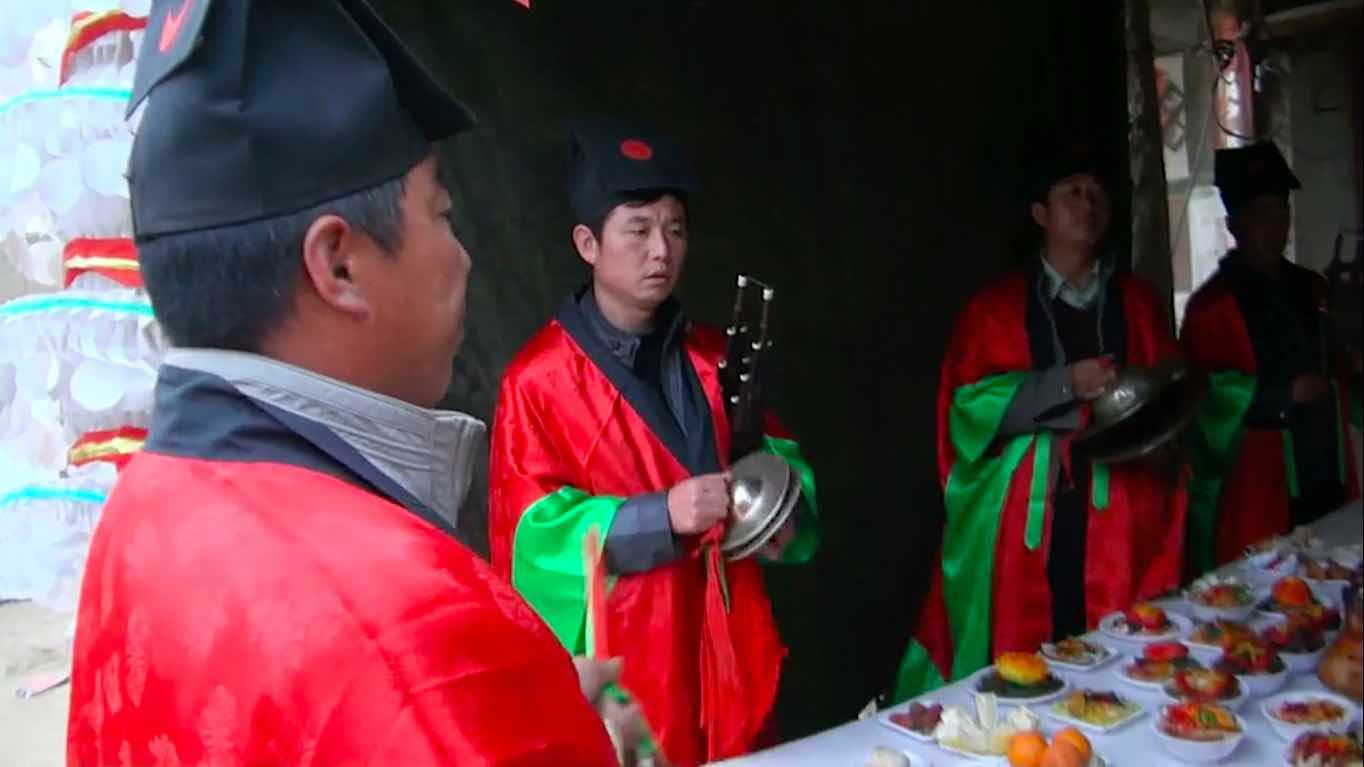

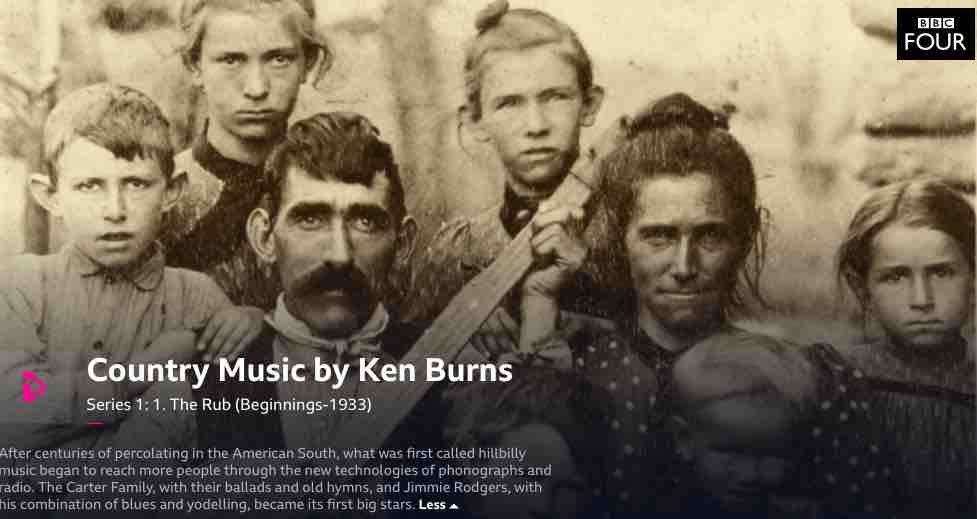

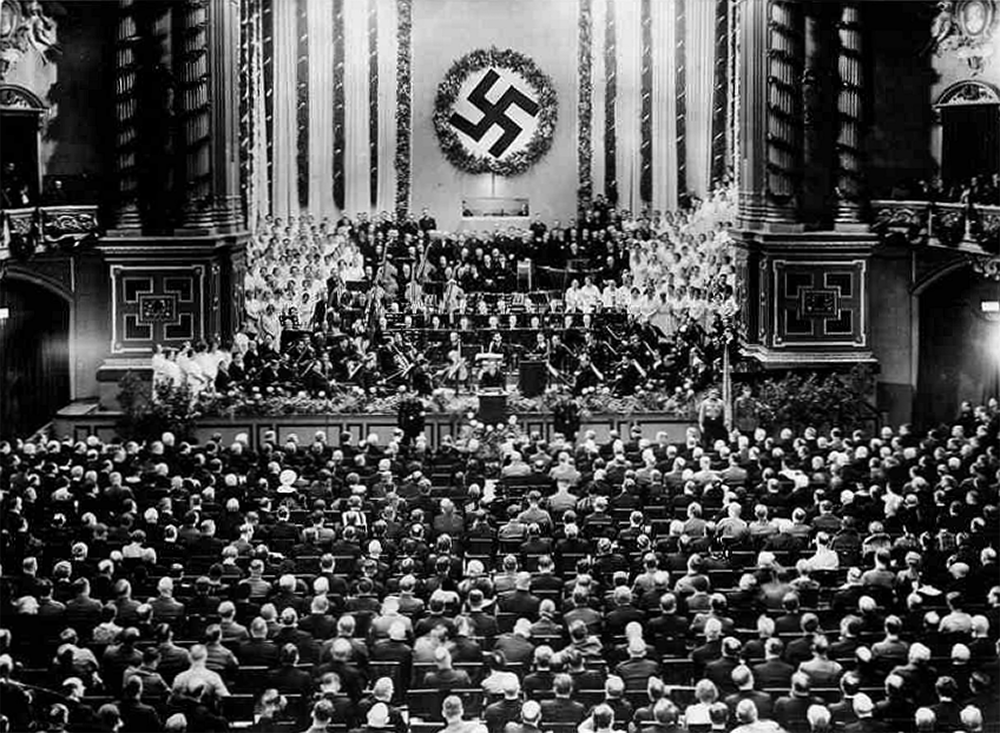
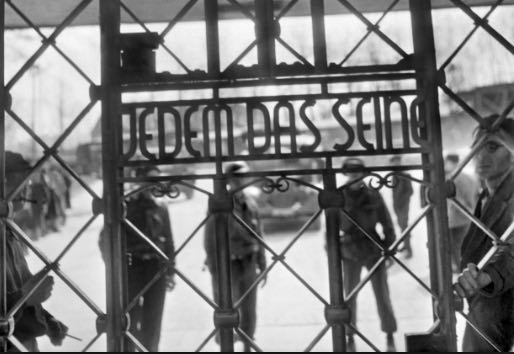


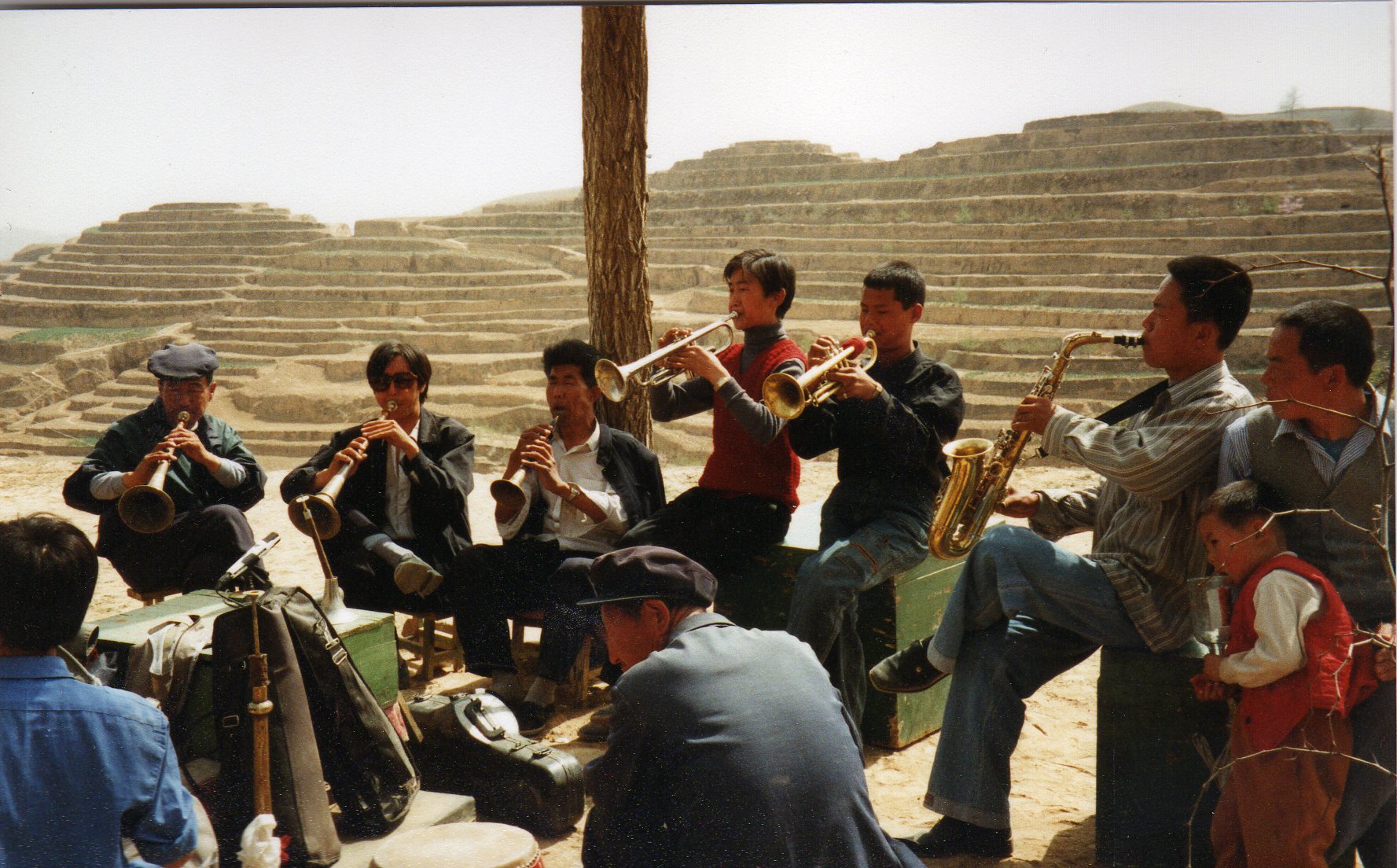
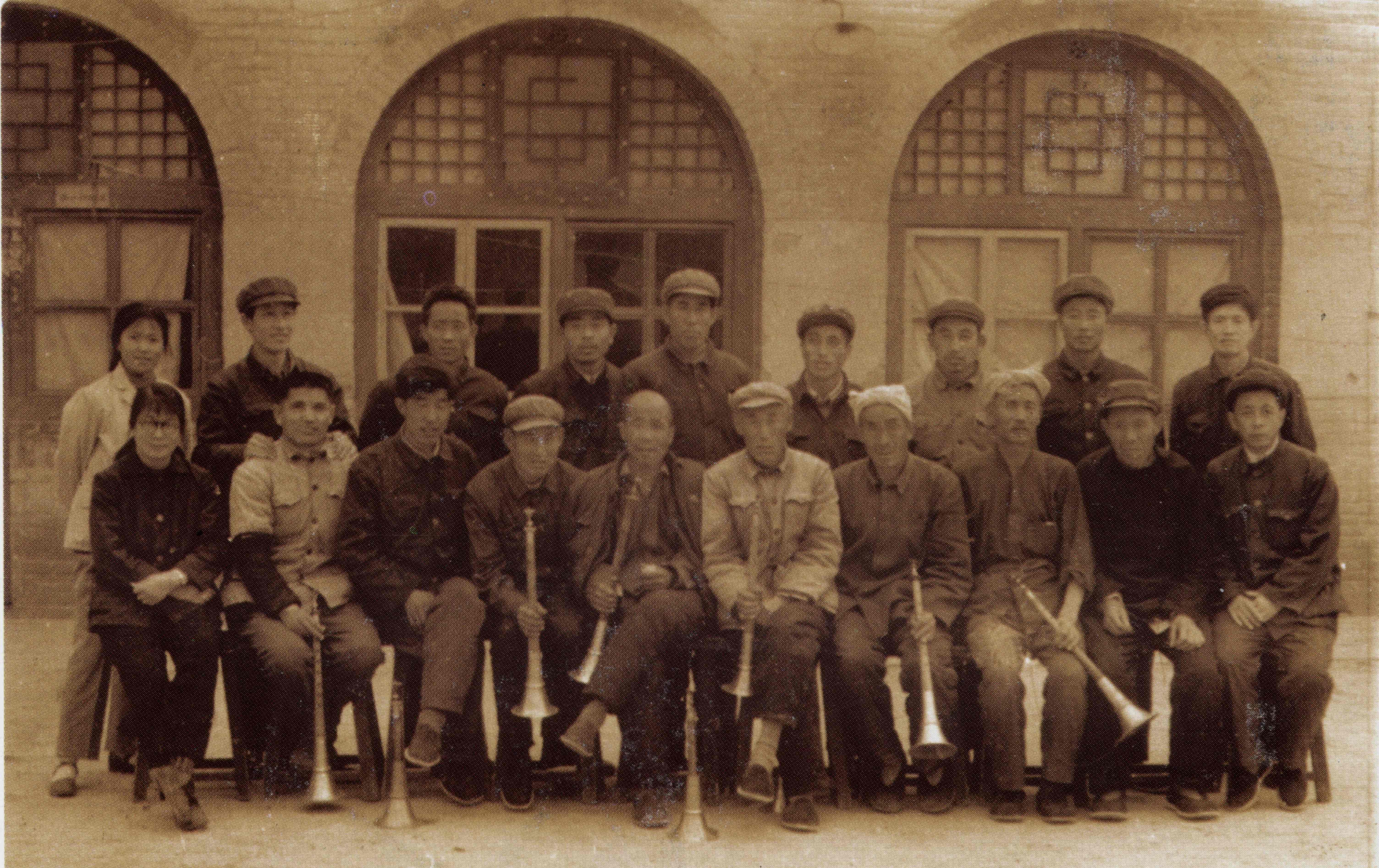 Shawm players from Mizhi county, assembled for a regional festival in 1981.
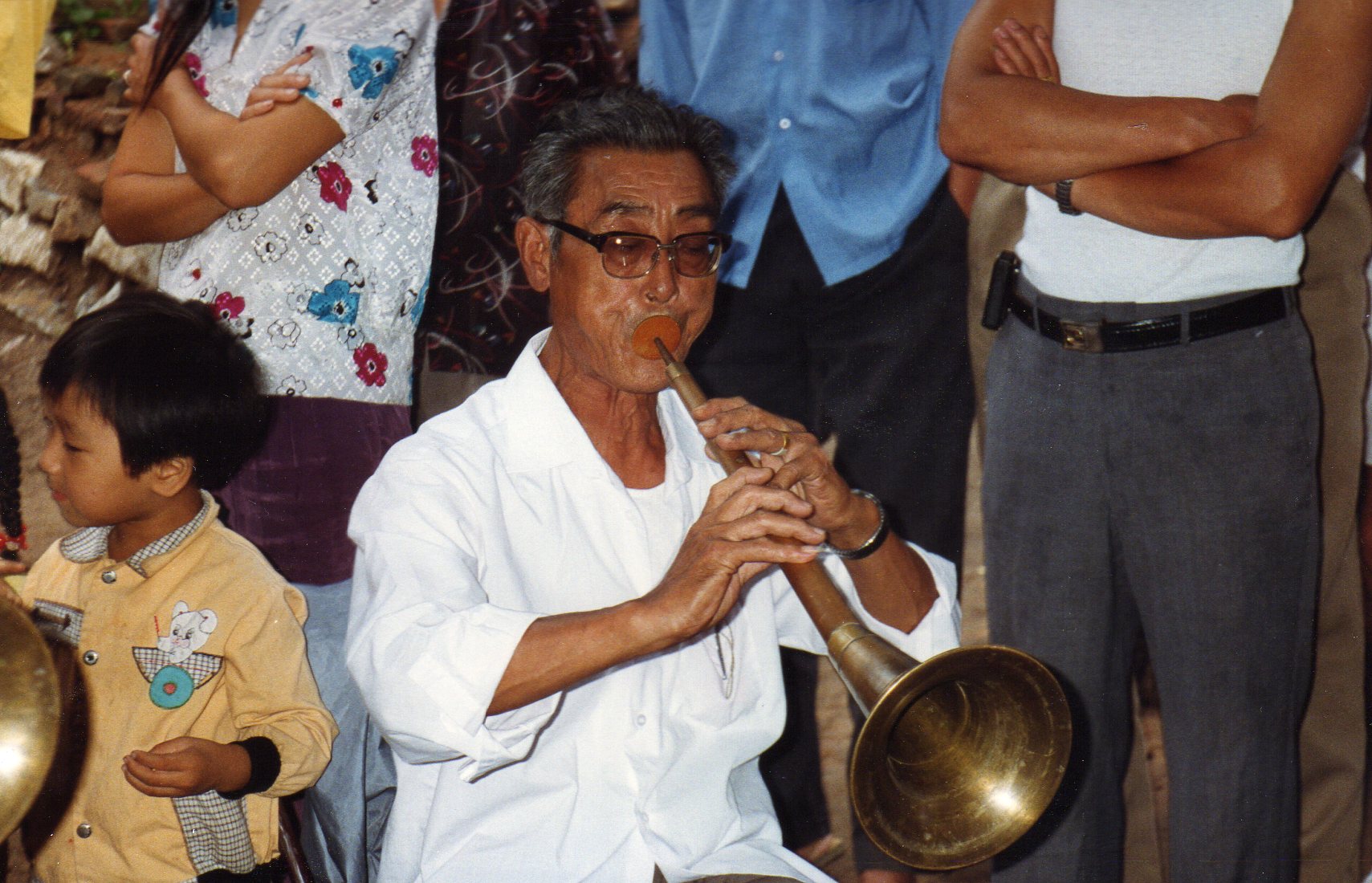


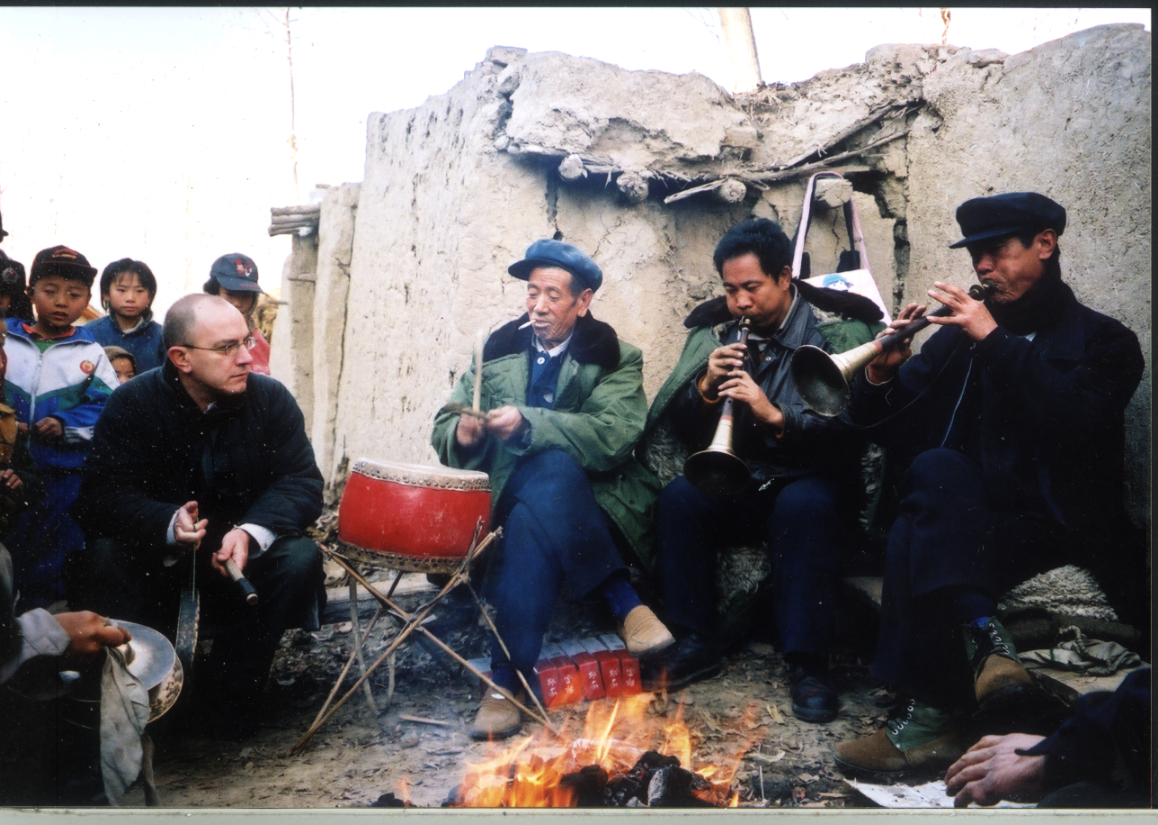



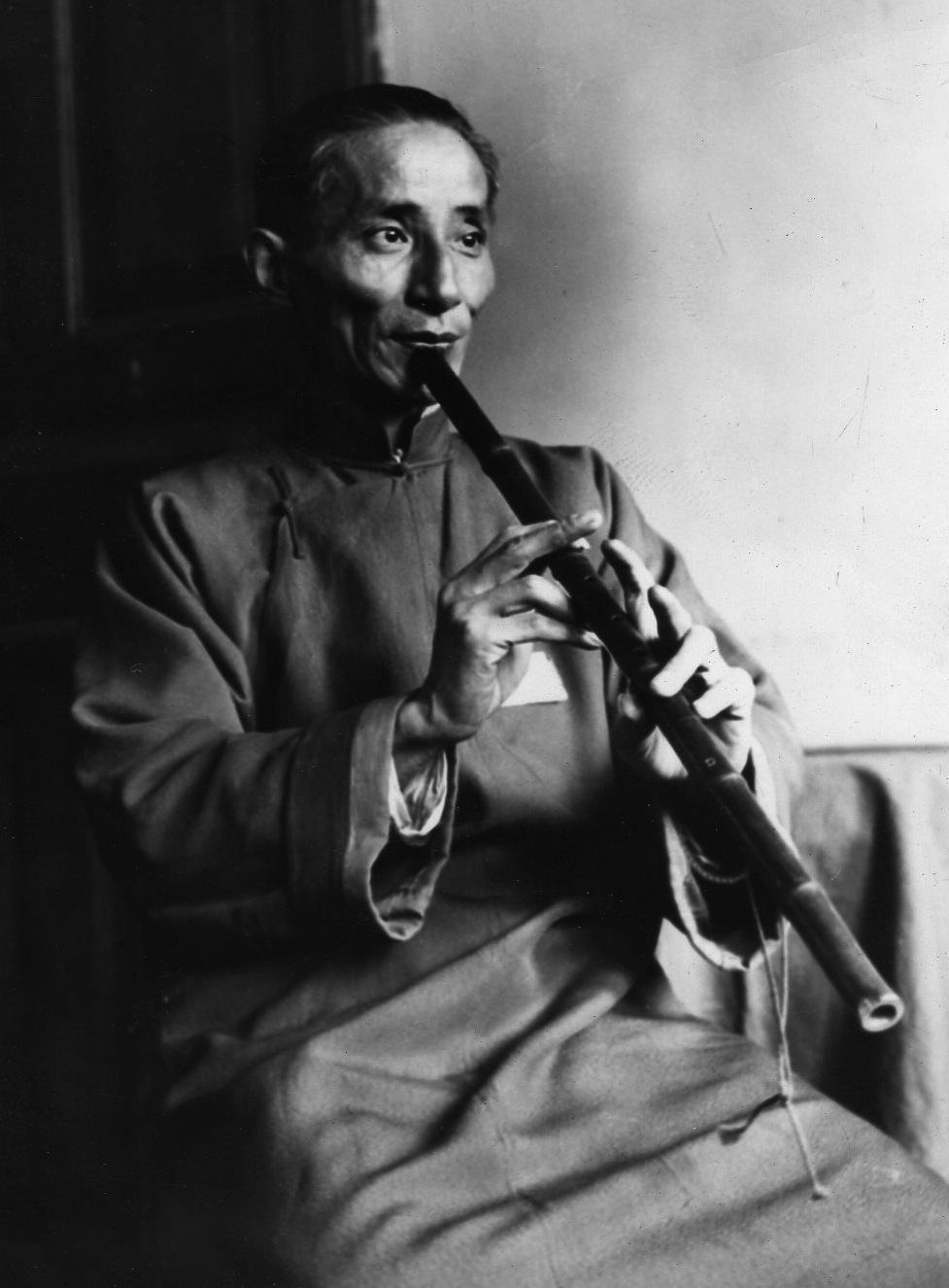
 In Wuxi, under the tuition of the American missionary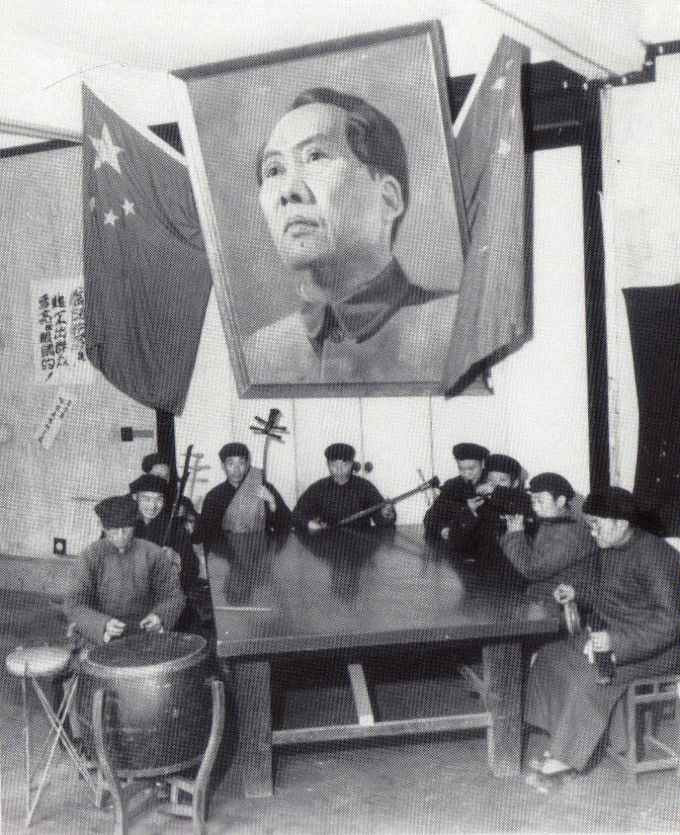




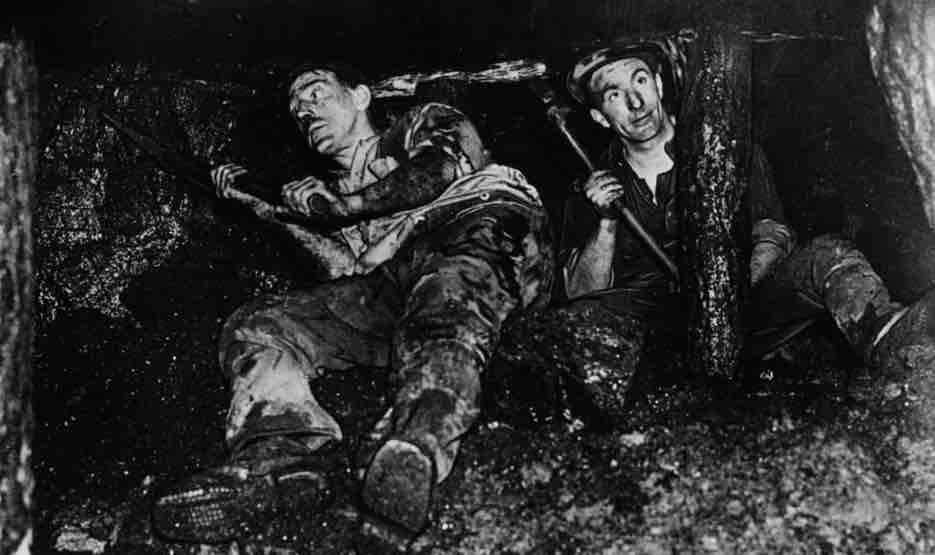


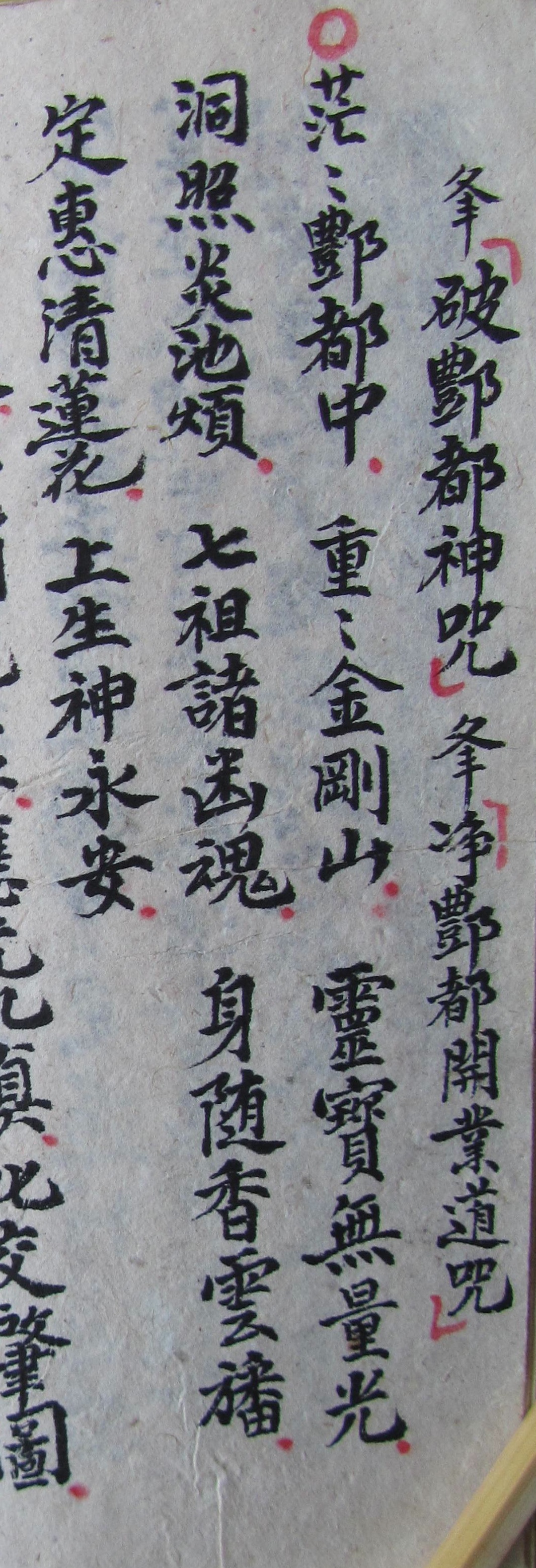
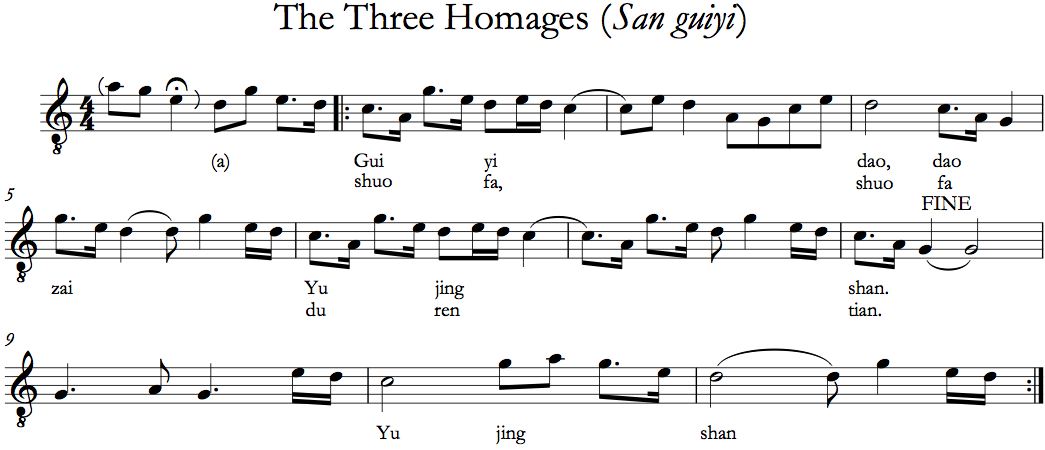


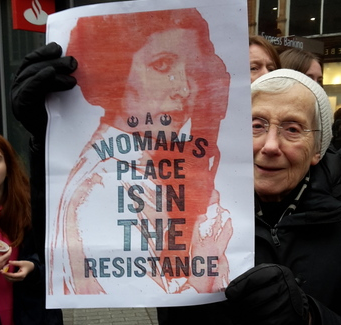



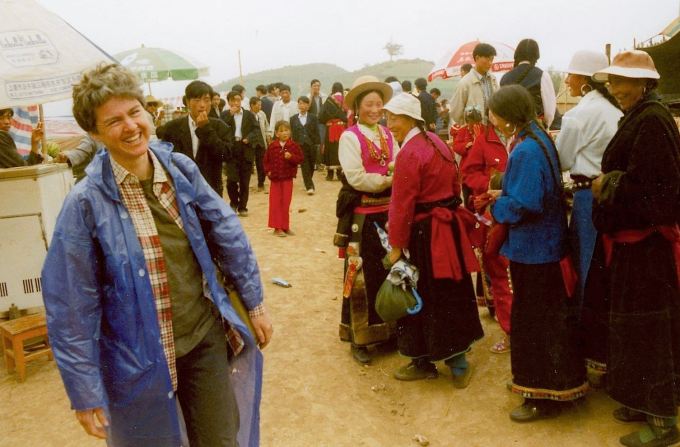


 Stephen Jones: a blog