Thinking back to my student years, I feel rather bad how I took Cambridge for granted—not least its architecture, such as the astounding ancient edifices that served as concert venues for us. Buildings like King’s College chapel only came to mean more to me later, when we were often condemned to performing in slick soulless concert halls—the airport lounges of WAM, where mere scientific “acoustics” rule OK. Of course, some of the older concert halls have acquired a patina—I think of Alan Bennett’s attachment to Leeds Town Hall (for the journey home, see here).
In Oxford I always loved the miniature Holywell music room, but again I somehow took it for granted. Built in 1748, it’s probably the oldest purpose-built music room in Europe, and Britain’s first concert hall. Wood is good—anyway it’s a wonderful room, both intimate and austere.
Not for the usual reasons, I remember rather little about the 60s (as they say), but I did go to a beautiful concert there around 1972 with the Allegri string quartet, led by my teacher Hugh Maguire. I love the way Hugh played the Mendelssohn A minor quartet. Actually, I love the way he played everything—here’s my tribute to him.
Oxford is also blessed with Christopher Wren’s Sheldonian theatre, where I’ve done many memorable concerts.
And then in London there’s the Royal Albert Hall—its in-the-round shape, with the arena, again encouraging a close relationship with the Proms audience (cf. the 18th-century Rotunda). Both building and audience somehow produce a special kind of silence. In Barcelona, the Palau de la Música Catalana has a wonderful atmosphere.
Broadening the theme to sporting performance, the Centre Court at Wimbledon is an exhilarating arena.
Indoor venues are contradictory. In the concert hall, where one “shares intimate and personal cultural moments with strangers“, the very size of the venue seems to mitigate against such intimacy, all the more since the audience is seated in long impersonal rows. The atmosphere of a jazz club, sitting cosily with drinks around little tables, is far more conducive; but economics, and snobbery, make it an unlikely format for WAM.
Of course, rather little music-making in the world takes place in purpose-built concert halls, and not so much of it even indoors. Try Chinese temple fairs, Moroccan ahouach, Andalucian flamenco, or the various ritual sites at a Navajo ceremony… And dingy low-ceilinged basements can host magical events too; venues like the Łódź YMCA, the Wigan Casino, or a church hall may make numinous locations for meaningful performance.
Ooh! I didn’t know we ’ad a king—I thought we were an autonomous collective.
Of course, joking aside, if the lyrics sound silly to us (OK then—to me), to less irreverent 18th-century ears they would have sounded imposing. Anyway, they are blown away by the music, one of the most exhilarating, spine-tingling openings to a piece ever. It always inspires reverence, even in me:
The male counter-tenor voice is well suited to the ethereal. In early music, apart from Michael Chance, you can find many brilliant singers—Andreas Scholl, Iestyn Davies, and so on.
Veering somewhat off the beaten track, here’s Klaus Nomi(1944–83) singing Purcell’s Cold song:
Nomi was singing the song shortly before becoming an early victim of AIDS. But it still recalls the vibrant experimentalism of the New York scene, with punk and so on—like Diaghilev’s Paris, or indeed New York after the war. For more on the American minimalist scene, try Alex Ross, “Beethoven was wrong” (The rest is noise, ch.14); and on BBC Radio 3, Tom Service.
Meanwhile England was buzzing too. Apart from punk, we had the films of Peter Greenaway, like The draughtsman’s contract (1982—just before Lost Jockey’s Buzz Buzz Buzz, and Madonna’s stunning debut album!) with Michael Nyman’s exhilarating minimalist take on Purcell:
Meanwhile, over on the other side of the world in a poor village in north China, Li Qing was leading the revival of his hereditary tradition of Daoist ritual, copying a full set of their manuals, preserved by his uncle Li Peisen. Indeed, having noted the importance of percussion for the minimalists, they might enjoy the cymbal patterns of the Daoists, with their complex hocketing.
Later (we’re back in England with the counter-tenor now), Martin Jacques, in The Tiger Lilies, was spellbinding too:
Sometimes on early morning swims I have the pool to myself for a while. It doesn’t get much better than that (“or does it?“).
As I swim, I think of Bach, and Daoist ritual [unbeatable Pseuds’ Corner entry—Ed.] Some aspects of swimming may intermittently involve the brain—like in crawl, concentrating on getting the hand shape right as it enters the water, pushes forwards, and starts to pull back; aligning the pull-back of the arm with the body, and so on.
In Daoist ritual, far from the cerebral, conceptual, philosophical, or spiritual learning of texts, physical memory plays a major role—motor movement, muscle- and (for sheng,guanzi, cymbals) finger-memory, the body; internalizing through ritual practice, experience, starting from young, like boys in any hereditary folk tradition such as the Li family Daoists.
Learning violin pieces is more of a private affair. Apart from physical practice, I’ve always internalized them silently too—while walking, dozing, swimming, and so on. Even away from the instrument, it’s a physical exercise: my fingers are always moving—like those of guanzi oboe players in north China. This has always accounted for quite a lot of “practice”—for me, anyway. I didn’t get where I am today.
But so much learning consists of simple repetition. I note that in French and Italian the word for rehearsal is répétition/repetizione (for more, see note here). So while swimming I engage the mind for a while and then empty it to let my body take over.
She sends up much of the avant-garde—including (sic) Benjamin Britten, whose Peter Grimes had been premiered in 1945. Here she gives a resumé of Bob Flatte’s new opera The Flayed:
For the benefit of readers who are not familiar with the work of Flatte it may be remarked that The Flayed is typical of his latest and most powerful manner, and deals with the tragedy of two types named Stan Brusk and Em Wallow, living in a Bedfordshire village. Em is Stan’s girl, but he loses her to Bert Scarr when the latter comes to work in the local tanning factory. Stan Brusk is a sadist who derives pleasure from tanning hides and has twice been publicly reproved by the foreman for gloating while at work. In a powerful recitative and aria Stan defies the foreman, describes the pleasures of tanning, and at last falls down exhausted under a vat.
A series of sinuous themes follows, intended to represent the smells from the vat winding over his unconscious body. In the dinner-hour Em creeps in with a pie, which she does not know has been poisoned by the fumes from the vat. Bert Scarr then enters. He and Em sing a duet, in which Bert confesses that he has always had a secret craving to be flayed like one of the hides in the factory and Em expresses her horror and scorn of him. At last she falls under the vat on top of Stan, who recovers consciousness and misunderstands her action. Em, Stan, and Bert are then overcome by fumes from the vat, and dream they are in Hell.
The Weeping Skeleton’s song which follows has been said to refute, once and for all, the accusation that Flatte’s operas lack light relief. The song may not represent humour as it is generally understood, but to deny that the theme of four minor chords given out in glissando form by the first violin and repeated in fugue form by solo instruments one after the other until it ends abruptly on the drums is expressive of a rationalised and resigned humour (perhaps most akin to irony) is merely imperceptive.
Em recovers first and revives Bert with a piece of the pie. The foreman comes in accompanied by a chorus of Operatives and Tanners and accuses Bert of slacking. Bert, already poisoned, and driven by his neurosis, jumps into the vatful of skins and is suffocated. Em eats some pie and dies. Stan stabs the foreman with his penknife (a present from his mother on his seventh birthday, and symbolizing her neurotic hold over him) and the foreman dies. While Stan is singing the Flagellation Song and driving out the chorus of Operatives and Tanners with a whip, his mother, Widow Brusk, enters. After she has sung an aria in which she confesses that Stan is the illegitimate son of a taxidermist who seduced her in early youth, thus accounting for her son’s sadistic obsession, Stan symbolically attempts to skin her and they both become insane. The opera then ends. It was to represent English music at the International Music Festival the following year.
Which is as good an excuse as I need to play this:
Of course it applies widely to world cultures (cf. Italy). Even under the umbrella of WAM, there’s a fluid canon changing over time, with many outer rings; socially too, it’s not just the professional symphony orchestras. And Indian music is far more than sitar solos.
As to Daoism, it’s far more than the Daoist Canon and the White Cloud Temple; and far more than wise southeastern Daoists doing their mystical sublimation in the course of a jiao Offering. And Daoist ritual—over China, north China, Shanxi, north Shanxi, and even in the north-eastern central area of Yanggao county, is far more than the Li band!
A trumpeter has enjoyed a convivial night out after a gig. Staggering back to his hotel in the small hours, he manages to recall that the band has an early flight, so (congratulating himself on his clear-headed practicality) he walks unsteadily up to the receptionist and asks her in suave yet slurred tones,
“I say, would you be so kind as to book me an alarm call for 6.30?”
“Certainly sir,” she replies. As he staggers off she calls after him,
“Um—you do know it’s 6.45?”
And one about another trumpeter:
After a gig in New York, he’s fast asleep when the phone rings.
A jaded voice drawls,
“Did you book a wake-up call?”
“Oh, um… yeah.”
“Have you had it yet?”
“Er… No.”
“Well, WAKE UP.”
Cf.
The early bird gets the worm. But the second mouse gets the cheese.
Perhaps it’s time for a pensée, or apercu, about some of the seemingly incongruous juxtapositions on this blog.
I realize some of these jokes may try the patience of disgruntled readers who have come here, in all innocence, seeking insights into the Wisdom of the Ancient Sages or the Mastery (sic) of the Great Composers. And indeed vice versa: anyone here for laughs will be pretty cheesed off to have to plough through blow-by-blow accounts of Daoist ritual and Messiaen.
Humour has always played a major role in my rapport both with my colleagues and local subjects—but that’s not the card I’m going to play.
Rather, humour can serve to console, to resist, to create ludic connections. It’s no more universal than music—but just as in Daoist ritual (which not only uses language creatively but incorporates segments to entertain mere mortals), and just as in WAM (thinking, for instance, of Haydn and Mozart), humour reminds us of our humanity.
Anyway, I like it.
Jokes (again, like Daoist ritual) are created by people, they take on a life of their own, transmitted in different versions over time for changing audiences. And despite silent, empty, versions in print, they thrive on and evolve through live interaction in performance.
However (and once again, like ritual or music), I’m sure this can become less satisfying for the professional, churning out the same routine night after night for an unfamiliar audience. That’s why Stewart Lee is so great, and it’s what makes his book How I escaped my certain fate so thoughtful. But that’s not important right now.
À proposorchestral humour, Stewart Lee does a typically labyrinthine riff giving the old sardine joke his signature going-over:
Loath as I am to spoil the fun, in the WAM biz where people used to employ me, this story is famously attributed to the master-percussionist and all-round piss-artist Gary Kettel.
A hooliganesque Cockney, Gary was What They Call “a breath of fresh air” in the staid orchestral scene. During Boulez’s années dorées at the helm of the BBC Symphony Orchestra, conducting many challenging works, he much admired Gary’s musicianship, and they formed a charming and unlikely bond (see this story).
The version of the sardine joke handed down to posterity in the orchestral biz (which beyond Gary’s own recollections has some further effective, if fanciful, detail) goes like this:
Once (this must have been in the mid-70s) he was on tour in South America with the London Sinfonietta, doing the, um, challenging Eight Songs for a Mad King.
So Gary’s at this fancy British Council reception after the gig in Buenos Aires or somewhere, getting quietly pissed in a corner on his own, and this posh bird comes up to him and goes,
“I say, I don’t believe we’ve been introduced—weren’t you playing in the concert? I did so enjoy your delightful rendition of that charming work!” [that’s a nice touch, by the way, if you know the piece, “but that’s not important right now”].
“Do please remind me,” she goes on, “what was it you were playing?”
“Oh, I fool around a bit on the drums, luv,” goes Gary—”So wot you doin’ ‘ere then?”
“I’m here with my husband.” she replies loftily.
Gary goes on, chummily, “An’ wot does your old man do then, darlin’?”
“My husband’s in oil!” she exclaims, proudly.
Gary goes, “What is he, a fuckin’ sardine?”
I like the details here. And the punchline is a good instance of the importance of the word “fuckin’ ”—not least for rhythm and euphony. The story also reflects musos’ own delight in “deviating from behavioural norms”.
Keen as I am on the ancestry of texts (my book ch.11), just as one does in exploring the relation and transmission of Daoist texts (well, I say “one”…), I wonder: Gary’s not sure, but could he have heard it from Tom O’Connor, or did they both get it from someone else, and so on (zzz)?
The Tom O’Connor version is less personal and less funny—which is precisely what makes it a suitable victim for Stew to mangle, a banal ground-bass lying prone for his endless florid divisions, a Goldberg variations from hell…
For further detail, see How I escaped my certain fate, pp.257–69—by now tuned into the De Selby footnotes in The third policeman, (and here), you will find further verbose and erudite annotations there too.
For another reception story, see here, on George Brown, pissed at a reception in Peru.
John Cage, Cuernavaca, 1973. Photographer: Dorothy Norman. Courtesy of the John Cage Trust.
Here’s a treasured letter I received from none other than John Cage (eminent mycologist to boot—Harmony of the Spores, that’s a good one) in 1972, when I was 18—replying to my bold schoolboy enquiry about the Yijing(as we later learned to call it) and impertinently asking if I could become his pupil:
Isn’t that lovely? Writing by hand, charming and to the point. Those were the days… This was long before I got hijacked by Daoist ritual, but it reminds me of my then absorption in Zen and Chinese mysticism. The energy of those times—by contrast with China, just after Li Manshan got married, amidst the stagnation following the worst excesses of the Cultural Revolution…
Apart from all Cage’s aleatoric explorations, and my personal preference for 5’20” over 4’33”, the Sonatas and Interludes for prepared piano (1946–8—the heyday of Bird, Dizzie, Miles, and Billie (You’re my thrill, 1949), while Messiaen was composing Turangalîla; and the eve of the Communist takeover in China) seem to echo gamelan, cimbalom, or santur:
Norman Lebrecht has long laid bare the links of celebrated senior conductors (as well as Karajan…) to Nazism: it’s one subtext of his fine book The maestro myth.
I just read his review of Fritz Trümpi, The political orchestra: the Vienna and Berlin Philharmonics during the Third Reich.
The book actually takes the story through to our own times. As Lebrecht observes, neither orchestra emerges with any credit—indeed, it’s a shocking account.
For me, as a teenager in the National Youth Orchestra (of GB), another inspiring conductor (apart from Boulez) was Rudolf Schwarz (1905–94). Member of the Vienna Philharmonic in his youth, later inmate of Auschwitz and Belsen, after the liberation of the camps he eventually ended up in Bournemouth, remoulding the orchestra there. His Bruckner 7 with the NYO was wonderful—all the more intense with his laboured conducting style, partly the legacy of a broken shoulder-blade in Auschwitz. Never a superstar in the Karajan mould (which was why musicians appreciated him), he was a formative influence on the young Simon Rattle, my contemporary in the NYO.
Bruckner 7 is in the incandescent key of E major, just like the basic scale of the Li family Daoists‘ shengguan ensemble—I often think of it while I listen to the shengguan piercing the bright blue sky of rural north China (e.g. playlist, #4, with commentary here).
Meanwhile, as Rudi was being dragged through the camps, here’s WilhelmFurtwängler conducting the Adagio with the Berlin Philharmonic in 1942. Like Philippe Sands’ choice of Bruno Walter conducting Mahler 9 in 1938— and just as with Daoist ritual—we have to personalise such seemingly disembodied works, and place them in time.
You can find a newly remastered version here. For Celibidache’s Bruckner 7, see here.
Furtwängler’s relationship with Nazism has been much debated. Generally reluctant to collaborate, he did what he could, even helping some Jews escape, and with close ties to the resistance. Yet inevitably people baulk at his participation in events like this Beethoven 9 for Hitler’s birthday, also in 1942:
Lebrecht sums up his legacy (The maestro myth, p.93):
In Furtwängler the Nazis retained an interpreter who performed German music with undiminished conviction while genocide was committed in his name. By opting to remain, he endowed the Nazis with cultural respectability at a crucial moment in their ascent, and in wartime gave moral sustenance to their cause. In his confrontations with tyranny, Furtwängler proved a feeble adversary who was all too easily manoeuvred into outright collusion. The humanity he expressed in music was traduced and travestied by his paymasters. His legacy as a performer may well be among the most significant in the annals of conducting, but his conduct under political pressure compromised the very profession on which he wielded so formative an influence. [for Lebrecht’s more recent exposé, see here.]
Still, it’s easy for us to say that. Reflecting on the Nazi era from the perspective of our blessed safety from invasion and agonising choices, Neil MacGregor poses the disturbing question “What would we have done?”. In his brilliant 2014 book Germany: memories of a nation (and no less enchanting are his podcasts—the perfect Radio 4 voice!), using both works of art and everyday material objects, he ponders how we can fit the great humanistic traditions of Germany into the same picture with Nazi barbarism. And having suffered throughout this whole period, people of Central and Eastern Europe would still have to continue making appalling moral choices for decades to come.
Apart from MacGregor’s astute discussions of earlier historical artefacts, one can’t help being drawn into those from more recent history—like the slogan (“to each what they are due”) above the camp gates of Buchenwald—just a few miles outside the Weimar of Goethe and Bach:
MacGregor observes the noble lineage of words that had once signified an ideal of justice—the very words that Bach used as the title of a cantata in 1715 Weimar. Indeed, as a prelude to John Eliot Gardiner’s epoch-making Bach Cantata Pilgrimage all through 2000, I played a modest role in the Christmas oratorio at the Herderkirche in Weimar—here’s Part One. Next day we all visited Buchenwald.
I’m not sure we can derive any encouragement from MacGregor’s idea that the stylish lettering of those words above the gate (designed by an inmate, Communist and former Bauhaus student Franz Ehrlich) might be read by fellow inmates as a subtly subversive message that the SS would eventually get their just deserts. By the way, Ehrlich survived, also disturbingly, to become a Stasi informant under the GDR.
MacGregor gives a fine diachronic survey of Käthe Kollwitz’s work,
as well as the incarnations and migrations of Ernst Barlach’s Hovering angel (1926, cf. the 1966 GDR film The lost angel),
But he also discusses movingly the “rubble women” (Trümmerfrauen) who rebuilt shattered Germany after the war, and objects such as a little hand-cart pulled by refugees from Eastern Pomerania in late 1945—now reminding us tellingly of the refugee crises of our own day.
But to return to Trümpi’s book, this tale of two orchestras brings us, shamefully, right up to the lives of my generation and later. It was not until 2013 that the Vienna Philharmonic revoked the Ring of Honour it had bestowed on three leading figures in the Nazi genocide—including Richard Strauss’s patron Baldur von Schirach, who (also in 1942) described the deportation he oversaw of 65,000 Viennese Jews to the death camps as a “contribution to European culture”. Indeed, our feelings about those celebrated Viennese New Year’s concerts can’t help being stained by learning that it was Schirach who instigated them.
As an aside, these orchestras haven’t exactly been at the forefront of gender equality either. Competing hotly in the misogyny stakes with “Rear Admiral” Foley, Karl Böhm (a Great Maestro far more flawed than Furtwängler) is quoted as saying that “the Nazis aren’t that bad—they want to eliminate women from politics.” Digging himself into a deeper hole, he went on, “Of course, not all women are worthless—Rainer Maria Rilke [sic] wrote some good poems.”
And now there are new causes for anxiety, threatening all the liberal values that have been achieved so painfully over several centuries.
Shawm-and-percussion bands play a major role in folk ceremonial around the world, notably in the Islamic world and Europe (see this roundup, as well as this sample playlist). In China, male shawm bands are byfar the most common form of instrumental music, performing mainly for life-cycle and calendrical rituals—in extreme contrast to the media image of glamorous female soloists on the concert platform.
Bands are widely known as “drum music bands” (guyueban 鼓乐班), the players as “blowers-and-drummers” (chuigushou 吹鼓手) or just “blowers”. In north Shanxi they are called “drum artisans” (gujiang 鼓匠). There they alternate with household Daoists, and often go on procession together. But overall they are more ubiquitous and indispensable at funerals and temple fairs than groups of ritual specialists.
To give you an idea of just how common these bands are in China, take the Anthology volumes on instrumental music for Liaoning province. No solo pieces are documented, nor any pieces for strings; instead the coverage comprises four wind ensemble genres:
the music of the shawm bands (guyue 鼓乐);
shengguan 笙管 pieces (here a subsidiary repertoire of the shawm bands)
yangge 秧歌 pieces (again played mainly by the shawm bands); and
“religious music” (sic), with subheads for Buddhist and Daoist music, including vocal liturgy, percussion, and shengguan pieces.
This overview for one single province contains 1,491 pages, of which 1,113 pages are devoted to the shawm bands—and as ever, the material published on them was only a tiny proportion of that collected.
That’s an outline for one whole province. In 2001, within the single county of Mizhi in Shaanbei, a local band boss estimated that there were 138 bands working at least part-time there. Again, contrast the qin, with its tiny elite coterie of players, and its vast media presence.
It’s the majestic timbre, heterophony, and complex repertoire of long suites of northern bands, played on XXL shawms, that appeals to me particularly. While my main focus has always been Daoist and Buddhist ritual, its vocal liturgy accompanied by shengguan ensemble, I realised I had to give serious attention to the shawm bands too. So from 1999 to 2005 I took some lengthy time out to document them. My two books Ritual and music of north Chinaare largely about such bands, in north Shanxi and Shaanbei respectively; both include DVDs. [1]
Status and disability Shawm bands were always at the bottom of the social pile. Virtual outcasts, they were often illiterate, bachelors, opium smokers, begging in the slack season, associated with theft and violence. Freelance like household Daoists and carpenters, they had difficulty adapting to the straightjacket of the commune system, but revived by the 1980s.
At least until recently, shawm players often had some disability, notably visual. In north Shanxi, in Yanggao town alone, blindmen Liuru (c1931–2007), Erhur (b.1946), and Yin San (b.c1947), were all fine players and delightful people (for more on blind shawm players in Yanggao, see here; for posts on blind musicians, here).
Liuru (left) and Yin San, 2003.
In China and much of the world, blind musicians are thought to have special musical gifts. Erhur learned, and loves to sing, the gongche solfeggio, but pointed out playfully, “Only a stupid musician needs notation”! Take that, qin players (see also here)!
Erhur, 2003.
Elderly Liuru, living in pitiful conditions, was also devoted to the gongche of the suites.
Liuru’s shack in Yanggao county-town, 2003.
I also met several stammering shawm players. Like the fraternity of one-legged men in The third policeman, as a stammerer myself I naturally identified with fellow sufferers like Yuanr, the young shawm band boss in Zhenquan township, Shaanbei—bluntly known as “The Stammerer” (Jiekazi). When I introduced myself he thought I was taking the piss. Both his colleagues and mine had a terrible time trying to conceal their mirth once we got ch-ch-chatting. Imagine the number of tapes you’d need to record the interviews.
Blind boys also often become itinerant bards. For Shaanbei, see here; for a harrowing tale of blind bards in Zuoquan, Shanxi, here; and for blind bards in Gansu, and great songs on the Coronavirus by stammering folk-singer Zhang Gasong, here.
North Shanxi I studied the Hua family shawm band in Yanggao county (also home of the Li family Daoists) on and off from 1991 to 2005. Over the years I got to know many other bands in Yanggao too; since 2011 it’s been a pleasure to continue meeting them at funerals. Yang Ying, a regular dep for Li Manshan’s Daoist band, is also the leader of his own family shawm band, one of the finest in the area. Shi Ming, Li Qing’s friend from their days in the regional troupe, led a great band in Wangguantun just west.
Shi Ming’s band, Wangguantun 2001.
The Hua band played magnificently, despite being totally dysfunctional as a family. Led by two senior brothers on shawm and drum who were barely on speaking terms, they played in perfect ensemble, with complex heterophonic melody, and meticulously graded tempi. I still admire their artistry as much as I admire the Li family Daoists.
We did some great tours together (Washington DC, Holland, England), and made the most spectacular CD, Walking shrill, that should be part of everyone’s collection—go on, order it, it’ll blow your head off! Otherwise, there’s this playlist:
While we’re about it, I wrote a long detailed analysis:
“Living early composition: an appreciation of Chinese shawm melody”, in Simon Mills ed., Analysing East Asian music: patterns of rhythm and melody, Musiké vol.4 (Semar, 2010), pp.25–112.
Only slightly less complex is this intriguing excursion—and there are two tracks (#5 and 11) on the audio playlist in the sidebar, with commentary here. See also these notes on our first visit.
Here the classic style consists of long suites for large shawms. But since soon after I began visiting (“Typical!”), as my books show, such majestic music has largely become a casualty of the “big band” pop style adding trumpet, sax, electronic keyboard, and drum-kit. Hey ho.
Shaanbei
Chang Wenzhou’s big band at village funeral, Mizhi 2001.
Further west, the barren loess hills of Shaanbei (see under “Elsewhere” in main Menu), heartland of the revolution, are renowned inter alia for their shawm bands (chuishou). We met many bands there.
Shawm players from Mizhi county, assembled for a regional festival in 1981.
Scholar Huo Xianggui, who began collecting Shaanbei shawm music as early as 1971 (!), had regular contacts with some of the great players, including Jin Wenhua, Hao Yongfa, and Chang Wenzhou. In another a revealing story about status, revealing the chuishous’ own sense of inferiority, he tells of an incident with the great shawm player Li Daniu—a poor illiterate opium-addicted bachelor. The Party hoped to cultivate Li’s talent by recruiting him for a state troupe, but he found it hard to adapt. One morning Huo invited Li Daniu to his room, and wanted to take him out for breakfast, but Li wouldn’t go. As Huo was about to go off to get food to bring back, Li insisted on squatting outside to wait for him, with the room locked; only half-joking, he said, “How am I supposed to explain if something in your room goes missing?”
By the 1990s, most distinguished of shawm players in the area was Chang Wenzhou, also a fine luthier, though he could be almost as difficult as the Hua brothers. Li Qishan’s rival band was also very fine.
By contrast to the mercenary atmosphere in Mizhi county-town, I enjoyed my time in the hill village of Yangjiagou with the lowly and unsung village band there. Of no great technical distinction, they merely supplemented their livelihood by doing occasional funerals. The two leading shawm players there, Chouxiao and “Older Brother” (on the left of the photo), semi-blind, were delightful unassuming people.
The Yangjiagou band playing for a village funeral there, 1999.
The 1999 funeral sequence from Yangjiagou is one of the highlights (§B) of my DVD Notes from the yellow earth, that comes with my 2009 book.
The northeast As a kind of footnote, both to this post and to my account of our 1992 fieldwork, in summer 1992, just after our trip to Shanxi, we visited southern Liaoning province to seek shawm bands there.
Northeast China is also renowned for its majestic bands with large shawms. [2] The editor of the Anthologyfor Liaoning (see above), Yang Jiusheng 杨久盛, had a rare grasp of the material—like his fine colleague in Jilin province, Li Laizhang 李来璋.
Through Yang Jiusheng we found a wonderful young scholar in Panjin county called Li Runzhong 李润中. He was himself son of a fine shawm player—so he had already done rather well for himself. Besides making the usual transcriptions from his recordings, he had diligently collected rich material on social contexts (including photos, maps, and diagrams), and written brief biographies of some of the leading shawm band players and ritual specialists in the county. Locally published in several thick volumes, his work, like the music of his county, is likely to remain unknown.
This was a period when the Anthology was in full swing, but it was also an insecure time after the chipped “iron rice-bowl” of the commune era. Under Maoism people, in their villages and secure work-units, knew they were screwed; now they had to go out and fend for themselves, and would probably still get screwed. But Li Runzhong, like our friends in Hebei, was passionate about doing the fieldwork.
A vast archive of precious recordings for the Anthology languishes unpublished. Perhaps it was then that I realised someone would have to document this major aspect of Chinese musical life for outsiders.
Liu Yongqing (b.1922) at funeral, Liaoyang city, 1992: #6 in Audio gallery, with commentary here.
Here are two pages of images from the Anthology volume on Jilin province:
Further south many bands play a rather light repertoire, though there are some fine genres. Fujian province, not commonly associated with shawm bands, is full of them, as shown in the Anthology coverage—such as the longchui 笼吹 of south Fujian (#15 on playlist in sidebar, with commentary here); the Shiyin bayue 十音八乐 of Putian, better known for its “civil” ensemble with strings, also has a ceremonial repertoire for shawms:
Technique Using circular breathing, the two shawms play continuously in heterophony, often an octave or two apart. Home base (cf. the sheng) is the lowest note, do in the basic scale; the upper player often “walks shrill” with soaring and searing high notes. With drum, cymbals, and gong thwacking away too, the sound is deafening even from a hundred metres away, but sitting in the band is a serious yet intoxicating challenge to the ears.
Our SOAS shawm band Now from the sublime to the ridiculous.
Having taken part occasionally, and sketchily, in the ritual associations of Hebei on yunluo gong-frame and even sheng, I eventually took the plunge with the shawm too. Shawm music is much harder to learn than either the ritual shengguan ensemble of the Daoists or their vocal liturgy; the instrument itself is a challenge (certainly for a baroque violinist…), and the wild improvised decorations can only be learned through prolonged exposure from young. But hey—I knew it would help me get a handle, however rubbish I was.
I accompany Hua band for funeral, Wangzhuang village 2001. Photo: Chen Kexiu.
At first I didn’t try taking part with the Hua band, but when I got to Shaanbei in 1999 I thought I might have a go on the shawm. Chang Wenzhou showed me the ropes, and I tried a few pieces out with Dage and Chouxiao in Yangjiagou.
With Feng Xiaoping’s band, Yulin 2001.
In 2001, after more fieldwork in Shaanbei with my Beijing colleagues, I spent some time alone in Yulin, the regional capital. Putting aside my scruples about such a culturally inappropriate context, I went for daily “lessons” several times a week, one-to-one with a younger folk player, Feng Xiaoping. He got his band together for an informal “graduation concert” in his courtyard for bemused neighbours (well, they didn’t have much choice). After getting through a little suite I was completely knackered. The place names used at the dentist sprung to mind. As in Teach yourself Japanese, I drank a little beer.
In Yanggao with the Hua band in 2003, I mainly stuck to cymbals or gong—like their sons do from aged six!
In 1999 I had come down from the mountain, like Moses (also a stammerer, I note), with a whole set of instruments made by Chang Wenzhou. At SOAS I now had a little coterie of like-minded ethnos: Rachel Harris, Simon Mills, Manuel Jimenez, and Morgan Davies, all fine musicians, experts in their own various genres (Uyghur, Korean, Indonesian, Indian), and great mates. So, just for fun and our own instruction, we boldly decided to have a go at learning a few pieces. This is not like learning the erhu in a conservatoire—they are wild complex long semi-improvised pieces.
We made enough progress to give the occasional gig for suitably uncritical audiences—at CHIME conferences in Venice and Sheffield (not Scunthorpe), at SOAS, and even on procession (aha!) at the Lord Mayor’s Parade. We strung a few pieces together in little suites, and had a lot of fun.
Later I also bought a set of instruments in Yanggao (like “the music itself”, they vary from region to region—it’s no good playing Shanxi repertoire on Shaanbei shawms, or vice versa!). We all loved the Hua band’s wild repertoire, but it was considerably more daunting than that of Shaanbei. Still, I had all my recordings and videos, and I was making transcriptions anyway, which served as a useful crutch—another compromise, since picking it up entirely by ear would have been a challenge too far for us. Rachel, Simon, and I took turns on the two shawms, and since the drum is always an anchor, we relied heavily on the intuitive brilliance of Manuel Jimenez.
Then in 2005 I managed to get the Hua band invited for a tour of England. My old friend Bureau Chief Li, from the Datong regional Bureau of Culture, who had acted as “group leader” on the band’s 2002 DC trip, came along for the ride again.
Bureau Chief Li has always been most tolerant, nay supportive, of my fascination for folk culture—like a bemused dad baffled by his son’s obsession with Aston Villa. On the National Mall in DC, taking one look at all the performance tents set up for a mind-blowing array of groups from all over the Silk Road, he exclaimed, “Hey Steve, you bring us all this way and they’re supposed to play for another bloody temple fair?!” In England our most delightful gig was in Portesham Village Hall in Devon, home to a great jazz series. This time Bureau Chief Li chuckled, “WTF?! You’ve gone and done it again, Steve—this time you’ve got us a gig in the sodding village brigade headquarters!”
Anyway, during this visit, SOAS impressively invited the Hua band for a brief residency. We solemnly assembled daily in a little recording studio in SOAS and took turns joining in with the band on all the various instruments. One evening Morgan and I took a couple of the youngsters to a blues bar—though no strangers to the considerable vices of Yanggao town, they seemed a little nonplussed.
Now that we’re dispersed to the far corners of the globe, or at least of England, we’re all deeply nostalgic about those years. It’s not that we did it at all well—it could sound excruciating—but we learnt a lot, and it was the perfect way to work up a thirst for a good session in the nearby art-deco bar of the Tavistock Hotel, not least in memory of hosting the Hua band there in 2005.
Alas, the Hua band has since gone the way of many “blower-and-drummer” families. Drummer Hua Jinshan survived a stroke onstage in Amsterdam later in 2005. Falling ill there doubtless saved his life: if it had happened back home in Yanggao, it would have been curtains. As he recovered in hospital, I could only obey his pleas to wheel him daily to the courtyard for sneaky fag along with a motley crew of inmates. But his younger brother Hua Yinshan died of cancer, and Wuge, Yinshan’s son, was stabbed to death in an unsavoury brawl.
My usual rant (For a similar one, see here; see also this). If you’ve heard me go on about this before, then go and pour yourself a large G&T.
None of what we tried at SOAS could possibly happen in a Chinese conservatoire. Sure, plenty of folk musicians have become professors there, but once enshrined in the big city they have to develop a more, um, “scientific”, more breezy repertoire. No-one there would dream of learning long suites of up to an hour, in the style of local folk genres, or emulating a bunch of peasants.
The brief of anthropologists/ethnomusicologists is to study people in all levels of society, and to show that all kinds of music-making are valid aspects of social activity, local cultures, in constant flux. Different genres have different aesthetics, all based on social practice.
So we mustn’t assume that state education is the norm. Among all the kinds of music in the world, WAM is rather exceptional, in its notation-based classroom training system and its domination by “concerts”. But that’s the ethos of the conservatoire. All kinds of musicians learn in different ways.
Vocal music too is rarely dependent on the state educational system. In England, aspiring bluespeople, like Mick and Keef, learned their art in art schools. Jazz was only seriously institutionalized from the 1980s, though school bands were always an influence. Elsewhere traditional music may be adopted in similar fashion: there are schools for flamenco, Irish music, muqam, and so on, but often they change the flavour of folk style—and anyway they only represent a miniscule tip of the iceberg.
My old friend Matt Forney, long-term Beijing resident whose towels I have often darkened in between my trips to the countryside, is a fine old-time banjo player. How do spirit mediums in Guangxi, or indeed punks in Beijing, learn? Such folk performers have no need of notation, training classes, WAM theory, and so on. It may be a continuum, but we shouldn’t confuse one for the other.
As to instrumental music: solos are rare in China, as you can see from the Anthology. Solos for erhu, pipa, and zheng are neither a norm nor an ideal. Notable aspects of traditional music-making include oral transmission, versatility, flexibility, and not performed for “concerts”. Folk instrumental music remains male-dominated, whereas since the 1980s the conservatoires have become dominated by women.
So look at these differences between local shawm bands and conservatoire suona soloists: different society, different values, different aims, different music. Even the names of the instruments are different: the urban term suona (found in historical sources) is rarely heard in rural China: instead they use a variety of local names, like weirwa, wazi, or laba. That’s why I fall back on the English word shawm.
Shawm bands (chuigushou 吹鼓手, guyueban 鼓乐班)
suona soloists
By far the most common form of instrumental music in China.
Not so numerous, even in conservatoires.
Weddings and funerals.
Concerts on stage; film sessions.
(formerly) Family training, from young; largely oral training, in course of rituals. Some blind or disabled; they may beg in the off season. Partial to liquor and drugs.
Even if from a rural background, they now learn with a “teacher” in the conservatoire. Notation plays a role. Upwardly mobile!
(formerly) Long complex suites derived from imperial tradition.
Short simple pieces derived from 20th-century modern urban values.
The upwardly-mobile conservatoire suona soloist will never aspire to the social context of the blowers-and-drummers. The most one can hope is precisely what does happen: maybe the former will pick up a few techniques from the latter.
Learning in a classroom, whether in China or elsewhere, is very different from the participant observation of the ethnographer. This difference is clear in China, where the former is done in conservatoires, the latter not at all.
If we learn shawm pieces, we’re unlikely to do it for the same reasons that a young boy in a shawm band family does; his reasons are not the ideal for us—we don’t want their lives. The rural bands may be occupational, but it’s not the kind of professionalism to which conservatoire musicians aspire. Suona soloists in conservatoires learn with a view to doing concerts on stage, or making money in pop/film studio sessions, not doing weddings and funerals.
I should stress again that notation may be a badge of elites, but is not so common either in China or elsewhere, nor is it a criterion for superiority! Notation is not at all important as a learning tool in China or elsewhere, though it may be a totem/fetish for those seeking to establish a “canon”. Of course it may be a useful tool for our analyses…
Yang Der-ruey’s study of a Daoist training school in Shanghai (anyway an exceptional case: most Daoists learn through hereditary family training in the course of rituals) shows the school’s break with tradition, and its irrelevance once they begin working in the real world, collaborating with temple patrons and spirit mediums. Even for amateur genres like Shanghai silk-and-bamboo, the point of learning isn’t to win prizes or even to “perform” in stage “concerts”; it’s a social activity, not to be judged by conservatoire standards.
The kinds of music promoted in conservatoires are very selective: mainly solos that can be taught, with precise scores, one-to-one, like a Brahms concerto or a Chopin étude. The flexibility of traditional ensembles, folk-singers, or a spirit medium, is not required here. But this gives people a very narrow picture of what Chinese music is about, both musically, socially, and historically. One may attempt to create a “canon”, but within the whole field of Chinese or world music it will be no more significant than that of WAM. Such a discourse may even play into a dangerous nationalistic, patriotic, narrative.
In China some examples of the chasm between folk and conservatoire aesthetics are the rare attempts by conservatoire musicians to render traditional music; in failing to subscribe to its aesthetic, they entirely lack the “flavour” that makes it effective, as with their polished stage renditions of the shengguan music of the Zhihua temple, or silk-and-bamboo: meticulously rehearsed from fixed parts, with graded dynamics, and so on.
In general, though, conservatoire musicians neither want to nor could learn local folk traditions. They learn a fixed version of “the dots”, overlooking style, and entirely removed from the social context that nurtures it. They may consider this superior, “improved”, more “scientific”. The musical style of rural shawm bands is also ridiculously difficult—but the point is that there’s no reason at all why conservatoire students would want to learn long shawm suites like this.
In sum, the conservatoires do what they do, and that’s fine. It’s just that as ethnomusicologists we seek to offer a broader soundscape and a broader social range. And anyway, for a sensitive musician, the intensity and grandeur of the folk style will be far more rewarding than those cute little conservatoire pieces.
So after all this discussion of urban (and urbane) concert performance, we should return to the rural ceremonial setting by watching the Hua band playing their hearts out at a funeral—see my lengthy analysis here.
[1]See also my Folk music of China, ch.10, and the CD with the 1998 papreback edition, as well as the 2-CD set China: folk instrumental traditions. In Chinese, my colleague Zhang Zhentao has also written well on them. Cf. my “Men behaving badly: shawm bands of north China”, in Gender in Chinese Music, pp.112–26. [2] See my Folk music of China, ch.10, and §4 of the CD. Note also two CDs from François Picard: Chine, Hautbois du Nord-Est, musiques de la première lune, and Chine, Hautbois du Nord-Est, la bande de la famille Li (Buda, Musique du Monde, 1995).
As threatened, here is my very own niche sequel to the Myles na Gopaleen Catechism of Cliché—another penetrating piece of WAM ethnography, if I may say so.
On what descending act of flagellation will you see me? The downbeat.
And not long afterwards, at what reduplicated den of refreshment? The double bar [“Sounds like my kind of place”, nods Myles.]
On the reasonable assumption that the imbibing of a certain liquid refreshment will be de rigueur there, what is your only man? A pint of Plain. [I don’t mind if I do.]
Meanwhile, for the classicist (manqué or otherwise), another (“real”) entry from the Catechism of Cliché:
Quando timeo Danaos?
Et dona ferentes.
The enticing Dona Ferentes, along with Timothy Danaos, also play a cameo role in At-swim-two-birds, where they are the two Greek lawyers at the trial of Dermot Trellis [any relation to Ivy?—Ed.] for authorial autocracy . Non-nationals?!
This is a tribute not just to the sheng mouth-organ, but to the late great Daoist master Li Qing, and to the whole tradition of wind-playing and liturgy among Daoist bands in north Shanxi.
I have already compared the role of the sheng, accompanying the guanzi oboe in north Chinese ritual bands, to that of the keyboard for 18th-century kapellmeisters. And we’ve met sheng tuners and players in other posts. Meanwhile, for historical studies on the instrument, from ancient times right down to today, you can’t beat the works of Zhang Zhentao 张振涛, my old fieldwork companion. Here I approach the sheng not as a historian but as musician and ethnographer.
Apart from its exquisite noble tone, one of the beauties of the sheng is the way the monophonic notes of the melody are harmonized with fifths and octaves in a kind of organum (unlike the cluster chords of Japanese gagaku—surely “going too far“!).
Only now does it occur to me that the position of the pipes around the bowl, seemingly confusing yet brilliantly designed for practical convenience by some ancient genius, is a prototype (“Typical!“) for the layout of the alphabet on a typewriter or computer.
Sheng invariably have seventeen pipes, but the Zhihua temple in Beijing is one of few traditions where they all have sounding reeds; in most groups they have fourteen, or even eleven. The full complement was useful when they needed to play all four scales of the earlier repertoire, but today, now that they play in only two or three scales, fourteen suffice for most genres.
So the sheng of the Daoist bands in Yanggao, including the Li family, have fourteen sounding reeds. With their distinctive curved mouthpiece, evoking the sheng depicted in temple murals of the Ming dynasty, the instruments are made by the hereditary luthiers of the Gao family in nearby Gaoshantun village, friends of the Li family for many generations. Their sheng have the most exquisite sonorous tone—on our 2013 tour of Germany they filled churches like a huge organ. Source: Chen Yu, Jinbei minjian Daojiao keyi yinyue yanjiu ch.4.1.
Fingering
Home base is the various do–so (he-che, in gongchesolfeggio) pipes at the back, played with the third and fourth fingers of both hands (pipes 15, 14, 13, and 11 in the diagram), giving a nice full chord. The middle fingers of the right hand are hooked inside to give access to the inner holes of pipes 3 and 4 (re and mi). The Li band (and many others in north Shanxi) vary the usual position of the ti and its harmonising fa ♯ (dafan 大凡 and gou 勾, pipes 5 and 6)—playing this distinctive chord (featured sparingly in melodies, as it’s not part of the pentatonic scale) with the two thumbs stopping adjacent holes right in front of the player’s face. It’s a great feeling.
As the fingers glide effortlessly from pipe to pipe, it’s really tactile to play, and utterly comfortable to listen to and watch. Sheng players are at ease with their instrument—none so much as the late great Li Qing. You can admire the fluent mastery of his disciples in my film too. With frequent use the pipes are soon gilded with a patina where the fingers have worn them down.
Tuning
The sheng is a bugger to maintain, though. Like a harpsichord, it needs tuning regularly. Most players can do a rough tune whenever necessary. Whenever we return to the scripture hall between ritual visits to the soul hall, while Li Manshan busies himself writing the next set of documents for the upcoming ritual, Li Bin or Golden Noble try out the tuning of the various sheng at their disposal.
After going through the cycle of fifths and octaves, depending on his aural diagnosis Li Bin pulls any errant pipes individually out of the metal wind-chamber (“bowl”) in which they are held. Sounding the pipe by stopping its hole while blowing through the bottom, he then takes a droplet of hot red wax with his soldering iron and applies it carefully to the tiny metal tongue (the “free reed”) to “dot” (dian 點) it, or scrapes off a tiny sliver of wax. He replaces the pipe in the bowl and tries out the fifths and octaves again; then he makes sure the two sheng needed for the next ritual segment are in tune with each other too. It’s a long patient process. Still, at least once a year Li Bin takes all the group’s sheng to Gao Yong in Gaoshantun for a thorough overhaul.
The wind instruments, 2003.
The dizi flute has fallen out of use since then. The curved trumpet can be admired in “catching the tiger” in my film.
This kind of insider detail that I aspire to here is surpassed by Ciaran Carson in Last night’s fun.
Stamina, mastery, and virtue
For some rituals they may be playing continuously for nearly an hour. Since the sheng sounds while both blowing out and sucking in, the two players can, and must, maintain an uninterrupted wall of sound for the guanzioboe to bounce off. Even while accompanying the shorter hymns of around 15 minutes, they use the brief percussion interludes between verses to empty the bowl of all their accumulated saliva onto the ground—and to empty their own noses and throats too. Playing the sheng, apparently so effortless, is a feat of stamina—the guanzi still more so. They have to play all day long, often till after midnight—both seated, standing, and on lengthy processions, outdoors through winter cold and sweltering summers; and they’re busy most days. It’s rather like doing seven cantatas and a few motets over a day, interspersed with three or four Mahler symphonies. Every day. All for little pay. No wonder they no longer want their sons to take up the trade.
Among all Li Qing’s disciples the standard of sheng playing is amazing. Li Bin is the anchor; Golden Noble, when he’s not on vocal duties, is dependable; Wu Mei, when he’s not enchanting everyone on the guanzi oboe, is also a fine sheng player; and Erqing, though often busy doing migrant labour outside the area, is fantastic too. Of the deps, Yang Ying (also a fine guanzi player) is great, as is Li Sheng, in his more folksy, restless way; and Daoists from other lineages who regularly dep with the Li band, like Yan Xuewen and Yuan Xuedong, are also accomplished.
But when they recall Li Qing’s style on the sheng, everyone—pupil or not—is in awe of him. Even urban professional musicians concurred: that was why he was selected for the state troupe in the regional city of Datong in 1958. An old colleague of his from their brief years there together recalled, “He was the greatest musician I ever met”. Li Qing played guanzi too, but spent most of his time leading from the drum, singing the vocal liturgy.
You don’t necessarily get to hear Daoists playing for their own satisfaction outside the context of performing ritual, but sitting in Li Qing’s house while he accompanied Liu Zhong’s guanzi on his sheng, I was in the company of true amateurs, master musicians.
Informal session at Li Qing’s house, 1991. Left to right: Li Qing (sheng), his second son Yushan (yunluo), Liu Zhong (guanzi), Li Zengguang (drum), Kang Ren (sheng), Wu Mei.
And there was another reason why everyone revered him—his gentle benevolent nature. Not all folk artists live up to their obligatory Communist image of selflessly “serving the people”—but Li Qing did. His local reputation was immense. His mastery of ritual complemented his musicianship and his kindly heart.
The Li band may be outstanding instrumentalists, but they’re not “Daoist musicians”! They’re yinyang—household Daoist ritual specialists.
However important the melodic instrumental music may be for the efficacy of their rituals, it’s always subsidiary to vocal liturgy and percussion. And the shengguan players perform those fluently as well: they’re all versatile. Not just the chief vocal liturgists Li Manshan and Golden Noble, but the others sing too. And they all regularly take turns on the various percussion instruments. That’s what it means to be a yinyang; that’s the main thing they know about doing ritual.
At school, among many inspirational teachers with whom I was blessed, one of my music teachers explained the ABA form of da capo arias in the baroque like this:
It’s like someone going,
I went into the garden today and picked an apple. God it was delicious. I went into the garden today and picked an apple.
Even much later, when I learned that in HIP renditions the da capo A section might be boldly varied on the repeat—like
I went into the garden today, falala, and picked an apple, falala,
Another feast of wonderful programmes to explore on BBC Radio 3 for International Women’s Day—women composers deserving wider attention, like those of Renaissance Ferrara; Fanny Mendelssohn, Ethel Smyth; and young composers right now. Loads more on the website—like this playlist including Amy Beach, Sofia Gubaidulina, Carole King, Sally Beamish, Joan Baez, Judith Weir, Chen Yi, Elisabeth Maconchy, Tineke Postma, Louise Farrenc… or this one, with 34 composers from Hildegard von Bingen right down to today.
Hmm, one hour a day for Woman’s Hour, one day a year for Women’s Day. I do realise that they’re not entirely bound within these little cages, but still…Hey-ho. Somehow this day seems more significant this year, given the need to fight the misogyny of the current White House.
The “PC gone mad” brigade, with bees in their dainty little bonnets, may throw their toys out of the pram yet again. The often-cited riposte to the Neanderthals who bleat “Why can’t we have a Men’s Hour, eh?” is that that’s basically what all the other hours are.
While I’m about it, there’s nothing you can possibly play after Turangalîla, or even after its infinitely growing long final chord—but at the National Youth Orchestra’s Prom in 2012, they did manage to find a wonderful encore that somehow matches the spirit of Turangalîla, channelling its mood, both hieratic and exhilarating:
It’s even moving when the band gets back to clapping the composer as she comes on stage to acknowledge the audience’s clapping…
In the wonderful song Jerusalem, rather like those questions they ask you at the airport check-in desk, you think all the answers are going to be “No”, but you have to keep on your toes (sic, see below) just in case.
Great that it’s tipped for our new national anthem, to replace the meretricious God save the Queen (although the version here is fine)—but we have to take care not to “leave it unattended at any time” in case it gets hijacked by “Paul Nuttall and the UKIPs”.
Mind you (and talking of keeping on your toes), if I had an anthem like this (Wow! Italian opera at its most intoxicating! 1831-ish, see here)
I was in Washington DC with the amazing Hua family shawm band in 2002 when Brazil won the World Cup (click here). We all crowded into the hotel bar early in the morning to cheer them on, suitably lubricated with A Pint of Plain—It’s Your Only Man.
Wonderful playlist, too. From here it is not too far to Kapka Kassabova’s Border: tales from the edge of Europe on Radio 4’s Book of the week.
After a wealth of gorgeous Slavic music Goldsworthy ends (by contrast) with Purcell’s ineffable When I am laid in earth, with Lorraine Hunt Lieberson. Here’s one of many other fine versions online (old and new):
So this young music scholar goes for an interview at Cardiff University Music Department for the job of junior lecturer.
One of the board asks him, “Would you care to share your thoughts on the late Beethoven quartets with us?”
“Oh yeah, cool”, he replies eagerly. “You gotta love all those riffs on the sax! And their drummer was amazing.”
“I see… And, um…, how about Bartók?”
“Well, you can’t beat the way he works in all that stuff from reggae.”
“Um, thankyou very much… I don’t think we have any more questions…”
“Well in that case, my lovelies,” the candidate goes on, “Maybe we can knock it on the head then—I’ll just be in time to catch the 16.38 to London.”
After he hurries off, the board consults. The chair asks the others,
“So what did we all think, gentlemen?”
“Well I thought he was absolutely splendid—he could be the one! How about you?”
“Hmm, I’m not so sure. There’s something about him that doesn’t seem quite right…”, he frowns. “…You see—there is no 16.38 to London…”
Then she took out of the hamper three bottles of wine for the convalescent and two boxes of cigarettes. She set out everything elegantly on the empty bed next to Švejk’s, where she also put a beautifully bound book, Stories from the life of our Monarch, which had been written by the present meritorious chief editor of our official Czechoslovak Republic who doted on old Franz. Packets of chocolate with the same inscription, “Gott strafe England,” and again with pictures of the Austrian and German emperors, found their way to the bed. On the chocolate they were no longer clasping hands; each was acting on his own and turning his back to the other. There was a beautiful toothbrush with two rows of bristles and the inscription “Viribus unitis,” so that anyone who cleaned his teeth should remember Austria.
The latest research, however, suggests that Saint-Saëns (1835–1921) once carelessly left his toothbrush behind at his hotel while on tour in Prague—he was indeed a keen traveller, but his biographies are curiously silent about this incident. Later the Good Soldier came across it by chance while rummaging in a junk shop, and proceeded to toy with it.
Still, we cannot dismiss the possibility that the toothbrush may be employed here in its popular Slovakian metaphorical sense. In a comment suggestive of Molvania, Andrew Lawrence Roberts (From Good King Wenceslas to the Good Soldier Švejk: a dictionary of Czech popular culture) notes:
Slovácko is best-known for its traditional culture: distinctive national costumes are still occasionally worn, folk traditions like The Ride of the Kings [a major theme of Kundera’s The joke—SJ] still celebrated yearly. The largely rural residents of Slovácko are known as well for their love of slivovice, which they refer to as their morning toothbrush.
So have I been barking up the wrong tree? In this case, one wonders further: just what kind of liqueur was Saint-Saëns’ so-called “toothbrush”? In our headline, perhaps we may now interpret the verb shuashua “fooling around with” as referring to a tasting session—given Švejk’s Bacchic propensities, surely an epic event, at which Flann O’Brien would have been more than welcome.
Long hooked on the gritty folk intensity of rural Chinese music-making, I’ve never had much time for the suave polished solos of the conservatoire virtuosos (pipa lute, zheng zither, erhu fiddle…) that dominate the media. In rural China, instrumental solos are virtually non-existent: ceremonial life is dominated by ensembles, often for wind and percussion—such as the searing shawm bands.
And if there’s one thing that Gets my Goat more than erhu solos, it’s erhu solo arrangements of WAM classics. So this isn’t the kind of thing you might expect me to say—but this has to be the greatest ever rendition of a piece that I wrestled with on the fiddle through my teens:
That’s a truncated adaptation, of course (even with Sun Huang’s technique, some of the violin arpeggio stuff just won’t translate). Here she is later, playing a fuller version—still heavily arranged:
Seriously though, this is jaw-dropping stuff. OK, it’s part of the whole conservatoire shtick of extreme emoting (yet more distressing when they play “traditional” Chinese solos), and similarly virtuosic techniques are all too abundant in China. But just compare the versions of Heifetz or any other hallowed violin maestro on YouTube—no-one has ever remotely approached that depth of expression and mastery (it’s hard enough with four strings, let alone two). Both Sun Huang’s left-hand technique (like qigong, utterly internalised within the body, all in the service of the music) and the engagement of her bow with the strings, by turns mellifluous and gritty, are beyond belief.
BTW, as with Švejk(Shuaike 帅克),here we have another fine Chinese transliteration of a foreign name—Saint-Saëns is perhaps flattered by the rendition Shengsang 圣桑 “Sage Mulberry”. It sounds like one of those pre-historic deities. So in another post I just have to posit a link between the two great sibilant sages.
In the first video, note how Sun Huang is deluged beneath an avalanche of cuddly toys at the end. Quite right too. Before we begin agonising over sexist infantilising, if Heifetz had ever managed to play the piece even half as well, he would have deserved a similar bombardment.
From the sublime to the ridiculous, here you can listen to my own rendition of Bach on the erhu, and speculate on musical life at the 18th-century Beijing court. For my baptism on the erhu, click here. For other types of Chinese fiddles, see here.
À proposRavel’s Piano concerto for the left hand: two-handed pianists soon got in on the act, though how to occupy the spare hand must take some thought. In This Day and Age one imagines young pianists saying,
“You know what’s so great about the concerto? You can text your mates while you’re playing it!”
Alternatively one could wear a boxing glove on the right hand, or a glove puppet, making suitably cute gestures to reflect the changing moods.
In Certain Quarters such behaviour might go down like a one-legged man at an arse-kicking party.
Conversely, watching people texting with two thumbs, I think of the mbira.
While we’re on deficiencies in the limb department, apart from the one-legged men in The third policeman, this classic audition springs to mind (Tarzan, “A role that is traditionally associated with…”):
We can never unhear the soundscape of our times (for a roundup of posts on reception history, click here).
As I continue to delight in Hélène Grimaud, Rachmaninoff’s 2nd piano concerto (1901) comes with a lot of accumulated baggage, which may both blur and enrich our appreciation. The most obvious instance is the soundtrack of Brief encounter (David Lean, 1945). Even for me, growing up in the swinging 60s, this is an inescapable association—let alone for my parents’ generation (cf. A short story), for whom the story of the wife’s reluctant retreat from a life-enhancing affair back to a stultifying marriage would have been still more telling, and modern, than for more recent audiences in similar situations. The Guardian, awarding it top place in a survey of twenty movies about doomed love, gave a splendid summary:
[They] end up rejecting continental-style hanky-panky in favour of boring but honourable married fidelity, all of this set in the long-gone days when the middle-classes spoke with clipped RP accents and the trains ran on time.
Readily parodied, the film must have meant a lot when it was released—in 1945, of all times. The play by Nöel Coward dates from 1936; it was at his insistence that the concerto was later used for the film—and then we might try and think ourselves back to 1901 when Rachmaninoff completed it, when he was just recovering from a breakdown and depression. He gave the American premiere of the concerto in 1909, accompanied by a programme note [really?] by Philip Hale cited in the wiki article:
The concerto is of uneven worth. The first movement is labored and has little marked character. It might have been written by any German, technically well-trained, who was acquainted with the music of Tchaikovsky.
… a little too much like a mournful banqueting on jam and honey… In all the music of Rachmaninoff there is something strangely twice-told. From it there flows the sadness distilled by all things that are a little useless… He is still content with music that toys with the pianoforte… He writes pieces full of the old astounding musical dislocation [WTF? SJ]. There was a day, perhaps, when such music served. But another day has succeeded to it. And so, Rachmaninoff comes among us like a very charming and amiable ghost.
He recorded the concerto in 1924 with Stokowski and the Philadelphia Orchestra, and again with the same team in 1929—a recording that opens this valuable YouTube collection of the four concertos and Rhapsody on a theme of Paganini, with useful captions at the beginning that you might like to read separately:
However definitive (and despite his beguiling rubato), Rachmaninoff’s own interpretation may strike the modern ear as rushed and understated—as with baroque music, it’s always worth paying attention to changing performance practice (see e.g. here, and here). The soundtrack for Brief Encounter was recorded by Eileen Joyce with (I think) Erich Leinsdorf and the LPO.
Whether or not we can (or wish to) put all this baggage aside, it’s a magical concerto—I adore this exquisite performance by Hélène Grimaud and Claudio Abbado—rendered in black-and-white, enhancing its period feel:
* * *
And while I’m on Rachmaninoff, I can’t believe I never got to play the 2ndsymphony, also overwhelming… Of all the versions, André Previn’s recording with the LSO is much praised (for his name in Chinese, see here):
But I’m most attached to this live performance in the Concertgebouw, with Eivind Gullberg Jensen conducting from memory:
This seems to be an exception to my rule that our experience of all kinds of music is enriched by early associations. Not only have I never played it, I only got to know it properly over the last few years.
For me, that Parks and recreation theme is right up there with Pete Moore’s 1968 classic Asteroid, or should I say the Pearl and Dean intro—a relic of bygone days when people went to a dark place called “the cinema”. (In the pre-mobile age, they couldn’t even say “I’m in a dark place at the moment”.)
Asteroid belongs well just after the style so effectively parodied at the opening of Monty Python’s Away from it all. And it shows that we too can learn additive rhythms—in this case, 3+3+2. We might set the repeated ambiguous ascending opening phrase to “I’ve got rhythm”.
If historical musicology is your bag, you can compare various versions over time—from the classic
through the 90s’ version, to the 2006 creation. The latter (at all of 2’16”) seems positively Wagnerian in its expansiveness; with our attention-span long conditioned to a quick burst, it takes some getting used to.
I note online comments on the BBC news report on the story:
This appears to reference something in British culture.
and This Pearl and Dean thing seems pretty trivial and obscure to me.
O tempora! O mores! (You can read this as a football result: “Tempora nil—Mores nil.)
Now, Call Me Old-Fashioned [What, again?—Ed.], but the original has an authentic feel that is hard to recapture.
It’s tempting to use the piece as a prelude segueing right into the WAM classic of your choice—like the opening of the John Passion, the slow movement of the Schubert string quintet, or the Adagietto of Mahler 5.
Anyway, ritual efficacy does not necessarily correlate with duration. Ha.
Just as brilliant as Family guyandSoapis Parks and recreation, with the most joyous theme tune ever:
An innocent vamp, with its tiny yet prophetic throw-away ending, introduces the zany syncopated opening of the tune—Not A Lot of People Know This, but it reminds me of the climactic ending of Boléro, played a lot faster than the much-too-fast versions of lesser “maestros”:
This leads to crazy successive modulations à la Berlioz, and to the manic ascending scale and coy simplicity of the descending quarter notes that herald the recapitulation—how does it cover so much ground in 30”?! And this is the full version that doesn’t always get aired!
Ecstatic… And it perfectly suits the mood of the script—here are some great moments from the series:
Here’s another true story, that Andrew Manze told me at Chicago airport on a 2003 US tour, rendering me helpless throughout the flight and well into the rehearsal:
A renowned Swedish avant-garde trombone soloist (hmm—take your pick) is doing a concerto in Helsinki. He arrives at his hotel the day before the gig, and when he goes for a pee in his bathroom, the loo doesn’t flush. Same happens again after the rehearsal, so he thinks, I must tell them at reception to get it fixed. But he doesn’t get round to it.
Next morning the loo flushes OK, so he thinks no more of it. But just before going off to the gig, he has a spectacular pre-concert dump, and sure enough the loo again fails to flush. As he’s leaving his room to set out for the concert hall, all dressed up in his penguin suit, he notices a chambermaid outside. So he gestures to her to follow him into his bathroom, points theatrically to the massive turd floating unrepentantly in the bowl, summons up one of his few words of Finnish: “LOOK!”, and pushes the handle as if to flush it.
Besides great recordings of Shéhérazade, L’enfant et les sortilèges, the piano concertos (with Kind of blue as a bonus!), the Introduction and Allegro, and so on, you can now find Monteux’s classic 1955 Daphnis and Chloé, and a 1954 recording of the piano trio.
in the category cloud of the sidebar, I’m toying with a ***star-rating (now called *MUST READ!*)—not so much to help you separate the wheat from the chaff, but rather in homage to the great Stella Gibbons(1902–89), who wrote in her Foreword to Cold comfort farm:
And it is only because I have in mind all those thousands of persons not unlike myself, who work in the vulgar and meaningless bustle of offices, shops, and homes, and who are not always sure whether a sentence is Literature or whether it is just sheer flapdoodle, that I have adopted the method perfected by the late Herr Baedeker, and firmly marked what I consider the finer passages with one, two or three stars. In such a manner did the good man deal with cathedrals, hotels, and paintings by men of genius. There seems no reason why it should not be applied to passages in novels.
The “Loam-and-lovechild” style that Gibbons parodied is perhaps a cousin of what Elisabeth Lutyens—there, another fine female composer—christened the “cowpat school” of English music (“folky-wolky melodies on the cor anglais”, and so on). Here’s a *** passage from Cold comfort farm:
***His huge body, rude as a wind-tortured thorn, was printed darkly against the thin mild flame of the declining winter sun that throbbed like a sallow lemon on the westering lip of Mockuncle Hill, and sent its pale, sharp rays into the kitchen through the open door. The brittle air, on which the fans of the trees were etched like ageing skeletons, seemed thronged by the invisible ghosts of a million dead summers. The cold beat in glassy waves against the eyelids of anyone who happened to be out in it. High up, a few chalky clouds doubtfully wavered in the pale sky that curved over against the rim of the Downs like a vast inverted pot-de-chambre. Huddled in the hollow like an exhausted brute, the frosted roofs of Howling, crisp and purple as broccoli leaves, were like beasts about to spring.
Miss Stella Gibbons published Cold comfort farm in 1932. What a genius. The sequel is also brilliant, not least for her opera parody.
BBC Radio 3’s Composer of the week is always worth a listen—not least for its featuring of female composers, like Anna Meredith, Meredith Monk, Gwilym Simcock, women of the MacDowell colony, Barbara Strozzi, Clara Schumann, Vitezslava Kapralova.
This week’s daily fix of Ravel explores stimulating angles as ever.
Having praised them both, my amusement about Stravinsky’s description of Messiaen is tempered with surprise:
All you need to write like him is a large bottle of ink.
But then he described Ravel as a “Swiss watch maker” too, so just let’s move on. There’s no pleasing some people…
In Nicolas Robertson’s brilliant series of anagram tales, composed in free moments on choral tours in between (or during) frequenting local hostelries and singing like angels—anagrams masterminded and elaborated by (“more on that story later”)—Igor Stravinsky comes out as
I was one of Laurence Picken’s more tangential disciples, but he remains among the great inspirations of my life. [1]
I know several of us have fond memories of turning up for lunch at his little house overflowing with books, a sherry followed by a carefully prepared meal, listening to him explaining, non-stop for four or five hours (for all his encyclopaedic erudition, he knew nothing of small-talk; see also here) how the marker to the right of the column in some 11th-century Japanese zither manuscript had been misinterpreted—with liberal asides on plainchant, birdsong, and medieval Sogdian viniculture—to which I occasionally managed to interject “I say, fancy that…” And that’s how it went, every couple of months for about twenty-five years.
Apart from his immense scholarly arsenal, he was a true amateur, an enthusiast. He maintained a network of like-minded people, communicating extraordinary enthusiasm for a topic that, even by the high standards of obscurity of those topics that many of us here today pursue, was pretty arcane. His devotion to scholarship was nothing to do with conforming to institutional demands; as a bit of a Lone Ranger myself, I now realise where I got it from.
He corresponded indefatigably with scholars all over the world (not least Eastern Europe)—he had to wait far too long for the invention of email. Though I think his influence on Western scholarship on Chinese music has been disappointingly slight, his work on Tang music had echoes in that of Chinese scholars, including He Changlin and a group of musicologists in Shanghai, from Ye Dong and Chen Yingshi to a newer generation. Senior scholars like Yang Yinliu, Huang Xiangpeng, Ren Erbei, and Yin Falu were themselves engaged in similar work through the 1950s, and would have relished a chance to exchange ideas with Laurence (cf. Soundscapes of Dunhuang).
Having assisted him with his magnum opus Music from the Tang court for many years, I finally began going to China in 1986. The reason for my first visit was to seek clues to Tang performance practice in living traditions there—how to recreate his transnotations in a convincing style. Except for his early and late visits, most of his life coincided with a period when few foreigners could gain meaningful access to living traditions in the PRC. And immediately I discovered a vast unknown treasury of living folk and ritual music, soon putting historical musicology to one side in favour of contemporary ethnography (see e.g. my Plucking the Winds, pp.169, 184–5). But what I really appreciate is that Laurence entirely understood, and was immensely generous and supportive of this churlish choice of mine.
A special edition of Early Music, edited by Richard Widdess, includes my succinct thoughts on the relation between “early music” and living traditions in China, with thoughts on notation and recreation:
“Source and stream: early music and living traditions in China”, Early Music August 1996: 375–88.
As I published a lengthy analysis of some of the pieces from the Hua family shawm band’s suites introduced in my 2007 book (and the accompanying DVD, and an amazing CD; cf. Dissolving boundaries), it reminded me that while Chinese and Western scholars have described the scales and macro-structure of Chinese instrumental music, few have done any serious analysis of its melodic progression—so Laurence’s project with Noel Nickson (however traditional in style) on the Tang repertoire remains a bold, comprehensive, and detailed body of work. My only reservation is that I’m not so keen on analysing old scores when we can’t hear how they actually sounded; doing fieldwork in rural China, I’m happy if we can make an educated guess—within a living tradition—about how a score no longer in use was performed 100 years ago, let alone 1,000!
A distant relative of the Cambridge early music movement (Dart, Munrow, Hogwood…), Laurence’s Tang music project was controversial, not least in Japan, where it challenged deeply-held assumptions about the sanctity of gagaku. [2] Most striking is his theory that in Japan the Tang scores were gradually retarded—ending up being played up to sixteen times more slowly, robbing the melodies of their melodic coherence. Generally this remains convincing, though our later experience of living genres in China like the temple music of Beijing, or nanguan in Fujian, might prompt us to refine it.
Unlike some scholars, I quite accept that the Tōgaku scores that Laurence collected do indeed represent Tang music. But I wish I could debate with him now. His tenet that we should read the scores “with no more information than that given in the manuscripts themselves” [3] may seem at odds with his following comment, “the attempt to determine what an ancient text meant at the time when it was written”. So I think he might concur with my response:
I agree absolutely that we mustn’t assume the way a piece is performed now is the way it was performed before; this was his way of explaining an alternative to the passive acceptance of modern-day gagaku performance practice in Japan. However, one cannot possibly “use only the information contained in the scores themselves”! Recreations of European medieval music (a tradition to which Laurence belonged) always try to extract as much information as possible from early instruments, treatises, anecdotal literature, iconography, society, and so on—and also, notably, from living traditions which have remained relatively stable, as performers of European medieval music do for folk singing and instrumental heterophony in Europe and North Africa. All such material is abundant for the Tang, and Laurence would have loved to make more use of it; one cannot possibly treat the score (a skeletal outline) as if it provides all the information necessary to performance (it doesn’t even do that for Bach or Mozart!), in some kind of cultural void. Of course, we need to select judiciously which cultures we use as our material. Music is never merely notes on a page! See also More Silk Road soundscapes.
Laurence remained committed to the qin zither after his initial studies in wartime Chongqing, along with Robert van Gulik (imagine…). In the 1960s he provided notes for John Levy’s Lyrichord recordings of Daoist and Buddhist ritual in Taiwan and Hong Kong, a rare initiative for the time—Laurence would have been excited by later projects on the mainland. (I note, en passant, that one online catalogue, under Genre listing, gives “Non-music”!)
The interminably long titles of his articles were endearing—my prize goes to
“The musical implications of Chinese song-texts with unequal lines, and the significance of nonsense syllables, with special reference to the art songs of the Song dynasty”.
And his language was charming, with formulations like
In this context, sheng 聲 is to be understood as an acoustic phenomenon with extension in time—something organized so that (again in time) it may be complete or incomplete; in fact, a tune.
Apart from his chamber music gatherings, I have another cherished memory of Laurence playing Bach on the clavichord—above which a magnificently garish framed picture (gift from a friend in China) of the workers, peasants, and soldiers clutching the Little Red Book, celebrating the “achievements” of the Cultural Revolution.
* * *
And for what it’s worth (not, you realize, for what it’s not worth), here are my notes for Laurence’s memorial service:
Music from the Tang court: Qinghai bo (Waves of Kokonor)
Laurence worked for several decades on recreating the Tang court music of the early 8th century. His insights from deciphering scores exported from Tang China to Japan still deserve wider recognition.
We tried playing these transcriptions in the 1970s, with more enthusiasm than ideas about Tang performance practice, or indeed any Chinese performance practice—given that this was during the Cultural Revolution, when we had virtually no access to the practice of traditional music in China. I still have little idea of Tang practice, but trying to play such pieces under the influence of “ancient” genres still performed today for rituals in the north Chinese countryside—notably the shengguan wind ensemble of ritual specialists around Xi’an, Wutaishan, and Beijing—yields what I find rather attractive results.
Laurence changed the course of my life. I first went to China in 1986 in search of clues from living music there about how to perform these scores, and he was most generous, as ever, in understanding my rapid conversion to the documenting of living traditions in China, postponing historical reconstruction—well, until now.
In returning to the piece Qinghai bo (Waves of Kokonor), we ornament the simple outline of the tune, in 12 bars of 8/4, as Laurence suggested; we model our version on shengguan music, and are also influenced by our playing of Shanghai teahouse music. Whereas Laurence convincingly showed that Japanese performance practice had retarded the melody substantially, we begin with a very slow ornamented version, and gradually strip the ornaments away as we speed up, as they still do in Shanghai. I have no evidence that this practice was used in the Tang—given that the piece seems to be in 8/4, the first, slow, version is most likely to be “original”, but the faster versions are closer to the way that Laurence would have heard it, so these successive versions are more like alternatives.
Today we use dizi flute, sheng mouth-organ, and zheng zither, all of which have early scores for this melody; accompanied by a small Korean changgo drum (a rough approximation to the Tang jiegu), and a pair of small cymbals, as in north Chinese ritual music today.
Laurence didn’t allow purism to delay his exploratory renditions of these pieces: one of my enduring memories of him is his playing of the melodica, with a completely straight face—I’m sure he would have recognised that modern ritual specialists’ style on the sheng, with its addition of fifths and octaves to the melodic line, might make a more suitable model.
While this is far from a historically informed rendition, it marks an advance from our versions of the 1970s; Laurence would doubtless have many comments! The music at last sounds Chinese—if not necessarily Tang Chinese…
[2] Among much discussion, Richard Widdess provides context: “Historical ethnomusicology”, in Helen Myers (ed.), Ethnomusicology: an introduction (The New Grove handbooks in music), pp.219–37.
Which reminds me, a noted baroque conductor (or “semi-conductor“, to use Norman Lebrecht’s term) was rehearsing the opening of a slow aria in the Matthew Passion. One of the wind players suggested he might try subdividing:
“Could you give us 7–8 into it?”
Conductor, indignantly: “I didn’t get where I am today by giving 7–8!”
“I didn’t get where I am today by…” soon became another musos’ snowclone.
This Larson cartoon reminds me of the “catching the tiger” tricks of the Li band—a rare moment of secular entertainment within the liturgical sequence.
In my film (from 42.52), Wu Mei’s tricks are charming (see also §B8 on the DVD with my 2007 book)—interesting also to compare (from 51.22) the more leisurely 1991 version of his predecessor Wang Chang.
Wu Mei [1] (b.1970; film from 53.52; see also this vignette), known as Zhanbao 占宝, is one of the great wind players in world music. Of course he does everything—also singing the liturgy, playing the large cymbals for a cappella sequences, and occasionally giving another Daoist a turn on the guanzi while he plays sheng mouth-organ. He’s a Daoist, not a “musician”, yet his musical genius is indispensable to the success of the Li band.
He was the fourth of five children from a poor family—his blind younger brother spent some time learning the shawm, and their father was an old friend of Li Qing. Wu Mei was at once enchanted by the sound of the funeral ritual, and there and then he went up to Li Qing and asked him if he could become his disciple. He went to live with him for the first year, and then commuted by walking an hour from his village, five li away.
Wu Mei recalls that the first time he played guanzi for a ritual was for a funeral at Lower Liangyuan in 1990, during his third year, playing small guanzi along with the aged Li Yuanmao on large guanzi. This might remind us of young, pre-punk, Nigel Kennedy in duet with venerable Yehudi Menuhin. But Wu Mei doesn’t remember much about it—they just got on with it; anyway, the seniors were satisfied with his playing.
When the hymns are accompanied by shengguan, a good guanzi player makes all the difference. Like Li Yuanmao or Li Tong in the old days, Wu Mei is not just totally reliable, he is inspired, helping the other Daoists to sing to the best of their ability, complementing them perfectly—managing to combine a deeply mournful tone with an almost playful way of weaving in and out of the melodic line, ducking and diving, sometimes soaring. The singers recognize that a good guanzi player is a great help to them in rendering the text.
Wu Mei soon became a local star. With his radiant innocence, he is on another planet, floating in the clouds above this world of dust. Here there is no empty display; he is a vessel, a puppet for the gods, like Bach. On guanzi—and not just in slow hymns but even in the zany “catching the tiger”—he has none of the posturing of the virtuoso. And not even just when he is actually playing: it is delightful when he takes a little break in the instrumental suite or the popular errentai sequence, doodling a little phrase reflectively on the guanzi before plunging back into the fray.
Concert performance in Rome, 2012
He is always devising new decorations, like renaissance divisions—experimenting, seeking new ways of making transitions. The others are attuned to all this as they accompany him. While the decorations of the older generation remained within strict confines, Li Manshan and Golden Noble observe that in recent years Wu Mei has been experimenting beyond the “rules”. To me, there was always an element of playfulness even in the slow solemn style (like Liu Zhong, although he wasn’t so admired); and if this is modernizing, then I’m cool with it. When I suggest to Li Manshan that Wu Mei’s ornaments are still serious and spiritual, he defers to my musical ears—but obviously he is a master musician with way more experience of the style. Perhaps the way to see it is as an innovation that began with Liu Zhong and has culminated in Wu Mei—it’s amazing, even if not strictly kosher. Bach would have adored Wu Mei’s guanzi playing.
The way he plays the large bo cymbals is childlike and adorable too; you can sense how utterly comfortable he is as a musician. Again he has a particularly charming way of decorating the patterns, tastefully testing his partner’s creativity and probing the possibilities. The most exhilarating, and by far the longest, cymbal piece is Yellow Dragon Thrice Transforms Its Body, now played only as a coda for Transferring Offerings (for which, apart from the edited version in my film [from 1.11.07], you can enjoy a fantastic complete concert rendition in the 2014 DVD), but also prescribed upon ascending the platform in the Pardon (film from 50.31). Wu Mei and Yang Ying can’t help showing their delight in it, whereas Erqing and Li Bin maintain their serious demeanour. This is the only percussion piece that ever attracts an audience, and even applause. Local or urban, Chinese or foreign, no-one remains unmoved by this exhilarating piece.
À propos the Marx brothers, apart from the verbal dexterity, their charm was also beyond words:
Harpo is naturally most endearing to musos—notably Steven Isserlis, whose brilliant tribute is here (the link to the radio programme may be defunct, but watch this space). Note his fine historical reflections too.
Harpo’s mute persona might have been inspired by Rossini’s trio Mi manca la voce…
When I am asked how I came to play the violin, I’m inclined to cite The Ladykillers(1955):
As the gang is plotting their robbery, posing as a string quintet while they play a recording of the Boccherini Minuet, sweet little old Mrs Wilberforce (Katie Johnson) takes them by surprise—so to maintain the deceit they have to hurriedly pick up their instruments (which they can’t actually play). The magnificently obtuse One-round (Bernard Bresslaw) is clutching a cello like a sledgehammer:
Mrs Wilberforce: “May I ask you where you studied?”
One-round: “…Well, I didn’t really study any place, Lady… I just sort of… picked it up.”
I still can’t help thinking of the scene whenever I hear that minuet.
Somewhat akin in alienated mood to Jia Zhangke’s Platform is Five easy pieces (Bob Rafaelson, 1970).
The diner scene (“No substitutions”, “Hold the chicken”) is iconic:
But there’s far more to it than that. Among its many virtues, it’s a moving exposé of the pressures and frustrations of the classical musician’s life. In an abrupt change of mood, when Bobby finally reaches the family home, he enters to hear the Andantino of the E flat piano concerto K271 in an arrangement for two pianos, played in a ponderous style that matches the stifling, oppressive mood of the house:
—far from the charm of Robert Levin:
Just as exquisite is the Andante of the E flat concerto K482, also in C minor:
Bobby’s alienation is confirmed when he is cajoled into playing a Chopin Prelude, a piece that holds similarly disturbing childhood memories for me—note the powerful effect of the family photos:
In those heady times (The king of Marvin gardens, The last detail… those were the days) before Jack Nicholson began impersonating himself, his final monologue before his mute father is overwhelming (sorry—far better if you can watch the whole film, of course!):
For a fleeting glimpse of this method, see the wonderful film Gennadi Rozhdestvensky—conductor or conjuror?, from 00.26, under Noddy: the art of conducting.
A tribute to the great Gennadi Rozhdestvensky (1931–2018)
We musos may be critical of conductors (cf. Norman Lebrecht, The maestro myth: great conductors in pursuit of power), but don’t get me wrong, we deeply admire great ones—such as Boulez, Tennstedt, Gardiner, Rattle (unlikely bedfellows…). See under The art of conducting.
Apart from Boulez, another highlight of depping regularly with the BBC Symphony Orchestra was working for Rozhdestvensky (known in the trade as Noddy).
Gennadi Rozhdestvensky—conductor or conjuror? (Bruno Monsaingeon, 2003) is a wonderful film:
In a work that otherwise requires little imaginative filming, do watch the brilliant scene from 32.40—the traffic cop Marcel Mehala should take a bow too.
Believing in a kind of spontaneous combustion, and trusting his players to match his own mastery, taking risks together, Noddy was renowned for his aversion to rehearsal—greater still than that of orchestras. Once, turning up for the first of a couple of whole days’ scheduled rehearsals for a fiendishly difficult and unfamiliar modern piece, he conducted the first few bars and then told the band nonchalantly, “Good, see you at the concert”. In a rare reversal of the musos’ philosophy of “It’ll be all right on the night”, the leader took him to one side and asked him if he wouldn’t mind just taking them through the whole piece once.
Even on stage, his style doesn’t look like much—inscrutable, even casual, his gestures by turn minimal and flamboyant (in the film, from 22.24, he explains his economical solution to conducting the opening of the Symphonie fantastique (cf. Yet more conducting). But his concerts were electrifying. Doing Petrushka, it was as if we were all composing it, living it, together with him. And the Scriabin piano concerto with his wife Viktoria Postnikova was exquisite too—here’s an audio recording:
We can also relish them together in Rachmaninoff’s 4th concerto:
In Historical ears and eyes I feature Noddy conducting Rachmaninoff’s gorgeous 2nd symphony. And do listen to his Tchaik 6. The documentary ends with an illuminating sequence where he rehearses and reflects on Tchaikovsky’s Romeo and Juliet. If only we could see more of the archive footage below—the curious camerawork shows him only briefly, though with characteristic gestures:
Monsaingeon’s Notes interdites (aka Red baton) also features another film in which Noddy reflects on the political vagaries of the Soviet system.
From the heady times of hardcore minimalism in London, in their (and my) early days I played a bit with The Lost Jockey. A piece I loved being in the middle of was Orlando Gough‘s
Buzz buzz buzz went the honeybee
Pieces like this are challenging and exhilarating to play.
For additive metres, see here; for more from Orlando Gough, here.
The term emoluments is suddenly enjoying a dubious revival with a clause in the US constitution that is among many currently battening down the hatches.
The term, while not constantly on the lips of the rap generation, evokes fond memories from my days studying Tang history.
True, this is scant consolation for the current Destruction of Civilisation As We Know It.
Another namby-pamby term used in academia that always makes me giggle is honorarium. But since I very occasionally get one, I mustn’t bite the hand that feeds me.
Musos are more straight-talking. One day our Mozart recording sessions in St John’s Smith square were interrupted by deafening building work outside. Reluctant to send us all home, the conductor discussed with the record company whether they might offer the workmen some kind of bribe to knock it off. Meanwhile the orchestra, aware that we would still have to be paid even if the session had to be called off, wondered whether we might make them a better offer to get them to keep going.
This was around the time of a dispute between a certain conductor and the brass players about overtime. A trumpet player (legendary for many touring exploits besides) put their case with the classic remark,
It’s not the principle, it’s the money!
This actually goes back at least to Eisenhower in 1959.
Some may (wrongly) imagine folk cultures as a kind of “living fossil”, but in China, thankfully, few yet seek to recreate the performances of the past in arid concert halls. Or at least it’s still a small industry, such as attempts to recreate Tang music… And so far it’s been an exercise performed, with little or no concern for historical style, not by folk musicians but by urban educated pundits and conservatoire performers, trapped within their modern preconceptions. [1] Folk musicians, like symphony orchestras (at least until recently), are quite happy working within their evolving tradition, without agonizing over “preserving” some supposed “authenticity”.
Scholars of Daoist ritual aren’t necessarily seeking to “hear a centuries-old piece of music as it was heard when it was composed”. What they may do, though, is silently equate living performance with that of the Tang or Song dynasties. From my Daoist priests of the Li family, p.369:
While Lagerwey’s fine accounts of Daoist ritual in Taiwan occasionally suggest clues to changing ritual practice in modern times, “our primary interest […] is less to give a complete description of actual practice […] than it is to analyse the deep structure of that practice” (Lagerwey 1987: 91)—an influential perspective that tends to lead to the noble yet arcane goal of studying texts as evidence for the ritual structures of medieval times.
And Daoist scholars do sometimes seek to recreate rituals from the memory of elderly Daoists, as in Shanghai—evidently a worthy “salvage” project, albeit without reference to the changing social context since their youth.
Context and style have changed far less than with WAM—but they have changed. Apart from more general social changes, early music studies influence me in noting all kinds of changes in the Li band’s performance practice since the 1930s (my book pp.358–60):
Recently they have reduced the personnel from seven to six, discarding one guanzi, and the dizi has hardly been needed since the 1990s,
Turning to rituals, since current practice is dominated by funerals, this might at first seem to be their tradition. But they clearly recall a tripartite system of funerary, earth, and temple rituals; even if the latter two are now virtually obsolete, it is clear from their manuals. Thanking the Earth, once their most frequently performed ritual, has been lost since 1954; people can now afford to commission it again, but don’t. Though some temples have been restored, those holding fairs are fewer, and ritual sequences have been simplified along the lines of funerals. Three-day funerals are less common; and when they are held, the old sequence has become simplified and homogenised.
As to ritual segments within funerals, some were already largely obsolete by the 1940s, while others could still be performed in the 1990s but weren’t. Some, like Communicating the Lanterns and Judgment and Alms, have been radically simplified into mere symbolic tokens since the 1990s. Some—such as Dispensing Food or those from the “outer five rituals” like Crossing the Bridges—have become virtually obsolete since the 1950s; Li Qing and his colleagues could perform Opening the Quarters and the Pardon, but his disciples have hardly needed to do so. Yet others were probably rare even by the 1930s (Presenting the Memorial, Roaming the Lotuses, Smashing the Hells) or already lost by then (Offering Viands). Though segments have been adapted under Li Manshan’s leadership, his elders were already doing so long before.
As for the ritual manuals, we must take care to avoid some timeless ideal depiction. As the repertoire shrinks the manuals are not needed at all, but even before the 1950s many segments were performed without them. Li Qing probably didn’t know how to perform some of the rituals whose texts he copied in the 1980s. The lengthy chanted scriptures—around half of the total collection of manuals—were indeed placed on the table during performance, yet Li Qing and his colleagues could recite them so fluently that they barely needed to glance at them; now they are no longer expounded.
Along with the reduction in ritual repertoire, all three performance styles have been reduced—vocal liturgy, percussion items, and melodic instrumental music. The current repertoire of hymns is smaller than that in Li Qing’s score, so where there is a choice (as for Delivering the Scriptures and Transferring Offerings), that choice has become smaller. The “words of blessing” for Thanking the Earth are no longer performed, and fewer shuowen recited introits and mantras for offering paper are used. As the rituals that require them have been lost, instruments like the chaoban tablet, muyu woodblock, and qing bowl have fallen silent; and the dizi flute is no longer part of the melodic ensemble. The lengthy instrumental suites for Thanking the Earth and temple fairs are hardly performed, and the old variety of scales has been reduced. The repertoire of percussion items has also diminished.
But I don’t seek to lead the Li band towards reconstructing the practice of the 1930s, still less that of earlier ages.
Two small examples. Chatting with Li Manshan, I have mentioned how the “classic” instrumentation of the melodic ensemble that accompanies Daoist (and Buddhist) ritual around Beijing, and elsewhere in Shanxi, includes a ten-gong frame of yunluo—like Wutaishan further south, and Tianzhen (adjacent to Yanggao)—where they still use a seven-gong frame, the lowest row missing. If Li Manshan felt so inclined, he could order a ten-gong frame, and “restore” it to the ensemble.
“But we don’t know how to play it!” he comments, reasonably.
“Even I could teach you!” I point out impertinently, adducing the common folk saying, “A thousand days for the guanzi, a hundred days for the sheng; you can learn the yunluo by the fifth watch”.
But one reason I won’t press the idea is that, despite the Tianzhen yunluo, even Li Manshan’s father Li Qing didn’t recall a ten-gong frame. I may surmise that it must surely have been part of the band at some stage before the 20th century, but I don’t interfere. Li Manshan isn’t in the business of recreation, and neither am I. I describe, not prescribe—except when I transplant them to the alien context of the concert hall, when my subliminal influence, and their own perceptions of the demands of the situation, seem to prompt them to perform with somewhat more grandeur than in the casual current conditions of rural funerals.
Another instance: in Chapter 12 of my book I note that since 1953 there have been hardly any patrons commissioning the two-day Thanking the Earth ritual. Li Qing’s colleague Kang Ren (b.1925) described its sequence to us before his death in 2010; Li Manshan and Golden Noble were interested enough to take notes, but can’t mobilise their local patrons to invite them to do it. Most of its components could be recreated, if there were demand. But there isn’t. This is the kind of thing that Daoist scholars might commission specially as a worthwhile salvage project, but my gentle suggestions lead nowhere. Some other obsolete or rarely-performed funerary rituals (my book ch.13) could also be restored, just about. But local patrons wouldn’t welcome it—it’s inconceivable, until such time as they suddenly do request them.
For thoughts on the recreations of Qing court genres, click here and here; for the recreation of early pieces for the elite qin zither, preserved in early tablatures but long lost from the repertoire, see e.g. here. For the early music movement in the West, see Richard Taruskin and John Butt. Cf. Soundscapes of Dunhuang.
[1] A rather different, if minor, case is recreations of obsolete rituals at the behest of local Bureaus of Culture. Such initiatives feel artificial, and scholars should take care both to point out the conditions under which they are made and to avoid silently equating them with some “authentic” folk practice. See e.g. Overmyer, Ethnography in China, pp.287–95.
Do correct me if I’m wrong, but try as I may to detect racist undertones, Molvania: a land untouched by modern dentistry (first and most outstanding in the series Jetlag travel guides) still seems hilarious to me in its loving pastiche of the popular style of travel guides, rather than any perceived slight to Funny Foreigners. Indeed, it spares no energy in exposing racist sterotypes.
The style is faithfully observed, right down to the contributors’ biographies.
The restaurant reviews are convincing:
And further to my comments on historical recreation:
Nor does Molvania neglect music:
A passage from the sequel Phaic Tăn: sunstroke on a shoestring might come in handy in a lecture on music and socialism:
During the 60s, many Phaic Tănese folk groups were forced to practice in secret. This was not due to government policy, it was a result of their neighbours complaining.
Talking of authentic recordings, here’s the classic 1932 version of Pique-nique by Edouard Ibert (“Call me Ted”) (cf. Authorship):
With Val Rosing’s wonderful plummy voice, and great original, period instrumentation—menacing brass and xylophone, and zany woodblocks, like Cantonese jazz, I may be drawn to it by its heavy use of the pentatonic scale, but the final chorus is a definitive proclamation of those sober values that Made the British Empire “Great”, after the sinister bacchanalian debauchery of the sylvan outing…
See them gaily gad about They love to play and shout They never have any cares At six o’clock their mummies and daddies will take them home to bed Because they’re tired little teddy bears.
Stephen Cottrell, Professional music-making in London: ethnography and experience(Ashgate, 2004)
takes a proud place among studies of more “exotic” cultures in the splendid SOAS Musicology series. Complementing the work of Bruno Nettl and Christopher Small, as well as Ruth Finnegan’s classic The hidden musicians, it strikes many a chord with my work on Chinese ritual groups.
As I observed under WAM, it’s not that Western cultures, of any kind, should be a benchmark for discussing other societies (note Is Western Art Music superior?, and What is serious music?!); to the contrary, it’s fruitful to integrate them into a “Martian” view of world cultures, wearing both emic and etic hats. Many of Cottrell’s themes resemble those that an ethnographer like me would explore in studying Daoist ritual specialists:
The practical aspects of earning a living
The importance of “on the job” training, sociability, and oral/aural experience in what seems like a narrowly text-based tradition.
The importance of timbre (pp.44–55), little theorised even in WAM but quite prominent in China for the qin zither, deserves recognition in Daoist ritual and shawm bands.
His account of “depping” (57–76) augments the parallel that I draw for household Daoists (Daoist priests of the Li family, pp.319–26), not least the insecurity of the freelance living—and it’s fascinating to read (Cottrell p.60) an account of depping from 1760s’ Britain.
The modification of dreams: the tensions or discord between early training and ideals (based on solistic individualism and creativity) and the delicate social/practical negotiations, frustrations, and grinding routine of professional orchestral life (42–4, 103–21; cf. also Scunthorpe and Venice, and Ecstasy and drudge); personalities and crisis management within an ensemble (89–90). I should add that household Daoists, as hereditary (almost ascriptive) artisans, don’t experience such a conflict, never setting out with such a spiritual ideal; but the practical exigencies of occupational routine are shared. Here I also think of Yang Der-ruey’s study of the changing training of Shanghai temple Daoists. Cottrell cites a telling comment:
We’re artisans rather than artists. What an orchestral musician is doing is taking someone else’s creative idea which they put down as dots on paper and actually turning it into sound. So we’re more like bricklayers—the architect would do the plan and then they actually put the bricks into place.
And his dissection of the performance event, subsuming ritual, theatre, and play (149–82)—continuing from Small’s account, about which he expresses reservations. He observes diversity within the audience and in their responses (159–64)—a feature that for Chinese ritual is clearly germane, not only today but even in (supposedly more homogeneous) pre-Liberation society.
Cottrell’s discussion of myth and humour (123–47), citing Merriam’s paradigm of low status, high importance, and deviant behaviour—“licence to deviate from behavioural norms” (137, cf. 143)—often reminds me of the Li band (cf. my book p.23); one might also think of other embattled freelancers like actors (“luvvies”). Like household Daoists, musicians are poorly paid. I might add that muso humour (particularly that of the classical muso—or the ritual specialist?!) further serves both to defuse pressure and to deflate pretension. A lot of our stories immortalise hooligan behaviour on tour. Such deviant behaviour—or at least deviant self-image—is a kind of “No, I won’t be a paragon of elite culture for you”, however childish.
Good too to see Cottrell drawing attention to “conductor-baiting”—better described as “maestro-baiting” (cf. his discussion of musos’ sarcastic use of the term maestro, p.139), recounting the famous story “You think I know Fuck Nothing—but I know FUCK ALL!” (135–6) (for variations, see my post on Visual culture). He attributes it to Celibidache, but I’ve heard it about Böhm (both are perfect candidates!); and outside the orchestral context it is usually attributed to director Michael Curtiz. Conductors are an authority figure par excellence. Here’s another story about George Szell:
Talking to Peter Gelb, General Director of The Met, someone was defending Szell against the charge of being a bully, remarking “Of course Szell is his own worst enemy”—to which Gelb replied “Not while I’m alive he isn’t”.
He cogently discusses viola jokes (131, 136, 142, 144–6)—for which whole websites have arisen, of course. In Plucking the winds (p.233) I cited this one:
What two things have the Beatles got in common with the viola section of the BBC Symphony Orchestra? Most of them are still alive; and they haven’t been together since the 1960s.
This dates from a time in the 1980s when at least the first part of the punchline was more applicable; though still funny, the joke now has an added period charm (cf. Musical joke-dating). I’ll limit myself to one more:
What’s the difference between a viola player and a supermarket shopping trolley? The trolley’s got a mind of its own.
Anyway—in all, such ethnographic enquiry is routinely applied to all kinds of world societies, and scholars of Daoist ritual can of course learn much from studies of the “usual suspects” like south Asia or Africa. But it may be stimulating for us to see such approaches applied to an apparently familiar (prestigious? literate?) culture that is easily taken for granted. As with the “great composers” myth, reified ancient Daoist texts can also somehow be taken for granted, tending to dominate scholarly attention at the expense of real changing social performance and experience.
Tanita Tikaram (where has she been all my life?), for her wonderful Private Passions, chose Michelangeli’s version, also very fine, of the slow movement of Ravel’s Piano Concerto.
Apart from Bach (including the amazing Lalo Schifrin) she featured the slow movement of Mozart’s A major piano concerto, with the ill-fated Clara Haskil.
Waaay more fatuous than political correctness is “PC gone mad”—that’s “PC gone mad” gone mad. As ever, Stewart Lee has a definitive routine:
And there’s his eloquent demolition of Amanda Platell’s complaint about Bake Off: she
made minor chocolate ripples by suggesting in print that a middle-class woman called Flora Shedden, and her chocolate carousel, were booted off the BBC’s Bake Off cake contest in favour of Muslim mum Nadiya Hussain, gay doctor Tamal Ray and “new man” Ian Cumming, because she wasn’t “politically correct” enough. Perhaps, wrote Platell, “if she’d made a chocolate mosque she’d have stood a better chance”.
[…]
The idea that a chocolate mosque would have scored better than a chocolate carousel suggests a baking competition in which, as well as for the technical quality of the cake, points are also awarded for the meaning and cultural significance of the thing that the cake is made to look like.
The idea that Shedden lost because she didn’t make a chocolate mosque would only hold water had she been in competition with other cakes that had also been baked into the shape of culturally, socially or politically significant icons, saturated with meanings designed to appeal to the liberally biased judges of Platell’s fecund imagination; i.e. a sponge Unitarian chapel, a meringue women’s refuge, a fudge abortion clinic, or an icing sugar Tom Daley. As this was not the case, and her fellow competitors’ cakes were not baked in shapes smothered with inference, it is spurious to suggest that the outcome of the cake contest was decided on these terms.
An obvious subtext to Platell’s story is that the other contestants were favoured, irrespective of the quality of their cake work, because they fulfilled some kind of politically correct quota, such as “Muslim mum” and “gay doctor”. But the idea that this could be a deciding factor is undermined by the presence of the third victor, Ian Cumming, for whom the best denigrating epithet that the increasingly desperate Platell can find is “new man”, a phrase last used pejoratively by a woman wearing legwarmers in the early 1980s.
Anyway, I’m still fond of the musos’ PC version of the Missa Solemnis:
Only more serious scholars of the Python oeuvre may be aware of the LP Another Monty Python Record (1971), cunningly packaged as “Beethoven Symphony No.2 In D Major”.
The album contains some of the great classics (Spanish Inquisition, Spam, and so on)—”But That’s Not Important Right Now“. Here I’d like to highlight its “serious” liner notes on the back, which eventually degenerate into a commentary on Beethoven’s Wimbledon debut.
After a lengthy and erudite account of the composer and the symphony, little comments begin to slip in inconspicuously:
The important part of the first subject is Beethoven’s almost disdainful use of the high lob, forcing Hewitt to play right up to the net.
[…]
In all the Allegro is a compact and closely argued musical proposition, which would have been impossible on a hard court.
[…]
The second tune, which Beethoven said on his arrest was “just a harmless bit of fun”…
[…]
Beethoven now goes on to Forest Hills for the American hard court championships, and if this boy can repeat the devastating lobbying and volleying which he has shown on grass, but at the same time control his tendency to swing away on his second service and backhand returns, he could earn his position as No.2 seed behind the burly Roger Chopin of Puerto Rico.
For Beethoven’s creative tribulations, click here; for his dogged refusal to write a tune, here; and for a justly neglected composer, here.




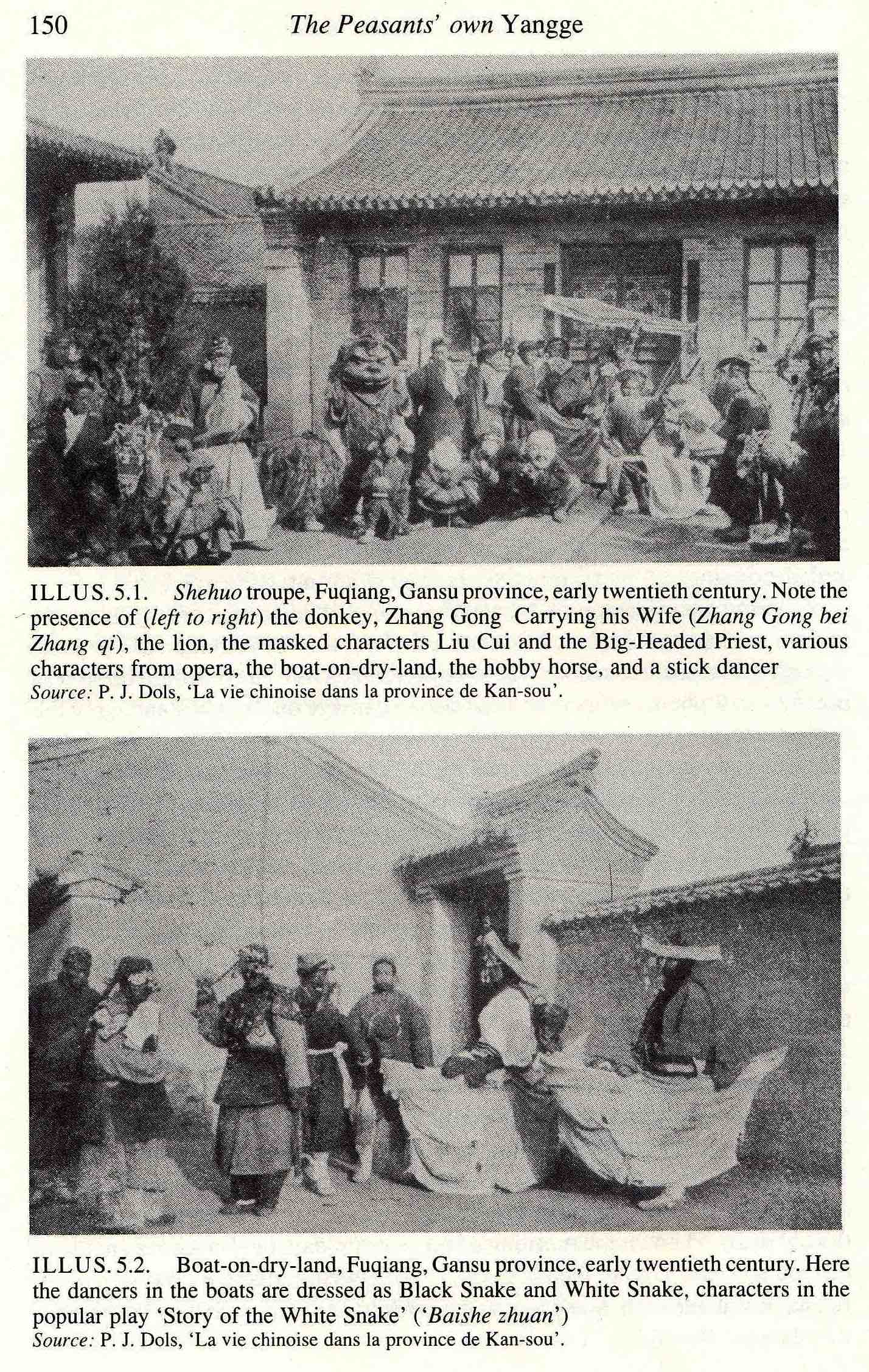




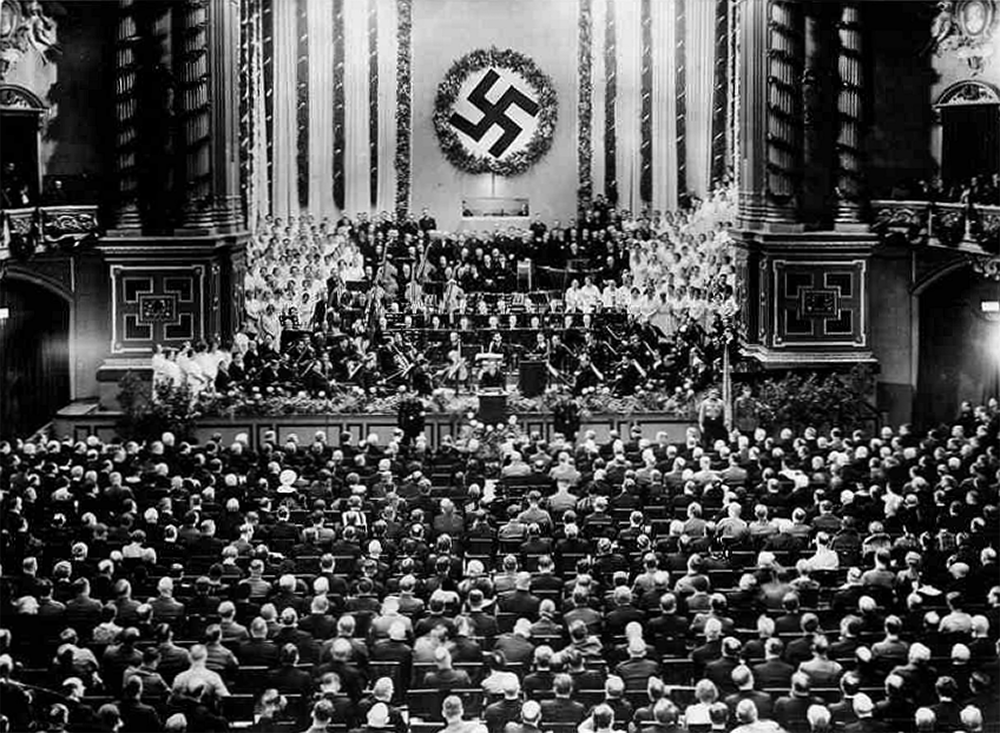
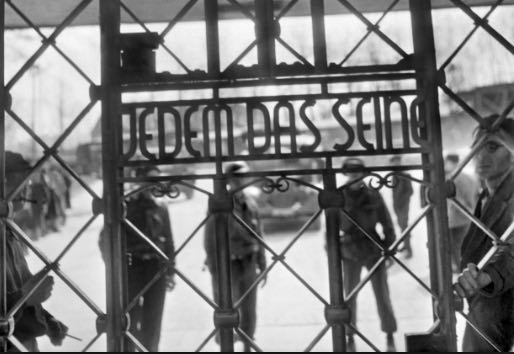


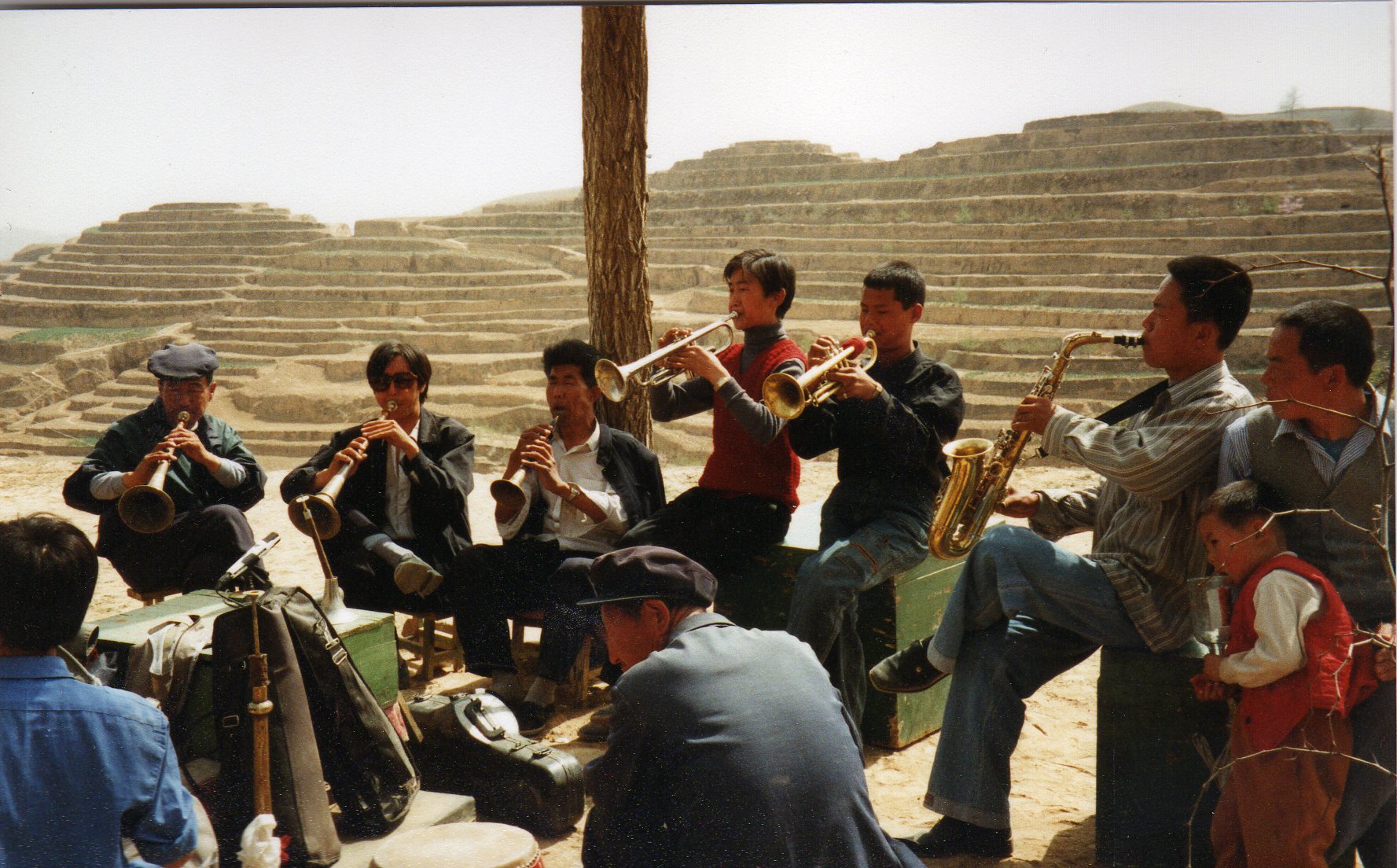
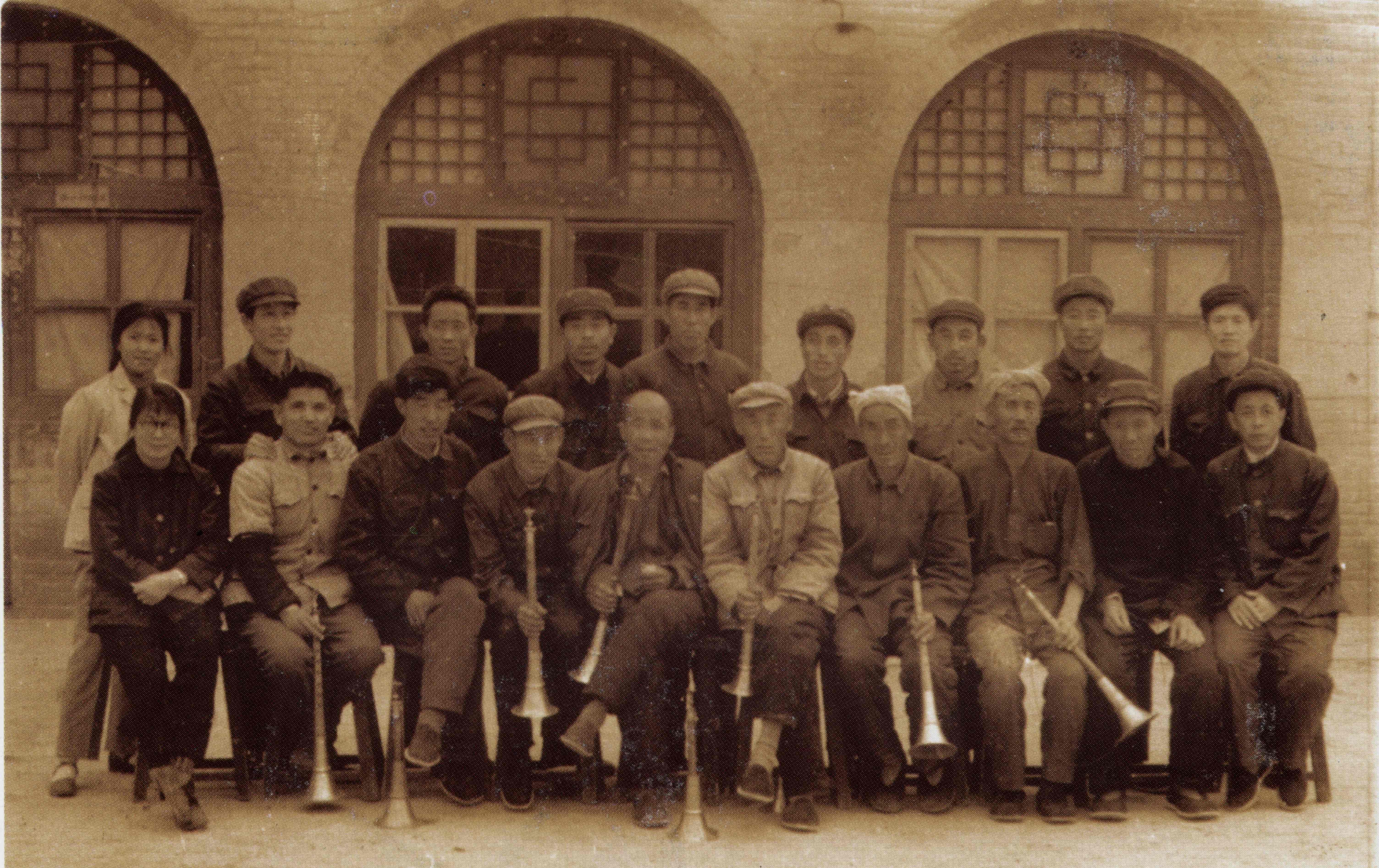 Shawm players from Mizhi county, assembled for a regional festival in 1981.
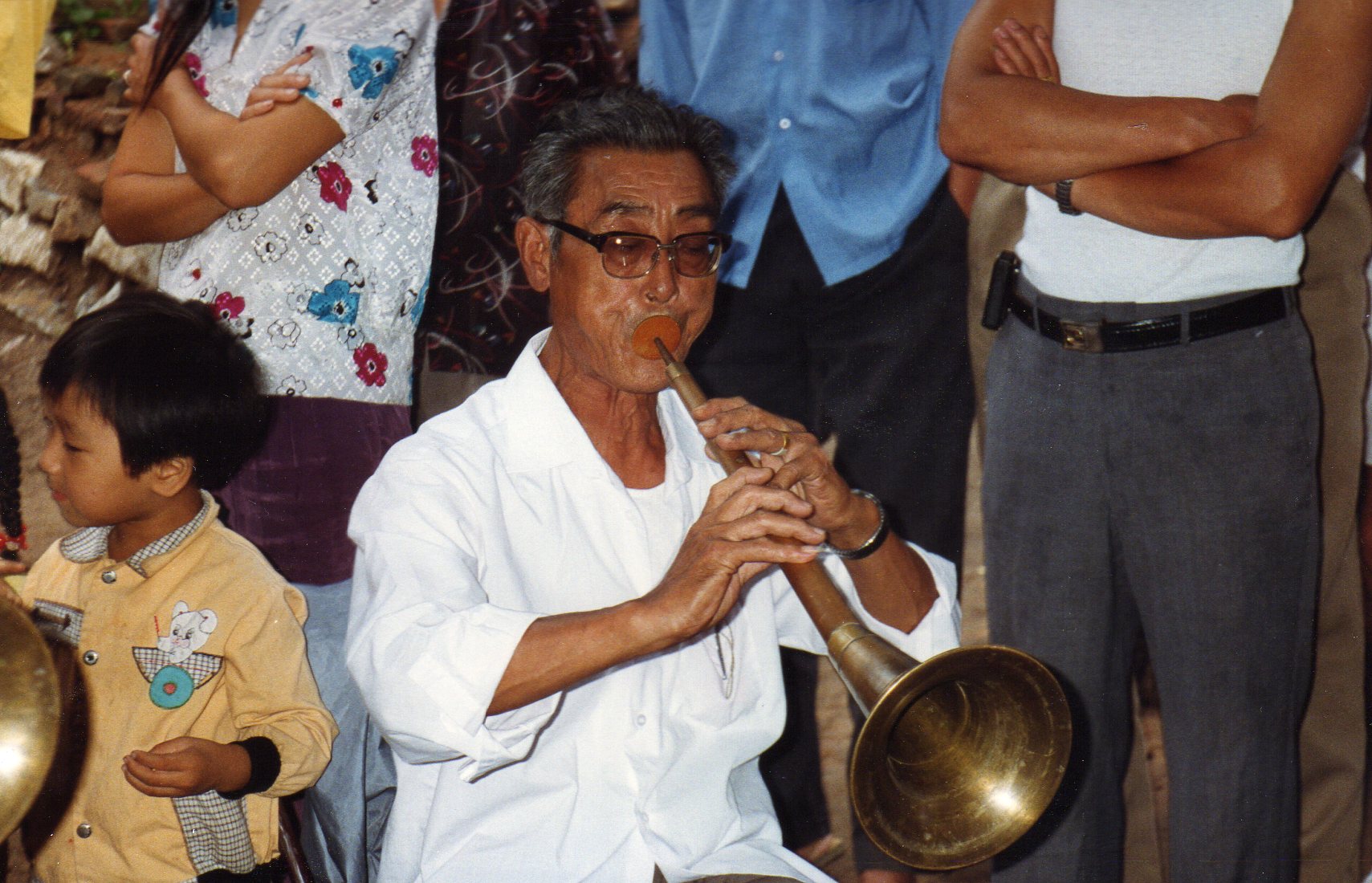


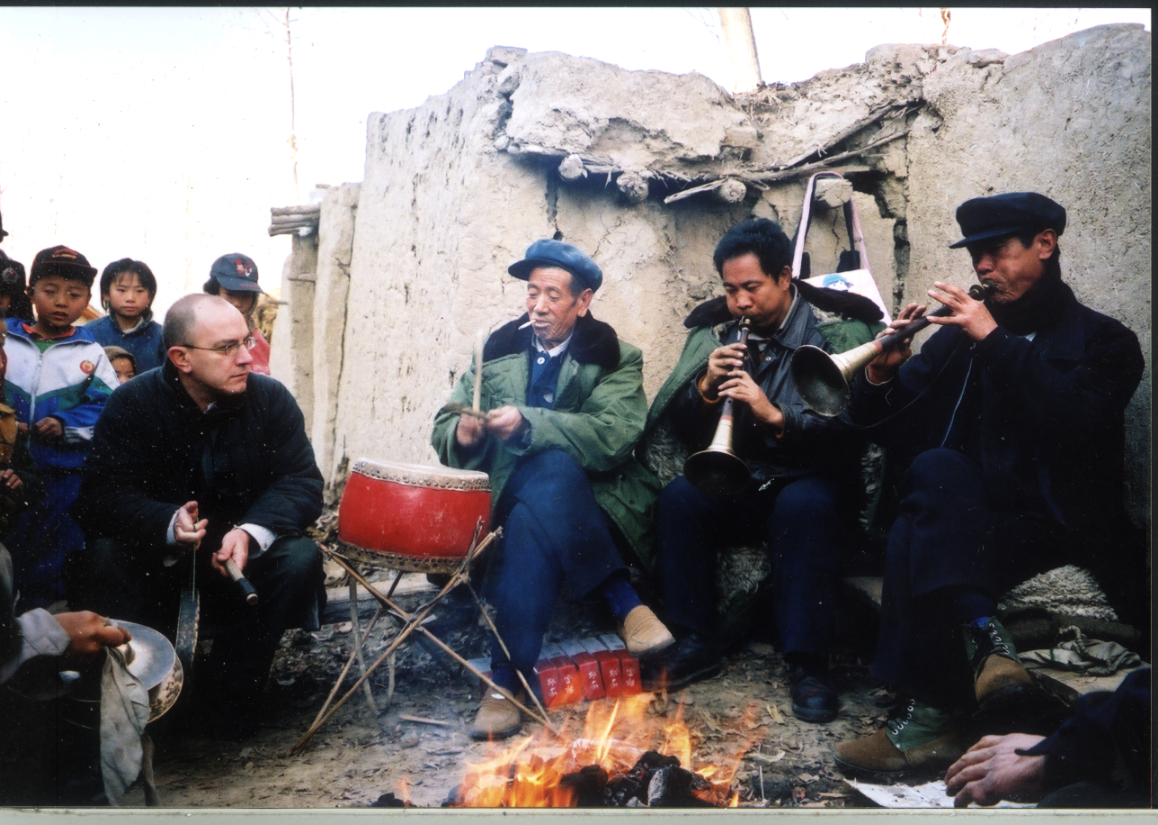


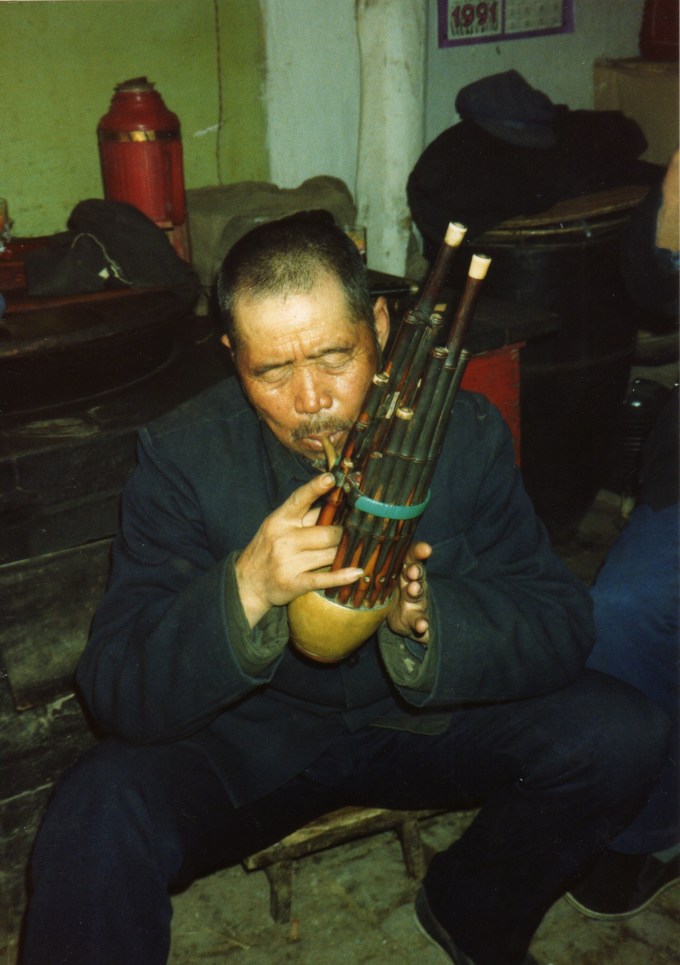
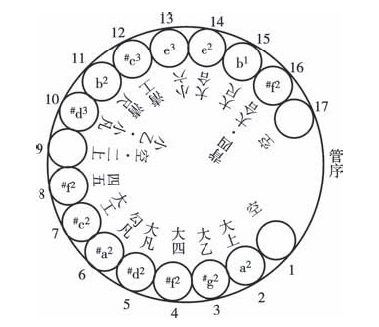

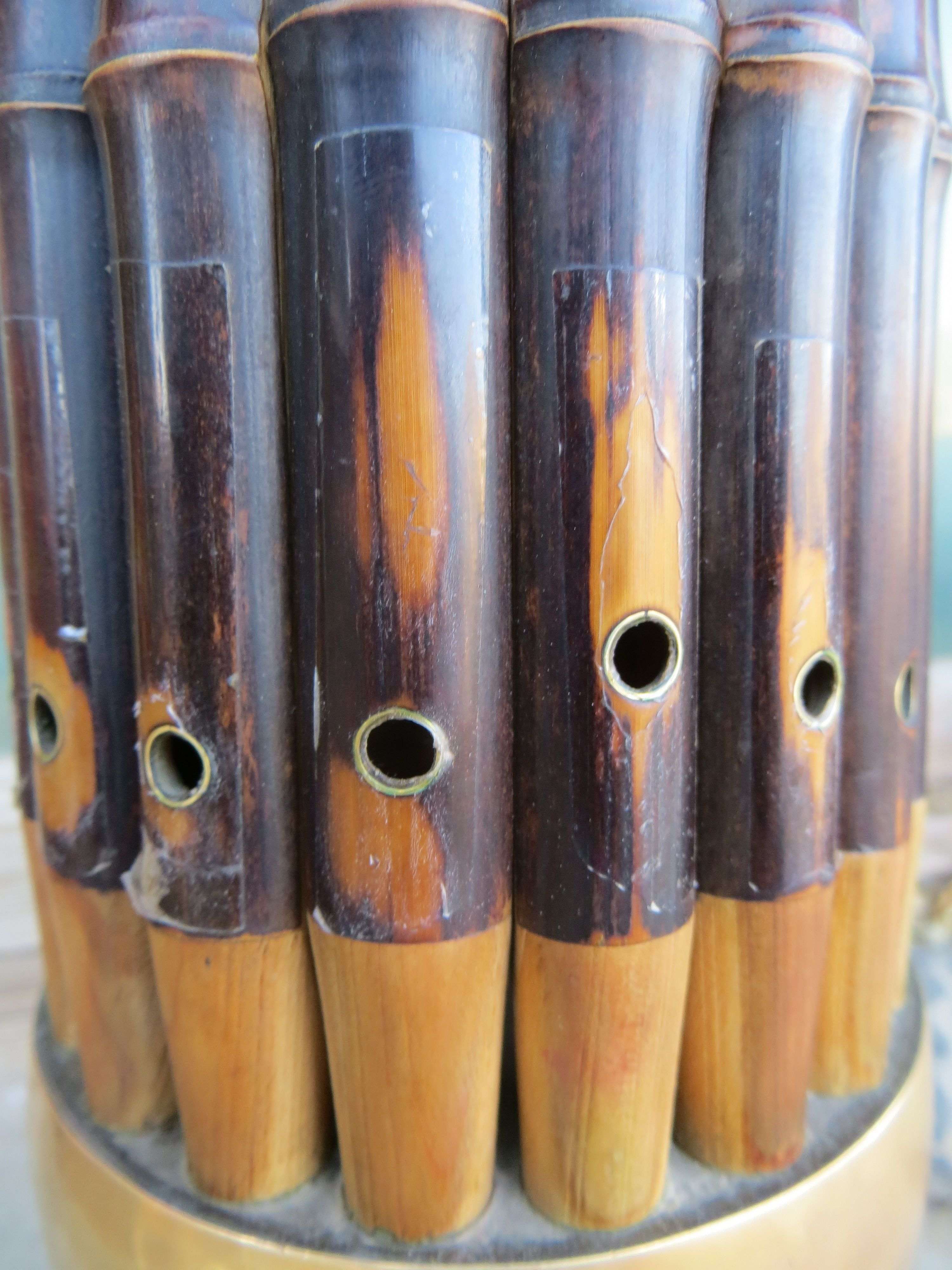



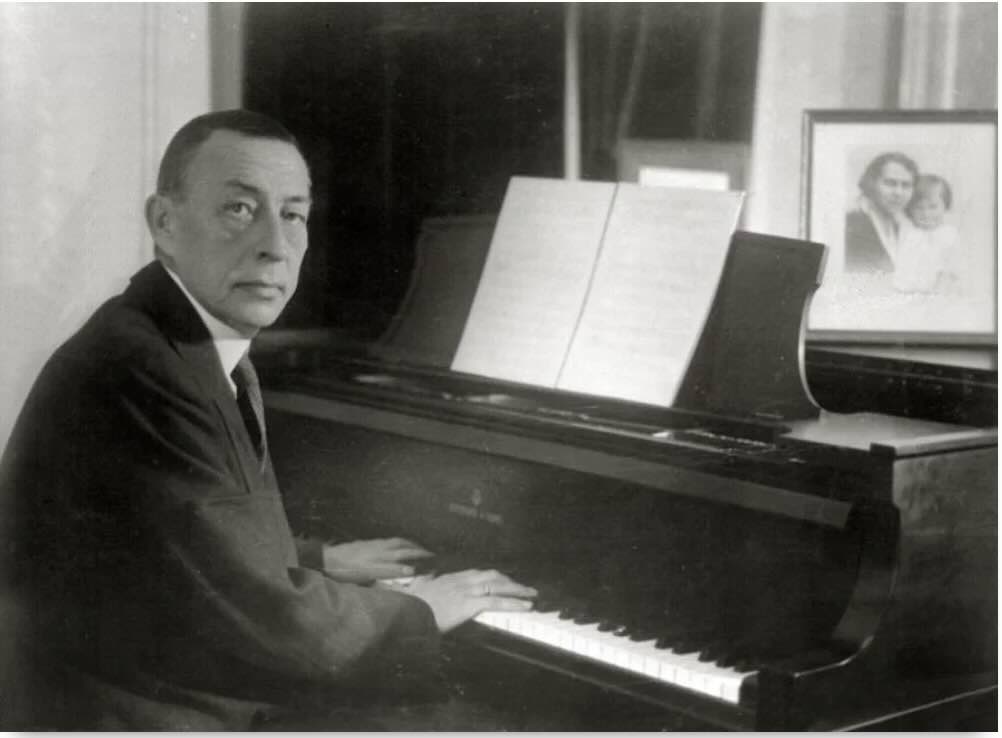


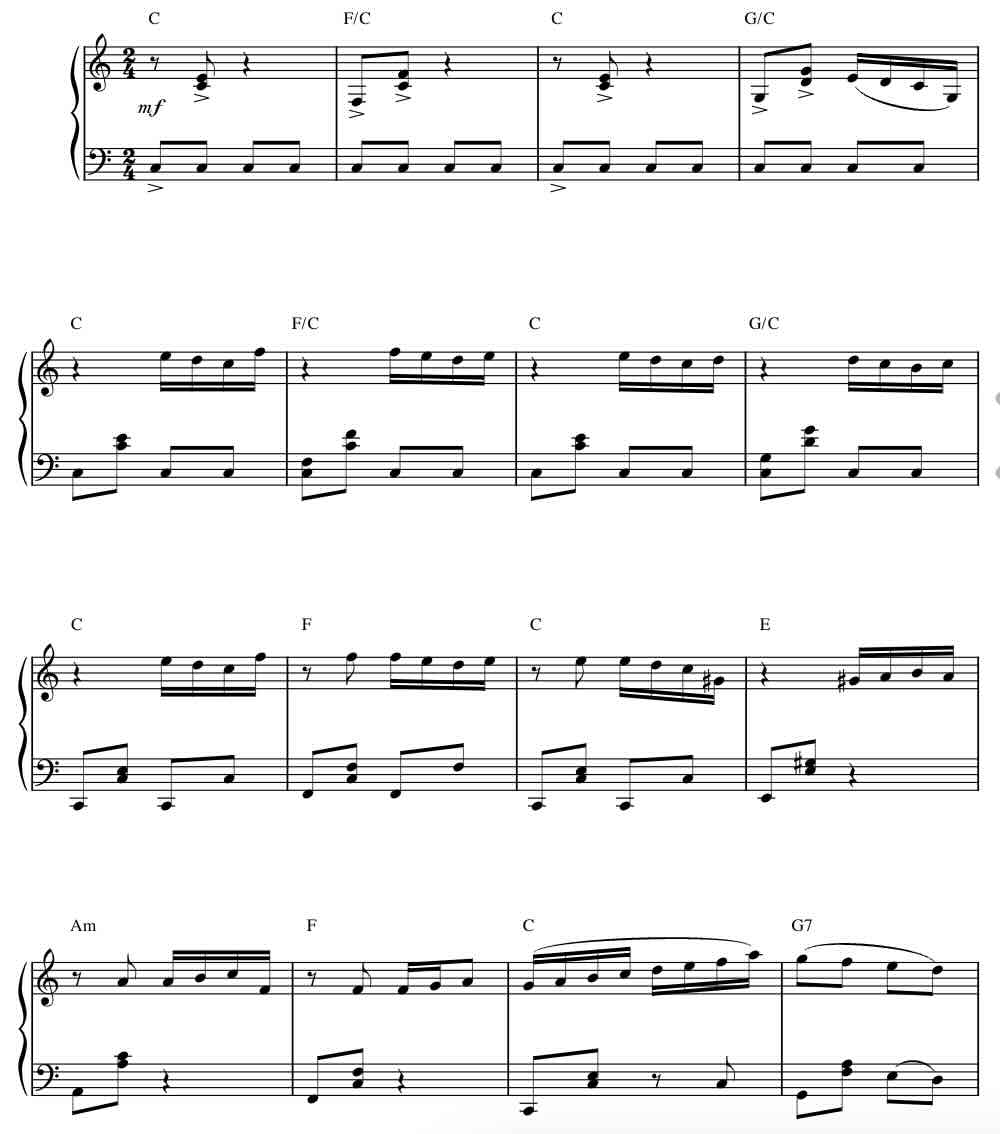


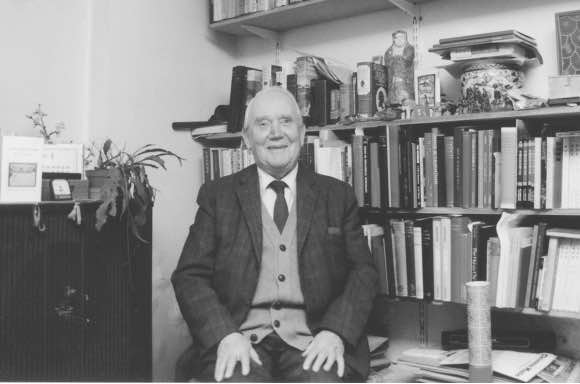

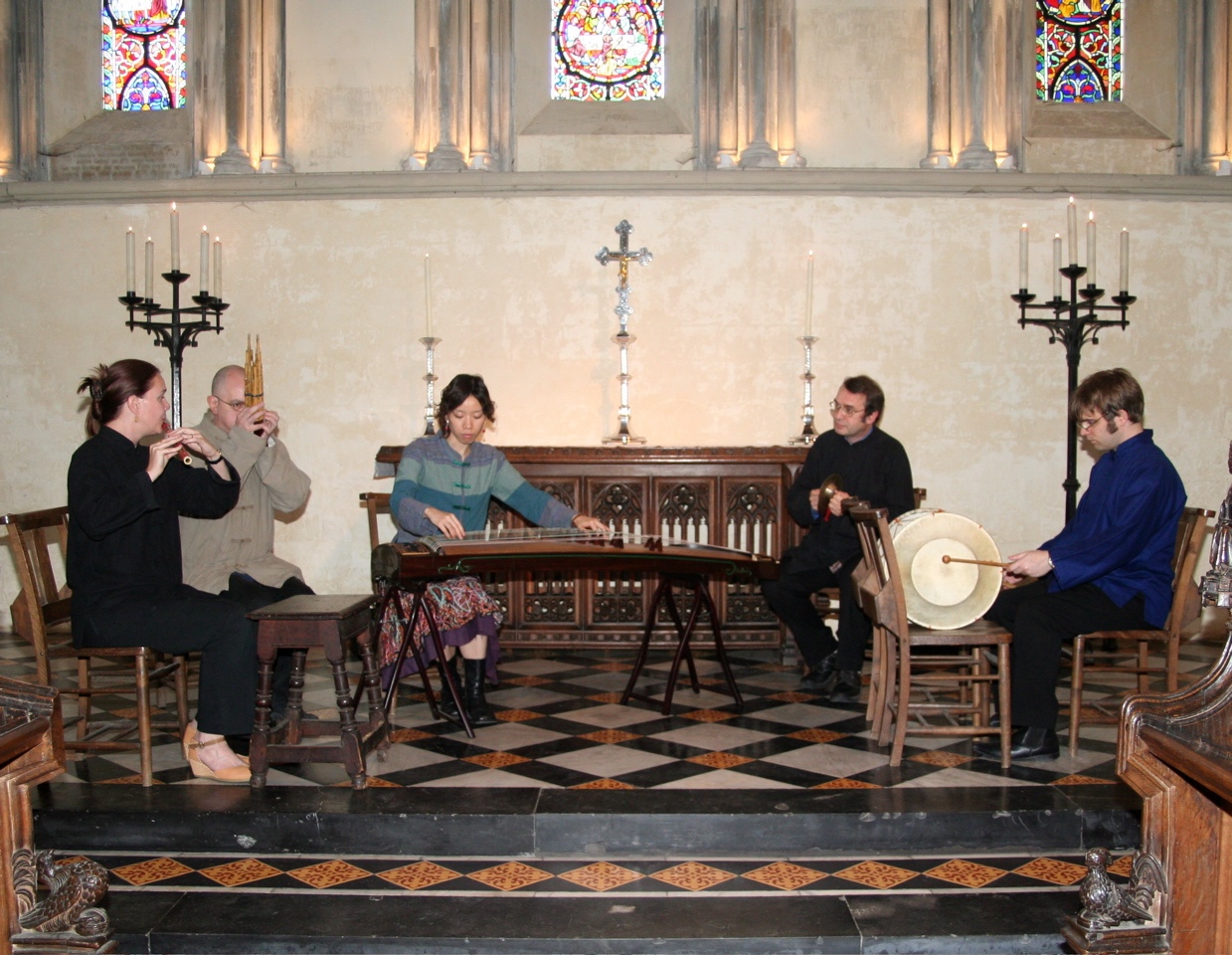
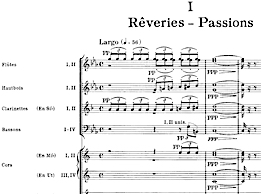
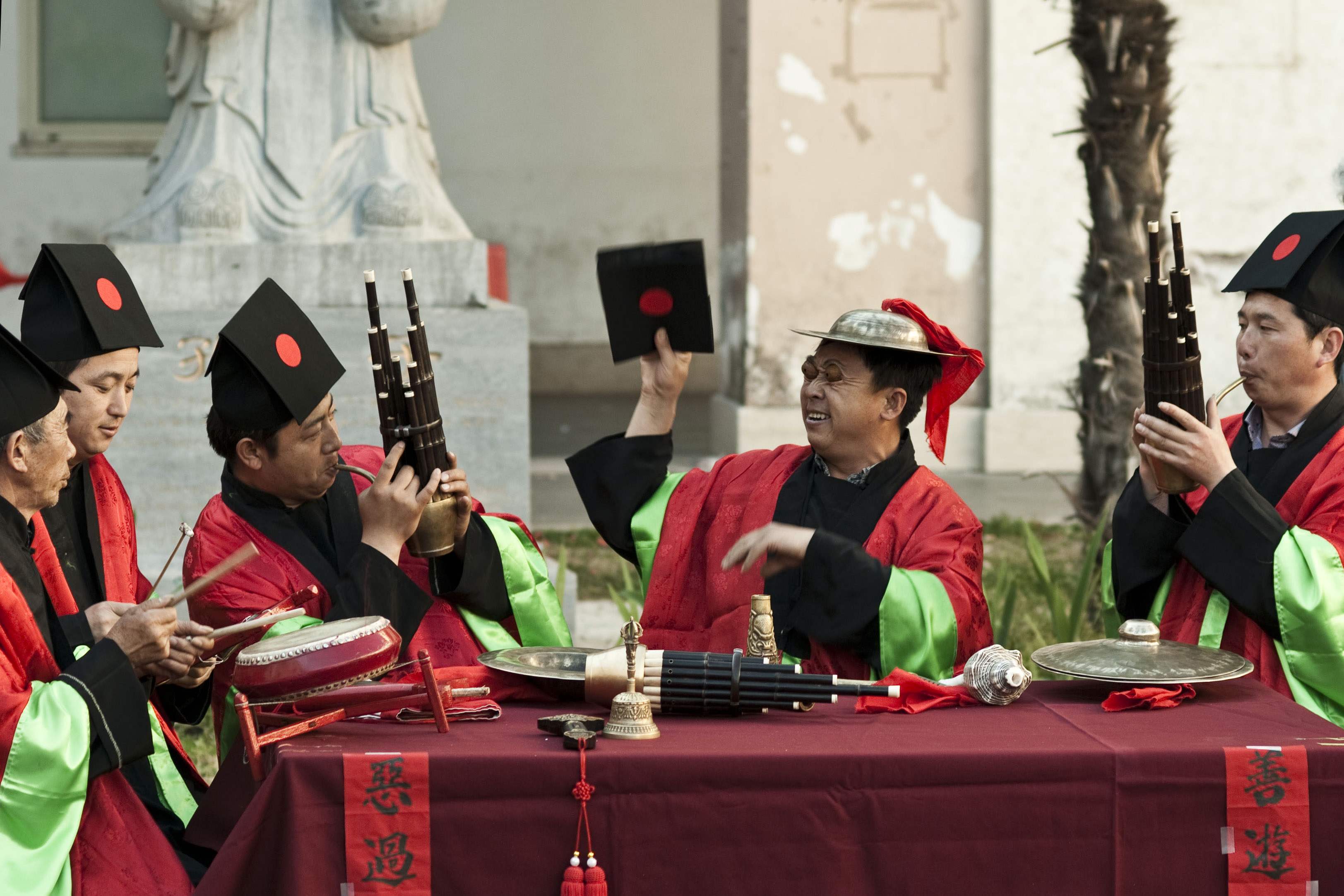




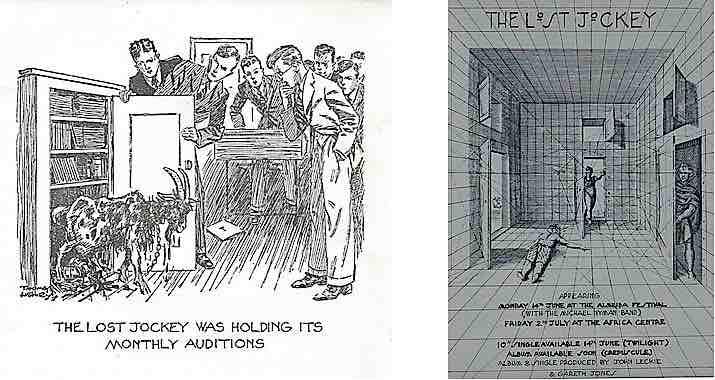

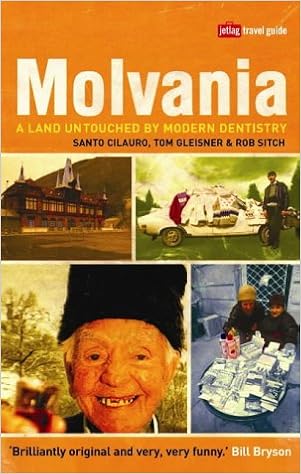

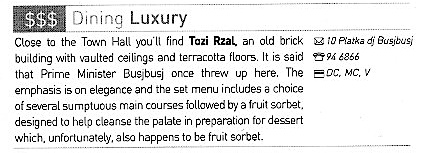



 Stephen Jones: a blog

