By way of reminding you of my series on the great Gustav Mahler, some brief comments on the three symphonies of his performed at this year’s Proms, while I consult Norman Lebrecht’s handy guide Why Mahler?, marvelling at Mahler’s busy conducting schedule amidst the tribulations of his personal life.
Nothing can be so overwhelming as the 2nd symphony, which I heard on what was once called the radio. I find it hard to imagine how Mahler could have written anything after this. As to the 3rd, after the middle movements (akin to those of the 7th), the radiant finale dominates one’s image of the piece.
Hearing a live performance of the 5th is just as moving. The mellifluous Concertgebouw orchstra was conducted by Klaus Mäkelä (for the Concertgebouw’s Mahler 9 in 2022, click here)—it is televised on iPlayer.
I muse on the ravishing slow movements of this period in Mahler’s life: that of the 3rd as the culmination of the symphony, the Adagietto of the 5th all the more effective within the context of the whole; no less moving are those of the 4th and 6th (the latter, to my taste, still best placed third in the order of movements).
My Mahler series includes performances and recordings of his seminal works by some of the great interpreters. See also The art of conducting.
Ida Rubenstein leading the original 1928 production of Boléro. Source.
Ravel’s Boléro and Stravinsky’s The Rite of Spring have become concert “classics”, but they are challenging in very different ways. It was exhilarating to hear both in the same Prom the other day.
For The Rite, I refer you to various posts, starting with my own epiphany under Boulez in The shock of the new. By comparison, Boléro (also composed for a ballet) may merely seem like easy listening, but the concept is just as original, with our ears kept engaged by the rhythmic fluidity of both segments of the melody * over one long, relentless crescendo. I’m reminded of Roger Nichols’ characterisation, quoted in my page on Ravel:
the repetitive obsession that opens out on to notions of death, madness, destruction, and annihilation, as if the composer had had an apocalyptic vision of the end of the world.
Of course listeners will respond in different ways. Even if such a message is merely latent, Boléro can and should be a somewhat unsettling experience.
* Another party game: the two sections of the melody are deceptively simple, so one might suppose that after hearing so many repetitions, we would be able to reproduce it quite accurately from memory, even after a single hearing—and most of us have heard the piece many times. It becomes more achievable if we intentionally set out to memorise it (and for some it may help to consult notation), but even then it may still be a challenge—the first half of the opening section alone may prove surprisingly difficult to reproduce by heart. After Hašek, my usual prize of a small pocket aquarium…
Of course, it’s not to be compared with memorising a Brahms concerto, but its apparent simplicity, with virtually no harmonic props, make it all the more intriguing as an exercise. Cf. Conducting from memory, and On “learning the wrong music”.
At this time of year I like to rearrange the deckchairs on the Titanic by organising some of my more notable posts from the past year under particular themes. As ever, many belong under multiple tags, so below I make some whimsical choices.
Keeping company with my film on the Li family Daoists, most important is my *new film* on the 1995 New Year’s rituals in Gaoluo (Chinese review here). It also prompted me to devise a new Menu, and even a YouTube channel (with playlists reflecting my diverse tastes as well as my own films). For now I still resign myself to Twitter, but I’m posting on BlueSky too, so let’s all migrate there!
Homages to the genius of three friends who greatly inspired me:
You can find any posts I’ve neglected in the monthly Archive as you scroll waaay down in the sidebar. All this suggests that it would be a sensible New Year’s resolution for me to burden you with fewer of these ramblings—but first I plan a major series inspired by the Gaoluo film…
At last season’s Proms S-Simon Rattleconducted a moving Mahler 9 for his final concert as Musical Director of the LSO. Since leaving the UK for Germany, he has become chief conductor of the Bavarian Radio Symphony Orchestra. Last week in the first of two visits to this year’s Proms they played Bruckner 4 and a UK premiere by Thomas Adès. The next evening I went to hear them in Mahler 6 (listen on BBC Radio 3).
I wrote about the symphony here, after a performance at the 2017 Proms, and featuring recordings by Mitropoulos, Barbirolli, Bernstein, Tennstedt, and Abbado.
The Bavarian orchestra is just as deeply immersed in Mahler as S-Simon, having regularly performed the symphonies over many decades (from the cycle with Kubelik, here‘s the 6th, from 1966) and in recent years with Mariss Jansons and Daniel Harding. S-Simon has been touring it with the Bavarians this year (on You Tube, their recent live recording starts here—finding the other movements there is more of a challenge).
After the first movement, with its juxtaposition of prophetic jackboots (cf. Mahler 10), “yearning” Alma theme, and Elysian cowbells, for the two central movements S-Simon (like most conductors) favours Mahler’s revised movement order, with the wonderful Andante second; but I still feel there are sound musical reasons for placing it third, as explained in my original post. And then the immense, tragic finale, with its extraordinary hallucinogenic opening. In his revision Mahler removed the controversial third hammer-blow:
I always feel that S-Simon’s rapport with his players—and audiences—is much enhanced by his conducting from memory. The Bavarian players sound wonderful, like every orchestra he conducts.
I ran out of superlatives for Mahler long ago—do keep consulting my roundup!
Stéphane Denève accompanying Laurence Kilsby in Lil Boulanger’s Vieille prière bouddhique. Via Twitter.
Always enthralled by French music, at the Proms earlier this week (following the Orchestre de Paris playing Berlioz, Debussy, and Stravinsky) I went to hear Stéphane Denève conducting the BBC Symphony Orchestra and Chorus in a programme of Lili Boulanger, Fauré, and Ravel, with vocal solos by Golda Schultz, Laurence Kilsby, and Jacques Imbrailo (listen on BBC Radio 3).
Despite her sadly short life, the music of Lili Boulanger (1893–1918) has grown in reputation—her name now ranking alongside that of her sister, the influential pedagogue Nadia. The concert opened with Lili’s Pie Jesu, dictated on her deathbed to Nadia (whose 1968 recording with Bernadette Greevy and the BBC Symphony Orchestra can be heard here).
Boulanger was a pupil of Fauré, and her Pie Jesu made an apt bridge to his Requiem, at whose heart is a setting of the same text. The Requiem is so over-exposed that it deserves to be heard with fresh ears. A subjective comment: whereas for some works like the Brahms German Requiem I can overrride my youthful experience of accompanying amateur choral societies, in this case I still can’t fully engage, even if I can now appreciate Fauré’s originality.
More from both composers after the interval: Fauré’s Pelléas et Mélisande, a popular theme for composers of the day—notably Debussy, Schoenberg, and Sibelius. Then came Lili Boulanger’s Vieille prière bouddhique, with tenor and choir * singing a text translated from Pali—a “prière quotidienne pour tout l’univers” whose goal is as distant now as it was in 1917. Dominated by a somewhat portentous tritone interval, it adds to our list of fin-de-siècle orientalism.
Léon Bakst, costume design for Tamara Karsavina as Chloé, 1912. Source.
Just predating both the Boulanger pieces, Ravel’s Daphnis and Chloé (see my main page on Ravel) is exquisite. Ideally it should be heard in the complete version, but the 2nd suite makes a popular concert finale (here it was enhanced by wordless choir, usually considered too extravagant). The opening is always enchanting—I like this story (anyone have an original source?):
Ravel, when asked how it was that his famous musical evocation of sunrise had been penned by someone who never got up before 10.30am, replied, reasonably enough, “I used my imagination”.
To follow the flute solos of Pelléas and the Prière, Daphnis and Chloé is a glorious showcase for the woodwind, with Stéphane Denève at last free to conduct with balletic nuance and bacchanal abandon.
A most exquisite passage—from 5.43 in S-Simon Rattle’s live performance with the LSO here.
This year is the 300th anniversary of the Leipzig premiere of Bach’s John Passion. * After John Butt’s performance at the 2017 Proms (more links to the Passions here), I’ve just returned to hear it with Masaaki Suzuki (b.1954) directingthe Bach Collegium Japan, which he has led since 1990 (listen here—with an instructive interval talk thankfully replacing the interminable original sermon). Whereas performers these days know the work intimately, it must have been a serious challenge for Bach’s Leipzig forces (cf. this post); even to today’s listener it still sounds startingly modern—imagine how it must have sounded to the 1724 congregation!
Having studied with Ton Koopman in Amsterdam, Suzuki became a leading advocate for the early music movement in Japan. Joining several other complete recordings of the Bach cantatas (links here), his cycle with BCJ was completed in 2014. It’s most remiss of me not to have kept up, missing Suzuki’s previous visits to London, both with his own ensemble and as guest conductor of the Age of Enlightenment. Far from inscrutable, his style is dramatic, expressive, rather evoking that of Koopman, or perhaps Richard Egarr—both of whom direct from the keyboard, whereas Suzuki has gravitated to conducting from the podium, leaving the harpischord and organ to dedicated musicians (given which, he might go further and cede close control over the recitatives?).
Bold idea of the programme booklet: Edvard Munch’s Golgotha (1900), in which he represented himself as the Christ figure, with the foreground figures casted as the seven deadly sins. Source: wiki.
Benjamin Bruns was the Evangelist to Christian Immler’s imposing Jesus. The choir sounded fabulous, with twenty singers in an arc, including soloists who emerged for the arias. Carolyn Sampson (whom I used to accompany on Bach tours with The Sixteen) was exquisite in Zerfließe, mein Herze, as was Alexander Chance in the counter-tenor arias—succeeding his father Michael, whose singing, such as Erbarme dich, enriched our own performances with John Eliot Gardiner; excellent too were Yusuke Watanabe and Shimon Yoshida. Following HIP style, Suzuki favours small instrumental forces—wackily augmented by a towering contrabassoon (as in Bach’s fourth version); oboes and flutes, seated front stage on the right, were well highlighted.
Suzuki and BCJ have long experience of performing and recording Bach (watch a John Passion from 2000 here); their Proms visit this week was part of a European tour—it’s a highly seasoned, accomplished ensemble.
Nothing can compare to the awe of being plunged into the opening chorus, with throbbing, turbulent strings overlaid by anguished suspensions on oboes.
Returning to the Bach Passions regularly over a lifetime (referring, perhaps, to Gardiner’s Music in the Castle of Heaven) is an essential part of our self-cultivation.
* * *
In This Day and Age™ there’s nothing remarkable about a Japanese ensemble excelling in Bach; even if we can resist projecting orientalist fantasies (with Suzuki as Zen Sage-Mystic), their taste for Historically Informed Performance somehow seems quite appropriate. Perhaps no-one else will even think of gagaku, another genre that was imported, from Tang China—and then radically slowed down until it was no longer recognisable.
I’ve long had a fantasy of staging a world-music version of the Passions (cf. Bach, um, marches towards the world), held at a cosmic site like the Grand Canyon (cf. Messiaen). Amidst sand mandalas, the Dalai Lama with his own halo of deep-chanting Tibetan monks accompanied by their cymbals, drums, and booming long trumpets, as well as ethereal ondes martenot or theremin… Mark Padmore sharing the role of Evangelist with a searing cantejondo singer… Uyghur bowed satar and Persian ney flute as obbligato instruments for the arias, a gamelan to embellish the choruses, and the catharsis of an Alevisema… One day I’ll do a detailed programme, unfettered by funding or logistics.
A slightly less daunting project would be a Japanese staging of the Passions based on Noh drama. As continuo to the pilgrim/Evangelist visiting the site of an ancient mystery, the dialogue of the two drums, their eery kakegoe cries summoning the spiritual world… the Noh chorus both evoking the crowd and offering redemption… Augmented by the timbre of gagaku, magically transforming the wind music of the choruses and arias (Bach’s own timbre for Zerfließe is already not so distant—and with an archlute joining the continuo, the affinity would be even closer). While some Westerners have trained intensively in Noh, it’s more common, and must be easier, for Japanese musicians to learn to perform Bach (cf. Jazz in post-war Japan)—though it might be hard to find musicians who would be up to (or up for) the task.
At the heart of both these stagings will be Bach’s original music, devotedly illuminated by compatible traditions from around the world.
* After all this time, I still have reservations about my choice to imitate Bach’s original omission of the “St” before John Passion (Passio secundum Joannem) and MatthewPassion (Matthäus-Passion, or even Passio Domini nostri J.C. secundum Evangelistam Matthæum), with its apparent breezy familiarity—”The name’s Matthew, but call me Matt”). But Was ich geschrieben habe, das habe ich geschrieben, as Pilate observed pithily (a foretaste of “It’s what it is”, suggesting that Robert De Niro might be well cast for the role, albeit too late to join John Wayne as centurion for the crucifixion).
Just days after the Zemlinsky and Schoenberg Prom, I went back to the Albert Hall for another course of late Romanticism, with the talented Ryan Wigglesworth conducting the BBC Scottish Symphony Orchestra (listen on BBC Sounds).
I don’t think I ever played Brahms 3 (make what you will of that uncertainty…). Well-received at the time, but now perhaps the least popular of his symphonies (I can’t miss any opportunity to remind you of Kleiber‘s Brahms 2!), it always deserves a re-hearing. l’ve been getting to know it better by listening to some classic recordings—
Then we heard Schoenberg’s tone-poem Verklaerte Nacht (1899) (wiki, and here), in the string orchestra version that he later arranged from his string sextet. The latter was premiered by the augmented Rosé quartet—here are members of the Ensemble Intercontemporain with Boulez, c1985:
And this is Mitropoulos with the strings of the Vienna Phil in 1958:
The Prom ended withMahler’sKindertotenlieder (1904, to texts by Rückert), movingly sung by Alice Coote. Here’s her recording from 2017 (along with the Rückert Lieder):
And here’s Janet Baker’s classic recording with Barbirolli, 1969 (cf. their Nuits d’été):
* * *
Back at the Prom, a more conventional sequence might have opened with Verklaerte nacht followed by the Mahler songs, with the Brahms symphony as a traditional second half; but the chronological order made a lot of sense, intensifying Mahler’s prophetic, tragic vision. All three pieces end quietly. I still don’t quite get a sense of coherence from Brahms 3, but it’s growing on me—Wigglesworth conducted it without the score, bringing out its chamber music elements. Despite its portentous opening, and hints that the finale might become grandiose, it’s largely elegiac, its middle movements unassuming yet affecting.
The second half was full-on in its intensity. Verklaerte nacht is a major work, long predating Strauss’s Metamorphosen; “filled with crepuscular angst” (as the BBC website has it), the writing especially favours the violas (always good to hear). BTW, and FWIW, the ever-stimulating Richard Taruskin (The danger of music, pp.325–6) doesn’t buy Schoenberg’s resort to extolling “pure” music in his attempt to deflect the misogyny of Richard Dehmel’s poem (“an immanently sinful modern Eve forgiven and redeemed by a godlike magnanimous man”). Finally, Alice Coote’s dramatised grief was perfect for the Kindertotenlieder (for her Mahler 3 with Michael Tilson Thomas earlier this year, click here). For me, the brief coda to the final song doesn’t suddenly sweep aside the anguish of the cycle—it seems more spooky than serene.
Ryan Wigglesworth’s serious, sincere musicking seems to convey a feeling of trust, free of the dubious trend for the flashy wizzkids who have replaced the dour, autocratic maestros of Yore. The composer-conductor combo doesn’t always yield results, but when it does it’s deeply satisfying, as with Salonen, Boulez—and clearly Mahler. But now that I observe the WAM scene as a mere outsider, I’m no longer privy to the more salient assessments of the musicians themselves.
For all my immersion in “world music” and its diverse social contexts, having been Promming since the 1960s, I always find it a blessing that concerts like this generate such attention and enthusiasm—nightly over nearly two months.
For my first Prom this season, I went to hear Ryan Bancroft directing the BBC National Orchestra of Wales in Zemlinsky’s Die Seejungfrau and Schoenberg’s Pelléas und Melisande, premiered at the same concert in 1905. Having already written about both works, I was glad to hear them live.
In my youth, besides Ravel‘s Daphnis and Chloé, Schoenberg’s Pelléas left a deep impression on me, attending rehearsals and concerts in the fluid hands of Boulez; with his choices there was always a sense of discovery. At this week’s Prom I could only summon up fleeting glimpses of that magic, but (within the niche of ominous late-Romantic angst) Pelléas is perhaps rather more accessible, so it probably made sense to open the concert with it, building the audience’s attention for Die Seejungfrau after the interval. But either order could work. Ryan Bancroft, brought up in LA, directed fluently—like Boulez, conveying the music with his hands rather than a baton.
You can hear the concert on BBC Sounds for the next two months. A sumptuous fin-de-siècle opening to the season, then—the previous evening Mark Elder conducted Mahler 5in his Proms farewell to the Hallé after 25 years with them (available on BBC iPlayer). Even if Mahler towers over just about everyone (do consult my series!), it’s always rewarding to explore the work of his contemporaries and disciples, and to immerse ourselves in the whole culture of early-20th-century Vienna. Though the hall was less than packed, how wonderful that Prom-goers devote such attention and enthusiasm to the less familiar aspects of the symphonic repertoire.
At the Proms last week, to follow Mahler’s 3rd and 7th symphonies, S-Simon Rattle marked his final concert as Musical Director of the LSO with the 9th.
I wrote about the 9th symphony in my Mahler series soon after observing his climactic use of quintuplets, “struggling to emerge from the stone”; I reflected here on a Barbican performance last year with Daniel Harding and the Concertgebouw. The chamber arrangement, far from a mere curiosity, is also most affecting.
Mahler 9 has inhabited me since my teens, even when I wasn’t actually listening to it. How amazing to get hold of tickets—”of all the performances I’ve heard in my life,” that was one of them—no really, it’s always overwhelming, but nothing could be so as Rattle bidding farewell to London with this symphony, the LSO in fabulous form. Yet again, conducting from memory made the occasion even more intense. The Prommers extended the silence of the long final Abschied.
* * *
S-Simon began the concert with Poulenc’s challenging Figure humaine, an acappella hymn to Liberté from occupied France to texts by Paul Éluard. It was brilliantly sung by the BBC Singers, who gave the first performance in 1945. Rattle began another Mahler concert with the piece in April this year, in solidarity with protests over the philistine government’s threat to axe the choir—his speech then is well worth reading.
Between the typical Proms fare of monumental romantic symphonies, the Royal Albert Hall also make a wonderful setting to tune in to the more intimate sound-world of early music—even Bach’s suites for unaccompanied violin and cello have featured in the large hall.
The ensemble projects a classy image, with Iestyn Davies occupying his own niche in the counter-tenor superstar gallery carved by singers such as Alfred Deller, Michael Chance, and Andreas Scholl. Kristian Bezuidenhout, a versatile early keyboard specialist, is clearly supportive of the band’s creativity. The upper strings stood to play, adding another layer of communicative energy.
I’m always fascinated to imagine the original Leipzig congregation, steeped in Lutheranism—Bach’s new music must have amazed them every week. By contrast, today our sound-world is infinitely more diverse (and secular), subsuming Mahler, film music, rock, and ringtones; and the way we rejoice in Bach is quite different too.
The programme notes cite an 1898 review of a Bach Prom, praising music that was probably “new for the very large majority of those present, for it is doubtful if it had ever been played before in the metropolis”.
The intensity of the occasion was enhanced by Davies singing without a score—Bach’s own counter-tenor (clearly outstanding, though we don’t know who he was) must have used one, having only got hold of it a few days earlier, with the copyist’s ink barely dry. The music was entirely new to performers and audience—and they would be lucky if they ever heard it again, whereas today both performers and audience can also listen to a range of recordings. Tom Foster relished Bach’s solo organ writing, while oboes enriched the string sound.
The group played two cantatas first performed in Leipzig in 1726:
Cantata170, Vergnügte Ruh, beliebte Seelenlust (Bach cantatas site, and wiki), for the sixth Sunday after Trinity (for those of us who keep track of seasonal rituals), “longing for a virtuous death as a release from the world’s swarming violence and death”.
The opening aria is pure enchantment, a warm, luxuriant dance in 6/8 [?!] in D. You can almost feel Bach’s benign smile hovering over this music, an evocation of Himmelseintracht, “the harmony of heaven”. One of those ineffable Bach melodies that lodges itself in one’s aural memory, it takes a whole bar to get going but once launched, seems as though it will never stop (actually it is only eight bars long, but the effect is never-ending). Yet this expansive melody given to oboe d’amore and first violin acquires its beauty and its mood of pastoral serenity only as a consequence of its harmonic underpinning. The gently lapping quavers in the lower strings are slurred in threes, suggestive of “bow vibrato”, or what the French referred to as balancement, while the downward-tending bass line sounds as if it might be the first statement of a “ground”—in other words, the beginning of a pattern that will repeat itself as though in a loop. Well, it does recur, but not strictly or altogether predictably. With Lehms’ text in front of him, Bach is searching for ways to insist on spiritual peace as the goal of life, and for patterns that will allow him to make passing references to sin and physical frailty.
Here Gardiner accompanies Michael Chance in the first and final arias:
The slow aria Wie jammern mich doch die verkehrten Herzen with organ, is another miracle—the lack of continuo “symbolic of the lack of direction in the lives of those who ignore the word of God”. The violins and violas play a middle-register line in in unison—Gardiner again:
This special texture, known as bassettchen, is one that we have encountered on a number of occasions this year when Bach decides that a special mood needs to be created and removes the traditional support of basso continuo. He uses it symbolically in reference to Jesus (someone not requiring “support”), protecting the faithful from the consequences of sin (as in Aus Liebe, the soprano aria from the St Matthew Passion), and at the other extreme to serial offenders, as in that other marvellous soprano aria, Wir zittern undwanken from BWV105, or (as here) to those “perverted hearts” who have (literally) lost the ground under their feet in their rejection of God. The aria is written from the standpoint of a passive witness to the “Satanic scheming” of the backsliders as they “rejoice in revenge and hate”, so that one can sense the observing singer’s anxiety in the fragmented rhythm of the bassettchen line.
Here’s the complete cantata with Gustav Leonhardt and Paul Esswood in 1985:
Just as astounding is
Cantata35, Geist und Seele wird verwirret (“Spirit and soul become confused”: Bach cantatas site, and wiki), for the twelfth Sunday after Trinity, six weeks later!
In two parts, to be performed before and after the sermon, the Gospel for the day was St Mark’s account of Jesus curing a deaf mute (cf. my stammering series—where’s Jesus when you need him, eh?). Again with obbligato organ and oboes, the cantata expresses both the “sorrow-laden yoke of pain” and a sense of celebration. Here’s Gardiner during the 2000 Bach Cantata Pilgrimage (notes here):
* In the sense of befuddled octogenarians nodding off over a cup of Ovaltine. I mean, 10.15 is a perfectly normal starting time for a regular evening concert in Andalucia…
*For an introduction to my whole series on Mahler, with links, click here!*
Mahler (left) with Bruno Walter, Prague 1908.
Source: Mahler, Year 1908, with many more images.
As a self-confessed Mahler fanatic, I’ve always been somewhat underwhelmed by the 7th symphony (see e.g. here, and wiki)—and it transpires I’m not alone. I’ve finally got to know it better with the prospect of hearing the stellar lineup of Kirill Petrenko and the Berlin Phil performing it live at the Proms (listen here).
Mahler wrote the symphony in 1904–05, premiering it in Prague in 1908, over which period his family and professional problems had taken a serious turn for the worse.
Here’s a rather impressive review of the British premiere in 1913, led by Henry Wood—I like
It looked as if the audience had derived some pleasure from the performance, though they felt not sure whether they were right in enjoying it. [cf. Woody Allen’s “wrong kind of orgasm”.]
The opening movement is most substantial, after the opening melody on Tenorhorn with its unsettling tritone. Of course, Mahler thrives on extreme contrasts, but somehow I still find the symphony too disjointed; the collage sometimes reminds me of Ives. More intimate sections are all too fleeting, like that building from the bucolic passage (from 9.11 in Abbado’s performance below) and near the ending (from 17.01), before the climax of the coda—which I also find rather a challenge.
Between the more grandiose outer movements, the two pieces of nachtmusik are themselves punctuated by a spooky scherzo, foreshadowing Ravel’s La valse (“a surreal nightmarish vision of a decaying society through a broken kaleidoscope”)—and featuring an fffffpizzicato in the cellos and basses!
The first nachtmusik is “grotesque, with friendly intentions”, according to wiki; the second, andante amoroso, is more intimate and human, with a transcendent ending—before the blazing, brash finale, which Michael Kennedy described as “a vigorous life-asserting pageant of Mahlerian blatancy”. Without Mahler’s typical extended passages of intense soul-searching, the final victory doesn’t seem sufficiently hard-won.
In this symphony the kitsch that is such a distinctive, poignant part of Mahler’s sound world rarely moves me. Even his use of cowbells doesn’t add up to much after the transcendental (if ambivalent) mood they impart in the 6th symphony. Mahler’s palette also makes use of guitar and mandolin—another suitable outlet for the Music Minus One franchise?
My struggle with the 7th may be partly to do with my personal history of getting to know the symphonies, but critics have long pondered its flaws; even if it has some impressive defenders, it it is famously difficult to make cohere.
As to recordings (see e.g. here and here, as well as Norman Lebrecht, Why Mahler? pp.267–8), I’ve chosen some outstanding live performances. Abbado and the Lucerne Festival Orchestra always make an exceptional team—here they are in 2005:
This 1993 concert by Tennstedt and the London Phil was his last recording:
and here’s S-Simon Rattle with the Berlin Phil in 1999:
Back at the Proms, the Berlin Phil sounded fabulous (for the orchestra’s early history, click here, and here). But even hearing it live, much as I relish the building blocks, I must admit I still don’t really get the piece—it feels as if the pieces of the jigsaw don’t quite fit together. Still, it’s Mahler, and the standing ovation was richly deserved (see this rave review).
This season also features the 1st and 4th symphonies—as well as S-Simon conducting the 2nd, the event of the season. I will always enjoy hearing the 7th live, but it’s also a reminder to immerse ourselves in the miracles of the 2nd and 3rd, the 9th and 10th, the 5th and 6th, the 1st and 4th, as well as Das Lied von der Erde…
My extensive series on north Indian raga includes reflections on several live London concerts (Bhavan, British Museum, Kings Place). And as an honorary member of “the other classical musics”, raga has long featured at the Proms. * While such a genre is best experienced in intimate venues, it still works in the vast Albert Hall, with the close attention of the Prommers perhaps resembling a core of mehfil aficionados.
At last Sunday morning’s Prom I heard Amjad Ali Khan (b.1945), with his sons Amaan Ali Bangash and Ayaan Ali Bangash, on the fretless plucked lute sarod, accompanied on drums by Sanju Sahai (tabla) and Pirashanana Thevarajah (mridangam). I might have preferred the group to sit more closely together, creating a more intense atmosphere, rather than attempting to spread themselves widely across the ample stage.
You can listen to the concert here for the next year.
From the long hereditary Bangash gharana lineage of Gwalior, Amjad Ali Khan is son of Hafiz Ali Khan (1888–1972) (see here, and wiki)—who can be heard here in excerpts from rāg Bhairavi:
and Darbari Kanada:
Amjad Ali Khan (website; extensive YouTube channel) first performed in the USA as early as 1963, and at the Proms in 1994. Here’s a long exposition of Yaman from 1977:
Note also documentaries by James Beveridge (1971):
and Gulzar (1990):
More early recordings of Amjad Ali Khan and other sarod masters here.
* * *
I’ve never paid much attention to the taxonomy of ragas by the time of day—which is anyway rarely adhered to in concerts, since they mainly take place in the evenings—and there’s a further potential refinement in the seasonal associations of particular ragas (see e.g. here). But the morning Prom did indeed feature morning ragas—which were largely chromatic and quite challenging.
First the two sons played rāgLalit in duet, like a kind of junior jugalbandi. Lalit has a highly chromatic scale, omitting the fifth degree Pa and featuring both natural and sharp versions of the fourth ma (for more, including a flute version by Hariprasad Chaurasia, click here).
Then the veneration in which Amjad Ali Khan is held was clear from the standing ovation he received as soon as he stepped on stage. First he played Miyan ki Todi (from 29.20; cf. this 2004 rendition), also chromatic and complex; here are its basic ascending and descending scales as given in The raga guide:
On first hearing, both these ragas may seem quite mystifying.
He went on briefly to compare the timbre of stopping the strings with nails or fingertips (from 56.14), and after another whimsical chromatic solo (rāg Purvi?) he demonstrated the link between tarana vocalisation and playing (1.10.07). Finally his sons joined him to play rāgAnand Bhairav (1.17.31, cf. this version) in an exchange that often resembled a training session for learning the basic building blocks of the raga. After all the earlier chromaticisms, its scale is almost entirely diatonic, only coloured by a flat re second degree.
While I would always trade the fast flamboyant final sections for lengthier introductory alap exploring the structure of the raga, this was a most charming, inspiring concert to remind us of raga’s vast ocean of discipline and creativity!
* Imrat Khan performed late-evening Proms in 1971 and 1978; at the peak of my own dabblings in raga, epic all-night concerts were held in 1981 (with musicians including Vilayat Khan on sitar, Sultan Khan on sarangi) and 1983 (dhrupad from Zia Fariduddin Dagar and Ritwik Sanyal; Ram Narayan on sarangi, Hariprasad Chaurasia on bansuri); and the first main-evening Prom of north Indian classical music was held in 1989.
My use of roman and italic here is another example of the hierarchy of admission to “our” elite musical club—tabla (like sitar) having become part of the English language, sarod and mridangam not so much, yet…
Also on sarod, I’ve featured Ali Akbar Khan under Shri and Yaman.
Not the new European champions defending a corner (another Spot the Ball competition),
but Nijinsky’s “knock-kneed and long-braided Lolitas”, 1913.
Hot on the heels of the amazing women’s football on Sunday, it was great to return again to the Proms, to hear the engaging Martyn Brabbins conducting the BBC Symphony Orchestra in a fine programme (listen here) culminating in Stravinsky’s ever-astounding The Rite of Spring.
Photo: BBC.
The overture, Harrison Birtwistle’s Sonance Severance 2000, far from The pirates of Penzance, was challenging but mercifully brief. Then young Tom Borrow played the exquisite Ravel piano concerto—the perfect piece for a summer night at the Proms. I was even able to forgive him for not being Hélène Grimaud. After a rather measured first movement (with more rubato than Ravel might have wished), thankfully he didn’t take the Adagio assai quite as slowly as in this 2019 performance (assai is generally interpreted as “very”, but some composers used it as “rather”; I don’t know how Ravel meant it, but an excessively ponderous interpretation doesn’t seem to work for a piece of such classical elegance). As an encore he treated us to Debussy’s Feux d’Artifice.
Before the interval the orchestra played the stimulating Jonchaies (“reed-beds”, 1977) of Iannis Xenakis (see also this obituary). Pierre Boulez described Xenakis as having a “fantastic brain—absolutely no ear”, but Jonchaies is full of fantastical sonorities. I’m really pleased to have heard it. Here’s a recording:
The choice was apt: its primordial soundscape is somewhat reminiscent of Stravinsky’sThe Rite of Spring, which followed after the interval. Though long part of the mainstream orchestral repertoire, The Rite never loses its power to amaze (see The shock of the new, and the NYO’s 2017 Prom). Just imagine hearing it for the first time, or indeed playing it as a teenager…
Among the highlights of this year’s Proms was John Wilson‘s stimulating programme with the reborn Sinfonia of London.
After Johann Strauss’s Die Fledermaus overture (a favourite of the incomparable Carlos Kleiber), Francesca Chiejina sang the exquisite Seven early songs (1905–08) of Alban Berg. As a polar opposite of the overture, Wilson continued with Ravel’s disturbing La valse (1920), depicting “a society spinning out of control, reeling from the horrors of the recent past towards those of the near future”, in the words of Alex Ross.
* * *
The second half of the Prom featured the Symphony in F sharp (1952) * of Erich Korngold (1897–1957) (note the excellent Michael Haas, on his “Forbidden music” site ; see also websites, here and here; and wiki).
As a prodigy in Vienna, Korngold was praised by Mahler, Richard Strauss, and Puccini. Making his name with the opera Die tote Stadt, he was a prominent figure in the lively theatrical scene of the 1920s, going on to collaborate with Max Reinhardt. Having commuted between Vienna and Hollywood since 1934, by the time of the Anschluss in 1938 Korngold realised that it would be impossible for him and his family to continue living in Austria. In the USA his film scores soon came to define the Hollywood sound. As Michael Haas comments,
he found himself mugged by both realities—commercial necessity and Hitler, both at the same time.
It’s unfortunate that Korngold himself subscribed to the notion that “serious music” could only reside in the symphonic tradition—to which he returned after retiring disillusioned from film in 1947, but still writing in a romantic style that had plummeted from fashion after the war. Even Messiaen‘s Turangalîla (1949), challenging yet sensual, was met with negative reviews; Boulez’s Le marteau sans maître was premiered in 1955.
So pieces such as Korngold’s Violin concerto (1947) were received patronisingly. Whatever the zeitgeist was, this wasn’t it; much as we all love late romanticism, surely this was too late?! (cf. the ever-later early music).
But Korngold’s reputation has grown in recent years. As Alex Ross comments,
“That sounds like film music” is a put-down that deserves to be retired. The usual intention is to dismiss a work as splashy kitsch. Over the past century, though, enough first-rate music has been written for the movies that the charge rings false. Hollywood composers have employed so many different styles that the term “film music” has little descriptive value.
Ross gives thoughtful background in Chapter 8 (“Music for all”) of The rest is noise, under “Hollywood music” and “Exile music”. Richard Taruskin is always worth reading too: in The danger of music (§33, “The golden age of kitsch”) he thickens the plot by contrasting Korngold’s Das Wunder der Heliane with Ernst Krenek’s “jazz opera” Jonny spielt auf, both from 1927.
Perhaps the weird twin burdens among WAM aficionados of expecting both background knowledge and linear progress can be eased by imagining Korngold’s late works as composed before the war, as if he were a Rachmaninoff or a Zemlinsky. At least, it would be sad not to allow oneself to relish the symphony’s gorgeous slow movement (and in Haas’s post, do listen to Korngold playing the Adagio on the piano—as with Mahler’s piano rolls, one gets a sense of composition, improvisation).
Indeed, since Mahler was already fêted in New York by 1908 (see e.g. here and here), while it may be fruitless to speculate how his style might have evolved had he lived to the era of the 1930s’ talkies (one can hardly imagine that any more could be said after the 9th and 10th symphonies and Der Abschied), it’s intriguing to wonder whether he too would have been seduced by the lure of Hollywood…
As Haas observes, conflicts over modernity and populism were already hotly debated in 1920s’ Berlin and Vienna (cf. What is serious music?!);
The themes that resonate throughout Korngold’s life are particularly relevant today as they represent the fight for the very purpose of music. Is it elite, or is it populist? Is it high art or easy entertainment? Is it merely an application, like the use of colour in cinema, or is it l’art pour l’art—a thing of purity and a bridge between the listener and a higher state? Is music a cultural cornerstone of European civilisation or is it merely “disposable”?
So all this makes Korngold’s work grist to John Wilson’s mill—in 2019 he recorded it with the Sinfonia of London.
* Though it’s often described as “Symphony in F sharp major”, Korngold’s biographer Brendan G. Carroll notes that he was particular in casting the work in F sharp, without specifying either major or minor (cf. the story of the prison exam!). Nor should it be confused with F hashtag minor. Anyway, six sharps would be well above the legal limit on Sundays in Pennsylvania.
To complement John Eliot Gardiner’s Prom last week (shown on BBC4: on i-Player)
with the Monteverdi Choir and English Baroque Soloists:
Both Bach and Handel were born in 1685, and this Prom featured two of their early works, composed when they were 22 years old—both for Easter, indeed. 1707 was a fine vintage.
Bach’s cantata Christ lag in Todesbanden has long been among Gardiner’s signature pieces—it features in this post, where he also comments on his training with Nadia Boulanger.
Handel’s Dixit dominus has also been a regular showcase for Gardiner’s choir and orchestra over the decades. Amidst all the virtuosity, the heart of the piece is De torrente, the ravishing duet for two sopranos—repeated as an encore in the Prom, as in this performance from 2014:
For more on Gardiner’s early experiments with baroque style, see here, under “The world of early music”; his performances appear often in the posts under A Bach retrospective. For Handel arias, click here; for Rameau, born two years before of the “class of ’85”, here.
Much as I love the Albert Hall, one might wish for a more intimate, or interactive, ambience for jazz. But it worked for Nubya Garcia’s recent Prom—wonderfully cohesive ensemble musicking, showcasing the thriving British jazz scene.
Around world cultures we find a spectrum of tradition and innovation (see e.g. Unpacking “improvisation”, and Bruno Nettl’s parameters for change). Jazz can move forward, or anchor itself in nostalgia. Even retro musicking can be joyful, such as the Sant Andreu jazz band (here and here). Amy Winehouse created original songs within a retro style; nor does Billie Holiday quite fit anywhere. Once Chet had scored with his signature style, he largely rested on his laurels; but jazzers like Coltrane and Miles were constantly moving on…
Nurtured by the Tomorrow’s Warriors project (wiki), the current British jazz scene, “parping away from mainstream view”, is a stimulating case of innovation. Building on the work of seniors like Courtney Pine and Soweto Kinch, young musicians from diverse backgrounds are feeding off each other in the, um, global bazaar.
Along with my veneration for the Matthew Passion, you may have noticed my cognitive dissonance in confessing to some, um, lighter moments that some musos associate with it—such as Mein Gott, with Always look on the bright side of life as a fantasy encore. Sorry, but here’s another one:
Rehearsing the Matthew Passion in the Albert Hall for an English Concert Prom, during a longueur while the conductor is busy sorting out some point with the continuo, my desk partner leans over to me. I guess she’s going to share some profound insight with me about phrasing, but she whispers me this joke:
What did the inflatable schoolmaster in the inflatable school say to the inflatable pupil?
“You’ve let me down, you’ve let the school down—but most of all you’ve let yourself down.”
Just the kind of thing to get us in the mood for the Crucifixion scene…
I continue to relish this joke—all the more because of the context in which I first heard it. It goes back a long time, and one still hears it regularly; but now I wonder if it still has the same resonance for the younger generation, or if it’s more popular among those educated in posh schools before the 1980s. Returning to The life of Brian, its tone calls to mind Michael Palin’s benign marshalling of crucifixion candidates.
I’m not exactly in the mood to celebrate glossy official showpieces for Chinese modernity, but I appreciated the TV broadcast of the recent Prom by the Shanghai Symphony Orchestra, conducted by Long Yu.
The Beeb still can’t help going to town on the unbeatable cliché “East meets West”—as if even now all this, um, International Cultural Exchange (oops, there goes another one) is some novel discovery, some audacious, exotic experiment (cf. They come over ‘ere, and China–Italy).
One of the most readable accounts of Chinese music,
Richard Kraus, Pianos and politics in China (1989),
gives some leads to the chequered history of the orchestra. It originated in the Shanghai Public Band, founded back in 1879 by a German professor with six other European musicians. In 1907 it became the Shanghai Municipal Symphony Orchestra, and in 1919 they hired the Italian conductor Mario Paci (1878–1946; see also here), a graduate of the Paris Conservatoire; his orchestra included many White Russian and Italian musicians.
In 1922 the orchestra was renamed the Shanghai Municipal Council Symphony Orchestra. Under Japanese occupation it became the Shanghai Philharmonic Orchestra. Among the Jewish refugees from Nazism who swelled the city’s expat population from the mid-1930s were many musicians.
Some Chinese players were admitted from the late 1920s, but by 1938 there were still only four of them in the orchestra; paid less, they had no social interaction with the European musicians. The audiences too were mostly Caucasian.
Among the Russian musicians in Shanghai was the composer Alexander Tcherepnin, who promoted both Western and Chinese music in Shanghai and Beijing from 1934 to 1937. Bach’s B minor Masswas performed in Shanghai.
Paci was a leading light in the founding of the Shanghai Conservatoire in 1927. In 1935 he invited the composer Xian Xinghai to conduct the orchestra for a concert, but they refused to play under the baton of a Chinese. Paci was in charge of the orchestra from 1917 until 1942, when the orchestra had to disband, with many foreign musicians and conductors leaving. After the 1949 “Liberation” it was re-formed in 1950, becoming the Shanghai Symphony Orchestra in 1956.
One of the protagonists of Kraus’s study is the pianist Fou Ts’ong (1934–2020), who studied with Paci from 1943. Seeking political asylum after the 1958 Great Leap, he made his home in London, where he became a great friend of my own violin teacher Hugh Maguire.
The orchestra inevitably suffered grievously as the Cultural Revolution exploded in 1966. Whereas Soviet orchestras had managed to maintain high standards, Chinese orchestras, even after the liberalizations from the late 1970s, took many years to develop.
I’m pretty sure most of the band would be bemused by my own tastes in musicking around Shanghai—Kunqu, folk opera, silk-and-bamboo, Daoist ritual… Meanwhile the more cosmopolitan aspect of musical life in swinging Shanghai before Liberation is covered in another fine book,
Andrew Jones, Yellow music: media culture and colonial modernity in the Chinese jazz age (2001),
It opens with a vignette on the African-American trumpeter Buck Clayton, leader of the Harlem Gentlemen in Shanghai on the eve of the Japanese occupation. Back in the USA he worked with Count Basie; Billie Holiday, no less, described him as “the prettiest cat I ever saw”.
The Harlem Gentlemen at the Canidrome ballroom.
Here you can watch a trailer for Marketus Presswood’s documentary Yellow Jazz, BlackMusic (2021).
* * *
The Prom began with The five elements by Chen Qigang, (b.1951), a Messiaen pupil and one of the most meticulous and imaginative of Chinese composers. Eric Lu then played Mozart’s wonderful A major piano concerto.
And a suitable choice, reminding us of Shanghai’s Russian heritage, was Rachmaninoff’s final work, the Symphonic dances (1941). I’ve only been getting know the piece quite recently, but it already ranks with the 2nd symphony in my affections. Among noted recordings are those of Golovanov, Svetlanov, and Kondrashin; but given that the piece was composed in American exile, Mitropoulos’s 1942 version is a popular choice. Here’s Kondrashin with the Moscow Philharmonic in 1963:
Among the glories of the Symphonic dances is a solo part for alto sax—again suggesting Shanghai’s jazz background. As an encore, a smoochy and bombastic arrangement of Molihua (another perennial Chinese music cliché)—strangely endearing as a snapshot of a bygone age of Chinese symphonic writing—led into a stirring rendition of Hey Jude, with fine jazzy solos on sax and trumpet and an audience singalong (for the Beatles original, see Alan W. Pollack’s analysis; cf. A Beatles roundup).
Now I dream of a Shanghai Daoist ritual at the Proms…
As the end of this year’s Proms approaches, I went along to the “late-night” gig of Canzoniere Grecanico Salentino (CGS), hot on the heels of the Vienna Phil. Much as I love the Proms (and I recall some wonderful gagaku and raga in the Good Old Days), world music has never played much of a role there. This was another kind of Passion at the Proms.
Complementing Italy: folk musicking, this is the latest in a series of posts on taranta-inspired musicking in south Italy:
Based in Salento, the original CGS group dates back to 1975, led by Rina and Daniele Durante. The current leader is their son Mauro, on violin—which drew me back to the less polished fiddling on the extraordinary early footage of Ernesto De Martino.
Don’t get me wrong, I love loud music; but in the hall the volume seemed excessively loud and the sound rather fuzzy—it may work better on the radio broadcast (here, for the next month). With gutsy vocals, tamburello frame-drumming, organetto, wind playing, plucking, and dancing, the combo seemed more successful when they grouped more closely on the large stage.
Of course, it’s not just about sound. Pizzica—like Bach, The Rite of Spring, and Turangalîla, indeed—demands a physical reaction; with such pieces it’s hardly possible in concert, but in this case it’s an essential part of the experience. As large concert halls go, the Albert Hall makes a suitable venue; the prommers in the Arena, whether mobile or static, always enhance the occasion.
In LCD World Music fusion fashion (cf. my final rant here), guitarist Justin Adams and Malian kora master Ballaké Sissoko joined the band—though I’d still rather hear the latter playing his own music…
On this eclectic playlist, featuring scenic tracks from CGS in full MTV mode, as well as other groups, the intoxication of their live gigs features only rarely:
For the other CGS videos on that list, you may prefer the audio tracks over the glossy visuals. Elsewhere, here’s a 2013 gig in New York:
I’m really not being an old purist fogey here, but maybe what I want is the original line-up—though of course they were always seeking to be relevant to the changing times. Among several tracks on YouTube (search for “vecchio Canzoniere Grecanico Salentino”), try this:
I’m reminded of Tchaikovsky’s “Pathétique” 6th symphony (1893) by the recent Prom, a few days after his violin concerto. For audiences and performers alike, both works may seem like old warhorses—you think “Yeah yeah” and then suddenly you find yourself immersed in all this soul-searching intensity.
Among recordings, Mravinsky is a popular choice (see also this typically engaging article by Tom Service). Here’s his vivid 1949 recording with the Leningrad Philharmonic, as the whole society was recovering from the appalling sufferings of war—in mourning, relieved to have survived, yet anxious, and re-internalizing dissimulation:
And here’s the great Rozhdestvensky with the Moscow Radio Symphony Orchestra, at the Proms in 1966 (alas, audio only):
I also want to feature Bernstein—mainly because I love him, but also because I’m reminded by my post on Paul Bowles, as well as John Eliot Gardiner’s recent vignette. Here he is in 1974 with the New York Phil on tour in Sydney, his stage presence mesmerizing as ever—as often, conducting from memory:
Far from the myth of the aloof Maestro-Dictator, the adulation for Bernstein is based both on the dynamic passion of his conducting and on his innovative role in the counter-culture. Norman Lebrecht, in his ever-readable The maestro myth (pp.180–205), explores Bernstein’s consecutive relationships with the New York and Vienna Philharmonic orchestras (for their Mahler, see also here, here, and here). Amidst Lebrecht’s signature exposé of the machinations of Big Business, it’s clear that Bernstein’s charisma inspired even hard-bitten musicians (for whom, see here, and here).
Mahler admired and promoted Tchaikovsky’s music, conducting celebrated performances of his operas. But though the dying finale of Mahler’s own 9th symphony echoes that of the Pathétique, it seems he never conducted it.
Whether or not we care to imagine the 1893 premiere, or indeed the lives of Soviet audiences in 1949 (cf. Haydn), the intensity of the Pathétique constantly deserves to be experienced afresh.
The oddity [of the symphony] is the Scherzo, which goes throughout in 5/4 time. This disagreeable metre upsets both listener and player. In Tchaikovsky’s Scherzo, this discomfort is quite unnecessary: the movement can without the least inconvenience be arranged in 6/8 time.
The transition from the exhilaration of the third movement to the anguish of the finale, with the abrupt change of mood often interrupted by joyous applause, is one of those moments that continue to excite tedious controversy.
Applause between movements has long been a rallying cry for competing factions, only stimulated by the HIP movement, with conductors like Hogwood and Norrington encouraging it; but it remains a minefield. It’s worth reading this article by Alex Ross, and Chi-chi Nwanoku has revived the debate, eliciting a range of responses here.
Indeed, in the Good Old Days [sic] applause was common not just between movements but (as in jazz) even while the music is going on, as in the much-cited first performance of Mozart’s Paris symphony:
In the middle of the opening Allegro there was a passage that I knew people would like; the whole audience was carried away by it, and there was tremendous applause. But I knew when I wrote it what sort of an effect it would make, and so I introduced it again at the end, with the result that it was encored. […] I was so happy that I went straight to the Palais Royale after the symphony, ate an ice, said the rosary I had vowed…
Anyway, at the 1893 premiere of Tchaikovsky’s symphony the audience applauded after the third movement, and it’s always been common—not so much a tradition, or a superior piece of authenticity-upmanship, as a natural, spontaneous reaction. It seems cruel and pompous to deprive the audience of such a response, when the admission of is so intimidated by “rules”: when the slightest hint that what is going on here might be a dynamic social activity, or any physical response, must be suppressed. At the same time, conductors may not manage to forestall applause entirely, but they may interrupt it promptly by launching into the finale (as Rozhdestvensky did in the Prom).
In defence of the Proms audiences, a popular scapegoat for the puritans, there’s no other venue where silence is so exquisite.
Continuing to zoom out, how about the ullulations of the ahouach in Morocco, or (now I come to think of it) almost any other form of musicking?! For participants in most musical events around the world, the prissy niceties of WAM concert etiquette are mercifully irrelevant.
* * *
BTW, the opening of the finale is a “composite melody”, a kind of trompe l’oreille whereby the tune as we hear it (descending, conjunct motion) is divided between 1st and 2nd violins both playing unlikely, angular lines:
The two parts are demonstrated separately in Simon Broughton’s film Great composers: Tchaikovsky, with profound Russian thoughts from Yuri Temirkanov.
Anyone have other instances of this in WAM? It’s not quite like the hocketing cymbals of north Chinese ritual percussion, but hey.
This is one of many cases where the original antiphonal seating of the violin sections, facing each other on opposite sides of the platform, must enhance the audience’s experience. Indeed, placing them together only became common from the time of Stokowski and Henry Wood; several conductors, from Klemperer onwards, have retained or restored the traditional seating, both in the HIP and “straight” scenes.
I spare no efforts to remind everyone of Messiaen‘s astounding Turangalîla; but an equally monumental (if rather less catchy) later orchestral masterpiece is his Des canyons aux étoiles(1974), which I attended at Sunday’s Prom, hot on the heels of the NYO concert.
Composed “to Glorify God in the Beauties of His Creations; from the colours of the earth and the songs of the birds to the colours of the stars and the Resurrected Ones in Heaven”, it was inspired by the canyons of Utah. It features a vertiginous solo horn part (notably the sixth movement “Interstellar call”) alongside piano cadenzas with Messiaen’s signature birdsong. The mystical intimacy of “The resurrected and the song of the star Aldebaran” makes a tranquil centrepiece, akin to the enchanted Jardin du sommeil d’amour in Turangalîla.
Again, short of staging it at Bryce Canyon itself, the Royal Albert Hall makes a rather suitable venue. Given the work’s cosmic dimensions, it uses quite modest forces, with percussion prominent—notably xylorimba and glockenspiel, aeoliphone wind machine and geophone sand machine, with impressive solos from Nicolas Hodges (piano) and Martin Owen (horn). Sakari Oramo and the BBC Symphony Orchestra really know their way around this kind of music. Indeed, the orchestra did the first UK performance under Boulez in 1975.
Here’s a 2002 recording conducted by Myung-Whun Chung:
And here are the titles in English:
Part 1
The desert
The orioles
What is written in the stars
The white-browed robin-chat
Cedar Breaks and the gift of awe
Part 2
Interstellar call
Bryce Canyon and the red-orange rocks
Part 3
The resurrected and the song of the star Aldebaran
The mockingbird
The wood thrush
Omao, leiothrix, ‘elepaio, shama
Zion Park and the celestial city
I dragged myself away from the ullulations and percussion of Moroccan ahouach to go to the National Youth Orchestra of Great Britain’s Prom. After a while away from WAM, it takes me some time to adapt to its conventions—music stands, behaviour, and so on.
But for all my reservations about WAM concerts, I’ve always loved the atmosphere of the Proms. The round building, and the arena, fosters a rare engagement with the audience. in the case of the NYO’s annual appearances this relationship is further enhanced by proud parents, but everyone shares in the exhilaration—their visits are always special (see here, and here).
This year’s all-Russian Prom was directed by Mark Wigglesworth. The highlight was his own arrangement of a suite from Prokofiev’s ballet Romeo and Juliet, always riveting in performance. Here it is:
Prokofiev composed the piece in 1935, but soon after his return to the Soviet Union the following year it proved controversial there. Only now that I read Figes’s The whisperers do I begin to appreciate the wider context, and the tribulations of artists and common people there.
For the great Rozhdestvensky’s view of Tchaikovsky’s version, see here.
In the first half, following Lera Auerbach’s Icarus (2011), Nicola Benedetti performed Tchaikovsky’s Violin concerto. It’s one of those pieces that I struggled with through my teens (cf. here), focusing on the virtuosity without beginning to understand where it was coming from. And, like Rachmaninoff’s 2nd piano concerto, it may suffer from familiarity, but it’s no mere lollipop (or, if you like, warhorse); it deserves hearing anew, with its plaintive wind solos. For Tchaik 6, see here.
As an encore, following her eloquent tribute to the band, Benedetti played Wynton Marsalis’s meditative solo As the wind goes, written for her. And the orchestra does a great line in encores too (cf. Hands free after Turangalîla in 2012!!!), continuing the Romeo and Juliet theme by launching joyously into Bernstein’s Mambo.
Just as inspiring an event, in its way, as an ahouach (also invigorated by the energy of young people)… The Terpsichorean muse, eh.
By now I must know what I’m in for when I go to hear a Mahler symphony, but it’s always overwhelming. And Prom-goers get to hear some great orchestras, but the Boston Symphony Orchestra with Andris Nelsons sounds incredible. Nelsons’ balletic conducting style reminds me of Otto Böhler’s 1899 silhouettes of Mahler.
Now that I have the time and inclination to attend concerts rather than earn a living of sorts by taking part in them, I experience a certain schizophrenia. I’ve been coming to the Proms since the 60s, and playing in them since the 70s: this is my cultural background, my home base, so up to a point I might just sink into familiarity.
But with my perspective broadened by attending rituals in rural China and sessions in flamenco bars, and trained by reading books like Musicking and Professional music-making in London, I can’t entirely banish ethnographic thoughts—the genteel behaviour of performers and audience, with the latter scrupulously avoiding any bodily movements, sounds, or signs of emotion; the dress-codes; the complicated pieces of equipment like music-stands containing funny black dots on pieces of paper, on which the performers depend. And all the historical information at the audience’s disposal, like programme booklets (studiously consulted even during the concert), and the radio announcer’s suave comments—while the audience at a soul gig, or a Chinese funeral, may be still more steeped in contextual background, the WAM audience comes expecting to be educated with literate props. And tiny features contribute to the different sounds of European and American orchestras, like their different habits—even down to the way the latter come on stage early to take their places.
Youthful enthusiasm can easily be ground down by the mundane realities of professional orchestral life—a tension well observed by Alan Bennett (here, and here). But then, suddenly, one can be transported—like hearing Wu Mei decorating the funerary hymns of the Daoists (again, notwithstanding ethnography).
So while I value the informed discrimination of the insider, I now wonder if the outsider’s experience, free of such worldly distractions, is just as valid. Even jaded orchestral players cherish those rare moments when they somehow merge into a magical organism.
And apart from all that, it might seem surprising that I’m so taken with the glossy streamlined sound of an orchestra like this. Sure, you can just hear the sponsors rattling their jewellery (to quote John Lennon)—the limousines, the champagne, the alimony payments. But the pain and transcendence of Mahler’s music doesn’t get drowned under the gorgeous sumptuous sound: it’s an irresistible experience, totally immersive, all the more in the intense atmosphere of the Proms.
For all the bravado of the brass-playing fraternity, there’s no shortage of deeply musical playing there (there’s much thoughtful discussion online, like this). Apart from the solos and the blazing tuttis, it’s the perfect blending of timbre that impresses—and that too (as with the Li family Daoists) is a result of a long accumulation of experience throughout the orchestra. I love the utterly implausible idea that Miles Davis, a reluctant pupil at Juilliard, might have ended up in such an orchestra; hearing the subtly calibrated vibrato of the Boston brass reminds me of his comments (for a wide selection of posts on trumpet-playing, see here).
So among all the varied, immersive ways of musicking that give meaning to the lives of sub-communities around the world—orchestral playing is one of them! “It doesn’t get much better than that—or does it?”
And while we’re on the Boston Symphony—on a lighter note, don’t miss the Eric Leinsdorf story.
After Boléro as a pulsating early overture the previous week, S-S-Simon‘s Ravel Prom was a delight from start to finish.
Even the opening Ma mère l’Oye—in the expanded ballet version (1912), less often heard than the suite—was charming, chiming with the childlike world of L’enfant et les sortilèges after the interval. Here too there’s a magic garden, a princess, and birdsong. Ravel seems less likely than Debussy to have been inspired by hearing gamelan at the 1889 Exposition universelle, but oriental influences abound in his music; the organum of the oboes at the beginning and end of L’enfant reminds me of the sheng mouth-organ.
Chinoiserie (see here, and here) is prominent in Shéhérazade too. Last year at the Proms Marianne Crebassa sang it exquisitely; in a week when we rejoiced in Aretha Franklin and Madonna, Magdalena Kožená’s singing was further cause for celebration of the wonders of the human voice.
L’enfant et les sortilèges (first performed in 1925, but not heard in Britain until 1958!) is an enchanted, enchanting lyric fantasy. In the story the protagonist is 6 or 7 years old—the same age as the girls for whom Ravel wrote the original piano pieces of Ma mère l’Oye.
Whereas Colette wrote the text in eight days, Ravel worked on it over several years—she was in awe of the way he brought her libretto to life. Full of variety, the piece blends the comic drôlerie of the furniture, with ragtime and foxtrot, and the astounding fire aria, with the moving scene of shepherds and shepherdesses from the wallpaper leading into the boy’s poignant duet with the storybook princess.
The cat duet leads into a magical evocation of the garden. Here Ravel’s music anticipates Messiaen‘s use of birdsong and the ondes martenot, with evocative use of a slide whistle (Sachs-Hornbostel 421.221.312!—the cheese grater escapes me, though). Now it’s the turn of the animals and birds to indict the boy’s casual cruelties.
Amidst all the quirky virtuosic pastiche, and ravishing orchestration, the moments of tendresse register all the deeper, as he reflects on his errors; redeeming himself at last, the final chorus is a moving atonement.
Notwithstanding my admiration for Christopher Small‘s critique of the curious behaviour that is concert-going, as opposed to more communal kinds of musicking (see e.g. here), I’m enjoying visits to this year’s Proms.
So far, among the feast (nay, “veritable smorgasbord“) of musicking on offer, I’ve basked in Turangalîla—always an overwhelming experience, as well as the NYO Prom.
The latter included Debussy’s La mer (which I played with the NYO at the Proms under Boulez in 1971!) and the Ravel Piano Concerto for the left hand (for ways of occupying the other hand, see here). Now I’m looking forward to Les enfants et les sortilèges with S-S-Simon.
Meanwhile it was wonderful to hear the Philharmonia with the great maestro Salonen (the drôle story of whose interview encapsulates Some People’s attitude to WAM!). Effectively, from the spartan pointillism of Webern he segued directlyinto the desolate viola line the opens the first movement of Mahler 10, before its devastating prophetic catclysm (see my fantasy timeline here; lots more under Mahler tag). Salonen conducted this first half of the concert without a baton, recalling Boulez with his expressive hand gestures and the insights of a composer. I can’t wait to hear him conduct the complete symphony live.
We should celebrate the wonderful regional diversity of European folk cultures, notably their musics—Ireland, Romania, Italy, Spain, Portugal, and so on. But styles are just as varied within WAM (Biber, Nielsen, Janáček…).
Even among the great composers born in the 1680s, apart from Bach and Handel, let’s not forget Rameau—an early flowering of the distinctive voice of French music, leading on to Berlioz, Ravel, Debussy, and Messiaen (not to mention Germaine Tailleferre and Lili Boulanger). If we’re conditioned by some notional one-size-fits-all baroque style, it’s most rewarding to immerse oneself in Rameau’s whole sound world—the rhythms, the harmonies, the melodic contours and ornaments, the instrumental timbres…
Perhaps we can hear “Tristes apprêts” from Castor et Pollux as a French companion to the Buxtehude Klaglied or When I am laid in earth—not to mention the hymns of mourning of the Li family Daoists. Among several fine renditions, here’s Sabine Devieilhe, backed by soulful bassoons:
Tristes apprêts, pâles flambeaux, Jour plus affreux que les ténèbres, Astres lugubres des tombeaux, Non, je ne verrai plus que vos clartés funèbres. Toi, qui vois mon cœur éperdu, Père du Jour! ô Soleil! ô mon Père! Je ne veux plus d’un bien que Castor a perdu, Et je renonce à ta lumière.
Rameau in Athens, 1981-ish.
In my early days as a barocker I did some Rameau opera for Lina Lalandi, but alas I began working with John Eliot Gardiner just too late to take part in his ground-breaking performances.
His 2007 Prom was enchanting (pre-echoes of Ravel?). The very first piece I had heard him conducting live (those funky bassoons again!) was the Entrée pour les Muses of Les Boréades (from 18.09)—further enriched here by magical (suspended!) staging, wonderfully at ease with modernity in HIP performance:
Rameau’s operas alone are a rich canon to explore.
*For an introduction to my whole series on Mahler, with links, click here!*
Nothing can beat the atmosphere of a Mahler symphony at the Proms. Following the 1st, 2nd, 4th, and 10th symphonies this season, I just went to hear the 6th, with the amazing Vienna Phil under Daniel Harding.
Hot on the heels of the equally fine Concertgebouw orchestra in the 4th symphony, the Vienna Phil sounds like an enormous marshmallow cake, with individual personalities smothered in Schlagrahm—apart from the cowbells, evidently from a large herd. Notwithstanding changes in performance practice over the past century, standing beside recent early-music versions of such repertoire, venerable orchestras like this convey a tangible feeling of direct continuity with tradition.
Here’s Mitropoulos with the New York Phil in 1955:
and the Vienna Phil with a bearded Bernstein, c1977:
Barbirolli’s 1967 version with the New Philharmonia (as the old Philharmonia was then known):
The exquisite slow movement is unfairly eclipsed by those of the 4th and 5th symphonies, I feel. Harding put it second, in line with Mahler’s own rethink, but I side with those who favour his original order—not so much for the argument of the tonal scheme, but rather so that the Scherzo can continue the demonic power of the first movement (as in the 5th symphony), the slow movement then making its full impact before the devastation of the finale. Christoph Eschenbach puts this case in an interesting page where various conductors reflect on all the symphonies; see also David Matthews.
God, how I’d love to get stuck into passages like this again (from 1.10.39 on the Barbirolli version, responding desperately to the hammer-blow):
Here’s the first movement in a 2017 performance with S-Simon Rattle and the LSO:
* Historical note: I often chose Bernstein’s Mahler performances with the Vienna Phil, but it won’t necessarily strike the casual listener/viewer that there’s something else remarkable about the orchestra. It’s one of several that haven’t exactly led the way in gender equality: permanent posts were only given to female musicians in 1997, and even by 2013 the orchestra only had six female members. Historically authentic, sure, but… (cf. Maestro).
“I dunno, where’s it all going to end, eh? They’ll be demanding control over their own bodies next. PC gone mad if you ask me.”
Of course the Bach Passions are a regular subject of imaginative modern re-creations (Jonathan Miller, Sellars–Rattle, ENO, and so on); but the climax of the Proms Reformation Day on Sunday, John Butt’s version of the John Passion, in a certain liturgical context, was special. Note also his book Playing with history.
Like Daoist ritual (see many posts on this blog, including my starter page on Bach!), Passions in Thuringia for Good Friday vespers varied regionally, and evolved. Of course we now attend them in “concerts”. The Albert Hall in 2017 is clearly not the Nikolaikirche in 1739—although the audience/congregation was apparently of a similar size. But having read Taruskin, and Butt’s own astute views on the HIP movement, surely we can welcome such renditions; it’s a stimulating way for us (“miserable sinners”) to experience the work anew.
Bach revised the John Passion several times; Butt recreated an “ideal” sequence based on the 1739 version (which was never actually performed!), directing with an unaffected schoolmasterly air that indeed evoked Bach the Cantor himself (cf. Robert Levin’s incarnation of Mozart).
As in Bach’s Leipzig, both parts of the Passion opened and closed with organ music and sung chorales. By contrast with the concert version (finely evoked by John Eliot Gardiner, Music in the castle of heaven, p.343), when the orchestra plunged into the anguished dissonances of the first chorus of Bach’s music, it makes you think how a congregation still unaccustomed to their new Cantor’s style, yet unprepared (though not quite—see Gardiner, pp.347–9) for the constant flow of extraordinary creativity that they were to enjoy for the next twenty-seven years, must have thought (in 18th-century Thuringian), “WTF?!” (cf. The ritual calendar).
The focal point of the Good Friday Vespers in Leipzig was actually the long sermon in between the two parts of the Passion music, which at the Albert Hall was thankfully replaced by an interval (glass of wine, ice-cream…). I wonder if a talk by someone like Malala might be a suitable further exploration—since many in the audience will experience the Passion deeply despite being less than devout religiously.
Do listen to John Butt’s remarks in the interval of the TV broadcast too (from 53.10)—and I like the analogy of Richard Coles (nay, “the Reverend Richard Coles”—clever choice of presenter, BBC!) with the mass singing at Cardiff Arms Park (more ritual and sport).
Given the rowdy behaviour of Leipzig congregations in Bach’s day, perhaps the Prom audience should have been a tad less attentive?! After we had all joined in singing the chorale O lamb of God, applause at the interval felt a bit weird, but it was entirely natural as a novel response to the life-affirming ending—after the beautiful motet Ecce quomodo moritur by Jacobus Handl (1550–91!), a blessing and response, Bach’s own organ chorale prelude Nun danket alle Gott, and a final rousing rendition of Now thank we all our God from the whole hall (a tune, suitably, that most members of the “audience” would know), accompanied by organ at exhilarating full throttle—all confirming joy at atonement.
By comparison, the great Passion performances of recent decades may seem more immaculate and micro-managed (“Chanel No.5″), but they remain deeply moving—like Gardiner’s version (also from the Proms, with the superlative Mark Padmore (note this roundup). But this performance had a Lutheran simplicity that was differently moving.
Butt also notes “the different levels of singing cultivated in the church and school environments of Bach’s time,” from basic to more advanced pupils and indeed the congregation (again, cf. Butt’s interval remarks), so that the liturgy accommodated the whole community:
What we hear in concert performance is only the tip of a much larger iceberg, a culture of singing and participation that can only be fleetingly evoked in a modern performance.
This reminds me of the different levels of accomplishment within (you guessed it) a Daoist ritual group:
This dilution of personnel is a recent change, but before 1949 too, Daoist groups might recruit some extra percussionists who would gradually pick up the basic of the vocal liturgy. The substantial group of Li Qing’s senior colleagues from the 1930s didn’t come from his own family, but they had all trained from young with his uncles, and went on to become fine Daoists. In Beijing before 1949 some Daoist and Buddhist priests specialized more in the vocal liturgy, others mainly in the melodic instruments, and some village men spent time serving the temples there mainly as instrumentalists. Thus there have long been different levels of expertise, both between groups and within a single group. In the imperial era one imagines that some groups in larger towns, serving wealthy patrons regularly, might have more abstruse knowledge than poor village bands. But even within a single group—in the courts and elite temples as well as rural household groups like the Li family—there would have been a variety of accomplishments. Both temple and household groups often included a young boy just starting out on the gong, still unfamiliar with the ritual texts. (my book, pp.324–5).
Again like a Daoist ritual, the recreated Passion also features different styles of old and new music, not such an evident feature of the usual concert version. And it reminds me rather of the Li family Daoists’ concert performances of excerpts from their lengthy funeral rituals, uprooted from their liturgical context—remember, the Li band gave wonderful performances in Leipzig in 2013.
In John Butt’s John Passion at least we get an impression, in a secular concert setting, of the power of Bach’s contribution to Good Friday Vespers.
For the 2024 Prom performance of Suzuki and BCJ, click here.
The Aurora orchestra recently performed Richard Strauss’s Metamorphosen at the Proms—where, like the John Wilson orchestra, it has made an invigorating recent addition to their house bands. The piece is always a moving experience, not least thanks to its intimate chamber form, with eloquent elegiac solo strings.
(I wasn’t even going to mention their Eroica in the second half.But with the band standing,nowplaying from memory before a rapt Prom audience, it had all the electrifying directness of involvement that you get from a live jazz big band. As with the orchestra’s other memorized renditions, however inauthentic such a practice may be, this is the 21st century, and this is one way of communicating now.)
* * *
Strauss composed Metamorphosen during the closing months of World War Two, from August 1944 to April 1945—just as Nazi panic at imminent disaster was leading to ever-more inhuman violence. It was commissioned by Paul Sacher, to whom Strauss dedicated it.
Much I as love many of Richard Strauss’s works, in that simplistic binary trap of ours I find myself siding firmly with Mahler.
Alex Ross devotes the first chapter of The rest is noise to “The golden age: Strauss, Mahler, and the fin de siècle”. Both composers “released images of fragmentation and collapse”, yet whereas Strauss (“earthy, self-satisfied, more than a little cynical”) often seems sumptuous and glossy, Mahler was always heartfelt. Sure, I found it overwhelming to play Elektra (composed in 1909! Just as Mahler was being fêted in New York) in Dresden in 1980. And everyone knows the opening of Also sprach Zarathustra, but how many of us bask in the passage that immediately follows it, some of the most sumptuous string writing ever? Metamorphosen is among rather few of Strauss’s works where I can detect true sincerity. See also under La voix humaine.
* * *
Reading through endless discussions of Strauss’s relationship with Nazism, I’m little the wiser. (For context, see Ross, pp.333–70).
Both Nazi official and anti-Nazi émigrés made the same complaint about Strauss—that he acted like “a total bystander”.
As for Furtwängler and the others who performed under the swastika, there was an undoubted mixture of foolishness, delusion, opportunism and cowardice. You can say of all these people that they should have had more courage, more integrity, and been prepared to sacrifice careers, futures and maybe lives. But that’s a big ask. What would you or I have done? I like to think I’d have been brave, but I can only thank God that I’ve never had to find out.”
Strauss was four years younger than Mahler, but outlived him by thirty-eight years. Who knows how, or if, Mahler would have adapted to Nazism—having already been welcomed to New York from 1908, one imagines him seeking refuge there. He (rather than a host of imitators, or his estate) might have profited from the film-music boom for which he was too early, but it’s intriguing to wonder how his work might have developed over a further three decades or more.
* * *
In 1947, the year after the first performance of Metamorphosen, with Europe in ruins, the Berlin Phil recorded the threnody (“authentically”) under Furtwängler (just imagine):
For me it was another formative experience to perform it at Cambridge in 1974 under Charles Groves—in the same concert where we played the summery Mozart C major piano concerto.
As a late flowering of depth and intimacy, Metamorphosen belongs with the Four last songs. Here’s Kirsten Flagstad singing Beim Schlafengehen with Furtwängler and the Philharmonia in London in 1950—when the world, however deeply scarred, was being transfigured again:
For more on the Four last songs, see here; and for Heldenleben, here (and note); for a more recent transformation, here. Cf. Schoenberg’s Verkaerte nacht.
I’ve already posted a wonderful performance of Rachmaninoff’s 2nd symphony, but the recent Prom included another moving version, conducted by Thomas Dausgaard. I Like the Cut of his Jib, as Adrian Chiles observed prophetically about Guus Hiddink’s managing of the South Korean football team in 2002. Nor is the BBC Scottish to be sniffed at—I loved their Mahler 5 at the 2015 Proms, with Donald Runnicles.
With typical Proms flair, the concert opened with concert versions of Orthodox liturgy sung by the Latvian radio choir. After Rachmaninoff’s 3rd piano concerto, the encore of Vocalise led me to his own 1929 studio recording of his orchestral version:
Of all versions, you can’t beat it on theremin—here’s the divine Clara Rockmore:
And the theremin might lead us to Messiaen‘s ondes martenot…
As a change from the Rite of Gran visits York and Li Manshan, I do hope you know Cinema Paradiso(Giuseppe Tornatore, 1988), and its soundtrack. Morricone’s* music comes into its own in the overwhelming final sequence—not merely sentimental but a triumph over prurient censorship. You really have to watch the film all the way through—but hey, here goes:
Even in concert, the Big Tune is irresistible—all the more so with violin playing like this, from a 2011 Prom:
In the right hands, it would sound great on the erhu too.
For more on Italian film, see here, and indeed here.
* Actually, it being a father–son collaboration, I should perhaps write Morricones’—hmm.
In The shock of the new I reflected on the scandalous première, the ballet, jazz and HIP versions, and a rendition on organ.
Like the NYO’s other Proms in recent years (Turangalîla, Mahler 9; cf. here), there’s something special for the audience in experiencing young performers relishing challenging modern masterpieces, sizzling with energy and commitment. The Rite may have become more of a repertoire piece than it was even in 1970, but it never fails to amaze. Even if I missed Boulez—who relished the sensuality as well as the violence of the piece (“Not A Lot of People Know That”—I grew up with his Mahler and Ravel too).
The complete BBC4 broadcast included a feature before The Rite with lovely paeans to the band from some of the great conductors who have worked with them, including Boulez and Rattle—the latter himself an alumnus. Our 1970 Rite with Boulez wasn’t at the Proms, but our 1971 Prom with him included more Gran visits York (sorry, I mean Igor Stravinsky), as well as Bartok, Berg, Webern, and Debussy. Wow, how awesome is that—as we hadn’t yet learned to say...
I always admire Esa-Pekka Salonen in concert—and not merely because of the fine story (about his interview for the LA Phil) that I love to relay, illustrating establishment mindsets in both WAM and Daoist studies.
And I can never resist a live performance of Ravel’s Shéhérazade. At the Prom yesterday it was just magical. The venue itself creates a remarkable intimacy—the special communication between performers and Prommers, rapt attention, unique silences. Marianne Crebassa’s singing was exquisite: embodying Ravel’s intimate parlando style, she was always a vehicle for the nuance and drama of the text, deftly avoiding the diva trap. And Salonen conducts with suitably detached clarity. (For L’indifférent, see also here.)
Reluctant as I was to break the spell, John Adams’s grand Naïve and sentimental music eventually won me over.
Hot on the heels of my implausible link from Bach to Stravinsky, the concert began with a more convincing one, Stravinsky’s Variations on Vom himmel hoch. Reading Richard Taruskin as I am just now, I was more in the mood for it than usual.
Great Proms of our time: how wonderful to have been part of the AAM Prom in 2004, with Rachel Podger and Andrew Manze, the yin and yang of baroque violin, playing the Bach double. Alas, I now find it’s disappeared from YouTube, but here’s their 1996 recording:
It’s a piece that has constantly been rediscovered by audiences over my lifetime. For my generation, brought up on Oistrakh and Menuhin (1958—canonical then, now sounding so joyless as to be hard to take), more recent HIP renditions, no less heartfelt, have given it a new lease of life.
For the 1929 recording by Arnold and Alma Rosé, click here.
I knew Menuhin’s jazz duets with Grappelli, but not the latter’s 1937 Paris recording of the Bach with Eddie South—accompanied by Django Reinhardt! Alas, it’s just the first movement:
Critical of concert halls too, I’m more than happy to settle for the Victorian setting of the Albert Hall—round buildings have a distinctive ambience, and the unique receptive atmosphere of the series is largely attributable to the Prommers in the Arena, their rapt silence encircled by the seated audience.
If you think my blog is mired between populism and elitism, then get this—WAM for Yoof:
Brass players enjoy, even flaunt, their hooligan image (more “licence to deviate from behavioural norms”)—or at least, UK brass players in a befuddled heyday from the 1960s to the 1990s, still an ongoing hangover today.
Becoming a musician (or indeed a household Daoist) is about far more than “learning the dots”; aspiring musicians also look to the lifestyles of their role models. The intoxicant du jour changes—Chinese shawm players have moved from opium to amphetamines, for instance. But both in jazz and WAM, many musos have learned to their cost that adopting the, um, recreational pastimes of Charlie Parker or John Wilbraham doesn’t necessarily help them play the way their heroes did.
The trumpeter John Wilbraham (“Jumbo”) was legendary. This is a beautiful site well worth exploring—an insider’s ethnography. I came across him when he was trumpet tutor for the NYO, and later in the BBC Symphony Orchestra.
There are also some fine stories on this site, not least about two of my most admired conductors (more maestro-baiting):
“The one thing we do know about Bach for certain, is that he didn’t want it to sound fucking awful!”
—John Wilbraham to John Eliot Gardiner.
(a succinct critique of the Early Music movement?), and
“If I’d wanted to play in front of a clown, I’d have joined the fucking circus.”
—John Wilbraham (Jumbo) on Gennadi Rozhdestvensky (Noddy)
Learning to perform—in any tradition!—requires endless hours of practice (again, it’s the stories about jazzers, rather than WAM musos, that inspire me here). There’s another famous story, which strangely I haven’t yet found among all the online anecdotes:
Before Mahler 5 at the Proms, a music critic was having a drink in the 99, favoured hostelry of Prom-goers. He watched in amazement as Jumbo downed pint after pint, and then picked up his trumpet case to stagger off to the gig. Expecting the worst, the critic took his place in the audience. The symphony opens with a scary exposed trumpet solo, and is challenging throughout. Jumbo played the whole piece perfectly.
After the concert the critic returns to the pub, to find Jumbo already propped up at the bar, more pints lined up. He walks up to him and says,
“You must excuse me, Mr Wilbraham, but may I ask how you manage to play so perfectly when you’re pissed?”
“It’sh perfectly simple,” Jumbo smiles back at him conspiratorially, “I practice pissed!”
Another feast of wonderful programmes to explore on BBC Radio 3 for International Women’s Day—women composers deserving wider attention, like those of Renaissance Ferrara; Fanny Mendelssohn, Ethel Smyth; and young composers right now. Loads more on the website—like this playlist including Amy Beach, Sofia Gubaidulina, Carole King, Sally Beamish, Joan Baez, Judith Weir, Chen Yi, Elisabeth Maconchy, Tineke Postma, Louise Farrenc… or this one, with 34 composers from Hildegard von Bingen right down to today.
Hmm, one hour a day for Woman’s Hour, one day a year for Women’s Day. I do realise that they’re not entirely bound within these little cages, but still…Hey-ho. Somehow this day seems more significant this year, given the need to fight the misogyny of the current White House.
The “PC gone mad” brigade, with bees in their dainty little bonnets, may throw their toys out of the pram yet again. The often-cited riposte to the Neanderthals who bleat “Why can’t we have a Men’s Hour, eh?” is that that’s basically what all the other hours are.
While I’m about it, there’s nothing you can possibly play after Turangalîla, or even after its infinitely growing long final chord—but at the National Youth Orchestra’s Prom in 2012, they did manage to find a wonderful encore that somehow matches the spirit of Turangalîla, channelling its mood, both hieratic and exhilarating:
It’s even moving when the band gets back to clapping the composer as she comes on stage to acknowledge the audience’s clapping…
Hesi prelude and opening of Qi Yan Hui suite: score showing melodic outline in gongche solfeggio, West An’gezhuang village, Xiongxian county, Hebei.
It was Yoyo Ma who put me onto playing the Preludes of Bach cello suites as a kind of alap. Actually, that’s how he introduced the Allemande, the second movement of the sixth suite, playing it al fresco as thanks for our group of helpers at the amazing Smithsonian Festival of the Silk Road in 2002, which he was curating.
As I come to adapt the Bach cello suites for violin, I consider how to play the opening two movements of the sixth suite on their own. Should I play the Allemande first, as a kind of alap? Or else take Bach’s opening movement with majesty rather than virtuosity, at an exploratory rather than hectic pace, as a kind of prelude to the alap of the Allemande… Either way can work.
For wise words on, not to say wonderful renditions of, the cello suites, we can turn to Steven Isserlis (click here for the CD set). Here he is playing the fifth suite (the Prelude here unambiguously meditative, like both the later Allemande and Sarabande):
For another Bach Allemande that seems to suit an alap-esque style, see here.
My brilliant friend Paola Zannoni likens the bariolage of the Prelude to the marranzanu Sicilian jew’s harp. The sixth suite, of course [sic—Ed.], was written for a five-string cello, but—in the current spirit of austerity—I make do with four.
While learning Bach (or indeed shengguan ritual melodies), one has to take care not to take a wrong turning. Like driving in Birmingham, if you take a false exit then you can find yourself going round in circles for hours.
Anyway, free-tempo movements (known as sanban 散板 in educated Chinese) are more commonly associated with solo genres like folk-song and qin—unlikely bedfellows. Apart from alap, one thinks of Middle Eastern taksim (see here, here, and here) and the Uyghur muqaddime (the singing of the latter ideally accompanied by the wonderful satar long-necked bowed lute). In these genres, the term “free-tempo” isn’t precise, since they do indeed have a underlying pulse.
Slow ensemble preludes called pai’r are also an exquisite feature of the lengthy suites of Buddhist and Daoist ritual shengguan ensembles. As with shengguan suites altogether, the pai’r in Hebei (see e.g. here, under West An’gezhuang) are best heard with a small ensemble, like the fantastic group of Gaoqiao village in Bazhou (audio playlist #8, from Plucking the Winds, CD #14—see commentary; this movement actually follows the opening pai’r, but itself opens with its own lengthy sanban prelude), where the heterophony of the four melodic instrument types can be best appreciated.
Such preludes are also a feature of ritual suites around Xi’an. But they are strangely absent from the suites of Daoist ritual repertoires in north Shanxi like those of the Li family—which are otherwise clearly related to the suites of old Beijing, still played in Hebei.
And don’t miss Aretha’s extraordinary alap to Amazing Grace! And the exquisite expositions of dhrupad!!!

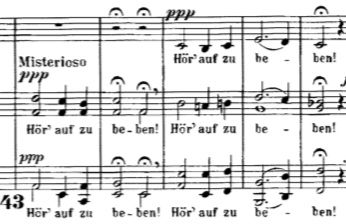
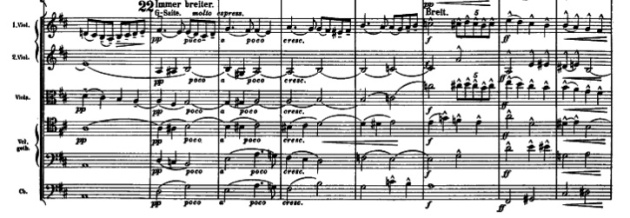
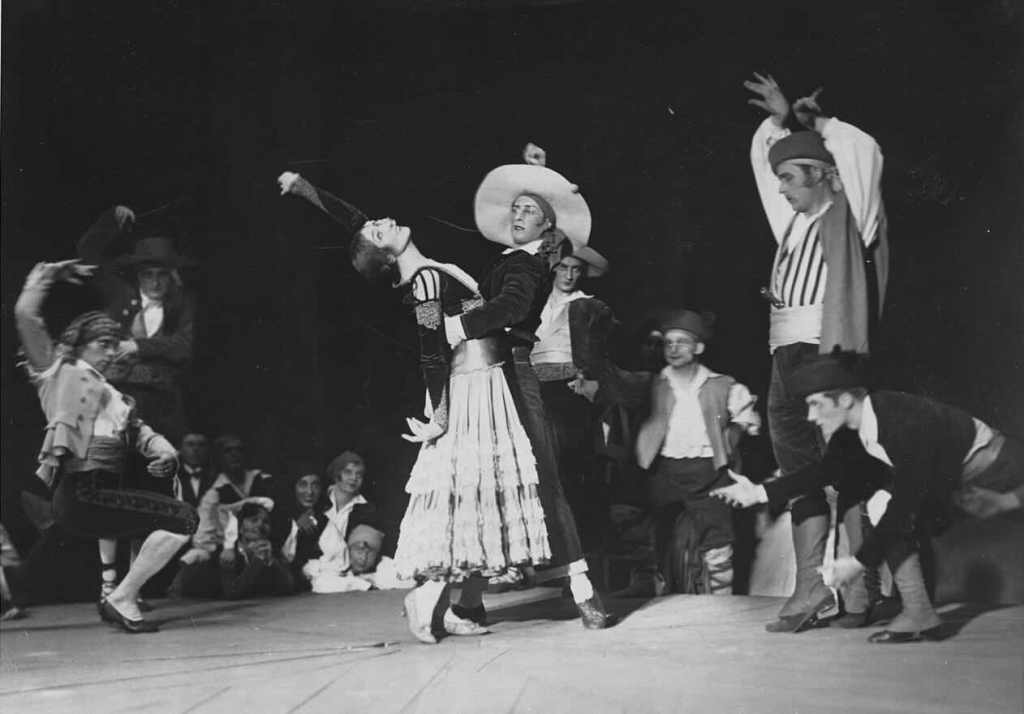




 I wrote about the symphony

 Stéphane Denève accompanying Laurence Kilsby in Lil Boulanger’s Vieille prière bouddhique.
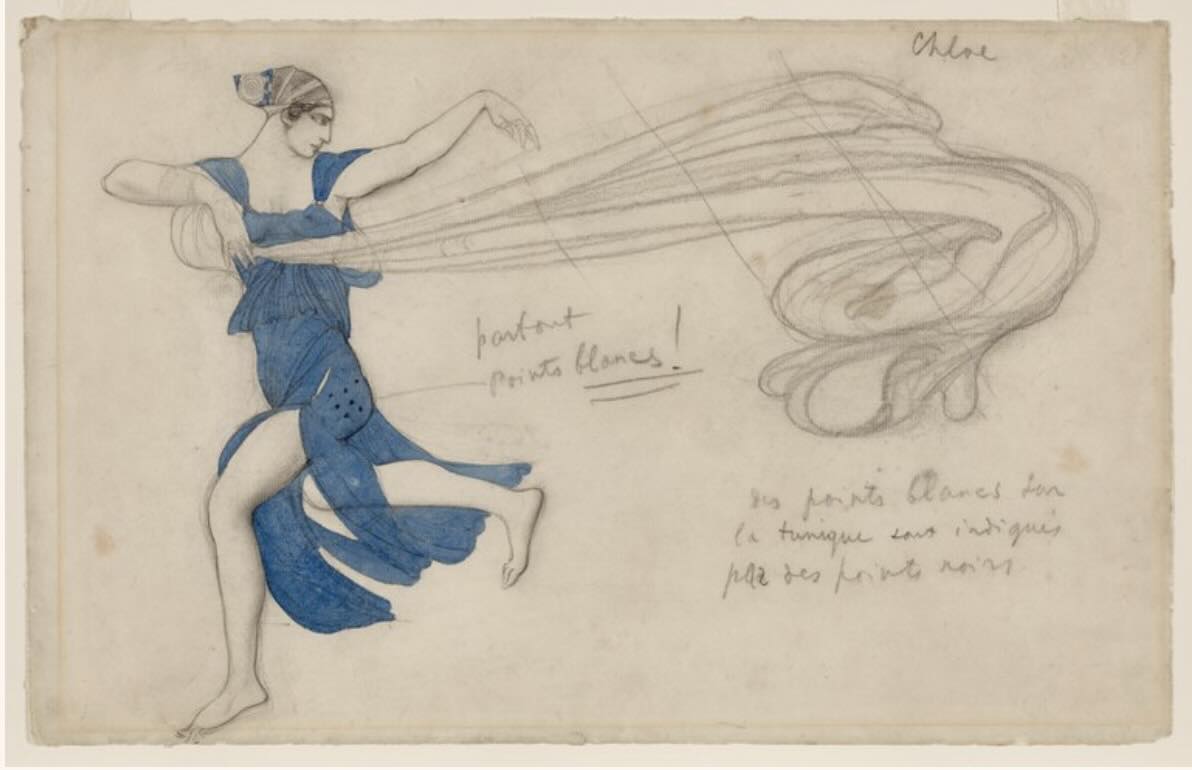
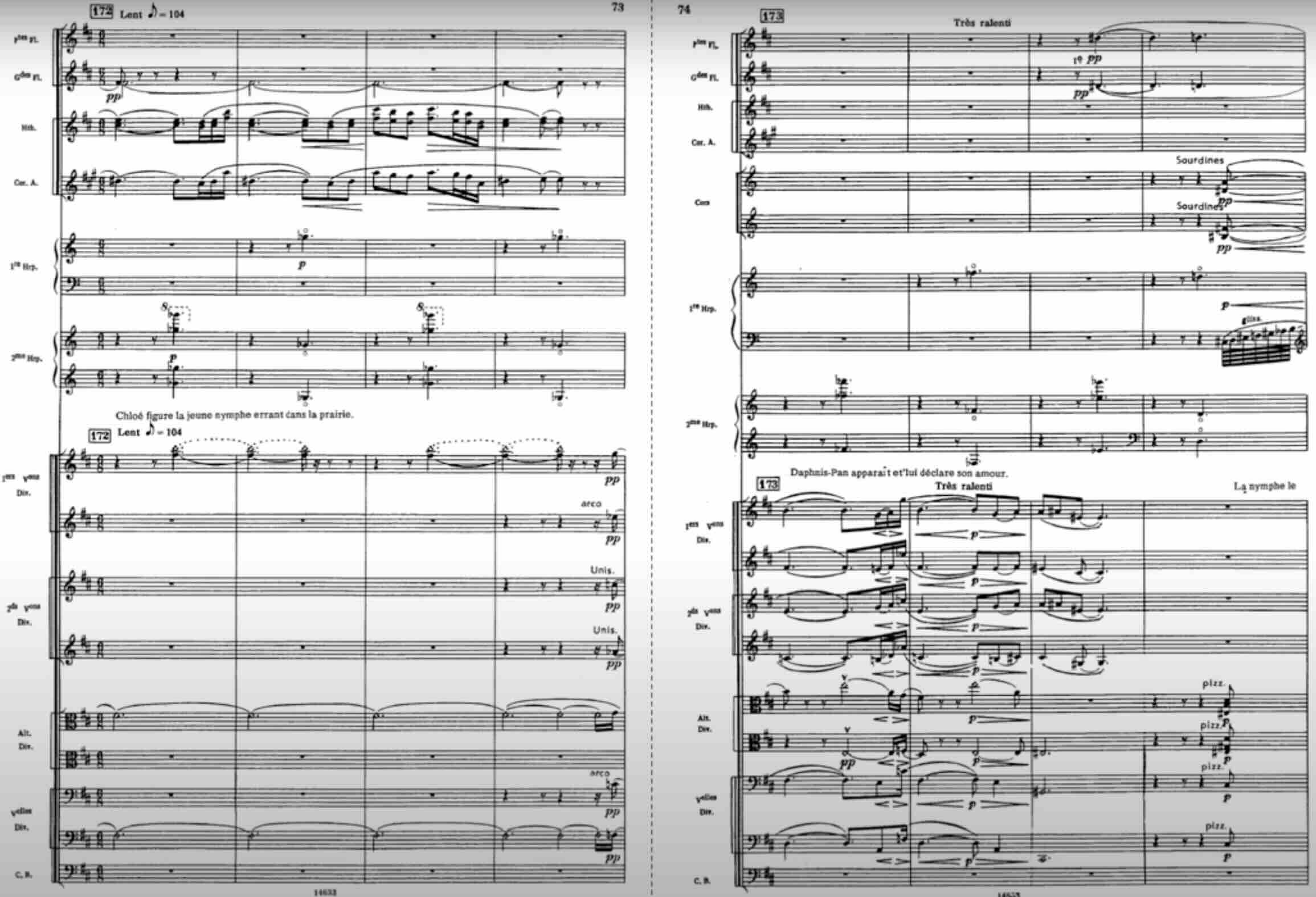
 ©BBC/Mark Allan. Source: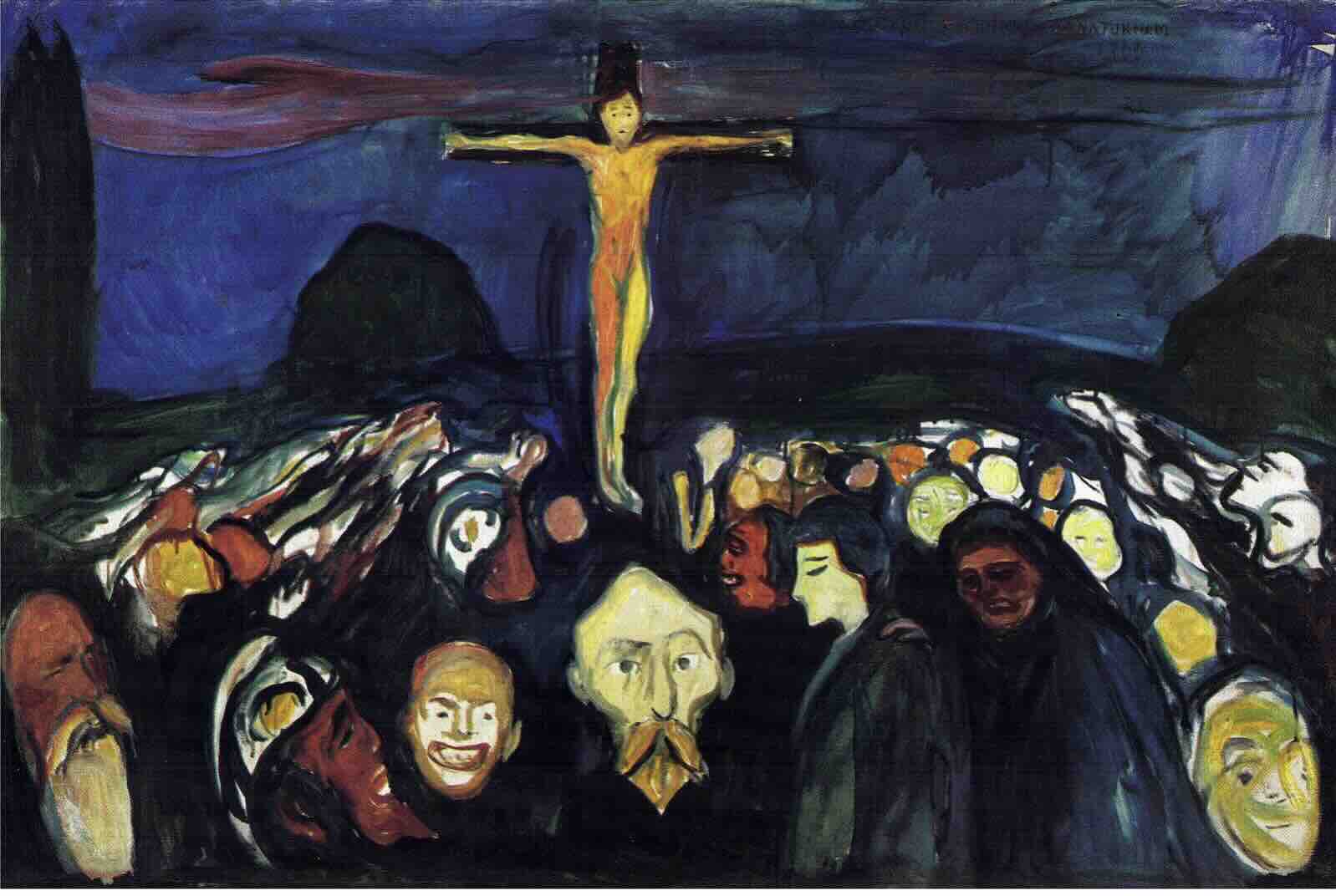
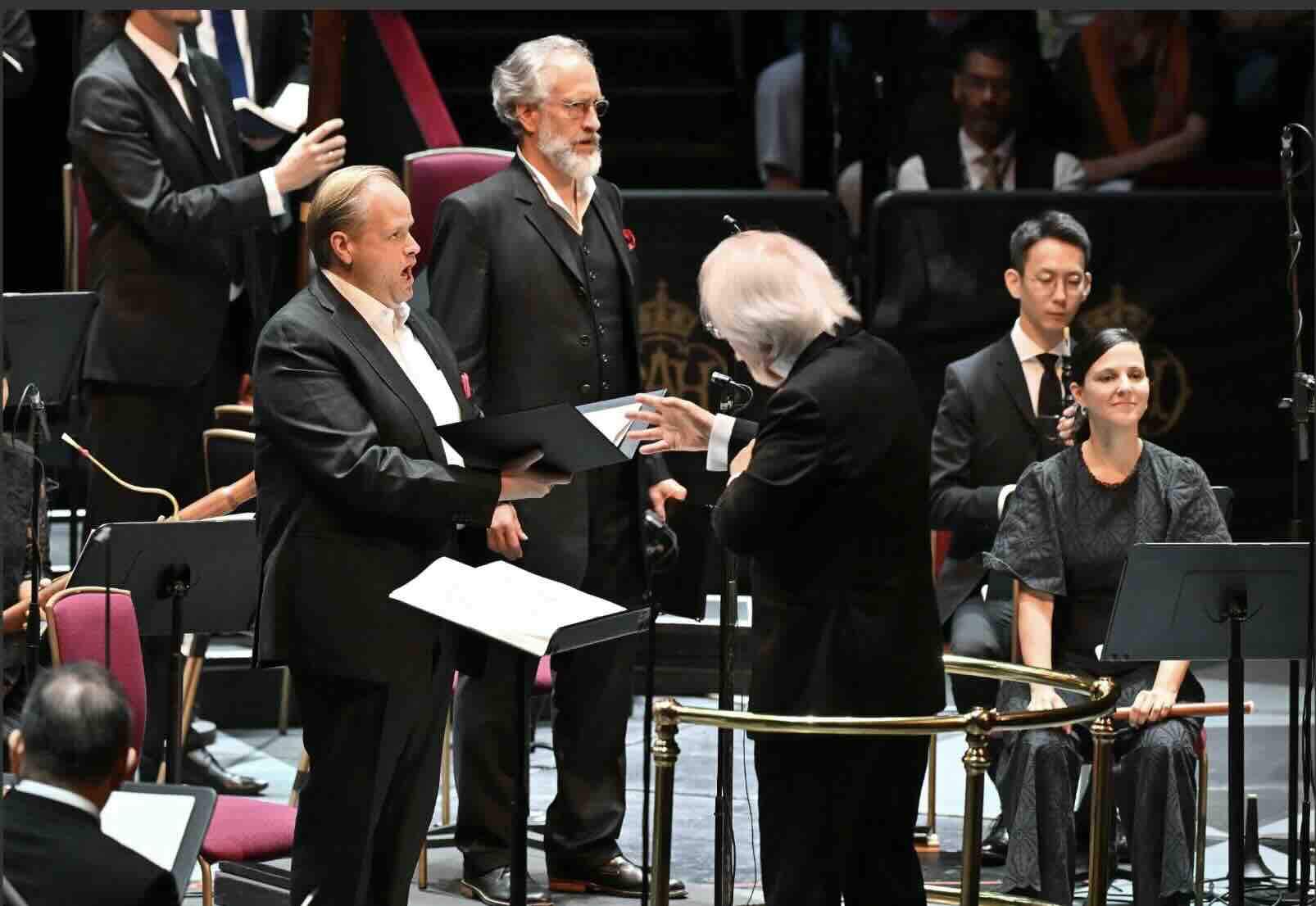 Benjamin Bruns, Christian Immler, Masaaki Suzuki.


 Source:


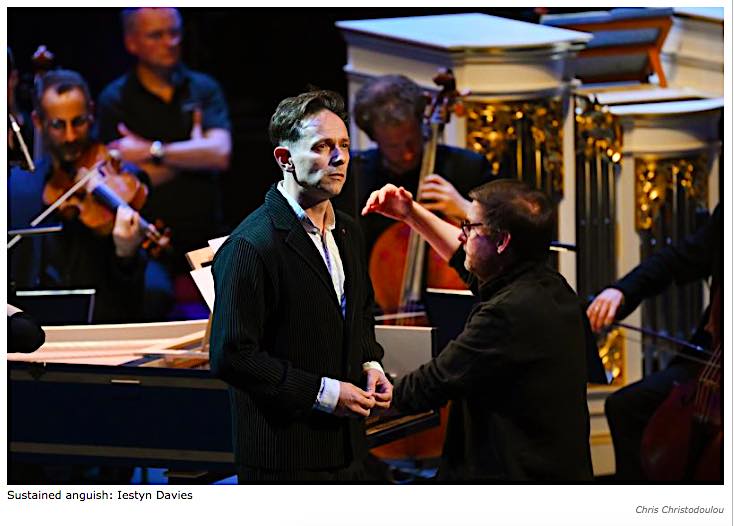
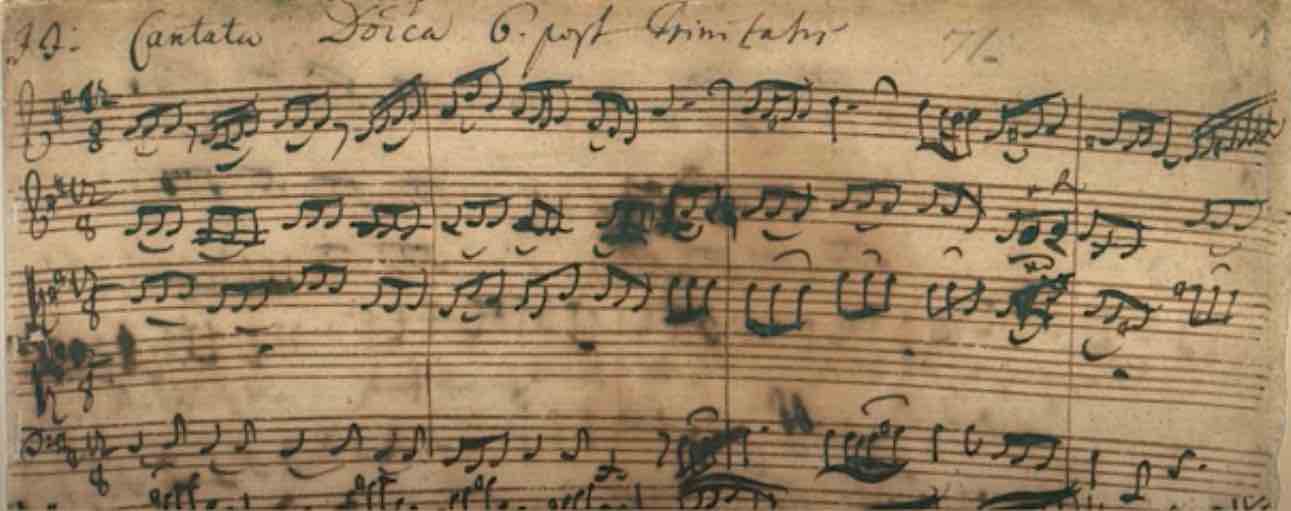
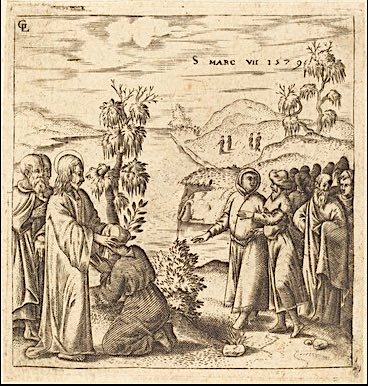

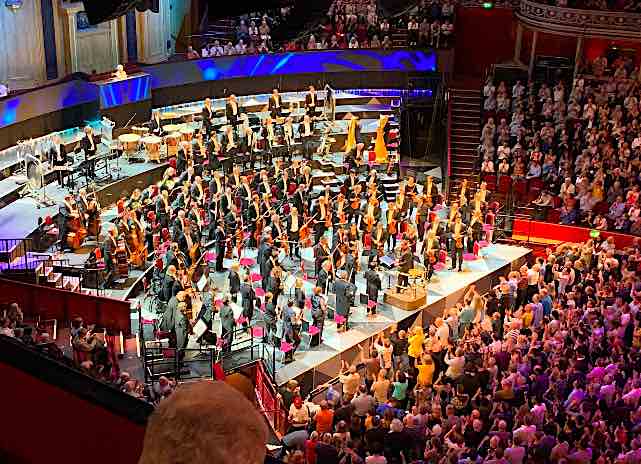


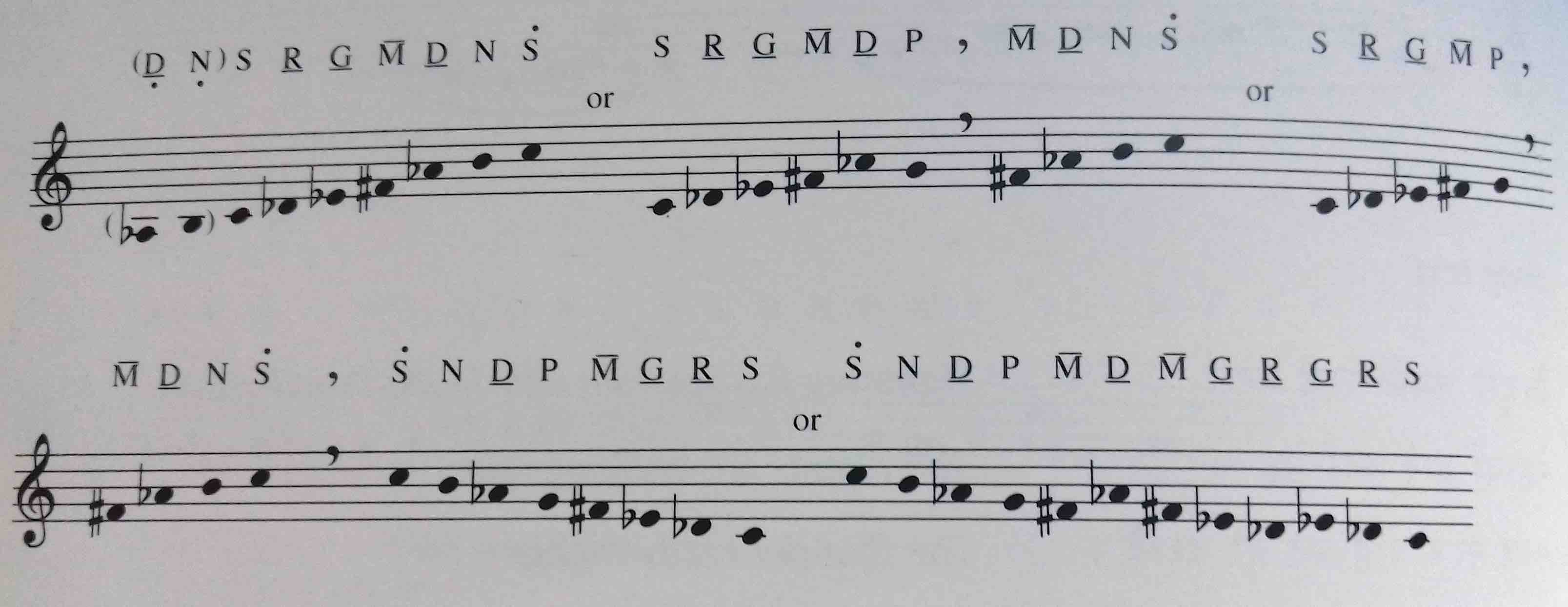
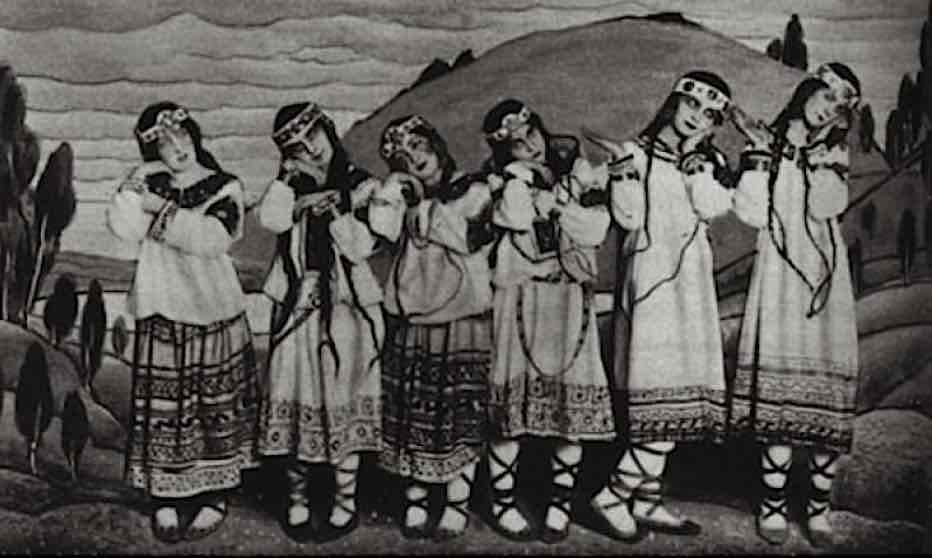 Not the new European champions defending a corner (another
  Photo: BBC.


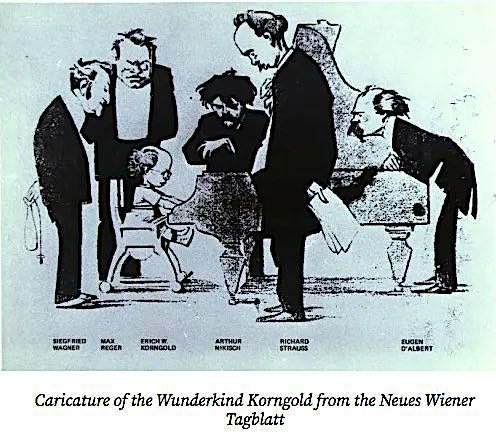

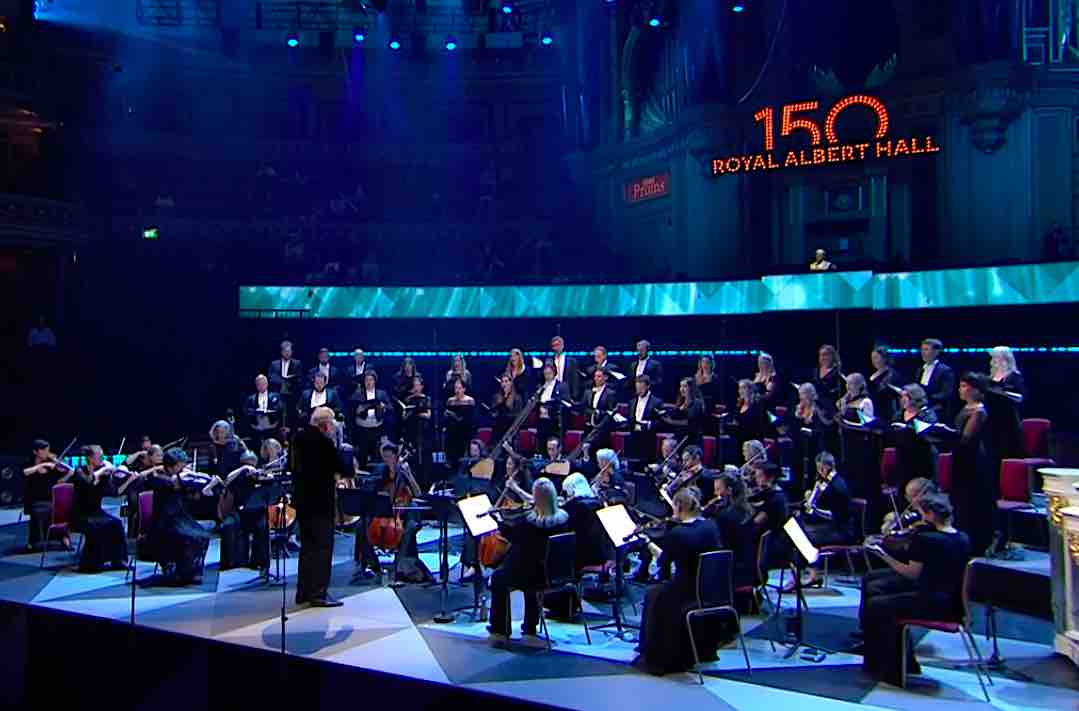


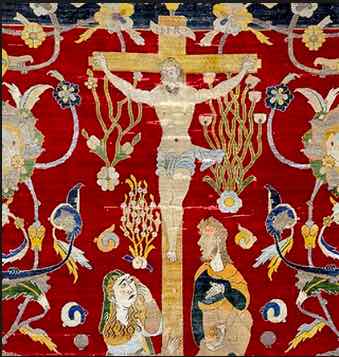


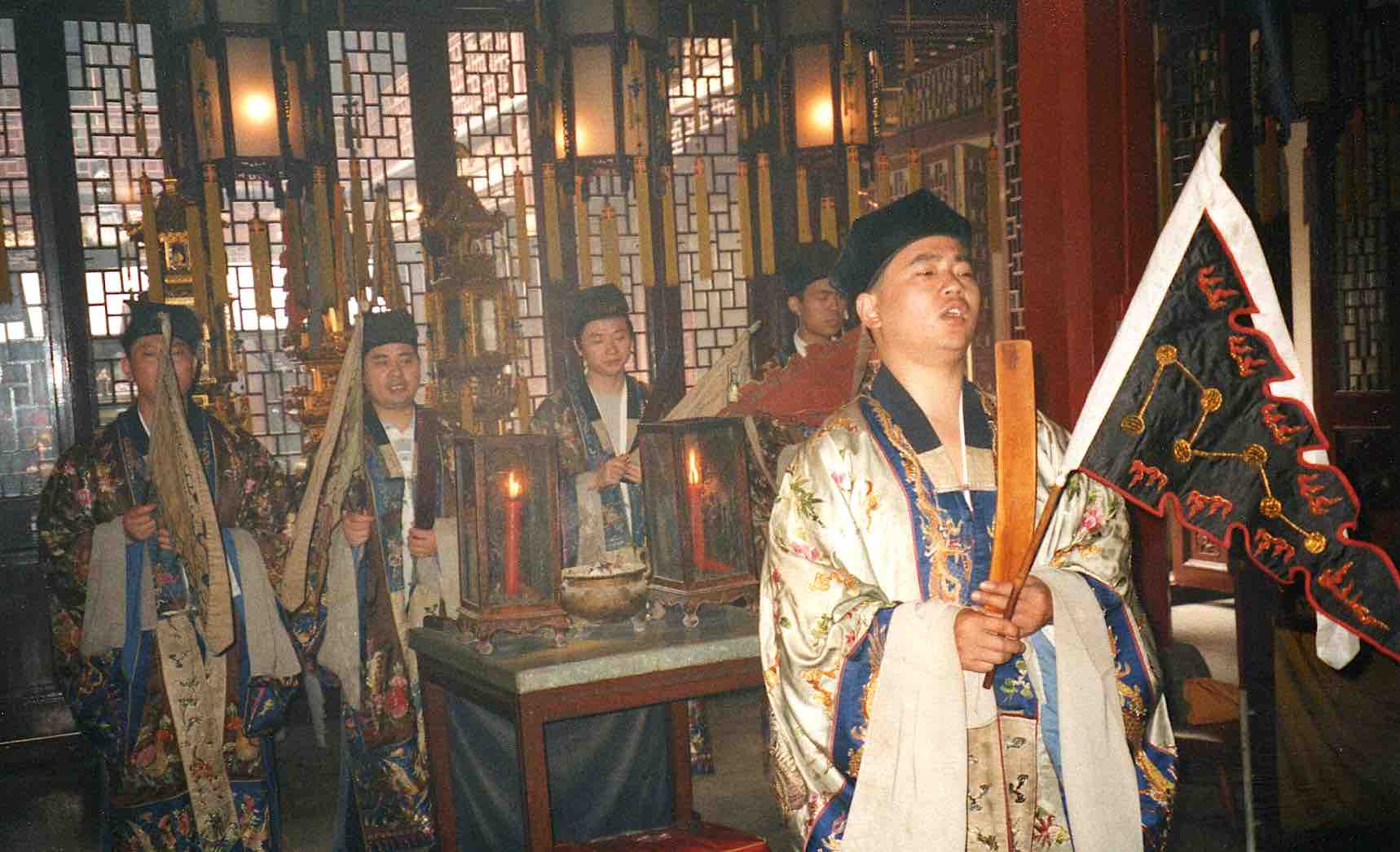
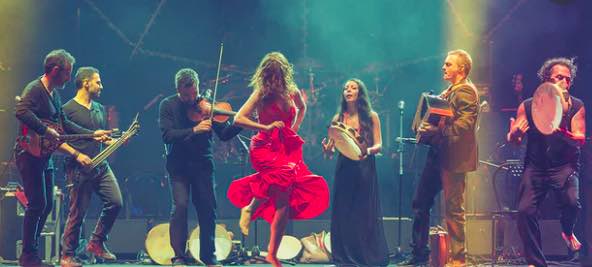


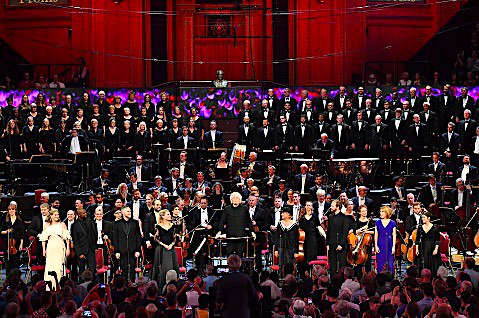

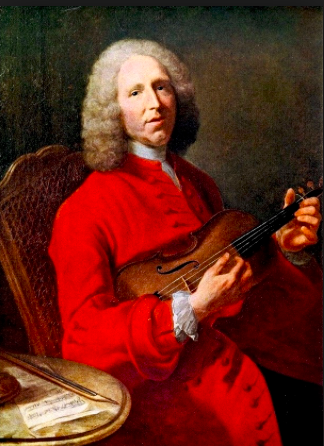
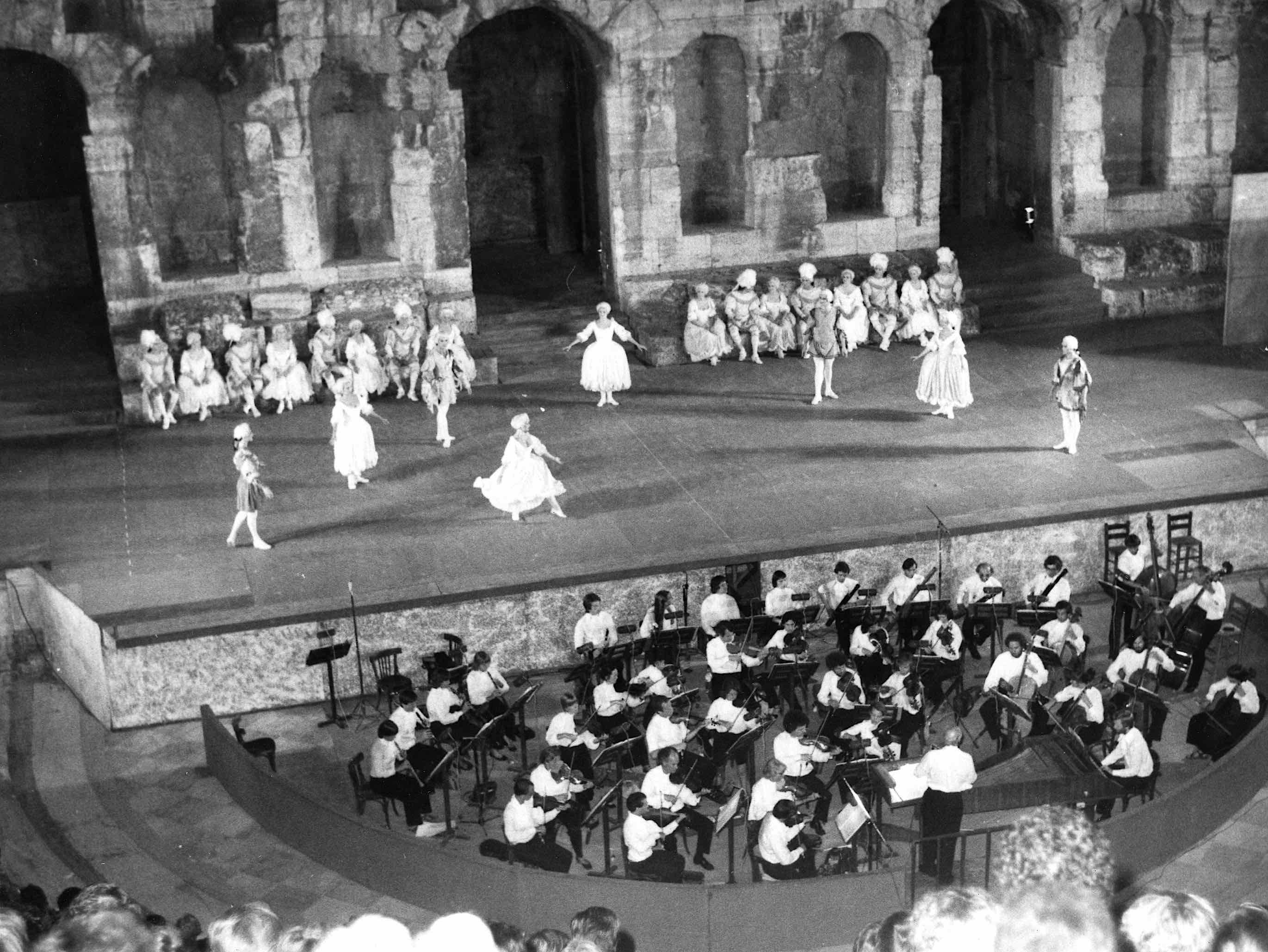





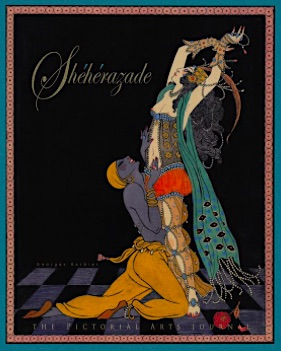

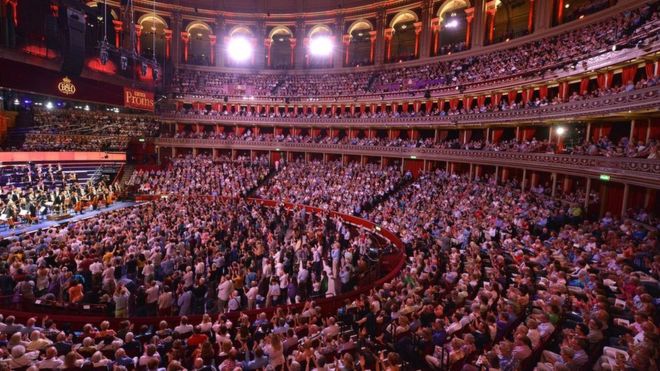


 Stephen Jones: a blog

