The SOAS rebetiko reader: a selection of papers associated with the Hydra rebetiko conferences 2000-2020 and seminars held at the School of Oriental & African Studies, London (2025) (online here), edited by Ed Emery, tireless aficionado and organiser of rebetiko events.
A substantial English addition to the mainly Greek literature on the topic, it’s the fruit of several conferences over the years (notably the annual gatherings on the island of Hydra), and the creation of various bands.
Rebetes in Karaiskaki, Piraeus, 1933. Source: wiki.
The volume contains contributions from well-established academics and informed amateurs, with original source materials in translation, plentiful song lyrics, discographical notes and links to YouTube clips. Besides Istanbul and Athens, topics include the (mostly bygone) rebetiko cultures of Smyrna/Izmir, Saloniki, Crete, and the USA, along with the Jewish connection; BulentAksoy unearths Turkish lyrics in early recordings. Two chapters by Gail Holst-Warhaft (on world music and the orientalising of rebetika, and the nationalising of the amanes) sample her thoughtful work since Road to rebetika. Also intriguing are excerpts from the autobiographies of Rosa Eskenazi and Markos Vamvakaris, and chapters on the criminal underworld, addressing heroin, cocaine, and morphine in rebetiko song; coverage of the connection with Sufi tekke lodges; zeybekika dances with zurna shawms feature in articles by PanagiotisAgiakatsikas and Muammer Ketencoglu, and a field report from west Anatolia by Ali FuatAydin.
Zurnas play for zeybek dancing, Aydın 2006. Source.
Movies about music are a minefield, whatever the genre (for Western Art Music, see e.g. Maestro, Philharmonia, Endeavour). But rewatching The Commitments(Alan Parker, 1991), based on the book by Roddy Doyle, I relished its charm just as much as when it first came out—though it’s less obviously political than Brassed off, and stands in total contrast to Parker’s 1988 film Mississippi burning.
Set in working-class north Dublin, The Commitments evokes the ecstasy and drudge common to a wide range of performers around the world (for a fine ethnography, see The hidden musicians; see also Deviating from behavioural norms), with an inexperienced cast (always a good sign) is full of character, led by Andrew Strong as larger-than-life singer Deco Cuffe.
The Irish are the blacks of Europe. Dubliners are the blacks of Ireland. North Dubliners are the blacks of Dublin.
The film works both in its own right, as a portrayal of the lives of struggling young Dubliners, and as a tribute to the great era of soul (cf. Detroit 67, Memphis 68, Northern soul). It leads me to some original tracks that had (predictably) escaped me, starting with two songs of Wilson Pickett—Mustang Sally:
and In the midnight hour:
Try a little tenderness—Otis Redding:
Take me to the river—Al Green:
Chain of fools—Aretha Franklin (and as if I need to remind you of her Amazing Grace, here it is again!):
While the scene is often adduced as an archetype of romantic love, and the dancing is of course stunning, it’s tricky reacting to the art of bygone ages with modern eyes and ears. Audiences today may find the couple’s “chemistry” elusive, their dynamics pointedly cold. His insistent “wooing”, and her reticent, never-rapturous compliance (“Cut the crap—oh well, at least he can dance”?!), may be standard for the time, but some may find the mood somewhat coercive.
Still, the song itself is brilliant—so we might listen without getting confused about the dance’s sexual politics (cf. racial politics in the filmed version of Only you). As wiki explains, the song’s melody, harmony, and structure are all unusual. In the obsessive opening (often omitted, understandably), after 35 repetitions of the same note (emulating Beethoven?) over a narrow range of chords, the pitch boldly rises twice by a semitone for more repetitions before sliding back to the original pitch for the melody proper. Among several accounts of the song’s origin, this is presumably the source of the reductive orientalist claim that it was inspired by the call to prayer in Morocco (cited here):
The song proper thrives on descending chromatic motifs (cf. Unpromising chromaticisms)–even when we think a regular melody might surface, in bars 44–5 the downward slide continues:
What might be a glorious climactic major 7th leap (making—love, from 1.37, bar 60) may hardly register:
In the dance, just as glorious is the way the band relishes all the rhythmic and melodic flourishes. After the dance, at the very end of the scene, when Astaire asks “Cigarette?”, Rogers still seems underwhelmed—if only she could have anticipated Lesley Nielsen’s immortal riposte in Airplane “Yes, I know”…
Recalling the Lexicon of musical invective is a story that when Porter first played the song for his friend Monty Wooly, Wooly sniffed, “I don’t know what this is you are trying to do, but whatever it is, throw it away. It’s terrible.”
* * *
Among other classic versions, apart from the likes of Ella Fitzgerald and Frank Sinatra, I always treasure Billie Holiday. Encapsulating the heartache of infatuation, she creates a new, angular melody unconstrained by the song’s original chromaticism—here’s her 1939 recording (the band including her constant soulmates Lester Young and Buck Clayton):
Charlie Parker, 1952:
Here’s a lengthy rendition by Stan Getz, live in Kildevælds Church, Copenhagen, 1960:
And Bill Evans in 1959, entirely eschewing the romance of the original—with Philly Joe Jones’s opening drum riff replacing the tom-toms of the lyrics:
with a seasonal tinge— and fieldwork as resistance to fascism
Screenshot
Screenshot
Our image of Portuguese music is so dominated by fado (see here and here) that it’s easy to forget the abundance of folk traditions in rural communities there.
The archive (mostly filmed from 1971 to 1974) is on YouTube, as well as a playlist of excerpts. As in China, major themes are work songs (The Land! e.g. 50—not forgetting fishing), solo and a cappella singing, and church festivals; drums and fifes, bagpipes; stick-dances (e.g. 51, from São Martinho de Angueira) recall our much-maligned Morris dancing. Of particular note are the regions of Trás os Montes in the northeast, and the Alentejo. Here’s a compilation of religious music (45):
Mainly from the ritual repertoires, a few highlights:
In the Alentejo, the village of Venda holds the Festa da Santa Cruz (2–4) in Mayto celebrate spring (cf. Maggio in Tuscany, under Italy: folk musicking). This introduction refers to major studies by Morais and Fitas.
The group that goes down towards the crossroads is led by the Mordoma, dressed in white and carrying in her hands the Holy Cross, decorated with gold lent by the residents; the group that goes up to the meeting place is led by the Madanela, dressed in black and carrying in her hands a cloth with the face of Christ crowned with thorns. Both comprise a central female figure, two godmothers, four female singers with tambourines, and three male rifle-shooters. After the “meeting” of the Cross and the Cloth, they come together (beijo, “kiss”) to form a single group going up the village. Once at the Casinha da Cruz, Madanela and Mordoma present the Cross together. The next day, the Cross will leave the Casinha, remaining in the Mordoma’s house until the following year.
Nativity singers of Alpalhão (23–5); around Portalegre, Castelo Branco, Beja and Faro (30, 31), the cycle of Janeiras and Rios songs for the twelve days from Christmas to Epiphany, as well as the choral Oração das Almas in São Bento do Ameixial (9, 10).
The tamborileiros of Baixo Alentejo (17–22):
This documentary features a surreal viola (from 3.45):
Given the belated economic progress of the last half-century, I suppose this counts as salvage ethnomusicology—some of these traditions were already in decline, but others prove resilient amidst change (cf. Musics lost and found).
* * *
Some audio recordings of note include Musical traditions of Portugal(Smithsonian, 1988), and Tras-os-Montes: chants du Blé et cornemuses de berger (Ocora, 1978)—here’s a track:
* Someone must have pondered this, but I wonder how such fieldwork tangibly helps further the revolution. As in Yellow Earth, it might merely depress the visitor at the enormity of “backward” thinking—not least conservative religious values—among the people they hope to help. See also Taranta: poverty and orientalism.
In my post on New British jazz I mentioned Yazz Ahmed (site; wiki), so I was glad to hear her quintet at the London Jazz Festival this Saturday.
“High priestess of psychedelic Arabic jazz” is an alluring tagline, but doesn’t do justice to such a serious composer. Grand Junction in Paddington, a former church, made a striking venue, suitable for the reflective mood of her work, its architecture compensating for the intimacy of many jazz venues.
With her British-Bahraini background, Yazz Ahmed reflects in interview on exploring her Arabic heritage, but not limited to an ethnic bubble, she creates her own voice. Focusing on collaboration, she plays an unassuming role on trumpet and flugelhorn, modulating timbres with the aid of a Kaoss pad, highlighting ensemble textures—besides drums and bass guitar, the quintet is enriched by vibes and bass clarinet, joined in the second half by vocalist Randolph Matthews.
Her studio album Polyhymnia (2019) is a six-movement suite devoted to “six women of exceptional qualities, role models with whom she felt a strong bond”: Rosa Parks, Malala Yousafzai, Ruby Bridges, Haaifa Al-Mansour, Barbara Thompson, and the Suffragettes (playlist):
And a foretaste of her forthcoming album A paradise in the hold:
In This Day and Age™, while it would be churlish to write off new creativity in Western Art Music, I find far more relevant all the activity going on beneath the broad umbrella of “jazz”—further enhanced in live performance by the major factor of atmosphere. I’ve explored the theme of “serious music” at length here.
For a wide range of classic and world jazz, see this extensive roundup. And you can work through the plethora of posts under the world music category in the sidebar, including not just China and India but flamenco, Turkish music, and much more…
Shawm-and-percussion bands occupy a lowly but vital position in folk cultures around the world. Throughout rural China they are the major performers for life-cycle and calendrical rituals, as is clear from the monumental Anthology of folk music of the Chinese peoples. *
For folk expressive cultures, our evidence for change before the early 20th century is limited to the inspection of historical documents and iconography; for the whole modern period since the Republican era, our sources are hugely enriched by fieldwork. Continuity with the imperial heritage tended to be obscured by the political interventions of the Maoist era, but was revealed again by the massive revival of local traditions in the early reform period of the 1980s—documented in the Anthology and coinciding with my own fieldwork.
In two books (with DVDs) I introduced shawm bands of north Shanxi (2007) and Shaanbei (2009)—see under Other publications. In my survey Walking Shrill I outlined their lowly milieu: however indispensible,
shawm bands were always at the bottom of the social pile. Virtual outcasts, they were often illiterate, bachelors, opium smokers, begging in the slack season, associated with theft and violence.
For the period before and after the 1949 Liberation, some players were visually impaired, as shown in the rich material of the Anthology; while I still came across senior blind musicians during my own fieldwork in north Shanxi and Shaanbei through the 1990s, fewer remained active (similarly, sighted bards were encroaching on the livelihood of blind performers). But most sighted players still had a somewhat unsavoury reputation, partial to alcohol and amphetamines.
Coinciding with the revival, the Anthology fieldwork came at the most opportune time to document local traditions. But today’s society is already very different from that of the 1990s, with pervasive changes escalating . So I’m curious to learn how widely the outcast status of shawm bands still applies. We certainly can’t draw conclusions about the broad picture on the basis of the ideology of the urban troupes and conservatoires—the mere tip of a vast iceberg. Much of my work documents underlying rural customs that resist or circumvent such values—as they did even during the Maoist era. A different mode of state intrusion (or shall we say “presence”—e.g. Guo Yuhua ed., Yishi yu shehui bianqian) may now apply, but it’s never the whole story.
Chang Wenzhou’s big band at village funeral, Mizhi 2001.
I was not entirely oblivious to recent change. I described how shawm bands were turning to pop music, incorporating the “big band”, adding trumpet, sax, and drum-kit, in north Shanxi (2007, pp.30–38) and Shaanbei (2009, pp.149–53); and for the latter region I gave a vignette on the image presented by an urban troupe (pp.210–12, recast here). I have noted how the new wave of pop culture since the 1980s promised to be more successful in erasing tradition than political campaigns during the decades of Maoism.
* * *
Detailed ethnographic updates are scarce. At SOAS, Feng Jun has just completed a fine PhD thesis on paiziluo shawm bands in southeast Hubei—an instrumentation which, perhaps exceptionally, dispenses with drum in favour of gongs.
Left, paiziluo after dinner at funeral. Right, two paiziluo bands performing simultaneously in the ancestral temple. Images courtesy of Feng Jun.
Feng Jun discusses the role of these bands in funerals and ancestral ceremonies, which still require a largely traditional repertoire—whose modal variations she analyses in detail. But she also highlights weddings, which have long featured more innovative popular pieces (cf. my Shaanbei book, pp.188–9, and DVD §D2). Performers now “selectively appropriate diverse musical spectacles, particularly through the national Spring Festival Gala, and project their own re-imagining of these spectacles in the ceremonial spaces of village rituals.”
Left, brass band performing for village wedding. Right, dancing to the song Rela nüren (“Hot and spicy women”).
The increasing participation of women is another trend that I haven’t kept up with. I noted how shawm-playing men might encourage their daughters to take part in the family band, at least before marriage, since the 1980s; but in Hubei, with men often absent as migrant labourers in distant towns, married women now not only take part in paiziluo groups but form their own brass bands—another radical innovation. Feng Jun goes on to unpack the practical impact of the Intangible Cultural Heritage (ICH), now an unavoidable topic—where a plethora of detached academic analysis detailing its negative effects never manages to convey just how damaging it is.
In Hubei Feng Jun found no such prejudice against shawm-band musicians as has been documented in north China—which she explains by the greater lineage cohesion of southern society. This makes me wonder if their exclusion from mainstream society is less widespread than my material suggests. So we might consider two caveats referring to space and time: differing long-term regional customs, and recent social change. For the former, we might go back to other provincial volumes of the Anthology for more clues. As always, there will be regional variations, depending partly on the poverty and insularity of a locale. For the mid-20th century, I suspect my impression still holds good for the north and northwest, and for the Shandong–Henan region; perhaps less so as one goes further south.
And even in more backward areas, as the country has become more affluent and villages further depopulated by migration to the cities, peasants seek upward mobility through education while the influence of national trends expands greatly through social media. For some shawm families, other more reliable and salubrious livelihoods beckon; but those younger generations who still take up the trade of their elders tend to spruce up their former lowly image.
Musical change is perhaps more evident in public events (including temple fairs), that can be exploited by cultural authorities, than in domestic rituals such as funerals or the activities of spirit mediums. Household Daoists are also invited for funerals in southeast Hubei—their rituals doubtless also changing, if less obviously than those of the shawm bands.
All this is probably a question of emphasis: pop music was already part of the rural scene by the time the Anthology was being compiled, but was mentioned there only in passing. Innovations that I still considered minor only twenty years ago would now be a significant part of our description.
* * *
In Walking Shrill I outlined the minor presence of the suona in the conservatoire (cf. jazz, which has also gained admission to the academy since the Golden Age). Indeed, while the term suona is used in historical sources, it now belongs to the conservatoire, folk musicians preferring a variety of local terms; where they do adopt the word, it is itself a badge of modernity.
Though the shawm lacks the suave image of erhu, zheng, or pipa, it has long had a foot in the conservatoire door. Under Maoism since the 1950s, state-funded Arts Work Troupes featured suona solos by celebrated “folk artists” such as Ren Tongxiang (heard e.g. on the archive CD Xianguan chuanqi). After the 1949 Liberation, some shawm players from hereditary traditions became conservatoire teachers, training younger generations from similar backgrounds—like Liu Ying, who found his way from rural Anhui to join the Shanghai Conservatoire soon after the downfall of the Gang of Four in 1976. And far more than other instrumentalists in the conservatoire, Liu Ying’s pupils tended to come from a poor rural background, the Shandong–Henan region (see here, and here) remaining the heartland for such recruitment.
Even if rural musicians won’t necessarily make a lot more money in this new environment than they would back home (cf. Ivo Papazov—see here, under “Bulgaria, Macedonia”), they will naturally leap at any prospect of upward mobility. The troupes and conservatoires make a promising route to urban registration, an escape from a tough life (cf. The life of the household Daoist); still, they will never be able to absorb more than a minor intake.
As to the shawm band musicians who remain in the poor countryside serving life-cycle and calendrical ceremonies, their lives and livelihoods are changing. But thanks to the internet, the polished style of the conservatoire virtuosi is one strand among a range of new images to emulate.
Chinese scholars write academic theses on regional shawm-band traditions—although they are surely at a disadvantage under a system that still discourages the participant observation that is routine in Western ethnomusicology. So I suppose the idea of a PhD in suona studies, combining performance and writing, shouldn’t seem so comical to me. “China’s first suona Ph.D. is ready for her solo” is perhaps only a clickbait headline for the likes of me (cf. this more detailed article in Chinese).
A young Liu Wenwen performs with her parents. Source.
At the Shanghai Conservatoire, Liu Ying’s pupil Liu Wenwen (b.1990—no relation!) recently gained China’s first PhD in suona, for which she had to perform three solo recitals and write an original dissertation. Her father Liu Baobin is descended from a shawm lineage from southwest Shandong, and is said (here) to be a pupil of Ren Tongxiang; her mother Liu Hongmei comes from a long line of shawm players in Xuzhou in northwest Jiangsu. Unlike in the northwest, in the Shandong–Henan region the custom of absorbing female players into family bands appears to date back several decades. Practising from childhood under her parents’ guidance, Liu Wenwen began making journeys to Shanghai for lessons with Liu Ying, and by the age of 15 she enrolled at the conservatoire to study formally with him.
As household Daoist Li Qing found in north Shanxi when he escaped the worst of the famine by taking a job in the regional Arts Work Troupe, the conservatoire style consists largely of quaint “little pieces”, often using kaxi techniques to mimic bird-song. This repertoire never approaches the complex grandeur of traditional shawm suites (note Dissolving boundaries); and even when “little pieces” are a significant component of rural practice, they are performed (and creatively varied) within the context and rules of lengthy life-cycle and calendrical ceremonies.
In the troupes and conservatoires we also find change through different eras—not least in the spin put on the rural background. Under Maoism the suona soloists of the Arts Work Troupes fostered the image of peasants nobly toiling for the common cause, whereas publicity for today’s suave virtuosi deflects the political spin for a more glamorous image, with aspirational hype about “ascending to the hall of great elegance” (deng daya zhi tang) on the concert stage, trumpeting the success of modernisation. In both images the actual conditions of the countryside are irrelevant.
Left, village band performing for funeral, Shaanbei 1999. Right, Liu Wenwen accompanied by Tan Dun. Source.
In the case of Liu Wenwen, gender again plays a role in innovation. On the international stage, her playing has made another bandwagon for composer Tan Dun. The differing contexts entail adaptations in costume; the headscarf of the male peasant, emblem of the revolution, is now only paraded for kitsch staged performances and the ICH. **
It’s worryingly easy for the conservatoire tip of the iceberg—and the ICH—to obscure both local traditions and the pervasive changes taking place in the countryside, revealed in fieldwork like that of Feng Jun.
** I wrestled with this issue in presenting the Hua family shawm band on stage; after teething issues in Washington DC in 2002, I was able to opt for suits without ties, a cool look that doesn’t conflict too much with their casual local attire. The band may have been gratified by their brief residency at SOAS in 2005, but, free of pressure to glamorize their image or simplify their repertoire, it was very different to the long-term cultural shift embodied by players like Liu Ying and Liu Wenwen.
BTW, when visited by academics, peasants may initially appear impressed; once they discover that we’re totally hopeless at any useful, practical task, their respect may turn to consternation as our credentials prompt envy at our mystifying ability to cadge an “iron food-bowl”. This is an element in the Li family’s magnificent Joke, which follows the final credits of our film!
While I’ve accumulated something of a library on her life and work, I’ve only just got round to reading a smattering of the vast literature—not exactly that I think it’s enough to “let the songs speak for themselves”, more that it’s become such a huge industry. Such books include
Donald Clarke, Wishing on the moon (1994)
Leslie Gourse (ed.), The Billie Holiday companion: seven decades of commentary (1997)
Farah Jasmine Griffin, In search of Billie Holiday: if you can’t be free, be a mystery (2001), an astute study with the benefits of a black woman’s perspective, unpacking “how we know what we think we know” about her—referring to sources such as Angela Davis, Blues legacies and black feminism
John Szwed*, Billie Holiday: the musician and the myth (2015) (review), which I’ll cite below
and of course the “autobiography” Lady sings the blues (1956), ghost-written by William Dufty (well covered by Griffin, pp.45–55, and in Szwed’s first two chapters; cf. this LRB review). The 1972 biopic (watch here), with Diana Ross as Billie, is even more fictitious; though much criticised, it’s all part of the myth-making (e.g. Szwed, pp.83–94, and wise words from Griffin, pp.56–64).
Billie is just as popular a subject on film. The BBC documentary The long night of Lady Day (John Jeremy, 1984) is highly regarded—although Griffin rightly balks at the entitled white male pundits, still controlling her (and yes, now I’m getting in on the act too…):
I can only apologise for adding to the endless attempts to encapsulate Billie’s genius—but at least there’s lots of great music coming up.
* * *
John Szwed writes:
Given her acknowledged stature as a musician, it is odd that many of the books on Holiday have only secondary interest in her music. But then again, maybe not so odd: music writing today is increasingly focused on lifestyles, as if the events of artists’ lives are enough to explain their music, and the songs they record are treated primarily as documents in support of a given biographer’s argument. […] Most biographers look for those moments in an individual’s life that unlock its secrets or at least sum it up, then weave a narrative that focuses on these moments and ignores or downplays those that don’t support their analysis. […]
My intention was not to deny or gainsay the tribulations and tragedy of her life, but to shift the focus to her art. The consistency and taste she brought to nearly every performance, even those when her body was failing her, display a discipline, an artist’s complete devotion to her work, and a refusal to surrender to the demands of an insatiable world.
Billie’s voice, dreamy but never sentimental, had a unique blend of vulnerability and toughness. Once the microphone became more widely available in 1933, Billie adapted to a more intimate way of using her voice. Her tempi (like those of jazz generally) were partly a function of context—recording, or live; and if the latter, then the position of the song in the programme, and her mood on the night, influenced by that of the audience. Still, even in her early years listeners found her slow tempi a challenge, and as she grew older she tended to sing more slowly, more innig, dwelling on the pain.
Some features of her distinctive style (which among her many imitators can sound like mannerisms):
The way she combined speech and song (far from the contrived sprechstimme of art music—see also Szwed, pp.161–3), bending notes, with pitches often indeterminate; **
Her timing—rhythms lagging behind the beat or just outside it (Szwed pp.156–9), floating freely around the band’s regular metre—and the spaces in between, like the ma of Japanese culture, or Miles;
Jazz musos have a fine sense of how and when to use vibrato (e.g. Miles again). Szwed cites Billie: “When I got into show business you had to have the shake. If you didn’t, you were dead… That big vibrato fits a few voices, but those that have it usually have it too much. I just don’t like it. You have to use it sparingly. You know, the hard thing is not to do that shake.” Her use of vibrato was carefully calibrated—Szwed notes how she would often set a single note in motion by increasing the width of vibrato just before moving on to the next note or phrase.
For every aspect of learning, style, and creativity, it’s always worth returning to Paul Berliner, Thinking in jazz, often cited in my series on jazz.
* * *
So here’s a second playlist to follow my first post—every song a true gem.
I’ll get by, 1937 (Szwed, pp.192–3), the breezy instrumentals belying Billie’s minimalist singing:
All of me, 1941:
Billie’s blues live at the Met in 1944—slower than her 1936 recording (Griffin, pp.134–8):
and 1956, again live at Carnegie Hall, with extreme contrasts:
Three recordings of My man, 1937 (Szwed, pp.249–50):
1948:
and 1952:
Very often her style evokes the Chinese concept “the Great Music is sparse in sound” (dayin xisheng大音希声, often applied to the qin zither)—such as the lapidary How am I to know?, 1944:
with the horns commenting softly on the action “like a Greek chorus” (Will Friedwald, in Gourse, p.126) (contrast Jack Leonard 1939, or Frank Sinatra 1940).
Also from 1944, and just as entrancing in its minimalism, is I’ll be seeing you (Szwed pp.238–40)—where her free-tempo meditation over the band’s slow pulse “almost seems as if she is treating each word as a separate phrase” (again, contrast Jo Stafford, Frank Sinatra, Bing Crosby):
The arrangement is by Eddie Haywood, whose noodlings on piano remind me of Messiaen. Possibly it would only occur to Deryck Cooke that the song’s opening phrases suggest the finale of Mahler 3!
Both songs are highly reminiscent of Embraceable you, featured in my first post on Billie. And yet another 1944 recording, for those stuck in the Casablanca groove—As time goes by.
Gloomy Sunday, 1941 (Szwed, pp.226–9):
I mentioned Strange fruit in my post on Nina Simone, with links to Billie’s 1939 recording and 1959 performance. While I debate whether to impertinently write more in a separate post, the song is much discussed—perhaps starting with Szwed and Griffin, not to mention David Margolick, Strange fruit: Billie Holiday and the biography of a song (2001).
Pundits feel a need to defend or lament the singing of Billie’s last few years. The string backings of Lady in satin (1958) divided fans (Szwed, pp.260–64); though some songs work better than others, her voice will still enchant those without doctrinal axes to grind. And always watch in awe that 1957 TV appearance!
* * *
Bandleaders like Teddy Wilson, Count Basie, and Artie Shaw, as well as a host of pianists and horn players, were unanimous in their deep admiration for Billie (besides Szwed, see Griffin, pp. 17–20). Her own appreciation of them is significant too, shown most movingly in the 1957 TV show. Much has been written about Billie’s deep bond with her musical soulmate Lester Young. Amidst all the myth-making, Griffin (pp.84–93) finds particular value in the recordings of 1955 rehearsals on Songs and conversations (playlist here; cf. Nat Hentoff, in Gourse, pp.108–10).
Szed cites Artie Shaw:
I gave her a record of Debussy’s L’après midi d’un faune. She could sing the whole thing, the top line: Da, da-da-da-da-da-dee***—she could do the whole thing. Didn’t have the range for it—but she had a very good ear.
and adds:
It must have meant as much to her as it did to him: she still had the recording until she died, and often played it for guests.
One afternoon, the harpsichordist Ralph Kirkpatrick invited her to his apartment (Szwed, pp.52–3):
While Billie put away the better part of a bottle of rum, I played Bach for her. Her face registered everything, and no manifestation of the music seemed to escape her… I could have used her like a precision instrument to monitor my performance of the G minor English suite simply by watching the subtle variations of expression on her face show me with an infinitely sensitive instrument to monitor what was coming off and what was not. Her own performances, heard through the haze of cigarette smoke in a nightclub, gave heartrending glimpses of a raw and bleeding sensibility condemned to exploitation on every side, unsustained by the protective bulwarks that education and privilege could have given her, and destined, as I knew from the day I first saw her, to end in the gutter.
Later, the two of them sat together at the keyboard. Since Billie could not read music, he played a piece through once, but only once, so she could sing it. “Holiday had the most extraordinary gift of phrasing that I’d ever heard in a singer”, he said. “Once she heard it, she knew exactly how the tune should go”.
Most jazz musicians have never relied on notation, but find it a useful tool to augment their oral/aural training; but for a singer like Billie it was a blessing to be unhampered by little black dots on the page, both in pitch and rhythm. And having internalised an original song, she would then constantly re-compose it (cf. Unpacking “improvisation”). Her finely-tuned ear is further evinced by Leonard Feather’s blindfold test, where Billie comments on twelve tracks by a variety of performers (Gourse, pp.57–62).
OK, I’ll keep listening, and I trust you will too. My Playlist of songs has some amazing tracks, but no-one, in any genre, can ever compare to Billie…
* Also the author of biographies of Miles Davis and Alan Lomax that I must read.
** I’m not inclined to make too much of Paul Bowles’s comment after hearing her 1946 Town Hall concert, describing her voice as “like modern Greek song, Balkan song, conto [cante!] jondo… Her vocalisation is actually nearer to north Africa than to west Africa”.
*** One too many “da”s has crept in there, but hey!
Such is my devotion to Billie Holiday that I’ve never quite been able to warm to Nina Simone (1933–2003). But my interest has been revived by listening with rapt admiration to Feeling good (1965). It opens with an all-too-brief free-tempo alap, brusquely interrupted by the incongruous sleazy riff: *
The title isn’t so ironic as it sounds. Written by (white) English composers Anthony Newley and Leslie Bricusse for the musical The roar of the greasepaint—the smell of the crowd, satirising the British class system, the UK premiere was given by Cy Grant in the role of “the Negro” singing the song as he “wins” the game; it was described as a “booming song of emancipation”. When the show transferred to New York the following year, the role was taken by Gilbert Price. Nina utterly transforms the song, but the optimism of its lyrics is remote from the activist songs that were becoming the core of her repertoire just at that time.
* * *
Within the milieu of the day, few musicians were angels. Jazz biographies from the, um, Golden Age tend to follow a depressingly familiar trajectory of self-destruction: pain, drugs, exploitation, disastrous choice of partners, violence, disillusion, and legal woes. Despite all these features, Miles’s autobiography is strangely inspiring, tough but never helpless (for a lengthy sample, see Miles meets Bird). White musos could be no less self-destructive—few more so than Chet Baker.
David Brun-Lambert, Nina Simone: the biography (2005).
Among documentaries is Nina Simone: the legend (Frank Lords, 1991), What happened, Miss Simone? (Liz Garbus, 2015; trailer), and The amazing Nina Simone (Jeff L. Lieberman, 2015; trailer).
The sixth of eight children in a poor North Carolina family, Nina was a child prodigy at the piano; “Bach made me dedicate my life to music”. After graduating from high school in 1950, she seemed destined to become “the first black American concert pianist”. So the original, lasting, deep wound in her psyche was being refused admission to study at Curtis—which she attributed to racism. Thwarted in her classical ambitions, she continued to study privately with Curtis professor Vladimir Sokoloff for several years, funded with a regular gig at a nightclub in Atlantic City—only taking up singing because the job demanded it.
While Nina’s classical piano training would later give her a cachet among respectable white audiences, I seem to have reservations about singers accompanying themselves at the piano, like Ray Charles. Distinctive and original as her playing was (e.g. her “destabilising” 1969 album Nina Simone and piano), it was at a tangent from jazz: stark, based on melody, hardly admitting any harmonic interest—by contrast with her cohorts in the jazz scene like Monk, Herbie Hancock, or Bill Evans. But this musical simplicity threw greater focus on her political message.
By the late 50s, as her career was taking off, her dream of fame as a classical pianist had evaporated. The civil rights movement was growing. In Greenwich Village she began hanging out with James Baldwin, Langston Hughes, LeRoi Jones, and Lorraine Hansberry. Her 1961 visit to Lagos with Baldwin, Hughes, and others as part of a delegation of the American Society for African Culture was her first time in Africa.
Now married to a violent husband and manager, she gave birth to her daughter in 1962. Her entry into the civil rights struggle was embodied in her 1963 song Mississippi goddam. Nina’s activism, and the wider civil rights background, is extensively covered by Brun-Lambert, with detail on her involvement with Martin Luther King, Malcolm X and the Nation of Islam, Miriam Makeba, the Black Panthers, riots, marches, and the whole ferment in black popular music through the 1960s.
By 1970, exhausted and disillusioned, Nina seemed to have reached the end of the road. In later life she largely avoided the USA for fear of legal battles; while still touring, she sought refuge in Barbados, Liberia, Switzerland, Holland, and France, lonely and estranged from her daughter, her relationships fraught and short-lived; among a succession of managers, some had better intentions than others. Her mood-swings and behaviour on and off stage had long been volatile, becoming ever more apparent; the diagnosis of bipolar disorder was belated. Brun-Lambert describes her as “leading a double artistic life, unable to find her own place anywhere”.
* * *
Turning to Nina’s songs—as ever, there’s a vast selection on YouTube, notably this channel—below I give a mere sample.
In her early years she sounds benign enough, like the New York Town Hall concert in September 1959, “still without trace of savagery or sexuality”, as Brun-Lambert puts it:
Still, her interpretations, such as Summertime, are distinctive. Billie Holiday had died in July that year; a couple of years earlier she had immortalised Fine and mellow in the most enthralling TV film ever. Nina sang it for her Town Hall finale.
“Her first song with explicitly black consciousness” was Flo Me La at the Newport festival in 1960 (from 20.52):
Among several appearances at Carnegie Hall, here’s her 1964 concert (as playlist):
The programme introduced activist songs such as Old Jim Crow, Go limp, and Mississippi goddam into the genteel surroundings. And she is just right for Brecht/Weill songs like Pirate Jenny!
By 1968, live at the Bitter End Café, her voice is harsher and more experimental:
The final number on her troubled 1965 album Pastel blues (here, as playlist) is Sinnerman, “about despair, disenchantment, disillusionment in the face of a situation that offers no alternatives but flight or prayer” (Brun-Lambert). Before that comes Strange fruit, just as visceral as Billie’s 1939 recording and 1959 performance. Nina’s concert in Antibes that year included some songs from the forthcoming album—opening with a disjointed intro that segues into Strange fruit:
And here’s Four women, live in 1965:
After the assassination of Martin Luther King in 1968, she sang Why? (The king of love is dead)—here’s a full version live that year:
In 1967 she recorded I wish I knew how it would feel to be free—here’s her 1976 Montreux performance:
Again, I find some of these casual piano accompaniments, and even her voice, disconcerting—but maybe that’s the point.
That’s probably enough to outline the story of Nina’s heyday; in her later career she largely repeated such standards—after the original creative impetus had diluted, and as her mental troubles escalated. She had been touring in England since 1967—it’s worth hearing her live at Ronnie’s in 1985:
To encapsulate ecstasy and pain, for me it’s always going to be Billie… I may be romanticising the devotion of jazzers to their art (cf. the wonderful image of Donald Byrd practising on the subway), but I detect no inkling of any such devotion in Nina: any musical discipline that she practised seems to have been at the keyboard. She formed no bonds with her fellow musicians.
While one gets little impression that she honed her vocal skills, in early recordings like Black is the color of my true love’s hair and Wild is the wind (in the 1959 Town Hall concert) she sounds genuinely intimate, even sweet—far removed from her later image. Still, music is about society: Nina’s voice developed into a genuine expression of the troubled times, part of the necessarily strident style that emerged from the civil rights struggle.
* Feeling good has been much covered—rather than featuring other versions, here’s Trane in 1965:
And although nothing can compare with the raw emotion of being black in those years, here’s Andrea Motis in 2012:
Not being pedantic or anything [Uh-oh—Ed.], the title seems to be cited more commonly as Feeling good than as Feelin’ good (zzzzz). Cf. I got a woman, note here.
Ruth Finnegan, The hidden musicians: music-making in an English town (first edition 1989, revised 2007).
In several posts I’ve praised Finnegan’s classic work en passant—and revisiting it now, I find it even more impressive. I struggle to encapsulate its virtues without citing every paragraph.
Its subject is local grass-roots musicking in Milton Keynes, mainly at the amateur end of the amateur–professional continuum, so often taken for granted. It’s a model of participant observation: Finnegan was a long-term resident of the area, with most of her material collected from 1980 to 1984. Writing in an accessible style, she constantly debunks facile assumptions.
Having started out by studying oral performance in Africa, Finnegan now embarked on a project concerning doorstep (rather than armchair) ethnomusicology. The hidden musicians soon became core reading for the ethnomusicological study of musicking in Western societies, including Western Art Music (for which she abides by the traditional term “classical music”).
An attention to “ordinary musicians” was already implicit in the ethnomusicological approach to more “exotic” societies (note Bruno Nettl’s masterly survey of the field), but it is all the more revealing for a culture so near to home. In The hidden musicians, references to research on other world cultures, standard for such studies, might have been instructive, but the economy of theory and jargon is welcome. Among Finnegan’s main inspirations is Howard Becker’s 1982 study Art worlds. In 2022 her work inspired a BFE conference (in Milton Keynes, to boot, where the Open University is fortuitously based) on “ordinary musicians”, addressing topics in societies around the world.
The opening of the book anticipates that of Christopher Small’s Musicking (1998), observing the diverse ways in which music-making pervades people’s lives. Like Small, she focuses on “musical practices (what people do), not musical works (the ‘texts’ of music)”—seeking processes rather than products. She finds “an invisible but organised system” that lies at the heart of our cultural lives.
After an important chapter unpacking gradations on the amateur–professional continuum, in Part Two Finnegan outlines the diverse yet overlapping musical worlds of classical music, brass bands, folk music (including ceilidh and Morris bands), musical theatre (amateur operatic societies, panto, and so on), jazz, Country and Western, rock and pop. She disputes the “mass society” theory that ”envisages a passive and deluded population lulled by the mass media and generating nothing themselves”, as well as simplistic socio-economic or age-based analyses. She challenges assumptions, such as “high culture”, and, taking a descriptive rather than prescriptive approach, she finds
several different musical worlds, […] each having its own contrasting conventions about the proper modes of learning, transmission, composition, or performance. Because the pre-eminent position of classical music so often goes without saying, the existence of these differing musics has often simply been ignored.
If the pre-eminence of classical music was only notional by the 1980s, her material does indeed seem to confirm this unspoken assumption. Conversely, social scientists have emphasised “popular” or “lower-class” activities such as rock. But
each musical tradition—classical, rock, jazz, or whatever—can be studied in its own right. When no longer judged by the criteria of others, each emerges as in principle equally authentic and equally influential in shaping the practices of local music.
Part Three, “Contrasts and comparisons” opens with an insightful chapter on learning music (cf. the Growing into music film project). While Finnegan largely concurs with the notional dichotomy in training between the worlds of classical and popular musics, she notes commonalities. “Performances and their conditions” perceptively compares the conventions of events belonging to different musical worlds, noting aspects such as preparation and audience behaviour. In “Composition, creativity, and performance” she investigates degrees of dependence on written texts (cf. studies of “improvisation”, for which we can again consult Nettl as a handy guide). And in Chapter 14, preparing the ground for her later metaphor of “pathways”, Finnegan refines the concept of musical “worlds”, noting their plurality, with a certain overlap, and wider connections further afield; they are “relative, shifting, and situational”.
Part Four, “The organisation and work of local music”, contains chapters on the home and school; the churches; clubs and pubs; a case study on the organisation and administration of the Sherwood Choir; small working bands; resources, rewards, and support (including music shops and recording studios—with more on the amateur–professional continuum, and patronage).
With amateur music, people’s time and work are often as important as their money. So too are non-monetary rewards such as aesthetic enjoyment, the pleasure of performing, status, the sense of creativity, or even just the symbol of having earned “a fee” irrespective of its actuall monetary price. This in turn chimes in with a series of commonly held values: the high worth commonly attached to “performance”, to “music”, and to working for a “good cause”, as well as the view held by many people that “doing your own thing” has something inherently valuable about it—or, at the least, that the various groups organised to pursue different ends are an acceptable part of modern life.
It would be too simple just to assert—as some do—that local music is supported by “the community” or to speak of it as essentially “community music-making”. There are too many different interests, sections, conflicts, and unfamiliarities to take that romantic picture. Nevertheless there is a grain of truth in this view. For local musical activities only remain possible through the support of a complex network of institutions, many of them essentially realised by local participants at the local level whatever their wider links: not only the continuing moral, social, and financial (as well as musical) input of local musicians, but also the local music shops, studios, businesses, special interest groups, bands, performers, musical societies, pubs, personalities, fund-raising groups, schools, churches, and charities.
In Part Five, “The significance of local music”, Finnegan asks
Are there wider implications that can be drawn out from this system of local music-making? This part builds on the earlier ethnographic material to explore such questions as what local music practice and its pathways mean for those who live out their lives in the urban (perhaps impersonal?) setting of modern society or for the rituals and functioning of our society and culture more generally. Finally—and on a more speculative level—are the many many small acts and decisions which, however little recognised, lie behind the continuance of music-making of any wider significance for the fundamental experience and reality of humankind?
Again, she never falls back on untested assumptions. Critical of the familiar paradigms of the city as inimical to personal control or warmth, and of the romantic sense of “community”, she finds diversity in terms of education, wealth, and occupation—though she does conclude that gender roles remain hard to break through. She reflects on participation by age; and on the ordering of time, noting regularity—along with “rehearsals”, “concerts” and “gigs”, life-cycle and calendrical events (my term, not hers) are important social contexts.
She elaborates on “pathways” in modern living, stressing that they “depend on the constant hidden cultivation by active participants of the musical practices that, with all their real (not imaginary) wealths and meanings, keep in being the old and new cultural traditions within our society.” Finally, in “Music, society, humanity”, she broaches concepts such as sociability and the search for value; and she ponders, with typical detachment, whether music is somehow different from other social activities.
* * *
In her Preface for the 2007 edition, Finnegan reflects on golden-age nostalgia, change, ebb and flow rather than decline, new technologies, immigration. She outlines gaps in her study, and how one might update it: she might now pay more attention to mass media, constantly expanding since the 1980s, and the role of cultural, religious, and ethnic “minorities” (then less evident in Milton Keynes than in many English cities) would certainly now play a greater role, including South Asian, Irish, Italian, Polish, Vietnamese, and Somali subgroups.
While it’s an urban study, Finnegan’s book has influenced ethnographers in diverse fields, including my own study of Gaoluo village. As she comments, in a passage that applies verbatim to my work there and on the Li family Daoists, her research
enlarged and challenged my own preconceptions, […] tied in to an activity to which I attached real value, and presented me with some complex intellectual, methodological, and moral challenges. […] I was dealing with something that I personally enjoyed and found inspiring. Most of all it involved human beings, not just abstractions or generalisations, and the complex and diverse pathways they both trod and created irrespective of the ways scholars thought they should be behaving. In the end, I still like this study because it is about real people in a real, not pseudonymous, place that existed and exists: about people actively engaging in intensely human practices in which they took trouble and pains, in which they experienced disputes and sociability—and, rightly, delight.
Making headlines since 2017, their 2018 single School revolution (lyrics) was remixed on EP in 2022. From VoB’s YouTube channel, their 2023 album Retas (Guardian interview) includes tracks like What’s the Holy (Nobel) today?, God, allow me (please) to play music, and [NOT] PUBLIC PROPERTY. Here’s the playlist:
Warming up for Glastonbury (where they are understandably concerned about the weather and the food…), VoB played in London at Downstairs at the Dome—but it was sold out, so I wasn’t distracted from Euro 24—indeed, I would have felt like a tarantula on a slice of angel food cake, in Raymond Chandler‘s fine simile.
This makes quite a change from Éva Gauthier‘s genteel promotion of gamelan. Note also my roundups on punk (including Croatia, Spain, Iran, Beijing, and the GDR), gender, and West/Central Asia—Like I’d Know…
Members and helpers of the South Gaoluo ritual assocation, 1995.
This group photo, taken on the final day of the New Year’s rituals, is deeply nostalgic for me—but it makes a stark reminder of the male dominance of public performing in China.
Women in public performance:
left, Herat, 1970s
right, spirit medium, Houshan 1993.
Gender is one of the main themes in ethnomusicology (as in all Walks of Life…)—see a very basic sample of readings under this post in my flamenco series. I introduced gender issues in expressive culture and ritual in China here, including shawm bands, opera troupes, itinerant bards, and spirit mediums. The old public/domestic division of labour serves as a simple framework.
Much has been written on gender in the rarefied echelons of WAM: whereas female soloists have long been common, the male monopoly of conducting has only been broken in recent years. And as to the orchestral musicians…
Maybe we take this for granted in old videos, as I guess we did at the time, but now I’m shocked when I watch the amazing films of Bernstein’s Mahler. When he performed Mahler 2 with the LSO in 1973, the orchestra had only two women (the harpists, of course) among 102 players. By the time they recorded excerpts for Maestro around 2022, despite going to such lengths to achieve historical authenticity, they inexplicably used the players of today’s LSO, 45% of whom are women. The New York Phil admitted its first female section player in 1966; by 1992 it included 29 women.
The Berlin Phil began recruiting the occasional woman in 1982, but by 2003 there were only 14 female members out of 120 positions. The Vienna Phil made a token effort from 1997, but by 2013 still had only 6 women, and 17% by 2024. (For the disturbing Nazi histories of these two orchestras, click here.)
I can’t remember how I came across the name of Éva Gauthier (1885–1958) and the story of how she presented arrangements of Javanese music in her concert recitals.
By the late 19th century the sounds of gamelan were regularly heard at grand exhibitions in the West; Paris 1889 (Exposition Universelle), Chicago 1893 (Columbia Exhibition), and San Francisco 1915 (Panama–Pacific International Exposition) all had a “Javanese village”.
By contrast with Berlioz’s aversion to the music of the Mystic East, Debussy was entranced by the gamelan he heard at the 1889 Exposition. He wrote to a friend in 1895 of “the Javanese music, able to express every shade of meaning, even unmentionable shades… which make our tonic and dominant seem like ghosts, for use by naughty little children.” And in 1913, in a much-cited passage:
There used to be—indeed, despite the troubles that civilization has brought, there still are—some wonderful peoples who learn music as easily as one learns to breathe. […] Their traditions are preserved only in ancient songs, sometimes involving dance, to which each individual adds his own contribution century by century. Thus Javanese music obeys laws of counterpoint which make Palestrina seem like child’s play. And if one listens to it without being prejudiced by one’s European ears, one will find a percussive charm that forces one to admit that our own music is not much more than a barbarous kind of noise more fit for a travelling circus.
(Ravel is also sometimes said to have been impressed by the gamelan at the 1889 Exposition, but he was only 14, and I haven’t yet found a source.)
As to gamelan studies in later years, Michael Church devotes chapter 12 of Musics lost and found to the immersion of Jaap Kunst (1891–1960) and Colin McPhee (1900–1964) in the musics of Java and Bali. On his return from Indonesia to Amsterdam in 1934, Kunst established gamelan as a major theme in ethnomusicology. The Canadian-American composer McPhee lived in Bali through the 1930s; he found the engaging A house in Bali easier to write than his monumental study of the island’s music: “I did not live in Bali to collect material. I lived there because I wanted to, for the pleasure of it”. As Church comments,
he disdained the paraphernalia of scholarship, wanting to purge the book of “all stupid jargon-like aeophones [sic], idiophones beloved by Sachs and Hornbostel”. Yet as Oja points out, his approach to research was fastidious and scholarly.
Such pioneers lay the groundwork for the later gamelan craze; since the time of Mantle Hood few self-respecting ethnomusicology departments are without their own gamelan…
In 1910, disillusioned by being replaced in the opera Lakmé at Covent Garden, she travelled to Java, where she inconsequentially married a Dutch importer and plantation manager. Until 1914 she was based in Surakarta; besides performing there, in 1911 she toured Delhi, Kuala Lumpur, Penang, Singapore, Hong Kong, Shanghai, Tianjin, and Peking, followed over the next two years by Japan, Siam, and India.
But while in Surakarta Gauthier was granted permission to live in the Kraton palace to study its court music. She gained an introduction to this world through the composer and pianist Paul Seelig (1876-1945), former conductor of the royal band, chronicler of gamelan and kroncong. As she learned the basics of gamelan theory, Gauthier’s relations with the all-male gamelan musicians of the court were mediated through the royal wives.
She was taught, for example, that the drum was the “chef d’orchestra”, and that the vocal part “is merely a tone colour in the ensemble, and the singer’s voice counts as another instrument in the orchestra”.
Here’s film footage of a performance at the Kraton from 1912 (part of an interesting playlist):
And here’s the album Court music of Kraton Surakarta (King Records), recorded in 1992:
I sang to them a bit of colorateur and they thought the screaming on the high notes was hideous; they thought I was going to burst. Then I sang to them a melody. But they looked bewildered. They could not grasp it in the least. Then I sang Debussy to them, and they went into raptures.
Anyway,
She became such an enthusiast of Javanese performance that she hatched a plan to produce a tour of Javanese dancers and gamelan to Europe. She was convinced that the srimpi dance would captivate European audiences as much as it had her.
When this plan was thwarted by World War One, Gauthier moved to New York, and began to give recitals of arrangements by Paul Seelig and Constant Van de Wall, inserting short talks on Javanese courtly culture into her programmes. Her 1914–15 recordings of two songs were reissued in 1938:
For a gruelling vaudeville tour of the States she teamed up with the exotic dancer Regina Jones Woody (“Nila Devi”) with an item called Songmotion. As the latter recalled,
We were booed, laughed at, and made targets for pennies and programs. Almost hysterical, Eva and I changed into street clothes and sat down with Mr. Smith [the stage manager] and the conductor to discuss what to do. We had a fifty-two-week tour ahead, but if this was a preview of audience reaction, the Gauthier-Devi act wouldn’t last two minutes in a big city.
The stage manager, Mr Smith, was outspoken. He took Madame Gauthier apart first. “Take off that horse’s head thing you’re wearing and get rid of that sarong with its tail between your legs. Scrap that whiny music. You’re a good-looking woman. Put on your best evening gown, sing the Bell song from Lakmé, and you’ll get a good hand”. Madame promptly fainted.
On being revived, she stalked out of the room, announcing, “We’ll close before I prostitute my art”.
I came next. According to Mr. Smith I look bowlegged as I moved my feet and legs in Javanese fashion. Even he had to laugh. My native costumes were ugly. Why did I have four eyebrows? And if I could really dance, why did I just wiggle and jiggle about? Why didn’t I kick and do back bends and pirouettes?
Substituting Orient-inspired songs by composers such as Ravel and Granville Bantock, they only retained two songs by Seelig and Van de Wall. Gauthier withdrew from the year-long tour after five months, but for Songmotion in 1917, with Nila Devi no longer available, she found another dance partner in Roshanara (Olive Craddock!). This led them to perform in Ballet intime, an altogether more classy affair directed by Adolf Bolm, formerly of the Ballets Russes.
Having premiered Stravinsky’s Three Japanese lyrics in 1913, Gauthier loaned her Java notebooks to Ravel and Henry Eichheim. In November 1917 she premiered Five poems of ancient China and Japan by the talented young Charles Griffes (1884–1920).
and that same year she supplied him with material for his Three Javanese songs:
Much drawn to both French modernism and American popular music, in 1923 Gauthier gave a seminal recital of “Ancient and modern music for voice” at the Aeolian Hall in New York—an early challenge to the boundaries between high and low cultures. In the first half she sang pieces by Bellini and Purcell, as well as modernist works by Bartók, Hindemith, Schoenberg, Milhaud, and others. The second half was still more daring, including pieces by Jerome Kern, Irving Berlin, and George Gershwin (who accompanied these items on piano). This was the first time Gershwin’s music was performed by a classical singer in concert, and led directly to the commissioning of Rhapsody in blue (1924) and his later jazz-classical syntheses.
Through the 1920s Gauthier often performed her “Java to jazz” programme, which typically began with her Seelig and Van de Wall songs, continuing with Beethoven, Bliss, Debussy, and Ravel, and ending with Gershwin, Berlin, and Kern. **
Birthday party honouring Maurice Ravel in New York, 8th March 1928. From left: Oscar Fried, Eva Gauthier, Ravel at piano, Manoah Leide-Tedesco, George Gershwin.
* * *
Griffes is cited as saying “In the dissonance of modern music the Oriental is more at home than in the consonance of the classics”. Cohen again:
Gauthier’s encounters with traditional Asian music, and particularly Javanese and Malay song, at a pivotal point in her career opened her mind to the diversity of world music and made her rethink her cultural values. As she remarked, “It was actually a serious study of all Oriental music that enabled me to understand and master the contemporary or so-called “modern music”.
* For the riches of regional traditions, note the 20-CD series Music of Indonesia (Smithsonian Folkways, masterminded by Philip Yampolsky)—this playlist has a sample.
** From the days before newspaper typesetting rejoiced in the terse and gnomic, the wiki article on Gauthier cites a 1923 headline in the Fargo Forum:
Eva Gauthier’s Program Sets Whole Town Buzzing: Many People Are of Two Minds Regarding Jazz Numbers—Some Reluctantly Admit That They Like Them—Others Keep Silent or Condemn Them
Cf. the over-generous title of an 1877 book cited by Nicolas Slonimsky (in note here). And this roundup of wacky headlines.
Among the “underground historians” highlighted by Ian Johnson in his latest book Sparks is the documentarian Hu Jie 胡杰. I mentioned his 2016 film The songs of Maidichong village (Maidichongde gesheng 麦地冲的歌声) in my introduction to the China Unofficial Archives site, but it deserves a separate post (for more, see this review by Max Berwald, cited below).
Here’s the film (you may be able to find an English-subtitled version too):
Opening strikingly with an elderly village woman singing the hymn Amazing grace to camera, the story is told without apparent rancour by stoic, quietly determined peasants and church elders; by an itinerant rural dentist—and in several thoughtful reflections, a veteran cadre, former secretary on the Yunnan Party Committee, who often visited the village on government business during the high tide of Maoist campaigns:
People’s hearts began to change. At first they were close to the Communist Party, because you brought them practical benefits—land reform. But then came the People’s Communes that actually deprived the peasants of what they were given. Moreover, the famine that followed was what they remembered most. I remember the embarrassment going down to the countryside to implement the minorities policy. We asked them to start by pouring out their past woes [suku 诉苦]. When they did that, they all began with the famine during the Great Leap Forward, all about the commune canteen that made people starve.
Screenshot
Screenshot
Maidichong, a Miao (Hmong) village just north of Kunming, was evangelized in 1903 by the English Methodist pastor Samuel Pollard.
Under Maoism, serious repression intensified with the 1958 Great Leap Forward. We learn of the life, works, and martyrdom of Reverend Wang Zhiming, brutally executed late in the Cultural Revolution:
His death marked a moment of violent confrontation between two competing modernization programmes: Christian missionary modernization, itself part of a colonial project, and nationalist, communist modernization. Both were interested in bringing literacy and modern healthcare to Maidichong—both regarded as key social indicators of development to this day—and both claimed the authority to name the sacred.
Both movements, as Berwald comments, promised “modernity in exchange for loyalty to a political project”. He asks, “How can memories of Christian missionary work ever be mobilized on behalf of a history of resistance by oppressed peoples?”
As one Reverend explains to Hu Jie, Christianity appealed particularly to the Hua Miao subgroup, whom he describes as among the most exploited and impoverished of Miao peoples in the region in the late imperial era.
1980, when the central Party leadership finally implemented a more open religious policy.
A theme common among devotional communities: younger generations since the reform era, lured by material prosperity, modern pop and media culture, are losing commitment to the faith; “development”, which once led people to Christianity, is now drawing them away from it. Still, the Yunnan authorities remains wary of such groups, mounting periodic campaigns.
As Berwald observes, the film doesn’t come across as a portrait of a community in crisis; Hu Jie’s questions don’t force a reckoning with a traumatic past (I suppose this is a similar approach that dawned on me in my studies of Gaoluo village and the Li family Daoists). Berwald concludes:
The faith of this community appears starkly contingent, with the film offering neither an indictment of the imperialism of British missionaries or of any state formation. Rather, what we have is a Christian community freely practicing its faith and remembering particular histories. Songs From Maidichong does not stoop to preach, insisting only “this too”, and forsaking polemical fury as it does so. How radical such an approach appears depends on the audience.
Ian Johnson lists many of Hu Jie’s other documentaries in Sparks. I’ve also just been watching Remote mountain, an utterly bleak film set in the barren northwest, cited in n.1 of Social issues in rural Henan. For more on Christianity in Yunnan, see Liao Yiwu, God Is Red: the secret story of how Christianity survived and flourished in Communist China (2012).
* * *
The many rural Christian communities in Yunnan have attracted considerable research, not least from ethnomusicologists. Alongside his studies of Daoist and Buddhist ritual music there, Yang Minkang 杨民康 has published extensively on the topic, e.g. Bentuhua yu xiandaixing: Yunnan shaoshu minzu Jidujiao yishi yinyue yanjiu 本土化与现代性: 云南少数民族基督教仪式音乐研究 (2008).
For the story of a determined community of underground Catholics in north China, click here. Of course, indigenous religious groups too, and indeed the whole of Chinese society, have been subjected to severe traumas, both under Maoism and since the 1980s’ reforms: see e.g. Cultural Revolutions, China: commemorating trauma, and Memory, music, society.
Last week on the eve of Nowruz, just back from Istanbul, I was happy toattend a concert of shashmaqom in the Brunei Gallery at SOAS, featuring two fine musicians from the Academy of Maqam in Dushanbe, Tajikistan: Sirojiddin Juraev on long-necked lutes and Khurshed Ibrohimzoda on vocals and tanbur plucked lute.
As I seek a rudimentary education on this suite repertoire of refined Sufi poetry accompanied by instrumental ensemble, in my explorations below (typically) I merely “gaze at flowers from horseback” 走马观花.
Shashmaqom originated from the numinous cultural metropolis of Bukhara, with related traditions evolving in centres such as Tashkent and Ferghana. For the greater region, Theodore Levin has adopted the term Transoxania, favoured by his fieldwork colleague Otanazar Matyabukov (“OM”)—stressing its “underlying geographic and social coherence rather than its more recent ethnic and political divisiveness”.
From The hundred thousand fools of God.
Basic sources on shashmaqom include an essay by Alexander Djumaev, the Musics of Central Asia site; Will Sumits’ chapter 15 in Michael Church, The other classical musics (cf. Musics lost andfound, chapter 17); “Central Asian Republics” in The Rough Guide to world music: Europe, Asia, and Pacific; and sections in the New Grove Dictionary of music and musicians and TheGarland Encyclopedia of world music.
Rather than attempting to define “classical” (cf. What is serious music?!, Joining the elite musical club, and in the introduction to my series on the Beatles) or to regard shashmaqom as a “living fossil” of courtly art music from a bygone society, it surely makes sense to understand such a tradition as part of the widespread, shifting maqam family of repertoires crossing national and class boundaries, albeit subject to canonisation (“maqām-isation”) even before the interventions of modern state regimes (see Rachel Harris, The making of a musical canon in Chinese Central Asia, pp.9–10, 97–9, 107–8).
Under the Soviet era, while shashmaqom was the object of official posturings about its “national”, “elite”, or “popular” status, it “found itself at the centre of a nationalistic tug-of-war” (in Sumits’ phrase), with competing Tajik and Uzbek versions.
So it’s high time for me to revisit Theodore Levin‘s “pioneering cultural odyssey” The hundred thousand fools of God: musical travels in Central Asia (and Queens, New York) (1996, with CD). Despite its brilliant title, I suppose I was somewhat resistant to the book at first: reading it just at a time when I was deep in Chinese traditions of village ritual that were (then) remarkably unmediated by conservatoire-style remoulding, I found it unfortunate that so many of Levin’s interlocutors were representatives of state ensembles. Whereas Veronica Doubleday and John Baily, living in Herat on the eve of the Soviet invasion, had been able to immerse themselves in the grassroots world of social musicking, Tashkent was different; when Levin arrived there in 1977 his institutional base was doubtless inevitable. On that initial stay he can have had little access to the social milieu that OM later described to him (pp.33–4):
The entire unofficial cultural network and economic system that supported the central events in Uzbek social life—the toy (wedding), âsh (literally, “food”—an early morning quasi-religious gathering of men given separately by the fathers of both bride and groom before every Uzbek marriage), and ziyâfat, gap, gurung, or majlis, as intimate evening gatherings of friends for conversation, food, and music are variously called—had existed all along in the shadow of the official cultural life played out in concert halls and theatres, at public ceremonies and on radio and television.
Source: The other classical musics.
The tradition of gap is related to the Uyghur mäshräp, now the object of a new wave of repression in Xinjiang.
But if Levin too was perhaps frustrated that his initial clues to this elusive world were largely based on second-hand accounts rather than direct observation, he writes most insightfully about his encounters, with revealing stories of senior musicians’ lives. On his later visits to Tashkent with OM from 1990, he was able to attend gap and âsh ceremonies, meeting latter-day abdâl Sufi dervish “fools of God” (cf. Uyghur ashiq).
Back in 1977 Levin regarded the shashmaqom as stagnating—”a musical system propped up from above by the policies of Uzbekistan’s culture apparat” (“Frozen music”, pp.47–51):
Though I couldn’t put my finger on it, something had seemed not right about the performances of Shash maqâm I heard when I first came to Tashkent. Put simply, they lacked life. As taught at the Tashkent Conservatory, the Shash maqâm could have been compared to a dying person being kept clinically alive on a respirator. The respirator was controlled by the Ministry of Culture. It was the Ministry that had approved of the resuscitation of the moribund Shash maqâm in the late 1950s and had stage-managed its ideological repositioning as a leading exemplar of Uzbekistan’s “national” music (this after a near-death experience in the early 1950s in which the Ministry had decreed that the Shash maqâm had been too close to the feudal culture of the emirs, too distant from “the people”, too infused with undercurrents of Sufism, and thus had to be suppressed).
Still, as I learned of the troubled maintenance of folk ritual activity in China through the Maoist decades (see e.g. Gaoluo), I doubted if the turgid state ensembles could really have monopolised the musical market before 1990. Indeed, Levin continues with a vivid section on Turgun Alimatov (1922–2008), whom he met between 1990 and 1994. As Alimatov recalled, after his radio ensemble was disbanded in 1952,
I played at weddings with two brothers named Bâbâ Khan and Akmal Khan Sofixânov. Their father, Sofi Khan, was a famous hafiz [classical singer]. In those years, there were several musical dynasties which had a high calling […]. In contrast to other singers, the Sofixânovs performed exclusively songs with a religious content. They were religious people themselves, even during the time when religion was strictly forbidden. People who rejected religion simply didn’t associate with them, and for their part, the Sofixânovs stayed away from atheists. They were invited to the houses of believers.
Alimatov told Levin how he used to take part in many Sufi zikr-samâ rituals at which the Sofixânovs would perform (cf. Turkey). And he contrasted such devout behaviour with that of a lowly class of musician known as attarchi—with whom he also used to associate (cf. the underworld of old Lhasa). On this CD (Ocora, 1995), recorded by Levin, Alimatov moves from long-necked bowed lute sato to the plucked tanbur:
The ghijak spike fiddle is common to Transoxania and Xinjiang. But whereas in Xinjiang the soulful satar had long been at the heart of the Uyghur muqam, in Transoxania the sato had long been dormant when Alimatov revived it in the 1950s, followed by his pupil Abduvali Abdurashidov in Dushanbe (see below). And here is Alimatov on tanbur in 2001, recorded by Jean During, leading scholar of Central Asian maqam:
Levin continues with a revealing account of Arif Xatamov, another “unrepentant traditionalist who bemoaned the spiritual superficiality of contemporary music”—here’s a 2013 CD from Alchemy (as playlist):
And in the following chapter on Bukhara (note Levin’s CD Bukhara: musical crossroads of Asia [Smithsonian Folkways, 1991] and Shashmaqam: the tradition of Bukhara [New Samarkand Records, 1999]), while learning of the depth of Sufi and Jewish traditions he pursues shashmaqom in greater depth, finding more “frozen music”:
The worker’s state whose goal had been to eliminate class barriers in art had vilified the Shash maqâm as an elite art and tried to expunge it from cultural life. When that had failed, it had then tried to transform the Shash maqâminto a popular art. But Soviet cultural stategists had gotten everything reversed. In Bukhara, the Shash maqâm and other “heavy” music had been a popular art. And when they had tried to turn this music into a “national” folk art, they had inadvertently created an elite art: elite, that is, because it had all but lost its audience. No-one wanted to listen to a music whose soul had been usurped by the state.
The ponderous ideology of the state troupes still persisted in the early years after independence from Soviet rule. But since then, as the concert market has liberalised, shashmaqom has found a niche in the “Heritage” and “world music” industries, affording a home for some fine, creative musicians.
The hundred thousand fools of Godcontinues with chapters on musical life in the south of Uzbekistan, Khorezm, the Upper Zarafshan and Yagnâb, and Shahristan, where Levin encounters a range of musical activity in social contexts—Sufi rituals, weddings, epic singers, healers. The book is another accessible classic of ethnomusicology, valuable both as an account of the nuanced views of musicians striving to emerge from the Soviet-style cultural yoke, and in paving the way for detailed ethnographies of traditional musicking in Transoxania.
* * *
Anyway, if I find a radical gulf (or might I say gap) between folk and conservatoire in Han-Chinese musicking, it seems I should be rather more broad-minded on the journey further west. In 1950s’ China, when “old artists” were recruited to the new state song-and-dance ensembles and arts-work troupes, they often found themselves busy accompanying a bland, politicized repertoire quite divorced from their former folk practice, which they now abandoned. [1] Conversely, prestigious musicians in the Uyghur homeland and in Central Asia, rather separately from their duties in the state ensembles, often seem to have quietly maintained more traditional styles and contexts.
While I’m keen to learn more about shashmaqom-related grassroots social life(however attenuated by modernization), this kind of music is always easier to find online in commodified versions on stage—including this short UNESCO presentation. Here’s a film from the Aga Khan Music Programme, which has played a major role in enhancing the global profile of Central Asian musics, and in sponsoring centres such as the Academy of Maqam:
Invisible face of the beloved: classical music of the Tajiks and Uzbeks. Music of Central Asia, vol. 2 (2006):
Vol. 7, In the shrine of the heart: popular classics from Bukhara and beyond (2010), introduces other regional traditions worth pursuing.
Abduvali Abdurashidov, the main guide in Invisible face of the beloved, leads this fine Tajik chamber ensemble on sato at a 2010 Paris concert, with singer Ozoda Ashurova, [2] Pasha Hanjani on ney—and a young Sirojiddin Juraev, whose visit to SOAS inspired this little survey:
Abdurashidov appears on the CD Tadjikistan: chants et musiques classiques (Ocora, 2013):
I’m enthralled by the CD Shashmaqom: Dugoh maqomi (Inédit, 2002), again recorded by Jean During:
For more, see again here, under Audio and video recordings, §8.
Again (cf. Taiwan), I note that one consequence of a superficial survey like mine is an undue attention to the “star” performers, rather than the unsung participants who are at the heart of grassroots musicking (cf. China).
The hundred thousand fools of Godconcludes in Queens, New York, where a notable Bukharan Jewish tradition of shashmuqom has taken root. The Ensemble Shashmaqam there is comprised of emigrés from Uzbekistan and Tajikistan (heard on Levin’s 1991 Smithsonian Folkways CD Central Asia in Forest Hills); in this concert they celebrate the artistry of three leading women performers who have performed with the ensemble over the years. In 2014 Evan Rapport supplemented Levin’s account in Greeted with smiles: Bukharian Jewish music and musicians in New York.
So much for homework. Since China opened my eyes and ears to musicking as a vital part of social gatherings (life-cycle and calendrical ceremonies, and so on; cf. Society and soundscape), I’ve had conflicting feelings about “concerts”—events that we so easily take for granted. Of course I grew up with Western Art Music in concert (see e.g. here), and I’ve been complicit in presenting Chinese ritual traditions on stage (e.g. here, and on tour with the Li family Daoists—contrast my film); just that I’m sometimes struck by how such reification can skew our impression of the vitality of expressive culture in local society.
As Djumaev observes, while the new academies seek to adapt the traditional master-apprentice (ustod-shogird) system, a range of strategies for transmission has emerged in response to changing times. Still, however sensitively accomplished musicians may devise classroom teaching, I still find it an alien, stultifying environment for such a culture (cf. Training Daoists in Shanghai).
At SOAS last week, the concert and the preceding workshop were engagingly introduced by Saeid Kordmafi, new lecturer in the Music Department. In duet Sirojiddin Juraev (YouTube playlist) and Khurshed Ibrohimzodahave a wonderful understanding, their musicking at once natural and intense, never showy. Ibrohimzoda’s vocal items (some incorporating a vertiginously high tessitura—apparently his personal taste rather than a feature of the tradition) alternated with instrumental solos on plucked lutes and an intimate meditation on bowed sato. For all my concerns about the academy, their spiritual focus would surely have impressed venerable senior masters like Turgun Alimatov and Arif Xatamov. The dancer Madina Sabirova adorned two items, the singing in the lively finale revealing a more popular folk style.
Across the muqam world, as Levin (pp.55–6) notes, “rigidly structured, closed repertoires like the Shash maqâm had given way to autonomous pieces performed in a relatively personalised style”. The innovations of Turgun Alimatov remind him of Jean During’s remarks on modern change in Persian art music, characterising the shift as a “transformation from classical formalism to Romanticism”,
in which music is cleansed of its status as a sacred object in order to become recentred in the interiority of the individual. […] The values of inspiration, creativity, originality, and personality of style and improvisation have become exalted to the detriment of conformity to standards, fidelity to repertoire, and fixed composition.
While I might suspect that this downplays the creative individuality of the master musicians of Yore, it looks like an inexhaustible topic for debate.
In its latest reinvention of tradition for the concert platform, shashmaqom is most beguiling—I just wonder whether it might be creating a new kind of “frozen music”. As always, I’d like to learn about its prospects for a viable social life beyond the concert hall.
[1] See e.g. A Daoist serves a state troupe. Though the opera and narrative-singing troupes were also the objects of intense remoulding (see e.g. my post on Gansu, and sequel), their musicians were often better able to preserve a more traditional style. Re my aversion to the conservatoire, I’m reminded of the Chinese text on the SOAS T-shirt, magnificently misread by one of my Daoist mentors as “anti-academy”…
[2] For the modern admission of female singers into maqam ensembles, see again Djumaev. For the Ferghana tradition, a female star of maqom is Munojot Yoʻlchiyeva (b.1960), also introduced by Levin (pp.77–80). In Europe, CDs have been issued by Ocora (1994, 1998) and World Network (1997). Here she is in concert:
Fujianprovince in southeast China is one of the most vibrant areas to explore folk and ritual expressive cultures, which its local scholars have been particularly avid in documenting. Its traditions—always rooted in life-cycle and calendrical ceremonies—are known to outsiders largely through the Minnan region in the south of the province, particularly the treasury of nanyin ballads [1]—not least because much of the culture of the island of Taiwan across the strait derives from its Hokkien migrants (click here).
The visits of my early fieldwork years were inevitably superficial, “gazing at flowers from horseback” 走马观花. For background, Li Quanmin’s 1961 field report—during a lull between Maoist campaigns—was already based on collections by local cultural workers. After the hiatus of the Cultural Revolution, Fujian minjian yinyue jianlun福建民间音乐简论 (1986) by Liu Chunshu 刘春曙 and Wang Yaohua 王耀华 made a worthy survey for the early reform era, including both vocal and instrumental genres.
Meanwhile the compilation of the monumental Anthology of folk music of the Chinese peoples was under way; and it’s taken me all this time to get round to browsing the 2,775 pages (!) of the two instrumental music volumes for Fujian,
Zhongguo minjian qiyuequ jicheng, Fujian juan中国民间器乐曲集成, 福建卷 (2001), again with the experienced Wang Yaohua as editor-in-chief.
Ritual pervades all genres of folk expressive culture: in the Anthology, it is a major theme of the volumes for folk-song, narrative-singing, opera, and dance. In the instrumental music volumes, even genres that lack explicit liturgical content are also invariably performed for ceremonial occasions—but a further reason to consult them is that the specific rubric of “religious music” has been consigned there. I’ve described the flaws of the Anthology project in my
“Reading between the lines: reflections on the massive Anthology of folk music of the Chinese peoples”, Ethnomusicology 47.3 (2003), pp.287–337.
Apart from the Anthology‘s valuable Monographs for opera and narrative-singing and brief textual introductions to genres, its volumes consist mainly of transcriptions, of limited value without available recordings. Conceptually its classifications are rudimentary, but it opens up a world of local cultures.
For Fujian, whereas nanyin is amply documented on CD and film, most other genres are unique to the province and hardly known outside their own locale. So I find these volumes a revelation, opening up many perspectives (particularly for the late imperial and Republican eras) and making one of the most impressive introductions to the riches of expressive culture in China. It confirms my observations about the resilience of tradition in the PRC—for all the cultural riches of Taiwan, they are dwarfed even by the single province of Fujian, despite the traumas of three decades of Maoism there.
* * *
The main rubrics adopted for the instrumental volumes of the Anthology (a rough-and-ready national framework, based on the classification developed since the 1950s and later elaborated by Yuan Jingfang) are:
“compound” (zonghexing综合性, referring mainly to a substantial vocal component)
“silk-and-bamboo” sizhu 丝竹
“drumming and blowing” guchui 鼓吹
“blowing and beating” chuida 吹打, with a more diverse instrumentation than guchui
percussion bands luogu 锣鼓
“sacrificial music” jisi yinyue 祭祀音乐 and “religious music” zongjiao yinyue 宗教音乐(Buddhist, Daoist, both temple and household—the latter covered far more comprehensively in separate projects by Chinese and foreign scholars).
Besides all the articles introducing particular local traditions, brief yet instructive sections are appended with histories of some notable groups (pp.2687–99) and biographies of performers (pp.2700–19), sampled below.
As throughout China, social performance is dominated by ensembles (see e.g. Liaoning), some occupational, others amateur. By contrast with the “conservatoire style”, instrumental solos play a very minor role in folk practice—here represented only by pieces for the zheng zither around Zhao’an and Yunxiao (pp.1683–1754), just east of Chaozhou in east Guangdong—another enclave for zheng solo repertoires.
* * *
Even for the Quanzhou region of south Fujian, while nanyin 南音 is a main focus, it is only part of a diverse scene. Nanyin has become a significant cultural element in the rapprochement between Fujian and Hokkien communities overseas. With so much research elsewhere, the Anthology section (pp.31–46, transcriptions pp.37–354) may not detain us long, though we should also consult other volumes, notably those for narrative-singing—both “music” (Zhongguo quyi yinyue jicheng, Fujian juan 中国曲艺音乐集成, 福建卷, pp.45–1102!) and the monograph (Zhongguo quyi zhi, Fujian juan 中国曲艺志, 福建卷).
Beiguan 北管 isa major genre in Taiwan (see again here), but in Fujian (where it is particular to Hui’an county near Quanzhou) it has a far less extensive repertoire (pp.355–60, transcriptions pp.361–97; biographies 2716–18).
Local traditions under “silk-and-bamboo” (a rubric as unwieldy as the others) include
shiyin 十音of the Pu–Xian region (Putian and Xianyou) (aka shiyinbayue 十音八乐, with the added format of shawms and percussion: for video clip, see under Walking shrill)
“guyue” 古乐 of Zhao’an in the southern Zhangzhou region, related to Chaozhou ensemble music and the zheng zither repertoire
shiban 十班 groups around west Fujian.
“Greater guchui” procession in Anxi.
Shawm-and-percussion bands, again serving life-cycle and calendrical observances, are ubiquitous throughout China, including all regions of Fujian—though they are hardly known outside local communities. Under the heading of “guchui” are introductions to
Ningde in northeast Fujian (for a shawm band in Xiapu, see also pp.2696–8).
around Fuzhou, Annan chi 安南伬 (and introduction to a renowned band in Linpu village, pp.2691–2)
in Fuqing south of Fuzhou, jin guchui 金鼓吹
“lesser guchui” of Xianyou and “greater guchui” of the Pu–Xian region.
Biographies of Pingtan paizhi master Wang Shanglong and Chen Renzhen.
Since imperial times, shawm bands were often transmitted through regional military garrisons, such as
longchui 龙吹 around Quanzhou (text pp.784–5, transcriptions pp.786–96), introduced in my Folk music of China pp.312–18, CD #12 (in the sidebar on this blog, audio gallery #15, with commentary here), and another instance is
paizhi of Pingtan island平潭排只 (text pp.663–4, transcriptions pp.665–708; biographies of Wang Shanglong 王尚龙 [1846–1917] and Chen Renzhen 陈人祯 [1911–88] p.2707, with a brief introduction to the latter’s band on p.2695).
shiyin十音 around Quanzhou (Folk music of China, pp.318–20)
naoting 闹厅 of Yongchun (cf. film footage of Yongchun migrants to Malaysia, here)
shawm bands in Anxi and Xiamen
for Changtai near Zhangzhou, greater guchui and lesser bayin—introducing the Qinghe guan 清和馆 society, whose masters trained over fifty groups in the vicinity.
Transmission of Raoping chui in rural Longyan, p.931.
Around west Fujian:
Raoping chui饶平吹 of Longyan (and introduction to a village band pp.2695–6)
shifandiao 十番调 of Yongding
wuyin 五音 of Shanghang
and genres in Wuping, Liancheng, and Changting.
In central Fujian, bands in counties of Sanming municipality.
In the north, shawm bands in counties of Nanping municipality
In the east (opening vol.2), shawm bands of the She minority 畲族 around Xiapu, Fu’an, Ningde, and Yong’an.
“Blowing and beating” Under the rubric of chuida (a more diverse instrumentation than the “guchui” shawm bands):
around the provincial capital Fuzhou, shifan 十番 (for various groups in the region, see also pp.2692–4)
shijin 拾锦 of Fuding, and genres in Fu’an and Gutian
in the Zhangzhou region, Siping luogu 四平锣鼓 of Nanjing 南靖 county (see also p.2696).
in north Fujian, Shifan luogu 十番锣鼓 [2] of Wuyishan, and groups in Pucheng.
Percussion ensembles include
taiping gu太平鼓 around Fuzhou, and
goutou 沟头 of Fuqing
jin guluo 金鼓锣 of Zhouning further north
genres in the south and west of the province.
Ritual As we saw, while all genres of expressive culture are pervaded by ritual, in the Anthology the major rubric of “religious music” has been allotted to the instrumental music volumes. Though the articles of the lengthy section for Fujian (pp.1757—2683) fall far short of detailed monographs elsewhere (e.g. the Daojiao yishi congshu series for household Daoists), they constitute subsidiary references that may yet offer further clues (for early film footage, see Religious life in 1930s’ Fujian).
In the constant struggle with taxonomy (note the thoughtful studies of Catherine Bell), the editors’ ritual categories are unsatisfactory—in folk practice, even the terms “Buddhist” and “Daoist” are porous, as is clear from several volumes of the Daojiao yishi congshu. Before the listings of temple and household Buddhist and Daoist genres under “religious music”, they have inserted a section on “sacrificial music”, comprising
“Three in One” (Sanyi jiao 三一教) groups in the Pu–Xian region (see also biography of Liu Maoyuan 刘茂源, b.1916, pp.2710–11)—note Kenneth Dean, The Lord of the Three in One: the spread of a cult in southeast China (1998)
for the She minority around Ningde and Fu’an, a rather detailed article with the misleading title “music of mediumistic rituals” wushu daochang yinyue 巫术道场音乐 (pp.1837–42, liturgical texts with scores 1843–93; also biography of sixth-generation master Zhong Fuxing 钟福星 [b.1930], p.2718). Known here as wangshi 尫师 (an interesting character, wang), such ritual specialists are Daoist exorcists in the Lüshan or Maoshan tradition, presiding over the complex liturgical sequences of jiao Offering and mortuary rituals (cf. this 2017 article), just like their Han Chinese counterparts elsewhere in the province (below under “religious music” > Daoist > household)—as distinct from the self-mortifying spirit mediums who also play a significant role in Fujian rituals (see e.g. Dean’s splendid film Bored in heaven).
Chanhe ritual, Fuzhou.
For both simplicity and clarity, these sections might rather have been subsumed under the single rubric of “religious music”—which includes
Buddhist:
liturgy of temple monks: Guanghua si temple in Putian, Kaiyuan si in Quanzhou, and Nan Putuo si in Xiamen
household ritual specialists:
chanhe 禅和 amateur ritual societies in Fuzhou (introduced en passant in my Folk music of China, pp.295–6)—another substantial section (see also biography of Xie Guiming 谢桂铭, b.1913, p.2709)
xianghua 香花 household priests in Putian (cf. Meixian in east Guangdong).
Household Daoist rituals, Putian.
Daoist:
liturgy of temple priests: Xiamen and Zhangzhou
household ritual groups in Putian, Xianyou, and Nan’an (for the latter, see also biography of Daoist Li Shi 李湿 [b.1932], pp.2712–13)—the scores useful, at least, for liturgical texts. Again, these sections will merely supplement detailed studies by scholars of religion.
Segments of mortuary rituals, Nan’an (again, cf. Ken Dean).
* * *
Even limiting our scope to instrumental music, it takes considerable conceptual adjustment to broaden our view of the musical culture of Fujian from nanyin to a multiplicity of groups such as shawm bands and ritual specialists. Unsatisfactory as the Anthology may be, beyond merely documenting “pieces” it reminds us that the lifeblood of all these traditions is social—and ritual—practice. Many individual genres are doubtless the subject of articles in Chinese journals since the publication of the Anthology, and one could make a base in any one county, indeed any one village, combining a wealth of material by observing life-cycle and calendrical activities. Meanwhile, even before consulting several thousand further pages of the Anthology for vocal and dance genres, these volumes provide valuable clues to the local ceremonial cultures of Fujian, the life stories of its transmitters, and social change, making a gateway to our studies of ritual life.
For a survey of folk traditions around the Tianjin municipality, again based on the Anthology, see here.
[1] This is a common reductive view. In surveying Chinese expressive culture, we must always beware merely regarding south Jiangsu as silk-and-bamboo, Hebei as songs-for-winds, Shanxi as “eight great suites”, and ethnic minorities as “good at singing and dancing”—just as we may reduce Spain to flamenco, Indonesia to gamelan, and so on.
Infatuated as I am with Mahler (series here), my posts on his symphonies inevitably include performances by Leonard Bernstein (see under The art of conducting). So I just had to watch Maestro (Bradley Cooper, 2023: in cinemas and on Netflix).
Movies about musicians are notoriously prone to faux pas (for some TV clichés, see e.g. Philharmonia, and Endeavour). Bernstein’s passion as a communicator brought an unprecedented popularity to WAM that it could never again achieve; Maestro is admirable for bringing him (if not his musical genius) to a wide modern audience.
Norman Lebrecht shrewdly observes Bernstein’s place in the roster of Great Conductors (The maestro myth pp.180–87, 192–5, and, confounding the myth that he rescued Mahler’s music from obscurity in Vienna, 198–205). Heart on sleeve, OTT, Lenny was an archetype for his era—by contrast with the austere Maestros of Yore, or indeed the benign, banal middle-managers and Early Music semi-conductors of later years.
As to Maestro, Alex Ross comments in the New Yorker:
Because Bernstein’s career unfolds in the background of his marriage, the film is relieved of the dreary trudge of the conventional bio-pic, which checks off famous moments, positions them against historical landmarks (the Cold War, the Beatles, the Kennedy assassinations). […] By and large, Maestro benefits from what it leaves out. Some viewers have complained that such major achievements as On the Town, West Side Story, and the Young People’s Concerts are mentioned only in passing. But Bernstein’s life was so stuffed with incident that nodding to each one would have drained the movie of momentum. One omission, though, left me perplexed: the studious avoidance of Bernstein’s radical-tending politics.
The roles of Lenny (Bradley Cooper himself) and his wife Felicia (Carey Mulligan) are brilliantly played, with all the tortuous public/private psychologies of their relationship. But indeed, the film omits their considerable social activism through a period of change; Cooper had intended to include the notorious “radical chic” 1970 party, but (as he explains in this podcast) he found it would have detracted from his main theme. So the screenplay invariably chooses the personal over the political. And I agree with other reviews that lament the wider avoidance of social history (e.g. another New Yorker article; myscena.org; The critic)—a tasteful script wouldn’t have to make such scenes into a “dreary trudge” at all.
What there is very little of is music. We barely see him conduct, we hear only snatches of his own compositions, and there are frustratingly few glimpses of his passion for communicating—through performance and education—the wonders and riches of classical music.
Bernstein’s own music does play a considerable role, without quite engaging us. But the most regrettable casualty is Mahler. Despite a scene that I’ll discuss below, the movie never broaches Lenny’s deep passion for his fellow conductor-composer—he must have seen himself as a reincarnation. In Lebrecht’s words (The maestro myth, p.185; cf. Why Mahler?, pp.239–41 and passim), Mahler was
a visionary who fought against humanity’s rush to self-destruction. “Ours is a century of death and Mahler is its musical prophet” [see e.g. my fanciful programme for the 10th symphony], he proclaimed, seeking to find himself a similar role.
Apart from the moving evidence of his performances, Lenny missed no opportunity to promote Mahler’s vision, and irrespective of the movie, it’s well worth returning to his extraordinary lectures on the topic. * Without hijacking the film’s main theme, one longs for a mention of Mahler’s name, or an image—although I quite see the risks of composing a line like “Oh Felicia, what would I do without you and Mahler?”!
We get to hear some of the Adagietto, though it’s such a staple of movie soundtracks that for many viewers it may sound merely like generic film music rather than the work of Lenny’s alter ego. Then the long scene of the monumental ending of the 2nd symphony at Ely Cathedral in 1973 is the perfect choice, and it should be overwhelming. But if the uninitiated don’t know what it represents (for Lenny and, well, for Western civilisation!), then again one might just think it’s some random piece of dramatic romantic music; or if you love Mahler as deeply as Lenny did, then you’ll be shocked at how the lack of context largely deprives it of impact—the scene’s main point seems to be his reunion with Felicia in a make-up kiss as he comes off stage.
Cooper, having learned assiduously to impersonate Lenny’s conducting for the Ely Cathedral scene under the guidance of Yannick Nézet-Séguin, looks admirably impressive on the podium—but it’s also a salient lesson in how impossible it is to mimic the art of an experienced conductor. The Guardian review cited above has details of how the scene was filmed, with comments from members of the LSO:
Every detail of the 1973 performance was painstakingly reproduced, from where each player sat (“more squashed than we generally are today!”), to the mocked-up programmes, even though these were never in shot.
Players who wore glasses were asked to provide prescriptions so they could be given new ones in old-style frames—and they were all asked to let their hair grow. “Most of the guys had been asked to grow beards,” says Duckworth, “and those with very short hair had been asked not to cut it.”
And (WTAF) despite going to such lengths to achieve historical authenticity, the film used the players of today’s LSO, 45% of whom are women—whereas the 1973 LSO had only two women (the harpists) among 102 players. Is this, finally, PC gone mad?!
Despite these cavils, I admire the way Bradley Cooper has brought Bernstein’s personality to a wider audience. Perhaps it’s too much to hope that Maestro might also turn on a new generation to Mahler.
* After his 1960 talk at the televised Young People’s Concerts (wiki; complete list on YouTube here—weekly audiences for his broadcasts estimated at ten million!), more illuminating is “The unanswered question” in his 1973 lectures at Harvard:
DO go back to Humphrey Burton’s wonderful films of Bernstein’s performances of the symphonies… Burton also filmed him rehearsing—and commenting on—the 5th, the 9th (“Four ways to say Farewell”), and Das Lied von Der Erde with the Vienna Phil (1971–72):
In vocal traditions of Chinese expressive culture (as I keep harping, or drumming, on), the neat pigeon-holes of folk-song, narrative-singing, and opera disguise a continuum from solo singing though to fully-staged genres with larger forces, all oscillating between a range of points along the ceremonial–entertainment continuum—see my
“Reading between the lines: reflections on the massive Anthology of folk music of the Chinese peoples”, Ethnomusicology 47.3 (2003), pp.287–337, e.g. §4.4.
Within the Anthology, one often needs to consult all three rubrics: folk-song, narrative-singing, and opera—and indeed dance. Along with my focus on ritual traditions and instrumental ensembles, narrative-singing (aka “story-telling”) is often relevant to my studies. So I’ve recently added a tag in the sidebar for shuoshu说书 (aka shuochang说唱, or in official parlance quyi曲艺)—I’ll try and keep updating this roundup.
Another issue of taxonomy in the Anthology: whereas “religious music” is largely consigned to the instrumental music volumes, some ritual groups accompanying their vocal liturgy only with percussion are found within the narrative-singing volumes, such as the household Daoists of Changwu in Shaanxi. Also classified somewhat uncomfortably under “narrative-singing” is the substantial theme of
“precious scrolls” (baojuan)—surveyed here, with links to Hebei, Gansu, and south Jiangsu.
Of course, rather than being constrained by narrow categories, we need to place the variety of expressive cultures in social context. Studies of “narrative-singing” often highlight the refined urban entertainment of urban stages and teahouses, with a largely sinological, literary approach to late imperial history—itself a worthy topic—tending to reify performances that are in fact animated by a strong element of improvisation. And as with folk-singing, opera, and indeed instrumental music, this may distract us somewhat from the ethnography of changing modern society. In rural China, ritual contexts are strong; much story-telling takes place in the context of temple fairs and domestic blessings. The rural perspective is significant across all genres, but I find it particularly salient in coverage of narrative-singing. It may also remind us of the importance of poverty. Itinerant blind performers are prominent.
Salutary instances include these two posts on Shanxi:
Here I introduce Liu Hongqing’s harrowing exposé of the lives of poor peasant families in the Taihangshan mountains, based on a blindmens’ “propaganda troupe”.
Other regions featured on this site, in more or less depth, include
Through the Maoist decades after the 1949 Communist takeover, while the society of mainland China was constantly beset by a succession of iconoclastic traumas, the Republic of China on the island of Taiwan was considered a bastion for the maintenance of traditional Chinese culture.
What I suspect hasn’t always been clarified is that Taiwan cannot embody that culture as a whole: naturally, its heritage largely reflects the traditions of the particular regions from which they were descended on the southeastern mainland—and it was that, until the 1980s, which was the only peep-hole through which we could view the enormity of Chinese culture. *
But then, as “reform and opening” swept the PRC, ritual and other folk performance activity—that outsiders could only assume to have been extinguished there after the Communist takeover of 1949—began reviving on a vast scale, along with an array of central and regional scholars keen to resume fieldwork and research. And at the forefront of discoveries was the region of south Fujian, just across the strait from Taiwan (see e.g. C.K. Wang, Kristofer Schipper, Ken Dean, John Lagerwey). As fieldwork expanded to other parts of the southeast (see Daoist ritual in south China), it soon became clear that there was a vast repository of local traditions of ritual and expressive culture to document all over China (see The resilience of tradition)—if not eclipsing the reputation of Taiwan’s heritage, then at least putting it into perspective. The research of Taiwanese scholars was now able to inspire fieldwork on the mainland.
Still, the main genres of Taiwan have rather little bearing on the kind of ritual traditions that were coming to light in the north Chinese countryside, or even in east-central China; indeed, they only represent a small selection from the diverse range of genres around Fujian, as becomes clear by consulting the volumes of the monumental Anthology (for now, see here, with a further post to follow).
I also think of the transformation of Tibetan studies. After 1950, exile communities (led by TIPA in Dharamsala—see e.g. Zlos-gar, 1986) had been considered as the sole heirs to the culture of Tibet; but by the 1990s scholars began shifting towards the mature ethnographic assessment of its vicissitudes under the Chinese yoke (under Recent posts on Tibet, see e.g. Labrang 1). In her wise article “Easier in exile?, Isabelle Henrion-Dourcy ponders the different challenges of doing fieldwork among Tibetans in Lhasa and Dharamsala (see The enchanting world of Tibetan opera).
* * *
Taiwan Besides the small minority of aboriginal groups (c2%), the main populations of Taiwan are Hoklo (Holo, c70%), Hokkien speakers originating from the Quanzhou and Zhangzhou regions of south Fujian; and Hakka (c15%), descended from the mainland regions of east Guangdong and west Fujian (click here and here for the expressive cultures of both groups). Refugees from elsewhere in China fleeing to Taiwan in the 1940s also brought some staged vocal genres with them.
With Taiwanese society subject to far fewer traumatic social upheavals than on the mainland, cultural forms were certainly better maintained there. But as in any modern society, there are no “living fossils”: besides the island’s complex colonial legacy, performers and patrons have to negotiate the incursions of modernity and popular media (see Society and soundscape, notably the work of Bruno Nettl).
Since the clampdown in the PRC under Xi Jinping, perspectives regarding the mainland and Taiwan are modifying (see The Queen Mother of the West); having myself been busy studying the maintenance of local ritual cultures in the PRC, it’s high time for me to re-assess my approach. So as sometimes happens on this blog (e.g. Precious scrolls, and even A jazz medley), this basic overview of music–ritual traditions is as much for my benefit as yours…
Surveys In English, starting points include articles in The New Grove Dictionary of music and musicians, TheGarland encyclopedia of world music (Wang Ying-fenpp.423–9, Hsu Tsang-houei pp.523–9), Wang Ying-fen in The Rough Guide to world music, Europe, Asia & Pacific (3rd edition, 2009), and even wiki.
At the forefront of studies of traditional music in Taiwan was Hsu Tsang-houei許常惠 (1929–2001), who gravitated from WAM-style composition to fieldwork on folk traditions. ** Among his surveys are Taiwan yinyue shi chugao台灣音樂史初稿 (1991, I think) and (with Cheng Shui-cheng) Musique de Taiwan (1992). See also Lü Ch’ui-k’uan 呂錘寬, Taiwan chuantong yinyue gailun台灣傳統音樂概論 (2005, 2007), in two volumes on vocal and instrumental music.
Genres Among the most popular topics are nanguan and Daoist ritual—both, since the 1980s, informed by fieldwork on either side of the strait. Amateur nanguan 南管 music societies, performing exquisite chamber ballads for calendrical and life-cycle ceremonies, have long been deeply embedded in community life (see this post). Nanguan is the subject of much research, both in Fujian and Taiwan. Wang Ying-fen has published extensively on the Taiwan scene in both Chinese and English—I particularly admire her articles on the risks inherent in state promotion of nanguan (such as this), worthy contributions to studies of the thorny issue of heritage.
Temple fairs, with vibrant processions, remain a major part of life in Taiwan. Regional traditions of Daoist ritual (for the north, click here) are the focus of generations of Taiwanese and foreign scholars. For the former, alongside many distinguished scholars, Lü Ch’ui-k’uan 呂錘寬 has paid notable attention to ritual soundscape (e.g. Daojiao yishi yu yinyue道教儀式與音樂, 1994). Another major theme in ritual studies is the worship of the female deity Mazu, widespread both in Taiwan and around the southeastern coast of the mainland.
The composite genre of beiguan 北管 (good wiki page here, with links) is again performed mainly for calendrical and life-cycle ceremonies, largely by occupational groups; while closely related to vocal drama, it’s best known for its loud outdoor shawm-and-percussion bands. Here’s a short documentary about the master Qiu Huorong 邱火榮 (b.1937):
Most flexible of popular operatic forms is gua-a-hi (gezai xi歌仔戲). And more popular in Taiwan than shadow puppets and marionettes, glove-puppetry (budai xi 布袋戲) has adapted to changing times; the former tradition was transmitted by masters such as Li Tianlu 李天祿 (1910–98), whose early life is evoked in Hou Hsiao-hsien’s 1993 film The puppetmaster.
Narrative-singing is best known through Chen Da陳達 (1905–81) on the Hengchun peninsula. He was “discovered” in 1967 by Hsu Tsang-houei and Shih Wei-liang 史惟亮 as part of their fieldwork for the Folk-song Collection movement, forerunner of several state-sponsored organs in Taiwan. Here’s Shih Wei-liang’s recording from 1971:
In the north of the island, the blind female singer Yang Xiuqing楊秀卿 (b.1934) is also renowned.
(As in the PRC, please excuse me if I fall into the old Songlines trap of giving undue attention to “star performers”—whereas in-depth ethnography soon uncovers the myriad unsung bearers of tradition, such as Vincent Goossaert’s “ordinary Daoists”, or rank-and-file members of festive groups.)
Like beiguan, the Hakka bayin 八音 ensemble is dominated by shawms and percussion. Here’s the CD Taiwan: mountain songs and bayin instrumental music (Inedit, 2006; as playlist):
As in mainland China, the vocal polyphony of minority peoples (notably Amis, Bunun, Tsou, Paiwan, Rukai—around 2% of Taiwan’s population) has attracted much attention, with many recordings issued of aboriginal singing, such as Polyphonies vocales des Aborigènes de Taiwan (Inedit, 1989):
and Taiwan: music of the Aboriginal tribes (Jecklin, 1991) (playlist):
As in mainland China, while such traditions struggle to remain relevant in a modernising society, national cultural bodies have adopted particular genres as symbols of identity. Expressive culture has made a major component in the rapprochement between the PRC and overseas Chinese communities. Wind Records in Taipei issued a succession of CDs of mainland genres in conjunction with the Music Research Institute in Beijing, notably an important series of archive recordings (folk-song, narrative-singing, opera, and instrumental music, as well as minority polyphony), and of the qin zither. The journal Minsu quyi, with its detailed studies (mostly in Chinese) on ritual, theatre, and folklore, also expanded its scope from Taiwan to the mainland.
* * *
Growing political tensions encourage us to pay renewed attention to Taiwan, and to support beleaguered democracy. While it’s fruitful to study the genres introduced above on both sides of the strait, the island remains a conducive environment for both performance and research. Now I’m keen to see someone with fieldwork experience in both societies, such as C.K. Wang, Wang Ying-fen, Ken Dean, or Adam Yuet Chau, expounding the different trajectories of the diverse traditions there, and the challenges that they face.
* Now, none of these comparisons quite work, but… While it’d be far too parochial to imagine the Isle of Wight as a refuge from a radical government in mainland UK, perhaps we might visualise Cuba becoming a liberal sanctuary from a Gilead-style fundamentalist north America (see The handmaid’s tale)—or even Sicily as the sole isolated outpost for tradition while mainland Europe languishes in the grip of authoritarian regimes.
In chapter 10 of In search of the folk Daoists of north China I made a similarly rash comparison, seeking to incorporate north China into our overview of Daoist ritual (cf. this post, again):
It is rather as if our knowledge of Christianity in the whole of Europe were based almost entirely on Sicily and Puglia, with the odd footnote on the Vatican and Westminster Abbey. We may like what we find in those places, perhaps considering it more exalted, mystical, and ancient—but that is another issue.
Without at all playing into the greasy hands of PRC propaganda, one might consider Taiwan (culturally, not politically, since it is clearly an independent nation! Cf. China has always been part of…) as just one among over thirty provinces of China, all of whose forms of expressive culture are dominated by long-established local folk traditions while also featuring some “national” genres and styles from other regions.
** If Yang Yinliu wasn’t the Chinese Bartók, then Hsu Tsang-houei wasn’t the Taiwanese Yang Yinliu (whereas Bill Evanswas the Bill Evans of jazz).
Rona LIghtfoot (b.1936), inspiration for new generations.
I rarely dip my toes into the folk cultures of these isles (So we’re not good enough for ye, that it? Off cavorting with all them non-nationals—The Plain People of Ireland). I’ve made so bold as to delve a little into Irish music (series here); in an obscure connection with Chinese yangge (Typical!), I learned a little about Morris dancing, and I’ve only recently made a bit of an effort to catch up on English folk-singing. Songlines is good on the changing scene, and I really should listen more to Late junction on BBC Radio 3. I had a passing acquaintance with Irish piping through the sterling work of Séamus Ennis, so now for some Scottish Gaelic piping.
I was reminded to listen up to the Scottish Highland smallpipes by an interview with Brìghde Chaimbeul. While grounded in the Skye tradition, she is pleasantly resistant to the “tartan and shortbread” image—as I am to kilts. From her YouTube channel, here’s her 2019 album The reeling (playlist):
Both the current scene and recordings are dominated by “the great Highland bagpipe” (GHP), but the mellower sound of smallpipes also creates an enchanting timbre. Historical evidence for the smallpipes is just as early: “used for dancing and entertainment in court and castle, later they became popular amongst burgh pipers, and town minstrels [,] until the early 19th century, when the demise of the town pipers led to their disappearing from the record.” But always suited to chamber ensemble playing, the smallpipes have enjoyed a revival since the 1980s.
While I don’t at all propound “the other classical traditions” (cf. What is serious music?!, and Joining the elite musical club), pibroch Is considered as “art music” (ceòl mòr “great music”), as opposed to ceòl beag ”small music” (more popular genres such as dances, reels, marches, and strathspeys). It appears to have been commonly played on the bagpipes since the 16th century. As aristocratic patronage and musical tastes shifted, pibroch migrated over time from the clàrsach harp and the fiddle, which have also taken part in cycles of revival—partly based on early manuscripts notated from canntaireachd oral mnemonics. The pibroch repertoire is common to both the GHP and smallpipes.
Niall Mòr MacMhuirich (c1550–1630), poet to the MacDonalds of Clanranald, didn’t mince his words:
John MacArthur’s screeching bagpipes, is like a diseased heron, full of spittle, long limbed and noisy, with an infected chest like that of a grey curlew. Of the world’s music Donald’s pipe, is a broken down outfit, offensive to a multitude, sending forth its slaver through its rotten bag, it was a most disgusting filthy deluge…
This contrasts aptly with a poem by Alasdair mac Mhaighstir Alasdair (c1695 –1770) in praise of the pipes:
Thy chanter’s shout gives pleasure, Sighing thy bold variations. Through every lively measure; The war note intent on rending, White fingers deft are pounding, To hack both marrow and muscles, You shamed the harp, Like untuned fiddle’s tone, Dull strains for maids, And men grown old and done: Better thy shrill blast, From gamut brave and gay, Rousing up men to the destructive fray…
The simple distinction between large and small pieces, doubtless found in many cultures, reminds me of Chinese instrumental suites—as does the structure of large pieces:
Pibroch is a theme with variations. The theme is usually a very simple melody, though few if any pibroch contain the theme in its simplest form. The theme is first stated in a slow movement called the ground or in Gaelic the ùrlar. This is usually a fairly stylised version of the theme, and usually includes numerous added embellishments and connecting notes.
This passage from the wiki article strikes a chord:
While the conventional accounts of the origins of pibroch are largely characterised by an aggrandising romanticism common to antiquarian appropriations of remnant historical traditions in the late 18th century and early 19th century, there are substantial surviving authentic musical documents that concur with a living tradition of performed repertoire, providing a grounding for any debate over authoritative accounts of the tradition.
While the soundscape of the pipes is beguiling, until we immerse ourselves in the style—monophony with drone, only not recalling Indian raga much at all!—a little goes a long way. Laments, salutes, and gatherings feature prominently in the pibroch repertoire. Among rich documentation for the GHP, a useful starting point is the website of the School of Scottish Studies Archives (introduction, specifically here). On YouTube, here’s a playlist of 209 early recordings:
Among the leading lineages of modern times are Cameron and MacPherson. For the former, here’s an early recording of Robert Reid (1895–1965):
As an Early Music performer manqué, I (along with most of my colleagues) never delved deeply into theoretical issues. Akin to factory workers, we were more concerned with turning up for the gig, getting the notes right, and keeping together. Only quite recently have I begun to admire the work of scholars like Richard Taruskin and John Butt.
Andrew Parrott’s book The Pursuit of Musick (2022) is astutely reviewed for the LRB (“Hickup over the Litany“) by Peter Phillips, based on his own experience in the Early Music world as director of the Tallis Scholars over half a century. Phillips opens by observing:
One of the abiding mysteries in presenting music from the past is what the singers sounded like. There is no evidence for it, apart from written descriptions, all of which fall far short of telling us anything precise.
Citing a description of the singing in the Chapel Royal in 1515, written by the Venetian ambassador to Henry VIII’s court: “More divine than human; they were not singing but jubilating [giubilavano]”, Phillips comments: “the exact meaning of ‘giubilavano’ has been long debated, to no avail”. He goes on to ask
And what does this résumé of national styles, written in 1517, tell us? “The French sing; the Spaniards weepe; the Italians, which dwell about the Coasts of Genoa, caper with their Voyces; the others bark; but the Germanes … doe howle like wolves.”
Thus in recreating the sounds of early music, instrumentalists had more to build on than singers:
Performing on copies of old instruments produced cleaner textures. Research indicated lighter and quicker tempi, and suddenly the colours inherent in the orchestration became apparent, like the colours concealed under centuries of varnish on Old Master paintings. Singing followed suit. Romantic slush became almost morally unacceptable, when it was realised that vibrato in singing, as in playing, had gone too far by the 1960s. The only difference was that the instrumentalists were building on solid foundations, and the singers on what was sometimes no more than guesswork.
He refers to Parrott:
In 1707, Thomas Brown wrote that some of the singing men at St Paul’s Cathedral and Westminster Abbey “dayly come wreeking hot out of a Bawdy-House into the Church; and others Stagger out of a Tavern to Afternoon-Prayers, and Hickup over a little of the Littany, and so back again”.
—observing that “at times one wonders whether Parrott, after all, isn’t out to persuade us that standards in the past weren’t as high as they are now”.
Whereas Parrott was always more radical, sometimes even contrary, Phillips is among those choral directors who concluded that
the cake isn’t worth the candle, and one might as well go back to basics, look at the music carefully and create a sound which seems to suit what the composer may have wanted, as seen through his scores, and which pleases a modern public.
He notes the common accusation that
the reinvention of the past was doing no more than anaesthetising and colonising it, to give modern people a comfortable sense of nostalgia and possession. And in fussing about minutiae of detail, which might have been misleadingly reported and interpreted, it could distract performers from giving themselves wholeheartedly to a convincing, living interpretation.
Indeed, the Early Music revolution gave way to box-office pragmatism (see e.g. here, and here).
Among those criticising the Early Music movement was Pierre Boulez—here he offered a more recent example:
It is not clear that one would really be pleasing the composer […] by re-establishing performance circumstances that could never have been entirely satisfactory. Stravinsky asserted the unique documentary value of his own recordings and maintained that future interpreters should study them and be obliged to refer to them. Unfortunately, though, his precarious gifts as a performer, the circumstances and time pressures under which the recordings were made and the quality of the forces at his disposal do not let us regard this evidence as any sort of absolute model. In any case, can there be such a thing? Every interpretation conveys an essentially transitory truth.
Along with notes on falsetto, and pronunciation, Phillips cites Richard Sherr on the Sistine Chapel Choir in Palestrina’s time,
when it was the premier choir in Christendom. What indeed would Palestrina say, given the standards of the choir that habitually sang his works at the time, if he could hear modern performances? His music, so perfectly formed, so gleaming, cries out for the kind of choral discipline which is rare today, but must then have been non-existent. [Sherr:] “What is surprising, perhaps, is the number of papal singers throughout the 16th century who were thought by their contemporaries not to have been competent.” […]
The adjectives used to describe them include “harsh” (aspra), “hoarse” (rauca), “dissonant” (disona: “untuned”) … and they are occasionally associated with the noun imbecillitas (“weakness”). Many of them were routinely ill, or absent, some were very old but couldn’t be sacked, and some had been admitted without taking an audition. “In short,” Sherr concludes, “we may really not want to hear the music the Sistine Choir sang in the age of Palestrina in the way that they sang it.”
Phillips too reflects,
I have no doubt that if we were really to recreate an evening with an 18th-century orchestra, or a service with a 16th-century choir, we would be horrified by the standard of performance, and disgusted by the smells.
Phillips adduces Parrott’s 1987 recording of Allegri’s Miserere, shorn of its famous high C:
He moves on to the earliest surviving recordings of (WAM) singers—Caruso, and (also eschewing vibrato) this remarkable 1904 version of Ave Maria by Alessandro Moreschi, then 45 “and reportedly past his prime”:
(Moreschi was part of the Sistine Chapel Choir when they recorded Mozart’s Ave verum corpus in 1902, but not so you’d hear..).
If trends can change that much in a century, how much more must they have changed in five hundred years?
His review ends gloomily:
You are left with the impression that old music, when presented narrowly, is for old people.
* * *
Of course, the sound of early singing is still with us, perhaps not so much in the world of Western Art Music as in folk and popular musics (cf. Peter Burke on Popular culture in early modern Europe), in “world” traditions (e.g. Peter Jeffery for liturgy) —and, one might say, in daily life (on a lighter note, click here for a London taxi-driver’s interpretation of the term “early music”). I’m also keen to learn what Phillips has to say about the way that vocal and instrumental sounds of North Africa and the Middle East have been incorporated by interpreters of medieval music, such as Jantina Noorman with Musica Reservata, or in the work of Jordi Savall and Hespèrion XX. And in European regional folk genres we might find clues in living traditions to the way “Spaniards weepe” in the cante jondo of Andalucian flamenco, or how “the Italians, which dwell about the Coasts of Genoa, caper with their Voyces” in trallalero (under Italy: folk musicking). However imprecise, such oral/aural material may supplement early textual sources, adding further pieces to the jigsaw.
Billie Holiday arriving at a preliminary court hearing in 1949. Source.
If I had to choose just one song by Billie Holiday (click here and here for my main tributes)… I couldn’t. You’re my thrill is a contender, as is Don’t explain, and Fine and mellow, filmed for TV in 1957, is just adorable—but I’m increasingly infatuated by Crazy he calls me:
Sentenced for possession of narcotics in 1947 (as she wrote, “It was called ‘The United States of America versus Billie Holiday’. And that’s just the way it felt”), Billie was released from prison in 1948; losing her New York City Cabaret Card prevented her from working anywhere that sold alcohol—but she soon came back with a show at Carnegie Hall. Meanwhile she had split with both her husband and her drug-dealing lover, but she was busted again in January 1949. She made the very first recording of Crazy he calls me (Carl Sigman, to lyrics by Bob Russell) in October that year—in the same Decca sessions as You’re my thrill.
Decca Studios, New York 1949.
Any jazz ballad invites rubato, but this song is a classic instance of Billie’s utter freedom from rhythmic parameters, going with the poetic flow; and just as astounding is her freedom in pitch, always bending the notes of the scale. No-one else can match this! With the modulation into the middle section (“Like the wind that shakes the bough…”), she’s just as irresistible. Like much of her repertoire, it could be quite saccharine, but her timbre in every phrase encapsulates joy and pain, at once intimate and detached—I can only resort to the cliché “bitter-sweet”. *
Many other singers went on to record the song (listen here), but not even Aretha’s version can compare. Still, I do have a lot of time for Patsy Cline’s Crazy (1961) (in my post on Country). My Playlist of songs includes not only Billie, Chet Baker, Michel Legrand, and the Beatles, but fado, taranta, Bach, Mahler, Ravel, and Barbara Hannigan…
* I could listen to Billie singing the opening lines all day long: “I say I’ll move the mountains, and I’ll move the mountains, if he wants them out of the way”. Many jazzers found it useful to study notation, but like many of the great musicians in the world, Billie never learned to read music. In most cases she would have been familiar with other versions of a song before she began reworking it, so for this new tune I imagine Carl Sigman or someone would have played it to her. Notation can be ridiculous (see here, scrolling down)—of course it’s only an approximation, but most scores of the opening read more or less like this:
Take me for a pint sometime and I’ll do my impression of Pavarotti singing it from the score… A few written versions attempt to convey basic syncopation, but they just look pedantic. Most jazzers found notation useful at some stage, and some latter-day sax or guitar players learn a lot from meticulous transcriptions of solos by Bird or Hendrix; but in simpler cases like this, far better just to listen…
BTW, those opening lines recall a dictum that has been attributed to Flann O’Brien, perhaps apocryphally: “I don’t like mountains, because they get in the way of the view”.
I’ve accompanied some amazing singers In My Time, like Mark Padmore, and I’ve heard some great folk artists from around the world (such as flamenco, or dhrupad), but I just have to remind you of the divine inspiration of the great Aretha Franklin (wiki; YouTube), whose songs I’ve featured in several posts (Detroit 67; Amazing Grace; most recently, under Ray Charles). So if you’re not up for selections by more knowledgeable pundits (like 30 songs ranked here, or 50 here), here’s a succinct roundup of some of her most enchanting tracks.
Respect:
I say a little prayer:
AmazingGrace:
Spirit in the dark:
Barack Obama in 2015:
Nobody embodies more fully the connection between the African-American spiritual, the blues, R&B, rock and roll—the way that hardship and sorrow were transformed into something full of beauty and vitality and hope. American history wells up when Aretha sings. That’s why, when she sits down at a piano and sings “A Natural Woman”, she can move me to tears […] because it captures the fullness of the American experience, the view from the bottom as well as the top, the good and the bad, and the possibility of synthesis, reconciliation, transcendence.
Craig Clunas gleefully spotted this clip (posted by Tong Bingxue on what I still like to call “Twitter”), performed by the Yuzhang Daoist Music Troupe 豫章道乐团 (original here):
The troupe (YouTube playlist) is based at a temple in Nanchang (in Jiangxi province, where some of the most vibrant household traditions of Daoist ritual are to be found, BTW)—but regional style is irrelevant here. There are two issues in need of unpacking:
First, Beethoven—much as I like to blame him, in this case he’s obviously Not Guilty (cf. Monty Python: “the second tune, which Beethoven said on his arrest was ‘just a harmless bit of fun’…”). Anyway, the Yuzhang Daoist Music Troupe clearly aren’t in the market for a Beethoven work that might evoke a suitably profound and abstruse mood, like the HeiligerDankgesang of the A minor string quartet—rather, they’ve gone for the ultimate cliché, Für Elise—such a heavy albatross around the necks of generations of hapless piano students. And if we have to hear it yet again, this arrangement has a certain charm, I suppose, in a cutesy chinoiserie kinda way—a step up from its use for the garbage trucks of Taiwan (“Whenever I hear Für Elise, I feel like I need to take out the garbage as well”).
But quite apart from the choice of piece, far more insidious is the style of instrumental ensemble itself. Adopted in recent years by such “Daoist music troupes” (a concept that I dismantled here!), it’s based on the modernised “national” conservatoire style.
In both musical and religious affairs, it would clearly be wrong to expect central authorities to have more taste than local cultural officials. Since the White Cloud Temple in Beijing led the way, * the chimera of the Intangible Cultural Heritage also plays a dodgy role in encouraging this kind of style, with Disneyfied staged performances of “Daoist music” given by temple groups such as the White Cloud Temple in Shaanbei.
So here we have a mixed-gender ensemble (itself an affront to tradition, but hey) playing modernised sheng, erhu, yangqin, ruan—a Veritable Smorgasbord™ of kitsch. The style is garish enough when it’s just accompanying Daoist hymns, but with this video, what ARE they thinking?! To imagine that Furry Lisa (as it’s known in the biz) would be just the thing to enhance their international credibility—just picture the troupe’s apparatchiks in a meeting:
After decades creating a debased concept of “Daoist music” to delude the ignorant masses, what more can we do to consolidate our reputation? Aha, I know!!!
Beat that, Richard Clayderman. One can only look forward to a Yubu Can-can. Re-education required (though not in a 1958-labour-camp kinda way). Meretricious (and a Happy New Year)!
I mean, Don’t Get Me Wrong, I’m all for experimentation—in a suitable context (e.g. “world music” versions of Bach). Of course there is a certain audience for this kind of thing in China, and even abroad; some listeners whose taste monitor isn’t programmed for China may find it charming, and It’s a Free Country (Yeah right—Ed.]. It is what it is. The ethnographer may feel obliged to document all kinds of activities, but whether or not we believe in the Wisdom of the Ancient Sages, it’s our solemn duty to ridicule such folly, which distorts and cheapens the whole notion of Daoist ritual and its soundscape [Go for it—Ed.].
Meanwhile, away from the concert platform, household Daoists like the Li family in Shanxi continue to perform life-cycle and calendrical rituals for their local communities—and so do temple priests, even in Shanghai and Beijing.
The only way I can bear to hear Furry Lisa is with the brilliant Two Set Violin (complementing their Mahler 5 and Pachelbel’s capon):
* Under the misguided rubric of “Daoist music”, the style was “developed” in the 1980s at the White Cloud Temple (Baiyun guan 白云观) in Beijing, headquarters of the national Daoist Association and official showcase for the acceptable face of Daoism under Party control. By 1985 the venerable Min Zhiting (1924–2004)—whose former priestly career had hitherto been based in Shaanxi—was chosen to teach at the temple, going on to serve as figurehead of the Daoist Association. But despite his great wisdom, the temple authorities were adept at serving the demands of Party conformity.
There’s a certain merit in the temple’s performance of the daily services, or occasional rituals such as Flaming Mouth (yankou), as they still practise the tradition of vocal liturgy accompanied only by percussion—albeit in the “southern style” that has been widely promoted in recent years. Among many videos on YouTube, here’s the final part of a yankou in 2015:
The music of Corinne Bailey Rae (website; wiki) is on an ever-growing list of Things No-one Ever Told Me About—as my mother said about the Beatles, “Well I’ve never heard of them—they can’t be famous!”.
So in a futile effort to stem the tide of my eighth decade (cf. Staving off old age), I’ve been admiring her new album Black rainbows—her fourth, after a seven-year break, “a scream through the letterbox” by contrast with the “coffee-shop staples” of her previous work. * Inspired by visiting the Stony Island Arts Bank archive in Chicago, as Damien Morris comments in the Guardian,
its audacious mix of rock, electronica, jazz and Afrofuturism forms an epic soundtrack narrating journeys to freedom.
The title track:
Erasure, channelling punk:
They tried to erase you They tried to erase you They tried to eviscerate you, hide behind the curtain Make you forget your name They tried to erase you They tried to erase you They tried to eviscerate you, hide behind the curtain Make you forget your name
New York transit queen:
He will follow you with his eyes:
Peach velvet sky:
And the final track Before the throne of the invisible god, “in which, metamorphosis complete, she becomes an east Pennine Alice Coltrane”:
Last week we went along to Jamboree, a lively little venue near King’s Cross, for an evening of Kurdish song—and dance—led by the singer Suna Alan (see e.g. here, and YouTube), with a band featuring bağlama plucked lute, guitar, and funky percussion, for an audience with a substantial Kurdish component.
The Kurdish/Alevi singer, now based in London, moved in early childhood with her family to Izmir (whose culture remains cosmopolitan despite the expulsion of the Greeks a century ago), and through her formative years she was imbued with the music of Kurdish dengbêj bards and Kurdish-Alevi laments. Alongside Kurdish folk songs, she sings Greek, Sephardic, Arabic, and Turkish songs; her set last week featured several Armenian ballads.
While well aware that most of the audience had come to dance, she gave instructive spoken introductions to her slow ballads of suffering—often alluding to political persecution—that are at the heart of her message; but their intensity might have come across better had the audience listened with more attention. Online, I like her more intimate acoustic songs where she sings seated—here’s a session with Greek musicians (cf. Songs of Asia Minor):
The persecution of the Kurds within Turkey is illustrated by the fate of Suna Alan’s cousin İlhan Sami Çomak (b.1973; see e.g. here, and here). At Jamboree Suna sang for Nûdem Durak, jailed for 19 years for singing in Kurdish, and for all political prisoners:
I’m a white dove I’m wandering outside of your window but I can’t see you I’m a white dove
I’m flying over your walls, but I can’t reach you.
The door, the door, the door is also closed,
you are the prisoner/flower of freedom
The Ivy under the wall! Raise your head, and sing a song
I’m a white dove The friend of the Ivy in the prison. Grow Ivy! Through the concrete, through the prison walls …
Grow from the walls, raise your head to the sky The ivy under the wall! Raise your head, sing a song Sing a song, Ivy From that dark room to freedom!
Back at the gig, the climactic dancing, soon dispelling the taint of conga, displayed the vitality and energy of such communities.
And then, to my delight, in a seamless transition to the world of traditional festivity, a piercing dahol–zurnadrum-and-shawm duo showed up to inspire the dancers still more, with a caller leading the group singing—a truly joyous occasion.
Yet again I’m struck by the riches of London musical life, beyond the pop, jazz, and “classical” scenes: every night one could relish such events among communities from around the world (see e.g. Indian raga, flamenco—including Flamenco at Jamboree!).
I’ve featured taranta in several posts, starting with the 1959 fieldwork of Ernesto De Martino (The land of remorse) and Diego Carpitella in Salento. Reading the new Italian translation of KlausVoswinckel‘s novel Tarantella oder Hölderlin tanzt (2016), set in the same region, inspires me to seek further leads (see also my tribute to Klaus).
Klaus’s story, a synthesis of his lifelong immersion in literature, music, film, and his devotion to the folk culture of Salento, is animated both by the apparition of authors past (Hölderlin, Novalis, Beckett, Celan) and by living characters in the taranta scene—such as Titina, Maristella, the musicians of Officina Zoè, and notably the singing and charisma of the great Enza Pagliara (to whom I paid homage here). I can’t attempt to convey the depths of the novel, but it’s permeated with evocative accounts of musicking in local communities around Salento, as well as reflections on the changing modern history of taranta.
* * *
It’s important to bring to life the individuality of folk performers immortalised in seemingly anonymous old photos and recordings. Biography has become a popular thread in ethnomusicology; the intersecting of social change and people’s life stories is a major theme of my work on Gaoluo and Daoist ritual.
While the black-and-white images from De Martino and Carpitella’s fieldwork are renowned, I had never sought more on the stories of the musicians shown there. Klaus’s novel led me to the great healer-violinist Luigi Stifani[1] (1914–2000).
Resident in Nardò, Mesciu [Maestro] Gigi started training to become a barber from the age of 8. At first learning guitar and mandolin, he then bought a violin for 2 1⁄2 lire—paying in instalments! By age 14 he was taking part in taranta healing sessions, shutting up shop whenever he was needed to attend a domestic exorcism. [2] Even after the 1970s, as taranta was relocating to the public stage, he was still occasionally required to play on behalf of the mildly possessed.
Over the years following his initial encounters with De Martino and Carpitella, Stifani maintained contacts with scholars and the media, his barbershop becoming a kind of centre for taranta studies (see e.g. this series of interviews from 1998). His own diaries are published in Elenco del tarantolismo: biografie delle tarantolate di Nardò e della provincia e fuori provincia and Io al Santo ci credo.
Among Stifani’s notes is this passage, cited by Klaus:
1959, Rita di Surano, bitten by a black spider, 22 years old. She danced for eight days continuously in the month of August. Her dance was rather swift, but always on the ground. We began playing from 9 in the morning and stopped at 6 in the evening. It was only that she couldn’t see any colours while she was dancing—she only wanted to see black. Indeed, her relatives and neighbours had to wear black. And if someone didn’t, she would chase them and rip off their shirt.
The violin doesn’t always feature alongside the tamburello, organetto, and chitarra, but its invigorating energy can play a crucial role in healing.
Transcription by Diego Carpitella.
Besides the startling 1959 films (in my original post), here’s the famous 1967 stage performance in Milan in the Sentite buona gente series, curated by Diego Carpitella and Roberto Leydi:
Playlists such as this show his influence on later generations, even as the social function of taranta shifted—such as Mauro Durante:
Mesciu Gigi died on 28th June 2000, the very day of the festa of San Paolo (patron saint of the tarantate), so memorably described in The land of remorse.
* * *
As media awareness of taranta grew, two feature films appeared:
What survives the transition from domestic ritual to the world-music stage is the essential somatic energy of life: voice, percussion, dance, gathering together. But as with flamenco or ahouach, while musicians can bring vigour to the spectacle of grand festivals, nothing can compare to the ambience of a smaller-scale communal event where the distance between performers and audience dissolves.
[2] Stifani later gave recollections of 29 cases from 1928 until 1972—only a partial list (he also wrote “I have cured over fifty”); and his was just one of numerous such groups in the region.
Will you [still] love me tomorrow (Carole King, with lyrics by Gerry Goffin) was a big hit for the Shirelles in 1960, the first song by a black all-girl group to reach no.1 in the USA. While I’m all for evocative string backing arrangements (She’s leaving home, The windmills of your mind—I rest my case), this one is rather naff—still, it’s a wonderful track:
For her own version in 1971 the song’s composer Carole King sang it slower, “less like the pleas for gentleness on the part of a trembling virgin and more like a mature woman requiring parity in a relationship”:
Among numerous covers, no singer can ever compare to Amy Winehouse, who recorded the song for the soundtrack of Bridget Jones: the edge of reason in 2004 (between her albums Frank and Back to black), only released in 2011 on her posthumous album Lioness: hidden treasures:
In traditional societies, most public performers are male; women’s musicking—largely considered under “domestic” contexts—can be quite hard to discover (for some readings, see Flamenco 2, under “Gender”; for China, see e.g. here).
In rural Anatolia, some Kurdish dengbêj bards are female. And in Çaltı village in the southwestern municipality of Denizli, Sultan Bacı (Sultan Torun) comes from a nomadic family, overcoming prejudice in her youth to accompany her songs on bağlama plucked lute. Typically (again, for Turkey and much of the world) she sings of hardship. Recent videos of her singing for village gatherings, or as she herds the goats, have made her something of a media celebrity (e.g. here, and here), the mise-en-scène feeding into urban images of picturesque rural life.
From her YouTube channel, videos like these have become popular online:
Even as outsiders, such plaintive songs remind us of the depth of folk culture. As we begin to absorb ourselves in the musical style, we might also seek to learn more about the diverse genres in the soundscape of the region. It’s worth pondering the public/domestic continuum further; while women sing in a range of informal contexts, perhaps Sultan Bacı’s accompanying herself on bağlama is considered more of a public statement? However alluring such soundbites may be, ethnographies of changing societies are always to be desired.
This blog is full of “world music“, from far and near. I’ve always been a great fan of Irish music, but somehow I’ve never quite paid attention to the English folk scene. While I’ve made a modest attempt to get to grips with Morris dancing, I struggle to get over the quaint “Hey Nonny No” shtick—which is an irrelevance for English folkies like the women featured below; they keep ploughing their own furrow (sic), nestling in a niche alongside (and branching out towards) pop and rock.
So I welcomed Eliza Carthy’s delightful recent chat with John Wilson on BBC Radio 4.
Eliza Carthy with her mother Norma Waterson.
Eliza Carthy (website; wiki) comes from a tradition of domestic musicking in a family of musicians that goes back at least seven generations (cf. Bach, household Daoists in China, flamenco, India, and so on). She was brought up with the singing of her parents Martin Carthy and NormaWaterson—here’s their album Frost and fire: a calendar of ritual and magical songs (1965):
Eliza tells a nice story about singing on stage with her folks for the first time when she was 6, and she fondly remembers joining the family for the Vancouver folk festival in 1989, aged 13. Touring the States, she got the opportunity to hear regional traditions she could recognise as derived from the British Isles.
Having focused on a cappella singing, as a fiddler she began exploring instrumental music in more depth. She didn’t rate classic folk-rock, but was inspired by the Scottish band Shooglenifty. She also pays tribute to Billy Bragg. Of her many collaborations, such as The Imagined Village, I’m keen on Ratcatchers, with Jon Boden and John Spiers of Bellowhead:
More recently Eliza relished touring with the Wayward band—some great tracks on their YouTube channel. And she still appeared with the family; here they are live in 2007:
She sees nothing particularly bold about her rather edgy updating of the heritage, a bit punk: tradition was always evolving, and “I was never going to float around in a tree!”. She believes in the importance of every generation developing their own sound.
How do you make a song your own?
[laughs] Well, I sing it… […]
As to “traditional” songs,
You take out what’s not you, and you put in what is you…
We thought—my generation of musicians—that we’d all get old and grey and there’d be nobody left. And then all this new generation of young musicians came up, and we all said, “Thank God”. So if people say traditional music has got to be like that, or like that, then you’re going to freeze it. You may as well put something in a museum or bury it in the ground in a time capsule and dig it up so many years later to see what it was like then. You can’t do that with tradition. You have to hope each generation brings their own thing to it, so it keeps going forever.
Here mother and daughter sing Psalm of life:
Now that Eliza is President of the English Folk Dance and Song Society, she reflects, “It’s strange being the president of something that nobody really knows exists—and I’m not talking about the society…” She gives a suitable tirade against the government’s philistine disregard of culture.
Alas, another programme, in which Kathryn Tickell visited the family home, with more generous sound excerpts, isn’t currently available.
* * *
Moving from north to south England, another senior doyenne of the English folk scene is Shirley Collins (b.1935) (website; wiki; articles e.g. here, with a fine playlist, here, and here). She and her sister Dolly were steeped in the songs of Sussex from young.
Left, Shirley Collins in her youth (photo: Brian Shuel/Redferns)
right, after her comeback (photo: Andrew Hasson/REX).
After meeting Alan Lomax in 1954, they made a song collecting trip to the USA in 1959 (as described in her book America over the water), making some major discoveries—notably Mississippi Fred McDowell:
Also in 1959 Shirley recorded her debut album Sweet England—here’s Barbara Allen:
There was some controversy surrounding Anthems in Eden, but most of it came from the Ewan MacColl lot who wouldn’t brook any other way of singing than, you know, putting your hand behind your ear so that everyone knew you were serious about it.
And she was underwhelmed by the political link:
For me, Pete Seeger bashing his bloody banjo and exhorting an audience to join the chorus of We Shall Overcome never seemed to advance any causes.
Her songs were championed by John Peel; more recently another great fan is Stewart Lee—in this chat they discuss “music, creativity under lockdown, civil rights, the government’s support of the arts, and the importance of having the right spoons”.
There’s a wealth of material on English folk to explore on Topic records alone. And Songlines is always a good source for updates—including #189 (July 2023).
My jazz series is naturally dominated by the scene in the USA—with occasional forays to Poland, Germany, Turkey, Shanghai, Japan, and Ethiopia. A 2007 article by Catherine Parsonage and Kathy Dyson documents the history of women’s jazz in Britain; and in a BBC Radio 4 programme from 2014,
Janine H. Jones explores the early years—and “the tragic story of how a burgeoning musical equality was deliberately snuffed out”. Leading women musicians recall the times, with further contributions from pianist Jen Wilson and historian/photographer Val Wilmer. As singers, women have always been put on a pedestal; their early contributions as instrumentalists are less well-known.
After the end of World War One the UK became a hotbed of music, with bars, clubs, and bottle parties hosting bands every night and women jazzing alongside the men. An early black British performer was sax-player and multi-instrumentalist Sadie Crawford (1885–1965; see also here). By the early 1920s the white pianist Natalie Spencer (also 1885–1965?) (listed here) was playing with the visiting Southern Syncopated Orchestra and leading her own trio.
Left, Sadie Crawford, 1935; right, Valaida Snow for a 1945 advertisement.
Valaida Snow (1904–56) was a trumpet player (known as “Little Louis”) and singer from Tennessee who was popular in the UK. She toured throughout the USA, Europe, and China—from 1926 to 1929 she toured with Jack Carter’s Serenaders in Shanghai, Singapore, Calcutta, and Jakarta. On tour in Denmark during World War Two, when the Nazis invaded she was imprisoned for a period in a Copenhagen jail. Her recordings have been unearthed by Val Wilmer. Here’s High hat, trumpet, and rhythm:
Here the broadcast offers a litany of disparaging sexist comments of the day, egged on by Spike Hughes at the Melody maker. The BBC took a similar line for many years, but in 1943 they made Ivy Benson (1913–93) and her All Girls Band their house band.
Benson’s band had a high turnover of musicians, as they frequently left to marry G.I.s they met while touring. She once commented, “I lost seven in one year to America. Only the other week a girl slipped away from the stage. I thought she was going to the lavatory but she went off with a G.I. Nobody’s seen her since.”
Here’s a 1947 recording of Not so quiet, please:
Gracie Cole (1924–2006) played trumpet in the band, and formed her own female band in the 1950s, in which Sheelagh Pearson played drums.
Women constantly had to wrestle with male prejudice. Having struggled to keep them in their place in the inter-war years, men reasserted their dominance after World War Two. By the 1950s the respected sax player Kathy Stobart (obituary here) was still having to fight for recognition. Here she is in 1958 with Humphrey Littleton:
The programme makes a fine introduction to a neglected aspect of British social and musical history.
Written by Pat Ballard in 1954, it’s one of the dreamiest songs “like, ever“—instant nostalgia (in a good way), ambivalent but utterly irresistible. It was soon recorded by Vaughn Monroe, making a pleasant enough jazz ballad. But later in 1954 came an enchanting version by TheChordettes—full of quirky details in harmony, rhythm, and orchestration. Here they sing it live in 1958:
Later that year the Four Aces recorded it too; despite its classy arrangement and snappy rhythms, I find this version more slick, but this was the version chosen for the 1985 movie Back to the future, when Marty is transported back to 1955:
While the sandman references the figure of European folklore, the lyrics suggest, more mundanely, that the (American) dream they want to be brought is closer to a “dreamboat” (m’lud):
Mr Sandman, bring me a dream Make him the cutest that I’ve ever seen Give him two lips like roses and clover Then tell him that his lonesome nights are over […] Give him a pair of eyes with a come-hither gleam Give him a lonely heart like Pagliacci And lots of wavy hair like Liberace
Male and female alternatives of the lyrics were offered all along (Make her complexion like peaches and cream…), though the male gaze doesn’t stretch to a version of the inspired Pagliacci/Liberace couplet.
Among various later versions, Emmylou Harris made an affectionate tribute in 1981:
I generally go to some lengths to avoid Beethoven, my wariness confirmed by Susan McClary. I grew up on his late string quartets, but I hardly know the piano sonatas, so Op.109 (1820) came as a revelation. While its improvisatory quality clearly suits Grimaud, to me the manic contrasts of the first two movements often sound like an ADHD diagnosis; but the final movement, with its variations on a tranquil, intense theme (Gesangvoll, mit innigster Empfindung—in the incandescent key of E major, to boot), is a real apotheosis. Here’s her 1999 recording of the movement:
She has a particular affinity with Brahms, and continued with the “private musings” of his late works from 1892–93 (for some reason I’ve always thought of Brahms as mid-century, but the symphonies are from the 1870s and 1880s, and he knew Mahler). First the Three intermezzi, “lullabies in all but name”:
And then after an interval, the Seven fantasias, a contrasting series of intermezzos and capriccios—the fifth movement particularly haunting for me:
In 1877 Brahms had adapted Bach’s monumental solo violin Chaconne (featured here) for piano (left hand—cf. Ravel!). Instead, Grimaud segued from the Seven fantasias into Busoni’s 1893 arrangement of the Chaconne, which I mentioned under Alternative Bach. Here she plays it live in 2001:
Lastly as encores for the rapturous audience she played Rachmaninoff and Silvestrov—the latter part of her latest project.
Averse as I am to the whole mystique of “Pianism”, Hélène Grimaud joins a cohort of celestial musicians of yore for whom the piano is merely a vessel; ** she vanishes deep inside the music, leading us with her. While she’s a devotee of rubato, her playing is unadorned and serious, eschewing mere virtuosity, never glamorising the music. The mood set by her languid stroll on and off stage (gliding, dreamy but not casual—roaming the clouds), once seated at the piano she plays for herself, as if we are but eavesdroppers. To hear her is one of life’s great blessings.
To accompany my post on Ethio-jazz, the whimsical piano music of Emahoy Tsegué-Maryam Guèbrou (1923–2023) made another great coup for Buda Musique producer Francis Falceto in the CD series Éthiopiques. Vol. 21 (2006) opens with the enchanting sounds of The homeless wanderer (playlist):
From Addis Ababa’s upper classes, she was immersed in Ethiopian traditional song, then trained in classical violin and piano, embraced early jazz, and later took holy orders. […]
Her father, the European-educated diplomat and former vice-president of Ethiopia, Kentiba Gebru Desta, was 78 years old when she was born, making her possibly the only person on the planet alive in 2023 with a parent born in 1845. The young Guèbrou was a glamorous society girl, educated at a Swiss boarding school and fluent in several languages. She had piano and violin lessons at a classical conservatoire in Cairo (learning under the Polish violinist Alexander Kontorowicz), immersing herself in the music of Bach, Beethoven, Brahms, and Schumann. On her return to Addis Ababa, she started to write her own compositions, and assisted Kontorowicz when he led the Emperor Haile Selassie’s Imperial Guard Band (she recalls playing the Emperor some solo piano pieces and singing him a ballad in Italian).
Following Mussolini’s invasion of Abyssinia, Emahoy spent time in confinement with her family on an island near Sardinia (cf. this post). In 1948 she was offered a scholarship at the Royal Academy of Music in London, but for some reason she couldn’t take up the offer. Depressed and apparently disillusioned, she abandoned high society life to take holy orders, going to live barefoot at an austere convent on the holy mountain of Gishen Mariam north of Addis Ababa.
There she stayed for a decade before returning to Addis to live with her mother, when she started playing the piano again; her recordings between 1963 and the mid-70s have become the basis for her canon. She remained in Ethiopia after the 1974 coup, but was increasingly involved in charity projects with the Ethiopian Orthodox church in Jerusalem, where after her mother’s death in 1984 she lived in a convent for the rest of her life.
In the words of John Lewis, her compositions are a “curious fusion of fin de siècle parlour piano, gospel, ragtime, Ethiopian folk music, and the choral traditions of the country’s Orthodox church… pitched somewhere between Keith Jarrett, Erik Satie, Scott Joplin, and Professor Longhair”, using
a series of pentatonic scales, or kignits [useful intro here], which are the building blocks of all Ethiopian music, from its ancient liturgical chants to its folk songs and funky pop music. These five-note scales are similar but musicologically quite distinct from Arabic maqams or Indian modes. They have names like the anchihoye, the tizita and the bati, and most have major and minor-key variations (some, like the ambassel, don’t have a minor or major third at all, and so have a wonderfully ambiguous, open-ended feel). Guèbrou’s piano playing manipulated these modes to draw us in and hypnotise us, like a snake charmer with a pungi.
I’m keen to see the long-awaited documentary Labyrinth of belonging. And as of 2024, thanks to Mississippi Records we can admire the homely vibe of Emahoy’s singing too:
Journalists in search of a soundbite sometimes claim rashly to have discovered “the last” exponent of some precious ancient genre; even ethnomusicologists may be prone to this faux pas (e.g. Balkan bards; the lama mani of Tibet; cf. Ishi, “the last wild Indian”). [1] There may be some cases of this, but it seems to misinterpret constant change in folk cultures.
I was reminded of the hallowed clickbait by a recent article on zhuizi shu 坠子书 narrative-singing of Henan province in central China. Despite the title “The last blind folk storytellers”, it’s an interesting piece. As it points out, narrative-singing, along with fortune-telling and massage, remains the most reliable means for blindmen to make a living, a traditional form of “poverty alleviation” not just in Henan but throughout China (e.g. Shaanbei, and note Liu Hongqing’s book on blind bards in Shanxi, which makes an even more harrowing version of the story told in the article on Henan).
The blind female performer Zheng Yurong 郑玉荣 (b.1985) was taken in by a poor couple after being abandoned as a baby. She took up zhuizi shu in the hope of making a living after losing both her foster-parents when she was young. As I learn from a 2022 article, after befriending another blind performer in 2011, they felt such an affinity that, utterly unlikely as it sounds, DNA tests determined that he was in fact her younger brother—though he too had been abandoned, his foster parents had survived to bring him up well. As Zheng Yurong made a name for herself, they sought their birth parents through the auspices of Zhengzhou TV, but without success. She had gone on to marry her accompanist Feng Guoying 冯国营 (43), also blind, and they raised two sighted children in a flat provided by the government in Lushan county-town.
Blind performers are no longer considered so auspicious—and then came Covid. Faced by rising household bills and the cost of their children’s education, Feng has had to take up fortune-telling again, from a rented flat.
The economic climate since the 1980s’ reforms has certainly affected the livelihoods of folk performers. Still, unlike narrative-singing in regions such as Shaanbei, zhuizi shu as never been limited to blind people (for posts on blind musicians in China and elsewhere, click here). And none of this justifies portraying them as “the last” bearers of the tradition. It feeds into the widespread yet powerless laments of well-meaning pundits about the decline of traditional culture—laments that, again, have a long history.
* * *
Henan has long been poor; but the most desperate famine there came in the “three years of hardship” following the Great Leap Backward. In recent decades the province has been hard hit by the HIV/AIDS scandal (see.e.g. here, and here).
I’ve mentioned Henan in posts on the zheng plucked zither (cf. the yaqinbowed zither) and spirit mediums (including refs. in n.3). Without the benefit of fieldwork, I thought I’d seek a basic acquaintance with the zhuizi shu, equipped with the great Anthology (click here, leading to my review “Reading between the lines”), whose monographs on narrative-singing Zhongguo quyi zhi 中国曲艺志, province by province, are among the most impressive of the whole vast project—further complemented by the Zhongguo quyi yinyue jicheng 中国曲艺音乐集成 volumes on narrative-singing music (for the folk-song volumes, see also here).
Despite the poverty of the region, one of the most notable survivals of its literati heritage is to be found in its folk narrative-singing. As shown in the Henan volume (1995), the genre known as zhuizi shu (named for its distinctive bowed fiddle zhuizi) is just one of thirty-five genres of narrative-singing identified around the province, including guzi qu 鼓子曲, dadiao quzi 大调曲子, sanxian shu 三弦书, pingshu 评书, dagu shu 大鼓书, daoqing 道情, shanshu 善书 morality tales (pp.93–4), and lianhualao 莲花落.
As always with these monographs, one has to piece together material distributed around various rubrics. The framework for zhuizi shu is presented in a brief overview (pp.65–70), which packs in some impressive historical documentation, supplemented by sections on performance contexts (pp.373–4) and venues (pp.456–497). Defined by the zhuizi fiddle, it emerged in the 19th century on the basis of other genres, notably sanxian shu and daoqing, spreading from Kaifeng to the southwest of the province and beyond. In its early days stories were delivered by one or two itinerant performers, invited for the redeeming of vows huanyuan shu 还原书, a common context in Henan (pp.498–9) and elsewhere, and for temple fairs (again, cf. Shaanbei).
Traditionally a solo male performer accompanied his own singing on fiddle, but by the early 20th century the roles of fiddle player (waikou 外口) and vocalist (likou 里口) were sometimes separate, and soon afterwards female vocalists began to emerge on the little stages of tea-houses, with simple props. By the 1920s (in a typical process) some groups featured both male and female vocalists, emulating the style of “little opera”, further enshrined by professional troupes after the 1949 Liberation.
The genre was performed as far afield as Tianjin and Beijing. The first recordings seems to date from 1928, and by the 1930s several companies were issuing 78s; click here for one of several recordings online of the influential singer Qiao Qingxiu 乔清秀 (1910–44). Another section of the Anthology volume documenting various types of organisation features zhuizi shu groups active in the Republican era: those of Wang Yulan 王玉兰, Lu Yuancheng 鲁元臣, Liu Weiran 刘蔚然, and the Fan 范 family (pp.418–20).
But it is rare for new styles to simply replace the old (note the wise words of Bruno Nettl): the itinerant, unstaged format persisted in the countryside. As the Anthology notes, while the state troupes came to be dominated by short excerpts from female vocalists, in the countryside itinerant male artists prevailed for much longer, performing lengthy stories (whose plots, related to other genres of narrative-singing and opera, are outlined in a separate section, pp.128–200). I’d be keen to document the enduring activities of story-tellers performing for poor rural families redeeming vows, and at temple fairs (you know me…).
The New Year’s narrative-singing at the Horse Street festival in Baofeng county.
Before we consult the Zhongguo quyi yinyue jicheng, the Zhongguo quyi zhi has a succinct outline of musical features (pp.205–21), identifying melodic and metrical aspects of eastern, western, and northern styles, with transcriptions.
As well as a detailed chronology for genres, the material I enriched by biographies of celebrated zhuizi shu performers. [2] It introduces a wealth of studies over the decades preceding publication, such as the 1951 book Henan zhuizi shu (quyi zhi, p.531) by Zhang Changgong 张长弓 (1905–54; quyi zhi, pp.638–9), as well as official documents (pp.665–701) for imperial, republican, and Communist eras—the latter in particular offering illuminating vignettes on social change (cf. Hunan).
* * *
More recently, click here for lengthy footage from Baofeng county from 2022, and here for a documentary on the life of Xia Lingshan 夏玲珊, reflecting changing styles of presentation. And here’s a busker. For the same genre in nearby Shandong, there is film footage online of blindman Guo Yongzhang 郭永章 (b.1945), such as: [3]
Long before the Intangible Cultural Heritage sank its fangs into zhuizi shu, performance on the concert stage has become common—as usual, supplementing rather than replacing traditional folk contexts.
Even if we can’t refine the picture through our own fieldwork, the Anthology confounds the simplistic, reified image of the whole range of Chinese performance arts, showing the wealth of activity before, during, and since Maoism—supplemented by articles suggesting the precarious survival of poor families through all three periods. For instrumental and ritual traditions in Henan, click here.
[1] Ishi’s songs were wisely studied by Bruno Nettl in “The songs of Ishi: musical style of the Yahi Indians” (1965).
[2] Including (I’ve marked female performers—who emerged only later—with *): Liu Weiran (1878–1956), Li Mingyi (1888–1979), Gao Liankui (1889–1956), Zhang Zhikun (1889–1975), Liu Zhongtang (1890–1955), Zhao Yanxiang (1891–1963), Chen Yongqing (1891–1971), Chen Zhikui (1893–1939), Hou Wenming (1894–1942), Zhang Hongyu (1894–1947), Zhao Cuiting* (1897–1960), Gao Xuebin (1898–1945), Meng Zhifa (1899–1974), Fan Mingyan (1898–1980), Cheng Liyan (1900–1975), Li Zhibang (1901–83), Bi Liduan (1903–43), Zhu Yuanli (1907–76), Wang Gancheng (1908–60), Zhang Quanyou (1909–77), Zhang Yuqing (1914–79), Zhang Xiushan (1914–69), Wang Shuangqi (1914–85), Chen Fuzeng (1917–85), Liu Mingzhi* (1920–77), Zhao Yuqin* (1921–81), Zhao Yuanxiu (1923–84), and Ma Yanqiu* (1933–77). And that’s just the more celebrated names for whom the edited publication found space…
Barbara Hannigan’s concerts with the LSO are always stimulating (for more, see under Conducting: a roundup).
Their programme at the Barbican last week (notes here) was intense right from the start, with Berio’s hieratic Contrapunctus XIX, an arrangement of the final unfinished work in Bach’s Art of fugue, completed with an enigmatic B-A-C-H chord. Then came Berg’s violin concerto (1935), mourning the death of 18-year-old Manon Gropius, daughter of Alma Mahler—with another homage to Bach. Having been entranced by the piece through my teens, I was glad to hear it again, played by Veronika Eberle. Though this was the only piece requiring larger forces, the way she blended with the orchestral sonorities reflected the whole intimacy of the concert, reminiscent of chamber music.
Image: Mark Allen, via @londonsymphony.
After what is known as an “interval”, * Haydn’s Trauersinfonie, more Sturm und Drang than sombre, was delightful. Symphony orchestras venturing back into Early Music can sound ponderous and drab, but scaled down, in the hands of a tasteful director, they’re perfectly capable of bringing such works to life. Not an obvious choice, the symphony is full of the light and shade highlighted in the rest of the programme, and juxtaposing it with new works, Hannigan and the LSO reminded us of Haydn’s creative originality. The oboes and horns shone, the strings with some fine pianissimos between bursts of manic, angular noodling (1st and 2nd violins seated antiphonall, YAY!); and the Adagio (in E major!) was radiant (I couldn’t help imagining Haydn beating Henry Mancini to it with a minor-key variation on the Pink Panther theme).
And so to a most original finale: Lonely child (1980) (see e.g. here and here) by the Canadian Claude Vivier (1948–83) (wiki, and here)—yet another composer whose sound-world was enriched by gamelan (cf. Debussy, Eichheim, McPhee). Without knowing of his traumatic, short life, his text may seem more dreamlike and reassuring, with its “great beams of colour”, stars, magicians, sumptuous palaces, and mauve monks. But Vivier’s music is “forever grasping at a place of security and eternity that is just beyond reach”, in the words of Jo Kirkbride’s programme notes. Hearing it live, I felt a certain remote Arctic chill—suggesting a link with Hans Abrahamsen’s let me tell you, already a modern classic thanks to Hannigan.
Lonely child was first sung by Marie-Danielle Parent, for whom Vivier wrote it. Whereas Hannigan often combines singing and conducting, here she accompanied the evocatively singing of Aphrodite Patoulidou—here they are in 2019:
* At this point my keyboard was hijacked again by a Martian ethnographer, whose note I append here:
Interval: an interruption in the proceedings that appears to be widely accepted by the participants, when they take leave of the ritual building to partake further in the ingestion of mind-altering substances.
My allusion to La ci darem la mano (in Sentimentality in music) reminded me belatedly to catch up on the extensive body of material on the problematic nature of Mozart’s Don Giovanni, from which I cite a mere selection.
As I performed the opera in the pit since the 1970s—effectively “one of the servants”—it hardly seemed my place to reflect on its messages. One likes to think that audiences are more aware since #MeToo, but in my memory of earlier performances, I suspect that many people enjoyed the dramatic frisson and some jolly good tunes without agonising too much over the issues involved—Harmless Fun for All the Family? Among the well-heeled Covent Garden audiences demurely sipping their interval champagne are doubtless victims and perpetrators of sexual violence, yet such a venue may not seem a promising constituency for feminist views.
While the views of Mozart and his librettist Da Ponte are among those considered in the articles I cite below, they (like me) are more concerned with the opera’s later reception history.
Music has the power to conceal as well as to illuminate dramatic agendas; as Roger Kamien noted, “Mozart’s music has made a sinner seem very attractive”—this article, reflecting the mood since #MeToo, incorporates some musical analysis. In this post I relished the aria Protegga il guisto cielo while hardly delving into its message and context.
Writing in 2022, Hannah Szabó notes that E.T.A. Hoffmann’s 1813 story praises the opera, treating the protagonist as a venerable force:
the baritone playing Don Giovanni boasts a “powerful, majestic figure” with a “masculinely beautiful” face that stands out in the provincial town where the performance takes place. […] Women, once they have met his gaze, can no longer part with him, and, spellbound by his uncanny power, must ineluctably achieve their own ruin. […] A tyrannical king, he towers above the “puny specimens of humanity whose feeble dreams and plans”—Zerlina’s marriage, Donna Anna’s chastity, Donna Elvira’s infatuation—“he hijacks solely for the sake of his own pleasure”. In comparison, the harem of women he surrounds himself with are reduced to “factory-produced mannequins”, soulless clones who can only be animated by his ever-shifting presence. Among this “vulgar rabble,” Don Giovanni ascends to near-divinity.
This was an enduring view. Joseph Kerman portrayed Don Giovanni as “a romantic hero, a scorner of vulgar morality, and a supreme individualist”. In her fine 2017 article “Holding Don Giovanni accountable”, Kristi Brown-Montesano expresses shock at William Mann’s 1977 misogynistic portrayal of Donna Anna; she finds his position widely echoed in the critical reception of Don Giovanni at the time, heavily skewed in favour of the libertine aristocrat (she makes an apt comparison with James Bond).
Commentators and directors have idealised Mozart’s wilful, seductive, and violent protagonist, crediting him with virtues (unflagging bravery, triumphant self-determination, revolutionary resistance to oppressive societal power, and sensual idealism) that are, at best, only equivocally suggested in the original libretto. […] The female characters are judged largely in terms of charm and receptiveness to the Don’s don’t-say-no sexual advances. […] Fast forward 170 years later and you find conductor James Conlon rhapsodising that all three female characters have experienced a sexual metamorphosis, compliments of Don Giovanni: “their erotic impulses awakened, magnified, and irrevocably changed by their encounter with this mythical seducer”.
But meanings change. Liane Curtis published two articles in 2000: “Don Giovanni: let’s call a rapist a rapist” and “The sexual politics of teaching Mozart’s “Don Giovanni”. Szabó notes Catherine Clément’s 1979 book Opera, or the undoing of women, “reframing Don Giovanni as an exploration of the ways that gendered power oppresses men and women alike”. As well as the violated noblewomen, Zerlina’s aria Batti, batti,
the most famous invitation to domestic violence in the genre of opera, * reveals a woman of the lowest social class employing the only tool available to her, that of her “feminine” sexuality—”feminine” in the traditional sense of completely submissive. “Beat me, beat me, dear Masetto, beat your poor Zerlina. I will stand here like an innocent lamb and take your blows,” she sings, a frightening stance to take on the first day of her marriage.
As with La ci darem, it was long possible to delight in the apparent romanticism of the aria:
Brown-Montesano again:
Yes, Don Giovannicomes from a different time. But this is a poor excuse for partitioning opera/art from contemporary ethical values, forever justifying behaviour that—in any age—is predatory and exploitative. Does the work benefit from this protection? Do we?
She ends thus:
If we really care about opera’s continued relevance, then everyone who loves the art form—directors, conductors, singers, critics, educators, audiences—must acknowledge the connection between what we applaud on stage and what we permit in the workplace, school, home. Because Donna Elvira could tell you, the “Catalogue Aria” is not so funny when your name, or the name of someone you love, is on the list.
Don Giovanni finally meets his downfall not at the hands of wronged women but through divine vengeance. Necessarily, modern productions invariably reflect changing perceptions regarding gender violence, all the more since #MeToo—providing reviewers much food for thought. Here are some thoughts from the director of the 2023 Glyndebourne production.
Susan McClary was a pioneer in unpacking the sexism of Western Art Music. For Michael Nyman’s scintillating instrumental take on the Catalogue aria, click here. On a purely linguistic note, do read Nicolas Robertson’s brilliant anagram tale on Don Giovanni (Noon? Gad—vini!).
Burt Bacharach, who has just died at the age of 94, commanded the broad territory between soothing and rebellious musics, hardly deserving the epithet “easy listening”, as Alex Petridis comments in one of many tributes to his artistry.
Having admired I say a little prayer (under Detroit 67) and the soundtrack to Butch Cassidy and the Sundance kid, I’ve been listening again to Walk on by (1963). “a woman’s perspective on a failed relationship”, written with Bacharach’s lyricist Hal David in the early days of their collaboration with Dionne Warwick, and recorded in the same session as Anyone who had a heart. Here’s 1964 footage of her singing it in Belgium—not just live but really live, apparently:
Again, the cool syncopated trumpet interjections (cf. Comment te dire adieu) don’t quite remind me of Messiaen…
Here’s a 1996 BBC documentary on Bacharach’s life and music (opening with Marlene Dietrich, narrated by Dusty Springfield, with cameos from many of his collaborators):
Left, Dilber Ay; right, Büşra Pekin in the title role of the 2022 movie.
Flying on Turkish Airlines, to follow the safety video (Trailer for a thriller) and a dodgy dervish movie (note here), I’m also grateful to them for introducing me to arabesk[1] singer Dilber Ay (1956–2019), subject of a recent biopic (Ketche, 2022) that captivated me, even without subtitles. Here’s a trailer with German subtitles:
Dilber Ay was brought up in a Yörük-Kurdish tribe of Kahramanmaraş province, south Turkey. Her family migrated north to Ankara and then Düzce, where she was discovered by TRT scouts at the age of 13. Constantly abused at the hands of men, her story chimes in with what seems to be a dominant genre in Turkish cinema. This interview doubtless reads better in Turkish, but you get the gist…
Like much of the most moving music around the world (see e.g. under flamenco, or the Matthew Passion), Dilber Ay’s music expresses anguish—often stressing the theme of imprisonment, as in her Flash TV series Kadere Mahkûmları (Prisoners of fate, 2011–15). It’s always the plaintive slow laments that captivate me, often with exquisite free-tempotaksim preludes on violin. Two songs featured in the film:
Antepten Ötedir:
Meyrik (1981)
Among her other songs,
Kader:
Barak havasi, with further contributions on zurna:
[1] I featured İbrahim Tatlıses under The call to prayer. On the changing arabesk scene, Izzy Finkel’s instructive BBC radio programme “Istanbul’s factory of tears” (2019) includes contributions from various singers and producers, as well as Martin Stokes, author of The arabesk debate (1992).
Assessing sentimentality in music seems to be rather subjective (more on wiki here and here). I offer these random jottings largely as a reflection of my personal tastes.
It’s hard to police taste. In our times the term “sentimental” has come to have pejorative connotations—as wiki suggests, “a reliance on shallow, uncomplicated emotions at the expense of reason”; meretricious (and a Happy New Year), trite, even false. Other items on the word-cloud of sentimentality include maudlin, mawkish, tear-jerking, schmaltzy, manipulative, heart-on-sleeve, and self-indulgent—restraint being a virtue fraudulently claimed by the elite. Apparently emotions, and the declaration of sentiment, have to be earned (Oscar Wilde: “A sentimentalist is one who desires to have the luxury of an emotion without paying for it”).
Gender is a major element in the discussion, with the often-unpacked trope of rational/repressed men and emotional/communicative women. The “sentimental novel” (indeed, empathy itself) is often associated with the rise of female authors, although Dickens is a notable suspect, as well as some poetry of Wordsworth. In daily life, while objects of “sentimental value” seem exempt from censure, much-noted contexts include family, cute pets (the main content of social media, grr), teddy bears for Princess Diana, nature (the sentimental/pathetic fallacy; think sunsets), and Christmas cards. For a brilliant antidote, do listen to Bill Bailey’s Love song!
I note that my own playlist of songs is heavily weighted in favour of women singers, who seem most capable of emotional expression. By contrast with bubblegum/wallpaper music, at last the songs I’m considering are intense. Apart from the lyrics (even assuming we know or care what they mean!), much depends on the framing, the dramatic context. Irrespective of genre, one would suppose it difficult to “earn” the declaration of sentiment within the limits of a song lasting only a few minutes; but it’s perfectly legitimate to plunge right into a mood, as do many WAM songs. Performance is also crucial, the establishment of rapport: the vocal quality of the singer, the arrangement, harmonies, instrumentation (smoochy strings being a giveaway), and tempo. Some may find “the same song” sentimental (or not) according to such variables.
I’m not entirely fascinated by philosophical discussions, such as this from Charles Nussbaum (I’m somewhat thrown by his idea that “passion excludes sentimentality”—really?). He distinguishes sentimental music from the musical portrayal of sentimentality, which is OK, apparently. While critics defend such music by detecting layers of irony, detachment, and distance, isn’t it just those qualities that expose a song as false, a device for feigning passion? Surely we want sincerity; there’s nothing intrinsically superior about ironic detachment. It seems that a song can be both denigrated and excused for being fake.
I’m wary of Posh People claiming the cerebral high ground of lofty moral sentiments, trying to belittle the experience of the Plebs, moving the goalposts; as if their own emotions were noble, but those of the lower classes unworthy of expression. Corduroyed Oxbridge professors (and perhaps even the “tofu-eating wokerati”) pretend to more legitimacy in channelling feelings than a hairdresser from Scunthorpe, but if there was ever a time when this mattered, then fortunately it has receded. Responses to music can’t be policed (cf. What is serious music?!).
So the term is often used as a simple dismissal of a nuanced spectrum. WAM is a broad church, within which pundits make distinctions. Some more austere ideologues, still hooked on “autonomous music” (debunked by Small et al.), might claim to relegate emotion entirely, but WAM is full of it. Puccini is a classic case who appears to need defending (see e.g. here, and here), such as O mio babbino caro:
Predating anxieties over sentimentality, while I refrain from considering the courtly love of medieval ballads, we might now find sentimental some elements in the music of Bach (“O Jesulein süß, o Jesulein mild!”)—set within a religious frame. In WAM (as in Sufism) the portrayal of divine love can be controversial; some critics shrink from the sumptuous string harmonies that are part of Messiaen‘s unique musical lexicon. Baroque arias such as Handel‘s Lascia ch’io pianga, or Purcell’s When I am laid in earth, are never rebuked for sentimentality. Mozart arias too are presumably “rescued” by dramatic irony—such as La ci darem la mano (cf. Holding Don Giovanni accountable), the Terzetto from Così, or the Countess’s aria:
But many audiences, even “high-brow”, are presumably moved by such arias irrespective of the dramatic context.
Moving on to the Romantic era (generally considered OK, you gather), the OTT pathos of the finale of Tchaikovsky’s 6th symphony is clearly “earned”. For Mahler, the kitsch of popular folk music made an essential and utterly moving counterpoint to his more metaphysical strivings. But he weaves layers of “sentiment”, such as the slow melody that contrasts with the monumental opening of the 5th symphony (above). The Adagietto, of course, is easily co-opted to what we might consider sentimental ends—a not uncommon fate, like Rachmaninoff in Brief encounter. Again, a lot rests on interpretation: conductors are often praised for toning down the sentimentality in Mahler’s music—WAM pundits are dead keen on restraint (cf. Susan McClary on the denial of the body). Returning to gender, this article by Carolyn Sampson on performing Schumann songs may also be relevant.
Modern times (1936).
Just as in opera, music manipulates us strongly in film (e.g. “weepies”), such as The way we were or Cinema paradiso. Again, our dour WAM pundits tend to disdain the art of film composers such as Korngold.
Turning to popular musics, I revisit my (not to be missed!) playlist of songs. Again, in such pieces a certain dramatic distance seems to help. Charlie Chaplin’s Smile is a parody of the domestic bliss of which most people are deprived. The nuanced ballads of the Beatles seem sacrosanct—besides Yesterday and Michelle, She’s leaving home is a masterpiece of empathy. I’ve sung the praises of Dream a little dream (again, “elevated” by Mama Cass’s delivery, by contrast with that of Kate Smith). Am I “allowed” to relish Michel Legrand’s You must believe in spring? “Am I bothered?” Country music is more anguished than saccharine (indeed, the lyrics of the Countess’s aria could be from a Country song!)—I like the tone of this post. In jazz, the ballad was blown away by bebop, but survived despite recastings in a more edgy manner, like Coltrane‘s My favorite things. But while the modern reaction to sentimentality has been quite widespread, I can’t help wondering if it’s a handy slur used by the elite to denigrate popular culture.
While such concepts change over time, they clearly vary by region too. If WAM and popular musics share a considerable affinity in conceptual and musical language, the context broadens out widely with folk musicking around the world, where sentimentality doesn’t seem to be A Thing, confounding our narrow Western concepts. In the Noh drama of Japan, a transcendental message and austere sound-world pervade the common recognition scenes at the scenic site of an ancient tragedy. Conversely, the cante jondo of flamenco, its “brazen, overwrought, tortured, histrionic” style expressing “self-pity, posturing machismo, and hypersensitive adolescent egos”, doesn’t quite fit within the norms of sentimentality; nor does the heartache widely expressed in the anguished nostalgia of saudade and sevda. As in WAM or the sentimental pop song, the performance is exorcistic, cathartic.
So for some reason I seem to be requesting permission to be moved by certain songs—Pah! By contrast with some WAM-lite singers like Katherine Jenkins, Billie Holiday had a unique gift for singing sentimental lyrics without ever sounding remotely sentimental—such as Lover man, or You’re my thrill (“Here’s my heart on a silver platter”):
What knots we tie ourselves up in! In both WAM and popular genres, it’s worth positing all kinds of fine distinctions, and interrogating them; but pace the self-styled arbiters of taste, there’s little consensus on what is “legitimately” moving, and I’m reluctant to exclude any music along the spectrum of mood. Hmm, “I don’t know much about art, but I know what I like”…
Desert Island Discs constantly reveals the personal meanings of music in our lives. Cate Blanchett’s thoughtful recent selection included Mahler 5, featured in her new movie Tár, in which she plays a conductor—despite rave reviews (see under Endeavour), I look forward to watching it with a certain trepidation, since Western Art Music seldom comes off lightly at the hands of directors (cf. Philharmonia). Anyway, her choice of the second movement (with Abbado, to boot!) was most discerning.
I have to admit that I’ve never warmed to the voice of Kathleen Ferrier, although I’m a devoted fan of Janet Baker. The series generally suggests Christopher Small’s plea to recognise the value of all kinds of musicking, not merely the “prestigious” (cf. What is serious music?!), and guests often include a track of amateur, domestic musicking that evokes intense memories or associations.
Cate introduces Molly Drake (1915–93; playlist), observing: “So private, she was making music inside her home, for herself really… she gives me quiet courage.” Her choice is The little weaver bird:
For Sunday’s World Cup final, a paean to the genius of Lionel Messi. Watch his magical dribbling skills in awe, click here for a compilation of some of his great solo goals (the magnificent finale adorned with suitably ecstatic commentary!), and admire this longer compilation. Among innumerable tributes, here’s a detailed analysis, and I like this recent article by Anita Asante. See also this BBC documentary.
The vision of Messi dancing his way through flailing defenders reminded me to expand my limited acquaintance with Argentine tango—don’t worry, I’m not going to try and dance. [1]
As with flamenco, fado (here, with sequel), and rebetika, the demi-monde roots of tango in the ports and bordellos were soon co-opted in a typical progression from banning (like the waltz) to bourgeois respectability, as the genre’s sleazy, predatory background gave way to the elegant sensuality of polished cabaret and ballroom performance (for critiques of artistic competition, click here). Please excuse me if I round up some of the Usual Suspects below, and for focusing on music rather than dance.
The early years, and the Golden Age In the traditional style, the habanera rhythm, with the jagged, staccato syncopation of its 3+3+2 accents (cf. Taco taco taco burrito), is common to other Latin American genres (see this useful wiki page). The tango sound became more distinctive from the late 19th century with the addition of the bandoneón, originally used for church music in Germany (cf. Accordion crimes—including an early Polish tango).
The dance, with its sinuous intertwinings, spread around Europe from 1910. Echoing the “posturing machismo” of flamenco, Ricardo Guïraldes wrote in homage (sic):
Hats tilted over sardonic sneers. The all-absorbing love of a tyrant, jealously guarding his dominion, over women who have surrendered submissively, like obedient beasts…
Naturally, in recent years the sexism of tango dance has been subjected to much critique.
The global fame of tango was spread by the new radio, recording, and film industries. Here’s Rudolph Valentino with a tango-travesty in The four horsemen of the Apocalypse (1921):
Here’s a playlist of early 78s:
And this playlist includes tracks by a host of bandleaders, including Osvaldo Pugliese and Uruguayan violinist Francisco Canaro:
Here’s a remastered album of Julio de Caro’s band in the 1920s:
and the great Aníbal Troilo on bandonéon with singer Edmundo Rivero in Cafetín de Buenos Aires (1948):
Tango is part of a widespread musical family expressing heartache (duende, saudade, sevda, and so on), whose letras lyrics enhance its melodic melancholy; however, in vocal timbre I find none of the harsh anguish of flamenco cante jondo. The quintessential tango singer was Carlos Gardél(1890–1935), heard on playlists like this:
To redress the macho dominance, women singers from the Golden Age—some great tracks here:
With the lyrics it’s quite transformed—I like Carlos Gardél’s version (#5 in playlist above), reminiscent of fado. Like most performers, he sang the Si supieras version by Pascual Contursi, which is maudlin enough—but the anguish of tango is rarely expressed so extremely as in Matos Rodríguez’s own lyrics, heard in this 1945 recording:
La cumparsade miserias sin fin desfila The parade of endless miseries marches en torno de aquel ser enfermo around that sickly being que pronto ha de morirde pena… who will soon die of grief…
Well, that’s the last time I’m inviting him to one of my parties.
The piece must have become a millstone around the necks of tangueros—but its immortality was confirmed by Tom and Jerry:
Piazzolla Meanwhile, as juntas and Perónism rose and fell, Buenos Aires was in flux; with an ever-swelling immigrant population and changing tastes, “old-guard” tango declined amidst the rise of pop music. And so to the nuevo tango of Astor Piazzolla (1921–92) (Songlines; wiki), “the Boulez of the bandoneón” (an epithet attributed to L’Éxpress, making one worry about its readership figures), who “elevated” the genre to the status of art music in the concert hall (NB What is serious music?!). After his youth working with some of the great bands of Buenos Aires, Piazzolla was drawn to the style of modern WAM composers like Bartók and Stravinsky, studying with Alberto Ginastera and Nadia Boulanger—who, to her credit, insisted that he follow his own path.
Studying with Nadia Boulanger in Paris, 1955.
He also recruited jazz musicians to his groups, although by the standards of jazz his arrangements were over-prescribed (cf. Unpacking “improvisation”).
Again, just a selection. Tres minutos con realidad (1957):
And the gorgeous Oblivion (1982; danced here, and here):
I’m keen on his late Quinteto Tango Nuevo, with Fernando Suarez Paz (violin), Pablo Ziegler (piano), Horacio Malvicino (guitar), and Hector Console (bass)—click here for their 1984 gig in Utrecht (playlist).
As the “world music” scene took wing and boundaries were breaking down, Piazzolla became a legend. A definitive book is María Susan Azzi and Simon Collier, Le Grand Tango: The life and music of Astor Piazzolla (2000). And here’s the documentary Tango maestro (Michael Dibb, 2004):
Joining a long list of London gigs that I kick myself for missing, in 1985 Piazzolla performed for a week at the Almeida Theatre! Awww…
* * *
The scene has continued to develop, with nuevo tango supplemented by neotango. But as Adam Tully observed,
It’s too easy to think that [Piazzolla] was leaving it all behind or rejecting it; in truth he was completely a part of this music and wanted it to be ever greater, to grow rather than to stagnate. And the dead end is to think that since Piazzolla innovated, then the natural progression of tango is the language that he invented. The danger there is for other composers, arrangers, and performers to get absorbed into Piazzollean language, which is what happened in the 80s and 90s.
Finally, some bonus tracks. Dance, with its complex technique, remains a vital part of tango’s social life, deserving greater attention than I can offer; but here are some staged representations. Carlos Suara’s 1998 movie Tango:
For Last tango in Paris and The conformist, click here. A scene from Frida (2002):
Hmm. Like I’d know—I was just admiring Messi weaving his way through yet another helpless defence, and recalling his time at Barcelona, comparable only to Bach at Leipzig [Late entry for 2022 Pseuds’ Corner Award—Ed.].
Hot on the percussive heels of Israel Galván’s flamenco reinvention of The Rite of Spring, I paid another visit to the splendid Bhavan Centre in west London, where resident vocal guru Chandrima Misra led her students in the first of two evenings displaying their progress learning a variety of north Indian ragas—the latest in a series of courses over many years.
Chandrima Misra directing students, Founders’ Day, March 2022.
Between the opening and closing numbers (with nearly a hundred students seated on stage) we heard a variety of solos and for two, three or more singers—mostly women—in the popular khyal style, discreetly supported by Chandrima Misra on harmonium, with Rajkumar Misra on tabla, whose own students also took turns. Students paid eloquent tributes to the diligence and inspiration of their unassuming guru.
Framed by rāgs Bhairav and Bhairavi (introduced here as part of my extensive series on north Indian raga), the programme illustrated a variety of ragas roughly in their proper sequence prescribed over the course of the day, such as Bhimpalasi, Multani, Puriya, and Bihag. Many used chromatic scales with augmented intervals—none more complex than Lalit (introduced here).
As I observed on a previous trip to the Bhavan, it’s always intriguing to hear how young students learn the building blocks of a raga, memorising increasingly lengthy bandish compositions before going on to develop their own voice. The event had a celebratory family charm that rather conjured up an image of the Tring Amateur Dramatic Society; and it suggested the core of the mehfil aficionados who attend concerts of the great visiting artists—a strong amateur basis for the appreciation of raga in the UK.
* * *
In this concert footage, Chandrima Misra sings rāg Multani (flat 3rd ga, sharp 4th Ma, with re and dha—both flat—only sounded in descent), again with Rajkumar Misra on tabla, and Prabhat Rao on harmonium:
Munawar Ali Khan was the son of Bade Ghulam Ali Khan (1902–68)—who, as wiki notes, while agreeing that the beauty of classical music lies in leisurely improvisation, favoured shorter expositions of lighter ragas, reluctant to impose long alaps on his audience. In this brief excerpt he sings Bhairavi in thumri style:
And here he is heard in a selection of clips:
Chandrima Misra’s other main teacher was Vidushi Sanjukta Ghosh—in this radio concert from c1983/84 she sings rāg Lalit:
I’ve long been hooked on the gritty art of flamenco (series rounded up here), and The Rite of Spring is utterly compelling in both orchestral and ballet versions, always a rich source of inspiration for new interpretations. It makes perfect sense for them to come together, and the other day I was delighted to attend a solo dance performance of La Consagración de la primavera by the ever-innovative Israel Galván at Sadlers Wells.
It’s hard to unhear the sonorities of the orchestral score, but the pared-down arrangement for two pianos (played by Daria van den Bercken and Gerard Bouwhuis) worked well, and Galván was mesmerising, embodying Stravinsky’s vision with his chthonic percussive energy.
Here are excerpts from a performance last year:
The dance complemented the agonised ethos of flamenco—modifying its ”self-pity, posturing machismo” (Timothy Mitchell) and the “culture of victimage” (William Washabaugh) (see Flamenco, 2). Blurbs for Israel Galván typically remark on how he “challenges gender norms”. While stressing the angular syncopations of Stravinsky, he added his own rhythmic counterpoints. His whole body became a sound-box, with relentless stomps and shimmies (his legs sometimes concealed beneath a huge billowing skirt) and expressive arms. Much as he deserved a nice sit-down, you might not think that the hectic Danse sacrale that concludes the piecewould be quite the moment, but he spent most of it on a chair—legs, feet, and arms frantically busy as ever.
The Rite of Spring usually makes a climactic finale, but here it was the centrepiece of a continuous event, amidst two contrasting musical works, Frederic Rzewski’s Winnsboro Cotton Mill Blues and a sonata by Domenico Scarlatti—also making suitable vehicles for Galván’s style. The programme brought out the highly percussive nature of the piano, even if I couldn’t help imagining a version on bandoneón and xylophone.
Andrea Motis is one of the most gifted young musicians nurtured under the aegis of Joan Chamorro’s Sant Andreu Jazz Band project in Barcelona (click here, and here). How very wonderful to hear her live last weekend, performing at the London Jazz Festival on vocals and trumpet at Pizza Express Holborn—an intimate venue conducive to attentive listening—in trio with the splendid Josep Traver on guitar (a Sant Andreu veteran) and the Sicilian bass-player Giuseppe Campisi.
Her alternation of vocals and trumpet recalls Chet Baker, but whereas Chet constantly reproduced a mood that he had discovered in his youth, Andrea is always developing—creating her own magic of the voice, ever deeper in her personal dream. With her growing superstar status, she’s not becoming a diva: her manner remains unassuming.
Here’s an upbeat number (the colour palette not doing justice to the Mediterranean warmth of her Almodóvar-esque dress!):
Between imaginative reworkings of standards like My favorite things and Someone to watch over me, a highlight of her Latin-tinged set was her entrancing transformation of Majorcan/Catalan band Antònia Font’s song Alegria, with its “gentle shower of stardust”—here she is performing it in 2020, with Josep Traver and Joan Chamorro:
Going back to her London debut in 2014 (also at Pizza Express), here’s her creative cover of Amy’s You know I’m no good:
More on Andrea’s website, and her YouTube topic! Note her recent quintet album Loopholes, borrowing from electric jazz, funk, and neo-soul—here’s Heat, live: *
If Andrea had stayed with her four-piece jazz backup band of Juan and Josep etc., and done original versions of jazz standards, she could have been the European version of Diana Krall and found huge success. With that small jazz band, she was getting hundreds of thousands of views and hundreds of comments on YouTube. With her new band led by her husband and the experimental style, she is fading from view. I find this unfortunate.
Adding to my handy roundup of roundups, as the Irish tag has become unwieldy, here’s a selection of my dabblings in Irish music, which feature some exhilarating tracks that will brighten your days. This Songlines overview is useful.
Ciaran Carson’s exquisite Last night’s fun has inspired several posts, including
I’ve been trying to get an impression of the underground music scene in Tehran.
While this sub-culture naturally attracts journalists and film-makers, this is not merely exotic decoration for our jaded palates, but a manifestation of urgent issues confronting young people in Iran—in particular, the options for women to express themselves within tight constraints (cf. Persepolis). This alternative scene makes an outlet for frustration (cf. GDR, China)—and often a route to emigration.
Your go-to authority on the variety of musicking of Iran is Laudan Nooshin. Further to her survey in The Rough Guide to world music (2009), she has published significantly on the popular music scene— [1] a scene, of course, that continues to evolve.
A few vignettes that I’ve spotted via the media: [2]
On the underground metal scene, here’s the incisive short feature film Forbidden to see us scream in Tehran (Farbod Ardebili, 2020) (see e.g. here, here, and here):
Of course all this a minority culture (even in Tehran, let alone Iran), but the endeavours such musicians face are just some of the myriad challenges faced by women and men there daily.
On the broader soundscape, the Sonic Tehran project has much interesting material.
“Subversion and countersubversion: power, control, and meaning in the new Iranian pop music”, in Annie J. Randall (ed.), Music, power, and politics (2004)
“The language of rock: Iranian youth, popular music, and national identity”, in Mehdi Semati (ed.), Media, culture and society in Iran: living with globalization and the Islamic State (2007)
“ ‘Tomorrow is ours’: re-imagining nation, performing youth in the new Iranian pop music”, in Laudan Nooshin ed., Music and the play of power in the Middle East, North Africa and Central Asia (2009)
“Whose liberation? Iranian popular music and the fetishization of resistance” (2017).
Her parents were part of the vast wave of Greeks expelled from Asia Minor in the population exchanges of 1922–23. Living in a shanty town on the edge of Athens, without water or electricity, she grew up in poverty. But at the age of 13, while attending night school, her life was transformed when she was trained by the musicologist and song collector Simon Karas (1905–99) (website, with some projects; wiki)—whose largely prescriptive work set forth from the study of Byzantine modes.
Having endured German occupation and civil war, Samiou began working for the state-run radio station in 1954. Mass migration made Athens a convenient base to collect songs from all over mainland Greece and its islands. By 1963 she was travelling widely on recording trips. In 1971, with Greece still under the junta, she left the radio and started singing in public, opening the ears of younger generations to folk music. Inevitably, covering such a wide area, her forays sometimes remind me of the “gazing at flowers from horseback” style of lesser Chinese fieldworkers, with specially staged performances—but given her own background as a folk singer, the comparison would be quite unfair. Her surveys suggest the rich regional cultures of song, dance, and instrumental music—Thrace, Epirus, the Peloponnese, Asia Minor and Pontos, as well as the islands (Crete, Karpathos, Skyros, Skiathos, Lesbos, and so on).
From her 1966–67 TV series A musical travelogue with Domna Samiou (twenty episodes, usefully introduced here), here’s the programme on musicking in Evros, Thrace:
and, particularly dear to her heart, Songs of Asia Minor (playlist):
(don’t miss #18, a wonderful free-tempo violin solo by Stathis Koukoularis!)
In her documentary on the music of Asia Minor, Samiou herself sings a song she learned from her mother, a refugee from rural Smyrna; she is accompanied by violin, kanun zither, and goblet drum:
As society continued to change, Domna Samiou’s work laid an important basis for later, more detailed ethnographies of regional traditions.
[1] Apart from the material in this post, see e.g. this site; other starting points include wiki; The Rough Guide to world music and Songlines; The New Grove dictionary of music and musicians, The Garland encyclopedia of world music, and so on.
Note also the Kounadis Archive Virtual Museum, full of wonderful early 78s of rebetika, amanes, folk and ecclesiastical music, and more.
With jazz and Japan both the subject of many posts on this blog, it’s taken me a long time to clock jazz in Japan (“Like, hello?”)—alerted by a Guardian article (see also wiki).
Like WAM, the recordings and tours of the great jazzers have long had a devoted following in Japan. But as American culture became in demand in the aftermath of the Japanese defeat in World War Two, many fine musicians moved from mimicry to creating their own sound. For us, knowing where they come from (or even “are coming from”…), it may be tempting to seek a Japanese aesthetic in the music, such as the concept of ma “space” (see under Takemitsu) in Noh drama, or the inevitable Zen vibe. Irrespective of all that, my little playlist below has some impressive sounds—and there’s more to explore via the J Jazz reissues.
Toshiko Akiyoshi (b.1929) is the grande-dame of Japanese jazz pianists, still going strong in her 90s. “Discovered” in 1952 by Oscar Peterson, from 1973, now based in the States, she went on to form a big band with her husband Lew Tabackin. Click here for many playlists. Here’s The Toshiko trio album, 1956:
And the album Long yellow road (1974):
Kogun, from Road time (1976):
On sax, Koichi Matsukaze: At the room 427 (live, 1975—including an imaginative version of Lover man):
and Earth mother (1978):
Also on sax, Sadao Watanabe (b.1933), Orange express (1981):
Not unlike The Haunted Pencil Getting Down with the Kids by grooving to avant-garde songstresses like Dames Nellie Melba and Vera Lynn (cf. Staving off old age), I’ve been inspired by the work of two rather younger women vocalists.
Brought up in Virginia, Judi Jackson moved to New York, building on the style of Billie Holiday and Nina Simone to create her own voice. Since 2017 she has been based in London.
Here’s Still, live at Ronnie’s:
Over the moon, 2018:
and at the London Jazz Festival in 2020:
* * *
By way of contrast, the innovative Cleo Sol (Cleopatra Zvezdana Nikolic! I wish I was called that) was at first quite elusive, doing few live gigs (YouTube). A denizen of Ladbroke Grove, her Serbian-Spanish mother and Jamaican father are both musicians. She has released two studio albums, Rose in the Dark (2020) (these are all playlists):
In wiki’s choice phrase, “she is rumoured to be a member of” (I like that) Sault, an even more elusive “avant-soul” (WTF) collective (reviews e.g. here and here). Since 2019 they have released six studio albums, dazzling sound collages that include Untitled (Rise, 2020):
I may have come to feel rather at home attending Chinese ritual, and jazz clubs (anyway full of Old Fogeys), but musicking in one’s own culture inevitably excludes some people by reasons of age and class: with some genres it seems impertinent for the Likes of Me to intrude. Anyway, all this is another glimpse of the kind of creativity on my doorstep that has largely eluded me (cf. New British jazz), and it makes me very happy.
For a roundup of posts under the jazz tag, click here. You may note that my amazingplaylist of songs is dominated by women vocalists—quite right too.
To follow my recent posts on the soundscapes of Istanbul (here and here):
for the contemporary scene, I enjoyed the film Crossing the bridge: the sound of Istanbul (Fatih Akin, 2005, with German subtitles).
Among a wealth of creativity there, I’ve been admiring the Kurdish–Alevi singer Aynur Doğan. As a recent Songlines article observes, the media find her a potent symbol for the cause of the Kurds, “Europe’s latest fetish”. Weary though I am of the “Songlines effect” (cf. here), she much deserves her reputation on the World Music scene.
Aynur was brought up in a small Alevi mountain town in Tunceli province of east Anatolia. In 1992, when she was 18, her parents brought her to Istanbul, anxious about the clashes between the Turkish military and the PKK. As she studied at the Arif Sağ Music School there, she came to focus on the Kurdish–Alevi songs of her youth (for one source of her inspiration, see Some Kurdish bards).
Her song Keçe Kurdan (“Kurdish girl”, 2004) was briefly banned in Turkey, misunderstood by some as inciting women to take up arms for the Kurdish cause rather than as a call for women’s rights. Here she performs it live in 2017:
In Crossing the bridge, Aynur’s scene (filmed in an old hamam) is exquisite (you might start watching from 54.32)—here’s her lament Ahmedo (with Italian subtitles, to keep us on our toes):
In 2005 she appeared with her band in a meyhane scene in Yavuz Turgul’s movie Gönül Yarası (“Lovelorn”) (click here).
Following the lifting of the ban on the use of the Kurdish language in public life in 2004, when it was at last heard on the national TV station TRT, this was a progressive period for the arts in Istanbul. But the scene soon suffered from Erdoğan’s drive to Islamify and Turkify society, affecting Turks and Kurds alike. And the situation in the Kurdish homeland of east Anatolia remained tense. Following the 2011 Istanbul Jazz Festival, when Aynur was shouted off the stage for not singing in Turkish, she left for Amsterdam in 2012. Here she is that year with an impressive line-up at the Morgenland Festival in Osnabrück:
Her first solo album in exile was the 2020 Hedûr, solace of time:
with the official video of the title song:
And here’s Min digo mele live, on a return visit to Istanbul in 2020 (lyrics here):

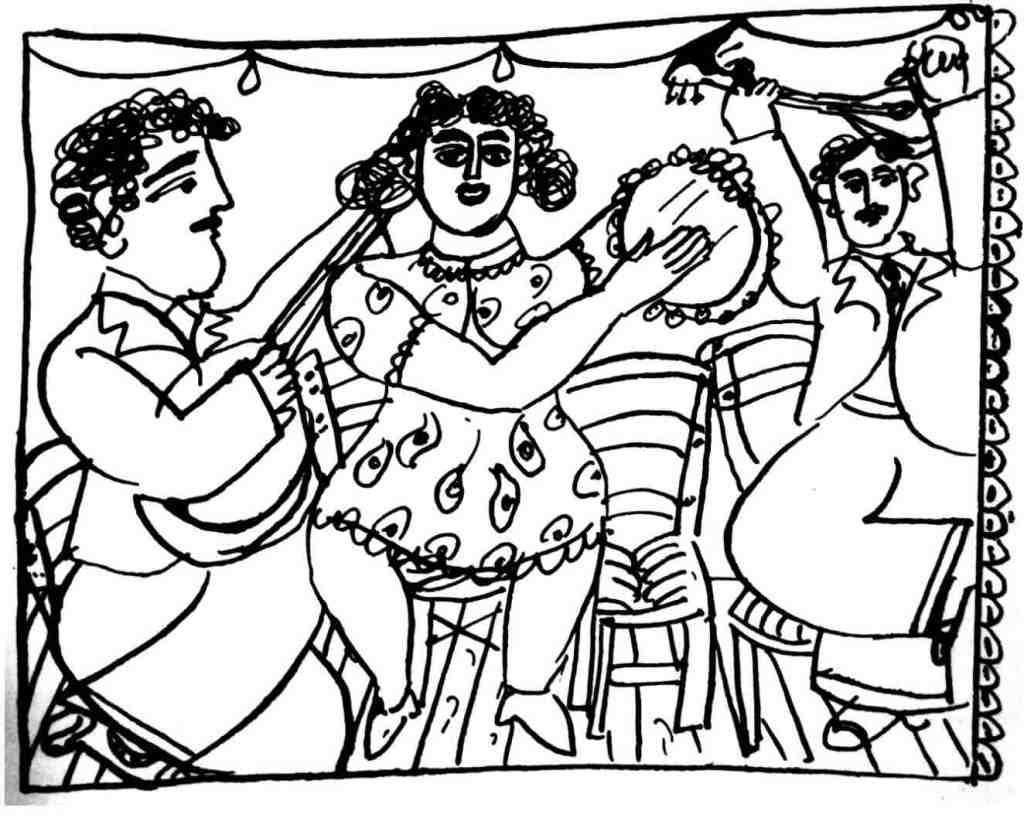
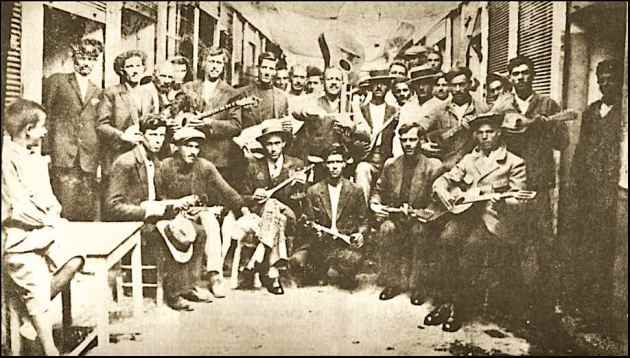
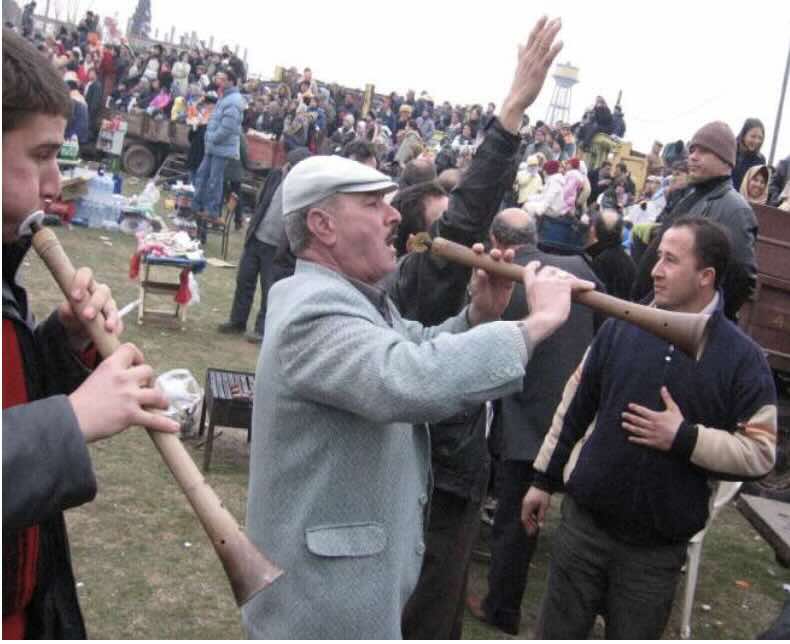

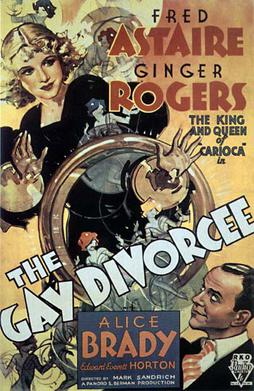
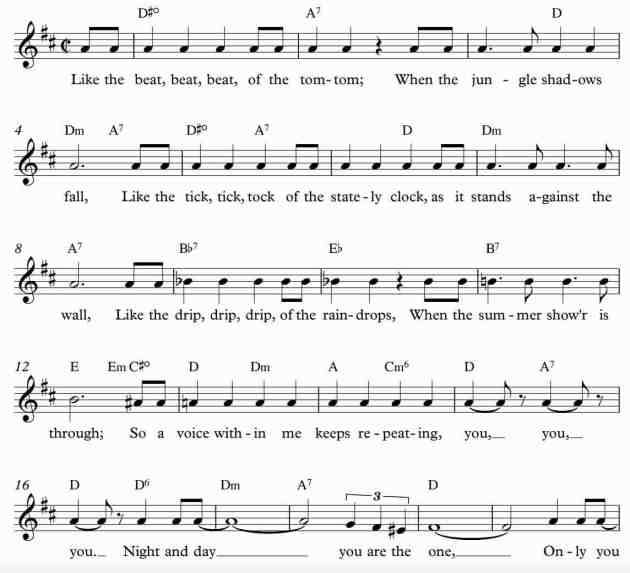
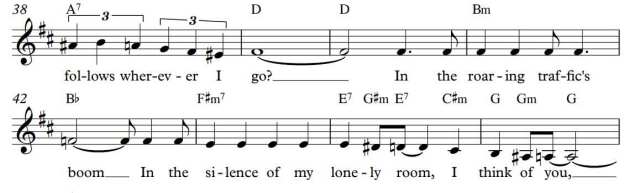


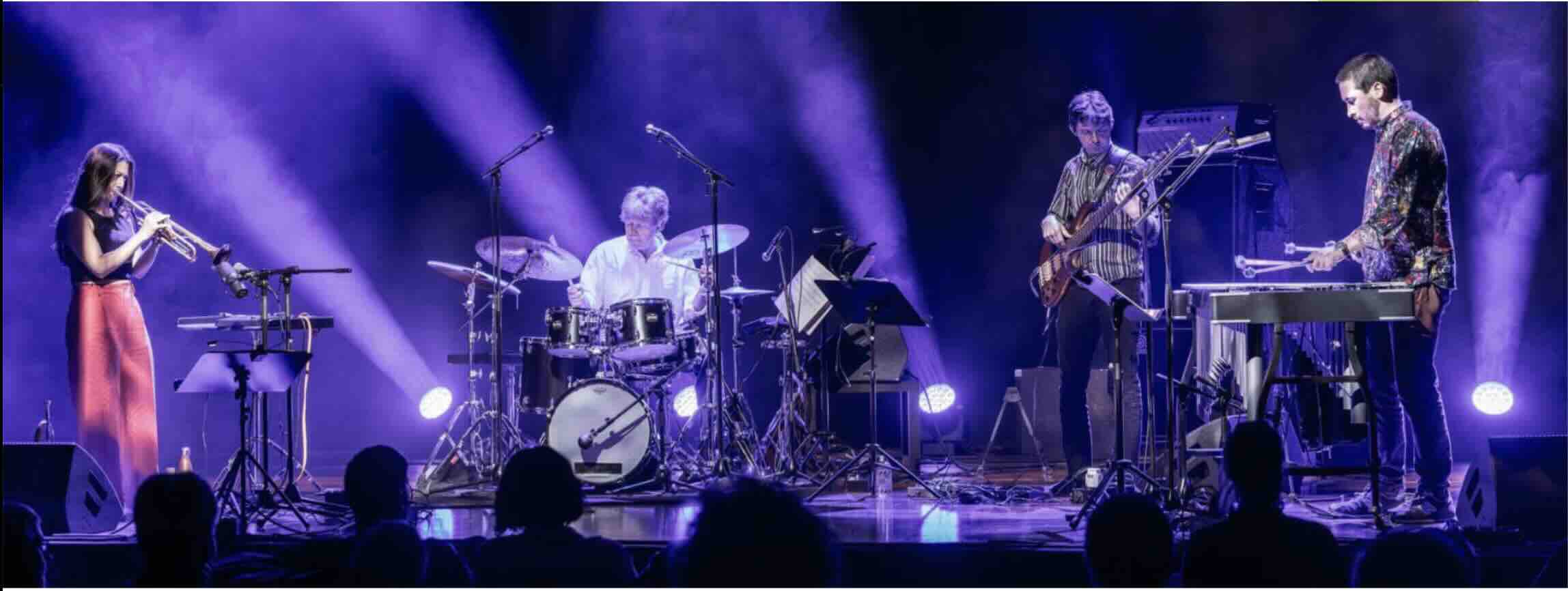


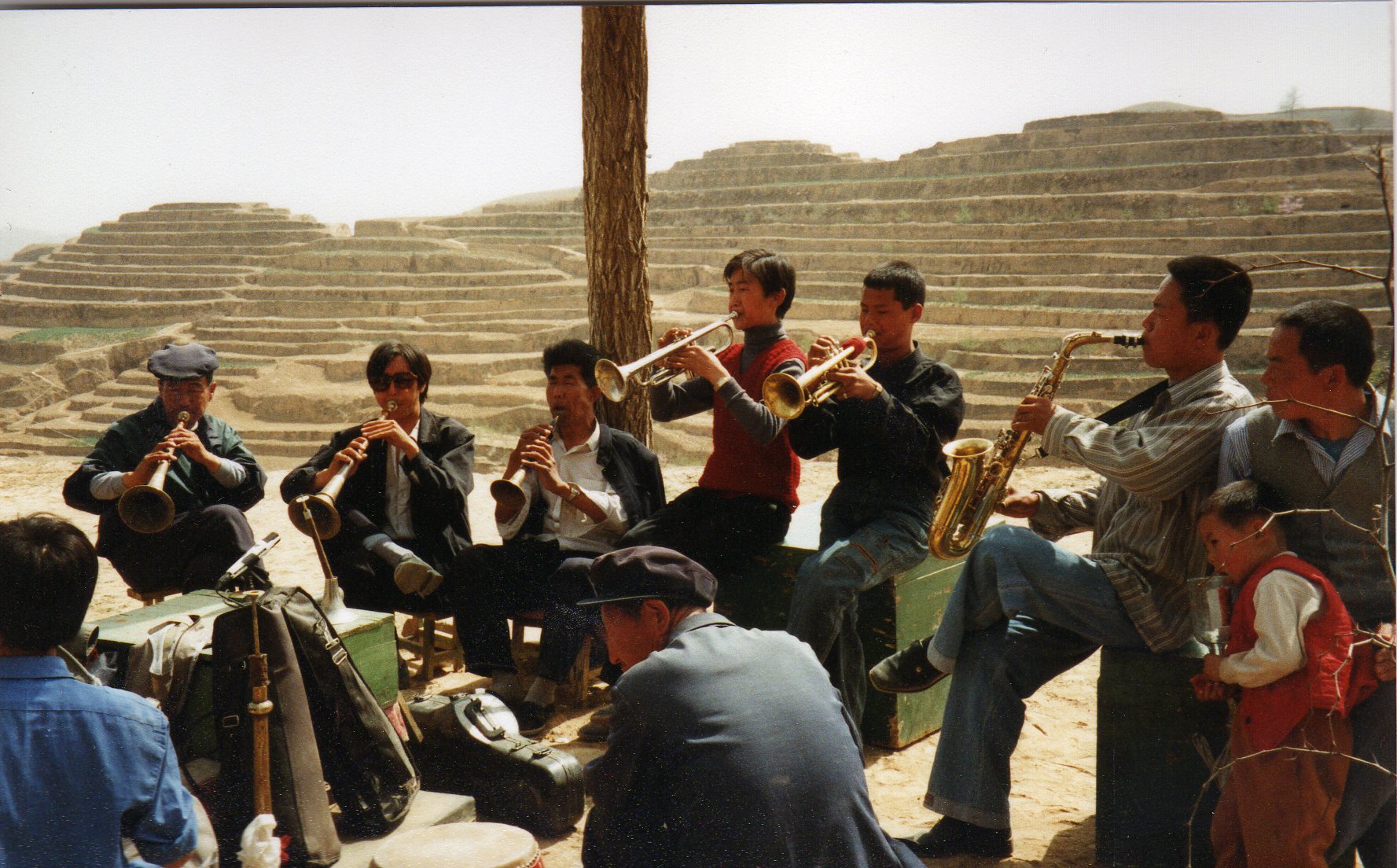 Chang Wenzhou’s big band at village funeral, Mizhi 2001.


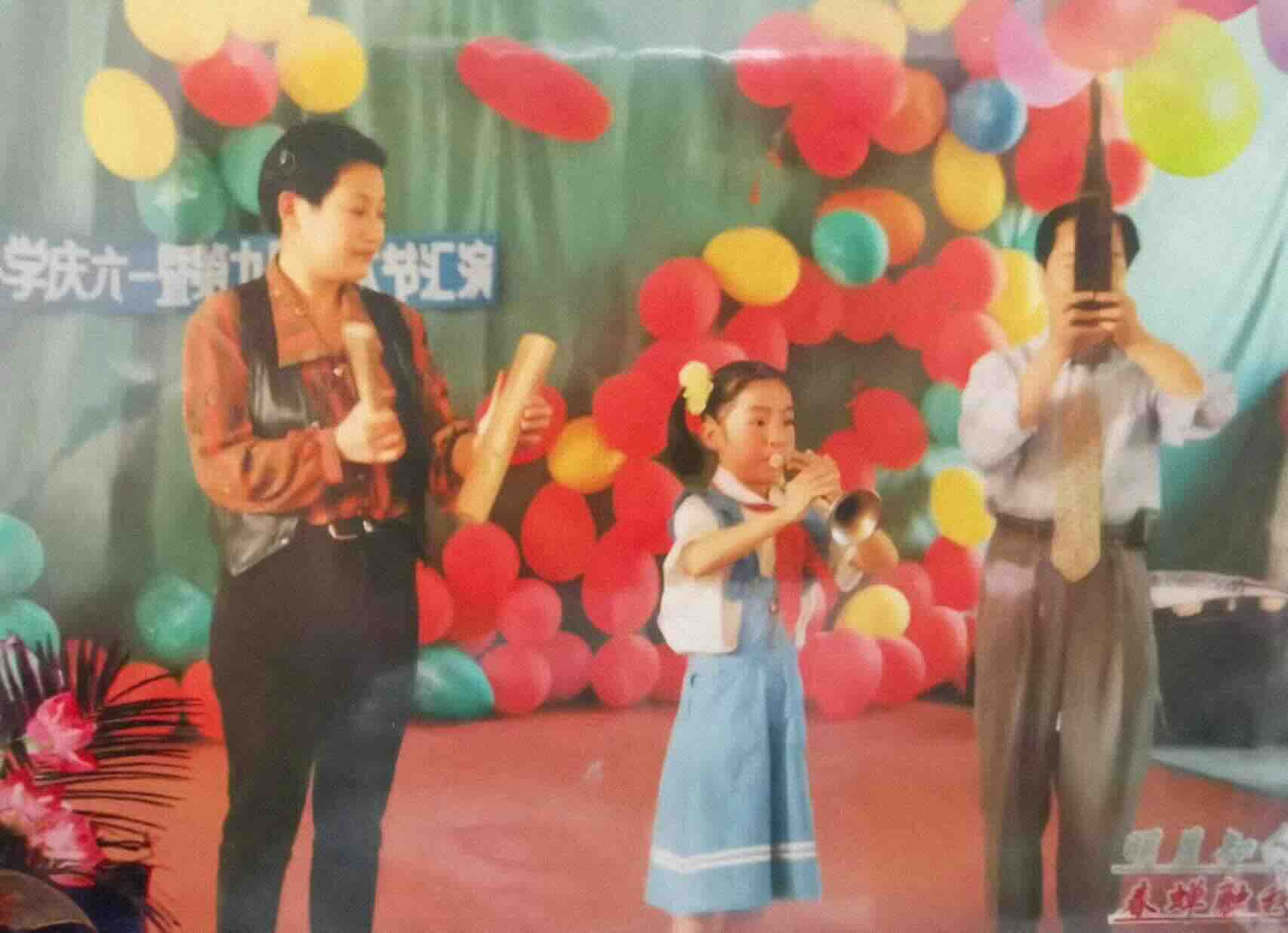 A young Liu Wenwen performs with her parents.

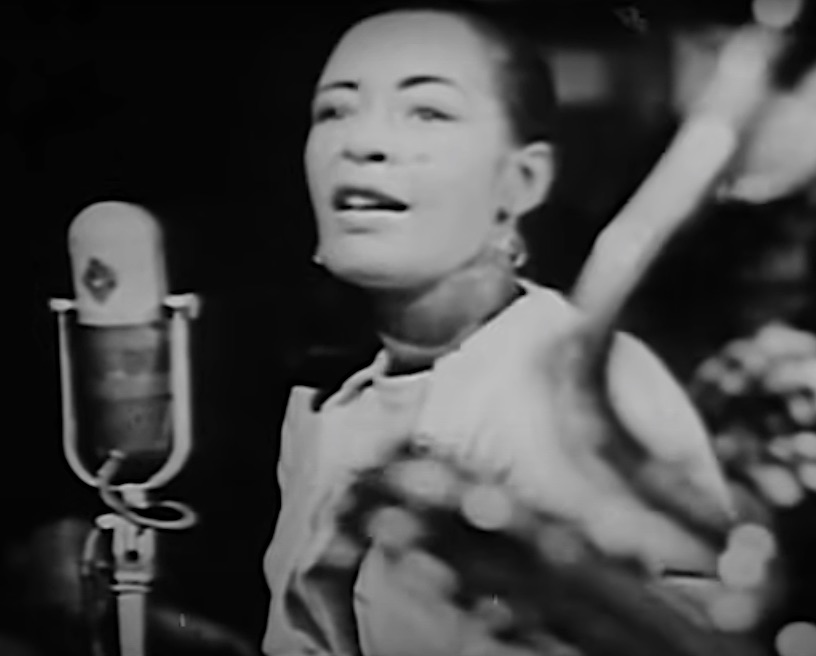
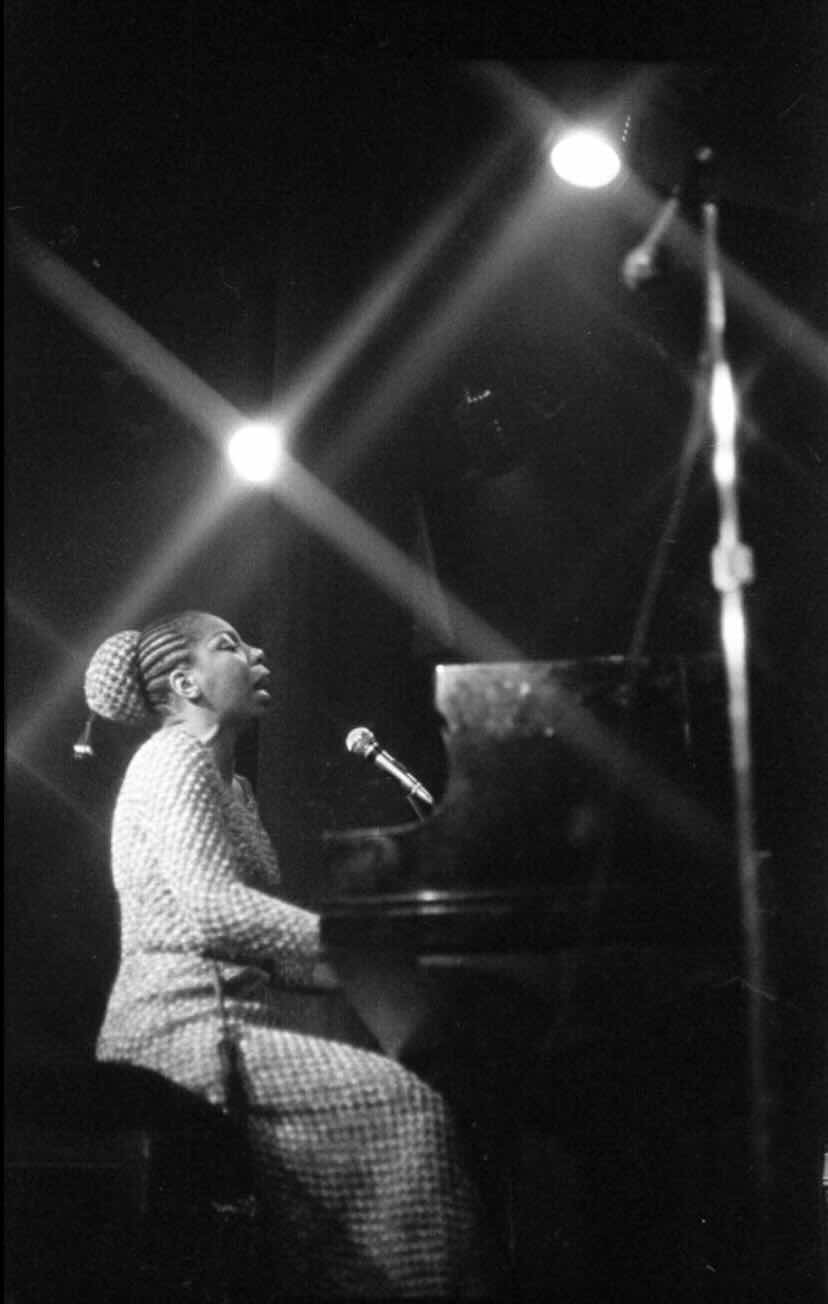


 Éva Gauthier, 1905. All images from


 From The hundred thousand fools of God.


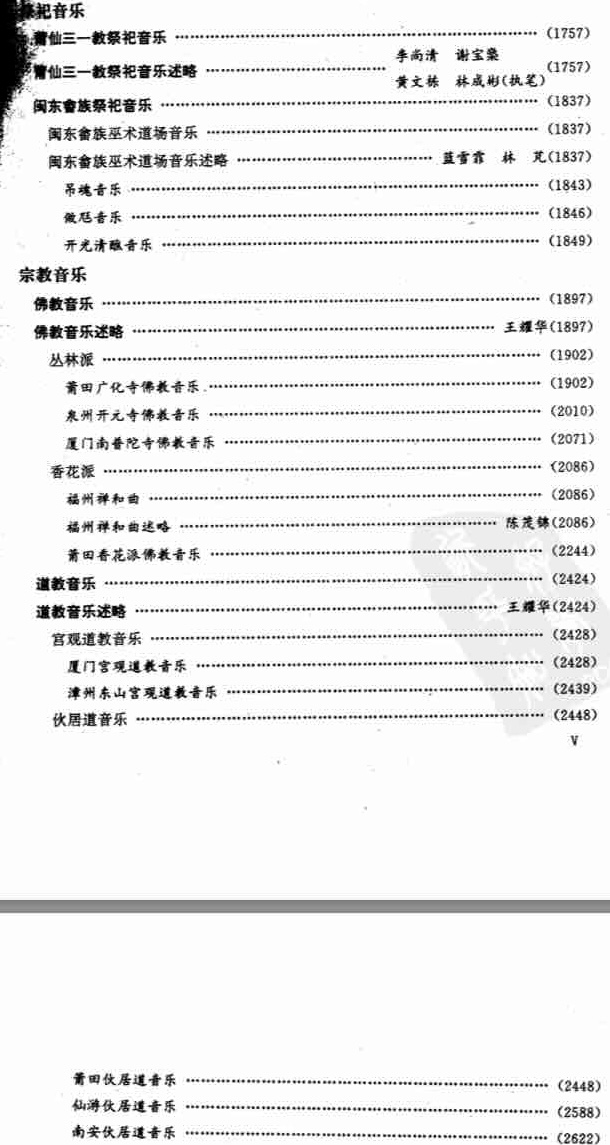

 Biographies of Pingtan paizhi master Wang Shanglong and Chen Renzhen.
 The Qinghe guan society in Changtai.


 Household Daoist rituals, Putian.
 Segments of mortuary rituals, Nan’an (again, cf.


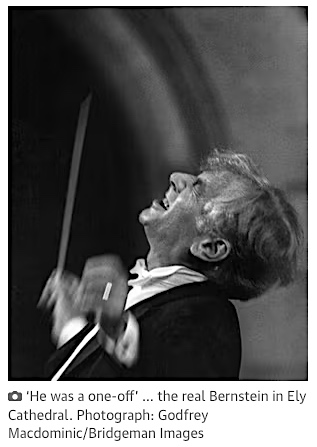 We get to hear some of the


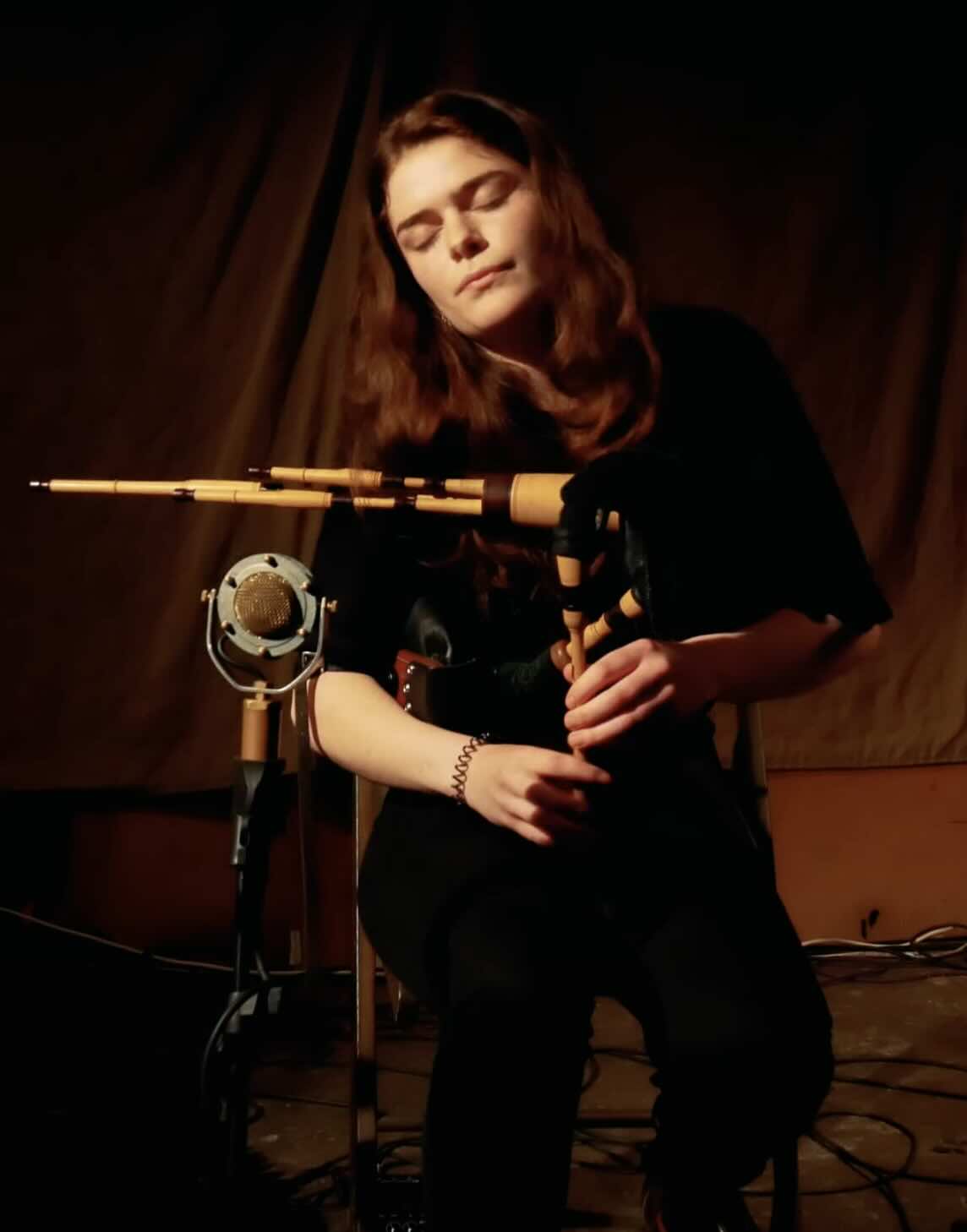
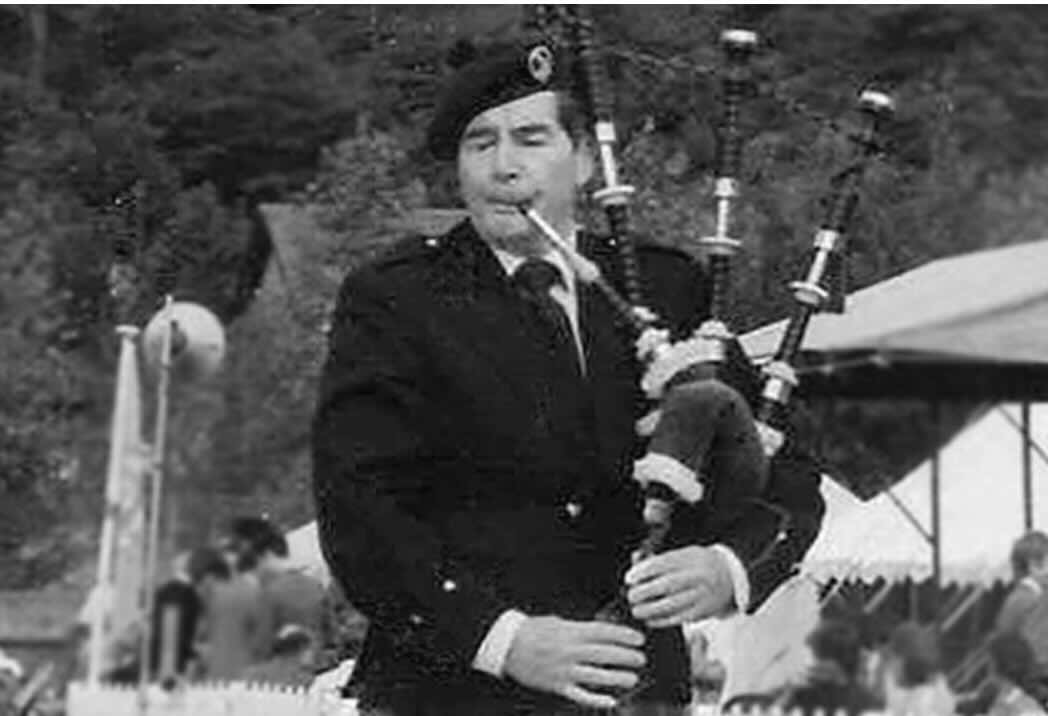



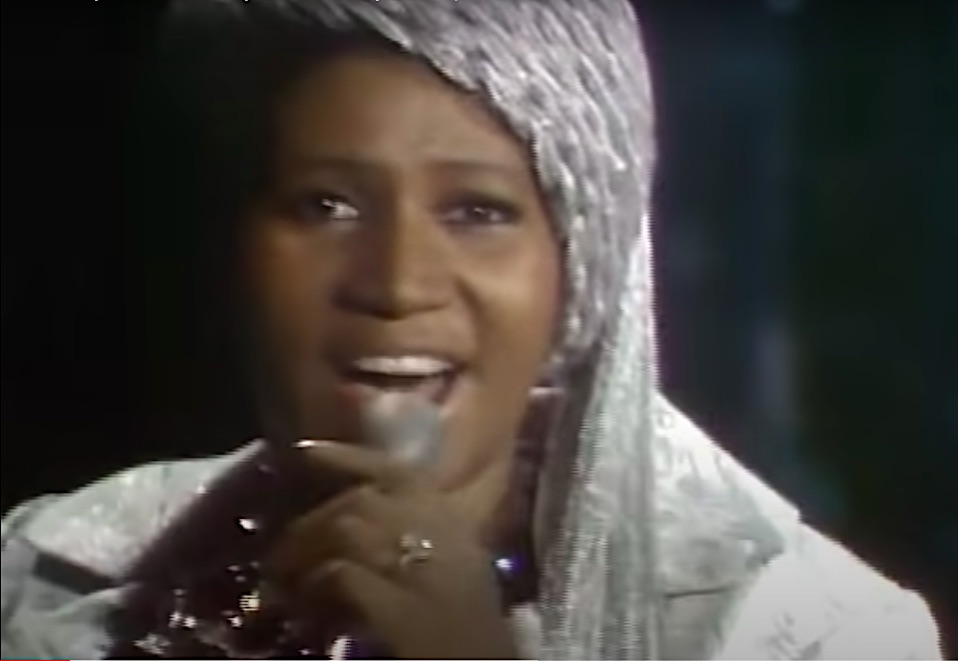 Nobody embodies more fully the connection between the African-American spiritual, the blues, R&B, rock and roll—the way that hardship and sorrow were transformed into something full of beauty and vitality and hope. American history wells up when Aretha sings. That’s why, when she sits down at a piano and sings “A Natural Woman”, she can move me to tears […] because it captures the fullness of the American experience, the view from the bottom as well as the top, the good and the bad, and the possibility of synthesis, reconciliation, transcendence.

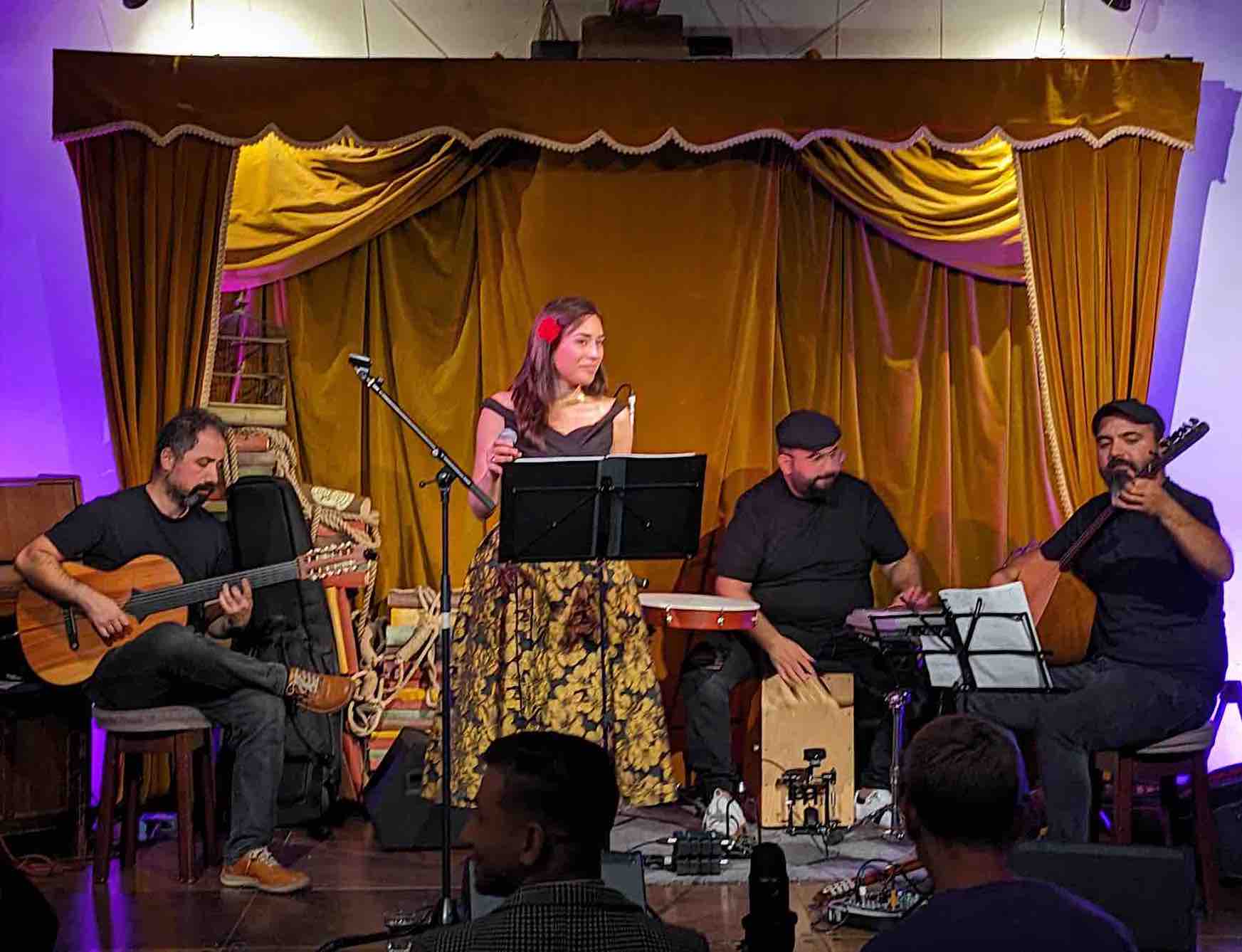


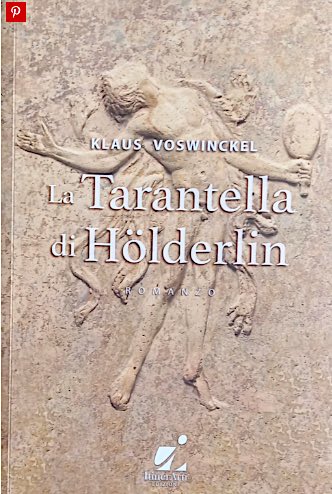

 Transcription by Diego Carpitella.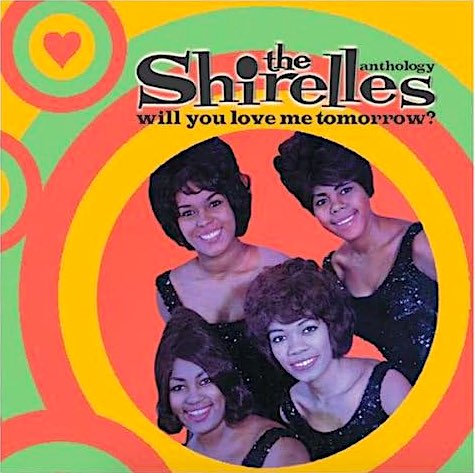


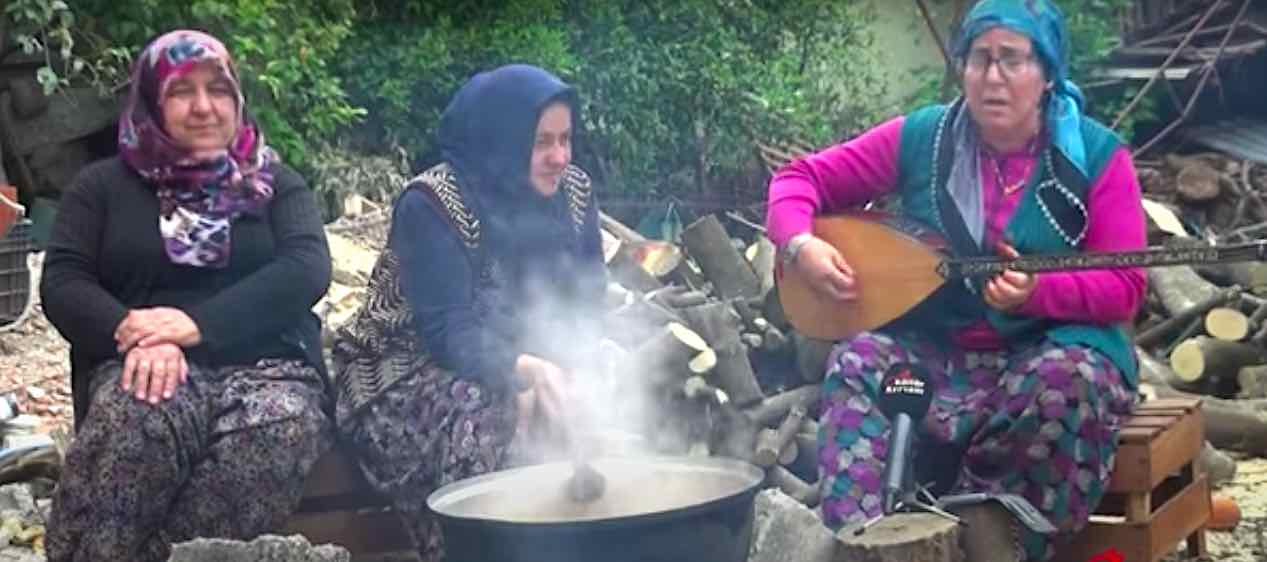
 Eliza Carthy with her mother Norma Waterson.


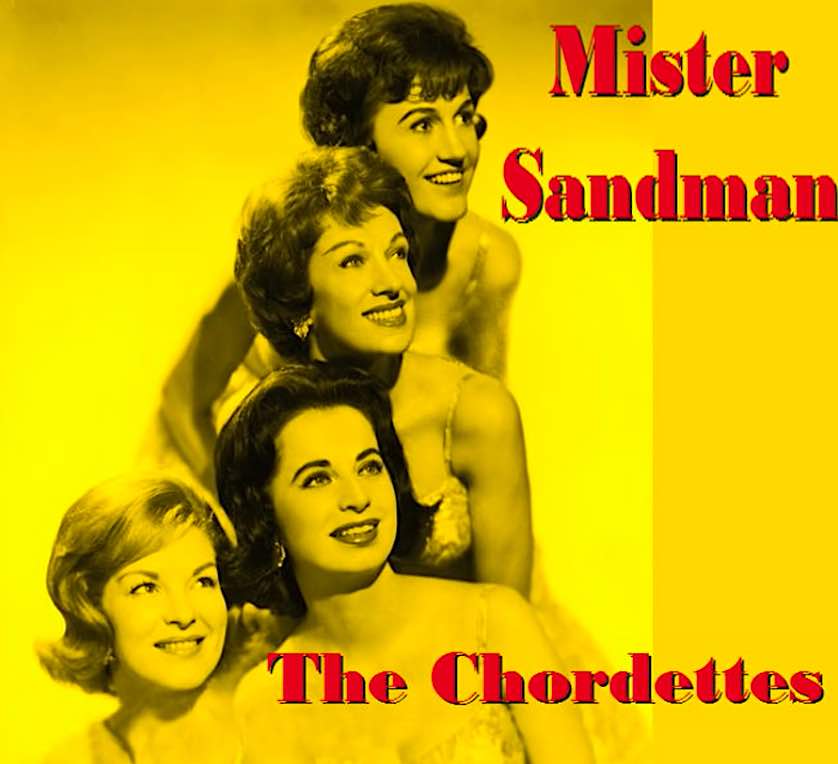

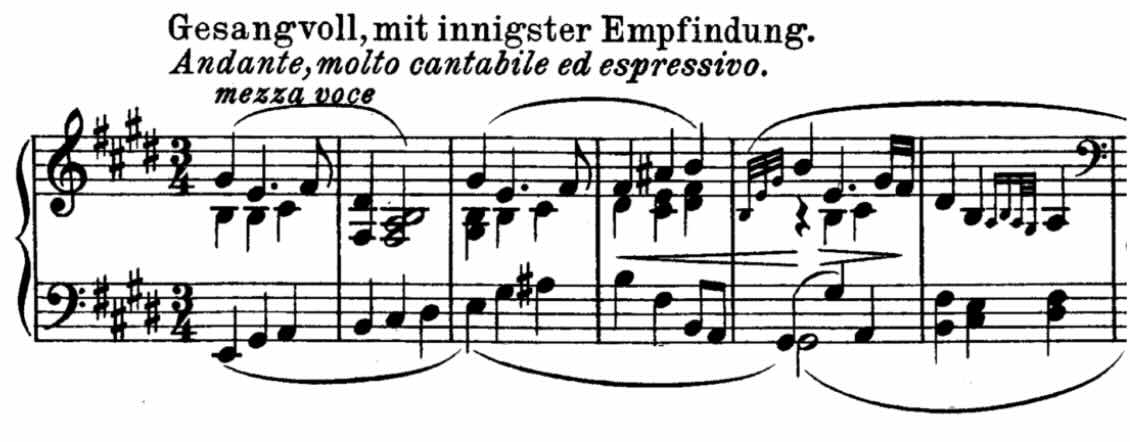
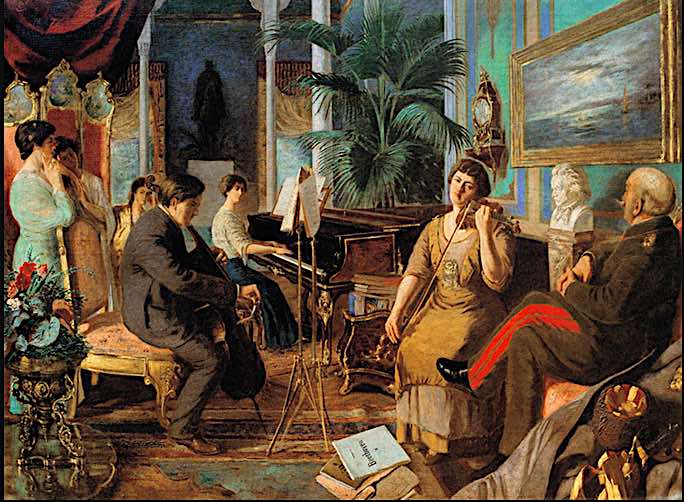
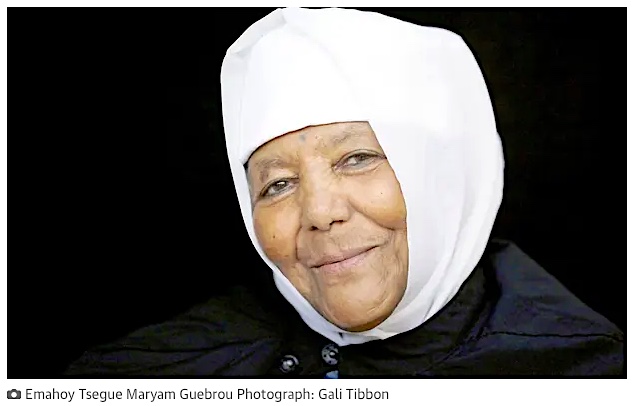


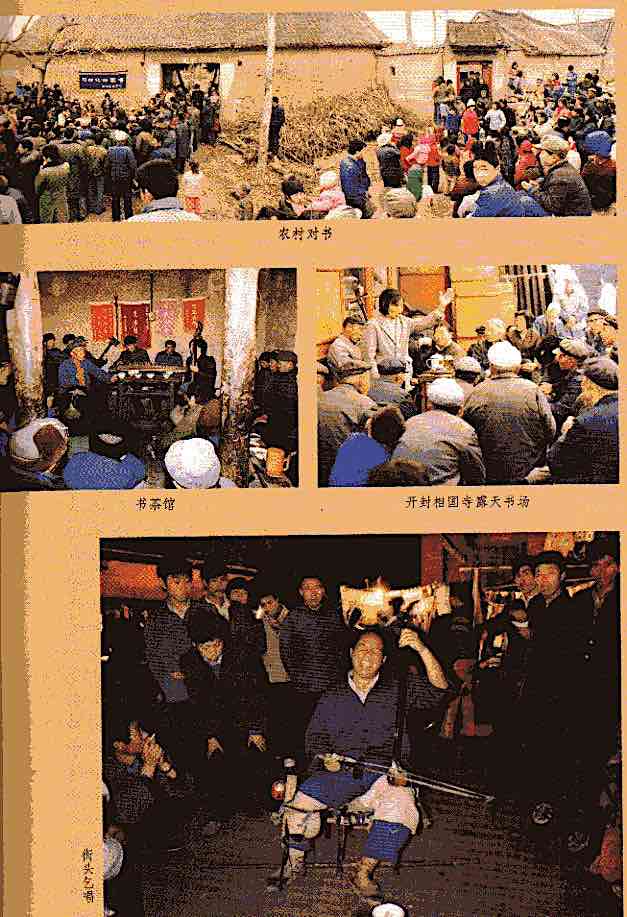

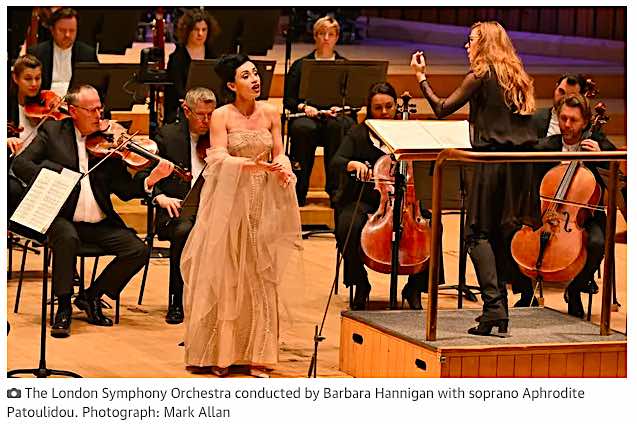








 Chandrima Misra directing students, Founders’ Day, March 2022.
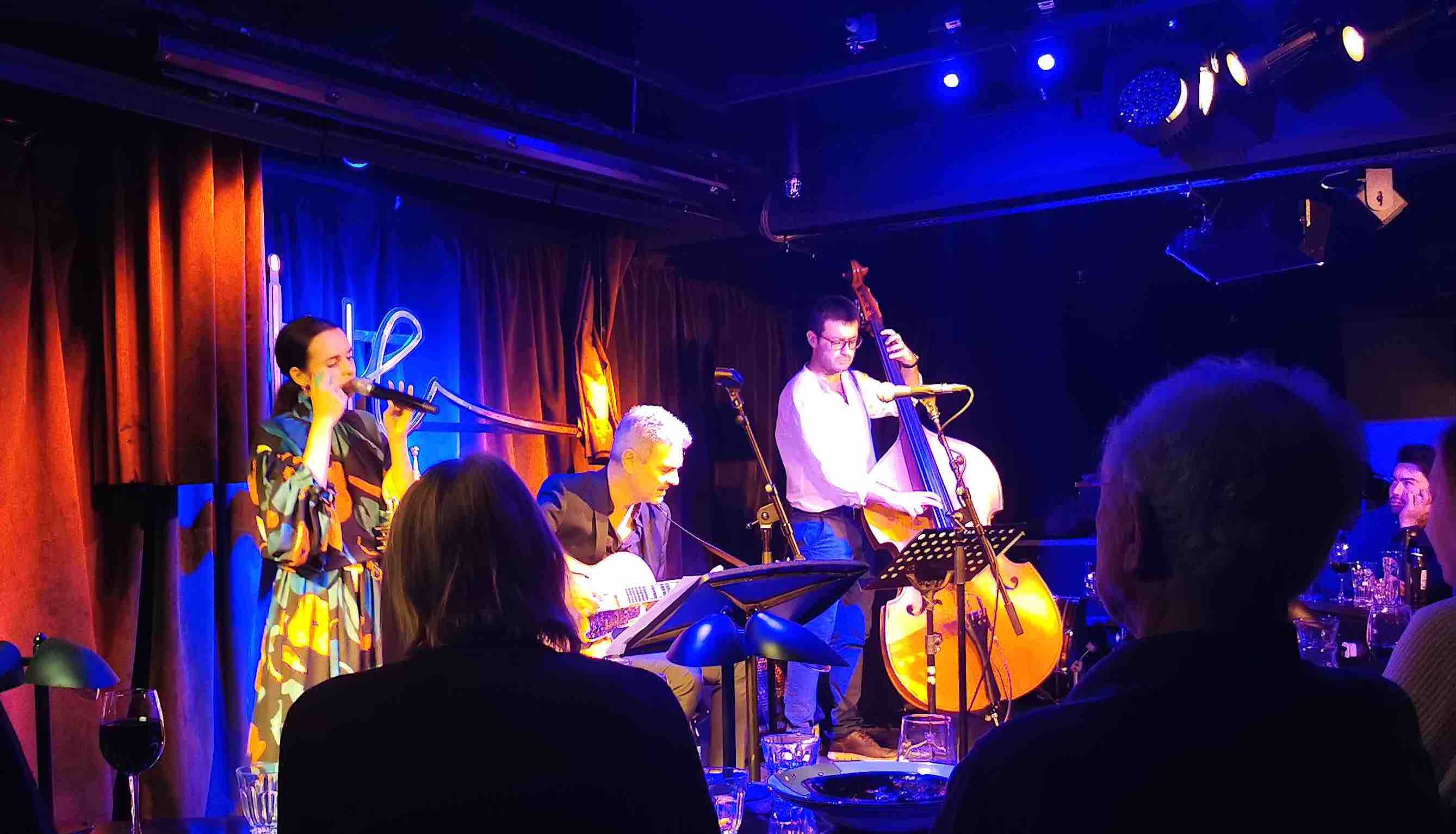







 Stephen Jones: a blog