The conformist (Bernardo Bertolucci, 1970), based on the 1951 novel by Alberto Moravia, is a most captivating film, visually sumptuous—with the gorgeous Jean-Louis Trintignant, Stefania Sandrelli, and Dominique Sanda bringing out the interplay of political and sexual themes.
As with Bertolucci’s other films like Last tango in Paris, music and dance play a crucial role. The soundtrack (by Georges Delerue) has the ambivalence of Cinema paradiso and Twin peaks. As with all the best film music, just the opening theme transports us instantly into the story’s troubled world. Here’s the complete film:
The female radio band near the opening (from 4.12) reminds me of Franco Cerri’s recollections in my post on Chet in Italy.
By way of comparison with the final dance, here’s the equivalent scene in Last Tango in Paris:
As this review observes, Last tango is not about sex but about pain.
Made in France four years after the disillusionment of 1968’s failures, it’s about characters who can’t see past their own emotional and psychological problems, who are solipsistic in the extreme, locking themselves away from everything they can’t face in the outside world.
Pauline Kael’s famous rave review, comparing the film’s importance to that of Stravinsky’s The Rite of Spring, is critiqued in this retrospective, a particularly cogent view of the on-set abuse of Maria Schneider—a revelation that has severely marred the film’s image, which is regrettable since it’s a work in which deep emotions and anguish are conveyed. Among innumerable other reviews, Last tango is also the subject of this excellent 2011 discussion. See also under Godard.
* * *
Bertolucci died in November 2018 (see also here), soon after Nic Roeg (for an assessment of both together, see here). Many more films to revisit, not least The sheltering sky (based, indeed, on the great novel by Paul Bowles, though he was less than keen on the result), The dreamers, and the epic 1900. And Godard died in 2022.
Left: I found this postcard in Ireland in the mid-1990s; though still drôle, it no longer seems quite so fantastical.
Right: Susan McClary—less futuristically.
Since the party for Madonna’s 60th birthday [I know…] has already begun (see e.g. here), it may seem a tad cerebral to celebrate by revisiting the work of the great Susan McClary (notably her classic 1991 book Feminine endings: music, gender, and sexuality). But given that academics are mostly lumbered with writing, she does at least rejoice in the physical.
Of course, many female performers have continued exploring the trail that Madonna blazed, and she no longer has such power to shock. Similarly, while many critics (not least feminist authors) have disputed and refined McClary’s work, the thrust [sic: her own writings are full of such ludic language, matching her theme] of her argument has practically become mainstream—but her thoughts remain most perceptive.
So far I’ve mainly written about Susan McClary in the context of her provocative analysis of the extraordinary harpsichord solo of Bach’s 5th Brandenburg concerto. Her insights also get a mention in my post on Ute Lemper.
It would be quite wrong to reduce her oeuvre to soundbites—but hey, here goes! With her early research based in baroque music, she notes the historical contingency, mutability, of musical signifiers. Inspired by Greenblatt on Shakespeare (“once science discovered that female arousal served no reproductive purpose, cultural forms silenced not only the necessity but even the possibility of sexual desire in the ‘normal’ female”), she revels in the (pre-watershed) erotic friction of the 17th-century trio texture from Monteverdi through Corelli:
in which two equal voices rub up against each other, pressing into dissonances that achingly resolve only into yet other knots, reaching satiety only at conclusions. This interactive texture (and its attendant metaphors) is largely displaced in music after the 17th century by individualistic, narrative monologues.
The narrative structure of 19th-century instrumental music becomes for her
“a prolonged sexual encounter of intense foreplay that results inevitably in a cataclysmic metaphorical ejaculation. Beethoven becomes the supreme perpetrator of sexual violence in music, whose recapitulation of the first movement of the 9th symphony “unleashes one of the most horrifyingly violent episodes in the history of music”.
McClary was a pioneer in broadening our concepts of cross-genre “music” studies, encompassing both WAM from a wide period and notably pop music—all with a focus on gender. Feminine endings also covers Monteverdi, Tchaikovsky, Bizet, and Laurie Anderson—and such breadth is just what makes her so great. She’s a real genre-bender. As she writes in Conventional wisdom: the content of musical form (2000),
If I tend to reread the European past in my own Postmodern image, if I frequently write about Bach and Beethoven in the same ways in which I discuss the Artist Formerly Known as Prince and John Zorn, it is not to denigrate the canon but rather to show the power of music all throughout its history as a signifying practice. For this is how culture always works—always grounded in codes and social contracts, always open to fusions, extensions, transformations. To me, music never seems so trivial as in its “purely musical” readings. If there was at one time a rationale for adopting such an intellectual position, that time has long since past. And if the belief in the 19th-century notion of aesthetic autonomy continues to be an issue when we study cultural history, it can no longer be privileged as somehow true.
“Living to tell: Madonna’s resurrection of the fleshly”,
McClary notes the conflicting strands of interpretation between viewing Madonna as mere commodified sexuality or as a feminist in control. And even while she rails against the denial of the body, what most reactions share (as she comments) is an automatic dismissal of Madonna’s music as irrelevant. Visual appearance and image seems primary, yet the music in music videos is also powerful. Hilary Mantel’s 1992 review doesn’t even bother with any of these features (and an apt riposte there draws attention to McClary’s work); perhaps Madonna might herself respond by reviewing Mantel’s significance without referring to her literary output?
As McClary comments, Madonna’s pieces
explore—sometimes playfully, sometimes seriously—various ways of constituting identities that refuse stability, that remain fluid, that resist definition.
Citing the historical demeaning by sexualization of composer–performers Barbara Strozzi (as featured on the wonderful T-shirt) and Clara Schumann, and continuing to unpack the sexual politics of opera, she observes:
One of Madonna’s principal accomplishments is that she brings this hypocrisy to the surface and problematizes it. […]
The fear of female sexuality and anxiety over the body are inscribed in the Western music tradition. […]
Like Carmen or Lulu, she invokes the body and female sexuality; but unlike them, she refuses to be framed by a structure that will push her back into submission or annihilation.
McClary reiterates the historical trivializing of dance by (male) critics. Madonna’s
engagement with traditional signs of childish vulnerability projects her knowledge that this is what the patriarchy expects of her and also her awareness that this fantasy is ludicrous.
No matter what genre she discusses, McClary’s work is always detailed in musical analysis. She repeats her thesis of tonal structures, with the exploration and subduing of “Other” keys—the “desire–dread–purge sequence”, returning to her much-cited portrayal of the violence of Beethoven.
In her analysis of Live to tell McClary shows in detail how such assumptions are subverted:
and she validates the contradictions of Open your heart:
She takes Like a prayer seriously, its ancient virgin–whore cliché mingling with an exploration of religion and race, sexuality and spirituality—
about the possibility of creating musical and visual narratives that celebrate multiple rather than unitary identities, that are concerned with ecstatic continuation rather than with purging and containment.
Her footnotes (endnotes, actually) are always wonderful too. McClary’s, not Madonna’s.
* * *
Whether or not you concur with all of McClary’s conclusions (apart from a host of critiques, do read her thoughtful introduction “Feminine endings in retrospect” to the more recent edition), it’s a throughly stimulating way of reflecting on culture (see also Society and soundscape). (For another lead suggested by the book, see here.)
All my own gadding about from century to century, culture to culture, is partly inspired by her work. But that’s not her fault. As ethnomusicology shows, if elites invariably try to prescribe and control the prestige of genres across the world, in studying them a level playing field is essential (for a cross-class analysis of Chinese music, see here).
Among numerous YouTube clips, albeit less physically engaging than those of Madonna, here’s a sample of McClary’s wisdom:
I used to delight in Bach without stopping to think about Leipzig society of his time; flamenco, without noticing gender and social issues; and it took me some time to unpack gendered aspects of Chinese ritual. Such a mindset is basic to ethnomusicology, to which McClary’s work is a major stimulus.
In the 1990s, for what it’s worth (and not for what it’s not worth), on returning from village funerals in Hebei to regroup at Matt’s place in Beijing, I would regularly bask in Holiday:
In their different spheres, Madonna and Susan McClary are both iconic and iconoclasts!
For attempts to deny the body in politics, see recent furores over AOC and Sanna Marin. And here are some splendid comments on Madonna from six generations of women.
After writing at some length about the traumas of Germany during and after World War Two (notably posts on Ravensbrück, Sachsenhausen, and the work of Philippe Sands), and noting the troubled history of tourist sites, I now learn much from
Anne Seba, Les Parisiennes (2016).
Relating history through the lives of women has become a major theme, as in Guo Yuhua’s account of Maoism in a Shaanbei village.
With most men absent, Paris was feminized, the burden falling heavily on women, having to negotiate with the male occupiers. They faced agonizing choices, with constant moral ambiguity, shades of resistance and collaboration.
For women, choice often meant more than simply how to live their own lives but how to protect their children and sometimes their elderly parents too.
Was it collaborating to buy food on the black market if your children were thin, ill and vitamin deficient? Was sending your children to a cousin with a farm in the countryside acceptable? Was it collaborating to perform on stage for or to sell fruit and vegetables to Germans? Or to sell jewellery and high fashion to them, when French women at home had nothing? Was it a choice to walk out of a café or a restaurant if German soldiers walked in, or was that deliberately courting danger given that behaving disrespectfully could have fatal consequences? [1]
Yet again, Neil MacGregor’s question arises: “What would we have done?”
* * *
Paris was iconic for the Parisians, the Germans, and everyone. British people suffered grievously too, all over the world, but least they weren’t occupied. It’s disturbing that the closer I get to home, the more easily I can identify with them. All over vast areas further east, populations were brutalized still more thoroughly—and were then further occupied for decades. Yet the traumas of past eras continue to haunt us.
Anti-semitism was as common in France as elsewhere in Europe, and the population was already swollen with refugees from further east as well as Spain. The initial German occupation didn’t seem too bad, as Gitta Sereny, then a teenage nurse, observed (“The German officers with whom I had to negotiate for food, clothes or documents were always courteous and often extremely helpful.”) Museum curators and librarians played a major role in the budding resistance, including those at the Musée de l’Homme—and the great ethnographer Germaine Tillion, whom I have praised in several posts already.
Mass deportations escalated for Jews and resisters. 3,710 “foreign” Jews were arrested on 14th May 1941, and then three months later a further 4,230, both French and foreign. 13,152 Jews were arrested in July 1942, and further roundups continued. They were held in French internment camps before being sent to Auschwitz or Ravensbrück. The latter, subject of Sarah Helm’s brilliant book, features especially.
Perhaps rather at the expenses of documenting ordinary people’s lives, Seba describes all the salons and soirées of high society and fashion; and the compromises made by women in entertainment, like Édith Piaf. But such hedonism makes a suitably hideous contrast with the lives and deaths of those sent to the camps; as Seba observes, by contrast with high-profile stars in the arts,
there has been a prolonged and inequitable silence in France about the role of so many ordinary women who in some way resisted the occupiers—like the young woman who, persuaded by her Catholic priests, cycled around Paris distributing anti-German newsletters, […] an activity for which she could have been imprisoned if caught…
Following the guillotining of abortionist Marie-Louise Giraud in 1943, the film Le corbeau, about anonymous denunciations, was controversial—and remained so. Violette Leduc’s 1964 autobiography La Bâtarde shows the struggles of poor women in a patriarchal system. The role of church and family in Vichy France recalls that in Portugal and Spain.
Pétain used such occasions to bolster the moral and political conservatism of his authoritarian regime, glorifying the family as an institution in which the man was head and the woman occupied her place by virtue of being a mother.
Seba introduces the story of the female agents recruited to the French section of the SOE by Vera Atkins—subject of another great book by Sarah Helm. A sense of guilt as well as duty clearly played a role as Atkins sought to discover the fate of her charges (their average life expectancy in the field was six weeks). Among them was Noor Inayat Khan (1914–44)—yet another pupil of Nadia Boulanger, incidentally.
A constant struggle went on between the needs to forget and to remember. Many of us will have met survivors while hardly realizing it. I only belatedly documented the successive flights of my orchestral colleague Hildi (here and here). Now I find that Marie-Claude, whom I sometimes see at my local bridge club, is the daughter of none other than the heroic resistance fighter Odette Fabius (1910–90). Interviewed in the book, asked to reflect on whether it was right for her mother to risk her safety when they travelled together by putting documents and false papers in her case, Marie-Claude replies evenly that “she could never have been different. That was who she was.”
In 1943, when Marie-Claude was 12, Odette left her in a cinema while she went on an urgent mission to try and warn her resistance colleagues they were being watched. But she was caught by the Gestapo, soon to be deported to Ravensbrück.
Long after the film was over, Marie-Claude eventually gave up waiting for her mother and decided to make her way to family friends where her father, in due course, came to look after her.
In Ravensbrück, Odette tried to escape but was brutally punished after being captured. Unlike most inmates, she did somehow survive.
Ravensbrück, 1945.
As Sarah Helm also notes, the later French arrivals at Ravensbrück made an incongruous and separate group amidst all the degradation. Seeming pampered, they suffered a double oppression, from both the SS and fellow prisoners; succumbing more quickly to sickness, they had to learn survival techniques swiftly.
* * *
As throughout Europe, the end of the war was far from an end to suffering, as Keith Lowe describes so well in his book Savage continent.
After Paris was liberated, many were shocked by the brutal misogynistic punishments for women accused of collaboration horizontale. This was also related to class. Arletty, star of the classic Les enfants du paradis (first shown in March 1945), though compromised, spending some weeks in the squalor of Drancy, was not punished by head-shaving as were many ordinary women. Others found the épuration sauvage inevitable, a minor suffering compared to all those women tortured and murdered in the camps. But those who returned, sick and emaciated, still found life difficult, receiving scant sympathy; Parisians didn’t want to be reminded of their recent pain by these skeletal figures. Not all the survivors could bear to speak of their tribulations anyway, but there was little audience for those that did feel a need to do so. Oblivion soon reigned.
Still, Lucie Aubrac, delegate in the new parliament,
was keenly aware of the gendered response to Liberation as France enjoyed its new-found freedom, and she was determined that the country should resist falling for the simplistic notion that the women had collaborated while the men had fought. She insisted it was women who had given the resistance its breadth and depth—the women who had been the essential mailboxes because they were at home, the women who had become couriers because they looked less suspect carrying suitcases, as well as the women who had daringly used weapons. Not everyone was prepared to hear her voice—most were preoccupied with trying to resume normal life.
There were further painful complexities:
Half of those deported for resistance activities returned, but only 3 per cent of of the Jews (2,500 out of 76,000 deported), an unwelcome statistic for those in France denying that a genocide had taken place. Yet the attitude which saw resisters as patriots who had been involved in combat entitled to a higher level of compensation than the deported Jews, perceived as victims, persisted until at least the end of the 20th century in some quarters. […] It also fed into the notion that to have been deported as a resister was noble, but to have fallen into German hands as a victim was shameful.
And disparities were shocking: while British, Americans, and rich Parisians resumed a lavish lifestyle, ordinary Parisians were still on the brink of starvation.
On 27th October 1946 the constitution was finally amended “guaranteeing women equal rights to men in all spheres”; despite several magazines urging women to return to a life of innocence and femininity, the mood was changing. But French society was divided.
Meanwhile Barbara Probst was working to publicize the neglect of Spanish anti-fascists, who had played a major part in the liberation of France.
I was intrigued to learn that Anouk Aimée made her first film in 1946, aged 14; in 2003 she starred in the harrowing 2003 film La petite prairie aux bouleaux, as a Jewish woman coming to terms in later life with her time at Birkenau.
* * *
So after all these years of naively relishing the street life and art galleries of Paris, it’s high time for me to seek out memorial sites and plaques, and camps like Drancy and Fresnes.
Odette Fabius awarded Officier de La Legion d’Honneur, with Geneviève de Gaulle, 1971.
Little did I know that in 2015 Ravensbrück survivors Genevieve de Gaulle and Germaine Tillion were posthumously honoured with a ceremony in the Panthéon.
At the very end of the book Seba gives a succinct list of questions to discuss, some of which I’ve mentioned above:
Why has it taken so long for the women’s version of events to become known?
How different was it for mothers? Some gave away their children to a passeur without knowing where they were being taken; Odette Fabius abandoned her ten-year-old daughter in the cinema. Did mothers have a responsibility to stay with their children? Was it justifiable for some mothers to compromise their children by using them to carry documents for the resistance?
Why do you think fashion continued to matter to Parisiennes during the war? Was it vanity or can it be justified as a demonstration of self-respect and pride?
To what extent did all women have a choice during and immediately after the Occupation? Do you think Parisiennes behaved understandably after 1945 or do you think the (largely Jewish) political resisters should have been more supportive of the Jewish resisters who returned from concentration camps?
After the Liberation, why were so many women punished—often without trial—for collaboration horizontale, while male economic collaborators avoided repercussions? Was head-shaving ever a justified punishment? [SJ: videos like this are hard to watch—many more clips under criticalpast.com, e.g. here. Gloating men surround helpless women; but female onlookers and children also take part gladly in the ritual humiliation. The victims do not always appear repentant.]
[1] Here I’ve combined text from p.xxxii and the book’s final list of questions.
On my returns to Beijing from the countryside, much as I miss Li Manshan, I oscillate between encounters with inspiring Chinese scholars and glimpses of the expat life. Following my fleeting introduction to Miranda there, she deserves a separate homage.
You can explore her varied talents online—as singer-songwriter, poet, and designer (notably jewellery).
Photos: Wu Hujun.
* * *
Like a Daoist priest, Miranda roams the clouds 云游, a free spirit, finding evanescent soulmates. In her exuberance she’s more Italian than the Italians. Her company—”red-hot sociality” more akin to Mediterranean fiestas than to Chinese temple fairs—is both enchanting and exhausting; but she lives with her energy all the time.
After her early life in wartime Croatia [1] (and even here, she stresses love, not trauma), Miranda spent periods working in architecture in Milan, Rio de Janeiro, Paris, Mexico City, London, and New York before coming to live in Beijing in 2011—always exploring spiritual and physical landscapes, spreading her wings.
I’m particularly drawn to Miranda’s music. In Beijing she formed the Radiance band in 2015. While I’m keen to avoid the trap of sexist vocabulary like diva and femme fatale (ha!), as a singer-songwriter Miranda creates compelling music “through a kaleidoscope of fragile emotions” in multi-media performances.
From a 2016 gig in Beijing—Beginning of the end:
Soft machine:
Beijing, 2017:
With Nina Simone, David Bowie, Bach, and Astor Piazzolla among her inspirations, Miranda is working with Chinese and international musicians (as has been common since the 1980s, or, to take a longer view, since the Tang dynasty)—constantly exploring.
Beijing gig, 2016.
Miranda—“to be marveled at”, indeed. Beijing is just the kind of creative environment in which she can thrive; she feels an “energy and a flow of young ideas, always in motion”. But wherever she lands, she will always find like-minded people and stimulating projects.
[1] For some other roving female prodigies from East Europe, see here and here.
As we saw in my previous posts, the soul of flamenco is cante jondo (“deep singing”). It may be nourished by the toques of the guitar, and may lead into dancing; but at its heart is anguished solo singing and palmas. Besides Washabaugh’s social analysis, I’m also much taken by
Timothy Mitchell, Flamenco deep song(1994).
While recognizing the power of cante jondo, Mitchell takes a refreshingly detached, even jaundiced view:
A decoding of flamenco from a psychohistorical perspective will reveal self-pity, posturing machismo, hypersensitive adolescent egos, and a defensive flight into narcissistic ethnicity.
Again, as a counterpoint to the wholesome family revamp subtly promoted in the Rito series, Mitchell shows that the moods and musical techniques of cante jondo
are inseparable from alcohol abuse. […] Flamenco creativity sought to recover Catholicism’s lost catharsis in saloons, bordellos, and prisons. At the behest of playboy-philanthropists, the haunting cries and brash guitars of a stigmatized underclass were harnessed to explore every aspect of co-dependency. To be worthy of deep song, male performers needed to get their hearts trampled by some dark-skinned dancer; female singers needed to be abandoned or battered by their men. Flamenco artistry as we know it today makes sublime psychodrama out of alcoholism, fatalism, masochism, and ethnic rivalry.
Music can convey the most profound expressions of anguish, from the arias of the Bach Passions to the hymns of mourning of the Li family Daoists. Cante jondo has long entranced outsiders, from Lorca and Falla’s 1922 festival to the films of Carlos Saura. But Mitchell confronts the crucial question:
Why does flamenco deep song appeal to people who never shared the traumas that precipitated its birth?
He reflects (evoking jazz, and reminding me of China—I plead guilty on all counts),
All forms of human expressive culture may be intrinsically or potentially artistic. In practice only a small range of creative endeavours come to be designated as Art with a capital A. […] A given expressive behaviour becomes art because the right people rally to redefine it as such in accordance with their needs at a given historical moment and usually in conscious opposition to some other group’s standards. Forms of creativity that originated with the “wrong” people can always be redeemed (and thereby transformed) by talking or writing about them in ways associated with established genres.
He is critical of scholars like Demófilo in the 1880s:
With his selective compassion, unabashed elitism, neoromantic primitivism, spurious notions of purity and contamination, classificatory compulsion, lack of sociological acumen, nostalgia, and racialist aesthetics, he paved the way for numerous 20th-century flamencologists.
As Mitchell observes, the performance style
can strike even the most open-minded as brazen, overwrought, tortured, or histrionic. […] Male-female relationships […] contained considerable amounts of codependency, sado-masochism, self-destruction, and (in compensation) large amounts of transgressive ecstasy.
He gives a nice parallel with reactions to the waltz from an 1816 article in the Times:
So long as this obscene display was confined to prostitutes and adulteresses, we did not think it deserving of notice; but now it is attempted to be forced on respectable classes of society by the evil example of their superiors, we feel it a duty to warn every parent against exposing their daughter to so fatal a contagion.
Still, he concludes:
The flamenco style is not only about trauma but about the quest to recover from trauma; it is about distress and discharge too; it is about taking pain, expressing it, playing with it, and possibly working through it.
* * *
Near the base of the flamenco treetrunk (for full tree, see here), the cluster of tonás (cantesa palo seco,solo songs without guitar, often even without palmas) includes the unaccompanied saeta ritual songs, as well as no-less-intense secular deblas (“goddess”), carceleras (jailhouse songs; there were even penitential jailhouse saeta), martinetes, and seguiriyas.
Melodically, in their narrow range and in the frequent cadences on do, most of these songs show a contrast with the common minor descending phrygian tetrachord of other flamenco palos.
Saetas I’ve already featured the saeta solo ritual songs in honour of the Virgin as her statue passes—alternating with percussion, and wind ensemble with piercing trumpets. Mitchell’s discussion is illuminating as ever (pp.100–103, 137–42).
Here are some more examples, starting with Niña de los Peines in 1920:
Tonás This early programme in the Rito series, clearly explained as ever, includes searing instances of martinetes, as well as rare deblas and carceleras, from Juan Talega, Antonio Mairena, Aguejetas with Tio Borrico, Tia Anica de la Piriñaca, Rafael Romero, and José Menese:
Martinetes These stark solo songs are literallyforged—in forges, with hammer and anvil. Here’s Agujetas el viejo:
And his son:
Ian Biddle (ch.2, pp.31–6, and ch.3, pp.16–18) analyses in detail the martinete “A la puertecita de la fragua” sung by Pepe El Culata:
A la puertecita de la fraguaAt the little door of the forge tú a mí no me vengas a buscar don’t come looking for me con el fango a las roillas with the mud on your hem, y las enagüitas remangás. rolling up your petticoat.
Vinieron y me dijeron They came and told me che tú habías hablao that you had been saying muy mal de mí bad things about me y mira mi buen pensamiento: and look at my good thoughts: yo siempre pensando en ti. I am always thinking about you.
Ma fin tenga la persona May that person have a bad end que anda llevando y trayendo who goes about gossiping, poniéndole mal corazón giving a bad heart a aquel que lo tiene bueno. to the one who is good.
La maresita de toítos los gitanos, The mother of all the gitanos, toítos venian al tren. they were all coming by train. La mía como estaba malita Mine, being so bad no me ha poio venir a ver. could not come to see me.
La lunita crece y mengua The moon waxes and wanes y yo me mantengo en mi ser, and I remain in my own being yo soy un cuadro de triste I am a picture of sadness pegaíto a la paré. I will stop being stuck to her.
Seguiriyas Most often heard among the intense solo tonas, seguiriyas—like soleares and bulerías— have an underlying 12-beat metre, though it can take some concentration to detect it; as ever, the studioflamenco site is useful.
Especially in these more intense slow songs, non-lexical sounds are important, like the opening “ay“—”a knife-at-the-throat sound, a chain, a parched throat, a wound”, as Hecht describes it. Another integral aspect of the flamenco event is the jaleo—of which palmas are part—exclamations of encouragement, way beyond the familiar “¡Olé!” (cf. Indian raga).
The Rito series dedicates two programmes to seguiriyas. Framed as ever by perceptive comments, this first programme (based around Cádiz) opens with a precious sequence from Tia Anica de la Piriñaca, and concludes with brilliant seguiriyas from Aguejeta and Terremoto de Jerez:
The second programme is centred on Seville. Again it opens with the venerable cantaorJuan Talega, leading on to Chocolate, Louis de Cabellero, and Antonio Mairena:
Oh all right then, here’s the programme dedicated to Terremoto (with soleares from 8.00, a fantastic bulerías from 17.14, and siguiriyas from 24.20):
And more from Agujeta, father and son—with soleares (4.59), romance y alboreá (10.05), bulerías por soleá (21.07), culminating in a mesmerizing seguiriya (27.28)—how intently they listen!
And a complete concert from 1996:
And we just have to include a seguiriyas from Camarón de la Isla:
The Rito series captured Camarón’s early career. Two excerpts:
Near the beginning of the second excerpt (from 1.37) is a wonderful bulería in which Camarón follows his mother:
Paul Hecht, The wind cried: an American discovery of the world of flamenco (1993)
is a fine ethnography of flamenco social life in the 1960s; and it also contains plentiful translations of coplas verses (or letras, lyrics).
Just a few examples:
A las rejas de la cárcel Don’t come and weep no me vengas a llorar at the jailhouse gate; ya que no me quitas pena since you can’t ease my sorrow, no me la vengas a dar. don’t darken my fate.
Cuando yo me muera When I die, te pido encargo in you I confide: que con las trenzas with the braids de tu pelo negro of your black hair me amarren las manos. let my hands be tied.
The ¿Y a quién le voy a contar yo mis peñas? genre includes some intense gems of oedipal Catholic masochism (maudlin Andalucian haiku?)—one from Agujetas ticks all the boxes:
Que a nadie se las puedo contar I’ve got no-one to tell my woes Yo tengo a mi mare loca My mother is crazy La llevan pa un hospital They’re taking her to a hospital.
* * *
There’s a whole treasury of flamenco videos to explore on YouTube. The depth and artistry of flamenco never cease to amaze me—if we think we know European culture, or even flamenco, all this makes an ear-scouring awakening.
As I try to get to grips with the wonderfully varied palmas patterns of flamenco, I’m going to keep updating my introductory post—an aural, rhythmical equivalent of the blind leading the blind (cf. my “Turning a blind ear”), perhaps useful for those (like me) hampered by a WAM (or even simply “Western”) background…
In that post I featured both female and male performers—but gender and power relations in genres like flamenco are complex. I’ll begin by outlining the study of flamenco politics.
Politics Though flamenco and fado (for the latter see here, and here) are remarkably different musically, their social history has some similarities—with shared underworld origins, an early commercial strand alongside popular activity in a still very poor society, misleading associations with regressive political conservatism, and then the fascist state gradually forced to open out, partly through tourism.
William Washabaugh, Flamenco: passion, politics, and popular culture (1996)
is worth reading whole, but here I’ll focus on his chapters on Women and on a major documentary series.
In Franco’s Spain between 1939 and 1975, following the physical devastation and lasting psychological scars from the civil war,
the diverse traditions, customs, practices and, of course, musics of different regions were represented as elements of the integral body of Spain, analogous to the “Mystical Body” of the Roman Church.
As Michael Bakhtin and his colleagues have noted, something is wrong with any interpretative method that reifies genres and objectifies abstractions to the point that events in the present are reduced to reflections of the past.
In 1959 a law was enacted requiring bars in Andalucia to close by 12.30am, just as flamenco events would have been just beginning—a thinly-veiled attempt “to silence musical events that would normally have bred local loyalty and stimulated political debate” (see also Don Pohren’s A way of life, pp.16–17). At the same time, staged flamenco was becoming a tool of propaganda.
But just as in China, the commodified spectacles are merely the tip of the iceberg of activity among local folk communities. And dissident artists and scholars expressed their opposition to Franco’s nacionalflamenquismo—“the promotion of meretricious spectacles that celebrated the richness of Spanish art while hiding both the poverty and the regional allegiances of the artists” [again, shades of China and the whole heritage flapdoodle!].
Flamenco clearly survived under Franco, even before tourism—not merely in the form of the peña spectacles instituted in the 1950s, but “among the people”. And nostalgia for the regime still lives on.
Washabaugh has a stimulating chapter discussing the important documentary series Rito y geografïa del cante—one hundred half-hour programmes made from1971 to 1973 in the declining years of franquismo, at once representing and resisting the images of the flamenco scene of the time: “a political statement rather than a nostalgic review”. He even unpacks the concepts underlying the title sequence (150–57). While expressing reservations about the “realism”of the series, he is full of admiration for its subtle juxtaposition of the “front” and (more “authentic”) “back” regions of flamenco.
Reminding me of Guo Yuhua‘s Narratives of the sufferers, Washabaugh comments:
The fact that the filmmakers made liberal use of selective emphases in presenting these remembrances should not render the series particularly liable to claims that it is unfaithful as a document of history. On the contrary, these Rito films embody the principle only lately popularized among social scientists, that documents of memory often make inventive uses of the past for the purposes of “willing backward” the future.
Citing Horkheimer and Adorno’s motto “All reification is forgetting”, Washabaugh observes the process whereby the sounds of daily life came to acquire fixed genre names in flamenco, detached from the social relations in which they arose—like the way that songs for selling wares (Rito #72) evolved into pregones (#79).
Some scenes from the “back region”:
The potter Oliver de Triana:
MarÍa Sabina from Cadiz—who with her blacksmith son Santiago Donday, “if there were ever a pair who would qualify as puro, that pair would be certainly be Sabina and son”:
Some fascinating ethnographic scenes from Extremadura bordering Portugal, including tangos, jaleos, and alboreá wedding song:
As if tourism wasn’t bad enough, later, inevitably, the Intangible Cultural Heritage came along to muscle in on the act; but as in China, it hardly affects the beating heart of local traditions. Rather like nanyin in south Fujian, flamenco has long experience of commodification, though this will only be a minor aspect of its life; indeed, their whole history is one of utilizing commodification while maintaining grassroots social practice.
Still, below we’ll see how Washabaugh warns against the fiction of “authentic” flamenco (cf. the musos’ touring game).
Gender Gender studies, and power relations, are a major and growing theme of ethnomusicology (so far on this blog I’ve subheaded the gender tag under the basic themes of China, music, and other). Just a little selection of some of the major works:
Ellen Koskoff (ed.) Women and music in cross-cultural perspective (1987), and her
A feminist ethnomusicology: writings on music and gender (2014);
Susan Cusick, “Gender, musicology, and feminism” , in Cooke and Everist, Rethinking music (1999);
Pirkko Moisala and Beverley Diamond, Music and gender (2000), including Marcia Herndon’s Epilogue there, and others by her;
Ruth Hellier (ed.), Women singers in global contexts: music, biography, identity (2013).
Among many studies of women’s musicking in particular cultures, I love
For a typically articulate and reader-friendly overview of the field, see
Bruno Nettl, “I’m a stranger here myself: women’s music, women in music”, ch.27 of his canonical The study of ethnomusicology: thirty-three discussions.
As always, he also reflects with insight on gender relations in WAM (for which there’s a parallel field of study—one might start with Susan McClary, also featured in my post on Ute Lemper in discussing the diva–femme fatale–prima donna complex).
In my post on a wonderful Swedish psalm (just about as far as one could get from flamenco) I cited a relevant observation on gender and vocal timbre from Alan Lomax’s Cantometrics project.
There’s a fine collection of essays on Mediterranean musics:
Tullia Magrini (ed.), Music and gender: perspectives from the Mediterranean (2003).
Gender in flamenco Among fine essays on Corsica, Calabria, Eastern Europe, Greece, and the Maghreb, the latter volume contains a useful article on flamenco:
Joaquina Labajo, “Body and voice: the construction of gender in flamenco” (variant here),
analyzing the most basic elements of staging, including role distribution, the actual nature of the interacting voices, and the resources of the protagonists’ corporal expression; and exploring the demystification of images laden with exotic and romantic references that have come down to us through the years, confronting them with other social, political, religious and economic realities and strategies of both the past and the present.
Loren Chuse, The cantaoras: music, gender and identity in flamenco song (2003).
But here, again, here I’ll mainly cite Washabaugh’s chapter on “Women” in his Flamenco: passion, politics, and popular culture. He observes that the Rito compilers’ resistance to nacionalflamenquismo
could consist of nothing more spectacular than disturbing the overly neat franquista portrayal of men as public, women as detached, confined, and, except in the absolute privacy of the family, untouchable.
He notes the widespread, and early, “Manichean” dichotomy of madonna and whore, and the “male-dominated music of the streets”, “a noise that made it possible for people to deal with the confusions of urban life”, “the music of the brawling popular religiosity of men, the music of boisterous binges carried on in the name of the Virgin”. Citing Christopher Small, he notes.
Such music inevitably included the component of percussion that had been banished from the reasoned music of the 17th century because percussive tones elude rational control—”It was not until late in the 17th century that the first percussion instruments were readmitted, the timpani,* which could be tuned to a pitch”.
Urban spaces became increasingly associated with images of “pleasure, excitement, the carnivalesque and disorder”.
While I have reservations about any such portrayal of popular culture through the prism of the educated elite, flamenco artists of the late 19th and early 20th centuries “lived in a lowbrow [sic] underworld dominated by males, a flamenco bar-and-party circuit”, with flamenco song riding on “waves of alcohol to reach peaks of dubious ecstasy”.
Such ecstatic catharsis mediated by sodden singers may have been acceptable for men, but women were singled out and inevitably relegated to the category of the shameless and the whore. Proper women were said to be out of place in a juerga— an all-night binge of song and drink.
Washabaugh notes the exception of the feria, seasonal celebrations of the fair and the carnival providing “occasions for women to flaunt their culturally defined wildness, their seductive physicality, their passion”.
Men were, and are, in the driver’s seat, and they typically use their power to marginalize, exclude, and subordinate women. […] In Andalucia, as elsewhere, men control popular culture regardless of the significance of women’s contributions.
Moving on to the Franco regime, Washabaugh comments:
More than merely discriminating against women, franquista practices virtually annihilated women. In public affairs, the identity of women was systematically denied.
Catholic traditionalism, underwritten by the state, severely limited the place of women, relegating them to a sphere defined as narrowly, and perhaps more so, than the women’s sphere of the 19th century. Women could aspire to marriage and motherhood but little more. The Franco regime literally [sic] turned back the clock on the legal position of women. […] Flamenco bars were nudged out of existence. […] The peña fraternities [sic] [now a welcome relief from the touristy tablau] came into being in the 1950s—formalized, licenced, and, one must suppose, subjected to surveillance, […] a forum in which flamenco aesthetes could pursue issues of artistic purity wholly detached from any practical public interests. Such sterile estheticism in flamenco circles was passively complicit with franquismo. On the other hand, franquista policies encouraged the development of flamenco spectacles that presented women as examples of detached femininity and untouchable beauty, and in these respects, women became powerful magnets for tourist dollars.
Discussing the image of women in the Rito series of the early 70s, Washabaugh observes how the compilers
picked up on some of the tentative and largely unnoticed innovations in both content and style made by female artists in flamenco circles during the Franco years, [… advancing] a picture of women deeply involved in flamenco while still consummately honorable. The documentarians produced this effect by emphasizing the family as a common and fertile site for musical activity, an emphasis that weakened the longstanding association of flamenco with “booze-bars-and-babes” while strengthening associations of flamenco with women, wine, and Andalucian family life.
While many of the films do show tablaos and peñas where women are absent or subordinate, or “caught somewhere between participant, witness, and decoration”, “nevertheless they never venture into that often parodied domain that includes shameless women”. The films deliberately refrain from showing juergas (“notorious occasions for excessive drinking and shameless womanizing”).
(In a lapse from ethnographic empathy, Washabaugh seems to concur with the elite view of the “ugliness, the grotesque vulgarity, the lewdness, and the obscenity of the debauched juergas of the past?!)
Instead, women are presented a pivotal figures, as matriarchs of song. Some examples:
The Pinini family:
and the Perrate family:
Tia Anica la Piriñaca:
MarÍa Vargas:
Cristobalina Suarez—note the seguiriyas from 12.05, and tangos from 16.01! In her introduction to the latter she refers to the bulerías featured in my first post:
How to do Christmas (no sprouts; cf. the Dalai Lama)—yet more instances of “growing into music” (I discuss this programme further here):
Washabaugh observes,
Paradoxically, the shrewdness of this resistant response lay in its complicity with so many other aspects of Franco’s cultural politics. […] By using family to cloak their revisionary images of flamenco, the Rito filmmakers managed to oppose franquismo while seeming to comply.
Having admired Bernarda and Fernanda de Utrera in my previous post, here’s a wonderful soleares from them in their youth, from the 1952 Duende y Misterio del Flamenco (punctuated by the great torero Juan Belmonte):
From the same film is a gorgeous bulerías showing the familial basis of flamenco, yet tinged by tragedy—the singer Pastora Amaya, first wife of the great Farrucco, died in a car crash later that year, aged 15:
And here’s a stunning clip of La Negra (born in Algeria) and her daughter Lole Montaya singing an Umm Kulthum song as a tangos (duple rhythm!), partly in Arabic (see the comments to the video)!
Deviant behaviour Leading on from his discussion of the role of women, Washabaugh notes the somewhat sanitized treatment of alcohol in the Rito series’ :
Wine […] never suggested debauchery, nor did it operate as a component of a “drinking subculture”. Instead, quite to the contrary, wine symbolized home and family.
Wine drinking was discussed in the soberest of terms, as a stimulant to song, as a catalyst to artistry, and as a lubricant for performances. […] Transformed in the Rito films, wine became a rite (a rito) of Andalucian family life rather than a stain left over from Andalucian bar life.
Programme 97 is devoted to wine and flamenco:
Conversely, in the “Triana” programme Washabaugh notes the scene (from 26.47) filmed in the Morapio bar in a housing project outside Seville, the women’s dance subverting the traditional image:
Her antics as a dancer mocked the traditionally conceived “flamenco woman”, the beautiful but inactive, unthinking, and untouchable totally self-possessed woman.
Indeed, somewhat at odds with the Rito‘s mission to embed flamenco in respectable family life are the many stories of musicians’ deviant behaviour, evoking Merriam’s classic “license to deviate from behavioural norms”.
Any romanticizing tendencies are well corrected by reading Don Pohren‘s classic A way of life, a candid grassroots account based on his stay in Andalucia in the 1950s and 60s, a constant orgy of juerga.
As he makes the finishing touches to his flamenco bar in March 1966,
the town of Morón was absolutely sure of one thing: the finca was slated to be a cabaret featuring prostitutes and flamenco.
His vignettes on the “impish” Diego del Gastor (pp.103–21) are wonderful—such as his disciples’ ill-fated gift of a fine Santos guitar (WAM musos have similar stories!):
Diego was like a child with a new toy, and played and played and accompanied us like never before. Finally, late at night, he grew tired of playing and wanted to rest, but couldn’t find a safe place to put his guitar, as none of us had thought of buying a case for it. Diego solved the problem by locking it in the cab outside. He rejoined the gathering jubilantly, and amidst the ensuing drinks and merry-making completely forgot the existence of the guitar. At juerga’s end, still unusually exuberant for some reason he could not quite recall, Diego danced out to the car, hurled himself drunkenly into the back seat, lit atop his beloved Santos and smashed it into pieces.
Timothy Mitchell unpacks the myths of flamencology in his fine 1994 book Flamenco deep song:
A decoding of cante jondo from a psychohistorical perspective will reveal self-pity, posturing machismo, hypersensitive adolescent egos, and a defensive flight into narcissistic ethnicity.
Washabaugh encapsulates Mitchell’s approach to flamenco:
“maudlin music that lubricates the wheels of an essentially bipolar society and a culture of victimage”!
Mitchell notes the importance of alcohol, and gives telling instances of the mania for pranking (pp.182–8, cf. Pohren pp.41–3):
Flamencologists are thus presented with a difficult choice indeed. Whom are they to prefer, amoral señorito-pranksters or the humorless mystagogues who gathered in Granada in 1922?
For more on cante jondo, see the third post in this series!
* * *
The study of the Rito series is a worthy reminder that even filmed representations of which we may approve are just that—representations. The authors’ “realism” in filming the “authenticity” of the “back region”, and the back region itself, are also constructions. Authentic flamenco is a fiction:
The danger posed [by the Rito series] is that we will canonize this version of flamenco, and use it as a fixed standard for assaying contemporary performances, thereby surrendering ourselves to the very ideology that the Rito series so vigorously opposed, and, in the end, bailing out of our human responsibility to struggle with our own noise.
All this is very fine, but as in China,** what I miss is a diachronic grass-roots account of family milieux less subject to state control, and more free from academic representation; beyond Pohren’s A way of life, perhaps such accounts exist in Spanish or even English. Meanwhile the performers interviewed in the Rito series, both women and men, are articulate and perceptive.
Alongside the Rito‘s fine social documentation, it provides wonderful material to immerse ourselves in all the diverse song genres—so while I gradually begin to absorb the melodic contours of singing, the coplas lyrics, and the toques de guitarra, I’ll keep updating my original post on palmas.
At all events, whatever the class background of flamenco, there’s nothing “lowbrow” about this music. I just don’t get this false dichotomy between art and folk music (cf. China): the prestige that the elite claims for its own culture is notional (see What is serious music?!).
And call me old-fashioned, but while I have no choice but to concede to listening to WAM in the sterile concert-hall, these videos illustrate perfect settings for musicking, don’t you agree…
* I just have to direct you to two classic timpani stories, here and here.
** Another echo of Maoism: “if it isn’t prohibited, it is compulsory” (Washabaugh 161).
The title of Viv Albertine‘s brilliant memoir Clothes clothes clothes music music music boys boys boysderives from her mum’s despairing litany of her daughter’s tastes as a teenager. In her new book To throw away unopened her mum takes centre stage. Structured around a shocking flashpoint, it’s at once harrowing and inspiring. *
Always brutally honest in her account, as daughter, sister, and mother in a matriarchal setup Viv Albertine both comes to terms with anger and makes a compelling case for it.
One of the reasons why feminism took such a strong hold in my mind, and in the minds of many girls of my generation, is that we were brought up by repressed and dissatisfied women who had grown into adulthood during the war, learned new skills, tasted independence, and then had to dissolve back into their dark-brown homes and watch from behind their ironing boards as the swinging sixties unfolded.
On the saccharine brainwashing of pop songs:
Society had the same dreary old expectations of us girls as always: to be attractive, smile, acquiesce to men, search for romantic love and become supportive wives. […] Such an effective way to keep girls and women down and render us ineffective.
I managed to fight off the dogmas of patriarchy, organized religion, capitalism, class deference and respect for authority easily enough. How come I fell at the last fence and impaled myself on the railings of romance?
Where’s the advert on TV telling you to call a freefone number if you’ve been mis-sold, not a pension, but a belief system? My religion turned out to be bogus. I’m still unpicking those decades of conditioning that were stitched, or rather sung, into my brain.
A review can hardly encapsulate her psychological nuance in dissecting the demons of dysfunctional family life. The contrary scenario of a comfortable middle-class family leading contented idyllic lives over the generations is not only less compelling, but it must be rare—even illusory.
Along the way the book also contains valuable social history. She’s good on the disjunctures of urban life, and the unlikely pleasures of its architecture. In her youth, living near the Hornsey Gas Holder No. 1, she appreciates its elegance while comparing it to a Lowry painting in winter.
Like Annie Proulx and Ciaran Carson, she effectively evokes the texture of daily life with long lists of mundane objects, with vignettes on topics like the history of the Craven A cigarettes that her mum smoked. As for the Queen Mother, “No wonder she looks good for her age, she’s never had to carry four pounds of potatoes home.”
Modifying our image of punk history, on a US tour with the Slits in the 70s she looks forward to homely letters from her mum. Even recently, embarking on a weekend away with yet another feckless partner, her detailed inventory of preparations and packing, while hardly exceptional (“just to feel comfortable”), is still sobering—”If men lived in a society that expected them to put that amount of work into a date, they wouldn’t bother dating.”
Reading this traumatic family history, it’s intriguing to return to Clothes clothes clothes music music music boys boys boys. Everyone (including men) should read these books!
* While this blog, rashly or mercifully, does venture way beyond Daoist ritual, an encomium from me may not seem the most likely addition to the many rave reviews of the book (e.g. here)—but it’s all ethnography, unpacking the messy complexities of people’s real lives…
We’re by no means short of tributes to the late lamented Victoria Wood, but Rebecca Front’s new two-part radio series is particularly insightful. Like Alan Bennett, her whole output is an exploration of English social mores and a celebration of the language.
She was no “mere” comedian, but here I’ll just offer a personal selection—embarras de richesse, you may say (for more, see here):
“Honestly, who has sex on Christmas morning?”
“The Dalai Lama!”
“Well he must peel his sprouts the night before.”
I’ve loved you since the first minute you gave me extra gravy.
“Does she like Spain?”
“Well, she likes the majesty and grandeur of the landscape, but she’s not too keen on the bacon.”
Welcome to Music For Posh People—the game that takes all the enjoyment out of listening to music.
I can’t seem to find
… but I can offer you a banquette in the lower circle.
Meanwhile for the sinologist… for me, with my constant agonizing over the differences between ritual culture in north and south China, this tiny clip, from her “stable”, epitomizes the dichotomy, and gets me every time.
*UPDATED! Watch the last clip below only if you’ve seen the whole of the final series!*
We can now bask in a fourth series of The bridge on BBC2, more noir than ever.* It’s one of the great dramas “like ever“.
I realized it’s obligatory for TV cops to be damaged, but it remains a mystery to me how Saga could get, and keep, a job that demands such skills of personal interaction, at least a feigning of empathy (contrast the equally magnificent Sofie Gråbøl in The killing—no less troubled, but not hampered by Asperger’s).
This interview with the divine Sofia Helin is one of the best bits of acting since Klaus Kinski playing himself, as she transforms her personality at the flick of a switch:
And we can relish many more interviews with her on youtube too.
This clip is a tad niche, but her diction is a revealing aspect of Saga’s personality:
And a drôle, not to say macabre, language lesson:
To imbibe the passion the series generates, try Twitter #THEBRIDGE4, and the BTL comments under the Guardian recaps.
But don’t take my word for it—here’s a critique of an earlier series from Philomena Cunk, where she explains the technicalities of foreign languages:
The theme tune complements the mood. Its lyrics have defeated most people—here are some fine mondegreens:
BTW, I note that the timbre of the singer is akin to that of Henrik’s voice!
*Watch the clip below only after you’ve seen the whole of the final series!*
While visiting Sachsenhausen recently I was reading Philippe Sands’ brilliant book East West street. In my post on Sands’ splendid Private PassionsI mentioned his film What our fathers did: a Nazi legacy, based on his extraordinary journey with the sons of two Nazi criminals who took utterly different stances on their fathers—essential viewing:
East West street is a kind of detective story, as Sands breaks through the silence to unearth gripping personal accounts developing from the remarkable Lviv (Lemberg) connection of two architects of mass murder (Hans Frank and Otto von Wächter—both, ironically, lawyers); of two legal scholars who developed a means of prosecuting it (Hersch Lauterpacht and Raphael Lemkin); and of the author’s own decimated family. Sands’ grandfather Leon Buchholz was almost the sole survivor from his entire extended family, making his home in Paris—and since he never talked about it, Sands had to do a vast amount of research.
Leon Buchholz (1904–97).
This also makes a good way of describing the debate (formulated at the Nuremberg trials) over how to define genocide and crimes against humanity, group and individual responsibility, which Sands is exceptionally well qualified to explain.
“Social inequalities coursed through Lemberg’s streets, built on foundations of xenophobia, racism, group identity and conflict”. In Ukraine he also visits the brave display at a museum in Zólkiew, where over three thousand Jewish inhabitants were murdered; here, by contrast to the memorial sites in Germany, the complexities of history are still highly sensitive. The film broaches the 2014 Ukraine unrest, and its complex links to the Nazi background.
Sands notes Britain’s objection to US President Wilson’s 1919 proposal to protect minorities, “fearful that similar rights would then be granted to other groups, including American negroes, Southern Irish, Flemings and Catalans”.(72)
After Lauterpacht sought refuge in England, arriving in Grimsby in 1923 with his musician wife Rachel, Sands notes his conservative views on gender: “individual rights for some, but not for the mother or the wife”. (83)
The stories of other characters are moving too, like that of Elsie Tilney, who brought Sands’ mother from Vienna to Paris in summer 1939 (117–36). He visits Lauterpacht’s niece Inka Katz, who in 1942, aged 12, witnessed the arrival of Hans Frank in Lemberg, saw her parents snatched away, and survived only by going into hiding and entering a convent:
Seventy years on, she retained a sense of discomfort. One woman, coming to terms with a feeling that somehow she had abandoned her group to save herself.” (102–4)
The Matthew Passion, which Sands chose in his Private passions, was a touchstone shared, with bitter irony, by both Lauterpacht and Frank (106, 302). The words of Frank’s devoted wife are chilling:
“He is an artist, a great artist, with a pure and delicate soul. Only such an artist as he can rule over Poland.” (223)
Sands even finds lyrics to a song by Richard Strauss in honour of Frank—the score “disappeared”, no doubt for good reasons of reputation. (253)
Otto von Wächter’s son Horst takes a similarly disturbing tack:
“My father was a good man, a liberal who did his best. Others would have been worse.” (242–6)
Conversely, Niklas Frank is justly proud of his utter repudiation of his own father (“what a beautiful castle—full of criminals”). It’s this impasse that forms the core of Sands’ film.
As Sands pores over family photo albums with Horst,
I was transported back seventy years to the heart of an appalling regime. But Horst was looking at these images with a different eye from mine. I see a man who’s probably been responsible for the killing of tens of thousands of Jews and Poles. Horst looks at the same photographs and he sees a beloved father playing with the children, and he’s thinking that was family life.
As Sands and Niklas confront Horst—“friendly, warm, talkative”—with more and more documents proving the involvement of his father in mass extermination, their conversation deepens. In one of the most excruciating scenes in the film—in the very room where Hans Frank proudly announced the Grosse Aktion to enthusiastic applause from Horst’s father—Horst keeps wriggling out of all the evidence with which Sands confronts him. He always manages to find a way to sanitize the material, only able to describe it as “unpleasant” or “tragic”. (248–51)
While they all get on remarkably well, Sands can’t help revealing his exasperation:
Horst fills me with despair. I cannot accept that approach. It’s not just the lawyer in me, concerned with how one treats evidence, it’s much more personal than that: when I hear him speak of his father’s good character and actions, I hear him to be justifying the killing of my grandfather’s entire family.
In the midst of the killing, and still worrying about his marriage, Frank managed to find the time to implement another bright idea: he invited the famous Baedeker publishing company to produce a travel guide for the General Government to encourage visitors. Baedeker hoped the book might “convey” an impression of the tremendous work of organization and construction accomplished by Frank. […] The visitor would benefit from great improvements the province and cities having “acquired a different appearance”, German culture and architecture once more accessible. Maps and city plans were modernized, names Germanized, all in accordance with Frank’s decrees. […] A million or more Jews had been erased. (246–7)
Sands moves onto the capture of Frank and the Nuremberg trials, with the harrowing testimony of witnesses like Samuel Rajman (303–5). Frank appears to show more regret than most of the defendants, declaring “A thousand years will pass and still this guilt of Germany will not have been erased” (308–11); but, as with Fritz Stangl, his position remained elusive to the end (357–8).
The final section of the book discusses the judgement—indeed judgement itself. A vignette from Rebecca West, who took time off from attending the trials to visit a nearby village, meeting a German woman who
launched into a litany of complaints about the Nazis. They had posted foreign workers near the village, “two thousand wretched cannibals, scum of the earth, Russians, Balks, Balts, Slavs”. This women was interested in the trial, didn’t object to it, but she did so wish they hadn’t appointed a Jew as chief prosecutor. Pressed to explain, the woman identified David Maxwell Fyfe as the offending individual. When Rebecca West protested the error, the woman responded curtly, “Who would call his son David, but a Jew?” (367)
Niklas Frank, then 7, remembers the day his father was taken to the gallows. He finds his repentant display at the trial insincere, noting that he later recanted his “confession”.
“I am opposed to the death penalty,” he said without emotion, “except for my father.” […] “He was a criminal.”
He takes out a faded photo of his father taken a few minutes after the hanging. “Every day I look at this. To remind me, to make sure that he is dead.”
As Sands notes, denial remains common today. In a telling scene near the end of the film, the three visit a neo-Nazi commemorative rally in Ukraine (accompanied by a folkloristic ensemble, I note), where Horst and Niklas—sons of mass murderers—are warmly welcomed. Worldwide, the need for truth remains constant, urgent.
* * *
Sands is no less compelling on radio. In his major recent ten-part series Intrigue: the ratline on BBC Radio 4, by contrast with Frank’s well-documented fate, he gives a disturbing update on the murky post-war story of Otto von Wächter. He provides ample recaps (as in the chilling title of episode 3, “A lot going on in Lemberg”), with the aid of the “parallel universe” of the memoirs of Wächter’s beloved wife Charlotte. With much further forensic sleuthing he goes on to investigate Wächter’s mysterious fate in Italy, as the role of the Catholic church in helping Nazi fugitives evade justice leads to a extraordinary story of espionage. And still Horst seeks to defend his father’s reputation. For the book, see here.
In this post I begin to educate myself on the Salazar regime—framed by moreon the changing history and image of fado.
José Malhoa, Fado, 1910.
Back in Lisbon last week after my visit this time last year, I reacquainted myself with the delectable Colete Salva-Vidas and her three daughters, notably the errant Aterragem (see my linguistic fantasy here)—and now, I find, yet another on the way, Proxima Paragem (“next stop”, between you and me). I’m tickled that the door sign for “Pull” is Puxe—putting foreigners off the scent, like changing the signposts in wartime Britain? I would like “pullover” to be puxesobre, “pushover”.
To console me that my visits never seem to coincide with a festival of traditional Alentejan choirs, my friend Nick took me to the wonderful Casa Alentejo. Cunningly disguised as a Western Union office, you’d never guess at the riches inside—a Moorish courtyard, frescos, tiles, and a little double stage: a true gem (if not aterragem).
* * *
While my first loyalty is to the complexity and intensity of flamenco cante jondo, it’s always good to explore fado—and it’s high time for me to understand a bit more about its social and political background. This may be old hat for world music groupies, but perhaps it’s of a certain relevance for my sinophile readers; and quite aside from the tourist angle, there seems a genuine enthusiasm among the current fadistas. [1]
The Museo do Fado (including sound archive here, and biographies here) makes a useful introduction. Evoking several other genres (flamenco, rebetika, tango, and so on), the early history of fado was one of delinquency and transgression (cf. Deviating from behavioural norms). Indeed, that’s still very much the ethos of shawm bands in rural China. As a useful 2007 article on fado comments:
When a Portuguese writer described the fado in 1926 as “a song of rogues, a hymn to crime, an ode to vice, an encouragement to moral depravity, an unhealthy emanation from the centres of corruption, from the infamous habitations of the scum of society”, he identified a set of associations that a new generation of fadistas wear like a badge of honour.
Musicians often wore bright tattoos, in red on the singer’s chest or between his thumb and fingers, with markings of “anchors, ships, guitars, flowers, animals, pierced or joined hearts, the cross, the five sores of Christ [YAY], other love, religious, fantasy signs or inscriptions”.
Pinheiro, Fadistas, 1873.
But later a political stigma replaced the old social one:
For some, it’s a sound forever tarnished by its association with fascism. After the fall of the dictatorship in 1974, many on the Portuguese left saw the fado as something shameful. It was seen, at best, as a conservative outlet for national misery, at worst as an authorised voice for Catholic fascism.
Salazar himself considered that fado “sapped all energy from the soul and led to inertia” (on which grounds he might have been a big Sex Pistols fan). In 1927 he passed a law regulating it, depriving it of much of its improvisation and spontaneity—which sounds like what the Party has long tried but failed to do in China. Under Salazar fado wasn’t used as propaganda, but it was neutered. Flamenco, while no less commodified, has retained a more earthy aspect.
Fado‘s links with Brazil and Africa are also worth pursuing.
* * *
Following my visits to Sachsenhausen and Stasi memorial sites in Berlin, it seemed suitable to give myself a basic education on the Salazar regime and its sinister PIDE security forces. By contrast with the grim surroundings of the Stasi museum in Berlin, the Aljube museum (Museum of resistance and liberation; also useful introduction here) occupies a picturesque site overlooking the sea, suitably opposite the Sé cathedral—as if to remind us of the role of the church in supporting the regime.
Portugal was one of the poorest countries in Europe. In 1920, 66% of the population was illiterate. Infant mortality rates only decreased belatedly:
1926: 45% 1974: 37% 2011: 3%.
The Estado Novo endured for forty years, from 1933 until 1974. It was in this period that Portugal became encapsulated by “the three Fs”: fado, football, and Fátima. Bread and circuses, perhaps: for the opposition, a formula for national alienation. One might add a fourth F: fear (see also The struggle against Mussolini).
Lisbon 1939.
The Aljube had a long history as a prison. On the eve of the Estado Novo it held “women of ill repute, and incorrigible women accused of serious crimes”. Indeed, under Salazar, the exhibition mentions the general exploitation of women:
Women like Maria Lamas, Maria Isabel Aboim Inglês, Virginia Moura and Maria Machado initiated a new specific approach to the female condition and especially of the until then “invisible” condition of the women.
In a country where feminism was a late starter, this positioning would fertilize the cultural soil, in which would grow what is considered the first Portuguese feminist manifesto, As Novas Cartas Portuguesas [The new Portuguese charters], the publication (and apprehension) of which would leads its three authors, Maria Teresa Horta, Maria Velho da Costa, and Isabel Barreno, to be criminally persecuted in 1972.
Under the dictatorship the Aljube became a political prison. The museum outlines the use of torture, the role of informers (bufos, “squealers”), the resistance, and the exile of prisoners to penal colonies in the Azores, Madeira, East Timor. Many died of starvation and disease in Tarrafal camp in Cape Verde. The third floor covers the anticolonial struggle, as well as the 1974 Carnation revolution.
The exhibition documents the collaboration of the PIDE with the Italian secret police and the Gestapo—going on to note that the CIA helped train the PIDE from 1957.
One thorn in the flesh of the regime, harrassed by the PIDE, was the musician José “Zeca” Afonso (1929–87):
I’m sure a lot more tourists walk past than enter the Aljube museum, which is sad—but of course it takes a particular mentality to travel the globe in search of atrocity sites. Despite all the evidence of human suffering, not least during my own pampered youth, I’m not here (today, at least) to rant against tourism—the whole image of the Med (sun, sea, and in this case Sé) and idyllic island resorts—or indeed to carp at the human capacity for enjoying life.
Criminal states have operated all over the world, and continue to do so. In places like Germany and Portugal, where regimes have changed, lessons may be learned in the public domain; in China, still very little.
* * *
The new generation of fadistas are said to have shaken off the link with fascism, but it never fitted neatly into the discourses of either right or left. Moreover, it now seems largely rhetorical for fadistas to pride themselves on its history as an “ode to vice, an encouragement to moral depravity from the scum of society”. The clubs have been becoming gentrified for over a century, the atmosphere genteel (or what the Chinese would call “cultured”)—and even I can’t fault it for that.
So what better way of spending the night before Eurovision than to relish fado at a venue I hadn’t visited before: the Associação do Fado Casto in Rua São Mamede. Among all the fado joints in the Alfama, it’s rather off the beaten track, and suitably untrumpeted from the outside. The atmosphere is great, with groups of family and friends enjoying fine food amidst evocative memorabilia.
As to the fado, performed in sets of three songs, while the pluckers noodle away whimsically, the intimate intensity of saudade as the singer enters is immediately touching. I heard fine sets from Matilde Cid (YouTube topic), accompanied by Antonio Duarte and João Filipe:
I also just found out about the great Carminho, falling helplessly in love with this early clip of her singing Fado of the hours in Carlos Saura’s 2007 film (longer sequence here):
I used to cry for not seeing you, And now that I see you, I cry
Chorava por te não ver, por te ver eu choro agora, mas choro só por querer, querer ver-te a toda a hora.
Passa o tempo de corrida, quando falas eu te escuto, nas horas da nossa vida, cada hora é um minuto.
Deixa-te estar a meu lado, e não mais te vás embora, para meu coração coitado viver na vida uma hora.
This has leapt into my list of all-time Great World Songs. Incidentally, many fados make use of the plangent minor key, but this is a good instance of how saudade can be amply achieved without it.
I’m somewhat resistant to Big Stars (at least in “world music“), but I can hardly sign off without paying homage to the saudade of Amália Rodrigues:
For more links, see Tony Klein’s comment below. Note also Portugal: folk traditions. For flamenco under Franco, and more on gender, see here.
[1] While we await a translation of Rui Vieira Nery, Para uma história do fado, for one detailed study in English see Paul Vernon, A history of the Portuguese fado; see also James Patrick Félix, Folk or fake: the notion of authenticity in Portuguese fado, here. For a general introduction to fado in the wider context of Portuguese music, with discography, see The Rough guide to world music, pp.309–23; fado also features regularly in Songlines magazine.
How wonderful to see the Women’s FA Cup Final on BBC1, showing that progress continues despite misogynistic reactions around the globe. The schoolgirls who, this time last year, wrote those brilliant letters to the FA (“We aren’t brainless Barbie dolls”) will be delighted—not a pink fluffy football in sight.
Anne Sebba‘s book Les Parisiennes is high on my reading list. Meanwhile, it’s good to hear her on Private passions paying homage to the great ethnologist Germaine Tillion, who somehow composed the operetta Le Verfügbar aux Enferswhile incarcerated in the hell of Ravensbrück (see link in Bearing witness)—a spoof of Orpheus in the underworld, an attempt to help prisoners “resist by laughing”. Here’s a revival from 2011:
YAY!!! Much as I love China, you can’t beat coming home to a new BBC TV series of Philomena Cunk (now immortalized with her own tag on this blog!)—this time reflecting, topically, on the history of Britain, in a noble tradition stretching way back to the mists of time with 1066 and all that.
All the trademarks of her inimitable style (scripted largely by Charlie Brooker) are here, not least her fatuous interviews with bemused experts.
Episode 1 takes us through Britain’s early history:
Dinosaurs came in many flavours, just like kettle chips.
On the Cerne Abbas Giant in Dorset (“the second crudest hill in British history, after Benny”):
Before Snapchat, hills were the best way to distribute dick pics to a wide audience.
I’m very keen on “middle-evil” (cf. “femininism“), and intend to adopt it. Admiring the Bayeux Tapestry, she observes:
It’s just like being there—but in wool.
I’ll need several viewings, as by the time I’ve scraped myself off the floor in tears of helpless mirth I’ve missed yet another bon mot.
Episode 2 does for the Tudors [is that it?—Ed.]:
Hampton Court Palace—a building so impressive, it has to be accompanied by harpsichord music.
Drake—the first person to circumcise the globe.
As a Puritan, Cromwell outlawed popular entertainment—effectively turning the entire country into BBC4.
Holding further earnest interviews with the likes of Alice Roberts, Ashley Jackson, and Shini Somara, all suitably shell-shocked:
How did Sir Walter Raleigh invent the potato?
she moves boldly on to Horrorshow Nelson (unable to clap, possibly a prototype for Rod Hull and Emu) and Napoleon Cumberbatch.
The third episode, helpfully called The third episode, takes us on a heady journey right up the 19th century,
a time when British creativity was at its peak, bringing us everything from great works of art to great works of train.
Again hapless experts find themselves fielding probing questions like
If Shelley’s one of the greatest poets in English literature, how come nobody gives a shit about him today?
Who was the man from Nantucket that By Ron wrote about in his poem?
She moves deftly on to the novels of Jane Austen,
filled with words it’s almost impossible to care about.
And the “Industrial Revalation”:
Workers did long, thankless hours with no breaks and low pay, in a squalid and threatening environment—conditions unthinkable today to anyone who isn’t a junior doctor.
Putting her experience in researching “femininism” to good use, she ends with a paean to the suffragettes:
Women were thought of as simple creatures who could give birth and raise families, but couldn’t be trusted with something as complicated as drawing an X with a pencil. Today it’s unthinkable that a woman wouldn’t able to vote—unless she was really hungover or… in her slippers and it was raining…. Emmerdale Pankhurst thought women could be more than just wives and mothers, so she deliberately only had five children, leaving her loads of time for politics.
One suffragette, Emily Davison, threw herself under a horse to get the vote. But the vote wasn’t under a horse—it was in a little wooden booth in a primary school, though to be fair, women wouldn’t have known that.
Episode 4 is a penetrating analysis of the turbulent 20th century, beginning with King Edward—
who despite his name, wasn’t a potato, but a man.
Interviewing the game Howard Goodall about Land of ‘ope and glory, she asks
If you sang it in, like, Portuguese, would it still feel British, or would that just fucking ruin it?
Along with the sitcom Brush strokes, which makes several lengthy and baffling cameos throughout the series, Ashley Jackson is one of the star interview victims, fielding questions like
Why did they call World War 1 “World War 1”? It’s quite pessimistic numbering, isn’t it? Or did they just know it was the start of a franchise?
and
Why did neither side think about mud wrestling?
Cunk addresses the early days of BBC television:
The show got a record audience of 400—the sort of viewing figures BBC4 still dreams of.
Boris Johnson doesn’t come out of it lightly either.
Ms Cunk covers the NHS:
Once the NHS arrived, if you were poor and you got sick, you weren’t on your own any more—you were in a crowded waiting room full of other sick people.
Robert Peston gets sucked into discussing whether the NHS might give out free crisps, observing patiently:
I don’t think many people would argue that you can’t have a decent life without free crisps.
Episode 5, The arse end of history, is the icing on the cake, taking us right up the present—
a time when the archive footage goes colour at long fucking last, and some things you might actually have heard of, happened.
The only form of expression women were allowed was wearing pointy glasses.
Were miniskirts actually shorter, or did it just appear that way, cos people’s legs were getting longer?
With his love of yachts, classical music, and church organs, Edward Heath seemed to be a real man of the people.
Howard Goodall comes in for some more probing questions:
What was the difference between punk rock and … just being angry—but without a guitar?
For Ms Cunk’s insights on medicine, and another eminently suitable interview victim, see here.
* * *
The series is essential viewing. Having been led astray by Chinese culture from an impressionable age, I’m deeply grateful to Ms Cunk for her authoritative survey of British history. Surely the BBC must soon commission a series in which Chinese history is mercilessly subjected to Cunkification, and So-Called sinologists meet their inevitable fate. There’s a promising start here:
They’re not boring people. Like Jiang Qing! She could’ve been from Bolton.
“Germans invented the accordion,” Beutle explained to Messermacher. “A thousand things they invented, but accordions most of all. Because Germans think, Germans have brains. There was this feller, a musician, a German violinist, he ends up playing in the court orchestra in Russia, not Catherine the Great but around that time, he plays the violin. But because he’s a German, Jesus Christ, he notices things, he notices when he hangs up his bow on a nail back in his room she also makes a nice little tone. From this he invents the nail violin, very beautiful tones, I have heard it. A circle of wood with nails sticking out, you run the bow on the nails and ooo aaa ooo aaa, a beautiful tune. One day this feller gets a strange thing from China, somebody gives it to him because interested in things he is—naturally, he is a German—and he sees a round bowl with some bamboo pipes sticking out, and on the bowl a mouthpiece. He blows on it. It’s a fine sound. This thing the Jesus Christ Chinese put reeds inside the pipes, same as in the accordion, little reeds stuck on one end with wax, the other end can vibrate like this.” He trembled his hand at Messermacher. “The German violin player learns the playing of this instrument, die liebliche Chinesenorgel, and from this he passes to other Germans the idea of the accordion—the free reed. That’s how it begins. Later comes the bellows.” (91–2)
By now readers of my blog will know how vital the sheng mouth-organ is to the ensemble accompanying north Chinese Daoist ritual—and I suppose it was the sheng that obscurely reminded me to read Annie Proulx’s miraculous 1996 novel Accordion crimes.
The book has long been popular with ethnomusicologists (e.g. this review), despite being a novel—or rather, near the fiction end of the spectrum from non-fiction to fiction; or near the readable end of the academic—engaging spectrum (cf. Bernard Lortat-Jacob’s Sardinian chronicles, another classic). Like ethnomusicologists, Proulx focuses on change and social function. In her Acknowledgements she lists an impressive array of sources, experts on their regional genres—it’s amazing that all her detailed research took only two years.
On an epic scale, in the tradition of the Great American Novel, Accordion crimes has all the rich detail of ethnographic thick description. Indeed, it’s timely that I should get round to reading it now, since it discusses the tribulations of poor, ill-fated immigrants. The human cast includes immigrant Italians, Germans, Poles, Irish, Mexicans, French, and Norwegians—all against a backdrop of xenophobia, misanthropy, brutality. Their sad, tough, gory, gruesome tales are connected by the history of an old two-row button accordion for over a century, with other roles played by
As I observed about that other ethno classic Lives in jazz, the book gives a perfect combo of music and social detail. Hooked on taxonomy, Proulx can never resist long lists; likely to be tedious in academic hands, hers never fail to enthral. While poetic, her language is never pompous.
The novel opens with compelling detail from 19th-century Sicily:
It was as if his eye were an ear and a crackle went through it each time he shot a look at the accordion. The instrument rested on the bench, lacquer gleaming like wet sap. Rivulets of light washed mother-of-pearl, the nineteen polished bone buttons, winked a pair of small oval mirrors rimmed in black paint, eyes seeking eyes, seeking the poisonous stare of anyone who possessed malocchio, eager to reflect the bitter glance at the glancer.
He had cut the grille with a jeweler’s saw from a sheet of brass, worked a design of peacocks and olive leaves. The hasps and escutcheons that fastened the bellows frames to the case ends, the brass screws, the zinc reed plate, the delicate axle, the reeds themselves, of steel, and the aged Circassian walnut for the case, he had purchased all of these. But he had made all the rest: the V-shaped wire springs with their curled eyes that lay under the keys and returned them to position in the wake of stamping fingers, the buttons, the palette rods. The trenched bellows, the leather valves and gaskets, the skived kid-skin gussets, the palette covers, all of these were from a kid whose throat he had cut, whose hide he had tanned with ash lime, brains and tallow. The bellows had eighteen folds. The wood parts, of obdurate walnut to resist damp and warpage, he had sewed and sanded and fitted, inhaling the mephitic dust. The case, once glued up, rested for six weeks before he proceeded. (17)
As the old accordion-maker arrives in New Orleans in search of fame and fortune,
In and out went Caramele through the scores of dives, tonks and jooks and barrelhouse joints that lined these streets, the accordion maker lurching after him through the musical din of drums and ringing banjos, shouters, pianos clinking away, squealing fiddles and trumpets and other brass snorting and wailing from every interior, and sometimes a string quartet sawing crazily. On the streets children watched and fought for discarded stogie butts, black street musicians and white played for coins, singing improvised songs of insult at those who failed to toss a whirling coin. (42–3)
“The accordion was so natural, a little friend. Easy and small to carry, easy to play, and loud, and can play bass rhythm and melody. Just the accordion and nothing else and you’ve got a dance. It’s the best instrument for dancing in the world, the best for the human voice.”
[…] On the weekends [Baby] played for dances with Chris, mostly rancheras and polkas; they sang in the classic two-part harmony, primera y segunda. […] The dances were exhausting, the strain of playing and the lights, the sweat and heat and thirst, the noise like pouring rain.
[…] Though so many turned to the big-band sound and the strange hybrid fusion of jazz, rumba and swing, would rather listen to “Marijuana Boogie,” the Los Angeles Latin sound, than “La Barca del Oro”, there was an audience that liked their music, found value in it. These new ones, many of them veterans back from the Korean War, some of them university students, embraced conjunto, and this music was not for dancing but for listening. It had a meaning beyond itself. (173–4)
The changing tastes lead to a heated argument between Baby and his put-upon sister Félida (191–8):
She passed her arms through the huge straps. […] She stared at the ceiling, said, “por Chencho, Tomás, por Papá Abelardo,” then sang the heart-wrenching “Se fue mi amor,” which Carmen y Laura had recorded in the last year of the war.
Her bellows control technique was extraordinary, with dramatic swells and choking, sforzati explosive effects. She scratched and rubbed and struck the keys, ran the back of her nails across the folds of the bellows. The accordion gave the perfect illusion that a bajo sexto and a bass as well as a highly original percussion player supported the accordion, and from it came the melting harmony of the missing sister’s voice to twine and burn with the sweet, smoldering fire of Félida’s sad voice.
“Hitchhiking in a wheelchair” (199–276) is fascinating too, as Dolor makes a pilgrimage to Canada in search of old-time French music:
The music was stunningly brilliant, joyous with life and vigor. The dancers sprang over the floor and now and then they would draw back and give room to a step dancer whose rigid back, erect head and straight-hanging arms accentuated the clattering, tapping, rapping, knocking, flinging feet whose steps stuttered in and out of the music. He wished Wilf could hear the fiddler, the sound like a flock of birds, a flight of arrows striking all around him, from a growling, clenched-teeth mutter on the G and D strings to harmonic shrieks and stair-tumbling runs—Jean something, a taxi-driver from Montréal.
This leads to “Don’t Let a Dead Man Shake You by the Hand” (277–349) , where Proulx expounds on Cajun and zydeco in Louisiana; and “Hit Hard and Gone Down” on the Polish folk scene (351–426):
The Chez family from Pinsk lived across the street; later they changed their name to Chess, the two boys grew up to work in businesses, a junkyard, bars and nightclubs, finally making phonograph records featuring black singers moaning the blues, and by 1960 the good Polish neighborhood had turned black on all sides. (354)
“There’d always be somebody’s polka band—two violins, you know, the bass fiddle and the clarinet, no accordion at all, they’d just play all afternoon and we’d dance. No music pages, they play from their heads, they were geniuses. You know, the dancers used to sing out a line of a song, or not even sing it, just shout it like, and the musicians they had to catch it, know it and play it back in the same key. Oh, they were so good. Well, your grandfather, he sees after a while there is some money starting to come to the polka band players and there was all kinds of places that wanted polka bands—Polish Homes, the Polish Club, not the culture evening but the Saturday night dance, little dance halls all over the place, the union halls, bars and Polka Dot restaurant, the Polish League of War Veterans, a lot of restaurants, Polonia Hall—oh, there was plenty of polka dancing, and a lot of fun, and weddings, weddings, weddings, everybody was getting married and you gotta have polkas.” (371)
Hieronim’s wake was something, the last of its kind in the neighborhood, in the old, old Polish style, and nobody would have known how to do it except Old Man Bulas from the Polish Club… He was the leader of the singing and knew the hymns, scores of them all written down in his śpiewnik, a thick, handsome book wrapped in black cloth. (383)
This is soon followed by a memorable wedding:
He told his wife that it was necessary to balance the solemn death rites of Hieronim with as much of the old wesele style as possible… (385)
But again, tastes are changing (404–14). As promoter Mrs Grab warns Joey:
“We don’t want nothing weird or extreme, you know? There’s rules now, the association’s made rules. […] Only one song in Polish. Most people don’t understand it, but one song gives a nice ethnic flavor. That’s what we want to stress, ethnic flavor. Let me tell you something, Joey. Ethnic music is not that old-time stuff anymore. These days everybody is ethnic, might as well make money on it. […] They don’t want that mournful folk music sound no more or those complicated couple dances going into circles and weaving around and slapping their asses and crossing into the next lane. No more of that Kozaky na Stepie, Cossacks on the Steppe, stuff. Everything gets mixed up unless you got a Ph.D. in Polish clogging. It’s no fun.”
[…] The spare applause had hardly died down when a big guy jumped up, his thin long hair pasted to his sweating forehead, and began to shout at them.
“This is not Polish polka, not Polish music. I am a Pole from Poland and in Poland they would laugh at you as I do now—Ha! Ha!—for saying this garbage you play is Polish.”
Now the bandoneón and tango make an appearance, as Joey meets a migrant from Buenos Aires, who muses:
“Piazzolla, with his little zips like the plastic zipper of a cheap jacket, his plotted silences, the squealing like rubbing two balloons together. That is a serious, unsmiling, hard music; the faces of the dancers frown furiously; and his tempo, the beat is like climbing cement stairs in a skyscraper with fire behind the doors. And there is that quality of a paper comb that sets the sutures of the skull trembling. Those passionate swellings are musical hives…” (416–18, cf. Alexei Sayle).
“The Colors of Horses”, with Basque and Irish musics as well as Appaloosa horses playing a major role, is another too, er, deaf ‘orse. More fantastical lists:
…descendants of the ice-age horses painted on the cave walls of France, of the fabled horses of Ferghana, between the Syrdarya and the Amudarya rivers on the steppes of Central Asia in Uzbekistan, of Rakush, the spotted horse of the warrior hero Rustam, celebrated in Persian miniatures and in Firdousi’s epic poem the Shah Namah, of the Chinese Celestial Horses from the Extreme West, the Blood-Sweating horses, of the galloping mounts of the Mongol Horde and Attila the Hun, of the Andalusian horses of Spain shipped to Mexico for the conquistadors’ savage forays, of a shipload of spotted horses from the Trieste Lippizan herd landed on Vera Cruz around 1620, of the horses abandoned by the terrified Spaniards after the Pueblo revolt of sixty years later and traded north by an agricultural people more interested in sheep, to the Shoshone, Cayuse, Nez, Percé, Blackfeet, Blood, Arikara, Sioux, Cree, Crow, of the North American steppes known as the Great Plains, had been bred down to dog meat. (443–5)
The evocation of Irish song (483–5) is worthy of Ciaran Carson. Now we return to the original, battered old green accordion:
The silent reed suffered from a grain of rust jammed between the reed tongue and its vent, and this he eased out with a silk thread from his fly-tying box. The steel reeds were coated with islands of rust and he scraped at them with the blade of his knife but was afraid of lodging more fragments under the reed tongues. He cleaned the reeds with his toothbrush, blowing out the dust until he was dizzy.
He could see it needed everything—new bellows, new reed, new springs, reed plates reset, grille replaced, and more. But it had a wonderful voice, sonorous, plangent, shouting in grief to the mountain slope. (486)
The final section, “Back Home with Reattached Arms”, is moving too, with Norwegian immigrants making an appearance:
His own parents had been obsessed with the prescriptions of a book, The Emigrant’s Guide to Preserving Norwegian Culture, written by a homesick settler in Texas, a book that dwelt on the merits of the Norwegian language, twice-daily prayers, Norwegian hymns, clothes, food, and, after the fortune was made, return to the “elskede Nord” country. Daily they had sung “En Udvandrers Sang,” “O Norges Son” and others. His mother wished to live in a Norwegian community where land was owned in common by all. But Gunnar shouted for independence and his own land, purchased a mighty, star-spangled flag… (496)
* * *
That discussion of the sheng, with which I opened, reminds me of the Li family Daoist band’s concerts in German churches in 2013, the two mouth-organs filling the building with a majestic sound just like Bach on a huge organ with all the stops out (my Daoist priests of the Li family, p.339).
For a general introduction to the accordion, see here. For yet another wacky illustration of the joys of organology, see the aerophones classified under Sachs-Hornbostel 412.232 here. And to explore these genres in more depth, note The Garland encyclopedia of world music: the United States and Canada (1998), Part 3 Section 2c.
Passages like this draw the reader towards archive recordings:
Abelardo had hundreds of records, his own recordings of the 1930s, a few with Decca, then with Stella, then with Bell, then Stella again. “In those days I sang in Spanish; those men with the record company said to me, ‘we can’t tell what you’re singing, so don’t sing anything dirty.’ So of course I sang all the filthy ones.”
[…] He had old recordings of Lydia Mendoza, of the great accordion players, the records of Bruno Villareal, half blind, a little tin cup wired to the side of his accordion, playing in 1928, “the first recording with the accordion as the star”, Pedro Rocha and Lupe Martínez, Los Hermanos San Miguel, dozens of Santiago Jiménez discs.
[…] He would make them listen to all those old labels: Okeh, Vocalion, Bluebird, Decca, Ideal, Falcon, Azteca, especially the Ideals made in the garage of Armando Marroquín up in Alice. (148–9)
Li Manshan (2nd right) chatting with fellow villagers in Upper Liangyuan, March 2018.
I’ve just had an amazing time in China, both in the countryside and in Beijing (more anon). Still, it’s good to get back home—a feeling I described in my book (p.357):
Return of the Prophet (Not) Back in this mild grey country, I begin writing up my notes over a stiff gin-and-tonic (à l’espagnol, easy on the tonic) as I listen to Bridget Christie[1] on BBC Radio 4, relishing cultural diversity again. My life has become schizophrenic; in London I meet up with a couple of friends maybe a dozen times a year, whereas in Yanggao, in the daily company of eight or more people morning to night, I am wrenched into constant socialising. This brings me alive and animates my reclusive life back home. Nigel Barley expresses the confusion of the homecoming fieldworker. [2] Returning from Cameroon, on an ill-fated stopover in Rome,
Café menus offered so many possibilities that I felt unable to cope: the absence of choice in Dowayoland had led to a total inability to make decisions. In the field, I had dreamed endlessly of orgiastic eating; now I lived on ham sandwiches.
And when he finally manages to get back to Blighty,
It is positively insulting how well the world functions without one. While the traveller has been away questioning his most basic assumptions, life has continued sweetly unruffled. Friends continue to collect matching French saucepans. The acacia at the foot of the lawn continues to come along nicely.
The returning anthropologist does not expect a hero’s welcome, but the casualness of some friends seems excessive. An hour after my arrival, I was phoned by one friend who merely remarked tersely, “Look, I don’t know where you’ve been but you left a pullover at my place nearly two years ago. When are you coming to collect it?”
Having immersed myself totally in Chinese cultures these last few weeks, with only occasional recourse to the Guardian just to remind myself there’s a world out there, this morning on Radio 3 I bask in Germaine Tailleferre, Astor Piazzolla, and Biber…
[1] Whose use of the classic London underground warning, I gladly concede, may well be more effective in feminist comedy than mine in Daoist ritual studies.
[2] Barley, The innocent anthropologist, pp. 184, 187.
After twice fleeing danger, by 1950 Hildi’s family had arrived in Detmold, in the British zone of occupation, where they found a more secure home as society slowly rebuilt.
Westphalia In both Russian and Allied zones after the war, many prisoners were still held in squalid conditions, often in former concentration camps. At Minden just north of Detmold there was a British-run displaced persons’ camp, [1] which by the time Hildi arrived had become a British army base.
For a whole year Hildi’s family lived in a garden hut belonging to a friend, which had previously served to accommodate two other refugee families. The authorities, who had to find adequate housing for all of them, threatened to nail the door shut to put an end to this.
But in spite of the cramped conditions, living in freedom, enjoying the garden with its bench and table under the opulent cherry tree, listening to the chirping birds hopping on the roof of the hut—all this seemed bliss. In the morning the postman would shout from the bottom of the garden: “Dornröschen, wach auf!” [Sleeping Beauty, awake!]. Inside the hut there were three bunk beds on top of each other with not much room to manoeuvre; my father slept on a narrow bench under the window, but occasionally there would even be a place for a visitor on a field bed, with just a head peering out from underneath the table! A special treat for Sunday was one of the delicious loaves baked with yeast and full of juicy raisins.
We had lovely Sunday walks in the Teutoburger forest, taking picnic lunches. On Christmas Eve 1950, as my parents prepared for a festive celebration, decorating a tiny Christmas tree in a flower pot, my brother and I walked down the snow-covered street looking into the lit-up windows. Some of the houses were occupied by British families. Since their decorations were rather different from most German ones, we wondered if perhaps these colourful garlands meant some kind of carnival?
As the schooling system was different from that in the GDR, Hildi had to jump two classes to start her high-school education. In most subjects this didn’t seem to be a problem, but although her mother had tried to prepare her, she didn’t find English so easy at first—especially as she had to tackle the second language French as well. It was music classes that gave Hildi most pleasure, above all her violin lessons with Erwin Kershbaumer.
The following spring they were moved into a flat on a newly-built housing estate, which felt something of a luxury. They now had to find some furniture. When a professor from the local music academy, who was leaving to take up the position of Thomaskantor in Leipzig, posted an advertisement offering a table, six chairs, and a small sideboard of solid oak, Hildi’s mother agreed to the sale at once.
With money still very tight, both parents gave private lessons, often walking long distances to nearby villages to coach children who had difficulties at school. Still, given their lucky escapes, Hildi remembers it as a happy time:
We were content and made do with what we could afford without feeling deprived, although people around us seemed to be better off, and the choice in the shops was plentiful and perhaps tempting.
[This is neither here nor there, but I note that similar comments have been made by people recalling life in the GDR! People’s modern sense of entitlement to instant gratification was still some way off.]
Only later in my life did I fully appreciate the sacrifices my parents made in order to provide us with a good education and comfortable life. As long as my brother and I were studying they never took a holiday, and even afterwards they were there for the whole family whenever financial help was needed.
In August 1951 they all travelled back to Thuringia to attend the wedding of Hildi’s sister. This would be the last time they were all able to go together: by 1952 the GDR had closed its borders. Until 1963, when Hildi’s father became a pensioner, only she and her mother were able to make occasional visits—his profession in education made him immediately suspect to the authorities, so he felt it would be unwise to go.
Heimat In 1951 Hildi’s father, with his pre-war experience as Rektor, was appointed headmaster of a school just further north in Minden. Whatever their wartime backgrounds, qualified employees were desperately needed in the new Germany.
During the 1952 summer holidays, Hildi and her mother went to join him. Hildi’s brother stayed at boarding school in Detmold to finish his last year before the final high-school examination. Hildi, now 15, attended the high school for girls in Minden. By this time she was also a promising violinist.
Their flat in Minden was again a newly-built one, and Hildi was delighted to have a little room to herself for the first time. Another excitement was to acquire a second-hand piano, on which she immediately tried out some tunes with a few fingers—having just joined a local choir, she liked attempting the Hallelujah chorus. Quite soon a piano teacher was found and she began learning properly.
In 1950 the GDR had signed documents officially recognizing the Oder–Neiße border as permanent boundary between Germany and Poland, a gesture which in 1970 was followed by the western part of Germany at the Treaty of Warsaw, signed by the West German chancellor Willy Brandt. For the older generation of refugees from the east, like Hildi’s parents and grandparents, this meant a conclusive end to their hopes for a return to their Heimat. At the time such refugees made up about a quarter of the population of the GDR—who had to keep quiet about their past (socialism looks forward, not back, as Hildi observes!). They were officially called “resettlers” (Umsiedler); “expulsion” (Vertreibung) was now to be known as “evacuation” (Aussiedlung).
Traditional Silesian costume.
While the complexities of Silesia’s ethnic history were being erased under the GDR and Polish regimes, Hildi´s parents, uprooted from their “Heimat” to Minden, and living with the realization that there was never to be a return, joined the local Silesian Association (Schlesier Verein), [2] where they found friends amongst people who shared a similar past, exchanging cherished memories, reciting poems in dialect and singing. Once a year there would be a festive occasion when everyone dressed up in traditional costume. [3] Such Heimat-Nostalgie was common—though their own nostalgia was not for Weißwasser but their ancestral home further east in Silesia, now part of Communist Poland. [4]
At the time Hildi was busy growing up, finding her own friends and activities. While her parents took comfort from celebrating the past, for her all this was slightly embarrassing and sentimental. Looking back now, she realizes her lack of enthusiasm for the family’s Silesian heritage must have disappointed her parents, but they never pushed her.
Studying and teaching Hildi was firmly rooted in the present, looking to the future and enjoying her fortnightly trips back to Detmold at weekends for violin lessons, staying with her teacher.
When the British left in 1955, the houses they had occupied in Minden became vacant, and the British cinema closed, but people hardly noticed any change.
After matriculating in March 1957 Hildi began her studies at the NWD Musikademie in Detmold, resolving to become a teacher of music and German. Her brother was just finishing his studies in art and German.
Hildi was full of enthusiasm, not just working hard but enjoying her time with friends. She received a monthly allowance from her parents, and if she ever overspent her friends would share their second helping at the Mensa. Still, by the end of each term they had generally lost weight, and were looking forward to proper meals at home. In April 1960 Hildi graduated in German, and in July she qualified as a music teacher.
For the summer of 1961 I was awarded a scholarship for the Wagner Festival in Bayreuth. I was given two tickets, one for Parsifal and one for The flying dutchman. As my violin professor was in the orchestra he managed to sneak me into the covered pit for a performance of Tannhäuser, conducted by Sawallisch, where I perched amongst the musicians of the first violin and could briefly stand up when they were not playing. This gave me the occasional glimpse of my idol Dietrich Fischer-Dieskau as Wolfram, Victoria de los Angeles as Elisabeth, and Wolfgang Windgassen in the title-role. The production of the Béjart Ballet in the Venusberg Scene and the first black Venus, the fabulous Grace Bumbry, caused quite a stir in the press. I was also able to get into the dress rehearsal of Die Meistersinger. This was my introduction into the world of opera, in which I would be involved myself at a much later stage of my life.
My first employment was at a primary school in a small town a short bus ride from Detmold. This first year in my teaching career proved to be demanding, as I had to cover all the subjects and do a lot of reading—sometimes I was just a few pages ahead of my pupils! Every lesson had to be prepared in writing, available for the supervisor who appeared, unannounced, on a number of occasions.
I was waiting for a position teaching music and German to become available in Lemgo nearby, which was to become vacant in 1961. There I was the first and only music teacher of the school, and I now had a modest budget to buy the necessary equipment. I promptly bought six violins and music stands and started teaching my violin pupils in the afternoons. This was the humble beginning of a little school orchestra later on. I also formed a small choir to perform for special occasions. In the beginning these were always a bit stressful for me, as I felt responsible for each of my singers and could not be sure how they would react under pressure. In my teaching I was always very careful not to have any “favourite” pupils in my class. When we prepared a play for parents’ day I was just guiding the children. The children wrote the play, they decided who should get the individual parts, they made the costumes, and as there were a number not directly involved in the play, I made sure they had other duties and thereby did not feel left out.
In the early days of the GDR Hildi’s sister (now married with two small children) could visit occasionally—always without her husband. Hildi’s parents regularly sent food parcels; their finances still stretched, her mother resumed teaching.
It was a terrible shock when the Berlin Wall (“Anti-Fascist Protection Rampart”) was built in August 1961. As it happened, just beforehand Hildi’s sister managed to visit her family in Minden, with her little boy and a daughter still not one year old. Of course they wanted her to stay—but despite the GDR’s escalating problems, they understood her decision to return again to her husband and home.
From now on, visits from East to West were only granted under exceptional circumstances. It became increasingly difficult for Hildi’s family to visit her sister too: after filling in elaborate forms, they faced uncomfortable checks at the border, with guards watching on both sides of the train, Kalashnikovs poised. Visitors were invited to attend the political “welcome meetings” to extol the praises of the GDR; though not compulsory, any absence would have been noted down. Hildi’s mother had returned from a previous visit seething and debilitated; later, afraid that her mother would be unable to sit through the propaganda without exploding, Hildi’s sister discouraged her from going.
1963–66: Zurich and the world In 1963 Hildi’s life took yet another new course.By now the violin was playing an increasingly important role in her life. She pursued her studies further by continuing her lessons with Prof. Otto Schad at the Akademie in Detmold, and she enjoyed the chamber-music tuition with Prof. Günther Weißenhorn. She received her violin-teaching diploma at Münster in May 1962, and began getting occasional engagements for concerts.
Inheriting an attraction to Switzerland from her mother, she now boarded her first aeroplane (alone and terrified) to audition for the Zurich Chamber Orchestra. Wanting to keep it a secret, she took a flight from Hanover directly after school finished on a Saturday. After the audition on Sunday she took the sleeper back home, and went straight back to work at her school. The following week she received a letter offering her the Zurich job. She was overjoyed, but now she had to break the news to her parents, and (right in the middle of term) to the headmaster of the school where she was teaching. But of course they were pleased for her, even if they assumed she would come back one day.
However, saying farewell to my class was more difficult and caused quite a few tears from my pupils. I was deeply touched by their affection. They had prepared a moving little ceremony for me, presenting a booklet in which they had recorded in writing, accompanied by some photos, events in the course of our time together. At the end each of the girls gave me a beautiful pink rose before they waved me off and ran after the bus which finally parted us. When they were all out of sight and I sat holding my huge bunch of thirty-six roses, I too felt sad, realizing how much I had enjoyed my teaching. Little did I know then that much much later on I would indeed return to this profession when coaching singers in the performance of German repertoire.
Although the pay was low and Swiss prices high, these three years with the orchestra were a happy time for Hildi, unimaginable after the hardships of her early years of refugee displacement.
I loved the playing, and I am still grateful that I had the privilege of rehearsing with many world-famous soloists in the rather small room in the villa of the founder and conductor Edmund de Stoutz. In this intimate environment we experienced these wonderful musicians in a way that is hardly possible on the big stage—they were so close, this was chamber music at its very best! There would be Yehudi Menuhin and his sisters Hepzhibah and Yalta, Zino Francescatti, Nathan Milstein, André Gertler, Erica Morini, Maurice Gendron, Pierre Fournier, Gaspar Cassadó and many others—forever treasured encounters!
I bought a really good violin and studied with Ulrich Lehmann in Bern. Apart from concerts in Switzerland, I loved going on tour to places like Italy and the USA. Touring was a great way of visiting places I might otherwise never have seen.
My first trip to Venice was unforgettable. The orchestra had a tradition that every newcomer would be taken blindfolded to the middle of Piazza San Marco—as the scarf was removed, imagine the breathtaking impact of finding myself surrounded by all the stunning architectural beauty!
Also unforgettable was my first tour of the USA, with forty-nine concerts, travelling for two months by Greyhound bus through the eastern states! We did not get any subsistence (meals were pre-ordered for the whole group), and we shared rooms—but I loved it. However a shocking experience for us all was to be confronted with the rigid segregation of blacks in the southern states. Seeing signs: “No blacks admitted!” in many public places gave us a guilty and very uncomfortable feeling. One saw blacks working in the kitchen, but none inside the restaurant. Only when we played in Atlanta did we notice black people in the audience.
In November 1963 news of the assassination of JFK spread like wildfire during the interval of our concert in the Tonhalle in Zurich. We were stunned—only a few months earlier he had been the focus of international news when he made his famous speech in Berlin. As soon as the concert ended we rushed off to the Bahnhofsplatz to join the throng of people staring in shock and disbelief at the news bulletin projected on a screen high up on a building. On our US tour the following April we visited Kennedy’s grave and the Eternal Flame at the Arlington Cemetery.
I was very conscious of the fact that I was privileged to experience this freedom while my sister’s family in the East was living under severe travel restrictions. To let them take part in my excursions, at least visually, I sent them as many picture postcards as I could, which they collected and have kept to this day.
Meanwhile in Germany, Christmas 1963 marked a temporary pause in the complete segregation of East and West Berlin: West Berliners could now get a 24-hour visa to visit relatives in the East. Of course it was a one-way deal, and the concession only lasted for eighteen days, but still it gave a glimmer of hope to all those families had been forced to live apart. As a sign of solidarity Hildi’s family always put a candle on the window-sill on Christmas Eve.
1966–68: from Hanover to London Much as Hildi loved working with the Zurich Chamber Orchestra, after three years she began to feel it was time for a change. Wanting to experience the big romantic sound of a symphony orchestra, in late summer 1966 she applied for positions in various German orchestras. Meanwhile in Zurich she did some freelancing with the Radio Orchestra, where she met her future husband, viola player Andrew Williams, who had just finished his studies with Max Rostal in Bern.
While Hildi waited to find out which direction her life would take, she returned to Germany, taking further lessons with her teacher Otto Schad in Detmold. In January 1967 she started work with the Niedersächsisches Symphonieorchester in Hanover—experience that stood her in good stead for her later career.
In 1968 Hildi married Andrew and they came to live in London—this time a willing migration for her. Her parents were happy to come and see her there, and they had a wonderful holiday in Scotland while she was performing there with Scottish Opera.
With her basic English learned at school in Germany, she often sank into bed exhausted from trying to communicate. Her ear now attuned to the nuances of German and English, she appreciates my bemusement at some of the mouthfuls cited here, but observes:
The English ear can be quite overwhelmed by all the composite nouns of German, like Brückenbauingeneuranwärter, “engineer apprentice for building bridges”! Of course, it sounds absurd out of context; but German poetry also has some exquisite creations that touch me every time I hear them, such as Richard Strauss’s Morgen:
… inmitten dieser sonnenatmenden (sun-breathing) zu dem Strand, dem weiten wogenblauen (wave-blue).
Sometimes I would try and invent such words in English, only to be told, “You can’t say that—it’s not in the dictionary!”
Hildi continued her studies of the violin with Manny Hurwitz, but having to make connections all over again, freelancing in London was hard for her at first. For the first year, as a German citizen Hildi was unable to join the Musicians’ Union. So after marrying she applied for British citizenship—seemingly a sensible step, since she had made London her home. She didn’t realize at the time that German didn’t accept dual nationality, which later caused her considerable problems. In Hildi’s poetically succinct evocation,
Sitting in an office among the clatter of typewriters, swearing allegiance to the Queen, I lost the nationality of my birth.
As to freelancing, the immediate problem was that Hildi’s musical training on the continent was very different. Since most continental orchestras have plenty of rehearsal time to get familiar with a work, she found herself ill-equipped with the sight-reading skills of British musicians, who might not even know what was on the programme before they showed up for the one rehearsal on the day of the concert. Further, the freelance scene depended largely on introductions and recommendations. Lacking such connections, she was a foreigner who hadn’t studied in Britain.
So Hildi made a slow start. Her account will strike a chord with many an early-career freelancer:
My first engagements were mainly out-of-town dates. I remember playing in stunning but freezing cathedrals, welcoming the breaks when I could cup my cold hands around a warming mug of tea served with home-baked goodies provided by dedicated elderly ladies. Sometimes I ventured out with my new friends in search of some affordable sustenance. Money was always tight. Andrew had bought a new viola, so from each payslip a deduction was made to pay for it in instalments. We were also saving up to buy a home. Between us we managed on £10 a week for housekeeping. Sometimes my parents would help out, but in those days the exchange rate was low—11 Deutschmarks to the pound!
We can’t erase memories of the “No Irish, no blacks, no dogs” posters of the day (Enoch Powell delivered his “Rivers of blood” speech in 1968), but there was also an enduring undercurrent of anti-German sentiment, both in the media and in society. Hildi was shocked when a well-meaning colleague took her aside and said, “Don’t tell anyone you’re German! Pretend you’re Swiss.” And in a fatuous tradition marginalized until the sinister rise of “the UKIPs”, even her new neighbours told her, “Go back to your Cologne, or wherever you come from”—their relationship remained frosty throughout her first decade in London. Since living in Swizerland had felt no different from being in Germany, such remarks felt hurtful. After the caricatures of British comedy, latterly—with Germany’s image improving constantly (I suspect the Apollonian Joachim Löw‘s rebranding of the national football team may be an element)—the legacy of such racism now resides mainly in odious tabloid headlines.
Of course, it is quite understandable that having endured such hardships as a result of standing against Hitler, many British people would feel long-lasting animosity—but as time went by, the personal consequences were unsettling. Since Hildi was still not two years old at the outbreak of the war, she gradually came to feel that she shouldn’t have to go on bearing the taint of being German; she hoped to be taken as an individual, to be judged by how she conducted herself and related to people.
Indeed, this was soon the case in the musical world where Hildi now found herself. As time went on she began to find work with leading chamber groups like the English Chamber Orchestra and John Eliot Gardiner’s Monteverdi Orchestra; other formative experiences were playing for Kent Opera, the London Classical Players, and the Academy of Ancient Music. She sometimes came across Hugh Maguire, who was soon to teach me
This was the swinging sixties—Beatles, Stones, Hendrix… Even the more staid classical music scene was still seasoned by dalliances with pop—the session scene was burgeoning, with Hildi’s colleagues playing in the string quartet accompanying Yesterday and She’s leaving home.
In 1969 Hildi was also playing in the run of the musical Anne of Green Gables, doubling on violin and viola. As the music became grindingly familiar, some players in the pit replaced the score on their stand with a magazine; during the dialogues Hildi managed to read through the whole of War and peace and Anna Karenina. (Blair Tindall’s fine book on the New York freelancing scene also encompasses life in the pit.)
Meanwhile I was a teenager in suburban London, playing violin and surreptitiously listening to the Beatles on my little transistor radio.
While refugees played a major role in British cultural life, a painful blanket of silence reigned. There was no sharing of reflections. Of course, those orchestras also contained a substantial quorum of Jewish refugee musicians, who had endured far worse sufferings than Hildi’s family; later their children were also among our colleagues.
So throughout the post-war period, in all walks of life (service, industry, the arts, including music), refugees were ubiquitous yet unacknowledged. Survivors of the war, both victors and vanquished, were relieved to tend their begonias, go shopping, and bring up their families without raking up the past.
Still, within Germany, films like Wir Wunderkinder (1958) and Die Brücke (1959) were hotly discussed, especially among the younger generation. Among myriad discussions, conflicting moods among Germans in the early 1960s are movingly evoked by Gitta Sereny. [5]
Life in the GDR Meanwhile, the life of Hildi’s sister was taking a very different course. [6] She and her husband were teachers. Their lives under the GDR remained private; this isn’t the place to try and fill in the gaps, so I can only imagine her story through the prism of major events.
After the trials that immediately followed the war, West Germany as yet largely preferred to bury the ghosts of the recent past. In the GDR, despite some more perfunctory show-trials, there was still less soul-searching: the topic of its citizens’ relationship with Nazism was even more verboten.
My mother and I visited my sister at least once a year, mainly during the summer holidays. In the early years one would be confronted with red banners everywhere as soon as one reached the border—self-congratulatory slogans praising the achievements of the State, the fulfilment of the Five-Year Plan, and exhortations to strive hard for the socialist ideal. Photos of individual workers were displayed on a board in front of the factory, with captions giving their names and accomplishments. As time went on, fewer of these displays were evident.
In June 1953 there was widespread unrest. The Soviet invasion of Hungary in 1956 added to people’s moral dilemmas. Hearing of these upheavals on the radio, Hildi was disturbed by the crushing of popular dissent while worrying for her sister. By 1968 the GDR authorities decided to destroy the ancient Paulinerkirche in Leipzig, where Bach had directed services. On 4th April the university choir performed the Matthew Passion there. But the church’s heavy student traffic was causing suspicion, and on 30th May, “the darkest day in the history of the city”, it was dynamited “to make way for a redevelopment of the university”; many of the protestors against the blasting operation were to spend years in prison. Similar protests accompanied the demolition of the Garrison Church in Potsdam.
Destruction of the Paulinerkirche, 4th April 1968.
At this very moment, the Prague spring and its repression by Soviet tanks were also causing difficult moral decisions in the GDR.
By the 1960s, along with the nationalizing of industrial and trade sectors, most land had been expropriated into collective farms called Landwirtschaftliche Produktiongenossenschaften, mercifully known as LPG. Dispossessed farmers would often find themselves laboring on their own land. A rigid work-to-rule atttitude came to prevail. Schools were often recruited at harvest time to help out “in solidarity with the workers to further the socialist ideal”. A friend told Hildi how on one such mission they had to gather potatoes after the plough had dug them up. By 5pm there was only one row left to gather, and the children were perfectly prepared to finish the job—but the order came to down tools, so they had to return the next day.
A distinct lack of individual commitment was evident. Reminding me of China, Hildi notes how the lack of a product in a shop would be acknowledged by a bored shrug from the assistant. Shopping was a lottery. Whenever word got round that an unusual item was in stock, it would sell out fast—even if it was of no particular use at the time, people snapped it up “just in case”.
For those who could afford to pay a bit more, there were Exquisit shops with higher-priced clothing and shoes, and Delikat shops for more “luxury” foodstuffs—mostly made in the GDR, but not generally available. In December 1962 Intershops were introduced, state-run stores stocked with goods from West Germany and elsewhere. Mainly intended for foreign tourists, they only accepted hard currency, at first mainly West German marks. For Hildi and her mother it was a welcome opportunity to purchase items that couldn’t easily be posted—including Nutella, which remains her sister’s favourite spread to this day.
Still, just as in China, it’s unsatisfactory to describe people’s lives solely in terms of deprivation, repression, or national crises, confrontation, and compromise; alongside “Stasiland” paranoia, one wants to reflect the normality of life under a paternalistic welfare state. Housing, and basic provisions like bread, potatoes, and milk, were cheap.
While the more adventurous GDR youth had long managed to gain clandestine access to popular culture from the West, by the late sixties the leadership was reluctantly allowing society to open up, and alternative underground scenes began to thrive—under close scrutiny. Nina Hagen (b.1955), who continued the anti-establishment stance of her mother and stepfather, eventually left for the West in 1976.
When their father lay dying in 1981, Hildi’s sister, restricted to a single visit, could come only for the funeral.
The world of early music Back in London, Hildi was shocked whenever there were reports of GDR citizens being shot trying to escape. In her freelance work, Hildi had begun working for John Eliot Gardiner in his Monteverdi Orchestra from 1968. She was in the vanguard of his pivotal move to early instruments in 1977, going on to play in his new English Baroque Soloists—as she still does today. In a Guardian report on the extraordinary 2000 Bach Cantata Pilgrimage that was just unfolding, we find:
Hildburg Williams, a German violinist, was among those who made the leap with Gardiner in 1977. Gardiner had realised, after a particular performance of Rameau that year, that he simply couldn’t get the colour he wanted from modern instruments. So for a short time the orchestra used baroque bows on modern instruments. “We all struggled a bit,” she says, “and John Eliot soon realised that this halfway approach was unsatisfactory.” So, the following year, Gardiner switched to period instruments. Several regular players refused to follow him, and the split effectively led to the creation of the English Baroque Soloists, Gardiner’s instrumentalists ever since. Williams, though, remembers it as the most exciting time of her career: “The instruments and bows dictated a complete rethink of playing technique. It became possible to achieve absolute clarity in texture, to articulate, to speak with the instrument.”
As I suggested, Richard Taruskin thus seems to do something of a disservice to the genuine explorations of the time—as does Norman Lebrecht, in a soundbite that bears no scrutiny at all:
The early music movement has won an elective majority in the market place. The cult has claimed the centreground, homeopathy has defeated the BMA.
Hildi also features (along with Pete Hanson) in video reflections by members of John Eliot’s Orchestre Révolutionnaire et Romantique.
After her divorce in 1974, Hildi fended for herself, developing impressive DIY skills. As she gained in confidence she gradually came to feel less alien. In Paris she met the diplomat, Francophile, musician, and translator John Sidgwick, who became a soulmate, joining her in London when he retired from the British Embassy in 1984. They married in 1999.
With her vivacious personality and utter integrity, Hildi has always been a popular musician. In 1985 we did Israel in Egypt with John Eliot at the Handel Festival in Halle, and in 1987 we performed the Matthew Passion in East Berlin. For me, these trips (one on the eve of my first six-month stay in China in 1986, the other just after my second) made a niche variation on our tours to Spain, Japan, or wherever; it didn’t occur to me how deeply personal they were for Hildi. But it was wonderful for her to see her sister and family again.
A slight easing of travel restrictions for GDR citizens had taken place in 1982. More usefully, a GDR regulation that people over 60 could visit relatives in the West enabled Hildi’s sister to join their mother for a holiday in London in 1988—though her children were kept behind. Still no-one had any inkling of the imminent convulsion.
But by the autumn of 1989, following Gorbachev’s dramatic rolling back of restrictions—and, in Beijing, the abortive Tiananmen protests of the summer—unrest was suddenly rife throughout Eastern Europe. Hildi’s niece was working in Leipzig for the celebrated music publishers Peters—which we had all raided for scores on our 1985 and 1987 visits (I heard a story about Karajan’s visit to the shop: casting an eye over the stock, he simply declared, “I’ll take the lot.”).
By September Hildi’s sister was anxious whenever her daughter joined the growing crowds of demonstrators setting off every Monday in peaceful protest marches from the Nikolaikirche, where Bach had directed his John Passion. The conductor Kurt Masur joined the demonstrations, going on to play a leading role. As the Wall fell on the 9th November—almost as suddenly as it had been built in 1961—Hildi watched the TV broadcasts in London with excitement.
Since 1989 The fall of the Wall was momentous, allowing long-separated families to be reunited. It’s easy to celebrate “freedom”, but we should at least hint at the complexity of people’s feelings in the East. People now “just wanted a life”, as Hildi observes. Hildi’s sister and her husband didn’t want to enquire about their Stasi files—and nor does Hildi, who must have one too.
But as throughout East Europe and Russia, people now had to adapt to harsh and bewildering new economic realities. In China too, the dismantling of the commune system from the late 70s had led to great uncertainty; Li Manshan’s Daoist band were now thriving once again, though it was still to be over a decade before life became significantly more bearable.
After unification Hildi’s niece lost her job at Peters. Their precious stock was destroyed when its partner in Frankfurt decided it should be pulped: they couldn’t even sell it off cheaply.
The building of a modern church on the site of the Paulinerkirche, dynamited in 1968, was now on the agenda, and in 2009 the first service was held in the imaginative new buildings. Leipzig is now full of thoughtful commemorations of its troubled GDR past.
In 2000 Hildi and I were part of the pool of musicians taking part in weekly concerts throughout the year for John Eliot Gardiner’s extraordinary Bach Cantata Pilgrimage. While I was naively relishing the music, Hildi’s enjoyment would have been mixed with her personal history. She reflects with a certain irony how the poverty of the GDR had enabled towns there to preserve dilapidated old architecture that was being dismantled with abandon in West Germany (although it has been observed that in the East they compensated by ravaging the environment).
By 1994 Hildi’s life was taking a new course, as she found herself in demand as a German language coach for singers. She has gone on to work mainly at Covent Garden, Welsh National Opera, the Royal College of Music, and the Royal Academy of Music. She dearly loves this work, combining her early teaching experience (in the family tradition) with her later career as orchestral musician—even if she sometimes has to bring into play the skills of diplomacy that she has honed in playing for conductors.
Hildi (right), with Bach and John Eliot, Leipzig 2015.
As Hildi tells me the story of the 2015 return to Leipzig of the famous 1748 painting of Bach by Elias Gottlob Haussmann, she clearly takes it to heart. The portrait had itself been on a lengthy odyssey (see also here)—from Leipzig to Berlin, Hamburg, Breslau (Wroclaw), London, Fontmell Magna, Princeton. Its final return to Leipzig in 2015 was a kind of homecoming for Hildi too. Bach’s generation, of course, also had to live in the shadow of the devastating trauma of the Thirty Years’ War.
Walter Jenke, whose Jewish family had bought the portrait in a curiosity shop in Breslau in the early 19th century, fled Germany for England in 1936. Remarkably, to protect it from air raids, he kept it at the Dorset country home of his friends the Gardiners; so John Eliot grew up with it, as he describes in his wonderful book on Bach.
But after the war, Jenke had to sell the portrait at auction in 1951, when it was bought by the American philanthropist William Scheide. It then hung in his living room for over sixty years. When he died, aged 100, in 2014, he bequeathed it to the Bach Archive in Leipzig, where it now welcomes visitors. It was fitting that Hildi took part in the Leipzig ceremony in 2015 with John Eliot and assembled luminaries.
Meanwhile she continued playing violin right until Covid—here she is in November 2022 at a celebration in honour of her long career with the English Baroque Soloists:
Photo: Sarah Bealby-Wright.
* * *
Before making her home in London, Hildi lived under the Reich, the American Military Government, the Soviets, the GDR, the British zone of occupied Germany, and the Federal Republic.
Just recently, “hopping mad over Brexit”, Hildi—with great difficulty—has managed to reclaim her German nationality alongside her British passport.
Meanwhile in Germany, a vast and laudable reckoning has taken place for both the Nazi and GDR periods. For all the valiant attempts there to reckon for the past, the vast majority preferred to forget; but all our diverse societies continue to bear the scars of trauma. Indeed, such scars form an essential part of my fieldwork on ritual groups in rural China—and while I have documented the story of Li Manshan’s family with him in a certain detail, writing this account with Hildi reminds me that we always need to evoke Chinese lives more profoundly.
Like many, growing up absorbed with everyday problems amidst social reconstruction, Hildi later came to reflect, learning more and finding her own way of digesting and coming to terms with her country’s history. The pain of the mid-20th century is unimaginable to our pampered later generations; yet it needs to be remembered. Merely to survive was some kind of blessing—as evoked in Chinese films; and aware of her sister’s constrained situation, Hildi was moved by German films like The lives of others.
So the point is not that Hildi’s story is exceptional. Rather, whether we’re aware of it or not, we’re all surrounded by such memories—in an office, on the bus next to us, or me naively sharing a desk with Hildi in the violin section of an orchestra. And with refugees—and their contributions—ever more common, we urgently need to take them to heart. So this whole story is not just about Hildi’s early life, but about our whole relationship with our past, present, and future—in Germany, Britain, and worldwide.
[1] MacDonogh, p.413. Hildi notes that the connection of Minden with the House of Hanover and the British crown has made it a popular theme of British history books. [2] For such groups, also known as “clubs for the Silesian homeland” (Schlesischer Heimat Bund), see e.g. Andrew Demshuk, The lost German East: forced migration and the politics of memory, 1945–1970 (Cambridge UP, 2012); Gregor Feindt, “From ‘flight and expulsion’ to migration: contextualizing German victims of forced migration”. For the ongoing conflicts over Upper Silesia, see e.g. this recent article. For narratives from Germans in Silesia, see also Johannes Kaps ed., The tragedy of Silesia 1945–46. Stephan Feuchtwang (a refugee from Berlin, later to become a masterly anthropologist of China), reflects on “the transmission of grievous loss in Germany, China and Taiwan” with pertinent comments on Heimat, in After the event, p.157, 172, 196–8, 201–4. [3] While kitsch traditionalist sentimentality was less politically manipulated in the West than behind the Iron Curtain, a related feeling of manipulation and alienation is brilliantly dissected in Milan Kundera’s The joke. [4] Echoes of an uncomfortable past have persisted. Another native of Weißwasser, Werner Schubert (85 in 2010) had served in the Wehrmacht, and went on to become a teacher. After retiring, he learned that the notorious SS commander Rudolf Lange, responsible for the mass murder of Jews in Latvia, came from his hometown. Schubert then set about exposing Lange’s biography, naming other local Nazi criminals. [5]The German trauma, pp.59–86. [6] In my post on the GDR I listed a few basic sources, not least Maxim Leo’s Red Love, a detailed and moving account of three generations in one family; and (for lives of those born under the regime) Hester Vaizey, Born in the GDR. For subversive behaviour, clothing, jokes, and so on, see also Anne Applebaum, Iron Curtain, ch.17. For the whole period in China, see here.
Hildburg Williams is a long-serving and popular violinist in London chamber and early-music orchestras, who has latterly added a major string to her bow [1] by becoming a distinguished German-language coach for singers in opera, lieder, and oratorio repertoires.
I’ve known Hildi since 1982, when we were playing a Handel opera in Lyon with the English Baroque Soloists under John Eliot Gardiner. Though I worked with her on and off for the next eighteen years (mostly in EBS), somehow we never managed to have a proper chat. As is the way with orchestral life, we moved in different circles, different groups going off in search of restaurants, and she was rarely to be seen in the bars that my mates frequented after gigs.
So I knew nothing of Hildi’s early years, fleeing twice from war and trauma; or the tale of her sister, who stayed behind in the German Democratic Republic (GDR). Their stories are just a drop in the ocean of the continent-wide migrations in the period immediately following World War Two, not to mention more recent ones from farther afield—many such accounts have been published. But only very recently have I realized how important it is to tell the stories of such “migrants”; and this also bears on the post-traumatic amnesia that took hold not only on both sides of the German divide, but throughout Europe (including the UK)—and indeed China. All these lives are precious. [2]
After a couple of long sessions together, and some background reading, I produced a preliminary draft. Meanwhile, as Hildi was stimulated to reflect further on her life, more and more memories came to the surface, prompting her to give a more comprehensive account of her life—for her own sake, not merely at my behest. This, the first of two instalments, is my own adaptation of her story.
Chatting belatedly with Hildi has made an intriguing contrast with my main experience of fieldwork since 1986—making notes while hanging out with chain-smoking Chinese peasants between ritual segments at funerals. But the principle is rather similar: to document and empathize with people’s experiences through troubled times. Still, whereas in China my clear outsider-status somehow makes such talks quite smooth (though note my comments on “stranger value”), in this case, being somewhat closer I sometimes feel more impertinent. So it reminds me that we foreign fieldworkers intrude too blithely into the personal lives of our subjects—a privilege that is hardly earned.
Thankyou, Hildi—and a belated happy 80th birthday! Having boldly offered Stephan Feuchtwang some Bach for his own 80th, this tribute will at least be less aurally challenging.
Early years: Silesia Hildburg was born in November 1937, the youngest of three siblings, in the town of Weißwasser in the Sorbian enclave of Upper Lausitz, east of Dresden—right by what is now the Polish border. The family ancestry can be traced back to Lower Silesia—her grandparents and parents originally lived in Bunzlau (now Bolesławiec, in Poland).
Both of Hildi’s elder siblings were born there, but by the time she was born the family had moved west to Weißwasser, where her father had been appointed as Rektor, school headmaster.
Hildi’s mother was also a teacher, but had to resign when she got married, as was the ruling in those days. However, when the war broke out she was reinstated. A young woman lived with the family, looking after the children.
Germans had made up the great majority in Silesia for many centuries. Weißwasser was just west of the Oder–Neiße line, which was to remain German even after 1945.
Through the 1930s the Jewish populations of such communities were ever more vulnerable. When Hildi was barely a year old, anti-semitic violence escalated with Kristallnacht; near Weißwasser, the Jewish population of Görlitz was among those targeted. In October 1939 a camp just south of Görlitz, originally for Hitler Youth, was modified into a PoW camp and began to receive inmates. Indeed, it was at this very camp that Messiaen, captured at Verdun in 1940, was interned—soon to compose and perform his amazing Quatuor pour la fin du temps there, as if untouched by human society.
By 1939 Hildi’s father was in his forties; in August, as the war started, he was called up by the Wehrmacht, going on to serve in the army administration in Poland, Russia, and France. Hildi reflects:
I can only remember one short visit when he was on leave. Apart from this, I only knew him from photographs and his letters home, which would often include little paragraphs to us children, with some drawings. [3]
But after the war he hardly talked about his experiences, so Hildi knows very little of this period in his life.
When she began attending school in 1943, her mother was her first teacher there (“a fact she enjoyed more than I”)—Hildi remembers addressing her in the third person like all the other pupils in class, anxious to fit in and not be treated differently from her classmates.
Up to the summer of 1943 the family spent the holidays at Hildi’s grandparents’ home in a little village just outside Bunzlau—they owned the former village school, with its large garden and a wooded area known as The Park. For the children it was an idyllic setting.
First flight As we chat over coffee and cake in Hildi’s gemütlich little house in north London, I struggle to imagine the utter devastation of Germany by that time, evoking the most appalling images we have seen from Syria in recent years—and refugees then were just as vulnerable as Syrians today, desperately trying to survive by fleeing. Keith Lowe tellingly sums up the devastation of post-war Europe: [4]
Imagine a world without institutions. It is a world where border between countries seem to have been dissolved, leaving a single, endless landscape over which people travel in search for communities that no longer exist. There are no governments any more, on either a national scale or even a local one. There are no schools or universities, no libraries or archives, no access to any information whatsoever. There is no cinema or theatre, and certainly no television. The radio occasionally works, but the signal is distant, and almost always in a foreign language. No one has seen a newspaper for weeks. There are no railways or motor vehicles, no telephones or telegrams, no post office, no communication at all except what is passed through word of mouth.
There are no banks, but that is no great hardship since money no longer has any worth. There are no shops, because no one has anything to sell. The great factories and businesses that used to exist have all been destroyed or dismantled, as have most of the other buildings. There are no tools, save what can be dug out of the rubble. There is no food.
Law and order are virtually non-existent, because there is no police force and no judiciary. In some areas there no longer seems to be any clear sense or what is right and what is wrong. People help themselves to whatever they want without regard to ownership—indeed, the sense of ownership itself has largely disappeared. Goods belong only to those who are strong enough to hold onto them, and those who are willing to guard them with their lives. Men with weapons roam the streets, taking what they want and threatening anyone who gets in their way. Women of all classes and ages prostitute themselves for food and protection. There is no shame. There is no morality. There is only survival.
For modern generations it is difficult to imagine such a world existing outside the imaginations of Hollywood script-writers. However, there are still hundreds of thousands of people alive today who experienced exactly these conditions—not in far-flung corners of the globe, but at the heart of what has for many decades been considered one of the most stable and developed regions on earth.
By 1945, Silesia was ever more lawless. As German defeat was imminent, and with zones of occupation constantly shifting, the American and British inmates of the Görlitz PoW camp were marched westward in advance of the Soviet offensive.
On 17th January 1945 what was left of Warsaw was “liberated”; Krakow and Lodz soon followed. Budapest fell to the Soviet forces on 13th February; and as they were closing in on Berlin, Dresden was obliterated by RAF bombs on 13th–15th February.
There was still desperate fighting (see also here) around the Silesian region in April. The 1st Ukrainian Front captured Forst on the 18th. As Hildi recalls:
I remember our last days in Weißwasser vividly—the food shortages, the frequent air raids, the sound of fighting, the endless treks of refugees fleeing westward passing along our street. Every night my mother would take a family in to give them food and a bed before they continued their journey the next morning. The raids intensified daily and on the 13th February the light from the burning Dresden was clearly visible. As the fighting drew nearer, we could hear the bombardments coming from Forst just north.
During these anxious days there was a young woman briefly lodging in the flat who was betrothed to a German lieutenant. He told her she should urge Hildi’s mother to leave. The last military train going west was due on the 19th February from Hoyerswerda, 7 kilometres from Weißwasser. So along with a throng of desperate people (mainly women, children, and the elderly, since most men were either dead or away fighting), they now fled their home. Hildi, then seven, vividly remembers the chaos, with refugees panicking as they fled in all directions.
The most essential items were hastily packed, and I still remember gratefully that I was allowed to take both my beloved dolls. The lieutenant sent his orderly with an open lorry for us to catch the train—which turned out to be already overcrowded with hardly any room. My sister was precariously perched on top of several suitcases, resting her feet on the handle of a pram.
The train eventually left the next morning, but even on the night before there was an air-raid. Some people panicked and fled, but luckily the train was not hit. The journey was agonizingly slow, with the train frequently grinding to a halt. At some stations it was possible to get some soup and a hot drink, but these were dangerous moments, as nobody knew how long these stops would last and people were afraid the train might set off without them.
Planning to get to the small town of Kahla, near Jena in Thuringia, to stay with the family of an uncle, Hildi’s family finally climbed out of the military train in Zwickau, embarking on several complicated train changes. Again the carriages were packed with huge numbers of other refugees and luggage, so sometimes people could only get off the train by clambering out of a window. It was snowing and the ground was covered with dirty slush.
Thuringia, 1945: brief US occupation When after three days they at last reached their destination, Hildi’s aunt gave them the use of one room in her flat, with the children sleeping in a little attic room. But even here they found that far from being safe, escalating air raids meant spending anxious hours in the cellar huddled together with the other occupants of the house.
Communication was sporadic: there were disruptions everywhere, with large sections of the railway lines destroyed (at the end of the bombardment only 650 of 8,000 miles of track were operating), and so any letters that made it through were long delayed. With millions on the move, tracing the whereabouts of family and friends proved arduous.
The family did at least have a little radio, and Hildi was delighted when a broadcast of a classical concert came on. Meanwhile, news broadcasts were less instructive than rumours of the allied troops’ advance, which created great anxiety.
American forces began occupying the province of Thuringia from 1st April; Patton’s forces entered Buchenwald on the 11th (for my post on Ravensbrück, see here).
Dresden in ruins.
On 20th April the Russians reached Berlin. As agreed by Roosevelt, Churchill, and Stalin as early as 1944, and confirmed at the Yalta conference in February 1945, the defeated Germany (including Berlin) was to be divided into four zones of Allied occupation. Thuringia was to belong to the Soviet zone, but the Americans arrived there first before the fighting ended. Hildi’s family had no inkling of all this until later.
In Kahla, the situation deteriorated dramatically early in April, just after Easter, with frequent air raids. In a last-ditch effort, the German forces blew up the bridge over the river Saale. Warplanes were flying low over the town, with bombs exploding alarmingly close.
We seemed to spend most of our time in the cellar, anxiously listening and waiting for the all-clear signal, and then, climbing upstairs again, being thankful that, for now at least, we had been spared.
Then the day came when, with a roar of heavy motorcars and tanks, the Americans announced their arrival. Cautiously peeping through the windows, we saw the whole street full of cars and jeeps, which were constantly washed and polished.
The GIs went from house to house to find accommodation for their people. Nearly all the houses in our street had to be evacuated, but ours was spared. When the GIs came to investigate it was lunchtime, and our large family was sitting around the kitchen table—my mother, my aunt, my grandparents (who had recently arrived from Silesia by trek), and we children. When one man in uniform asked: “How many children?”, my mother answered in English “Five”, whereupon they left.
We mainly stayed indoors—there was a curfew in place, and at first only two hours were allowed daily for people to try and get provisions from shops, where there were long queues. On 2nd May ration cards were introduced, and the electricity supply seemed to be becoming more stable, but sadly, one day our radio was confiscated. From now on we could only get snippets of news while queueing for food. News of Hitler’s suicide on 1st May, and the signing of the act of surrender on the 7th, was anxiously passed around. We children picked up the atmosphere of doom and desolation.
Hildi recalls the GIs:
It was the first time in my life I saw a black person. I had heard that these were the people who were kind to children and were known to give them sweets and chocolate. So one day I plucked up my courage and gingerly approached one of them, uttering my first English words—“Have you chocolate?” I had never tasted chocolate—whenever I asked about it I would always get the answer: “When the war will be over”, to which I would wearily reply: “This is always your excuse!” Now the war really was over, this seemed to be the moment—but the soldier, somewhat bewildered, just shook his head.
At first the officials of the American Military Government were under strict orders to treat the defeated population with stern discipline. Rations began to shrink, often to under 1,000 calories per day. My mother lost so much weight that one day she was blown over by a gust of wind, spilling the precious thin broth she had just acquired from the butcher after queueing for ages. The black market flourished, but as refugees neither my mother nor my grandparents had anything of value to offer. Food shortage was a constant problem, but somehow they managed to put something on the table.
Under Soviet occupation, 1945–49 However, Thuringia was only to be very briefly within the US zone; in a deal unbeknown to locals, as the Allies had agreed with the Soviets for part of Berlin, the American troops began withdrawing on 1st July, ceding it to the Soviet forces—precisely those that Hildi’s family had fled from the east to evade.
Then on 2nd July, without forewarning—almost overnight—the scene changed. The US jeeps disappeared, followed by an eerie, foreboding silence; and finally, as we all peeked anxiously through a small gap under the closed jalousie, Russian pony-driven carts arrived. What a change from the smart vehicles of the Americans! What a shock! What would become of us now?
Russian troops passing GIs into Weimar, 4th July 1945.
For the time being, having only just escaped the east with such difficulty, Hildi’s family stayed put. They were now to live under the Russian regime until 1948, when the administration began to transfer to what in 1949 became the GDR.
Still, Hildi’s family had done well to flee early from the east. Over three million people had fled west before the organized expulsions began, mainly driven by fear of the advancing Soviet Army; and another three million Germans were expelled in 1946 and 1947. For many, the formal end of the war was not an end to their suffering but a beginning; vast numbers died in the process.
As a post on armaments in the Kahla region comments,
The population’s fear of retaliation at the hands of the incoming Red Army resulted in a gigantic wave of German refugees. […] All through May, the American military witnessed the panicked streams of refugees heading west. In addition, there were masses of people from further east fleeing before the advancing Soviet troops.
Hildi reflects on my impertinent queries asking if they now considered taking flight from the Russians once again in July 1945:
In July 1945 the whole of Germany was in total chaos. Everyone was solely occupied with survival—there was no time for reflection, still less for coming to terms with the past. While travel was still possible, not only were journeys arduous and complicated, with the rail network still in disarray, but where should we go?
The housing situation was dire. Apart from the millions of refugees from the East, there were all the survivors of the bombings, now homeless, who had to find a roof over their heads as most cities lay in ruins. One couldn’t just turn up anywhere—one had to know someone who could guarantee at least some sort of accommodation. My mother’s youngest sister lived in the northwest, but she only had one room for herself—though she became an important point of contact for our entire family, at a time when so many people were desperately trying to locate their loved ones and friends, or simply to find out if they were still alive.
Above all, in 1945, apart from the zones of occupation, one was not yet conscious of a divide within Germany into “East” and “West”. The whole of Germany faced the same chaos of devastation, having to deal with the aftermath of war. Mountains of rubble had to be cleared—a task mainly performed by women, since their men were either still prisoners of war or too old and infirm to take part. [6] Everyone was living from one day to the next. With our large family including aged grandparents, there was no hope of resettlement in the near future. Besides, there was no indication then that life was any easier anywhere else.
Were we worried? I am sure the adults were. Were we safe? I think, on the whole, we were. Following the departure of the American forces, the Soviet soldiers were now on strict orders to behave accordingly, and were severely punished, often beaten, when they transgressed. Fraternization was strictly forbidden—there was a definite “them” and “us”. The hegemony of the occupying forces was never in question.
Considering the widespread punitive measures against Germans in these first few years after the war, and many horror stories, they were relatively unscathed. But as Hildi observes, hunger was still a constant companion, especially for city dwellers. In the villages, in the early days before farms were confiscated by the state, there was still enough produce; townspeople brought anything they could find of any value to exchange for food. It was said that the only thing missing at the farms were the Persian carpets in the cowshed!
Although we were given ration cards, the shops did not have enough supply, so wherever there happened to be a queue people would join, even if it was unclear what was for sale.
I remember our excursions to pick mushrooms in the woods nearby. We became quite knowledgeable about them. At home we would clean and slice them, threading the slices on a pieces of string to dry for the winter. We did that with apples too. Eventually we were given a small plot of garden, and my grandfather worked hard growing vegetables and salad. As living standards improved in the Allied zone, the highlights were occasional food parcels from relatives there with essential provisions—and to our delight they would sometimes even reveal a chocolate!
My older sister, now 17, helped enormously, working for a farmer in a village 7 kilometres away—not only could she now get enough to eat, but we had one less mouth to feed. On many weekends she would walk this long distance, carrying back as much food as she could manage.
After the harvest the townspeople were allowed to glean the fields. They would all line up at the edge of the field and only after the farmer had raked it over thoroughly was the sign given to enter. The stalks were gathered like a bunch of flowers before the heads were cut into a sack. Back home my grandfather would beat the sack until the husks separated, then blow them away carefully until he had just the grains in his palm. They were worth their weight in gold; some would be ground in an old coffee grinder to make porridge, and if there were enough then the local mill would exchange them for flour, a welcome supplement.
Occasionally slices of bark and pieces of wood were available from the local sawmill, which we piled up high on our rickety wooden cart. My grandfather then used an axe or a saw to cut them for our stove and wrought-iron oven. He also built a rabbit hut. We children loved these cuddly animals, and got quite upset whenever one suddenly went missing—my grandfather made sure we were not around when he sacrificed it for the pot.
Women had to be inventive with their dishes. I remember a brownish bread spread, ambitiously called Leberwurst, made from a flour mixture and spiced with marjoram, as well as Schlagsahne (whipped cream) made from whey, a thin greenish liquid that was available for free at the local dairy. For some time these recipes were carefully stored in a box, but, thankfully, never used later on! We children could not be choosy— we ate everything.
For cooking we had enormous pots in the kitchen, as the food lacked the necessary substance. Later they were adopted for boiling the washing.
Looking back now it seems amazing how we adapted to the deprivations of our daily life. Power cuts were frequent, and with candles in short supply we just stuck a piece of resin-wood into an earth-filled flowerpot and set it alight—a sooty affair! At other times we just sat in the dark and sang.
In 1945 Hildi’s father had been captured and interned in a PoW camp; [5] by June he was able to rejoin his family in Kahla. He must have known that his wife would try to get them away from Weißwasser, but with no means of telephoning, and only a sporadic postal service, Hildi doesn’t know how he found out where they had escaped to.
As Hildi’s father approached, pushing a bicycle, she was standing at the gate; recognizing him as he called out her name, she was so excited to see him that she jumped up to greet him and chipped a corner out of one of her front teeth.
Now at last we were a real family! My father immediately applied for a job. At a time when numerous factories were dismantled and their machinery taken away, he was lucky to find a job at the still-functioning sawmill. For a man who had never had done any physical work in his life, this was hard for him. There was no other footwear but heavy wooden clogs, and my mother spent hours sewing patches onto his torn gloves.
My brother and I spent the summer holidays of 1946 with our former help and her family in a village near Bautzen, east of Dresden. For my parents this was a godsend, since they could be sure we would be properly fed there; for us children it meant an exciting long train journey and a wonderful time in the country. But the journey confronted us with images that remain ingrained in my memory even today. Passing through Leipzig we witnessed with horror the devastation on both sides of the track—ruins everywhere, eerie monuments of gruesome battles, tall buildings sliced through the middle, with the occasional lone piece of furniture precariously balancing on the edge.
Leipzig devastated.
Just opposite their house was a school that served as a barracks; during this time another building was used for some teaching. So Hildi’s grandfather (himself a former teacher) gave her additional lessons, with daily reciting of maths tables. When the troops finally moved out, the barracks became a school again, which Hildi now attended. Among the subjects there was Russian, which she learned reluctantly. But she was much keener on learning the violin, taking lessons along with her brother from elderly local musician Emil Wittig—Hildi’s brother became his star pupil, and to this day she still treasures a copy of the Kreutzer violin studies with a dedication to him from their teacher.
If their radio hadn’t been confiscated, Hildi would have loved to hear broadcasts of the classics with conductors like Furtwängler. Here he is in 1948, rehearsing Brahms 4 in London—where his visits were still sensitive, since though acquitted of collaboration late in 1946 it would still be some time before he was entirely rehabilitated abroad:
Like Chinese people, Hildi’s father never discussed his war experiences—which, apart from perhaps being politically uncomfortable, must have been deeply traumatic.
Although we children seemed to find our own way through this period of deprivation, we could not help picking up the general atmosphere of resignation, uncertainty, and fear. Outside the home people did not engage in conversation before making sure no-one was nearby who could possibly listen. At school it was not uncommon for a teacher to use children as tools to gain vital information from them about their elders’ opinions. My brother and I were instructed never to mention any sensitive topics we might have heard at home.
By October 1949 Hildi’s family found themselves part of the new German Democratic Republic (GDR).
Apart from the major trials of the worst culprits, de-nazification[7] was pursued patchily even in the first couple of years after the war, as the occupiers soon discovered it was both impracticable and undesirable; in the Allied zones, reconstruction took priority over principles as Cold War loomed. People heard about the war-crimes trials, but they were little discussed, and never part of the school curriculum.
Discretion became still more important when in 1949 Hildi’s father planned to cross the border to Westphalia in the British zone, hoping to find a new life in the West so the family could join him eventually. His parents-in-law had already made the journey earlier without too many problems, since “old people” were considered not just unproductive but a burden on the state.
Sure enough, after a long trek northwest Hildi’s father managed to reach Detmold, where he was offered the use of a hut in a large garden belonging to a friend of a friend. At once he found work as a gardener, later getting an office job with the British authorities.
With the de-nazification process now inevitably something of a formality, it was formally abolished in 1951 with the ponderously-named Entnazifierungsslußgesetz law (expanding my acquaintance with German polysyllables). Meanwhile, senior German conductors jumped through the requisite hoops as the new authorities pored over their careers under Hitler. The search for culprits still continues even today, but there was no call for repentance, and nothing resembling Truth and Reconciliation—either here or later in China.
In Kahla, Hildi’s mother was questioned twice about her husband’s whereabouts by two officials knocking on the door. She simply replied, “He has abandoned us. I have no idea where he is.”
Second flight
In March 1950 Hildi, with her mother and brother, managed to flee the new GDR to join her father. But this time her sister made the choice to stay behind. Her life had changed for the better in 1947, when she was accepted for the pedagogic school for mathematics and natural science in Gera, east of Kahla. In what Hildi observes was a strange way of beginning one’s studies, all the students had to take part in clearing the Thuringian forest, sawing and stacking felled tree trunks—at least they were allowed to take some wood home.
By 1948 Hildi’s sister had a diploma, and soon found a teaching post. She realized her qualifications would count for nothing in the Allied zones, and she couldn’t face having to retrain; and besides, she had fallen in love with her future husband. The family parting was difficult.
After the trauma of their original flight as part of a mass exodus west in 1945, this second journey posed different challenges.
Our preparations for escape were complicated. The few belongings that we had gradually accumulated needed to be sent ahead in parcels. This was not officially allowed, but we had found one guard at the station who would turn a blind eye and post them. If he was not on duty, which was often the case, we just had to turn back home again with our wooden cart laden with parcels, and try our luck another day.
Finally we set off on the hazardous journey across the Harz mountains, by the same route that my father had taken. I was now 13. With the help of a guide, a woman who knew which route to take and was familiar with the schedules of the border guards, we made our way with rucksacks on our backs, my brother and I clutching our violins. At the time there was still movement in both directions, but since trains were rigorously searched at the border, a whole family travelling west would have aroused suspicion. So we got off one stop before the terminus and climbed down the railway embankment. Crouching at the bottom of it, we waited anxiously until the train set off again. It was already dark. Then started a long and difficult walk. Our nerves at breaking point, no-one spoke. We watched our footsteps, carefully avoiding the dry leaves on the ground. Occasionally there would be a rustle—our heartbeats racing, we all stopped and held our breath. But often it was just someone returning from the West, going in the opposite direction. The journey seemed endless, but at last we made it!
So after a trek of two days they once again found refuge, reunited with Hildi’s father in Detmold.
Given Hildi’s later immersion in Bach, her trek has an interesting parallel with Bach’s Long March from Thuringia to Lübeck in 1705 to seek his hero Buxtehude—in very different circumstances, and even further, over several months.
Meanwhile in rural China, the Li family Daoists, having mostly survived the Japanese occupation, were soon plunged into civil war and the turmoil and violence of “Liberation”—somehow continuing to provide ritual services for their local community throughout the whole period. All over the world convulsions continued in the wake of war, with over a million dying in the Partition of India.
Nearly four decades later, as we sat together in orchestras playing Bach and Handel, I had no inkling how very stressful Hildi’s early experiences were. In the next instalment we follow her from Westphalia to Zurich, and then on to London, as she embarks on a life of music; and we reflect further on refuge and memory.
[1]Sic: the metaphor is from archery, not fiddles, of course. [2] Whatever the Daily Mail, or the Putrid Tang Emanating from the White House, may tell us. Among many documentaries on the current plight of refugees, the BBC series Exodus is remarkable. [3] Cf. Hester Vaizey, Surviving Hitler’s war: family life in Germany, 1939–48. [4]Savage continent: Europe in the aftermath of World War II, pp.xiii–xiv; I find this book a most instructive and sobering introduction to the period right across Europe. I can barely scratch the surface of the vast literature on the immediate post-war period. Other accessible books include Giles MacDonogh, After the Reich, and Frederick Taylor, Exorcizing Hitler—where the appalling situations in Silesia and Thuringia can also be pursued. Moving and detailed is Gitta Sereny, The German trauma. [5] For the desperate conditions of the PoWs, see MacDonogh, ch.15; Taylor, pp.173–87; Lowe, ch.11. [6] See also MacGregor, Germany: memories of a nation, ch.27. [7] MacDonogh, pp.344–57; Taylor, chs. 10–12, and Epilogue (for the Soviet zone, see pp.323–31, 360–61).
Amidst the suffragette centenary (handily summarized by Philomena Cunk), it’s timely that the brilliant Bridget Christie has a new series on BBC Radio 4.
Alongside numerous Chinese jokes, I’ve posted on humour under state socialism (see also here; cf. Alexei Sayle), and also on Tibetan jokes. Feminist political comedy may seem a recent inspiration, but Mary Beard doubtless has classical antecedents, and Krista Cowman [1] shows how astutely the suffragettes used humour, turning the tables. Open-air meetings were akin to, indeed they were, standup—the brave women constantly faced by ridicule and heckling:
Provoking laughter at the expense of their opponents created a powerful and subversive weapon which they put to good use in their campaigns.
Annie Kenney recalled that suffragettes were
taught never to lose our tempers: always to get the best of a joke, and to join in the laughter with the audience even if the joke was against us. This training made most of the Suffragettes quick-witted, good at repartee, and the speakers that most of the audience took a delight in listening to, even though they did not agree with them, were those that were able to make them laugh.
Good to learn that this old joke was a response to a heckle:
An elderly man kept repeating the same statement every few minutes “If you were my wife I’d give you poison”. Eventually the speaker, tired of his repeated interruption, replied, “Yes, and if I were your wife I’d take it.”
[1] “ ‘Doing something silly’: the uses of humour by the Women’s Social and Political Union, 1903–1914”, in Hart and Bos,Humour and social protest, 2008.
His 1972 autobiography In my own way is complemented by
Monica Furlong, Zen effects: the life of Alan Watts, and
David Stuart, Alan Watts: the rise and decline of the ordained shaman of the counterculture. [1]
Watts was blessed with extraordinary mentors throughout his youth. His accounts of drab suburbia in the early chapters of In my own way are worthy of Betjeman. In the distinguished British tradition of alienation, he reflects on his early exposure to Christianity: “on the whole I am ashamed of this culture”, and “I could not make out why such pleasant people espoused such a fearsome and boring religion”. Yet while deploring the “asinine poems set to indifferent tunes”, “wretched bombastic, moralistic and maudlin nursery rhymes”, he goes on to appreciate their charm. He would have loved Dud’s Psalm.
“the sermons of the clergy—bleated or sonorously boomed […]—conveyed nothing beyond the emotional energies of their funny voices, which all of us used to mock and mimic”. [2]
Still, he did well to note:
Strangely enough, young people in Japan have the same feeling about the atmosphere of their parents’ Buddhism—the atmosphere which is, to me, enchanting and magical with booming gong-bells and deep-throated and unintelligible sutrachanting. To them all this is kurai—a word which means deep, dark, dank musty, gloomy, and sad. (p.46; cf. pp.421–22)
Such dispassionate observation needs taking on board while observing Chinese rituals (cf. my post on Geertz).
Watts made trenchant comments on the “ritualized brutality” of British education and the teaching of history (“propaganda for the British Empire and the Protestant religion”). His view of schools and universities as “production lines turning out stereotyped personnel and consumers for the industrial machine” may be par for the anti-establishment course of the time, but In This Day and Age his mission to retune values is worth revisiting.
Railing against God and his [sic] role in Europe’s bloody history, he had to escape, taking refuge in the more “amiable” tradition of Buddhism, seeking a mystical depth his guilt-ridden religious upbringing couldn’t offer. Through Christmas Humphreys he became immersed in the Zen of D.T. Suzuki. His early fascination with the Mystic East was nurtured both by his mother’s “oriental treasures” (he relished the clarity, transparency, and spaciousness of landscape paintings), and—plausibly—with Fu Manchu (for me it was The inn of the sixth happiness!). He got to know Nigel Watkins, whose bookshop he relished long before me (In my own way, pp.123–4)—aware that a lot of such literature was “superstitious trash”, he appreciated Watkins’s “perfect discrimination”. He wrote his first pamphlet, An outline of Zen Buddhism, while still a pupil at King’s School, Canterbury. Among many meetings with remarkable men [sic, as ever], he was first introduced to Krishnamurti in 1936. In 1937 he met Eleanor Everett, daughter of Ruth Fuller Everett (herself later married to the Zen priest Sokei-an Sasaki before his death in 1945); they married the following year, moving to the USA as war loomed.
Without any contradiction, Watts’s escape from the grey conformity of suburban Kent also made him “an unrepentant sensualist”. It’s all the more remarkable that he went on to train as an Episcopal priest, becoming ordained in 1945; at the time “it seemed to be the most appropriate context for doing what was in me to do, in Western society”. But unable to reconcile this “ill-fitting suit of clothes” with his inner beliefs, he withdrew from the church in 1950, and after a divorce he moved on to California. Of course, deploring missionary zeal, he was always free-floating—the ultimate trendy vicar, eagerly imbibing all the psychedelic trappings the burgeoning alternative scene had to offer from the prime position of his Cali refuge. Never one for institutions, he had an on-off relationship with academia, becoming what he called a “philosophical entertainer”—guru to the counterculture.
Watts’s 1957 book The way of Zen (1957) is a remarkable introduction to the whole subject. As he notes there:
During the past twenty years there has been an extraordinary growth of interest in Zen Buddhism.
So—just like sexual intercourse (on which he would also have much to say, based on avid participant observation—see e.g. Nature, Man and Woman [1958])—we clearly have to backdate the Western craze for Zen rather before 1963.
In parallel with Gary Snyder, Watts trod his own path, but his admiration for Snyder is clear, evinced in his writings such as the 1959 Beat Zen square Zen and Zen. And for all their discipline, they shared a delight in language and humour:
The task and delight of poetry is […] to eff the ineffable, to screw the inscrutable.
And he even relished Brazil’s balletic “gaieté d’esprit” in the 1970 World Cup! He also left a rich archive of audio recordings—many of them are on YouTube, even if some tip over into self-help or Thought for the day.
Also in England (and with a similar background in his Anglican church choir), the translator John Minford became hooked on Laozi, The Dharma bums, and later the work of van Gulik on the qin zither, as he recounts in this fine zeitgeist article. His early fascination with Chinese mysticism was less challenged than mine was to be, as I came to experience the spit-and-sawdust of folk Daoist ritual practice.
* * *
If the hippies were predated by the beats, then before them both came R.H. Blyth (1898–1964), who completed his Zen in English literature and oriental classics while interned in Japan in 1941. I’ve now devoted a separate post to him, here.
He wrote a whole further series of books on haiku, as well as on humour in Asian and English literature—main exhibit for the former being senryū, humorous counterpart to haiku. I’m not sure how much he would have enjoyed “the first English haiku”, not to mention this limerick.
Apart from Alan Watts, other devotees of Blyth’s work included Aldous Huxley, Henry Miller, and Christmas Humphreys (another challenging dinner party), all of whom I admired in turn. For Steinbeck’s and Salinger’s absorption in oriental mysticism, see here.
* * *
And before Blyth… there was EugenHerrigel, whose 1948 book Zen in the art of archery was based on his studies in Japan in the 1920s! His later membership of the Nazi party is less advertised (see here); see also The Celibidache mystique.
Apart from this whole fascination with Zen and Daoism, it was the Chinese characters provided in The way of Zen and Zen in English literature and oriental classics that led me to study Chinese at Cambridge, and eventually to read between the lines of dour field reports on local Chinese folk ritual, as well as seeking the unassuming wisdom of Li Manshan. As I became involved with such grass-roots religious activity among poor rural Chinese communities, documenting their fortunes under Maoism, I came to feel rather less charitable towards traces of lofty New-Age hippy-style abstraction in studies of Chinese religion; but now that I revisit the work of such trail-blazing sages, I’m not just nostalgic, I sincerely find much to admire.
[2] He also had a fine line in limericks, often religious—work this one out, a footnote to the Salisbury (Sarum) rite (In my own way, p.67), rather in the vein of Myles’s tribute to Ezra £ (and there’s another early orientalist!):
There was a young fellow of Salisbury A notorious halisbury-scalisbury He went about Hampshire Without any pampshire Till the vicar compelled him to walisbury.
Originating as a record for her young son through the trauma of her cancer treatment, the memoir is whimsical and full of insight—both about her early life in Yugoslavia before it was torn apart (she wonders if it was an accident that her country and her own body were disfigured so soon after each other) and her identity in her adopted home in England since 1986, caught between cultures.
As usual, I read the book partly with the experiences of Chinese people in mind. Goldsworthy’s description of her father’s attitude to her youthful flirtation with palaeography reminds me of the Chinese retreat into history:
Only my father saw some consolation in the fact that it was the kind of work which was unlikely to lead to imprisonment. There seemed to be nothing remotely political in transcribing thousand-year-old prayers, whereas as a media star I was likely to shoot my mouth off sooner or later.
Even so,
In fact, while it was highly unlikely that a palaeographer would end up in prison or without a job, as had been known to happen to the critics of contemporary literature, my father was wrong in thinking that the vellum-bound world was apolitical. You could say, for example, that a manuscript was “probably Bulgarian” or “possibly twelfth-century” and cause an international dispute of major proportions…
Among vignettes on the fates of her forebears, Goldsworthy gives fine insights into the society of Belgrade through her youth (when she was “optimistic, ambitious, invulnerable, and in some ways insufferable”), the nuances of class in a classless society—not least the three rings of schools (her own lycée “educated some of the most intelligent and most fashion-conscious young people east of the Iron Curtain”):
In our senior common room new members of the Communist Party represented a more raggle-taggle selection than before. Some were visibly keen, some rather diffident, some were obvious (clever-clogs, careerist with a bad sense of timing, those who carried a briefcase to school, prominent members of youth organizations, children of well-known communists who could hardly refuse to join), some rather less so (ditzy girls from old families who had fallen for the old hammer-‘n’-sickle chic, the school poet, the fourth-grade hunk, a good third of the school basketball team, encouraged to join as role models and highly visible because they were all six foot six and chewing gum). Working out which members of the teaching staff belonged to the party, information you wouldn’t normally have been privy to as a student, was part of the privilege conferred by this particular entry into the adult world.
The heightened sensibility towards dress-sense also reminds me of Maoism:
Many of our professors addressed us with “Colleague”. Others used “Comrade” or “Miss”, according to whether they were communists or bourgeois recidivists. Forms of address provided an easy way of knowing individual political allegiances. It was useful to be able to distinguish Comrade Professors from Mr or Mrs Professors in order to know whether to cite Lukacs or T.S. Eliot. Although one could often tell the two groups apart simply by the clothes, it was not always safe to make hasty assumptions. Suits, ties and moccasins mostly belonged to comrades; tweed jackets, turtle necks and shoelaces to Mr and Mrs, but safari suits could go both ways, and were surprisingly popular in the early eighties.
And even furniture:
I felt that, through furniture, I had a special path to understanding the world I came from. Whereas in the West the inexhaustible variety of interior design often manages to obscure surprising degrees of conformity, the enforced conformity of the society I grew up in concealed a bunch of eccentrics and sometimes downright madness. While the wives were crocheting, madmen were busy plotting Armageddon.
Goldsworthy describes the schism (and occasional blurring) in poetic circles between bohos and suits, and her own youthful “Penelope poems” about the female who waits ( the waitress) for an absent male, often with pseudo-religious powers.
During the endless family debates over her choice of outfit for a major poetry-reading in honour of Tito (“a strange form of necrophilia”), her sister mumbles “peasant”:
She used the feminine form of the noun. There was no doubt that she had me in mind. Only peasants wrote poetry anyway. (The word peasant, with its full power of character assassination, is not readily translatable into English. It was neither here nor there as far as the real peasantry were concerned, but a poisoned dart if directed at a Belgrade student of letters).
She goes on to reflect on the Tito cult:
The longer it was since his demise, the more there was to celebrate. Like the widow of a murdered Sicilian Mafia don, the country clung to his memory in an incongruous mixture of mourning and décolletage, as if knowing that a collective nervous breakdown would follow once the ritual was no longer observed.
Meeting her future husband, “I was ready to follow the boy to the end of the world, to England itself if need be.” * After reaching Heathrow,
Only minutes later, I was on the Piccadilly line—the Ellis Island of London’s huddled masses—with a copy of the London Review of Books.
In Private Passions Goldsworthy recalls the abundance of classical (and other) music in the Yugoslavia of her youth. And when she moved to England, her friends and family were horrified, asking, “How could you move to a country where there is no music“? So it’s suitable that her Slavic-tinged playlist ends with Purcell’s When I am laid in earth.
As befits an erstwhile poet, her use of English (her third language) is delightful. Like many foreign authors (from Conrad and Nabokov to Elif Şafak, or for China, Yi-yun Li and Xiaolu Guo), she finds that writing in English affords psychological space:
I have fewer inhibitions in English—perhaps because for me it doesn’t quite carry subcutaneous layers of pain. In fact, I sense—however irrational this may seem—that the I who speaks English is a very subtly different person from the I who speaks Serbian and the I who speaks French. That, perhaps, has something to do with the old chameleon tricks or the nature of the language itself. At any rate, the English speaker is a bit more blunt and a bit more direct than the other two. She is and isn’t myself. She takes risks and admits to loss.
In Chapter 4 she reflects on the hereditary aptitude of her homeland for poetry:
In the four years between my move to London and her death, Granny wrote to me only once. It was a short letter, penciled in a deliberate hand clearly unused to writing. She reminded me to visit my parents regularly and urged me to behave in a way which would not dishonour my lineage; no laughing in public places, no loud conversation, modesty in dress and in everything else. Granny wrote as though she was worried that, away from my father and my tribe, I might be in danger of succumbing to some ungodly excess. In her world, Montenegrins who lived apart from their tribes were notoriously prone to prodigal or licentious behaviour. Her prompting came not because she lacked confidence in me, but because she clearly believed that this was what a letter from a grandmother to her granddaughter should be like. It wasn’t the place for frivolities of any kind. Although written in continuous lines, her latter was—from the first word to the last—a string of rhythmic pentameters, the verse of Serbian epic poetry.
As she calls her sister’s answering machine in Toronto to leave messages in “Granny”, adopting an asthmatic wheeze to let flow a torrent of alternating complaints and endearments, she reflects,
The language of my dead grandmother brings to life all our lost homelands, yet no book has ever been written in it. This is the language I lost when I chose to write in English.
Always reflecting on the subjectivity of memory, she has drôle comments on her new jobs in London.
I loved the prospect of boredom. Growing up in Eastern Europe was a powerful vaccine. I had gone through eighteen years of socialist education, learning when to say yes and when to keep quiet, in preparation for a job in which I’d be underpaid and under-employed. Where I came from, such jobs—usually in very nice places—were often described as “ideal for women”.
Reading news bulletins at the Serbian section of the BBC World Service through the traumas of war, she observes how her “RP” broadcasting voice differed from her “real” Serbian (inner suburban stresses, corrupted English slang), ** which had itself become a museum-piece:
My mother-tongue, meanwhile, remained firmly locked in its mid-eighties Serbo-Croat time-capsule, a language which officially doesn’t even exist any more.
And then the straitened conditions of academic life:
Daughter of a self-managed workers’ paradise, I excel at my job. I criticize and self-criticize, I censor and self-censor, I compose self-assessment sheets about self-managed time, I sit on teaching and research committees, I attend meetings and take notes, I know that literature has hidden and insidious meanings. […] My communist upbringing, my upbringing in communism—to be able to live with myself without believing in anything I say, to be able to accept things without asking too many questions—has certainly stood me in good stead throughout my working life.
In the art of the long meeting, British university workers easily outdid anything I’d encountered in my socialist upbringing. The sessions were often longer than the communist plenaries, the acronyms just as plentiful, the put-downs just as complicatedly veiled in oblique metaphor, the passions just as high, even if the stakes were often infinitesimal.
None of the terms for her status quite fit:
Unlike my ancestral matriarch and so many others in the part of the world where I came from, I have never been a refugee. I am not an exile. Not quite an expatriate either: that term seems to be reserved for those coming from lands which are more fortunate than mine. A migrant, perhaps? That sounds too Mexican. An emigrée? Too Russian.
Getting to know her father-in-law,
I suddenly grasped the sheer luxury of being a British male in the twentieth century. Every conceivable counter-argument notwithstanding—and I know there are many—the picnic rug on the moral high ground still came in khaki and red, the colours of his beloved regiment. My father-in-law stood on the high ground, wielding a pair of secateurs, chopping, felling and dead-heading, without a care in the world.
Yet she notes parallels between his nostalgia for a vanished Indian colonial past and her own experiences, “linked by a homesickness which doesn’t make sense”. At his funeral she reflects:
I can’t bring myself to sing at an Anglican funeral, just as I couldn’t—were it an Orthodox one—wail as my female ancestors were expected to. In Serbia old women were sometimes even paid to mourn. They walked behind the coffin in the funeral procession and celebrated the dead in wailing laments delivered in rhythmic, haunting pentameters. I am stuck somewhere between the singing and the wailing, speechless.
And this isn’t the end of the book, but it could be:
I wish I could say—as people sometimes expect of cancer survivors and immigrants alike—that I am grateful for each and every new day on this green island. Ask me how I am today and chances are that I will respond with that very English “Mustn’t grumble”. Which doesn’t mean that I don’t. Which doesn’t mean that I am not grateful.
* Cf. The life of Brian, where Brian’s mother Mandy recalls a youthful fling with a centurion: “Nortius Maximus his name was. Promised me the Known World he did…”
** “fensi” meaning pretentious rather than just “fancy”, cf. the recent Chinese zhuang B.
After a year of frenzied blogging, here’s a seasonal retrospective guide to navigating a diverse ouevre—as much for my sake as as for yours. Meretricious and Happy New Year!
Call me a nerd [You’re a nerd—Ed.], but taxonomy and indexing are so funky… As you see from the (updated) homepage, the whole site began as an introduction to my work on the Li family Daoists, and my portrait film remains one the most enchanting presences there. The Li family has its own category in the sidebar, with a plethora of articles (not least a whole series on our French tour in May 2017, and an update on Li Bin’s diary).
Other pages in the top menu also tend to be rather substantial, with
a series of lengthy articles under Local ritual (mostly based on previous work, but elaborated here with maps and many colour photos)—mainly on north Shanxi, Hebei, and Shaanxi; see also tags like Beijing, Hebei, Gaoluo, Shanxi (other), Shaanbei, Buddhism. Articles on Gaoluo appear both under the Other publications menu and as blogposts (e.g Women of Gaoluo). Many other posts are related too, such as this on nuns of Hebei.
And do relish the playlist in the sidebar, with commentary here.
As you can see from this post alone, I just love doing internal links (in blue in the text). So whether you first came here for Daoist ritual, football (indeed, Daoist football), punk, Bach, modern China, or even just for the jokes, they’re all connected, so pleasedo click away on the links!
Last but, um, not least, do click on the links to the relevant posts and pages in the photos in the sidebar.
Following the riches of Bach on Radio 3 and my recent survey:
Bach’s letters to his patrons are a sad vignette on the sordid realities of working for them. Along with his unsolicited gift of the Brandenburg concertos to the Margrave of Brandenburg [“What does that even mean?”], he wrote this covering letter (in French, courtly language of the time), dated 24th March 1721:
As I had the good fortune a few years ago to be heard by Your Royal Highness, at Your Highness’s commands, and as I noticed then that Your Highness took some pleasure in the little talents which Heaven has given me for Music, and as in taking Leave of Your Royal Highness, Your Highness deigned to honour me with the command to send Your Highness some pieces of my Composition: I have in accordance with Your Highness’s most gracious orders taken the liberty of rendering my most humble duty to Your Royal Highness with the present Concertos, which I have adapted to several instruments; begging Your Highness most humbly not to judge their imperfection with the rigor of that discriminating and sensitive taste, which everyone knows Him to have for musical works, but rather to take into benign Consideration the profound respect and the most humble obedience which I thus attempt to show Him. For the rest, Sire, I beg Your Royal Highness very humbly to have the goodness to continue Your Highness’s greatest favours towards me, and to be assured that nothing is so close to my heart as the wish that I may be employed on occasions more worthy of Your Royal Highness and of Your Highness’s service—I who, without an equal in zeal, am, Sire, your Royal Highness’s most humble and obedient servant.
Sure, we have to read such a letter in the context of the day, but it’s hard to beat for brown-nosing. Servants indeed— to cite Dennis in Monty Python and the Holy Grail,
… exploiting the workers! By hanging on to outdated imperialist dogma which perpetuates the economic and social differences in our society… We’re living in a dictatorship! A self-perpetuating autocracy, in which the working classes…
Didn’t know we had a king. I thought we were an autonomous collective.
And there’s no evidence that the Margrave even wrote back. Pah! I hope Bach told him where to stick it. He might have well as sent the concertos to Tweety McTangerine.
Bach had been happy at Cöthen, where Prince Leopold was an exceptionally musical patron—Bach’s need to seek new employment has been blamed on the Prince’s “airhead” new wife (typical). With the Margrave deaf to his appeal, Bach was soon to find a permanent haven in Leipzig—and the rest is geography. Even there his struggles with patrons continued.
Thing is, despite all such routine tedious scramblings, Bach never stopped creating a wealth of music that stands as a rebuke to all mundane concerns.
And so in imperial China—right down to today, as a chain of fawning operates from grass-roots performers to regional cadres to central pundits. Only with less magical results.
I trust I shall have the honour to remain your faithful and humble servant
Dr S. Jones (available for weddings, bar mitzvahs, and screenings of my filmLi Manshan: portrait of a folk Daoist)
Thou art gone up on high; Thou hast led captivity captive, and received gifts for men…
Giving Handel and his librettist Jennens** the benefit of the doubt for sexist language, don’t forget the brilliant T-shirt of female composers—”Breaks the ice at parties”, in the words of Monty Python (who did rather let themselves down* on gender equality).
Such seasonal gifts will make a welcome change from socks and after-shave, and can be enjoyed over a sherry in a party hat while blowing a paper horn—a relative of the vuvuzela, perhaps? Laurence Picken could have enlightened us. You can play the party game of identifying festive toy instruments under the Sachs-Hornbostel system (or play Spot the Difference with Daoist ritual paintings, like the Judgment Officers here). The paper horn also evokes the conch in Daoist ritual—indeed, it would make a suitable companion to these early Daoist instruments of the Li family.
* “Let themselves down”: apart from the Proust sketch (from 2.14, notably the voiceover comment “golf’s not very popular round here”), there’s also the classic headmaster’s speech joke.
** Good to see Jennens slagging off Handel’s music, at least:
“I shall show you a collection I gave Handel, called Messiah, which I value highly. He has made a fine entertainment of it, though not near so good as he might and ought to have done. I have with great difficulty made him correct some of the grossest faults in the composition; but he retained his overture obstinately, in which there are some passages far unworthy of Handel, but much more unworthy of the Messiah.“
As another cautionary tale for fieldwork interviewers, how delightful to find Diane Morgan back on our screens, after her deadpan incarnation as “professional TV dimwit” Philomena Cunk(now with her own tag in the sidebar!).
Among innumerable aperçus, here’s her exegesis of Benefits Street:
They weren’t claiming benefits like MPs do, but a different type of benefits that they weren’t entitled to, because they were poor.
Her Moments of wonder series contains some classics, like her potted history of “femininism”:
—not least her helpful comment on Emily Davison throwing herself in front of the king’s horse at the Epsom Derby in 1913:
They [women] did this partly to highlight how unfair it was that women didn’t have a vote but horses did. And also because, being women, they really liked ponies.
On Shakespeare (“Did Shakespeare write boring gibberish with no relevance to our world of Tinder and peri-peri fries—or does it just look, sound and feel that way?”):
Among her hapless interviewees (watch from 24.19), she consults the valiant Ben Crystal, co-author of the Oxford Illustrated Shakespeare Dictionary, testing him on a list of words that Shakespeare, er, might or might not have made up:
cuckoo?
ukulele?
omnishambles?
mixtape?
[fumbles ineptly with script]
sushi?
titwank?
—a list surely on a par with the names in Rowan Atkinson’s roll-call. Another perspective on Shakespeare is offered by the series Upstart crow.
Diane Morgan now has a hilarious role in the new TV series Motherland, writtenby the equally brilliant Graham Linehan and Sharon Horgan. I’m reliably informed that it’s horribly well observed:
I really want the children to be brought up like I was—by my mother.
It looks as if a Chinese version might be in order, though I’m not holding my breath. And now we can relish Cunk on Earth!!!
The splendid Jiayang Fan recently found her thoughtful TV interview on the flapdoodle over the 19th Party Congress and Uncle Xi subjected to an impertinent appraisal from an unreconstructed commentator on Chinese Twitter. As she comments,
My fav Chinese social media criticism: I can’t trust anything Jiayang Fan says or writes due to the ugliness of her necklace collection.
Perhaps the Twitter pundit might consider this entirely representative sample of the Chinese population more trustworthy, with their tasteful neckwear:
Of course, this photo doesn’t tell the whole story, since also modestly “holding up half the sky” are a charming and tastefully attired Red Detachment of Women silently and obligingly serving tea—so that’s all right then.
While one hopes there was an element of tongue-in-cheek about the Chinese comment, it evokes the fatuous appraisals of female politicians’ accessorising favoured by the Daily Mail. Perhaps Ms Fan might try wearing a full burqa next time, to further obviate any criticism of the shade of her eye-liner—even if it arouses the ire of Boris Piccaninny Watermelon Letterbox Johnson. Gah, choices…
Another option might be to adopt the old ruse of Japanese komusō 虛無僧 monks playing the shakuhachi end-blown flute—which they might also use as a weapon. I note that many komusō were spies for the Shogunate, and some were merely disguised as priests; and they were abolished in 1871 for “meddling in earthly affairs and not the emptiness of being”. Anyway, it beats me how wearing a basket on your head might be considered an effective disguise, but hey, maybe I should stick to Chinese culture.
A judgement such as the Twitter comment may seem to be based merely on grounds of taste, but it shades into still more fatuous opinions on decency. Since we’re not holding our breaths for wise guidance on dress-codes from the Chinese or US leaderships, study sessions may be in order—based on the Everyday Sexism project, Hadley Freeman (note her fine article “Why not just ban women?”; Hell, Tweety McTangerine could have worn a mankini for his inauguration—we couldn’t possibly think less of him), perennial discussions on BBC Radio 4’s Woman’s hour, and comedians like the great Bridget Christie. That’s just a random sample of UK media—not to mention a wealth of research and websites on the beleaguered status of women in China.
Scholarly rigour obliges me to observe that this may have been concocted from an old line of the late great Humphrey Lyttleton on I’m sorry I haven’t a clue—its target then (yet more suitably) being Antony Worrall Thompson.
Strictly in the interests of gender equality, I believe the female version goes
Fluff with a wooden spoon
Again, take your pick—Nigella? or the numinous Fanny Cradock?
Since I write a lot about performance, as well as fluency and disfluency, I’ve been thinking about public speaking.
Having endured innumerable dry lectures over the years, I’ve only belatedly got used to giving talks myself—while they’re rather informal in style, in delivery my stammer still limits the ease with which people can listen. Introducing the Li family Daoists on tour, at least, I rise to the occasion. True, for me to discuss public speaking is like an old celibate man in a frock offering women advice on family planning. Oh, hang on…
That aside may lead us on to the astounding Michael Curry:
And DO listen to the amazing speech of Amanda Gorman at the 2021 Inauguration—not just the text, but her passionate delivery and expressive hands:
But it’s not just a question of performance style and personal charisma, it’s also the quality of the voice itself. Timbre remains one the least well defined aspects of vocal music, but it’s also crucial to how successfully the speaking voice communicates.
So I’ve become very aware of various delightful engaging media voices. Women, gifted with empathy, clearly have an advantage. You can compile your own lists, but I think of the informative and funny Natalie Haynes (… Stands up for the classics, and a wonderful edition of Private Passions), the irresistible Sharon Horgan—and Brian Cox, born with a sweet smile while digestibly divulging arcane mysteries. And having praised Keith Richards and his passion for the open-string tuning, here he is, imparting his experience seriously in between conspiratorial chuckles:
A most engaging presenter (and now a brilliant dancer on Strictly!) is Stacey Dooley, who has all the virtues of rapport that fieldworkers need.
But for me the all-time most inspiring voice is that of Mariella Frostrup—wise, sensuous, and intimate:
Anyway, neither style nor timbre seems to be on the agenda of academics reluctantly obliged to communicate. Just as in fusty WAM, text often seems to outrank act. And the more obscure your subject, the harder you need to work at communicating. We could all learn a lot from standup comedians, honing their delivery to perfection for maximum effect. But that’s a different thing: here I’m thinking mainly of the natural quality of the voice.
From the sublime to the ridiculous: I was speechless (sic) to hear Boris the Bumbling Buffoon described on Radio 4 as a “great orator” (cf. this article). And to end on a somewhat different timbre:
Of course, ways of communicating are always determined by social milieu—but With All Due Respect, I think I’ll stick with Mariella and Keef.
Edith Miles (left, in white) with her parents, sister Alice (centre), and brothers Ernest (in uniform) and Charlie, 1918.
My only smidgeon of a literary ancestry appears in the slight figure of my great-aunt Edith Miles (1898–1977; on my mother’s side of the family), who from 1929 published a succession of novels “for girls”.
Along with my granddad (also wonderful) and two other siblings, Edith grew up in Potterne, near Devizes.** Their father, Thomas Draper Miles, was the village craftsman bootmaker, last in a family line said to go back two hundred years. And that may make a distant connection with my work on rural artisans in China…
Here’s a remarkable photo of my great-grandfather (d.1946) taken by Edith’s other brother Charlie, probably in the 1930s:
I don’t know how the Great War affected the teenage Edith, but there was evidently something of a studious air in the house at Potterne. Apparently my Granny used to say that visiting there was a trial because all they did—even during meals—was read books!
Edith went on to qualify as a teacher, and from 1920 she taught in the East End of London—what a contrast from rural Wiltshire! She must have begun writing stories then. What kind of music would she have heard? I wondered if she might have became at all politicised—there’s no hint in her novels. Indeed, I now learn that she corresponded with George Bernard Shaw; and her brother Charlie was an ardent socialist (a rare breed around Devizes, I suspect, though the Liberals were gaining ground). I imagine how Edith might have gone on to emulate not Enid Blyton (born a year earlier) but (for example…) Vera Brittain (who lectured for the League of Nations in the East End in the 1920s) or Stella Gibbons (who didn’t—although she was a wry observer of rural–urban contrasts…).
Wedding of my maternal grandparents, 1925. Edith in back row, second from right.
Meanwhile, after the militant suffragette movement had been put on hold to support the war effort, women over the age of 21 were eventually given the right to vote by 1928. Surely Edith must have come into contact with the movement in the East End, but alas we have no inklings.
But then a cruel blow struck. In 1927, after seven years of teaching, a bout of scarlet fever resulted in the gradual loss of her hearing. A letter from the London County Council, dated 20th April, states:
The School Medical Officer is of the opinion that the state of your health is such as to render it necessary for you to give up your School duties in London.
In these circumstances you should not resume your duties after the Easter holidays.
On 27th April she received a handwritten testimonial from the Rev. Wilfred H. Abbot in Haggerston, E8:
In the whole course of the seven years no single complaint of any kind has ever been made by parents or children against Miss Miles and her work.
No higher recommendation could ever be given about anyone at the present day when parents and children are so apt to find fault [sic!—SJ]. I am quite sure that Miss MIles will always prove herself efficient in any work that she undertakes. We part with her with great reluctance.
The authorities provided Edith with a modest superannuation allowance, but she must have been devastated at her abrupt turn of fate. As a door onto a world that had been opening up for her was abruptly slammed back in her face, she retired back to the family home at Potterne.
The spotted book, the first of her eleven novels, was published in 1929. I am most attached to the copy of The red umbrella (1937) that she gave me; it enjoyed considerable success, running into several reprints. Well, more success than my books on north Chinese ritual, I trust (for more umbrellas, see here)… Perhaps the chapters (“The postman”, “The chimney-sweep”, The baker”) subtly prepared me for writing the lives of ordinary people.
The girl chums of Norland road is a fine title too. I’m not sure if I can also count such works as my feminist ancestry… Over the other side of the world, we shouldn’t neglect the role played by the wives of household Daoists in Yanggao villages.
Visiting Auntie Edith in Potterne when I was little, she seemed as quaint and exotic as the old house. She fitted the bill for what, thankfully, is no longer known as a “spinster”, “maiden aunt”, or “old maid”. A certain spark in her eyes hinted at her alert sense of humour, though even I could pick up an inevitable air of sadness. While she could lip-read, there was a youthful frisson for me in passing little notes across the kitchen table to help us communicate.
Having hardly thought of her for several decades, I now find myself moved both by her fate and by her equinanimous resilience. I also discover further fanciful connections. I was too young to articulate the thought, but the im-p-pediment of my stammer must have made me identify with her (another link to my work with blind shawm players in China?). And looking back, I feel that her enforced isolation made her seem pleasantly unworldly, before I dabbled in the hippy values resisting the growing consumerism of the 60s.
Strangely, I know a lot more about Li Manshan’s family than about my own. Now that I learn of the tribulations of my Chinese mentors through the period, and the convulsions of Europe, I wish I knew more about Edith’s experiences—a bright rural girl setting off to teach in a tough bustling urban environment, later to become a solitary single deaf author in troubled times, striving to eke a living by writing from her silent house in a little Wiltshire village.
With thanks to my uncle John and cousin Mark for precious material.
**Cf. another of my granddad’s favourite jokes (and another story that can be dated quite precisely): “Why do they eat boiled potatoes in Wiltshire?” “Cos they ain’t got no Devizes for Chippenham!”
Since I am wont to make blithe analogies between the performances of ritual and sport, the pre-match haka of the All Black rugby team makes a fine illustration, also revealing the enduring depth of folk culture. In its constant adaptations, both in sporting and other ceremonial versions, it’s deeply impressive.
The wiki articles on the traditional and sporting versions make a useful introduction, and there are many fine YouTube clips.
As a Māori ritual war cry the haka was originally performed by warriors before a battle, proclaiming their strength and prowess in order to intimidate the opposition. But haka are also performed for diverse social functions: welcoming distinguished guests, funerals, weddings, or to acknowledge great achievements, and kapa hakaperformance groups are common in schools. Some haka are performed by women.
Its social use has become widespread. In 2012 soldiers from the Royal New Zealand Infantry Regiment performing a haka for fallen comrades killed in action in Afghanistan; and in 2015 hundreds of students performed a haka at the funeral of their high-school teacher in Palmerston, New Zealand:
In 2016, on the 15th anniversary of 9/11, New Zealand firefighters honoured the victims with a powerful haka.
And here’s a moving recent wedding haka:
In 2019 students performed a haka to commemorate the Christchurch shootings:
And the haka was performed for the Standing Rock protests of 2016 (link here if it doesn’t respond below):
* * *
The New Zealand native football team first performed a haka against Surrey (!) on a UK tour in 1888. The All Blacks have performed it since 1905. After witnessing the haka in Paris in 1925, James Joyce adapted it in Finnegan’s wake. For the 1954 version at Twickenham and evolution in the wake of TV, see here. The sequence below begins with 1922 and 1925 renditions, passing swiftly over the comically inept low point of 1973, to the increasingly choreographed versions of recent years:
So it’s no “living fossil”, being subject to regular adaptation. In 2005, to great acclaim, as an alternative to the usual Ka matethe All Blacks, led by Tana Umaga, introduced the new hakaKapa o pango, modified by Derek Lardelli from the 1924 Ko niu tireni:
Its adaptation to the sporting event compares favourably with Chinese concert versions of ritual. However it’s done, it never descends to the kitsch of such adaptations—it’s always performed with great intensity and integrity, giving an impressive glimpse of a serious ritual world. The pride that they take in performing it with such practised commitment contrasts strangely with the casual way in which they sing the national anthem that precedes it—even the Brazilian anthem doesn’t inspire its footballers to such intensity.
As a spurious link to a fine story, I note that the team performed a kangaroo version in July 1903:
Tena koe, Kangaroo How are you, Kangaroo Tupoto koe, Kangaroo! You look out, Kangaroo! Niu Tireni tenei haere nei New Zealand is invading you Au Au Aue a! Woe woe woe to you!
* * *
From the sublime to the ridiculous… Several YouTube wags have suggested suitable responses from opposing teams: a burst of Riverdance by the Irish team, or (from the English) the hop-skip-hand-behind-the-back routine in Morecambe and Wise’s Bring me sunshine.
Morris dancing might unsettle the All Blacks too (music added later; in memoriam George Butterworth, killed in the Great War):
Not quite à propos, and Don’t Try This at Home—or in the Matthew Passion:
As a further riposte to the haka, even I can’t quite imagine the Daoist “Steps of Yu” (Yubu 禹步), but how about the Sacrificial dance of The Rite of Spring, complete with Roerich’s costumes and Nijinsky’s choreography? That really might take the lead out of the All Black pencil.
But we should celebrate the deeply serious nature of folk culture, and the evolving transmission of performances like the haka.
As this turns into a lengthy review, I ponder why I’ve been trying, in an amateurish way, to educate myself about the traumas of modern Europe—beyond the obvious answer, that we all must.
I guess it’s related to my studies of China, and my engagement with the lives of people like Li Manshan; a feeling of duty to report the sufferings of ordinary people I encounter in China—including not just their ritual life but their tribulations under Maoism, with famine, struggle meetings, and labour camps; and my growing awareness of the sufferings of Europeans over a similar period. I don’t want to spoil your holidays (or mine), but as we relish the cultures and scenery of these countries, we shouldn’t forget the ghosts that haunt the landscape.
Among the innumerable studies of the Nazi concentration camp system, Primo Levi is justly famed—actually, I find the sequel The truce just as disturbing as If this is a man, after the camp is finally liberated yet their Odyssey of suffering continues, homecoming ever receding. But I’ve also been deeply moved by
Helm’s account is based on amazingly thorough research and interviews with both victims and perpetrators—much of which was submerged until the end of the Cold War. Of course a historian’s account will give different, more holistic, perspectives from those of an individual inmate, but in a way I find Helm’s work even more moving than that of Levi. At 823 pages, it’s hideously readable—both balanced (whatever that might mean) and personal, in a way that ideologically-driven accounts such as those of Dikötter (for the degradations of Maoism in China) can’t achieve. Even the excellent index is harrowing.
I suppose I’m not alone in thinking of the whole catastrophe in terms of a few appalling place-names like Auschwitz and Belsen, but along with the focus on Ravensbrück, over the whole six years of its existence, we see how very extensive was the whole network of camps, subcamps, death camps, work camps, transports and marches, scarring the whole landscape.
At its height, Ravensbrück had a population of about 45,000 women; over the six years of its existence around 130,000 women passed through its gates, to be beaten, starved, worked to death, poisoned, executed and gassed.
The book opens with an arresting and complex image:
“The year is 1957. The doorbell of my flat is ringing,” writes Grete Buber-Neumann, a former Ravensbrück prisoner. I open the door. An old woman is standing before me, breathing heavily and missing teeth in the lower jaw. She babbles: “Don’t you know me any more? I am Johanna Langefeld, the former head guard at Ravensbrück.” The last time I had seen her was fourteen years ago in her office at the camp. I worked as her prisoner secretary… She would pray to God to stop the evil happening, but if a Jewish woman came into the office her face would fill with hatred…
So she sits at the table with me. She tells me she wishes she’d been born a man. She talks of Himmler, who she sometimes still calls “Reichsführer”. She talks for many hours, she gets lost in the different years, and tries to explain her behaviour. (1)
The book goes on to tell the stories of Langefeld, Buber-Neumann (who also had the terrible distinction of already having been incarcerated in a Russian gulag), and a tragic cast of inmates and their tormentors, with chapters focusing on personalities over the years.
Among them were political prisoners, Jehovah’s Witnesses, “asocials”, “useless mouths”, “idiots”, and (later) children; in this camp only around 10% were Jewish. Its shifting population was international, including Germans, Poles (the largest group), Gypsies, Russians, Czechs, French, Hungarians, Scandinavians, and Dutch, all transported there at various stages.
In April 1944 recent arrivals included evacuees from Majdanek, including more Red Army doctors and nurses, as well as 473 Gypsies transferred from Auschwitz. There were Italian partisans, Slovenians, Greeks, Spaniards, and Danes, as well as three Egyptians and seven Chinese. (419)
They were often in desperate straits even when they arrived.
Ravensbrück guards rowing on the Schwedtsee.
Helm also delves into the lives of guards, doctors, and Blockovas (prisoners—at first often criminals—coopted to carry out the day-to-day work of running the camp). The twice-daily Appell roll-call was an ordeal that regularly led to death, as did stays in the Revier “hospital”.
As she observes, the “asocials”, such as prostitutes (pp.56, 96–108, 417–19, and index), have gone largely undocumented:
Unlike the political women, they left no memoirs. Speaking out after the war would mean revealing the reason for imprisonment in the first place, and incurring more shame. […] The German associations set up after the war to help camp survivors were dominated by political prisoners. And whether they were based in the Communist East or in the West, these bodies saw no reason to help “asocial” survivors. (98)
Perhaps the most sickening story (how might one concoct a hierarchy of inhumanity?) concerns the 86 “rabbits” (mostly from a group of 195 women from Lidice near Prague, deported after the 1942 assassination of Heydrich and the punitive razing of the village), objects of unthinkable medical experiments. [1] But it’s also moving for the way in which the whole camp later rallied round to protect them from being murdered so that their terrible story could at least be told—miraculously, 63 of them survived. Again, Holm switches tellingly to the present day:
I found Zofia Kawińska in her tenth-floor flat overlooking the cranes of Gdansk shipyard. She was one of the second group of victims of Himmler’s sulphonamide experiments. A tiny, bent figure, she walks with difficulty, and has done since the war. I ask if she still suffers pain from the experiments. “A little,” she says, as she offers tea and biscuits.
She stoops to show the scars on the sides of her legs. “They put the bacteria in, and glass and bits of wood, and they waited.” She looks up and fixes me with deep brown eyes, as if to see if there is any chance that I understand. “But I didn’t suffer as much as some. Everyone in Poland came home with wounds.” (243–4)
Surviving “rabbits”, 1958.
The smuggled letters of the rabbits were among many acts of defiance.
In similar vein, Nikolaus Wachsmann, in KL: a history of the Nazi concentration camps (perhaps the most authoritative study of the whole system), refines the view of “prisoners as blank and apathetic automatons, drained of all free will”, recognizing the heroism of such agency, “however small and constrained”. But he makes an important caveat:
We must resist the temptation to make our encounter with the concentration camps more bearable by sanctifying the prisoners, imagining them as united, unsullied, and unbowed. For the most part, the prisoners’ story is not an uplifting account of the triumph of the human spirit, but a tale of degradation and despair.
For anthropologists, the most extremely disturbing instance of participant observation is Germaine Tillion (1907–2008), an ethnologist who had done fieldwork in Algeria before being arrested while working for the French resistance. In impossible conditions she comprehensively documented the activities of the camp, somehow managing to hide her notebooks from the guards. After the war she continued her research on “the history of the de-civilisation of Europe”, and returned to her work on Algeria; her distinguished career was recognized by many awards.
While in the camp Tillion even composed and staged an operetta Le Verfügbar aux Enfers, a spoof of Orpheus in the underworld,attempting to help prisoners “resist by laughing” (567). It has been revived since 2007—my post Operetta in extremis includes a complete performance from 2011.
As the camp population grew constantly with prisoners evacuated from camps in the path of the Soviet advance, the 959 French prisoners (known as the “vingt-sept mille” after their camp numbers) who joined Tillion from Paris in February 1944, “jeunes filles biens élevées”, were quite unprepared for what awaited them at Ravensbrück, and adapted badly. Quartered in the “slums” of the camp, soon they were more hated than the Poles; their health quickly failed. Another group of women arrived in August from Warsaw, obliterated after the uprising—reporting to their compatriots, “There is no Warsaw. There is nothing left.” Hungarian Jews were deported to Ravensbrück in October. Babies were soon starved to death.
As it becomes clear that the Nazis are in retreat, the final chapters are just as tense. Desperate to conceal their crimes, with order collapsing, their brutality becomes even more extreme and random. The reader wills the inmates to survive.
By the end of March [1945] the camp was “like a mysterious planet”, said Denise Dufournier, “where the macabre, the ridiculous and the grotesque rubbed shoulders in a fantastic irrational chaos.” Karolina Lanckorońska, watching the crematorium flames shooting higher every night, was reminded of the beginning of the Iliad. She was still giving lectures on Charlemagne and Gothic art as children in Block 27 played a game of selecting for the gas chamber. In the Red Army block the women were making red flags to hang out to welcome their liberators, while the painting gang had been sent to redecorate the maternity block, where, according to Zdenka’s lists, 135 more babies were born in March, of which 130 died. (616)
Despite the shocking complicity of the Red Cross in Geneva, the tireless, heroic work of young Norwegian student Wanda Hjort (1921–2017), using her status to visit the camp and establish contacts, at last achieves results as many prisoners scramble to be taken to safety in the White Buses, with the tense diplomatic negotiations of Folke Bernadotte, Swedish representative of the ICRC, with Himmler.
Wanda Hjort.
But while the buses were being bombed by the Allies, for the majority of women who remained in the camp to await rescue by the Soviet troops, “Liberation” was also horrifying, with widespread rapes perpetrated on women of all nationalities.
* * *
And so into the whole post-war period. Many survivors returning home found there was no home to return to. The Hamburg trials of 1946–8 (a sideshow to Nuremberg)
achieved a great deal. Within a short time the court […] established in the clearest terms the simple fact that everything about the camp was designed to kill. (706)
But the trials were soon followed by amnesia on both sides of the Iron Curtain—and ignominy for the valiant women in the USSR (pp.287–313, 710–11) and the GDR (339–58, 711–14) who had somehow survived only to descend into a new nightmare, now suspected of being traitors. And until 1950, camps like Buchenwald were adopted by the NKVD as gulags for their own prisoners, with many (not only former Nazis) dying in squalor (MacGregor, Germany, pp.468–72).
By 1948 the Allies had lost their appetite for punishing the Nazis and both the war crimes trials and the process of “de-Nazification”—whereby top Nazi supporters were brought to book and denied top jobs—were shut down. (707)
Wachsmann explores the issue in his fine Prologue:
Survivors … were not stunned into collective silence, as has often been said. On the contrary, a loud, polyphonic voice rose up after liberation. … During the first postwar years, a wave of memoirs hit Europe and beyond, mostly searing testimonies of individual suffering and survival.
But as he notes, popular interest soon waned:
Public memory of the camps was being marginalised by postwar reconstruction and diplomacy. With the front line of the Cold War cutting right through Germany, and turning the two new, opposing German states into strategic allies of the USSR and the United States, talk about Nazi crimes seemed impolitic. … Within ten years of liberation, the camps had been sidelined—the result not of survivors unable to speak, but of a wider audience unwilling to listen.
Though popular interest was rekindled to some extent in the 1960s and 70s, more detailed research only took off from the 1990s—with German scholars taking the lead.
By this stage you will be able to decide whether you can face watching this documentary:
* * *
So only now am I beginning to understand the apparent amnesia that took hold all over Europe during my youth—and which still persists in China for the Maoist era (and other more recent events that it’s prudent to bury). Levi explains it well. His If this is a man was published in 1947, but
fell into oblivion for many years: perhaps also because in all of Europe those were difficult times of mourning and reconstruction and the public did not want to return in memory to the painful years of the war that had just ended.
Republished in 1958, it then became exceptionally successful—although even in the 1970s, as Paul Bailey observes in an Afterword, “Primo Levi wasn’t so much forgotten in Britain as totally unknown.”
How did the great humanising traditions of German history—Dürer, Luther’s Bible, Bach, the Enlightenment, Goethe’s Faust, the Bauhaus, and much, much more—fail to avert this total ethical collapse? (473)
In a Postscript to If this is a man and The truce, Levi gives succinct replies to what have come to be called FAQ, like “Were there prisoners who escaped from the camps? How is it that there were no large-scale revolts?” and “How can the Nazis’ fanatical hatred of the Jews be explained?”.
On “ordinary Germans”, I already noted Hans Fallada’s novel Alone in Berlin(now also the subject of a film). Levi expands wisely on the topic “Did the Germans know what was happening?” Observing the authoritarian control of the media (not only in Germany, and not only then), he comments:
Under these conditions it becomes possible […] to erase great chunks of reality. […] However, it was not possible to hide the existence of the enormous concentration camp apparatus from the German people. What’s more, it was not (from the Nazi point of view) even desirable. Creating and maintaining an atmosphere of undefined terror in the country was part of the aims of Nazism. It was just as well for the people to know that opposing Hitler was extremely dangerous. In fact, hundreds of thousands of Germans were confined in the camps from the very first months of Nazism: Communists, Social Democrats, Liberals, Jews, Protestants, Catholics; the whole country knew it and knew that in the camps people were suffering and dying.
Nonetheless, it is true that the great mass of Germans remained unaware of the most atrocious details of what happened later on in the camps. […]
He goes on to cite Eugene Kogon’s Der SS staat:
Even many Gestapo functionaries did not know what was happening in the camps to which they were sending prisoners. The greater majority of the prisoners themselves had a very imprecise idea of how their camps functioned and of the methods employed there. […]
And yet there wasn’t even one German who did not know of the camps’ existence or who believed they were sanatoriums. There were very few Germans who did not have a relative or an acquaintance in a camp, or who did not know, at least, that such a one or such another had been sent to a camp. All the Germans had been witnesses to the multi-form anti-Semitic barbarity. Millions of them had been present—with indifference or with curiosity, with contempt or with downright malign joy—at the burning of synagogues or humiliation of Jews and Jewesses forced to kneel in the street mud. Many Germans knew from the foreign radio broadcasts, and a number had contact with prisoners who worked outside the camps. A good many Germans had had the experience of encountering miserable lines of prisoners in the streets or at the railroad stations. In a circular dated November 8, 1941, and addressed by the head of the police and the Security Services to all… Police officials and camp commandants, one reads: “In particular, it must be noted that during the transfers on foot, for example from the station to the camp, a considerable number of prisoners collapse along the way, fainting or dying from exhaustion… It is impossible to keep the population from knowing about such happenings.”
Not a single German could have been unaware that the prisons were full to overflowing, and that executions were taking place continually all over the country. Thousands of magistrates and police functionaries, lawyers, priests and social workers knew genetically that the situation was very grave. Many businessmen who dealt with the camp SS men as suppliers, the industrialists who asked the administrative and economic offices of the SS for slave-labourers, the clerks in these offices, all knew perfectly well that many of the big firms were exploiting slave labour. Quite a few workers performed their tasks near concentration camps or actually inside them. Various university professors collaborated with the medical research centres instituted by Himmler, and various State doctors and doctors connected with private institutes collaborated with the professional murderers. A good many members of military aviation had been transferred to SS jurisdiction and must have known what went on there. Many high-ranking army officers knew about the mass murders of Russian prisoners of war in the camps, and even more soldiers and member sof the Military Police must have now exactly what terrifying horrors were being perpetrated in the camps, the ghettos, the cities, and the countryside sof the occupied Eastern territories.
Levi adds:
In spite of the varied possibilities for information, most Germans didn’t know because they didn’t want to know. Because, indeed, they wanted not to know. It is certainly true that State terrorism is a very strong weapon, very difficult to resist. But it is also true that the German people, as a whole, did not even try to resist. In Hitler’s Germany a particular code was widespread: those who knew did not talk; those who did not know did not ask questions; those who did ask questions received no answers. In this way the typical German citizen won and defended his ignorance, which seemed to him sufficient justification of his adherence to Nazism. Shutting his mouth, his eyes and his ears, he built for himself the illusion of not knowing, hence not being an accomplice to the things taking place in front of his very door.
Turning to memory, Helm notes:
In the 1950s, as the Cold War began, Ravensbrück fell behind the Iron Curtain, which split survivors—east from west—and broke the history of the camp in two.
…
The abomination wasn’t the only part of the story that was being forgotten; so was the fight for survival.
Even in Britain, where we enjoyed the rare privilege of not enduring occupation, with all its risks and moral compromises, my parents’ generation—even if they hadn’t personally experienced appalling suffering in active service, or in POW and concentration camps—were all scarred by bombed-out buildings, separation and loss, maimings, food shortages, and terrible insecurity. So I shouldn’t wonder that they were relieved to live in peace, unwilling to inflict traumatic memories on children like me, unwittingly blessed to have been born after the war. But there were survivors all around us—like Maria Bielicka, whom Holm visited at her Earls Court flat in 2010:
She said she had rarely spoken of the camp before. When she first came to live in England after the war nobody believed what she had to say. “Nobody here even wanted to know about the camps.” Since then she has “got on with life”, working for Barclays Bank. (175)
How very much more understandable was this amnesia in an utterly devastated continental Europe. So bruised parents retreated to their well-tended gardens and shiny consumer goods, while their children complacently explored the counter-culture of the 60s. For those who cared, politics was about current problems, at home and in the third world. Meanwhile the nightmare continued in East Europe (and China, and the Soviet Union), as the past was buried and distorted even more mendaciously. Victims and tormentors had to coexist.
With all the vast documentation of mid-20th-century abominations that has eventually surfaced, it is hard to comprehend Steven Pinker’s detailed thesis in The better angels of our nature that violence has declined over millenia, and that the two world wars were but minor spikes in the grizzly statistics (see also his website, and FAQ). At least, it seems cruelly irrelevant; of course Pinker himself would be the first to encourage memory of modern trauma.
The recent visit of the Addams family, sorry I mean Trump family, to the Pope afforded ample fodder for the “enemy of the people”:
Did Tweety’s hapless advisors fail to point out that it wasn’t a Godfather-themed Halloween party? Not to mention the gender angle (see here):
Either I’m not a woman or my female share of timeless wisdom comes with a mutant variation, because rich girls in luxe outfits hanging round a bunch of guys and saying nothing doesn’t exude much intelligence, let alone “power”, to me. Maybe I’m misreading what “feminine power” means in this context. Is it something biological—like when your internalised resentment at patriarchy coils so tightly into your Kegel muscles that your eyes start glistening? Flicking male hands away from you may indeed be a symptom.
in the category cloud of the sidebar, I’m toying with a ***star-rating (now called *MUST READ!*)—not so much to help you separate the wheat from the chaff, but rather in homage to the great Stella Gibbons(1902–89), who wrote in her Foreword to Cold comfort farm:
And it is only because I have in mind all those thousands of persons not unlike myself, who work in the vulgar and meaningless bustle of offices, shops, and homes, and who are not always sure whether a sentence is Literature or whether it is just sheer flapdoodle, that I have adopted the method perfected by the late Herr Baedeker, and firmly marked what I consider the finer passages with one, two or three stars. In such a manner did the good man deal with cathedrals, hotels, and paintings by men of genius. There seems no reason why it should not be applied to passages in novels.
The “Loam-and-lovechild” style that Gibbons parodied is perhaps a cousin of what Elisabeth Lutyens—there, another fine female composer—christened the “cowpat school” of English music (“folky-wolky melodies on the cor anglais”, and so on). Here’s a *** passage from Cold comfort farm:
***His huge body, rude as a wind-tortured thorn, was printed darkly against the thin mild flame of the declining winter sun that throbbed like a sallow lemon on the westering lip of Mockuncle Hill, and sent its pale, sharp rays into the kitchen through the open door. The brittle air, on which the fans of the trees were etched like ageing skeletons, seemed thronged by the invisible ghosts of a million dead summers. The cold beat in glassy waves against the eyelids of anyone who happened to be out in it. High up, a few chalky clouds doubtfully wavered in the pale sky that curved over against the rim of the Downs like a vast inverted pot-de-chambre. Huddled in the hollow like an exhausted brute, the frosted roofs of Howling, crisp and purple as broccoli leaves, were like beasts about to spring.
Miss Stella Gibbons published Cold comfort farm in 1932. What a genius. The sequel is also brilliant, not least for her opera parody.
here’s a seasonal entry from Alan Bennett’s 2001 diaries:
15 December. Words only used at Christmas: Tidings. Abiding. Swaddling. Lo! Abhors.
Indeed, as a boy chorister it always felt embarrassing having to sing “Lo, he abhors not the virgin’s womb”—despite having only the vaguest idea what any of these words might possibly mean (and once you do understand the line, it becomes problematical—it has attracted much comment, notably this). But that’s ritual for you, eh…
AB goes on:
A card from Victor Lewis-Smith with a sanctimonious picture of Jesus and printed underneath:
Jesus loves everyone—except you, you cunt.
This makes me laugh helplessly.
What makes this entry so funny, apart from the content of the card itself, is both that AB was delighted to receive it and that he saw fit to tell the tale. For a related exhortation from Fascinating Aida, see here.
Conversely, the way AB is portrayed in Love, Nina is hilarious precisely because his persona there is so boring.
Some readers can be so literal… This article by the glorious Philomena Cunk prompted quite a few BTL comments from readers unaware that it’s a spoof, or that she’s a fictional creation (“Like, hello?”)—thus inadvertently making the comments hilarious too.


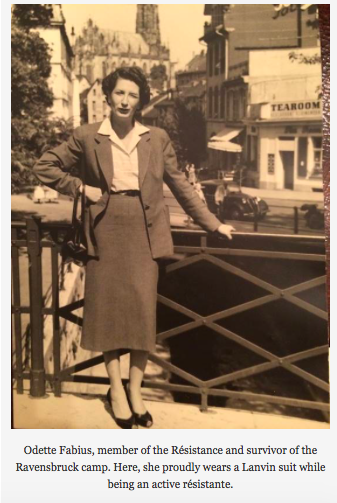


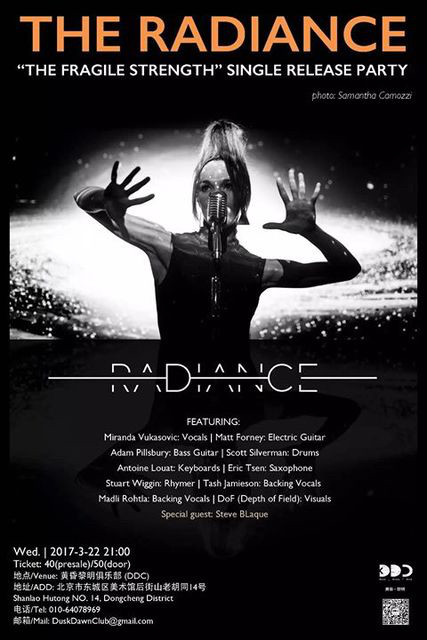




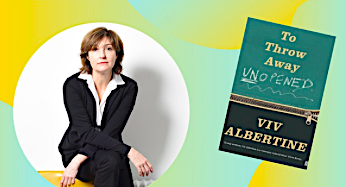


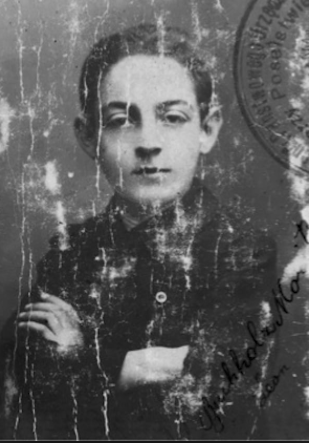
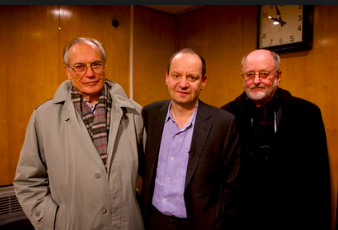
 “I am opposed to the death penalty,” he said without emotion, “except for my father.” […] “He was a criminal.”


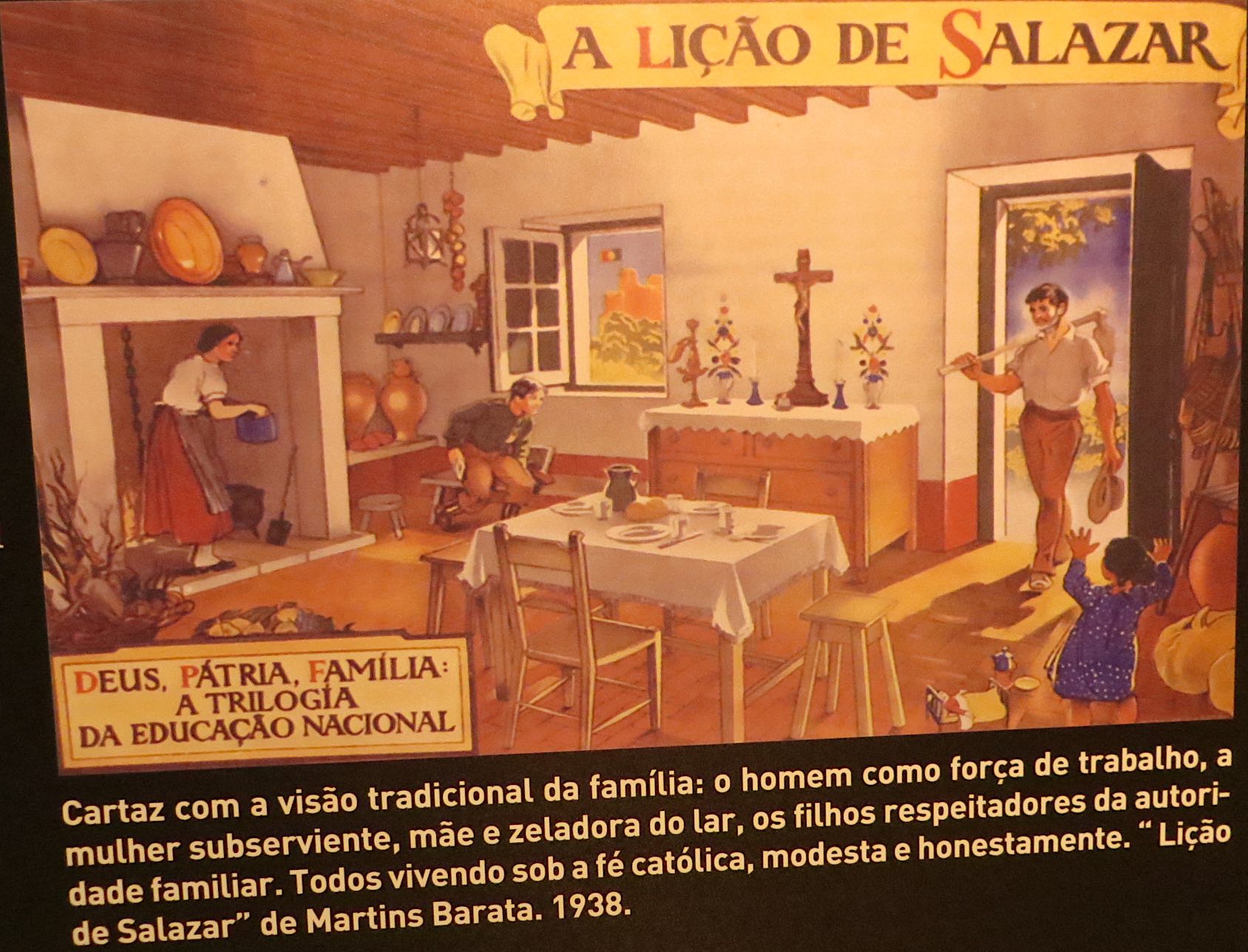
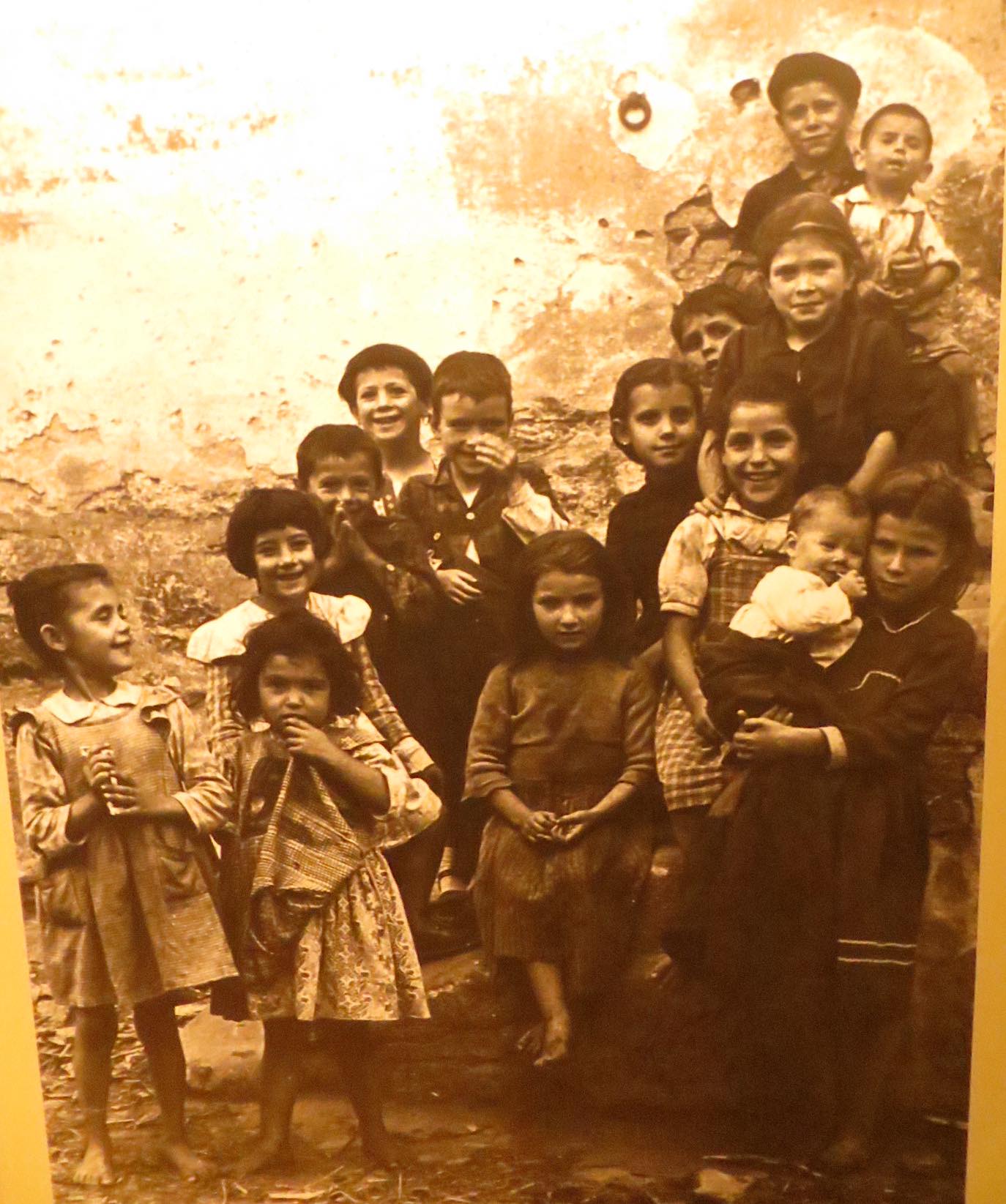



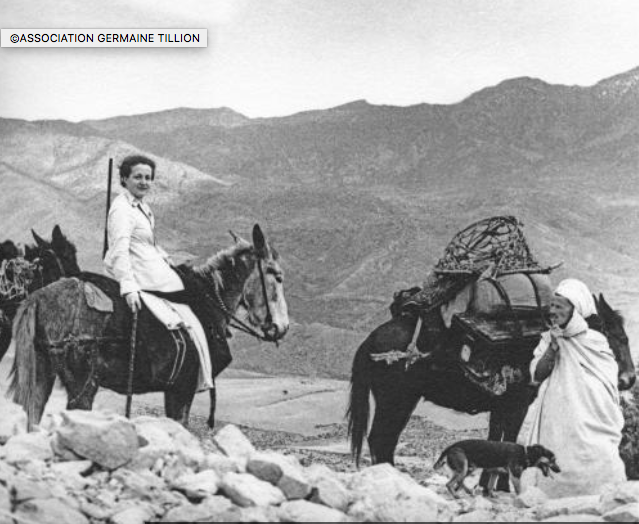
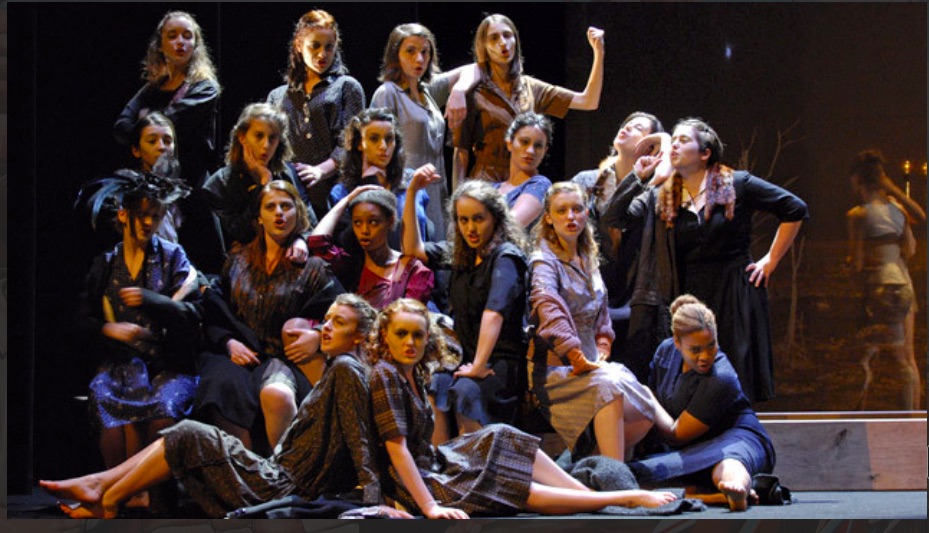


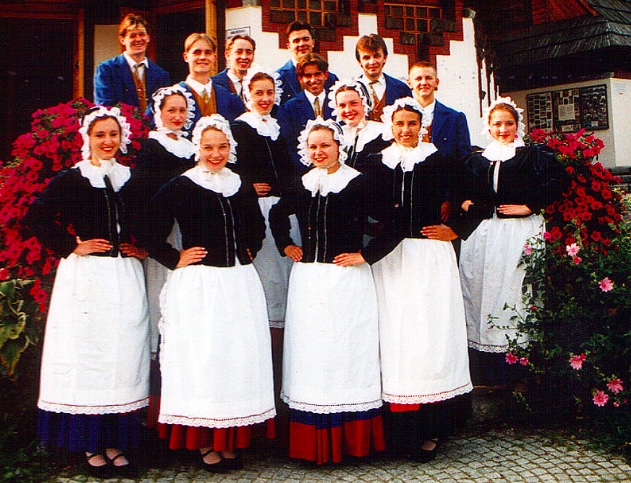


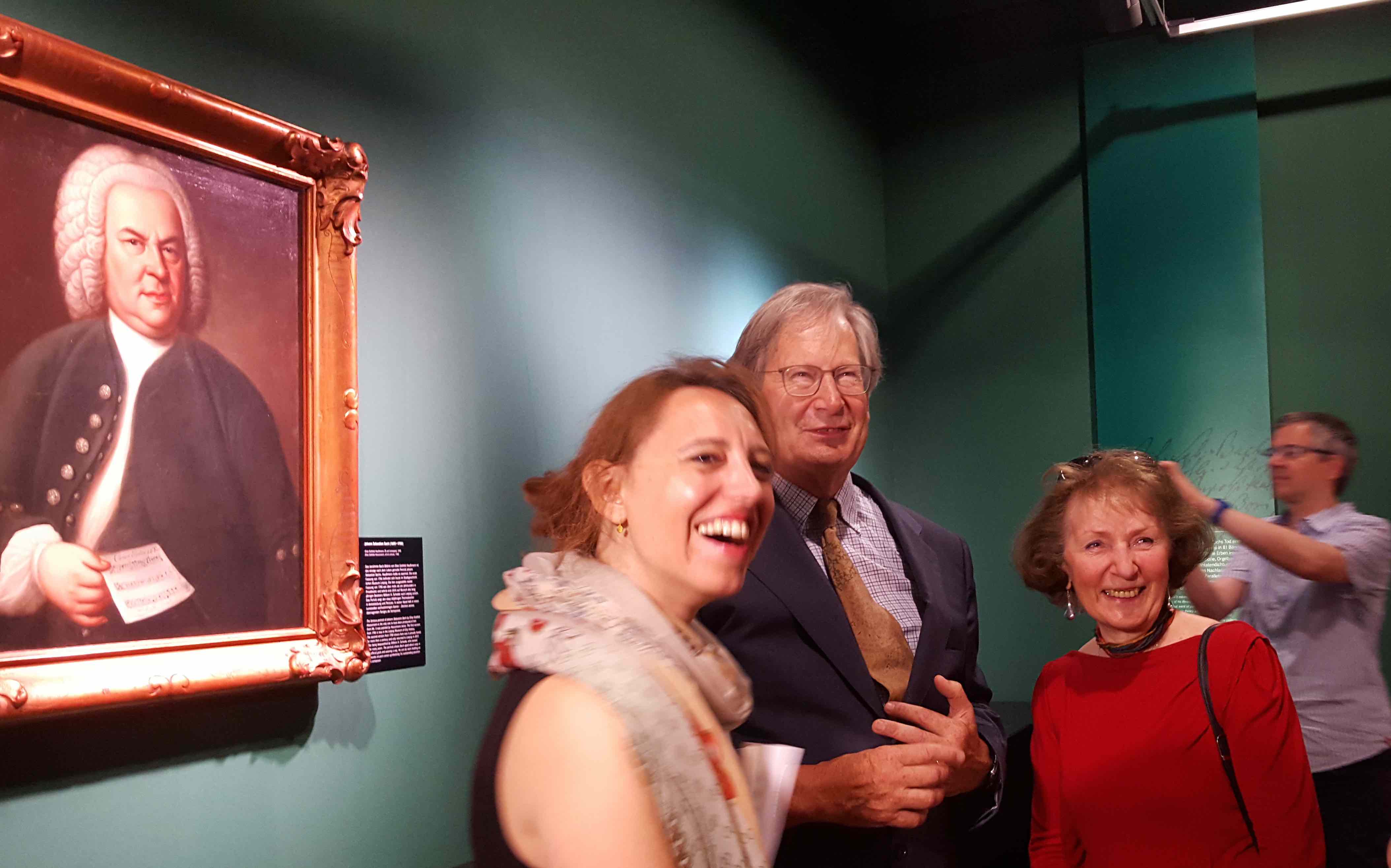


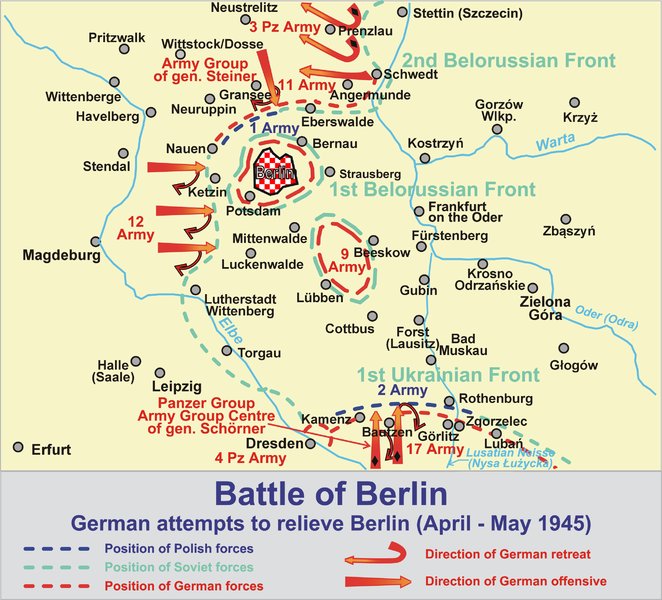




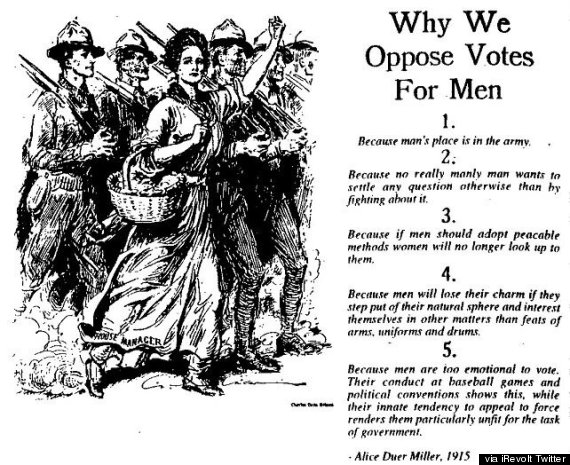


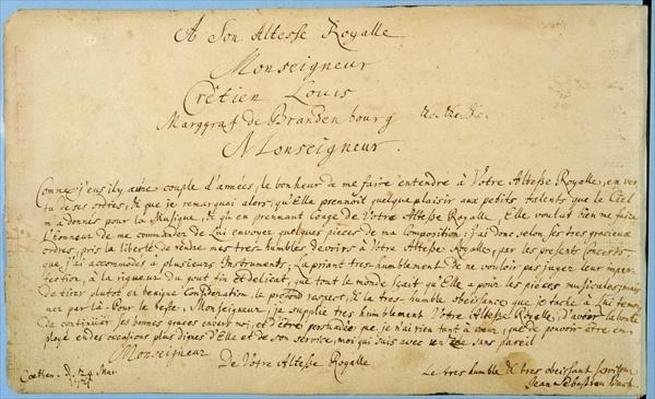







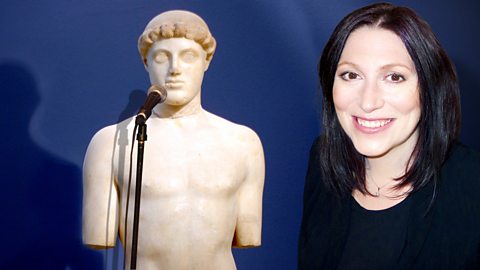
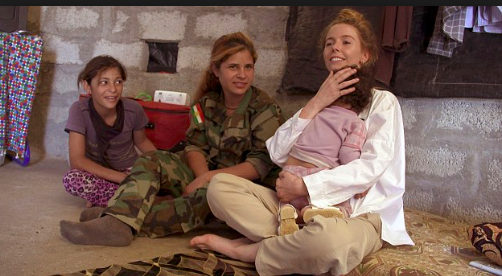

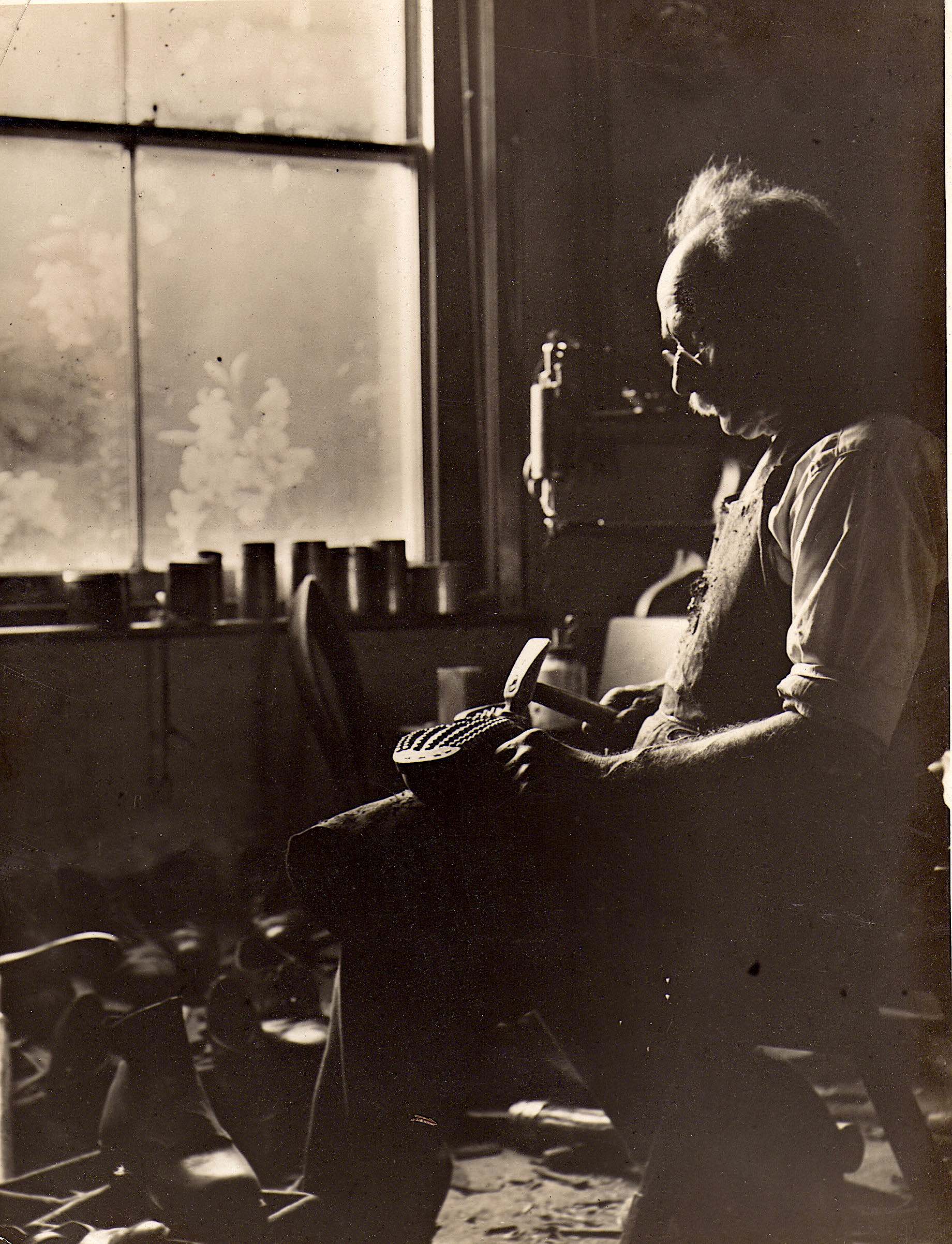

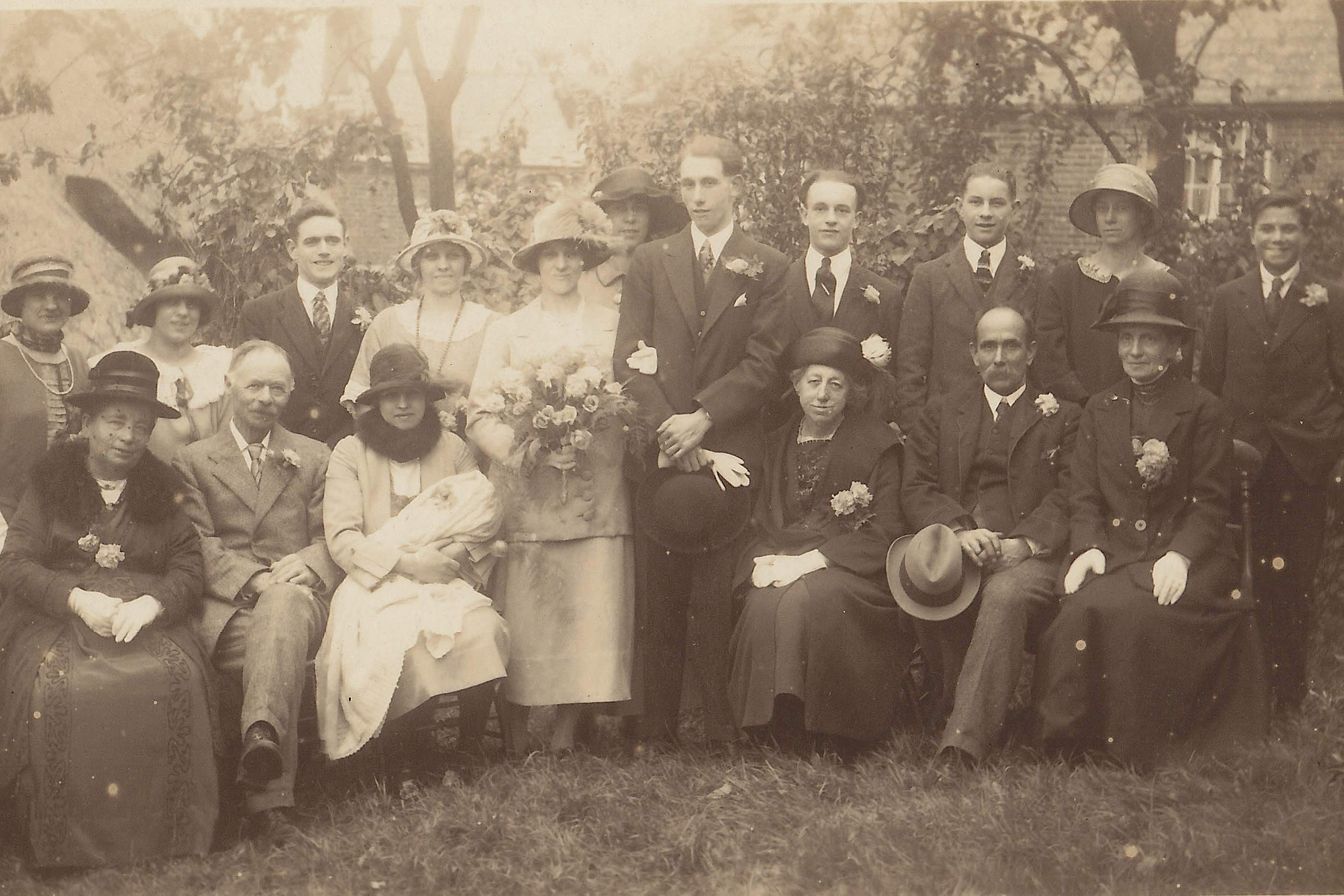







 Stephen Jones: a blog