Just in case you haven’t noticed this under my selection of photos of the Li family Daoists (Photos—Duh), I like it:
The earliest instruments in the Li family collection, from the Hongwu era of the Ming dynasty..
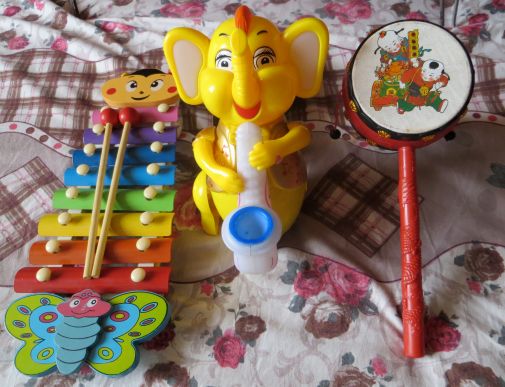
Seriously though folks, I found these in the county-town as gifts for the young son of Li Manshan’s daughter Li Min. The perfect gift for the scion of a household Daoist: yunluo gong-frame, guanzi oboe, and drum—all the ensemble lacks is a harmonica to represent the sheng mouth-organ.
By contrast with slow intense WAM, and as a change from female singers, here’s Frankie Valli and the Four Seasons’ finely-crafted original version of Can’t take my eyes off you(1967), with its smoochy intro leading the funky “I love you baby”:
I note Woody Allen’s comment from Manhattan, in a cab with Diane Keaton:
You look so beautiful I can hardly keep my eyes on the meter.
Talking of acronyms, one that slips less lightly off the tongue is ENSRC, a useful network for Chinese religion led by the indefatigable Philip Clart and Vincent Goossaert.
I welcome spoof suggestions for what ENSRC might stand for, à la LUFTHANSA…
There’s been a recent flurry of discussion there about Daoist lu registers (not the lu emoluments that I miss), discussing their varied formats and functions (have we no homes to go to?!).
I don’t think anyone has yet suggested that such registers were ever rolled up in the form of a scroll, but if they were (by analogy with baojuan “precious scriptures”, sometimes rendered as “divine rolls“), they might be known as
Following on from silly Chinese acronyms, seasoned travellers will be familiar with the airline acronyms—anyway, there are loads online. Among the highlights (PC temporarily suspended in favour of transmitting historical linguistic creativity—Ed.) are
QANTAS
Queens And Nymphos Trained As Stewards
which leads nicely to
LUFTHANSA
Let Us Fuck The Hostess As No Steward Available
My splendid neighbours Fiz and Mike just held a great 50th-wedding anniversary party. Otherwise gifted with fine taste, they inexplicably cajoled me into giving the guests a burst on the erhu Chinese fiddle—oblivious to my plea that its plaintive timbre really needs to be experienced at the hands of someone who can actually, like, play the instrument. After all, like Bernard Bresslaw in The Ladykillers,
I just sort of… picked it up.
Judiciously waiting until everyone was suitably inebriated, after a rousing (and apparently not entirely unrecognizable) erhu rendition of Jerusalem à la chinois (mercifully brief—my friends have suffered enough), I boldly attempted not to entirely mangle Bach’s so-called Air on the G string.
At short notice I secured the estimable services of another neighbour, Martyn—possibly the leading exponent of the Turkish saz in the whole of Bedford Park (sic)—who sensitively provided the bass line. Without regard to expense or the feelings of the public, we stretched to nine strings between us—four and a half each, three of them doubled (“Go figure”). As if it didn’t represent enough of a challenge, I rashly tried further to fill in the texture with the occasional juicy bit of counterpoint by “singing” (I use the word loosely). So I now admire fiddlers who manage to sing at the same time (actually, I shouldn’t be too hard on myself—perhaps it’s not so common to hear fiddlers singing counterpoint as they play).
A World Music version of Bach is an Idea whose Time has Come, if not necessarily the intonation. We didn’t so much play the Air as hint at it, an esquisse in roughly drawn lines. Thankfully, no audible trace survives of our rendition (“Case for prosecution collapses due to lack of evidence”)—nor, for that matter, of the ear-scouring Chinese wind-band version that our shawm band had played for a friend’s wedding during our, um, heyday. But undaunted, I did later record some Bach on the erhu.
The Bach Air is another instance of music that we can only hear with our own modern ears (also here)—imbued by the old cigar ad, and its whole ubiquity in popular culture. But in performance (OK, in the right hands…) it can hardly fail to move—eighteen bars of intense perfection.
Like Christopher Small (Musicking—essential reading), I now greatly value playing in an informal setting for people I know. In post-industrial societies this has inevitably been diluted by the exigencies of concert economics, with the irony of coming together to share “intimate and personal cultural moments with strangers” (George Lipsitz, cited in Musicking, p.39).
Still, the Air always moves me by association with memorable concert renditions in which I’ve taken part over the years—like in Windsor Chapel once on my birthday (as part of the Bach 3rd suite, all the more moving in between exhilarating trumpets and ecstatic fast jazzy string noodling), and as an encore in Budapest with Trevor Pinnock.
And here’s a version on the ethereal theremin (among the early experiments of hYrtis, a work in progress…):
It can be beautiful as an a cappella setting too:
Like the Mahler Adagietto, another media staple that transcends its hijacking by popular culture is the Barber Adagio, equally moving in string quartet and orchestral versions, as well as this ethereal choral arrangement:
Although the Agnus Dei text was added later to fit the melody, it gives me a pretext to play Bach’s version from the B minor mass, sung again by the divine Michael Chance—more vocal and instrumental intertwining:
Just as divine as the Barber is Lux Aeterna, a choral version of Elgar’s Nimrod:
For more a cappella singing, click here; and for Indian and world fiddles, here.
Sometimes when I’m with the Li family Daoists I wear my SOAS T-shirt, which bears the name “SOAS, London University” in most of the Oriental and African languages taught there. The Chinese version, on the back, reads
伦大亚非学院 Lunda YaFei xueyuan,
Lunda being short for Lundun daxue (London University),* Yafei short for Yazhou (Asia) and Feizhou (African), and xueyuan meaning academy. One day in Italy the ever-lively Third Tiger, Li Manshan’s younger brother, frowning as he tried to interpret these six arcane characters, asked me,
What’s Lundaya feixueyuan supposed to mean?
We all burst out laughing, as usual. He was reading it not as three binomes (Lunda—YaFei—xueyuan), but as Lundaya—some weird transliteration of a foreign name, perhaps?—and feixueyuan, “anti-academy”. But his interpretation has stuck; it has a further resonance when adorning my own back, since with my championing of more earthy folk sounds I’m (ever-so-slightly simplistically) notorious for my anti-conservatoire stance… On my next visit to Yanggao I just had to bring a SOAS T-shirt to give him.
In similar vein (my book, pp.331—2), Li Manshan and I have a lot of fun with the name Intangible Cultural Heritage. The Chinese translation Feiwuzhi wenhua yichan is itself flagrantly at odds with, um, the Chinese heritage. I set the ball rolling by wilfully getting the name wrong, calling it Feiwenhua wuzhi yichan, “Anti-cultural materialistic heritage.” Li Manshan, now designated as a Transmitter of the ICH, takes up the riff: when I joke with him, “You’re an Intangible (feiwuzhi)!”, he comes back with: “Ha, I’m a Waste of Space (feiwu 废物), more like!” This becomes our regular name for the project.
For more T-shirts, see here—oh, and here. And for more wordplay with Daoists, here.
*Another regular sources of giggles on visits to rural latrines is the common re-formation of Lundun with the characters 轮蹲, “taking turns to squat”, further elaborated in our revision of Lundun dashiguan 伦敦大使馆 “London embassy” to 轮蹲大屎馆 or “Taking turns to squat in the big London shithouse”…
More recent is a highly praised film from Zacharias Kunuk, Atanarjuat: the fast runner (2001)—click here for a trailer. It enacts an ancient legend while lavishing great anthropological care in evoking early Inuit culture.
But Nanook of the North is to some extent a fictional creation too, blurring the lines between documentary and drama. It is an early case-study in a substantial discourse in the ethics of visual anthropology that leads on to Jean Rouch, representations of the Yanomami, and so on.
As to vocal styles, in katajjaq throat-singing (e.g. Voices of the World, CD 1 §12), the duet is considered to come to an end when one of the singers laughs, loses her breath, or breaks concentration (LOL).
Hard to imagine a performance of such charm at certain other recent swearing-in ceremonies…
Now I’d like to seek ethnographies of changing life in Inuit communities since the time of Nanook (preferably not containing the words “traditional way of life” or “vanishing culture”—“but that’s not important right now“). This is a lively topic in ethnomusicology—there are many studies to add to my reading list, such as Maija M. Lutz, The effects of acculturation on Eskimo music of Cumberland peninsula (1978), Beverley Cavanagh, Music of the Netsilik Eskimo: a study of stability and change (1982), and studies of throat singing by Nicole Beaudry and others—as an introduction to the detailed work of Beaudry, note her thoughtful reflections in Shadows in the field. See also First Nations: trauma and soundscape.
Here’s a trailer for the short film Throat song (2013), in which a young Inuk woman, lost in a community that has been tragically separated from its past, begins to connect with other victims of violence in her community, and seeks to reclaim her voice:
Throat singing also inspires a lively experimental scene, with singers such as Tanya Tagaq.
* * *
Corpsing is one of the pleasures of musical life in WAM too—we’ve all done gigs like that. I can’t suggest here the numerous ways in which fiddle players try to corpse their desk partners by a tiny little gesture of resignation at the repeat of a minuet, or a fake sforzando attack on a pianissimo entry.
Generally “the show must go on”, but once, the Allegri string quartet were performing the intimate, intense slow movement of a Haydn quartet when the viola player let out an extended and voluble fart.* The leader giggled sotto voce, and as the mirth spread (even to the miscreant, who’s generally the first to keep a straight bat) all four of them were soon so helpless with laughter that they just couldn’t keep going, and had to leave the stage to compose themselves.
To be sure, this is at a certain remove from Inuit culture. In the latter, as if you haven’t worked this out already, corpsing is intrinsic to the performance event; in WAM, it’s an illicit part of the muso’s “deviant behaviour“. For corpsing in the crucifixion scene of the Matthew Passion, click here; and for the suave Charlotte Green on BBC radio, here.
* I’m reminded of the old Punch cartoon:
Host (to guest who has just perpetrated an embarrassing histrionic effect) “Gad sir, you’ve farted in front of my wife”.
Guest, with air of studied nonchalance, “Oh, I’m most frightfully sorry, I didn’t realise it was her turn.”
If it’s proper language you’ll be wanting, by blessed chance I’ve just come across “The trade”, an early (1940) essay on pubs by Myles na gCopaleen that has found a respectable home in the fine anthology Great Irish reportage.
This is the ultimate insider’s account. Pubs were Myles’s office and his home—seldom can ethnographers have had such an in-depth knowledge of their chosen fieldsite. He shows great sensitivity to change in attire and interior design:
The result is a combination of utility (functional something-or-other architects call it), comfort and restraint—but no pints.
His poignant account manages to be both engaged and dispassionate. Just the opening paragraph is a too, er, deaf ‘orse—sorry, I mean tour de force(blame Keats and Chapman):
In the last ten years there has been a marked change in the decor of boozing in Dublin. The old-time pub was something in the nature of the Augean stable (it is true that Pegasus was often tethered there) with liberal lashings of sawdust and mopping-rags to prevent customers from perishing in their own spillings and spewing. No genuine Irishman could relax and feel at home in a pub unless he was sitting in deep gloom on a hard seat with a a very sad expression on his face, listening to the drone of bluebottle squadrons carrying out a raid on the yellow sandwich cheese. In those days a genuine social stigma attached to drinking. It was exclusively a male occupation and on that account (and apart from anything temperance advocates had to say) it could not be regarded as respectable by any reasonable woman. Demon rum was a pal of the kind one is ashamed to be seen with. Even moderate drinkers accepted themselves as genteel degenerates and could slink into a pub with as much feline hug-the-wall as any cirrhotic whiskey-addict, there to hide even from each other in dim secret snugs. A pub without a side-door up a lane would have been as well off as one with no door at all.
Well he said, you’ll be the greatest president in the history of, but you know what, I’ll take that also, but that you could be. But he said, will be the greatest president but I would also accept the other. In other words, if you do your job, but I accept that. Then I watched him interviewed and it was like he never even was here. It’s incredible. I watched him interviewed a week later and it’s like he was never in my office. And you can even say that.
Roll over Shakespeare.
The “enemy of the American people” has naturally been having a field day in assessing the first 100 days. Spoilt for choice, I will content myself with citing the excellent Hadley Freeman.
Among my various Tweety posts, perhaps this is most apposite.
I have broken more Elton John records, he seems to have a lot of records. And I, by the way, I don’t have a musical instrument. I don’t have a guitar or an organ. No organ. Elton has an organ. And lots of other people helping. No we’ve broken a lot of records. We’ve broken virtually every record. Because you know, look I only need this space. They need much more room. For basketball, for hockey and all of the sports, they need a lot of room. We don’t need it. We have people in that space. So we break all of these records. Really we do it without like, the musical instruments. This is the only musical: the mouth. And hopefully the brain attached to the mouth. Right? The brain, more important than the mouth, is the brain. The brain is much more important.
A survey in 2013 marked Britain as the hummus capital of Europe, with 41% of people having pots in the fridge, almost twice as many as any other country.
Without underestimating the rise of the chattering classes, this looks like a dodgy statistic to me.
Anyway, the Middle East would seem to have more pressing problems right now, even if we don’t. Anyway, now we’ve moved on to tofu, apparently.
Bruno Nettl‘s masterly The study of ethnomusicology: thirty-three discussions has a typically stimulating chapter entitled “How do you get to Carnegie Hall?” (referring to the old joke—”Practise!”; see also here, under “Music and learning”).
In her 2010 interview with David Sedaris, Hadley Freeman (also wonderful) relates this story:
When David Sedaris appeared at Carnegie Hall in 2002, a reporter from the New York Observer asked his father Lou whether he had ever expected to see him playing Carnegie Hall. “Well,” his dad replied, “I expected to see him cleaning Carnegie Hall.”
After their flight from Beijing, we had a couple of days to rehearse in New York. They took this seriously, discussing how to adapt their programme for the audience.
The Daoists brought some of their lethal Shanxi liquor (“white spirit”, how very true), and at last I could return the compliment by finding a Western tipple they could seriously relate to—tequila. We dusted off our old stories, joking constantly as they patiently fielded my usual tedious academic questions. Jet-lagged, we often found ourselves meeting up outside the hotel around 3am for a cigarette or three as we watched the street cleaners clearing up the debris of the night’s excesses.
The daily walk to and from the Carnegie Hall was a challenge for my abilities to marshal Chinese peasants in inner-city jungles, anxiously totting them up every time we crossed a busy junction.
But one afternoon as I counted them in through the door of the hotel, someone was missing. Uh-oh, it’s Li Manshan—I’ve mislaid a National Treasure. In a panic, I retraced our steps with his younger brother Third Tiger, looking for a needle in a haystack; I remember chatting with him until we got to Times Square, but then…? As I asked a couple of cops if they’d seen a lost-looking old Chinese guy, they replied with a polite shrug, “Sure bud, we’ll keep an eye out for him.”
After the longest fifteen minutes of my life we came across him standing peacefully at the kerb gazing up at the skyscrapers, without a care in the world. Striding up to him I exclaimed, “I dunno whether to give you a hug or a slap!”
With all due respect to David Sedaris, he may not be so good at performing Daoist ritual as Li Manshan is at telling jokes—including some fine stammering jokes. I didn’t divulge my favourite here, but click here for a great joke told by his son Li Bin, that makes an appendix to my film.
I don’t mean to go too far down the route of silly puns—there’s a wealth of other sites for that—but in the spirit of Keats and Chapman (see here, here, and here):
There’s this Englishman sharing a train compartment with two young guys from Sweden—Sven, and his friend Olf, who’s dressed in drainpipe trousers and brothel creepers.
After spitting on the floor and sneering at the English guy, Olf goes off to the buffet car to get a can of beer. After one swig he spews it up all over the compartment and lets out a torrent of foul abuse. “What’s up with him?”, the Englishman asks Sven. Sven bursts into song:
Rude Olf the Ted loathes train beer.
Oh well, I guess I have to do the old Mary Poppins one too:
Gandhi, with his hunched gait, walked barefoot, so that the soles of his feet became hard. With his frail form, he led a spiritual life, but his diet gave him bad breath. All of which made him (Altogether Now) a
Stoopy calloused fragile mystic, vexed by halitosis.
As Ronnie glides into the second week of the snooker, it’s also worth tipping our notional hats to the erudite commentators (themselves veteran performers, unlike most scholars of, um, Daoist ritual), full of brilliant detail on both the mechanics and psychology of the event—like good ethnographers (there I go again).
Not quite like this:
In WAM concerts, such detailed information is relegated to a printed programme, and unable to respond to the incidents of performance. This is remedied by PDQ Bach (from his LP):
Hugh Maguire (1926–2013) managed to combine his work as leader of orchestras with making some fine chamber music. I share my admiration for his playing with far more distinguished pupils of his. As he caressed the strings lovingly, his way of turning a phrase was irresistible.
In the NYO another important kind of education for me was pub sessions where he and flautist Norman Knight would swap indiscreet orchestral stories over copious G&Ts.
Blessed with a brilliant Irish sense of humour (see also Irish tag), Hugh could be both charming and tough with conductors; it was he who told me the Hermann Scherchen story. This reminiscence of Jacqueline du Pré, with whom he and Fou Ts’ong loved playing piano trios in the 1960s, gives an idea of his sincerity.
Hugh’s playing appears all too rarely on YouTube, but here’s his wonderful 1964 recording of Scheherazade (Rimsky-Korsakov, not the equally ravishing Ravel version) with Pierre Monteux and the LSO:
Pete Hanson, heir to Hugh’s own spirit, recalls his account of a scary moment during the Scheherazade sessions:
Towards the end of a day’s recording, Monteux turned to him after the first take of the finale, with its ethereal high harmonics, and said “Come on Maguire, get it right!”
Hugh too could be as down-to-earth as his playing was sublime. Here’s Pete again, with a couple of choice comments received during lessons:
“You sound great, Pete, all the shapes and feelings are there—but you’ve got to play all the notes!”
“Pete, even if your strings are out, you must play in tune! Just do it wit’ your fingers!”
Nor is the play of fag-ash on ancient instrument the exclusive province of Li Manshan. Yet again, Cieran Carson has a beautiful description (Last night’s fun, p.54):
So I remember fiddle-players with cigarettes poised between two fingers of their bow-hand, and the ash would wave and sprinkle across their trouser-knees; or the cigarette that drooped between a player’s lips would let drop a little grub of ash into an f-hole of a fiddle, where it disintegrated as it crashed into the ersatz “Stradivari” label. The knees were dusted off, someone rosined up, and a fitful shaft of sunlight would illuminate the dust-motes like a dissolute snowstorm souvenir.
This 1968 recording of the Mendelssohn Octet has long been a favourite, with Hugh leading a star cast including Neville Marriner and Iona Brown (or Iona Brown violin, as she’s known):
On the same LP, the poise of Hugh’s playing in the Minuet of the Boccherini Quintet is charming too—with a bold yet tasteful glissando on the cello (0.37, 1.03, and best of all at 3.15):
Boccherini also makes a priceless backdrop for The ladykillers. For an incident in the middle of a string quartet, see here; and for another string quartet, here.
And here’s Hugh leading the Allegri quartet in the Mozart clarinet quintet, with Jack Brymer:
The duck lies shredded in a pancake Soaking in the hoisin of your lies.
I’m also keen on his pub joke:
An Englishman, an Irishman, and a Scotsman walk into a bar—and everything unfolds with a tedious predictability.
More elaborate is this:
And he’s a fine pianist! It would be just as much fun to play Mozart piano concertos with him as with Robert Levin—here playing Mozart’s very own piano:
Gosh—I’m even playing in the band there too, a stay in Salzburg making a pleasant change in between fieldwork trips to rural Hebei. For my speculations about the reversal of colours on the keyboard soon after Mozart’s day, see Black and white.
Another fine headline, perhaps from the 1950s. Such is its linguistic creativity that I’ll settle here for the language of the day, rather than trying to rephrase the story in PC-speak:
A patient escaped from a loony bin, burst into a launderette, and molested two staff before running off. The headline ran:
Nut screws washers and bolts
Linguistically an even more perfect version manages to award the first word a plural too:
A rich family named Nuts owned a chain of laundromats [cf. the old “lavatory chain” line]. Having exploited their workers for years they finally absconded. Hence
After mentioning Easter in Andalucia, I went on to describe what we might call “a different kind of Catholicism altogether” in rural China. This clip from the perennial movie Airplane combines the old “altogether” and “What is it?” gags:
In one of few ways that peasants could ridicule the rigid political system, some satirised the deprivation of their conditions. A couplet commonly pasted up at the time ran succinctly:
Two three four five, six seven eight nine.
This may not seem like the most inspired piece of poetry, but Chinese is so ingenious—everyone knew that the lack of the numbers one and ten meant that people had no yi (“one,” also clothing) or shi (“ten,” also food)—queyi shaoshi缺衣少食, a proverb that goes back to the Ming dynasty.
One of the Daoists pasted the couplet up and was ticked off by the village cadres. Like naughty schoolboys, villagers joked that so-and-so may have written it but someone else had thought it up. But it was engraved in the sullen sardonic hearts of many peasants.
Still, their impotence reminds me of Peter Cook’s comment:
those wonderful Berlin cabarets which did so much to stop the rise of Hitler and prevent the outbreak of the Second World War.
He took a sponge, filled it with sour wine and put it on a reed, and offered it to Him to drink.
On a lighter Easter note, an enterprising young adman, asked to come up with an ad for Chumley’s vinegar, used a painting of Christ on the cross averting his face from the proffered sponge, with the fine caption
Take it away—it’s not CHUMLEYS!
That was in the days before Aceto balsamico di Modena, “sourcing”, and “drizzling” were obligatory. “If Jesus were alive today…” See also Jesus jokes; and for John Wayne as centurion, click here.
No less tasteless is the use of a contemporary icon by the arms trade, providing Mark Thomas with the title for a fine book:
These heavy-duty leg-irons are made in South Africa, and are the same type used on the famous Nelson Mandela.
This week at the Cadogan Hall (among few London concert buildings that I find conducive), luminaries of the early music scene assembled to pay homage to the late great Francis Baines (1917–99) in a concert of music reflecting his wide-ranging tastes.
All-round eccentric and bon viveur, Francis was a true renaissance man, on double bass (sometimes deposited in left-luggage at Victoria because he couldn’t get it onto his barge), viols, hurdy-gurdy, and as composer. Despite being in constant demand on the professional scene, he was a true amateur at heart, a servant of music almost like an ashiq—a dervish whirling with his bass.
From the late 1970s, as the early music world became ever more polished, fragrant, and marketable—the inevitable transition from “knit your own yogurt” to Chanel No. 5 (see also here, and here)—one might imagine him finding his amateur ideal going against the tide, yet being both pragmatic and other-worldly, it never cramped his style. He always maintained a sense of both mischief and awed discovery.
He is also lovingly remembered in a beautiful book Francis Baines: musician of several parts, with reminiscences, both moving and hilarious (including more fine maestro-baiting stories), from a variety of distinguished musicians—a contribution to the ethnographic history of musical life in 20th-century Britain.
I’ll limit myself to one story from the book:
Nimbus recording session sometime in the 1980s. Mozart symphonies, Hanover band. Complete takes of whole movements being the modus operandi of this recording company, the rather inexperienced producer emerged from the box to report back on the first take. He said something along the lines of
“It started off well, and then became a bit confused and not so clear in the middle, but towards the end it got better and finished well.”
In my book I prefaced my outline of the ethnography of Daoist ritual with some general background:
Ethnographers may study any people—a hairdresser in Barnsley, shamans in Brazil, a street gang in Chicago, and so on.
While the Barnsley hairdresser was a fantasy (I can’t find one online—an ethnography, I mean, not a hairdresser—but who knows?), Chicago street gangs have long been a popular theme of anthropologists.
After the more weighty tomes of the Chicago school,
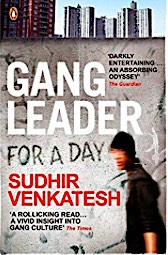
Sudhir Venkatesh, Gang leader for a day (2008, reviewed here, here, and here),
based on a decade’s troubled engagement, is the kind of pop ethnography that I admire. He does for Chicago what Nigel Barley did for the Dowayo.
He also lays bare moral dilemmas that are a constant concern for ethnographers. To repeat, all kinds of social activity are their proper domain. For China, this would include not just ritual specialists but cadres and sex workers—who somehow seem like a suitable pairing.
As a stammerer, I’m all for a good stammering joke. Now as a limerick this is no big deal:
But sung as a round, in the fine melody to which it was set, it can be brilliant, with its syncops and manic pile-ups of unconnected final words.
I say “can be”… It sounds great sung in the gentle polished affectionate tones of my Oxbridge chums, one to a part. But for us stammerers, the regimented impersonal nature of such a rendition by a large school choir may seem mesmerizingly traumatic. One imagines poor stammering schoolkids cowering red-eyed with fear in the corner, their anxious parents in the audience. Anyway, let’s just imagine it sung kindly with humour… As usual, it’s all about context, and the intentions of performers and audiences.
It’s easy for you to say that, Steve…
It’s well known that stammerers can sing fluently—indeed, most can do silly voices too, although that’s hardly a long-term solution. I note too that stammering is predominantly male; and that it is also common in Japan, another highly pressurized island culture.
And further to the collation of Daoist texts, a note on textual variation: some versions open “There was an old man from Calcutta”. Stammering tends to decline with age—though for sufferers like me it takes variant forms. One wonders whether the old man was an expat, or native to Calcutta; if the latter, his fondness for dairy products may be merely an Raj-esque affectation, or else it may indicate a predilection for paneer and ghee—but that would scupper the p-p-poem.
For a more avant-garde take on stammering, see here; and for the brilliant fugal pastiche Donald Trump is a wanker, here.
You’ll be glad to know that our encyclopaedic resident publication TheChina Dailycovers stammering too:
Feng Kezhi, a 24-year-old garage worker, suffered stammering so much that he once stood in the pouring rain and kept slapping his face but this didn’t cure him. It was Wang’s clinic that brought back his confidence. “There are many people like Feng who need a helping hand and I must try my best to help them”, Wang said.
China presents a fine challenge for stammerers like me. When the English are confronted by a ferocious bout of stammering, polite embarrassed sympathetic reactions are de rigueur—immortalized by the finely-observed scene in A Fish called Wanda:
Conversely, the Chinese just tend to burst out laughing, a nice honest response.
What’s more, whereas in England we fiendishly covert stammerers can usually get away with limiting our conversations to one or two people, in China one is rarely in a group of less than a dozen; so short of feigning dumbness or unconsciousness, it’s not really possible to avoid public talking. It’s rather good shock therapy: “We have ways of making you talk”—which was of course the motto of the S-S-Stammering Association (hence also the name SS). Progress is only possible once one begins to stammer openly.
It’s good to hear Ed Balls talking (openly, and fluently) about his stammer (see also here):
The excellent British Stammering Association used to run a cartoon series called Stammering Stan, which was somewhat controversial. But this will be evocative for stammerers:
Li Manshan has a brilliant stammering joke, which he loves telling me—but it’s best if you hear him tell it himself…
For more stammering songs, click here and here. See also the stammering tag, including this post on chipping away at the iceberg of fear.
* Update: 13-year-old stammerer Brayden Harrington just made a powerful speech for the 2020 Democratic National Convention:
* Anotherupdate: in The speaking voice, do listen to the brilliant Amanda Gorman, erstwhile stammerer, at the 2021 Inauguration!
Coming out of Goldhawk road tube late on a rowdy Friday night, the station speakers regale me with the moment where the sun clouds over near the opening of the slow movement of Mozart’s 21st piano concerto. Here it is played by Malcolm Bilson:
I don’t linger, I have an onward bus to catch. Fortunately I’ve been accompanying the concerto for several decades, so I can fill in the tranquil opening and the whole progress of the movement; and it evokes memories of many performances over various stages of my life. So even that tiny fragment, in such an incongruous context, is full of meaning for me. It’s another of those pieces that can’t be ruined by their use in film music (in this case Elvira Madigan). But what if you don’t know the piece? The project wasn’t aimed at people like me.
Constantly expanding my frontiers like a caveman playing with a motor-bike, I’ve just added an audio playlist in the sidebar, with some amazing tracks. Detailed notes on this page in the top menu.
For the late great Christopher Hitchens—never one for blind hagiography—the deaths in quick succession of Princess Diana and Mother Teresa (“a simpering Bambi narcissist and a thieving, fanatical Albanian dwarf”) were like a red rag to a bull:
How cute that Hitchens was unfairly misquoted as calling Teresa “a lying, thieving Albanian dwarf.” Not lying, merely thieving and fanatical—so that’s all right then…
“Dragging the icon to the trash” is also a suitable metaphor for some biographies, such as Tony Palmer’s film (and book) Menuhin: a family portrait.
Two novels over half a century apart give a flavour of changing Chinese experiences in Britain.
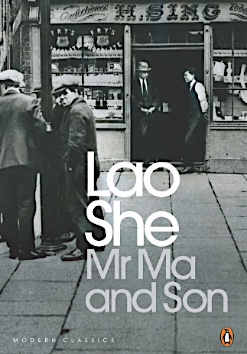
Mr Ma and son Lao She (1899–1966) wrote Mr Ma & Son: a sojourn in London in the 1920s—while he was a young lecturer at SOAS, indeed. At a time when Chinese in the West were represented by “yellow devil” stereotypes like Fu Manchu and Anna May Wong, he evokes the difficulties of mutual comprehension, and the gulf between Chinese workers in the East End and patriotic students trying to negotiate their place in the world—all still ongoing issues.
Back in China, after leading the All-China Resistance Association of writers and artists during the Japanese occupation, Lao She enjoyed another sojourn in the USA until returning to Beijing in 1949. He perhaps made a more inevitable recruit to the political cause after Liberation than the great musicologist Yang Yinliu, but all such intellectuals had to negotiate a tortuous path. In the 1950s he got to know the Hrdličkas in Beijing.
Lao She’s Afterword (“How I wrote Mr Ma & Son”) is full of sophisticated and modest reflections on the encounter between of classical and vernacular style—all the more impressive in view of the later indignities inflicted by the simplistic prose style of Maoist ideology, not to mention his own brutal fate at the outset of the Cultural Revolution.
Sour sweet Timothy Mo’s 1982 novel Sour sweet is a brilliant evocation of the insecurity of newly-arrived Cantonese immigrants to the UK in the 1960s. Concerned with a different set of questions to intellectuals like Lao She, they seek to survive with their little takeaway business. Little by little, ineluctably, the seemingly separate family worlds of innocent domesticity and Triad brutality clash in shockingly graphic violence.
It’s also very funny. Mo captures the language of new arrivals brilliantly. They put up notices in the restaurant:
MANAGEMENT NOT RESPONSIBLE FOR COOK’S COOKING
TRESPASSER WOULD BE PROSECUTED
Once,
Seeing that Mui and the lorry driver have brought a crate of Coca Cola: “Ah,” said Lily, “Whore Lock!” (or a close phonetic representation to that effect), identifying one of the products in question by its Cantonese name.
‘Eh?’ said the driver, considerably startled.
Lily smiled her charming (for westerners) smile. “You like Whore Lock all the time, too, hah! It’s the real thing!” she quoted enthusiastically. Mui averted what might have turned into major embarrassment all around. “My sister not understand English too much,” she explained. “you please excuse.”
Reminiscent of my mentor Paul Kratochvil’s story is an exclamation that Mui hears from one of the truck drivers:
Far kin aid her!
for which she supplies a suitably Confucian interpretation:
May distant relatives come to her assistance.
(Despite a thorough trawl, I haven’t retrieved the original quote, so this is my memory of it. Anyone?)
And Lily’s alarm when she learns of the Terror Pin at her young son Man Kee’s school:
Lily was horrified but not basically surprised. Typical of the English: their discipline was either lax to the point of non-existence or ferocious—like beating Hong Kong factory workers senseless with truncheons and then giving them free medical treatment. The Terror Pin was kept in a glass box of its own. (Display of force often eliminated need for its exercise.) Occasionally, it was brought out when as an additional refinement of torture the children was actually allowed to handle it! She discovered it when she saw Man Kee taking some winter greens in his satchel, obviously as some kind of propitiatory offering, similar to the symbolic offering of lettuce (money) to the New Year dragon. Concerned, as what mother wouldn’t have been, Lily examined Son’s adorable arms for tell-tale puncture marks but hadn’t found any. Good boy.
For some discussion, see here, and this weighty analysis of the book’s Confucian—and Daoist—themes is intriguing. The Daoist link also features here. For Chinese music in Soho, click here, and for immigration, here.
Further to my early music story, there’s a major sub-genre of “Guess ’oo I ’ad in my cab the other day”, including this:
Know ’oo I ’ad in the back of my cab the other day? That Bertrand Russell geezer! So I asks him, “So what’s it all about then, Bertie?” And do you know, he couldn’t tell me!
In 1948 the great man survived a plane crash into the sea off the Norwegian coast. A journalist phoned him and asked,
“When you were in the water, did you not think of mysticism and logic?”
“No” I said.
“What did you think of?” the voice persisted.
“I thought the water was cold”, I said, and put down the receiver.
By contrast with many stories being published today, here’s an apparently genuine story of the choir of King’s College Cambridge on a tour of Australia around 1980:
On a free day, a few of the more enterprising undergraduate choristers, all dressed up in their fancy Chetwynd Society blazers, hired a car and drove off into the outback. Suddenly a kangaroo leapt out in the road in front of them, and they couldn’t help hitting it. Stopping to assess the damage they found that the kangaroo, though unscathed, was dead. With typical Cambridge drôlerie, one of them took off his blazer and put it on the kangaroo, propping it up so they could take a group photo.
At this point, it transpired that the kangaroo wasn’t dead at all, but merely stunned [Altogether now, the parrot sketch—Ed.]. Coming round, it hopped off at high speed into the distance—with blazer, passport, and chequebook, making excellent its escape (in the words of Flann O’Brien).
It was never seen again—though one imagines it telling the tale as it sips cocktails on a Spanish beach…
If anyone can confirm or refine this story, please do!
Imagine: you’re better than James Joyce; you end up like Miles Kington.
I take the point, but for many fellow-Flanneurs it may not seem germane. Myles’s oeuvre is Sue E. Generis (if he didn’t say that, then it must have been me), self-standing—which, allegedly, is more than he was.
How can I have been so remiss as to neglect Timothy O’Keefe’s edited volume Myles: Portraits of Brian O’Nolan (1973)? Fortunately, my old friend Rod (himself an honorable, nay upstanding, member of the Royal Society of Flannologists) has stepped into the unsavoury breach of my Stygian ignorance [Hope he wiped his feet afterwards—Ed.], drawing my attention to a fine reminiscence therein by Niall Sheridan:
His interest soon shifted to a suggestion of mine—the All-Purpose Opening Speech. This was to be one endless sentence, grammatically correct, and so devoid of meaning that it could be used on any conceivable occasion: inaugurating a President, consecrating a Cathedral, laying a foundation-stone, presenting an inscribed watch to a long-standing employee. This notion delighted him, and he decided it must be given to the world, translated into every known language. If nation could speak fluently to nation, without any risk of communicating anything, international tension would decline. The Speech would be a major contribution to civilisation, enabling any inarticulate lout who might lever himself into power to emerge (after a brief rehearsal) as a new Demosthenes.
I was to make the original draft in English. Denis Devlin was to undertake the translation in French and Brian himself would do the Irish and German versions.
I can remember only the opening portions of the Speech, which ran (still incomplete) to some 850 words:
“Unaccustomed as I am to public speaking, and reluctant as I am to parade my inability before such a critical and distinguished gathering, comprising—need I say—all that is best in the social, political, and intellectual life of our country, a country, I may add, which has played no inconsiderable part in the furthering of learning and culture, not to speak of religion, throughout all the lands of the known globe, where, although the principles inculcated in that learning and that culture have now become temporarily obfuscated in the pursuit of values as meretricious in seeming as they must prove inadequate in realisation, nevertheless, having regard to the ethnical and moral implications of the contemporary situation, etc, etc, etc.”
When the translations had been completed we had a reading in Devlin’s home. Any rubbish can be made to sound impressive in French, and Denis had produced a superb version, rhythmic, mellifluous and authoritative. It conveyed (to our delight and amazement) even less meaning than the original.
Brian (who delighted in the simplest sleight-of-hand) whipped a walrus moustache from his pocket, fixed it under his nose and read his Irish version, in a wickedly accurate impersonation of our Professor of Irish, Dr Douglas Hyde, later the first President of Ireland.
“What do you think of that?” he asked, looking from one to the other.
Denis told him that he admired his brio but deplored his occasional slurring of consonants. I told him that listening to his delivery was like wading through warm stirabout at one’s feet.
Undeterred by this mixed reception, Brian quickly replaced the walrus moustache with a toothbrush affair and poured out his German translation in imitation of Hitler at a Nuremberg rally. As he ground out the Teutonic gutturals, spitting and snarling in comic menace, he knew that he had made the hit of the evening.
Actually, if the speech wasn’t already in use then, it has since become entirely standard.
I’m not even going to try to compete by means of a new series of chapters on Daoist ritual manuals and performance. She’s wonderful. Stellar Stella would be delighted.
In China my vocabulary—acquired at a time when the commune system was still a recent memory—is absurdly peppered with classic expressions from the Maoist era, like “not taking a single needle or thread from the masses”. My Chinese colleagues have been known to exclaim, “Steve, you sound like a bloody village Party Secretary from the 1950s!”
Of course my usage (like much convoluted Oxbridge-speak) is partly satirical—but only partly.
One handy phrase is actually ancient, going right back to Mencius:
Used in imperial times to describe the abysmal sufferings of the common people, it was applied under Maoism [by Mao? source?] to the plight of populations under capitalism, in need of rescue. Elaborating on the motto, here’s an instance of the lively critiques going on these days (this is from a US-based site, but it’s no longer unimaginable within China):
During the Cultural Revolution there was a famous slogan, “The happy Chinese people are deeply solicitous for the American people, who live in desperate plight”. Experience tells us that the standard of living of the American people living in desperate plight far exceeded that of the happy Chinese people, and that the American people living in desperate plight didn’t seem to need the concern of the happy Chinese people. Under the theory of the great class struggle, tens of millions of happy Chinese people starved to death.
Again, when I use the phrase “waters deep, fires raging” about life in the UK or the West, I’m not being entirely satirical. It partly ties in with that “typical” English self-deprecation, and as the above quote shows, the irony of applying it to the USA can have been lost on few Chinese, even under Maoism. But the expression can be genuinely useful—it is worth reminding some Chinese people (who may still have a rose-tinted view of life in the “Western paradise”) about homelessness, alienation, strains on social care, and so on. If we can be honest about our problems, perhaps China can be too—let’s dispense with the platitudes.
Anyway, “waters deep, fires raging” never came in so handy as now—to describe the current turmoil amidst environmental degradation and moral turpitude, with civilized values widely threatened. Finally its time has come.
Still giggling at Stella’s resumé of The Flayed, I must just return to celebrating the original Cold comfort farm.
You might think it would be one of those books that could only be spoilt by being Made Flesh (or at least celluloid, or whatever they use these days, with their new-fangled ungodly ways). But the 1995 TV film is highly regarded, and at a tender age, having recently read the book, I found the 1968 serialization most drôle—such as Alastair Sim as Amos, perfect:
“Ye know, doan’t ye, what it feels like when ye burn yer hand in takin’ a cake out of the oven or wi’a match when ye’re lightin’ one of they godless cigarettes? Ay. It stings wi’ a fearful pain, doan’t it? And ye run away to clap a bit o’ butter on it to take the pain away. Ah, but” (an impressive pause) “there’ll be no butter in hell!”
Then there’s the herd of Jersey cows—Graceless, Aimless, Feckless, and Pointless; and Aunt Ada Doom’s regular use of the dilapidated Milk Producers’ Weekly Bulletin and Cowkeepers’ Guide to smite anyone within reach.
The book also exemplifies the clash of urban and rural cultures that is a major theme of anthropology, not least for China. The Li family Daoists sum it up brilliantly in their joke after the final credits of my film.
Flora takes on the project of Meriam the hired wench, in labour yet again:
And carefully, in cool phrases, Flora explained exactly to Meriam how to forestall the disastrous effect of too much sukebind and too many long summer evenings upon the female system.
Meriam listened, with eyes widening and widening.
“ ‘Tes wickedness! ‘Tes flying in the face of nature!” she burst out fearfully at last.
“Nonsense!” said Flora. “Nature is all very well in her place, but she must not be allowed to make things untidy.”
Meriam’s mother (wife of Agony Beetle, no less) has a plan for her daughter’s growing brood:
“Come another four years and I can begin makin’ use of them.”
“How?” asked Flora. […]
“Train the four of them up into one of them jazz-bands. […] So that’s why I’m bringing them up right, on plenty of milk, and seein’ they get to bed early. They’ll need all their strength if they ‘ave to sit up till the cows come ‘ome playing in them night-clubs.”
Lastly, statuesque sullen ravaged Judith:
I am a used husk… a rind… a skin.
Fragrant Flora’s own personal bible, The Higher common sense by the Abbé Fausse-Maigre, isn’t always up to the challenge posed by the Starkadders. (BTW, one wonders if the Abbé lived at 7 bis, rue du Nadir-aux-Pommes.)
Judith gives a classic rebuke to Flora’s gentle probing:
“By the way, I adore my bedroom, but do you think I could have the curtains washed? I believe they are red; and I should so like to make sure.”
Judith had sunk into a reverie.
“Curtains?” she asked, vacantly, lifting her magnificent head. “Child, child, it is many years since such trifles broke across the web of my solitude.”
She sends up much of the avant-garde—including (sic) Benjamin Britten, whose Peter Grimes had been premiered in 1945. Here she gives a resumé of Bob Flatte’s new opera The Flayed:
For the benefit of readers who are not familiar with the work of Flatte it may be remarked that The Flayed is typical of his latest and most powerful manner, and deals with the tragedy of two types named Stan Brusk and Em Wallow, living in a Bedfordshire village. Em is Stan’s girl, but he loses her to Bert Scarr when the latter comes to work in the local tanning factory. Stan Brusk is a sadist who derives pleasure from tanning hides and has twice been publicly reproved by the foreman for gloating while at work. In a powerful recitative and aria Stan defies the foreman, describes the pleasures of tanning, and at last falls down exhausted under a vat.
A series of sinuous themes follows, intended to represent the smells from the vat winding over his unconscious body. In the dinner-hour Em creeps in with a pie, which she does not know has been poisoned by the fumes from the vat. Bert Scarr then enters. He and Em sing a duet, in which Bert confesses that he has always had a secret craving to be flayed like one of the hides in the factory and Em expresses her horror and scorn of him. At last she falls under the vat on top of Stan, who recovers consciousness and misunderstands her action. Em, Stan, and Bert are then overcome by fumes from the vat, and dream they are in Hell.
The Weeping Skeleton’s song which follows has been said to refute, once and for all, the accusation that Flatte’s operas lack light relief. The song may not represent humour as it is generally understood, but to deny that the theme of four minor chords given out in glissando form by the first violin and repeated in fugue form by solo instruments one after the other until it ends abruptly on the drums is expressive of a rationalised and resigned humour (perhaps most akin to irony) is merely imperceptive.
Em recovers first and revives Bert with a piece of the pie. The foreman comes in accompanied by a chorus of Operatives and Tanners and accuses Bert of slacking. Bert, already poisoned, and driven by his neurosis, jumps into the vatful of skins and is suffocated. Em eats some pie and dies. Stan stabs the foreman with his penknife (a present from his mother on his seventh birthday, and symbolizing her neurotic hold over him) and the foreman dies. While Stan is singing the Flagellation Song and driving out the chorus of Operatives and Tanners with a whip, his mother, Widow Brusk, enters. After she has sung an aria in which she confesses that Stan is the illegitimate son of a taxidermist who seduced her in early youth, thus accounting for her son’s sadistic obsession, Stan symbolically attempts to skin her and they both become insane. The opera then ends. It was to represent English music at the International Music Festival the following year.
Which is as good an excuse as I need to play this:
I’ve finally got round to reading her little-trumpeted* sequel to Cold comfort farm, Conference at Cold comfort farm (1949).
(*Little Trumpeted could be one of her local rural names, like Howling and Mockuncle Hill. Bill Bryson is a clear heir to this niche fetish, with his predilection for [real] names like Seething, Wrangle, Nether Wallop, Thornton-le-Beans, Shellow Bowells, and so on.)
In Conference, written at a time when Britain was going through a revolution in the aftermath of devastating war, with social justice briefly in the air, and in certain circles also cultural innovation, Florarevisits the farm some sixteen years after her earth-shattering initial stay, once again putting things to rights.
The book satirizes both the avant-garde and (some five decades in advance) all the Intangible Cultural Heritage flapdoodle—at a time, remember, when it was neither profitable nor popular (indeed, Stella’s mockery of pretence was akin to that of Myles). A few gems:
Hacke, with his sculptures Woman with Child and Woman with Wind.
And Messe: “Of course, I don’t put him within miles of Peccavi. I should put him somewhere between Pushe and Dashitoffski.”
There’s even a dodgy Oriental Sage.
Meanwhile, Reuben reports to the ever-sane Flora on the visit of a Mr Parker-Poke from Th’ Ministry :
“He—he did say as I were niver agricultoorally eddicated.”
“I am very sorry, Reuben.” Flora laid her hand upon her cousin’s for a moment. “No, you are not agriculturally educated; you only know how to make things grow.”
Who ever supposed Stella was a one-trick pony (and I didn’t say “filly”)? Never seduced by the blathering blandishments of Bloomsbury, Not For Nothing has she been Dubbed [sorry—there’s another one for the Catechism of Cliché, or Molvania] the Jane Austen of the 20th century.
And now there are all her other novels, long neglected, for us to read too.
*For a roundup of posts on raga, with a general introduction, click here!*
Kafi, ragamala:
“Holding a delightful rasna-flower and wearing a garland of flowers,
she is a beautiful lady who enjoys the fanning. She has a celestial voice.
Such is Kafi ragini, who enters fully into the exploits of a hero.”
From the late 60s, at a time when it was hardly possible to be amazed by the riches of Chinese traditional music, I was devoted to Indian music—which then meant mainly the solo “classical” traditions, as it mainly still does in the popular image.
If Heart of Glass reminded me fleetingly, impertinently, of rāg Marwa and Nikhil Banerjee, I still treasure his lyrical rendition of rāg Kafi Zila, which appeared magically on BBC Radio 3 in the early 1970s.
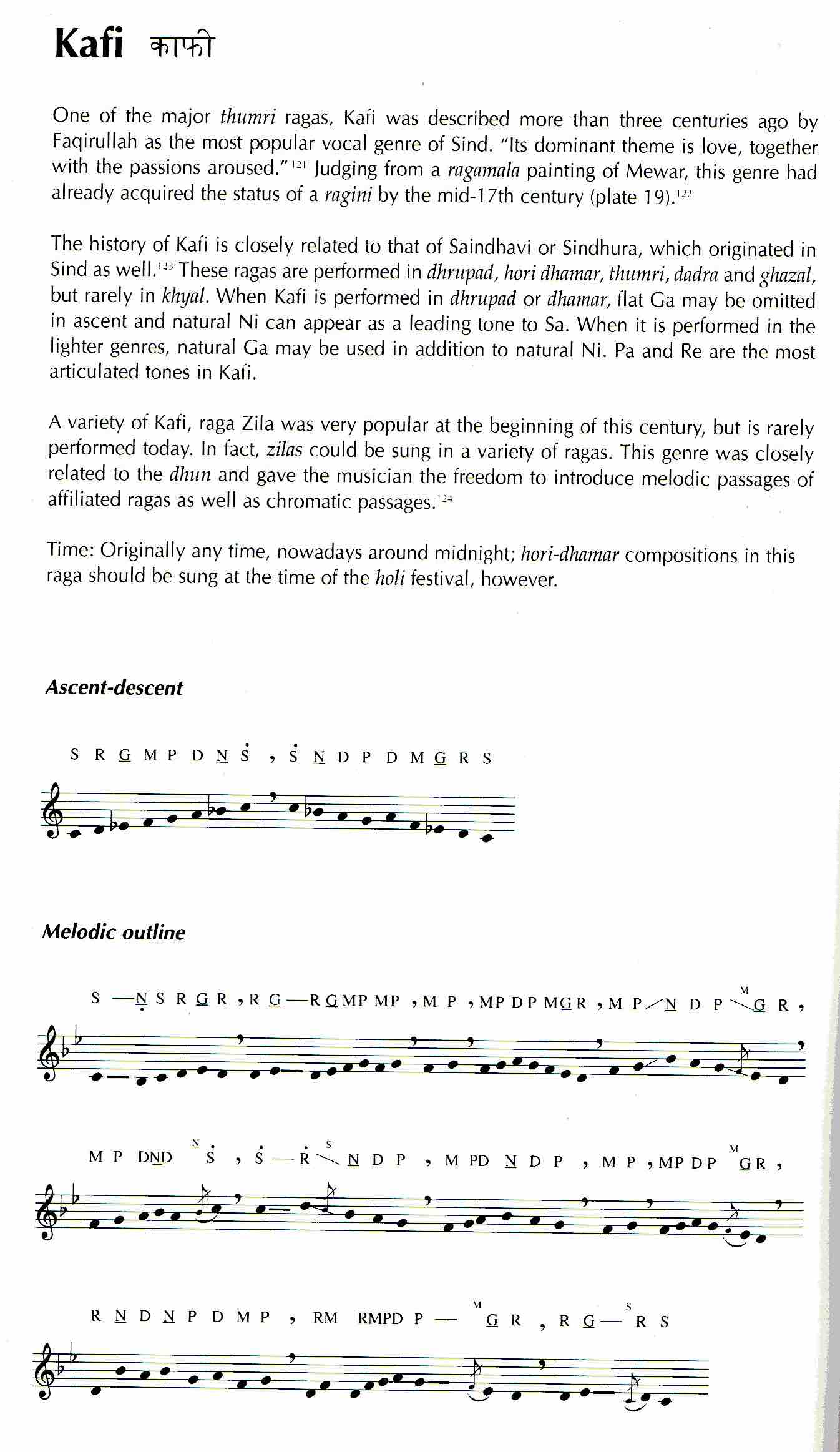
It’s an entrancing raga, for the second quarter of the night. Within its basic minor scale with flat 3rd and 7th, it sometimes features the major 3rd degree. Here’s the introduction to rāg Kafi in The raga guide:
The suave BBC announcer’s introduction (citing Alain Daniélou) remains etched in my heart:
Of shining whiteness,
Kafi, who inspires lust,
tenderly sits on the lap of her playmate in the royal palace.
Fond of parrots, she is dressed in blue
and decked with jewels.
She is the image of sensuousness.
In the Lotus of my heart
I cherish her,
lovelier than Lakshmi
the goddess of Fortune.
Of course, as with Bach, I’m just reporting my own infatuation, which is merely a product of a particular place, social milieu, and time—far from the responses of indigenous audiences of various types.
Here’s one of several exquisite versions by Nikhil Banerjee, with Anindo Chaterjee on tabla:
And here he explores Mishra Kafi for over an hour:
Here’s a relatively light, but always entrancing, vocal rendition by the Dagar brothers:
As I observed here, training in Indian sargamsolfeggio is a basic grounding in monophonic musics—far from a mere conceptual exercise, it draws us towards the heart of the music.
One of the few terms in yoofspeak not susceptible to HRT is LOL, never ascending.
OMG is curious: often intoned at a rather high constant pitch, like the first tone in Chinese—and (perhaps through the pervasive influence of Friends) drawn out dramatically: O——M——G…
Another recent entry in the lexicon of tonal variety is that weird announcing thing the female presenters of Strictly do, in mantric unison:
THE JUDGES…
Chanted hypnotically, this time at a rather constant mid-range pitch, it might sound merely jaded, but has been magically rescued from its previous function of expressing sullen apathy to suggest instead some awesome process, divinely decreed. Again, this may be related to gender.
Of course, there’s a wealth of academic discussion about the importance of the semantics of stress and pitch in English. Here’s just one stimulating example, with some inter-cultural comparisons.
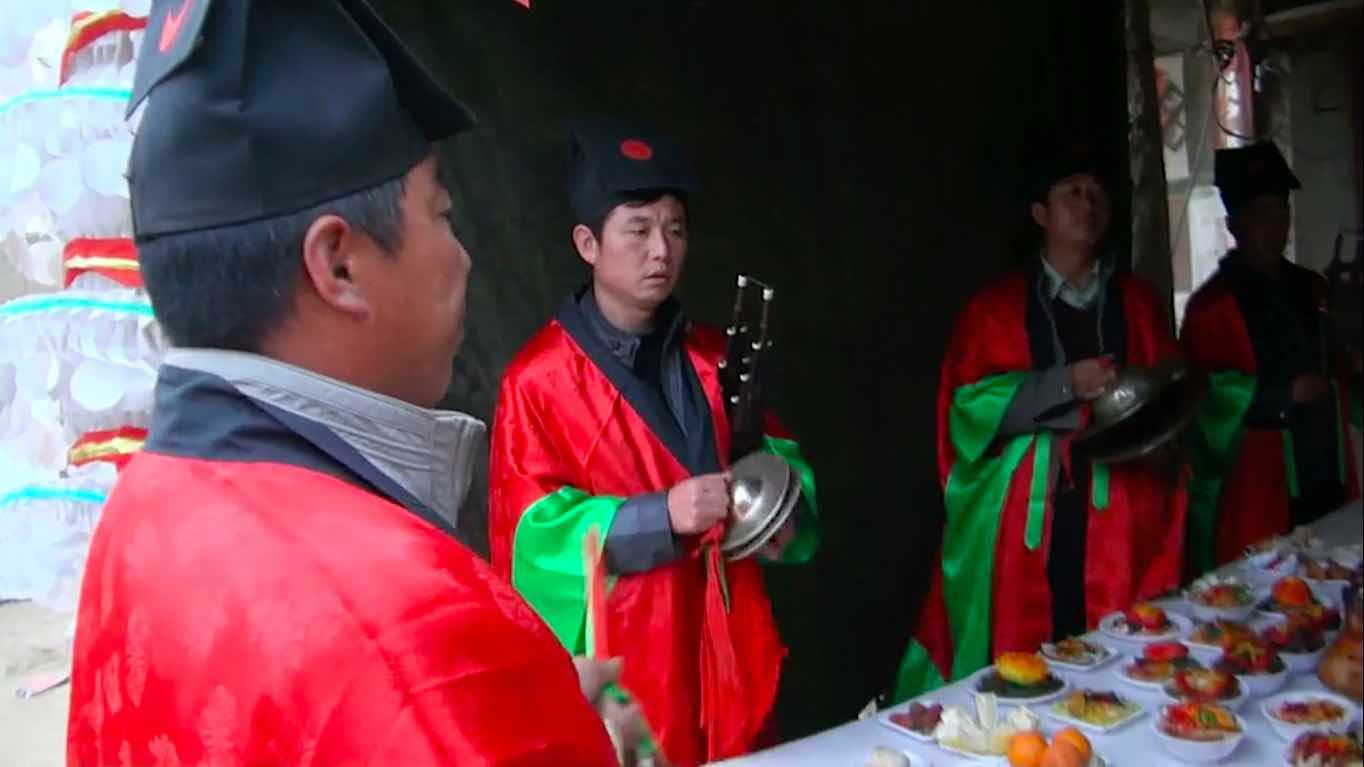
Meanwhile, back at Chinese ritual, unlike choral hymns (easily notated, with fixed pitches and tempo), the performance of shuowen solo chanted introits in Chinese ritual doesn’t necessarily attract much musical analysis (or transcription). But again, if we seek to learn how to be a Daoist, we need to pay attention to their rendition—not spoken but parlando, rather fast and high, each phrase descending. Listen again to the way Golden Noble sings this introit at the soul hall before the Invitation procession (my film, from 58.14):
May the deceased souls come to the Bathing Hall, Transforming their shape and countenance to return to the immortal realm. Now dipping into the bowl to bathe their bodies, For an audience with the Three Treasures on the way to the Western Quarter.
Further to my remarks on the illusion of “becoming at one with the masses”, I’m always struck by the irony of hanging out with Chinese peasants whose whole life-experience and world-view are totally different from my own. That’s commonly the kind of thing that ethnographers do, of course.
“Stranger value” would be most unlikely to butter any parsnips if a middle-aged English academic were to descend on a bunch of Newcastle punks (cf. my post on vocabulary). They would quite rightly tell me to get lost—although possibly not in those precise words. Chinese peasants are more hospitable.
A trumpeter has enjoyed a convivial night out after a gig. Staggering back to his hotel in the small hours, he manages to recall that the band has an early flight, so (congratulating himself on his clear-headed practicality) he walks unsteadily up to the receptionist and asks her in suave yet slurred tones,
“I say, would you be so kind as to book me an alarm call for 6.30?”
“Certainly sir,” she replies. As he staggers off she calls after him,
“Um—you do know it’s 6.45?”
And one about another trumpeter:
After a gig in New York, he’s fast asleep when the phone rings.
A jaded voice drawls,
“Did you book a wake-up call?”
“Oh, um… yeah.”
“Have you had it yet?”
“Er… No.”
“Well, WAKE UP.”
Cf.
The early bird gets the worm. But the second mouse gets the cheese.
Following my naïve reflections on the general plan for filming, here are a few hallowed film techniques that Get my Goat:
1) The Ken Burns effect. Don’t get me wrong, his series on jazz is like (sorry) the greatest documentary series ever??? But zooming in slowly to focus on the eyes of a photo is such an insistent habit—bludgeoning the viewer into sharing a profound experience of which the object is innocent.
My brilliant editor Michele Banal (or Michele trivial as he is now known) has educated me in the value of movement in showing photos, but he’s obligingly worked round my wish to keep it subtle and avoid such sentimentalizing.
2) Closeups of hands. In a similar vein, lingering shots of the interviewee’s hands are to be avoided. It may be a desperate measure to paper over a dodgy edit, but again it corrals us all into a conspiracy of profundity. Gnarled, clasped in anguish, elegantly manicured, or not, they’re just hands.
3) Slow-mo. I mean, what’s the point? Sure, used subtly it can sometimes be a useful way round a dodgy bit of filming, but why would we want to see people doing stuff at the wrong speed?
3) Filming while moving backwards as the subject walks towards you. It’s a cliché of many movies, often satirized in the standard corridor scene. Watching most dramas I am quite able to suspend my disbelief, but here I keep thinking, “Hey, how can they not have noticed that there’s this film crew moving backwards in front of them?”
No less irritating is the documentary presenter walking into shot, addressing some earnest words to camera, and then floating off again reflectively. Again, this is well satirized.
I’m sure many authors have seen their finely-crafted prose befall a similar fate, but a crazy garbled version of the vimeo blurb for my film that I found online, if not entirely accurate, is very funny.
Apart from dubbing my fine editor “Michele trivial”, gems include
This movie intimate portrait explores the lifetime of the eighth technology Taoist Li Manshan (b.1946) household, chief of a gaggle of formality specialists within the poor countryside of Yanggao County.
On syntax, in cases like these it can be tricky to surmise whether the opening adjective should apply to the first noun or to the following adjectival noun–noun pair. Some may be clarified by means of a judiciously-placed hyphen, but that would spoil the fun:
Welcome to our theme café, Sir and Madam, I’m Fido, your racist dog waiter for this evening, and I’ll be whistling your favourite racist ditties for you to sing along to—specials on the board, and a fine selection of craft rightwing beers. (Did you just see that Pekinese? I dunno, they come over ‘ere… Woof! LOL—What am I like?) Perhaps I can warm you up by warbling The Stammering Coon.
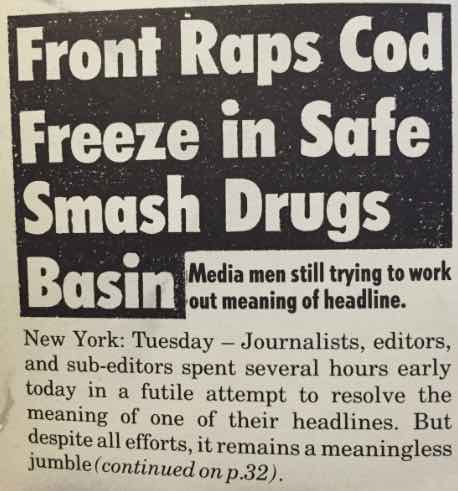
This almost leads us towards silly headlines (rounded up here):
Squad Helps Dog Bite Victim
Prostitutes Appeal To Pope
British Left Waffles On Falklands
And this, from Terry Jones and Michael Palin, no less:
Some punctuation might help here:
And a related case, under “Document design matters” on Twitter:
As I browse the back catalogue of Rusty Debris, I find Rich Hall makes an engaging guide for my latent dilettante interest in Country. He’s also a fine Tweety-baiter, of course, such as this. And his BBC4 film is both instructive and hilarious:
Country may often seem banal to us poncey liberal elite—although we’re on thin ice if we’re going to laugh at the outfits. But like flamenco, or tango (or, come to think of it, almost any genre worth its salt), beyond the cosy domestic image it’s about pain, and poor suffering Hugh Manity.
In time the industry managed to cash in on the outlaw image (at first latent, later a badge of honour) that came to supplement the homely veneer—embodied in The Highwaymen and the great Johnny Cash. And so on to Willie Nelson (“Then one day, thankfully, his house caught fire”).
Rich’s comments on Tom Hiddleston’s ill-advised Hank Williams biopic I saw the light are priceless. He also manages to give short shrift to John Travolta, Taylor Swift, and even Bono.
Like a gen-u-ine ethnomusicologist, he notes the diverse ethnic origins of Country, its local distinctiveness, migration, and patronage. Again, there are some fine taxonomies here. He notes the shift from Nashville to Austin, and the Cosmic Cowboy collision of redneck and hippy. And wow, there’s some hot fiddling.
There are also some nice details on changing instrumental technique—a trademark of the best discussions of music—like “He [Chuck Berry Junior, not the Chuck Berry, R.I.P.!] told him [Waylon ] to replace the top E string with a banjo string to bend it easier, and to shave down the frets on his guitar to get a lower action.”
The secret is to replicate, not to regurgitate.
This quote from the online blurb could be an encapsulation of ethnomusicology:
As he unearths the roots and inner workings of country music, Rich finds it’s more than just music—it’s a lifestyle.
There are loads of wonderful documentaries on such topics, avoiding hagiography while evincing proper respect—but where are all the programmes about shawm bands or Daoists, eh?
Update: Ken Burns now has a major series Country music (cf. his Jazz series), its eight parts now being shown in abbreviated form on BBC4. Just the opening programme, on the early history of Country to 1933, is an aural and visual feast. For more, see here.




:format(jpeg):mode_rgb():quality(40)/discogs-images/A-843647-1270908146.jpeg.jpg)





















 Stephen Jones: a blog