My bold recording of Bach on erhu reminds me of two casual, worrying, yet entertaining reviews from the early 1990s—suggesting that Berlioz‘s failure to appreciate the beauties of world music hasn’t been erased.
First, a blurb for a festival of new Chinese music on BBC Radio 3:
New music for old instruments—such as the er-hu and the gu-quin [sic] (Chinese for “finger-nail-down-the-blackboard” and “moggie-in-the-mangle”), Marvellous ear-scouring stuff.
billed as a celebration of the epic tradition in Serbian poetry and a homage to Dr Radovan Karadzic, described in the subtitles as “poet and psychiatrist”. Many of those who heard Dr Karadzic explaining on Monday morning that Serbian forces were not casually shelling Sarajevo for the hell of it but responding to Muslim artillery fire would have added “mass-murderer” to the list of his qualifications.
[…]
It undermined the Serbian case more effectively than a dozen polemics. Karadzic was shown to be a rambling, inconsistent, sentimental bouffanted crook. His countrymen came over as a gang of brutal yokels with a cultural life marginally richer than that of Neanderthal man. Their favourite musical instrument is a single-string violin, which they scratch interminably while boasting tunelessly about their achievements against the Turks. After they have wiped out the Bosnian Muslims they will doubtless apply for a grant from the BC Cultural Harmonization Fund to put a second string on their wretched instruments.
However well-meaning and colorful the review may be, it’s just as about as racist as the mindset it criticizes; one might wish for a more thorough ethnography. But I digress. Doubtless the gusle singers are heartfelt, but perhaps the best thing that can be said for my erhu performance is that it doesn’t legimitize genocide. So much for music as the universal language of peace and love.
It makes a fine addition to the variety of posts grouped under the trumpet tag
And the timpani part, like the snare-drum in Nielsen 5, is another that I have earmarked to be played by Li Manshan…
See also my post on Hašek (and for yet more, including more Švejk, the Czech tag).
Tom Service always makes a good guide (and do watch his link to Jakub Hrůša’s musical tour of Brno).
This is music that Janáček wanted ideally to be played by a military band like the one he’d heard a few years prior to the composition of Sinfonietta, and whose music he wrote down in the composing notebook he took everywhere with him. If you had to perform the Sinfonietta without a military ensemble, Janáček said (as it almost always is in concert halls these days), make sure the brass players sound as rough, brash, and bright as an army band.
[…]
On one hand, the jump-cuts and juxtapositions of Janáček’s music, the way he repeats little cells of music and then without warning moves to a new idea, means that you experience a continuous sense of surprise and suspense when you hear this piece. That kind of cinematic editing and shuffling of musical time seems to be the opposite of the conventional symphonic principle, substituting a logic of surreal colours, unpredictable textures and even less predictable timing for the development, argument, and discourse of proper symphonic behaviour.
There’s a host of spectacular recordings of the Sinfonietta. Since Charles Mackerras was a great champion of Janáček’s music, I was going to suggest his version (not least to remind you his wonderful anagram, Slasher M. Earcrack); but for some historical depth how about this one, with Czech performers—just after the war and Communist takeover, as musicians and audiences must have been anxiously awaiting life-changing measures wrought by their new leaders:
And here’s a 1961 recording with Karel Ančerl, who had survived Terezin and Auschwitz:
The Sinfonietta makes a glorious prelude to exploring the riches of Janáček’s music—operas, chamber music, and so on.
* * *
Please excuse me for returning to folk music, but it was a major inspiration for composers throughout central and east Europe, like Bartók. Along with pioneers like František Sušil and František Bartoš, Janáček collected Moravian folk culture keenly, long before Kundera dissected the way it was distorted under Communist rule.
Janáček collecting folksongs on 19th August 1906 in Strání.
As well as my overview of musical cultures of east Europe I introduced Polish folk music here; Czech and Slovak traditions are projects for another time. Many of those features that Service notes—the use of cells, jump-cuts, shuffling—must relate to Janáček’s background exploring the rhythms and textures of peasant life.
Again, the Rough Guide to world music makes a starting point, under “Czech and Slovak republics”. Janáček’s own recordings have been reissued on the CD
The oldest recordings of folk-singing from Moravia and Slovakia, 1909–1912 (Gnosis, Brno).
See also
Barbara Krader, “Bohemia, Moravia, and Slovakia”, in Helen Myers (ed.), Ethnomusicology: historical and regional studies, pp.178–85
and
Magda Ferl Zelinská and Edward J.P. O’Connor, “Czech Republic and Slovakia”, in The Garland encylopedia of world music, vol.8: Europe.
Struggling to encompass all this? I know I am. While we inevitably specialize in particular topics, it’s important to build bridges. I guess it’s that time of year when another guide to my diverse posts may come in handy—this is worth reading in conjunction with the homepage and my roundup this time last year.
I’ve added more entries to many of the sidebar categories and tags mentioned in that summary. I’ve now subheaded many of the categories; it’d be useful for the tags too, but it seems I can’t do that on my current WP plan. Of course, many of these headings overlap—fruitfully.
To accompany the visit of the Zhihua temple group to the British Museum in April, I also did a roundup of sources on the temple in the wider context of ritual in Beijing and further afield, including several posts on this site.
I’ve posted some more introductions to Local ritual, including
The WAM category (also with subheads!) also continues to grow, including more Proms; chinoiserie (Berlioz, as well as Ravel and Mahler, who have their own tags); and early music. Coverage of the infinite wonders of Bach continues, such as this. Try also this Haydn trio (part of a series on reception history). The humour subhead includes gems like The Mary Celeste. See also under conducting
I’ve given basic subheads to the language category (note this post on censorship), which also contains much drôlerie in both English and Chinese. Issues with speech and fluency (see stammering tag) continue to concern me, such as
More favourites may be found in the *MUST READ* category. Among other drôlerie, try this updated post, one of several on indexing and taxonomy; and more from the great Philomena Cunk.
Most satisfying is this collection of great songs—still not as eclectic as it might become:
collected and published by László Vikár (1929–2017) and linguist Gábor Bereczki. The set documents musical traditions of peoples in the “autonomous” republics around the eastern perimeter of the European part of the USSR, the central Volga and Urals—peoples about whom I know nothing, but feel we should know:
Mordvinians, Votyaks (Udmurt), Cheremis (Mari), and the Turkic-speaking Chuvash, Tatars, and Bashkirs.
Source: reddit.com.
Between 1958 and 1979 Vikár and Bereczki made four long summer fieldtrips to some 286 villages, accompanied by local scholars. With sound engineer Pál Sztanó they recorded life-cycle and calendrical items, both vocal and instrumental, including bridal dirges, funeral laments, dance tunes, and historical epics.
The recordings on this box set are part of a much larger archive. Some tracks appear on YouTube, such as
The 43-page booklet contains detailed notes, as well as maps, translations, photos, and some transcriptions.
A page from the booklet, on Mari singing.
Bartók, Kodály, and Bence Szabolcsi had already shown an interest in these groups, mainly as part of their comparative musical paleography, classifying melodic types; Vikár was building on this tradition. [2]
Such early recordings were made on request, not—as ethnographers later also sought—while documenting the social events of which they are the core. So we meet the typical issue that often crops up in Chinese collections: were they performing items then still in use, or recalling them from an earlier social practice?
And of course these projects could barely hint at the painful recent histories of such peoples (cf. The whisperers). Music is never autonomous, but gives us a window into the study of changing local societies.
Indeed, it’s worth recalling what else was happening in those years. Notwithstanding the interest of early east European music scholars in “archaic layers”, these are not timeless idyllic communities; though by the 1970s they had weathered the worst of the years of repression under Stalin, they had been constantly starved, deported, subject to political whims, suffering under collectivization and the Great Purge (cf. Blind minstrels of Ukraine, under “Other minorities”). This too is a rich field of research—see e.g.
Andrej Kotljarchuk and Olle Sundström (eds.), Ethnic and religious minorities in Stalin’s Soviet Union: new dimensions of research (2017), in particular ch.6 by Eva Toulouze, “A long great ethnic terror in the Volga region: a war before the war”.
The task of modern ethnographers—just as for China—is to integrate socio-political histories with expressive cultures. In 1975 the moment had still not come to record the memoirs of “pagan” Mr Musztafa—and now it’s too late.
In addition to the Garland encyclopedia of world music, for more on early collecting, see under
Margarita Mazo, “Russia, the USSR and the Baltic states”, in Ethnomusicology: historical and regional studies (The New Grove handbooks in music, 1993), pp.197–211,
and in the same volume,
Theodore Levin, “Western central Asia and the Caucasus”, pp.300–305.
In the early years after the crushing of the 1956 Budapest uprising, one might wonder how smooth was the collaboration between Hungarian and Soviet scholars—only of course both would have suffered under the policies of their regimes.
* * *
Left to right: Yang Yinliu, Bence Szabolcsi, Li Yuanqing, Beijing 1955.
Meanwhile in China, scholars were also documenting local traditions, for both the Han majority and the many ethnic groups—under testing conditions, and with a similar caution in broaching socio-political issues. By the 1950s, with a growing interest in early connections between Hungarian and Chinese musics, China was open to Hungarian musicology; Bence Szabolcsi visited the great Yang Yinliu in Beijing in 1955, on the eve of the Budapest uprising. And Yang Yinliu visited the USSR in 1957, just after his remarkable fieldtrip to Hunan—just before the Anti-Rightist campaign and Great Leap Backward led to untold suffering.
Yang Yinliu (seated, right) on a visit to the USSR, 1957.
For Czech–Chinese exchanges over the period, see here.
Kodály’s Folk music of Hungary, dating from 1935, was published in 1964 in a Chinese translation from the 1956 German edition—just as a brief lull after the Leap was destroyed by the Four Cleanups and Cultural Revolution.
In east Europe, the USSR, and Maoist China, the enthusiasm of ethnographic collectors of the day is admirable—even as their leaders were imprisoning them and manipulating the peoples they were studying. As William Noll observes, such studies need both to be interpreted in their historical framework and updated constantly, both by augmenting the earlier material and by documenting more recent change. Also in that post, note Noll’s comment that ethnographers of one cultural heritage commonly conduct fieldwork among peoples of a different cultural heritage—even if both groups live within the political boundaries of one state.
Left: Tibetan monks lay down their arms, 1959 (AFP/Getty.). Right: Norbulingka, Lhasa 1966 (from Forbidden memory—essential reading).
A flagrant instance of circumspection is fieldwork by Chinese musicologists in Tibet in the 1950s, rosily portraying the region (like Xinjiang) as a happy land of singing and dancing—even in 1956 Lhasa, just as mass rebellions were breaking out all over Tibet against Chinese occupation. Two of the most distinguished, and well-meaning, Chinese scholars resumed their fieldwork upon the 1980s’ reforms, encouraging their Tibetan pupils; but the whole social-political backdrop remained taboo (see Labrang 1). See also Recent posts on Tibet.
Expressive culture is an illuminating window on society. How little we know about the world…
[1] The term Finno-Ugric seems somewhat dated, but see here for a more extensive list of peoples.
[2] An early curiosity among the ouevre of the great Bruno Nettl is his slim tome Cheremis musical styles(1960), part of a Cheremis project at Indiana. The Preface by Thomas Sebeok has a useful summary of interest among Hungarian and other scholars. But written from a distance, the monograph could still only be narrowly musical—free of ethnomusicology’s later concern for society and culture, in which Nettl has played such a major role; and the material that he assembles consists largely of transcriptions rather than recordings.
For Chuvash and Mordvins, note also the 1996 Auvidis CD Chants de la Volga: musique traditionnelle de Tchouvachie et Mordovie.
Having written about the ill-fated blind minstrels of Ukraine, here I’d like to outline the importance of the varied soundscapes around east Europe (a region I’ve also touched in several posts). Also, changing expressive cultures there—besides their intrinsic fascination—suggest useful perspectives for our studies of China.
This may be Old Hat for World Music fans, but perhaps less so for China-watchers or scholars of Asian ritual. Here I’ll offer a mere smattering of reading and audio-visual material.
As in China, sandwiched between the timeless ancient and recent turbo-rock images of the whole region are the elusive fates of local cultures during the state socialist era. Parallel with the official state ensembles, folk traditions were not entirely dormant (a major theme of mine for China; for the spectrum, see e.g. here and here); and fieldwork and research continued, despite political obstacles. These traditions are not so much national as regional, indeed local; subcultures cross boundaries.
And they are not timeless reified commodities to be preserved, but ever-evolving amidst complex social change. Changing political boundaries, and mutual borrowings, belie ongoing nationalist agendas—another reminder of the fantastic and enduring diversity of European cultures (see e.g. Iberia tag for flamenco and fado). Tensions are apparent between local values and official images—and latterly the World Music scene.
Life-cycle rituals, notably weddings, remain a major context. But as the image of the unspoilt rural idyll recedes, turbo-folk tends to dominate. Weddings have become a focus of modernisation; secular festivals, no longer manipulated by the Party state, also come to the fore. Yet changes in rural life also remain a lively topic. There’s never a simple progression from unspoilt rural traditions through kitsch state ensembles to turbo-rock.
Both vocal and instrumental genres are remarkable. Older instruments haven’t entirely been replaced, such as gadulka and gusle fiddles, kaval end-blown flute, zurna shawm, gaida bagpipe.
For an introduction to the different early post-war histories of the whole region, see
Anne Applebaum, Iron curtain: the crushing of Eastern Europe 1944–1956.
* * *
Fieldwork on east European traditions began still before the explorations of Béla Bartók, Zoltán Kodály, and Constantin Brăiloiu, but they make a convenient starting-point. Their interests extended far beyond the borders of Hungary and Romania—indeed, Bartók made fieldtrips as far afield as Turkey and north Africa.
We can admire Brăiloiu’s 1933–43 recordings on this remarkable CD:
For convenient collections of articles, see
Béla Bartók, Essays (1976)
Zoltán Kodály, Folk music of Hungary (1960/1982—translation revised by Laurence Picken, who maintained a lively correspondence with east European musicologists!)
Constantin Brăiloiu, Problems of ethnomusicology (1984).
Still, their work belongs towards the “music” end of the music—culture spectrum, and later under the Communist era, social and political analysis was discouraged from developing. On the one hand, the early fieldworkers are laudable for making trips long before the formal discipline of ethnomusicology; on the other, under state socialism the scholars were laudable for attempting to pursue ethnographic principles under political pressures. Later the whole region became one of the most lively topics of the European Seminar in Ethnomusicology (ESEM).
As Carol Silverman observes about the Roma,
Early folk music studies focus on aesthetics and creativity rather than on power differentials; they were primarily about the culture within folk groups, not about domination, resistance, and conflict among groups.
Indeed, there are varied ways to study the topic, from popular to scholarly. We might start with the articles in the Rough Guide to world musicand Songlines magazine, where east Europe is well covered, thanks largely to the enthusiasm of their editor Simon Broughton. Apart from the recent glossy World Music stars, it also features local traditions and archive recordings (mostly listed at the start of the discographies).
Among more scholarly studies, note relevant chapters in
Timothy Rice and James Porter (eds.),The Garland encyclopedia of world music, vol.8: Europe (2000).
For many further refs. at the traditional end of the spectrum, showing the energy of early collecting and recording, see
Barbara Krader and Bálint Sarosi, “Southern and eastern Europe”, in Ethnomusicology: historical and regional studies (The New Grove handbooks in music, 1993), pp.160–96,
and in the same volume, updating the story, relevant sections of
James Porter, “Europe”, pp.215–39.
Chapters in
Mark Slobin (ed.), Retuning culture: musical changes in central and eastern Europe (1996)
suggest Chinese parallels in the adjustment following the demise of state socialism. Of course, while the early 1990s were a time of pivotal significance, the scene has continues to change since then. I cited a couple of salient general points from Retuning culturehere.
In all these regions, educated urban “roots” movements have become an aspect of the revival since the fall of Communism. In Retuning culture Judit Frigyesi describes this for Hungary, whereas in the following chapter Barbara Rose Lange discusses the reaction against it in the form of lakodalmas rock—resembling similar tensions in China.
At the same time, as Timothy Garton Ash comments in a review of Witold Szablowski’s Dancing Bears,
There is a long tradition, stretching back to the Enlightenment, of western Europeans and North Americans orientalising eastern Europe, as Voltaire did with Russia and Rousseau did with Poland. What is unusual about Szablowski is that he is orientalising his own region.
Another constant theme is ritual, along with religion—which persisted in various ways under state socialism. I won’t attempt to cover Polish, Czech, or Slovak traditions here, though they too are a rich topic, with a wealth of material (e.g. Folk traditions of Poland; Madonna pilgrimage in Communist Poland; Moravia; and for Polish jazz, here). And note Michael Beckerman’s chapter in Retuning culture on Milan Kundera’s brilliant dissection of culture clash in The joke.
But despite the glossy stars of the World Music scene, it’s not all about them: they are just the tip of the iceberg of changing social life (cf. my flamenco series). That’s far from saying that folk traditions are anonymous—on the contrary, personalities are always important, and locally there are always hierarchies and admired performers.
Under state socialism, in the wake of the tradition of Bartók, Kodaly, and Brăiloiu, fieldwork on regional traditions was avidly pursued. Before and after 1989 I returned from concerts in Budapest with suitcases full of box-sets of LPs from the Hungaroton label, founded in 1951.
There’s also a wealth of material on film and online. Gigs are all very well; feature films (see below) are more revealing; ethnographic documentaries are fewer (if only the BBC films of Simon Broughton were available now).
Hungary, Transylvania, Romania Here—by contrast with the brass-band sound that has come to dominate the Balkans—string bands are still plentiful, surviving notably in Transylvania, source of much of the inspiration for Hungarian folk music studies ever since Bartok’s fieldwork.
The combo of primas fiddle, kontra viola, and bass is enchanting (for this and other world fiddle traditions, click here). Foremost among many recordings with a more traditional brief is a series of fine box sets from Hungaroton, followed by the Fono label, including their Final hour/ Új Pátria series.
Unearthing Transylvanian bands has long been at the heart of the projects of the enterprising Budapest-based concert band Muzsikáswith the wonderful singerMárta Sebestyén, and of the Budapest táncház (“dance house”) scene (for which see e.g. Jávorszky Béla Szilárd, The story of Hungarian folk, 2015, and an introduction in Songlines #112). But the fortunes of most such rural bands remained based in the lives of their local communities.
Here Muzsikás accompany the master fiddler Sandor “Neti” Fodor (1922–2004):
Still in Romania, the Rough Guide introduces many distinctive traditions, such as those of Maramureș and Moldavia. The Csángó people of Gyimes are famed for the duo of fiddle with gardon slapped bass (see here, and here)—one of the best possible things to do with a cello (cf. furniture effects and marriage guidance counselling on the bass, and viola jokes).
Jacques Bouët, Bernard Lortat-Jacob, and Speranţa Rădulescu, A tue-tête: chant et violon au pays de l’Oach, Roumanie (2002, with DVD),
a detailed ethnography of social musicking in the Oaș region, including musical analyses.
From Clejani near Bucharest, Taraf de Haïdouks were plucked up into the World Music scene; indeed, they are the source of my favourite quote about such success. Speranţa Rădulescu had recorded them from 1983, and introduced fellow-ethnomusicologist Laurent Aubert to them in 1986. Later, taken up by the likes of Johnny Depp, they toured with the Kronos quartet (“Californian pointy-heads” apud Cartwright, Princes amongst men, pp.196–7—actually a telling vignette on the different aesthetics of folk and art musicians).
But with the goals of ethnomusicologists and World Music promoters not always in tandem, such collaborations may not unfold smoothly. The World Music scene not only propels certain bands to fame, but may engender rival clones, misunderstandings, and lawsuits.
Retuning culture has a fascinating article
Steluta Popa, “The Romanian revolution of December 1989 and its reflection in musical folklore”,
documenting songs just as they were being composed—if only we could hear them too. But we can hear, from Latcho Drom (see below), the “Ballad of the dictator” by the late great Nicolae Neacșu (of Taraf de Haïdouks)—including my very favorite fiddle technique, evoking anguish, earthquake, or perhaps the creaking door that precedes “The master is not at home” in a Hammer Horror movie (perhaps not so suitable in the Mahler Adagietto, but who knows):
Green leaves, flowers of the fields, What are the people doing? They’re taking to the streets, yelling and crying “Freedom!” Green leaves, flowers of the fields, What are the students doing? They’re marching on Bucharest, yelling and crying “Sweep away the dictatorship.” Green leaves, a million green leaves on this 22nd day Here, the time for life has returned, to live in freedom Green leaves, flowers of the fields, There in Timisoara people are taking to the streets, yelling “It’s all over for the tyrant!” What are the men doing? They’re taking out their guns. They’re shooting at people. Ceaucescu hears them: “Tyrant, you have destroyed Romania.”
Roma Beyond all the traumas of warfare and occupation, these are regions where countless Jewish and Roma peoples were deported and murdered in the mid-20th century, transforming the cultural landscape. In addition to its articles by country, The Rough Guide has a section on the trendy tag of Gypsy music—indeed, casting the net as wide as Rajasthan, Turkey, Russia, Spain, France, and Britain.
The fortunes of Roma peoples in various nations are tellingly described in
Isobel Fonseca, Bury me standing (1995),
and turning to music, another most accessible book is
Garth Cartwright, Princes amongst men [sic]: journeys with Gypsy musicians (2005),
with vignettes from Serbia, Macedonia, Romania, and Bulgaria. Though based on interviews with the stars, it makes a lively and well-observed read, a popular introduction not only to the scene at the time of his visits but also to the state socialist background. See his playlist here.
The transgressive lifestyle of the Roma, Exotic Other “deviating from behavioural norms”, has long made an irresistible commercial proposition, as gleefully evoked in many popular feature films (Cartwright, pp.306–8 gives a useful list), such as those of Emil Kusturica like Time of the Gypsies (1989), Underground (1995), and Black cat, white cat (1998), or—more acceptably to the Roma community—Tony Gatlif, including Latcho Drom (1993), travelling from Rajasthan, Egypt, and Turkey to Romania, Hungary, Slovakia, France, and Spain; and Gadjo dilo (1997)—sorry, the English-subtitled version has disappeared from YouTube, so we’ll just have to practise our Hungarian (Yeah, right), here:
An impressive early film was I even met happy Gypsies (Aleksandar Petrović, 1967).
The Balkans Here the scars of the war following the breakup of Yugoslavia are constantly on display. Brass bands have come to dominate the soundscape, the Guča festival making a heady showcase. Among the stars are Boban and Marko Marković (Serbia), the Kočaniorkestar (Macedonia), and Fanfare Ciocârlia (from Zece Prăjini in Moldavia, Romania). While high-octane numbers dominate, the slow ballads are also most affecting. Sorry, can’t find English subtitles for this 2002 documentary Iag bari/Brass on fire, so this time click here for some Swedish practice.
Modern brass bands have developed from groups led by zurna shawms with percussion, rather as Chinese shawm bands have added Western brass and pop music to their instrumentation since the 1980s.
The label “Balkan jazz” reminds me that I couldn’t resist describing the amazing Hua family shawm band as Chinese gypsies playing Ming-dynasty jazz; but accounts of both the social life of Balkan musos and the wildness of their playing do indeed suggest similarities.
In Bosnia–Herzegovina, apart from sevdalinka singing (sevdah resembling Romanian dor, as well as duende and saudade), Islamic soundscapes include kaside, ilahije, and zikr rituals—note the Smithsonian Folkways CD Bosnia: echoes from an endangered world.
Timothy Rice, May it fill your soul: experiencing Bulgarian music (1994, with CD)
Donna Buchanan, Performing democracy: Bulgarian music and musicians in transition (2006)
Carol Silverman, Romani routes: cultural politics and Balkan music in diaspora (2012, with companion website)
See also Silverman’s 2007 article on the changing wedding market, and chapters by Rice and Silverman in Retuning culture.
Silverman notes that Bulgaria had one of the most centralised forms of state socialism, Macedonia one of the least. But under both regimes the Roma—“powerless politically and powerful musically”—continued to play for non-Rom as well as Rom audiences at village and town events, such as weddings, birth celebrations, soldier send-off celebrations, circumcisions, and baptisms.
In the West, broad awareness of Bulgarian music began when “World Music” was just a twinkle in the promoter’s eye, with Le Mystère des Voix Bulgares. The original LP, released as early as 1975, was reissued more widely in 1986. After the collapse of state socialism they reinvented themselves with several reincarnations, with further albums following. They made rather more earthy recordings too, like this track from Bulgarian custom songs (1993):
Another early star of the World Music circuit was Ivo Papazov—subject of a fine article by Donna Buchanan in Retuning culture, and vignettes in Rice’s May it fill your soul. Reminding us again that musicking doesn’t necessarily take place in designated venues like concert halls, the wedding scene is important. But Buchanan unpacks the ethnic and cultural tensions. In summer 1989, 370,000 ethnic Turks and Muslims were deported. Buchanan also puts into context how Papazov was promoted abroad by Joe Boyd with the Hannibal albums Orpheus ascending (1989) and Balkanology (1991), soon launching him as a global touring star—just as the local economy was collapsing.
Weddings had been lucrative, and moreover musos prefer their ambience—as Ivo commented,
In truth, a wedding is equal to a dozen concerts. There a person can create… A great deal of music is introduced in a wedding, and in a concert you lack this thrill.
However, by the 1990s weddings lasted only one day: he was being nostalgic for the extravagance of the 1980s! He returned to recording with the great albums Fairground (2003) and Dance of the falcon (2008). Meanwhile the wedding scene in Bulgaria continues to change.
Whatever setting he plays in, his music is just intoxicating. Here’s one of several YouTube playlists, including some raw footage from local gigs also featuring other bands:
And a drôle quote from Frank Zappa, no less:
Ivo’s wedding music, played first thing in the morning, provides thorough and long-lasting attitude adjustment for the busy executive.
Though additive “limping” metres feature in much folk music around the region and further afield (notably Turkey), Bulgaria has been particularly associated with them.
In Macedonia, megastars (sic) are Esma Redžepova (e.g. here, and here; and a playlist:)
and sax player Ferus Mustafov, also featured by Cartwright.
But again, it’s not all about the stars of the World Music scene. At the same time, musical appraisals expand from local to global, which are often at variance. By contrast with both nostalgic romantics and World Music fans in search of the latest groove, the brash sounds of Bulgarian chalga and Romanian manele have become highly popular.
As Cartwright observes,
The difference between what the West’s world music industry sells as Gypsy music and what the Roma listen to back in the Balkans can be huge. Sure, in Serbia Šaban is king and across Macedonia Esma reigns. But this is akin to African Americans acknowledging James Brown and Aretha Franklin. Don’t mean they’re listening to them. And in Romania the breach seems wider than anywhere else. Fulgerica is respected but he’s no pop star while Fanfare Ciocârlia and Taraf de Haïdouks exist only for Western audiences. That they play superior Gypsy music, rooted in tradition, means nothing. The local Roma aren’t listening. What they want is Adrian. And Guța.
Meanwhile, as he notes, the Venezuelan soap opera Kasandra became wildly popular across the Balkans, giving Šaban Bajramović a huge hit in 1997.
Albanian cultures As a respite from the bombardment of turbo-folk, it’s good to return to a more traditional milieu. Again, ethnic Albanians occupy not just Albania but Kosovo and parts of Macedonia and northern Greece; the soundscape is highly regional, with Gheg culture in the north, Tosk and Lab further south.
The splendid A.L. Lloyd somehow issued a fine album as early as 1966:
Albanie: polyphonies vocales et instrumentales (notes here):
A substantial study is
Jane Sugarman, Engendering song: singing and subjectivity at Albanian Prespa weddings (1997, with CD).
Bards Again, the epics sung by bards, over a wide region of south Yugoslavia and Albanian communities, don’t neatly fit national or ethnic boundaries.
The classic study is
Albert Lord, The singer of tales (with CD-Rom; complete text here),
following the work of Milman Parry (for whose work with Bartók, click here). Most singers are accompanied by a one-string fiddle like the gusle, as in this celebrated 1935 clip of Avdo Međedović (c1875 – 1955) filmed by Lord:
And in case all this seems like a bygone world, click here for a 2018 Venice performance of a Kosovan bard.
* * *
Under all these unwieldy national rubrics, the diverse ethnic groups negotiate the changing times, interacting. As ever, this is far more than a “merely musical” topic, as such cultures are not just quaint ornaments, aural pashmina; they are windows on changing local societies, an essential part of what makes them click. As in China, it’s no use clinging onto a romantic idealisation of the past; and we should always delve beyond the World Music stars to musicking in local societies.
As ever, Bruno Nettl offers useful perspectives, as in his taxonomies for various types of change and responses to them.
The cultures of all these groups—before and during state socialism, and since— deserve detailed attention. And World Music fans may tend to favour modern commercial pop, but it’s important for ethnographers to include it in the picture too. Even in my work on Daoist funerals in China, I could hardly neglect the pop bands outside the gate (my film, from 30.32).
Both academic and popular accounts repay study: and both keep track of change. I wonder what Bartók would have made of all this—another of those fruitless debates like “Would Bach have used the ondes martenot?” or “Mozart would have written advertising jingles”…
To accompany a growing list of posts, I’ve now added a rough-and-ready tag Iron Curtain to the sidebar. For want of a more succinct handle, it includes posts on the region both before and since 1989.
Notably I include the “bloodlands” of Timothy Snyder’s book, a vast region not easily characterized. In my post on his book, I wonder what would it take for the region to be recognized as the physical and moral graveyard of the 20th century—shifting our balance from the Western to the Eastern Front.
The region where some 14 million people (mostly civilians) were killed from 1930 to 1945, largely east of the Molotov–Ribbentrop line, includes Poland, Ukraine, Belarus, and the Baltic states. Victims were Jews, Belarusians, Ukrainians, Poles, Russians, and Balts. And it was to the bloodlands that most Jewish victims from west and south Europe, Hungary, Romania, and so on, were transported to die. For the background, see The great siege of Przemyśl.
Growing up in post-war Britain, perhaps my ignorance isn’t so unusual—but it’s disturbing, and needs rectifying. As Anne Applebaum comments in her review,
If we are American, we think “the war” was something that started with Pearl Harbor in 1941 and ended with the atomic bomb in 1945. If we are British, we remember the Blitz of 1940 […] and the liberation of Belsen. If we are French, we remember Vichy and the Resistance. If we are Dutch we think of Anne Frank. Even if we are German we know only a part of the story.
My own belated awareness is partly prompted by my studies of the fates of Chinese people whom I’ve met in the course of fieldwork. Indeed, it’s worth re-reading Ian Johnson’s article “Who killed more, Hitler, Stalin or Mao?”, itself a companion to an article by Snyder.
I wonder what would it take for this vast region of the bloodlands to be recognised as the central physical and moral graveyard of the 20th century—shifting our balance from the Western to the Eastern Front. And as Snyder says, the mass killing of the 20th century is of the greatest moral significance for the 21st.
One might even begin by reading his brilliant “Conclusion: humanity”. And apart from reading static silent texts, there’s a wealth of documentary footage online—which you can choose to explore, or not.
Snyder corrects many widespread misconceptions [here I combine his text and Ascherson’s review]. The western public still tends to associate mass killing with “Nazi concentration camps” (cf. my posts on Ravensbrück and Sachsenhausen), and with Auschwitz in particular; and Stalin is thought to have killed far more people than the Nazis by consigning millions to the gulag. But neither assumption is accurate.
In the Soviet Union, although about a million men and women perished in the labour camps, 90% of gulag prisoners survived. Stalin’s great killing took place not in Siberia, but in the western Soviet republics, above all in 1930s’ Ukraine where at least four million people died in man-made famines and in the slaughter of the “kulak” peasantry.
In the Third Reich concentration camps, a million prisoners died miserable deaths during the Nazi period. US and British troops liberated some of those camps, but none of the major death camps, which were further east. And 10 million others who never entered any of the camps were shot (mostly Jews), deliberately starved to death (mostly Soviet prisoners of war), or gassed in special “killing centres” which were not holding camps at all. Auschwitz, terrible as it was, formed a sort of coda to the Jewish Holocaust. By the time the main gas chambers came on line in 1943, most of Europe’s Jewish victims were already dead. Some—Polish Jews especially—had been gassed in the three killing centres set up on Polish territory: Belzec, Sobibor and Treblinka.
So more common methods of killing than gassing were starvation and shooting. Most of those Jewish victims had been shot and pitched into mass graves by German Einsatzgruppen operating far to the east in Ukraine, the Baltics and Belarus, moving from village to village behind the front lines of war.
In a matter of a given few days in the second half of 1941, the Germans shot more Jews in the east than they had inmates in all of their concentration camps. […] The vast majority of Jews killed in the Holocaust never saw a concentration camp.
The American and British soldiers who liberated the dying inmates from camps in Germany believed that they had discovered the horrors of Nazism. The images their photographers and cameramen captured of the corpses and the living skeletons at Bergen–Belsen and Buchenwald seemed to convey the worst crimes of Hitler. As the Jews and Poles of Warsaw knew, and as Vasily Grossman and the Red Army knew, this was far from the truth. The worst was in the ruins of Warsaw, or the fields of Treblinka, or the marshes of Belarus, or the pits of Babi Yar.
Nor is it widely understood that Jews were fewer than 1% of the German population when Hitler came to power in 1933, and about one quarter of 1% by the beginning of World War Two. The great majority of murders of Jews took place in occupied Poland, Lithuania, Latvia, and the Soviet Union. The murder of 165,000 German Jews was a ghastly crime in and of itself, but […] fewer than 3% of the deaths of the Holocaust. The Nazis murdered about as many non-Jews as Jews during the war, chiefly by starving Soviet prisoners of war (over 3 million) and residents of besieged cities (over a million), or by shooting civilians in “reprisals” (nearly a million). And until 1939 Stalin, later credited with defeating Hitler (if not in British public opinion), had a still worse record of mass killings—of his own civilians, moreover. Until then, Soviet terror (against both class and national enemies) was not only far greater in scale, it was incomparably more lethal—and largely unnoticed. By the end of 1938, the USSR had killed about a thousand times more people on ethnic grounds than had Nazi Germany, and far more Jews.
Poland, fatally partitioned between Hitler and Stalin in 1939, suffered terribly—with Warsaw subjected to brutal successive destructions. In western Europe this period was known as “the phony war”: nothing seemed to be happening. But on 22nd June 1941 (“one of the most significant days in the history of Europe”) Operation Barbarossa, Hitler’s invasion of the USSR, while sealing the fate of the Reich, was a further disaster for the civilian inhabitants of the whole region. It was only with these incursions that Hitler’s territory came to include large numbers of Jews to be (literally) disposed of. And
As Hitler imagined the future, Germany would deal with the Slavs much as the North Americans had dealt with the Indians.
As to Ukraine, already decimated by Stalin,
Hitler dreamed of the endlessly fertile Ukrainian soil, assuming that Germans would extract more from the terrain than the Soviets.
The Germans implemented mass starvation in POW camps:
As many Soviet prisoners-of-war died on a single given day in autumn 1941 as did British and American prisoners of war over the entire course of the Second World War. The Germans shot, on a conservative estimate, half a million Soviet prisoners of war. By way of starvation or mistreatment during transit, they killed about 2.6 million more.
This had the effect of strengthening Soviet resistance; and while local populations had already suffered terribly under Soviet rule, many now wondered if it might be a lesser evil. Still, in desperation many Soviet citizens were recruited for duties with the German army and police.
Thus some of the survivors of one German killing policy became accomplices in another, as a war to destroy the Soviet Union became a war to murder the Jews.
In the first lands that German soldiers reached in Operation Barbarossa, they were the war’s second occupier. […] The double occupation, first Soviet, then German, made the experience of the inhabitants of these lands all the more complicated and dangerous. […] They had to deal with the consequences of their own previous commitments under one occupier when the next one came; or make choices under one occupation while anticipating another.
When the Germans conquered an area they often found that the NKVD had shot prisoners. In 1943 they seized on their discovery of the 1940 massacre by the NKVD of over 20,000 Polish officers and intelligentsia in the forests of Katyn. But on 29th–30th September 1941 near Kiev, the Germans had murdered 33,761 Jews at Babi Yar; between 100,000 and 150,000 people were killed there during the German occupation (see also Ukraine: Holocaust Ground Zero).
Katyn
Babi Yar
Local militias also took part in pogroms:
Political calculation and local suffering do not entirely explain the participation in these pogroms. Violence against Jews served to bring the Germans and elements of the local non-Jewish population closer together. Anger was directed, as the Germans wished, toward the Jews, rather than against collaborators with the Soviet regime as such. […] Violence against Jews also allowed local Estonians, Latvians, Lithuanians, Ukrainians, Belarusians, and Poles who had themselves collaborated with the Soviet regime to escape any such taint. Yet this psychic nazification would have been much more difficult without the palpable evidence of Soviet atrocities. The pogroms took place where the Soviets had recently arrived and where Soviet power was recently installed, where for the previous months Soviet organs of coercion had organized arrests, executions, and deportations. They were a joint production, a Nazi edition of a Soviet text.
Snyder details the fates of urban centres like Lviv, Łódź, Riga, Vilnius, and Minsk, giving background to Applebaum’s visits in Between East and West. By the end of the war, half the population of Belarus had either been killed or deported (see also Soviet lives at war).
Warsaw, 1944.
His story returns to Poland and the unimaginable final agony of Warsaw. As the Red Army advanced on Berlin, their revenge was horrific.
* * *
And thence to continuing sufferings after the formal end of war, with Germans now among the main victims of ethnic cleansing and transports (for an overview of the aftermath across Europe, see Keith Lowe, Savage continent). Through the war the Soviets had continued sending their own citizens to the Soviet gulag (not least the peoples of the Caucasus and Crimea; entire populations of Karachai, Kalmyks, Chechen, Ingush, Balkar, Tatar, Meshketian Turks, and so on, still less known in the West than the bloodlands), and in the post-war years deportations only increased.
As Stalin fabricated his own unblemished legend of the Soviet Union and its role in the war, belittling that of Soviet citizens in the Holocaust, he now engaged in his own anti-semitic purges. Although mass terror was no longer pursued after Stalin’s death, repression continued throughout the Soviet bloc, and the fates of the real victims were concealed.
The communists’ hesitation to distinguish and define Hitler’s major crime tended, as the decades passed, to confirm an aspect of Hitler’s worldview. […] Communist leaders, beginning with Stalin and continuing to the end, could rightly say that few people in the West appreciated the role of the Red Army in the defeat of the Wehrmacht, and the suffering that the peoples of eastern Europe endured under German occupation. […] During the Cold War, the natural response in the West was to emphasize the enormous suffering that Stalinism had brought to the citizens of the Soviet Union. This, too, was true; but like the Soviet accounts it was not the only truth, or the whole truth.
In his “Conclusion: Humanity”, Snyder explores the complexities of collaboration and victimhood—even now a pressing issue for all these traumatized nations. Most peoples suffered double or triple occupations, trapped helplessly between evil regimes, forced into agonizing dilemmas with a view to mere survival. In a telling passage, Snyder reflects on choices:
At a great distance in time, we can choose to compare the Nazi and Soviet systems, or not. The hundreds of millions of Europeans who were touched by both regimes did not have this luxury.
The comparisons between leaders and systems began the moment that Hitler came to power. From 1933 through 1945 hundreds of millions of Europeans had to weigh what they knew about National Socialism and Stalinism as they made the decisions that would, all too often, determine their fate. This was true of unemployed German workers in early 1933, who had to decide whether they would vote for social democrats, communists, or Nazis. It was true, at the same moment, of Ukrainian peasants, some of whom hoped for a German invasion that would rescue them from the plight. It held for European politicians of the second half of the 1930s, who had to decide whether or not to enter Stalin’s Popular Fronts. The dilemma was felt sharply in Warsaw in these years, as Polish diplomats sought to keep an equal distance between their powerful German and Soviet neighbors in the hope of avoiding war.
When both the Germans and the Soviets invaded Poland in 1939, Polish officers had to decide to whom they should surrender, and Polish Jews (and other Polish citizens besides) whether to flee to the other occupation zone. After Germany invaded the Soviet Union in 1941, some Soviet prisoners of war weighed the risks of collaboration with the Germans against the likelihood of starving to death in prisoner-of-war camps. Belarusian youth had to decide whether to join the Soviet Partisans or the German police—before they were press-ganged into one or the other. Jews in Minsk in 1942 had to choose between remaining in the ghetto or fleeing to the forest to seek Soviet partisans. Polish Home Army commanders in 1944 had to decide whether or not to try to liberate Warsaw for themselves, or to wait for the Soviets. Most survivors of the Ukrainian famine of 1933 later experienced German occupation; most survivors of the German starvation camps of 1941 returned to Stalin’s Soviet Union; most survivors of the Holocaust who remained in Europe also experienced communism.
These Europeans, who inhabited the crucial part of Europe at the crucial time, were condemned to compare. […] In the decades since Europe’s era of mass killing came to an end, much of the responsibility has been placed at the feet of “collaborators”. The classic example of collaboration is that of the Soviet citizens who served the Germans as policemen or guards during the Second World War, among whose duties was the killing of Jews. Almost none of these people collaborated for ideological reasons, and only a small minority had political motives of any discernible sort. […] In eastern Europe, it is hard to find political collaboration with the Germans that is not related to a previous experience of Soviet rule.
Snyder goes on:
In the 21st century, we see a second wave of aggressive wars with victim claims, in which leaders not only present their peoples as victims but make explicit reference to the mass murders of the 20th century. The human capacity for subjective victimhood is apparently limitless, and people who believe that they are victims can be motivated to perform acts of great violence.
And he reflects on the purpose of history, describing all kinds of later nationalist agendas, highly relevant today:
Our contemporary culture of commemoration takes for granted that memory prevents murder. […] Without history, the memories become private, which today means national; and the numbers become public, which is to say an instrument in the international competition for martyrdom.
Snyder’s detailed breakdown of figures is numbing (note also his Appendix “Numbers and terms”). [2]
In policies that were meant to kill civilians or prisoners of war, Nazi Germany murdered about ten million people in the bloodlands (and perhaps eleven million total), the Soviet Union under Stalin over four million in the bloodlands (and about six million total). If foreseeable deaths resulting from famine, ethnic cleansing, and long stays in camps are added, the Stalinist total rises to perhaps nine million and the Nazi to perhaps twelve. These larger numbers can never be precise, not least because millions of people who died as an indirect result of the Second World War were victims, in one way or another, of both systems.
But as he concludes, such statistics still have to be converted back into the stories of individuals: not the abstraction of 5.7 million Jewish dead, but 5.7 million timesone.
It is perhaps easier to think of 780,863 individual people at Treblinka: where the three at the end might be Tamara and Itta Willenburg, whose clothes clung together as they were gassed, and Ruth Dorfmann, who was able to cry with the man who cut her hair before she entered the gas chamber.
As the Jews of Minsk were liquidated in 1942,
The girls and boys knew what would happen to them if they were caught. They would ask for a tattered bit of dignity as they walked up the ramp to their death: “Please sirs,” they would say to the Germans, “do not hit us. We can get to the trucks on our own.”
* * *
Apart from providing us with essential basic education, such work, both detailed and humane, should inform our historiography generally—all the more with the current worldwide fomenting of ugly xenophobia. For Snyder on tyranny, click here.
For China, despite all the noble work on the famine and laogai camps, truth remains to be publicly told. In the official myth, the concession of Cultural Revolution “mistakes” conspires to sweep under the carpet the earlier successive terrors of land reform and campaigns throughout the 1950s, as well as long-term hunger. Even studies of expressive culture and ritual need to take all this into account.
[1] In such posts I mention the painful maintenance of expressive culture through times of trauma (and indeed the theme of the music of the camps is both macabre and inspiring), but here it seems unthinkable even to try and do so. It does, however, put into even starker perspective both regimes’ showcasing of Great Works of National Art directed by Great Conductors (see e.g. here). See also e.g. Institute of Musicology, University of Warsaw (ed.), Music traditions in totalitarian systems (Musicology Today, 2010).
[2] Statistics are always problematical. In China, as Ian Johnson observes, famine deaths alone over a mere four years seem to far outnumber the combined totals for killings under Stalin and Hitler from 1930 to 1945. But for the latter, if one includes “foreseeable” deaths caused by deportation, starvation, and incarceration, as well as combatant deaths and those due to war-related famine and disease, the numbers shoot up astronomically. Slowly, Hitler’s numbers approach Mao’s (for the gulag, see also Figes, and Applebaum).
Issues with statistics are illustrated by the conclusion of Steven Pinker’s The better angels of our nature: a history of violence and humanity (esp. ch.5), based on detailed yet unpalatable arguments, that the 20th century was probably not the bloodiest in history (see also here). His diachronic table (pp.235–6), adjusted to give mid-20th-century population equivalents, shows death tolls from many other conflicts worldwide outranking those discussed here. Highest on the list is the 8th-century An Lushan rebellion (said to have killed up to 5% of the world population, though even a substantially lower revised estimate seems exaggerated), followed by the Mongol conquests; global deaths for World War Two surpass those of Mao’s famine, but even they only come in 9th and 11th respectively—with the Taiping rebellion in between. See here for Pinker’s responses to some inevitable questions.
But again, we should return to Snyder’s Conclusion.
As journalism, and journalists, currently face renewed threats around the world, a homage to Gareth Jones (1905–35) is timely. [1] This post serves mainly to direct readers to the comprehensive website about his life.
I’ve already mentioned him among the foreign journalists who tried to draw the world’s attention to the 1933 famine in Ukraine. On the site you can read his reports, including his rebuttal of Walter Duranty’s apologia for the Soviet regime.
Indeed, he features in Bukovsky’s film The living (from 24.33), which you can see in my post on the famine. His story is told in the 2012 Storyville documentary Hitler, Stalin and Mr Jones, and now in the new feature film Mr Jones directed by Agnieszka Holland, with James Norton in the title role.
Besides documenting the rise of Hitler and Mussolini, once Jones was banned from the Soviet Union, his interests turned to the growing encroachment of Japan in the Far East. On the eve of his 30th birthday in 1935—just as Robert van Gulik was arriving in Harbin on his first visit to China—he was kidnapped and murdered by “bandits” in Japanese-occupied Manchukuo.
Had Jones lived to visit Yan’an after 1936, perhaps he would have been more critical than Edgar Snow or Agnes Smedley; and if he had travelled in China around 1960, he might have been more observant than other journalists at the time—and taken more photographs to accompany his record of the Holodomor.
North Shanxi, Ten Kings ritual painting, detail: see here.
*Companion to two posts on the fates of blind bards in Ukraine and China*
Hunger, malnutrition, and famine are an essential backdrop to the lives and cultures of people we meet doing fieldwork in China, including expressive culture and ritual. They loom large in the life stories of peasants whom I’ve got to know—like the villagers of Gaoluo in Hebei, and the inhabitants of Yanggao county in Shanxi (see below). And I haven’t even visited the worst-affected regions, like Henan, Anhui, or Gansu.
Yet this is just the kind of memory that the rosy patriotic nostalgia and reifications of the Intangible Cultural Heritage project are designed to erase.
I began by writing about expressive culture under state socialism in Ukraine and China, and I’ve given links to some basic readings on the Chinese famine. Globally, one might also adduce 1840s’ Ireland, Bengal 1943, North Korea, and chronic famines in Africa. A classic study is
Amartya Sen, Poverty and famines: an essay on entitlement and deprivation (1981).
However, one estimate suggests that 80% of 20th-century famine victims died in the Soviet Union and China.
Ukraine: the 1933 Holodomor Here I discuss the Holodomor; in a post to follow I’ll take the story on to World War Two.
I found it useful to read these works in conjunction:
Robert Conquest, The harvest of sorrow (1986) (for a review of his work by Sheila Fitzpatrick, see here)
Timothy Snyder, Bloodlands: Europe between Hitler and Stalin (2010)
Anne Applebaum, Red famine: Stalin’s war on Ukraine (2017): reviewed by Sheila Fitzpatrick here, and, more critically, by Sophie Pinkham here.
One might begin with Applebaum’s summary of research in her Chapter 15 “The Holodomor in history and memory”, as well as Chapter 14 “The Cover-up” and her Epilogue. Snyder’s Chapter 1, “The Soviet famines”, makes a useful summary. While Conquest’s book, written before the collapse of the USSR, was a fine early study (for a review, with a fractious exchange, see here), Applebaum writes with the benefit of three decades of further research, using impressive Ukrainian sources and oral history projects since the 1980s (the Harvard Ukrainian Research Institute and many websites, including an interview database led by William Noll); and she offers insights on the changing political scene since the 1990s. Her maps are very good too (and note this site).
Conquest’s book was published soon after the 1985 documentary Harvest of despair (following the film proper, from 54′, are further interviews).
Note also Sergei Bukovsky, The living (aka Spell your name, or Live, 2006):
* * *
In the aftermath of World War One (see e.g. Robert Gerwarth, Why the First World War failed to end) and the Russian revolution, as the population was bludgeoned into submitting to the kolkhoz collective farms, the term kulak was soon devalued to denote anyone questioning Party policy—“enemies of the people”, as an odious phrase currently in vogue goes. Vasily Grossman cited a woman activist (Harvest of sorrow, p.129):
What I said to myself at the time was “they are not human beings, they are kulaks” … Who thought up this word “kulak” anyway? Was it really a term? What torture was meted out to them! In order to massacre them it was necessary to proclaim that kulaks are not human beings. Just as the Germans proclaimed that Jews are not human beings. Thus did Lenin and Stalin proclaim, kulaks are not human beings.”
Conquest (p.118) cites an activist in 1930:
He has a sick wife, five children and not a crumb of bread in the house. And that’s what we call a kulak! The kids are in rags and tatters. They all look like ghosts. I saw the pot on the oven—a few potatoes in water. That was their supper tonight.
This reminds me how fellow villagers of kindly Daoist Li Qing (see also my film, and book) ribbed him for his status as a “rich peasant” (see here, under “The sojourn of Educated Youth”).
Over a long period there was constant unrest, with mass executions and deportations. Defiance (which indeed soon offered the only hope of survival) took the form not only of lethargy; violent resistance was common—not least from women. Rebellions had broken out as early as 1919 (Harvest of sorrow ch.3, Red famine ch.2). A widespread famine ensued in 1921. But it wasn’t kept secret, and international aid was welcomed (notably from the American Relief Administration)—whereas by 1933 the scale of the disaster was concealed, and no foreign aid was accepted.
While periodic retrenchments, and “indigenization” policies, were brief, an uneasy stalemate prevailed in the 1920s. Conquest opens The harvest of sorrow thus:
At the beginning of 1927, the Soviet peasant, whether Russian, Ukrainian, or of other nationality, had good reason to look forward to a tolerable future. The land was his; and he was reasonably free to dispose of his crop. The fearful period of grain-seizure, of peasant rising suppressed in blood, of devastating famine, were over, and the Bolshevik government seemed to have adopted a reasonable settlement of the countryside’s interests.
Even by 1929 (Red famine p.113–14),
as Dolot remembered it, the presence of the Soviet state in his village had been minimal. “We were completely free in our movements. We took pleasure trips and travelled freely looking for jobs. We went to the big cities and neighboring towns to attend weddings, church bazaars, and funerals. No one asked us for documents or questioned us about our destinations.” […] The Soviet Union was in change, but not every aspect of life was controlled by the state, and peasants lived much as they had in the past.
Politics had remained loose and decentralised. The choice of Ukrainian or Russian schooling was made in the locale itself; villages were still self-governing, and the various groups tried to accommodate one another. In a passage reminiscent of China (see e.g. here, under “Old and new stories”), for Christmas Day in Pylypivka,
the boys made a star [traditional for carollers] and thought about how to design it. After some debate, a decision was made: on one side of the star, an icon of the Mother of God would be featured, while on the other, a five-pointed [Soviet] star.
In addition, they learned not only old carols, but also new ones. They made a plan: when they were approaching a communist’s house, they would display the five-pointed star and sing the new carols, but when they approached the house of a religious man, they would display the icon of the Mother of God, and would sing [old carols].
But such flexibility was short-lived. Pressure escalated from 1927; as urban activists met stubborn resistance from peasants, they soon found that brutal coercion was the only way of fulfilling their brief. The new wave of collectivization soon led to famine. Despite the introduction of “internal passports”, starving peasants continued their migration to urban industrial centres. The gulag system (on which, among the vast literature, Applebaum also has a definitive study) expanded massively.
Major rebellions erupting in 1930 caused Stalin to tone down the rhetoric briefly (though the title of the anthem of the Ukrainian People’s Republic, “Ukraine has not yet died”, sung by armed rebels in 1930, doesn’t seem entirely encouraging.)
At the height of the famine, as later in China, cannibalism and insanity became common. Meanwhile there were purges at all levels of the Party too.
Conquest gives a prophetic quote, further foretelling the current total surveillance in Xinjiang:
What gave the regime its advantage both in 1930–31 and even more in 1932–33 was that it was now organized and centralized as it had not been in 1921. Herzen, back in the 1860s, had said that what he most feared was a “Genghis Khan with the telegraph”.
Religion and culture The church (in Ukraine, the Ukrainian Autocephalous Orthodox Church—currently engaged in a divorce from the Moscow Patriarchate) was both a target of and a focus for resistance—as later in China. Church bells were melted down, icons smashed. The rituals of traditional peasant life—and thus musical traditions—were disrupted.
Alongside the major branches of the church, the repression and survival of the diverse sectarian groups is a rich theme, including Protestants, Evangelicals, and the Molokans—see also Margarita Mazo, “Change as confirmation of continuity as experienced by Russian Molokans”, in Retuning culture: musical changes in central and Eastern Europe (1996).
As to expressive culture, the itinerant kobzariblind minstrels soon disappeared. Meanwhile,
The Ukrainian musician Yosyp Panasenko was dispatched by the central authorities with his troupe of bandura players to provide culture [sic] to the starving peasants. Even as the state took the peasants’ last bit of food, it had the grotesque inclination to elevate the minds and rouse the spirits of the dying. The musicians found village after village completely abandoned. Then they finally came across some people: two girls dead in a bed, two legs of a man protruding from a stove, and an old lady raving and running her fingernails through the dirt. (Bloodlands, p.47)
With all this background it becomes easier to understand why the blind minstrels were dying out, along with the culture of which they were part—although I wonder why they were not erased so efficiently in China under Maoism.
One member of a local concert band recalled playing for funerals of activists murdered by irate peasants:
For us it was a happy event because every time somebody was killed, they would take us to the village, give us some food and then we would play at the funeral. And we were looking forward every time to the next funeral, because that meant food for us. (Red famine, p.150)
Again, I heard similar stories in China, such as north Shanxi:
When Li Yuanmao’s father died of hunger in 1960, no-one even had the strength to dig a grave for him. In a village in nearby Tianzhen county, even the village cadres volunteered to carry the coffin just so they could get a paltry mantou steamed bread roll to eat (Daoist priests, p.119).
In Ukraine by 1933, apart from the banning of traditional funeral rites,
Nobody had the strength anymore to dig a grave, hold a ceremony, or play music. “There were no funerals,” recalled Kateryna Marchenko. “There were no priests, requiems, tears. There was no strength to cry.”
Meanwhile, cultural institutions, writers, and academics—historians, ethnographers, museum curators—were also under assault.
Talking of documenting folk-song (see here, and here), Snyder cites a children’s song (Bloodlands, p.36):
Father Stalin, look at this
Collective farming is just bliss
The hut’s in ruins, the barn’s all sagged
All the horses broken nags
And on the hut a hammer and sickle
And in the hut death and famine
No cows left, no pigs at all
Just your picture on the wall
Daddy and mommy are in the kolkhoz
The poor child cries as alone he goes
There’s no bread and there’s no fat
The party’s ended all of that
Seek not the gentle nor the mild
A father’s eaten his own child
The party man he beats and stamps
And sends us to Siberian camps.
And a collective farm song from the 1930s (Red famine p.113, cf. p.145):
Green corn waves new shoots
Though planted not long ago
Our brigadier sports new boots
While we barefoot go.
I wonder if Chinese people were singing similar songs around 1960. Still, there neither religious nor cultural life was such a blank slate under Maoism as one might suppose.
The cover-up and aftermath Somehow, through a series of grudging concessions, the death toll fell by 1934. But with resistance broken, collectivization accelerated.
And no less telling is the story of the cover-up, suggesting further Chinese parallels. The findings of the Soviet census of 1937 were suppressed, and the responsible demographers executed. During the Great Terror of 1937–8,
Mass graves of famine victims were covered up and hidden, and it became dangerous even to know where they were located. In 1938 all the staff of Lukianivske cemetery in Kyiv were arrested, tried, and shot as counter-revolutionary insurgents, probably to prevent them from revealing what they knew.
There were plenty of outside witnesses too, such as Vasily Grossman, Arthur Koestler, Malcolm Muggeridge, Andrew Cairns, Rhea Clyman—and Gareth Jones, to whom I devote a separate post. The photos of Alexander Wienerberger also provided firm evidence. The influential Walter Duranty knew well, but chose to deny. On the left, pundits like the Webbs averted their gaze in the interests of the greater cause. And diplomatic silence reigned, already aware of the impending need for an alliance with the Soviets against Hitler. Conquest describes the apologists—a large and influential body of Western thought—as “the lobby of the blind and blindfold”. With bitter irony, it was only the Nazis who were prepared to publicize the 1933 famine.
Emerging evidence gave pause to left-leaning scholars like Eric Hobsbawm. But the whole topic still remains highly charged ideologically, as shown by some agitated reviews from both left and right. But exposing the iniquities of state socialism shouldn’t be reduced to a blunt implement monopolized by those on the right to bludgeon the left.
Here’s a trailer for Hunger for truth: the Rhea Clyman story:
And Grossman (cited in Harvest of sorrow, 286) observed:
And the children! Have you ever seen the newspaper photographs of the children in the German camps? They were just like that: their heads like heavy balls on thin little necks, like storks, and one could see each bone of their arms and legs protruding from beneath the skin, how bones joined, and the entire skeleton was stretched over with skin that was like yellow gauze. And the children’s faces were aged, tormented, just as if they were seventy years old. And by spring they no longer had faces at all. Instead, they had birdlike heads with beaks, or frog heads—thin, wide lips—and some of them resembled fish, mouths open. Not human faces.
He compares this directly with the Jewish children in the gas chambers and comments, “these were Soviet children and those putting them to death were Soviet people.”
The Holodomor and Great Terror were soon followed by yet more devastating atrocities in World War Two. The population had been decimated and brutalized long before the Nazis invaded. In desperation, many hoped for an invasion to rid them of tyranny.
Ukraine was further devastated by the famine that struck the USSR in 1947—this time alleviated by foreign aid. Applebaum also places the complex interpretations of the famine within the context of Ukraine’s troubled recent history.
Other minorities The populations of Ukraine (also including Russians, Jews, Poles, Germans) were certainly the worst casualties of the famine: Stalin was waging war not just on recalcitrant peasant individualism but on Ukrainian nationalism. But other minorities also suffered—like the Kazakhs and Kyrghyz, who, when not being deported, were desperately migrating to and from Xinjiang as conditions changed. Bashkirs, Buryats, Khalkas, Chuvash, and Kalmyks were also hard hit (and the efforts of ethnographers to study the cultures of such peoples were frustrated by censorship and imprisonment). Conquest’s ch.14 on Kuban, Don, and Volga—Cossacks of Ukrainian origin, German minorities, and the North Caucasus—leads to further disturbing stories.
Famine in China Again, the so-called “three years of difficulty” from 1959 to 1961 were not an isolated tragedy: food shortages in the wake of coercive collectivization were long-term. For many in the countryside, it was a case not of three years of famine but of thirty years of hunger. So I’m impatient with any diachronic ethnography of the lives of rural Chinese dwellers that fails to recognize hunger and malnutrition. I’ve cited some basic sources for the Chinese famine here.
In Yanggao county, home of the Li family Daoists, I recall the satirical couplet posted during the Cultural Revolution, deploring the lack of clothing and food. But even official sources offer clues. While many county gazetteers compiled since the 1980s may be cautious, that for Yanggao contains impressively candid material (pp.66–72, 26–31; see my Daoist priests of the Li family, pp.118–22).
While appearing to recognize the impact of natural disasters, the gazetteer hints at the deeper political problems, with sections on the “Communist wind”, the “wind of exaggeration”, the Great Leap Backward, and the short-lived communal canteens. Indeed, it offers alternative insights on the whole Maoist era—such as its account of the model commune of Greater Quanshan, where in the summer of 1958, amidst a flurry of visits by bigwigs, the brutal exactions of a militarized railroad project goaded five hundred peasants to flee (Daoist priests, pp.122–3). Inner Mongolia, a traditional refuge in times of adversity, was a common destination until travel restrictions were enforced. Yanggao dwellers were still hungry for some years after Li Manshan married in 1971 (see here, under “Yao Xiulian”). For more on the Yanggao county gazetteer, see here.
So that’s the background behind my internet session with Li Manshan, when I showed him the surprisingly candid Chinese wiki article on the Holodomor.
Comparisons, figures
In China the whole process of collectivization, and the famine, make the most appalling instance of wilfully ignoring the lessons of history; both Chinese and Soviet regimes were in denial.
Felix Wemheuer, Famine politics in Maoist China and the Soviet Union (2014)
and review essays by Lucien Bianco (also a major author on peasant uprisings under Maoism):
“From the great Chinese famine to the Communist famines”, China perspectives 2013.3, here
“Comparing the Soviet and Chinese famines: their perpetrators, actors, and victims”, East/West: Journal of Ukrainian Studies 3.2 (2016), here, with many further refs.
Note also
Andrea Graziosi and Frank E. Sysyn (eds), Communism and hunger: the Ukrainian, Chinese, Kazakh, and Soviet famines in comparative perspective (2016).
And for a comparison between the famines of Ukraine and Kazakhstan, see here.
It’s ironic that the official story in China, still often parroted there today, was that food shortages were caused by China’s need to repay the Soviet debt (Dikötter, Mao’s great famine, ch.14). And it puts in a chilling perspective my fine lunch at the “1958” restaurant on the People’s University campus in Beijing earlier this year.
In Ukraine and China there was a similar time-lull between famine and renewed terror: in Ukraine from 1933 to 1937, in China from 1960 to 1964. Ukraine suffered a severe post-war famine in 1947, but hunger in China was longer lasting.
Before the famines, rural poverty seems to have been significantly worse in China than in Russia. And (allowing for impressionistic statistics) even in 1926, the literacy rate in Russia was c56%; in China it was still only c20% by 1950. As to life expectancy at birth, for China in 1950, I find a single figure of 35–40 years—lower than that for Ukraine before 1932, for which Applebaum cites: urban men 40–46, urban women 47–52; rural men 42–44 years, rural women 45–48.
By contrast, Ukrainian men born in 1932, in either the city or the countryside, had an average life expectancy of about 30. Women born in that year could expect to live on average to 40. For those born in 1933, the numbers are even starker. Females born in Ukraine in that year lived, on average, to be eight years old. Males born in 1933 could expect to live to the age of five. (Red famine, p.285)
Applebaum cites around 3.9 million excess deaths, plus 0.6 million lost births—around 13% of the Ukrainian population of 31 million. She goes on to delve into regional variations, concluding that
The regions “normally” most affected by drought and famine were less affected in 1932–3 because the famine of those years was not “normal”. It was a political famine, created for the express purpose of weakening peasant resistance, and thus national identity. And in this, it succeeded.
In China from 1959 to 1962 there may have been over 40 million excess deaths (Dikötter, Mao’s great famine, ch.37—Wemhauer and Bianco provide important further nuance); even by percentage of population, that gives a very rough estimate of around 16%, still greater than that for Ukraine. In many villages in both Ukraine and China virtually the whole population was wiped out.
Besides, deaths don’t tell the whole story; even for survivors, lives are ruined by malnutrition, desperation, and trauma.
In China, though extreme violence was also endemic, there was less mass murder, and less pervasive use of the secret police. Other patterns were distressingly similar: resistance to collectivization, raids on non-existent hoards, war on markets, travel restrictions—and denial, then and now. Thaws, retrenchments, strategic retreats were all brief. Warnings were sent all the way up the hierarchy; those given to Mao by Peng Dehuai and the Panchen Lama echo those given by senior Party leaders like Hryhorii Petrovskyi and Martemyan Ryutin to Stalin in 1932. All spoke out in vain, and at great personal cost.
While Ukraine was a specific target of Stalin, under Maoist China Tibetan areas were gravely affected, but Han Chinese suffered just as badly (though note Wemhauer).
While studies such as those of Applebaum and Dikötter inevitably use a broad brush to paint the wider tragedy, the kind of detail afforded by ethnographies of a particular community, like those of Thaxton, Friedman, Pickowicz, and Selden, or Guo Yuhua, is also valuable.
Worldwide, with humane values and truthful reporting under renewed assault, and incitements to hatred ever more common, these histories matter. And for China, I expect such social and political discussions to form an intrinsic part of our studies of expressive culture and ritual, all the more since the topic is still suppressed in public memory. Even as we document the ritual manuals of household ritual specialists, or the melodies of shawm bands, it seems like a basic human duty to record their life stories. All this suffering is deep in the hearts and bones of those who survived.
Having just been reading about turbulent changing times along the eastern borders of Europe (see also Bloodlands), and to follow my post on blind bards of Shaanbei, here’s more on the maintenance (or destruction) of culture through the state socialist era in Ukraine.
In a stimulating volume that also includes a fine chapter by Nicole Beaudry on fieldwork among the Inuit, William Noll thoughtfully unpacks ways of doing fieldwork on the past, and the multiple voices of ethnography:
“Selecting partners: questions of personal choice and problems of history in fieldwork and its interpretation”, in Gregory Barz and Timothy Cooley (eds.), Shadows in the field: new perspectives for fieldwork in ethnomusicology (1997), pp.163–88.
To provide perspectives for my work on China, this ranks alongside some of my other canons—such as Nettl, Small, McClary, Lortat-Jacob, and Bigenho (roundup here).
Noll observes the issues involved in the common case where ethnographers of one cultural heritage conduct fieldwork among a people of different cultural heritage, but both groups live within the political boundaries of one state—such as Swedes and other Scandinavians among Sami; Americans, Canadians, and Mexicans among Native Americans; Russian fieldworkers in Ukrainian villages; Ukrainian fieldworkers in Russian or Belarussian villages; Hungarians among Slovaks and Romanians; and so on. Further salient, and distressingly topical, instances are Chinese studying the cultures of Uyghurs and Tibetans.
Moreover, educated urban ethnographers are culturally quite different from the peasant populations they study.
Eastern Europe was at the vanguard of early folklore studies, producing an enormous ethnographic literature (one inevitably thinks of Bartók‘s fieldwork throughout eastern Europe, Turkey, and north Africa). Impressively, in Ukraine the itinerant male blind minstrels * accompanying themselves on kobza or bandura plucked lute (kobzari) or lira hurdy-gurdy (lirnyki) were an early object of study. Here you can even hear remasterered cylinder recordings of their duma songs, made between 1904 and 1912. This photo comes from a convention in 1902:
As Noll observes, the instruments, repertory, and performance practices of the large-scale sanitized staged bandura ensembles that, from the 1920s, were presented as “traditional” had virtually nothing in common with village music practice—as I keep noting for China, of course (e.g. here, and here).
At the same time, along with other ways of musicking, the minstrels—along with their patrons, and the whole social system that nourished them (life-cycle and calendrical rituals, and so on)—were under attack; no-one was untouched by coerced collectivization and the Holodomor (see e.g. here and here; cf. the Chinese famine of 1959–61).
Holodomor, 1933. Photo: Alexander Wienerberger.
Some of the songs of the kobzari had anti-Soviet overtones, but that was the least of their problems. One author described them as “whiners” and “smelly riff-raff”. Most of them
were gone from village life by the 1950s, probably eliminated through radical and deliberate repression by state authorities (mostly in the 1920s and 1930s) and through a gradual change in village culture over a period of several decades.
Apart from its effect on social life, this also contributed to the erasing of historical memory. Indeed, the kobzari seem to have been destroyed much more effectively in Ukraine than were the bards under Maoist China, where local cadres showed a certain concern for the welfare of blindmen—which, I should say, is not to excuse their sufferings. In Stalin’s Ukraine, Noll asserts, the imposed network of community centres (“houses of culture”) was largely successful in changing and controlling new norms of expressive culture—again, I’d suggest, by contrast with China. But more brutal techniques were used too:
The methods of proscribing the music of the blind minstrels most often included threats of arrest. Some minstrels were beaten, others apparently arrested or imprisoned. Some starved to death in the purposely engineered famine of 1932–1933, their blindness probably contributing to their losses. Others may have been shot, and many laid down their instruments out of fear or confusion and ceased to perform. Still others survived, and stopped performing only in the 1950s when the state began to provide subsidies for the blind and the handicapped as well as pensions for the elderly in villages.
Robert Conquest’s The harvest of sorrow led me to a reference in Shostakovitch’s Testimony, and to this article, telling how in 1930 or 1933 several hundred kobzari were summoned to a Congress of Folk Singers in Kharkiv—only to be taken to the forest at dead of night and shot. Fortunately I haven’t heard of such stories about the official festivals in 1950s’ China.
Noll gives a nuanced account of cultural realities and cultural authorities over time. This isn’t simply about “salvage“, but must encompass an understanding of what we’re doing when we undertake such work, reflecting mutiple perspectives. While (as in China) research continued through the period, with its particular prescriptive demands, ethnography itself became dangerous. Some scholars were themselves persecuted—like Kateryna Hrushevs’ka, who lost her job in the early 1930s, was sentenced to prison in 1937, and died in a labour camp in 1943; not just the performers but a generation of fieldworkers were virtually wiped out.
Even the brave ethnographers of the period found themselves censoring their own research, in terms of both the people they studied and the subjects of the songs they collected—choosing secular over ritual performance. In China, “reading between the lines“, fieldwork on ritual music under Maoism now looks impressive given such constraints; and upon the liberalizations of the 1980s collectors reversed their approach, with one local fieldworker commenting (Bards of Shaanbei, under “Research and images”):
When I recorded them, I chose anything about Heaven, Earth and Man, and rejected everything about the Party, Chairman Mao, and Socialism!
But even recently, my observation that “religious practice since 1949—whether savagely repressed or tacitly maintained—still appears to be a sensitive issue” has itself been deemed too sensitive in China! Agendas continue to change, as with the reified, secularized mission of the Intangible Cultural Heritage project.
Noll goes on:
I am extremely skeptical of an ethnomusicology or an anthropology of aesthetics that uncritically treats the Stalinist period as if it were unrelated to the present, and these institutions as if they were just another mechanism for state support of expressive culture. Virtually all discussions on cultural authority are in general agreement that the ethnographer needs to place critical value at some point on that which is researched. This ought to include that which is brutally repressed. A respect for the inhabitants of the past is no less appropriate than for the living.
He has a fine project online here. In English, see also
Natalie Kononenko, Ukrainian minstrels: why the blind should sing (1998),
and her site here, as well as this site. Note also the Polyphony project, with groupings under region, context, and themes (for an informed review, see Songlines #142). For a beginner’s guide to folk and popular genres in Ukraine, including some CDs of archive recordings and leads to the emigré community in the USA (cf. Accordion crimes), see The Rough Guide to world music: Europe, Asia and Pacific, pp.426–34. And then we might move on the Balkan bards… See also Folk traditions of Poland.
I look forward to seeing this recent DVD on the bandura ensembles. And the feature film The guide (Oles Sanin, 2014) has had great success in Ukraine:
Moving on to the post-Soviet era, for the use of music on the eve of the independence of Ukraine, see
Catherine Wanner, “Nationalism on stage; music and change in Soviet Ukraine”, in Mark Slobin (ed.), Retuning culture (1996).
And I like the look of
Adriana N. Helbig, Hip hop Ukraine: music, race, and African migration (2014).
* In English, scholars tend to use “minstrels” for Ukraine, whereas I went for “bard” in my writings on Shaanbei. “You say potato…“—a suitable vegetable, or légume juste, for both venues.
With my own background, the work of Anne Applebaum often suggests Chinese parallels. I already found her book Iron curtain: the crushing of Eastern Europe 1944–1956 a valuable introduction to this formative period. Rather like Dikötter for post-revolutionary China, she groups her discussion under themes like Victors, Policemen, Youth, Radio, Reluctant collaborators, and Passive opponents.
Between East and West: across the borderlands of Europe
makes a vivid, accessible picture of a vast area unknown to me, continuing my education from the work of Philippe Sands around Lemberg.
Travelling, um, north to south from Kaliningrad to Odessa, along a kind of faultline from the Baltic to the Black Sea, Applebaum explores in a series of fascinating vignettes the constantly changing border regions of Poland, Lithuania, Belarus, Ukraine, and Moldova; Ruthenia, the Bukovyna, and Bessarabia.
I suppose I’m not alone in my ignorance—such work serves as a corrective to a simplistic British East–West perspective:
Whole nations were forgotten: within a few decades the West no longer remembered that anything other than “Russia” lay beyond the Polish border.
In her introduction to the 2015 reissue, Applebaum observes that it began to seem out of date very soon after its first publication in 1994:
Meandering discussions of history and identity that seemed so important in 1991 or 1992 began to feel irrelevant as the new states in the region took very different paths.
But she has wisely refrained from trying to update the book. As she comments, her descriptions now take on another significance as history—“a record of an experience that can never happen again” (which is always true, of course—like our notes from 1990s’ Hebei).
The people I met on that trip are doubtless more worldly, more busy, maybe more confident, maybe more cynical than when I met them. They would no longer treat me like an emissary from another world, and I would no longer perceive them, as I did then, as exotic and strange. But in 1991, this is what I was, and this is what they were.
* * *
Much of the region was still quite isolated. Long unstable, it remains so, with a history of linguistic complexities, deportations, cycles of hatred and revenge, atrocities—and the constant spectre of the Jewish heritage. Wider entities such as Poland or Russia are often buried under local allegiances.
Applebaum’s comments on architecture often remind me of China too. In Kaliningrad—populated by Russians, Lithuanians, Latvians, Estonians, Belarussians, Ukrainians, Armenians, Uzbeks, and Azerbaijanis—and once a German city,
wherever one looked, there was nothing to see but high walls of concrete and steel.
But it was not the clean, crisp concrete and steel of New York or Los Angeles. Here the tall buildings were cracked, broken, and sagging, as if prematurely aged. Their walls were pockmarked with dirt and building flaws, their windows were broken, their facades had grown black from pollution. Although already in a state of advanced deterioration, few appeared to be complete. Great hunks of concrete, rusted piping, wire, and sheets of plate glass covered with masking tape lay strewn about on the mud beside them. Piles of broken brick stood beside doors whose hinges were already rusted. Thick green fungus covered half-built walkways. Whole avenues were partially paved or blocked off for repair, heaps of dirt and sand covered the grass in the parks.
Occasionally, signs of another, older, order poked through the wreckage of the new. In one place, a concrete sidewalk came to an abrupt end, suddenly revealing a well-laid cobblestone road lying just beneath its surface; somewhere else, an old building leaned sideways in an empty lot, surrounded by nothing.
In Minsk too the 20th century had taken its toll:
After the baroque extravagance of Vilnius, the remote silence of the countryside, and the slow silence of the pastel-colored villages, the suburbs of Minsk came as a shock: dirty concrete apartment blocks lining the highway, muddy courtyards, ancient trams, people scurrying through the long shadows cast by the tall buildings.
The city center wasn’t much better. On the morning I arrived, Minsk seemed to be suffocating in its own dirt. Visible grains of black pollution floated through the air, and a thin film of black grease lay over the buildings and sidewalks. Plumes of purple smoke puffed out of the cars, the factories, the chimneys of the apartment blocks, the cigarettes in the mouths of pedestrians. Everywhere there were crowds: crowds lining up for bread, crowds waiting for the broken-down buses, crowds pushing and shoving one another across the wide streets.
But even here, in a city deprived of history and soul, she finds
the low murmur of a people discovering, or rediscovering—or perhaps inventing—who they were.
Reminding me of Kundera‘s comments on the exploitation of folk ritual and music, a young idealist comments,
“Kitsch—they gave us fake peasant culture: mass-produced dolls for tourists, cheap wooden spoons. And all the time they were destroying the real peasant culture, shutting down workshops, telling people to give up carving and join the Communist Party.”
Here too Applebaum explores the city’s lost Jewish culture—and again when she visits Kobrin, home of her great-grandfather, who had fled conscription to make a life in America.
She learns of scholarly warfare over a phantom 1930s’ manuscript said to prove that Lithuanian had once been the dominant culture of western Belarus. In Paberžė she meets Father Stanislovas, who has filled his house with relics of early Lithuanian culture, “waging his own war against conformity, against enforced equality”.
In south Lithuania the short-lived Independent Republic of Perloja was declared in 1918—reminiscent of Passport to Pimlico. By the 1940s the region was invaded by the Soviets and Nazis. The widow of a resistance hero who had disappeared into the forests then, having herself languished in Siberia for fifteen years, still hopes that he will emerge.
Applebaum hears complex, conflicting claims about history and ethnicity. In Bieniakonie, Pan Michal tells her
“Eh,” he said, waving his hands in disgust, “these people here aren’t Polish or Russian or Belarussian or Lithuanian or anything, they are Bieniakonian.”
She comes across scenes of massacres, like the 1,137 “peaceful Soviet citizens” (actually Jews) murdered by the Nazis in Radun in 1942.
Nearby in Nowogródek she inadvertently spends the night as guest of a devout ancient grandmother, who had suffered under successive invasions and remained desperately poor, yet turns out to have remained virulently anti-semitic. When Applebaum takes her to task,
The old woman’s features shriveled in confusion, and I felt suddenly sorry for her. She was ignorant, poor, and dirty; her life had been one long series of misfortunes. The world into which she had been born was well and truly dead, and she had witnessed its passing. […] Why argue with her?
Such an uncomfortable confrontation has shades of Timothy Garton Ash’s conflicted encounters in The file with people who had once informed on him.
Learning of the “many Ukraines”, Applebaum explores Bukovyna, Bessarabia, and Transcarpathian Ruthenia. As she visits L’viv (heart of Philippe Sands’s account) she is at first impressed by the Habsburg legacy, but
After a while I began to be wary of it. L’viv was part of the borderlands, and the same historical breaks, the same mass murders, the same shuffling of peoples back and forth across borders had affected the city like all other borderland cities.
Through a crime reporter she glimpses the murky underworld of the city.
For me, all this might be a starting-point for exploring the background of the late lamented Natasha, if I could ever begin to broach it.
Moving down towards the Balkans, in Chernivtsi
the city’s Romanian Hungarian Ukrainian Polish Jewish German essence seemed capable of outliving any empire.
Here she talks with a professor who finds the city’s isolation conducive to a wholesome life. But in the island town of Kamanets Podolsky (also the subject of ch.2 of Anna Reid’s Borderland) her hosts are less contented. Once proud, it had long been in decay. Its decline reminds her of Venice:*
Walls sagged, potholes grew wider, houses fell down. […] The town authorities tried to grow trees in the central square, but failed: so many centuries of rubble were buried beneath it that nothing came up except scrawny shrubs. […] Laundry hung from the ancient walls, and garbage lay in the streets.
She doesn’t mention that Kamanets Podolsky was the site of yet another massacre over two days in August 1941, when troops under German command murdered over 26,000 Jews.
By contrast with Minsk, Applebaum finds that Kishinev (now Moldovan, sometimes Polish, Turkish, Russian, Bessarabian, Romanian; site of vicious anti-semitic pogroms), “was not even especially ugly”.
She ends up in the cosmopolitan port of Odessa, created by immigrants, leading to yet more cultural worlds.
* * *
For the southern leg of Applebaum’s travels, Kapka Kassabova‘s more recent travel writings also seek to get to grips with ethnic and cultural diversity. I suppose Patrick Leigh Fermor is a predecessor of such authors. I often find his precocious prose ponderous, and Vesna Goldsworthy unpacked his “othering” nostalgia in Inventing Ruritania: the imperialism of the imagination (1998); but Neil Ascherson (always worth reading for the wider region) is more measured (see this review).
* * *
Of course, throughout the globe—even in nations that seem to have achieved some kind of lasting stability—there are always border areas with skeletons of traumatic histories, great and little traditions, cultural faultlines. Only quite recently, vast areas of south and west China have had to learn to accommodate with the power of the nation-state, while their own allegiances remain ambiguous.
One might also think of the medieval kingdoms of central Asia, or indeed the city-states absorbed not so long ago (more effectively, with rather less trauma) into Germany and Italy. “Between East and West”—central in the vast land-mass, but marginal in our conceptual world; while it seems unlikely that we could give a central place to such regions, they make a salutary case.
Meanwhile traditional soundscapes, a crucial part of social life, suffered along with other regional cultures, and will make a further absorbing project for me. For the blind minstrels of Ukraine, see here.
*Such descriptions might be the cue for a party game on post-Brexit Britain. See also here.
While visiting Sachsenhausen recently I was reading Philippe Sands’ brilliant book East West street. In my post on Sands’ splendid Private PassionsI mentioned his film What our fathers did: a Nazi legacy, based on his extraordinary journey with the sons of two Nazi criminals who took utterly different stances on their fathers—essential viewing:
East West street is a kind of detective story, as Sands breaks through the silence to unearth gripping personal accounts developing from the remarkable Lviv (Lemberg) connection of two architects of mass murder (Hans Frank and Otto von Wächter—both, ironically, lawyers); of two legal scholars who developed a means of prosecuting it (Hersch Lauterpacht and Raphael Lemkin); and of the author’s own decimated family. Sands’ grandfather Leon Buchholz was almost the sole survivor from his entire extended family, making his home in Paris—and since he never talked about it, Sands had to do a vast amount of research.
Leon Buchholz (1904–97).
This also makes a good way of describing the debate (formulated at the Nuremberg trials) over how to define genocide and crimes against humanity, group and individual responsibility, which Sands is exceptionally well qualified to explain.
“Social inequalities coursed through Lemberg’s streets, built on foundations of xenophobia, racism, group identity and conflict”. In Ukraine he also visits the brave display at a museum in Zólkiew, where over three thousand Jewish inhabitants were murdered; here, by contrast to the memorial sites in Germany, the complexities of history are still highly sensitive. The film broaches the 2014 Ukraine unrest, and its complex links to the Nazi background.
Sands notes Britain’s objection to US President Wilson’s 1919 proposal to protect minorities, “fearful that similar rights would then be granted to other groups, including American negroes, Southern Irish, Flemings and Catalans”.(72)
After Lauterpacht sought refuge in England, arriving in Grimsby in 1923 with his musician wife Rachel, Sands notes his conservative views on gender: “individual rights for some, but not for the mother or the wife”. (83)
The stories of other characters are moving too, like that of Elsie Tilney, who brought Sands’ mother from Vienna to Paris in summer 1939 (117–36). He visits Lauterpacht’s niece Inka Katz, who in 1942, aged 12, witnessed the arrival of Hans Frank in Lemberg, saw her parents snatched away, and survived only by going into hiding and entering a convent:
Seventy years on, she retained a sense of discomfort. One woman, coming to terms with a feeling that somehow she had abandoned her group to save herself.” (102–4)
The Matthew Passion, which Sands chose in his Private passions, was a touchstone shared, with bitter irony, by both Lauterpacht and Frank (106, 302). The words of Frank’s devoted wife are chilling:
“He is an artist, a great artist, with a pure and delicate soul. Only such an artist as he can rule over Poland.” (223)
Sands even finds lyrics to a song by Richard Strauss in honour of Frank—the score “disappeared”, no doubt for good reasons of reputation. (253)
Otto von Wächter’s son Horst takes a similarly disturbing tack:
“My father was a good man, a liberal who did his best. Others would have been worse.” (242–6)
Conversely, Niklas Frank is justly proud of his utter repudiation of his own father (“what a beautiful castle—full of criminals”). It’s this impasse that forms the core of Sands’ film.
As Sands pores over family photo albums with Horst,
I was transported back seventy years to the heart of an appalling regime. But Horst was looking at these images with a different eye from mine. I see a man who’s probably been responsible for the killing of tens of thousands of Jews and Poles. Horst looks at the same photographs and he sees a beloved father playing with the children, and he’s thinking that was family life.
As Sands and Niklas confront Horst—“friendly, warm, talkative”—with more and more documents proving the involvement of his father in mass extermination, their conversation deepens. In one of the most excruciating scenes in the film—in the very room where Hans Frank proudly announced the Grosse Aktion to enthusiastic applause from Horst’s father—Horst keeps wriggling out of all the evidence with which Sands confronts him. He always manages to find a way to sanitize the material, only able to describe it as “unpleasant” or “tragic”. (248–51)
While they all get on remarkably well, Sands can’t help revealing his exasperation:
Horst fills me with despair. I cannot accept that approach. It’s not just the lawyer in me, concerned with how one treats evidence, it’s much more personal than that: when I hear him speak of his father’s good character and actions, I hear him to be justifying the killing of my grandfather’s entire family.
In the midst of the killing, and still worrying about his marriage, Frank managed to find the time to implement another bright idea: he invited the famous Baedeker publishing company to produce a travel guide for the General Government to encourage visitors. Baedeker hoped the book might “convey” an impression of the tremendous work of organization and construction accomplished by Frank. […] The visitor would benefit from great improvements the province and cities having “acquired a different appearance”, German culture and architecture once more accessible. Maps and city plans were modernized, names Germanized, all in accordance with Frank’s decrees. […] A million or more Jews had been erased. (246–7)
Sands moves onto the capture of Frank and the Nuremberg trials, with the harrowing testimony of witnesses like Samuel Rajman (303–5). Frank appears to show more regret than most of the defendants, declaring “A thousand years will pass and still this guilt of Germany will not have been erased” (308–11); but, as with Fritz Stangl, his position remained elusive to the end (357–8).
The final section of the book discusses the judgement—indeed judgement itself. A vignette from Rebecca West, who took time off from attending the trials to visit a nearby village, meeting a German woman who
launched into a litany of complaints about the Nazis. They had posted foreign workers near the village, “two thousand wretched cannibals, scum of the earth, Russians, Balks, Balts, Slavs”. This women was interested in the trial, didn’t object to it, but she did so wish they hadn’t appointed a Jew as chief prosecutor. Pressed to explain, the woman identified David Maxwell Fyfe as the offending individual. When Rebecca West protested the error, the woman responded curtly, “Who would call his son David, but a Jew?” (367)
Niklas Frank, then 7, remembers the day his father was taken to the gallows. He finds his repentant display at the trial insincere, noting that he later recanted his “confession”.
“I am opposed to the death penalty,” he said without emotion, “except for my father.” […] “He was a criminal.”
He takes out a faded photo of his father taken a few minutes after the hanging. “Every day I look at this. To remind me, to make sure that he is dead.”
As Sands notes, denial remains common today. In a telling scene near the end of the film, the three visit a neo-Nazi commemorative rally in Ukraine (accompanied by a folkloristic ensemble, I note), where Horst and Niklas—sons of mass murderers—are warmly welcomed. Worldwide, the need for truth remains constant, urgent.
* * *
Sands is no less compelling on radio. In his major recent ten-part series Intrigue: the ratline on BBC Radio 4, by contrast with Frank’s well-documented fate, he gives a disturbing update on the murky post-war story of Otto von Wächter. He provides ample recaps (as in the chilling title of episode 3, “A lot going on in Lemberg”), with the aid of the “parallel universe” of the memoirs of Wächter’s beloved wife Charlotte. With much further forensic sleuthing he goes on to investigate Wächter’s mysterious fate in Italy, as the role of the Catholic church in helping Nazi fugitives evade justice leads to a extraordinary story of espionage. And still Horst seeks to defend his father’s reputation. For the book, see here.
In Berlin a couple of weeks ago, apart from my visit to Sachsenhausen I was keen to explore the city’s GDR history, moving on into the 1950s and beyond—the Stasi memorial sites (as the Rough guide notes) making a potent antidote to the trendy Ostalgie of Trabi kitsch. Here my experience of China, learning to empathize with “sufferers” there (Guo Yuhua, after Bourdieu), feels all the more relevant.
To limber up I took the U-Bahn to Alex, which I can’t presume to call by such a familiar name.
Alexanderplatz: the Weltzeituhr and Fernsehturm (1969), with the 13th-century Marienkirche—not leaning towers, more an innocent trompe-l’oeil of my camera…
My splendid host Ian Johnson (whose own writings are a must-read on both China and Germany) made a fine guide for a trip along the remnants of the wall, Checkpoint Charlie and so on.
We passed the Staatsoper, where I performed Elektra in 1980. How shamefully little I knew then, and how limited was my curiosity. Throughout my recent visit to Berlin it finally hits me how very pampered our lives have been compared to the painful decisions that our German contemporaries constantly had to make.
Do click on these links, from a fine series of short films tracing the timeline of the Wall:
Meanwhile Timothy Garton Ash was beginning his long acquaintance with the regime.
Stasi memorial sites I visited both the Stasi prison and the Stasi museum. Though they’re not so far apart in the Lichtenburg district, I wouldn’t advise trying to do both in one day—the prison tour is excellent, and even by spending the rest of the day there I still only saw a small part of its exhibits. While the museum is less taxing than the prison, its location has retained a more suitably grim, bleak, forbidding air. As in Sachsenshausen, it’s wonderful that these sites are so busy, with many school parties—though I didn’t see any Chinese tour groups among them…
Just a few months before I was born, the major popular uprising of 17th June 1953 throughout the GDR (wiki, and a wealth of online sites, notably here), documented in both exhibitions, is far less known abroad than Budapest 1956 and Prague 1968. Needless to say, the popular uprisings of June 1989 in China are not so called there.
Studying the exhibits of perpetrators and victims, one continues to deplore the appalling ethical morass caused by Nazism—what a terrible price to pay throughout the following decades. Again, what would we have done?
Some of the eyewitnesses guiding visitors around the site.
At the Stasi prison (Gedenkstätte memorial)of Hohenschönhausen (formerly a Soviet special camp) the team of wonderful tour guides includes many former inmates; though our guide that day wasn’t among them, he gave us passionate articulate reminders of how crucially important it is to learn lessons amidst the current erosion of crucial rights worldwide.
Freya Klier and Stephan Krawczyk.
There were many strands to the counter-culture in literature and music. Icons of the resistance in the arts became figureheads, like singer-songwriters Wolf Biermann (b.1936, exiled in 1976) and Bettina Wegner (b.1947); Bärbel Bohley (1945–2010), whose 1978 painting Nude makes a striking image in the prison; performers Freya Klier (b.1950) and Stephan Krawczyk (b.1955); and Jürgen Fuchs (1950–99). For subversive film in the GDR, see here.
But just as moving in the prison is the series of mugshots of ordinary people making a stand, trying to escape, or just caught up in the maelstrom.
However much I admire our own posturing counter-cultural heroes, all this can only make them seem bland and smug. Sure, the punk movement in London, New York, and so on was important—more so than my life in early music, anyway, though that was also new (“original”!). But apart from getting abused in the Daily Mail, the punk life in the UK hardly involved such serious risks. For the GDR punks, [1] the “fascist regime” casually snarled by the Sex pistols would have had a far deeper resonance (cf. punk in Madrid, and jazz in Poland).
The Stasi museum alsohas exhibits on the vast network of IM informants—including punks. The Stasi even managed to recruit two of them in the band Die Firma—“it is not known whether they both knew each other’s secret”. Of course, the “decision” to inform, framed by self-preservation or desperation, and with whatever degree of apathy, was itself no simple matter.
Die Firma, with Tatjana Besson, 1988.
Here they are live in 1988:
Wedding at Jena, 1983: the couple’s friend was informing on them,
But the most basic routine parts of growing up were fraught with anxiety.
Alternative kindergarten, Prenzlauer Berg 1980–83.
“Learning differently”, evening school 1988.
The Christian resistance was another crucial focus right through to the 1989 Montag demos that brought the whole system down. The pastor Oskar Brüsewitz burned himself to death in protest in August 1976—just as I was spending an idyllic summer after graduating (cf. Alan Bennett’s wry comment).
Also explored at the museum is the psychology of the Stasi employees.
The whole second floor of the museum preserves the offices of Erich Mielke, head of this whole hideous edifice. It’s a riot of beige and formica (cf. Deutschland 89, scenes of which were filmed there). Mielke’s diagram of the layout for his breakfast is a masterpiece of pedantry—of which, I have to say, my father would have approved.
The diagram has now been cannily immortalized in a mouse-pad, one of the few concessions to modernity in the museum’s suitably antiquated little bookshop—Is Nothing Sacred?
As throughout the socialist bloc (including China), for bitter relief, jokes always made a subversive outlet.
The museum also tellingly depicts the scramble of people all over the east to limit the destruction of Stasi files after November 1989.
* * *
It’s little consolation to reflect that the GDR was surely exceptional in its degree of surveillance, even in East Europe. And in such a vast and predominantly agrarian country as China, for all the horrors of Maoism, and the current intrusive mission, “the mountains are high, the emperor is distant”.
Precisely because German lawmakers and judges know what it was like to live in a Stasi state, and before that in a Nazi one, they have guarded these things more jealously than we, the British, who have taken them for granted. You value health more when you have been sick.
I say again: of course Britain is not a Stasi state. We have democratically elected representatives, independent judges and a free press, through whom and with whom these excesses can be rolled back. But if the Stasi now serves as a warning ghost, scaring us into action, it will have done some good after all.
And again, I both recoil at this horror that was perpetuated right through my naïve youth, and admire the German determination to document it for future generations.
Screening my film in Berlin last week gave me the chance to explore a city that I hardly knew. It seems timely to negotiate a new place, a new transport network—I was beginning to feel that I can only find my way from my house to Li Manshan’s village.
Rather than some anodyne heritage flapdoodleà la chinoise, here I’ll introduce Sachsenhausen concentration camp, with a sequel on Stasi sites in Berlin itself.
* * *
Having been so moved by Sarah Helm’s harrowing book on Ravensbrück, I had hoped to get there, but with limited time Sachsenhausen (cf. wiki and many more detailed sites) is more accessible, and anyway demands a whole day (and I’m acutely aware that we can be suitably horrified by our day-trip and then come home to friends for a nice plate of pasta with wine.)
At the same time, it’s deeply inspiring to see not only how well documented such sites are (including the Stasi memorials) but also how busy they are—the grounds are constantly full of school groups receiving the most important education.
All such camps saw prolonged use, both before the war (Oranienburg concentration camp started operating in 1933, moving to Sachenhausen in 1936) but also long after, under Soviet (indeed allied) and GDR regimes.
* * *
I visited Sachenhausen last Friday—which happened to be Hitler’s birthday, occasion for a repellent Nazi festival in parts of eastern Germany.
To arrive by train at Oranienburg station is itself disturbing, thinking of how the inmates reached the camp. One of the most hideous accounts at the site tells how in September 1939 the rabid inhabitants of the town abused 534 Polish Jews as they marched to incarceration and death—though they had been duped that the arrivals were themselves murderers, one suspects this wasn’t an exceptional case (Wachsmann, KL [definitive source on the camp system], p.230).
In the barracks I was taken aback by the sitting toilets and washrooms—of course, inmates were highly vulnerable in these places, often being brutally beaten to death there, so it’s hardly relevant to contrast the primitive conditions at Chinese laogai camps, or ordinary Chinese homes.
Inmates (from all over Europe, and Russia) included political prisoners, Jews, homosexuals, and “antisocials”. In autumn 1941 alone over 10,000 Russian prisoners of war were executed at the camp. But individual lives play an important role both in the exhibitions and online, such as Dutch resistance fighter Ab Nicolaas (who later became a clown), or the German Sinto Walter Winter.
As Helm describes harrowingly for Ravensbrück, even the twice-daily Appell roll-call (see photo at head of article) was purgatory.
The infirmary exhibitions are substantial too, including sections on medical experiments on young Jews and the reunion of survivors fifty years later; and on the camp brothel.
Among the most disturbing exhibitions is in the watch tower, on the relations of locals with the camp and the SS—“What would we have done?” again. The SS were billeted in town, with their own bands, taking part in street parties. People recalled how as kids they were handed out balloons and lollies by the SS.
“Tarantella for German soldiers”—SS officers attending a folklore festival on Capri, alleged to be the Blockführers of Sachsenhausen who had been shooters in the 1941 Russenaktion.
Death march and “Liberation”, 1945.
After the war Then on to the display about the Soviet camp 1945–50, just as gruesome—12,000 of 60,000 prisoners died there. Here too the documenting of individuals is sobering, such as the meticulous diarist Günter Sack, and Stella Kübler-Isaakson, a Jewish spy for the Nazis who was imprisoned here from 1946 to 1956 (see Peter Wyden, Stella, reviewed here and here).
The Soviet Special Camp was closed in 1950, but not all of the prisoners were set free. The majority of the prisoners sentenced by the Soviet military tribunal were sent to East German prisons. Some of the internees were tried during the Waldheimer cases in the GDR, and Soviet prisoners were deported to camps in the USSR.
The site’s GDR history (see here, with sequel here) provokes thought too. There are exhibits, including films, of the first commemoration in 1955, with GDR citizens touring the camp; after 1961, as the memorial calendar became more busy, it became a site of “anti-fascist education” even as the repression continued. From 1976 couples even visited on their wedding day—not a simple case of indoctrination, but often related to the sufferings of their parents at the camp.
At the same time (as the catalogue describes), the state appropriation of the memorial for its own purposes was gradually subverted; peace movements, church groups, citizens’ initiatives, and “excluded groups” began chipping away at the GDR’s “monopoly on heroism”.
Again, you can choose if you can bear to watch films like this:
* * *
How such catastrophic moral failure occurred remains imponderable—so much for the German Soul. As Neil MacGregor asks,
How did the great humanising traditions of German history—Dürer, Luther’s Bible, Bach, the Enlightenment, Goethe’s Faust, the Bauhaus, and much, much more—fail to avert this total ethical collapse?
It does indeed seem a bit late for me to take all this to heart now. I can’t claim that if I’d have trodden a different path if I’d been exposed to all this history in my teens, but still. And at least now with my work on China I’m not churning out the patriotic agenda of the glories of Han–Tang music, or merely collecting happy folk ditties: it’s all political.
Until recently it might have felt a blessing to be English, not to have been beset by such agonizing dilemmas—yet another “What would we have done?”. But how admirable the Germans have become since the 1990s: not only do they put us to shame in their response to the migration crisis, but further to have set up this network of memorial sites—whereas in Britain there are many who not only consider themselves separate from Europe but still have the hubris to protest the exposing of the crimes of our own imperialism, denying the lessons of history.
I also hope that one day in China there will be meticulously documented sites like this, to commemorate the self-inflicted disasters of its own modern history (cf. this post). Mind you, talking of memorials, here’s one in the southern USA.
In all these places—Germany, China, the USA, and so on—such traumatic histories are an essential aspect of the cultural soundscapes that we so blithely celebrate. Including the Chinese ritual soundscape. And Britain?
For Mahler’s prophesy, see here. For the first gulag in Soviet Russia, see here.
* * *
Returning to civilisation, on my walk from the S-Bahn at Jungfernheide I would pass charming door statuettes over the entrances to pre-War apartment blocks in Herschelstraße and Fabriciustraße (for shutter catches in Venice, see here; for the accordion, see here). Ordinary domestic life… I wonder what happened to the inhabitants.
After Vesna Goldsworthy‘s book on her upbringing in Yugoslavia and later life in the UK, Kapka Kassabova’sStreet without a name: childhood and other misadventures in Bulgaria (2008) makes a worthy follow-up.
I know even less about Bulgaria than about the GDR, [1] but such observations strike a chord with my experiences of China. Such works also explore my theme of post-traumatic historical amnesia.
Born in 1973, Kassabova left Bulgaria in 1990 after the fall of the Berlin Wall. She reflects:
Totalitarian regimes are not interested in personal stories, they are interested in the Party, the People, and the Bright Future. Nor are post-totalitarian democracies. They are too busy staying alive.
Equally, in the West there hangs about a vague idea of collective life behind the Iron Curtain, and life after it, but there are surprisingly few personal stories to go with the idea.
Fair point, though such accounts (even in English) do seem to be growing. Kassabova cites an unnamed Yugoslav child in the 1990s:
I love my country. Because it is small and I feel sorry for it.
With the candour of childhood, she too asks her mother, “Mum, why is everything so ugly?” Still, she cites Walter Benjamin:
When an outsider comes to a new place, he [sic] sees the picturesque and the freakish, whereas the local sees through layers of emotion and memory. So while a newcomer would have looked at Youth 3 [her housing block] and seen an uninhabitable dystopia of concrete and mud, I learnt to see it for what it really was: my home. […] There was also the butcher, the baker, the kindergarten, the grocery store, the Universal store, the bottle store. So what if they were all housed on the ground floor of blocks, or in small, bunker-like concrete buildings we called trafoposts because they were built to house the suburb’s electrical transformers? So what if the butcher only had mixed mince and bloody legs that she wrapped up in coarse brown paper? Or the baker only had two types of bread, white and wholemeal, and the Universal store was universally empty except for, say, a just-arrived pull-out sofa bed? Or the bottle store only sold lemonade and beer? You like lemonade, and you liked meatballs, and you already had a pull-out sofa-bed anyway. It’s not as if you lacked for anything. It’s not as if there was anything more you wanted. After all, you didn’t know there was anything more to want.
One product that might be available in the Universal store was the more accurately-titled Ordinary biscuits. On Bulgarian shops:
They weren’t actually shops, not in the conventional sense of the word. They were unheated ground-floor rooms with shelves on which something may—or may not, depending on the day—be displayed, perhaps even sold, if you could bear to queue up, fight with other citizens, and emerge battered but triumphant, clutching a pair of shoes, a kilogram of Cuban oranges, or a tub or margarine.
Sometimes inadvertently evoking Molvania, it’s a fine line that divides us from the old Commie-bashing trap of sneering at the failure of the socialist experiment—laying bare the privations comes better from people living under such systems than from foreigners or even expats. Whereas a book like Hester Vaizey’s Born in the GDR shows a more varied response from that generation born under socialism, in Bulgaria it seems harder to find people who appreciated anything about life either before or after 1990.
This is hardly comparable, but as a foreigner in China I soon lost the capacity to be shocked, growing used to clambering up unlit concrete stairwells piled with cooking equipment and cardboard boxes to visit families squeezed into tiny bare one-room apartments. This was just how people’s lives were. Even now I don’t bat an eyelid as I walk past stinking pits of litter strewn in village alleys. Whereas on fleeting visits to the GDR before 1989 I merely felt alien and out of my depth, not equipped to pass patronizing pronouncements.
Kassabova’s father went on work trips abroad, and sometimes foreign friends come to visit, laughing companionably with them:
For a moment, you could even think we were equal. But we knew, and they knew, that we weren’t equal. Behind the laughter and the wine, I sensed my parents’ permanent nervous cringe. They knew the foreign guests saw the ugly panels, the cramped apartments, the mud, the overflowing rubbish bins, the stray dogs, the empty shops, the crappy cars, the idiots in the brown suits, and they were ashamed.
We were living in a banana republic, but minus the bananas.
Young Kapka even feels like a poor cousin in neighbouring Macedonia, and even more so on a trip to East Berlin. When her father gets a six-month fellowship in Delft on, his wife visits him:
It wasn’t the supernaturally clean streets, the tidy bike lanes, the smiley people, but the university toilets that tipped her over from stunned awe into howling despair.
Mind you, I’ve felt a bit like that in Holland myself… On their return, her father puts a brave face on things.
“They’re just normal people. OK, they have more material things than us, but otherwise their lives are not that different.” “Of course they are,” my mother insisted. “Whether we like it or not, they are different.” They think differently. They take so many things for granted. They have rights, they demand things… They live in another world.”
When her father’s Dutch colleagues come on a visit they too look on the bright side, which leaves the family lost for words.
A man in the deli section of the supermarket says to the butcher behind the counter: “Can you slice up some salami for me?” The butcher replies, “Sure. Just bring the salami.”
Our parents shared the same world: a world where political jokes and birthday parties were the norm, and you were united by a distrust of the idiots in the brown suits.
Even in her teens she could deconstruct the motto “Let us Construct Socialism with a Human Face”:
a) Socialism with a Human Face did not occur naturally, it had to be constructed like so many blocks of flats; and b) there was also Socialism with an Inhuman Face.
The teenage Kapka watches Brazilian soap operas, The thornbirds, and Star wars; she listens to the Beatles, and the gritty songs of Vladimar Vysotsky. Like Goldsworthy, she attends a lycée, where
The general idea was not to get top grades, but to mix with Sofia’s brightest brats, wear your navy-blue school mantle short at the bottom and unbuttoned at the top, smoke in the toilets, wear blue make-up, and sulk. (p.105)
She immerses herself in hoarse, acerbic French songs (Renaud, Sardou), translating their rage against the capitalist machine:
to our ears, there was only one machine to rage against, and that was Socialism with a Human Face.
Aged 16 when the Wall fell, she moves on to The Scorpions—a most long-lived and prolific band who graduated to heavy metal (as you do; am I the only muggins who had never heard of them? Cf. my mum’s comment on the Beatles). After the collapse of the regime, she basks in their 1990 Wind of change (one of the best-selling singles in the world, over fourteen million copies sold!), and then
The nation’s new year present was the televized execution of Nicolae and Elena Ceausescu by a three-man firing squad. It wasn’t quite as good as having our own Todor Jivkov shot in the head, but it was better than nothing.
After a brief sojourn in Colchester, the family returns to their block in Sofia:
It had turned from the wild East into the wild West, and it was hard to say which was worse. Tiny cafés and shops had mushroomed among the panels. People sold contraband cigarettes and suspect alcohol mixtures straight from their underground cellars. The elder Mechev son was a racketeer. […] One thing was clear: money was king. Education, culture, and the life of the mind were for sissies, and sissies sold pantyhose on the street, walked the streets with a lunatic grin, starved to death, and were run over by speeding black Mercedes.
After moving abroad, Kassabova’s own life remained rootless for many years. For the rest of the book she assumes the role of travel writer, skillfully combining the struggling present and the socialist deprivation of her youth with digestible vignettes of Bulgaria’s complex ethnic history. She visits superficially idyllic scenic spots, quite aware of being an outsider. [2] And she finds a lot of dying villages with left-behind people, like in China.
She notes the meek behavior of passengers as their flight is delayed:
Nobody is complaining. They are used to waiting: in state hospitals, shop queues, immigration offices, visa departments…
Landing at “the world’s worst-named airport” Vrajdebna ( “Hostile”), she returns to visit her rural relatives, enduring literal and metaphorical potholes. They watch a TV documentary about Bulgarians abroad, whose director has “artfully collated people’s homesickness to form a home-affirming narrative.” Yet
Between the small, confused person who sat here anaesthetizing herself with cakes and the impossibly foreign Richard Chamberlain in The thornbirds and the grown-up person lying here with a “foreigner” and two passports, there is no common language. They can’t meet in time, they can’t speak, they can only lie in this bed, very still, without touching.
In another scene that must be familiar to many such migrants, she meets an old school friend, who surmises, “Well, if I’m not happy now, I must have been happy then.”
Kassabova joins in a saccharin song from the Zhivkov era, “an ironic but secretly nostalgic serenade”. She glimpses the provincial innocence of village girls that makes them prone to trafficking—“an innocence that springs from the poisoned village-well of ignorance, conformity, and fear”.
She describes the expulsion of the Turks (“the Revival Process”) in the 1980s, another grim component of a long history of ethnic cleansing over a wide area.
The ethnic Turks were the tobacco-growers, the agricultural workers, the humble workforce that buzzed away in the background, propping up the diseased body of the State. There was no official announcement that the Turkish exodus had dealt a deadly blow to the already decrepit economy, but it soon became obvious. [Hm, sound familiar?] We knew, even in the torpor of our ignorance, that the long holiday of our compatriots was no holiday. It was a purge.
Meeting Turks, she gingerly enquires about their experiences. She also introduces Pirin Macedonia, and the Pomak minority of Rodopi, early Muslim victims of the “voluntary” change of names under Zhivkov. She cites Brecht: “the State was dissolving the people and electing another people”. Yet amidst what seems like an impressively toxic rate of xenophobia, Armenians had found refuge, and Bulgaria’s resistance to the deportation of the Jews was creditable.
Kassabova tells the harrowing tale of the mausoleum of Dimitriov in Sofia, and in Veliko Taronovo she introduces the ill-fated 19th-century satirist Aleko Konstatinov. Zhivkov’s daughter Lyudmila makes cameo appearances—a kind of prototype for Ivanka, only the former’s wacky eastern mysticism made a less perfect fit with the “values” of the leadership than does the crass materialism of the latter (cf. “the values of the Carphone Warehouse”). Just before Lyudmila’s mysterious death in 1981 she led an expedition to Strandja, on the southeast border with Turkey, to seek the tomb of the Egyptian cat-headed goddess Bastet. Still, her esoteric artistic tastes didn’t prevent her designing “the ugliest and most conspicuous monument in Bulgaria”.
As Kassabova notes, more East Germans were killed at the Strandja border than at all other border crossings put together (“the number of dead Bulgarians is unknown because no one has bothered to find out”). On a train she gets talking with a survivor of the labour camps, who segues nonchalantly from a harrowing account of her youth there into an anti-Semitic rant.
Finally she returns to the apartment block of her youth, which belatedly and unexpectedly has become a leafy neighbourhood, if still hardly salubrious. But still she needs to escape again, unable to heal her fractured psyche.
Kassabova expands on these themes in Border: a journey to the edge of Europe(2017, also reviewed here), broadening the area covered to Greece and Turkey. Again reminding me of China, she writes,
As I set out, I share the collective ignorance about these regions not only with other Europeans further away, but also with the urban elites of the three countries of this border.
* * *
The soundtrack to all this would be enticing: for turbo-folk and traditional music, see here, and for irregular metres, here. On the bus back from Istanbul the driver puts on a tape of gritty chalga, and Kassabova also catches an Ivo Papazov gig. Her tastes since emigrating turned to tango, which she has also evoked in Twelve minutes of love: a tango story.
[1]This broader overview by Jacob Mikanowski, considering studies of East Europe, is also intriguing. [2] Unlike Patrick Leigh Fermor, I must say, who unfailingly does that really irritating thing of instantly getting clasped to the bosom of ordinary folk. Nigel Barley debunks this conceit in his classic “harmless idiot” spiel—but that’s not important right now. For Leigh Fermor, see this review from Neil Ascherson.
After twice fleeing danger, by 1950 Hildi’s family had arrived in Detmold, in the British zone of occupation, where they found a more secure home as society slowly rebuilt.
Westphalia In both Russian and Allied zones after the war, many prisoners were still held in squalid conditions, often in former concentration camps. At Minden just north of Detmold there was a British-run displaced persons’ camp, [1] which by the time Hildi arrived had become a British army base.
For a whole year Hildi’s family lived in a garden hut belonging to a friend, which had previously served to accommodate two other refugee families. The authorities, who had to find adequate housing for all of them, threatened to nail the door shut to put an end to this.
But in spite of the cramped conditions, living in freedom, enjoying the garden with its bench and table under the opulent cherry tree, listening to the chirping birds hopping on the roof of the hut—all this seemed bliss. In the morning the postman would shout from the bottom of the garden: “Dornröschen, wach auf!” [Sleeping Beauty, awake!]. Inside the hut there were three bunk beds on top of each other with not much room to manoeuvre; my father slept on a narrow bench under the window, but occasionally there would even be a place for a visitor on a field bed, with just a head peering out from underneath the table! A special treat for Sunday was one of the delicious loaves baked with yeast and full of juicy raisins.
We had lovely Sunday walks in the Teutoburger forest, taking picnic lunches. On Christmas Eve 1950, as my parents prepared for a festive celebration, decorating a tiny Christmas tree in a flower pot, my brother and I walked down the snow-covered street looking into the lit-up windows. Some of the houses were occupied by British families. Since their decorations were rather different from most German ones, we wondered if perhaps these colourful garlands meant some kind of carnival?
As the schooling system was different from that in the GDR, Hildi had to jump two classes to start her high-school education. In most subjects this didn’t seem to be a problem, but although her mother had tried to prepare her, she didn’t find English so easy at first—especially as she had to tackle the second language French as well. It was music classes that gave Hildi most pleasure, above all her violin lessons with Erwin Kershbaumer.
The following spring they were moved into a flat on a newly-built housing estate, which felt something of a luxury. They now had to find some furniture. When a professor from the local music academy, who was leaving to take up the position of Thomaskantor in Leipzig, posted an advertisement offering a table, six chairs, and a small sideboard of solid oak, Hildi’s mother agreed to the sale at once.
With money still very tight, both parents gave private lessons, often walking long distances to nearby villages to coach children who had difficulties at school. Still, given their lucky escapes, Hildi remembers it as a happy time:
We were content and made do with what we could afford without feeling deprived, although people around us seemed to be better off, and the choice in the shops was plentiful and perhaps tempting.
[This is neither here nor there, but I note that similar comments have been made by people recalling life in the GDR! People’s modern sense of entitlement to instant gratification was still some way off.]
Only later in my life did I fully appreciate the sacrifices my parents made in order to provide us with a good education and comfortable life. As long as my brother and I were studying they never took a holiday, and even afterwards they were there for the whole family whenever financial help was needed.
In August 1951 they all travelled back to Thuringia to attend the wedding of Hildi’s sister. This would be the last time they were all able to go together: by 1952 the GDR had closed its borders. Until 1963, when Hildi’s father became a pensioner, only she and her mother were able to make occasional visits—his profession in education made him immediately suspect to the authorities, so he felt it would be unwise to go.
Heimat In 1951 Hildi’s father, with his pre-war experience as Rektor, was appointed headmaster of a school just further north in Minden. Whatever their wartime backgrounds, qualified employees were desperately needed in the new Germany.
During the 1952 summer holidays, Hildi and her mother went to join him. Hildi’s brother stayed at boarding school in Detmold to finish his last year before the final high-school examination. Hildi, now 15, attended the high school for girls in Minden. By this time she was also a promising violinist.
Their flat in Minden was again a newly-built one, and Hildi was delighted to have a little room to herself for the first time. Another excitement was to acquire a second-hand piano, on which she immediately tried out some tunes with a few fingers—having just joined a local choir, she liked attempting the Hallelujah chorus. Quite soon a piano teacher was found and she began learning properly.
In 1950 the GDR had signed documents officially recognizing the Oder–Neiße border as permanent boundary between Germany and Poland, a gesture which in 1970 was followed by the western part of Germany at the Treaty of Warsaw, signed by the West German chancellor Willy Brandt. For the older generation of refugees from the east, like Hildi’s parents and grandparents, this meant a conclusive end to their hopes for a return to their Heimat. At the time such refugees made up about a quarter of the population of the GDR—who had to keep quiet about their past (socialism looks forward, not back, as Hildi observes!). They were officially called “resettlers” (Umsiedler); “expulsion” (Vertreibung) was now to be known as “evacuation” (Aussiedlung).
Traditional Silesian costume.
While the complexities of Silesia’s ethnic history were being erased under the GDR and Polish regimes, Hildi´s parents, uprooted from their “Heimat” to Minden, and living with the realization that there was never to be a return, joined the local Silesian Association (Schlesier Verein), [2] where they found friends amongst people who shared a similar past, exchanging cherished memories, reciting poems in dialect and singing. Once a year there would be a festive occasion when everyone dressed up in traditional costume. [3] Such Heimat-Nostalgie was common—though their own nostalgia was not for Weißwasser but their ancestral home further east in Silesia, now part of Communist Poland. [4]
At the time Hildi was busy growing up, finding her own friends and activities. While her parents took comfort from celebrating the past, for her all this was slightly embarrassing and sentimental. Looking back now, she realizes her lack of enthusiasm for the family’s Silesian heritage must have disappointed her parents, but they never pushed her.
Studying and teaching Hildi was firmly rooted in the present, looking to the future and enjoying her fortnightly trips back to Detmold at weekends for violin lessons, staying with her teacher.
When the British left in 1955, the houses they had occupied in Minden became vacant, and the British cinema closed, but people hardly noticed any change.
After matriculating in March 1957 Hildi began her studies at the NWD Musikademie in Detmold, resolving to become a teacher of music and German. Her brother was just finishing his studies in art and German.
Hildi was full of enthusiasm, not just working hard but enjoying her time with friends. She received a monthly allowance from her parents, and if she ever overspent her friends would share their second helping at the Mensa. Still, by the end of each term they had generally lost weight, and were looking forward to proper meals at home. In April 1960 Hildi graduated in German, and in July she qualified as a music teacher.
For the summer of 1961 I was awarded a scholarship for the Wagner Festival in Bayreuth. I was given two tickets, one for Parsifal and one for The flying dutchman. As my violin professor was in the orchestra he managed to sneak me into the covered pit for a performance of Tannhäuser, conducted by Sawallisch, where I perched amongst the musicians of the first violin and could briefly stand up when they were not playing. This gave me the occasional glimpse of my idol Dietrich Fischer-Dieskau as Wolfram, Victoria de los Angeles as Elisabeth, and Wolfgang Windgassen in the title-role. The production of the Béjart Ballet in the Venusberg Scene and the first black Venus, the fabulous Grace Bumbry, caused quite a stir in the press. I was also able to get into the dress rehearsal of Die Meistersinger. This was my introduction into the world of opera, in which I would be involved myself at a much later stage of my life.
My first employment was at a primary school in a small town a short bus ride from Detmold. This first year in my teaching career proved to be demanding, as I had to cover all the subjects and do a lot of reading—sometimes I was just a few pages ahead of my pupils! Every lesson had to be prepared in writing, available for the supervisor who appeared, unannounced, on a number of occasions.
I was waiting for a position teaching music and German to become available in Lemgo nearby, which was to become vacant in 1961. There I was the first and only music teacher of the school, and I now had a modest budget to buy the necessary equipment. I promptly bought six violins and music stands and started teaching my violin pupils in the afternoons. This was the humble beginning of a little school orchestra later on. I also formed a small choir to perform for special occasions. In the beginning these were always a bit stressful for me, as I felt responsible for each of my singers and could not be sure how they would react under pressure. In my teaching I was always very careful not to have any “favourite” pupils in my class. When we prepared a play for parents’ day I was just guiding the children. The children wrote the play, they decided who should get the individual parts, they made the costumes, and as there were a number not directly involved in the play, I made sure they had other duties and thereby did not feel left out.
In the early days of the GDR Hildi’s sister (now married with two small children) could visit occasionally—always without her husband. Hildi’s parents regularly sent food parcels; their finances still stretched, her mother resumed teaching.
It was a terrible shock when the Berlin Wall (“Anti-Fascist Protection Rampart”) was built in August 1961. As it happened, just beforehand Hildi’s sister managed to visit her family in Minden, with her little boy and a daughter still not one year old. Of course they wanted her to stay—but despite the GDR’s escalating problems, they understood her decision to return again to her husband and home.
From now on, visits from East to West were only granted under exceptional circumstances. It became increasingly difficult for Hildi’s family to visit her sister too: after filling in elaborate forms, they faced uncomfortable checks at the border, with guards watching on both sides of the train, Kalashnikovs poised. Visitors were invited to attend the political “welcome meetings” to extol the praises of the GDR; though not compulsory, any absence would have been noted down. Hildi’s mother had returned from a previous visit seething and debilitated; later, afraid that her mother would be unable to sit through the propaganda without exploding, Hildi’s sister discouraged her from going.
1963–66: Zurich and the world In 1963 Hildi’s life took yet another new course.By now the violin was playing an increasingly important role in her life. She pursued her studies further by continuing her lessons with Prof. Otto Schad at the Akademie in Detmold, and she enjoyed the chamber-music tuition with Prof. Günther Weißenhorn. She received her violin-teaching diploma at Münster in May 1962, and began getting occasional engagements for concerts.
Inheriting an attraction to Switzerland from her mother, she now boarded her first aeroplane (alone and terrified) to audition for the Zurich Chamber Orchestra. Wanting to keep it a secret, she took a flight from Hanover directly after school finished on a Saturday. After the audition on Sunday she took the sleeper back home, and went straight back to work at her school. The following week she received a letter offering her the Zurich job. She was overjoyed, but now she had to break the news to her parents, and (right in the middle of term) to the headmaster of the school where she was teaching. But of course they were pleased for her, even if they assumed she would come back one day.
However, saying farewell to my class was more difficult and caused quite a few tears from my pupils. I was deeply touched by their affection. They had prepared a moving little ceremony for me, presenting a booklet in which they had recorded in writing, accompanied by some photos, events in the course of our time together. At the end each of the girls gave me a beautiful pink rose before they waved me off and ran after the bus which finally parted us. When they were all out of sight and I sat holding my huge bunch of thirty-six roses, I too felt sad, realizing how much I had enjoyed my teaching. Little did I know then that much much later on I would indeed return to this profession when coaching singers in the performance of German repertoire.
Although the pay was low and Swiss prices high, these three years with the orchestra were a happy time for Hildi, unimaginable after the hardships of her early years of refugee displacement.
I loved the playing, and I am still grateful that I had the privilege of rehearsing with many world-famous soloists in the rather small room in the villa of the founder and conductor Edmund de Stoutz. In this intimate environment we experienced these wonderful musicians in a way that is hardly possible on the big stage—they were so close, this was chamber music at its very best! There would be Yehudi Menuhin and his sisters Hepzhibah and Yalta, Zino Francescatti, Nathan Milstein, André Gertler, Erica Morini, Maurice Gendron, Pierre Fournier, Gaspar Cassadó and many others—forever treasured encounters!
I bought a really good violin and studied with Ulrich Lehmann in Bern. Apart from concerts in Switzerland, I loved going on tour to places like Italy and the USA. Touring was a great way of visiting places I might otherwise never have seen.
My first trip to Venice was unforgettable. The orchestra had a tradition that every newcomer would be taken blindfolded to the middle of Piazza San Marco—as the scarf was removed, imagine the breathtaking impact of finding myself surrounded by all the stunning architectural beauty!
Also unforgettable was my first tour of the USA, with forty-nine concerts, travelling for two months by Greyhound bus through the eastern states! We did not get any subsistence (meals were pre-ordered for the whole group), and we shared rooms—but I loved it. However a shocking experience for us all was to be confronted with the rigid segregation of blacks in the southern states. Seeing signs: “No blacks admitted!” in many public places gave us a guilty and very uncomfortable feeling. One saw blacks working in the kitchen, but none inside the restaurant. Only when we played in Atlanta did we notice black people in the audience.
In November 1963 news of the assassination of JFK spread like wildfire during the interval of our concert in the Tonhalle in Zurich. We were stunned—only a few months earlier he had been the focus of international news when he made his famous speech in Berlin. As soon as the concert ended we rushed off to the Bahnhofsplatz to join the throng of people staring in shock and disbelief at the news bulletin projected on a screen high up on a building. On our US tour the following April we visited Kennedy’s grave and the Eternal Flame at the Arlington Cemetery.
I was very conscious of the fact that I was privileged to experience this freedom while my sister’s family in the East was living under severe travel restrictions. To let them take part in my excursions, at least visually, I sent them as many picture postcards as I could, which they collected and have kept to this day.
Meanwhile in Germany, Christmas 1963 marked a temporary pause in the complete segregation of East and West Berlin: West Berliners could now get a 24-hour visa to visit relatives in the East. Of course it was a one-way deal, and the concession only lasted for eighteen days, but still it gave a glimmer of hope to all those families had been forced to live apart. As a sign of solidarity Hildi’s family always put a candle on the window-sill on Christmas Eve.
1966–68: from Hanover to London Much as Hildi loved working with the Zurich Chamber Orchestra, after three years she began to feel it was time for a change. Wanting to experience the big romantic sound of a symphony orchestra, in late summer 1966 she applied for positions in various German orchestras. Meanwhile in Zurich she did some freelancing with the Radio Orchestra, where she met her future husband, viola player Andrew Williams, who had just finished his studies with Max Rostal in Bern.
While Hildi waited to find out which direction her life would take, she returned to Germany, taking further lessons with her teacher Otto Schad in Detmold. In January 1967 she started work with the Niedersächsisches Symphonieorchester in Hanover—experience that stood her in good stead for her later career.
In 1968 Hildi married Andrew and they came to live in London—this time a willing migration for her. Her parents were happy to come and see her there, and they had a wonderful holiday in Scotland while she was performing there with Scottish Opera.
With her basic English learned at school in Germany, she often sank into bed exhausted from trying to communicate. Her ear now attuned to the nuances of German and English, she appreciates my bemusement at some of the mouthfuls cited here, but observes:
The English ear can be quite overwhelmed by all the composite nouns of German, like Brückenbauingeneuranwärter, “engineer apprentice for building bridges”! Of course, it sounds absurd out of context; but German poetry also has some exquisite creations that touch me every time I hear them, such as Richard Strauss’s Morgen:
… inmitten dieser sonnenatmenden (sun-breathing) zu dem Strand, dem weiten wogenblauen (wave-blue).
Sometimes I would try and invent such words in English, only to be told, “You can’t say that—it’s not in the dictionary!”
Hildi continued her studies of the violin with Manny Hurwitz, but having to make connections all over again, freelancing in London was hard for her at first. For the first year, as a German citizen Hildi was unable to join the Musicians’ Union. So after marrying she applied for British citizenship—seemingly a sensible step, since she had made London her home. She didn’t realize at the time that German didn’t accept dual nationality, which later caused her considerable problems. In Hildi’s poetically succinct evocation,
Sitting in an office among the clatter of typewriters, swearing allegiance to the Queen, I lost the nationality of my birth.
As to freelancing, the immediate problem was that Hildi’s musical training on the continent was very different. Since most continental orchestras have plenty of rehearsal time to get familiar with a work, she found herself ill-equipped with the sight-reading skills of British musicians, who might not even know what was on the programme before they showed up for the one rehearsal on the day of the concert. Further, the freelance scene depended largely on introductions and recommendations. Lacking such connections, she was a foreigner who hadn’t studied in Britain.
So Hildi made a slow start. Her account will strike a chord with many an early-career freelancer:
My first engagements were mainly out-of-town dates. I remember playing in stunning but freezing cathedrals, welcoming the breaks when I could cup my cold hands around a warming mug of tea served with home-baked goodies provided by dedicated elderly ladies. Sometimes I ventured out with my new friends in search of some affordable sustenance. Money was always tight. Andrew had bought a new viola, so from each payslip a deduction was made to pay for it in instalments. We were also saving up to buy a home. Between us we managed on £10 a week for housekeeping. Sometimes my parents would help out, but in those days the exchange rate was low—11 Deutschmarks to the pound!
We can’t erase memories of the “No Irish, no blacks, no dogs” posters of the day (Enoch Powell delivered his “Rivers of blood” speech in 1968), but there was also an enduring undercurrent of anti-German sentiment, both in the media and in society. Hildi was shocked when a well-meaning colleague took her aside and said, “Don’t tell anyone you’re German! Pretend you’re Swiss.” And in a fatuous tradition marginalized until the sinister rise of “the UKIPs”, even her new neighbours told her, “Go back to your Cologne, or wherever you come from”—their relationship remained frosty throughout her first decade in London. Since living in Swizerland had felt no different from being in Germany, such remarks felt hurtful. After the caricatures of British comedy, latterly—with Germany’s image improving constantly (I suspect the Apollonian Joachim Löw‘s rebranding of the national football team may be an element)—the legacy of such racism now resides mainly in odious tabloid headlines.
Of course, it is quite understandable that having endured such hardships as a result of standing against Hitler, many British people would feel long-lasting animosity—but as time went by, the personal consequences were unsettling. Since Hildi was still not two years old at the outbreak of the war, she gradually came to feel that she shouldn’t have to go on bearing the taint of being German; she hoped to be taken as an individual, to be judged by how she conducted herself and related to people.
Indeed, this was soon the case in the musical world where Hildi now found herself. As time went on she began to find work with leading chamber groups like the English Chamber Orchestra and John Eliot Gardiner’s Monteverdi Orchestra; other formative experiences were playing for Kent Opera, the London Classical Players, and the Academy of Ancient Music. She sometimes came across Hugh Maguire, who was soon to teach me
This was the swinging sixties—Beatles, Stones, Hendrix… Even the more staid classical music scene was still seasoned by dalliances with pop—the session scene was burgeoning, with Hildi’s colleagues playing in the string quartet accompanying Yesterday and She’s leaving home.
In 1969 Hildi was also playing in the run of the musical Anne of Green Gables, doubling on violin and viola. As the music became grindingly familiar, some players in the pit replaced the score on their stand with a magazine; during the dialogues Hildi managed to read through the whole of War and peace and Anna Karenina. (Blair Tindall’s fine book on the New York freelancing scene also encompasses life in the pit.)
Meanwhile I was a teenager in suburban London, playing violin and surreptitiously listening to the Beatles on my little transistor radio.
While refugees played a major role in British cultural life, a painful blanket of silence reigned. There was no sharing of reflections. Of course, those orchestras also contained a substantial quorum of Jewish refugee musicians, who had endured far worse sufferings than Hildi’s family; later their children were also among our colleagues.
So throughout the post-war period, in all walks of life (service, industry, the arts, including music), refugees were ubiquitous yet unacknowledged. Survivors of the war, both victors and vanquished, were relieved to tend their begonias, go shopping, and bring up their families without raking up the past.
Still, within Germany, films like Wir Wunderkinder (1958) and Die Brücke (1959) were hotly discussed, especially among the younger generation. Among myriad discussions, conflicting moods among Germans in the early 1960s are movingly evoked by Gitta Sereny. [5]
Life in the GDR Meanwhile, the life of Hildi’s sister was taking a very different course. [6] She and her husband were teachers. Their lives under the GDR remained private; this isn’t the place to try and fill in the gaps, so I can only imagine her story through the prism of major events.
After the trials that immediately followed the war, West Germany as yet largely preferred to bury the ghosts of the recent past. In the GDR, despite some more perfunctory show-trials, there was still less soul-searching: the topic of its citizens’ relationship with Nazism was even more verboten.
My mother and I visited my sister at least once a year, mainly during the summer holidays. In the early years one would be confronted with red banners everywhere as soon as one reached the border—self-congratulatory slogans praising the achievements of the State, the fulfilment of the Five-Year Plan, and exhortations to strive hard for the socialist ideal. Photos of individual workers were displayed on a board in front of the factory, with captions giving their names and accomplishments. As time went on, fewer of these displays were evident.
In June 1953 there was widespread unrest. The Soviet invasion of Hungary in 1956 added to people’s moral dilemmas. Hearing of these upheavals on the radio, Hildi was disturbed by the crushing of popular dissent while worrying for her sister. By 1968 the GDR authorities decided to destroy the ancient Paulinerkirche in Leipzig, where Bach had directed services. On 4th April the university choir performed the Matthew Passion there. But the church’s heavy student traffic was causing suspicion, and on 30th May, “the darkest day in the history of the city”, it was dynamited “to make way for a redevelopment of the university”; many of the protestors against the blasting operation were to spend years in prison. Similar protests accompanied the demolition of the Garrison Church in Potsdam.
Destruction of the Paulinerkirche, 4th April 1968.
At this very moment, the Prague spring and its repression by Soviet tanks were also causing difficult moral decisions in the GDR.
By the 1960s, along with the nationalizing of industrial and trade sectors, most land had been expropriated into collective farms called Landwirtschaftliche Produktiongenossenschaften, mercifully known as LPG. Dispossessed farmers would often find themselves laboring on their own land. A rigid work-to-rule atttitude came to prevail. Schools were often recruited at harvest time to help out “in solidarity with the workers to further the socialist ideal”. A friend told Hildi how on one such mission they had to gather potatoes after the plough had dug them up. By 5pm there was only one row left to gather, and the children were perfectly prepared to finish the job—but the order came to down tools, so they had to return the next day.
A distinct lack of individual commitment was evident. Reminding me of China, Hildi notes how the lack of a product in a shop would be acknowledged by a bored shrug from the assistant. Shopping was a lottery. Whenever word got round that an unusual item was in stock, it would sell out fast—even if it was of no particular use at the time, people snapped it up “just in case”.
For those who could afford to pay a bit more, there were Exquisit shops with higher-priced clothing and shoes, and Delikat shops for more “luxury” foodstuffs—mostly made in the GDR, but not generally available. In December 1962 Intershops were introduced, state-run stores stocked with goods from West Germany and elsewhere. Mainly intended for foreign tourists, they only accepted hard currency, at first mainly West German marks. For Hildi and her mother it was a welcome opportunity to purchase items that couldn’t easily be posted—including Nutella, which remains her sister’s favourite spread to this day.
Still, just as in China, it’s unsatisfactory to describe people’s lives solely in terms of deprivation, repression, or national crises, confrontation, and compromise; alongside “Stasiland” paranoia, one wants to reflect the normality of life under a paternalistic welfare state. Housing, and basic provisions like bread, potatoes, and milk, were cheap.
While the more adventurous GDR youth had long managed to gain clandestine access to popular culture from the West, by the late sixties the leadership was reluctantly allowing society to open up, and alternative underground scenes began to thrive—under close scrutiny. Nina Hagen (b.1955), who continued the anti-establishment stance of her mother and stepfather, eventually left for the West in 1976.
When their father lay dying in 1981, Hildi’s sister, restricted to a single visit, could come only for the funeral.
The world of early music Back in London, Hildi was shocked whenever there were reports of GDR citizens being shot trying to escape. In her freelance work, Hildi had begun working for John Eliot Gardiner in his Monteverdi Orchestra from 1968. She was in the vanguard of his pivotal move to early instruments in 1977, going on to play in his new English Baroque Soloists—as she still does today. In a Guardian report on the extraordinary 2000 Bach Cantata Pilgrimage that was just unfolding, we find:
Hildburg Williams, a German violinist, was among those who made the leap with Gardiner in 1977. Gardiner had realised, after a particular performance of Rameau that year, that he simply couldn’t get the colour he wanted from modern instruments. So for a short time the orchestra used baroque bows on modern instruments. “We all struggled a bit,” she says, “and John Eliot soon realised that this halfway approach was unsatisfactory.” So, the following year, Gardiner switched to period instruments. Several regular players refused to follow him, and the split effectively led to the creation of the English Baroque Soloists, Gardiner’s instrumentalists ever since. Williams, though, remembers it as the most exciting time of her career: “The instruments and bows dictated a complete rethink of playing technique. It became possible to achieve absolute clarity in texture, to articulate, to speak with the instrument.”
As I suggested, Richard Taruskin thus seems to do something of a disservice to the genuine explorations of the time—as does Norman Lebrecht, in a soundbite that bears no scrutiny at all:
The early music movement has won an elective majority in the market place. The cult has claimed the centreground, homeopathy has defeated the BMA.
Hildi also features (along with Pete Hanson) in video reflections by members of John Eliot’s Orchestre Révolutionnaire et Romantique.
After her divorce in 1974, Hildi fended for herself, developing impressive DIY skills. As she gained in confidence she gradually came to feel less alien. In Paris she met the diplomat, Francophile, musician, and translator John Sidgwick, who became a soulmate, joining her in London when he retired from the British Embassy in 1984. They married in 1999.
With her vivacious personality and utter integrity, Hildi has always been a popular musician. In 1985 we did Israel in Egypt with John Eliot at the Handel Festival in Halle, and in 1987 we performed the Matthew Passion in East Berlin. For me, these trips (one on the eve of my first six-month stay in China in 1986, the other just after my second) made a niche variation on our tours to Spain, Japan, or wherever; it didn’t occur to me how deeply personal they were for Hildi. But it was wonderful for her to see her sister and family again.
A slight easing of travel restrictions for GDR citizens had taken place in 1982. More usefully, a GDR regulation that people over 60 could visit relatives in the West enabled Hildi’s sister to join their mother for a holiday in London in 1988—though her children were kept behind. Still no-one had any inkling of the imminent convulsion.
But by the autumn of 1989, following Gorbachev’s dramatic rolling back of restrictions—and, in Beijing, the abortive Tiananmen protests of the summer—unrest was suddenly rife throughout Eastern Europe. Hildi’s niece was working in Leipzig for the celebrated music publishers Peters—which we had all raided for scores on our 1985 and 1987 visits (I heard a story about Karajan’s visit to the shop: casting an eye over the stock, he simply declared, “I’ll take the lot.”).
By September Hildi’s sister was anxious whenever her daughter joined the growing crowds of demonstrators setting off every Monday in peaceful protest marches from the Nikolaikirche, where Bach had directed his John Passion. The conductor Kurt Masur joined the demonstrations, going on to play a leading role. As the Wall fell on the 9th November—almost as suddenly as it had been built in 1961—Hildi watched the TV broadcasts in London with excitement.
Since 1989 The fall of the Wall was momentous, allowing long-separated families to be reunited. It’s easy to celebrate “freedom”, but we should at least hint at the complexity of people’s feelings in the East. People now “just wanted a life”, as Hildi observes. Hildi’s sister and her husband didn’t want to enquire about their Stasi files—and nor does Hildi, who must have one too.
But as throughout East Europe and Russia, people now had to adapt to harsh and bewildering new economic realities. In China too, the dismantling of the commune system from the late 70s had led to great uncertainty; Li Manshan’s Daoist band were now thriving once again, though it was still to be over a decade before life became significantly more bearable.
After unification Hildi’s niece lost her job at Peters. Their precious stock was destroyed when its partner in Frankfurt decided it should be pulped: they couldn’t even sell it off cheaply.
The building of a modern church on the site of the Paulinerkirche, dynamited in 1968, was now on the agenda, and in 2009 the first service was held in the imaginative new buildings. Leipzig is now full of thoughtful commemorations of its troubled GDR past.
In 2000 Hildi and I were part of the pool of musicians taking part in weekly concerts throughout the year for John Eliot Gardiner’s extraordinary Bach Cantata Pilgrimage. While I was naively relishing the music, Hildi’s enjoyment would have been mixed with her personal history. She reflects with a certain irony how the poverty of the GDR had enabled towns there to preserve dilapidated old architecture that was being dismantled with abandon in West Germany (although it has been observed that in the East they compensated by ravaging the environment).
By 1994 Hildi’s life was taking a new course, as she found herself in demand as a German language coach for singers. She has gone on to work mainly at Covent Garden, Welsh National Opera, the Royal College of Music, and the Royal Academy of Music. She dearly loves this work, combining her early teaching experience (in the family tradition) with her later career as orchestral musician—even if she sometimes has to bring into play the skills of diplomacy that she has honed in playing for conductors.
Hildi (right), with Bach and John Eliot, Leipzig 2015.
As Hildi tells me the story of the 2015 return to Leipzig of the famous 1748 painting of Bach by Elias Gottlob Haussmann, she clearly takes it to heart. The portrait had itself been on a lengthy odyssey (see also here)—from Leipzig to Berlin, Hamburg, Breslau (Wroclaw), London, Fontmell Magna, Princeton. Its final return to Leipzig in 2015 was a kind of homecoming for Hildi too. Bach’s generation, of course, also had to live in the shadow of the devastating trauma of the Thirty Years’ War.
Walter Jenke, whose Jewish family had bought the portrait in a curiosity shop in Breslau in the early 19th century, fled Germany for England in 1936. Remarkably, to protect it from air raids, he kept it at the Dorset country home of his friends the Gardiners; so John Eliot grew up with it, as he describes in his wonderful book on Bach.
But after the war, Jenke had to sell the portrait at auction in 1951, when it was bought by the American philanthropist William Scheide. It then hung in his living room for over sixty years. When he died, aged 100, in 2014, he bequeathed it to the Bach Archive in Leipzig, where it now welcomes visitors. It was fitting that Hildi took part in the Leipzig ceremony in 2015 with John Eliot and assembled luminaries.
Meanwhile she continued playing violin right until Covid—here she is in November 2022 at a celebration in honour of her long career with the English Baroque Soloists:
Photo: Sarah Bealby-Wright.
* * *
Before making her home in London, Hildi lived under the Reich, the American Military Government, the Soviets, the GDR, the British zone of occupied Germany, and the Federal Republic.
Just recently, “hopping mad over Brexit”, Hildi—with great difficulty—has managed to reclaim her German nationality alongside her British passport.
Meanwhile in Germany, a vast and laudable reckoning has taken place for both the Nazi and GDR periods. For all the valiant attempts there to reckon for the past, the vast majority preferred to forget; but all our diverse societies continue to bear the scars of trauma. Indeed, such scars form an essential part of my fieldwork on ritual groups in rural China—and while I have documented the story of Li Manshan’s family with him in a certain detail, writing this account with Hildi reminds me that we always need to evoke Chinese lives more profoundly.
Like many, growing up absorbed with everyday problems amidst social reconstruction, Hildi later came to reflect, learning more and finding her own way of digesting and coming to terms with her country’s history. The pain of the mid-20th century is unimaginable to our pampered later generations; yet it needs to be remembered. Merely to survive was some kind of blessing—as evoked in Chinese films; and aware of her sister’s constrained situation, Hildi was moved by German films like The lives of others.
So the point is not that Hildi’s story is exceptional. Rather, whether we’re aware of it or not, we’re all surrounded by such memories—in an office, on the bus next to us, or me naively sharing a desk with Hildi in the violin section of an orchestra. And with refugees—and their contributions—ever more common, we urgently need to take them to heart. So this whole story is not just about Hildi’s early life, but about our whole relationship with our past, present, and future—in Germany, Britain, and worldwide.
[1] MacDonogh, p.413. Hildi notes that the connection of Minden with the House of Hanover and the British crown has made it a popular theme of British history books. [2] For such groups, also known as “clubs for the Silesian homeland” (Schlesischer Heimat Bund), see e.g. Andrew Demshuk, The lost German East: forced migration and the politics of memory, 1945–1970 (Cambridge UP, 2012); Gregor Feindt, “From ‘flight and expulsion’ to migration: contextualizing German victims of forced migration”. For the ongoing conflicts over Upper Silesia, see e.g. this recent article. For narratives from Germans in Silesia, see also Johannes Kaps ed., The tragedy of Silesia 1945–46. Stephan Feuchtwang (a refugee from Berlin, later to become a masterly anthropologist of China), reflects on “the transmission of grievous loss in Germany, China and Taiwan” with pertinent comments on Heimat, in After the event, p.157, 172, 196–8, 201–4. [3] While kitsch traditionalist sentimentality was less politically manipulated in the West than behind the Iron Curtain, a related feeling of manipulation and alienation is brilliantly dissected in Milan Kundera’s The joke. [4] Echoes of an uncomfortable past have persisted. Another native of Weißwasser, Werner Schubert (85 in 2010) had served in the Wehrmacht, and went on to become a teacher. After retiring, he learned that the notorious SS commander Rudolf Lange, responsible for the mass murder of Jews in Latvia, came from his hometown. Schubert then set about exposing Lange’s biography, naming other local Nazi criminals. [5]The German trauma, pp.59–86. [6] In my post on the GDR I listed a few basic sources, not least Maxim Leo’s Red Love, a detailed and moving account of three generations in one family; and (for lives of those born under the regime) Hester Vaizey, Born in the GDR. For subversive behaviour, clothing, jokes, and so on, see also Anne Applebaum, Iron Curtain, ch.17. For the whole period in China, see here.
Hildburg Williams is a long-serving and popular violinist in London chamber and early-music orchestras, who has latterly added a major string to her bow [1] by becoming a distinguished German-language coach for singers in opera, lieder, and oratorio repertoires.
I’ve known Hildi since 1982, when we were playing a Handel opera in Lyon with the English Baroque Soloists under John Eliot Gardiner. Though I worked with her on and off for the next eighteen years (mostly in EBS), somehow we never managed to have a proper chat. As is the way with orchestral life, we moved in different circles, different groups going off in search of restaurants, and she was rarely to be seen in the bars that my mates frequented after gigs.
So I knew nothing of Hildi’s early years, fleeing twice from war and trauma; or the tale of her sister, who stayed behind in the German Democratic Republic (GDR). Their stories are just a drop in the ocean of the continent-wide migrations in the period immediately following World War Two, not to mention more recent ones from farther afield—many such accounts have been published. But only very recently have I realized how important it is to tell the stories of such “migrants”; and this also bears on the post-traumatic amnesia that took hold not only on both sides of the German divide, but throughout Europe (including the UK)—and indeed China. All these lives are precious. [2]
After a couple of long sessions together, and some background reading, I produced a preliminary draft. Meanwhile, as Hildi was stimulated to reflect further on her life, more and more memories came to the surface, prompting her to give a more comprehensive account of her life—for her own sake, not merely at my behest. This, the first of two instalments, is my own adaptation of her story.
Chatting belatedly with Hildi has made an intriguing contrast with my main experience of fieldwork since 1986—making notes while hanging out with chain-smoking Chinese peasants between ritual segments at funerals. But the principle is rather similar: to document and empathize with people’s experiences through troubled times. Still, whereas in China my clear outsider-status somehow makes such talks quite smooth (though note my comments on “stranger value”), in this case, being somewhat closer I sometimes feel more impertinent. So it reminds me that we foreign fieldworkers intrude too blithely into the personal lives of our subjects—a privilege that is hardly earned.
Thankyou, Hildi—and a belated happy 80th birthday! Having boldly offered Stephan Feuchtwang some Bach for his own 80th, this tribute will at least be less aurally challenging.
Early years: Silesia Hildburg was born in November 1937, the youngest of three siblings, in the town of Weißwasser in the Sorbian enclave of Upper Lausitz, east of Dresden—right by what is now the Polish border. The family ancestry can be traced back to Lower Silesia—her grandparents and parents originally lived in Bunzlau (now Bolesławiec, in Poland).
Both of Hildi’s elder siblings were born there, but by the time she was born the family had moved west to Weißwasser, where her father had been appointed as Rektor, school headmaster.
Hildi’s mother was also a teacher, but had to resign when she got married, as was the ruling in those days. However, when the war broke out she was reinstated. A young woman lived with the family, looking after the children.
Germans had made up the great majority in Silesia for many centuries. Weißwasser was just west of the Oder–Neiße line, which was to remain German even after 1945.
Through the 1930s the Jewish populations of such communities were ever more vulnerable. When Hildi was barely a year old, anti-semitic violence escalated with Kristallnacht; near Weißwasser, the Jewish population of Görlitz was among those targeted. In October 1939 a camp just south of Görlitz, originally for Hitler Youth, was modified into a PoW camp and began to receive inmates. Indeed, it was at this very camp that Messiaen, captured at Verdun in 1940, was interned—soon to compose and perform his amazing Quatuor pour la fin du temps there, as if untouched by human society.
By 1939 Hildi’s father was in his forties; in August, as the war started, he was called up by the Wehrmacht, going on to serve in the army administration in Poland, Russia, and France. Hildi reflects:
I can only remember one short visit when he was on leave. Apart from this, I only knew him from photographs and his letters home, which would often include little paragraphs to us children, with some drawings. [3]
But after the war he hardly talked about his experiences, so Hildi knows very little of this period in his life.
When she began attending school in 1943, her mother was her first teacher there (“a fact she enjoyed more than I”)—Hildi remembers addressing her in the third person like all the other pupils in class, anxious to fit in and not be treated differently from her classmates.
Up to the summer of 1943 the family spent the holidays at Hildi’s grandparents’ home in a little village just outside Bunzlau—they owned the former village school, with its large garden and a wooded area known as The Park. For the children it was an idyllic setting.
First flight As we chat over coffee and cake in Hildi’s gemütlich little house in north London, I struggle to imagine the utter devastation of Germany by that time, evoking the most appalling images we have seen from Syria in recent years—and refugees then were just as vulnerable as Syrians today, desperately trying to survive by fleeing. Keith Lowe tellingly sums up the devastation of post-war Europe: [4]
Imagine a world without institutions. It is a world where border between countries seem to have been dissolved, leaving a single, endless landscape over which people travel in search for communities that no longer exist. There are no governments any more, on either a national scale or even a local one. There are no schools or universities, no libraries or archives, no access to any information whatsoever. There is no cinema or theatre, and certainly no television. The radio occasionally works, but the signal is distant, and almost always in a foreign language. No one has seen a newspaper for weeks. There are no railways or motor vehicles, no telephones or telegrams, no post office, no communication at all except what is passed through word of mouth.
There are no banks, but that is no great hardship since money no longer has any worth. There are no shops, because no one has anything to sell. The great factories and businesses that used to exist have all been destroyed or dismantled, as have most of the other buildings. There are no tools, save what can be dug out of the rubble. There is no food.
Law and order are virtually non-existent, because there is no police force and no judiciary. In some areas there no longer seems to be any clear sense or what is right and what is wrong. People help themselves to whatever they want without regard to ownership—indeed, the sense of ownership itself has largely disappeared. Goods belong only to those who are strong enough to hold onto them, and those who are willing to guard them with their lives. Men with weapons roam the streets, taking what they want and threatening anyone who gets in their way. Women of all classes and ages prostitute themselves for food and protection. There is no shame. There is no morality. There is only survival.
For modern generations it is difficult to imagine such a world existing outside the imaginations of Hollywood script-writers. However, there are still hundreds of thousands of people alive today who experienced exactly these conditions—not in far-flung corners of the globe, but at the heart of what has for many decades been considered one of the most stable and developed regions on earth.
By 1945, Silesia was ever more lawless. As German defeat was imminent, and with zones of occupation constantly shifting, the American and British inmates of the Görlitz PoW camp were marched westward in advance of the Soviet offensive.
On 17th January 1945 what was left of Warsaw was “liberated”; Krakow and Lodz soon followed. Budapest fell to the Soviet forces on 13th February; and as they were closing in on Berlin, Dresden was obliterated by RAF bombs on 13th–15th February.
There was still desperate fighting (see also here) around the Silesian region in April. The 1st Ukrainian Front captured Forst on the 18th. As Hildi recalls:
I remember our last days in Weißwasser vividly—the food shortages, the frequent air raids, the sound of fighting, the endless treks of refugees fleeing westward passing along our street. Every night my mother would take a family in to give them food and a bed before they continued their journey the next morning. The raids intensified daily and on the 13th February the light from the burning Dresden was clearly visible. As the fighting drew nearer, we could hear the bombardments coming from Forst just north.
During these anxious days there was a young woman briefly lodging in the flat who was betrothed to a German lieutenant. He told her she should urge Hildi’s mother to leave. The last military train going west was due on the 19th February from Hoyerswerda, 7 kilometres from Weißwasser. So along with a throng of desperate people (mainly women, children, and the elderly, since most men were either dead or away fighting), they now fled their home. Hildi, then seven, vividly remembers the chaos, with refugees panicking as they fled in all directions.
The most essential items were hastily packed, and I still remember gratefully that I was allowed to take both my beloved dolls. The lieutenant sent his orderly with an open lorry for us to catch the train—which turned out to be already overcrowded with hardly any room. My sister was precariously perched on top of several suitcases, resting her feet on the handle of a pram.
The train eventually left the next morning, but even on the night before there was an air-raid. Some people panicked and fled, but luckily the train was not hit. The journey was agonizingly slow, with the train frequently grinding to a halt. At some stations it was possible to get some soup and a hot drink, but these were dangerous moments, as nobody knew how long these stops would last and people were afraid the train might set off without them.
Planning to get to the small town of Kahla, near Jena in Thuringia, to stay with the family of an uncle, Hildi’s family finally climbed out of the military train in Zwickau, embarking on several complicated train changes. Again the carriages were packed with huge numbers of other refugees and luggage, so sometimes people could only get off the train by clambering out of a window. It was snowing and the ground was covered with dirty slush.
Thuringia, 1945: brief US occupation When after three days they at last reached their destination, Hildi’s aunt gave them the use of one room in her flat, with the children sleeping in a little attic room. But even here they found that far from being safe, escalating air raids meant spending anxious hours in the cellar huddled together with the other occupants of the house.
Communication was sporadic: there were disruptions everywhere, with large sections of the railway lines destroyed (at the end of the bombardment only 650 of 8,000 miles of track were operating), and so any letters that made it through were long delayed. With millions on the move, tracing the whereabouts of family and friends proved arduous.
The family did at least have a little radio, and Hildi was delighted when a broadcast of a classical concert came on. Meanwhile, news broadcasts were less instructive than rumours of the allied troops’ advance, which created great anxiety.
American forces began occupying the province of Thuringia from 1st April; Patton’s forces entered Buchenwald on the 11th (for my post on Ravensbrück, see here).
Dresden in ruins.
On 20th April the Russians reached Berlin. As agreed by Roosevelt, Churchill, and Stalin as early as 1944, and confirmed at the Yalta conference in February 1945, the defeated Germany (including Berlin) was to be divided into four zones of Allied occupation. Thuringia was to belong to the Soviet zone, but the Americans arrived there first before the fighting ended. Hildi’s family had no inkling of all this until later.
In Kahla, the situation deteriorated dramatically early in April, just after Easter, with frequent air raids. In a last-ditch effort, the German forces blew up the bridge over the river Saale. Warplanes were flying low over the town, with bombs exploding alarmingly close.
We seemed to spend most of our time in the cellar, anxiously listening and waiting for the all-clear signal, and then, climbing upstairs again, being thankful that, for now at least, we had been spared.
Then the day came when, with a roar of heavy motorcars and tanks, the Americans announced their arrival. Cautiously peeping through the windows, we saw the whole street full of cars and jeeps, which were constantly washed and polished.
The GIs went from house to house to find accommodation for their people. Nearly all the houses in our street had to be evacuated, but ours was spared. When the GIs came to investigate it was lunchtime, and our large family was sitting around the kitchen table—my mother, my aunt, my grandparents (who had recently arrived from Silesia by trek), and we children. When one man in uniform asked: “How many children?”, my mother answered in English “Five”, whereupon they left.
We mainly stayed indoors—there was a curfew in place, and at first only two hours were allowed daily for people to try and get provisions from shops, where there were long queues. On 2nd May ration cards were introduced, and the electricity supply seemed to be becoming more stable, but sadly, one day our radio was confiscated. From now on we could only get snippets of news while queueing for food. News of Hitler’s suicide on 1st May, and the signing of the act of surrender on the 7th, was anxiously passed around. We children picked up the atmosphere of doom and desolation.
Hildi recalls the GIs:
It was the first time in my life I saw a black person. I had heard that these were the people who were kind to children and were known to give them sweets and chocolate. So one day I plucked up my courage and gingerly approached one of them, uttering my first English words—“Have you chocolate?” I had never tasted chocolate—whenever I asked about it I would always get the answer: “When the war will be over”, to which I would wearily reply: “This is always your excuse!” Now the war really was over, this seemed to be the moment—but the soldier, somewhat bewildered, just shook his head.
At first the officials of the American Military Government were under strict orders to treat the defeated population with stern discipline. Rations began to shrink, often to under 1,000 calories per day. My mother lost so much weight that one day she was blown over by a gust of wind, spilling the precious thin broth she had just acquired from the butcher after queueing for ages. The black market flourished, but as refugees neither my mother nor my grandparents had anything of value to offer. Food shortage was a constant problem, but somehow they managed to put something on the table.
Under Soviet occupation, 1945–49 However, Thuringia was only to be very briefly within the US zone; in a deal unbeknown to locals, as the Allies had agreed with the Soviets for part of Berlin, the American troops began withdrawing on 1st July, ceding it to the Soviet forces—precisely those that Hildi’s family had fled from the east to evade.
Then on 2nd July, without forewarning—almost overnight—the scene changed. The US jeeps disappeared, followed by an eerie, foreboding silence; and finally, as we all peeked anxiously through a small gap under the closed jalousie, Russian pony-driven carts arrived. What a change from the smart vehicles of the Americans! What a shock! What would become of us now?
Russian troops passing GIs into Weimar, 4th July 1945.
For the time being, having only just escaped the east with such difficulty, Hildi’s family stayed put. They were now to live under the Russian regime until 1948, when the administration began to transfer to what in 1949 became the GDR.
Still, Hildi’s family had done well to flee early from the east. Over three million people had fled west before the organized expulsions began, mainly driven by fear of the advancing Soviet Army; and another three million Germans were expelled in 1946 and 1947. For many, the formal end of the war was not an end to their suffering but a beginning; vast numbers died in the process.
As a post on armaments in the Kahla region comments,
The population’s fear of retaliation at the hands of the incoming Red Army resulted in a gigantic wave of German refugees. […] All through May, the American military witnessed the panicked streams of refugees heading west. In addition, there were masses of people from further east fleeing before the advancing Soviet troops.
Hildi reflects on my impertinent queries asking if they now considered taking flight from the Russians once again in July 1945:
In July 1945 the whole of Germany was in total chaos. Everyone was solely occupied with survival—there was no time for reflection, still less for coming to terms with the past. While travel was still possible, not only were journeys arduous and complicated, with the rail network still in disarray, but where should we go?
The housing situation was dire. Apart from the millions of refugees from the East, there were all the survivors of the bombings, now homeless, who had to find a roof over their heads as most cities lay in ruins. One couldn’t just turn up anywhere—one had to know someone who could guarantee at least some sort of accommodation. My mother’s youngest sister lived in the northwest, but she only had one room for herself—though she became an important point of contact for our entire family, at a time when so many people were desperately trying to locate their loved ones and friends, or simply to find out if they were still alive.
Above all, in 1945, apart from the zones of occupation, one was not yet conscious of a divide within Germany into “East” and “West”. The whole of Germany faced the same chaos of devastation, having to deal with the aftermath of war. Mountains of rubble had to be cleared—a task mainly performed by women, since their men were either still prisoners of war or too old and infirm to take part. [6] Everyone was living from one day to the next. With our large family including aged grandparents, there was no hope of resettlement in the near future. Besides, there was no indication then that life was any easier anywhere else.
Were we worried? I am sure the adults were. Were we safe? I think, on the whole, we were. Following the departure of the American forces, the Soviet soldiers were now on strict orders to behave accordingly, and were severely punished, often beaten, when they transgressed. Fraternization was strictly forbidden—there was a definite “them” and “us”. The hegemony of the occupying forces was never in question.
Considering the widespread punitive measures against Germans in these first few years after the war, and many horror stories, they were relatively unscathed. But as Hildi observes, hunger was still a constant companion, especially for city dwellers. In the villages, in the early days before farms were confiscated by the state, there was still enough produce; townspeople brought anything they could find of any value to exchange for food. It was said that the only thing missing at the farms were the Persian carpets in the cowshed!
Although we were given ration cards, the shops did not have enough supply, so wherever there happened to be a queue people would join, even if it was unclear what was for sale.
I remember our excursions to pick mushrooms in the woods nearby. We became quite knowledgeable about them. At home we would clean and slice them, threading the slices on a pieces of string to dry for the winter. We did that with apples too. Eventually we were given a small plot of garden, and my grandfather worked hard growing vegetables and salad. As living standards improved in the Allied zone, the highlights were occasional food parcels from relatives there with essential provisions—and to our delight they would sometimes even reveal a chocolate!
My older sister, now 17, helped enormously, working for a farmer in a village 7 kilometres away—not only could she now get enough to eat, but we had one less mouth to feed. On many weekends she would walk this long distance, carrying back as much food as she could manage.
After the harvest the townspeople were allowed to glean the fields. They would all line up at the edge of the field and only after the farmer had raked it over thoroughly was the sign given to enter. The stalks were gathered like a bunch of flowers before the heads were cut into a sack. Back home my grandfather would beat the sack until the husks separated, then blow them away carefully until he had just the grains in his palm. They were worth their weight in gold; some would be ground in an old coffee grinder to make porridge, and if there were enough then the local mill would exchange them for flour, a welcome supplement.
Occasionally slices of bark and pieces of wood were available from the local sawmill, which we piled up high on our rickety wooden cart. My grandfather then used an axe or a saw to cut them for our stove and wrought-iron oven. He also built a rabbit hut. We children loved these cuddly animals, and got quite upset whenever one suddenly went missing—my grandfather made sure we were not around when he sacrificed it for the pot.
Women had to be inventive with their dishes. I remember a brownish bread spread, ambitiously called Leberwurst, made from a flour mixture and spiced with marjoram, as well as Schlagsahne (whipped cream) made from whey, a thin greenish liquid that was available for free at the local dairy. For some time these recipes were carefully stored in a box, but, thankfully, never used later on! We children could not be choosy— we ate everything.
For cooking we had enormous pots in the kitchen, as the food lacked the necessary substance. Later they were adopted for boiling the washing.
Looking back now it seems amazing how we adapted to the deprivations of our daily life. Power cuts were frequent, and with candles in short supply we just stuck a piece of resin-wood into an earth-filled flowerpot and set it alight—a sooty affair! At other times we just sat in the dark and sang.
In 1945 Hildi’s father had been captured and interned in a PoW camp; [5] by June he was able to rejoin his family in Kahla. He must have known that his wife would try to get them away from Weißwasser, but with no means of telephoning, and only a sporadic postal service, Hildi doesn’t know how he found out where they had escaped to.
As Hildi’s father approached, pushing a bicycle, she was standing at the gate; recognizing him as he called out her name, she was so excited to see him that she jumped up to greet him and chipped a corner out of one of her front teeth.
Now at last we were a real family! My father immediately applied for a job. At a time when numerous factories were dismantled and their machinery taken away, he was lucky to find a job at the still-functioning sawmill. For a man who had never had done any physical work in his life, this was hard for him. There was no other footwear but heavy wooden clogs, and my mother spent hours sewing patches onto his torn gloves.
My brother and I spent the summer holidays of 1946 with our former help and her family in a village near Bautzen, east of Dresden. For my parents this was a godsend, since they could be sure we would be properly fed there; for us children it meant an exciting long train journey and a wonderful time in the country. But the journey confronted us with images that remain ingrained in my memory even today. Passing through Leipzig we witnessed with horror the devastation on both sides of the track—ruins everywhere, eerie monuments of gruesome battles, tall buildings sliced through the middle, with the occasional lone piece of furniture precariously balancing on the edge.
Leipzig devastated.
Just opposite their house was a school that served as a barracks; during this time another building was used for some teaching. So Hildi’s grandfather (himself a former teacher) gave her additional lessons, with daily reciting of maths tables. When the troops finally moved out, the barracks became a school again, which Hildi now attended. Among the subjects there was Russian, which she learned reluctantly. But she was much keener on learning the violin, taking lessons along with her brother from elderly local musician Emil Wittig—Hildi’s brother became his star pupil, and to this day she still treasures a copy of the Kreutzer violin studies with a dedication to him from their teacher.
If their radio hadn’t been confiscated, Hildi would have loved to hear broadcasts of the classics with conductors like Furtwängler. Here he is in 1948, rehearsing Brahms 4 in London—where his visits were still sensitive, since though acquitted of collaboration late in 1946 it would still be some time before he was entirely rehabilitated abroad:
Like Chinese people, Hildi’s father never discussed his war experiences—which, apart from perhaps being politically uncomfortable, must have been deeply traumatic.
Although we children seemed to find our own way through this period of deprivation, we could not help picking up the general atmosphere of resignation, uncertainty, and fear. Outside the home people did not engage in conversation before making sure no-one was nearby who could possibly listen. At school it was not uncommon for a teacher to use children as tools to gain vital information from them about their elders’ opinions. My brother and I were instructed never to mention any sensitive topics we might have heard at home.
By October 1949 Hildi’s family found themselves part of the new German Democratic Republic (GDR).
Apart from the major trials of the worst culprits, de-nazification[7] was pursued patchily even in the first couple of years after the war, as the occupiers soon discovered it was both impracticable and undesirable; in the Allied zones, reconstruction took priority over principles as Cold War loomed. People heard about the war-crimes trials, but they were little discussed, and never part of the school curriculum.
Discretion became still more important when in 1949 Hildi’s father planned to cross the border to Westphalia in the British zone, hoping to find a new life in the West so the family could join him eventually. His parents-in-law had already made the journey earlier without too many problems, since “old people” were considered not just unproductive but a burden on the state.
Sure enough, after a long trek northwest Hildi’s father managed to reach Detmold, where he was offered the use of a hut in a large garden belonging to a friend of a friend. At once he found work as a gardener, later getting an office job with the British authorities.
With the de-nazification process now inevitably something of a formality, it was formally abolished in 1951 with the ponderously-named Entnazifierungsslußgesetz law (expanding my acquaintance with German polysyllables). Meanwhile, senior German conductors jumped through the requisite hoops as the new authorities pored over their careers under Hitler. The search for culprits still continues even today, but there was no call for repentance, and nothing resembling Truth and Reconciliation—either here or later in China.
In Kahla, Hildi’s mother was questioned twice about her husband’s whereabouts by two officials knocking on the door. She simply replied, “He has abandoned us. I have no idea where he is.”
Second flight
In March 1950 Hildi, with her mother and brother, managed to flee the new GDR to join her father. But this time her sister made the choice to stay behind. Her life had changed for the better in 1947, when she was accepted for the pedagogic school for mathematics and natural science in Gera, east of Kahla. In what Hildi observes was a strange way of beginning one’s studies, all the students had to take part in clearing the Thuringian forest, sawing and stacking felled tree trunks—at least they were allowed to take some wood home.
By 1948 Hildi’s sister had a diploma, and soon found a teaching post. She realized her qualifications would count for nothing in the Allied zones, and she couldn’t face having to retrain; and besides, she had fallen in love with her future husband. The family parting was difficult.
After the trauma of their original flight as part of a mass exodus west in 1945, this second journey posed different challenges.
Our preparations for escape were complicated. The few belongings that we had gradually accumulated needed to be sent ahead in parcels. This was not officially allowed, but we had found one guard at the station who would turn a blind eye and post them. If he was not on duty, which was often the case, we just had to turn back home again with our wooden cart laden with parcels, and try our luck another day.
Finally we set off on the hazardous journey across the Harz mountains, by the same route that my father had taken. I was now 13. With the help of a guide, a woman who knew which route to take and was familiar with the schedules of the border guards, we made our way with rucksacks on our backs, my brother and I clutching our violins. At the time there was still movement in both directions, but since trains were rigorously searched at the border, a whole family travelling west would have aroused suspicion. So we got off one stop before the terminus and climbed down the railway embankment. Crouching at the bottom of it, we waited anxiously until the train set off again. It was already dark. Then started a long and difficult walk. Our nerves at breaking point, no-one spoke. We watched our footsteps, carefully avoiding the dry leaves on the ground. Occasionally there would be a rustle—our heartbeats racing, we all stopped and held our breath. But often it was just someone returning from the West, going in the opposite direction. The journey seemed endless, but at last we made it!
So after a trek of two days they once again found refuge, reunited with Hildi’s father in Detmold.
Given Hildi’s later immersion in Bach, her trek has an interesting parallel with Bach’s Long March from Thuringia to Lübeck in 1705 to seek his hero Buxtehude—in very different circumstances, and even further, over several months.
Meanwhile in rural China, the Li family Daoists, having mostly survived the Japanese occupation, were soon plunged into civil war and the turmoil and violence of “Liberation”—somehow continuing to provide ritual services for their local community throughout the whole period. All over the world convulsions continued in the wake of war, with over a million dying in the Partition of India.
Nearly four decades later, as we sat together in orchestras playing Bach and Handel, I had no inkling how very stressful Hildi’s early experiences were. In the next instalment we follow her from Westphalia to Zurich, and then on to London, as she embarks on a life of music; and we reflect further on refuge and memory.
[1]Sic: the metaphor is from archery, not fiddles, of course. [2] Whatever the Daily Mail, or the Putrid Tang Emanating from the White House, may tell us. Among many documentaries on the current plight of refugees, the BBC series Exodus is remarkable. [3] Cf. Hester Vaizey, Surviving Hitler’s war: family life in Germany, 1939–48. [4]Savage continent: Europe in the aftermath of World War II, pp.xiii–xiv; I find this book a most instructive and sobering introduction to the period right across Europe. I can barely scratch the surface of the vast literature on the immediate post-war period. Other accessible books include Giles MacDonogh, After the Reich, and Frederick Taylor, Exorcizing Hitler—where the appalling situations in Silesia and Thuringia can also be pursued. Moving and detailed is Gitta Sereny, The German trauma. [5] For the desperate conditions of the PoWs, see MacDonogh, ch.15; Taylor, pp.173–87; Lowe, ch.11. [6] See also MacGregor, Germany: memories of a nation, ch.27. [7] MacDonogh, pp.344–57; Taylor, chs. 10–12, and Epilogue (for the Soviet zone, see pp.323–31, 360–61).
Originating as a record for her young son through the trauma of her cancer treatment, the memoir is whimsical and full of insight—both about her early life in Yugoslavia before it was torn apart (she wonders if it was an accident that her country and her own body were disfigured so soon after each other) and her identity in her adopted home in England since 1986, caught between cultures.
As usual, I read the book partly with the experiences of Chinese people in mind. Goldsworthy’s description of her father’s attitude to her youthful flirtation with palaeography reminds me of the Chinese retreat into history:
Only my father saw some consolation in the fact that it was the kind of work which was unlikely to lead to imprisonment. There seemed to be nothing remotely political in transcribing thousand-year-old prayers, whereas as a media star I was likely to shoot my mouth off sooner or later.
Even so,
In fact, while it was highly unlikely that a palaeographer would end up in prison or without a job, as had been known to happen to the critics of contemporary literature, my father was wrong in thinking that the vellum-bound world was apolitical. You could say, for example, that a manuscript was “probably Bulgarian” or “possibly twelfth-century” and cause an international dispute of major proportions…
Among vignettes on the fates of her forebears, Goldsworthy gives fine insights into the society of Belgrade through her youth (when she was “optimistic, ambitious, invulnerable, and in some ways insufferable”), the nuances of class in a classless society—not least the three rings of schools (her own lycée “educated some of the most intelligent and most fashion-conscious young people east of the Iron Curtain”):
In our senior common room new members of the Communist Party represented a more raggle-taggle selection than before. Some were visibly keen, some rather diffident, some were obvious (clever-clogs, careerist with a bad sense of timing, those who carried a briefcase to school, prominent members of youth organizations, children of well-known communists who could hardly refuse to join), some rather less so (ditzy girls from old families who had fallen for the old hammer-‘n’-sickle chic, the school poet, the fourth-grade hunk, a good third of the school basketball team, encouraged to join as role models and highly visible because they were all six foot six and chewing gum). Working out which members of the teaching staff belonged to the party, information you wouldn’t normally have been privy to as a student, was part of the privilege conferred by this particular entry into the adult world.
The heightened sensibility towards dress-sense also reminds me of Maoism:
Many of our professors addressed us with “Colleague”. Others used “Comrade” or “Miss”, according to whether they were communists or bourgeois recidivists. Forms of address provided an easy way of knowing individual political allegiances. It was useful to be able to distinguish Comrade Professors from Mr or Mrs Professors in order to know whether to cite Lukacs or T.S. Eliot. Although one could often tell the two groups apart simply by the clothes, it was not always safe to make hasty assumptions. Suits, ties and moccasins mostly belonged to comrades; tweed jackets, turtle necks and shoelaces to Mr and Mrs, but safari suits could go both ways, and were surprisingly popular in the early eighties.
And even furniture:
I felt that, through furniture, I had a special path to understanding the world I came from. Whereas in the West the inexhaustible variety of interior design often manages to obscure surprising degrees of conformity, the enforced conformity of the society I grew up in concealed a bunch of eccentrics and sometimes downright madness. While the wives were crocheting, madmen were busy plotting Armageddon.
Goldsworthy describes the schism (and occasional blurring) in poetic circles between bohos and suits, and her own youthful “Penelope poems” about the female who waits ( the waitress) for an absent male, often with pseudo-religious powers.
During the endless family debates over her choice of outfit for a major poetry-reading in honour of Tito (“a strange form of necrophilia”), her sister mumbles “peasant”:
She used the feminine form of the noun. There was no doubt that she had me in mind. Only peasants wrote poetry anyway. (The word peasant, with its full power of character assassination, is not readily translatable into English. It was neither here nor there as far as the real peasantry were concerned, but a poisoned dart if directed at a Belgrade student of letters).
She goes on to reflect on the Tito cult:
The longer it was since his demise, the more there was to celebrate. Like the widow of a murdered Sicilian Mafia don, the country clung to his memory in an incongruous mixture of mourning and décolletage, as if knowing that a collective nervous breakdown would follow once the ritual was no longer observed.
Meeting her future husband, “I was ready to follow the boy to the end of the world, to England itself if need be.” * After reaching Heathrow,
Only minutes later, I was on the Piccadilly line—the Ellis Island of London’s huddled masses—with a copy of the London Review of Books.
In Private Passions Goldsworthy recalls the abundance of classical (and other) music in the Yugoslavia of her youth. And when she moved to England, her friends and family were horrified, asking, “How could you move to a country where there is no music“? So it’s suitable that her Slavic-tinged playlist ends with Purcell’s When I am laid in earth.
As befits an erstwhile poet, her use of English (her third language) is delightful. Like many foreign authors (from Conrad and Nabokov to Elif Şafak, or for China, Yi-yun Li and Xiaolu Guo), she finds that writing in English affords psychological space:
I have fewer inhibitions in English—perhaps because for me it doesn’t quite carry subcutaneous layers of pain. In fact, I sense—however irrational this may seem—that the I who speaks English is a very subtly different person from the I who speaks Serbian and the I who speaks French. That, perhaps, has something to do with the old chameleon tricks or the nature of the language itself. At any rate, the English speaker is a bit more blunt and a bit more direct than the other two. She is and isn’t myself. She takes risks and admits to loss.
In Chapter 4 she reflects on the hereditary aptitude of her homeland for poetry:
In the four years between my move to London and her death, Granny wrote to me only once. It was a short letter, penciled in a deliberate hand clearly unused to writing. She reminded me to visit my parents regularly and urged me to behave in a way which would not dishonour my lineage; no laughing in public places, no loud conversation, modesty in dress and in everything else. Granny wrote as though she was worried that, away from my father and my tribe, I might be in danger of succumbing to some ungodly excess. In her world, Montenegrins who lived apart from their tribes were notoriously prone to prodigal or licentious behaviour. Her prompting came not because she lacked confidence in me, but because she clearly believed that this was what a letter from a grandmother to her granddaughter should be like. It wasn’t the place for frivolities of any kind. Although written in continuous lines, her latter was—from the first word to the last—a string of rhythmic pentameters, the verse of Serbian epic poetry.
As she calls her sister’s answering machine in Toronto to leave messages in “Granny”, adopting an asthmatic wheeze to let flow a torrent of alternating complaints and endearments, she reflects,
The language of my dead grandmother brings to life all our lost homelands, yet no book has ever been written in it. This is the language I lost when I chose to write in English.
Always reflecting on the subjectivity of memory, she has drôle comments on her new jobs in London.
I loved the prospect of boredom. Growing up in Eastern Europe was a powerful vaccine. I had gone through eighteen years of socialist education, learning when to say yes and when to keep quiet, in preparation for a job in which I’d be underpaid and under-employed. Where I came from, such jobs—usually in very nice places—were often described as “ideal for women”.
Reading news bulletins at the Serbian section of the BBC World Service through the traumas of war, she observes how her “RP” broadcasting voice differed from her “real” Serbian (inner suburban stresses, corrupted English slang), ** which had itself become a museum-piece:
My mother-tongue, meanwhile, remained firmly locked in its mid-eighties Serbo-Croat time-capsule, a language which officially doesn’t even exist any more.
And then the straitened conditions of academic life:
Daughter of a self-managed workers’ paradise, I excel at my job. I criticize and self-criticize, I censor and self-censor, I compose self-assessment sheets about self-managed time, I sit on teaching and research committees, I attend meetings and take notes, I know that literature has hidden and insidious meanings. […] My communist upbringing, my upbringing in communism—to be able to live with myself without believing in anything I say, to be able to accept things without asking too many questions—has certainly stood me in good stead throughout my working life.
In the art of the long meeting, British university workers easily outdid anything I’d encountered in my socialist upbringing. The sessions were often longer than the communist plenaries, the acronyms just as plentiful, the put-downs just as complicatedly veiled in oblique metaphor, the passions just as high, even if the stakes were often infinitesimal.
None of the terms for her status quite fit:
Unlike my ancestral matriarch and so many others in the part of the world where I came from, I have never been a refugee. I am not an exile. Not quite an expatriate either: that term seems to be reserved for those coming from lands which are more fortunate than mine. A migrant, perhaps? That sounds too Mexican. An emigrée? Too Russian.
Getting to know her father-in-law,
I suddenly grasped the sheer luxury of being a British male in the twentieth century. Every conceivable counter-argument notwithstanding—and I know there are many—the picnic rug on the moral high ground still came in khaki and red, the colours of his beloved regiment. My father-in-law stood on the high ground, wielding a pair of secateurs, chopping, felling and dead-heading, without a care in the world.
Yet she notes parallels between his nostalgia for a vanished Indian colonial past and her own experiences, “linked by a homesickness which doesn’t make sense”. At his funeral she reflects:
I can’t bring myself to sing at an Anglican funeral, just as I couldn’t—were it an Orthodox one—wail as my female ancestors were expected to. In Serbia old women were sometimes even paid to mourn. They walked behind the coffin in the funeral procession and celebrated the dead in wailing laments delivered in rhythmic, haunting pentameters. I am stuck somewhere between the singing and the wailing, speechless.
And this isn’t the end of the book, but it could be:
I wish I could say—as people sometimes expect of cancer survivors and immigrants alike—that I am grateful for each and every new day on this green island. Ask me how I am today and chances are that I will respond with that very English “Mustn’t grumble”. Which doesn’t mean that I don’t. Which doesn’t mean that I am not grateful.
* Cf. The life of Brian, where Brian’s mother Mandy recalls a youthful fling with a centurion: “Nortius Maximus his name was. Promised me the Known World he did…”
** “fensi” meaning pretentious rather than just “fancy”, cf. the recent Chinese zhuang B.
Alexei Sayle‘s memoir Stalin ate my homework, on his, um, unusual upbringing, is at once heartfelt, perceptive, and hilarious. And the sequel Thatcher stole my trousers* has insights on the alternative comedy scene, his early standup, and The Young ones.
Born in 1952 to idealistic left-wing atheist Jewish working-class parents—genial Joe and the brilliantly indiscreet Molly—he evokes the conditions of post-war Anfield with wry detail.
Though not universal, it was instinctual among a great many British Communists to be noisily unpatriotic. […] To my parents and their friends it was as if by cheering on the English football team, the cricket team, or Britain’s runners you were somehow revelling in slavery, the Amritsar Massacre, the suppression of the Irish, or the Opium Wars.
At primary school:
At break-time in the first week our teacher, Miss Wilson, said to the assembled class, “All right, class, now let’s bow our heads in prayer and thank God for this milk we’re drinking.” At which point I stood up and said, “No, Miss Wilson, I think you’ll find that the milk comes to us via the Milk Marketing Board, a public body set up in 1933 to control the production, pricing, and distribution of milk and other dairy products within the UK. It has nothing to do with the intervention of some questionable divine entity.”
Profiting from [!] the free rail travel available to the family with his father’s position in the National Union of Railwaymen [sic], the family often took holidays abroad: “by the age of five I must have been the most travelled child in Anfield.” They soon began making trips behind the Iron curtain—At A Time When It Was Neither Profitable Nor Popular, I note. To pursue the latest results of my interest in east Europe, it’s these vignettes that I’d like to cite here.
For all his parent’s aspirations, Alexei casts a rather more detached view on their holidays. Of course, they could hardly imagine the tribulations of the working people with whom they identified, or even the apparatchiks who hosted them. But with his own background, he does more than merely getting a cheap laugh out of state socialism. These passages are interesting mainly for his own story, in which idealism and cynicism evolved hand in hand, a surreal training that would bear fruit in his later career.
Joe and Molly had taken the crushing of the 1956 Budapest uprising in their stride; welcoming it as a test of faith, they scorned British Communists who
didn’t understand that the march towards liberty, peace, and freedom couldn’t be held up by a load of people demanding liberty, peace, and freedom.
Enthralled by a visit to the Czechoslovak pavilion at the 1958 Brussels World Fair, with its marionettes, Magic Lantern Theatre, and colourful avant-garde design, in August 1959 visited the country for the first time. Somehow their trip begins at a campsite in the sleepy spa-town of Karlovy Vary. After an interlude at a union-owned miners’ sanitorium, the wheels of diplomacy click into gear and they are rescued by a fleet of black Tatra limousines which takes them on to Prague, where they are chaperoned lavishly.
Next year they organized a group of like-minded comrades for another visit. This time the authorities
had decided what the first delegation of British railwaymen to Czechoslovakia would like to see more than anything else were sights, locations, and exhibitis connected with the wartime assassination of Reinhard Heidrich, the butcher of Prague.
They were among early foreign visitors to see Lidice, scene of one of the most appalling Nazi massacres. On a brighter note, they were taken to the Švejk pub in Prague, and when they got back home his parents bought him a copy of Hašek’s novel. When he eventually read it aged 12 or 13, he
wondered if the Czech authorities knew what they were doing promoting with Švejk, letting a pub be opened in his name and selling cuddly toys in his likeness, since the message of the book, while it might have been anti-authoritarian, is certainly not one supportive of the ideals of socialist conformity.
Anyway, back in Anfield, by the age of eight Alexei was able to report proudly to an eager young vicar,
“I am a Comrade Cadet, Grade One, Young Pioneers, fourth battalion, based at Locomotive Factory Number One, town of Trutnow, People’s Republic of Czechoslovakia!”
And one already feels a hint of the irony that would later inhabit Alexei’s stage persona (see here), with a substantial ingredient of Švejk.
For their summer holidays in 1961 they visited Hungary, lavishly accommodated in a grand baroque hotel in keeping with their incongruous status as VIPs. On a trip to Lake Balaton Alexei discovers salad, in a passage that will strike a chord with those of our generation:
Back in Anfield we had thought with a certain amount of pride that on Sundays we had been eating salad, but really all we had been eating was lettuce and tomatoes in a bowl, sometimes with a hard-boiled egg on the top and no dressing except perhaps the industrial solvent known as “salad cream”. Now I saw what a salad really could be under socialism. There were red, green, and yellow peppers, corn on the cob, huge tomatoes stuffed with Russian salad, artichokes, celery, lentils, okra, and fresh herbs, all of them covered in rich oils or mayonnaise.
(For Nina Stibbe’s candid assessment of tarragon, see here.)
He accumulates yet more pennants and badges to accompany his hoard of Bohemian glass, dolls, and “folklorique woven things” that he didn’t know what to do with—
It was hard to stop people in Communist countries giving you things [an idea taken further by Elif Batuman].
In 1962 they took their third trip to Czechoslovakia, and in 1963 Joe led a delegation of railwaymen to Hungary. This time Alexei’s feelings are more conflicted:
Sadly, if you are beginning to feel unsettled about people’s motivation then visiting a country in which some six hundred thousand citizens were deported to Soviet labour camps after the Second World War, where they spoke a weird Finno-Ugric language completely unrelated to those around it, where there were great tensions between the various ethnic groupings, Hungarian, Romanian, and gypsy, and where a revolution had been brutally suppressed only seven years before, probably wasn’t a good idea.
Joe and Molly make elaborate preparations for a tour of the northwest by a dance troupe from Czechoslovakia, but it falls through. In summer 1966 they flew to Bulgaria under the auspices of that new bourgeois creation, a package holiday. Meeting some local teenagers in search of Beatles records, he realizes that
up until then we had only ever mixed with people who were part of the system, who were loyal to the party and its allied organizations. […] Clearly there were tensions, but you didn’t get to be a Communist without learning to ignore what was in front of your face.
With his affinity with both railways and Czechoslovakia, he was always going to love Closely observed trains(Jiří Menzel, 1966)—another of those films that also left a deep impression on my student years (can’t find it online at the mo, but do seek it out!).
For Pachelbel on rubber chicken, and Czech trains, click here; and for Alexei’s penchant for Polish cinema, here.
Following Kruschev’s reforms,
though slightly assuaged by the crushing of revolts in Hungary and East Germany, many in the West’s Communist movements were uneasy with this liberalisation. They didn’t like the idea of a Communist society allowing its citizens to express their opinions freely or have a choice of more than one type of hat. Yet they had nowhere to take their disaffection until the Sino-Soviet split offered these puritan characters a choice of an extra-dour kind of socialism more in keeping with their sententious inclinations.
So, going from frying-pan to fire in a remarkable lapse of judgement, Alexei became a Maoist. You can continue reading his later story for yourself, moving on to his perceptive account of his bohemian life at art school in London, his role in alternative comedy—and Molly’s blooming [see what I did there?] as a foul-mouthed lollipop lady. For more (not least his critique of ballroom dancing), see here.
So while Alexei didn’t get to play the Matthew passionor hang out with Li Manshan (though both are charming fantasies), I regard his upbringing, not to mention his later career, with a certain envy.
For other excellent memoirs in what can be a dodgy field, I think of George Melly and Arthur Smith. And this chat with Stewart Lee is a match made in heaven:
* Sinology could do with some titles like these (for a somewhat less appetising one, see under Jarring here).
Still thinking about fieldwork, I’ve cited an extreme instance of “participant observation” in the work of Germaine Tillion in Ravensbrück concentration camp, as well as the ethical quandaries of Sudhir Venkatesh in Gang leader for a day.
Among all the literature on the psychology of evil, as a chilling instance of fieldwork interviewing, Gitta Sereny held lengthy talks with Franz Stangl over three weeks in 1971, after he was belatedly sentenced to life imprisonment for co-responsibility in the murder of 900,000 people at the Sobibór and Treblinka extermination camps. [1] Stangl died of heart failure nineteen hours after Sereny’s last visit.
As she observes (The German trauma, pp.88–9),
I decided to find one perpetrator if possible less primitive and with at least a semblance of moral awareness, who, if approached not as a monster but as a human being, might be able to explain his own catastrophic moral failure. […] I found Stangl more complex, more open, serious and even sad than any of the others I had observed; the only man with such a horrific record who appeared to manifest a semblance of conscience.
Within the extraordinary circumstances of these prison interviews, Sereny’s account is a model of detailed and sensitive work, reflection, and even empathy; as she carefully elicits as much candour as can be expected, she meticulously documents both his self-delusion and her own feelings.
Also importantly, her interviews are founded on much research and personal authority—experience of the period in question, in-depth study of the material, and discussions with people who worked under Stangl, witnesses, and survivors. All such background is important for fieldworkers, enabling them to ask apposite and probing questions sensitively.
Equally sobering is Sereny’s discussion of her meetings with Albert Speer—which indeed he initiated after reading her book about Stangl. [2] She unpacks the different and complex feelings of the generations since the war, notably in “Children of the Reich” (including their early worries about right-wing sentiments in the east after reunification).
I can’t think of a close parallel for other societies lastingly afflicted by the ghosts of unspeakable evils—certainly not for China, where what little we know of the “catastrophic moral failure” under Maoism (which was very far from being limited to the “usual suspect” of the Cultural Revolution) tends to be through the accounts of with victims rather than perpetrators—and it’s just as important to explore the mass of cases along the spectrum between those extremes. And of course, whereas such exposés depend on free media, for China such first-person reflections might only ever be muffled at best—since despite a change of direction, the same Party remains in power. Anyway, Gitta Sereny’s interviews are a model.
[1] “Colloquy with a conscience”, in her brilliant book The German trauma; more detailed is her book Into that darkness. [2]The German trauma, pp.266–85, based on another of her books, Albert Speer: his battle with truth.
As this turns into a lengthy review, I ponder why I’ve been trying, in an amateurish way, to educate myself about the traumas of modern Europe—beyond the obvious answer, that we all must.
I guess it’s related to my studies of China, and my engagement with the lives of people like Li Manshan; a feeling of duty to report the sufferings of ordinary people I encounter in China—including not just their ritual life but their tribulations under Maoism, with famine, struggle meetings, and labour camps; and my growing awareness of the sufferings of Europeans over a similar period. I don’t want to spoil your holidays (or mine), but as we relish the cultures and scenery of these countries, we shouldn’t forget the ghosts that haunt the landscape.
Among the innumerable studies of the Nazi concentration camp system, Primo Levi is justly famed—actually, I find the sequel The truce just as disturbing as If this is a man, after the camp is finally liberated yet their Odyssey of suffering continues, homecoming ever receding. But I’ve also been deeply moved by
Helm’s account is based on amazingly thorough research and interviews with both victims and perpetrators—much of which was submerged until the end of the Cold War. Of course a historian’s account will give different, more holistic, perspectives from those of an individual inmate, but in a way I find Helm’s work even more moving than that of Levi. At 823 pages, it’s hideously readable—both balanced (whatever that might mean) and personal, in a way that ideologically-driven accounts such as those of Dikötter (for the degradations of Maoism in China) can’t achieve. Even the excellent index is harrowing.
I suppose I’m not alone in thinking of the whole catastrophe in terms of a few appalling place-names like Auschwitz and Belsen, but along with the focus on Ravensbrück, over the whole six years of its existence, we see how very extensive was the whole network of camps, subcamps, death camps, work camps, transports and marches, scarring the whole landscape.
At its height, Ravensbrück had a population of about 45,000 women; over the six years of its existence around 130,000 women passed through its gates, to be beaten, starved, worked to death, poisoned, executed and gassed.
The book opens with an arresting and complex image:
“The year is 1957. The doorbell of my flat is ringing,” writes Grete Buber-Neumann, a former Ravensbrück prisoner. I open the door. An old woman is standing before me, breathing heavily and missing teeth in the lower jaw. She babbles: “Don’t you know me any more? I am Johanna Langefeld, the former head guard at Ravensbrück.” The last time I had seen her was fourteen years ago in her office at the camp. I worked as her prisoner secretary… She would pray to God to stop the evil happening, but if a Jewish woman came into the office her face would fill with hatred…
So she sits at the table with me. She tells me she wishes she’d been born a man. She talks of Himmler, who she sometimes still calls “Reichsführer”. She talks for many hours, she gets lost in the different years, and tries to explain her behaviour. (1)
The book goes on to tell the stories of Langefeld, Buber-Neumann (who also had the terrible distinction of already having been incarcerated in a Russian gulag), and a tragic cast of inmates and their tormentors, with chapters focusing on personalities over the years.
Among them were political prisoners, Jehovah’s Witnesses, “asocials”, “useless mouths”, “idiots”, and (later) children; in this camp only around 10% were Jewish. Its shifting population was international, including Germans, Poles (the largest group), Gypsies, Russians, Czechs, French, Hungarians, Scandinavians, and Dutch, all transported there at various stages.
In April 1944 recent arrivals included evacuees from Majdanek, including more Red Army doctors and nurses, as well as 473 Gypsies transferred from Auschwitz. There were Italian partisans, Slovenians, Greeks, Spaniards, and Danes, as well as three Egyptians and seven Chinese. (419)
They were often in desperate straits even when they arrived.
Ravensbrück guards rowing on the Schwedtsee.
Helm also delves into the lives of guards, doctors, and Blockovas (prisoners—at first often criminals—coopted to carry out the day-to-day work of running the camp). The twice-daily Appell roll-call was an ordeal that regularly led to death, as did stays in the Revier “hospital”.
As she observes, the “asocials”, such as prostitutes (pp.56, 96–108, 417–19, and index), have gone largely undocumented:
Unlike the political women, they left no memoirs. Speaking out after the war would mean revealing the reason for imprisonment in the first place, and incurring more shame. […] The German associations set up after the war to help camp survivors were dominated by political prisoners. And whether they were based in the Communist East or in the West, these bodies saw no reason to help “asocial” survivors. (98)
Perhaps the most sickening story (how might one concoct a hierarchy of inhumanity?) concerns the 86 “rabbits” (mostly from a group of 195 women from Lidice near Prague, deported after the 1942 assassination of Heydrich and the punitive razing of the village), objects of unthinkable medical experiments. [1] But it’s also moving for the way in which the whole camp later rallied round to protect them from being murdered so that their terrible story could at least be told—miraculously, 63 of them survived. Again, Holm switches tellingly to the present day:
I found Zofia Kawińska in her tenth-floor flat overlooking the cranes of Gdansk shipyard. She was one of the second group of victims of Himmler’s sulphonamide experiments. A tiny, bent figure, she walks with difficulty, and has done since the war. I ask if she still suffers pain from the experiments. “A little,” she says, as she offers tea and biscuits.
She stoops to show the scars on the sides of her legs. “They put the bacteria in, and glass and bits of wood, and they waited.” She looks up and fixes me with deep brown eyes, as if to see if there is any chance that I understand. “But I didn’t suffer as much as some. Everyone in Poland came home with wounds.” (243–4)
Surviving “rabbits”, 1958.
The smuggled letters of the rabbits were among many acts of defiance.
In similar vein, Nikolaus Wachsmann, in KL: a history of the Nazi concentration camps (perhaps the most authoritative study of the whole system), refines the view of “prisoners as blank and apathetic automatons, drained of all free will”, recognizing the heroism of such agency, “however small and constrained”. But he makes an important caveat:
We must resist the temptation to make our encounter with the concentration camps more bearable by sanctifying the prisoners, imagining them as united, unsullied, and unbowed. For the most part, the prisoners’ story is not an uplifting account of the triumph of the human spirit, but a tale of degradation and despair.
For anthropologists, the most extremely disturbing instance of participant observation is Germaine Tillion (1907–2008), an ethnologist who had done fieldwork in Algeria before being arrested while working for the French resistance. In impossible conditions she comprehensively documented the activities of the camp, somehow managing to hide her notebooks from the guards. After the war she continued her research on “the history of the de-civilisation of Europe”, and returned to her work on Algeria; her distinguished career was recognized by many awards.
While in the camp Tillion even composed and staged an operetta Le Verfügbar aux Enfers, a spoof of Orpheus in the underworld,attempting to help prisoners “resist by laughing” (567). It has been revived since 2007—my post Operetta in extremis includes a complete performance from 2011.
As the camp population grew constantly with prisoners evacuated from camps in the path of the Soviet advance, the 959 French prisoners (known as the “vingt-sept mille” after their camp numbers) who joined Tillion from Paris in February 1944, “jeunes filles biens élevées”, were quite unprepared for what awaited them at Ravensbrück, and adapted badly. Quartered in the “slums” of the camp, soon they were more hated than the Poles; their health quickly failed. Another group of women arrived in August from Warsaw, obliterated after the uprising—reporting to their compatriots, “There is no Warsaw. There is nothing left.” Hungarian Jews were deported to Ravensbrück in October. Babies were soon starved to death.
As it becomes clear that the Nazis are in retreat, the final chapters are just as tense. Desperate to conceal their crimes, with order collapsing, their brutality becomes even more extreme and random. The reader wills the inmates to survive.
By the end of March [1945] the camp was “like a mysterious planet”, said Denise Dufournier, “where the macabre, the ridiculous and the grotesque rubbed shoulders in a fantastic irrational chaos.” Karolina Lanckorońska, watching the crematorium flames shooting higher every night, was reminded of the beginning of the Iliad. She was still giving lectures on Charlemagne and Gothic art as children in Block 27 played a game of selecting for the gas chamber. In the Red Army block the women were making red flags to hang out to welcome their liberators, while the painting gang had been sent to redecorate the maternity block, where, according to Zdenka’s lists, 135 more babies were born in March, of which 130 died. (616)
Despite the shocking complicity of the Red Cross in Geneva, the tireless, heroic work of young Norwegian student Wanda Hjort (1921–2017), using her status to visit the camp and establish contacts, at last achieves results as many prisoners scramble to be taken to safety in the White Buses, with the tense diplomatic negotiations of Folke Bernadotte, Swedish representative of the ICRC, with Himmler.
Wanda Hjort.
But while the buses were being bombed by the Allies, for the majority of women who remained in the camp to await rescue by the Soviet troops, “Liberation” was also horrifying, with widespread rapes perpetrated on women of all nationalities.
* * *
And so into the whole post-war period. Many survivors returning home found there was no home to return to. The Hamburg trials of 1946–8 (a sideshow to Nuremberg)
achieved a great deal. Within a short time the court […] established in the clearest terms the simple fact that everything about the camp was designed to kill. (706)
But the trials were soon followed by amnesia on both sides of the Iron Curtain—and ignominy for the valiant women in the USSR (pp.287–313, 710–11) and the GDR (339–58, 711–14) who had somehow survived only to descend into a new nightmare, now suspected of being traitors. And until 1950, camps like Buchenwald were adopted by the NKVD as gulags for their own prisoners, with many (not only former Nazis) dying in squalor (MacGregor, Germany, pp.468–72).
By 1948 the Allies had lost their appetite for punishing the Nazis and both the war crimes trials and the process of “de-Nazification”—whereby top Nazi supporters were brought to book and denied top jobs—were shut down. (707)
Wachsmann explores the issue in his fine Prologue:
Survivors … were not stunned into collective silence, as has often been said. On the contrary, a loud, polyphonic voice rose up after liberation. … During the first postwar years, a wave of memoirs hit Europe and beyond, mostly searing testimonies of individual suffering and survival.
But as he notes, popular interest soon waned:
Public memory of the camps was being marginalised by postwar reconstruction and diplomacy. With the front line of the Cold War cutting right through Germany, and turning the two new, opposing German states into strategic allies of the USSR and the United States, talk about Nazi crimes seemed impolitic. … Within ten years of liberation, the camps had been sidelined—the result not of survivors unable to speak, but of a wider audience unwilling to listen.
Though popular interest was rekindled to some extent in the 1960s and 70s, more detailed research only took off from the 1990s—with German scholars taking the lead.
By this stage you will be able to decide whether you can face watching this documentary:
* * *
So only now am I beginning to understand the apparent amnesia that took hold all over Europe during my youth—and which still persists in China for the Maoist era (and other more recent events that it’s prudent to bury). Levi explains it well. His If this is a man was published in 1947, but
fell into oblivion for many years: perhaps also because in all of Europe those were difficult times of mourning and reconstruction and the public did not want to return in memory to the painful years of the war that had just ended.
Republished in 1958, it then became exceptionally successful—although even in the 1970s, as Paul Bailey observes in an Afterword, “Primo Levi wasn’t so much forgotten in Britain as totally unknown.”
How did the great humanising traditions of German history—Dürer, Luther’s Bible, Bach, the Enlightenment, Goethe’s Faust, the Bauhaus, and much, much more—fail to avert this total ethical collapse? (473)
In a Postscript to If this is a man and The truce, Levi gives succinct replies to what have come to be called FAQ, like “Were there prisoners who escaped from the camps? How is it that there were no large-scale revolts?” and “How can the Nazis’ fanatical hatred of the Jews be explained?”.
On “ordinary Germans”, I already noted Hans Fallada’s novel Alone in Berlin(now also the subject of a film). Levi expands wisely on the topic “Did the Germans know what was happening?” Observing the authoritarian control of the media (not only in Germany, and not only then), he comments:
Under these conditions it becomes possible […] to erase great chunks of reality. […] However, it was not possible to hide the existence of the enormous concentration camp apparatus from the German people. What’s more, it was not (from the Nazi point of view) even desirable. Creating and maintaining an atmosphere of undefined terror in the country was part of the aims of Nazism. It was just as well for the people to know that opposing Hitler was extremely dangerous. In fact, hundreds of thousands of Germans were confined in the camps from the very first months of Nazism: Communists, Social Democrats, Liberals, Jews, Protestants, Catholics; the whole country knew it and knew that in the camps people were suffering and dying.
Nonetheless, it is true that the great mass of Germans remained unaware of the most atrocious details of what happened later on in the camps. […]
He goes on to cite Eugene Kogon’s Der SS staat:
Even many Gestapo functionaries did not know what was happening in the camps to which they were sending prisoners. The greater majority of the prisoners themselves had a very imprecise idea of how their camps functioned and of the methods employed there. […]
And yet there wasn’t even one German who did not know of the camps’ existence or who believed they were sanatoriums. There were very few Germans who did not have a relative or an acquaintance in a camp, or who did not know, at least, that such a one or such another had been sent to a camp. All the Germans had been witnesses to the multi-form anti-Semitic barbarity. Millions of them had been present—with indifference or with curiosity, with contempt or with downright malign joy—at the burning of synagogues or humiliation of Jews and Jewesses forced to kneel in the street mud. Many Germans knew from the foreign radio broadcasts, and a number had contact with prisoners who worked outside the camps. A good many Germans had had the experience of encountering miserable lines of prisoners in the streets or at the railroad stations. In a circular dated November 8, 1941, and addressed by the head of the police and the Security Services to all… Police officials and camp commandants, one reads: “In particular, it must be noted that during the transfers on foot, for example from the station to the camp, a considerable number of prisoners collapse along the way, fainting or dying from exhaustion… It is impossible to keep the population from knowing about such happenings.”
Not a single German could have been unaware that the prisons were full to overflowing, and that executions were taking place continually all over the country. Thousands of magistrates and police functionaries, lawyers, priests and social workers knew genetically that the situation was very grave. Many businessmen who dealt with the camp SS men as suppliers, the industrialists who asked the administrative and economic offices of the SS for slave-labourers, the clerks in these offices, all knew perfectly well that many of the big firms were exploiting slave labour. Quite a few workers performed their tasks near concentration camps or actually inside them. Various university professors collaborated with the medical research centres instituted by Himmler, and various State doctors and doctors connected with private institutes collaborated with the professional murderers. A good many members of military aviation had been transferred to SS jurisdiction and must have known what went on there. Many high-ranking army officers knew about the mass murders of Russian prisoners of war in the camps, and even more soldiers and member sof the Military Police must have now exactly what terrifying horrors were being perpetrated in the camps, the ghettos, the cities, and the countryside sof the occupied Eastern territories.
Levi adds:
In spite of the varied possibilities for information, most Germans didn’t know because they didn’t want to know. Because, indeed, they wanted not to know. It is certainly true that State terrorism is a very strong weapon, very difficult to resist. But it is also true that the German people, as a whole, did not even try to resist. In Hitler’s Germany a particular code was widespread: those who knew did not talk; those who did not know did not ask questions; those who did ask questions received no answers. In this way the typical German citizen won and defended his ignorance, which seemed to him sufficient justification of his adherence to Nazism. Shutting his mouth, his eyes and his ears, he built for himself the illusion of not knowing, hence not being an accomplice to the things taking place in front of his very door.
Turning to memory, Helm notes:
In the 1950s, as the Cold War began, Ravensbrück fell behind the Iron Curtain, which split survivors—east from west—and broke the history of the camp in two.
…
The abomination wasn’t the only part of the story that was being forgotten; so was the fight for survival.
Even in Britain, where we enjoyed the rare privilege of not enduring occupation, with all its risks and moral compromises, my parents’ generation—even if they hadn’t personally experienced appalling suffering in active service, or in POW and concentration camps—were all scarred by bombed-out buildings, separation and loss, maimings, food shortages, and terrible insecurity. So I shouldn’t wonder that they were relieved to live in peace, unwilling to inflict traumatic memories on children like me, unwittingly blessed to have been born after the war. But there were survivors all around us—like Maria Bielicka, whom Holm visited at her Earls Court flat in 2010:
She said she had rarely spoken of the camp before. When she first came to live in England after the war nobody believed what she had to say. “Nobody here even wanted to know about the camps.” Since then she has “got on with life”, working for Barclays Bank. (175)
How very much more understandable was this amnesia in an utterly devastated continental Europe. So bruised parents retreated to their well-tended gardens and shiny consumer goods, while their children complacently explored the counter-culture of the 60s. For those who cared, politics was about current problems, at home and in the third world. Meanwhile the nightmare continued in East Europe (and China, and the Soviet Union), as the past was buried and distorted even more mendaciously. Victims and tormentors had to coexist.
With all the vast documentation of mid-20th-century abominations that has eventually surfaced, it is hard to comprehend Steven Pinker’s detailed thesis in The better angels of our nature that violence has declined over millenia, and that the two world wars were but minor spikes in the grizzly statistics (see also his website, and FAQ). At least, it seems cruelly irrelevant; of course Pinker himself would be the first to encourage memory of modern trauma.
The labyrinthine crime novels of Michael Connelly are brilliant—set in LA, packed with gritty procedural, historical, and psychological detail, with their protagonist Harry (short, indeed, for Hieronymus) Bosch.
A tangential delight permeating the series is Bosch’s fine taste in jazz. Continuing my trumpet theme, it was through Nine Dragons (a murky Triad case) that I learned of Tomasz Stańko (1942–2018), “the Polish Miles Davis”.
To remind us of the jazz scene under state socialism (see e.g. Pickham and Ritter, Jazz behind the Iron curtain), here’s his 1970 album Music for K:
and First song live in 1976:
WOW… His ballads are great too:
His musical collaborations, with the likes of Krzysztof Komeda (notably in the 60s) and Cecil Taylor (from 1984), were fruitful. For more Stańko (notably the amazing 1965 album Astigmatic), see under Polish jazz, then and now; as well as the 2023 LJF tribute. See also Harry Bosch’s takes on Frank Morgan and Art Pepper.
I unfairly tucked away the mind-blowing Naturträne in a post setting forth from Viv Albertine and the Slits, but Nina Hagen richly deserves her own homage.
Rather like the leader of the free world shoving the prime minister of Montenegro aside in Brussels:
(The only logical explanation is that he somehow mistook the occasion for a beauty queen molestation contest with a prize of unlimited ketchup-drenched steaks),
Nina elbows the competition out of the way. In her case the competition includes Maria Callas, Kate Bush, Sid Vicious, and Lady Gaga. As one YouTube BTL comment observes, she could be Klaus Nomi’s sister.
Pre-punk, while still in the GDR, her early song Du hast den Farbfilm vergessen (1974) is nuanced:
With all due respect to free healthcare, Nina Hagen is one of the great things to come out of the GDR—which she did, of course, inevitably. Even if the GDR “didn’t always have enough bananas” (my book, p.147), at least Honecker could pat himself on the back for inadvertently nurturing a superstar.
Whether or not you subscribe to Nina’s Weltanschauung, her vocal technique is, um, breathtaking. Here’s a live version of Naturträne:
Some more BTL comments:
This is what comes out when you stuff highly talented kids with best education and at one point they start to think for themselves.
Please, when I die I want to be reincarnated as her mic.
She gives Sid Vicious a run for his money in My way (this also from 1978):
Good to see the Leipzig Big Band accompanying her instead of Bach for a change. I’m not sure I’m quite ready for her version of Erbarme Dich, though. OK, she belongs to a particular moment in time—but expressive culture always does, like Bach.
I’ve mentioned several distinctive terms in the vocabulary of former socialist countries, like China and the GDR. But still more usefully:
It’s good to learn that what is called caffé corretto in Italy (an espresso “corrected”, with grappa, or what the Chinese term with blunt accuracy dub “white spirit”) was known in Communist Albania as a Lumumba. (Garton Ash, The file, p.45). Well, you do need a snifter to get through all those Norman Wisdom films. (Cf. elsewhere in north Europe, where it is a somewhat different beverage.)
This is rather in the spirit (sic) of the cubalibre, [1] one of my favourite tipples in Spain as a change from my standard G&T. By contrast with the mealy-mouthed measures of English pubs (which should come with a microscope), both are notable because you are presented with a large tumbler into which the waiter pours an unlimited quantity of gin/rum/bacardi, leaving only a token amount of room for a casual dash of tonic/coke.
The cubalibre is quite familiar to our Spanish waiter, but I always enjoy the little ritual we go through whereby he looks enquiringly at the range of spirits behind the bar while I specify, with one of my few fluent phrases,
… con Ron, por favor!
Back in Blighty, the Spanish influence on my own domestic aperitifs is clear in my generous measures from the Azure Cloud Bottle—to which my address on the home page pays fitting homage. I ring the changes by buying the occasional bottle of Tanqueray, purely in homage to Amy.
In China, where the 1957 Anti-Rightist backlash following the Hundred Flowers movement was prompted in no small measure by the recent Hungarian uprising, the threat of liberal agitation was charmingly known as goulash deviationism. That sounds funny to us now, even if at the time it was a taint that could ruin people’s lives and destroy whole families.
The Lumumba never caught on in China—whyever would you want to dilute white spirit? But they did stage a rally to protest his killing in 1961:
[1] “Free Cuba”—descriptive or prescriptive?! Cf. the British tabloid headline
“Free Nelson Mandela”,
to which a reader wrote in,
“I dunno what a Nelson Mandela is, but if it’s free, can I have one please?”
And now we have this headline, which could do with a bit of punctuation:
The experiences of Eastern European countries under state socialism, not to mention the Soviet Union and China, were all very different (see also Life behind the Iron Curtain: a roundup).
From a comfortable distance, looking at the GDR can seem voyeuristic, some kind of Stasi porn. But perhaps it’s more like “What would we have done?”—as Neil MacGregor asks in Germany: memories of a nation, full of insights on successive eras.
I guess I’m also trying to atone for my lack of curiosity as a touring muso on early trips to the GDR. In 1980 I played Elektra with Welsh National Opera in East Berlin and Dresden. With John Eliot Gardiner, in 1985 we did Israel in Egypt (see under Handel) in Halle, staying in Leipzig—apart fromMichael Chance’s divine rendition of Thou shalt bring them in, my main memory is the whole orchestra and choir descending on Peters bookshop like locusts, to spend our over-generous Ostmark subsistence allowance (OK, unlike locusts) by buying up their entire stock of, ur, texts—sorry, I mean urtexts. In 1987 we did a memorable Matthew Passion in East Berlin (note also Hildi’s story).
My readings are also stimulated by my experience of China.
In Leipzig, I already mentioned the fine Forum of Contemporary History, and the Stasi Museum at the Runde Ecke is suitably disturbing. On the exceptional degree of surveillance under the Stasi, I can’t address the literature in German, but two books in English make useful introductions:
Anna Funder, Stasiland, a brilliant piece of writing,
Garton Ash notes how Stasi is chasing Hitler fast as “Germany’s best export product”:
Ironically, this worldwide identification of Germany with another version of evil is a result of democratic Germany’s own exemplary commitment to expose all the facts about its second twentieth-century dictatorship, not brushing anything under the carpet. (229)
In 1979, when many Western observers were downplaying or ignoring the Stasi, I felt impelled to insist: this is still a secret police state. Don’t forget the Stasi! In 2009, I want to say: yes, but East Germany was not only the Stasi. (230)
The opening up the Stasi records had enormous consequences:
You must imagine conversations like this taking place every evening, in kitchens and sitting-rooms all over Germany. Painful encounters, truth-telling, friendship-demolishing, life-haunting. (105)
The file ponders the wider problems of writing about people’s lives, and memory:
I must explore not just a file but a life: the life of the person I was then. This, in case you were wondering, is not the same as “my life”. What we call “my life” is but a constantly rewritten version of our own past. “My life” is the mental autobiography with which and by which we all live. What really happened is quite another matter. (20)
He notes
the sheer difficulty of reconstructing how you really thought and felt. How much easier to do it to other people! (37)
The very act of opening the door itself changes the buried artefacts, like an archaeologist letting in fresh air to a sealed Egyptian tomb. […] There is no way back now to your own earlier memory of that person, that event. (96)
Now the galling thing is to discover how much I have forgotten of my own life.
Even today, when I have this minute documentary record—the file, the diary, the letters—I can still only grope towards an imaginative reconstruction of that past me. For each individual self is built, like Renan’s nations, through this continuous remixing of memory and forgetting. But if I can’t even work out what I myself was like fifteen years ago, what chance have I of writing anyone else’s history? (221)
Indeed, my process of writing about people’s lives in China has made me unpack the blurred lines of my own story.
As Garton Ash comes face to face with the people who had informed on him, he experiences constant moral doubts.
As I leave I can see in her eyes that this will haunt her. Not, I think, because of the mere fact of collaboration—she was, after all, a communist in a communist state—but because working with the secret police, being down in the files as an informer, is low and mean. All this is such a far, far cry from the high ideals of that brave and proud Jewish girl who set out, a whole lifetime ago, to fight for a better world. And, of course, there will still be the lingering fear of exposure, if not through me then perhaps through someone else.
I now almost wish I had never confronted her. By what right, for what good purpose, did I deny an old lady, who had suffered so much, the grace of selective forgetting? (129)
He notes the irony in the careers of West German academics:
Cultured, liberal men in their thirties or forties, they are scrupulous pathologists of history, trained on the corpses of the Gestapo and SS. Theirs, too, is a peculiarly German story: to spend the first half of your life professionally analysing one German dictatorship, and the second half professionally analysing the next, while all the time living in a peaceful, prosperous German democracy. (196)
West Germans, who never themselves had to make the agonizing choices of those who live in a dictatorship, now sit in easy judgement, dismissing East Germany as a country of Stasi spies. […]
Certainly this operation has not torn East German society apart in the way some feared it would. In an agony of despair at being exposed as a Stasi collaborator, one Professor Heinz Brandt reportedly smashed to pieces his unique collection of garden gnomes, including, we are told, the only known specimen of a female gnome. Somehow a perfect image for the end of East Germany. (199)
Two schools of old wisdom face each other across the valley of the files. On one side, there is the old wisdom of the Jewish tradition: to remember is the secret of redemption. And that of George Santayana, so often quoted in relation to Nazism: those who forget the past are condemned to repeat it. On the other hand, there is the profound insight of the historian Ernest Renan that every nation is a community both of shared memory and of shared forgetting. (200)
He recognises the accident of birth:
I was just so lucky. Lucky in the country of my birth. Lucky in my privileged background, my parents, my education. Lucky in true friends like James and Werner. Lucky in my Juliet. Lucky in my choice of profession. Lucky, too, in my cause. For the Central European struggle against communism was a good cause. Born a few years earlier, and I might have been backing the Khmer Rouge against the Americans. Born in a poor family in Bad Kleinen, East Germany, and I might have been Lieutenant Wendt. […]
What you find here is less malice than human weakness, a vast anthology of human weakness. And when you talk to those involved, what you find is less deliberate dishonesty than our almost infinite capacity for self-deception.
If only I had met, on this search, a single clearly evil person. But they were all just weak, shaped by circumstance, self-deceiving; human, all too human. Yet the sum of all their actions was a great evil. It’s true what people often say: we, who have never faced these choices, can never know how we would have acted in their position, or would act in another dictatorship. So who are we to condemn? But equally: who are we to forgive? “Do not forgive,” writes the Polish poet Zbigniew Herbert,
Do not forgive, for truly it is not in your power to forgive
In the name of those who were betrayed at dawn.
These Stasi officers and informers had victims. Only their victims have the right to forgive. (223–4)
He notes people’s withdrawal into private lives:
Intelligent, well-educated, well-informed through watching Western television, they nonetheless devoted virtually all their energies to their private lives, and particularly to extending, decorating and maintaining their cottage on a small lake some half-an-hour’s drive from Berlin. […] My friend Andrea too, concentrated on private life, bringing up her small children in the charmed atmosphere of a run-down old villa on the very outskirts of Berlin. There were lazy afternoons in the garden, bicycle-rides, sailing and swimming in the lakes. (66)
The intersection of family and political history is well described in
a microcosm of modern Germany. I’m also most impressed by
Maxim Leo, Red Love (to which I devote a separate post)
—not least by the author’s amazing counter-cultural parents: compared to the lives of my own parents, theirs have been anything but drab. And then there’s
Hester Vaizey, Born in the GDR: living in the shadow of the Wall
To return to The file, Garton Ash observes the insidious use of language:
The process for which English has no word but German has two long ones: Geschichtsaufarbeitung and Vergangenheitsbewältigung. “Treating”, “working through”, “coming to terms with”, or even “overcoming” the past. The second round of German past-beating, refined through the experience of the first round, after Hitler. (194)
Another distinctive mouthful with echoes of China is Parteiüberprüfungsgesprach, “a ‘scrutinizing conversation’, a kind of confession for loyal comrades” (Red Love, p.212).
And after my citation of an over-generous definition of the Chinese term dundian, in German not just words but definitions can be expansive too. Abschöpfung is
laboriously defined in the 1985 Stasi dictionary as “systematic conduct of conversations for the targeted exploitation of the knowledge, information and possibilities of other persons for gaining information”. The nearest English equivalent, I suppose, is “pumping”. (108)
Garton Ash goes on to ponder the surveillance system of his own country:
The domestic spies in a free country live in this professional paradox: they infringe our liberties in order to protect them. But we have another paradox: we support the system by questioning it. That’s where I stand. (220)
And
Thirty years ago, when I went to live in East Germany, I was sure that I was travelling from a free country to an unfree one. I wanted my East German friends to enjoy more of what we had. Now they do. In fact, East Germans today have their individual privacy better protected by the state than we do in Britain. Precisely because German lawmakers and judges know what it was like to live in a Stasi state, and before that in a Nazi one, they have guarded these things more jealously than we, the British, who have taken them for granted. You value health most when you have been sick.
I say again: of course Britain is not a Stasi state. We have democratically elected representatives, independent judges and a free press, through whom and with whom these excesses can be rolled back. But if the Stasi now serves as a warning ghost, scaring us into action, it will have done some good after all. (232)
Going back a little further, among innumerable portraits of ordinary German lives compromised, warped, under Nazism, I admire
Hans Fallada, Alone in Berlin.
Here’s a playlist of 65 English-language documentaries on the GDR:
not apparently including the 1970 BBC film Beyond the Wall, which you can still watch here. For subversive feature films made under the regime, see here; and for a documentary on WAM, here.
* * *
The nuance and detail of studies like those of Garton Ash contrast with Dikötter’s blunt and pitiless agenda in exposing the undeniable iniquities of the Maoist system.
While China and Germany were utterly different, parallels are explored by
Stephan Feuchtwang, After the event: the transmission of grievous loss in Germany, China and Taiwan,
But for China, archives, and even memory, remain hard to access. For the Maoist era, the literature on the famine is growing—note especially Wu Wenguang’s memory project. Among fictional treatments, few films are as verismo as The blue kite and To live, or (for the last throes of Maoism) the films of Jia Zhangke. Chinese novels too tend towards either magical realism or over-dramatising.
For crime fiction from China and Germany, see here; for life-stories in the Soviet Union under Stalin, click here.
Do correct me if I’m wrong, but try as I may to detect racist undertones, Molvania: a land untouched by modern dentistry (first and most outstanding in the series Jetlag travel guides) still seems hilarious to me in its loving pastiche of the popular style of travel guides, rather than any perceived slight to Funny Foreigners. Indeed, it spares no energy in exposing racist sterotypes.
The style is faithfully observed, right down to the contributors’ biographies.
The restaurant reviews are convincing:
And further to my comments on historical recreation:
Nor does Molvania neglect music:
A passage from the sequel Phaic Tăn: sunstroke on a shoestring might come in handy in a lecture on music and socialism:
During the 60s, many Phaic Tănese folk groups were forced to practice in secret. This was not due to government policy, it was a result of their neighbours complaining.
In Isobel Fonseca’s brilliant Bury me standing she recalls showing her passport to a young guard at the Polish border:
Uniquely intriguing to him was the stamp for Albania, or “E Republikes Popullore Socialiste te Shquiperise”, with the “Popullore” and “Socialiste” touchingly crossed through by hand.
Funny as this is, she goes on to reflect soberly:
People believe that Gypsies are dangerous because they have nothing to lose. And here I sat, impatient, even indignant, as the pale border guard felt up my passport. Swollen with extra pages, that little accordion and its inky scores of distant anthems was the proof that I was the only one who had nothing to lose. I could just leave.

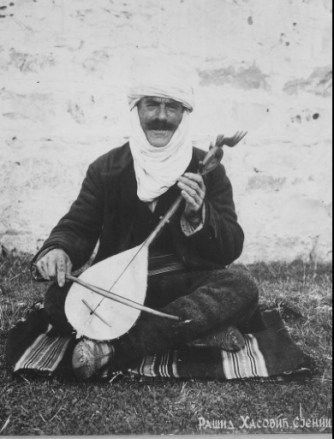
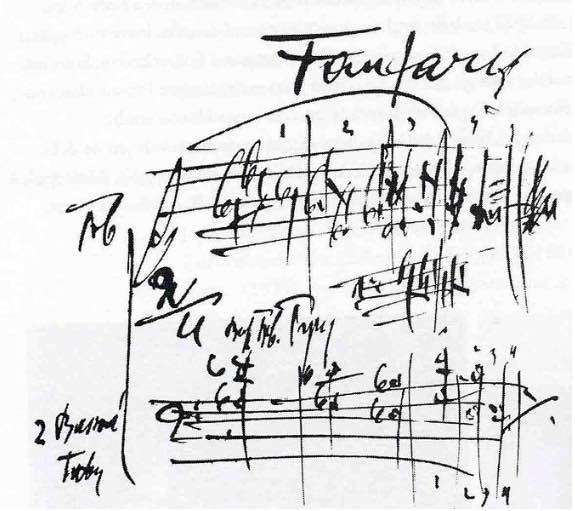


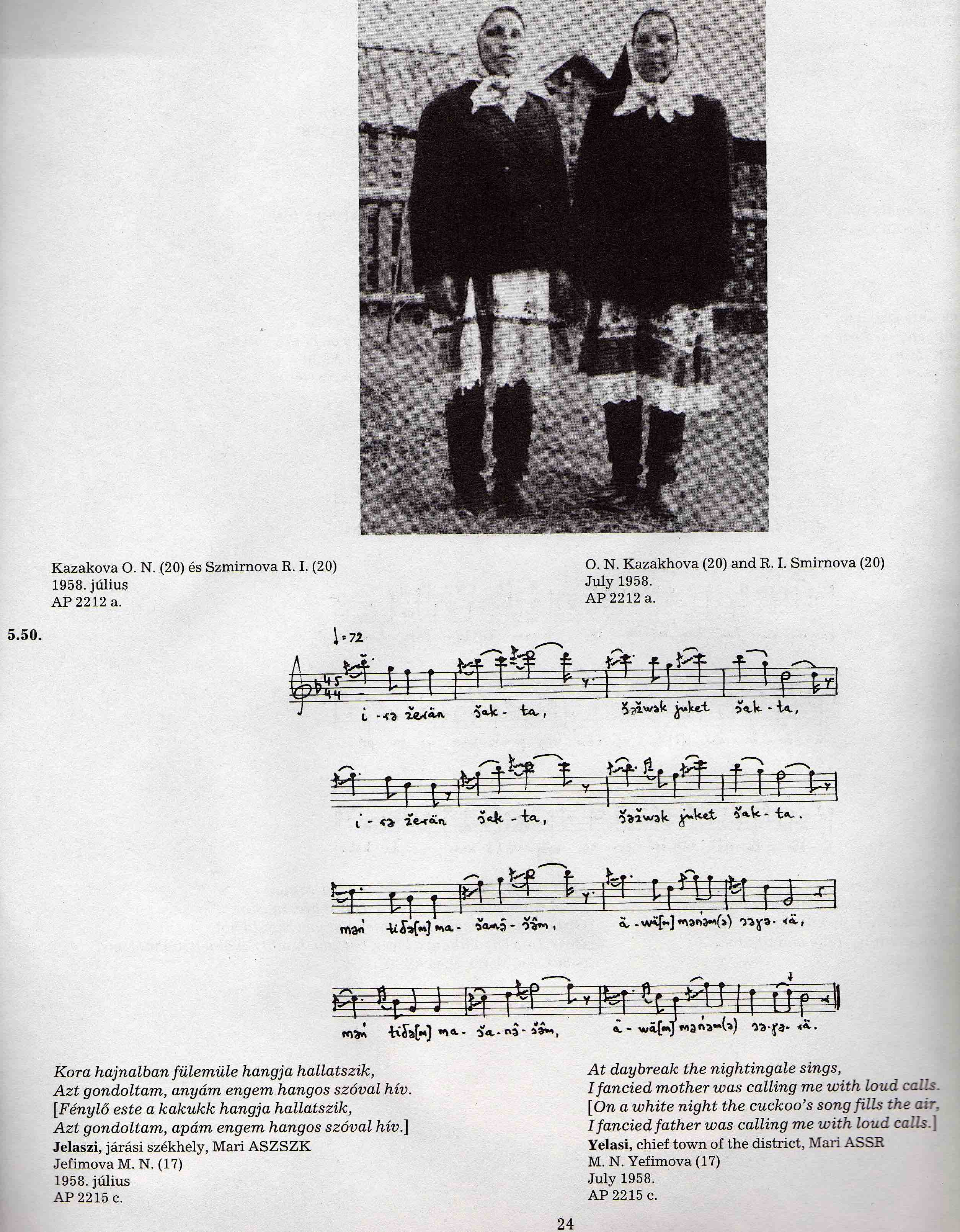
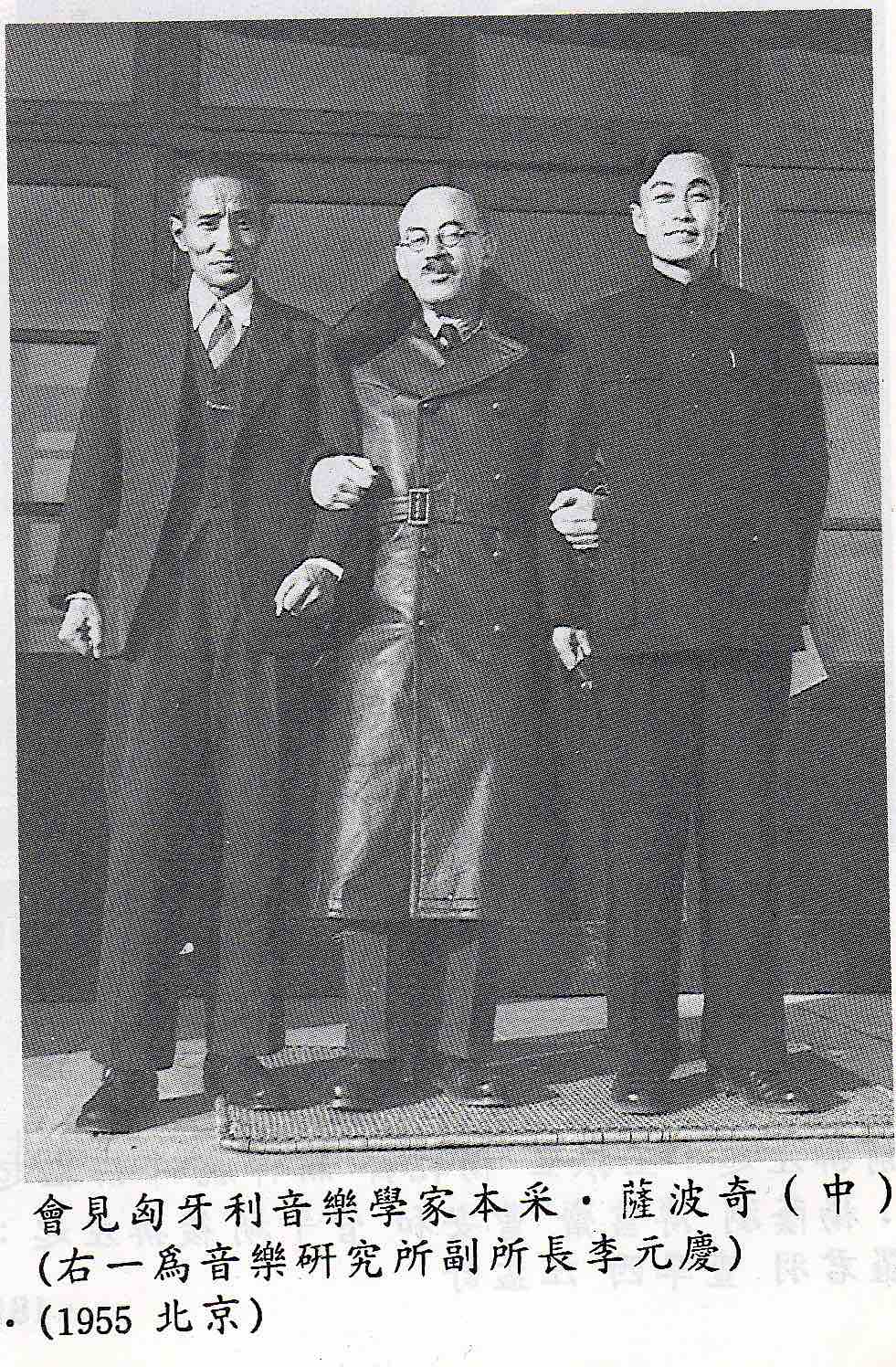

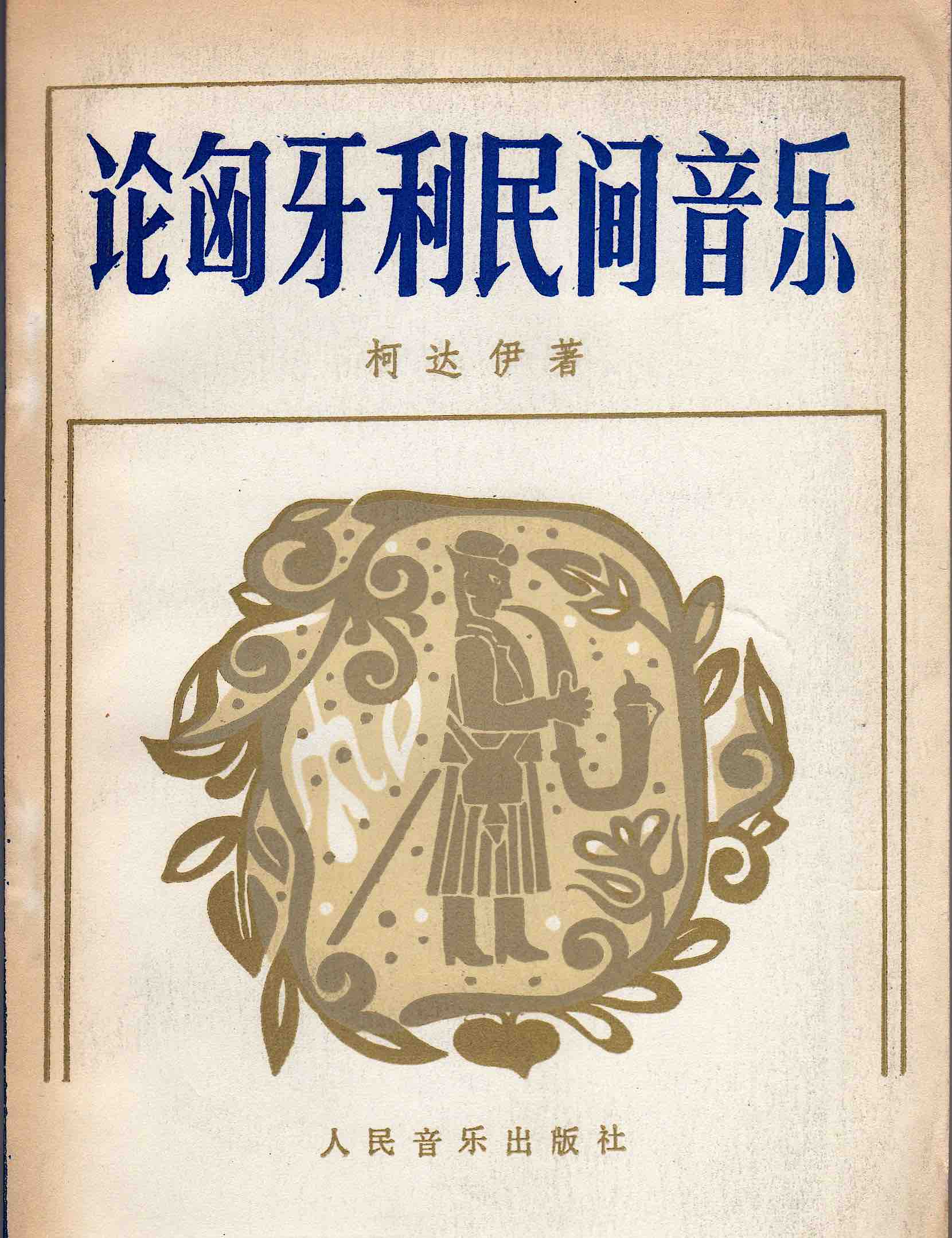


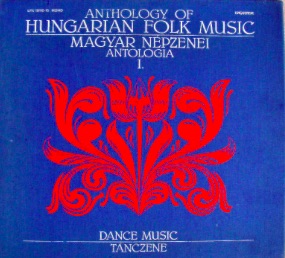
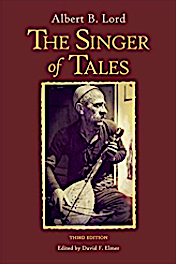


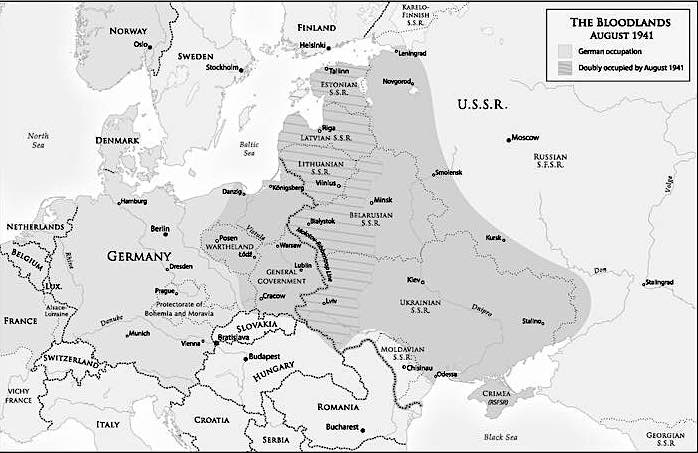


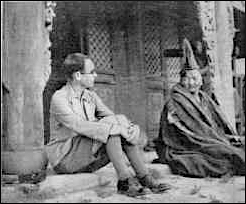


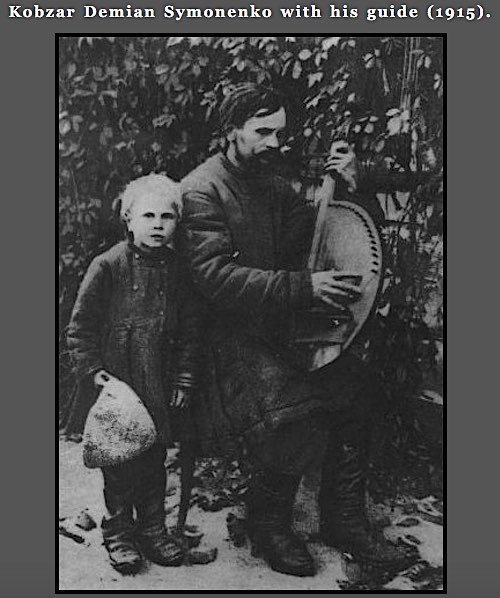


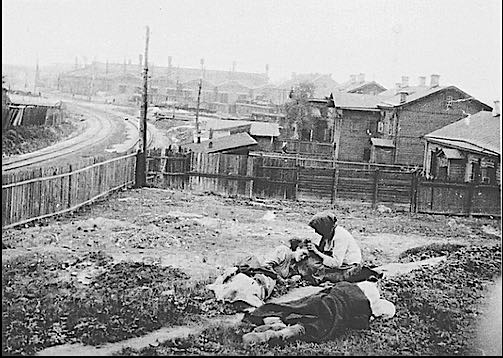
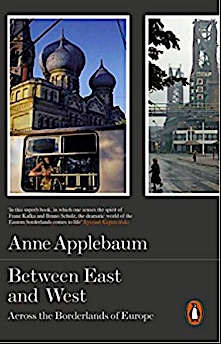


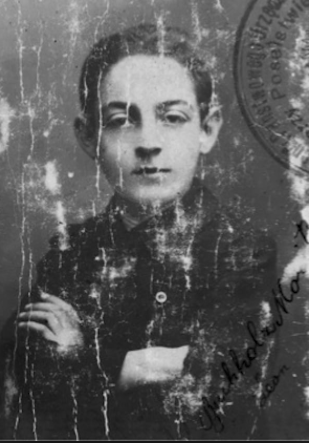
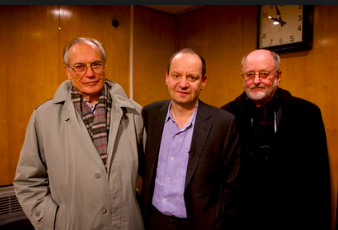
 “I am opposed to the death penalty,” he said without emotion, “except for my father.” […] “He was a criminal.”


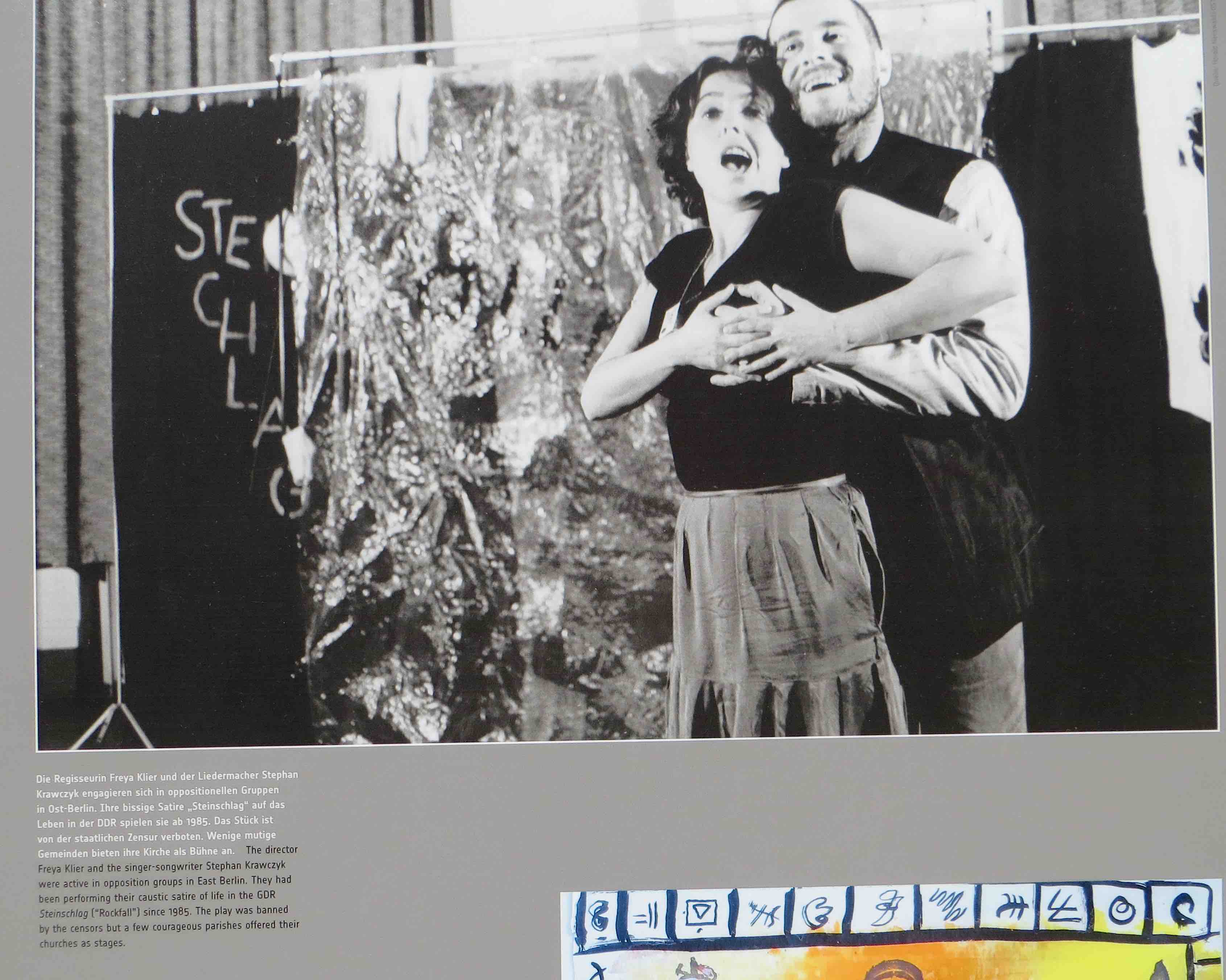


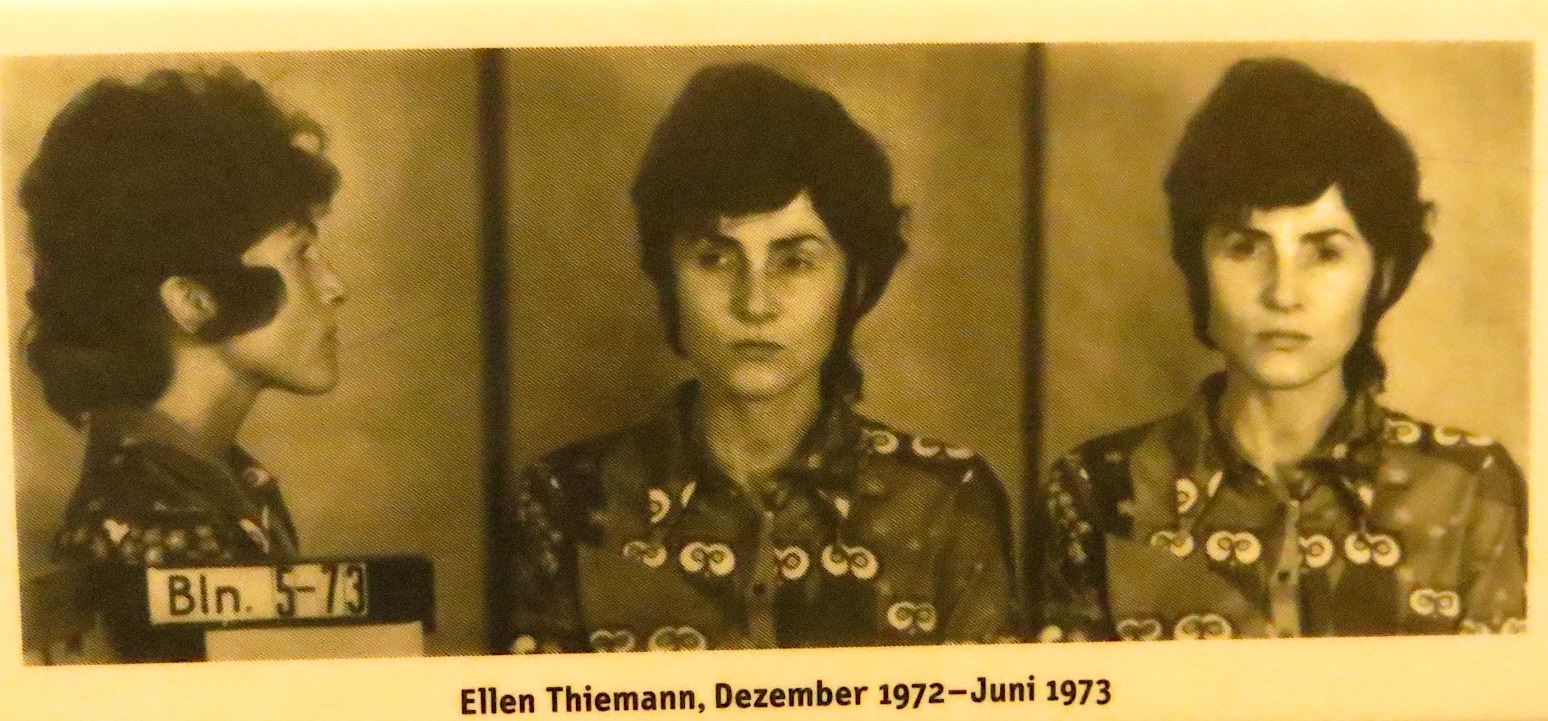
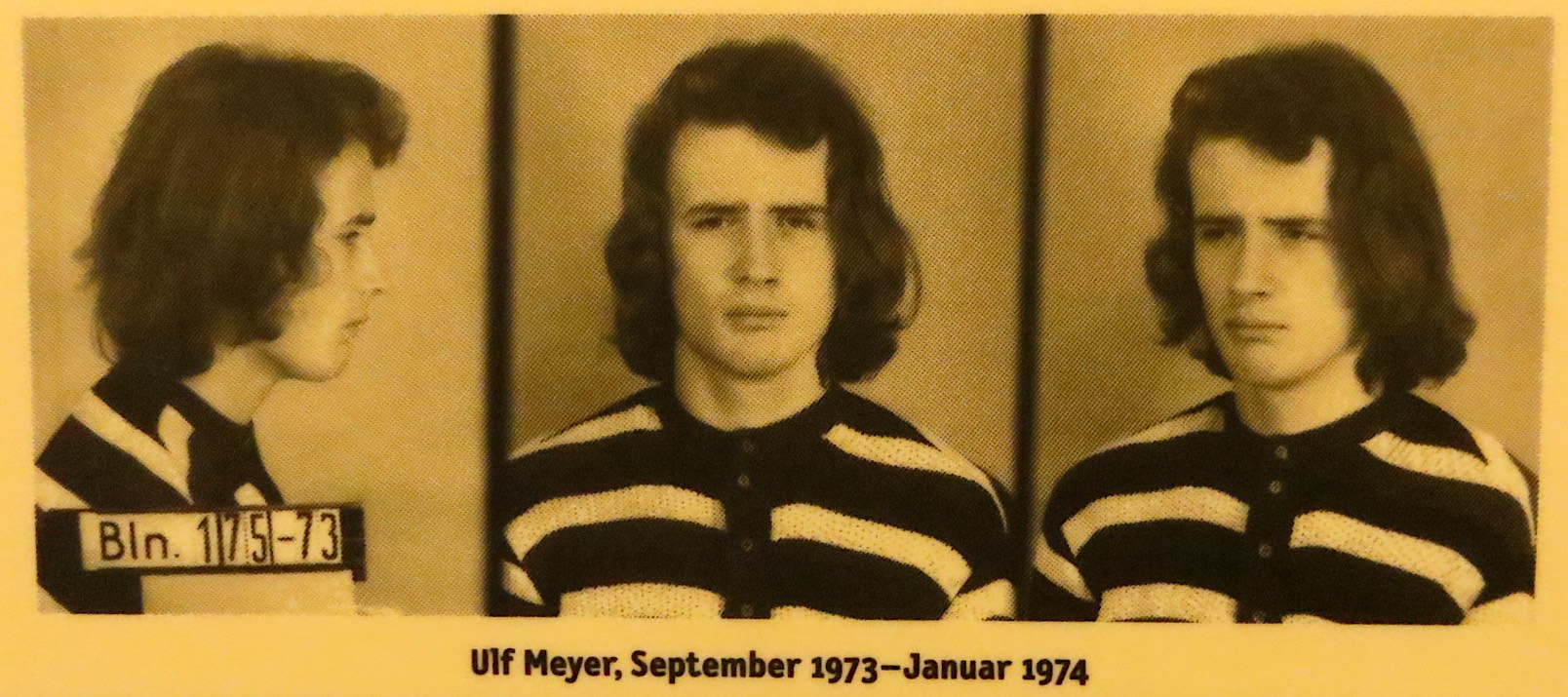
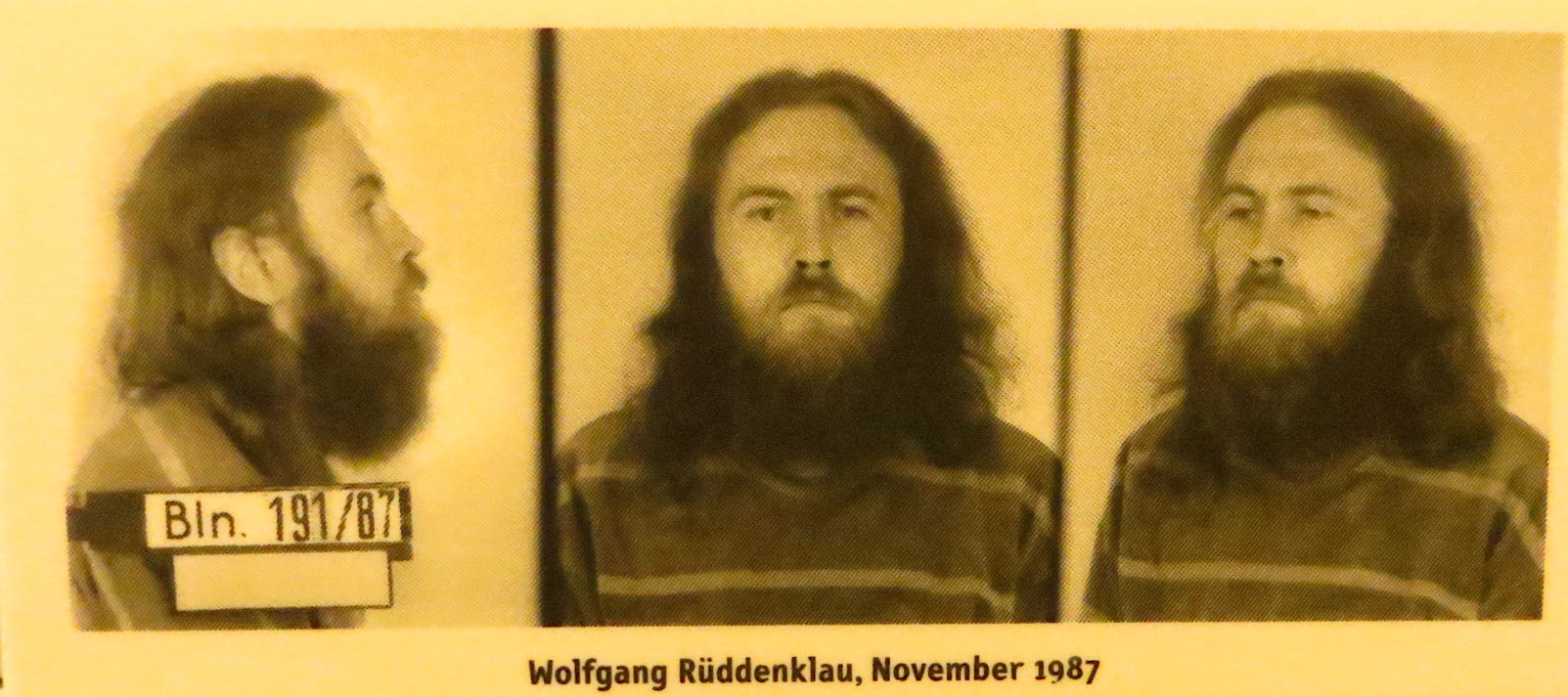


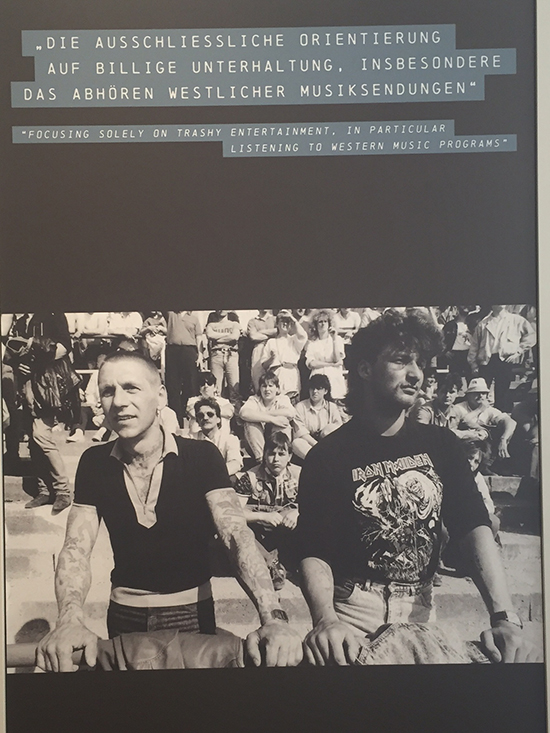
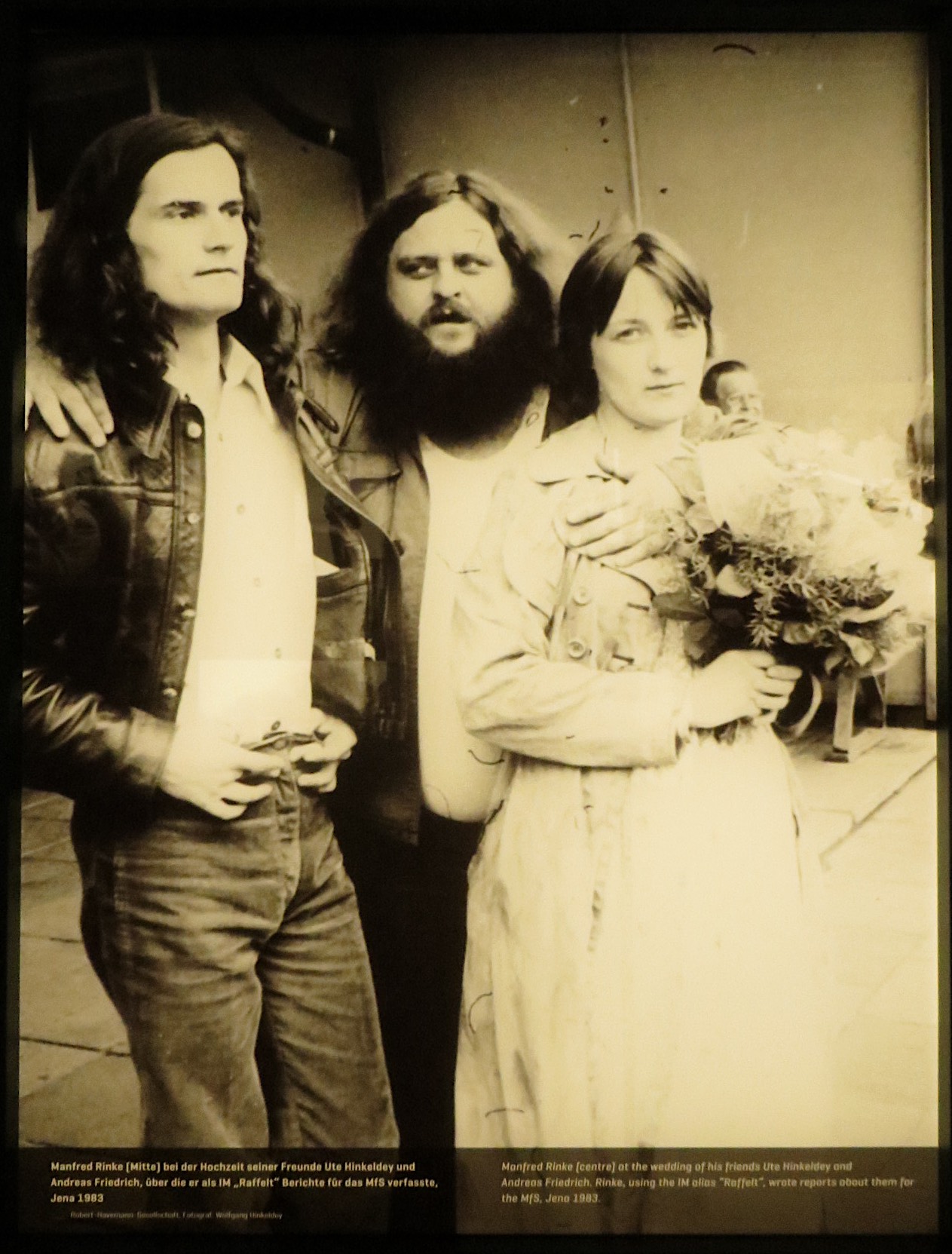
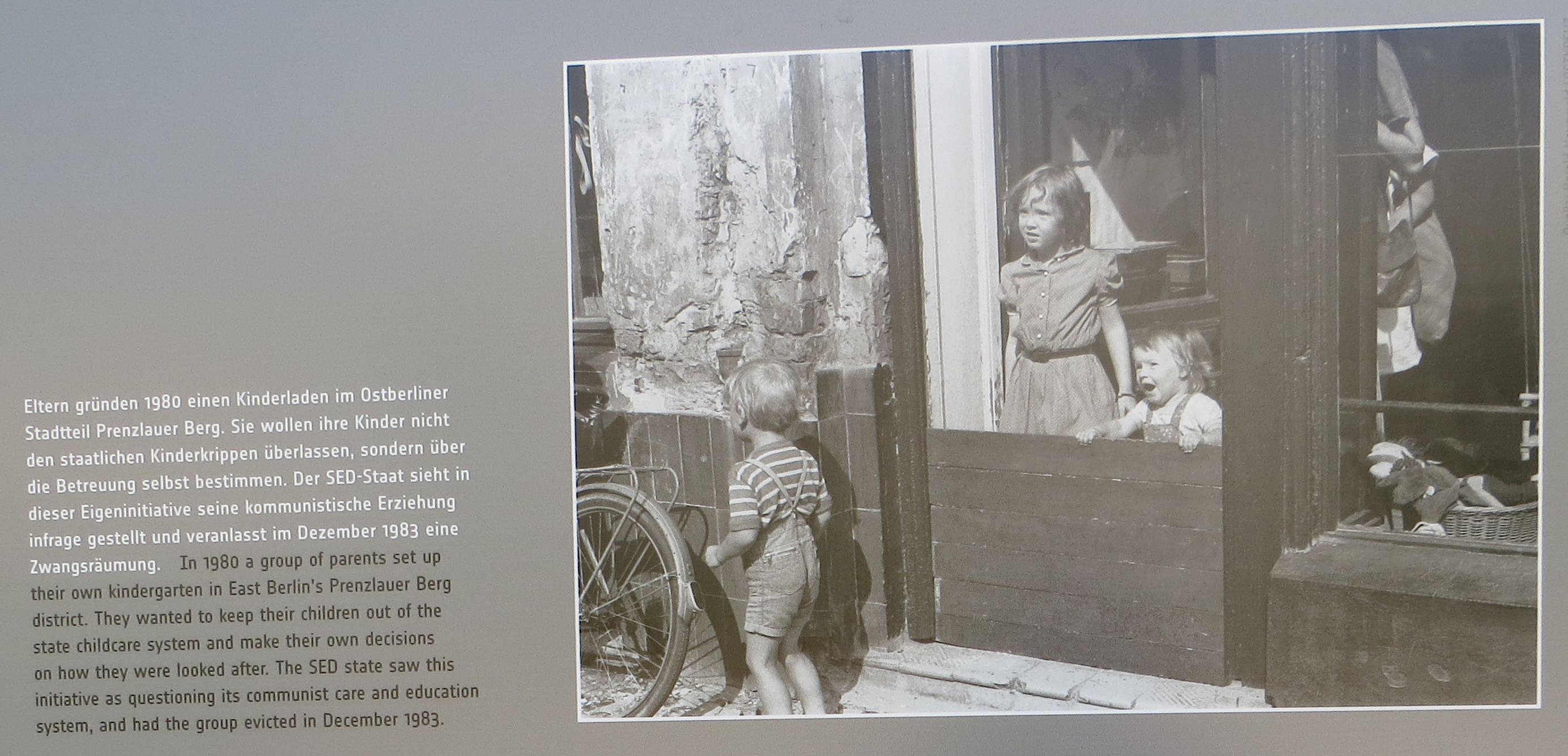


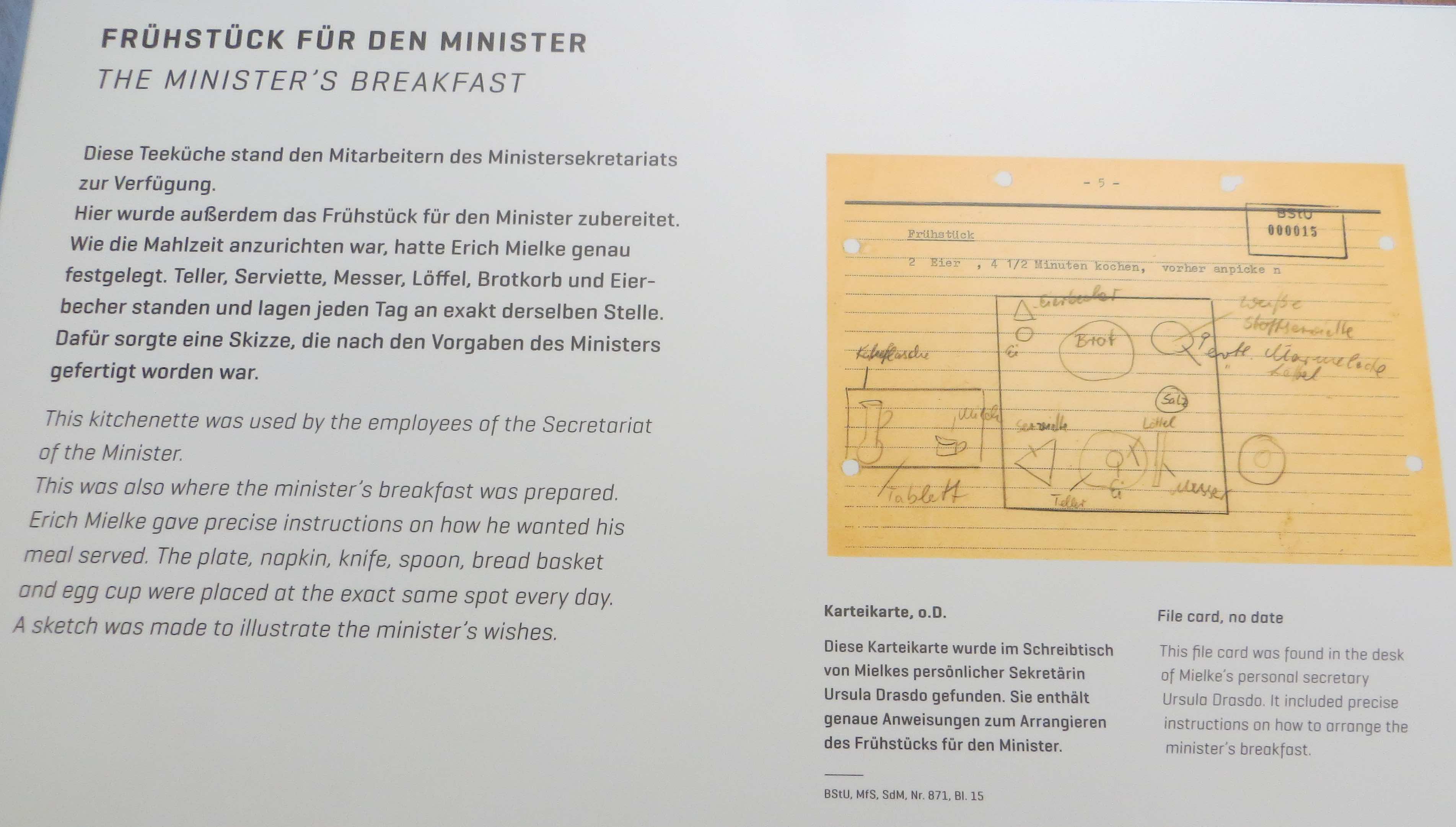


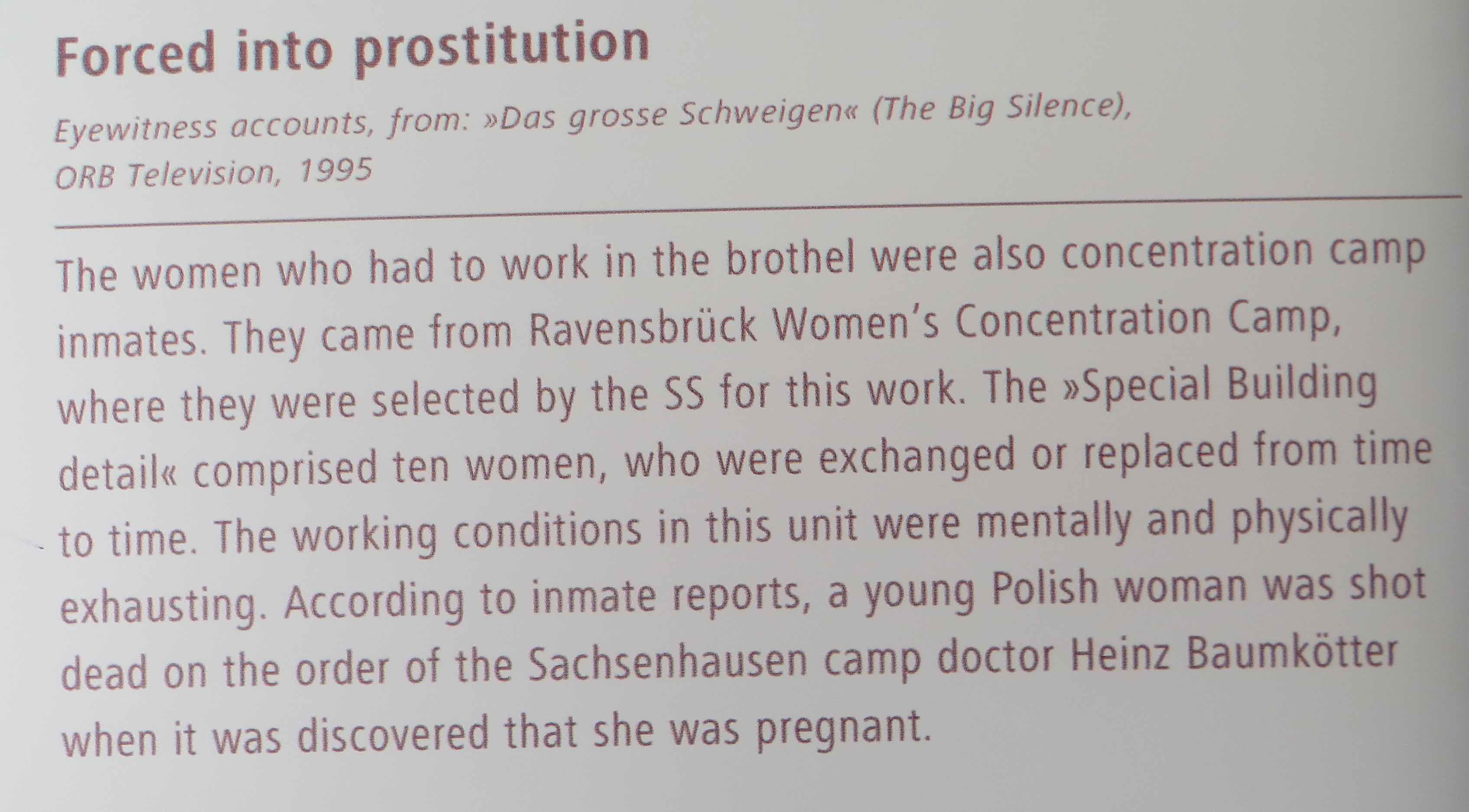


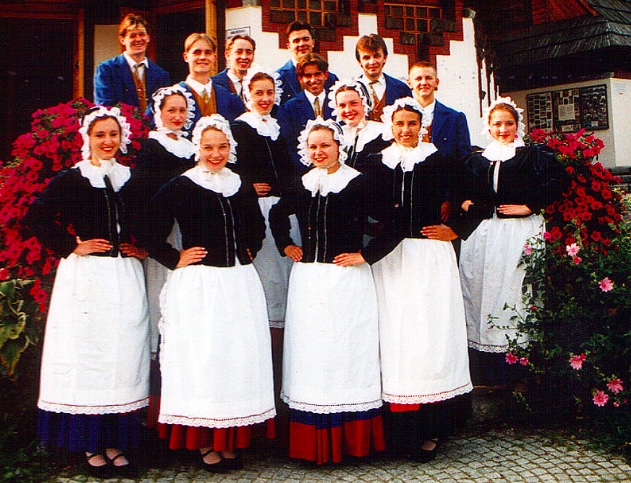


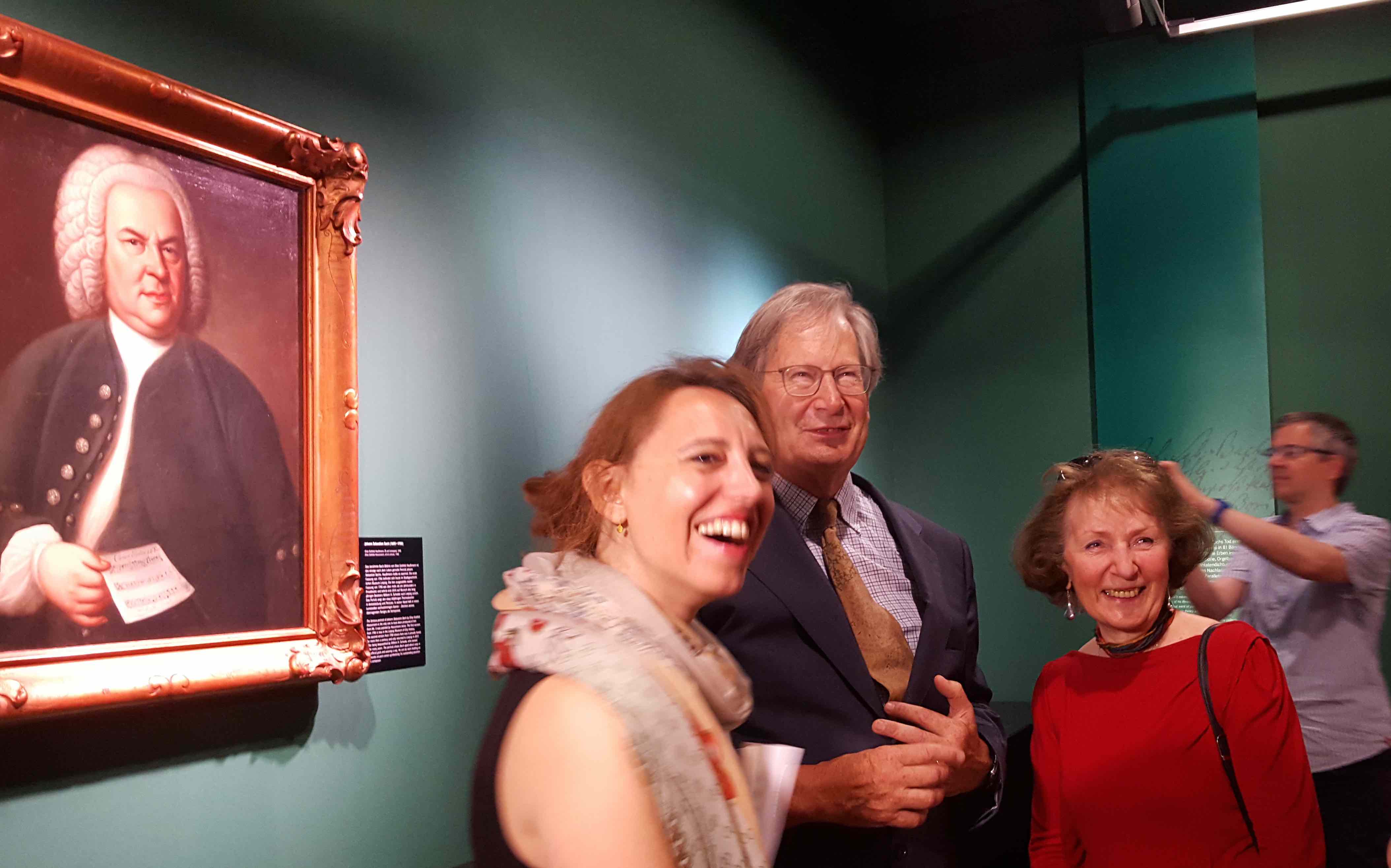


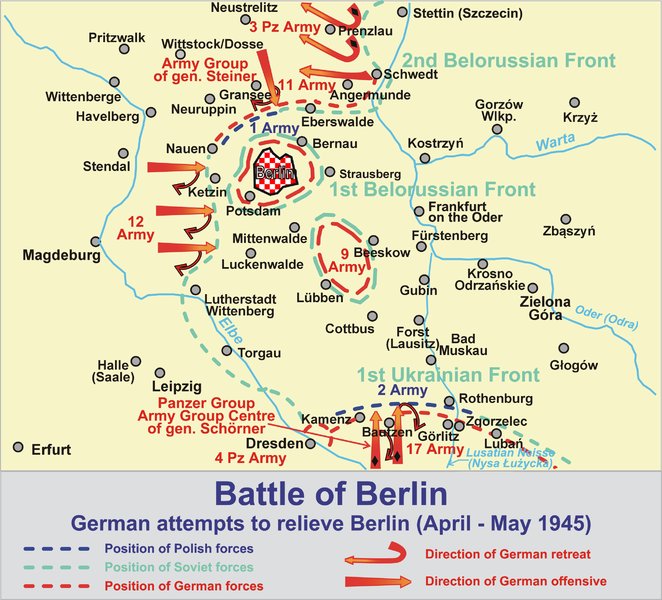





 Within the extraordinary circumstances of these prison interviews, Sereny’s account is a model of detailed and sensitive work, reflection, and even empathy; as she carefully elicits as much candour as can be expected, she meticulously documents both his self-delusion and her own feelings.










 Stephen Jones: a blog