Then she took out of the hamper three bottles of wine for the convalescent and two boxes of cigarettes. She set out everything elegantly on the empty bed next to Švejk’s, where she also put a beautifully bound book, Stories from the life of our Monarch, which had been written by the present meritorious chief editor of our official Czechoslovak Republic who doted on old Franz. Packets of chocolate with the same inscription, “Gott strafe England,” and again with pictures of the Austrian and German emperors, found their way to the bed. On the chocolate they were no longer clasping hands; each was acting on his own and turning his back to the other. There was a beautiful toothbrush with two rows of bristles and the inscription “Viribus unitis,” so that anyone who cleaned his teeth should remember Austria.
The latest research, however, suggests that Saint-Saëns (1835–1921) once carelessly left his toothbrush behind at his hotel while on tour in Prague—he was indeed a keen traveller, but his biographies are curiously silent about this incident. Later the Good Soldier came across it by chance while rummaging in a junk shop, and proceeded to toy with it.
Still, we cannot dismiss the possibility that the toothbrush may be employed here in its popular Slovakian metaphorical sense. In a comment suggestive of Molvania, Andrew Lawrence Roberts (From Good King Wenceslas to the Good Soldier Švejk: a dictionary of Czech popular culture) notes:
Slovácko is best-known for its traditional culture: distinctive national costumes are still occasionally worn, folk traditions like The Ride of the Kings [a major theme of Kundera’s The joke—SJ] still celebrated yearly. The largely rural residents of Slovácko are known as well for their love of slivovice, which they refer to as their morning toothbrush.
So have I been barking up the wrong tree? In this case, one wonders further: just what kind of liqueur was Saint-Saëns’ so-called “toothbrush”? In our headline, perhaps we may now interpret the verb shuashua “fooling around with” as referring to a tasting session—given Švejk’s Bacchic propensities, surely an epic event, at which Flann O’Brien would have been more than welcome.
Further to various comments (collected here), over my three decades doing fieldwork in China the nature of the equipment we use, and fieldworkers themselves, have changed just as much as our objects of study and the rest of the population—of course just like anywhere else, and over earlier periods of ethnographic history.
Never mind all those wonderful fieldtrips of the 1950s; through the 1990s, when my trusty fieldwork companion Xue Yibing and I went on long fieldtrips together (Hebei, Shanxi, Liaoning, Fujian, Guangdong), I used to show up at Beijing train station with a heavy bag full of audio and video tapes, dozens of films for my camera, a bulky array of batteries and chargers, and even a few spare clothes; besides my heavy equipment bag with camera, camcorder, tape recorder, leads, and so on. As you do… And even that was very modest compared with the lists advised by some earnest ethnomusicologists, giving an inventory that would be the envy of British troops invading a third-world country—even Bruce Jackson gives a daunting list. All that is fine if you have an army of docile sherpas, but per-leez…
Meanwhile Xue Yibing just brought a slim shoulder-bag containing only his little notebook, a biro, and a toothbrush. Out of all our combined equipment, it was his notebook that would turn out to be most precious.
Sometimes—not always—we managed to hire a clapped-out old minivan. To find ritual activity, we just had to “go down” to the villages and hope; not only were there no smartphones, very few villages even had a landline. As soon as we “went down”, we were cut off from all contact with the outside world.
Fast-forward to the last few years, and young Chinese fieldworkers take an array of high-class audio and video equipment, laptops, and smartphones, with which few foreign scholars of their age can now compete. Smartphones give fieldworkers instant access to all kinds of information—one could virtually do everything (including photos and recordings) with just a phone. They often drive fancy and robust cars, with GPS to help them navigate and find the villages. The road network is vastly improved; local tracks may still be pretty crap, but motorways have expanded a lot.
And among these young scholars, women are now in a clear majority—bright people like Qi Kun, Wu Fan, and Chen Yu were trained by female scholars of senior generations, like Yuan Jingfang in Beijing and now the brilliant Xiao Mei at Shanghai, ethnographer par excellence. Chinese students also now have some grounding in international ethnomusicology. Of course, one always seeks to do diachronic as well as synchronic work, and our own changing experiences are part of that.
Whereas we Brits tend to say “Who is that?”, across the pond they are more likely to ask, “Who is this?”. It has been observed that when British people hear the latter greeting, they tend to wait—expecting them to do an impression.
Long hooked on the gritty folk intensity of rural Chinese music-making, I’ve never had much time for the suave polished solos of the conservatoire virtuosos (pipa lute, zheng zither, erhu fiddle…) that dominate the media. In rural China, instrumental solos are virtually non-existent: ceremonial life is dominated by ensembles, often for wind and percussion—such as the searing shawm bands.
And if there’s one thing that Gets my Goat more than erhu solos, it’s erhu solo arrangements of WAM classics. So this isn’t the kind of thing you might expect me to say—but this has to be the greatest ever rendition of a piece that I wrestled with on the fiddle through my teens:
That’s a truncated adaptation, of course (even with Sun Huang’s technique, some of the violin arpeggio stuff just won’t translate). Here she is later, playing a fuller version—still heavily arranged:
Seriously though, this is jaw-dropping stuff. OK, it’s part of the whole conservatoire shtick of extreme emoting (yet more distressing when they play “traditional” Chinese solos), and similarly virtuosic techniques are all too abundant in China. But just compare the versions of Heifetz or any other hallowed violin maestro on YouTube—no-one has ever remotely approached that depth of expression and mastery (it’s hard enough with four strings, let alone two). Both Sun Huang’s left-hand technique (like qigong, utterly internalised within the body, all in the service of the music) and the engagement of her bow with the strings, by turns mellifluous and gritty, are beyond belief.
BTW, as with Švejk(Shuaike 帅克),here we have another fine Chinese transliteration of a foreign name—Saint-Saëns is perhaps flattered by the rendition Shengsang 圣桑 “Sage Mulberry”. It sounds like one of those pre-historic deities. So in another post I just have to posit a link between the two great sibilant sages.
In the first video, note how Sun Huang is deluged beneath an avalanche of cuddly toys at the end. Quite right too. Before we begin agonising over sexist infantilising, if Heifetz had ever managed to play the piece even half as well, he would have deserved a similar bombardment.
From the sublime to the ridiculous, here you can listen to my own rendition of Bach on the erhu, and speculate on musical life at the 18th-century Beijing court. For my baptism on the erhu, click here. For other types of Chinese fiddles, see here.
What’s all this fuss about Flann O’Brien, I hear you ask. (One perceptive tribute by Kevin McMahon is penned entirely in the form of a Mylesian pub conversation). [1]Padraig Colman, in a fine series of detailed tributes, sums him up dispassionately as “a morose drunk who led an uneventful life as a senior civil servant in Dublin”. For anyone not O’Fay with O’Brien (as the Great Man must have said somewhere?), here’s a little resumé, before you plunge into sundry other posts under the Myles tag.
Well, for one thing, as fellow Flanneurs will know, he was an astute observer of “Poor suffering Hugh Manity”, that’s why. He was a dedicated chronicler of the Hugh Mann condition—a common and distressing affliction. He had a keen ear for the conversation of The Plain People of Ireland, The Brother, and insufferable bores of any Ilk, whether pretentious or just trite. He had the Cut of their Jib, whatever that is. His intolerance of cant (and doubtless Kant) has brought him a cult following [Autospell running amok?—Ed.].
Apart from The Man Who Has Read It In Manuscript, another snowclone that is constantly on the lips of the aficionado is
The Man Who Spoke Irish At A Time When It Was Neither Profitable Nor Popular.
This meretricious character inevitably takes a bow in the Myles na Gopaleen Catechism of Cliché,
a unique compendium of all that is nauseating in contemporary writing. Compiled without regard to expense or the feelings of the public.
Of what was any deceased citizen you like to mention typical? Of all that is best in Irish life.
Correct. With what qualities did he endear himself to all who knew him? His charm of manner and unfailing kindness.
Yes. But with what particularly did he impress all those he came in contact with? His sterling qualities of mind, loftiness of intellect and unswerving devotion to the national cause.
What article of his was always at the disposal of the national language? His purse.
And what more abstract assistance was readily offered to those who sought it? The fruit of his wide reading and profound erudition.
At what time did he speak Irish? At a time when it was neither profitable nor popular.
With what cause did he never disguise the fact that his sympathies lay? The cause of national independence.
And at what time? At a time when lesser men were content with the rôle of time-server and sycophant.
What was he in his declining years? Though frail of health, indefatigable in his exertions on behalf of his less fortunate fellow men.
Whom did he marry in 1879? A Leitrim Lady.
And at what literary work was he engaged at the time of his death? His monumental work on The Oghams of Tipperary.
And of what nature is his loss? Well-nigh irreparable.
OK, watch this, now I’m going to make a subtle transition (and Myles would have relished the voiceover to Away from it all):
Gondolas, gondolas, gondolas. Everywhere… gondolas. But there’s more to Venice than gondolas […] We pause to reflect that despite its cathedrals, its palaces, its bustling markets, and its priceless legacy of renaissance art, the one thing that Venice truly lacks—is leprechauns. [scene changes] But there’s no shortage of leprechauns here: Yes, Ireland, the emerald island…
Here we are again. Normal service resumed. A critic, and a critic of critics, Flann O’Brien discussed art, music, and theatre acutely—sometimes even more acutely than this:
Literary criticism My grasp of what he wrote and meant Was sometimes only five or six %. The rest was only words and sound— My reference is to Ezra £.
His Keats and Chapman series is full of shameless yet often arcane puns:
“My dear girl”, he said, “You have been living in F. Huehl’s pair o’dice.” When she was gone he turned to Chapman. “F. Huehl and his Monet are soon parted,” he observed.
“Sir, you try my patience!” “I don’t mind if I do—you must come over and try mine sometime.”
For all his withering disdain for pretension, Myles’s essays are liberally sprinkled with French, German, and what Peter Cook, in a not-unMylesian sketch, called “The Latin”:
(or for surly purists, the full authentic urtext here).
Nor is the Catechism of Cliché limited to English. It becomes increasingly unhinged (as one does):
In 2016, writing in The Irish Times (since Myles’s day, allegedly an organ otherwise less hilarious than The China Daily), Frank McNally did a rather good sequel on the elections. Indeed, it’s a fun game to play. One day, if you don’t watch your step, I may regale you with my very own Catechism of orchestral cliché. You have been warned. [Oh all right then, if you insist—here you are. Now I’ve even penned a Catechism of Chinese cliché, and of Chinese music clichés. Is nothing sacred?]
On my visits to Germany I constantly giggle at Myles’s Buchhandlung service:
A visit that I paid to the house of a newly married friend the other day set me thinking. My friend is a man of great wealth and vulgarity. […] Whether he can read or not, I do not know, but some savage faculty of observation told him that most respectable and estimable people usually had a lot of books in their houses. So he bought several book-cases and paid some rascally middleman to stuff them with all manner of new books, some of them very costly volumes on the subject of French landscape painting. I noticed on my visit that not one of them had ever been opened or touched, and remarked the fact. “When I get settled down properly,” said the fool, “I’ll have to catch up on my reading.” This is what set me thinking. Why would a wealthy person like this be put to the trouble of pretending to read at all? Why not [pay] a professional book-handler to go in and suitably maul his library for so-much per shelf? Such a person, if properly qualified, could make a fortune.
And we haven’t even discussed At-swim-two-birds or The third policeman, Begob. Here one may even detect a certain affinity with Cold comfort farm. As Myles observed,
It goes without Synge that many of my writings are very fine indeed.
I can only deplore the paucity in his oeuvre of allusions to fieldwork reports on Daoist ritual. And vice versa. Still, it is pleasant to imagine the travails of the Chinese translator of Flann’s great works.
Flann O’Brien survived longer than Hašek, but drank himself to an early grave (“But it’s not even closing time yet!”, I hear him exclaim) in 1966—sadly not in time to reflect
At what time did he speak Irish? At a time when it was neither profitable nor popular. And of what nature is his loss? Well-nigh irreparable. So what capital adornment do I take off to him? (It’s your turn.)
Minister of Finance: “Here is the Treasury Department’s report, sir. I hope you’ll find it clear.”
Rufus T. Firefly: “Clear? Huh! Why, a four-year-old child could understand this report. [to secretary] Run out and find me a four-year-old child, I can’t make head or tail of it.”
Note: Either Firefly or Tweety is a caricature. The more far-fetched one is quite capable of writing his own gags, better than we could ever dream up. And to what avail are our easy jibes?
Predictably, bands from East and West coasts of North America dominate the list. For any China-watchers branching out into Riot grrrl and Bikini kill, look out for the latter’s Rebel Girl as soundtrack to The red detachment of women…
Indeed, Feels blind was released in 1991, the year I first met the late great household Daoist priest Li Qing in Yanggao…
Consider this an addition to my growing category of topics about which I know Fuck All. I guess covering feminist punk in a blog about Daoist ritual is marginally less implausible than the other way round—I do look forward to that, though.
These notes are partly stimulated by Zhang Lili, currently writing her PhD in Beijing on my relationship with the village of South Gaoluo, subject of my book Plucking the Winds.
A useful idiomatic term evoking the whole spectrum, whether of guanxi contacts or the range of funeral services, is yitiaolong “the whole dragon” (indeed, this blog may itself be considered “the whole dragon”, making links between seemingly diverse topics).
So having praised Yang Yinliu, shining pinnacle of Chinese musicology, I want to pay tribute to two admirable local cultural workers at the opposite end of the dragon (cf. An unsung local hero) whose work has inspired us since 1989:
Liu Fu 刘阜 and Wang Zhanlong 王占龙.
Their only qualification was that they were local, and came to take pride in documenting their local traditions under the stimulus of the new directive from the Anthology of folk music of the Chinese peoples, the vast project that got under way from 1979 as China began to liberalize after the collapse of Maoism.
Let me adapt a passage from my article
“Reading between the lines: reflections on the massive Anthology of folk music of the Chinese peoples”, Ethnomusicology 47.3 (2003), pp.287–337 (for reading between the lines of a Chinese article on 1950s’ Tibet, see here).
Antoinet Schimmelpenninck described the process of collecting folk-song in Jiangsu in the early 1990s.
The collecting of folk-songs is one task, but by no means the only or primary task of the bureaus of culture. They carry out political propaganda, make posters about family planning or about the punishment of local criminals, organize dance parties, stage plays and children’s games for local entertainment, run libraries, and execute various administrative tasks which help the provincial government. […]
It is not, at present, one of the specific tasks of the Cultural Bureaus of the Wu area to collect folk-songs. I visited one wenhua zhan (village cultural post) which was mainly engaged in printing labels for jam jars and other consumer goods.
Censorship may operate throughout the process: first, self-censorship of performers (e.g. what kind of songs singers see fit to sing for fieldworkers), and then editorial adaptation of the material collected. In Baoding, one single region of Hebei province, where ritual associations have important traditions, such fieldwork as was done on “instrumental music” took place mainly from 1983 to 1985, but in only two or three of a dozen counties we have visited did we find knowledgable cadres who had done such work.
One of the most diligent of these was Liu Fu, of the Hall of Culture in Laishui county. He acted early on the Anthology directive, printing a mimeograph (4 pp. introduction, map, list of contents, 128 pp. transcriptions, 22 pp. field report, 8 pp. diagrams of instruments) on the county’s instrumental music as early as 1983, which was an important inspiration for my own work on ritual associations there. I don’t know if the regional editors ever forwarded Liu Fu’s work, but it was entirely omitted from the final provincial publication. The following passages of his “Field report” show some of the problems faced by local collectors, here partly relating to the sensitive and secret nature of ritual music:
The work of collecting folk instrumental music is not always smooth: we have met considerable difficulties. For instance, some elderly folk musicians had been struggled against during past campaigns for this [their music/ritual], and had been labelled as “black cliques” and “ox demons and snake spirits”, so they are still anxious. When they heard that we wanted to collect pieces of music, they suspected that it was once again “luring the snake out of its hole”, and so they refused to play for us.
Some associations are very conservative in their thinking, and are concerned that their distinctive pieces will be taken off and learnt by others—in their own words “something we begged for on our knees, we can’t just throw it out now we’re on our feet”, and so they make excuses not to play for us. Some associations take the opportunity to make economic demands. Some brigade [village] cadres think this work is meaningless, and are afraid it might have side-effects, and so are unwilling to co-operate with us. And so on.
Since these are ritual associations, by “side-effects” he apparently means that the collection may be seen as encouraging feudal superstition. Liu Fu continues:
To tackle this situation, every time we arrive in a place, we explain the document “On the collection and documenting of the Chinese folk musical heritage” from the Ministry of Culture and the Musicians’ Association, and the spirit of the directive from the relevant organs of the province and regions, and we discuss the great academic value of the repertory of the ritual associations in our county, and the great significance of the work of collecting, to make the cadres and musicians have a correct understanding; we then show them that they can play whatever they have to play, they must not leave it to later musicians, but do their best to make their own page in the Anthology of instrumental music.
Poor equipment for sound recording, copying, and photography was the norm. Liu Fu goes on to discuss the problems of recording:
Although there are said to be instructions and directives from the central, provincial, and local authorities for the work of collecting instrumental pieces, no-one has given us a scrap of money, and the expenses of the county Bureau of Culture are reduced year by year. Under present conditions, where they can only guarantee annual salaries, they can’t supply any more money to support the work apart from producing a minimal sum for buying necessary goods like tape and paper. Thus, all the associations have to perform for free. This requires us to record as much as possible in a short time.
I might add that any tapes were poorly annotated if at all, and haphazardly stored. One keen cadre I know in the same area had to use a single tape over and over, transcribing a piece in one village one evening and then re-recording music in another village the next day on top of the old recording. But at least he did some work! Of course there was a lot more that local scholars could have done, given time and money—like copying gongche scores and ritual manuals, filming rituals, documenting the histories of the associations, and giving detailed descriptions of ritual sequences, as we later aspired to do in our project around several nearby counties. But Chinese fieldworkers have now overtaken us.
Central funds barely reached down to grass-roots level, and cultural cadres did what they could. On one hand, they were indigenous to the musics they were documenting, but they were rarely able to afford the time or resources, even if they had the training, to make systematic reports. Still, some of the results are impressive.
Anyway, we knew that we might learn from local cultural officials how to find ritual groups. Besides, in those early days, when the memory of the commune system was still fresh, it was a necessary first stage to go through the chain of local officialdom. Sometimes, when our preliminary research in Beijing failed to suggest any knowledgeable local officials, we simply bypassed them. A couple of times we got our fingers burnt, but the most fruitful leads to ritual groups often came just by stopping to chat to any old melon-seller by the roadside—he would generally tell us where the grand rituals were held, and which villages were worth visiting.
There were actually two types of cultural officials: those inclined towards “cultural work”, and jobsworths. The latter, once we began visiting the villages regularly, realized that we didn’t constitute an excuse to hold another vast banquet; I was clearly not an eminent foreign professor but an ill-dressed and impecunious young researcher, so they soon left us to our own devices.
Times have changed, though: now the local Bureaus of Culture are staffed by administrators, not necessarily even local, with their smartphones and spreadsheets.
Liu Fu himself came from a Laishui village, East Mingyi, with its own tradition of vocal liturgy (including baojuan“precious scrolls”) and shengguan ensemble. After the 1986 “discovery” of the Qujiaying ritual association in nearby Gu’an county, he had already approached officials in Beijing to tell them that there were plenty of similar groups in his county alone, giving them a copy of his fine 1983 mimeograph and a tinny tape he had somehow made of a few of their shengguan pieces.
In Beijing Liu Fu also met my mentor Qiao Jianzhong, Yang Yinliu‘s successor as head of the Music Research Institute, who then made an exploratory trip to two other Laishui villages in 1988. It was this that prompted me and my friend Xue Yibing (a bright musicologist from the distinguished Music Research Institute in Beijing) to visit Liu Fu in his bare dingy office in Laishui county-town as part of our first fieldwork survey in New Year in 1989.
After giving us an outline of the various ritual groups in the county, Liu Fu recommended Gaoluo, so we all sallied forth. Here I adapt from the Prelude of Plucking the Winds:
I first arrived in the village of South Gaoluo on a cold but bright winter’s afternoon, on the 14th day of the 1st moon in 1989, in the middle of the great New Year’s rituals then taking place in every village in China. This was one of many villages just south of Beijing where I was working with Xue Yibing in doing exploratory fieldwork on amateur ritual groups.
Escorted on that first visit by a well-meaning ganbu (“cadre”, as state officials are known in China) from the cultural bureau of the county-town, we made slow progress by jeep along the bumpy track to the village; though it is only nine kilometres from the dingy county-town of Laishui, the journey took over half an hour.
An encounter on the way to Gaoluo, 1989.
First we went to the house of the then village chief Cai Ran, himself a vocal liturgist in the village ritual association, and had to spend over an hour in heated debate before we could cajole him into allowing us to trudge through the alleys to the ritual building a few hundred yards away, where the association was then performing before the god paintings at the altar (photo here).
Cai Ran, 1989.
Diaogua hangings for the New Year’s rituals, 1989.
Donor’s list (1930) of the South Gaoluo association, New Year 1989.
At the time Cai Ran’s caution seemed to me excessive, since we were all clearly sympathetic, and the county cadre was taking responsibility, but in retrospect I felt rather embarrassed: maybe we should have respected his reluctance. Later, when I learned of the 1951 imprisonment of the Italian missionary Bishop Martina, apparently the last foreigner to visit the village, and as I experienced more often the sensitivity of “superstitious” practices in China, I understood his anxieties better. But later Cai Ran recalled that his hostility that day was not related to the revealing of secret rituals to foreigners, nor to fear of criticism from county cadres, but rather to the possible appropriation of his village’s ritual music by the cadre, whom he already suspected of handing on some pieces to the association in his own home village. After this strange introduction, we soon came to enjoy our sessions with Cai Ran: he has a wonderful informality, a great sense of humour, and is full of insight.
Later I liked to share with the villagers another amusing memory of that first afternoon. After finally persuading Cai Ran to escort us to the ritual building, and having gained the musicians’ approval to record and take photos (alas, I didn’t yet have a camcorder!), I had just set up my recording equipment when in walked a severe-looking policeman in uniform. Knowing the sensitivity of what the musicians were doing, and of what I was doing in watching them doing it, my heart sank: feeling irrationally as if I’d been caught in the act (fan cuowu “made a mistake”, as the eloquent Chinese expression goes), I prepared for further lengthy negotations. But the policeman, the splendid Shan Rongqing, back in the village for the New Year holiday, immediately picked up the large ritual cymbals and joined in with feeling. He later took part keenly in our studies of the village traditions; we often admired his musicianship on the ritual percussion, and later too on the “old fellow”, the bowed fiddle on which he accompanied the local opera.
Shan Rongqing, 1989.
That day we felt lucky enough to have been allowed—eventually—to witness the association’s afternoon ritual, and since we had business in the county-town that night, we agreed to return the next day to talk with the members. That next day they were friendly, as always with such amateur associations; we recorded them “singing the score” of some of their shengguan pieces for us (cf. sidebar playlist, #9), and learned the bare bones of the New Year’s rituals and the history of the association—material which later, in view of all that we would gradually learn, came to look ludicrously sparse. And again we took our leave—the time still had not come for in-depth work, since we were only making a general survey.
Somehow, that first visit to South Gaoluo left us with a deep impression: the village seemed isolated (a view we later corrected) and its ritual life intense, with all the beautiful hangings decorating the temporary temple and the alleys outside. But it was not until the summer of 1993 that we were able to go back there. By now we were engaged on a four-year project to document village ritual associations throughout the area; but while we continued to collect basic data on other villages, we naturally felt the need to dig beneath the surface, not just to “gaze at flowers from horseback”. Gaoluo became a magnet for us, and over the following years we made many stays there, having a fantastic time as we learn more about the turbulent experiences of the village and its ritual performers throughout the 20th century.
Wang Zhanlong The very next day after those first visits to South Gaoluo at New Year 1989, in the adjacent county of Yixian, home of the Western tombs of the Qing emperors, we visited the office of the Bureau of Culture to seek clues to local ritual associations. There we found the splendid and unassuming Wang Zhanlong. Like Liu Fu, he too relished the task of collecting material, riding his bicycle through poor villages with a crummy little tape recorder and a notebook. Wang promptly took us to Liujing village, also in the midst of their New Year’s rituals.
Xue Yibing documents pantheon, Liujing, New Year 1989.
This was the start of our studies of the Houshan pilgrimage and the cult of the goddess Houtu.
Wang Zhanlong and Xue Yibing, Houshan 7th-moon temple fair, 1993.
Houshan is just one of those numerous local mountain sites attended several times each year by vast throngs of pilgrims, ritual groups, spirit mediums, and beggars, yet (unlike Miaofengshan to the northwest of Beijing) it had never attracted the attention of outsiders.
Houshan temple fair, 7th moon 1993. Matou village ritual association (left) accompanies a spirit medium (front centre) and disciples (whom she has healed) for boat-burning ritual as they pray.
Right through the 1990s Wang Zhanlong made a wonderful sincere companion on our regular visits to Houshan and the ritual groups of Yixian county, always in sympathy with our project. Here we are in 1995 with erudite ritual specialist Li Yongshu in Baoquan village near Houshan, learning the details of the complex performance practice of the “precious scrolls” to Houtu, the Ten Kings, and so on.
Pantheon, Liujing, hung out for rituals on the 1st day of the 3rd moon, 1995. Right: envelope with petition, to be burned in supplication to the goddess Houtu.
For an intrepid fieldworker in Liaoning, see here. See also surveys based on the Anthology for Fujian and Tianjin.
However can I have missed You don’t own me? (Lesley Gore, 1963) all this time? Or at least, how did I miss the 1964 cover by Dusty Springfield?
I’m finally getting why people get so hooked on Country (like you do on the suites of north Chinese shawm bands. Possibly.)—it’s good to see it featuring so strongly here. Kitty Wells, and Dolly Parton—feminist in, um, plain clothes…
How good to include Ethel Smyth’s 1910 suffragette anthem!
(Hmm, given that one seeks to discard outmoded gendered nouns, the term “suffragette” seems a bit ironic… BTW, you don’t hear much about “usherettes” these days, eh? They were a vital part of the Away from it all cinema experience.)
To return to Country: of course, the antithesis of all this is Stand by your man(1968, not great timing), but it’s still a great song, somehow—as long as you ignore the lyrics…
Tammy Wynette spent most of her life vainly trying to defend it. Here’s some more “negative teaching material”—with this quote she just digged herself further into a patriarchal hole:
Personally, I’m not particularly fond of the thought of digging ditches or climbing telephone poles. I’d rather stick with something a little more feminine. I wouldn’t want to lose the little courtesies that we’ve always been extended, like lighting cigarettes and opening doors, and pulling out chairs and things like that. I enjoy that. I guess I just enjoy being a woman.
Oops. Retired Rear Admiral James Foley—so retired he’s dead—will be nodding his head wisely and playfully slapping her cute lil’ ass.
At the time I may not have clocked You don’t own me, but at least I was aware of Dusty (!).* And digressing only a tad from the feminist path, I do vividly remember Cilla’s Anyone who had a heart (1964, her cover of Dionne Warwick’s 1963 version)—but great as both are, you must hear Sheridan Smith’s astounding cover (from the 2014 TV series Cilla):
The sheer creative energy of music in the often-discredited 1960s is an endless topic. But we can always put in wider context—not just civil rights and hippies, but further afield, in Nigeria, or the ongoing struggles of Eastern Europe… And ritual specialists in Chinese villages!
* My friend Rowan points out wisely that I’ve never been aware of anything at the time. Now I’m stillliving in the past, for all my so-called “contemporary ethnography”…
À proposRavel’s Piano concerto for the left hand: two-handed pianists soon got in on the act, though how to occupy the spare hand must take some thought. In This Day and Age one imagines young pianists saying,
“You know what’s so great about the concerto? You can text your mates while you’re playing it!”
Alternatively one could wear a boxing glove on the right hand, or a glove puppet, making suitably cute gestures to reflect the changing moods.
In Certain Quarters such behaviour might go down like a one-legged man at an arse-kicking party.
Conversely, watching people texting with two thumbs, I think of the mbira.
While we’re on deficiencies in the limb department, apart from the one-legged men in The third policeman, this classic audition springs to mind (Tarzan, “A role that is traditionally associated with…”):
We can never unhear the soundscape of our times (for a roundup of posts on reception history, click here).
As I continue to delight in Hélène Grimaud, Rachmaninoff’s 2nd piano concerto (1901) comes with a lot of accumulated baggage, which may both blur and enrich our appreciation. The most obvious instance is the soundtrack of Brief encounter (David Lean, 1945). Even for me, growing up in the swinging 60s, this is an inescapable association—let alone for my parents’ generation (cf. A short story), for whom the story of the wife’s reluctant retreat from a life-enhancing affair back to a stultifying marriage would have been still more telling, and modern, than for more recent audiences in similar situations. The Guardian, awarding it top place in a survey of twenty movies about doomed love, gave a splendid summary:
[They] end up rejecting continental-style hanky-panky in favour of boring but honourable married fidelity, all of this set in the long-gone days when the middle-classes spoke with clipped RP accents and the trains ran on time.
Readily parodied, the film must have meant a lot when it was released—in 1945, of all times. The play by Nöel Coward dates from 1936; it was at his insistence that the concerto was later used for the film—and then we might try and think ourselves back to 1901 when Rachmaninoff completed it, when he was just recovering from a breakdown and depression. He gave the American premiere of the concerto in 1909, accompanied by a programme note [really?] by Philip Hale cited in the wiki article:
The concerto is of uneven worth. The first movement is labored and has little marked character. It might have been written by any German, technically well-trained, who was acquainted with the music of Tchaikovsky.
… a little too much like a mournful banqueting on jam and honey… In all the music of Rachmaninoff there is something strangely twice-told. From it there flows the sadness distilled by all things that are a little useless… He is still content with music that toys with the pianoforte… He writes pieces full of the old astounding musical dislocation [WTF? SJ]. There was a day, perhaps, when such music served. But another day has succeeded to it. And so, Rachmaninoff comes among us like a very charming and amiable ghost.
He recorded the concerto in 1924 with Stokowski and the Philadelphia Orchestra, and again with the same team in 1929—a recording that opens this valuable YouTube collection of the four concertos and Rhapsody on a theme of Paganini, with useful captions at the beginning that you might like to read separately:
However definitive (and despite his beguiling rubato), Rachmaninoff’s own interpretation may strike the modern ear as rushed and understated—as with baroque music, it’s always worth paying attention to changing performance practice (see e.g. here, and here). The soundtrack for Brief Encounter was recorded by Eileen Joyce with (I think) Erich Leinsdorf and the LPO.
Whether or not we can (or wish to) put all this baggage aside, it’s a magical concerto—I adore this exquisite performance by Hélène Grimaud and Claudio Abbado—rendered in black-and-white, enhancing its period feel:
* * *
And while I’m on Rachmaninoff, I can’t believe I never got to play the 2ndsymphony, also overwhelming… Of all the versions, André Previn’s recording with the LSO is much praised (for his name in Chinese, see here):
But I’m most attached to this live performance in the Concertgebouw, with Eivind Gullberg Jensen conducting from memory:
This seems to be an exception to my rule that our experience of all kinds of music is enriched by early associations. Not only have I never played it, I only got to know it properly over the last few years.
Since I mentioned Yang Yinliu’s groundbreaking work on the Zhihua temple, he too richly deserves a tribute. Indeed, since soundscape is such a basic aspect of Chinese culture, his work should form a basic training for us all.
Yang Yinliu 楊蔭瀏 / 杨荫浏 (1899–1984) is often described in mediaspeak as “the Chinese Bartók”, but Bartók should rather be described as “the Hungarian Yang Yinliu”. A fine musician and fieldworker, erudite historian, and incidentally a Protestant, Yang’s whole oeuvre was remarkable.
Brought up in the final years of the Qing dynasty in the milieu of the Daoist instrumental music and the refined Kunqu vocal dramas of the Wuxi area near Shanghai, Yang was a fine exponent of qin zither, pipa and sanxian plucked lutes, and the ethereal falsetto singing of Kunqu (I haven’t yet found my copy of the precious recording from the 1920s found recently in Berlin). He learned instruments from Daoist priests (including Abing) from the age of six, joining the elite Tianyun she society.
In Wuxi, under the tuition of the American missionary Louise Strong Hammond, he studied English and Western music theory. He also became an active Christian. He went on to gain a cosmopolitan education in Shanghai, attending St John’s University from 1923. After returning to Wuxi in 1926, he was married in 1928, becoming a professor at Yenching University in Beijing in 1936. Offered a job in the USA heading a Chinese music institute there, he commented, “I can do nothing if I leave Chinese soil, where Chinese music lives.”
After the Japanese occupation in 1937, and through the troubled 1940s, not inclined to join the Communist base area in Yan’an, Yang moved from Nanjing to posts in Kunming and Chongqing, always continuing his research.
The Wuxi Daoists Yang and his cousin Cao Anhe returned regularly to Wuxi, where they were engaged in a long-term project studying the music of the local Daoists. Of their two major books on the theme, their work on Shifan gu was first published in 1957, Yang’s on Shifan luogu not until 1980 (cf. the shifan of Tianjin and Hebei).
In some respects Yang seems like a traditional historical musicologist rather than an ethnographer; but he was well aware of complex social issues. This passage on the position of Daoists in Wuxi society illustrates his sophisticated interest in ethnography and ritual practice, besides his more traditional “musicological” concerns: [1]
In the past [?!], Buddhists in south Jiangsu divided into two types, Chan school (chanmen) and Auxiliary school (fumen).
Those of the Chan school were completely vegetarian, and didn’t have families. They only used percussion like woodblock, bowl, nao and bo cymbals, and tonggu drum to punctuate their vocal liturgy; they didn’t play any melodic instrumental pieces. They never took part in production, living in their temples, some of which had large estates.
The Auxiliary school ate meat and had families. Few in number, they lived scattered in the villages, taking part in agriculture and only reciting the scriptures and litanies as an auxiliary occupation. Among the Buddhists, they are the only ones who play the fanyin [melodic instrumental repertoire] and [separate] percussion items.
Among the Daoists, the Complete Perfection (Quanzhen) school (belonging to the Qingchengshan style of Sichuan) were similar to the Buddhist Chan school, not using separate percussion items or silk-and-bamboo instruments. Those who played the fanyin and separate percussion items mostly belonged to the Zhang Heavenly Masters school of Longhushan in Jiangxi.
Among the latter group, there was a further clear class distinction. A minority of abbots possessed ritual titles of the Zhang Heavenly Masters, like “Master who Guard the Way” (daoweishi) or “Ritual Master” (fashi), and mostly owned land. They didn’t take part in production. They interacted with landlords and the bourgeoisie in the cities and villages, taking ritual work and contacting and hiring the common village Daoists to take part in major rituals (daochang fashi).
These common Daoists mostly took part in agricultural production, being hired ad hoc: performing for rituals was an auxiliary occupation for them. In both agriculture and Daoism, they were an exploited class. These common Daoists—even the indispensable drummers and flute players, with their excellent musical technique—only got a tiny wage for a whole day’s work.
Conversely, the “Masters who Guard the Way” and “Ritual Masters”, having only taken responsibility for quite brief ritual segments of a few hours like Issuing the Talismans (fafu), Reporting the Memorial (zoubiao), and Flaming Mouth (yankou), claimed a reward many times higher than that of the others. Those who played music were mostly the common semi-peasant Daoists; very few of the “Masters who Guard the Way” and “Ritual Masters” could do so. This shows that in the past it was agricultural life that produced and developed music.
Never mind the diplomatic PC spin (for “reading between the lines”, see my article cited under Hunan below), Yang had already observed the important distinctions common to local ritual cultures all over China, long before the major projects on local Daoist ritual since the 1980s. [2]
Shifan gu and Shifan luogu, c1962.
Nearby, the Daoist rituals of Suzhou were also thoroughly documented in an amazing 1956 project. Following such early work, major studies of the Daoist rituals of Suzhou, Wuxi, and Shanghai have been made since the 1990s. [3]
The Music Research Institute After the 1949 “Liberation” Yang’s erudition was much needed. Managing to adapt to the new Communist regime, he was appointed director of the newly-formed National Music Research Institute of the Central Conservatory of Music (predecessor of the Music Research Institute [MRI] of the Chinese Academy of Arts), beginning a golden age for research there. Under his committed guidance they accumulated a large archive of field recordings and traditional notations.
A qin player himself, he was closely involved with all his eminent colleagues’ research on qin (see my series on The qin zither under Maoism, starting here).
In due course the MRI was given a new building (typically, soon dilapidated) in Dongzhimenwai in the northeast of the city. Even in the 1980s, when it became my home base between field trips, its bare dingy corridors were animated by the spirits of the old masters. The new compound, further out in Huixinxijie, is less characterful.
Yang Yinliu and Cao Anhe at the MRI, 1961.
Both before and after Liberation, until the early 1960s, in collaboration with other fine scholars—notably his cousin and lifelong companion Cao Anhe (1905-2004)—Yang managed both to perform remarkable research on a range of living traditions and to compile major collections and transcriptions of traditional notation. Just as important was his monumental history, first in draft from 1944, covering with unique erudition the whole of Chinese music history, and elite as well as folk genres, albeit couched in the language of its time.
His most renowned recording—on another trip home to Wuxi in summer 1950—of pipa and erhu solos by the blind beggar Abing, is perhaps his least interesting. Abing was once among the Daoists whose company Yang kept in his youth, but the 1950 recording was a casual event, on a day off from working with the Daoists who were his main focus.
His work on the Zhihua temple followed on from his 1952 monograph (with Cao Anhe) of the “Songs for Winds” band from Ziwei village in Hebei during their 1950 visit to Tianjin—a band still active when Xue Yibing and I visited them from 1989. In summer 1953 Yang made an important visit to Xi’an to investigate the music (and scores) of local ritual groups; and he drew attention to the ritual music of Shanxi, notably the Buddhist mountains of Wutaishan—also later to become major scholarly themes in China. [4] With Cao Anhe and Jian Qihua he also took part in a project to transnotate a rare score of the “suite plucking” repertoire of old Beijing. For more evidence of his good taste, see here.
Hunan, 1956 Along with his historical research, Yang Yinliu did all kinds of fieldwork. Just as remarkable as his studies with the Wuxi Daoists was a major fieldwork trip he led to Hunan province in 1956, amidst escalating collectivisation. There Yang Yinliu headed a team documenting all kinds of ceremonial music-making, notably ritual and customary musics. Despite the politically correct language of the published volume, they seem to have taken what they found. The resulting “Report on a survey of the musics of Hunan” (Hunan yinyue pucha baogao, 1960) has 618 pages, besides separate mimeographs on Confucian and Buddhist ritual. I’ve written about it at greater length here.
This, the first general survey of all the genres of a given area, was an influential blueprint for later regional surveys from the 1980s, notably the Anthology of folk music of the Chinese peoples, on which see my
“Reading between the lines: reflections on the massive Anthology of folk music of the Chinese peoples”, Ethnomusicology 47.3 (2003), pp.287–337.
The energy of those times at the MRI, in the midst of increasing political control, was remarkable. Also wide-ranging was an early fieldtrip to Fujian for two and a half months in the winter of 1961–62, led by Li Quanmin, and published in 1963. [5]
In 1962 Yang Yinliu published a masterly overview of Chinese notation in his Gongchepu qianshuo 工尺谱浅说.
All this extraordinary work was carried out under the most taxing conditions. Worse was to come: academics and peasants alike, as representatives of the “Four Olds”, suffered grievously after the Four Cleanups campaigns began in 1963. In May 1965—after the end of the campaigns, when over thirty MRI employees had undergone Socialist Education in Chang’an county, Shaanxi—they celebrated their temporary freedom with a visit to Huashan:
In the row behind, fifth from left is the trusty Li Wenru (for whom, see here). Source: Yang Yinliu jinian wenji.
As the Cultural Revolution broke out, even in the Hebei village camp where Yang and others were sent for “re-education” he furtively continued research, including studies (along with Huang Xiangpeng, another distinguished colleague) of the 1972 excavation of the Han tombs at Mawangdui (see e.g. Micic, p.104). During this period Yang’s colleagues members of the elite qin fraternity were also given permission to continue their studies.
“How to assess religious music”
Within the confines of the day, Yang Yinliu paid just as much attention to “literati” and “religious” culture as to more popular genres (paceJoseph Lam). Indeed, Yang was perhaps predisposed to studying early music history; and it wasn’t so much post-Liberation ideology that drew him to popular living genres, but his own training in performance (Kunqu, Daoists and so on).
he discusses Yang’s own article “Ruhe duidai woguode zongjiao yinyue” 如何对待我国的宗教音乐 [How to treat religious music], Wenhui bao 1961.3 (also reproduced in the 2013 Yang Yinliu jinian wenji), written just as a very brief lull in extreme leftist policies followed the climb-down after the terrible famine.
Meanwhile scholars had been discussing the classification of genres; their framework was enshrined in the 1964 Minzu yinyue gailun [Survey of Chinese music]. Despite the separate and subsidiary place of “religious music”, they were aware that ritual practice pervaded all genres of rural performance. Indeed, Yang seems to have been the first to use the term “ritual music” (yishiyinyue ) in China. [1] From 1959 he also spent many years revising his masterwork Zhongguo gudai yinyue shi gao [Draft history of Chinese music], which was finally published in 1981. Covering literati, palace, folk, and religious traditions required him to take great care over how to couch his language.
So in his 1961 article he was subtly, and boldly, justifying the very need to study ritual traditions, using the language of class struggle while attempting to refine it. It will hardly satisfy modern anthropologists of religion; indeed, it makes a rather severe test of our ability to interpret writings of the time. Of course, in the 1950s the tenets of ethnomusicology were still far from common even in the West. Yang’s use of language shows the hoops that scholars had to jump through in order to get on with documenting the diverse genres.
After the downfall of the Gang of Four in 1976 and the demise of the commune system, Yang Yinliu finally saw his great history formally published, and cultural and academic life restored. Though he lived long enough to witness the revival of tradition, he could hardly have imagined how widespread it would become, and how important the study of ritual and its soundscape was to be. How he would have delighted in the renewed energy of the Anthology and later fieldwork projects! His interests may have been more directed towards the “salvage” of genres common in his own youth and throughout imperial history, but I think he would have understood the value of documenting their fortunes since Liberation, even if that was still to remain a sensitive subject.
The Protestant hymns of Yang Yinliu Unlike Bartók, Yang wasn’t also a composer. Except…
As a coda to this little tribute, the 2-CD set from Wind Records ends with a touching hymn that Yang wrote in 1934, a simple harmonization of the qin piece Yangguan sandie:
I was most moved to hear the Beijing Protestant Church Choir sing it at a memorial concert for Yang in November 1999. His Christian background has long been recognized, but only with the liberalizations since his death did it become possible in China to admit, sotto voce, that he remained a Christian all his life. This makes his hymns all the more moving, especially bearing in mind all the silent tribulations since the 1940s of Chinese Christians, along with artists, intellectuals, and peasants.
* * *
Along with my Chinese friends, some of whom were his pupils, I can’t help feeling a deep nostalgia for the golden days of the MRI. Yang Yinliu’s combination of encyclopedic knowledge and musicianship are likely to remain unmatched. If only my other great mentor, Laurence Picken, had been able to confer with him!
Like many ethnomusicologists, I no longer want to be limited by the narrow association with “music”, but while Yang Yinliu’s writings are wide-ranging as well as profound, his focus on “music” was also admirable.
Finally, two suitable quotes from a junior colleague of Yang and a pupil, who were also to become my mentors:
Yang Yinliu was a large tree full of lush leaves and branches reaching high into the sky. I can only caress each branch and leaf with my hands.Yang was a bridge between the ancient and the modern, Chinese and foreign. I’m still walking along that bridge that Yang built. —Huang Xiangpeng [6]
Through him, Chinese music history was freed from the shackles of the text, allowing the music and the musicians to take centre stage. —Qiao Jianzhong
With two distinguished successors of Yang Yinliu at the MRI, 1989: Huang Xiangpeng (left) and Qiao Jianzhong.
Alas, I arrived in Beijing in 1986 a couple of years too late to pay homage to Yang Yinliu in person. But his spirit animates us all.
Zhongguo gudai yinyue shi gao [Draft history of ancient Chinese music] (Beijing, 1981)
Yang Yinliu yinyue lunwen xuanji [Selected articles by Yang Yinliu on music] (Shanghai, 1986)
Qiao Jianzhong and Mao Jizeng, eds.: Zhongguo yinyuexue yidai zongshi Yang Yinliu (jinian ji) [Yang Yinliu, master of Chinese musicology, commemorative collection] (Taipei, 1992)
Chuancheng: Yang Yinliu bainian danchen jinian zhuanji/Heritage: in memory of a Chinese music master Yang Yinliu (2-CD set, Wind Records, 2000) [with detailed booklet]
Yang Yinliu quanji [Complete works of Yang Yinliu] (13 vols, Jiangsu wenyi chubanshe, 2009)
Yang Yinliu jinian wenji [Collected articles commemorating Yang Yinliu] (Beijing, 2013)
Han Kuo-huang, “Three Chinese musicologists: Yang Yinliu, Yin Falu, Li Chunyi”, Ethnomusicology 24.3 (1980), pp.483–529
Stephen Jones, “Yang Yinliu”, in The new Grove dictionary of music and musicians (2001)
Peter Micic, “Gathering a nation’s music: a life of Yang Yinliu”, in Lives in Chinese music, ed. Helen Rees (University of Illinois Press, 2009), pp.91–116. Note also references.
[1]Sunan chuidaqu, 1957 edition, pp.11–12. This passage was cut from the 1982 edition. There may be a story to tell here: perhaps such material was still more sensitive when they revised the text around 1980 than it had been even in 1957.
[2] See also Meng Fanyu 孟凡玉, “Lun Yang Yinliude yishi yinyue yanjiu” 论杨荫浏的仪式音乐研究, Yinyue yishu 2017.6.
[3] For a simple introduction to the musical and ritual culture of south Jiangsu, see my Folk music of China, pp.246–8.
[6] Cited in Peter Micic, “Gathering a nation’s music”, pp.105–106. For Huang Xiangpeng, see e.g. Micic’s article “Value is proven in the fire”; Huang Xiangpeng jinian wenji黄翔鹏纪念文集 (2018); Zhang Zhentao 张振涛, “Yinyuexuejia Huang Xiangpeng he tade yishu rensheng”” 音乐学家黄翔鹏和他的学术人生.
During the [1963] run of Beyond the fringe in New York, Dudley Moore and I took refuge from a storm in the Hotel Pierre, where we were spotted by an assistant manager. Saying that there had been a spate of thefts from rooms recently, he asked us to leave. A small argument ensued, in the course of which an old man and his wife stumped past, whereupon the assistant manager left off abusing us in order to bow. It was Stravinsky. We were then thrown out. I have never set foot in the Pierre since, fearing I might still be taken for a petty thief. Dudley Moore, I imagine, goes in there with impunity; the assistant manager may even bow to him now while throwing someone else out. Me still, possibly.
And then (2010):
I tell John Bird the story of Dudley Moore and me seeing Stravinsky and his wife Vera in the Hotel Pierre in New York in 1963, saying how the name Vera has always seemed to me to humanise Stravinsky. “Not so much as Stockhausen,” says John. “His wife’s name was Doris.”
Gender
Now, I’m not so humourless that I can’t see how Vera and Doris (“wives”) are funnier than Igor and Karlheinz (“Great Composers”). Noting that the English have been making light of Storm Doris this week, this brings me to hurricanes.
In the USA, for many years hurricanes bore only female names. The male meteorological community found female names
appropriate for such unpredictable and dangerous phenomena.
Pah! In the 1970s the growing numbers of female meteorologists began to object, and since 1978 onwards male and female names have alternated (Yay!). Nor are they expected to suggest menace, like characters in a horror movie. Fleur or Katrina might be femme fatales, but Tammy and Bob are homely, and Nigel nerdy.
However, in the US people may prepare differently for storms depending whether they bear a male or female name. Hurricanes with female names cause significantly more deaths—apparently (by contrast with that idea of “female menace”) because people perceive them as less threatening, leading to less preparedness and thus causing more damage. You can’t win…
BTW, please can we stop making out that countries and ships are feminine?! Otherwise we’re lucky in English not to have to worry our pretty little heads about gendering nouns…
The “case for the defence” shoots itself in the foot most messily in a breathtakingly Neanderthal essay “Why We Call a Ship a She” from “Rear Admiral” Francis D. Foley—apparently the Benny Hill of the US Navy. This is just a sample:
There can be a great deal of bustle about her as well as a gang of men on deck, particularly if she is slim-waisted, well-stacked, and has an inviting superstructure.
And FFS, it dates from 1998! If it came from 1698 I might reluctantly, um, consider it within the cultural context of the day; but this is indeed the cultural context that afflicts the USA at the moment. Too bad Foley is no longer with us—he would be a shoo-in for the post of Gender Equality Adviser in the new US administration. But amazingly there are plenty more where he came from, eager to fall on their flaccid pork swords before the Amazon hordes of the “liberal media”…
“No sensa humor, these wimmin…” Never mind Bridget Christie—even Foley’s junior contemporary Stella Gibbons would have given him a piece of her dainty mind.
This is a battle that is important to pursue, like “actress”, “chairman”, and “ballerina” (see Words and women)—however much the “PC gone mad” cabal may splutter.
For me, that Parks and recreation theme is right up there with Pete Moore’s 1968 classic Asteroid, or should I say the Pearl and Dean intro—a relic of bygone days when people went to a dark place called “the cinema”. (In the pre-mobile age, they couldn’t even say “I’m in a dark place at the moment”.)
Asteroid belongs well just after the style so effectively parodied at the opening of Monty Python’s Away from it all. And it shows that we too can learn additive rhythms—in this case, 3+3+2. We might set the repeated ambiguous ascending opening phrase to “I’ve got rhythm”.
If historical musicology is your bag, you can compare various versions over time—from the classic
through the 90s’ version, to the 2006 creation. The latter (at all of 2’16”) seems positively Wagnerian in its expansiveness; with our attention-span long conditioned to a quick burst, it takes some getting used to.
I note online comments on the BBC news report on the story:
This appears to reference something in British culture.
and This Pearl and Dean thing seems pretty trivial and obscure to me.
O tempora! O mores! (You can read this as a football result: “Tempora nil—Mores nil.)
Now, Call Me Old-Fashioned [What, again?—Ed.], but the original has an authentic feel that is hard to recapture.
It’s tempting to use the piece as a prelude segueing right into the WAM classic of your choice—like the opening of the John Passion, the slow movement of the Schubert string quintet, or the Adagietto of Mahler 5.
Anyway, ritual efficacy does not necessarily correlate with duration. Ha.
Just as brilliant as Family guyandSoapis Parks and recreation, with the most joyous theme tune ever:
An innocent vamp, with its tiny yet prophetic throw-away ending, introduces the zany syncopated opening of the tune—Not A Lot of People Know This, but it reminds me of the climactic ending of Boléro, played a lot faster than the much-too-fast versions of lesser “maestros”:
This leads to crazy successive modulations à la Berlioz, and to the manic ascending scale and coy simplicity of the descending quarter notes that herald the recapitulation—how does it cover so much ground in 30”?! And this is the full version that doesn’t always get aired!
Ecstatic… And it perfectly suits the mood of the script—here are some great moments from the series:
As I noted in my book (p.366), while in many ways my work on the Li family Daoists has rather little in common with the numerous Chinese field reports on local Daoist ritual, one feature (blessing or curse) that it shares with them is its economy with theory.
Theoretical reflections on Chinese ritual come largely from Western scholars—though they speak mostly not to such disciplines as performance studies or visual anthropology but to the realm of the sinological historian. To be sure, such discussions may be instructive, such as Helen Siu’s theory of ritual fragmentation, or the recurring discussions following from James Watson’s ideas on orthopraxy or the Wolf–Freedman–Weller debate on unity and diversity in Chinese culture.
Theoretical discussion, “like cunnilingus, is dark and lonely work, but someone’s got to do it”—to cite Joseph Heller on tending sheep (in England the bon mot is usually applied to coal-mining). Don’t get me wrong, when done well it can yield great rewards (and Heller’s analogy still applies).
For thoughtful integration of theory with ethnographic detail, one thinks of Clifford Geertz, or (closer to my field) Adam Chau, and Rachel Harris. And indeed Catherine Bell, whose two fine books Ritual theory, ritual practice and Ritual: perspectives and dimensions provide a useful overview of the gamut of polysyllables—phenomenological, redemptive hegemony, and so on—and how useful they may be. Allegedly.
BTW, I like to think of “Bourdieu’s habitus” as a tiny sylvan dwelling, made out of twigs, where elves live; and I imagine him in a little red pointy cap, poking his head out.
Again, such terms (like local, emic ones) can be instructive, as long as they are thoughtfully adopted and adapted. Anyway, anthropologists should hope both to “do things” (fieldwork) and to theorise; but (as with religion) some excel at, or prefer, one or the other. And I guess they themselves will identify “ludic” qualities to their own language.
In the introductions of earnest PhD theses the homages to Foucault, Bourdieu, Gramsci, and so on, often seem like an obligatory kowtow to the God of the Soil (拜土地爺). We also liked to use this expression in our early days of fieldwork, when courtesy visits to the local officialdom were a sensible precaution before “going down” [sic] to the villages.
* * *
As a forfeit for such polysyllabic obfuscations, I hereby decree that henceforth, whenever scholars wish to introduce any abstruse theoretical perspective (“negotiation of identity”, “dialectic of objectification and incorporation”, and so on), they should have to add a line from Wei Hui’s 2001 novel Shanghai Baby (“a story of love, sex, and self-discovery”. Grrr), a trail-blazer in the budding, nay pert, genre of Chinese chick-lit:
… she moaned, as he nimbly slipped off her CK panties. [1]
That’ll learn ‘em. Apart from the exotic foreign brand-flaunting, I may add that just for extra racist value—the potent Other—her lover is German. Anyway, you get the gist—it makes Jackie Collins look like Wittgenstein, and the Chinese people may justly be offended that the book wasn’t shortlisted for the Bad Sex Awards.
As a litmus test of our noble conceptual terms, we might try translating them for our peasant friends, or The Plain People of Ireland. Their bemused expressions may remind us of the limitations of such theories, rather than discrediting them.
Not unlike the order of spoken binomes, temple placards can be confusing to read. Written horizontally, they usually read from right to left; but sometimes, as when an emperor bestows a placard on a temple, they may read from left to right. This can even be an issue in reading secular slogans, which now almost always read from left to right.
A distinguished elderly Buddhist monk from mainland China was visiting Taiwan. Above a little restaurant opposite the temple that was hosting him, he was alarmed to see a sign:
EAT A YOUNG MONK
It took him a while to work out that hopefully it might read in the other direction:
The whole topic of amateur ritual associations on the Beijing plain, and indeed north Chinese ritual, was first suggested by a 1953 monograph, slim yet astounding, by the great musicologists (and musicians) Yang Yinliu and Zha Fuxi on the shengguan music of recently-laicised Buddhist monks throughout the north and east of Beijing city, commonly associated with the famous Zhihua temple—just at a time when they found themselves in difficult circumstances after the radical social transformations around Liberation, suddenly deprived of their ritual livelihood. [1]
You can hear a haunting track from Yang’s 1953 recordings in the playlist in the sidebar, #14 (commentary here). For a roundup of posts on the Zhihua temple and related ritual activity, see here.
One of the most moving sections of the monograph [2] is a remarkably frank and perceptive letter that Zha Fuxi wrote to the former monks, dated 30/12/1952. As a qin master and scholar, his aesthetic world was remote from theirs, but he deeply valued their music, and quite understood how disgruntled they were.
While I realize that you are trying to pursue your livelihood on the basis of your knowledge of the new society, you will try to consign your repertoire to the cultural sphere… […]
But you bitterly regret that you shouldn’t have to sacrifice your youth of studying this music to the point of damaging your health and wasting your opportunities to study culture [sic]. You are particularly resentful that because you are uncultured [sic] you can’t express how these heritages of your elders in the temple—its two great arts of intangible music and material architecture—are worth preserving.
Zha goes on to itemise all the respects in which their music was such a valuable resource for musicology, partly seeking to bolster their self-esteem. He concludes by recognising how very tough their learning process was, and suggests patience, in the hope that
even if some people in the old society despised you, their moral character has been raised in the new society and they will gradually recognize you.
But of course he was unable to suggest how their position in the new society might be practically ameliorated; the ritual business of their youth would never be restored. Under Maoism both the monks and the scholars would suffer in various ways (for ritual artisans at the time, see here).
Fast-forward to the reform era since the 1980s. For two decades, whenever I returned to Beijing from the countryside, I would go and visit the former monks, notably the late lamented Benxing, and by the 1990s they were training a new generation—a group of teenage boys from Qujiaying village.
But they continued to feel resentful, despite social liberalizations and the ongoing efforts of well-meaning scholars and cultural officials to reinstate the prestige of their music, with frequent conferences and TV appearances, propaganda for the whole “living fossil” “cultural heritage” shtick. Media publicity was one thing, the reduction of their busy ritual “rice-bowl” since 1949 quite another. Today the new recruits are rather good; led by the bright Hu Qingxue, they even manage to do folk rituals as well as obligatory tourist “performances” of the shengguan music at the temple.
Former monks performing a funerary yankou ritual, Beijing suburbs 1993
This film features cameos from Hu Qingxue and our revered master Benxing, but also illustrates the current media style of presenting such culture…
* * *
Anyway, I digress. The 1953 monograph soon attained an iconic status in Chinese musicology, as indeed did Yang Yinliu and Zha Fuxi themselves. [3] But Beijing and the Zhihua temple are only the tip of the iceberg. In his monograph Yang Yinliu mentioned a hereditary sheng-repairer (dianshengde 點笙的) called Qi Youzhi, who used to mend and tune the instruments of the Zhihua temple. Thoughtfully, he even provided Qi’s address:
South of the capital, Baxian county east, Xin’an town, Zhongyong street.
Thirty-six years later in 1989, with my brilliant fieldwork companion Xue Yibing I began a survey of ritual associations on the plain south of Beijing. Baxian county was to be on our route, so I copied the page—just on the off-chance that anyone there might still remember Qi Youzhi. Arriving in Xin’an town, as soon as we mentioned him, the members of the ritual association exclaimed, “Sure! We’ll go and get him for you!” He was still only 70 sui, a mere youngster by the standards of many ritual specialists we were now finding everywhere. Our chats with him yielded some interesting material on the transmission of shengguan music throughout the area.
Qi Youzhi (right) with Xue Yibing, Xin’an 1989.
The Qi family was among many lineages of sheng-repairers active around Beijing and the countryside just south. According to Yang Yinliu, Qi Youzhi was the sixth or seventh generation of sheng-repairers in his lineage—though he told us he was the fourth. His grandfather Qi Baoshan had worked for the imperial palace lamas in Beijing. Before the fall of the Qing dynasty in 1911, Qi Youzhi’s father Qi Lanpu used to play sheng in the Tianqiao district of Beijing. Later, through contacts with palace eunuchs, he learnt to repair sheng, building a reputation with temple musicians. His older brother Qi Lanting and his oldest son Qi Youcai also took up the business, and they also repaired sheng in Tianjin.
Qi Youzhi, Qi Lanpu’s second son, [4] was born in 1920. In 1929 he began to play sheng in the Shifan association in Xin’an town, and from 1931 until the Japanese invasion in 1937 he helped his older brother with his sheng business in Tianjin and Beijing. There he learned to make and repair sheng; they also made guanzi oboes, dizi flutes, and shawms (laba).
They used to go out to find work repairing sheng, making the rounds of all the Buddhist and Daoist temples. At the North Great Gate of Tianjin, Qi Youzhi recalled, the Buddhist monks at the “Buddhist temple” and the Daoist priests at the Chenghuang miao had many sheng. We asked him if nuns (called “juvenile monks”, youseng!) also played shengguan music; indeed, the Qi family used to tune sheng for the Taishan miao nunnery and the one in Xiaomalu (“Small road”). They used to go to tune sheng not only for the Tianjin and Beijing temples, but also throughout the villages, tuning and mending sheng for both types of ritual association, “northern” and “southern”—the latter also known by the fine terms qie 怯 (“rustic”) and kua 侉 (“with an outsider’s accent” or “bumpkin”); he maintained sheng for shawm bands too. But after the Japanese invasion in 1937 their activities were highly restricted.
Based in Xin’an in the mid-1940s the family resumed its work, apparently even through the 1946–7 civil war. Twice a year Qi Youzhi used to go on a long trek by foot to Beijing with his uncle, staying in villages on the way and tuning sheng wherever there was work. In Beijing, he recalled that temples like the Guandi miao in Sitiao, and the Guangji an at Chaoyangmenwai dongdaqiao, used the classic “capital” (“northern”) shengguan music. But the Baita si, Huguo si, and Longfu si temples seem to have been “rustic” or “southern” in style, since they included small shawms (laba) in their shengguan ensemble. This whole landscape of old Beijing has been destroyed gradually, and bulldozed most radically since the 1990s.
After the 1949 Liberation, Qi Youzhi could no longer find work in Beijing, since priests were returning to lay life and temples were now largely inactive—but significantly there was still plenty of work repairing sheng for the village ritual associations. Indeed, this work continued until the Four Cleanups in 1964. By 1980 Qi Youzhi was 61 sui, and, despite the revival, seems to have been much less active.
We went to see him again in 1993, between visits to two amazing village ritual associations near Xin’an: Gaoqiao (Buddhist—another sheng-making/repairing lineage; audio playlist track 8, and commentary) and Zhangzhuang (Daoist).
By then our team was joined by Zhang Zhentao, who has since published detailed work on the sheng and its history. Meanwhile Yuan Jingfang made detailed studies of the Zhihua temple style, further adding to the list of its clerical exponents.
Everywhere we went on the Hebei plain, we made a point of seeking out sheng-repairers—often they were themselves members of a ritual association, but anyway they always knew precisely where other groups were active in the area. We also valued sheng players, always most knowledgeable about scales and pitch systems—in Hebei, Shanxi, and throughout north China.
* * *
I still marvel at that miraculous thread which linked us so vividly to Yang Yinliu’s time with the Zhihua temple monks, and further back to the world of palace eunuchs and the ritual life of the Qing dynasty.
[1] Yang Yinliu (1953) Zhihuasi jing yinyue caifang jilu [Record of visits to the capital music of the Zhihua temple], 3 parts, Beijing: Zhongyang yinyuexueyuan Zhongguo gudai yinyue yanjiushi, mim., now available in his complete works. This post is based on my In search of the folk Daoists of north China, p.146. For Buddhist and Daoist ritual life in Beijing and Tianjin, see ibid., Appendix 1, whose citations include Vincent Goossaert’s splendid 2007 book The Taoists of Peking, 1800–1949. As I note in the Appendix (p.222), only five of the nineteen former monks assembled came from the Zhihua temple. On ritual life in old Beijing I must also mention the works of Chang Renchun 常人春; for many more links, click here. [2] Part 2, pp.40–45, signed with his other name Zha Yiping. [3] Cf. Tian Qing, “Shijimo huimou: Zhihua si yinyue yu Zhongguo yinyuexue” [A fin-de-siecle retrospective: the music of the Zhihua temple and Chinese musicology], Zhongyang yinyuexueyuan xuebao 1998/2: 38–45. [4] As you see from the page from Yang Yinliu’s notes, he had learned that Qi Youzhi was adopted son of Qi Fu, another distinguished sheng-repairer. We didn’t clarify this—such family relations can be hard to elicit on a brief acquaintance. [5] See In search of the folk Daoists, pp.145–55.
Here’s another true story, that Andrew Manze told me at Chicago airport on a 2003 US tour, rendering me helpless throughout the flight and well into the rehearsal:
A renowned Swedish avant-garde trombone soloist (hmm—take your pick) is doing a concerto in Helsinki. He arrives at his hotel the day before the gig, and when he goes for a pee in his bathroom, the loo doesn’t flush. Same happens again after the rehearsal, so he thinks, I must tell them at reception to get it fixed. But he doesn’t get round to it.
Next morning the loo flushes OK, so he thinks no more of it. But just before going off to the gig, he has a spectacular pre-concert dump, and sure enough the loo again fails to flush. As he’s leaving his room to set out for the concert hall, all dressed up in his penguin suit, he notices a chambermaid outside. So he gestures to her to follow him into his bathroom, points theatrically to the massive turd floating unrepentantly in the bowl, summons up one of his few words of Finnish: “LOOK!”, and pushes the handle as if to flush it.
Besides great recordings of Shéhérazade, L’enfant et les sortilèges, the piano concertos (with Kind of blue as a bonus!), the Introduction and Allegro, and so on, you can now find Monteux’s classic 1955 Daphnis and Chloé, and a 1954 recording of the piano trio.
Just when you thought these jokes couldn’t get any more niche, here’s one from the so-called Xinjiang Autonomous Region in west China, where ethnic tensions are intense. The indigenous Uyghurs (who are Muslim) and the immigrant Han Chinese are often at loggerheads; there’s also a milder minority population of Hui Chinese Muslims, who wear a distinctive white cloth cap. After one recent wave of ethnic violence, this story did the rounds:
A young Hui guy in Urumqi is desperate. “What am I supposed to do? If I wear my cap, I get beaten up by the Chinese. If I take it off, I get beaten up by the Uyghurs!”
For a distressing update on the situation in Xinjiang, see here.
in the category cloud of the sidebar, I’m toying with a ***star-rating (now called *MUST READ!*)—not so much to help you separate the wheat from the chaff, but rather in homage to the great Stella Gibbons(1902–89), who wrote in her Foreword to Cold comfort farm:
And it is only because I have in mind all those thousands of persons not unlike myself, who work in the vulgar and meaningless bustle of offices, shops, and homes, and who are not always sure whether a sentence is Literature or whether it is just sheer flapdoodle, that I have adopted the method perfected by the late Herr Baedeker, and firmly marked what I consider the finer passages with one, two or three stars. In such a manner did the good man deal with cathedrals, hotels, and paintings by men of genius. There seems no reason why it should not be applied to passages in novels.
The “Loam-and-lovechild” style that Gibbons parodied is perhaps a cousin of what Elisabeth Lutyens—there, another fine female composer—christened the “cowpat school” of English music (“folky-wolky melodies on the cor anglais”, and so on). Here’s a *** passage from Cold comfort farm:
***His huge body, rude as a wind-tortured thorn, was printed darkly against the thin mild flame of the declining winter sun that throbbed like a sallow lemon on the westering lip of Mockuncle Hill, and sent its pale, sharp rays into the kitchen through the open door. The brittle air, on which the fans of the trees were etched like ageing skeletons, seemed thronged by the invisible ghosts of a million dead summers. The cold beat in glassy waves against the eyelids of anyone who happened to be out in it. High up, a few chalky clouds doubtfully wavered in the pale sky that curved over against the rim of the Downs like a vast inverted pot-de-chambre. Huddled in the hollow like an exhausted brute, the frosted roofs of Howling, crisp and purple as broccoli leaves, were like beasts about to spring.
Miss Stella Gibbons published Cold comfort farm in 1932. What a genius. The sequel is also brilliant, not least for her opera parody.
Below I cite a review by Stephen Bennetts (Weekend Australian, Review section, 28–29 January 2006) of
Ernesto De Martino, The land of remorse: a study of Southern Italiantarantism (pdf of original Italian edition here).
First published in 1961, The Land of Remorse is a classic of anthropological detective work. Was this bizarre phenomenon really caused by the bite of the tarantula, or was it instead a mere “superstitious relic”, or a localised form of psychosis prevalent among illiterate Southern Italian peasants? Almost sixty years ago, in 1959, a group of scholars arrived in the small town of Galatina to unravel the riddle. They comprised a historian of religion (De Martino), neuropsychiatrist, toxicologist, psychologist, anthropologist, ethnomusicologist, social worker and photographer.
It soon became clear that the research team was documenting the last vestiges of the cult, which by now had retreated to an isolated pocket of peasant society in Salento, the stiletto heel of Southern Italy. Tarantism still persisted in its classical form in the music and dance therapy sessions conducted in the home, whilst the partly Christianised form of the cult, amputated of its musical and dance component, continued in the grotesque and histrionic displays at the Chapel of St Paul, as possessed tarantati arrived for the feast day of Saint Paul to ask the saint for healing.
In De Martino’s analysis, the mythology of the taranta and the catharsis of the possession state provide a framework in which personal psychological tensions common throughout Southern Italian peasant society could be publicly dramatised. Private sufferings caused by unhappy love, bereavement, sexual frustration, or subaltern social status were transfigured into annually recurring possession states which were culturally determined, rather than being the result of a real spider bite. The ritualised healing through dance and music provided victims with psychological closure and reintegration back into the community, at least until the summer of the following year.
[According to one Salentine authority, the last episode of tarantism involving actual possession took place in 1993, but the last living practitioner died in 2000. Yet “tarantism” has recently taken on another curious form. The current Southern Italian folk revival and associated pizzica dance craze incorporate a grab bag of different impulses: re-emergent Southern regionalism, the reevaluation of a peasant past which is now distant enough for young Southern Italians to romanticise rather than feel ashamed of, and a rejection by the Italian anti-globalisation movement of the television-fixated “cultural homogenization” of Berlusconian Italy. De Martino’s book has now achieved cult status beyond the academy; go to many folk concerts in Southern Italy today and you will find it on sale alongside tambourines, castanets and other accoutrements of the recently exhumed Southern Italian past. In a process which has been aptly described as “proletarian exoticisation”, De Martino’s plain female peasant tarantate have given way in contemporary reworkings of the theme to video clips featuring dissociated but picturesque young beauties writhing to the latest tarantella folk hit. Within the current Salentine folk revival, De Martino functions as a kind of symbolic fetish, validating an isolated area of Southern Italy which almost nobody had heard of until the “rediscovery” of tarantism and tarantella ten years ago suddenly put Salento on the map.]
Along with more detached ethnographic observations, one easily discerns severe social problems here—not least poverty, and not just the role of the church. Urban Chinese observing rural Chinese ritual may be beset by similar, prescriptive, responses—which will be secondary for foreign fieldworkers, more entranced by the persistence, perhaps exoticism, of religious practice there. That’s partly why study of the practices of “primitive” ethnic minorities are so fashionable.
De Martino’s work, though focused on religion, makes a successor to Carlo Levi’s 1945 book Christ stopped at Eboli, and even James Agee’s 1941 Let us now praise famous men, with the photos by Walker Evans. Accounts like these are a world away from the idealizing of peasant communities often implied in Chinese cultural studies. But both types have their own agendas. Meanwhile, brave Chinese journalists have blazed a trail, with village surveys like those for Anhui, and a substantial body of work on the famines around 1960.
We may contrast the anthropology/ethnography of religion with pious insiders’ views of religion. Of course a participant or “believer’s” own account will be important material. But if in the description the ethnographer promotes her own “belief”, that is dangerous: more like propaganda. Empathy is to be desired, evangelism to be avoided. Good histories of Christianity or Islam are unlikely to come from the standpoint of proponents for such beliefs.
So what is, or should be, the anthropologist’s view on religion? While showing how it works in the society, one doesn’t have to promote it as entirely beneficial there, or to that of other societies. Of course our picture is blurred by the quest for ancient oriental wisdom, which may even follow on from hippy mysticism. It is remarkable how commonly this still plays a role in studies of Daoism.
Some scholars make a case for the superiority of Daoism as a world view, over other religions and other world views. Not only is this not the job of the ethnographer, but it may flaw the whole research enterprise. What we learn from such accounts is what a Western scholar, of a particular upbringing and taste, thinks about Daoism; not what Daoism in society is like.
To repeat, it is different to develop a certain empathy with one’s subjects than to come from a standpoint of evangelical zeal. In the course of an ethnographic relationship one will doubtless begin to explain their mindset, their backstory, and so on. But the study of Daoists is mainly to be done with the same kind of anthropological curiosity that one would bring to the study of any other group, such as Party cadres or sex workers (funny how those two random examples seem to make suitable bedfellows. I didn’t say that).
Participant observation brings many benefits. In the case of religion, to participate fully in the life of Daoists will certainly confer insights—but there is no single type of Daoist, and even participation is only one aspect of the duties of the scholar. One should observe not only how religious activities inspire local patrons, or bring social cohesion, but how people may ignore or oppose them. I’m not even arguing with evangelism, necessarily; just that it blurs proper scholarship.
Study of oriental religion risks exoticizing. Even if the scholar avoids the trap of “Just look at this rare ritual I’ve stumbled across/gained unique access to”, rituals may yet be portrayed as “special”, ancient, mystical, and so on—whether they are or not, and downplaying their routine nature. This kind of social behaviour is normal. The visitor may stumble (once) across something supposedly rare, but more likely it will be repeated again and again—always adapting over time.
Note also this documentary from 1952, with funeral laments from Lucania:
I’ve been revisiting my account of the amateur ritual association of South Gaoluo, my field-base through the 1990s, and I’ve just added a page (click here) on two major characters in the association. Now I’ve also given a roundup of posts on the village.
The New Year’s rituals 1989, our first visit
In my sojourns with the Li family Daoists in Yanggao I am mainly chatting with one extended family, seemingly detached from politics—not even on my early visits in 1991 and 1992 did we ever have any contact with local cadres. The headquarters of the village “brigade” have long stood derelict. Indeed, the experience of household Daoists—as freelancers, like shawm bands or carpenters—was different from that of peasants tied to the land, and they largely felt at a distance from the efforts of the leadership to rebuild society, more concerned for their own livelihood, always straining to gain some independence from the production teams. Moreover, Li Qing’s family was among the “black elements” in the village, suffering discrimination. Even if I had spent more time with the senior generation, I suspect their experiences of Maoism would have been similar: though inevitably deeply affected by political vicissitudes, they had little investment in the public affairs of the village.
By contrast, through the 1990s our team from the Music Research Institute in Beijing was doing a survey of villages on the plain south of Beijing, documenting amateur village ritual associations. These groups perform vocal liturgy, ritual percussion, and haunting shengguan wind music, mainly within their own village for funerals and calendrical festivals for the gods, so they are basically supported by the whole village.
While doing “hit-and-run” missions to several dozen villages in the area, I was increasingly attracted to one, South Gaoluo. Apart from the well-preserved condition of all aspects of the association’s ritual practice, I was drawn by the musicians’ personalities, and I ended up doing a detailed study on the fortunes of the village and its ritual association through the 20th century. What I tried, and failed, to write was a kind of cross between The Archers, Wild swans, and Philharmonia.
As I compiled the history of the association, several sources helped me to put its ritual and social culture in political context. There, many of the members of the association held positions of authority under all three periods of 20th-century history, so we naturally talked with the village leadership. With their detailed knowledge of the modern history of the village, several senior men, past and present cadres, were able to offer clear accounts of major events in the area and to connect them to the village’s ritual association.
But in both cases (occupational household Daoists and village-wide amateur ritual associations) the complexities of local relations can have a deep influence on ritual practice. Perceived cultural capital also changes. As with my work on the Li family Daoists, dry timeless disembodied lists of ritual sequences and vocal and instrumental items are far from adequate. What is fascinating is the interaction of personal biographies, the whole social and political environment, with changing ritual practice.
So on the new page I illustrate all this with the stories of two outstanding members of the South Gaoluo association, Cai Fuxiang (c1905–79) and Cai An (1942–2012). In the official discourse, Cai Fuxiang would merit a polite footnote as an “old revolutionary” who preserved the ritual manuals and the performance of the vocal liturgy under Maoism; whereas the great Cai An might hardly feature at all. For more on the liturgists, click here.
“No account of [the French pieces] would be complete without…” (cf. Molvania) the great Marty Feldman’s smoky chanson to the lyrics of the HP Sauce bottle (Cette sauce de haute qualite est un mélange de fruits orientaux, d’épices et de vinaigre…):
The phrase “Armageddon outta here” may naturally spring to the lips of USA residents these days. Like the vuvuzela, its origin is unclear. I’m keen to know…
BBC Radio 3’s Composer of the week is always worth a listen—not least for its featuring of female composers, like Anna Meredith, Meredith Monk, Gwilym Simcock, women of the MacDowell colony, Barbara Strozzi, Clara Schumann, Vitezslava Kapralova.
This week’s daily fix of Ravel explores stimulating angles as ever.
This story from 1999, in my Shaanbei book, already describes a bygone age:
One afternoon, after a couple of weeks in the countryside unable to get in touch with my partner in London, I decide to try and find a phone from where I can make an international call. Yangjiagou still has no phone [like Li Manshan’s village at the time!], certainly not one connected to the international network, so with my colleague Guo Yuhua we set off by foot down the hill towards the district township, almost an hour’s walk.
We find a phone in the post office and, miraculously, I get through. As I pay the sullen assistant, she makes out a receipt, asking what name she should fill in. I tell her not to bother, but as we come out onto the street, I take a look at the receipt: she has made it out to “WOG” (laowai).
on the many websites devoted to drôle country song titles, I like
How can I miss you when you won’t go away?
Also of note is
Get your tongue outta my mouth, I’m kissing you goodbye. *
Many such titles, of course, are a stark record of the misogyny of the milieu, though some express mutual alienation—if that helps…
À propos, I note Nicholas Dawidoff’s splendid book title In the country of country—another piece of musical ethnography. See also the films of Ken Burns and Rich Hall.
* On a more scholarly tack, for farewell poems in the Tang dynasty, see here.
In our little grammar revision, we’ve done nominal classifiers—so further to gender in French, here’s Lee Mack on the topic (watch from 2.17):
You can’t win with the French. I went to a French restaurant recently, I thought, ”I’ll make the effort, I’ll order in French.” When in Rome, do as the Romans do. Me dad taught me that just before he was jailed in Italy for killing 20,000 Christians. This waiter came in and I was trying to order the egg custard. And I said,
”Have you got… le creme d’oeuf?”
And this waiter went, ”It’s not le creme d’oeuf. ”It’s la creme d’oeuf. ”It’s feminine.”
I said, ”It’s not feminine, is it? It’s an egg custard. What do I need to know the sex of an egg custard for? I want to eat it—not fuck it.”
Following my tribute to Lin Youren, I should explore my ambivalent relation with the qin zither. Such a dominant image of Chinese musical culture, it is as if the whole varied spectrum of European musics were represented mainly by the clavichord.
In my first few years studying Chinese music I was obsessed with the qin, practising constantly while seeking out the Great Masters of the day—Wu Jinglue, Zhang Ziqian, Wu Zhaoji, and so on. Later I came to feel less involved with it, partly because I found less time to devote myself to playing—not exactly that I no longer felt worthy, rather that my studies of local folk culture and ethnography gradually distanced me from elite culture (see also here).
Immersing myself in the culture of shawm bands—by far the most common form of instrumental music in China for many centuries—performing for life-cycle and calendrical rituals, I found myself among poor people, many disabled and former opium smokers—virtual outcastes, like gypsies. See my
“Men behaving badly: shawm bands of north China”, in Rachel Harris, Rowan Pease and Shzr Ee Tan eds., Gender in Chinese Music (University of Rochester Press, 2013), 112–26.
But their music too was always played at the behest of the imperial elite, even if the latter wouldn’t dream of playing it themselves; the musicians often consider notation superfluous, but it was of great complexity, sophistication, and, well, antiquity. So too for the vocal liturgy and shengguan ensemble of ritual specialists. In this detailed analysis I compared a qin piece with a suite for shawm band.
In China at least, I don’t find terms like “classical” (or “art”) and “folk” very useful. “Classical” musics are somehow old and prestigious, favoured by social elites, and often handed down partly by means of notation; folk music (like herpes, as observed in Molvania) is largely handed on by oral transmission.
Our image of Asian culture is still largely based on the “art” traditions, like sitar in India—at the expense of local folk traditions. In China the qin is represented by several hundred CDs and a wealth of material online. But however wonderful we may find it, in imperial times, despite its prominence as an image for poets and painters, there were never more than a few hundred people who could play it. A solo amateur tradition, its main life, still today, is not on the concert stage but in gatherings of amateurs, called qinhui “qin meeting” (perhaps “qin wag”), and there are lively little qin communities all round the world.
Great—but in China and elsewhere a lot of music (like folk-song or ritual opera) is presumably “old” too, although it never stands still, and it’s dangerous to make assumptions about the superiority of one or the other: any music is valued, or not, within its social context. But if you think how many people there must be in China who sing folk-songs—at least a few tens of millions, at a conservative estimate. So how many CDs are there of genuine Chinese folk-singing (he asked polemically)? Putting aside vast numbers of recordings of conservatoire-trained performers on stage, and apart from several CDs of ethnic minority singing, I know of precisely two. The diverse repertoires of the shawm bands are similarly under-represented.
When we know so little about most Chinese musical cultures, it seems fair to say that the qin is one topic that is over-subscribed.
Of course, elite culture is clearly part of the whole fabric, but—until recently—it has naturally dominated the discourse of the elite. In most social groups in the West, few people have heard of Bach. And when qin scholars do study the social background of the qin, they describe not temple fairs or funerals, but poetry, painting, calligraphy—the inner life of the imperial literati and their modern evolution. But its sanitized image, and the lack of broader social context, seem to feed into the whole patriotic spiel about the glory of ancient Chinese culture.
So I now find the qin something of an autonomous zone, even a fetish. We have plenty of recordings, and its distinctive notation (a form of tablature) is of course a rich historical treasury. But I’m somewhat disturbed by the slavish adherence to the reified text. As with Daoist ritual studies, scholarship concerns texts more often than social ethnography. The process of dapu, recreating early scores whose performing tradition has long been lost, has become popular since the 1950s. The qin’s codification and fetishization of timbre, too, is overestimated; folk-singers, shawm players, and so on, are just as sensitive to timbre.
“Just saying, like…” Still, the qin is a wonderful way into the elite culture of the imperial literati, and its music is mesmerizing. I explore this issue in musical detail here.
A marriage guidance counsellor is having a tough time at a session with a couple reluctant to make any effort—sullenly refusing to speak to each other, only addressing their bitter comments through the counsellor.
So he whips out his double bass and starts playing a convoluted jazz solo. At once the couple strike up an animated conversation.
Intrepid early-and later-music bass player Pete McCarthy told me this one on a long coach ride on a US tour, c2001.
The star of the 2010 World Cup in South Africa was the long trumpet vuvuzela, which enabled spectators to feel as if they were in the middle of a beehive.
The Guardian commented,
Some people say the vuvuzela originates from a tribal instrument used to summon people to important meetings. Others say it comes from a plastics factory in south China. The truth is unclear.
Household Daoists Wu Mei and Erqing on guanzi oboes. From my film.
After my little outline of vocal styles, to be further amazed at the infinite creativity of human beings, do check out the Sachs–Hornbostel (or should I say Hornbostel–Sachs?) system of classifying musical instruments.
Also fine, with instructive illustrations, is
Geneviève Dournon, “Organology”, in Helen Myers (ed.) Ethnomusicology: an introduction (The new Grove handbooks in music), pp.245–300.
Based on the Dewey system, and constantly subject to fine-tuning, it may seem a tad hardcore, but we’re still allowed to use the common terminology (flutes, drums, and so on)—all this just helps when we need more precise definitions. It may be old hat to ethnomusicologists, who continue to deepen the topic in study groups, but it’s worth adding to the armoury of, um, scholars of ritual… Taxonomy, after all, is among their basic concerns—from zhai (“fasts” or “retreats”) and jiao (“offerings”) to yin mortuary rituals and yang rituals to bless the living (also equivalent to “white” and “red” rituals), and the Li family’s tripartite classification of funerary, earth, and temple scriptures (baijing, tujing, miaojing) (see my Daoist priests of the Li family, p.25).
BTW, the double-reed guanzi, leading instrument in the ensemble accompanying north Chinese ritual, is a descendant of the ancient bili 篳篥, a pre-Tang immigrant from the “Western regions“—though perhaps not France. It is related to the Armenian duduk, which is so much better known (“Innit, though”, nodded The Plain People of Ireland). Sachs-Hornbostel distinguishes cylindrical and conical bores (zzz)—though that is a complex issue, explored by Jeremy Montagu; but it doesn’t seem very instructive about the difference between oboes like the guanzi and duduk (with lipped reed, overblowing at the twelfth) and shawms (with reed enclosed in the mouth, overblowing at the octave), which is so crucial in north China.
For further useless facts about Chinese instruments, see here. And for another candidate for the Sachs–Hornbostel system, here.
Clothes clothes clothes music music music boys boys boys [1]
(to give it its full title—her mum’s reproach to her as a teenager)is a beautiful inspiring book, full of sincere humanity and insight. We can draw a veil over the story of her messy “dalliance” (dunno why I’m suddenly coming over all Jane Austen) with Johnny Rotten. The account of her post-punk life is no less compelling than that of her time in The Slits, with their amazing singer Ari Up (RIP). Women, and sexism, in punk are justly favoured topics in musicology and glossies alike—more so, I note, than Daoist ritual (funny, that). For female punk band Vulpes in Madrid, see here.
I was sadly unaware of all these brilliant singers at the time, except (for some reason) for Nina Hagen—Naturträne (1978) has long been one of my favourite songs (see this playlist):
You can, and must, watch her singing it live on video too, but that recording is astounding. I was busy being a Boulez groupie… OK, there’s room for technique in punk too, but it’s not quite the point; I could presumably square that song with my snobby sensibilities long before I also learnt to rejoice in the Sex Pistols or the Ramones. Or Daoist ritual…
Just as much as the Matthew Passion, or Wozzeck, it makes want to learn German:
Natur am Abend, stille Stadt Verknackste Seele, Tränen rennen Das alles macht einen mächtig matt Und ich tu’ einfach weiterflennen
We can save punk in China for another time—but again, it’s all part of the rich ethnographic tapestry. Not quite punk, but Cui Jian’s classic song Nothing to my name
prompted a fine complaint from Wang Zhen, veteran of the Long March:
“What do you mean, you’ve got nothing to your name? You’ve got the Communist Party haven’t you?”
Mutatis mutandis, Thatcher might have concurred.
[1]Pedantic note: most superior reviews abide by the title’s lack of punctuation.
Burlesque-only (who may now seem like a more benign, cultured, dignified, humane, sophisticated, intellectual, and honest prototype for Tweety McTangerine)
SO UNFAIR!!!
is alleged to have described Angela Merkel as a “culona inchiavabile”. This was magnificently rendered in English as
unfuckable lard-arse.
Fine as the original Italian is, this is a splendid translation. Of all the possibilities for culona (“big arse”) and inchiavabile (“unscrewable”), it must have taken considerable artistry to come up with “unfuckable lard-arse”. Imagine the translator, worn down by years of work at tedious political committees rendering the minutiae of financial subsidies, finally able to spread his wings and exercise his dormant mastery of idiom.
Better still, Auntie’s former rottweiler-in-chief Jeremy Paxman raised the issue in his interview with Berlusconi, enquiring in his measured patrician tones,
“Mr Berlusconi, is it true that you once described Angela Merkel as an unfuckable lard-arse?”
Having praised them both, my amusement about Stravinsky’s description of Messiaen is tempered with surprise:
All you need to write like him is a large bottle of ink.
But then he described Ravel as a “Swiss watch maker” too, so just let’s move on. There’s no pleasing some people…
In Nicolas Robertson’s brilliant series of anagram tales, composed in free moments on choral tours in between (or during) frequenting local hostelries and singing like angels—anagrams masterminded and elaborated by (“more on that story later”)—Igor Stravinsky comes out as
I was one of Laurence Picken’s more tangential disciples, but he remains among the great inspirations of my life. [1]
I know several of us have fond memories of turning up for lunch at his little house overflowing with books, a sherry followed by a carefully prepared meal, listening to him explaining, non-stop for four or five hours (for all his encyclopaedic erudition, he knew nothing of small-talk; see also here) how the marker to the right of the column in some 11th-century Japanese zither manuscript had been misinterpreted—with liberal asides on plainchant, birdsong, and medieval Sogdian viniculture—to which I occasionally managed to interject “I say, fancy that…” And that’s how it went, every couple of months for about twenty-five years.
Apart from his immense scholarly arsenal, he was a true amateur, an enthusiast. He maintained a network of like-minded people, communicating extraordinary enthusiasm for a topic that, even by the high standards of obscurity of those topics that many of us here today pursue, was pretty arcane. His devotion to scholarship was nothing to do with conforming to institutional demands; as a bit of a Lone Ranger myself, I now realise where I got it from.
He corresponded indefatigably with scholars all over the world (not least Eastern Europe)—he had to wait far too long for the invention of email. Though I think his influence on Western scholarship on Chinese music has been disappointingly slight, his work on Tang music had echoes in that of Chinese scholars, including He Changlin and a group of musicologists in Shanghai, from Ye Dong and Chen Yingshi to a newer generation. Senior scholars like Yang Yinliu, Huang Xiangpeng, Ren Erbei, and Yin Falu were themselves engaged in similar work through the 1950s, and would have relished a chance to exchange ideas with Laurence (cf. Soundscapes of Dunhuang).
Having assisted him with his magnum opus Music from the Tang court for many years, I finally began going to China in 1986. The reason for my first visit was to seek clues to Tang performance practice in living traditions there—how to recreate his transnotations in a convincing style. Except for his early and late visits, most of his life coincided with a period when few foreigners could gain meaningful access to living traditions in the PRC. And immediately I discovered a vast unknown treasury of living folk and ritual music, soon putting historical musicology to one side in favour of contemporary ethnography (see e.g. my Plucking the Winds, pp.169, 184–5). But what I really appreciate is that Laurence entirely understood, and was immensely generous and supportive of this churlish choice of mine.
A special edition of Early Music, edited by Richard Widdess, includes my succinct thoughts on the relation between “early music” and living traditions in China, with thoughts on notation and recreation:
“Source and stream: early music and living traditions in China”, Early Music August 1996: 375–88.
As I published a lengthy analysis of some of the pieces from the Hua family shawm band’s suites introduced in my 2007 book (and the accompanying DVD, and an amazing CD; cf. Dissolving boundaries), it reminded me that while Chinese and Western scholars have described the scales and macro-structure of Chinese instrumental music, few have done any serious analysis of its melodic progression—so Laurence’s project with Noel Nickson (however traditional in style) on the Tang repertoire remains a bold, comprehensive, and detailed body of work. My only reservation is that I’m not so keen on analysing old scores when we can’t hear how they actually sounded; doing fieldwork in rural China, I’m happy if we can make an educated guess—within a living tradition—about how a score no longer in use was performed 100 years ago, let alone 1,000!
A distant relative of the Cambridge early music movement (Dart, Munrow, Hogwood…), Laurence’s Tang music project was controversial, not least in Japan, where it challenged deeply-held assumptions about the sanctity of gagaku. [2] Most striking is his theory that in Japan the Tang scores were gradually retarded—ending up being played up to sixteen times more slowly, robbing the melodies of their melodic coherence. Generally this remains convincing, though our later experience of living genres in China like the temple music of Beijing, or nanguan in Fujian, might prompt us to refine it.
Unlike some scholars, I quite accept that the Tōgaku scores that Laurence collected do indeed represent Tang music. But I wish I could debate with him now. His tenet that we should read the scores “with no more information than that given in the manuscripts themselves” [3] may seem at odds with his following comment, “the attempt to determine what an ancient text meant at the time when it was written”. So I think he might concur with my response:
I agree absolutely that we mustn’t assume the way a piece is performed now is the way it was performed before; this was his way of explaining an alternative to the passive acceptance of modern-day gagaku performance practice in Japan. However, one cannot possibly “use only the information contained in the scores themselves”! Recreations of European medieval music (a tradition to which Laurence belonged) always try to extract as much information as possible from early instruments, treatises, anecdotal literature, iconography, society, and so on—and also, notably, from living traditions which have remained relatively stable, as performers of European medieval music do for folk singing and instrumental heterophony in Europe and North Africa. All such material is abundant for the Tang, and Laurence would have loved to make more use of it; one cannot possibly treat the score (a skeletal outline) as if it provides all the information necessary to performance (it doesn’t even do that for Bach or Mozart!), in some kind of cultural void. Of course, we need to select judiciously which cultures we use as our material. Music is never merely notes on a page! See also More Silk Road soundscapes.
Laurence remained committed to the qin zither after his initial studies in wartime Chongqing, along with Robert van Gulik (imagine…). In the 1960s he provided notes for John Levy’s Lyrichord recordings of Daoist and Buddhist ritual in Taiwan and Hong Kong, a rare initiative for the time—Laurence would have been excited by later projects on the mainland. (I note, en passant, that one online catalogue, under Genre listing, gives “Non-music”!)
The interminably long titles of his articles were endearing—my prize goes to
“The musical implications of Chinese song-texts with unequal lines, and the significance of nonsense syllables, with special reference to the art songs of the Song dynasty”.
And his language was charming, with formulations like
In this context, sheng 聲 is to be understood as an acoustic phenomenon with extension in time—something organized so that (again in time) it may be complete or incomplete; in fact, a tune.
Apart from his chamber music gatherings, I have another cherished memory of Laurence playing Bach on the clavichord—above which a magnificently garish framed picture (gift from a friend in China) of the workers, peasants, and soldiers clutching the Little Red Book, celebrating the “achievements” of the Cultural Revolution.
* * *
And for what it’s worth (not, you realize, for what it’s not worth), here are my notes for Laurence’s memorial service:
Music from the Tang court: Qinghai bo (Waves of Kokonor)
Laurence worked for several decades on recreating the Tang court music of the early 8th century. His insights from deciphering scores exported from Tang China to Japan still deserve wider recognition.
We tried playing these transcriptions in the 1970s, with more enthusiasm than ideas about Tang performance practice, or indeed any Chinese performance practice—given that this was during the Cultural Revolution, when we had virtually no access to the practice of traditional music in China. I still have little idea of Tang practice, but trying to play such pieces under the influence of “ancient” genres still performed today for rituals in the north Chinese countryside—notably the shengguan wind ensemble of ritual specialists around Xi’an, Wutaishan, and Beijing—yields what I find rather attractive results.
Laurence changed the course of my life. I first went to China in 1986 in search of clues from living music there about how to perform these scores, and he was most generous, as ever, in understanding my rapid conversion to the documenting of living traditions in China, postponing historical reconstruction—well, until now.
In returning to the piece Qinghai bo (Waves of Kokonor), we ornament the simple outline of the tune, in 12 bars of 8/4, as Laurence suggested; we model our version on shengguan music, and are also influenced by our playing of Shanghai teahouse music. Whereas Laurence convincingly showed that Japanese performance practice had retarded the melody substantially, we begin with a very slow ornamented version, and gradually strip the ornaments away as we speed up, as they still do in Shanghai. I have no evidence that this practice was used in the Tang—given that the piece seems to be in 8/4, the first, slow, version is most likely to be “original”, but the faster versions are closer to the way that Laurence would have heard it, so these successive versions are more like alternatives.
Today we use dizi flute, sheng mouth-organ, and zheng zither, all of which have early scores for this melody; accompanied by a small Korean changgo drum (a rough approximation to the Tang jiegu), and a pair of small cymbals, as in north Chinese ritual music today.
Laurence didn’t allow purism to delay his exploratory renditions of these pieces: one of my enduring memories of him is his playing of the melodica, with a completely straight face—I’m sure he would have recognised that modern ritual specialists’ style on the sheng, with its addition of fifths and octaves to the melodic line, might make a more suitable model.
While this is far from a historically informed rendition, it marks an advance from our versions of the 1970s; Laurence would doubtless have many comments! The music at last sounds Chinese—if not necessarily Tang Chinese…
[2] Among much discussion, Richard Widdess provides context: “Historical ethnomusicology”, in Helen Myers (ed.), Ethnomusicology: an introduction (The New Grove handbooks in music), pp.219–37.
An idée fixe that often comes in handy during fieldwork (see also under Themes) is the old “Cigarette?” line:
In rural China the etiquette of exchanging cigarettes and lighting up for each other is an important skill for the fieldworker to acquire, confirming social bonds (my Daoist priests of the Li family, p.24). Generally, when two or more men meet they compete to be first to get their offer accepted. The first offer is vehemently rejected; the giver is then obliged to insist until the cigarette is reluctantly accepted. The word thankyou is never used. Some shoving may be involved. Then the two compete to be first to proffer a light; as the recipient lights up, he expresses appreciation by touching the lighter’s hand with the little finger of the hand holding the cigarette, and the man with the lighter takes care to keep the flame going as he lights his own. I learn to emulate Li Manshan’s ritual of reluctantly accepting a cigarette, his frown, his look of confusion—“What is this funny little tubular object that is being offered to me, and how should I react?”
With the Li family Daoists we’ve developed a classification of cigarettes according to price, which varies widely. Using the class status language of land reform, we call the posh brands “rich-peasant fags”—the cheaper ones are for wannabe poor peasants like me.
Police squad provides another useful idée fixe on the importance of local knowledge in fieldwork:
The Greek subtitles inadvertently add a further Pythonesque touch. Though perhaps less so if you’re Greek.
My current favourite fieldwork tip heads this post.


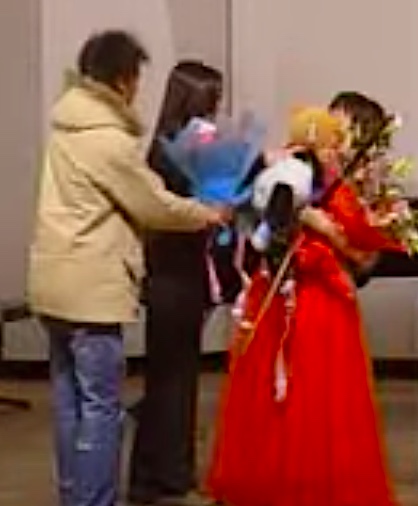




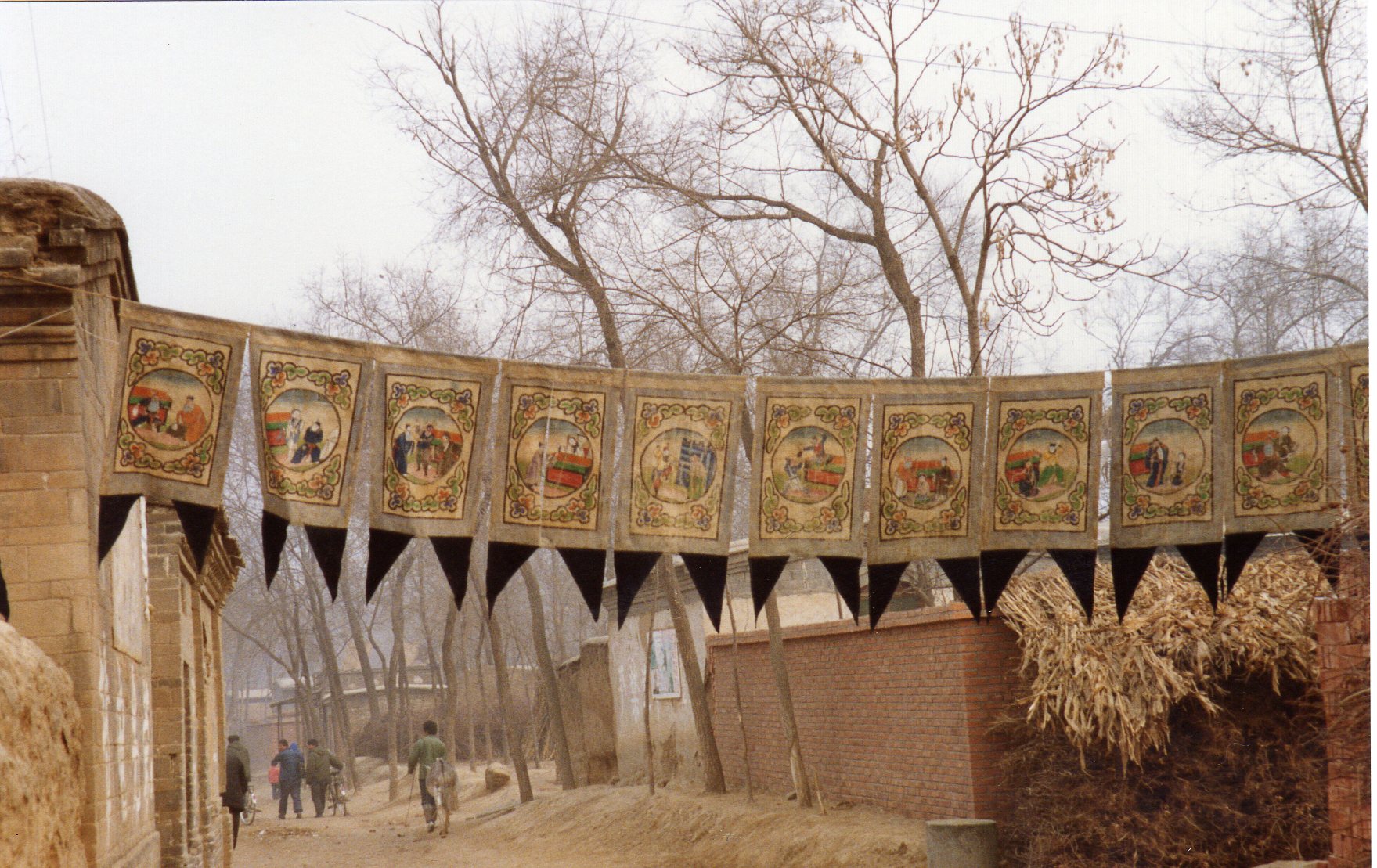

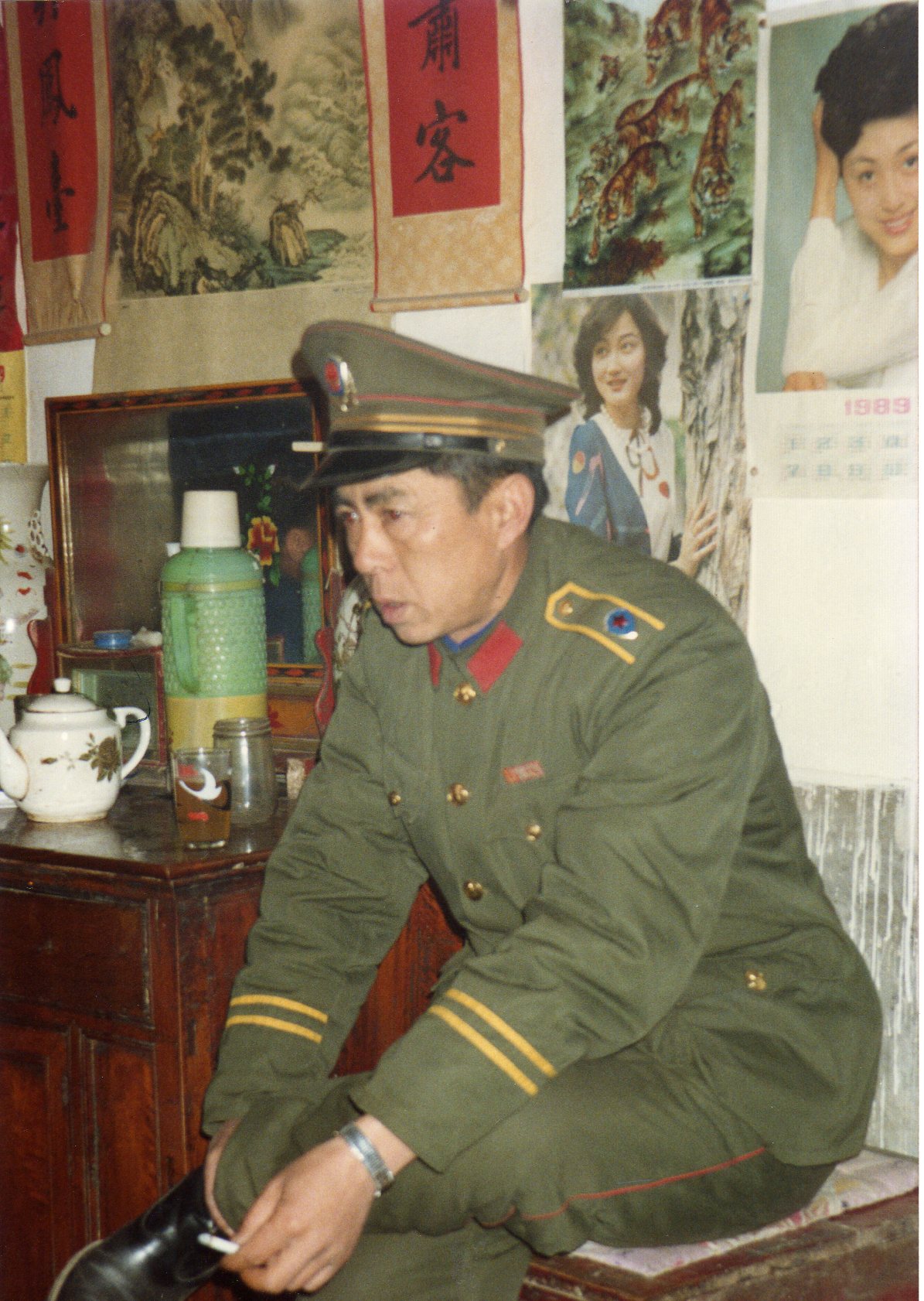


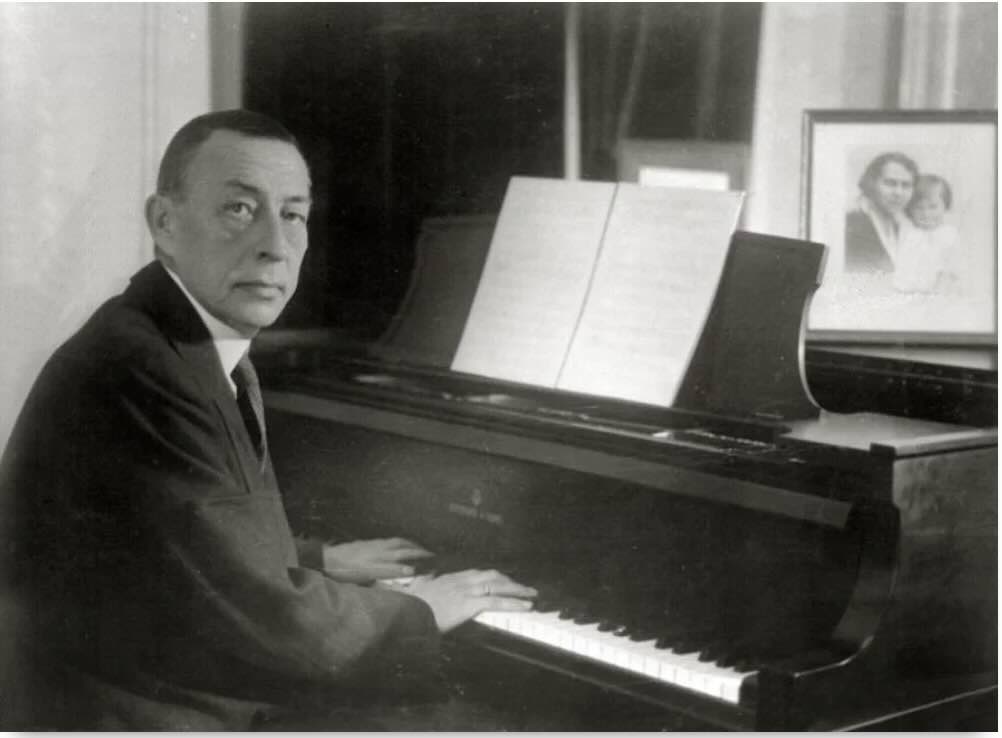
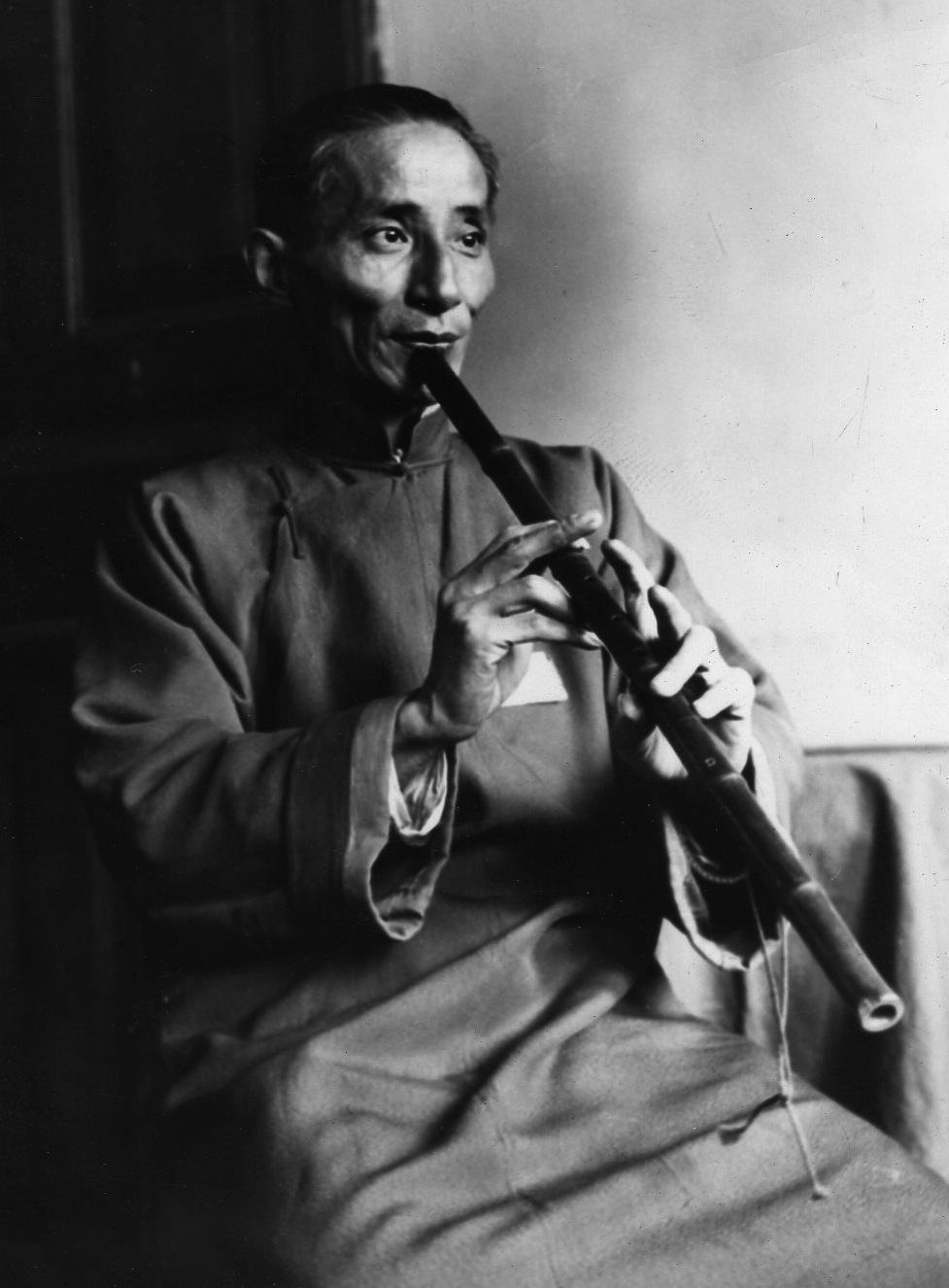
 In Wuxi, under the tuition of the American missionary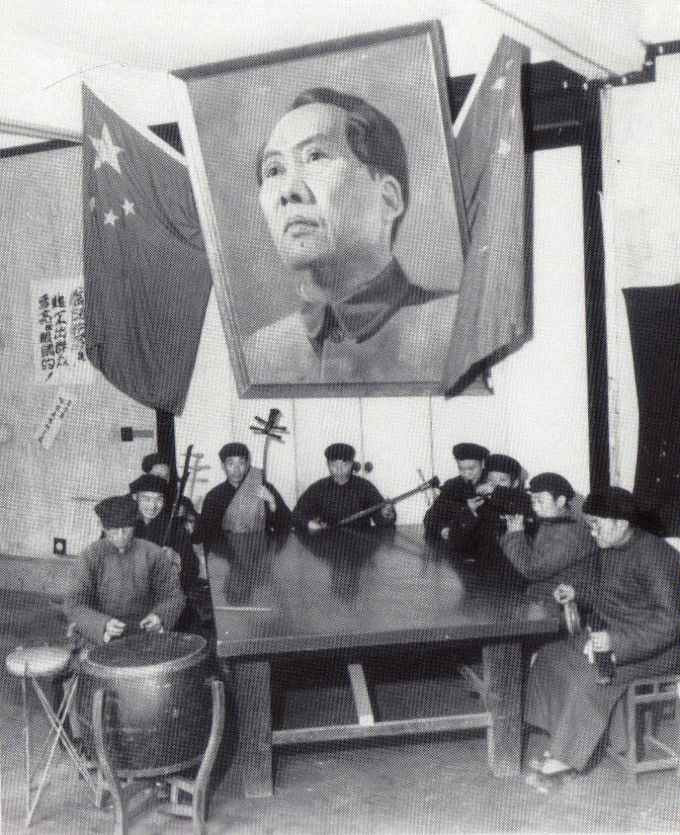




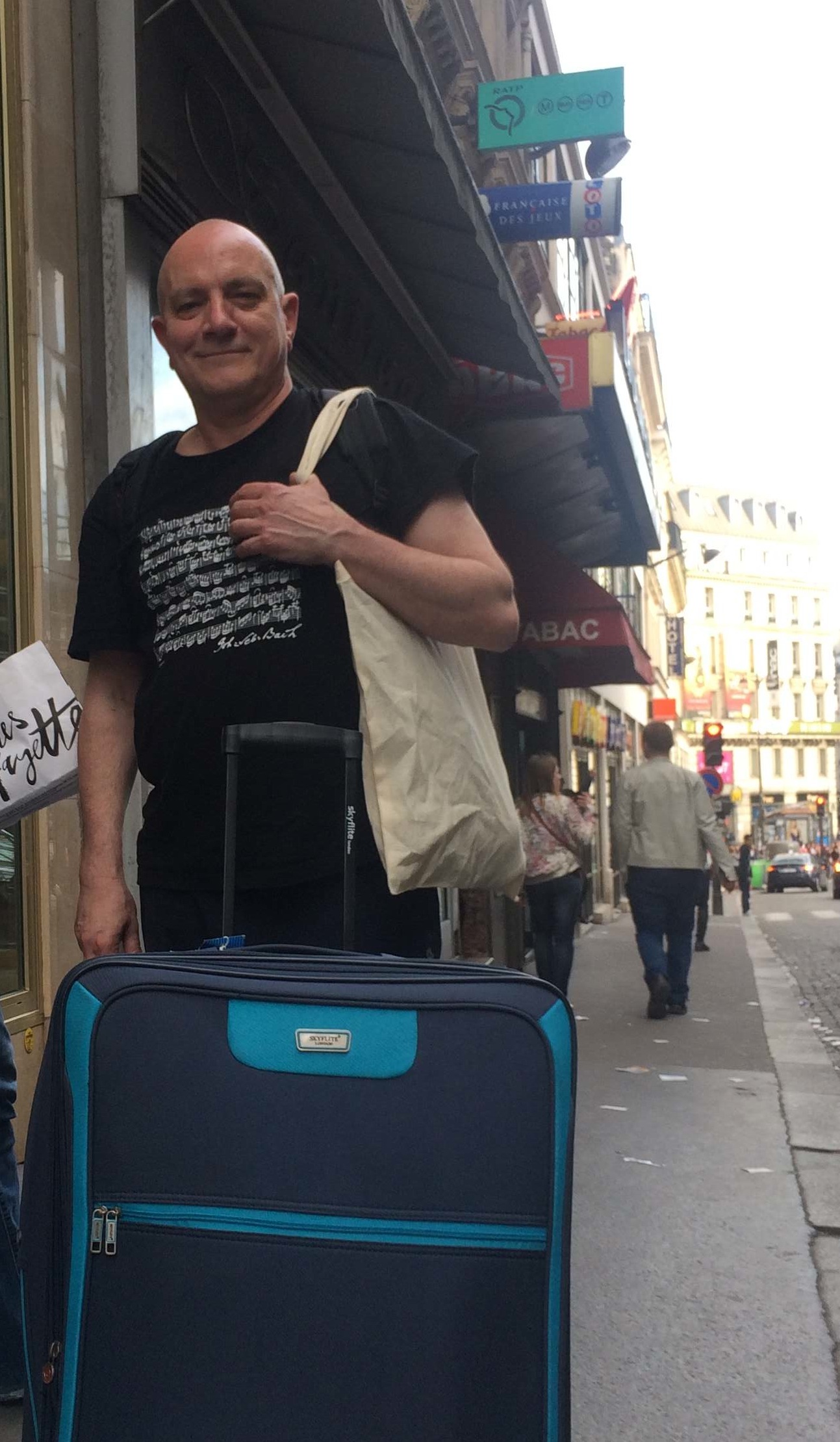


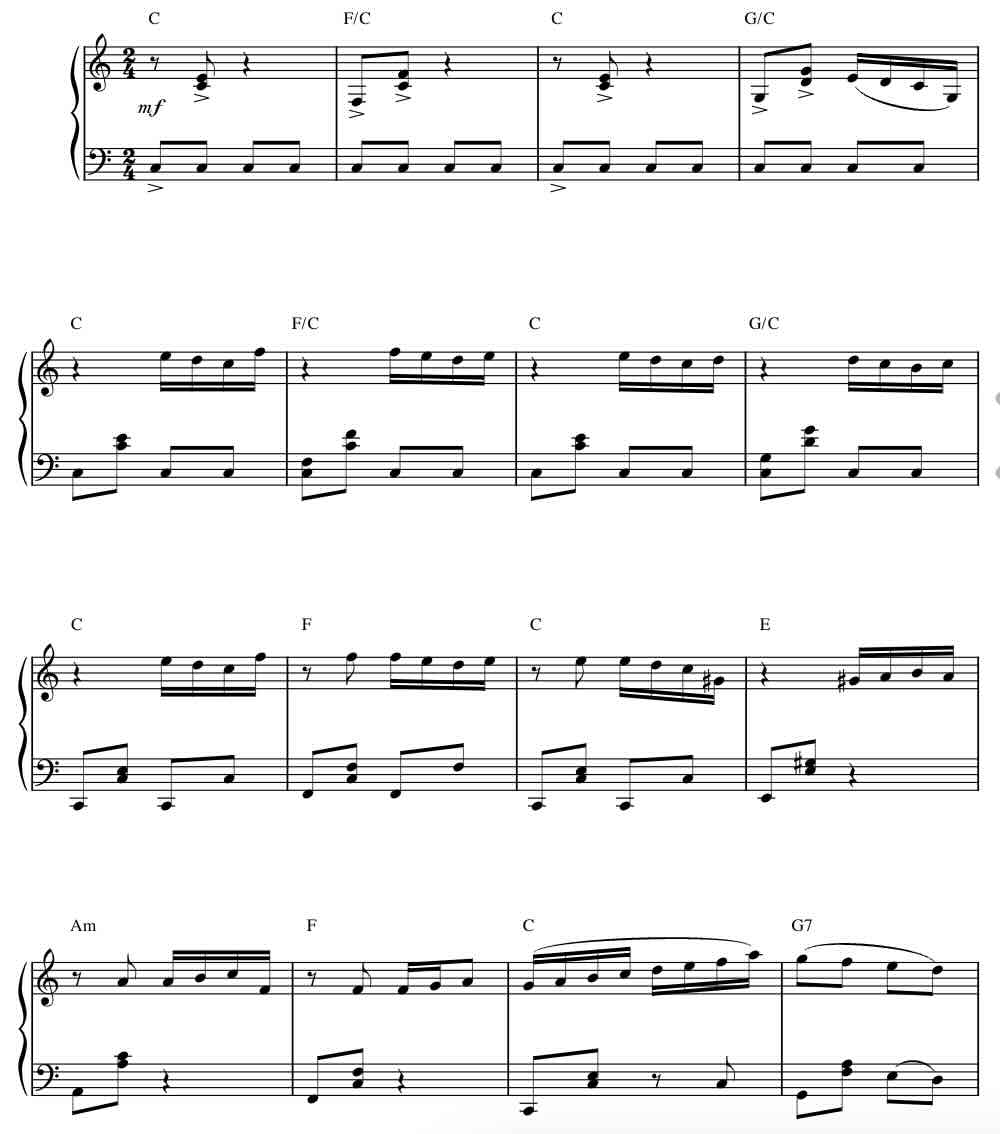

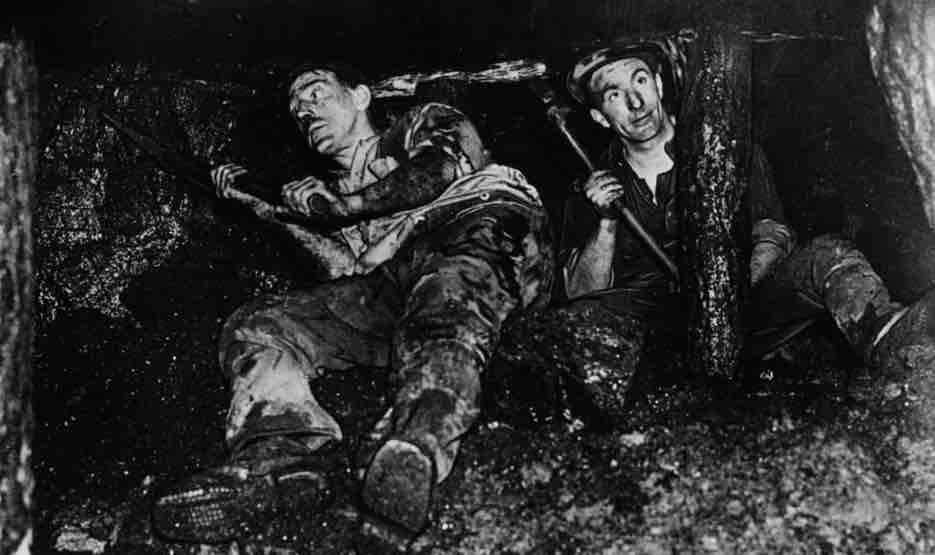


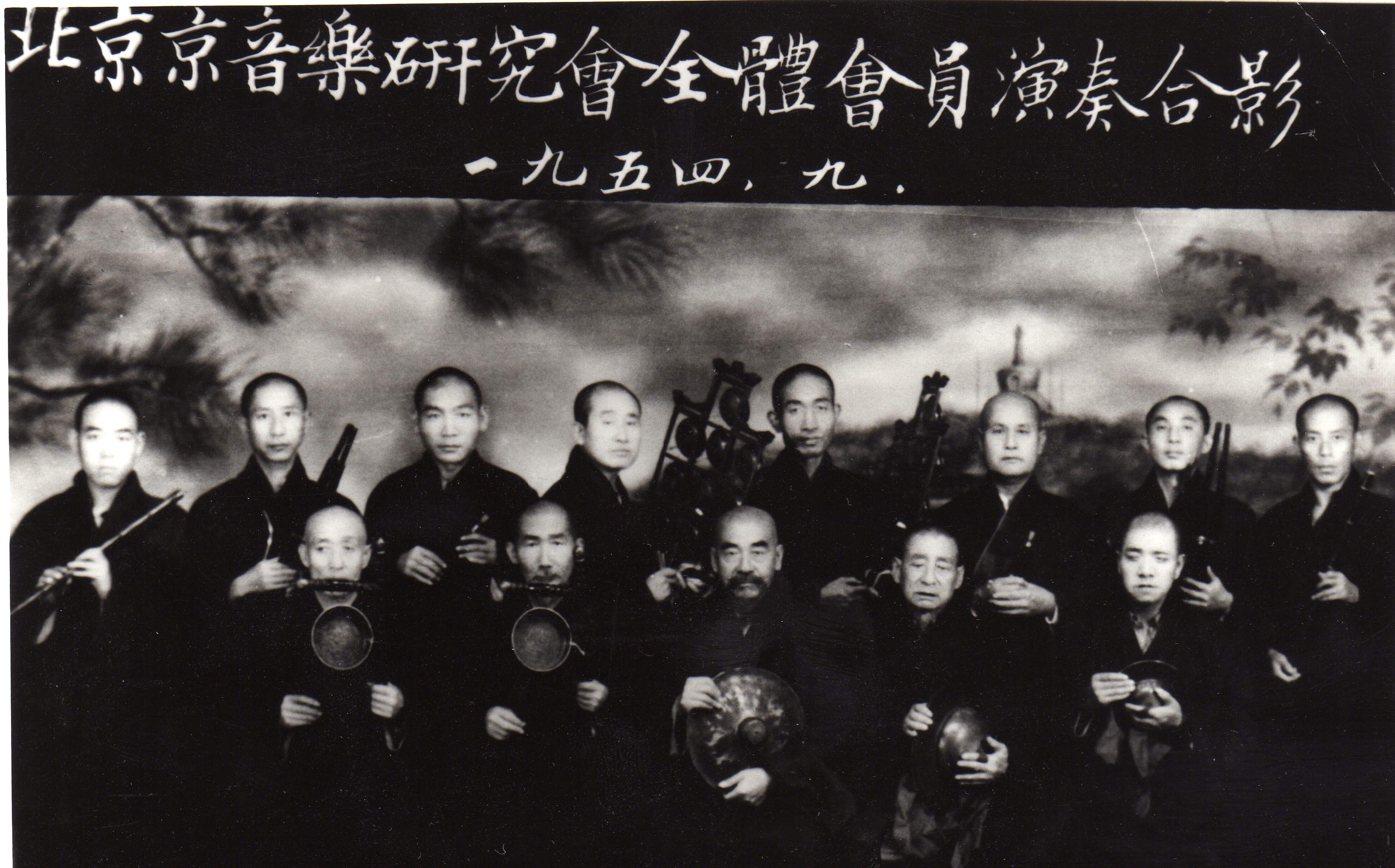

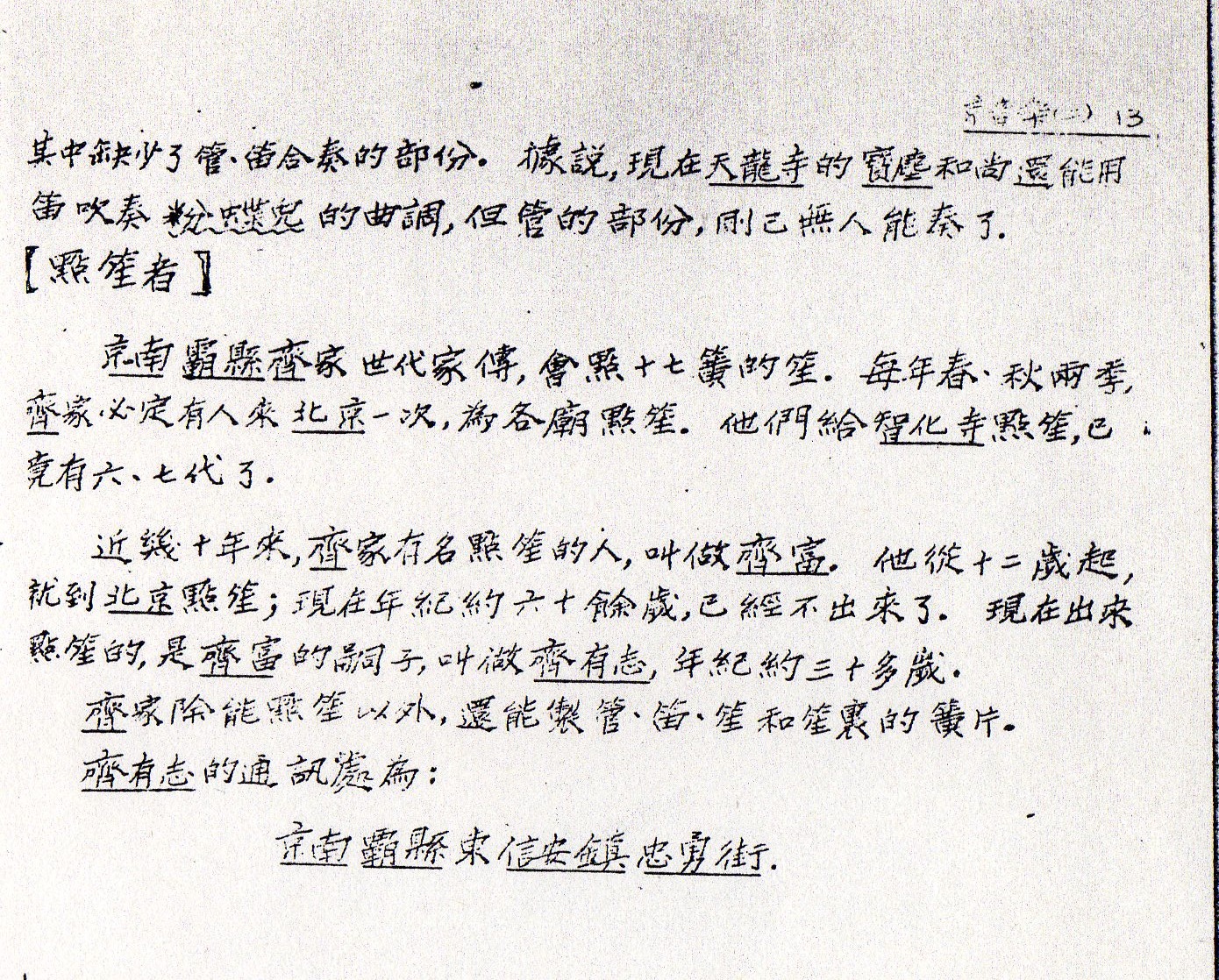







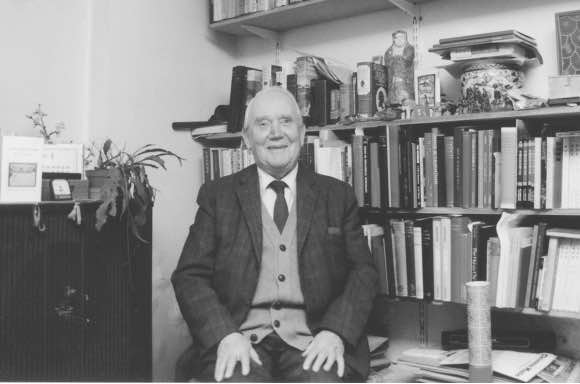

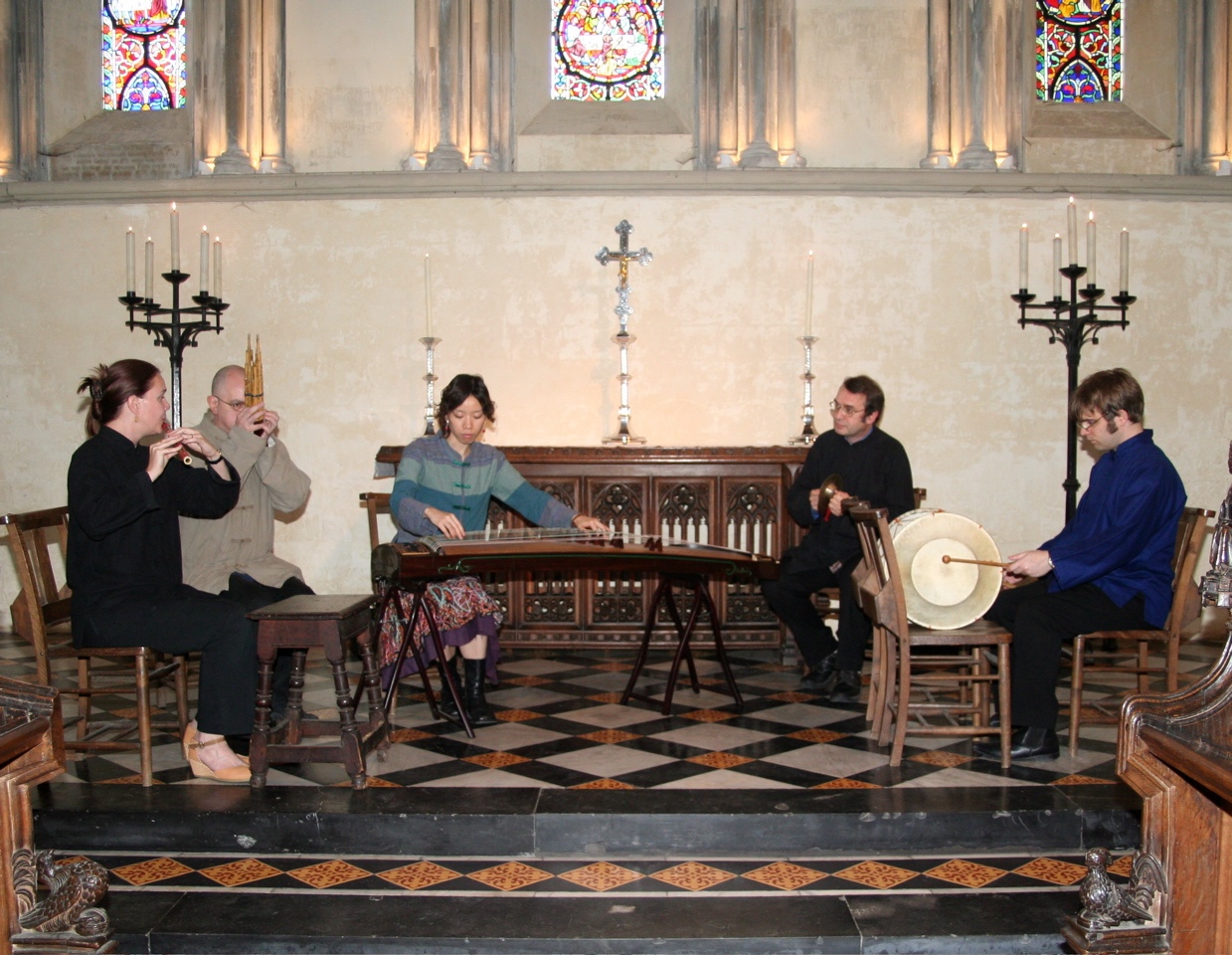
 Stephen Jones: a blog