I began exploring the false dichotomy between Orthodox Unity (Zhengyi) and Complete Perfection (Quanzhen) branches in my book In search of the folk Daoists of north China(note especially pp.17–18). Now that we have more instances, let’s revisit the scene.
In areas of north China for which I have information (see In search of the folk Daoists of north China), household Daoists may nominally belong to either Orthodox Unity or Complete Perfection branches. But such simplistic pigeonholing may distract us from the details of their ritual practice.
In their rituals and ritual manuals I can discern no significant distinction. When the Complete Perfection branch evolved in the 12th century, its priests (both temple and household) took over Orthodox Unity ritual practice: as John Lagerwey once observed to me, “that was the only show in town”. And while a distinct Complete Perfection literature did evolve (see my book, pp.203–207), their ritual practice never developed into a separate corpus of Complete Perfection ritual texts.
That explains why such an august Complete Perfection temple priest as Min Zhiting (see above) was constantly citing Orthodox Unity ritual manuals from the Daoist Canon; and why the best mainstream source for the manuals of the Orthodox Unity Li family household priests in Yanggao is the repertoire of modern “Complete Perfection” temple practice like the Xuanmen risong.
On the evidence to hand, household Complete Perfection Daoists seem rather more likely to recall their place in their particular lineage poem. They may have a clearer family tradition of earlier ancestors having spent time as temple priests. But household Orthodox Unity priests may also possess both these features. Of course the histories of such groups need documenting, but when we come to performance (which, after all, is the heart of ritual) it may be less germane.
And in some places now—since around 2000—the picture is further confused by a certain “centripetal” tendency. With wider access (such as the internet), some groups that have always been Orthodox Unity may be exploring ways of “legitimizing” themselves by seeking manuals from prestigious central sites like the White Cloud Temple in Beijing, and having costumes and hats made which make them appear to be Complete Perfection Daoists. They may even reform their “local” ritual practice by adopting elements from the “national” White Cloud Temple.
The scene is further obfuscated by a tendency among some scholars (both local and central) to assume that if a group is household-based, then they must be Orthodox Unity—a problem I have already queried. We really must debunk this assumption. In my recent posts, the Changwu Daoists turn out to belong to the Huashan branch of Complete Perfection, and the Guangling Daoists appear to come from a Longmen tradition. Actually, this is not so clear-cut—even non-Quanzhen priests might adopt Longmen titles (note sources by Vincent Goossaert cited in my In search of the folk Daoists of north China, p.18 n.34).
So while the ritual texts and ritual sequences of the two notional branches are rather similar, what always makes local traditions distinctive is the way in which the texts are performed.
Vocal trio, 2001: Li Manshan, Golden Noble, Li Bin.
Even here there’s another erroneous cliché that needs debunking. Generations of scholars of Daoist music have parroted the notion that in style the “music” of Orthodox Unity (conceived narrowly as “household” or folk) Daoists is more popular and lively, whereas that of Complete Perfection (again, conceived narrowly as austere monastic) Daoists is solemn, slow and restrained. It derives entirely from an unfounded theory about household and temple practice. We only need to watch my film about the Li family band to realize this simply won’t do. Orthodox Unity Daoists, their basic style (exemplified by the zantan hymns that permeate all their rituals) is extremely slow and solemn—but as you can hear, it is indeed punctuated by exhilarating moments. The style of (household!) Complete Perfection Daoists is certainly no more “solemn”. Both branches may use melodic shengguan instrumental ensemble—and if anything, that of the Orthodox Unity groups tends to be more slow and solemn.
Indeed, when I showed Li Manshan my videos of funeral segments by the Complete Perfection Daoists in Shuozhou, he found their performance “chaotic” (luan). Orthodox Unity groups in Yanggao like that of Li Manshan pride themselves on the “order” (guiju) of their performance.
My only ongoing note on this is that several household Complete Perfection groups (such as in Shuozhou and Guangling) may have preserved the element of fast tutti a cappella recitation of the jing scriptures better than in some Orthodox Unity traditions like those of Yanggao. But that doesn’t bear on the false stylistic dichotomy. Like Life, It’s Complicated… We always need to expand our database and use our critical faculties.
Following my articles on the household Daoists of Shuozhou and Changwu, I’ve now added another page to the “Themes” menu, on a group in Guangling, north Shanxi.
Apart from my work on the Li family Daoists of Yanggao, Chen Yu 陈瑜 led me towards other Daoist ritual groups in north Shanxi. We had leads to most other counties in the region, but Guangling was a blank area on our map of Daoist ritual activity. So Chen Yu’s visit there in May 2015 made a valuable addition to our surveys.
It’s been a while since we’ve had any French drôlerie (try A French letter, and the series on the Tang faqu). So it’s high time to remind ourselves of the classic scene from Monty Python and the Holy Grail:
Food for thought on the Brexit debate? And for aficionados of Chinese ritual, note the long trumpet near the opening.
For the taunts of cheerleaders at archery festivals in Bhutan, see here.
Having just naively queried the choices of heritage pundits, I am further reminded of my 2011 visit to Mount Athos by the difficulty of savouring one’s meal in a fado club while concentration is justly demanded on the saudade of the singing.
Attending matins—lasting several hours—in a monastery high above the sea is magical. We make our way to the chapel in darkness, finding the doorway by a tiny glint of candlelight in the inner sanctum beyond. Thuribles fragrant, icons glowing, elusive shadows of black-robed bearded monks flitting past. I find a place in a high narrow wooden stall, ornately designed to deny comfort.
To cite Leo Kanaris’ fine crime thriller Blood and Gold (pp.188–92):
It was all stage-managed for maximum effect: the light of truth scattering the night of ignorance, the Holy Fathers hovering in the shadows, their faces reflecting the candle’s rays, while Christ gazed down from the heavens. Beyond the walls of the church lay the world, unseen, unknown, an immense and incomprehensible universe.
As we stand/lean/doze in our stalls, the incense, lugubrious chanting and deep singing are intoxicating. After an eon the first shafts of sunlight begin to illuminate the scene, the mosaics on the dome beginning to shine down on us.
Kanaris goes on:
Another candle was lit on the far side of the church and a second monk added his voice. The effect was dramatic. Suddenly there was a dialogue. The two melodies alternated, joined, drew apart, curled around each other like the tendrils of a vine (cf. Susan McClary on baroque trio sonatas). George was lulled into a state that resembled hallucination, where one sense entered his mind in the guise of another. Sound became colour. The smoke of incense, burning every day here for centuries, became his own memories. Past and present fused in a molten river of darkness and gilded flames.
For those who have witnessed Chinese temple rituals, attending an Orthodox ceremony will seem rather familiar—even down to the wooden semantron that calls people to prayer. The rhythmic swish of the thuribles may even remind us of the sepaye of the ashiq in Xinjiang. One might also compare scenes from Holy Week in Sardinia in Bernard Lortat-Jacob’s fine film.
* * *
Such a ritual also gives the motley crew of pilgrims a healthy appetite for a friendly reflective chat at the following meal in the trapeza refectory, over what one might expect to be a wealth of succulent local produce. Well, forget it—silence is rigorously imposed among the “diners”, while from a lectern a monk lugubriously intones a passage from the gospels; worse still, the food is both meagre and inexplicably inedible.
So the only “blessing” is that one has to wolf it all down in a considerable hurry—not so much Mediterranean “buon appetito” conviviality, delighting in the copious blessings of the earth that our Good Lord has bestowed; more a 1950s’ English embarrassment at this unfortunate necessity that confronts us.
I’m not knocking Athos. OK, it’s not exactly at the forefront of gender equality, but the rituals, architecture, ancient glowing icons, tranquillity, and stunning scenery all make for an unforgettable experience—and even the meals are indeed a reflection of the world-view that we go there to absorb. Just don’t expect an urbane refined dining experience, that’s all.
A suitable penance for the UNESCO committee that elected “Mediterranean diet” for Intangible Cultural Heritage status might be to consign them to Mount Athos for a few days. That’ll sort ’em out. They will come down from the mountain with a healthy (sic) appetite for a deep-fried Mars bar.
*For a whole host of related posts, see heritage tag in sidebar, and this roundup!*
One of the more entertaining excursions of UNESCO’s Intangible Cultural Heritage (ICH) project is in the field of cuisine, under whose august portals “Mediterranean diet” has been loftily inscribed.
Among many fun BTL comments there is one from a certain Nickov:
Might have a stab at protecting the Bristol Channel Diet: Gregg’s pasties, white cider and chlamydia.
I also eagerly await an application from the Glasgow cultural authorities (whoever they might be) to, um, preserve the venerable deep-fried Mars bar. What of Spotted Dick, I hear you cry? For another caveat on Britain’s belated engagement with the UNESCO heritage bandwagon, click here. And I now note that Fray Bentos is not just a real place, but another UNESCO world heritage site! Recent additions to the list include outdoor chatting and the Berlin techno scene!
I was musing on all this during my recent trip to Lisbon, whose fine cuisine hardly fits into the Mediterranean gastronomic jigsaw.
While we’re on the topic of transmission, this important corrective doesn’t entirely confound the popular cliché that Bach‘s music fell out of use after his death. His sons, and their audiences, might not have taken kindly to being told to continue performing their father’s music—though doubtless ICH funding would have influenced their attitude.
Were one to be at all jocular (Surely not?—Ed.), one could query many ancient cultural traditions. Where might UNESCO stand on * wife-beating? Or indeed FGM? And whatever happened to child chimney-sweeps? Witch-burning, a tradition eradicated in most parts of the world, is also seriously endangered. Molvaniahas nice comments on all this kind of flapdoodle.
Thanks to Helen Rees (herself a great authority on the ICH) for alerting me to this article, succinctly broaching such issues:
Richard Kurin, “Safeguarding Intangible Cultural Heritage in the 2003 UNESCO Convention: a critical appraisal”, Museum 56.1 (2004), pp.66–77.
(pp.69–71:)
The definition, as given in the Convention, can encompass a broader range of activity than the framers assumed. Such cultural forms as rap music, Australian cricket, modern dance, post-modernist architectural knowledge, and karaoke bars all symbolize cultural communities (albeit not necessarily ethnically or regionally) and pass on their own traditions (though not usually genealogically). (69–71)
Not all intangible cultural heritage is recognised for the purposes of the Convention. To be recognised, intangible cultural heritage must be consistent with human rights, exhibit the need for mutual respect between communities, and be sustainable. This is a very high and one might say unrealistic and imposing standard.
Understandably, UNESCO does not want to support or encourage practices inimical to human rights such as slavery, infanticide, or torture. Yet the standard is not without controversy. Is female genital mutilation a legitimate part of intangible cultural heritage to be recognized by the Convention or not? Is a religious tradition that includes Brahmins, but excludes non-Brahmins disqualified as intangible cultural heritage because of its discriminatory quality? Is a musical tradition where only men play instruments and only women sing inequitable, and thus contrary to human rights accords? Determining what is allowable or not as intangible cultural heritage under the Convention will be a difficult task.
Similarly problematic is the “mutual respect” clause in the Convention. Intangible cultural heritage is by definition something used for community self-definition. Many cultural communities though, define themselves in opposition or resistance to others. Their very identity as a people or community relies on their victory over or defeat by others. Their defining songs and tales may celebrate the glory of empire, victorious kings, religious conversion, or alternatively resistance to perceived injustice, martyrdom and defeat—not the mutual respect of peoples. The Convention’s standard is quite idealistic, seeing culture as generally hopeful and positive, born not of historical struggle and conflict but of a varied flowering of diverse cultural ways. Including the “mutual respect” standard can however disqualify much of the world’s traditional culture from coverage by the Convention.
Kurin goes on to query the problematic standard of “sustainability”:
The whole treaty is about safeguarding heritage thought to be endangered to some degree or other. The very fact that a tradition is endangered means that it is not sustainable in its current form or in its current context—hence the need for national or international intervention. Yet by definition a tradition to be recognized as intangible cultural heritage under the Convention and thus worthy of safeguarding, must itself also be sustainable. The provision, though well meaning, is confusing. Sustainability here is an ideal to be achieved, not an eligibility requirement for action.
(pp.73–5:)
Surely no one rationally envisions the Convention as safeguarding the transmission of intangible cultural heritage through such coercive forms as legally requiring the sons and daughters who practise a tradition to continue in their parents’ footsteps. No cultural treaty should ensure results through the denial of freedom promised under human-rights accords, with the opportunity for social, cultural, and economic mobility.
Culture changes and evolves. Practices of the past are discarded when they cease to be functionally useful or symbolically meaningful to a community. UNESCO and Member States need not guarantee through financial and symbolic rewards the survival of those customs and practices, beliefs and traditions that the community itself wants to discard. Nor should they encourage particularly harmful practices, or “freeze” cultural practices in the guise of preserving cultural diversity or defending against cultural globalization.
The Convention tends to reduce intangible cultural heritage to a list of largely expressive traditions, atomistically recognised and conceived. The actions it proposes miss the larger, holistic aspect of culture—the very characteristic that makes culture intangible. This is the intricate and complex web of meaningful social actions undertaken by individuals, groups, and institutions. Thousands of human cultures today face a myriad of challenges. Whether they survive or flourish depends upon so many things—the freedom and desire of culture bearers, an adequate environment, a sustaining economic system, a political context within which their very existence is at least tolerated. Actions to safeguard “tangibilized” inventoried items of cultural production are unlikely to safeguard adequately the larger, deeper, more diffuse intangible cultural patterns and contexts. Saving songs may not protect the ways of life of their singers, or the appreciation due by listeners. Far greater more holistic and systematic action is likely to be required.
Two recent books contain useful case-studies and references:
Michael Dylan Foster and Lisa Gilman (eds), UNESCO on the ground: local perspectives on Intangible Cultural Heritage (2015) (review here)
Christina Maags and Marina Svensson (eds), Chinese heritage in the making: experiences, negotiations and contestations (2018).
The Introduction to the latter gives some nuanced perspectives:
As several authors have pointed out, the adoption of the intangible heritage discourse means that many cultural practices, including religious rituals that were seen as “superstitious” practices in the past, are now celebrated as heritage. In this heritagization process many of them have been reconstructed and reinterpreted, and some have had their religious aspects downplayed or ignored. (18–19)
Heritage listings and management is not an innocent and non-political celebration of heritage and culture, but a selective process that leads to hierarchies and exclusion. It can furthermore be used as a tool of governance to control and manage tradition, cultural practices, and religion, and to steer people’s memories, sense of place, and identities in certain ways. Several scholars have pointed out that the use of culture and intangible cultural heritage can be a softer and less visible way of “rendering individuals governable”. The listing, reification, and celebration of certain cultural practices can thus be a tool of governance, especially when individuals and communities are excluded from decision-making but still come to internalize the validation of the selected practices and behaviours. In the context of China, ICH could be seen as a new form of governance and a way to control religious and ethnic communities in particular. (20)
The heritage boom in China is partly driven by the central state and by local governments that are motivated by both ideological and economic considerations. The top-down heritagization process has, however, given rise to new stakeholders who may have their own agendas and express different views. At the same time, the language of heritage has also opened up space for individual citizens and local communities to celebrate and safeguard their own traditions and local history. Individual citizens and communities are experiencing, performing, and documenting heritage in a more bottom-up way, sometimes outside of the state narrative, at the same time as many actors try to capitalize on the official heritage discourse in order to gain legitimacy for their own history and traditions. (28)
I’m sure theorists have been beavering away at unpacking the prescriptive assumption that all tradition must be “good”. Conversely, ethnography avoids prescription—I prefer to devote my energies to documenting the traditions themselves, as I find them, rather than awarding prizes on questionable aesthetic and theoretical grounds, or leading them down the tortuous path of state institutionalisation and commodification.
Meanwhile I find similar concerns expressed for flamencology:
Something is wrong with any interpretative method that reifies genres and objectifies abstractions to the point that events in the present are reduced to reflections of the past.
So I’m not alone in my reservations. See also e.g. this review of a volume on UNESCO on the ground:
Valdimar Tr. Hafstein, “Intangible Heritage as diagnosis, safeguarding as treatment”, Journal of Folklore Research 52.2–3 (2015),
with its opening
Patient: “What is it, Doctor?” Doctor: “There’s no easy way to break this to you: you have heritage.” Patient: “Heritage? Are you serious? What kind?” Doctor: “Intangible. I’m sorry.” Patient: “Intangible heritage… How bad is it?” Doctor: “It is in urgent needs of safeguarding. It is already metacultural.” Patient: “What’s the prognosis?” Doctor: “Intangible heritage is chronic, I’m afraid.” […]
* * *
Here, and in the thoughtful analysis of Heritage movements by John Butt, there are many lessons for China, which are unlikely to be learned. In the south of Fujian province—alongside the extraordinary Hokkien traditions of Daoist ritual, processions with god statues borne aloft on sedans, and nanyin chamber ballads—vicious chronic inter-village feuds are a hallowed part of the local heritage.
In China at least, one must observe that the ICH is a state agency to trumpet the grandeur of ancient Chinese culture, rather than a dispassionate body supporting scholarly research; except in the most hackneyed of terms, it can hardly confront the most basic aspect of such cultures—their traumatic fortunes through successive upheavals since the 1940s. And where do spirit mediums (anchors in maintaining local ritual life, among both the ethnic minorities and the Han Chinese), cults, and sectarian groups stand here? Perhaps fortunately for them, they seem most unlikely to be offered the poisoned chalice of ICH status.
I’ve introduced Ka-ming Wu’s thoughtful analysis of heritage projects in Shaanbei here. While we always need to understand the involvement/intrusion of the state, I’m still concerned that all the attention that scholars (both Chinese and foreign) currently lavish on a state institution distracts them from studying local cultures themselves (of which ICH may or may not be a part). Even those who are sensitive to the flaws of the system may be driven by the agenda of studying it; even noting the way it may be utilized by local agents, it’s still the focus. In a short space of time, it has dominated the discourse. Contrast, for instance, the vast bibliography on ICH with the virtually non-existent studies of the numerous local Daoist lineages in Gansu province and their rituals in changing society. Look, here I am myself having to go on about ICH when I could be writing about the Daoists!
Conversely, the ICH has recently begun to play a significant role in many local cultures, and it is now likely to be included in the remit of fieldworkers. It has become significant among amateur ritual associations in Hebei (first of my main field sites), which otherwise were becoming partly moribund (though for enduring ritual functions, see here).
But fortunately even the Chinese state seems unable to transform local cultures into one big glossy Disneyland. Much ritual activity tends to be spared the double-edged sword of attention from party-state cultural initiatives.While the Li family Daoists in north Shanxi are nominally part of the ICH system (see in particular here), their livelihood and activities remain almost solely dependent on providing mortuary services for their local clients—for those who are still left behind in the villages, that is.
My concern is still that the ICH is neither so all-pervasive nor as malleable as some studies suggest.
If all this commodification and reification is a distressing distortion of Han Chinese cultures, it’s still worse for minority traditions such as those of the Tibetans and Uyghurs, for whom the political agenda to sinicise and tame is even clearer: for the former, note this article by Isabelle Henrion-Dourcy, and for the former, reports by Rachel Harris.
Expanding our airline theme (Airplane has its own tag), here’s another classic—and apparently true—story handed down in the orchestral world:
On a long-haul flight, as the stewards* are serving refreshments, the captain makes the usual suave and tedious announcement. He then turns to his co-pilot, and—fatally—fails to realize that he hasn’t turned the tannoy off.
So the entire plane hears the captain’s next comment:
“Know what I could really do with right now? A cup of coffee and a blowjob.”
One of the, um, Trolley Dollies, realising the captain’s mistake, interrupts her serving of the drinks and hastily rushes back to the cockpit to alert him that he needs to switch the tannoy off. As she sashays down the aisle, one of the passengers calls out after her,
*For an introduction to my whole series on Mahler, with links, click here!*
It’s always worth tuning in to Donald Macleod’s Composer of the week on BBC Radio 3. Even for a Mahler fanatic like me, last week’s programmes (based on the well-trodden theme of his years with Alma) were instructive.
We all know (don’t we) about Mahler’s settings of Hans Bethge’s embroidered translations of Tang poems for Das Lied von der Erde (composed in 1909 but only performed after his death in 1911). In 1910, as he was fêted in New York, the Schirmers [some sources say the Roosevelts] took him and Alma on a visit to an opium den in Chinatown. Long before the stereotypes of Fu Manchu and Anna May Wong, this could have been an intriguing encounter.
Their visit to the “teeming” Lower East Side Jewish quarter must have been more conflicted (among myriad discussions of Mahler and Judaism, Norman Lebrecht, Why Mahler? is accessible). Alma’s portrayals are not always reliable, but here it’s worth citing her account (Gustav Mahler: memories and letters, pp.161–2)—more prurient than ethnographic:
We were invited by the music publisher, Schirmer, and his wife to dine with them one day and drive with them afterwards “down town”, into China town. The indispensable detective sat beside the chauffeur. We turned out of the busy streets into narrower ones which became by degrees quieter, narrower, darker and more uncanny. We got out, accompanied by the detective with a loaded revolver in his pocket, and went into an opium den. A creature with a sickeningly womanish face received us in an ante-room, where we had to put down a sum of money. He began at once to give us a long list of his successes with white ladies, and told us he acted female parts in the Chinese Theatre. A Chinese woman, of course, may not either act or look on in a theatre. He showed it in his face—it was the most degenerate man-woman face you could imagine. He showed us numerous photographs of American women he had—and he said the rest by gestures. Then he conducted us into several small but high rooms, empty in the middle but furnished with bunks along the sides, each of which contained a stretcher; and on each stretcher lay a doped Chinese with his head lolling into the room. Some of them raised their heads heavily as we approached, but at once let them sink again. It was a gruesomely horrible sight. They were simply dumped there to sleep off their intoxication. They might be robbed or murdered while they were in this state and know nothing about it. The whole scene resembled a baker’s shop with human loaves.
On now to a house of cards higher and higher, up into a room luxuriously furnished for strangers, cushions everywhere, and beside each cushion an opium pipe. And a Chinese, for payment, was ready to smoke a pipe on the spot while we watched him slowly succumb, rolling his eyes and twisting his limbs about. We were invited to smoke too but declined with horror. Next the theatre. Charming, but no play was being given. If it had been, no European would have been allowed among the audience. On again. Rats with long pigtails slunk nimbly and rapidly along the walls of the stinking street. Mahler said: “I can hardly believe that these are my brothers.”
On again. Small shops, small hotels, all silent. Finally, on the outskirts of this district we came on the habitat of a religious sect. There was a large hall at the far end of which sat a man with the face of a fanatic playing hymns on a harmonium in a pronouncedly whining style. The benches were occupied by a starving congregation. We were given the explanation. For listening to those hymns and joining in—a cup of coffee and a roll. What wretchedness in those faces! We pushed our way out, followed by hostile eyes, and for long afterwards we could still hear the flat notes of the hungry singers.
On again, and now the Jewish quarter. It was dark by this time. But here all was life and bustle, chaffering and shouting. The racial difference was staggering, but it was because the Jews worked day and night shifts to lose no time. The whole street was full from end to end of old clothes and rags. The air was heavy with the smell of food. I asked Mahler softly in his own words, “Are these our brothers?” He shook his head in despair.
With a sigh of relief we at last turned a corner and found ourselves in a well-lighted street among our own sort of people. Can it be that there are only class and not race distinctions?
Mahler’s music is so full of what would be known as folk and world music that his consternation is startling; can his success have made him so oblivious to his own background? And as ever, while trying to visualise the ethos of the time, we can only read this with later history in mind.
For more on Der Abschied, see also here and here. For more on Mahler in New York, and an ominous funeral, see Mahler 10.
Sorry, I realise this blog risks turning into an unsolicited and infinite edition of Private Passions.
Handel only gets a rare look-in among my posts on WAM, utterly eclipsed as he is by his contemporary Bach. I’ve already praised Zodak the Chartered Accountant, I mean Zadok the Priest, and I’ve taken part in many a moving performance of the operas and oratorios with John Eliot Gardiner. So despite my devotion to Bach, I have to feature some enthralling slow Handel arias.
Israel in Egypt has long been a signature piece of John Eliot Gardiner and the Monteverdi Choir—performers and audiences alike were overwhelmed by Michael Chance singing Thou shalt bring them in:
For Dixit dominus and the ravishing soprano duet De torrente, click here.
And then Eternal source of light divine is moving in diverse versions. Doing it on tour with Carolyn Samson and David Blackadder was overwhelming (OMG, I can’t believe I was involved in that). But here are a couple more versions, beautiful in different ways:
And never mind HIP “authenticity”, this version is just as moving:
And now I just have to add another rendition—also reminding us of the importance of music in ritual: the entrance of the bride at the royal wedding, sadly neglected in the musical coverage, yet worthy of the spellbinding visual images, setting a magical tone for the whole event, with the passion of Michael Curry and Stand by me:
Eternal source of light divine With double warmth thy beams display And with distinguish’d glory shine To add a lustre to this day.
A much-told story about the late great Paul Foot goes something like this:
He was choosing some oranges to buy at his local street market when he noticed the Outspan label. (Quite correctly) full of righteous indignation about apartheid, he declared roundly,
“I’m not buying these! They’re from South Africa!”
“Quite right, sir,” said the stallholder. “All those nasty black hands touching them!”
The other day, finding myself (in the old-fashioned, not New-Age, sense—what do you take me for?) in Stoke Newington, I recalled this fine routine—a historical vignette that already needs exegesis, given the area’s later vibrant image:
Alexei may have mellowed over the years since his angry standup and his cameos in The young ones, but he hasn’t lost his surreal edge, as we can hear in his recent BBC Radio 4 series Alexei Sayle’s imaginary sandwich bar.
He plans a sultry film noir aimed at the children’s market,
Postman Pat always rings twice.
On rationing:
From 1939 to 1945 the government had permitted, indeed had positively encouraged men to bayonet people in the guts or set them on fire with flame throwers or bomb their houses from 20,000 feet, but when they came home they couldn’t have a tomato until 1957!
With the immaculate credentials of his upringing, he reflects,
I think despite all the chaos we create, the famines, the gulags, left-wing people are basically good people. Admittedly left-wing regimes might over time devolve into authoritarian kleptocracies whose autocratic rule is enforced by terror and torture, but we do mean well.
Everything is wrong with ballroom dancing: the clothes, the music, even the expressions on the dancers’ faces, plus of course the dancing itself. The reason for this is simple—you get points for it. Ballroom dancing is an aesthetic pursuit, an art form, which has been turned into a competition, the result of which is that everything is done to attract the attention of the judges. The competitors must try and fit into a series of rules rather than display emotion, artistry and invention, and so a tawdry, flashy, kitsch aesthetic takes over. […] If you see a couple performing a proper Argentinian tango you are watching a dance created in the brothels of Buenos Aires that reeks of melancholy and sex. Then you watch the ballroom version of tango, all gurning faces and robotic, angular, hideous movements. You are seeing a great popular art reduced to a terrible travesty.
On the topic of TV competitions, he might like the recent Mash Report headline:
Bake Off Winner Discovers You Can Buy Cake From Shops
Alexei elaborates on the Pannacotta Army line (“ancient figures of soldiers, sculpted out of soft white cheese”), and reminds me of the old Snow White and the Seven Samurai joke, which gave Tom Holt the title for his drôle book. Which might lead us to Nick Helm’s line:
I needed a password eight characters long—so I picked Snow White and the Seven Dwarves.
Among many gems is his account in Episode 2 of how a casual expression “Soup, swoop, loop de loop”, recycled as a forgotten piss-take after a London dinner party, came to be exported to New Zealand and immortalised in the dissertation
“Soup, swoop, loop de loop”: shamanistic incantations in Rarotongan food preparation rituals, University of Topeka, 2001.
Another Strange But True story from my mentor Paul Kratochvil, again bearing on the surreal Czech imagination:
In the early 1960s two players in the Prague opera orchestra were locked in a vendetta. Between performances the band used to leave their concert uniform in the green room. Every couple of weeks, one of them, coming in early and unobserved armed with needle and thread, meticulously took up the cuffs of his adversary’s concert trousers by a tiny bit.
It’s a retired person’s table, a desk for TV dinners. This is Trump gradually giving up the pretence he runs a vast country and instead settling into a more leisured life. Like his furniture, he is diminishing before our eyes.
Leibniz in goal, back four Kant, Hegel, Schopenhauer and Schelling, front-runners Schlegel, Wittgenstein, Nietzsche, and Heidegger, and the mid-field duo of Beckenbauer and Jaspers. Beckenbauer obviously a bit of a surprise there.
For the Greeks, “Chopper” Sophocles, and Aristotle, “very much the man in form”…
When Nietsche disputes the referee’s call, Confucius He Say “Name go in book”. Despite Marx coming on as a late substitute, Socrates scores a late winner, whereupon
Hegel is arguing that the reality is merely an a priori adjunct of non-naturalistic ethics, Kant via the categorical imperative is holding that ontologically it exists only in the imagination, and Marx is claiming it was offside.
As the wiki article eruditely observes, the linesmen St Augustine and St Thomas Aquinas were Roman African and Italian respectively. The article also describes a live replay in 2010.
The guanzi oboe, leader of the shengguan melodic ensemble that accompanies temple and folk liturgy throughout north China, also has a foothold in the conservatoires—though it is far less popular a solo instrument there than the erhu or pipa. Just as I noted for the suona shawm, there is quite a gulf between folk and conservatoire versions of the guanzi.
Back in 1987, my official “unit” for my second half-year stint in China was the Central Conservatoire in Beijing. My main supervisor there was the great Yuan Jingfang, who (resigning herself to my frequent excursions to the countryside) managed to teach me a lot about the instrumental ensemble music on which she is the leading expert (see e.g. my notes from Chengde). My first book Folk Music of Chinawas in large part a result of my studies with her.
While I already realised that folk ritual and instruments were to be learned through constant ritual experience rather than in the arid setting of the classroom, I thought I’d better show willing by taking the odd lesson from the guanzi master Hu Zhihou, himself a pupil of the great Hebei Daoist master Yang Yuanheng in the 1950s.
Turning up for lessons every Monday morning at 8am, the warm-up breathing exercise Teacher Hu set me was to smoke a couple of cigarettes with him. This was a real challenge for me, since at the ripe old age of 33 I had still only succeeded in training myself in the consumption of alcohol—absorbing that aspect of my violin teacher Hugh Maguire’s education but not his cavalier smoking habit.
Even my exploratory first fieldtrips to the countryside in 1986 were conducted without the social lubricant of sharing cigarettes. I was now becoming a fully-fledged yanjiusheng (研究生 “research student”, or 烟酒生 “scholar of fags and booze”)
So, egged on Teacher Hu, I obediently puffed away in the classroom before spluttering into the guanzi, failing to make much progress in coaxing more than a weedy squawk out of the poor instrument. Fiddling around with reeds and working out fingerings certainly stood me in good stead for my later (passive) immersion in the world of folk guanzi playing, but I can hardly claim to have made the most of his wisdom.
When in 2013 I brought the Li family Daoist band to Beijing to give a recital at my alma mater, I was delighted to find Hu Zhihou in the audience.
He had always been a keen student of folk guanzi playing. While I was “studying” with him, he was leading the suave conservatoire version of the Zhihua temple repertoire—albeit rather distant from the haunting original style. And like Yuan Jingfang, he had made an early fieldtrip to Yanggao, where he admired the playing of Liu Zhong in Li Qing’s Daoist band—we were all spellbound by Liu Zhong then, in the days before it transpired that there were other Daoist guanzi players there who were even more respected.
So now I was delighted that Hu Zhihou could relish the brilliant playing of Wu Mei. As I introduced them after the concert, I observed boldly:
“Teacher Hu, I must admit that you never managed to teach me the guanzi! But one thing you did teach me really well, for which I am eternally grateful, is smoking!”
Sure, it’s possible to do fieldwork in rural China without it (I generally refrain from drinking “white spirit” there, for instance, so I don’t completely go native), but the conviviality of the exchange of cigarettes may seem a necessary temporary expedient—a sacrifice for our art.
This succinct critique by no means invalidates musicology (if it does, then Uh-oh), but I’m fond of the expression
With All Due Respect to Laurie Anderson, and indeed to Steve Martin, Frank Zappa, Elvis Costello, Miles Davis, Thelonius Monk, * and Clara Schumann (now that’d be some jam session: cf. my fantasy dinner party), its many variations have been widely attributed. It’s anothersnowclone going back in sentiment to the Mists of Time (well, 1918), as in this fine piece of detective work (cf. wiki).
* Whose wife Nellie Smith allegedly nicknamed him “Melodious Thunk”.
After an interlude when my three Ashgate volumes (the first two being part of the fine SOAS Musicology series) suffered a prohibitive price-hike, they are now reissued by Taylor & Francis/Routledge in affordable paperback editions. You can order them here (under “Books”!).
The two Ritual and music books are all the more worth snapping up for their accompanying DVDs—the first making useful background for my film on Li Manshan.
While I’m about it, details of my 2016 book Daoist priests of the Li family are here.
The labyrinthine crime novels of Michael Connelly are brilliant—set in LA, packed with gritty procedural, historical, and psychological detail, with their protagonist Harry (short, indeed, for Hieronymus) Bosch.
A tangential delight permeating the series is Bosch’s fine taste in jazz. Continuing my trumpet theme, it was through Nine Dragons (a murky Triad case) that I learned of Tomasz Stańko (1942–2018), “the Polish Miles Davis”.
To remind us of the jazz scene under state socialism (see e.g. Pickham and Ritter, Jazz behind the Iron curtain), here’s his 1970 album Music for K:
and First song live in 1976:
WOW… His ballads are great too:
His musical collaborations, with the likes of Krzysztof Komeda (notably in the 60s) and Cecil Taylor (from 1984), were fruitful. For more Stańko (notably the amazing 1965 album Astigmatic), see under Polish jazz, then and now; as well as the 2023 LJF tribute. See also Harry Bosch’s takes on Frank Morgan and Art Pepper.
Brass players enjoy, even flaunt, their hooligan image (more “licence to deviate from behavioural norms”)—or at least, UK brass players in a befuddled heyday from the 1960s to the 1990s, still an ongoing hangover today.
Becoming a musician (or indeed a household Daoist) is about far more than “learning the dots”; aspiring musicians also look to the lifestyles of their role models. The intoxicant du jour changes—Chinese shawm players have moved from opium to amphetamines, for instance. But both in jazz and WAM, many musos have learned to their cost that adopting the, um, recreational pastimes of Charlie Parker or John Wilbraham doesn’t necessarily help them play the way their heroes did.
The trumpeter John Wilbraham (“Jumbo”) was legendary. This is a beautiful site well worth exploring—an insider’s ethnography. I came across him when he was trumpet tutor for the NYO, and later in the BBC Symphony Orchestra.
There are also some fine stories on this site, not least about two of my most admired conductors (more maestro-baiting):
“The one thing we do know about Bach for certain, is that he didn’t want it to sound fucking awful!”
—John Wilbraham to John Eliot Gardiner.
(a succinct critique of the Early Music movement?), and
“If I’d wanted to play in front of a clown, I’d have joined the fucking circus.”
—John Wilbraham (Jumbo) on Gennadi Rozhdestvensky (Noddy)
Learning to perform—in any tradition!—requires endless hours of practice (again, it’s the stories about jazzers, rather than WAM musos, that inspire me here). There’s another famous story, which strangely I haven’t yet found among all the online anecdotes:
Before Mahler 5 at the Proms, a music critic was having a drink in the 99, favoured hostelry of Prom-goers. He watched in amazement as Jumbo downed pint after pint, and then picked up his trumpet case to stagger off to the gig. Expecting the worst, the critic took his place in the audience. The symphony opens with a scary exposed trumpet solo, and is challenging throughout. Jumbo played the whole piece perfectly.
After the concert the critic returns to the pub, to find Jumbo already propped up at the bar, more pints lined up. He walks up to him and says,
“You must excuse me, Mr Wilbraham, but may I ask how you manage to play so perfectly when you’re pissed?”
“It’sh perfectly simple,” Jumbo smiles back at him conspiratorially, “I practice pissed!”
Occasionally I accidentally view snippets of both The voice and Cardiff young singer of the world. Both feature remarkable singers—within their respective genres and social milieux. My reservations merely concern the blinkered media hype, with all its competitive ethos (for Alexei Sayle and others on contests, see here).* They jump through the hoops, displaying just the right degrees of individuality, gauging the prevailing ethos within their respective social and temporal fanbase. Image is is a major aspect of both events.
And of course neither contest, and neither genre, reflects the diverse riches of “singers of the world”— even for the current scene, let alone earlier histories. For a more rigorous attempt to document the riches of world singing, see here.
It’s not that I really expect Romanian wedding laments, praise singing from Rajasthan, or the songs of Chinese spirit mediums to feature prominently in popular TV viewing (for an intriguing case in Ukraine, click here); but even the impasse between those two contrasting contemporary Western genres is glaring. Neither can be regarded as intrinsically superior. For yet more, see here.
British: A very good day to you, my dear chap. Now would you be so obliging as to provide me with with one of your fine pizzas, engagingly (and with a certain mischief, perhaps?) known as Diavola—enclosed, moreover, in some kind of disposable container, if you would be so kind; for such are the exigencies of modern life that I regrettably find myself unable to relish said comestible at your own fine place of purveyance, but, rather, will be reluctantly compelled to consume it in less salubrious and elegant surroundings while otherwise occupied.
I acknowledge my debt to the cheeseshop sketch. And, come to think of it, to the great Gerard Hoffnung’s 1958 Advice for tourists, still irresistible after all these years:
As with the Alan Bennett Sermon (and indeed as with live performance generally), the pleasure is augmented by the audience response, and the vignette it now affords us into that particular milieu of late-1950s’ English society.
In Hoffnung’s wiki entry I like the succinct description of his brief sojourn at the Hornsey College of Art:
He was expelled for his lack of gravity in the life class.
Here’s another story from the great Arthur Smith. I can only find a truncated version online, so I’m going to do an expanded paraphrase that I’m sure I heard him tell on radio:
Arthur had somehow got to know Kray henchman “Mad” Frankie Fraser. One day when they meet up, Frankie goes,
“Hello Arfur, wot you up to then?”
“Well Frankie—funnily enough, I’m doing Hamlet next month!”
With avuncular concern, Frankie goes,
“You don’t have to do ‘im, I’ll do ‘im for yer—where’s ‘e live?”
And having added an acronym for British Art Music to the one for Western Art Music, how about the “classical” traditions of the Maghreb?
On the well-attested debt of the Western classical tradition (notably British music) to the nuba art music of the Maghreb, with reference to the antiquated sexist ideology perpetuated therein:
WAM, BAM, thankyou MAM.
This one has already been done, but in similar vein is my venture into sociology:
From WAGs to witches: the demonisation of celebrity girlfriends.
As if my musical life hasn’t been stimulating enough lately, BBC Radio 4’s fine series Soul music recently broadcast a lovely programme (here) about My favorite things—one of the great jazz standards, a seemingly saccharine song whose complex harmonies have provided inspiration for musos, um, down the ages.
Coltrane’s versions are justly renowned, like this, live in 1961:
First I should give a little overview of gender roles in Chinese performance. [1] In their worthy goal of reinstating women into the story of Chinese music, the two articles by Cynthia P. Wong and Su Zheng in The Garland Encyclopaedia of Music: East Asia volume leave no space to spell out women’s historical and ongoing submission in society (cf. Lulu).
Though I’m happy to accept Zheng’s portrayal of Confucian culture as misogynistic, her “radical view” shouldn’t mean airbrushing the evidence of the submission of women. This is as serious as (and not unrelated to) ignoring the ever-backward supply of water, healthcare, electricity, literacy, and transport available to much of the population. Along with celebrating women’s musical contributions, and for all the complexities of women’s ongoing struggle, it is worth stressing their ongoing exclusion from power and choice in public society, underlining the persistence of patriarchal tradition and the limited scope of modern progress.
Both Wong and Zheng illustrate women’s contributions to early Chinese music history by referring to archeological excavations that show that female musicians were buried alive along with their dead master. A disturbing (if remote) echo of this is in posthumous marriage, which has been reviving in northwest China since the 1980s.
When women were allowed to survive their masters, they often worked as prostitutes. Zheng goes on to observe that, in ancient China, women could also be bestowed as a gift, and bought and sold—another enduring tradition today. What a lot of categories of prostitute upright Confucian men had to choose from—and some were even chosen to be concubines! We should indeed incorporate all this into our account of Chinese music history, but I struggle to see what there is to celebrate here.
Wong and Zheng briefly point out women’s progress in the 20th century. To be sure, foot-binding was successfully stamped out, and arranged marriages became exceptional; female education was no longer limited to a tiny elite.
Yet despite government campaigns, female babies are still routinely murdered or abandoned. Under siege from the draconian birth-control policy, women and men alike attend rituals to pray to the gods to be granted a healthy son. Girls are a burden: since upon marriage they will be lost to another family, rural parents invest mainly in the welfare and education of sons. Economic progress has been uneven since the reform period. Scholars note many instances of regression in women’s status: decollectivization and urban migration have been a mixed blessing. Women are still abducted and sold to poor older disabled men in less impoverished provinces; they continue to be subject to domestic abuse and are largely barred from public roles. Female leaders remain rare—at village, township, county, provincial, and national levels. Prostitution is rampant, though some women now rise to the artistic heights of working as karaoke hostesses.
Our accounts of women’s roles in Chinese music cannot assume that readers know all this. Any study of gender and music in China must include a broad assessment of women’s progress, or regression, and this must be based on detailed local ethnography (both for expressive culture and the society that nourishes it), rather than plucking out instances of female stars. In my chapter (n.1) I further outlined some issues of gender and class, violence and power.
Rural performance: overview As in all areas of study, we should beware describing gender in performance mainly through the prism of urban state troupes.
At the bottom of the social pile, opera performers (xizi), like shawm bands (chuishou), were traditionally part of a litany of outcasts, and also in most places all-male until the 1930s. Along with other low-status men like grave-diggers, coffin-bearers, and cooks, they all play essential roles at life-cycle and calendrical events.
Since at least the 1930s women have gradually played a larger role in opera for life-cycle and calendrical rituals, though they have still little power within the troupe—the troupe bosses are male, making the arrangements with the male temple committee and controlling the fees. And by displaying themselves thus in public women are always vulnerable to moralistic criticism.
The vast majority of narrative-singing traditions in the countryside, given their public nature (not to mention their primary ritual function of invoking blessings from the gods), are still performed by men. Bards in Shaanbei, for example, are traditionally blind and male (see my Ritual and music of north China, vol.2). For Shanxi, Liu Hongqing’s harrowing tale of the dysfunctional families of blind itinerant performing groups in Zuoquan county is revealing of the wretched fate of poor people generally and the burden of care on women. [2]
At weddings and funerals, though laments sung by the female kin (once a means of venting frustration against the Confucian system, however impotently) have become rarer, women are often among small itinerant groups of beggars performing songs, accompanying themselves on clappers and erhu fiddle.
A group of beggars sing auspicious songs facing the coffin before offerings of sheep heads, 2001.
XX: a piece of (field)work Most visible, vulnerable, and innovative on the public stage are the pop singers who perform on a truck outside the gate of the mortuary home (my film, from 30.32 and 1.07.32). These singers, both male and female, have become increasingly accomplished since the 1990s, performing arrangements of local vocal music and pan-Chinese pop as well as sophisticated skits. [3]
Pop outside the mortuary home, 2011.
The evening session, 2015.
On one of my occasional excursions into town, Li Bin has arranged for us to meet up for supper with young star gujiang shawm-player Bobo. I first met him way back in 2003 when he was a teenage pupil of a wonderful cultured gujiang shawm player. Then, he seemed shy and I could never find a way of chatting with him, but now, once we realize we can chat together, he is sweet, relaxed, and funny.
Then femme fatale singer XX shows up, all glammed up. So a Daoist, a shawm player, a pop singer, and a WAM muso take a convivial meal together. Endless joking, largely revolving around the theme of the local beauty (meinü) and the foreigner (laowai). While XX is adept at orchestrating the flirting, she is intelligent, sincere, clearly aware of the delicacy of her public position as a singer, yet not afraid to be seen in our company. Accomplished at presentation—outfit, make-up, hair, perfume—she acts the part, but behind it all there is an alert woman, strong by necessity. Allergic as I am to the word “feisty”, here it is the mot juste: she has to be considered a kind of feminist.
She enjoys showing me the vast library of photos on her smartphone, mostly but not all glam.
The selfie mania: two popular Yanggao singers.
I’m not quite understanding the rules here. My attitude to XX is different from that of my Yanggao friends, who see her at funerals all the time. They’re used to the local language of flirting: she can read their signs and knows how to handle them. Sure, I enjoy it—I can’t shake off my ethnographic instincts, but the context isn’t conducive to getting to know people better, so I go with the flow. My best chat-up line:
Knowing my devotion to Li Bin’s father, she takes this in good spirit.
While XX and I enjoy the banter, we’re both a bit wary since we realise our signs may differ. So she backs off—as even I do; as we stagger out of the restaurant I kiss her hand in farewell, which even after all the banter still takes her aback.
On my next trip into town we all meet up again for supper. One reason for my visits to town is to take a shower at Li Bin’s place—much needed after ten days traipsing round village funerals. XX turns up in her posh black car—“I didn’t even have time to wash my face, only the car!” Still, she’s pretty dolled-up (tiny hot pants, black tights, heels, red coat), yet enigmatic as ever. Other diners come over to our table to share a toast, musicians who know all about me—people still thanking me for introducing Yanggao culture to the world. The son-in-law of a revered Daoist, whom alas I never even met, discreetly pays our bill and goes off before we can protest.
XX is even busier than Li Bin and Bobo, since she does weddings too, as well as acting as hostess for various gigs like yuansuo coming of age parties (see my film, from 5.26). So she drives off to get some sleep before embarking on a heavy series of three days of back-to-back wedding gigs.
By 2017 she had remarried, was pregnant, and no longer singing.
Pop at Yanggao life-cycle events continues to evolve, with both male and female performers constantly innovating; singers like XX are at the vanguard of local modernity, forging a role, negotiating old values.
Conclusion The tiny corner of China that is Yanggao county reminds us that we need grass-roots study, beyond simple images of educated urban milieux. As long as we remain mesmerised by urban stage performances, and by Confucian and Communist propaganda, we will never comprehend gender roles in the expressive cultures of the myriad local communities. But one point is clear: however much we unearth women’s varied roles in local cultures, and for all their “subversive strategies”, as long as girl babies are murdered or abandoned, as long as women are kidnapped from poorer provinces and sold to older (sometimes disabled) men unable to afford a local bride, and as long as women remain excluded from public power, their ability to contribute to expressive culture in the public sphere is likely to remain limited.
[1]Again, much of this is adapted from my “Gender and music in local communities”.
[2] Liu Hongqing, Xiang tian er ge: Taihang mangyiren de gushi (Beijing chubanshe, 2004). Still, the role of women is clearly increasing: see e.g. Zhang Yanqin, “Zhangzi shuoshu jiqi xijuhua qingxiang,” Minsu quyi 151 (2006), on narrative singers in a county in southeast Shanxi.
[3] See also the stimulating article by Zhang Zhentao, “Nü yueshou yu nü changjia,” Xinghai yinyuexueyuan xuebao 2009/3, pp.43–9.
The male domination of rural performance genres appears stark. [1] I’ll outline the overall context in my third article, but for now let’s focus on ritual.
As with most public roles, ritual specialists (such as household Daoists or members of ritual associations) are male—or so it may at first seem. The few exceptions to the male monopoly—nuns performing public liturgy, unmarried daughters taking part in their father’s shawm band—only prove the rule. However, the role of women in ritual transpires to be substantial.
Ritual and religion Ritual, much of it religious, remains the main cultural engine of folk communities.
Again, male domination is apparent—temple committees, household Daoists, funerary officiants, yinyang, and fengshui masters. Women are often said to be unable to represent the community in communicating with the gods—their exclusion is starkly revealed in rain ceremonies, where, considered polluted and inauspicious, females are strictly forbidden even to witness the rituals. [2]
Yet ironically, it may transpire to be through religious behaviour—seemingly a bastion of male hegemony—that women’s power is most efficacious. [3]
Some major female deities are worshipped—notably the Bodhisattva Guanyin and a host of local “Our Lady” (niangniang), “Granny” (nainai), and “old mother” (laomu) or “holy mother” (shengmu) deities—often promising fertility (healthy male births!). Though women are neither part of temple committees nor heads of household for life-cycle rituals, they may comprise a majority of worshippers and patrons. It is perhaps at temple fairs that their role can be discerned most strongly: they are major agents in temple life.
Further, women may be strongly represented in local cults, in which their role as ritual specialists is only slowly becoming apparent. Sectarian and Christian groups may have a mixed membership, including performers of vocal liturgy.
But it is as spirit mediums that I suspect women most commonly subvert male power. Amazingly widespread, both among the ethnic minorities and the Han Chinese, they have begun to attract scholarly attention as a major element of folk religion; [4] and they invariably sing. Though there are male mediums, such as the self-mortifying mediums who skewer their cheeks and flagellate themselves in trance under the direction of Daoists at the temple fairs of south Fujian (Dean, Bored in heaven), in most areas female mediums seem to be in a considerable majority and may indeed possess local charisma. They often practise initially as healers for individuals, but this tends to overlap with public representation, as they instruct their clients (or their clients’ offspring) to donate to the temple of the god possessing them and organize group attendance at temple fairs, often involving ritual singing. This may be a significant area where women forge a public role for themselves, even taking a leading role (for more, see here).
Medium praying to the female deity Empress Houtu, Houshan temple fair 1993.
Medium’s disciples, Houshan temple fair 1993.
Yanggao In Yanggao, mediums (known here as “great immortals” daxian 大仙 or “masters” xiansheng 先生, irrespective of gender) are as common as everywhere else (cf. Ian Johnson, The souls of China, pp.238–43).
Worshippers cluster round mediums in a sideroom at the new temple at Lower Liangyuan, 2011.
In 2003 we met Chang Xiuyun (b. c1956) in a village north of Yanggao county-town. Here I adapt Wu Fan’s original notes—which she made quite unprompted by her male teachers. As she observed, the account contains some contradictions; but it’s still a revealing story.
Now living in Yaozhuang nearby, she originally came from Ningxia. Illiterate, she has three children. People generally come to her when orthodox medicine has failed. She mainly helps people in her home village, seeing them on the hour, two each hour.
The position of medium and patient is determined individually by the immortal (xianjia 仙家) inhabiting the former, but generally she sits on the south side of the low table on the kang brick-bed, by the window, with the patient to the east. At her own home she has an altar to her immortal, who instructed her to use the room to the east for healing there, facing west onto the alley.
A glass of water is placed before the medium. Her immortal occupies her after “three sticks of incense”. Closing her eyes, she feels the pulse of her patient to determine the illness; then (the length of time is determined by seven or eight immortals conferring, usually for five minutes or so) she opens her eyes and begins to speak in a hoarse male voice.
In trance her voice is that of the immortal. In her regular life she neither speaks standard Chinese nor smokes. But through her, the immortal may speak in standard Chinese, and she smokes when her immortal occupies her. At first she would sweat and turn red, but after a year or so she got used to it.
She uses incense ash to heal them, a weekly course. She has to choose the ash herself—it won’t work if others do it. If the immortal can cure the illness, it only takes three days; the ash is just a further precaution. After the end of the session the patient has to return home to offer incense to the ghosts.
While in trance (so her older sister tells her) she sings pop songs and Shanxi bangzi opera melodies. Her own immortal, Li Huaming 李华明, came from Shijiazhuang, where there is a temple for him.
Her immortal once told her in a dream to write a placard (“god place” paiwei) for “Great General Peng Dehuai, Daoist immortal” (Daojia xianjia Peng Dehuai da jiangjun 道家仙家彭德怀大将军, Communist leader who became a thorn in the side of Chairman Mao following the Great Leap Backward) and to put a picture on the wall of him riding a horse. Being illiterate, she had to ask a literate villager (and a Buddhist) to write it for her. In that case she found herself singing songs from Hunan or Hubei, because Peng Dehuai came from the south.
She works on her own, and doesn’t take money, just telling her patients which temple to give money to if their illness is cured—if they don’t do so, they’ll be punished by illness again.
If the immortal can’t cure the patient, he will speak through Chang to tell the patient which hospital to go to—in Datong, Zhangjiakou, or even Beijing. If the illness is incurable, the immortal tells the patient’s companion to summon the children back to take care of them, accurately predicting the death date.
* * *
Some of the mediums also take part in the amateur sectarian groups which are also popular. Of many such groups on the eve of Liberation (commonly known here as “charitable friends” shanyou 善友), two which have outlasted Maoist campaigns are the Bright Association (Minghui) and the Yellow Association (Huanghui) (my book, pp.44–5)—both voluntary intra- and inter-village networks. Whereas the all-male Yellow Association—at least here in Yanggao—used shengguan melodic instrumental music as well as vocal liturgy and percussion, the mixed-gender Bright Association only accompanies its vocal liturgy with percussion.
Sectarian ritual, north Shanxi 2003.
Over a couple of freezing days in December 2003 I attended an impressive two-day ritual of a sect in north Shanxi (see my In search of the folk Daoists of north China, Appendix 3).
They performed precious scrolls (baojuan) in the classic 24-chapter format, that are unique to the sect and not featured in any catalogue or library. Though the sect was among those earmarked for suppression in the 1950s, they were now keen to gain official recognition, and enjoyed a good local reputation—thanks partly to the recognized moral integrity of their leader.
The ritual has been commissioned in fulfillment of a vow, by a woman who finally managed to have a child; not herself a member of the sect, she prepares and helps present the offerings but attends the ritual only sporadically. Over thirty people, both men and women, take part, of whom a dozen or so come from the village in whose temple the ritual is being held. This is not a public temple fair but a private ritual; the temple is only open to ordinary worshippers for temple fairs, and is not open to them now. Unlike ordinary worshippers, the sectarians are expected to observe the five precepts (wujie). For rituals they don yellow robes. Unlike the setting for the precious scrolls in central Hebei, where during the rare performances of the small group of liturgists a large “audience” mills around offering incense, smoking, chatting, and admiring the ritual paintings, here all the sectarians take part devoutly in the recitation, singing the texts and melodies with great gusto—they evidently perform them frequently. See also here; and for an update, here.
My third article on Women of Yanggao is here. And for recent work by Kang Xiaofei and Elena Valussi, click here.
[1] This introduction is largely based on my “Gender and music in local communities”, in Harris, Pease and Tan (eds), Gender in Chinese music, pp.26–40. See also Kang Xiaofei, “Women and the religious question in modern China”, in Goossaert, Kiely, and Lagerwey (eds), Modern Chinese religion II, albeit largely based on rather more literate sources.
[2] Note Xiao Mei 萧梅, “Huwu yujie qi ganlin: Xibei (Shaanbei) diqu qiyu yishi yu yinyue diaocha zongshu” 呼舞吁嗟祈甘霖: 西北 (陕北)地区祈雨仪式与音乐调查综述, in Zhongguo chuantong minjian yishi yinyue yanjiu, Xibei juan 中国传统民间仪式音乐研究·西北卷, ed. Cao Benye (Kunming: Yunnan renmin chubanshe, 2003, with DVD).
[3] See e.g. “Gender and music in local communities”, n.36.
[4] See ibid., n.40, and Xiao Mei’s chapter in the same volume, based on her lengthy article “Chang zai wulu shang” 唱在巫路上 [Singing on the journey of the medium], in Zhongguo chuantong minjian yishi yinyue yanjiu, Huanan juan 中国传统民间仪式音乐研究·华南卷 [Studies of Chinese folk ritual music, South China vols.],ed. Cao Benye (Shanghai: Shanghai yinyue xueyuan chubanshe, 2007, with DVD), vol.2, pp.328–494.
In order to satisfy their new bedfellows, the “government” of the “United” “Kingdom” needs more time to insert some suitably misogynistic details into the Queen’s Speech. Perhaps aficionados of calendrical rituals can look forward to more parades too…
Also known as the gracious speech [sic—SJ], it was historically written on vellum with ink that takes three days to dry. Although it is now written on thick goatskin parchment [YAY! Getting down with the kids—SJ], this also needs several days to dry, meaning a speech cannot be amended at the last minute.
In China, as in most societies, public performance—of all kinds, including ritual—is still largely a male monopoly. In the course of thirty years of documenting ritual groups in the countryside, it has been distressingly possible for me not to meet any women at all; from local cadres to temple committees, from shawm bands to ritual specialists, public roles remain largely monopolized by men. As until very recently in the Vienna Phil, women are invisible. Their absence from our accounts of household Daoist ritual is understandable, yet partial.
It’s not easy for male fieldworkers to engage with rural women. In Yanggao the potential for such study was suggested by the easy rapport (with both genders) of female scholar Wu Fan, whose fine book Yinyang, gujiangled the way in incorporating women into the picture of Yanggao ritual life.
So in this first of three posts I’ll introduce Li Qing’s wife Xue Yumei, Li Peisen’s wife Yang Qinghua, Li Manshan’s wife Yao Xiulian and their second daughter Li Min, as well as Li Bin’s wife Jin Hua. I give the formal names of women in an egalitarian spirit that is quite misplaced—married women’s formal names are hardly heard.
That I can provide such little sketches is thanks to the wonderful hospitality of Li Manshan’s family since 2011.
* * *
In the “old society” (as in Europe until quite recently) women had many children, of whom rather few might survive. Childbirth was itself dangerous for the mother; many Daoists took successive wives after the early deaths of previous partners. In education, attending sishu private school was costly; only a tiny minority of the more affluent villagers could afford to send their sons to school. In Yanggao until the 1950s only very few males were literate—but no females were.
In 1953, at the same time as he was beginning to learn Daoist ritual with his brilliant father Li Qing, Li Manshan, aged 8 sui, also began attending school, then still in the decrepit Palace of the Three Pure Ones. The village of Upper Liangyuan set up a lower primary school, for years one to four. This was the official requisite age to attend lower primary after Liberation, but he was one of few children in the village who went so young—most of his classmates were four or five years older. Impressively, girls now began to attend too, though boys outnumbered them by two to one. In Year One there were around forty pupils, but as they dropped out after failing exams, by Year Four Li Manshan was in a class of only a dozen. Still, the school had around a hundred pupils in all, the beginnings of a modern education system.
If rural girls seldom advanced far in education under Maoism, they made rapid progress since the 1990s. An utterly unscientific survey among the grandchildren at Yanggao funerals suggests that girls are now going on to tertiary education at least as much as boys.
Xue Yumei From 2013 I finally paid visits to Li Qing’s wonderful widow Xue Yumei (1925–2016; see my film, from 36.46).
Early in 1945, with Yanggao still under Japanese occupation, Li Qing was married, at the age of 20 sui. His bride Xue Yumei, one year older (brides were commonly a year or two older than grooms) came from a common family in Houguantun just west. As usual until at least the 1970s, they were introduced by a matchmaker. Like all village girls, she was illiterate; she had bound feet, again like all girls before the 1930s when warlord Yan Xishan’s campaign had some influence in Shanxi. But she was tall, with poise—a local beauty.
The wedding was one of the last grand events of the old society. Wearing a “python costume” (mangpao) with phoenix headgear, the bride was carried in a sedan—by then, sedan weddings were none too common.
The new couple’s first child, our very own Li Manshan, was born in the first moon of 1946. They went on to have three more sons and three daughters: the second son, Yushan (b.1954) later also become a Daoist. They had another son in 1956, but as Li Qing’s wife had no more milk, after three days they had to give him away to a family living opposite; and then having done so, they had no money to buy him back (he now lives in town, and does well—they sometimes see him). After long years of separation and trauma, the couple would have two more children—the youngest son Yunshan (Third Tiger, b.1969) training as a Daoist too. Xue Yumei had to labour in the production team too, despite her bound feet and the burden of childcare—not alleviated (in Yanggao at least) by notional crèches.
Traditionally only sons, not daughters, learn to perform ritual. Like most Daoists, indeed like most rural Chinese, Li Manshan doesn’t approve of girls learning. In recent years, a few Daoists in the area just northeast of the county-town have taught their daughters, but it remains a curiosity, and they never continue after marriage (Wu Fan, Yinyang gujiang, pp.262–7). Li Manshan’s own second daughter Li Min (see below) is highly intelligent, and graduated from senior secondary—not such a common feat in rural Yanggao. She appreciates the Daoist rituals, but it was inconceivable that she might learn.
During the Cultural Revolution she and Li Qing bore their sufferings with dignity. On his deathbed in 1999, recalling their tribulations under Maoism, he was wise and benevolent as ever, enjoining his children: “After I die, you mustn’t curse the village cadres or bear grudges!” When in 2015 I went with Third Tiger and Li Bin to visit Li Qing’s widow in her 90th year, she was clearly still moved to remind them of his entreaty, her own moral compass shining through.
In her old age, like many of the older generation, she preferred to stay on the land, living on a farm estate that Third Tiger runs in the rural southern suburb of town, where his staff could look after her. Though hard of hearing, she chatted with Li Bin as she sat outside on the ground, trimming green vegetables.
Alas I never observed Xue Yumei’s activities in support of Li Qing, but Yang Qinghua, wife of his Daoist uncle Li Peisen (also known as Li Peisheng, 1910–85) was a respected local personality (for more, see my book, and film from 38.44).
Li Peisen had served as village chief under the Japanese occupation. Like his Daoist cousins, he owned surplus land. But in 1947, towards the end of the civil war, perhaps realizing land reform was imminent, he quietly moved his family to his wife’s natal village of Yang Pagoda in the hills just south, taking his sets of ritual instruments and costumes, as well as two trunks full of scriptures handed down in his branch of the lineage.
Moving to the wife’s village was quite a common expedient when her family lacked male relatives. But more significantly, people from “black” families tended to encounter less scrutiny outside their home village. The family of Li Peisen’s wife were well-off and well connected; both he and his wife are remembered as highly intelligent. Their move was clearly an astute way of sidestepping any investigations into his background—his economic standing, and his connections with the vilified Japanese and Nationalists. Yang Pagoda might make a safer base from which to survey the lie of the land under the new regime—the potential sensitivity of practicing ritual would have been a minor issue.
Anyway, Li Peisen wasted no time in displaying his political correctness. Amazingly, he now gains an honorable mention in the county gazetteer. In March 1949—just as family members back in Upper Liangyuan were being stigmatized with a “rich peasant” label—he was the very first in the whole county to organize a mutual aid co-op, consisting of three households. This is the only tiny glimpse of him in the official account, but with his prior experience as village chief in Upper Liangyuan, and as one of very few literate villagers, he went on to serve as brigade accountant in Yang Pagoda right until the Four Cleanups campaign in 1964 (for a 1965 outbreak of smallpox, see here). And meanwhile, when conditions allowed, he continued to lead a Daoist band. His wife helped him organize his schedule. Li Peisen’s move to this tranquil village, and his wife’s careful assertion of local status, were to play a major role in enabling the lineage to preserve its Daoist traditions.
In 2014 the couple’s children erected a stele to their parents.
Yao Xiulian It took me quite a long time to appreciate Li Manshan’s wife Yao Xiulian (b.1951). Even if we managed to understand each other’s dialects, she wasn’t used to conversing with a foreigner, and I couldn’t break the ice.
They were married in the winter cold late in 1971, when he was 26 sui, she 21 sui, with Li Manshan’s family and the whole society under a cloud. Still bearing the hat of “rich peasant,” he had little choice of bride, despite Li Qing’s repute. Li Manshan’s uncle Li Tao lived in Yaozhuang further north, and his bride came from there. She came from a poor-peasant family, and neither she nor her elder sister attended school, but over the years she has gradually picked up a few characters like their names. It was a very simple wedding—in this period even the shawm bands were only able to accompany life-cycle rituals in the more remote hill villages. Li Manshan remains eternally grateful to an uncle who came from Inner Mongolia for his wedding with a sack of white flour to make the prized gao paste for the wedding meal. The new couple lived in Li Qing’s courtyard complex, part of which had been allocated to another family after land reform.
Staying with them since 2011, I came to admire her unassuming hosting skills— not just with me, but her natural rapport with both female and male guests who constantly arrived for a “determining the date” prescription with Li Manshan—putting them at ease, exchanging local gossip, sympathetic. Though not a smoker, she is always ready to offer a cigarette to male visitors.
Yao Xiulian mending Daoist hats, 2015.
While not in great health, she washes and mends the Daoists’ costumes, and helps out with making the paper artefacts for funerals too. Without making a fuss over me, she worked out what kind of food I like, and prepared a range of delicious meals for the family. We eat meat sparingly; the basis is noodles and mostly home-grown vegetables—potatoes, beans, mushrooms, greens, as well as fresh eggs and succulent tomatoes. Actually, Li Manshan is on the road so much that his wife’s cooking duties are usually modest—though his patriarchal background obliges him to disparage her cooking, even with me (I resist the temptation to ask him, “Why don’t you cook for me, then?”).
Li Min
Li Min with Baobao, 2013.
Apart from Li Bin (Daoist son of Li Manshan and his wife), their three daughters are all highly intelligent too. In growing to appreciate Li Manshan’s wife, their second daughter Li Min (b.1975) (see here, and here) served as a bridge when she brought her young son to stay with us, in an astute move to make my visits more pleasurable for all; she not only interpreted for us, but at informal family meals I relished their thoughtful and humorous exchanges.
Jin Hua
Li Bin’s affable wife Jin Hua is an equal partner in running their busy funeral shop in town. With Li Bin constantly away doing prescriptions, decorating coffins, performing rituals, and networking, she is often left to fend alone with the shop; this is a largely female-driven cottage industry. Along with her own chain of female supporters, they provide all the paper artefacts that will escort the deceased to heaven—houses, carts, treasuries, floral decorations, wreaths, “banner to lead the soul”, and so on. Though these artefacts are less elaborate than in south China, the whole process of making them is complex and skillful. I keep them company as they make the two treasuries, using sunflower stalks to make the frames.
As Jin Hua observes, it takes two people a whole day to make the two treasuries, but only one minute to burn them to ashes. I ask her why patrons still demand such complex structures that will go up in smoke, when they are otherwise so lukewarm about ritual. She explains astutely that the hosts have money and can afford to pay people to spend the time making them—but they themselves can’t be bothered to do all the work that is involved in organizing long complex rituals.
* * *
I’m aware that so far we have mainly found such women assuming domestic and supportive tasks, but their contributions should not be neglected. And in the following two posts (here and here) we will observe women taking more independent roles. For the status of women in Gaoluo, see here.
*For an introduction to my whole series on Mahler, with links, click here!*
I’m so permanently immersed in Mahler2, 5, 6, and 9 that I sometimes neglect the 3rd symphony.
Apart from the overwhelming overall effect, I’d merely like to zoom in on a tiny detail (as I did with the syncopated percussion cadential pattern in the hymns of Yanggao Daoists): the use of quintuplets, often informed by Mahler’s instruction nicht eilen! (“Don’t rush!”). An example from the finale (fig.22, from 1.27.27 in Abbado’s performance here):
The figure returns at 1.31.58, and then with the full orchestra led by blazing trumpets.
Quintuplets play a similar role at climactic moments of the 9th symphony, like this passage (from 1.06.09 on the Bernstein performance here):
—and just dig all those string glissandos. Such a rhythm creates a quite different effect from the more conventional alternative, like this magnificent recapitulation on the horns (for the major 7th leap, see here):
It is as if the quintuplets are struggling to emerge from the stone like Michelangelo’s Slaves. For further instances, see here and here.
As if the visit of the Li family Daoist band to Paris wasn’t enough, now we can cheer 20-year-old Jelena Ostapenko’s fearless hard-hitting victory in the French Open tennis final. Another victory for hope against fear, perhaps—and the power of the young.
Again, we need to note the power of sport as ritual.
Of course nationalism* is suspect (as in Macron’s fine rebuke “Let’s make the Planet great again”), UKIP St George flags and all that. When Andy won Wimbledon, “ending a 77-year wait” (“blimey, he’s getting on a bit”), sure it was wonderful, but I couldn’t help feeling, “So that’s what’s been missing from British history, eh—never mind defeating Nazism and setting up the NHS, apparently our constant sense of ennui has resided solely in our failure in a tennis tournament…”
So the thrill of Ostapenko’s win is mainly about her, but in this case it’s cool to get a vicarious pride for Latvia too. So let’s all go and educate ourselves about its modern history!
* With all due respect to Dr Johnson, “nationalism is the last refuge of the scoundrel” would have been better—patriotism is generally defined as more benign, though indeed we do need to keep a careful eye on that too.
UK politics is providing almost as rich soil for the satirist as the White House, but even sober commentators can come up with some fine turns of phrase.
Amidst all the justified Labour excitement, with the Blairites eating lashings of humble pie, a classic line from Channel 4’s Gary Gibbon on confused ministers swept along on the tide of optimism:
It’s almost like they’re trapped in a hippy commune.
And Hugo Rifkind:
Jeremy Corbyn has resoundingly proved wrong all those people who said he couldn’t win an election. Although he seems to have done this by not winning an election.
Wu Fan has not only become a brilliant fieldworker, but (sure, this would be related) has a lively mind, with an inexhaustible supply of jokes. Setting off from some casual phrase in conversation, she links stories up in a long chain. Her book is a valuable companion to my publications on Yanggao—as a prelude to one of her classic lines, here I adapt part of my Introduction to it:
When my trusted long-standing fieldwork companion Zhang Zhentao brought along a young female student on our 2003 trip to Yanggao, I was none too pleased. I had a tried-and-tested routine of fieldwork with Zhang, and was afraid that Wu Fan’s lack of experience would get in the way. Coming from a comfortable urban background, she confesses that the conditions of rural Shanxi were a bit of a shock.
But she soon proved well able to endure the tribulations of fieldwork. After a few days staying at the bustling Xujiayuan temple fair—trudging through the mud, trying to handle complicated guanxi among the gujiang shawm bands, chasing around taking in all the diverse festive behaviour while finding time to talk to all kinds of people, after late nights recording the yankou ritual, sleep interrupted by bits of roof falling on our heads and huge moths practising their kamikaze bombing routine on us helpless victims on the kang brick-bed—she was in her element. Shock and novelty give way to familiarity, and soon she was feeling at ease.
It had been a bold move for her to abandon the security of a good job in Wuhan to embark on the dubious rewards of ethnomusicology—I hope she doesn’t regret it! If her background of “Western food” in a large city didn’t prepare her for fieldwork, her experience working in TV did perhaps give her one advantage: she has a natural ease when talking with people, making friends, earning respect, crucial skills that aren’t so easy to learn from a manual on fieldwork technique. Her rapport with people comes into its own when she visits poor blind musicians. Like her elder teachers, she really cares about these disadvantaged people. Apart from all the hard grind, it’s useful if fieldwork can also be fun, and moving. With her, it is—but it never stops her from analysing objectively.
I have always been immensely fortunate in my Chinese fieldwork colleagues, but before my very eyes Wu Fan transformed from a timid pupil into someone whom I could trust to ask all the questions on my mind, and more—to the point that I quickly became even more superfluous than usual, and I now feel I can look forward to an early retirement. Rolling her eyes every time she realized I was about to try and interrupt the natural flow of conversation to suggest an avenue that she already had on her agenda—all in good time, Zhong laoshi… Behind a demure exterior lurks a ferocious intellectual appetite.
I won’t dwell on the difficulties faced by a female fieldworker in a male-dominated society: the scholarly field looks increasingly dominated by women, and Wu Fan has some astute comments on gender issues. One of my most precious videos is of her comical early attempts to forge a bond with a group of tough young gujiang by perching insecurely behind their drum-kit to accompany them in a pop music medley—a sobering instance of participant observation for our times.
If we ever get round to making any useful general observations about Chinese culture, or even north Chinese ritual culture, it will need an awareness of all the local historical, economic, political, and personal factors that make up the experiences of millions of overlapping communities, and will require a whole new army of scholars with Wu Fan’s determination and aptitude.
So on that first trip of hers to Yanggao in 2003, there we were with the Li band at the Lower Liangyuan temple fair, filming the whole sequence of rituals throughout the day and taking the opportunity between them to seek Li Manshan’s wisdom. It had been a long day, but now we were looking forward to the evening Communicating the Lanterns (guandeng 觀燈) ritual. The writing of this term varies: in many ritual manuals it appears as “Closing the Lanterns” (guandeng 關燈)—which in colloquial Chinese means “switch off the light”.
After supper we all retired to the scripture hall to rest, as Li Manshan prepared while Golden Noble adjusted the tuning of their sheng and Wu Mei checked his reeds. We were all tired, but as time went by there was still no sign when the ritual might begin.
Li Manshan’s son Li Bin, always most solicitous for his visitors, asked Wu Fan:
“Aren’t you tired? Wouldn’t you like to go back and get some sleep?”
Wu Fan came out with the classic line, punning on the double meaning of guandeng:
“你不关灯,我怎么睡觉?!”
“How can I get to sleep if you don’t switch out the light?!”
*Click here for my series on the great Beatles albums,
with introduction!*
Even I had been surreptitiously following the Beatles from the word go, and all their work is deeply affecting; but their later studio albums took our admiration to a new level. As I reflect in my introduction to this series, of course we didn’t—and don’t—need to “analyse” such work, any more than most audiences do when they attend a performance of a Brahms symphony. But studies like those of Wilfred Mellers (Twilight of the gods) and Alan W. Pollack (online) show how music-making of all kinds can be deeply creative.
* * *
Sgt Pepper’s Lonely Hearts Club Band (1967) was born out of the Beatles’ frustration with touring—an exhausting schedule through which they had to churn out the old numbers almost inaudibly beneath the hysteria. As they retreated to Abbey Road studios, the process of composition with George Martin (“collective creation”, as was all the rage in China at the time) lasted five months.
The Beatles’ previous albums contain many wonderful individual gems, but for me both Sgt Pepper and the following Abbey roadare “choral symphonies”, song cycles, seamless wholes—even if only Side 2 of the latter was conceived thus. Individually he songs are gems, but with their themes of childhood and ageing, nostalgia, loneliness all in balanced contrast, they work as one long suite. It’s world music, in the sense that all genres are their canvas.
So while I introduce A hard day’s night, Rubber souland Revolver selectively, here I just have to go through the whole sequence. Wilfred Mellers considers Sgt Pepper:
We have seen how Beatle music began as a communal activity of danced song: and how in their second phase—as verbal developed alongside musical interest—it became concerned with human relationships in a social context. The songs were now to be listened to, rather than danced to; and by the time of Penny lane and Strawberry fields it was improbable that the numbers could even be “participated in” in live performance, since they were dependent on electronic equipment. This does not necessarily mean that the songs have ceased to have ritual significance, for the long-playing record is a more radical innovation than we once realised. It transplants ritual from temple or theatre to any place where two or three may gather together, including the home or commune, as well as club or discotheque. This is why the supreme achievements of pop so far are halfway between ritual and art. With remarkable verbal articulateness, though at a poetic level beyond intellectual formulation, the Beatles’ next disc, Sgt Pepper’s Lonely Hearts Club Band, explores the perennial as well as current problems of adolescence—loneliness, friendship, sex, the generation gap, alienation, fear, nightmare; and perhaps could do so because the Beatles’ early “corporate identity” was always a synthesis of four different individuals. Yet if Pepper is, in this relatively traditional sense, art, it is also a ritual involving the young—through its electronic extension of musical sounds into the environment of the external world—in a ceremonial togetherness, without the prop of a church or state. This two-way function as art and ritual remains valid, even though the Beatles, in common with most pop groups, disclaim both moral responsibility and artistic technique: for that responsibility and technique may be intuitively independent of conscious volition is the heart of the matter.
No longer do the Beatles offer us a miscellany of songs; we rather have a sequence of intricately related numbers, forming a whole and performed without break. The verses, though composed “orally”, by trial and error, are printed on the record sleeve, so that we may go back and read them again, “like a book”: just as on disc we may repeat bits of the music, as one cannot in a live (especially in part improvised) performance.
None of the songs is a love song; and that the main theme of the songs is loneliness would seem to admit that the Beatles’ early attempts at tribal togetherness had failed—not as music, but as a way of life.
Here’s a playlist for the 2009 remastered version:
Sgt Pepper’s Lonely Hearts Club Band. Mellers’ comments, illuminating the transitions and contrasts between songs, reveal just how sequential they are. He continues:
Sgt Pepper himself is an old-world character rooted in the camaraderie of a distant past: “It was twenty years today Sgt Pepper taught the band to play”. So we open with a “public” number (by Paul), inviting us to the show, and recalling Edwardian military music, the circus and the working men’s club, delivered with extrovert rhetoric, and with approving audience-noises off-stage. Yet if the brisk rhythm, the jaunty fanfares and the military scoring of this first song suggest simple solidarity, the music is far from being what it superficially seems. In tonality it is curiously ambiguous: for while it gravitates towards a smiling G major, the introduction wobbles between dominant sevenths of D and F, and when we reach the tune itself and the Band, having been introduced, plays and sings, the rhythms of the tootling arpeggiated tune are tipsily displaced by cross accents (three against two) and the “open” tonality is clouded by blue false relations. So this public show-piece hides beneath its zest a certain jitteriness. The cosy world of Pepper may embody a truth; but it’s one that is dubiously relevant to young people today. On the cut-out included with the disc the Beatles sport their resplendent Edwardian uniforms as comic fancy-dress.
Don’t allow any of the overdubbed effects to blunt your sensitivity to the well executed bassline, lead guitar licks, and drumming.
And he observes that the bowed strings in the fade-up ambient noise prepares us for their major role in She’s leaving home and A day in the life.
With a little help from my friends. Mellers goes on:
Indeed, the instability of this first song already demonstrates that although Pepper is a military man, very peppery, and runs a band of people playing together, they none the less play to a club of Lonely Hearts. So we’re not surprised when the public junketings fade out, after a reference to the “lovely audience” Pepper hopes we’re going to be, into a sad little song, also by Paul but with help from John, but sung by Ringo, commonest of common men. And he begins by apologising for his incompetence, as contrasted with peppery professionalism. […] The song epitomises the reasons why the Beatles needed one another and reveals why their awareness of “separateness” and “togetherness” was meaningful to the young at large.
Pollack’s analysis is here. Actually, for the first song proper on the album, I find it just too bold in its hamminess: I’m not prepared yet for such irony. But Now For Something Completely Different:
Lucy in the sky with diamonds—(Pollack here) psychedelic, as Mellers notes, a “revocation of a dream-world of childhood”, its vivid colours
those of a poetically recreated kids’ comic”. The music, too, preserves its innocence: a lazily wafting waltz tune undulates around the third of the scale (with dreamy flat sixths and sevenths in the accompaniment), and the fairy-tale scoring, tinklingly plangent, helps us to see and hear the lovely landscape as larger than life, the flowers “incredibly high”, the girl’s eyes “kaleidoscopic”.
An abrupt change to a rapid 4/4 brings further tonal refinements, and
the fade-out carries us back from trip, childhood and dream-girl to reality, though again with equivocal irony.
Getting better—balancing contrasts, as this album and Abbey road do. Pollack notes how the abstract Lucy is followed by this representational song, judiciously relaxing the tension. Mellers:
a raggedy music-hall song by Paul, evoking school rebel and angry young man. The scalewise-moving, non-modulating boogie-rhythmed tune expresses fury with rule and authority and lovelessness in personal relationships, with perky insouciance. […] Though the language is not only plain, but blunt, the music doesn’t allow us to take the self-denunciation, or even the denunciation of authority, very seriously. At the same time the diatonic simplicity of the refrain makes its optimism somewhat wobbly. This again indicates how the Beatles’ vulnerability is part of their honesty; so it’s natural enough that this emotional frailty should lead into the deepening commitment of the next song,
Fixing a hole: Pollack suggests that here the protagonist is actively fulfilling the potential of Getting better. Mellers:
We’ve moved from Sgt Pepper’s old-world club to the dubious potentiality of friendship; from there to a dream-girl or the fairy-world of childhood; from the dream-girl to a remotely possible real one; and from that nervous expectancy to this subtly mysterious little song about the nature of identity. […] It begins in a dorian F, rocking fourths being followed by a pentatonic upward lift, balanced by a descending flat seventh; the end of the first strain creates the mind’s free wandering, as it floats pentatonically upwards, always just off the beat.
She’s leaving home—in triple metre, like Norwegian wood. Pollack finds it close to mimicry, but surely it’s one of the Beatles’ most moving ballads. Mellers:
The girl and her situation, though typical enough, were culled (Paul tell us) from the Daily mirror, and the verses evoke the mystery of the commonplace, having the true economy of poetry. How much is conveyed by the reference to the “note that she hoped would say more”; how sadly funny it is that she leaves home for the purpose of “meeting a man from the motor trade”, probably a shady rather than conventional character, but either way one from whose life-style the glamour will soon wear thin. Even the parents’ lamentation (“With never a thought for ourselves … we gave her everything money could buy”), though guyed with falsetto obbligato, is without trace of bitterness.
He observes the irregular, subtle musical structure:
The vocal tune is a corny waltz mainly in stepwise movement, but with a yearning life from the second to the tonic in the higher octave, followed by a descent by way of the flattened seventh. […] The arching cello solo is as beautiful as it is comic; and the irregular structure enacts the story, conveying not merely the fact of the girl’s departure but all the muddled hope, apprehension, and fear in the girl’s heart, the fuddled incomprehension of the parents. There’s failure all round, in both generations; yet the failure doesn’t deny the tune’s heart-felt lyricism, nor lessen the comedy of the falsetto obbligato. That the song makes us laugh and cry simultaneously is testimony of its truth to experience.
This little tragi-comedy of personal relationships is banished with a return to the public world of the circus in
The song’s function in the cycle is more important than its intrinsic interest; it recalls our starting point, after the songs have explored the ramifications of loneliness and togetherness; and by ironic contrast it prepares the way for George Harrison’s number
Within you without you (Pollack here). “Bringing in the religious implications of the search for identity”, following tracks on Revolver, the Indian sitar again features prominently, its orientalism (Mellers) “re-created in terms of the Beatles’ newborn innocence”. This was one of the main pop creations that were now turning on a generation to Indian music.
In a mixolydian scale with major third and flat seventh, it’s said to be loosely based on rāgKhamaj (The raga guide, pp.100–101; CD 3, #6)—although the only point of such a claim is to lead one towards the complexities of raga in its native form. The refrain and middle section also feature additive metres.
Pollack makes an interesting comment on the eerie laughter at the end of the song:
I’m aware of at least two schools of thought:
The xenophobic audience (remember there’s an underlying element in the “Pepper concept” that at least indirectly connotes a Victorian/Edwardian outlook of supercilious imperialism) is letting off a little tension of this confrontation with pagan elements.
The bedazzled composer, in an endearingly sincere nanosecond of acknowledgement of the apparent existential absurdity of the son-of-a-Liverpudlian bus driver espousing such other-wordly beliefs and sentiments, is letting off a bit of his own self-deprecating steam in reaction to the level of true courage expended by him in order to come out of the uneasily-anti-materialist closet.
But, don’t you think it’s a combination of the two?
Mellers:
From these metaphysical reaches within the mind we’re jerked back by a leery laugh; a deliberate exercise in “trivialisation” which may be self-defensive, though its not self-destructive.
Making yet another contrast, the next song, Paul’s
When I’m sixty-four, as Mellers continues,
cannot be adequately described as parody, though we’re back in a suburban terraced house, and in the raggy, twentyish music-hall style of George Formby, with oompahing tuba bass and noodling clarinet obbligato. This reinvokes Dad’s world and era with comic yet touchingly poetic wit. […] Of course the oldies’ little cottage has to be in the Isle of Wight, and of course their grandchildren must be called Vera, Chuck, and Dave. Yet these oldies are at the same time identified with the Beatles.
Meanwhile, Pollack seems rather less convinced. Having been a tad disconcerted by With a little help from my friends early on, I’m well cool with the style by now. Returning again to the present,
Lovely Rita (meter maid) makes an earthly balance for Lucy in the sky, as Mellers notes, not pretending that she is more than “an alleviation of loneliness and distress”. As Pollack notes, it’s been quite some time since we heard anything resembling rock. The song ends with what Mellers calls an “indefinite threat”, something of which persists through
Good morning Good morning (Pollack: “truly, truly, one of the great songs”), with more additive metres—its euphoria containing a spooky, hallucinatory undertone (Mellers), thus leading into
Sgt Pepper’s Lonely Hearts Club Band (reprise)—which has “now lost its show-biz glamour, or recognises it as illusory”. Pollack discusses it on his page on
A day in the life (here), an epilogue transporting us back into the “real” world, both funny and creepy, as Mellers observes; its news items, whatever their source, do indeed constitute “a Day in the Life—anyone’s life, here and now,” with the contrast between the simplicity and frailty of the little tune and the horror and confusion of the events dispassionately referred to. And then a long electronic crescendo ushers in a more urgent middle section, turning hallucinatory. The final da capo is less innocent,
threatened with ferocious percussion, and leading into another and wilder electronic trip that seems to be also an atomic explosion, obliterating both public revelry and private love.
Mellers even considers this song “the Beatles’ deepest exploration of their familiar illusion–reality theme”.
Perhaps it’s an unconscious tribute to the Beatles’ innocent honesty and tough resilience that, after the explosion, the commotion settles into an infinitely protracted if weirdly spaced (with obtrusive thirds) chord of E major: the key which, in the 18th century and after, was traditionally associated—though the Beatles cannot have known this—with heaven!
Which leads us (OK, me) to Bruckner 7 and the north Chinese ritual wind ensemble…
I can’t tell how people listen to an album like this—in a variety of ways, I suppose, like all music: one can zoom in or out on all kinds of music. But however consciously or not one listens, such analysis explains Sgt Pepper’s deep meaning and lasting appeal for audiences.
* * *
For the 50th anniversary of Sgt Pepper in 2017, Howard Goodall paid homage to the genius of the Beatles—and George Martin—in his fine BBC2 programme Sgt Pepper’s musical revolution (not currently available, but sometimes reshown). It’s popular musicology, accessible yet demanding, in the very best tradition of the BBC.
Goodall gives us illuminating harmonic and melodic analysis, as with his discussion of Lucy in the sky with diamonds. He highlights the empathy, the different perspectives, of She’s leaving home—aninsight into the real lives of 60s’ people, by contrast with the glamour of the image; the zeitgeist subsumed the contrasting moods of Ken Loach’s Cathy come homeand Jonathan Miller’s Alice in wonderland—both from 1966. Goodall shows the Beatles’ innovative use of technology, as in A day in the life, whose story synthesizes fragments of reportage—and its amazing last chord.
Maestro Goodall also makes a game interviewee in Cunk on Britain.
More Francophilia—another bijou from the années dorées:
Dang, the Mrs Premise and Mrs Conclusion sketch from Monty Python has just disappeared from YouTube, so for now I can only offer the script.
[Scene: a laundromat]
Well I personally think Jean-Paul’s masterwork is an allegory of man’s search for commitment.
No it isn’t.
Yes it is.
Isn’t.
‘Tis.
No it isn’t.
All right. We can soon settle this. We’ll ask him.
Do you know him?
Yes, we met on holiday last year.
In Ibeezer?
Yes. He was staying there with his wife and Mr. and Mr. Genet. Oh, I did get on well with Madam S. We were like that.
What was Jean-Paul like?
Well, you know, a bit moody. Yes, he didn’t join in the fun much. Just sat there thinking. Still, Mr Rotter caught him a few times with the whoopee cushion. (she demonstrates) Le Capitalisme et La Bourgeoisie ils sont la mimes chose… Oooh we did laugh.
Well, we’ll give a tinkle then.
Yes, all right. She said they were in the book. [shouts] Where’s the Paris telephone directory?
It’s on the drier.
No, no, that’s Budapest. Oh here we are, Sartre … Sartre.
[…]
Hello Mrs Sartre […] Madame S.—est-ce que Jean est chez vous? Oh merde. When will he be free? Oh pardon, Quand sera-t-il libre? Oooooh, hahahaha [to Mrs Conclusion] She says he’s spent the last sixty years trying to work that one out! [to Madame Sartre] Tres amusant, Madame S.
Meanwhile (see my previous post), the passionate engagement, dignity, and basic human decency of Michelle Obama are desperately needed in these disturbing times.
We may indeed have reservations about her husband’s legacy, and his current conformity to the distressing rule of enrichment (a trail blazed more predictably by our own former “socialist” leader), but if only we had appreciated him more at the time—all the more so, given the dangerous pompous immoral self-serving infantile sulky posturings of his successor.
Even as an orator, while her hubby is no slouch himself, Michelle is in another league. Her passion was movingly evinced in her speeches to schoolgirls on her visits to Britain since 2009:
Now I realize all this is a clichéd bleeding-heart liberal do-gooder Guardian reader’s take, and I quite get the surly defensiveness of the fusty conservative stuck in the 1950s, before their birthright was threatened by uppity women and foreigners, when (or so they thought) the unwashed classes still knew their place. For a fine article on the antithesis to inspirational women like Michelle, see here—and note several BTL comments that throw out the baby with the bathwater by “refusing to be told what to think”.
Anyone unmoved by Michelle’s speeches has a heart of stone. Her inspiration is already bearing fruit here. Still,
I guess we should be grateful—nothing focuses the mind like having a vindictive sulky misogynistic illiterate baby as Philistine-in-chief in the White House. Some of his advisers were concerned that withdrawing from the climate agreement “might damage his credibility”. Where have they been?
Sure, we have worse things to worry about than his highly peccable aesthetic sensibilities, but they evidently developed early. In “his” 1987 book The Art of the Deal, Trump wrote:
In the second grade I actually gave a teacher a black eye—I punched my music teacher because I didn’t think he knew anything about music and I almost got expelled.
I’d love to know more about this music teacher—just how little is it possible to know about music? Can it be that the young boy’s ire was caused by the inexplicable absence from the syllabus of the late Beethoven string quartets, which as we all know would later form his core listening?
But unseriously though folks, this is a fine spoof. I particularly love
Such is Trumpolini’s classical erudition that he should appreciate this fugue by “W.T.F. Bach” (lesser-known brother of P.D.Q.)—a must for your local choir:
Like Dudley Moore’s psalm, what makes this so brilliant is the incongruity between the juxtaposition of text and the solemn musical pastiche of baroque grandeur.
County gazetteers are often a useful source for local dialect. Source: Yanggao xianzhi 阳高县志 (1993).
Among themselves, the Li family Daoists chat (guada 呱嗒) in Yanggao dialect, which is quite tough to understand, in pronunciation, tones, and vocabulary. From my book Daoist priests of the Li family:
Most north Chinese dialects are supposed to be close enough to standard Chinese, but some people from Beijing find Yanggao peasants nearly as hard to understand as I do. Li Manshan sometimes makes an effort to speak with me in something he imagines to resemble standard Chinese (as on his voiceovers for our film), but he generally forgets, which is both flattering and frustrating; and their chat among themselves is largely impenetrable. Weirdly, the only subject on which we can communicate reliably is the titles of obscure medieval ritual sequences and hymns.
Several pronunciations fox my Beijing friends, let alone me. Shi and si, and zhi and zi, are hard to distinguish. Huang sounds like hong, and guang like gong; hou sounds like khio, hao like hou, and yao like you or yu; guo and shuo become gua and shua; li and lai are both close to lei. Baishi (funeral) becomes beisi. Several pronunciations remind me of my time in Shaanbei: hei becomes he, he becomes ha, and hai becomes hei; bai and bei are sometimes closer to bie. As in Hunan, an initial N often becomes L; so “rich peasant” (funong) is fulong. The often-used term kabulei (“fantastic”) would be kebulai 可不赖 in standard Chinese [you can hear bulei in Xu Tong‘s harrowing documentary Cut out the eyes]. I like duohuir (“When?”), more classically economical than the cumbersome standard shenme shihou.
One feature of Yanggao dialect that does strike me is how the descending fourth tone is used with abandon, notably in place of the low dipping third tone, as in hashui (drinking water), pijiu (beer), fanguanr (restaurant), or ritual terms like dagu (playing drum) and xietu (Thanking the Earth)—all with a heavy accent on the final falling syllable. With my notoriously poor grasp of the tones, this becomes something of a relief to me: if in doubt, use the fourth tone!
One more instance: fazhan (develop): I hadn’t noticed this, since it’s not the kind of word peasants use much, but there’s a nice instance in Cut out the eyes, at 16.34.
So on behalf of “cultured” outsiders (see this joke), my Daoist friends sometimes make an effort to speak the Yanggao version of putonghua Standard Chinese, whose acronym is Yangpu 阳普. It doesn’t bear much more resemblance to the standard language than my own crap Chinese—which by the same process I acronymise to Lunpu 伦普, short for Lundunputonghua (London Standard Chinese). When meeting Confucius Institutes, I boldly seek to upgrade this to Lunyu 論語, “The Confucian Analects”. Hey ho.
For the secret language of blind shawm players around Yanggao, see here.
After my words of praise for Arsenal and Wenger, the victory of Real Madrid and the gorgeous Zidane in the Champion’s League was even more inspiring.
Sure, we should always remember the artistry of Barcelona and Messi (the latter all the more since he “looks like he works part-time on Saturdays in a video rental shop”).
And Zidane’s headbutt in the final of the 2006 World Cup remains iconic. After all, players like him must be so used to being wound up on the pitch, yet not rising to the bait. With just minutes to go before he could be fêted, canonized, his rash act seems like an even higher form of art, a worthy sacrifice—never mind mundane celebrity, he just had to do it, like in a bullfight. For a fantasy script to the, um, discussions leading up to it, see here.
Good old Radio 3, featuring yet another fine and (surprise, surprise) little-known female composer this week, Rebecca Clarke(1886–1979)—wrestling with the usual obstacles placed in her path:
I’ve just added a substantial “page” (here) on the Shuozhou Daoists.
If you recall, it was my film and book on the household Daoists of the Li family in Yanggao who were my original inspiration for this whole blog. Just in case anyone supposes that they are an isolated case, I keep meaning to write a lengthy, detailed article about Daoist ritual activity elsewhere in north Shanxi—but for now, here’s a little introduction to the Shuozhou scene, to whet your appetite (or not). While provisional, it will serve mainly to hint at the riches of Daoist lineages, ritual life, and manuals in this region.
Introduction: Complete Perfection and Orthodox Unity. 1 Shuozhou: 1.1 The Zhou lineage of Gengzhuang; 1.2 The Wang lineage of Muzhai; 1.3 Wang Huarong; 1.4 The Zhang lineage of Shentou. 2 The Pinglu region: 2.1 The Li lineage of Front Anjialing; 2.2 The Yang lineage of Hancun. 3 Yingxian: the Qinglongshan Daoists. 4 Rituals and ritual segments: 4.1 A village funeral; 4.2 Another funerary Hoisting the Pennant; 4.3 Other funerary rituals; 4.4 Rituals for the living. 5 Ritual soundscape. 6 Ritual manuals. 7 Preliminary hypotheses.
I unfairly tucked away the mind-blowing Naturträne in a post setting forth from Viv Albertine and the Slits, but Nina Hagen richly deserves her own homage.
Rather like the leader of the free world shoving the prime minister of Montenegro aside in Brussels:
(The only logical explanation is that he somehow mistook the occasion for a beauty queen molestation contest with a prize of unlimited ketchup-drenched steaks),
Nina elbows the competition out of the way. In her case the competition includes Maria Callas, Kate Bush, Sid Vicious, and Lady Gaga. As one YouTube BTL comment observes, she could be Klaus Nomi’s sister.
Pre-punk, while still in the GDR, her early song Du hast den Farbfilm vergessen (1974) is nuanced:
With all due respect to free healthcare, Nina Hagen is one of the great things to come out of the GDR—which she did, of course, inevitably. Even if the GDR “didn’t always have enough bananas” (my book, p.147), at least Honecker could pat himself on the back for inadvertently nurturing a superstar.
Whether or not you subscribe to Nina’s Weltanschauung, her vocal technique is, um, breathtaking. Here’s a live version of Naturträne:
Some more BTL comments:
This is what comes out when you stuff highly talented kids with best education and at one point they start to think for themselves.
Please, when I die I want to be reincarnated as her mic.
She gives Sid Vicious a run for his money in My way (this also from 1978):
Good to see the Leipzig Big Band accompanying her instead of Bach for a change. I’m not sure I’m quite ready for her version of Erbarme Dich, though. OK, she belongs to a particular moment in time—but expressive culture always does, like Bach.
The recent visit of the Addams family, sorry I mean Trump family, to the Pope afforded ample fodder for the “enemy of the people”:
Did Tweety’s hapless advisors fail to point out that it wasn’t a Godfather-themed Halloween party? Not to mention the gender angle (see here):
Either I’m not a woman or my female share of timeless wisdom comes with a mutant variation, because rich girls in luxe outfits hanging round a bunch of guys and saying nothing doesn’t exude much intelligence, let alone “power”, to me. Maybe I’m misreading what “feminine power” means in this context. Is it something biological—like when your internalised resentment at patriarchy coils so tightly into your Kegel muscles that your eyes start glistening? Flicking male hands away from you may indeed be a symptom.
Sidney the Snail has done well for himself. He shuffles into a luxury car showroom and announces chirpily to the salesman:
“Morning! I’d like to buy an Aston Martin Rapide S, please.”
“Certainly sir,” goes the salesman, “and did you have any additional features in mind?”
“Well actually… Does it happen to come with a big letter S on the boot?”
“Um, no sir—but I’m sure for an extra consideration we could paint one on.”
“Money is no object, my dear fellow.”
“Very well sir. Um… might I make so bold as to enquire just why you wish to have a large letter S on the boot of your new sportscar?”
“Well you see… I’ve always dreamed about surging past all the traffic, and them going,
‘Wow—just look at that S CAR GO!’ ”
Alas, I can’t begin to think how to translate this for Li Manshan.
* For younger readers whose grasp of Old English is less than perfect, a “pillarbox” was an ancient device into which were inserted objects called “letters”, written on paper (often with a “pen”) and enclosed in an “envelope” with a “stamp” attached. By a mysterious alchemical process, the addressee would often receive such missives within the space of a mere few days.
Following a heady week with the Li family band, Mahler 9, and Turangalîla, the FA Cup final is another Grand Ritual, which evenI hesitate to compare with the Daoist jiao Offering.
After such a difficult season for Arsenal, I’m so happy for Arsène Wenger that they won. His victory also confirms my renewed infatuation with French culture. For me, in an age when Premier League managers last about as long as Italian prime ministers, Wenger—the archetypal wise father-figure—exemplifies the continuity and values of tradition, and our culture stands or falls with him. I’m delighted that Alan Bennett (still less of a football fan than I) expresses the same pleasure in his diary.
While Sanchez is driven and divine, Theo Walcott comes and goes, and Mesut Özil, “floating, vulnerable muse”, is sometimes rather too languid, his inspiration elusive and intermittent (see also under Futbol in Turkey). If someone doesn’t translate his autobiography Die Magie des Spiels soon, then I’m seriously going to have to learn German—as if Nina Hagen and the Matthew Passion weren’t enough of a stimulus.
Ronnie can lose games too—but it’s the principle (Oops, I nearly came out with “It’s not whether you win or lose, but….”). Like Daoists, he and Wenger negotiate expediencies and maintain a core of inspiration in a mundane cutthroat society. Like Li Manshan, Wenger adroitly juggles a pool of performers—OK, this was expediency, but however did he come up with Mertesacker on the bo cymbals (Shurely shome mishtake?—Ed.] after all this time?! Génial!
While I’m about it, amidst a plethora of mercenary fuckwits posturing on the media stage, the Premier League has seen a sudden and unlikely flowering of civilized generous continental managers, pleasantly marginalizing the former Chelsea incumbent—sulky, pouting, self-obsessed, throwing his toys out of the pram. “Remind you of anybody?”
My secondary education was inspirational, with several brilliant eccentric teachers in Classics, Music, and English. However, having excelled at football at primary level, at my secondary school we played rugby rather than football. Otherwise I would now (Now??? Come off it—Ed.) be joining Sanchez, Özil, and Walcott in the Arsenal forward line-up (cf. this dream), and you would all be spared my crazed ramblings on Daoist ritual and WAM… The rest wouldn’t be history. And isn’t really anyway.
On tour in France, spellbound yet again by the Li family Daoists’ performances under the august aegis of the Confucius Institute, who better to cite than the Grand Maître himself:
子在齊闻韶,三月不知肉味,曰: 不图為樂之至于斯也。
《論語·述而》
After Confucius heard the Shao music in the kingdom of Qi, he didn’t notice the taste of meat for three months.* He said, “I had no idea that music-making could reach such heights!”
Analects §7.14.
My comment, precisely 2,534 years later:
鐘注:小子在巴闻道亦是也!
Jones notes: Lil Ol’ Me feels the same on hearing the Way in Paris! [1]
I feel blessed to have found this subject—fieldwork, inspiration, ritual, laughter. And now to take a rocking sextet on tour, all at ease with each other, great mates.
To bring this little French tour to fruition has involved a lot of work. A long chain of people has made it possible, from the Cini people in Venice (2012) and Thomas Roetting in Leipzig (2013) to Adeline Herrou and Hélène Bloch at Nanterre, the brilliant Yan Lu of the Nanterre Confucius Institute, Kersten Zhang our able fixer in Beijing, the Clermont-Ferrand CI team, Nicolas Prevot, the Centre Mandapa, and Li Bin in Yanggao.
Indeed, the roots of our tours, and my whole project on the Li family, go right back to Chen Kexiu’s early research and the 1990 trip to Beijing led by Li Qing.
Again, with the Li band we riff on “Without the Communist Party there would be no new China”:
(me:) Without Chen Kexiu there would be no Steve-and-the-Li-band
(Li Bin:) Without Steve there would be no Li band tours
(me:) Without the Li band there would be no Steve
The audiences go wild, their faces rapt; I love the feeling of turning on audiences to this music that has enchanted me for so many years. Our hosts always latch onto how very special this tour is.
Yan Lu prepared one of the most detailed schedules I’ve ever had in four decades of orchestral touring. And I love it when we’ve done all possible preparation, and then just naturally come together in haste, improvising to make the little details work, carried along on a wave of enthusiasm.
The Daoists fit into it all and always put on an amazing show night after night, so that we and everyone, dazzled by their brilliance, see that it’s all been worthwhile.
Still, all this is merely an occasional interlude for them: their daily “rice-bowl” remains performing rituals for their local community in the Yanggao countryside.


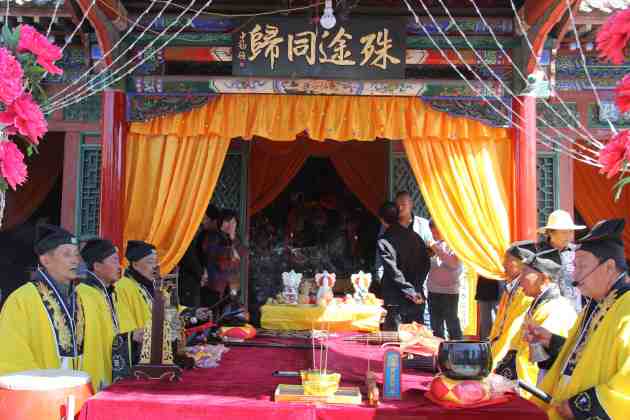


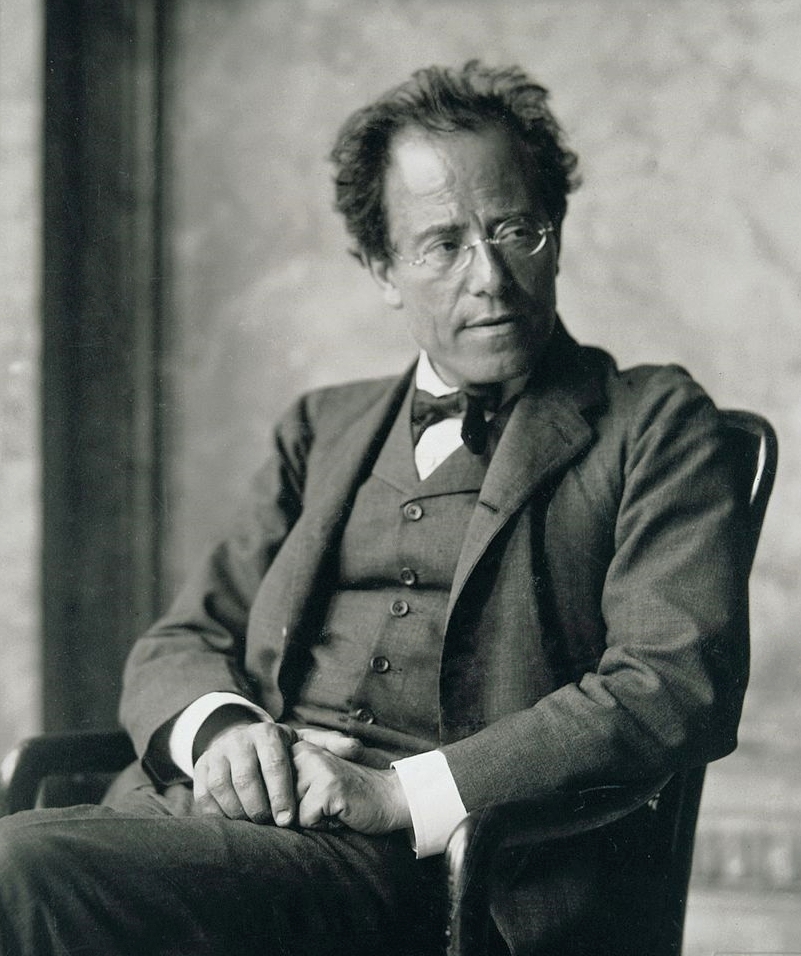



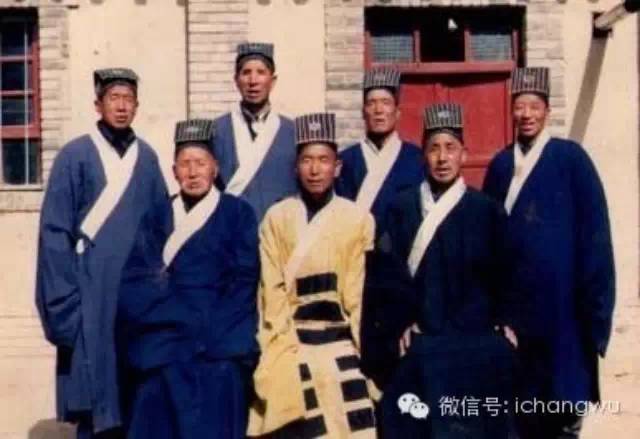

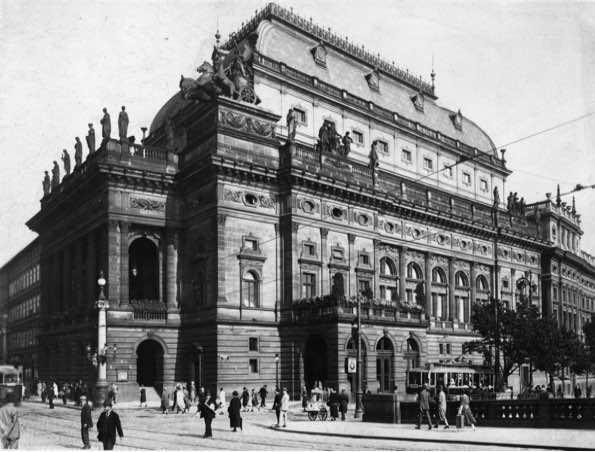


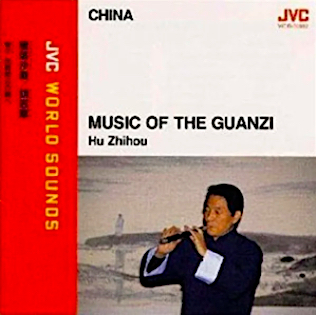




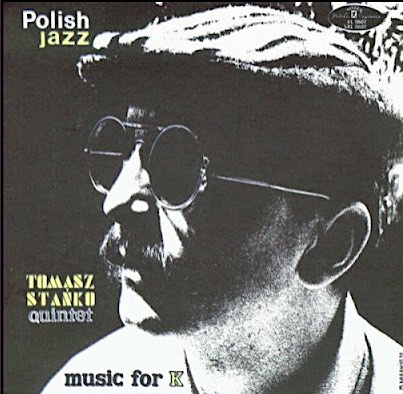

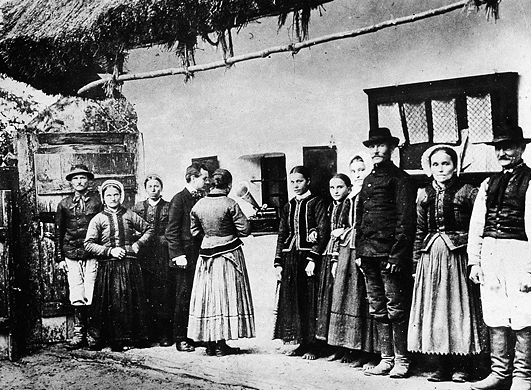




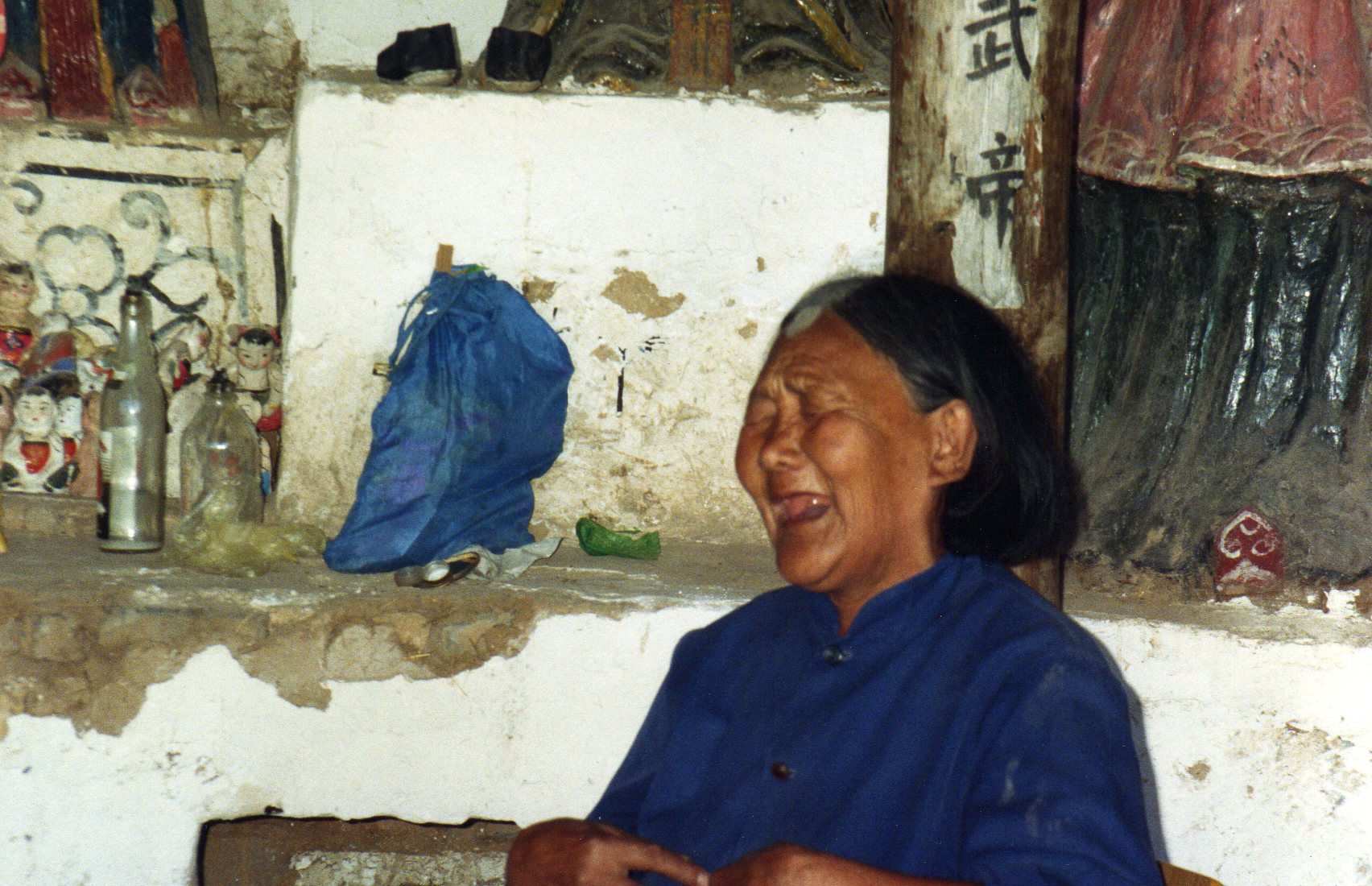
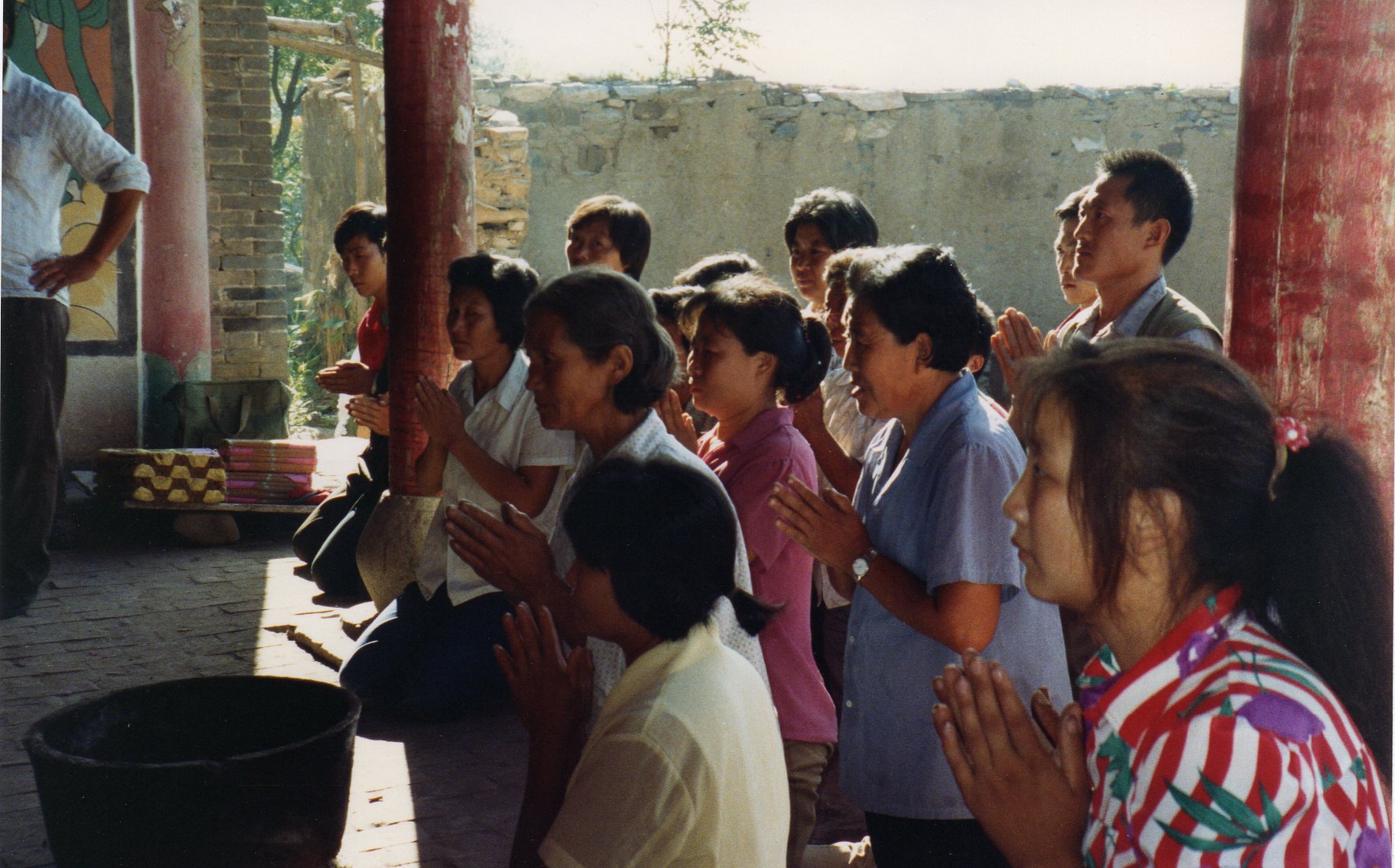
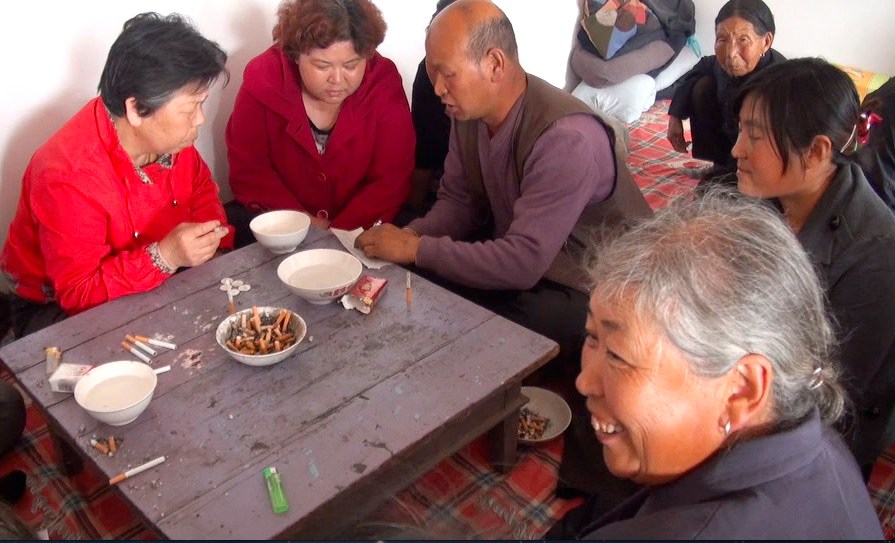




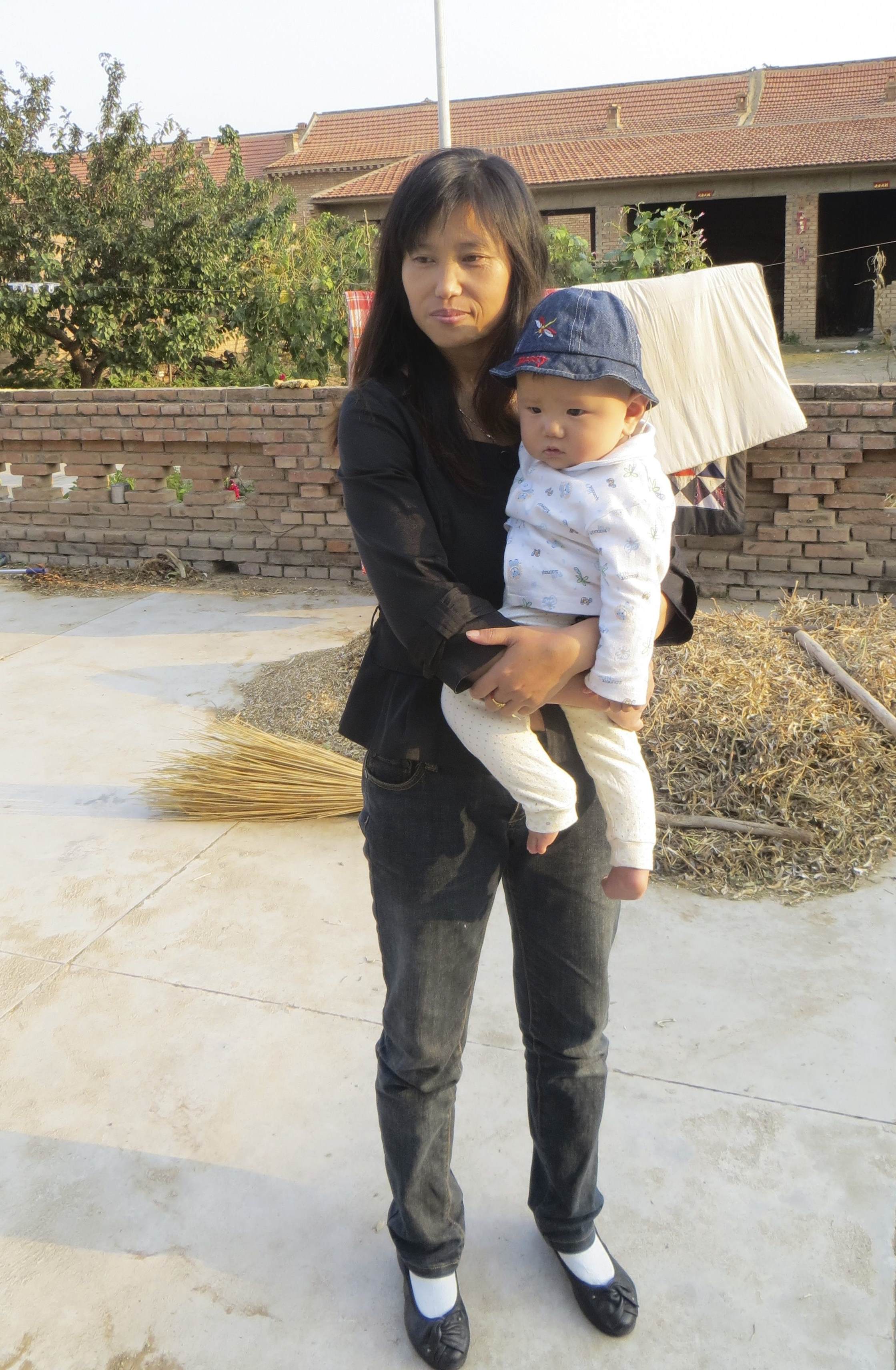
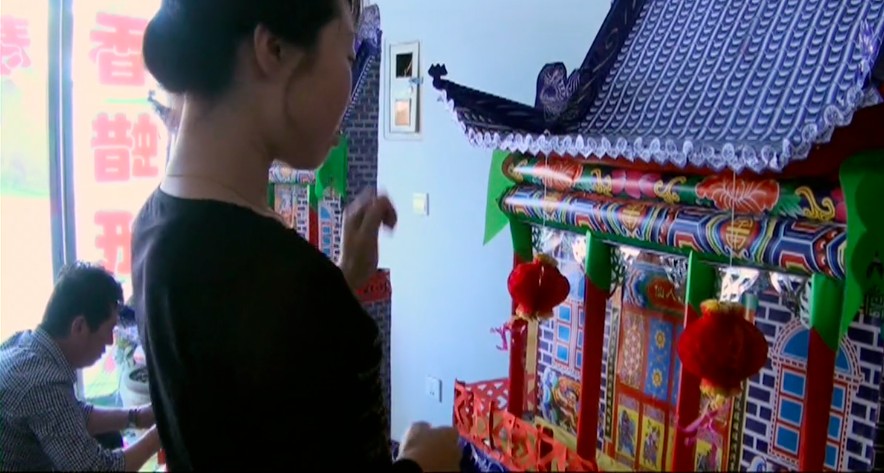
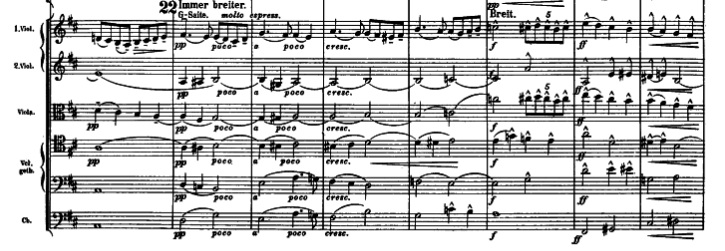


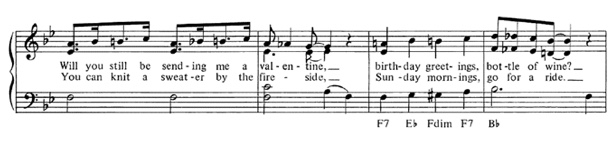





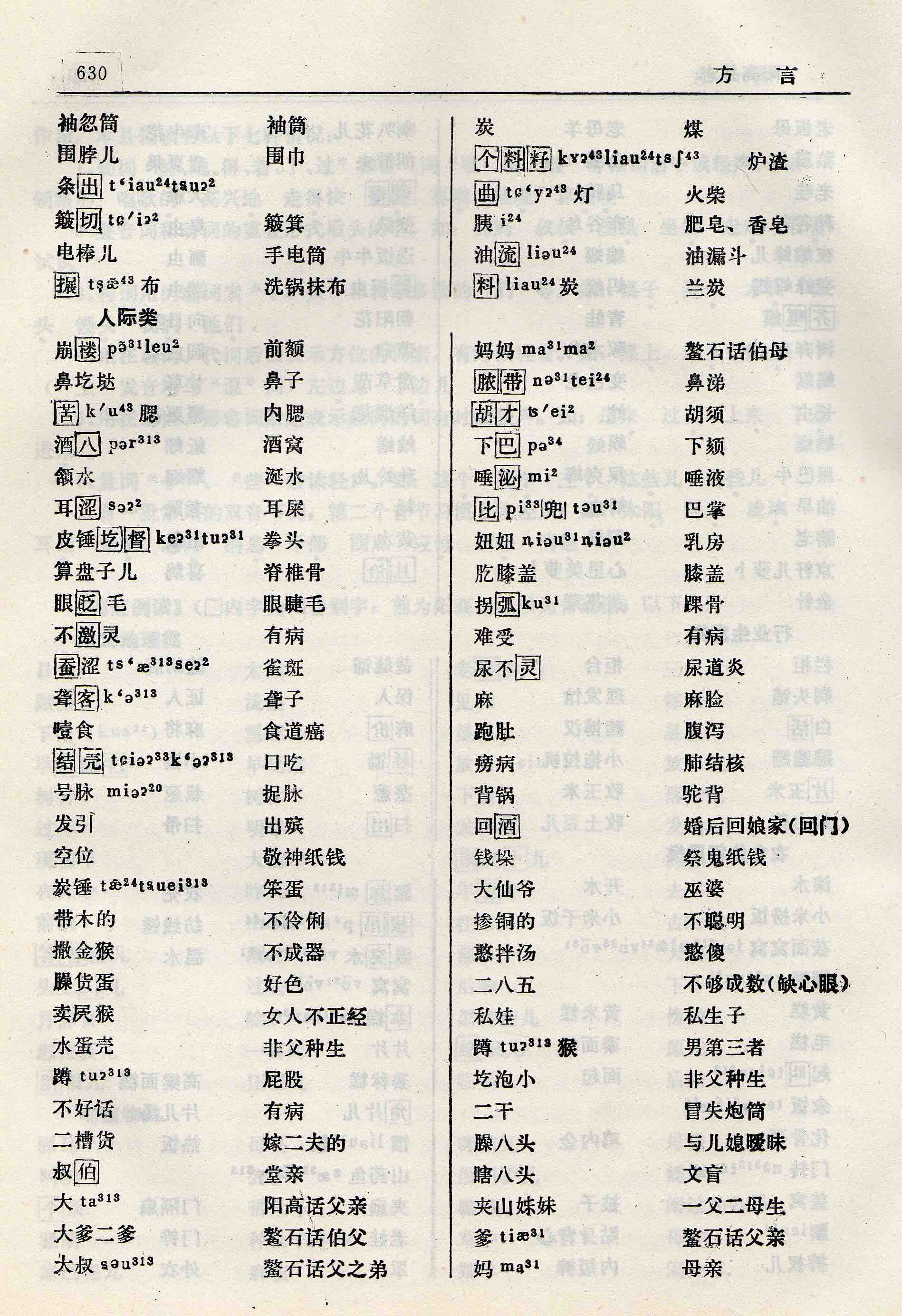



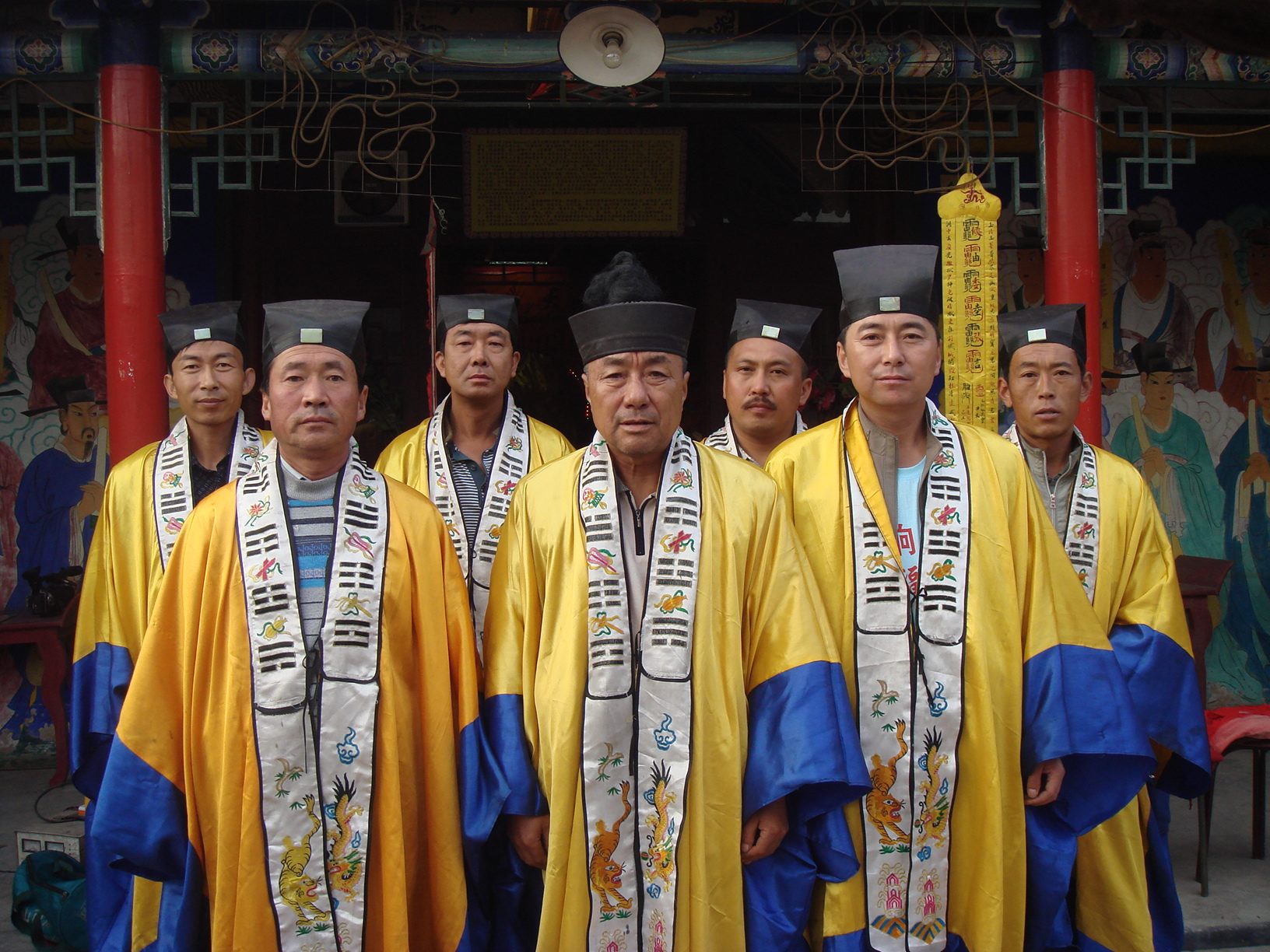






 Stephen Jones: a blog