A recent talk at the Orient-Institut in Istanbul, when Ara Dinkjian (son of the great Onnik) and Vahé Tachjian introduced early recordings of Armenian classics, led me to the impressive website
Houshamadyan: a project to reconstruct Ottoman Armenian town and village life.
With navigational aids, including useful context here, the site covers local Armenian communities and families on the eve of the 1915 genocide, largely through diasporic records— family histories and memoirs, images and recordings. The site is trilingual in English, Armenian, and Turkish—and the audience within Turkey seems to be significant, as explained in this review.
For a documentary introducing the musical world of Dinkjian father and son, click here.
For more of my dabblings in the cultures of west/Central Asia, click here. For another remarkable online archive, see Nicolas Magriel’s work on the sarangi. For diasporic communities in the USA, note Annie Proulx’s wonderful novel Accordion crimes. And for attempts to counteract state-induced amnesia in China and Tibet, see e.g. here.
I’m most gratified that my film Seated at the altar, on the 1995 New Year’s rituals in Gaoluo village, was awarded two prizes at the Chinese Musics Ethnographic Film Festival (CMEFF) International Biennial of Audiovisual Ethnomusicology, held in July at the Shanghai Conservatory of Music. In addition to the Bronze Award, it received the Intangible Cultural Heritage Music Documentation Award—which, given my trenchant critiques of the ICH system, has a fine irony!
Zheng Zhentao, in his stimulating review of the film, highlights the contrast between my method (representing ethnographic standards in the West, I’d say) and the glamorised reification that is de rigueur within China in the portrayal of folk culture—an established tradition long before the ICH. So I’m gratified to find that there are those in China who appreciate my approach, as confirmed both by the discussion at the festival and the film’s reception at the screening in the village. The mere fact that I filmed New Year’s rituals and funerals in the village—rather than choosing staged settings such as the concert hall—seems to be original. However, such a verismo method looks unlikely to gain ground in China.
My films should always be viewed in conjunction with my writings—for Gaoluo, my detailed diachronic ethnography Plucking the winds. In the latter, far more broadly than mere “music”, the main themes of ritual, poverty, politics, and conflict are far more explicit. As I stressed here, “music” is merely a prism through which to document ritual and social change.
While I was doing fieldwork I was educating myself on rural Chinese society through modern regimes as revealed through Western scholarship (see e.g. here), such as Chen village, Gao village, and the studies of Friedman, Pickowicz, and Selden, as well as the work of Jing Jun, and (in Chinese) Guo Yuhua. These were my major inspirations.
It is easier to depict history on the page than in film. While the film hints at political aspects through photos and voiceovers, showing the village cadres’ support for the ritual association amidst the upheavals before and after the 1949 “Liberation”, this will only become clearer by reading my book (see e.g. this excerpt, and the history of the village Catholics). Yet these topics can hardly be broached under the current climate in China, where early history is idealised and modern history sanitised, in both text and film. Self-censorship is inevitable; even the word “politics” is largely taboo (cf. Ritual studies mildly censored).
So returning to the film, I’m still curious to know how Chinese audiences perceive the contrast between their romanticised image and ethnographic verismo. And I still wonder how Chinese film-makers manage to glamorise their rural themes.
Earworms can be most insistent. For some reason my current one is Tico tico no fubá, composed in 1917 by Zequinha de Abreu. I first got to know it via the Nimbus CD Choros from Brazil by Os Ingênuos, but recently I’ve been listening to a variety of performances.
There’s much to admire in the choro genre (e.g. this intro on YouTube)—which despite its title (“lament”), often displays great exuberance. With its zany syncops, most versions of Tico tico are mildly manic, but the first recording, by Orquestra Colbaz in 1931, is leisurely (cf. ragtime) and beguilingly genteel:
By the time the piece took off internationally it was becoming virtuosic and up-tempo—like this performance from Bathing beauty (1944) with Ethel Smith on Hammond organ:
The Portuguese lyrics came later, as sung by Carmen Miranda in Copacabana (1947)—with Groucho Marx a bemused onlooker:
This sounds seductively chirpy, but unless I’m missing something, you’d never guess at the niche ornithological content of the lyrics. The English-language version (also on wiki), totally reworked, is engagingly amorous—with the Andrews Sisters wisely opting for a more manageable tempo:
More recently Tico tico became a popular encore for symphony orchestras under Dudamel and Barenboim, but most exhilarating is this, from the Bahia youth orchestra:
The piece continues to inspire later generations—like this, with fine accordion and sax solos:
It is far from a literal translation of my English script—I was keen to adapt it to reflect the idiom and way of thinking of the Gaoluo villagers. So rather than the terminology of urban academia, we incorporated local vocabulary like lao guiju 老规矩 (“the old rules”: tradition), dangjia 当家 (“boss”), jiahuo 家伙 (percussion), wentan 文坛 (“civil altar”: vocal liturgy), and songjing 送经 (“escorting the scriptures”). In many ways I find it preferable to the English text—since the original English voiceovers are intact, it’s worth watching even for those not dependent on the translation.
The Chinese version is now available both (in China) on the CDTM website (follow this link) and on my YouTube channel (alongside the English version):
And do browse the posts under Gaoluo in the top Menu! Click here for thoughts arising from presenting the film at SOAS; here for an intriguing Chinese review; and here for a screening in Leiden along with my film on the Li family Daoists.
“Guying yu duju—Zhong Sidi jilupian ‘Zuotan: 1995 nian Nan Gaoluo cun yinyuehui zhengyue yishi’ yingping”, 孤映与独举——钟思第纪录片《坐坛:1995年南高洛村音乐会正月仪式》影评,Zhongguo yinyuexue 中国音乐学 2025.2.
No sooner had I surmised that Chinese audiences might not articulate the stark differences between my (inadvertently) ethnographic perspective and the sanitised, beautified portrayals from the Intangible Cultural Heritage (e.g. here; cf. Gaoluo film: a village screening), Zhang does precisely that.
The social context of Chinese folk musical cultures hardly appears on film. While I had blamed this on the ICH system since 2004, Zhang shows how deeply embedded is China’s history of romanticising and glamorising rural life. Despite Chinese scholars’ exposure to Western ethnography since the 1980s, his comments suggest that social realism has had little impact, and that the habit of self-censorship remains ingrained. I suppose the Party line is that while one may wish to film for one’s own research purposes, such scenes are not fit for public consumption: that we should draw a veil over poverty—over real life. In international visual anthropology the theoretical nuances of the film-maker’s “gaze” are much discussed, but this seems a particularly disturbing impasse.
Even Zhang Zhentao, who evokes village life in detail on the page, seems somewhat perplexed that we might want to display images of it. He finds the style of Seated at the altar consistent with that of my film on the Li family Daoists, and he might also have mentioned the DVDs with my two books on Ritual and music of north China. Playing devil’s advocate, he reiterates the simplistic notion that foreigners choose to depict China in ugly and shameful images, making the Chinese people “lose face”. He queries an apparent lack of “aesthetic” values (shenmei, where mei means “beauty”), adducing scenes from my films showing squalid streets and dwellings, shabby clothes, old women with bound feet, and the decaying architectural remnants of political campaigns. As he explains, such scenes are justified by the ethnographer’s search for “authenticity” and “realism”. *
To dispel China’s victim complex, it should suffice to watch documentaries filmed in India, Africa or Indonesia—and indeed on our own doorstep, such as De Martino’s films on taranta. But Zhang’s comments suggest that documentaries about other parts of the world have little influence in China.
As to fictionalised films, Zhang mentions the classic 1979 Abing biopic Erquan yingyue, as well as the movies of Zhang Yimou (and rather than the beautified images of Raise the red lantern, I much prefer the gritty realism of The story ofQiuju, or Jia Zhangke‘s depictions of small-town life). In between stand movies like Yellow earth or The old well (see here). While “underground” documentaries like those of Wang Bing, Ai Xiaoming, Hu Jie, and Jiang Nengjie, or the subaltern films of Xu Tong, boldly challenge the Party line, investigative Chinese TV documentaries show (or showed?) scenes of real village life, and brief unedited footage on Chinese websites and YouTube makes a useful resource. I wonder how Chinese audiences assess Sidney Gamble’s footage from 1920s’ Miaofengshan. Some non-Chinese scholars have issued documentaries on expressive and ritual culture in rural China, such as Chinese shadows, Bored in heaven, and the films of Jacques Pimpaneau (see this roundup). We might also adduce Ashiq: the last troubadour.
Politics: text and image It’s impressive that Zhang Zhentao broaches the issue of gaze, but he can hardly spell out another respect in which my perspective differs. My films complement my written texts—which though full of detail on the successive social and political upheavals of the 20th century (notably the Maoist era), attract little attention in China because few of them are accessible in Chinese (though see here and here). Politics is the elephant in the room, remaining taboo for music scholars within China; and among Chinese anthropologists too, few go so far as Guo Yuhua in documenting the ordeals of villagers under Maoism (see also here).
Text allows for more detail; film makes a more vivid impact. Whereas the film could only hint at the impact of political campaigns on ritual life in Gaoluo, in my book Plucking the winds I discussed this in some depth—such as the devastating national famine of 1959–61, of which very few images are available, by contrast with propaganda films on the supposed achievements of the Great Leap Forward.
Filming ritual and expressive culture In China, besides the official taboos on showing poverty and discussing politics, the study of religious ritual is largely confined to textual studies of pre-modern history.
Before the ICH (even during the Anthology era of the 1980s–90s), Chinese fieldworkers rarely had the wherewithal to film ritual activity; and even if they did so, such footage could hardly be published. I too filmed merely for my own research purposes, to enable me to document ritual activity in far greater detail than I could achieve through making notes, taking photos, and recording audio; my footage included all too few scenes of daily life, which significantly enhance a film.
Yangjiagou band, 1999
Shaanbei: scenes from Notes from the yellow earth.
My own films include scenes of lowly shawm bands at village funerals, a blind bard performing for a family blessing, beggars singing at a wedding, and a drunken folk-singing session in a poor peasant home. There is nothing sensationalist or demeaning about all this. If we seek to document rural Chinese communities and their expressive culture, how can we then ignore the conditions in which it takes place? Even if I could think how to sanitise, beautify, and idealise such scenes, it would never occur to me to do so. The social and historical setting matters, but is airbrushed in China. While I see the differences between my approach and that of the ICH, I have no intention of being controversial: I merely seek to document traditional ritual culture as best I can.
Gaoluo: ritual, “music”, and daily life In filming the New Year’s rituals in Gaoluo, my choices were limited, largely consisting not of any grand conceptual vision but of finding physical positions from which to frame the scene.
Knowing these villages so well, Zhang Zhentao seems both impressed and disturbed by my vignettes of daily life there—elderly people relaxing in the sunshine, Cai An at his general store, the family eating dumplings. Wearing their everyday clothes, villagers perform in simple peasant houses decorated only by pinups, or before the god paintings in their humble ritual buildings, with cigarette cartons and thermos flasks placed besides instruments on rickety wooden trestles—by contrast with the ICH format of presenting folk groups in fake-antique costumes performing on the concert stage or in tidy, arid government courtyards. Villagers smoke, they joke; they ride motor-bikes and use mobile phones. Social context is important; to censor the conditions of village life would be mendacious. It should go without saying that my films are made with the utmost respect for my village hosts, serving as a tribute to their resilience. **
“Music” Zhang Zhentao stresses the contributions that musicologists can make to ethnographic filming, but for me the challenge is the other way round. In reviewing Seated at the altar he focuses on the recitation of “precious scrolls” and the moving performance of the percussion suite—but I see these as inevitable components of documenting the entire ritual process. What I find significant is including scenes that may appeal more to ethnographers than to musicologists, such as (in Li Manshan) choosing the date and siting of the burial, the encoffinment, and informal scenes of the Daoists relaxing between rituals; or (in Seated at the altar) worshippers kowtowing and offering incense, or preparing the soul tablet for the deceased.
Zhang highlights the vocal liturgists’ renditions of the Houtu precious scroll before the gods in the lantern tent. Here he does well to observe that they had only been striving to recreate it in performance since 1993, at our behest; their efforts were less than ideal, and the future of the vocal liturgy still remains precarious. The recitation of the precious scrolls is most distinctive, but to me, just as crucial are the scenes that show their singing of the hymns that punctuate funerals and the New Year rituals, including The Incantation of Pu’an.
Similarly, while Zhang pays tribute to the visceral affective power of the percussion suite, I would also draw attention to the shorter percussion pieces that punctuate rituals. Still, the suite intoxicated me so much that over the years I missed no opportunity to film it during rituals, which taught me to find a suitable position and to zoom and pan at meaningful places. In China it would be unlikely to show the percussion suite within its actual function of ritual performance, but surely even Chinese audiences will find the result beautiful. True, in the Appendix that follows the final credits, our experiment with Cai An and Cai Yurun demonstrating the sections was one that might occur only to musicologists. ***
As to those final credits, Zhang notes the poignancy of the long list of performers, with their dates—many of them having died since the footage was filmed.
* * *
In sum, I simply fail to see how to evoke village ritual life, in either text or images, without providing social and historical context. Yet basic anthropological principles, that to us are self-evident, appear to struggle to gain acceptance in China—all the more under the current ICH regime. Because I’m so impressed by the work of my Chinese colleagues, I sometimes fail to register the constraints under which they operate.
Meanwhile at the Shanghai Centre for Ritual Music, Xiao Mei offers an impressive training in international approaches to ethnographic film-making, making me keen to see how they bridge the gulf—see my further reflections after my film won awards at the 4th Chinese Music Ethnographic Film Festival in Shanghai this July.
* And what if villagers actively prefer to be displayed in glamorous costumes on the concert stage?! So far I have no evidence that they are so allergic to displaying the conditions of their lives as are apparatchiks.
** Partly because I was reminded of the sad decline of revolutionary hero and vocal liturgist Cai Fuxiang, in the film’s funeral scene I included one tiny shot of the village’s only beggar at the time. I regret not chatting with him, because he would have added to our picture of village life, and our visit might have enhanced his self-esteem.
Cf. my sketch of the affable disabled ritual helper Yanjun in Yanggao, whose story I only gleaned at second hand (see under Yanggao: personalities).
In the film I allude to the Catholic minority in Gaoluo since the late 19th century, the 1900 massacre, and their re-evangelisation by Italian priests from the 1920s. Their continuing activity is a sensitive subject, but the scene of their brass band parading at New Year 1995 was so striking that it seemed acceptable to include it.
*** Cf. the complete shawm suite (with useful musical signposts in the voiceovers) at a 1992 funeral that forms the Appendix of my 2007 DVD Doing things.
Presenting my film on Gaoluo at SOAS the other day, and the following discussion, thoughtfully led by Rachel Harris and Feng Jun, prompted me to try and rework some of my thoughts.
My book on Gaoluo was published in 2004, the result of frequent fieldtrips ever since 1989, and it’s full of detail on the lives of villagers through all the social and political upheavals of the 20th century. But I then moved onto other projects, and I only returned to the topic recently, to compile this film from my footage of the 1995 New Year’s rituals, which makes a nice succinct subject—and already a historical one, as I say in the film.
I see ethnography and film as essential complements to library work on imperial history (see here). This kind of subject, though vital to folk society, can’t be addressed only by reading old books in libraries. Actually, the topic hardly appears at all in old books—it’s only revealed by fieldwork. Until the 1950s almost every village in the region had an organisation like this; and many of them still do. While I eventually focused on this one village, we also did a survey of over a hundred village associations nearby (see e.g. under “Hebei” in the main menu, including this survey).
Religion The whole topic of the Hebei ritual associations was only “discovered” by Chinese musicologists in 1986, and it has become a major theme within that discipline—but alas, not in religious studies. I think there are two main reasons for this.
First, terminology. These groups are now commonly known by the umbrella term yinyuehui, which seems to translate simply as “Music Associations”. But it’s confusing: in these villages the term yinyue refers very specifically to the melodic instrumental ensemble that accompanies the rituals of Buddhist and Daoist temples. That indeed was our initial interest, but it’s only one aspect of the associations’ ritual activities, their “instrumental department”, if you like. The term does have an authentic historical pedigree, but tous (both in the West and for urban-educated Chinese) it suggests an unfortunately secular image, like some kind of folk club for entertainment, which encourages Chinese attempts (both in the media and in academia) to downplay the pervasive role of religion (or “superstition”!) in folk society. So I obstinately insist on calling them ritual associations. Despite the gradual decline of vocal liturgy in the region, associations preserve many ritual manuals. And while the melodic instrumental repertoire now dominates, many groups regard these pieces as “scriptures”.
Apart from terminology, folk religion is a sensitive subject. There are some fine scholars in China, but they mainly write about earlier history and written texts, and are cautious about documenting events since 1949, or current activity; whereas we who study expressive culture incline more towards fieldwork. At least, scholars of religion could choose a few villages to clarify the transmission (whether “Buddhist” or “Daoist”) from early temple priests, and study early artefacts such as ritual manuals (not least the “precious scrolls”) and god paintings. While it may now be hard to establish a different image to that of the ICH (see below), the system has legitimised such associations, and they are not subject to the taint of “superstition”—even if scholars of religion may choose to exercise a certain discretion about the early sectarian connections that we documented.
These associations on the Hebei plain are devotional, priding themselves on providing ritual services for their home village without payment. Their ritual sequences are not very dense, but their purpose is to appease the gods. I again put them in the context of other manifestations of religious behaviour in China (such as sects, occupational groups of household Daoists, and spirit mediums). Like my film on the Li family Daoists (which I also encourage you to watch!), this film is set in the north; the soundscapes of the two films are similar, but their social contexts are rather different.
After the end of the main film, the Appendix gives some clues to the workings of the majestic percussion suite, ending with the most moving complete rendition. This is the most convincing illustration of the inadequacy of text, audio recordings, and photos, and it shows the villagers’ deep commitment to the tradition.
All this is a good illustration of how ethnomusicology is based on society and soundscape. Ritual in performance is always animated by sound, so soundscape should always be a major element in our study of ritual. Indeed, most local traditions of “Chinese music” depend on ritual—folk-song, opera, narrative-singing, and dance. One might compare the ritual groups in southwest China studied by Helen Rees, or “song festivals” in the northwest. In Uyghur culture, the pervasive role of Islam is masked by Party propaganda on muqam. The world music industry also remoulds “Sufi music” misleadingly to highlight instrumental music.
Conflict, and the 1949 barrier Politics and social change are major themes of my book and this website. It’s always important to break through the 1949 barrier. We must take modern history seriously. The story always continues, from imperial and Republican times to the Maoist and reform eras, adapting to the changing times. People’s life stories and personalities make a revealing human window onto history and social change. Stories like those that I document—amidst campaigns, conflicts, famine, massacres, thefts—are airbrushed under the current Chinese regime.
Unlike small occupational household groups such as Daoists and shawm bands, these associations are public bodies, which the villages cadres have always played a major role in supporting.
I’m always struck by this amazing image of a former monk training disciples in a nearby village in 1959 (see here, under North Xinzhuang), just as the devastating great famine was occurring—the famine is among crucial topics that can hardly be addressed in China.
Shadows in the field I could only offer superficial responses to Feng Jun’s salient query about how I positioned myself in relation to the people and events I was documenting. It’s a major theme of the book (and of a thesis in Chinese). I was most fortunate to have two excellent fieldwork companions from Beijing, who were totally on board with studying social and religious change. It’s most important to stay in the village, and to take part in their ritual life (neither of which is common for Chinese scholars). The villagers were open in replying to my questions, which Chinese scholars hardly asked.
I never thought of making films for the public domain; I filmed strictly for my own research purposes, and only realised later that some footage could be edited into watchable films. Our visits energised the Gaoluo association, while others were declining, but transmission was a constant anxiety of theirs, and a theme of our discussions. We can now see this as a precursor of the Intangible Cultural Heritage system.
The ICH Since my last visit in 2003, a lot has happened in these villages. They’re no longer so poor. Crucial issues, everywhere, are migration, social media, state education, and the whole emptying of the countryside. And there’s no escaping the ICH system, which has influenced many such village groups. Many authors have described how the system commodifies, secularises, and reifies local traditions (see e.g. here). It’s state propaganda; most “research” under its auspices is superficial. While my film, and the book, inadvertently make a contrast with the celebratory approach enshrined by the ICH, I’m perturbed that Chinese viewers don’t seem to articulate this; they can’t read my book in Chinese, and anyway I’m not sure they would care to dwell on my different approach. With recent Chinese fieldwork dominated by the ICH, it is hard to gain a more in-depth picture.
Although the system uses “music” and “culture” as a smokescreen to downplay religious life, it works both ways; for the communities themselves, it helps protect them, legitimise them. With the tenuous survival of these groups under question ever since the 1980s’ reforms, joining the ICH made a tempting expedient for the association leaders. And faith endures, with villagers using the system to their own ends; the Gaoluo association still does funerals, and villagers still offer incense.
The village’s Catholic minority (whose brass band took part in a “demonstration” on 1st moon 15th in 1995, shown in the film) makes an intriguing sub-plot in the story. In this whole area the relationship between “Patriotic” and underground churches has long been opaque, and without a prolonged stay it would be hard to further our understanding of the shifting scene.
As with my work on the Li family Daoists, the combination of book, film, and website is most instructive.
Parry being a self-avowed explorer rather than an anthropologist, his programmes are more entertainment than education. The same formulas recur (contact, ordeals of pain and drugs, sharing food, camaraderie, fond farewells…), with sensationalism obligatory—the price that must be paid to get on TV. Yet the programmes remain attractive in a way that hardcore ethnographic film can hardly match.
It’s worth consulting Anthropology today for some nuanced discussions of the original series:
Pat Caplan, “In search of the exotic: a discussion of the BBC2 series Tribe“,21.2 (2005)
Felicia Hughes-Freeland, “Tribes and tribulations: a response to Pat Caplan”,22.2 (2006)
André Singer, “Tribes and tribulations: a response to Hughes-Freeland”,22.3 (2006)
Adam Fish and Sarah Evershed, “Anthropologists responding to anthropological television: a response to Caplan, Hughes-Freeland, and Singer”, 22.4 (2006).
Caplan sets the critical tone. As she observes, since the halcyon days of the 1970s and 1980s, anthropology has largely disappeared from our TV screens; but “while the genre of ethnographic film has burgeoned and grown in sophistication, it has also now been relegated to specialist festivals and the classroom.” As she observes, anthropologists may be dismissive of such popular searches for the exotic, “their irritation perhaps stemm[ing] in part from having territory they considered their own invaded by ‘amateurs’ “. She doubts that the programmes “banished many of the tribal stereotypes” or “told the truth about their changing lives”. As she observes, many of these societies have been researched by anthropologists, and some are exposed to tourism—despite the impression given that they were virtually “discovered” by the series.
Hughes-Freeland too, while describing Tribe as a “Victorian romp”, wonders how genuine anthropology might gain a popular public profile. Singer is more tolerant:
Bruce Parry is sincere in his desire to understand and attempt to identify with whatever society he finds himself visiting; and he makes no claims to any deep anthropological insights or analysis. He’s an explorer and adventurer, the curious outsider who pretends for a short while to be an insider. It’s a process he enjoys, a sentiment apparently shared by his hosts who frequently make fun of his often inept efforts at trying to be one of them.
Yes, we need to worry about perpetuating the old stereotypes, and yes, there is a “hint of the ‘noble savage’ conceit in the series” but there is also genuine affection, respect (both ways) and empathy with the subjects chosen.
Singer calls for anthropologists to engage effectively with TV rather than standing snootily on the sidelines. Fish and Evershed also defend the series. They note that Tribe “reveals the process of beginning fieldwork rather than announcing the results”, the process of establishing rapport; it “shares more with contemporary trends in reflexive ethnography than with the observational ethnography of the past”. And they note that Parry does indeed feature globalisation and change. “Anthropology’s inability to generate a substantial television audience results from academic elitism”.
Threads of entertainment and education course through Tribe, allowing viewers to braid cross-cultural encounters in a global world. As the boundaries separating the rural and the urban, the wild and the domestic, the provincial and the cosmopolitan are further eroded by the pervasiveness of global media, migration, and macroeconomics, so too will the discrete subjects of anthropologist and television producer, and indigene and viewer, tend to merge.
If anthropology is to have a future in this transnational multimediated world to come, we are going to need to apply our tools of cultural relativity to television programmes, producers, hosts and audiences. Before we become shareholders in the future of anthropological television we must become better ethnographers of the modes of media production and reception.
At least Tribe may lead some curious viewers to do some fruitful Googling to learn a little about groups whose lives are otherwise sidelined in the media.
Click here for some ethnographic documentaries on China and elsewhere. BTW, those same issues of Anthropology today also contain thoughts on Kate Fox’s splendid popular book Watching the English.
Movies about music are a minefield, whatever the genre (for Western Art Music, see e.g. Maestro, Philharmonia, Endeavour). But rewatching The Commitments(Alan Parker, 1991), based on the book by Roddy Doyle, I relished its charm just as much as when it first came out—though it’s less obviously political than Brassed off, and stands in total contrast to Parker’s 1988 film Mississippi burning.
Set in working-class north Dublin, The Commitments evokes the ecstasy and drudge common to a wide range of performers around the world (for a fine ethnography, see The hidden musicians; see also Deviating from behavioural norms), with an inexperienced cast (always a good sign) is full of character, led by Andrew Strong as larger-than-life singer Deco Cuffe.
The Irish are the blacks of Europe. Dubliners are the blacks of Ireland. North Dubliners are the blacks of Dublin.
The film works both in its own right, as a portrayal of the lives of struggling young Dubliners, and as a tribute to the great era of soul (cf. Detroit 67, Memphis 68, Northern soul). It leads me to some original tracks that had (predictably) escaped me, starting with two songs of Wilson Pickett—Mustang Sally:
and In the midnight hour:
Try a little tenderness—Otis Redding:
Take me to the river—Al Green:
Chain of fools—Aretha Franklin (and as if I need to remind you of her Amazing Grace, here it is again!):
My new filmon the 1995 New Year’s rituals in Gaoluo has recently been screened at a grand event (billed as a conference) in the village itself, thanks to the enterprise of Wei Xiaoshi (CDTM) in collaboration with Cai Yurun, who has long served both as leader of the ritual association and the village. A detailed review of the occasion has just appeared on the CDTM WeChat site (click here).
I’m delighted that my old fieldwork companion Xue Yibing could take part—we witnessed the New Year’s rituals in the village together for the first time in 1989, and his careful fieldnotes on Gaoluo and other villages over the next decade were invaluable (see mainly under Hebei in main Menu).
Gaoluo: our first visit to the Lantern Tent, New Year 1989.
One of my sessions with village litterateur Shan Fuyi, displayed on his daughter-in-law’s mobile.
I trust the film was well received, giving younger villagers an opportunity to glimpse their parents and grandparents in the days before the reified commodification inculcated by the Intangible Cultural Heritage began to influence their practices. With sonorous speeches inevitably the order of the day, the constraints of the occasion made me nostalgic for the informality of our fieldwork. The very setting, in a revamped Party Committee office, suggested how material conditions in the village have improved since my visits.
South Gaoluo New Year’s rituals, 2025. Images: Wei Xiaoshi.
Still, the religious context has not been lost: the New Year’s rituals still attract the village faithful, and the association still performs funerals for them. But the authoritative Cai Yurun voiced concerns that ICH support still can’t guarantee the future prospects of the association—in particular the vocal liturgy (which has been in a wider decline on the Hebei plain for many decades). It would take a further period of lengthy immersion in the villagers’ lives to learn their true perceptions (perhaps prompted by the film) on social and ritual change over these last thirty years. My film didn’t seem to prompt comments on how significantly the ethnographic perspective differs from the sanitised media approach typified by the ICH, but Zhang Zhentao has now published an intriguing review on this topic. Inevitably, whereas my book Plucking the winds stresses the constant tribulations of such villages under successive regimes, the prevailing congratulatory mood within China discourages such an approach.
Enbedded in the review of the event, the performance of the percussion suite in the courtyard, while still technically accomplished, inevitably lacks the spirit of the 1995 rendition before the gods. I doubt that this derives merely from the official secular context of the event; the total commitment of masters of yore like Cai An and Shan Rongqing seems to have been diluted.
Above: the association with helpers, 1995 Below: members of the association with connference delegates, 2025.
The Chinese version of the film will soon be available both on my YouTube channel (alongside the English version) and (in China) on the CDTM website. And do browse the posts under Gaoluo in the top Menu!
Click here for recent screenings in Leiden of my films on the Li family Daoists and Gaoluo.
As I often stress (e.g. here), the study of both topics belongs firmly within the realm of religious studies, even if it has been dominated by Chinese musicologists. Sure enough, the distinguished sinologist Barend ter Haar graced us with lively comments, and I was delighted to see Tao Jin, formidable authority on Daoist ritual, on a visit from Beijing via Paris (see under Ritual life around Suzhou, and here).
With Tao Jin.
With both films concerning ritual life in north China, their subjects and soundscapes may appear somewhat similar, but the differences are significant (click here for differences in approach that emerge from studying with the two types of group). The Li family Daoists are
occupational, in a small group of five or six
active in a small radius around their home village; constantly busy, mainly for funerals,
with dense ritual sequences,
whereas Gaoluo is
among many amateur devotional associations, village-wide (cf. Xi’an, Yunnan, Jiangsu, and so on)
mostly serving the village itself, and not busy except at New Year,
its ritual sequences less dense.
My most focused fieldwork with the Li family Daoists was from 2011–18, with previous trips in 1991–2 and 2001–3; the film mainly shows footage from 2011 to 2015. My fieldwork in Gaoluo took place from 1989 to 2003, the film footage showing three weeks in 1995.
While the impact of the Intangible Cultural Heritage on the Li family Daoists has been negligible (cf. here), in village ritual associations like Gaoluo it has been major—which makes the 1995 footage even more significant.
I look forward to introducing both films further to live audiences in the coming months. Meanwhile, do watch them online!
While the scene is often adduced as an archetype of romantic love, and the dancing is of course stunning, it’s tricky reacting to the art of bygone ages with modern eyes and ears. Audiences today may find the couple’s “chemistry” elusive, their dynamics pointedly cold. His insistent “wooing”, and her reticent, never-rapturous compliance (“Cut the crap—oh well, at least he can dance”?!), may be standard for the time, but some may find the mood somewhat coercive.
Still, the song itself is brilliant—so we might listen without getting confused about the dance’s sexual politics (cf. racial politics in the filmed version of Only you). As wiki explains, the song’s melody, harmony, and structure are all unusual. In the obsessive opening (often omitted, understandably), after 35 repetitions of the same note (emulating Beethoven?) over a narrow range of chords, the pitch boldly rises twice by a semitone for more repetitions before sliding back to the original pitch for the melody proper. Among several accounts of the song’s origin, this is presumably the source of the reductive orientalist claim that it was inspired by the call to prayer in Morocco (cited here):
The song proper thrives on descending chromatic motifs (cf. Unpromising chromaticisms)–even when we think a regular melody might surface, in bars 44–5 the downward slide continues:
What might be a glorious climactic major 7th leap (making—love, from 1.37, bar 60) may hardly register:
In the dance, just as glorious is the way the band relishes all the rhythmic and melodic flourishes. After the dance, at the very end of the scene, when Astaire asks “Cigarette?”, Rogers still seems underwhelmed—if only she could have anticipated Lesley Nielsen’s immortal riposte in Airplane “Yes, I know”…
Recalling the Lexicon of musical invective is a story that when Porter first played the song for his friend Monty Wooly, Wooly sniffed, “I don’t know what this is you are trying to do, but whatever it is, throw it away. It’s terrible.”
* * *
Among other classic versions, apart from the likes of Ella Fitzgerald and Frank Sinatra, I always treasure Billie Holiday. Encapsulating the heartache of infatuation, she creates a new, angular melody unconstrained by the song’s original chromaticism—here’s her 1939 recording (the band including her constant soulmates Lester Young and Buck Clayton):
Charlie Parker, 1952:
Here’s a lengthy rendition by Stan Getz, live in Kildevælds Church, Copenhagen, 1960:
And Bill Evans in 1959, entirely eschewing the romance of the original—with Philly Joe Jones’s opening drum riff replacing the tom-toms of the lyrics:
At this time of year I like to rearrange the deckchairs on the Titanic by organising some of my more notable posts from the past year under particular themes. As ever, many belong under multiple tags, so below I make some whimsical choices.
Keeping company with my film on the Li family Daoists, most important is my *new film* on the 1995 New Year’s rituals in Gaoluo (Chinese review here). It also prompted me to devise a new Menu, and even a YouTube channel (with playlists reflecting my diverse tastes as well as my own films). For now I still resign myself to Twitter, but I’m posting on BlueSky too, so let’s all migrate there!
Homages to the genius of three friends who greatly inspired me:
You can find any posts I’ve neglected in the monthly Archive as you scroll waaay down in the sidebar. All this suggests that it would be a sensible New Year’s resolution for me to burden you with fewer of these ramblings—but first I plan a major series inspired by the Gaoluo film…
I’ve just made some small but important updates to my early article Ritual life around Xi’an. Besides introducing the devotional societies there, urban and rural Buddhist and Daoist temples, former rain pilgrimages, the great Daoist priest An Laixu, the lifelong research of Li Shigen, and my own visits, I’ve at last added some rare film footage unearthed by David Badagnani—all the more precious for predating the flummery of the Intangible Cultural Heritage.
To help negotiate the new Menu, the page is now under “Elsewhere”—here’s a screenshot!
Note also the series on Shaanbei in the same Menu!
YAYY, I’ve finally got round to publishing my new documentary on the 1995 New Year’s rituals in the village of Gaoluo just south of Beijing!!! Click *here* for the film and commentary—a page under the new Gaoluo rubric that now forms part of a totally revamped Menu. The film link is to my (currently small but perfectly formed) YouTube channel.
Both in novels and on screen, I’m partial to crime fiction, which can open a window on the societies of diverse places and eras (some posts listed here). So my recent sojourns in Istanbul make The Turkish detective grist to my mill (whatever that is). A series of eight episodes is now on BBC i-Player.
The stories are adapted from the Inspector İkmen novels of Barbara Nadel, to which I should now return. Transferring to the screen tends to amplify clichés. Whereas in UK TV detective dramas enjoy a great vogue, in Turkey I gather that soap operas are more popular; this series is also Turkish-made, only with a wider global audience in mind—Ben Schiffer’s screen adaptation making inevitable compromises. I am less cynical about the mix of English and Turkish dialogue than this review by Rachel Aroesti—though I can hardly argue with her overall verdict:
downright ridiculous, in a good way… unbelievably bland in this cliché-stuffed book adaptation. And yet, its far-fetched plots and unguessable twists make it oddly comforting TV fare.
As an exotic location, Istanbul is unbeatable; but besides the usual scenic spots (the series is a boon for the Tourist Board) it also shows the city’s less picturesque side (let’s go for “dark underbelly” again—cf. The Lhasa ripper). Elsewhere, Italy has long made an alluring setting, such as Michael Dibdin’s Aurelio Zen, as well as Donna Leon’s Inspector Brunetti in Venice and Inspector Montalbano in Sicily.
As to the detectives, Montalbano is exceptionally virtuous and attractive. Eccentricity is par for the course (“maverick” being the cliché de rigueur), but fortunately in The Turkish detective Inspector İkmen (played by veteran actor Haluk Bilginer) doesn’t spend too long being merely wacky, soon becoming an avuncular patriarch—making a change from the default stereotype of the curmudgeonly and damaged cop, with variations on shambolic Columbo or grumpy Morse.
It’s wise to have Mehmet [Suleyman] as centre of attention rather than the annoyingly volatile Ikmen. He’s a sort of Columbo of the Bosphorus who delights in inflicting his unpredictability on everyone around him
—although Suleyman’s bewilderment at Turkish ways is also somewhat annoying. İkmen is aided by detective Ayse, whom blurbs would characterise as “feisty”. The team is overseen by authentically-chic Prosecutor Selma Hanım. In this case I can live with the stereotypical treatment of both characters and Orientalist settings.
In some series, the tension builds with one theme throughout prompting constant red herrings and cliff-hangers. Less demandingly, and less compellingly, many series solve a different crime in each episode, but here too there are always recurring sub-plots—in this case the threads of Suleyman’s quest to identify the attacker of his London girlfriend, and his relationship with his father.
Perfect summer viewing […] a lot better than Death in paradise, but definitely not up there with, say, Happy valley. […] The complexities of Turkish society, particularly the tensions between secularism and faith, make it richer and more interesting than all this would be if we were in Basingstoke.
The allusion to Death in paradise is apt, with its fatal feelgood air—far from the visceral impact of Spiral or The killing. But The Turkish dectective is no mere orientalist candyfloss. There’s room to gently explore İkmen’s domestic life, and the role of family hospitality; high and low life, trash collectors, street snacks, Islam, misogyny, domestic violence, and hints of political history. The important role of cats in Istanbul life is well featured.
As to the soundtrack (playlist), notably the playouts, rap is prominent (and forms part of the plot in Episode 3).
Over a summer hardly bathed in sunshine, but enlivened by football, tennis, Istanbul, and Proms, it may look as if I’m somewhat neglecting China. Still, just since May, posts include
Two surveys of folk ritual and its soundscapes, based on the great Anthology:
Actually, that should be enough to keep you busy (not to mention all the fieldnotes under Local ritual)—indeed, a little break might be welcome… I’m working on several new essays for my site, but in the interim I regularly post on Twitter—other recent China retweets including
There’s a certain random quality to the topics of some of these retweets, but as with my original articles, I like to keep people guessing, and to remind readers of posts which may have escaped attention, or seem particularly apposite. So you may care to check my Twitter feed, or even “follow” me there…
Lest anyone despair that my Chinese theme has recently been submerged beneath football and tennis…
Having studied the qin zither obsessively for my first few years after coming to China in 1986, I then defected—feeling not exactly unworthy but just too immersed in the utterly different world of folk ritual life in the poor countryside (see Taking it on the qin). So my posts on this elite solo tradition (see qin tag) are partly an attempt to atone for jumping ship. The qin being a genuine ivory tower, we might try and see the wood for the trees (make up your own metaphors—though “Swirls before pine” is unbeatable!).
John Thompson has never wavered in his devotion to the qin. The documentary
Music beyond sound: an American’s world of guqin (Lau Shing-hon, 2019) (watch here; introduction here, with links)
makes a useful introduction to his lifelong work. Interspersed with lengthy sequences in which he plays his reconstructions of Ming pieces at scenic spots in Hong Kong and Hangzhou (in the mode of the literati of Yore), he reflects on his early life, his later path, and the state of the qin (biography here). Subtitles are in both English and Chinese. It’s something of an illustrated lecture, with testimonials.
From a background in Western Art Music (WAM), John was drawn to early music, as well as popular music and jazz. After graduating in 1967 he was confronted with the draft, serving in Military Intelligence in Vietnam (cf. Bosch) for eighteen months and making trips around East Asia. Already educating himself on Chinese culture, he returned to the USA to attend graduate school in Asian Studies, studying Chinese language and discovering “world music” through ethnomusicology, learning the Japanese shamisen. In those early days before the vast revival of traditional Chinese culture around 1980, he was understandably underwhelmed by the bland diet of conservatoire dizi and erhu solos. Instead, through reading the seminal work of Robert van Gulik, The lore of the Chinese lute, he became fascinated with the highly literate, prescribed microcosm of the qin. *
For this his best option was Taiwan, where from 1974 to 1976 he studied with Sun Yu-ch’in (1915–90); he then studied with Sun’s accomplished pupil Tong Kin-woon and the veteran Tsar Deh-yun (1905–2007) ** in Hong Kong, where he made his home. While learning from the qin renaissance in mainland China before and after the Cultural Revolution, he has forged his own path performing and researching early tablatures; setting forth from reconstructing the 64 pieces in the 1425 Shenqi mipu (6-CD compendium with 72-page booklet, 2000), he avidly sought out other early tablatures (CD Music beyondsound, 1998).
This may seem like a niche within a niche, and it’s an even more solitary pursuit, but the search for early pieces vastly expands the small repertoire handed down from master to pupil. All this work gave rise to his remarkable website.
In the PRC since the 1960s the traditional silk strings of the qin were largely replaced by metal, though they persisted in Taiwan and Hong Kong, and there are some advocates on the mainland. In keeping with his taste for historical recreation, John is a fervent advocate of silk strings (see this typically exhaustive essay).
In Hong Kong he also served as Programme Adviser for the Festival of Asian Arts from 1980 to 1998. In 2001 he married Suzanne Smith and they moved to New Jersey. Alongside his ongoing research he continues to engage with the qin scene in mainland China, where his work is respected. In 2010 he was among fourteen masters invited to take part in a festival at the Zhejiang Museum to play qin zithers from the Tang dynasty (!!!) (click here; for a 2019 festival, here). Like other wise qin players, confronted by the performance ethos of the conservatoire and the Intangible Cultural Heritage, he valiantly proclaims the literati aesthetic of self-cultivation.
* * *
While silkqin.com contains a vast range of material, John remains devoted to recreating Ming tablatures (still, I find it refreshing to hear him explaining that in such an oral tradition, there was no need for tablature!). The site contains ample material on the changing modern practice of the qin, but the social context before, during, and since Maoism (suggested in my series on the qin zither under Maoism) is not his main theme. Clearly the quietism the film evokes (cf. the spiritual quest of Bill Porter) is remote from the “red and fiery” atmosphere of the folk festivities that I frequent, but the social bond of PRC qin gatherings is also largely absent.
In the Chinese media the dominance of elite imperial culture is stark; online there is a wealth of information on the qin, whereas material for far more common traditions (such as the rituals of spirit mediums) is elusive. While John’s comments on the differences between early WAM and “Chinese music” are thoughtful, the vast variety of the latter cannot be represented by the qin; his dedicated study of one aspect of an elite tradition hardly allows room to absorb the wider context.
Bruno Nettl has wise words on “you [foreigners] will never understand our music” (The study of ethnomusicology: thirty-three discussions, ch.11). Conversely, I’m tired of the old clichés “Why should a foreigner study Chinese culture?” and “The monk from outside knows how to recite the scriptures“. Within China there are plenty of “monks to recite the scriptures”; no-one there would ever suggest that the qin is only understood by foreigners. John is indeed exceptional in his long-term in-depth study, but further afield this kind of thing is common—as is clear from the careers of other foreign scholar-performers such as Ric Emmert for Japanese noh drama, Veronica Doubleday for Afghan singing, or Nicolas Magriel for the sarangi in India. ***
In the sinosphere, whereas scholars rarely engage in participant observation for folk music, for the qin performing and scholarship tend to go hand in hand. So alongside the majority of qin players who have been content to transmit the repertoire that they learned from their teachers are some distinguished masters who unearth and recreate early historical sources—such as Zha Fuxi, Yao Bingyan, Tong Kin-woon, Bell Yung, Dai XIaolian, and Lin Chen. John’s work as performer and scholar is a particularly intense instance of this historical focus, a niche in the wider movement of Historically Informed Performance (HIP: see e.g. Richard Taruskin, John Butt).
Qin fraternities are now thriving in mainland China, Taiwan, Hong Kong, and around the world. Senior figures on the Hong Kong scene include Tsar Teh-yun, Tong Kin-woon, Lau Chor-wah, and Bell Yung. Note also the work of Georges Goormaghtigh. The qin has long been a popular choice for foreign students to study in the PRC.
My usual point: given its tiny coterie of players, the qin is vastly over-represented in studies of Chinese music! But however niche, the qin is an essential aspect of literati culture through the imperial era, along with poetry, painting and calligraphy; and John Thompson’s work is an essential resource.
** See Bell Yung, The Last of China’s literati (2008), and the 2-CD set The art of qin music (ROI 2000 / AIMP 2014).
*** Note the contrasts between these four cultures, and approaches to them: Emmert working within the “isolated preservation” (Nettl) of noh, Doubleday as participant observer of an Afghan folk tradition soon to be decimated by warfare and fundamentalism, Magriel immersed in the changing social context of sarangi, and Thompson focusing on his own historical recreations of qin music.
Ever since the very first episode in 2014, the BBC TV comic-noir series Inside No.9 (website; wiki) has been consistently brilliant. Written by and starring Steve Pemberton and Reece Sheersmith, it features cameos from a succession of fine actors. The plot twists are ingenious, the mood sinister and enigmatic.
The penultimate episode of the ninth (and final!) series (watch here) takes its title from the Curse of the Ninth, attributed to Mahler’s fruitless efforts to trick fate. Typically macabre, it’s “an Edwardian chiller in which a talented piano-tuner is forced to confront the power of a centuries-old curse by the owners and servants of a large country house.” As the drama unfolds, we hear well-chosen excerpts from the 1st movement of Mahler 9.
The wiki article on the curse gives instances of composers unable to complete their 10th symphony—but also lists counterexamples of others who did manage to do so. So there.
* * *
A random selection of (nine!) other stimulating episodes from Inside No.9:
Still vainly seeking a handle on Yoof Kulture (cf. Staving off old age)—and taking a break from working out the mnemonic captions for the percussion suite in my new film on the New Year’s rituals in Gaoluo—I’ve been relishing Nida Manzoor’s TV drama We are Lady Parts on Channel 4 (here), catching up on the first series before watching the second.
As the characters of the all-female Muslim punk band subvert stereotypes, it’s both hilarious and provocative. The plot is enhanced by brilliant tracks such as Ain’t no one gonna honour kill my sister but me, Bashir with the good beard, Voldermort under my headscarf (on this playlist), Malala made me do it, and Glass ceiling feeling (“Stuck in the master’s house / With the master’s tools /Supercalifraga-racist sexist-xenophobic”).
The great film-maker and novelist Klaus Voswinckel died recently in Munich on his 81st birthday. His life is commemorated in this obituary.
In his prose he “dances weightlessly between narrative, essay, poetry and sensual philosophy”. He created a wealth of vivid TV films, often with his wife Ulrike, portraying a wide range of musicians—such as The divine drummer: a journey to Ghana, Winterreise: Schubert in Siberia, Steve Reich: music in the words, and A step towards my longing: the composer Sofia Gubaidulina.
Dividing his time between Germany and Italy, Klaus would visit his accomplished daughter Esther and her family in Istanbul, where I was among a multitude inspired by his kindly, gentle soul and wise, good-humoured company. His heart was in Salento, whose popular culture he also documented on film. He was enchanted by taranta—a theme of his novel Tarantella oder Hölderlin tanzt, which I introduced here. So perhaps it’s suitable to send Klaus off with the passionate, intoxicating songs of his friend Enza Pagliara:
Erlangen made a suitable and nostalgic venue for the film, having been the scene of the last concert on the delightful 2013 German tour of the Li family Daoists—my post on which I’ve just augmented. I even stayed in the same hotel, bringing back many fond memories of them.
Partly because I can now take a further step back, and partly because I’ve just been editing my new documentary about Gaoluo, I’m all the more aware how demanding the Li Manshan film is—longer, I think, than the new one will be. But I remain amazed at all the technical and personal detail it contains, and all the work that went into it.
In the discussion following the screening, the bright audience made stimulating comments. Among them was Fabrizio Pregadio, * scholar of early Daoist internal alchemy, whose own work as editor of The encylopedia of Taoism and an invaluable reference guide to the Daoist canon doesn’t render him unmoved by the modern practice of peasant Daoists in the poor countryside of north China!
Click here for more thoughts arising from screenings of my film, here for reflections on the Erlangen showing, and here for a roundup of posts on the Li family Daoists.
Left: outside the hotel, where the Li family Daoists relaxed in 2013 Right: Bell Street, after my Chinese name…
* I often wonder if his surname predestined him to become a scholar of religion!
Taipei: Daoist priests working for the Hsien-miao altar 顯妙壇, led by master Chu K’un-ts’an 朱堃燦, “open the eyes” of a god statue damaged in a temple fire. All images courtesy of Yves Menheere. [1]
Yves Menheere, The Way and its powers: an ethnographic account of Taoist practice and religious authority in northern Taiwan (2020),
a lucid study which helps further my education on a topic that I previously found somewhat indigestible.
The Introduction sets the tone for Menheere’s enquiry:
Why do people put their faith in religious specialists? Why are some people considered to be more adept at communicating with deities, explaining scriptures, blessing objects, or solving problems with ghosts and other malevolent forces?
Contrasting rituals that are “supposed to work” with those that are meant to be carried out “in the correct way”, Menheere finds that “neither efficacy nor proper performance can explain why people put more faith in one particular priest and not another”. In exploring authority and charisma he considers the work of Max Weber, Stephan Feuchtwang and Wang Mingming, Vincent Goossaert, and Pierre Bourdieu.
His useful summary of previous research starts with J.J.M. De Groot in late-19th-century Xiamen (in mainland Fujian); and for Taiwan under Japanese rule (1895–1945), studies by Japanese scholars and colonial administrators, notably a 1919 report under the supervision of Marui Keijirō. After World War Two, the pioneering work of Kristofer Schipper (on south Taiwan) and Michael Saso (for Hsinchu in the north) was continued by John Lagerwey for both north and south. Taiwanese scholars have also been industrious, from Liu Chi-wan and Lee Fong-mao to Lü Ch’ui-k’uan, followed by Lin Chen-yuan and others. As Menheere notes, the main focus of such studies has been the description of rituals and the search for the origins of particular practices and traditions; however, scholars adopting more anthropological approaches include Stephan Feuchtwang, David Jordan, John McCreery, Robert Weller, and Chang Hsun.
For ritual studies, I’ve outlined how by the early 1980s, as the PRC opened up after three decades of Maoist repression, the scope of fieldwork at last expanded to mainland China—fanning out from south Fujian (ancestral home of the Taiwanese Daoist altars) in a succession of major projects, mostly led by scholars with experience of the religious scene in Taiwan. So whereas previously the island was almost the only accessible site where scholars could study the riches of Daoist ritual, a wealth of local traditions now beckoned all over the vast expanses of the PRC, “if not eclipsing the reputation of Taiwan’s heritage, then at least putting it into perspective”, as I wrote (cf. The resilience of tradition).
However, it’s always worth paying attention to the ritual life of Taiwan, subject to fewer disruptions than in the PRC—with research now enriched by access to traditions shared with the southeastern mainland. And since scholarship on both sides of the strait, though based on fieldwork, has stressed the early origins of rituals rather than social ethnography (cf. Debunking “living fossils”—combining these approaches for Fujian, though, is Ken Dean), Menheere offers a fresh perspective.
* * *
The distinction between Redhead (ang-thau 紅頭) and Blackhead (o-͘thau 烏頭) ritual specialists is particular to Taiwan and Fujian; while much discussed, it remains complex. In north Taiwan, Blackhead priests specialise in performing mortuary rituals, and are either Sek-kau 釋教 Buddhists, or Daoists sometimes described by the name Numinous Treasure (Leng-po / Lingbao 靈寶). Redhead Daoists—Menheere’s focus, whom he describes as “the Northern Priests”—refrain from performing funerals. While belonging to the Cheng-it / Zhengyi 正一 branch (like Daoists further south in Taiwan), they
carried out rites in ways that were broadly similar, and they were able to work together in ritual performances, which frequently occurred. Their way of working set them apart from priests from central or southern Taiwan, who performed rituals in different ways and were generally unable to work in concert with priests from northern Taiwan. These priests agreed that they belong to the same phai 派 or “branch” of Taoism and that priests from central and southern Taiwan belonged to a different branch. [2]
As Menheere observes, authority is relational: “it depends on the position of the individual priest in a wider network of priests, and it is always socially constructed and cannot be reduced to a particular priest’s personality or individual qualities”.
Between the Introduction and Conclusion, the book is arranged in six unnumbered chapters, to which I will award numbers here.
Chapter 1 (“Gods, ghosts and ancestors”) opens with a description of an exorcistic ritual intended to deter malignant forces of the road (lo-͘soah 路煞) from causing traffic accidents and other misfortunes besetting the community. Menheere goes on to give an overview of the religious environment in which the Northern Priests operate. Apart from large-scale temple ceremonies like the Chio / Jiao 醮 Offering, brief “minor rites” (sio-hoat 小法, or “little things” sio-su-a 小事) are also a regular part of the priests’ duties, often requiring only a single officiant. (I was glad to learn that priests in Taiwan describe the performance of ceremonies as “doing things” (cho-su 做事), cf. banshi 办事 in north China).
Always favouring practical grassroots perspectives above historical theory, Menheere unpacks the meaning of Cheng-it (Zhengyi)—”a term used by priests who shared their particular way of working, which presumed knowledge of two particular sets of rites; and did not perform funerary rites”.
By contrast with Schipper’s account for south Taiwan (e.g. his influential 1985 article), where “classical” and “vernacular” rites are carried out by different specialists, the Northern Priests practise a hybrid tradition, with two categories of rites, the “Way” (Tō / Dao 道) and “Methods” (Hoat / Fa 法): “two separate systems of rites, different in their performance, but referred to by the priests as complementary and sometimes even overlapping”. So Menheere ponders Schipper’s classical / vernacular dichotomy in the northern context, under the headings of language, pantheon, transmission, and the “mental states” of meditation and trance. Again working from the practical standpoint of the priests themselves, he confounds any simple distinction between the two types. Valuably, he notes contingency and modern change:
When we consider the meaning of Tō and Hoat and their associated ritual traditions, we must account for how the terms take shape in local practice and acquire different meanings, rather than ascribe them meaning devoid of social and historical context.
Still, “whether a rite was Tō or Hoat did not, for the priests at least, depend on its historical origins, but on the type of ceremony with which it was associated and on the way it was performed”. Noting that priests freely made use of the two categories during both exorcisms and offerings, Menheere illustrates this with Tō and Hoat versions of the “Worshipping the Lord of Heaven” ritual segment (pai Thin-kong 拜天公).
Chapter 2, a history of the Northern Priests from the Qing dynasty through the Japanese era to modern times, is full of detail on modern developments in their practice, showing that it is not immune to change. For the period since the 1980s, Menheere notes a shift away from healing rituals towards large-scale Offerings—which was attributed to perceived modernisation, notably in medical care. Thus “knowledge of the Tō rites for multiple-day Chio […] was slowly acquired by priests who initially performed mostly Hoat rites”. Moreover,
The expanding ritual market of the 1980s enabled several altars that at the time had only recently been established to rise to prominence. Indeed, some of the most successful and notable altars I observed doing fieldwork only began conducting offerings on a regular basis in the 1980s.
He also suggests a rather recent shift in the way the priests referred to themselves, with the autonym Cheng-it becoming more common.
Chapter 3, “Work and training”, looks at how ceremonies are performed and how the required knowledge to do so is transmitted. Menheere provides a good discussion of the role of “altars” (toan / tan 壇, an important term in south China that is seldom applied to household Daoists in the north), the physical and conceptual locus of a Daoist family tradition; and he gives a useful account of hierarchy and roles within the ritual group. As to personnel,
composition of groups varied from altar to altar and depended on the position of the priest in the field. Priests with more successful altars usually limited hires to their apprentices and a small group of priests that worked almost exclusively for them. Priests with fewer apprentices or fewer opportunities to organise ceremonies, however, had to look outside their immediate ties.
Menheere notes that “family was the principal source of knowledge for a small majority of the priests I observed”, but “recognising a master” from an unrelated family was also rather common. As to training in practice, he again finds variety, followed by a section on how priests assess competency:
A priest’s skills were described with the word kang-hu [gongfu] 功夫, and priests who lacked the physical attributes of the ideal priests—priests that were too short, for instance—could compensate for such perceived shortcomings with their kang-hu.
He continues with a most salient reminder:
It is perhaps worth noting that being familiar with the intricacies of Taoist doctrine as found in its classical texts did not play a role in the training of the priests or judgment of their competency.
The following two sections discuss the major ceremonies associated with the two ritual traditions. Chapter 4 explores the links between authority and the correct performance of rituals through a discussion of changes in the programme of the Chio Offering over the past century (with rich material in Appendix A listing sequences for ten such rituals).
After introducing the old “orthopraxy” trope and considering factors inhibiting change, Menheere argues “that despite the importance attached to correct performance, priests did occasionally—at least to a certain degree—have the ability to change the contents of rites and ceremonies and that such changes would not necessarily affect a priest’s authority”.
While the structure of three-day Chio seems quite constant over the century for which we have evidence, five-day Chio (an expanded version of the three-day programme) have also become increasingly common. The main addition here was the fast chanting of various [nationally standard] jing 經 scriptures—which household Daoists in north China have tended to omit in modern times, even though they comprise a major part of their ritual manuals (e.g. Daoist priests of the Li family, pp.211–13, 375–8).
Menheere continues with a detailed account of versions of the recently-elaborated ritual segment Ascending the Platform (teng-tai pai-pio 登台拜表) as interpreted by three different priests (cf. my account of Li Qing’s Pardon ritual):
All priests who performed the versions of the rite had access to Zhang Enpu’s text, yet none chose to follow his text to the letter. Even Master Tiong, who adhered to it most strictly, chose to add elements, attempting to, as he indicated in our discussions, make the rite more “correct”. It is possible that the priests in the other two cases chose to perform a much shorter rite because it was more convenient, not only for themselves, but also for all lay participants, who had to stand and watch the rite throughout.
He concludes the chapter thus:
The example of “Ascending the Platform” demonstrates that priests did have flexibility in revising rites in ways that did not transform them altogether. They were the experts, and as long as the performance of particular rites fulfilled expectations, the patrons neither grasped minor changes nor challenged a priest’s authority.
Scene from the Great Improvement of Luck ritual: the patron blows out a flame to send away the im 陰 fire.
Chapter 5 focuses on the links between authority and efficacy in the exorcistic Toa-po-͘un 大補運 Great Improvement of Luck, the major healing ceremony of the Northern Priests, when the patron often suffers from a serious medical condition. While careful not to add further layers of anthropological abstraction to the complexities of the ritual system itself, Menheere again begins with theoretical perspectives; [3] then, setting forth from the research of Hsu Li-ling, he moves on to elements in the adaptable programme for the Great Improvement of Luck ritual, and five vivid case studies from his own fieldwork (note the lists of ritual segments in Appendix C).
If patrons were not familiar with the logic of the Toa-po-͘un, they were generally free to interpret the ceremonies in ways not directly derived from the meanings enacted in the rites. For patrons, the “effective meaning” was found, not so much in the symbolism of the rite, but in the fact that a priest, possessing a body of specialised knowledge to which they had no access, was involved and employed his knowledge to interact with and implore deities to intercede. Such an attitude, combined with the spectacle of the ceremony and the impressions it left on the spectators, predisposed observers to connect the performance to any event during or after the ritual proceedings.
Menheere ends the chapter by considering efficacy (ling 靈)—the core of Chinese popular religion, according to Valerie Hansen and Adam Yuet Chau:
Patrons did not hire priests to conduct Toa-po-͘un because they knew the rituals would work. They hired priests because they believed in the potential of the ritual and that it was the right course of action. These beliefs were bolstered by, not so much prior successes in Toa-po-un performances, but by a priest’s connections with institutions and trusted individuals.
He argues that
efficacy was the product of authority, rather than the other way around. A priest did not become a great priest because he cured his patients, he came in the position to cure his patients—or not—because he had become a great priest.
The Wei Yuan Altar 威遠壇 in suburban Taipei, with Lin Ch’ang-tung 林昌桐 (1947–2019) presiding.
In Chapter 6 Menheere further ponders the way the organisation of ceremonies is distributed and how this relates to the idea of a field of priests. Recurring occasions include
ceremonies organised in honour of a deity’s anniversary; Worshipping the Dipper ceremonies, which many temples organised once or twice a year; ceremonies conducted for the construction of a new temple, the restoration of an old one, or the consecration of a new statue; and ceremonies held to feed the hungry ghosts during the seventh lunar month. Priests also commonly performed exorcisms […] as well as temple ceremonies held for the benefit of the ancestors of the faithful. On some of these occasions, temples could also choose to organise a Chio, but this was less common.
While he notes some exceptions,
more common, recurring ceremonies were typically conducted by the same priest; that is, the priest responsible for a ceremony on one occasion returned to perform the ritual again.[…] In some cases, relationships between temples and altars spanned multiple generations.
He finds that “patrons unconnected to either a priest or a temple resorted to other ways to find a priest”, mainly through local or personal networks.
Priests occasionally recounted how territorial claims were violently enforced in the past, but during my fieldwork, I was not aware of any violent incidents. Still, priests could be visibly displeased when they felt other priests were infringing on their perceived territory and would try to use their own local connections to displace the infringing priests if they felt that this was indeed happening.
Menheere details various procedures in organising the Chio Offering—“the most elaborate and important ceremonies in the Northern Priests’ repertoire”, which (nonetheless) few of them had a chance to organise during their career. There was considerable competition between priests for the task of presiding over this ritual. Temples might appoint a chief priest directly, solicit bids, or appoint through divination.
Knowledge of particular forms of ritual was a prerequisite to conduct ceremonies, but knowledge in itself did not guarantee success. The most knowledgeable priests were not necessarily those conducting the most ceremonies.
Still, “priests who inherited a successful altar had the best chances at claiming a dominant position in the field”. He ends the chapter thoughtfully by suggesting further factors that may need including:
It would probably be easier to develop new contacts and lead a flourishing altar in areas where fewer priests operated than in an area with many active priests. We must also consider historical conditions and change. The situation was quite different in the 1980s, when the market for religious services, including the ceremonies of the priests, was quickly expanding and a priest’s method of entering the field may have been less important.
In his Conclusion, Menheere reminds us that
terms like Tō, Hoat, Chio, and Cheng-it (and their Mandarin equivalents) have specific meanings that are locally and historically embedded, can change over time, and should not be taken for granted. […] Ritual practices can change, even if they are part of a tradition that highly values correct practices and sees immutability as a defining feature of what actually constitutes correct practice. While such changes can be triggered by external factors, specialists themselves do play an important role in shaping changes.
* * *
Time for my inevitable spiel: after silent, immobile text, nothing can compare to experiencing the “heat and bustle” (cf. Chau, Religion in China, pp.67–8) of Daoist ritual for real—here, for instance, is a “Great Improvement of Luck” ritual in 2022, just one of many online videos uploaded by the Wei Yuan Altar:
And to sample the more “classical” Tō tradition, click here for a 1977 introduction to a temple inauguration, filmed by Patrice Fava (another scholar whose grounding in Taiwanese ritual bore fruit on the mainland)—see his Un taoïste n’a pas d’ombre: mémoires d’un ethnologue en Chine (2023), pp.30–31, 53.
* * *
While I’m in awe of their erudition, some scholars of Daoist ritual seem so committed to the Wisdom of the Ancient Sages that their accounts may seem more prescriptive than descriptive, almost evangelical; in both Chinese and English, they can speak only to a highly limited audience. Instead Menheere, with his clear style, refrains from unduly mystifying either the priests or their rituals.
The Way and its powers is valuable for incorporating ethnography, modern change, and ritual theory—all largely absent from the field as it took shape—into the established concerns of scholarship on Daoist ritual, which (first for Taiwan, later for the PRC) has come to be dominated by the salvage of medieval ritual structures and texts. The study of ritual traditions in mainland China might look quite different if the ethnographic approach had found more of a voice in Taiwan.
[1] Sadly, Menheere’s original PhD thesis (2017) contains a mere three images (the published version has none!), so I’m grateful to him for helping me illustrate this post with some of his splendid fieldwork photos. Images by Patrice Fava are found in John Lagerwey’s attractively-illustrated book Le continent des esprits (1991); though the captions don’t give locations, I’m told that they show rituals and priests from both north and south Taiwan.
For transliterations of terms and names I have followed Menheere’s practice, based (for Taiwanese) on the “Church” romanization and (for Mandarin) on Wade-Giles, with some pinyin equivalents added for terms with wider significance (such as Cheng-it / Zhengyi 正一).
[2] Menheere comments further: “Taoist Blackhead priests were active in different areas in northern Taiwan, but only in locations such as Hsinchu and Tamsui would they regularly carry out other ceremonies in addition to funerals. In both areas, however, they had to compete with the Northern Priests”. Michael Saso gave an early taxonomy of the ritual life of Hsinchu in “The Taoist tradition in Taiwan” (1970).
Similar distinctions are commonly found in mainland south China, e.g. in Hunan; in the north I don’t recall hearing of household Daoists who refrain from performing funerals—if there are any areas where they do so (also for regions such as south Jiangsu), then I’m keen to learn. In north Shanxi the Li family Daoists used to perform rituals for both the living and the dead, but mortuary rituals now comprise the great majority of their business (see Ritual change in north Shanxi, and my film). Note also my major rethink of the Zhengyi–Quanzhen dichotomy.
[3] Here, besides the sources that he cites, it’s worth consulting Catherine Bell’s surveys of the field of ritual studies.
I’m always late to the party, but thanks to the splendid Turkish Airlines, after the spellbinding safety video I accompanied the delicious in-flight meal by watching
Barbie (Greta Gerwig, 2023).
With a cast led by Margot Robbie and Ryan Gosling, it’s both hilarious and sobering. Foremost among the excellent articulations of the current human predicament is America Ferrara’s monologue:
The patriarchy, and mansplaining, are gleefully exposed. But how subversive is it? How feminist? Besides a thorough article on wiki (including sections on “Critical response”, “Feminism”, Masculinity”), and this further survey of reviews, Vogue observes:
While some are praising the film for its tongue-in-cheek approach to girlhood, womanhood and, erm, dollhood, many others have described it as white feminism wrapped up in a pink, Mattel-labelled bow. I’m here to argue that those two things can be true at the same time.
It was the first of sixteen film collaborations between the director (1910–98) and Toshiro Mifune (1920–97)—after they parted ways, neither was quite the same again. The film finally opens my eyes to Mifune’s genius—much as I love Seven samurai (1954), for me the hero is the Zen swordsman Kyūzō; I find Mifune’s buffoon persona something of a parody.
Here’s Drunken Angel:
Made while Japan was still occupied by the Americans, the film had to comply with US government censorship rules, which forbade scenes critical of the occupation. As Ian Buruma notes in a fine review, the set
consisted of a filthy sump surrounded by ruined buildings, shabby wooden houses, and the facade of a sleazy nightclub. It was a setting that could have been found almost anywhere in Tokyo in 1948, or any other bombed-out Japanese city where postwar life revolved around the teeming black markets. One of the wonders of the early postwar Japanese cinema was the public appetite for realism, and the pestilential sump, filled with toxic garbage, stood as a symbol for all that was rotten about life in the wake of a catastrophic wartime defeat. The cheap hookers lurking in the shadows, the young thugs fighting over territory, loot, and “face”. To have “face” in a particular district meant that you had the run of the place, taking what you needed for nothing and making huge profits off the backs of Japanese citizens who struggled to survive. Many of these petty (and not so petty) gangsters had been soldiers in a holy war to expand the glory of the Japanese Empire. Kamikaze pilots whose sacred suicide missions were aborted when surrender intervened became criminals exploiting the people for whose honour they had just months before sworn to sacrifice their lives. But some, in a perverse way, transformed their military code of honor into a gangland code that was just as deadly.
Small-time yakuza playboy Matsunaga (Mifune) develops a complex, fractious relationship with the brusque alcoholic doctor Sanada (Takashi Shimura—as Brian Eggert notes, “the first of several Kurosawa pictures where he would play spiritual guide to Mifune’s apprentice”).
The English subtitles are impressive. Sanada shows feminist credentials, protecting his nurse, a former girlfriend of sinister yakuza boss Okada:
You’ve got it all wrong, mister. Times have changed since you went in the cooler. Your feudalistic ways don’t fly now. Want me to spell it out for you? It doesn’t matter what you call her. She’s got to want you. Ever heard of equality?
In the opening scene a lonesome drifter plays a blues before the pestilential cesspool; later his guitar is snatched by Okada, just out of prison (his more genteel number less suitable than Kurosawa’s first choice Mack the knife—the rights to which were too costly). In the nightclub dance scene (53.30), the garish Jungle boogie is an homage to Gilda—for the music, see Michael Harris, ”Jazzing in the Tokyo slum: music, influence, and censorship in Akira Kurosawa’s Drunken Angel”, Cinema Journal 53.1 (2013).
By starting with Shimura’s point of view, we see the gangsters’ moral rot in the context of the entire neighbourhood. Scorsese achieves his critiques of the gangster mentality from intimacy, living within that world exclusively, so we understand the appeal and eventually its hypocrisy, and with The Irishman, its banality as well. Kurosawa achieves the same, but with the distance from it that Shimura’s point of view provides.
Infatuated as I am with Mahler (series here), my posts on his symphonies inevitably include performances by Leonard Bernstein (see under The art of conducting). So I just had to watch Maestro (Bradley Cooper, 2023: in cinemas and on Netflix).
Movies about musicians are notoriously prone to faux pas (for some TV clichés, see e.g. Philharmonia, and Endeavour). Bernstein’s passion as a communicator brought an unprecedented popularity to WAM that it could never again achieve; Maestro is admirable for bringing him (if not his musical genius) to a wide modern audience.
Norman Lebrecht shrewdly observes Bernstein’s place in the roster of Great Conductors (The maestro myth pp.180–87, 192–5, and, confounding the myth that he rescued Mahler’s music from obscurity in Vienna, 198–205). Heart on sleeve, OTT, Lenny was an archetype for his era—by contrast with the austere Maestros of Yore, or indeed the benign, banal middle-managers and Early Music semi-conductors of later years.
As to Maestro, Alex Ross comments in the New Yorker:
Because Bernstein’s career unfolds in the background of his marriage, the film is relieved of the dreary trudge of the conventional bio-pic, which checks off famous moments, positions them against historical landmarks (the Cold War, the Beatles, the Kennedy assassinations). […] By and large, Maestro benefits from what it leaves out. Some viewers have complained that such major achievements as On the Town, West Side Story, and the Young People’s Concerts are mentioned only in passing. But Bernstein’s life was so stuffed with incident that nodding to each one would have drained the movie of momentum. One omission, though, left me perplexed: the studious avoidance of Bernstein’s radical-tending politics.
The roles of Lenny (Bradley Cooper himself) and his wife Felicia (Carey Mulligan) are brilliantly played, with all the tortuous public/private psychologies of their relationship. But indeed, the film omits their considerable social activism through a period of change; Cooper had intended to include the notorious “radical chic” 1970 party, but (as he explains in this podcast) he found it would have detracted from his main theme. So the screenplay invariably chooses the personal over the political. And I agree with other reviews that lament the wider avoidance of social history (e.g. another New Yorker article; myscena.org; The critic)—a tasteful script wouldn’t have to make such scenes into a “dreary trudge” at all.
What there is very little of is music. We barely see him conduct, we hear only snatches of his own compositions, and there are frustratingly few glimpses of his passion for communicating—through performance and education—the wonders and riches of classical music.
Bernstein’s own music does play a considerable role, without quite engaging us. But the most regrettable casualty is Mahler. Despite a scene that I’ll discuss below, the movie never broaches Lenny’s deep passion for his fellow conductor-composer—he must have seen himself as a reincarnation. In Lebrecht’s words (The maestro myth, p.185; cf. Why Mahler?, pp.239–41 and passim), Mahler was
a visionary who fought against humanity’s rush to self-destruction. “Ours is a century of death and Mahler is its musical prophet” [see e.g. my fanciful programme for the 10th symphony], he proclaimed, seeking to find himself a similar role.
Apart from the moving evidence of his performances, Lenny missed no opportunity to promote Mahler’s vision, and irrespective of the movie, it’s well worth returning to his extraordinary lectures on the topic. * Without hijacking the film’s main theme, one longs for a mention of Mahler’s name, or an image—although I quite see the risks of composing a line like “Oh Felicia, what would I do without you and Mahler?”!
We get to hear some of the Adagietto, though it’s such a staple of movie soundtracks that for many viewers it may sound merely like generic film music rather than the work of Lenny’s alter ego. Then the long scene of the monumental ending of the 2nd symphony at Ely Cathedral in 1973 is the perfect choice, and it should be overwhelming. But if the uninitiated don’t know what it represents (for Lenny and, well, for Western civilisation!), then again one might just think it’s some random piece of dramatic romantic music; or if you love Mahler as deeply as Lenny did, then you’ll be shocked at how the lack of context largely deprives it of impact—the scene’s main point seems to be his reunion with Felicia in a make-up kiss as he comes off stage.
Cooper, having learned assiduously to impersonate Lenny’s conducting for the Ely Cathedral scene under the guidance of Yannick Nézet-Séguin, looks admirably impressive on the podium—but it’s also a salient lesson in how impossible it is to mimic the art of an experienced conductor. The Guardian review cited above has details of how the scene was filmed, with comments from members of the LSO:
Every detail of the 1973 performance was painstakingly reproduced, from where each player sat (“more squashed than we generally are today!”), to the mocked-up programmes, even though these were never in shot.
Players who wore glasses were asked to provide prescriptions so they could be given new ones in old-style frames—and they were all asked to let their hair grow. “Most of the guys had been asked to grow beards,” says Duckworth, “and those with very short hair had been asked not to cut it.”
And (WTAF) despite going to such lengths to achieve historical authenticity, the film used the players of today’s LSO, 45% of whom are women—whereas the 1973 LSO had only two women (the harpists) among 102 players. Is this, finally, PC gone mad?!
Despite these cavils, I admire the way Bradley Cooper has brought Bernstein’s personality to a wider audience. Perhaps it’s too much to hope that Maestro might also turn on a new generation to Mahler.
* After his 1960 talk at the televised Young People’s Concerts (wiki; complete list on YouTube here—weekly audiences for his broadcasts estimated at ten million!), more illuminating is “The unanswered question” in his 1973 lectures at Harvard:
DO go back to Humphrey Burton’s wonderful films of Bernstein’s performances of the symphonies… Burton also filmed him rehearsing—and commenting on—the 5th, the 9th (“Four ways to say Farewell”), and Das Lied von Der Erde with the Vienna Phil (1971–72):
Through the Maoist decades after the 1949 Communist takeover, while the society of mainland China was constantly beset by a succession of iconoclastic traumas, the Republic of China on the island of Taiwan was considered a bastion for the maintenance of traditional Chinese culture.
What I suspect hasn’t always been clarified is that Taiwan cannot embody that culture as a whole: naturally, its heritage largely reflects the traditions of the particular regions from which they were descended on the southeastern mainland—and it was that, until the 1980s, which was the only peep-hole through which we could view the enormity of Chinese culture. *
But then, as “reform and opening” swept the PRC, ritual and other folk performance activity—that outsiders could only assume to have been extinguished there after the Communist takeover of 1949—began reviving on a vast scale, along with an array of central and regional scholars keen to resume fieldwork and research. And at the forefront of discoveries was the region of south Fujian, just across the strait from Taiwan (see e.g. C.K. Wang, Kristofer Schipper, Ken Dean, John Lagerwey). As fieldwork expanded to other parts of the southeast (see Daoist ritual in south China), it soon became clear that there was a vast repository of local traditions of ritual and expressive culture to document all over China (see The resilience of tradition)—if not eclipsing the reputation of Taiwan’s heritage, then at least putting it into perspective. The research of Taiwanese scholars was now able to inspire fieldwork on the mainland.
Still, the main genres of Taiwan have rather little bearing on the kind of ritual traditions that were coming to light in the north Chinese countryside, or even in east-central China; indeed, they only represent a small selection from the diverse range of genres around Fujian, as becomes clear by consulting the volumes of the monumental Anthology (for now, see here, with a further post to follow).
I also think of the transformation of Tibetan studies. After 1950, exile communities (led by TIPA in Dharamsala—see e.g. Zlos-gar, 1986) had been considered as the sole heirs to the culture of Tibet; but by the 1990s scholars began shifting towards the mature ethnographic assessment of its vicissitudes under the Chinese yoke (under Recent posts on Tibet, see e.g. Labrang 1). In her wise article “Easier in exile?, Isabelle Henrion-Dourcy ponders the different challenges of doing fieldwork among Tibetans in Lhasa and Dharamsala (see The enchanting world of Tibetan opera).
* * *
Taiwan Besides the small minority of aboriginal groups (c2%), the main populations of Taiwan are Hoklo (Holo, c70%), Hokkien speakers originating from the Quanzhou and Zhangzhou regions of south Fujian; and Hakka (c15%), descended from the mainland regions of east Guangdong and west Fujian (click here and here for the expressive cultures of both groups). Refugees from elsewhere in China fleeing to Taiwan in the 1940s also brought some staged vocal genres with them.
With Taiwanese society subject to far fewer traumatic social upheavals than on the mainland, cultural forms were certainly better maintained there. But as in any modern society, there are no “living fossils”: besides the island’s complex colonial legacy, performers and patrons have to negotiate the incursions of modernity and popular media (see Society and soundscape, notably the work of Bruno Nettl).
Since the clampdown in the PRC under Xi Jinping, perspectives regarding the mainland and Taiwan are modifying (see The Queen Mother of the West); having myself been busy studying the maintenance of local ritual cultures in the PRC, it’s high time for me to re-assess my approach. So as sometimes happens on this blog (e.g. Precious scrolls, and even A jazz medley), this basic overview of music–ritual traditions is as much for my benefit as yours…
Surveys In English, starting points include articles in The New Grove Dictionary of music and musicians, TheGarland encyclopedia of world music (Wang Ying-fenpp.423–9, Hsu Tsang-houei pp.523–9), Wang Ying-fen in The Rough Guide to world music, Europe, Asia & Pacific (3rd edition, 2009), and even wiki.
At the forefront of studies of traditional music in Taiwan was Hsu Tsang-houei許常惠 (1929–2001), who gravitated from WAM-style composition to fieldwork on folk traditions. ** Among his surveys are Taiwan yinyue shi chugao台灣音樂史初稿 (1991, I think) and (with Cheng Shui-cheng) Musique de Taiwan (1992). See also Lü Ch’ui-k’uan 呂錘寬, Taiwan chuantong yinyue gailun台灣傳統音樂概論 (2005, 2007), in two volumes on vocal and instrumental music.
Genres Among the most popular topics are nanguan and Daoist ritual—both, since the 1980s, informed by fieldwork on either side of the strait. Amateur nanguan 南管 music societies, performing exquisite chamber ballads for calendrical and life-cycle ceremonies, have long been deeply embedded in community life (see this post). Nanguan is the subject of much research, both in Fujian and Taiwan. Wang Ying-fen has published extensively on the Taiwan scene in both Chinese and English—I particularly admire her articles on the risks inherent in state promotion of nanguan (such as this), worthy contributions to studies of the thorny issue of heritage.
Temple fairs, with vibrant processions, remain a major part of life in Taiwan. Regional traditions of Daoist ritual (for the north, click here) are the focus of generations of Taiwanese and foreign scholars. For the former, alongside many distinguished scholars, Lü Ch’ui-k’uan 呂錘寬 has paid notable attention to ritual soundscape (e.g. Daojiao yishi yu yinyue道教儀式與音樂, 1994). Another major theme in ritual studies is the worship of the female deity Mazu, widespread both in Taiwan and around the southeastern coast of the mainland.
The composite genre of beiguan 北管 (good wiki page here, with links) is again performed mainly for calendrical and life-cycle ceremonies, largely by occupational groups; while closely related to vocal drama, it’s best known for its loud outdoor shawm-and-percussion bands. Here’s a short documentary about the master Qiu Huorong 邱火榮 (b.1937):
Most flexible of popular operatic forms is gua-a-hi (gezai xi歌仔戲). And more popular in Taiwan than shadow puppets and marionettes, glove-puppetry (budai xi 布袋戲) has adapted to changing times; the former tradition was transmitted by masters such as Li Tianlu 李天祿 (1910–98), whose early life is evoked in Hou Hsiao-hsien’s 1993 film The puppetmaster.
Narrative-singing is best known through Chen Da陳達 (1905–81) on the Hengchun peninsula. He was “discovered” in 1967 by Hsu Tsang-houei and Shih Wei-liang 史惟亮 as part of their fieldwork for the Folk-song Collection movement, forerunner of several state-sponsored organs in Taiwan. Here’s Shih Wei-liang’s recording from 1971:
In the north of the island, the blind female singer Yang Xiuqing楊秀卿 (b.1934) is also renowned.
(As in the PRC, please excuse me if I fall into the old Songlines trap of giving undue attention to “star performers”—whereas in-depth ethnography soon uncovers the myriad unsung bearers of tradition, such as Vincent Goossaert’s “ordinary Daoists”, or rank-and-file members of festive groups.)
Like beiguan, the Hakka bayin 八音 ensemble is dominated by shawms and percussion. Here’s the CD Taiwan: mountain songs and bayin instrumental music (Inedit, 2006; as playlist):
As in mainland China, the vocal polyphony of minority peoples (notably Amis, Bunun, Tsou, Paiwan, Rukai—around 2% of Taiwan’s population) has attracted much attention, with many recordings issued of aboriginal singing, such as Polyphonies vocales des Aborigènes de Taiwan (Inedit, 1989):
and Taiwan: music of the Aboriginal tribes (Jecklin, 1991) (playlist):
As in mainland China, while such traditions struggle to remain relevant in a modernising society, national cultural bodies have adopted particular genres as symbols of identity. Expressive culture has made a major component in the rapprochement between the PRC and overseas Chinese communities. Wind Records in Taipei issued a succession of CDs of mainland genres in conjunction with the Music Research Institute in Beijing, notably an important series of archive recordings (folk-song, narrative-singing, opera, and instrumental music, as well as minority polyphony), and of the qin zither. The journal Minsu quyi, with its detailed studies (mostly in Chinese) on ritual, theatre, and folklore, also expanded its scope from Taiwan to the mainland.
* * *
Growing political tensions encourage us to pay renewed attention to Taiwan, and to support beleaguered democracy. While it’s fruitful to study the genres introduced above on both sides of the strait, the island remains a conducive environment for both performance and research. Now I’m keen to see someone with fieldwork experience in both societies, such as C.K. Wang, Wang Ying-fen, Ken Dean, or Adam Yuet Chau, expounding the different trajectories of the diverse traditions there, and the challenges that they face.
* Now, none of these comparisons quite work, but… While it’d be far too parochial to imagine the Isle of Wight as a refuge from a radical government in mainland UK, perhaps we might visualise Cuba becoming a liberal sanctuary from a Gilead-style fundamentalist north America (see The handmaid’s tale)—or even Sicily as the sole isolated outpost for tradition while mainland Europe languishes in the grip of authoritarian regimes.
In chapter 10 of In search of the folk Daoists of north China I made a similarly rash comparison, seeking to incorporate north China into our overview of Daoist ritual (cf. this post, again):
It is rather as if our knowledge of Christianity in the whole of Europe were based almost entirely on Sicily and Puglia, with the odd footnote on the Vatican and Westminster Abbey. We may like what we find in those places, perhaps considering it more exalted, mystical, and ancient—but that is another issue.
Without at all playing into the greasy hands of PRC propaganda, one might consider Taiwan (culturally, not politically, since it is clearly an independent nation! Cf. China has always been part of…) as just one among over thirty provinces of China, all of whose forms of expressive culture are dominated by long-established local folk traditions while also featuring some “national” genres and styles from other regions.
** If Yang Yinliu wasn’t the Chinese Bartók, then Hsu Tsang-houei wasn’t the Taiwanese Yang Yinliu (whereas Bill Evanswas the Bill Evans of jazz).
A gripping fictional portrayal of espionage in World War Two Is
William Boyd, Restless (2006)
(well reviewed here, and Q&A session).
Here’s the opening:
When I was a child and was being fractious and contrary and generally behaving badly, my mother used to rebuke me by saying “One day someone will come and kill me and then you’ll be sorry”, or, “They’ll appear out of the blue and whisk me away—how would you like that?”, or, “You’ll wake up one morning and I’ll be gone. Disappeared. You wait and see.”
It’s curious, but you don’t think seriously about these remarks when you’re young. But now—as I look back on the events of that interminable hot summer of 1976, that summer when England reeled, gasped for breath, pole-axed by the unending heat—now I know what my mother was talking about. I understand that bitter dark current of fear that flowed beneath the placid surface of her ordinary life—how it had never left her even after years of peaceful, unexceptional living. I now realise that she was always frightened that someone was going to come and kill her. And she had good reason.
It was only in 1976, in the genteel setting of Oxford, that Sally Gilmartin finally felt compelled to make a series of revelations to her daughter Ruth, confiding her true identity as Eva Delectorskaya, who had worked as a spy for the British during the war.
Eva’s family had fled Russia upon the 1917 revolution, from St Petersburg and Vladivostok on to Tientsin, Shanghai, Tokyo, Berlin, and Paris. In 1939, while living in Paris, Eva was recruited for the British Secret Service, and trained at a secret mansion in Scotland, “an eccentric boarding school” for spies where she learned about codes, how to drive, shoot a gun, forge documents, tail suspects and evade those on her trail, and to speak like a young, middle-class, privately-educated English woman.
Warned by her suave mentor and boss Lucas Romer never to trust anybody, nonetheless, in wiki’s mot juste, Eva does indeed fall for him. After a mission in Belgium goes badly wrong, the plot thickens further in London. On the eve of Pearl Harbor, amidst the shifting, labyrinthine agendas of the German and Soviet secret services, Eva is part of a British mission concocting propaganda to persuade the USA to join the war—under cover of innocuous institutional fronts in New York and Washington, leading her to a gory betrayal in New Mexico.
Returning bereft to New York, finally trusting no-one, Eva makes an assignation in a cartoon theatre:
She waited two hours for Morris at the theatre, sitting in the back row of the near-empty cinema, watching a succession of Mickey Mouse, Daffy Duck, and Tom and Jerry cartoons interspersed with newsreels that occasionally contained news of the war in Europe. “Germany’s war machine falters at the gates of Moscow”, the announcer intoned with massive, hectoring insistence, “General Winter takes command of. The battlefield”. She saw horses floundering up to their withers in mud as fluid and gluey as melted chocolate; she saw exhausted, gaunt German soldiers with sheets tied around them as camouflage, numbly running from house to house; frozen bodies in the snow taking on the properties of shattered trees or outcrops of rock: iron-hard, wind-lashed, unmovable; burning villages lighting the thousands of Russian soldiers scurrying forward across the icy fields in counter-attack. She tried to imagine what was happening there in the countryside around Moscow—Moscow, where she had been born, and which she couldn’t remember at all—and found that her brain refused to supply her with any answers. Donald Duck took over, to her relief. People began to laugh.
Moving on to Canada, after Pearl Harbor she makes her way back to England. Shocked by further sinister betrayals, she carefully constructs a new identity:
It took her a day or two to calculate how it might just be done. In bombed-out London, she logically supposed, people must be constantly losing everything they owned. What did you do if your block of flats collapsed and burned while you were cowering in your basement shelter in your underclothes? You stumble out, dressed in pyjamas and dressing-gown, into the dawn after the “all-clear”, to find that everything you possessed had been incinerated. People had to start again, almost as if they had been reborn: all your documentation, clothing, housing, proofs of identification had to be re-acquired. The Blitz and now these night raids had been going on since September 1940, over a year, now, with thousands and thousands of dead and missing. She knew black marketeers exploited the dead, kept them alive for a while to claim their rations and petrol coupons. Perhaps there was an opening for her, here. So she began to scan the newspapers looking for accounts of the worst attacks with the biggest number of casualties—forty, fifty, sixty people killed or missing. A day or two later names would be printed in the papers and sometimes photographs. She began looking for missing women about her age.
Sally/Eva’s new domestic mask seems to have ensured her safety, but in a tense dénouement she enlists her daughter to confront the threat.
As the novel alternates the voices of the two women, the period detail is evocative, both for the war years and for 1976 Oxford (hire-purchase, malls, buskers, Hare Krishna, glue-sniffing punks). Ruth, a single mum, teaches English to foreigners—including Hamid, whom she later spots at a demo against the Shah. A sub-plot involves Ruth’s own relationship with Germany, with a vignette on the Red Army Faction.
Here’s a trailer for the all-star BBC TV adaptation of Restless (2012):
For those of us who grew up churlishly dismissive of our parents’ drab lives, neither knowing nor caring much about their personal stories, with our mutual “don’t talk about the war” pact, it makes an intriguing fantasy. I still have to assume my mother’s backstory wasn’t as colourful as that of Eva.
like a suburban Sisyphus doing and undoing a jigsaw, having gone to great lengths to mix up the daily sequence of my diverse topics in a stimulating fashion, it’s that time of year when I try and reassemble them into some kind of thematic order.
In order for this exercise to be worthwhile, you’ll have to click on the links! Ideally, spread the word by reposting on one of those “Social Media” Thingies They Have Nowadays… Even if you only read a dozen of these posts, then my labours will not have been in vain!
I’m going to adopt Stella Gibbons’ drôle device in Cold Comfort Farm, drawing attention with *** to passages (mostly posts, in this case—indeed, the book’s protagonist is Flora Poste) Not To Be Missed. And this list isn’t even exhaustive—the committed masochist can consult the monthly archive in the sidebar, scrolling waaay down.
I’ll begin with Nicolas Robertson, who alas joined the Heavenly Choir in November (see my tribute). His extraordinary anagram tales (introduced and listed here***), a kind of fantasy Esperanto fiction, are among the highlights of this blog, and in further tribute to his brilliant mind I have recently added two more:
So here are listings under some main themes (many, of course, belong under several themes, which is the point of giving them categories and tags, listed in the sidebar):
Fast-forwarding from Raymond Chandler and The big sleep, I’ve already praised the crime novels of Michael Connelly, starring the dogged LA detective Harry Bosch. They’ve always seemed to invite representations on the Silver Screen, and now, thanks to Amazon Prime (don’t ask…), I’ve been bing-watching all seven seasons of the film adaptation Bosch (wiki, with episode guide), the first season airing in 2014.
Whether TV and film versions of novels satisfy is a matter of taste. But I found Bosch entirely gripping, with the characters most convincing—Bosch (Titus Welliver in an iconic role) and his nuanced relationships with his daughter Maddie, partner J. Edgar, sympathetic boss Lieutenant Grace Billets, and Chief of Police Irvin Irving, as well as the whole labyrinthine rigmarole of station procedurals.
With Connelly’s active involvement, the TV adaptations are creative variations on the books, combining various plots from different novels. Amply reflected in the soundtrack is Bosch’s passion for jazz, which led me to several great finds (e.g. Tomasz Stańko, Frank Morgan, Art Pepper). * Against the backdrop of a dystopian LA landscape, the jargon, and the dark humour of their exchanges, is fascinating.
My immersion in the novels was never affected by not having a firm visual image in mind; when I return to them it’ll be interesting to see how much this new input colours my reading.
* Just one more track, somewhat off-piste: the bleak finale of Season 6 plays out with Chris Botti’s 2012 cover of What a wonderful world, with Mark Knopfler. I always felt bad about not quite warming to Louis Armstrong’s 1967 original—maybe it’s just over-exposure. But this is great, both (in Bosch) as a sad commentary on the cemetery scene, and here, enhanced by the Georgian artwork:
In my youth I watched The big sleep (Howard Hawks, 1946) More Times than I Had Hot Dinners—not so much in the cinema as on TV, where it was among a wealth of old movies shown in the dim and distant days before DVDs and streaming.
The film does justice to Raymond Chandler’s brilliant prose style. Roger Ebert, always a perceptive reviewer, made some good points. He described it as
a black-and-white symphony that exactly reproduces Chandler’s ability, on the page, to find a tone of voice that keeps its distance, and yet is wry and humorous and cares.
However often we watched the film (or read the book), the plot remained elusive. Ebert cites Sperber and Lax’s Bogart:
Hawks sent Chandler a telegram asking whether the Sternwood’s chauffeur, Owen Taylor, was murdered or a suicide. “Dammit I didn’t know either”, Chandler recalled.
But details yield to the atmosphere.
Bogart’s career was on the up with The Maltese Falcon (John Huston, 1941; trailer here)—the novels of Dashiell Hammett rivalling those of Chandler—and the iconic Casablanca (Michael Curtiz, 1942). On the Bogart–Bacall relationship, a recent book by William Mann is reviewed by David Thompson in the LRB:
The span of William Mann’s well-researched dual biography is some 115 years. But a case can be made that the “greatest love affair” promised by Mann amounted to no more than 216 minutes in the busy years of the mid-1940s. That’s the combined duration of To Have and Have Not (1944) and The Big Sleep (1946).
Their affair (she was 19, he 44), with its “thrilling ping-pong innuendo”, began while they were filming To have and have not, Bacall’s screen debut:
This led to Bogart divorcing his third wife and drinking still more heavily. Off screen he was regarded as surly and dull.
Moving on to The big sleep, here’s the opening (Chandler’s original here):
The horse-racing dialogue is “one of the most daring examples of double entendre in any movie up until that time”:
In the film, Marlowe is irresistible to a succession of women—something unfathomable to British men well into the 1970s. During wartime, women were admitted to professions from which they were otherwise barred:
Most astounding is the bookstore scene, with Dorothy Malone (and note Max Steiner’s portentous soundtrack):
And here’s the very ending:
OK, I can’t stave off old age for ever. Such films (whether 40s’ noir * from the States or modernist creations from France, Italy, or Japan) came as a kind of blessing to us on a cloistered, repressed island, and are indelibly etched into our collective memory; yet (more an observation than a lament) I doubt if they are quite so iconic to Young People Today. For other seminal influences on “my generation”, see under The conformist.
Irrespective of the Academy, popular culture is clearly, well, popular. Since the 60s, the Fusty Pundits of Yore have been disconcerted to find film, film music, and pop, becoming serious subjects for study; but they wield a profound influence on us all, even on those with more classical concerns… Cf. What is serious music?!, and Feminine endings: Madonna and McClary.
* I read that the term film noir was “coined by French critic Nino Frank in 1945 when a flood of dark Hollywood thrillers made during the war eventually arrived on Parisian screens after the four years of German occupation. Nearly 40 years passed before the term became current in the English-speaking world.”
Following The souls of China (2017), Ian’s valuable survey of the diverse manifestations of religious activity in the PRC, this is a most admirable study—thoughtful and eminently readable. Ian’s website lists the many rave reviews by people far more qualified than me, so I need hardly add to them; but I’d really like to spread the word still further. For his teaching notes, click here.
Sparks revolves around the control of history (“a battleground for the present”), and the role of memory in countering official propaganda. While “dissidents” are well documented for the Soviet bloc (for the USSR itself, Ian refers to Orlando Figes’ The whisperers; see also under Life behind the Iron Curtain), their Chinese counterparts have been less prominent in the public eye (see e.g. China: memory, music, society).
The book’s protagonists are “underground historians” (Sebastian Veg: “amateur or one might say guerrilla historians”), waging an “asymmetrical battle between a few, often beleaguered citizens opposing an overwhelmingly strong state”. While much of the material here is available in niches of academia (the work of the counter-historians has been highlighted by Western scholars such as Geremie Barmé, David Ownby, and Sebastian Veg), Ian portrays even activists who are already quite well-known with great clarity and perception. A major thread through all this is the personal missions of Ai Xiaoming and Jiang Xue.
Ai Xiaoming (left) and Jiang Xue—among the images by Sim Chi Yin that enrich the book.
As noted in a review by Han Zhang, Ian’s first book on China, Wild grass (2004), covered a not dissimilar group of activists during a relatively liberal period. Whereas after the authoritarian clampdown since 2016 his tone might seem less upbeat, nonetheless the work of those introduced in Sparks continues to inspire hope, even amidst the gruesome litany of atrocities, persecutions, and cover-ups that they document.
Ian meshes the successive eras of modern China: pre-Liberation, Maoism, the “reform and opening” of the 1980s and the early 21st century, back to the current retrenchment under Xi Jinping.
This conviction of history’s importance drives a movement of underground historians that has slowly gained momentum over the past twenty years. I call these people historians as a shorthand for a broad group of some of China’s brightest minds: university professors, independent filmmakers, underground magazine publishers, novelists, artists, and journalists. Some are outsiders and might be thought of as dissidents, but most have one foot inside the system, where they continue to hold jobs, own property, and raise families. All of them risk their careers, their futures, and prison to publish samizdat journals, banned books, and independent documentary films. They seek to correct the Party’s misrepresentation of the past and change their country’s slide toward ever-stronger authoritarian control. And they do so by using new technologies to publicize the regime’s failings, often linking current problems to debacles of the past.
It’s long been clear that not all Chinese people gullibly accept Party propaganda. As the state reverts to more draconian policies, while the growth in new technology helps the security surveillance apparatus, righteous Chinese historians also use it to find ways to evade censorship. And their mission is important for our understanding of China:
If people grow up thinking that the Chinese Communist Party played a key role in fighting the Japanese, took power thanks to popular support, and is led by a group of meritocratic patriots, then they will have a hard time understanding why China is prone to purges, corruption, and political violence.
* * *
Sparks is in three parts, The Past, The Present, and The Future. The chapters are interspersed with vignettes on Memory.
Part One opens with the labour camp of Jiabiangou in the poor northwestern province of Gansu, a series of determined investigations culminating in the long documentaries of Ai Xiaoming and Wang Bing. And this is no mere documenting a traumatic past, as Ai Xiaoming’s experience spells out:
The “hit, smash, loot” tactics of the Cultural Revolution that she and her family had experienced were not unique and are not dead; it is how the party regularly deals with people who have different views—especially when they dare touch on Communist Party history.
Still in the northwest, the memoirs of Gao Ertai (a Jiabiangou survivor) reveal the political turmoil at the Buddhist cave complex of Dunhuang in the 1960s.
Members of the Spark group, 1960:
Tan Chanxue, Sun Ziyun, Zhou Shanyou, Ding Hengwu.
A major theme is the work of Hu Jie and Jiang Xue on the short-lived magazine Spark, published by a group of students in Tianshui in 1960. At first they had the upright resolve to make the people’s desperate plight during the famine known to the central leadership, but soon, as it became clear that the latter had compelled the chain of regional and local cadres to report fictitious, exaggerated grain yields, they penned cogent critiques denouncing the people’s communes and the whole socialist edifice. Forty-three of those involved were soon arrested and sentenced to long prison terms; two of the leaders, Zhang Chunyuan and Du Yinghua, were executed in 1970.
Ian cites the solitary anti-Nazi propaganda of Otto and Elsie Hampel under Hitler, driven to tell the truth even if the attempt was futile—a story evoked in Hans Fallada’s novel Every Man Dies Alone / Alone in Berlin.
Spark 1st edition, 1960: “Give up your fantasies and prepare to fight!”.
From 2008 Hu Jie filmed compelling interviews with many of the original Spark group, still passionate in their determination to speak the truth. He released a moving documentary online in 2013 (note the mournful shawms from 3.00 to commemorate Du Yinghua):
In “Memory: Snow’s visit”, Ian introduces Jiang Xue’s own work on Spark with a vignette on her extended, intimate interview with Xiang Chengjian in 2016—here’s the film, edited by Tiger Temple (see below) (slightly different edit here):
Just as moving is an earlier film by Hu Jie, Searching for Lin Zhao’s soul (2004), on the horrifying fate of a young Peking University student, unable to compromise her democratic ideals as society disintegrated in the wake of the Anti-Rightist campaign, who was imprisoned for six years before she was executed in 1968.
Ian looks back at the Party’s machinations, casualties, and pathological purges at Yan’an in the wartime Shaanbei Base Area, with the stories of Liu Zhidan and Liu Jiantong’s banned 1962 novel about him; of Gao Gang, Wang Ming, and Xi Jinping’s father Xi Zhongxun. Even after a palatable version of the Maoist era was being fabricated in the 1980s, and as “Red tourism” swept the country, Gao Hua embarked on a scathing indictment of the Yan’an period.
Ian gained experience of the Party’s control of archives in his study of the fate of the Maoshan temples since the 1930s (see Ritual life around Suzhou). Under Xi Jinping, with history ever more rigidly controlled, the National Museum of China has become a mere propaganda showcase.
In Part Two we meet the novelist Wang Xiaobo and his wife Li Yinhe, documenting subaltern lives; and the anthropologist Guo Yuhua, whose research on “the sufferers” in Yangjiagou village thoroughly demolished the Shaanbei myth. In Xi’an (setting for the cult novels of Jia Pingwa) Ian accompanies Jiang Xue to visit citizen journalist Zhang Shihe (“Tiger Temple”), with his bitter past as a child labourer in the Cultural Revolution. We eavesdrop on meetings of the editors of the Zhiwuzhi public forum.
Returning to Ai Xiaoming, Ian explains her background, and her support for rights-defender lawyers. Assessing the current retrenchment she comments,
The severe political pressure unleashed through governmental response has made it clear that it is unshakable, it does not need to listen, it has idolized itself. What happened in the past, the demonization of those critical of the government, is taking place once again.
The mass murders of the early Cultural Revolution in Daoxian county, Hunan, where—at the instigation of the Party—over 9,000 were murdered in August 1967, have been exhaustively researched by Tan Hecheng, and published in English as The killing wind: a Chinese county’s descent into madness during the Cultural Revolution. Ian provides a vignette on Yu Luoke’s exposé of the massacre in Daxing county in the Beijing suburbs at the same time. Yu was arrested and executed in 1970, but since 2016 his story has been circulating again.
A couple of instances of how such scars should impact on our fieldwork: in the 1990s I was impressed to find amateur Daoist and Buddhist ritual groups in Daxing, but I never learned of the 1967 massacre there. Ian comments further:
One survey of local gazetteers [Yang Su, Collective killings in rural China during the Cultural Revolution] shows that between four hundred thousand and 1.5 million people perished in similar incidents, meaning there were perhaps another one hundred Dao County massacres around this time.
And, from a distance, I’ve long been curious about the expressive culture of Gansu province—including its household Daoist traditions. The counties that scholars of religious and musical life should do fieldwork are among those where the most disturbing abuses under Maoism took place—so somehow we have to integrate society and culture into our studies.
Ian visits retired film historian Wu Di, co-founder of Remembrance (one of a whole series of samizdat journals), taking up the shocking topic of high-school girls in Beijing torturing and beating their vice-principal Bian Zhongyun to death in 1966—subject of another harrowing film by Hu Jie, Though I am gone, recounted by her bereaved husband:
This leads the Remembrance group to debate the career of Red Guard poster-girl Song Binbin, who witnessed (at least) the murder.
In Sichuan we meet Huang Zerong, who, undaunted by over two decades in labour camp as a “Rightist”, in his old age began publishing an unofficial history magazine, Small scars of the past—earning him another prison sentence, a fine, and close surveillance. In a reproach to the reluctance to “dwell on the past” (common among many traumatised peoples), he explains the importance of the 1958 Anti-Rightist Campaign:
Without the Anti-Rightist Campaign there would have been no Great Leap Forward; without the Great Leap Forward, people would not have starved to death. If people didn’t starve to death, there would not have been the Cultural Revolution. Without the Cultural Revolution, there would have not have been Tiananmen.
Fanning out from Beijing, Cui Yongyuan (Oral History Centre) and Wu Wenguang (Village Documentary Project and Folk Memory Project, focusing on the Great Famine) have done impressive work.
Li Wenliang.
Part Three, “The Future”, reveals shifting concerns. Ian documents the Coronavirus in Wuhan and whistle-blower Li Wenliang; while the Party was busy suppressing the truth, the awful realities of life under a draconian lockdown were again exposed by independent counter-historians, including Ai Xiaoming, along with front-line diarist-reporters like Zhang Zhan and the reputable novelist Fang Fang. Ian’s account is always nuanced:
The events in Wuhan show the potential anger, dissatisfaction, and critical thinking that lies beneath the surface. People like Ai Xiaoming, Jiang Xue, Tiger Temple, and Tan Hecheng represent a minority of Chinese. But their well-articulated critiques resonate when people are shaken from their lethargy.This is why one way to look at the Wuhan outbreak is as an example of government power. But a more convincing explanation is that it was a classic example of the repeated eruptions against unchecked government authority.
Lhasa, 1966: from Woeser’s Forbidden memory.
The ever more vexed flashpoints of Xinjiang, Tibet, and Hong Kong are another major area for underground historians. Ian introduces the work of Tsering Woeser on her father’s photos of the Cultural Revolution in Lhasa, and the Tibetan stories collected in Conflicting memories. We learn of the travails of Hong Kong and the elimination of the free publishing world there. Part Three ends, perhaps rather more tangentially, with another trip with Jiang Xue to visit the Zhongnanshan hermits (also outside society), alongside an account of the lockdown in Xi’an.
The excellent Conclusion confronts the underlying questions: are the odds too great, is resistance to the authoritarian state useless, are those few who resist doomed to failure? Ian ponders how we should engage with China, challenging conventional wisdom on how to view it—when
the dominant way of understanding China is that nothing happens there except a string of dystopian horrors: surveillance, cultural genocide, mindless nationalism.
But
Government propagandists can flood the media with their version of reality or slow down unwanted information. This sophisticated form of censoring means that most people will still agree with the government version of events. And yet enough people now have access to alternative interpretations of the past that questioning has become widespread and persistent, despite harsher and harsher crackdowns. […]
The fact that people still resist and do so in a more coordinated form than at any time in the past, seems more significant than the banal point that an authoritarian regime is authoritarian.The fact is that independent thought lives in China. It has not been crushed.
He goes on,
The Party does not always win. Despite overwhelming odds, people inside China today still publish works and make films that challenge authority. Their ideas continue to spread, and when problems in society reach a critical point, people look to them for ways of thinking about their country. This is why Xi Jinping has made control of history one of his signature policies—because he recognises counter-history as an existential threat.
Thus Ian queries whether amnesia has really triumphed:
Saying that “most people” don’t know or care is a truism applicable to almost every society in every era; what matters is that many Chinese do know and continue to battle, today, to change their society.
Moreover,
Prosperity is not inevitable. For any country, it requires constant self-reflection and an ability to think up new solutions to new problems. The Chinese Communist Party’s ability to do so is open to question, especially when we consider its decade-long aversion to meaningful economic reform and its failure to build a top-ranked education system for non-elites.
Before the extensive Bibliography comes a useful Appendix on Exploring China’s Underground History. Ian notes dGenerate Films, Icarus Films, and the Chinese Independent Film Archive, while on YouTube there are channels for Hu Jie, Ai Xiaoming, and Tiger Temple—I’ve featured some of his recommendations above. He also offers a succinct list of recommended books. And an important new site, the China Unofficial Archives, has just gone live (see my introduction). Endnotes (a system that I much admire, cf. Eat the Buddha) provide detailed further references.
* * *
One naturally characterises such figures as “brave”. Guo Yuhua, herself long punished by the authorities and harassed by state security, told me she doesn’t feel particularly brave: rather she acts out of a sense of duty—part of a long tradition of righteous scholars throughout Chinese history, as Ian observes. One can only feel the deepest respect for the people who have stood up for truth, and for those who document their labours.
Still, these are people whom most of us wouldn’t normally encounter—or might not be aware of encountering. So where might The Masses stand on all this—those who swallow their scruples for the sake of a quiet life for themselves and their families? One finds plenty of resentment, of course, and even resistance—such as from organised religious groups; and individual cynicism is often heard, both from those clearly targeted, like “reactionaries”, and from the peasantry, who suffered just as grievously and in larger numbers. But just as distressing are the fates of the many who fervently believed in the Party, yet were assaulted in successive campaigns.
Foreign scholars may visit China for a variety of reasons. However much we may wish to eschew politics, and however much we like and esteem our friends in China, the gruesome history of the Party, trampling people’s lives, is the essential backdrop to all the topics that we study in modern (and indeed imperial) China—including history, culture (art, architecture, music, literature), and religion (see my post Cultural Revolutions). Mao was right about one thing: “There is no such thing as art that is detached from or independent of politics”. No walks of life have been untouched by all this, and Sparks should be essential reading for us all.
Both the immediate logistics and the consequences of the expulsions caused immense suffering. The relocations posed severe social and economic challenges in both countries. Yet both Bruce Clark and Louis de Bernières observe the disjunct between simplistic political ideology and a popular yearning to reconnect.
I wasn’t previously aware of The Irishman (Martin Scorsese, 2019; reviewed by Roger Ebert and Mark Kermode), but it’s just as compelling, with a star-studded cast. For me, among all the immortal dialogue, two scenes stand out with Robert De Niro, as he tries to relay the unwelcome news from Jo Pesci to Al Pacino, and as it becomes clear that his best friend is gonna have to get whacked:
and
We may be used to “It is what it is”, but here “It’s what it is” makes an even stronger line. Cf. Pilate’s pithy line in Bach’s John Passion, n. here.
The female gaze is only fleeting in The Irishman, but the revulsion in the face of Frank’s daughter Peggy offers a rare glimpse of a moral core to the story. These movies are particularly topical amidst the current mafia state prosecutions in the USA.
It will come as no surprise to regular readers if I note that “It is what it is” makes a suitable bumper-sticker for the descriptive anthropologist of Daoist ritual, by contrast with the prescriptive agenda of scholars seeking clues in modern ritual to the religious doctrine of ancient times (see Debunking “living fossils”) [Oh FFS—Ed.].
On a more topical note, the astoundingCoco Gauff used the expression in her wise reflections after her semi-final in the US Open was (briefly) disrupted. She is Good People.
In the same vein as my penchant for subtitled black-and-white movies with amateur actors [zzzzz—Ed.], you can’t beat 1960s’ Soviet-bloc satire, as Stewart Lee would say.
Makavejev (1932–2019) was a “satirist, political subversive and eroto-evangelist, a performance artist of ex-Yugoslavia’s cinematic Black Wave”. In exile from 1973, his early films are inevitably compared with Godard.
The doomed love affair is between switchboard operator Izabela and Muslim rodent sanitation inspector Ahmed (don’t you love it when you can type a sentence like that?). The film
is about politics, sex and death. Or mostly sex and death. Or mostly sex. Sex is the great rebellion in this film, and the great warning. Izabela is killed by a male figure who for all his own unorthodoxy and boozy indiscipline is a submissive follower of the party line. Sex can be an apolitical form of conflict; it does not explicitly exist in opposition to the government, but the erotic mode is revolutionary by its very nature. This film is a short, sharp shock of exhilaration and artistic dissent.
It’s full of incongruous, stimulating disjunctions. The drama is interlaced with patriotic songs. Izabela may be a “tease”, but Makavejev teases us too. While the seduction is going on, what starts as a scene-setting pan to a TV newsreel of the desecration of churches gets us involved, threatening to distract us from the bedroom action. The camera lingers on bodies, alive and dead.
Roger Ebert’s original review is excellent too, with the fine sentence
He eventually does not exactly hurl her into a deep well.
Makavejev’s first movie Man is not a bird (1965) is on YouTube too:
And his 1994 self-portrait Hole in the soul, for the BBC (fine review here), is no less wacky:
* * *
Also part of the Black wave was I even met happy gypsies (Aleksandar Petrović, 1966; cf. this post, under “Roma”). This upload of the complete film, and these two excerpts, are alas without English subtitles:
Cinema is one of the great strengths of Iranian culture (wiki; playlist of films with English subtitles). I’ve admired works such as Samira Makhmalbaf’s The apple and Blackboards, as well as Marjane Satrapi’s Persepolis (a graphic novel turned into an animated film), turning the spotlight on the plight of women under a repressive regime (see under Iranian lives).
The current “Women, Life, Freedom” movement is the latest and boldest in the decades-long struggles of Iranian women (and men) to overcome oppression (see e.g. here). The issue has receded from world headlines in recent months, but it mustn’t.
What makes this uprising so powerful is that women and cinema are at the heart of it. Both speak to the Iranian people across all social and ethnic divides and both target the heart of the regime’s anti-modern ideology.
By imprisoning the figureheads of Iranian cinema, the regime neither succeeded in silencing them, nor in intimidating the protesters. It even made them more vocal. Filmmakers both in and outside prison have made statements in support of the uprising and have amplified the voice of the protesters. Realising that the detainment of filmmakers had empowered them even more, the regime decided to grant them amnesty. Yet, this amnesty again put the global spotlight back on the filmmakers, who used this as another opportunity to garner worldwide support for the Iranian uprising.
Looking back, the kind of film I’ve been looking for is
The film was shot in 35 days over a 53-day period. As usual, Panahi used non-professional actors, * with the exceptions of Fatemeh Naghavi and Fereshteh Sadre Orafaiy. He saw the lead actress, Nargess Mamizadeh, in a park one day and immediately offered her the role. The film opens with one long, handheld shot that lasts over three minutes and took thirteen attempts to achieve. Panahi adopted a different camera style to depict each of the four main protagonists’ lives. For the first, an idealistic woman he used a handheld camera. For the second woman, the camera is mounted on a constantly moving dolly. The third woman’s story is told at night in darker outside, and the camera is static with pans and tight close-ups. For the last, least optimistic, both the camera and the woman are completely immobile and very little sound is used.
Earlier film of Panahi include The white balloon (1995) and Offside (2006, in six parts starting here, without subtitles). He has been arrested several times, most recently in 2022.
Among woman directors (both in Iran and in exile), note Tahmineh Milani (b.1960). She was briefly imprisoned for her film The hidden half (2001) before pressure from international directors brought her release. Here’s a scene:
* Predictably, as a fully paid-up member of the Guardian-reading tofu-eating wokerati, I’m a sucker for foreign-language films with amateur actors. But seriously though folks, much as I admire Jack Nicholson and Meryl Streep, we just can’t help being aware that they’re Jack Nicholson and Meryl Streep—which, you must admit, is a serious flaw. I dream of a global ban on actors ever appearing in more than one film, but I do realise it might not go down so well.
Kundera worked on the book in the years following his expulsion from the Party in 1950. Published briefly before the Prague Spring was crushed, it shows personal and political to be enmeshed, as well as the degradation, nihilism, and duplicity of life under state socialism—through a brilliant exposé of the “fakelore” indignities to which the regime subjected traditional culture in Moravia.
For insights on the musical elements of The joke, I recommend
Michael Beckerman, “Kundera’s musical joke and ‘folk’ music in Czechoslovakia, 1948–?”, in Mark Slobin (ed.), Retuning culture: musical changes in central and eastern Europe (altogether a useful volume—see under Musical cultures of East Europe).
With The Ride of the Kings pageant as the novel’s climax, Kundera saw through the propaganda:
… Tereza, when she met the chairman of the collective farm at the spa, conjured up an image of the countryside (a countryside she had never lived in or known) that she found enchanting. It was her way of looking back, back to Paradise. […]
The state supported folk music and festivals in an attempt to show, quite simply, that in this “people’s paradise” the folk, at least, were alive and well.
Cynical as Kundera’s alter ego Ludvik is, he has a genuine attachment to the folk culture that was now being distorted. But his revenge is hollow. Here’s an excerpt from the 1969 screen adaptation by Jaromil Jireš:
Just as fascinating is Jireš’ short film about the Ride of the Kings:
* * *
All this, and more, is brilliantly evoked in the Polish movie
Ravishingly filmed in black-and-white, it’s a visual and musical tour de force. The early scenes, soon after the Communist takeover, are revealing in themselves. Fieldworkers Wiktor and Irena avidly record folk musicians in the countryside, then help develop the sanitised style of the “Mazurek” song-and-dance ensemble (based on the real-life Mazowsze troupe), until the folk ethos is further compromised by numbers in service of the Party agenda.
My post on folk traditions of Poland opens with this brief period of energy in the collection of folk music after the Communist takeover. The soundtrack, masterminded by Marcin Masecki, illuminates the whole drama. Opening strikingly with a gutsy song accompanied by bagpipe and fiddle in a snowy village, the early scenes, with Irena and Wiktor inspired by the project, communicate the whole excitement of discovering folk culture through fieldwork (see also Musics lost and found).
As in The joke, prescriptive apparatchiks play a disturbing role. Their companion Kaczmarek, soon to become director of the new state troupe, doesn’t share their enthusiasm; this revealing exchange is horribly familiar to me from meetings with cultural cadres in China:
You’re not afraid it’s too crude, too primitive? No, why?
Where I come from, every drunk sings like this.
Kaczmarek is also a believer in racial purity. Listening to a beautiful recording they’ve just made:
What language are they singing in? Lemko.
Thought so. Shame. Why?
That it’s not ours. Mr Kaczmarek, whether it’s ours or not is none of your business.
They record a young girl singing an unadorned Dwa serduszka (Two hearts)—a song which punctuates the story in successive reincarnations:
Kaczmarek soon becomes director of the new state troupe, spouting sonorous platitudes. As Peter Bradshaw comments:
Of course, they are not “welcoming tomorrow”—they are welcoming the past, a hyperreal, state-sanctioned, quaintly fabricated time of “folk” tradition that will combine Soviet obedience and ethnic conformity. […]
This kind of genteel artistic display is vital for foreign diplomacy, for establishing relations with Russia and a prestigious display for the west. It is a world of privileged foreign travel, with fears of defection.
Auditioning for the troupe is young singer Zula. Though she looks the part, she’s “a bit of a con”— not from politically-correct peasant stock, on probation, and choosing to sing a song learned from a Russian movie. Himself resistant to ideology, Wiktor is charmed by her energy, spirit, and originality. As Zula goes “from victim to victor and back again”, their fatal attraction now unravels over fifteen years from Poland to East Berlin, Paris, and Yugoslavia.
While many peasants were nonplussed by the state troupes’ misappropriation of their culture, the film does well to observe that this new sanitised style was welcome to some audiences who perhaps (like Kaczmarek) found folk music unpalatable in its raw form. After one glossy spectacle, an audience member comes up to Wiktor and Irena:
I never believed in all this folky stuff. But this—it moved me. You are a genius. To take something so… and make it so beautiful. Thank you both—this is the most beautiful day of my life!
At a tense meeting a stony-faced Party Boss dictates the direction the troupe is to take:
In your repertoire you access priceless treasures of our People’s culture. This is highly commendable. We want you to become a living calling-card for our Fatherland. But I think it’s time for you to add something new to our repertoire—about Land Reform, World Peace and the threats to it. A strong number about the Leader of the World Proletariat. And we, in turn, will do everything in our power to show our gratitude. […]
Irena politely protests:
I would like to express gratitude on behalf of the whole ensemble for your appreciation of our hard work. But when it comes to our repertoire, it’s based on authentic folk art. The rural population doesn’t sing about Land Reform, Peace and Leaders—simply doesn’t do it, so it would be difficult.
But the canny Kaczmarek hastily reassures the Boss:
Comrade Bielecka, I assure you that our nation is not so ignorant, including its rural elements. Quite the contrary. And it will sing about those issues—as long as it is encouraged, and given direction. This, I believe, is exactly what I believe the role of our ensemble should be.
The principled Irena soon quits, while Wiktor (a male archetype straight out of a Kundera novel) bides his time as musical director—and as Zula’s lover. Not to toe the new ideological line could destroy lives.
And all that’s just in the first half-hour—essential viewing for the impact of state socialism on expressive culture, more eloquent than volumes of worthy academic analysis.
While the ensemble is in East Berlin on tour in 1952, Wiktor defects, going on to eke a living at a jazz club in Paris. Over the following years the lovers’ brief encounters become ever more bleak as they come together and pull apart, until the degradation of their final meetings back in Poland, crossing paths again with Kaczmarek. Peter Bradshaw again:
A love affair thrashes and wilts in the freedom of a foreign country, and then begins to submit to the homeland’s doomy gravitational pull.
Cold war richly deserves all the praise it has gained. Now I’m also keen to watch Pawlikowski’s 2013 film Ida (trailer here), set in 1962.
The state’s manipulation of folk culture that Kundera and Pawlikowski evoked was a common element throughout the Soviet bloc, such as sharovarshchyna in Ukraine—and also a major theme in China.
And the impasse has continued in the “Golden Age” myth, idealising the Glorious Past (see Debunking “living fossils”). Even in cases where local cultures have not been explicitly targeted by the state for remoulding, scholars may unwittingly impose their own agendas, notably in the flummery of “Intangible Cultural Heritage“. See also Different values, and The politics of ethno-trad.
Born in Beijing in 1982, she moved on—via boarding school in London—to LA and New York. Having felt drawn to the vast empty spaces of Inner Mongolia in childhood, once based in the USA she discovered an affinity with the landscapes of the mid-West, and an empathy with subaltern lives (cf. Xu Tong).
Songs my brothers taught me (2015; reviewed e.g. here) evokes the conflicted lives of Native Americans on the Pine Ridge reservation in South Dakota. For the outsider the desolate beauty of the landscape may suggest freedom, but with their choices constrained by a cycle of alcohol, violence, and prison, all attendant on chronic poverty, young people’s only hope seems to rest in leaving. Trailer:
Less eventful, but just as moving, is Nomadland (2020).
Chloé Zhao with the film’s protagonist Frances McDormand.
Photo: AP.
The freedom of the alternative American Dream, and the back-to-nature romance of the nomadic lifestyle, are tempered by tenuous living conditions, dependent on the van and on soulless temporary factory work. Several real-life nomads appear as themselves, as well as simple-living guru Bob Wells. Trailer:
Nomadland observes an America not so much forgotten as ignored, or never seen in the first place. The film redirects attention to where the cinematic gaze is usually fleeting, and often made by those inured to glazing over service work, alternative living situations, older people, women in general, and particularly older single women uninterested in stagnation, cordiality or disappearance. For Fern, there’s no trite redemptive arc or revelation, just as there’s no restoring her town and old memories. Instead she dances on a cliff, gallivants around postcard sunsets, keeps moving, saves herself. She’s dwarfed by the Arizona desert and the larger forces at play in her uprooting, but her single story, one among the many real ones glanced by Nomadland, looms large, if only we choose to listen.
The film vividly evokes the lives of Turkish immigrants to Germany from their early days as Gastarbeiter struggling for jobs and rights as workers (music making a means of expression for those lacking a voice in society), right through to rap/hip-hop, as their descendants assert their rights as citizens.
The Turkish music scene in Germany was far from homogeneous. Cem Kaya elicits some excellent comments from characterful musicians. The film opens and ends strikingly with İsmet Topçu, the Hendrix of the bağlama, putting the story in wacky extra-terrestrial context…
Among the first wave of Gastarbeiter was the protest singer Âşık Metin Türköz, who found a huge audience among the poor factory workers with his songs reflecting their harsh life:
He became the first Turkish star to sing in German:
Left, Yüksel Özkasap; right, Cavidan Ünal.
We meet the female singers Yüksel Özkasap (“the Nightingale of Cologne”) and Cavidan Ünal, as well as the brilliantly camp Hatay Engin (playlist). Such singers who made their name in Germany become popular in urban and rural Turkey too.
The film shows evocative archive footage of the first waves of Gastarbeiter from 1955. Turkish workers were always at a disadvantage besides their German colleagues, but by the 1970s, as the economy went into recession, they came out together on strike. Paradoxically, the 1980s were a heyday for gazinos (cf. The Club)—more footage of the Türkische Basar in Berlin—and the conspicuous consumption (flashing the cash) of ostentatious weddings, which required musicians to perform in regional styles from all over Turkey. Visiting Turkish stars like İbrahim Tatlıses, Zeki Müren, and Ferdi Tayfur drew huge audiences among their compatriots in Germany.
Like the Black Sea, Germany is a region of Turkey…
The theme of protest continues with the charismatic Türk-rock singer Cem Karaca and his band Die Kanaken. He left Turkey for Germany in 1979, but when the post-1980 coup government issued an arrest warrant for him and other intellectuals, he was unable to return home until 1987. This playlist has 62 tracks—here’s Mein Deutscher Freund:
and Es kamen Menschen an (1984):
Another critical singer was Ozan Ata Canani, here with a variation on the “German friend” theme:
Also impressive are the folk-rock/disko-folk duo Derdiyoklar—here they are performing live for a wedding in 1984:
Perhaps their most successful song was Liebe Gabi—again protesting racism:
As the early Gastarbeiter settled, new German-born generations created their own styles, with arabesk leading to R’n’Besk. We find Derya Yıldırım accompanying her wistful song on bağlama, before she progressed to Anatolian psych-pop with her Grup Şimşek. The film’s third section covers recent years. As anti-immigrant sentiment grew in Germany from the 1980s, increasing after the Fall of the Wall, young hip-hop artists from a “lost generation” born of immigrant parents (multi-ethnic groups like King Size Terror and Microphone Mafia) confronted xenophobia and the rise of the far right. Cem Kaya draws astute comments from popular Turkish-German “oriental” rappers of the day such as the inspirational mentor Boe B. (1970–2000) of Islamic Force (musical wing of the 36 Boys gang):
Also contributing areKabus Kerimand Erci E. of the short-lived but influential Cartel; Muhabbet, who also gained a wide following;Tachi of Fresh Famileeand Volkan T error of EndzeitIndustry. Such rappers creatively combined their mother tongues with German in Kiezdeutsch or Kanak sprak (cf. French slang).
To complement the archive footage and interviews, Cem Kaya has really gone to town on the psychedelic captions.
Filmed around the very regions where I’ve done my long-term fieldwork on ritual life in north China, the documentaries of Xu Tong 徐童 (b.1965) make deeply uncomfortable yet necessary watching. *
His work explores aspects of subaltern people’s lives of which I’ve only been peripherally aware. I’ve never wished to filter them out: unlike most portrayals of religious activity in China, my films show glimpses of itinerant performers, grave-diggers, beggars, pop music, smoking, joking… But my focus has made it hard for me to do these people justice.
As peasants migrate to urban areas in search of labour, choosing urban squalor over rural poverty, the depletion of the villages continues. In Xu Tong’s films, the scenery alone challenges our image of China’s rapid economic progress; the values of the pre-Liberation and Maoist eras (whether traditional, religious, or socialist) are almost entirely absent, yet one catches hints of a different kind of morality. As I observed in my post on Guo Yuhua, under Maoism the Chinese Masses were thoroughly exploited even while they received empty praise as salt-of-the-earth laobaixing, but since the 1980s’ reforms, state media have serially demonised them with the taints of “low quality” and “low-end population”.
Cut out the eyes (Wa yanjing, 挖眼睛, 2014) is a most striking documentary (substantial review in Chinese here), in which Xu Tong follows round an itinerant blind errentai singer in rural Inner Mongolia—just north of my fieldsite in north Shanxi.
Small groups performing errentai songs and skits appear regularly at weddings and funerals along the broad northern expanse of Hebei, Shanxi, and Shaanxi. I’ve often come across them—several scenes in Cut out the eyes remind me strongly of fieldwork, such as the funeral beggars (from 16.41), or Blindman the Fifth’s troupe (from 54.38). The shawm bands (known here as gujiang 鼓匠), very much part of this lowly milieu, include errentai in their repertoire (see vignettes in my DVDs Doing things and Notes from the Yellow Earth that come with my 2007 and 2009 books); even household Daoists incorporate such pieces in their popular sequences (see my film Li Manshan, from 42.52). Note also Yanggao personalities; A flawed funeral; Blind shawm players of Yanggao; Women of Yanggao 3; Hequ 1953; An unsung local hero; and Blind musicians in China and elsewhere.
However, the way I’ve delineated my topic has never afforded me time to immerse myself in this world—mercifully, one might say; so Xu Tong’s ethnography of their lives, “warts and all”, is most welcome. It all feels so familiar: gambling, dysfunctional families, pimps, dope-smoking, overturned lorries by the roadside… And hearing the dialectal expression bulei (“great”) again, which would be bulai in putonghua, is music to my ears.
Here’s the blurb for Cut out the eyes from a recent festival:
At once piercingly observant and intimately complicit in his approach, director Xu Tong trains his mobile, intimacy-generating camera on unique real-life characters in order to explore the ongoing clash of rural traditions with China’s rush to modernity.
In Cut out the eyes, Xu follows Er Housheng, a blind musician who travels Inner Mongolia with his lover/partner Liu Lanlan performing the saucy, sensationally bawdy form of musical duet comedy called errentai. Er Housheng’s female audiences are particularly enthralled with his combination of sensuality, Rabelaisian earthiness, and socially subversive lyrics.
Er Housheng is a charismatic, mesmerising narrative-generating machine, singing of his own incredibly fascinating, violently tumultuous life, and of the (mostly) sex lives of the people who form his community, grass roots down-to-earth folk whose lives haven’t changed much in decades, in rural Chinese Inner Mongolia.
Live performance, in Er Housheng’s hands (and in his and Liu Lanlan’s voices) is something both enthrallingly surreal and earthily commonplace: his audiences hear him boast about his prowess, his courage, his creativity, his trouble with women, not unlike a 1930s American blues singer, or even a 21st-century Chinese rural Kanye West!
The commonplace becomes spectacle, reality shines like magical fables, but there is darkness, danger, and unspeakable violence in Er Housheng’s life, love, and lyrics.
While the film is on one level an enthralling ethnographic showpiece, at its core Cut Out the Eyes is a passionate, frenzied psychodrama of lust, violence, and genius.
At last in a long scene on a visit home, Er Housheng tells how his lover’s husband cut out his eyes when he was 29; later (1.02.13) his graphic retelling of the lurid true crime story in song (and even the sexist denouement) has a painful authenticity which, just as much as his bawdy lyrics, explains his popularity. His songs contrast with much of the music in Xu Tong’s films, where the brash propriety of revolutionary songs and the saccharine pop from recent times express the degradation of people’s lives in a different way. For more on his life (he died in 2021), click here.
Here’s the film, with subtitles in Chinese and English:
Guo Youshan, senior master of “east-road” (donglu) errentai, recalls the perils of singing “unhealthy songs” after Liberation (cf. Gansu: a sequel).
He and cultural pundits may deplore the “unhealthy” downward spiral represented by performers like Er Housheng and Lanlan, but men and women, old and young, gobble it all up (and I suspect that’s a more subtle pun than you’ll find in the songs!).
Cut out the eyes gives an unflinching portrait of grass-roots errentai, utterly remote from the sanitised image of state troupes (cf. my vignette on attending a “concert” in Shaanbei) and the razzmatazz of the Intangible Cultural Heritage. Unsettling as it is, this film should be compulsory viewing for anyone interested in Chinese society and its expressive culture.
* * *
The sense of voyeurism in viewing such harrowing scenes is accentuated when watching the “Vagabonds trilogy” (Youmin sanbuqu 游民三部曲) with which Xu Tong made his name—films on subaltern lives around Beijing that are also most revealing:
Wheat harvest (Maishou 麦收, 2008). The protagonist Hongmiao is a sex worker at a brothel in Fengtai district of south Beijing. Her home village is in Dingxing county, where I found ritual groups through the 1990s (see under Local ritual, notably The Houshan Daoists), very near Gaoluo. This world of migrants drawn to Beijing—construction jobs, rudimentary health care, brothel workers and clients, seedy karaoke bars—is one that I only glimpsed. The benefits of modernization look most elusive; contrary to Partyspeak, there’s nothing noble about the plight of “the masses”. But the characters consider “culture”, “moral quality”, and “respect”.
You can watch the film complete in three parts, which should follow on from here; or, on YouTube, here’s the first 68’ (missing the last 31′) (this and the following videos with Chinese subtitles only):
Fortune teller (Suanming 算命, 2009; see here, wiki, and this critical review on the “Screening China” site). Caring for a mentally and physically handicapped partner, the disabled Li Baicheng moves round Hebei province offering his services as a fortune teller (his story far from those of the prestigious hereditary Daoist lineage of Li Manshan in Shanxi). The stories his clients tell him are distressing too—sexual violence, self-harm, prison, begging. Here it is, punctuated by Xu Tong’s instructive commentary:
One of Li Baichang’s clients in Fortune teller became the protagonist of
Shattered (Lao Tangtou 老唐头, 2011; see e.g. here and here), uploaded in three parts, which should follow on from here. After her release from prison, the tough brothel owner Tang Caifeng returns home to visit her family in rural Heilongjiang in northeast China. Her father Old Man Tang recalls how he joined the Party in 1948 but withdrew in 1958, disgusted by the farcical, and tragic, steel campaign; still, like many veterans, he deplores the decline since the 1980s’ reforms. Dysfunctional family dynamics are paraded on camera again. Caifeng is impressed by Brother Wu, owner of an illegal coal mine (cf. Platform); in the final scene, captions reveal that she has hired thugs to beat up the man who reported the mine to get it closed down.
Around this time she changed her name to Tang Xiaoyan, and began working with Xu Tong on his projects (Cut out the eyes was among the films on which she helped him—see e.g. here); in 2023 they married.
Xu must be aware how these scenes will look to his audience—who like him are mainly urban, educated and relatively well off compared to the people on screen. By constantly homing in on aspects of rural life that he knows will likely make this audience squirm, I feel like Xu is—perhaps unconsciously—pandering to the disparaging view of rural life commonly held by Chinese urbanites. […]
I always end up feeling uncomfortable with Xu’s films because I feel like he looks at his subjects with the detached ethnographic gaze of an educated, middle class urbanite fascinated with the “primitive” life of China’s poor—a perspective that can’t help but end up being condescending towards his subjects.
Even if the results may sometimes seem invasive rather than empathetic, with some scenes extended gratuitously, I still admire not just Xu Tong’s choice of subaltern subjects, but the way he masters the considerable challenge of filming them unobtrusively. And his attention to the accounts of older people recalling the Maoist era adds a valuable historical dimension.
All these films are seriously challenging to watch. My focus on ritual performance has to a large extent insulated me from confronting many of these issues; and it reminds me how equivocal my Chinese colleagues must have been when they realised my enthusiasm to get to grips with grass-roots life. Yet the desperation of people cast adrift, the utter inadequacy of the state’s response, and the clash of values, need to be revealed.
On the written page, I value exposés of subaltern China such as Liu Hongqing’s harrowing book on blind bards and their families, Kang Zhengguo’s Confessions, and Liao Yiwu’s vignettes (here and here). And for the “dark underbelly” of Lhasa society before the Chinese occupation, click here.
Like Jia Zhangke, Wang Xiaoshuai 王小帅 (b.1966) is part of the “sixth generation” of Chinese film-makers, for whom a fraught relationship with the censors is par for the course.
His film So long, my son (Dijiu tianchang 地久天长, 2019) is deeply moving, “negotiating an ocean of sadness”, deflecting melodrama (reviews e.g. here and here, as well as this interview).
Destroyed by grief at the loss of their son Xingxing, Yaojun and Liyun (the brilliant Wang Jingchun and Yong Mei) relocate to coastal Fujian, their pain compounded when their relationship with the boy they have adopted breaks down. Common themes of the early reform years—falling foul of the 1983 Anti Spiritual Pollution campaign, and a degrading scene illustrating the one-child policy—follow on from the depiction of Maoist-era family dramas such as To live and The blue kite (a particular favourite of mine) (see Chinese film classics of the early reform era). But just as startling is the bewildering pace of more recent change since the reforms began to bite, with factory workers laid off and dramatic changes in the physical and moral landscape—alongside “the terrible burden of grief, rage and guilt, and the greater burden of forgiveness”. The final sequence makes a harrowing yet compassionate denouement.
For comments on other recent movies from China (my “entirely futile effort to keep my finger on the pulse of Chinese popular culture”), see One second, and Return to dust, as well as the TV series Rock it, Mom.
In her all-too-brief life, the film-maker Sara Gómez (1942–74) applied a critical ethnographic eye in documenting everyday lives in Cuba after the 1959 revolution.
One of only two black film-makers in ICAIC (Instituto Cubano del Arte e Industria Cinematográficos), and the institute’s first (in her lifetime, Cuba’s only) woman director, she was “concerned with representing the Afro-Cuban community, women’s issues, and the treatment of the marginalized sectors of society” (black people and women, the poor, religious, and young)—highlighting social injustice, as well as racial and gender discrimination. *
From De cierta maniera.
Most of her oeuvre consists of short films, such as her debut Iré a Santiago (1964)—visually innovative despite some almost touristy images, its voiceover as yet unchallenging but eschewing the clichéd travelogue style later parodied by Monty Python—note the funeral from 4.07, and Carnival from 11.53:
The social agenda (both the regime’s and her own) develops in Una isla para Miguel (1968):
In her final, full-length, masterpiece De cierta maniera (One way or another, 1974) Gómez incorporates a fictional love story within a documentary style to shed light on tensions in the revolution, using real people playing themselves alongside professional actors. While the style of the criticism session that opens the film may recall China under Maoism, her message is far more probing than in Chinese films of that era. Here it is:
Melodramatic outbursts of emotion are followed by an erratic camera flowing freely inside crumbling edifices. Sociological musings fade in favour of heartfelt musical renditions. Transitions are rarely seamless, clashing with every canon possible (even the revolutionary ones), but precisely because of such frontal disregard, Goméz’s cinema feels liberated. Only answering to the concerns of the souls framed on screen, every moment is used to challenge official narratives and position the urgency of the work still to be done.
Note also the vignette on the Abakuá religious fraternity (14.35–18.23)—here Gómez’s analysis concurs with socialist orthodoxy:
This cultural manifestation epitomises the social aspirations, norms, and values of male chauvinism in Cuban society. We believe that its traditional, secret, exclusive nature sets it against progress and prevents it from assimilating the values of modern life. Therefore, in the present stage it generates marginality, promoting a code of parallel social relations that is the antithesis of social integration.
Discuss—for a range of more nuanced approaches to ritual, refer to Catherine Bell…
With Gómez’s black middle-class background (see her 1966 short Guanabacoa: crónica de mi familia), her musical training was classical—but she was animated by the Afro-Cuban rhythms of the streets, lovingly documented in the fine Y… tenemos sabor (1967): **
The procession from 22.27 even features a shawm! ***
Here’s the illuminating documentary Sara Gomez, an Afro-Cuban filmmaker (Alessandra Müller, 2004):
* * *
More recently, note the films on Cuba in the Growing into music series. Akin to Goméz’s stress on marginalized groups, for the Maoist decades in China Guo Yuhua documents “the sufferers”—ironically, the peasant majority, again including women. For musicians’ “licence to deviate from behavioural norms”, click here. ****
** More piffling linguistic pedantry: the three dots should indeed follow the opening word Y, although many citations put them before it. No less pedantically, I note that the 2004 documentary seems to lack the accent on Gómez’s surname. Yes, I should get a life.
**** This isn’t the place for an analysis of suitable venues for a revolution (cf. Bill Bryson), but I recall a tour of France with an early music group playing worthy recreations of Qing-dynasty court music, where we ended up in the same hotel as a young early music group from Cuba, playing recreations of early Cuban music in the same festival. While our group were all buried in our arid, ponderous early music conservatoire shtick, the Cubans exuded sensuous physicality from every pore, laughing, grooving, alive. With All Due Respect, I realised I was doing the wrong gig—like the musos’ recurring dream. For the denial of the body, cf. Madonna and McClary.
Movie directors still seem undaunted by the perils of trying to evoke orchestral life. The movie Tár has prompted a range of reactions, while recognising Cate Blanchett’s outstanding characterisation. [1]
Putting weightier matters to one side, while Inspector Morse was very fine (I always giggle at Alan Partridge’s suave dictum: “Think about it—no-one had heard of Oxford before Inspector Morse”). The prequel Endeavour (written by Russell Lewis), now on its ninth series, has been received with just as much enthusiasm.
In the first episode of the latest series, Prelude, evoking orchestral life in 1972, after the principal violinist’s rosin is doctored with nuts, prompting a fatal anaphylactic reaction, a murky world of intrigue is revealed. Now, contretemps were not unknown within our orchestral world, but I’m not aware of anyone doctoring our rosin with nuts, or indeed our nuts with rosin (someone else, perhaps inspired by Nicolas Magriel’s work on the sarangi, might do a cross-cultural study of rosin for fiddle bows).
everybody, not just the violinists, is highly strung, has a silly name, and expresses themselves with rococo hubris or self-contempt.
The musical clichés are well-worn—like the ill-fated leader flaunting her superiority over the blokey men and frumpy women of the rank-and-file, and the supercilious, domineering conductor, complete with beard and cravat:
“Must I remind you, the lives of such as we are defined by sacrifice?” Glam protégée soloist: “Other girls had friends, parties, fun—I had a rehearsal room.”
For all my musical cavils, the script and the acting are Jolly Good. Just as Early Music gets later all the time, Endeavour is part of a rich seam of period pieces evoking life only a few decades ago. It’s not just about clothes, of course—cars, kitchens, you name it. Cf. Molvania:
The episode is based on the City of Oxford Orchestra, founded in 1965. This was just the kind of milieu that I grew up in, taking part in amateur and semi-professional orchestras. But while I have a few images of what we Chinese students at Cambridge were wearing in the early 1970s, and of course there are plenty of photos for London professional orchestras (in both performance and rehearsal), it made me realise that even in 1972 Cambridge, I have only a hazy idea of what we musos actually looked like. How many of us even had a camera? Even for us nerds, taking photos was still rather nerdy. Besides, it was a bit of a faff: it might take months to use up a whole roll of film, and then you had to take it down to the chemists to be developed…
So I have no photos of my amateur youth orchestral life in the 60s. On the National Youth Orchestra website we can find an occasional image of a concert or rehearsal, but there’s a dearth of less formal photos of our summer courses, or the visits with Boulez to the Edinburgh Festival and the Proms (cf. this article, and The shock of the new)—a far cry from the embarras de richesse on social media today.
Before a concert at the St Austell festival, Cornwall, c1973. Me (FWIW) in middle row, 7th from right.
As a reminder that not everyone was dressing like Jimi Hendrix (we weren’t such an exotic 60s’ tribe), Endeavour lovingly recreates the range of sartorial choices at the time—Posh People, poseurs, hippies, jobsworths, and so on.
Good exchange between Morse and PC Plod:
Plod: “So, how was the West then matey? All pasties and scrumpy?” Morse [studiously]: “I was mostly following in Hardy’s footsteps.” Plod [confidently]: “Were you? There’s another fine mess eh!”
For more period crime drama from post-war Britain, I enjoyed Grantchester, both the TV series and the novels—again gently probing the tensions within a changing society, of which I was largely unaware at the time…
If the heroic war movie is no longer so ubiquitous on British TV, in mainland China the War of Resistance against Japan and the early strivings of the Communist Party remain perennial, unavoidable themes of big-budget TV series.
The “Anti-Japanese oratorio” (kangri shenju 看日神剧, subject of an interesting article on Chinese Free Wiki—shenju literally meaning “holy drama”) is a satirical internet term for wartime dramas that incorporate tropes from imperial culture such as martial arts, romance, and miracle tales. Instances from the wiki entry include using a rifle to shoot down a plane, tearing the enemy in half with one’s bare hands, and kicking away incoming grenades. Such tropes recall the supposed invulnerability of the righteous—as in the 1900 Boxer uprising, another popular topic in Chinese film. An early instance of the genre was the 1989 movie Rennai mochao人奶魔巢 (watch here). CCP ideologues have criticised such dramas as vulgar.
Recently on Twitter Yang Han relayed a short scene from WeChat, showing the divine intervention of Thunder Lord and Lightning Mother (leigong dianmu 雷公电母) from the clouds on behalf of the heroic Communist troops—a deus ex machina device, we might say. But Yang’s comment “I don’t know how this anti-Japanese drama passed the political censors? Communist Party members are clearly atheists” was premature. It transpires to be an ingenious spoof, * part of a mini-genre, with clips such as this.
And in this one it’s none other than the Buddha who intervenes—rebuking the Japanese for their barbarity as they sought to create a Buddhist empire. Indeed, villagers prayed to their temple gods for protection from the Japanese, as in north Shanxi; there too, household Daoist Li Qing recalled:
Our ritual business didn’t suffer during the occupation—the troops, themselves devout, even made donations when they came across us doing Thanking the Earth rituals!
Japanese troops entered the village on 3rd moon 15th just as the ritual association was leading the annual ritual for the goddess Houtu in the ritual tent. But the invaders merely entered the tent respectfully and kowtowed before the ritual paintings (my Plucking the Winds, p.92).
What Party ideologues oppose in those spoof clips is not the vulgarisation of religion but the offence to wartime Communist heroes. Still, the regime’s relation with religion has never been simple. When pressure from central ideology has allowed, grassroots cadres have long showed a certain laissez-faire. Despite periodic campaigns, ritual life persisted through the 1950s (see e.g. my work on Gaoluo, the Li family Daoists, and under Local ritual).
Left, Houtu painting, N. Qiaotou, Hebei; right, detail of pantheon, Wutai county, Shanxi.
And stories of divine intervention during times of war are common in the local folk cultures where the PLA recruited its cannon-fodder. In Hebei we heard accounts of how the female deity Houtu rescued a Chinese brigade during the Korean War; and in a Shanxi village, spirit mediums showed us a handsome ritual pantheon featuring a deified PLA soldier. Indeed, if those online clips came from real movies, they might speak to audiences who have heard such tales from their grandparents. Temples often have images venerating Mao and other national leaders (e.g. in Gansu).
But more often, religious groups mobilised to resist the social disruption of CCP campaigns. Throughout the high tide of Maoism in the 1950s and 60s, local sects rose up “under the cloak of religion” (as Party propaganda has it) in protest against coercive collectivisation, seeking divine protection just as they had done during the Japanese occupation. In Tibet too, as the Cultural Revolution caused extreme social and psychological breakdown, a divinely-inspired revolt against the Party broke out in Nyemo, with warrior-heroes again rashly claiming immunity from bullets. In Tibet since the 1980s’ reforms, the monasteries have been a focus for resistance to Chinese policies (see e.g. Eat the Buddha). And scholars have noted the irony of the atheist CCP claiming authority over the reincarnation of high Lamas.
Whether or not it’s reflected in Chinese media, the religious fabric is an enduring theme of social life (see e.g. C.K. Yang, Adam Yuet Chau, and Ian Johnson).
* After all, no-one would believe you if you told them Boris Johnson was a real politician.
Assessing sentimentality in music seems to be rather subjective (more on wiki here and here). I offer these random jottings largely as a reflection of my personal tastes.
It’s hard to police taste. In our times the term “sentimental” has come to have pejorative connotations—as wiki suggests, “a reliance on shallow, uncomplicated emotions at the expense of reason”; meretricious (and a Happy New Year), trite, even false. Other items on the word-cloud of sentimentality include maudlin, mawkish, tear-jerking, schmaltzy, manipulative, heart-on-sleeve, and self-indulgent—restraint being a virtue fraudulently claimed by the elite. Apparently emotions, and the declaration of sentiment, have to be earned (Oscar Wilde: “A sentimentalist is one who desires to have the luxury of an emotion without paying for it”).
Gender is a major element in the discussion, with the often-unpacked trope of rational/repressed men and emotional/communicative women. The “sentimental novel” (indeed, empathy itself) is often associated with the rise of female authors, although Dickens is a notable suspect, as well as some poetry of Wordsworth. In daily life, while objects of “sentimental value” seem exempt from censure, much-noted contexts include family, cute pets (the main content of social media, grr), teddy bears for Princess Diana, nature (the sentimental/pathetic fallacy; think sunsets), and Christmas cards. For a brilliant antidote, do listen to Bill Bailey’s Love song!
I note that my own playlist of songs is heavily weighted in favour of women singers, who seem most capable of emotional expression. By contrast with bubblegum/wallpaper music, at last the songs I’m considering are intense. Apart from the lyrics (even assuming we know or care what they mean!), much depends on the framing, the dramatic context. Irrespective of genre, one would suppose it difficult to “earn” the declaration of sentiment within the limits of a song lasting only a few minutes; but it’s perfectly legitimate to plunge right into a mood, as do many WAM songs. Performance is also crucial, the establishment of rapport: the vocal quality of the singer, the arrangement, harmonies, instrumentation (smoochy strings being a giveaway), and tempo. Some may find “the same song” sentimental (or not) according to such variables.
I’m not entirely fascinated by philosophical discussions, such as this from Charles Nussbaum (I’m somewhat thrown by his idea that “passion excludes sentimentality”—really?). He distinguishes sentimental music from the musical portrayal of sentimentality, which is OK, apparently. While critics defend such music by detecting layers of irony, detachment, and distance, isn’t it just those qualities that expose a song as false, a device for feigning passion? Surely we want sincerity; there’s nothing intrinsically superior about ironic detachment. It seems that a song can be both denigrated and excused for being fake.
I’m wary of Posh People claiming the cerebral high ground of lofty moral sentiments, trying to belittle the experience of the Plebs, moving the goalposts; as if their own emotions were noble, but those of the lower classes unworthy of expression. Corduroyed Oxbridge professors (and perhaps even the “tofu-eating wokerati”) pretend to more legitimacy in channelling feelings than a hairdresser from Scunthorpe, but if there was ever a time when this mattered, then fortunately it has receded. Responses to music can’t be policed (cf. What is serious music?!).
So the term is often used as a simple dismissal of a nuanced spectrum. WAM is a broad church, within which pundits make distinctions. Some more austere ideologues, still hooked on “autonomous music” (debunked by Small et al.), might claim to relegate emotion entirely, but WAM is full of it. Puccini is a classic case who appears to need defending (see e.g. here, and here), such as O mio babbino caro:
Predating anxieties over sentimentality, while I refrain from considering the courtly love of medieval ballads, we might now find sentimental some elements in the music of Bach (“O Jesulein süß, o Jesulein mild!”)—set within a religious frame. In WAM (as in Sufism) the portrayal of divine love can be controversial; some critics shrink from the sumptuous string harmonies that are part of Messiaen‘s unique musical lexicon. Baroque arias such as Handel‘s Lascia ch’io pianga, or Purcell’s When I am laid in earth, are never rebuked for sentimentality. Mozart arias too are presumably “rescued” by dramatic irony—such as La ci darem la mano (cf. Holding Don Giovanni accountable), the Terzetto from Così, or the Countess’s aria:
But many audiences, even “high-brow”, are presumably moved by such arias irrespective of the dramatic context.
Moving on to the Romantic era (generally considered OK, you gather), the OTT pathos of the finale of Tchaikovsky’s 6th symphony is clearly “earned”. For Mahler, the kitsch of popular folk music made an essential and utterly moving counterpoint to his more metaphysical strivings. But he weaves layers of “sentiment”, such as the slow melody that contrasts with the monumental opening of the 5th symphony (above). The Adagietto, of course, is easily co-opted to what we might consider sentimental ends—a not uncommon fate, like Rachmaninoff in Brief encounter. Again, a lot rests on interpretation: conductors are often praised for toning down the sentimentality in Mahler’s music—WAM pundits are dead keen on restraint (cf. Susan McClary on the denial of the body). Returning to gender, this article by Carolyn Sampson on performing Schumann songs may also be relevant.
Modern times (1936).
Just as in opera, music manipulates us strongly in film (e.g. “weepies”), such as The way we were or Cinema paradiso. Again, our dour WAM pundits tend to disdain the art of film composers such as Korngold.
Turning to popular musics, I revisit my (not to be missed!) playlist of songs. Again, in such pieces a certain dramatic distance seems to help. Charlie Chaplin’s Smile is a parody of the domestic bliss of which most people are deprived. The nuanced ballads of the Beatles seem sacrosanct—besides Yesterday and Michelle, She’s leaving home is a masterpiece of empathy. I’ve sung the praises of Dream a little dream (again, “elevated” by Mama Cass’s delivery, by contrast with that of Kate Smith). Am I “allowed” to relish Michel Legrand’s You must believe in spring? “Am I bothered?” Country music is more anguished than saccharine (indeed, the lyrics of the Countess’s aria could be from a Country song!)—I like the tone of this post. In jazz, the ballad was blown away by bebop, but survived despite recastings in a more edgy manner, like Coltrane‘s My favorite things. But while the modern reaction to sentimentality has been quite widespread, I can’t help wondering if it’s a handy slur used by the elite to denigrate popular culture.
While such concepts change over time, they clearly vary by region too. If WAM and popular musics share a considerable affinity in conceptual and musical language, the context broadens out widely with folk musicking around the world, where sentimentality doesn’t seem to be A Thing, confounding our narrow Western concepts. In the Noh drama of Japan, a transcendental message and austere sound-world pervade the common recognition scenes at the scenic site of an ancient tragedy. Conversely, the cante jondo of flamenco, its “brazen, overwrought, tortured, histrionic” style expressing “self-pity, posturing machismo, and hypersensitive adolescent egos”, doesn’t quite fit within the norms of sentimentality; nor does the heartache widely expressed in the anguished nostalgia of saudade and sevda. As in WAM or the sentimental pop song, the performance is exorcistic, cathartic.
So for some reason I seem to be requesting permission to be moved by certain songs—Pah! By contrast with some WAM-lite singers like Katherine Jenkins, Billie Holiday had a unique gift for singing sentimental lyrics without ever sounding remotely sentimental—such as Lover man, or You’re my thrill (“Here’s my heart on a silver platter”):
What knots we tie ourselves up in! In both WAM and popular genres, it’s worth positing all kinds of fine distinctions, and interrogating them; but pace the self-styled arbiters of taste, there’s little consensus on what is “legitimately” moving, and I’m reluctant to exclude any music along the spectrum of mood. Hmm, “I don’t know much about art, but I know what I like”…
Among the numerous topics that have since amplified my blog, it’s always worth bearing in mind that its original raison d’être was to advertise my film Li Manshan: portrait of a folk Daoist (watch here!!!). It complements my book on the Li family, and numerous vignettes and updates on the blog (roundup here).
An initial round of screenings was followed by a lull during Covid, so I was happy to introduce it the other day for the Music Department of Bristol University, at the enterprising initiative of Michael Ellison, a composer with a strong focus on transcultural performance, in particular Turkish music (see e.g. here).
It was good to watch my film in company again. In my intro I observe that this kind of subject can’t be addressed only by reading old books in libraries: books are silent and immobile—fieldwork is the key! As I like to say, it’s not only about Daoism, it’s an everyday story of country folk—a bit like The Archers. So this isn’t some obscure academic subject, or some exotic remnant of ancient oriental wisdom—it evokes the basic concerns of local communities, and how they handle life and death.
Audiences will approach the film from different backgrounds: Daoist ritual (often with an emphasis on “salvage“), religious studies, ethnomusicology, anthropology, sinology, modern China, and so on. In my book (and on this blog) I try to show that all these strands have to be integrated. Students studying ethnomusicology (rather than “music”) will find it easier to grasp my comment that the film can’t be neatly pigeonholed under music; conversely, for students of Daoism (and even Daoist ritual) I stress that sound is the vehicle through which ritual texts are conveyed and animated; it should go without saying that soundscape must always be a major element in our study of ritual.
Watching the film again at a certain distance from my initial flurry of work, I worry that it may be somewhat tough going (Like, Hello?). For those eagerly awaiting the “red and fiery” bustle of ritual (Chau, Chapter 3), the opening sequence that sets the scene before we get to the funeral makes quite a lengthy prelude, and once the ritual begins the opening hymns (even abbreviated) are slow and perhaps a tad arcane for the uninitiated.
The pace gathers as we follow the sequence of funeral segments; the scenes with pop music, and the afternoon clowning, make suitable interludes; and viewers are reminded of the human personalities who have maintained the tradition through thick and thin, with vignettes on the great Li Qing (including his 1991 Pardon ritual) and the reminiscences of his widow being particularly moving. Li Manshan’s own voiceover is illuminating. So I still feel this is the way the film has to be…
Again, watching it at a certain remove, I recall with a certain amazement all the work involved in providing the translations for the vocal liturgy (with original texts shown on screen), and karaoke-style captions for the mnemonics illuminating the percussion patterns—culminating in the exhilarating Yellow Dragon Thrice Transforms Its Body, coda to the Transferring Offerings ritual (from 1.07.55). And I constantly admire Michele Banal’s fine editing.
While I point out that compared to some such groups in the south, the ritual practice of groups like the Li family band is quite simple, I still find it remarkable that they still do so much, even if it’s still a pale reflection of what they did 80 or even 20 years ago. Audiences tend to be interested in the future of the tradition, which I address in The life of the household Daoist. Other relevant posts from my roundup include
The Invitation ritual, a good illustration of the variety the Daoists need to master in rendering ancient texts (even a cappella with percussion, and even without the shengguan wind ensemble).
Anyway, DO watch the film (including the excellent joke after the end of the credits!), and spread the word!
Usually I shrug off airline safety videos like everyone else, but for some reason I’m mesmerised by the Turkish Airlines creation, which indeed transpires to be a classic of the genre:
Accustomed as we are In This Day and Age to searching for suggestive clues in tiny scenes, I can’t help regarding it as the trailer for a thriller [*Spoiler Alert*].
The opening—apparently taunting us real, frazzled passengers after we have finally managed to jostle our way on board, searching desperately for a space where we can cram our unwieldy luggage—shows a typically contented nuclear family (man, woman, and young boy) boarding what appears to be a private jet, with no queue at all.
At least, we assume the boy is theirs. The way the woman pushes him “playfully” towards his seat may suggest some kind of coercion; the man, typically, is relieved of tedious “parental” chores by craftily choosing a seat behind them.
They all have the most enormous eyes and pupils—a genetic trait amazingly also found in the flight attendant. In an editorial sleight-of-hand that may confuse, two tantalising scenes (0.31, and 2.31) show cameos of a different mother, with a toddler; and her eyes are suspiciously concealed from the viewer—could she perhaps be free of the outsized-eye syndrome? But is she another member of the international child-trafficking gang?
At 1.00, frustrated by his new domestic routine (even if it’s only a front), the vacuous man, in a vain attempt to flirt with the flight attendant (the frustrated middle-aged husband’s classic cry for attention), attempts a comedy juggling routine with his mobile (cf. Mark Heap, at the end of this clip). When it goes wrong, the attendant ignores his request with a polished, patronising smile; she seems to be a ventriloquist, though we’re not provided with subtitles (“Serves you right, you posh vacuous tosser. Have a nice day!”).
At 1.42 we at last get a glimpse of the only other two passengers on board. One, a shifty spectacled guy in a suit and tie, perhaps a CIA operative, looks round nervously to keep tabs on the cunningly-disguised family.
Besides being suspiciously skinny, the “family” are all blissed out, suggesting massive drug intake—even the captive boy conveys a jovial air, whether he’s been pumped full of heroin or because they’ve threatened him into keeping up the facade.
Even when there’s a SUDDEN LOSS OF CABIN PRESSURE OMG they remain eerily calm. “Oh cool, we’re all gonna plunge to a watery grave trapped in this burning coffin!” (cf. When you are engulfed in flames). The man is clearly delighted to have an excuse to inhale more drugs via the mask. The only thing that does seem to alarm him at first is that he can’t take his cabin luggage full of high heels, sharp objects, and smuggled diamonds with him—but the drugs are kicking in, and he soon regains his composure. If it’s realism you want, try Airplane (“Assume the crash position”):
Or did they know about the fake crash-landing all along—is it an ingenious attempt to escape the clutches of the CIA? I wonder if the elusive Woman with Normal Eyes, with her decoy toddler, will play a crucial role as the plot develops after they are rescued by a lurking mafia gunboat.
Apart from the captive passengers and my own deranged fantasies, one wonders about the psychology of the 1.8 million people who have watched the video on YouTube so far (Roll Over Godard), and the many who comment on it (“What am I doing watching this at 3am in my nan’s house? I don’t even have a passport!”).
I was less impressed by the soothing music, sadly not a taksim on the kanun or a rousing dance for davul–zurna—but there I go again, orientalising…
It was less of a challenge to interpret the phrases in Teach yourself Japanese as the plot of a horror movie.
TA’s earlier flight of fantasy is also most creative:
In an entirely futile effort to keep my finger on the pulse of Chinese popular culture, I’ve been watching the current TV hit series Rock it, mom (Yaogun kuanghua 摇滚狂花, directed by Li Jun 李骏 and Jing Lipeng 荆丽鹏). It’s well contextualised in a China Project article (cf. this review).
Rock It, Mom tells the story of Peng Lai [played by Yao Chen 姚晨], an over-the-hill, middle-aged rock singer. A run of disappointing relationships caused her to move to the US, where her music career never took off, leading her to return to China. As she tries to put her troubled life back together in her home country, she reconnects with her long-lost teenage daughter Baitian [Zhuang Dafei 庄达菲], whose passion for rock music inspires her to restart her career.
The mother-daughter dynamic, competing in their destructiveness, makes a refreshing study in alienation. Once again I am reminded of Long March veteran Wang Zhen’s classic riposte to Cui Jian’s Nothing to my name:
What do you mean, you’ve got nothing to your name? You’ve got the Communist Party haven’t you?
You can watch all twelve episodes as a YouTube playlist, currently without English subtitles:
Desert Island Discs constantly reveals the personal meanings of music in our lives. Cate Blanchett’s thoughtful recent selection included Mahler 5, featured in her new movie Tár, in which she plays a conductor—despite rave reviews (see under Endeavour), I look forward to watching it with a certain trepidation, since Western Art Music seldom comes off lightly at the hands of directors (cf. Philharmonia). Anyway, her choice of the second movement (with Abbado, to boot!) was most discerning.
I have to admit that I’ve never warmed to the voice of Kathleen Ferrier, although I’m a devoted fan of Janet Baker. The series generally suggests Christopher Small’s plea to recognise the value of all kinds of musicking, not merely the “prestigious” (cf. What is serious music?!), and guests often include a track of amateur, domestic musicking that evokes intense memories or associations.
Cate introduces Molly Drake (1915–93; playlist), observing: “So private, she was making music inside her home, for herself really… she gives me quiet courage.” Her choice is The little weaver bird:
Having watched The Cup(Phörpa) (Khyentse Norbu, 1999) when it first came out, I’ve enjoyed it just as much on a recent viewing. “Inspired by true events”, it’s a most endearing film, against the spectre of Chinese repression of Buddhism within occupied Tibet (wiki; reviewed e.g. here). This glossy trailer largely fails to convey its charm!
Director Khyentse Norbu is none other than the lama Dzongsar Jamyang Khyentse Rinpoche, who worked as consultant to Bertolucci for Little Buddha. Set in a Tibetan monastery in Indian exile during the 1998 World Cup, the film was shot in Himachal Pradesh, with amateur actors (including the abbot and monks) playing themselves, resulting in what Roger Ebert calls a “cheerful truce between the sacred and the mundane”.
Orgyen displays his “shrine”.
The plot is driven by the football-obsessed young monk Orgyen (Jamyang Lodro), and his encounters with the abbot, (longing to return to the homeland), his assistant (more tolerant than he seems), and the oracle (belittled by the younger monks).
Charged with looking after two new arrivals have just escaped from Tibet, when Orgyen leads them in sneaking out of the monastery to watch a match after dark in the nearby village, one of the new refugees struggles to climb through the fence, prompting him to come out with one of my favourite lines:
How did you manage to escape the Chinese?
Another review observes the irony of the abbot’s bemusement at “countries fighting over a ball” while the Tibetans are deprived of their own homeland. Also subtly portrayed are Orgyen’s patronising attitude towards the new arrivals from China, the monks’ lament “When will this country ever develop?”, and their distance from the local Indian community.
Mischief during monastic ritual.
The aspect of ritual as chore—dozing off, fooling around—makes a refreshing change from the much-touted Wisdom of the Mystic East shtick. But beyond mere drôlerie, a message of benevolent wisdom shines through, and after the dénouement of the final between France and Brazil (glimpses of a youthful Zidane!), the final homilies are as gentle as the rest of the film.


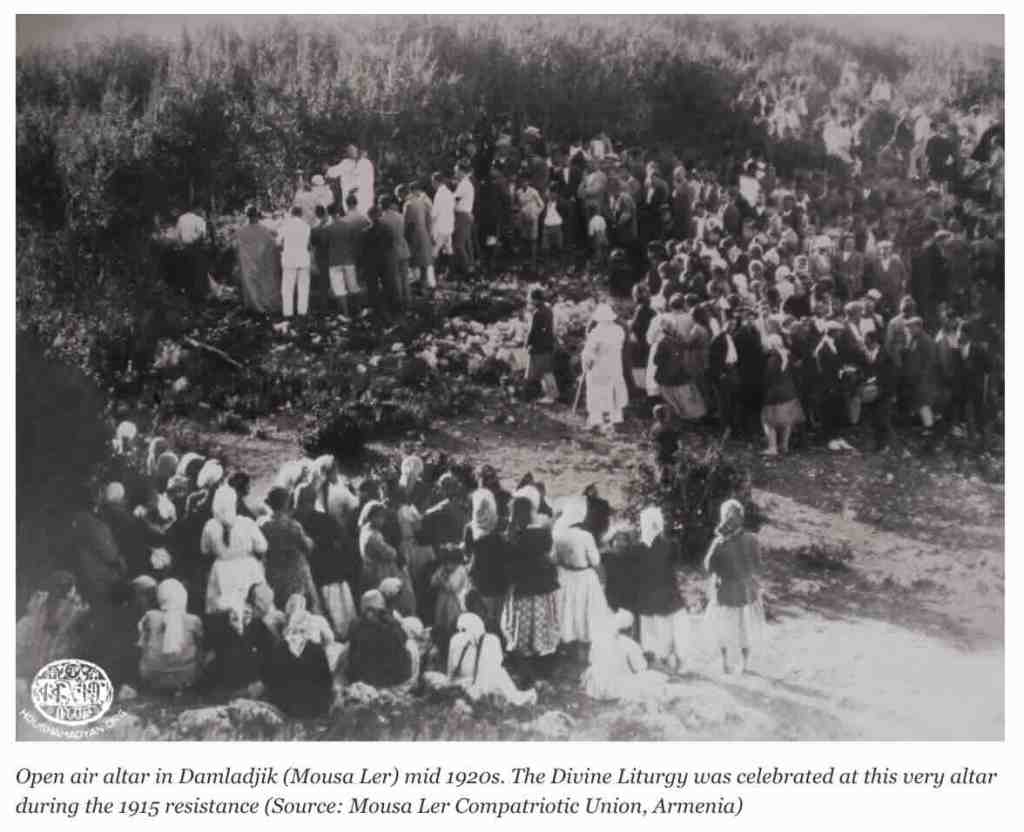


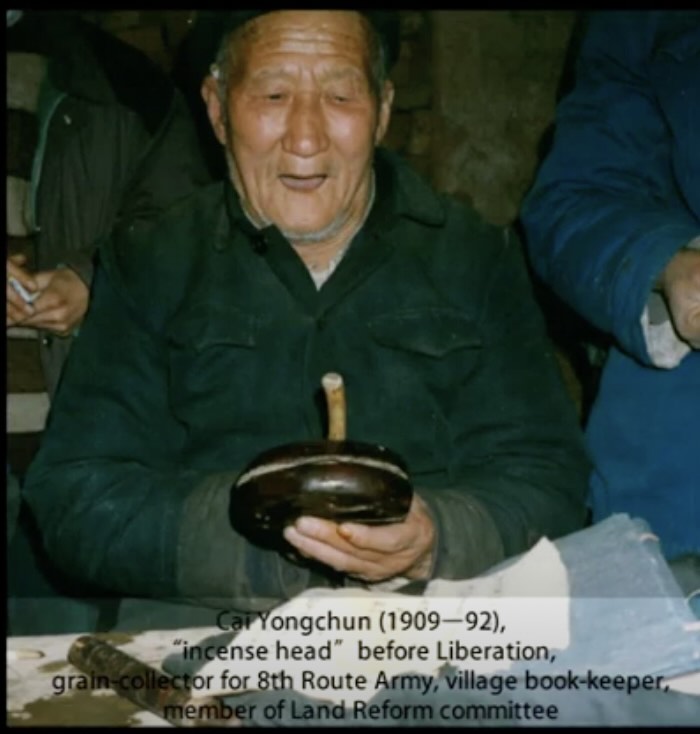

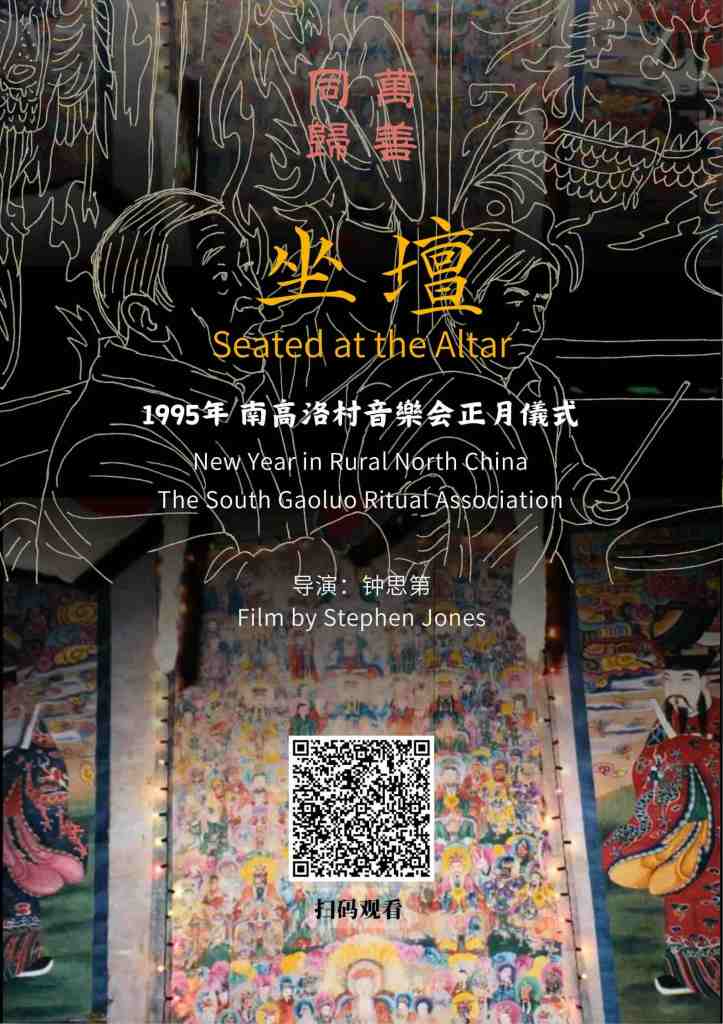


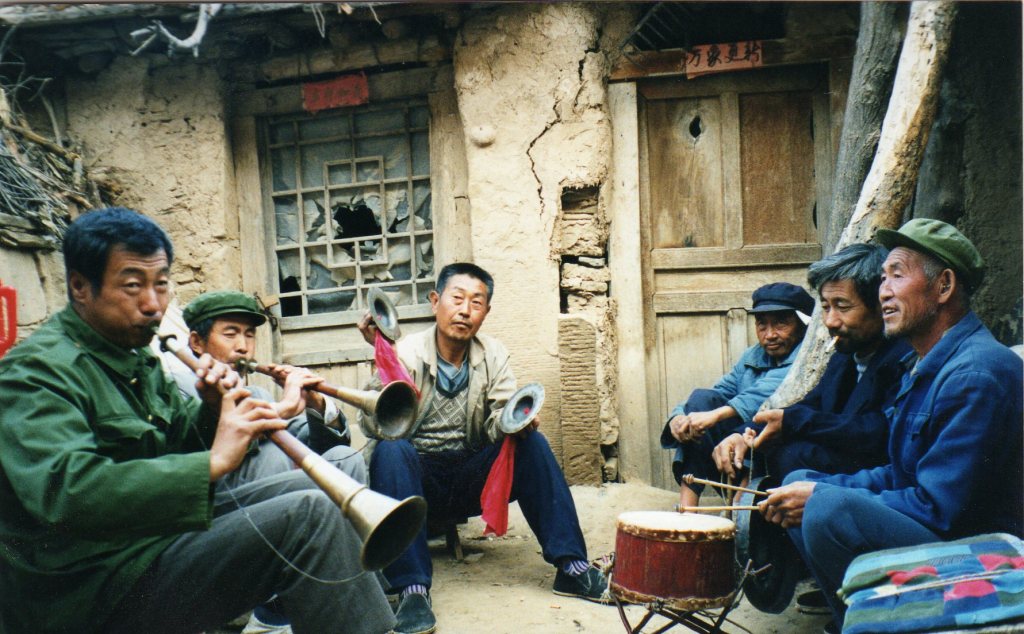


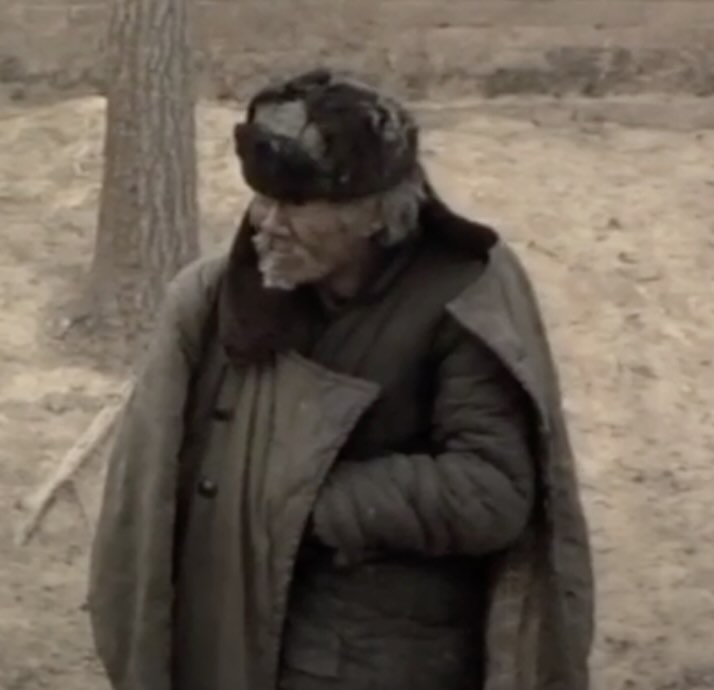

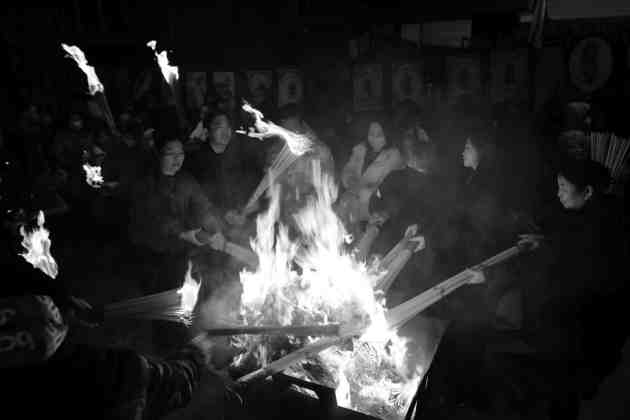



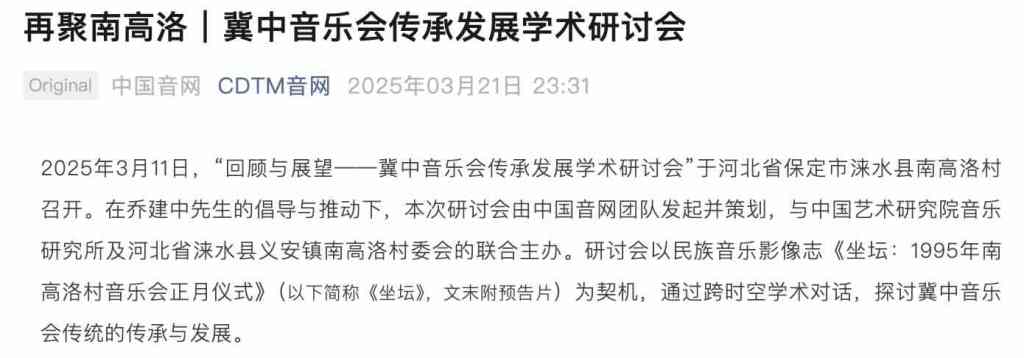


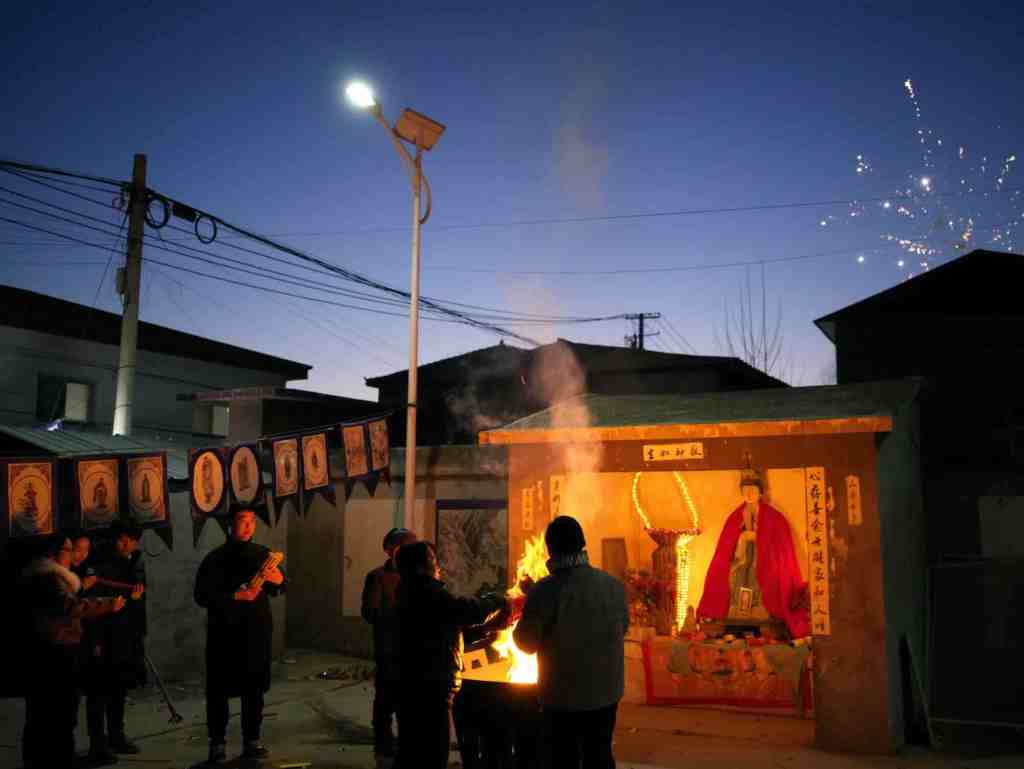



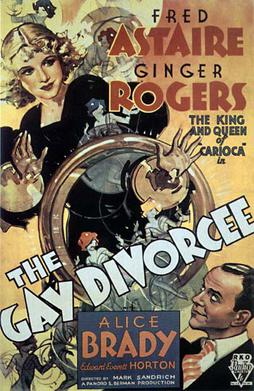
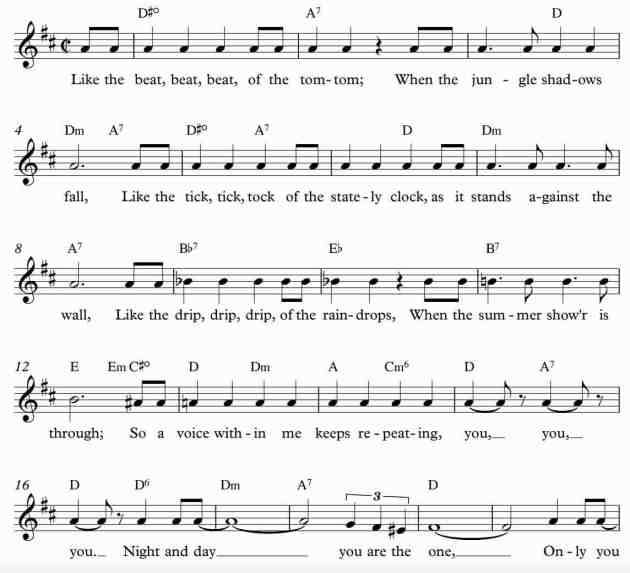
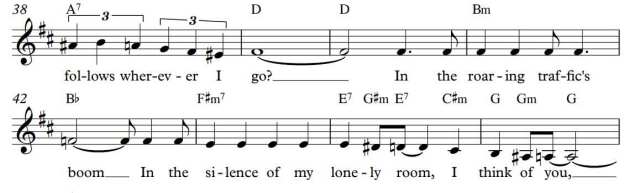


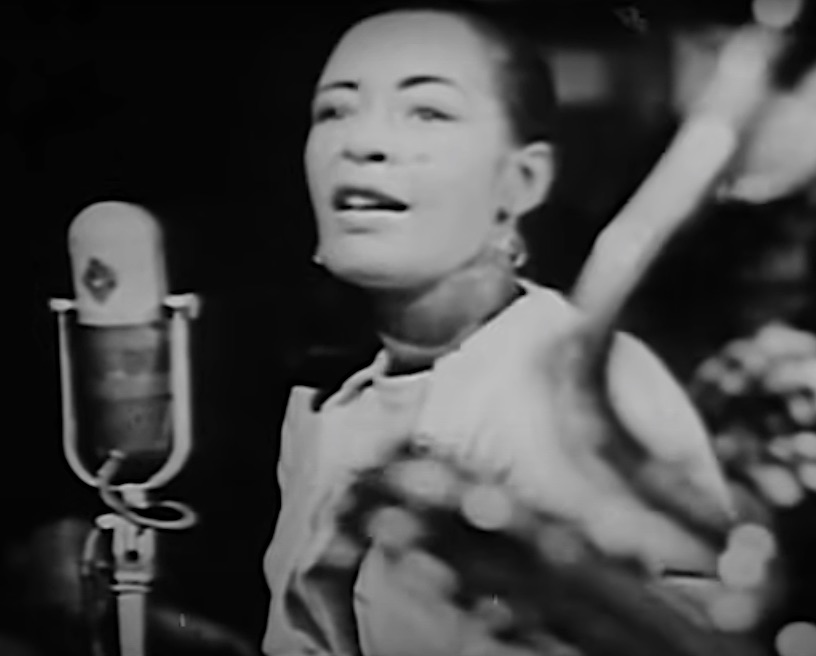


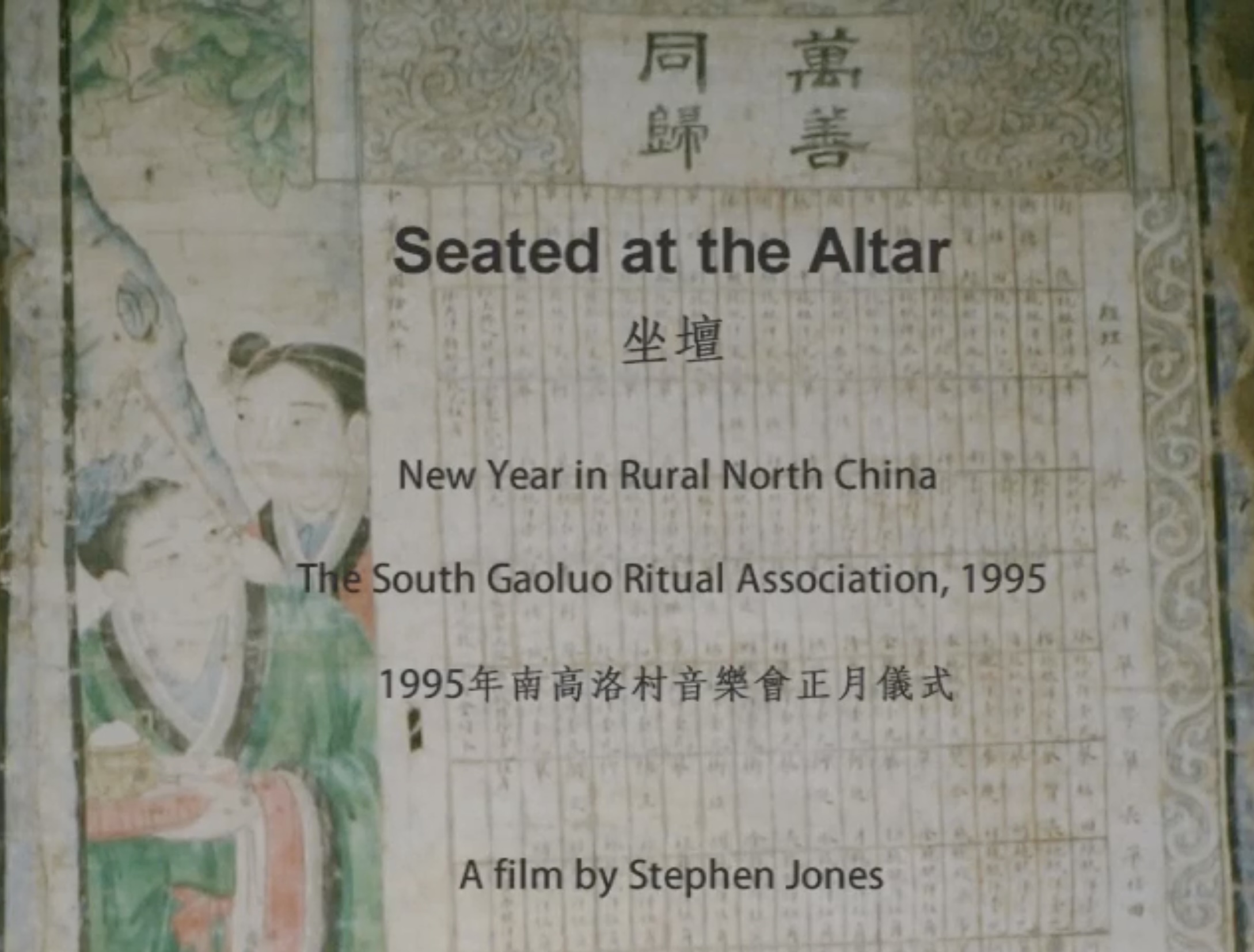


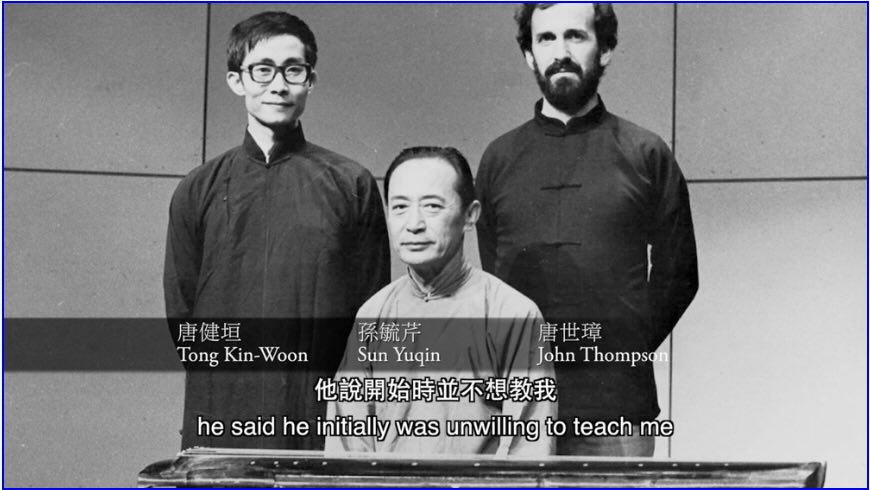


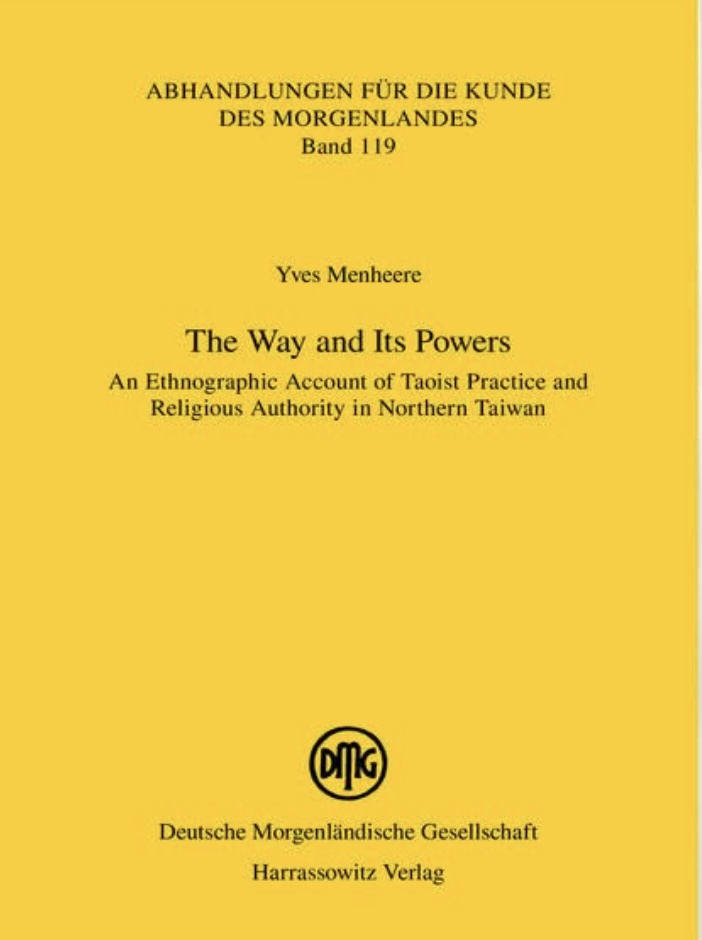


 Scene from the Great Improvement of Luck ritual:
 The Wei Yuan Altar 威遠壇 in suburban Taipei,


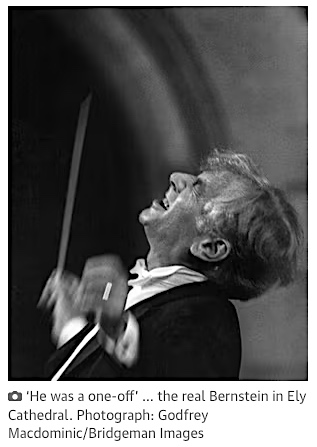 We get to hear some of the


 The film does justice to Raymond Chandler’s brilliant prose style. Roger Ebert, always a perceptive reviewer, made some


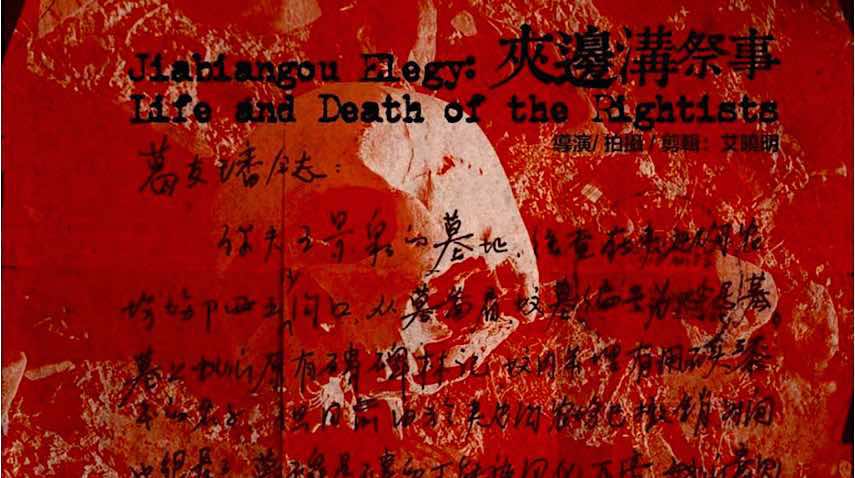

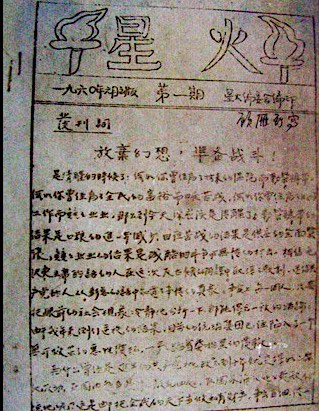


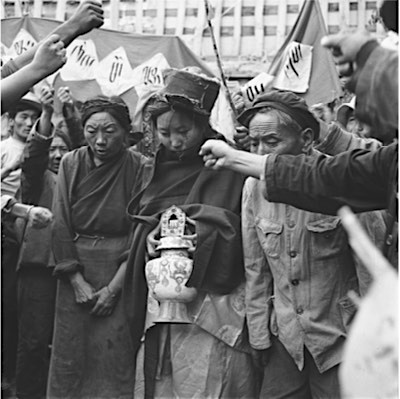
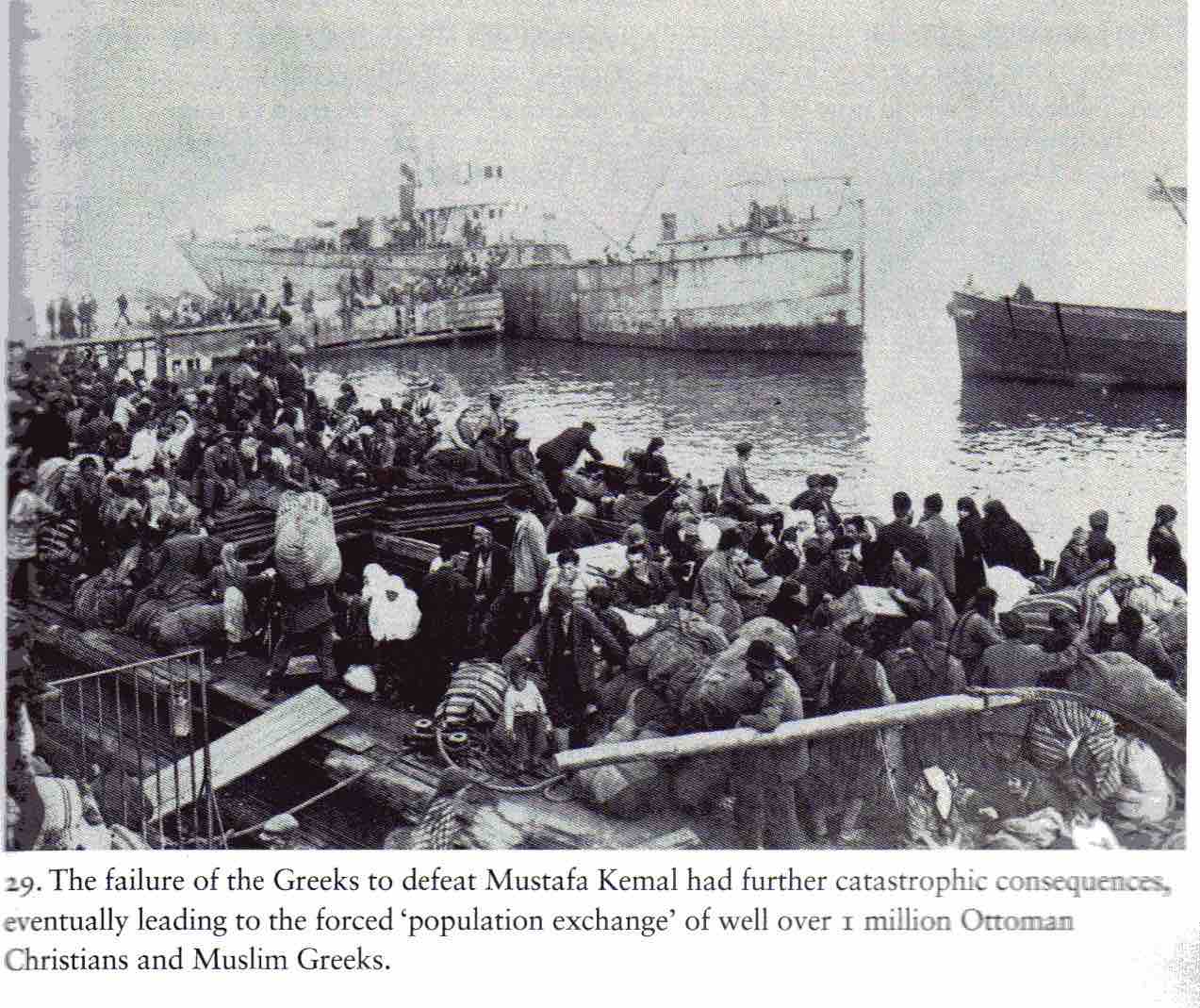


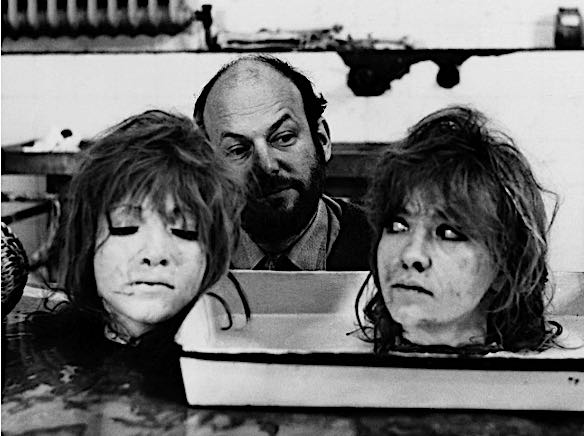




 The Turkish music scene in Germany was far from homogeneous. Cem Kaya elicits some excellent comments from characterful musicians. The film opens and ends strikingly with İsmet Topçu, the Hendrix of the bağlama, putting the story in wacky extra-terrestrial context…




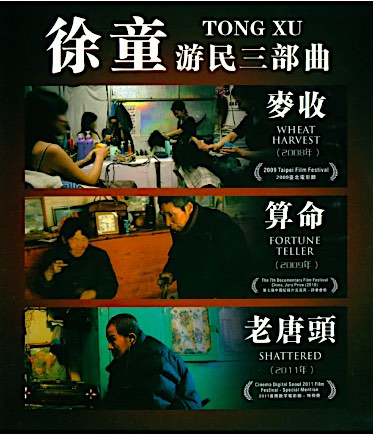






 Orgyen displays his “shrine”.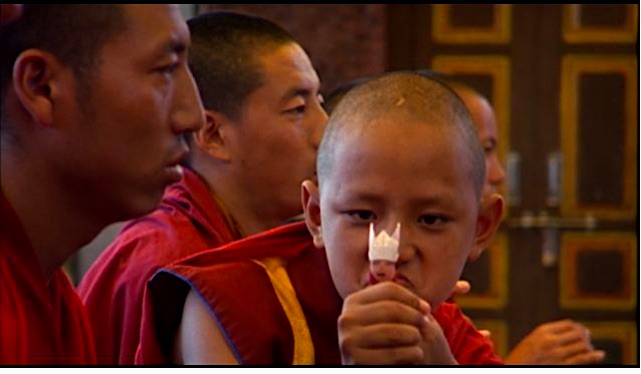
 Stephen Jones: a blog
