Rethinking Zhengyi and Quanzhen

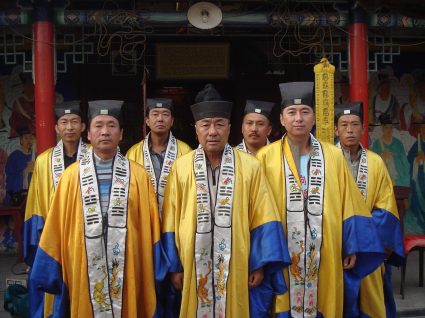
Shuozhou Daoists

Household Quanzhen Daoists of Shuozhou, Shanxi.

I still find it worth reminding you of my page Rethinking Zhengyi and Quanzhen, for its fundamental rethink of Daoist ritual practice.

In my book In search of the folk Daoists of north China (2011) I began exploring the false dichotomy between Orthodox Unity (Zhengyi 正一) and Complete Perfection (Quanzhen 全真) branches (note especially pp.17–18). The page on my blog augments the material there in the light of further fieldwork.

Whereas the household Daoist groups of south China have dominated previous research, numerous groups of household Daoists are also active throughout the north—and they may nominally belong to either Orthodox Unity or Complete Perfection branches. But such simplistic pigeonholing may distract us from the details of their ritual practice; in both their rituals and ritual manuals I can rarely discern any significant distinction between them. When the Complete Perfection branch evolved in the 12th century, its priests (both temple and household) inherited a long tradition of Orthodox Unity ritual practice: as John Lagerwey once observed to me, “that was the only show in town”. And while a distinct Complete Perfection literature did evolve (see my book, pp.203–207), their ritual practice never developed into a separate corpus of Complete Perfection ritual texts.

That explains why such an august Complete Perfection temple priest as Min Zhiting was constantly citing Orthodox Unity ritual manuals from the Daoist Canon; and why the best mainstream source for the ritual texts of the Li family (Orthodox Unity) household priests in Yanggao is the repertoire of modern “Complete Perfection” temple practice like the Quanzhen zhengyun and Xuanmen risong.

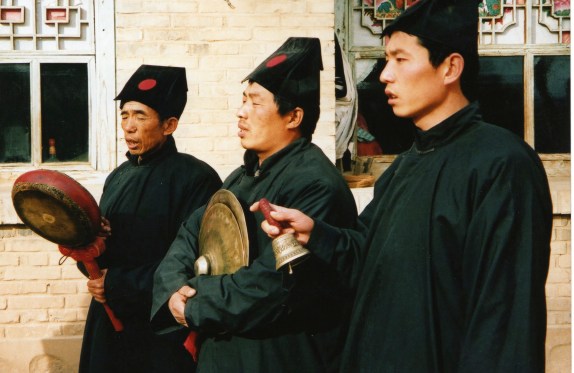
vocal trio 2001

Household Zhengyi Daoists of the Li family, Shanxi.

In some places now—since around 2000—the picture is further confused by a certain “centripetal” tendency. With wider access (such as the internet), some groups that have always been Orthodox Unity may be exploring ways of “legitimising” themselves by seeking manuals from prestigious central sites like the White Cloud Temple in Beijing, and having costumes and hats made which make them appear to be Complete Perfection Daoists. They may even reform their “local” ritual practice by adopting elements from the “national” White Cloud Temple.

Hunyuan yankou 1

Daoists of Hunyuan, Shanxi—a most interesting case.

The local ritual scene is further obfuscated by a tendency among some scholars (both local and central) to assume that if a group is household-based, then they must be Orthodox Unity—a problem I have already queried. We really must debunk this assumption. Among my articles on Local ritual, the household Daoists of  Changwu in Shaanxi turn out to belong to the Huashan branch of Complete Perfection, and the household Daoists of Guangling in Shanxi appear to come from a Longmen tradition. Actually, this is not so clear-cut—even non-Quanzhen priests might adopt Longmen titles (note sources by Vincent Goossaert cited in my In search of the folk Daoists, p.18 n.34).

So while both the ritual texts and ritual sequences of the two notional branches are rather similar, what always makes local traditions distinctive is the way in which the texts are performed. Even here there’s another erroneous cliché that needs debunking. Generations of scholars of Daoist music have parroted the notion that in style the “music” of Orthodox Unity (conceived narrowly as “household” or folk) Daoists is more popular and lively, whereas that of Complete Perfection (again, conceived narrowly as austere monastic) Daoists is solemn, slow and restrained. This derives entirely from an unfounded theory about household and temple practice. We only need to watch my film about the Li family band to realise this simply won’t do. The basic style of Orthodox Unity Daoists (exemplified by the zantan hymns that permeate all their rituals) is extremely slow and solemn—but as you can hear, it is indeed punctuated by exhilarating moments. The idiom of (household!) Complete Perfection Daoists is certainly no more “solemn”. Both branches may use melodic shengguan instrumental ensemble—and if anything, that of the Orthodox Unity groups tends to be more slow and solemn.

Indeed, when I showed Li Manshan my videos of funeral segments by the Complete Perfection household Daoists in Shuozhou just south of Yanggao, he found their performance “chaotic” (luan). Orthodox Unity groups in Yanggao like that of Li Manshan pride themselves on the “order” (guiju) of their performance. My only ongoing note on this is that several household Complete Perfection groups (such as in Shuozhou and Guangling) may have preserved the element of fast tutti a cappella recitation of the jing scriptures better than in some Orthodox Unity traditions like those of Yanggao. But that doesn’t bear on the false stylistic dichotomy. Like Life, It’s Complicated… We always need to expand our database and use our critical faculties, rather than parroting outdated clichés.

Do refer to my original page, with its greater detail! More essays on conceptual issues in Chinese ritual under Themes in the top menu—besides many fieldnotes on Local ritual

Zen in the art of the baroque lute

Wuwei
For Roger Federer, click here.
In snooker, another instance of “effortless grace” is Ronnie O’Sullivan.

Always (nonchalantly) on the trail of non-action, I came across the stimulating article

While Daoism and Zen have long become glib buzzwords in the West, some such as R.H. Blyth and Alan Watts have given informed treatments, and some like Gary Snyder embody the ethos. In another post I alluded to Daoist wuwei while feeling sad that we can’t attribute the expression “Don’t just do something, stand there!” to Miles Davis.

Helen De Cruz contributes a thoughtful study from her background as performer and scholar of baroque lute and archlute. In studying a Zamboni prelude with her teacher, she elaborates on his advice “Be more Zen”:

to give shape to the extemporising, improvisatory nature of a prelude one should achieve more with less, giving an air of effortlessness to quick runs using difficult and sometimes awkward grips. The composition of a prelude embodies the aesthetic of studied effortlessness: at first, the notes sound spontaneous, searching, reaching, as if the player is merely tuning her instrument and improvising. But then, as the harmonies are given increasingly definite shape through blossoming arpeggios, the ear inclines to expect the next note with increasing confidence, and finally it all comes together: the earlier hesitant notes get their meaning, and the mind discerns the cohesive whole—it turns out not a single note was coincidental.

The term sprezzatura * (akin to “effortless grace” or “studied carelessness”) was introduced by the Italian Renaissance philosopher and diplomat Baldassare Castiglione in his etiquette manual Il Cortegiano (1528), written for the “small but chic” court at Urbino. Essential skills for the courtier included dancing, wrestling, fencing, horse riding, sports (such as tennis), and playing a musical instrument. The goal was “to steer away from affectation at all costs, […] to practice in everything a certain nonchalance [sprezzatura] that shall conceal design and show that what is done and said is done without effort and almost without thought”.

While the concealment of art can be affected, the aesthetic is still prized today—for instance,  in men’s fashion,

where one aims for an appearance of effortless grace in what is in reality a carefully curated wardrobe. It is part of how athletes are judged. […] The aesthetician Tom Cochrane equates sprezzatura with the aesthetic of cool, which he describes as containing “elements of aesthetic power or sublimity, specifically an elevation above the passions and indifference to danger.” The graceful courtier is (seemingly) unconcerned with the effect he has on the audience.  Ultimately, he is unconcerned with himself, he has lost all self-consciousness in the intrinsic beauty of his actions.

De Cruz notes that early discussions often focused on the practice of ritual. “To achieve true mastery, you must lose yourself in a skilled task that harmonises you with your physical and mental environment, and you will achieve mental quietude as a result.” Inevitably, I think of my great household Daoist mentors Li Qing and his son Li Manshan, both lowly peasants; this is also a question of charisma, not always a major theme of studies of Daoist ritual…

The early Daoist classic Zhuangzi evinces the art of the bell-stand maker, wheelwright—and butcher: as de Cruz explains a much-discussed passage,

Lord Wenhui watches in silent admiration as his butcher (who is also his cook) is cutting up an ox: “every move of his feet, every thrust of his knee—zip! zoop! He slithered the knife along with a zing, and all was in perfect rhythm, as though he were performing the dance of the Mulberry Grove or keeping time to the Jingshou music [ancient ritual items, the former part of rain ceremonies].

“Ah, this is marvelous!” said Lord Wenhui. “Imagine skill reaching such heights!”

Cook Ding laid down his knife and replied, “What I care about is the Way [dao], which goes beyond skill. When I first began cutting up oxen, all I could see was the ox itself. After three years I no longer saw the whole ox. And now – now I go at it by spirit and don’t look with my eyes.”

“Perception and understanding have come to a stop, and spirit moves where it wants. I go along with the natural makeup, strike in the big hollows, guide the knife through the big openings, and follow things as they are. So I never touch the smallest ligament or tendon, much less a main joint.” 

Zhuangzi also tells the story of a man swimming in fast-running currents, who tells Confucius:

 I have no way [無道 wu dao]. I began with what I was used to, grew up with my nature, and let things come to completion with fate. I go under with the swirls and come out with the eddies, following along the way the water goes and never thinking about myself. That’s how I can stay afloat.

De Cruz comments astutely:

Note the details in this story: the man has long hair that streams down, rather than being tied up in a knot, indicating he is of lower class. He sings not in a ritual context, as the Confucians would require, but out of sheer, unadulterated joy. Confucius is the main Confucian sage but (in Zhuangzian fashion) cannot fathom how someone is able to make such a dive and come out alive. Rather than a specific affectation, the swimmer has “no way.” He exhibits the essence of sprezzatura in his graceful movements and his indifference to danger.

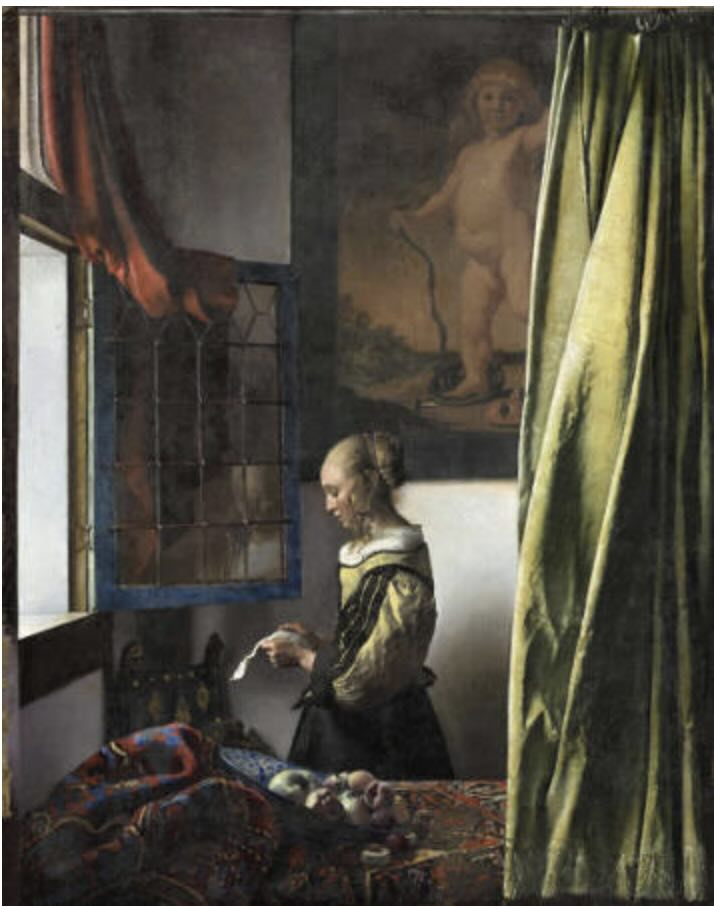
Vermeer luteFor both folk and art music in the time of Vermeer, click here.

She cites the 17th-century English lutenist Mary Burwell:

One must then sit upright in playing to show no constraint or pains, to have a smiling countenance, that the company may not think you play unwillingly, and [to] show that you animate the lute as well as the lute does animate you. Yet you must not stir your body nor your head, nor show any extreme satisfaction in your playing. You must make no mouths, nor bite your lips, nor cast your hands in a flourishing manner that relishes of a fiddler [!]. In one word, you must not less please the eyes than the ears.

And Rameau in 1724:

the aptitudes for which [playing the harpsichord] calls are natural to everyone—much like in walking, or, if you like, running.

She cites the flow theory of Mihaly Csikszentmihalyi:

Self-forgetting opens the mind to the intrinsic beauty of skills we exhibit in the flow state,

explaining

In Zhuangzi’s butcher and swimmer and in Mary Burwell’s lutenist, the practitioner refuses to be identified with their performance, thus overcoming the self-centredness that often accompanies achievement.

This may be one reason why I became so resistant to Beethoven, for whom struggle—audible struggle—was central, becoming dominant in the romantic aesthetic of the virtuoso concerto soloist, striving to overcome.

De Cruz concludes:

We achieve an overall pleasing effect when we are in harmony with our physical constraints. When we achieve wuwei in skilled performance, we deliberately submit ourselves to our environment and to the limitations of our bodies—we place our actions rather than ourselves centre stage. We can say that sprezzatura presents a philosophy of life, an approach to our environment and our surroundings that acknowledges our bodily imperfections and our situatedness, and that yet enables us to achieve through non-action and mental stillness a kind of perfection that our audience can delight in and enjoy. Sometimes the beauty and wonder we bring into the world has more to do with our non-action than with our action.

I find this virtue in some exponents of Bach, such as David Tayler on archlute or Steven Isserlis on cello. Cf. the art of a wood turner in Istanbul.


*  Italian sprezzo/disprezzo “disdain” is another instance of the expressive Italian negative s.

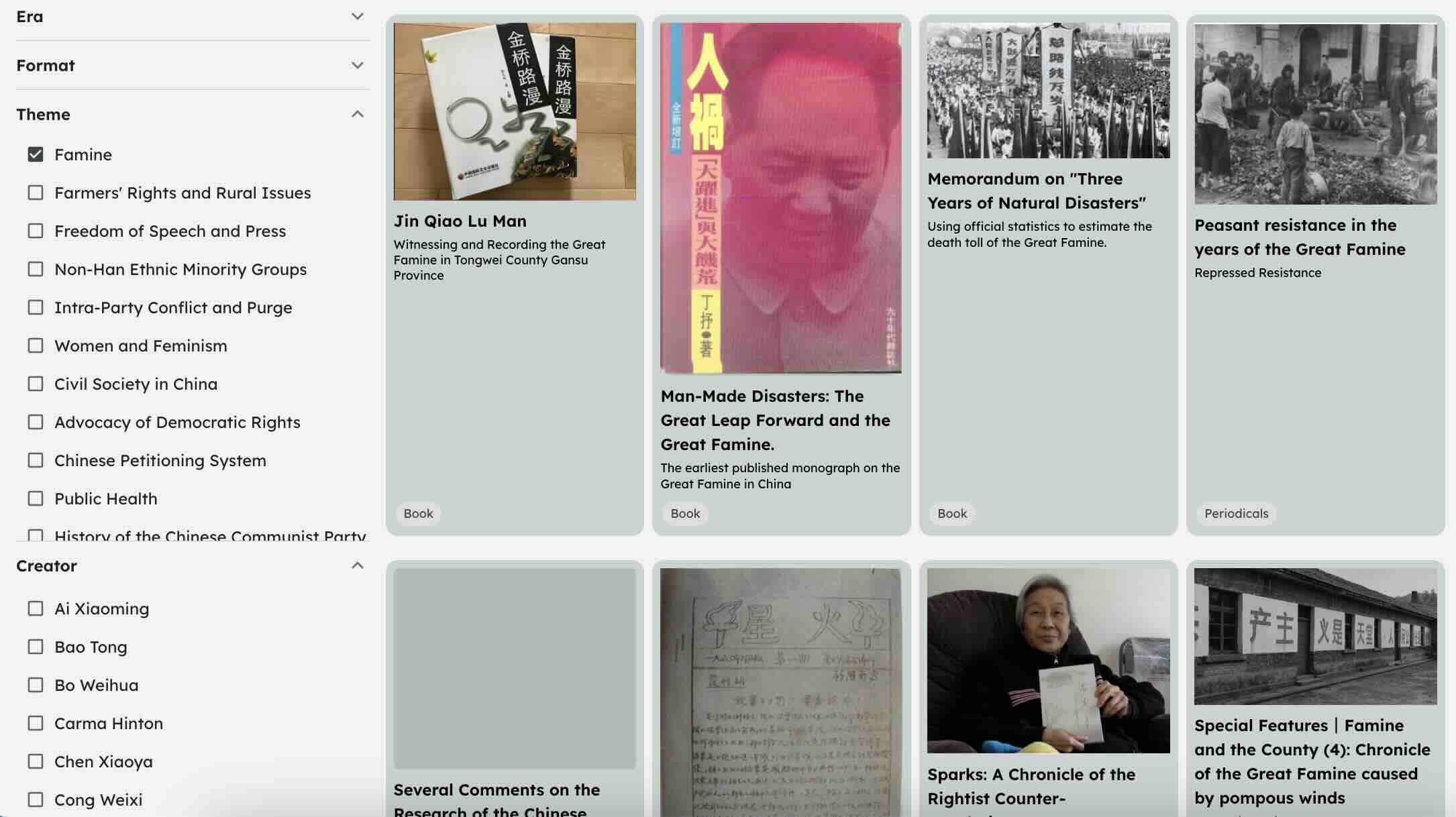
China Unofficial Archives

minjiian dang'an

Following Ian Johnson’s recent book Sparks, with the intrepid underground journalist Jiang Xue and others he has created an important new website

Making a valuable corrective to Party propaganda, it’s a repository of alternative sources on the history of modern China,

dedicated to making accessible the key documents, films, blogs, and publications of a movement of Chinese people seeking to reclaim their country’s history. Unlike official government or university archives, the China Unofficial Archives is open, free, and accessible to anyone from any walk of life. The site is fully bilingual in Chinese and English.

See also the initial curator’s notes.

The site is still growing, with new sources in the pipeline. The sidebar lists useful rubrics:

  • Era
  • Format
  • Theme
  • Creator.

Themes—covered by Western academics (see e.g. Cultural Revolutions, and under my Maoism tag), but whose Chinese sources are less easily accessed—include

  • Land reform before and after 1949
  • Covid-19
  • Famine
  • Farmers’ rights and rural issues
  • Non-Han ethnic minority groups
  • Women and feminism,

and (still in progress),

  • Faith-based persecution and crackdown—including yet another moving film by Hu Jie on the tribulations of a Christian Miao community in Yunnan, Maidichongde gesheng 麦地冲的歌声 (The songs of Maidichong village, 2016), subject of a separate post.

I will doubtless be posting on some topics that particularly interest me—for instance, I’m keen to get to grips with

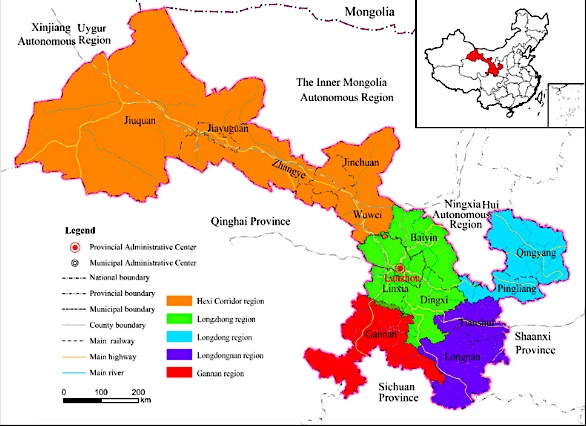
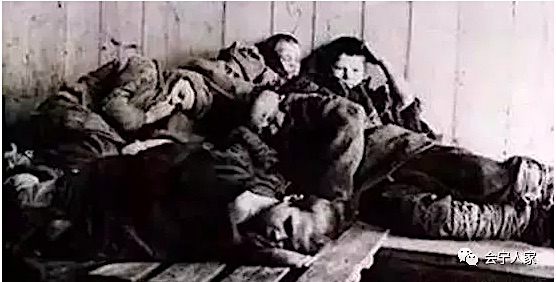
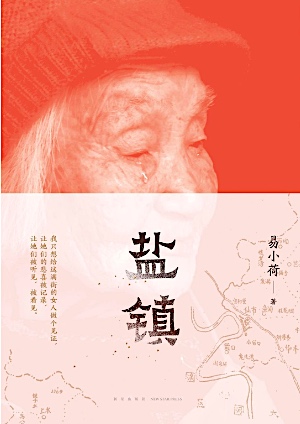
one of the rare official Chinese publications on what remains a highly sensitive subject (cf. Gansu: connecting social trauma and expressive culture, and sequel).

minjiandanganguan famine

Note also the Other resources menu. For updates, follow on Twitter.

Ripples

Like a circle in a spiral, like a wheel within a wheelNever ending or beginning on an ever spinning reel […]
Or the ripples from a pebble someone tosses in a stream […]
Like the circles that you find in the windmills of your mind!

The windmills of your mind.

I’m both amused and bemused when readers of my posts react to the myriad highlighted links with a certain alarm at finding themselves pursuing my arcane thought-processes down the rabbit-warren that this blog has become (e.g. in my annual roundups, “like a suburban Sisyphus doing and undoing a jigsaw”).

The links are of two kinds: to articles, websites, or pdfs by other authors, and to other posts on this site. They are rarely a red herring, or a wild goose chase—honest guv. While the Plain People of Ireland are quite entitled to their dismay, the consternation of erudite academics seems curious, when they are used to taking in their stride in-text references and ponderous Teutonic footnotes (like de Selby in The third policeman)—keen to consult a reference to Karlgren’s Grammata Serica Recensa which in turn will lead them to early Sogdian manuscripts and thence to medieval viniculture… Only you no longer have to spend a day consulting index cards in a library. And I like to think that I’m performing a public service by distracting such scholars for a moment from their niche focus on Song-dynasty Daoist ritual texts or baroque performance practice—whether by broadening the scope of enquiry or by being reminded of an apposite joke (see e.g. my taxonomy of Chinese jokes, under The joys of indexing). And (suitably equipped with a long ball of string) you can always find your way back to where you started.

Sir, you try my patience!
I don’t mind if I do—you must come over and try mine sometime.

— Groucho.

Even those less obsessively monocultural readers must be used to consulting websites full of links to related topics—like when an online article about the latest pompous idiocies of The Haunted Pencil leads you to other iniquities of the Tory “government”. Perhaps part of the challenge of my personal labyrinth is that its associations are so diverse, keeping you guessing. But that’s Like Life, innit?!

Oops, I seem to have done it again here… Please excuse me! But anyway, my Word Press stats suggest that remarkably few readers ever click on the links (even within roundups, or playlists such as this, where not doing so is like consulting a library catalogue but not looking at any of the books)—which causes me a certain distress 😟 (see The art of emoji)… Go on, give it a whirl!

Fujian: instrumental groups as a gateway to the study of ritual

contents

Fujian province in southeast China is one of the most vibrant areas to explore folk and ritual expressive cultures, which its local scholars have been particularly avid in documenting. Its traditions—always rooted in life-cycle and calendrical ceremonies—are known to outsiders largely through the Minnan region in the south of the province, particularly the treasury of nanyin ballads [1]—not least because much of the culture of the island of Taiwan across the strait derives from its Hokkien migrants (click here).

The visits of my early fieldwork years were inevitably superficial, “gazing at flowers from horseback” 走马观花. For background, Li Quanmin’s 1961 field report—during a lull between Maoist campaigns—was already based on collections by local cultural workers. After the hiatus of the Cultural Revolution, Fujian minjian yinyue jianlun 福建民间音乐简论 (1986) by Liu Chunshu 刘春曙 and Wang Yaohua 王耀华 made a worthy survey for the early reform era, including both vocal and instrumental genres.

Meanwhile the compilation of the monumental Anthology of folk music of the Chinese peoples was under way; and it’s taken me all this time to get round to browsing the 2,775 pages (!) of the two instrumental music volumes for Fujian,

  • Zhongguo minjian qiyuequ jicheng, Fujian juan 中国民间器乐曲集成, 福建卷 (2001),
    again with the experienced Wang Yaohua as editor-in-chief.

Ritual pervades all genres of folk expressive culture: in the Anthology, it is a major theme of the volumes for folk-song, narrative-singing, opera, and dance. In the instrumental music volumes, even genres that lack explicit liturgical content are also invariably performed for ceremonial occasions—but a further reason to consult them is that the specific rubric of “religious music” has been consigned there. I’ve described the flaws of the Anthology project in my

  • “Reading between the lines: reflections on the massive Anthology of folk music of the Chinese peoples”, Ethnomusicology 47.3 (2003), pp.287–337.

Apart from the Anthology‘s valuable Monographs for opera and narrative-singing and brief textual introductions to genres, its volumes consist mainly of transcriptions, of limited value without available recordings. Conceptually its classifications are rudimentary, but it opens up a world of local cultures.

For Fujian, whereas nanyin is amply documented on CD and film, most other genres are unique to the province and hardly known outside their own locale. So I find these volumes a revelation, opening up many perspectives (particularly for the late imperial and Republican eras) and making one of the most impressive introductions to the riches of expressive culture in China. It confirms my observations about the resilience of tradition in the PRC—for all the cultural riches of Taiwan, they are dwarfed even by the single province of Fujian, despite the traumas of three decades of Maoism there.

* * *

The main rubrics adopted for the instrumental volumes of the Anthology (a rough-and-ready national framework, based on the classification developed since the 1950s and later elaborated by Yuan Jingfang) are:

  • “compound” (zonghexing 综合性, referring mainly to a substantial vocal component)
  • “silk-and-bamboo” sizhu 丝竹
  • “drumming and blowing” guchui 鼓吹
  • “blowing and beating” chuida 吹打, with a more diverse instrumentation than guchui
  • percussion bands luogu 锣鼓
  • “sacrificial music” jisi yinyue 祭祀音乐 and “religious music” zongjiao yinyue 宗教音乐(Buddhist, Daoist, both temple and household—the latter covered far more comprehensively in separate projects by Chinese and foreign scholars).

Besides all the articles introducing particular local traditions, brief yet instructive sections are appended with histories of some notable groups (pp.2687–99) and biographies of performers (pp.2700–19), sampled below.

As throughout China, social performance is dominated by ensembles (see e.g. Liaoning), some occupational, others amateur. By contrast with the “conservatoire style”, instrumental solos play a very minor role in folk practice—here represented only by pieces for the zheng zither around Zhao’an and Yunxiao (pp.1683–1754), just east of Chaozhou in east Guangdong—another enclave for zheng solo repertoires.

* * *

Even for the Quanzhou region of south Fujian, while nanyin 南音 is a main focus, it is only part of a diverse scene. Nanyin has become a significant cultural element in the rapprochement between Fujian and Hokkien communities overseas. With so much research elsewhere, the Anthology section (pp.31–46, transcriptions pp.37–354) may not detain us long, though we should also consult other volumes, notably those for narrative-singing—both “music” (Zhongguo quyi yinyue jicheng, Fujian juan 中国曲艺音乐集成, 福建卷, pp.45–1102!) and the monograph (Zhongguo quyi zhi, Fujian juan 中国曲艺志, 福建卷).

Beiguan 北管 is a major genre in Taiwan (see again here), but in Fujian (where it is particular to Hui’an county near Quanzhou) it has a far less extensive repertoire (pp.355–60, transcriptions pp.361–97; biographies 2716–18).

Local traditions under “silk-and-bamboo” (a rubric as unwieldy as the others) include

  • shiyin 十音 of the Pu–Xian region (Putian and Xianyou) (aka shiyin bayue 十音八乐, with the added format of shawms and percussion: for video clip, see under Walking shrill)
  • guyue” 古乐 of Zhao’an in the southern Zhangzhou region, related to Chaozhou ensemble music and the zheng zither repertoire
  • shiban 十班 groups around west Fujian.

Anxi da guchui
“Greater guchui” procession in Anxi.

Shawm-and-percussion bands, again serving life-cycle and calendrical observances, are ubiquitous throughout China, including all regions of Fujian—though they are hardly known outside local communities. Under the heading of “guchui” are introductions to

  • Ningde in northeast Fujian (for a shawm band in Xiapu, see also pp.2696–8).
  • around Fuzhou, Annan chi 安南伬 (and introduction to a renowned band in Linpu village, pp.2691–2)
  • in Fuqing south of Fuzhou, jin guchui 金鼓吹
  • “lesser guchui” of Xianyou and “greater guchui” of the Pu–Xian region.

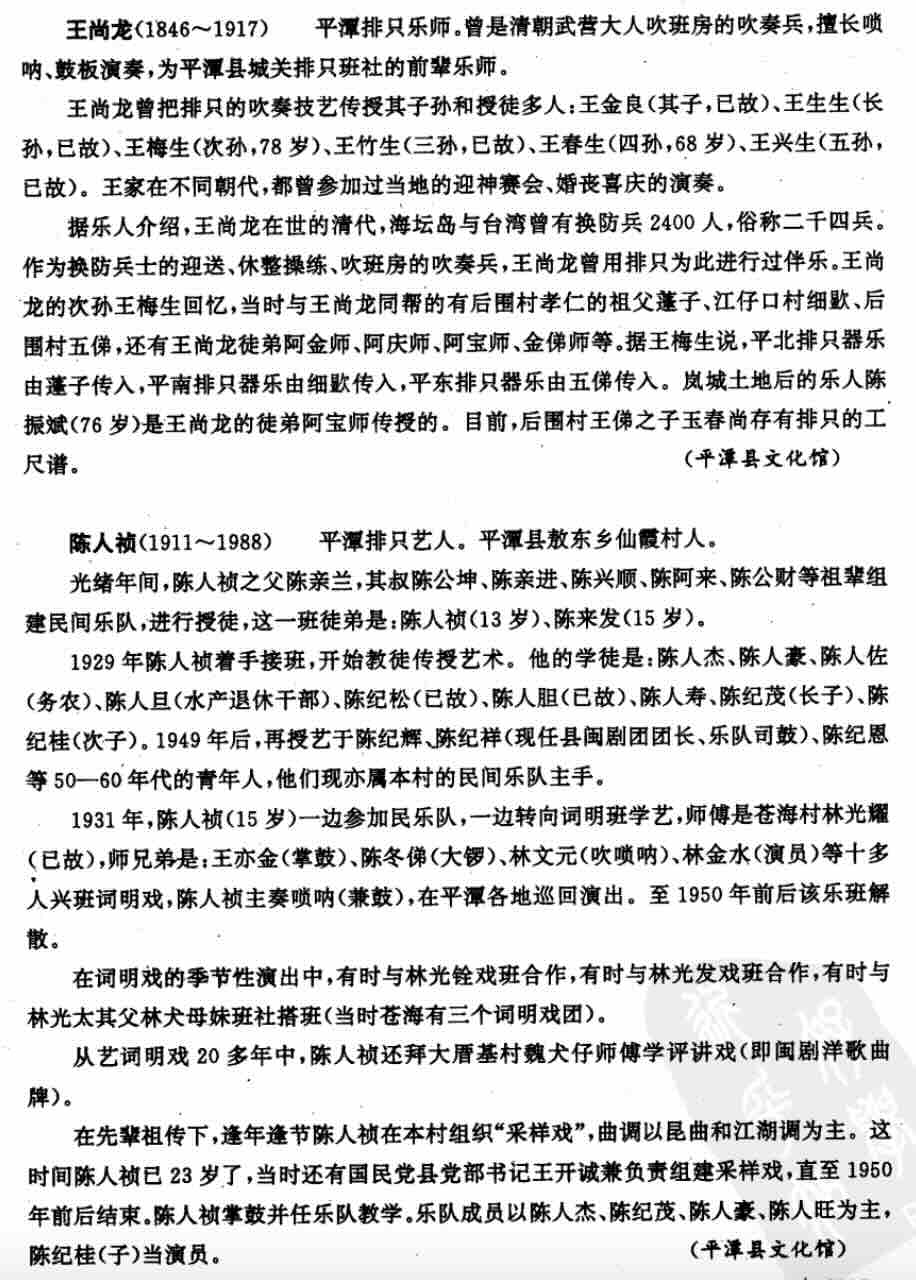
Pingtan paizhi biosBiographies of Pingtan paizhi master Wang Shanglong and Chen Renzhen.

Since imperial times, shawm bands were often transmitted through regional military garrisons, such as

  • longchui 龙吹 around Quanzhou (text pp.784–5, transcriptions pp.786–96), introduced in my Folk music of China pp.312–18, CD #12 (in the sidebar on this blog, audio gallery #15, with commentary here), and another instance is
  • paizhi of Pingtan island 平潭排只 (text pp.663–4, transcriptions pp.665–708; biographies of Wang Shanglong [1846–1917] and Chen Renzhen 陈人祯 [1911–88] p.2707, with a brief introduction to the latter’s band on p.2695).

(cf. the daiyue shawm bands of old Tianjin).

Changtai Qinghe guanThe Qinghe guan society in Changtai.

For south Fujian, further sections document

  • shiyin 十音 around Quanzhou (Folk music of China, pp.318–20)
  • naoting 闹厅 of Yongchun (cf. film footage of Yongchun migrants to Malaysia, here)
  • shawm bands in Anxi and Xiamen
  • for Changtai near Zhangzhou, greater guchui and lesser bayin—introducing the Qinghe guan 清和馆 society, whose masters trained over fifty groups in the vicinity.

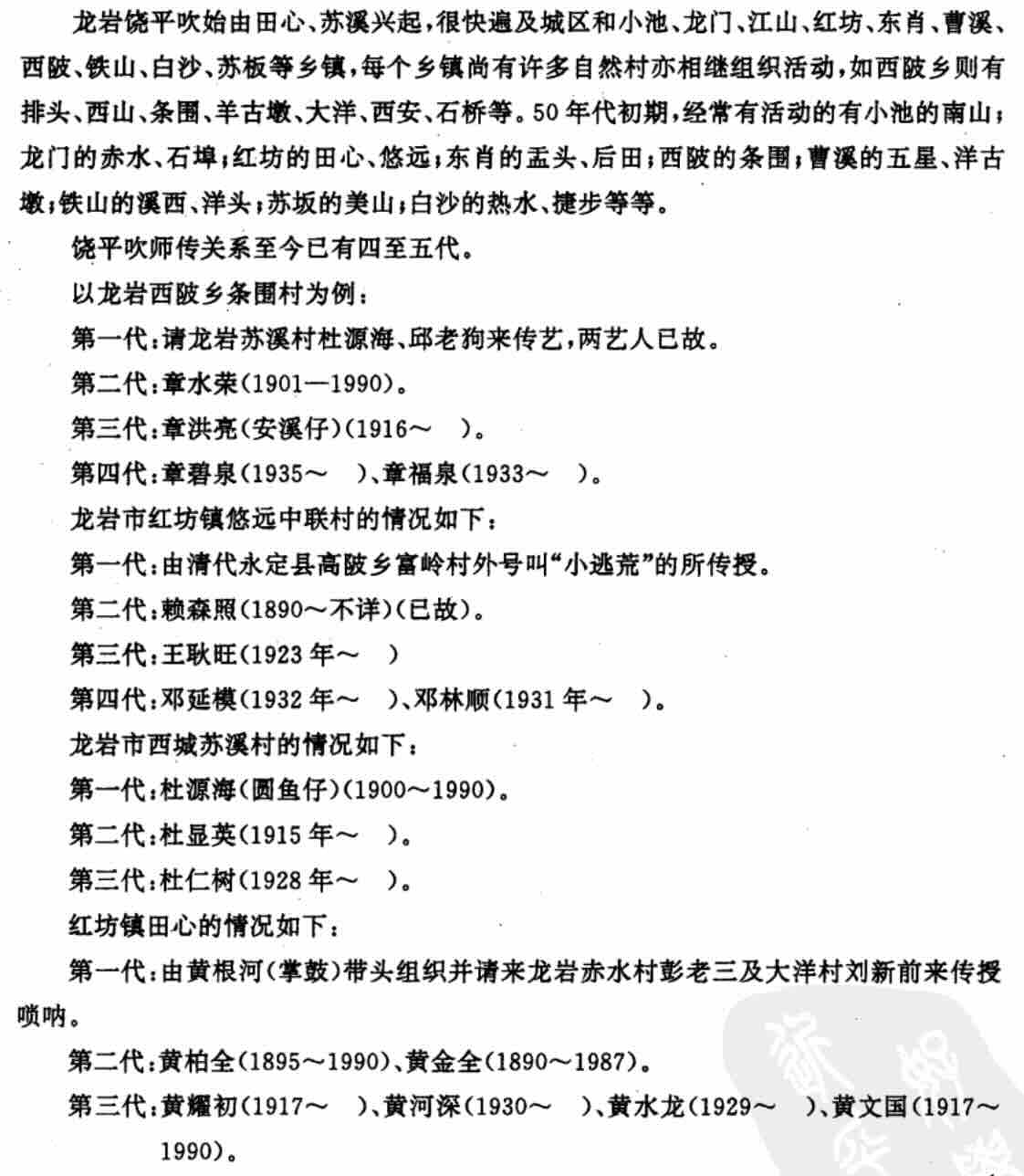
Raoping chui

Transmission of Raoping chui in rural Longyan, p.931.

  • Around west Fujian:
    • Raoping chui 平吹 of Longyan (and introduction to a village band pp.2695–6)
    • shifan diao 十番调 of Yongding
    • wuyin 五音 of Shanghang
    • and genres in Wuping, Liancheng, and Changting.
  • In central Fujian, bands in counties of Sanming municipality.
  • In the north, shawm bands in counties of Nanping municipality
  • In the east (opening vol.2), shawm bands of the She minority 畲族 around Xiapu, Fu’an, Ningde, and Yong’an.

“Blowing and beating”
Under the rubric of chuida (a more diverse instrumentation than the “guchui” shawm bands):

  • around the provincial capital Fuzhou, shifan 十番 (for various groups in the region, see also pp.2692–4)
  • shijin 拾锦 of Fuding, and genres in Fu’an and Gutian
  • in the Zhangzhou region, Siping luogu 四平锣鼓 of Nanjing 南靖 county (see also p.2696).
  • in north Fujian, Shifan luogu 十番锣鼓  [2] of Wuyishan, and groups in Pucheng.

Percussion ensembles include

  • taiping gu 平鼓 around Fuzhou, and
  • goutou 沟头 of Fuqing
  • jin guluo 金鼓锣 of Zhouning further north
  • genres in the south and west of the province.

Ritual
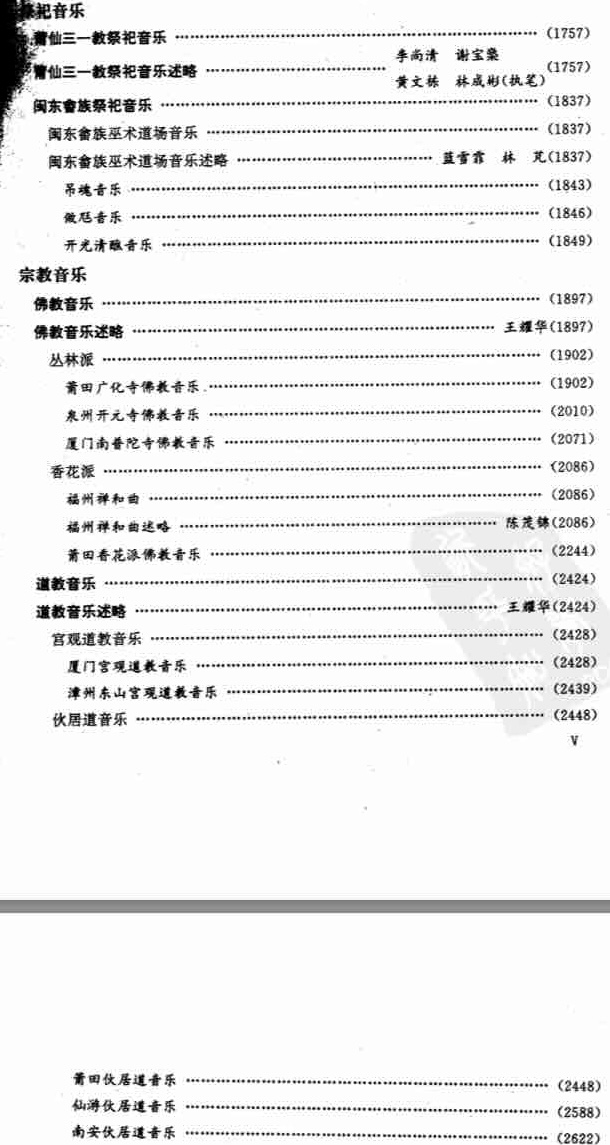
As we saw, while all genres of expressive culture are pervaded by ritual, in the Anthology the major rubric of “religious music” has been allotted to the instrumental music volumes. Though the articles of the lengthy section for Fujian (pp.1757—2683) fall far short of detailed monographs elsewhere (e.g. the Daojiao yishi congshu series for household Daoists), they constitute subsidiary references that may yet offer further clues (for early film footage, see Religious life in 1930s’ Fujian).

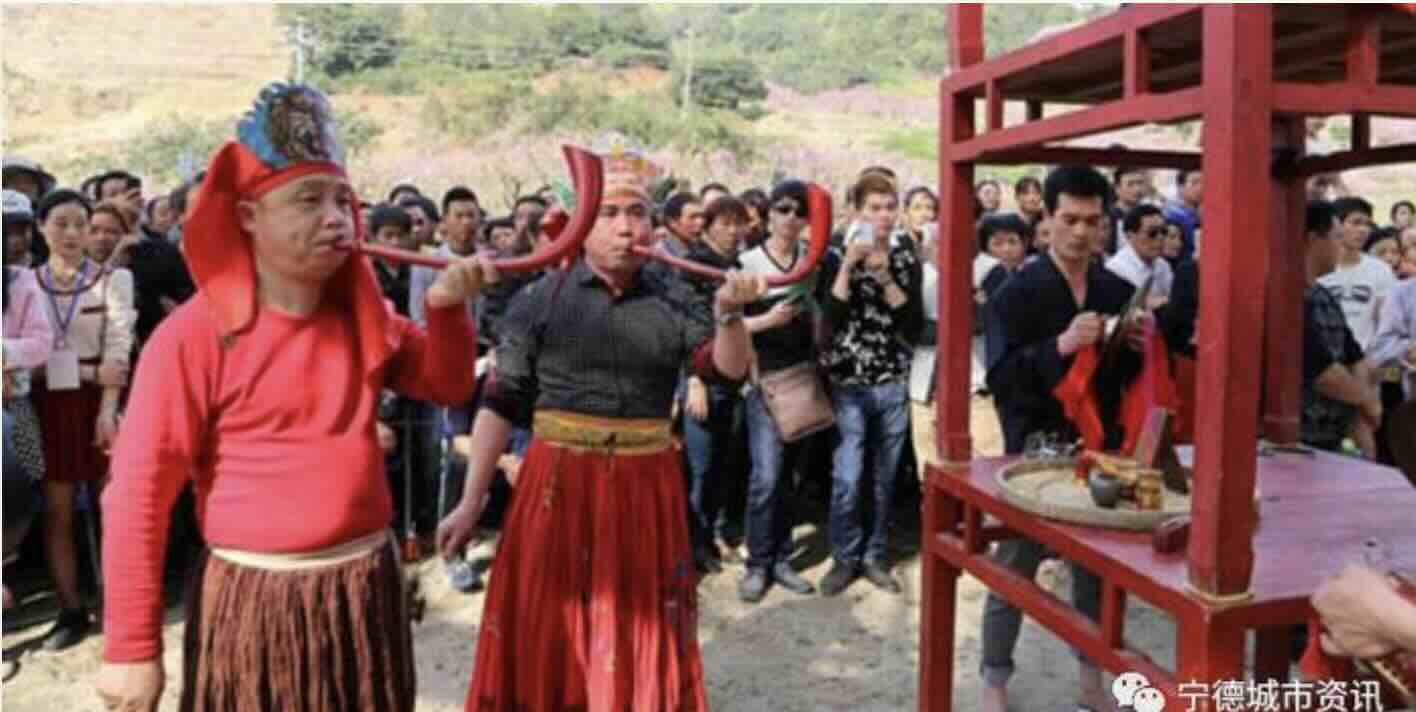
Ningde mediums
Exorcists, She minority. Source.

In the constant struggle with taxonomy (note the thoughtful studies of Catherine Bell), the editors’ ritual categories are unsatisfactory—in folk practice, even the terms “Buddhist” and “Daoist” are porous, as is clear from several volumes of the Daojiao yishi congshu. Before the listings of temple and household Buddhist and Daoist genres under “religious music”, they have inserted a section on “sacrificial music”, comprising

  • “Three in One” (Sanyi jiao 三一教) groups in the Pu–Xian region (see also biography of Liu Maoyuan 刘茂源, b.1916, pp.2710–11)—note Kenneth Dean, The Lord of the Three in One: the spread of a cult in southeast China (1998)
  • for the She minority around Ningde and Fu’an, a rather detailed article with the misleading title “music of mediumistic rituals” wushu daochang yinyue 巫术道场音乐 (pp.1837–42, liturgical texts with scores 1843–93; also biography of sixth-generation master Zhong Fuxing 钟福星 [b.1930], p.2718). Known here as wangshi 尫师 (an interesting character, wang), such ritual specialists are Daoist exorcists in the Lüshan or Maoshan tradition, presiding over the complex liturgical sequences of jiao Offering and mortuary rituals (cf. this 2017 article), just like their Han Chinese counterparts elsewhere in the province (below under “religious music” > Daoist > household)—as distinct from the self-mortifying spirit mediums who also play a significant role in Fujian rituals (see e.g. Dean’s splendid film Bored in heaven).

Fuzhou chanhe
Chanhe ritual, Fuzhou.

For both simplicity and clarity, these sections might rather have been subsumed under the single rubric of “religious music”—which includes

Buddhist:

  • liturgy of temple monks: Guanghua si temple in Putian, Kaiyuan si in Quanzhou, and Nan Putuo si in Xiamen
  • household ritual specialists:
    • chanhe 禅和 amateur ritual societies in Fuzhou (introduced en passant in my Folk music of China, pp.295–6)—another substantial section (see also biography of Xie Guiming 谢桂铭, b.1913, p.2709)
    • xianghua 香花 household priests in Putian (cf. Meixian in east Guangdong).

Putian DaoistsHousehold Daoist rituals, Putian.

Daoist:

  • liturgy of temple priests: Xiamen and Zhangzhou
  • household ritual groups in Putian, Xianyou, and Nan’an (for the latter, see also biography of Daoist Li Shi 李湿 [b.1932], pp.2712–13)—the scores useful, at least, for liturgical texts. Again, these sections will merely supplement detailed studies by scholars of religion.

Nan'an ritualSegments of mortuary rituals, Nan’an (again, cf. Ken Dean).

* * *

Even limiting our scope to instrumental music, it takes considerable conceptual adjustment to broaden our view of the musical culture of Fujian from nanyin to a multiplicity of groups such as shawm bands and ritual specialists. Unsatisfactory as the Anthology may be, beyond merely documenting “pieces” it reminds us that the lifeblood of all these traditions is social—and ritual—practice. Many individual genres are doubtless the subject of articles in Chinese journals since the publication of the Anthology, and one could make a base in any one county, indeed any one village, combining a wealth of material by observing life-cycle and calendrical activities. Meanwhile, even before consulting several thousand further pages of the Anthology for vocal and dance genres, these volumes provide valuable clues to the local ceremonial cultures of Fujian, the life stories of its transmitters, and social change, making a gateway to our studies of ritual life.

For a survey of folk traditions around the Tianjin municipality, again based on the Anthology, see here.


[1] This is a common reductive view. In surveying Chinese expressive culture, we must always beware merely regarding south Jiangsu as silk-and-bamboo, Hebei as songs-for-winds, Shanxi as “eight great suites”, and ethnic minorities as “good at singing and dancing”—just as we may reduce Spain to flamenco, Indonesia to gamelan, and so on.

[2] Shifan 十番 is a rather common term for instrumental ensembles in both south and north China, the best-known traditions being the Shifan gu 十番鼓 and Shifan luogu 十番锣鼓 of south Jiangsu, authoritatively studied by the great Yang Yinliu before and after Liberation.

Maestro: Bernstein and Mahler

Maestro

Infatuated as I am with Mahler (series here), my posts on his symphonies inevitably include performances by Leonard Bernstein (see under The art of conducting). So I just had to watch Maestro (Bradley Cooper, 2023: in cinemas and on Netflix).

Movies about musicians are notoriously prone to faux pas (for some TV clichés, see e.g. Philharmonia, and Endeavour). Bernstein’s passion as a communicator brought an unprecedented popularity to WAM that it could never again achieve; Maestro is admirable for bringing him (if not his musical genius) to a wide modern audience.

Norman Lebrecht shrewdly observes Bernstein’s place in the roster of Great Conductors (The maestro myth pp.180–87, 192–5, and, confounding the myth that he rescued Mahler’s music from obscurity in Vienna, 198–205). Heart on sleeve, OTT, Lenny was an archetype for his era—by contrast with the austere Maestros of Yore, or indeed the benign, banal middle-managers and Early Music semi-conductors of later years.

As to Maestro, Alex Ross comments in the New Yorker:

Because Bernstein’s career unfolds in the background of his marriage, the film is relieved of the dreary trudge of the conventional bio-pic, which checks off famous moments, positions them against historical landmarks (the Cold War, the Beatles, the Kennedy assassinations). […]
By and large, Maestro benefits from what it leaves out. Some viewers have complained that such major achievements as On the Town, West Side Story, and the Young People’s Concerts are mentioned only in passing. But Bernstein’s life was so stuffed with incident that nodding to each one would have drained the movie of momentum. One omission, though, left me perplexed: the studious avoidance of Bernstein’s radical-tending politics.

The roles of Lenny (Bradley Cooper himself) and his wife Felicia (Carey Mulligan) are brilliantly played, with all the tortuous public/private psychologies of their relationship. But indeed, the film omits their considerable social activism through a period of change; Cooper had intended to include the notorious “radical chic” 1970 party, but (as he explains in this podcast) he found it would have detracted from his main theme. So the screenplay invariably chooses the personal over the political. And I agree with other reviews that lament the wider avoidance of social history (e.g. another New Yorker article; myscena.org; The critic)—a tasteful script wouldn’t have to make such scenes into a “dreary trudge” at all.

* * *

Moreover, as a Guardian review comments,

What there is very little of is music. We barely see him conduct, we hear only snatches of his own compositions, and there are frustratingly few glimpses of his passion for communicating—through performance and education—the wonders and riches of classical music.

Mahler 1907

Bernstein’s own music does play a considerable role, without quite engaging us. But the most regrettable casualty is Mahler. Despite a scene that I’ll discuss below, the movie never broaches Lenny’s deep passion for his fellow conductor-composer—he must have seen himself as a reincarnation. In Lebrecht’s words (The maestro myth, p.185; cf. Why Mahler?, pp.239–41 and passim), Mahler was

a visionary who fought against humanity’s rush to self-destruction. “Ours is a century of death and Mahler is its musical prophet” [see e.g. my fanciful programme for the 10th symphony], he proclaimed, seeking to find himself a similar role.

Apart from the moving evidence of his performances, Lenny missed no opportunity to promote Mahler’s vision, and irrespective of the movie, it’s well worth returning to his extraordinary lectures on the topic. * Without hijacking the film’s main theme, one longs for a mention of Mahler’s name, or an image—although I quite see the risks of composing a line like “Oh Felicia, what would I do without you and Mahler?”!

Lenny and Mahler

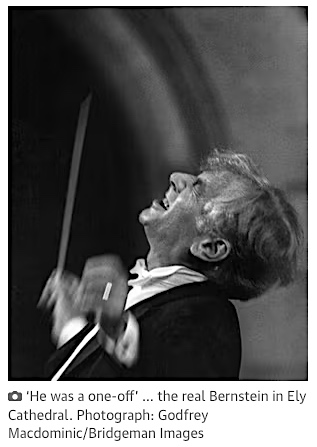
Lenny ElyWe get to hear some of the Adagietto, though it’s such a staple of movie soundtracks that for many viewers it may sound merely like generic film music rather than the work of Lenny’s alter ego. Then the long scene of the monumental ending of the 2nd symphony at Ely Cathedral in 1973 is the perfect choice, and it should be overwhelming. But if the uninitiated don’t know what it represents (for Lenny and, well, for Western civilisation!), then again one might just think it’s some random piece of dramatic romantic music; or if you love Mahler as deeply as Lenny did, then you’ll be shocked at how the lack of context largely deprives it of impact—the scene’s main point seems to be his reunion with Felicia in a make-up kiss as he comes off stage.

Cooper, having learned assiduously to impersonate Lenny’s conducting for the Ely Cathedral scene under the guidance of Yannick Nézet-Séguin, looks admirably impressive on the podium—but it’s also a salient lesson in how impossible it is to mimic the art of an experienced conductor. The Guardian review cited above has details of how the scene was filmed, with comments from members of the LSO:

Every detail of the 1973 performance was painstakingly reproduced, from where each player sat (“more squashed than we generally are today!”), to the mocked-up programmes, even though these were never in shot.

Players who wore glasses were asked to provide prescriptions so they could be given new ones in old-style frames—and they were all asked to let their hair grow. “Most of the guys had been asked to grow beards,” says Duckworth, “and those with very short hair had been asked not to cut it.”

And (WTAF) despite going to such lengths to achieve historical authenticity, the film used the players of today’s LSO, 45% of whom are women—whereas the 1973 LSO had only two women (the harpists) among 102 players. Is this, finally, PC gone mad?!

Despite these cavils, I admire the way Bradley Cooper has brought Bernstein’s personality to a wider audience. Perhaps it’s too much to hope that Maestro might also turn on a new generation to Mahler.


* After his 1960 talk at the televised Young People’s Concerts (wiki; complete list on YouTube here—weekly audiences for his broadcasts estimated at ten million!), more illuminating is “The unanswered question” in his 1973 lectures at Harvard:

Late in “The 20th century crisis”, from 1.37.58:

And a 1985 essay:

DO go back to Humphrey Burton’s wonderful films of Bernstein’s performances of the symphonies… Burton also filmed him rehearsing—and commenting on—the 5th, the 9th (“Four ways to say Farewell”), and Das Lied von Der Erde with the Vienna Phil (1971–72):

News: special book offer!

DP
Special offer just for the month of March:

Three Pines Press is currently offering my book Daoist priests of the Li family: ritual life in village China at a reduced price of $30, with the PDF e-book for sale at $15.

Order here via publisher!

Hurry Now While Stocks Last!

(I’ve always wanted to say that…)

If you appreciate our film Li Manshan: portrait of a folk Daoist (*watch here*), then the book is an essential companion—further augmented on this site by a series of vignettes and updates, rounded up here.

DP contents

Introduction, and reviews from Ian Johnson, Stephan Feuchtwang, and Vincent Goossaert:

DP back

More discussions here—as well as some fantasy reviews!

“This book does for Daoism”—Nelson Mandela.

For my other books in affordable paperbacks, click here.

Narrative-singing in Chinese society: a roundup

ZJYT beggars
Itinerant beggars performing for funeral, north Shanxi 2018. My photo.

In vocal traditions of Chinese expressive culture (as I keep harping, or drumming, on), the neat pigeon-holes of folk-song, narrative-singing, and opera disguise a continuum from solo singing though to fully-staged genres with larger forces, all oscillating between a range of points along the ceremonial–entertainment continuum—see my

  • “Reading between the lines: reflections on the massive Anthology of folk music of the Chinese peoples”, Ethnomusicology 47.3 (2003), pp.287–337, e.g. §4.4.

Within the Anthology, one often needs to consult all three rubrics: folk-song, narrative-singing, and opera—and indeed dance. Along with my focus on ritual traditions and instrumental ensembles, narrative-singing (aka “story-telling”) is often relevant to my studies. So I’ve recently added a tag in the sidebar for shuoshu 说书 (aka shuochang 说唱, or in official parlance quyi 曲艺)—I’ll try and keep updating this roundup.

Another issue of taxonomy in the Anthology: whereas “religious music” is largely consigned to the instrumental music volumes, some ritual groups accompanying their vocal liturgy only with percussion are found within the narrative-singing volumes, such as the household Daoists of Changwu in Shaanxi. Also classified somewhat uncomfortably under “narrative-singing” is the substantial theme of

  • “precious scrolls” (baojuan)—surveyed here, with links to Hebei, Gansu, and south Jiangsu.

baojuan Berezkin

From Rostislav Berezkin, “Scripture-telling (jiangjing) in the Zhangjiagang area
and the history of Chinese storytelling”
 (2011).

Of course, rather than being constrained by narrow categories, we need to place the variety of expressive cultures in social context. Studies of “narrative-singing” often highlight the refined urban entertainment of urban stages and teahouses, with a largely sinological, literary approach to late imperial history—itself a worthy topic—tending to reify performances that are in fact animated by a strong element of improvisation. And as with folk-singing, opera, and indeed instrumental music, this may distract us somewhat from the ethnography of changing modern society. In rural China, ritual contexts are strong; much story-telling takes place in the context of temple fairs and domestic blessings. The rural perspective is significant across all genres, but I find it particularly salient in coverage of narrative-singing. It may also remind us of the importance of povertyItinerant blind performers are prominent.

Salutary instances include these two posts on Shanxi:

  • Xu Tong: subaltern lives, featuring the documentary Cut out the eyes.
  • Here I introduce Liu Hongqing’s harrowing exposé of the lives of poor peasant families in the Taihangshan mountains, based on a blindmens’ “propaganda troupe”.

Other regions featured on this site, in more or less depth, include

Shaanbei:

and under Chinese film classics of the early reform era, Old well and Life on a string.

Gansu:

Beijing and Tianjin:

Henan:

Moving further south,

Hunan:

South Fujian and Taiwan:

Hong Kong and the Pearl River Delta:

Note also

and under Chinoperl. CHIME 21 (2019) is a collection of article on narrative-singing.

* * *

Further afield, see e.g.

Navigational tools coming in handy, I’ve added this post to my Roundup of roundups!

Rugby balls and violin strings

rugby ball
Source.

Glued to the Six Nations rugby, I’m wondering if negotiating the shape of the ball, * with its unpredictable bounce, might be compared to going on stage with a violin whose strings never stay in tune—like playing baroque violin in an overheated concert hall (he said with feeling—see The Mary Celeste).

On the plus side, concerts are less muddy, with fewer injuries, and you don’t get sent off so often. As to referees (Confucius), musos’ attitude to conductors is more like that of footballers than rugby players.

Dali
Salvador Dali, The persistence of memory (1931).

Such a degree of unpredictability is rarely built into the design of the game—as if tennis rackets were crafted from blancmange. Nor did elliptical balls catch on with other sports, like snooker. To cast the net wider, it’s like a steering wheel that offers few clues to the direction of the car, or a novel whose pages the publisher prints in a random order.

This is part of mini-series on rugby under A sporting medley: ritual and gender, featuring the haka and some arcane rules. For more on the perils of tuning in Western Art Music, see under Hugh Maguire, and Muso speak: excuses and bravado (“It was in tune when I bought it”). More unlikely inventions here.


* Apart from unseemly anatomical explanations involving the shape of the pig’s bladder, and posh public-school twats, some suggest that it’s harder to dribble with the feet as in football, and that the oval ball is easier to carry with one arm, leaving the other arm free to push adversaries away—reminding me of the shakuhachi flute as potential weapon (komusō monks rebuked for “meddling in earthly affairs and not the emptiness of being”).

Tibetan resistance to Heritage fever

In several of my posts on Tibet I’ve featured the insightful research of Isabelle Henrion-Dourcy (e.g. The enchanting world of Tibetan opera, Women in Tibetan expressive culture, Expressive cultures of the Himalayas). Now she has written an outstanding article on Tibetans’ reluctance to climb aboard the Intangible Cultural Heritage (ICH) bandwagon as espoused by UNESCO and China:

Based on a 2019 presentation made for Tibetan artists and bureaucrats in Dharamsala for the 60th anniversary of the Tibetan Institute of Performing Arts (TIPA) there, the article deserves a wide readership: many of Isabelle’s findings are applicable to genres both among the Han Chinese and elsewhere around the world, making a valuable addition to the extensive literature on “Heritage” (for a roundup of posts on this site, click here—with my own first rant on the topic here).

She discusses in detail the evolving debate around the system worldwide, as well as the Tibetan notion of “culture”. As she explains, the ICH terminology has been ubiquitously used in the cultural policies of the PRC since 2006—towards Han Chinese communities, but most critically among the so-called “ethnic minorities” (including the Tibetan regions of TAR, Amdo, and Kham), and it has given rise to “a massive output of lavishly funded state programmes, festivals, museums, academic conferences, books, DVDs and commercial by-products for tourism”—a veritable “heritage fever”. 

The article sums up the genealogy, aims, language, and logic of UNESCO’s categorisations of culture, contextualising the UNESCO heritage nominations in a comparative worldwide survey. It then explores the political, linguistic and cultural reasons explaining the relative blind spot for the ICH among Tibetan communities, before moving to the specific challenges faced by ICH-nominated traditions and artists in Tibet. Unpacking the notions of “heritage” versus “cultural heritage”, Isabelle notes:

The very idea of “heritage” in the West came up as a sort of nostalgic look at the past, when it was already “too late”, that is, when the cultures supporting these objects were in a great part defunct. Moreover, this nostalgia is imbued with a nationalistic flavour, in the sense that these traditions on the verge of being lost are deemed essential in the shaping of a national bond and belonging. It may be the case that Tibetans feel that their traditions are lively enough that they do not need an objectifying label such as “heritage”. But the very idea of the creation of (what would later be called) the Tibetan Institute of Performing Arts in 1959 draws exactly from that same double logic of nostalgia and nationalism.

While ICH policies are “aimed at preserving songs, dances, dramas and cultural practices—not unlike what TIPA has been attempting to do for six decades”,

this politicised “catalogue” view of culture is also remote from how anthropologists understand culture: as ever adaptive and organically articulated in the multiple layers of the lives of people.

Thus “the recurrent effect of ICH proclamations is that they, in effect, isolate the practice from its context, and lead to its further endangerment”.

Yet

The phrase ICH remains obscure for nearly all Tibetans in exile—actually, as we will see, for most Tibetans in Tibet as well […] The idiom remains obstinately abstract for the great majority of Tibetans, even for those who are involved in ICH… and sometimes even for the local Chinese administrators in charge of the programmes. *

Isabelle goes on:

Cultural reluctance to the concept of ICH can be seen in two ways. On one hand, despite strong assaults on Tibetan culture that some authors have termed “cultural genocide” or “assimilation”, aspects of Tibetan of culture are still felt by Tibetans as being very strong and alive. Tibetans do not easily identify with a nostalgic contemplation of “culture” in terms of the ways in which it is embedded in ICH and UNESCO objectified conceptions. For most Tibetans, culture is not (yet) something distant, staged, or at least it is not only that. On the other hand, another cultural reluctance may concern the very notion of “culture”. ICH presupposes a democratic, or rather a “people’s view” of culture, where “culture” is that everyday life content which is shared by most people. This differs from an elevated and exclusive conception of “culture” (rig gnas) by Tibetans, that carries connotations of virtuous knowledge transmitted by role models. The idea of honouring “simple” singers, dancers or ache lhamo performers as cultural heroes of the community seems odd to most conservative Tibetans. Prestigious seats at official functions are meant for “cultural heroes” that inspire devotion and respect, such as lamas, politicians, and more recently (in exile) resistance fighters who bravely confronted the enemy. In a deeply religious and perhaps exclusive diasporic society, where the very survival of the community rests upon keeping the culture homogenised and extolling role models, the idea to give money, titles, and public acknowledgement to “simple” TIPA artists (if we consider Tibetan exiles) seems at best out of place, if not outright unacceptable. Finally, the third possible reluctance I see of Tibetans with the ICH concept is political. For those who are informed, they know that UNESCO is a cenacle of recognised independent States, and that Tibetans, not having this legitimacy, do not stand much of a chance to be heard, so why bother?

So I might consider this “blind spot” of the Tibetans not so much “unfortunate” as wise, suggesting a reluctance to play the Chinese game or pander to commodification.

Calling ICH “yet another tool to milk the government”, observers have voiced that ICH boils down to a competition between bureaucrats for their personal benefit, rather than a meaningful way to safeguard traditions for the benefit of the local people.

Still, along with other scholars of ICH, Isabelle recognises that “astute stakeholders” are sometimes able to use the ICH for “manoeuvring and promoting Tibetan culture”—a ploy also adopted among the Han Chinese and communities further afield.

Most rural performers, who are generally not educated (in formal schools), do not understand the underpinnings of the concept of “intangible cultural heritages but retain a rather positive attitude towards ICH, which they construe as bringing them material benefits (money, costumes, equipment, occasions to perform, status and value in the eyes of the State, etc.). They also recognize that ICH garners more visibility of Tibetan traditions that are disappearing fast from rapidly modernising rural areas, after decades of marginalisation and hardships. The ICH program has indeed allowed the revitalisation of derelict traditions in remote parts of the countryside and has brought more awareness about “tradition” among the youth. 

On one hand “ICH does enhance visibility, give opportunities to perform (for example at State-run festivals) and sustain, to some degree, the continuous practice of art traditions”. However,

troupes are often limited to performing a short vignette of their style (20 minutes or less). When preparing their troupes for such snippets, troupe directors confess a frustration at not being able to pass down a full tradition to the next generation. A majority of these rarefied translocal art traditions require an immersion into a whole system of knowledge and cultural references to be understood and appreciated, but only a series of “postcard-like” excerpts are allowed to be “displayed” for public consumption and entertainment (and approval).

As she notes, “ICH programmes came about in a situation where performing arts traditions had already been heavily reworked through State-run programmes during the previous six decades.”

Local community traditions versus reified state propaganda:
left: Ngagmo female ritual group, Rebkong (Amdo);
right: TAR song-and-dance ensemble. Source.

Within the borders of China, for traditions nominated for the ICH, three were promoted simultaneously in 2009: the Gesar epic, Tibetan opera (ache lhamo), and what UNESCO dubs “Regong arts” (a thangka painting tradition in Rebgong, Qinghai). The article goes on to list the later profusion of ICH inscriptions at national, regional, and county levels.

It’s always important to unpack state agendas in promoting culture; I admire much scholarship on ICH, but while the programme has cast an ever larger shadow over local traditions, it seems sad that such authors have to invest so much energy in bureaucratic theory and practice which they might otherwise be able to spend on studying the changing communities themselves.

In her fine Conclusion, Isabelle sums up:

On the global stage, ICH is an exercise in public relations. International identity politics are now done through “spectacle”, and the representation of one’s nation through simplistic reified images. The crucial aspect of UNESCO’s conception of culture is that these cultural expressions are a “property”, an entity that is owned and managed by a State presenting itself as the legitimate custodian of that heritage.

At the level of the PRC, ICH is a crucial notion in understanding the current predicament of Tibetan culture. While definitely allowing for more visibility of folk traditions in the public and media spaces, generating more income, and offering some possibilities to safeguard and sustain cultural traditions, its actual implementation is typically fraught with complications. ICH programmes have reinforced both ancient and new hierarchies of knowledge, power and money and fostered an ever-pervasive State interventionism into the management of folk culture. The staggering budget poured into traditional culture brings about radical transformations in the name of preservation, and economic marginalisation in the name of empowering local communities. But many artists and observers in the performing arts try to stake their claim to these choreographed cultural forms and, at the same time, manoeuvre within the system to try and salvage their traditions in between the dotted lines defined by their duties. I will leave the last word to one of these Tibetan cultural custodians, who perceptively remarked:

The government wears the clothes of “culture” to do politics.
We Tibetans wear the clothes of “politics” (obedience, loyalty) to do culture.


* Echoing Musapir‘s findings for Uyghur traditions—on which, note also the work of Rachel Harris, exposing the Chinese state’s sinister agenda in co-opting culture as part of its war on the Uyghur heritage—recently, this article.

Kali Malone

Kali Malone

Another reason to rejoice in the pipe organ, besides Bach and Messiaen (see also French organ improvisation!), is Kali Malone (website; wiki; YouTube topic; interview).

Raised in Denver, since 2012 she’s been based in Stockholm, fertile soil for her experiments. The extreme austerity of her ouevre, using electronic technology to the full, somehow gains rave reviews far beyond the organ cabal; I find it a weird and wonderful cause for celebration that there are tribes for this kind of thing. As with much minimalism, my need to listen to all her work may be partly because I keep wondering if something is ever going to happen, or if I will notice it happening while still semi-conscious—or perhaps rather it’s that I want to rise to the challenge of internalising her time-frame. This music makes Noh drama (links here) seem positively action-packed.

Organ dirges 2016–2017:

Cast of mind (2018), with wind and brass (as playlist):

On organ, The sacrificial code (2019) (as playlist):

Living torch album (2022), which one might hardly notice is “an organ-free zone”:

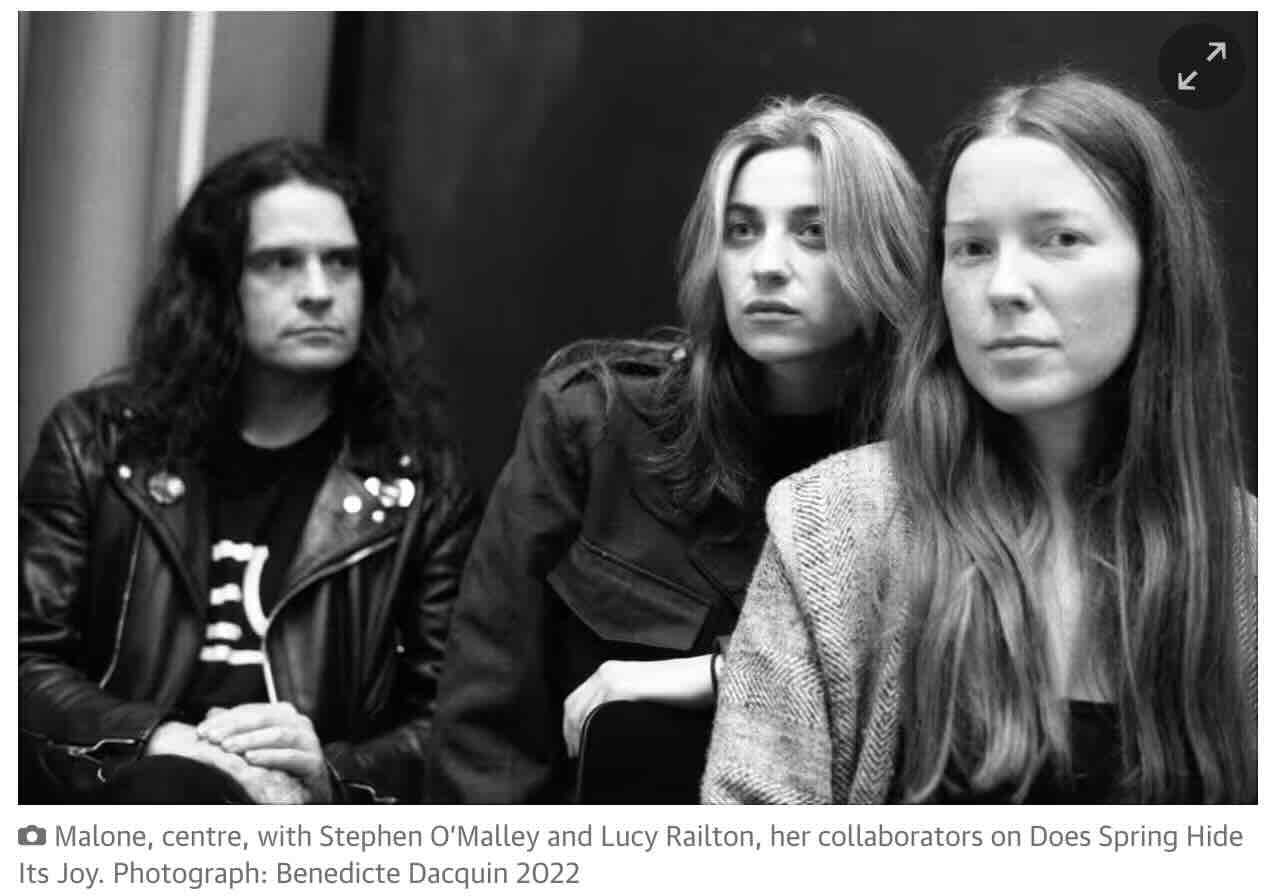
On Does spring hide its joy * (2020/2023), Malone plays sine-wave oscillators, with Stephen O’Malley on guitar and Lucy Railton on cello—another album that has achieved remarkable popularity in this age of fragmented attention:

The three variations span over 300 minutes—still more compelling, With All Due Respect, than the interminable ramblings of George Gurdjieff on harmonium.

Malone Spring

Her latest album is All life long (2024), again incorporating hieratic vocals and brass (playlist):

In his review, Alex Petridis splendidly describes Malone’s interviews as

very much the place to go if you’re interested in the cultural contexts of 15th-century meantone organ tuning…

Her partner Stephen O’Malley plays guitar in SUNN O))) (listen e.g. here), a band that blends doom metal, drone, black metal, dark ambient, and noise rock (more taxonomy!), their style “characterised by slow tempos, distorted guitars, lack of rhythm and melody, and alternative tunings” (YAY).

In the best possible way, this music “really messiaens with your head”—you might need to take an occasional break… I think we can safely discount rumours (again in my head) of a collaboration with Katherine Jenkins for a Christmas album of catchy hits from the shows.

For earlier, and more eventful, avant-garde soundscapes, see e.g. Meredith Monk. See also The right kind of spirituality?.


* I wonder if this a kind of rhetorical non-question, perhaps to be completed by HELLO.

Music–ritual cultures of Taiwan

Music is not a thing at all but an activity, something that people do

Christopher Small, Musicking

Through the Maoist decades after the 1949 Communist takeover, while the society of mainland China was constantly beset by a succession of iconoclastic traumas, the Republic of China on the island of Taiwan was considered a bastion for the maintenance of traditional Chinese culture.

What I suspect hasn’t always been clarified is that Taiwan cannot embody that culture as a whole: naturally, its heritage largely reflects the traditions of the particular regions from which they were descended on the southeastern mainland—and it was that, until the 1980s, which was the only peep-hole through which we could view the enormity of Chinese culture. *

But then, as “reform and opening” swept the PRC, ritual and other folk performance activity—that outsiders could only assume to have been extinguished there after the Communist takeover of 1949—began reviving on a vast scale, along with an array of central and regional scholars keen to resume fieldwork and research. And at the forefront of discoveries was the region of south Fujian, just across the strait from Taiwan (see e.g. C.K. Wang, Kristofer Schipper, Ken Dean, John Lagerwey). As fieldwork expanded to other parts of the southeast (see Daoist ritual in south China), it soon became clear that there was a vast repository of local traditions of ritual and expressive culture to document all over China (see The resilience of tradition)—if not eclipsing the reputation of Taiwan’s heritage, then at least putting it into perspective. The research of Taiwanese scholars was now able to inspire fieldwork on the mainland.

Still, the main genres of Taiwan have rather little bearing on the kind of ritual traditions that were coming to light in the north Chinese countryside, or even in east-central China; indeed, they only represent a small selection from the diverse range of genres around Fujian, as becomes clear by consulting the volumes of the monumental Anthology (for now, see here, with a further post to follow).

I also think of the transformation of Tibetan studies. After 1950, exile communities (led by TIPA in Dharamsala—see e.g. Zlos-gar, 1986) had been considered as the sole heirs to the culture of Tibet; but by the 1990s scholars began shifting towards the mature ethnographic assessment of its vicissitudes under the Chinese yoke (under Recent posts on Tibet, see e.g. Labrang 1). In her wise article “Easier in exile?, Isabelle Henrion-Dourcy ponders the different challenges of doing fieldwork among Tibetans in Lhasa and Dharamsala (see The enchanting world of Tibetan opera).

* * *

Taiwan
Besides the small minority of aboriginal groups (c2%), the main populations of Taiwan are Hoklo (Holo, c70%), Hokkien speakers originating from the Quanzhou and Zhangzhou regions of south Fujian; and Hakka (c15%), descended from the mainland regions of east Guangdong and west Fujian (click here and here for the expressive cultures of both groups). Refugees from elsewhere in China fleeing to Taiwan in the 1940s also brought some staged vocal genres with them.

With Taiwanese society subject to far fewer traumatic social upheavals than on the mainland, cultural forms were certainly better maintained there. But as in any modern society, there are no “living fossils”: besides the island’s complex colonial legacy, performers and patrons have to negotiate the incursions of modernity and popular media (see Society and soundscape, notably the work of Bruno Nettl).

Since the clampdown in the PRC under Xi Jinping, perspectives regarding the mainland and Taiwan are modifying (see The Queen Mother of the West); having myself been busy studying the maintenance of local ritual cultures in the PRC, it’s high time for me to re-assess my approach. So as sometimes happens on this blog (e.g. Precious scrolls, and even A jazz medley), this basic overview of music–ritual traditions is as much for my benefit as yours…

Surveys
In English, starting points include articles in The New Grove Dictionary of music and musicians, The Garland encyclopedia of world music (Wang Ying-fen pp.423–9, Hsu Tsang-houei pp.523–9), Wang Ying-fen in The Rough Guide to world music, Europe, Asia & Pacific (3rd edition, 2009), and even wiki.

At the forefront of studies of traditional music in Taiwan was Hsu Tsang-houei 許常惠 (1929–2001), who gravitated from WAM-style composition to fieldwork on folk traditions. ** Among his surveys are Taiwan yinyue shi chugao 台灣音樂史初稿 (1991, I think) and (with Cheng Shui-cheng) Musique de Taiwan (1992). See also Lü Ch’ui-k’uan 呂錘寬, Taiwan chuantong yinyue gailun 台灣傳統音樂概論 (2005, 2007), in two volumes on vocal and instrumental music.

Genres
Among the most popular topics are nanguan and Daoist ritual—both, since the 1980s, informed by fieldwork on either side of the strait. Amateur nanguan 南管 music societies, performing exquisite chamber ballads for calendrical and life-cycle ceremonies, have long been deeply embedded in community life (see this post). Nanguan is the subject of much research, both in Fujian and Taiwan. Wang Ying-fen has published extensively on the Taiwan scene in both Chinese and English—I particularly admire her articles on the risks inherent in state promotion of nanguan (such as this), worthy contributions to studies of the thorny issue of heritage.

Temple fairs, with vibrant processions, remain a major part of life in Taiwan. Regional traditions of Daoist ritual (for the north, click here) are the focus of generations of Taiwanese and foreign scholars. For the former, alongside many distinguished scholars, Lü Ch’ui-k’uan 呂錘寬 has paid notable attention to ritual soundscape (e.g. Daojiao yishi yu yinyue 道教儀式與音樂, 1994). Another major theme in ritual studies is the worship of the female deity Mazu, widespread both in Taiwan and around the southeastern coast of the mainland.

The composite genre of beiguan 北管 (good wiki page here, with links) is again performed mainly for calendrical and life-cycle ceremonies, largely by occupational groups; while closely related to vocal drama, it’s best known for its loud outdoor shawm-and-percussion bands. Here’s a short documentary about the master Qiu Huorong 邱火榮 (b.1937):

Most flexible of popular operatic forms is gua-a-hi (gezai xi 歌仔戲). And more popular in Taiwan than shadow puppets and marionettes, glove-puppetry (budai xi 布袋戲) has adapted to changing times; the former tradition was transmitted by masters such as Li Tianlu 李天祿 (1910–98), whose early life is evoked in Hou Hsiao-hsien’s 1993 film The puppetmaster.

Narrative-singing is best known through Chen Da 陳達 (1905–81) on the Hengchun peninsula. He was “discovered” in 1967 by Hsu Tsang-houei and Shih Wei-liang 史惟亮 as part of their fieldwork for the Folk-song Collection movement, forerunner of several state-sponsored organs in Taiwan. Here’s Shih Wei-liang’s recording from 1971:

In the north of the island, the blind female singer Yang Xiuqing 楊秀卿 (b.1934) is also renowned.

(As in the PRC, please excuse me if I fall into the old Songlines trap of giving undue attention to “star performers”—whereas in-depth ethnography soon uncovers the myriad unsung bearers of tradition, such as Vincent Goossaert’s “ordinary Daoists”, or rank-and-file members of festive groups.)

Like beiguan, the Hakka bayin 八音 ensemble is dominated by shawms and percussion. Here’s the CD Taiwan: mountain songs and bayin instrumental music (Inedit, 2006; as playlist):

As in mainland China, the vocal polyphony of minority peoples (notably Amis, Bunun, Tsou, Paiwan, Rukai—around 2% of Taiwan’s population) has attracted much attention, with many recordings issued of aboriginal singing, such as Polyphonies vocales des Aborigènes de Taiwan (Inedit, 1989):

and Taiwan: music of the Aboriginal tribes (Jecklin, 1991) (playlist):

As in mainland China, while such traditions struggle to remain relevant in a modernising society, national cultural bodies have adopted particular genres as symbols of identity. Expressive culture has made a major component in the rapprochement between the PRC and overseas Chinese communities. Wind Records in Taipei issued a succession of CDs of mainland genres in conjunction with the Music Research Institute in Beijing, notably an important series of archive recordings (folk-song, narrative-singing, opera, and instrumental music, as well as minority polyphony), and of the qin zither. The journal Minsu quyi, with its detailed studies (mostly in Chinese) on ritual, theatre, and folklore, also expanded its scope from Taiwan to the mainland.

* * *

Growing political tensions encourage us to pay renewed attention to Taiwan, and to support beleaguered democracy. While it’s fruitful to study the genres introduced above on both sides of the strait, the island remains a conducive environment for both performance and research. Now I’m keen to see someone with fieldwork experience in both societies, such as C.K. Wang, Wang Ying-fen, Ken Dean, or Adam Yuet Chau, expounding the different trajectories of the diverse traditions there, and the challenges that they face.


* Now, none of these comparisons quite work, but…
While it’d be far too parochial to imagine the Isle of Wight as a refuge from a radical government in mainland UK, perhaps we might visualise Cuba becoming a liberal sanctuary from a Gilead-style fundamentalist north America (see The handmaid’s tale)—or even Sicily as the sole isolated outpost for tradition while mainland Europe languishes in the grip of authoritarian regimes.

In chapter 10 of In search of the folk Daoists of north China I made a similarly rash comparison, seeking to incorporate north China into our overview of Daoist ritual (cf. this post, again):

It is rather as if our knowledge of Christianity in the whole of Europe were based almost entirely on Sicily and Puglia, with the odd footnote on the Vatican and Westminster Abbey. We may like what we find in those places, perhaps considering it more exalted, mystical, and ancient—but that is another issue.

Without at all playing into the greasy hands of PRC propaganda, one might consider Taiwan (culturally, not politically, since it is clearly an independent nation! Cf. China has always been part of…) as just one among over thirty provinces of China, all of whose forms of expressive culture are dominated by long-established local folk traditions while also featuring some “national” genres and styles from other regions.

** If Yang Yinliu wasn’t the Chinese Bartók, then Hsu Tsang-houei wasn’t the Taiwanese Yang Yinliu (whereas Bill Evans was the Bill Evans of jazz).

Words

Real Group early
The Real Group, 1984. Source.

I’m always enchanted by the a cappella singing of the Real Group—their rapt intoning of the Swedish psalm Härlig Är Jorden is one of the most exquisite pieces I know (click here, with a bonus of Bill Evans).

Another gorgeous song of theirs is Words, by Anders Edenroth, tenor in the group—here’s a 2005 performance in Stockholm, soon after he composed it:

Words
A letter and a letter on a string
Will hold forever humanity spellbound
Words
Possession of the beggar and the king
Everybody, everyday
You and I, we all can say
Words
Regarded as a complicated tool
Created by man, implicated by mankind
Words
Obsession of the genius and the fool
Everybody, everyday,
Everywhere and everyway

Words!
Find them, you can use them
Say them, you can hear them
Write them, you can read them
Love them, fear them

Words
Transmitted as we’re fitted from the start
Received by all and we’re sentenced to a life with
Words
Impression of the stupid and the smart
Everybody, everyday
You and I, we all can say
Words
Inside your head can come alive as they’re said
Softly, loudly, modestly or proudly
Words
Expression by the living and the dead
Everybody, everyday
Everywhere and everyway

Words!
Find them, you can use them
Say them, you can hear them
Write them, you can read them
Love them, fear them

Screenshot

Source: Musescore.

Complementing the, um, words is the finely-crafted music (score matched to audio here, with link to harmonic analysis—and Spanish captions to boot!). The narrow, hieratic pitch range of the verses (with plentiful appogiaturas, gradually venturing beyond a minor third!), adroit rhythmic variation alternating between syncopations and regular quavers, as well as subtle chromaticisms (cf. this post), the melody eventually branching out for the chorus (“Find them…”),

Screenshot

with motifs recombined and elaborated from 1.39…

Here it might be unseemly to note that words aren’t always useful—see e.g. Adam Chau’s caveats about focusing on the discursive/scriptural modality in religious studies, as opposed to “red-hot sociality”. Just saying, like (with words)—cf. Laozi (here and here), as well as “Writing about music is like dancing about architecture“.

Click here for more a cappella singing around the world. Cf. The art of the miniature, and my introduction to Dream a little dream.

In memory of Seiji Ozawa

The great Seiji Ozawa died last week (tributes; obituaries e.g. NYT; see also nippon.com). *

Born in 1935 to parents based in Mukden (Shenyang) during the Japanese occupation of Manchuria, he returned with his family to Japan in 1941. His rise to conducting stardom was meteoric. A pupil of Hideo Saito (1902–74), in 1959 he won a conducting competition in Besançon. This led to an invitation to study with Charles Munch and Pierre Monteux in Boston, where he soon won the Koussevitzky Prize; this began his close association with the Tanglewood Festival. Gaining a scholarship to study with Herbert von Karajan in West Berlin, he was spotted by Leonard Bernstein, who made him assistant conductor of the New York Phil in 1961. Here Bernstein introduces Ozawa conducting the overture to The marriage of Figaro in 1962:

Ozawa remained the only conductor to have studied under both Karajan and Bernstein (cf. Unlikely bedfellows).

Messiaen Ozawa 1962
Meeting Messiaen and Yvonne Loriod on their honeymoon in Japan, July 1962.

In 1963, still little-known in the USA, Ozawa appeared on What’s my line (cf. Anna Mahler on You bet your life, 1952!). By the late 60s, in contrast to the staid, ageing Teutonic maestros to whom concert-goers were accustomed, he exuded a rock-star vibe that no-one has since been able to emulate (NYT: “with his mop of black hair, his boyish demeanor and his seemingly boundless energy, he captured the popular imagination early on”; Peter Gelb: “a symbol of male beauty on the podium that I don’t think the world had seen before.”) As Norman Lebrecht commented (The maestro myth, pp.137–41):

Ozawa sported a Beatle fringe, flowery shirts and cowboy boots, and wore a roll-necked sweater instad of a dress-shirt at concerts. His appointment was clearly aimed at rejuvenating the Symphony Hall subscription list. Oriental mysticism was all the rage among the East Coast college kids who escaped conscription to Vietnam; and Ozawa was, they said, something else.

Ozawa 1973

In the early 70s I too basked in his charisma at London concerts, hearing him conduct an exhilarating Symphonie fantastique, as well as November stepsTakemitsu’s music becoming known partly thanks to Ozawa’s advocacy.

Ozawa LennyBaseball with Lenny, Japan 1970.

Here Ozawa directs Maki Ishii’s Sō-Gū II for Gagaku and Orchestra (1971):

Ozawa acted as music director of the Boston Symphony from 1973 to 2002, a tenure that “many thought too long for anyone’s good: his own, the orchestra’s or the subscribers’ “.

Screenshot

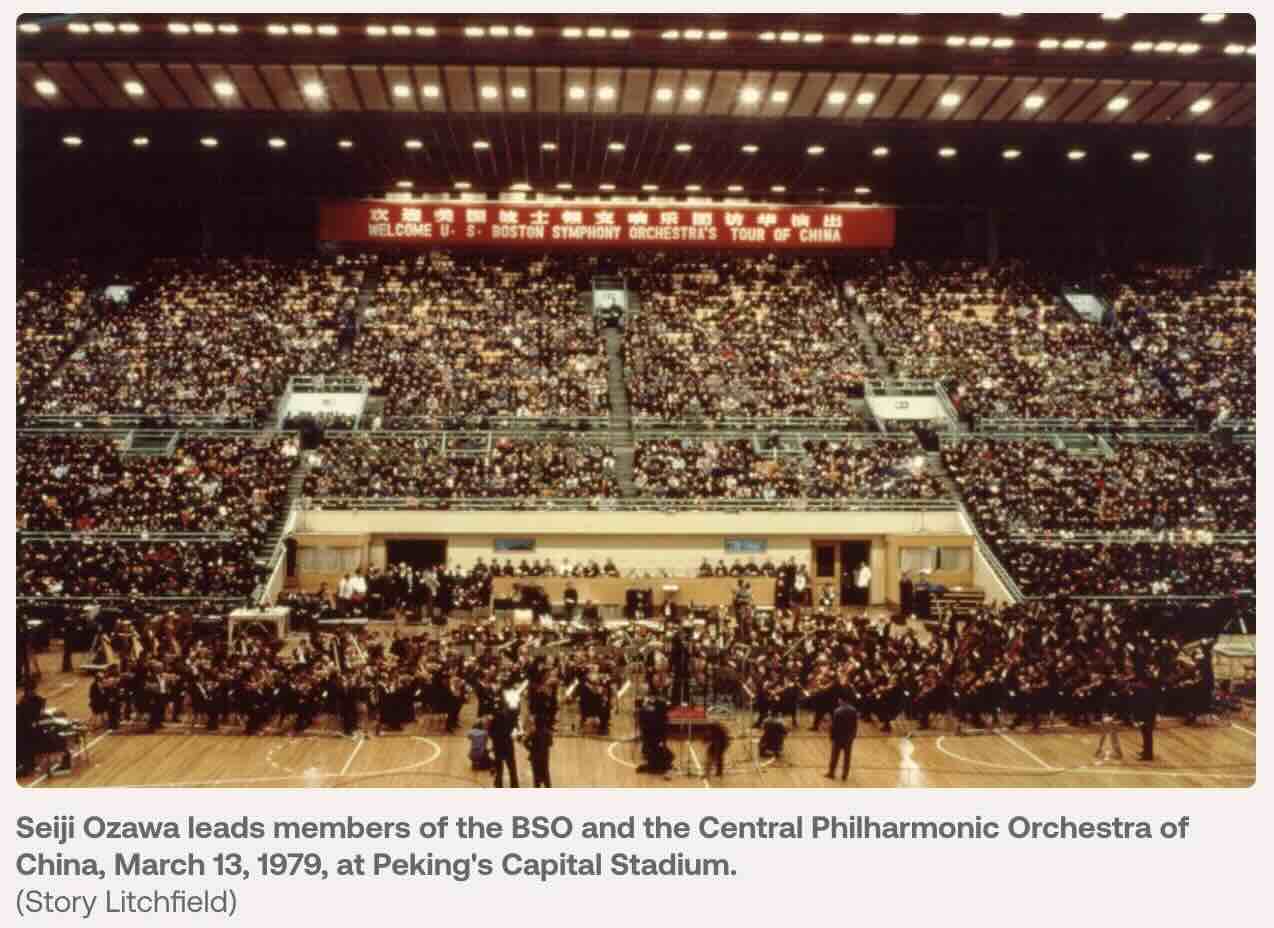
According to the NYT, he played a role in easing tensions between China and the USA in 1979, when the Boston Symphony toured China, still emerging from the Cultural Revolution (cf. the 1973 visits of the Philadelphia and London Philharmonic). Peter Gelb, then the orchestra’s publicity director, said that Ozawa had been crucial in making the tour happen, Chinese officials feeling “a connection with him since he had spent part of his childhood in China” (hmm, I wonder how that worked…).

Noting Ozawa’s fine ear for timbre and nuance, some magical selections:

Ravelthis playlist, with the Saito Kinen orchestra that he nurtured, contains his 2015 recordings of both L’enfant et les sortilèges and Shéhérazade (cf. my main Ravel page, and links). Here’s Pavane pour une infante défunte, from a concert in 2007:

Ozawa’s 1968 recording of Messian’s glorious Turangalîla, with Jeanne and Yvonne Loriod (on 2 LPs, with November steps), is on this playlist—here’s the fifth movement Joie du sang des étoiles (Gramophone: “turbo-thrusted to the point of kinky delirium”):

and the sixth, Jardin du sommeil d’amour (“an early window into Ozawa’s ear for obsessive detail and softer-than-soft textures”):

Ozawa also conducted the 1983 premiere of Messiaen’s monumental opera Saint François d’Assise.

All this can only be matched by Mahler 2, live in 1995 for a Nagasaki peace concert:

In 2016 Ozawa’s conversations with Haruki Murakami were published as Absolutely on music (introduced here and here). See also this Gramophone roundup from 2014, and the magazine’s review of his complete DG recordings. For more maestros, see The art of conducting: a roundup.


* As I write, the regular Guardian is strangely devoid of an obituary—a gap filled by the East London and West Essex Guardian, whose readers seem rather less likely to be avid tofu-eaters. Update: Guardian notice here.

Tibet: ritual singing in an Amdo community

*Part of my education in the travails of modern Tibet*

Shepa cover

  • Bendi Tso, Marnyi Gyatso, Naljor Tsering, Mark Turin, and members of the Choné Tibetan community, Shépa: The Tibetan oral tradition in Choné (2023)
    (free access here).

Shépa (bshad pa) * is an encyclopaedic repertoire of antiphonal songs performed by ritual specialists and prestigious elders of the Choné people (Co ne pa), a Tibetan subgroup in the Luchu river valley of Kenlho (Kan lho; in Chinese, Gannan 甘南) Tibetan Autonomous Prefecture of Gansu province in northwest China. The region straddles both the Tibetan regions of Amdo and Kham and the Chinese provinces of Sichuan and Gansu, bordering territory managed by the great monastery of Labrang (cf. this post, including further readings on Amdo, and sequel).

Shépa “encapsulates the evolution of Tibetan civilisation through time and serves as a repository of the cultural, religious, and historical knowledge of the Choné people”. As the authors explain, Choné history is profoundly shaped both by intricate interactions with close neighbours (Han, Hui, and Monguor) and by distant political and religious centres. From creation myths to Bon and Buddhist cosmologies and wedding songs, shépa engages with and draws on elements of religious traditions, historical legacies, and deep-seated cultural memories.

“A collaboration with and between members of the local community, including narrators, monks, and scholars”, with its trilingual format (in English, Tibetan, and Chinese) the book’s 778 pages become less daunting.

Bendi Tso’s preface opens with a promising vignette, in what has become a classic juxtaposition (for Chinese instances, see e.g. my film Li Manshan, from 30.32 and 1.07.34):

Leaning against the living room window the night before Sangye Men’s wedding, I felt as if I was straddling two worlds, separated by a thin pane of glass. In the yard, Sangye Men’s friends formed a circle and took it in turns to sing and dance, accompanied by a giant stereo speaker and a rotating rainbow globe light. Their playlist ranged from Tibetan ballads to Chinese songs, and from the traditional Tibetan lute (sgra snyan) to nightclub music. When Arabian Night started, a popular dance song appreciated by younger generations, the guests turned up the volume as high as it would go, swaying their bodies to the music and showing their enjoyment.

Right across the window and inside a living room, four elders were sitting on tsatap (tsha thab / rdza rdo), a raised clay platform where people eat and sleep, drinking Tibetan spirits (bod rag). The flickering rays of the rainbow globe danced on their faces. Occasionally looking out of the window, the elders continued intermittent conversations while singing Shépa. I wondered whether they were able to catch each other’s words on account of the loud noise emanating from the speaker next door.

The co-authored Introduction (pp.1–64 in the English version) gives a nuanced definition of shépa, which has been considered as “poetic recitals”, “speeches”, “oral literature” or “oral tradition”—a combination of verse and prose in recitation and song. In their broad understanding, it is “an umbrella category including all local oral performances that have survived to the present”, on a spectrum from religious to secular. They discuss the relation of shépa to other oral traditions both in Choné and in the wider Tibetan and Himalayan cultural spheres.

The authors introduce ritual specialists (cf. Tibet: some folk ritual performers):

Almost every Choné village had an anyé bonpo (a myes bon po) household belonging to a lay Bon priest or an anyé gompa (a myes sgom pa) household of a lay Nyingma practitioner, who would be in charge of performing rituals for individuals and community before the 1950s. Nowadays, ever fewer villages have these priests.

As they surely know, this leap in time begs some basic questions. Again:

Leu (le’u / lhe’u), who appear in Shépa, are a type of anyé bonpo. In Choné, Leu are crucial figures who conduct the protection ritual (srung) during the marriage ceremony. Over the past decades, ever fewer households of anyé bonpo have been in a position to transmit their heritage and duties to the next generation. Based on our current research, there remain only a handful of anyé bonpo, and no leu, in Choné.

The emblem of the anyé bonpo’s ritual expertise is the anyé zhidak (a myes gzhi bdag), “a built-in wooden cabinet designed for storing arrows (mda’) that represent lineage, fortune, and fertility, located beside the main pillar in the living room”.

Among the main performance contexts are wedding ceremonies, as well as horse racing and arrow shooting over New Year (cf. Bhutan). Weddings have “changed significantly over recent decades”, but we are not offered details on the process. Other material on change also begs questions:

These days, almost all of the critical moments in the lives of Choné people now involve Geluk monks and lamas, from naming newborn children to blessing newlyweds to performing funeral rituals. Since the 18th century, the majority of Choné people have become Geluk followers. Major festivals, fairs, and pilgrimage dates in the local calendar are arranged according to the religious schedule of Choné Monastery and its branches. In recent years, with village ritual specialists ageing and passing away, villagers offer their non-Buddhist ritual texts to Geluk monks and ask them to perform rituals that were once conducted solely by anyé bonpo and anyé gompa. Monks usually conduct these rituals with some Buddhist modifications.

I applaud the intent of this study. Salvage projects can be valuable to document a kind of maximum repertoire, and the authors’ diligence in recording the community elders is commendable. But after that promising opening vignette, we are never told if shépa has taken on a new life, perhaps modified in new popular forms, beyond the reified stagings of the Intangible Cultural Heritage—whose many problems they recognise:

In recent years, “traditional” ways to learn and perform Shépa have undergone rapid transformation in the Choné Tibetan community. The transmission of Shépa is increasingly privatised and its performance is becoming standardised in response to the inscription of this oral tradition into the Kenlho Prefectural-level register of the Intangible Cultural Heritage in 2016. The performative setting and standards for what constitutes a “good” performer are fast changing, and this process has also been accompanied by a reconceptualisation of what Shépa was, is, and will be.

The remaining seven sections of the Introduction document texts—myths, ** and wedding songs—without any further social-political analysis of changes in wedding customs and New Year’s observances over the previous decades. The book has no index.

* * *

Outside the PRC, the field of Tibetan studies has made immense progress in recognising the legacy of the Maoist era, and the ongoing consequences of Chinese occupation—with research both from Tibetans based abroad (such as Tsering Shakya, and the High Peaks Pure Earth team) and from Western scholars (under my roundup of posts on Tibet, see e.g. Conflicting memories, When the iron bird flies). Among fine ethnographers in the field of customary life and expressive culture (note this bibliography) are Charlene Makley, Isabelle Henrion-Dourcy, Katia Buffetrille, Gerald Roche, Anna Morcom, and Timothy Thurston (see also Keila Diehl’s Echoes of Dharamsala); the monographs of the Asian Highland Perspectives series were compiled by trained local fieldworkers.

Such research hardly features among the Shépa authors’ references. The book provides useful material on early history (migration, the Choné kings, Bon, Buddhist sects, warfare), but is entirely silent about social and political change since the 1950 Chinese occupation. So this is the last episode in their historical overview:

From the mid-19th century, the Luchu valley suffered several regional wars. The Choné people were at that point the largest Tibetan group ruled by the Choné kings. Time and again, they were either conscripted into the king’s militia to suppress insurgents for the Qing and the Republic of China (1912–49) or slaughtered by insurgents. Throughout this period, the Choné people suffered serious depopulation. Most Tibetan villages on the northern bank of the Luchu River were destroyed in warfare. To collect tax and recruit militiamen, the kings leased destroyed, bankrupted or empty [sic] households to Chinese migrants who had narrowly escaped with their lives from social unrest and natural catastrophes in neighbouring areas. This resulted in a steady inflow of Chinese migrants into Choné. By 1949, the Choné people had already become a minority within an ever-growing Chinese population.

The authors state their goal:

We hope that this book may serve as an entry point for the Choné Tibetan community in support of their goal of Shépa revitalisation and at the same time uplift their linguistic heritage and cultural dignity.

This is laudable, yet while they are well aware of “the socio-cultural dilemma facing all Choné people over the past several decades”, political constraints hamper their analysis. Cultural impoverishment in communities like these is not simply a function of some generalised modernisation; it is also indivisible from political history since the 1950s.

Of course we always have to read between the lines of PRC publications (see e.g. under Cultural Revolutions, and my two recent posts on opera and narrative-singing among Han Chinese communities in Gansu during the famine). The book’s four named authors are all based outside the PRC, and (like Amdo dwellers) doubtless have insights on the radical changes in society following the Chinese invasion in 1950, the devastation of communities as political campaigns escalated from 1956, and the new transformations since the 1980s. Even within the PRC, perspectives on the traumatic history of Tibetans (indeed, particularly Amdowa) under Maoism—and since—have not always been entirely off-limits.

But the period since 2015, when the authors were carrying out their own fieldwork, has been marked by intensified state surveillance amidst a severe deterioration in Tibetan–Chinese relations, with serious conflicts which they also pass over in silence, such as the 2008 unrest (e.g. here, under 15th June) and 2015 self-immolations (cf. Eat the Buddha). Their reluctance to broach such issues doubtless follows in part from their noble decision to involve as co-authors “the members of the Choné Tibetan community”; and the authors themselves, even while based outside the PRC, may not feel secure enough to avoid self-censorship. So my caveats are critical not of them, but of the extent of the climate of fear beyond the PRC.

Given that the book’s whole subject is cultural transmission, for which the era of Maoist extremism was a crucial period, I find it disturbing that discretion has obliged the authors to exclude all but the vaguest of allusions to it. Other topics left unexplored include migration, state education, and the vast influence of pop and mass media. Thus their account of “history” comes to an abrupt halt in 1950. While one must respect their decision, it limits the book’s value. I still wonder if there might be a way of giving some tactful clues to the painful maintenance of shépa; otherwise there’s a glaring lacuna, risking the kind of reified, timeless, rosy portrayals that are de rigueur in the Intangible Cultural Heritage mission.

Since the authors quite rightly esteem the elders of the community such as Grandfathers Meng Tusktor and Zhang Gyatso, * one wants to know more about the vicissitudes of their lives—through the late 1950s’ uprisings, the famine, the Cultural Revolution; did they manage to continue singing shépa in the early 1950s, the late 50s, even the 60s? Were any of them recruited to the new song-and-dance troupes funded by the Chinese state—and what was happening to the traditional contexts for shépa in local communities? Have performers and audiences expressed any opinions about all this?

And of course, apart from silent, immobile texts, we also need accessible audio/video recordings (see e.g. Amdo rituals: early and recent films)—something eminently realisable with online publishing.

Despite such lacunae, there is substantial material here for historians of (pre-1950) Amdo; with its trilingual format, it is designed to serve the Choné community, under the conditions in which they find themselves.


* On the minefield of Tibetan and Amdo transliteration, see Robbie Barnett’s introduction to Conflicting Memories.

** Including the bird-like deity Khyung, and Rübel (Cosmic Tortoise, a name just begging to be taken up by a Choné rock band—cf. the Croatian metal combo Teddy Bear Autopsy).

Pibroch

Rona

Rona LIghtfoot (b.1936), inspiration for new generations.

I rarely dip my toes into the folk cultures of these isles (So we’re not good enough for ye, that it? Off cavorting with all them non-nationalsThe Plain People of Ireland). I’ve made so bold as to delve a little into Irish music (series here); in an obscure connection with Chinese yangge (Typical!), I learned a little about Morris dancing, and I’ve only recently made a bit of an effort to catch up on English folk-singing. Songlines is good on the changing scene, and I really should listen more to Late junction on BBC Radio 3. I had a passing acquaintance with Irish piping through the sterling work of Séamus Ennis, so now for some Scottish Gaelic piping.

Chaimbeul

I was reminded to listen up to the Scottish Highland smallpipes by an interview with Brìghde Chaimbeul. While grounded in the Skye tradition, she is pleasantly resistant to the “tartan and shortbread” image—as I am to kilts. From her YouTube channel, here’s her 2019 album The reeling (playlist):

Both the current scene and recordings are dominated by “the great Highland bagpipe” (GHP), but the mellower sound of smallpipes also creates an enchanting timbre. Historical evidence for the smallpipes is just as early: “used for dancing and entertainment in court and castle, later they became popular amongst burgh pipers, and town minstrels [,] until the early 19th century, when the demise of the town pipers led to their disappearing from the record.” But always suited to chamber ensemble playing, the smallpipes have enjoyed a revival since the 1980s.

While I don’t at all propound “the other classical traditions” (cf. What is serious music?!, and Joining the elite musical club), pibroch Is considered as “art music” (ceòl mòr “great music”), as opposed to ceòl beag ”small music” (more popular genres such as dances, reels, marches, and strathspeys). It appears to have been commonly played on the bagpipes since the 16th century. As aristocratic patronage and musical tastes shifted, pibroch migrated over time from the clàrsach harp and the fiddle, which have also taken part in cycles of revival—partly based on early manuscripts notated from canntaireachd oral mnemonics. The pibroch repertoire is common to both the GHP and smallpipes.

Niall Mòr MacMhuirich (c1550–1630), poet to the MacDonalds of Clanranald, didn’t mince his words:

John MacArthur’s screeching bagpipes, is like a diseased heron, full of spittle, long limbed and noisy, with an infected chest like that of a grey curlew. Of the world’s music Donald’s pipe, is a broken down outfit, offensive to a multitude, sending forth its slaver through its rotten bag, it was a most disgusting filthy deluge…

This contrasts aptly with a poem by Alasdair mac Mhaighstir Alasdair (c1695 –1770) in praise of the pipes:

Thy chanter’s shout gives pleasure, Sighing thy bold variations. Through every lively measure; The war note intent on rending, White fingers deft are pounding, To hack both marrow and muscles, You shamed the harp, Like untuned fiddle’s tone, Dull strains for maids, And men grown old and done: Better thy shrill blast, From gamut brave and gay, Rousing up men to the destructive fray…

Looks like we need an edition of the Lexicon of musical invective for folk music…

The simple distinction between large and small pieces, doubtless found in many cultures, reminds me of Chinese instrumental suites—as does the structure of large pieces:

Pibroch is a theme with variations. The theme is usually a very simple melody, though few if any pibroch contain the theme in its simplest form. The theme is first stated in a slow movement called the ground or in Gaelic the ùrlar. This is usually a fairly stylised version of the theme, and usually includes numerous added embellishments and connecting notes.

In both style and structure, I’m also reminded of Chinese shawm bands. And I’m always attracted to free-tempo music.

This passage from the wiki article strikes a chord:

While the conventional accounts of the origins of pibroch are largely characterised by an aggrandising romanticism common to antiquarian appropriations of remnant historical traditions in the late 18th century and early 19th century, there are substantial surviving authentic musical documents that concur with a living tradition of performed repertoire, providing a grounding for any debate over authoritative accounts of the tradition.

MacPherson
Donald MacPherson. Source.

While the soundscape of the pipes is beguiling, until we immerse ourselves in the style—monophony with drone, only not recalling Indian raga much at all!—a little goes a long way. Laments, salutes, and gatherings feature prominently in the pibroch repertoire. Among rich documentation for the GHP, a useful starting point is the website of the School of Scottish Studies Archives (introduction, specifically here). On YouTube, here’s a playlist of 209 early recordings:

Among the leading lineages of modern times are Cameron and MacPherson. For the former, here’s an early recording of Robert Reid (1895–1965):

And the YouTube topic for Donald MacPherson (1922–2012) has several albums.

But in chamber settings, some modern ears may find the more mellifluous timbre of the smallpipes more appealing.

Here’s some latter-day pibroch on fiddle:

* * *

Among bagpipe traditions elsewhere are those of south Italy (e.g. here and here), Iberia (see under Festive soundscapes of the Rioja), Ukraine, and around east Europe. See also two articles on the Essential Vermeer site (introduced here).

Pibroch seems to have influenced unaccompanied Gaelic Presbyterian psalm singing, now mainly to be heard in the Hebrides (cf. A cappella singing). Its practice of “lining out” resembling that of Old Regular Baptist churches in Appalachia (see America over the water).

Other major genres in world music with extensive, complex repertoires include north Indian raga, flamenco, the maqam family—and the suites of the north Chinese paraliturgical wind ensemble

More musical chinoiserie

Bantock 1
Source.

The going was tough for the members of the BBC Symphony Orchestra in the years following the regime of William Glock. A rigorous, ear-scouring diet of avant-garde music was leavened only occasionally by returns to the core symphonic repertoire, as well as dutiful lip service to the “cowpat” school of early-20th-century English composers—although I recall being impressed by Arnold Bax’s Tintagel.

Following Berlioz’s distaste for the music of the not-so-mystic East, I’ve touched on musical chinoiserie in posts such as Mahler and the mouth-organ. Among other composers whose work Angela Kang discusses in her 2011 thesis are Purcell, Gluck, Roussel, Puccini, Debussy, and Stravinsky—see also Ravel, and this article on the American composer Charles Griffes (more here). Cf. Lili Boulanger’s Vielle prière bouddhique, and Kreisler’s Tambourin chinois.

Granville Bantock (1868–1946) was one of the English composers whose work we must have played, somewhat casually, in the BBC SO. I’ve only recently clocked his 32 Chinese songs, a substantial series that he wrote from 1918 to 1920, inspired by the exotic East—Arabia, Japan, Egypt, India, and Persia (note also his vast suite Omar Khayyám) (see also here).

Bantock Persia
Great designs, eh? Well done, Breitkopf & Härtel…

Lute of jadeThe first cycle of Five songs from the Chinese poets (score) set English texts by Bantock’s friend the euphoniously-named Launcelot Cranmer Byng, after Tang poems by Zhang Zhihe, Du Fu, Li Bai, Tong Hanqing, and Sikong Tu. All but one appear in A lute of jade (1909)—one of the first collections of Chinese poetry that I bought (probably from Watkins) while still at school. The cycle was arranged for string quartet in 1933 as In a Chinese mirror. According to this post, some of the lyrics of Songs of China were written by Bantock’s wife Helen.

From the second set (score), here’s John McCormack singing a version of a text by the Tang poet Cen Shen in 1927:

* * *

Bantock also composed Chinese-inspired works on a larger canvas. Besides Choral suite from the Chinese (1914, again to texts by Cranmer Byng), I note the orchestral Four Chinese landscapes (1936)—the latter mostly directed by Walter Collins in 1946:

To the modern ear, such sketches are no more enticing than the works of Chinese composers trained in the WAM idiom such as Xian Xinghai, Nie Er and He Luting (a focus for much ideological wrangling in China over the following decades). But “it is what it is“: Bantock and others were part of a lasting European fascination with the Mystic East (see e.g. More East–West gurus), as yet largely uninformed by later fieldwork in the folk cultures of a vast region.

For later Eastern-inspired works, see e.g. Messiaen, and the ambivalent reaction of Toru Takemitsu to Japanese tradition. For the great Bruno Nettl‘s taxonomy of responses to the growing hegemony of Western musics in developing societies, click here. For Tang poetry, see under A Tang mélange.

Old and new musics

More on taxonomy

new music

I may seem like a fully-paid-up member of the Guardian-reading, tofu-eating wokerati, but the Guardian‘s end-of-year cultural lists can be mystifying, serving largely to enhance my sense of becoming an Old Fogey (cf. Staving off old age).

Now, I’m all for the demotion of the hegemony of WAM, whose claim to a fictive prestige has long been obsolete (note What is serious music?!, Is Western Art Music superior?, Just remind me again, what is music?!, and Feminine endings). Sure, the Guardian does give “classical” a look-in (here, and here). But I can’t help being amused by the niche sense of “old music” in this roundup—there I was, expecting a roundup of medieval ballads, Tallis, or dhrupad

Discuss, with reference to a cab driver’s interpretation of “early music” and the oeuvre of Bruno Nettl.

old music
Old music, allegedly.

stile nuono
New musics, Caccini 1601. Source.

As to “new music” (an article with the peak Guardian comment “it’s been an incredible year for Brazilian baile funk”), WTAF?! For me, still catching up on the stile nuovo (n.1 here), even an end-of-year playlist for 1707 (Bach, Handel) would be rather modern—and how about the New Music of the Tang dynasty, eh, with Sogdian dance grooves All the Rage through the reign of Xuanzong. Take THAT, Guardian!

global

And then The best songs of 2023 … you may not have heard (How did they guess?). The Guardian concept of “folk” seems a tad limited; and the jazz list for 2023 reminds me how paltry are my attempts at educating myself. Or we can try the Songlines-esque “best global albums”—sure, all this partly revolves around the concept of “album”, not uppermost in the minds of Moroccan herders on the way to an ahouach festivity. OK, I’m just ranting against commercial hype.

Don’t get Me Wrong, I do Delight in all Manifestations of the Terpsichorean Muse—it’s just that I’m ever more aware of being excluded from a lot of them.

Among my Mélange of playlists (raga, Chinese, jazz, Mahler, flamenco, and so on), there’s no beating my Playlist of songs, old and newish—not even quite as ethnic as it could be… Also delightful is A playlist for Emma and Leylah.

Restless

My penchant for the spy novels of John le Carré, the crime fiction of Philip Kerr, and so on has been enhanced since I learned of the real and tragic story of Noor Inayat Khan, as well as the SOE and Ravensbrück.

Restless cover

A gripping fictional portrayal of espionage in World War Two Is

Here’s the opening:

When I was a child and was being fractious and contrary and generally behaving badly, my mother used to rebuke me by saying “One day someone will come and kill me and then you’ll be sorry”, or, “They’ll appear out of the blue and whisk me away—how would you like that?”, or, “You’ll wake up one morning and I’ll be gone. Disappeared. You wait and see.”

It’s curious, but you don’t think seriously about these remarks when you’re young. But now—as I look back on the events of that interminable hot summer of 1976, that summer when England reeled, gasped for breath, pole-axed by the unending heat—now I know what my mother was talking about. I understand that bitter dark current of fear that flowed beneath the placid surface of her ordinary life—how it had never left her even after years of peaceful, unexceptional living. I now realise that she was always frightened that someone was going to come and kill her. And she had good reason.

It was only in 1976, in the genteel setting of Oxford, that Sally Gilmartin finally felt compelled to make a series of revelations to her daughter Ruth, confiding her true identity as Eva Delectorskaya, who had worked as a spy for the British during the war.

Eva’s family had fled Russia upon the 1917 revolution, from St Petersburg and Vladivostok on to Tientsin, Shanghai, Tokyo, Berlin, and Paris. In 1939, while living in Paris, Eva was recruited for the British Secret Service, and trained at a secret mansion in Scotland, “an eccentric boarding school” for spies where she learned about codes, how to drive, shoot a gun, forge documents, tail suspects and evade those on her trail, and to speak like a young, middle-class, privately-educated English woman.

Warned by her suave mentor and boss Lucas Romer never to trust anybody, nonetheless, in wiki’s mot juste, Eva does indeed fall for him. After a mission in Belgium goes badly wrong, the plot thickens further in London. On the eve of Pearl Harbor, amidst the shifting, labyrinthine agendas of the German and Soviet secret services, Eva is part of a British mission concocting propaganda to persuade the USA to join the war—under cover of innocuous institutional fronts in New York and Washington, leading her to a gory betrayal in New Mexico.

Returning bereft to New York, finally trusting no-one, Eva makes an assignation in a cartoon theatre:

She waited two hours for Morris at the theatre, sitting in the back row of the near-empty cinema, watching a succession of Mickey Mouse, Daffy Duck, and Tom and Jerry cartoons interspersed with newsreels that occasionally contained news of the war in Europe. “Germany’s war machine falters at the gates of Moscow”, the announcer intoned with massive, hectoring insistence, “General Winter takes command of. The battlefield”. She saw horses floundering up to their withers in mud as fluid and gluey as melted chocolate; she saw exhausted, gaunt German soldiers with sheets tied around them as camouflage, numbly running from house to house; frozen bodies in the snow taking on the properties of shattered trees or outcrops of rock: iron-hard, wind-lashed, unmovable; burning villages lighting the thousands of Russian soldiers scurrying forward across the icy fields in counter-attack. She tried to imagine what was happening there in the countryside around Moscow—Moscow, where she had been born, and which she couldn’t remember at all—and found that her brain refused to supply her with any answers. Donald Duck took over, to her relief. People began to laugh.

Moving on to Canada, after Pearl Harbor she makes her way back to England. Shocked by further sinister betrayals, she carefully constructs a new identity:

It took her a day or two to calculate how it might just be done. In bombed-out London, she logically supposed, people must be constantly losing everything they owned. What did you do if your block of flats collapsed and burned while you were cowering in your basement shelter in your underclothes? You stumble out, dressed in pyjamas and dressing-gown, into the dawn after the “all-clear”, to find that everything you possessed had been incinerated. People had to start again, almost as if they had been reborn: all your documentation, clothing, housing, proofs of identification had to be re-acquired. The Blitz and now these night raids had been going on since September 1940, over a year, now, with thousands and thousands of dead and missing. She knew black marketeers exploited the dead, kept them alive for a while to claim their rations and petrol coupons. Perhaps there was an opening for her, here. So she began to scan the newspapers looking for accounts of the worst attacks with the biggest number of casualties—forty, fifty, sixty people killed or missing. A day or two later names would be printed in the papers and sometimes photographs. She began looking for missing women about her age.

Sally/Eva’s new domestic mask seems to have ensured her safety, but in a tense dénouement she enlists her daughter to confront the threat.

As the novel alternates the voices of the two women, the period detail is evocative, both for the war years and for 1976 Oxford (hire-purchase, malls, buskers, Hare Krishna, glue-sniffing punks). Ruth, a single mum, teaches English to foreigners—including Hamid, whom she later spots at a demo against the Shah. A sub-plot involves Ruth’s own relationship with Germany, with a vignette on the Red Army Faction.

Here’s a trailer for the all-star BBC TV adaptation of Restless (2012):

For those of us who grew up churlishly dismissive of our parents’ drab lives, neither knowing nor caring much about their personal stories, with our mutual “don’t talk about the war” pact, it makes an intriguing fantasy. I still have to assume my mother’s backstory wasn’t as colourful as that of Eva.

For crime fiction, see e.g. novels set in China, North Korea, Germany, Tibet, Russia, Hungary, LA (The big sleep, Bosch), and among the Navajo.

Precious scrolls: some background

Precious scrolls of village ritual associations near Houshan, Hebei:
left, “Demon-queller scroll”, Lijiafen;
right, “Ten Kings scroll”, Jijiagou.

My sideline in “precious scrolls” (baojuan 寶卷) [1] goes back to our 1990s’ field project on the central Hebei plain, when we were impressed to find a substantial treasure-trove of early editions in villages of Yixian and Laishui counties—and particularly to witness them still being performed by the liturgists of amateur ritual associations there (see under The Houshan Daoists and The Houtu precious scroll).

While the central Hebei plain, and the living performance of its early sectarian scriptures, remain my main focus in baojuan studies, after this recent note on the traditions of Gansu my wider interest has been further piqued by the latest in a succession of anthologies:

whose 50 volumes contain 150 precious scrolls, each with an introductory synopsis. They belong mainly to sectarian groups such as Wuwei 無為, Huangtian dao 黄天道, Xi Dacheng jiao 西大乘教, and Hongyang jiao 弘阳教 / Hunyuan jiao 混元教, many of which feature in our fieldnotes on Local ritual in Hebei (see e.g. Ritual groups of Jinghai).

baojuan cuibian

As instances of texts that we found in rural Hebei, vols. 24 and 25 comprise six editions of the “Demon-queller scroll”  Huguo youmin Fumo baojuan 護國佑民伏魔寶卷, performed until recently for mortuary rituals in villages around Houshan. Of early printed scrolls that we found in Gaoluo village, the “White Clothes scroll” Xiaoshi Baiyi Guanyin pusa song ying’er xiasheng baojuan 銷釋白衣觀音菩薩送嬰兒下生寶卷 is in vol.29, and the Fuguo zhenzhai lingying Zaowang baojuan 富國鎮宅靈應竈王寶卷 in vol.38 (cf. the Gaoluo editions, from 1745 and 1720 respectively). The compendium also includes the “Dizang scroll” 地藏王菩薩執掌幽冥寶卷 (vol.29) and “Ten Kings scroll” 泰山東嶽十王寶卷 (vol.30), preserved by nearby village ritual associations in early editions. In this region at least, the most commonly performed scrolls address the major preoccupations of Chinese villagers: birth (to Guanyin and Houtu), and death (to Demon-queller, Dizang, and the Ten Kings). 

* * *

I can’t keep up with the “baojuan fever” that has grown since the 1990s. These notes serve as much for my benefit than yours—rather, perhaps, we constantly seek to refine and clarify our earlier studies.

Baojuan is an umbrella term for a range of texts. Many scholars have considered baojuan more as “folk literature”, or as a textual window onto early sectarian religion, than as a living performance tradition. Pu Wenqi’s own long-term research set forth from studying sectarian (if not always “secret”) folk religion in north China—under the aegis of the great Li Shiyu 李世瑜 (1922–2010); and it was Li Shiyu who blazed a trail in unpacking structural elements of baojuan in ritual performance, which are among the many themes discussed by later specialists.

The research paths of scholars have depended largely on which among the diverse types of baojuan were prevalent in their own region and to which they had access (cf. “blind people groping at the elephant“). As a broad outline, the early “religious” style has mainly been found near Beijing, while later “folk” texts are common in east-central China and the northwest.

Actually, in my earlier posts (based on Plucking the winds, and Appendix 3 of In search of the folk Daoists of north China) I appear to have had a basic grasp of the place of the Hebei scrolls in baojuan studies. As I noted, “while scholarship on the precious scrolls has tended to be more historical and sinological than contemporary and ethnographic”, “the whole point of these precious scrolls is that they are performed for rituals—they’re not musty tomes to be read silently in libraries.” What struck me about the Hebei scrolls was that they belonged very much to the early “religious” type of baojuan, but were still part of a living tradition—most performers we met were liturgists within ascriptive village-wide ritual associations, which had sectarian connections within living memory. And we found the classic structure of early religious baojuan to which Li Shiyu drew attention in 1957: 24 chapters (pin or fen ), each incorporating ten-word form, qupai labeled melodies, and so on (see under The Houtu precious scroll).

Of course, just as baojuan only constitute only one small sub-head among the vast mass of Daoist and Buddhist scriptures, they were just one component of the manuals performed by the liturgists whom we visited (see A tribute to two vocal liturgists, Gaoluo: vocal liturgists, Funerals in Hebei). (And zooming out still further, as Adam Yuet Chau reminds us, we need to overcome the hegemony of discursive/scriptural texts, when so much of the meaning of religious activity in society is relational and non-literate!)

Background
Early advocates for the study of baojuan were Gu Jiegang from 1924, and Zheng Zhenduo 郑振铎, inspiring a succession of articles in the 1930s and 40s. In the first catalogue, published in 1951, Fu Xihua 傅惜华 listed 246 scrolls in Baojuan zonglu 宝卷总录—the same title that Li Shiyu used for his 1960 catalogue, listing 618 scrolls in 1,487 editions.

Since the 1980s, as baojuan came out into the open both in performance and research, scholars have reflected further on origins and classification. Two authoritative figures in baojuan studies are Pu Wenqi 濮文起 and Che Xilun 车锡伦. Following Che Xilun’s useful 2001 retrospective, his major book Zhongguo baojuan yanjiu 中国宝卷研究 (2009) contains both an overview and case studies. Similarly, alongside chapters on specific themes, Pu Wenqi and Li Yongping 李永平 eds., Baojuan yanjiu 宝卷研究 (2019), includes surveys by Pu Wenqi himself and by Wang Mingbo 王明博 and Li Guisheng 李贵生. In English, the detailed studies of Rostislav Berezkin on traditions of baojuan performance in south Jiangsu include useful introductions to the wider topic (cf. my Appendix under Ningxia).

Che Xilun has distinguished “religious baojuan” before the Kangxi reign (1662–1722) from later “folk baojuan”—with subdivisions: [2]

  • A) Before the Kangxi reign: “religious baojuan
    明正德 (1505–21) 以前“佛教世俗化宝卷”:
         “演释佛经”
         “讲唱因缘”
    正德后“民间宗教宝卷”:
         “宣讲教义”
         “讲唱故事”
  • B) After the Kangxi reign: “folk baojuan
    劝世文
    祝祷仪式
    讲唱故事”:
         “神道故事”
         “妇女修行故事”
         “民间传说故事<”
         “俗文学传统故事”
         “时事故事”
    “小卷”

Catalogues and anthologies
By the 1990s, catalogues were expanding significantly, such as

  • Che Xilun, Zhongguo baojuan zongmu 中国宝卷总目 (2000, after a 1998 Taiwan edition), listing 1,585 scrolls in over 5,000 editions.

Wide-ranging anthologies of the texts themselves were also published, such as

  • Wang Jianchuan 王见川 and Lin Wanchuan 林万传 (eds), Ming-Qing minjian zongjiao jingjuan wenxian 明清民间宗教经卷文献 (1991) (12 vols, 207 texts) and the 2006 sequel edited by Wang Jianchuan, Che Xilun, et al. (12 vols, 204 texts), mostly consisting of baojuan.
  • Zhang Xishun 张希舜 et al. (eds), Baojuan chuji 宝卷初集 (1994) (40 vols, 153 texts).
  • Zhongguo zongjiao lishi wenxian jicheng weiyuanhui 中国宗教历史文献集成编委会 (Pu Wenqi!) (ed.), Minjian baojuan 民间宝卷 (2005) (20 vols, 357 texts).

Ma baojuan

Ma Xisha 马西沙, another long-term scholar of folk sectarian religion, has also addressed baojuan, including the major anthology

  • Zhonghua zhenben baojuan 中华珍本宝卷 (2013) contains 30 vols, with 138 texts,

before Pu Wenqi’s recent collection with which I opened this survey.

Regional fieldwork and research
Much of the collection work has long consisted in editing baojuan held in libraries and private collections, but fieldwork became an increasingly important source of texts—often bringing further insights from observing living performance (in another useful overview, see §3 and §5 here).

There had been a few such projects under Maoism, in a period when both performance and research were becoming increasingly risky (cf. the work of Yang Yinliu and his colleagues at the Music Research Institute in Beijing). [3] But fieldwork could only begin in earnest with the liberal reform era since the 1980s. Around Tianjin and further afield, Li Shiyu resumed his work with alacrity—now with a keen disciple in Pu Wenqi.

baojuan Berezkin
From Rostislav Berezkin, “Scripture-telling (jiangjing) in the Zhangjiagang area
and the history of Chinese storytelling”
(2011).

South Jiangsu and Zhejiang became popular sites for fieldwork, with a particular focus on ritual groups around the Suzhou region, notably Jingjiang (see here, and n.1 here). Again, many texts were published, [4] and fieldwork encouraged scholars to observe actual performance practice—often in the context of zuohui 做会 religious gatherings. In English, after a 2001 article by Mark Bender on the Jingjiang tradition, Rostislav Berezkin has expanded the field in a series of detailed articles.

Another lively site for baojuan studies was the Hexi corridor of Gansu (here I cited this recent survey by Cheng Guojun 程国君). Local cultural workers such as Duan Ping 段平 and Fang Buhe 方步和 were early collectors. [5] The numinous ancient site of Dunhuang tempted some researchers to embroider a connection with early bianwen religious narratives there—a tendency (akin to the persistent “living fossil” shtick, and further mired in romantic fantasies of the Tang and Silk Road) that Che Xilun disputed in his 1999 article “Ming-Qing minjian zongjiao yu Gansude nianjuan he baojuan” 明清民间宗教与甘肃的念卷和宝卷. Nearby, baojuan traditions were also discovered in the Mani assemblies 嘛呢会 of largely Tibetan areas of eastern Qinghai (see e.g. Liu Yonghong 刘永红, Qinghai baojuan yanjiu 青海宝卷研究, 2013); see also under Ningxia.

The baojuan of south Jiangsu and Gansu, while numerous (and again based in ritual performance), are mostly in the later “folk” style, not so early as the early 24-chapter sectarian scrolls that we found on the Hebei plain. For north China, besides Pu Wenqi, other scholars paying attention to the latter kind of baojuan include Cao Xinyu, Yin Hubin 尹虎彬, and Liang Jingzhi 梁景之.

In the great Anthology of folk music of the Chinese peoples, baojuan falls within the scope of the relevant provincial volumes for narrative-singing: Zhongguo quyi yinyue jicheng 中国曲艺音乐集成, and particularly the historical material of Zhongguo quyi zhi 中国曲艺志 (see e.g. under Famine and expressive culture). Foreign scholars of baojuan include Daniel Overmyer (for north China), Rostislav Berezkin (south Jiangsu), Victor Mair and Wilt Idema (Gansu).

As always, silent library study cries out (sic) to be enriched by documenting the soundscape and bustle of ritual in social life (cf. More films). To complement the vast corpus of published texts, and textual studies of their ritual context, even a modest collection of audio/video recordings of baojuan in folk performance is most desirable (my usual caveat: I refer to field recordings, rather than the reified, sanitised staged versions of the Intangible Cultural Heritage project!). The CD with my 2004 book Plucking the winds has a paltry two audio tracks from the Houtu scroll (one of which features on the playlist on this blog, with commentary here—and I look forward to making a new documentary on the 1995 New Year’s rituals in Gaoluo!!!). And click here for a video clip from a ritual performance by a group in Shaoxing.


[1] Though I use the term “precious scrolls”, which has attained a certain niche currency, allow me to repeat Dan Overmyer’s observation (n.3 here) that baojuan is more properly rendered as “precious volumes”.

[2] I’m not sure how useful is Che Xilun’s further distinction between “literary” and “non-literary” baojuan (按照宝卷的内容和题材,又可将宝卷分为文学宝卷(包括各个时期讲唱故事的宝卷及民间宝卷中的小卷和部分祝祷仪式宝卷)、非文学宝卷(包括宗教宝卷中演释佛经”“宣讲教义的宝卷和民间宝卷中的劝世文及部分祝祷仪式宝卷)两大类。)

[3] In south Jiangsu, Jiangsu nanbu minjian xiqu shuochang yinyue ji 江苏南部民间戏曲说唱音乐集 (1955) was part of a project collecting material on opera and narrative-singing. And for Jiexiu in Shanxi, Zhang Han 张颔, Shanxi minjian liuchuande baojuan chaoben 山西民间流传的宝卷抄本 (1957) used material collected in 1946—see also Li Yu 李豫, Shanxi Jiexiu Zhanglan diqu baojuan wenxue diaocha baogao 山西介休张兰地区宝卷文学调查报告 (2010), and the chapter by Sun Hongliang 孙鸿亮 in Baojuan yanjiu.

[4] E.g. Zhongguo Heyang baojuan ji 中国河阳宝卷集 (2007); You Hong 尤红  et al. eds, Zhongguo Jingjiang baojuan 中国靖江宝卷 (2007); Lu Yongfeng 陆永峰 and Che Xilun 车锡伦 eds, Jingjiang baojuan yanjiu 靖江宝卷研究, 2008; Che Xilun ed., Zhongguo minjian baojuan wenxian jicheng, Jiangsu Wuxi juan 中国民间宝卷文献集成·江苏无锡卷 (2014, 15 vols).

[5] As in all walks of life, both performers and scholars bore the scars of Maoist campaigns. Following her tribulations around 1960 as one of the Spark protesters blowing the whistle on the famine, Tan Chanxue 谭禅雪 was based from 1982 to 1998 at the Dunhuang Research Institute, where as part of her studies of Dunhuang folklore she published articles on, and editions of, baojuan.

America over the water

Shirley Collins collects songs with Alan Lomax
in the American South, 1959

Collins cover

“So where do you come from, young lady?”
“I’m from England.”
“What—England over the water?”

—Elderly mountaineer in Kentucky.

Having learned a little about the singing of Shirley Collins, I’ve been reading her splendid memoir

  • America over the water (2004) (reviewed e.g. here),

evoking her three-month fieldtrip (later known as “Southern journey”) with Alan Lomax around the southern states of the USA in 1959—just as Chinese people were starving, and Miles Davis was making Kind of blue.

In her memoir she evokes her journey with Lomax around Virginia, Kentucky, Alabama, Mississippi, and Arkansas, recording mountain ballad singers, pentecostal choirs, blind fiddlers, and inmates of a state penitentiary. Lomax had already visited some of the venues and musicians with his father John in the 1930s and 40s. It’s most rewarding to read Collins’s book for the texture it provides on the excitement and challenges of fieldwork—all the more to do so while dipping into some of the audio material available online, as I do below. Some of her accounts are taken from letters she sent home to her mother and sister Dolly.

All these vignettes alternate with her account of her early life in drab post-war England. Her disappointing experiences working at Cecil Sharp House, the gradual blossoming of the folk music scene (rippling out from the Troubadour in Earls Court), singing trips to Warsaw and Moscow. And after she got to know Ewan MacColl, in 1954 he invited her to a party where she met Alan Lomax—just back from three years collecting songs in Spain and Italy—and they soon moved in together, Shirley working as his editorial assistant. At their home in Highgate they often hosted visiting American bluesmen. Shirley recorded her first two solo LPs.

After Lomax returned to the States in 1958, he invited her to join her on a fieldtrip around the south. So in April 1959 Shirley embarked on the five-day voyage by liner to New York. After the cloistered austerity of the British diet, food looms large in her account—starting on board:

French exotic fruit for breakfast, fruit that I’d never seen outside a tin, eggs cooked in ways I’d never heard of. […] thick beef steaks, turkey […] seafood… delicious dressings and sauces….

And once In New York, pizza, avocado, ice-cream…

I was unworldly and twenty years his junior. What I had in my favour was youth, energy, intelligence, a capacity for hard work, and an innately sound instinct and understanding of the music we both loved.

Driving to Chicago they stayed with Studs Terkel and his wife, before taking the train to California—Shirley still constantly amazed by the opulence of the food.

Collins Lomax Berkeley
Shirley Collins with Alan Lomax at the Berkeley Folk Festival, June 1959.
Source.

Appearing at the Berkeley Folk Festival, she met some fine singers. But she had reservations about the Cali lifestyle:

Nothing seemed quite real, nothing had bite or zest. There seemed little that was robust about urban Californians, they were just too bland—extremely and instantly friendly, but insubstantial, and I couldn’t help but wonder what the pioneers would have made of it all.

Returning to Chicago (Shirley’s first flight), they set off by car for more folk festivals. She delighted in local radio stations (jaunty ads for family bibles, and country music, with songs like Let’s have a lot more Jesus and a lot less rock and rollrecorded by Wayne Raney that very year.

* * *

Sounds of the South

They now set off on their epic journey south, funded enterprisingly by Atlantic Records. Among their tribulations, they were often confronted by both severe poverty and racism. In the Blue Ridge mountain villages of Virginia

we drive up and down rough old tracks to tumble-down wooden shacks, decaying wood and furniture, and there’s always a couple of mangy hound dogs who race and bark at the car.

Arriving at the port of Norfolk, Alan drove off to the black quarter, telling Shirley to stay in the car (cf. David McAllester among the Navajo). In Suffolk and Belleville they visited churches:

Nobody was welcoming us; I could understand why people would be wary of white strangers, even though we were accompanied by a black man, but it was dispiriting.

In Salem they visited the ballad singer Texas Gladden, whom Lomax and his father John had already recorded in 1946, and they drove over to see her brothers Hobart Smith and Preston, also fine musicians. With the apologetic disclaimer “We ain’t got much to offer ye”, Hobe’s family presented a table

laden with yellow corn-bread, country ham, scrambled chicken, fried potatoes, apple sauce, cinnamon apple jelly, home-preserved beans, macaroni cheese, sweet country butter, salad, peaches, grape jelly…

Shirley was much taken by banjo-player Uncle Wade Ward of Galax (first recorded by the Lomaxes in 1939), 81-year-old Charlie Higgins, claiming to play on a 200-year-old fiddle, and Dale Poe on guitar. Here’s a taste of their sessions:

I loved watching Alan at work, building affection and trust. Recording in the field is a difficult task, but Alan brought to it his years of experience, wide-ranging knowledge, unfailing patience, humour, enthusiasm, judgement, and integrity. He could calm a nervous performer with his informal approach or give confidence to an anxious one.He had an infectious chuckle and a down-to-earth friendliness and warmth that charmed people. It was obvious that he loved them and their music, and they responded to him by giving their best. Strangers became friends.

Shirley’s own voice can be heard only in a few of the recordings on the archive.

They came across a gang of black railroad workers:

By now Alan had shaved off his beard so as not to draw more attention to his “foreignness”. Moving on to Kentucky, as they glimpsed hardship, deprivation, and feuds, Shirley started to feel afraid. At Mount Olivet the Old Regular Baptists were not exactly hostile—she just felt unnerved by their watchfulness and silence. Their voices were “harsh, strangled, and fervent” (audio e.g. here)—”people in torment”. They also track down old-timers of the Memphis Jug Band.

In Alabama Shirley found it thrilling and enthralling to hear the Sacred Harp Singers—a tradition that uses ”shape-note” notation. Here’s a diachronic compilation:

Reminding me of my experience in Hebei,

One of the older ladies expressed surprise that I spoke their language so well, evidence, not of ignorance, but of the isolation of their lives.

There, for once, they received a warm welcome—but they were soon jolted back to the racist reality, with KKK signs in evidence.

It pointed up the paradoxes of the South: cruel and kind, mean and hospitable, illiterate and witty.

They recorded a gospel competition and a baptism at a black church. And so on to Mississippi, and three days at the Parchman Farm state penitentiary, where the Lomaxes had recorded work-songs, blues, and field hollers since the 1930s—though Shirley wasn’t allowed out into the fields, having to stay inside. This programme discusses recordings at Parchman from 1933 to 1969—here’s a song later made famous by the Coen brothers’ film O Brother where art thou? (2000):

Note also Bruce Jackson’s excellent book Fieldwork, where he describes the importance of rapport, and his own visits to tough southern penitentiaries.

They drove to Senatobia to find the blind fiddle player Sid Hemphill (1876–1963), whom again Lomax had recorded in 1942 (click here for both sessions). He was also an exponent of a most remarkable genre, the ecstatic fife and drum music of the region, for which he directed them to Lonnie and Ed Young in Como (cf. later film clips in The land where the blues began [below], from 8.00; and e.g. this footage from 1966).

And then… Lonnie invited his neighbour Fred McDowell over, perhaps the most legendary of Lomax’s “discoveries” (wiki; YouTube channel, e.g. this playlist). Shirley recalls:

I am ashamed to say that at first I resented the intrusion by a younger man into the atmosphere made by the old musicians with their ancient and fascinating sounds. I didn’t want that spell broken. Fred started to play bottleneck guitar, a shimmering and metallic sound. HIs singing was quiet but strong and with a heart-stopping intensity. By the time he’d finished his first blues we knew we were in the presence of a great and extraordinary musician. [….] I shall never forget the first sight I had of Fred in his dungarees, carrying his guitar and walking out of the trees towards us in a Mississippi night.

In Arkansas they arrived in Hughes, Alan again leaving Shirley in the car while he got a lead to a gambling den with good blues singers—another place it seemed better for him to visit without her. Meeting up again in Memphis a couple of days later, they visited more black churches, whose music Shirley found “wild and terrifying”. They drove up into the Ozarks to meet Jimmy Driftwood, whose home “was full of fiddles, banjos, and mouthbows, most of them home-made, the finest of which he’d made from a bed-head, and the roughest from a fence-post!”. They also recorded 84-year-old Charlie Everidge accompanying his songs with a mouthbow:

Collins Almeda
Shirley Collins with Almeda Riddle. Source.

They sought out the ballad singer Almeda Riddle—here’s Lonesome dove:

(and by way of comparison with Aretha, her rendition of Amazing Grace).

They ended their field trip with a visit to St Simons in the Georgia Sea Islands, finding singers like Bessie Jones (audio here), with songs and folklore from the days of slavery—while witnessing further racism. The long trip back up north was eventful too.

Atlantic Records issued  the LP “Sounds of the South” in 1960 (playlist):

* * *

After Shirley returned to England in January that year, she and Alan went their separate ways. As outlined in my first post, in the 2022 edition she updates the progression of her life thereafter—teaming up with Davy Graham and her sister Dolly, with the folkies entering an alliance with the Early Music movement and David Munrow, her time with the Albion band; divorces, disphonia, and being rediscovered in her later years. The 2017 film The ballad of Shirley Collins is punctuated by reflections on the 1959 trip with Lomax, which remains a remarkable instalment in the history of song collection.

* * *

Chapter 10 of Michael Church’s book Musics lost and found makes a good introduction to the work of Alan Lomax and his father John.

John brought celebrated singers including Lead Belly into the limelight; the classic songs he collected and anthologised helped redefine American culture. Alan Lomax’s effect on that culture was seismic, as he made his own discoveries, and as a singer-collector-impresario led folk-blues revivals in both America and Britain. His books, plays, and radio programmes championed the music of the dispossessed; he played a leading part in the musical revolution which threw up Bob Dylan, the Rolling Stones, and the Beatles. Meanwhile with his researches in Haiti, Spain, and Italy he opened up new fields in musicology. And drawing on his archive of films, videotapes, and sound recordings he promoted “Cantometrics”, a system of song-classification which he himself had created, and which he messianically believed could unify—musically at least—the world.

The Lomax Archive (1959–60 recordings here) has enough material to last us a lifetime (further material on YouTube, also here). While they could only make audio recordings for the 1959 trip, later projects were much enhanced by video. Among five films made from footage shot by Alan Lomax between 1979 and 1985, he makes an engaging host in Appalachian journey (1991):

And do watch the 1979 documentary The land where the blues began (which he adapted into a book of the same title in 1993)—e.g. here, as playlist.

The definitive biography of Alan Lomax is John Szwed, The man who recorded the world (2011). Beyond the States, having already recorded in the Bahamas and Haiti (1935–6, the latter trip with Zara Neale Hurston), Lomax went on to make celebrated trips collecting song in Spain (1952, coming into conflict with the fascist authorities) and Italy (1954–5).

I’ll end on a lighter note. As Michael Church relates in Musics lost and found,

a 1957 issue of the London magazine Punch carried a cartoon of a ragged farmer sitting outside his shack and disconsolately singing “I’ve got those Alan-Lomax-ain’t-been-round-to-record-me blues”.

The sound of early singing

Tallis

The Tallis Scholars.

As an Early Music performer manqué, I (along with most of my colleagues) never delved deeply into theoretical issues. Akin to factory workers, we were more concerned with turning up for the gig, getting the notes right, and keeping together. Only quite recently have I begun to admire the work of scholars like Richard Taruskin and John Butt.

Andrew Parrott’s book The Pursuit of Musick (2022) is astutely reviewed for the LRB (“Hickup over the Litany“) by Peter Phillips, based on his own experience in the Early Music world as director of the Tallis Scholars over half a century. Phillips opens by observing:

One of the abiding mysteries in presenting music from the past is what the singers sounded like. There is no evidence for it, apart from written descriptions, all of which fall far short of telling us anything precise.

Citing a description of the singing in the Chapel Royal in 1515, written by the Venetian ambassador to Henry VIII’s court: “More divine than human; they were not singing but jubilating [giubilavano]”, Phillips comments: “the exact meaning of ‘giubilavano’ has been long debated, to no avail”. He goes on to ask

And what does this résumé of national styles, written in 1517, tell us? “The French sing; the Spaniards weepe; the Italians, which dwell about the Coasts of Genoa, caper with their Voyces; the others bark; but the Germanes … doe howle like wolves.”

Thus in recreating the sounds of early music, instrumentalists had more to build on than singers:

Performing on copies of old instruments produced cleaner textures. Research indicated lighter and quicker tempi, and suddenly the colours inherent in the orchestration became apparent, like the colours concealed under centuries of varnish on Old Master paintings. Singing followed suit. Romantic slush became almost morally unacceptable, when it was realised that vibrato in singing, as in playing, had gone too far by the 1960s. The only difference was that the instrumentalists were building on solid foundations, and the singers on what was sometimes no more than guesswork.

He refers to Parrott:

In 1707, Thomas Brown wrote that some of the singing men at St Paul’s Cathedral and Westminster Abbey “dayly come wreeking hot out of a Bawdy-House into the Church; and others Stagger out of a Tavern to Afternoon-Prayers, and Hickup over a little of the Littany, and so back again”.

—observing that “at times one wonders whether Parrott, after all, isn’t out to persuade us that standards in the past weren’t as high as they are now”.

Whereas Parrott was always more radical, sometimes even contrary, Phillips is among those choral directors who concluded that

the cake isn’t worth the candle, and one might as well go back to basics, look at the music carefully and create a sound which seems to suit what the composer may have wanted, as seen through his scores, and which pleases a modern public.

He notes the common accusation that

the reinvention of the past was doing no more than anaesthetising and colonising it, to give modern people a comfortable sense of nostalgia and possession. And in fussing about minutiae of detail, which might have been misleadingly reported and interpreted, it could distract performers from giving themselves wholeheartedly to a convincing, living interpretation.

Indeed, the Early Music revolution gave way to box-office pragmatism (see e.g. here, and here).

Among those criticising the Early Music movement was Pierre Boulez—here he offered a more recent example:

It is not clear that one would really be pleasing the composer […] by re-establishing performance circumstances that could never have been entirely satisfactory. Stravinsky asserted the unique documentary value of his own recordings and maintained that future interpreters should study them and be obliged to refer to them. Unfortunately, though, his precarious gifts as a performer, the circumstances and time pressures under which the recordings were made and the quality of the forces at his disposal do not let us regard this evidence as any sort of absolute model. In any case, can there be such a thing? Every interpretation conveys an essentially transitory truth.

Along with notes on falsetto, and pronunciation, Phillips cites Richard Sherr on the Sistine Chapel Choir in Palestrina’s time,

when it was the premier choir in Christendom. What indeed would Palestrina say, given the standards of the choir that habitually sang his works at the time, if he could hear modern performances? His music, so perfectly formed, so gleaming, cries out for the kind of choral discipline which is rare today, but must then have been non-existent. [Sherr:] “What is surprising, perhaps, is the number of papal singers throughout the 16th century who were thought by their contemporaries not to have been competent.” […]

The adjectives used to describe them include “harsh” (aspra), “hoarse” (rauca), “dissonant” (disona: “untuned”) … and they are occasionally associated with the noun imbecillitas (“weakness”). Many of them were routinely ill, or absent, some were very old but couldn’t be sacked, and some had been admitted without taking an audition. “In short,” Sherr concludes, “we may really not want to hear the music the Sistine Choir sang in the age of Palestrina in the way that they sang it.”

Phillips too reflects,

I have no doubt that if we were really to recreate an evening with an 18th-century orchestra, or a service with a 16th-century choir, we would be horrified by the standard of performance, and disgusted by the smells.

Phillips adduces Parrott’s 1987 recording of Allegri’s Miserere, shorn of its famous high C:

He moves on to the earliest surviving recordings of (WAM) singers—Caruso, and (also eschewing vibrato) this remarkable 1904 version of Ave Maria by Alessandro Moreschi, then 45 “and reportedly past his prime”:

(Moreschi was part of the Sistine Chapel Choir when they recorded Mozart’s Ave verum corpus in 1902, but not so you’d hear..).

Sistine 1898
Sistine Chapel Choir, 1898; Alessandro Moreschi (4, middle row, centre)
among seven castrati. Source.

As Phillips observes:

If trends can change that much in a century, how much more must they have changed in five hundred years?

His review ends gloomily:

You are left with the impression that old music, when presented narrowly, is for old people.

* * *

Of course, the sound of early singing is still with us, perhaps not so much in the world of Western Art Music as in folk and popular musics (cf. Peter Burke on Popular culture in early modern Europe), in “world” traditions (e.g. Peter Jeffery for liturgy) —and, one might say, in daily life (on a lighter note, click here for a London taxi-driver’s interpretation of the term “early music”). I’m also keen to learn what Phillips has to say about the way that vocal and instrumental sounds of North Africa and the Middle East have been incorporated by interpreters of medieval music, such as Jantina Noorman with Musica Reservata, or in the work of Jordi Savall and Hespèrion XX. And in European regional folk genres we might find clues in living traditions to the way “Spaniards weepe” in the cante jondo of Andalucian flamenco, or how “the Italians, which dwell about the Coasts of Genoa, caper with their Voyces” in trallalero (under Italy: folk musicking). However imprecise, such oral/aural material may supplement early textual sources, adding further pieces to the jigsaw.

Some global idioms

Sharp cover

A gentle Guardian Christmas quiz is based on Adam Sharp’s new book The wheel Is spinning but the hamster Is dead (2023), which we should all Rush Out and Buy (for his nobler purpose, see here).

It’s a delightful parade of “idioms, proverbs, and general nonsense” * from around the world, engagingly grouped in the form of lists. As a taster, just a few idioms that float my boat:

An Irish proverb:

Never bolt your door with a boiled carrot.

A charming German alternative for OMG:

I think my hamster is waxing the floor!

A Polish expression for something that makes no sense:

This is a Czech movie. (Cf. the Czech definition of a Hungarian)

Among Turkish idioms for “once upon a time” (cf. wiki):

When camels were town criers and fleas were barbers.

Irish expression for laziness:

As idle as a piper’s little finger. (For Irish pipers, see under Women in early Irish music.)

Croatian metal band (cf. Croatian punk):

Teddy Bear Autopsy.

In Danish, when something is not your cup of tea:

It doesn’t hoe my potatoes (fallen out of fashion, to Sharp’s chagrin).

BTW, “the wheel is spinning but the hamster is dead” is Swedish— hjulet snurrar men hamstern är död.

Cf. Buttering parsnips, and (under Language learning: a roundup), A thingamabob about whatchamacallit.


* As you see, I can never resist adding the Oxford comma

A blind bard in Hong Kong

Dou Wun cover

Bell Yung has already issued a fine series of CDs, recorded in 1975–6, that make an impressive anthology of the repertoire of the blind bard Dou Wun 杜焕 (1910–79) in Hong Kong (click here). Now he has published a detailed book, in Chinese, on the topic:

Rong Hongzeng 榮鸿曾 [Bell Yung] with Wu Ruiqing 吴瑞卿 [Sonia Ng], Xiangjiang chuanqi: yidai gushi Du Huan 香江傳奇:一代瞽師杜焕 [Tales from Fragrant River: the blind master Dou Wun] (2023, with CD).

In English, note Bell’s eloquent article

and now also his

  • “A humble blind singer’s autobiographical song: oral creation facing a Hong Kong teahouse audience”, Ethnomusicology 67.2 (2023).

As to the book, the nine chapters of Part One introduce successive social, economic, and political changes of Hong Kong; the genre of naamyam 南音 as part of a rich tradition of performed oral literature, with constant improvisation; musical and textual analysis of naamyam, as well as baan’ngaan 板眼 and lungzau 龍舟. In chapters 7 and 8 Sonia Ng gives useful roundups of Dou Wun’s comments on his fluctuating experiences amidst changing Hong Kong society, illustrating another subaltern milieu.

The Fulong teahouse, 1975.

With Hong Kong constantly modernising, the tradition was virtually defunct by the 1970s, so this was already very much a salvage project. Even finding a suitably conducive ambience, venue, and audience to record Dou Wun’s performances was a challenge. After a poor childhood in Guangzhou, he had arrived in Hong Kong in 1926; from the teahouses and brothels of his early years there (despite the 1935 prohibition of the latter, he managed to sing at illegal venues until 1952), and beset by family tragedies, he had mainly “sold his singing” on the streets, besides a regular radio slot from 1955 to 1970. So by 1975, Dou had hardly performed in teahouses for over twenty years; Bell did well to arrange thrice-weekly sessions at the Fu Long teahouse in Sheung Wan district, the stories punctuated by the chirping of caged songbirds brought by its clientele (pp.34–43) (contrast the sterile, empty venues where PRC fieldworkers have mostly recorded).

Part Two (pp.184–237) provides the complete text of Du Huan’s precious six-hour sung autobiographical tale, heard on the 6-disc CD set Blind Dou Wun remembers his past: 50 years of singing naamyam in Hong Kong, and Part Three (pp.239–355) the texts of other items in his repertoire—also featured on the CDs.

Biography is an important component of anthropology and ethnomusicology (for China, see e.g. Helen Rees ed., Lives in Chinese music; cf. my own work on Gaoluo and the Li family Daoists). Yet it’s an unattainable goal to “become as one” with the people on whom we impose (see e.g. here). In personal reflections, Bell has expressed a certain regret that he couldn’t take the project further, entering more fully into Dou Wun’s life; their interaction, and Bell’s material, was largely based on the recording sessions and brief chats at the teahouse. The reader might also like more detail on Dou Wun’s use of the zheng plucked zither (cf. its use to accompany narrative-singing in Shandong).

While it works well as a self-contained project about one artist, one is curious to learn more about the whole performing culture of which Dou Wun was part, not only in Hong Kong but over in the PRC, in Guangzhou and around the Pearl River Delta. There, a starting point might be the narrative-singing volumes of the great Anthology for Guangdong province—for instance, on naamyam, see Zhongguo quyi yinyue jicheng, Guangdong juan 中国曲艺音乐集成, 广东卷, pp.422–66, with brief biographies (including Dou Wun!) on pp.467–9; and under a variety of rubrics, Zhongguo quyi zhi, Guangdong juan 中国曲艺志, 广东卷 (at a mere 470 pages, surely among the Anthology‘s shortest volumes!).

See also my roundup of posts on narrative-singing and on blind musicians in China and elsewhere.

Buttering parsnips

with a note on the syntax of yore

Parsnips
Source.

Plucking the winds, my ethnography of Gaoluo village and its ritual association, chronicles vicissitudes in the peasants’ lives. At the end of chapter 6 (“Turmoil and tedium”, on the Cultural Revolution) I reflected on how our paths coincided:

Over the other side of the world, in total contrast to their experiences, I took my first steps on my own Long March (more like a Leisurely Stroll) to Chinese musicians and Gaoluo, absorbing enough hippy influence to become “hooked” (shangyin, as the Gaoluo musicians say) on Zen, and thence also on Daoism, Tang poetry, and all the rest. In 1972 Nixon went to see Mao in China, visiting the Great Wall, where he sagely observed, “It’s a great wall”. That same year I started studying Chinese at university; the following year the London Philharmonic Orchestra performed in China. None of this buttered any parsnips in Gaoluo.

I suppose some international, and younger, readers may wonder WTF parsnips are, and why ever anyone might want to butter them. I must have heard the expression in my youth, but I don’t know how I later became so partial to it.

“Faire words butter noe parsnips” is attested from 1639, in the days when the potato was only just becoming a staple (and when spelyng was a Free Countrie—another liberation promised by Brexit?). This site also adduces John Taylor’s Epigrammes (1651):

Words are but wind that do from men proceed;
None but Chamelions on bare Air can feed;
Great men [sic] large hopeful promises may utter;
But words did never Fish or Parsnips butter.

On whose syntax I might comment:

Poets of Yore o’er verb–object inversion may splutter—
An order consigned by Latter Epochs to ye gutter
He who reverses them is clearly a Nutter—
Yet grammarians ne’er a Cavylle do mutter.

OK, I do get it, really—it’s history, innit… 

Cf. Some global idioms.

As to my own culinary habits, I tend to roast parboiled parsnips and potatoes, with shallots, all basted in oil (not butter) and lashings * of spicy Turkish orta. For more cuisine, with links, click here—including the late great Ciaran Carson’s paean to the fry-up and the music of time.


* Here I was boldly seeking another role for “lashings” beyond what I supposed was its traditional duty as measure-word for ginger beer; but in fact, as posts like this explain, it wasn’t Enid Blyton who bound the two together—it seems to have taken hold in our imaginations only since the Comic Strip’s Five go mad in Dorset. This kind of thing happens a lot: see e.g. What’s the craic?.

Django Bates

A further instalment in my education on jazz!

Django

My violinist friend Miles, bridge wizard, quite rightly reminds me to explore the oeuvre of Django Bates (website; wiki; his every move is faithfully heralded in—you guessed it—the Guardian).

Versatile both on keyboards and then as bandleader (like Bach), Django grew up with bands like the long-lived, influential Loose Tubes, and Bill Bruford’s Earthworks, also training grounds for the great sax player Iain Ballamy—here’s Dancing on Frith street:

Live in Frankfurt, 1988 (with Django also accomplished on tenor horn):

And I do gravitate to the more intimate soundscape, like his trio Belovèd, with Petter Eldh on bass and Peter Bruun on drums—here with a fabulous live gig in Oslo (note the gamelanesque piano, “prepared” via synth, e.g. from 14.05—cf. John Cage):

or Over the rainbow, from Django’s 1998 album Quiet nights:

As a committed devotee of Flann O’Brien, I’m intrigued by Django’s Music for The Third Policeman album—the nearest I can get is this Spanish performance from 2002. And there’s loads more to explore in Django’s output—here’s a fine playlist.

In my jazz series, more British-based talent here and here; see also Black rainbows.

Daoist temples in California, 1849–1920

“A lost Daoist America”—Hannibal Taubes

Ho Bronson cover

Pursuing the theme opened up by Hannibal Taubes’ guest post on the Chinese temple in Chico, I’ve been admiring the hefty tome

  • Chuimei Ho and Bennet Bronson, Chinese traditional religion and temples in North America, 1849–1920: California (2022; 523 pages, large paperback format).

An impressive work of scholarship, published under the auspices of the Chinese in Northwest America Research Committee (CINARC), the book is an elegy to the remains of popular Daoism that nearly died a century ago but was central to Chinese people’s lives in North America from the mid-19th century. Hannibal is far more able than I to identify salient themes, so below I consult his thoughtful review.

Bronson 1

Among the wealth of illustrations on almost every page, many are reproductions of original black-and-white images, assembled from substantial local archives—perhaps a future edition might include a section of colour plates showing more recent photos. The CINARC website is a rich resource for many such images.

Marysville HT

Marysville. Image courtesy Hannibal Taubes (here).

The topic is geographically distinctive, addressing migrants from the Pearl River Delta in the far south of China to the far west of America. As Hannibal notes,

Some counties in the Gold Rush hills had Chinese temples years before any Christian church was built, while yearly Chinese camp-meeting festivals in the mountains attracted thousands of worshippers, with Zhengyi-sect Daoist priests, great sacral processions, and deity-figures ten feet tall. By 1930 almost all of this had vanished.

Pondering reasons for the neglect of the subject, Ho and Bronson suggest:

Perhaps the main reason for a lack of scholarly interest has been an almost exclusive focus on immigration, anti-Chinese violence, economics, and racism. This has meant adopting a victims’ perspective, reciting long lists of grievances and instances of White hostility. However, we feel that a different perspective is needed, one that focuses on the sources of the courage and mental balance shown by Chinese immigrants.

They posit various provisional elements that may partially account for the rapid, severe decline in religious observances, including conversion to Christianity, white prejudice, progressivist politics, (interestingly) a lack of Chinese women—and the 1906 San Francisco earthquake. Anyway, the USA proved a less viable site for Chinese religion than southeast Asia.

By the late 19th century the early mining communities * servicing the gold rush gave way to agricultural centres. Both in San Francisco and the hinterland, the secret societies were major patrons.

Apart from newspaper reports (often negative in their portrayal), the study is based largely on the material evidence of the temples themselves—inscriptions, ritual objects, ledgers, and so on, “that we feel brings us closest to what interests us most: to hear, if only faintly, the voices of the pioneers who withstood astonishing hardships to build Chinese America”.

Section 1, “Spiritual and social aspects of temples”, clearly addresses the salient issues, discussing

  • Why temples mattered
  • Where they existed and who built them
  • Functions
  • Worship
  • Temples and communities.

Temples served as refuges, hostels, clinics, and meeting places. They were sources of ethnic pride, and centers of community life. And most importantly, the deities they housed stood at the very center of a Chinese-American identity and psychological survival. The early immigrants withstood enormous pressures from physical hardship, cultural prejudice, threatened violence, and concern for loved ones back in China. They needed those temples. For many, the temples were the central institutions of an exile’s life.

Unpacking the ambiguity of the common term joss-house (“joss” deriving from Portuguese deus), the authors identify types of affiliated temples and their parent associations: shrines associated with districts of origin associations (huiguan), charitable halls (shantang), clan associations (zongci), tradesmen’s guilds (hanghui), and secret societies (“tongs”), as well as some independent temples.

Bronson 3

Ho and Bronson go on to discuss individual and communal worship, ritual roles (mortuary services, divination, spirit mediums), cultural reinforcement (including education, and opera), secular functions, and investment. They detail the gods invoked (temples with single and multiple deities), life-cycle and calendrical rituals, “bomb festivals” (paohui), and (of special interest to scholars of Taoist ritual) communal festivals for the jiao Offering ritual, known as tachiu (dajiao 打醮, pp.66–73). They discuss the founding, ownership, control/management, and financing of temples.

Bronson 2

Section 2 looks at “The physical side of temples”:

  • Exteriors and siting
  • Entrances and interiors
  • Furnishings with fixed and variable locations
  • Suspended furnishings
  • Inscription boards
  • Equipment for processions
  • Other furnishings.

Overall, “very few Chinese religious buildings were close copies of homeland prototypes”.

Sections 3 and 4 are a detailed inventory of individual temples. Section 3 discusses San Francisco, “by far the most important Chinese religious centre outside Asia” in the late 19th century. Section 4 documents centres outside the Bay Area—mining, agricultural (farm labour), coastal, and urban (despite the great importance of railroad workers in building the West, they were too transient to sponsor temples). This section really opens our minds to the wealth of history in the hinterland, in communities such as Auburn, Marysville, Oroville, and Weaverville.

Left, Oroville; right, Weaverville. Images courtesy Hannibal Taubes.

Ho and Bronson’s concluding remarks survey the spatial and temporal distribution of temples; White views (often disparaging) on the phenomenon; and Chinese American religion in Chinese eyes, making astute distinctions between the perspectives of Chinese businessmen, officials, secret societies, religious professionals, and sojourners.

As Hannibal observes,

Ho and Bronson’s tome will now be the standard reference work on this subject and should be on the shelf of everyone interested in Chinese art and religion, Asian-American studies, immigrant visual cultures in the Americas, and California generally. The authors note that they are considering a follow-up volume that will treat Chinese temples in North America outside of California. Let us hope that this work is completed and that the two volumes can be published together under the imprint of a major press, with color photographs and a few editorial tweaks, as befits this important scholarship.

* * *

My only little contribution to the study of the Chinese diaspora is this tribute to Ray Man, Cantonese music pioneer in London. For the decline of Catholic worship among south Italian migrants in New York, see The Madonna of 115th street.


One point that Hannibal makes in his fine review seems to go rather against the grain of recent scholarship on religious life in post-Mao China. This isn’t the place to assess the vast religious revival that took place there after the demise of the Maoist commune system, but, making a somewhat ambitious comparison between the decline of temples in China and America, Hannibal opens with the statement “Sometime between 1850 and the present, almost all the temples in China vanished.” On the revival since the 1980s, he comments (n.9): “Even areas that appear to have rebuilt their temples en masse still experienced massive losses compared to pre-Communist numbers.” And

Those temples that still physically stood were bulldozed to build apartment complexes, or left to moulder and collapse in half-abandoned villages. Other areas have rebuilt their temples, sometimes in massive numbers, but from the preservationist standpoint this only compounds the destruction, since little care is taken to retain or record the original structures.

These are points worth making, but they downplay the significance of the vast revival. Though much fieldwork on recent Daoist activity (in volumes such as Daojiao yishi congshu) has a retrospective agenda, religious life has resurfaced widely, on a large scale (see e.g. Ken Dean, Adam Yuet Chau, Ian Johnson, and regions such as Fujian, Jiangxi, Hunan, Shaanbei). Moreover, temples are not the only yardstick to assess Chinese ritual life; material artefacts can only tell us so much (cf. China’s hidden century).

While the particular religious ethos that Ho and Bronson’s study reveals will be more familiar to specialists in the ritual history of the Pearl River Delta than to those focusing on other regions of south (and certainly north) China, the whole history of religious life in local communities in the PRC, with their diverse social and economic factors, is utterly different from that in the American West—and from that of the Chinese diaspora in southeast Asia, where ties with the mainland were much stronger and enduring.


* Cf. religious processions of mining communities near Beijing, n. here.

Roundup for 2023!

As I reflected in last year’s roundup,

like a suburban Sisyphus doing and undoing a jigsaw, having gone to great lengths to mix up the daily sequence of my diverse topics in a stimulating fashion, it’s that time of year when I try and reassemble them into some kind of thematic order.

In order for this exercise to be worthwhile, you’ll have to click on the links! Ideally, spread the word by reposting on one of those “Social Media” Thingies They Have Nowadays… Even if you only read a dozen of these posts, then my labours will not have been in vain!

I’m going to adopt Stella Gibbons’ drôle device in Cold Comfort Farm, drawing attention with *** to passages (mostly posts, in this case—indeed, the book’s protagonist is Flora Poste) Not To Be Missed. And this list isn’t even exhaustive—the committed masochist can consult the monthly archive in the sidebar, scrolling waaay down.

I’ll begin with Nicolas Robertson, who alas joined the Heavenly Choir in November (see my tribute). His extraordinary anagram tales (introduced and listed here***), a kind of fantasy Esperanto fiction, are among the highlights of this blog, and in further tribute to his brilliant mind I have recently added two more:

So here are listings under some main themes (many, of course, belong under several themes, which is the point of giving them categories and tags, listed in the sidebar):

China (culture and ritual, Maoism and politics):

East Asia, other:

This year’s additions to my education in Tibetan and Uyghur cultures:

Turkey and West/Central Asia (see roundup):

Modern Europe:

Ethnomusicology and world music:

Jazz (see roundup***):

Pop:

Western Art Music:

Sport (see roundup):

Film/TV:

Loft best new

Arising from the transformation of my home:

Other:

For roundups of previous years’ musings, see 2018201920202021, 2022. And here’s a roundup of roundups! The homepage is always useful for navigation.

And it’s always worth reminding you to watch my portrait film***
on the Li family Daoists,
 raison-d-être of this whole blog!

Guest post: Salzburg

by Nicolas Robertson

For links to the complete anagram series, click here.

Prelude—SJ
Since Nick has Ascended to the Great Pinball Table in the Sky, I’ve found two more of his mind-blowing anagram tales. Alceste, which I posted recently, is relatively economical; this one—among stiff competition—is surely his most virtuosic, fantastical (and lengthy) creation. Even the introduction is highly challenging, before we reach the “story” and the final gnomic anagram tale itself. In the absence of Nick’s eagle eye, formatting his text has also been a severe challenge.

Nick’s penchant for tombstones as a medium to connect with the spirits of the past, especially evident here, now seems all the more poignant.

* * *

SALZBURG

Leonore, first version of opera by Beethoven, 1805; shelved and reworked in 1814 as Fidelio.

Fidelio was one act shorter with reordered music; and had a brand new overture. Beethoven commented “almost no musical piece remained the same, and more than half of the opera had been completely reworked”—a description I’ve attempted to reflect.

Staged performances by soloists, Monteverdi Choir and Orchestre Révolutionnaire et Romantique, directed by John Eliot Gardiner, including at Salzburg Festival 1996. Archiv recording, issued 1997.

An introduction, the “story”, and lastly the anagrams themselves, of Beethovens “Leonore” followed by Beethovens “Fidelio”.

[Elements written recently—between 2017 and 2020—principally the “apparatus”, are set in blue to distinguish them from the original 1996 text, augmented in 2012. There are three textual notes, marked in red. Photos were taken later, in 2012 and 2014—one did not have phones with cameras in 1996.]

______________________________________________________________________________

“I hope we English will long maintain our ‘grand talent’ pour le silence”
—Thomas Carlyle, “On Heroes and Hero-Worship”, vi.

Salzburg, summer, Festival and Festung. By day, monsoons and the heavy sun of Mitteleuropa; fading into night, a great still, bulging moon, hanging like a distant punchball, haunting the baroque fountains of a city with too much to remember. Here, one dreams—and sings—of escape: Mozart, from Archbishop Colloredo; Florestan, from prison, and Leonore from half-life to bliss.

Perhaps it was no more than normal for the times, but I could not but be torn by the silent witness of those who escaped far too soon, from a world which had hardly begun to hold out its arms to them. St Sebastian’s Friedhof is a lovely shaded cemetery in a cloister on the other side of the Salzach, and just look what memories call to us from it: of Constanze Weber, Mozart’s wife, yes, and his father Leopold too, but also of the great-grandchildren (I surmise) of stone-cutting master Johann Doppler:

Maria and Anna, born 2 November 1859, died 23 November and 4 December 1860; Otto, 17 February 1868–30 January 1870, and Rudolf, 13 April 1865–5 February 1870 (Johann could have had the melancholy task of engraving their stones, had he not died, aged 45, in 1838). And look, too, Therese Patera, b.1859, d.1861, “geliebtes Kindlein”,
3

and, without even such ado, “Egbert Almeric Henry-Henry / born Feb 22 1859 / died March 22 1859” (the stone, high up and reticent, is inscribed, without any other words than these, in English).
4

What was happening in Salzburg in the mid-19th century? Paracelsus, buried in the same St Sebastian’s church in 1541, would have plunged in, reckless of his own health, to fortify the unprotected, even though he well knew that

All, what is, lives.
Nothing is annihilabl,
even Mouldering is transition to new life.
5

(Tomb of Dominic Oberlechner, d.1821 aged 23, St Peter’s Friedhof, Salzburg—and in English, though you will find a similar text on the same monument in German, French, Latin, and Greek…)

6

This has, to me, a profound assonance with these words of Claude Lévi-Strauss (as quoted by Douglas Hyde, and printed in the latter’s Guardian obituary, where I read them on the day I wrote this, 22 September 1996):

“Nothing is settled; everything can still be altered. What was done but turned out wrong can be done again. The Golden Age, which blind superstition had placed behind (or ahead of) us is in us.” [1]

[1] “Si les hommes ne sont jamais attaqués qu’à une besogne, qui est de faire une société vivable, les forces qui ont animés nos lointains ancêtres sont aussi présentes en nous. Rien n’est joué; nous pouvons tout reprendre. Ce qui fut fait et manqué peut être refait: «L’âge d’or qu’une aveugle superstition avait placé derrière (ou devant) nous, est en nous.» I’m not sure from where Lévi-Strauss is quoting (Rousseau?); the whole passage in context is cumulatively inspiring. [Tristes Tropiques, 1955, p.471.] The English version above is as used for the epigraph to Alexander Cockburn’s book of essays The Golden Age Is In Us (1995).]

What is this but the quiet request of the Zen master, Hōgen Daidō: “Why not here? Why not now?”, which translated into the high art terms of the western world would find its parallel in the manifesto of Hölderlin quoted by Geoff Boycott later in this story. But, though I happen to be writing these last (preliminary) words in Japan, I find it more appropriate to round the little life of this squib with the Biblical version of that long sleep which was written on the very slab of Johann Doppler (Steinmetzer, der unvergesslicher Gatte)’s descendants; for it’s worth knowing where we came from, even if we don’t know where we’re going (an apothegm which could well apply to this whole anagram lark):

“Der Herr hat sie gegeben, der Herr hat sie genomen,
der Name des Herrn sei gebenedeit!
Wie es dem Herrn gefallenhat, alsoistesgeschehen.” (Job 1.21.)

* * *

There’s a more dynamic, equally important, side to this theme, though:
 “Soltai os encarcerados!” (“Let loose the prisoners!”)—when Lídia (die ferne Geliebte) sang these words of Gil Vicente in the tiny eponymous theatre in Cascais in 1969, she was banned, along with the play (“Um Breve Somário da História de Deus”) and the recording made of the songs, by Salazar’s nervous jackboots. But now we’re in the realm of heroes (and heroines, I prefer not to draw the distinction, after all Hero was—is—a girl’s name): the world of Carlyle, of Nietzsche’s Übermensch—not remotely, let us be clear, to be equated with the dummkopf Siegfried whose only quality is that he is “freer than the god”: Nietzsche, and his superman, win their status by thought—as well as, rather engagingly, superior nutrition. (Paracelsus to a T.) *

* [What do I make of the fact that in Salzburg I am staying in the outreach of Himmelreich?—is this not Paracelsus?—whose given names are, Theophrastus Bombastus von Hohenheim. What a place to site an airport… “Ich fühle Luft von anderen Planeten”—so wrote Stefan George, Rosicrucian, Paracelsan poet; another Stefan, Zweig, author of Beware of Pity (thank you to the one who lent me this book those years ago, a lucid notion on her part) eviscerated the Hapsburg heritage, counted the human cost of the dereliction immanent in those huge Tartar plains, and has a -Weg named after him, directly overlooking St Sebastian’s Friedhof, on the Kapuzinerberg where he lived.

7The bust, now, to be found at the airport, of Christian Andreas Doppler (can I guess him to be a relative of Johann?—I haven’t been able to do all the necessary research, there must be allowed some holes, to breathe through)—born within metres of Mozart’s Wohnhaus, in 1803, died in Venice fifty years later—is cast however in bronze, not the familiar stone. Furthermore his phenomenal description, known to the English as the “Doppler Effect”, is here called “Doppler-Prinzip”. Cause and effect are not as automatic a sequence as we’d like to think. Cause and effect (I descend from A440 to A430 as the repeating sound waves lengthen) are not as automatic a sequence as we think we’d like… as likeable a sequence as we automatically think…]

I was talking about heroes, heroics. Napoleon was once a hero to Beethoven, until he declared himself Emperor and had to be scratched from the title page of the Eroica—written at the same sort of time as Leonore. It’s maybe not so curious, then, to find echoes of this preoccupation with great men (and women) amongst the jumble of possibilities offered by a shake-up of Beethoven’s Leonore and Beethoven’s Fidelio (to be roughly precise, 230 shake-ups, Fidelio having the tiny edge). Less to be expected, though logical enough if you care to dwell on it, is that one should begin in an atmosphere half-Carlyle (“The Hero can be Poet, Prophet, King, Priest or what you will, according to the kind of world he finds himself born into”—Heroes and Hero-Worship, iii.) and half-Kipling. I append, first, a “translation” (one of finitely many possible) of the jumbly text, and, last, the (re)strained artefact itself.

I owe thanks, indirectly to Nicholas McNair and John Eliot Gardiner (who laid on the raw material), directly to Charles Pott, consistent finder of most of the best individual anagrams (including the title), and essentially to Louis d’Antin van Rooten, author of Mots d’heures, gousses, rames, to Georges Perec, of course, and to those—or the One—responsible for Himmelreich.

Finally, for any who wonder if I shouldn’t indicate the point where “Leonore” anagrams give way to “Fidelio”—I draw the line at that.

____________________________________________________

O BENEVOLENT HEROES

Stalky & Co. M‘Turk, perhaps, is sounding forth about national values, and after teasing poor Beetle pours derision (in his Irish accent) on the Corsican stomach-marcher. Shoving the hapless Beetle forward, he suggests that a music-loving Roman emperor would draw the line at fellow Italian modernists: too subversive, and what’s more unacquainted with Nordic countries.

The same, apparently, could be said for the gifted, unhappy rulers of Ferrara, not least the lovely one who became married to Gesualdo. The only thing to do is concentrate on the job in hand, whittle a snowy-weather vacuum-cleaner which runs on glue. Tony Benn, who’s certainly not to be likened, in his loose diction, to C.S. Lewis’s wonderful talking horse, boy do you stir things up:
“The only pershon to be compawed to Newo ish Beethoven!”
He’s not listened to: there’s more urgent matter. The very vacuum-cleaner’s been nicked: I don’t believe it, I retreat into my shack (the super cabana I staked out myself) and weep.

A multi-national cricket (hockey? football?) competition is a severe rival to track athletics, especially when the star Kenyan’s injured his foot. He goes so far as to contemplate suicide, in Grecian mode, but Helen, dear reposeful one, rules this out, on pain of calling off her Anglo-Saxon lessons. This threat is not esteemed by a couple of more-or-less heavyweight members of the ecclesiastical hierarchy, who call upon a patriarch for help, but it’s left up to the Stage Manager, [2] alert, honourable, to pace around scenting trouble and sorting it out. When I say “pace”, I properly mean “jet”: he checks out Lancashire, the Home Counties, young navvies in south-east Asia, Italy, Africa… where an Afrikaner, salivating with envy, asks if he’s stayed in an Ibis hotel. Of course he has—but not in Egypt, probably only on the outskirts of a French provincial capital.

[2] The Monteverdi stage manager at this time was Noel Mann (see * below).

The African connection turns up a more sinister figure: a Ugandan dictator, whose hurly-burly discourse bears nasty connotations of genocide (though pertinently pointing out that Beethoven’s heroine is not in fact Italian), hardly mitigated by attempts at Shakespeare. His interlocutors, perhaps maliciously taunting him with the Othello role he’d have loved, callously ditch him when another mountainous actor drops by. Trans-sexual badinage involving Spartan slavery and a voracious Russian threatens mayhem; but you only need to regard one bordel, one low-cut tee-shirt, to see that eroticism and spiritual affection aren’t remotely separate—they’re the same thing, whether in English or ancient Greek!

* * *

Behold an oboist at rest: except he never is, worrying about his reeds, his obbligato, the last to be heard still practicing in his hotel room before the bus leaves [this passage is inexplicably interspersed with culinary quotidia, as well as uncalled-for speculation on intra-musical relationships]; opining on tempi in what passes for early music nowadays, multiple instrument-making by an eccentric on the South Coast. Lazily he exhorts Sven (who will reappear) to rock on, man (though mistrusting the quality of his sound system, which appears antiquated), calls on my brother to drink to Robert Burt’s exhilarating song to freedom—and, to placate the authorities, ends up paying homage to the author of “La Disparition”, where no “e” is used, proposing a variety of fun lipograms, including “o” and “c”, all of which are turned down, most forcibly by an American law-enforcement agency:
“You can’t trust your alumni, dammit, they can’t spell and they cover up their sloth by using the duplicating machine.”

A Belgian woman, her accent influenced by long residence in the southern hemisphere, says Davie [3] —a friend of hers—gets very upset by not being able to use another vowel, but reckons he’s nothing better than a golfer who can’t complete a round, having played the first 7/18 of the course like an automaton.

The Ryder Cup captain, recalling unexpected speculation on waterbirds, agrees. So much for Divie.

[3] See n.9 and ** in second part, amongst the anagrams.

* * *

Less is known than should be, perhaps, about the Gothic king who was born an Australian woman, descended from the celebrated gin family: who despite his/her facility for dismembering Celtic émigrés gained a reputation as a good man (/woman). Thus do sanguinary impulses and high culture go hand in hand; even the most austere of Japanese art-forms is welcomed.

Yet the threat of plague hangs over his house. Bovine spongiform encephaly has been identified in one of his pet hares—surely it can’t have reached Cornwall? A jumble of thoughts whirls around Otho’s brain, thus:
“Get rid of that rodent Sussexman [4] on TV, he must of done it, I’ll make the old retainer sort him out. Or… was it an insect bite in Nevada? or the early closing times in Rostock? One’s friends’ girlfriends? Disappointment on Merseyside? Devil take it, even the best come to grief. Ooh…” (here a lateral thought carves a wolfish smile across his/her care-worn features) “Game, eh? Well, if not hare, then hoopoe? three poussins? tandoori venison?… oh, praise my Yugoslav aide’s heavenly logic! We dream of Eden, where the classics are easily available in authoritative parallel texts, and great Venetian painters’ (yes, including the one who did St Antony preaching to the fish) works can be enjoyed inalienably, without fear of predatory preemptions by the Getty Museum.” It’s an honourable vision.

[4] Noel Osborne, distinguished Chichester publisher, bass singer and Cathedral volunteer (see n.10, among the anagrams)

* * *

 “Is it really you?” Eve gasped.
“It is,” Noel replied, “but do you mind if I call you Joyce? You’ve come to my help at such moments of need, as he did.”
“Then – let me call you Dedalus! You’re so good to cyclostomes out in Dublin Bay, and you single-handedly keep the bar running. I’m only sorry you haven’t persuaded them to do dawn sugar-cups.”
“You’re not telling me – oh, that cupbearer, ye Gods! She’s Greek, you see, she doesn’t seem to understand what I say. But – don’t take it into your own hands – ” Too late. Eve flung her bouquet of roses at Noel’s face, and, missing him, caught Liz, standing isolated apart, snagging her shirt.
“Eve, don’t!” she cried, “these chapel flowers ruin my outfit!” And it’s ruined alright.
“Yes, Eve, it’s all very well…”
Ethel broke in adventitiously, “ ’Ere, I do think Noelene idealises Noel, don’t you?” But Noel, intent on Eve, and spotting that the sun was over the yard-arm, offered her crustaceans; and, giggling, she was his.

* * *

I wish it weren’t the case that traditional Japanese theatre left even distinguished bass singers cold. But, mi love, don’t take it as a slur on west country mores, for there’s more at stake than you think – I speak now für Elise

______________________* * ______________________

It’s Elise who enters, but she stands for all Beethoven’s unrealisable loved ones, poetesses, countesses, nephews, ideals, half-perceived splendours, renunciations… Elise has the dubious advantage of being here, in the flesh; knowing herself to be paradise personified…

Well, she lived dangerously, while he never risked enough. Was the din of the spheres sufficient compensation for his half-hearted amorousness? First, let’s consider the problem of right and wrong. The latter: Satan, yes, and wretched diseases like Aids (it has been suggested that a hot mustard bath might help); Satan’s hand is seen too in the beef crisis—but I resist, I’m determined to keep on eating meat, be it only well-hung vermin.

Ben asked if I didn’t know a thing or two about fish, as a matter of fact. This is mere provocation. I refuse to plump for one side or the other, between the totems of sky and earth, land and water; I prefer like Jonah to rest my weary head under a grape trellis.

There’s always going to be men who’ll interfere with even this harmless pleasure, who’ll shred the arbour rather than let someone else enjoy it—yet still a dove could fly with an olive leaf in its beak, to find resting place on a sedged nest cocooned by bees. And in the course of time, this first testimony of freedom from the vengeful god expanded. The hive’s roof became covered with ornament; people worked at the reclaimed soil, patiently levelling out the acres granted them, they took the fruit of the olive trees and stoned them, in generations to come they drew out the sting from angry films made by their own offspring. These sturdy, self-reliant people, they thought little of Wall Street reports, they’d be happy that their already pregnant daughters show themselves in public, and would contentedly wear galoshes because they make sense. The marsh folk.

Quite a different world was inhabited by E. Nesbit, author of Five children and it. Lewisham was her background, the bricky parapets of bourgeois southeast London, its gardens full of buddleia run to seed, rudely kempt hortensias amidst sandpits of nettles. But she escaped, at least once, to one of the best hotels in Venice, in search of some clarity of mind. “ ‘Keep apart’, I told myself,” (she wrote) “ ‘if not, you’ll go mad. Could I have joined in union with the Irishman? Would my faith bear it?’ ” Then, there was the cost of the abysmal accommodation, serried ranks like cows. And yet – she knew of a phoenix, she knew of a miraculously-transforming Psammead, she knew of many things…
Allow me a reflection on hotels. “Old Faithful’s Guide” says you can eat well in one upmarket continental chain. Pity me! if that’s the case my public school was a sheep’s bedroom. I ran, when I saw that silky red sheen on the veal—a sure sign of putrefaction, cancel that meat INSTANTER. There’s always wholemeal bread. Just watch the film German TV made about the state of cows’ meat!

Some food, I’m glad to say, is not only healthy but also delectable. Amongst such I include Simon Davies’ buckwheat dropscones, piled up with raw onion, sour cream and caviar. Theo tried this recipe on Eve, as a way of persuading her to drop her silly eating restrictions, not least her refusal to contemplate pied de cochon—Valéry Giscard d’Estaing’s favourite dish, after all.
But Steven has opinions about French public figures. He accuses the incumbent of unnatural toilet practices, as well as political immaturity –
“Look at your enemy: don’t do what he does!” But falling into the same error, he invokes an early historian of western Christianity, only to discover him to be as flawed as the rest; and with a guttural, choking cry Steven admits that really it’s the romantic Jewish–Teuton poets whom he adores, thus allying himself with the libertine movement and so, according to some, the party of the Enemy.

I don’t think it’s so, fair-headed Steve, but perhaps it’s not your fault in thinking that passion inextricably involves sleeping with people half your age, that that’s where love is; some American states have endorsed this, after all, and so has a British columnist. Adam, though, the first man, has the right to say: “Eve! Self-indulgence running riot! – is your blood boiling? – then feed the dog. Are you obsessed by your circulation?”
“Yah,” cries Steven, catlike in his happy acceptance of the public’s disapprobation, “Ho!” He’s like a teenage pin-up himself now, do you remember the sort of hero-worshipping books one used to read, “The Story Of A Boy”—a boy who certainly went on to public school –
– but there’s dirtier work afoot. A cover-up, no less, disguised by a performance of The Beggar’s Opera, and further prevarications as to the use of Latin in Robinson Crusoe—a conversation with van Gogh’s long-suffering brother reveals a mutual dissatisfaction with Defoe’s meisterwerk. And yet, Theo admits to a devotion to Ben Gunn, the Treasure Island hermit, admits it even to the FBI whose job it is to eradicate any such romanticism –
“Yeah. We know about this ‘passion’ business. It won’t do, it’s the same as sentimentality about cows: sing your sonnets as you will, we say it’s safer to drink powdered milk.”

* * *

   “Do you think life is worth living?” Frustrated, somehow, he plugged on. “I mean—can’t you say life is good, and death is, well – ”
I was too tired to follow up this argument, I watched the sports. The wonderful Scandinavian would get my vote every time, but ‘No’ snaps the snake-master, my great- uncle Ionides, 5 I look after his outrigger, am careful about giving him the respect he deserves.
“You wish to placate the Evil One? – OK, but be quiet about it, there are certain Tokyo spin-offs to be taken advantage of, just remember that when a priest says ‘Credo’ you repeat the words loudly and IMMEDIATELY, all right? We don’t want to be involved with sea-food poisoning or Dutch food embargoes.”

By implication: root out the pupil who won’t behave, even if he’s jealously holding onto a pentatonic recorder (which he won’t play), even if he’s got no spots, prefers to spend his pocket money on deodorants –

– but he’s an innocent beside Sven, Sven’s appetite. Why, Sven alone could retake Thebes, yes, I know that seven were required, but what’s one “e” between friends… Here we have (as well as Sven-Olof):

Fido, the Faithful Hound
Eli – who gives Biblical credibility
Seth – similarly, a son of Adam to boot
Fidel – to remind us this is a genuinely revolutionary enterprise
Niobe – because, finally, it’s always the women who suffer, who lose their children and have to continue doing the housework, shot through with arrows as they are –
and a Presidential candidate who proposes himself for this task, alas, which requires seven-times-over godly efforts –
well, good luck, Robert Dole, let’s just hope you were doing what a man’s got to do.

_________________________________________________

A   “Did you lose yourself in summer’s heat?
B    Slump to slumber in the Lisbon sun?”
A    “Well, perhaps you could call it a treat,
B    To blow on aeroplanes the fees you’ve won.”
C   “But surely – pictured on the glowing screen?”
D   “You think one TV payment pays one’s lunch?
C   What if Fidelio’s source had only been
D   A dream, a joke, a scream (yes, after Munch)?”

E   Some German singers merit more applause
F   Than is afforded by a hostile trade:
G   They’re chosen, do their best, let’s hope their skin
E   Is tough enough to weather what their flaws
F   Imply, like English colleagues, thus afraid:
G  “At least I brake my shakes with wine, not gin.”

[5] Well, he was family, by marriage—and an extraordinary character, game-hunter-turned-snake- protector, in East Africa, whom it would be a shame to forget.
[SJ: I can’t For the Life of Me find the note cue here, but I cant bear to sacrifice the note… Some intrepid reader might like to supply it…]

Another try at this sonnet (and this time, with a more properly Burgessian rhyme scheme, in feeble honour to another hero):

A  “Did you lose yourself in summer’s heat,
B   Slump to slumber in the Lisbon sun?”
B  “Then waste on aeroplanes the pay I’d won?
A  It’s doubtful even you’d call this a treat.”
A  “But if you’re dining ’mongst the screen’s elite?”
B  “Eating your own wallet’s not much fun.”
B  “You’re telling me ‘Fidelio’ couldn’t run
A  To sponsoring your ‘gourmand appetite’?”
C  “I’m German. Speak in English, if you please.”
D  “Your skin’s that thin? Go on—Beethoven knew
E   That ‘slow of hearing’ doesn’t mean ‘obtuse’.”
E  What prejudices blight one’s hope for truce
D  ’Tween sheep and goat (and cow!) – your thought’s askew:
C  They’re all washed down by wine (there go one’s fees).

_____________________________________________________

I was sitting in front of the TV in the Long Room, with Ray, Fred, Geoff, the late Brian, E.W. and the lads.
“You see?” groaned Ray, “he never gave his all, the wretch. He preferred the theatricals, the palm-slapping and name-dropping, to a decent job of hard work.”
“But if you only go by the satellite image,” I reasoned, “you may stop them getting away with daylight robbery, but you’ll go to the grave without winning the Ashes.”
“That’s just it,” broke in Geoff—the scope of the discussion was widening—“you put the right bloke in the wrong place, like Wagner in Bloom’s, and you’ll soon find something’s a-missing – ”
“You’re the one who’s missed out, thee…” cried Fred…
“Wait—can’t you feel it?” I said, “there’s a C sounding somewhere…”
“It’s that violinist the committee hired for concert intervals,” Geoff told me. “She gets a ridiculous salary, but there you are! At least when there’s a barn dance she’ll get ’em jumping!”
“That reminds me, it’s time for evensong,” intoned John Arlott. “A manuscript Latin hymn in fa, and an anthem by Délibes.”
“Did you know Délibes was a Foreign Office spy?”
“Got a gong for supporting freedom movements, so I heard.”
“I heard that your brother-in-law’s setting of a Robert Graves poem was found in the Indian laundry!” [6]

Shades of Ravel’s Introduction and Allegro! Careful as he was, obsessive even, rigidly counting each bean, keeping fellow Basque gastronomes one short of a quorum while sating them with extra virgin cold pression olive oil…

[6] & * William Godfree’s song cycle Her restless ghost, settings of Robert Graves, includes the poem whose first line is “O Love, be fed with apples while you may”. I mixed this with memories of “dhobi” and the Ravel story—one doesn’t often find two laundry items in one place (not my responsibility—it was the anagrams, guv) (see * below).

   “Look, could Beethoven really not hear? ” asked “Jim” Swanton.
“By that stage he wasn’t Beethoven at all, he’d been swapped for a Russian nabob who used deafness as an excuse to write just anything…”

I looked out of the window, watching the afternoon sun slant across the Lords’ turf. At this hour, I reflected, the Grecian mainland was drenched with the deep shades of late afternoon, the last rays of sunlight touching that so-fought-over town with a glance of lavender… And inwardly looking, as I was, there crept over me a shiver of unspeakable joy.
“But he loved Hölderlin, didn’t he?” I heard Geoff saying. “Just hear this – oh Diana, do you mind putting out the silage for the buffalo? – ‘Thus enlightened and unenlightened must finally join hands, mythology must become philosophical for the people to become reasonable, and philosophy must become mythological in order to make the philosophical sensuous. Then eternal unity will reign among us. Never again the contemptuous glance, nor the blind trembling of the people before its wise men and priests. Only then will equal development of all powers, of each and every individual, await us. No power will be suppressed any more.

‘Then general freedom and equality of spirits will reign ! – A higher spirit sent from heaven must found this new religion among us, it will be the last, greatest work of mankind.’ [7]
“Grand, eh? That’ll make ’em sit up in the Yorkshire committee room!”
“Actually,” said Di, breaking the spell that had settled over us with this uncompromising declaration, “the buffalo’d probably have preferred tuna.” 
Well, I might prefer honey. What’s that to do with us now? “Give the food to our Scandinavian friend,” I said.
“Do you think I should? Will he hit me if he doesn’t like it?”
“Who are you asking?” Thinking about it, I wasn’t thrilled with this reply, but was exonerated by the Swede himself, who entered spreading his hands and generously crying, “Anything you can find to eat is fine by me!”

Fine? Does he “love” food in the same way one “loves” one’s pets – buffalos, fish, be they what they will – or Beethoven? If there were no “E” in the language suddenly, or in the musical scale, you might be surprised to find you loved it too, had done all along. “Liebend ist es mir gelungen, Dich aus Ketten zu befrei’n.” It’s through love we know which are the chains, the assumptions, we can break apart – and those we accept –

like, knowing you’re tired, and retiring

(believe, once and for all, every ambiguity is deliberate, exact, even the ones I haven’t noticed)

Not just fine, but,

Fin

(It’s th’ end.)

[7] I’m aware this manifesto is attributed also to Schiller; from what (little) I know of both of them, I feel instinctively its sunlit airiness belongs more properly to Hölderlin, as Nicholas McNair’s original programme article describes, though it’s possible Schiller took it up (as who wouldn’t?). I ́m also aware its presence here isn’t strictly generated by the anagrams, but it is by the opera.

8

O BENEVOLENT HEROES

“Vote Nelson be hero! Even one-horse, Beetle… Nepoleon? Bonee? SHET!” ’E shove Beetle on. “Nero vetoes Nono [8]: rebel he, he nev’r been to Oslo.”
“Nero? Este, love. Bone, hone, bore the solvent sleet hoover” – E. Benn. (O thee, no sloven Bree.) “Nero’s lone Beethoven.” “Hoover? ’E been stolen.”
“E’en Hoover been stolen?” Enter hovel, sob: “No! ” Best hovel ore, e’en one Robertson hoe; eleven elevens bother Rono, sever heel bone too.

“O, see the obol.”
“No, never. Lethe snob? Oo, never.”
“Eh?”
“Verboten. Else no OE,” vetoes Helen, o the serene love.
“Then boo! ”
“No!” – Leon the obese. Rev. ‘Elven’ Oberst: “Ho! Noé!” ’E bother Noel* even so: ’e hover tense, noble, o, ’e rove N. Bootle, E. Sheen, Esher, Bolton even, o, E. Borneo teen shovel, ’e been Vérone, Lesotho…
Boer: “He seen Novotel?” So – Novotel – been here. Thebes rôle even? Noo. E. Rennes hovel.
Obote: “One Serb hotel oven, Eve – ” (best ‘Leonore’: no ‘eh’) “o three-oven Belsen, seventeen-hobo role. To be or no… ”
“E’en shelve Robeson? Loth. Eee…” (Nev.)
“Ben, Nev’s here!” (O’Toole.) “He’s Renée…”
“Novel. Boot even seen Helot boor, even no hetero-lesbo, Ebeneser Leontov.”
“Ho. See one brothel, one vee, Eros, love – both one!” (ἕν..)

[8] I seem to have swapped vowels between adjacent anagrams, as indicated. I’ve left it, for clear reasons, but sorry, it won’t happen again.

* * *

Robson, toe élevé, lone NH oboe Everest: shove oboe, relent, ennerve, hone solo. (“Beet broth,Selene?” “O no, Eve.”)
 O, lento ne’er behoves eleven neo-theorbos. Tenor – love Nobes? Hee… R. Holton v. Nobes? Eeee… Svelte horn, oboe, e’en no bore-hole (vet lens), lone Hove nose-beret. Throb on, Sven, olé!
“Eee ! He be no novel stereo, honest. (Role, one ‘beve’?) Even the Rob solo, ‘Nee…’?”
“O no. See throne? Bevel revel behest: no ‘E’, no ‘O’.”
“No ‘see’?”
“Veto ‘ ’hernobel’.”
“NO ‘SEE’??”
“ ’heviot…” FBI led [9] revolt. “ ‘See’! Oh, none be honest élève. Roneo be sloth veneer.”

Boone (Esther Boone, Loeven) : “Divie bleets of no ‘eh’ ** – boo, seventeen-holer, e’en seven-hole robot.”
Seve: “ ’E bet heron, loon.”
Severe.

* * *

Otho ‘le Bon’, né Noelene Booth, sever Slovene Breton, ho! Eesee. “Noh? Bon.”Oleveret, one BS Eleveret, oh no! ’e BSE even North Looe? Evern Lee, OBE, shoots Noel Osborne [10] (he be TV vole, honest): Reno bee, no Slovene beer o’ the Elbe (o sh, Oenone, Trev – e’en Everton lose…). Hob seethe, von Bono leer. Soon Evoe, treble hen, stone-oven-Rehe, loben Evo’s Booléen ether. Eothen, so noble rêve! Loeb, Veronese (no, the ‘eel’ Veronese, both on ‘no veer’ behest).

[9] and ** The two preceding 17-letter anagrams belong to the second, “Fidelio” half. I can’t tell at what stage they became incorporated here, but, here they are. Perhaps the game with “c”, unavailable in either anagram set, was too absorbing to interrupt.

[10] See note 4 above.

** Here, as promised, the line is drawn.

* * *

“O, Noel !”
“O, Eve! Lebensnot hero!”
“Steven Hero, eel boon, lover to one shebeen! No sherbet levée.”
“O no? Hebe never on toes. Lo!”
“Eve, no!” Beth sore, lone: thorn been sleeve, oo.
“No, Eve – no Bethel rose!” Oo, her bonnet sleeve!
“Bon, Eve…”
Ethel: “ ’onor, ’e’s Noelene Booth’s rêve…”
“Eve?… Noon. Lobster?”
“Heee…!”

O. Noh even bore Steele. Severn blot, o honee? O no.

ENTER SHE, BELOVE *|* D OF BEETHOVEN

’Lise: “I : the visible Eden.”

Oof, she fêted oblivion: ’e lived ’s if he been too feeble. Doth noise vie his fèble devotion? Define evil: Hob, so, et HIV (défense: boil toe), the Devil! Beef! Soon I even bit vee of solid, foetid vole.
 Ben: “Is he noble fish devotee?” I heed not visible foe. Odin/Eve fé shiboleth, footle beside vine.
“Fie! Bleed vine shoot!”
Bon, i.e. the dove flies to solid fen beehive: festoon beehive lid, hoe, bevel finite sod, bone olive, de-fetish bolshie teen video. FT feeble shine, ovoid fen deb, shoe ‘E’.

Tivoli, Vénise: be ’loof, Edith Nesbit – “O folie! He, Dev? I bet he’d love sin – o fé…” Hotel bovine Dis fee, beside.

Novotel: “If he envies food elite…” (H.B. ‘Fidelis’.) “Oh vé! Eton be ovine shed. Flee bit o’ beef, too livid sheen: believe nosh foetid, beef deletion.” Hovis; Holstein beef video.
Theo fed blini. “So, Eve, diet be foolish? Even edible hoof? I…”
 Steven:
“He, fool, envies bidet. Behold foe: évite sin.” Fool, he invites Bede – o the evil sin of Bede! – (sob’d, tief ) – “Love Heine!” Evident Soho belief, i.e. be son of the Devil!

O, blond Steve! If thee, oh, if love is teen bed, fondle, Steve, be Ohio – Levin’s Ohio bed fête…
“Eve! Hedonist foible! – Vein seethe? lob Fido blood. Vein fetish?”
“Ee, the boos feel divine,” boo’d feline Steve, “hi!”. Teen idol he,‘Bevis’ of Eton. “Hide files, be vobis ‘Felon Thieve Ode’.”
“ ‘Vobis ’ ?”
“ ‘Thine’. Defoe, el Isle…”
“O, Defoe be v. thin, Theo.”
“I love Ben, Feds, I – ”
“ – in love ?? Shit. Beef ode. I? I beve Nestlé food.”

* * *

He: “Life is ’bove deth, no?” ’E be foiled – oh, invest. “Life is v. bon – deth? O – eee… ”
I behold Eton fives: Sven-Olof, bei thee I’d…

“Veto!” (Ionides – befehl boot, defensive ‘heil’.)
“Soothe Devil – be fine!”
“Sh! I love Edo benefit. Oh, no deist ? (f) BELIEVE! Hob denotes evil, fie! iodine fob het vlees.”
Boot fiendish élève: he’d five silent oboe, e’en he, divest of boil (b.o. – I’ve invested hole). Ee, the libido of Sven. One v. Thebes? Fido, Eli, Seth, Fidel, Niobe – o vé! Seven-folio Thebeid, sevenfold Hebe, Io, it…”
“… it behoves Dole – fine.”

She: “Fed été oblivion?”
He: “O, I’ve fêted Lisbon.”
“The Lisbon video fee?”
“Vision: hotel feed be.”
“So – if Beethoven lied?”
“So ? ’E felt bovine hide.”
“Oh – is Detlef bovine?”
“Ee! – ist vine flood he be!”

* * *

“Oi, Devon, feeble shit! He believe in soft do : ‘Hi five!’ D. Boon, Steele…”
“Heed television, fob thieves, die of Nobel.”
“O, if Beethoven’s deli void ‘E’ – ” (the ‘E’ snob file…)
“I feel tense doh vib…”
“O, bête violin fee, dosh – hoedo’n: visible feet!”
“Be Ovid in F (sheet), Léo Délibes.”
“The FO envoi!” (Ed.: ‘leftish envoi, OBE’.)
“ ‘O love, be fed’ is in the dhobi.”* O, tensile fève! – eleven foodies bit his oil. “Beethoven def?”
“He Leonid B., Soviet effendi.”

(O Thebes, olive-violet be she.)

“O fine. Di, love, feed the bison.”
“ ’E’d fish volonté.” I, bee
“Feed Bo.”
“Is he violent?”
“Isn’t he?”

Bo: “I love feed!”

He love? ’E??

To bed.

Finis.

May–November, 1996
Nicolas Robertson
9

Gansu: a sequel

This complements Gansu: connecting social trauma and expressive culture (which includes links to my other posts on Gansu)—as well as my post on a young bard during Covid. *

Seeking clues in the monumental Anthology of folk music of the Chinese peoples, in my first post I cited the Monograph on Opera for Gansu; here I address the Monograph on Narrative-singing (Zhongguo quyi zhi, Gansu juan 中国曲艺志,甘肃卷)—with less than satisfactory results.

In studying Chinese expressive culture, the neat categories of folk-song, narrative-singing, and opera are porous, and best understood as a continuum, from solo singing through small-scale dramatic storytelling to fully-staged drama—onto which we might also map the spectrums of ceremonial–entertainment and amateur–occupational (see also my roundup of posts on narrative-singing).

I introduced the Anthology at length in

  • “Reading between the lines: reflections on the massive Anthology of folk music of the Chinese peoples”, Ethnomusicology 47.3 (2003), pp.287–337.

As I outlined in my review (NB §4.8), whereas much of the other volumes is dominated by musical transcriptions whose value it is hard to assess in the absence of recordings, the monographs on narrative-singing and opera contain some of the richest material for the imperial and modern histories of a wide variety of folk genres.

Across all volumes of the Anthology, the abilities and enthusiasm of collectors and editors varied widely by province (see e.g. Hebei, Liaoning). Of course the general tone of PRC publications is sanitised, but whereas some volumes of the monographs afford glimpses of the social trauma that people suffered under Maoism, my high hopes of the Gansu narrative-singing volume were deflated; there’s a remarkable lack of references to the single defining period in people’s lives, the famine and political terror of the late 1950s.

To understand such variations in coverage and tone, one would have to learn about political conditions in Gansu cultural departments over the period it was compiled—the allegiances of officials and their stance towards the Maoist era. The opera monograph (which alludes only a little more frankly to political traumas of Maoism, as you see from my previous post) was published in 1995, and the volume on narrative-singing music (Zhongguo quyi yinyue jicheng, Gansu juan 中国曲艺音乐集成, 甘肃卷) in 1998. However, the work for the narrative-singing monograph was fruitlessly protracted. It began in 1986; a draft was produced by 1996, but the work was interrupted from 1997 to 2003, and not until 2005 was a final version completed, its 855 pages published at last in 2008 (see Afterword, pp.827–8). Still, the text appears to contain no dates since 1985. From here I can’t assess the balance of lethargy and controversy in the long delay, but one suspects that political ghosts from the early reform era still lurked—even before the more thorough clampdown on expression under XI Jinping.

* * *

Gansu QYZ 15

On early 1950s’ attempts to “reform” the old occupational troupes (Overview, p.15)—
one of numerous passages requiring us to read between the lines.

The Overview (pp.3–21) outlines historical periods from early imperial times right through to the 1980s’ reform era. The style of the section on the early years of the PRC is bland, falling entirely within the boundaries of acceptable CCP historiography. Upon Liberation, cultural officials made efforts to register and control the mass of locally active groups (notably “narrative-singing festive bands and itinerant artists” quyi shehuodui yu liusan yiren 曲艺社火与流散).

During the campaign to Eliminate Feudal Superstition, some ancient genres and traditional items ceased to be performed. In the struggle against Anti-Rightists, some artists and narrative-singing workers were classified as Anti-Rightist elements and suffered politically. These abnormal phenomena were not corrected until 1962. (p.18)

As elsewhere (e.g. Gaoluo in Hebei, such as here, under “The 1961–64 restoration”) there was indeed a brief lull in the early 60s between extreme leftist campaigns, but any “correction” was highly precarious. Most glaringly, this section avoids any mention of the famine.

Official sources have long been more able to make limited acknowledgement of the casualties of the Cultural Revolution than of the preceding fifteen years of Maoist campaigns. Still in standard terms, the Overview goes on to describe the assault on traditional culture and its representatives from 1966—the closure of teahouses, the banishing of cultural workers to the countryside, the destruction of a wealth of material collected since Liberation, and some cases of victimisation and murder.

In particular regions, the phenomenon appeared of people being paraded, sentenced, and even persecuted to death for secretly performing, secretly watching, secretly narrating, or secretly listening to traditional narrative-singing.

At least this suggests that there were plenty of people indulging in such illicit activities—indeed, they must have been commonly taking such risks ever since the mid-1950s. An instance, again from the Cultural Revolution: like errentai performer Guo Youshan in Inner Mongolia (see Xu Tong‘s film Cut out the eyes), in the section on Liangzhou xianxiao (p.73, see below) we learn that the blind performer Zhang Tianmao 张天茂 (b.1935) was struggled for “singing in secret” (touchang 偷唱). (Zhang survived to become a celebrity of the genre in his 80s, lauded for the reified Intangible Cultural Heritage (ICH) project (see e.g. here), performing on stage and issuing many CDs. Such reversals of fortune were commonplace throughout the society).

Rather than documenting the escalating desperation throughout society as collectivisation and the commune system were enforced, CCP historiographers have always found it far more comfortable to toe the line by latching onto the firm dates of prestigious official events. As in the opera monograph, the “Major events” section (pp.25–52) documents the grand official festivals, with new troupes performing new items throughout the whole period—when the only major events that could have mattered to people were constant hunger and threat of arrest. By contrast with the revealing material in the Appendices of the Hunan (and Henan, n.1 there) volumes, I learn little from the few documents between 1956 and 1962 from the Gansu Bureau of Culture (pp.815–20).

Gansu baojuan
Dai Xingwei, transmitter of the Hexi baojuan tradition, copying a scroll. Source.

A major context for rural narrative-singing, obscured by the propaganda of state modernisation, is ritual. Gansu is among the main regions where “precious scrolls” (baojuan 宝卷) are still performed (see e.g. recent studies by Li Guisheng 李贵生 and Wang Mingbo 王明博, Cheng Guojun 程国君, and Liu Yonghong 刘永红; see also under Ningxia; cf. Hebei). Known in Gansu as “reciting scrolls” nianjuan 念卷 (pp.67–70, 625–6) or “morality tales” shanshu 善书, since 2006 these genres have been reified for the ICH project, resulting in the publication of many early manuscripts (see e.g. this survey by Cheng Guojun 程国君; for largely literary perspectives in English, see the work of Victor Mair and Wilt Idema)—while avoiding references to the traumas of their senior transmitters.

Similarly religious in content and context are the “virtuous and filial” xianxiao 贤孝 genres,  notably “Hezhou xianxiao” (pp.95–7) around Linxia, and “Liangzhou xianxiao” (pp.71–3) around Wuwei (such official names, coined since the 1950s, are generally misleading—e.g. Xi’an guyue, Jiangnan sizhu, Hebei chuige). Meanwhile “religious music” was cannily redefined as instrumental ensemble music for performance on stage.

The Monograph proclaims the CCP cultural authorities’ attempts to reform and “develop” the ritual genres of Gansu, but as fieldwork in Shaanbei shows, such efforts were sporadic, and traditional contexts obstinate.  Many such genres were dominated by blind performers. In 1984 a national musical contest for blind artists was held in Beijing (p.73).

Gansu QYZ 84

A passage on “singing fengshui” (chang fengshui 唱风水) around Qingyang in east Gansu (pp.83–5) provides a tiny clue to the surreptitious survival of ritual:

After the founding of the PRC, since large-scale activities like jiao Offerings, rain prayers, and temple rituals came under suspicion for their colouring of feudal superstitious activities, they went underground (xiaosheng yinji 消声隐迹). But small-scale activities organised by household heads, like mortuary rituals (祭祀亡灵), pacifying the dwelling and house-building (anzhai jianfang 安宅建房), still persisted. Whoever suffered a death in the family, whether rich or poor, they would invite a fengshui master to sing a few sections of scripture. […] The reward was agreed in advance by both sides.

(“Rewards” were always a matter of negotation; at such horrific times, performers would have been desperate for any kind of remuneration. Peasant families in Tianzhen, north Shanxi, still managed to invite Daoists in the “years of difficulty”—but even the village cadres came to lift the coffin just so they could get some free gao paste to eat.)

One even wonders how a solo genre like “telling of spring” (shuo chun 说春) (pp.122–4), auspicious New Year’s songs apparently sung by itinerant beggars, could have fared during times of extreme adversity. In these monographs, other useful sections bearing on traditional activity include “Performing customs” (yanchu xisu) (pp.622–34) and “Anecdotes and legends” (Tiewen chuanshuo) (pp.641–61).

Zhang Huixian

Even the Biographies (pp.777–807) contain slim pickings. We can only imagine the tribulations of performers like Zhang Huixian (1892–1970, above), one of few female baojuan performers, based in a village in Jingchuan county (p.790).

But no-one was safe—neither poor itinerant peasant performers nor the officially-recognised representatives of the state troupes; neither obstinate traditionalists nor enthusiastic Party reformers. Wen Bingheng 文炳恒 (1913–58, p.801), organiser of folk performing groups in Heshui county, took part keenly in CCP cultural projects before and after the 1949 “Liberation”.  But during the Three Antis (sanfan) campaign of 1951, in blowing the whistle on the corruption of “a certain cadre” he was erroneously classed as a counter-revolutionary element; in 1958 he was sentenced to death.

A different kind of danger: Yang Wensheng 杨文生 (1933–58, pp.806–7), performer of xiangsheng skits with the PLA, was “martyred” in the south Gansu region during a campaign against “bandits”—presumably referring to Tibetan insurgents (among my posts on Tibet, see e.g. here) (we’re not told about Tibetans who perished under the Chinese onslaught).

Of course the biographies can only be selective, featuring just some of those whom the collectors and editors identified as leading bearers of tradition; the mass of lowly performers in the countryside remain largely unsung. Despite the vast loss of life around 1960, death dates at the time are not prominent in the biographies—though one feels almost as bad for those who survived the horrors of Maoism.

* * *

I still regard the Anthology as an essential basic source to open doors onto the depth of folk expressive culture in China. Besides the wealth of data on early history in the monographs, I suppose it’s stating the obvious to observe that for more rewarding material on the Maoist era we would have to seek out unofficial memoirs (see Ian Johnson’s excellent recent book Sparks), which are in short supply.

Alas, it’s already getting late to rectify the glaring omissions of official sources by doing fieldwork. One might decide to write a biography of one folk performer, or document one genre over a defined period; documenting the transformations of the scene since the 1980s’ reforms would make a valuable project in itself. We might even find a senior artist, perhaps born in the 1940s, to offer clear recollections of the late 1950s. Even as the Maoist era recedes, the famine and the whole political climate of the time will always be the elephant in the room.

* * *

* Related posts include China: commemorating traumaGuo Yuhua, and China: memory music, society; more broadly, cf. links under Society and soundscape.

Bosch

Bosch TV

Fast-forwarding from Raymond Chandler and The big sleep, I’ve already praised the crime novels of Michael Connelly, starring the dogged LA detective Harry Bosch. They’ve always seemed to invite representations on the Silver Screen, and now, thanks to Amazon Prime (don’t ask…), I’ve been bing-watching all seven seasons of the film adaptation Bosch (wiki, with episode guide), the first season airing in 2014.

Whether TV and film versions of novels satisfy is a matter of taste. But I found Bosch entirely gripping, with the characters most convincing—Bosch (Titus Welliver in an iconic role) and his nuanced relationships with his daughter Maddie, partner J. Edgar, sympathetic boss Lieutenant Grace Billets, and Chief of Police Irvin Irving, as well as the whole labyrinthine rigmarole of station procedurals.

With Connelly’s active involvement, the TV adaptations are creative variations on the books, combining various plots from different novels. Amply reflected in the soundtrack is Bosch’s passion for jazz, which led me to several great finds (e.g. Tomasz Stańko, Frank Morgan, Art Pepper). * Against the backdrop of a dystopian LA landscape, the jargon, and the dark humour of their exchanges, is fascinating.

My immersion in the novels was never affected by not having a firm visual image in mind; when I return to them it’ll be interesting to see how much this new input colours my reading.

Note also Michael Connelly’s website.

Other posts introduce crime fiction set in China, North Korea, and Germany, Weimar Berlin—Stasi—Russia—Hungary, Tibet, Ottoman Istanbul, and among the Navajo. You might even try Robert van Gulik‘s Judge Dee mysteries, set in Tang China… And for crime drama on screen, see under Saga and Sofia, and French slang.


* Just one more track, somewhat off-piste: the bleak finale of Season 6 plays out with Chris Botti’s 2012 cover of What a wonderful world, with Mark Knopfler. I always felt bad about not quite warming to Louis Armstrong’s 1967 original—maybe it’s just over-exposure. But this is great, both (in Bosch) as a sad commentary on the cemetery scene, and here, enhanced by the Georgian artwork:

Messiaen Nativité live!!!

Nativité score

I’ve written about the nine meditations of Messiaen’s monumental organ work La nativité du Seigneur (1935), but only last week did I hear it live, played by Roger Sayer (replacing Samuel Ali) at St John’s Smith Square, * making the building resound (like the mouth-organs of the Li family Daoists in Heidelberg…). Organ recitals may not lend themselves to rapport (that of Vingt regards sur l’enfant Jésus on piano being more conducive), but after a break from Messiaen, it’s always astounding to enter his unique sound-world again.

To encourage you to bask in this amazing piece, here’s the glorious finale, Dieu parmi nous:

And don’t miss the remarkable film of Messiaen himself at the organ of Saint-Trinité (under French organ improvisation!). My Messiaen series begins with a post on the mind-blowing Turangalîla, where you can find links to more of his most cosmic masterpieces. Along with Bach, Mahler, and Ravel, Messiaen remains my deepest engagement with Western Art Music…


SJSS* St John’s Smith Square has happy memories for me, both of memorable concerts (Bach Passions…) and recording sessions (Mozart piano concertos…). In My Day the posh restaurant in the crypt made a comical contrast with the ludicrously cramped backstage facilities, never designed to accommodate an orchestra and choir—an issue I doubt if the recent revamp can have solved.

Dating from 1728, the church was gutted by fire after a bombing raid in 1941. It was eventually restored as a concert hall in 1969. Deconsecrated, it’s not quite a church, but has more atmosphere than a concert hall (see Buildings and music).


The big sleep

Big sleep

In my youth I watched The big sleep (Howard Hawks, 1946) More Times than I Had Hot Dinners—not so much in the cinema as on TV, where it was among a wealth of old movies shown in the dim and distant days before DVDs and streaming.

Chandler coverThe film does justice to Raymond Chandler’s brilliant prose style. Roger Ebert, always a perceptive reviewer, made some good points. He described it as

a black-and-white symphony that exactly reproduces Chandler’s ability, on the page, to find a tone of voice that keeps its distance, and yet is wry and humorous and cares.

 However often we watched the film (or read the book), the plot remained elusive. Ebert cites Sperber and Lax’s Bogart:

Hawks sent Chandler a telegram asking whether the Sternwood’s chauffeur, Owen Taylor, was murdered or a suicide. “Dammit I didn’t know either”, Chandler recalled.

But details yield to the atmosphere.

Bogart’s career was on the up with The Maltese Falcon (John Huston, 1941; trailer here)—the novels of Dashiell Hammett rivalling those of Chandler—and the iconic Casablanca (Michael Curtiz, 1942). On the Bogart–Bacall relationship, a recent book by William Mann is reviewed by David Thompson in the LRB:

The span of William Mann’s well-researched dual biography is some 115 years. But a case can be made that the “greatest love affair” promised by Mann amounted to no more than 216 minutes in the busy years of the mid-1940s. That’s the combined duration of To Have and Have Not (1944) and The Big Sleep (1946).

Their affair (she was 19, he 44), with its “thrilling ping-pong innuendo”, began while they were filming To have and have not, Bacall’s screen debut:

This led to Bogart divorcing his third wife and drinking still more heavily. Off screen he was regarded as surly and dull.

Moving on to The big sleep, here’s the opening (Chandler’s original here):

The horse-racing dialogue is “one of the most daring examples of double entendre in any movie up until that time”:

In the film, Marlowe is irresistible to a succession of women—something unfathomable to British men well into the 1970s. During wartime, women were admitted to professions from which they were otherwise barred:

Most astounding is the bookstore scene, with Dorothy Malone (and note Max Steiner’s portentous soundtrack):

And here’s the very ending:

OK, I can’t stave off old age for ever. Such films (whether 40s’ noir * from the States or modernist creations from France, Italy, or Japan) came as a kind of blessing to us on a cloistered, repressed island, and are indelibly etched into our collective memory; yet (more an observation than a lament) I doubt if they are quite so iconic to Young People Today. For other seminal influences on “my generation”, see under The conformist.

For a modern take on LA noir, see Bosch.

Irrespective of the Academy, popular culture is clearly, well, popular. Since the 60s, the Fusty Pundits of Yore have been disconcerted to find film, film music, and pop, becoming serious subjects for study; but they wield a profound influence on us all, even on those with more classical concerns… Cf. What is serious music?!, and Feminine endings: Madonna and McClary.


* I read that the term film noir was “coined by French critic Nino Frank in 1945 when a flood of dark Hollywood thrillers made during the war eventually arrived on Parisian screens after the four years of German occupation. Nearly 40 years passed before the term became current in the English-speaking world.”

Image gallery—enough already!

A bit of (non-)housekeeping…

In the sidebar, the images near the top (14 at present) show POSTS I LIKE, and I recommend them! Much further down the page is a rather vast gallery of thumbnails that you can click on as a useful window onto other early posts. It was already extensive when I updated them in 2020, but I haven’t continued to do so, and I’m unlikely to add more now—not least because it’d make the sidebar even more unwieldy. So from here on, I guess you’ll have to find other ways in, like the Search box, the monthly Archives below the images, and a series of roundups

While I’m here, I may mention a few collections:

Li images

And to complement my film and book on the Li family Daoists, as well as this roundup of related posts, this page in the top menu introduces a wealth of images.

My extensive series on Local ritual (listed here) is full of photos from our fieldwork through the 1990s and beyond, mostly in Hebei and Shanxi.

Local ritual

For “enough already”, click here.

Jazz at Ronnie’s!

Yet another post in my jazz series!

Ritenour

Since attending a couple of great gigs at the London Jazz Festival (here, here), we visited Ronnie Scott’s, still the most delightful London jazz venue of all (for its heyday, see under Ray Man: Cantonese music and jazz in Soho), to hear Lee Ritenour (b.1952—guitar) and Dave Grusin (b.1934!—keyboards), on tour with Melvin Davis on bass and Lee’s son Wesley on drums, accompanying his father sensitively since he was 13.

Delighting in constant invention, their rapport is wondrous—Ritenour and Grusin * have been making sweet music together for fifty years. Their set encompassed funk, Brazilian, and a rendition of Grusin’s song from Tootsie. Here they all are live in 2018:

And a big jazz hand for Melvin Davis’s solos—here’s one from 2013:

Jazz clubs—particularly somewhere like Ronnie’s—make such a conducive ambience for focused listening. À propos my Buildings and music, Western Art Music pays a heavy price for its move to large impersonal concert halls. Note also What is serious music?!.


* On Grusin’s wiki page, a passage like this always broadens the mind:

Grusin’s family originates from Gruzinsky princely line of the Bagrationi dynasty, the royal family that ruled the Kingdom of Georgia in the 9th-19th centuries. In Slavic languages, “Grusin” is an ethnonym for Georgians. Grusin’s father, who was a violinist, was born and raised in Riga, Latvia, then part of the Russian Empire, from where he emigrated to the United States in 1913.

Vermeer’s hat

Vermeer's hat cover

At last I’ve got round to reading

  • Timothy Brook, Vermeer’s hat: the seventeenth century and the dawn of the global world (2009).

The author, a specialist in Ming China, sets out to write a “global history of the intercultural transformations of 17th-century life”, using Vermeer’s paintings to “open doors” onto the social history of the day (cf. Music in the time of Vermeer). Such an approach has evidently become a tradition in art history—from my very limited experience, it somewhat recalls the style of Michael Baxandall and Michael Jacobs (see On visual culture), on the far broader canvas of the whole globe.

As Kathryn Hughes comments in her splendidly-titled review “Where did you get that hat?”,

while most of the figures in the paintings of the Dutch golden age look as if they have never strayed more than a day or two from Delft, the material world through which they move is stuffed with hats, pots, wine, slaves and carpets that have been gusted around the world by the twin demands of trade and war. […]

Behind the serene chinaware and glinting silver coinage that furnish Vermeer’s burnished interiors lay real-life narratives of roiling seas, summary justice, and years of involuntary exile. […]

What Brook wants us to understand is that these domains, the local and the transnational, were intimately connected centuries before anyone came up with the world wide web.

(More reviews e.g. here, here, here, here).

The 17th century was an age of “second contacts”:

First encounters were becoming sustained engagements; fortuitous exchanges were being systematised into regular trade; the language of gesture was being supplanted by pidgin dialects and genuine communication.

Things, and people, were moving around on a global scale.

Chapter 1, “View of Delft”, introduces the Dutch East India Company (VOC); the narrative soon expands from Delft and Amsterdam, with Spain and Portugal also trading in southeast Asia.

Chapter 2, “Vermeer’s hat”, sets forth from Officer and laughing girl, with a fine discourse on hats in the artist’s time, leading seamlessly to Samuel Champlain’s encounter with the Mohawks at the Great Lakes in 1609, the crucial role of the new technology of weaponry, and the beaver hat. Brook always makes connections:

I spend my summers on Christian Island, which is now an Ojibwa reserve, and I cannot walk the dappled path that angles past the place where the children are buried without thinking back to the starvation winter of 1649–50, marvelling at the vast web of history that ties this hidden spot to the vast networks of trade and conquest that came into being in the 17th century. The children are lost links in that history, forgotten victims of the desperate European desire to find a way to China and a way to pay for it, tiny actors in the drama that placed Vermeer’s hat on the officers’ head.

Vermeer 2

Indeed, “the lure of China’s wealth haunted the 17th-century world“—and the lure of china, theme of Chapter 3, “A dish of fruit”, based on Vermeer’s Young woman reading a letter at an open window. The British East India Company enters the fray, with their battles in St Helena. We learn of the spread of blue-and-white, in Persia, India, Mexico; exploits in the South China Sea, Macao, and Zhengzhou and Quanzhou in Fujian; and in Suzhou, Wen Zhenheng’s A treatise on superfluous things (cf. another inspired book by Craig Clunas). Brook addresses class and aesthetics. He contrasts European taste for foreign objects (“stirring no contempt or anxiety”) with Chinese mistrust of the wider world, “a source of threat, not of promise or wealth, and still less of delight or inspiration”.

In Chapter 4, “Geography lessons” based on Vermeer’s The geographer, Brook addresses the way that “the great minds of Vermeer’s generation were learning to see the world in fresh ways”. By way of the Delft draper, surveyor, and polymath Antonie van Leeuwenhoek we are taken again to the South China Sea—Manila and Macau, and coastal China, where besides Red Hairs (Dutch), Dwarf Pirates (Japanese), and Macanese Foreigners, African slaves (servants of the Portuguese) as well as Muslim merchants, were also seen. Jesuits such as Paolo Xu and Matteo Ricci play a significant role.

Chapter 5, “School for smoking”, is another fascinating exploration, covering the diffusion of the new habit around the world; “every culture learns to smoke in a slightly different way”. From images in Dutch painting and porcelain, Brook moves again to China, exploring the three routes by which tobacco entered the country. Writing in 1643, Yang Shicong noted the new taste in Beijing, whither it had spread rapidly from the southeast coast. In 1639 the Chongzhen emperor decreed that anyone caught selling tobacco in the capital would be decapitated. The colloquial term “eat smoke” (chiyan), still heard in rural China, was already in use. In the New World (documented from 1505), tobacco was used to “move between the natural and supernatural worlds and to communicate with the spirits”—a function which it still serves in Chinese ritual today. It was thought to have both spiritual and medicinal properties. Moreover,

In daily life, tobacco was an important medium of sociability that, like healing, was something that benefitted from the spirits’ kind support. Managing social relations on a personal or communal level required thoughtfulness and care, and could best be accomplished when the spirits were on one’s side. Burning or smoking tobacco was a way of propitiating the spirits if they were in an ugly mood—as they so often were—and inducing them to bless your enterprise.Sharing a smoke at a tabagie was done in the presence of the spirits, and it helped the smokers find consensus when differences arose.

In China this is another important aspect of social and ritual life that tends to get neglected in our focus on ritual texts. In 1924 Berthold Laufer praised smoking in an egregious misapprehension with grains of insight:

Of all the gifts of nature, tobacco has been the most potent social factor, the most efficient peacemaker and benefactor to mankind. It has made the whole world akin and united it into a common bond. Of all luxuries it is the most democratic and the most universal; it has contributed a large share towards democratising the world.

Brook offers perceptive asides on witchcraft in Europe, class, gender, a tobacco ballet in 1650 Turin—and slavery. And he notes how the habit of smoking morphed into opium dependency in the 19th century—another tragic story of the ravages of trade.

Chapter 6 departs from Vermeer’s Woman holding a balance to discuss the role of silver, crucial to the world economy of the day, travelling from Potosi in the Andes to Europe and Asia—with erudite discussions of coinage and morality.

Card players

Chapter 7, “Journeys”, interrogates a painting by Hendrik van Der Burch showing an African servant boy (cf. Jessie Burton’s novel The miniaturist, evoking the changing world of 17th century Amsterdam). Brook goes on to describe five journeys to distant shores: Natal, Java, a Korean island, Fujian, and Madagascar. He ponders pictorial representations of Biblical scenes (cf. Balthasar).

In the final Chapter 8, “Endings: no man is an island”, Brook ties the themes together, with discussions of translators, the role of the state, and the concept of a common humanity.

If we can see that the history of any one place links us to all places, and ultimately to the history of the whole world, then there is no part of the past—no holocaust and no achievement—that is not our collective heritage.

Yet as Brook shows throughout, all this came at vast human cost: warfare, shipwrecks, ruined lives. He appends a useful list of Recommended reading and sources.

Vermeer’s hat is a virtuosic, stimulating piece of writing.

Guest post: Alceste

Nicolas Robertson

For a general introduction to the series, click here;
for Nick’s sad demise, here.

Prelude—SJ
Having posted nine of Nick’s extraordinary anagram tales, we thought we’d give the reader [still singular, eh?—Ed.] a bit of a break, but now that he has, alas, become “late and lamented”, I find a couple more of his stories that I think I can lick into shape. They will have to stand as a posthumous tribute to his brilliant mind. Here’s the first, with Nick’s own introduction:

ALCESTE
Opera by Gluck. Staged performance in the Théâtre du Châtelet, Paris, 1999, staging by Robert Wilson, with soloists, Monteverdi Choir (offstage, in the pit) and English Baroque Soloists, directed by John Eliot Gardiner. CD recording, and TV and DVD film directed by Brian Large.

Alceste CD cover

This is the last of the “anagram stories” I compiled before the watershed year of Bach’s 250th commemoration year, 2000, and arose from a substantial residence in Paris (we also performed and recorded Orphée et Eurydice, the choir this time on stage); which accounts for the strongly French admixture in the anagrams.

I always hope that these exercises can speak for themselves, as it were. I would like to mention though that the “tsetse éclat escale” image of a clambering insect on a barred jersey was inspired by one of the most beautiful passages of prose I ever read, in Nabokov’s Bend Sinister; and that Nathan Astle, in 2002 (thus after I wrote the anagrams and the story), surprised the world, and perhaps himself, by scoring the fastest Test match double century in history, against England in Christchurch. Looking him up now, I see this is not the only prescience among the anagrams: another of Astle’s records is for the most ducks (5) in World Cup matches—it’s not said if any of them were wild. (Nabokov preferred tennis; Ibsen’s preference is unknown, to me anyway.)

“Alceste” provided the least number of letters I’d elected to work with to date, which posed different challenges, and led me to think it could be worth including a list of the resulting anagrams, in exactly the order used. There are 91 (92 if you include the name “Alceste” itself). I must add, again, that I didn’t use, have never used, any artificial aid, such as a computer programme, in deducing the anagrams, that would be to undermine the whole idea, which is meant to be the exemplification of chance (perhaps not entirely chance) within a random (well, not quite random) set of coordinates.

Alceste anagrams

SELECT A CAST

“Lee, cas télé: Lee scat, EEC lats, le acest.”
Clea? “T’es sec late, ’élas”, etc.
“Cale? – est ‘le Astec’, L*tèce as.”
“Ale sect, ’élas” (etc.).
“EEC salt!”
“Stale EC” – slate CE.
“Cal? Tees ace.”
“Let’s act. Else Elsa, et C.. – ”
“–Claes?”
“–et‘alc’Este –”
“Least! C’è l’ascète!”
“ – steal ce castle.”

Este??
___________________________________________________________

ALEC:                    Tae slec. Elastec. Set lace, cast eel. Celt sea, celte as ce à l’est,
Sète lac, cet Alès.

CELESTA (sec):    ’Alte ! Scélé’at! Sâle ’tec! Tel cas elects ease –

     ÉCLAT

’ÉCATE [LSE] :     L’ecstase – ÉCLAT – et secla [aet. CL] est ce seal,
La’ Tse, ce stèle act.

[Escale; ecseat L.]

_____________________________________________________________________________________________________

Las, ce été, LA sect elates Cal secte, ‘el caste’, acelets lactées (case let see talc, l’été sac caselet, saclet e cesta). Le eel sac taste clé, sleet, ace cleats. Ecsel at easel, TC, sat Clee (teasle ç’a clé: tsetse éclat escale – scale ‘te’ – et escalate le scale → C).

“Est-ce Sal? et Léa? C’est Astle?”
“C’è else cat, Elsa, cette – ”
“Las! Ecce–’elastteal!”

_____________________________________________________________________________________________________

Ces EC tales.

* * *

How does one set about choosing the line-up for an international opera production? The minutes of a recent committee meeting have been passed to me, and confirm that the criteria are more mixed than might, idealistically, have been expected. Here’s an excerpt:

“I’d say we go for Lee, in case the TV recording goes ahead. He can vocalise very convincingly without the words, and has terrific torso muscles, as good as any in Europe. He’s got to be the number one choice.”
“Okay. Now, do you think I – can take on Alceste?”
“Oh, Clea, I wish I could say yes – but you’re always a fraction behind the beat.” (An example of the speciously ‘objective’ excuse.)
“I think we might try bringing in an old rock star from Velvet Underground as Charon, que tel ? He’s a bit of a Central American god here, in fact a star in Paris – ”
“But he drinks beer as if there were no tomorrow” – and other stock denigrations are brought out (see above).
“No, but he’s really the best in Europe!”
“Europe’s old hat.” And so the Church of England is written off.
“What about Cal? He sweeps the board on Tyneside.”
“It’s time for decisions. Otherwise Elsa, and the sculptor whose name I can’t pronounce, Oldenburg, thank you, he and his ‘soft harps’, as well as that Ferrara girl whose yard-arm is always well below the sun – ”
“ – Hang on! Beatrice? But she’s the most spiritual being I know! – ”
“ – will come and storm our citadel, our châtelet.”

What on earth did he mean, talking like that about Beatrice?

Beatrice
Portrait of a woman, inscribed Beatrice d’Este, c1500–10,North Italian artist (Uffizi). Source.

___________________________________________________________________

We were filming on the Breton coast. Alec had done his research, of course, so knew that this bitter moorland, with its marshy sedges which gave the technical team such trouble in achieving the mobility they needed, was supposed to hide the “Youdic”, one of the entrances to Hell. Or perhaps he only thought of this in terms of metaphor. At any rate, even during the takes he seemed to half wish we were somewhere else. That last afternoon he complained abruptly, in his raw Glasgow accent, about our work—too loose, pulling apart then coming together again too sharply. “This is being filmed through a muslin filigree, remember?Is it in place? Cal–throw the bait into the sea, so that the shadow falls on the menhir behind you. Think of Melusine, if you like, calling to you from the waves—but I don’t want a Celtic twilight, people are the same here or anywhere, this scene could be set in the blue basins of a Languedoc fishing-port, or under the ashlar of the Pont du Gard – ”

Celesta’s voice cut across the sea-washed stillness, dry and harsh: “Stop! You retch! You’re like some sort of sordid private eye! The way you lump all these together just shows how lazily you – ”

An incandescent flash split open the earth and for a moment fixed the grey sky as if in negative. The calvary poised at the intersection of the three paths above le Yeun Elez (“le marais des roseaux”, the marsh of reeds) flung its arms backwards as the setting sun caught the bones of its carved face skull-like in a spiralling cartwheel, and from where it had stood arose a creature which sucked in the elements spinning around it, and from the vortex (which reminded me of the impasse I faced in my finals exams at University) seared us with a voice unspeakably beyond our imagining,

<The bliss you seek > – another shattering burst of lightning – <is made up of centuries> (I thought stupidly, this Hecate’s face looks about 150 centuries old) <and each one bears my mark. It’s written in the Tao (in James Thurber’s version) [1] No, o ! the words are graven in stone! >

[1] I understand the reference to be to “The Wonderful O”, where the letter is banned owing to the sad fate of the principal’s mother, who became stuck in a porthole : ‘They couldn’t pull her in, so they had to push her out’. The prohibition had horrible effects, not least for Ophelia Oliver, everyone’s sweetheart hitherto. [Add to Perec’s Oulipian category of “Plagiary by anticipation”.]

The rocks at our feet suddenly tipped up, and as I sprawled amongst the armeria and sea fennel and samphire the earth gaped open to reveal a dizzying stairwell, down which Hecate plunged, disappearing south-east, in the direction of Carnac. Alec was nowhere to be seen.

Hecate
Hecate, Attic red-figure lekythos, 5th century BCE (Hermitage Museum). Source.

____________________________________________________________________

We were tired, that last summer in California, of trying to feel different. The weight of what seemed to us to be history, or rather the end of it, the inevitable progression from the luxury of striking individual poses to the acceptance of group mores, vitiated our tentative forays into anything that could pass for independent thought. We felt obscurely guilty about this, and thus some of us, anyway, were thrilled when a new Los Angeles group seemed to offer ready-made the transcendence our own mental ambitions shied at. Unashamedly elitist (though not of their own volition: they had been “chosen”), these Hispano-Franco-Americans saw themselves, and thus us, as every one a single star in the Milky Way, powdered with a celestial shimmer we should each carry with us, in a little French pouch and a Portuguese wicker basket.

So far, so exquisite, but the angel was in the details. For, following the divinatory rituals of a Greek tribe in iron-age Thessaly, whose priest-queen Alceste, it seems (the legend has come down to us in a jumbled form), had for the first time defied the ancient rigid formalities and refused the seven-yearly sacrifice of the young king, Admète, the clan had located the essence of rejuvenescence not in the shed blood of a royal representative, but in the organs of the lamprey, a cyclostome much appreciated by gourmets and whose formidable richness in nutritional terms can see one safely through the coldest of winters as if clad in 7-league boots. (Part of their lore also included the folk-memory of how it was that Apollo, protector of Alcestis, came from Thessaly to dispossess the earth-mother/serpent cult at Delphi, replacing her with his own oracle—in short, the worship of sky-gods which accompanied the Achaean invaders from Central Europe into Greece, ousting the old chthonic deities: [2] hence the specific emphasis on summer, “l’été sac”, and celestial phenomena, “acelets lactées”. And underlying this, it struck us, the first tentative emergence of the individual, as if from the chrysalis of uniformity, realising the possibility of asserting individual choice in the face of tribal orthodoxy …)

[2] See Robert Graves, The Greek Myths.

But the members of our sect were clever enough to leaven their powerful teleology with art. The boss, known as Top Cat, was a brilliant painter and had even done a portrait of Paul Klee (TC’s spelling was all over the place, it only endeared him to us all the more, as if proof of his sincerity) in Tunisia. He used to point proudly to a burr on his Breton mariner’s top, which he said had been stuck there ever since his visit to North Africa—and this was the key to his and our undoing, for one weird day we saw the “burr” set off shakily up the staves of his striped shirt, at the same time shouldering away its tufty carapace, until with an almost audible crack the chrysalis shattered and a gleaming mature tsetse fly sidled with its smugly crossed wings into TC’s world, pricked his throat and took him down, leaving us lost, into the long sleeping sickness. I will never forget his cry, indignant at first – “Is it a bee?” – then higher pitched, “Oh, see –”. And I can never again think of a rising semitone as optimistic.

“Is that you, Sally? and Léa? is that Nathan? We need a good number 7,” murmured TC, softly, from a deep, dark maze—somehow, in extremis, reaching out to the memory of a hero from his native New Zealand cricket team.
“No, but instead we’ve got the cat who walked by herself, the lioness Elsa, born free like all the sons of Adam. There’s nothing for you to fear –”
“Alas, but look: he’s become at the end like the wild duck!” – pure symbol of freedom, brought low by stupid material ‘reality’ …

_____________________________________________________________________
[One in a series of recastings of European traditional stories: No 91]

**************************************************************************************************

Paris – London, September–October 1999
slightly revised 2015 and 2021
Nicolas Robertson

Ankou
Ankou, messenger of death, Notre-Dame de Bulat, Côtes d’Armor, Brittany.

Is Western Art Music superior?

In ethnomusicology—if not in the echelons of Western Art Music—a canonical text is
  • Judith Becker, “Is Western Art Music superior?” (Musical Quarterly 72.3, 1986) (text here).
As she observes,

Among musicologists, music educators, and even some ethnomusicologists, the doctrine that Western European art music is superior to all other musics of the world remains a given, a truism. […]

A more subtle form of this dogma is the concept that Western art music is intrinsically interesting and complex, while other musical systems need their social context to command our serious attention. According to this version of the theory of Western superiority, some exceptions are allowed, and music systems such as Persian classical music, Hindustani and Carnatic music, or Javanese gamelan music are classified among those musics which can stand on their own, be usefully extracted from context, are susceptible to intricately complex analyses, and are aesthetically satisfying in their own right. This, the most liberal edge of the theory of Western music superiority, has adherents of great persuasiveness among scholars who are deservedly respected within the disciplines of musicology and ethnomusicology.

 I’ve noted such “exceptions” as the Beatles, Indian raga, and jazz, besides posts like Joining the elite musical club. Becker lists three main axioms that underpin the claimed superiority of WAM:

1) that Western music generally, and art music in particular, is based upon natural acoustic laws, the natural overtone series providing a link between man and nature, that is between culture and the phenomenal world; this intrinsic bond provides a physical and metaphysical base (with its Pythagorean transcendental orientation) which informs all music so created;

2) that Western art music is structurally more complex than other music; its architectural hierarchies, involved tonal relationships, and elaborated harmonic syntax not only defy complete analysis but have no parallel in the world;

3) that Western art music is more expressive, conveys a greater range of human cognition and emotion, and is thus more profound and more meaningful than other musical systems in the world.

She goes on:

No-one, I think, denies that Western art music has a foundation in the natural world, is very complex, and is deeply meaningful to its musicians and audiences. The problem lies in denying these attributes to other peoples’ music. Because we often cannot perceive it, we deny naturalness, great complexity, and meaningfulness to other musical systems. Despite all protestations to the contrary, to deny equivalences in all three pillars of belief -that is, naturalness, complexity and meaningfulness, to the musical systems of others-is ultimately to imply that they are not as developed as we are. The doctrine of the superiority of Western music is the musicological version of colonialism. Thus the issue is not only an intellectual problem, it is also a moral one.

Becker takes the three axioms in turn, showing how naturalness, complexity, and meaningfulness are common attributes claimed or evident in musical cultures around the world. For nature and acoustics she adduces the musical bow and mbira in southern Africa. Furthermore,

To say that a musical system is “natural” is to endow it with a kind of necessity, a kind of power which it otherwise might not have. One way musical systems gain “naturalness” is to be conceptually linked with some other realm of discourse which is highly valued and whose validity is unquestioned. The linkage of music with acoustics, that is, science, is to create a coherence between a very powerful realm of discourse (science) and a less powerful one (music). Another way of linking music with a highly valued system is the interpretation of music as the setting of texts, as in logocentric Arabic cultures. Another powerful linkage, this time metaphoric, is found in the idea that music is mimetic and imitates the sounds of nature. Music as the organisation and elaboration of the sounds which would be in the world even if men were not is a theory fairly widespread in China, Indonesia, Melanesia, and ancient Greece. […]

What is felt to be natural, correct, and true depends upon the correspondence between the musical event and some other realm of human experience. Naturalness has to do with relationships, with what aspect of the world outside of man is believed to be intimately connected to musical expression: natural, believed iconicities between music and the world outside music.

As to complexity,

We tend to equate complexity in music with one particular kind of complexity, and then look for that kind in other musics. Not finding it, we designate that music as simpler.

and

Calculated, deliberate alteration of pitch, duration, rhythm, overtone structure (tone quality), attack, or release according to prescribed constraints creates a kind of complexity in a single line which is as demanding of the artist as any single passage in a Beethoven symphony. A Japanese shakuhachi player or a solo singer of a Mongolian “long song” are particularly striking examples of this kind of complexity. Closer to home are the iterative songs of many American Indian traditions…

Noting complexity in polyphony and polyrhythms, she presents an initiation chant from Benin: Benin chant That musicologists were slow to appreciate all this reflects both ignorance and a prejudice against cultures seemingly lacking in notation or theory. Becker cites Hugo Zemp’s work on the panpipe ensembles of the ‘Are ‘Are in the Solomon Islands (preview here).

Like a violin, a digeradoo [sic] may be played simply or complexly. All degrees of complexity of intent, along with degrees of ability to carry out complex intent, exist in all cultures. If, with or without instruction, we cannot readily perceive the complexity of a digeradoo performance, the fault does not rest with the musician. One must always assume that a musician of another culture is as sensitive to fine musical distinctions, is as caring about tone, attack, and phrasing, as our good musicians are. Not all are, of course, but variations in complexity of intent, and skill in carrying out intent, are not determined by geography, race, or culture.

As to meaningfulness, Becker starts with WAM:

Two ideas of musical meaning predominate in Western Europe, both in the scholarly and philosophical literature and in the common everyday realm of the intuitions or expressed concepts of lovers of Classical music. One is that music has no meaning outside of itself, that meaning is inherent in its structure. The other is that music expresses human emotions. While it might seem that one could hold both these views simultaneously or sequentially, in the history of musical scholarship of the past century and a half they have tended to be mutually exclusive and antagonistic.

Kaluli

Meaning is diverse among different cultures. Steven Feld’s study of the Kaluli people of Papua New Guinea has become a routine exhibit. Becker concludes:

Individual reactions to Western Classical performance may be as intense as among the Kaluli, but musical performance is more commonly felt to be somewhat abstracted from a personally felt emotion. We feel the sorrow or the joy vicariously, through the skill of the composer and performer, and we are not required to make any direct introspection of our own past.

One cannot say which music is more expressive, or meaningful, or which refers to a greater range of human cognition. Each should be studied and understood on its own terms; one cannot usefully be evaluated against another.

Evaluation is only viable within a culture, particularly within a genre. Standards of excellence are as stringent and as clear cut for a gisalo performance as for Schubert lieder. Expressiveness appears to be closely related to skill in all cultures. The difficulty with comparison and evaluation arises when one compares an intimately known musical genre with one barely understood. Musical systems are radically contextualised and intermeshed with other realms of culture and demand particularised analyses. Western art music is neither superior nor inferior to other musical traditions. Musical systems are simply incommensurable.

NettlThis way of thinking has also given rise to impressive ethnographies of Western Art Music by scholars such such as Ruth Finnegan, Henry Kingsbury, Christopher Small, Kay Shelemay—and Bruno Nettl, most articulate advocate for the equality of the world’s musical cultures (among many expositions, see e.g. his reflections on Blackfoot aesthetics).

The theme that Becker spelled out underlies my reflections in What is serious music?!; note also posts under Society and soundscape. And of course, one should take the critique further: as the anthropologist (big brother of the ethnomusicologist) would say, the claimed superiority of “Western culture” rests on an assumption that the whole “civilisation” of the Western bourgeoisie is itself superior—leading us to pundits such as Edward Said and the many critics of colonialism…

Crazy

Billie 1949
Billie Holiday arriving at a preliminary court hearing in 1949. Source.

If I had to choose just one song by Billie Holiday (click here and here for my main tributes)… I couldn’t. You’re my thrill is a contender, as is Don’t explain, and Fine and mellow, filmed for TV in 1957, is just adorable—but I’m increasingly infatuated by Crazy he calls me:

Sentenced for possession of narcotics in 1947 (as she wrote, “It was called ‘The United States of America versus Billie Holiday’. And that’s just the way it felt”), Billie was released from prison in 1948; losing her New York City Cabaret Card prevented her from working anywhere that sold alcohol—but she soon came back with a show at Carnegie Hall. Meanwhile she had split with both her husband and her drug-dealing lover, but she was busted again in January 1949. She made the very first recording of Crazy he calls me (Carl Sigman, to lyrics by Bob Russell) in October that year—in the same Decca sessions as You’re my thrill.

Billie Decca 1949
Decca Studios, New York 1949.

Any jazz ballad invites rubato, but this song is a classic instance of Billie’s utter freedom from rhythmic parameters, going with the poetic flow; and just as astounding is her freedom in pitch, always bending the notes of the scale. No-one else can match this! With the modulation into the middle section (“Like the wind that shakes the bough…”), she’s just as irresistible. Like much of her repertoire, it could be quite saccharine, but her timbre in every phrase encapsulates joy and pain, at once intimate and detached—I can only resort to the cliché “bitter-sweet”. *

Many other singers went on to record the song (listen here), but not even Aretha’s version can compare. Still, I do have a lot of time for Patsy Cline’s Crazy (1961) (in my post on Country). My Playlist of songs includes not only Billie, Chet Baker, Michel Legrand, and the Beatles, but fado, taranta, Bach, Mahler, Ravel, and Barbara Hannigan…


* I could listen to Billie singing the opening lines all day long: “I say I’ll move the mountains, and I’ll move the mountains, if he wants them out of the way”. Many jazzers found it useful to study notation, but like many of the great musicians in the world, Billie never learned to read music. In most cases she would have been familiar with other versions of a song before she began reworking it, so for this new tune I imagine Carl Sigman or someone would have played it to her. Notation can be ridiculous (see here, scrolling down)—of course it’s only an approximation, but most scores of the opening read more or less like this:

Crazy score

Take me for a pint sometime and I’ll do my impression of Pavarotti singing it from the score… A few written versions attempt to convey basic syncopation, but they just look pedantic. Most jazzers found notation useful at some stage, and some latter-day sax or guitar players learn a lot from meticulous transcriptions of solos by Bird or Hendrix; but in simpler cases like this, far better just to listen…

BTW, those opening lines recall a dictum that has been attributed to Flann O’Brien, perhaps apocryphally: “I don’t like mountains, because they get in the way of the view”. 

Another sax legend

David Murray

Part of my “strangely extensive” jazz series!

Murray 2

The London Jazz Festival crams so many fabulous events into just over a week that one inevitably misses a lot. I didn’t even manage to hear Ron Carter, Aynur, or Hiromi, but I delighted in young musicians’ tribute to Tomasz Stańko.

After Ronnie Scott’s (NB my post on Ray Man, covering a lot of ground!), another site for Soho jazz history is the conducive ambience of Pizza Express in Dean street. Besides the endless subtleties of the rhythm section, I’ve always delighted in trumpet playing (see e.g. Fats Navarro, Clifford Brown, Lee Morgan, and several posts on Miles, to be found under A jazz medley), but it’s good to refocus on the sax, in the hands of the great David Murray (b.1955). Raised in Cali, in 1975 he moved to New York, taking part in the loft scene; soon he founded the World Saxophone Quartet. Like Rahsaan Roland Kirk, he benefits from circular breathing. Since 1998 he’s spent periods living in Paris (working on projects such as Banlieu Blues), and collaborating with Afro-Cuban musicians. No longer an enfant terrible, and not yet quite a veteran, he’s constantly exploring.

I relish this, live at the Village Vanguard in 1986, with Ed Blackwell (drum), Fred Hopkins (bass), and John Hicks (piano):

In 2018 Murray formed Class Struggle (see e.g. here) with his son Mingus (guitar), Rashaan Carter (bass), Russell Carter (drums), Craig Harris (trombone), and Lafayette Gilchrist (piano).

Murray 1
Source.

In this interview he reflects:

As tenor players get older, we tend to play fewer notes, but with more authority. We play the truer tones. Even in the kind of music I play, I feel my notes are getting more selective. I don’t have to fool around with unnecessary notes. Some of my predecessors—Archie Shepp, Paul Gonsalves, Lester Young, Coleman Hawkins—got a chance to mature in their sound. Part of the maturation process on the tenor is to become more frugal with your note selection. Some notes ring on the tenor saxophone more so than on other instruments. There are certain notes inside of a chord—if you hit the right tones in the measure, you don’t need to spell out every note inside of a chord. It takes experience to do that. You have to tell a story on the tenor saxophone. A young musician won’t tell the same stories as an older musician—a musician who has been through divorces, who has been through the travails and tribulations of life. Some of the truest stories in jazz have been told on the tenor saxophone. When you hear a story being told, you take note.

Fred Jung called him “the Madonna of jazz, reinventing himself in a contemporary union with the times”. Murray laments the lack of individuality in the factory approach and the Lincoln Center treadmill. He speaks highly of Jerry Garcia and the Grateful Dead.

Blues for Memo (2018; playlist), with rapper Saul Williams, was recorded in Istanbul (see here). It’s a tribute to Turkish jazz promoter, Mehmet “Memo” Uluğ. “We try to remember him with this album. He was a bass player and he and his brother, Ahmet, owned the Babylon jazz club and Positive Productions. They’ve done great things in Istanbul” (cf. Nardis, and Jazz in Turkey). Here’s an introduction, opening with the sounds of kanun zither:

Here’s a “teaser” for the documentary I’m a jazzman (Jacques Goldstein, 2008):

* * *

For how jazz musicians learn and develop their voice and style, it’s always going back to Paul Berliner, Thinking in jazz. Jazz genealogies are notoriously hard to trace (dig the trumpet family tree here)—for the sax, see e.g. this basic outline. Murray may sound “avant-garde”, but he recognises his influence from players of previous generations such as Paul Gonsalves, Lester Young, Coleman Hawkins, and Dexter Gordon. From the next generation, he’s inspired more by Albert Ayler and Ornette Coleman than by Coltrane. The sax lineage moves on through the likes of Pharaoh Sanders, Wayne Shorter, Art Pepper, Sonny Rollins, and Archie Shepp, then extending to Britain with musicians like Courtney Pine and Nubya Garcia.

At the LJF gig Murray appeared with Luke Stewart (bass), Russell Carter (drums), and Marta Sanchez (piano). His gutsy honking in the bass contrasted with some amazing squealing way up the top of the register, just like a high trumpet. He ended with vocals reminding us of his advocacy for the African-American cause. Here’s his 2004 album Gwotet with the Gwo-Ka Masters and Pharaoh Sanders:

The creativity of jazz never ceases to astound me. David Murray exudes an air of authority, at once dynamic and benign—it was a delight to hear him.

In memory of Nicolas Robertson

Nick 1
Source.

Alas, Nicolas Robertson died in Lisbon earlier this month, after many years of chronic illness.

A fine tenor (“cheap at the price”, as we would say), after his early years in Cambridge Nick became a long-term member of early-music groups such as the Monteverdi Choir, the Tallis Scholars, and the Sixteen. As a Bach scholar, he worked assiduously in assisting John Eliot Gardiner‘s research, and I pray that Nick’s own studies of Bach may yet see the light of day.

Nick 2Mozart with the Monteverdi Choir in Barcelona, 1991:
Nick back row, centre.

Notwithstanding his bookish demeanour, the touring life gave him ample opportunity to sample the richesses of continental beverages; a denizen of sleazy bars in every port, he was an unlikely pinball wizard. Marrying his soulmate Lidia in 2003, they lived together in Lisbon. At the end of 2008 Nick declared himself bankrupt (“one of the best things I ever did, as well as a fascinating experience”). I suppose he never recovered from losing first their house (in a fire, 2009) and then Lidia (to cancer, 2013). He died on her birthday.

Softly spoken, even reserved, Nick’s conversation was erudite, arcane, and hilarious, making him a somewhat unusual drinking buddy. A devotee of Oulipo and Perec, he delighted in language (or rather, languages). The gnomic tales that he concocted out of anagrams provided by fellow choristers on tour (mostly composers’ names, like Gran visits York [Igor Stravinsky] or Nubile gorilla [Lili Boulanger], and Mozart operas, like Noon? Gad–vini! [Don Giovanni], are just extraordinary—a kind of Esperanto fiction, creating spiralling worlds of fantasy. I was honoured to post a series of these tales on my blog. Nick’s meticulous system of indents, single and double quotes, long and short dashes, italics, and so on offers the reader crucial clues to the possible meaning of the arcane text, so typesetting was fiendishly complicated—Lear (Bacon), aka Barcelona, is a good example—and our correspondence about such minutiae provided us with hours of harmless nerdy fun. I’ve listed the tales here, and they’re among the treasures of this site. Now I really must edit some of the remaining stories, “compiled without regard to expense or the feelings of the public”, in the words of our inspiration Flann O’Brien.

As a keen football aficionado, another ongoing project in which Nick delighted was collecting drôle headlines about Jesus (“Jesus is very happy with his eleven”, and so on).

I didn’t actually spend much time with him on tour. For reasons that may be apparent by now, I have only a hazy recollection of our encounters in said hostelries. During the Paris legs of our annual Mozart opera tours in the 1990s he took up residence in the little dive next to the Châtelet, which boasted one of his favourite pinball machines; after concerts in Lisbon, I knew he was just the guide for the tiny holes in the wall where you could hear amateur fado singers, away from the pomp of the fancy restaurants; and, unlike most of the choir (alas), he was always up for flamenco bars in Andalucia.

After decades of quiet Bacchic indulgence, eventually his taste for the grape caught up with him. Already ailing seriously the last time we met in Lisbon, he remained fascinating company. His emails were a constant source of abstruse giggles.

See also this tribute from his colleague Richard Savage; more on Nick’s Facebook page.

We both chortled over this line from Vivien Stanshall:

If I had all the money I’ve spent on drink… I’d spend it on drink

—and I think Nick might have approved of it as a suitable epitaph.

A streamlined Chinese studio

Loft best new

I don’t know how often sinologists, or other bibliophiles, overhaul their groaning shelves, but it’s been a delight to reorganise my Chinese library over the last year—part of a thorough decluttering of all my Worldly Goods as the entire house is renovated.

  • First, I resolved to slim down the collection, radically—a process which itself took several months. This, of course, involves deciding which books and recordings I am actually likely to refer to ever again, and which I might possibly seek one day for a reference…
  • Then I found Good Homes for many of the volumes and recordings with which I could bear to part—one main recipient being the CHIME library in Heidelberg.
  • Then, along with all the other aforementioned Worldly Goods, I put everything into storage for six months.
  • Next, with a brilliant team, devising a loft (now a generous space) that would take the remaining material (China books in English, including religion, anthropology, and literature, mostly belonging on the ground floor).
  • Then—at last!—unpacking all the heavy boxes and adorning the loft.

So what for forty years had steadily grown into a random, grimy accumulation of books, journals, * offprints, fieldnotes and fieldtapes, instruments, CDs and DVDs, spread over various rooms, has now become a compact shrine that reflects the enchantment of doing fieldwork in China since 1986, including precious volumes from the Maoist era, along with a modest selection of meaningful artefacts. Far more than a dry repository of arcane academic material, it’s become a tribute to generations of Chinese peasants and scholars, along with the whole history of fieldwork in the PRC.

Although I have no illusions of doing further fieldwork in China (both out of decrepitude and as a futile moral stance against worsening repression), my three decades studying there make an enduring perspective on my whole worldview, and I will continue to reflect on their significance, in both Chinese and global contexts.

left, 1956 facsimile of 1425 Shenqi mipu tablature for qin zither;
right, Yang Yinliu‘s report from 1956 Hunan field survey.

With many books double-parked yet still accessible (and a multitude of loose documents neatly stored in brightly-coloured box-files on another wall!), the classification goes something like this:

  • a little collection (again pared down) on the qin zither (see e.g. here, here), and
  • general surveys, encyclopedias, early history, and so on

—all tastefully adorned with posters from tours with the Li family Daoists, one of their exquisite sheng mouth-organs (made by Gao Yong), the lovely little folding stool that Li Manshan made in the late 1960s; shadow puppets, god statuettes from Fujian, gifts of calligraphy, fieldwork photos… 

Loft 5

My fetish for taxonomy is reflected in several posts (starting here, with links to the joys of indexing and the Sachs-Hornbostel system…). The loft is just one locus for taxonomy—where do table mats and salad bowls belong, for instance (or, more ambitiously, All Things Bright and Beautiful)?!

Renovating the whole decrepit little house has been a gruelling but hugely rewarding project. The result is just exhilarating. As to the loft, it’s far from a mere cosmetic exercise: sure, I’ve managed amidst chaos for forty years, but a conducive environment creates headspace—heartspace—for focused thought. So the new Chinese studio is now a tranquil haven that I, and perhaps visitors too, can relish—to sit, browse, study, relax, play violin or even erhu

京西微玄觀內碧雲罐庵
Priory of Azure Cloud Bottle within Belvedere of Tenuous Obscurity


* I had a substantial collection of the major PRC musicology journals for c1980 to 2000, largely superfluous as they became available online—at least until CNKI toed the Party line of closing China off to the world again. Anyway, by now personal libraries should be increasingly manageable, with many books also available as pdfs. Still, without rigorous self-control, collections tend to expand…

LJF: a tribute to Tomasz Stańko

POSK poster

Following my own tribute to the great Polish trumpeter Tomasz Stańko (1942–2018), the splendid POSK Jazz Cafe in Hammersmith was packed for an evening celebrating Stańko’s music, as part of the London Jazz Festival. If I was first drawn to Stańko by the crime novels of Michael Connelly, others—like Rob Luft—were turned on to his music by his soundtrack to Homeland

The tribute was offered by a talented quintet of Chris Batchelor (trumpet), Alice Zawadzki (vocals, violin), Rob Luft (guitar), Misha Mullov-Abbado (bass), and Jay Davis (drums)—making an opportunity not just to revisit Stańko’s work, but to admire the creativity of British jazz today.

POSK Stanko gig
Image: POSK, via Twitter.

Rob Luft was ever-creative, and Misha Mullov-Abbado dynamic, if over-amplified; Jay Davis’ drums might sometimes have emerged rather more from the texture. Alice Zawadzki blended her vocal timbre sensitively with the ensemble, particularly with the trumpet; while her violin playing is based in classical, she’s part of an impressive Polish fiddling tradition from folk fiddlers to jazz contemporaries of Stańko like Michel Urbaniak and Zbigniew Seifert (see under Polish jazz, then and now). But I was most transported by Chris Batchelor’s unassuming central presence in the Stańko role; thinking of what Miles should surely have said, he didn’t just do something, he stood there. If reverb is doubtless the authentic sound of the psychedelic style to which the band was paying homage, it came at the expense of a certain clarity and balance; the contemplative numbers worked well. A most invigorating evening!

For Turkish jazz at last year’s LJF, click here. For a roundup of my “strangely extensive” jazz series (featuring not just the Golden Age but also Ethiopia, Japan, and Spain), see A jazz medley.

Gansu: connecting social trauma and expressive culture

Gansu map
Gansu: regions. Source.

The province of Gansu was chronically poor even before the horrifying abuses its people suffered under Maoism, culminating in (but not limited to) the Great Famine from 1959 to 1961. Nor should we forget the non-Chinese ethnic inhabitants of the region, who were targeted just as brutally through the period—see under Recent posts on Tibet, notably for Amdo (e.g. Labrang, here and here).

I was again reminded of Gansu by Ian Johnson’s fine book Sparks, highlighting a brave group of students in Tianshui denouncing the heartless, mendacious Party during the 1960 famine. Here I’ll reiterate themes that I began to explore in China: memory. music, and society, the Maoist labour-camp system, Famine and expressive culture, and Cultural Revolutions.

Many documents on Gansu are to be found in Yang Jisheng’s definitive exposé Tombstone, as well as the China famine 1959–1961 site. Before the studies of Frank Dikötter (Mao’s great famine) and Xun Zhou, Jasper Becker already gave a useful introduction to the disaster in Gansu in his 1996 book Hungry ghosts.

The Hexi corridor, leading deeper into the oasis towns of Central Asia, is perhaps most widely known by the early Buddhist cave complex of Dunhuang, projecting a proud image of the glories of ancient Chinese culture. So again Ian Johnson does well to remind us of the memoirs of Gao Ertai, revealing bitter political turmoil there in the 1960s.

Qingshui Daoists

Looking again at this undated image (in the “Instrumental music” [sic] volumes of the Anthology) from the Qingshui Bureau of Culture (“Welcoming Water ritual of Huashan Daoists” 清水道教华山派科仪中的“迎水”), I surmise it was taken in the 1980s.

I’ve long felt that Gansu was a major lacuna in coverage of household Daoist ritual. I’ve noted recent developments in Wuwei (Another Daoist debate), and in Jingyuan county northeast of Lanzhou (Maoist worship in Gansu). Counties where some of the most active Daoist groups are based, such as Zhangye, Jingtai, and Tongwei, are among those where the famine was particularly severe (for the famine in Tongwei, see e.g. Dikötter pp.307–9).

Gansu Daoists https://stephenjones.blog/2018/09/15/mao-worship/

More images from the “instrumental music” volumes of the Anthology for Gansu:
Daoists of the Daode guan temple, Zhangye county;
Cao Jixiang’s Daoist band performing the Ten Offerings ritual, Jingtai county;
Cao Jixiang’s band seated.

However, most scholars of Daoism still gravitate to the image of imperial grandeur, focusing on manuscripts with ancient ancestry rather than documenting transmission history since the mid-20th century, or people’s lives. But whether we’re interested in Daoist ritual before 1949 or before the Song dynasty, the condition in which we find it today is permeated by the bitter experiences of its practitioners and patrons since the 1950s.

The range of expressive culture in Gansu—folk-song, narrative-singing, opera, shawm bands, and so on, embodies the sound of suffering. Vignettes on some genres include

For Gansu in recent Chinese movies, see

In such extreme conditions of social disintegration, it seems most unlikely that anyone could muster any energy to perform, either for ceremonial or entertainment—but even in extremis (indeed, particularly in extremis), villagers resorted to their religious traditions, staging rituals to alleviate adversity and to resist collectivisation (note The temple of memories); and (as in Hunan and Hebei) refugee groups banded into itinerant folk performing troupes in a desperate bid to survive. Not just local archives, but some published county gazetteers (like that of Yanggao in north Shanxi), give impressively frank accounts of the famine years.

Gansu famine
Source.

The great Anthology of folk music of the Chinese peoples may be flawed, but if used selectively it can yield useful material—particularly the Monographs on Opera and Narrative-singing (as I explain in my extensive review of the whole project, cited here). The Appendices of the Narrative-singing Monograph for Hunan reproduce concerned documents from regional Cultural Bureaus over the period, providing startling evidence of social disruption. I discuss the equivalent volume for Gansu in a separate post, but the Opera Monograph (Zhongguo xiqu zhi, Gansu juan 中国戏曲志, 甘肃卷 [1995]) doesn’t include such documents. The introductory Overview, under “Opera in Gansu since the founding of the PRC” (pp.25–34) has terse hints at the crisis.

Right from the 1949 “Liberation”, Gansu was part of the national drive to “rescue” the rich heritage of regional genres, led by the new cultural units set up at county, regional and provincial levels (for brief accounts of a plethora of state-funded and amateur groups, note pp.436–524) . But from 1957, Party “rectification” was infecting such institutions, and the ensuing Anti-rightist campaign was bitter and destructive. Even as society collapsed further with the 1958 Great Leap, leading to the famine, opera workers were regimented to create new dramas reflecting the agenda of high socialism.

The 1959 “celebrations” around the 10th anniversary of the founding of the PRC featured new items from eleven genres—not just qinqiang and Peking opera, but regional folk styles like shadow-puppetry of south Gansu 陇南影子腔, qingshui quzi 清水曲子, Yulei huadeng xi 玉垒花灯戏, Wuwei xianxiao 武威贤孝, and daoqing from east Gansu 陇东道情. The latter was now adapted into the staged form Longju 陇剧, with a newly-formed state troupe embarking on a prestigious national tour. But

From 1960, Gansu suffered a succession of natural disasters [sic], and opera work went into crisis; with a great increase in the proportion of sick and injured, many opera troupes were unable to maintain regular activity.  Some troupes used the pretext of touring to go to Xinjiang in search of food.

Again, fleeing to the northwest was a common measure—indeed, at the time, many Uyghurs were taking refuge even further northwest in the USSR (cf. the long migration of the Dungan people).

By 1962, in a common pattern throughout China, many county-level troupes were laid off, and many artists migrated or changed trades. At the same time (cf. Hunan),

some opera troupes and informal folk opera groups used the opportunity to perform bad and forbidden operas such as Shazi bao 杀子报 and Da shangdiao 大上吊, and in some regions harmful customs (louxi 陋习) from the past like “exorcising the stage” (datai 打台, jitai 祭台, pp.594–5), and singing holy dramas (chang shenxi 唱神戏) were revived, creating an adverse social influence. After the general improvement over the whole province from 1963, this was corrected [sic].

The “chronicle of major events” for 1959 to 1964 (pp.70–75), supplemented by lists of official opera festivals for those years (pp.684–98), has a typical list of glamorous official events, giving no hint of the unfolding disaster. As ever, we have to read between the lines. With a basic awareness of the disastrous social climate, even the roster of official festivals over the period makes disturbing reading. Those chosen for the state performing troupes were in a small minority of folk artists throughout the countryside. Life in the urban troupes might provide them with a tenuous lifeline as long as they were still able to function, but institutions were becoming ever more vulnerable: with political campaigns targeting “rightists” and anyone who dared speak out, they too lived in a climate of fear. One can only imagine that even the state performers would have been severely malnourished, at the risk of being sent to labour camp, while their families back in the countryside were starving (cf. household Daoist Li Qing in north Shanxi).

Gansu page

Even before the imminent casualties of the early Cultural Revolution, death rates around 1960 among folk performers would have been just as high as among the general population. Although I don’t find such dates prominent among the biographies of celebrated artists in either the Opera Monograph or other volumes for Gansu, among the countless lives cut short there are doubtless tragic stories to be told—like those of (p.674, above) qinqiang performers Xin Xing’an (1930–59), who died after being “struggled” at the height of the Anti-rightist campaign, and Chen Huiying (1930–61), portrayed as working herself to death in the spirit of self-sacrifice.

* * *

Like Henan and Anhui, Gansu was an extreme case, but most of the senior performers I was meeting in other regions from 1986 to 2018 shared similar experiences that were none too simple to elicit. The adjacent region of Shaanbei, with its barren loess hills, shares a history of poverty and famine, not least under Maoism: among posts listed here, note the work of Guo Yuhua.

The famine, and the whole Maoist era, are major themes in my own work on the Gaoluo village ritual association and the Li family Daoists, and in our fieldwork in Hebei and Shanxi (see under Local ritual). There’s always a complex story to be told, as in this extraordinary 1959 image of former Buddhist monk Daguang with his young ritual disciples in North Xinzhuang village in the Beijing suburbs—at the height of the Great Leap and the famine:

North Xinzhuang 1959

Zen and haiku: R.H. Blyth

Blyth 1

Reflecting on the popularity of Zen in the West, and my own youthful explorations, in my post More East–West gurus I gave a brief introduction to R.H. Blyth (1898–1964) (wiki, and useful sites here and here), but he deserves more.

The initials stand for Reginald Horace—both the given names and the initials being a sign of the times. Always of an alternative bent, a vegetarian and adherent of George Bernard Shaw, in 1916 he was imprisoned in Wormwood Scrubs as a conscientious objector. A musician, he was a devotee of Bach—I’m not aware that he ever encompassed noh and kabuki drama, or the shakuhachi, but it’s an intriguing idea.

Blyth zazen

“Fed up with the rigidity of Britain’s class system” * (Robert Aiken’s recollections are worth reading), in 1925 Blyth went to live in Korea, teaching English at Seoul University, learning Japanese and Chinese, and studying Zen. By 1940 he had moved to Japan, teaching English at Kanazawa University, but in 1941 he was interned again, now as a British enemy alien. After the war, “he worked diligently with the authorities, both Japanese and American, to ease the transition to peace”. In 1946 he became professor at Gakushuin University.

Like his mentor the great Zen master D.T. Suzuki, Blyth’s work influenced the post-war Beat generation like Gary Snyder, Jack Kerouac, and Allan Ginsberg. Besides Alan Watts, other devotees of Blyth’s work included Aldous Huxley, Henry Miller, and Christmas Humphreys (another challenging dinner party), all of whom I admired in turn. For Steinbeck’s and Salinger’s absorption in oriental mysticism, see here. Salinger wrote:

Blyth is sometimes perilous, naturally, since he’s a highhanded old poem himself, but he’s also sublime.

In my teens I was much taken by

  • Zen in English literature and Oriental classics (1942), written while he was interned in Japan (446 pages, full text here).

Blyth Zen in cover

Blyth finds “expression of the Zen attitude towards life most consistently and purely in Shakespeare, Wordsworth, Dickens, and Stevenson, adding “numerous quotations from German, French, Italian, and Spanish literatures”. He devotes a whole chapter to Don Quixote, and four chapters to Non-attachment; further chapters cover Death, Children, Idiots and Old Men, Poverty, and Animals.

I was already far more amenable to the oriental classics (notably haiku, his main exhibit) than to all the Shakespeare and Wordsworth, but I got the point that enlightenment didn’t necessarily have to be sought in remote oriental mountain hermitages—as the Daoist and Zen masters indeed remind us.

The flaws in his ouevre are recognised. The most pervasive criticism, which leaps out from every page, is that, in the words of Patrick Heller, “Blyth’s work exhibits a fundamentally distorted Orientalist view of Japanese literature and religion”. And, according to wiki:

Some also noted that Blyth did not view haiku by Japanese women favourably, that he downplayed their contribution to the genre, especially during the Bashō era. In the chapter “Women Haiku Writers” Blyth writes:

Haiku for women, like Zen for women—this subject makes us once more think about what haiku are, and a woman is…Women are said to be intuitive, and as they cannot think, we may hope this is so, but intuition…is not enough… [it] is doubtful… whether women can write haiku.

Discuss (not). Oh well—that was then, this is now. 

* * *

Besides Zen and Zen classics (five vols, 1960–70), Blyth went on to publish Haiku (four vols, 1949–52) and History of haiku (1964—five of eight planned volumes).

Haiku covers

And a spinoff that is more significant than I realised is his work on senryū, ** the cousin of haiku penned from a more humorous, human angle (pdf of his 1949 book here).

Blyth’s immersion in Japanese culture was admirable, and he exerted a considerable influence on the post-war generation in search of the Wisdom of the Mystic East…

See also this roundup of posts on Japanese culture, including some largely jocular haiku in English—a later trend of which Blyth may or may not have approved.


* Blyth’s search for a less rigid class system would seem to be a case of “out of the frying pan into the fire”, but if the class system of his new home was just as rigid, at least it wasn’t British?!

** I’ve awarded italics to senryū, whereas haiku has surely become roman—cf. sarangi and sitar?!

Lives of Chinese women

Two new books

Among many stimulating articles on the site of the China Books Review, two caught my attention, on the lives of Chinese women.

It’s an important topic, much studied—when socialist revolutions always promise more for women than they deliver. [1] Both reviewers point out the increasing sensitivity of broaching such issues: as Irene Zhang observes, such works are all the more notable “in a Chinese media landscape increasingly hostile to feminists, and with state organs intent on stamping out grassroots activism”.

That comment comes from Zhang’s review of

  • Yi Xiaohe 易小荷, Yanzhen 盐镇 [Salt town] (2023).

Yan zhen cover

The book gives “profiles of ten women of different generations, occupations, and social statuses” in the small town [2] of Xianshi in Sichuan—“a former brothel madam, a cotton fluffer’s wife, a hotelier, a lesbian village cadre, a struggling mother, a butcher’s daughter, a beautician, a divorced university dropout, an orphaned migrant worker, and a 17-year-old prostitute.”

Zhang observes:

Interwoven through the ten profiles are themes that define rural womanhood: discrimination, domestic violence, family duty, and resilient entrepreneurship. 

As Yi Xiaohe sums up,

Life in Salt Town is a series of tiny cuts and open wounds. Women are trying to stanch the bleeding, while men are adding salt to the wounds.

Zhang’s review makes some salient [sic] critical points, concluding:

Rural Chinese women live with deep intergenerational trauma from centuries of deprivation and state violence, with few guarantees of institutional protection. They still struggle to move upward in a stubbornly discriminatory society all too happy to exploit their labor. While tackling the topic is commendable, in Salt town the big-city writer looks at the small town the same way we look at this history today—from a safe distance. What hurts Xianshi’s women is still at large.

* * *

In the same issue is a review by Zheng Churan—one of the “Feminist Five”:

  • Zhu Xiaobin 朱晓玢, Tade gongchang buzaomeng: shisanwei nügong dagong shi 她的工廠不造夢 ──十三位深圳女工的打工史 [Her factory makes no dreams: the working stories of thirteen Shenzhen female workers] (2022).

Zhu Xiaobin cover

Whereas Salt town soon became a bestseller in the PRC, Zhu’s book, published in Taiwan, is banned in mainland China. It tells the stories of thirteen women—as Zheng observes, a more diverse sample than in Lesley T. Chang’s 2008 book Factory girls: from village to city in a changing China.

Her Factory Makes No Dreams tells the stories of individual rebellion by female workers: escaping from arranged marriages; choosing to live alone instead of in abusive domestic situations; going on strike against unfair working conditions; and defying patriarchal society by participating in feminist movements against sexual harassment.

The review goes on:

Reporting the stories of female factory workers inevitably touches upon sensitive topics that can provoke the ire of authorities: gender inequality; exploitation of workers; “stability maintenance” measures to crack down on protest; an unfair household registration system; and shocking wealth disparity. 

In conclusion, Zheng writes:

Where once the voices of female workers were heard, now the Chinese state has dismantled these windows into their lives. This is lamentable for the Chinese people, not only because they no longer have the opportunity to hear the stories and demands of workers from different classes, but because a greater crisis lurks ahead. With declining employment rates in China, low birth rates and escalating social conflict—when stability maintenance policies can no longer quell the anger of those who face injustice—without these bridges to the public, will the people still be able to navigate their difficulties peacefully and without violence?


[1] Among many authors to read in in English are Elisabeth Croll, Gail Hershatter, Harriet Evans, and Leta Hong Fincher. For my paltry observations on the lives of women in China (mainly in the rural north) and elsewhere, click here; see also Chinese translations of Elena Ferrante and Sally Rooney.

[2] Small towns (zhen), or townships, between the county-towns and the villages, are an important nexus: see e.g. Dong Xiaoping here.

Aretha

Aretha

I’ve accompanied some amazing singers In My Time, like Mark Padmore, and I’ve heard some great folk artists from around the world (such as flamenco, or dhrupad), but I just have to remind you of the divine inspiration of the great Aretha Franklin (wiki; YouTube), whose songs I’ve featured in several posts (Detroit 67; Amazing Grace; most recently, under Ray Charles). So if you’re not up for selections by more knowledgeable pundits (like 30 songs ranked here, or 50 here), here’s a succinct roundup of some of her most enchanting tracks.

  • Respect:
  • I say a little prayer:
  • Amazing Grace:
  • Spirit in the dark:

Barack Obama in 2015:

Aretha 2Nobody embodies more fully the connection between the African-American spiritual, the blues, R&B, rock and roll—the way that hardship and sorrow were transformed into something full of beauty and vitality and hope. American history wells up when Aretha sings. That’s why, when she sits down at a piano and sings “A Natural Woman”, she can move me to tears […] because it captures the fullness of the American experience, the view from the bottom as well as the top, the good and the bad, and the possibility of synthesis, reconciliation, transcendence.

Among all the inspired genius of the soundtrack of the 60s and 70s (Beatles, Coltrane, Hendrix…), Aretha will always stand out. Note also my fabulous, eclectic Playlist of songs, and for a great Long Read, What is “serious music”?!.

Another Tang poem

Ma Yuan
Fishing alone on cold river 寒江獨釣圖, Ma Yuan (1160–1225).

To follow A Tang couplet, the bold investigative journalism of the “underground historian” Jiang Xue 江雪 (see under Sparks) reminds me of one of the great Tang poems, by Liu Zongyuan (773–819), River Snow (much discussed, e.g. here):

Jiangxue shufa
Calligraphy by Feng Xuelin 冯雪林 (b.1950).

《江雪》

千山鳥飛絕      On a thousand mountains, not a bird takes flight
萬徑人蹤滅      On ten thousand paths, not a soul in sight
孤舟簑笠翁      In a solitary boat, grass-caped old man in bamboo hat
獨釣寒江雪      Fishing alone in snow of cold river

(my translation, borrowing from this post).

The topos, along with the image of the solitary boat, has been the inspiration for many a painting.

For more Tang poetry, see under A Tang mélange.

Ray Charles

Ray Charles 1

I’ve got a lot of time for blind musicians around the world, but somehow I’ve never quite warmed to the great Ray Charles (1930–2004; website; wiki; YouTube channel)—probably because I’m allergic to singers accompanying themselves at the piano, smacking of mere showbiz entertainment, the feel-good crossover into pop seeming too flagrantly commercial. But (not for the only time) I’ve been missing out.

Ray Charles 2The balance of joy and pain—Passion in its various senses—is a common issue throughout pop, folk traditions, and Western Art Music. Clearly some of the great performers communicate great joy through music and dance, from Bach to Madonna; Billie Holiday had a unique ability to transmit both at the same time. But when the theme of so many songs is suffering (e.g. flamenco), I generally find the smiley stage demeanour of musicians false, superficial. That jovial image was common enough in the days before dour hardcore jazzers like Miles Davis, but to me Ray Charles somehow didn’t seem troubled enough, despite his difficult childhood and his later struggles with heroin. As he played to the gallery, finding an image where he’s not grinning is no easy task. Now, at last, I’ve got over the shiny showbiz surface.

Henry Pleasants observed:

Sinatra, and Bing Crosby before him, had been masters of words. Ray Charles is a master of sounds. His records disclose an extraordinary assortment of slurs, glides, turns, shrieks, wails, breaks, shouts, screams and hollers, all wonderfully controlled, disciplined by inspired musicianship, and harnessed to ingenious subtleties of harmony, dynamics and rhythm… It is either the singing of a man whose vocabulary is inadequate to express what is in his heart and mind or of one whose feelings are too intense for satisfactory verbal or conventionally melodic articulation. He can’t tell it to you. He can’t even sing it to you. He has to cry out to you, or shout to you, in tones eloquent of despair—or exaltation. The voice alone, with little assistance from the text or the notated music, conveys the message.

For the gamut of vocal techniques in world music, note the wonderful CD set Les voix du monde.

Ray was with Atlantic Records from 1952 until signing with ABC in 1959. Here’s I got a woman (1954): *

In 1957, with Milt Jackson on vibes, he recorded Soul brothers and Soul meeting, also playing alto sax (here as playlist):

What’d I say (1959), with its “grunt’n’groan” exchanges, was a huge hit, and a major influence on the Beatles and the Stones:

Nelson George wrote:

By breaking down the division between pulpit and bandstand, recharging blues concerns with transcendental fervor, unashamedly linking the spiritual and the sexual, Charles made pleasure (physical satisfaction) and joy (divine enlightenment) seem the same thing. By doing so he brought the realities of the Saturday-night sinner and Sunday-morning worshipper—so often one and the same—into raucous harmony.

What’d I say became the finale to all his shows, and has been widely covered. Ray observed:

I saw that many of the stations which had banned the tune started playing it when it was covered by white artists. That seemed strange to me, as though white sex was cleaner than black sex. But once they began playing the white version, they lifted the ban and also played the original.

His first hit with ABC was the iconic Georgia on my mind (1960):

The great ethnomusicologist Bernard Lortat-Jacob devotes an essay to the song in his book Petits pays, grandes musiques.

From 1962 Ray added Country to his range—in this Nashville Special from 1985 he sang I can’t stop loving you with his friend Willie Nelson:

And here’s Spirit in the dark, his cameo with Aretha Franklin (see e.g. Amazing Grace, and under Detroit 67) in her joyous 1971 show at the Fillmore West (from 6.15):

Over the following years, with the scene ever changing, while Ray Charles’s output became less original, his commercial success was modified as he assumed the comfortable role of familiar legend performing a well-established playlist—a common pattern.

The documentary The genius of soul (1991) provides good context, including tributes to (and from) his fellow musicians:

And here’s a playlist of clips from the movie Ray (2004):

Learning to appreciate Ray Charles is another stage in my musical education. Cf. Nina Simone. And note What is “serious music”?!.

With yet more thanks to Augusta


* For the linguistic pedant, another helpful comment on wiki: “Originally titled “I’ve got a woman”—I like to imagine the editorial debate…

Gathering sheep in the Lake District

Sheep 3

After a string of great mafia movies, Something Completely Different:

  • The great mountain sheep gather.

Originally shown on BBC4 in 2020 (reviewed here), we can now watch it on YouTube:

From their base in the valley of Eskdale, the shepherds tend to their flock on the slopes of Scafell Pike.

Sheep

I’m generally resistant to nature films, but this is an exquisite meditation in an awe-inspiring landscape, neither sentimental nor weird like One man and his dog. Sounds of nature (bleats, barks, birdsong) largely suffice—no romantic music distorts the grandeur of the landscape, and the human voice is heard only rarely. The shepherd Andrew Harrison occasionally makes thoughtful, instructive interjections in his dry, matter-of-fact tone. Specially-commissioned poetry by Mark Pajak was presumably designed as a contrast, and could probably be evocative, but I felt that Maxine Peake (otherwise wonderful) burdened it with too much thespian pomp.

Anyway, the drone footage is mesmerising, with long slow aerial pans an ideal way to transmit the tranquil majesty of the fells. At ground level, the bodycam on the shepherd enhances the atmosphere, while the only moments at all resembling hurly-burly come from the bodycams on sheep and dog.

Sheep 2

One hardly feels a story is being told; the fells, and the sheep, are just there. Most of the time the solitary shepherd is the only human presence. Half-way through, the fellside gather adds a modest sense of drama, as he becomes part of a little team coaxing the sheep down from austere heights. Only towards the end do we reach verdant valleys, with enclosures, sheep pens, and even farmhouses, and the quasi-dénouement of the shearing. The aerial drone, tracing the patterns of the flock, continues to weave its magic.

It’s an enchanting film.

With thanks to Caroline

* * *

Though I’ve never been at all nostalgic for my youth, I’m reminded of annual school holidays in the Lakes with my parents, exploring the fells with the aid of the Wainwright guides (rather before they acquired a wider cult following), with their beautiful hand-drawn maps, drawings, and directions—his project one of the great labours of love. Entering the world of fells, tarns, scree, bracken, and dry stone walls made a welcome diversion from Ancient Greek verbs and Ševčík violin studies in the London suburbs. Only rarely do I realise what a great gift those holidays were.

Wainwright route

Still, the goal of outsiders swanning in for some fell-climbing is very different from that of the solitary local shepherd. For the Lakes and Heritage flapdoodle, click here.