In traditional China, ritual activity—indeed, public appearance altogether—appears to be male-dominated. But the role of women in religious life is significant—as worshippers, as members of amateur sects, and notably as spirit mediums. Nuns hardly threatened the patrilineal traditions of ritual and instrumental music before the 1950s, but they make an interesting sub-plot.
Moving south from Beijing and Fangshan to Laishui county, this article goes on to gives vignettes (based on brief chats in 1994) on the ritual life of two elderly former nuns in a village in Renqiu county, near the Baiyangdian lake, half a century earlier. Such absorbing glimpses into the world of rural nuns before Liberation deserve including in our picture of local cultures.
*Click here for main page!* (under Hebei in main menu)
Through the 1990s, one of the most fruitful sites for our fieldwork project on the Hebei plain south of Beijing was the area around Xiongxian county, just south of Bazhou, and east of the regional capital Baoding. Recently this whole region has become the centre of a vast and radical new development project to expand metropolitan Beijing; but when we used to visit, it was still very much rural.
As throughout the region covered in this growing series on Hebei, most villages here had ritual associations until the 1950s, and we found many still active in the 1990s. But here we found less vocal liturgy than further north and west on the plain, with no foshihui groups reciting precious scrolls.
Instead, ritual services were now mainly represented by the “holy pieces” of the shengguan wind ensemble to “revere the gods”—here an exceptionally rich repertoire based on long suites related to those of the temples of old Beijing. Not all these groups were still performing, but there is rich material here, not only on the ethnography of local ritual in modern times, but for scholars of the late imperial period.
Thou art gone up on high; Thou hast led captivity captive, and received gifts for men…
Giving Handel and his librettist Jennens** the benefit of the doubt for sexist language, don’t forget the brilliant T-shirt of female composers—”Breaks the ice at parties”, in the words of Monty Python (who did rather let themselves down* on gender equality).
Such seasonal gifts will make a welcome change from socks and after-shave, and can be enjoyed over a sherry in a party hat while blowing a paper horn—a relative of the vuvuzela, perhaps? Laurence Picken could have enlightened us. You can play the party game of identifying festive toy instruments under the Sachs-Hornbostel system (or play Spot the Difference with Daoist ritual paintings, like the Judgment Officers here). The paper horn also evokes the conch in Daoist ritual—indeed, it would make a suitable companion to these early Daoist instruments of the Li family.
* “Let themselves down”: apart from the Proust sketch (from 2.14, notably the voiceover comment “golf’s not very popular round here”), there’s also the classic headmaster’s speech joke.
** Good to see Jennens slagging off Handel’s music, at least:
“I shall show you a collection I gave Handel, called Messiah, which I value highly. He has made a fine entertainment of it, though not near so good as he might and ought to have done. I have with great difficulty made him correct some of the grossest faults in the composition; but he retained his overture obstinately, in which there are some passages far unworthy of Handel, but much more unworthy of the Messiah.“
I read that indeed the term didn’t become common until the 1980s—just in time to greet me on my late arrival (for some words that Shakespeare may not have invented, see here). The Chinese wiki article on laowai makes a useful succinct introduction, explaining its interplay of respect and xenophobia. I’m still curious to learn how the winning combo of lao and wai suddenly caught on. A detailed forum on the nuances of this and related terms has been initiated by the erudite Victor Mair, so here I’ll just add a few personal reflections.
A still more blunt term is dabizi 大鼻子 “big nose”; foreigners in China have to get used to frequent appraisals of their physiognomy, but as an autonym, at least, the term can be drôle. I’m also fond of the more quaintly retro yang guizi 洋鬼子 (“foreign devil”), which a senior Taiwanese mentor—and, crucially, friend!—likes to call me. As ever, such terms are context-sensitive; they may even confirm guanxi (“You’re my mate—we can take the piss together”).
At a tangent, in Shaanbei a fine shawm-band leader is widely known as Jiekazi “The Stammerer”—in rural China, attitudes towards stammering are both less po-faced and less courteous.
“Waiguoren!” (not yet “Laowai!”). Craig Clunas, Ming tombs 1975.
Staying with China (derogatory terms for foreigners are of course a rich topic worldwide), apart from the various historical terms (hu 胡, fan 番, yi 夷, man 蠻, and so on—mostly with a strong suggestion of “barbarian”), I’m now curious to learn how the Labouring Masses of the Tang dynasty would have hailed the substantial number of laowai on the streets of 8th-century Xi’an in the popular argot of the day.
We may now regard the Tang as the first great world-music boom (cf. Soundscapes of Dunhuang), but as musical nationalists of the day (like the poet Bai Juyi and his mate Yuan Zhen) might have said,
“They come over ’ere, with their fancy bili and pipa…”
Or their Qing-dynasty counterparts (so does building walls work, then? Eh??):
“They come over ’ere, with their fancy erhuandsuona and yangqin…”
OK, I made those up, but this is a genuine Tang quote (adding impertinent male judgment on female attire to the heady xenophobic mix): [1]
Our women are acting like foreigners’ wives, studying foreign make-up; Entertainers present foreign sounds, servants to foreign music!
Straight out of the Daily Mail, that. With the current surge in “patriotism”, a new campaign to purge corrupting foreign influence from the Chinese instrumentarium would be left mainly with the xun ocarina and the sheng mouth-organ—which might fail to excite even Uncle Xi. It’s ironic that after successive waves, it was the Model Operas of the Cultural Revolution that were largely responsible for a renewed vogue for the instruments of the Western Art Music tradition.
Closer to home (yet equally apposite), a classic rebuke to xenophobia is the great Stewart Lee’s UKIP routine (“Bloody Huguenots, Coming Over Here—doubting trans-substantiation, with their famed ability to weave little jerkins out of lace…”). And to supplement his fantasy chat down the UKIP pub:
“Apparently the guitar is descended from the oud—that’s bloody Moorish, mate! What’s wrong with Morris dancing, that’s wot I say!”
[Inconvenient footnote: an inconclusive etymology suggests that “Morris” is itself derived from “Moorish”…]
For the “Golden Age” of the Tang, Chinese scholars might learn from 17th-century Holland.
[1] See e.g. Suzanne E. Cahill, “Our women are acting like foreigners’ wives! Western influences of Tang dynasty women’s fashion”, in Steele and Major (eds), China chic: East meets West. Among many works, see also Marc S. Abramson (ed.), Ethnic identity in Tang China. The works of Edward Schafer (notably The golden peaches of Samarkand and The vermilion bird, written at a time when such study was neither profitable nor popular) have long been an inspiration for those studying Central Asian culture in the Tang.
Chain-smoking cross-legged on the kang brick-bed with all the carefree abandon of the elderly, wielding her cigarettes with more relish than accuracy, Woman Zhang (Zhangshi nü 张氏女, b.1909) told us what she could about her life. As she said, entirely without feminist irony, “I had no [given] name until going to work [in 1958] in the Great Leap Forward—that’s when they gave me the name Yurong.”
Apart from the Li family Daoists (film, and book: also tag in sidebar), my other most in-depth ethnography concerns the ritual association of Gaoluo, just south of Beijing. On this blog I’ve written about two leading figures there, and the vocal liturgists, as well as their performance of “precious scrolls”—and also the village’s substantial minority of Catholics.
It may not have escaped the alert reader that much of my fieldwork is basically about the public activities of men. I made a partial attempt to redress the balance with three posts on Women of Yanggao (starting here). So here are some further notes on the status of women in rural China, setting forth from our chats with the characterful Woman Zhang in Gaoluo in 1998, and again based on vignettes from my book Plucking the winds(where you can find further detail).
Though 90 and illiterate, her mind is quite clear, and to my relief she speaks with a clear calm voice in a standard accent. Given her advanced age (she claims to remember the long pigtails still worn by men for a while after they ceased to be enforced with the fall of the Qing dynasty), our meeting should have been a fascinating glimpse into village history. But, in total contrast to the detailed day-by-day accounts of the cultured men Shan Zhihe and Shan Fuyi, I was taken aback by her ignorance of the momentous events which had convulsed the village. Of course, men can be muddled too; but this wasn’t muddle. We know a lot of men who are totally vague about dates, but at least they have participated in history, even when only trying to escape it or deplore it, and one can learn a lot. The problem was that she was not only uneducated and a woman, but had been widowed over fifty years earlier: she had simply played no part in the village’s public history. This itself was a salient lesson. We supplied the dates below: significantly, the only date she had ever heard of was 1960, the famine.
While nominally a Catholic, Woman Zhang “believes in everything”. Though she was only brought to Gaoluo from her home in a village in Dingxing just south in about 1930, she had heard stories about the famous Boxer massacre at Gaoluo in May 1900. Some of the Catholics took refuge in the Catholic stronghold of Anzhuang further south, while others fled to the Xishiku church in Beijing. Woman Zhang’s father-in-law Shan Zhong was the only survivor of his whole family from the Boxer massacre; two sons and a pregnant daughter had been slaughtered. Shan Zhong himself had gone to Dingxing town that day; on his way back he got as far as Wucun village just south of Gaoluo when he got wind of the massacre and fled, taking refuge in the Xishiku church in Beijing. After it became safe to return to Gaoluo, Shan Zhong remarried, taking a young wife.
1930 donors’ list.
By 1930 the village ritual association, sensing a need to compete with the revival of Catholic power, commissioned a new set of ornamental hangings for the New Year rituals (see here, under Ritual rivalry). Shan Zhong was by now an established leader of the village Catholics—but impressively, he was one of the most generous contributors whose names (all male, as heads of households) appear on the rival association’s handsome donors’ list.
That same year Woman Zhang, then 22 sui, was brought to Gaoluo to marry Shan Zhong’s 14-sui-old son Wenli, the youngest of their three sons. Later the Italian missionaries became popular partly because like the local spirit mediums they could cure illness, and Shan Zhong also gained quite a reputation as a healer. But he died only a year after Woman Zhang’s son was born, quite soon after the building of the church.
Soon after I married here, the Catholics used to try and get me to come to church, but my mother-in-law wouldn’t let me—I couldn’t just please myself when I went out, she’d beat me. They talked it over with the other Catholic wives. They took me to church, and after the service was over they took me home, so the mother-in-law didn’t beat me.
Through the growing fug of cigarette smoke, as we tried impertinently to help Woman Zhang direct some of her ash in the general direction of the floor, she went on: “They taught me eight scriptures [jing: hymns, I think, as often in folk parlance]—I couldn’t read them, I just learnt them by heart. Dunno what the words mean, though!”
Japanese warplanes bombed Laishui county-town at 8am on 17th September (the 13th of the 8th moon) 1937, and that same day Japanese troops first entered Gaoluo. Coming from the direction of Wucun to the south, they were just passing through; they had about fifty tanks, and were covered by aircraft. The troops entered the village before Woman Zhang could take her children to the church to hide; they passed by her house. In order to dissuade them from murdering them all and setting fire to the village, the village leaders went out to welcome them. Before the Japanese even entered the village, they shot dead a villager who rashly stuck his neck out to look, but after entering Gaoluo they harmed no-one, just asking for fresh water, eggs, and meat. The venerable Shan Zhihe, along with Cai Ming (a sheng-player in the ritual association who worked as a pig-slaughterer), was responsible for looking after them and giving them water—the Japanese made them drink some first to be sure it was not poisoned. Though they soon went on their way after a token search, Japanese cavalry and infantry passed through constantly for several days on their way to Baoding, and Gaoluo villagers had to look after them.
Woman Zhang was widowed during the War against Japan. Her husband, Catholic Shan Wenli, hoping to join up with the guerrilla army, had gone out with a big stash of opium to use as a “sub” for travel expenses, but it was soon stolen. Though he eventually managed to join the army, he was wounded first in one eye and then in the body. He was brought home to die, still only in his 30s. Woman Zhang went to kowtow to Cai Yantian, who by this time had been ordained as a priest by Bishop Martina, to ask him to come and give her husband the last rites.
In our talk we fast-forwarded to 1958 and the infamous campaign for making steel—most frenetic, exhausting, and pointless campaign of the Great Leap Forward, in which many households were deprived of precious equipment, even including woks and door-latches. Woman Zhang was enlisted, and since this was virtually the first time she had been allowed out of the house, she was now given a personal name—at the age of 50 sui. She told us with an incredulous cackle: “They wanted me to make steel out of woks!” She didn’t have a clue what that was all about, and none of us could enlighten her.
1960 was the worst year: villagers agreed it was just unbearable. Though the famine is generally known as “the three years of difficulty” (sannian kunnan shiqi), it is colloquially identified simply as “1960” (liulingnian). Everyone was still expected to report for work, but only able-bodied people could survive; less sturdy villagers soon got ill and started dying. Malnutrition was as serious as at any time in the hated old society. Woman Zhang remembers having to eat yam leaves to avoid starving to death. The village cadres were in the same boat—at best, they might have been able to sneak into the canteens after work to snatch an extra mouthful of snake-melon.
She perked up when we went on to seek her opinions on the Red Guards:
Oh yeah—what were they on about? I couldn’t make it out. I know they used to parade through the streets…
But some of their victims were her fellow Catholics.
Our time with Woman Zhang was both funny and sad. She had lived through so much over the last nine decades, but had little clue what had been going on. Over the following weeks, as winter turned to spring, I often saw her sitting outside “taking the breeze” at her gateway in the bright sunshine, looking curiously at passers-by and giving me a somewhat formal nod. Life too had passed her by, which maybe was not altogether a bad thing. Pretty bad, though: she had lost her husband young, and with or without him had led a semi-existence.
Still, she reckons life is much better than in the old society, and this is no expedient courtesy to a foreign guest. Blissfully oblivious of the continuing persecution of the Catholics and the general convulsions the society was subjected to, she was genuinely grateful both for Liberation and the reforms: “Now you can get to eat barley and white flour—years could pass in the old days without that stuff.” On the other hand, when we asked her provocatively, indeed rather desperately, whether she preferred the old or the new village cadres, she had absorbed enough of the cynical climate to retort: “They’re all rubbish, they just bully people, what is there to prefer?!”
Woman Zhang perhaps typified the belief of the older generation of women. Though a Catholic since she was young, she finds Jesus rather remote: “Who of us has actually seen Jesus?” But as to “Mountain Granny” (shanli nainai, a popular term for the local goddess Houtu), “How can you help believing in her? The village women used to buy incense and go on pilgrimage to burn incense on Houshan, so I went along too. Catholics aren’t supposed to burn incense, but I went on the quiet, they didn’t know. Yes, I believe in Granny.” As we saw, she went to Catholic services, but she also enjoys visiting the association’s lantern tent at New Year, and likes both the shengguan wind music and the percussion; she remembers hearing Cai Fuxiang recite the Houtu scroll, and though she didn’t understand it, she liked to listen to that too. Cases like hers confound those “tick one box only” surveys of “religious faith” in China.
Rural sexism Local literatteur Shan Fuyi, as ever, had a nice story. In 1990 the leaders of the association were seeking donations from villagers to refurbish their ritual building. As it happened, South Gaoluo’s nouveau-riche entrepreneur Heng Yiyou was working away from the village when they called at his house, and his wife only had a paltry couple of kuai to hand. When Shan Fuyi, who was to write the donors’ list, asked her whose name he should write, she exclaimed sharply, “Write Heng Yiyou’s name of course—do I count as a person?!”, hitting the sexist nail on the head. Shan Fuyi did as she said, but soon realized they couldn’t put Boss Heng down for such a meagre amount. When he tracked Heng down, Heng now gave a further 100 yuan, besides four long bamboo poles from which to attach the association’s pennants. Luckily the donor’s list had a blank space at the top where Shan Fuyi could write up the extra donation, giving Boss Heng appropriate recognition.
1990 donor’s list, by Shan Fuyi.
The trenchant remark of Boss Heng’s wife gives us a pretext to reflect on the status of women in village life. For the record, she’s called Li Shufen! As Shan Fuyi observes, people are not generally aware of women’s names unless they are close relatives.
In Gaoluo, although women are devout in taking part in the ritual activities which the ritual association serves, both spiritual and secular spheres continue to collude in excluding them from learning the ritual music. Their exclusion from the association reflects their exclusion from power and influence in village society as a whole, underlining the persistence of tradition and the limited scope of the revolution. Sexism, like irrational violence, is one aspect of tradition which one could understand the Communists hoping to overturn, but they were largely unsuccessful.
I must preface these comments by admitting that they are entirely impertinent: I have only added to the burdens of both women and men while in Gaoluo, feeling unable to offer any practical assistance, and never transcending my status as a guest. One of our most uncomfortable experiences in these villages is the helpless feeling of colluding in the macho tradition, all men in a group smoking and chatting while the women cook for us. At meal-times, they serve us while the men all sit around the table discussing the Important Things men talk about; the women then get to eat the cold left-overs, often outside in the courtyard, only after we vacate the table and they have served us with tea. Our entreaties for them to join us are laughed away. To be fair, this happens mainly when there are guests: normally the family eats together, though segregation is also sometimes observed.
Thinking of Shan Zhihe and his arranged marriage, or of Woman Zhang and Cai An’s mum with their bound feet, I can’t help observing that despite the continuing glaring inferiority of women’s social position today, there has been some progress—thanks to the enlightened Communist Party, as I joke with them. Young people at least choose their own partners now, and even if the women won’t share the meal they have prepared for the men, they all now have a certain amount in common, standing around making good-humoured jokes while the menfolk are chatting away over their booze and fags.
But progress has been painfully slow. After Liberation, obeying a central decree, the village Party branch dutifully elected a token female head of the new Women’s Association. Under the commune system, the vague idea was that she should implement gender equality and the female liberation campaign, but there was no specific programme, and the position was largely a sinecure. The only thing anyone could remember her organizing was International Woman’s Day on the 8th March, when the women were summoned to a meeting. After the birth-control policy began to be enforced strictly in the 1980s, that became her main duty, an onerous and invidious one, dependent largely on the orders of a male establishment.
While Party membership is the means to career progress, the Gaoluo Party branch, like most others, has made no efforts to “develop” bright young female applicants; as one cadre said, “It’s a waste of time, they’re going to leave the village sooner or later [to get married]”—exactly the reason given for denying women admission to the ritual association. Men join the Party with the prospect of becoming cadres. Women are caught in a neat Chinese Catch-22: they are not considered for Party membership because they are not going to become cadres, and because they are not going to become cadres, there’s no point in admitting them to the Party. As we saw, some girls began to attend school in the 1950s, but seldom progressed to higher grades.
Traditional morality has retained its stranglehold in many respects. There are simply no women in the village with any authority. Any woman seeking an active social role was, and is, likely to be cursed as a slut (“broken shoe”, poxie) by men and women alike. The only publicly active woman I heard of was the mother of formidable He Qing, a respected midwife. Until at least the 1960s, women were just not allowed out of the house, as Woman Zhang’s story reminded us. Women and men did not mix unless they were related. Even at the village opera in 1998, the audience consisted almost entirely of women and children; the few men who wanted to watch clambered onto the rooves or walls.
It’s clearly not that men don’t like opera. Perhaps they are embarrassed to be seen among women and children? Gender segregation is still mutually agreed upon.
Only the new karaoke bar, where separate gangs of teenage boys and girls eye each other up, posturing before the video-CD screen is overthrowing traditional morality, much to their relief and the chagrin of the elders; such bars in the nearby towns are indeed notoriously equivalent to brothels. Hence also the traditional disdain for female opera singers, who display themselves outside the house in the company of men. The female singers in the new village opera group have to watch their step—their reputation is at stake.
Returning to the association rituals, apart from women’s active participation in worship, some major female deities are worshipped, notably the Bodhisattva Guanyin and fertility goddesses like the goddess Houtu. Although the associations are invited to perform for the funerals of men and women alike, it is the eldest son who kowtows to the male leader of the male association to invite it. Donors’ lists for New Year or for special donations for new ritual manuals, god paintings or instruments list the male head of the household. In the secular sphere, government campaigns have long attempted to raise the prestige of female children in China, with wall slogans protesting feebly that “daughters are also descendants”.
Yet female infanticide remains common; under siege from the draconian birth control policy, women and men alike attend association rituals to pray to Houtu to be granted a healthy son.
The continuing exclusion of women from the ritual associations is all the more disturbing since there is a certain crisis in transmission—not so much as a result of political campaigns culminating in the Cultural Revolution, but rather since the 1980s, as young men desert the villages in search of work, at the same time espousing the modernity of pop music. Meanwhile the potentially gifted daughters of fine musicians remain in the home village, at least until marriage. Yet there is no prospect of adaptation. Girls are neither offered nor do they seek a role in public ritual.
Niu Jinhua (left) with Yan Wenyu‘s widow (among several Gaoluo women with bound feet), 1996.
Since women are such a silent group in our studies, in 1996 we finally had a chat with Niu Jinhua (b.1920), mother of our host maestro Cai An—with great difficulty, I may add, since she is rather deaf; her brilliant granddaughter helped us get through, acting as interpreter. Though women are not allowed to perform the vocal liturgy or the ritual shengguan wind music, they benefit from listening to it as much as men. Asked if she likes the music, she replied enthusiastically, “Oh yes! I’ve heard it all my life, I like to listen, you can’t get tired of it (bufan).” One often hears villagers use this expression about shengguan music, but her matter-of-fact statement will remain with me, summing up its enduring impact; other women we’ve asked also express active enthusiasm. Niu Jinhua goes on, “My old home [Zhangcuitai village, just further north] has a ritual association, just the same as the one here, same pieces, they recite the Buddha too, and hang out the god paintings at New Year.” Cai An chips in: “Yes, I went there when I was young—it’s very like our association.”
As we all smile quizzically, my friend Xue Yibing then asks Cai An’s mother ingenuously,
“Were there ever any women who learnt the music?!”
“Oh no!”, she cackles.
“Why not, then?!”
“It was Old Feudalism in them days, wannit, how could women take part?!”
While I wondered if the fact that women still don’t learn meant that we are still stuck with “Old Feudalism”, her comments sparked off a group discussion (which, for men, was quite observant) on the position of women in village life.
The men, while doing nothing about it, rather like their British counterparts, readily admit that women have a much harder time than men. Their explanation of the male monopoly on ritual is feeble: “The ritual performance of the associations is a business for Buddhist and Daoist priests; what with setting up the altar and burning the petitions, everyone kowtowing, it wouldn’t be convenient if there were women there.” Though I recall that nuns used to perform rituals and even play the shengguan wind music, the point is at least that men and women should be segregated—yet even all-female performing groups are rare in rural China. But after all, women constitute the majority of those offering incense and making vows during these rituals.
The male musicians go on, just a bit more plausibly, “Anyway, women just don’t have the time to study the music; their life is much more harsh, in the old days grinding flour, making shoes, mending clothes, cooking, looking after the kids, they were so busy. Men have nothing much to do except tilling the fields; especially in winter, they have time to learn the music.”
Indeed, men (both in Gaoluo and Beijing) think women’s liberation has gone too far. A familiar male lament is heard: “Nowadays the women even get their husbands to do the household chores!” To be sure, women can have quite a temper, and men commonly deplore their fate with the nice, if sexist, pun “I’ve got tracheitis”, tracheitis (qiguanyan) being homophonous with “hen-pecked” (“wife controls strictly”). One otherwise bright young village boy, back for New Year from his studies at college in Tianjin, couldn’t see what I was on about, claiming rather wistfully that men and women in Gaoluo were entirely equal—overlooking little details like the total absence of women in positions of responsibility, their failure to go on to higher education, their relegation to eating the cold leftovers after the men have taken their fill, and the fact that several Gaoluo wives have been bought. Moreover, since able-bodied men now migrate to the towns to seek work, women are left behind on their own not only to run the house and look after the elderly and young but also to tend the fields. Apart from that, they have a great life…
Though all this doesn’t exactly get to the roots of sexism, I’ve given a couple of vignettes. That’s how things were in Chinese villages in the 1990s; so much for gender equality under Maoism or the reforms. The closest we came to influencing women’s status in Gaoluo was that Cai An’s mum finally got used to being included in a round of cigarettes—hardly a great coup in favour of the global women’s movement.
All this began to change towards the late 1990s when rural girls began to move from secondary education to college in the towns and cities—but that’s another episode in the story.
The four ritual associations of South and North Gaoluo all have early copies of precious scrolls on several themes, but what they, and I, consider their most exquisite volume, the Houtu scroll, was copied only in 1943 (see my Plucking the winds).
While the Ten Kings scroll was commonly recited for funerals until the 1964 Four Cleanups campaign, the Houtu scroll was performed for calendrical rituals—notably the New Year and Houtu’s own festival around 3rd moon 15th, either on Houshan or in the home village (playlist, track 6, and commentary).
The whole point of these precious scrolls is that they are performed for rituals—they’re not musty tomes to be read silently in libraries. And their performance practice—in the hands of peasant ritual specialists—transpires to be rather complex. As I always say, one can hardly study ritual without focusing on how it sounds.
As another cautionary tale for fieldwork interviewers, how delightful to find Diane Morgan back on our screens, after her deadpan incarnation as “professional TV dimwit” Philomena Cunk(now with her own tag in the sidebar!).
Among innumerable aperçus, here’s her exegesis of Benefits Street:
They weren’t claiming benefits like MPs do, but a different type of benefits that they weren’t entitled to, because they were poor.
Her Moments of wonder series contains some classics, like her potted history of “femininism”:
—not least her helpful comment on Emily Davison throwing herself in front of the king’s horse at the Epsom Derby in 1913:
They [women] did this partly to highlight how unfair it was that women didn’t have a vote but horses did. And also because, being women, they really liked ponies.
On Shakespeare (“Did Shakespeare write boring gibberish with no relevance to our world of Tinder and peri-peri fries—or does it just look, sound and feel that way?”):
Among her hapless interviewees (watch from 24.19), she consults the valiant Ben Crystal, co-author of the Oxford Illustrated Shakespeare Dictionary, testing him on a list of words that Shakespeare, er, might or might not have made up:
cuckoo?
ukulele?
omnishambles?
mixtape?
[fumbles ineptly with script]
sushi?
titwank?
—a list surely on a par with the names in Rowan Atkinson’s roll-call. Another perspective on Shakespeare is offered by the series Upstart crow.
Diane Morgan now has a hilarious role in the new TV series Motherland, writtenby the equally brilliant Graham Linehan and Sharon Horgan. I’m reliably informed that it’s horribly well observed:
I really want the children to be brought up like I was—by my mother.
It looks as if a Chinese version might be in order, though I’m not holding my breath. And now we can relish Cunk on Earth!!!
My time with Chinese shawm bands (most ubiquitous of performers for rural ceremonial) leads me to dabble mildly in studies of early European wind bands. So I’m struck by this detail of a 1520 Portuguese painting:
The Engagement of Saint Ursula and Prince Etherius,
It makes an alluring image for reviews of Miranda Kaufmann’s new book Black Tudors: the untold story, though it’s familiar to musicologists on the period—leading me to a glimpse of some of the fine work that scholars do for early European organology. See these images—Keith McGowan’s groundbreaking work on wind bands (which we await, um, breathlessly) encompasses social aspects of early European players of ethnic minority backgrounds—who, as in China, were generally low in status. And the painting is included in a survey by Will Kimball on early sackbut grips (and I thought my workwas niche…)
That image comes from Portugal, but Kaufmann opens her book with a vivid account of John Blanke, trumpeter at the Tudor court.
John Blanke (rear, centre), from Westminster tournament roll, 1511.
As Kaufmann notes, African musicians (mostly wind players) had been playing for European monarchs and nobility since the 12th century. More commonly represented in painting are Middle-Eastern shawm bands, as in Carpaccio’s Baptism of the Selenites.
So if the 1520 Portuguese painting is the earliest surviving representation of a black trombonist, then when was the next, eh? Before the 20th century?
Moving laterally (like a trombone slide), here’s Melba Liston:
While we’re about it, any excuse to cite Some like it hot:
And Vermeer’s The art of painting attracts as much interpretation as Las meninas:
* * *
Now, much as I admire Chinese music historians and the many fine collections of early iconography of Chinese instruments, I wonder if the Confucian habit of merely citing early written sources without discussing them applies in that field too: beyond merely displaying images, we need to interpret them.
While I’m on the subject, citations of early texts by Chinese scholars seem to assume we all know what they mean; they feel no need to translate them into modern Chinese. Yet when I query how to translate such passages, even the best scholars aren’t necessarily clear—and the uncertainty is precisely why we need to discuss them.
* * *
On a topical note, I caught a glimpse on the news recently of a shawm band playing for a demo in troubled Catalonia. Among the amazing regional variety of folk culture in Spain (e.g. Valencia and Rioja, not to mention flamenco), folk Catalan double-reed instruments include gralla, tarota,tible, and tenora.
For links to posts on shawms around the world, click here; for a handy list of posts on trumpets, wind and brass bands, here (see also trumpet tag). In a related ball-park, note Black and white.
The splendid Jiayang Fan recently found her thoughtful TV interview on the flapdoodle over the 19th Party Congress and Uncle Xi subjected to an impertinent appraisal from an unreconstructed commentator on Chinese Twitter. As she comments,
My fav Chinese social media criticism: I can’t trust anything Jiayang Fan says or writes due to the ugliness of her necklace collection.
Perhaps the Twitter pundit might consider this entirely representative sample of the Chinese population more trustworthy, with their tasteful neckwear:
Of course, this photo doesn’t tell the whole story, since also modestly “holding up half the sky” are a charming and tastefully attired Red Detachment of Women silently and obligingly serving tea—so that’s all right then.
While one hopes there was an element of tongue-in-cheek about the Chinese comment, it evokes the fatuous appraisals of female politicians’ accessorising favoured by the Daily Mail. Perhaps Ms Fan might try wearing a full burqa next time, to further obviate any criticism of the shade of her eye-liner—even if it arouses the ire of Boris Piccaninny Watermelon Letterbox Johnson. Gah, choices…
Another option might be to adopt the old ruse of Japanese komusō 虛無僧 monks playing the shakuhachi end-blown flute—which they might also use as a weapon. I note that many komusō were spies for the Shogunate, and some were merely disguised as priests; and they were abolished in 1871 for “meddling in earthly affairs and not the emptiness of being”. Anyway, it beats me how wearing a basket on your head might be considered an effective disguise, but hey, maybe I should stick to Chinese culture.
A judgement such as the Twitter comment may seem to be based merely on grounds of taste, but it shades into still more fatuous opinions on decency. Since we’re not holding our breaths for wise guidance on dress-codes from the Chinese or US leaderships, study sessions may be in order—based on the Everyday Sexism project, Hadley Freeman (note her fine article “Why not just ban women?”; Hell, Tweety McTangerine could have worn a mankini for his inauguration—we couldn’t possibly think less of him), perennial discussions on BBC Radio 4’s Woman’s hour, and comedians like the great Bridget Christie. That’s just a random sample of UK media—not to mention a wealth of research and websites on the beleaguered status of women in China.
James Gavin, Deep in a dream: the long night of Chet Baker, [1]
which goes well with Bruce Weber’s remarkable film Let’s get lost (for the making of which, do read Deep in a dream, pp.328–42).
Born in 1929, Chet somehow managed to live to the ripe old age of 58—this quote seems tailor-made for him:
If I’d known I was going to live this long, I’d have taken better care of myself!
(Like Daoist ritual texts, this has been diversely attributed—to Eubie Blake, Mae West, Adolph Zukor, and so on.)
We don’t expect any artist to be a paragon of moral virtue—and in jazz, there were few angels. The “straight” WAM scene also had its bad boys—not least, trumpeters.
Before we get onto Chet’s iconic slow ballads, I like his early bebop playing:
And here he is with Charlie Parker in 1952:
I often wish someone would do a study of the styles of Chinese shawm players or Daoist guanzi masters like that of Paul Berliner on instrumentalists in Thinking in jazz. He cites John McNeil’s impressive genealogy (more taxonomy!) of jazz trumpeters (p.137): But whereas most of the jazz greats (Billie, Bird, Miles, Trane, Bill Evans, and so on), through their similar struggles with addiction, were constantly learning, honing their craft, Chet seems to have been gifted with his dreamy cool style very early, and then traded on his angelic image (largely for substances) for the rest of his surprisingly long life, settling for melancholy—without the constant explorations of the other great jazzers.
Donald Byrd, 1959.
Still, taken individually, ignoring the degradation of Chet’s life, his songs are captivating. Apart from his trumpet playing, Chet is one of few male jazz singers I can relate to (that’s my own weakness—the late great Amy Winehouse was devoted to Tony Bennett, for instance); maybe what distinguishes his singing is the way he dispenses with masculine bravado. But the critics are divided: while Chet’s followers revered him as a god, regarding his solos as “models of heartfelt expression, as graceful as a poem”, others were less enchanted, describing him as “a singing corpse”, “a withered goat”, “a hollow-cheeked, toothless, mumbling, all but brain-dead relic”, and “a drug-ravaged ghost” (Deep in a dream, p.5).
But let’s just forget the film, and the book, and wallow. These songs almost add up to a potted biography in themselves:
As with My favorite things, everyone has their favourite versions of My funny Valentine, but this one (live from Turin in 1959 [1] —at the height of Chet’s celebrity in Italy, and just as his substance-abuse was rocketing) is heart-rending:
Another lesson from jazzers in how to use vibrato: I fall in love too easily. And let’s hear it for Lars Gullin on sax…
This next recording (evidently achieved through some editorial sleight-of-hand) contrasts with Bille Holiday’s You’re my thrill—which Chet also sang:
For a sequel, with a yet more informed playlist, see here. Alone together, Chet’s album with Bill Evans, is featured here.
[1] I also look forward to reading Jeroen de Valk, Chet Baker: his life and music. [2] Short of undertaking a global survey, 1959 is widely known as the year of Kind of blue; and in China, for the escalation of famine—still not widely enough known.
North Shanxi Arts Work Troupe, 1959. Li Qing front row, far right. His four years there (1958–62) were a brief interlude within a lifetime of ritual practice.
For some reason, I found Frank Dikötter’s book The Cultural Revolution far more rewarding than the two previous volumes in his popular trilogy on the Maoist era, The tragedy of Liberation and Mao’s great famine.
Ritual and religious life under Maoism From the perspective of my own fieldwork on local ritual, there has been no single decade in history where culture has been independent of society— as observed by none other than Confucius and Chairman Mao (see the Coda to my book Plucking the winds), in what may seem like reproaches to the “living fossils” fallacy. To be sure, Gaoluo villagers themselves failed to admit a connection between their ritual association and society:
“The association has nothing to do with politics”
“The association has nothing to do with the Boxers”
“The association has nothing to do with the history of the revolution“.
But all the while they were providing rich material that contradicted their assumptions.
So I would hope that ritual studies can fit into our picture of social change. As I suggest in Appendix 1 of my recent book, scholars of Tang Daoism expect to relate it to the wider history of the period; so why would we who document local ritual groups, whose material derives largely from contemporary fieldwork, not also do so? However deep we probe, the social, economic, and political history of the past century is the air that ritual specialists and their patrons breathe—so what kind of air might scholars breathe by downplaying it?
By failing to study the nuances of the period through which we and our Daoist masters have lived, we ignore precisely the kind of material that historians of earlier periods would die for. Sometimes we fall back on facile clichés about the eternal nature of tradition until the 1940s, and the subsequent destruction of cultural practices (after 1937? 1949? 1966?). All, supposedly, before the untrammelled restoration since the 1980s ushered in an equally timeless and transcendent new Golden Age—unless urban migration and the new pop culture have rendered further study superfluous by destroying tradition further?!
And vice versa, work like this on the changing lives of local communities should also be a contribution to modern historiography—a convenient prism through which to view the “negotiation of identity” (a hoary cliché that I generally avoid!).
With some noble exceptions (such as ter Haar, Ruizendaal and Mueggler), religious life under Maoism is not the strong suit of scholars of religion, but I find it crucial. So I write this partly with a view to reminding those documenting folk ritual in China—and even those who do fieldwork mainly in order to reconstruct the culture of previous ages—that the whole Maoist era is an indispensable part of our background reading and enquiries in the field.
Religion features in many accounts mainly as protest against campaigns (for the 1950s, see The tragedy of Liberation, pp.196–206; Mao’s great famine, pp.227–8), but it’s also worth documenting the “obstinacy” of everyday practice (e.g. The Cultural Revolution, pp.294–6; see also the revival on the eve of the Cultural Revolution, pp.31–2). I belatedly note incidents in places where I did fieldwork innocently in the 1990s, such as the 1966 massacre in Daxing county outside Beijing (p.78).
Maoism As Dikötter observes (p.119),
Many ordinary people had accepted liberation with a mixture of fear, hope, and resignation. There was widespread relief that the civil war had come to an end. The proclaimed values of the regime, including equality, justice and freedom, were genuinely appealing, and the Part tirelessly trumpeted the New Democracy, a slogan promising the inclusion of all but the most hardened enemies of the regime. Above all, the communists promised each disaffected group what it wanted most: land for the farmers, independence for all minorities, freedom for intellectuals, protection of private property for businessmen, higher living standards for the workers.
Classic studies of local life through the whole Maoist period, a model for detailed local fieldwork, are
Chan, Madsen, and Unger, Chen village under Mao and Deng (1992) (see also the works of Jonathan Unger, here) and
the two volume study by Friedman, Pickowicz, and Selden, Chinese village, socialist state (1991) and Revolution, resistance, and reform in village China (2005).
I think also of biographical accounts like Huang Shu-min, The spiral road (1989) and Peter Seybolt, Throwing the emperor from his horse (1996), as well as Jing Jun’s The temple of memories. But on the Maoist period perhaps the most important work of all is that of Guo Yuhua, with her detailed ethnography and critique of “Communist civilisation”.
As a counterbalance to such authors, I like to cite William Hinton (whose Through a glass darkly grinds a leftist axe against the latter), as well as Mobo Gao’s fine ethnography Gao village.
Short of expecting ourselves to read detailed scholarly accounts of the period, such works are important preparation. For our own local studies, apart from works in Western languages, the modern county gazetteers (xianzhi 县志) are an indispensible resource; and I’ve discussed documents on expressive culture here. Note also
Sebastian Veg (ed.), Popular memories of the Mao era: from critical debate to reassessing history (2019).
A lot has been written about the Cultural Revolution; the period often stands as a simple and misleading soundbite for the whole three decades of Maoism—indeed, ironically, as a shorthand for the first couple of years of extreme violence up to 1968. So since the details of the first seventeen years of the People’s Republic are less well known outside academia, Dikötter’s first two volumes should be more illuminating; in Mao’s great famine individual chapters focusing on topics like agriculture, women, and accidents are well chosen and revealing. But for all the undoubted iniquities that he gruellingly parades, I found the first two books inevitably impersonal, suggesting a lack of empathy that may seem merely to follow a wider pattern in foreign studies of simplistic Commie-bashing.
Dikötter’s study of the famine years around 1960 is part of a growing body of material from both foreign and (laudably) Chinese scholars, on a par with other state-engineered famines like that of Ukraine in the 1930s—as Anne Applebaum’s recent study reminds us. Basic sources include
Ralph A. Thaxton, Catastrophe and contention in rural China: Mao’s Great Leap Forward famine and the origins of righteous resistance in Da Fo village (2008)
Erik Mueggler, The age of wild ghosts: memory, violence and place in southwest China (2001)
But the whole period preceding the Chinese “years of difficulty”, to adopt a bitter euphemism, was no picnic either.
The Cultural Revolution Conversely, we already know more about the Cultural Revolution, but Dikötter explores and augments such material in a communicative way. The Cultural Revolution seems to me less plainly propagandistic. It’s not that the insanities he documents are any more flagrant; rather, perhaps, the account seems more personal. Dikötter effectively meshes central and local perspectives, while showing clearly how the period, often dismissed as a “ten-year disaster” was not one undifferentiated black hole. But as we break up the whole Maoist era into manageable chunks, they bleed into each other—a sadly apt metaphor.
Despite revolutionary fervour being whipped up among naïve youths, cynicism, boredom, and lethargy had set in as early as 1967 (p.165). Any idealism among those students sent down to the countryside to learn from the peasants was short-lived, as they encountered the sheer destitution there (ch.15). As I also learned in Yanggao, severe food shortages continued right until the 1980s.
In the countryside, as organisational chaos spread, market enterprise—which had previously revived in the wake of the famine—also persisted early in the Cultural Revolution; despite a re-imposition of collectivization in 1968, private initiatives were increasingly widespread (pp.225–8). By the “grey years” from 1971, private trade began to expand further. Still many regions were mired in desperate poverty, like Ziyang in south Shaanxi (pp.262–5).
Notwithstanding a late rearguard action (ch.23), Dikötter describes the “silent revolution” in the final years of the Cultural Revolution (chs.21–22) that continued the process of abandonment of the commune system which had come in waves ever since the early 60s. In Henan (pp.274–5) blockades to prevent the private sale of grain were easily evaded:
A weakened state was no longer any match for determined individuals who had honed their skills over many years of hardship. Villagers who had survived the horrors of Mao’s Great Famine were not about to be intimidated by a tax officer hanging about at a roadblock in a conspicuous uniform.
Urban migration, too (a crucial social factor under the 1980s’ reforms), began early. Dikötter even shows an early revival of traditional culture (opera, poetry, story-telling, and so on: p.276).
As in Eastern Europe and the Soviet Union, a hidden, underground, largely invisible society lived in the shadow of the former political system. (p.287)
Still, it’s always worth consulting Mobo Gao’s book Gao village, where with personal experience he gives a more positive, less adversarial picture of Maoism.
Anyway, when the commune system was officially dismantled from 1982, it was largely a fait accompli.
For the Cultural Revolution in Tibet, see here and here; and for a comparison with the Soviet Union under Stalin, see The whisperers.
A case-study I discussed the whole Maoist era in some detail in both Plucking the winds and Daoist priests of the Li family. In the former, since Gaoluo village lies rather near Beijing and Baoding, the members of its ritual association, themselves active participants, were able to give a rather detailed account of factional warfare and people’s lives through the Cultural Revolution (Plucking the winds, ch.6). But here I’ll just give a few vignettes from my work on the Li family Daoists in Yanggao county of north Shanxi (from my book, ch.6)—who were less actively involved in wider events.
With hindsight, surveying the apparent thriving of religious activities today, the Cultural Revolution period—perhaps even Maoism as a whole—may seem like a blip; but both are crucial elements in the transformation of peoples’ mindsets under the more liberal religious landscape since the reforms of the 1980s.
Household Daoist families in Yanggao had continued performing their liturgy for funerals intermittently for the first fifteen years after Liberation, although the domestic ritual Thanking the Earth was rendered largely obsolete by escalating collectivization from 1953, and temple fairs were silenced.
The immediate precursor of the Cultural Revolution was the Four Cleanups campaign. In many areas of China, “superstitious” artefacts had already been taken off and destroyed in the 1940s as the Communists came to power, but in Yanggao villages Daoist families seem to have kept most of their old ritual manuals until the mid-1960s. Meanwhile Yanggao was still in the grip of ongoing natural disasters.
The Four Cleanups must have come as a real shock for kindly Li Qing; having weathered the tribulations of the early 1950s, and then landed a prestigious and secure job in Datong (see photo above), he was even more revered after his return in 1962, and able to practice his beloved ritual again. But so it went for innumerable victims of the “class struggle” system. After the respite of the early 1960s, the mood was now to be grim right until the Cultural Revolution broke out in 1966. Li Qing’s rich-peasant “hat,” though enforced as early as 1948, hadn’t had any great effect until now—not even disqualifying him from joining the prestigious arts-work troupe. But early in the Cultural Revolution he was again classified as a rich peasant.
The Smash the Four Olds campaign from 1966 was the culmination of two decades of measures to limit religious practice. At the same time, campaigns were sporadic.
Following a Four Cleanups re-inspection, late one night in 1966 Li Qing sneaked out to bury his most precious ritual manuals in the sorghum fields just east. Next day, to allay the suspicions of the Red Guards, he burned a large pile of other volumes in his courtyard—he had a large collection of printed volumes and almanacs, not necessarily ritual manuals.
The callow Red Guards paraded Li Qing a few times in a high white dunce’s hat with the characters “ox demon and snake spirit” written on it. But, just like hapless village cadres all over China who were now victimized too, the degree of punishment of so-called landlords and rich peasants depended a lot on their character and reputation. While privately retaining their sympathy for Li Qing, villagers had no choice but to go through the motions of “struggle meetings” dictated from above. Li Qing and his wife bore their sufferings with dignified silence throughout.
When Li Qing’s sensitive sheng mouth-organs were confiscated and deposited in the brigade office, kids messed around with them. Poor peasant Kang Ren was not under suspicion, so he managed to keep his sheng. But here no-one dared ask friends or family to help hide suspect items for them.
Meanwhile in Yang Pagoda, Li Peisen continued to weather the storm. The son of his wife’s younger sister was a Red Guard chief, so they discreetly agreed he would just take off a few scriptures for show—Li Peisen would have chosen decrepit or duplicate volumes that he considered less important.
Li Qing’s son Li Manshan, 21 sui in 1966, had gained an impression of the liturgy before his father left for Datong in 1958, and after he returned in 1962 he had nearly two years of relative freedom to continue learning. After the Four Cleanups campaign of late 1964, though there was no pressure on the children of bad elements to “draw the class line” from their fathers, he felt seriously depressed. At least he didn’t have to join the Red Guards—his status as son of a “black” family disqualified him. One day in 1966, just as the Cultural Revolution was breaking out, Li Manshan found himself in the county-town, and had his photo taken there. He hinted to me that it was virtually designed as a farewell to the world; exhausted by constant labor on the reservoir, with his family’s so-called “rich peasant” status boding ill as an ominous new campaign was brewing up, he could see no future.
In 1960, when Li Manshan was 15 sui, he had “studied Russian for two whole days” at school. Later, when the Red Guards found his notebook with a few Russian words written in it, they confiscated it and cursed him for being a spy. In many parts of China, the innocent possession of a mere scrap of supposedly reactionary material, or a careless comment, could condemn people to long spells in labor camp.
Whereas the neighbouring county of Tianzhen was described as more “barbaric”, the relative peace in Yanggao didn’t mean that Daoists there somehow had any latitude to keep practising. In some parts of rural China traditions were maintained more or less furtively even through the Cultural Revolution, but here the Daoists were forced into total inactivity from 1964 to 1978. Daoist arts went into hibernation. Li Qing’s family, with their black class label, suffered more than other Daoists, but everyone was pretty desperate.
Villagers weren’t becoming any less “superstitious”. Public rituals might be impossible, but there was still a clandestine demand for determining the date, under cover of darkness. For a daring couplet pasted up in the period to satirize the poverty of their conditions, see here.
In 1967 Li Manshan was among a group of Upper Liangyuan team members who had to walk to the commune seat of Greater Quanshan, in the hills to the west, to take part in one of a series of huge public criticism meetings of the disgraced Party Secretary of Yanggao county before his incarceration. By now this model commune had been eclipsed by Dazhai further south in Shanxi, but it still had to host visiting delegations and mass meetings. Ten thousand people from five communes attended the struggle session, all arriving on foot. Although Li Manshan was a “rich peasant,” he had no choice but to go, or else people would accuse him of being counter-revolutionary.
The Sojourn of Educated Youth
Shoulders unable to carry, hands unable to grasp, soft and sensitive skin…
Coming across this phrase in 2013 as I made inept attempts to help Li Manshan with the autumn harvest, I thought it might have been coined to parody my efforts. Rather, it is a standard expression used to describe the travails of urban “educated youth” in performing physical labour after being sent down from the cities to the countryside in the Cultural Revolution to “learn from the peasants.” The experience was a rude shock for such groups all over China; brought up in relatively comfortable urban schools to believe in the benefits of socialism, and often protected from understanding the tribulations of their own parents, they were now confronted not just by the harshness of physical labour, but by medieval poverty (see also my Shaanbei book, p.9).
From 1967, large groups of secondary school students were sent down to live in many Yanggao villages. Over thirty stayed in Upper Liangyuan for a year or so, but Li Manshan had no contact with them. A group from one Beijing school descended on Golden Noble’s village of Houying in 1967, then another batch the following year; most managed to leave around 1972. Golden Noble’s cousin married one of them in 1971, condemning her to rural life; desperate to escape, she eventually divorced him, getting back to Beijing around 1980.
These groups of students brought their musical and acting skills to some villages where they were based, performing revolutionary songs and model operas to dour bemused peasants. Li Manshan never heard them sing or play, but in nearby Shizitun Older Li Bin learned the modern system of cipher notation from educated youth billeted there.
Just when convulsions seemed to have eased, Li Qing’s rich-peasant status was re-imposed in the Cleanse the Class Ranks campaign of 1968. If there had been a certain basis for the original classification around 1949, by now—in a ravaged countryside where everyone was virtually destitute—the label caused his fellow villagers bitter mirth, who ribbed him, “Call yourself a rich peasant?!” After the chaotic first couple of years, things quietened down by around 1969, but there was always tension. As Li Manshan recalls, “We just sat around at home, but we could never feel at peace”—always fearing a knock at the door.
Life Goes On Even then, life was not entirely about campaigns. Having had four children by 1954, Li Qing and his wife had been separated for four years while Li Qing was in the Datong troupe, but in 1967 they had a third daughter, and then in 1969 a third son, Li Yunshan (known as Third Tiger), twenty-three years Li Manshan’s junior. For the lovely little wooden folding stool that Li Manshan made in the late 1960s, see here.
Then, in the winter cold late in 1971, Li Manshan married, aged twenty-six sui. The new couple lived in Li Qing’s courtyard complex, part of which had been allocated to another family after land reform. In the Cultural Revolution Li Qing “bought” it back, but village cadres accused him of illegal trading, and confiscated it again. Anyway, from 1948 right through till 1980 their conditions were cramped. In 1972 Li Manshan had to spend another six months away laboring on the reservoir project, only returning for the autumn harvest. The couple’s oldest daughter was born in 1973. That year Li Qing and his wife took their youngest son Third Tiger, five sui, into town for a group photo—now nowhere to be found. Around that time Li Qing managed to get his mother’s ashes back from Inner Mongolia, reburying her with his father’s coffin in the family graves outside Upper Liangyuan—though without any ceremony, of course.
All this was around the time of the campaigns to Study Lei Feng and Criticize Lin Biao and Confucius. The latter, prompted by the mysterious 1971 death of Lin Biao in a plane crash in Mongolia, caused major convulsions in Party and army ranks, but Li Manshan has only the vaguest memories of these campaigns.
Whereas through the 1950s and 60s the Party had somehow managed to whip up enthusiasm for further campaigns despite constant abuses, by the 1970s people had thoroughly lost their appetite for the constantly changing directions of policy. Indeed, in Yanggao people were largely unaware of the machinations at the heart of the Party in distant Beijing.
I would gladly qualify all this gloom with reminders of the benefits of Maoism such as are offered by apologists like Bill Hinton and Mobo Gao. But I can find no-one in Yanggao who can think of any. There were some harbingers of reform, like a certain freeing up of markets in 1972. Education too was expanding again. A sporadic supply of electricity eventually reached villages like Upper Liangyuan by the mid-1970s. Before that people used kerosene lamps, but they slept soon after it got dark—except, of course, when there were rituals to perform. The electricity supply in the countryside remains unreliable.
By the 1970s the national population was increasing rapidly, but that of villages like Upper Liangyuan grew little. Under Maoism there was hardly any new house building in Yanggao; by the 1970s, over ninety percent of houses in the county had been built before 1937. By the mid-1970s a few villagers managed to buy watches; even by the end of the decade only a few cadres enjoyed the luxury of riding bicycles.
Traditional culture was still on hold. Without the benefit of hindsight, there was no end in sight to the depression of the commune system. And people—not just the Li family, but the whole population—were still seriously hungry.
* * *
For local Daoist ritual, I must stress that none of this obviates the need for the study of early textual history of ritual manuals, which should continue to play a major role. However, the life stories of Daoists (and all kinds of religious practitioners) are just as important for the modern era as for the imperial period—but with careful and sensitive fieldwork they are much more available. And they can not only clarify aspects of textual transmission, but also (more crucially?) illuminate the changing performance of ritual. So it seems to me that whether sinologists and ethnographers like it or not, our subject has to embrace both early and contemporary periods. At the same time, modern historians may even find our discussions of ritual life in living times to be of some relevance to wider histories.
Scholarly rigour obliges me to observe that this may have been concocted from an old line of the late great Humphrey Lyttleton on I’m sorry I haven’t a clue—its target then (yet more suitably) being Antony Worrall Thompson.
Strictly in the interests of gender equality, I believe the female version goes
Fluff with a wooden spoon
Again, take your pick—Nigella? or the numinous Fanny Cradock?
The connection of our Li family Daoists with the temple Daoism of Hengshan may be spurious, but household Daoists in Hunyuan county-town at the foot of the mountain have their own traditions. Our visits in 1992 and 2011 showed a considerable change over the intervening years.
For some time I have been finding the distinction between Orthodox Unity and Complete Perfection somewhat academic with regard to ritual practice. For what it’s worth, so far in north Shanxi I have found the distribution of the two branches roughly following county boundaries, with household Orthodox Unity Daoists in Yanggao and Datong counties, and Complete Perfection Daoists (also household, but more clearly derived from temple traditions) in Tianzhen, Guangling, and Shuozhou.
But the case of Hunyuan town is particular, and that of its most distinguished ritual specialist Jiao Lizhong even more so. It seems to be a case of recent conversion from a local household Orthodox Unity tradition to a national temple Complete Perfection one, but there is more to it than meets the eye (and ear).
Most of my accounts of local ritual in north China (under “Li family Daoists” and “Hebei” in main menu) concern Daoist practice. This new page mainly concerns folk Buddhist ritual traditions transmitted by former temple monks around Yangxian county in south Shaanxi.
It’s even more sketchy than my introductions to some other areas that I haven’t visited, but again, as I continue to regret the superficiality of the ICH material, I’m hoping to entice people to go and do some serious research. I’ve also revised the introductory page on Buddhist ritual.
WOW. Following my post on the Haka, Chinese football has just gone one better. On 23rd September a Henan team had a Daoist ritual performed on the pitch, going on to get their first home win in months—and getting a slapped wrist from the Chinese FA, what’s more:
Sure, unlike the Haka, in this case it’s not the players themselves who perform the ritual—yet.
Chinese Twitter is buzzing with discussion. Daoist fans aren’t taking the stern rebukes lying down: pointing out that Daoist ritual is protected under the brief of the Intangible Cultural Heritage, they deftly play the old “culture, not feudal superstition” card.
Others worry that it may give rise to competitive rituals in which the other team employs their own ritual specialists to break the magic of the opposition’s Daoists. Of course, it has long been common to hire two or more groups (Buddhist, Daoist, Tibeto-Mongol lamas…) for a single ritual event—competing between each other but not for rival patrons.
Another article defends the move by pointing out various international instances of teams seeking divine assistance (for a recent one, see here).
For a related debate, see here; note also the rebuttals of local government’s restrictions on funeral observances in Shandong.
Early Chinese versions of football were popular, though I’m not going to devote much time to searching for specific blessing rituals in Song-dynasty ritual compendia… Not will I detain you here with a discussion of the constant historical adaptations of Daoists to their patrons…
Chinese women’s football. Du Jin, Ming dynasty.
I note that during the Song dynasty only one goal post was set up in the centre of the field—now that would be an intriguing modification to the FIFA rules. Further to the magnificent ripostes of young female footballers to the British FA, at a match in the Tang dynasty
records indicate that once a 17-year-old girl beat a team of army soldiers.
YAY! Could it have been after this match that the men shifted the goalposts? Typical!
Under Maoism a leading CCP apparatchik (can anyone put a name to this fine pundit?) observed twenty-two players chasing around after one ball, and in a spirit of egalitarianism, unhappy with the conventions of what he supposed was a misguided capitalist invention, declared grandly:
“We’re a socialist country now—why not give them a ball each?”
Anyway, my new dream is for the Li family Daoists to perform a ritual to help Arsenal win the Champions’ League.
Since I write a lot about performance, as well as fluency and disfluency, I’ve been thinking about public speaking.
Having endured innumerable dry lectures over the years, I’ve only belatedly got used to giving talks myself—while they’re rather informal in style, in delivery my stammer still limits the ease with which people can listen. Introducing the Li family Daoists on tour, at least, I rise to the occasion. True, for me to discuss public speaking is like an old celibate man in a frock offering women advice on family planning. Oh, hang on…
That aside may lead us on to the astounding Michael Curry:
And DO listen to the amazing speech of Amanda Gorman at the 2021 Inauguration—not just the text, but her passionate delivery and expressive hands:
But it’s not just a question of performance style and personal charisma, it’s also the quality of the voice itself. Timbre remains one the least well defined aspects of vocal music, but it’s also crucial to how successfully the speaking voice communicates.
So I’ve become very aware of various delightful engaging media voices. Women, gifted with empathy, clearly have an advantage. You can compile your own lists, but I think of the informative and funny Natalie Haynes (… Stands up for the classics, and a wonderful edition of Private Passions), the irresistible Sharon Horgan—and Brian Cox, born with a sweet smile while digestibly divulging arcane mysteries. And having praised Keith Richards and his passion for the open-string tuning, here he is, imparting his experience seriously in between conspiratorial chuckles:
A most engaging presenter (and now a brilliant dancer on Strictly!) is Stacey Dooley, who has all the virtues of rapport that fieldworkers need.
But for me the all-time most inspiring voice is that of Mariella Frostrup—wise, sensuous, and intimate:
Anyway, neither style nor timbre seems to be on the agenda of academics reluctantly obliged to communicate. Just as in fusty WAM, text often seems to outrank act. And the more obscure your subject, the harder you need to work at communicating. We could all learn a lot from standup comedians, honing their delivery to perfection for maximum effect. But that’s a different thing: here I’m thinking mainly of the natural quality of the voice.
From the sublime to the ridiculous: I was speechless (sic) to hear Boris the Bumbling Buffoon described on Radio 4 as a “great orator” (cf. this article). And to end on a somewhat different timbre:
Of course, ways of communicating are always determined by social milieu—but With All Due Respect, I think I’ll stick with Mariella and Keef.
In My Time I’ve heard a few divas live in concert (Jessye Norman, Renée Fleming)—indeed, I’ve accompanied some (Monserrat Caballé, Cecilia Bartoli). In this blog I also praise outstanding male singers like Michael Chance and Mark Padmore.
In Italian the term divo is occasionally used, but elsewhere there’s no male equivalent of the diva, or the related femme fatale; both terms reveal male anxiety—dangerous, damaged women meeting (and luring men to) a bad end (cf. Lulu). Male behaviour, more intrinsically fatal, is not advertised thus. The chanteuseis a similar archetype. And the skewed language continues with prima donna—as if male performers are never temperamental, self-important, and demanding (yeah right).
Susan McClary opened the way for later unpacking of such stereotypes in both opera and popular music, such as Lori Burns and Melisse Lafrance, Disruptive divas: feminism, identity and popular music (2001). And the use of these terms in English adds xenophobia to sexism—our impeccable moral virtue threatened by these loose foreign women (“They come over ‘ere, with their dramatic genius, and their perfect control of phrasing and diction…”).
Anyway, “that’s not important right now” (Airplaneclip, suitably in a post on solfeggio!)—
I can’t think when I’ve been so entranced by a singer (that’s the word we’re looking for!) as hearing Ute Lemperin concert at the Cadogan Hall last week. I thought I could consign her to a comfortable old Weimar pigeonhole, but her music is endlessly enchanting. Never mind that I wasn’t quite convinced by this latest project based on Paolo Coelho, with a world music sextet—she keeps exploring. Her sheer physical presence is irresistible—as with Hélène Grimaud, it’s an intrinsic concomitant of her musical magic. Audiences hang on her every breath, every inflection of her slender wrist… I’d love to hear her in a little jazz club.
As with Billie Holiday or Amy Winehouse, the variety of dynamic, timbre, and vibrato that “popular” singers can command is all the more moving by being deeply personal. Once again, I rarely find perfect distinctive vocal artistry in the world of WAM. They’re all building on their respective traditions, but it’s harder for WAM singers, more burdened by formality, to convey such intimacy. Of course, Ute Lemper is also somewhat polished and controlled—less destructive than Billie and Amy; that may make her slightly less moving, but it also helps her stay alive. Her stage presence is breathtaking.
Click above for the latest in my surveys of household Daoist groups in north Shanxi, including Shuozhou and Guangling (not to mention Yanggao, main subject of this blog), as well as Changwu in Shaanxi. They’re now grouped in a sub-menu “Local ritual” under the “Themes” menu.
Here I outline the history and ritual practices of three families of Complete Perfection Daoists in Tianzhen county—a tradition derived from the Nanmen si temple in Huai’an just northeast.
Despite its salacious subtitle, it’s of an entirely different order from fictional romps like Jilly Cooper’s Appassionata. As an insider’s account, it’s all the more revealing for being, um, “true”. The “muckraking” hype may make it seem like tabloid fodder, but I’m all for lifting the lid on the orchestral business with thick description.
Those reading it for the kiss-and-tell stories may get bogged down in the detailed accounts of arts funding—and indeed vice versa—but as one reads on, it’s well worth it. As I seek to integrate the thick description of contemporary Chinese life with the more arcane minutiae of ancient Daoist texts, I take this to heart.
While not initially sympathetic, the story later becomes a bravely candid and noble indictment. Fighting through depression. when Tindall finally escapes the twin prisons of the Allendale (graveyard of many a career—“a squalid rat-infested building where musicians lived because they had no choice”) and her stagnant orchestral life, you want to cheer. As if to explain and put in perspective the reinventions that Taruskin unpacks, she comments:
I was in a narcissistic industry that was stuck in the nineteenth century. At that moment, I gave myself permission to escape. (247)
As she finally tunnels her way out of the Gulag to a journalism course in Stanford, she wonders,
How could I have allowed such an insular, incestuous business to rule me for a quarter century? (291)
* * *
Ethnographies are always specific to their time: for orchestral life, Vienna around 1900, 1950s’ Leeds, Dubai in 2015, and so on. Here we have New York from the eve of AIDS into the 21st century. But whatever the time and place, it’s always about real people seeking work.
Tindall argues against the kind of cloistered education she received. Soon she is plunged into the fray of the New York scene. Freelancing, all over the world, is an insecure life. She makes a terrifying debut with the NY Phil, doing Tchaik 5 with Tennstedt, soon followed by The Rite of Springwith Bernstein. Sounds glamorous, eh? What could possibly go wrong?
She describes the transition from the initial excitement, during a boom, to the decline of the 90s as ideals hit the rocks. Such stultifying routine is well observed by Alan Bennett in 1950s’ Leeds. After the Golden Age of the 1980s, Tindall notes the irony of the transition:
The culture boom was fizzling, yet the business of the arts were gaining momentum.
With an on-off relationship with the NY Phil, she schlepps around on out-of-town gigs with her friends. And she’s just as good at describing the life of the pit band for shows, a more dependable livelihood to which her career “descends”. Getting a regular job in Aspects of love, she
discovered an unusual skill possessed by about 10 percent of Broadway musicians. I could read a magazine while playing my part simultaneously. Those without the gift passed the time in other ways, plugging in transistors, knitting, making lists, or doing crosswords. One trumpeter studied maps.
This puts in perspective the reported churlishness of the Berlin Phil towards S-S-Simon Rattle—at least they have secure jobs, playing different masterpieces every night with a highly sympathetic conductor.
Tindall notes adverse changes in the recording industry. On an increasingly rare film session she comments:
As I watched the violinists’ bows going up and down in unison, reflected against glass beyond which sat the film’s production team, I was struck by the contrast between the two groups of people. In the booth sat men who made money out of trying a new idea, succeeding or failing and then trying another. On my side of the business, musicians returned to the same kinds of gigs, playing someone else’s music and earning a per-service wage. As the bows went up and down, I was reminded of a scene in Ben Hur in which galley slaves rowed without much idea of where they were headed. (275)
As she admits, she was proud to be unable to identify a pop song from the Beatles to Blondie (90). Indeed, she was missing out on a vibrant period for popular culture in New York—just as I would have, and indeed did, in London.
A full-time symphonic job evolves into monotony for many players. Orchestra musicians saw away like factory workers, repeating the same pieces year after year. Once a player is employed in a desirable orchestra, career advancement is severely limited. Perfectionism and injuries wear musicians down. Nighttime and holiday work disconnect them from mainstream life. Players complain that they forfeit autonomy to an omnipotent conductor who works a third of their schedule, is paid as much as twenty musicians [so little?!—SJ], and gets credit for the music they make.
In a world where the livelihoods of the rank-and-file are so tenuous, Tindall attacks the grossly inflated fees of conductors, soloists, and management with detailed arguments (see also here).
Reminding me of a survey of trusted professions in China, she cites a survey of job satisfaction of workers in a variety of industries,
in which orchestral musicians were near the bottom, scoring lower in overall job satisfaction than airline flight attendants, mental health treatment teams, beer salesmen, government economic analysts, and even federal prison guards. (215–16)
I doubt if people go into hedge-fund management, or restaurant service, burdened by particularly high spiritual ideals. So it’s the disjuncture of lofty youthful dreams of making beautiful music (and the enduring rosy public image) with the harsh mundane realities of eking a living that can make for such soul-searching. Even those aspiring to some other professions—like becoming a cook, or a teacher or nurse—are better armed with cautionary tales.
The book is full of poignant passages like
I was tired of pretending I wanted this. Tired of my hopeless reed-making. Sick of the same old excerpts. Sick of spending every cent trying to win a job that offered only a minimal salary. After twenty-five auditions, I had spent $30,000 on flights, hotels, private oboe lessons, and missed work, most of it accumulating on a credit card. Even if I had won this gig, I’d never get out of debt. I signaled the bartender and ordered a double Dewar’s. He wiped down the bar. I swallowed the burning whiskey and cleared my throat. “I tried out for the Nashville Symphony today,” I told the bartender. He didn’t know Nashville had an orchestra. He loved music though, playing a little guitar himself. What was my instrument? “Oboe,” I said simply. “I play the oboe.” “Oh-boe?” he asked, and stopped wiping, rag suspended over the bar. “What the heck’s an oh-boe?”(186–7)
* * *
Perhaps the more deviant behaviour that Tindall describes is prompted by the mismatch between ecstasy and drudge. For London since the 1970s, the main drug of choice was alcohol—as well as the elephant in the room, beta-blockers. Tindall reflects on drug use (“substance abuse was almost a badge of honor”), and its often-tragic consequences, with elegant summaries:
There were plenty of reason for musicians to get high—to soothe the frustration of spotty employment or to dull the repetitious nature of practicing and performing the same works over and over again. For others, it was the pursuit of perfection in an art whose quality cannot be measured. (106–10)
Noting that Tindall used to sell bags of weed as a teenager to subsidise her budding career, if you don’t know the Family Guy song, then you must!
She notes gender relations, with the ratio improving more quickly than the attitudes of the still-dominant male elite (86–7). Personal life can suffer too (as in the UK musos’ motto “touring doesn’t count”). Moaning with a girlfriend about the difficulty of finding a suitable partner, she observes:
Back in my early twenties, men my age lived in squalor, and the ones I met in orchestras were either geriatric or already spoken for. By their thirties, though, responsible guys had jumped ship for a career that could support a family. That left people outside the business, who were difficult to meet and had peculiar notions about us anyway. Outsiders were forever intimidated by musicians, whom they imagined as erudite superintellects. “Ha! Musicians are more like blue-collar workers than PhDs,” Sydney joked. She had a point. Music performance was a specific craft that was perfected more by practice than by analysis. Our colleagues’ narrow focus sometimes made for dull conversation too, centering around dirty jokes, shop talk, and expensive wining and dining that everyone pretended they could afford. (226)
* * *
Tindall acknowledges some positive recent changes in symphony orchestras that put the needs of their communities first (301). Yet in the end the concerts she attends leave her cold. She sums up:
The role of classical music has changed in American society since 1960. In the thirties, forties, and fifties, [“classical”—SJ] music had been a part of everyday life for Americans, many of whom played instruments or sang together as amateurs. Today, classical music has become peripheral and irrelevant to mainstream life. It is regarded as an incomprehensible art that must be performed perfectly or not at all. […] Today, amateur musicians are conservatory-trained professionals who cannot find work. Typically, their lives are the reverse of the 1950s amateurs—highly trained in their hobby but uneducated in whatever becomes their money-making career. […] They […] may flounder through life doing non-musical work that does not use the high levels of ambition and intelligence many gifted musicians possess. […] I’m one of those part-time musicians now. When I do play music, it is a joy. […] What offers me a meaningful life today are the infinite possibilities in our modern world, of which music is only one. (306)
The book is unlikely to transform the staid image of WAM, but that’s not the point at all (she comments wryly on the rampant “sexing-up” of WAM). As Tindall herself commented on young audiences in interview,
My experience with them is that when people see live musicians wearing clothes that they wear, who look like them, they’re mesmerized by it. But when it’s presented as something very highfalutin, it’s frightening. The wall comes down right away.
* * *
As an oboist, Tindall sprinkles the book liberally with shavings from reed-making and all its paraphernalia, reminding me of Wu Mei and Ciaran Carson:
Jimmy dug into his satchel. Oboists carry reed tool kits: knives, mandrels, pliers, sharpening stones, plus cigarette papers for leaky keys. He shook a plastic film canister filled with water for soaking reeds. He put it aside and grabbed a second canister, tapping out some pot to roll a joint. We smoked dope, got naked, and embraced. (100)
It’s good to find an early source for my casual reference to TFL’s use of classical music at London tube stations. As she schlepps back from a church gig in New Jersey, she passes through the bus station at Port Authority, known as a magnet for crime:
Mozart’s Eine kleine nachtmusik echoed down empty corridors. New York had discovered “musical bug spray”. […] The technique had first been used in 1985 to chase away loiterers at a Canadian 7-Eleven. […] I thought about the message of Port Authority’s Mozart. It was 1994, and the sound of classical music had become offensive enough to be used as an effective weapon against crime. How could we, the industry producing the stuff, demand that our fans pay top dollar for the same treatment? Ironically, the public’s distaste for classical music opened up a new market for repackaging symphonies and sonatas as cultural spinach. Mozart may be yucky and boring, went the reasoning, but it’s good for you. (205)
the sex and drugs are peripheral to the much more important things she has to say about the music industry and the broader relationship between society, finance and the arts. […] By the time Tindall turned pro in the 1980s, the classical music industry still expected a deference that it no longer commanded. Supply outstripped demand.
Given such insights, Smith’s conclusion seems unkind:
First Tindall used sex for advancement in one profession, now she has used writing about sex for advancement in another.
Anne Midgette’s review also has some reservations:
There’s a lot wrong with the classical music business. But there is a lot wrong in other fields, too. Plenty of people in this country are stuck in dead-end jobs even more repetitive and less interesting than Ms Tindall’s. Plenty of them can’t afford health insurance. Plenty of industries need fixing. Plenty of people used a lot of drugs in the 1980’s. Plenty of workers die in car accidents during their daily commutes. So these arguments alone are not a strong indictment of classical music per se.
Of course the frustrations and injustices of other professions are indeed important topics, but ethnographers like those of Tindall are valuable partly in order to deflate a dangerous myth that is less common elsewhere.
Aaron Bady gives a fine review of the book along with the more recent, and predictably more benign, Amazon TV series:
She spent the first half of her life trying to be a good musician in a system that no longer had a place for her, yet a system that needed her drive and passion and desperation to keep itself viable… but that would never allow her a life in which she could thrive. Once she understood this cruel fact, she left.[Tindall describes] how trickle-down austerity feels on the bottom of the pay-scale, how economic disparities become social exploitation, and how an appeal to idealism and doing-what-you-love becomes a ticket to poverty for those foolish enough to believe it (all against the backdrop of a data-driven journalistic analysis of how overpaid administrators have mismanaged classical music into oblivion). […] It would not be an exaggeration to say that Amazon’s version is a point-by-point response to Tindall’s critique. If Tindall tries to disillusion us, Amazon gives glamorous cameos to Lang Lang, Emanuel Ax, Joshua Bell, Gustavo Dudamel, Alan Gilbert, and Anton Coppola, the very same rich and famous stars who (as Tindall showed) luxuriate in a system built on bloody hands, broken lungs, and crushed ambitions. Their participation in the show is fun, perhaps because it puffs up the mythology that Tindall was trying to deflate.
Of course, the life of a few elite orchestras doesn’t represent the totality of music-making, even in urban areas. The classic ethnography (largely free of sex and drugs) is Ruth Finnegan’s The hidden musicians, on all kinds of musical life in Milton Keynes. Tindall’s account should also take its place alongside all the jazz biographies detailing another side to New York musical life (vibrant yet also insecure), and all the ethnographies of local music-making in world societies. For a tennis parallel, click here.
Some orchestral players, both in regular jobs and freelancers, take the rough with the smooth and find considerable fulfilment. But I suspect they are outnumbered by those who reach a point of frustration and helplessness. This book should be compulsory reading for idealistic young musicians—not necessarily to dissuade them from a musical “career”, but just to increase awareness and encourage debate.
* Remember them? They had bowler hats and moustaches and caught the 7.46 from Surbiton.
Recently on Twitter, following a post on my work with the Gaoluo village ritual association, an urban Chinese worker sent me a succinct and intriguing reaction:
中国农村地方的风俗,我不喜欢!— I don’t like local Chinese rural customs!
Well, tough! 罗卜青菜各有所愛, chacun à son trou, “it’s a free country”… But actually it’s a valid point, highlighting an important issue.
Rural customs are what rural dwellers do; it’s hard to belittle the former without rejecting the latter. It’s not just a lack of tuanjie solidarity within the Labouring Masses, between the gong workers and the nong peasants; there has long been a more general alienation anyway among the urban educated. This feeling that Chinese tradition is “backward” dates back well before the 20th century, despite the efforts of Chinese folklorists since the 1920s to document the, um, heritage.
Today those older urbanites who endured banishment to impoverished villages under Maoism (like Kang Zhengguo, or the countless, and hapless, zhiqing educated youths from 1968) have good reason to feel ambivalent about rural culture (see also here).
Younger cityfolk may not have had to endure rural life like their elders. But steeped in pop music and video games, when they are dragged back to the poor countryside to attend the funeral of a grandparent, they too may find village customs irrevocably tainted by poverty and backwardness.
Moreover, apart from those duped by the media into regarding folk culture as a theme park, those younger cityfolk (not least those bravely seeking social justice) have been further alienated by rosy state cultural propaganda—quite understandably.
Of course, the arcane concerns of academia generally may not float their boat. Anyway, they’re unlikely to be excited by the links of some Daoist ritual to manuals from the Song dynasty.
But ethnographers don’t have to be misguided mouthpieces for official patriotism. It’s not about praising traditional culture—more about documenting it, complete with all the problems of rural life. Ethnography aims for the descriptive, not the prescriptive. I’ve already given some traumatic examples of participant observation in fieldwork—Germaine Tillion’s notes on her own incarceration in Ravensbrück concentration camp, and Sudir Venkatesh’s work among Chicago street gangs.
So it’s always worth documenting society, and history, without romanticizing it as some ideal “living fossil” of an illusory golden age. Along with any grandeur that pundits may impute to ritual in rural China, there belong power struggles, violence, the plight of women and blind outcast shawm players, and all kinds of tribulations under imperial, Maoist, and modern regimes. And while studying folk culture, it’s proper to note the alienation of younger urban dwellers from it, as I do. Indeed, I’m not naturally thrilled by Morris dancing—but when you get to know a little about it, you can see how it fits into the changing social culture of rural England.
However rapidly the Chinese rural population has been diminishing since the 1980s, documenting rural life is just as important as studying urbanites, of all classes—including the workers’ struggle and their expressive culture. We don’t have to “like” ♥ (grr) the songs of either those workers or household Daoists, but they all need documenting.
Descriptive ethnography doesn’t necessarily imply standing aside entirely from judgment. Now, as it happens I do indeed admire many aspects of village ritual, but that’s not the point. More adventurous fieldworkers (like De Martino) may seek to spell out some respects in which ritual is life-enhancing, offering consolation and cohesion; or, conversely, ways in which it serves to entrench delusion and conflict, or fortify irrational power. Or—quite likely—they may entertain both hypotheses at once. And both need to be tested, not assumed.
So to that underwhelmed Chinese worker on Twitter, I might say: as the great Tsinghua-university-based anthropologist Guo Yuhua can tell you, far from obstructing the quest for social justice, ethnography can be a contribution to it. Apart from urban workers, if anyone has been downtrodden, it’s the peasantry.
However much the official version may seek to reify and sanitize culture, yet factory workers, household Daoists, village cadres, spirit mediums, army recruits, sectarian groups, vagrants, and entrepreneurs are all part of the social spectrum, whose lives deserve to be documented.
All this reminds me of another gem from Nigel Barley. Arriving at his field site in rural Cameroon, he grapples with police bureaucracy (The innocent anthropologist, p.38):
The commandant turned out to be a huge Southerner of about six foot five. He summoned me into his office and inspected my documents minutely. What was my reason for being here? […] He was clearly very unhappy as I tried to explain the essential nature of the anthropological endeavour. “But what’s it for?” he asked. Choosing between giving an impromptu version of the “Introduction to Anthropology” lecture course and something less full, I replied somewhat lamely, “It’s my job.”
Edith Miles (left, in white) with her parents, sister Alice (centre), and brothers Ernest (in uniform) and Charlie, 1918.
My only smidgeon of a literary ancestry appears in the slight figure of my great-aunt Edith Miles (1898–1977; on my mother’s side of the family), who from 1929 published a succession of novels “for girls”.
Along with my granddad (also wonderful) and two other siblings, Edith grew up in Potterne, near Devizes.** Their father, Thomas Draper Miles, was the village craftsman bootmaker, last in a family line said to go back two hundred years. And that may make a distant connection with my work on rural artisans in China…
Here’s a remarkable photo of my great-grandfather (d.1946) taken by Edith’s other brother Charlie, probably in the 1930s:
I don’t know how the Great War affected the teenage Edith, but there was evidently something of a studious air in the house at Potterne. Apparently my Granny used to say that visiting there was a trial because all they did—even during meals—was read books!
Edith went on to qualify as a teacher, and from 1920 she taught in the East End of London—what a contrast from rural Wiltshire! She must have begun writing stories then. What kind of music would she have heard? I wondered if she might have became at all politicised—there’s no hint in her novels. Indeed, I now learn that she corresponded with George Bernard Shaw; and her brother Charlie was an ardent socialist (a rare breed around Devizes, I suspect, though the Liberals were gaining ground). I imagine how Edith might have gone on to emulate not Enid Blyton (born a year earlier) but (for example…) Vera Brittain (who lectured for the League of Nations in the East End in the 1920s) or Stella Gibbons (who didn’t—although she was a wry observer of rural–urban contrasts…).
Wedding of my maternal grandparents, 1925. Edith in back row, second from right.
Meanwhile, after the militant suffragette movement had been put on hold to support the war effort, women over the age of 21 were eventually given the right to vote by 1928. Surely Edith must have come into contact with the movement in the East End, but alas we have no inklings.
But then a cruel blow struck. In 1927, after seven years of teaching, a bout of scarlet fever resulted in the gradual loss of her hearing. A letter from the London County Council, dated 20th April, states:
The School Medical Officer is of the opinion that the state of your health is such as to render it necessary for you to give up your School duties in London.
In these circumstances you should not resume your duties after the Easter holidays.
On 27th April she received a handwritten testimonial from the Rev. Wilfred H. Abbot in Haggerston, E8:
In the whole course of the seven years no single complaint of any kind has ever been made by parents or children against Miss Miles and her work.
No higher recommendation could ever be given about anyone at the present day when parents and children are so apt to find fault [sic!—SJ]. I am quite sure that Miss MIles will always prove herself efficient in any work that she undertakes. We part with her with great reluctance.
The authorities provided Edith with a modest superannuation allowance, but she must have been devastated at her abrupt turn of fate. As a door onto a world that had been opening up for her was abruptly slammed back in her face, she retired back to the family home at Potterne.
The spotted book, the first of her eleven novels, was published in 1929. I am most attached to the copy of The red umbrella (1937) that she gave me; it enjoyed considerable success, running into several reprints. Well, more success than my books on north Chinese ritual, I trust (for more umbrellas, see here)… Perhaps the chapters (“The postman”, “The chimney-sweep”, The baker”) subtly prepared me for writing the lives of ordinary people.
The girl chums of Norland road is a fine title too. I’m not sure if I can also count such works as my feminist ancestry… Over the other side of the world, we shouldn’t neglect the role played by the wives of household Daoists in Yanggao villages.
Visiting Auntie Edith in Potterne when I was little, she seemed as quaint and exotic as the old house. She fitted the bill for what, thankfully, is no longer known as a “spinster”, “maiden aunt”, or “old maid”. A certain spark in her eyes hinted at her alert sense of humour, though even I could pick up an inevitable air of sadness. While she could lip-read, there was a youthful frisson for me in passing little notes across the kitchen table to help us communicate.
Having hardly thought of her for several decades, I now find myself moved both by her fate and by her equinanimous resilience. I also discover further fanciful connections. I was too young to articulate the thought, but the im-p-pediment of my stammer must have made me identify with her (another link to my work with blind shawm players in China?). And looking back, I feel that her enforced isolation made her seem pleasantly unworldly, before I dabbled in the hippy values resisting the growing consumerism of the 60s.
Strangely, I know a lot more about Li Manshan’s family than about my own. Now that I learn of the tribulations of my Chinese mentors through the period, and the convulsions of Europe, I wish I knew more about Edith’s experiences—a bright rural girl setting off to teach in a tough bustling urban environment, later to become a solitary single deaf author in troubled times, striving to eke a living by writing from her silent house in a little Wiltshire village.
With thanks to my uncle John and cousin Mark for precious material.
**Cf. another of my granddad’s favourite jokes (and another story that can be dated quite precisely): “Why do they eat boiled potatoes in Wiltshire?” “Cos they ain’t got no Devizes for Chippenham!”
Since I am wont to make blithe analogies between the performances of ritual and sport, the pre-match haka of the All Black rugby team makes a fine illustration, also revealing the enduring depth of folk culture. In its constant adaptations, both in sporting and other ceremonial versions, it’s deeply impressive.
The wiki articles on the traditional and sporting versions make a useful introduction, and there are many fine YouTube clips.
As a Māori ritual war cry the haka was originally performed by warriors before a battle, proclaiming their strength and prowess in order to intimidate the opposition. But haka are also performed for diverse social functions: welcoming distinguished guests, funerals, weddings, or to acknowledge great achievements, and kapa hakaperformance groups are common in schools. Some haka are performed by women.
Its social use has become widespread. In 2012 soldiers from the Royal New Zealand Infantry Regiment performing a haka for fallen comrades killed in action in Afghanistan; and in 2015 hundreds of students performed a haka at the funeral of their high-school teacher in Palmerston, New Zealand:
In 2016, on the 15th anniversary of 9/11, New Zealand firefighters honoured the victims with a powerful haka.
And here’s a moving recent wedding haka:
In 2019 students performed a haka to commemorate the Christchurch shootings:
And the haka was performed for the Standing Rock protests of 2016 (link here if it doesn’t respond below):
* * *
The New Zealand native football team first performed a haka against Surrey (!) on a UK tour in 1888. The All Blacks have performed it since 1905. After witnessing the haka in Paris in 1925, James Joyce adapted it in Finnegan’s wake. For the 1954 version at Twickenham and evolution in the wake of TV, see here. The sequence below begins with 1922 and 1925 renditions, passing swiftly over the comically inept low point of 1973, to the increasingly choreographed versions of recent years:
So it’s no “living fossil”, being subject to regular adaptation. In 2005, to great acclaim, as an alternative to the usual Ka matethe All Blacks, led by Tana Umaga, introduced the new hakaKapa o pango, modified by Derek Lardelli from the 1924 Ko niu tireni:
Its adaptation to the sporting event compares favourably with Chinese concert versions of ritual. However it’s done, it never descends to the kitsch of such adaptations—it’s always performed with great intensity and integrity, giving an impressive glimpse of a serious ritual world. The pride that they take in performing it with such practised commitment contrasts strangely with the casual way in which they sing the national anthem that precedes it—even the Brazilian anthem doesn’t inspire its footballers to such intensity.
As a spurious link to a fine story, I note that the team performed a kangaroo version in July 1903:
Tena koe, Kangaroo How are you, Kangaroo Tupoto koe, Kangaroo! You look out, Kangaroo! Niu Tireni tenei haere nei New Zealand is invading you Au Au Aue a! Woe woe woe to you!
* * *
From the sublime to the ridiculous… Several YouTube wags have suggested suitable responses from opposing teams: a burst of Riverdance by the Irish team, or (from the English) the hop-skip-hand-behind-the-back routine in Morecambe and Wise’s Bring me sunshine.
Morris dancing might unsettle the All Blacks too (music added later; in memoriam George Butterworth, killed in the Great War):
Not quite à propos, and Don’t Try This at Home—or in the Matthew Passion:
As a further riposte to the haka, even I can’t quite imagine the Daoist “Steps of Yu” (Yubu 禹步), but how about the Sacrificial dance of The Rite of Spring, complete with Roerich’s costumes and Nijinsky’s choreography? That really might take the lead out of the All Black pencil.
But we should celebrate the deeply serious nature of folk culture, and the evolving transmission of performances like the haka.
While I rejoice in the intensity and economical language of much popular music, generally I’m underwhelmed by the upright Victorian simplicity of Christian hymns—although of course Bach’s chorales are in another league.
Glorious is the Earth Glorious is the Earth, glorious is God’s heaven, Beautiful is the pilgrimage of souls Through the fair kingdoms of the Earth We go to paradise with song
Ages come, ages go Generation follows generation Never is the sound from Heaven silenced Of the soul’s glad pilgrim-song
The angels sang it first for shepherds of the land Beautifully it rang out from soul to soul People, rejoice, the Saviour has come The Lord bids peace upon the Earth
BTW, notwithstanding the critiques of Alan Lomax’s ambitious Cantometrics project, this does seem to illustrate one of his notable insights:
that sexually restrictive and highly punitive societies correlated with degree of vocal tension. The tendency to sing together in groups, tonal cohesiveness, and the likelihood of polyphonic singing were all associated with fewer restrictions on women. Multipart singing occurs in societies where the sexes have a complementary relationship.
The Real Group sings the psalm divinely, but it can be just as moving in less polished amateur versions. This is nothing to do with our recent British penchant for Scandi noir. Of course, not being Swedish, I can’t assess what layers of association it may have for various strata of Swedish society today. For me, the Festival of Nine Lessons and Carols from King’s, another likely image of religious purity (and another of those changing traditions à la Hobsbawm), is highly conflicted—Dudley Moore expressed this well, if not entirely reverently. I doubt if all young Russian liberals are so entranced by Orthodox liturgy as I was on Mount Athos.
So as with Bach, there is no “correct” way to experience a piece like this: it will vary by class, time, region, and so on.
While we’re relishing the singing of The Real Group, I can never resist a bit of Bill Evans—led by Margareta Bengtson:
Click here for another brilliant song from the Real Group.
I recall with deep admiration the unsung scholar Yuan Quanyou 袁荃猷 (1920–2003).
While a student in Beijing she studied with her future husband, the great Ming scholar Wang Shixiang 王世襄 (1914–2009) (see wise and affectionate tributes by Craig Clunas [1] —another great Ming scholar—and now here). After Yuan Quanyou graduated in 1943, they married in 1945.
Yuan Quanyou had studied the qin zither with Wang Mengshu 汪孟舒 from the age of 14 sui. Through the 1940s she took part keenly in the activities of the Beiping qin society, among a dazzling array of illustrious qin masters. She later became a disciple and colleague of the great Guan Pinghu.
Wang Shixiang soon found that his wife’s skills focused on the traditional literati accomplishments of “qin, chess, calligraphy, and painting”, to the exclusion of more mundane activities like cooking. So it was he who became a fine chef; and he considered himself her “qin servant” 琴奴. Several online pages about the couple describe their lifelong rapport by the term zhiyin 知音 “kindred spirits”, a bond whose etymology derives from music.
Complementing Wang Shixiang’s refined literati tastes, through his enthusiasm for falconry, badger hunting, cricket rearing, and pigeon fancying he had gained what Craig Clunas calls “a raffish reputation” (as you do…). I also learn that he loved football, “as anyone who has tried to make conversation while he is watching soccer on the television can confirm”—cool by me. He retained a rare passion for both elite and popular culture.
From the early 1950s Yuan Quanyou worked tirelessly in the archives of the Music Research Institute (MRI) in Beijing, alongside the great Yang Yinliu and Cao Anhe, as well as a whole host of qin masters like Guan Pinghu and Zha Fuxi, and their students—including Xu Jian 许健, and the fine female qin player and scholar Wang Di 王迪 (1926–2005). [2]
60th-birthday photo of Guan Pinghu with his students, 1957: (left to right) front row Xu Jian, Guan Pinghu, Zheng Minzhong; back row Wang Di, Shen You, Yuan Quanyou.
By 1957, while her husband was also busy publishing ground-breaking research, Yuan Quanyou’s close collaboration with Yang Yinliu resulted in the publication of the fine iconographical series Zhongguo yinyueshi cankao tupian 中国音乐史参考图片 [Reference illustrations for Chinese music history] (see also here).
Some treasured volumes in my library.
All this activity took place under extremely trying conditions. As Craig notes:
The published curricula vitae of Chinese scholars often give a false idea of the continuity of their employment, and conceal the long periods of frustrating idleness caused by periodic political campaigning.
After the 1949 “Liberation”, Wang Shixiang was employed at the Palace Museum, but he was wrongly jailed for ten months and expelled from the museum in 1953. In 1957, he was branded a “rightist”, a stigma he bore for twenty-one years. Craig’s account of the couple’s enforced inactivity during the Cultural Revolution is also worth citing. Despite Wang’s undoubted sufferings after being sent down to a “Cadre school” in Hubei province, he could “make the experience sound positively bucolic”. While callow young Red Guards were duped into destroying as much of the heritage as they could find, the exiled Wang wrote poetry in the classical style (“much of it on his work as a swineherd and cowherd, which draws on deep-rooted traditions of verse by those who were out of office and out of favour at court”), and even managed to cook gourmet delicacies.
But the mental pressure cannot but have been considerable, since no term was set to the period of banishment, and little or no news was available as to the fate of family or friends.
Old portrait photos are all the moving when we consider the troubled stories behind people’s lives (intellectuals, urban and rural dwellers alike) under Maoism, as evoked by films like The blue kite and To live (see also my tribute to Li Jin). Craig’s aperçu about Wang Shixiang’s renewed energy in the 1980s, “as if making up for lost time”, also resounds in both Chinese music studies and folk culture. Meanwhile, a discreet amnesia took over. (For the concurrent tribulations of Czechoslovak scholars and artists, see here.)
From 1986 I used to visit Yuan Quanyou in her office at the dilapidated yet numinous MRI compound at Dongzhimenwai, her beaming face greeting me between high stacks of ancient documents. There, with unassuming industry she was still producing further volumes in the MRI’s wonderful annotated series of iconographical collections on Chinese music history, such as the 1988 Zhongguo yinyueshi tujian 中国音乐史图鉴 [Illustrated history of Chinese music].
Even as my interests were moving from Tang history to the modern transmission of folk culture, I relished her detailed article on the medieval konghou harp.
Remarkably, after the end of the Cultural Revolution Wang Shixiang had managed to reclaim much of their precious collection of Ming and Qing furniture and artefacts. By the 1990s he and his wife began the process of bequeathing it to the Shanghai Museum, where it now forms a major and prestigious exhibit.
With her calm acuity and beautiful accent, Yuan Quanyou exemplified the refined virtues of old Beijing. She was closely involved in the remarkable work documenting the history and changing performance practice of the qin zither—including research on the 1425 Handbook of spiritual and marvellous mysteries (Shenqi mipu, aka Wondrous and secret notation), most numinous of all tablatures for the qin, compiled by the Emaciated Immortal (as the early Ming prince Zhu Quan styled himself).
In 1987 Yuan Quanyou was able to devote a tenth volume of the Zhongguo yinyueshi cankao tupian to the qin:
Now, this may hardly atone for my recent challenge to the mystique of the qin, but I treasure the precious copy of the 1956 reprint of the Shenqi mipu tablature (1425) that Yuan Quanyou inscribed to me in her elegant calligraphy in 1987, for me to “study and practise”.
BTW, having chosen that lower page rather casually (mainly for the numinous Daoist title “Zhuangzi dreams he is a butterfly”), I now find myself moved by Zhu Quan’s wisdom—in utter contrast to the “living fossils” flummery of recent years, culminating in the befuddled Intangible Cultural Heritage. The opening of his introduction reads:
The Emaciated Immortal says: “The ancient version of this piece has long since been lost.”
These days it’s all “The ancient version of this piece has been transmitted continuously for 2,000 years.” [Expletives deleted—Ed.].
Jinfeixibi 今非昔比 (“Things ain’t what they used to be”), as Li Manshan reflects at the end of our film.
[2] For an English introduction to the (pre-ICH) Beijing Guqin Research Association, successor to the Beiping qin society, see Cheng Yu, “The precarious state of the qin in contemporary China”, CHIME 10–11 (1997). Zhang Zhentao 张振涛 has written fine tributes to Guan Pinghu and Wang Di.
Taking pride of place on the fine T-shirt of female composers, Sappho is the subject of an engaging Radio 4 programme by Natalie Haynes, both educative and hilarious—I can’t find this episode online at the moment, but here’s the link.
Proceeding in an orderly fashion further down the T-shirt, it was also good this Monday to find Hildegardof Bingen in The Birth of Polyphony on Radio 3’s Composer of the Week:
The tracks are very fine (for further discography, see here), but I don’t quite know how I want such music to sound. Indeed, as Christopher Page commented,
There’s no real reason to think that any of Hildegard’s songs were ever performed at all. Hildegard writes these pieces as acts of prayer in themselves, and exactly what use they were put to, if any use at all, is something that we don’t really know. It’s possible to imagine Hildegard or somebody else humming them or singing them softly in the context of private prayer, for example.
Despite contemporary medieval groups that immerse themselves in medieval sources, and resulting fine “experiments” in vocal style (Jantina Norman, North African, and so on), most recordings sounds exactly what they are—Oxbridge-educated choral singers since the 1970s. And they communicate with the type of audiences that like to hear that kind of thing. Our ears. The problem lies partly in the medium: the acoustic of recording, or concerts.
The modern sound ideal might succinctly be described as virginal, but I’m not sure a 20th-century Oxbridge virgin sounds quite the same as a 12th-century German one. But after Taruskin, we can all relax.
For “The hottest 900-year-old on the charts”,an entertaining and informed review of recordings and performances of her work, featuring the Hildegurls, see here.
A new page (under Themes in Menu) introduces changing ritual life around Xi’an, setting forth from my visits since 1986 and the work of the late great Li Shigen.
It accompanies the new track 11 on the audio playlist, with comments here.
As so often for north China, all the musicological studies are very desirable, but there should be far more to it than that. It can’t be left only to musicologists—it’s just as much a topic for historians, ethnographers, and scholars of religion.
As this turns into a lengthy review, I ponder why I’ve been trying, in an amateurish way, to educate myself about the traumas of modern Europe—beyond the obvious answer, that we all must.
I guess it’s related to my studies of China, and my engagement with the lives of people like Li Manshan; a feeling of duty to report the sufferings of ordinary people I encounter in China—including not just their ritual life but their tribulations under Maoism, with famine, struggle meetings, and labour camps; and my growing awareness of the sufferings of Europeans over a similar period. I don’t want to spoil your holidays (or mine), but as we relish the cultures and scenery of these countries, we shouldn’t forget the ghosts that haunt the landscape.
Among the innumerable studies of the Nazi concentration camp system, Primo Levi is justly famed—actually, I find the sequel The truce just as disturbing as If this is a man, after the camp is finally liberated yet their Odyssey of suffering continues, homecoming ever receding. But I’ve also been deeply moved by
Helm’s account is based on amazingly thorough research and interviews with both victims and perpetrators—much of which was submerged until the end of the Cold War. Of course a historian’s account will give different, more holistic, perspectives from those of an individual inmate, but in a way I find Helm’s work even more moving than that of Levi. At 823 pages, it’s hideously readable—both balanced (whatever that might mean) and personal, in a way that ideologically-driven accounts such as those of Dikötter (for the degradations of Maoism in China) can’t achieve. Even the excellent index is harrowing.
I suppose I’m not alone in thinking of the whole catastrophe in terms of a few appalling place-names like Auschwitz and Belsen, but along with the focus on Ravensbrück, over the whole six years of its existence, we see how very extensive was the whole network of camps, subcamps, death camps, work camps, transports and marches, scarring the whole landscape.
At its height, Ravensbrück had a population of about 45,000 women; over the six years of its existence around 130,000 women passed through its gates, to be beaten, starved, worked to death, poisoned, executed and gassed.
The book opens with an arresting and complex image:
“The year is 1957. The doorbell of my flat is ringing,” writes Grete Buber-Neumann, a former Ravensbrück prisoner. I open the door. An old woman is standing before me, breathing heavily and missing teeth in the lower jaw. She babbles: “Don’t you know me any more? I am Johanna Langefeld, the former head guard at Ravensbrück.” The last time I had seen her was fourteen years ago in her office at the camp. I worked as her prisoner secretary… She would pray to God to stop the evil happening, but if a Jewish woman came into the office her face would fill with hatred…
So she sits at the table with me. She tells me she wishes she’d been born a man. She talks of Himmler, who she sometimes still calls “Reichsführer”. She talks for many hours, she gets lost in the different years, and tries to explain her behaviour. (1)
The book goes on to tell the stories of Langefeld, Buber-Neumann (who also had the terrible distinction of already having been incarcerated in a Russian gulag), and a tragic cast of inmates and their tormentors, with chapters focusing on personalities over the years.
Among them were political prisoners, Jehovah’s Witnesses, “asocials”, “useless mouths”, “idiots”, and (later) children; in this camp only around 10% were Jewish. Its shifting population was international, including Germans, Poles (the largest group), Gypsies, Russians, Czechs, French, Hungarians, Scandinavians, and Dutch, all transported there at various stages.
In April 1944 recent arrivals included evacuees from Majdanek, including more Red Army doctors and nurses, as well as 473 Gypsies transferred from Auschwitz. There were Italian partisans, Slovenians, Greeks, Spaniards, and Danes, as well as three Egyptians and seven Chinese. (419)
They were often in desperate straits even when they arrived.
Ravensbrück guards rowing on the Schwedtsee.
Helm also delves into the lives of guards, doctors, and Blockovas (prisoners—at first often criminals—coopted to carry out the day-to-day work of running the camp). The twice-daily Appell roll-call was an ordeal that regularly led to death, as did stays in the Revier “hospital”.
As she observes, the “asocials”, such as prostitutes (pp.56, 96–108, 417–19, and index), have gone largely undocumented:
Unlike the political women, they left no memoirs. Speaking out after the war would mean revealing the reason for imprisonment in the first place, and incurring more shame. […] The German associations set up after the war to help camp survivors were dominated by political prisoners. And whether they were based in the Communist East or in the West, these bodies saw no reason to help “asocial” survivors. (98)
Perhaps the most sickening story (how might one concoct a hierarchy of inhumanity?) concerns the 86 “rabbits” (mostly from a group of 195 women from Lidice near Prague, deported after the 1942 assassination of Heydrich and the punitive razing of the village), objects of unthinkable medical experiments. [1] But it’s also moving for the way in which the whole camp later rallied round to protect them from being murdered so that their terrible story could at least be told—miraculously, 63 of them survived. Again, Holm switches tellingly to the present day:
I found Zofia Kawińska in her tenth-floor flat overlooking the cranes of Gdansk shipyard. She was one of the second group of victims of Himmler’s sulphonamide experiments. A tiny, bent figure, she walks with difficulty, and has done since the war. I ask if she still suffers pain from the experiments. “A little,” she says, as she offers tea and biscuits.
She stoops to show the scars on the sides of her legs. “They put the bacteria in, and glass and bits of wood, and they waited.” She looks up and fixes me with deep brown eyes, as if to see if there is any chance that I understand. “But I didn’t suffer as much as some. Everyone in Poland came home with wounds.” (243–4)
Surviving “rabbits”, 1958.
The smuggled letters of the rabbits were among many acts of defiance.
In similar vein, Nikolaus Wachsmann, in KL: a history of the Nazi concentration camps (perhaps the most authoritative study of the whole system), refines the view of “prisoners as blank and apathetic automatons, drained of all free will”, recognizing the heroism of such agency, “however small and constrained”. But he makes an important caveat:
We must resist the temptation to make our encounter with the concentration camps more bearable by sanctifying the prisoners, imagining them as united, unsullied, and unbowed. For the most part, the prisoners’ story is not an uplifting account of the triumph of the human spirit, but a tale of degradation and despair.
For anthropologists, the most extremely disturbing instance of participant observation is Germaine Tillion (1907–2008), an ethnologist who had done fieldwork in Algeria before being arrested while working for the French resistance. In impossible conditions she comprehensively documented the activities of the camp, somehow managing to hide her notebooks from the guards. After the war she continued her research on “the history of the de-civilisation of Europe”, and returned to her work on Algeria; her distinguished career was recognized by many awards.
While in the camp Tillion even composed and staged an operetta Le Verfügbar aux Enfers, a spoof of Orpheus in the underworld,attempting to help prisoners “resist by laughing” (567). It has been revived since 2007—my post Operetta in extremis includes a complete performance from 2011.
As the camp population grew constantly with prisoners evacuated from camps in the path of the Soviet advance, the 959 French prisoners (known as the “vingt-sept mille” after their camp numbers) who joined Tillion from Paris in February 1944, “jeunes filles biens élevées”, were quite unprepared for what awaited them at Ravensbrück, and adapted badly. Quartered in the “slums” of the camp, soon they were more hated than the Poles; their health quickly failed. Another group of women arrived in August from Warsaw, obliterated after the uprising—reporting to their compatriots, “There is no Warsaw. There is nothing left.” Hungarian Jews were deported to Ravensbrück in October. Babies were soon starved to death.
As it becomes clear that the Nazis are in retreat, the final chapters are just as tense. Desperate to conceal their crimes, with order collapsing, their brutality becomes even more extreme and random. The reader wills the inmates to survive.
By the end of March [1945] the camp was “like a mysterious planet”, said Denise Dufournier, “where the macabre, the ridiculous and the grotesque rubbed shoulders in a fantastic irrational chaos.” Karolina Lanckorońska, watching the crematorium flames shooting higher every night, was reminded of the beginning of the Iliad. She was still giving lectures on Charlemagne and Gothic art as children in Block 27 played a game of selecting for the gas chamber. In the Red Army block the women were making red flags to hang out to welcome their liberators, while the painting gang had been sent to redecorate the maternity block, where, according to Zdenka’s lists, 135 more babies were born in March, of which 130 died. (616)
Despite the shocking complicity of the Red Cross in Geneva, the tireless, heroic work of young Norwegian student Wanda Hjort (1921–2017), using her status to visit the camp and establish contacts, at last achieves results as many prisoners scramble to be taken to safety in the White Buses, with the tense diplomatic negotiations of Folke Bernadotte, Swedish representative of the ICRC, with Himmler.
Wanda Hjort.
But while the buses were being bombed by the Allies, for the majority of women who remained in the camp to await rescue by the Soviet troops, “Liberation” was also horrifying, with widespread rapes perpetrated on women of all nationalities.
* * *
And so into the whole post-war period. Many survivors returning home found there was no home to return to. The Hamburg trials of 1946–8 (a sideshow to Nuremberg)
achieved a great deal. Within a short time the court […] established in the clearest terms the simple fact that everything about the camp was designed to kill. (706)
But the trials were soon followed by amnesia on both sides of the Iron Curtain—and ignominy for the valiant women in the USSR (pp.287–313, 710–11) and the GDR (339–58, 711–14) who had somehow survived only to descend into a new nightmare, now suspected of being traitors. And until 1950, camps like Buchenwald were adopted by the NKVD as gulags for their own prisoners, with many (not only former Nazis) dying in squalor (MacGregor, Germany, pp.468–72).
By 1948 the Allies had lost their appetite for punishing the Nazis and both the war crimes trials and the process of “de-Nazification”—whereby top Nazi supporters were brought to book and denied top jobs—were shut down. (707)
Wachsmann explores the issue in his fine Prologue:
Survivors … were not stunned into collective silence, as has often been said. On the contrary, a loud, polyphonic voice rose up after liberation. … During the first postwar years, a wave of memoirs hit Europe and beyond, mostly searing testimonies of individual suffering and survival.
But as he notes, popular interest soon waned:
Public memory of the camps was being marginalised by postwar reconstruction and diplomacy. With the front line of the Cold War cutting right through Germany, and turning the two new, opposing German states into strategic allies of the USSR and the United States, talk about Nazi crimes seemed impolitic. … Within ten years of liberation, the camps had been sidelined—the result not of survivors unable to speak, but of a wider audience unwilling to listen.
Though popular interest was rekindled to some extent in the 1960s and 70s, more detailed research only took off from the 1990s—with German scholars taking the lead.
By this stage you will be able to decide whether you can face watching this documentary:
* * *
So only now am I beginning to understand the apparent amnesia that took hold all over Europe during my youth—and which still persists in China for the Maoist era (and other more recent events that it’s prudent to bury). Levi explains it well. His If this is a man was published in 1947, but
fell into oblivion for many years: perhaps also because in all of Europe those were difficult times of mourning and reconstruction and the public did not want to return in memory to the painful years of the war that had just ended.
Republished in 1958, it then became exceptionally successful—although even in the 1970s, as Paul Bailey observes in an Afterword, “Primo Levi wasn’t so much forgotten in Britain as totally unknown.”
How did the great humanising traditions of German history—Dürer, Luther’s Bible, Bach, the Enlightenment, Goethe’s Faust, the Bauhaus, and much, much more—fail to avert this total ethical collapse? (473)
In a Postscript to If this is a man and The truce, Levi gives succinct replies to what have come to be called FAQ, like “Were there prisoners who escaped from the camps? How is it that there were no large-scale revolts?” and “How can the Nazis’ fanatical hatred of the Jews be explained?”.
On “ordinary Germans”, I already noted Hans Fallada’s novel Alone in Berlin(now also the subject of a film). Levi expands wisely on the topic “Did the Germans know what was happening?” Observing the authoritarian control of the media (not only in Germany, and not only then), he comments:
Under these conditions it becomes possible […] to erase great chunks of reality. […] However, it was not possible to hide the existence of the enormous concentration camp apparatus from the German people. What’s more, it was not (from the Nazi point of view) even desirable. Creating and maintaining an atmosphere of undefined terror in the country was part of the aims of Nazism. It was just as well for the people to know that opposing Hitler was extremely dangerous. In fact, hundreds of thousands of Germans were confined in the camps from the very first months of Nazism: Communists, Social Democrats, Liberals, Jews, Protestants, Catholics; the whole country knew it and knew that in the camps people were suffering and dying.
Nonetheless, it is true that the great mass of Germans remained unaware of the most atrocious details of what happened later on in the camps. […]
He goes on to cite Eugene Kogon’s Der SS staat:
Even many Gestapo functionaries did not know what was happening in the camps to which they were sending prisoners. The greater majority of the prisoners themselves had a very imprecise idea of how their camps functioned and of the methods employed there. […]
And yet there wasn’t even one German who did not know of the camps’ existence or who believed they were sanatoriums. There were very few Germans who did not have a relative or an acquaintance in a camp, or who did not know, at least, that such a one or such another had been sent to a camp. All the Germans had been witnesses to the multi-form anti-Semitic barbarity. Millions of them had been present—with indifference or with curiosity, with contempt or with downright malign joy—at the burning of synagogues or humiliation of Jews and Jewesses forced to kneel in the street mud. Many Germans knew from the foreign radio broadcasts, and a number had contact with prisoners who worked outside the camps. A good many Germans had had the experience of encountering miserable lines of prisoners in the streets or at the railroad stations. In a circular dated November 8, 1941, and addressed by the head of the police and the Security Services to all… Police officials and camp commandants, one reads: “In particular, it must be noted that during the transfers on foot, for example from the station to the camp, a considerable number of prisoners collapse along the way, fainting or dying from exhaustion… It is impossible to keep the population from knowing about such happenings.”
Not a single German could have been unaware that the prisons were full to overflowing, and that executions were taking place continually all over the country. Thousands of magistrates and police functionaries, lawyers, priests and social workers knew genetically that the situation was very grave. Many businessmen who dealt with the camp SS men as suppliers, the industrialists who asked the administrative and economic offices of the SS for slave-labourers, the clerks in these offices, all knew perfectly well that many of the big firms were exploiting slave labour. Quite a few workers performed their tasks near concentration camps or actually inside them. Various university professors collaborated with the medical research centres instituted by Himmler, and various State doctors and doctors connected with private institutes collaborated with the professional murderers. A good many members of military aviation had been transferred to SS jurisdiction and must have known what went on there. Many high-ranking army officers knew about the mass murders of Russian prisoners of war in the camps, and even more soldiers and member sof the Military Police must have now exactly what terrifying horrors were being perpetrated in the camps, the ghettos, the cities, and the countryside sof the occupied Eastern territories.
Levi adds:
In spite of the varied possibilities for information, most Germans didn’t know because they didn’t want to know. Because, indeed, they wanted not to know. It is certainly true that State terrorism is a very strong weapon, very difficult to resist. But it is also true that the German people, as a whole, did not even try to resist. In Hitler’s Germany a particular code was widespread: those who knew did not talk; those who did not know did not ask questions; those who did ask questions received no answers. In this way the typical German citizen won and defended his ignorance, which seemed to him sufficient justification of his adherence to Nazism. Shutting his mouth, his eyes and his ears, he built for himself the illusion of not knowing, hence not being an accomplice to the things taking place in front of his very door.
Turning to memory, Helm notes:
In the 1950s, as the Cold War began, Ravensbrück fell behind the Iron Curtain, which split survivors—east from west—and broke the history of the camp in two.
…
The abomination wasn’t the only part of the story that was being forgotten; so was the fight for survival.
Even in Britain, where we enjoyed the rare privilege of not enduring occupation, with all its risks and moral compromises, my parents’ generation—even if they hadn’t personally experienced appalling suffering in active service, or in POW and concentration camps—were all scarred by bombed-out buildings, separation and loss, maimings, food shortages, and terrible insecurity. So I shouldn’t wonder that they were relieved to live in peace, unwilling to inflict traumatic memories on children like me, unwittingly blessed to have been born after the war. But there were survivors all around us—like Maria Bielicka, whom Holm visited at her Earls Court flat in 2010:
She said she had rarely spoken of the camp before. When she first came to live in England after the war nobody believed what she had to say. “Nobody here even wanted to know about the camps.” Since then she has “got on with life”, working for Barclays Bank. (175)
How very much more understandable was this amnesia in an utterly devastated continental Europe. So bruised parents retreated to their well-tended gardens and shiny consumer goods, while their children complacently explored the counter-culture of the 60s. For those who cared, politics was about current problems, at home and in the third world. Meanwhile the nightmare continued in East Europe (and China, and the Soviet Union), as the past was buried and distorted even more mendaciously. Victims and tormentors had to coexist.
With all the vast documentation of mid-20th-century abominations that has eventually surfaced, it is hard to comprehend Steven Pinker’s detailed thesis in The better angels of our nature that violence has declined over millenia, and that the two world wars were but minor spikes in the grizzly statistics (see also his website, and FAQ). At least, it seems cruelly irrelevant; of course Pinker himself would be the first to encourage memory of modern trauma.
Sure, for me to write about Amy is rather like a football journalist pontificating on ballet. But she was one singer I was entranced by at the time, rather than decades too late—her music forming a soundtrack while I was getting to grips with the rituals of the Li family Daoists. I continue to listen to her songs in awe. Here’s You know I’m no good, live from the Shepherd’s Bush Empire in 2007:
I cheated myself, Like I knew I would, I told you I was trouble, You know that I’m no good
The comparison with Billie Holiday is inevitable. Rather as Billie isn’t considered a blues singer (astounding exception here!), Amy isn’t necessarily associated with jazz. Pop, like WAM (at leastsince the 19th century!), is at the narrow end of the spectrum of variation in world music (instances of the broader end perhaps including Indian raga or Aboriginal dream songs)—whereas Amy sang with the freedom of a jazz instrumentalist. Listening to all her different versions of the same song with the aid of YouTube, no matter how strung-out she was, you can hear how she couldn’t help exploring constantly: she couldn’t bear to sing anything the same way twice. So I guess the commercial pressure to churn out the same old standards “note-perfect” contributed to her decline.
Back to black is one of the all-time great songs: *
Sifting through different versions of her songs is instructive (more so, for instance, than comparing recordings of Zerfließe). The whole album is a masterpiece. This BBC film by Jeremy Marre in the Classic albums series is a fascinating insight into the process of creation and recording—great contributions from producers Mark Ronson and Salaam Remi, instrumentalists and friends, with Amy always a moving presence.
For all the craft that went into perfecting the studio album, Mark Ronson comments,
Sometimes I’d even go to her shows and I found it a little maddening, cos I was like, “We worked so hard and these are the songs and people wanna hear it this way, but everything is slightly improvisational. She would never sing a melody the same way twice, because it’s almost like, “Why would you do that? I already did it that way.”
She was at her best (and this may be a universal truth) in small-scale informal sessions.
Please excuse the BBC bias here (“Typical!“), but her 2007 session for them makes a good compromise, where she is on her best behaviour yet comfortable in the personal setting of Porchester Hall, with her home crowd.
A definitive film is Asif Kapadia’s Amy (2015). A programme in the Soul music series on Radio 4 also shows how much she moved people.
I’d love to be reincarnated as one of her seriously hot backing singers, though this seems unlikely. I would have settled for her staying alive, and happy.
Further fodder for my distaste of the heritage shtick—thanks again to Helen Rees, my Word on the Street, I’ve been reading an interesting article by Ziying You,
“Shifting actors and power relations: contentious local responses to the safeguarding of Intangible Cultural Heritage in contemporary China”, Journal of folklore research 52.2/3 (2015).
And now she has published a book on the topic, which I look forward to reading:
Hongtong county, in south Shanxi, is always cropping up in studies of local culture in north China—notably since it was used as a huge migration transfer centre to areas further north and northeast that had been depopulated by the appalling dynastic warfare of the early Ming. Like many villages on the plain south of Beijing, Gaoluo, subject of my book Plucking the winds, is said to have been founded as a result of this migration; and Li Manshan’s lineage moved north to Yanggao just around this time. [1]
It’s a long time since we’ve featured The China Daily, so I’m delighted to cite a 2012 article here:
A step into Hongtong county in southern Shanxi province and I found myself transported into a land filled with fairy tales.
YAY! The paper hasn’t lost its old magic, then. It does provide a couple of charming pieces of folklore:
The Chinese term used today to mean “go to toilet” or jie shou is also linked to the legend.
The migrants had their hands tied behind their backs when they migrated. They were only allowed to untie their hands when they needed to relieve themselves. Jie shou, which literally means to untie the hands, gradually became the term used for “go to toilet”. The expression spread widely to the provinces where the Shanxi migrants were sent.
Another interesting tale on Hongtong involves a woman by the name of Su San in the Ming Dynasty, who became probably one of the most well-known prostitutes in Chinese history.
Su met young scholar Wang Jinglong at her brothel. The two fell in love and Wang stayed with Su for a whole year but was later chased out of the brothel because he ran out of money. Su was then sold to another man as concubine. She was framed for murdering the man, imprisoned and was sentenced to death.
Meanwhile, Wang who attempted the imperial examination, did well and was appointed governor of Shanxi. He heard about Su’s case and helped with the investigation to deliver her from death row.
The lovers eventually got married and as how all fairy tales end, they lived together happily ever after.
The story has been adapted as a Peking Opera play The Story of Su San (Yu Tang Chun) and became one of the best-known Peking Opera plays in China. Hongtong county where Su San was imprisoned became well-known through the play.
Although the original prison was severely damaged during the “cultural revolution” (1966-76), the present one restored in 1984 retains all its original features. For example, there is a cave used for dead bodies, and a well with very small mouth to prevent prisoners from jumping in to kill themselves.
Su San’s story has brought fame to the prison, making it a must-see in Hongtong. Today the site is renamed as “Su San Prison”, and her story is presented by a series of wax statues within the site.
Damn, I’m trying to write about the ICH here… Led astray by The China Daily—“typical!”
Anyway, Ziying You’s article concerns Hongtong as the site of an enduring cult to the ancient sage-kings Yao and Shun, in which several villages form a she parish, with temple fairs and processions. [2] For ICH purposes it is nominated as Hongtong zouqin xisu “the custom of visiting sacred relatives in Hongtong” [3] — and yes, sure enough the term “living fossil” rears its ugly head again.
Though not currently on the UNESCO “Representative list” for the ICH, it has been inscribed on the provincial and then national lists since 2006. With typical official razzmatazz, local cultural cadres set up a “Hongtong Centre for the safeguarding of ICH”, niftily bypassing the temple committees which are the lifeblood of the whole tradition.
BTW, as at many such festivals, I see no signs here of liturgical sequences of ritual specialists—only large groups of gong-and-drum ensembles (which are also widespread in Shanxi).
By contrast with the alacrity of cadres,
For most ordinary people, ICH was a foreign term remote from their knowledge and discourse. […] Those who were mobilized to assist in the ICH application expected to receive a large amount of money from the central government to do whatever they wished within their local communities.
Not only has this expectation been unfulfilled—the Yangxie temple committee spent a substantial amount in the extended process of preparing the application. Moreover, the Centre, jockeying for favour with ICH bodies higher up the chain, monopolizes as-yet elusive state funding. And while the local conflicts between the villages did not originate with the ICH application, they were exacerbated in the process. Anyway, the temple committees, true “bearers of the heritage”, have been disempowered.
The ICH project thus became a means for the local ICH centre to exploit the local population and harvest the profits from the state.
Citing Chiara de Cesari, the author comments:
UNESCO frequently ends up reinforcing the power and reach of the nation-state and its bureaucracy, which is contradictory to its own principle of involving local communities and “grassroots”.
Yet again, the ICH machinery appears not to be safeguarding local cultures so much as safeguarding itself.
My encounters over the years with groups earmarked for ICH status—such as the village ritual associations of Qujiaying and Gaoluo, as well as the Li family Daoists—only confirm such findings. But the juggernaut rolls on.
As I write, Haitink’s recent Prom is on the radio, with the Prague symphony. No Mozart balls, just boundless energy and creativity!
Following my Wimbledon post, what a treat to admire Jo Konta, mature and focused (and object of patriotism—confused, in some less enlightened quarters). Only the stately Venus was worthy to vanquish her, and in the final the sunny Garbine Muguruza made a suitably classy victor in turn.
And then there’s the sublime Roger Federer, magisterial and fluent like Li Qing or Ronnie—utterly different as they are away from the ritual arena.
Just remind me who said women’s tennis (read: sport) was boring? More on the perennial sexism debate here.
The annual Wimbledon ritual is well under way again.
Never mind the tennis, the Beebs’s own line-up is impressive enough—Brits like Trusty Tim, always playing with a straight bat [?—Ed.], and the demure Sam Smith, obligatory Funny Foreigners led by generally lovable but sometimes off-message Mac, wise Tracy Austin and Martina Navratilova, with the ever-hot Pat Cash. It’s entertaining to see how the stalwart female commentators maintain patience with the hapless male pundits negotiating the sexist minefield in the wake of the Inverdale–Bartoli fiasco.
Quaintly more antiquated than the other Majors, it’s a benign celebration for the middle classes (including me—I went to school nearby, and sold ice-creams there). As a Guardian review observed in 2022, the event comes with
that familiar sense of something performative, theatrically static, being British for the British, in front of the British.
Like any ritual, indeed any performance, Wimbledon confirms Correct Behaviour (not least to keep those errant Foreigners in line); and it will mean different things to different people. But it’s a visual treat, despite the retro ritual costumes; and as to the ritual soundscape, the ping-pong [sic] of the ball makes a fine soundtrack too—along with the spectators’ Wimbledon groan.
The Beeb gets it just right by clinging on to the old signature tune (like child chimney-sweeps and Morris dancing) by Leslie Statham (aka Arnold Steck)—here in all its extended glory:
Doubtless this old story will be revisited during the longueurs between matches:
Vitas Gerulaitis lost his first sixteen matches against Jimmy Connors. After finally defeating him at the 1980 Masters, he proudly declared:
“Nobody beats Vitas Gerulaitis seventeen times in a row!”
Having just naively queried the choices of heritage pundits, I am further reminded of my 2011 visit to Mount Athos by the difficulty of savouring one’s meal in a fado club while concentration is justly demanded on the saudade of the singing.
Attending matins—lasting several hours—in a monastery high above the sea is magical. We make our way to the chapel in darkness, finding the doorway by a tiny glint of candlelight in the inner sanctum beyond. Thuribles fragrant, icons glowing, elusive shadows of black-robed bearded monks flitting past. I find a place in a high narrow wooden stall, ornately designed to deny comfort.
To cite Leo Kanaris’ fine crime thriller Blood and Gold (pp.188–92):
It was all stage-managed for maximum effect: the light of truth scattering the night of ignorance, the Holy Fathers hovering in the shadows, their faces reflecting the candle’s rays, while Christ gazed down from the heavens. Beyond the walls of the church lay the world, unseen, unknown, an immense and incomprehensible universe.
As we stand/lean/doze in our stalls, the incense, lugubrious chanting and deep singing are intoxicating. After an eon the first shafts of sunlight begin to illuminate the scene, the mosaics on the dome beginning to shine down on us.
Kanaris goes on:
Another candle was lit on the far side of the church and a second monk added his voice. The effect was dramatic. Suddenly there was a dialogue. The two melodies alternated, joined, drew apart, curled around each other like the tendrils of a vine (cf. Susan McClary on baroque trio sonatas). George was lulled into a state that resembled hallucination, where one sense entered his mind in the guise of another. Sound became colour. The smoke of incense, burning every day here for centuries, became his own memories. Past and present fused in a molten river of darkness and gilded flames.
For those who have witnessed Chinese temple rituals, attending an Orthodox ceremony will seem rather familiar—even down to the wooden semantron that calls people to prayer. The rhythmic swish of the thuribles may even remind us of the sepaye of the ashiq in Xinjiang. One might also compare scenes from Holy Week in Sardinia in Bernard Lortat-Jacob’s fine film.
* * *
Such a ritual also gives the motley crew of pilgrims a healthy appetite for a friendly reflective chat at the following meal in the trapeza refectory, over what one might expect to be a wealth of succulent local produce. Well, forget it—silence is rigorously imposed among the “diners”, while from a lectern a monk lugubriously intones a passage from the gospels; worse still, the food is both meagre and inexplicably inedible.
So the only “blessing” is that one has to wolf it all down in a considerable hurry—not so much Mediterranean “buon appetito” conviviality, delighting in the copious blessings of the earth that our Good Lord has bestowed; more a 1950s’ English embarrassment at this unfortunate necessity that confronts us.
I’m not knocking Athos. OK, it’s not exactly at the forefront of gender equality, but the rituals, architecture, ancient glowing icons, tranquillity, and stunning scenery all make for an unforgettable experience—and even the meals are indeed a reflection of the world-view that we go there to absorb. Just don’t expect an urbane refined dining experience, that’s all.
A suitable penance for the UNESCO committee that elected “Mediterranean diet” for Intangible Cultural Heritage status might be to consign them to Mount Athos for a few days. That’ll sort ’em out. They will come down from the mountain with a healthy (sic) appetite for a deep-fried Mars bar.
And having added an acronym for British Art Music to the one for Western Art Music, how about the “classical” traditions of the Maghreb?
On the well-attested debt of the Western classical tradition (notably British music) to the nuba art music of the Maghreb, with reference to the antiquated sexist ideology perpetuated therein:
WAM, BAM, thankyou MAM.
This one has already been done, but in similar vein is my venture into sociology:
From WAGs to witches: the demonisation of celebrity girlfriends.
First I should give a little overview of gender roles in Chinese performance. [1] In their worthy goal of reinstating women into the story of Chinese music, the two articles by Cynthia P. Wong and Su Zheng in The Garland Encyclopaedia of Music: East Asia volume leave no space to spell out women’s historical and ongoing submission in society (cf. Lulu).
Though I’m happy to accept Zheng’s portrayal of Confucian culture as misogynistic, her “radical view” shouldn’t mean airbrushing the evidence of the submission of women. This is as serious as (and not unrelated to) ignoring the ever-backward supply of water, healthcare, electricity, literacy, and transport available to much of the population. Along with celebrating women’s musical contributions, and for all the complexities of women’s ongoing struggle, it is worth stressing their ongoing exclusion from power and choice in public society, underlining the persistence of patriarchal tradition and the limited scope of modern progress.
Both Wong and Zheng illustrate women’s contributions to early Chinese music history by referring to archeological excavations that show that female musicians were buried alive along with their dead master. A disturbing (if remote) echo of this is in posthumous marriage, which has been reviving in northwest China since the 1980s.
When women were allowed to survive their masters, they often worked as prostitutes. Zheng goes on to observe that, in ancient China, women could also be bestowed as a gift, and bought and sold—another enduring tradition today. What a lot of categories of prostitute upright Confucian men had to choose from—and some were even chosen to be concubines! We should indeed incorporate all this into our account of Chinese music history, but I struggle to see what there is to celebrate here.
Wong and Zheng briefly point out women’s progress in the 20th century. To be sure, foot-binding was successfully stamped out, and arranged marriages became exceptional; female education was no longer limited to a tiny elite.
Yet despite government campaigns, female babies are still routinely murdered or abandoned. Under siege from the draconian birth-control policy, women and men alike attend rituals to pray to the gods to be granted a healthy son. Girls are a burden: since upon marriage they will be lost to another family, rural parents invest mainly in the welfare and education of sons. Economic progress has been uneven since the reform period. Scholars note many instances of regression in women’s status: decollectivization and urban migration have been a mixed blessing. Women are still abducted and sold to poor older disabled men in less impoverished provinces; they continue to be subject to domestic abuse and are largely barred from public roles. Female leaders remain rare—at village, township, county, provincial, and national levels. Prostitution is rampant, though some women now rise to the artistic heights of working as karaoke hostesses.
Our accounts of women’s roles in Chinese music cannot assume that readers know all this. Any study of gender and music in China must include a broad assessment of women’s progress, or regression, and this must be based on detailed local ethnography (both for expressive culture and the society that nourishes it), rather than plucking out instances of female stars. In my chapter (n.1) I further outlined some issues of gender and class, violence and power.
Rural performance: overview As in all areas of study, we should beware describing gender in performance mainly through the prism of urban state troupes.
At the bottom of the social pile, opera performers (xizi), like shawm bands (chuishou), were traditionally part of a litany of outcasts, and also in most places all-male until the 1930s. Along with other low-status men like grave-diggers, coffin-bearers, and cooks, they all play essential roles at life-cycle and calendrical events.
Since at least the 1930s women have gradually played a larger role in opera for life-cycle and calendrical rituals, though they have still little power within the troupe—the troupe bosses are male, making the arrangements with the male temple committee and controlling the fees. And by displaying themselves thus in public women are always vulnerable to moralistic criticism.
The vast majority of narrative-singing traditions in the countryside, given their public nature (not to mention their primary ritual function of invoking blessings from the gods), are still performed by men. Bards in Shaanbei, for example, are traditionally blind and male (see my Ritual and music of north China, vol.2). For Shanxi, Liu Hongqing’s harrowing tale of the dysfunctional families of blind itinerant performing groups in Zuoquan county is revealing of the wretched fate of poor people generally and the burden of care on women. [2]
At weddings and funerals, though laments sung by the female kin (once a means of venting frustration against the Confucian system, however impotently) have become rarer, women are often among small itinerant groups of beggars performing songs, accompanying themselves on clappers and erhu fiddle.
A group of beggars sing auspicious songs facing the coffin before offerings of sheep heads, 2001.
XX: a piece of (field)work Most visible, vulnerable, and innovative on the public stage are the pop singers who perform on a truck outside the gate of the mortuary home (my film, from 30.32 and 1.07.32). These singers, both male and female, have become increasingly accomplished since the 1990s, performing arrangements of local vocal music and pan-Chinese pop as well as sophisticated skits. [3]
Pop outside the mortuary home, 2011.
The evening session, 2015.
On one of my occasional excursions into town, Li Bin has arranged for us to meet up for supper with young star gujiang shawm-player Bobo. I first met him way back in 2003 when he was a teenage pupil of a wonderful cultured gujiang shawm player. Then, he seemed shy and I could never find a way of chatting with him, but now, once we realize we can chat together, he is sweet, relaxed, and funny.
Then femme fatale singer XX shows up, all glammed up. So a Daoist, a shawm player, a pop singer, and a WAM muso take a convivial meal together. Endless joking, largely revolving around the theme of the local beauty (meinü) and the foreigner (laowai). While XX is adept at orchestrating the flirting, she is intelligent, sincere, clearly aware of the delicacy of her public position as a singer, yet not afraid to be seen in our company. Accomplished at presentation—outfit, make-up, hair, perfume—she acts the part, but behind it all there is an alert woman, strong by necessity. Allergic as I am to the word “feisty”, here it is the mot juste: she has to be considered a kind of feminist.
She enjoys showing me the vast library of photos on her smartphone, mostly but not all glam.
The selfie mania: two popular Yanggao singers.
I’m not quite understanding the rules here. My attitude to XX is different from that of my Yanggao friends, who see her at funerals all the time. They’re used to the local language of flirting: she can read their signs and knows how to handle them. Sure, I enjoy it—I can’t shake off my ethnographic instincts, but the context isn’t conducive to getting to know people better, so I go with the flow. My best chat-up line:
Knowing my devotion to Li Bin’s father, she takes this in good spirit.
While XX and I enjoy the banter, we’re both a bit wary since we realise our signs may differ. So she backs off—as even I do; as we stagger out of the restaurant I kiss her hand in farewell, which even after all the banter still takes her aback.
On my next trip into town we all meet up again for supper. One reason for my visits to town is to take a shower at Li Bin’s place—much needed after ten days traipsing round village funerals. XX turns up in her posh black car—“I didn’t even have time to wash my face, only the car!” Still, she’s pretty dolled-up (tiny hot pants, black tights, heels, red coat), yet enigmatic as ever. Other diners come over to our table to share a toast, musicians who know all about me—people still thanking me for introducing Yanggao culture to the world. The son-in-law of a revered Daoist, whom alas I never even met, discreetly pays our bill and goes off before we can protest.
XX is even busier than Li Bin and Bobo, since she does weddings too, as well as acting as hostess for various gigs like yuansuo coming of age parties (see my film, from 5.26). So she drives off to get some sleep before embarking on a heavy series of three days of back-to-back wedding gigs.
By 2017 she had remarried, was pregnant, and no longer singing.
Pop at Yanggao life-cycle events continues to evolve, with both male and female performers constantly innovating; singers like XX are at the vanguard of local modernity, forging a role, negotiating old values.
Conclusion The tiny corner of China that is Yanggao county reminds us that we need grass-roots study, beyond simple images of educated urban milieux. As long as we remain mesmerised by urban stage performances, and by Confucian and Communist propaganda, we will never comprehend gender roles in the expressive cultures of the myriad local communities. But one point is clear: however much we unearth women’s varied roles in local cultures, and for all their “subversive strategies”, as long as girl babies are murdered or abandoned, as long as women are kidnapped from poorer provinces and sold to older (sometimes disabled) men unable to afford a local bride, and as long as women remain excluded from public power, their ability to contribute to expressive culture in the public sphere is likely to remain limited.
[1]Again, much of this is adapted from my “Gender and music in local communities”.
[2] Liu Hongqing, Xiang tian er ge: Taihang mangyiren de gushi (Beijing chubanshe, 2004). Still, the role of women is clearly increasing: see e.g. Zhang Yanqin, “Zhangzi shuoshu jiqi xijuhua qingxiang,” Minsu quyi 151 (2006), on narrative singers in a county in southeast Shanxi.
[3] See also the stimulating article by Zhang Zhentao, “Nü yueshou yu nü changjia,” Xinghai yinyuexueyuan xuebao 2009/3, pp.43–9.
The male domination of rural performance genres appears stark. [1] I’ll outline the overall context in my third article, but for now let’s focus on ritual.
As with most public roles, ritual specialists (such as household Daoists or members of ritual associations) are male—or so it may at first seem. The few exceptions to the male monopoly—nuns performing public liturgy, unmarried daughters taking part in their father’s shawm band—only prove the rule. However, the role of women in ritual transpires to be substantial.
Ritual and religion Ritual, much of it religious, remains the main cultural engine of folk communities.
Again, male domination is apparent—temple committees, household Daoists, funerary officiants, yinyang, and fengshui masters. Women are often said to be unable to represent the community in communicating with the gods—their exclusion is starkly revealed in rain ceremonies, where, considered polluted and inauspicious, females are strictly forbidden even to witness the rituals. [2]
Yet ironically, it may transpire to be through religious behaviour—seemingly a bastion of male hegemony—that women’s power is most efficacious. [3]
Some major female deities are worshipped—notably the Bodhisattva Guanyin and a host of local “Our Lady” (niangniang), “Granny” (nainai), and “old mother” (laomu) or “holy mother” (shengmu) deities—often promising fertility (healthy male births!). Though women are neither part of temple committees nor heads of household for life-cycle rituals, they may comprise a majority of worshippers and patrons. It is perhaps at temple fairs that their role can be discerned most strongly: they are major agents in temple life.
Further, women may be strongly represented in local cults, in which their role as ritual specialists is only slowly becoming apparent. Sectarian and Christian groups may have a mixed membership, including performers of vocal liturgy.
But it is as spirit mediums that I suspect women most commonly subvert male power. Amazingly widespread, both among the ethnic minorities and the Han Chinese, they have begun to attract scholarly attention as a major element of folk religion; [4] and they invariably sing. Though there are male mediums, such as the self-mortifying mediums who skewer their cheeks and flagellate themselves in trance under the direction of Daoists at the temple fairs of south Fujian (Dean, Bored in heaven), in most areas female mediums seem to be in a considerable majority and may indeed possess local charisma. They often practise initially as healers for individuals, but this tends to overlap with public representation, as they instruct their clients (or their clients’ offspring) to donate to the temple of the god possessing them and organize group attendance at temple fairs, often involving ritual singing. This may be a significant area where women forge a public role for themselves, even taking a leading role (for more, see here).
Medium praying to the female deity Empress Houtu, Houshan temple fair 1993.
Medium’s disciples, Houshan temple fair 1993.
Yanggao In Yanggao, mediums (known here as “great immortals” daxian 大仙 or “masters” xiansheng 先生, irrespective of gender) are as common as everywhere else (cf. Ian Johnson, The souls of China, pp.238–43).
Worshippers cluster round mediums in a sideroom at the new temple at Lower Liangyuan, 2011.
In 2003 we met Chang Xiuyun (b. c1956) in a village north of Yanggao county-town. Here I adapt Wu Fan’s original notes—which she made quite unprompted by her male teachers. As she observed, the account contains some contradictions; but it’s still a revealing story.
Now living in Yaozhuang nearby, she originally came from Ningxia. Illiterate, she has three children. People generally come to her when orthodox medicine has failed. She mainly helps people in her home village, seeing them on the hour, two each hour.
The position of medium and patient is determined individually by the immortal (xianjia 仙家) inhabiting the former, but generally she sits on the south side of the low table on the kang brick-bed, by the window, with the patient to the east. At her own home she has an altar to her immortal, who instructed her to use the room to the east for healing there, facing west onto the alley.
A glass of water is placed before the medium. Her immortal occupies her after “three sticks of incense”. Closing her eyes, she feels the pulse of her patient to determine the illness; then (the length of time is determined by seven or eight immortals conferring, usually for five minutes or so) she opens her eyes and begins to speak in a hoarse male voice.
In trance her voice is that of the immortal. In her regular life she neither speaks standard Chinese nor smokes. But through her, the immortal may speak in standard Chinese, and she smokes when her immortal occupies her. At first she would sweat and turn red, but after a year or so she got used to it.
She uses incense ash to heal them, a weekly course. She has to choose the ash herself—it won’t work if others do it. If the immortal can cure the illness, it only takes three days; the ash is just a further precaution. After the end of the session the patient has to return home to offer incense to the ghosts.
While in trance (so her older sister tells her) she sings pop songs and Shanxi bangzi opera melodies. Her own immortal, Li Huaming 李华明, came from Shijiazhuang, where there is a temple for him.
Her immortal once told her in a dream to write a placard (“god place” paiwei) for “Great General Peng Dehuai, Daoist immortal” (Daojia xianjia Peng Dehuai da jiangjun 道家仙家彭德怀大将军, Communist leader who became a thorn in the side of Chairman Mao following the Great Leap Backward) and to put a picture on the wall of him riding a horse. Being illiterate, she had to ask a literate villager (and a Buddhist) to write it for her. In that case she found herself singing songs from Hunan or Hubei, because Peng Dehuai came from the south.
She works on her own, and doesn’t take money, just telling her patients which temple to give money to if their illness is cured—if they don’t do so, they’ll be punished by illness again.
If the immortal can’t cure the patient, he will speak through Chang to tell the patient which hospital to go to—in Datong, Zhangjiakou, or even Beijing. If the illness is incurable, the immortal tells the patient’s companion to summon the children back to take care of them, accurately predicting the death date.
* * *
Some of the mediums also take part in the amateur sectarian groups which are also popular. Of many such groups on the eve of Liberation (commonly known here as “charitable friends” shanyou 善友), two which have outlasted Maoist campaigns are the Bright Association (Minghui) and the Yellow Association (Huanghui) (my book, pp.44–5)—both voluntary intra- and inter-village networks. Whereas the all-male Yellow Association—at least here in Yanggao—used shengguan melodic instrumental music as well as vocal liturgy and percussion, the mixed-gender Bright Association only accompanies its vocal liturgy with percussion.
Sectarian ritual, north Shanxi 2003.
Over a couple of freezing days in December 2003 I attended an impressive two-day ritual of a sect in north Shanxi (see my In search of the folk Daoists of north China, Appendix 3).
They performed precious scrolls (baojuan) in the classic 24-chapter format, that are unique to the sect and not featured in any catalogue or library. Though the sect was among those earmarked for suppression in the 1950s, they were now keen to gain official recognition, and enjoyed a good local reputation—thanks partly to the recognized moral integrity of their leader.
The ritual has been commissioned in fulfillment of a vow, by a woman who finally managed to have a child; not herself a member of the sect, she prepares and helps present the offerings but attends the ritual only sporadically. Over thirty people, both men and women, take part, of whom a dozen or so come from the village in whose temple the ritual is being held. This is not a public temple fair but a private ritual; the temple is only open to ordinary worshippers for temple fairs, and is not open to them now. Unlike ordinary worshippers, the sectarians are expected to observe the five precepts (wujie). For rituals they don yellow robes. Unlike the setting for the precious scrolls in central Hebei, where during the rare performances of the small group of liturgists a large “audience” mills around offering incense, smoking, chatting, and admiring the ritual paintings, here all the sectarians take part devoutly in the recitation, singing the texts and melodies with great gusto—they evidently perform them frequently. See also here; and for an update, here.
My third article on Women of Yanggao is here. And for recent work by Kang Xiaofei and Elena Valussi, click here.
[1] This introduction is largely based on my “Gender and music in local communities”, in Harris, Pease and Tan (eds), Gender in Chinese music, pp.26–40. See also Kang Xiaofei, “Women and the religious question in modern China”, in Goossaert, Kiely, and Lagerwey (eds), Modern Chinese religion II, albeit largely based on rather more literate sources.
[2] Note Xiao Mei 萧梅, “Huwu yujie qi ganlin: Xibei (Shaanbei) diqu qiyu yishi yu yinyue diaocha zongshu” 呼舞吁嗟祈甘霖: 西北 (陕北)地区祈雨仪式与音乐调查综述, in Zhongguo chuantong minjian yishi yinyue yanjiu, Xibei juan 中国传统民间仪式音乐研究·西北卷, ed. Cao Benye (Kunming: Yunnan renmin chubanshe, 2003, with DVD).
[3] See e.g. “Gender and music in local communities”, n.36.
[4] See ibid., n.40, and Xiao Mei’s chapter in the same volume, based on her lengthy article “Chang zai wulu shang” 唱在巫路上 [Singing on the journey of the medium], in Zhongguo chuantong minjian yishi yinyue yanjiu, Huanan juan 中国传统民间仪式音乐研究·华南卷 [Studies of Chinese folk ritual music, South China vols.],ed. Cao Benye (Shanghai: Shanghai yinyue xueyuan chubanshe, 2007, with DVD), vol.2, pp.328–494.
In China, as in most societies, public performance—of all kinds, including ritual—is still largely a male monopoly. In the course of thirty years of documenting ritual groups in the countryside, it has been distressingly possible for me not to meet any women at all; from local cadres to temple committees, from shawm bands to ritual specialists, public roles remain largely monopolized by men. As until very recently in the Vienna Phil, women are invisible. Their absence from our accounts of household Daoist ritual is understandable, yet partial.
It’s not easy for male fieldworkers to engage with rural women. In Yanggao the potential for such study was suggested by the easy rapport (with both genders) of female scholar Wu Fan, whose fine book Yinyang, gujiangled the way in incorporating women into the picture of Yanggao ritual life.
So in this first of three posts I’ll introduce Li Qing’s wife Xue Yumei, Li Peisen’s wife Yang Qinghua, Li Manshan’s wife Yao Xiulian and their second daughter Li Min, as well as Li Bin’s wife Jin Hua. I give the formal names of women in an egalitarian spirit that is quite misplaced—married women’s formal names are hardly heard.
That I can provide such little sketches is thanks to the wonderful hospitality of Li Manshan’s family since 2011.
* * *
In the “old society” (as in Europe until quite recently) women had many children, of whom rather few might survive. Childbirth was itself dangerous for the mother; many Daoists took successive wives after the early deaths of previous partners. In education, attending sishu private school was costly; only a tiny minority of the more affluent villagers could afford to send their sons to school. In Yanggao until the 1950s only very few males were literate—but no females were.
In 1953, at the same time as he was beginning to learn Daoist ritual with his brilliant father Li Qing, Li Manshan, aged 8 sui, also began attending school, then still in the decrepit Palace of the Three Pure Ones. The village of Upper Liangyuan set up a lower primary school, for years one to four. This was the official requisite age to attend lower primary after Liberation, but he was one of few children in the village who went so young—most of his classmates were four or five years older. Impressively, girls now began to attend too, though boys outnumbered them by two to one. In Year One there were around forty pupils, but as they dropped out after failing exams, by Year Four Li Manshan was in a class of only a dozen. Still, the school had around a hundred pupils in all, the beginnings of a modern education system.
If rural girls seldom advanced far in education under Maoism, they made rapid progress since the 1990s. An utterly unscientific survey among the grandchildren at Yanggao funerals suggests that girls are now going on to tertiary education at least as much as boys.
Xue Yumei From 2013 I finally paid visits to Li Qing’s wonderful widow Xue Yumei (1925–2016; see my film, from 36.46).
Early in 1945, with Yanggao still under Japanese occupation, Li Qing was married, at the age of 20 sui. His bride Xue Yumei, one year older (brides were commonly a year or two older than grooms) came from a common family in Houguantun just west. As usual until at least the 1970s, they were introduced by a matchmaker. Like all village girls, she was illiterate; she had bound feet, again like all girls before the 1930s when warlord Yan Xishan’s campaign had some influence in Shanxi. But she was tall, with poise—a local beauty.
The wedding was one of the last grand events of the old society. Wearing a “python costume” (mangpao) with phoenix headgear, the bride was carried in a sedan—by then, sedan weddings were none too common.
The new couple’s first child, our very own Li Manshan, was born in the first moon of 1946. They went on to have three more sons and three daughters: the second son, Yushan (b.1954) later also become a Daoist. They had another son in 1956, but as Li Qing’s wife had no more milk, after three days they had to give him away to a family living opposite; and then having done so, they had no money to buy him back (he now lives in town, and does well—they sometimes see him). After long years of separation and trauma, the couple would have two more children—the youngest son Yunshan (Third Tiger, b.1969) training as a Daoist too. Xue Yumei had to labour in the production team too, despite her bound feet and the burden of childcare—not alleviated (in Yanggao at least) by notional crèches.
Traditionally only sons, not daughters, learn to perform ritual. Like most Daoists, indeed like most rural Chinese, Li Manshan doesn’t approve of girls learning. In recent years, a few Daoists in the area just northeast of the county-town have taught their daughters, but it remains a curiosity, and they never continue after marriage (Wu Fan, Yinyang gujiang, pp.262–7). Li Manshan’s own second daughter Li Min (see below) is highly intelligent, and graduated from senior secondary—not such a common feat in rural Yanggao. She appreciates the Daoist rituals, but it was inconceivable that she might learn.
During the Cultural Revolution she and Li Qing bore their sufferings with dignity. On his deathbed in 1999, recalling their tribulations under Maoism, he was wise and benevolent as ever, enjoining his children: “After I die, you mustn’t curse the village cadres or bear grudges!” When in 2015 I went with Third Tiger and Li Bin to visit Li Qing’s widow in her 90th year, she was clearly still moved to remind them of his entreaty, her own moral compass shining through.
In her old age, like many of the older generation, she preferred to stay on the land, living on a farm estate that Third Tiger runs in the rural southern suburb of town, where his staff could look after her. Though hard of hearing, she chatted with Li Bin as she sat outside on the ground, trimming green vegetables.
Alas I never observed Xue Yumei’s activities in support of Li Qing, but Yang Qinghua, wife of his Daoist uncle Li Peisen (also known as Li Peisheng, 1910–85) was a respected local personality (for more, see my book, and film from 38.44).
Li Peisen had served as village chief under the Japanese occupation. Like his Daoist cousins, he owned surplus land. But in 1947, towards the end of the civil war, perhaps realizing land reform was imminent, he quietly moved his family to his wife’s natal village of Yang Pagoda in the hills just south, taking his sets of ritual instruments and costumes, as well as two trunks full of scriptures handed down in his branch of the lineage.
Moving to the wife’s village was quite a common expedient when her family lacked male relatives. But more significantly, people from “black” families tended to encounter less scrutiny outside their home village. The family of Li Peisen’s wife were well-off and well connected; both he and his wife are remembered as highly intelligent. Their move was clearly an astute way of sidestepping any investigations into his background—his economic standing, and his connections with the vilified Japanese and Nationalists. Yang Pagoda might make a safer base from which to survey the lie of the land under the new regime—the potential sensitivity of practicing ritual would have been a minor issue.
Anyway, Li Peisen wasted no time in displaying his political correctness. Amazingly, he now gains an honorable mention in the county gazetteer. In March 1949—just as family members back in Upper Liangyuan were being stigmatized with a “rich peasant” label—he was the very first in the whole county to organize a mutual aid co-op, consisting of three households. This is the only tiny glimpse of him in the official account, but with his prior experience as village chief in Upper Liangyuan, and as one of very few literate villagers, he went on to serve as brigade accountant in Yang Pagoda right until the Four Cleanups campaign in 1964 (for a 1965 outbreak of smallpox, see here). And meanwhile, when conditions allowed, he continued to lead a Daoist band. His wife helped him organize his schedule. Li Peisen’s move to this tranquil village, and his wife’s careful assertion of local status, were to play a major role in enabling the lineage to preserve its Daoist traditions.
In 2014 the couple’s children erected a stele to their parents.
Yao Xiulian It took me quite a long time to appreciate Li Manshan’s wife Yao Xiulian (b.1951). Even if we managed to understand each other’s dialects, she wasn’t used to conversing with a foreigner, and I couldn’t break the ice.
They were married in the winter cold late in 1971, when he was 26 sui, she 21 sui, with Li Manshan’s family and the whole society under a cloud. Still bearing the hat of “rich peasant,” he had little choice of bride, despite Li Qing’s repute. Li Manshan’s uncle Li Tao lived in Yaozhuang further north, and his bride came from there. She came from a poor-peasant family, and neither she nor her elder sister attended school, but over the years she has gradually picked up a few characters like their names. It was a very simple wedding—in this period even the shawm bands were only able to accompany life-cycle rituals in the more remote hill villages. Li Manshan remains eternally grateful to an uncle who came from Inner Mongolia for his wedding with a sack of white flour to make the prized gao paste for the wedding meal. The new couple lived in Li Qing’s courtyard complex, part of which had been allocated to another family after land reform.
Staying with them since 2011, I came to admire her unassuming hosting skills— not just with me, but her natural rapport with both female and male guests who constantly arrived for a “determining the date” prescription with Li Manshan—putting them at ease, exchanging local gossip, sympathetic. Though not a smoker, she is always ready to offer a cigarette to male visitors.
Yao Xiulian mending Daoist hats, 2015.
While not in great health, she washes and mends the Daoists’ costumes, and helps out with making the paper artefacts for funerals too. Without making a fuss over me, she worked out what kind of food I like, and prepared a range of delicious meals for the family. We eat meat sparingly; the basis is noodles and mostly home-grown vegetables—potatoes, beans, mushrooms, greens, as well as fresh eggs and succulent tomatoes. Actually, Li Manshan is on the road so much that his wife’s cooking duties are usually modest—though his patriarchal background obliges him to disparage her cooking, even with me (I resist the temptation to ask him, “Why don’t you cook for me, then?”).
Li Min
Li Min with Baobao, 2013.
Apart from Li Bin (Daoist son of Li Manshan and his wife), their three daughters are all highly intelligent too. In growing to appreciate Li Manshan’s wife, their second daughter Li Min (b.1975) (see here, and here) served as a bridge when she brought her young son to stay with us, in an astute move to make my visits more pleasurable for all; she not only interpreted for us, but at informal family meals I relished their thoughtful and humorous exchanges.
Jin Hua
Li Bin’s affable wife Jin Hua is an equal partner in running their busy funeral shop in town. With Li Bin constantly away doing prescriptions, decorating coffins, performing rituals, and networking, she is often left to fend alone with the shop; this is a largely female-driven cottage industry. Along with her own chain of female supporters, they provide all the paper artefacts that will escort the deceased to heaven—houses, carts, treasuries, floral decorations, wreaths, “banner to lead the soul”, and so on. Though these artefacts are less elaborate than in south China, the whole process of making them is complex and skillful. I keep them company as they make the two treasuries, using sunflower stalks to make the frames.
As Jin Hua observes, it takes two people a whole day to make the two treasuries, but only one minute to burn them to ashes. I ask her why patrons still demand such complex structures that will go up in smoke, when they are otherwise so lukewarm about ritual. She explains astutely that the hosts have money and can afford to pay people to spend the time making them—but they themselves can’t be bothered to do all the work that is involved in organizing long complex rituals.
* * *
I’m aware that so far we have mainly found such women assuming domestic and supportive tasks, but their contributions should not be neglected. And in the following two posts (here and here) we will observe women taking more independent roles. For the status of women in Gaoluo, see here.
*For an introduction to my whole series on Mahler, with links, click here!*
I’m so permanently immersed in Mahler2, 5, 6, and 9 that I sometimes neglect the 3rd symphony.
Apart from the overwhelming overall effect, I’d merely like to zoom in on a tiny detail (as I did with the syncopated percussion cadential pattern in the hymns of Yanggao Daoists): the use of quintuplets, often informed by Mahler’s instruction nicht eilen! (“Don’t rush!”). An example from the finale (fig.22, from 1.27.27 in Abbado’s performance here):
The figure returns at 1.31.58, and then with the full orchestra led by blazing trumpets.
Quintuplets play a similar role at climactic moments of the 9th symphony, like this passage (from 1.06.09 on the Bernstein performance here):
—and just dig all those string glissandos. Such a rhythm creates a quite different effect from the more conventional alternative, like this magnificent recapitulation on the horns (for the major 7th leap, see here):
It is as if the quintuplets are struggling to emerge from the stone like Michelangelo’s Slaves. For further instances, see here and here.
As if the visit of the Li family Daoist band to Paris wasn’t enough, now we can cheer 20-year-old Jelena Ostapenko’s fearless hard-hitting victory in the French Open tennis final. Another victory for hope against fear, perhaps—and the power of the young.
Again, we need to note the power of sport as ritual.
Of course nationalism* is suspect (as in Macron’s fine rebuke “Let’s make the Planet great again”), UKIP St George flags and all that. When Andy won Wimbledon, “ending a 77-year wait” (“blimey, he’s getting on a bit”), sure it was wonderful, but I couldn’t help feeling, “So that’s what’s been missing from British history, eh—never mind defeating Nazism and setting up the NHS, apparently our constant sense of ennui has resided solely in our failure in a tennis tournament…”
So the thrill of Ostapenko’s win is mainly about her, but in this case it’s cool to get a vicarious pride for Latvia too. So let’s all go and educate ourselves about its modern history!
* With all due respect to Dr Johnson, “nationalism is the last refuge of the scoundrel” would have been better—patriotism is generally defined as more benign, though indeed we do need to keep a careful eye on that too.
Wu Fan has not only become a brilliant fieldworker, but (sure, this would be related) has a lively mind, with an inexhaustible supply of jokes. Setting off from some casual phrase in conversation, she links stories up in a long chain. Her book is a valuable companion to my publications on Yanggao—as a prelude to one of her classic lines, here I adapt part of my Introduction to it:
When my trusted long-standing fieldwork companion Zhang Zhentao brought along a young female student on our 2003 trip to Yanggao, I was none too pleased. I had a tried-and-tested routine of fieldwork with Zhang, and was afraid that Wu Fan’s lack of experience would get in the way. Coming from a comfortable urban background, she confesses that the conditions of rural Shanxi were a bit of a shock.
But she soon proved well able to endure the tribulations of fieldwork. After a few days staying at the bustling Xujiayuan temple fair—trudging through the mud, trying to handle complicated guanxi among the gujiang shawm bands, chasing around taking in all the diverse festive behaviour while finding time to talk to all kinds of people, after late nights recording the yankou ritual, sleep interrupted by bits of roof falling on our heads and huge moths practising their kamikaze bombing routine on us helpless victims on the kang brick-bed—she was in her element. Shock and novelty give way to familiarity, and soon she was feeling at ease.
It had been a bold move for her to abandon the security of a good job in Wuhan to embark on the dubious rewards of ethnomusicology—I hope she doesn’t regret it! If her background of “Western food” in a large city didn’t prepare her for fieldwork, her experience working in TV did perhaps give her one advantage: she has a natural ease when talking with people, making friends, earning respect, crucial skills that aren’t so easy to learn from a manual on fieldwork technique. Her rapport with people comes into its own when she visits poor blind musicians. Like her elder teachers, she really cares about these disadvantaged people. Apart from all the hard grind, it’s useful if fieldwork can also be fun, and moving. With her, it is—but it never stops her from analysing objectively.
I have always been immensely fortunate in my Chinese fieldwork colleagues, but before my very eyes Wu Fan transformed from a timid pupil into someone whom I could trust to ask all the questions on my mind, and more—to the point that I quickly became even more superfluous than usual, and I now feel I can look forward to an early retirement. Rolling her eyes every time she realized I was about to try and interrupt the natural flow of conversation to suggest an avenue that she already had on her agenda—all in good time, Zhong laoshi… Behind a demure exterior lurks a ferocious intellectual appetite.
I won’t dwell on the difficulties faced by a female fieldworker in a male-dominated society: the scholarly field looks increasingly dominated by women, and Wu Fan has some astute comments on gender issues. One of my most precious videos is of her comical early attempts to forge a bond with a group of tough young gujiang by perching insecurely behind their drum-kit to accompany them in a pop music medley—a sobering instance of participant observation for our times.
If we ever get round to making any useful general observations about Chinese culture, or even north Chinese ritual culture, it will need an awareness of all the local historical, economic, political, and personal factors that make up the experiences of millions of overlapping communities, and will require a whole new army of scholars with Wu Fan’s determination and aptitude.
So on that first trip of hers to Yanggao in 2003, there we were with the Li band at the Lower Liangyuan temple fair, filming the whole sequence of rituals throughout the day and taking the opportunity between them to seek Li Manshan’s wisdom. It had been a long day, but now we were looking forward to the evening Communicating the Lanterns (guandeng 觀燈) ritual. The writing of this term varies: in many ritual manuals it appears as “Closing the Lanterns” (guandeng 關燈)—which in colloquial Chinese means “switch off the light”.
After supper we all retired to the scripture hall to rest, as Li Manshan prepared while Golden Noble adjusted the tuning of their sheng and Wu Mei checked his reeds. We were all tired, but as time went by there was still no sign when the ritual might begin.
Li Manshan’s son Li Bin, always most solicitous for his visitors, asked Wu Fan:
“Aren’t you tired? Wouldn’t you like to go back and get some sleep?”
Wu Fan came out with the classic line, punning on the double meaning of guandeng:
“你不关灯,我怎么睡觉?!”
“How can I get to sleep if you don’t switch out the light?!”
Meanwhile (see my previous post), the passionate engagement, dignity, and basic human decency of Michelle Obama are desperately needed in these disturbing times.
We may indeed have reservations about her husband’s legacy, and his current conformity to the distressing rule of enrichment (a trail blazed more predictably by our own former “socialist” leader), but if only we had appreciated him more at the time—all the more so, given the dangerous pompous immoral self-serving infantile sulky posturings of his successor.
Even as an orator, while her hubby is no slouch himself, Michelle is in another league. Her passion was movingly evinced in her speeches to schoolgirls on her visits to Britain since 2009:
Now I realize all this is a clichéd bleeding-heart liberal do-gooder Guardian reader’s take, and I quite get the surly defensiveness of the fusty conservative stuck in the 1950s, before their birthright was threatened by uppity women and foreigners, when (or so they thought) the unwashed classes still knew their place. For a fine article on the antithesis to inspirational women like Michelle, see here—and note several BTL comments that throw out the baby with the bathwater by “refusing to be told what to think”.
Anyone unmoved by Michelle’s speeches has a heart of stone. Her inspiration is already bearing fruit here. Still,
Good old Radio 3, featuring yet another fine and (surprise, surprise) little-known female composer this week, Rebecca Clarke(1886–1979)—wrestling with the usual obstacles placed in her path:
I unfairly tucked away the mind-blowing Naturträne in a post setting forth from Viv Albertine and the Slits, but Nina Hagen richly deserves her own homage.
Rather like the leader of the free world shoving the prime minister of Montenegro aside in Brussels:
(The only logical explanation is that he somehow mistook the occasion for a beauty queen molestation contest with a prize of unlimited ketchup-drenched steaks),
Nina elbows the competition out of the way. In her case the competition includes Maria Callas, Kate Bush, Sid Vicious, and Lady Gaga. As one YouTube BTL comment observes, she could be Klaus Nomi’s sister.
Pre-punk, while still in the GDR, her early song Du hast den Farbfilm vergessen (1974) is nuanced:
With all due respect to free healthcare, Nina Hagen is one of the great things to come out of the GDR—which she did, of course, inevitably. Even if the GDR “didn’t always have enough bananas” (my book, p.147), at least Honecker could pat himself on the back for inadvertently nurturing a superstar.
Whether or not you subscribe to Nina’s Weltanschauung, her vocal technique is, um, breathtaking. Here’s a live version of Naturträne:
Some more BTL comments:
This is what comes out when you stuff highly talented kids with best education and at one point they start to think for themselves.
Please, when I die I want to be reincarnated as her mic.
She gives Sid Vicious a run for his money in My way (this also from 1978):
Good to see the Leipzig Big Band accompanying her instead of Bach for a change. I’m not sure I’m quite ready for her version of Erbarme Dich, though. OK, she belongs to a particular moment in time—but expressive culture always does, like Bach.
The recent visit of the Addams family, sorry I mean Trump family, to the Pope afforded ample fodder for the “enemy of the people”:
Did Tweety’s hapless advisors fail to point out that it wasn’t a Godfather-themed Halloween party? Not to mention the gender angle (see here):
Either I’m not a woman or my female share of timeless wisdom comes with a mutant variation, because rich girls in luxe outfits hanging round a bunch of guys and saying nothing doesn’t exude much intelligence, let alone “power”, to me. Maybe I’m misreading what “feminine power” means in this context. Is it something biological—like when your internalised resentment at patriarchy coils so tightly into your Kegel muscles that your eyes start glistening? Flicking male hands away from you may indeed be a symptom.
By contrast with slow intense WAM, and as a change from female singers, here’s Frankie Valli and the Four Seasons’ finely-crafted original version of Can’t take my eyes off you(1967), with its smoochy intro leading the funky “I love you baby”:
I note Woody Allen’s comment from Manhattan, in a cab with Diane Keaton:
You look so beautiful I can hardly keep my eyes on the meter.
Amidst all the recent plague of misogynistic claptrap—exemplified by the Neanderthal spewings from Tweety McTangerine—all is not lost.
One of the very most inspiring stories of recent months concerned the brilliant ripostes (here) by indignant young female football players at a County Durham primary school to the Football Association’s advice (“naïve rather than sexist”???) on ways of recruiting more girls to the sport. Call me a Guardian reader if you will, but FFS, even The Sun expressed wholehearted admiration for the girls’ protests!
Their letters are just brilliant.
We aren’t brainless Barbie dolls.
Whether or not they’ve read the feminist classics yet (in pretty pink covers, perhaps, FA?), or even listened to Bridget Christie, they’re on the case, making mature cogent arguments way beyond the infantile rants of the leader of the Free World. There’s hope yet.
How thrilled they must be about England’s victory in the 2022 Euros! For more on women’s football, click here; for ancient Chinese female footballers, here.
Also inspiring is a recent complaint by a 7-year-old girl about a sexist road sign. For more hope for our future, see here.
Almost anyone knows more than I do about punk, Country, film music, and so on. But when I write about them, however naively, my own narrow classical upbringing only serves as a reminder of what a very basic part of the soundscape all such popular genres are for anyone born since around 1900. This is just as true for WAM performers and the Li family Daoists—and even for scholars who interpret them. We really can’t bury our heads (ears) in the sand any longer, or unhear the sounds all around us.
That’s very different from the old cliché of “music is an international language”. For better and for worse, it really isn’t (see here, and here): in any tiny region of the world there is incomprehension, with music (and culture generally) delineating barriers as much as commonalities—and that’s what I’d like to overcome.
On women and punk, an absorbing Radio 4 programme in The Reunion series has reflections from Gaye Advert, Toyah Willcox, Gina Birch, Tessa Pollitt, and Vivien Goldman.
Which led me to She’s a punk rocker UK (Zillah Minx, 2010):

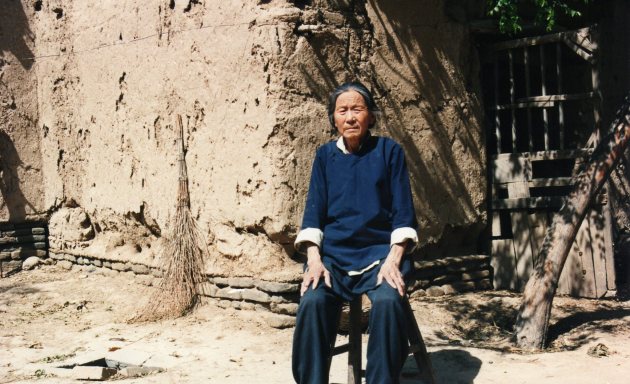
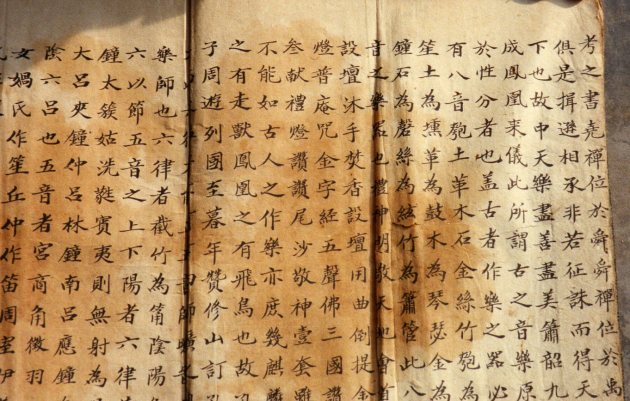




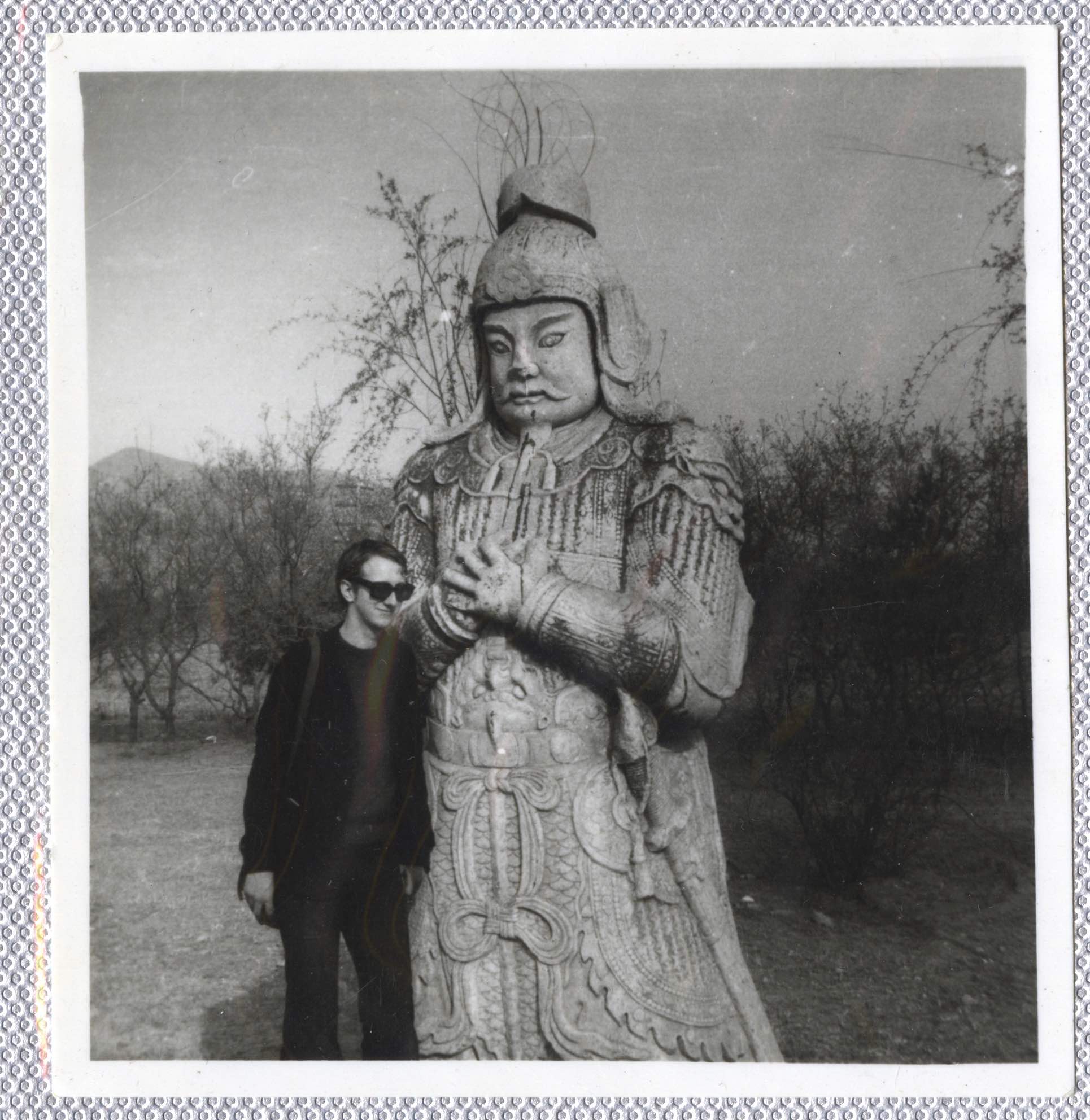


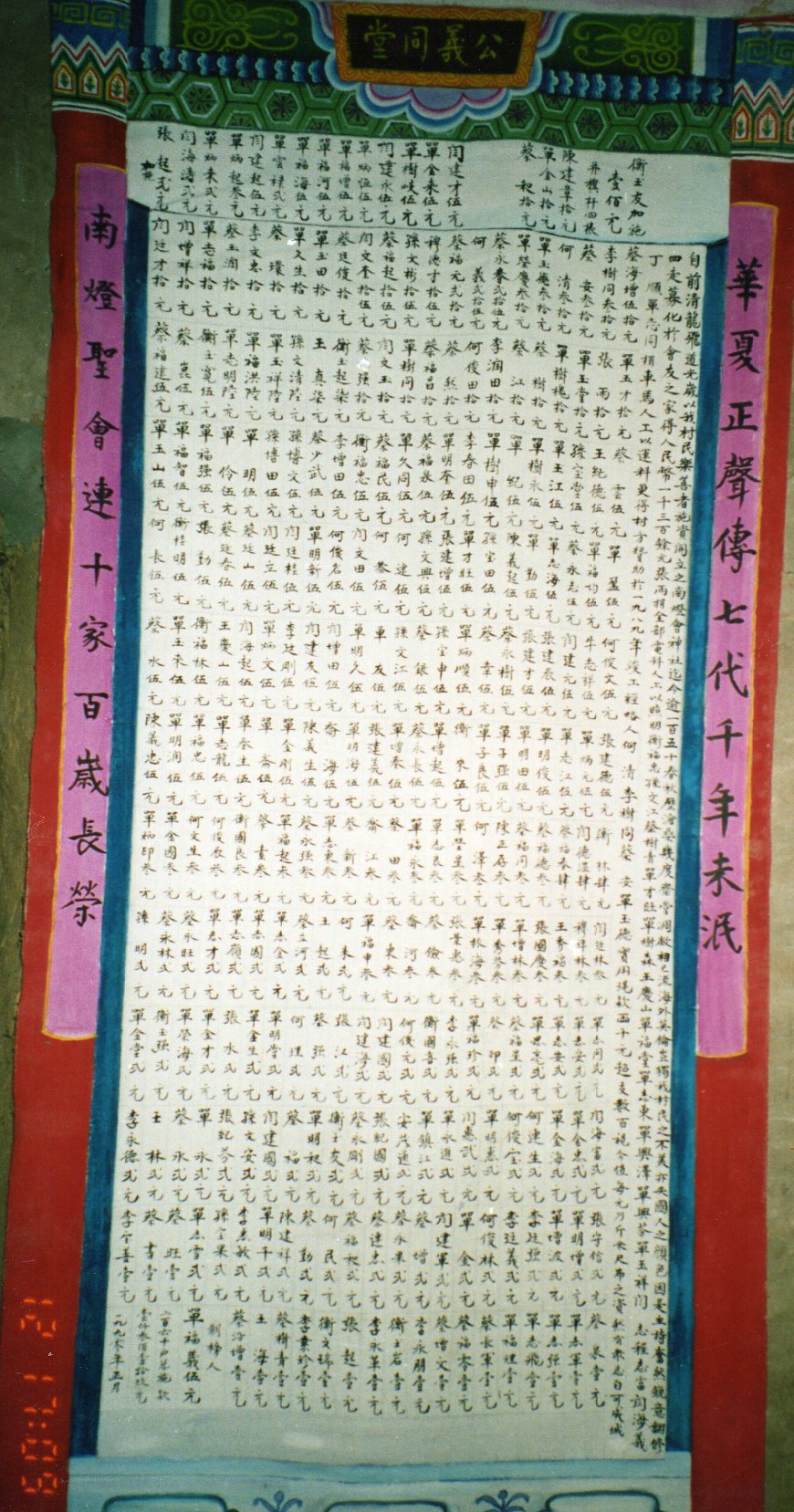





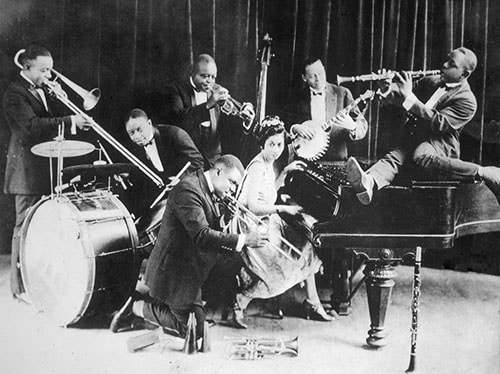


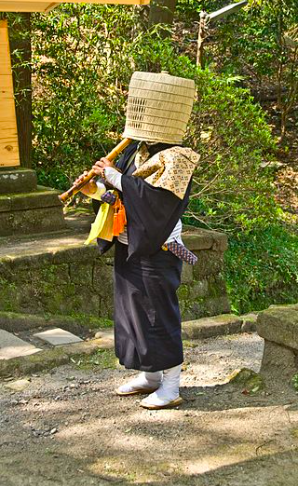


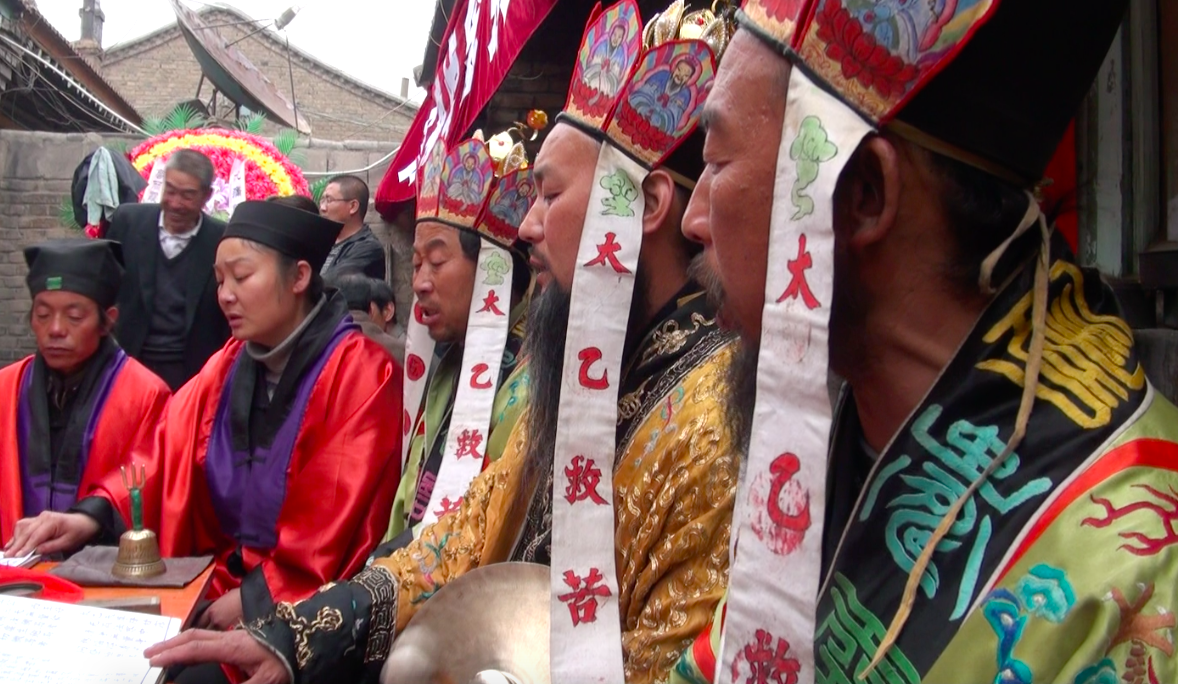
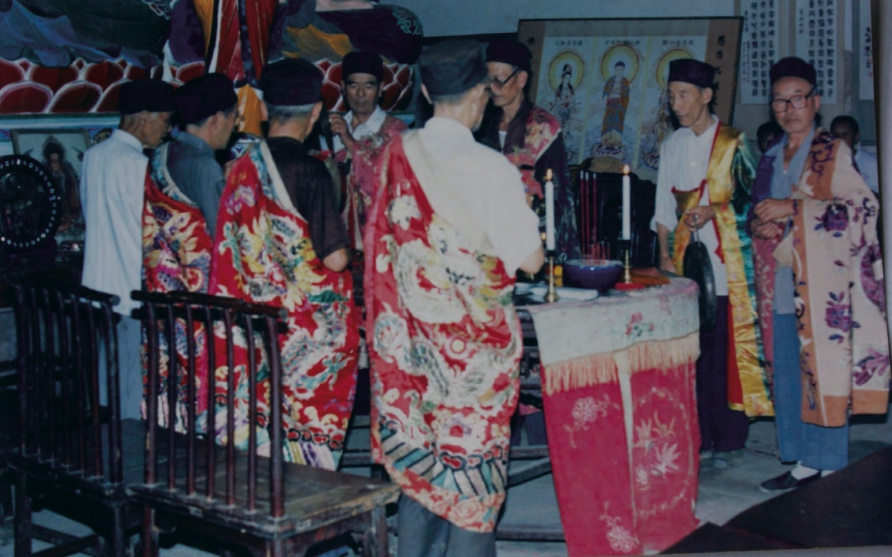
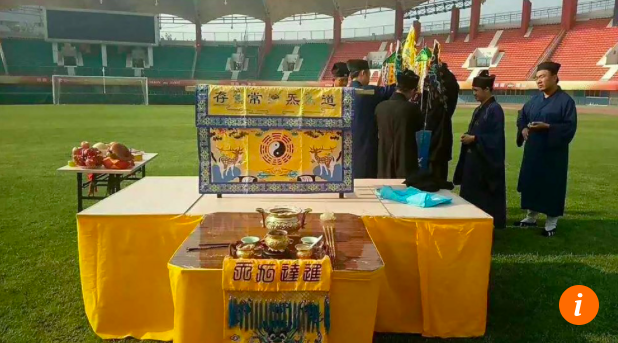

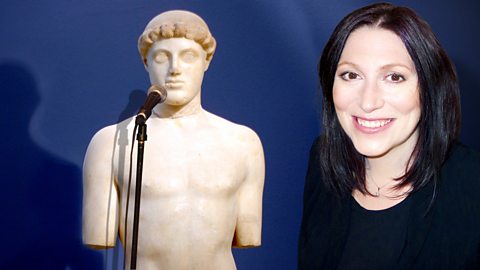
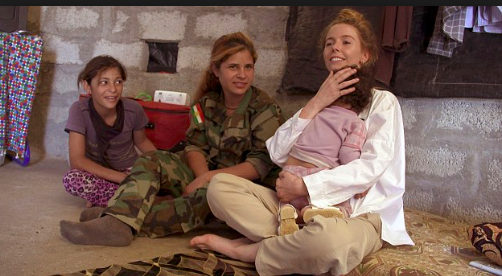


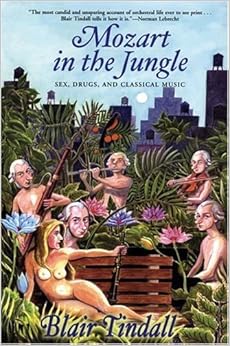


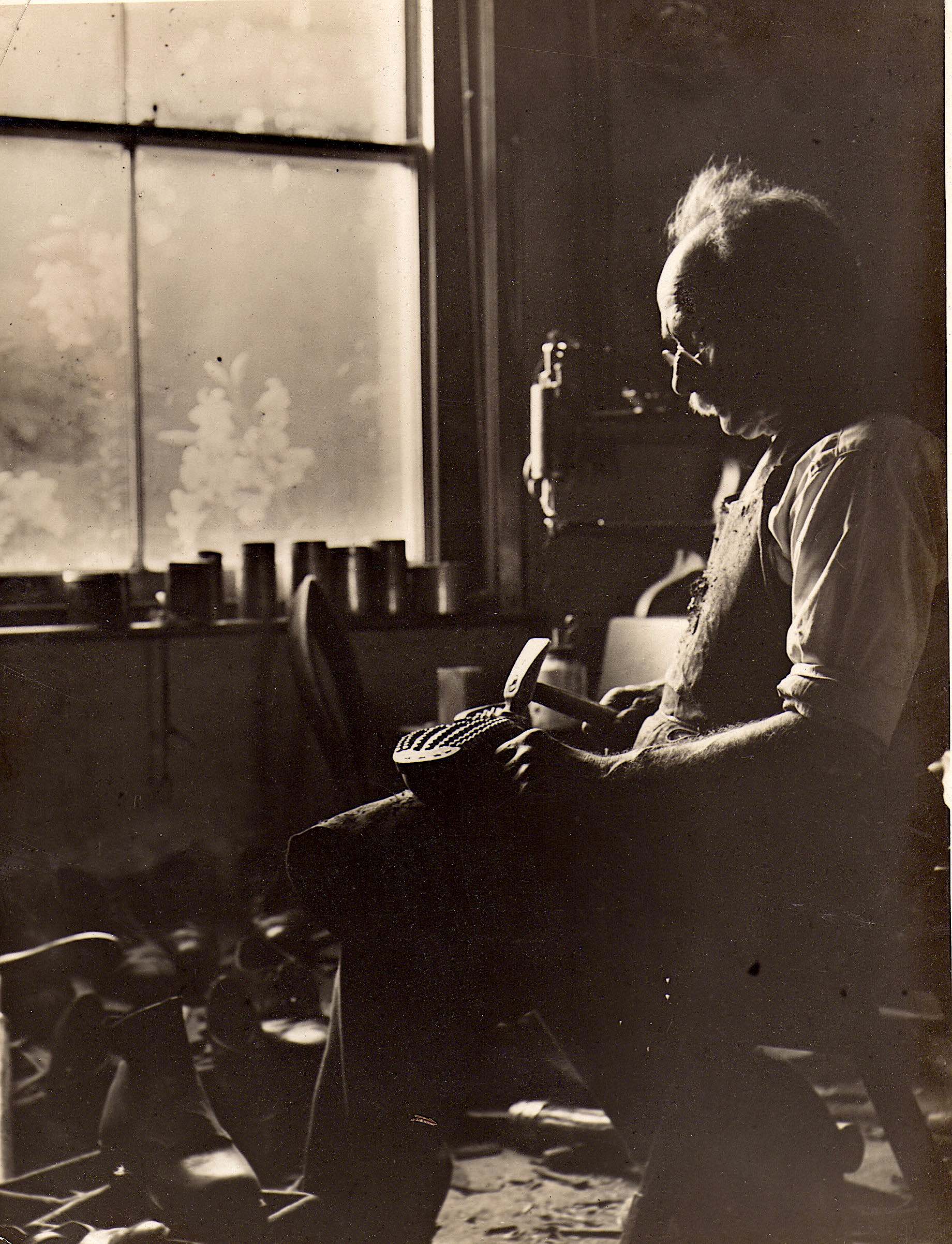

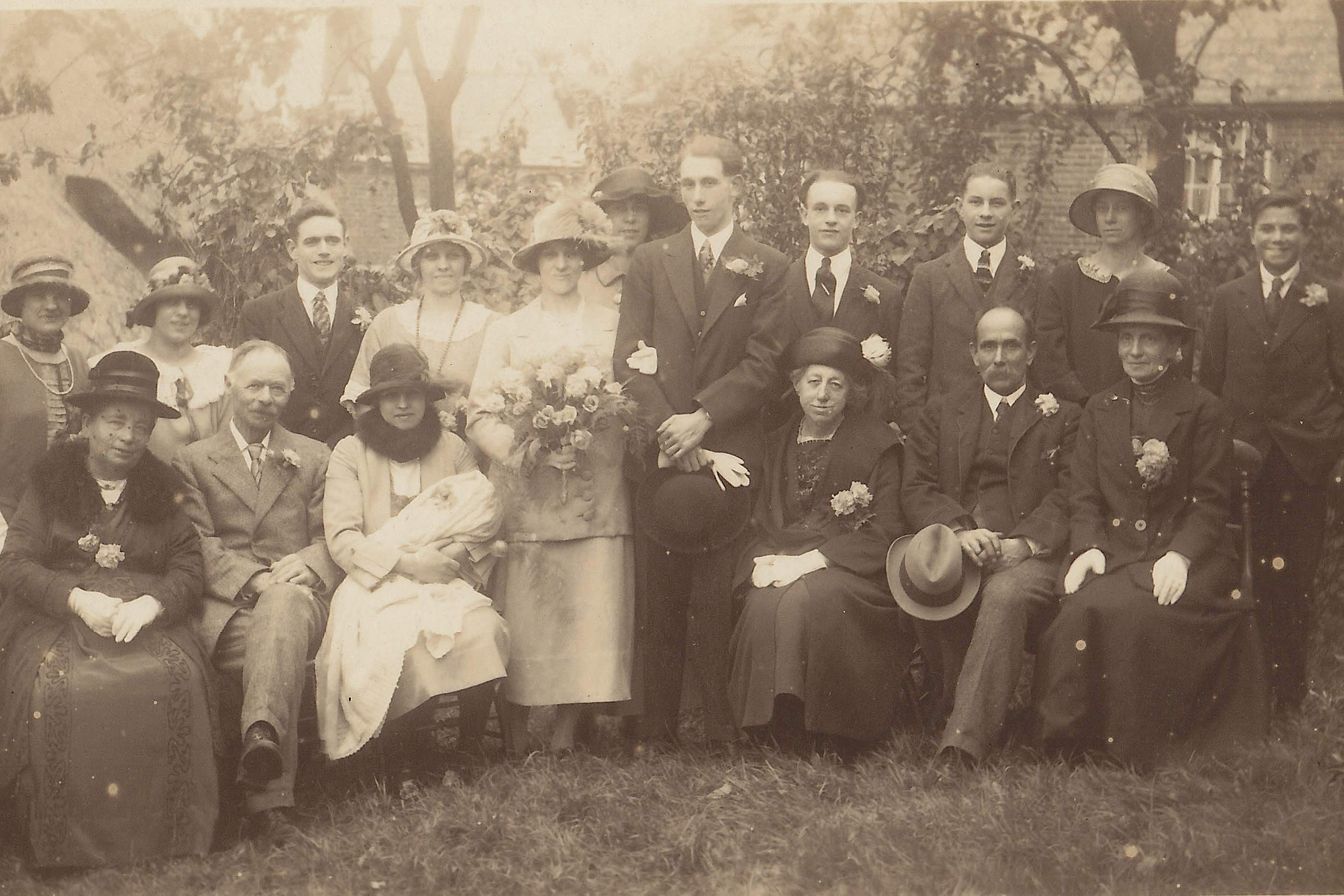



 Glorious is the Earth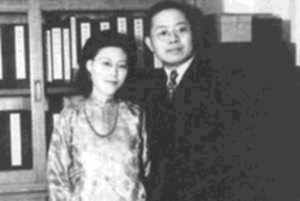


 From 1986 I used to visit Yuan Quanyou in her office at the dilapidated yet numinous MRI compound at Dongzhimenwai, her beaming face greeting me between high stacks of ancient documents. There, with unassuming industry she was still producing further volumes in the MRI’s wonderful annotated series of iconographical collections on Chinese music history, such as the 1988 Zhongguo yinyueshi tujian 中国音乐史图鉴 [Illustrated history of Chinese music].

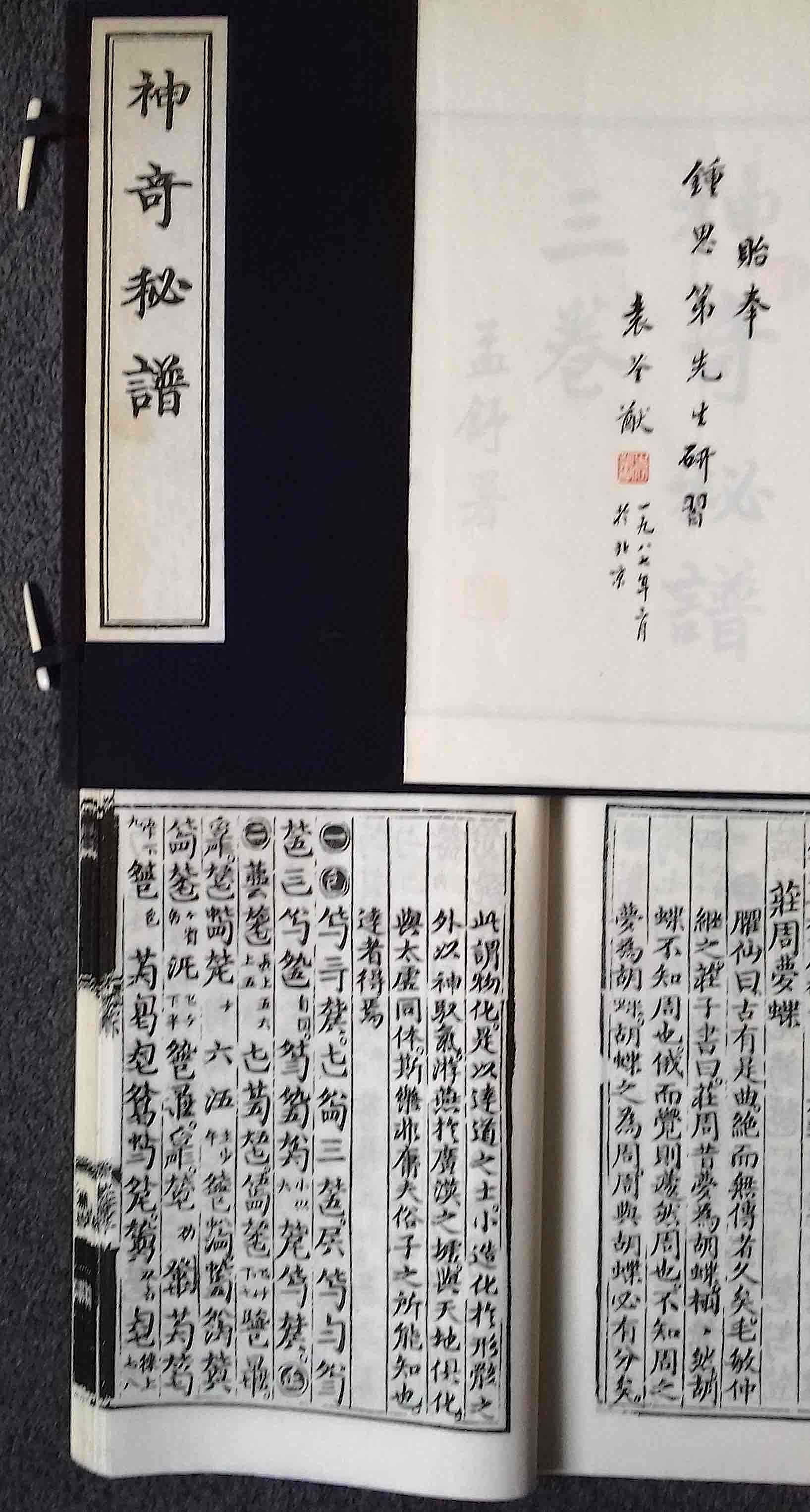
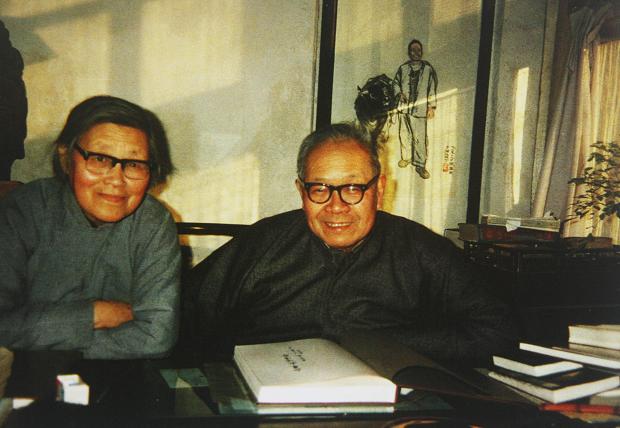

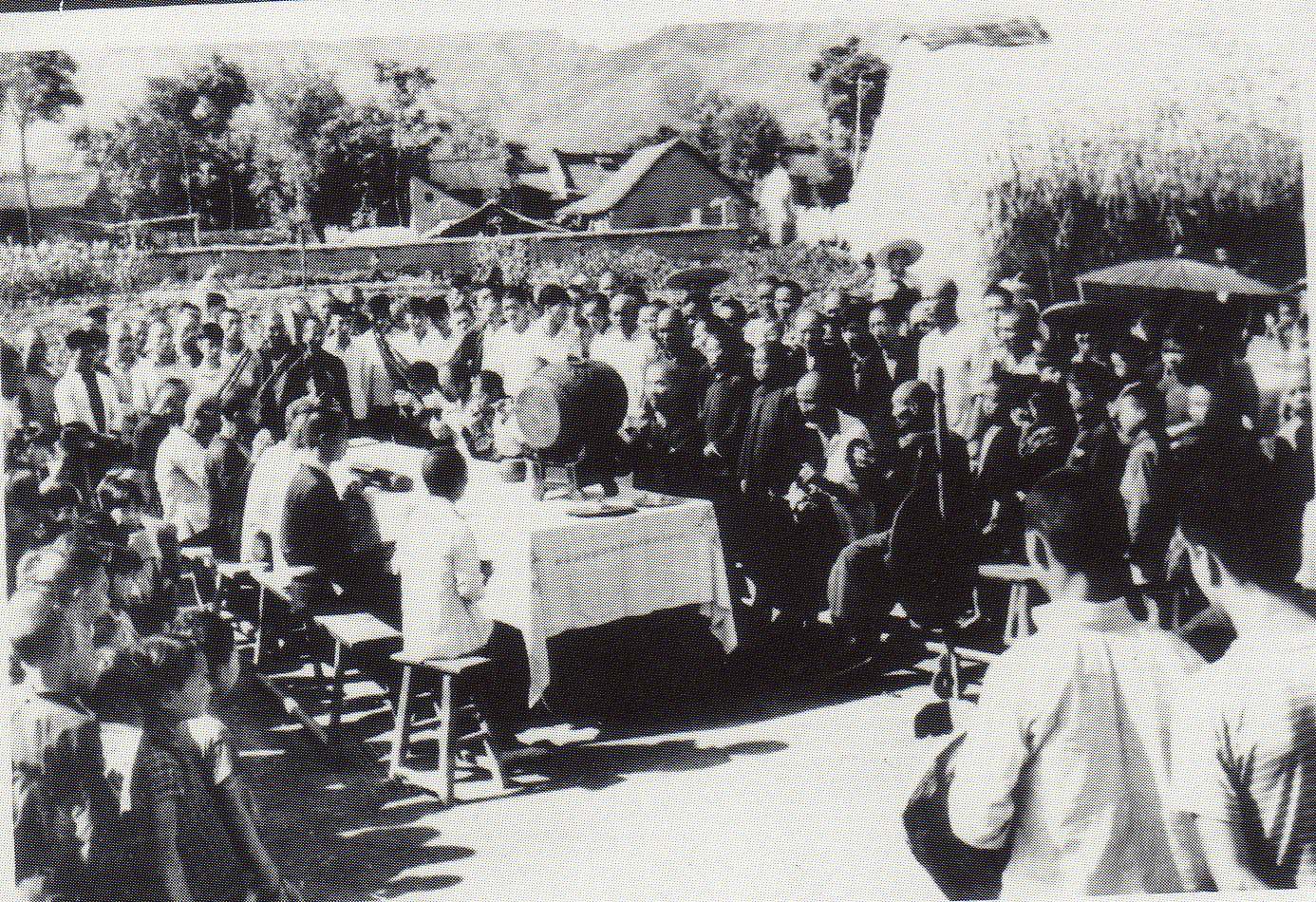


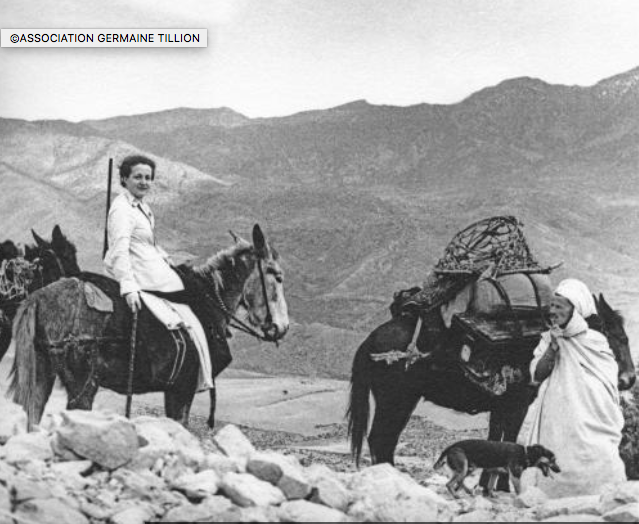


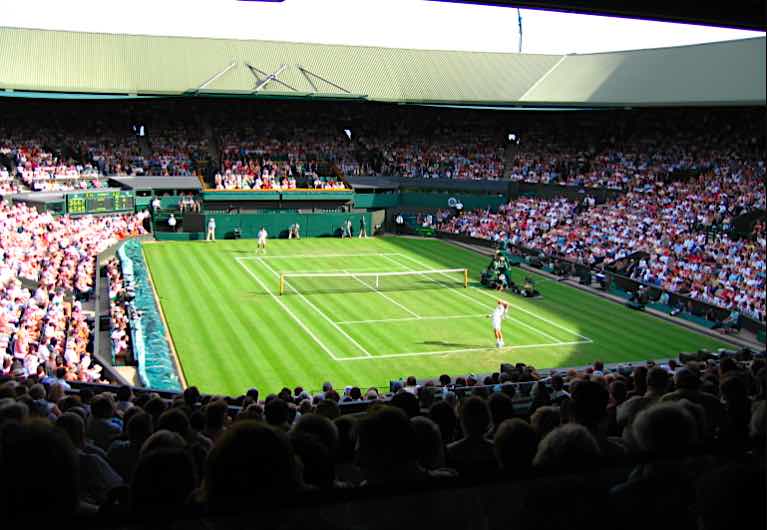

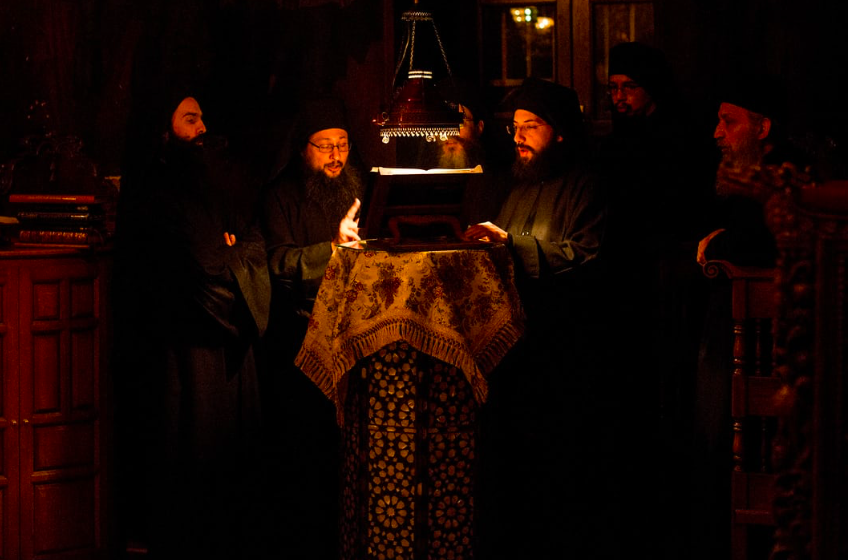




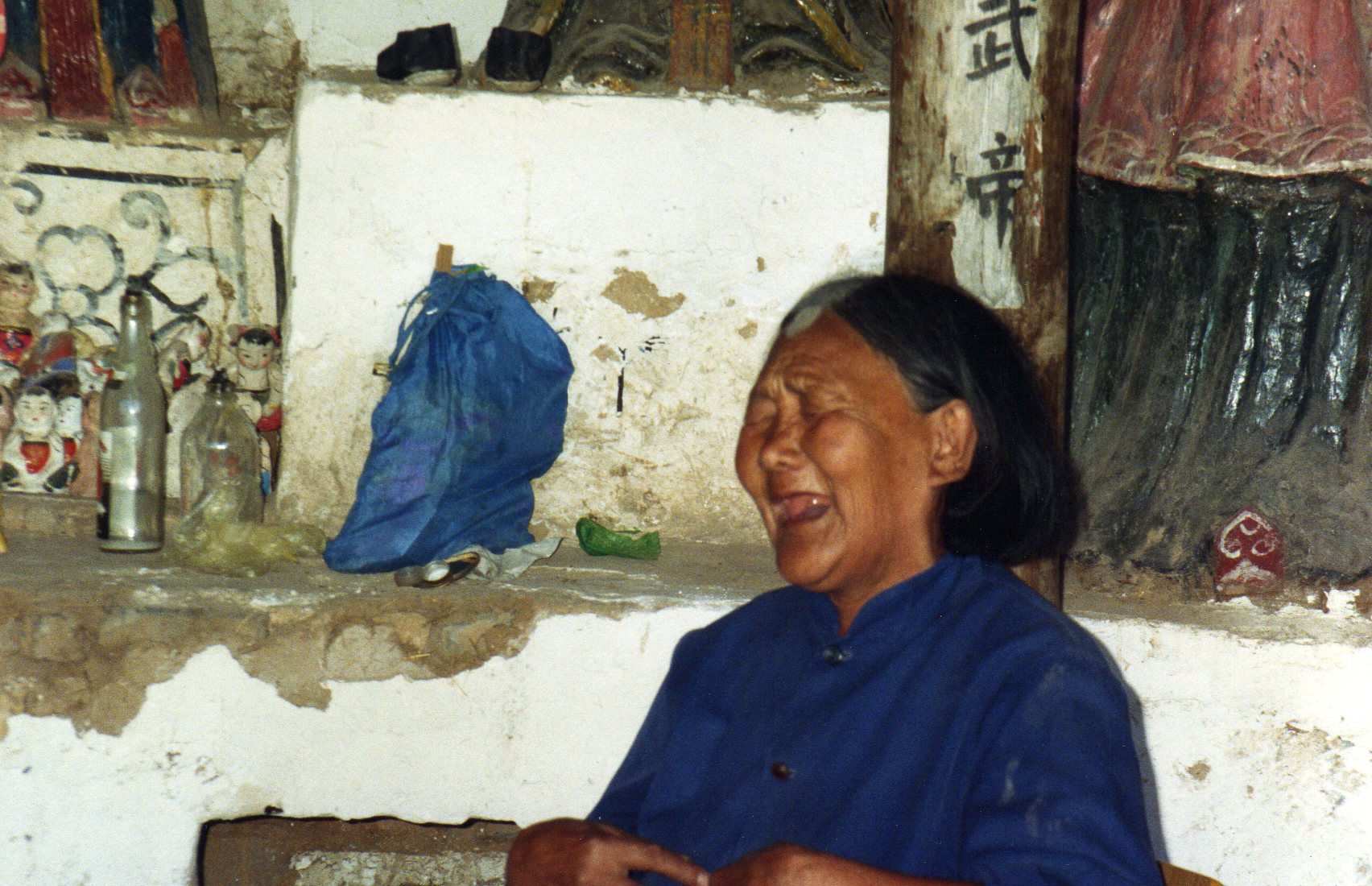
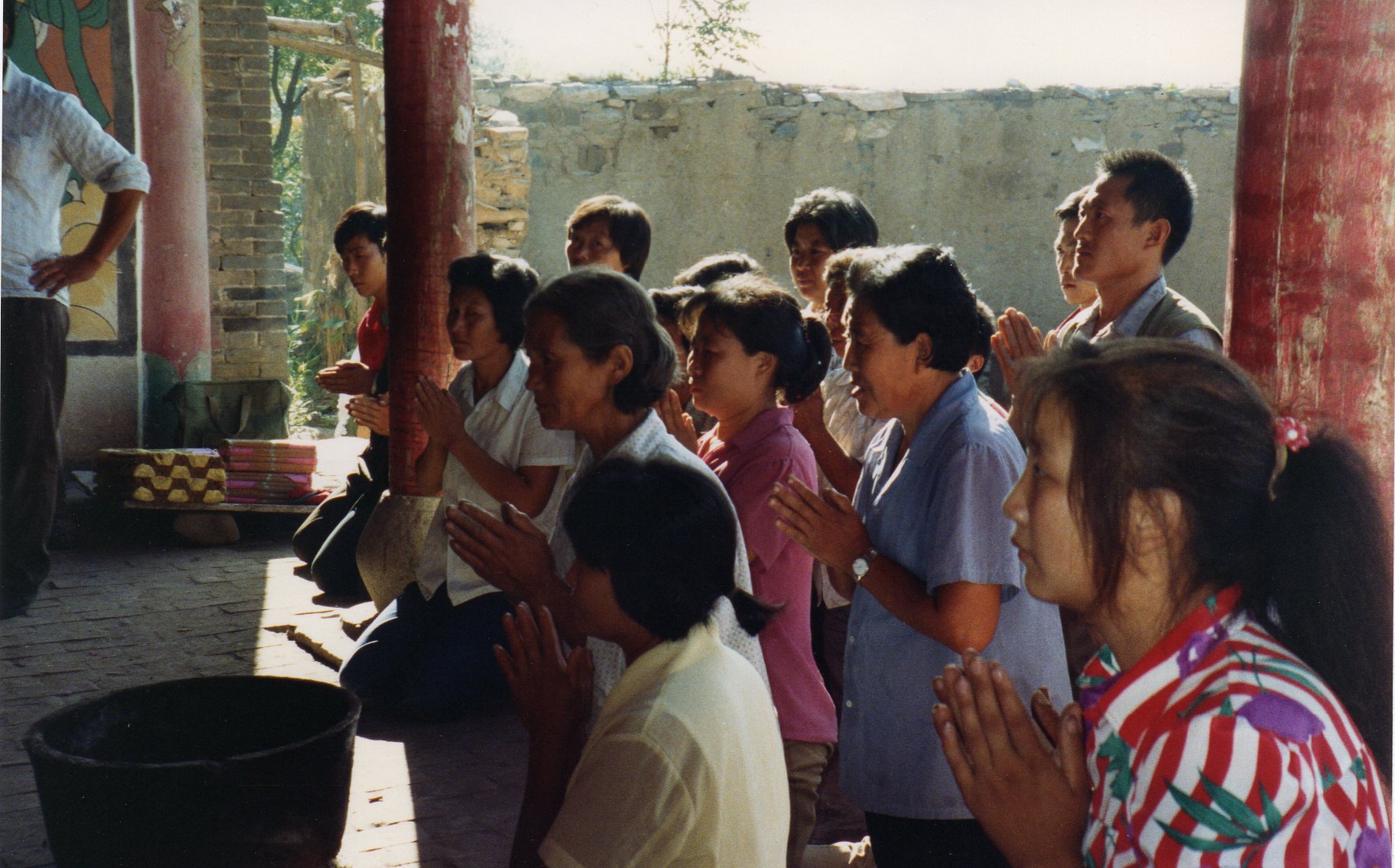
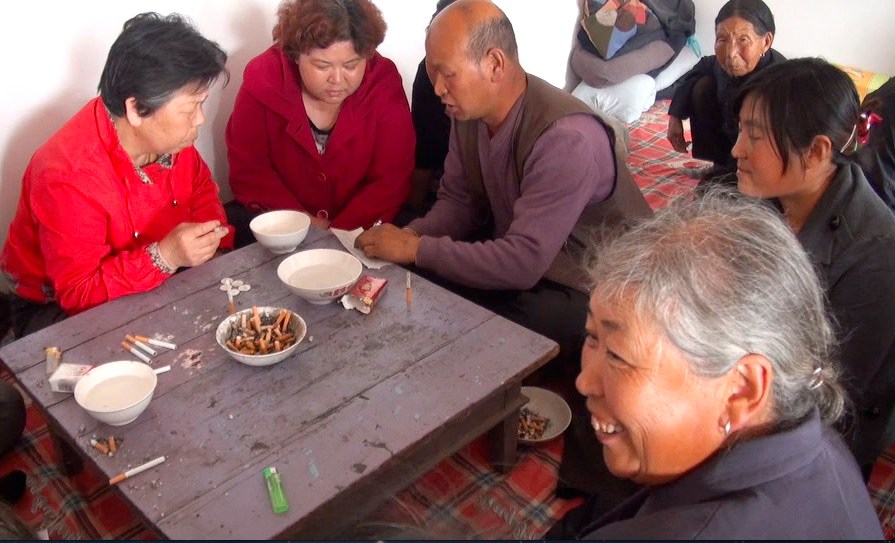


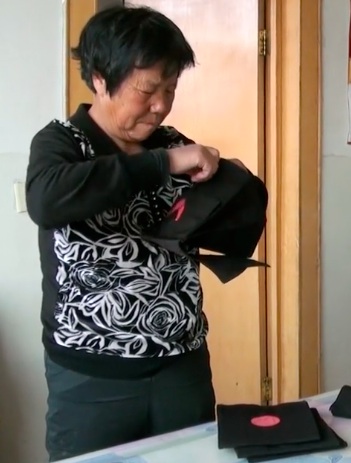
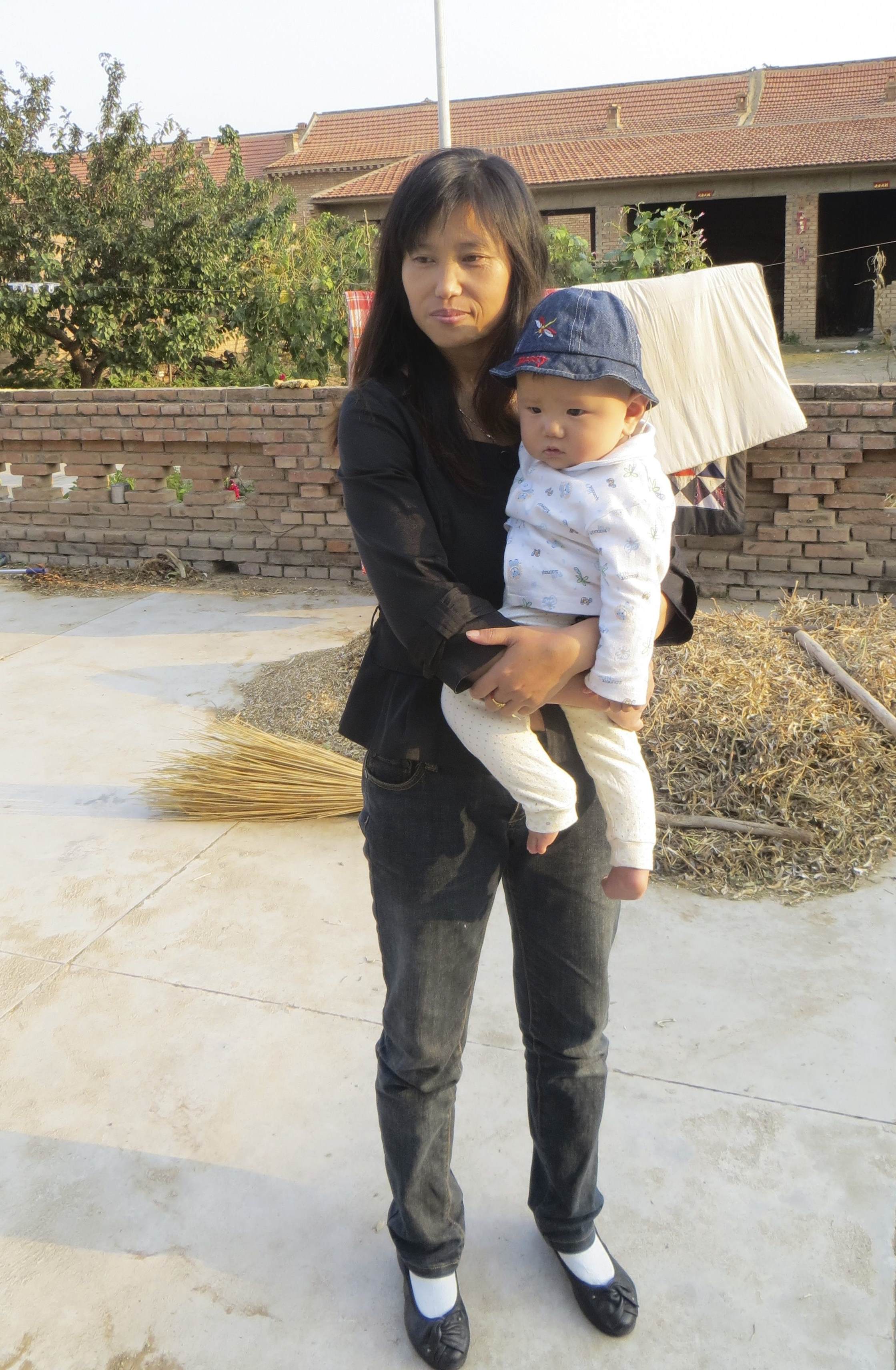
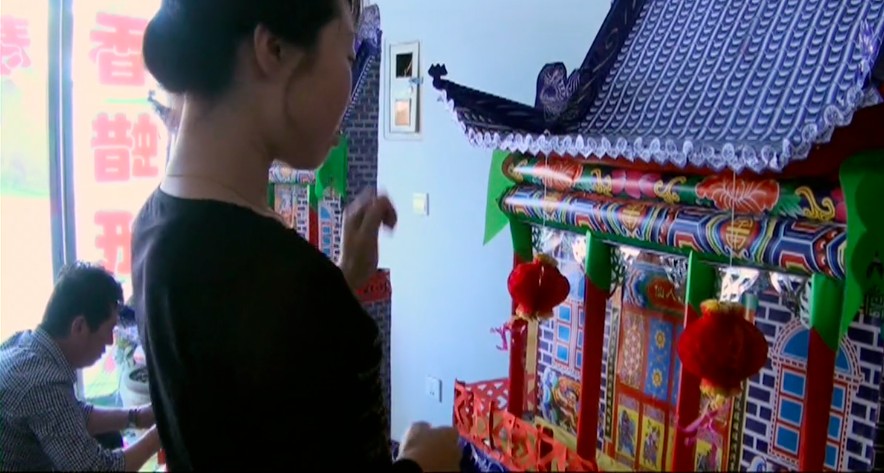
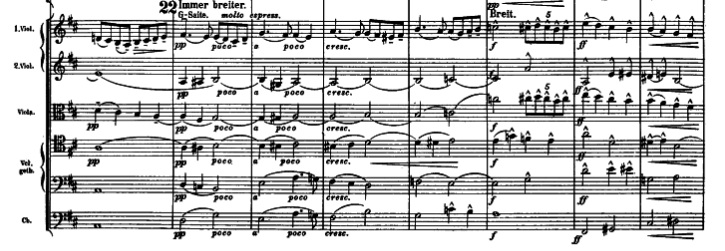







 Stephen Jones: a blog