Points mean prizes

zampogna

Musos always play this game on tour, but I’m sure it’s common in many walks of life.

On tour in Italy, for instance, we all come back from lunch in our different groups, outdoing each other with stories of an amazing find:

Little trattoria in a tiny backstreet, not even a sign on the door, only locals in there, no menu, they just give you what they’re having, five courses, home-made pasta… Toothless old lady dressed in black treading the grapes… And you know, it was incredibly cheap… And then she invited us to her granddaughter’s wedding, and there was this fantastic band playing zampogna and piffero

And so on—you get the idea. See also Nearly an Italian holiday.

Organology

Quaint and not entirely useless fact:

The names of indigenous and ancient Chinese musical instruments usually consist of one single character, like

qin 琴 zither
sheng 笙 mouth-organ
zheng 箏 zither
di 笛 flute,

whereas those imported from outside China (generally Central Asia) tend to have two characters, like

bili 篳篥 oboe (Japanese hichiriki; descendant of the Chinese guan[zi] 管子)
pipa
 琵琶 lute
erhu 二胡 fiddle (and indeed huqin 胡琴, tiqin 提琴, and so on)
suona 嗩吶 shawm
yangqin 揚琴 dulcimer.

“Not a lot of people know that”. Perhaps we can think of some exceptions?

By the way, the pipa was held horizontally in medieval times, the angle getting higher over the course of a thousand years until attaining its present vertical position—surely the longest and most gradual erection known to mankind.

Lower row, left: Yang Dajun.

There are still a couple of regions where the older more horizontal position has been maintained:

(left) nanyin in Fujian; (right) Shaanbei bard.

Travel

In Isobel Fonseca’s brilliant Bury me standing she recalls showing her passport to a young guard at the Polish border:

Uniquely intriguing to him was the stamp for Albania, or “E Republikes Popullore Socialiste te Shquiperise”, with the “Popullore” and “Socialiste” touchingly crossed through by hand.

Funny as this is, she goes on to reflect soberly:

People believe that Gypsies are dangerous because they have nothing to lose. And here I sat, impatient, even indignant, as the pale border guard felt up my passport. Swollen with extra pages, that little accordion and its inky scores of distant anthems was the proof that I was the only one who had nothing to lose. I could just leave.

For Albanian folk music, see here.

Tone of voice, and audiences

bailey

Around 1975, while “studying” at Cambridge, I somehow managed to get an invitation to tea with Sir Harold Bailey (see also here), eminent scholar of ancient Central Asian philology. I guess it was Laurence Picken, or Denis Twitchett, who made the introduction.

Sitting me down at his side, Sir Harold at once embarked on a lengthy discourse about medieval Khotanese texts, peering at a jumble of manuscripts on the desk before us. His only companion was his cat, whom he also addressed periodically, without modifying either his gaze or his measured academic tone.

“Here I found a clear clue to a syntactical link with the Sogdian manuscripts that had been excavated some time before… And I suppose you want another saucerful of milk.”

Before I could assure him that I was fine with my cup of tea, he went on,

“It may take some time to map the linguistic links between the various medieval oasis towns… It’s no use rubbing up against my legs like that, you’re not going out into the garden again, we can’t have you bringing in any more birds…”

It took me some time to get the hang of this.

From his obituary:

A task now facing Bailey’s colleagues is the elucidation of his rhyming diaries. When told at our last meeting that the course of a lifetime had transformed these into an epic of over 3,000 verses in a private language concocted from classical Sarmatian inscriptions, I asked Bailey why he was so fond of obscurity. “Well, the diaries are not really so obscure,” he said. “Indeed I’d say there’s hardly a line that could not have been understood by any Persian of the fourth century.”

For another story about context sensitivity, see here. And do read Compton Mackenzie meets Henry James!

Terylene

In ch.18 of my book (p.342) I reflect on the Li band’s recent concert tours and Intangible Cultural Heritage status:

All this may sound like a typical story of adaptation to modern secular contexts. But it’s not. Let’s face it, the Li family is never going to become the next Buena Vista Social Club. Year in, year out, their livelihood remains performing for local rituals. Li Manshan’s recent nomination as Transmitter of the ICH brings him a modest extra income for now, but the Daoists continue to rely on doing funerals around their home base; their ICH status and foreign tours are only a minor element in their reputation, which is an accumulation of local charisma over many generations. They still lack disciples, either from their own or other families; and crucially, local patrons no longer pay much attention to the niceties of ritual practice.

It all reminds me of the elderly fiddle player in the Romanian village band Taraf de Haidouks, reflecting on his meteoric rise to global success on the world music scene:

A little fairy granted me my wish to be happy in old age. Now I have suits in terylene.

For more on adapting Daoist ritual for the concert stage, click here. For a populist fantasy, see Strictly north Chinese Daoist ritual. See also World music abolished!!! For Paris as pedagogical Mecca, see Nadia Boulanger, and Kristofer Schipper.

Muzak

Ethnomusicologists, aspiring to some pseudo-scientific objectivity, tend to put their tastes on hold—for like John Cleese in the cheeseshop sketch, we “delight in all manifestations of the Terpsichorean muse”.

The live version is also very fine:

Football songs, Bulgarian wedding laments, ice-cream-van jingles, Demis Roussos, world accordion conventions, even Beethoven, all are grist to our mill.

My esteemed colleague Helen Rees, in a fine outline of the Chinese soundscape, wrote:

Doorbells play Muzak when pressed.

I like that—I play Muzak when pressed too. For more on the doorbell, press here.

And here‘s a sequel on ice-cream vans and garbage trucks!

Drumming (continued)

I’d love to know who the conductor was in this story.

A guest conductor is rehearsing for a concert with a London orchestra. He soon stops them in mid-flow to address the timpani player: “Sir, you sound like someone slapping a pillow with a flaccid penis!”

Coming back to rehearse the band next morning, the conductor makes a speech: “Ladies and gentlemen, you must forgive me for my behaviour yesterday, I was unpardonably rude… Nonetheless, I went back to my hotel last night, and I tried it—and I WAS RIGHT!”

In memory of Paul Kratochvil

Paul 1976

Wedding party, Cambridge 1976.

At Cambridge during the Cultural Revolution, immersed as I was in the Tang dynasty, my only clues to the funkiness of contemporary Chinese culture came from my teacher the fine linguist Paul Kratochvil (a surname that suitably means “fun”). Born in 1933, he had somehow became an expert on the phonetics of modern Chinese, fleeing Czechoslovakia in 1968 to take up a post at Cambridge with the help of the Oxford sinologist Piet van der Loon. He features in this impressive introduction to Prague sinologists (for whom, see here).

Recommending to me a book called Current Trends in Linguistics, Paul looked bemused when I asked him what I should look it up in the library under—like an editor’s name or something:

“Well, Steve, try ‘C’—if that doesn’t work, I guess you could try ‘K’…”

While he was still in Prague, a friend in China addressed the envelope of a letter to him with great economy:

Paul

(“Czechoslovakia, Comrade Paul”). Sure enough, he received it.
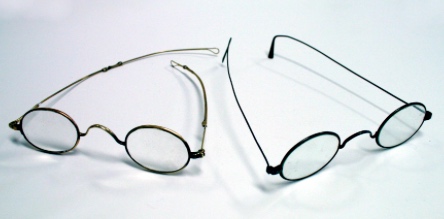
spectacles

Over copious beer in the pub where he used to take me for what were euphemistically described as “supervisions”, Paul recalled this story:

While still in Czechoslovakia he had served as interpreter for the Czech army, and at one high-level conference in Prague receiving a Chinese military delegation, he found himself interpreting for a Czech general at one end of the table and a Chinese general at the other.

The talks had gone well, and the Czech general was winding up with the customary sonorous platitudes.

“I hope both sides will be able to exchange experiences!” he declared majestically.

My friend Paul was already a fine linguist, and he knew there were some binomes in Chinese which you could say in the order either A-B or B-A, but alas he thought jingyan, “experience”, was one of these. So he blithely translated, “Wo xiwang shuangfang nenggou jiaohuan yanjing”, which unfortunately comes out only as

“I hope both sides will be able to exchange spectacles.”

This puts the Chinese general in a spot; the TV cameras are trained on him, and he mustn’t make a faux pas. Can this be some weird Czech custom denoting fraternal solidarity? As luck would have it, both generals are wearing spectacles. The Chinese general hesitantly takes off his glasses and holds them out over the table towards his Czech counterpart.

This, of course, presents no less of a challenge for the Czech general; having said nothing at all about spectacles, he is mystified to see this Chinese geezer holding out his spectacles across the table, and he too has to think quickly. Can this be some ancient Confucian ritual denoting fraternal solidarity? He too hesitantly takes off his glasses and offers them across the table.

My chastened mentor later switched on the Prague TV news to see a report, the newsreader announcing solemnly, “And at the end of the conference the two sides exchanged spectacles in the ancient Chinese gesture of comradeship”—as the two generals groped their way to the door.

For a suitable fanfare for the event, see here. Among several more fine stories from Paul, I like this, and indeed this. See also Czech stories: a roundup.

Confession

I truly believe that one day there will be a telephone in every town in America—Alexander Graham Bell

phone

The date of the first landline phone in Li Manshan’s village is another of our standing jokes.

This is really embarrassing to admit, but when I asked him about it in 2011, I heard his reply as ‘sisannian’, so I unquestioningly wrote ‘1943’ in my notebook, I mean how mindless was that of me… Only later, writing up my notes back home, did I smell a rat, and it finally dawned on me that he must have said shisannian (qian), ‘thirteen years ago’! (The difficulty of distinguishing shi and si was only part of my howler; and actually, he would never say sisannian for 1943—even if he knew such a date he could only say “32nd year of the Republican era”, cf.my book pp.37-8). So the first landline was only installed in 1998, just a few years before mobile phones swept the board.

Now, whenever we misunderstand each other, we just say “sisannian” and fall about laughing. For more on our relationship, see here; and for a classic joke, here. For early linguistic escapades in Hebei, see here.

The percussion prelude

In my book (p.280) I observed a subtlety of Yanggao Daoist ritual that may elude us:

Novices soon pick up the short pattern in rhythmic unison on drum, small cymbals and yunluo that opens and closes every item of liturgy, an accelerando followed by three beats ending with a damped sound. This is known as luopu (“cadential pattern”) and it turns out that the number of beats is fixed, 7 plus 4—unless the guanzi player needs a bit more time to prepare his reed!

See also Tambourin chinois, and Drum patterns of Yanggao ritual .

Much less impressive is Beethoven’s take on this, the four soft quarter-note beats that open his violin concerto (less creative than the EastEnders Doof Doof). The quote from my book is itself just a prelude to the popular story of a famous conductor rehearsing his orchestra in the concerto. Though he was notorious for nit-picking, one might suppose that at least here the band would get up a bit of a head of steam before he started correcting them. But no, sure enough he brings them to a halt even before the oboe can come in.

Turning to the bemused timpanist, he says,

“Can you play that with a little more… magic?”

The timpanist looks back at him sullenly, beats out the four notes again, and goes,

“Abra-ca-fucking-dabra”.

* * *

In Daoist ritual there’s nothing quite akin to “rehearsal”, but during a ritual Li Manshan maintains standards by the subtlest of facial gestures, with a little glare if the ensemble is less than perfect. As I learn, I benefit from such hints.

A meeting with Teacher Wang

lms-and-me-in-hk

With Li Manshan in Hong Kong, 2011

Chinese peasants tend to “eat” cigarettes (chiyan) rather than the standard “take a drag on” them (chouyan)—yet another instance of the practical blunt charm of their language.

Timothy Mo alludes to this locution in Sour Sweet:

“Eat things, eat things,” he said aloud, gesturing to the smoking plates in front of everyone but only lighting a cigarette for himself.
“You don’t eat things yourself, Grandpa?” This was Mui.
“I eat smoke,” he quipped, laughing immoderately at his own wit.

Indeed, the expression survives from 17th-century usage, as shown by Timothy Brook in Vermeer’s hat.

At a conference in Hong Kong (my book pp.333–4) I was delighted to introduce Li Manshan to the illustrious Taiwanese scholar C.K. Wang. Apart from his indefatigable energy in opening up the vast field of ritual studies in mainland China, he has a remarkable gift for finding a place for a surreptitious smoke (cf. the first poem in Homage to Tang poetry). In Hong Kong, where smoking laws are draconian, he would regularly lead us through labyrinthine corridors to some corner of an underground car park for a furtive fag.

This soon became part of my secret language with Li Manshan. Back in Yanggao, he was careful not to smoke in the presence of his baby grandson—so sometimes when I felt he needed a fag-break, I would suggest to him, “Shall we go and hold a meeting with Teacher Wang?”

For Li Manshan and Andy Capp, click here.

Yoof

To complement OMG, here’s Bill Bailey on the plague of “LOL”:

(He actually did this with an audience at a live standup gig, but it’s disappeared from YouTube).

An economical expression such as

I’m like, hello?”

is brilliant. Our elders (or let’s face it, some of us) would have to fall back on a ponderous formulation like

“I must confess I found myself at a loss to respond to the sheer fatuity of my companion’s comment, and could only register a mock expression of disdain”.

I recommend reading this in the voice of Jacob Tree-Frog (aka The Haunted Pencil, Minister for the 18th century)—actually “I’m like, hello?” sounds just as funny with his patrician tones, like the Queen reading MIles Davis’s autobiography.

Cf. this cartoon found on https://twitter.com/PhilosophyMttrs:

DCq7F76WsAAItpX.jpg-large

Textual scholarship, OMG

One often finds oneself consulting quoteinvestigator.com. Doesn’t one.

Like “Meretricious and a Happy New Year”, or “She ran the gamut of emotions from A to B”. This is the kind of meticulous historical work that one expects from the scholarship of Daoist ritual texts.

“OMG” isn’t there, but appears to date from at least 1917 (OMG!)—recalling the brilliant Armstrong and Miller sketches (playlist):

And that’s kinda like a commentary on what we do when we listen to Bach (qv): we can’t help hearing the cadences of our own experience of life in the scenarios of the past. And shit like that. Innit though.

In the Bach Passions, textspeak could generally work for the choral crowd scenes, but actually “Erbarme Dich, OMG” fits worryingly well too:

erbarme-dich

Or

He has risen from the dead, YAY!”

YAY being a more economical version of Hallelujah…

Maybe I’m onto something. Let’s hope not.

Fun with anachronisms

And the roar of Moses’ Triumph is heard in the hills

Without even knowing how I feel about the White Cloud Temple in Beijing, my adorable cat Kali (R.I.P.) threw up over my copy of the Jade Pivot Scripture, which I had bought in an edition printed at the temple.

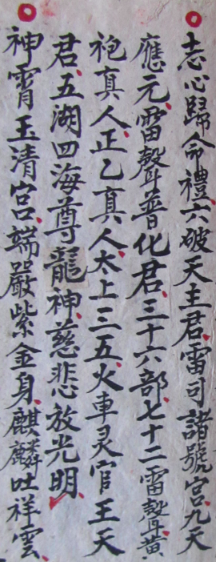
One ritual title that features only fleetingly in the ritual manuals of the Li family Daoists in north Shanxi is Thunder Lord of Three-Five Chariot of Fire (Sanwu huoche leigong). This is among the attributes of the deity Wang Lingguan, and a trace of the thunder rituals of Divine Empyrean Daoism. [1] In the Li family manuals it appears only in the Mantra to Lingguan and in the Xijing zayi manual, no longer performed and thus no longer familiar to them: [2]

huoche

From Xijing zayi manual (Sanwu huoche Lingguan on line 3), copied by Li Qing

So my excuse to discuss it here is flimsy as ever, but we all need a bit of light relief every so often. This also relates tenuously to my comments on hearing Bach with modern ears.

Huoche “chariot of fire” (glossed as “fireball”) may prompt titters at the back, since in common modern parlance it means “train”. Whereas “And the roar of Moses’ Triumph is heard in the hills” is a translation that has been inadvertently amusing only since the spread of the automobile [mental note: must get that exhaust fixed], [3] huoche is an ancient original which could have been affording chuckles to Daoist scholars since the term became common usage for “train” in the late 19th century. When you’re immersing yourself in the abstruse mysteries of the Daoist Canon, you have to take such diversion where you can find it.

What’s more, we may giggle impertinently at another of Lingguan’s attributes, Sanwu (Three-Five)—erstwhile a brand of cigarette that Chinese people associate with Englishness (much to my perplexity, since I’ve never heard of them outside China) just as much as London fog. (For “the smoking substances of non-nationals”, see More from Myles).

So here we appear to find Lingguan smoking a posh foreign cigarette on a train journey through his spiritual domain—being a high-ranking Daoist cadre, he would get to travel soft-sleeper (cf. Fieldwork and textual exegesis).


[1] The appellation may commonly be found in the Daoist Canon, but, more relevant to “texts in general circulation” (my book pp.218–24) and the practices of the Li family may be its appearances in Xuanmen risong: Xuanmen risong zaowan gongke jingzhu 玄門日誦早晚功課經注, chief editor Min Zhiting (Beijing: Zongjiao wenhua chubanshe, 2000), pp. 166–7, 244–5. See also Rethinking Zhengyi and Quanzhen.

[2] My Daoist priests of the Li family, p.376, cf. p.381; for the Divine Empyrean, see also pp.219–20.

[3] A substantial irreverent online industry in such Biblical quotes has arisen.

Fantasy Daoist ritual

The Pardon, 1991

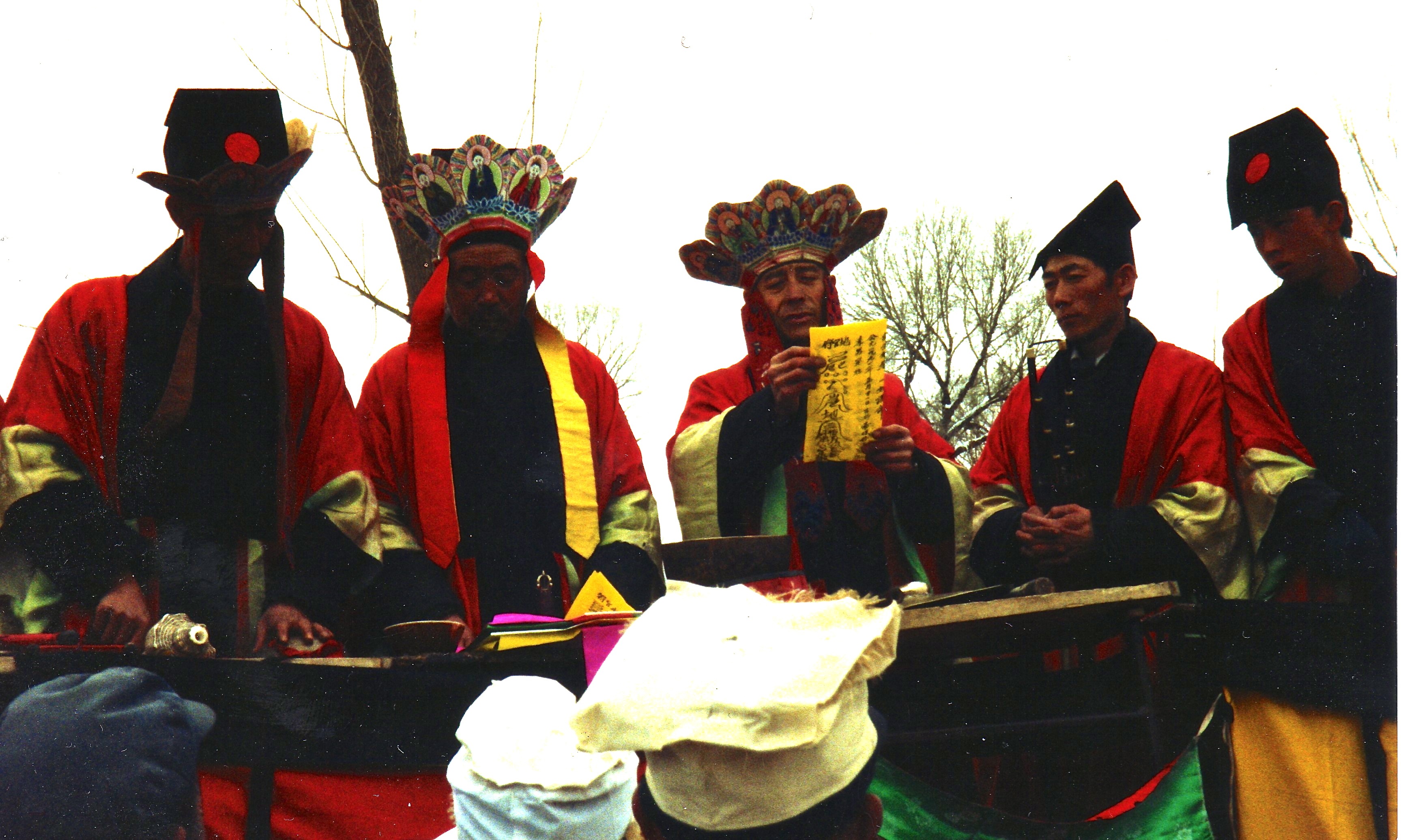
The Pardon ritual led by Li Qing (2nd from left), Yanggao 1991 (my film, from 48.34).

As a change from my literary party game, here’s an arcane spinoff from the game of picking a fantasy world football team, or chamber orchestra.

Let’s choose our all-time most amazing group of Daoist ritual specialists, including both liturgists and instrumentalists. Of course, the list of candidates is endless, so I’d seek to refine the search by selecting those known mainly for their ritual performance, rather than for compiling vast compendia of manuals.

Thus the list could include early luminaries like Kou Qianzhi 寇謙之 (365–448) (who might speak a dialect similar to that of Li Qing, except that they lived over 1500 years apart), Tao Hongjing 陶弘景 (456–536), and Du Guangting 杜光庭 (850–933) (see their entries under Fabrizio Pregadio ed., Encyclopaedia of Taoism).

Churlishly fast-forwarding a millenium, among modern Daoists we could include Chen Rongsheng  陳榮盛 (1927–2014) from Tainan, [1] Zhang Minggui  張明貴 (1931–2016) of the White Cloud Temple in Shaanbei, and our very own Li Qing 李清 (1926–99); among a host of great drum masters one might recruit An Laixu 安来緖 (1895–1977) from Xi’an and Zhou Zufu 周祖馥 (1915–97) from Suzhou.

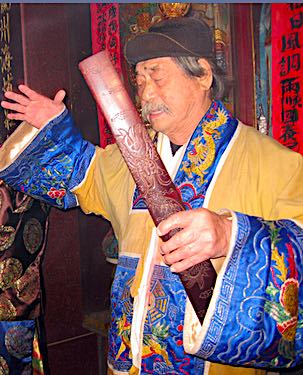
Above: left, Kou Qianzhi; right, Tao Hongjing;
below: left, Zhang Minggui; right, An Laixu.

For once, we can leave historical change to one side: it remains to be seen how effective Pelé and Messi would be together as a forward line-up, or Saint Cecilia and Bach (in the orchestra, or indeed in the football team; cf. the Monty Python Philosophers’ football). A more basic difference is that—more than football or the WAM canon—the performance of Daoist ritual is always specific to a small locality. Even if their ritual manuals may have a lot in common, household Daoists from different places can hardly work together. Never mind Daoists from ShanghaiFujian, and Hunan; even within north Shanxi, the whole ritual performance of the Li family in Yanggao is significantly different from that of groups in Hunyuan or Shuozhou counties very nearby.

Fun game, though. See also Strictly north Shanxi Daoist ritual.

Chen Rongsheng

Chen Rongsheng.


[1] Until quite recently, much of our knowledge of modern Daoist ritual (despite its great diversity) was based on the tradition of Chen Rongsheng, meticulously documented by Kristofer Schipper and John Lagerwey. Here’s a tribute, with precious clips of Master Chen’s ritual practice:

Links to lengthier ritual sequences here. Alas, Michael Saso’s early clips of his Master Chuang no longer seem to be in the public domain.

Funeral music

Invitation, Beijing concert

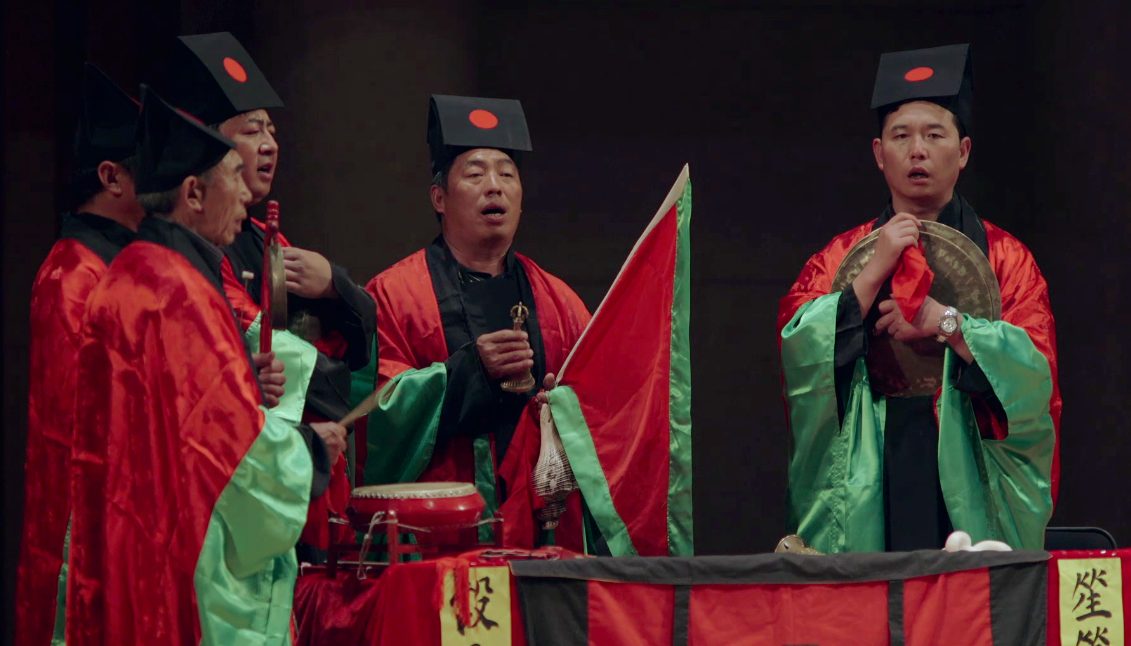
Beijing concert, 2013.

On the Li family Daoists’ 2013 tour of Germany I suggested an extra item in our evolving concert programme, an a cappella sequence based on the Invitation ritual performed at the edge of the village (my book p.339; film, from 58.14; playlist #1, with commentary here).

At first they were reluctant: while they have no qualms about performing ritual items on stage, they worried that performing an item so explicitly funerary might be unsuitable. I pointed out that some of the greatest music in the concert tradition of Western Art Music is for the dead.

Apart from various requiems (Mozart, Brahms…), one of the pieces I used to reassure them that funeral music was quite familiar to Western audiences  was Buxtehude’s Klaglied. Though a recording by the wondrous Michael Chance has just disappeared from YouTube (BRING IT BACK AT ONCE!!!), Andreas Scholl’s version is also great:

Not that the Daoists were remotely impressed by it—by contrast with Steven Feld’s influential experiments in finding which kinds of alien musics might strike a chord among the Kaluli (Sound and sentiment). They enjoyed our trip to the Bach museum in Leipzig not so much for the music as to get a glimpse of the life of a European ritual specialist; and when I showed them the EBS video of the Christmas oratorio they were mainly amused to see me in tails. I can’t even turn them on to jazz.

Occasionally some well-meaning urbanites have rashly suggested I bring my violin to play along with the Daoists, or even arrange their music for orchestra—but to their credit, the Li band have the taste never to do so.

Anyway, the Invitation has turned out to be a great success in our touring programme, a moving tranquil interlude between the uproar of “catching the tiger” and the wild percussion of Yellow Dragon Thrice Transforms its body. As an encore for our French tour in 2017 we even sang the Mantra to the Three Generations (playlist #2 and #3), which follows the Invitation at the gateway after the return to the soul hall.

For adaptations of ritual to the concert stage, see also here, under “The reform era”.

Context-sensitivity in ritual costume and music

Marr

From Andrew Marr’s History of Modern Britain, here’s his version of the famous, if apocryphal, George Brown story:

Attending an official reception in Peru, very inebriated, he approaches a willowy figure in scarlet for a dance. Brown is repulsed and protests grandly that he is Her Britannic Majesty’s Secretary of State for Foreign and Commonwealth Affairs; why could he not have a nice dance? The reply comes:

“For three reasons, Mr Brown. First because you are disgustingly drunk; second because that music is not a dance but our national anthem; and third because I am the cardinal archbishop of Lima.”

Jeremy Vine tells how Boris Piccaninny Watermelon Letterbox Johnson managed to forget the punchline on more than one occasion.

For another celebrated reception story, click here.

Proof-reading

cliche

Another highlight from The China Daily was a full-page advertisement taken out in 1987 by the wackily-named China National Arts and Crafts Import and Export Corporation Guangdong branch. The detailed report on the fine products on offer to a discerning international clientele should have been headed, simply,

Guangdong Arts and Crafts

But when they sent it for checking, the English proof-reader found one phrase of the text less than elegant, circled it, and, in an empty space—unfortunately just to the right of the caption—wrote “an awful cliché”. Sure enough, the headline came out:

Guangdong Arts and Crafts an awful cliché

I trust this will lead you to explore my roundup of wacky headlines. See also my series of homages to Myles’s Catechism of cliché:

Chinese clichés
Chinese music clichés
Chinese art clichés
Tibetan clichés
Orchestral clichés

Authorship

Golliwog

The China Daily always repays study. A list of items on a Beijing concert programme, c1987, once included (I kid you not)

Gollwogg’s “Cake Walk”.

Here’s a piano roll of Debussy himself (cf. Clair de lune, which isn’t):

For the PC debate, see e.g. here. Cf. Learning the piano.

Anyway, the title puts me in mind of the classic

  • Cave overture by Fingal,

and indeed

  • Pique-nique by Edouard Ibert (Jacques’ little-known kid brother—Ted to his friends).

This is in the same ball-park as the Martin string quartet.

And Swan Lake has come out in Chinese as Goose Pond

Musical-joke-dating

I’m sure you know the Big Tune of the “March to the Scaffold” in Berlioz’s Symphonie Fantastique. Don’t you. Here’s S-Simon again, with the LSO in 2019:

Anyway, among all the spoof lyrics concocted by musicians to fit symphonic melodies, this is my favourite:

x

What makes it still more delightful (for the ethnographer, ahem) is that one can more or less date it to London in the late 1960s—the thrill of the new… *

For a datable viola joke about the Beatles, see here; for Berlioz on oriental music, here; and for a complete performance of the symphony, here.

Brits were still seduced by the allure of exotic cuisine in the 1990s, as parodied in the classic Goodness gracious me sketch (“What’s the blandest thing on the menu?'”).


* “Curry” appeared on the menu of a coffee house in the Haymarket as early as 1773. By the 1930s one could buy curry powder, poppadoms, and mango chutney in Portobello, and several Indian restaurants opened in Soho, as well as in Glasgow and Cambridge. By 1970 there were 2,000 Indian restaurants in Britain. See under Bloody foreigners.

Schubert

From Alan Bennett’s 1996 diaries, on his early musical upbringing:

“I also bought a record of Schubert’s Unfinished Symphony, doubly unfinished in this case as I only got one record out of a set of three, so it wasn’t until years later that I found out how it officially didn’t finish.”

Generally I don’t rate drôle ads much, but this is apposite:

Cf. Creative tribulations, and for another unfinished work, Modulation: Schubert and Coltrane.

Limerick

That first English haiku is matched by this:

There was a young man from Japan
Whose limericks never would scan
When asked why this was
He replied “It’s because
I always try and fit as many words into the last line as I possibly can”

which complements

There was an old man from Peru
Whose limericks stopped at line two

For more limericks, see here and here. Oh, and here. And now, some Portuguese- and Polish-themed limericks!

Fieldwork and textual exegesis

Bo Dudley

Academic interpretation gets its comeuppance:

Fieldworkers beware…

The longer audio version (on Derek and Clive live, 1973) has some pleasing further vignettes, like:

And then we hear the words “Right on baby!”…
Seems a little puzzling, “Write on baby”…
Well, let me explain: the father of the house has just walked into the wigwam, and he says “Write on baby” to the mother, meaning “write the shopping list on the baby for tomorrow morning”. […] Paper was scarce…
And then we have the line, “Get down baby!”—the baby realises that once again it’s going to be written on, and has climbed the wall. This is one of those distinctive, um, boogie, Harlem instincts…

Cf. Got my mojo working.

For more and less successful enterprises, see the fieldwork category in the sidebar. And for more from Dud, see Dud’n’Pete tag, not least the psalm, and his Britten spoof in Stella Gibbons’s brilliant Em creeps in with a pie. See also Alan Bennett’s sermon, and  Replies from the Complaints Department.

Sermon

Sermon

Reading of the long sermon that separated Parts One and Two of the Matthew Passion in Bach’s Leipzig performances, people of my generation will find it hard not to reference Alan Bennett’s classic skit:

Which just goes to show how very different our world is from that of Leipzig audiences in the 1720s…

The language, with the clergyman gamely reaching out to his flock with expressions like “Stuff this for a lark”, was so quaint as to amuse even the 1950s’ audience, then my generation in the 1970s, and still now (cf. Reception history).

In his 2014 sermon at King’s College Cambridge, AB reflects:

Like all parodies it was born out of affection and familiarity and the Anglican services that were in my bones, and there is symmetry here as the first sermon I preached on a professional stage was in Cambridge fifty odd years ago across the road at the Arts Theatre in the revue Beyond the Fringe. It was on the text, “My brother Esau is an hairy man but I am a smooth man”. That sermon apart I have never formally preached since until this morning and here I am again in Cambridge.

And with his defence of education for all, it’s a highly political sermon.

For Confucius and other boring prophets, see here.

Mindsets

Salonen

True story:

Applicants for the post of principal conductor of the LA Phil were asked to submit a list of works they’d like to conduct in their first season. Esa-Pekka Salonen’s list was full of pieces by challenging contemporary composers. At the interview, the chair of the board looked severely over his application, turned to him and said,

“I don’t quite know how to put this to you, Mr Salonen, but… here at the Phil, we prefer our composers… dead.”

This may still apply to a considerable extent within the echelons of WAM; yet ironically, when those dead composers were alive, the core repertoire was contemporary: baroque and romantic audiences came along expecting to hear new music.

For China too, as I show in Appendix 1 of my book Daoist priests of the Li family, I attempt not a normative reconstruction of some timeless ancient wisdom, but a descriptive account of ritual life within changing modern society. See Debunking “living fossils”.

For the great maestro Salonen, see also here and here. For more interview stories, click here.

Theory and practice

The lack of dietary restrictions among household Daoists is all the excuse I need to cite Woody Allen’s Hassidic tales:

A woman stops a great Rabbi and asks, “Rabbi, why are we not allowed to eat pork?”

“We’re not?” the Rabbi said incredulously. “Uh-oh.”

Lost in translation

Two gems I found on a room service menu in Beijing, 2015: 

Fuck to fry the cow

Discredited mandarin fish of Mount Huang

Translations on menus provide rich entertainment, of course. For East Asia, Victor Mair gets to grips with some on languagelog (some links here), and that site has many more Silly signs.  See also my Temple Chinglish.

For a menu pun, I’m most taken by this—as if inviting a Chinese franchise of Flann O’Brien:

Times

which indeed leads nicely into Lyrics for theme tunes

Publicity

Allegedly, a lunchtime recital by two fine UK musicians was advertised thus (read it aloud…):

poster

Shades there of “Bach’s Organ Works” too. BTW, in a “proper” index to this blog, more detailed than the sidebar tags, it would give me great pleasure to include Bolton among several numinous place-names in the index to my largely Daoist ouevre:

In the Scunthorpe entry, the page-reference under Messiah is genuine (in my Daoist priests of the Li family); I’ve imagined the others, since (intriguingly) they add to the drôlerie. Do click on the links!

See also The joys of indexing.


* In a rare burst of decorum, I’ve refrained from posting this one so far—perhaps the unspoken allusion is more subtle.

The string quartet

The violinist David Martin led a string quartet which they imaginatively decided to call The Martin String Quartet. Once after a gig for a regional music society, he received a letter of thanks that opened

Dear Mr String,

Another music society story:

An up-and-coming young tenor was to give a recital for a music society. Time was short, so he phoned the club secretary to read out his programme for printing. It included the item Could I but express in song. Perusing the programme when he arrived, he found the title

Kodály, Buttocks pressing song.

which does indeed have a somewhat plausible folk cachet.

5’20”

Of all the beautiful things you can do in 5 minutes and 20 seconds (like playing Yellow Dragon Thrice Transforms its Body at the end of the Transferring Offerings ritual), the divine Ronnie’s 1997 maximum is likely to remain unmatched in human history:

Beats 4’33” any day, with all due respect to John Cage.

I shouldn’t need an excuse for showing this, but here it is. After taking Li Manshan to a conference in Hong Kong (my book, p.333), I was staying with him in a posh hotel in Beijing when we switched on the TV to find Ronnie playing in the world masters snooker. Snooker has become staggeringly popular in China, but Li Manshan hadn’t seen it before, and his amazement was delightful. So I showed him this 147, which is flabbergasting even if you don’t quite know how ridiculously difficult it is…

After the lavish banquets in Hong Kong, at which we both felt rather uncomfortable, we were happy to eat a simple bowl of noodles in peace together in a little caff over the road. Next day I took him to the station to take the train home and get on with his routine of determining the date, decorating coffins, and funerals.

My favourite expression of snooker commentators is “he’s eying up a plant” (see here, and here). Tang poetry is all very well, but I wonder how you say that in Chinese…

Since Ronnie is often described as the Mozart of snooker, I note that Mozart enjoyed a game of billiards.

For more on Ronnie and snooker, see this roundup.

Homage to Tang poetry

Hermit

Lest anyone suppose I frittered away my time while studying classical Chinese at Cambridge, here are three poems I composed then in the style of the great Tang masters (though even Bai Juyi’s ouevre was variable). I think they display precocious signs of the pointless inanity that was to distinguish my later writings. OK, the finer rules of prosody have always eluded me, but I borrowed most of the phrases from original Tang poems, giving them what I believe is known as a contemporary twist.
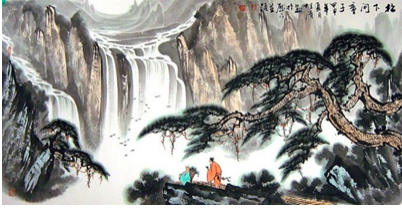
A smoke behind the cricket pavilion
This was prompted by the pun on chan: “Zen” , and “cricket” in the sense of cicada; from there I punned with another kind of cricket. “Smoke”, of course, is what you see wafting from a rural hamlet at sundown.

獨坐蝉亭后                      Sitting alone behind the cricket pavilion
輕聞白衣玩                      Hearing vaguely the cricketers playing *
忽然含烟氣                      Suddenly I retain the smoke vapour
畏有蝉師来                      What if the cricket master should come?

* Inspired by Alan Marett’s sound comments below, I now add this wacky footnote, in the style of Mots d’heure: gousses, rames and the faqu series (see under A Tang mélange):

“Cricketers” for baiyi, “white clothes”: at least in later dynasties, this might be understood as referring to White-clothed Bodhisattva Guanyin.

A version of this poem recently discovered amongst a collection of apocrypha [sic] in cave 17 at Dunhuang gives this variant of the second line:

柳條擊革聲 The thwack of leather on willow

Liutiao “willow branch” seems to allude to the rain ceremony (highly efficacious—“rain stopped play”)—indeed, White-clothed Guanyin is often depicted as holding a willow branch (or “bat”);
ge “hide/skin” is one rubric under the ancient eightfold classification of musical instruments—the membranophone used in this rain ceremony being spherical in shape. For football in the Song dynasty, see here.

I may add that this was long before I experienced the ritual of smoking with Daoists.

On receiving a visit in late spring from Mr Yan and his friends
This is the title of a poem by Wang Wei, which conjured up sinister images of the mafia in a B-movie (“We wouldn’t want this vase to get broken, would we? Oh dear me, how clumsy…”).

贵居来人少                    Your esteemed abode has few visitors
黄髮君已老                     You are old now, with your grey hair
一時破此瓶                      Just suppose this vase got broken
惆怅悲無際                      Such sadness, limitless grief!

At the pictures
Inspired by the original phrase “old overcoat”, and the common occurrence of the term “washerwoman”, this poem charmingly describes an indecent exposure at the cinema.

春寒著弊袍                 The spring is cold—I put on an old overcoat
上堂来人少                 The cinema has few visitors
静坐依浣女                 Quietly sitting, I nudge a washerwoman
一閃啼連天                 One flash, and the howls reach to the heavens!

Note also On visiting a hermit, and many posts under the Tang tag.

Silly questions

Barley

One prominent badge of fieldworkers, distinguishing them from the natives, restless or not, is their asking stupid questions. Nigel Barley, as ever, has a good illustration (The innocent anthropologist, p.41):

“What happens to a man’s powers/soul/spirit after he dies?” I tried querulously, like a vicar hoping to get a current affairs discussion going at a youth club. They ignored me. Then one young man turned round and snapped, “How should I know? Am I God?”

Among many posts on fieldwork exchanges, note Bruce Jackson’s fine exposition, and Speaking from the heart. See also Chinese folk religion: “belief”.

Mind your language

I can’t resist citing a charming story from a Chinese anthropologist documenting a village in Shaanxi province: [1]

One sunny afternoon in February 1992, I went to the main village by myself. Since it was not long after the Chinese New Year’s day, everyone in the village was still in new dresses. When I was walking around, trying to talk to people, I met an old woman who carried her little grandson whose age was no more than three or four. The little boy was dressed up in a new green suit designed like the People’s Liberation Army uniform, and he was wearing a brand new green hat with a red star in the middle. He looked so pretty that I bent over to say “hello” to him. To my surprise, the little prince quietly said to me, “Fuck your mother”. I was so embarrassed that I did not know if I had done anything improper. The old woman slapped her grandson and told him, “No, you little fucking bastard! Don’t say that to Teacher Liu. He is a fucking nice person.”


[1] Liu Xin, Zhao villagers: everyday practices in a post-reform Chinese village, PhD (Dept of Anthropology and Sociology, SOAS, 1995), p.183—cruelly censored from the published version In one’s own shadow (2000)!

Drunken Zhong Kui

Zhong Kui

I wrote this programme note for a festival of Chinese music at the Carnegie Hall, about the plot of a Hokkien puppet opera:

Zhong Kui is a famous classical scholar, but he is extremely ugly. The Tang emperor, judging him by his appearance, rejects him for an official post. Feeling humiliated, Zhong Kui commits suicide, whereupon the God of the Underworld gives him a job as God of Exorcism. With innumerable demons to quell, Zhong Kui is troubled. The more he drinks, the worse his problems become, but he can only focus on the endless war against demons and evil spirits.

What is the moral here? That ugliness, depression, and substance-abuse must not detract from the ongoing war on terrorism?! Discuss.

 OK, that last bit got judiciously cut, but still.

More Irish music

There I was on tour in Ireland, playing Mozart’s first opera Apollo and Hyacinthus, which enjoys the added blessing of being short, so we could go on to sessions in local pubs. One night in the pub after a gig across the border in Armagh, an old codger got chatting to me, and told me of his father Jimmy.

Notionally a shopkeeper, Jimmy gave little thought to the business, instead spending all his time in his back room with his mates playing old tunes and getting pleasantly pissed. They were all pretty rubbish, but had a great time, scraping away ineptly on their fiddles. One day in a break Jimmy switches on the wireless to hear a solemn announcement:

“It is with deep regret that we announce the death of the celebrated concert violinist Mr Jascha Heifetz.”

One of the guys looks at him with a tear in his eye and sighs,

“Bejaysus, Jimmy, there ain’t many of us left.”

I wish I’d been able to tell my teacher Hugh Maguire that one. For more stories about Irish music, see the great Cieran Carson; and for Paul Bowles’s story about Yehudi “Monahan”, click here. My posts on Irish music are rounded up here.

Irish music

*Part of my series on Irish music!*

Paul Carthy (1911–2006)

Paul Carthy (1911–2006).

In his brilliant Last Night’s Fun, Ciaran Carson devotes a chapter (“The standard”, pp.91–8) to the mania for soulless competitions—a caveat for Chinese pundits too. A few instances:

Deirdre was once asked to adjudicate the fiddle competition in the County — Fleadh. Unfortunately, the event attracted no entrants; but the competition had to happen and a winner be selected. It so happened that a Mr X, generally regarded as the best fiddle-player in the area, might well have gone in for it; however, he couldn’t be got out of the pub, except for the official free high-tea that it was his duty to attend. Deirdre was dispatched to the tea-room above the hall, and managed to inveigle Mr X into playing the requisite reel, jig, and slow air, in between the soup, the salad sandwiches, and the jelly trifle. He was then presented with an enormous trophy, much to his surprise.

And

I was once present at a singing competition in the town of —, in the province of —. The adjudicators were the well-known singers Mr Y and Mr Z. The venue was the local Temperance Hall. The competition started rather late, as the adjudicators found it difficult to leave the nearby pub. They eventually arrived with a brown paper bag which they discreetly shared under the trestle table. At the finale, everyone was awarded medals. The adjudicators sang a duet. Everyone was happy. Everyone felt well-adjudicated.

Another story, from the 1908 Freeman’s Journal:

“Our country musicians are possessed of the talent of music and have in their minds the beautiful in it, but they cannot reproduce them, for they lach the technical means of doing so.” Applause. “Were they reasonably educated they would produce a race of musicians worthy of our history. Again, we had those who believed that Irish music should be rendered in scales of unusual construction. [SJ: shades of de Selby?!] Many scales existed in ancient times, but, alas, those who could teach us have gone. Because a singer or player, through lack of technical means, sang or played with a total disregard of any correctness of intonation, that did not qualify them to claim that they were using a scale of unusual construction. The majority of them did not adhere to the accepted musical scale, not that they used any other form of scale, but that their ear being totally untrained, they involuntarily produced a music not in any one scale, but in an infinity of scales of impossible construction.” Laughter and applause.

Mr Darley then gave his violin recital of Irish airs.

Most delightful is Carson’s citation of a fine story from Mick Hoy—a caveat to reverse musical snobbery:

There were these three fiddlers once upon a time.
And they were in for this competition
And the first one came up
and he was dressed in a dress-suit
and he had a dicky-bow and bib on him.
And the fiddle-case was made out of crocodile skin.
And when he brought out the fiddle,
what was it, but a Stradivarius.
And he started to play,
and beGod, he was desperate.

And the second fiddler came up
and he was wearing a nice Burton’s suit
and a matching handkerchief and tie
and socks with clocks on them.
And he had a nice wooden case
and not a bad fiddle in it,
so he got it out and started to play,
and beGod, he was desperate.

 And the third fiddler came up
and the elbows was out of his jacket
and the toes peeping from his shoes,
and the fiddle-case was tied with bits of wire
and when he brought out the fiddle,
there was more strings on the fiddle
than there was on the bow.
And he started to play.
And beGod, he was desperate too.

Note also Alexei Sayle’s pithy critique of ballroom dancing.

It’s the only language they understand

In the early 1990s, arriving with my long-suffering friend and colleague Xue Yibing in a typically bare and grimy office of the Bureau of Culture in a county south of Beijing, we settle down to courtesies with the Bureau Chief, to clear our way to go down to the villages. I launch into my routine again—delighted to be in this fine county, heard so much about your wonderful music, blah-blah, most grateful for your support, international cultural exchange blah-blah.

The Bureau Chief is looking even more nonplussed by all these pathetic clichés than one would expect, and eventually, as I flounder around searching for yet more sonorous bullshit with which to impress him, Xue Yibing interjects,

“Do you understand what he’s saying, Bureau Chief?”

He replies earnestly,

“Well, if Mr Jones could speak Chinese, I might understand a bit!”

OK, my accent may not be perfect, but really! Xue diplomatically explains,

“Mr Jones doesn’t speak Chinese so well…”, which prompts me to joke with him,

“My Chinese is a lot better than your bloody English, mate—wodya mean, motherfucker?”

Needless to say, these choice expressions come out in perfect Chinese readily understood by all. The assembled cronies are bemused.

This story soon became part of our Fieldworkers’ joke manual (cf. Writing English: the etic view), and has even been immortalised, if somewhat modified, in a little article I published in a Chinese conference volume. [1]

* * *

Gao Liwang 1993

My confidence was restored soon after, when we visited an old-people’s home where we were told a fine former Daoist priest was living. We find him, and are soon chatting in the sunny courtyard with a crowd of lovely old geezers assembled. They haven’t had such fun since the Red Star Chairman Mao Thought Propaganda Troupe arrived to perform classic hits like We are little screws in the revolutionary machine and Thrust into the Enemy Rear. As I explain to the old Daoist,

“Old Wang in your home village told us we might find you here, he said you used to do some great rituals…”,

one old guy bursts out,

“Hey, this is amazing—their language is the same as ours!”

His ears were more finely tuned than those of the Bureau chief.

Cf. China: writing in the air; for challenges to communication in “English”, click here.


[1] “Cong ‘Jiaru Zhong xiansheng neng shuo Hanyu dehua’ shuoqi”  从《假如钟先生能说汉语的话》说起, in Qiao Jianzhong 乔建中 and Xue Yibing 薛艺兵 eds., Minjian guchuiyue yanjiu 民间鼓吹乐研究 (Shandong youyi cbs, 1999), pp.407–13.

Feudal headdress, liberal belly

Hui'an women 86

Women of Hui’an, 1986. My photo.

One of the delights of returning to Beijing after a stint in the countryside is catching up on the news. Our resident publication the English-language China Daily is full of gems, and it’s gratifying to find that my colleagues there don’t stint on documenting folklore:

The dress of Fujian women on show is also interesting. Perhaps most eye-catching is that of the women of the coastal Hui’an county. They adorn their hair with several combs or bows and wrap their heads in colourful scarves, sometimes topped with broad-brimmed hats made of bamboo strips or rice straw. Their coats, primarily black or blue, decorated with embroidery, are purposely short to reveal a bit of the midsection; the trousers, by contrast, are oversized and baggy. So there is a local saying: “Feudal headdress, liberal belly; thrifty coat, extravagant trousers”.

Catchy, eh…

For more on Hui’an, see here.

Social commentary

Backstage at the Royal Festival Hall around 1980 I recall this public information poster. Heading a map of the Thames, showing areas of London at risk of flooding, was the stern question

flood

In that selfless spirit of social involvement that makes musicians’ life so enriching, someone soon added a reply:

Breaststroke *

Another seasoned free-lancing wag added, in an incisive piece of reflexive ethnographic commentary:

Accept a gig in the north of England


* Also the punchline to “Waiter, what’s this fly doing in my soup?”

Early music put in its place

One evening after doing the Monteverdi Vespers, or should I say Vespas [No you should not—Ed.] in St Johns’ Smith Square I had to get somewhere else in a hurry, so I jumped into a taxi.

The driver goes, “So wot you bin up to then?”

Me: “Um, been playing this amazing piece by Monteverdi, it’s, um, like, old stuff—like early music, you know?”

“Oh right—you mean like Frank Ifield an’ that?”

Me: “Er, yeah, that’s the kinda thing…”

* * *

“But you know”, as Alan Bennett’s sermon goes, “he put me in mind of the kind of question I feel I should be asking you here tonight”: what is early music, and is it closing time yet?

For another detached review of early music, see here (among many stories under the humour subhead of the WAM category). And here’s a comment from Larson.