A recent talk at the Orient-Institut in Istanbul, when Ara Dinkjian (son of the great Onnik) and Vahé Tachjian introduced early recordings of Armenian classics, led me to the impressive website
Houshamadyan: a project to reconstruct Ottoman Armenian town and village life.
With navigational aids, including useful context here, the site covers local Armenian communities and families on the eve of the 1915 genocide, largely through diasporic records— family histories and memoirs, images and recordings. The site is trilingual in English, Armenian, and Turkish—and the audience within Turkey seems to be significant, as explained in this review.
For a documentary introducing the musical world of Dinkjian father and son, click here.
For more of my dabblings in the cultures of west/Central Asia, click here. For another remarkable online archive, see Nicolas Magriel’s work on the sarangi. For diasporic communities in the USA, note Annie Proulx’s wonderful novel Accordion crimes. And for attempts to counteract state-induced amnesia in China and Tibet, see e.g. here.
The SOAS rebetiko reader: a selection of papers associated with the Hydra rebetiko conferences 2000-2020 and seminars held at the School of Oriental & African Studies, London (2025) (online here), edited by Ed Emery, tireless aficionado and organiser of rebetiko events.
A substantial English addition to the mainly Greek literature on the topic, it’s the fruit of several conferences over the years (notably the annual gatherings on the island of Hydra), and the creation of various bands.
Rebetes in Karaiskaki, Piraeus, 1933. Source: wiki.
The volume contains contributions from well-established academics and informed amateurs, with original source materials in translation, plentiful song lyrics, discographical notes and links to YouTube clips. Besides Istanbul and Athens, topics include the (mostly bygone) rebetiko cultures of Smyrna/Izmir, Saloniki, Crete, and the USA, along with the Jewish connection; BulentAksoy unearths Turkish lyrics in early recordings. Two chapters by Gail Holst-Warhaft (on world music and the orientalising of rebetika, and the nationalising of the amanes) sample her thoughtful work since Road to rebetika. Also intriguing are excerpts from the autobiographies of Rosa Eskenazi and Markos Vamvakaris, and chapters on the criminal underworld, addressing heroin, cocaine, and morphine in rebetiko song; coverage of the connection with Sufi tekke lodges; zeybekika dances with zurna shawms feature in articles by PanagiotisAgiakatsikas and Muammer Ketencoglu, and a field report from west Anatolia by Ali FuatAydin.
Zurnas play for zeybek dancing, Aydın 2006. Source.
On 21–22 February, to mark the closing of the exhibition A Silk Road oasis: life in ancient Dunhuang, the British Library is to hold a two-day symposium (also livestreamed online)—full programme here.
Besides religion and art, literature and languages, topics among a wide range of fascinating papers include the Buddhist slave trade, medicine, costume, and everyday life. And to follow October’s concert curated by Wei Xiaoshi (cf. the British Museum event), he will elaborate on the multi-faceted musical life of Dunhuang.
Among the myriad delights of Istanbul are the iskele piers serving vapur ferries. The smaller iskeles along the Bosphorus are especially charming, like Beylerbeyi:
Most vapur have cafés on board, but some iskeles also have cafés and even libraries—like those at Karaköy and Beşiktaş, a welcome refuge from the surrounding bustle:
The Kadikoy iskele is charming, but most picturesque is at Moda:
Even the Kuzguncuk iskele (from where the Greek bishop throws a cross into the Bosphorus to be retrieved at Epiphany!), despite its sparse ferry schedule, has a popular cafe and library:
Here’s the Paşabahçe iskele in 1910:
Many of these piers date back to the mid-19th century, and have been regularly modified, but the addition of cafés and libraries is part of recent initiatives—the Moda iskele, for instance, had so few passengers that it was closed from 1986, reopening in 2001 and revamped since 2022.
For some handy expressions at the dentist, to follow my post on Gallipoli and Ljubljana, idly consulting the relevant section of my Turkish phrasebook, my imagination is captured by the expression
Bitmedi, tekrar gelmelisiniz
Come back, I haven’t finished!
This reminds me of Nigel Barley’s comment on his first fieldtrip to Cameroon (The innocent anthropologist, p.109–10), as he emerges bloodied after having his two front teeth pulled out with pliers:
I had fallen into the obvious trap that anyone in a dental surgery, wearing a white coat and prepared to extract teeth, was a dentist.
With general relevance to the conceptual confusion caused by “world music” marketing strategies, I highly recommend a review by Michael Frishkopf of The Rough Guide to Sufi music (Asian music 43.1, 2012, online here). It’s important background for several of my fumblings on the cultures of West/Central Asia, such as Bektashi/Alevi ritual (here, here) and the Naqshbandi order, and is instructive for traditions further afield—including China, where concepts like “religious music” and “Daoist music” may also confuse.
While praising the CD’s “wonderful collection of stellar performers and powerful performances”, Frishkopf trenchantly criticises its scant twelve pages of liner notes, “replete with misleading stereotypes, Orientalist-inflected, market-driven verbiage (alongside some outright errors)”.
First he addresses “world music”, itself a problematic category—an industry marketing label for musical performances from “elsewhere”, often combining elements (sonic, textual, or contextual) unfamiliar to Western listeners with others conveying reassuring familiarity (notably percussive grooves, or the timbres of Western popular music).
With the noble exception of labels aimed at the non-pecuniary goals of preservation, scholarship, or education, “the typical marketing strategy for this world music includes techniques for selection and description designed to maximise sales, not representational accuracy”.
In search of sales, most world music representations are biased—in both sound and description—to conform to the expectations for the world music idea, underscoring unfamiliarity by stressing features such as exoticism, ecstasy, trance, and spirituality, oſten emphasizing physical aspects (movement, dance, possession), and de-emphasising text in favour of the (supposedly) more transcultural power of musical sound.
On such compilations, the process of abridging original liner notes compounds rather than corrects representational errors. And “connections between different tracks typically cannot be intelligently described because such connections are not present anywhere in the source material; their interpretation requires knowledge of the broader musical scene that has already been omitted in the original re-presentation.” Moreover,
radically different kinds of world music—in this case Sufi music from field recordings, studio recordings, live performances from the world music circuit, fusions with scant existence outside of world music circles—are oſten juxtaposed without comment, simply because they were marketed under the same labels by the chosen source CDs. Some artists are widely known in their home country, others enjoy only local fame, while still others have built careers in world music and aren’t known back home (the essential elsewhere with which they are associated) at all. In the case of music identified as spiritual, some performers are recognised as religious authorities, while others are masters of music alone. Some performances are intended as spiritual utterances, while others have been denatured as a staged art.
Next Frishkopf turns to “Sufi music”, problematising both words (cf. Rectifying names):
First, one must consider the different perspectives on music (both as word and as phenomenon) and related concepts (e.g., sama’, spiritual audition; ghina’, singing) in Islam, and in Western discourse about Islam. In my opinion, the crux of this problem is not that the word music must never be used to describe the sounds of Islam—certainly the semantic scope of this English word is broad enough to encompass that which many cognates (e.g., Arabic musiqa) do not—but simply that this status, and discourse, must at least be discussed, and the etic use of the word music acknowledged. The present CD does not problematise the term at all.
Second, and perhaps more critically, is the slippery concept of Sufi, a word whose ethnocentricism is masked by its status as a legitimate Arabic word describing certain particularly pious Muslims of mystical inclination. Sufism, on the other hand, is an English neologism; the corresponding Arabic term is tasawwuf. In fact, as scholars such as Carl Ernst and William Chittick have recently observed, the current English sense of Sufism (like the terms Salafism and even Islam) has been shaped and promulgated by Orientalists, as a blanket term to designate diverse phenomena—from theosophy to voluntary religious associations (turuq), from ritual ecstasy to simple veneration (madih) of the Prophet Muhammad—throughout Muslim lands, in contrast to an imagined orthodoxy. Yet no single term covers such a vast range of phenomena in the languages of the Muslim majority regions, and indeed until the modern rise of Islamism, Muslim societies did not distinguish two spheres now known as Sufism and Islam; what is now called Sufism permeated rather than counterposed Islamic belief and practice. Sufi thus appears as a crypto-etic term. My point here is not that the term Sufi music should never be used, but rather that such a term (and its constituent parts) should be problematised, however briefly, considering its etic status and Orientalist genealogy, and (consequently) the ways it tends to mask difference.
He lists some examples on the CD. Whereas in most Muslim practice (Sufi or otherwise) language is foregrounded, in such packages instrumental music is stressed more than poetry.
In the cover statement “Islamic mystics harness the power of music”—sometimes true, though certainly not always—the sensory is transformed into the sensational, a technique for selling CDs. On page 3 of the notes booklet appears the phrase “hypnotic and trance-inducing”—an exemplary instance of world music marketing.
Following scholars of religion, Frischkopf queries the notes’ use of terms like “sects” and “orthodoxy”. And commenting on “the religious orthodox have tried to keep music out … but the Sufis have harnessed the power of music … and turned it to the service of God”,
this statement misleads in several directions at once. First, if music is taken in its broadest sense, even most Sufi writers tended to object to music in general and would approve of particular forms of chanting and—occasionally—instrumental performance only in carefully prescribed and regulated contexts. Second, if music is taken to include religious chanting, even the orthodox have always accepted certain kinds of music such as the cantillation of the Qur’an (tilawa), the call to prayer (adhan), and the recitation of religious poetry (inshad), provided that its themes remain within the bounds of religion, that the musical practices focus on text rather than emotion, and that men and women do not mingle.
Moving on to the second paragraph of the notes (!),
one finds further representations of Sufism through rituals and festivals that are described as exotic, dramatic, extreme, and ecstatic; a bodily spirituality reaching heights of bliss while radiating agony and death, evoking both Eros and Thanatos; ironic transfigurations of similar discourses today deployed—harshly—by so-called Muslim fundamentalists, the Salafiyya, for whom such features constitute adequate proof that Sufi ritual is a wholly illegitimate bid‘a (heresy; literally, innovation), having nothing to do with true Islam. Orientalist fantasies and fundamentalist critiques, both drawing on Sufi stereotypes, are thus unwittingly paired.
Frishkopf sums up:
All the artists and recordings presented here are aesthetically outstanding, though the relation of performers and performances to Sufism is quite variable. Most tracks appear to be concert or studio performances (oſten in international world music contexts) rather than field recordings, a limitation which could easily be excused if it were at least acknowledged. The selection is limited in range (so many regions and traditions have been omitted, while others are overrepresented), and biased toward instrumental music (though sung poetry nearly always prevails in Sufi contexts). Finally, the notes, which appear to rely entirely on texts drawn from source CDs (thus repeating and compounding their errors), suffer from serious inadequacies. Worse than unscholarly or error-prone, they are badly afflicted by overgeneralizations, unproblematized categories, essentialisations, and world music stereotyping, echoing Orientalist discourses, presenting misinformation, and failing to suggest important connections. Finally, understanding is severely curtailed by the absence of poetic translations. It is a rough guide to Sufi music, indeed.
His conclusion is almost comically tactful:
As a result, this album can only be recommended for teaching music, ethnomusicology, or Islamic cultures under two conditions: (1) if it is supplemented by additional readings and critical classroom discussions; or (2) if it is presented as an instance of the world music phenomenon, to be interrogated as such. For the listener, however, these tracks present a rich aesthetic experience, one that can easily be extended by recourse to the generally available source CDs, and beyond. For this service, and for highlighting the work of these remarkable musicians, the editors and publishers of The Rough Guide to Sufi music deserve commendation.
Frishkopf doesn’t interrogate a second edition (on 2 CDs) curated by William Dalrymple (cf. his film Sufi soul—see under From the holy mountain).
At this time of year I like to rearrange the deckchairs on the Titanic by organising some of my more notable posts from the past year under particular themes. As ever, many belong under multiple tags, so below I make some whimsical choices.
Keeping company with my film on the Li family Daoists, most important is my *new film* on the 1995 New Year’s rituals in Gaoluo (Chinese review here). It also prompted me to devise a new Menu, and even a YouTube channel (with playlists reflecting my diverse tastes as well as my own films). For now I still resign myself to Twitter, but I’m posting on BlueSky too, so let’s all migrate there!
Homages to the genius of three friends who greatly inspired me:
You can find any posts I’ve neglected in the monthly Archive as you scroll waaay down in the sidebar. All this suggests that it would be a sensible New Year’s resolution for me to burden you with fewer of these ramblings—but first I plan a major series inspired by the Gaoluo film…
Regent Hall, tucked away right by Oxford Circus, is said to be a promising venue for world music. Indeed, last Friday, straight after Pouyan Biglar’s fine performance at the British Museum Silk Roads event, I hurried off there to hear more art music of Iran, with Hossein Alizadeh and the Hamavayan Ensemble (samples on YouTube e.g. here and here).
The current octet is led by Alizadeh on tar, with Houshmand Ebadi (ney), Hossein’s son Saba Alizadeh (kamancheh), Parisa Pooladian (robab), Ali Boustan (setar), and Behnam Samani (percussion). After the concert at SOAS last month I was glad of another chance to hear the vocals of Mehdi Emami, dovetailing with female singer Zahre Gholipour.
Master musicians have long been subtly adapting the radifs and dastgahs of traditional Persian muqam. Hossein Alizadeh (b.1950) is a prominent star in this lineage, reaching out to wider audiences over several decades. Modern tastes for a rather larger ensemble leads to more polished arrangements; Call Me Old-Fashioned, but I prefer the intimacy of a smaller group.
Still, the musicians’ demeanour on stage is entirely without ostentation, and their programme for the current tour mostly eschews the more popular repertoire heard on some of their CDs. Such is Alizadeh’s reputation that the largely Iranian audience listened with reverence through all the long free-tempo sections—far from easy listening, and surely remote from their daily tastes in rock or rap, whether in Tehran or London. Not all migrant communities elsewhere in the world show such devotion to their own traditional music, but Iranians in exile doubtless feel a need for emblems of Persian culture. In a week when two harrowing new BBC documentaries on Iran became available, it is hard for outsiders like me to connect the cachet of this refined tradition with changing currents in modern society and the ongoing unrest.
Last Friday, following the British Library Dunhuang concert, in the latest stage on the Silk Road caravanserai the British Museum hosted a series of musical events, wisely curated by Rachel Harris in association with SOAS as part of the public programme supporting the BM Silk Roads exhibition until 23rd February.
Besides the current exhibition, I’m always amazed by the inexhaustible riches of the galleries. Three of them made the setting for the musicians, the ambience of the surrounding artefacts lending a more palatable, less formal atmosphere than the concert stage—albeit still remote from social life along the medieval Silk Roads. So while the tension between medieval and modern soundscapes can never be resolved, I found the whole experience more satisfying than the BL concert. On a gratuitous historical note, I muse idly that chairs are a feature of later eras…
The performances comprised
South Asian and Afghan pieces on sarod and rubab (close cousins) with William Rees Hofmann, setting forth from enchanting alap
Iranian classical dastgah with the outstanding Pouyan Biglar, in the Albukhary Gallery of the Islamic World. Here he is at SOAS earlier this year:
Funeral procession (detail), Afrasiab (modern Samarkand) murals South wall. Wiki.
Inspired by the 7th-century murals from the Sogdian Hall of the Ambassadors, the event opened in the Hotung Gallery, with its numinous arhat, featuring recreations of melodies from the medieval culture of Sogdiana, heard at the capital of the Tang court in Chang’an. Directing the SOAS silk-and-bamboo ensemble, Hwee-San Tan gave a cogent introduction to Laurence Picken‘s great project to recreate the Tang scores exported to Japan, where they were soon retarded and overladen with the bewilderingly gorgeous patina of sound heard in gagaku. This, the event’s only attempt at “recreating” the medieval soundscape, made a fitting venture—though having long defected from early Chinese music sources to groups serving living folk communities, I now feel bemused by the complex issues involved in trying to perform such repertoire. In the absence of recruiting Chinese folk musicians from venerable folk traditions such as Xi’an guyue, academic reconstructions tend to resort to the unsatisfactory compromise of silk-and bamboo ensemble style around south Jiangsu—among the most junior of Han-Chinese folk traditions. Inheriting Picken’s transnotations as we do (this was the only intrusion of music stands!), the result could only sound twee by comparison with the other living folk traditions on display. *
Context is everything: we may have become used to attending Afghan, Uyghur, and Persian musics in concert, but one can at least imagine them in a more personal social setting—whereas academic recreations, however worthy, seem doomed to the staid atmosphere of the concert hall, remote from that of medieval Sogdian wine bars.
Regarding the performers, as Rachel Harris observed, it’s a privilege to work in a city where such people share their gifts with us.
* Sogdians held influential positions at the Tang court. Their music and dance—and wine bars—were all the rage there, influencing elite society further afield in north China (note the research of Chinese scholars such as Ren Erbei; on a lighter note from the great Tang scholar Denis Twitchett, see here). Topics to ponder include the degree of sinification of Central Asian ensembles at the Tang court, and how they differed from those of the oasis towns further northwest (clues here).
Musicians on camel, Tang dynasty. National Museum of China, Beijing.
Perhaps the most ambitious attempts at reconstructing the Tang repertoire result from the research of Zhao Weiping 赵维平 in Shanghai (here and here, among several related items featured on David Badagnani’s YouTube channel—the drastic retardation of the pieces in gagaku is quaintly illustrated here and here). I still feel the way forward is to approach early notations in the light of the varied ways in which folk musicians of diverse regional traditions decorate their skeletal gongche scores. Even for a relatively recent tradition like the “suite-plucking” of Qing-dynasty Beijing, this recording of the great Pu Xuezhai is far more convincing than later conservatoire recreations.
If it’s hard to find suitable Chinese musicians to recreate the Central Asian component of the Tang repertoire, perhaps a more radical project might involve shashmaqom musicians, in similar vein to early-music specialists like Jordi Savall.
Still, I approve David Urrows‘ comment on recreations of music from a later era:
In my experiences in China studies, when it comes to music repertoire in the missions from the late 16th century onwards, most of what people write—and then perform—is 10% based on documentation, and 90% based on fantasy, resulting in a kind of musical chinoiserie of a New Age type. I don’t want to promote, much less add to this pile of pseudo-scholarly dreaming, pleasant as it is to listen to…
Despite my lamentable lack of background in Turkish cultures, I have dabbled in Alevi ritual—on which scholarship is clearly thriving (for Istanbul, see here and here; for Anatolia, here). Last week I learned from a talk at the Orient-Institut in Istanbul, when Faruk Çalışkan (Istanbul Technical University) introduced his research, based on his recent PhD thesis.
His work focuses on the music of Alevi âşık minstrels with their bağlama plucked lute, who have a long history of performing songs separately from their role in accompanying the vocal hymns of the dede ritual leader at cem ceremonies, coming to wider fame through the recording industry (see e.g. articles by Thomas Korovinis and Ulaş Özdemir in Landscapes of music in Istanbul, and studies of bards such as Aşık Veysel and Neşet Ertaş).
Referring to concepts such as Actor-Network Theory, Çalışkan’s work is amply theorised. And as an experienced bağlama player, he gains much from participant observation, navigating between the roles of listener, performer, and scholar:
As a listener, he observes how differently âşıks are imagined; as a performer, he experiences how âşıks imagine themselves, their positions, roles, and legacies; and as a scholar, he observes the wide network of mainstream artists and folk music performers, including bağlama players and instrument makers.
While the music of the âşıks has been popularised since the days of cassettes, Çalışkan examines commercial and non-commercial recordings across various genres that circulated on digital platforms since the 2000s. The video market, with TikTok and Instagram, must also be substantial, as well as online forums.
This dynamic process involves a broad spectrum of actors—singers, bağlama players, collectors, archivists, and the music industry itself. By tracing these re-enactments and the roles of various human and non-human actors, his thesis reconsiders the circulation of âşık music in a kaleidoscopic manner and highlights its multidimensional presence and influence.
In his work he pays attention to the legacies of âşık Nesimi Çimen (1931–93, who died in the Sivas massacre) and âşık Mahzuni Şerif (1939–2002).
Âşık Mahzuni (left) and âşık Nesimi.
Their recordings can be found online—for âşık Mahzuni, e.g. this:
And âşık Nesimi:
I am reminded of my caveats in Unpacking “Daoist music”; rather than a separate topic to be outsourced to musicologists, soundscape should always be part of our studies of ritual and culture. But whereas “Daoist music” is a misleading concept imposed by outsiders, a distortion of the underlying ritual fabric of the whole Han-Chinese population, the Alevis are an embattled minority actively creating their own images. The song lyrics are clearly crucial. For China, perhaps a more apposite parallel might be daoqing 道情 narrative-singing, with its Daoist origins later absorbed into popular expressive culture, no longer limited to ritual.
Outsiders like me need to keep trying to grasp basic issues. While the bağlama is far from exclusive to the Alevis, they attribute a particular significance to it, setting forth from its ritual function. Similarly, the whole âşık phenomenon extends to non-Alevis (Kurdish, Turkish, and beyond)—besides subsuming a range of behaviour beyond “music”. * I also wonder about similar marketing ploys like “Sufi music” or “dervish music”.
Çalışkan continues to unpack definitions of “Alevi music”, a theme pondered by scholars such as Ulaş Özdemir and Ayhan Erol. As he suggests, for older generations the terms “Alevi” or “music” were largely redundant. But the recording industry has enhanced the identity and visibility of the Alevis—influential instances that Çalışkan cited include the 1980s’ Muhabbet albums and the work of Arif Sağ, the Kalan series Aleviler’e (see e.g. this playlist), and Kızılbaş albums with their theme of resistance. Still, Çalışkan reminded us of the evolving tradition of Alevi communities around Anatolia, and their whole social and cultural identity. So while “music” and its commodification are clearly important, we should bear in mind the over-arching topic. Yet another world into which I shouldn’t presume to venture…
Along with the Silk Roads, that reliably popular buzzword, the Mogao Buddhist cave complex outside the oasis town of Dunhuang occupies a unique position in studies of medieval Central Asia. Having thrived for a millenium from the 4th century CE as a staging post along the trade and pilgrimage route, by the 14th century Dunhuang was a backwater—until its long-hidden treasures were discovered by European explorers in the early 1900s.
Daoist priest Wang Yuanlu, who entrusted many manuscripts to Aurel Stein and Paul Pelliot from 1907. Source.
The manuscripts are written in a variety of languages, with Chinese predominating.
The soundscapes of society are important. Early caves like those of Dunhuang contain a wealth of music and dance iconography, much studied in China. Instruments * depicted there—mainly as part of ensembles—have been reproduced by Chinese scholars. Echoes of the medieval oasis-towns were heard at the court of the Tang capital Chang’an (modern Xi’an), venue for the first world-music boom (see here, and here). Yet early iconography and texts are silent and immobile (alas, the Dunhuang caves haven’t yielded any caches of A/V recordings!). ** And whereas Western performers in the modern tradition of HIP have paid attention to the sound and performance practice of medieval European music, within China attempts at recreation have yielded less palatable results (cf. Tang music), leaving too much at the mercy of the modern imagination—a bandwagon onto which composers and performers climb all too readily without undue concern for authenticity.
The unspoken issue of context deserves pondering. Early murals show idealised representations of the distinct social milieu of celestial musicians (apsara, Chinese feitian 飛天) before the gods; as in Europe, their function in a pious medieval society was far different from that in galleries and museums today. Similarly, modern sonic recreations are performed on the concert stage (cf. Bach)—a venue far removed both from those of the murals and from the diverse human contexts of traditional social musicking in ancient and modern China, whether sacred or secular.
Musical ensemble from Cave 112 (detail), mid-Tang, including zheng zither (front left). Source.
Doubtless thanks to a limited budget, it was a relief that Wei Xiaoshi adopted the modest rubric “Contemporary echoes of an ancient legacy”, making no pretence of recreating the medieval soundscape, thus avoiding the kitsch spectaculars that are rife in China.
Three accomplished solo performers performed in turn: the Uyghur Shohret Nur on rawap and dutar lutes with busy, percussive pieces from his hometown of Kashgar; the Amdo-Tibetan Ngawang Lodup accompanying his florid singing on mandolin (an instrument widely adopted in modern times by folk musicians around the world) and dramyin lutes—also featuring, to my distress, the notorious “singing bowls” (which “there is no credible historical evidence, whatsoever, of Tibetans ever having used”, in the words of Tenzin Dheden); and the innovative Chinese Wu Fei on zheng zither (whose modern version, FWIW, is remote from that seen in the Dunhuang murals) and vocals. They ended with an improvised trio that I can only describe as strange.
The audience didn’t seem to mind the tenuity of any relation with Dunhuang, ancient or modern. Rather, the concert made a pretext simply to admire the artistry of these fine musicians—from roughly the same part of the world, a millenium after the murals were depicted. Still, were one to present a concert complementing exhibits from the court of Charlemagne (e.g. here), it would hardly seem relevant to present traditional musicians from various parts of France. A millenium is a long time.
It was never going to seem suitable to air the topic of politics, but it was an elephant in the room. As Wu Fei replaced the Uyghur and TIbetan performers on stage with her polished conservatoire-stylezheng playing and vocal items, it might just have crossed one’s mind how Han-Chinese rule since 1950 has engulfed Uyghur and Tibetan societies.
Anyway, while research on medieval Dunhuang occupies its own niche, it’s always good to be reminded, however impressionistically, of the variety of living musical traditions throughout the ethnic bazaar of Central Asia, as they have evolved over time (cf. the 2002 Smithsonian festival, or this tasteful concert). For another Silk Roads concert at the BM, click here, and for a symposium, here.
* * *
Photo from German Central Asian Expedition, undated (early 20th century): shawm and percussion accompanying pilgrims (cf. the Uyghur mazar). Source.
Putting medieval iconography and modern concerts to one side, I muse idly on the potential for documenting folk expressive cultures around Dunhuang since their heyday—from the 14th century down to today. So I look forward to reading the recent compilation Dunhuang minjian yinyue wenhua jicheng 敦煌民间音乐文化集成 [Anthology of folk musical cultures of Dunhuang], comprising three volumes on folk-song, “precious scrolls“, and regional opera.
The Dunhuang region today. Source: Google Maps.
Nearby along the Hexi corridor, household Daoist groups perform rituals—for these and other living Han-Chinese traditions in Gansu, click here, and for the cultures of other ethnic groups in the Amdo region, here. For the troubled history of the Dunhuang Academy in the 1960s, note volume 2 of the memoirs of Gao Ertai. For museums and soundscape, see China’s hidden century. Posts on the Tang are rounded up here.
* A personal favourite of mine is the konghou harp, whose rise and fall were similar to that of Dunhuang itself: following the early research of Yuan Quanyou, see e.g. here, here, and even wiki.
Konghou, Cave 285, 6th century (detail).
** By a considerable margin, this beats my fantasies of discovering ciné footage of the Li family Daoists presiding over the 1942 Zhouguantun temple fair, or of the first performance of the Matthew Passion.
It’s only quite recently that I’ve started dipping my toes, or ears, into the vast ocean of maqam (see e.g. Iran: chamber music, Art music of Iran 3, and Shashmaqom). As part of the admirable Maqām Beyond Nation project, organised by SOAS and the Università Ca’ Foscari, Venezia, the Nasim-e Tarab ensemble of master musicians from Iran performed earlier this week at the Brunei Gallery, SOAS—last stop on a tour that also included concerts in Bologna, Venice, Bristol, Waunifor, and York.
Nasim-e Tarab (“The Breeze of Musical Enchantment”) is named after a Safavid musical treatise, compiled in Persian during the 16th century. The quintet is led by Saeid Kordmafi (santur), with Mehdi Emami (vocals), Siamak Jahangiri (ney), Hamid Ghanbari (percussion), and Saeid Nayebmohammadi (oud), all with illustrious pedigrees in Iran.
They performed a macro-suite consisting of four majles “sessions”, with metric cycles (of 6, 7, 8, 9, 10, 13 beats) punctuating lengthy, ecstatic free-tempo sections. Mehdi Emami (listen e.g. here, and here)—a pupil of Mohammad Reza Shadjarian and Mohammad-Reza Lotfi, no less—sang with dignity and passion, adorned by a halo of santur (cf. Zithers of Iran and Turkey) and ney flute.
The material was composed and arranged [terms I’d be curious to unpack—cf. improvisation] by Saeid Kordmafi, based on his long-term research on and practical involvement in creative practices and their historical interdependencies in the Middle/Near East and Central Asia, endeavouring to address classical Iranian music from a transnational and historically informed approach. As the blurb goes on to explain,
The ensemble is part of a dynamic aesthetic movement in contemporary Middle Eastern classical music which challenges the rigid (and heavily political) boundaries between national traditions, in favour of a cross-cultural approach to the musics of the region. This approach acknowledges how musical practices and musicians moved, varied, and influenced each other in the Middle and Near East as well as Central Asia for centuries.
Nasim-e Tarab comes from the heart of a troubled and war-ridden region with a simple yet powerful message that we have far more in common to celebrate than differences to fight over.
Here’s a brief preview:
While such music is still doubtless performed for festivities and gatherings of aficionados (see under my original post) alongside the more formal presentations of the academy, outsiders like me will happily settle for a suitably intimate concert venue. I relished the musicians’ rapport—part of the impact of this genre derives from the performers’ unaffected stage presence, eschewing the kitsch ethnic costumes that bedevil much “world music”. By contrast with China, I’m always impressed how the conservatoire system that has evolved throughout this region manages to nurture an integral, creative relationship with tradition.
Image: courtesy @soasconcerts and @mikeskelton.
Even if the bewildering modal nest of radif, dastgah, and gusheh remains opaque to me, the whole maqām tradition is entrancing, in all its transformations.
This outline of the amateur Knc Yapı Kuzguncuk Spor Kulübü offers a blunt appraisal, which I’m tempted to adapt for my own CV:
Ability 0%
Potential 0%
The team’s average attendance of 100 also reminds me of Philomena Cunk‘s “the sort of viewing figures BBC4 still dreams of”.
Despite all this, the plucky Kuzguncuk side seems to be doing really well, and is clearly THE club to follow—roll over Fenerbahçe (now cajoled by Mourinho the Morose One)!
As you may have noticed, I feel drawn to blind musicians, in China and around the world—notably shawm players and bards. And my jottings on the wonderful Kuzguncuk mahalle of Istanbul have grown into a series (listed here, with more here). Ali Çoban makes a genial presence on the main street, perching unassumingly with his little barrow of knick-knacks. His Facebook page has a good short video; with Augusta we sometimes have a gentle chat over tea, learning a little about his story.
Ali was born blind in 1971, the oldest of five children from a village in Amasya in the Central Black Sea region. “An older friend bought me a bağlama [plucked lute] when I was young, realising my love and aptitude for music. I played well, learning songs by heart just by listening”. But he lacked the support to take it further.
When the family migrated from the village to Istanbul they moved into a run-down place in Esenyurt. Ali couldn’t leave the house for ten years—he felt like a prisoner. After his mother died in 1996, things became difficult between him and his father, but their relationship improved once he learned to be more independent by getting around with a stick. “Today I think his rejection was a good thing as it taught me to fend for myself and have some sort of a life. I’m in a much better position now than I would have been had my father taken care of me then.”
Ali met a blind woman called İnci at a summer camp in Balikesir. Herself a civil servant, she accepted when he told her that he wouldn’t be able to offer her an adequate standard of living. But after marrying in 2009 they lived together in her flat in Kuzguncuk.
Ali is not a practising Alevi, though he occasionally attended cem ceremonies at Karacaahmet. Still, the tenets of Alevism run deep, and eventually religious differences surfaced in his marriage with İnci. She came from a Sunni Muslim family, whereas for the Alevis the human dimension is always uppermost. While Ali stresses the duty to regard others charitably, perhaps he perceives a certain conflict between the noble ideal of Islamic prayer and the sometimes flawed ethical and political behaviour of mainstream society. He hasn’t directly experienced the discrimination that Alevis suffer, but by contrast with Turkey, he is impressed by the German Ministry of Education’s tolerance for Alevi teachings.
I ask how he feels about the call to prayer. “As Alevis we are not against the ezan—it’s just that some muezzin don’t perform it so well! Their level of training is important. Sometimes it’s really beautiful—not that I understand it because it’s in Arabic…” He likes our wise local imam Aydin Hoca and knows that he is well disposed towards him too even though he doesn’t attend the mosque.
Ali’s father eventually returned to the village, dying in 2019. The next year Ali and İnci separated. “It was a difficult period, but I’m thankful to be able to get about, and to be here.” He remains friends with İnci and they help each other when needed.
He tells us, “Never having seen colours, I can’t imagine or understand what they’re like. Everything comes via sound—even my dreams are like sound recordings.” As to his listening tastes, he admires the great bards of yesteryear such as Aşık Veysel and Neşet Ertaş (some tracks here), as well as Aşık Mahsuni Şerif (compilation). He loves the songs of Sezen Aksu and her protégées like Sertab Erener. He mentions the MFÖ band. Of course he knows of the blind accordionist Muammer Ketencoğlu and his radio programmes exploring Balkan music. Ali also enjoys foreign music, like Stevie Wonder, Michael Jackson, and the Beatles. In the video clip he tells how he was stimulated by the song Pes etme (“…never give up”).
Besides Ali’s meagre income from selling trinkets on the street, he receives a pittance from his father’s pension; he’s not in the best of health, and his siblings, all in different places, rarely visit. Still, he never offers a hard-luck story; indeed, he feels fortunate. However modest his apartment, “I love living in Kuzguncuk and wouldn’t want to leave.” He feels part of the mahalle community, and appreciates all the help provided by shopkeepers and others, feeding him or giving him a reduction. Sometimes locals even help him out with the rent.
Ali is a kindly soul. “I am so glad to be here, to be alive, and independent.” As he says in the film clip, “I seek spirituality, understanding, tolerance, and love”.
This summer, after yet another victory, Novak Djokovic paid homage to his daughter’s early steps learning the violin (video here!). This inspired me to survey the multiple ways of playing “our” Western violin, in Europe and around the world.
There are several issues in posture. How the instrument is positioned—roughly horizontally (on the shoulder or chest) or roughly vertically (on the thigh); and the bow hold. All of these are variable.
For over a century, the violin, along with the symphony orchestra, has been firmly established in urban middle-class milieus around the world (cf. Bach from Japan, and A Shanghai Prom). The Djokovices were more likely to choose the violin for their daughter, I concede, than the Serbian one-string gusle (featured here under “Bards”). But neither the violin that we now find in orchestras nor the way it’s played there is timeless; both are something of an anomaly, in both time and space.
Leaving aside the many other kinds of bowed fiddle (such as kemence and lira, or Indian sarangi, all commonly played on the leg), ways of playing the “Western violin” vary by period and region, class and context.
How musicians engage with their instrument depends largely on genre and style—the kind of music they play for what kind of activity. A technique that evolves within an oral tradition—among friends, blending in ensemble, or for social dancing—is likely to differ from formal conservatoire training with a view to “performing” on the concert stage. Musicians find ways of playing that seem conducive to the sound-ideal they seek, coming to feel at one with the instrument so that it becomes part of the body.
Detail from Hans Memling, Musician angels, c1480.
In Europe, following medieval bowed fiddles like rebec and vielle (amply represented in iconography), precursors of the “modern violin” began to emerge in the early baroque, a period of great flux in Western Art Music. Treatises by leading player-pedagogues of the day reveal a range of views whether the instrument should be positioned on the chest or collar-bone, or under the chin. Among a wealth of discussion in the wake of David Boyden’s 1965 classic The history of violin playing from its origins to 1761, this article by Richard Gwilt makes a thoughtful introduction, with a second part here. The Essential Vermeer site also has a useful overview.
Left, Michel Corrette, L’Ecole d’Orphée, 1738 Right, Leopold Mozart, Violinschule, 1756.
Change continued through the 19th century, with research taking a lead from Robin Stowell. As composers and venues kept posing greater challenges on players, the instrument and its technique kept changing, adding more apparatus—chin-rest, shoulder-rest, elongated fingerboard, and so on. The bow evolved, and eventually metal strings replaced gut and silk. *
* * *
In folk traditions, ways of playing the violin have changed less than in Western Art Music. In many parts of the world, living folk styles may adapt techniques from early indigenous fiddles, or preserve those of the period when the violin was first introduced, often via colonialism. Here’s a little selection of many regional variants (note Peter Cooke, “The violin—instrument of four continents”, in The Cambridge companion to the violin, 1992, and for both WAM and folk traditions, The New Grove dictionary of musical instruments).
String trio with cimbalom at the Meta táncház, Budapest 1993. My photo. Besides the fiddle, note the supporting kontra.
Folk styles have been resilient in Transylvania (see under Musical cultures of east Europe). Do watch this amazing clip (from Bernard Lortat-Jacob, Jacques Bouët and Speranţa Rădulescu, A tue-tête: chant et violon au pays de l’Oach, Roumanie). And allow me to remind you of this splendid way of sounding the strings:
Still in Transylvania, this clip from Gyimes also features the gardon—a most distinctive way of playing the cello!
In India(mainly in the southern Carnatic tradition) the violin is most exquisite both in posture and effect, players dispensing with the chair (cf. the qin zither) and seated on the floor, with the scroll resting on the right foot:
The violin’s rapid adoption in Iran along with Western solistic tendencies suggest to him a basic compatibility with Western music, whereas in India the violin was only slowly absorbed into a strong, viable musical tradition—a case of modernisation of instrumentation rather than westernisation of style.
In north Africa, such as Morocco (listen here), and west Asia, such as rural Turkey (listen here), the violin is often played on the leg, like their indigenous fiddles—and like some early European fiddles, as well as members of the viol family (intriguing explorations by Fretwork here).
Uyghur musicians, complementing the ghijak and satar, also sometimes play violin on the leg, though more commonly they play it on (or off) the shoulder:
Wedding band, Kashgar 1988. From booklet with 2-CD set Turkestan chinois/Xinjiang: musiques Ouïghoures. See under From the holy mountain.
In my original roundup I featured some fine Uyghur violin playing in this recording of Raq muqam:
The players’ sound-ideal will be the major factor, whatever instrument they choose.
* * *
At a tangent, ways of playing Chinese fiddles have not always been so standardised as with the erhu of the modern conservatoires.
* We take it for granted that the left hand stops the strings while the bow is held in the right hand. Charlie Chaplin was one of rather few left-handed violinists:
A still from Chaplin’s 1916 film The Vagabond. Source.
Both in novels and on screen, I’m partial to crime fiction, which can open a window on the societies of diverse places and eras (some posts listed here). So my recent sojourns in Istanbul make The Turkish detective grist to my mill (whatever that is). A series of eight episodes is now on BBC i-Player.
The stories are adapted from the Inspector İkmen novels of Barbara Nadel, to which I should now return. Transferring to the screen tends to amplify clichés. Whereas in UK TV detective dramas enjoy a great vogue, in Turkey I gather that soap operas are more popular; this series is also Turkish-made, only with a wider global audience in mind—Ben Schiffer’s screen adaptation making inevitable compromises. I am less cynical about the mix of English and Turkish dialogue than this review by Rachel Aroesti—though I can hardly argue with her overall verdict:
downright ridiculous, in a good way… unbelievably bland in this cliché-stuffed book adaptation. And yet, its far-fetched plots and unguessable twists make it oddly comforting TV fare.
As an exotic location, Istanbul is unbeatable; but besides the usual scenic spots (the series is a boon for the Tourist Board) it also shows the city’s less picturesque side (let’s go for “dark underbelly” again—cf. The Lhasa ripper). Elsewhere, Italy has long made an alluring setting, such as Michael Dibdin’s Aurelio Zen, as well as Donna Leon’s Inspector Brunetti in Venice and Inspector Montalbano in Sicily.
As to the detectives, Montalbano is exceptionally virtuous and attractive. Eccentricity is par for the course (“maverick” being the cliché de rigueur), but fortunately in The Turkish detective Inspector İkmen (played by veteran actor Haluk Bilginer) doesn’t spend too long being merely wacky, soon becoming an avuncular patriarch—making a change from the default stereotype of the curmudgeonly and damaged cop, with variations on shambolic Columbo or grumpy Morse.
It’s wise to have Mehmet [Suleyman] as centre of attention rather than the annoyingly volatile Ikmen. He’s a sort of Columbo of the Bosphorus who delights in inflicting his unpredictability on everyone around him
—although Suleyman’s bewilderment at Turkish ways is also somewhat annoying. İkmen is aided by detective Ayse, whom blurbs would characterise as “feisty”. The team is overseen by authentically-chic Prosecutor Selma Hanım. In this case I can live with the stereotypical treatment of both characters and Orientalist settings.
In some series, the tension builds with one theme throughout prompting constant red herrings and cliff-hangers. Less demandingly, and less compellingly, many series solve a different crime in each episode, but here too there are always recurring sub-plots—in this case the threads of Suleyman’s quest to identify the attacker of his London girlfriend, and his relationship with his father.
Perfect summer viewing […] a lot better than Death in paradise, but definitely not up there with, say, Happy valley. […] The complexities of Turkish society, particularly the tensions between secularism and faith, make it richer and more interesting than all this would be if we were in Basingstoke.
The allusion to Death in paradise is apt, with its fatal feelgood air—far from the visceral impact of Spiral or The killing. But The Turkish dectective is no mere orientalist candyfloss. There’s room to gently explore İkmen’s domestic life, and the role of family hospitality; high and low life, trash collectors, street snacks, Islam, misogyny, domestic violence, and hints of political history. The important role of cats in Istanbul life is well featured.
As to the soundtrack (playlist), notably the playouts, rap is prominent (and forms part of the plot in Episode 3).
A major theme of this site is the rich variety of regional folk expressive cultures, in China and around the world. Quite by chance, the compelling drama of Euro 24 has provided me with a wacky perspective to celebrate the wonders of folk cultures around Europe—at a time when all seems lost amidst supermarkets and ring roads, Brexit and the dangerous idiocies of far-right politicians.
Saka is a player you just love to see have these moments, to smile, to remind you […] that this is still at bottom a matter of play, joy, fun, and invention.
Screenshot
My three recent posts, all with wonderful playlists:
On a roll after my Euro 24 folk playlistsfor the 24 teams and then for the quarter-finals, here’s another niche selection of funky tracks for the semi-finals! Having covered some bagpipe traditions, I might have gone on to highlight shawms (suitably loud, and widespread), but this playlist (partly derived from previous posts, with some new material) is based on singing and fiddling.
Whatever your feelings about football, just in case you suppose this exercise is a frivolous diversion from weightier matters, it makes an instructive and inspiring reminder of the diversity of European cultures!
* * *
For Spain, for all its wealth of regional styles (e.g. Songs of Valencia and Festive soundscapes of the Rioja), one can never have enough flamenco (and the documentary series Rito y geografïa del cante is not to be missed!)—here are a few classics from my series.
If it’s folk traditions you’re after (Yeah right—Ed.), then how about
the world of fiddlers around the Dauphiné in the southeastern Hautes-Alpes, accomoanying the rigodon dance—here’s the CD France “Rigodon sauvage”—Alpes du Sud: Dauphiné (Ocora, 1995): *
* * *
England: more singing with fiddles (from this post on the doyens of the English folk scene)—
here’s Eliza Carthy and the Ratcatchers, with John Boden and John Spiers of Bellowhead:
Saka is a player you just love to see have these moments, to smile, to remind you […] that this is still at bottom a matter of play, joy, fun, and invention.
* * *
Now don’t get me wrong, I love the Dutch; I should really make an effort with their folk cultures, although recordings (mainly from Friesland) such as Jaap Kunst‘s 1956 LP seem less than enthralling (playlist here, or this clip from a 1963 disc, with images). I’m all for doorstep anthropology, but one can imagine Kunst finding Indonesia a more stimulating fieldsite, and I can see why Antoinet Schimmelpennick set off for China. Still, personal taste isn’t really the brief of the ethnographer.
All the same, in my self-appointed capacity as referee I’m going to overrule the Netherlands’ second-half goals and pretend Turkey won—because they have been the stars of the tournament, and it feels like they’ve been playing at home. So first,
an early Gastarbeiter song, again protesting racism:
Another reason for me to bend the rules is because Turkey has some amazing music. Whereas modern France is multicultural, my other choice for Turkey reflects a multicultural past:
The tracks from 1939, on the eve of war, were recorded by Roger Dévigne (1885–1965):
The 26th—telegram from the Vice-Chancellor: “Come back immediately”. Mr Jouan Nicola arrived at the same time as the telegram: “I’m here to help you dismantle your recording equipment” he told me. From outside came the continuous rumble of coaches leaving packed with soldiers called up. Off to the station. Long queues of soldiers called up from the mountains, each with his cardboard suitcase…
The more fanatical football supporter may wish to delve into the fine site violoneux.fr.
Detail of map showing distribution of fiddle traditions in France!
For a less voluminous introduction to regional styles, click here—citing an 1821 decree:
It is forbidden to all fiddlers or other instruments forming any gathering around [feasts], they could become responsible for the evil that would result and need to be arrested by order of the Mayor.
Such sources reflect on the long decline of the traditional context of social dance.
Not so much an impromptu pre-match party as a rigodon at Saint-Pierre-de-Méarotz, Isère, July 1908. Source (cf. the excellent title Le rigodon n’est pas un fromage!).
Another playlist in a series that football fans didn’t know they needed
Now that the twenty-four teams of Euro 24 have been reduced to eight, I hear you clamouring for a more focused playlist of bagpipe music to represent them (Yes, I am getting my hearing tested).
Among many sources on the history and distribution of bagpipes, the Essential Vermeer website has instructive material (here and here); and I set forth again from this list. As shown in my previous post, the distribution of instruments rarely aligns with either current or past national boundaries.
Around north Europe, with online clips dominated by medieval revivals, living folk traditions are harder to find.
England—here’s Kathryn Tickell on Northumbrian smallpipes:
France—Breton pipers:
As to
Switzerland (not Italy—whence I await more “Caporetto” headlines, to follow those for the 2002 and 2018 World Cup defeats). **
Germany
TheNetherlands (though Romania might have been more fruitful),
referring back to the Essential Vermeer site, there’s some fine material on peasant bagpipes as depicted by Peter Brueghel the Elder and Jan Steen; and we can seek further for modern vestiges under Dudelsack, Sackpfeife, Doedelzak, and so on.
There—just what you need to warm up for the quarter-finals eh…
* Sorry to go on, but this comment in the Guardian live-feed reminded me of my own football dream:
The first time Lamine Yamal joined the Spain squad, they left his boots behind. His and everyone else’s too. When the selección touched down in Tbilisi to face Georgia in September 2023, the trunk carrying part of their kit was still sitting at Barajas, forcing themto complete the evening session at the Boris Paichadze stadium in trainers, unable to strike the ball. The following night, they scored seven. On his debut, the Barcelona winger got the last of them, aged 16 years and 57 days, and the national team got a new beginning.
** Before England’s Great Escape from Slovakia, I was composing our own version of Caporetto, inspired by that popular classic from the Minister for the 18th Century:
Since at least the 19th century Kuzguncuk was mainly populated by Armenians, Jews, and Greeks. By 1933, sources suggest that the population was still 90% non-Muslim. As Amy Mills notes, the present mosque, opposite the iskele ferry and next to the 1835 Armenian church, was only built in 1952, “the first moment in the neighbourhood’s long history when there were enough Muslim Kuzguncuklus to necessitate a local, regular, community gathering space.” It is now blessed with the splendid imam Aydin Hoca (see under The call to prayer).
It’s taken me all this time to visit the bijou rectangular wooden mosque further up the coast towards the bridge—just below the mansion of Sultan Abdülhamid’s cultured confidant Cemil Molla (1864–1941), who sometimes served as imam there, and just past the yalı waterside residence of Sare Hanım (1914–2000), aunt of left-wing poet Nâzım Hikmet (see here).
Built in 1860 by Üryanizade Ahmet Esat Efendi, the mosque was allegedly completed in forty days (see e.g. here). It has a wooden pulpit and preaching platform, and a modest wooden minaret with a single balcony; it has its own boathouse.
Left, 1946; right, 1973—among old and recent images here.
After restoration work started in 2013, the mosque was re-opened for worship in 2017, making a place of great tranquillity, and a reminder of a time when Muslims were a small minority in Kuzguncuk.
Undated.
Further up the coast in Kanlıca, in the square by the ferry, is the İskender Pasha Mosque, where we heard the noon ezan from a riverside café on my first visit in 2021. Not quite so miniature, but still on a human scale, it was built in 1559–60, designed by the great architect (and former Janissary) Mimar Sinan.
All this by way of reflecting on the art of the miniature—by contrast with the grandiose projects of the Ottoman sultans that I churlishly avoid. In rather the same way, in China I’ve never visited the Great Wall, but in the countryside humble little “public buildings” are decked out to become the heart of the ritual life of the community.
3rd-moon festival for female deity Houtu, Shenshizhuang, 1996.
Maybe it’s just me, but just as everything else in Europe is falling apart, Euro 2024 seems an exceptionally exciting showcase for football, with a sense of passion accompanying some great matches and brilliant goals.
All—well, almost all—the twenty-four teams in the six groups have inspiring regional traditions of folk music, which (let’s face it) may not be uppermost in the thoughts of most fans. So before we bid farewell to some of the teams, here’s a niche alternative playlist, largely compiled from other posts on this blog.
Easy to sample, and exhilarating, are the traditions of east Europe and the Balkans:
Albania (Shqipëria!)
Croatia (Hrvatska!)
Serbia (Srbija)
Hungary (Magyarország!)
Romania (disappointly, România)
With long histories of discord, national allegiances often remain fractious—chronic enmities are still exposed in the fans’ behaviour at the Euros (see e.g. here). Boundaries having changed over the history of recording, here (based on this article) I will merely offer a few tracks that charm the ear, to encourage us to pursue the soundscape of the whole region:
The playlists for other nations pose a different kind of challenge:
Germany: to rescue us from clarinets, accordions, and lederhosen, apart from the uniquely numinous national anthem, click here for a rare tradition of bowed zither.
Austria: try this playlist for Roland Neuwirth with Extremschrammeln, Essig Und Öl.
Switzerland: excuse the cliché, but try cowbells and alpine horns (“Swiss health authorities advise public against watching oom-pah bands”)
England: Morris dancing might not spring to the mind of some fans…
Scotland: though perilously close to the “tartan and shortbread” image, pibroch is not to be sneezed at—besides the ubiquitous fiddle, the bagpipe (not so much a dark horse as a black sheep?) is among other instruments commonly played in most nations under consideration—see this list.
Ukraine: Mykhailo Tafiychuk on volynka bagpipe of the Hutsuls.
It’s “a clever, compelling mystery about a Sherlock Holmes enthusiast who with the help of a brilliant Turkish professor, tries to solve the enigma of Arthur Conan Doyle’s dying words only to upend his life in the process”:
Strange that Abdülhamid II, the last great Ottoman Sultan, would have Sherlock Holmes stories read to him before he went to sleep. Even stranger is that his obsession helped change the course of history.
The explanation lies in the mystery of Sir Arthur Conan Doyle’s dying words, that the one Sherlock adventure still to intrigue him was that of “The Second Wife”. For no such story exists… Or does it?
Apart from what I trust is a captive audience of Sherlock Holmes fans and aficionados of Turkish culture, I hope the novel can find a wider audience. Rich detail—for Conan Doyle nerds, on Victorian and late Ottoman society, and on a rapidly changing modern Istanbul—is spiced with dry humour, impressive pastiche, vignettes on topics such as the Raj and the Constantinople exhibition at Olympia in 1893–4, and evocative illustrations. As befits a mystery thriller (has the baffling plot of The big sleep ever disturbed us?!), The adventure of the second wife is a challenging read, crammed with erudite and arcane digressions in virtuosic language.
In the ethnic Conan Doyle bazaar, I remain attached to Jamyang Norbu’s well-informed Tibetan fantasy The mandala of Sherlock Holmes.
Carla Grissmann, Dinner of herbs: village life in Turkey in the1960s.
Her year-long stay in a rural hamlet east of Ankara in the late 1960s was curtailed when she was expelled from the village by tedious visa regulations, so she wrote up the story in frustration soon after returning to New York, but it was only published in 2001.
It’s another outsiders’ view of rural poverty that includes classics such as Christ stopped at Eboli, Let us now praise famous men, and so on (see under Taranta, poverty, and orientalism). Always partial to village studies since my time in Gaoluo, I might not have high hopes for the book as ethnography, since she arrived untrained, learning Turkish as she went along—and yet I concur with Maureen Freely and Paul Bowles that it’s most impressive. Anatolian villagers may not easily relate to a single and childless foreigner:
Through all the months I was at Uzak Köy there was hardly a flicker of curiosity about who I myself was, where I had come from, what I had done before or was thinking of doing next. That I had lived in many places, had worked for a magazine, a newspaper, had taught school meant nothing, except perhaps they could vaguely picture a mud schoolhouse similar to their somewhere in the world. What impressed them was that I was an only child, that I had never known my grandparents, that my mother and father lived separately in different countries and that I had no husband and no children. […] In their experience of life my own life was empty.
But while Grissmann’s natural ability to engage with the villagers recalls Bruce Jackson’s thoughts on rapport, her sojourn was not “doing fieldwork”, but living among people.
“People were in and out of each other’s houses from dawn until bedtime.”
She immerses herself in her companions’ challenging routine of cooking, cleaning, childbirth and childcare. “There was always music”—songs with saz, lullabies, the village story-teller, a wedding band, all part of social life, and the conviviality of sharing cigarettes. She obliges an old woman who wants her to record a song, weeping as she sang how one of her sons had killed the other “after that quarrel over nothing”.
On topics such as healthcare and education (and indeed, village latrines, or the dependency of the bride in her new home) I’m reminded of the basic concerns of people in rural China.
Although in the village, being able to read and write was of no great usefulness, it was nevertheless acknowledged that some form of non-religious education, at least for the boys, was of value. It gave them an advantage during their military service, and would always be a safeguard against being cheated by the outside world.
Grissmann sees the wider picture:
Turkey had come so far. Much of the population after the First World War had been lost through battle, disease, and starvation. No proper roads existed, only one railway from Istanbul with a few dead-end branches into Anatolia. Malaria and typhoid still broke out. There were no industries, no technicians or skilled workmen, in a country 90% illiterate, with no established government. The heaviest liability, however, of Ataturk’s derelict legacy from the Ottoman Empire was the great mass of benighted peasants, rooted in lethargy, living in remote poverty-stricken villages untouched by the outside world. Ataturk was determined to loosen the hold of Islam on the people, which he believed was the major obstacle to modernization, and to awaken a sense of Turkish national pride. He fought fiercely for the emancipation of women, denouncing the veil, giving them the right to vote and to divorce.
Still, living in the village, such initiatives seemed remote. Confronted by apathy and prejudice, the village schoolteacher had a daunting task:
On every side the teacher faces the wall of tradition, of the older generation. The masses of Turks obediently took off the fez, yet in their vast rural areas they are still bound to their mosque, fetishism, holy men, and superstitions. Women still cover their face. The men believe that women should indeed be veiled, that girls should not go to school, that sports and the radio are the intrigue of the devil. Illness is cured by words from the Koran, written out and folded into a little cloth bag and pinned on a shoulder, or by having the Imam blow on the diseased or ailing parts. The old men sit in rows fingering their beads and say that what their village needs is a new mosque, not a new road. An new mosque, not a new school.
When she offers money from friends in the USA to install basic amenities,
They only partially understood; they could not really visualize the source of this wealth in any tangible, significant way. It was providential, immense, incredible, and yet it remained simple. There was no embarrassment of gratitude.
As to Grissmann’s access to the outside world:
Sometimes a group of children, mute with importance, brought a letter at the crack of dawn, right up to my bed. Most of. these letters had been opened in a friendly way, which I didn’t mind at all. In one fashion or another, everything seemed to arrive, although I never divined any discernable postal system at work or the hand of an actual postman anywhere in the background.
She ponders the process of learning to communicate:
When you are learning a new language I think you inevitably use a great deal of pantomime and mimicry, and develop small speech idiosyncracies, much of which is inevitably expressed through the comic. Beyond the clownish aspect of this can lie true humour, and if you can genuinely share this most subtle and personal sensibility, I think you have won half the battle of human communication. Although the people in the village were extremely reserved in their speech and their manners, and did not seem to express themselves with gesture or emotion, they were an enthusiastic audience and instantly caught the slightest flicker of whimsy and the allusive point of any story. We built up between us a special way of teasing that never ceased to move me, even after endless repetition. Their teasing of me and each other was a warm human thing and seemed to me to be a part of wisdom, an open, guileless generosity of heart.
Dinner of herbs is a work of great empathy.
Carla Grissmann (1928–2011) led a colourful life. Turkey proved to be a stepping-stone from Morocco to her long-term base in Afghanistan. The 2016 Eland edition contains a vivid afterword by her lover John Hopkins.
* * *
This led me on a preliminary foray in search of further ethnographies of Anatolian life. Grissman mentions Mahmut Makal‘s trenchant A village in Anatolia (1954), as well as Yaşar Kemal’s 1955 novel Memed, my hawk. On Makal and later village websites, see this thesis, as well as wiki on the short-lived Village Institutes.
Following Brian Beeley (Rural Turkey: a bibliographic introduction, 1969, and his “Migration and modernisation in rural Turkey”, in Richard Lawless, ed., The Middle Eastern village: changing economic and social relations, 1987), note the work of Paul Stirling (here, with full text of Turkish village, and papers; he also edited the 1993 volume Culture and economy: changes in Turkish villages). This article introduces some other international anthropologists in the field in the late 1960s; here Chris Hann reviews works by Carol Delaney, Julie Marcus, June Starr, and (for urban arabesk) Martin Stokes. I trust there’s much more out there from Turkish ethnographers. My search continues for documentary films on rural Anatolia (cf. Everyday life in a Syrian village).
It’s not all beer and skittles, travelling, you know.
—Gertrude Bell, 1911.
Several biographers have told the remarkable story of archaeologist, writer, and traveller Gertrude Bell (1868–1926), who “came to be associated with crude ‘lines in the sand’ used to conjure nation-states from the territory of the defeated Ottoman empire”. Moving swiftly on from Nicole Kidman’s portrayal in Werner Herzog’s 2015 movie Queen of the desert (cogently trashed here),
Pat Yale, Following Miss Bell: travels around Turkey in the footsteps of Gertrude Bell (2023)
makes an engaging, personal read, focusing on Bell’s earlier years delving into the ancient artefacts of remote corners of Anatolia, which have been largely overlooked, despite her two books The thousand and one churches and The churches and monasteries of the Tur Abdin. Yale bases most of her account on the rich material now available in the Gertrude Bell Archive of Newcastle University. Besides encouraging you to read the book, I recommend reviews by far better-informed authors than myself: Caroline Finkel and Arie Amaya-Akkermans, as well as pertinent comments from Sara Wheeler. See also Yale’s website.
Following Miss Bell interweaves explorations a century apart. Having grown up in a hidebound Victorian society, after Bell’s first visit to Constantinople in 1889, she undertook her main Anatolian expeditions from 1905 to 1914; Yale, long resident in Turkey, retraced most of the route in 2015—a journey already fraught by severe tensions in Kurdish areas and the fragile situation near the Syrian border.
Bell went in search of Byzantine architecture, also finding traces of Roman, Hittite, and Selçuk cultures at sites such as Ephesus and Aphrodisias. At Carchemish in 1911 Bell first met T.E. Lawrence (“an interesting boy, he is going to make a traveller”). Yale colourfully translates onto the page her own contacts with people along the road—enlisting taxi drivers and local planning officers who share her taste for Bell’s expeditions. Taking in her stride the modern landscape of flyovers, factories, and supermarkets, Yale makes dogged enquiries, her refrain often rewarded:
At the teahouse in the main square I cast around for the oldest men present, then strike up a refrain that is to become so routine that I almost wish I could record it: “Hello. I wonder if you could help me. Just before the First World War there was an English traveller who was travelling around Turkey on horseback taking photographs. I’m following her travels. Her diary says she stayed at your village…”
Besides the archaeological remains that Bell discovered, Yale seeks sites where Bell pitched her tent, and the urban hotels where she stayed. Bell first visited the bustling port city of Smyrna in 1899, staying several times before the devastating fire of 1922 and expulsion of the Greeks. Yale finds modern Izmir “a secretive city, lumbered with a history in which the glorious victory over the Greeks that it wants to celebrate sits uneasily atop the cataclysmic destruction of the past that it knows is so unattractive to visitors”.
Yale revisits towns such as Konya, where Bell met “the great love of her life” Dick Doughty-Wylie, later killed at Gallipoli. Bell’s travels south and east through troubled towns such as Adana, Urfa, Mardin, Diyabakir, Harput, Elaziğ, and Talas attest to growing tensions on the eve of the Armenian genocide—a region now beset by the PKK’s conflict with Turkish state forces and darkened by the Syrian civil war, refugees from which Yale encounters. The book contains useful maps.
Lost Armenian monastery of Surp Asdvadzadzin at Tomarza,
Gertrude Bell 1909.
The clandestine survival of Armenian culture in Anatolia reminds me to consult Avedis Hadjian’s Hidden nation again.
As Bell travelled further south, she documented remote Syriac Orthodox monasteries, also evoked by travel writers such as William Dalrymple. Tur Abdin was the heartland of Syrian Orthodoxy until the ferman, local term for the 1915 genocide.
While much of their work consisted of reimagining the ancient culture of silent stones, Yale finds traces of the culture of dengbej bards.
“Gertrude Bell sometimes struggled to complete her work because of the crowds that assembled to watch, as here in Midyat in 1909”.
On her occasional returns to creature comforts, Bell gives interludes on expat society—bridge, Patience, polo, croquet… The penultimate chapter on her return to Istanbul has vignettes on the Bosphorus villages, the Princes’ Islands, the inevitable Pera Palace Hotel, and Vita Sackville-West. Yale only reflects in passing on Bell’s attitude towards women:
Gertrude is often accused of having been a man’s woman, casually putting down the wives of colleagues as “little” women; and it has always seemed particularly odd that someone whose adventures cast her as the perfect feminist icon should at the same time thrown her energy into campaigning for the Anti-Suffrage League.
And Yale’s comments on urbanization remind me of China:
It’s a story I hear repeated all over Turkey, a story of the pell-mell emptying of villages, leaving them as glorified old-people’s homes, waiting rooms for an empty future. In Gertrude’s day perhaps 85% of Anatolians lived in villages, a figure that has now been inverted. Even the reassuring claim that around 25% of the population still lives in villages is deceptive since it fails to mention the age of those hanging on.
On visits to Istanbul, the curious outsider like me may be inclined to sample a menu of traditional Turkish expressive culture—steering well clear of the commodified Whirling Dervishes, I’ve dabbled in the rituals of the Sufi tekke and Alevi cemevis, rejoiced in the ezan call to prayer (as no locals seem to do), the exhilarating sounds of davul-zurna drum-and-shawm, and so on. Jazz clubs also beckon, and the less geriatric might seek out hip-hop and club culture (see under Landscapes of music in Istanbul).
Back in London, alongside the thriving “world music” scene, I haven’t grown out of my classical background, still regularly attending WAM concerts—but somehow this makes an unlikely choice for me in Istanbul. Still, it’s all part of the city’s cultural scene, with its own history since the late Ottoman and Republican eras (see two articles on the useful History of Istanbul site, here and here).
So I sallied forth to the Süreyya Opera House in swinging Kadiköy for a concert in which Cem Mansur directed the strings of the Gedik Philharmonic Orchestra.
The conductor (şef!) Cem Mansur trained in London, and as a student of Leonard Bernstein in Los Angeles. Besides wiki, here we read:
Mansur is passionate about the importance of music as a powerful tool for affecting change. Through his concept “The Laboratory of Democracy” (an open rehearsal session) Mansur engages both orchestras and audiences in issues such as co-existence, different levels of leadership, the nature of authority, of individual and collective responsibility as well as the difference between hearing and listening, leading and following. The sessions explore the basic concepts of democracy: individual worth, majority rule with minority rights, compromise, personal freedom and equality before the law, all demonstrated through the model of the orchestra as a miniature society. Mansur’s work on the peace-building role of music has also found expression of his conducting of the Greek/Turkish and Armenian/Turkish [youth] orchestras over several years.
He expounds this philosophy in an eloquent informal talk published bilingually as Müzik, İnsan ve Barış / Music, Mankind and Peace (2013), adducing the examples of El Sistema, the West-Eastern Divan Orchestra, and MIAGI in South Africa.
Apart from appearing as guest conductor around the world, Mansur has devoted himself to cultivating the WAM scene in Turkey—most admirably as founder of the Turkish Youth Philharmonic Orchestra (wiki; website; Cornucopia), with major support from the progressive Sabanci Foundation. This 2017 performance of the Sinfonia from Verdi’s Forza del destino gives an impression of their vitality; and here they are joined by Gökhan Aybulus at the Berlin Konzerthaus in Rachmaninoff’s 2nd piano concerto (cf. Historical ears and eyes):
My own training in WAM having taken wing in the National Youth Orchestra of Great Britain, notably under Pierre Boulez, I can just imagine the inspiration that young Turkish musicians gain from such experiences and opportunities.
At the concert last week, Mansur opened by introducing the programme, as he often does—such a good way of establishing rapport with the audience, reminding me of his mentor Bernstein; his remarks were enthusiastically received by the audience (and even by me, although I doubt that he employed any of the dozen eccentric words that I have mastered in Turkish). He was joined on stage by composer Sadık Uğraş Durmuş (b.1978), the world premiere of whose Çengi no.2 opened the concert. Trained in the Netherlands, Durmuş is now on the faculty of Istanbul University. The çengi of the title referring to female dancers of Ottoman times, he evokes an imaginary dance scene, with singing and some shouting from the orchestra.
The new Turkish work led aptly to the neo-classical Concerto in Dfor strings by Igor Stravinsky (aka Gran visits York!), composed in Hollywood in 1946, commissioned by Paul Sacher for the 20th anniversary of the Basler Kammerorchester. Though not designed as a dance piece, it’s akin to the “Balanchine” works of Stravinsky’s middle period—and Mansur recommended the fine ballet The cage that Jerome Robbins set to the concerto in 1951.
The concert ended with the substantial Concerto for piano, violin, and string quartet by Ernest Chausson (1855–99). To the uninitiated, Chausson may seem like a one-trick pony—and even as a violinist I was somehow immune to his Poème—but it’s good to be reminded of the bridges leading to Debussy and Ravel. The soloists Gökhan Aybulus and Esan Kıvrak were accompanied by the string orchestra; even in the original version with string quartet, the piano tends to dominate over the solo violin. Here it is with Kathryn Stott and Janine Jensen in 2011:
I admired the audience’s enthusiasm for such a niche programme; and maybe I’m just in a good mood, but emerging into the nightlife of Kadiköy, I relish the relaxed confidence of this diverse society.
Sabahattin Ali, Madonna in a fur coat(serialised 1940-41, first edition 1943)
in a translation by Maureen Freely and Alexander Dawe (2016),
with an introduction by David Selim Sayers.
The teacher Sabahattin Ali (1907–48) (wiki; fuller Turkish version), a protégé of the Sertels and Nazım Hikmet (see The struggle for Turkey), contributed to literary magazines, going on to found and edit the satirical weekly Marko Paşa. Perceived as a dissident author critical of Atatürk and the Republican state, he spent periods in prison. In 1948, while seeking a new life abroad free of state intrusion, he was murdered at the Bulgarian border, apparently at the behest of the Turkish National Security Service.
In Turkey, as Sayers comments, Ali is “a figure of gravitas […], a devastatingly incisive observer who harnessed the power of his prose to expose the country’s social and political injustices”. Writing in 2016, Maureen Freely explains Ali’s enduring relevance:
The fate of Marko Pasha, his satirical weekly, calls to mind the almost 2,000 prosecutions by President Erdoğan’s of those who have dared to mock him. Ali’s murder, allegedly at the hands of an offended patriot, was echoed by the 2007 murder of the Turkish-Armenian journalist Hrant Dink. It also calls to mind the foiled shooting of the main opposition newspaper’s editor, Can Dündar, as he walked with his wife into court to receive a five-year sentence for publishing an article about the ruling party’s involvement in the secret arming of jihadi groups in Syria. This was only a few weeks ago. And it was just the latest episode in a series of increasingly savage attacks on independent publishing and journalism. The suppression of critical voices is now as harsh, if not harsher, than it was during the fascist-dominated single party state that crushed Ali and so many others. When Ali’s readers cry for him, they are also crying for themselves.
By contrast, Madonna in a fur coat is the semi-autobiographical story of a doomed liaison, set largely in Berlin, where Ali himself studied from 1928 to 1930 before returning to Turkey to teach. The protagonist Raif is a “rather ordinary” man “with no distinguishing features, no different from the hundreds of others we meet and fail to notice in the course of a single day”. As this article explains, by the 1970s interest in Ali grew as he began to be considered as a forgotten author coming to light, now distanced from his ideological identity and turned into a “mystical and romantic” figure adopted by both left and right. And the novel’s recent popularity in Turkey is attributable to its promotion by publishing houses amidst changing copyright laws alongside the power of social media, as well as reassessed images of the author himself. But as Freely observes, while Ali’s admirers have regarded the novel as a “puzzling aberration”, a mere love story,
his least acclaimed novel has become Turkey’s most celebrated love story today because it refuses the traditional gender roles that Turkey’s president seems hell-bent on enforcing, not just in the religious heartlands but also in the cities and towns that have been secularising, and liberalising, for almost a century. Anyone who departs from his retrograde norms, he decries as traitors or terrorists in the making. During last year’s election campaign, he went so far as to accuse Turkey’s LGBT community as being in league with Armenians, Kurds, and the hostile foreign powers that funded them. Hardly a day passes without his saying what a woman should be, and what a man—a real man—should do to keep her in her place.
Sayers too makes a determined case for Madonna in a fur coat. While apparently apolitical, the novel subtly critiques the Republican dream. Raif falls in love with Maria ” in the most Ottoman way imaginable, by looking at her picture rather than her person”. As their intense, complex platonic relationship unfolds amidst the decadence of Berlin nightclub life, Maria laments:
Do you know why I hate you? You and every other man in the world? Because you ask so much of us, as if it were your natural right… Mark my words, for it can happen without a single word being uttered… it’s how men look at us and smile at us. It’s how they raise their hands. To put it simply, it’s how they treat us… you’d have to be blind not to see how much confidence they have, and how stupidly they achieve it. […] And our duties? To bow down and obey, and to give them whatever they want….
Such a “refreshingly unorthodox dissection of gender” lies “firmly outside the norms of Western and Turkish society alike, whether in the 20s, the 40s, or today”. Still, while lacking a background in Turkish culture and politics, I tend to side with those who prefer to value Sabahattin Ali for his more avowedly political writings.
For two other Madonnas of whom you may have heard, click here and here.
In some European countries, armed with a mere smattering of French, German, Italian, and dimly-recalled Latin, one can take a rough guess at the odd word of Foreign; it doesn’t get you far, but it’s ever so slightly reassuring (cf. my Portuguese dream). But as I spend ever more time in Istanbul, though cosseted by wonderful multi-lingual friends, on the rare occasions when I have to fend for myself, coming across the occasional French loanword (ekip, garson), it’s good to find that English doesn’t butter any parsnips—and that globalization isn’t quite as, um, global as we may imagine.
So I’m eventually beginning to realise (Hello?) that I really should make a bit of an effort to augment my tiny, eccentric Turkish vocabulary, consisting merely of a few niche nouns like “shawm”, “recluse”, and “call to prayer”. As an entertainer I’m now scoring a certain success with Türkçe konuşmuyorum (“I don’t speak Turkish”)—a phrase that my rubbish pronunciation renders convincing. In one online tutorial that I consult I’m fond of the rubric “Var and Yok (Existence)”—deep, eh. It also has the worrying phrase
The chambermaid never comes when I ring
[…]
Are you the chambermaid?
Google Translate is a miracle, whether for texting or voice messaging—the latter a real blessing for illiterate Anatolian (or Chinese) peasants, though it still hasn’t quite got the hang of my stammer (kekelemek)… When using it, I like to mouth the words with comic ineptitude while the recording plays, awaiting the reaction of my victims audience with a certain trepidation—which reminds me of yet another Monty Python sketch:
Words are all very well, but the wonderful world of Turkish grammar, with its vowel harmony and zany agglutinative suffixes (düşünemedim, “I was unable to think”, Evinizdeyim “I am at your house”), having seemed utterly impenetrable, is slowly becoming a system that I can just about imagine younger people acquiring, with more free space on their mental hard drives.
Last week on the eve of Nowruz, just back from Istanbul, I was happy toattend a concert of shashmaqom in the Brunei Gallery at SOAS, featuring two fine musicians from the Academy of Maqam in Dushanbe, Tajikistan: Sirojiddin Juraev on long-necked lutes and Khurshed Ibrohimzoda on vocals and tanbur plucked lute.
As I seek a rudimentary education on this suite repertoire of refined Sufi poetry accompanied by instrumental ensemble, in my explorations below (typically) I merely “gaze at flowers from horseback” 走马观花.
Shashmaqom originated from the numinous cultural metropolis of Bukhara, with related traditions evolving in centres such as Tashkent and Ferghana. For the greater region, Theodore Levin has adopted the term Transoxania, favoured by his fieldwork colleague Otanazar Matyabukov (“OM”)—stressing its “underlying geographic and social coherence rather than its more recent ethnic and political divisiveness”.
From The hundred thousand fools of God.
Basic sources on shashmaqom include an essay by Alexander Djumaev, the Musics of Central Asia site; Will Sumits’ chapter 15 in Michael Church, The other classical musics (cf. Musics lost andfound, chapter 17); “Central Asian Republics” in The Rough Guide to world music: Europe, Asia, and Pacific; and sections in the New Grove Dictionary of music and musicians and TheGarland Encyclopedia of world music.
Rather than attempting to define “classical” (cf. What is serious music?!, Joining the elite musical club, and in the introduction to my series on the Beatles) or to regard shashmaqom as a “living fossil” of courtly art music from a bygone society, it surely makes sense to understand such a tradition as part of the widespread, shifting maqam family of repertoires crossing national and class boundaries, albeit subject to canonisation (“maqām-isation”) even before the interventions of modern state regimes (see Rachel Harris, The making of a musical canon in Chinese Central Asia, pp.9–10, 97–9, 107–8).
Under the Soviet era, while shashmaqom was the object of official posturings about its “national”, “elite”, or “popular” status, it “found itself at the centre of a nationalistic tug-of-war” (in Sumits’ phrase), with competing Tajik and Uzbek versions.
So it’s high time for me to revisit Theodore Levin‘s “pioneering cultural odyssey” The hundred thousand fools of God: musical travels in Central Asia (and Queens, New York) (1996, with CD). Despite its brilliant title, I suppose I was somewhat resistant to the book at first: reading it just at a time when I was deep in Chinese traditions of village ritual that were (then) remarkably unmediated by conservatoire-style remoulding, I found it unfortunate that so many of Levin’s interlocutors were representatives of state ensembles. Whereas Veronica Doubleday and John Baily, living in Herat on the eve of the Soviet invasion, had been able to immerse themselves in the grassroots world of social musicking, Tashkent was different; when Levin arrived there in 1977 his institutional base was doubtless inevitable. On that initial stay he can have had little access to the social milieu that OM later described to him (pp.33–4):
The entire unofficial cultural network and economic system that supported the central events in Uzbek social life—the toy (wedding), âsh (literally, “food”—an early morning quasi-religious gathering of men given separately by the fathers of both bride and groom before every Uzbek marriage), and ziyâfat, gap, gurung, or majlis, as intimate evening gatherings of friends for conversation, food, and music are variously called—had existed all along in the shadow of the official cultural life played out in concert halls and theatres, at public ceremonies and on radio and television.
Source: The other classical musics.
The tradition of gap is related to the Uyghur mäshräp, now the object of a new wave of repression in Xinjiang.
But if Levin too was perhaps frustrated that his initial clues to this elusive world were largely based on second-hand accounts rather than direct observation, he writes most insightfully about his encounters, with revealing stories of senior musicians’ lives. On his later visits to Tashkent with OM from 1990, he was able to attend gap and âsh ceremonies, meeting latter-day abdâl Sufi dervish “fools of God” (cf. Uyghur ashiq).
Back in 1977 Levin regarded the shashmaqom as stagnating—”a musical system propped up from above by the policies of Uzbekistan’s culture apparat” (“Frozen music”, pp.47–51):
Though I couldn’t put my finger on it, something had seemed not right about the performances of Shash maqâm I heard when I first came to Tashkent. Put simply, they lacked life. As taught at the Tashkent Conservatory, the Shash maqâm could have been compared to a dying person being kept clinically alive on a respirator. The respirator was controlled by the Ministry of Culture. It was the Ministry that had approved of the resuscitation of the moribund Shash maqâm in the late 1950s and had stage-managed its ideological repositioning as a leading exemplar of Uzbekistan’s “national” music (this after a near-death experience in the early 1950s in which the Ministry had decreed that the Shash maqâm had been too close to the feudal culture of the emirs, too distant from “the people”, too infused with undercurrents of Sufism, and thus had to be suppressed).
Still, as I learned of the troubled maintenance of folk ritual activity in China through the Maoist decades (see e.g. Gaoluo), I doubted if the turgid state ensembles could really have monopolised the musical market before 1990. Indeed, Levin continues with a vivid section on Turgun Alimatov (1922–2008), whom he met between 1990 and 1994. As Alimatov recalled, after his radio ensemble was disbanded in 1952,
I played at weddings with two brothers named Bâbâ Khan and Akmal Khan Sofixânov. Their father, Sofi Khan, was a famous hafiz [classical singer]. In those years, there were several musical dynasties which had a high calling […]. In contrast to other singers, the Sofixânovs performed exclusively songs with a religious content. They were religious people themselves, even during the time when religion was strictly forbidden. People who rejected religion simply didn’t associate with them, and for their part, the Sofixânovs stayed away from atheists. They were invited to the houses of believers.
Alimatov told Levin how he used to take part in many Sufi zikr-samâ rituals at which the Sofixânovs would perform (cf. Turkey). And he contrasted such devout behaviour with that of a lowly class of musician known as attarchi—with whom he also used to associate (cf. the underworld of old Lhasa). On this CD (Ocora, 1995), recorded by Levin, Alimatov moves from long-necked bowed lute sato to the plucked tanbur:
The ghijak spike fiddle is common to Transoxania and Xinjiang. But whereas in Xinjiang the soulful satar had long been at the heart of the Uyghur muqam, in Transoxania the sato had long been dormant when Alimatov revived it in the 1950s, followed by his pupil Abduvali Abdurashidov in Dushanbe (see below). And here is Alimatov on tanbur in 2001, recorded by Jean During, leading scholar of Central Asian maqam:
Levin continues with a revealing account of Arif Xatamov, another “unrepentant traditionalist who bemoaned the spiritual superficiality of contemporary music”—here’s a 2013 CD from Alchemy (as playlist):
And in the following chapter on Bukhara (note Levin’s CD Bukhara: musical crossroads of Asia [Smithsonian Folkways, 1991] and Shashmaqam: the tradition of Bukhara [New Samarkand Records, 1999]), while learning of the depth of Sufi and Jewish traditions he pursues shashmaqom in greater depth, finding more “frozen music”:
The worker’s state whose goal had been to eliminate class barriers in art had vilified the Shash maqâm as an elite art and tried to expunge it from cultural life. When that had failed, it had then tried to transform the Shash maqâminto a popular art. But Soviet cultural stategists had gotten everything reversed. In Bukhara, the Shash maqâm and other “heavy” music had been a popular art. And when they had tried to turn this music into a “national” folk art, they had inadvertently created an elite art: elite, that is, because it had all but lost its audience. No-one wanted to listen to a music whose soul had been usurped by the state.
The ponderous ideology of the state troupes still persisted in the early years after independence from Soviet rule. But since then, as the concert market has liberalised, shashmaqom has found a niche in the “Heritage” and “world music” industries, affording a home for some fine, creative musicians.
The hundred thousand fools of Godcontinues with chapters on musical life in the south of Uzbekistan, Khorezm, the Upper Zarafshan and Yagnâb, and Shahristan, where Levin encounters a range of musical activity in social contexts—Sufi rituals, weddings, epic singers, healers. The book is another accessible classic of ethnomusicology, valuable both as an account of the nuanced views of musicians striving to emerge from the Soviet-style cultural yoke, and in paving the way for detailed ethnographies of traditional musicking in Transoxania.
* * *
Anyway, if I find a radical gulf (or might I say gap) between folk and conservatoire in Han-Chinese musicking, it seems I should be rather more broad-minded on the journey further west. In 1950s’ China, when “old artists” were recruited to the new state song-and-dance ensembles and arts-work troupes, they often found themselves busy accompanying a bland, politicized repertoire quite divorced from their former folk practice, which they now abandoned. [1] Conversely, prestigious musicians in the Uyghur homeland and in Central Asia, rather separately from their duties in the state ensembles, often seem to have quietly maintained more traditional styles and contexts.
While I’m keen to learn more about shashmaqom-related grassroots social life(however attenuated by modernization), this kind of music is always easier to find online in commodified versions on stage—including this short UNESCO presentation. Here’s a film from the Aga Khan Music Programme, which has played a major role in enhancing the global profile of Central Asian musics, and in sponsoring centres such as the Academy of Maqam:
Invisible face of the beloved: classical music of the Tajiks and Uzbeks. Music of Central Asia, vol. 2 (2006):
Vol. 7, In the shrine of the heart: popular classics from Bukhara and beyond (2010), introduces other regional traditions worth pursuing.
Abduvali Abdurashidov, the main guide in Invisible face of the beloved, leads this fine Tajik chamber ensemble on sato at a 2010 Paris concert, with singer Ozoda Ashurova, [2] Pasha Hanjani on ney—and a young Sirojiddin Juraev, whose visit to SOAS inspired this little survey:
Abdurashidov appears on the CD Tadjikistan: chants et musiques classiques (Ocora, 2013):
I’m enthralled by the CD Shashmaqom: Dugoh maqomi (Inédit, 2002), again recorded by Jean During:
For more, see again here, under Audio and video recordings, §8.
Again (cf. Taiwan), I note that one consequence of a superficial survey like mine is an undue attention to the “star” performers, rather than the unsung participants who are at the heart of grassroots musicking (cf. China).
The hundred thousand fools of Godconcludes in Queens, New York, where a notable Bukharan Jewish tradition of shashmuqom has taken root. The Ensemble Shashmaqam there is comprised of emigrés from Uzbekistan and Tajikistan (heard on Levin’s 1991 Smithsonian Folkways CD Central Asia in Forest Hills); in this concert they celebrate the artistry of three leading women performers who have performed with the ensemble over the years. In 2014 Evan Rapport supplemented Levin’s account in Greeted with smiles: Bukharian Jewish music and musicians in New York.
So much for homework. Since China opened my eyes and ears to musicking as a vital part of social gatherings (life-cycle and calendrical ceremonies, and so on; cf. Society and soundscape), I’ve had conflicting feelings about “concerts”—events that we so easily take for granted. Of course I grew up with Western Art Music in concert (see e.g. here), and I’ve been complicit in presenting Chinese ritual traditions on stage (e.g. here, and on tour with the Li family Daoists—contrast my film); just that I’m sometimes struck by how such reification can skew our impression of the vitality of expressive culture in local society.
As Djumaev observes, while the new academies seek to adapt the traditional master-apprentice (ustod-shogird) system, a range of strategies for transmission has emerged in response to changing times. Still, however sensitively accomplished musicians may devise classroom teaching, I still find it an alien, stultifying environment for such a culture (cf. Training Daoists in Shanghai).
At SOAS last week, the concert and the preceding workshop were engagingly introduced by Saeid Kordmafi, new lecturer in the Music Department. In duet Sirojiddin Juraev (YouTube playlist) and Khurshed Ibrohimzodahave a wonderful understanding, their musicking at once natural and intense, never showy. Ibrohimzoda’s vocal items (some incorporating a vertiginously high tessitura—apparently his personal taste rather than a feature of the tradition) alternated with instrumental solos on plucked lutes and an intimate meditation on bowed sato. For all my concerns about the academy, their spiritual focus would surely have impressed venerable senior masters like Turgun Alimatov and Arif Xatamov. The dancer Madina Sabirova adorned two items, the singing in the lively finale revealing a more popular folk style.
Across the muqam world, as Levin (pp.55–6) notes, “rigidly structured, closed repertoires like the Shash maqâm had given way to autonomous pieces performed in a relatively personalised style”. The innovations of Turgun Alimatov remind him of Jean During’s remarks on modern change in Persian art music, characterising the shift as a “transformation from classical formalism to Romanticism”,
in which music is cleansed of its status as a sacred object in order to become recentred in the interiority of the individual. […] The values of inspiration, creativity, originality, and personality of style and improvisation have become exalted to the detriment of conformity to standards, fidelity to repertoire, and fixed composition.
While I might suspect that this downplays the creative individuality of the master musicians of Yore, it looks like an inexhaustible topic for debate.
In its latest reinvention of tradition for the concert platform, shashmaqom is most beguiling—I just wonder whether it might be creating a new kind of “frozen music”. As always, I’d like to learn about its prospects for a viable social life beyond the concert hall.
[1] See e.g. A Daoist serves a state troupe. Though the opera and narrative-singing troupes were also the objects of intense remoulding (see e.g. my post on Gansu, and sequel), their musicians were often better able to preserve a more traditional style. Re my aversion to the conservatoire, I’m reminded of the Chinese text on the SOAS T-shirt, magnificently misread by one of my Daoist mentors as “anti-academy”…
[2] For the modern admission of female singers into maqam ensembles, see again Djumaev. For the Ferghana tradition, a female star of maqom is Munojot Yoʻlchiyeva (b.1960), also introduced by Levin (pp.77–80). In Europe, CDs have been issued by Ocora (1994, 1998) and World Network (1997). Here she is in concert:
like a suburban Sisyphus doing and undoing a jigsaw, having gone to great lengths to mix up the daily sequence of my diverse topics in a stimulating fashion, it’s that time of year when I try and reassemble them into some kind of thematic order.
In order for this exercise to be worthwhile, you’ll have to click on the links! Ideally, spread the word by reposting on one of those “Social Media” Thingies They Have Nowadays… Even if you only read a dozen of these posts, then my labours will not have been in vain!
I’m going to adopt Stella Gibbons’ drôle device in Cold Comfort Farm, drawing attention with *** to passages (mostly posts, in this case—indeed, the book’s protagonist is Flora Poste) Not To Be Missed. And this list isn’t even exhaustive—the committed masochist can consult the monthly archive in the sidebar, scrolling waaay down.
I’ll begin with Nicolas Robertson, who alas joined the Heavenly Choir in November (see my tribute). His extraordinary anagram tales (introduced and listed here***), a kind of fantasy Esperanto fiction, are among the highlights of this blog, and in further tribute to his brilliant mind I have recently added two more:
So here are listings under some main themes (many, of course, belong under several themes, which is the point of giving them categories and tags, listed in the sidebar):
The London Jazz Festival crams so many fabulous events into just over a week that one inevitably misses a lot. I didn’t even manage to hear Ron Carter, Aynur, or Hiromi, but I delighted in young musicians’ tribute to Tomasz Stańko.
After Ronnie Scott’s (NB my post on Ray Man, covering a lot of ground!), another site for Soho jazz history is the conducive ambience of Pizza Express in Dean street. Besides the endless subtleties of the rhythm section, I’ve always delighted in trumpet playing (see e.g. Fats Navarro, Clifford Brown, Lee Morgan, and several posts on Miles, to be found under A jazz medley), but it’s good to refocus on the sax, in the hands of the great David Murray (b.1955). Raised in Cali, in 1975 he moved to New York, taking part in the loft scene; soon he founded the World Saxophone Quartet. Like Rahsaan Roland Kirk, he benefits from circular breathing. Since 1998 he’s spent periods living in Paris (working on projects such as Banlieu Blues), and collaborating with Afro-Cuban musicians. No longer an enfant terrible, and not yet quite a veteran, he’s constantly exploring.
I relish this, live at the Village Vanguard in 1986, with Ed Blackwell (drum), Fred Hopkins (bass), and John Hicks (piano):
In 2018 Murray formed Class Struggle (see e.g. here) with his son Mingus (guitar), Rashaan Carter (bass), Russell Carter (drums), Craig Harris (trombone), and Lafayette Gilchrist (piano).
As tenor players get older, we tend to play fewer notes, but with more authority. We play the truer tones. Even in the kind of music I play, I feel my notes are getting more selective. I don’t have to fool around with unnecessary notes. Some of my predecessors—Archie Shepp, Paul Gonsalves, Lester Young, Coleman Hawkins—got a chance to mature in their sound. Part of the maturation process on the tenor is to become more frugal with your note selection. Some notes ring on the tenor saxophone more so than on other instruments. There are certain notes inside of a chord—if you hit the right tones in the measure, you don’t need to spell out every note inside of a chord. It takes experience to do that. You have to tell a story on the tenor saxophone. A young musician won’t tell the same stories as an older musician—a musician who has been through divorces, who has been through the travails and tribulations of life. Some of the truest stories in jazz have been told on the tenor saxophone. When you hear a story being told, you take note.
Fred Jung called him “the Madonna of jazz, reinventing himself in a contemporary union with the times”. Murray laments the lack of individuality in the factory approach and the Lincoln Center treadmill. He speaks highly of Jerry Garcia and the Grateful Dead.
Blues for Memo (2018; playlist), with rapper Saul Williams, was recorded in Istanbul (see here). It’s a tribute to Turkish jazz promoter, Mehmet “Memo” Uluğ. “We try to remember him with this album. He was a bass player and he and his brother, Ahmet, owned the Babylon jazz club and Positive Productions. They’ve done great things in Istanbul” (cf. Nardis, and Jazz in Turkey). Here’s an introduction, opening with the sounds of kanun zither:
Here’s a “teaser” for the documentary I’m a jazzman (Jacques Goldstein, 2008):
* * *
For how jazz musicians learn and develop their voice and style, it’s always going back to Paul Berliner, Thinking in jazz. Jazz genealogies are notoriously hard to trace (dig the trumpet family tree here)—for the sax, see e.g. this basic outline. Murray may sound “avant-garde”, but he recognises his influence from players of previous generations such as Paul Gonsalves, Lester Young, Coleman Hawkins, and Dexter Gordon. From the next generation, he’s inspired more by Albert Ayler and Ornette Coleman than by Coltrane. The sax lineage moves on through the likes of Pharaoh Sanders, Wayne Shorter, Art Pepper, Sonny Rollins, and Archie Shepp, then extending to Britain with musicians like Courtney Pine and Nubya Garcia.
At the LJF gig Murray appeared with Luke Stewart (bass), Russell Carter (drums), and Marta Sanchez (piano). His gutsy honking in the bass contrasted with some amazing squealing way up the top of the register, just like a high trumpet. He ended with vocals reminding us of his advocacy for the African-American cause. Here’s his 2004 album Gwotet with the Gwo-Ka Masters and Pharaoh Sanders:
The creativity of jazz never ceases to astound me. David Murray exudes an air of authority, at once dynamic and benign—it was a delight to hear him.
Last week we went along to Jamboree, a lively little venue near King’s Cross, for an evening of Kurdish song—and dance—led by the singer Suna Alan (see e.g. here, and YouTube), with a band featuring bağlama plucked lute, guitar, and funky percussion, for an audience with a substantial Kurdish component.
The Kurdish/Alevi singer, now based in London, moved in early childhood with her family to Izmir (whose culture remains cosmopolitan despite the expulsion of the Greeks a century ago), and through her formative years she was imbued with the music of Kurdish dengbêj bards and Kurdish-Alevi laments. Alongside Kurdish folk songs, she sings Greek, Sephardic, Arabic, and Turkish songs; her set last week featured several Armenian ballads.
While well aware that most of the audience had come to dance, she gave instructive spoken introductions to her slow ballads of suffering—often alluding to political persecution—that are at the heart of her message; but their intensity might have come across better had the audience listened with more attention. Online, I like her more intimate acoustic songs where she sings seated—here’s a session with Greek musicians (cf. Songs of Asia Minor):
The persecution of the Kurds within Turkey is illustrated by the fate of Suna Alan’s cousin İlhan Sami Çomak (b.1973; see e.g. here, and here). At Jamboree Suna sang for Nûdem Durak, jailed for 19 years for singing in Kurdish, and for all political prisoners:
I’m a white dove I’m wandering outside of your window but I can’t see you I’m a white dove
I’m flying over your walls, but I can’t reach you.
The door, the door, the door is also closed,
you are the prisoner/flower of freedom
The Ivy under the wall! Raise your head, and sing a song
I’m a white dove The friend of the Ivy in the prison. Grow Ivy! Through the concrete, through the prison walls …
Grow from the walls, raise your head to the sky The ivy under the wall! Raise your head, sing a song Sing a song, Ivy From that dark room to freedom!
Back at the gig, the climactic dancing, soon dispelling the taint of conga, displayed the vitality and energy of such communities.
And then, to my delight, in a seamless transition to the world of traditional festivity, a piercing dahol–zurnadrum-and-shawm duo showed up to inspire the dancers still more, with a caller leading the group singing—a truly joyous occasion.
Yet again I’m struck by the riches of London musical life, beyond the pop, jazz, and “classical” scenes: every night one could relish such events among communities from around the world (see e.g. Indian raga, flamenco—including Flamenco at Jamboree!).
Both the immediate logistics and the consequences of the expulsions caused immense suffering. The relocations posed severe social and economic challenges in both countries. Yet both Bruce Clark and Louis de Bernières observe the disjunct between simplistic political ideology and a popular yearning to reconnect.
Early history (a pitch raid, Greek pre-eminence, Black Stockings FC); Mesut Özil supports the Uyghurs; and a clerical tournament
Football was introduced to the Ottoman empire by English residents of Saloniki in 1875, the teams consisting of Greek, Armenian, and English players (wiki, and here). Over in Smyrna, the numinously-named Orpheus Music and Sports Club was founded in 1890.
James La Fontaine, who developed football in İzmir [Smyrna], moved to Istanbul in 1889, and the game started to become popular there. Expats and non-Muslim Ottoman citizens played in the city’s Kadıköy and Moda districts.
The first document on football in the Ottoman archives is a police report dated Nov. 23, 1890:
Around 20-25 English youth, under the supervision of the sons of Monsieur Witek, a Moda resident, gathered at Kuşdili and played with a ball made of a tire in an encircled area. The play area had two doors at both ends. This incident was investigated and it was understood that they were playing charity matches for schools. After the game, those who won would donate the prize money to schools. The English will do exercises every Saturday until the final match is played. The Üsküdar Lieutenant Governorship is looking into when the real match will be played, how much money will be collected and which schools it will be given to. It is necessary to take precautions and report developments to the police so nothing improper happens.
Black Stockings players (“purportedly”), 1901. Source.
The first club with Turkish players was Black Stockings FC in Kadiköy (wiki—more in the Turkish version), abruptly dissolved after their first and only match on 26th October 1901 when the players were arrested after the Sultan’s detective Ali Şamil Bey and police raided the pitch, suspicious that the purpose of the team was to organise a coup against the Sultan. Fuat Hüsnü Kayacan (right; source), the first ever Turkish football player, was a soldier on assignment in İzmir in 1898.
Elpis FC, Greek team in Istanbul, active 1904–1910. Image from 1905.
The first competitive league was founded in 1904. Galatasaray, the first Turkish football club, was founded in 1905, Fenerbahçe in 1907, Beşiktaş in 1910. But as an impressive TRT article shows, through the years preceding the 1923 population expulsions, Istanbul teams were dominated by Greek players (cf. Songs of Asia Minor). Significantly, the Turkish national team was formed in 1923.
One weekend in Istanbul recently we were invited to a sports ground in a village along the Anatolian shoreline, where a brilliant initiative is under way: an amateur football tournament consisting of forty 7-a-side teams of religious clerics from all over the metropolis (cf. Inter-faith ping-pong). The matches are timed to take place between the dawn and noon calls to prayer.
This weekly social event makes a great opportunity for them all to meet up, beyond formal, intermittent symposiums. They are young and jovial, the matches competitive; we saw one yellow card, and a muezzin later bemoaned the unjust award of a penalty against his team.
Our host, the enterprising organiser of the league, mischievously introduced me as former Real Madrid striker Stefan (none other than the legendary Alfredo Di Stéfano). Fortunately I wasn’t called upon to demonstrate the legendary dribbling skills of my heyday—but it evoked my dream in which I was called up for the England squad (aged 70) and couldn’t work out how to change into the team strip or make my way onto the pitch.
Happy to learn that we are keen on a good ezan, some of the finest muezzin in Istanbul invited us to come and hear them. We also met a standup comedian there who serves worthy social and political causes; even as the Turkish economy collapses, Istanbul seems full of people doing good things. Afterwards we meandered through the lovely shoreline villages for brunch in a fine commune-run restaurant in Beykoz.
Cinema is one of the great strengths of Iranian culture (wiki; playlist of films with English subtitles). I’ve admired works such as Samira Makhmalbaf’s The apple and Blackboards, as well as Marjane Satrapi’s Persepolis (a graphic novel turned into an animated film), turning the spotlight on the plight of women under a repressive regime (see under Iranian lives).
The current “Women, Life, Freedom” movement is the latest and boldest in the decades-long struggles of Iranian women (and men) to overcome oppression (see e.g. here). The issue has receded from world headlines in recent months, but it mustn’t.
What makes this uprising so powerful is that women and cinema are at the heart of it. Both speak to the Iranian people across all social and ethnic divides and both target the heart of the regime’s anti-modern ideology.
By imprisoning the figureheads of Iranian cinema, the regime neither succeeded in silencing them, nor in intimidating the protesters. It even made them more vocal. Filmmakers both in and outside prison have made statements in support of the uprising and have amplified the voice of the protesters. Realising that the detainment of filmmakers had empowered them even more, the regime decided to grant them amnesty. Yet, this amnesty again put the global spotlight back on the filmmakers, who used this as another opportunity to garner worldwide support for the Iranian uprising.
Looking back, the kind of film I’ve been looking for is
The film was shot in 35 days over a 53-day period. As usual, Panahi used non-professional actors, * with the exceptions of Fatemeh Naghavi and Fereshteh Sadre Orafaiy. He saw the lead actress, Nargess Mamizadeh, in a park one day and immediately offered her the role. The film opens with one long, handheld shot that lasts over three minutes and took thirteen attempts to achieve. Panahi adopted a different camera style to depict each of the four main protagonists’ lives. For the first, an idealistic woman he used a handheld camera. For the second woman, the camera is mounted on a constantly moving dolly. The third woman’s story is told at night in darker outside, and the camera is static with pans and tight close-ups. For the last, least optimistic, both the camera and the woman are completely immobile and very little sound is used.
Earlier film of Panahi include The white balloon (1995) and Offside (2006, in six parts starting here, without subtitles). He has been arrested several times, most recently in 2022.
Among woman directors (both in Iran and in exile), note Tahmineh Milani (b.1960). She was briefly imprisoned for her film The hidden half (2001) before pressure from international directors brought her release. Here’s a scene:
* Predictably, as a fully paid-up member of the Guardian-reading tofu-eating wokerati, I’m a sucker for foreign-language films with amateur actors. But seriously though folks, much as I admire Jack Nicholson and Meryl Streep, we just can’t help being aware that they’re Jack Nicholson and Meryl Streep—which, you must admit, is a serious flaw. I dream of a global ban on actors ever appearing in more than one film, but I do realise it might not go down so well.
Since I’ve been spending so much time in the neighbourhood of Kuzguncuk on the Anatolian shore of Istanbul, I’ve followed up Amy Mills’ fine study by reading
Emircan Kürküt, Anti-Greek riots of 6-7 September 1955 and their effects in Istanbul’s Kuzguncuk quarter (2019).
Impressively airing delicate topics, Kürküt uses a range of archival and published sources (notably the work of Nedret Ebcim and Dilek Güven), and like Mills, he’s sensitive to the locals’ own narratives, seeing through the harmonious image. A barely-revised edition of his MA thesis, its English could have done with more editorial polishing, both for sense and fluency of reading.
Since the 198os, media images of Kuzguncuk have congealed, milking the nostalgic fantasy of ethnic minorities—Greeks, Armenians, Jews—happily coexisting with their Muslim neighbours, even though waves of Anatolian migrants have almost entirely replaced those minorities since the 1960s.
The pogroms of 6–7 September 1955 are well known in the central Pera/Beyoğlu area, on the European side of Istanbul; but a polite veil is commonly drawn over how the events unfolded in Kuzguncuk.
Though the chapter devoted specifically to the 1955 riots in Kuzguncuk provides only limited further detail, it’s a diachronic survey, from the millet system of the Ottoman empire right through to the (Muslim) character of Kuzguncuk and Istanbul today—both before 1955 (Armenian genocide, the 1923 Greek-Turkish population exchange, the “Citizen, speak Turkish!” campaign from 1928, Thrace pogroms of 1934, the 1941 conscription of non-Muslims, the 1942 capital tax, the 1948 foundation of the state of Israel), and after (the 1964 deportations, the Cyprus military operation in 1974).
Kürküt outlines studies of the 1955 pogrom in Istanbul, with Turkish security forces transporting people from Anatolia to take part in looting and rioting. As he notes, beyond Pera/Beyoğlu, the substantial non-Muslim populations of neighbourhoods (see map) such as Yeşilköy, Kumkapı, Moda, Fatih, Çengelköy, Ortaköy, Bebek, Eyüp, Kuzguncuk; even the Princes Islands suffered. This 2006 thesis on the long process of homogenization in Cihangir mahalle is cogent, with detailed material.
Focusing on Kuzguncuk, the multi-ethnic discourse was mobilised to deny the effects of the pogrom there. Most residents are aware that the neighbourhood was formerly dominated by non-Muslims, but rarely care to interrogate how the demographic changed. Different faith groups did indeed part in each other’s life-cycle and calendrical events; but such multi-ethnic communities were common throughout Turkey, and they weren’t necessarily a showcase for tolerance.
Population figures aren’t easy to interpret, but a 1933 census of Kuzguncuk shows that 90% of dwellers were non-Muslim. Armenians seem to have become more numerous than Jews until the eve of the 1915 genocide. While migration in the early 1960s brought Muslims from the Black Sea region, non-Muslims were emigrating to Israel, Greece, the USA, Armenia, and Australia..
As to the 1955 pogrom in Kuzguncuk, Kürküt finds archival sources to supplement often-contradictory memories. We find two common narratives (also heard in other neighbourhoods—and in conflict zones around the world): that the violence was instigated by gangs arriving from outside (notably Üsküdar just along the shore), by ship or in trucks; and that Muslims protected their non-Muslim neighbours. But while there were indeed noble instances of the latter, other Muslims helped the gangs.
Another strategy adopted by locals was to downplay the events by comparison with the violence on the European side of Istanbul. But Kuzguncuk houses, shops, and religious buildings were vandalised—displaying a Turkish flag did not necessarily save a building from attack. Rioters set fire to the Greek church, and though the blaze was soon extinguished, the building was desecrated and looted; locals protected the priest.
Four Muslim residents of Kuzguncuk were arrested. Compensation from an aid committee set up by the Istanbul Chamber of Commerce was inadequate. As elsewhere in Istanbul, non-Muslim groups had already suffered from earlier Turkifying measures; some residents claimed that they continued to coexist, but the pogrom inevitably soured relations. Non-Muslims had already been leaving before 1955, and would continue to do so until 1974; by then, those who remained were greatly outnumbered by Muslim immigrants from the Black Sea region.
Chapters 4 and 5 discuss the elimination of the economic power of non-Muslims not just by direct violence but by appropriating their properties, notably with the 1942 Wealth (Capital) Tax but also in various other ways. Here Kürküt focuses on the architectural spaces of Kuzguncuk: religious buildings and schools, houses and workplaces. As Black Sea migrants moved in, gecekondu shanty dwellings encroached on former non-Muslim sites such as the Jewish cemetery on the hill. Both the new migrants and the state colluded in the gradual expropriation. Street names were being Turkified as early as the 1930s. Naturally, shops and restaurants (hitherto owned by the non-Muslim majority) were now taken over by a new Muslim majority. Conversely, any impact from the “Citizen, speak Turkish!” campaigns largely affected people’s behaviour outside the village, such as on ferries.
Following Mills, Kürküt unpacks the founding of the Kuzguncuk mosque in 1952, right next to the Armenian church. Whereas this is paraded by the nostalgists as a beacon of inter-faith tolerance, the very fact that no mosque was needed until 1952 confirms how very few Muslims had been living there, and symbolises their growing presence.
While the 1964 deportation of Greeks took place without violence in Kuzguncuk, the Greek church and cemetery—as well as Armenian schools—were further attacked during the 1974 Cyprus military operation, which also consolidated nationalist feelings among the new Muslim majority.
With the nostalgic fantasy already firmly embedded, when Güngör Dilmen’s play Kuzguncuk Türküsü (Ballad of Kuzguncuk) was staged at the State Theatre in 2009 (excerpts; see e.g. this positive review), locals took exception to his candid portrayal of the 1955 pogrom—see e.g. rebuttals here and here.
Confounding the media portrayal of the neighbourhood, Kürküt concludes,
Kuzguncuk was not special as a result of its tolerance culture, peaceful relationship between non-Muslims and Muslims and multi-cultural property. In other words, Kuzguncuk was Turkified and homogenized by the Turkish Republic throughout history just like other non-Muslim neighbourhoods.
Similarly, I might add, there’s nothing surprising in the reluctance of communities around the world to dwell on a traumatic past. Not all genocides around the world can be publicly commemorated; perhaps the best we can hope is for that history to be publicly acknowledged (as in Germany or the USA) and not suppressed by the state (as in China). In Turkey, more liberal media would be able to counteract state propaganda. But it’s not even so rare for the silence about Kuzguncuk’s past to accompany a rosy media image.
Since the carefree Italian musical jaunts of my youth, I’ve become resigned to enduring the English “summer”—resenting long periods of showers and Arctic temperatures, alternating with the occasional stifling heatwave, before the long drab grey August decline.
So—pace global warming, which despite the demurrals of many fuckwit politicians is actually A Thing—how delightful it is, around an island interlude, to spend an extended period in a region (thanks to my enforced homelessness) where heat is just a given, and one’s body just gets into the rhythm, finding shade, working at sensible times of day (if you have a choice, that is), and actually Enjoying Life, freed from the vain, desperate annual scramble to change colour—one of the afflictions of Being English.
Of course, such a sentiment would never have buttered any parsnips for the tanners of Zeytinburnu, nor will they for a waste collector in Tarlabaşı pulling a heavy load up a steep hill at midday (see e.g. here, here). And meanwhile in London, heroic NHS nurses are still slaving away, saving the lives of others, catching crowded buses and juggling childcare; in China and India, peasants are still tilling the fields, seeking water, dreaming of escaping hardship by migrating to urban apartment blocks.
On a linguistic note, I like Stephen Sondheim’s observation about the opening line:
That “and” is worth a great deal of attention. I would write “Summertime when”, but that “and” sets up a tone, a whole poetic tone, not to mention a whole kind of diction that is going to be used in the play; an informal, uneducated diction and a stream of consciousness, as in many of the songs like My man’s gone now. It’s the exact right word, and that word is worth its weight in gold. “Summertime when the livin’ is easy” is a boring line compared to “Summertime and”. The choices of “ands” [and] “buts” become almost traumatic as you are writing a lyric—or should, anyway—because each one weighs so much.
For a fine Native American weather story, click here.
In traditional societies, most public performers are male; women’s musicking—largely considered under “domestic” contexts—can be quite hard to discover (for some readings, see Flamenco 2, under “Gender”; for China, see e.g. here).
In rural Anatolia, some Kurdish dengbêj bards are female. And in Çaltı village in the southwestern municipality of Denizli, Sultan Bacı (Sultan Torun) comes from a nomadic family, overcoming prejudice in her youth to accompany her songs on bağlama plucked lute. Typically (again, for Turkey and much of the world) she sings of hardship. Recent videos of her singing for village gatherings, or as she herds the goats, have made her something of a media celebrity (e.g. here, and here), the mise-en-scène feeding into urban images of picturesque rural life.
From her YouTube channel, videos like these have become popular online:
Even as outsiders, such plaintive songs remind us of the depth of folk culture. As we begin to absorb ourselves in the musical style, we might also seek to learn more about the diverse genres in the soundscape of the region. It’s worth pondering the public/domestic continuum further; while women sing in a range of informal contexts, perhaps Sultan Bacı’s accompanying herself on bağlama is considered more of a public statement? However alluring such soundbites may be, ethnographies of changing societies are always to be desired.
Fashion note: hard to tell, but I suspect my wearing of this T-shirt in honour of the wise AOC
rarely succeeds in spreading the message of compassionate social justice…
Poised somewhere between Doing Nothing and doing nothing (see Daoist non-action), to punctuate regular swims in the tranquil blue sea I revived my long-dormant juggling skills, framed by olive trees in an enchanted garden. Juggling is another instance of the blending of aşk mystical love and meşkdevotion to practice; in company, one can enliven the diverse patterns to mime a story of charming abstraction.
And our wonderful hosts even found the little violin that their daughter had learned on, so that I could keep practising Bach suites. Despite having long been silent, it was perfectly in tune when I took it out of its case (cf. Muso speak: excuses and bravado)—but no-one would ever know that once I started to play…
Bach, juggling, and swimming make a perfect daily routine.
Being busy doing nothing, I had limited curiosity to explore Marmara’s history and culture, but it was among many islands that were home to substantial Greek communities until the 1922–23 population exchange. The inhabitants had already suffered from piracy during the War of Independence from 1919, and when the Greeks were expelled, new waves of Turkish migrants took their place—from Crete, Thrace, and particularly the Black Sea region of Trabzon. With Marmara’s architecture and economy already devastated, a further trauma was the earthquake of 4th January 1935 (click here).
Anywhere in the world, the stories of elderly people are always fascinating (such as that of my orchestral colleague Hildi, a distressing autobiography from Tibet, and among many Chinese lives, e.g. A village elder). The way that Turkish folk from all walks of life gladly share their reminiscences with Augusta has a particular resonance (e.g. Fatma Hanım here). Their accounts not only remind us of the complexities of modern migrations, but hint at the ethnic tapestry of the former Ottoman empire—such as the recollections of Ünal Bey (85), benign baba of our island friends, who was sent alone to Istanbul from the Black Sea when young (like our Tophane wood-turner), becoming a tailor and eventually travelling as a Gastarbeiter to Bremen, where he soon established his business. By contrast with some interviewees in Love, Deutschmarks, anddeath, both he and his son Mehmet, who received a fine education in Germany, are full of praise for their hosts’ welcome. When Ünal Bey retired to Marmara in the 1980s, he created a beautiful home on a stretch of coast that then still lacked basic amenities.
Readers will be familiar with the way my warped mind works, so now that I’m in Istanbul again, to follow our visit to a wood-turner in Tophane, I can’t help imagining taking brunch with a celebrated rapper near the Galata bridge, as reported in the local press:
And it’s not just me—many men * as well as Onumonu, striker of the Nigerian woman’s football team, might manage a minimal menemen with Eminem in Eminönü.
For a roundup of wacky headlines, both real and imaginary, click here.
* Gender-neutral language sacrificed at the altar of euphony—Ed.
In Beyoğlu, near Galata, the Tophane quarter (here, and wiki) is now home to art galleries, vintage-clothing shops, and vegan restaurants. * But on the steep climb up Kumbaracı Yokuşu street, leading towards the Crimea memorial church, is a little lathe workshop where İsmail Hız (b.1950), one of Istanbul’s few remaining traditional turners (tornacı), still contentedly crafts furniture legs, the floor ankle-deep in sawdust.
My companion Augusta feels perfectly at home here; having grown up in a long line of Swabian watch- and clock-makers, tables and shelves laden with tools attract her like a magnet (and do listen to her father’s spellbinding zither playing!). Moreover, she tunes right into İsmail‘s opening comments on loving what one does and devoting oneself to it—reminding her how our wise local imam evoked the discipline of vocal training with the proverb Aşk olmayinca meşk olmaz “Without [mystical] love, dedication is to no avail”. And as İsmail observes, not only is working in harmony with wood good for the soul, ** but rejoicing in his craft has kept him young at heart.
* * *
Master artisans (usta) were part of the social fabric in Ottoman Istanbul. Carpenters were among the artisan guilds taking part in the huge 1638 procession for Sultan Murat IV, so vividly documented by Evliya Çelebi. Even in the early 20th century, as the crumbling Ottoman empire was giving way to Atatürk’s Republic, the street still bustled with artisan activity. *** Until the 1960s the street was lined with the workshops of engravers and furniture makers—and despite the ethnic cleansings earlier in the century, most were still Greek, Armenian, and Jewish.
Migrants from Anatolia had been settling in Tophane to work in the docks and factories since the early 1900s (images here); with the surge of migration after World War Two, Istanbul’s non-Muslim populations dwindled further, coming to a head with the pogroms of 1955 and 1964. Still, the new migrants coexisted with Armenian and Greek master artisans—İsmail Usta reminds us that many people of these origins had long since Turkified their names in order to assimilate.
Among those migrants was İsmail’s father. He was born in 1930 in Kastamonu just inland from the Black Sea, but, separated from his parents, in 1934 he was taken to Istanbul into the household of a master tornacı. He was able to open his own workshop by 1950, the year İsmail was born.
In 1960, after just five years of primary school, İsmail became an apprentice in his father’s workshop, Even then, living conditions were terribly poor. After his father died he carried on the little business; until a few years ago he worked twelve hours a day, and even now, aged 73, he still works from noon till 7. While proudly recalling trips with his wife to Paris and London, he’s content to live modestly, uncomfortable with the material ostentation of younger generations.
In keeping with his youthful spirit, he has also developed a sideline of toys and spinning tops.
İsmail Usta still embodies the harmonious social values of mahalle life. ****
* * *
Interviews from 2016, 2017, and 2019 include short videos. Here’s a longer one from 2013:
**** To help us imagine the soundscape of İsmail Usta’s youth, he delights in the songs of Zeki Müren—whose first recording was Bir muhabbet kuşu (1951):
He also likes Selami Şahin—here’s his album Aşk biter dostluk bitmez [“Love may not last, but friendship does”] (as playlist):
Further afield, İsmail Usta is very keen on Tom Jones, whose songs he even used to sing in public! Here, instead of choosing from his classic playlist, I can’t resist proposing “a song likely to be popular with” wood-turners—a recent version of Michel Legrand’s enchanting The windmills of your mind:
Round Like a circle in a spiral Like a wheel within a wheel Never ending or beginning On an ever-spinning reel As theimages unwind Like the circles that you find In the windmills of your mind…
The film vividly evokes the lives of Turkish immigrants to Germany from their early days as Gastarbeiter struggling for jobs and rights as workers (music making a means of expression for those lacking a voice in society), right through to rap/hip-hop, as their descendants assert their rights as citizens.
The Turkish music scene in Germany was far from homogeneous. Cem Kaya elicits some excellent comments from characterful musicians. The film opens and ends strikingly with İsmet Topçu, the Hendrix of the bağlama, putting the story in wacky extra-terrestrial context…
Among the first wave of Gastarbeiter was the protest singer Âşık Metin Türköz, who found a huge audience among the poor factory workers with his songs reflecting their harsh life:
He became the first Turkish star to sing in German:
Left, Yüksel Özkasap; right, Cavidan Ünal.
We meet the female singers Yüksel Özkasap (“the Nightingale of Cologne”) and Cavidan Ünal, as well as the brilliantly camp Hatay Engin (playlist). Such singers who made their name in Germany become popular in urban and rural Turkey too.
The film shows evocative archive footage of the first waves of Gastarbeiter from 1955. Turkish workers were always at a disadvantage besides their German colleagues, but by the 1970s, as the economy went into recession, they came out together on strike. Paradoxically, the 1980s were a heyday for gazinos (cf. The Club)—more footage of the Türkische Basar in Berlin—and the conspicuous consumption (flashing the cash) of ostentatious weddings, which required musicians to perform in regional styles from all over Turkey. Visiting Turkish stars like İbrahim Tatlıses, Zeki Müren, and Ferdi Tayfur drew huge audiences among their compatriots in Germany.
Like the Black Sea, Germany is a region of Turkey…
The theme of protest continues with the charismatic Türk-rock singer Cem Karaca and his band Die Kanaken. He left Turkey for Germany in 1979, but when the post-1980 coup government issued an arrest warrant for him and other intellectuals, he was unable to return home until 1987. This playlist has 62 tracks—here’s Mein Deutscher Freund:
and Es kamen Menschen an (1984):
Another critical singer was Ozan Ata Canani, here with a variation on the “German friend” theme:
Also impressive are the folk-rock/disko-folk duo Derdiyoklar—here they are performing live for a wedding in 1984:
Perhaps their most successful song was Liebe Gabi—again protesting racism:
As the early Gastarbeiter settled, new German-born generations created their own styles, with arabesk leading to R’n’Besk. We find Derya Yıldırım accompanying her wistful song on bağlama, before she progressed to Anatolian psych-pop with her Grup Şimşek. The film’s third section covers recent years. As anti-immigrant sentiment grew in Germany from the 1980s, increasing after the Fall of the Wall, young hip-hop artists from a “lost generation” born of immigrant parents (multi-ethnic groups like King Size Terror and Microphone Mafia) confronted xenophobia and the rise of the far right. Cem Kaya draws astute comments from popular Turkish-German “oriental” rappers of the day such as the inspirational mentor Boe B. (1970–2000) of Islamic Force (musical wing of the 36 Boys gang):
Also contributing areKabus Kerimand Erci E. of the short-lived but influential Cartel; Muhabbet, who also gained a wide following;Tachi of Fresh Famileeand Volkan T error of EndzeitIndustry. Such rappers creatively combined their mother tongues with German in Kiezdeutsch or Kanak sprak (cf. French slang).
To complement the archive footage and interviews, Cem Kaya has really gone to town on the psychedelic captions.
Isole che Parlano Festival, Sardinia, September 2022.
At the Turkish weekend of the London Jazz festival in November I relished Ozan Baysal’s rock gig on double-necked bağlama, but I missed his previous appearance at SOAS with the more traditional Anatolian Groove ensemble (both bands introduced here). So I was happy to hear him there last week in duet with Melisa Yıldırım on kamencha/kamene fiddle (website; YouTube; interview, and Songlines #166; note also her latest album with tabla-player Swarupa Ananth, Hues of imagination).
They stood to play—Melisa’s kamane equipped with one of the lengthiest spikes ever to adorn a spike fiddle. Along with extended taksim improvisations, zeybek dances, and an Azeri song, they explored Havada Turna Sesi Gelir, by the âşıkHisarlı Ahmet (1908–84)—who sings it here:
For more on the âşık tradition, see e.g. Thomas Korovinis’s chapter here, linking to a 1952 biopic on Âşık Veysel, and Anatolian bards rock.
As a lively finale they played Nikriz Longa by Tamburi Cemil Bey (1873–1916)—again, here’s his own recording:
Still, while it’s interesting to return to early recordings, the concert never felt remotely like a homage to a hallowed past—Ozan and Melisa make a fine combo, exploring new timbres as they create a distinctive style. I like it when gifted musicianship makes me oblivious to unwieldy clichés like old or new, Eastern or Western…
On 12th March, also at SOAS, a benefit concert for the earthquake in Turkey and Syria:
Just as Aleppo was receding from the news, it suffers yet again, the devastation of civil war now compounded by the earthquake. How will the city’s renowned musical life be further transformed amidst the ruined buildings and traumatised residents?
A handy introduction to the city’s history is
Philip Mansel, Aleppo: the rise and fall of Syria’s great merchant city (2018),
with a succinct main text at 73 pages (forming the framework of my outline below), the second half consisting of early travellers’ accounts.
Aleppo was yet another of those “global bazaars” (an image that masks tensions), populated by Arab, Turkish, Kurdish, Armenian, Venetian, and French peoples. Muslims, Christians, and Jews coexisted rather than living in harmony; while the town had no major religious shrines to exacerbate conflict, rival Christian groups (Armenian, Maronite, Orthodox, Syriac) had a long history of enmity. While the diversity and tolerance of the Ottoman empire is an article of faith, conflicts became increasingly acute after the Ottoman empire crumbled.
The late-17th-century traveller Evliyâ Çelebi made several visits to Aleppo, listing 61 mosques, 217 Koran schools, 5,700 shops in the central market, 7,000 gardens, 105 coffee shops (a regular venue for musicking), and 176 dervish convents.
By the 18th century, the town’s Janissaries were mainly shopkeepers and artisans, in conflict with the ashraf gentry. Tensions between rival power groups grew through the 19th century. Long linked with Constantinople and other regional cities, from 1890 railway lines connected Aleppo to Beirut and Damascus.
Aleppo was a major hub in the deportation of Armenians from Anatolia in the Long March of 1915. Despite obstruction from the Ottoman authorities, the Armenian community there made great efforts to provide relief for the refugees (see e.g. here).
Even in 1922, T.E. Lawrence still found “more friendship between Christian and Mohammedan, Armenian, Arab, Turk, Kurd, and Jew than in perhaps any other great city of the Ottoman empire”. While the city remained multi-denominational, under the French mandate from 1920, Aleppo became subordinate to Damascus. Syria gained full independence in 1944. Many Jews left from 1947, not only to the new state of Israel but around the world, such as Beirut, New York, São Paulo, and Buenos Aires.
Though the city thrived in the 1950s, people continued to emigrate. Tensions, based on religion, increased after the Ba’ath party came to power in 1963 (cf. Everyday life in a Syrian village). In 1986 the Old City was listed as a UNESCO World heritage site. Aleppo was already being described as a “city of memories”. Even the 2011 book My Aleppo portrayed the city as a living culture—but under Bashir Assad, Aleppo, like Syria, was in crisis.
Since the outbreak of civil war In the early days after the outbreak of the war in 2011, Aleppo seemed immune from the conflict. But by July 2012 it became a centre of the uprising, and the population was soon at the mercy of both the brutal government and rebel militias. The latter established themselves in the sprawling industrial zones in east Aleppo, home to poor migrants with little or no investment in the cosmopolitan culture of the hitherto prosperous west of the city.
Channel 4 reports through the period are impressive (archive here). Meanwhile Waad al-Kateab was making the moving documentary For Sama. Note also the reports of Charles Glass, such as this from 2017 (cf. wiki).
Government forces finally regained control of east Aleppo in December 2016. While the situation remains tense, with predatory militias still operating, the painful process of rebuilding could begin among transformed demographics (detailed report here, and for the collection of cultural memory, see e.g. here).
Musicking Aleppo has long been renowned for its musical life.
Among the accounts of early European travellers that make up the second half of Mansel’s book, some bear on music. He cites Alexander Russell’s A natural history of Aleppo (1756), including this passage:
The coffee-houses are only frequented by the vulgar. The masters of these houses have often, for the entertainment of their customers, a concert of music, a story-teller, and in time of Ramadan particularly, an obscene, low kind of puppet-show, and sometimes tumblers and jugglers; and these, properly speaking, are all their public diversions. […]
The music of the country is of two sorts, one for the field, the other for the chamber. The first makes part of the retinue of the bashaws, and other great military officers, and is used also in their garrisons [cf. The Janissary band]. It consists of a sort of hautboy, shorter, but shriller than ours; trumpets, cymbals, large drums, the upper head of which is beat upon with a heavy drumstick, the lower with a small switch. A vizier-bashaw has nine of these large drums, while a bashaw of two tails has but eight, the distinction by which the music of one may be known from that of the other. Besides these, they have small drums, beat after the manner of our kettle-drums. This music at a distance has a tolerable good effect.
Their chamber-music consists of a dulcimer, guitar, dervises flute, blown in a very particular manner; Arab fiddle, a couple of small drums, and the diff, which serves mainly to beat time to the voice, the worst of all their music; for they bellow so hideously that it spoils what without it would be to some degree harmonious. This diff is a hoop (sometimes with pieces of brass fixed to it to make a jingling), over which a piece of parchment is distended. It is beat with the fingers, and is the true tympanum of the ancients… […]
Besides the above mentioned instruments, they have likewise a sort of bagpipe, which numbers of idle fellows play upon round the skirts of the town, making a pretence to ask a present of such as pass. […]
From A natural history of Aleppo, 2nd edition, 1794.
The print annexed represents a Turkish concert, drawn from the life; in which care has been taken also to show, through a window, the inner court-yard of a house, with the little garden, fountain, &c. and through another is seen part of a mosque, with the minaret, from whence the imams call the people to prayers. The dress of the performers also shows the different kinds wore by the ordinary people, according to their sect, &c. The first, who bears the diff, represents that of an ordinary Turk; the next a slovenly ordinary Christian; the middle figure is a Dervise; the fourth is a Christian of a middle rank, playing upon the Arab fiddle. What is peculiar in his dress is, that the sash of the turbant is strip’d with blue, and his slippers red. The last is an ordinary fellow, beating the small drum with his fingers, as they often do, instead of drumsticks. His head-dress is such as is worn by many Janizaries and commonly by the Arabgarlees, a race of Armenians, who attend upon the Europeans.
Moving on to modern times, I can’t really judge this, but whereas the Ottoman musical heritage of Istanbul has long become a niche market, the Sufi-tinged chamber music of Aleppo seems to play a greater role in the imagined soundscape of outsiders. Long before the civil war, the city had already become regarded as a kind of musical museum—a reified, nostalgic image at odds with the diverse changing genres that are universal in modern cities amidst the growing challenges of daily life.
The liturgy of Aleppo, largely a cappella, was renowned. On CD an introduction to the style is
Syrie: muezzins d’Alep, chants religieux de l’Islam (Ocora, 1980/1992, recorded in 1975), with notes by Christian Poché.
After a solo adhancall to prayer sung by Sabri Moudallal (1918–2006; for a playlist devoted to him, largely featuring concert groups, click here), the CD continues with devotional songs led by the qāriʾ Reader of the Qur’an. Following a solo free-tempo qaṣīda is a choral muwashshah hymn, accompanied by frame-drums. The disc also includes instances of salawāt prayer and du’a’ invocation. Here it is:
And here’s a track from Nawa: ancient Sufi invocations and forgotten songs from Aleppo, recorded just before the war (reviews here and here):
Like the liturgy of mosques and lodges, the polished, commodified versions of chamber music traditions that have attracted attention in the niche world-music scene are imbued with Sufism, but they differ in both context and sound. Formerly heard at intimate gatherings in hawsh private houses and public cafés, [1] these groups showcased long wasla suites (including qaṣīda and muwasshah vocal sections) accompanied by takht instrumental ensemble. The Ensemble Al-Kindi became prominent exponents of this style on the concert stage. Here’s their first album, then comprising an instrumental trio (1988):
One of their early albums was with Sheikh Hamza Shakkûr, Qadiri Sufi singer from Damascus:
Even if to my taste their shows are flawed by the Curse of the Whirling Dervishes, the ensemble went on to work with distinguished singers from Aleppo. Here’s their 2-CD album with Sheikh Habboush:
This playlist includes tracks from The Crusades and The Aleppian Music Room, featuring singers Sabri Mudallai and Omar Sarmini:
Here’s the album Orchestre Arabe classique d’Alep (Musiques du Monde, 2006):
I surmise that the social context of lodges and mosques was more enduring than that of the “secular” gatherings, so such recordings were largely an attempt at “salvage” (among many such instances around the world, cf. the suites of late-imperial Beijing); of course, they can never replace detailed studies of changing cultural life. This brief report describes the revival of qudud singing in Aleppo since the end of the war—and hints at its maintenance even under the bombings.
Joseph Eid’s viral image of Abu Omar listening to gramophone, 2017. Source.
The musical life of Syria will now be substantially in the hands of refugees and the diaspora. As music helps people come to terms with pain and loss, this 2015 documentary shows music-making in Zaatari camp, Jordan:
And we should spread the musical net beyond the “classical” genres imbued with Sufism—this article introduces the Aleppo metal scene.
[1] The booklet to The Aleppian music room CDs mentions a “blind men’s café” still functioning until after World War Two, where blind instrumentalists accompanied parties of women (cf. Blind musicians in China and elsewhere).
Left, Dilber Ay; right, Büşra Pekin in the title role of the 2022 movie.
Flying on Turkish Airlines, to follow the safety video (Trailer for a thriller) and a dodgy dervish movie (note here), I’m also grateful to them for introducing me to arabesk[1] singer Dilber Ay (1956–2019), subject of a recent biopic (Ketche, 2022) that captivated me, even without subtitles. Here’s a trailer with German subtitles:
Dilber Ay was brought up in a Yörük-Kurdish tribe of Kahramanmaraş province, south Turkey. Her family migrated north to Ankara and then Düzce, where she was discovered by TRT scouts at the age of 13. Constantly abused at the hands of men, her story chimes in with what seems to be a dominant genre in Turkish cinema. This interview doubtless reads better in Turkish, but you get the gist…
Like much of the most moving music around the world (see e.g. under flamenco, or the Matthew Passion), Dilber Ay’s music expresses anguish—often stressing the theme of imprisonment, as in her Flash TV series Kadere Mahkûmları (Prisoners of fate, 2011–15). It’s always the plaintive slow laments that captivate me, often with exquisite free-tempotaksim preludes on violin. Two songs featured in the film:
Antepten Ötedir:
Meyrik (1981)
Among her other songs,
Kader:
Barak havasi, with further contributions on zurna:
[1] I featured İbrahim Tatlıses under The call to prayer. On the changing arabesk scene, Izzy Finkel’s instructive BBC radio programme “Istanbul’s factory of tears” (2019) includes contributions from various singers and producers, as well as Martin Stokes, author of The arabesk debate (1992).
Usually I shrug off airline safety videos like everyone else, but for some reason I’m mesmerised by the Turkish Airlines creation, which indeed transpires to be a classic of the genre:
Accustomed as we are In This Day and Age to searching for suggestive clues in tiny scenes, I can’t help regarding it as the trailer for a thriller [*Spoiler Alert*].
The opening—apparently taunting us real, frazzled passengers after we have finally managed to jostle our way on board, searching desperately for a space where we can cram our unwieldy luggage—shows a typically contented nuclear family (man, woman, and young boy) boarding what appears to be a private jet, with no queue at all.
At least, we assume the boy is theirs. The way the woman pushes him “playfully” towards his seat may suggest some kind of coercion; the man, typically, is relieved of tedious “parental” chores by craftily choosing a seat behind them.
They all have the most enormous eyes and pupils—a genetic trait amazingly also found in the flight attendant. In an editorial sleight-of-hand that may confuse, two tantalising scenes (0.31, and 2.31) show cameos of a different mother, with a toddler; and her eyes are suspiciously concealed from the viewer—could she perhaps be free of the outsized-eye syndrome? But is she another member of the international child-trafficking gang?
At 1.00, frustrated by his new domestic routine (even if it’s only a front), the vacuous man, in a vain attempt to flirt with the flight attendant (the frustrated middle-aged husband’s classic cry for attention), attempts a comedy juggling routine with his mobile (cf. Mark Heap, at the end of this clip). When it goes wrong, the attendant ignores his request with a polished, patronising smile; she seems to be a ventriloquist, though we’re not provided with subtitles (“Serves you right, you posh vacuous tosser. Have a nice day!”).
At 1.42 we at last get a glimpse of the only other two passengers on board. One, a shifty spectacled guy in a suit and tie, perhaps a CIA operative, looks round nervously to keep tabs on the cunningly-disguised family.
Besides being suspiciously skinny, the “family” are all blissed out, suggesting massive drug intake—even the captive boy conveys a jovial air, whether he’s been pumped full of heroin or because they’ve threatened him into keeping up the facade.
Even when there’s a SUDDEN LOSS OF CABIN PRESSURE OMG they remain eerily calm. “Oh cool, we’re all gonna plunge to a watery grave trapped in this burning coffin!” (cf. When you are engulfed in flames). The man is clearly delighted to have an excuse to inhale more drugs via the mask. The only thing that does seem to alarm him at first is that he can’t take his cabin luggage full of high heels, sharp objects, and smuggled diamonds with him—but the drugs are kicking in, and he soon regains his composure. If it’s realism you want, try Airplane (“Assume the crash position”):
Or did they know about the fake crash-landing all along—is it an ingenious attempt to escape the clutches of the CIA? I wonder if the elusive Woman with Normal Eyes, with her decoy toddler, will play a crucial role as the plot develops after they are rescued by a lurking mafia gunboat.
Apart from the captive passengers and my own deranged fantasies, one wonders about the psychology of the 1.8 million people who have watched the video on YouTube so far (Roll Over Godard), and the many who comment on it (“What am I doing watching this at 3am in my nan’s house? I don’t even have a passport!”).
I was less impressed by the soothing music, sadly not a taksim on the kanun or a rousing dance for davul–zurna—but there I go again, orientalising…
It was less of a challenge to interpret the phrases in Teach yourself Japanese as the plot of a horror movie.
TA’s earlier flight of fantasy is also most creative:
After our trip to Nardis in Istanbul, to supplement the myriad delights of Kuzguncuk, who’d have thought there’d be a dinky new jazz club there too!
We heard the vocalist and songwriter Fuat Tuaç, based in Canada since 2011, with Baturay Yarkın on keyboard and Aydın Balpınar on bass. It’s great to hear an acoustic gig. Singing without the protection of a mic must pose a challenge, the singer further exposed. Whereas I invariably gravitate to women singers (at least in popular music, as is clear from my Playlist of songs), Fuat has a great voice, with a strong, unaffected presence. He enjoys the variety of singing in six languages —notably Turkish, French, and English, as well as Italian, Spanish, and Portuguese.
including clips from Nardis (#7, #9) and from a house concert at Kuzguncuk (#8, #10).
I found his Turkish songs most affecting, like the Ayten Alpman classic Söyle buldun mu aradığın aşkı:
as well as Bu aralar and (in a cameo with Yeşim Akın) Uzun ince bir yoldayım. I also enjoyed his classic French chansons, like Ne me quitte pas (#4), and Sous le ciel de Paris:
Here’s the title track from his album Late bloomer:
and here he introduces his new album The immigrant.
Anyway, it’s great to have this club on our doorstep. All we need now is a meyhane where Greek, Armenian, and Jewish singers can sing their soulful amanedhes… Yeah right.
The British jazz musician Gilad Atzmon (b.1963) (YouTube topic; website), leader of the Orient House Ensemble, is a versatile wind player. A vocal advocate of the Palestinian cause, he renounced his Israeli citizenship in 2002. While his novels and political writings have prompted accusations of antisemitism, his musicking is more widely acclaimed.
Brought up in Jerusalem, Atzmon went into exile in London in 1994. Here I’ll just focus on his early albums with the Orient House Ensemble (named after the PLO’s former HQ in East Jerusalem), which he founded in 2000. Among the original lineup was drummer Asaf Sirkis, who worked in the band until 2009.
Of their seven albums from this period, here are some playlists—in the “global bazaar” of London, I admire the way that they never flaunt the various Asian/Balkan elements in their vocabulary, integrating them into their jazz language.
Gilad Atzmon &* the Orient HouseEnsemble (2000) (with Nard-ish as #4!):
Nostalgico (2001) (creative tributes to the classics—some great tracks, including #4 Singin’ in the rain!):
Exile (2003)—whose more oriental flavour is enriched in the opening tracks by British-Palestinian singer Reem Kalani:
Refuge (2007):
In loving memory of America (2009), embellished by string quartet:
* * *
The albums are less challenging than their live gigs (“I don’t think that anyone can sit in a house, at home, and listen to me play a full-on bebop solo. It’s too intense. My albums need to be less manic”). Here’s Liberating the American people in 2006, full of contrast:
Some more recent examples: with Frank Harrison (piano), Asaf Sirkis (drums), and Chris Hill (bass):
2012 (vimeo):
2013:
Atzmon has remained loyal to his bebop inspirations—here’s another tribute to John Coltrane, from 2014:
* Pedants’ corner (yet again: see note here): the ampersand is authentic, if not to my taste…
Like a suburban Sisyphus doing and undoing a jigsaw, having gone to great lengths to mix up the daily sequence of my diverse topics in a stimulating fashion, it’s that time of year when I try and reassemble them into some kind of thematic order (cf. 2018, 2019, 2020, 2021). In September I essayed a handy roundup of roundups, covering some of this ground; and in November I listed Some recent *MUST READ* posts. As ever, in the sidebar you can consult the tags and categories, and even the monthly archive (scrolling waaay down); the homepage still provides useful orientation.
Disturbingly, the items featured below are just a selection, but do click away on all the links…
Perhaps I can begin with a story that combines several of my interests:
Well, that’ll keep you busy—as a reward, in future perhaps I’ll try posting every three days, rather than every other day, and I might even reblog earlier posts a tad less avidly—not wishing to try your patience (“You must come over and try mine sometime”—Groucho).
A fine satire on the alienation of modern bureaucracy, the novel was published in full after being serialised from 1954.
Born in adversity, the narrator Hayri İrdal becomes apprentice to the wise old clock repairer Nuri Efendi, and spends time (sic) performing in improvisatory theatre groups (“I was living in a world of lies and illusion, and that was all I wanted”). Returning to Istanbul after army service in World War One (“four years spent in vain”), he is indolent and indifferent to everything around him. The Viennese-trained psychoanalyst Dr Ramiz, himself “the incarnation of discontent”, relishes his case, but expects more from him:
“I want you to have dreams that are more in line with your illness. Do you understand me? Use everything in your power to have the right kind of dreams.” […] All this contributed to my moving that much closer to bona fide insanity.
Dr Ramiz introduces Hayri İrdal to a coffeehouse, where he delights in telling stories with the regulars, as life was suspended.
New ideas were at first humoured out of courtesy and a slight curiosity, but they would remain unaddressed until the crowd’s ever-vigilant imagination had recast them as pleasantries, thus assimilating them to their own idiom. This is what happened to any attempt at serious conversation.
His family life is unfulfilling:
I detested the life I was living but lacked the strength to start another. I had severed all ties. I had no bonds with the world save for the compassion I felt for my children. I had no choice but to endure it all—or at least tolerate the world around me. The moment I set foot outside I was a prisoner of my wandering and endlessly colluding mind, which led me off to exotic worlds whose enticements beckoned, only to stay beyond my reach.
While he finds further distraction from his ennui in the Spiritualist Society, the model of the ascetic dervishes can’t help him solve problems stemming from his worldly concerns. At last he meets his mentor Halit Ayarci, with whom, amidst much partying, he hatches the concept of the Time Regulation Institute, a nepotistic institution that defines its own function.
At last Hayri İrdal has a “surging sense of purpose”. He spends his early months at the Institute devising platitudinous slogans and exchanging gossip. As Hayit Ayarci impresses his political contacts with arcane colour-coded charts, the Institute goes into full swing, recruiting suitably talentless employees from their relatives and drinking buddies.
Although Hayri İrdal has always preferred a life in which “idleness, or wasting time, is a source of happiness” (in Pankaj Mishra’s words), they devise a system of fines for those whose timepieces are not synchronised with any other clock in view.
When an inspector notified a citizen of his fine, the offender would initially express surprise, but upon apprehending the form logic behind the system, a smile would spread across his face until, at last understanding this was a serious matter, he would succumb to uproarious laughter.
He refines the system by offering a discount to repeat offenders. The staff expands as they set up Regulation Stations, “small roadside posts where ladies and gentlemen could stop in to adjust their timepieces”.
Gradually he eases into his new role:
I began to use terms like “modification”, “coordination”, “work structure”, “mind-set shift”, “metathought”, and “scientific mentality”…
He muses on freedom:
Today we use the word only in its political sense, and how unfortunate for us. […] The political pursuit of freedom can lead to its eradication on a grand scale—or rather it opens the door to countless curtailments. […] I have been made to understand that in our lifetime freedom has been kind enough to visit our country seven or eight times. Yes, seven or eight times, and no-one ever bothered to say when it left; but whenever it came back again, we would leap out of our seats in joy and pour into the streets to blow our horns and beat our drums.
Pondering the ever-growing roster of employees, Hayri İrdal suggests selecting those with experience, “people who have more or less worked for a certain period of time in a particular field”. Halit Ayarci rebuffs this idea:
“To be experienced means to be run down, frozen at some fixed point, and stuck with stagnant ideas. Such people are of no use to us.”
In a satire on Atatürk’s invention of tradition, after Hayri İrdal gives Halit Ayarci an account of the wonders of clock-making, though “never one for reading or writing”, he is persuaded to compose an entirely spurious biography of a 17th-century clockmaker, The life and works of Ahmet the Timely. His patron “was not at all mistaken when he divined the need for the illustrious Ahmet Zamani to have existed”, nor was he wrong when he assigned him to the reign of Mehmed IV.
Although a handful of armchair academics dismiss the work as a complete fabrication, it becomes a huge international success. Still, the enthusiasm of amiable Dutch scholar Van Humbert poses problems.
Finding the tomb of a man who never existed in mortal form is more difficult than you might imagine, as is surviving vigorous debate with a foreign scholar, even with the aid of an interpreter.
As Hayri İrdal becomes a celebrity, his wife joins in the deception with alacrity, embroidering a fantasy of their happy life together, to Hayit Ayarci’s delight:
To him, my continuing doubts about the existence of Ahmet the Timely and my rejection of my wife’s picture of me as a banjo-playing equestrian were all symptoms of the same malady.
“Your wife has presented you as the ideal modern man and still you doubt and deny it all!”
In a satire on the gullibility of the masses, Hayit Ayarci even concocts a successful singing career for our narrator’s tone-deaf sister-in-law:
You say she’s ugly, so from a contemporary point of view she’s sympathetic. You say her voice is wretched, which means it is emotive and conducive to certain styles. You say she has no talent—well then, without a doubt she is an original.
As the Institute extends its global reach, our hero designs a surreal clock-themed building in a satire on modernist architecture:
People moving up and down either wrought-copper staircase would be visible, as they would be encased in glass. I now saw I could arrange them diagonally across the centre of the hall to disrupt the traditional four leaf clover formation. Of course all the pillars—each one a little higher than the next—would be connected by little bridges so as to allow those moving up and down them to cross.
After a fractious final gathering, the Institute is consigned to continuous liquidation.
Apart from evoking Kafka and Borges, I was reminded of the stories of Švejk and his creator Hašek (whose Party of Moderate and Peaceful Progress within the Limits of the Law was designed partly to bolster the finances of the pub where the election meetings were held), as well as Flann O’Brien, with his annotations on the ouevre of de Selby, and his All-Purpose Speech.
The 2013 translation is adorned by an excellent Introduction by Pankaj Mishra (cf. his review). Putting the novel in global context, he reflects on Atatürk’s cultural revolution and the developing world’s “feckless programme of Westernisation” in the pursuit of secular and rational ideals, where “the onwards-and-upwards narrative of progress, dictated by the state and embraced by a gullible people, has contaminated everything.” Adducing Russia, Japan, Iran, China, and India, Mishra notes a “tragic mismatch between the intentions of these hasty modernizers and the long historical experience of the societies they wanted to remake in the image of the modern West”. As in his 1939 novel A mind at peace, Tanpinar suggests the deracine sense of arriving late, spiritually destitute, bewildered by the “tawdry illusions of modernity”. Hayri İrdal—“one of those superfluous semimodern men familiar to us from Russian literature: more acted upon than active, simmering with inarticulate resentments and regrets”—“has a keen appreciation of the absurdities of the self-perpetuating and self‑justifying bureaucratic state that embodies progress and enlightenment in Turkey”.
For Sunday’s World Cup final, a paean to the genius of Lionel Messi. Watch his magical dribbling skills in awe, click here for a compilation of some of his great solo goals (the magnificent finale adorned with suitably ecstatic commentary!), and admire this longer compilation. Among innumerable tributes, here’s a detailed analysis, and I like this recent article by Anita Asante. See also this BBC documentary.
The vision of Messi dancing his way through flailing defenders reminded me to expand my limited acquaintance with Argentine tango—don’t worry, I’m not going to try and dance. [1]
As with flamenco, fado (here, with sequel), and rebetika, the demi-monde roots of tango in the ports and bordellos were soon co-opted in a typical progression from banning (like the waltz) to bourgeois respectability, as the genre’s sleazy, predatory background gave way to the elegant sensuality of polished cabaret and ballroom performance (for critiques of artistic competition, click here). Please excuse me if I round up some of the Usual Suspects below, and for focusing on music rather than dance.
The early years, and the Golden Age In the traditional style, the habanera rhythm, with the jagged, staccato syncopation of its 3+3+2 accents (cf. Taco taco taco burrito), is common to other Latin American genres (see this useful wiki page). The tango sound became more distinctive from the late 19th century with the addition of the bandoneón, originally used for church music in Germany (cf. Accordion crimes—including an early Polish tango).
The dance, with its sinuous intertwinings, spread around Europe from 1910. Echoing the “posturing machismo” of flamenco, Ricardo Guïraldes wrote in homage (sic):
Hats tilted over sardonic sneers. The all-absorbing love of a tyrant, jealously guarding his dominion, over women who have surrendered submissively, like obedient beasts…
Naturally, in recent years the sexism of tango dance has been subjected to much critique.
The global fame of tango was spread by the new radio, recording, and film industries. Here’s Rudolph Valentino with a tango-travesty in The four horsemen of the Apocalypse (1921):
Here’s a playlist of early 78s:
And this playlist includes tracks by a host of bandleaders, including Osvaldo Pugliese and Uruguayan violinist Francisco Canaro:
Here’s a remastered album of Julio de Caro’s band in the 1920s:
and the great Aníbal Troilo on bandonéon with singer Edmundo Rivero in Cafetín de Buenos Aires (1948):
Tango is part of a widespread musical family expressing heartache (duende, saudade, sevda, and so on), whose letras lyrics enhance its melodic melancholy; however, in vocal timbre I find none of the harsh anguish of flamenco cante jondo. The quintessential tango singer was Carlos Gardél(1890–1935), heard on playlists like this:
To redress the macho dominance, women singers from the Golden Age—some great tracks here:
With the lyrics it’s quite transformed—I like Carlos Gardél’s version (#5 in playlist above), reminiscent of fado. Like most performers, he sang the Si supieras version by Pascual Contursi, which is maudlin enough—but the anguish of tango is rarely expressed so extremely as in Matos Rodríguez’s own lyrics, heard in this 1945 recording:
La cumparsade miserias sin fin desfila The parade of endless miseries marches en torno de aquel ser enfermo around that sickly being que pronto ha de morirde pena… who will soon die of grief…
Well, that’s the last time I’m inviting him to one of my parties.
The piece must have become a millstone around the necks of tangueros—but its immortality was confirmed by Tom and Jerry:
Piazzolla Meanwhile, as juntas and Perónism rose and fell, Buenos Aires was in flux; with an ever-swelling immigrant population and changing tastes, “old-guard” tango declined amidst the rise of pop music. And so to the nuevo tango of Astor Piazzolla (1921–92) (Songlines; wiki), “the Boulez of the bandoneón” (an epithet attributed to L’Éxpress, making one worry about its readership figures), who “elevated” the genre to the status of art music in the concert hall (NB What is serious music?!). After his youth working with some of the great bands of Buenos Aires, Piazzolla was drawn to the style of modern WAM composers like Bartók and Stravinsky, studying with Alberto Ginastera and Nadia Boulanger—who, to her credit, insisted that he follow his own path.
Studying with Nadia Boulanger in Paris, 1955.
He also recruited jazz musicians to his groups, although by the standards of jazz his arrangements were over-prescribed (cf. Unpacking “improvisation”).
Again, just a selection. Tres minutos con realidad (1957):
And the gorgeous Oblivion (1982; danced here, and here):
I’m keen on his late Quinteto Tango Nuevo, with Fernando Suarez Paz (violin), Pablo Ziegler (piano), Horacio Malvicino (guitar), and Hector Console (bass)—click here for their 1984 gig in Utrecht (playlist).
As the “world music” scene took wing and boundaries were breaking down, Piazzolla became a legend. A definitive book is María Susan Azzi and Simon Collier, Le Grand Tango: The life and music of Astor Piazzolla (2000). And here’s the documentary Tango maestro (Michael Dibb, 2004):
Joining a long list of London gigs that I kick myself for missing, in 1985 Piazzolla performed for a week at the Almeida Theatre! Awww…
* * *
The scene has continued to develop, with nuevo tango supplemented by neotango. But as Adam Tully observed,
It’s too easy to think that [Piazzolla] was leaving it all behind or rejecting it; in truth he was completely a part of this music and wanted it to be ever greater, to grow rather than to stagnate. And the dead end is to think that since Piazzolla innovated, then the natural progression of tango is the language that he invented. The danger there is for other composers, arrangers, and performers to get absorbed into Piazzollean language, which is what happened in the 80s and 90s.
Finally, some bonus tracks. Dance, with its complex technique, remains a vital part of tango’s social life, deserving greater attention than I can offer; but here are some staged representations. Carlos Suara’s 1998 movie Tango:
For Last tango in Paris and The conformist, click here. A scene from Frida (2002):
Hmm. Like I’d know—I was just admiring Messi weaving his way through yet another helpless defence, and recalling his time at Barcelona, comparable only to Bach at Leipzig [Late entry for 2022 Pseuds’ Corner Award—Ed.].


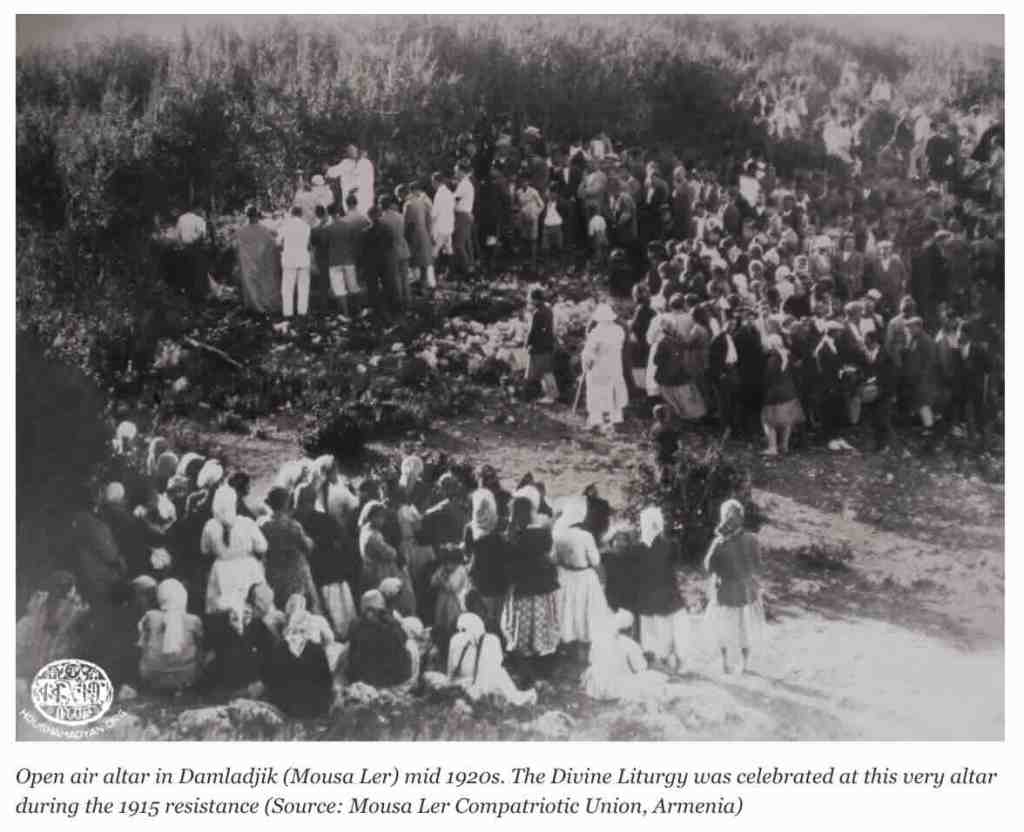
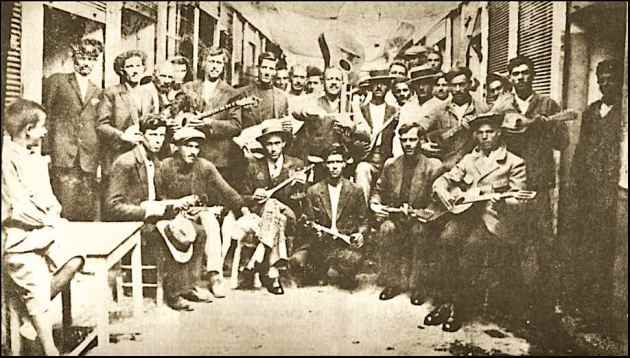
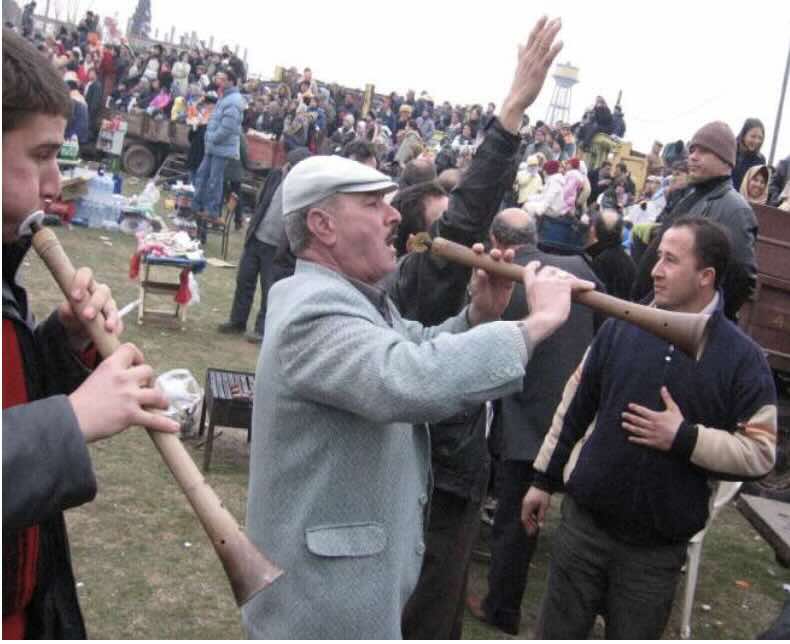




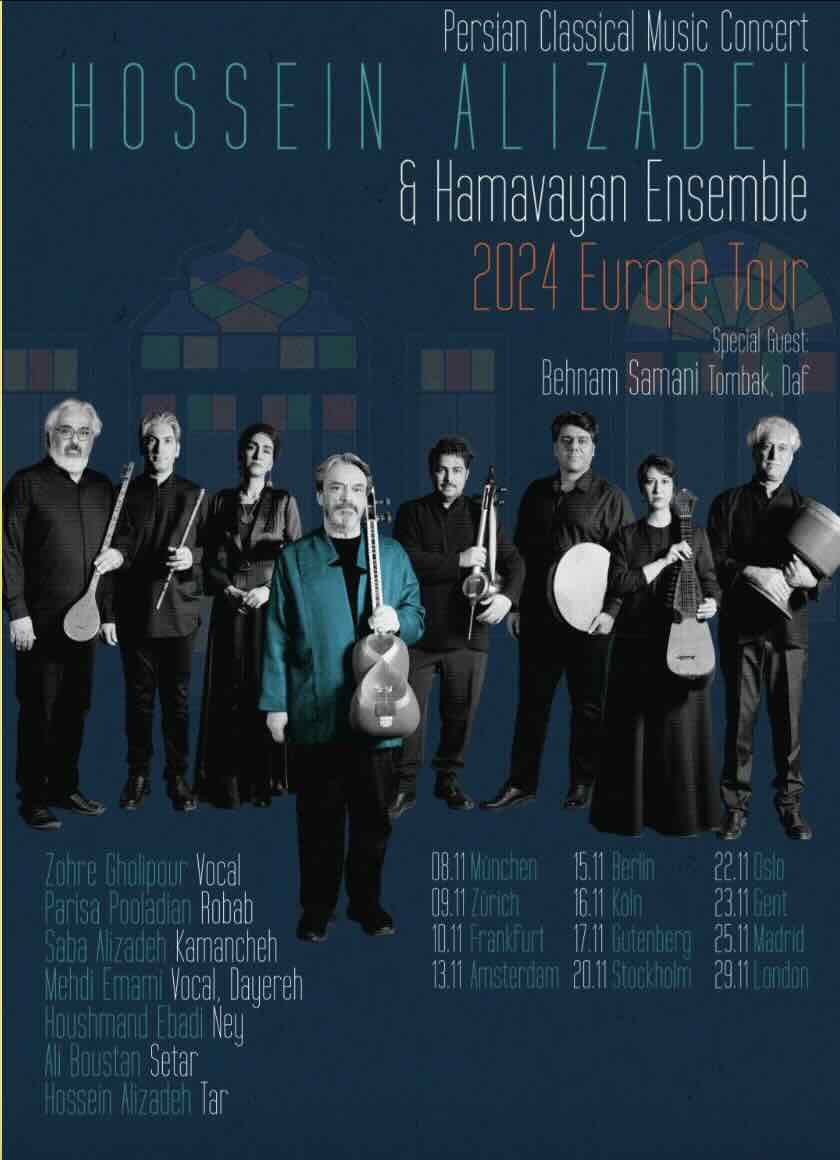


 Funeral procession (detail), Afrasiab (modern Samarkand) murals South wall.


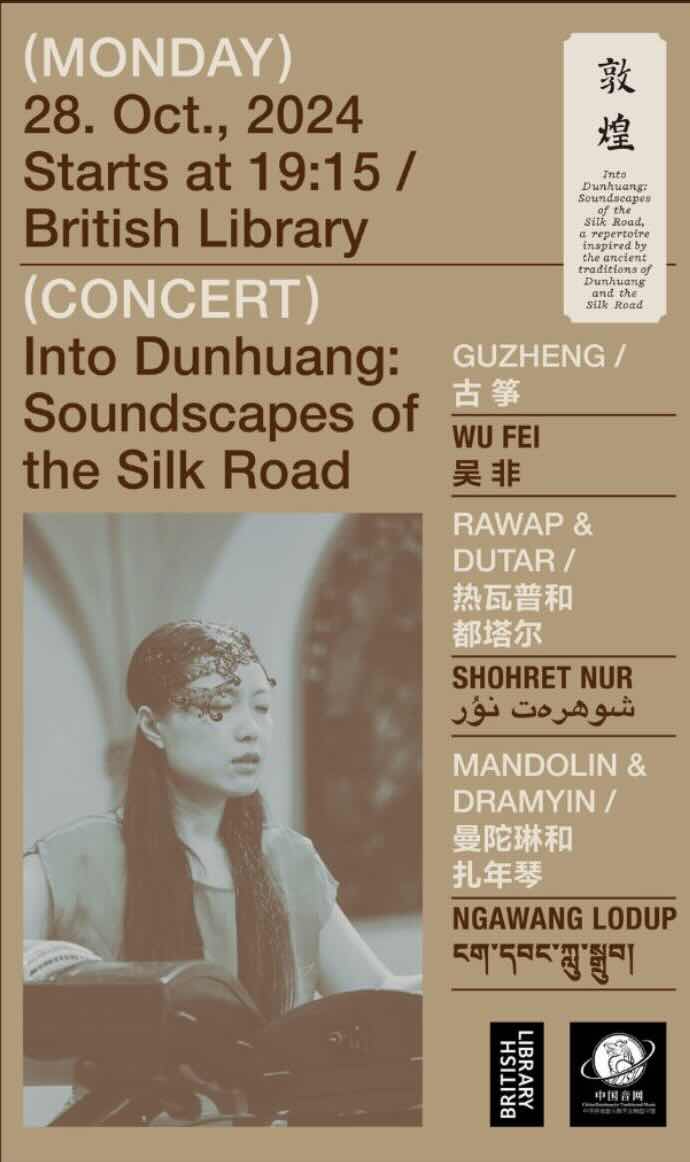


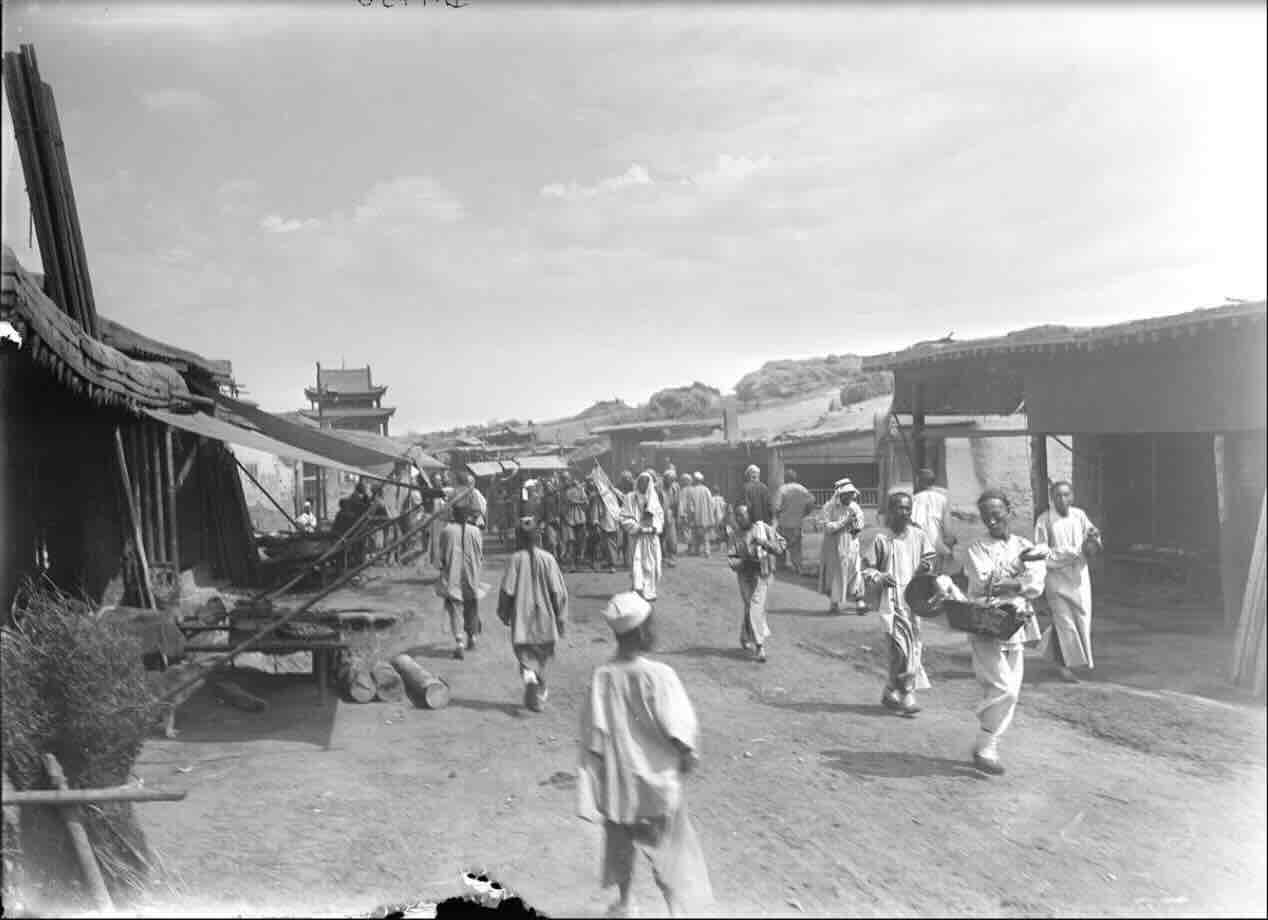 Photo from German Central Asian Expedition, undated (early 20th century):
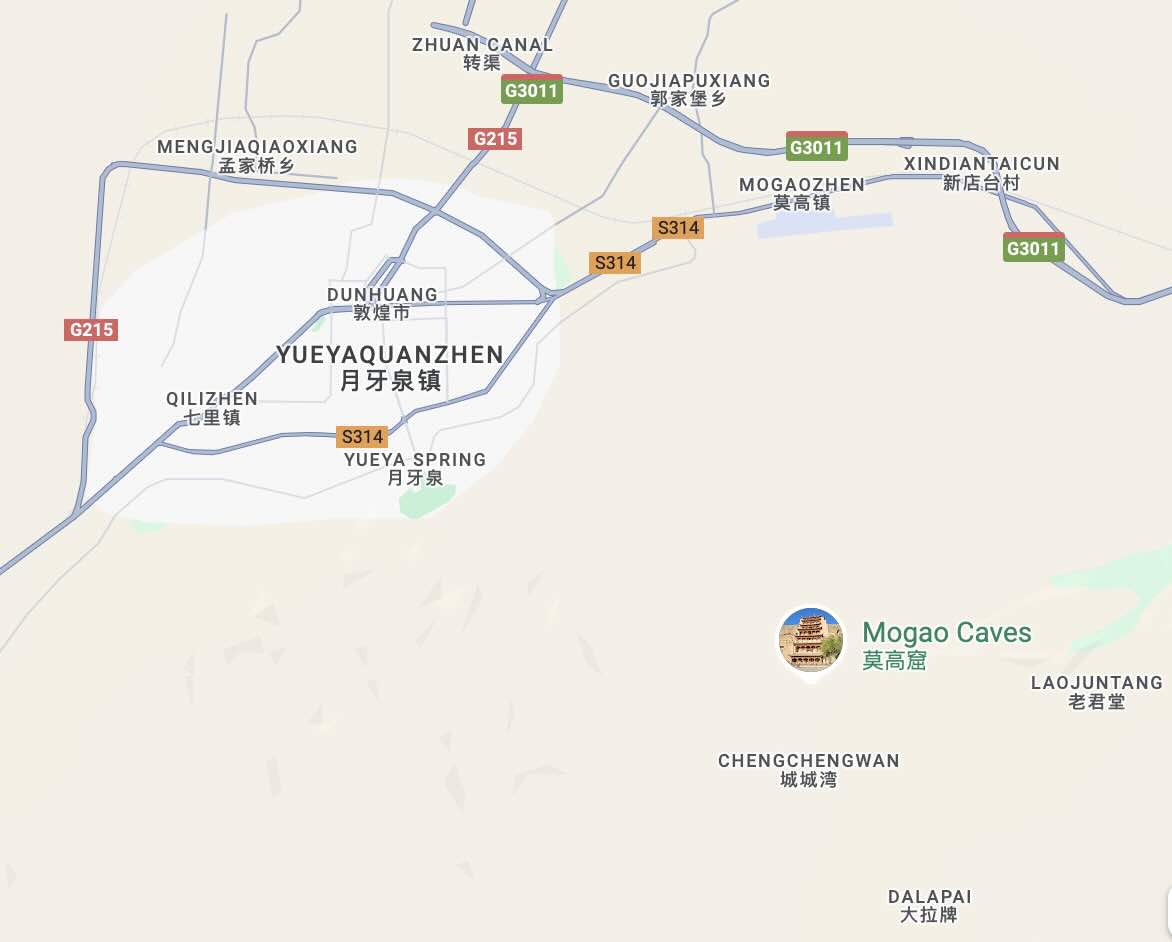 The Dunhuang region today. Source: Google Maps.
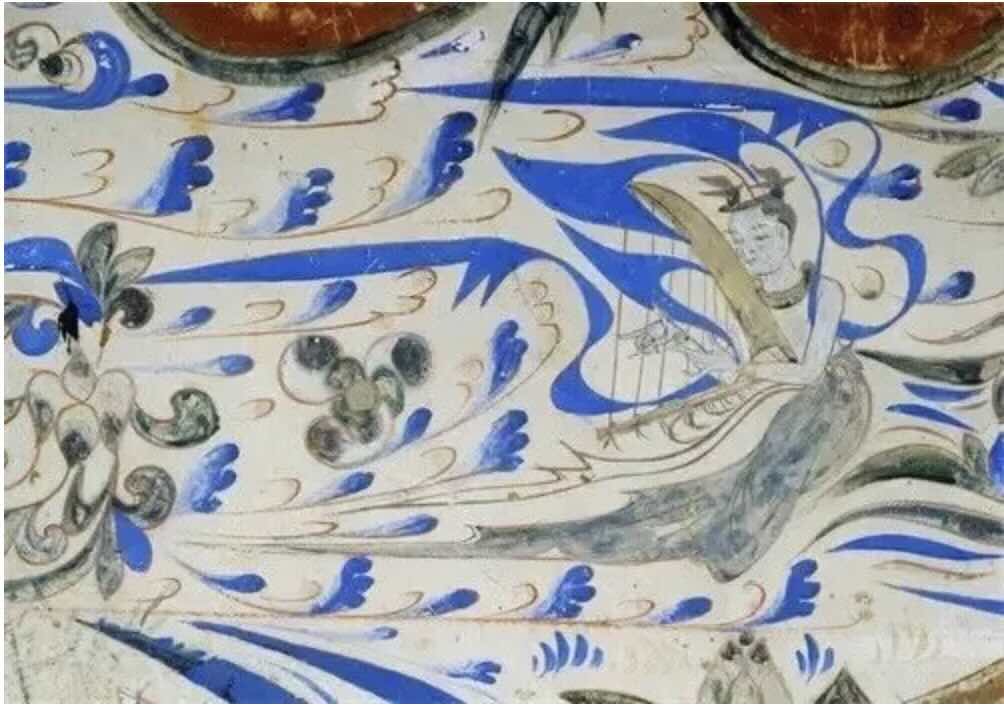 Konghou, Cave 285, 6th century (detail).
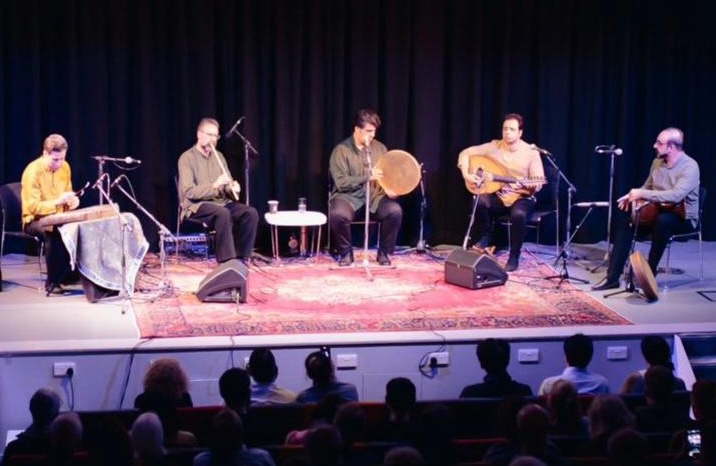


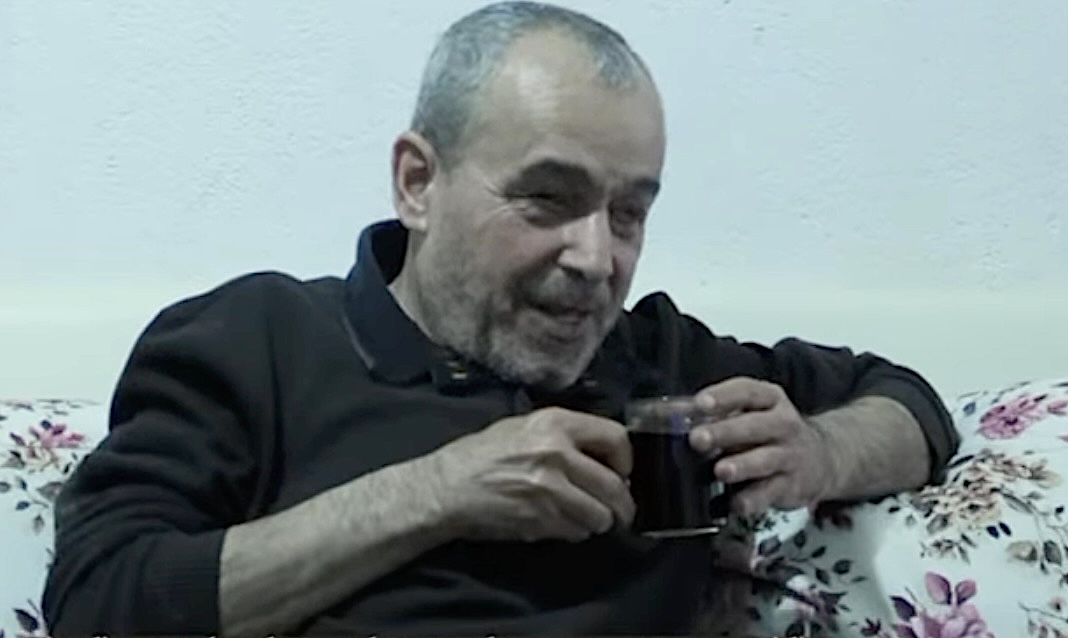

 Image: Paul Childs/Reuters.
  Leaving aside the many other kinds of bowed fiddle (such as kemence and


 String trio with cimbalom at the Meta táncház, Budapest 1993. My photo.


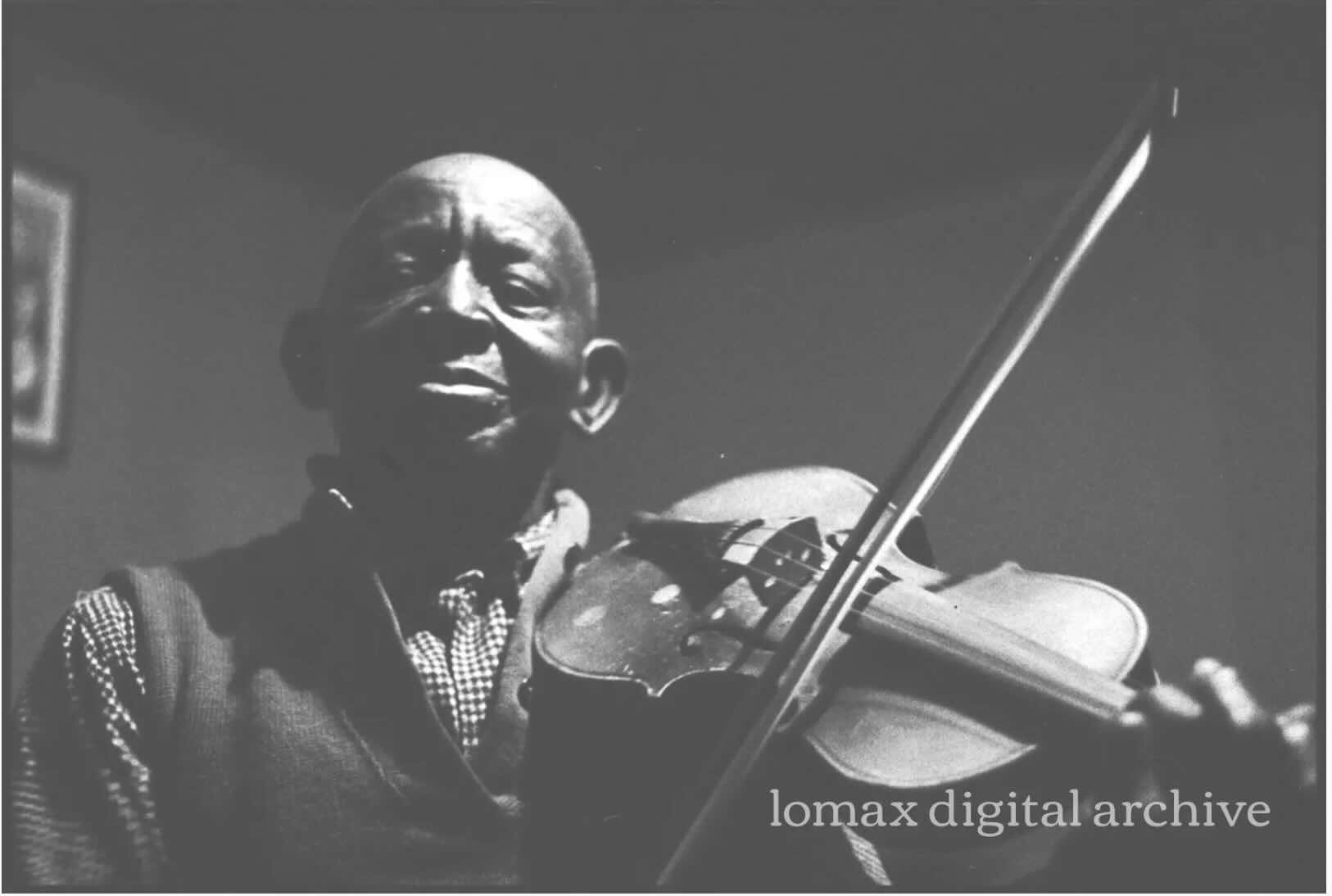 “Unidentified fiddler” in the southern States. Source: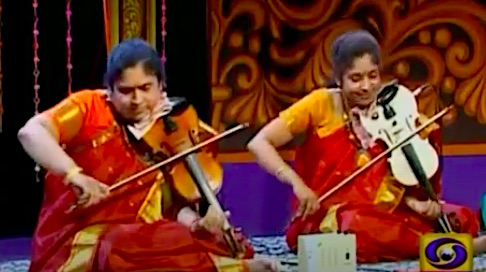


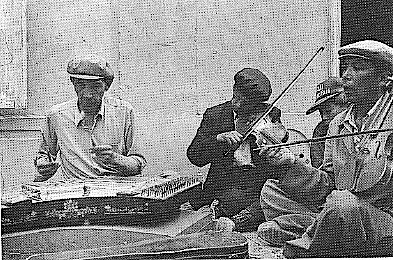
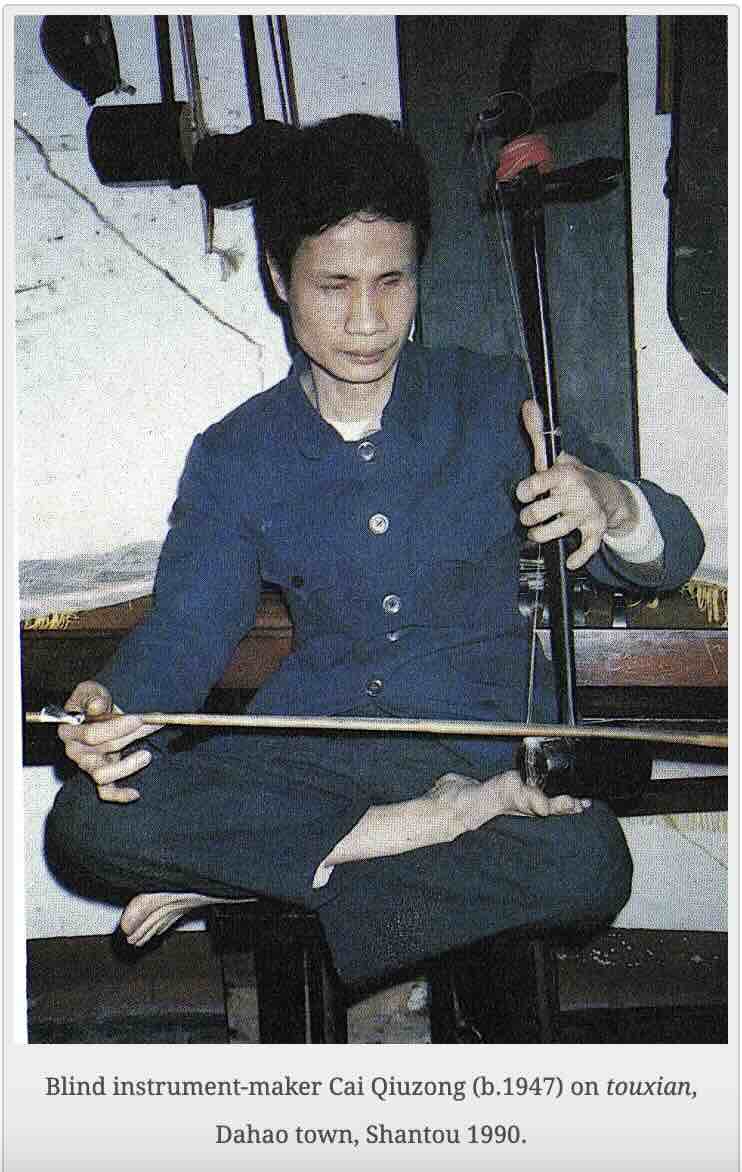

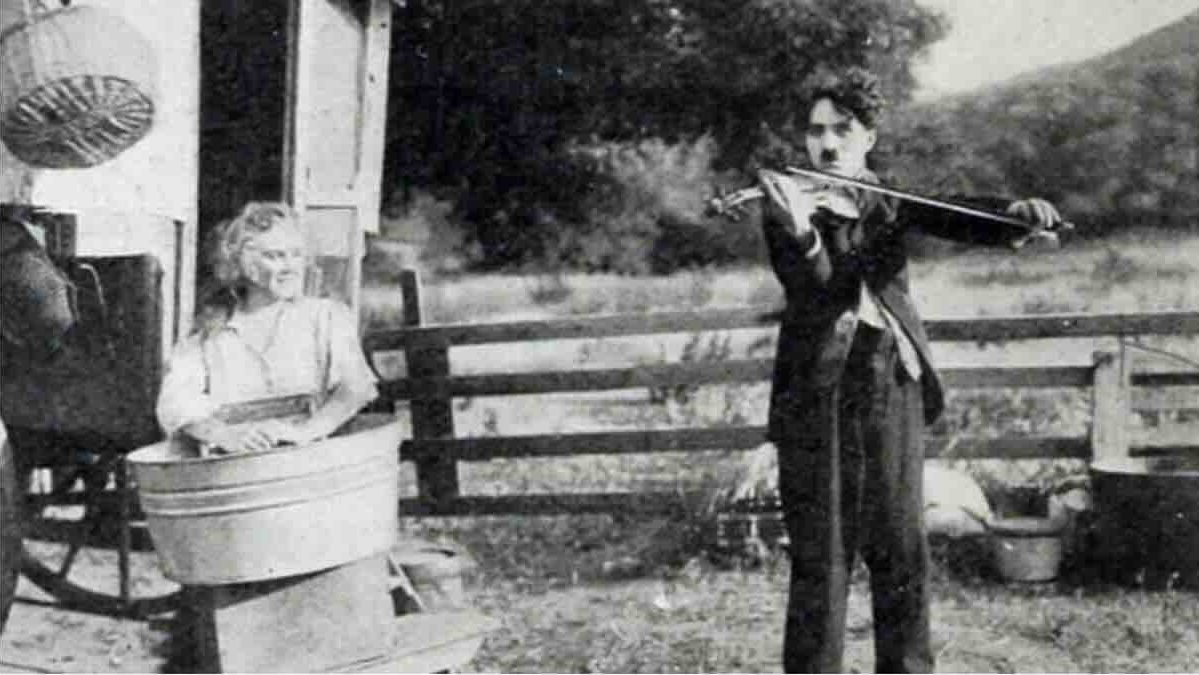


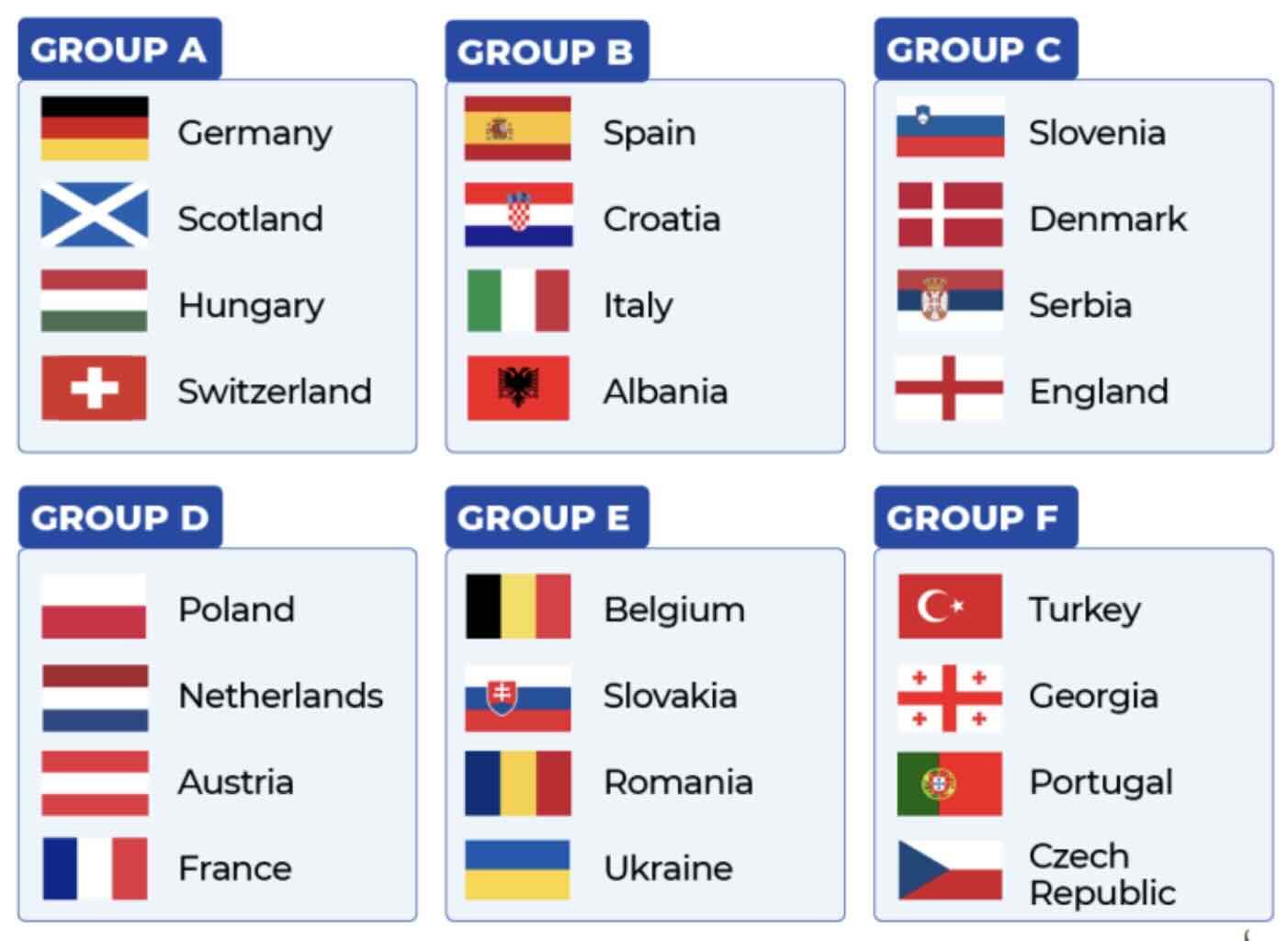


 As to France, even I might hesitate to try out


 Not so much an impromptu pre-match party as
 Grooving to the gaita. *
 “Just dig that funky tulum“

 ** Before England’s Great Escape from Slovakia, I was composing our own version of Caporetto, inspired by that popular classic from the

 It’s taken me all this time to visit the bijou rectangular wooden mosque further up the coast towards the bridge—just below the mansion of Sultan Abdülhamid’s cultured confidant Cemil Molla (1864–1941), who sometimes served as imam there, and just past the yalı waterside residence of Sare Hanım (1914–2000), aunt of left-wing poet Nâzım Hikmet (see

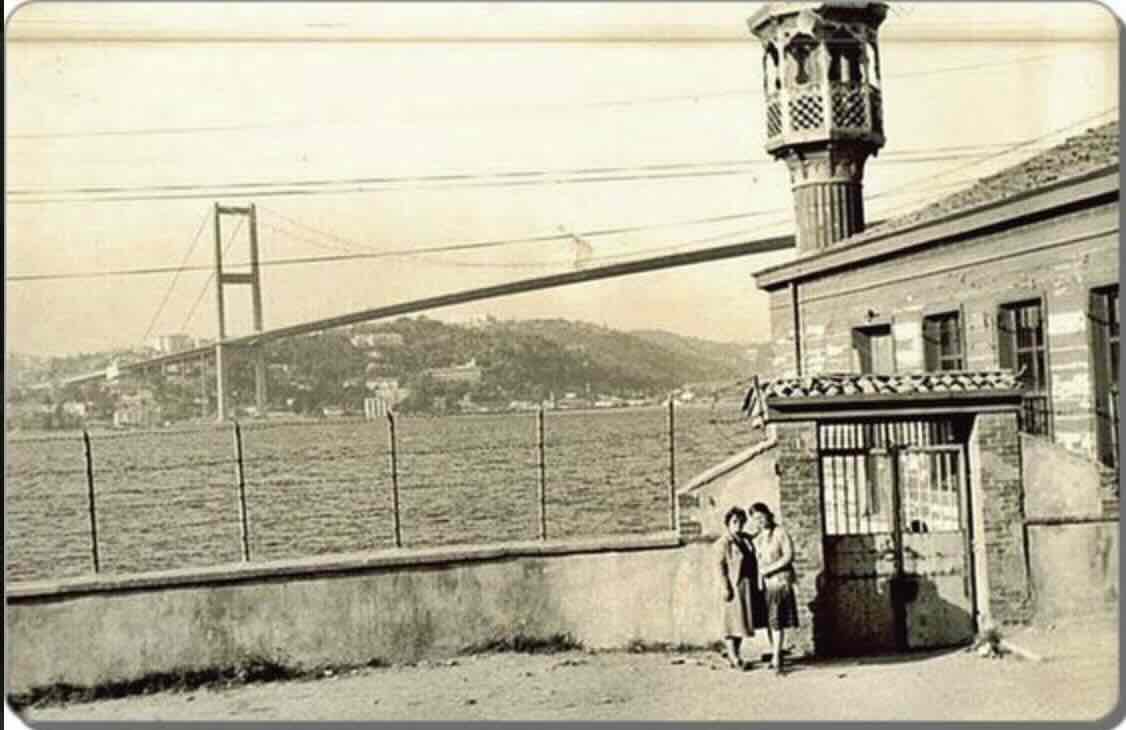


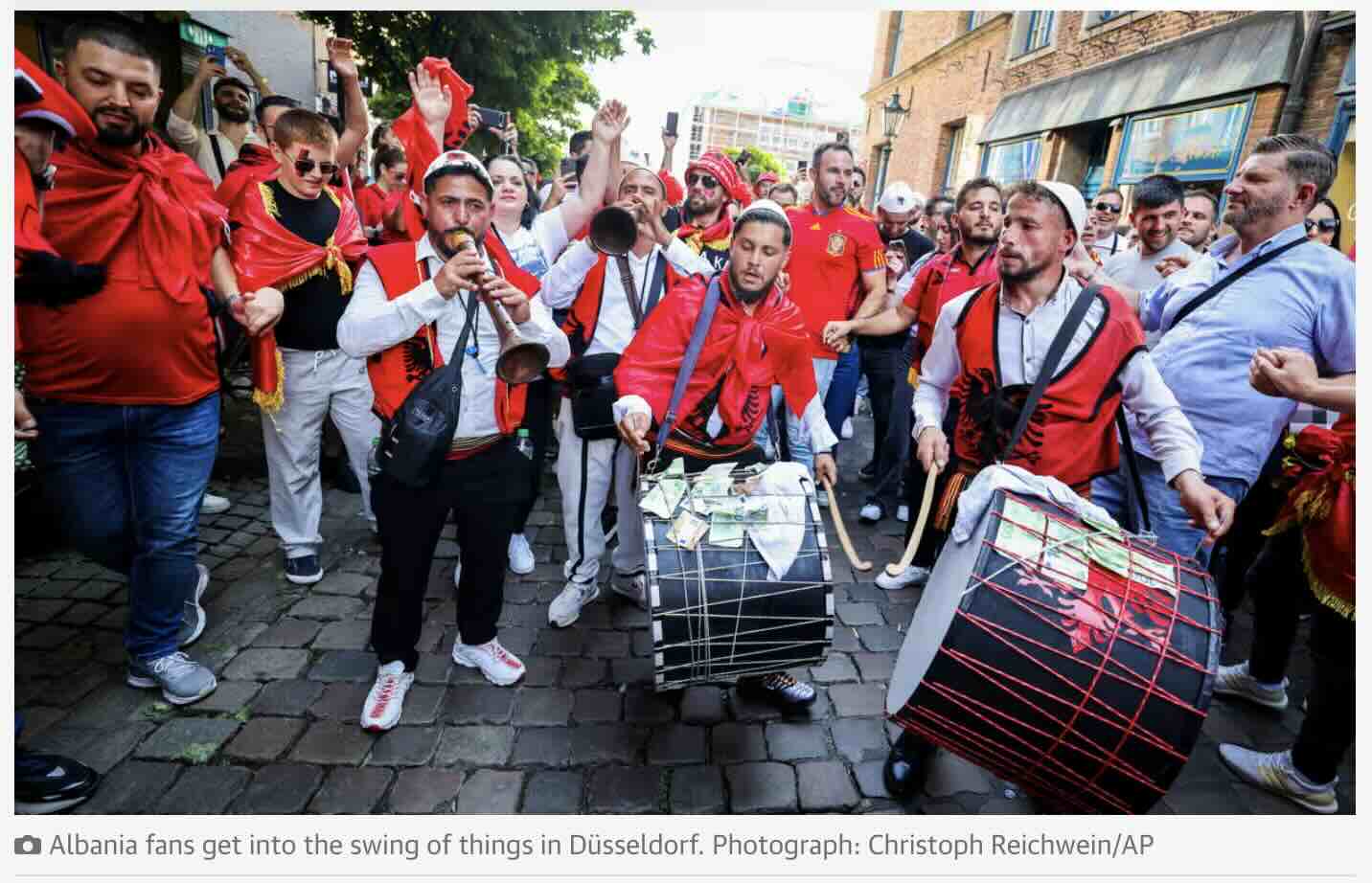 Albanian zurna shawms with dauli drums, a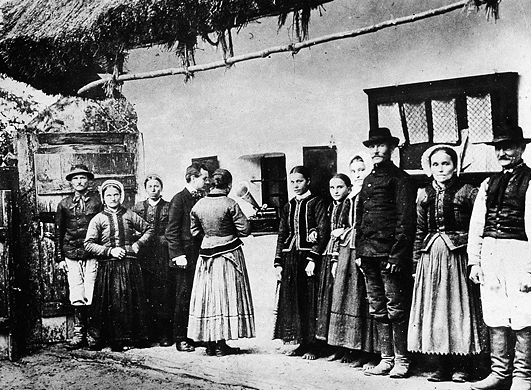
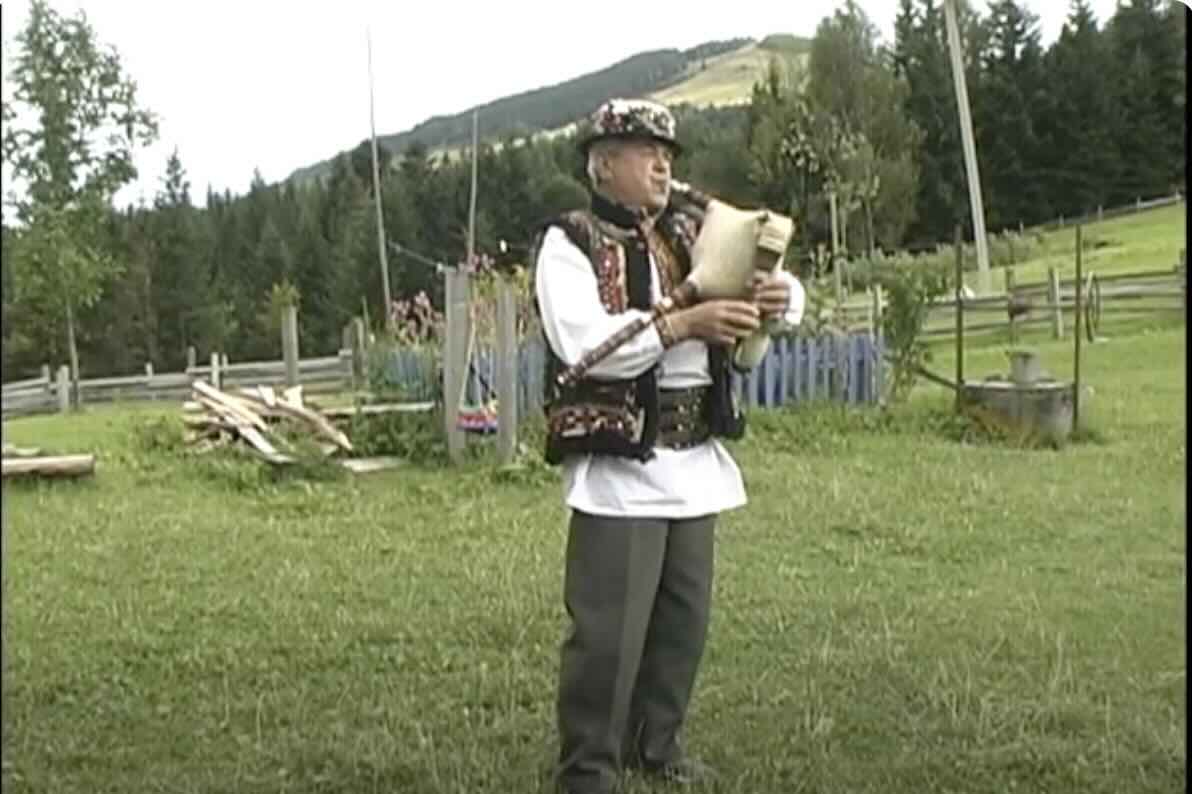 Ukraine: Mykhailo Tafiychuk on volynka bagpipe of the Hutsuls.

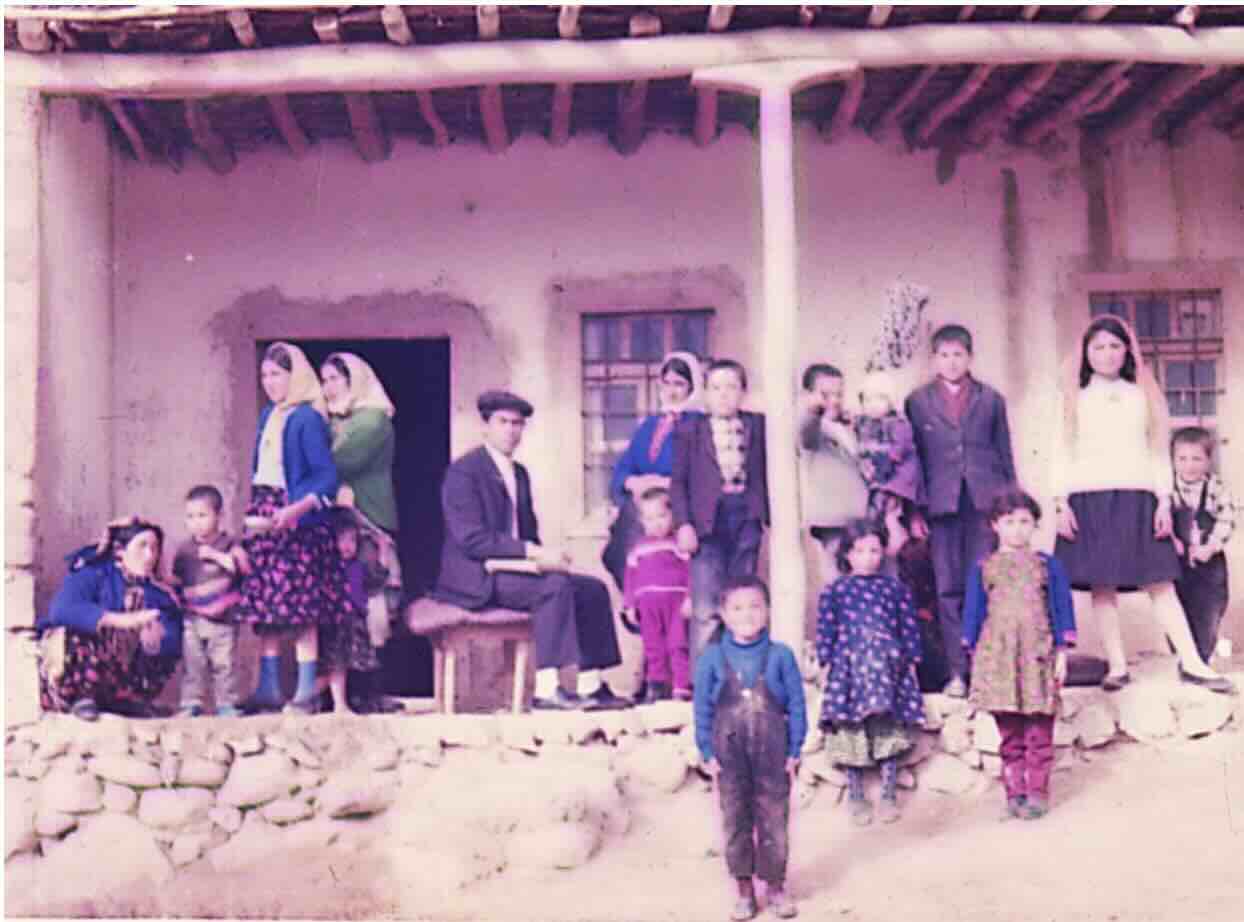 “People were in and out of each other’s houses from dawn until bedtime.”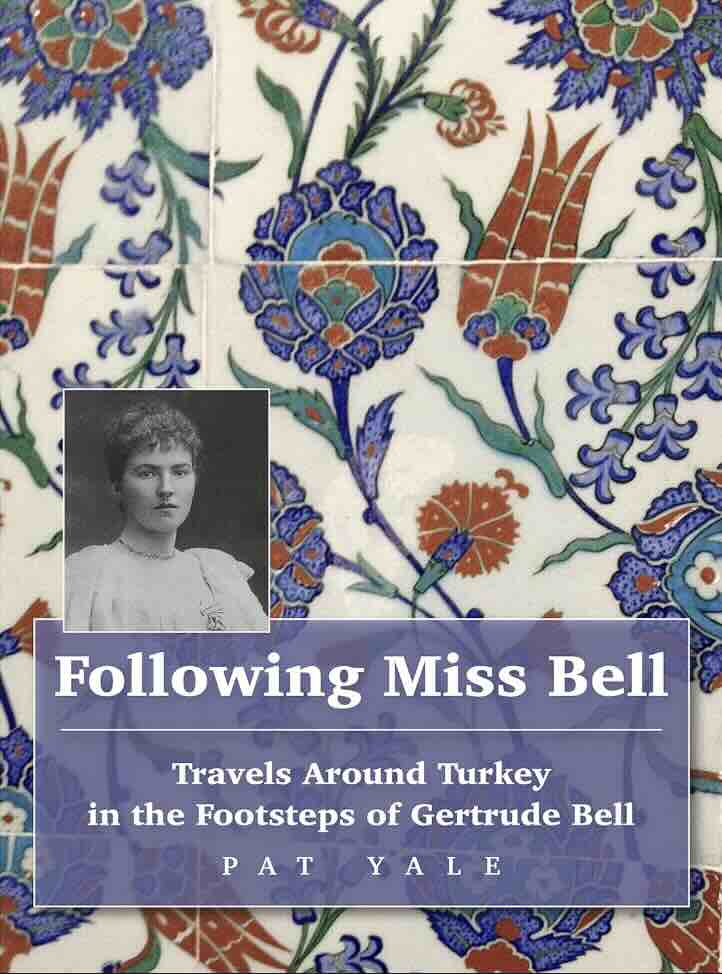
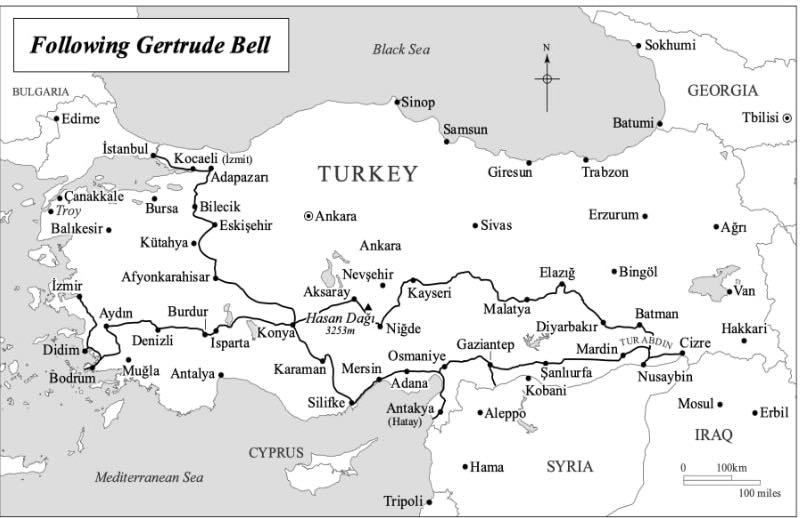
 Lost Armenian monastery of Surp Asdvadzadzin at Tomarza,

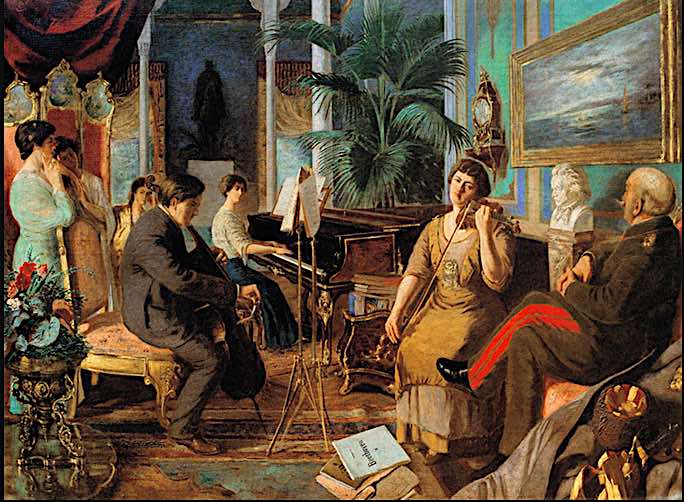
 My photo.
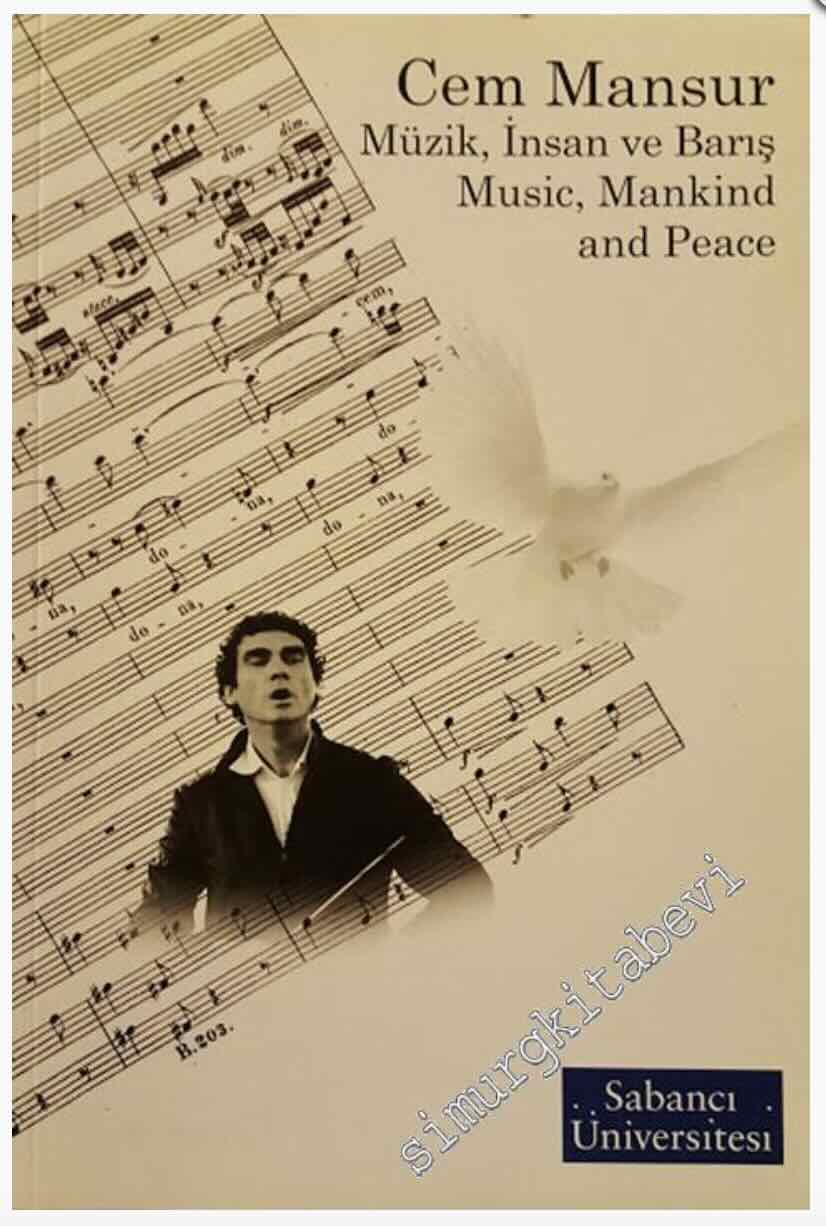 Mansur is passionate about the importance of music as a powerful tool for affecting change. Through his concept “The Laboratory of Democracy” (an open rehearsal session) Mansur engages both orchestras and audiences in issues such as co-existence, different levels of leadership, the nature of authority, of individual and collective responsibility as well as the difference between hearing and listening, leading and following. The sessions explore the basic concepts of democracy: individual worth, majority rule with minority rights, compromise, personal freedom and equality before the law, all demonstrated through the model of the orchestra as a miniature society. Mansur’s work on the peace-building role of music has also found expression of his conducting of the Greek/Turkish and Armenian/Turkish [youth] orchestras over several years.

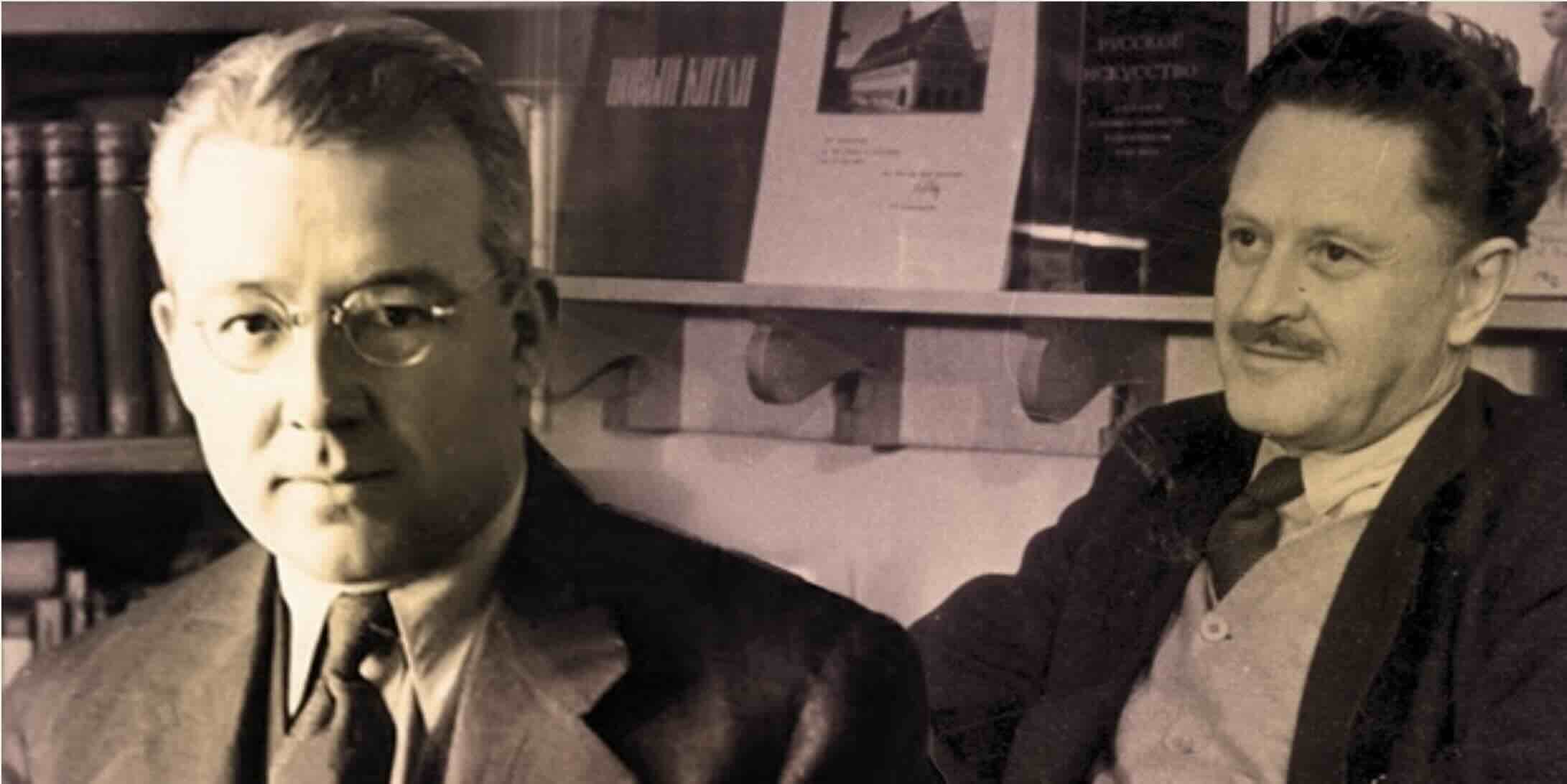 Sabahattin Ali (left) with Nazım Hikmet.


 From The hundred thousand fools of God.


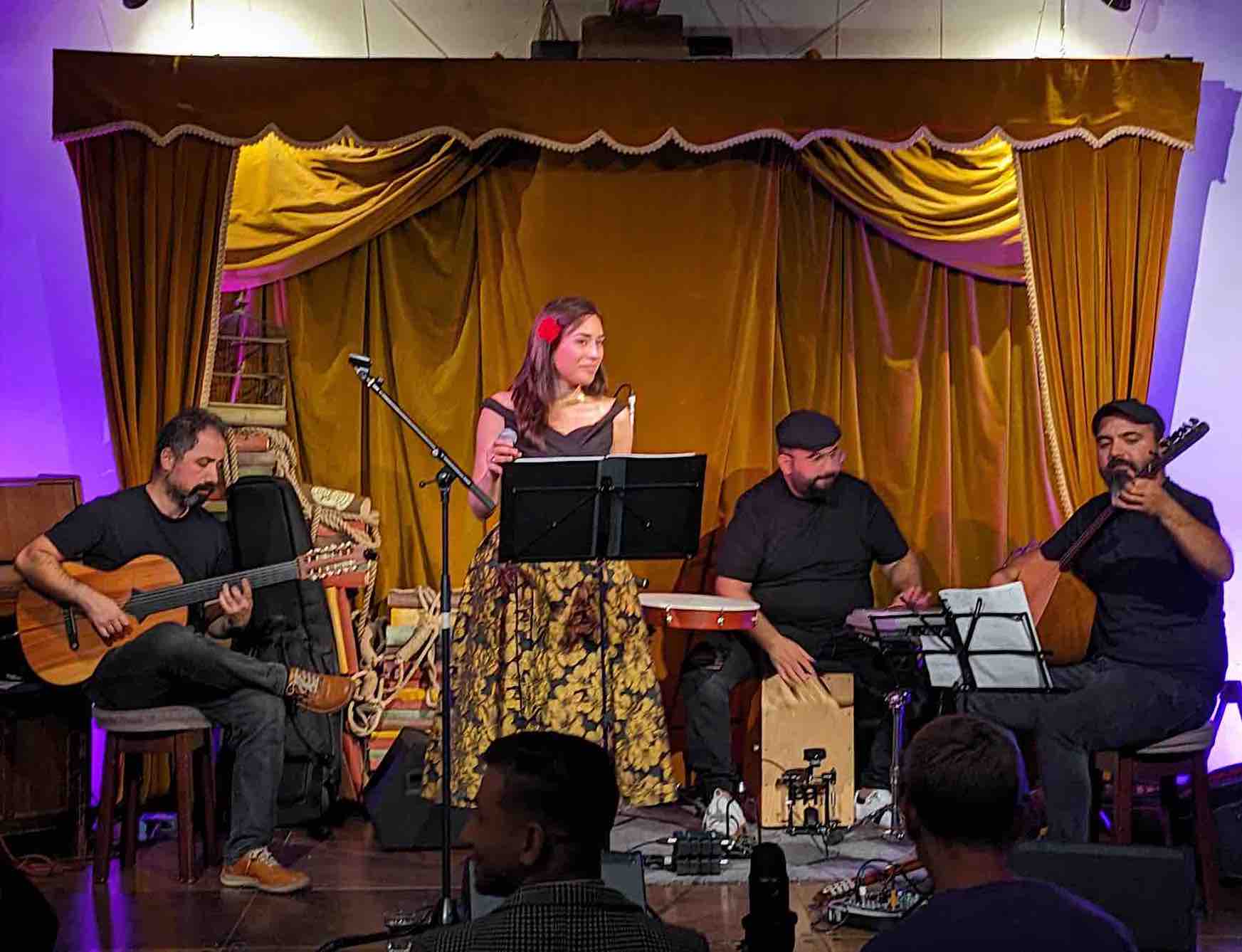


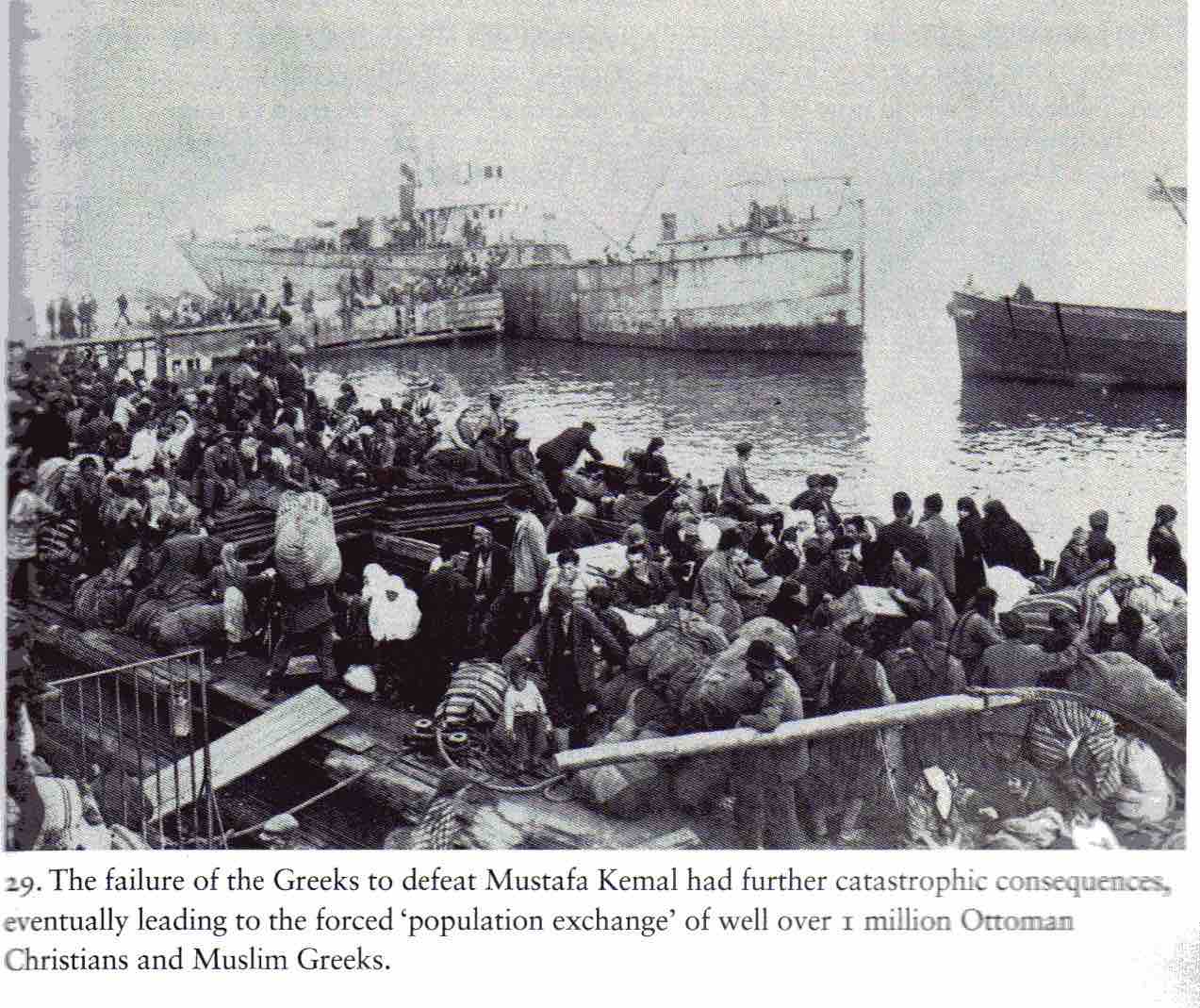


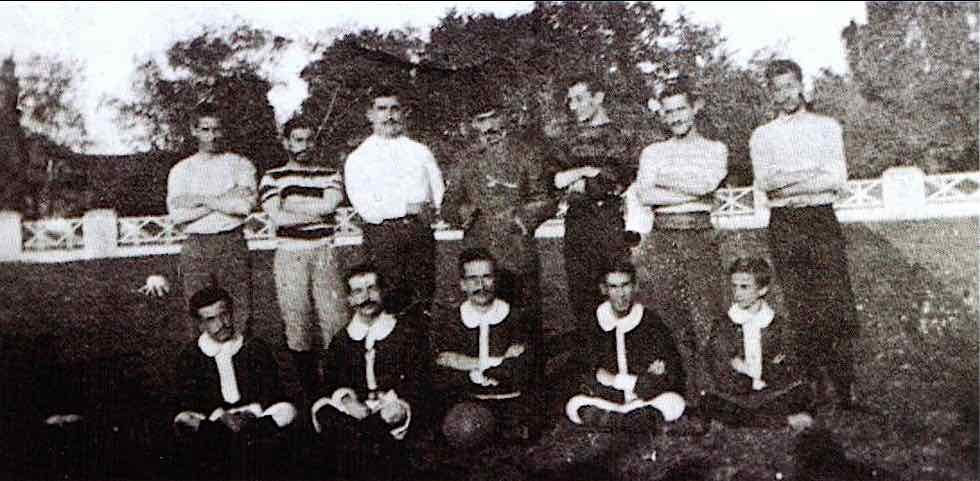





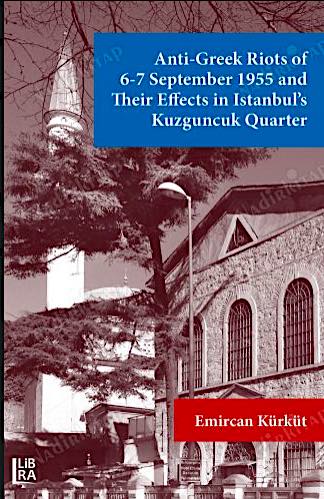



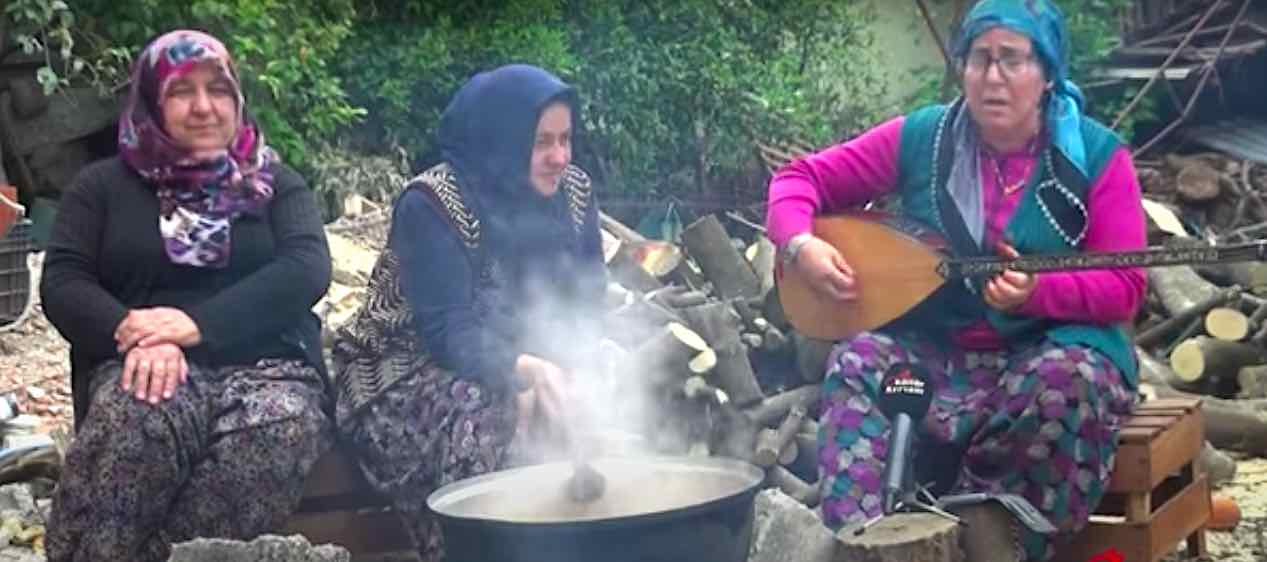


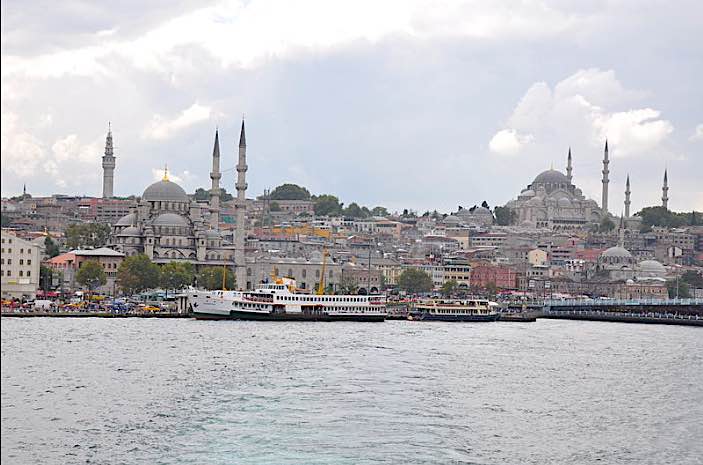

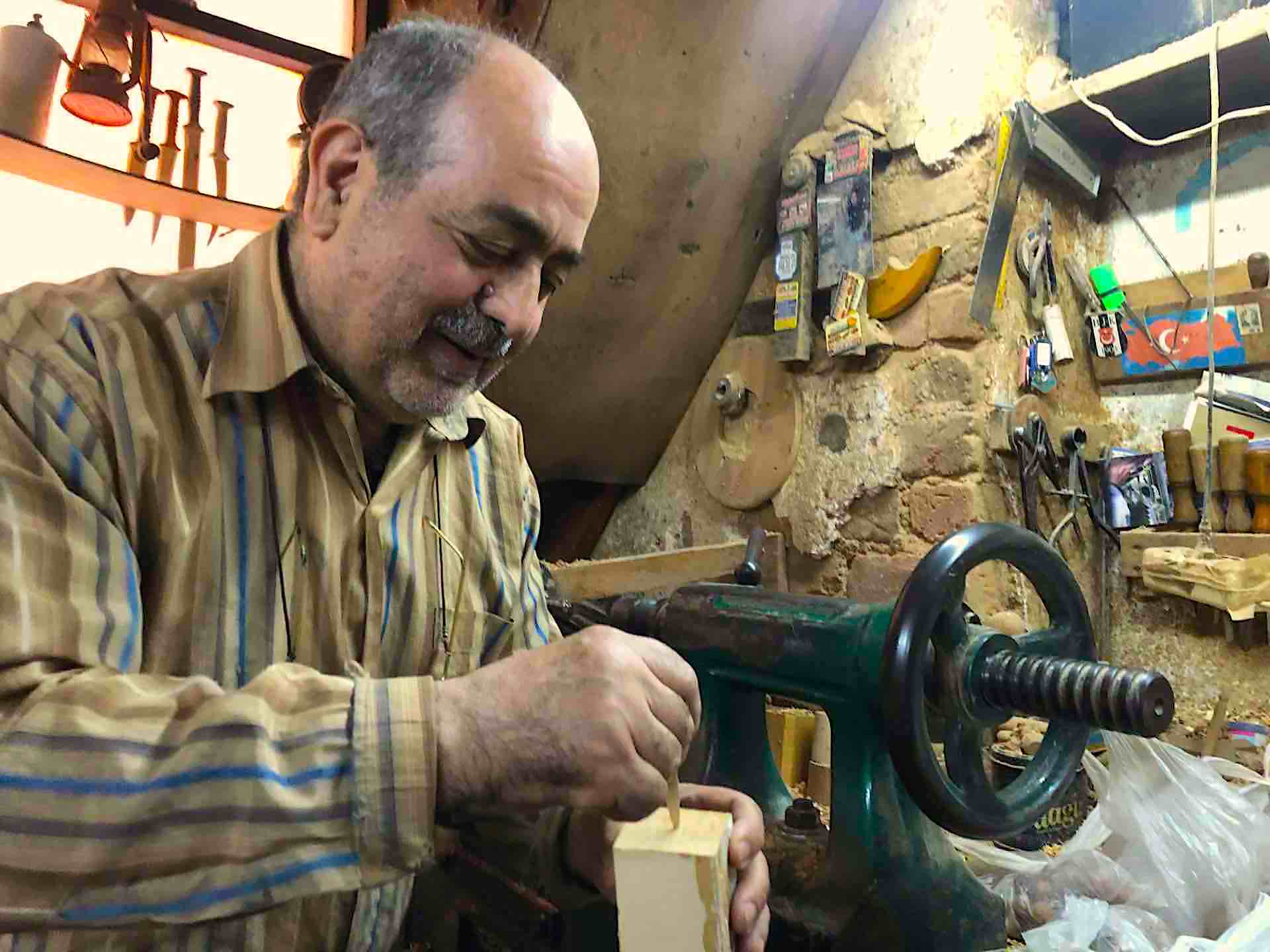


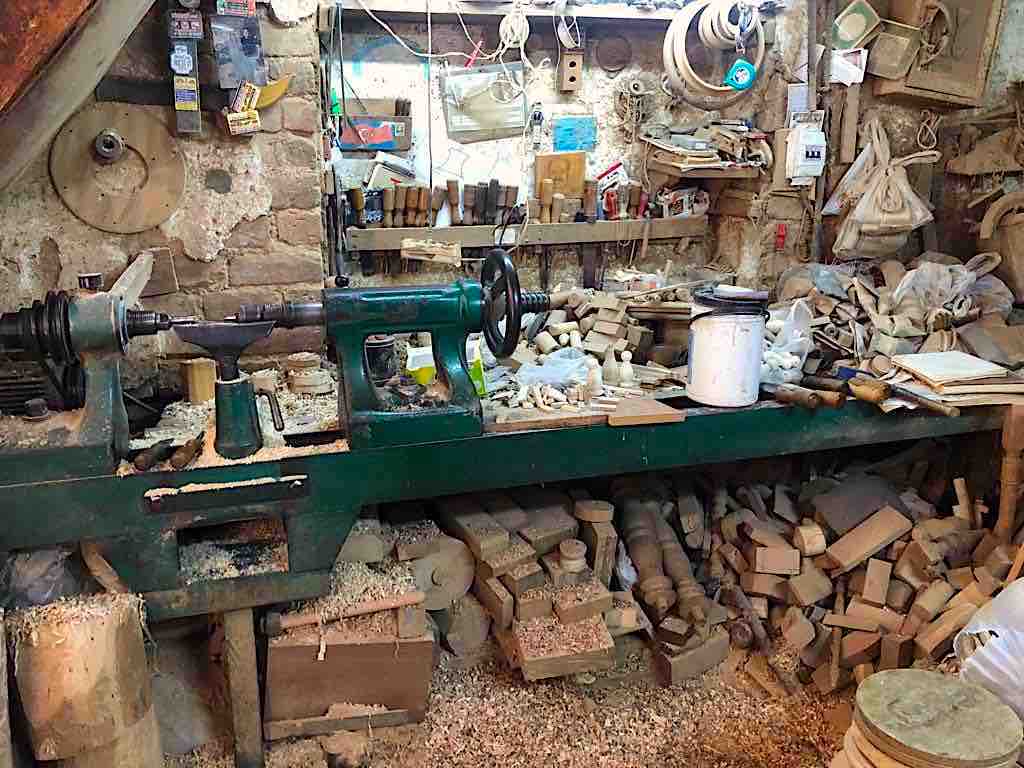


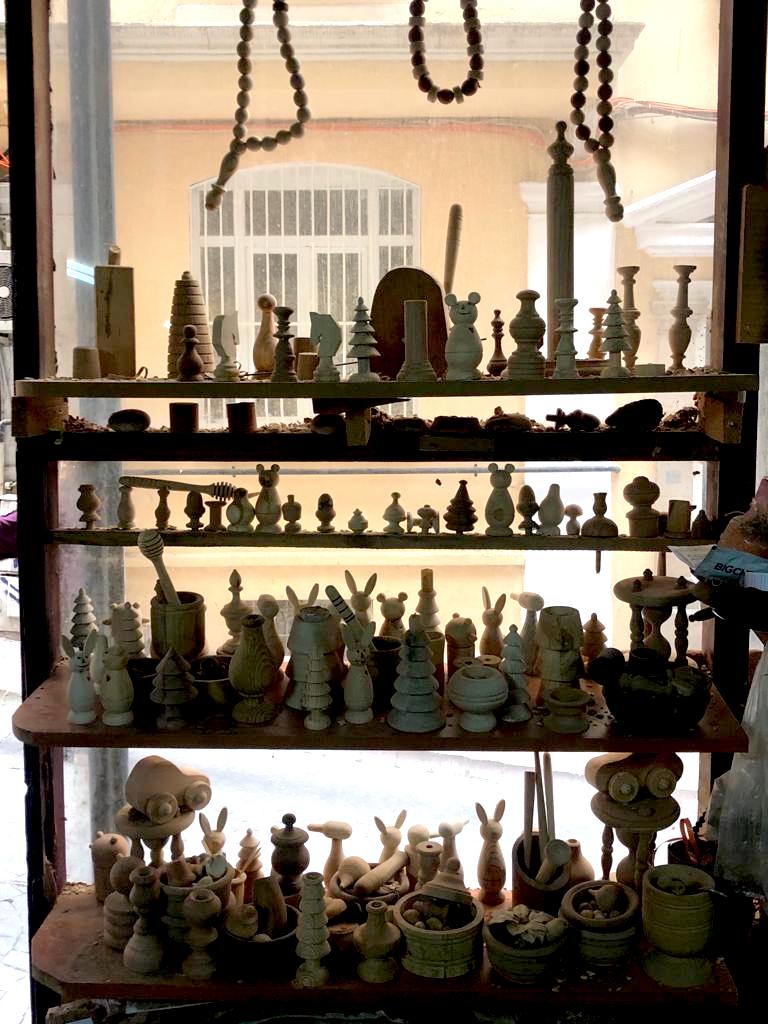
 The Turkish music scene in Germany was far from homogeneous. Cem Kaya elicits some excellent comments from characterful musicians. The film opens and ends strikingly with İsmet Topçu, the Hendrix of the bağlama, putting the story in wacky extra-terrestrial context…




 Philip Mansel, Aleppo: the rise and fall of Syria’s great merchant city (2018),







 Stephen Jones: a blog

