Recently on Twitter, following a post on my work with the Gaoluo village ritual association, an urban Chinese worker sent me a succinct and intriguing reaction:
中国农村地方的风俗,我不喜欢!— I don’t like local Chinese rural customs!
Well, tough! 罗卜青菜各有所愛, chacun à son trou, “it’s a free country”… But actually it’s a valid point, highlighting an important issue.
Rural customs are what rural dwellers do; it’s hard to belittle the former without rejecting the latter. It’s not just a lack of tuanjie solidarity within the Labouring Masses, between the gong workers and the nong peasants; there has long been a more general alienation anyway among the urban educated. This feeling that Chinese tradition is “backward” dates back well before the 20th century, despite the efforts of Chinese folklorists since the 1920s to document the, um, heritage.
Today those older urbanites who endured banishment to impoverished villages under Maoism (like Kang Zhengguo, or the countless, and hapless, zhiqing educated youths from 1968) have good reason to feel ambivalent about rural culture (see also here).
Younger cityfolk may not have had to endure rural life like their elders. But steeped in pop music and video games, when they are dragged back to the poor countryside to attend the funeral of a grandparent, they too may find village customs irrevocably tainted by poverty and backwardness.
Moreover, apart from those duped by the media into regarding folk culture as a theme park, those younger cityfolk (not least those bravely seeking social justice) have been further alienated by rosy state cultural propaganda—quite understandably.
Of course, the arcane concerns of academia generally may not float their boat. Anyway, they’re unlikely to be excited by the links of some Daoist ritual to manuals from the Song dynasty.
But ethnographers don’t have to be misguided mouthpieces for official patriotism. It’s not about praising traditional culture—more about documenting it, complete with all the problems of rural life. Ethnography aims for the descriptive, not the prescriptive. I’ve already given some traumatic examples of participant observation in fieldwork—Germaine Tillion’s notes on her own incarceration in Ravensbrück concentration camp, and Sudir Venkatesh’s work among Chicago street gangs.
So it’s always worth documenting society, and history, without romanticizing it as some ideal “living fossil” of an illusory golden age. Along with any grandeur that pundits may impute to ritual in rural China, there belong power struggles, violence, the plight of women and blind outcast shawm players, and all kinds of tribulations under imperial, Maoist, and modern regimes. And while studying folk culture, it’s proper to note the alienation of younger urban dwellers from it, as I do. Indeed, I’m not naturally thrilled by Morris dancing—but when you get to know a little about it, you can see how it fits into the changing social culture of rural England.
However rapidly the Chinese rural population has been diminishing since the 1980s, documenting rural life is just as important as studying urbanites, of all classes—including the workers’ struggle and their expressive culture. We don’t have to “like” ♥ (grr) the songs of either those workers or household Daoists, but they all need documenting.
Descriptive ethnography doesn’t necessarily imply standing aside entirely from judgment. Now, as it happens I do indeed admire many aspects of village ritual, but that’s not the point. More adventurous fieldworkers (like De Martino) may seek to spell out some respects in which ritual is life-enhancing, offering consolation and cohesion; or, conversely, ways in which it serves to entrench delusion and conflict, or fortify irrational power. Or—quite likely—they may entertain both hypotheses at once. And both need to be tested, not assumed.
So to that underwhelmed Chinese worker on Twitter, I might say: as the great Tsinghua-university-based anthropologist Guo Yuhua can tell you, far from obstructing the quest for social justice, ethnography can be a contribution to it. Apart from urban workers, if anyone has been downtrodden, it’s the peasantry.
However much the official version may seek to reify and sanitize culture, yet factory workers, household Daoists, village cadres, spirit mediums, army recruits, sectarian groups, vagrants, and entrepreneurs are all part of the social spectrum, whose lives deserve to be documented.
All this reminds me of another gem from Nigel Barley. Arriving at his field site in rural Cameroon, he grapples with police bureaucracy (The innocent anthropologist, p.38):
The commandant turned out to be a huge Southerner of about six foot five. He summoned me into his office and inspected my documents minutely. What was my reason for being here? […] He was clearly very unhappy as I tried to explain the essential nature of the anthropological endeavour. “But what’s it for?” he asked. Choosing between giving an impromptu version of the “Introduction to Anthropology” lecture course and something less full, I replied somewhat lamely, “It’s my job.”
including the horrifying Scream from Mahler’s 10th symphony (above); The Rite of Spring; and an exploration of the minimalist style through Terry Riley’s In C. Making connections between them, Ivan Hewitt and his discussants provide fine social context, to boot—”harmony as a reflection of history”.
I’ve always understood harmonic language more by instinct and experience than by theory. I trust plenty of other orchestral musos are more erudite about chords and harmony, but it is jazzers who are most deeply imbued in the language—and not just the keyboard players.
On the Li family Daoists’ 2012 sojourn in Venice in 2012 we were guests of the Fondazione Cini, staying virtually alone on the tranquil little island of Isola San Giorgio, just across from bustling San Marco.
Chatting with our Cini hosts, the fragrant Chiara and Sabrina, they told me that when Venetians come across each other by chance they like to exclaim
“Fatalità!” (pronounced “Fataità!”)—“Fate!”
A quaint English equivalent might be “Fancy bumping into you!”
Fatalità! Venetian dwellers with the Li band, or “Selling the Daode jing at the door of Confucius” 在孔子門前賣道德經。
I gather “Fatalità!” is more commonly an interjection, as when telling a story (“And what should happen but…”) or (in reacting) “Fancy that!”. It can also be a humorous way of accepting fate, almost like the English “Typical!” or “That’s life!”.
Without regard to expense or the feelings of the public, the erudite Rod Conway Morris, himself a long-term chronicler of Venetian mores, has obligingly ferreted out a little discussion by Sandro Mattiazzi (Veneziani: Figli del Leone Alata, 2002), with pleasantly arcane examples of a quarrel between gondoliers and a dispute during the war with the Turks, both defused by the timely exclamation.
Fatalità is chance [caso], the fortuitous event that is yet the result of a necessity great or small, and is typical of the Venetian mentality. […] Don’t despair if you can’t find the way to your hotel, or if you’ve left your bag on top of some well. Chance, which has aided the Venetians for almost two thousand years, will surely come to your aid. Fatalità means that by randomly following another tourist you will arrive at your lost hotel, where perhaps you will find your bag on the porter’s desk. [my translation]
“Fate!” recalls fado, or (as I explained to Li Manshan) the Chinese ming 命… Those terms aren’t part of any such greeting, though in classical Chinese chen 臣 equates with the hackneyed “Ciao!”—itself borrowed from Venetian, and cognate with slave and Slav (for an erudite discussion, see here). Or the English “your humble servant”, mercifully abbreviated from “I trust I shall have the honour to remain your humble servant”, which is of course the correct form of address for foreigners to employ when staggering out of an East End pub at closing time.
Following an arcane exchange in The Times (“Have these people got no Holmes to go to?”—Myles. Mind you, I can’t talk) wherein it is established that Gautier’s Tra la, tra la, la-la-laire is not in fact a reference to the call of the inevitable ubiquitous gondolier, Rod observed in a letter (whose date of 1st April 2016 he assures me is merely coincidental—remember, the word “gullible” doesn’t appear in the OED):
The traditional gondolier’s cry (especially when rounding blind corners in canals) is “O-i!” This is also sometimes used by the inhabitants of the city as a jocular greeting.
I respectfully submit, m’Lud, that had they gone on to use the honorific form of address, the greeting might have become “O-i vo-i!”, evoking Venice’s Jewish heritage (I’ll spare you my fantasy reconstruction of the temporal and spatial vowel-shift). And given the city’s Turkish connection, I’m also still hoping Rod will further unearth the greeting “Ey-up!“—which, in turn, became the correct form of address when entering a kebab shop in Barnsley (cf. my haiku on Morris dancing). The joys of multiculturalism…
Inspired by Rod’s stimulating review, if you read in the gazette of the imbroglio over an arsenal of contraband artichokes; and if you’ve ever been quarantined after zany scampi and pistachio marzipan in the ghetto, or worn sequined pantaloons to a regatta—actually, even if you haven’t, which (let’s face it) is more likely—then you should tip your imaginary hat to the Venetian language. For a borrowing from Turkish, see The kiosk in Turkey and Europe; for Indian influences, see Tickety-boo.
Further–waay further—to my page on the Guangling Daoists, Hannibal Taubes has a fine, ever-growing, website documenting his ongoing research project (worthy of further funding!) on the iconography of rural temples in north China, with wonderful photos of murals taken by him and his assistants.
One of his main sites is the Yuxian–Guangling–Yangyuan region on the border of Hebei and Shanxi. The project—reminiscent of that of Willem Grootaers in the 1940s—is another illustration of the hidden depths of ritual culture in north China, so long a poor cousin of the south.
Such work can be a valuable adjunct to fieldwork on ritual practice. I hesitate to look forward to Hannibal expanding his already vast project to ritual paintings, and incorporating temple steles too…
Material like this may be more fruitful for the study of deities than for actual ritual life. But just a couple of examples from the website that do suggest the latter, from village temples in Yuxian just southeast of Yanggao. This is from a Dragon King temple in Yuxian, perhaps dating from the late Qing:
Photo: Hannibal Taubes, 2018.
Here are two details of the procession at the foot. Leading the way, as ever, is a shawm band—in uniform, which by the 20th century was discarded:
Photo: Hannibal Taubes, 2018.
Bringing up the rear, on the left (after the temple helper bearing the ritual umbrella) it shows a Daoist band—with chief vocal liturgist, a drum master, and players of the sheng mouth-organ, yunluo frame of ten gongs (now quite rare in the area), and guanzi oboe. The outsider might easily fail to notice that the latter figure (far right) is playing the guanzi—but locals, experiencing the shengguan ensemble at their village rituals all their lives, will recognize it at once.
Below we see a similar quorum from another nearby Dragon King temple, dating from 1709. Here they wear the same red costumes as household Daoists today—as do the two trumpet players leading the way, though they should be from a separate shawm band…
Photo: Hannibal Taubes.
As with any such iconography (one thinks of Renaissance depictions of angel musicians), we are confronted with the issue of how “realistic”, or how generic and idealized, such depictions may be as a portrayal of local ritual life at the time. This detail from my photo of a ritual painting by Li Qing’s Daoist uncle Li Peisen undoubtedly shows an authentic view of a 1940s’ ritual band (standing) such as the one that he himself led, with a group of seven—two guanzi, two sheng, yunluo (only three gongs?!), drum, and small cymbals:
The dizi flute, usually a member of the full shengguan ensemble, was perhaps less often used on procession—indeed, it’s largely fallen from use in this area since the 1990s. For the public ritual in the painting, the Daoists wear their red fayi costumes over their black dashan costumes, just as today. Interpreting such details is naturally informed by knowledge of the current scene.
Apart from another ambitious collaborative project on Shanxi temple murals, Hannibal is now further presenting his vast archive in a separate website, which I introduce here.
Of course art is a valuable adjunct to our studies of ritual and religious life, but with my own stress on performance I find myself frustrated that it’s static, two-dimensional, and silent. But whatever your angle on Chinese religion, Hannibal’s sites are fantastic new material, with rich potential. For his recent article on the use of perpectival painting, click here.
Of course the Bach Passions are a regular subject of imaginative modern re-creations (Jonathan Miller, Sellars–Rattle, ENO, and so on); but the climax of the Proms Reformation Day on Sunday, John Butt’s version of the John Passion, in a certain liturgical context, was special. Note also his book Playing with history.
Like Daoist ritual (see many posts on this blog, including my starter page on Bach!), Passions in Thuringia for Good Friday vespers varied regionally, and evolved. Of course we now attend them in “concerts”. The Albert Hall in 2017 is clearly not the Nikolaikirche in 1739—although the audience/congregation was apparently of a similar size. But having read Taruskin, and Butt’s own astute views on the HIP movement, surely we can welcome such renditions; it’s a stimulating way for us (“miserable sinners”) to experience the work anew.
Bach revised the John Passion several times; Butt recreated an “ideal” sequence based on the 1739 version (which was never actually performed!), directing with an unaffected schoolmasterly air that indeed evoked Bach the Cantor himself (cf. Robert Levin’s incarnation of Mozart).
As in Bach’s Leipzig, both parts of the Passion opened and closed with organ music and sung chorales. By contrast with the concert version (finely evoked by John Eliot Gardiner, Music in the castle of heaven, p.343), when the orchestra plunged into the anguished dissonances of the first chorus of Bach’s music, it makes you think how a congregation still unaccustomed to their new Cantor’s style, yet unprepared (though not quite—see Gardiner, pp.347–9) for the constant flow of extraordinary creativity that they were to enjoy for the next twenty-seven years, must have thought (in 18th-century Thuringian), “WTF?!” (cf. The ritual calendar).
The focal point of the Good Friday Vespers in Leipzig was actually the long sermon in between the two parts of the Passion music, which at the Albert Hall was thankfully replaced by an interval (glass of wine, ice-cream…). I wonder if a talk by someone like Malala might be a suitable further exploration—since many in the audience will experience the Passion deeply despite being less than devout religiously.
Do listen to John Butt’s remarks in the interval of the TV broadcast too (from 53.10)—and I like the analogy of Richard Coles (nay, “the Reverend Richard Coles”—clever choice of presenter, BBC!) with the mass singing at Cardiff Arms Park (more ritual and sport).
Given the rowdy behaviour of Leipzig congregations in Bach’s day, perhaps the Prom audience should have been a tad less attentive?! After we had all joined in singing the chorale O lamb of God, applause at the interval felt a bit weird, but it was entirely natural as a novel response to the life-affirming ending—after the beautiful motet Ecce quomodo moritur by Jacobus Handl (1550–91!), a blessing and response, Bach’s own organ chorale prelude Nun danket alle Gott, and a final rousing rendition of Now thank we all our God from the whole hall (a tune, suitably, that most members of the “audience” would know), accompanied by organ at exhilarating full throttle—all confirming joy at atonement.
By comparison, the great Passion performances of recent decades may seem more immaculate and micro-managed (“Chanel No.5″), but they remain deeply moving—like Gardiner’s version (also from the Proms, with the superlative Mark Padmore (note this roundup). But this performance had a Lutheran simplicity that was differently moving.
Butt also notes “the different levels of singing cultivated in the church and school environments of Bach’s time,” from basic to more advanced pupils and indeed the congregation (again, cf. Butt’s interval remarks), so that the liturgy accommodated the whole community:
What we hear in concert performance is only the tip of a much larger iceberg, a culture of singing and participation that can only be fleetingly evoked in a modern performance.
This reminds me of the different levels of accomplishment within (you guessed it) a Daoist ritual group:
This dilution of personnel is a recent change, but before 1949 too, Daoist groups might recruit some extra percussionists who would gradually pick up the basic of the vocal liturgy. The substantial group of Li Qing’s senior colleagues from the 1930s didn’t come from his own family, but they had all trained from young with his uncles, and went on to become fine Daoists. In Beijing before 1949 some Daoist and Buddhist priests specialized more in the vocal liturgy, others mainly in the melodic instruments, and some village men spent time serving the temples there mainly as instrumentalists. Thus there have long been different levels of expertise, both between groups and within a single group. In the imperial era one imagines that some groups in larger towns, serving wealthy patrons regularly, might have more abstruse knowledge than poor village bands. But even within a single group—in the courts and elite temples as well as rural household groups like the Li family—there would have been a variety of accomplishments. Both temple and household groups often included a young boy just starting out on the gong, still unfamiliar with the ritual texts. (my book, pp.324–5).
Again like a Daoist ritual, the recreated Passion also features different styles of old and new music, not such an evident feature of the usual concert version. And it reminds me rather of the Li family Daoists’ concert performances of excerpts from their lengthy funeral rituals, uprooted from their liturgical context—remember, the Li band gave wonderful performances in Leipzig in 2013.
In John Butt’s John Passion at least we get an impression, in a secular concert setting, of the power of Bach’s contribution to Good Friday Vespers.
For the 2024 Prom performance of Suzuki and BCJ, click here.
During a rehearsal, as some tedious conductor insisted on honing the opening phrase of some symphony ad nauseam, making us repeat the first four bars for what seemed like hours, one player eventually piped up from the back:
“Excuse me Maestro—I believe bar 5 is rather good too!”
Note again the exemplary sarcastic deployment of the term Maestro.
August 1992: In a brief break between ritual segments of a funeral led by Li Qing, his son Li Manshan consults with another family to determine the date for a future burial.
In my book (pp.18–21) I gave instances of the daily ritual schedules of household Daoists Li Manshan and his son Li Bin. They’re always so busy that Li Bin has only just found time to report back to me on what they’ve been up to recently. Apart from all the necessary research into the ancestry of ancient ritual texts, and so on, such diaries are an illuminating aspect of the ethnography of Daoist ritual practice. Apart from my film and book, Li Bin is also one of the protagonists of Ian Johnson’s The souls of China.
Li Manshan, now 72 sui, has recently been scaling down his activities a bit—mainly doing funerals in the immediate vicinity, and determinining the date. But since the band’s “triumphant return” (Kaixuan guilai 凯旋归来, on which more anon) from our mini-tour of France in May—and indeed throughout the previous months—Li Bin has hardly had a moment of free time. As he tells me,
The thing that’s the most hassle is when I get two or three concurrent funerals, having to arrange personnel and all the equipment. Each band needs suitable liturgists, wind players, percussionists, and someone to write the documents. And I have to make sure all the various sets of costumes and equipment are complete.
Until the 1950s their ritual work consisted of three types of “scriptures”: funerals, temple fairs, and (through the winter) Thanking the Earth rituals for individual families. The latter two types are now rare, so since the 1980s’ revival the vast majority of their business consists of funeral rituals and all the associated proprieties surrounding a death. But for reputable Daoists like Li Manshan and Li Bin, this alone can be a full-time occupation. In this area south of the county-town they are the most popular group performing such tasks, but there are others.
Before we look at Li Bin’s diary day by day, some more background. Funerals commonly last one and a half days. It’s very tiring work, performing from 7am to nearly midnight on the first day, with a whole series of long processions. As I say in my book,
Excuse the facile analogy with Western art music, but just the seven visits to the soul hall are like doing two motets and five cantatas over the course of the day—plus a few oratorios, and (previously, for temple fairs) six long symphonies.
For the wind players (like Li Bin) especially, accompanying the liturgy is tough physical work.
And on the following morning they make the lengthy burial procession from 8am to midday—as well as all the solo work of Li Manshan or Li Bin in exorcizing the house and checking the precise alignment of the coffin in the grave. Apart from singing the vocal liturgy, they have to double on the wind instruments and ritual percussion.
As I have also described (my book, ch.17), in addition to the two other core members Golden Noble and Wu Mei, Li Bin and Li Manshan need a pool of deps—some regular, others occasional—from the ranks of other local Daoist families and shawm bands. Using his smartphone, Li Bin has to keep a careful note of the fees he owes them; and he’s constantly driving round from village to village with his car packed with ritual equipment—ritual instruments and costumes, paper artefacts, mourning weeds for the kin, duilian and diaolian mottos to paste up at the soul hall and scripture hall, and so on.
Li Manshan prepares most of the mottos at home; he, Li Bin, or Golden Noble will also have to find moments during the funeral to write other ritual documents to be burned for particular ritual segments. At least recently they have deputed to the junior Daoists the lengthy and fiddly task of decorating (and later dismantling) the soul hall.
Usually the first day’s rituals come to a close around 11pm with Yellow Dragon Thrice Transforms Its Body (magnificent percussion coda to the Transferring Offerings ritual) and the Escorting Away the Orphan Souls segment (see my film, from 1.11.07), but sometimes the host asks them to do a lengthy Sitting through the Night sequence into the small hours (playlist, track 3—see my notes). Until quite recently the six Daoists routinely dossed down for the night in a row on the kang brick-bed of the “scripture hall” (making room for me too, a fond memory), but now with the improved road network, given the rather basic conditions of most scripture-hall hosts, they sometimes zoom off back home on their motor-bikes. If the funeral isn’t too far away, Li Bin often drives back to his home in town—not least in case he needs to bring more equipment for the burial next morning or his next stop thereafter. But each night on reaching home after a seventeen-hour day, he always remembers to light incense before the statuette of Zhang Daoling in his funeral shop.
Apart from determining the date for funerals, siting the grave and decorating coffins (also both lengthy processes), booking the band, and then performing the rituals—not to mention the daily business of running his funeral shop and making paper artefacts with his wife—Li Bin is always busy doing consultations to determine the date for weddings, construction work, journeys, and so on.
I have to field constant phone-calls every day. Sometimes I determine the date over the phone for “moving the earth” (dongtu 动土) for building work. Over the phone people can go on for ages about weddings or opening a new business—often when I’m right in the middle of some really busy arrangements. It’s a real hassle, but I can’t refuse…
Li Bin (Li Manshan’s son, 9th generation) on sheng, 2011.
These notes cover the period from their flight home from Paris on 22nd May through to 8th August.
From the map below we can also see the rather typical radius of their ritual activity. Apart from the occasional funeral in Yanggao town, and a rare visit to Datong city, they work mostly in a small area in east-central Yanggao, around the Li family’s old home of Upper Liangyuan and Gucheng district just south. You can click on the place-names in the sidebar to see dates. For another map of the area (also indicating location of other Daoists groups now and before the 1950s) see here.
The Li band may cater to the mortuary needs of many of these individual villages a dozen or so times each year. And they have done so for several generations, with many trusted friends in places like Yangguantun, Pansi, Luotun, and so on.
May
22: we take 23.20 flight from CDG to Beijing; 23: landing at 15.20, 21.40 train from Beijing station.
24: our train from Beijing arrives at Yanggao at 3.44am. At 4am [!] I drive down to Upper Liangyuan (dropping off Li Manshan at home) to help the Sun family prepare for funeral, then I drive back to town again to fetch equipment for them. I determine the date of the burial for 3rd June. 8am: to Shangzhuang to determine the date for a burial there (1st June).
25: I decorate the coffin for Shangzhuang.
26: I decorate the coffin for Upper Liangyuan, and site the grave.
27–28: funeral at Upper Liangyuan for Zhao Xilin (date already determined before French tour).
29: making paper artefacts, preparing for the Shangzhuang and Upper Liangyuan funerals.
30–31: two concurrent funerals at South Luoyao and Pansi
31–June 1: funeral at Shangzhuang. June
1: after the Shangzhuang burial, to Houguantun to determine date for burial (12th June, a simple solo “smashing the bowl” ritual—see my book, pp.193–4).
2–3: Upper Liangyuan funeral. After burial, back home to make more paper artefacts.
4–5: funeral at Anzao.
6: making paper artefacts.
7–8: funeral at Zhaoshizhuang.
9–11: three days free to make paper artefacts. Hardly any rest since we came back from France.
12–13: two funerals, at Huiquanzi (in Yangyuan, Hebei) and Houguantun.
15–16: funeral for Sun family in Upper Liangyuan (Li Manshan’s home village).
20–21: two funerals, in Wangguantun and Yanggao county-town.
22–23: funeral at Shizitun; 23 pm I determine the date in Luotun, for burial on 4th July.
25–26: funeral in Lower Liangyuan.
28–29: funeral at Shizitun; 29 pm I determine the date in Yangguantun, for another burial on 4th July. July
1–2: funeral at Yousuoyao; I also determine the date in Houguantun, for burial on 8th July.
3–4: funeral at Luotun. [4: burial at Yangguantun]
7–8: two funerals, at Yangguantun and Houguantun. 8: after the burial at Yangguantun, another old person has died, so I go to determine the date—for 5th August.
9: three families come to determine the date for their weddings.
11–12: funeral in Datong
14–15: concurrent funerals in Anzao and Zhanjiayao.
16: coming-of-age party (yuansuo 圆锁) in town for friend’s son (cf. the scene of the party for Li Bin’s own son in my film, from 5.25).
18: massive downpour in the northern hills; two killed as floods carry off a tractor [Li Manshan summoned to determine the date for a burial there].
20–21: funeral at Upper Liangyuan.
22–23: funeral in the county-town.
27–28: funeral at Fantun (just east in Tianzhen). August
2–3: funeral at Lower Niangcheng.
4–5: funeral at Yangguantun.
7–8: funeral at Sibaihu. On the afternoon of the 8th, after the burial, just northeast all around Jijiazhuang, Lanyubu, and South Xutun, extreme windstorm and hailstones destroyed cornfields; one family in Jijiazhuang lost 40 mu of peppers.
For Li Manshan’s ritual schedule for 2019, see here; and during the Coronovirus scare, here.
With thanks as ever to Li Bin and his son Li Bingchang
(also an Ariana Grande fan, I learn).
Edith Miles (left, in white) with her parents, sister Alice (centre), and brothers Ernest (in uniform) and Charlie, 1918.
My only smidgeon of a literary ancestry appears in the slight figure of my great-aunt Edith Miles (1898–1977; on my mother’s side of the family), who from 1929 published a succession of novels “for girls”.
Along with my granddad (also wonderful) and two other siblings, Edith grew up in Potterne, near Devizes.** Their father, Thomas Draper Miles, was the village craftsman bootmaker, last in a family line said to go back two hundred years. And that may make a distant connection with my work on rural artisans in China…
Here’s a remarkable photo of my great-grandfather (d.1946) taken by Edith’s other brother Charlie, probably in the 1930s:
I don’t know how the Great War affected the teenage Edith, but there was evidently something of a studious air in the house at Potterne. Apparently my Granny used to say that visiting there was a trial because all they did—even during meals—was read books!
Edith went on to qualify as a teacher, and from 1920 she taught in the East End of London—what a contrast from rural Wiltshire! She must have begun writing stories then. What kind of music would she have heard? I wondered if she might have became at all politicised—there’s no hint in her novels. Indeed, I now learn that she corresponded with George Bernard Shaw; and her brother Charlie was an ardent socialist (a rare breed around Devizes, I suspect, though the Liberals were gaining ground). I imagine how Edith might have gone on to emulate not Enid Blyton (born a year earlier) but (for example…) Vera Brittain (who lectured for the League of Nations in the East End in the 1920s) or Stella Gibbons (who didn’t—although she was a wry observer of rural–urban contrasts…).
Wedding of my maternal grandparents, 1925. Edith in back row, second from right.
Meanwhile, after the militant suffragette movement had been put on hold to support the war effort, women over the age of 21 were eventually given the right to vote by 1928. Surely Edith must have come into contact with the movement in the East End, but alas we have no inklings.
But then a cruel blow struck. In 1927, after seven years of teaching, a bout of scarlet fever resulted in the gradual loss of her hearing. A letter from the London County Council, dated 20th April, states:
The School Medical Officer is of the opinion that the state of your health is such as to render it necessary for you to give up your School duties in London.
In these circumstances you should not resume your duties after the Easter holidays.
On 27th April she received a handwritten testimonial from the Rev. Wilfred H. Abbot in Haggerston, E8:
In the whole course of the seven years no single complaint of any kind has ever been made by parents or children against Miss Miles and her work.
No higher recommendation could ever be given about anyone at the present day when parents and children are so apt to find fault [sic!—SJ]. I am quite sure that Miss MIles will always prove herself efficient in any work that she undertakes. We part with her with great reluctance.
The authorities provided Edith with a modest superannuation allowance, but she must have been devastated at her abrupt turn of fate. As a door onto a world that had been opening up for her was abruptly slammed back in her face, she retired back to the family home at Potterne.
The spotted book, the first of her eleven novels, was published in 1929. I am most attached to the copy of The red umbrella (1937) that she gave me; it enjoyed considerable success, running into several reprints. Well, more success than my books on north Chinese ritual, I trust (for more umbrellas, see here)… Perhaps the chapters (“The postman”, “The chimney-sweep”, The baker”) subtly prepared me for writing the lives of ordinary people.
The girl chums of Norland road is a fine title too. I’m not sure if I can also count such works as my feminist ancestry… Over the other side of the world, we shouldn’t neglect the role played by the wives of household Daoists in Yanggao villages.
Visiting Auntie Edith in Potterne when I was little, she seemed as quaint and exotic as the old house. She fitted the bill for what, thankfully, is no longer known as a “spinster”, “maiden aunt”, or “old maid”. A certain spark in her eyes hinted at her alert sense of humour, though even I could pick up an inevitable air of sadness. While she could lip-read, there was a youthful frisson for me in passing little notes across the kitchen table to help us communicate.
Having hardly thought of her for several decades, I now find myself moved both by her fate and by her equinanimous resilience. I also discover further fanciful connections. I was too young to articulate the thought, but the im-p-pediment of my stammer must have made me identify with her (another link to my work with blind shawm players in China?). And looking back, I feel that her enforced isolation made her seem pleasantly unworldly, before I dabbled in the hippy values resisting the growing consumerism of the 60s.
Strangely, I know a lot more about Li Manshan’s family than about my own. Now that I learn of the tribulations of my Chinese mentors through the period, and the convulsions of Europe, I wish I knew more about Edith’s experiences—a bright rural girl setting off to teach in a tough bustling urban environment, later to become a solitary single deaf author in troubled times, striving to eke a living by writing from her silent house in a little Wiltshire village.
With thanks to my uncle John and cousin Mark for precious material.
**Cf. another of my granddad’s favourite jokes (and another story that can be dated quite precisely): “Why do they eat boiled potatoes in Wiltshire?” “Cos they ain’t got no Devizes for Chippenham!”
The Aurora orchestra recently performed Richard Strauss’s Metamorphosen at the Proms—where, like the John Wilson orchestra, it has made an invigorating recent addition to their house bands. The piece is always a moving experience, not least thanks to its intimate chamber form, with eloquent elegiac solo strings.
(I wasn’t even going to mention their Eroica in the second half.But with the band standing,nowplaying from memory before a rapt Prom audience, it had all the electrifying directness of involvement that you get from a live jazz big band. As with the orchestra’s other memorized renditions, however inauthentic such a practice may be, this is the 21st century, and this is one way of communicating now.)
* * *
Strauss composed Metamorphosen during the closing months of World War Two, from August 1944 to April 1945—just as Nazi panic at imminent disaster was leading to ever-more inhuman violence. It was commissioned by Paul Sacher, to whom Strauss dedicated it.
Much I as love many of Richard Strauss’s works, in that simplistic binary trap of ours I find myself siding firmly with Mahler.
Alex Ross devotes the first chapter of The rest is noise to “The golden age: Strauss, Mahler, and the fin de siècle”. Both composers “released images of fragmentation and collapse”, yet whereas Strauss (“earthy, self-satisfied, more than a little cynical”) often seems sumptuous and glossy, Mahler was always heartfelt. Sure, I found it overwhelming to play Elektra (composed in 1909! Just as Mahler was being fêted in New York) in Dresden in 1980. And everyone knows the opening of Also sprach Zarathustra, but how many of us bask in the passage that immediately follows it, some of the most sumptuous string writing ever? Metamorphosen is among rather few of Strauss’s works where I can detect true sincerity. See also under La voix humaine.
* * *
Reading through endless discussions of Strauss’s relationship with Nazism, I’m little the wiser. (For context, see Ross, pp.333–70).
Both Nazi official and anti-Nazi émigrés made the same complaint about Strauss—that he acted like “a total bystander”.
As for Furtwängler and the others who performed under the swastika, there was an undoubted mixture of foolishness, delusion, opportunism and cowardice. You can say of all these people that they should have had more courage, more integrity, and been prepared to sacrifice careers, futures and maybe lives. But that’s a big ask. What would you or I have done? I like to think I’d have been brave, but I can only thank God that I’ve never had to find out.”
Strauss was four years younger than Mahler, but outlived him by thirty-eight years. Who knows how, or if, Mahler would have adapted to Nazism—having already been welcomed to New York from 1908, one imagines him seeking refuge there. He (rather than a host of imitators, or his estate) might have profited from the film-music boom for which he was too early, but it’s intriguing to wonder how his work might have developed over a further three decades or more.
* * *
In 1947, the year after the first performance of Metamorphosen, with Europe in ruins, the Berlin Phil recorded the threnody (“authentically”) under Furtwängler (just imagine):
For me it was another formative experience to perform it at Cambridge in 1974 under Charles Groves—in the same concert where we played the summery Mozart C major piano concerto.
As a late flowering of depth and intimacy, Metamorphosen belongs with the Four last songs. Here’s Kirsten Flagstad singing Beim Schlafengehen with Furtwängler and the Philharmonia in London in 1950—when the world, however deeply scarred, was being transfigured again:
For more on the Four last songs, see here; and for Heldenleben, here (and note); for a more recent transformation, here. Cf. Schoenberg’s Verkaerte nacht.
I’ve just added another lengthy page on Messiaen, with reflections on further thought-provoking ideas from Richard Taruskin, this time on new (and New Age) spirituality—leading me to ponder ritual and music, East and West.
Since I am wont to make blithe analogies between the performances of ritual and sport, the pre-match haka of the All Black rugby team makes a fine illustration, also revealing the enduring depth of folk culture. In its constant adaptations, both in sporting and other ceremonial versions, it’s deeply impressive.
The wiki articles on the traditional and sporting versions make a useful introduction, and there are many fine YouTube clips.
As a Māori ritual war cry the haka was originally performed by warriors before a battle, proclaiming their strength and prowess in order to intimidate the opposition. But haka are also performed for diverse social functions: welcoming distinguished guests, funerals, weddings, or to acknowledge great achievements, and kapa hakaperformance groups are common in schools. Some haka are performed by women.
Its social use has become widespread. In 2012 soldiers from the Royal New Zealand Infantry Regiment performing a haka for fallen comrades killed in action in Afghanistan; and in 2015 hundreds of students performed a haka at the funeral of their high-school teacher in Palmerston, New Zealand:
In 2016, on the 15th anniversary of 9/11, New Zealand firefighters honoured the victims with a powerful haka.
And here’s a moving recent wedding haka:
In 2019 students performed a haka to commemorate the Christchurch shootings:
And the haka was performed for the Standing Rock protests of 2016 (link here if it doesn’t respond below):
* * *
The New Zealand native football team first performed a haka against Surrey (!) on a UK tour in 1888. The All Blacks have performed it since 1905. After witnessing the haka in Paris in 1925, James Joyce adapted it in Finnegan’s wake. For the 1954 version at Twickenham and evolution in the wake of TV, see here. The sequence below begins with 1922 and 1925 renditions, passing swiftly over the comically inept low point of 1973, to the increasingly choreographed versions of recent years:
So it’s no “living fossil”, being subject to regular adaptation. In 2005, to great acclaim, as an alternative to the usual Ka matethe All Blacks, led by Tana Umaga, introduced the new hakaKapa o pango, modified by Derek Lardelli from the 1924 Ko niu tireni:
Its adaptation to the sporting event compares favourably with Chinese concert versions of ritual. However it’s done, it never descends to the kitsch of such adaptations—it’s always performed with great intensity and integrity, giving an impressive glimpse of a serious ritual world. The pride that they take in performing it with such practised commitment contrasts strangely with the casual way in which they sing the national anthem that precedes it—even the Brazilian anthem doesn’t inspire its footballers to such intensity.
As a spurious link to a fine story, I note that the team performed a kangaroo version in July 1903:
Tena koe, Kangaroo How are you, Kangaroo Tupoto koe, Kangaroo! You look out, Kangaroo! Niu Tireni tenei haere nei New Zealand is invading you Au Au Aue a! Woe woe woe to you!
* * *
From the sublime to the ridiculous… Several YouTube wags have suggested suitable responses from opposing teams: a burst of Riverdance by the Irish team, or (from the English) the hop-skip-hand-behind-the-back routine in Morecambe and Wise’s Bring me sunshine.
Morris dancing might unsettle the All Blacks too (music added later; in memoriam George Butterworth, killed in the Great War):
Not quite à propos, and Don’t Try This at Home—or in the Matthew Passion:
As a further riposte to the haka, even I can’t quite imagine the Daoist “Steps of Yu” (Yubu 禹步), but how about the Sacrificial dance of The Rite of Spring, complete with Roerich’s costumes and Nijinsky’s choreography? That really might take the lead out of the All Black pencil.
But we should celebrate the deeply serious nature of folk culture, and the evolving transmission of performances like the haka.
Notwithstanding the constant transformation of Chinese society, Sidney Gamble’s photo from around 1917–19 shows a scene that is still common in rural China today (for his remarkable collection, see here; and for the Miaofengshan pilgrimage, including Gamble’s early film footage, here. And for more fine historical images, see this site).
I was wont to have my head shaved even before I began doing fieldwork in China. But since the older generation of peasants in north China tend to do so (mainly for the sake of hygiene), I emulate them while I’m there.
Early in the course of my long-term work with the ritual association of Gaoluo, one demonstration of our developing relationship was my decision to have my hair cut in the village. From my Plucking the winds(pp.205–6):
Our visits through the hot summer of 1993 were our first since our initial one in 1989. Though now engaged on a general survey of many villages, we were increasingly drawn to Gaoluo, returning there frequently, and despite the recent theft, we spent many happy times together. We used to sit outside on low stools in the shade of He Qing’s courtyard, with Cai An, Li Shutong, and others gathering round for a chat and a smoke. This was the time when we appreciated the depth of He Qing’s knowledge. And our major musical discovery that summer was the vocal performance of the magnificent Houtu scroll (audio playlist, track 6, and my notes here].
He Junqi prepares to cut my hair. Left: our fine MRI driver Little Deng; behind him, in white, maestro He Qing.
I admired the closely cropped heads of many of the musicians, and tend to do without much hair in the summer myself. He Junqi (then 54), a regular visitor to He Qing’s house, son of the sweet elderly flautist He Yi, used to cut the musicians’ hair for them, so I asked him if he’d like to do mine. Everyone stood round having a good laugh, while He Junqi gave me the most meticulous haircut and shave of my life, scouring my scalp with local “White Cat” washing-powder.
And since 2011, a regular haunt of mine on visits to Yanggao to hang out with Li Manshan and his Daoist band is the Barber for Old, Middle-aged and Young (Laozhongqing 老中青) in town, just round the corner from Li Bin’s funeral shop.
Photo: Li Bin.
Since we all agree that I look years younger with my head shaved, we soon glossed the name as “Old Jonesy is younger” (Lao Zhong qing 老钟轻)—yet another in our series of merry puns…
I’ve already posted a wonderful performance of Rachmaninoff’s 2nd symphony, but the recent Prom included another moving version, conducted by Thomas Dausgaard. I Like the Cut of his Jib, as Adrian Chiles observed prophetically about Guus Hiddink’s managing of the South Korean football team in 2002. Nor is the BBC Scottish to be sniffed at—I loved their Mahler 5 at the 2015 Proms, with Donald Runnicles.
With typical Proms flair, the concert opened with concert versions of Orthodox liturgy sung by the Latvian radio choir. After Rachmaninoff’s 3rd piano concerto, the encore of Vocalise led me to his own 1929 studio recording of his orchestral version:
Of all versions, you can’t beat it on theremin—here’s the divine Clara Rockmore:
And the theremin might lead us to Messiaen‘s ondes martenot…
It’s been a while since we heard from Alan Bennett.
His 1988 diaries describe a visit to Russia in the company of writers like (sic) Timothy Mo and Sue Townsend, arranged by the Great Britain-USSR Society (yet more “international cultural exchange”):
I am disturbed to find Melvyn Bragg working in the hotel as a doorman. He pretends not to recognise me.
To Massenet’s Werther at the Bolshoi. It is an indifferent production, the scenery and sets almost Music Hall, but the house is packed and Nina and Galina, our guides, say that this is the first time for years they have managed to get a ticket, which makes us all feel worse for not enjoying it. Someone who is enjoying it is Melvyn Bragg, this time in the back row of the chorus.
…
Another visit to the Bolshoi, this time for an evening of ballet excerpts. […] By now I am unsurprised to find Melvyn is in the ballet as well as the opera, and he even takes a curtain call, accompanied, as ballet calls are the world over, by a deadly hail of tulips.
This is brilliantly observed, working perfectly for our images both of Bragg and of the various scenarios in which he appears.
Talking of lookalikes, à laPrivate eye, my friend Hugh observes that Li Manshan is a dead ringer for Andy Capp.
Might they perhaps be related? I think we should be told.
While I rejoice in the intensity and economical language of much popular music, generally I’m underwhelmed by the upright Victorian simplicity of Christian hymns—although of course Bach’s chorales are in another league.
Glorious is the Earth Glorious is the Earth, glorious is God’s heaven, Beautiful is the pilgrimage of souls Through the fair kingdoms of the Earth We go to paradise with song
Ages come, ages go Generation follows generation Never is the sound from Heaven silenced Of the soul’s glad pilgrim-song
The angels sang it first for shepherds of the land Beautifully it rang out from soul to soul People, rejoice, the Saviour has come The Lord bids peace upon the Earth
BTW, notwithstanding the critiques of Alan Lomax’s ambitious Cantometrics project, this does seem to illustrate one of his notable insights:
that sexually restrictive and highly punitive societies correlated with degree of vocal tension. The tendency to sing together in groups, tonal cohesiveness, and the likelihood of polyphonic singing were all associated with fewer restrictions on women. Multipart singing occurs in societies where the sexes have a complementary relationship.
The Real Group sings the psalm divinely, but it can be just as moving in less polished amateur versions. This is nothing to do with our recent British penchant for Scandi noir. Of course, not being Swedish, I can’t assess what layers of association it may have for various strata of Swedish society today. For me, the Festival of Nine Lessons and Carols from King’s, another likely image of religious purity (and another of those changing traditions à la Hobsbawm), is highly conflicted—Dudley Moore expressed this well, if not entirely reverently. I doubt if all young Russian liberals are so entranced by Orthodox liturgy as I was on Mount Athos.
So as with Bach, there is no “correct” way to experience a piece like this: it will vary by class, time, region, and so on.
While we’re relishing the singing of The Real Group, I can never resist a bit of Bill Evans—led by Margareta Bengtson:
Click here for another brilliant song from the Real Group.
I recall with deep admiration the unsung scholar Yuan Quanyou 袁荃猷 (1920–2003).
While a student in Beijing she studied with her future husband, the great Ming scholar Wang Shixiang 王世襄 (1914–2009) (see wise and affectionate tributes by Craig Clunas [1] —another great Ming scholar—and now here). After Yuan Quanyou graduated in 1943, they married in 1945.
Yuan Quanyou had studied the qin zither with Wang Mengshu 汪孟舒 from the age of 14 sui. Through the 1940s she took part keenly in the activities of the Beiping qin society, among a dazzling array of illustrious qin masters. She later became a disciple and colleague of the great Guan Pinghu.
Wang Shixiang soon found that his wife’s skills focused on the traditional literati accomplishments of “qin, chess, calligraphy, and painting”, to the exclusion of more mundane activities like cooking. So it was he who became a fine chef; and he considered himself her “qin servant” 琴奴. Several online pages about the couple describe their lifelong rapport by the term zhiyin 知音 “kindred spirits”, a bond whose etymology derives from music.
Complementing Wang Shixiang’s refined literati tastes, through his enthusiasm for falconry, badger hunting, cricket rearing, and pigeon fancying he had gained what Craig Clunas calls “a raffish reputation” (as you do…). I also learn that he loved football, “as anyone who has tried to make conversation while he is watching soccer on the television can confirm”—cool by me. He retained a rare passion for both elite and popular culture.
From the early 1950s Yuan Quanyou worked tirelessly in the archives of the Music Research Institute (MRI) in Beijing, alongside the great Yang Yinliu and Cao Anhe, as well as a whole host of qin masters like Guan Pinghu and Zha Fuxi, and their students—including Xu Jian 许健, and the fine female qin player and scholar Wang Di 王迪 (1926–2005). [2]
60th-birthday photo of Guan Pinghu with his students, 1957: (left to right) front row Xu Jian, Guan Pinghu, Zheng Minzhong; back row Wang Di, Shen You, Yuan Quanyou.
By 1957, while her husband was also busy publishing ground-breaking research, Yuan Quanyou’s close collaboration with Yang Yinliu resulted in the publication of the fine iconographical series Zhongguo yinyueshi cankao tupian 中国音乐史参考图片 [Reference illustrations for Chinese music history] (see also here).
Some treasured volumes in my library.
All this activity took place under extremely trying conditions. As Craig notes:
The published curricula vitae of Chinese scholars often give a false idea of the continuity of their employment, and conceal the long periods of frustrating idleness caused by periodic political campaigning.
After the 1949 “Liberation”, Wang Shixiang was employed at the Palace Museum, but he was wrongly jailed for ten months and expelled from the museum in 1953. In 1957, he was branded a “rightist”, a stigma he bore for twenty-one years. Craig’s account of the couple’s enforced inactivity during the Cultural Revolution is also worth citing. Despite Wang’s undoubted sufferings after being sent down to a “Cadre school” in Hubei province, he could “make the experience sound positively bucolic”. While callow young Red Guards were duped into destroying as much of the heritage as they could find, the exiled Wang wrote poetry in the classical style (“much of it on his work as a swineherd and cowherd, which draws on deep-rooted traditions of verse by those who were out of office and out of favour at court”), and even managed to cook gourmet delicacies.
But the mental pressure cannot but have been considerable, since no term was set to the period of banishment, and little or no news was available as to the fate of family or friends.
Old portrait photos are all the moving when we consider the troubled stories behind people’s lives (intellectuals, urban and rural dwellers alike) under Maoism, as evoked by films like The blue kite and To live (see also my tribute to Li Jin). Craig’s aperçu about Wang Shixiang’s renewed energy in the 1980s, “as if making up for lost time”, also resounds in both Chinese music studies and folk culture. Meanwhile, a discreet amnesia took over. (For the concurrent tribulations of Czechoslovak scholars and artists, see here.)
From 1986 I used to visit Yuan Quanyou in her office at the dilapidated yet numinous MRI compound at Dongzhimenwai, her beaming face greeting me between high stacks of ancient documents. There, with unassuming industry she was still producing further volumes in the MRI’s wonderful annotated series of iconographical collections on Chinese music history, such as the 1988 Zhongguo yinyueshi tujian 中国音乐史图鉴 [Illustrated history of Chinese music].
Even as my interests were moving from Tang history to the modern transmission of folk culture, I relished her detailed article on the medieval konghou harp.
Remarkably, after the end of the Cultural Revolution Wang Shixiang had managed to reclaim much of their precious collection of Ming and Qing furniture and artefacts. By the 1990s he and his wife began the process of bequeathing it to the Shanghai Museum, where it now forms a major and prestigious exhibit.
With her calm acuity and beautiful accent, Yuan Quanyou exemplified the refined virtues of old Beijing. She was closely involved in the remarkable work documenting the history and changing performance practice of the qin zither—including research on the 1425 Handbook of spiritual and marvellous mysteries (Shenqi mipu, aka Wondrous and secret notation), most numinous of all tablatures for the qin, compiled by the Emaciated Immortal (as the early Ming prince Zhu Quan styled himself).
In 1987 Yuan Quanyou was able to devote a tenth volume of the Zhongguo yinyueshi cankao tupian to the qin:
Now, this may hardly atone for my recent challenge to the mystique of the qin, but I treasure the precious copy of the 1956 reprint of the Shenqi mipu tablature (1425) that Yuan Quanyou inscribed to me in her elegant calligraphy in 1987, for me to “study and practise”.
BTW, having chosen that lower page rather casually (mainly for the numinous Daoist title “Zhuangzi dreams he is a butterfly”), I now find myself moved by Zhu Quan’s wisdom—in utter contrast to the “living fossils” flummery of recent years, culminating in the befuddled Intangible Cultural Heritage. The opening of his introduction reads:
The Emaciated Immortal says: “The ancient version of this piece has long since been lost.”
These days it’s all “The ancient version of this piece has been transmitted continuously for 2,000 years.” [Expletives deleted—Ed.].
Jinfeixibi 今非昔比 (“Things ain’t what they used to be”), as Li Manshan reflects at the end of our film.
[2] For an English introduction to the (pre-ICH) Beijing Guqin Research Association, successor to the Beiping qin society, see Cheng Yu, “The precarious state of the qin in contemporary China”, CHIME 10–11 (1997). Zhang Zhentao 张振涛 has written fine tributes to Guan Pinghu and Wang Di.
True story here. 1980s’ editions of the Musicians’ Union directory listed performers under their main instrument—with their sidelines in parentheses, given in abbreviated form.
Thus it came to pass that my friend Jim, also a conductor and mandolinist, was listed under “Violin” as
My Chinese name Zhong Sidi 鍾思第 was given to me by the great Tang-music scholar Yin Falu 陰[阴]法鲁 (1915–2002) at my first supervision with him during my 1986 study-period at Peking University.
“Zhong” (Bell) approximates to my surname Jones; while itself a common surname, for me it has nice echoes of both ritual and music, evoking both Zhong Kui 鍾馗 the ugly drunken demon-queller (Ha!) and the woodcutter Zhong Ziqi 鍾子期, zhiyin soul-mate of qin zither master Bo Ya in the famous ancient story. And even Zhongli Quan 鍾離權, one of the Eight Immortals—a bit of a stretch, perhaps, since Zhongli is a rare double-surname (see here), but hey. Not to mention the huangzhong 黃鍾 and linzhong 林鍾 pitches of the ancient tonal system!
“Sidi” is short for “Sidifen”, a transliteration of “Stephen”. * Professor Yin chose the characters 思第, which in classical Chinese mean something like “mindful of advancement”—which is elegant but somewhat ironic, since I’ve always had enough of the hippy in me to mitigate against any worldly success (it never occurred to me that I might ever get a job, and sure enough I never did).
Without the bamboo radical at the top, the character di 弟 following the si would be a female name: “wanting a little brother”—one that peasants, disapppointed at having a daughter (yeah I know), do indeed sometimes adopt. And one cultural official in Yanggao, moved to write an article about my fieldwork there, somehow miswrote the character as 娣, with the female radical at the side. When I showed it to Li Manshan, we had another typical exchange:
Me: “WTF?! Doesn’t he know how to write my bloody name by now?”
Li Manshan (peering pensively at the character): “Maybe he thinks you’re a hermaphrodite…”
Anyway, as my interests soon transferred from early music history to living traditions of folk music (see here, and here), Yin Falu was remarkably tolerant of my frequent absences to go and hang out with peasants—as was Yuan Jingfang, my supervisor at the Central Conservatoire the following year. I’m also deeply grateful that Yin Falu introduced me early on to Tian Qing (then a lowly and impoverished research student!) and the Music Research Institute, beginning a fruitful long-term collaboration.
* * *
One of the most treasured gifts I’ve received is a scroll that the ritual association of South Gaoluo gave me in 1995 on the eve of my return to Europe (see my Plucking the winds, pp.236–8). They went to great trouble to have a piece of calligraphy made for me, which illustrates their ingenuity. First they “collectively” composed a poem, led by Cai Yurun and the urbane brothers Shan Ming and Shan Ling, most literate of the musicians. They then travelled to town to buy good-quality paper, went and found artistic Shan Fuyi (peasant xiucai litterateur, himself a great authority on the village’s history) at his work-unit and got him to do the calligraphy. To have the paper mounted, they then took the bus to Baoding, where they had a contact from Yongle village who had worked in the prestigious Rongbaozhai studio in Beijing. All this was a complex process, expressing their appreciation of our relationship.
The seven-word quatrain itself shows not only their literary flair but also their own perception of the significance of my fieldwork:
How rare the strains of ancient music Gladly meeting the spring breeze, blowing is reborn As the proper music of the ancient Chinese is transmitted beyond the seas First to be praised is Stephen Jones
There are several charming puns here: in “blowing is reborn” (chui you sheng), “blowing” alludes to the breeze but also clearly to their wind music, and the “born” of “reborn” is homophonous with sheng 笙 the mouth-organ. The last line, impossible to translate, incorporates the device they had been seeking all along: the character di of my Chinese name Zhong Sidi is also an ordinal (as in diyi “first”, di’er “second”, and so on), so by playing with the caesura they managed to incorporate it into a meaningful phrase.
They couldn’t have thought of a better gift. I adore it, not for its flattery—foreigners in China are only too accustomed to receiving extravagant and groundless praise—but because they expressed their appreciation of our bond with such creative energy. In our everyday dealings, the musicians are all too used to me forestalling any incipient flattery by my favourite Chinese phrase, beng geiwo lai zheyitao 甭给我来这一套 “cut the crap”. This expression also comes in handy whenever someone is so sentimentally drunk that they, suddenly moved by the sheer fun of our fieldwork, rashly let out the awful Chinese cliché “international cultural exchange“.
My friends call me “Old Jonesy” (Laozhong 老钟), which is also a jocular way for Chinese people to refer to themselves (老中, for Zhongguo 中国 China) as opposed to laowai 老外 “foreigner”, even “Wog”. Laozhong then leads onto Naozhong 闹钟 “alarm clock”. (For nicknames in the music biz, see here.)
* Talking of transliterations of foreign names (see here and here), “Stephen” is conventionally rendered as 斯蒂芬. That last fen character is shared with Beethoven (Beiduofen 贝多芬), whose characters, following the brilliant (if controversial) gender analysis by Susan McClary, I like instead to render as 背多粪 “shouldering a load of shit”—“but that’s not important right now”.
As a change from the Rite of Gran visits York and Li Manshan, I do hope you know Cinema Paradiso(Giuseppe Tornatore, 1988), and its soundtrack. Morricone’s* music comes into its own in the overwhelming final sequence—not merely sentimental but a triumph over prurient censorship. You really have to watch the film all the way through—but hey, here goes:
Even in concert, the Big Tune is irresistible—all the more so with violin playing like this, from a 2011 Prom:
In the right hands, it would sound great on the erhu too.
For more on Italian film, see here, and indeed here.
* Actually, it being a father–son collaboration, I should perhaps write Morricones’—hmm.
Talking of conductors with their sales pitches, and the insatiable public appetite for Nazi porn (closely followed by Stasi porn), the late Alan Coren, noticing that the most popular titles in Britain were about cats, golf and Nazis, leapt (more ironically than unscrupulously, you understand) on the bandwagon:
In The shock of the new I reflected on the scandalous première, the ballet, jazz and HIP versions, and a rendition on organ.
Like the NYO’s other Proms in recent years (Turangalîla, Mahler 9; cf. here), there’s something special for the audience in experiencing young performers relishing challenging modern masterpieces, sizzling with energy and commitment. The Rite may have become more of a repertoire piece than it was even in 1970, but it never fails to amaze. Even if I missed Boulez—who relished the sensuality as well as the violence of the piece (“Not A Lot of People Know That”—I grew up with his Mahler and Ravel too).
The complete BBC4 broadcast included a feature before The Rite with lovely paeans to the band from some of the great conductors who have worked with them, including Boulez and Rattle—the latter himself an alumnus. Our 1970 Rite with Boulez wasn’t at the Proms, but our 1971 Prom with him included more Gran visits York (sorry, I mean Igor Stravinsky), as well as Bartok, Berg, Webern, and Debussy. Wow, how awesome is that—as we hadn’t yet learned to say...
I’ve finally got round to reading the great Richard Taruskin properly. Among his wide-ranging themes, in this page (under WAM in Menu), I discuss his seminal comments on early music, informed by my own humble experiences of the scene.
As he links it with modernism, placing it firmly within the context of our contemporary culture, this is no mere niche topic, it’s profound, essential reading on culture in modern society— and with maestro-baiting galore!
Even if one disagreed with every word of the book, the writing is always a joy to read.
Taking pride of place on the fine T-shirt of female composers, Sappho is the subject of an engaging Radio 4 programme by Natalie Haynes, both educative and hilarious—I can’t find this episode online at the moment, but here’s the link.
Proceeding in an orderly fashion further down the T-shirt, it was also good this Monday to find Hildegardof Bingen in The Birth of Polyphony on Radio 3’s Composer of the Week:
The tracks are very fine (for further discography, see here), but I don’t quite know how I want such music to sound. Indeed, as Christopher Page commented,
There’s no real reason to think that any of Hildegard’s songs were ever performed at all. Hildegard writes these pieces as acts of prayer in themselves, and exactly what use they were put to, if any use at all, is something that we don’t really know. It’s possible to imagine Hildegard or somebody else humming them or singing them softly in the context of private prayer, for example.
Despite contemporary medieval groups that immerse themselves in medieval sources, and resulting fine “experiments” in vocal style (Jantina Norman, North African, and so on), most recordings sounds exactly what they are—Oxbridge-educated choral singers since the 1970s. And they communicate with the type of audiences that like to hear that kind of thing. Our ears. The problem lies partly in the medium: the acoustic of recording, or concerts.
The modern sound ideal might succinctly be described as virginal, but I’m not sure a 20th-century Oxbridge virgin sounds quite the same as a 12th-century German one. But after Taruskin, we can all relax.
For “The hottest 900-year-old on the charts”,an entertaining and informed review of recordings and performances of her work, featuring the Hildegurls, see here.
I always admire Esa-Pekka Salonen in concert—and not merely because of the fine story (about his interview for the LA Phil) that I love to relay, illustrating establishment mindsets in both WAM and Daoist studies.
And I can never resist a live performance of Ravel’s Shéhérazade. At the Prom yesterday it was just magical. The venue itself creates a remarkable intimacy—the special communication between performers and Prommers, rapt attention, unique silences. Marianne Crebassa’s singing was exquisite: embodying Ravel’s intimate parlando style, she was always a vehicle for the nuance and drama of the text, deftly avoiding the diva trap. And Salonen conducts with suitably detached clarity. (For L’indifférent, see also here.)
Reluctant as I was to break the spell, John Adams’s grand Naïve and sentimental music eventually won me over.
Hot on the heels of my implausible link from Bach to Stravinsky, the concert began with a more convincing one, Stravinsky’s Variations on Vom himmel hoch. Reading Richard Taruskin as I am just now, I was more in the mood for it than usual.
I like to think that I discovered this—on tour in Spain with the Sixteen, early 1990s:
The numinous opening bassoon solo of The Rite of Spring, rather than deriving from a folk melody on the elusive dudka, may instead be borrowed ingeniously from the Matthew Passion, 1st violin part in the 2nd orchestra (no.43, not long before Erbarme Dich):
with Stravinsky varying Bach’s pitch and rhythms to his taste. Amidst the fray of the crowd scene, investing the phrase with inexplicable care, I always chuckle to myself, “Not a lot of people know that…” [Weirdo—Ed.].
Thankfully, I am rarely the object of interview—far more often the interviewer asking fatuous questions. I mentioned one such encounter where I failed in my task of giving snappy predictable answers, as well as Jack Body’s original take on my stammer.
Far more in-depth in nature is the new PhD thesis
Zhang Lili 张黎黎, Lun Zhong Sidide Nan Gaoluo yinyuehui yanjiu 论钟思第的南高洛音乐会研究 [On Stephen Jones’s research on the ritual association of South Gaoluo] (Beijing: Zhongguo yishu yanjiuyuan 中国艺术研究院 2017),
on my own relationship with the ritual association of South Gaoluo village, and my whole approach. Referring to my book
Plucking the winds: lives of village musicians in old and new China (CHIME, 2004),
she consulted me over a long period with frequent and detailed emails, and it has been most stimulating for me to reflect on my fieldwork. Her thesis (supervised by the illustrious Tian Qing) is enriched by several visits to Gaoluo—allowing her to make what is effectively a restudy, updating my history of the village and its ritual practice in the light of their later adoption into the dreaded Intangible Cultural Heritage (ICH) razzmatazz, with all the problems that it entails.
She explores the association’s memories of my visits—prompting further reflections from me here, leading to this page suggesting my challenge to the official narrative. She also discussed our work on Gaoluo, indeed our whole project on the Hebei ritual associations, with my fellow-fieldworkers Xue Yibing and Zhang Zhentao—a fruitful collaboration that stimulated us all.
Taking part in the New Year’s rituals, 1998.
And my work in Gaoluo (from 1989 to 2001) may be seen as a blueprint for my later in-depth study with the Li family Daoists (going back to 1991, but intensive since 2011). The subject of the former was an amateur village-wide group, whereas the latter are an extended occupational family of household Daoist ritual specialists—but the principles of thick description and participant observation remain similar.
On my own “method”, at first I can’t really see what the fuss is about: isn’t this what anthropologists do?! Even in China there are many fine ethnographers, such as Wang Mingming, Guo Yuhua, Jing Jun; and in music (apart from Xue Yibing and Zhang Zhentao), Xiao Mei, Qi Kun, Wu Fan, and so on. They’re much better equipped than me for such work.
But sure, two decades ago my approach was more detailed, and personal, than was then the norm in Chinese musicology. The anthropologists whose work I was myself only beginning to digest—even those fine Chinese scholars who were later to become leading figures—were still hardly known in China. I was educating myself by reading up on both modern social-political background for China and wider ethnomusicological studies (Plucking the winds, Appendix 1). By now, such an approach is less remarkable, but then I found myself somewhat ahead of the game in ethnography—certainly within Chinese musicology, where the “living fossils” flapdoodle has remained hard to erase. Another approach that I took for granted was participant observation—a routine expectation in ethnomusicology, but still virtually unknown either in Chinese musicology or in studies of Chinese ritual.
Anyway, it will be good to see Zhang Lili’s restudy of Gaoluo, with further illustrations of the perils of the ICH.
Great Proms of our time: how wonderful to have been part of the AAM Prom in 2004, with Rachel Podger and Andrew Manze, the yin and yang of baroque violin, playing the Bach double. Alas, I now find it’s disappeared from YouTube, but here’s their 1996 recording:
It’s a piece that has constantly been rediscovered by audiences over my lifetime. For my generation, brought up on Oistrakh and Menuhin (1958—canonical then, now sounding so joyless as to be hard to take), more recent HIP renditions, no less heartfelt, have given it a new lease of life.
For the 1929 recording by Arnold and Alma Rosé, click here.
I knew Menuhin’s jazz duets with Grappelli, but not the latter’s 1937 Paris recording of the Bach with Eddie South—accompanied by Django Reinhardt! Alas, it’s just the first movement:
I’ve just added a few more photos to the gallery in the sidebar, as is my wont. And now I’ve linked them to particular posts/pages so you can follow them up. Like so:
A new page (under Themes in Menu) introduces changing ritual life around Xi’an, setting forth from my visits since 1986 and the work of the late great Li Shigen.
It accompanies the new track 11 on the audio playlist, with comments here.
As so often for north China, all the musicological studies are very desirable, but there should be far more to it than that. It can’t be left only to musicologists—it’s just as much a topic for historians, ethnographers, and scholars of religion.
Talking of Roaming in Paradise, perfect music for summer nights (cf. Berlioz) is Mozart’s C major piano concerto—not least the amazing vista that miraculously unfolds in the finale, introduced by an abrupt cadence (from 3.47):
I’m by no means an early music purist, but I really find the fortepiano more expressive here—or rather, the way it suggests the music can be played. All Mozart’s amazing late concertos are really piano and wind quintets, but melting into those string entries (1.03, 1.52) is a spine-tingling experience.
By contrast with the disembodied fallacy of “autonomous music”, our experiences of all kinds of music are always an accumulation of associations. Those sessions with Malcolm Bilson at St John’s Smith Square (in interludes between my fieldwork in China) are a happy memory. It also reminds me of accompanying Roy Howat (also a brilliant Ravel specialist) with Charles Groves* directing the Cambridge University Chamber Orchestra during May Week (which is of course two weeks in June, as Clive James reminds us) in 1974. And Robert Levin’s Mozart is in a league of its own.
Sharing the piece with Natasha, always attuned to classical beauty alongside her taste for icons and electronica, was magical too.
*He had just been knighted. I haven’t written “Sir Charles Groves”, not so much out of resistance to antiquated honorifics, but because it would only remind me of the Sir Simon Rattle story. Oh go on then.
As I snap remorselessy at the heels of the heritage shtick, my cavils revolve around the Chinese concept of mei(you) wenhua 没(有)文化 “lacking in culture”. It’s a cliché referring to people’s degree of modern state education. Even peasants deprecate themselves with the term, though it is precisely the riches of their quite separate culture that “educated” urban pundits purport to admire—before trying to shoehorn it into their own.
Li Bin’s brilliant joke (keep watching after the final credits of my film) subtly satirizes the gulf between peasants and intellectuals. Here’s a fuller English version (my book, p.ix):
So there’s this Ph.D. student on a long-distance train journey, sitting in the same compartment as a peasant.
He’s dead bored, so to pass the time, he says to the peasant,
“I know, let’s play a game. We both ask each other one question. If you can’t answer my question, you have to give me 100 kuai; if I can’t answer yours, then I have to give you 200—because I have a Higher Level of Culture, don’t you know?”
The peasant goes, “Oh right—umm, OK then.”
The student says smugly, “You can start, because I have a Higher Level of Culture!” So the peasant thinks for a bit and asks,
“OK then, I got one—so…
What is the animal with three legs that flies in the sky?”
The student racks his brains. “Huh?? An animal with three legs that flies in the sky? Hey, there isn’t one, surely… Ahem… Crikey—you’ve got me there. OK, I give up, I guess I have to pay you 200 kuai.” He hands the cash over to the peasant.
The student, still bemused, goes on, “An animal with three legs that flies in the sky… Go on then, you tell me, what is this animal?”
The peasant scratches his head and goes,
“Hmm… nope, I dunno. OK then, I can’t answer your question either—here’s 100 kuai!”
It’s even better in Yanggao dialect—Li Manshan tells it hilariously too.
As local traditions continue to be distorted, large areas of the world are in danger of being turned into a kitsch Disneyland theme park. A certain amount depends on the “level of culture” of state bureaucrats all along the chain; in China the central ICH authorities do indeed organize “training sessions” for regional cultural cadres, with limited success.
The whole system seems inherently flawed. Local, um, heritage bearers have their own ideas about what to do with their traditions—and given the dubious benefits and evident dangers of the state system, with its own “lack of culture”, people like me might hope they could be left alone to do so. But beguiled by the chimera of fame and fortune, locals—in China and elsewhere—are all too easily hijacked by the power of state machinery and tourism.
WAM musos tend to pick up a smattering of what Peter Cook called The Latin. So in the spirit of Myles, we may interpret the fifth movement of the B Minor Mass thus:
Algernon was starving and scared as the van carrying gravy mix called round. The incident has been immortalized in many a baroque Mass:
Anyway, from ridiculous to sublime—a flippant pretext to extol the glories of Bach:
Not a lot of people know that Bach had a dog called Potentia. Hence the movement in the Magnificat:
Fetch it, Potentiam!
And this is perhaps a suitable place for “most highly flavoured gravy”, a favourite remoulding of “most highly favoured lady” from The angel Gabriel by choristers Down the Ages—see here, with a link to Joseph Needham and Cambridge.
As this turns into a lengthy review, I ponder why I’ve been trying, in an amateurish way, to educate myself about the traumas of modern Europe—beyond the obvious answer, that we all must.
I guess it’s related to my studies of China, and my engagement with the lives of people like Li Manshan; a feeling of duty to report the sufferings of ordinary people I encounter in China—including not just their ritual life but their tribulations under Maoism, with famine, struggle meetings, and labour camps; and my growing awareness of the sufferings of Europeans over a similar period. I don’t want to spoil your holidays (or mine), but as we relish the cultures and scenery of these countries, we shouldn’t forget the ghosts that haunt the landscape.
Among the innumerable studies of the Nazi concentration camp system, Primo Levi is justly famed—actually, I find the sequel The truce just as disturbing as If this is a man, after the camp is finally liberated yet their Odyssey of suffering continues, homecoming ever receding. But I’ve also been deeply moved by
Helm’s account is based on amazingly thorough research and interviews with both victims and perpetrators—much of which was submerged until the end of the Cold War. Of course a historian’s account will give different, more holistic, perspectives from those of an individual inmate, but in a way I find Helm’s work even more moving than that of Levi. At 823 pages, it’s hideously readable—both balanced (whatever that might mean) and personal, in a way that ideologically-driven accounts such as those of Dikötter (for the degradations of Maoism in China) can’t achieve. Even the excellent index is harrowing.
I suppose I’m not alone in thinking of the whole catastrophe in terms of a few appalling place-names like Auschwitz and Belsen, but along with the focus on Ravensbrück, over the whole six years of its existence, we see how very extensive was the whole network of camps, subcamps, death camps, work camps, transports and marches, scarring the whole landscape.
At its height, Ravensbrück had a population of about 45,000 women; over the six years of its existence around 130,000 women passed through its gates, to be beaten, starved, worked to death, poisoned, executed and gassed.
The book opens with an arresting and complex image:
“The year is 1957. The doorbell of my flat is ringing,” writes Grete Buber-Neumann, a former Ravensbrück prisoner. I open the door. An old woman is standing before me, breathing heavily and missing teeth in the lower jaw. She babbles: “Don’t you know me any more? I am Johanna Langefeld, the former head guard at Ravensbrück.” The last time I had seen her was fourteen years ago in her office at the camp. I worked as her prisoner secretary… She would pray to God to stop the evil happening, but if a Jewish woman came into the office her face would fill with hatred…
So she sits at the table with me. She tells me she wishes she’d been born a man. She talks of Himmler, who she sometimes still calls “Reichsführer”. She talks for many hours, she gets lost in the different years, and tries to explain her behaviour. (1)
The book goes on to tell the stories of Langefeld, Buber-Neumann (who also had the terrible distinction of already having been incarcerated in a Russian gulag), and a tragic cast of inmates and their tormentors, with chapters focusing on personalities over the years.
Among them were political prisoners, Jehovah’s Witnesses, “asocials”, “useless mouths”, “idiots”, and (later) children; in this camp only around 10% were Jewish. Its shifting population was international, including Germans, Poles (the largest group), Gypsies, Russians, Czechs, French, Hungarians, Scandinavians, and Dutch, all transported there at various stages.
In April 1944 recent arrivals included evacuees from Majdanek, including more Red Army doctors and nurses, as well as 473 Gypsies transferred from Auschwitz. There were Italian partisans, Slovenians, Greeks, Spaniards, and Danes, as well as three Egyptians and seven Chinese. (419)
They were often in desperate straits even when they arrived.
Ravensbrück guards rowing on the Schwedtsee.
Helm also delves into the lives of guards, doctors, and Blockovas (prisoners—at first often criminals—coopted to carry out the day-to-day work of running the camp). The twice-daily Appell roll-call was an ordeal that regularly led to death, as did stays in the Revier “hospital”.
As she observes, the “asocials”, such as prostitutes (pp.56, 96–108, 417–19, and index), have gone largely undocumented:
Unlike the political women, they left no memoirs. Speaking out after the war would mean revealing the reason for imprisonment in the first place, and incurring more shame. […] The German associations set up after the war to help camp survivors were dominated by political prisoners. And whether they were based in the Communist East or in the West, these bodies saw no reason to help “asocial” survivors. (98)
Perhaps the most sickening story (how might one concoct a hierarchy of inhumanity?) concerns the 86 “rabbits” (mostly from a group of 195 women from Lidice near Prague, deported after the 1942 assassination of Heydrich and the punitive razing of the village), objects of unthinkable medical experiments. [1] But it’s also moving for the way in which the whole camp later rallied round to protect them from being murdered so that their terrible story could at least be told—miraculously, 63 of them survived. Again, Holm switches tellingly to the present day:
I found Zofia Kawińska in her tenth-floor flat overlooking the cranes of Gdansk shipyard. She was one of the second group of victims of Himmler’s sulphonamide experiments. A tiny, bent figure, she walks with difficulty, and has done since the war. I ask if she still suffers pain from the experiments. “A little,” she says, as she offers tea and biscuits.
She stoops to show the scars on the sides of her legs. “They put the bacteria in, and glass and bits of wood, and they waited.” She looks up and fixes me with deep brown eyes, as if to see if there is any chance that I understand. “But I didn’t suffer as much as some. Everyone in Poland came home with wounds.” (243–4)
Surviving “rabbits”, 1958.
The smuggled letters of the rabbits were among many acts of defiance.
In similar vein, Nikolaus Wachsmann, in KL: a history of the Nazi concentration camps (perhaps the most authoritative study of the whole system), refines the view of “prisoners as blank and apathetic automatons, drained of all free will”, recognizing the heroism of such agency, “however small and constrained”. But he makes an important caveat:
We must resist the temptation to make our encounter with the concentration camps more bearable by sanctifying the prisoners, imagining them as united, unsullied, and unbowed. For the most part, the prisoners’ story is not an uplifting account of the triumph of the human spirit, but a tale of degradation and despair.
For anthropologists, the most extremely disturbing instance of participant observation is Germaine Tillion (1907–2008), an ethnologist who had done fieldwork in Algeria before being arrested while working for the French resistance. In impossible conditions she comprehensively documented the activities of the camp, somehow managing to hide her notebooks from the guards. After the war she continued her research on “the history of the de-civilisation of Europe”, and returned to her work on Algeria; her distinguished career was recognized by many awards.
While in the camp Tillion even composed and staged an operetta Le Verfügbar aux Enfers, a spoof of Orpheus in the underworld,attempting to help prisoners “resist by laughing” (567). It has been revived since 2007—my post Operetta in extremis includes a complete performance from 2011.
As the camp population grew constantly with prisoners evacuated from camps in the path of the Soviet advance, the 959 French prisoners (known as the “vingt-sept mille” after their camp numbers) who joined Tillion from Paris in February 1944, “jeunes filles biens élevées”, were quite unprepared for what awaited them at Ravensbrück, and adapted badly. Quartered in the “slums” of the camp, soon they were more hated than the Poles; their health quickly failed. Another group of women arrived in August from Warsaw, obliterated after the uprising—reporting to their compatriots, “There is no Warsaw. There is nothing left.” Hungarian Jews were deported to Ravensbrück in October. Babies were soon starved to death.
As it becomes clear that the Nazis are in retreat, the final chapters are just as tense. Desperate to conceal their crimes, with order collapsing, their brutality becomes even more extreme and random. The reader wills the inmates to survive.
By the end of March [1945] the camp was “like a mysterious planet”, said Denise Dufournier, “where the macabre, the ridiculous and the grotesque rubbed shoulders in a fantastic irrational chaos.” Karolina Lanckorońska, watching the crematorium flames shooting higher every night, was reminded of the beginning of the Iliad. She was still giving lectures on Charlemagne and Gothic art as children in Block 27 played a game of selecting for the gas chamber. In the Red Army block the women were making red flags to hang out to welcome their liberators, while the painting gang had been sent to redecorate the maternity block, where, according to Zdenka’s lists, 135 more babies were born in March, of which 130 died. (616)
Despite the shocking complicity of the Red Cross in Geneva, the tireless, heroic work of young Norwegian student Wanda Hjort (1921–2017), using her status to visit the camp and establish contacts, at last achieves results as many prisoners scramble to be taken to safety in the White Buses, with the tense diplomatic negotiations of Folke Bernadotte, Swedish representative of the ICRC, with Himmler.
Wanda Hjort.
But while the buses were being bombed by the Allies, for the majority of women who remained in the camp to await rescue by the Soviet troops, “Liberation” was also horrifying, with widespread rapes perpetrated on women of all nationalities.
* * *
And so into the whole post-war period. Many survivors returning home found there was no home to return to. The Hamburg trials of 1946–8 (a sideshow to Nuremberg)
achieved a great deal. Within a short time the court […] established in the clearest terms the simple fact that everything about the camp was designed to kill. (706)
But the trials were soon followed by amnesia on both sides of the Iron Curtain—and ignominy for the valiant women in the USSR (pp.287–313, 710–11) and the GDR (339–58, 711–14) who had somehow survived only to descend into a new nightmare, now suspected of being traitors. And until 1950, camps like Buchenwald were adopted by the NKVD as gulags for their own prisoners, with many (not only former Nazis) dying in squalor (MacGregor, Germany, pp.468–72).
By 1948 the Allies had lost their appetite for punishing the Nazis and both the war crimes trials and the process of “de-Nazification”—whereby top Nazi supporters were brought to book and denied top jobs—were shut down. (707)
Wachsmann explores the issue in his fine Prologue:
Survivors … were not stunned into collective silence, as has often been said. On the contrary, a loud, polyphonic voice rose up after liberation. … During the first postwar years, a wave of memoirs hit Europe and beyond, mostly searing testimonies of individual suffering and survival.
But as he notes, popular interest soon waned:
Public memory of the camps was being marginalised by postwar reconstruction and diplomacy. With the front line of the Cold War cutting right through Germany, and turning the two new, opposing German states into strategic allies of the USSR and the United States, talk about Nazi crimes seemed impolitic. … Within ten years of liberation, the camps had been sidelined—the result not of survivors unable to speak, but of a wider audience unwilling to listen.
Though popular interest was rekindled to some extent in the 1960s and 70s, more detailed research only took off from the 1990s—with German scholars taking the lead.
By this stage you will be able to decide whether you can face watching this documentary:
* * *
So only now am I beginning to understand the apparent amnesia that took hold all over Europe during my youth—and which still persists in China for the Maoist era (and other more recent events that it’s prudent to bury). Levi explains it well. His If this is a man was published in 1947, but
fell into oblivion for many years: perhaps also because in all of Europe those were difficult times of mourning and reconstruction and the public did not want to return in memory to the painful years of the war that had just ended.
Republished in 1958, it then became exceptionally successful—although even in the 1970s, as Paul Bailey observes in an Afterword, “Primo Levi wasn’t so much forgotten in Britain as totally unknown.”
How did the great humanising traditions of German history—Dürer, Luther’s Bible, Bach, the Enlightenment, Goethe’s Faust, the Bauhaus, and much, much more—fail to avert this total ethical collapse? (473)
In a Postscript to If this is a man and The truce, Levi gives succinct replies to what have come to be called FAQ, like “Were there prisoners who escaped from the camps? How is it that there were no large-scale revolts?” and “How can the Nazis’ fanatical hatred of the Jews be explained?”.
On “ordinary Germans”, I already noted Hans Fallada’s novel Alone in Berlin(now also the subject of a film). Levi expands wisely on the topic “Did the Germans know what was happening?” Observing the authoritarian control of the media (not only in Germany, and not only then), he comments:
Under these conditions it becomes possible […] to erase great chunks of reality. […] However, it was not possible to hide the existence of the enormous concentration camp apparatus from the German people. What’s more, it was not (from the Nazi point of view) even desirable. Creating and maintaining an atmosphere of undefined terror in the country was part of the aims of Nazism. It was just as well for the people to know that opposing Hitler was extremely dangerous. In fact, hundreds of thousands of Germans were confined in the camps from the very first months of Nazism: Communists, Social Democrats, Liberals, Jews, Protestants, Catholics; the whole country knew it and knew that in the camps people were suffering and dying.
Nonetheless, it is true that the great mass of Germans remained unaware of the most atrocious details of what happened later on in the camps. […]
He goes on to cite Eugene Kogon’s Der SS staat:
Even many Gestapo functionaries did not know what was happening in the camps to which they were sending prisoners. The greater majority of the prisoners themselves had a very imprecise idea of how their camps functioned and of the methods employed there. […]
And yet there wasn’t even one German who did not know of the camps’ existence or who believed they were sanatoriums. There were very few Germans who did not have a relative or an acquaintance in a camp, or who did not know, at least, that such a one or such another had been sent to a camp. All the Germans had been witnesses to the multi-form anti-Semitic barbarity. Millions of them had been present—with indifference or with curiosity, with contempt or with downright malign joy—at the burning of synagogues or humiliation of Jews and Jewesses forced to kneel in the street mud. Many Germans knew from the foreign radio broadcasts, and a number had contact with prisoners who worked outside the camps. A good many Germans had had the experience of encountering miserable lines of prisoners in the streets or at the railroad stations. In a circular dated November 8, 1941, and addressed by the head of the police and the Security Services to all… Police officials and camp commandants, one reads: “In particular, it must be noted that during the transfers on foot, for example from the station to the camp, a considerable number of prisoners collapse along the way, fainting or dying from exhaustion… It is impossible to keep the population from knowing about such happenings.”
Not a single German could have been unaware that the prisons were full to overflowing, and that executions were taking place continually all over the country. Thousands of magistrates and police functionaries, lawyers, priests and social workers knew genetically that the situation was very grave. Many businessmen who dealt with the camp SS men as suppliers, the industrialists who asked the administrative and economic offices of the SS for slave-labourers, the clerks in these offices, all knew perfectly well that many of the big firms were exploiting slave labour. Quite a few workers performed their tasks near concentration camps or actually inside them. Various university professors collaborated with the medical research centres instituted by Himmler, and various State doctors and doctors connected with private institutes collaborated with the professional murderers. A good many members of military aviation had been transferred to SS jurisdiction and must have known what went on there. Many high-ranking army officers knew about the mass murders of Russian prisoners of war in the camps, and even more soldiers and member sof the Military Police must have now exactly what terrifying horrors were being perpetrated in the camps, the ghettos, the cities, and the countryside sof the occupied Eastern territories.
Levi adds:
In spite of the varied possibilities for information, most Germans didn’t know because they didn’t want to know. Because, indeed, they wanted not to know. It is certainly true that State terrorism is a very strong weapon, very difficult to resist. But it is also true that the German people, as a whole, did not even try to resist. In Hitler’s Germany a particular code was widespread: those who knew did not talk; those who did not know did not ask questions; those who did ask questions received no answers. In this way the typical German citizen won and defended his ignorance, which seemed to him sufficient justification of his adherence to Nazism. Shutting his mouth, his eyes and his ears, he built for himself the illusion of not knowing, hence not being an accomplice to the things taking place in front of his very door.
Turning to memory, Helm notes:
In the 1950s, as the Cold War began, Ravensbrück fell behind the Iron Curtain, which split survivors—east from west—and broke the history of the camp in two.
…
The abomination wasn’t the only part of the story that was being forgotten; so was the fight for survival.
Even in Britain, where we enjoyed the rare privilege of not enduring occupation, with all its risks and moral compromises, my parents’ generation—even if they hadn’t personally experienced appalling suffering in active service, or in POW and concentration camps—were all scarred by bombed-out buildings, separation and loss, maimings, food shortages, and terrible insecurity. So I shouldn’t wonder that they were relieved to live in peace, unwilling to inflict traumatic memories on children like me, unwittingly blessed to have been born after the war. But there were survivors all around us—like Maria Bielicka, whom Holm visited at her Earls Court flat in 2010:
She said she had rarely spoken of the camp before. When she first came to live in England after the war nobody believed what she had to say. “Nobody here even wanted to know about the camps.” Since then she has “got on with life”, working for Barclays Bank. (175)
How very much more understandable was this amnesia in an utterly devastated continental Europe. So bruised parents retreated to their well-tended gardens and shiny consumer goods, while their children complacently explored the counter-culture of the 60s. For those who cared, politics was about current problems, at home and in the third world. Meanwhile the nightmare continued in East Europe (and China, and the Soviet Union), as the past was buried and distorted even more mendaciously. Victims and tormentors had to coexist.
With all the vast documentation of mid-20th-century abominations that has eventually surfaced, it is hard to comprehend Steven Pinker’s detailed thesis in The better angels of our nature that violence has declined over millenia, and that the two world wars were but minor spikes in the grizzly statistics (see also his website, and FAQ). At least, it seems cruelly irrelevant; of course Pinker himself would be the first to encourage memory of modern trauma.
Sure, for me to write about Amy is rather like a football journalist pontificating on ballet. But she was one singer I was entranced by at the time, rather than decades too late—her music forming a soundtrack while I was getting to grips with the rituals of the Li family Daoists. I continue to listen to her songs in awe. Here’s You know I’m no good, live from the Shepherd’s Bush Empire in 2007:
I cheated myself, Like I knew I would, I told you I was trouble, You know that I’m no good
The comparison with Billie Holiday is inevitable. Rather as Billie isn’t considered a blues singer (astounding exception here!), Amy isn’t necessarily associated with jazz. Pop, like WAM (at leastsince the 19th century!), is at the narrow end of the spectrum of variation in world music (instances of the broader end perhaps including Indian raga or Aboriginal dream songs)—whereas Amy sang with the freedom of a jazz instrumentalist. Listening to all her different versions of the same song with the aid of YouTube, no matter how strung-out she was, you can hear how she couldn’t help exploring constantly: she couldn’t bear to sing anything the same way twice. So I guess the commercial pressure to churn out the same old standards “note-perfect” contributed to her decline.
Back to black is one of the all-time great songs: *
Sifting through different versions of her songs is instructive (more so, for instance, than comparing recordings of Zerfließe). The whole album is a masterpiece. This BBC film by Jeremy Marre in the Classic albums series is a fascinating insight into the process of creation and recording—great contributions from producers Mark Ronson and Salaam Remi, instrumentalists and friends, with Amy always a moving presence.
For all the craft that went into perfecting the studio album, Mark Ronson comments,
Sometimes I’d even go to her shows and I found it a little maddening, cos I was like, “We worked so hard and these are the songs and people wanna hear it this way, but everything is slightly improvisational. She would never sing a melody the same way twice, because it’s almost like, “Why would you do that? I already did it that way.”
She was at her best (and this may be a universal truth) in small-scale informal sessions.
Please excuse the BBC bias here (“Typical!“), but her 2007 session for them makes a good compromise, where she is on her best behaviour yet comfortable in the personal setting of Porchester Hall, with her home crowd.
A definitive film is Asif Kapadia’s Amy (2015). A programme in the Soul music series on Radio 4 also shows how much she moved people.
I’d love to be reincarnated as one of her seriously hot backing singers, though this seems unlikely. I would have settled for her staying alive, and happy.
I make but a paltry effort to control my addiction to exclamation marks (!). In my defence I cite Mahler himself— I recall the instructions in his scores as being liberally sprinkled with them. Now that I come to seek instances, they’re not so ubiquitous, but here are some examples:
viel Bogen!
Vorschlage möglichst kurz!
And, like a red rag to a bull for the horns (sic) or clarinets, the immortal
Schalltrichter auf!
Such exclamation marks add a personal touch—we can feel the composer–conductor communicating with his musicians. At the climax of Der Abschied, transcendent finale of Das Lied von der Erde, they suggest awe:
Langsam! ppp!
My search continues for instances of his use of triple exclamation marks!!!
Having drawn attention to Mahler’s use of quintuplets, Der Abschied is full of cross-rhythms— time dissolving into the nirvana of
Allüberall und ewig blauen licht die Fernen!
Ewig… ewig…
In this melody, emerging out of mysterious ascending motifs on flutes, the triple time is soon subverted by a duple metre, the quintuplet leading into that most distinctively plaintive of Mahler chords. (from 10.44 on the YouTube link here):
* * *
Now, you may think those awed exclamation marks make a flimsy and irreverent pretext to cite the famous John Wayne story—but hey:
In rehearsal for The greatest story ever told, the Duke, playing the Roman soldier who spears Jesus on the cross, says rather flatly,
“Truly he was the son of God.”
The director cuts in: “Not like that—say it with awe!”
Obligingly Wayne repeated his line, still deadpan:
“Aw—truly he was the son of God.”
Further fodder for my distaste of the heritage shtick—thanks again to Helen Rees, my Word on the Street, I’ve been reading an interesting article by Ziying You,
“Shifting actors and power relations: contentious local responses to the safeguarding of Intangible Cultural Heritage in contemporary China”, Journal of folklore research 52.2/3 (2015).
And now she has published a book on the topic, which I look forward to reading:
Hongtong county, in south Shanxi, is always cropping up in studies of local culture in north China—notably since it was used as a huge migration transfer centre to areas further north and northeast that had been depopulated by the appalling dynastic warfare of the early Ming. Like many villages on the plain south of Beijing, Gaoluo, subject of my book Plucking the winds, is said to have been founded as a result of this migration; and Li Manshan’s lineage moved north to Yanggao just around this time. [1]
It’s a long time since we’ve featured The China Daily, so I’m delighted to cite a 2012 article here:
A step into Hongtong county in southern Shanxi province and I found myself transported into a land filled with fairy tales.
YAY! The paper hasn’t lost its old magic, then. It does provide a couple of charming pieces of folklore:
The Chinese term used today to mean “go to toilet” or jie shou is also linked to the legend.
The migrants had their hands tied behind their backs when they migrated. They were only allowed to untie their hands when they needed to relieve themselves. Jie shou, which literally means to untie the hands, gradually became the term used for “go to toilet”. The expression spread widely to the provinces where the Shanxi migrants were sent.
Another interesting tale on Hongtong involves a woman by the name of Su San in the Ming Dynasty, who became probably one of the most well-known prostitutes in Chinese history.
Su met young scholar Wang Jinglong at her brothel. The two fell in love and Wang stayed with Su for a whole year but was later chased out of the brothel because he ran out of money. Su was then sold to another man as concubine. She was framed for murdering the man, imprisoned and was sentenced to death.
Meanwhile, Wang who attempted the imperial examination, did well and was appointed governor of Shanxi. He heard about Su’s case and helped with the investigation to deliver her from death row.
The lovers eventually got married and as how all fairy tales end, they lived together happily ever after.
The story has been adapted as a Peking Opera play The Story of Su San (Yu Tang Chun) and became one of the best-known Peking Opera plays in China. Hongtong county where Su San was imprisoned became well-known through the play.
Although the original prison was severely damaged during the “cultural revolution” (1966-76), the present one restored in 1984 retains all its original features. For example, there is a cave used for dead bodies, and a well with very small mouth to prevent prisoners from jumping in to kill themselves.
Su San’s story has brought fame to the prison, making it a must-see in Hongtong. Today the site is renamed as “Su San Prison”, and her story is presented by a series of wax statues within the site.
Damn, I’m trying to write about the ICH here… Led astray by The China Daily—“typical!”
Anyway, Ziying You’s article concerns Hongtong as the site of an enduring cult to the ancient sage-kings Yao and Shun, in which several villages form a she parish, with temple fairs and processions. [2] For ICH purposes it is nominated as Hongtong zouqin xisu “the custom of visiting sacred relatives in Hongtong” [3] — and yes, sure enough the term “living fossil” rears its ugly head again.
Though not currently on the UNESCO “Representative list” for the ICH, it has been inscribed on the provincial and then national lists since 2006. With typical official razzmatazz, local cultural cadres set up a “Hongtong Centre for the safeguarding of ICH”, niftily bypassing the temple committees which are the lifeblood of the whole tradition.
BTW, as at many such festivals, I see no signs here of liturgical sequences of ritual specialists—only large groups of gong-and-drum ensembles (which are also widespread in Shanxi).
By contrast with the alacrity of cadres,
For most ordinary people, ICH was a foreign term remote from their knowledge and discourse. […] Those who were mobilized to assist in the ICH application expected to receive a large amount of money from the central government to do whatever they wished within their local communities.
Not only has this expectation been unfulfilled—the Yangxie temple committee spent a substantial amount in the extended process of preparing the application. Moreover, the Centre, jockeying for favour with ICH bodies higher up the chain, monopolizes as-yet elusive state funding. And while the local conflicts between the villages did not originate with the ICH application, they were exacerbated in the process. Anyway, the temple committees, true “bearers of the heritage”, have been disempowered.
The ICH project thus became a means for the local ICH centre to exploit the local population and harvest the profits from the state.
Citing Chiara de Cesari, the author comments:
UNESCO frequently ends up reinforcing the power and reach of the nation-state and its bureaucracy, which is contradictory to its own principle of involving local communities and “grassroots”.
Yet again, the ICH machinery appears not to be safeguarding local cultures so much as safeguarding itself.
My encounters over the years with groups earmarked for ICH status—such as the village ritual associations of Qujiaying and Gaoluo, as well as the Li family Daoists—only confirm such findings. But the juggernaut rolls on.
As I write, Haitink’s recent Prom is on the radio, with the Prague symphony. No Mozart balls, just boundless energy and creativity!
And when the fiddler is out of excuses, here’s a cunning ruse for orchestral players. Some background:
The violins sit two to a desk, following the same part on the stand. The inside player (on the left) has to turn the pages.
Walton overtures are fast and full of fiendishly difficult semiquavers.
So in my early days in symphony orchestras a seasoned old pro vouchsafed a handy trick to me:
If there’s a Walton overture coming up, the thing to do, Steve, is to make sure you’re sitting on the inside. You only have to hack out the first half-page—by the time you’ve whipped the page over and got your fiddle back up again, it’s time to turn the next page…
Following my Wimbledon post, what a treat to admire Jo Konta, mature and focused (and object of patriotism—confused, in some less enlightened quarters). Only the stately Venus was worthy to vanquish her, and in the final the sunny Garbine Muguruza made a suitably classy victor in turn.
And then there’s the sublime Roger Federer, magisterial and fluent like Li Qing or Ronnie—utterly different as they are away from the ritual arena.
Just remind me who said women’s tennis (read: sport) was boring? More on the perennial sexism debate here.
This week is the fourth anniversary of the loss of my friend Natasha at the age of 34—younger than Mozart, and just less than two years after Amy Winehouse’s death.
Unable to do anything at all for months after, I thought I’d better not cancel my planned stay with Li Manshan in September, and indeed he and the other Daoists were understanding, easing me back to life. The Li family had themselves suffered a family tragedy at just the same time. The funeral rituals they perform are always moving, but now, as the sounds of shengguan blending with the vocal liturgy soared above the kowtowing kin, I felt their grief more personally.
Natasha left barely a trace on the world apart from her wonderful kids. I dearly want to write a book on her, but since I now find I know nothing about her, this tribute will have to suffice.
“Troubled genius” doesn’t do Natasha justice. She deeply touched all who met her; irresistible, she could be impossible. She was the incarnation of Elena Ferrante’s Lila.
Her wild and prodigious early life was spent in Ternopil in west Ukraine. She made her home in London aged 18. Painter and composer, with her icons and Tarot, electronica, Bach, and Arvo Pärt, earth mother and sophisticated cook, femme fatale with her look of heroin chic, chunky jewelry and slinky outfits, finally holding down a mundane job for the sake of surviving as a single mum after teaching and playing in a rock band, childlike and severe, intoxicating and intoxicated, insatiable and hallucinatory, her thirst for knowledge reflected in her multi-coloured notebooks full of sketches and musings, she was on another planet. Hearing Turangalîla, raga, Mozart, or Naturtränethrough her ears, deep in her soul, was overwhelmingly intense.
Natasha’s paintings were both radiant and disturbed—her later works were yet darker. Klimt and Schiele would have lapped her up (and she them). It wasn’t easy for her inhabiting a world of Parajanov:
We were supposed to be going to Mahler 5 at the Proms when she had her first heart attack. This is a perfect version of her song, with Magdalena Kožená and Claudio Abbado:
Thriving on impermanence, that I get. But Natasha, you have to keep living…
With its biographical vignettes, the series is always a good way to explore pieces that may have escaped us. I tend to immerse myself in the works for orchestra, piano, and organ, but how wonderful is his vocal writing—like Harawi, Cinq rechants, or indeed the ravishing Poèmes pour Mi (a fine complement to Berlioz’s Nuits d’été and Ravel’s Shéhérazade). Good to hear Messiaen’s last work too, Concert à quatre.
His Catholic faith was, um, catholic—he made a natural mentor for the budding world music movement. Apart from his beloved birdsong, both his music and teaching were permeated with genres like raga, gamelan, and gagaku. If only I could have introduced him to the Li family Daoist band in Paris!
Just updated my post on the heritage shtick following a tip-off from Helen Rees, no less, that led me to a germane article by Richard Kurin—pondering issues in UNESCO’s agenda for heritage (tangible and intangible), and expressing ethical caveats similar to my own.
I’ve just added a page (under “Themes” in Menu) on
Folk and art music in China: qin and shawm music
Far away from the pop music and cutesy erhu solos that dominate the Chinese media, I’d like to compare two melodies with the common theme of “Geese landing”: the intimate meditative solo Pingsha luoyan 平沙落雁for the elite qin zither, and the searing folk suite DaYanluo 大雁落for two shawms and percussion.
Such utterly contrasting styles may seem to make an absurd comparison, and we shouldn’t suppose that any two pieces with a similar title will have anything in common. In this case it’s more of a convenient pretext to reflect on disparate genres.
One tradition is highly literate, the other non-literate. Yet the incongruous juxtaposition, however polemical, turns out to be illuminating—querying the widely-held myth that qin music, as “art music”, will be more sophisticated and complex than “folk” shawm pieces.
*** Both pieces are illustrated by recordings of master musicians!***
Critical of concert halls too, I’m more than happy to settle for the Victorian setting of the Albert Hall—round buildings have a distinctive ambience, and the unique receptive atmosphere of the series is largely attributable to the Prommers in the Arena, their rapt silence encircled by the seated audience.
If you think my blog is mired between populism and elitism, then get this—WAM for Yoof:
As I learn more Bach on the erhu, swimming always helps me. I’m just learning to internalize putting my clasped fingers into the water more horizontally, beginning the back-pull more immediately and maintaining the power.
When I get home, I take up the erhu, calibrating my motor-movements—string crossings, changing positions, breathing—in the service of my sound-ideal. Still sounds a bit rubbish, but hey. Practice makes perfect.
The annual Wimbledon ritual is well under way again.
Never mind the tennis, the Beebs’s own line-up is impressive enough—Brits like Trusty Tim, always playing with a straight bat [?—Ed.], and the demure Sam Smith, obligatory Funny Foreigners led by generally lovable but sometimes off-message Mac, wise Tracy Austin and Martina Navratilova, with the ever-hot Pat Cash. It’s entertaining to see how the stalwart female commentators maintain patience with the hapless male pundits negotiating the sexist minefield in the wake of the Inverdale–Bartoli fiasco.
Quaintly more antiquated than the other Majors, it’s a benign celebration for the middle classes (including me—I went to school nearby, and sold ice-creams there). As a Guardian review observed in 2022, the event comes with
that familiar sense of something performative, theatrically static, being British for the British, in front of the British.
Like any ritual, indeed any performance, Wimbledon confirms Correct Behaviour (not least to keep those errant Foreigners in line); and it will mean different things to different people. But it’s a visual treat, despite the retro ritual costumes; and as to the ritual soundscape, the ping-pong [sic] of the ball makes a fine soundtrack too—along with the spectators’ Wimbledon groan.
The Beeb gets it just right by clinging on to the old signature tune (like child chimney-sweeps and Morris dancing) by Leslie Statham (aka Arnold Steck)—here in all its extended glory:
Doubtless this old story will be revisited during the longueurs between matches:
Vitas Gerulaitis lost his first sixteen matches against Jimmy Connors. After finally defeating him at the 1980 Masters, he proudly declared:
“Nobody beats Vitas Gerulaitis seventeen times in a row!”
collating my observations on the troubling effects of the Intangible Cultural Heritage juggernaut on north Chinese ritual—also taking in Stella Gibbons, “Mediterranean diet”, the deep-fried Mars bar, and the Lake District…
I once attended a conference on the ICH at which a wry Chinese scholar asked, “So are we going to inscribe Spring Festival, then?!” I hereby nominate Breathing, indeed Life. Beat that.
Now of course we all love the Lake District. But as usual, such recognition is considered as a triumph, willy-nilly. This quote is as bland and simplistic as any from a local Chinese cadre:
This decision will undoubtedly elevate the position of the Lake District internationally, boosting tourism and benefiting local communities and businesses.
The BTL comments provide salient contrary views, notably


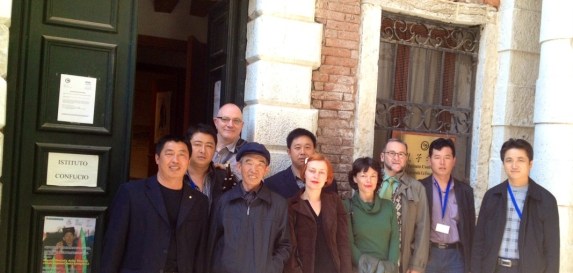

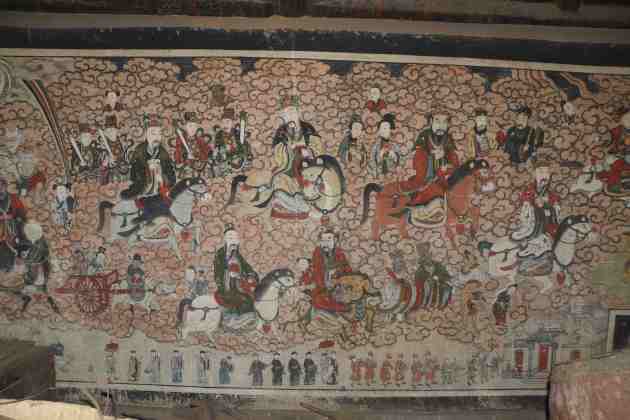


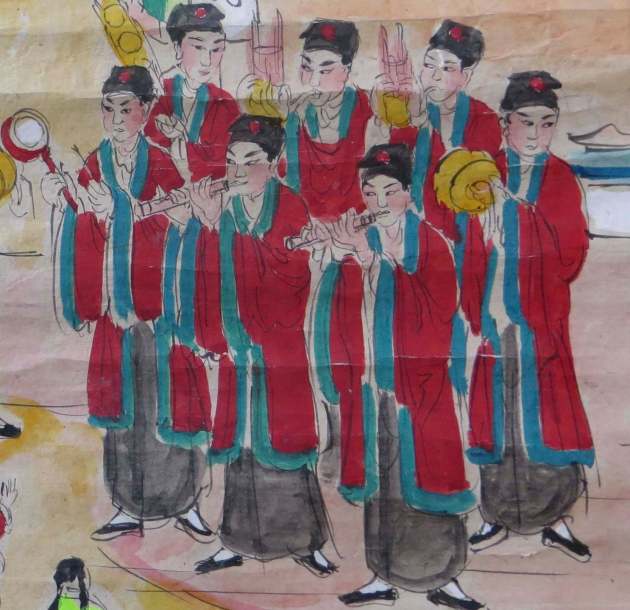

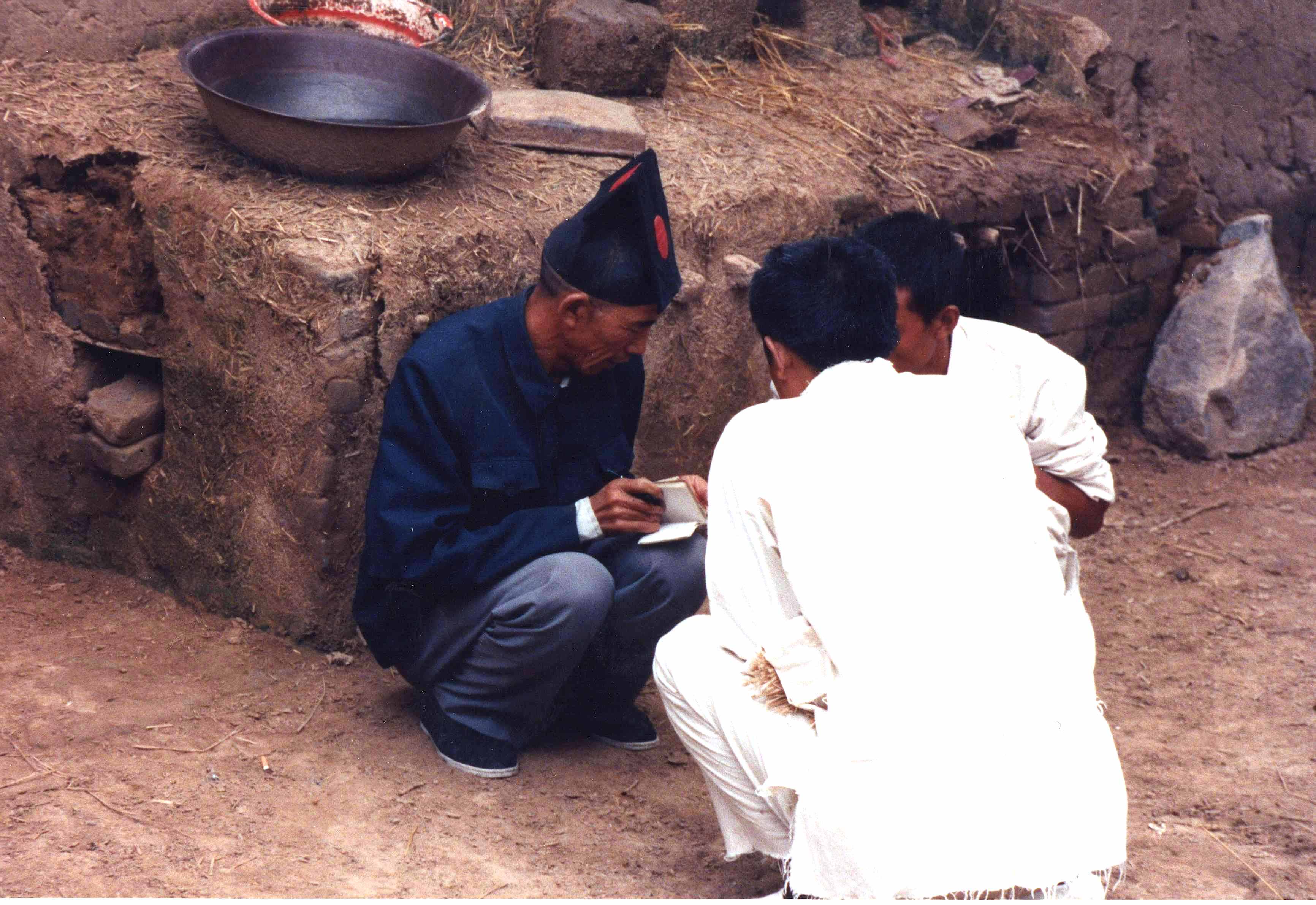


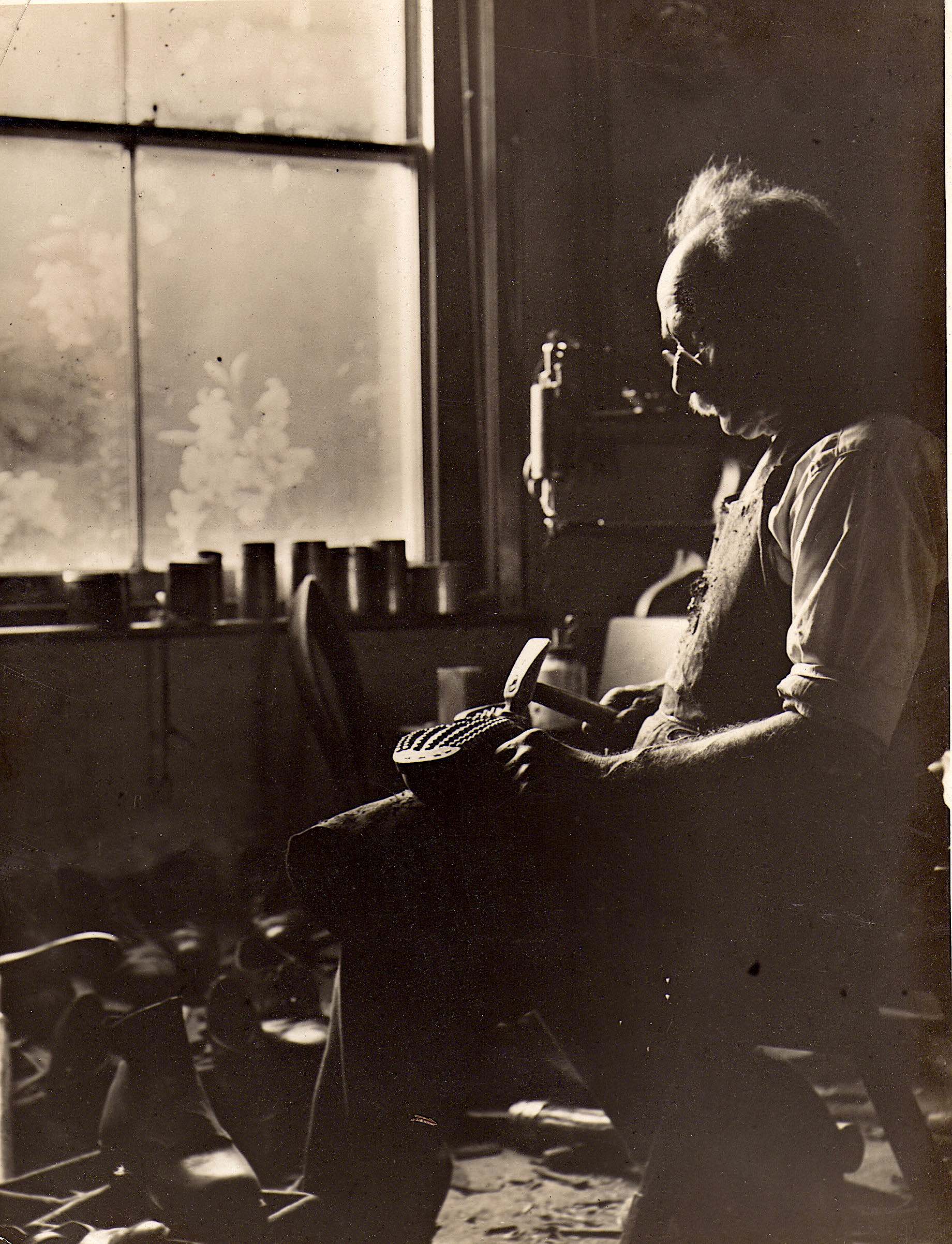

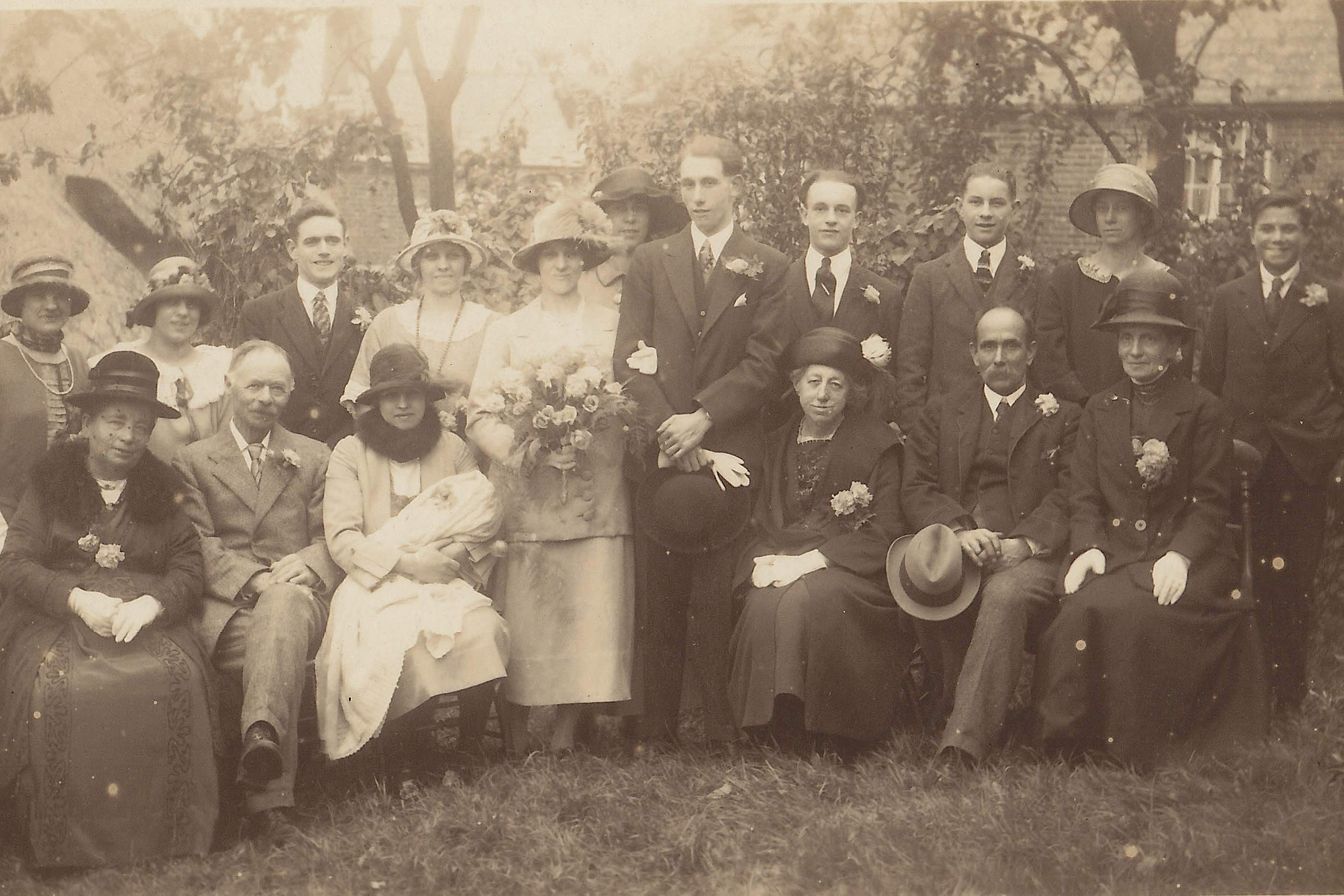

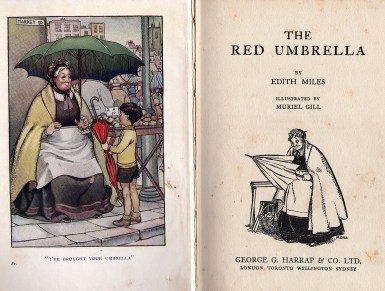




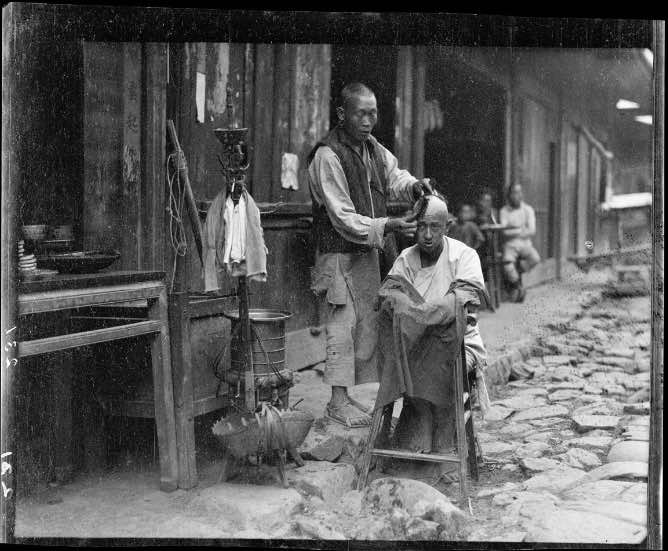





 Glorious is the Earth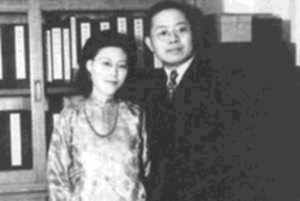


 From 1986 I used to visit Yuan Quanyou in her office at the dilapidated yet numinous MRI compound at Dongzhimenwai, her beaming face greeting me between high stacks of ancient documents. There, with unassuming industry she was still producing further volumes in the MRI’s wonderful annotated series of iconographical collections on Chinese music history, such as the 1988 Zhongguo yinyueshi tujian 中国音乐史图鉴 [Illustrated history of Chinese music].

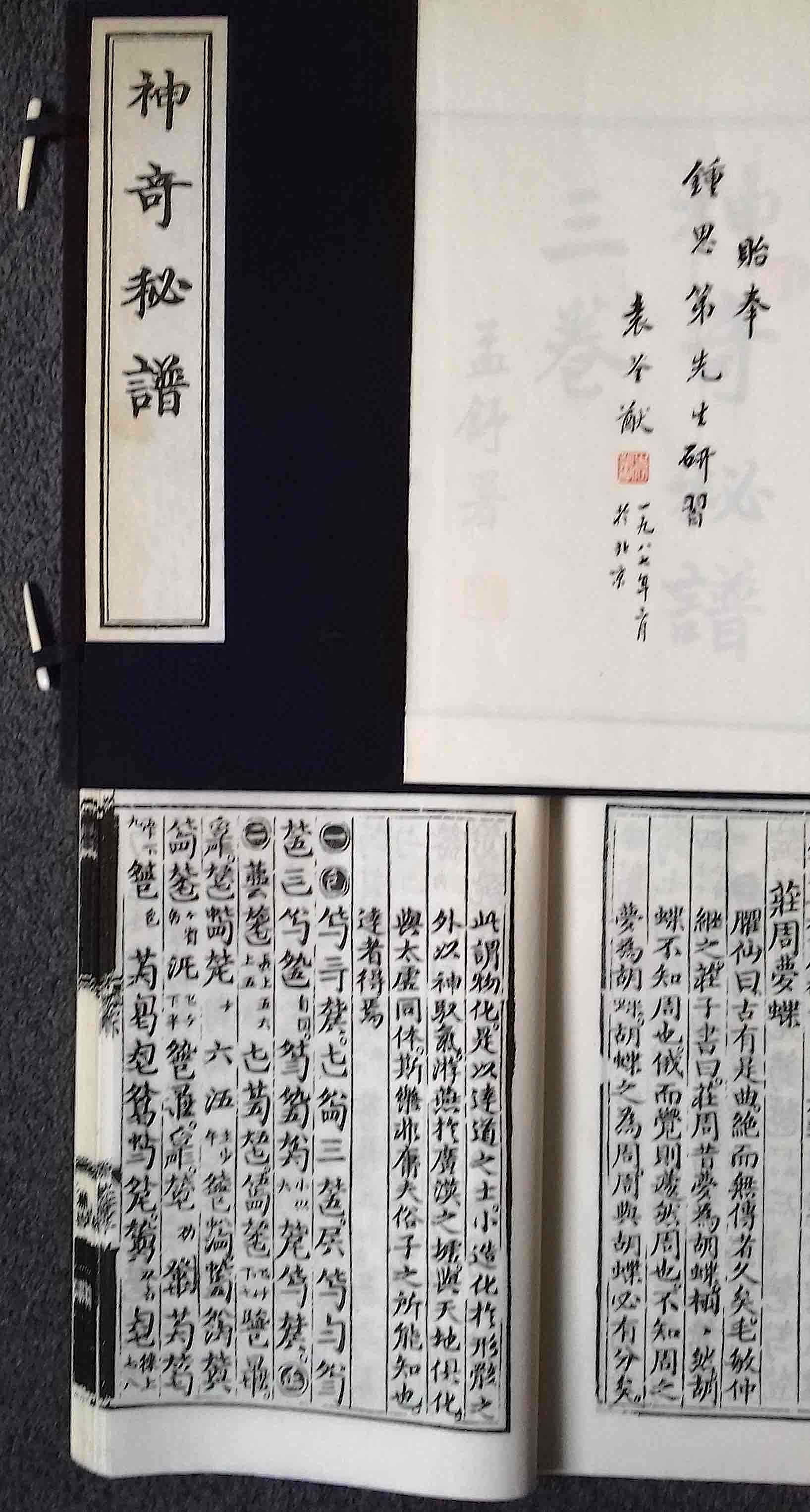
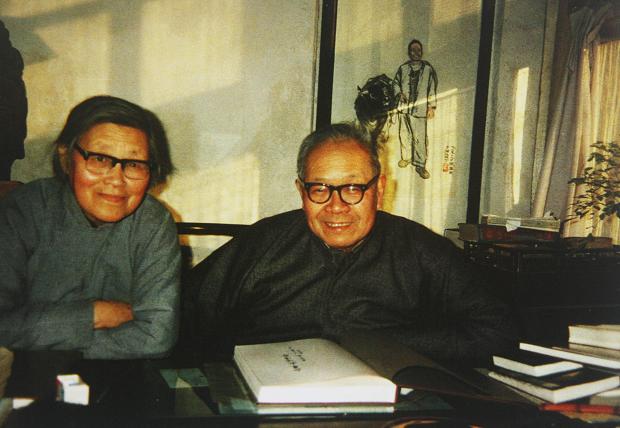
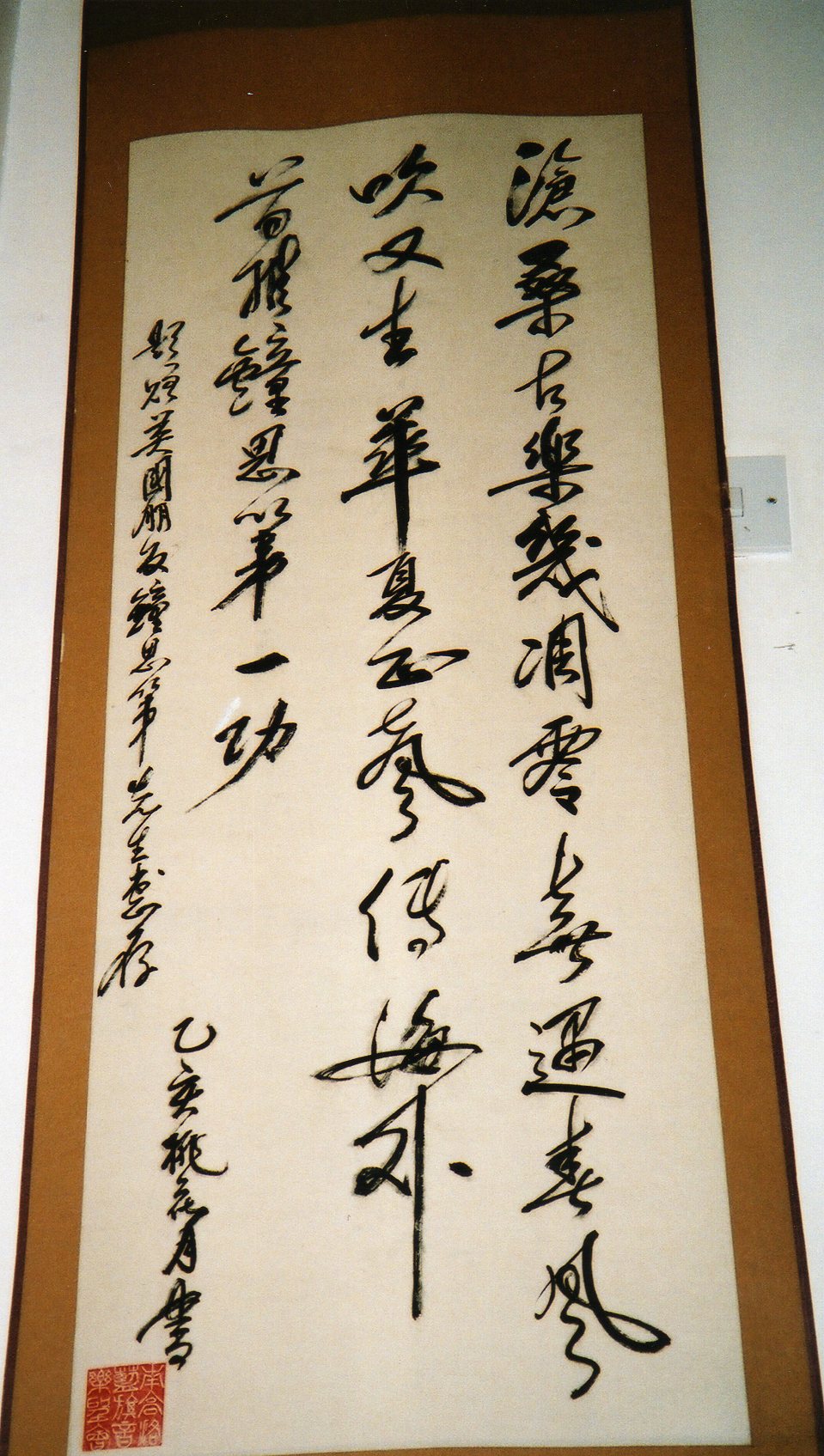

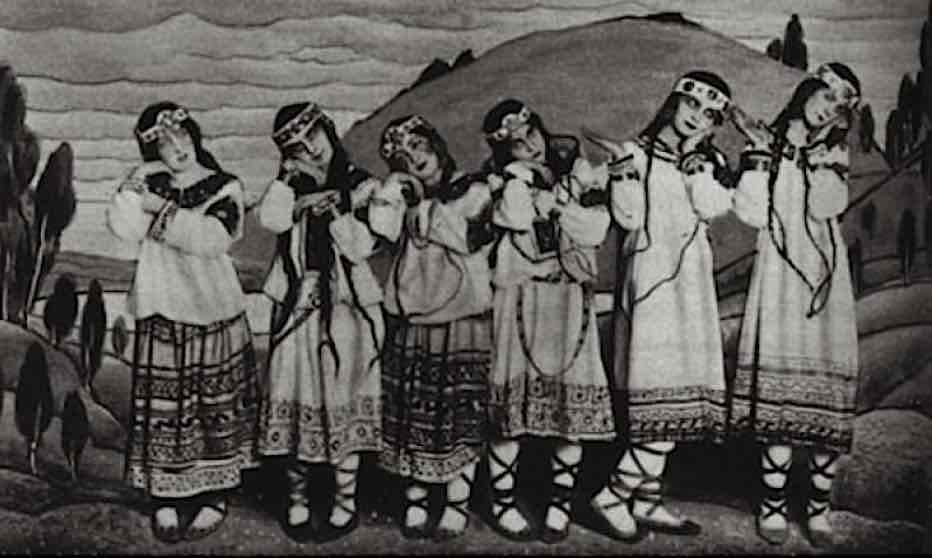


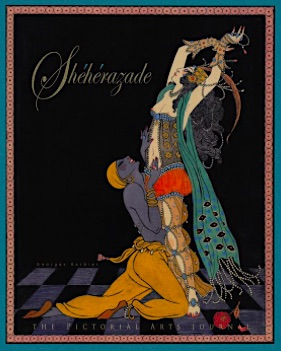
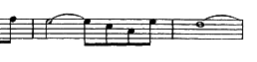


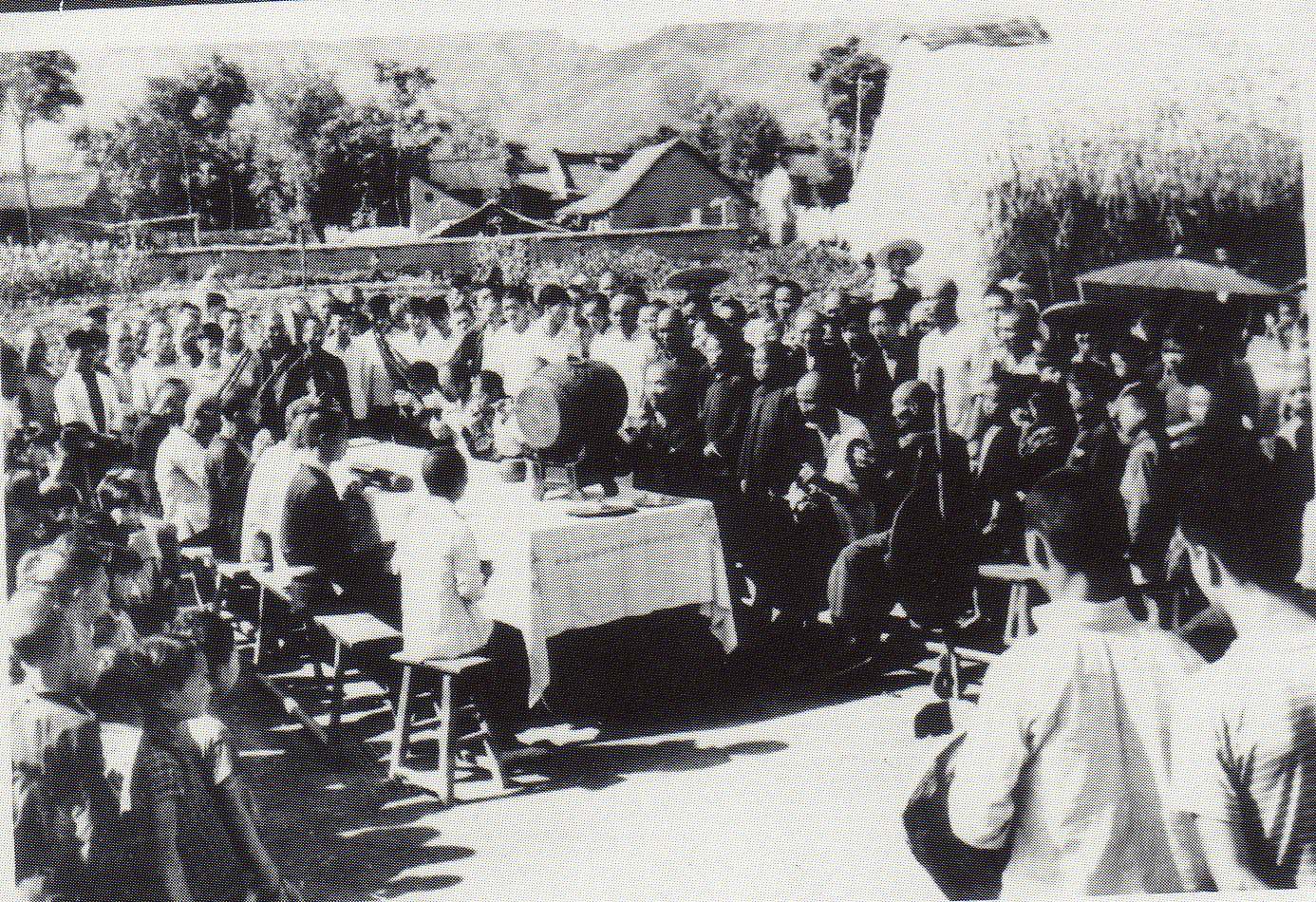

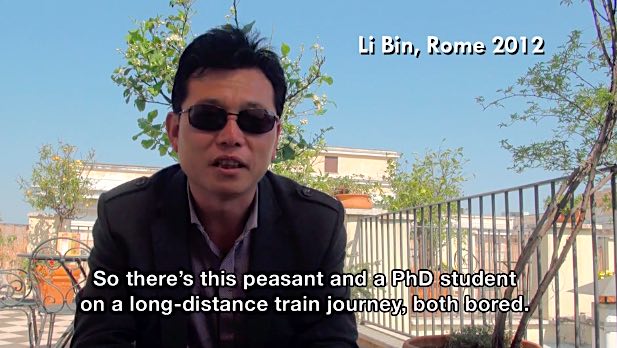


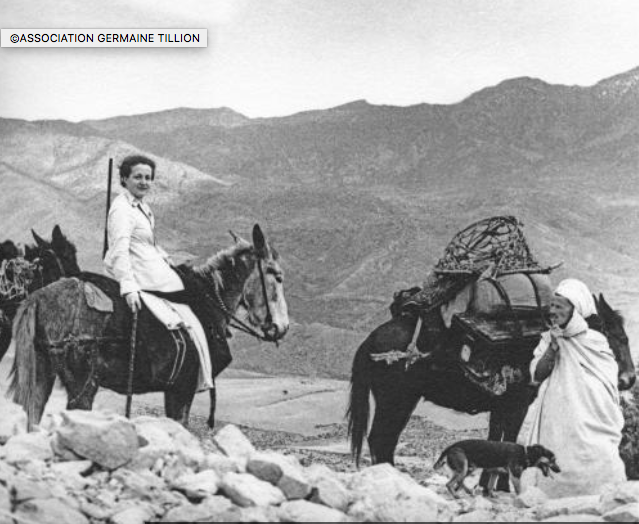


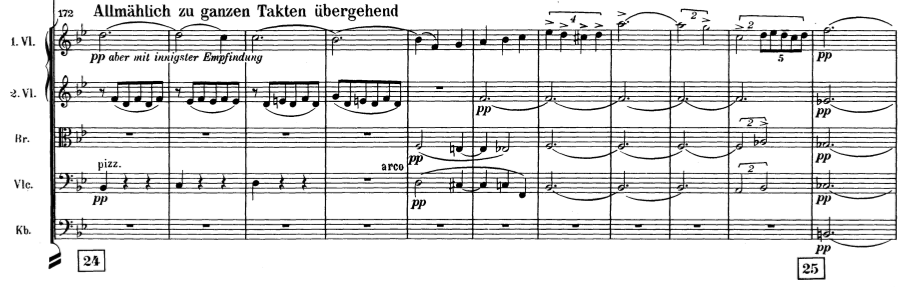




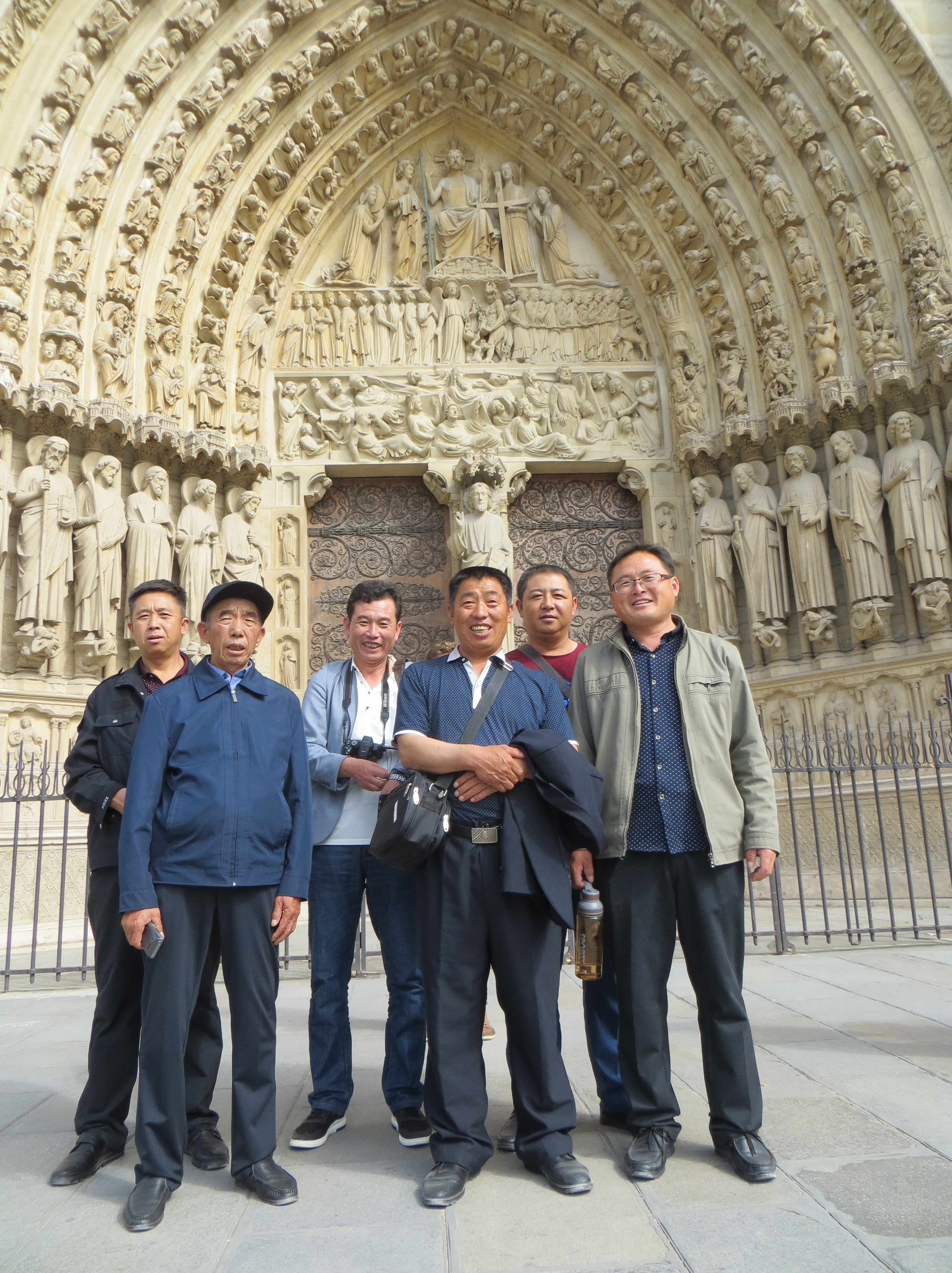

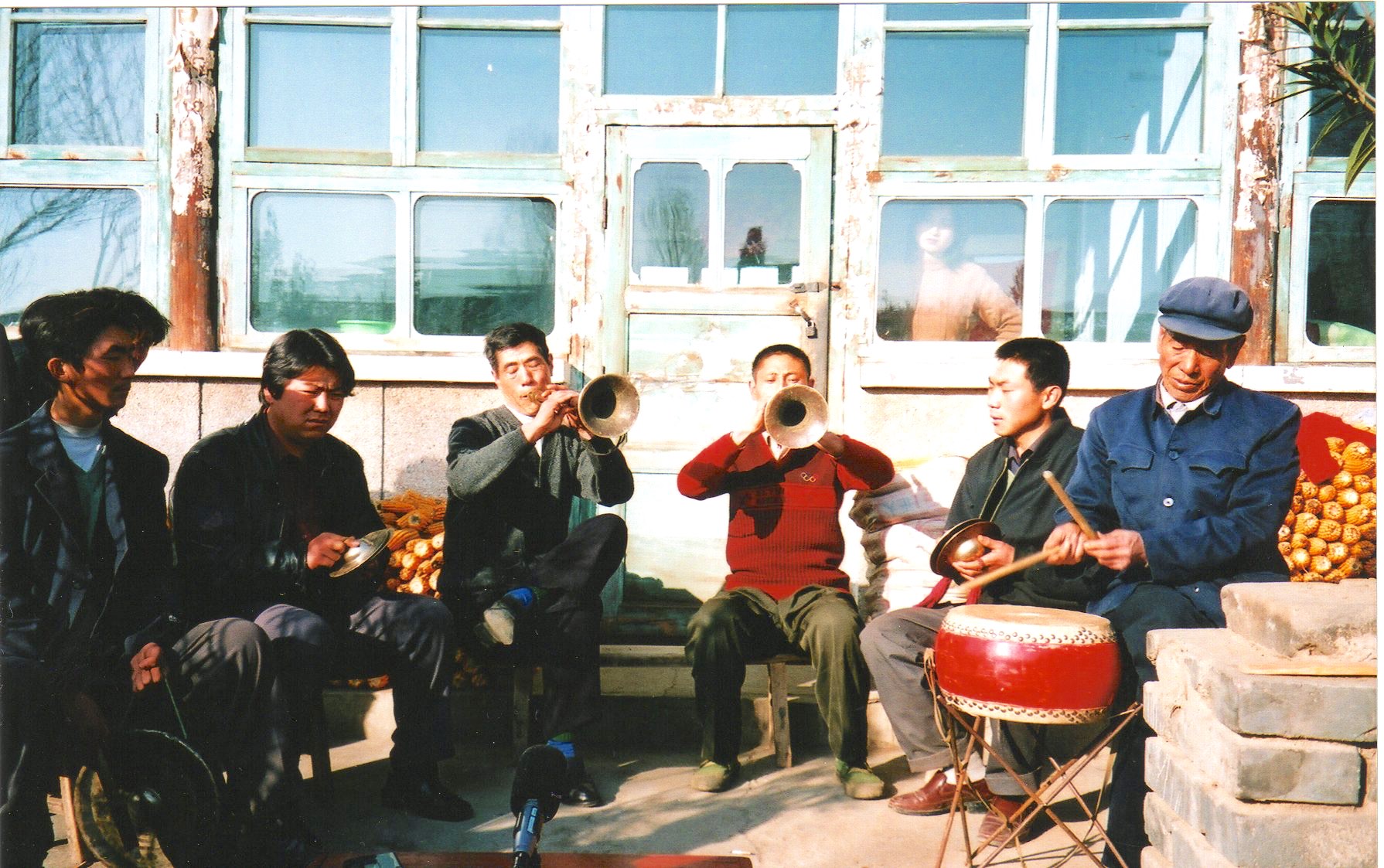

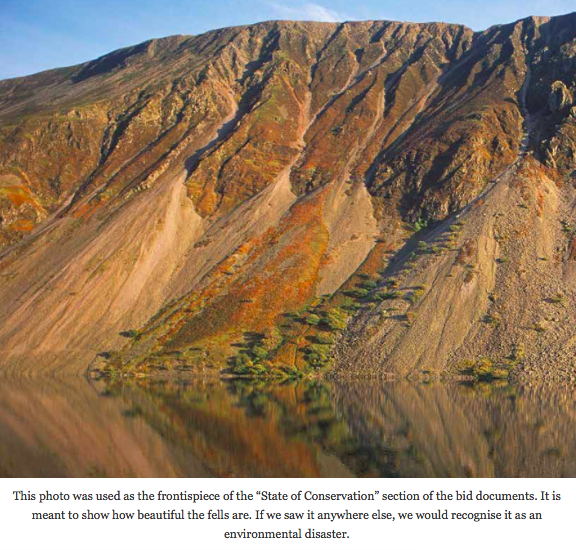
 Stephen Jones: a blog