Just as I was lamenting the lack of public acknowledgement of the crimes of Maoism—by comparison with countries where regime change has enabled such necessary commemoration (see e.g. my posts on Ravensbrück, Sachsenhausen, Hildi, Gitta Sereny, the work of Philippe Sands, the GDR, and the Salazar regime)—the new Wang Bing 王兵 documentary Dead souls, just shown at Cannes, is a timely reminder of his brave work and that of other documentarists and journalists, not to mention their interviewees, survivors of the late-1950s’ labour-camp system and the kin of its victims (see also this interview). Comparisons with the Soviet Gulag are inevitable (e.g. Kolyma, Solovki, The whisperers).
Case-studies of the system can be found both in factual reports and in novels by authors such as Zhang Xianliang and Yan Lianke. Research on the notorious Jiabiangou camp in Gansu has an estimable history (note also Sparks). Wang Bing’s project goes back to meeting He Fengming in 1995 (herself a Gansu camp survivor), whose husband died at Jiabiangou—resulting in Wang’s 2007 film Fengming: a Chinese memoir (here, with Spanish and Italian subtitles; also interview), shown at Cannes that year. From 2003 Zhao Xu 赵旭 began publishing his research on Jiabiangou, Fengxue Jiabiangou 风雪夹边沟. From 1997 Yang Xianhui 杨显惠 was visiting former inmates, and in 2003 he published his collection Woman From Shanghai: tales of survival from a Chinese laborcamp (English translation 2009). As Wang Bing began dramatizing these stories in a narrative film, he met more survivors from Jiabiangou, and The ditch was premiered in 2010—a deeply distressing watch (here with French subtitles):
And then, even before Wang’s latest documentary was released, the great activist film-maker Ai Xiaoming 艾晓明 (b.1953, another Beishida alumna later based in Guangzhou: following Ian Johnson’s interview, note his important book Sparks; for another interview, click here) filmed her six-hour Jiabiangou elegy: life and death of the rightists (2017)—in five parts, starting here:
The interviewees note the general desperation of the inmates’ families and the local population, themselves struggling to find anything edible. Yang Jisheng, whose book Tombstone is an important source on the great famine of the time, points out the political background in Gansu (for the famine and Wu Wenguang’s Memory project, click here; for the works of Frank Dikötter, here).
Wang Bing’s Dead souls is even longer, at 496 minutes—here are three clips:
* * *
That latter excerpt leads me to a subsidiary point about ritual and ritual soundscape, about suffering, and people’s lives—and in this case the suffering that we can, and must, document is that of the Maoist years.
My film Notes from the yellow earth (DVD with Ritual and music of north China, vol.2: Shaanbei) contains a lengthy sequence (§B) from a similar funeral—filmed in a village which indeed has its own traumatic memories. One might hear the playing of such shawm bands as merely “mournful”—indeed, that’s why younger urban dwellers are reluctant to hear them, associating the sound with death. And of course the style and repertoire of these bands took shape long before Maoism, based on earlier historical suffering. But we can only hear “early music” with our own modern ears…
So in the context of Wang Bing’s film the bleakness of the soundscape really hits home, suggesting how very visceral is the way that the style evokes the trauma of ruined lives and painful memory—slow, with wailing timbre and the “blue” scale of jiadiao, the two shawms in stark unison occasionally splintering into octave heterophony. For similarly anguished shawm playing, cf. playlist, tracks 5 and 6 (commentary here). For anyone still struggling, despite my best efforts, to comprehend the relevance of shawm bands, Wang Bing’s scene should be compulsory viewing. Similarly, since I often note the importance of Daoist ritual in Gansu, the camps there might form one aspect of our accounts of ritual life there.
As I noted in my post on the famine, this is just the kind of memory that the rosy patriotic nostalgia and reifications of the Intangible Cultural Heritage project are designed to erase.
It’s not as if the prisoners had been caught red-handed in plotting the downfall of the Chinese Communist Party. Nearly all of the interviewees insist they are loyal, patriotic party members, with some saying they were indicted for a small critical comment against a supervisor or splashing tears on a portrait of Mao. One interviewee recalls hearing how leading cadres were sending people off to “re-education” by random, just to prove Mao’s view that 5 percent of society is composed of “bad elements.”
Amidst a shameful wall of official silence, both Ai Xiaoming and Wang Bing, along with their interviewees, were subjected to harrassment while filming. It may seem nugatory to observe that technically the editing and structuring of their films is highly accomplished.
And these are just a few of many hundred such camps, with their countless victims. No less harrowing is a film by Xie Yihui 谢贻卉 on juvenile labourers in a Sichuan camp:
The independent film-making of Ai Xiaoming and Hu Jie plays a major role in Ian Johnson’s recent book Sparks.
* * *
The simultaneous national famine is the subject of a growing body of research—here’s an impressive documentary:
Like “the German soul”, suffering in China isn’t timeless: it is embodied in the lives and deaths of real people in real time. People dying since I began fieldwork in the 1980s all had traumatic histories; at the grave their memories, and those of their families, are covered over merely in dry earth, ritual specialists only performing a token exorcism that doesn’t obviate the need for a deeper accommodation with the past.
Arguments for maintaining the stability of the state, avoiding chaos, are paltry compared to the duty to commemorate, to learn from history—for Europe, UK, anywhere in the world. Just a couple of examples: the destruction of the Summer Palace by British troops, and the 1937 Nanjing massacre. We should all owe loyalty to truth, to people; in China it’s an ethical duty, not least in the tradition of filial piety.
And all this may remind us how important it is to seek beyond the sanitized representation of “Chinese folk music”, or indeed Daoist ritual, both in China and abroad. The people shown in these documentaries are just those who anyone doing research in China will encounter—whether working on social or cultural life (for a classic ethnography of commemorating Maoism through the fortunes of a Confucian temple in Gansu, see here). The stories of suffering, however distressing, need telling (cf. Memory, music, and society).
Following the Daoist ritual to bless a football team, another intriguing debate has just arisen on the place of Daoist ritual in society under a notionally secular and atheist regime. [1]
In Minqin county in the north of Wuwei municipality in Gansu province, an exorcistic Daoist ritual was performed recently at the inauguration of the construction site of an experimental thorium reactor of the Shanghai Institute of Applied Physics, part of the Chinese Academy of Sciences. Though the ritual was commissioned by the local construction team, two employees from the institute were promptly sacked and placed under CCP investigation for having failed to stop the contractors, thus “deviating from the scientific spirit”.
Rituals for “moving the earth” are commonly performed all over China. This one was conducted by a single local priest depicting talismans and burning yellow paper memorials, as a sheep was slaughtered (lingsheng 领牲). In the brief video, at some distance one can see an altar table, around which a shawm band stands to play.
Some may be content to seize on the story to demonize the CCP (which is fair enough, as far as it goes). But again, just as with the Daoist ritual for the football match, what is more notable is the intelligent rebuttals of the po-faced official stance that are already appearing online and in the media—if not yet on a par with the protests that greeted the Pingyi funeral clampdown. Most authoritative essays come from the brilliant Tao Jin, and on WeChat here; doubtless there will be more. A critique from a leading Daoist priest, marred by introducing a confused angle of indigenous and foreign religions, has evaporated from the void.
So it’s another storm in a teacup. Local rituals are performed all over China (including, magnificently, Shanghai). The problem here was merely that the CCP shouldn’t be seen to be promoting “superstition”—so it’s a healthy sign that the online community rallies round to observe that by the CCP’s own terms it’s no longer considered as such, and to stress the depth of “Daoist culture” that the Party itself now propounds. The authorities’ kneejerk reaction can only entrench people’s “belief” in the laws on religious freedom. The popular message is clearly: don’t mess with the Traditional Culture of the Chinese Peoples!
It’s also a reminder that Gansu must be one of the most fertile sites for research on household Daoist ritual!
[1] See this from Sixth tone, with a brief video clip (why on earth (sic) did someone deem the video footage acceptable but not the original audio?!); and a follow-up expounding the issues clearly:
I also fear that Taoist conservatives—the kind who head up the country’s religious associations—will grow tired of reacting to public suspicion with openness and warmth, and will instead try to defend Taoism from a purely nationalist standpoint. As China’s sole homegrown religion, Taoism is fertile ground to be claimed by hyper-patriotic revivalists of traditional Chinese culture. It is essential that Taoists remain level-headed and oppose radical and exclusionary political attitudes.
For other comments, see e.g. here, here, and here.
In Berlin a couple of weeks ago, apart from my visit to Sachsenhausen I was keen to explore the city’s GDR history, moving on into the 1950s and beyond—the Stasi memorial sites (as the Rough guide notes) making a potent antidote to the trendy Ostalgie of Trabi kitsch. Here my experience of China, learning to empathize with “sufferers” there (Guo Yuhua, after Bourdieu), feels all the more relevant.
To limber up I took the U-Bahn to Alex, which I can’t presume to call by such a familiar name.
Alexanderplatz: the Weltzeituhr and Fernsehturm (1969), with the 13th-century Marienkirche—not leaning towers, more an innocent trompe-l’oeil of my camera…
My splendid host Ian Johnson (whose own writings are a must-read on both China and Germany) made a fine guide for a trip along the remnants of the wall, Checkpoint Charlie and so on.
We passed the Staatsoper, where I performed Elektra in 1980. How shamefully little I knew then, and how limited was my curiosity. Throughout my recent visit to Berlin it finally hits me how very pampered our lives have been compared to the painful decisions that our German contemporaries constantly had to make.
Do click on these links, from a fine series of short films tracing the timeline of the Wall:
Meanwhile Timothy Garton Ash was beginning his long acquaintance with the regime.
Stasi memorial sites I visited both the Stasi prison and the Stasi museum. Though they’re not so far apart in the Lichtenburg district, I wouldn’t advise trying to do both in one day—the prison tour is excellent, and even by spending the rest of the day there I still only saw a small part of its exhibits. While the museum is less taxing than the prison, its location has retained a more suitably grim, bleak, forbidding air. As in Sachsenshausen, it’s wonderful that these sites are so busy, with many school parties—though I didn’t see any Chinese tour groups among them…
Just a few months before I was born, the major popular uprising of 17th June 1953 throughout the GDR (wiki, and a wealth of online sites, notably here), documented in both exhibitions, is far less known abroad than Budapest 1956 and Prague 1968. Needless to say, the popular uprisings of June 1989 in China are not so called there.
Studying the exhibits of perpetrators and victims, one continues to deplore the appalling ethical morass caused by Nazism—what a terrible price to pay throughout the following decades. Again, what would we have done?
Some of the eyewitnesses guiding visitors around the site.
At the Stasi prison (Gedenkstätte memorial)of Hohenschönhausen (formerly a Soviet special camp) the team of wonderful tour guides includes many former inmates; though our guide that day wasn’t among them, he gave us passionate articulate reminders of how crucially important it is to learn lessons amidst the current erosion of crucial rights worldwide.
Freya Klier and Stephan Krawczyk.
There were many strands to the counter-culture in literature and music. Icons of the resistance in the arts became figureheads, like singer-songwriters Wolf Biermann (b.1936, exiled in 1976) and Bettina Wegner (b.1947); Bärbel Bohley (1945–2010), whose 1978 painting Nude makes a striking image in the prison; performers Freya Klier (b.1950) and Stephan Krawczyk (b.1955); and Jürgen Fuchs (1950–99). For subversive film in the GDR, see here.
But just as moving in the prison is the series of mugshots of ordinary people making a stand, trying to escape, or just caught up in the maelstrom.
However much I admire our own posturing counter-cultural heroes, all this can only make them seem bland and smug. Sure, the punk movement in London, New York, and so on was important—more so than my life in early music, anyway, though that was also new (“original”!). But apart from getting abused in the Daily Mail, the punk life in the UK hardly involved such serious risks. For the GDR punks, [1] the “fascist regime” casually snarled by the Sex pistols would have had a far deeper resonance (cf. punk in Madrid, and jazz in Poland).
The Stasi museum alsohas exhibits on the vast network of IM informants—including punks. The Stasi even managed to recruit two of them in the band Die Firma—“it is not known whether they both knew each other’s secret”. Of course, the “decision” to inform, framed by self-preservation or desperation, and with whatever degree of apathy, was itself no simple matter.
Die Firma, with Tatjana Besson, 1988.
Here they are live in 1988:
Wedding at Jena, 1983: the couple’s friend was informing on them,
But the most basic routine parts of growing up were fraught with anxiety.
Alternative kindergarten, Prenzlauer Berg 1980–83.
“Learning differently”, evening school 1988.
The Christian resistance was another crucial focus right through to the 1989 Montag demos that brought the whole system down. The pastor Oskar Brüsewitz burned himself to death in protest in August 1976—just as I was spending an idyllic summer after graduating (cf. Alan Bennett’s wry comment).
Also explored at the museum is the psychology of the Stasi employees.
The whole second floor of the museum preserves the offices of Erich Mielke, head of this whole hideous edifice. It’s a riot of beige and formica (cf. Deutschland 89, scenes of which were filmed there). Mielke’s diagram of the layout for his breakfast is a masterpiece of pedantry—of which, I have to say, my father would have approved.
The diagram has now been cannily immortalized in a mouse-pad, one of the few concessions to modernity in the museum’s suitably antiquated little bookshop—Is Nothing Sacred?
As throughout the socialist bloc (including China), for bitter relief, jokes always made a subversive outlet.
The museum also tellingly depicts the scramble of people all over the east to limit the destruction of Stasi files after November 1989.
* * *
It’s little consolation to reflect that the GDR was surely exceptional in its degree of surveillance, even in East Europe. And in such a vast and predominantly agrarian country as China, for all the horrors of Maoism, and the current intrusive mission, “the mountains are high, the emperor is distant”.
Precisely because German lawmakers and judges know what it was like to live in a Stasi state, and before that in a Nazi one, they have guarded these things more jealously than we, the British, who have taken them for granted. You value health more when you have been sick.
I say again: of course Britain is not a Stasi state. We have democratically elected representatives, independent judges and a free press, through whom and with whom these excesses can be rolled back. But if the Stasi now serves as a warning ghost, scaring us into action, it will have done some good after all.
And again, I both recoil at this horror that was perpetuated right through my naïve youth, and admire the German determination to document it for future generations.
Screening my film in Berlin last week gave me the chance to explore a city that I hardly knew. It seems timely to negotiate a new place, a new transport network—I was beginning to feel that I can only find my way from my house to Li Manshan’s village.
Rather than some anodyne heritage flapdoodleà la chinoise, here I’ll introduce Sachsenhausen concentration camp, with a sequel on Stasi sites in Berlin itself.
* * *
Having been so moved by Sarah Helm’s harrowing book on Ravensbrück, I had hoped to get there, but with limited time Sachsenhausen (cf. wiki and many more detailed sites) is more accessible, and anyway demands a whole day (and I’m acutely aware that we can be suitably horrified by our day-trip and then come home to friends for a nice plate of pasta with wine.)
At the same time, it’s deeply inspiring to see not only how well documented such sites are (including the Stasi memorials) but also how busy they are—the grounds are constantly full of school groups receiving the most important education.
All such camps saw prolonged use, both before the war (Oranienburg concentration camp started operating in 1933, moving to Sachenhausen in 1936) but also long after, under Soviet (indeed allied) and GDR regimes.
* * *
I visited Sachenhausen last Friday—which happened to be Hitler’s birthday, occasion for a repellent Nazi festival in parts of eastern Germany.
To arrive by train at Oranienburg station is itself disturbing, thinking of how the inmates reached the camp. One of the most hideous accounts at the site tells how in September 1939 the rabid inhabitants of the town abused 534 Polish Jews as they marched to incarceration and death—though they had been duped that the arrivals were themselves murderers, one suspects this wasn’t an exceptional case (Wachsmann, KL [definitive source on the camp system], p.230).
In the barracks I was taken aback by the sitting toilets and washrooms—of course, inmates were highly vulnerable in these places, often being brutally beaten to death there, so it’s hardly relevant to contrast the primitive conditions at Chinese laogai camps, or ordinary Chinese homes.
Inmates (from all over Europe, and Russia) included political prisoners, Jews, homosexuals, and “antisocials”. In autumn 1941 alone over 10,000 Russian prisoners of war were executed at the camp. But individual lives play an important role both in the exhibitions and online, such as Dutch resistance fighter Ab Nicolaas (who later became a clown), or the German Sinto Walter Winter.
As Helm describes harrowingly for Ravensbrück, even the twice-daily Appell roll-call (see photo at head of article) was purgatory.
The infirmary exhibitions are substantial too, including sections on medical experiments on young Jews and the reunion of survivors fifty years later; and on the camp brothel.
Among the most disturbing exhibitions is in the watch tower, on the relations of locals with the camp and the SS—“What would we have done?” again. The SS were billeted in town, with their own bands, taking part in street parties. People recalled how as kids they were handed out balloons and lollies by the SS.
“Tarantella for German soldiers”—SS officers attending a folklore festival on Capri, alleged to be the Blockführers of Sachsenhausen who had been shooters in the 1941 Russenaktion.
Death march and “Liberation”, 1945.
After the war Then on to the display about the Soviet camp 1945–50, just as gruesome—12,000 of 60,000 prisoners died there. Here too the documenting of individuals is sobering, such as the meticulous diarist Günter Sack, and Stella Kübler-Isaakson, a Jewish spy for the Nazis who was imprisoned here from 1946 to 1956 (see Peter Wyden, Stella, reviewed here and here).
The Soviet Special Camp was closed in 1950, but not all of the prisoners were set free. The majority of the prisoners sentenced by the Soviet military tribunal were sent to East German prisons. Some of the internees were tried during the Waldheimer cases in the GDR, and Soviet prisoners were deported to camps in the USSR.
The site’s GDR history (see here, with sequel here) provokes thought too. There are exhibits, including films, of the first commemoration in 1955, with GDR citizens touring the camp; after 1961, as the memorial calendar became more busy, it became a site of “anti-fascist education” even as the repression continued. From 1976 couples even visited on their wedding day—not a simple case of indoctrination, but often related to the sufferings of their parents at the camp.
At the same time (as the catalogue describes), the state appropriation of the memorial for its own purposes was gradually subverted; peace movements, church groups, citizens’ initiatives, and “excluded groups” began chipping away at the GDR’s “monopoly on heroism”.
Again, you can choose if you can bear to watch films like this:
* * *
How such catastrophic moral failure occurred remains imponderable—so much for the German Soul. As Neil MacGregor asks,
How did the great humanising traditions of German history—Dürer, Luther’s Bible, Bach, the Enlightenment, Goethe’s Faust, the Bauhaus, and much, much more—fail to avert this total ethical collapse?
It does indeed seem a bit late for me to take all this to heart now. I can’t claim that if I’d have trodden a different path if I’d been exposed to all this history in my teens, but still. And at least now with my work on China I’m not churning out the patriotic agenda of the glories of Han–Tang music, or merely collecting happy folk ditties: it’s all political.
Until recently it might have felt a blessing to be English, not to have been beset by such agonizing dilemmas—yet another “What would we have done?”. But how admirable the Germans have become since the 1990s: not only do they put us to shame in their response to the migration crisis, but further to have set up this network of memorial sites—whereas in Britain there are many who not only consider themselves separate from Europe but still have the hubris to protest the exposing of the crimes of our own imperialism, denying the lessons of history.
I also hope that one day in China there will be meticulously documented sites like this, to commemorate the self-inflicted disasters of its own modern history (cf. this post). Mind you, talking of memorials, here’s one in the southern USA.
In all these places—Germany, China, the USA, and so on—such traumatic histories are an essential aspect of the cultural soundscapes that we so blithely celebrate. Including the Chinese ritual soundscape. And Britain?
For Mahler’s prophesy, see here. For the first gulag in Soviet Russia, see here.
* * *
Returning to civilisation, on my walk from the S-Bahn at Jungfernheide I would pass charming door statuettes over the entrances to pre-War apartment blocks in Herschelstraße and Fabriciustraße (for shutter catches in Venice, see here; for the accordion, see here). Ordinary domestic life… I wonder what happened to the inhabitants.
* Yet another in a series of vignettes (starting here) from my recent stay with the wonderful Li Manshan(for similar excursions, see here and here). *
Altar to Great Lord Hudu, Lower Liangyuan temple 2018.
My time with Li Manshan last month also gave me the chance to renew my acquaintance with Elder Hu, most intriguing of local deities in the region.
Surveying “cultic buildings” just northeast of Yanggao in the troubled 1940s, the intrepid Belgian missionary Willem Grootaers drew attention to a local cult of the deity Hutu 胡突 or Hudu 胡都, aka Elder Hu (Hulaoye, Huye, Hushen 胡老爺, 胡爺, 胡神) or even Dragon Hu (Hulong 胡龍). His temples are often known as Hushen miao 胡神廟. See
Willem A. Grootaers, “The Hutu god of Wanch’üan, a problem of method in folklore”, Studia Serica VII (Chengdu, 1948), pp.41–53. [1]
Around the Xuanhua region Grootaers and his Chinese assistants found fourteen temples devoted to Elder Hu, as well as six more with tablets in the temples of other gods; as a lateral image in Dragon King temples he appeared sixteen times.
I have already published brief introductions to the cult in Yanggao. [2]
In south China one often find “cults,” in the common sense of groups (whether voluntary or ascriptive) devoted to a particular deified local territorial personage. Much work on southern Daoism is complemented by studies of such gods. One finds some cults in north China too, although they are more often to “national” deities. Such groups may or may not include ritual specialists performing complex sequences of ritual and liturgy.
But one important regional deity whom people in north Shanxi and northwest Hebei do worship is Elder Hu. Perhaps an ancient general, his proper name Hutu (or Hudu) may be Mongol. Closely related to the Dragon King deities, he too is thought to have power over rain and the elements. In Upper Liangyuan there was a statue of him in the Temple to the Three Pure Ones (my book, pp.46–9), but in Yanggao the main sites for his worship, still today, are the temples of Zhenmenbu (for recent images from Hannibal Taubes, see here), Xujiayuan, and Lower Liangyuan. Here I introduce the latter two.
Xujiayuan The Xujiayuan temple (formally named Temple of Clear Clouds Qingyun si 清雲寺, though as usual it is commonly identified simply by the name of the village) is part of a network of early temples lining the border north of the county-town, just beneath the remains of the Great Wall. From our 2003 notes:
In the main temple the three god statues (from left to right) were Pineapple Tree King God (Boluoshuwang fo, responsible for water), Watery Heaven God (Shuitian fo, one of the Heavenly Officers tianguan), and Elder Hu (Hulaoye, responsible for rain, not water in general). On either side of Elder Hu were small dragon statuettes. There was also a portable statuette to Elder Hu to be taken on procession.
Clothing a god statue, Xujiayuan 7th-moon temple fair 2003.
The various local legends about Elder Hu are not consistent. Xujiayuan villagers said that his old home was Hujia village quite far further east in Tianzhen county (see map below), so the village always donates to the Xujiayuan temple fair (in 2003 they gave 300 yuan). According to the temple’s abbot Miaoyun, Elder Hu was an ancient general called Hutu; the common people erected a temple to him after he was wrongfully executed by an emperor and the climate went awry (xingfeng zuolang 興風作浪).
Several online sources on the temple claim that Elder Hu was a grand court official called Hu Tu 胡秃 [sic] in the Warring States period. Unjustly executed, his soul wouldn’t disperse, whereupon The Jade Emperor enfieoffed him as a god. In the early Tang dynasty, during natural disasters in the 6th year of the Zhenguan era (632 CE), Elder Hu rescued the populace by scattering buckwheat, and they built a temple to him in thanks.
Most village temples in the region are unstaffed, but the Xujiayuan temple had about eight resident Buddhist monks when we visited in 2003. The main day for the temple fair is 7th moon 3rd; it begins on the 1st and finishes on the 4th. This is a most vibrant event, with many stalls, and an opera troupe, shawm bands, and the temple’s own monks all performing an impressive nocturnal yankou ritual (see the DVD Doing Things with my book Ritual and music: shawm bands of Shanxi, §B5).
Another major ritual of Xujiayuan is the rain procession on 5th moon 18th, bearing aloft the statuette of Elder Hu. The temple is the centre of a parish (she 社) of twelve villages (still known as “brigades”—note the casual elision of imperial and Maoist vocabulary), although by 2003 it was mainly the four nearby village that were taking part actively. Elder Hu “deputes the dragons” (fenglong 封龍) to release rain.
Lower Liangyuan Today on the plain southeast of Yanggao county-town, with no temples still standing in Upper Liangyuan, the most important temple in the area is in the sister village of Lower Liangyuan just north. Its formal name is Temple of Efficacious Source (Lingyuan si 靈源寺).
7th-moon temple fair 2003.
The survival of the temple is due in large measure to the sprightly Yuan Xiwen 袁喜文 (b.1934!), still blessed with a youthful spirit within the body of a fit 50-year-old.
Yuan Xiwen, 2013.
Serving as a brigade accountant and cadre under Maoism, he did what he could to protect the temple, and led the revival of its temple fair upon the 1980s’ reforms. He has recently compiled a detailed genealogy of thirteen generations of the Yuan lineage (my film, from 57.46). Local society depends on men with such charisma.
The village has long had a larger population than Upper Liangyuan (1,120 in 1948, 1,805 in 1990, according to the county gazetteer), although since then it continues to suffer from the inevitable drift to the cities.
Back in 2013 we strolled over there to find Yuan Xiwen sitting in lotus posture on the kang in his bare house. He too told us a charming local legend about Elder Hu, detailed enough to have a certain authentic value:
Dragon Hu came from Jiaocheng village, southwest of Datong. [3] He held the post of looking after the cabinet official (geyuan 閣員) Wang Qiu 王囚 in Shandong province. Wang agreed to his request to return home for a visit to his old home. So Dragon Hu began the journey home, riding the clouds (jiayun 駕雲) from Shandong to Jiaocheng. Once he reached north Shanxi, he passed through “nine dragon mouths” (jiu longkou) in all. [For villages marked * below I know of active temples today; the others remain to be explored. The legend doesn’t track his earlier progress from Shandong—however did we manage before satnav?!].
At Wayaokou (Tianzhen county) there was a heavy downpour; he rode on through Zhendagou 镇大沟 (?), Zhenmenbu*, and Xujiayuan*, where he rested his horse (yinma 飲馬). Continuing his journey south, he rested his horse again at Liujiaquan, then at Lower Liangyuan* at midday, then on to Tailiang 太梁 (?) [which, said Yuan Xiwen, still had a decrepit old temple to him], to Lower Shenjing (?), and one other village which escaped me.
Throughout Dragon Hu’s progress, all the places he passed through were beset by hailstones. The Heavenly God (Tianshen) was angry, and made him pay a forfeit. So Dragon Hu pinched three ears of wheat into the shape of a shuttle, creating what is now buckwheat…
There’s clearly a lot more fieldwork to be done here—but how exciting it may be for someone to pursue!
Towards a modern history of the temple Yuan Xiwen recalled the village’s last rain procession, and temple fair, before Liberation. In the 7th moon of 1947 some three hundred villagers went on procession to the Xujiayuan temple, with big drums, gujiang shawm bands, and banners bearing the characters “Silence!” (sujing 肅靜), both there and back. From 1st to 3rd they stayed at Xujiayuan, returning on the 4th, holding their own temple fair from 5th to 7th.
The temple only had around a dozen mu of land; it was common land, not “owned”, and anyway there were no resident clerics, only one shabby temple keeper. This was surely typical—far from the great temple estates further south.
As collectivization escalated, the temple buildings were taken over by the Supply and Marketing Co-op (Gongxiao she 供销社). The god statues were taken away in 1956, to a little shrine in between the Lower and Upper villages; people still worshipped surreptitiously before them. The temple was only assaulted in 1966 at the opening of the Cultural Revolution; the murals were further damaged while it was used as a classroom. It was not until 1987 that Yuan Xiwen was able to lead the first temple fair there after the revival.
The modern religious history of this and other villages is closely related to the fates of sectarian groups. Though village temples were public sites, they made a natural base for sects like the Way of Yellow Heaven and the Way of Nine Palaces. [4] By the 1940s Lower Liangyuan was a hotbed of such groups. After the Yiguan dao sect was introduced to Yanggao in the 1940s, 200 of the 240 households in Lower Liangyuan are said to have belonged. While the villagers’ more public religious activities were somewhat separate, the sectarian persecutions of the early 1950s inevitably affected their spirits. Still, the sects survived underground until reviving along with more public ritual behaviour from the 1980s.
I should add that (as far as I know) there is no separate “cult” of sectarians worshipping Elder Hu, nor any scriptures to him.
March 2018 Over the years I’ve often passed by the temple—for instance when the Treasuries are burned before it during funerals (my film, from 1.03.56). But it’s been ages since I took a close look at the interior, so Li Manshan calls up the wonderful Yuan Xiwen and we stroll over there. They’re in the middle of a meeting of the clansmen—his younger brother is there. I’d have learned more about the temple images if Yuan had come to the temple with us, but he’s too busy with his family. Later Li Manshan tells me the temple committee had recently lost the temple’s old divination list, [5] and how rumours flew around about an inside job—until they found it again.
Divination list, 1882 (Guangxu 8th year).
The villagers don’t seem to know of any surviving steles—though after our discoveries in the Upper village, there may still be room for exploration in nearby ditches.
The temple has belatedly been taken under the wings of the county Bureau of Cultural Preservation, and (judging from my 2003 photos) some of its old murals seem to have been retouched. Though they clearly date from the late Qing (not the Ming, as the temple minders airily claimed), their beauty is rare in Yanggao villages—by contrast with the amazing wealth of such murals in nearby Yuxian.
The front complex during the 7th-moon temple fair, 2003.
March 2018.
The interior complex Inside the temple the main complex facing south onto the courtyard now has two rooms: a central hall to the Dragon Kings, and an east room to Elder Hu.
View of main rooms from courtyard.
The main altar of the central hall has statues of six dragon gods before a mural of the Jade Mother of the Five Dragons (Yulong shengmu 玉龍聖母):
Central hall, 2018.
Jade Mother of the Five Dragons, 2003.
On the rear wall, to the west and east of these central images, are further murals to the mythical emperors Yao, Shun, and Yu:
Further murals adorn the side walls—for the River God (heshen 河神) to the west, Efficacious Immortal (lingxian 靈仙) to the east (I think):
Central hall, mural on west side wall.
To the east of this central hall is the room to Hutu (photo at top of article). To one side of the main altar is a small portable statuette for processions, carried in a palanquin that rests by the west wall:
The side walls bear murals depicting the progress of Hutu through his domain:
Outside, to the west of the rear complex an old pillar capital survives (for much, much more, cf. Hannibal’s photos from nearby Hunyuan, and Yangyuan):
The front complex At the main entrance of the complex is a central room to Śakyamuni, flanked by his attendants Mañjuśrī (Wenshu) and Samantabhadra (Puxian). To its west is a room to Dizang and the Ten Kings:
The west and east side walls bear Ten Kings murals repainted since the 1980s—here are two details:
For even more recent images from Hannibal Taubes, see here.
* * *
But in the end I want to return to real human beings. As disembodied “cultural relics” these images may have no particular artistic merit; however numinous they may be, they’re still silent and static. In between the common fates of falling apart or becoming museums, temples are for living people, for interaction under changing social conditions; their gatherings are full of life, “hot and noisy“.
I can’t help thinking back to August 1992, my second visit to Li Manshan’s father the great Li Qing, when I even attended a funeral he led at Lower Liangyuan—alas, I had only just missed the village’s 7th-moon temple fair! Li Qing told me that two Daoist bands took part (later the temple committee only invited one). All his colleagues, with whom he had been performing rituals since the 1930s, would have taken part, like Li Yuanmao, Li Zengguang, Kang Ren, and so on.
After the 1980s’ revival I suspect they didn’t restore a fuller sequence of the jiao 醮 Offering, for whose segments Li Qing had recently recopied ritual manuals (I doubt they chanted any of the jing scriptures, for instance)—but still, their ritual programme may have been rather more complex than it later became (my book, pp.237–43). For Hoisting the Pennant, did they sing the hymn Yuyin 玉音 at the central pole? And how I would have loved to witness their Communicating the Lanterns; by the time I attended it at the temple fair in 2003, Li Qing was no more, and his pupils were less than familiar with the ritual.
7th-moon temple fair 2003, Hoisting the Pennant: the final chase. Front left, on nao cymbals: Erqing, shortly before he was lured away to become a migrant labourer. Photo: Wu Fan.
* * *
So this little introduction to Elder Hu gives you an idea of what we were up to before our brief yet charming encounter with the local constabulary on the walk home to the Upper village.
[1] Part of an extraordinary series that also includes
“Les Temples Villageois de la Region au Sud-est de Ta-t’ong (Chansi Nord), leurs Inscriptions et leur Histoire”, Folklore Studies 4 (Beijing 1945), pp.161–212.
with Li Shih-yü and Chang Chi-wen, “Temples and history of Wan-ch’üan (Chahar); the geographical method applied to folklore”, Monumenta Serica 13 (1948), pp.209–316 (for Hutu, see pp.272–274).
with Li Shih-yü and Chang Chi-wen, “Rural temples around Hsüan-Hua (South Chahar), their iconography and their history”, Folklore studies 10.1 (1951), pp.1–116.
with Li Shih-yü and Wang Fu-shih, The sanctuaries in a north-China city: a complete survey of the cultic buildings in the city of Hsuan-hua (Chahar) (Mélanges Chinois et Bouddhiques vol. 26), Bruxelles: Institut Belge des Hautes Études Chinoises, 1995 (for Hutu, see pp.7–9, 70–73, 109–10).
[2]Ritual and music of north China: shawm bands in Shanxi, pp.73–84; Daoist priests of the Li family, pp.49–50; Wu Fan provides further detail (Yinyang, gujiang, pp.61–71, 150–59).
[3] Yuan Xiwen said it was in Shanyin county, which it isn’t now—but anyway, judging by the logic of the route, and the limited radius of the cult, not the county considerably further south.
[4] See Yanggao xianzhi, pp.610–15; Zhao Jiazhu, Zhongguo huidaomen shiliao jicheng, pp.159–62. The Yiguan dao was a particular scapegoat; though in some respects inquisitors were quite meticulous, I suspect the name served as an umbrella term, a rallying-call for persecution. The campaigns of the early 1950s are a growing theme of research.
In this, the second of a yin-yang pair of articles that might be entitled
Uncle Xi and the Ten Kings of the Underworld,
I find myself seeking to qualify the current coverage in the foreign media. The casual reader might be forgiven for supposing Chinese people to be languishing under a bombardment of Uncle Xi propaganda, just as we are abroad at the hands of China-watchers—in very different ways.
I don’t doubt that in some spheres this latest catechism is indeed intrusive. But the impression I get is that Chinese (peasants, workers, artists, students, academics…) have far more important things to do than study Xi Jinping Thought. I found public images of him rare—and if some households do display his poster, then there’s a sound pragmatic reason.
Shanghai, 2018: images that I barely saw in nearly a month in Shanxi and Beijing. Photo: ABC.
Invisible propaganda: business as usual Of course no-one ever mentions him. On the few occasions that I broach the subject, it goes down like a one-legged man at an arse-kicking party. Following Nigel Barley (“like a vicar hoping to get a current affairs discussion going at a youth club”), I ask Li Manshan innocently, “Have you been studying Xi Jinping Thought?!” Without exactly rolling his eyes (unlike this reporter), he looks at me like I’m crazy—not for the first or last time.
In the poor rural county through which I’ve just been travelling, Xi Jinping posters[1] were distributed to every household—with the offer (akin to a bribe) of sacks of flour, meat, and so on. In one village I know, around 80% have taken the bait. Poor-peasant families will likely play ball (like a rural Protestant woman we met, and a “left-over” family in a dying village).
A household Daoist, and a shawm player—both struggling to make ends meet—have also put their poster up. Another Daoist, my age, put his up gladly, but he’s not that well-off—and anyway he still reveres Chairman Mao, which his colleagues agree is weird. As we chat between ritual visits to the soul hall, I can’t even be bothered to ask him, “If Chairman Mao was so great, how come he let 45 million starve to death? How come you couldn’t even get a proper meal until the 1980s? How come he wouldn’t let you guys do rituals?”
But most of my village friends don’t need the supplement, so have refrained from putting up their posters. Thus I saw very few of them, either in the countryside or in the capital. [2] (Having just received a rather indecent gas bill, I wonder if I can ask for a poster from the county Propaganda Department to hang up in my house in Chiswick—if they can put bonus points on my Nectar card…)
Only now does it occur to me that there should be a strong correlation between households displaying the posters and those too poor to invite the whole ritual band to perform a complete sequence of funerary rituals, who instead request a solo Daoist merely to “smash the bowl” for them.
So my feeling is that for villagers, this is just yet the latest in a long line of gods who may or may not address their practical problems. Campaigns are water off a duck’s back for them:
The mountains are high, the emperor is distant Shan gao huangdi yuan 山高皇帝远
There may be various reasons for choosing whether or not to hang a poster up. Villagers might feel that their room needs a splash of colour; or else it might not go with their colour scheme. No, aesthetic considerations are unlikely: some households may be genuinely enthusiastic, while most will swallow their scruples in order to get a supplement. At least, we can’t assess popular support for Uncle Xi merely by counting the number of posters displayed.
Nor did I see any painted wall slogans[3] to him as we walked and drove through the villages, or as we drove through townships and the county-town. Does the local government know something we don’t? Do I need a repeat visit to the optician?
Come to think of it, is it some extraordinary quirk of my routes through Beijing, or is there a remarkable absence of his images in public places there too? Has anyone covered this?
A common sign. Strangely missing is the request: “With the exception of patriotism, if anyone spots an outbreak of any of the above diseases, please report them to us and we will take appropriate action.” My photo.
So—unless one were so desperate as to switch on the CCTV news—my whole trip was notable for his absence. Far Be It From Me to claim that he’s not an evil autocrat bent on crushing all dissent and Destroying Civilisation As We Know It, but the tone of these online scare stories reminds me of the Daily Mail. It seems I have to come to China to escape from him (or should I say Him).
* * *
Sure, we’re all “blind people groping at the elephant”. We have to study everyone, including elites, and some scholars and journos have to focus on one man at the top of the structure. Not only do decisions made from on high affect the lives of ordinary people, but there are very compelling reasons why we should pay attention to the insidious encroachment of autocracy and the escalating erosion of rights. Everywhere.
Still, my single biggest culture-shock at returning home to the foreign media was to be suddenly reminded of their obsession with Uncle Xi. Those who follow such authoritative China-watchers might easily deduce that his worship is an all-consuming duty—but such a conclusion bears little relationship to the daily lives of Chinese people.
So foreign coverage may be diametrically at odds with Chinese propaganda, but they’re both barking up the same tree. Meanwhile the Labouring Masses either take action or Keep Calm and Carry On, ignoring all the flapdoodle; and other scholars, Chinese and foreign, get on with writing about the lives of real people, exposing grass-roots problems.
Xi sells seashells by the seashore as Modi’s foreign policy lies in tatters
If only they had met in the Seychelles… Here’s John Finnemore again (cf. here and here):
[1] I inadvertently find myself referring to these posters as shenxiang 神像, god images—which always gets a giggle.
[2] By contrast, see e.g. here: “the only image I saw more frequently—in elementary-school classrooms, in airports and shopping malls, on billboards on highways and in rice paddies—was the face of President Xi Jinping. Each image was identical: the country’s supreme leader, with raven-black hair and a face fastidiously airbrushed to erase any hint of human blemish, smiling calmly against a sky-blue background: an unimpeachable deity in an officially atheist state.” See also this photo essay.
[3] For worthier feminist slogans, see here, and here.
1 A village artisan This is the first of two articles (sequel here) that together might be called
Uncle Xi and the Ten Kings of the Underworld.
In both rural and urban China, paintings of the Ten Kings of the Underworld (Shiwang xiang, or Shidian Yanjun) were commonly displayed for funerals, and in some places they still are. In this article I introduce Artisan the Sixth, who painted a set of Ten Kings for the great Daoist Li Peisen; and I go in search of his kang murals.
Many of us are nostalgic for the old days of the Music Research Institute (MRI) in Beijing, in the days when it was still at its original home in Dongzhimenwai—bare dingy corridors, peeling plaster and all.
As I pore over the substantial collection of ritual manuals and gongche scores that we found among village ritual associations in Hebei, I’m reminded of yet another MRI luminary. Through the 1950s, while a stellar team of great scholars like Yang Yinliu, Cao Anhe, Zha Fuxi, and Yuan Quanyou were dedicating themselves to ground-breaking research, the MRI’s remarkable archive was maintained, indeed developed, by the kindly and unassuming Li Wenru 李文如. [1]
Li Wenru spent his youth helping his father in antiquarian bookshops in Liulichang. After the Communist Liberation, the MRI recruited him from 1953 to seek out and buy old musical scores—including precious early manuscripts for the qin zither—and to preserve, bind, and reproduce them. The treasures of the MRI archive owe much to his careful work. Ever reliable, he was much respected by the scholars there, and he remained loyal to them in periods when they were under a political cloud (for a 1965 photo, see here). Over more than four decades he also edited many catalogues and articles on Chinese music periodicals, notably his comprehensive Ershi shiji Zhongguo yinyue qikan bianmu huibian 二十世纪中国音乐期刊篇目汇编 (2005).
From 1986, as I visited my mentors at the MRI—Qiao Jianzhong, Tian Qing, Xue Yibing, Zhang Zhentao, all then still living in very modest circumstances—we would explore the library’s treasury of material on early and traditional music from all over China, in search of leads to local folk musical cultures. Even in the early 1990s the MRI was still poor, retaining the leisurely old-world atmosphere of the commune system.
Far from our modern equipment that allows us to take and store infinite photos, in my early years of fieldwork in rural China I had to bring several dozen films for my camera (not to mention all the audio and video tapes). On our project in Hebei, where possible I photographed ritual manuals and scores complete, but occasionally when we found lengthy fragile volumes that clearly deserved careful copying, we asked the association leaders if we could take them back to Beijing to photocopy. They were sometimes anxious about this—quite rightly, since several local cultural cadres had “borrowed” scores and never returned them.
Such texts, copied at various stages since the late 19th century, were often in precarious condition. Though by then nearly 70, Li Wenru relished the tasks we gave him of preserving the Hebei manuscripts, painstakingly handling the damaged pages from his little room behind the library. Finally he would bind three copies—one for the MRI, one for me, and an extra copy for the home village when we returned the original to them.
Just a few of the Hebei ritual manuals and scores bound by Li Wenru.
By 1993 the MRI had basic computers, so Li shifu could add a succinct printed preface by Zhang Zhentao or Xue Yibing.
Many of the gongche scores in the major recent anthology Zhongguo gongchepu jicheng 中国工尺谱集成 passed through Li Wenru’s expert hands—the Hebei scores that we consigned to him appear in the three weighty volumes for that province.
With his modest and industrious demeanour, Li Wenru (like performer-turned-cadre Li Jin in Yanggao) was one of those unsung generous workers who managed to contribute to the new society despite the futile interruptions of Maoist campaigns. Quite separately from official slogans, such integrity was always much valued: local moral values endured.
*Click here for main page!*
(under Hebei > Tianjin in main Menu)
Continuing our surveys of ritual associations on the Hebei plain, the Jinghai region of Tianjin is an extremely fruitful area for fieldwork. Even by the 1990s Tianjin municipality (like Beijing) was largely rural, way beyond the city itself.
This article introduces two ritual groups in Jinghai, those of Lesser Huangzhuang and Yuanmengkou, both richly deserving more fieldwork than our team could manage in 1994 and 1995. Through the latter we found a network of Heaven and Earth Teachings sectarian associations—continuing our acquaintance with sectarian groups (Laofomen, Hunyuan, Hongyang, and so on) elsewhere on the Hebei plain.
As ever, such research requires a blend of fieldwork, textual study, local history for both imperial and modern eras, and an understanding of folk religion and the ritual soundscape.
After Vesna Goldsworthy‘s book on her upbringing in Yugoslavia and later life in the UK, Kapka Kassabova’sStreet without a name: childhood and other misadventures in Bulgaria (2008) makes a worthy follow-up.
I know even less about Bulgaria than about the GDR, [1] but such observations strike a chord with my experiences of China. Such works also explore my theme of post-traumatic historical amnesia.
Born in 1973, Kassabova left Bulgaria in 1990 after the fall of the Berlin Wall. She reflects:
Totalitarian regimes are not interested in personal stories, they are interested in the Party, the People, and the Bright Future. Nor are post-totalitarian democracies. They are too busy staying alive.
Equally, in the West there hangs about a vague idea of collective life behind the Iron Curtain, and life after it, but there are surprisingly few personal stories to go with the idea.
Fair point, though such accounts (even in English) do seem to be growing. Kassabova cites an unnamed Yugoslav child in the 1990s:
I love my country. Because it is small and I feel sorry for it.
With the candour of childhood, she too asks her mother, “Mum, why is everything so ugly?” Still, she cites Walter Benjamin:
When an outsider comes to a new place, he [sic] sees the picturesque and the freakish, whereas the local sees through layers of emotion and memory. So while a newcomer would have looked at Youth 3 [her housing block] and seen an uninhabitable dystopia of concrete and mud, I learnt to see it for what it really was: my home. […] There was also the butcher, the baker, the kindergarten, the grocery store, the Universal store, the bottle store. So what if they were all housed on the ground floor of blocks, or in small, bunker-like concrete buildings we called trafoposts because they were built to house the suburb’s electrical transformers? So what if the butcher only had mixed mince and bloody legs that she wrapped up in coarse brown paper? Or the baker only had two types of bread, white and wholemeal, and the Universal store was universally empty except for, say, a just-arrived pull-out sofa bed? Or the bottle store only sold lemonade and beer? You like lemonade, and you liked meatballs, and you already had a pull-out sofa-bed anyway. It’s not as if you lacked for anything. It’s not as if there was anything more you wanted. After all, you didn’t know there was anything more to want.
One product that might be available in the Universal store was the more accurately-titled Ordinary biscuits. On Bulgarian shops:
They weren’t actually shops, not in the conventional sense of the word. They were unheated ground-floor rooms with shelves on which something may—or may not, depending on the day—be displayed, perhaps even sold, if you could bear to queue up, fight with other citizens, and emerge battered but triumphant, clutching a pair of shoes, a kilogram of Cuban oranges, or a tub or margarine.
Sometimes inadvertently evoking Molvania, it’s a fine line that divides us from the old Commie-bashing trap of sneering at the failure of the socialist experiment—laying bare the privations comes better from people living under such systems than from foreigners or even expats. Whereas a book like Hester Vaizey’s Born in the GDR shows a more varied response from that generation born under socialism, in Bulgaria it seems harder to find people who appreciated anything about life either before or after 1990.
This is hardly comparable, but as a foreigner in China I soon lost the capacity to be shocked, growing used to clambering up unlit concrete stairwells piled with cooking equipment and cardboard boxes to visit families squeezed into tiny bare one-room apartments. This was just how people’s lives were. Even now I don’t bat an eyelid as I walk past stinking pits of litter strewn in village alleys. Whereas on fleeting visits to the GDR before 1989 I merely felt alien and out of my depth, not equipped to pass patronizing pronouncements.
Kassabova’s father went on work trips abroad, and sometimes foreign friends come to visit, laughing companionably with them:
For a moment, you could even think we were equal. But we knew, and they knew, that we weren’t equal. Behind the laughter and the wine, I sensed my parents’ permanent nervous cringe. They knew the foreign guests saw the ugly panels, the cramped apartments, the mud, the overflowing rubbish bins, the stray dogs, the empty shops, the crappy cars, the idiots in the brown suits, and they were ashamed.
We were living in a banana republic, but minus the bananas.
Young Kapka even feels like a poor cousin in neighbouring Macedonia, and even more so on a trip to East Berlin. When her father gets a six-month fellowship in Delft on, his wife visits him:
It wasn’t the supernaturally clean streets, the tidy bike lanes, the smiley people, but the university toilets that tipped her over from stunned awe into howling despair.
Mind you, I’ve felt a bit like that in Holland myself… On their return, her father puts a brave face on things.
“They’re just normal people. OK, they have more material things than us, but otherwise their lives are not that different.” “Of course they are,” my mother insisted. “Whether we like it or not, they are different.” They think differently. They take so many things for granted. They have rights, they demand things… They live in another world.”
When her father’s Dutch colleagues come on a visit they too look on the bright side, which leaves the family lost for words.
A man in the deli section of the supermarket says to the butcher behind the counter: “Can you slice up some salami for me?” The butcher replies, “Sure. Just bring the salami.”
Our parents shared the same world: a world where political jokes and birthday parties were the norm, and you were united by a distrust of the idiots in the brown suits.
Even in her teens she could deconstruct the motto “Let us Construct Socialism with a Human Face”:
a) Socialism with a Human Face did not occur naturally, it had to be constructed like so many blocks of flats; and b) there was also Socialism with an Inhuman Face.
The teenage Kapka watches Brazilian soap operas, The thornbirds, and Star wars; she listens to the Beatles, and the gritty songs of Vladimar Vysotsky. Like Goldsworthy, she attends a lycée, where
The general idea was not to get top grades, but to mix with Sofia’s brightest brats, wear your navy-blue school mantle short at the bottom and unbuttoned at the top, smoke in the toilets, wear blue make-up, and sulk. (p.105)
She immerses herself in hoarse, acerbic French songs (Renaud, Sardou), translating their rage against the capitalist machine:
to our ears, there was only one machine to rage against, and that was Socialism with a Human Face.
Aged 16 when the Wall fell, she moves on to The Scorpions—a most long-lived and prolific band who graduated to heavy metal (as you do; am I the only muggins who had never heard of them? Cf. my mum’s comment on the Beatles). After the collapse of the regime, she basks in their 1990 Wind of change (one of the best-selling singles in the world, over fourteen million copies sold!), and then
The nation’s new year present was the televized execution of Nicolae and Elena Ceausescu by a three-man firing squad. It wasn’t quite as good as having our own Todor Jivkov shot in the head, but it was better than nothing.
After a brief sojourn in Colchester, the family returns to their block in Sofia:
It had turned from the wild East into the wild West, and it was hard to say which was worse. Tiny cafés and shops had mushroomed among the panels. People sold contraband cigarettes and suspect alcohol mixtures straight from their underground cellars. The elder Mechev son was a racketeer. […] One thing was clear: money was king. Education, culture, and the life of the mind were for sissies, and sissies sold pantyhose on the street, walked the streets with a lunatic grin, starved to death, and were run over by speeding black Mercedes.
After moving abroad, Kassabova’s own life remained rootless for many years. For the rest of the book she assumes the role of travel writer, skillfully combining the struggling present and the socialist deprivation of her youth with digestible vignettes of Bulgaria’s complex ethnic history. She visits superficially idyllic scenic spots, quite aware of being an outsider. [2] And she finds a lot of dying villages with left-behind people, like in China.
She notes the meek behavior of passengers as their flight is delayed:
Nobody is complaining. They are used to waiting: in state hospitals, shop queues, immigration offices, visa departments…
Landing at “the world’s worst-named airport” Vrajdebna ( “Hostile”), she returns to visit her rural relatives, enduring literal and metaphorical potholes. They watch a TV documentary about Bulgarians abroad, whose director has “artfully collated people’s homesickness to form a home-affirming narrative.” Yet
Between the small, confused person who sat here anaesthetizing herself with cakes and the impossibly foreign Richard Chamberlain in The thornbirds and the grown-up person lying here with a “foreigner” and two passports, there is no common language. They can’t meet in time, they can’t speak, they can only lie in this bed, very still, without touching.
In another scene that must be familiar to many such migrants, she meets an old school friend, who surmises, “Well, if I’m not happy now, I must have been happy then.”
Kassabova joins in a saccharin song from the Zhivkov era, “an ironic but secretly nostalgic serenade”. She glimpses the provincial innocence of village girls that makes them prone to trafficking—“an innocence that springs from the poisoned village-well of ignorance, conformity, and fear”.
She describes the expulsion of the Turks (“the Revival Process”) in the 1980s, another grim component of a long history of ethnic cleansing over a wide area.
The ethnic Turks were the tobacco-growers, the agricultural workers, the humble workforce that buzzed away in the background, propping up the diseased body of the State. There was no official announcement that the Turkish exodus had dealt a deadly blow to the already decrepit economy, but it soon became obvious. [Hm, sound familiar?] We knew, even in the torpor of our ignorance, that the long holiday of our compatriots was no holiday. It was a purge.
Meeting Turks, she gingerly enquires about their experiences. She also introduces Pirin Macedonia, and the Pomak minority of Rodopi, early Muslim victims of the “voluntary” change of names under Zhivkov. She cites Brecht: “the State was dissolving the people and electing another people”. Yet amidst what seems like an impressively toxic rate of xenophobia, Armenians had found refuge, and Bulgaria’s resistance to the deportation of the Jews was creditable.
Kassabova tells the harrowing tale of the mausoleum of Dimitriov in Sofia, and in Veliko Taronovo she introduces the ill-fated 19th-century satirist Aleko Konstatinov. Zhivkov’s daughter Lyudmila makes cameo appearances—a kind of prototype for Ivanka, only the former’s wacky eastern mysticism made a less perfect fit with the “values” of the leadership than does the crass materialism of the latter (cf. “the values of the Carphone Warehouse”). Just before Lyudmila’s mysterious death in 1981 she led an expedition to Strandja, on the southeast border with Turkey, to seek the tomb of the Egyptian cat-headed goddess Bastet. Still, her esoteric artistic tastes didn’t prevent her designing “the ugliest and most conspicuous monument in Bulgaria”.
As Kassabova notes, more East Germans were killed at the Strandja border than at all other border crossings put together (“the number of dead Bulgarians is unknown because no one has bothered to find out”). On a train she gets talking with a survivor of the labour camps, who segues nonchalantly from a harrowing account of her youth there into an anti-Semitic rant.
Finally she returns to the apartment block of her youth, which belatedly and unexpectedly has become a leafy neighbourhood, if still hardly salubrious. But still she needs to escape again, unable to heal her fractured psyche.
Kassabova expands on these themes in Border: a journey to the edge of Europe(2017, also reviewed here), broadening the area covered to Greece and Turkey. Again reminding me of China, she writes,
As I set out, I share the collective ignorance about these regions not only with other Europeans further away, but also with the urban elites of the three countries of this border.
* * *
The soundtrack to all this would be enticing: for turbo-folk and traditional music, see here, and for irregular metres, here. On the bus back from Istanbul the driver puts on a tape of gritty chalga, and Kassabova also catches an Ivo Papazov gig. Her tastes since emigrating turned to tango, which she has also evoked in Twelve minutes of love: a tango story.
[1]This broader overview by Jacob Mikanowski, considering studies of East Europe, is also intriguing. [2] Unlike Patrick Leigh Fermor, I must say, who unfailingly does that really irritating thing of instantly getting clasped to the bosom of ordinary folk. Nigel Barley debunks this conceit in his classic “harmless idiot” spiel—but that’s not important right now. For Leigh Fermor, see this review from Neil Ascherson.
In my little introduction to Chinese bowed fiddles, I mentioned the wonderful chamber genre nanyin 南音 (aka nanguan 南管), one of the most refined social activities in the Hokkien culture of south Fujian and Taiwan, complementing the riches of Daoist ritual there. The slow tempi, instrumentation, and the restrained passion of its singing style may remind us of the more plangent of medieval European ballads.
Nanyin, Quanzhou 1986.
At some remove from research on performance genres in north China, this is a clear case of long-term and deep fieldwork from local scholars. I still find rather apposite my 1993 review of a wonderful Ocora CD-set of the Nansheng she group from Tainan (CHIME 7, pp.114–20), and chapter 14 of my book Folk music of China, where I gave a brief overview of the (then) state of the field. (Click here for one of several online tributes to Ts’ai Hsiao-yueh, leader of the Nansheng she group on the Ocora recordings.)
Apart from its reification for the concert stage, nanyin is deeply embedded in community life—amateur clubs, temple fairs, opera, puppetry, Daoist ritual—all within the special circumstances of rapprochement with overseas Hokkien communities, cross-strait diplomacy, and vast social and economic transformations.
Wonderful as nanyin is, alas the idea of “living fossils” has still not been erased—anyway, it’s far from alone in China in preserving an ancient tradition. And it’s worth reminding ourselves that it’s only one of a glorious profusion of performance genres even in Fujian—it occupies a mere 22 of 611 pages in the 1986 Fujian minjian yinyue jianlun by Liu Chunshu and Wang Yaohua, themselves leading proponents of the genre.
This UNESCO introduction is almost bearable, covering some of the main bases:
And among many online videos, this documentary also suggests the broader social and ritual context:
One little caveat: like a recent article on shadow puppetry (“How a bunch of Americans preserved a dying Chinese tradition”!), it’s worth registering the contributions of laowai without getting an inflated notion of their importance. Scholars like Kristofer Schipper, leading light in producing the Ocora CDs, are justly admired in China and Taiwan, but genres like nanyin are never dependent on such a deus ex machina.
Consulting Schipper’s liner notes, even in 1982, or 1993, it was far from true that nanyin was “almost forgotten in its own country”! As I commented, the statement “the positive reception of the European public led to regained esteem in China. Nan-kuan was authorised on the continent once more” is worthy of Tintin. Are we to believe that the 139 village nanguan societies in 1986 in the single county of Nan’an (to give just one example) were spurred into action by a single concert in Paris?! Folk activity (for nanyin and other genres) had even persisted throughout the years of Maoism. Meanwhile activity has continued to thrive, and research, already extensive by the early 1990s, has kept pace. A wealth of recordings is now available on CD and online. It’s exquisite music—do keep exploring!
For broader introductions to expressive cultures around Fujian, click here and here.
*Click here for main page!*
(under Hebei in main menu)
While ritual groups all around the Hebei plain survived Maoism to revive under the reform era since 1978, the county of Xushui makes a particularly intriguing case, notable both for its ephemeral fame with the razzmatazz of the 1958 Great Leap Forward and for its more long-lived ritual groups.
Despite its revolutionary image, Xushui county has remained a hotbed for religious activity, notably the cults of the sectarian creator-goddess Wusheng laomu and Auntie Silkworm Granny (Cangu nainai 蚕姑奶奶)—the latter a popular deity in this area, rarely featuring prominently elsewhere on the plain. Associations commonly display ritual paintings, like the Ten Kings and the Water and Land series, and perform vocal liturgy. They too are within the catchment area of Houtu worship—they used to make the rather distant pilgrimage to Houshan, though they more commonly visit the nearer Western Summit (Xiding 西頂) on Langyashan further southwest from Houshan. Again we found a rather complex overlap between the village-wide ritual associations, sects, and yinyuehui.
Further to my brief introduction in my post on Festivals, here I introduce some of the groups we visited from 1993 to 1996. Mao was impressively modest about his limited success when he admitted to Nixon in 1972: “I haven’t been able to change [China]—I’ve only been able to change a few places in the vicinity of Beijing.” But he wasn’t modest enough: in some ways even a county so near Beijing, such a focus of the revolution, has remained resistant to Maoist ideology, predating and outliving it.
*click here for main article!*
(under Hebei in main menu)
Ritual groups around the Baiyangdian lake: the Medicine King cult
On the Hebei plain, just south of the Xiongxian region, the Baiyangdian lake, and the ritual catchment area of the pilgrimage to the Medicine King temple in Maozhou, form a somewhat distinct area for ritual practice. This is highly topical since it is now part of the vast plan to build a megapolis there, expanding Beijing and Tianjin southwards amidst profound social and ecological change.
This was the southern boundary of our project on the Hebei plain, where we had found so many complex liturgical sequences, ritual manuals, and grand shengguan instrumental suites with scores derived from the temples of old Beijing and Tianjin. Xiongxian turned out to be the heartland of the suites and scores, but around the lake just south, despite the lively Maozhou cult, the trail was becoming somewhat diluted—and I don’t believe this is merely because our visits predated more in-depth stays in the areas further north and west. Still, these associations were very much based in ritual and shengguan, and dated back to at least the 18th century.
This survey introduces ritual groups all around the lake, including villages of Anxin, Renqiu, and Gaoyang counties. The aquatic setting engenders plentiful rituals based on “releasing river [or lotus?] lanterns” (fang hedeng 放河/荷燈).
As ever, this article merely scratches the surface of our fieldnotes—themselves just a superficial survey of some village associations that came to our attention. There may be many more, and certainly were until the 1950s. Any one of these groups (and indeed the Maozhou temple) could, and should, form the subject of a detailed diachronic ethnography such as I did for Gaoluo.
Around the Baiyangdian lake we found further evidence for the connection not only with Buddhist monks and Daoist priests but also with the ritual and musical cultures of the Qing emperors in Beijing—a link that appears occasionally throught the Hebei plain, such as Yixian, and strongly suggested in Xiongxian just north.
Back in the mists of time, long before the internet, or even usable landlines—the 1990s—this ritual system still comprised the main cultural network of such regions. Having survived Maoism remarkably unscathed, there are complex reasons for the long-term decline of these associations—including not so much the recent urban development plan for the region, but migration, the whole commodification of society, and the secularizing pressures of the ICH. These notes are valuable for documenting local ritual life at a time when such transformations were still in their early days.
With oral history such a major aspect of our fieldwork, this recent conference on its role in Chinese music studies, organized by the bright scholar Qi Kun, looks interesting:
As I often observe, the experiences of peasants may be a more fruitful source of information than musty tomes in a library. From my recent article on Xiongxian:
Such local temples, and the amateur associations that perpetuated their traditions, would be unknowable without exploring the area on the ground, village by village. The project is of great significance for our understanding of local history—not just for the late imperial period, but from the Republican era through Maoism and the reforms, right down to today.
Of course, “music” being part of changing local society, this must also be a political issue, as shown by famine studies in China (e.g. Wu Wenguang’s Memory Project) and elsewhere. Here Chinese music scholars still tend to lag behind their colleagues in anthropology.
*Click here for main page!* (under Hebei in main menu)
Through the 1990s, one of the most fruitful sites for our fieldwork project on the Hebei plain south of Beijing was the area around Xiongxian county, just south of Bazhou, and east of the regional capital Baoding. Recently this whole region has become the centre of a vast and radical new development project to expand metropolitan Beijing; but when we used to visit, it was still very much rural.
As throughout the region covered in this growing series on Hebei, most villages here had ritual associations until the 1950s, and we found many still active in the 1990s. But here we found less vocal liturgy than further north and west on the plain, with no foshihui groups reciting precious scrolls.
Instead, ritual services were now mainly represented by the “holy pieces” of the shengguan wind ensemble to “revere the gods”—here an exceptionally rich repertoire based on long suites related to those of the temples of old Beijing. Not all these groups were still performing, but there is rich material here, not only on the ethnography of local ritual in modern times, but for scholars of the late imperial period.
Chain-smoking cross-legged on the kang brick-bed with all the carefree abandon of the elderly, wielding her cigarettes with more relish than accuracy, Woman Zhang (Zhangshi nü 张氏女, b.1909) told us what she could about her life. As she said, entirely without feminist irony, “I had no [given] name until going to work [in 1958] in the Great Leap Forward—that’s when they gave me the name Yurong.”
Apart from the Li family Daoists (film, and book: also tag in sidebar), my other most in-depth ethnography concerns the ritual association of Gaoluo, just south of Beijing. On this blog I’ve written about two leading figures there, and the vocal liturgists, as well as their performance of “precious scrolls”—and also the village’s substantial minority of Catholics.
It may not have escaped the alert reader that much of my fieldwork is basically about the public activities of men. I made a partial attempt to redress the balance with three posts on Women of Yanggao (starting here). So here are some further notes on the status of women in rural China, setting forth from our chats with the characterful Woman Zhang in Gaoluo in 1998, and again based on vignettes from my book Plucking the winds(where you can find further detail).
Though 90 and illiterate, her mind is quite clear, and to my relief she speaks with a clear calm voice in a standard accent. Given her advanced age (she claims to remember the long pigtails still worn by men for a while after they ceased to be enforced with the fall of the Qing dynasty), our meeting should have been a fascinating glimpse into village history. But, in total contrast to the detailed day-by-day accounts of the cultured men Shan Zhihe and Shan Fuyi, I was taken aback by her ignorance of the momentous events which had convulsed the village. Of course, men can be muddled too; but this wasn’t muddle. We know a lot of men who are totally vague about dates, but at least they have participated in history, even when only trying to escape it or deplore it, and one can learn a lot. The problem was that she was not only uneducated and a woman, but had been widowed over fifty years earlier: she had simply played no part in the village’s public history. This itself was a salient lesson. We supplied the dates below: significantly, the only date she had ever heard of was 1960, the famine.
While nominally a Catholic, Woman Zhang “believes in everything”. Though she was only brought to Gaoluo from her home in a village in Dingxing just south in about 1930, she had heard stories about the famous Boxer massacre at Gaoluo in May 1900. Some of the Catholics took refuge in the Catholic stronghold of Anzhuang further south, while others fled to the Xishiku church in Beijing. Woman Zhang’s father-in-law Shan Zhong was the only survivor of his whole family from the Boxer massacre; two sons and a pregnant daughter had been slaughtered. Shan Zhong himself had gone to Dingxing town that day; on his way back he got as far as Wucun village just south of Gaoluo when he got wind of the massacre and fled, taking refuge in the Xishiku church in Beijing. After it became safe to return to Gaoluo, Shan Zhong remarried, taking a young wife.
1930 donors’ list.
By 1930 the village ritual association, sensing a need to compete with the revival of Catholic power, commissioned a new set of ornamental hangings for the New Year rituals (see here, under Ritual rivalry). Shan Zhong was by now an established leader of the village Catholics—but impressively, he was one of the most generous contributors whose names (all male, as heads of households) appear on the rival association’s handsome donors’ list.
That same year Woman Zhang, then 22 sui, was brought to Gaoluo to marry Shan Zhong’s 14-sui-old son Wenli, the youngest of their three sons. Later the Italian missionaries became popular partly because like the local spirit mediums they could cure illness, and Shan Zhong also gained quite a reputation as a healer. But he died only a year after Woman Zhang’s son was born, quite soon after the building of the church.
Soon after I married here, the Catholics used to try and get me to come to church, but my mother-in-law wouldn’t let me—I couldn’t just please myself when I went out, she’d beat me. They talked it over with the other Catholic wives. They took me to church, and after the service was over they took me home, so the mother-in-law didn’t beat me.
Through the growing fug of cigarette smoke, as we tried impertinently to help Woman Zhang direct some of her ash in the general direction of the floor, she went on: “They taught me eight scriptures [jing: hymns, I think, as often in folk parlance]—I couldn’t read them, I just learnt them by heart. Dunno what the words mean, though!”
Japanese warplanes bombed Laishui county-town at 8am on 17th September (the 13th of the 8th moon) 1937, and that same day Japanese troops first entered Gaoluo. Coming from the direction of Wucun to the south, they were just passing through; they had about fifty tanks, and were covered by aircraft. The troops entered the village before Woman Zhang could take her children to the church to hide; they passed by her house. In order to dissuade them from murdering them all and setting fire to the village, the village leaders went out to welcome them. Before the Japanese even entered the village, they shot dead a villager who rashly stuck his neck out to look, but after entering Gaoluo they harmed no-one, just asking for fresh water, eggs, and meat. The venerable Shan Zhihe, along with Cai Ming (a sheng-player in the ritual association who worked as a pig-slaughterer), was responsible for looking after them and giving them water—the Japanese made them drink some first to be sure it was not poisoned. Though they soon went on their way after a token search, Japanese cavalry and infantry passed through constantly for several days on their way to Baoding, and Gaoluo villagers had to look after them.
Woman Zhang was widowed during the War against Japan. Her husband, Catholic Shan Wenli, hoping to join up with the guerrilla army, had gone out with a big stash of opium to use as a “sub” for travel expenses, but it was soon stolen. Though he eventually managed to join the army, he was wounded first in one eye and then in the body. He was brought home to die, still only in his 30s. Woman Zhang went to kowtow to Cai Yantian, who by this time had been ordained as a priest by Bishop Martina, to ask him to come and give her husband the last rites.
In our talk we fast-forwarded to 1958 and the infamous campaign for making steel—most frenetic, exhausting, and pointless campaign of the Great Leap Forward, in which many households were deprived of precious equipment, even including woks and door-latches. Woman Zhang was enlisted, and since this was virtually the first time she had been allowed out of the house, she was now given a personal name—at the age of 50 sui. She told us with an incredulous cackle: “They wanted me to make steel out of woks!” She didn’t have a clue what that was all about, and none of us could enlighten her.
1960 was the worst year: villagers agreed it was just unbearable. Though the famine is generally known as “the three years of difficulty” (sannian kunnan shiqi), it is colloquially identified simply as “1960” (liulingnian). Everyone was still expected to report for work, but only able-bodied people could survive; less sturdy villagers soon got ill and started dying. Malnutrition was as serious as at any time in the hated old society. Woman Zhang remembers having to eat yam leaves to avoid starving to death. The village cadres were in the same boat—at best, they might have been able to sneak into the canteens after work to snatch an extra mouthful of snake-melon.
She perked up when we went on to seek her opinions on the Red Guards:
Oh yeah—what were they on about? I couldn’t make it out. I know they used to parade through the streets…
But some of their victims were her fellow Catholics.
Our time with Woman Zhang was both funny and sad. She had lived through so much over the last nine decades, but had little clue what had been going on. Over the following weeks, as winter turned to spring, I often saw her sitting outside “taking the breeze” at her gateway in the bright sunshine, looking curiously at passers-by and giving me a somewhat formal nod. Life too had passed her by, which maybe was not altogether a bad thing. Pretty bad, though: she had lost her husband young, and with or without him had led a semi-existence.
Still, she reckons life is much better than in the old society, and this is no expedient courtesy to a foreign guest. Blissfully oblivious of the continuing persecution of the Catholics and the general convulsions the society was subjected to, she was genuinely grateful both for Liberation and the reforms: “Now you can get to eat barley and white flour—years could pass in the old days without that stuff.” On the other hand, when we asked her provocatively, indeed rather desperately, whether she preferred the old or the new village cadres, she had absorbed enough of the cynical climate to retort: “They’re all rubbish, they just bully people, what is there to prefer?!”
Woman Zhang perhaps typified the belief of the older generation of women. Though a Catholic since she was young, she finds Jesus rather remote: “Who of us has actually seen Jesus?” But as to “Mountain Granny” (shanli nainai, a popular term for the local goddess Houtu), “How can you help believing in her? The village women used to buy incense and go on pilgrimage to burn incense on Houshan, so I went along too. Catholics aren’t supposed to burn incense, but I went on the quiet, they didn’t know. Yes, I believe in Granny.” As we saw, she went to Catholic services, but she also enjoys visiting the association’s lantern tent at New Year, and likes both the shengguan wind music and the percussion; she remembers hearing Cai Fuxiang recite the Houtu scroll, and though she didn’t understand it, she liked to listen to that too. Cases like hers confound those “tick one box only” surveys of “religious faith” in China.
Rural sexism Local literatteur Shan Fuyi, as ever, had a nice story. In 1990 the leaders of the association were seeking donations from villagers to refurbish their ritual building. As it happened, South Gaoluo’s nouveau-riche entrepreneur Heng Yiyou was working away from the village when they called at his house, and his wife only had a paltry couple of kuai to hand. When Shan Fuyi, who was to write the donors’ list, asked her whose name he should write, she exclaimed sharply, “Write Heng Yiyou’s name of course—do I count as a person?!”, hitting the sexist nail on the head. Shan Fuyi did as she said, but soon realized they couldn’t put Boss Heng down for such a meagre amount. When he tracked Heng down, Heng now gave a further 100 yuan, besides four long bamboo poles from which to attach the association’s pennants. Luckily the donor’s list had a blank space at the top where Shan Fuyi could write up the extra donation, giving Boss Heng appropriate recognition.
1990 donor’s list, by Shan Fuyi.
The trenchant remark of Boss Heng’s wife gives us a pretext to reflect on the status of women in village life. For the record, she’s called Li Shufen! As Shan Fuyi observes, people are not generally aware of women’s names unless they are close relatives.
In Gaoluo, although women are devout in taking part in the ritual activities which the ritual association serves, both spiritual and secular spheres continue to collude in excluding them from learning the ritual music. Their exclusion from the association reflects their exclusion from power and influence in village society as a whole, underlining the persistence of tradition and the limited scope of the revolution. Sexism, like irrational violence, is one aspect of tradition which one could understand the Communists hoping to overturn, but they were largely unsuccessful.
I must preface these comments by admitting that they are entirely impertinent: I have only added to the burdens of both women and men while in Gaoluo, feeling unable to offer any practical assistance, and never transcending my status as a guest. One of our most uncomfortable experiences in these villages is the helpless feeling of colluding in the macho tradition, all men in a group smoking and chatting while the women cook for us. At meal-times, they serve us while the men all sit around the table discussing the Important Things men talk about; the women then get to eat the cold left-overs, often outside in the courtyard, only after we vacate the table and they have served us with tea. Our entreaties for them to join us are laughed away. To be fair, this happens mainly when there are guests: normally the family eats together, though segregation is also sometimes observed.
Thinking of Shan Zhihe and his arranged marriage, or of Woman Zhang and Cai An’s mum with their bound feet, I can’t help observing that despite the continuing glaring inferiority of women’s social position today, there has been some progress—thanks to the enlightened Communist Party, as I joke with them. Young people at least choose their own partners now, and even if the women won’t share the meal they have prepared for the men, they all now have a certain amount in common, standing around making good-humoured jokes while the menfolk are chatting away over their booze and fags.
But progress has been painfully slow. After Liberation, obeying a central decree, the village Party branch dutifully elected a token female head of the new Women’s Association. Under the commune system, the vague idea was that she should implement gender equality and the female liberation campaign, but there was no specific programme, and the position was largely a sinecure. The only thing anyone could remember her organizing was International Woman’s Day on the 8th March, when the women were summoned to a meeting. After the birth-control policy began to be enforced strictly in the 1980s, that became her main duty, an onerous and invidious one, dependent largely on the orders of a male establishment.
While Party membership is the means to career progress, the Gaoluo Party branch, like most others, has made no efforts to “develop” bright young female applicants; as one cadre said, “It’s a waste of time, they’re going to leave the village sooner or later [to get married]”—exactly the reason given for denying women admission to the ritual association. Men join the Party with the prospect of becoming cadres. Women are caught in a neat Chinese Catch-22: they are not considered for Party membership because they are not going to become cadres, and because they are not going to become cadres, there’s no point in admitting them to the Party. As we saw, some girls began to attend school in the 1950s, but seldom progressed to higher grades.
Traditional morality has retained its stranglehold in many respects. There are simply no women in the village with any authority. Any woman seeking an active social role was, and is, likely to be cursed as a slut (“broken shoe”, poxie) by men and women alike. The only publicly active woman I heard of was the mother of formidable He Qing, a respected midwife. Until at least the 1960s, women were just not allowed out of the house, as Woman Zhang’s story reminded us. Women and men did not mix unless they were related. Even at the village opera in 1998, the audience consisted almost entirely of women and children; the few men who wanted to watch clambered onto the rooves or walls.
It’s clearly not that men don’t like opera. Perhaps they are embarrassed to be seen among women and children? Gender segregation is still mutually agreed upon.
Only the new karaoke bar, where separate gangs of teenage boys and girls eye each other up, posturing before the video-CD screen is overthrowing traditional morality, much to their relief and the chagrin of the elders; such bars in the nearby towns are indeed notoriously equivalent to brothels. Hence also the traditional disdain for female opera singers, who display themselves outside the house in the company of men. The female singers in the new village opera group have to watch their step—their reputation is at stake.
Returning to the association rituals, apart from women’s active participation in worship, some major female deities are worshipped, notably the Bodhisattva Guanyin and fertility goddesses like the goddess Houtu. Although the associations are invited to perform for the funerals of men and women alike, it is the eldest son who kowtows to the male leader of the male association to invite it. Donors’ lists for New Year or for special donations for new ritual manuals, god paintings or instruments list the male head of the household. In the secular sphere, government campaigns have long attempted to raise the prestige of female children in China, with wall slogans protesting feebly that “daughters are also descendants”.
Yet female infanticide remains common; under siege from the draconian birth control policy, women and men alike attend association rituals to pray to Houtu to be granted a healthy son.
The continuing exclusion of women from the ritual associations is all the more disturbing since there is a certain crisis in transmission—not so much as a result of political campaigns culminating in the Cultural Revolution, but rather since the 1980s, as young men desert the villages in search of work, at the same time espousing the modernity of pop music. Meanwhile the potentially gifted daughters of fine musicians remain in the home village, at least until marriage. Yet there is no prospect of adaptation. Girls are neither offered nor do they seek a role in public ritual.
Niu Jinhua (left) with Yan Wenyu‘s widow (among several Gaoluo women with bound feet), 1996.
Since women are such a silent group in our studies, in 1996 we finally had a chat with Niu Jinhua (b.1920), mother of our host maestro Cai An—with great difficulty, I may add, since she is rather deaf; her brilliant granddaughter helped us get through, acting as interpreter. Though women are not allowed to perform the vocal liturgy or the ritual shengguan wind music, they benefit from listening to it as much as men. Asked if she likes the music, she replied enthusiastically, “Oh yes! I’ve heard it all my life, I like to listen, you can’t get tired of it (bufan).” One often hears villagers use this expression about shengguan music, but her matter-of-fact statement will remain with me, summing up its enduring impact; other women we’ve asked also express active enthusiasm. Niu Jinhua goes on, “My old home [Zhangcuitai village, just further north] has a ritual association, just the same as the one here, same pieces, they recite the Buddha too, and hang out the god paintings at New Year.” Cai An chips in: “Yes, I went there when I was young—it’s very like our association.”
As we all smile quizzically, my friend Xue Yibing then asks Cai An’s mother ingenuously,
“Were there ever any women who learnt the music?!”
“Oh no!”, she cackles.
“Why not, then?!”
“It was Old Feudalism in them days, wannit, how could women take part?!”
While I wondered if the fact that women still don’t learn meant that we are still stuck with “Old Feudalism”, her comments sparked off a group discussion (which, for men, was quite observant) on the position of women in village life.
The men, while doing nothing about it, rather like their British counterparts, readily admit that women have a much harder time than men. Their explanation of the male monopoly on ritual is feeble: “The ritual performance of the associations is a business for Buddhist and Daoist priests; what with setting up the altar and burning the petitions, everyone kowtowing, it wouldn’t be convenient if there were women there.” Though I recall that nuns used to perform rituals and even play the shengguan wind music, the point is at least that men and women should be segregated—yet even all-female performing groups are rare in rural China. But after all, women constitute the majority of those offering incense and making vows during these rituals.
The male musicians go on, just a bit more plausibly, “Anyway, women just don’t have the time to study the music; their life is much more harsh, in the old days grinding flour, making shoes, mending clothes, cooking, looking after the kids, they were so busy. Men have nothing much to do except tilling the fields; especially in winter, they have time to learn the music.”
Indeed, men (both in Gaoluo and Beijing) think women’s liberation has gone too far. A familiar male lament is heard: “Nowadays the women even get their husbands to do the household chores!” To be sure, women can have quite a temper, and men commonly deplore their fate with the nice, if sexist, pun “I’ve got tracheitis”, tracheitis (qiguanyan) being homophonous with “hen-pecked” (“wife controls strictly”). One otherwise bright young village boy, back for New Year from his studies at college in Tianjin, couldn’t see what I was on about, claiming rather wistfully that men and women in Gaoluo were entirely equal—overlooking little details like the total absence of women in positions of responsibility, their failure to go on to higher education, their relegation to eating the cold leftovers after the men have taken their fill, and the fact that several Gaoluo wives have been bought. Moreover, since able-bodied men now migrate to the towns to seek work, women are left behind on their own not only to run the house and look after the elderly and young but also to tend the fields. Apart from that, they have a great life…
Though all this doesn’t exactly get to the roots of sexism, I’ve given a couple of vignettes. That’s how things were in Chinese villages in the 1990s; so much for gender equality under Maoism or the reforms. The closest we came to influencing women’s status in Gaoluo was that Cai An’s mum finally got used to being included in a round of cigarettes—hardly a great coup in favour of the global women’s movement.
All this began to change towards the late 1990s when rural girls began to move from secondary education to college in the towns and cities—but that’s another episode in the story.
An ethnologist rarely noted is Ken Dodd, who commented profoundly on variations in regional cultures—as in the Chinese “customs differ ever 10 li” (shili butong su 十里不同俗):
You can tell a joke in Liverpool and they won’t laugh in London… they can’t hear it.
It strikes me I’ve been lucky enough in my lifetime to see two performers kissed with genius. One was Laurence Olivier, who could enthral an audience with his animalistic power and interpretative originality. The other is Ken Dodd, who has the capacity to take a roomful of strangers and, through a fusillade of verbal and visual gags that never lets up, induce in them a spirit of collective ecstasy.
Ken is renowned for the length of his shows. Lord Grade has suggested that Xi Jinping’s recent interminable address to the Chinese party faithful was secretly scripted by Ken. If only…
Acting the part: new UK students from class of 1975, Foreign Languages Institute, Beijing. Robin Needham (R.I.P.), Andrew Seaton, Howard Nightingale; Frances Wood, Derek Gillman, Richard King, Steve Crabbe; Harriet Evans, Pippa Jones, Beth McKillop, Rose Kerr, Sarah Garbutt. Photo taken at Wudaokou photo shop and hand-tinted there, autumn 1975. Courtesy Beth McKillop.
In the light of later exposés of the Cultural Revolution, the acquaintance with Chinese society of laowai(“Wogs”)* from my generation, idealistic students at Cambridge, now inevitably seems somewhat less than well-informed.
In 1975 I went to Peking for a year, together with nine other British students who had been exchanged by the British Council for ten Chinese students.** The latter knew exactly what they were doing: learning English in order to further the Great Proletarian Cultural Revolution. We were less sure. From 1966, China had been turned upside down by young Red Guards who were encouraged to “Bombard the Headquarters”. Professors, surgeons, artists, pianists, novelists and film directors were attacked for their bourgeois pursuit of excellence or their attachment to decadent Western ideas. Though by 1975 there were no longer violent street battles or badly beaten bodies floating down the Pearl River, we found Peking University governed by a Revolutionary Committee of workers, peasants and Party members determined that we should not learn too much and become experts divorced from the masses. With our Chinese classmates, we spent half our time in factories, getting in the way of workers making railway engines, or in the fields, learning from peasants how to bundle cabbage or plant rice seedlings in muddy water. Heroically, we stayed up half the night to dig rather shallow underground shelters in case of nuclear attack. Much of the rest of the time was spent in class, with two compulsory hours of Marxism-Leninism-Mao Zedong Thought every Saturday morning and compulsory sport, which included hand-grenade throwing. I studied Chinese history which had to be revised overnight when Deng Xiaoping was criticized for the second time and erased from the record. The constant hammering of political rhetoric, broadcast from tannoys hidden in every tree, and the endless expositions of Marxist-Leninist dialectic were only interrupted by funeral announcements as yet another ancient revolutionary went to join Karl Marx. Just after I returned home, the Great Helmsman himself, Chairman Mao, died. Within weeks, the Great Proletarian Cultural Revolution was not only over but renamed “The Ten Disastrous Years”. The reinstated Deng Xiaoping bounced back and declared that it was glorious to be rich: all my helpful digging and enginemaking had been a mistake.
To some, the book may seem to make light of what was a distressing period for Chinese people, but as Frances notes:
To all those in China who suffered terribly at the time I apologize for my determination to amuse myself and be amused by what I found. I only began to discover what was happening to China’s intellectuals [not just them, I might add—SJ] when I got home.
With quaint stoicism Frances and her fellow-students learn the arts of aimlessly moving rubble, the “ceremony of entering into traffic” (as a Chinese student interpreted the phrase rite de passage) on rickety bikes, and the labyrinthine system of coupons, chits, and travel permits. Cabbages play a major role. Her description of the dangers of eating the baozi dumplings of unheated restaurants in winter brought memories flooding back (also evoking Bill Bailey’s “soaking in the hoisin of your lies“):
They were difficult to pick up and dip in soy sauce at the best of times, even if you had all your fingers free to manipulate the chopsticks. Eating them in an outer coat and padded cotton mittens was a very messy business, and it didn’t take long for the front and cuffs of our coats to become stiff with soy sauce and bits of baozi.
Frances relishes her excursions in search of imperial architecture—which, distressingly, even in those revolutionary times (despite the best efforts of the Red Guards) was much more abundant than today.
With vital government departments depleted, and “so-called experts” dismissed, in favour of glib and dangerous populist slogans (now where have we heard that recently?), Frances reflects on the weird campaign extolling Lei Feng, with its classic song
I would like to be a tiny screw… Put me in place and screw me tight.
Meanwhile, pressed into finding a party-piece to compete with their North Korean and Albanian counterparts, the UK students soon become adept at trotting out “the British national song” Old MacDonald had a farm. On other occasions, wheeled out for visits of foreign dignitaries, they feel like model prisoners.
As she devours “negative teaching material“, Frances identifies many experiences familiar to foreigners in China, like holding a fluent conversation in Chinese with a local, who then suddenly interjects, “Can you understand Chinese?” (cf. the scene in a documentary about Hannibal Taubes’s fieldwork). Even her final chapters on the culture-shock of returning to Blighty, bewildered by excessive choice, rank alongside the dénouement of Nigel Barley’sThe Innocent anthropologist after his stay in Cameroon.
In his introduction, Oliver Pritchett regards Frances as part of the great tradition of intrepid British women explorers—reminding me of Ronnie Ancona’s spoof. The book is perceptive, hilarious, and warm-hearted, and you must read it at once!
Partying at the Oriental faculty, Cambridge 1974. Beth McKillop, Carol Murray, Catharine Saunders, Tim Wright, Hisako Tottori (later Princess Takamado), a fragmentary bearded Paul Kratochvil, Nick Menzies, Craig Clunas with hair, Evelyn Laing, me with even more hair, André (then “Al”) de Vries.
All the while, amidst the deep waters and raging fire, I was granted a welcome dispensation to remain safe in the ivory towers of Cambridge. When I wasn’t drunk in charge of a string quartet (withgrateful thanks to Adnams and Bartók), my own naïveté focused on obstinately reading Tang poetry and Huineng’s Platform Sūtra, inspired as I was by fine scholars like Denis Twitchett and David McMullen—as well as Laurence Picken‘s work on Tang music, and Michael Loewe’s training in Han-dynasty texts. As Frances observes,
Learning Chinese then was like learning a dead language: there seemed no hope of ever using it in China.
For me (rather like the attitude of the LA Phil board towards composers) it wasn’t so much a case of “no hope of using it in China” as “no danger of having to use it there”. My classical bent went along with my stammer—reluctant even to speak English, I couldn’t imagine ever trying to communicate with foreigners. Quelle horreur!
For the early inspirations that drew me to Chinese studies, I wrote a series beginning here.
This photo was also taken in 1974, as I went for an exam in spoken Chinese—a concept hardly less ridiculous now than it was then. The fusty pursuits of Tang history were already somewhat antiquarian in an increasingly leftie Cambridge, and hardly appealed (then) to my fellow students. Apart from Frances and Craig, others like Beth McKillop and Nick Menzies, as well as students from other UK universities, were plunging into the fray and Becoming At One with the Masses with extended stays in China as part of their course. Some were rather keen on the revolutionary baptism; the tastes of others were more historical (in China, as Frances notes, “History was regarded as a very dangerous weapon which could not be allowed to fall into the wrong hands”). More than flared trousers, history—which had then seemed like, well, history—soon came back into fashion, and many of my fellow-students later became distinguished sinologists of imperial China; but unlike me, they had already noticed that one’s studies needed to be grounded in some kind of current reality.
Still, I suspect few of us were at all clear by this stage that the Labouring Masses were in a depression that must have seemed terminal, bitterly disillusioned with constant lurches in central policy, and suffering from constant hunger; or that this was already prompting a “silent revolution” in private enterprise, some years before decollectivization became an official policy.
Another 1975 photo [1] of the great Craig Clunas makes an evocative image:
Craig’s own caption: Shock and awe on childish faces as Foreign Friend massacres the greatest hits of revolutionary modern Peking opera, Yan’an, 1975. My take: Becoming At One with the Masses: revenge for Langlang. “Wow—Taking tiger mountain by strategy! Don’t get to hear that much—just what we need!”
Back at Cambridge my only compromise to modern China (indeed, anything after the 9th century) was taking supervisions with Paul Kratochvil, although his expert guidance consisted mainly of plying me with beer and jokes in the pub—for which I’m eternally grateful. But in the vein of Arthur Waley, cocooned in a disembodied dream of ancient oriental wisdom, I only began spending time in the Real China a decade after my fellow-students; whereas they evidently got time off for good behaviour, I’ve since made up for my insouciance by spending the last three decades traipsing around dusty Chinese villages trying to document the fortunes of ritual culture under Maoism, learning to read between the lines of the arcane socialist vocabulary that Frances explores so tellingly.
Still, my first trip in 1986 was hardly prompted by any desire to engage with modern China: I went in search to clues to Tang-dynasty performance practice in living genres. It was only when I found folk culture a vibrant and fascinating theme that I switched my focus to modern society and the ethnography of local religion (see also my tributes to Ren Erbei and Ray Man).
Since 1993 my lengthy stays Becoming At One with the Masses as guest of the Gaoluo ritual association, and later the Li family Daoists, belong under the heading of dundian, “squatting”, or more elegantly “making a base”. I was never dragooned into moving rubble, but in Gaoluo I did spill the occasional bucket of water from the well—and in 2013 I managed quite effectively to get in Li Manshan’s way (my book, pp.132–3):
Coming across the phrase Shoulders unable to carry, hands unable to grasp, soft and sensitive skin… as I made inept attempts to help him with the autumn harvest, I thought it might have been coined to parody my efforts. Rather, it is a standard expression used to describe the travails of urban “educated youth” in performing physical labour after being sent down from the cities to the countryside in the Cultural Revolution to “learn from the peasants.” The experience was a rude shock for such groups all over China; brought up in relatively comfortable urban schools to believe in the benefits of socialism, and often protected from understanding the tribulations of their own parents, they were now confronted not just by the harshness of physical labour, but by medieval poverty.
For my counter-productive work on the harvest we reached a deal whereby Li Manshan would pay me at the rate of 1950s’ work-points. As I suggested that he might extend this arrangement to my sessions depping in his band for funeral rituals, that month I must have earned several pence—almost enough to buy a dough-stick back in Beijing.
How I envy Frances’s early excursion to Datong and its temples, the Yungang grottoes, and even a nearby coal mine. From the train she observed the very villages where I was later to immerse myself in household Daoist ritual groups like the Li family—then nearing the end of over a decade of forced inactivity. In 1974 Li Manshan and his wife had their second daughter, Li Min; their son Li Bin, later to become the ninth generation of Daoists in the lineage, was born in 1977.
The innocence of us laowai at the time is all the more reason why we need to continue our quest to understand the period—and those before and since.
In a topical—somewhat older but no less relevant—kind of remembrance, Frances features in the new Channel 4 documentary Britain’s forgotten army. Meanwhile our teacher Michael Loewe is still going strong at the age of 95. Craig couldn’t attend his lecture at SOAS recently, since he was himself giving a talk on Freud and China—one of those niche Mastermind topics like Norman Wisdom and Albania (I know which I’d choose).
[1] Among many great sites for photos of the Cultural Revolution, see here. For another account, leading on into the reform era, see here. For a major survey, see Beverley Hooper, Foreigners Under Mao: Western lives in China, 1949–1976.
* If the more polite term waiguoren (“foreigner”) was in use in the 1970s, then by the time I arrived in 1986 the more informal, and less diplomatic, laowai was often heard as we walked the streets. Or at least that’s what they always shouted at me… See sequel here.
** For the British Council to send ten UK students to Beijing in exchange for ten Chinese students sounds like a hostage deal gone wrong. Maybe bumbling Boris has this up his sleeve?
So far, most of my pages on local ritual have described traditions in Shanxi. The province of Hebei, surrounding Beijing, may seem “too close to home”, lacking the romantic image of either the ethnic minorities or the barren northwest, but it is a remarkably fruitful site for fieldwork.
While the topic belongs with my pages on Gaoluo (under Other publications), I’ve put it under Local ritual, since it sets forth from the lives of Daoist priests.
You can find background on the Hebei plain south of Beijing by consulting the many sources in my introduction here, but one major site in our fieldwork on ritual life there was Houshan 后山, in Yixian county,centre of the cult to the female deity Houtu 后土, whose temple fair I’ve already outlined.
This sketch of the Complete Perfection Daoist priests of the temple there on the eve of the 1949 Liberation again illustrates their close connection with the ritual life of local villagers. In a (lavishly illustrated!) article I introduce the Houshan priests; the village ritual associations and sects nearby which continued their ritual tradition; the rich trove of “precious scrolls” in the region; and nearby temples to Houtu.
In the CCP’s latest claim to end poverty, the title of the enigmatically-named One Belt, One Road (yidai yilu 一带一路) policy may sound to some more like a critique of Maoism—perhaps a succinct postcard home from Shaanbei written by an Educated Youth sent down in the Cultural Revolution:
One belt [per family], one road [in the whole county].
And it wasn’t a Gucci belt, either.
Stories are common of families who only had one pair of trousers between them, to be worn by whoever had to go out. Like the traveller’s tale of fieldworkers finding villagers who hadn’t even heard of Chairman Mao, this sounds far-fetched. There’s a celebrated critique of such inflated poverty stories in At last the 1948 show (“You try telling that to the young people of today—will they believe you?!”):
But in this case there’s plenty of evidence. Among many such accounts, the story of Wang Xiangrong (b.1952), “king of Shaanbei folk-song”, is interesting. He fought his way up from grinding poverty to become a major folk-song star, and his story has become part of the romantic official myth of Shaanbei (note also Levi Gibbs, Song king: connecting people, places, and past in contemporary China, 2018). For 1953 fieldwork documenting the folk-song repertoire just east in Hequ, see here.
You can see that in this documentary, but it’s still a good ethnography of his changing life, with some precious old footage, and relatively free of the usual hagiographic style of such programmes:
Of course, such superstars are merely the glossy tip of the iceberg, but I enjoyed hanging out with Wang Xiangrong in Yulin in 2001, finding him engaging and unpretentious. I did a little sketch of him in my Shaanbei book (pp.210–12) [1] —a rare excursion for me into the world of both folk singing and mediated urban performance (for the former, do read the works of the late lamented Antoinet Schimmelpenninck):
Wang Xiangrong was brought up in a poor desert village with a population of only a few dozen, 45 kilometres from Fugu county-town to the northeast of Yulin. He recalls, I fear not fancifully, that he had no clothes of his own till going to school at the age of 8. The youngest of four surviving children out of nine, he was 13 when his father died. In the Cultural Revolution he managed to graduate from senior secondary. From 1971 he worked as a schoolteacher; in 1975 he toured Inner Mongolia with a band performing errentai. In 1977 he took part in the county band, in 1979 he was spotted by Yulin cultural cadres at a training session in Fugu county, winning a prize in a festival in 1980 and joining the Yulin Folk Arts Troupe by 1983. He has recorded for many films and TV programmes, and since 1988 has made several foreign tours, including a highly successful tour of Japan in 1999.
The kind of singing paraded by the troupe is mostly heavily mediated with kitsch orchestral accompaniment. Wang Xiangrong is perfectly aware that it is a manufactured style, attuned to the rosy official Communist image of Shaanbei. In between the extremes of that style and folk-singers performing in village life, even the few unaccompanied recordings of Wang and others show a certain refinement of rural style, such as a studied vibrato and the dramatic holding of high notes.
Wang makes something of a play of his “shaman songs” (shenguan diao), learnt when he was young from two shaman uncles; he is familiar with the “precious sword” (baojian) and the sheepskin drum struck with a stick. Similarly, he learnt rain songs by participation in rain ceremonies in his youth, for which a group of six villages regularly formed a “parish” (she) from 1957 to 1962, and even—still more secretively—through the Cultural Revolution.
I get to meet the jovial Wang Xiangrong, and with the help of a friendly cadre in the troupe who is a neighbour of the Qiao family, I am surreptitiously invited to the troupe’s evening concert, to be held in the great hall of the fancy hotel that I can’t afford to stay in.
It’s a private invitation concert for a high-ranking deputy of Li Peng, and I am not officially invited, but my new friends smuggle me in backstage to watch from the wings. If I attend formally in the audience, the bigwig will have to meet me, which would cause complications; he is happy to pretend I’m not there, and I’m happy not to get involved in courtesies. So, after all this time openly attending village rituals that some cadres might consider sensitively backward or superstitious, now that I finally find a concert showcasing the official image, I am forced to attend it in secret!
From the wings I watch the troupe go through their programme, announced suavely by a glamorous female MC in qipao costume speaking standard Mandarin, which I haven’t heard for ages, even from local cadres. Wang Xiangrong isn’t singing this evening, but there are two solo singers, accompanied by a full orchestra in the pit. Introduced by the MC, a plump female singer does two sets, changing from a red ballgown with a magnificent ruff to a pink ballgown—hardly outfits that reflect the dress of the Shaanbei countryside. With the aid of a mike, she milks the songs, using all the studied hand gestures of conservatory style, backed by the orchestra in national silk-and-bamboo style, with dizi flute solos and pipa lute tremolos to the fore. A male singer in elegant white silk costume also performs a set, his songs introduced by a mellifluous dizi solo. The singers’ facial expressions range from the smile of contentment to the longing gaze afar.
Illuminated by fancy lighting, male and female dancers wear a variety of glitzy costumes, wielding props such as fans, umbrellas, and handkerchiefs, stock props of national dance. For one dance the girls perform acrobatics while holding aloft lotus lanterns, kitted out in green trousers, skimpy tops with fishnet midriffs, and little red floral headpieces. From my forays to the villages I have always been mystified why Mizhi county is nationally famed for its beautiful women. Now I realize they have evidently all been poached for the Folk Arts Troupe; I am reminded of the palace girls of imperial times, slave-girls at the mercy of predatory officials.
Having failed to witness shamans practising in the countryside, it is ironic to see the troupe performing a so-called “shaman dance” for the Party bigwig, the male dancers wielding cute papier-maché tridents, accompanied by the orchestra in pompous martial vein. In another dance the men wield cymbals, lighting effects adding to the drama.
Anyway, you get the idea: such staged performances are a world away from those I had been witnessing in the countryside. I won’t go into detail, as you can see this kind of thing daily on Chinese TV; but the links with local culture are tenuous.
Whereas rural music-making depends on family and community solidarity in ceremonial traditions stretching back to imperial times, I can detect no social base for the stage performances of the official troupe, and its kitsch versions of Shaanbei culture are utterly diluted; it is contextually, historically, and musically light. I can’t see whom this kind of thing satisfies; but of course one could say, as I would for the music of the chuishoushawm bands, that this too is ritual, not “merely” music; the official culture sanctioned by the state serves a need for “civilization”, for modern “national” values on a token base of traditional local culture, on behalf of a segment of the population. And I realize there is fieldwork potential here too: these performers have lives too, doubtless a lot less glamorous than their stage personas. But if this style is part of the overall picture, it’s a very small one; no-one in the countryside seems to be emulating it.
A few days later Wang Xiangrong takes me for a song-session in a fancy Mongolian yurt restaurant in town. His best buddy Li Yu, the charming and portly boss of the Puhui liquor factory, arrives late, having already got a considerable head start in the evening’s drinking activities. Brought up in Yulin, Li recalls his time doing army service in the Cultural Revolution mainly for picking up a repertory of dirty songs, which were then all the rage—a lot of that generation will give you a similar alternative view of the period. Now doing a roaring trade with his liquor business, Li is a model capitalist, with rather good taste in music. In 2000 he organized a contest for drinking songs (jiuqu dasai) at his liquor factory, which was apparently a great success.
Li and Wang, veteran drinking artists, are the stars of the banter over supper; other guests (including a nice academic from Yan’an, two young and distinctly nervous women, and me) are in their thrall. Wang holds court with his songs while Li Yu keeps his glass topped up with fiery baijiu liquor. The colorfully-costumed waitress is expected to sing for guests, and doesn’t expect to be forced to drink, but with Wang Xiangrong she has bitten off more than she can chew: she is expertly, ritually, cajoled into joining in a toast after repeated verses. Wang is enjoying singing, but the fun is as much in the ritual badinage.
Wang is a real character, but I’m not in my element. One of those pathetic English men who has never sung a song on his own in his life, in 1999 I had managed, virtually at gunpoint, to sing Do, a deerand Rule Britanniaat a banquet in a Shaanbei temple, which still haunts me—the sacrifices we make for our art! I got away without singing that evening in the restaurant—thankfully, Wang Xiangrong had my number. Indeed, apart from rural contexts for singing, such restaurant settings may be becoming a common context for singing among the urban petty-bourgeoisie.
Wang’s accounts of his poor childhood might seem suitable material for work-teams encouraging people to “speak bitterness” about the “old society” before Liberation—only they refer to the period long after the arrival of the Communists, as many work-teams discovered to their consternation. For Shanxi peasants’ discontent at their inability to clothe or feed themselves under the commune system, see here.
Talking of “liquor songs”, here’s a related passage from my Shaanbei book (pp.13–14):
Though the Communist myth of Shaanbei has ingeniously, or ingenuously, portrayed it as an archetypical paradise of industrious peasants, a rose-tinted homeland for both traditional and revolutionary folk-song, it is no simple task today to get a handle on the life of singing in society there. In view of the continuing vitality of social folk-song culture in Gansu and Qinghai provinces to the west, the lack of local folk-song festivals in Shaanbei (either now or before Communism) is curious. And if the romantic depiction in the film Yellow Earth of a shepherd declaiming a song from a mountainside was once true to life, it appears to be rare now. Also largely absent from social life today are “revolutionary songs”; even during the commune period, renditions were largely limited to (albeit frequent) political meetings. Change is hard to assess—if only one could eavesdrop on daily life in 1934, 1964, and 1994, for instance—but recollections of senior villagers suggest that singing is heard less often today than earlier in the 20th century.
Since the 1990s, record shops, both locally and throughout China, have sold highly mediated CDs of “Shaanbei folk-songs”, including some revolutionary songs. Shaanbei folk-song now has a rich virtual life in many Chinese websites. Indeed, peasants seem to be aware of the label “Shaanbei folk-songs” when talking to outsiders, even if their own terms for the songs they sing in daily contexts are more nuanced. The gulf between such mediated, commodified versions, with their polished singing style and smoochy or disco accompaniment, and singing in social life, sung in a rougher voice and usually without accompaniment, is easily heard.
“Famous singers” highlighted by Chinese scholars often come from strong family and village traditions, but tend to tailor their style to the demands of the state troupes to which they graduated. However close such singers remained to the folk style, or however far they departed from it, their stage performances accompanied by new-style “folk ensembles” have remained the tip of the iceberg. All music is worthy of study, but it is a less mediated style that dominates singing in daily life in the poor countryside of Shaanbei.
Thus under the broad umbrella of “folk-song” are singers performing for drinking parties, the consecration of a new cave-dwelling, calendrical and life-cycle ceremonies, rain processions, and shamanistic exorcisms. Beggars doing the rounds of weddings and funerals now appear to be among the most common exponents of song (also featured on the DVD with my Shaanbei book).
Otherwise the nearest I got to hearing singing in context was when I visited a villager at his cave-dwelling during a lunchtime drinking session with a group of his male friends (DVD, C2). The singers were perhaps mediocre even without the prodigious amounts of baijiu liquor they were knocking back; with empty bottles strewn about the floor, one of the singers passed out on the kang brick-bed. Even if I could stomach the liquor, I realized how hard it would be for me to participate meaningfully in their world. Where opportunities to hear impromptu singing are few, asking singers to perform their repertory is sometimes a necessary expedient. I have attempted to get a few song sessions going, but have never overcome the artificiality of the occasion.
So much for “One Belt”—as to “One Road”, even in the 1990s when we went in search of village ritual groups, whenever someone gave us a lead to a village worth visiting our first question was always “Is the road OK?” (lu haozou ma 路好走吗?). We lost count of the times our jeep got stuck in mud or found the track impassable. This became known as “travelling the socialist road”. Indeed, it can still happen today, although the transport network has improved significantly since around 2000.
The ever good-humoured Xue Yibing feigns despair, Xinzhou 1992.
For Chinese fieldworkers’ mixed feelings about rural China, see here. Note also songs on the Coronavirus from Shanxi and Gansu. See also Shaanbei: spirit mediums.
[1] Whose footnotes give further leads—though Shaanbei bibliography, discography, and filmography all need constant updating.
North Shanxi Arts Work Troupe, 1959. Li Qing front row, far right. His four years there (1958–62) were a brief interlude within a lifetime of ritual practice.
For some reason, I found Frank Dikötter’s book The Cultural Revolution far more rewarding than the two previous volumes in his popular trilogy on the Maoist era, The tragedy of Liberation and Mao’s great famine.
Ritual and religious life under Maoism From the perspective of my own fieldwork on local ritual, there has been no single decade in history where culture has been independent of society— as observed by none other than Confucius and Chairman Mao (see the Coda to my book Plucking the winds), in what may seem like reproaches to the “living fossils” fallacy. To be sure, Gaoluo villagers themselves failed to admit a connection between their ritual association and society:
“The association has nothing to do with politics”
“The association has nothing to do with the Boxers”
“The association has nothing to do with the history of the revolution“.
But all the while they were providing rich material that contradicted their assumptions.
So I would hope that ritual studies can fit into our picture of social change. As I suggest in Appendix 1 of my recent book, scholars of Tang Daoism expect to relate it to the wider history of the period; so why would we who document local ritual groups, whose material derives largely from contemporary fieldwork, not also do so? However deep we probe, the social, economic, and political history of the past century is the air that ritual specialists and their patrons breathe—so what kind of air might scholars breathe by downplaying it?
By failing to study the nuances of the period through which we and our Daoist masters have lived, we ignore precisely the kind of material that historians of earlier periods would die for. Sometimes we fall back on facile clichés about the eternal nature of tradition until the 1940s, and the subsequent destruction of cultural practices (after 1937? 1949? 1966?). All, supposedly, before the untrammelled restoration since the 1980s ushered in an equally timeless and transcendent new Golden Age—unless urban migration and the new pop culture have rendered further study superfluous by destroying tradition further?!
And vice versa, work like this on the changing lives of local communities should also be a contribution to modern historiography—a convenient prism through which to view the “negotiation of identity” (a hoary cliché that I generally avoid!).
With some noble exceptions (such as ter Haar, Ruizendaal and Mueggler), religious life under Maoism is not the strong suit of scholars of religion, but I find it crucial. So I write this partly with a view to reminding those documenting folk ritual in China—and even those who do fieldwork mainly in order to reconstruct the culture of previous ages—that the whole Maoist era is an indispensable part of our background reading and enquiries in the field.
Religion features in many accounts mainly as protest against campaigns (for the 1950s, see The tragedy of Liberation, pp.196–206; Mao’s great famine, pp.227–8), but it’s also worth documenting the “obstinacy” of everyday practice (e.g. The Cultural Revolution, pp.294–6; see also the revival on the eve of the Cultural Revolution, pp.31–2). I belatedly note incidents in places where I did fieldwork innocently in the 1990s, such as the 1966 massacre in Daxing county outside Beijing (p.78).
Maoism As Dikötter observes (p.119),
Many ordinary people had accepted liberation with a mixture of fear, hope, and resignation. There was widespread relief that the civil war had come to an end. The proclaimed values of the regime, including equality, justice and freedom, were genuinely appealing, and the Part tirelessly trumpeted the New Democracy, a slogan promising the inclusion of all but the most hardened enemies of the regime. Above all, the communists promised each disaffected group what it wanted most: land for the farmers, independence for all minorities, freedom for intellectuals, protection of private property for businessmen, higher living standards for the workers.
Classic studies of local life through the whole Maoist period, a model for detailed local fieldwork, are
Chan, Madsen, and Unger, Chen village under Mao and Deng (1992) (see also the works of Jonathan Unger, here) and
the two volume study by Friedman, Pickowicz, and Selden, Chinese village, socialist state (1991) and Revolution, resistance, and reform in village China (2005).
I think also of biographical accounts like Huang Shu-min, The spiral road (1989) and Peter Seybolt, Throwing the emperor from his horse (1996), as well as Jing Jun’s The temple of memories. But on the Maoist period perhaps the most important work of all is that of Guo Yuhua, with her detailed ethnography and critique of “Communist civilisation”.
As a counterbalance to such authors, I like to cite William Hinton (whose Through a glass darkly grinds a leftist axe against the latter), as well as Mobo Gao’s fine ethnography Gao village.
Short of expecting ourselves to read detailed scholarly accounts of the period, such works are important preparation. For our own local studies, apart from works in Western languages, the modern county gazetteers (xianzhi 县志) are an indispensible resource; and I’ve discussed documents on expressive culture here. Note also
Sebastian Veg (ed.), Popular memories of the Mao era: from critical debate to reassessing history (2019).
A lot has been written about the Cultural Revolution; the period often stands as a simple and misleading soundbite for the whole three decades of Maoism—indeed, ironically, as a shorthand for the first couple of years of extreme violence up to 1968. So since the details of the first seventeen years of the People’s Republic are less well known outside academia, Dikötter’s first two volumes should be more illuminating; in Mao’s great famine individual chapters focusing on topics like agriculture, women, and accidents are well chosen and revealing. But for all the undoubted iniquities that he gruellingly parades, I found the first two books inevitably impersonal, suggesting a lack of empathy that may seem merely to follow a wider pattern in foreign studies of simplistic Commie-bashing.
Dikötter’s study of the famine years around 1960 is part of a growing body of material from both foreign and (laudably) Chinese scholars, on a par with other state-engineered famines like that of Ukraine in the 1930s—as Anne Applebaum’s recent study reminds us. Basic sources include
Ralph A. Thaxton, Catastrophe and contention in rural China: Mao’s Great Leap Forward famine and the origins of righteous resistance in Da Fo village (2008)
Erik Mueggler, The age of wild ghosts: memory, violence and place in southwest China (2001)
But the whole period preceding the Chinese “years of difficulty”, to adopt a bitter euphemism, was no picnic either.
The Cultural Revolution Conversely, we already know more about the Cultural Revolution, but Dikötter explores and augments such material in a communicative way. The Cultural Revolution seems to me less plainly propagandistic. It’s not that the insanities he documents are any more flagrant; rather, perhaps, the account seems more personal. Dikötter effectively meshes central and local perspectives, while showing clearly how the period, often dismissed as a “ten-year disaster” was not one undifferentiated black hole. But as we break up the whole Maoist era into manageable chunks, they bleed into each other—a sadly apt metaphor.
Despite revolutionary fervour being whipped up among naïve youths, cynicism, boredom, and lethargy had set in as early as 1967 (p.165). Any idealism among those students sent down to the countryside to learn from the peasants was short-lived, as they encountered the sheer destitution there (ch.15). As I also learned in Yanggao, severe food shortages continued right until the 1980s.
In the countryside, as organisational chaos spread, market enterprise—which had previously revived in the wake of the famine—also persisted early in the Cultural Revolution; despite a re-imposition of collectivization in 1968, private initiatives were increasingly widespread (pp.225–8). By the “grey years” from 1971, private trade began to expand further. Still many regions were mired in desperate poverty, like Ziyang in south Shaanxi (pp.262–5).
Notwithstanding a late rearguard action (ch.23), Dikötter describes the “silent revolution” in the final years of the Cultural Revolution (chs.21–22) that continued the process of abandonment of the commune system which had come in waves ever since the early 60s. In Henan (pp.274–5) blockades to prevent the private sale of grain were easily evaded:
A weakened state was no longer any match for determined individuals who had honed their skills over many years of hardship. Villagers who had survived the horrors of Mao’s Great Famine were not about to be intimidated by a tax officer hanging about at a roadblock in a conspicuous uniform.
Urban migration, too (a crucial social factor under the 1980s’ reforms), began early. Dikötter even shows an early revival of traditional culture (opera, poetry, story-telling, and so on: p.276).
As in Eastern Europe and the Soviet Union, a hidden, underground, largely invisible society lived in the shadow of the former political system. (p.287)
Still, it’s always worth consulting Mobo Gao’s book Gao village, where with personal experience he gives a more positive, less adversarial picture of Maoism.
Anyway, when the commune system was officially dismantled from 1982, it was largely a fait accompli.
For the Cultural Revolution in Tibet, see here and here; and for a comparison with the Soviet Union under Stalin, see The whisperers.
A case-study I discussed the whole Maoist era in some detail in both Plucking the winds and Daoist priests of the Li family. In the former, since Gaoluo village lies rather near Beijing and Baoding, the members of its ritual association, themselves active participants, were able to give a rather detailed account of factional warfare and people’s lives through the Cultural Revolution (Plucking the winds, ch.6). But here I’ll just give a few vignettes from my work on the Li family Daoists in Yanggao county of north Shanxi (from my book, ch.6)—who were less actively involved in wider events.
With hindsight, surveying the apparent thriving of religious activities today, the Cultural Revolution period—perhaps even Maoism as a whole—may seem like a blip; but both are crucial elements in the transformation of peoples’ mindsets under the more liberal religious landscape since the reforms of the 1980s.
Household Daoist families in Yanggao had continued performing their liturgy for funerals intermittently for the first fifteen years after Liberation, although the domestic ritual Thanking the Earth was rendered largely obsolete by escalating collectivization from 1953, and temple fairs were silenced.
The immediate precursor of the Cultural Revolution was the Four Cleanups campaign. In many areas of China, “superstitious” artefacts had already been taken off and destroyed in the 1940s as the Communists came to power, but in Yanggao villages Daoist families seem to have kept most of their old ritual manuals until the mid-1960s. Meanwhile Yanggao was still in the grip of ongoing natural disasters.
The Four Cleanups must have come as a real shock for kindly Li Qing; having weathered the tribulations of the early 1950s, and then landed a prestigious and secure job in Datong (see photo above), he was even more revered after his return in 1962, and able to practice his beloved ritual again. But so it went for innumerable victims of the “class struggle” system. After the respite of the early 1960s, the mood was now to be grim right until the Cultural Revolution broke out in 1966. Li Qing’s rich-peasant “hat,” though enforced as early as 1948, hadn’t had any great effect until now—not even disqualifying him from joining the prestigious arts-work troupe. But early in the Cultural Revolution he was again classified as a rich peasant.
The Smash the Four Olds campaign from 1966 was the culmination of two decades of measures to limit religious practice. At the same time, campaigns were sporadic.
Following a Four Cleanups re-inspection, late one night in 1966 Li Qing sneaked out to bury his most precious ritual manuals in the sorghum fields just east. Next day, to allay the suspicions of the Red Guards, he burned a large pile of other volumes in his courtyard—he had a large collection of printed volumes and almanacs, not necessarily ritual manuals.
The callow Red Guards paraded Li Qing a few times in a high white dunce’s hat with the characters “ox demon and snake spirit” written on it. But, just like hapless village cadres all over China who were now victimized too, the degree of punishment of so-called landlords and rich peasants depended a lot on their character and reputation. While privately retaining their sympathy for Li Qing, villagers had no choice but to go through the motions of “struggle meetings” dictated from above. Li Qing and his wife bore their sufferings with dignified silence throughout.
When Li Qing’s sensitive sheng mouth-organs were confiscated and deposited in the brigade office, kids messed around with them. Poor peasant Kang Ren was not under suspicion, so he managed to keep his sheng. But here no-one dared ask friends or family to help hide suspect items for them.
Meanwhile in Yang Pagoda, Li Peisen continued to weather the storm. The son of his wife’s younger sister was a Red Guard chief, so they discreetly agreed he would just take off a few scriptures for show—Li Peisen would have chosen decrepit or duplicate volumes that he considered less important.
Li Qing’s son Li Manshan, 21 sui in 1966, had gained an impression of the liturgy before his father left for Datong in 1958, and after he returned in 1962 he had nearly two years of relative freedom to continue learning. After the Four Cleanups campaign of late 1964, though there was no pressure on the children of bad elements to “draw the class line” from their fathers, he felt seriously depressed. At least he didn’t have to join the Red Guards—his status as son of a “black” family disqualified him. One day in 1966, just as the Cultural Revolution was breaking out, Li Manshan found himself in the county-town, and had his photo taken there. He hinted to me that it was virtually designed as a farewell to the world; exhausted by constant labor on the reservoir, with his family’s so-called “rich peasant” status boding ill as an ominous new campaign was brewing up, he could see no future.
In 1960, when Li Manshan was 15 sui, he had “studied Russian for two whole days” at school. Later, when the Red Guards found his notebook with a few Russian words written in it, they confiscated it and cursed him for being a spy. In many parts of China, the innocent possession of a mere scrap of supposedly reactionary material, or a careless comment, could condemn people to long spells in labor camp.
Whereas the neighbouring county of Tianzhen was described as more “barbaric”, the relative peace in Yanggao didn’t mean that Daoists there somehow had any latitude to keep practising. In some parts of rural China traditions were maintained more or less furtively even through the Cultural Revolution, but here the Daoists were forced into total inactivity from 1964 to 1978. Daoist arts went into hibernation. Li Qing’s family, with their black class label, suffered more than other Daoists, but everyone was pretty desperate.
Villagers weren’t becoming any less “superstitious”. Public rituals might be impossible, but there was still a clandestine demand for determining the date, under cover of darkness. For a daring couplet pasted up in the period to satirize the poverty of their conditions, see here.
In 1967 Li Manshan was among a group of Upper Liangyuan team members who had to walk to the commune seat of Greater Quanshan, in the hills to the west, to take part in one of a series of huge public criticism meetings of the disgraced Party Secretary of Yanggao county before his incarceration. By now this model commune had been eclipsed by Dazhai further south in Shanxi, but it still had to host visiting delegations and mass meetings. Ten thousand people from five communes attended the struggle session, all arriving on foot. Although Li Manshan was a “rich peasant,” he had no choice but to go, or else people would accuse him of being counter-revolutionary.
The Sojourn of Educated Youth
Shoulders unable to carry, hands unable to grasp, soft and sensitive skin…
Coming across this phrase in 2013 as I made inept attempts to help Li Manshan with the autumn harvest, I thought it might have been coined to parody my efforts. Rather, it is a standard expression used to describe the travails of urban “educated youth” in performing physical labour after being sent down from the cities to the countryside in the Cultural Revolution to “learn from the peasants.” The experience was a rude shock for such groups all over China; brought up in relatively comfortable urban schools to believe in the benefits of socialism, and often protected from understanding the tribulations of their own parents, they were now confronted not just by the harshness of physical labour, but by medieval poverty (see also my Shaanbei book, p.9).
From 1967, large groups of secondary school students were sent down to live in many Yanggao villages. Over thirty stayed in Upper Liangyuan for a year or so, but Li Manshan had no contact with them. A group from one Beijing school descended on Golden Noble’s village of Houying in 1967, then another batch the following year; most managed to leave around 1972. Golden Noble’s cousin married one of them in 1971, condemning her to rural life; desperate to escape, she eventually divorced him, getting back to Beijing around 1980.
These groups of students brought their musical and acting skills to some villages where they were based, performing revolutionary songs and model operas to dour bemused peasants. Li Manshan never heard them sing or play, but in nearby Shizitun Older Li Bin learned the modern system of cipher notation from educated youth billeted there.
Just when convulsions seemed to have eased, Li Qing’s rich-peasant status was re-imposed in the Cleanse the Class Ranks campaign of 1968. If there had been a certain basis for the original classification around 1949, by now—in a ravaged countryside where everyone was virtually destitute—the label caused his fellow villagers bitter mirth, who ribbed him, “Call yourself a rich peasant?!” After the chaotic first couple of years, things quietened down by around 1969, but there was always tension. As Li Manshan recalls, “We just sat around at home, but we could never feel at peace”—always fearing a knock at the door.
Life Goes On Even then, life was not entirely about campaigns. Having had four children by 1954, Li Qing and his wife had been separated for four years while Li Qing was in the Datong troupe, but in 1967 they had a third daughter, and then in 1969 a third son, Li Yunshan (known as Third Tiger), twenty-three years Li Manshan’s junior. For the lovely little wooden folding stool that Li Manshan made in the late 1960s, see here.
Then, in the winter cold late in 1971, Li Manshan married, aged twenty-six sui. The new couple lived in Li Qing’s courtyard complex, part of which had been allocated to another family after land reform. In the Cultural Revolution Li Qing “bought” it back, but village cadres accused him of illegal trading, and confiscated it again. Anyway, from 1948 right through till 1980 their conditions were cramped. In 1972 Li Manshan had to spend another six months away laboring on the reservoir project, only returning for the autumn harvest. The couple’s oldest daughter was born in 1973. That year Li Qing and his wife took their youngest son Third Tiger, five sui, into town for a group photo—now nowhere to be found. Around that time Li Qing managed to get his mother’s ashes back from Inner Mongolia, reburying her with his father’s coffin in the family graves outside Upper Liangyuan—though without any ceremony, of course.
All this was around the time of the campaigns to Study Lei Feng and Criticize Lin Biao and Confucius. The latter, prompted by the mysterious 1971 death of Lin Biao in a plane crash in Mongolia, caused major convulsions in Party and army ranks, but Li Manshan has only the vaguest memories of these campaigns.
Whereas through the 1950s and 60s the Party had somehow managed to whip up enthusiasm for further campaigns despite constant abuses, by the 1970s people had thoroughly lost their appetite for the constantly changing directions of policy. Indeed, in Yanggao people were largely unaware of the machinations at the heart of the Party in distant Beijing.
I would gladly qualify all this gloom with reminders of the benefits of Maoism such as are offered by apologists like Bill Hinton and Mobo Gao. But I can find no-one in Yanggao who can think of any. There were some harbingers of reform, like a certain freeing up of markets in 1972. Education too was expanding again. A sporadic supply of electricity eventually reached villages like Upper Liangyuan by the mid-1970s. Before that people used kerosene lamps, but they slept soon after it got dark—except, of course, when there were rituals to perform. The electricity supply in the countryside remains unreliable.
By the 1970s the national population was increasing rapidly, but that of villages like Upper Liangyuan grew little. Under Maoism there was hardly any new house building in Yanggao; by the 1970s, over ninety percent of houses in the county had been built before 1937. By the mid-1970s a few villagers managed to buy watches; even by the end of the decade only a few cadres enjoyed the luxury of riding bicycles.
Traditional culture was still on hold. Without the benefit of hindsight, there was no end in sight to the depression of the commune system. And people—not just the Li family, but the whole population—were still seriously hungry.
* * *
For local Daoist ritual, I must stress that none of this obviates the need for the study of early textual history of ritual manuals, which should continue to play a major role. However, the life stories of Daoists (and all kinds of religious practitioners) are just as important for the modern era as for the imperial period—but with careful and sensitive fieldwork they are much more available. And they can not only clarify aspects of textual transmission, but also (more crucially?) illuminate the changing performance of ritual. So it seems to me that whether sinologists and ethnographers like it or not, our subject has to embrace both early and contemporary periods. At the same time, modern historians may even find our discussions of ritual life in living times to be of some relevance to wider histories.
Informal session at Li Qing’s house, 1991. Left to right: Li Qing (sheng), his second son Yushan (yunluo), Liu Zhong (guanzi), Li Zengguang (drum), Kang Ren (sheng), Wu Mei.
As I observed, the recent confiscation of instruments in Pingyi county was only one aspect of the directive aimed at decimating funerary traditions there. It reminds me of an early incident during the revival of Daoist ritual in Yanggao (my book, ch.7; cf. my film), illustrating constant nuances in local relations as people explore ritual boundaries through changing times. So here’s a kind of prequel to my post on the Pingyi flapdoodle.
By 1979, as the commune system began to crumble, the great Li Qing (1926–99) and his colleagues in Upper Liangyuan, along with other Daoist groups in the county, were clandestinely performing Daoist rituals again, testing the waters. There was now demand again; as soon as villagers were once again able to stage proper funerals, they sought to invite Daoists. Seeing other households beginning to make money outside the collective, Li Qing would soon have realized this was a chance for him to feed his family too (they had been hungry throughout the Maoist era, not just around 1960). Most simply, Daoist ritual was in his blood: it was what the family had always done. A major stimulus for Li Qing’s band was the return in 1977 of his uncle Li Peisen (1910–85) from Yang Pagoda, where he had laid low throughout the Maoist period, preserving ritual instruments, costumes, paintings, and manuals.
Over a long period from 1979 to 1984 the Daoists performed for funerals at first furtively and gradually more openly. In those early days they didn’t stand directly in front of the coffin, just playing “little pieces” on the shengguan instruments without any vocal liturgy. And they wore their ordinary clothes; before 1981 a host wanting them to wear their ritual costumes had to pay danger money. As anxieties dwindled, they first donned their black costumes without hats, then the red costumes with hats.
One early occasion when they dared perform vocal liturgy, however clandestinely, was for the funeral of Li Peiye (another Daoist uncle of Li Qing) in the 2nd moon of 1980. Born in 1892, Li Peiye had learned Daoist ritual under the Qing dynasty, living just long enough to witness hope of a revival of tradition. Li Manshan recalls Li Yuanmao (1919–92), then with a long white beard) leading the reciting of the scriptures for the funeral.
Soon after Li Peiye’s funeral, a great burden was lifted for Li Qing. The county authorities sent official letters to all the village brigades listing the rehabilitation (pingfan) of people whose “black” class label of “rich peasant” was now to be removed. Li Qing was among thousands in Yanggao alone who were reprieved. The family no longer bore any stigma; at last there seemed some hope for both them and the wider society.
One of the first funerals for which the Daoists wore their full costumes was for Golden Noble’s grandmother in Houying in 1982. She died on the 6th of the 2nd moon, and the date of the burial was determined for the 19th.
But on the first day of the Houying rituals, someone returned from the county-town with the news that the Wangzhuang Daoists had been arrested while doing a funeral there. Senior Daoist Yan Mei—one of many Daoists who had served as brigade accountants under Maoism—was band boss; Liu Zhong (1930–96), soon to be a regular member of Li Qing’s band, was taking part. As luck would have it, the house where the funeral was held happened to be right opposite the police station. They managed to perform the rituals all day, but then two cops turned up, detained two of the Daoists, took mugshots, and confiscated their instruments.
As the liberalizations gathered pace, the incident soon became something of a local joke; people take such minor reverses in their stride. Naively, the Wangzhuang Daoists had supposed the climate to be relaxed enough now that Deng Xiaoping was in power—but surely they could have seen this coming. Things were indeed easing up in the countryside, and after a few weeks the Daoists reclaimed their instruments and got back to work, but official attitudes in the county-town were always more sensitive.
Even when I attended funerals in the town in 1991, it was still only possible to hire gujiangshawm bands there, not Daoists. Still today it remains rare for town-dwellers to use Daoists; and since there are groups nearer whom patrons can invite, the Li family seldom performs there. But ever since the revival, and all the more since around 2009, they and other groups in the area have been worked off their feet performing rituals throughout the villages—despite urban migration and the “left-behind” patrons’ preference for the glossy pop shows outside the gate of the soul hall.
Ever since those early days of the revival, I occasionally hear of transitory campaigns against mediums or sects, but funeral practice has remained largely untouched—so the “Keep Calm and Carry On” message still seems fair.
For the concurrent process of recopying the ritual manuals, and a caveat, see here. All this was before Li Qing managed to train his younger disciples who went on to form the core of Li Manshan’s ritual band—Golden Noble, Wu Mei, and his own grandson Li Bin.
Strange—not to say fatuous—goings-on in Pingyi county in Shandong.
I generally give Short Shrift to horror stories in the Western media about new clampdowns on “superstitious practices” in China, finding that they rarely have any perceptible long-term effect at local level. Indeed, I have it on good authority that this latest instance of interference from local government is only a blip, going against the current tide in these more laissez-faire times—but it’s still rather interesting.
A fine article “The endangered sound of suona” by Fu Danni, on the Sixth Tone website, reports on the recent ban on shawm bands at funerals in Pingyi county. But the official directive looks far more disturbing than that—it’s just one aspect of a far more ambitious attempt to limit the length of life-cycle ceremonies and extravagant spending therein. The Pingyi measures even castigate the zacai decorations at the funeral altar as a “corrupt feudal practice”. Similar leftist campaigns, effectively seeking to deprive villagers of their traditional funerary observances, have occasionally been touted ever since traditional life-cycle events revived in the 1980s—a related article makes an ominous comparison with the “Destroy the Four Olds” campaign that accompanied the Cultural Revolution.
But there’s both more and less to this story than meets the eye. Campaigns aimed at enforcing frugality at life-cycle ceremonies have a long and mostly futile history, long before funeral strippers became a routine and salacious media topic (as a quick Google search will reveal). So it’s good to see twenty-one noted Chinese academics protesting at the fatuous recent official directive in a detailed open letter (Chinese text here). Note how adroitly it adopts the language of both Confucian and current CCP values—reminiscent of the recent online rebuffs to the Chinese FA over their attempt to ban Daoist ritual at a football match. The open letter has stimulated much online discussion, in which voices in support of the restrictions are largely drowned out.
Still, however isolated and fleeting such instances of local implementation may be, it’s remarkable that even in 2017 the Pingyi county government announced that it would confiscate musical instruments played at funerals. Sure, this kind of thing has happened occasionally since the 1980s’ revival; generally, as here, the musicians manage to get them back after a while.
Wang Ruiyong’s shawm band in Pingyi, suffering from the recent directive. From Sixth Tone article.
It may be that in Pingyi the shawm bands have unfairly taken the blame; some scholars too have reservations about “other, more vulgar, funeral practices” (like stripping, perhaps), though it’s unclear how a criterion for vulgarity might be policed, short of inculcating norms of public decency—for which cadres are not renowned.
Burning paper ritual money for the deceased before the coffin—village funeral, Yanggao 2011. My photo.
The article on the Pingyi nonsense observes the flagrant irony of the simultaneous [albeit formalistic and superficial, I should add!] brief of the cultural authorities to document such bands as part of the Intangible Cultural Heritage project—whose agenda has anyway never been exactly ethnographic. But by contrast with the project’s kitsch nostalgic dreams, shawm bands all over China are far from a bastion of tradition. They’re always innovative: for several decades, they have themselves been spontaneously adapting to the times by replacing their traditional repertoire with popular melodies and supplementing their instrumentation with trumpet, electronic keyboard, and drum-kit. You can read all about shawm bands in my post Walking Shrill, and in my books on Yanggao and Shaanbei (both with DVDs); there I documented the rapid substitution of the majestic old suite repertoires with pop music before my very eyes and ears. There are tracks on the playlist too, with notes here.
Were I just a tad cynical [surely not—Ed.], I might say that the Chinese are perfectly capable of diluting their own local traditions without government assistance. This cultural shift has been taking place ever since the early 1980s, as a result not of state interference but of changing popular tastes. And when the article comments that “most suona players have started to take on other jobs”, such as in factories and construction, this too is part of a much wider and longer trend, not some sudden response to the directive—as I noted for the Li family Daoists, the choice to abandon a hereditary tradition is complex.
Though the Sixth Tone article uses the nationally standard term suona for the shawm, it’s good to see the local term wulawa—one of many such names by which this most ubiquitous instrument is known (hence my adoption of the English term shawm, avoiding official vocabulary). And I was glad to see a reminder of the technique of blowing through a hollow reed into a basin of water—standard device for teaching circular breathing to young students.
The article doesn’t mention liturgical performance (such as household Daoists) at funerals, which generally alternates with that of the “secular” shawm bands, but it’s quite possible that there aren’t any ritual groups in this area. Anyway, hiring such bands is only a minor item in the total budget for the funeral family.
Keep calm and carry on
Back in 1990 I attended an impressive funeral in Meixian county-town in Guangdong province, with accomplished young xianghuahousehold Buddhist ritual specialists presiding. Above the road outside (where they performed many of their rituals) was draped a slogan advertising a campaign against spirit mediums (cf. my unpublished article “Striking a happy medium”). Of course mediums and liturgical specialists (not to mention shawm bands) provide very different services, but one might suppose that there’s a risk that blanket directives may throw out the baby with the bathwater.So while there are complex issues at work here, the recent directive illustrates a common befuddled knee-jerk response from local government. If they’re so keen on harking back to Maoist values, they might instead consider a re-education campaign for cadres—it is they who now lead the way in “vulgarity” and “lack of culture”.
Still, I can’t quite join in the general moral outrage over the Pingyi campaign. While it is quite right for scholars (both Chinese and foreign) to protest, at the same time we shouldn’t overestimate the long-term effect of such fatuous official measures. Observers have been lamenting “cultural impoverishment” in China for many decades—indeed, further afield, nay worldwide, the call to “rescue endangered traditions” went out a nanosecond after the birth of anthropology. But change is a constant. As is clear from my recent film and book, since the 1980s’ revival—in both ritual and music—any dilution takes place not so much as a direct result of sporadic leftist campaigns, but under more pervasive socio-economic pressures (to be sure, related to wider political currents) such as urban migration, modern secular education, and the changing tastes of rural patrons as they aspire to the modernity of pop and media culture. Since these are trends with which few seekers of hallowed Chinese traditions tend to engage, the state may seem to make an easier scapegoat.
Update Local relations have only deteriorated following the interference of the radical cadres of Pingyi in funeral customs. An article on Chinese Twitter (no longer available) told how irate musicians have ceremoniously burned their instruments in protest. The only good news is that public criticism of the directive forbidding “extravagant” funeral observances is ever-more widespread, both from local villagers and from higher-ranking officials and pundits further afield—again adroitly (indeed convincingly) adducing “cultural heritage” and the good old Confucian values touted by Uncle Xi.
One old musician observed that neither the Allied forces suppressing the Boxers, nor the Japanese invaders, nor even the Four Cleanups campaign had ever managed to silence such bands:
From London, or even Beijing, it’s hard to judge what’s going on. The focus on shawm bands still seems something of a red herring. As locals observe, “extravagance is something for people with money—what have the common people got to waste?” The shawm bands are not only inexpensive but utterly “secular”—and again, we’re not being told about the wider restrictions on funeral observances.
This still seems to me like an isolated blip—has anyone heard of serious instances anywhere else recently? It’s all the more curious when funeral customs continue to be observed grandly throughout China—see this recent report on a six-day Daoist funeral in Hunan.
The radical stance of the Pingyi cadres seems deranged. Usually such campaigns blow over (an apt metaphor), or at worst cadres adopt the age-old practice of “one eye open, one eye closed”, or “there’s a policy, but it isn’t implemented”; but here they haven’t backed down, and the musicians’ astute demonstration has gained widespread publicity.
For more background, see here; and for a related debate, here.
Further update I can’t keep up with all such cases, but this one caught my eye.
Chinese media (in English, see e.g. here, and this article with further background) are in uproar over a draconian policy in 2018 to destroy coffins in rural Jiangxi province—which one might suppose less vulnerable to radical directives. It’s a misguided attempt both to save land and to discourage extravagant burial rituals.
Again, campaigns to enforce cremation have a long history, but have been largely ineffective outside the towns.
In this case the protest doesn’t even need righteous netizens—it’s led by the state-run media:
Chinese state media editorials on Monday slammed the policy as “barbaric and unpopular”. Articles in both People’s Daily and Guangming Daily urged the Jiangxi government to rethink its funeral reform.
“Is there any reason to carry out such a rough and even barbaric move?” the editorial in People’s Daily, the mouthpiece of China’s Communist Party, said. “Even if the funeral reforms are effectively carried out, the hearts of the people are hurt and [the administration’s] credibility is lost … [and] built-up resentment triggers instability.”
Even Jiangxi’s department of civil affairs issued a notice saying a number of county-level officials had taken “simplistic and extreme” actions that had “hurt the feelings” of local residents.
Again, it looks like a conflict between particular trigger-happy extremist local governments, with central authorities on the side of the local population.
None of these stories is so simple as blanket state repression: conflicting forces operate. For an even more recent update for Shanxi, see here.
Still thinking about fieldwork, I’ve cited an extreme instance of “participant observation” in the work of Germaine Tillion in Ravensbrück concentration camp, as well as the ethical quandaries of Sudhir Venkatesh in Gang leader for a day.
Among all the literature on the psychology of evil, as a chilling instance of fieldwork interviewing, Gitta Sereny held lengthy talks with Franz Stangl over three weeks in 1971, after he was belatedly sentenced to life imprisonment for co-responsibility in the murder of 900,000 people at the Sobibór and Treblinka extermination camps. [1] Stangl died of heart failure nineteen hours after Sereny’s last visit.
As she observes (The German trauma, pp.88–9),
I decided to find one perpetrator if possible less primitive and with at least a semblance of moral awareness, who, if approached not as a monster but as a human being, might be able to explain his own catastrophic moral failure. […] I found Stangl more complex, more open, serious and even sad than any of the others I had observed; the only man with such a horrific record who appeared to manifest a semblance of conscience.
Within the extraordinary circumstances of these prison interviews, Sereny’s account is a model of detailed and sensitive work, reflection, and even empathy; as she carefully elicits as much candour as can be expected, she meticulously documents both his self-delusion and her own feelings.
Also importantly, her interviews are founded on much research and personal authority—experience of the period in question, in-depth study of the material, and discussions with people who worked under Stangl, witnesses, and survivors. All such background is important for fieldworkers, enabling them to ask apposite and probing questions sensitively.
Equally sobering is Sereny’s discussion of her meetings with Albert Speer—which indeed he initiated after reading her book about Stangl. [2] She unpacks the different and complex feelings of the generations since the war, notably in “Children of the Reich” (including their early worries about right-wing sentiments in the east after reunification).
I can’t think of a close parallel for other societies lastingly afflicted by the ghosts of unspeakable evils—certainly not for China, where what little we know of the “catastrophic moral failure” under Maoism (which was very far from being limited to the “usual suspect” of the Cultural Revolution) tends to be through the accounts of with victims rather than perpetrators—and it’s just as important to explore the mass of cases along the spectrum between those extremes. And of course, whereas such exposés depend on free media, for China such first-person reflections might only ever be muffled at best—since despite a change of direction, the same Party remains in power. Anyway, Gitta Sereny’s interviews are a model.
[1] “Colloquy with a conscience”, in her brilliant book The German trauma; more detailed is her book Into that darkness. [2]The German trauma, pp.266–85, based on another of her books, Albert Speer: his battle with truth.
Ian Johnson’s recent book The souls of Chinais just as fine as its many reviews say. I’ve praised it in some detail in several posts (notably here and here), so here I’d like to discuss responses to it; my comments here also relate to my article on the brief of ethnography.
The religious revival in China since the late 1970s is hardly news: it has long been a major topic within the confines of academia. Scholars like Ken Dean have described local temple organizations as “China’s second government”. But by contrast with most studies within a narrow scholarly milieu, the great strength of Ian’s book is that he engagingly places religious practice within the changing context of Chinese society, blending the personal and the political with rare insights into the lives of Real People.
The souls of China has already been reviewed by some noted scholars of Chinese religion (such as here and here), but given that it laudably reaches out to a wider audience, some reviews have come from more general observers of contemporary China and the modern world. While this is clearly A Good Thing, amidst some fine reviews I find others that tend to somewhat misrepresent the book.
Preaching to the converted? A comment in the publisher’s blurb gives me pause:
This entrancing and engaging book challenges the modern assumption that religion is a thing of the past; on the contrary, the dramatic resurgence of spirituality in China, after a century of violent persecution, suggests that it is an irrepressible force that may in some sense be essential to humanity.
Such an evangelical tendency may be Buddhist or Daoist (or indeed Islamic—Ian’s book wisely focuses on the Han Chinese), but it will often be Christian commentators who see the revival simply as “an astounding miracle”. Even less doctrinal readers may read The souls of China as a mere paean to “freedom” and some abstract “spirituality”—as if the Chinese revival represents some great victory for Western liberal values. This constitutes a handy stick with which to beat the Communist Party, quite lacking the nuance of Ian’s writing. Would pundits latch with such enthusiasm onto a notional (and unlikely) resurgence of religious faith in north Europe? It seems unlikely too that a study on the growth of atheism in China would be so enthusiastically received abroad.
To be sure, religious groups in China have often taken a stance against the regime, notably at times of extreme pressure, like collectivization, famine, and the Cultural Revolution—well, that just about covers the whole Maoist period. And more recently too, religion may indeed—in particular cases—act as an alternative sphere upholding moral values in public life, as is clear from Ian’s chapters on the Early Rain Christians of Chengdu.
His fieldwork sometimes blends with his own personal search for some kind of purpose—engaging in fine “participant observation” through involvement in meditational retreats and qigong (which indeed the CCP leadership first seized on with enthusiasm and then sought to suppress; note also Ian’s book Wild grass). But The souls of China manages to be both involved and dispassionate—covering a range of behaviours within what several scholars have called the “religious market”, with rich ethnographic detail on the diverse, messy, and inconvenient grass-roots situation.
Excesses Religion can be a lucrative business. And—just like the Communist Party—it may sometimes serve as a cloak for highly reprehensible behaviour. The Party pounces on (and sometimes fabricates) instances of financial scams and sexual crimes among religious groups, although Party members themselves are renowned for such abuses. But they’re covered by the criminal code—even if it may be easier for Party members to escape the long arm of the law; so it makes no more sense to ban sectarian groups than it does to outlaw the CCP (now there’s a thought).
Religion may serve as spiritual inspiration, or to spur social action; but (as we can see in “democratic” societies like the USA or India) it can also be a socially conservative force—which is why in China (and Russia) the Party now co-opts its “traditional values”. During fieldwork in China, like De Martino in post-war Italy, I’ve sometimes been shocked at the delusions of religion, observing cripplingly poor rural familes unable to afford even basic healthcare yet spending vast amounts over New Year on a barrage of deafening and evanescent firecrackers. Or a vignette from my book on Shaanbei (p.86):
Back in the county-town, returning to our hostel one evening, we switch on the TV to find a documentary about coal-mining accidents, which are reported nightly. There are some rather fine investigative programmes on TV these days, and the main theme of this one is how the response of the village Communist Party leadership to the disaster, rather than considering improving safety measures, has been to give funds to construct a new village temple in the hope of divine protection. OK, in this case the programme happens to fit into an agenda of rationalism against superstition, a view we sometimes feel inclined to challenge, but tonight I can only go along with the presenter’s lament.
Only later did I put together further pieces of a grisly jigsaw. Under the tradition of posthumous marriage (minghun), revived in northwest China, within five years after the death of an unmarried male over the age of 15 sui, a suitable dead unmarried female is found. Indeed, shawm bands often perform, and a Daoist may officiate. The unnatural deaths of many men in unregulated mines were bad enough, but newspaper reports in 2007 revealed that women (often disabled, or from poorer provinces) were being murdered to cater for this market.
The souls of China does indeed document some of the less noble aspects of religious practice in China. Few commentators would regard the sectarian groups (including many Christian sects, indeed) like Eastern Lightning (ch.25, citing the work of Emily Dunn; cf. this update) as a paragon; some of them are no less weird and worrying than they are elsewhere in the world. We do indeed need to describe them, but not necessarily to praise them; Ian’s account is admirably balanced.
Christians
Gender-segregated Catholic Vespers in a Hebei village house-church, 2001.
Permeating Plucking the Winds, my history of the ritual association of a Hebei village (see also Gaoluo tag), is the intriguing sub-theme of the underground Catholic community there. I note the complexities of their troubled relations with both the village association (whose conflict goes back to a massacre in the Boxer uprising) and the local state:
Their presence might be seen as somewhat akin to that of a Hindu temple in an English village, which has also created frictions.
One might both admire them for their obstinacy and worry at their intransigence.
Household Daoists All this puts in perspective my work on the Li family Daoist band (as in my recent book and film). Ian’s splendid vignettes in The souls of China (cf. also his own video clips) focus on the life of Li Bin (b.1977), who is gradually taking over the leadership of the band from his wonderful father Li Manshan (b.1946); apart from all the material in my book and film, I’ve updated the story here, as well as explaining how unlikely it is that there will be a tenth generation of Daoists in the family.
Inasmuch as they are hereditary occupational ritual specialists, they don’t quite fit into the “faith” picture—although such groups are an ubiquitous part of the religious scene throughout China. They have been doing good business since the 1980s’ revival, and particularly since around 2009—not due to any resurgence of faith, but mainly, as Li Manshan sagely told me, because the demographic is such that it’s been a busy few years for funerals. Li Manshan still needs to choose the correct date and site for the burial; for the funeral proper, his band is invited more as a duty towards ancestral tradition (“the old rules” lao guiju) than as a sign of any resurgence of “spirituality”—funeral audiences now pay scant attention to their liturgy, only crowding round for the “red-hot sociality” of the (few) entertainment interludes over the day. When the kin are required to kneel and kowtow for the Daoists’ rituals at the “soul hall”, they are reluctant to drag themselves away from the pop routine outside the gate (do watch the eloquent vignette in my film, from 30.32!). Often I am the only audience for the magnificent vocal liturgy before the coffin.
But scholars of Daoism are unlikely to rejoice in this, since it’s “the wrong kind of Daoism”; nor does this quite fit into the kind of spiritual devotion sought by other foreign aficionados of religion. The current vibrancy of the band takes place amidst the depletion of the countryside and the discrediting of traditional rural values. I can see that Li Manshan’s services have considerable value for those “left behind” in such declining village communities, but that doesn’t mean that I wish to parade them as some kind of model for Chinese society.
The idea of a failed ritual tacitly accepts that the aim of the proceedings is to confirm and celebrate community solidarity—and indeed that there is such a thing. That Geertz and others don’t always find this may reflect on a supposed loss of such harmony under complex post-colonial (or whatever) social tensions; perhaps by contrast with an imagined earlier ideal age, a notion that we may obviously challenge too.
Funerals in China do indeed seem to me to represent something valuable, for both kin and community. But the family is subject to scrutiny; the event is an opportunity to confirm status within the family and community, but also a moment when underlying animosities may be entrenched. And this applies to other rituals too, like the vast territorial processions of southeast China. The conditions of the 20th century have doubtless created many dislocations in thinking; and we should recognize conflicts in imperial China, between classes and lineages, different aspirations, and so on.
What we might call the “hippy tendency” has a foothold in Daoist studies too, from Bill Porter’s intriguing work to more scholarly quests for the timeless wisdom of white-bearded temple-dwelling sages (and again, Ian well describes the solitary truth-seekers). The gritty realities of rural society, and household ritual specialists like Li Manshan, don’t quite mesh with such a picture. To use Ian’s book to “celebrate” religious faith ignores the serious social problems he notes, that such fervour won’t solve.
One can still be amazed at the vibrancy of temple festivals in areas like south Fujian or Gansu, but the religious “revival” of the last four decades has been taking place in the context of the depletion of the countryside and rapid urbanization, along with the pervasive spread of pop and consumer culture. So while many rural dwellers have used the liberalizations to reinvent their local traditions (not necessarily “faith”), those traditions are threatened by the migrations that liberalization also engendered. Ian covers both rural and urban pictures, but the “hope” of the faithful may reside more in the latter, with their wider online networks and more “modern” discursive modalities.
Let’s hear it for secular humanism While freedom of religion may be a good principle, it’s not the same as extolling all its manifestations. Today, vapid materialism and blind faith in the supernatural are not the only choices; religion is not the only remedy for moral decay. As I observed in my book,
By comparison with the years of Maoism, people now have more decisions to make, choosing from a range of options. They may have rituals performed and seek consultations to determine the date and select auspicious sites, but they are not entirely fatalistic. They tend their fields, save money, gamble, watch TV, play video games online, eat out in restaurants, establish guanxi networks, set up businesses, deplore and exploit corruption. State education here may lag far behind the big cities, but it has become ever more important since the 1950s.
Whether or not people engage in meditation, prayer, or charitable projects for the common good, they can and do lead ethical lives, taking part in their communities and finding meaning without creating imaginary supernatural beings. It would take courage to argue with the long-term and ongoing humanist secularization of north Europe—a choice that has followed many centuries of violent religious persecution like that lamented in the blurb I cited above. People’s faith in imagined beings (Richard Dawkins’s “flying spaghetti monster”) needs to be documented, all over the world, but evangelism is best excluded—all the more on the part of romantic outsiders.
The purpose of ethnographies of religious practice, for any society, is not to Praise the Lord; scholarship like this shouldn’t be exploited by adherents of Western religious faith. Such faith is by no means universally admired—observers like Dawkins or Christopher Hitchens (whose work may be disputed, but can’t be dismissed as merely eccentric) might be shocked by any such revival of delusion and superstition.
I’d like to see a review of The souls of China from a committed secularist like the anthropologist Mobo Gao. In his fine book on his home village where he grew up, he comments approvingly on the hygiene and healthcare campaigns under Maoism that sought to lessen popular belief in mediums, noting the 1980s’ religious revival in measured tones (Gao village, pp.77–8, 89–90, 227–31). In similarly leftist vein, on William Hinton’s return to Longbow village, where he had documented the 1940s’ land reform in rich detail, he was disturbed by many social consequences of the 1980s’ liberalizations—not least the major Catholic revival there (see also his Through a glass darkly, pp.180–82, 209). While some anthropologists may dispute such views, they are valid and quite widely held—both in China and the West.
Many will feel that religious freedom is only a minor aspect of the freedoms that China needs—basic human rights, control over corruption, freedom of the press and the judiciary, and so on. Indeed, Ian is a leading observer of these movements, as is also clear in The souls of China. In some cases religion may contribute to such freedoms, but in others it is irrelevant or even obstructive. Given the diverse social problems of Chinese people today, it may seem whimsical to trust in gods to rescue them from adversity. And such issues are far from unique to China: the current persecution of atheism in Russia is worrying.
Ian’s book is exemplary in its rapport with religious practitioners, its ethnographic detail, and its involved yet dispassionate stance—that readers would do well to note.
WOW. Following my post on the Haka, Chinese football has just gone one better. On 23rd September a Henan team had a Daoist ritual performed on the pitch, going on to get their first home win in months—and getting a slapped wrist from the Chinese FA, what’s more:
Sure, unlike the Haka, in this case it’s not the players themselves who perform the ritual—yet.
Chinese Twitter is buzzing with discussion. Daoist fans aren’t taking the stern rebukes lying down: pointing out that Daoist ritual is protected under the brief of the Intangible Cultural Heritage, they deftly play the old “culture, not feudal superstition” card.
Others worry that it may give rise to competitive rituals in which the other team employs their own ritual specialists to break the magic of the opposition’s Daoists. Of course, it has long been common to hire two or more groups (Buddhist, Daoist, Tibeto-Mongol lamas…) for a single ritual event—competing between each other but not for rival patrons.
Another article defends the move by pointing out various international instances of teams seeking divine assistance (for a recent one, see here).
For a related debate, see here; note also the rebuttals of local government’s restrictions on funeral observances in Shandong.
Early Chinese versions of football were popular, though I’m not going to devote much time to searching for specific blessing rituals in Song-dynasty ritual compendia… Not will I detain you here with a discussion of the constant historical adaptations of Daoists to their patrons…
Chinese women’s football. Du Jin, Ming dynasty.
I note that during the Song dynasty only one goal post was set up in the centre of the field—now that would be an intriguing modification to the FIFA rules. Further to the magnificent ripostes of young female footballers to the British FA, at a match in the Tang dynasty
records indicate that once a 17-year-old girl beat a team of army soldiers.
YAY! Could it have been after this match that the men shifted the goalposts? Typical!
Under Maoism a leading CCP apparatchik (can anyone put a name to this fine pundit?) observed twenty-two players chasing around after one ball, and in a spirit of egalitarianism, unhappy with the conventions of what he supposed was a misguided capitalist invention, declared grandly:
“We’re a socialist country now—why not give them a ball each?”
Anyway, my new dream is for the Li family Daoists to perform a ritual to help Arsenal win the Champions’ League.
Time for another irreverent Chinese lesson (Yeah I Know—blind leading the blind: try this).
Two classic stories (favorite entries in our Fieldworkers’ joke manual) illustrate the dangers of misconstruing the division of polysyllables—as well as the endless humour and creativity of the Labouring Masses in adversity:
The postfix xing 性 makes the previous term adjectival (even sometimes before an adjective); but xing also means “sex”. At our thankfully rare encounters with upright apparatchiks, they may be perplexed to find us corpsing as they make some grandiose toast to “international cultural exchange” (guojixing wenhua jiaoliu国际性文化交流). Just the slightest hesitation between guoji and xing converts the fine phrase into guoji xingwenhua jiaoliu “international exchanges in sexual culture”.
It’s just as good without the wenhua:
“international sexual exchanges”.
For SPICE, the Society for the Promotion Prevention of International Cultural Exchange, see here.
After that gentle introduction, this one works on the same principle:
Under the commune system in the 1950s, before New Year the Party Secretary makes an announcement in front of his sullen and freezing villagers. The commune, which as we all know is deeply concerned for the welfare of its poor peasants, has decided to give them all a one-off cash payment.
Not highly literate, the Secretary peers anxiously at the directive. Faltering, he announces, “In recognition of the New Year’s holiday, the Party has generously decided to give everyone…
yicixing shenghuo buzhu 一次性生活补助
of 5 kuai.”
Yici means “once”, so yicixing— all in one breath—means “one-off”: so the directive actually means a one-off living supplement.
But the Party Secretary, struggling with the characters, hesitates fatally before “xing”, and not enough after it—so that what the villagers actually hear him saying is
yici xingshenghuo buzhu
“just the once, a supplement for sex life”.
Excited, the villagers clamour to clarify the directive. One old codger sticks his hand up and goes,
“Secretary—supposing I do ‘er twice, do I get 10 kuai?”
Another, a poor bachelor, asks,
“Wot about if I do it on me own—do I still get me 5 kuai?”
So similarly, now whenever anyone says “one-off” in Chinese, in any context at all, we all fall about laughing. I remember when disposable chopsticks first became common in Hebei in the 1990s. They’re called yicixing kuaizi, “one-off chopsticks”—or if you’re not careful, “one-off sex chopsticks”.
And here’s a fine example spotted by David Cowhig—not only Party sex 党性 and Advanced sex 先进性 (popular college modules that come with a heavy course load), but a revealing rendition of “Serve the People” as “Behave the People”:
This story (my book, pp.118–19) isn’t about linguistics, but it’s also about the communes, so it makes a fitting interlude:
During the Great Leap Forward (or Backward) the village cadres had no choice but to go along with pressure to report ridiculously exaggerated harvest yields. Li Manshan chuckles over a bitter joke that I adapted from the Soviet Union:
A delegation comes down from the commune to inspect the harvest. The village brigade chief blurts out nervously,
“Oh yeah, we’ve had the most amazing harvest! If we piled up all our potatoes, they’d reach all the way up to the feet of Old Buddha in Heaven!”
The chief of the commune Propaganda Bureau takes him off to one side and whispers:
“Hey, don’t you realize? This is a socialist country now, we’re all atheists here—there is no Old Buddha, there is no Heaven!”
“So?” shrugs the brigade chief. “There ain’t no potatoes…”
An only slightly more decorous set of misconstruings (in Chinese, best found here) is among several celebrated stories about Prince Sihanouk of Cambodia. I’ll need a few more large gins before I’m prepared to share one of them (not to mention the Shakespeare story…), but this one (among the very first with which my esteemed mentors at the Music Research Institute regaled me in 1986) is just about repeatable:
Late in the Cultural Revolution, one Mr Jia was head of the Forestry Commission in Linze county of Gansu. He had to assemble his employees daily at 8am for study sessions, at which he read out the latest official news to them.
The major report that morning concerned the visit to Beijing of Prince Sihanouk, known in Chinese as Xihanuke qinwang 西哈努克亲王 (for wacky transliterations, see here). Innocuously, the report read
西哈努克亲王八日到京, 外交部长姬鹏飞到机场迎接, or King Sihanouk arrived in Beijing on the 8th. The Foreign Affairs Minister Ji Pengfei went to the airport to meet him.
But our Mr Jia, somewhat challenged in the literacy department, was confused by the strange names and the telegraphic style of the communiqué, and again he misconstrued the punctuation. Instead of “Xihanuke qinwang, bari daojing”, he read “Xihanuke, qin wangba* ridao jing”; and, unfamiliar with the illustrious name Ji Pengfei (whose last character means “to fly”), he read “chang jipeng, feidao jichang…”
So alas it came out as:
西哈努克, 亲王八, 日到京,外交部长姬鹏,飞到机场迎接, which means Sihanouk, consorting with bastards, shagged his way to Beijing.** The Minister for Foreign Affairs Ji Peng flew to the airport to meet him.
This had the assembled forestry workers, and future generations, rolling in the aisles. It may further serve as a caveat for sinologists attempting to decipher unpunctuated ancient texts.**
Such are the stories that punctuate our earnest collection of data on rural ritual life… PaceHammer and Tickle, this is but the tip of the iceberg of jokes about the Maoist era. And while it’s not the same at all as my choice phrases from Teach yourself Japanese, if you missed that post, do read it too.
For an almost related sequel on pinyin, see here; for more International Cultural Exchange, here.
* The traditional term wangba, of course, features in the traditional litany of social outcasts wangba, xizi, chuigushou 王八戏子吹鼓手 bastards, opera performers, and blowers-and-drummers—which appears in The dream of the red chamber, no less. So there.
** Call me innocent, but only recently has a still more filthy reading occurred to me. Some might even hear ridaojing日到京 (“shagged his way to Beijing”) as 日到精, “shagged away till he came”. With both jing characters being pronounced in the high 1st tone, this is a common pun in several other stories. For ri as a colloquial term for “shagging”… you can do your own online research. Nor do Chinese sources pick up on the use of qin as a verb (“consorting with”), so again I may be over-elaborating.
*** I’m sure there are plenty of similar instances of mis-punctuation in English. The only one that occurs to me right now is the repunctuated placard of the embittered diminutive job-seeker:
NO JOB. TOO SMALL.
For a headline desperately in need of punctuation, see here.
In my post on the brief of ethnography in response to a jaded urban Chinese worker, I mentioned the tribulations under Maoism of many urbanites on being sent down to the countryside.
The memories of my splendid Chinese fieldworker friends are just as painful. Among various Beijing colleagues who have accompanied me over the years, one recalls his family starving as a young boy in Shandong around 1960; another, witnessing colleagues being crushed to death in dangerous mines in Gansu in the Cultural Revolution; yet another, being exiled to a rural “May 7th Cadre School”.
For our local assistants, the countryside may have even more direct associations: I sometimes found myself taking them back to the very villages where they had taken part in “tempering through manual labour” during the Four Cleanups campaigns of the early 1960s.
From bitter personal experience, they have no reason to idealise rural life. Thankfully, the bright new generation of Chinese fieldworkers have been spared such sufferings—though this also makes it harder for them to empathise with the life stories of our peasant masters.
So as our fieldwork in Hebei and Shanxi took off in the 1990s, my friends must have felt as if they were being dragged back into “going down to the countryside to join in the brigade” (xiaxiang chadui 下乡插队). But it wasn’t me who was dragging them—I was following them—and they too were following in the footsteps of intrepid previous generations of Chinese fieldworkers.
Xue Yibing (centre) with villagers in Huaiyin, Shanxi, summer 1992.
We were all aware of the phrase attributed to Confucius, no less:
“When the rites are lost, seek throughout the countryside” li shi qiu zhuye 禮失求諸野。
Indeed, the thoughtful and prolific Zhang Zhentao 张振涛 called an early collection of his articles “Records of seeking music in the countryside” (Zhuye qiuyue lu诸野求乐录).
Zhang Zhentao with members of the Xiaoniu village ritual association, Houshan temple fair, Yixian 1995.
Still, occasional forays were all very well, but I began to feel the need for longer stays. For me—safely armed with my passport and return air-ticket—sleeping on the kang brick-bed of my wonderful host Cai An in Gaoluo, fetching water from the well, slurping noodles with doufu and cabbage from chipped bowls at funerals, and even visiting the latrine by the pigsty, still had a certain exotic frisson.
While my Chinese friends shared my excitement at discovering such a wealth of material on ritual life in society, their other consolation was that this new rural exile was (semi-?!) voluntary—and that there was a clear time-limit on it. In those days their living conditions in the dilapidated Music Research Institute in Beijing were far less comfortable than they were later to become, with the huge improvement in living standards and their own growing reputation. But apart from the demands on their time in Beijing, extended stays might be somewhat beyond the call of duty. Still, they entered the fray with spirit, and the fruits of their labours are outstanding.
Learning about shawm fingerings with the Hua family shawm band during a break at Zhuanlou village funeral, 1992. Holding shawms: Xue Yibing (left) and Jing Weigang (right).
By the way, Zhang Zhentao keeps writing about how much I inspired him, but it was entirely mutual. Along with my other trusty fieldwork companion Xue Yibing, we forged our approaches in the 1990s on the anvil of the major project on Hebei ritual associations (qv). And both Zhang and I ended up writing three books on “northern” musical cultures—on Hebei:
I recall with deep admiration the unsung scholar Yuan Quanyou 袁荃猷 (1920–2003).
While a student in Beijing she studied with her future husband, the great Ming scholar Wang Shixiang 王世襄 (1914–2009) (see wise and affectionate tributes by Craig Clunas [1] —another great Ming scholar—and now here). After Yuan Quanyou graduated in 1943, they married in 1945.
Yuan Quanyou had studied the qin zither with Wang Mengshu 汪孟舒 from the age of 14 sui. Through the 1940s she took part keenly in the activities of the Beiping qin society, among a dazzling array of illustrious qin masters. She later became a disciple and colleague of the great Guan Pinghu.
Wang Shixiang soon found that his wife’s skills focused on the traditional literati accomplishments of “qin, chess, calligraphy, and painting”, to the exclusion of more mundane activities like cooking. So it was he who became a fine chef; and he considered himself her “qin servant” 琴奴. Several online pages about the couple describe their lifelong rapport by the term zhiyin 知音 “kindred spirits”, a bond whose etymology derives from music.
Complementing Wang Shixiang’s refined literati tastes, through his enthusiasm for falconry, badger hunting, cricket rearing, and pigeon fancying he had gained what Craig Clunas calls “a raffish reputation” (as you do…). I also learn that he loved football, “as anyone who has tried to make conversation while he is watching soccer on the television can confirm”—cool by me. He retained a rare passion for both elite and popular culture.
From the early 1950s Yuan Quanyou worked tirelessly in the archives of the Music Research Institute (MRI) in Beijing, alongside the great Yang Yinliu and Cao Anhe, as well as a whole host of qin masters like Guan Pinghu and Zha Fuxi, and their students—including Xu Jian 许健, and the fine female qin player and scholar Wang Di 王迪 (1926–2005). [2]
60th-birthday photo of Guan Pinghu with his students, 1957: (left to right) front row Xu Jian, Guan Pinghu, Zheng Minzhong; back row Wang Di, Shen You, Yuan Quanyou.
By 1957, while her husband was also busy publishing ground-breaking research, Yuan Quanyou’s close collaboration with Yang Yinliu resulted in the publication of the fine iconographical series Zhongguo yinyueshi cankao tupian 中国音乐史参考图片 [Reference illustrations for Chinese music history] (see also here).
Some treasured volumes in my library.
All this activity took place under extremely trying conditions. As Craig notes:
The published curricula vitae of Chinese scholars often give a false idea of the continuity of their employment, and conceal the long periods of frustrating idleness caused by periodic political campaigning.
After the 1949 “Liberation”, Wang Shixiang was employed at the Palace Museum, but he was wrongly jailed for ten months and expelled from the museum in 1953. In 1957, he was branded a “rightist”, a stigma he bore for twenty-one years. Craig’s account of the couple’s enforced inactivity during the Cultural Revolution is also worth citing. Despite Wang’s undoubted sufferings after being sent down to a “Cadre school” in Hubei province, he could “make the experience sound positively bucolic”. While callow young Red Guards were duped into destroying as much of the heritage as they could find, the exiled Wang wrote poetry in the classical style (“much of it on his work as a swineherd and cowherd, which draws on deep-rooted traditions of verse by those who were out of office and out of favour at court”), and even managed to cook gourmet delicacies.
But the mental pressure cannot but have been considerable, since no term was set to the period of banishment, and little or no news was available as to the fate of family or friends.
Old portrait photos are all the moving when we consider the troubled stories behind people’s lives (intellectuals, urban and rural dwellers alike) under Maoism, as evoked by films like The blue kite and To live (see also my tribute to Li Jin). Craig’s aperçu about Wang Shixiang’s renewed energy in the 1980s, “as if making up for lost time”, also resounds in both Chinese music studies and folk culture. Meanwhile, a discreet amnesia took over. (For the concurrent tribulations of Czechoslovak scholars and artists, see here.)
From 1986 I used to visit Yuan Quanyou in her office at the dilapidated yet numinous MRI compound at Dongzhimenwai, her beaming face greeting me between high stacks of ancient documents. There, with unassuming industry she was still producing further volumes in the MRI’s wonderful annotated series of iconographical collections on Chinese music history, such as the 1988 Zhongguo yinyueshi tujian 中国音乐史图鉴 [Illustrated history of Chinese music].
Even as my interests were moving from Tang history to the modern transmission of folk culture, I relished her detailed article on the medieval konghou harp.
Remarkably, after the end of the Cultural Revolution Wang Shixiang had managed to reclaim much of their precious collection of Ming and Qing furniture and artefacts. By the 1990s he and his wife began the process of bequeathing it to the Shanghai Museum, where it now forms a major and prestigious exhibit.
With her calm acuity and beautiful accent, Yuan Quanyou exemplified the refined virtues of old Beijing. She was closely involved in the remarkable work documenting the history and changing performance practice of the qin zither—including research on the 1425 Handbook of spiritual and marvellous mysteries (Shenqi mipu, aka Wondrous and secret notation), most numinous of all tablatures for the qin, compiled by the Emaciated Immortal (as the early Ming prince Zhu Quan styled himself).
In 1987 Yuan Quanyou was able to devote a tenth volume of the Zhongguo yinyueshi cankao tupian to the qin:
Now, this may hardly atone for my recent challenge to the mystique of the qin, but I treasure the precious copy of the 1956 reprint of the Shenqi mipu tablature (1425) that Yuan Quanyou inscribed to me in her elegant calligraphy in 1987, for me to “study and practise”.
BTW, having chosen that lower page rather casually (mainly for the numinous Daoist title “Zhuangzi dreams he is a butterfly”), I now find myself moved by Zhu Quan’s wisdom—in utter contrast to the “living fossils” flummery of recent years, culminating in the befuddled Intangible Cultural Heritage. The opening of his introduction reads:
The Emaciated Immortal says: “The ancient version of this piece has long since been lost.”
These days it’s all “The ancient version of this piece has been transmitted continuously for 2,000 years.” [Expletives deleted—Ed.].
Jinfeixibi 今非昔比 (“Things ain’t what they used to be”), as Li Manshan reflects at the end of our film.
[2] For an English introduction to the (pre-ICH) Beijing Guqin Research Association, successor to the Beiping qin society, see Cheng Yu, “The precarious state of the qin in contemporary China”, CHIME 10–11 (1997). Zhang Zhentao 张振涛 has written fine tributes to Guan Pinghu and Wang Di.
As this turns into a lengthy review, I ponder why I’ve been trying, in an amateurish way, to educate myself about the traumas of modern Europe—beyond the obvious answer, that we all must.
I guess it’s related to my studies of China, and my engagement with the lives of people like Li Manshan; a feeling of duty to report the sufferings of ordinary people I encounter in China—including not just their ritual life but their tribulations under Maoism, with famine, struggle meetings, and labour camps; and my growing awareness of the sufferings of Europeans over a similar period. I don’t want to spoil your holidays (or mine), but as we relish the cultures and scenery of these countries, we shouldn’t forget the ghosts that haunt the landscape.
Among the innumerable studies of the Nazi concentration camp system, Primo Levi is justly famed—actually, I find the sequel The truce just as disturbing as If this is a man, after the camp is finally liberated yet their Odyssey of suffering continues, homecoming ever receding. But I’ve also been deeply moved by
Helm’s account is based on amazingly thorough research and interviews with both victims and perpetrators—much of which was submerged until the end of the Cold War. Of course a historian’s account will give different, more holistic, perspectives from those of an individual inmate, but in a way I find Helm’s work even more moving than that of Levi. At 823 pages, it’s hideously readable—both balanced (whatever that might mean) and personal, in a way that ideologically-driven accounts such as those of Dikötter (for the degradations of Maoism in China) can’t achieve. Even the excellent index is harrowing.
I suppose I’m not alone in thinking of the whole catastrophe in terms of a few appalling place-names like Auschwitz and Belsen, but along with the focus on Ravensbrück, over the whole six years of its existence, we see how very extensive was the whole network of camps, subcamps, death camps, work camps, transports and marches, scarring the whole landscape.
At its height, Ravensbrück had a population of about 45,000 women; over the six years of its existence around 130,000 women passed through its gates, to be beaten, starved, worked to death, poisoned, executed and gassed.
The book opens with an arresting and complex image:
“The year is 1957. The doorbell of my flat is ringing,” writes Grete Buber-Neumann, a former Ravensbrück prisoner. I open the door. An old woman is standing before me, breathing heavily and missing teeth in the lower jaw. She babbles: “Don’t you know me any more? I am Johanna Langefeld, the former head guard at Ravensbrück.” The last time I had seen her was fourteen years ago in her office at the camp. I worked as her prisoner secretary… She would pray to God to stop the evil happening, but if a Jewish woman came into the office her face would fill with hatred…
So she sits at the table with me. She tells me she wishes she’d been born a man. She talks of Himmler, who she sometimes still calls “Reichsführer”. She talks for many hours, she gets lost in the different years, and tries to explain her behaviour. (1)
The book goes on to tell the stories of Langefeld, Buber-Neumann (who also had the terrible distinction of already having been incarcerated in a Russian gulag), and a tragic cast of inmates and their tormentors, with chapters focusing on personalities over the years.
Among them were political prisoners, Jehovah’s Witnesses, “asocials”, “useless mouths”, “idiots”, and (later) children; in this camp only around 10% were Jewish. Its shifting population was international, including Germans, Poles (the largest group), Gypsies, Russians, Czechs, French, Hungarians, Scandinavians, and Dutch, all transported there at various stages.
In April 1944 recent arrivals included evacuees from Majdanek, including more Red Army doctors and nurses, as well as 473 Gypsies transferred from Auschwitz. There were Italian partisans, Slovenians, Greeks, Spaniards, and Danes, as well as three Egyptians and seven Chinese. (419)
They were often in desperate straits even when they arrived.
Ravensbrück guards rowing on the Schwedtsee.
Helm also delves into the lives of guards, doctors, and Blockovas (prisoners—at first often criminals—coopted to carry out the day-to-day work of running the camp). The twice-daily Appell roll-call was an ordeal that regularly led to death, as did stays in the Revier “hospital”.
As she observes, the “asocials”, such as prostitutes (pp.56, 96–108, 417–19, and index), have gone largely undocumented:
Unlike the political women, they left no memoirs. Speaking out after the war would mean revealing the reason for imprisonment in the first place, and incurring more shame. […] The German associations set up after the war to help camp survivors were dominated by political prisoners. And whether they were based in the Communist East or in the West, these bodies saw no reason to help “asocial” survivors. (98)
Perhaps the most sickening story (how might one concoct a hierarchy of inhumanity?) concerns the 86 “rabbits” (mostly from a group of 195 women from Lidice near Prague, deported after the 1942 assassination of Heydrich and the punitive razing of the village), objects of unthinkable medical experiments. [1] But it’s also moving for the way in which the whole camp later rallied round to protect them from being murdered so that their terrible story could at least be told—miraculously, 63 of them survived. Again, Holm switches tellingly to the present day:
I found Zofia Kawińska in her tenth-floor flat overlooking the cranes of Gdansk shipyard. She was one of the second group of victims of Himmler’s sulphonamide experiments. A tiny, bent figure, she walks with difficulty, and has done since the war. I ask if she still suffers pain from the experiments. “A little,” she says, as she offers tea and biscuits.
She stoops to show the scars on the sides of her legs. “They put the bacteria in, and glass and bits of wood, and they waited.” She looks up and fixes me with deep brown eyes, as if to see if there is any chance that I understand. “But I didn’t suffer as much as some. Everyone in Poland came home with wounds.” (243–4)
Surviving “rabbits”, 1958.
The smuggled letters of the rabbits were among many acts of defiance.
In similar vein, Nikolaus Wachsmann, in KL: a history of the Nazi concentration camps (perhaps the most authoritative study of the whole system), refines the view of “prisoners as blank and apathetic automatons, drained of all free will”, recognizing the heroism of such agency, “however small and constrained”. But he makes an important caveat:
We must resist the temptation to make our encounter with the concentration camps more bearable by sanctifying the prisoners, imagining them as united, unsullied, and unbowed. For the most part, the prisoners’ story is not an uplifting account of the triumph of the human spirit, but a tale of degradation and despair.
For anthropologists, the most extremely disturbing instance of participant observation is Germaine Tillion (1907–2008), an ethnologist who had done fieldwork in Algeria before being arrested while working for the French resistance. In impossible conditions she comprehensively documented the activities of the camp, somehow managing to hide her notebooks from the guards. After the war she continued her research on “the history of the de-civilisation of Europe”, and returned to her work on Algeria; her distinguished career was recognized by many awards.
While in the camp Tillion even composed and staged an operetta Le Verfügbar aux Enfers, a spoof of Orpheus in the underworld,attempting to help prisoners “resist by laughing” (567). It has been revived since 2007—my post Operetta in extremis includes a complete performance from 2011.
As the camp population grew constantly with prisoners evacuated from camps in the path of the Soviet advance, the 959 French prisoners (known as the “vingt-sept mille” after their camp numbers) who joined Tillion from Paris in February 1944, “jeunes filles biens élevées”, were quite unprepared for what awaited them at Ravensbrück, and adapted badly. Quartered in the “slums” of the camp, soon they were more hated than the Poles; their health quickly failed. Another group of women arrived in August from Warsaw, obliterated after the uprising—reporting to their compatriots, “There is no Warsaw. There is nothing left.” Hungarian Jews were deported to Ravensbrück in October. Babies were soon starved to death.
As it becomes clear that the Nazis are in retreat, the final chapters are just as tense. Desperate to conceal their crimes, with order collapsing, their brutality becomes even more extreme and random. The reader wills the inmates to survive.
By the end of March [1945] the camp was “like a mysterious planet”, said Denise Dufournier, “where the macabre, the ridiculous and the grotesque rubbed shoulders in a fantastic irrational chaos.” Karolina Lanckorońska, watching the crematorium flames shooting higher every night, was reminded of the beginning of the Iliad. She was still giving lectures on Charlemagne and Gothic art as children in Block 27 played a game of selecting for the gas chamber. In the Red Army block the women were making red flags to hang out to welcome their liberators, while the painting gang had been sent to redecorate the maternity block, where, according to Zdenka’s lists, 135 more babies were born in March, of which 130 died. (616)
Despite the shocking complicity of the Red Cross in Geneva, the tireless, heroic work of young Norwegian student Wanda Hjort (1921–2017), using her status to visit the camp and establish contacts, at last achieves results as many prisoners scramble to be taken to safety in the White Buses, with the tense diplomatic negotiations of Folke Bernadotte, Swedish representative of the ICRC, with Himmler.
Wanda Hjort.
But while the buses were being bombed by the Allies, for the majority of women who remained in the camp to await rescue by the Soviet troops, “Liberation” was also horrifying, with widespread rapes perpetrated on women of all nationalities.
* * *
And so into the whole post-war period. Many survivors returning home found there was no home to return to. The Hamburg trials of 1946–8 (a sideshow to Nuremberg)
achieved a great deal. Within a short time the court […] established in the clearest terms the simple fact that everything about the camp was designed to kill. (706)
But the trials were soon followed by amnesia on both sides of the Iron Curtain—and ignominy for the valiant women in the USSR (pp.287–313, 710–11) and the GDR (339–58, 711–14) who had somehow survived only to descend into a new nightmare, now suspected of being traitors. And until 1950, camps like Buchenwald were adopted by the NKVD as gulags for their own prisoners, with many (not only former Nazis) dying in squalor (MacGregor, Germany, pp.468–72).
By 1948 the Allies had lost their appetite for punishing the Nazis and both the war crimes trials and the process of “de-Nazification”—whereby top Nazi supporters were brought to book and denied top jobs—were shut down. (707)
Wachsmann explores the issue in his fine Prologue:
Survivors … were not stunned into collective silence, as has often been said. On the contrary, a loud, polyphonic voice rose up after liberation. … During the first postwar years, a wave of memoirs hit Europe and beyond, mostly searing testimonies of individual suffering and survival.
But as he notes, popular interest soon waned:
Public memory of the camps was being marginalised by postwar reconstruction and diplomacy. With the front line of the Cold War cutting right through Germany, and turning the two new, opposing German states into strategic allies of the USSR and the United States, talk about Nazi crimes seemed impolitic. … Within ten years of liberation, the camps had been sidelined—the result not of survivors unable to speak, but of a wider audience unwilling to listen.
Though popular interest was rekindled to some extent in the 1960s and 70s, more detailed research only took off from the 1990s—with German scholars taking the lead.
By this stage you will be able to decide whether you can face watching this documentary:
* * *
So only now am I beginning to understand the apparent amnesia that took hold all over Europe during my youth—and which still persists in China for the Maoist era (and other more recent events that it’s prudent to bury). Levi explains it well. His If this is a man was published in 1947, but
fell into oblivion for many years: perhaps also because in all of Europe those were difficult times of mourning and reconstruction and the public did not want to return in memory to the painful years of the war that had just ended.
Republished in 1958, it then became exceptionally successful—although even in the 1970s, as Paul Bailey observes in an Afterword, “Primo Levi wasn’t so much forgotten in Britain as totally unknown.”
How did the great humanising traditions of German history—Dürer, Luther’s Bible, Bach, the Enlightenment, Goethe’s Faust, the Bauhaus, and much, much more—fail to avert this total ethical collapse? (473)
In a Postscript to If this is a man and The truce, Levi gives succinct replies to what have come to be called FAQ, like “Were there prisoners who escaped from the camps? How is it that there were no large-scale revolts?” and “How can the Nazis’ fanatical hatred of the Jews be explained?”.
On “ordinary Germans”, I already noted Hans Fallada’s novel Alone in Berlin(now also the subject of a film). Levi expands wisely on the topic “Did the Germans know what was happening?” Observing the authoritarian control of the media (not only in Germany, and not only then), he comments:
Under these conditions it becomes possible […] to erase great chunks of reality. […] However, it was not possible to hide the existence of the enormous concentration camp apparatus from the German people. What’s more, it was not (from the Nazi point of view) even desirable. Creating and maintaining an atmosphere of undefined terror in the country was part of the aims of Nazism. It was just as well for the people to know that opposing Hitler was extremely dangerous. In fact, hundreds of thousands of Germans were confined in the camps from the very first months of Nazism: Communists, Social Democrats, Liberals, Jews, Protestants, Catholics; the whole country knew it and knew that in the camps people were suffering and dying.
Nonetheless, it is true that the great mass of Germans remained unaware of the most atrocious details of what happened later on in the camps. […]
He goes on to cite Eugene Kogon’s Der SS staat:
Even many Gestapo functionaries did not know what was happening in the camps to which they were sending prisoners. The greater majority of the prisoners themselves had a very imprecise idea of how their camps functioned and of the methods employed there. […]
And yet there wasn’t even one German who did not know of the camps’ existence or who believed they were sanatoriums. There were very few Germans who did not have a relative or an acquaintance in a camp, or who did not know, at least, that such a one or such another had been sent to a camp. All the Germans had been witnesses to the multi-form anti-Semitic barbarity. Millions of them had been present—with indifference or with curiosity, with contempt or with downright malign joy—at the burning of synagogues or humiliation of Jews and Jewesses forced to kneel in the street mud. Many Germans knew from the foreign radio broadcasts, and a number had contact with prisoners who worked outside the camps. A good many Germans had had the experience of encountering miserable lines of prisoners in the streets or at the railroad stations. In a circular dated November 8, 1941, and addressed by the head of the police and the Security Services to all… Police officials and camp commandants, one reads: “In particular, it must be noted that during the transfers on foot, for example from the station to the camp, a considerable number of prisoners collapse along the way, fainting or dying from exhaustion… It is impossible to keep the population from knowing about such happenings.”
Not a single German could have been unaware that the prisons were full to overflowing, and that executions were taking place continually all over the country. Thousands of magistrates and police functionaries, lawyers, priests and social workers knew genetically that the situation was very grave. Many businessmen who dealt with the camp SS men as suppliers, the industrialists who asked the administrative and economic offices of the SS for slave-labourers, the clerks in these offices, all knew perfectly well that many of the big firms were exploiting slave labour. Quite a few workers performed their tasks near concentration camps or actually inside them. Various university professors collaborated with the medical research centres instituted by Himmler, and various State doctors and doctors connected with private institutes collaborated with the professional murderers. A good many members of military aviation had been transferred to SS jurisdiction and must have known what went on there. Many high-ranking army officers knew about the mass murders of Russian prisoners of war in the camps, and even more soldiers and member sof the Military Police must have now exactly what terrifying horrors were being perpetrated in the camps, the ghettos, the cities, and the countryside sof the occupied Eastern territories.
Levi adds:
In spite of the varied possibilities for information, most Germans didn’t know because they didn’t want to know. Because, indeed, they wanted not to know. It is certainly true that State terrorism is a very strong weapon, very difficult to resist. But it is also true that the German people, as a whole, did not even try to resist. In Hitler’s Germany a particular code was widespread: those who knew did not talk; those who did not know did not ask questions; those who did ask questions received no answers. In this way the typical German citizen won and defended his ignorance, which seemed to him sufficient justification of his adherence to Nazism. Shutting his mouth, his eyes and his ears, he built for himself the illusion of not knowing, hence not being an accomplice to the things taking place in front of his very door.
Turning to memory, Helm notes:
In the 1950s, as the Cold War began, Ravensbrück fell behind the Iron Curtain, which split survivors—east from west—and broke the history of the camp in two.
…
The abomination wasn’t the only part of the story that was being forgotten; so was the fight for survival.
Even in Britain, where we enjoyed the rare privilege of not enduring occupation, with all its risks and moral compromises, my parents’ generation—even if they hadn’t personally experienced appalling suffering in active service, or in POW and concentration camps—were all scarred by bombed-out buildings, separation and loss, maimings, food shortages, and terrible insecurity. So I shouldn’t wonder that they were relieved to live in peace, unwilling to inflict traumatic memories on children like me, unwittingly blessed to have been born after the war. But there were survivors all around us—like Maria Bielicka, whom Holm visited at her Earls Court flat in 2010:
She said she had rarely spoken of the camp before. When she first came to live in England after the war nobody believed what she had to say. “Nobody here even wanted to know about the camps.” Since then she has “got on with life”, working for Barclays Bank. (175)
How very much more understandable was this amnesia in an utterly devastated continental Europe. So bruised parents retreated to their well-tended gardens and shiny consumer goods, while their children complacently explored the counter-culture of the 60s. For those who cared, politics was about current problems, at home and in the third world. Meanwhile the nightmare continued in East Europe (and China, and the Soviet Union), as the past was buried and distorted even more mendaciously. Victims and tormentors had to coexist.
With all the vast documentation of mid-20th-century abominations that has eventually surfaced, it is hard to comprehend Steven Pinker’s detailed thesis in The better angels of our nature that violence has declined over millenia, and that the two world wars were but minor spikes in the grizzly statistics (see also his website, and FAQ). At least, it seems cruelly irrelevant; of course Pinker himself would be the first to encourage memory of modern trauma.
In China, as in most societies, public performance—of all kinds, including ritual—is still largely a male monopoly. In the course of thirty years of documenting ritual groups in the countryside, it has been distressingly possible for me not to meet any women at all; from local cadres to temple committees, from shawm bands to ritual specialists, public roles remain largely monopolized by men. As until very recently in the Vienna Phil, women are invisible. Their absence from our accounts of household Daoist ritual is understandable, yet partial.
It’s not easy for male fieldworkers to engage with rural women. In Yanggao the potential for such study was suggested by the easy rapport (with both genders) of female scholar Wu Fan, whose fine book Yinyang, gujiangled the way in incorporating women into the picture of Yanggao ritual life.
So in this first of three posts I’ll introduce Li Qing’s wife Xue Yumei, Li Peisen’s wife Yang Qinghua, Li Manshan’s wife Yao Xiulian and their second daughter Li Min, as well as Li Bin’s wife Jin Hua. I give the formal names of women in an egalitarian spirit that is quite misplaced—married women’s formal names are hardly heard.
That I can provide such little sketches is thanks to the wonderful hospitality of Li Manshan’s family since 2011.
* * *
In the “old society” (as in Europe until quite recently) women had many children, of whom rather few might survive. Childbirth was itself dangerous for the mother; many Daoists took successive wives after the early deaths of previous partners. In education, attending sishu private school was costly; only a tiny minority of the more affluent villagers could afford to send their sons to school. In Yanggao until the 1950s only very few males were literate—but no females were.
In 1953, at the same time as he was beginning to learn Daoist ritual with his brilliant father Li Qing, Li Manshan, aged 8 sui, also began attending school, then still in the decrepit Palace of the Three Pure Ones. The village of Upper Liangyuan set up a lower primary school, for years one to four. This was the official requisite age to attend lower primary after Liberation, but he was one of few children in the village who went so young—most of his classmates were four or five years older. Impressively, girls now began to attend too, though boys outnumbered them by two to one. In Year One there were around forty pupils, but as they dropped out after failing exams, by Year Four Li Manshan was in a class of only a dozen. Still, the school had around a hundred pupils in all, the beginnings of a modern education system.
If rural girls seldom advanced far in education under Maoism, they made rapid progress since the 1990s. An utterly unscientific survey among the grandchildren at Yanggao funerals suggests that girls are now going on to tertiary education at least as much as boys.
Xue Yumei From 2013 I finally paid visits to Li Qing’s wonderful widow Xue Yumei (1925–2016; see my film, from 36.46).
Early in 1945, with Yanggao still under Japanese occupation, Li Qing was married, at the age of 20 sui. His bride Xue Yumei, one year older (brides were commonly a year or two older than grooms) came from a common family in Houguantun just west. As usual until at least the 1970s, they were introduced by a matchmaker. Like all village girls, she was illiterate; she had bound feet, again like all girls before the 1930s when warlord Yan Xishan’s campaign had some influence in Shanxi. But she was tall, with poise—a local beauty.
The wedding was one of the last grand events of the old society. Wearing a “python costume” (mangpao) with phoenix headgear, the bride was carried in a sedan—by then, sedan weddings were none too common.
The new couple’s first child, our very own Li Manshan, was born in the first moon of 1946. They went on to have three more sons and three daughters: the second son, Yushan (b.1954) later also become a Daoist. They had another son in 1956, but as Li Qing’s wife had no more milk, after three days they had to give him away to a family living opposite; and then having done so, they had no money to buy him back (he now lives in town, and does well—they sometimes see him). After long years of separation and trauma, the couple would have two more children—the youngest son Yunshan (Third Tiger, b.1969) training as a Daoist too. Xue Yumei had to labour in the production team too, despite her bound feet and the burden of childcare—not alleviated (in Yanggao at least) by notional crèches.
Traditionally only sons, not daughters, learn to perform ritual. Like most Daoists, indeed like most rural Chinese, Li Manshan doesn’t approve of girls learning. In recent years, a few Daoists in the area just northeast of the county-town have taught their daughters, but it remains a curiosity, and they never continue after marriage (Wu Fan, Yinyang gujiang, pp.262–7). Li Manshan’s own second daughter Li Min (see below) is highly intelligent, and graduated from senior secondary—not such a common feat in rural Yanggao. She appreciates the Daoist rituals, but it was inconceivable that she might learn.
During the Cultural Revolution she and Li Qing bore their sufferings with dignity. On his deathbed in 1999, recalling their tribulations under Maoism, he was wise and benevolent as ever, enjoining his children: “After I die, you mustn’t curse the village cadres or bear grudges!” When in 2015 I went with Third Tiger and Li Bin to visit Li Qing’s widow in her 90th year, she was clearly still moved to remind them of his entreaty, her own moral compass shining through.
In her old age, like many of the older generation, she preferred to stay on the land, living on a farm estate that Third Tiger runs in the rural southern suburb of town, where his staff could look after her. Though hard of hearing, she chatted with Li Bin as she sat outside on the ground, trimming green vegetables.
Alas I never observed Xue Yumei’s activities in support of Li Qing, but Yang Qinghua, wife of his Daoist uncle Li Peisen (also known as Li Peisheng, 1910–85) was a respected local personality (for more, see my book, and film from 38.44).
Li Peisen had served as village chief under the Japanese occupation. Like his Daoist cousins, he owned surplus land. But in 1947, towards the end of the civil war, perhaps realizing land reform was imminent, he quietly moved his family to his wife’s natal village of Yang Pagoda in the hills just south, taking his sets of ritual instruments and costumes, as well as two trunks full of scriptures handed down in his branch of the lineage.
Moving to the wife’s village was quite a common expedient when her family lacked male relatives. But more significantly, people from “black” families tended to encounter less scrutiny outside their home village. The family of Li Peisen’s wife were well-off and well connected; both he and his wife are remembered as highly intelligent. Their move was clearly an astute way of sidestepping any investigations into his background—his economic standing, and his connections with the vilified Japanese and Nationalists. Yang Pagoda might make a safer base from which to survey the lie of the land under the new regime—the potential sensitivity of practicing ritual would have been a minor issue.
Anyway, Li Peisen wasted no time in displaying his political correctness. Amazingly, he now gains an honorable mention in the county gazetteer. In March 1949—just as family members back in Upper Liangyuan were being stigmatized with a “rich peasant” label—he was the very first in the whole county to organize a mutual aid co-op, consisting of three households. This is the only tiny glimpse of him in the official account, but with his prior experience as village chief in Upper Liangyuan, and as one of very few literate villagers, he went on to serve as brigade accountant in Yang Pagoda right until the Four Cleanups campaign in 1964 (for a 1965 outbreak of smallpox, see here). And meanwhile, when conditions allowed, he continued to lead a Daoist band. His wife helped him organize his schedule. Li Peisen’s move to this tranquil village, and his wife’s careful assertion of local status, were to play a major role in enabling the lineage to preserve its Daoist traditions.
In 2014 the couple’s children erected a stele to their parents.
Yao Xiulian It took me quite a long time to appreciate Li Manshan’s wife Yao Xiulian (b.1951). Even if we managed to understand each other’s dialects, she wasn’t used to conversing with a foreigner, and I couldn’t break the ice.
They were married in the winter cold late in 1971, when he was 26 sui, she 21 sui, with Li Manshan’s family and the whole society under a cloud. Still bearing the hat of “rich peasant,” he had little choice of bride, despite Li Qing’s repute. Li Manshan’s uncle Li Tao lived in Yaozhuang further north, and his bride came from there. She came from a poor-peasant family, and neither she nor her elder sister attended school, but over the years she has gradually picked up a few characters like their names. It was a very simple wedding—in this period even the shawm bands were only able to accompany life-cycle rituals in the more remote hill villages. Li Manshan remains eternally grateful to an uncle who came from Inner Mongolia for his wedding with a sack of white flour to make the prized gao paste for the wedding meal. The new couple lived in Li Qing’s courtyard complex, part of which had been allocated to another family after land reform.
Staying with them since 2011, I came to admire her unassuming hosting skills— not just with me, but her natural rapport with both female and male guests who constantly arrived for a “determining the date” prescription with Li Manshan—putting them at ease, exchanging local gossip, sympathetic. Though not a smoker, she is always ready to offer a cigarette to male visitors.
Yao Xiulian mending Daoist hats, 2015.
While not in great health, she washes and mends the Daoists’ costumes, and helps out with making the paper artefacts for funerals too. Without making a fuss over me, she worked out what kind of food I like, and prepared a range of delicious meals for the family. We eat meat sparingly; the basis is noodles and mostly home-grown vegetables—potatoes, beans, mushrooms, greens, as well as fresh eggs and succulent tomatoes. Actually, Li Manshan is on the road so much that his wife’s cooking duties are usually modest—though his patriarchal background obliges him to disparage her cooking, even with me (I resist the temptation to ask him, “Why don’t you cook for me, then?”).
Li Min
Li Min with Baobao, 2013.
Apart from Li Bin (Daoist son of Li Manshan and his wife), their three daughters are all highly intelligent too. In growing to appreciate Li Manshan’s wife, their second daughter Li Min (b.1975) (see here, and here) served as a bridge when she brought her young son to stay with us, in an astute move to make my visits more pleasurable for all; she not only interpreted for us, but at informal family meals I relished their thoughtful and humorous exchanges.
Jin Hua
Li Bin’s affable wife Jin Hua is an equal partner in running their busy funeral shop in town. With Li Bin constantly away doing prescriptions, decorating coffins, performing rituals, and networking, she is often left to fend alone with the shop; this is a largely female-driven cottage industry. Along with her own chain of female supporters, they provide all the paper artefacts that will escort the deceased to heaven—houses, carts, treasuries, floral decorations, wreaths, “banner to lead the soul”, and so on. Though these artefacts are less elaborate than in south China, the whole process of making them is complex and skillful. I keep them company as they make the two treasuries, using sunflower stalks to make the frames.
As Jin Hua observes, it takes two people a whole day to make the two treasuries, but only one minute to burn them to ashes. I ask her why patrons still demand such complex structures that will go up in smoke, when they are otherwise so lukewarm about ritual. She explains astutely that the hosts have money and can afford to pay people to spend the time making them—but they themselves can’t be bothered to do all the work that is involved in organizing long complex rituals.
* * *
I’m aware that so far we have mainly found such women assuming domestic and supportive tasks, but their contributions should not be neglected. And in the following two posts (here and here) we will observe women taking more independent roles. For the status of women in Gaoluo, see here.
On tour again with Li Manshan and the band! Just wonderful to be with them again. More notes on our trip to follow soon, but meanwhile:
I’ve always been amazed by my Chinese peasant friends’ ability to make things work in straitened conditions back home. Their DIY skills are wide-ranging, from fixing dodgy electrical connections to tweaking the reeds of the guanzi oboe.
One of my favourite illustrations of this (my book, p.21) is the way Li Manshan conscientiously mended his satellite dish—surely a natural skill of Daoists, given their understanding of constellations and experience in Pacing the Void!
Also from my book (p.134):
One day at a funeral as Li Manshan sits calmly on the kang brick-bed of our poor host, preparing yet more documents for ritual burning, I notice the charming paintings on the wall, framed by maze-like decorations. Li Manshan recalls, “I used to like making that pattern—I did some for our house in 1969.”
In 2013 he gave me a lovely little wooden folding stool that he made in the late 1960s. His mates had seen one in in a nearby village, so he walked over there and took a good look at it, drawing a design. Back home, he couldn’t find the right kind of wood, so he talked the reluctant village storekeeper into giving him some. It’s only willow—cypress would be better, as he observes. Anyway, it shows Li Manshan’s versatility.
By now the village little opera band was transformed into a propaganda troupe, known as “club” (julebu), but the cadres were lukewarm about promoting it. Li Manshan, despite his class label, went along sometimes. Assuming that he had sprung from the womb with a fag dangling from his mouth, I was amazed to learn that he only began smoking at this time, when the others kept offering them to him. He has made up for lost time since then. On a brighter note, he began brushing his teeth occasionally.
One day the stool may end up as a priceless museum relic, folk art. For now it’s a lovely gift from an eighth-generation master Daoist to a wannabe foreign disciple; when he made it, it was a little display of creativity and individualism in a period of tedium and repression, by a young man from a family under a cloud, trying to weather the storms of Maoism.
The experiences of Eastern European countries under state socialism, not to mention the Soviet Union and China, were all very different (see also Life behind the Iron Curtain: a roundup).
From a comfortable distance, looking at the GDR can seem voyeuristic, some kind of Stasi porn. But perhaps it’s more like “What would we have done?”—as Neil MacGregor asks in Germany: memories of a nation, full of insights on successive eras.
I guess I’m also trying to atone for my lack of curiosity as a touring muso on early trips to the GDR. In 1980 I played Elektra with Welsh National Opera in East Berlin and Dresden. With John Eliot Gardiner, in 1985 we did Israel in Egypt (see under Handel) in Halle, staying in Leipzig—apart fromMichael Chance’s divine rendition of Thou shalt bring them in, my main memory is the whole orchestra and choir descending on Peters bookshop like locusts, to spend our over-generous Ostmark subsistence allowance (OK, unlike locusts) by buying up their entire stock of, ur, texts—sorry, I mean urtexts. In 1987 we did a memorable Matthew Passion in East Berlin (note also Hildi’s story).
My readings are also stimulated by my experience of China.
In Leipzig, I already mentioned the fine Forum of Contemporary History, and the Stasi Museum at the Runde Ecke is suitably disturbing. On the exceptional degree of surveillance under the Stasi, I can’t address the literature in German, but two books in English make useful introductions:
Anna Funder, Stasiland, a brilliant piece of writing,
Garton Ash notes how Stasi is chasing Hitler fast as “Germany’s best export product”:
Ironically, this worldwide identification of Germany with another version of evil is a result of democratic Germany’s own exemplary commitment to expose all the facts about its second twentieth-century dictatorship, not brushing anything under the carpet. (229)
In 1979, when many Western observers were downplaying or ignoring the Stasi, I felt impelled to insist: this is still a secret police state. Don’t forget the Stasi! In 2009, I want to say: yes, but East Germany was not only the Stasi. (230)
The opening up the Stasi records had enormous consequences:
You must imagine conversations like this taking place every evening, in kitchens and sitting-rooms all over Germany. Painful encounters, truth-telling, friendship-demolishing, life-haunting. (105)
The file ponders the wider problems of writing about people’s lives, and memory:
I must explore not just a file but a life: the life of the person I was then. This, in case you were wondering, is not the same as “my life”. What we call “my life” is but a constantly rewritten version of our own past. “My life” is the mental autobiography with which and by which we all live. What really happened is quite another matter. (20)
He notes
the sheer difficulty of reconstructing how you really thought and felt. How much easier to do it to other people! (37)
The very act of opening the door itself changes the buried artefacts, like an archaeologist letting in fresh air to a sealed Egyptian tomb. […] There is no way back now to your own earlier memory of that person, that event. (96)
Now the galling thing is to discover how much I have forgotten of my own life.
Even today, when I have this minute documentary record—the file, the diary, the letters—I can still only grope towards an imaginative reconstruction of that past me. For each individual self is built, like Renan’s nations, through this continuous remixing of memory and forgetting. But if I can’t even work out what I myself was like fifteen years ago, what chance have I of writing anyone else’s history? (221)
Indeed, my process of writing about people’s lives in China has made me unpack the blurred lines of my own story.
As Garton Ash comes face to face with the people who had informed on him, he experiences constant moral doubts.
As I leave I can see in her eyes that this will haunt her. Not, I think, because of the mere fact of collaboration—she was, after all, a communist in a communist state—but because working with the secret police, being down in the files as an informer, is low and mean. All this is such a far, far cry from the high ideals of that brave and proud Jewish girl who set out, a whole lifetime ago, to fight for a better world. And, of course, there will still be the lingering fear of exposure, if not through me then perhaps through someone else.
I now almost wish I had never confronted her. By what right, for what good purpose, did I deny an old lady, who had suffered so much, the grace of selective forgetting? (129)
He notes the irony in the careers of West German academics:
Cultured, liberal men in their thirties or forties, they are scrupulous pathologists of history, trained on the corpses of the Gestapo and SS. Theirs, too, is a peculiarly German story: to spend the first half of your life professionally analysing one German dictatorship, and the second half professionally analysing the next, while all the time living in a peaceful, prosperous German democracy. (196)
West Germans, who never themselves had to make the agonizing choices of those who live in a dictatorship, now sit in easy judgement, dismissing East Germany as a country of Stasi spies. […]
Certainly this operation has not torn East German society apart in the way some feared it would. In an agony of despair at being exposed as a Stasi collaborator, one Professor Heinz Brandt reportedly smashed to pieces his unique collection of garden gnomes, including, we are told, the only known specimen of a female gnome. Somehow a perfect image for the end of East Germany. (199)
Two schools of old wisdom face each other across the valley of the files. On one side, there is the old wisdom of the Jewish tradition: to remember is the secret of redemption. And that of George Santayana, so often quoted in relation to Nazism: those who forget the past are condemned to repeat it. On the other hand, there is the profound insight of the historian Ernest Renan that every nation is a community both of shared memory and of shared forgetting. (200)
He recognises the accident of birth:
I was just so lucky. Lucky in the country of my birth. Lucky in my privileged background, my parents, my education. Lucky in true friends like James and Werner. Lucky in my Juliet. Lucky in my choice of profession. Lucky, too, in my cause. For the Central European struggle against communism was a good cause. Born a few years earlier, and I might have been backing the Khmer Rouge against the Americans. Born in a poor family in Bad Kleinen, East Germany, and I might have been Lieutenant Wendt. […]
What you find here is less malice than human weakness, a vast anthology of human weakness. And when you talk to those involved, what you find is less deliberate dishonesty than our almost infinite capacity for self-deception.
If only I had met, on this search, a single clearly evil person. But they were all just weak, shaped by circumstance, self-deceiving; human, all too human. Yet the sum of all their actions was a great evil. It’s true what people often say: we, who have never faced these choices, can never know how we would have acted in their position, or would act in another dictatorship. So who are we to condemn? But equally: who are we to forgive? “Do not forgive,” writes the Polish poet Zbigniew Herbert,
Do not forgive, for truly it is not in your power to forgive
In the name of those who were betrayed at dawn.
These Stasi officers and informers had victims. Only their victims have the right to forgive. (223–4)
He notes people’s withdrawal into private lives:
Intelligent, well-educated, well-informed through watching Western television, they nonetheless devoted virtually all their energies to their private lives, and particularly to extending, decorating and maintaining their cottage on a small lake some half-an-hour’s drive from Berlin. […] My friend Andrea too, concentrated on private life, bringing up her small children in the charmed atmosphere of a run-down old villa on the very outskirts of Berlin. There were lazy afternoons in the garden, bicycle-rides, sailing and swimming in the lakes. (66)
The intersection of family and political history is well described in
a microcosm of modern Germany. I’m also most impressed by
Maxim Leo, Red Love (to which I devote a separate post)
—not least by the author’s amazing counter-cultural parents: compared to the lives of my own parents, theirs have been anything but drab. And then there’s
Hester Vaizey, Born in the GDR: living in the shadow of the Wall
To return to The file, Garton Ash observes the insidious use of language:
The process for which English has no word but German has two long ones: Geschichtsaufarbeitung and Vergangenheitsbewältigung. “Treating”, “working through”, “coming to terms with”, or even “overcoming” the past. The second round of German past-beating, refined through the experience of the first round, after Hitler. (194)
Another distinctive mouthful with echoes of China is Parteiüberprüfungsgesprach, “a ‘scrutinizing conversation’, a kind of confession for loyal comrades” (Red Love, p.212).
And after my citation of an over-generous definition of the Chinese term dundian, in German not just words but definitions can be expansive too. Abschöpfung is
laboriously defined in the 1985 Stasi dictionary as “systematic conduct of conversations for the targeted exploitation of the knowledge, information and possibilities of other persons for gaining information”. The nearest English equivalent, I suppose, is “pumping”. (108)
Garton Ash goes on to ponder the surveillance system of his own country:
The domestic spies in a free country live in this professional paradox: they infringe our liberties in order to protect them. But we have another paradox: we support the system by questioning it. That’s where I stand. (220)
And
Thirty years ago, when I went to live in East Germany, I was sure that I was travelling from a free country to an unfree one. I wanted my East German friends to enjoy more of what we had. Now they do. In fact, East Germans today have their individual privacy better protected by the state than we do in Britain. Precisely because German lawmakers and judges know what it was like to live in a Stasi state, and before that in a Nazi one, they have guarded these things more jealously than we, the British, who have taken them for granted. You value health most when you have been sick.
I say again: of course Britain is not a Stasi state. We have democratically elected representatives, independent judges and a free press, through whom and with whom these excesses can be rolled back. But if the Stasi now serves as a warning ghost, scaring us into action, it will have done some good after all. (232)
Going back a little further, among innumerable portraits of ordinary German lives compromised, warped, under Nazism, I admire
Hans Fallada, Alone in Berlin.
Here’s a playlist of 65 English-language documentaries on the GDR:
not apparently including the 1970 BBC film Beyond the Wall, which you can still watch here. For subversive feature films made under the regime, see here; and for a documentary on WAM, here.
* * *
The nuance and detail of studies like those of Garton Ash contrast with Dikötter’s blunt and pitiless agenda in exposing the undeniable iniquities of the Maoist system.
While China and Germany were utterly different, parallels are explored by
Stephan Feuchtwang, After the event: the transmission of grievous loss in Germany, China and Taiwan,
But for China, archives, and even memory, remain hard to access. For the Maoist era, the literature on the famine is growing—note especially Wu Wenguang’s memory project. Among fictional treatments, few films are as verismo as The blue kite and To live, or (for the last throes of Maoism) the films of Jia Zhangke. Chinese novels too tend towards either magical realism or over-dramatising.
For crime fiction from China and Germany, see here; for life-stories in the Soviet Union under Stalin, click here.
In China my vocabulary—acquired at a time when the commune system was still a recent memory—is absurdly peppered with classic expressions from the Maoist era, like “not taking a single needle or thread from the masses”. My Chinese colleagues have been known to exclaim, “Steve, you sound like a bloody village Party Secretary from the 1950s!”
Of course my usage (like much convoluted Oxbridge-speak) is partly satirical—but only partly.
One handy phrase is actually ancient, going right back to Mencius:
Used in imperial times to describe the abysmal sufferings of the common people, it was applied under Maoism [by Mao? source?] to the plight of populations under capitalism, in need of rescue. Elaborating on the motto, here’s an instance of the lively critiques going on these days (this is from a US-based site, but it’s no longer unimaginable within China):
During the Cultural Revolution there was a famous slogan, “The happy Chinese people are deeply solicitous for the American people, who live in desperate plight”. Experience tells us that the standard of living of the American people living in desperate plight far exceeded that of the happy Chinese people, and that the American people living in desperate plight didn’t seem to need the concern of the happy Chinese people. Under the theory of the great class struggle, tens of millions of happy Chinese people starved to death.
Again, when I use the phrase “waters deep, fires raging” about life in the UK or the West, I’m not being entirely satirical. It partly ties in with that “typical” English self-deprecation, and as the above quote shows, the irony of applying it to the USA can have been lost on few Chinese, even under Maoism. But the expression can be genuinely useful—it is worth reminding some Chinese people (who may still have a rose-tinted view of life in the “Western paradise”) about homelessness, alienation, strains on social care, and so on. If we can be honest about our problems, perhaps China can be too—let’s dispense with the platitudes.
Anyway, “waters deep, fires raging” never came in so handy as now—to describe the current turmoil amidst environmental degradation and moral turpitude, with civilized values widely threatened. Finally its time has come.
Shawm-and-percussion bands play a major role in folk ceremonial around the world, notably in the Islamic world and Europe (see this roundup, as well as this sample playlist). In China, male shawm bands are byfar the most common form of instrumental music, performing mainly for life-cycle and calendrical rituals—in extreme contrast to the media image of glamorous female soloists on the concert platform.
Bands are widely known as “drum music bands” (guyueban 鼓乐班), the players as “blowers-and-drummers” (chuigushou 吹鼓手) or just “blowers”. In north Shanxi they are called “drum artisans” (gujiang 鼓匠). There they alternate with household Daoists, and often go on procession together. But overall they are more ubiquitous and indispensable at funerals and temple fairs than groups of ritual specialists.
To give you an idea of just how common these bands are in China, take the Anthology volumes on instrumental music for Liaoning province. No solo pieces are documented, nor any pieces for strings; instead the coverage comprises four wind ensemble genres:
the music of the shawm bands (guyue 鼓乐);
shengguan 笙管 pieces (here a subsidiary repertoire of the shawm bands)
yangge 秧歌 pieces (again played mainly by the shawm bands); and
“religious music” (sic), with subheads for Buddhist and Daoist music, including vocal liturgy, percussion, and shengguan pieces.
This overview for one single province contains 1,491 pages, of which 1,113 pages are devoted to the shawm bands—and as ever, the material published on them was only a tiny proportion of that collected.
That’s an outline for one whole province. In 2001, within the single county of Mizhi in Shaanbei, a local band boss estimated that there were 138 bands working at least part-time there. Again, contrast the qin, with its tiny elite coterie of players, and its vast media presence.
It’s the majestic timbre, heterophony, and complex repertoire of long suites of northern bands, played on XXL shawms, that appeals to me particularly. While my main focus has always been Daoist and Buddhist ritual, its vocal liturgy accompanied by shengguan ensemble, I realised I had to give serious attention to the shawm bands too. So from 1999 to 2005 I took some lengthy time out to document them. My two books Ritual and music of north Chinaare largely about such bands, in north Shanxi and Shaanbei respectively; both include DVDs. [1]
Status and disability Shawm bands were always at the bottom of the social pile. Virtual outcasts, they were often illiterate, bachelors, opium smokers, begging in the slack season, associated with theft and violence. Freelance like household Daoists and carpenters, they had difficulty adapting to the straightjacket of the commune system, but revived by the 1980s.
At least until recently, shawm players often had some disability, notably visual. In north Shanxi, in Yanggao town alone, blindmen Liuru (c1931–2007), Erhur (b.1946), and Yin San (b.c1947), were all fine players and delightful people (for more on blind shawm players in Yanggao, see here; for posts on blind musicians, here).
Liuru (left) and Yin San, 2003.
In China and much of the world, blind musicians are thought to have special musical gifts. Erhur learned, and loves to sing, the gongche solfeggio, but pointed out playfully, “Only a stupid musician needs notation”! Take that, qin players (see also here)!
Erhur, 2003.
Elderly Liuru, living in pitiful conditions, was also devoted to the gongche of the suites.
Liuru’s shack in Yanggao county-town, 2003.
I also met several stammering shawm players. Like the fraternity of one-legged men in The third policeman, as a stammerer myself I naturally identified with fellow sufferers like Yuanr, the young shawm band boss in Zhenquan township, Shaanbei—bluntly known as “The Stammerer” (Jiekazi). When I introduced myself he thought I was taking the piss. Both his colleagues and mine had a terrible time trying to conceal their mirth once we got ch-ch-chatting. Imagine the number of tapes you’d need to record the interviews.
Blind boys also often become itinerant bards. For Shaanbei, see here; for a harrowing tale of blind bards in Zuoquan, Shanxi, here; and for blind bards in Gansu, and great songs on the Coronavirus by stammering folk-singer Zhang Gasong, here.
North Shanxi I studied the Hua family shawm band in Yanggao county (also home of the Li family Daoists) on and off from 1991 to 2005. Over the years I got to know many other bands in Yanggao too; since 2011 it’s been a pleasure to continue meeting them at funerals. Yang Ying, a regular dep for Li Manshan’s Daoist band, is also the leader of his own family shawm band, one of the finest in the area. Shi Ming, Li Qing’s friend from their days in the regional troupe, led a great band in Wangguantun just west.
Shi Ming’s band, Wangguantun 2001.
The Hua band played magnificently, despite being totally dysfunctional as a family. Led by two senior brothers on shawm and drum who were barely on speaking terms, they played in perfect ensemble, with complex heterophonic melody, and meticulously graded tempi. I still admire their artistry as much as I admire the Li family Daoists.
We did some great tours together (Washington DC, Holland, England), and made the most spectacular CD, Walking shrill, that should be part of everyone’s collection—go on, order it, it’ll blow your head off! Otherwise, there’s this playlist:
While we’re about it, I wrote a long detailed analysis:
“Living early composition: an appreciation of Chinese shawm melody”, in Simon Mills ed., Analysing East Asian music: patterns of rhythm and melody, Musiké vol.4 (Semar, 2010), pp.25–112.
Only slightly less complex is this intriguing excursion—and there are two tracks (#5 and 11) on the audio playlist in the sidebar, with commentary here. See also these notes on our first visit.
Here the classic style consists of long suites for large shawms. But since soon after I began visiting (“Typical!”), as my books show, such majestic music has largely become a casualty of the “big band” pop style adding trumpet, sax, electronic keyboard, and drum-kit. Hey ho.
Shaanbei
Chang Wenzhou’s big band at village funeral, Mizhi 2001.
Further west, the barren loess hills of Shaanbei (see under “Elsewhere” in main Menu), heartland of the revolution, are renowned inter alia for their shawm bands (chuishou). We met many bands there.
Shawm players from Mizhi county, assembled for a regional festival in 1981.
Scholar Huo Xianggui, who began collecting Shaanbei shawm music as early as 1971 (!), had regular contacts with some of the great players, including Jin Wenhua, Hao Yongfa, and Chang Wenzhou. In another a revealing story about status, revealing the chuishous’ own sense of inferiority, he tells of an incident with the great shawm player Li Daniu—a poor illiterate opium-addicted bachelor. The Party hoped to cultivate Li’s talent by recruiting him for a state troupe, but he found it hard to adapt. One morning Huo invited Li Daniu to his room, and wanted to take him out for breakfast, but Li wouldn’t go. As Huo was about to go off to get food to bring back, Li insisted on squatting outside to wait for him, with the room locked; only half-joking, he said, “How am I supposed to explain if something in your room goes missing?”
By the 1990s, most distinguished of shawm players in the area was Chang Wenzhou, also a fine luthier, though he could be almost as difficult as the Hua brothers. Li Qishan’s rival band was also very fine.
By contrast to the mercenary atmosphere in Mizhi county-town, I enjoyed my time in the hill village of Yangjiagou with the lowly and unsung village band there. Of no great technical distinction, they merely supplemented their livelihood by doing occasional funerals. The two leading shawm players there, Chouxiao and “Older Brother” (on the left of the photo), semi-blind, were delightful unassuming people.
The Yangjiagou band playing for a village funeral there, 1999.
The 1999 funeral sequence from Yangjiagou is one of the highlights (§B) of my DVD Notes from the yellow earth, that comes with my 2009 book.
The northeast As a kind of footnote, both to this post and to my account of our 1992 fieldwork, in summer 1992, just after our trip to Shanxi, we visited southern Liaoning province to seek shawm bands there.
Northeast China is also renowned for its majestic bands with large shawms. [2] The editor of the Anthologyfor Liaoning (see above), Yang Jiusheng 杨久盛, had a rare grasp of the material—like his fine colleague in Jilin province, Li Laizhang 李来璋.
Through Yang Jiusheng we found a wonderful young scholar in Panjin county called Li Runzhong 李润中. He was himself son of a fine shawm player—so he had already done rather well for himself. Besides making the usual transcriptions from his recordings, he had diligently collected rich material on social contexts (including photos, maps, and diagrams), and written brief biographies of some of the leading shawm band players and ritual specialists in the county. Locally published in several thick volumes, his work, like the music of his county, is likely to remain unknown.
This was a period when the Anthology was in full swing, but it was also an insecure time after the chipped “iron rice-bowl” of the commune era. Under Maoism people, in their villages and secure work-units, knew they were screwed; now they had to go out and fend for themselves, and would probably still get screwed. But Li Runzhong, like our friends in Hebei, was passionate about doing the fieldwork.
A vast archive of precious recordings for the Anthology languishes unpublished. Perhaps it was then that I realised someone would have to document this major aspect of Chinese musical life for outsiders.
Liu Yongqing (b.1922) at funeral, Liaoyang city, 1992: #6 in Audio gallery, with commentary here.
Here are two pages of images from the Anthology volume on Jilin province:
Further south many bands play a rather light repertoire, though there are some fine genres. Fujian province, not commonly associated with shawm bands, is full of them, as shown in the Anthology coverage—such as the longchui 笼吹 of south Fujian (#15 on playlist in sidebar, with commentary here); the Shiyin bayue 十音八乐 of Putian, better known for its “civil” ensemble with strings, also has a ceremonial repertoire for shawms:
Technique Using circular breathing, the two shawms play continuously in heterophony, often an octave or two apart. Home base (cf. the sheng) is the lowest note, do in the basic scale; the upper player often “walks shrill” with soaring and searing high notes. With drum, cymbals, and gong thwacking away too, the sound is deafening even from a hundred metres away, but sitting in the band is a serious yet intoxicating challenge to the ears.
Our SOAS shawm band Now from the sublime to the ridiculous.
Having taken part occasionally, and sketchily, in the ritual associations of Hebei on yunluo gong-frame and even sheng, I eventually took the plunge with the shawm too. Shawm music is much harder to learn than either the ritual shengguan ensemble of the Daoists or their vocal liturgy; the instrument itself is a challenge (certainly for a baroque violinist…), and the wild improvised decorations can only be learned through prolonged exposure from young. But hey—I knew it would help me get a handle, however rubbish I was.
I accompany Hua band for funeral, Wangzhuang village 2001. Photo: Chen Kexiu.
At first I didn’t try taking part with the Hua band, but when I got to Shaanbei in 1999 I thought I might have a go on the shawm. Chang Wenzhou showed me the ropes, and I tried a few pieces out with Dage and Chouxiao in Yangjiagou.
With Feng Xiaoping’s band, Yulin 2001.
In 2001, after more fieldwork in Shaanbei with my Beijing colleagues, I spent some time alone in Yulin, the regional capital. Putting aside my scruples about such a culturally inappropriate context, I went for daily “lessons” several times a week, one-to-one with a younger folk player, Feng Xiaoping. He got his band together for an informal “graduation concert” in his courtyard for bemused neighbours (well, they didn’t have much choice). After getting through a little suite I was completely knackered. The place names used at the dentist sprung to mind. As in Teach yourself Japanese, I drank a little beer.
In Yanggao with the Hua band in 2003, I mainly stuck to cymbals or gong—like their sons do from aged six!
In 1999 I had come down from the mountain, like Moses (also a stammerer, I note), with a whole set of instruments made by Chang Wenzhou. At SOAS I now had a little coterie of like-minded ethnos: Rachel Harris, Simon Mills, Manuel Jimenez, and Morgan Davies, all fine musicians, experts in their own various genres (Uyghur, Korean, Indonesian, Indian), and great mates. So, just for fun and our own instruction, we boldly decided to have a go at learning a few pieces. This is not like learning the erhu in a conservatoire—they are wild complex long semi-improvised pieces.
We made enough progress to give the occasional gig for suitably uncritical audiences—at CHIME conferences in Venice and Sheffield (not Scunthorpe), at SOAS, and even on procession (aha!) at the Lord Mayor’s Parade. We strung a few pieces together in little suites, and had a lot of fun.
Later I also bought a set of instruments in Yanggao (like “the music itself”, they vary from region to region—it’s no good playing Shanxi repertoire on Shaanbei shawms, or vice versa!). We all loved the Hua band’s wild repertoire, but it was considerably more daunting than that of Shaanbei. Still, I had all my recordings and videos, and I was making transcriptions anyway, which served as a useful crutch—another compromise, since picking it up entirely by ear would have been a challenge too far for us. Rachel, Simon, and I took turns on the two shawms, and since the drum is always an anchor, we relied heavily on the intuitive brilliance of Manuel Jimenez.
Then in 2005 I managed to get the Hua band invited for a tour of England. My old friend Bureau Chief Li, from the Datong regional Bureau of Culture, who had acted as “group leader” on the band’s 2002 DC trip, came along for the ride again.
Bureau Chief Li has always been most tolerant, nay supportive, of my fascination for folk culture—like a bemused dad baffled by his son’s obsession with Aston Villa. On the National Mall in DC, taking one look at all the performance tents set up for a mind-blowing array of groups from all over the Silk Road, he exclaimed, “Hey Steve, you bring us all this way and they’re supposed to play for another bloody temple fair?!” In England our most delightful gig was in Portesham Village Hall in Devon, home to a great jazz series. This time Bureau Chief Li chuckled, “WTF?! You’ve gone and done it again, Steve—this time you’ve got us a gig in the sodding village brigade headquarters!”
Anyway, during this visit, SOAS impressively invited the Hua band for a brief residency. We solemnly assembled daily in a little recording studio in SOAS and took turns joining in with the band on all the various instruments. One evening Morgan and I took a couple of the youngsters to a blues bar—though no strangers to the considerable vices of Yanggao town, they seemed a little nonplussed.
Now that we’re dispersed to the far corners of the globe, or at least of England, we’re all deeply nostalgic about those years. It’s not that we did it at all well—it could sound excruciating—but we learnt a lot, and it was the perfect way to work up a thirst for a good session in the nearby art-deco bar of the Tavistock Hotel, not least in memory of hosting the Hua band there in 2005.
Alas, the Hua band has since gone the way of many “blower-and-drummer” families. Drummer Hua Jinshan survived a stroke onstage in Amsterdam later in 2005. Falling ill there doubtless saved his life: if it had happened back home in Yanggao, it would have been curtains. As he recovered in hospital, I could only obey his pleas to wheel him daily to the courtyard for sneaky fag along with a motley crew of inmates. But his younger brother Hua Yinshan died of cancer, and Wuge, Yinshan’s son, was stabbed to death in an unsavoury brawl.
My usual rant (For a similar one, see here; see also this). If you’ve heard me go on about this before, then go and pour yourself a large G&T.
None of what we tried at SOAS could possibly happen in a Chinese conservatoire. Sure, plenty of folk musicians have become professors there, but once enshrined in the big city they have to develop a more, um, “scientific”, more breezy repertoire. No-one there would dream of learning long suites of up to an hour, in the style of local folk genres, or emulating a bunch of peasants.
The brief of anthropologists/ethnomusicologists is to study people in all levels of society, and to show that all kinds of music-making are valid aspects of social activity, local cultures, in constant flux. Different genres have different aesthetics, all based on social practice.
So we mustn’t assume that state education is the norm. Among all the kinds of music in the world, WAM is rather exceptional, in its notation-based classroom training system and its domination by “concerts”. But that’s the ethos of the conservatoire. All kinds of musicians learn in different ways.
Vocal music too is rarely dependent on the state educational system. In England, aspiring bluespeople, like Mick and Keef, learned their art in art schools. Jazz was only seriously institutionalized from the 1980s, though school bands were always an influence. Elsewhere traditional music may be adopted in similar fashion: there are schools for flamenco, Irish music, muqam, and so on, but often they change the flavour of folk style—and anyway they only represent a miniscule tip of the iceberg.
My old friend Matt Forney, long-term Beijing resident whose towels I have often darkened in between my trips to the countryside, is a fine old-time banjo player. How do spirit mediums in Guangxi, or indeed punks in Beijing, learn? Such folk performers have no need of notation, training classes, WAM theory, and so on. It may be a continuum, but we shouldn’t confuse one for the other.
As to instrumental music: solos are rare in China, as you can see from the Anthology. Solos for erhu, pipa, and zheng are neither a norm nor an ideal. Notable aspects of traditional music-making include oral transmission, versatility, flexibility, and not performed for “concerts”. Folk instrumental music remains male-dominated, whereas since the 1980s the conservatoires have become dominated by women.
So look at these differences between local shawm bands and conservatoire suona soloists: different society, different values, different aims, different music. Even the names of the instruments are different: the urban term suona (found in historical sources) is rarely heard in rural China: instead they use a variety of local names, like weirwa, wazi, or laba. That’s why I fall back on the English word shawm.
Shawm bands (chuigushou 吹鼓手, guyueban 鼓乐班)
suona soloists
By far the most common form of instrumental music in China.
Not so numerous, even in conservatoires.
Weddings and funerals.
Concerts on stage; film sessions.
(formerly) Family training, from young; largely oral training, in course of rituals. Some blind or disabled; they may beg in the off season. Partial to liquor and drugs.
Even if from a rural background, they now learn with a “teacher” in the conservatoire. Notation plays a role. Upwardly mobile!
(formerly) Long complex suites derived from imperial tradition.
Short simple pieces derived from 20th-century modern urban values.
The upwardly-mobile conservatoire suona soloist will never aspire to the social context of the blowers-and-drummers. The most one can hope is precisely what does happen: maybe the former will pick up a few techniques from the latter.
Learning in a classroom, whether in China or elsewhere, is very different from the participant observation of the ethnographer. This difference is clear in China, where the former is done in conservatoires, the latter not at all.
If we learn shawm pieces, we’re unlikely to do it for the same reasons that a young boy in a shawm band family does; his reasons are not the ideal for us—we don’t want their lives. The rural bands may be occupational, but it’s not the kind of professionalism to which conservatoire musicians aspire. Suona soloists in conservatoires learn with a view to doing concerts on stage, or making money in pop/film studio sessions, not doing weddings and funerals.
I should stress again that notation may be a badge of elites, but is not so common either in China or elsewhere, nor is it a criterion for superiority! Notation is not at all important as a learning tool in China or elsewhere, though it may be a totem/fetish for those seeking to establish a “canon”. Of course it may be a useful tool for our analyses…
Yang Der-ruey’s study of a Daoist training school in Shanghai (anyway an exceptional case: most Daoists learn through hereditary family training in the course of rituals) shows the school’s break with tradition, and its irrelevance once they begin working in the real world, collaborating with temple patrons and spirit mediums. Even for amateur genres like Shanghai silk-and-bamboo, the point of learning isn’t to win prizes or even to “perform” in stage “concerts”; it’s a social activity, not to be judged by conservatoire standards.
The kinds of music promoted in conservatoires are very selective: mainly solos that can be taught, with precise scores, one-to-one, like a Brahms concerto or a Chopin étude. The flexibility of traditional ensembles, folk-singers, or a spirit medium, is not required here. But this gives people a very narrow picture of what Chinese music is about, both musically, socially, and historically. One may attempt to create a “canon”, but within the whole field of Chinese or world music it will be no more significant than that of WAM. Such a discourse may even play into a dangerous nationalistic, patriotic, narrative.
In China some examples of the chasm between folk and conservatoire aesthetics are the rare attempts by conservatoire musicians to render traditional music; in failing to subscribe to its aesthetic, they entirely lack the “flavour” that makes it effective, as with their polished stage renditions of the shengguan music of the Zhihua temple, or silk-and-bamboo: meticulously rehearsed from fixed parts, with graded dynamics, and so on.
In general, though, conservatoire musicians neither want to nor could learn local folk traditions. They learn a fixed version of “the dots”, overlooking style, and entirely removed from the social context that nurtures it. They may consider this superior, “improved”, more “scientific”. The musical style of rural shawm bands is also ridiculously difficult—but the point is that there’s no reason at all why conservatoire students would want to learn long shawm suites like this.
In sum, the conservatoires do what they do, and that’s fine. It’s just that as ethnomusicologists we seek to offer a broader soundscape and a broader social range. And anyway, for a sensitive musician, the intensity and grandeur of the folk style will be far more rewarding than those cute little conservatoire pieces.
So after all this discussion of urban (and urbane) concert performance, we should return to the rural ceremonial setting by watching the Hua band playing their hearts out at a funeral—see my lengthy analysis here.
[1]See also my Folk music of China, ch.10, and the CD with the 1998 papreback edition, as well as the 2-CD set China: folk instrumental traditions. In Chinese, my colleague Zhang Zhentao has also written well on them. Cf. my “Men behaving badly: shawm bands of north China”, in Gender in Chinese Music, pp.112–26. [2] See my Folk music of China, ch.10, and §4 of the CD. Note also two CDs from François Picard: Chine, Hautbois du Nord-Est, musiques de la première lune, and Chine, Hautbois du Nord-Est, la bande de la famille Li (Buda, Musique du Monde, 1995).
The upcoming CHIME conference in LA (29 March to 2 April), presided over by the excellent Helen Rees, looks like a fine event, though I can’t make it. The theme this time is festivals.
Of course, festivals and pilgrimages all over the world are a major theme of ethnography: not just Uyghur meshreps and mazar, and Tibetan monastery festivals, but Indian melas, Sufi festivals, the Mediterranean (Andalucian fiestas, south Italy…), Moroccan ahouach, you name it. Bernard Lortat-Jacob’s 1994 book Musiques en fête is charmant, with wise and vivid words about Morocco, Sardinia, and Romania (¡¿BTW, why do French books put the list of contents at the back?! ¡¿Typical Gallic contrariness?!)
To adopt the metaphor of “the whole dragon” again, there is a long continuum between folk festivals, based on ritual (often calendrical) observances, and secular events for a largely urban audience.
So I too am going to link up diverse themes like temple fairs, ritual, famine, village names, Eurovision, and propaganda. It does make sense, though—trust me, I’m a doctor.
Traditional events in China` Funeral rituals have been my main topic in China for thirty years, but of course it’s not easy to plan visits much in advance. The calendrical dates of temple fairs (often known as miaohui) may seem easier to anticipate. Again, scholars of religion tend to home in on their specifically religious elements, as in the great jiao Offering—though note Ken Dean’s fine film Bored in heaven. But like funerals they are multivalent, embracing all kinds of activity: ritual, opera, folk-song, pop, commerce, “hosting” and “red-hot sociality” (Chau!)…
But the dates of calendrical rituals, like temple fairs, may not be easily vouchsafed to the outsider either. The temple fairs on the Houshan mountains in Yixian county southwest of Beijing, mainly in the 3rd and 7th moons, are much less well known than those of Miaofengshan, but they also draw huge crowds, both local and from further afield.
To work all this out you have to spend time around the villages of Liujing and Matou in the foothills around Houshan, and then observe who goes where when and does what. Although Chinese villagers are a rich source of ritual and musical information (far more than any silent library), they often speak prescriptively rather than descriptively, telling us on what occasions a jiao Offering ritual should be performed, whether or not is has been performed since the 1940s. They don’t necessarily volunteer information on change, preferring (like some officials and scholars) to present their traditions as constant, eternal—even if contexts and repertoires have evidently changed in their lifetime. On our first visit to Liujing we rather assumed that villagers’ descriptions of ritual pilgrimages related to “the past”— but we soon found that they were very much alive.
The Songs-for-winds associations: propaganda and catastrophe What got me “thinking” (I use the word loosely) about all this was that 1950 visit to Tianjin of the “Songs-for-winds” band from Ziwei village, in what later became Dingxian county.
The Central Conservatoire (as it was then) was then still based at Tianjin, of course. The work of Yang Yinliu and Cao Anhe on the Songs-for-winds may be considered a prelude to that on the more solemn ritual style of the Beijing temples that Yang undertook from 1952, a topic that was to expand vastly after 1986. But the Songs-for-winds groups, more popular than the ritual style that is my main focus, are worth a little detour here.
We should bear in mind that such wind ensembles were quite unfamiliar to southerners like Yang and Cao. Having invited the Ziwei band to the conservatoire, they recorded their repertoire on a Webster wire recorder. The band went back some six generations, and under the leadership of the celebrated Wang Chengkui, they had invited the great wind player Yang Yuanheng to teach them in the winters of 1945 and 1946. Yang Yuanheng, a former Daoist priest in a little temple in Anping county, was himself appointed professor of guanzi oboe at the conservatoire in 1950. [2] Yang Yuanheng, like the Buddhist monk Haibo, was a major influence on many shengguan ritual associations in the area: we would hear their names from many village associations.
Yang and Cao’s monograph on the Ziwei band, published in 1952, consists mainly of transcriptions, with little of the social detail that they covered for the Wuxi Daoists or Yang’s 1956 Hunan fieldtrip. Ziwei would go on to supply wind players to many state troupes for decades to come.
Secular New Year’s huahui parade, Langfang city, 1991.
During the 1958 Great Leap Forward (or Backward, as it’s known), Dingxian and particularly Xushui counties became model counties for the relentless drive to full communization. [3] At the height of the Leap back in August 1958, Chairman Mao visited communes there. In Dasigexiang district just southeast of Xushui county-town, Dasigezhuang village was now renamed the 4th August brigade. Notable for its revolutionary fervour at this time was the “Great Leap Forward Songs-for winds association” of Qianminzhuang brigade in Xushui, which performed for this visit.
The propaganda of the Leap makes a stark contrast with the grim realities of the period, with villages throughout the area suffering from crop failure, famine, and social disruption.
Our visit to Qianminzhuang in 1993 was the only time I’ve ever had a police escort—to take me there for a change, not to drag me away! Predictably, such an effusive welcome for me as a “foreign guest” indicated close supervision and censorship of our fieldwork.
Striking a pose with the leaders, Qianminzhuang 1993
In 1995 we visited some of the senior musicians independently, with much more useful results.
Xushui’s favoured status did nothing to prevent many starving to death there in 1960—but just near Qianminzhuang, the Gaozhuang ritual association still managed to restart in 1961. Religion revived in China precisely at moments of political crisis such as the famines of 1960 and the Cultural Revolution, albeit with great difficulty. It may provide solace, or a focus for resistance—both against Maoism and later against the insecurities ensuing its demise.
The Gaozhuang ritual association was one of many in Xushui villages that used, and use, the older more solemn shengguan style. Ritual associations throughout the area commonly claim transmission from either Buddhist monks (heshangjing 和尚經) or Daoist priests (laodaojing 老道經)—the Gaozhuang association is Buddhist-transmitted. In another common taxonomy, the association divides into “front altar” (qiantan, the shengguan instrumental ensemble, and “rear altar” (houtan, vocal liturgy).
Despite its revolutionary image, Xushui county has remained a hotbed for religion, notably the cult of the sectarian creator goddess Wusheng laomu. Associations there commonly hang out ritual paintings, like the Ten Kings (Shiwang) or Water and Land (Shuilu) series, and they use “precious scrolls” and other ritual manuals. They too are within the catchment area of Houtu worship—they used to make the pilgrimage to Houshan. Even the revolutionary Qianminzhuang band told us that their former tradition was to recite the scriptures, performing only as a social duty for funerals, not for weddings. And certainly not to accompany mendacious parades to report a bumper harvest…
In 1994 the Gaozhuang association built an Ancestral Hall to Venerable Mother (Laomu citang), occupying about one mu, stylish and grand. It cost around 60,000 kuai to build; the stele lists 132 donors, who gave from 50 up to 3,000 kuai. The altar has Wusheng laomu in the centre, Wangmu niangniang and Songzi niangniang to the right, Cangu niangniang and Houtu niangniang to the left.
The village Party Secretary told us that sources of support included incense money from the Great Tent Association (Dapeng hui, a common term in the area for a ritual association) and from the temple, and money from fortune-telling and curing illness. He reflected, “A dozen or so women kept on coming to see me about building a temple. I had no choice—the brigade couldn’t refuse, so I gave them a plot of land. Believing in the gods and having a temple is no bad thing, it’s not as if you stop production if you believe in it!”
In all, the flamboyant (and readily secularized) Songs-for-winds style remains a common image of wind bands on the Hebei plain, but since all our fieldwork through the 1990s it is clear that ritual practice, with its more solemn shengguan instrumental style, is both older and more common. It is resilient too. This persistence of tradition, both in religious and musical practice, is all the more striking in such a once-revolutionary county as Xushui.
Mao was impressively modest about his limited success when he admitted to Nixon in 1972:
“I haven’t been able to change [China]—I’ve only been able to change a few places in the vicinity of Peking.” [4]
But he wasn’t modest enough: in some ways even a county so near Beijing, such a focus of the revolution, has remained resistant to Maoist ideology, predating and outliving it. Still, disruption was severe. For more on Xushui, see here.
Official festivals in the 1950s Meanwhile, the new government, in its own way, was promoting local culture through the medium of regional folk festivals (diaoyan, huiyan). First, local festivals were held to select representatives for major performances in the regional capitals. Some laicized priests were even assembled to perform as “troupes“, sometimes for the first time in many years—such as Baiyunshan Daoists (1955), Wudangshan Daoists (1956 and 1957), Wutaishan Buddhists (1958). For such performances, inevitably, their shengguan instrumental music was plucked out of its ritual context. I haven’t heard stories as distressing as the fate that befell kobzari blind minstrels in Ukraine when summoned for an official festival in the early 1930s; but folk ritual specialists were still anxious about performing for officials around 1980.
These festivals served partly as auditions for the state song-and-dance troupes then expanding all over China. Daoist and Buddhist ritual specialists had a deserved reputation as outstanding instrumentalists. Many, like our very own Li Qing (my book pp.113–25), were recruited as musicians to state troupes around 1958—and then sent home again as the state apparatus collapsed in 1962.
While such festivals stimulated the collection and documentation of folk music, we must balance this with the ongoing assaults on its traditional context. The background ( beginning from the 1940s) was campaigns against “feudal superstition”, terrifying public executions of sectarians, and the destruction of temple life.
The reform era Urban festivals featuring rural groups—perhaps related to a conference—make a convenient recourse for busy academics into whose holidays they fit nicely. From the 1980s, the secular arts festivals of the Maoist era were remoulded into more glossy events. In 1990 the Li family Daoists took part in a festival of religious music in Beijing.
By the 21st century the new ideology was confirmed in the regular staged “living fossil” presentations of the Intangible Cultural Heritage. The latter project, with its whole bureaucratic workings, has now become a major research topic on its own, at the expense of studies of the local traditions that it is supposed to assist (my book pp.331–3). Note also the Qujiaying bandwagon.
I tend to steer clear of conferences, but in May 2016, as a pretext for going to hang out yet again with Li Manshan in Shanxi for a couple of weeks, I accepted an invitation to take part in a conference celebrating the 80th birthday of my esteemed teacher Yuan Jingfang in Beijing (for the resulting volume, see here).
It was a déjà-vu experience. Apart from a sequence of eulogies, the event also featured staged performances from three representatives of Yuan Jingfang’s long-term research areas: the Hanzhuang ritual association from Xiongxian in Hebei (near Xushui), the Zhihua temple group, and a ritual band from near Xi’an.
Filming the Hanzhuang association in their ritual tent, 1993 (photo: Xue Yibing). Rear centre: two frames of ten-gong yunluo.
It made me feel my age, reminding me of all our visits to these very groups between 1986 and 2001. Taking time out of the conference to chat with the Hanzhuang group outside by the lake, we recalled their kindly association leader Xie Yongxiang 解永祥, father of the present leader, and another of those wise sheng masters. We had learned a lot from him in 1993 and 1995.
Xie Yongxiang, 1995
But returning to the conference—the object of admiration, inevitably, was their “music”, detached from its enduring social context. I already missed hanging out with Li Manshan in the scripture hall.
All the glossy stage presentation has many Western parallels—flamenco on the Terry Wogan show, WOMAD, Songlines, prizes, urbane discourse explaining its “cultural value” to outsiders… The fancy costumes and dry ice of many Chinese events are reminiscent of Eurovision; they may seem like a Disneyland version of the Chinese heritage.
That photo comes from a recent ICH “performance” of the Baiyunshan Daoists, no less.
Now, I adore opportunities to present the Li family Daoist band on the concert platform (see e.g. this post and a whole related series of vignettes from May 2017), but while it is of course a compromise, we take care not to tart them up—we can hardly do otherwise, so solemn is their demeanour. The ambience and acoustic of churches makes a fine setting, the Daoists’ sheng mouth-organs filling the Peterskirche in Heidelberg on our 2013 tour (cf. Buildings and music):
The Li family Daoist band in concert, Heidelberg April 2013.
Still, their regular “rice-bowl”—day in, day out—is always performing funerals for their local, not global, clientele.
What is dodgy is when people begin mistaking the staged events for the Real Thing, or some kind of ideal. Urbanites may do so, but villagers know better. Of course those staged events are themselves a legitimate, and popular, object of scholarly analysis. But I worry that it creates a fait accompli, like the way that in old-school WAM musicology the Great Composers were the main story (as deconstructed by McClary, Small, Nettl)—“this is what we find, so it must reflect the real picture, and so this is the object of study”. As always, “modern” secular performance doesn’t replace traditional activity: they co-exist.
The CHIME conference in LA will doubtless turn up many instances of what I’m struggling not to call “contested negotiation”. Anyway, staged events can give us a lead, rather like using the photos in the Anthology, otherwise flawed, to draw us towards folk activity.
For thoughts on the theme of the 2021 CHIME conference, see here.
[1] For more, see Frank Kouwenhoven, “Love songs and temple festivals in northwest China: musical laughter in the face of adversity”, in Frank Kouwenhoven and James Kippen eds., Music, dance and the art of seduction. [2] For this whole section, see my Folk music of China, pp.48–52, 195–203; “Chinese ritual music under Mao and Deng”, British Journal of Ethnomusicology 8 (1999): 27–66; “Reading between the lines: reflections on the massive Anthology of folk music of the Chinese peoples”, Ethnomusicology 47.3 (2003): 287–337. See also my In search of the folk Daoists of north China, pp.166–7, 183–4, 188–90. [3] As correctives to all the Xushui propaganda, see e.g. the brilliant works of Friedman, Pickowicz, and Selden, Chinese village, socialist state and Revolution, resistance, and reform in village China—describing a commune not far from Xushui. Note Chinese village, socialist state, pp.215–20; Dikötter, Mao’s great famine, pp.40, 47–9, 68–70; and estimable analysis online in Chinese, e.g. http://mjlsh.usc.cuhk.edu.hk/book.aspx?cid=6&tid=184&pid=2269. For the model commune of Greater Quanshan in Shanxi, precursor of Dazhai, and temporary “home” to the Li family Daoists, see my Daoist priests of the Li family, pp.122–3, and here, under “Famine in China”. [4] Also reported by Henry Kissinger in Newsweek, 3rd March 1997, p.31.
The whole topic of amateur ritual associations on the Beijing plain, and indeed north Chinese ritual, was first suggested by a 1953 monograph, slim yet astounding, by the great musicologists (and musicians) Yang Yinliu and Zha Fuxi on the shengguan music of recently-laicised Buddhist monks throughout the north and east of Beijing city, commonly associated with the famous Zhihua temple—just at a time when they found themselves in difficult circumstances after the radical social transformations around Liberation, suddenly deprived of their ritual livelihood. [1]
You can hear a haunting track from Yang’s 1953 recordings in the playlist in the sidebar, #14 (commentary here). For a roundup of posts on the Zhihua temple and related ritual activity, see here.
One of the most moving sections of the monograph [2] is a remarkably frank and perceptive letter that Zha Fuxi wrote to the former monks, dated 30/12/1952. As a qin master and scholar, his aesthetic world was remote from theirs, but he deeply valued their music, and quite understood how disgruntled they were.
While I realize that you are trying to pursue your livelihood on the basis of your knowledge of the new society, you will try to consign your repertoire to the cultural sphere… […]
But you bitterly regret that you shouldn’t have to sacrifice your youth of studying this music to the point of damaging your health and wasting your opportunities to study culture [sic]. You are particularly resentful that because you are uncultured [sic] you can’t express how these heritages of your elders in the temple—its two great arts of intangible music and material architecture—are worth preserving.
Zha goes on to itemise all the respects in which their music was such a valuable resource for musicology, partly seeking to bolster their self-esteem. He concludes by recognising how very tough their learning process was, and suggests patience, in the hope that
even if some people in the old society despised you, their moral character has been raised in the new society and they will gradually recognize you.
But of course he was unable to suggest how their position in the new society might be practically ameliorated; the ritual business of their youth would never be restored. Under Maoism both the monks and the scholars would suffer in various ways (for ritual artisans at the time, see here).
Fast-forward to the reform era since the 1980s. For two decades, whenever I returned to Beijing from the countryside, I would go and visit the former monks, notably the late lamented Benxing, and by the 1990s they were training a new generation—a group of teenage boys from Qujiaying village.
But they continued to feel resentful, despite social liberalizations and the ongoing efforts of well-meaning scholars and cultural officials to reinstate the prestige of their music, with frequent conferences and TV appearances, propaganda for the whole “living fossil” “cultural heritage” shtick. Media publicity was one thing, the reduction of their busy ritual “rice-bowl” since 1949 quite another. Today the new recruits are rather good; led by the bright Hu Qingxue, they even manage to do folk rituals as well as obligatory tourist “performances” of the shengguan music at the temple.
Former monks performing a funerary yankou ritual, Beijing suburbs 1993
This film features cameos from Hu Qingxue and our revered master Benxing, but also illustrates the current media style of presenting such culture…
* * *
Anyway, I digress. The 1953 monograph soon attained an iconic status in Chinese musicology, as indeed did Yang Yinliu and Zha Fuxi themselves. [3] But Beijing and the Zhihua temple are only the tip of the iceberg. In his monograph Yang Yinliu mentioned a hereditary sheng-repairer (dianshengde 點笙的) called Qi Youzhi, who used to mend and tune the instruments of the Zhihua temple. Thoughtfully, he even provided Qi’s address:
South of the capital, Baxian county east, Xin’an town, Zhongyong street.
Thirty-six years later in 1989, with my brilliant fieldwork companion Xue Yibing I began a survey of ritual associations on the plain south of Beijing. Baxian county was to be on our route, so I copied the page—just on the off-chance that anyone there might still remember Qi Youzhi. Arriving in Xin’an town, as soon as we mentioned him, the members of the ritual association exclaimed, “Sure! We’ll go and get him for you!” He was still only 70 sui, a mere youngster by the standards of many ritual specialists we were now finding everywhere. Our chats with him yielded some interesting material on the transmission of shengguan music throughout the area.
Qi Youzhi (right) with Xue Yibing, Xin’an 1989.
The Qi family was among many lineages of sheng-repairers active around Beijing and the countryside just south. According to Yang Yinliu, Qi Youzhi was the sixth or seventh generation of sheng-repairers in his lineage—though he told us he was the fourth. His grandfather Qi Baoshan had worked for the imperial palace lamas in Beijing. Before the fall of the Qing dynasty in 1911, Qi Youzhi’s father Qi Lanpu used to play sheng in the Tianqiao district of Beijing. Later, through contacts with palace eunuchs, he learnt to repair sheng, building a reputation with temple musicians. His older brother Qi Lanting and his oldest son Qi Youcai also took up the business, and they also repaired sheng in Tianjin.
Qi Youzhi, Qi Lanpu’s second son, [4] was born in 1920. In 1929 he began to play sheng in the Shifan association in Xin’an town, and from 1931 until the Japanese invasion in 1937 he helped his older brother with his sheng business in Tianjin and Beijing. There he learned to make and repair sheng; they also made guanzi oboes, dizi flutes, and shawms (laba).
They used to go out to find work repairing sheng, making the rounds of all the Buddhist and Daoist temples. At the North Great Gate of Tianjin, Qi Youzhi recalled, the Buddhist monks at the “Buddhist temple” and the Daoist priests at the Chenghuang miao had many sheng. We asked him if nuns (called “juvenile monks”, youseng!) also played shengguan music; indeed, the Qi family used to tune sheng for the Taishan miao nunnery and the one in Xiaomalu (“Small road”). They used to go to tune sheng not only for the Tianjin and Beijing temples, but also throughout the villages, tuning and mending sheng for both types of ritual association, “northern” and “southern”—the latter also known by the fine terms qie 怯 (“rustic”) and kua 侉 (“with an outsider’s accent” or “bumpkin”); he maintained sheng for shawm bands too. But after the Japanese invasion in 1937 their activities were highly restricted.
Based in Xin’an in the mid-1940s the family resumed its work, apparently even through the 1946–7 civil war. Twice a year Qi Youzhi used to go on a long trek by foot to Beijing with his uncle, staying in villages on the way and tuning sheng wherever there was work. In Beijing, he recalled that temples like the Guandi miao in Sitiao, and the Guangji an at Chaoyangmenwai dongdaqiao, used the classic “capital” (“northern”) shengguan music. But the Baita si, Huguo si, and Longfu si temples seem to have been “rustic” or “southern” in style, since they included small shawms (laba) in their shengguan ensemble. This whole landscape of old Beijing has been destroyed gradually, and bulldozed most radically since the 1990s.
After the 1949 Liberation, Qi Youzhi could no longer find work in Beijing, since priests were returning to lay life and temples were now largely inactive—but significantly there was still plenty of work repairing sheng for the village ritual associations. Indeed, this work continued until the Four Cleanups in 1964. By 1980 Qi Youzhi was 61 sui, and, despite the revival, seems to have been much less active.
We went to see him again in 1993, between visits to two amazing village ritual associations near Xin’an: Gaoqiao (Buddhist—another sheng-making/repairing lineage; audio playlist track 8, and commentary) and Zhangzhuang (Daoist).
By then our team was joined by Zhang Zhentao, who has since published detailed work on the sheng and its history. Meanwhile Yuan Jingfang made detailed studies of the Zhihua temple style, further adding to the list of its clerical exponents.
Everywhere we went on the Hebei plain, we made a point of seeking out sheng-repairers—often they were themselves members of a ritual association, but anyway they always knew precisely where other groups were active in the area. We also valued sheng players, always most knowledgeable about scales and pitch systems—in Hebei, Shanxi, and throughout north China.
* * *
I still marvel at that miraculous thread which linked us so vividly to Yang Yinliu’s time with the Zhihua temple monks, and further back to the world of palace eunuchs and the ritual life of the Qing dynasty.
[1] Yang Yinliu (1953) Zhihuasi jing yinyue caifang jilu [Record of visits to the capital music of the Zhihua temple], 3 parts, Beijing: Zhongyang yinyuexueyuan Zhongguo gudai yinyue yanjiushi, mim., now available in his complete works. This post is based on my In search of the folk Daoists of north China, p.146. For Buddhist and Daoist ritual life in Beijing and Tianjin, see ibid., Appendix 1, whose citations include Vincent Goossaert’s splendid 2007 book The Taoists of Peking, 1800–1949. As I note in the Appendix (p.222), only five of the nineteen former monks assembled came from the Zhihua temple. On ritual life in old Beijing I must also mention the works of Chang Renchun 常人春; for many more links, click here. [2] Part 2, pp.40–45, signed with his other name Zha Yiping. [3] Cf. Tian Qing, “Shijimo huimou: Zhihua si yinyue yu Zhongguo yinyuexue” [A fin-de-siecle retrospective: the music of the Zhihua temple and Chinese musicology], Zhongyang yinyuexueyuan xuebao 1998/2: 38–45. [4] As you see from the page from Yang Yinliu’s notes, he had learned that Qi Youzhi was adopted son of Qi Fu, another distinguished sheng-repairer. We didn’t clarify this—such family relations can be hard to elicit on a brief acquaintance. [5] See In search of the folk Daoists, pp.145–55.
I’ve been revisiting my account of the amateur ritual association of South Gaoluo, my field-base through the 1990s, and I’ve just added a page (click here) on two major characters in the association. Now I’ve also given a roundup of posts on the village.
The New Year’s rituals 1989, our first visit
In my sojourns with the Li family Daoists in Yanggao I am mainly chatting with one extended family, seemingly detached from politics—not even on my early visits in 1991 and 1992 did we ever have any contact with local cadres. The headquarters of the village “brigade” have long stood derelict. Indeed, the experience of household Daoists—as freelancers, like shawm bands or carpenters—was different from that of peasants tied to the land, and they largely felt at a distance from the efforts of the leadership to rebuild society, more concerned for their own livelihood, always straining to gain some independence from the production teams. Moreover, Li Qing’s family was among the “black elements” in the village, suffering discrimination. Even if I had spent more time with the senior generation, I suspect their experiences of Maoism would have been similar: though inevitably deeply affected by political vicissitudes, they had little investment in the public affairs of the village.
By contrast, through the 1990s our team from the Music Research Institute in Beijing was doing a survey of villages on the plain south of Beijing, documenting amateur village ritual associations. These groups perform vocal liturgy, ritual percussion, and haunting shengguan wind music, mainly within their own village for funerals and calendrical festivals for the gods, so they are basically supported by the whole village.
While doing “hit-and-run” missions to several dozen villages in the area, I was increasingly attracted to one, South Gaoluo. Apart from the well-preserved condition of all aspects of the association’s ritual practice, I was drawn by the musicians’ personalities, and I ended up doing a detailed study on the fortunes of the village and its ritual association through the 20th century. What I tried, and failed, to write was a kind of cross between The Archers, Wild swans, and Philharmonia.
As I compiled the history of the association, several sources helped me to put its ritual and social culture in political context. There, many of the members of the association held positions of authority under all three periods of 20th-century history, so we naturally talked with the village leadership. With their detailed knowledge of the modern history of the village, several senior men, past and present cadres, were able to offer clear accounts of major events in the area and to connect them to the village’s ritual association.
But in both cases (occupational household Daoists and village-wide amateur ritual associations) the complexities of local relations can have a deep influence on ritual practice. Perceived cultural capital also changes. As with my work on the Li family Daoists, dry timeless disembodied lists of ritual sequences and vocal and instrumental items are far from adequate. What is fascinating is the interaction of personal biographies, the whole social and political environment, with changing ritual practice.
So on the new page I illustrate all this with the stories of two outstanding members of the South Gaoluo association, Cai Fuxiang (c1905–79) and Cai An (1942–2012). In the official discourse, Cai Fuxiang would merit a polite footnote as an “old revolutionary” who preserved the ritual manuals and the performance of the vocal liturgy under Maoism; whereas the great Cai An might hardly feature at all. For more on the liturgists, click here.
In my bookDaoist priests of the Li family I stress the importance of fieldwork on the modern period, not just attempting to imagine the rosy distant past. Talking of the modern period (p.141):
Just as historians document ritual change throughout the medieval and late imperial periods, we find constant adaptation in the years before and after the Communist revolution of 1949. Similarly, a detailed account of over three decades of ritual practice since the liberalizing reforms of the early 1980s reveals continuing changes.
Chinese peasants have a different conception of time from the periodization we find in official history. Li Manshan described his wedding in 1971 as “after the end of the Cultural Revolution”; “land reform” is often used to mean the privatization around 1980; and now when people mention “liberation” they often mean after the end of the commune system in the 1980s. Now that the Maoist era is a rather distant memory, it may seem like a blip in the long sweep of history—but it has left deep scars.
Similarly, while in the official story the term “three years of difficulty” (1959–61) makes a veiled recognition of the devasting famine, it means little to many peasants, since they suffered from severe food shortages right through from the early years of collectivization until the collapse of the commune system.
Today is the first anniversary of the death of Zhang Minggui 张明贵 (1931–2016). He was one of the most exceptionally enlightened Daoists I have had the honour of meeting, a fine authority not only on Daoism but on all aspects of local culture, and indeed life. [1]
With Zhang Minggui, Baiyunshan 2001. Photo: Zhang Zhentao.
He served his local community as long-term abbot of the White Cloud temple (Baiyunguan, known as White Cloud Mountain Baiyunshan) temple complex of Jiaxian county in Shaanbei, bordering the Yellow River that divides Shaanxi from Shanxi.
One of many determined local temple managers, [2] with his archetypal long white beard Zhang Minggui couldn’t help becoming a poster-boy for official Daoism, and was honored with high positions in the state Daoist hierarchy. We spent a few days as his guests during the 4th-moon temple fair in 2001. In informal chats between receiving a constant stream of pilgrims and visitors, freed of the necessity to churn out the usual empty clichés, he was far from the bland diplomacy of the modern Daoist priestly leadership or the simplistic patriotic eulogies to be found on Chinese websites. [3]
Zhang Minggui was tireless in his work on behalf of his local community under both Maoism and the reforms. His life reminds me of the continuum between temple and folk life. Baiyunshan has been a rather popular topic in Daoist research. In recent years his prestige hasn’t protected the temple from the Busby-Berkeley-esque stage commodification of its Daoist practice demanded by “cultural” officials—but we should look beyond that, and beyond the temple, to study the wider picture of folk ritual activity in Jiaxian county.
The temple complex is now an isolated outpost of institutional Daoism in the region, with its Longmen Quanzhen tradition whose priests have long performed both jiao and mortuary rituals among the local people. Founded in the 17th century from the Baiyunguan in Beijing—though links with Huashan and Shanxi may have been just as significant in its early history—it is a zisunmiao “hereditary” temple. [4]
The temple Daoists were first given permission to marry in the Republican period (one Daoist there told us it was in 1924), apparently creating competition (presumably including ritual competition) between the married priests and those unable to find wives. [5]
From their biographies, [6] we find that the priests listed for the 20th century were all local, indeed from the county itself—unlike the priests of many large metropolitan Quanzhen temples, who come from many areas, notably south China. Their numbers since the 1940s have stayed at around a dozen. Coming from poor families—inevitably, since Jiaxian is the poorest county in a chronically poor region—most of them entered the clergy “from infancy”, or in specific cases between the ages of 7 and 14 sui.
Zhang Minggui was exceptional, coming from a scholarly family; since he was ill, his parents pledged him to the temple when he was 5 sui old, but they bought him back after a couple of years, only giving him back to the temple when his illness recurred at the age of 11. Notwithstanding the destruction of the temple’s precious Daoist Canon by the occupying PLA in 1946, Mao’s 1947 famous visit to Baiyunshan to hear the opera there [7] was the beginning of the local CCP’s efforts to recruit Zhang Minggui as a schoolteacher. He reached a deal whereby he could also take care of temple affairs. He was already a fine vocal liturgist by the age of 18, and went on to steer the temple through the choppy waters of Maoism.
Throughout this period there was also Byzantine intrigue among the priestly adherents of the Hunyuan and Yaochi dao sects for control of the temple. This continued through the 1950s, just as they were being targeted in campaigns, with sectarian Daoists plotting against the more orthodox clerics; some activity is still said to continue today. [8]
The temple complex (and the sects) managed to keep active through the 1950s until 1963, with vast crowds attending the temple fairs. More open worship resuming gingerly around 1979. Through this period Zhang Minggui worked tirelessly to restore the temple. Since then there has been a political tug-of-war for control of the temple and its substantial funds between the Daoists and the mafias of the secular county departments—the temple income is a major factor in the economy of this poor county.
The main temple fair on the mountain is held over the week leading up to 4th moon 8th, with smaller fairs on 3rd moon 3rd and 9th moon 9th. Throughout the county there is an active tradition of performing major jiao Offering rituals. The jiao is held four times in the spring: in three specific villages in the 1st and 2nd moons, apparently not a recent tradition; in the temple itself during the 4th-moon temple fair; and eight times earlier in the winter, sponsored by a group of many villages in a parish (she) clubbing together, rotating the host village over many years. [9] The latter system consists of a group of 48 villages to the south of the temple, and 12 villages to the north; to the west, the smaller jiao is a niuwang jiao for the Ox King. Apart from the temple Daoists, there are other less costly lay Daoist groups performing similar rituals in the nearby countryside. [10]
A major aspect of devotional activity at the Baiyunshan temple fairs is a group of eight (five in the 1950s, now in practice more than eight) regional associations (hui), which serve mainly to organize the large groups of pilgrims, though they appear to include few groups of ritual specialists. [11]
Pilgrims of a regional association listen to a bard, Baiyunshan 2001.
Apart from the temple fairs, the Daoists’ income comes mainly from performing funerals outside the temple.
Sincere and broadly curious, Zhang Minggui’s tastes extended to writing articles on Beijing opera and stars of world ping-pong. [12] Far from a mere figurehead, he was an active ritual performer, deeply concerned with the welfare of his community. He will be much missed.
[1] These notes are based on my In search of the folk Daoists, pp.96–101; further detail in Zhang Zhentao, Shengman shanmen, pp.178–209. See also Yuan Jingfang, Li Shibin, and Shen Feixue, Shaanxi sheng Jiaxian Baiyunguan daojiao yinyue (1999); for Abbot Zhang, see pp.40–41. On the temple’s history, note the writings of Fan Guangchun. We await further work from Liu Hong of the Shanghai Centre for Ritual Music. [2] For an ethnography of a temple in southern Shaanxi, cf. Adeline Herrou, A world of their own, and await further work from her. [3] Cf. my “Reading between the lines: reflections on the massive Anthology of folk music of the Chinese peoples”. [4] Despite the claims of Yuan, Li, and Shen (1999: 26), their shengguan music cannot have been acquired from the Baiyunguan in Beijing, which never had any; it is possible that it came from contact with Buddhist monks, as local scholar Shen Feixue suggested to us. [5] See also my Ritual and music of north China, vol.2: 97 n.11. [6] Yuan, Li, and Shen 1999: 30–42. [7] Among many bland reports, see e.g. http://crt.blog.ifeng.com/article/35721644.html, http://blog.sina.com.cn/s/blog_551d0f8c010005r3.html, http://www.360doc.com/content/16/0603/15/3196639_564749991.shtml. [8] Yuan, Li, and Shen 1999: 28; Zhang, Shengman shanmen, pp.182–4. Zhao Jiazhu, Zhongguo huidaomen shiliao jicheng (2004) contains many refs. to both sects; those to the Yaochi dao are mainly for counties in Shaanxi and Gansu (see also his general introduction, p.14)—indeed, I haven’t found it in areas of Hebei and Shanxi that I have visited. [9] For the parish, see the indexes of my various books. [10] For more on the jiao in Jiaxian, see my Ritual and music of north China, vol.2: 98–101; Zhang, Shengman shanmen, pp.187–9. Several Chinese websites for Shaanbei show photos and videos of jiao rituals around Jiaxian. [11] For these groups, see refs. in Ritual and music of north China, vol.2: 85 n.20; Zhang, Shengman shanmen, pp.172–5. [12] Zhang, Shengman shanmen, p.180.
In the mid-1980s a story did the rounds at the Central Conservatoire in Beijing, about a group of students sent to do fieldwork in a remote part of southwest China. In one village the peasants seemed not to have heard of Chairman Mao, and when asked “So who’s in charge, then?”, they hesitantly replied “Um… is it called Great Ming dynasty?” They hadn’t even heard of the Qing.
Of course this sounds apocryphal, a kind of Shangri-La story. Generally, however backward the conditions of places we visit, the scars of Maoism are evident. But I’m not sure we can dismiss it entirely…
It was formative fieldtrips like this, evoked in Liu Sola‘s 1985 novella In search of the king of singers 寻找歌王, that inspired the new generation of avant-garde composers like Qu Xiaosong, Tan Dun, and Guo Wenjing.
Reading Avedis Hadjian’s amazing book Hidden nation, I find a similar case:
The residents of an Armenian village in Sasun, in a photo taken by the photographer Shiraz during a pioneering journey in 1973. Such was their isolation that they asked Shiraz to advise “the Armenian king that there are still Armenians in Sasun.” However, the last Armenian monarch, Levon V of the Kingdom of Cilicia, had been dethroned in 1375 by Mamluk invaders.
I mentioned the splendid Li Jin 李金 briefly in my book (p.20):
I also made a couple of brief trips doing a reccy of Daoists in the nearby counties, assisted by my saintlike old friend Li Jin, bright young scholar Liu Yan, and feisty Driver Ma, all delightful company. No-one will ever accept any reward for all their work as my amanuensis. Elif Batuman’s fine adage about her time in Samarkand rings true: “We were either trying not to give money to people who were trying to take it, or trying to give money to people who were trying to refuse it.”
Li Jin (right), with Jiao Lizhong (centre) and driver (and polymath!) Ma Hongqi, Hunyuan county-town 2011.
Li Jin is indeed a treasure. I only realized quite recently that he was once a celebrated performer—but it’s his infinitely generous sincerity that strikes all who meet him. In this he resembles the great Li Qing, but his story differs in that the Li family Daoists always strived to keep under the radar, maintaining their independence from official control, whereas Li Jin’s life has been shaped more directly by the vicissitudes of the Party. In many ways his story is unexceptional, but while my accounts of Yanggao generally concern folk more than state, [1] it reminds us of the presence of the latter—and the presence of Good People within it.
A year older than Li Manshan (but not related to the Li family Daoists), Li Jin was born in 1945 in the poor village of East Shahe just southwest of Tianzhen county-town. He had two older brothers, and at first his family thought to give him away to a close friend, a childless local doctor, but in the end they kept him. Their grandfather was the patriarch. He had gradually accumulated over 30 mou of land, and with the three brothers helping in the fields, their life was quite comfortable until “Liberation”. In the land reform of 1947–48 they were classified as middle peasants (cf. my book pp.95–9); in the 1964 Four Cleanups campaign they were stigmatized as “rich peasants”, and only rehabilitated in 1982—not unlike the Li family Daoists.
When a basic primary school system was established, Li Jin went to school in the converted Dragon King temple. He recalls the fine opera stage opposite it, where an opera troupe would perform for the gods on the 18th of the 6th moon. The stage remained intact—young Li Jin himself remembers performing the item “Playing the flower drum” (Da huagu 打花鼓) there when he was 10 sui.
By the time he graduated from six years of primary school he was a favourite of the teacher. He became prominent in school performances; what he calls his “silly look” was popular. In 1959 he passed the exam to enter secondary school in Tianzhen county-town—no easy feat. It was life-changing for him. On his very first day there, he was thrilled by the flag-raising ceremony in the school’s huge exercise ground. He began learning Russian enthusiastically, dreaming of becoming a translator. But he was soon chosen to do an audition in Yanggao county for a new state-run troupe that was to perform the popular skittish local duet “little opera” errentai.
So in the 2nd moon of 1960, when only 16 sui, he was chosen to join the new county folk opera troupe (Yanggao xianzhi p.468). This, indeed, was soon after Li Qing was chosen for the regional arts-work troupe in Datong (my book pp.113–118), and at the height of the famine.
Later Li Jin heard that he had nearly got the county mayor into trouble. None other than Jing Ziru, head of the Bureau of Culture and the (only) brilliant local historian of Yanggao (my book p.50), told him that at his audition, the mayor had taken exception to his two “wolf-teeth”, but the others pointed out they could be taken out—indeed, in 1962 he had them extracted by a quack dentist while they were performing in Zuoyun county. Rather him than me.
Li Jin soon went on to become a celebrated performer. The troupe’s expenses were to be footed by all the people’s communes in the county, so it was ponderously named Shanxi sheng Yanggao xian renmin gongshe lianshe minjian gejutuan 阳高县人民公社联社民间歌舞团. If there was a sign at the gate of the compound, it must have collapsed under the weight of its own lettering…
Li Jin remembers those early days in the troupe fondly, with its twelve performers and six musicians. Of course it was a terribly tough time, but the troupe was doing well, and led a somewhat less tenuous existence than the common folk, “like being in kindergarten”. Still, he only earned 18 kuai a month.
The leadership praised their first hastily-rehearsed programmes of Da jinqian 打金钱, Zou xikou 走西口, Gua hongdeng 挂红灯, and Gusao tiaocai 姑嫂挑菜. At first Li Jin was chosen to specialize in the handsome sheng roles, but with his “silly look” he found it too much of a challenge, and he soon gravitated to the chou clown role.
The character is meant to make people laugh, but once he made himself corpse. Playing the role of a clown county official, one day he got the words wrong and couldn’t help bursting out laughing. The troupe leaders gave him a kicking backstage but he still couldn’t stop laughing. At the next meeting he was criticized and his 3 mao supplement for the day was withheld. This is the kind of story that musos delight in.
They were on tour all year round. I was surprised to learn that tickets were for sale—so they had to try and control villagers without tickets trying to sneak a look, no simple task.
Following the mood of the times, the troupe soon began performing modern items instead of their original classical stories, so Li Jin’s clown roles were now mainly “negative” characters like spies or traitors, not the more sympathetic (or at least neutral) roles of old. Despite the troupe’s popularity with audiences, and Li Jin’s own reputation, in the Lesser Four Cleanups campaign of 1963 they were banished to the countryside for “tempering through manual labour” (laodong duanlian). As the campaign intensified, they were active in Tianzhen county as a Four Cleanups work troupe. At first Li Jin was excluded from taking part in such “battle teams” (zhandoudui) by his bad class background, but soon the order came down that everyone had to join in, so for the next two years he was part of a group of a dozen or so “Red Flag warriors”.
By 1967 a new directive descended on them, warning them that their performances since the formation of the troupe, glorifying “ox demons and snake spirits, scholars and beauties”, contradicted the agenda of the Party. The leadership decided to amalgamate the troupe with the county’s other opera troupe (for the classical opera Jinju), at the same time reducing the personnel. By 1968 even this new combined troupe was abolished. Li Jin was assigned to work as a cook. His wife was sent to work in a troupe in Xinzhou, rather far south—so even his family was being broken up. He’s grateful that she managed to return after some time.
In 1970 the county established a Mao Zedong Thought Propaganda Team. All the recruits had to do was to be able to hum a few phrases and not be too ugly, and they were in. But the authorities soon realized the standard wouldn’t do, and had recourse to the disgraced former troupe members. So Li Jin now found himself taking part in simple cheerleading performances, trapped in “a bottleneck of monotony”. But they did raise standards, and their performances enjoyed a certain popularity.
The scene changed quickly from 1976, with more traditional genres regaining a position among modern styles. In 1979 the county “folk opera troupe” (minjian gejutuan, later called Errentai jutuan) was restored, with both new and old styles reflected. Supported by the county leadership, their reputation again spread. Li Jin, still only in his mid-30s, got back to work conscientiously, going on to become Director of the troupe. In 1988, as “popular voting” came into vogue, he stepped down after a close-fought election.
In 1989 he moved to the county Bureau of Culture, a radical change in work style—and a challenge upon which he embarked with typical enthusiasm. He was glad to broaden his experience of local culture. Since then, privately-run errentai groups have bloomed in the countryside, taking a major role at weddings and funerals. I don’t suppose Li Jin is always impressed by the pop style that now dominates there, but he is proud of playing a role in the recognition of the Li family Daoists and the Hua family shawm band in the Intangible Cultural Heritage roster. Despite my reservations about the ICH, I can appreciate his satisfaction.
In a climate since the 1990s whereby most cadres seem to spend their time staggering around pissed from one state-funded banquet to the next, [2] Li Jin seemed to be the only one who ever got any real work done. And he at once understood that I was there to work too, inconspicuously doing all he could to help me—like biking through the snow to convey an obscure foreign message on my first trip.
In recent years, while staying with Li Manshan and following him round funerals, I make occasional visits back to the town for a shower and a nice quiet informal meal with Li Jin. Since his retirement, though not in great health, he has returned to his beloved errentai, taking place in regular amateur meetings.
He is affable and generous with everyone, and accepts people (even me) as he finds them—embodying the noble virtues that the system often trampled on. He has always believed in humanity, social justice, and the aims of the Party.
* * *
This is the kind of life that books like those of Dikötter, single-mindedly focused on tragedy, cannot reflect. Whereas the more focused ethnography of Friedman, Pickowicz, and Selden is also unflinching, it is based on fieldwork, and so can’t help showing a certain empathy. But more general trawls through the archives like those of Dikötter can only be partial, another kind of propaganda. One can hardly challenge his details—indeed, the tragedy lies precisely in the way that sincerity was repressed, and it does need documenting—but one needs a more nuanced, perspective.
My account may make Li Jin sound a little like one of those selfless cadres of yore, by contrast with the self-serving crew that holds sway today. But there really were, and are, people like that… See also Yanggao personalities.
There is nothing like a quiet chat over a simple bowl of noodles with Li Manshan and Li Jin.


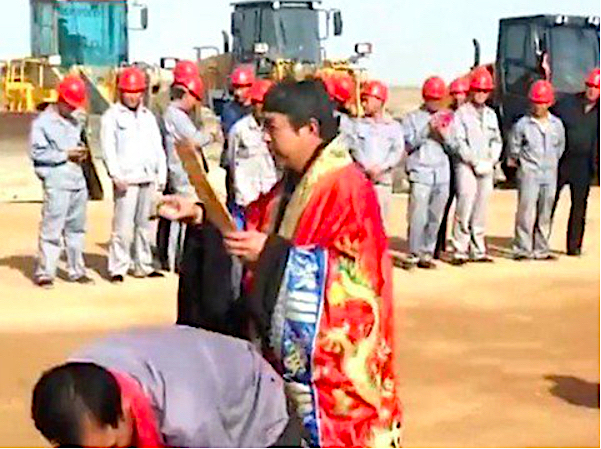


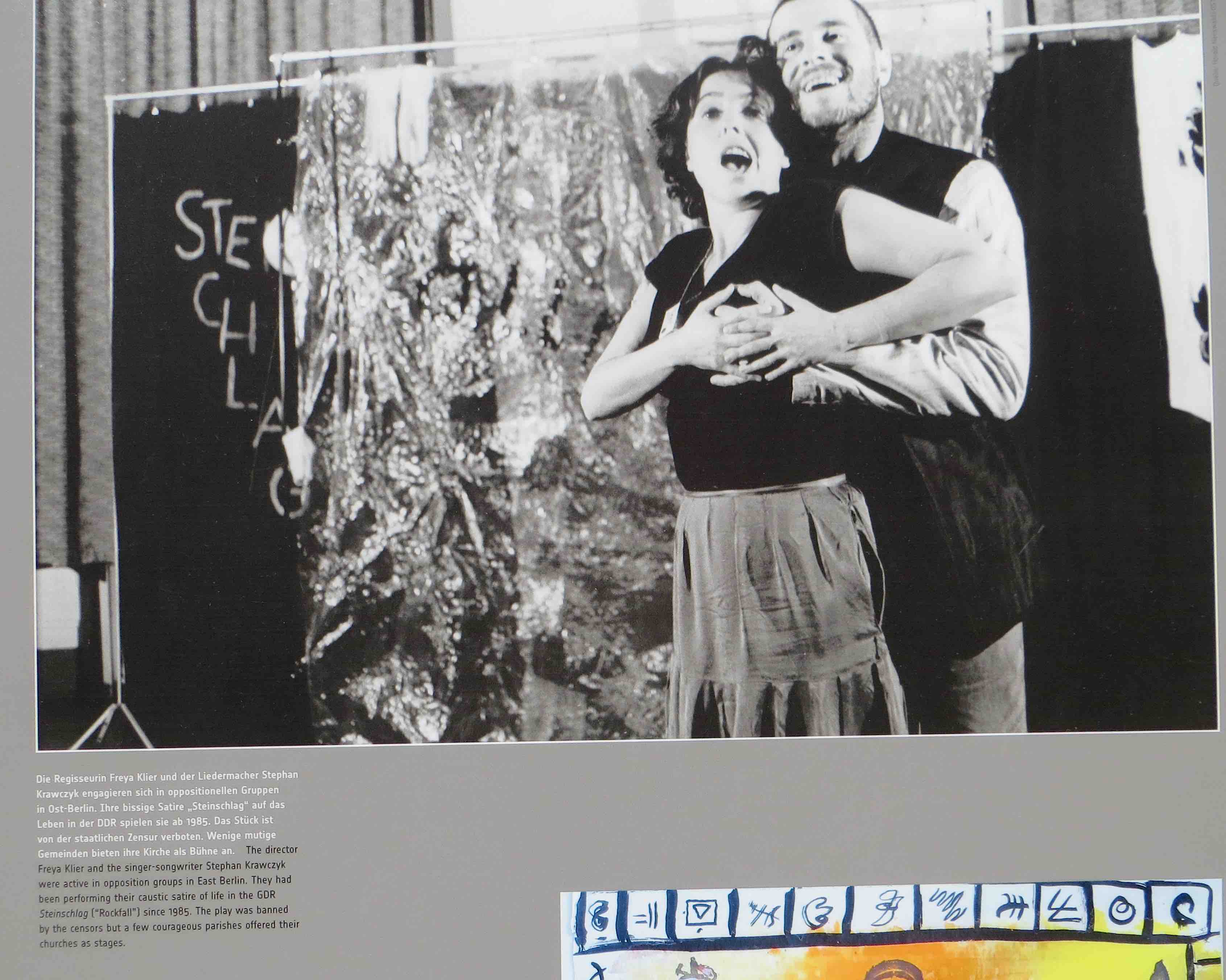


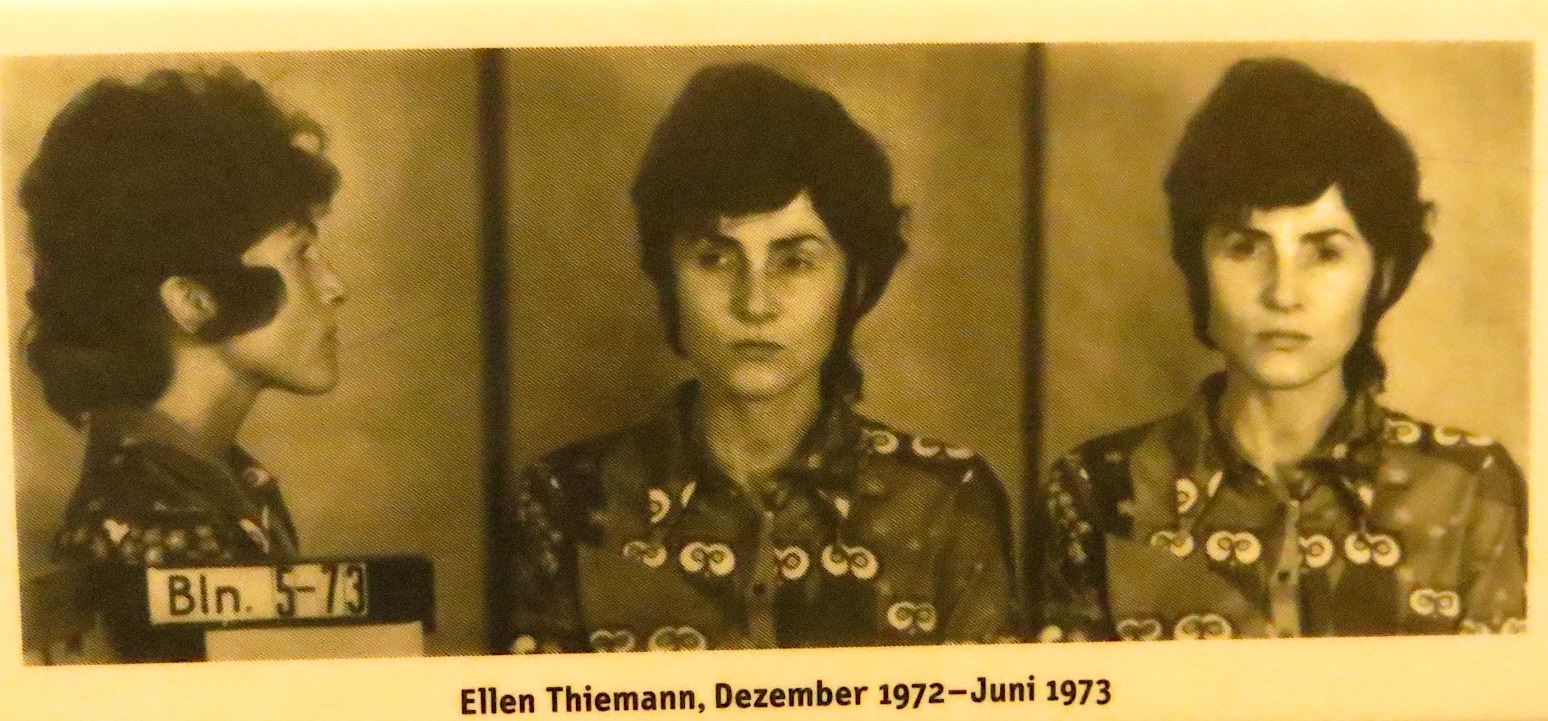
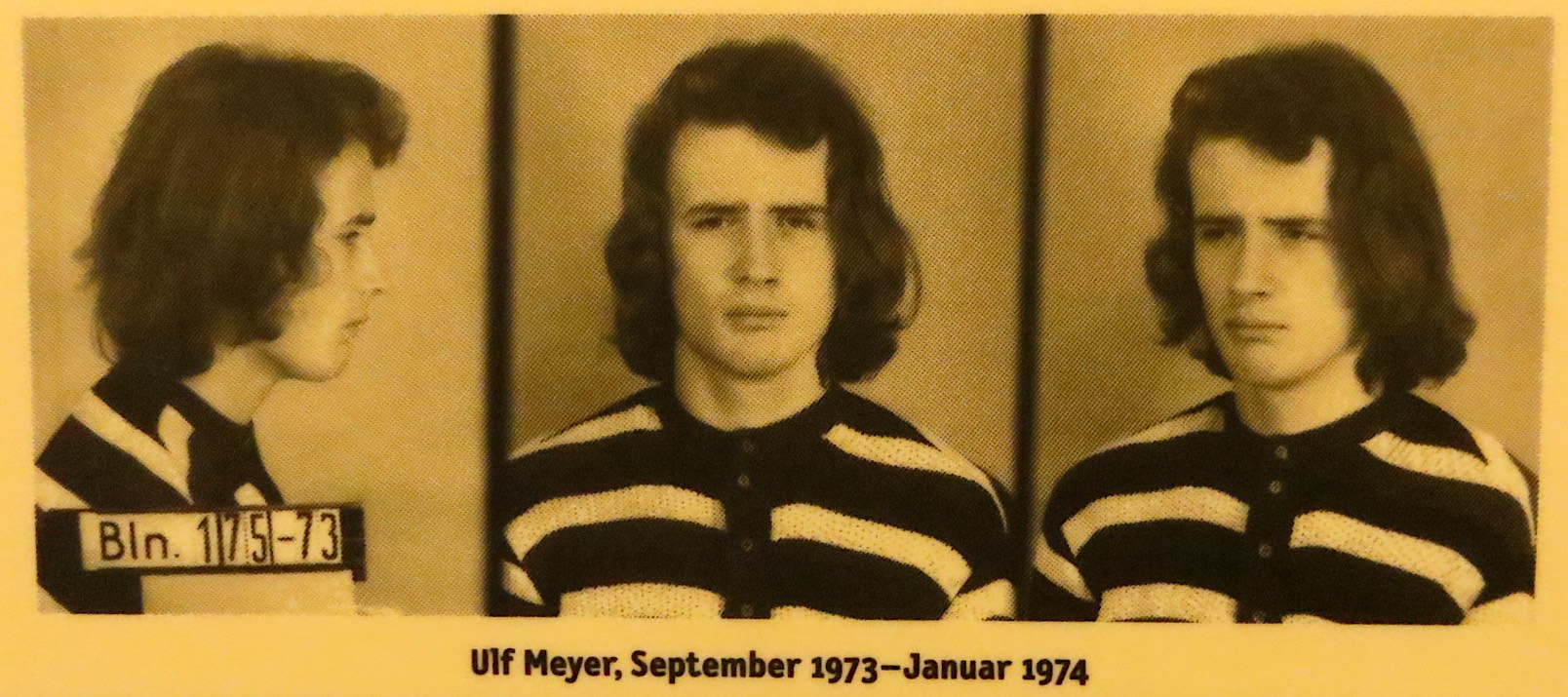
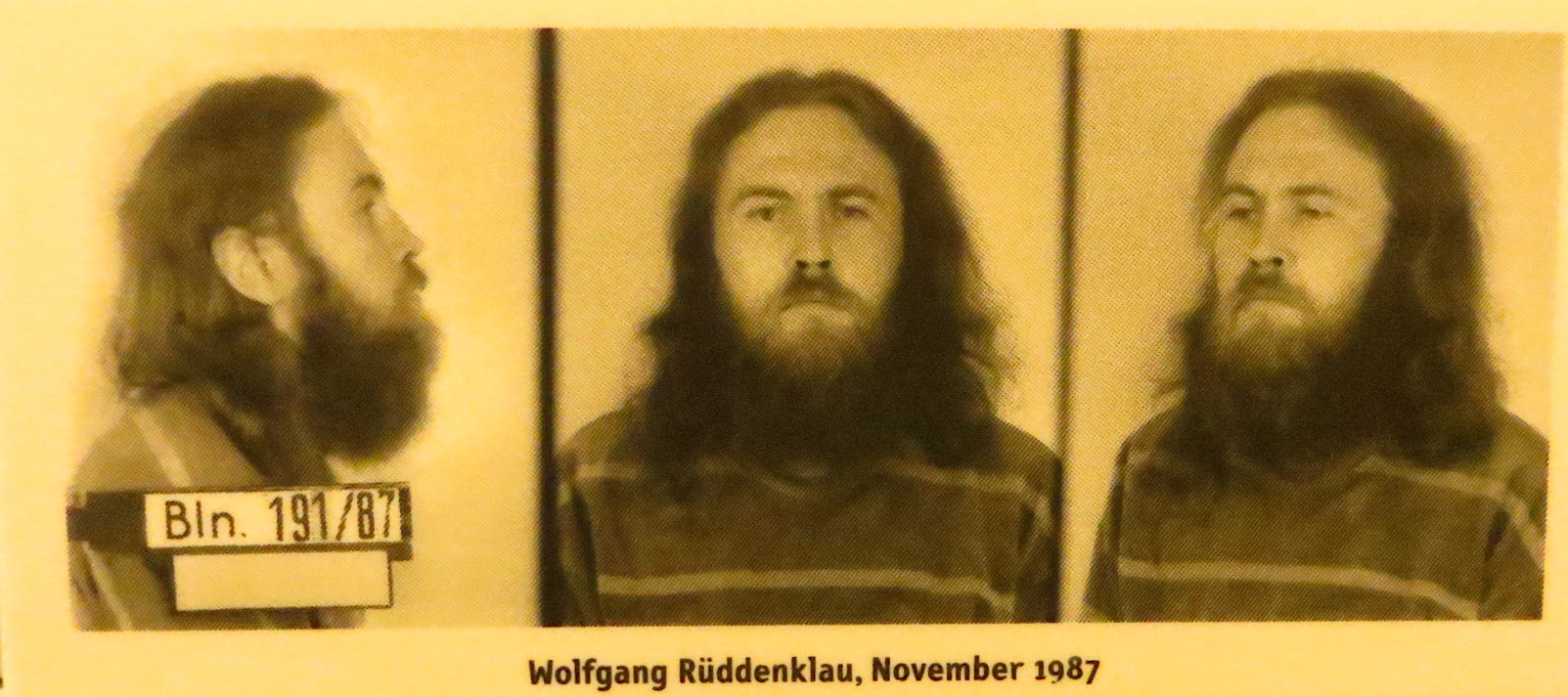


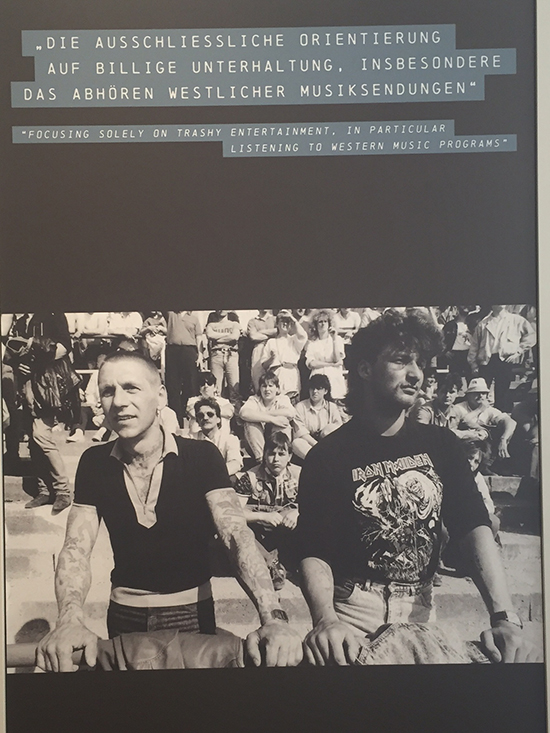
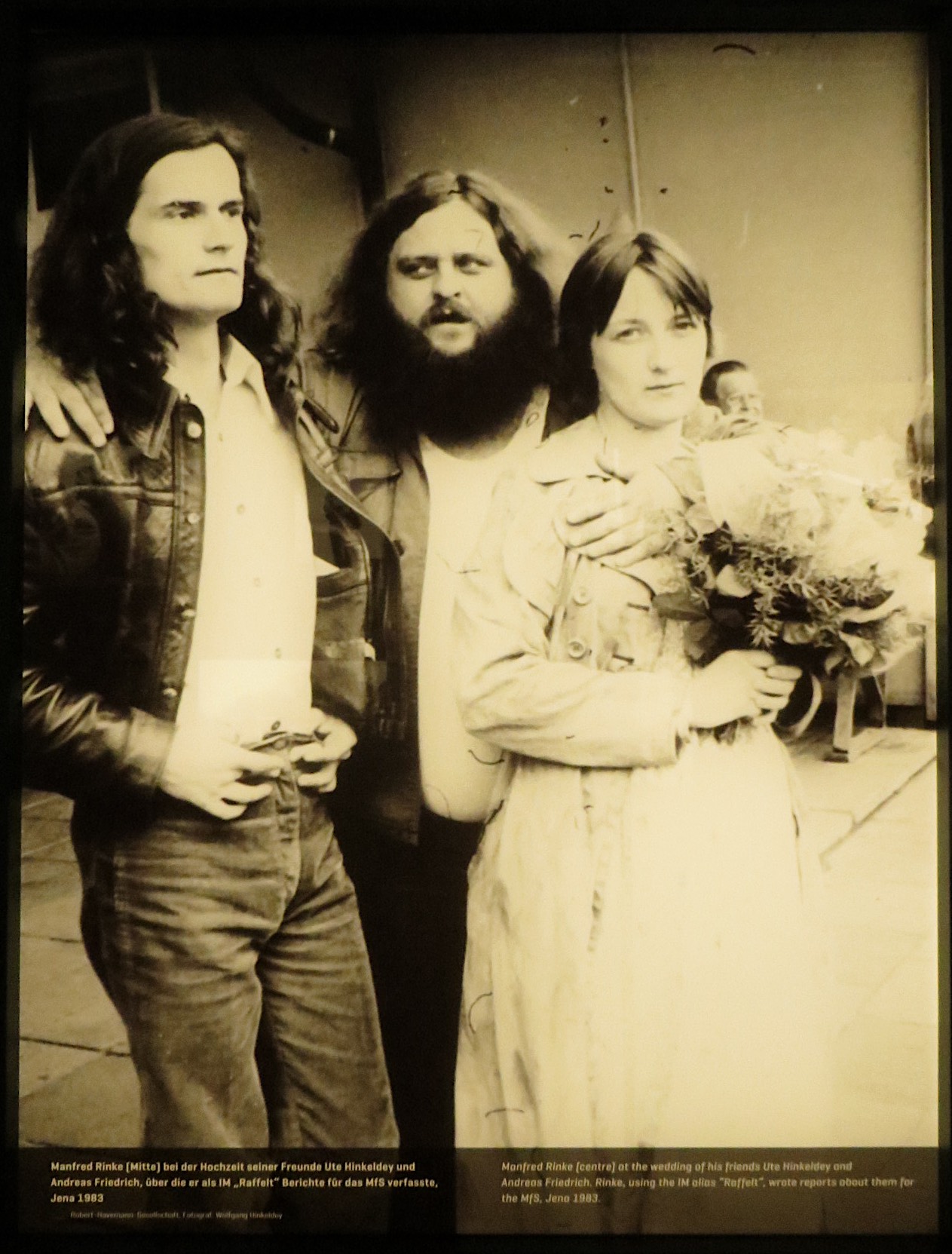
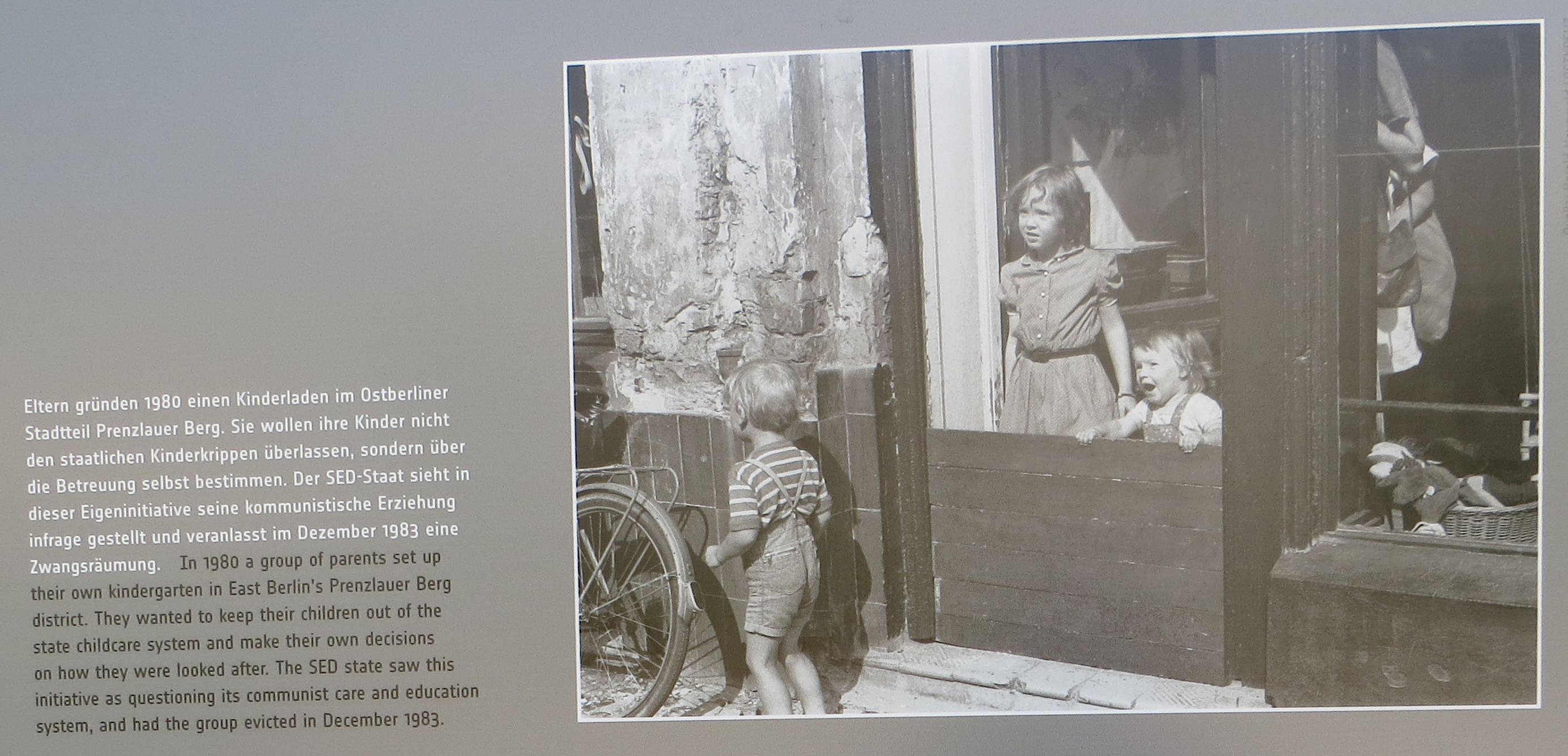


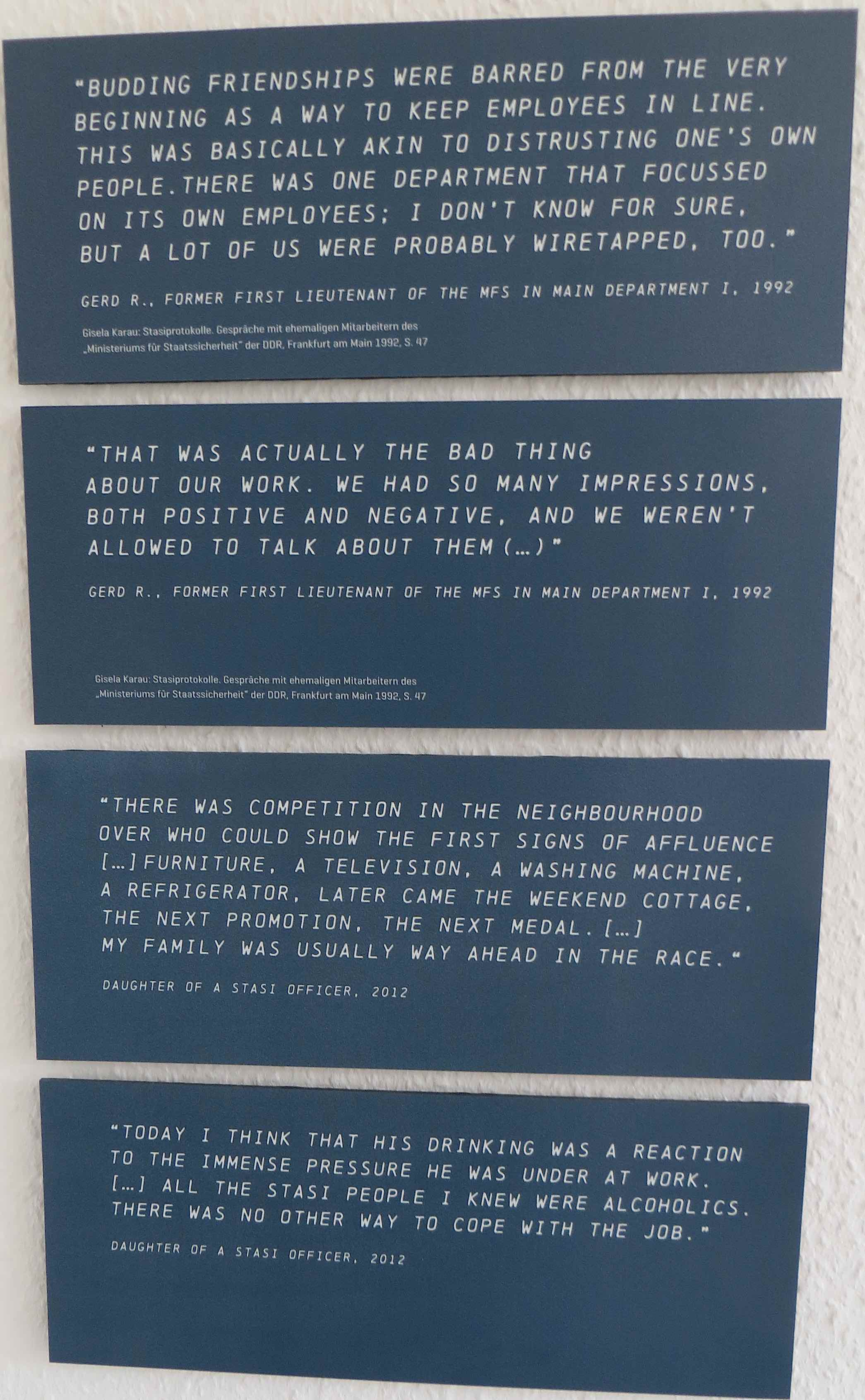
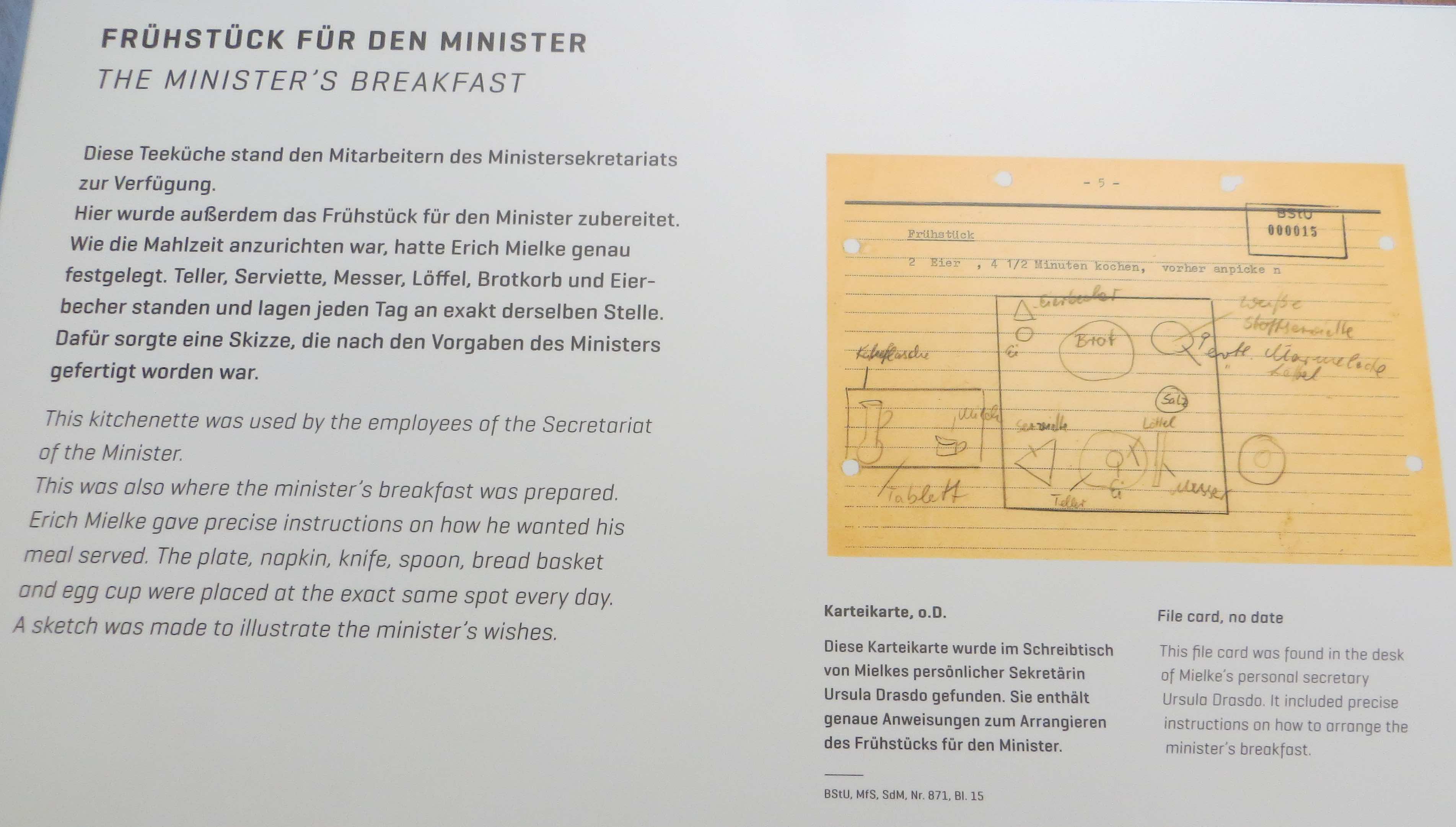


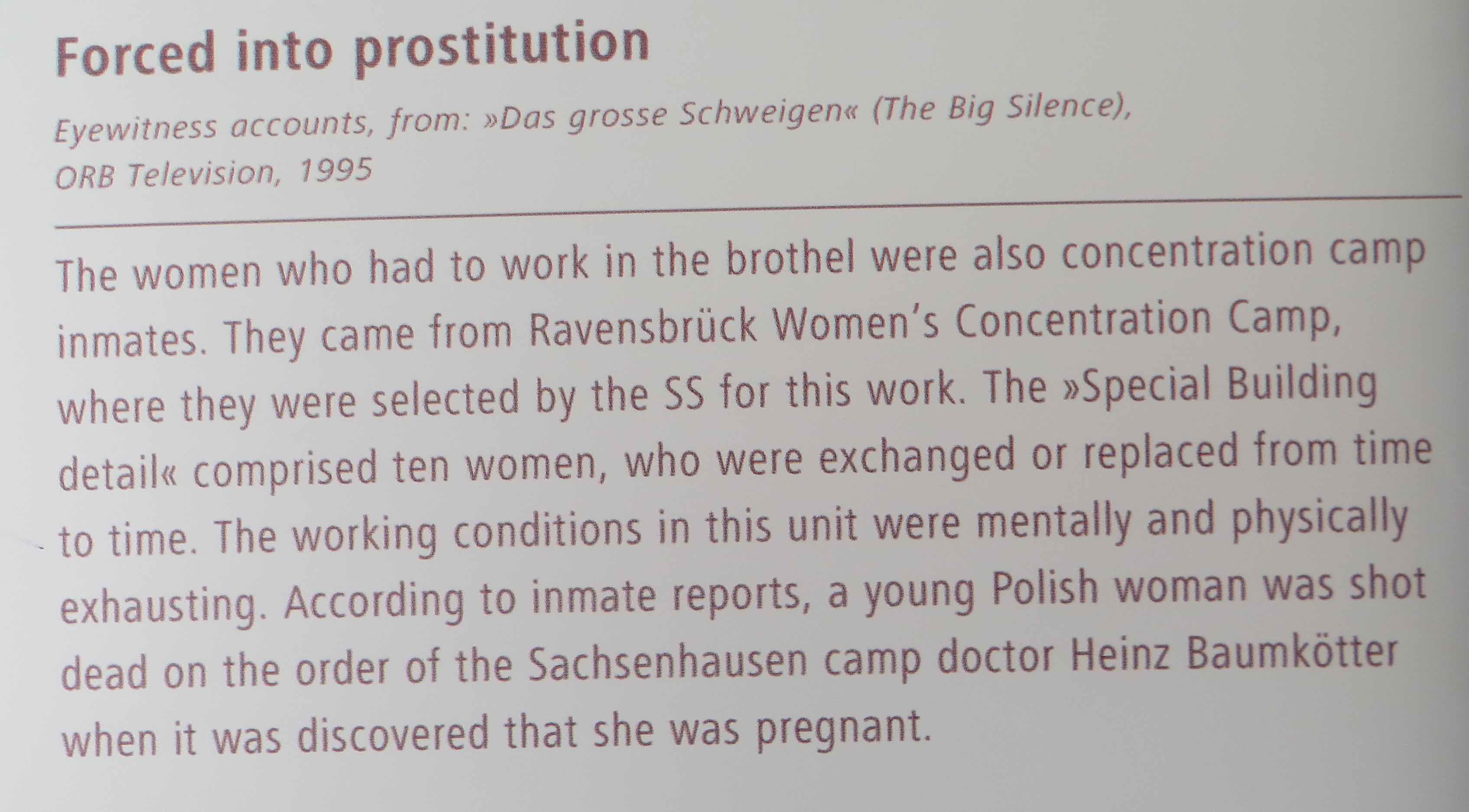


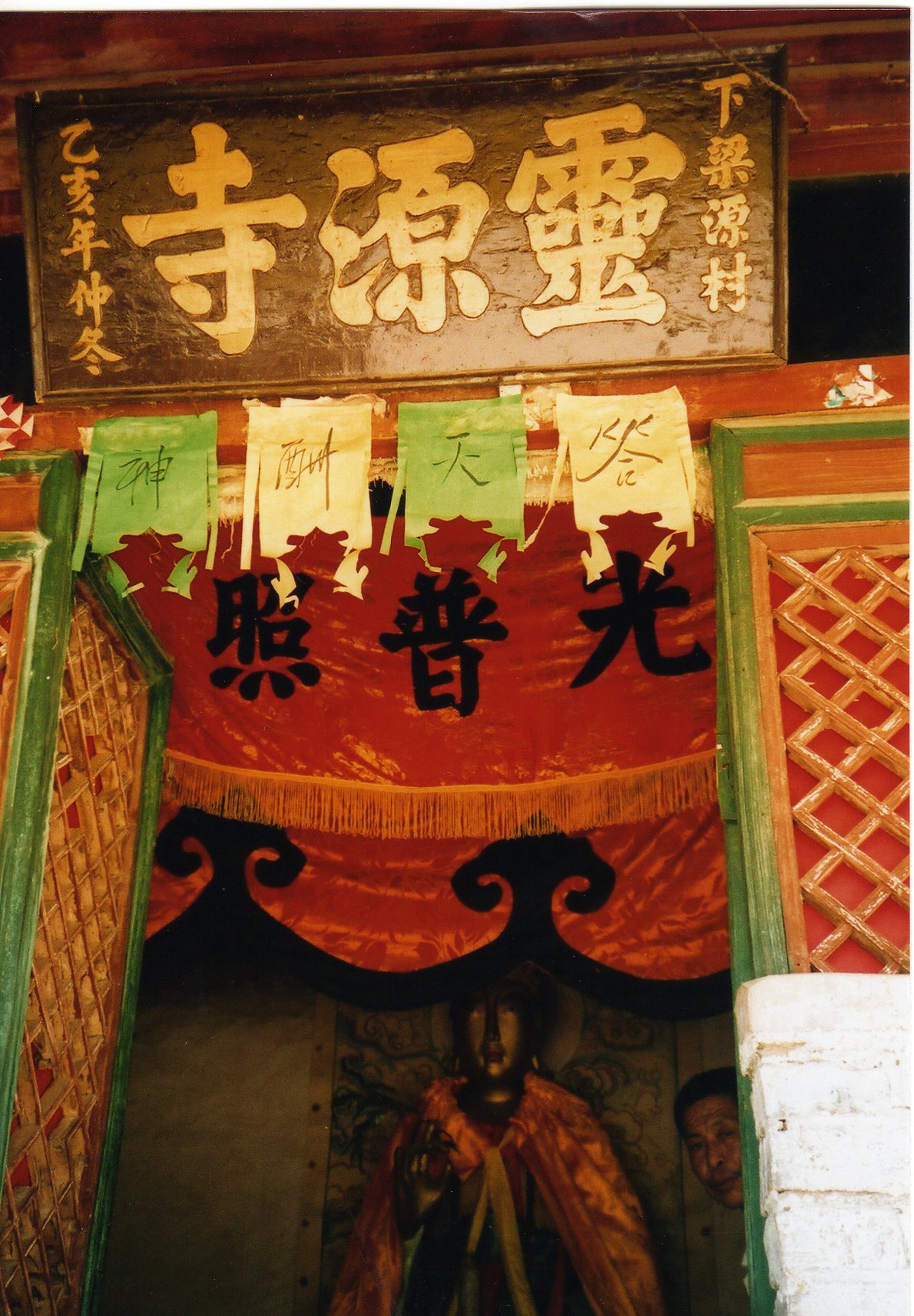

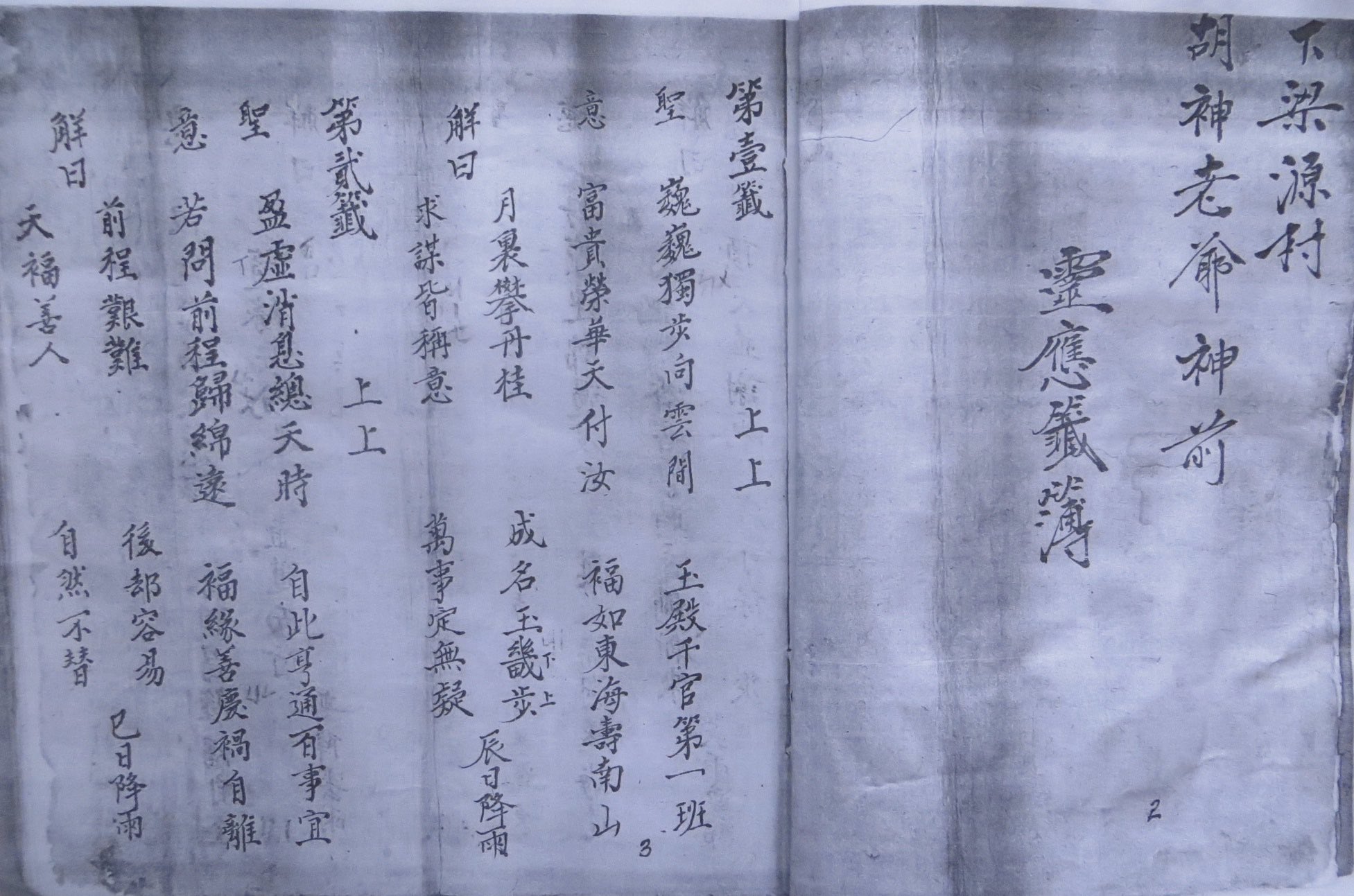


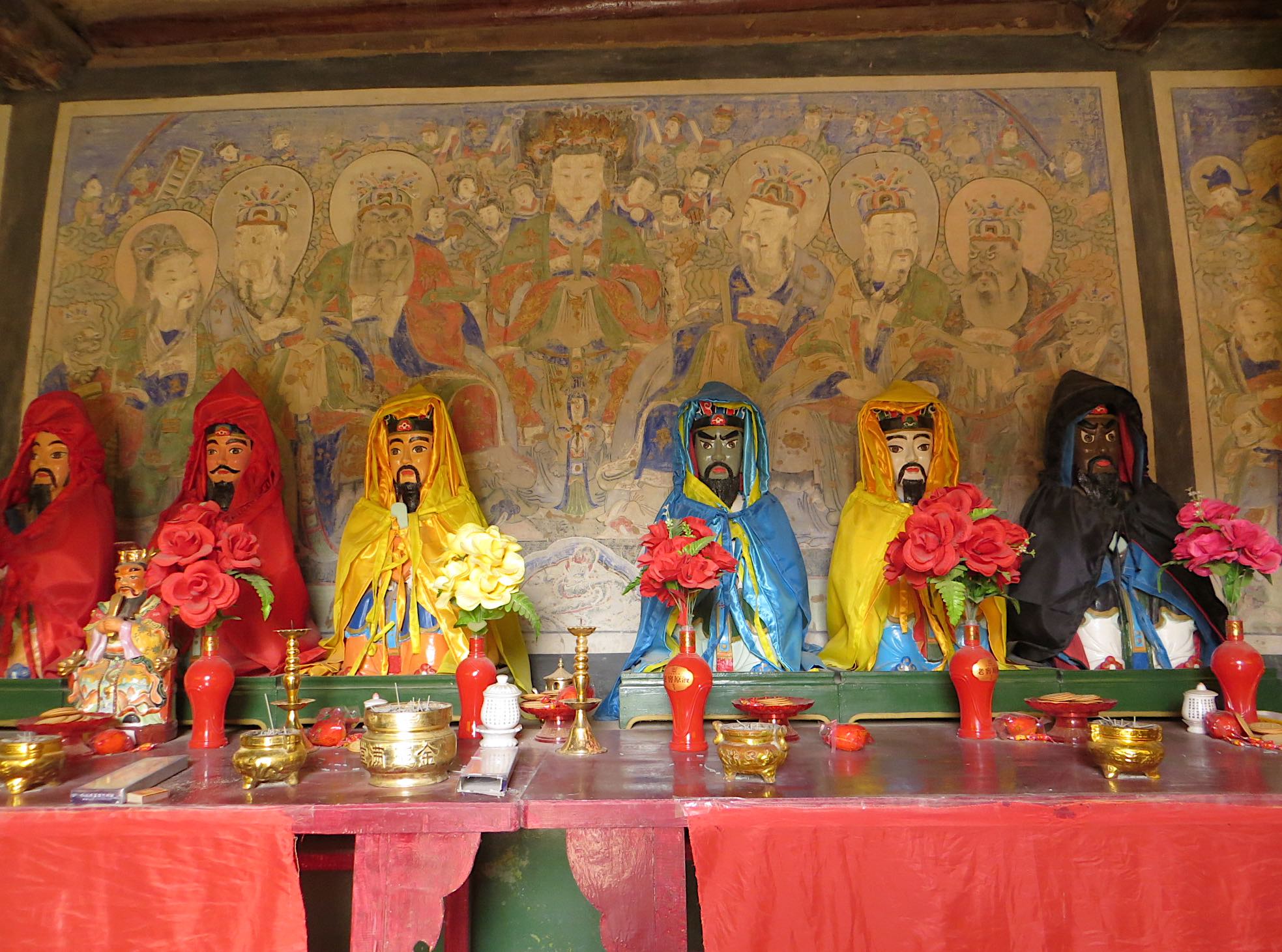


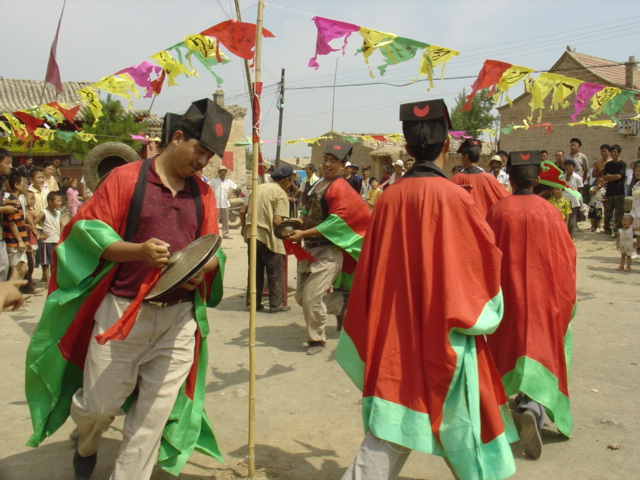
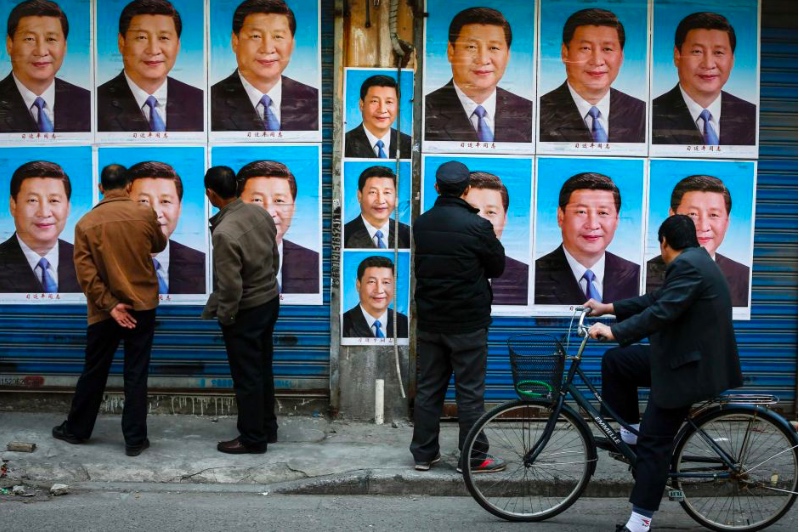


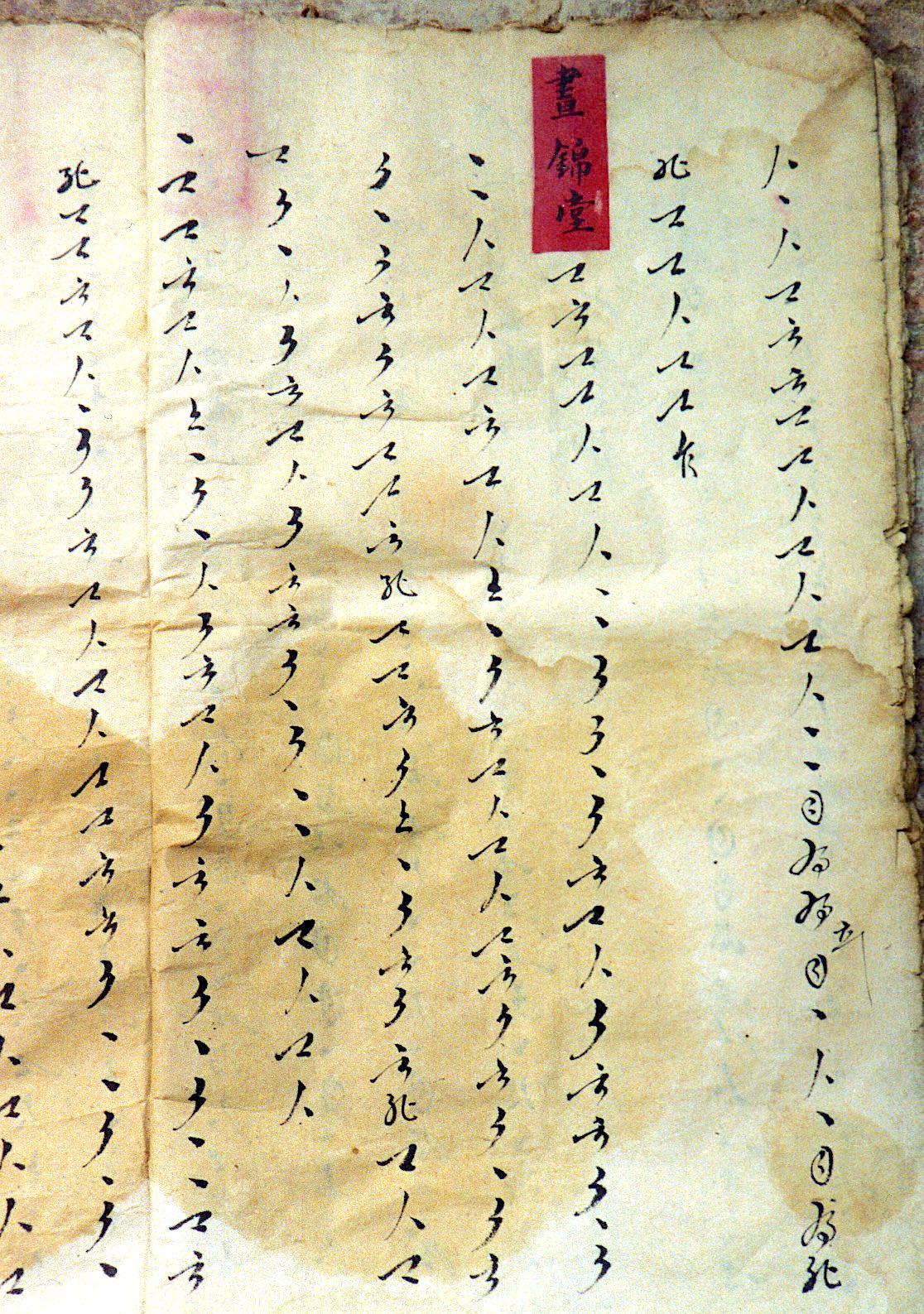

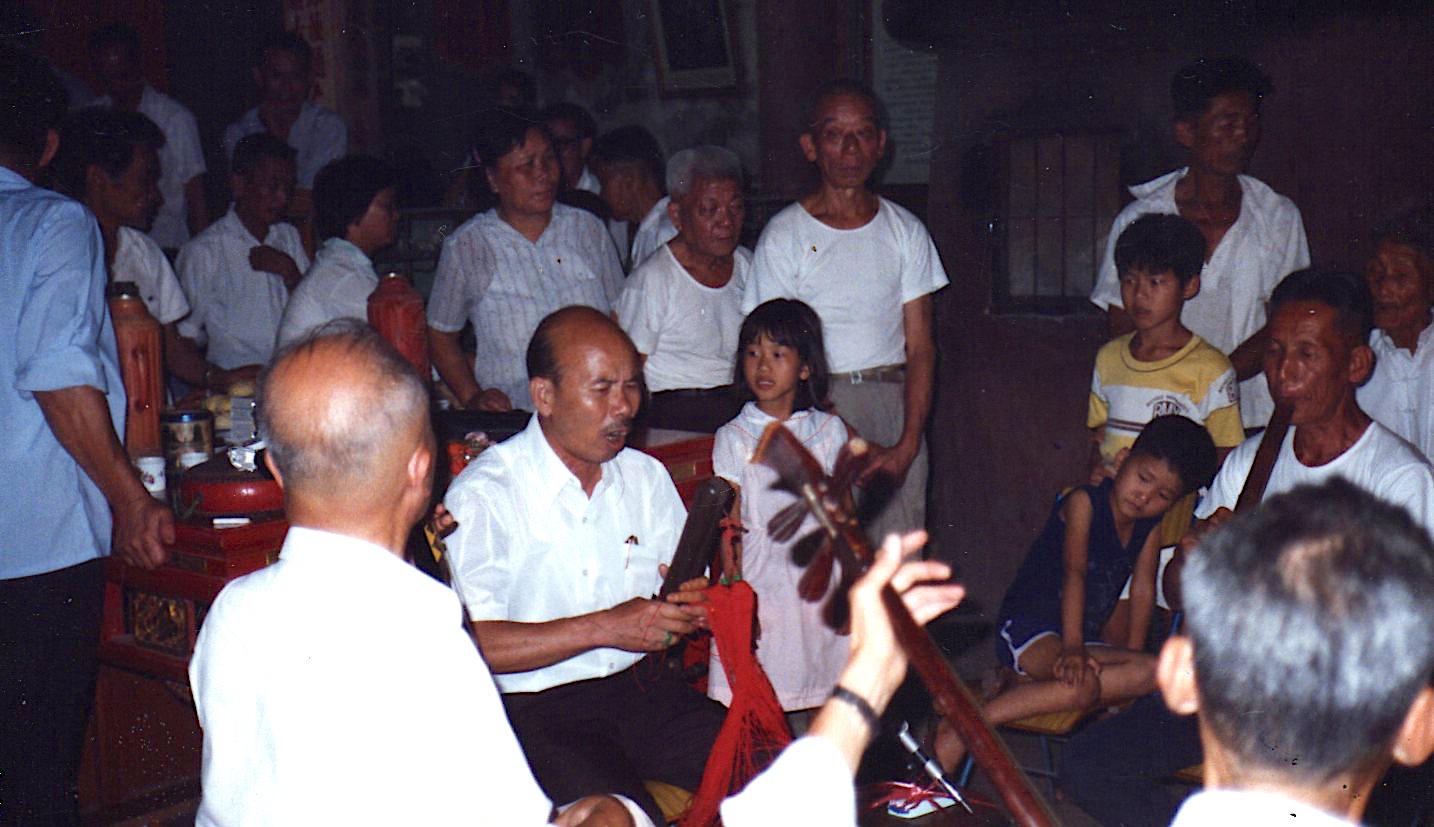
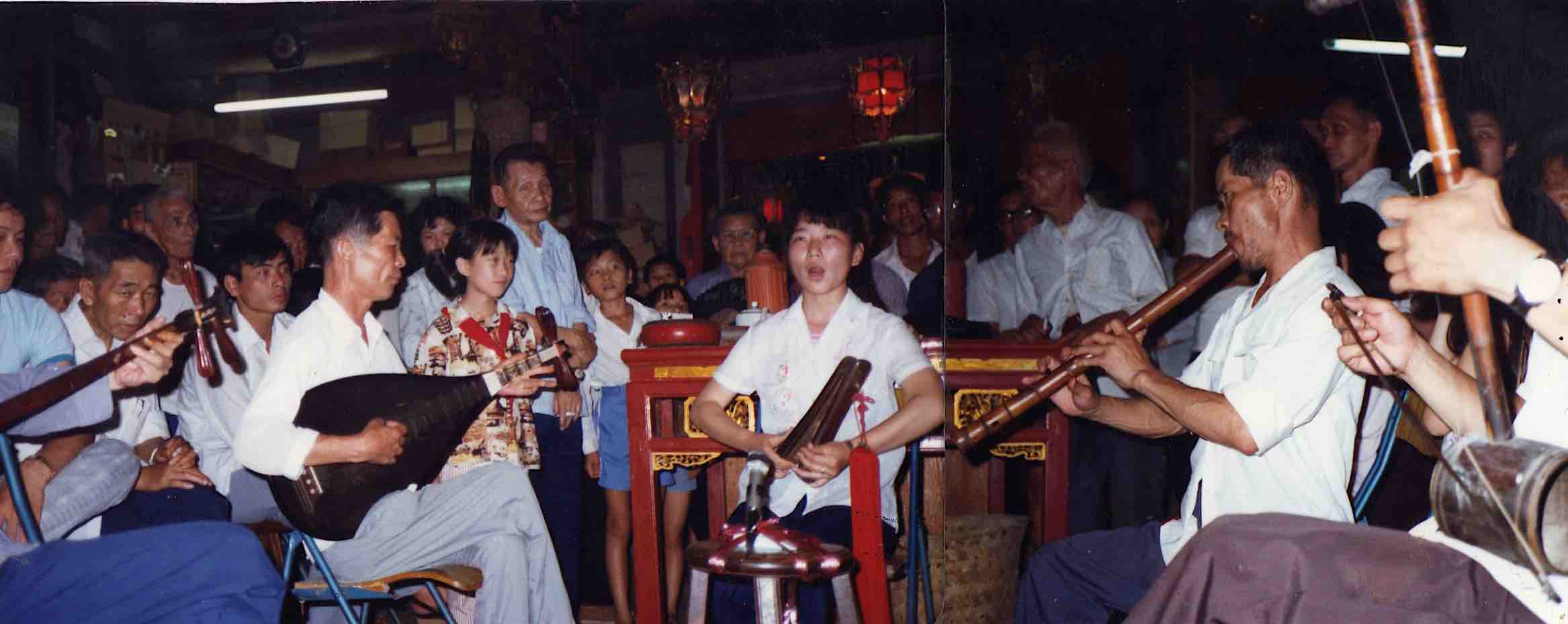

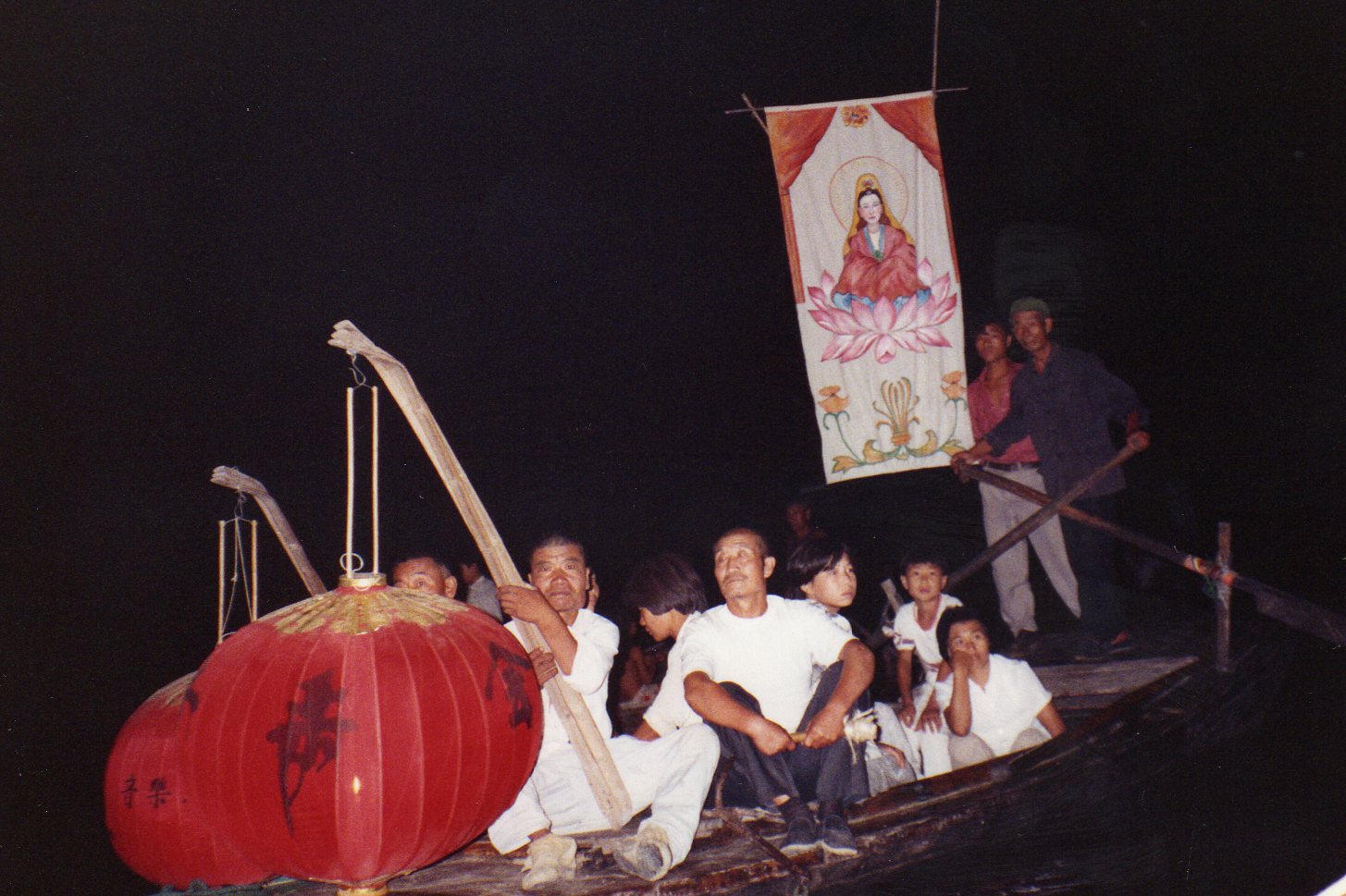
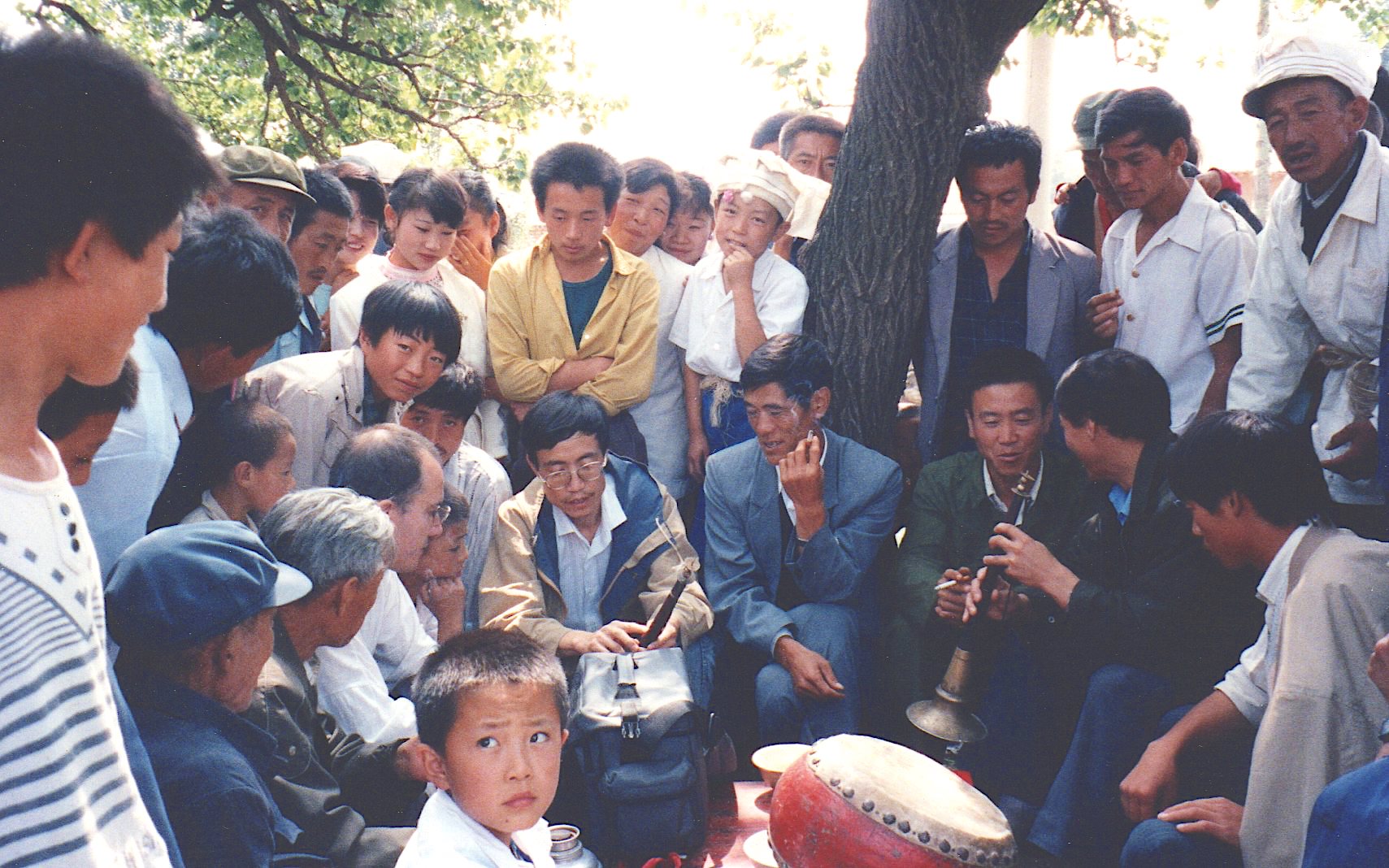
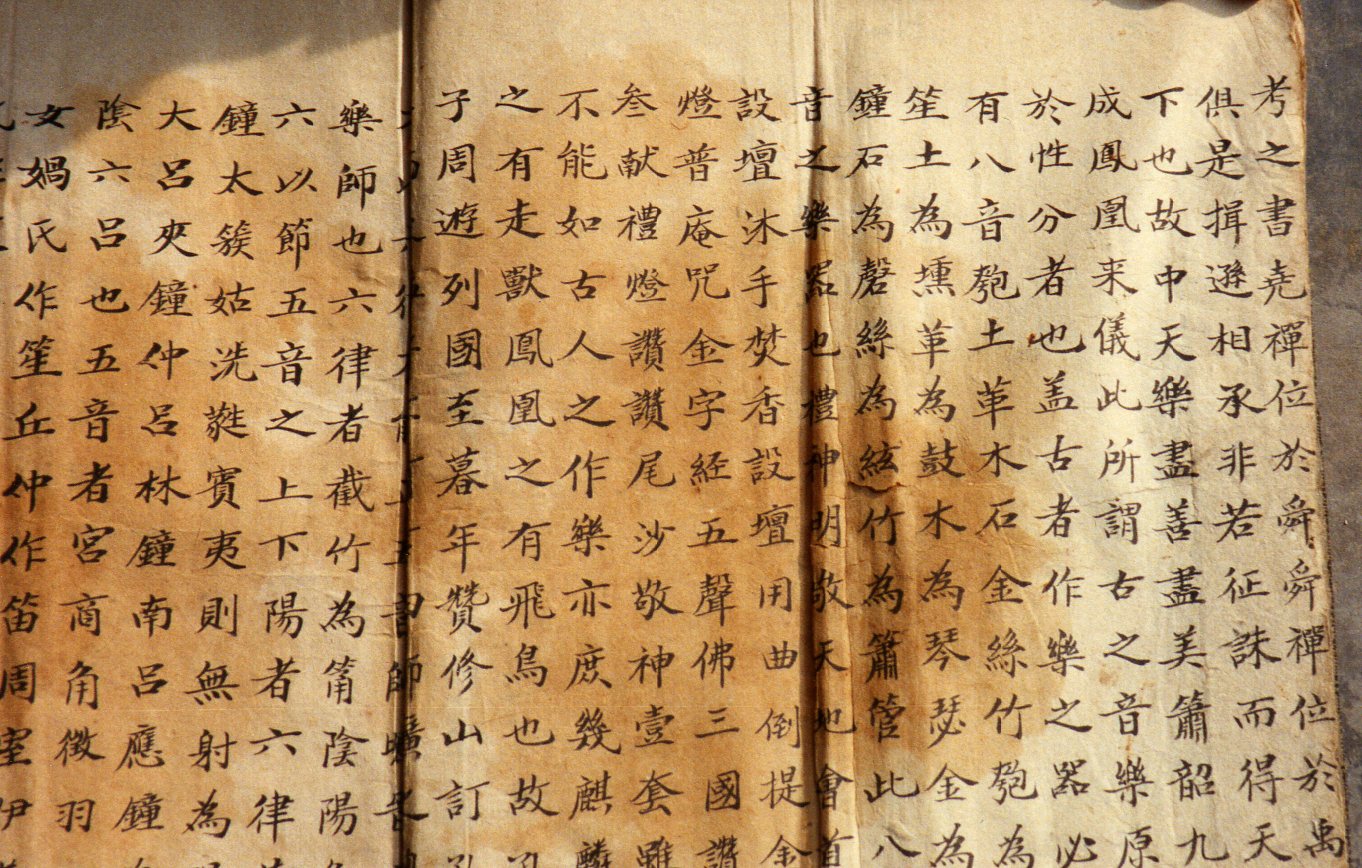


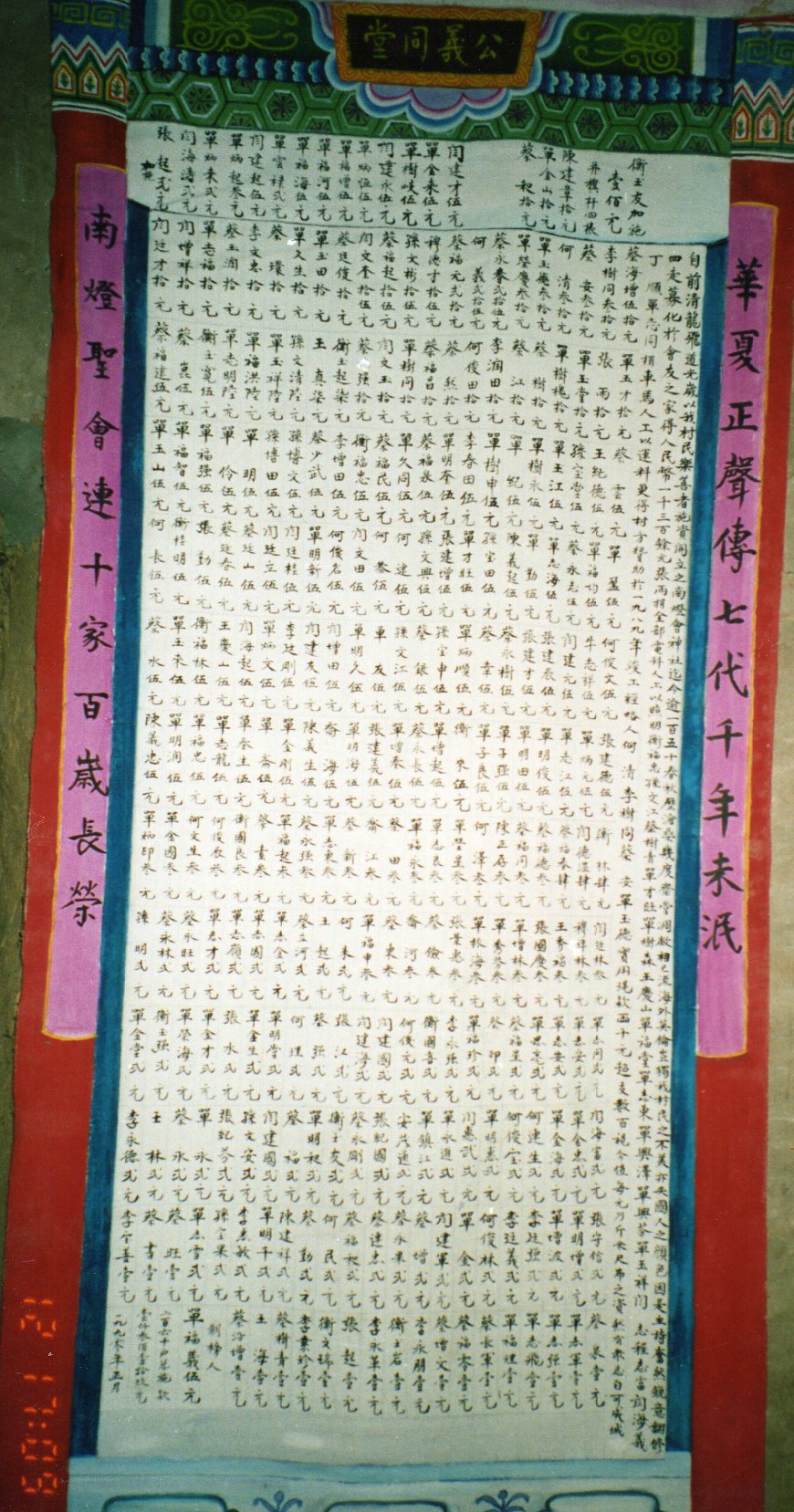





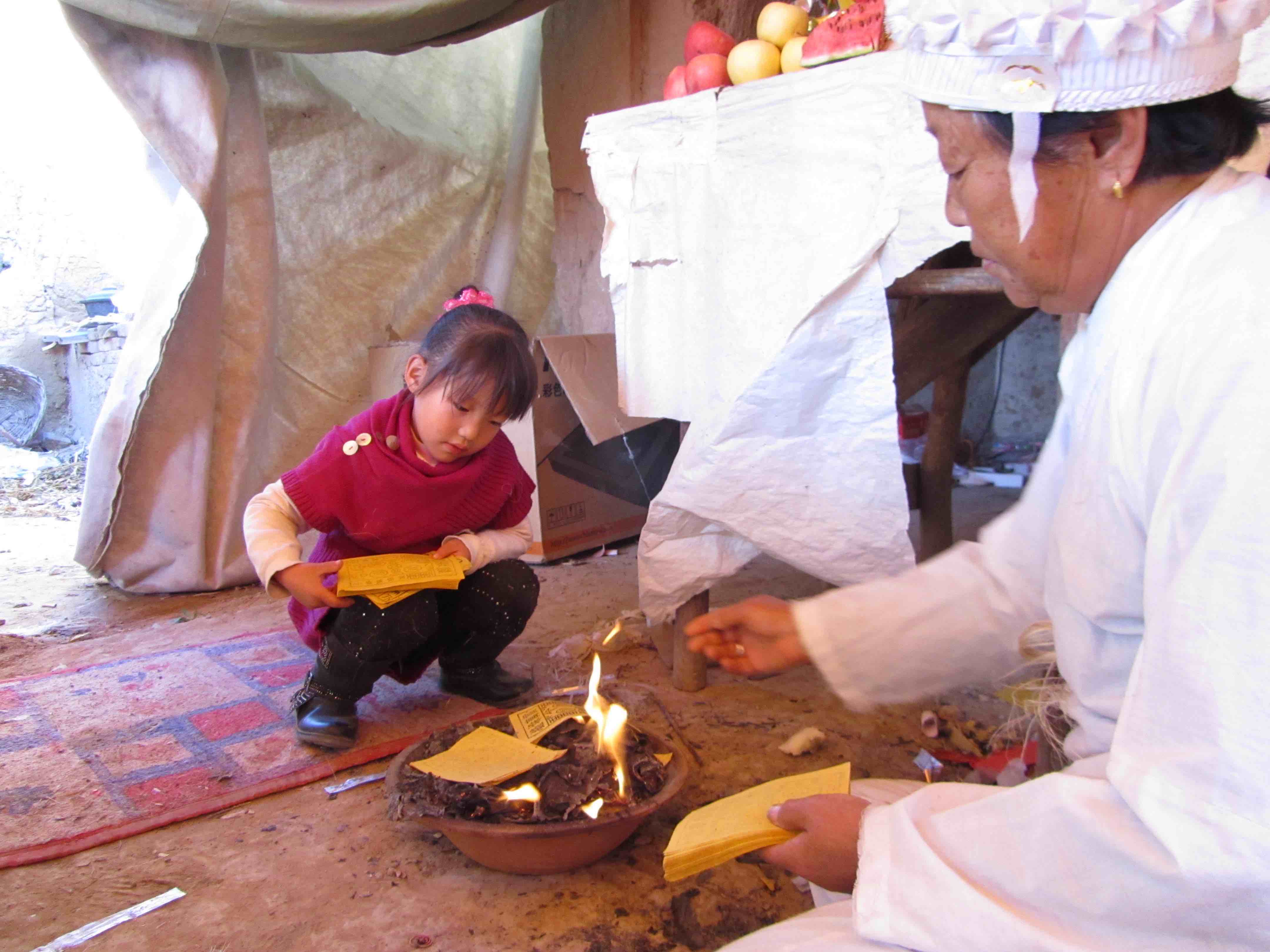

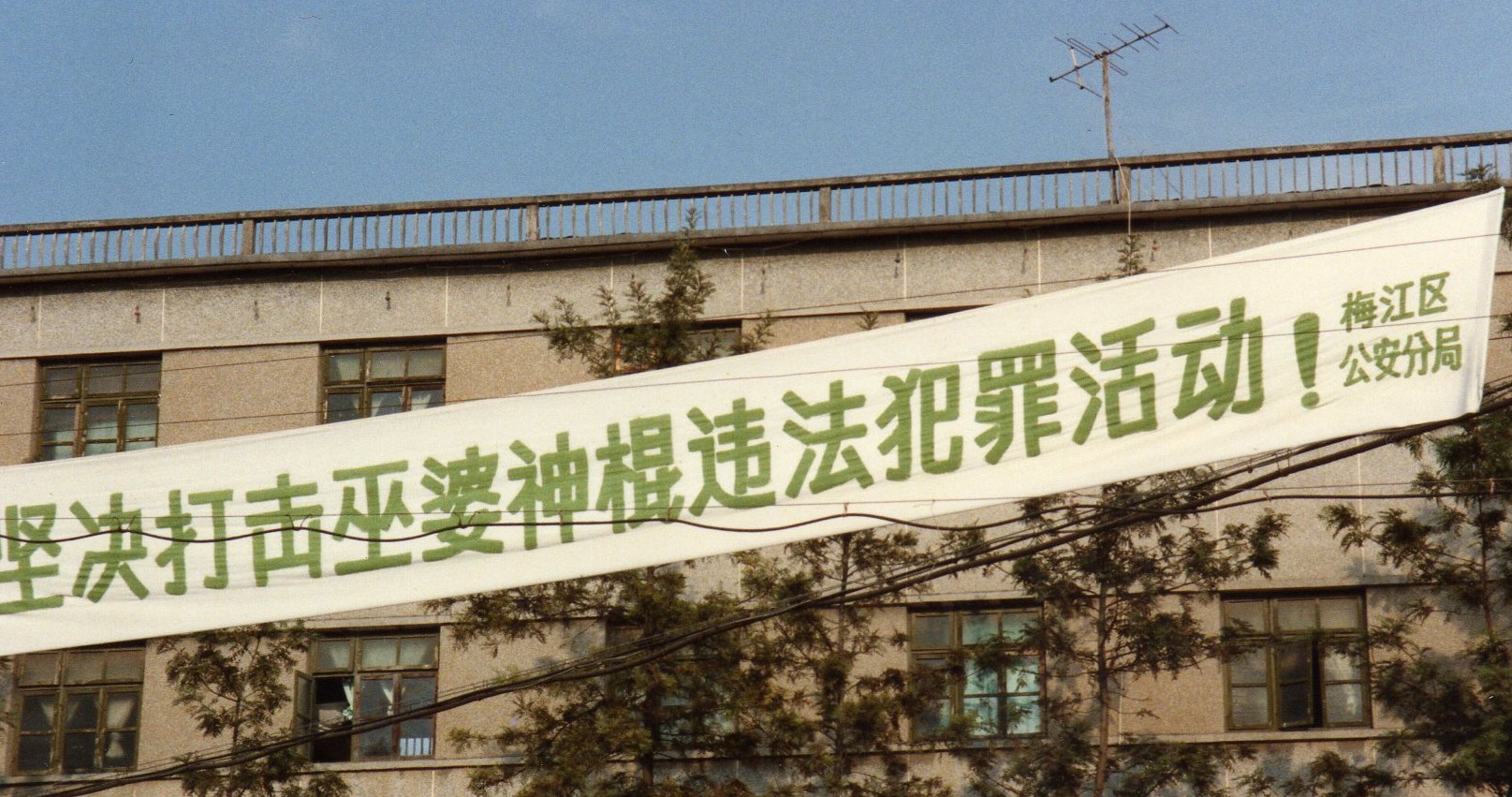 So while there are complex issues at work here, the recent directive illustrates a common befuddled knee-jerk response from local government. If they’re so keen on harking back to Maoist values, they might instead consider a re-education campaign for cadres—it is they who now lead the way in “vulgarity” and

 Within the extraordinary circumstances of these prison interviews, Sereny’s account is a model of detailed and sensitive work, reflection, and even empathy; as she carefully elicits as much candour as can be expected, she meticulously documents both his self-delusion and her own feelings.

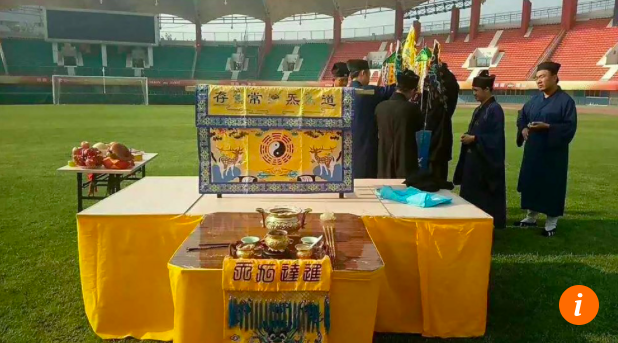

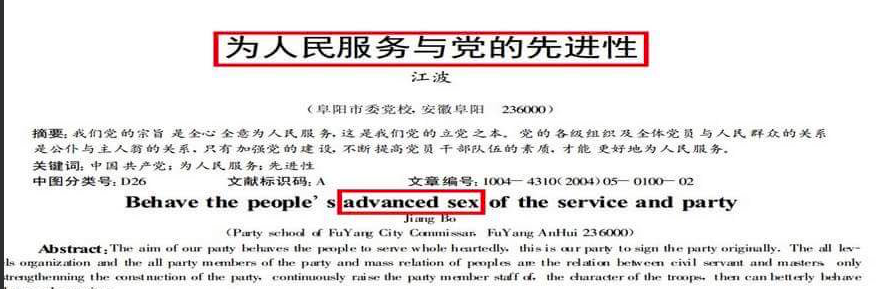
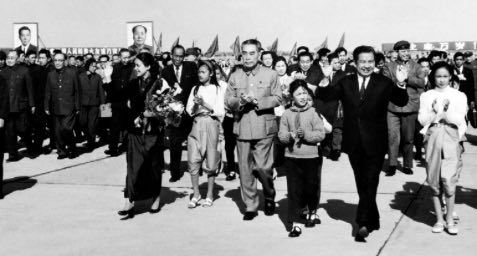
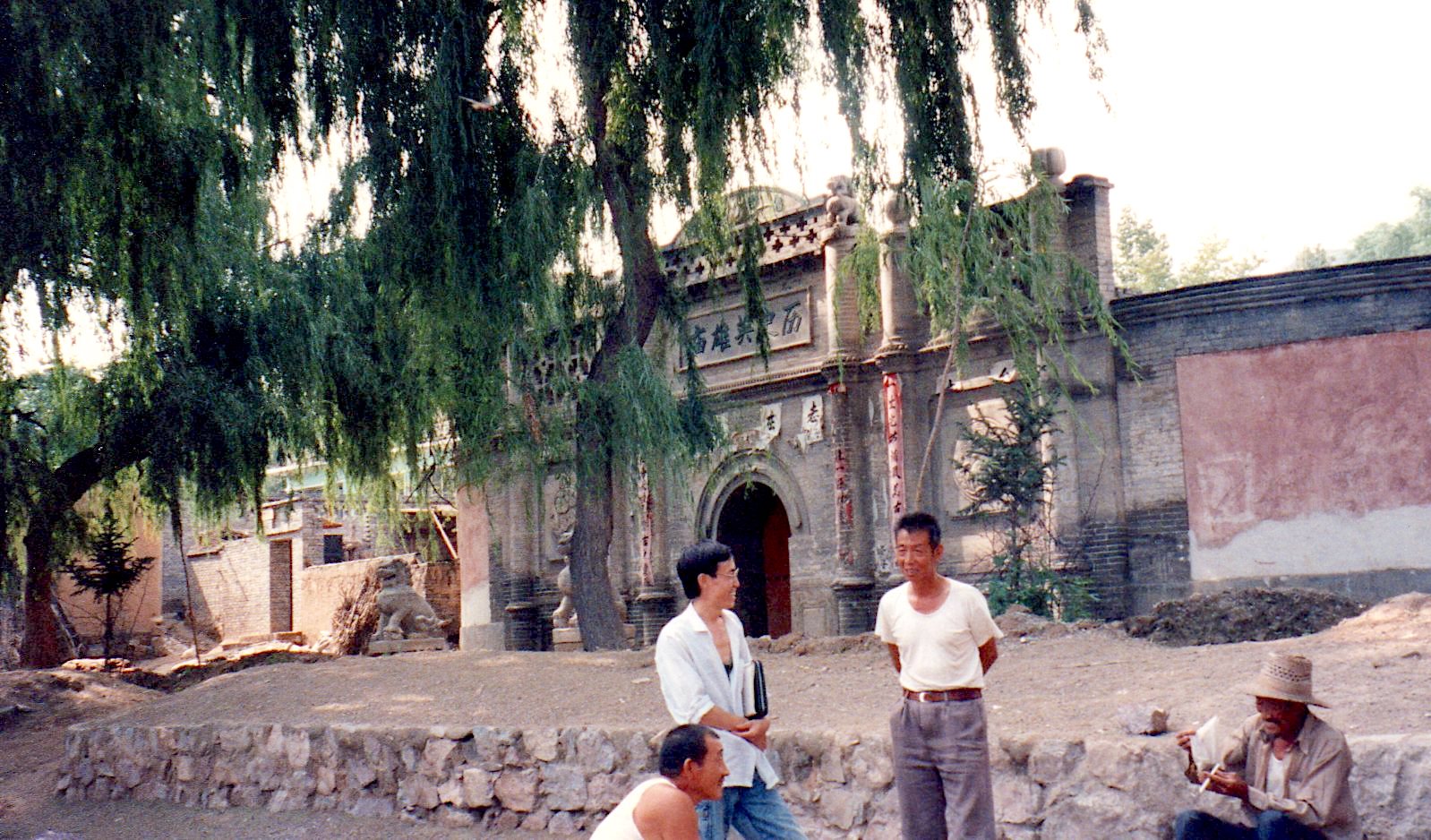



 From 1986 I used to visit Yuan Quanyou in her office at the dilapidated yet numinous MRI compound at Dongzhimenwai, her beaming face greeting me between high stacks of ancient documents. There, with unassuming industry she was still producing further volumes in the MRI’s wonderful annotated series of iconographical collections on Chinese music history, such as the 1988 Zhongguo yinyueshi tujian 中国音乐史图鉴 [Illustrated history of Chinese music].

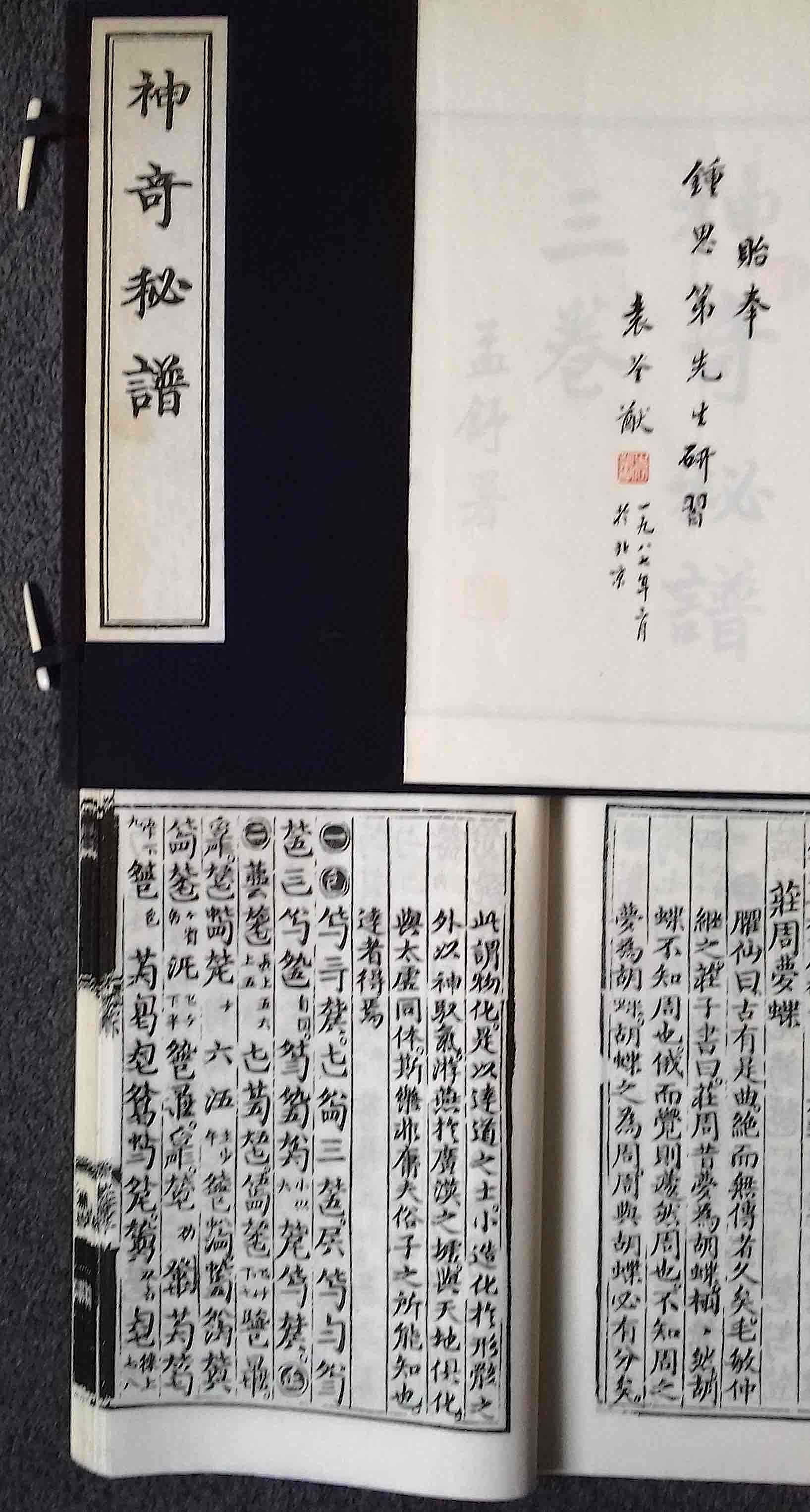
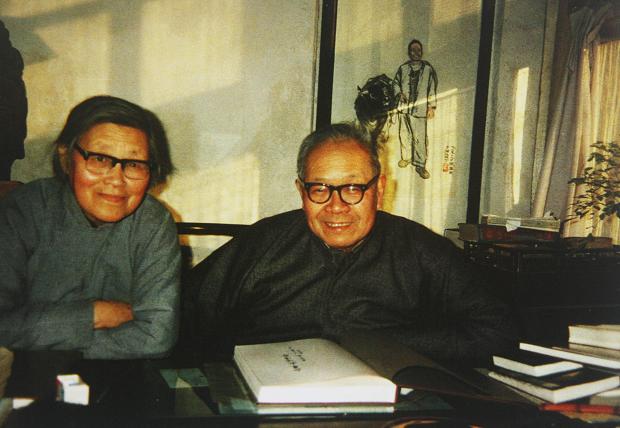


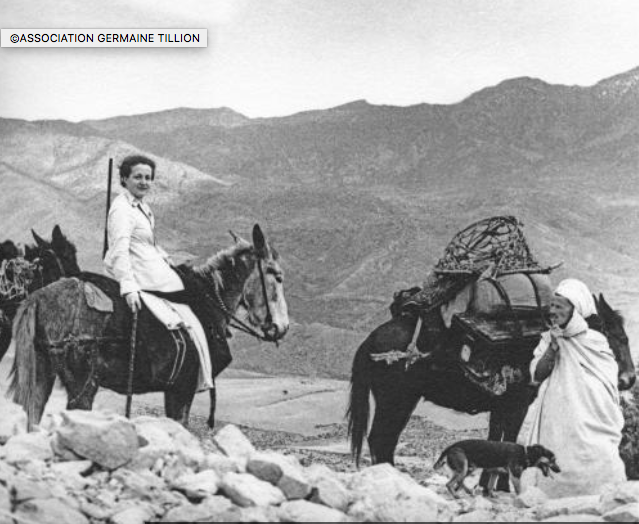


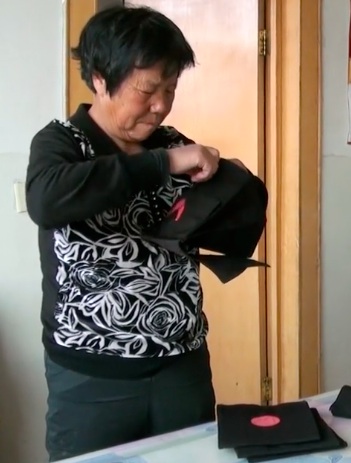
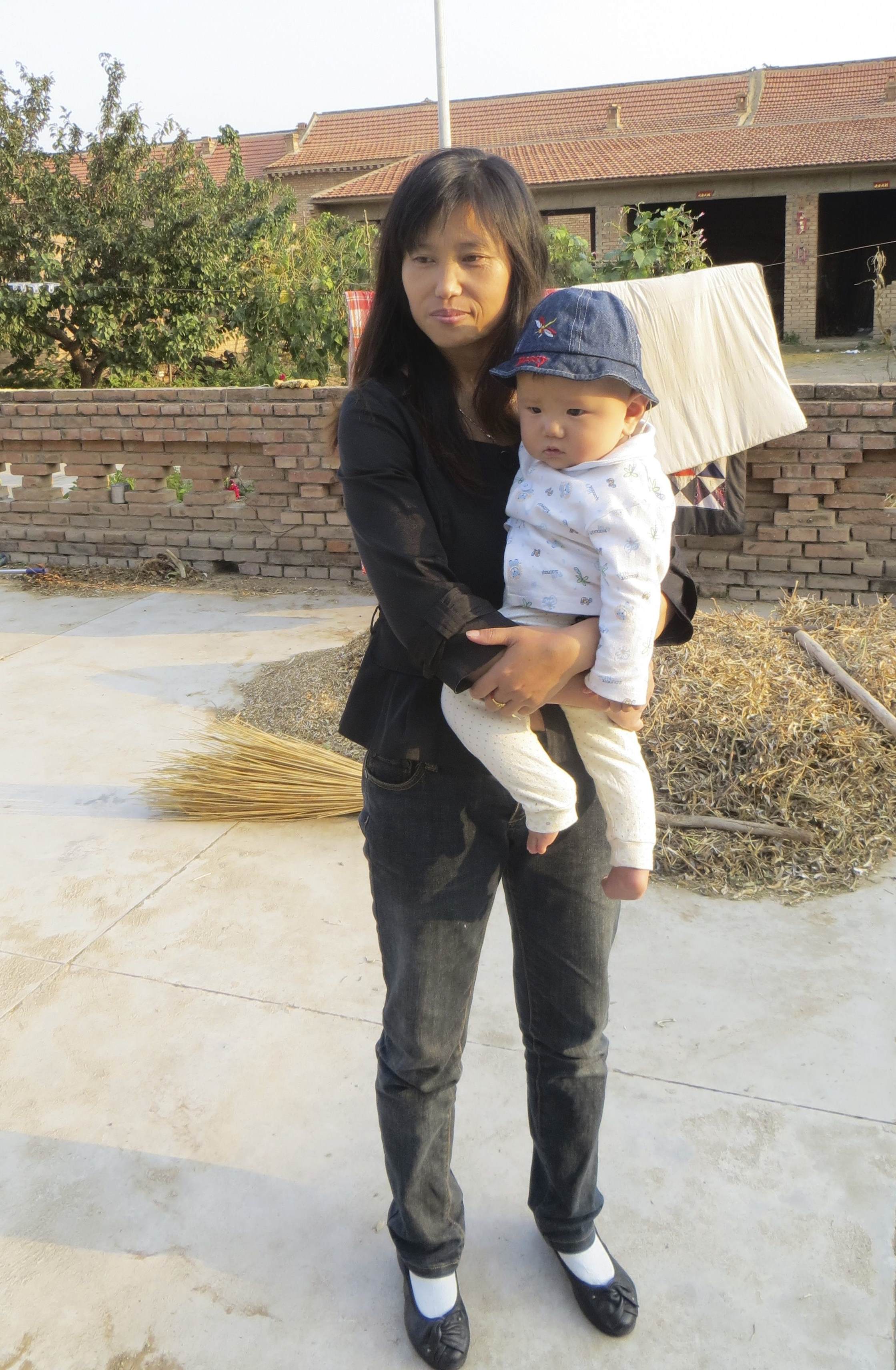
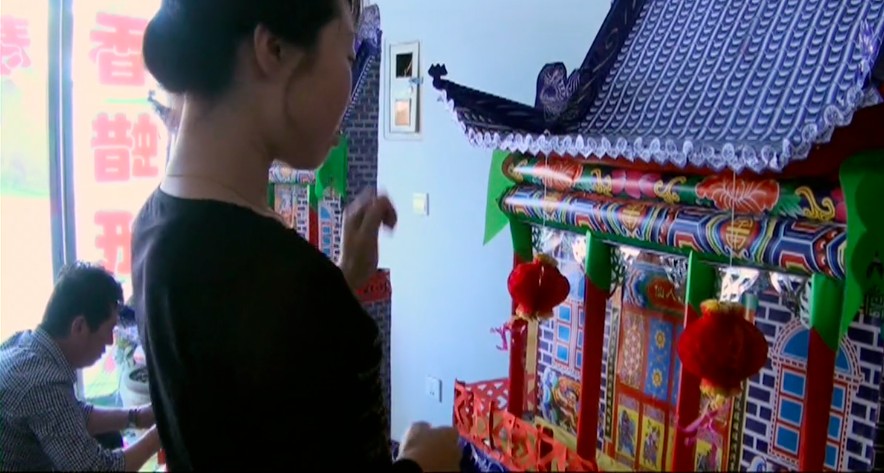


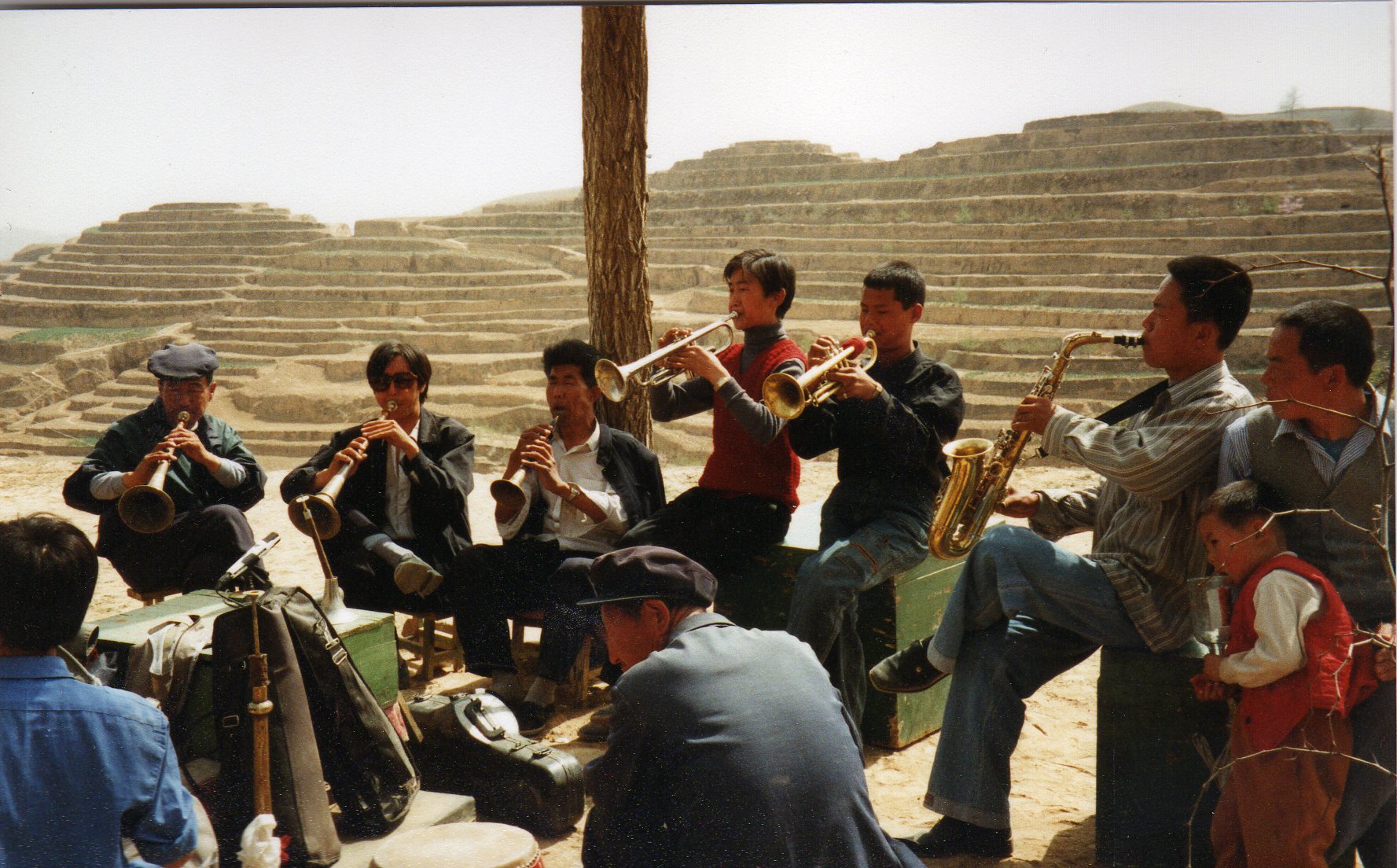
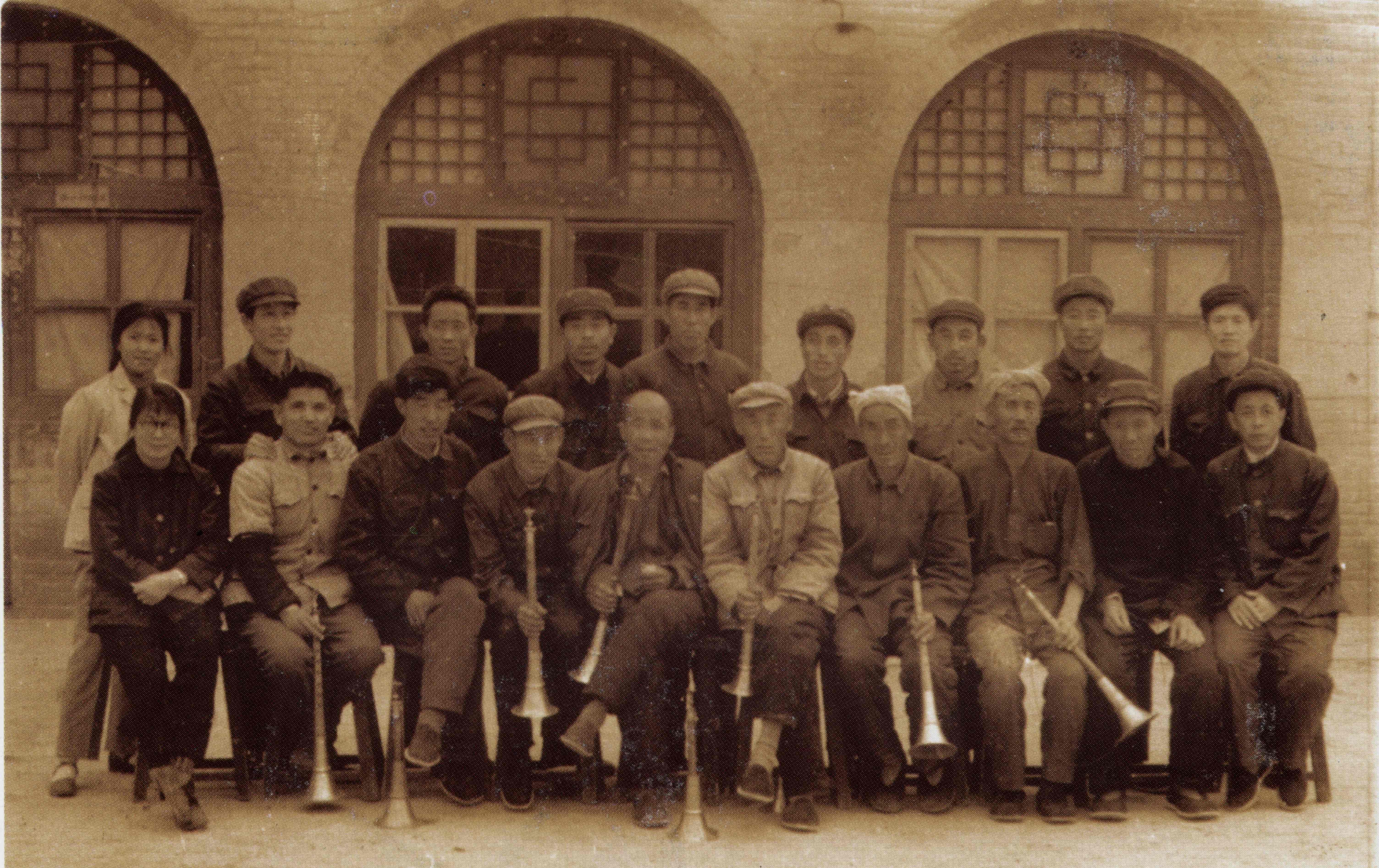 Shawm players from Mizhi county, assembled for a regional festival in 1981.
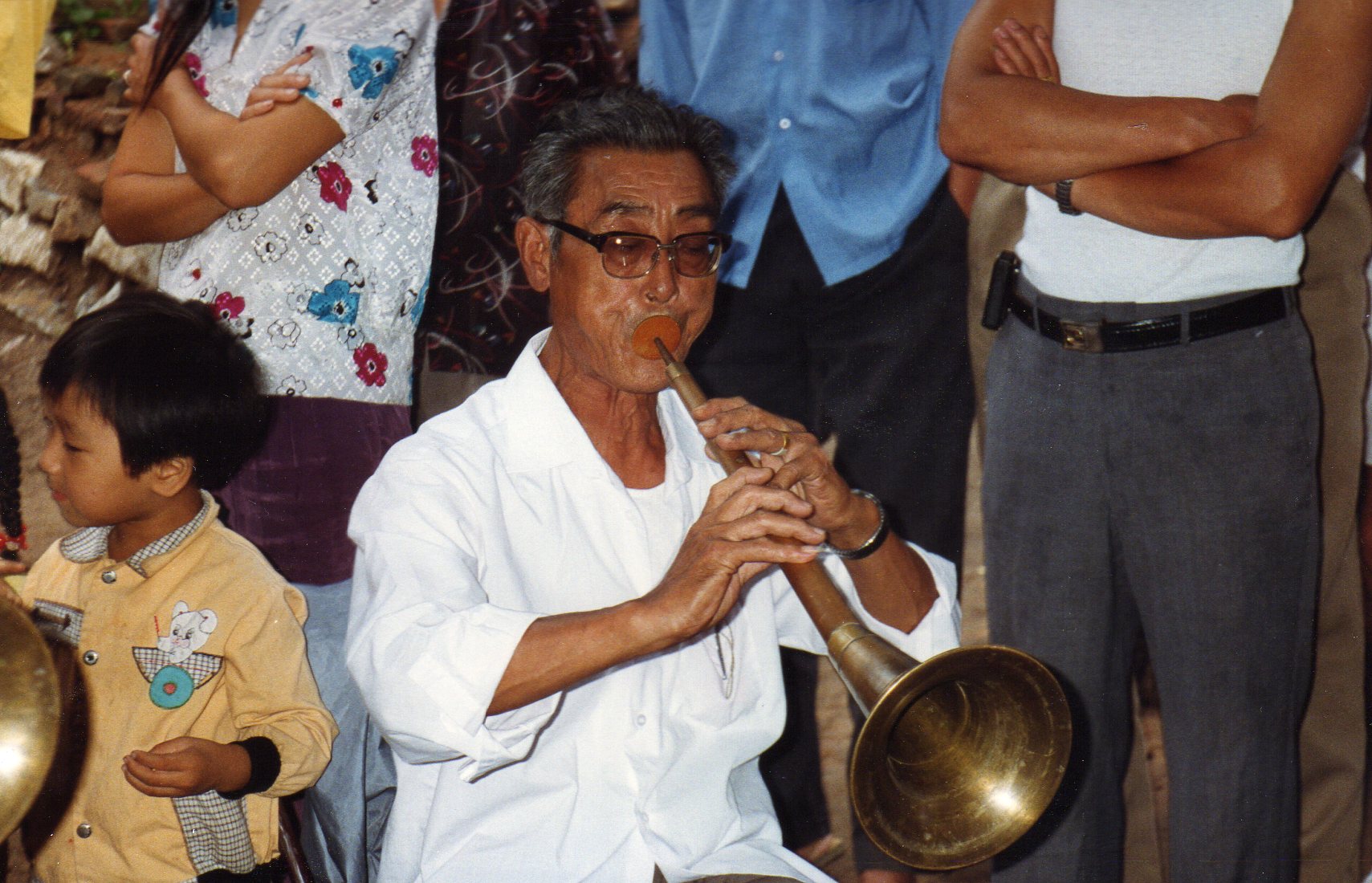


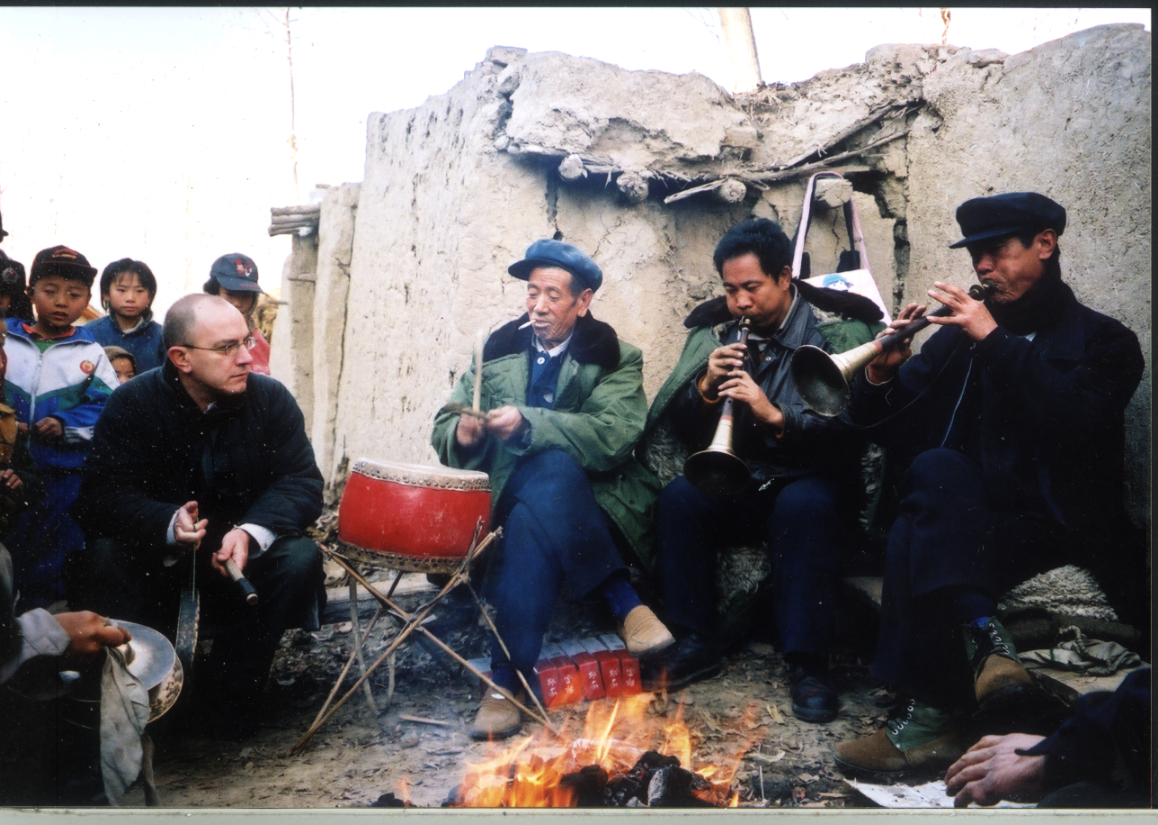


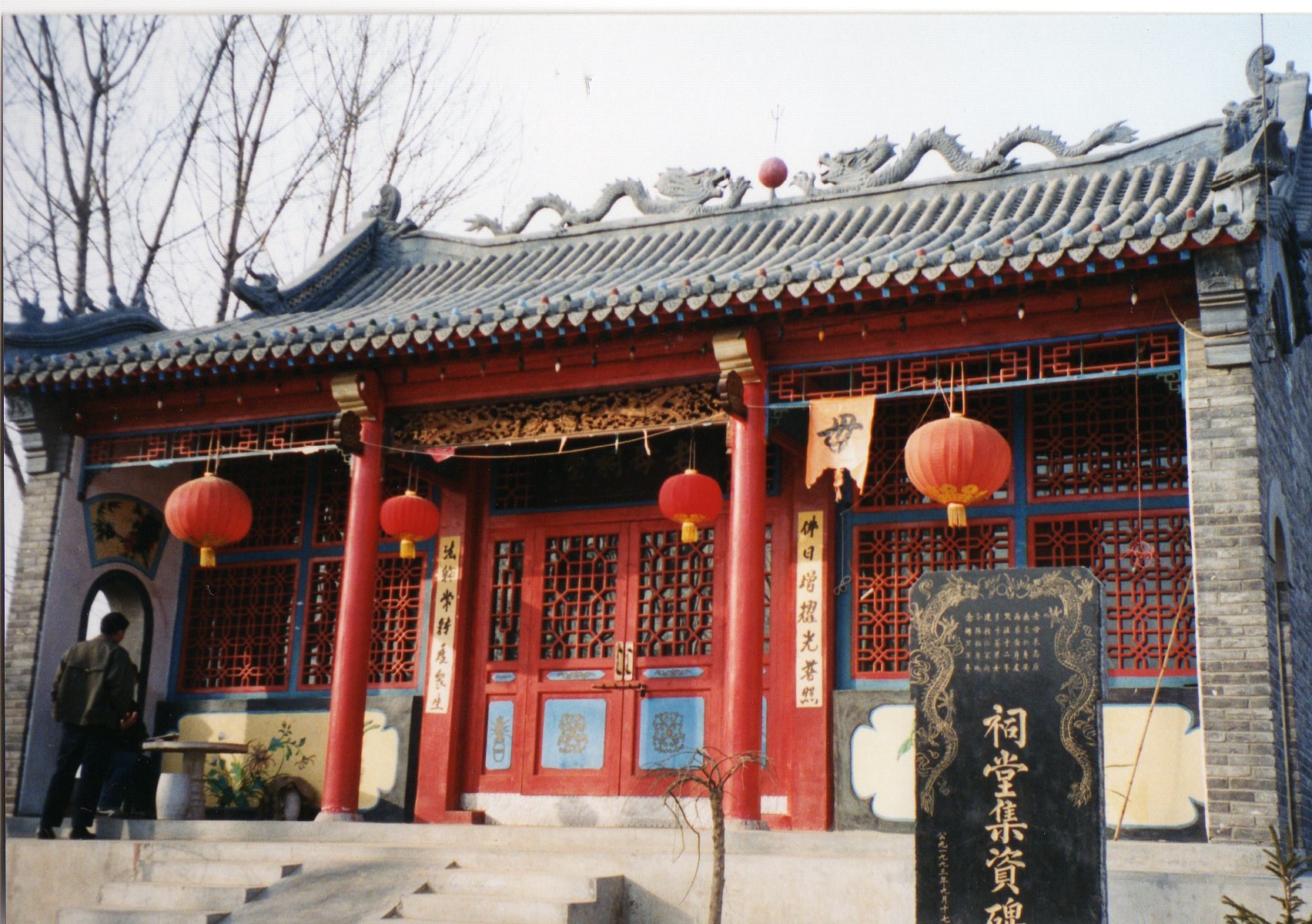

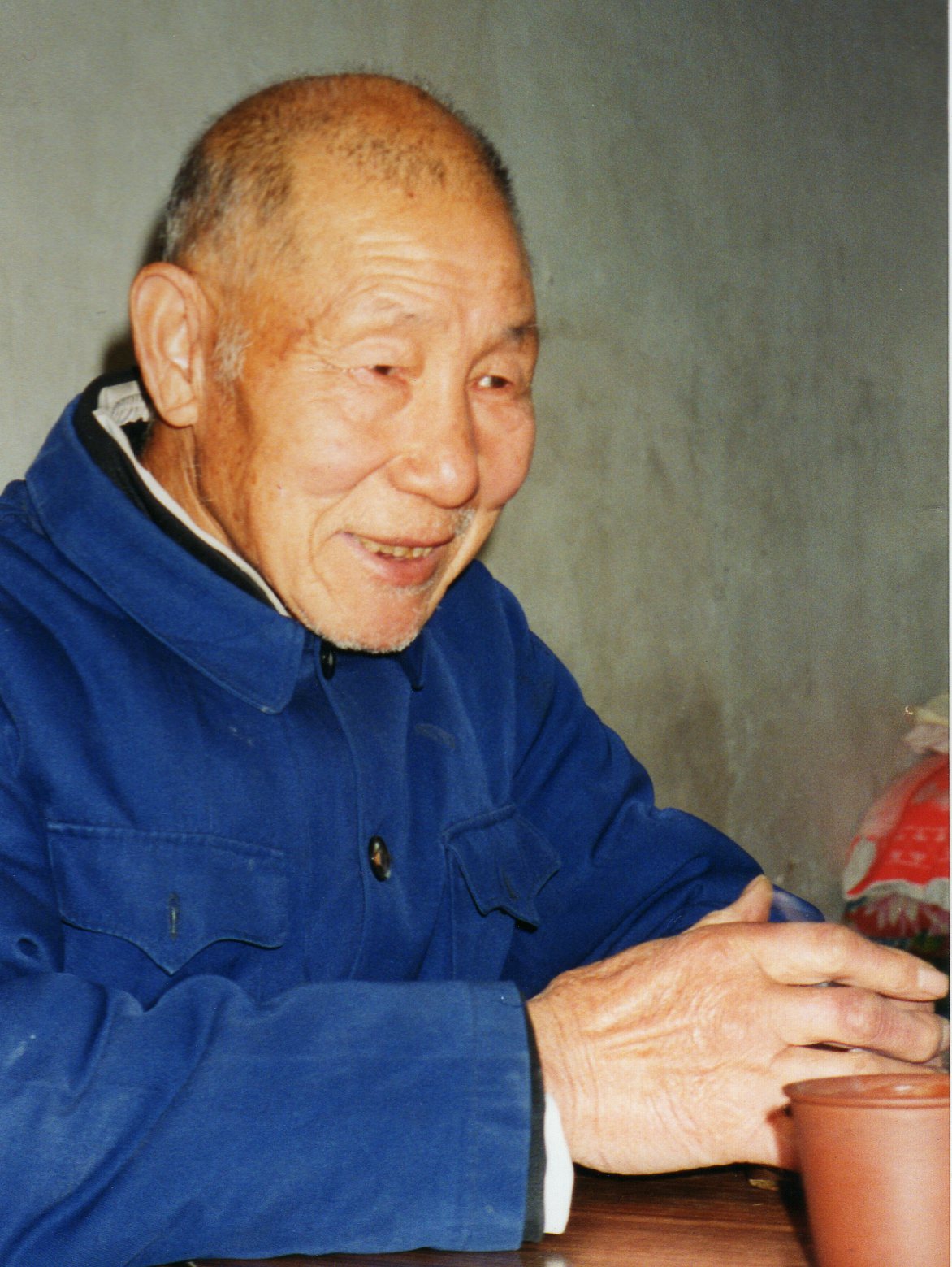
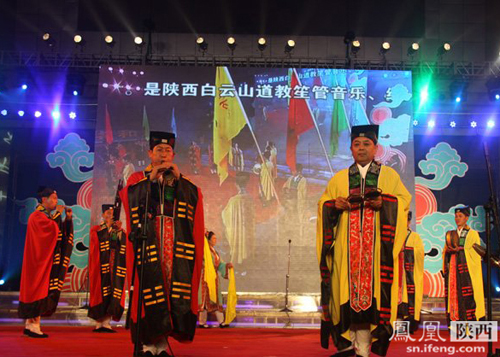
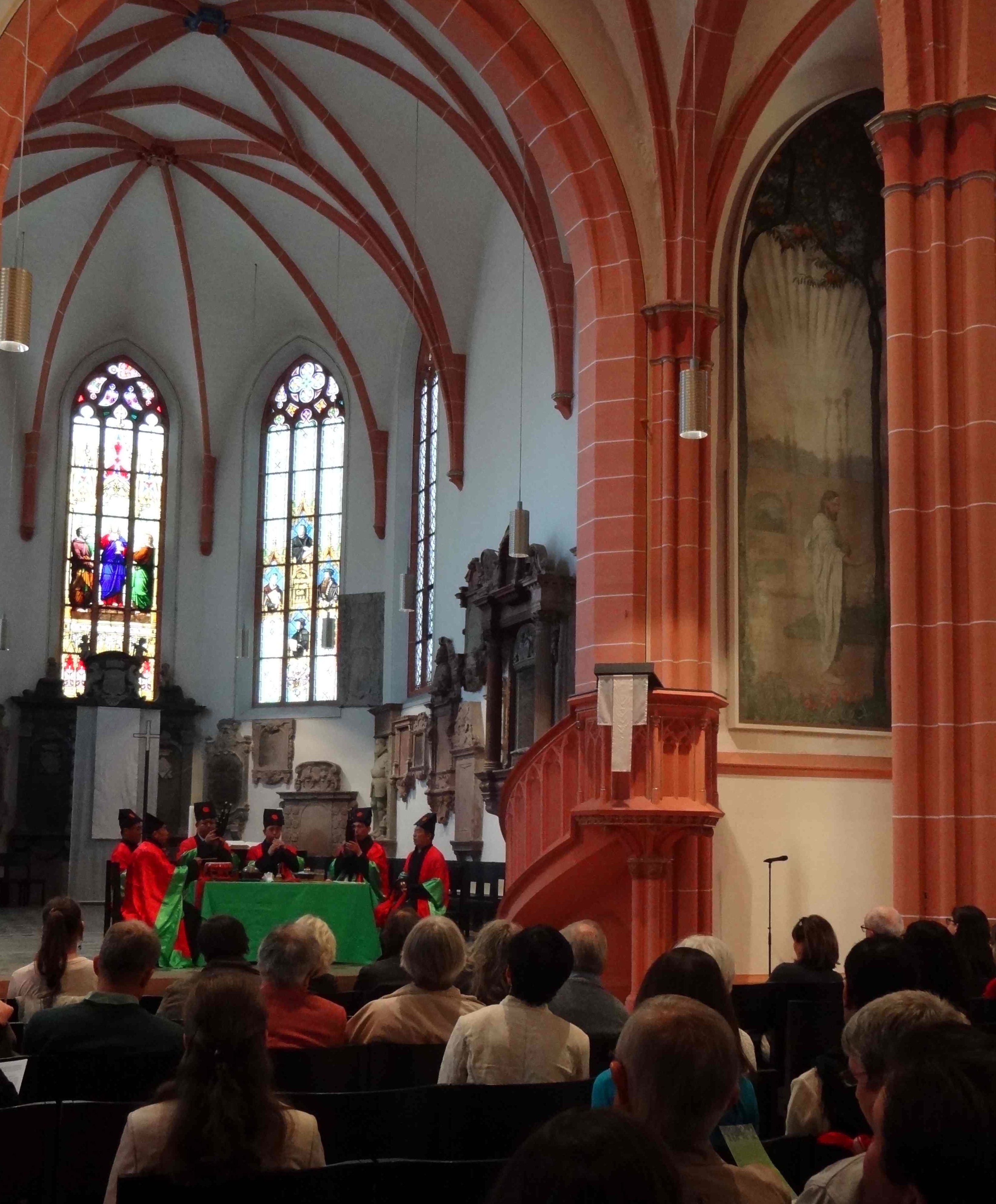
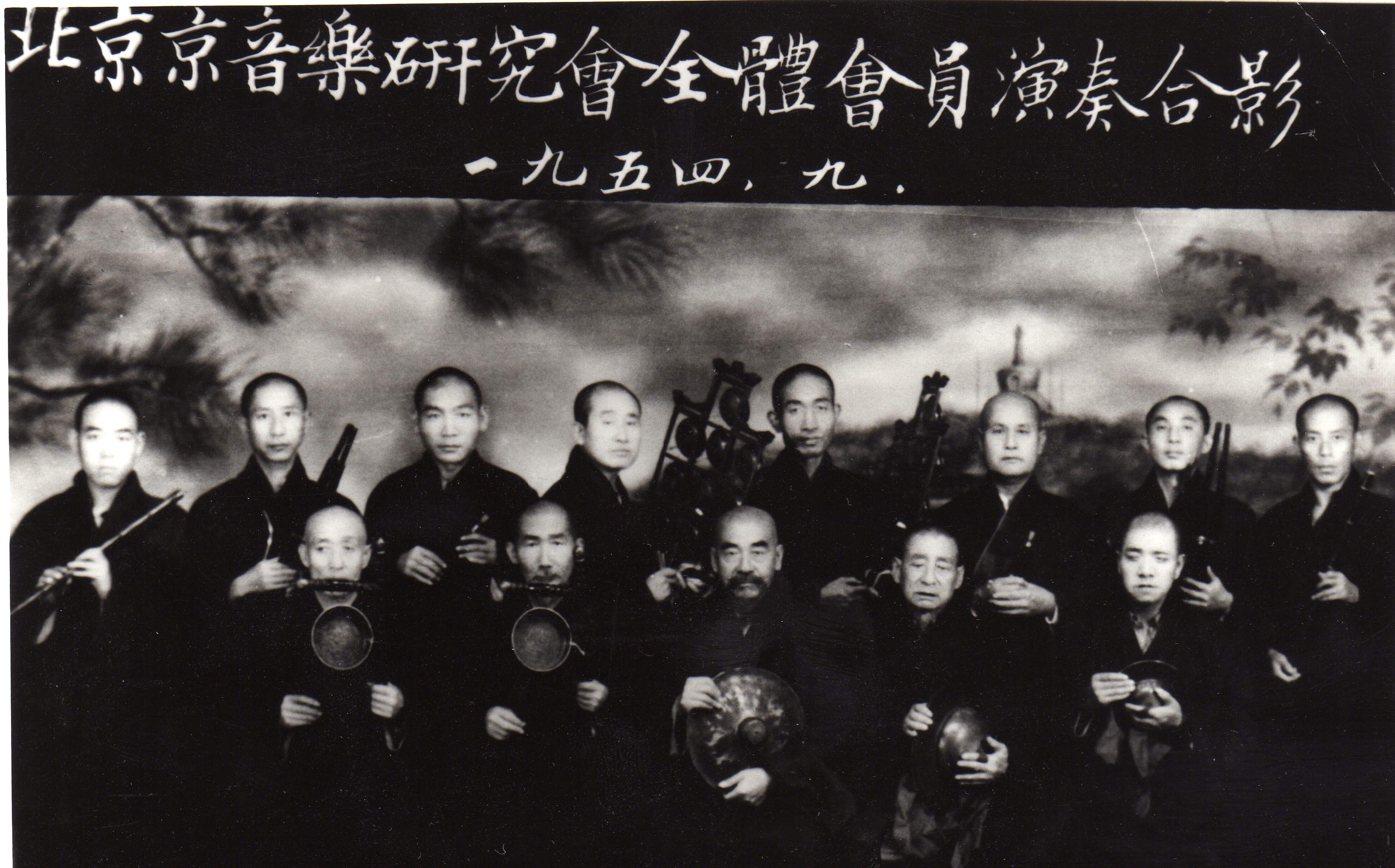

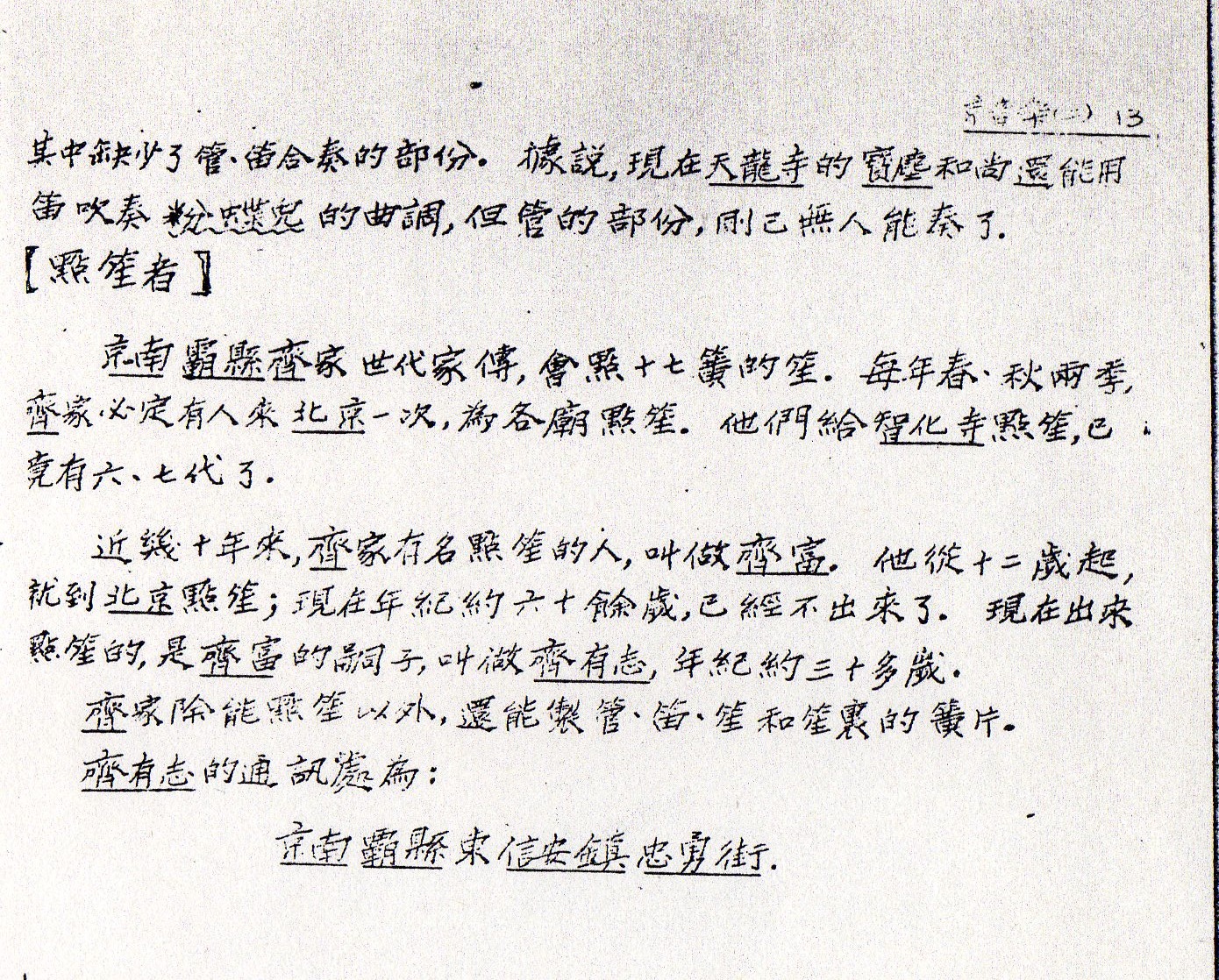


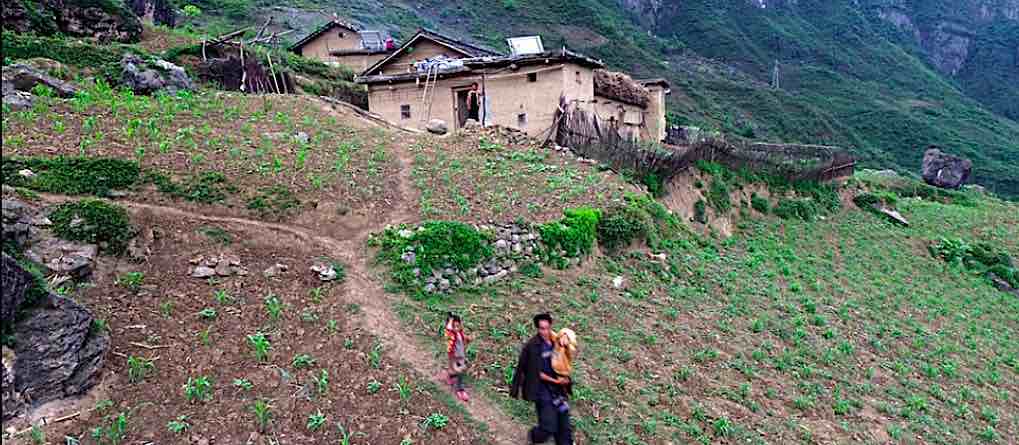
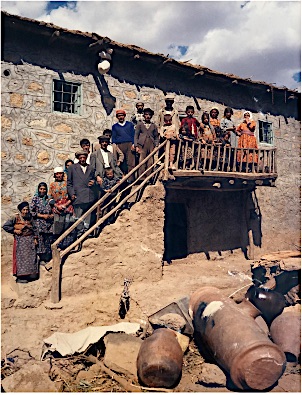
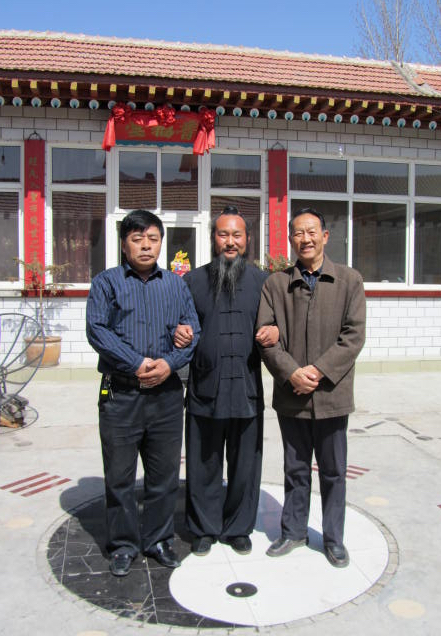
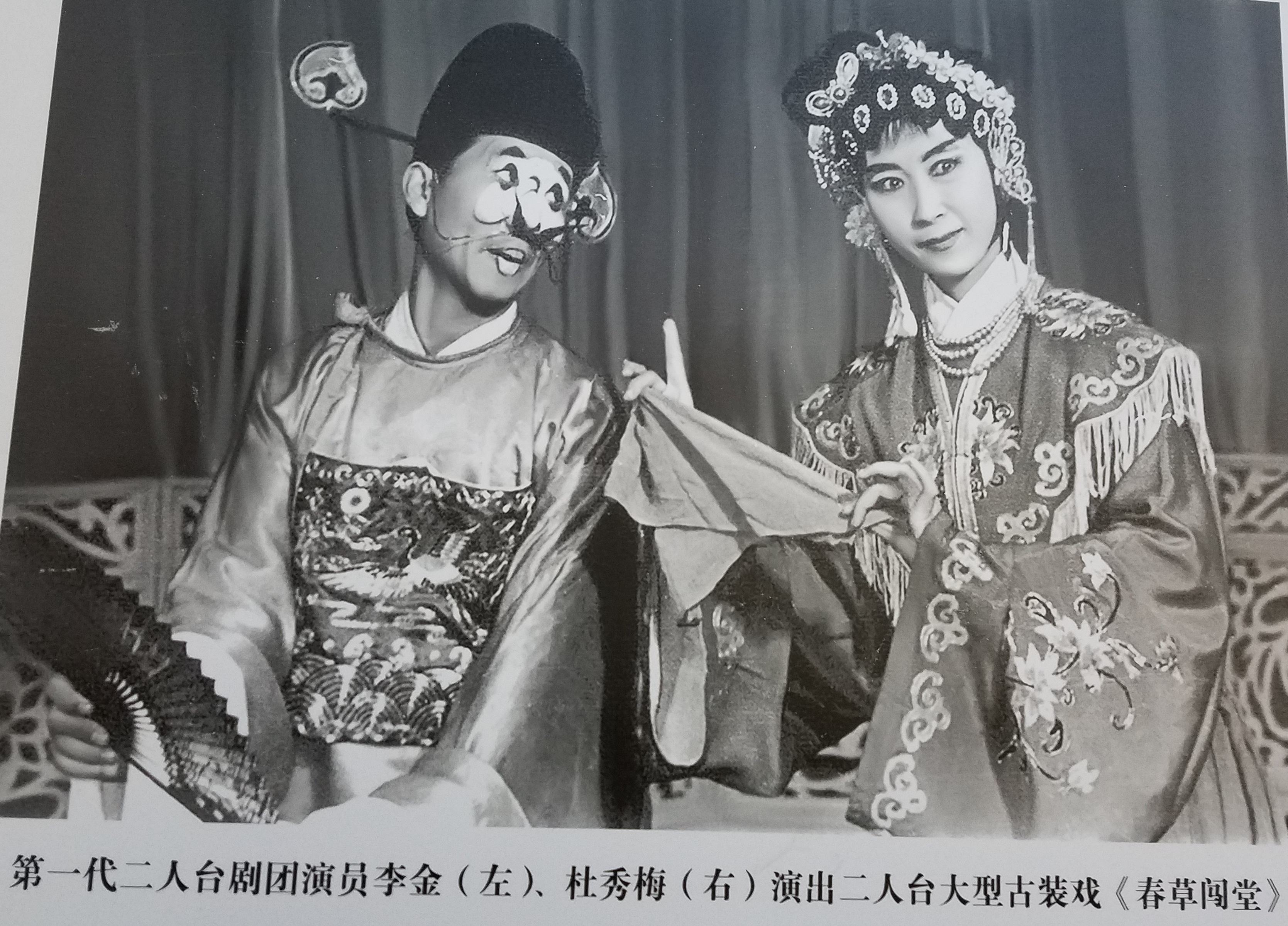

 Stephen Jones: a blog