A gripping fictional portrayal of espionage in World War Two Is
William Boyd, Restless (2006)
(well reviewed here, and Q&A session).
Here’s the opening:
When I was a child and was being fractious and contrary and generally behaving badly, my mother used to rebuke me by saying “One day someone will come and kill me and then you’ll be sorry”, or, “They’ll appear out of the blue and whisk me away—how would you like that?”, or, “You’ll wake up one morning and I’ll be gone. Disappeared. You wait and see.”
It’s curious, but you don’t think seriously about these remarks when you’re young. But now—as I look back on the events of that interminable hot summer of 1976, that summer when England reeled, gasped for breath, pole-axed by the unending heat—now I know what my mother was talking about. I understand that bitter dark current of fear that flowed beneath the placid surface of her ordinary life—how it had never left her even after years of peaceful, unexceptional living. I now realise that she was always frightened that someone was going to come and kill her. And she had good reason.
It was only in 1976, in the genteel setting of Oxford, that Sally Gilmartin finally felt compelled to make a series of revelations to her daughter Ruth, confiding her true identity as Eva Delectorskaya, who had worked as a spy for the British during the war.
Eva’s family had fled Russia upon the 1917 revolution, from St Petersburg and Vladivostok on to Tientsin, Shanghai, Tokyo, Berlin, and Paris. In 1939, while living in Paris, Eva was recruited for the British Secret Service, and trained at a secret mansion in Scotland, “an eccentric boarding school” for spies where she learned about codes, how to drive, shoot a gun, forge documents, tail suspects and evade those on her trail, and to speak like a young, middle-class, privately-educated English woman.
Warned by her suave mentor and boss Lucas Romer never to trust anybody, nonetheless, in wiki’s mot juste, Eva does indeed fall for him. After a mission in Belgium goes badly wrong, the plot thickens further in London. On the eve of Pearl Harbor, amidst the shifting, labyrinthine agendas of the German and Soviet secret services, Eva is part of a British mission concocting propaganda to persuade the USA to join the war—under cover of innocuous institutional fronts in New York and Washington, leading her to a gory betrayal in New Mexico.
Returning bereft to New York, finally trusting no-one, Eva makes an assignation in a cartoon theatre:
She waited two hours for Morris at the theatre, sitting in the back row of the near-empty cinema, watching a succession of Mickey Mouse, Daffy Duck, and Tom and Jerry cartoons interspersed with newsreels that occasionally contained news of the war in Europe. “Germany’s war machine falters at the gates of Moscow”, the announcer intoned with massive, hectoring insistence, “General Winter takes command of. The battlefield”. She saw horses floundering up to their withers in mud as fluid and gluey as melted chocolate; she saw exhausted, gaunt German soldiers with sheets tied around them as camouflage, numbly running from house to house; frozen bodies in the snow taking on the properties of shattered trees or outcrops of rock: iron-hard, wind-lashed, unmovable; burning villages lighting the thousands of Russian soldiers scurrying forward across the icy fields in counter-attack. She tried to imagine what was happening there in the countryside around Moscow—Moscow, where she had been born, and which she couldn’t remember at all—and found that her brain refused to supply her with any answers. Donald Duck took over, to her relief. People began to laugh.
Moving on to Canada, after Pearl Harbor she makes her way back to England. Shocked by further sinister betrayals, she carefully constructs a new identity:
It took her a day or two to calculate how it might just be done. In bombed-out London, she logically supposed, people must be constantly losing everything they owned. What did you do if your block of flats collapsed and burned while you were cowering in your basement shelter in your underclothes? You stumble out, dressed in pyjamas and dressing-gown, into the dawn after the “all-clear”, to find that everything you possessed had been incinerated. People had to start again, almost as if they had been reborn: all your documentation, clothing, housing, proofs of identification had to be re-acquired. The Blitz and now these night raids had been going on since September 1940, over a year, now, with thousands and thousands of dead and missing. She knew black marketeers exploited the dead, kept them alive for a while to claim their rations and petrol coupons. Perhaps there was an opening for her, here. So she began to scan the newspapers looking for accounts of the worst attacks with the biggest number of casualties—forty, fifty, sixty people killed or missing. A day or two later names would be printed in the papers and sometimes photographs. She began looking for missing women about her age.
Sally/Eva’s new domestic mask seems to have ensured her safety, but in a tense dénouement she enlists her daughter to confront the threat.
As the novel alternates the voices of the two women, the period detail is evocative, both for the war years and for 1976 Oxford (hire-purchase, malls, buskers, Hare Krishna, glue-sniffing punks). Ruth, a single mum, teaches English to foreigners—including Hamid, whom she later spots at a demo against the Shah. A sub-plot involves Ruth’s own relationship with Germany, with a vignette on the Red Army Faction.
Here’s a trailer for the all-star BBC TV adaptation of Restless (2012):
For those of us who grew up churlishly dismissive of our parents’ drab lives, neither knowing nor caring much about their personal stories, with our mutual “don’t talk about the war” pact, it makes an intriguing fantasy. I still have to assume my mother’s backstory wasn’t as colourful as that of Eva.
In her memoir she evokes her journey with Lomax around Virginia, Kentucky, Alabama, Mississippi, and Arkansas, recording mountain ballad singers, pentecostal choirs, blind fiddlers, and inmates of a state penitentiary. Lomax had already visited some of the venues and musicians with his father John in the 1930s and 40s. It’s most rewarding to read Collins’s book for the texture it provides on the excitement and challenges of fieldwork—all the more to do so while dipping into some of the audio material available online, as I do below. Some of her accounts are taken from letters she sent home to her mother and sister Dolly.
All these vignettes alternate with her account of her early life in drab post-war England. Her disappointing experiences working at Cecil Sharp House, the gradual blossoming of the folk music scene (rippling out from the Troubadour in Earls Court), singing trips to Warsaw and Moscow. And after she got to know Ewan MacColl, in 1954 he invited her to a party where she met Alan Lomax—just back from three years collecting songs in Spain and Italy—and they soon moved in together, Shirley working as his editorial assistant. At their home in Highgate they often hosted visiting American bluesmen. Shirley recorded her first two solo LPs.
After Lomax returned to the States in 1958, he invited her to join her on a fieldtrip around the south. So in April 1959 Shirley embarked on the five-day voyage by liner to New York. After the cloistered austerity of the British diet, food looms large in her account—starting on board:
French exotic fruit for breakfast, fruit that I’d never seen outside a tin, eggs cooked in ways I’d never heard of. […] thick beef steaks, turkey […] seafood… delicious dressings and sauces….
And once In New York, pizza, avocado, ice-cream…
I was unworldly and twenty years his junior. What I had in my favour was youth, energy, intelligence, a capacity for hard work, and an innately sound instinct and understanding of the music we both loved.
Driving to Chicago they stayed with Studs Terkel and his wife, before taking the train to California—Shirley still constantly amazed by the opulence of the food.
Shirley Collins with Alan Lomax at the Berkeley Folk Festival, June 1959. Source.
Appearing at the Berkeley Folk Festival, she met some fine singers. But she had reservations about the Cali lifestyle:
Nothing seemed quite real, nothing had bite or zest. There seemed little that was robust about urban Californians, they were just too bland—extremely and instantly friendly, but insubstantial, and I couldn’t help but wonder what the pioneers would have made of it all.
Returning to Chicago (Shirley’s first flight), they set off by car for more folk festivals. She delighted in local radio stations (jaunty ads for family bibles, and country music, with songs like Let’s have a lot more Jesus and a lot less rock and roll—recorded by Wayne Raney that very year.
* * *
They now set off on their epic journey south, funded enterprisingly by Atlantic Records. Among their tribulations, they were often confronted by both severe poverty and racism. In the Blue Ridge mountain villages of Virginia
we drive up and down rough old tracks to tumble-down wooden shacks, decaying wood and furniture, and there’s always a couple of mangy hound dogs who race and bark at the car.
Arriving at the port of Norfolk, Alan drove off to the black quarter, telling Shirley to stay in the car (cf. David McAllester among the Navajo). In Suffolk and Belleville they visited churches:
Nobody was welcoming us; I could understand why people would be wary of white strangers, even though we were accompanied by a black man, but it was dispiriting.
In Salem they visited the ballad singer Texas Gladden, whom Lomax and his father John had already recorded in 1946, and they drove over to see her brothers Hobart Smith and Preston, also fine musicians. With the apologetic disclaimer “We ain’t got much to offer ye”, Hobe’s family presented a table
laden with yellow corn-bread, country ham, scrambled chicken, fried potatoes, apple sauce, cinnamon apple jelly, home-preserved beans, macaroni cheese, sweet country butter, salad, peaches, grape jelly…
Shirley was much taken by banjo-player Uncle Wade Ward of Galax (first recorded by the Lomaxes in 1939), 81-year-old Charlie Higgins, claiming to play on a 200-year-old fiddle, and Dale Poe on guitar. Here’s a taste of their sessions:
I loved watching Alan at work, building affection and trust. Recording in the field is a difficult task, but Alan brought to it his years of experience, wide-ranging knowledge, unfailing patience, humour, enthusiasm, judgement, and integrity. He could calm a nervous performer with his informal approach or give confidence to an anxious one.He had an infectious chuckle and a down-to-earth friendliness and warmth that charmed people. It was obvious that he loved them and their music, and they responded to him by giving their best. Strangers became friends.
Shirley’s own voice can be heard only in a few of the recordings on the archive.
They came across a gang of black railroad workers:
By now Alan had shaved off his beard so as not to draw more attention to his “foreignness”. Moving on to Kentucky, as they glimpsed hardship, deprivation, and feuds, Shirley started to feel afraid. At Mount Olivet the Old Regular Baptists were not exactly hostile—she just felt unnerved by their watchfulness and silence. Their voices were “harsh, strangled, and fervent” (audio e.g. here)—”people in torment”. They also track down old-timers of the Memphis Jug Band.
In Alabama Shirley found it thrilling and enthralling to hear the Sacred Harp Singers—a tradition that uses ”shape-note” notation. Here’s a diachronic compilation:
One of the older ladies expressed surprise that I spoke their language so well, evidence, not of ignorance, but of the isolation of their lives.
There, for once, they received a warm welcome—but they were soon jolted back to the racist reality, with KKK signs in evidence.
It pointed up the paradoxes of the South: cruel and kind, mean and hospitable, illiterate and witty.
They recorded a gospel competition and a baptism at a black church. And so on to Mississippi, and three days at the Parchman Farm state penitentiary, where the Lomaxes had recorded work-songs, blues, and field hollers since the 1930s—though Shirley wasn’t allowed out into the fields, having to stay inside. This programme discusses recordings at Parchman from 1933 to 1969—here’s a song later made famous by the Coen brothers’ film O Brother where art thou? (2000):
They drove to Senatobia to find the blind fiddle player Sid Hemphill (1876–1963), whom again Lomax had recorded in 1942 (click here for both sessions). He was also an exponent of a most remarkable genre, the ecstatic fife and drum music of the region, for which he directed them to Lonnie and Ed Young in Como (cf. later film clips in The land where the blues began [below], from 8.00; and e.g. this footage from 1966).
And then… Lonnie invited his neighbour Fred McDowell over, perhaps the most legendary of Lomax’s “discoveries” (wiki; YouTube channel, e.g. this playlist). Shirley recalls:
I am ashamed to say that at first I resented the intrusion by a younger man into the atmosphere made by the old musicians with their ancient and fascinating sounds. I didn’t want that spell broken. Fred started to play bottleneck guitar, a shimmering and metallic sound. HIs singing was quiet but strong and with a heart-stopping intensity. By the time he’d finished his first blues we knew we were in the presence of a great and extraordinary musician. [….] I shall never forget the first sight I had of Fred in his dungarees, carrying his guitar and walking out of the trees towards us in a Mississippi night.
In Arkansas they arrived in Hughes, Alan again leaving Shirley in the car while he got a lead to a gambling den with good blues singers—another place it seemed better for him to visit without her. Meeting up again in Memphis a couple of days later, they visited more black churches, whose music Shirley found “wild and terrifying”. They drove up into the Ozarks to meet Jimmy Driftwood, whose home “was full of fiddles, banjos, and mouthbows, most of them home-made, the finest of which he’d made from a bed-head, and the roughest from a fence-post!”. They also recorded 84-year-old Charlie Everidge accompanying his songs with a mouthbow:
They ended their field trip with a visit to St Simons in the Georgia Sea Islands, finding singers like Bessie Jones (audio here), with songs and folklore from the days of slavery—while witnessing further racism. The long trip back up north was eventful too.
Atlantic Records issued the LP “Sounds of the South” in 1960 (playlist):
* * *
After Shirley returned to England in January that year, she and Alan went their separate ways. As outlined in my first post, in the 2022 edition she updates the progression of her life thereafter—teaming up with Davy Graham and her sister Dolly, with the folkies entering an alliance with the Early Music movement and David Munrow, her time with the Albion band; divorces, disphonia, and being rediscovered in her later years. The 2017 film The ballad of Shirley Collins is punctuated by reflections on the 1959 trip with Lomax, which remains a remarkable instalment in the history of song collection.
* * *
Chapter 10 of Michael Church’s book Musics lost and found makes a good introduction to the work of Alan Lomax and his father John.
John brought celebrated singers including Lead Belly into the limelight; the classic songs he collected and anthologised helped redefine American culture. Alan Lomax’s effect on that culture was seismic, as he made his own discoveries, and as a singer-collector-impresario led folk-blues revivals in both America and Britain. His books, plays, and radio programmes championed the music of the dispossessed; he played a leading part in the musical revolution which threw up Bob Dylan, the Rolling Stones, and the Beatles. Meanwhile with his researches in Haiti, Spain, and Italy he opened up new fields in musicology. And drawing on his archive of films, videotapes, and sound recordings he promoted “Cantometrics”, a system of song-classification which he himself had created, and which he messianically believed could unify—musically at least—the world.
The Lomax Archive (1959–60 recordings here) has enough material to last us a lifetime (further material on YouTube, also here). While they could only make audio recordings for the 1959 trip, later projects were much enhanced by video. Among five films made from footage shot by Alan Lomax between 1979 and 1985, he makes an engaging host in Appalachian journey (1991):
And do watch the 1979 documentary The land where the blues began (which he adapted into a book of the same title in 1993)—e.g. here, as playlist.
The definitive biography of Alan Lomax is John Szwed, The man who recorded the world (2011). Beyond the States, having already recorded in the Bahamas and Haiti (1935–6, the latter trip with Zara Neale Hurston), Lomax went on to make celebrated trips collecting song in Spain (1952, coming into conflict with the fascist authorities) and Italy (1954–5).
I’ll end on a lighter note. As Michael Church relates in Musics lost and found,
a 1957 issue of the London magazine Punch carried a cartoon of a ragged farmer sitting outside his shack and disconsolately singing “I’ve got those Alan-Lomax-ain’t-been-round-to-record-me blues”.
As an Early Music performer manqué, I (along with most of my colleagues) never delved deeply into theoretical issues. Akin to factory workers, we were more concerned with turning up for the gig, getting the notes right, and keeping together. Only quite recently have I begun to admire the work of scholars like Richard Taruskin and John Butt.
Andrew Parrott’s book The Pursuit of Musick (2022) is astutely reviewed for the LRB (“Hickup over the Litany“) by Peter Phillips, based on his own experience in the Early Music world as director of the Tallis Scholars over half a century. Phillips opens by observing:
One of the abiding mysteries in presenting music from the past is what the singers sounded like. There is no evidence for it, apart from written descriptions, all of which fall far short of telling us anything precise.
Citing a description of the singing in the Chapel Royal in 1515, written by the Venetian ambassador to Henry VIII’s court: “More divine than human; they were not singing but jubilating [giubilavano]”, Phillips comments: “the exact meaning of ‘giubilavano’ has been long debated, to no avail”. He goes on to ask
And what does this résumé of national styles, written in 1517, tell us? “The French sing; the Spaniards weepe; the Italians, which dwell about the Coasts of Genoa, caper with their Voyces; the others bark; but the Germanes … doe howle like wolves.”
Thus in recreating the sounds of early music, instrumentalists had more to build on than singers:
Performing on copies of old instruments produced cleaner textures. Research indicated lighter and quicker tempi, and suddenly the colours inherent in the orchestration became apparent, like the colours concealed under centuries of varnish on Old Master paintings. Singing followed suit. Romantic slush became almost morally unacceptable, when it was realised that vibrato in singing, as in playing, had gone too far by the 1960s. The only difference was that the instrumentalists were building on solid foundations, and the singers on what was sometimes no more than guesswork.
He refers to Parrott:
In 1707, Thomas Brown wrote that some of the singing men at St Paul’s Cathedral and Westminster Abbey “dayly come wreeking hot out of a Bawdy-House into the Church; and others Stagger out of a Tavern to Afternoon-Prayers, and Hickup over a little of the Littany, and so back again”.
—observing that “at times one wonders whether Parrott, after all, isn’t out to persuade us that standards in the past weren’t as high as they are now”.
Whereas Parrott was always more radical, sometimes even contrary, Phillips is among those choral directors who concluded that
the cake isn’t worth the candle, and one might as well go back to basics, look at the music carefully and create a sound which seems to suit what the composer may have wanted, as seen through his scores, and which pleases a modern public.
He notes the common accusation that
the reinvention of the past was doing no more than anaesthetising and colonising it, to give modern people a comfortable sense of nostalgia and possession. And in fussing about minutiae of detail, which might have been misleadingly reported and interpreted, it could distract performers from giving themselves wholeheartedly to a convincing, living interpretation.
Indeed, the Early Music revolution gave way to box-office pragmatism (see e.g. here, and here).
Among those criticising the Early Music movement was Pierre Boulez—here he offered a more recent example:
It is not clear that one would really be pleasing the composer […] by re-establishing performance circumstances that could never have been entirely satisfactory. Stravinsky asserted the unique documentary value of his own recordings and maintained that future interpreters should study them and be obliged to refer to them. Unfortunately, though, his precarious gifts as a performer, the circumstances and time pressures under which the recordings were made and the quality of the forces at his disposal do not let us regard this evidence as any sort of absolute model. In any case, can there be such a thing? Every interpretation conveys an essentially transitory truth.
Along with notes on falsetto, and pronunciation, Phillips cites Richard Sherr on the Sistine Chapel Choir in Palestrina’s time,
when it was the premier choir in Christendom. What indeed would Palestrina say, given the standards of the choir that habitually sang his works at the time, if he could hear modern performances? His music, so perfectly formed, so gleaming, cries out for the kind of choral discipline which is rare today, but must then have been non-existent. [Sherr:] “What is surprising, perhaps, is the number of papal singers throughout the 16th century who were thought by their contemporaries not to have been competent.” […]
The adjectives used to describe them include “harsh” (aspra), “hoarse” (rauca), “dissonant” (disona: “untuned”) … and they are occasionally associated with the noun imbecillitas (“weakness”). Many of them were routinely ill, or absent, some were very old but couldn’t be sacked, and some had been admitted without taking an audition. “In short,” Sherr concludes, “we may really not want to hear the music the Sistine Choir sang in the age of Palestrina in the way that they sang it.”
Phillips too reflects,
I have no doubt that if we were really to recreate an evening with an 18th-century orchestra, or a service with a 16th-century choir, we would be horrified by the standard of performance, and disgusted by the smells.
Phillips adduces Parrott’s 1987 recording of Allegri’s Miserere, shorn of its famous high C:
He moves on to the earliest surviving recordings of (WAM) singers—Caruso, and (also eschewing vibrato) this remarkable 1904 version of Ave Maria by Alessandro Moreschi, then 45 “and reportedly past his prime”:
(Moreschi was part of the Sistine Chapel Choir when they recorded Mozart’s Ave verum corpus in 1902, but not so you’d hear..).
If trends can change that much in a century, how much more must they have changed in five hundred years?
His review ends gloomily:
You are left with the impression that old music, when presented narrowly, is for old people.
* * *
Of course, the sound of early singing is still with us, perhaps not so much in the world of Western Art Music as in folk and popular musics (cf. Peter Burke on Popular culture in early modern Europe), in “world” traditions (e.g. Peter Jeffery for liturgy) —and, one might say, in daily life (on a lighter note, click here for a London taxi-driver’s interpretation of the term “early music”). I’m also keen to learn what Phillips has to say about the way that vocal and instrumental sounds of North Africa and the Middle East have been incorporated by interpreters of medieval music, such as Jantina Noorman with Musica Reservata, or in the work of Jordi Savall and Hespèrion XX. And in European regional folk genres we might find clues in living traditions to the way “Spaniards weepe” in the cante jondo of Andalucian flamenco, or how “the Italians, which dwell about the Coasts of Genoa, caper with their Voyces” in trallalero (under Italy: folk musicking). However imprecise, such oral/aural material may supplement early textual sources, adding further pieces to the jigsaw.
Pursuing the theme opened up by Hannibal Taubes’ guest post on the Chinese temple in Chico, I’ve been admiring the hefty tome
Chuimei Ho and Bennet Bronson, Chinese traditional religion and temples in North America, 1849–1920: California (2022; 523 pages, large paperback format).
An impressive work of scholarship, published under the auspices of the Chinese in Northwest America Research Committee (CINARC), the book is an elegy to the remains of popular Daoism that nearly died a century ago but was central to Chinese people’s lives in North America from the mid-19th century. Hannibal is far more able than I to identify salient themes, so below I consult his thoughtful review.
Among the wealth of illustrations on almost every page, many are reproductions of original black-and-white images, assembled from substantial local archives—perhaps a future edition might include a section of colour plates showing more recent photos. The CINARC website is a rich resource for many such images.
The topic is geographically distinctive, addressing migrants from the Pearl River Delta in the far south of China to the far west of America. As Hannibal notes,
Some counties in the Gold Rush hills had Chinese temples years before any Christian church was built, while yearly Chinese camp-meeting festivals in the mountains attracted thousands of worshippers, with Zhengyi-sect Daoist priests, great sacral processions, and deity-figures ten feet tall. By 1930 almost all of this had vanished.
Pondering reasons for the neglect of the subject, Ho and Bronson suggest:
Perhaps the main reason for a lack of scholarly interest has been an almost exclusive focus on immigration, anti-Chinese violence, economics, and racism. This has meant adopting a victims’ perspective, reciting long lists of grievances and instances of White hostility. However, we feel that a different perspective is needed, one that focuses on the sources of the courage and mental balance shown by Chinese immigrants.
They posit various provisional elements that may partially account for the rapid, severe decline in religious observances, including conversion to Christianity, white prejudice, progressivist politics, (interestingly) a lack of Chinese women—and the 1906 San Francisco earthquake. Anyway, the USA proved a less viable site for Chinese religion than southeast Asia.
By the late 19th century the early mining communities * servicing the gold rush gave way to agricultural centres. Both in San Francisco and the hinterland, the secret societies were major patrons.
Apart from newspaper reports (often negative in their portrayal), the study is based largely on the material evidence of the temples themselves—inscriptions, ritual objects, ledgers, and so on, “that we feel brings us closest to what interests us most: to hear, if only faintly, the voices of the pioneers who withstood astonishing hardships to build Chinese America”.
Section 1, “Spiritual and social aspects of temples”, clearly addresses the salient issues, discussing
Why temples mattered
Where they existed and who built them
Functions
Worship
Temples and communities.
Temples served as refuges, hostels, clinics, and meeting places. They were sources of ethnic pride, and centers of community life. And most importantly, the deities they housed stood at the very center of a Chinese-American identity and psychological survival. The early immigrants withstood enormous pressures from physical hardship, cultural prejudice, threatened violence, and concern for loved ones back in China. They needed those temples. For many, the temples were the central institutions of an exile’s life.
Unpacking the ambiguity of the common term joss-house (“joss” deriving from Portuguese deus), the authors identify types of affiliated temples and their parent associations: shrines associated with districts of origin associations (huiguan), charitable halls (shantang), clan associations (zongci), tradesmen’s guilds (hanghui), and secret societies (“tongs”), as well as some independent temples.
Ho and Bronson go on to discuss individual and communal worship, ritual roles (mortuary services, divination, spirit mediums), cultural reinforcement (including education, and opera), secular functions, and investment. They detail the gods invoked (temples with single and multiple deities), life-cycle and calendrical rituals, “bomb festivals” (paohui), and (of special interest to scholars of Taoist ritual) communal festivals for the jiao Offering ritual, known as tachiu (dajiao 打醮, pp.66–73). They discuss the founding, ownership, control/management, and financing of temples.
Section 2 looks at “The physical side of temples”:
Exteriors and siting
Entrances and interiors
Furnishings with fixed and variable locations
Suspended furnishings
Inscription boards
Equipment for processions
Other furnishings.
Overall, “very few Chinese religious buildings were close copies of homeland prototypes”.
Sections 3 and 4 are a detailed inventory of individual temples. Section 3 discusses San Francisco, “by far the most important Chinese religious centre outside Asia” in the late 19th century. Section 4 documents centres outside the Bay Area—mining, agricultural (farm labour), coastal, and urban (despite the great importance of railroad workers in building the West, they were too transient to sponsor temples). This section really opens our minds to the wealth of history in the hinterland, in communities such as Auburn, Marysville, Oroville, and Weaverville.
Ho and Bronson’s concluding remarks survey the spatial and temporal distribution of temples; White views (often disparaging) on the phenomenon; and Chinese American religion in Chinese eyes, making astute distinctions between the perspectives of Chinese businessmen, officials, secret societies, religious professionals, and sojourners.
As Hannibal observes,
Ho and Bronson’s tome will now be the standard reference work on this subject and should be on the shelf of everyone interested in Chinese art and religion, Asian-American studies, immigrant visual cultures in the Americas, and California generally. The authors note that they are considering a follow-up volume that will treat Chinese temples in North America outside of California. Let us hope that this work is completed and that the two volumes can be published together under the imprint of a major press, with color photographs and a few editorial tweaks, as befits this important scholarship.
* * *
My only little contribution to the study of the Chinese diaspora is this tribute to Ray Man, Cantonese music pioneer in London. For the decline of Catholic worship among south Italian migrants in New York, see The Madonna of 115th street.
One point that Hannibal makes in his fine review seems to go rather against the grain of recent scholarship on religious life in post-Mao China. This isn’t the place to assess the vast religious revival that took place there after the demise of the Maoist commune system, but, making a somewhat ambitious comparison between the decline of temples in China and America, Hannibal opens with the statement “Sometime between 1850 and the present, almost all the temples in China vanished.” On the revival since the 1980s, he comments (n.9): “Even areas that appear to have rebuilt their temples en masse still experienced massive losses compared to pre-Communist numbers.” And
Those temples that still physically stood were bulldozed to build apartment complexes, or left to moulder and collapse in half-abandoned villages. Other areas have rebuilt their temples, sometimes in massive numbers, but from the preservationist standpoint this only compounds the destruction, since little care is taken to retain or record the original structures.
These are points worth making, but they downplay the significance of the vast revival. Though much fieldwork on recent Daoist activity (in volumes such as Daojiao yishi congshu) has a retrospective agenda, religious life has resurfaced widely, on a large scale (see e.g. Ken Dean, Adam Yuet Chau, Ian Johnson, and regions such as Fujian, Jiangxi, Hunan, Shaanbei). Moreover, temples are not the only yardstick to assess Chinese ritual life; material artefacts can only tell us so much (cf. China’s hidden century).
While the particular religious ethos that Ho and Bronson’s study reveals will be more familiar to specialists in the ritual history of the Pearl River Delta than to those focusing on other regions of south (and certainly north) China, the whole history of religious life in local communities in the PRC, with their diverse social and economic factors, is utterly different from that in the American West—and from that of the Chinese diaspora in southeast Asia, where ties with the mainland were much stronger and enduring.
* Cf. religious processions of mining communities near Beijing, n. here.
like a suburban Sisyphus doing and undoing a jigsaw, having gone to great lengths to mix up the daily sequence of my diverse topics in a stimulating fashion, it’s that time of year when I try and reassemble them into some kind of thematic order.
In order for this exercise to be worthwhile, you’ll have to click on the links! Ideally, spread the word by reposting on one of those “Social Media” Thingies They Have Nowadays… Even if you only read a dozen of these posts, then my labours will not have been in vain!
I’m going to adopt Stella Gibbons’ drôle device in Cold Comfort Farm, drawing attention with *** to passages (mostly posts, in this case—indeed, the book’s protagonist is Flora Poste) Not To Be Missed. And this list isn’t even exhaustive—the committed masochist can consult the monthly archive in the sidebar, scrolling waaay down.
I’ll begin with Nicolas Robertson, who alas joined the Heavenly Choir in November (see my tribute). His extraordinary anagram tales (introduced and listed here***), a kind of fantasy Esperanto fiction, are among the highlights of this blog, and in further tribute to his brilliant mind I have recently added two more:
So here are listings under some main themes (many, of course, belong under several themes, which is the point of giving them categories and tags, listed in the sidebar):
Seeking clues in the monumental Anthology of folk music of the Chinese peoples, in my first post I cited the Monograph on Opera for Gansu; here I address the Monograph on Narrative-singing (Zhongguo quyi zhi, Gansu juan 中国曲艺志,甘肃卷)—with less than satisfactory results.
In studying Chinese expressive culture, the neat categories of folk-song, narrative-singing, and opera are porous, and best understood as a continuum, from solo singing through small-scale dramatic storytelling to fully-staged drama—onto which we might also map the spectrums of ceremonial–entertainment and amateur–occupational (see also my roundup of posts on narrative-singing).
I introduced the Anthology at length in
“Reading between the lines: reflections on the massive Anthology of folk music of the Chinese peoples”, Ethnomusicology 47.3 (2003), pp.287–337.
As I outlined in my review (NB §4.8), whereas much of the other volumes is dominated by musical transcriptions whose value it is hard to assess in the absence of recordings, the monographs on narrative-singing and opera contain some of the richest material for the imperial and modern histories of a wide variety of folk genres.
Across all volumes of the Anthology, the abilities and enthusiasm of collectors and editors varied widely by province (see e.g. Hebei, Liaoning). Of course the general tone of PRC publications is sanitised, but whereas some volumes of the monographs afford glimpses of the social trauma that people suffered under Maoism, my high hopes of the Gansu narrative-singing volume were deflated; there’s a remarkable lack of references to the single defining period in people’s lives, the famine and political terror of the late 1950s.
To understand such variations in coverage and tone, one would have to learn about political conditions in Gansu cultural departments over the period it was compiled—the allegiances of officials and their stance towards the Maoist era. The opera monograph (which alludes only a little more frankly to political traumas of Maoism, as you see from my previous post) was published in 1995, and the volume on narrative-singing music (Zhongguo quyi yinyue jicheng, Gansu juan中国曲艺音乐集成, 甘肃卷) in 1998. However, the work for the narrative-singing monograph was fruitlessly protracted. It began in 1986; a draft was produced by 1996, but the work was interrupted from 1997 to 2003, and not until 2005 was a final version completed, its 855 pages published at last in 2008 (see Afterword, pp.827–8). Still, the text appears to contain no dates since 1985. From here I can’t assess the balance of lethargy and controversy in the long delay, but one suspects that political ghosts from the early reform era still lurked—even before the more thorough clampdown on expression under XI Jinping.
* * *
On early 1950s’ attempts to “reform” the old occupational troupes (Overview, p.15)—
one of numerous passages requiring us to read between the lines.
The Overview (pp.3–21) outlines historical periods from early imperial times right through to the 1980s’ reform era. The style of the section on the early years of the PRC is bland, falling entirely within the boundaries of acceptable CCP historiography. Upon Liberation, cultural officials made efforts to register and control the mass of locally active groups (notably “narrative-singing festive bands and itinerant artists” quyishehuodui yu liusan yiren 曲艺社火队与流散艺人).
During the campaign to Eliminate Feudal Superstition, some ancient genres and traditional items ceased to be performed. In the struggle against Anti-Rightists, some artists and narrative-singing workers were classified as Anti-Rightist elements and suffered politically. These abnormal phenomena were not corrected until 1962. (p.18)
As elsewhere (e.g. Gaoluo in Hebei, such as here, under “The 1961–64 restoration”) there was indeed a brief lull in the early 60s between extreme leftist campaigns, but any “correction” was highly precarious. Most glaringly, this section avoids any mention of the famine.
Official sources have long been more able to make limited acknowledgement of the casualties of the Cultural Revolution than of the preceding fifteen years of Maoist campaigns. Still in standard terms, the Overview goes on to describe the assault on traditional culture and its representatives from 1966—the closure of teahouses, the banishing of cultural workers to the countryside, the destruction of a wealth of material collected since Liberation, and some cases of victimisation and murder.
In particular regions, the phenomenon appeared of people being paraded, sentenced, and even persecuted to death for secretly performing, secretly watching, secretly narrating, or secretly listening to traditional narrative-singing.
At least this suggests that there were plenty of people indulging in such illicit activities—indeed, they must have been commonly taking such risks ever since the mid-1950s. An instance, again from the Cultural Revolution: like errentai performer Guo Youshan in Inner Mongolia (see Xu Tong‘s film Cut out the eyes), in the section on Liangzhou xianxiao (p.73, see below) we learn that the blind performer Zhang Tianmao 张天茂 (b.1935) was struggled for “singing in secret” (touchang 偷唱). (Zhang survived to become a celebrity of the genre in his 80s, lauded for the reified Intangible Cultural Heritage (ICH) project (see e.g. here), performing on stage and issuing many CDs. Such reversals of fortune were commonplace throughout the society).
Rather than documenting the escalating desperation throughout society as collectivisation and the commune system were enforced, CCP historiographers have always found it far more comfortable to toe the line by latching onto the firm dates of prestigious official events. As in the opera monograph, the “Major events” section (pp.25–52) documents the grand official festivals, with new troupes performing new items throughout the whole period—when the only major events that could have mattered to people were constant hunger and threat of arrest. By contrast with the revealing material in the Appendices of the Hunan (and Henan, n.1 there) volumes, I learn little from the few documents between 1956 and 1962 from the Gansu Bureau of Culture (pp.815–20).
Dai Xingwei, transmitter of the Hexi baojuan tradition, copying a scroll. Source.
A major context for rural narrative-singing, obscured by the propaganda of state modernisation, is ritual. Gansu is among the main regions where “precious scrolls” (baojuan 宝卷) are still performed (see e.g. recent studies by Li Guisheng 李贵生 and Wang Mingbo 王明博, Cheng Guojun 程国君, and Liu Yonghong 刘永红; see also under Ningxia; cf. Hebei). Known in Gansu as “reciting scrolls” nianjuan 念卷 (pp.67–70, 625–6) or “morality tales” shanshu 善书, since 2006 these genres have been reified for the ICH project, resulting in the publication of many early manuscripts (see e.g. this survey by Cheng Guojun 程国君; for largely literary perspectives in English, see the work of Victor Mair and Wilt Idema)—while avoiding references to the traumas of their senior transmitters.
Similarly religious in content and context are the “virtuous and filial” xianxiao 贤孝 genres, notably “Hezhou xianxiao” (pp.95–7) around Linxia, and “Liangzhou xianxiao” (pp.71–3) around Wuwei (such official names, coined since the 1950s, are generally misleading—e.g. Xi’an guyue, Jiangnan sizhu, Hebei chuige). Meanwhile “religious music” was cannily redefined as instrumental ensemble music for performance on stage.
The Monograph proclaims the CCP cultural authorities’ attempts to reform and “develop” the ritual genres of Gansu, but as fieldwork in Shaanbei shows, such efforts were sporadic, and traditional contexts obstinate. Many such genres were dominated by blind performers. In 1984 a national musical contest for blind artists was held in Beijing (p.73).
A passage on “singing fengshui” (chang fengshui 唱风水) around Qingyang in east Gansu (pp.83–5) provides a tiny clue to the surreptitious survival of ritual:
After the founding of the PRC, since large-scale activities like jiao Offerings, rain prayers, and temple rituals came under suspicion for their colouring of feudal superstitious activities, they went underground (xiaosheng yinji 消声隐迹). But small-scale activities organised by household heads, like mortuary rituals (祭祀亡灵), pacifying the dwelling and house-building (anzhai jianfang 安宅建房), still persisted. Whoever suffered a death in the family, whether rich or poor, they would invite a fengshui master to sing a few sections of scripture. […] The reward was agreed in advance by both sides.
(“Rewards” were always a matter of negotation; at such horrific times, performers would have been desperate for any kind of remuneration. Peasant families in Tianzhen, north Shanxi, still managed to invite Daoists in the “years of difficulty”—but even the village cadres came to lift the coffin just so they could get some free gao paste to eat.)
One even wonders how a solo genre like “telling of spring” (shuo chun 说春) (pp.122–4), auspicious New Year’s songs apparently sung byitinerant beggars, could have fared during times of extreme adversity. In these monographs, other useful sections bearing on traditional activity include “Performing customs” (yanchu xisu) (pp.622–34) and “Anecdotes and legends” (Tiewen chuanshuo) (pp.641–61).
Even the Biographies (pp.777–807) contain slim pickings. We can only imagine the tribulations of performers like Zhang Huixian (1892–1970, above), one of few female baojuan performers, based in a village in Jingchuan county (p.790).
But no-one was safe—neither poor itinerant peasant performers nor the officially-recognised representatives of the state troupes; neither obstinate traditionalists nor enthusiastic Party reformers. Wen Bingheng 文炳恒 (1913–58, p.801), organiser of folk performing groups in Heshui county, took part keenly in CCP cultural projects before and after the 1949 “Liberation”. But during the Three Antis (sanfan) campaign of 1951, in blowing the whistle on the corruption of “a certain cadre” he was erroneously classed as a counter-revolutionary element; in 1958 he was sentenced to death.
A different kind of danger: Yang Wensheng 杨文生 (1933–58, pp.806–7), performer of xiangsheng skits with the PLA, was “martyred” in the south Gansu region during a campaign against “bandits”—presumably referring to Tibetan insurgents (among my posts on Tibet, see e.g. here) (we’re not told about Tibetans who perished under the Chinese onslaught).
Of course the biographies can only be selective, featuring just some of those whom the collectors and editors identified as leading bearers of tradition; the mass of lowly performers in the countryside remain largely unsung. Despite the vast loss of life around 1960, death dates at the time are not prominent in the biographies—though one feels almost as bad for those who survived the horrors of Maoism.
* * *
I still regard the Anthology as an essential basic source to open doors onto the depth of folk expressive culture in China. Besides the wealth of data on early history in the monographs, I suppose it’s stating the obvious to observe that for more rewarding material on the Maoist era we would have to seek out unofficial memoirs (see Ian Johnson’s excellent recent book Sparks), which are in short supply.
Alas, it’s already getting late to rectify the glaring omissions of official sources by doing fieldwork. One might decide to write a biography of one folk performer, or document one genre over a defined period; documenting the transformations of the scene since the 1980s’ reforms would make a valuable project in itself. We might even find a senior artist, perhaps born in the 1940s, to offer clear recollections of the late 1950s. Even as the Maoist era recedes, the famine and the whole political climate of the time will always be the elephant in the room.
Fast-forwarding from Raymond Chandler and The big sleep, I’ve already praised the crime novels of Michael Connelly, starring the dogged LA detective Harry Bosch. They’ve always seemed to invite representations on the Silver Screen, and now, thanks to Amazon Prime (don’t ask…), I’ve been bing-watching all seven seasons of the film adaptation Bosch (wiki, with episode guide), the first season airing in 2014.
Whether TV and film versions of novels satisfy is a matter of taste. But I found Bosch entirely gripping, with the characters most convincing—Bosch (Titus Welliver in an iconic role) and his nuanced relationships with his daughter Maddie, partner J. Edgar, sympathetic boss Lieutenant Grace Billets, and Chief of Police Irvin Irving, as well as the whole labyrinthine rigmarole of station procedurals.
With Connelly’s active involvement, the TV adaptations are creative variations on the books, combining various plots from different novels. Amply reflected in the soundtrack is Bosch’s passion for jazz, which led me to several great finds (e.g. Tomasz Stańko, Frank Morgan, Art Pepper). * Against the backdrop of a dystopian LA landscape, the jargon, and the dark humour of their exchanges, is fascinating.
My immersion in the novels was never affected by not having a firm visual image in mind; when I return to them it’ll be interesting to see how much this new input colours my reading.
* Just one more track, somewhat off-piste: the bleak finale of Season 6 plays out with Chris Botti’s 2012 cover of What a wonderful world, with Mark Knopfler. I always felt bad about not quite warming to Louis Armstrong’s 1967 original—maybe it’s just over-exposure. But this is great, both (in Bosch) as a sad commentary on the cemetery scene, and here, enhanced by the Georgian artwork:
In my youth I watched The big sleep (Howard Hawks, 1946) More Times than I Had Hot Dinners—not so much in the cinema as on TV, where it was among a wealth of old movies shown in the dim and distant days before DVDs and streaming.
The film does justice to Raymond Chandler’s brilliant prose style. Roger Ebert, always a perceptive reviewer, made some good points. He described it as
a black-and-white symphony that exactly reproduces Chandler’s ability, on the page, to find a tone of voice that keeps its distance, and yet is wry and humorous and cares.
However often we watched the film (or read the book), the plot remained elusive. Ebert cites Sperber and Lax’s Bogart:
Hawks sent Chandler a telegram asking whether the Sternwood’s chauffeur, Owen Taylor, was murdered or a suicide. “Dammit I didn’t know either”, Chandler recalled.
But details yield to the atmosphere.
Bogart’s career was on the up with The Maltese Falcon (John Huston, 1941; trailer here)—the novels of Dashiell Hammett rivalling those of Chandler—and the iconic Casablanca (Michael Curtiz, 1942). On the Bogart–Bacall relationship, a recent book by William Mann is reviewed by David Thompson in the LRB:
The span of William Mann’s well-researched dual biography is some 115 years. But a case can be made that the “greatest love affair” promised by Mann amounted to no more than 216 minutes in the busy years of the mid-1940s. That’s the combined duration of To Have and Have Not (1944) and The Big Sleep (1946).
Their affair (she was 19, he 44), with its “thrilling ping-pong innuendo”, began while they were filming To have and have not, Bacall’s screen debut:
This led to Bogart divorcing his third wife and drinking still more heavily. Off screen he was regarded as surly and dull.
Moving on to The big sleep, here’s the opening (Chandler’s original here):
The horse-racing dialogue is “one of the most daring examples of double entendre in any movie up until that time”:
In the film, Marlowe is irresistible to a succession of women—something unfathomable to British men well into the 1970s. During wartime, women were admitted to professions from which they were otherwise barred:
Most astounding is the bookstore scene, with Dorothy Malone (and note Max Steiner’s portentous soundtrack):
And here’s the very ending:
OK, I can’t stave off old age for ever. Such films (whether 40s’ noir * from the States or modernist creations from France, Italy, or Japan) came as a kind of blessing to us on a cloistered, repressed island, and are indelibly etched into our collective memory; yet (more an observation than a lament) I doubt if they are quite so iconic to Young People Today. For other seminal influences on “my generation”, see under The conformist.
Irrespective of the Academy, popular culture is clearly, well, popular. Since the 60s, the Fusty Pundits of Yore have been disconcerted to find film, film music, and pop, becoming serious subjects for study; but they wield a profound influence on us all, even on those with more classical concerns… Cf. What is serious music?!, and Feminine endings: Madonna and McClary.
* I read that the term film noir was “coined by French critic Nino Frank in 1945 when a flood of dark Hollywood thrillers made during the war eventually arrived on Parisian screens after the four years of German occupation. Nearly 40 years passed before the term became current in the English-speaking world.”
Timothy Brook, Vermeer’s hat: the seventeenth century and the dawn of the global world(2009).
The author, a specialist in Ming China, sets out to write a “global history of the intercultural transformations of 17th-century life”, using Vermeer’s paintings to “open doors” onto the social history of the day (cf.Music in the time of Vermeer). Such an approach has evidently become a tradition in art history—from my very limited experience, it somewhat recalls the style of Michael Baxandall and Michael Jacobs (see On visual culture), on the far broader canvas of the whole globe.
while most of the figures in the paintings of the Dutch golden age look as if they have never strayed more than a day or two from Delft, the material world through which they move is stuffed with hats, pots, wine, slaves and carpets that have been gusted around the world by the twin demands of trade and war. […]
Behind the serene chinaware and glinting silver coinage that furnish Vermeer’s burnished interiors lay real-life narratives of roiling seas, summary justice, and years of involuntary exile. […]
What Brook wants us to understand is that these domains, the local and the transnational, were intimately connected centuries before anyone came up with the world wide web.
First encounters were becoming sustained engagements; fortuitous exchanges were being systematised into regular trade; the language of gesture was being supplanted by pidgin dialects and genuine communication.
Things, and people, were moving around on a global scale.
Chapter 1, “View of Delft”, introduces the Dutch East India Company (VOC); the narrative soon expands from Delft and Amsterdam, with Spain and Portugal also trading in southeast Asia.
Chapter 2, “Vermeer’s hat”, sets forth from Officer and laughing girl, with a fine discourse on hats in the artist’s time, leading seamlessly to Samuel Champlain’s encounter with the Mohawks at the Great Lakes in 1609, the crucial role of the new technology of weaponry, and the beaver hat. Brook always makes connections:
I spend my summers on Christian Island, which is now an Ojibwa reserve, and I cannot walk the dappled path that angles past the place where the children are buried without thinking back to the starvation winter of 1649–50, marvelling at the vast web of history that ties this hidden spot to the vast networks of trade and conquest that came into being in the 17th century. The children are lost links in that history, forgotten victims of the desperate European desire to find a way to China and a way to pay for it, tiny actors in the drama that placed Vermeer’s hat on the officers’ head.
Indeed, “the lure of China’s wealth haunted the 17th-century world“—and the lure of china, theme of Chapter 3, “A dish of fruit”, based on Vermeer’s Young woman reading a letter at an open window. The British East India Company enters the fray, with their battles in St Helena. We learn of the spread of blue-and-white, in Persia, India, Mexico; exploits in the South China Sea, Macao, and Zhengzhou and Quanzhou in Fujian; and in Suzhou, Wen Zhenheng’s A treatise on superfluousthings (cf. another inspired book by Craig Clunas). Brook addresses class and aesthetics. He contrasts European taste for foreign objects (“stirring no contempt or anxiety”) with Chinese mistrust of the wider world, “a source of threat, not of promise or wealth, and still less of delight or inspiration”.
In Chapter 4, “Geography lessons” based on Vermeer’s The geographer, Brook addresses the way that “the great minds of Vermeer’s generation were learning to see the world in fresh ways”. By way of the Delft draper, surveyor, and polymath Antonie van Leeuwenhoek we are taken again to the South China Sea—Manila and Macau, and coastal China, where besides Red Hairs (Dutch), Dwarf Pirates (Japanese), and Macanese Foreigners, African slaves (servants of the Portuguese) as well as Muslim merchants, were also seen. Jesuits such as Paolo Xu and Matteo Ricci play a significant role.
Chapter 5, “School for smoking”, is another fascinating exploration, covering the diffusion of the new habit around the world; “every culture learns to smoke in a slightly different way”. From images in Dutch painting and porcelain, Brook moves again to China, exploring the three routes by which tobacco entered the country. Writing in 1643, Yang Shicong noted the new taste in Beijing, whither it had spread rapidly from the southeast coast. In 1639 the Chongzhen emperor decreed that anyone caught selling tobacco in the capital would be decapitated. The colloquial term “eat smoke” (chiyan), still heard in rural China, was already in use. In the New World (documented from 1505), tobacco was used to “move between the natural and supernatural worlds and to communicate with the spirits”—a function which it still serves in Chinese ritual today. It was thought to have both spiritual and medicinal properties. Moreover,
In daily life, tobacco was an important medium of sociability that, like healing, was something that benefitted from the spirits’ kind support. Managing social relations on a personal or communal level required thoughtfulness and care, and could best be accomplished when the spirits were on one’s side. Burning or smoking tobacco was a way of propitiating the spirits if they were in an ugly mood—as they so often were—and inducing them to bless your enterprise.Sharing a smoke at a tabagie was done in the presence of the spirits, and it helped the smokers find consensus when differences arose.
In China this is another important aspect of social and ritual life that tends to get neglected in our focus on ritual texts. In 1924 Berthold Laufer praised smoking in an egregious misapprehension with grains of insight:
Of all the gifts of nature, tobacco has been the most potent social factor, the most efficient peacemaker and benefactor to mankind. It has made the whole world akin and united it into a common bond. Of all luxuries it is the most democratic and the most universal; it has contributed a large share towards democratising the world.
Brook offers perceptive asides on witchcraft in Europe, class, gender, a tobacco ballet in 1650 Turin—and slavery. And he notes how the habit of smoking morphed into opium dependency in the 19th century—another tragic story of the ravages of trade.
Chapter 6 departs from Vermeer’sWoman holding a balance todiscuss the role of silver, crucial to the world economy of the day, travelling from Potosi in the Andes to Europe and Asia—with erudite discussions of coinage and morality.
Chapter 7, “Journeys”, interrogates a painting by Hendrik van Der Burch showing an African servant boy (cf. Jessie Burton’s novel The miniaturist, evoking the changing world of 17th century Amsterdam). Brook goes on to describe five journeys to distant shores: Natal, Java, a Korean island, Fujian, and Madagascar. He ponders pictorial representations of Biblical scenes (cf. Balthasar).
In the final Chapter 8, “Endings: no man is an island”, Brook ties the themes together, with discussions of translators, the role of the state, and the concept of a common humanity.
If we can see that the history of any one place links us to all places, and ultimately to the history of the whole world, then there is no part of the past—no holocaust and no achievement—that is not our collective heritage.
Yet as Brook shows throughout, all this came at vast human cost: warfare, shipwrecks, ruined lives. He appends a useful list of Recommended reading and sources.
Vermeer’s hat is a virtuosic, stimulating piece of writing.
Billie Holiday arriving at a preliminary court hearing in 1949. Source.
If I had to choose just one song by Billie Holiday (click here and here for my main tributes)… I couldn’t. You’re my thrill is a contender, as is Don’t explain, and Fine and mellow, filmed for TV in 1957, is just adorable—but I’m increasingly infatuated by Crazy he calls me:
Sentenced for possession of narcotics in 1947 (as she wrote, “It was called ‘The United States of America versus Billie Holiday’. And that’s just the way it felt”), Billie was released from prison in 1948; losing her New York City Cabaret Card prevented her from working anywhere that sold alcohol—but she soon came back with a show at Carnegie Hall. Meanwhile she had split with both her husband and her drug-dealing lover, but she was busted again in January 1949. She made the very first recording of Crazy he calls me (Carl Sigman, to lyrics by Bob Russell) in October that year—in the same Decca sessions as You’re my thrill.
Decca Studios, New York 1949.
Any jazz ballad invites rubato, but this song is a classic instance of Billie’s utter freedom from rhythmic parameters, going with the poetic flow; and just as astounding is her freedom in pitch, always bending the notes of the scale. No-one else can match this! With the modulation into the middle section (“Like the wind that shakes the bough…”), she’s just as irresistible. Like much of her repertoire, it could be quite saccharine, but her timbre in every phrase encapsulates joy and pain, at once intimate and detached—I can only resort to the cliché “bitter-sweet”. *
Many other singers went on to record the song (listen here), but not even Aretha’s version can compare. Still, I do have a lot of time for Patsy Cline’s Crazy (1961) (in my post on Country). My Playlist of songs includes not only Billie, Chet Baker, Michel Legrand, and the Beatles, but fado, taranta, Bach, Mahler, Ravel, and Barbara Hannigan…
* I could listen to Billie singing the opening lines all day long: “I say I’ll move the mountains, and I’ll move the mountains, if he wants them out of the way”. Many jazzers found it useful to study notation, but like many of the great musicians in the world, Billie never learned to read music. In most cases she would have been familiar with other versions of a song before she began reworking it, so for this new tune I imagine Carl Sigman or someone would have played it to her. Notation can be ridiculous (see here, scrolling down)—of course it’s only an approximation, but most scores of the opening read more or less like this:
Take me for a pint sometime and I’ll do my impression of Pavarotti singing it from the score… A few written versions attempt to convey basic syncopation, but they just look pedantic. Most jazzers found notation useful at some stage, and some latter-day sax or guitar players learn a lot from meticulous transcriptions of solos by Bird or Hendrix; but in simpler cases like this, far better just to listen…
BTW, those opening lines recall a dictum that has been attributed to Flann O’Brien, perhaps apocryphally: “I don’t like mountains, because they get in the way of the view”.
Reflecting on the popularity of Zen in the West, and my own youthful explorations, in my post More East–West gurus I gave a brief introduction to R.H. Blyth (1898–1964) (wiki, and useful sites here and here), but he deserves more.
The initials stand for Reginald Horace—both the given names and the initials being a sign of the times. Always of an alternative bent, a vegetarian and adherent of George Bernard Shaw, in 1916 he was imprisoned in Wormwood Scrubs as a conscientious objector. A musician, he was a devotee of Bach—I’m not aware that he ever encompassed noh and kabuki drama, or the shakuhachi, but it’s an intriguing idea.
“Fed up with the rigidity of Britain’s class system” * (Robert Aiken’s recollections are worth reading), in 1925 Blyth went to live in Korea, teaching English at Seoul University, learning Japanese and Chinese, and studying Zen. By 1940 he had moved to Japan, teaching English at Kanazawa University, but in 1941 he was interned again, now as a British enemy alien. After the war, “he worked diligently with the authorities, both Japanese and American, to ease the transition to peace”. In 1946 he became professor at Gakushuin University.
Like his mentor the great Zen master D.T. Suzuki, Blyth’s work influenced the post-war Beat generation like Gary Snyder, Jack Kerouac, and Allan Ginsberg. Besides Alan Watts, other devotees of Blyth’s work included Aldous Huxley, Henry Miller, and Christmas Humphreys (another challenging dinner party), all of whom I admired in turn. For Steinbeck’s and Salinger’s absorption in oriental mysticism, see here. Salinger wrote:
Blyth is sometimes perilous, naturally, since he’s a highhanded old poem himself, but he’s also sublime.
Zen in English literature and Oriental classics (1942), written while he was interned in Japan (446 pages, full text here).
Blyth finds “expression of the Zen attitude towards life most consistently and purely in Shakespeare, Wordsworth, Dickens, and Stevenson, adding “numerous quotations from German, French, Italian, and Spanish literatures”. He devotes a whole chapter to Don Quixote, and four chapters to Non-attachment; further chapters cover Death, Children, Idiots and Old Men, Poverty, and Animals.
I was already far more amenable to the oriental classics (notably haiku, his main exhibit) than to all the Shakespeare and Wordsworth, but I got the point that enlightenment didn’t necessarily have to be sought in remote oriental mountain hermitages—as the Daoist and Zen masters indeed remind us.
The flaws in his ouevre are recognised. The most pervasive criticism, which leaps out from every page, is that, in the words of Patrick Heller, “Blyth’s work exhibits a fundamentally distorted Orientalist view of Japanese literature and religion”. And, according to wiki:
Some also noted that Blyth did not view haiku by Japanese women favourably, that he downplayed their contribution to the genre, especially during the Bashō era. In the chapter “Women Haiku Writers” Blyth writes:
Haiku for women, like Zen for women—this subject makes us once more think about what haiku are, and a woman is…Women are said to be intuitive, and as they cannot think, we may hope this is so, but intuition…is not enough… [it] is doubtful… whether women can write haiku.
Discuss (not). Oh well—that was then, this is now.
* * *
Besides Zen and Zen classics (five vols, 1960–70), Blyth went on to publish Haiku (four vols, 1949–52) and History of haiku (1964—five of eight planned volumes).
And a spinoff that is more significant than I realised is his work on senryū, ** the cousin of haiku penned from a more humorous, human angle (pdf of his 1949 book here).
Blyth’s immersion in Japanese culture was admirable, and he exerted a considerable influence on the post-war generation in search of the Wisdom of the Mystic East…
* Blyth’s search for a less rigid class system would seem to be a case of “out of the frying pan into the fire”, but if the class system of his new home was just as rigid, at least it wasn’t British?!
** I’ve awarded italics to senryū, whereas haiku has surely become roman—cf. sarangi and sitar?!
Among many stimulating articles on the site of the China Books Review, two caught my attention, on the lives of Chinese women.
It’s an important topic, much studied—when socialist revolutions always promise more for women than they deliver. [1] Both reviewers point out the increasing sensitivity of broaching such issues: as Irene Zhang observes, such works are all the more notable “in a Chinese media landscape increasingly hostile to feminists, and with state organs intent on stamping out grassroots activism”.
The book gives “profiles of ten women of different generations, occupations, and social statuses” in the small town [2] of Xianshi in Sichuan—“a former brothel madam, a cotton fluffer’s wife, a hotelier, a lesbian village cadre, a struggling mother, a butcher’s daughter, a beautician, a divorced university dropout, an orphaned migrant worker, and a 17-year-old prostitute.”
Zhang observes:
Interwoven through the ten profiles are themes that define rural womanhood: discrimination, domestic violence, family duty, and resilient entrepreneurship.
As Yi Xiaohe sums up,
Life in Salt Town is a series of tiny cuts and open wounds. Women are trying to stanch the bleeding, while men are adding salt to the wounds.
Zhang’s review makes some salient [sic] critical points, concluding:
Rural Chinese women live with deep intergenerational trauma from centuries of deprivation and state violence, with few guarantees of institutional protection. They still struggle to move upward in a stubbornly discriminatory society all too happy to exploit their labor. While tackling the topic is commendable, in Salt town the big-city writer looks at the small town the same way we look at this history today—from a safe distance. What hurts Xianshi’s women is still at large.
Zhu Xiaobin 朱晓玢, Tade gongchang buzaomeng: shisanwei nügong dagong shi 她的工廠不造夢 ──十三位深圳女工的打工史 [Her factory makes no dreams:the working stories of thirteen Shenzhen female workers] (2022).
Whereas Salt town soon became a bestseller in the PRC, Zhu’s book, published in Taiwan, is banned in mainland China. It tells the stories of thirteen women—as Zheng observes, a more diverse sample than in Lesley T. Chang’s 2008 book Factory girls: from village to city in a changing China.
Her Factory Makes No Dreams tells the stories of individual rebellion by female workers: escaping from arranged marriages; choosing to live alone instead of in abusive domestic situations; going on strike against unfair working conditions; and defying patriarchal society by participating in feminist movements against sexual harassment.
The review goes on:
Reporting the stories of female factory workers inevitably touches upon sensitive topics that can provoke the ire of authorities: gender inequality; exploitation of workers; “stability maintenance” measures to crack down on protest; an unfair household registration system; and shocking wealth disparity.
In conclusion, Zheng writes:
Where once the voices of female workers were heard, now the Chinese state has dismantled these windows into their lives. This is lamentable for the Chinese people, not only because they no longer have the opportunity to hear the stories and demands of workers from different classes, but because a greater crisis lurks ahead. With declining employment rates in China, low birth rates and escalating social conflict—when stability maintenance policies can no longer quell the anger of those who face injustice—without these bridges to the public, will the people still be able to navigate their difficulties peacefully and without violence?
[1] Among many authors to read in in English are Elisabeth Croll, Gail Hershatter, Harriet Evans, and Leta Hong Fincher. For my paltry observations on the lives of women in China (mainly in the rural north) and elsewhere, click here; see also Chinese translations of Elena Ferrante and Sally Rooney.
[2] Small towns (zhen), or townships, between the county-towns and the villages, are an important nexus: see e.g. Dong Xiaoping here.
I’ve accompanied some amazing singers In My Time, like Mark Padmore, and I’ve heard some great folk artists from around the world (such as flamenco, or dhrupad), but I just have to remind you of the divine inspiration of the great Aretha Franklin (wiki; YouTube), whose songs I’ve featured in several posts (Detroit 67; Amazing Grace; most recently, under Ray Charles). So if you’re not up for selections by more knowledgeable pundits (like 30 songs ranked here, or 50 here), here’s a succinct roundup of some of her most enchanting tracks.
Respect:
I say a little prayer:
AmazingGrace:
Spirit in the dark:
Barack Obama in 2015:
Nobody embodies more fully the connection between the African-American spiritual, the blues, R&B, rock and roll—the way that hardship and sorrow were transformed into something full of beauty and vitality and hope. American history wells up when Aretha sings. That’s why, when she sits down at a piano and sings “A Natural Woman”, she can move me to tears […] because it captures the fullness of the American experience, the view from the bottom as well as the top, the good and the bad, and the possibility of synthesis, reconciliation, transcendence.
Following The souls of China (2017), Ian’s valuable survey of the diverse manifestations of religious activity in the PRC, this is a most admirable study—thoughtful and eminently readable. Ian’s website lists the many rave reviews by people far more qualified than me, so I need hardly add to them; but I’d really like to spread the word still further. For his teaching notes, click here.
Sparks revolves around the control of history (“a battleground for the present”), and the role of memory in countering official propaganda. While “dissidents” are well documented for the Soviet bloc (for the USSR itself, Ian refers to Orlando Figes’ The whisperers; see also under Life behind the Iron Curtain), their Chinese counterparts have been less prominent in the public eye (see e.g. China: memory, music, society).
The book’s protagonists are “underground historians” (Sebastian Veg: “amateur or one might say guerrilla historians”), waging an “asymmetrical battle between a few, often beleaguered citizens opposing an overwhelmingly strong state”. While much of the material here is available in niches of academia (the work of the counter-historians has been highlighted by Western scholars such as Geremie Barmé, David Ownby, and Sebastian Veg), Ian portrays even activists who are already quite well-known with great clarity and perception. A major thread through all this is the personal missions of Ai Xiaoming and Jiang Xue.
Ai Xiaoming (left) and Jiang Xue—among the images by Sim Chi Yin that enrich the book.
As noted in a review by Han Zhang, Ian’s first book on China, Wild grass (2004), covered a not dissimilar group of activists during a relatively liberal period. Whereas after the authoritarian clampdown since 2016 his tone might seem less upbeat, nonetheless the work of those introduced in Sparks continues to inspire hope, even amidst the gruesome litany of atrocities, persecutions, and cover-ups that they document.
Ian meshes the successive eras of modern China: pre-Liberation, Maoism, the “reform and opening” of the 1980s and the early 21st century, back to the current retrenchment under Xi Jinping.
This conviction of history’s importance drives a movement of underground historians that has slowly gained momentum over the past twenty years. I call these people historians as a shorthand for a broad group of some of China’s brightest minds: university professors, independent filmmakers, underground magazine publishers, novelists, artists, and journalists. Some are outsiders and might be thought of as dissidents, but most have one foot inside the system, where they continue to hold jobs, own property, and raise families. All of them risk their careers, their futures, and prison to publish samizdat journals, banned books, and independent documentary films. They seek to correct the Party’s misrepresentation of the past and change their country’s slide toward ever-stronger authoritarian control. And they do so by using new technologies to publicize the regime’s failings, often linking current problems to debacles of the past.
It’s long been clear that not all Chinese people gullibly accept Party propaganda. As the state reverts to more draconian policies, while the growth in new technology helps the security surveillance apparatus, righteous Chinese historians also use it to find ways to evade censorship. And their mission is important for our understanding of China:
If people grow up thinking that the Chinese Communist Party played a key role in fighting the Japanese, took power thanks to popular support, and is led by a group of meritocratic patriots, then they will have a hard time understanding why China is prone to purges, corruption, and political violence.
* * *
Sparks is in three parts, The Past, The Present, and The Future. The chapters are interspersed with vignettes on Memory.
Part One opens with the labour camp of Jiabiangou in the poor northwestern province of Gansu, a series of determined investigations culminating in the long documentaries of Ai Xiaoming and Wang Bing. And this is no mere documenting a traumatic past, as Ai Xiaoming’s experience spells out:
The “hit, smash, loot” tactics of the Cultural Revolution that she and her family had experienced were not unique and are not dead; it is how the party regularly deals with people who have different views—especially when they dare touch on Communist Party history.
Still in the northwest, the memoirs of Gao Ertai (a Jiabiangou survivor) reveal the political turmoil at the Buddhist cave complex of Dunhuang in the 1960s.
Members of the Spark group, 1960:
Tan Chanxue, Sun Ziyun, Zhou Shanyou, Ding Hengwu.
A major theme is the work of Hu Jie and Jiang Xue on the short-lived magazine Spark, published by a group of students in Tianshui in 1960. At first they had the upright resolve to make the people’s desperate plight during the famine known to the central leadership, but soon, as it became clear that the latter had compelled the chain of regional and local cadres to report fictitious, exaggerated grain yields, they penned cogent critiques denouncing the people’s communes and the whole socialist edifice. Forty-three of those involved were soon arrested and sentenced to long prison terms; two of the leaders, Zhang Chunyuan and Du Yinghua, were executed in 1970.
Ian cites the solitary anti-Nazi propaganda of Otto and Elsie Hampel under Hitler, driven to tell the truth even if the attempt was futile—a story evoked in Hans Fallada’s novel Every Man Dies Alone / Alone in Berlin.
Spark 1st edition, 1960: “Give up your fantasies and prepare to fight!”.
From 2008 Hu Jie filmed compelling interviews with many of the original Spark group, still passionate in their determination to speak the truth. He released a moving documentary online in 2013 (note the mournful shawms from 3.00 to commemorate Du Yinghua):
In “Memory: Snow’s visit”, Ian introduces Jiang Xue’s own work on Spark with a vignette on her extended, intimate interview with Xiang Chengjian in 2016—here’s the film, edited by Tiger Temple (see below) (slightly different edit here):
Just as moving is an earlier film by Hu Jie, Searching for Lin Zhao’s soul (2004), on the horrifying fate of a young Peking University student, unable to compromise her democratic ideals as society disintegrated in the wake of the Anti-Rightist campaign, who was imprisoned for six years before she was executed in 1968.
Ian looks back at the Party’s machinations, casualties, and pathological purges at Yan’an in the wartime Shaanbei Base Area, with the stories of Liu Zhidan and Liu Jiantong’s banned 1962 novel about him; of Gao Gang, Wang Ming, and Xi Jinping’s father Xi Zhongxun. Even after a palatable version of the Maoist era was being fabricated in the 1980s, and as “Red tourism” swept the country, Gao Hua embarked on a scathing indictment of the Yan’an period.
Ian gained experience of the Party’s control of archives in his study of the fate of the Maoshan temples since the 1930s (see Ritual life around Suzhou). Under Xi Jinping, with history ever more rigidly controlled, the National Museum of China has become a mere propaganda showcase.
In Part Two we meet the novelist Wang Xiaobo and his wife Li Yinhe, documenting subaltern lives; and the anthropologist Guo Yuhua, whose research on “the sufferers” in Yangjiagou village thoroughly demolished the Shaanbei myth. In Xi’an (setting for the cult novels of Jia Pingwa) Ian accompanies Jiang Xue to visit citizen journalist Zhang Shihe (“Tiger Temple”), with his bitter past as a child labourer in the Cultural Revolution. We eavesdrop on meetings of the editors of the Zhiwuzhi public forum.
Returning to Ai Xiaoming, Ian explains her background, and her support for rights-defender lawyers. Assessing the current retrenchment she comments,
The severe political pressure unleashed through governmental response has made it clear that it is unshakable, it does not need to listen, it has idolized itself. What happened in the past, the demonization of those critical of the government, is taking place once again.
The mass murders of the early Cultural Revolution in Daoxian county, Hunan, where—at the instigation of the Party—over 9,000 were murdered in August 1967, have been exhaustively researched by Tan Hecheng, and published in English as The killing wind: a Chinese county’s descent into madness during the Cultural Revolution. Ian provides a vignette on Yu Luoke’s exposé of the massacre in Daxing county in the Beijing suburbs at the same time. Yu was arrested and executed in 1970, but since 2016 his story has been circulating again.
A couple of instances of how such scars should impact on our fieldwork: in the 1990s I was impressed to find amateur Daoist and Buddhist ritual groups in Daxing, but I never learned of the 1967 massacre there. Ian comments further:
One survey of local gazetteers [Yang Su, Collective killings in rural China during the Cultural Revolution] shows that between four hundred thousand and 1.5 million people perished in similar incidents, meaning there were perhaps another one hundred Dao County massacres around this time.
And, from a distance, I’ve long been curious about the expressive culture of Gansu province—including its household Daoist traditions. The counties that scholars of religious and musical life should do fieldwork are among those where the most disturbing abuses under Maoism took place—so somehow we have to integrate society and culture into our studies.
Ian visits retired film historian Wu Di, co-founder of Remembrance (one of a whole series of samizdat journals), taking up the shocking topic of high-school girls in Beijing torturing and beating their vice-principal Bian Zhongyun to death in 1966—subject of another harrowing film by Hu Jie, Though I am gone, recounted by her bereaved husband:
This leads the Remembrance group to debate the career of Red Guard poster-girl Song Binbin, who witnessed (at least) the murder.
In Sichuan we meet Huang Zerong, who, undaunted by over two decades in labour camp as a “Rightist”, in his old age began publishing an unofficial history magazine, Small scars of the past—earning him another prison sentence, a fine, and close surveillance. In a reproach to the reluctance to “dwell on the past” (common among many traumatised peoples), he explains the importance of the 1958 Anti-Rightist Campaign:
Without the Anti-Rightist Campaign there would have been no Great Leap Forward; without the Great Leap Forward, people would not have starved to death. If people didn’t starve to death, there would not have been the Cultural Revolution. Without the Cultural Revolution, there would have not have been Tiananmen.
Fanning out from Beijing, Cui Yongyuan (Oral History Centre) and Wu Wenguang (Village Documentary Project and Folk Memory Project, focusing on the Great Famine) have done impressive work.
Li Wenliang.
Part Three, “The Future”, reveals shifting concerns. Ian documents the Coronavirus in Wuhan and whistle-blower Li Wenliang; while the Party was busy suppressing the truth, the awful realities of life under a draconian lockdown were again exposed by independent counter-historians, including Ai Xiaoming, along with front-line diarist-reporters like Zhang Zhan and the reputable novelist Fang Fang. Ian’s account is always nuanced:
The events in Wuhan show the potential anger, dissatisfaction, and critical thinking that lies beneath the surface. People like Ai Xiaoming, Jiang Xue, Tiger Temple, and Tan Hecheng represent a minority of Chinese. But their well-articulated critiques resonate when people are shaken from their lethargy.This is why one way to look at the Wuhan outbreak is as an example of government power. But a more convincing explanation is that it was a classic example of the repeated eruptions against unchecked government authority.
Lhasa, 1966: from Woeser’s Forbidden memory.
The ever more vexed flashpoints of Xinjiang, Tibet, and Hong Kong are another major area for underground historians. Ian introduces the work of Tsering Woeser on her father’s photos of the Cultural Revolution in Lhasa, and the Tibetan stories collected in Conflicting memories. We learn of the travails of Hong Kong and the elimination of the free publishing world there. Part Three ends, perhaps rather more tangentially, with another trip with Jiang Xue to visit the Zhongnanshan hermits (also outside society), alongside an account of the lockdown in Xi’an.
The excellent Conclusion confronts the underlying questions: are the odds too great, is resistance to the authoritarian state useless, are those few who resist doomed to failure? Ian ponders how we should engage with China, challenging conventional wisdom on how to view it—when
the dominant way of understanding China is that nothing happens there except a string of dystopian horrors: surveillance, cultural genocide, mindless nationalism.
But
Government propagandists can flood the media with their version of reality or slow down unwanted information. This sophisticated form of censoring means that most people will still agree with the government version of events. And yet enough people now have access to alternative interpretations of the past that questioning has become widespread and persistent, despite harsher and harsher crackdowns. […]
The fact that people still resist and do so in a more coordinated form than at any time in the past, seems more significant than the banal point that an authoritarian regime is authoritarian.The fact is that independent thought lives in China. It has not been crushed.
He goes on,
The Party does not always win. Despite overwhelming odds, people inside China today still publish works and make films that challenge authority. Their ideas continue to spread, and when problems in society reach a critical point, people look to them for ways of thinking about their country. This is why Xi Jinping has made control of history one of his signature policies—because he recognises counter-history as an existential threat.
Thus Ian queries whether amnesia has really triumphed:
Saying that “most people” don’t know or care is a truism applicable to almost every society in every era; what matters is that many Chinese do know and continue to battle, today, to change their society.
Moreover,
Prosperity is not inevitable. For any country, it requires constant self-reflection and an ability to think up new solutions to new problems. The Chinese Communist Party’s ability to do so is open to question, especially when we consider its decade-long aversion to meaningful economic reform and its failure to build a top-ranked education system for non-elites.
Before the extensive Bibliography comes a useful Appendix on Exploring China’s Underground History. Ian notes dGenerate Films, Icarus Films, and the Chinese Independent Film Archive, while on YouTube there are channels for Hu Jie, Ai Xiaoming, and Tiger Temple—I’ve featured some of his recommendations above. He also offers a succinct list of recommended books. And an important new site, the China Unofficial Archives, has just gone live (see my introduction). Endnotes (a system that I much admire, cf. Eat the Buddha) provide detailed further references.
* * *
One naturally characterises such figures as “brave”. Guo Yuhua, herself long punished by the authorities and harassed by state security, told me she doesn’t feel particularly brave: rather she acts out of a sense of duty—part of a long tradition of righteous scholars throughout Chinese history, as Ian observes. One can only feel the deepest respect for the people who have stood up for truth, and for those who document their labours.
Still, these are people whom most of us wouldn’t normally encounter—or might not be aware of encountering. So where might The Masses stand on all this—those who swallow their scruples for the sake of a quiet life for themselves and their families? One finds plenty of resentment, of course, and even resistance—such as from organised religious groups; and individual cynicism is often heard, both from those clearly targeted, like “reactionaries”, and from the peasantry, who suffered just as grievously and in larger numbers. But just as distressing are the fates of the many who fervently believed in the Party, yet were assaulted in successive campaigns.
Foreign scholars may visit China for a variety of reasons. However much we may wish to eschew politics, and however much we like and esteem our friends in China, the gruesome history of the Party, trampling people’s lives, is the essential backdrop to all the topics that we study in modern (and indeed imperial) China—including history, culture (art, architecture, music, literature), and religion (see my post Cultural Revolutions). Mao was right about one thing: “There is no such thing as art that is detached from or independent of politics”. No walks of life have been untouched by all this, and Sparks should be essential reading for us all.
Craig Clunas gleefully spotted this clip (posted by Tong Bingxue on what I still like to call “Twitter”), performed by the Yuzhang Daoist Music Troupe 豫章道乐团 (original here):
The troupe (YouTube playlist) is based at a temple in Nanchang (in Jiangxi province, where some of the most vibrant household traditions of Daoist ritual are to be found, BTW)—but regional style is irrelevant here. There are two issues in need of unpacking:
First, Beethoven—much as I like to blame him, in this case he’s obviously Not Guilty (cf. Monty Python: “the second tune, which Beethoven said on his arrest was ‘just a harmless bit of fun’…”). Anyway, the Yuzhang Daoist Music Troupe clearly aren’t in the market for a Beethoven work that might evoke a suitably profound and abstruse mood, like the HeiligerDankgesang of the A minor string quartet—rather, they’ve gone for the ultimate cliché, Für Elise—such a heavy albatross around the necks of generations of hapless piano students. And if we have to hear it yet again, this arrangement has a certain charm, I suppose, in a cutesy chinoiserie kinda way—a step up from its use for the garbage trucks of Taiwan (“Whenever I hear Für Elise, I feel like I need to take out the garbage as well”).
But quite apart from the choice of piece, far more insidious is the style of instrumental ensemble itself. Adopted in recent years by such “Daoist music troupes” (a concept that I dismantled here!), it’s based on the modernised “national” conservatoire style.
In both musical and religious affairs, it would clearly be wrong to expect central authorities to have more taste than local cultural officials. Since the White Cloud Temple in Beijing led the way, * the chimera of the Intangible Cultural Heritage also plays a dodgy role in encouraging this kind of style, with Disneyfied staged performances of “Daoist music” given by temple groups such as the White Cloud Temple in Shaanbei.
So here we have a mixed-gender ensemble (itself an affront to tradition, but hey) playing modernised sheng, erhu, yangqin, ruan—a Veritable Smorgasbord™ of kitsch. The style is garish enough when it’s just accompanying Daoist hymns, but with this video, what ARE they thinking?! To imagine that Furry Lisa (as it’s known in the biz) would be just the thing to enhance their international credibility—just picture the troupe’s apparatchiks in a meeting:
After decades creating a debased concept of “Daoist music” to delude the ignorant masses, what more can we do to consolidate our reputation? Aha, I know!!!
Beat that, Richard Clayderman. One can only look forward to a Yubu Can-can. Re-education required (though not in a 1958-labour-camp kinda way). Meretricious (and a Happy New Year)!
I mean, Don’t Get Me Wrong, I’m all for experimentation—in a suitable context (e.g. “world music” versions of Bach). Of course there is a certain audience for this kind of thing in China, and even abroad; some listeners whose taste monitor isn’t programmed for China may find it charming, and It’s a Free Country (Yeah right—Ed.]. It is what it is. The ethnographer may feel obliged to document all kinds of activities, but whether or not we believe in the Wisdom of the Ancient Sages, it’s our solemn duty to ridicule such folly, which distorts and cheapens the whole notion of Daoist ritual and its soundscape [Go for it—Ed.].
Meanwhile, away from the concert platform, household Daoists like the Li family in Shanxi continue to perform life-cycle and calendrical rituals for their local communities—and so do temple priests, even in Shanghai and Beijing.
The only way I can bear to hear Furry Lisa is with the brilliant Two Set Violin (complementing their Mahler 5 and Pachelbel’s capon):
* Under the misguided rubric of “Daoist music”, the style was “developed” in the 1980s at the White Cloud Temple (Baiyun guan 白云观) in Beijing, headquarters of the national Daoist Association and official showcase for the acceptable face of Daoism under Party control. By 1985 the venerable Min Zhiting (1924–2004)—whose former priestly career had hitherto been based in Shaanxi—was chosen to teach at the temple, going on to serve as figurehead of the Daoist Association. But despite his great wisdom, the temple authorities were adept at serving the demands of Party conformity.
There’s a certain merit in the temple’s performance of the daily services, or occasional rituals such as Flaming Mouth (yankou), as they still practise the tradition of vocal liturgy accompanied only by percussion—albeit in the “southern style” that has been widely promoted in recent years. Among many videos on YouTube, here’s the final part of a yankou in 2015:
The music of Corinne Bailey Rae (website; wiki) is on an ever-growing list of Things No-one Ever Told Me About—as my mother said about the Beatles, “Well I’ve never heard of them—they can’t be famous!”.
So in a futile effort to stem the tide of my eighth decade (cf. Staving off old age), I’ve been admiring her new album Black rainbows—her fourth, after a seven-year break, “a scream through the letterbox” by contrast with the “coffee-shop staples” of her previous work. * Inspired by visiting the Stony Island Arts Bank archive in Chicago, as Damien Morris comments in the Guardian,
its audacious mix of rock, electronica, jazz and Afrofuturism forms an epic soundtrack narrating journeys to freedom.
The title track:
Erasure, channelling punk:
They tried to erase you They tried to erase you They tried to eviscerate you, hide behind the curtain Make you forget your name They tried to erase you They tried to erase you They tried to eviscerate you, hide behind the curtain Make you forget your name
New York transit queen:
He will follow you with his eyes:
Peach velvet sky:
And the final track Before the throne of the invisible god, “in which, metamorphosis complete, she becomes an east Pennine Alice Coltrane”:
Uh-oh, I’ve been cajoled into giving local partygoers another burst on the erhu fiddle—* I’m more used to people asking me not to play it… This gives me another pretext to roll out my old excuses, such as “It was in tune when I bought it”, and “I just sort of… picked it up” (cf. my early days with Ray Man).
Along with Abing’s inescapable Erquan yingyue (immortalised in Yang Yinliu‘s 1950 recording), the plangent Jianghe shui (literally “River waters”, but often rendered, suitably, as “Song of suffering”) has been a mainstay of the erhu concert repertoire since the 1960s (see here, and David Badagnani’s notes).
The concert piece derives from a melody of traditional shengguan ritual wind ensembles in south Liaoning—sadly, I can’t find a rendition, so we’ll just have to imagine it from other recordings, such as the guttural shawms on #6 of my Audio Gallery in the sidebar (notes here). Soon after the 1949 “Liberation” it was adapted to the conservatoire style (for which see here, and here) as a solo for the double guanzi oboe (shuangguan)—here’s Gu Xinshan with the Lüda Song and Dance Troupe of Dalian in 1956:
Hu Zhihou on (single) guanzi, with a sparsely-inflected rendition:
Indeed, the melody has re-entered the folk repertoire in Liaoning, as we can hear on #12 of the Ocora CD Chine: musiques de la première lune.
But Jianghe shui soon came to be known mainly as an erhu solo, accompanied by yangqin dulcimer, following Huang Haihuai’s 1962 arrangement—click here for his recording from 1963.
Min Huifen, 1963.
It became a signature piece of the great Min Huifen—here she is in 2007:
Even conservatoire solos were largely a male preserve until the 1980s (see e.g. the archive CD-set Xianguan chuanqihere), when women players began to dominate; see e.g. Song Fei’s lecture-demonstration on her own highly emotive interpretation.
In between the flexibility of the traditional wind ensemble style and the rigidly-prescribed conservatoire version, all I might add is that while playing Jianghe shui on erhu it’s always worth bearing in mind the plaintive timbre of the double reed. And I learn much from the sheer physical dynamism of the great players, their kinetic grace with both hands and arms. Of course I can’t even begin to emulate the sheer technical perfection of conservatoire virtuosos, but I can just about get away with it before an audience that has never heard real Chinese musicians who can actually play it. And as a change from my usual diet of rural funerals and temple fairs, it’s an interesting challenge to think myself into the heart-on-sleeve romanticism of the conservatoire style.
Following the March on Washington for Jobs and Freedom on 28th August 1963, the United States Information Agency (USIA) broadcast a “Hollywood roundtable” (useful summary here), with Harry Belafonte, Marlon Brando, Charlton Heston [hmm], * Sidney Poitier, Joseph Mankiewicz, James Baldwin, and moderator David Schoenbrun:
The Hollywood Roundtable did not portray the United States as a perfect nation. Instead, the USIA used honesty and humility in an attempt to relate to foreign audiences. Throughout the film, the celebrities emphasised the nation’s faults while still promoting American values. Writer and director Joseph Mankiewicz perhaps put this best: “This is the only country in the Western world where this [the march] is possible, but also the only country where this is necessary.” (11.45)
The emphasis on hope and potential is another theme meant to lure foreign viewers to the American way of life. James Baldwin states, “No matter how bitter I become I always believed in the potential of this country. For the first time in our history, the nation has shown signs of dealing with this central problem.” (18.58)
When word spread that the government was broadcasting images of domestic inequality to foreign nations, many Americans were not pleased with USIA officials. Shortly after, Edward R. Murrow stepped down as USIA president and was replaced by Carl Rowan. At the time, this made Rowan the highest ranked African American in public office.
That such an articulate, enlightened debate was aired at the time seems all the more impressive today, with the media perilously dumbed down and Republicans renewing their energies in assaulting the rights of minorities and women. The March was a predecessor of later demonstrations leading up to those for George Floyd and for womens’ rights. Here’s a film of the March itself:
As Michael Thelwell of SNCC commented:
So it happened that Negro students from the South, some of whom still had unhealed bruises from the electric cattle prods which Southern police used to break up demonstrations, were recorded for the screens of the world portraying “American Democracy at Work”.
As in the Roundtable, women were conspicuously absent as speakers at the March. Gloria Richardson, Rosa Parks, and Lena Horne were escorted away from the podium before Martin Luther King’s speech. Women who were allowed to sing included Marian Anderson and Joan Baez; and here’s Mahalia Jackson singing How I got over and I’ve been buked and I’ve been scorned:
Martin Luther King delivering his I Have a Dream speech at the March.
For the tragic end of Martin Luther King, see Memphis 1968.
Last week we went along to Jamboree, a lively little venue near King’s Cross, for an evening of Kurdish song—and dance—led by the singer Suna Alan (see e.g. here, and YouTube), with a band featuring bağlama plucked lute, guitar, and funky percussion, for an audience with a substantial Kurdish component.
The Kurdish/Alevi singer, now based in London, moved in early childhood with her family to Izmir (whose culture remains cosmopolitan despite the expulsion of the Greeks a century ago), and through her formative years she was imbued with the music of Kurdish dengbêj bards and Kurdish-Alevi laments. Alongside Kurdish folk songs, she sings Greek, Sephardic, Arabic, and Turkish songs; her set last week featured several Armenian ballads.
While well aware that most of the audience had come to dance, she gave instructive spoken introductions to her slow ballads of suffering—often alluding to political persecution—that are at the heart of her message; but their intensity might have come across better had the audience listened with more attention. Online, I like her more intimate acoustic songs where she sings seated—here’s a session with Greek musicians (cf. Songs of Asia Minor):
The persecution of the Kurds within Turkey is illustrated by the fate of Suna Alan’s cousin İlhan Sami Çomak (b.1973; see e.g. here, and here). At Jamboree Suna sang for Nûdem Durak, jailed for 19 years for singing in Kurdish, and for all political prisoners:
I’m a white dove I’m wandering outside of your window but I can’t see you I’m a white dove
I’m flying over your walls, but I can’t reach you.
The door, the door, the door is also closed,
you are the prisoner/flower of freedom
The Ivy under the wall! Raise your head, and sing a song
I’m a white dove The friend of the Ivy in the prison. Grow Ivy! Through the concrete, through the prison walls …
Grow from the walls, raise your head to the sky The ivy under the wall! Raise your head, sing a song Sing a song, Ivy From that dark room to freedom!
Back at the gig, the climactic dancing, soon dispelling the taint of conga, displayed the vitality and energy of such communities.
And then, to my delight, in a seamless transition to the world of traditional festivity, a piercing dahol–zurnadrum-and-shawm duo showed up to inspire the dancers still more, with a caller leading the group singing—a truly joyous occasion.
Yet again I’m struck by the riches of London musical life, beyond the pop, jazz, and “classical” scenes: every night one could relish such events among communities from around the world (see e.g. Indian raga, flamenco—including Flamenco at Jamboree!).
I wasn’t previously aware of The Irishman (Martin Scorsese, 2019; reviewed by Roger Ebert and Mark Kermode), but it’s just as compelling, with a star-studded cast. For me, among all the immortal dialogue, two scenes stand out with Robert De Niro, as he tries to relay the unwelcome news from Jo Pesci to Al Pacino, and as it becomes clear that his best friend is gonna have to get whacked:
and
We may be used to “It is what it is”, but here “It’s what it is” makes an even stronger line. Cf. Pilate’s pithy line in Bach’s John Passion, n. here.
The female gaze is only fleeting in The Irishman, but the revulsion in the face of Frank’s daughter Peggy offers a rare glimpse of a moral core to the story. These movies are particularly topical amidst the current mafia state prosecutions in the USA.
It will come as no surprise to regular readers if I note that “It is what it is” makes a suitable bumper-sticker for the descriptive anthropologist of Daoist ritual, by contrast with the prescriptive agenda of scholars seeking clues in modern ritual to the religious doctrine of ancient times (see Debunking “living fossils”) [Oh FFS—Ed.].
On a more topical note, the astoundingCoco Gauff used the expression in her wise reflections after her semi-final in the US Open was (briefly) disrupted. She is Good People.
In the same vein as my penchant for subtitled black-and-white movies with amateur actors [zzzzz—Ed.], you can’t beat 1960s’ Soviet-bloc satire, as Stewart Lee would say.
Makavejev (1932–2019) was a “satirist, political subversive and eroto-evangelist, a performance artist of ex-Yugoslavia’s cinematic Black Wave”. In exile from 1973, his early films are inevitably compared with Godard.
The doomed love affair is between switchboard operator Izabela and Muslim rodent sanitation inspector Ahmed (don’t you love it when you can type a sentence like that?). The film
is about politics, sex and death. Or mostly sex and death. Or mostly sex. Sex is the great rebellion in this film, and the great warning. Izabela is killed by a male figure who for all his own unorthodoxy and boozy indiscipline is a submissive follower of the party line. Sex can be an apolitical form of conflict; it does not explicitly exist in opposition to the government, but the erotic mode is revolutionary by its very nature. This film is a short, sharp shock of exhilaration and artistic dissent.
It’s full of incongruous, stimulating disjunctions. The drama is interlaced with patriotic songs. Izabela may be a “tease”, but Makavejev teases us too. While the seduction is going on, what starts as a scene-setting pan to a TV newsreel of the desecration of churches gets us involved, threatening to distract us from the bedroom action. The camera lingers on bodies, alive and dead.
Roger Ebert’s original review is excellent too, with the fine sentence
He eventually does not exactly hurl her into a deep well.
Makavejev’s first movie Man is not a bird (1965) is on YouTube too:
And his 1994 self-portrait Hole in the soul, for the BBC (fine review here), is no less wacky:
* * *
Also part of the Black wave was I even met happy gypsies (Aleksandar Petrović, 1966; cf. this post, under “Roma”). This upload of the complete film, and these two excerpts, are alas without English subtitles:
Early history (a pitch raid, Greek pre-eminence, Black Stockings FC); Mesut Özil supports the Uyghurs; and a clerical tournament
Football was introduced to the Ottoman empire by English residents of Saloniki in 1875, the teams consisting of Greek, Armenian, and English players (wiki, and here). Over in Smyrna, the numinously-named Orpheus Music and Sports Club was founded in 1890.
James La Fontaine, who developed football in İzmir [Smyrna], moved to Istanbul in 1889, and the game started to become popular there. Expats and non-Muslim Ottoman citizens played in the city’s Kadıköy and Moda districts.
The first document on football in the Ottoman archives is a police report dated Nov. 23, 1890:
Around 20-25 English youth, under the supervision of the sons of Monsieur Witek, a Moda resident, gathered at Kuşdili and played with a ball made of a tire in an encircled area. The play area had two doors at both ends. This incident was investigated and it was understood that they were playing charity matches for schools. After the game, those who won would donate the prize money to schools. The English will do exercises every Saturday until the final match is played. The Üsküdar Lieutenant Governorship is looking into when the real match will be played, how much money will be collected and which schools it will be given to. It is necessary to take precautions and report developments to the police so nothing improper happens.
Black Stockings players (“purportedly”), 1901. Source.
The first club with Turkish players was Black Stockings FC in Kadiköy (wiki—more in the Turkish version), abruptly dissolved after their first and only match on 26th October 1901 when the players were arrested after the Sultan’s detective Ali Şamil Bey and police raided the pitch, suspicious that the purpose of the team was to organise a coup against the Sultan. Fuat Hüsnü Kayacan (right; source), the first ever Turkish football player, was a soldier on assignment in İzmir in 1898.
Elpis FC, Greek team in Istanbul, active 1904–1910. Image from 1905.
The first competitive league was founded in 1904. Galatasaray, the first Turkish football club, was founded in 1905, Fenerbahçe in 1907, Beşiktaş in 1910. But as an impressive TRT article shows, through the years preceding the 1923 population expulsions, Istanbul teams were dominated by Greek players (cf. Songs of Asia Minor). Significantly, the Turkish national team was formed in 1923.
One weekend in Istanbul recently we were invited to a sports ground in a village along the Anatolian shoreline, where a brilliant initiative is under way: an amateur football tournament consisting of forty 7-a-side teams of religious clerics from all over the metropolis (cf. Inter-faith ping-pong). The matches are timed to take place between the dawn and noon calls to prayer.
This weekly social event makes a great opportunity for them all to meet up, beyond formal, intermittent symposiums. They are young and jovial, the matches competitive; we saw one yellow card, and a muezzin later bemoaned the unjust award of a penalty against his team.
Our host, the enterprising organiser of the league, mischievously introduced me as former Real Madrid striker Stefan (none other than the legendary Alfredo Di Stéfano). Fortunately I wasn’t called upon to demonstrate the legendary dribbling skills of my heyday—but it evoked my dream in which I was called up for the England squad (aged 70) and couldn’t work out how to change into the team strip or make my way onto the pitch.
Happy to learn that we are keen on a good ezan, some of the finest muezzin in Istanbul invited us to come and hear them. We also met a standup comedian there who serves worthy social and political causes; even as the Turkish economy collapses, Istanbul seems full of people doing good things. Afterwards we meandered through the lovely shoreline villages for brunch in a fine commune-run restaurant in Beykoz.
Cinema is one of the great strengths of Iranian culture (wiki; playlist of films with English subtitles). I’ve admired works such as Samira Makhmalbaf’s The apple and Blackboards, as well as Marjane Satrapi’s Persepolis (a graphic novel turned into an animated film), turning the spotlight on the plight of women under a repressive regime (see under Iranian lives).
The current “Women, Life, Freedom” movement is the latest and boldest in the decades-long struggles of Iranian women (and men) to overcome oppression (see e.g. here). The issue has receded from world headlines in recent months, but it mustn’t.
What makes this uprising so powerful is that women and cinema are at the heart of it. Both speak to the Iranian people across all social and ethnic divides and both target the heart of the regime’s anti-modern ideology.
By imprisoning the figureheads of Iranian cinema, the regime neither succeeded in silencing them, nor in intimidating the protesters. It even made them more vocal. Filmmakers both in and outside prison have made statements in support of the uprising and have amplified the voice of the protesters. Realising that the detainment of filmmakers had empowered them even more, the regime decided to grant them amnesty. Yet, this amnesty again put the global spotlight back on the filmmakers, who used this as another opportunity to garner worldwide support for the Iranian uprising.
Looking back, the kind of film I’ve been looking for is
The film was shot in 35 days over a 53-day period. As usual, Panahi used non-professional actors, * with the exceptions of Fatemeh Naghavi and Fereshteh Sadre Orafaiy. He saw the lead actress, Nargess Mamizadeh, in a park one day and immediately offered her the role. The film opens with one long, handheld shot that lasts over three minutes and took thirteen attempts to achieve. Panahi adopted a different camera style to depict each of the four main protagonists’ lives. For the first, an idealistic woman he used a handheld camera. For the second woman, the camera is mounted on a constantly moving dolly. The third woman’s story is told at night in darker outside, and the camera is static with pans and tight close-ups. For the last, least optimistic, both the camera and the woman are completely immobile and very little sound is used.
Earlier film of Panahi include The white balloon (1995) and Offside (2006, in six parts starting here, without subtitles). He has been arrested several times, most recently in 2022.
Among woman directors (both in Iran and in exile), note Tahmineh Milani (b.1960). She was briefly imprisoned for her film The hidden half (2001) before pressure from international directors brought her release. Here’s a scene:
* Predictably, as a fully paid-up member of the Guardian-reading tofu-eating wokerati, I’m a sucker for foreign-language films with amateur actors. But seriously though folks, much as I admire Jack Nicholson and Meryl Streep, we just can’t help being aware that they’re Jack Nicholson and Meryl Streep—which, you must admit, is a serious flaw. I dream of a global ban on actors ever appearing in more than one film, but I do realise it might not go down so well.
I’ve featured taranta in several posts, starting with the 1959 fieldwork of Ernesto De Martino (The land of remorse) and Diego Carpitella in Salento. Reading the new Italian translation of KlausVoswinckel‘s novel Tarantella oder Hölderlin tanzt (2016), set in the same region, inspires me to seek further leads (see also my tribute to Klaus).
Klaus’s story, a synthesis of his lifelong immersion in literature, music, film, and his devotion to the folk culture of Salento, is animated both by the apparition of authors past (Hölderlin, Novalis, Beckett, Celan) and by living characters in the taranta scene—such as Titina, Maristella, the musicians of Officina Zoè, and notably the singing and charisma of the great Enza Pagliara (to whom I paid homage here). I can’t attempt to convey the depths of the novel, but it’s permeated with evocative accounts of musicking in local communities around Salento, as well as reflections on the changing modern history of taranta.
* * *
It’s important to bring to life the individuality of folk performers immortalised in seemingly anonymous old photos and recordings. Biography has become a popular thread in ethnomusicology; the intersecting of social change and people’s life stories is a major theme of my work on Gaoluo and Daoist ritual.
While the black-and-white images from De Martino and Carpitella’s fieldwork are renowned, I had never sought more on the stories of the musicians shown there. Klaus’s novel led me to the great healer-violinist Luigi Stifani[1] (1914–2000).
Resident in Nardò, Mesciu [Maestro] Gigi started training to become a barber from the age of 8. At first learning guitar and mandolin, he then bought a violin for 2 1⁄2 lire—paying in instalments! By age 14 he was taking part in taranta healing sessions, shutting up shop whenever he was needed to attend a domestic exorcism. [2] Even after the 1970s, as taranta was relocating to the public stage, he was still occasionally required to play on behalf of the mildly possessed.
Over the years following his initial encounters with De Martino and Carpitella, Stifani maintained contacts with scholars and the media, his barbershop becoming a kind of centre for taranta studies (see e.g. this series of interviews from 1998). His own diaries are published in Elenco del tarantolismo: biografie delle tarantolate di Nardò e della provincia e fuori provincia and Io al Santo ci credo.
Among Stifani’s notes is this passage, cited by Klaus:
1959, Rita di Surano, bitten by a black spider, 22 years old. She danced for eight days continuously in the month of August. Her dance was rather swift, but always on the ground. We began playing from 9 in the morning and stopped at 6 in the evening. It was only that she couldn’t see any colours while she was dancing—she only wanted to see black. Indeed, her relatives and neighbours had to wear black. And if someone didn’t, she would chase them and rip off their shirt.
The violin doesn’t always feature alongside the tamburello, organetto, and chitarra, but its invigorating energy can play a crucial role in healing.
Transcription by Diego Carpitella.
Besides the startling 1959 films (in my original post), here’s the famous 1967 stage performance in Milan in the Sentite buona gente series, curated by Diego Carpitella and Roberto Leydi:
Playlists such as this show his influence on later generations, even as the social function of taranta shifted—such as Mauro Durante:
Mesciu Gigi died on 28th June 2000, the very day of the festa of San Paolo (patron saint of the tarantate), so memorably described in The land of remorse.
* * *
As media awareness of taranta grew, two feature films appeared:
What survives the transition from domestic ritual to the world-music stage is the essential somatic energy of life: voice, percussion, dance, gathering together. But as with flamenco or ahouach, while musicians can bring vigour to the spectacle of grand festivals, nothing can compare to the ambience of a smaller-scale communal event where the distance between performers and audience dissolves.
[2] Stifani later gave recollections of 29 cases from 1928 until 1972—only a partial list (he also wrote “I have cured over fifty”); and his was just one of numerous such groups in the region.
Political satire may be impotent (as in Peter Cook’s “those wonderful Berlin cabarets which did so much to stop the rise of Hitler and prevent the outbreak of the Second World War”), but apart from making us Guardian-reading tofu-eating wokerati feel smug, it affords us a modicum of sanity. On both sides of the pond, this has been a golden age for satirists, whose only problem is that no matter how exaggerated their fantasies, they couldn’t possibly dream up anything so absurd as the behaviour of the politicians themselves.
The Guardian is blessed with a kind of Brian-and-Stewie double act in the form of John Crace and Marina Hyde. The latter’s columns since 2016 have been collected in the handsome tome
Marina Hyde, What just happened? Dispatches from turbulent times (2022; 512 pages).
In her Introduction she addresses the reader:
You have chosen to be reminded that the path to the sunlit uplands goes right through shit creek.
And she reflects:
I know some people like to think of column-writing as an art, but for me, it’s definitely not. It’s a trade. You get up, you write something to fill a space, and you hope it’s not one of your worst shots and that readers enjoy it. Maybe some people are out there imagining they’re writing the first draft of history, but I feel like I’m just sticking a pin in a moment.
While it’s topical to read her dispatches weekly, it’s also salient to digest them enmasse under loosely-grouped themes, or rather characters: not just politicians, but
a queen, various princes and duchesses, celebrities, wicked advisers, reality TV monsters, billionaires, philanthropists, fauxlanthropists, Hollywood sex offenders, judges, media barons, populists, police officers, and all kinds of other heroes and villains.
Ms Hyde is happy to be “the journalistic equivalent of a chocolate digestive or a packet of salt and vinegar crisps”, interspersing showbiz and sport with politics and always thinking associatively (“for me the reflexive way of making sense of a lot of things is by using references to other things”). But beyond the dazzling stylistic brilliance of her satire, many columns evince her genuine passion about events where levity is unthinkable, such as the murder of Jo Cox and the Manchester Arena bombing.
It’s all there—Brexit, Covid and Partygate, with the Orange Baby taking a relatively cameo role. Will our grandchildren ever believe any of this, or will it be eclipsed by duplicities and iniquities as yet unimaginable? Copious columns of Ms Hyde excoriate the Tories floundering over Brexit and its “opportunities”, from Theresa May (“the Florence Foster Jenkins of politics”) to the arch-villain BoJo, “matinee idol of the Tory shires”, “the blond black hole”,
journalist, novelist, Churchill biographer, politician, urban planner, diplomat. At this stage in Boris Johnson’s storied career we have to ask: is there anything he CAN do?
I’ve already featured the classic scene in Outnumbered where a visiting German student refuses to believe that “Boris” could possibly be a real politician (see note here). Ms Hyde’s epithets for him are magnificent:
not so much a statesman as an Oxfam donation bag torn open by a fox
this radioactive haystack, this Frankenstein assemblage of all the rejected personality disorders of the minor Greek gods
puts the “I am” into iambic pentameter
lying, hypocritical degenerate
looks like Chucky if he’d borrowed a suit for a court appearance, or a Yewtree version of Worzel Gummidge, or what would happen if you started making Margaret Rutherford out of papier maché but got bored halfway through
and
The level of self-congratulation with which he produces a phrase like “tricephalous monster” marks him out as the classic stupid-person’s-idea-of-a-clever-person, but among the faithful it is undeniable that some of his most recycled lines still bring the house down. And the lovely thing is, he’s never buried in the rubble.
For pretty much the entire pandemic, right up until about 10 minutes ago, Johnson has been the teacher who wants to be cool. You know the type—messes his hair up and calls you “mate”. High-fives you when you get a right answer but claims that, in many ways, there are no wrong answers. Tells you to call him by his first name. Deals with early speculative breaches in discipline by announcing he’s not going to send you to the headmaster, mate, because he comes at this stuff from different angles. Tells you to rip out the introduction to your pandemic textbooks.
Insists he’s the same as you guys and totally gets what you’re going through, in fact he actually feels it more deeply. Claims to have been expelled from three schools as a teen. Says he hates teaching because he’s “about freedom”. Rides a dirt bike. Raps Cardi B. Chaperones a school trip where 47 pupils die.
And his Rasputin, the éminence grise Dominic Cummings,
shiftily meeting the camera’s gaze with the same defensive sneer you’d see on the proprietor of a holiday caravan park who had just been released on police bail after a fatal gas explosion thought to have been caused by poor maintenance,
whose intrepid research trip to Barnard Castle, at a time when the feckless riff-raff were just lounging around on their own at home, is yet another priceless gift to satirists.
And then there’s the Haunted Pencil, “someone [Boris] would unquestionably have pitied mercilessly at school”, giving him a patrician endorsement:
“Two years ago, in the Conservative Party leadership campaign, I supported Boris Johnson, because I thought he would deliver Brexit extraordinarily well”, Rees-Mogg intoned, suggesting he has inherited all his father’s gifts of prophecy. “I haven’t seen anything that would cause me to change my mind on that.” Not anything?! He should have gone to MonocleSavers.
Among many classic reproaches to his absurd, sinister shtick is this.
at the expense of one of the four great civil rights questions of our era: 1) When are we getting a White History Month? 2) When is International Men’s Day? 3) Isn’t it time we had Straight Pride? and 4) Can you imagine how sexist people would say it was if we had a men’s World Cup? […]
Ways that it can be shoved down his throat include “being on TV” and “being on a website he normally looks at”.
And Oh No, he’s Being Branded Sexist!
No one more than me wants to help the guy whose chief point about the 2019 World Cup is: “I would so much rather watch parks football on a Sunday morning”. I would also rather he did this.
It is, on every level, absurd that it should feel socially necessary for footballers barely out of their teens to pen missives to the nation apologising for missing a penalty, but not for a government to even acknowledge vast and lethal mistakes, much less say sorry for them.
In the section on still more recent débacles (“12 parties, three prime ministers, and a war”), she deplores the shameful failure of the “government” to help refugees from Ukraine—or indeed (one might add), refugees from anywhere, or to help anyone ever, except themselves. And I’ve already cited her riposte to the rabid critics of Nazanin Zaghari-Ratcliffe.
Indexes can give a succinct, drôle flavour of a book’s tone; the index here is entertaining in itself, while somewhat more restrained than those of Paula Clarke Bain, or my own draft index for Nicolas Robertson’s mind-blowing anagram tales. The substantial entry for “Johnson, Boris” includes sub-headings such as
banal psychopathy
dishonesty
self-love
and death of shame
farming sunlit uplands
fridge-hiding
…
Among all the New-Fangled media that are making us feel old, even I can’t help noticing that emoji are a really useful means of communicating (yup, I’m leaping right in there and being geriatically pedantic about the plural already—see also here and here).
Pictograms evolving out of emoticons, emoji have been constantly developing since the early smiley face 😀, and there’s a wealth of discussion (e.g. wiki; and articles such as this). A 2017 study found that
The French use heart emoji ❤️ the most. People in countries like Australia, France, and the Czech Republic used more happy emoji, while this was not so for people in Mexico, Colombia, Chile, and Argentina, where people used more negative emoji in comparison to cultural hubs known for restraint and self-discipline, like Turkey, France and Russia. […]
Linguistically, emoji are used to indicate emotional state, they tend to be used more in positive communication. Some researchers believe emoji can be used for visual rhetoric. Emoji can be used to set emotional tone in messages. Emoji tend not to have their own meaning but act as a paralanguage adding meaning to text. Emoji can add clarity and credibility to text.
Psycholinguistically, the use of emoji differ depending on speaker and setting. Women use emoji more than men. Men use a wider variety of emoji. Women are more likely to use emoji in public communication than private communication [see also e.g. here].
Extraversion and agreeableness are positively correlated with emoji use, while neuroticism is negatively correlated. Emoji use differ between cultures: studies in terms of Hofstede’s cultural dimensions theory found that cultures with high power distance and tolerance to indulgence used more negative emojis, while those with high uncertainty avoidance, individualism, and long-term orientation use more positive emojis.
Succinct and expressive of nuance, emoji may be misunderstood according to the cultural and contextual interpretation of sender and recipient. Of course, verbal language (both written and spoken) can be misunderstood too, and it can also be a useful device; deliberate ambiguity is easier to detect in speech, which can provide more clues to your meaning.
Feminism is also on the agenda (e.g. here, and here). And emoji designers are careful to reflect skin colours:
Emoji use by country has interesting but quite minor variations (see e.g. here, and here).
started to decline in popularity around the early 2020s, because Generation Z began to associate it with older generations, thus perceiving it as “uncool”. It has been predominately replaced by the sobbing emoji (😭) and skull emoji (💀) to express similar emotions. However, CNN did note that “sometimes teens and twenty-somethings use emoji—like the laughing crying one—ironically, such as by sending six or seven of them in a row to friends, to exaggerate it. But, overall, that emoji is a no-go”. Whilst the emoji has maintained its popularity with millennials, Generation Z utilises the emoji as a form of irony. Following the decrease in usage over Twitter, the Face with Tears of Joy emoji was briefly dethroned as the most popular Twitter emoji. Researchers speculate that this decrease in popularity is due to its over-saturation and overuse within online communities. In late 2021 and early 2022, however, it returned to the top of Twitter’s most popular emoji.
Victor Mair writes on its Chinese connotations here.
I’m fond of the angel emoji 😇, also ambiguous, ingenuous. And emoji will keep evolving. The brilliant, useful “HELLO?” (or “Like, Duh”—also “Like, hello?” and in reported speech, “I’m like, hello?”) doesn’t quite seem to be covered yet (see this post featuring the sinister Haunted Pencil 👻✏️, adding emoji for racist sexist Tory bigot)—one could use the basic Waving emoji 👋, the Face with Rolling Eyes 🙄, or something in this range 🤔🤭, but we surely need a more focused one.
After Moby Dick, I look forward to emoji versions of Pride and prejudice and the Matthew Passion.
The likes of The Haunted Pencil may tut, but like Popular Beat Combos and the telephone (see Staving off old age), it looks like emoji might really catch on. YAY!
Kent Nerburn, Neither wolf nor dog: on forgotten roads with an Indian elder (1st edition 1994).
I can only scrape the surface of the wealth of coverage (both academic and popular) of Native American cultures (see this roundup). Within the literature, “as told to” memoirs (mediated by a more or less diligent white amanuensis) make an important way of amplifying the voices of Native Americans. For some early life stories (the field led by the classic Black Elk speaks, 1932), as Arnold Krupat concludes in For those who come after (1985),
Any future examples of the genre will appear in a context increasingly dominated—at least so far as the white world’s awareness is concerned—by autobiographies by Indians who, while deeply interested in the old ways, have become extremely sophisticated in their manipulation of new—Euramerican, written—ways. In their different fashions all of these life histories, and those of their predecessors, deserve study and inclusion in the canon of American literature.
So Neither wolf nor dog belongs to a long tradition. While many of the thorny issues that it poses are basic to fieldwork in many parts of world, this is a famously sensitive area. Nerburn explicitly problematises the relationship between Native American subject and white interlocutor (anger and sadness on one side, guilt on the other). And this, with the road-trip format, gives the book a dramatic impetus, making it more personal and engaging than a dry series of homilies or a litany of white rhapsodies about NA spirituality.
The book’s title comes from Sitting Bull:
I do not wish to be shut up in a corral. All agency Indians I have seen were worthless. They are neither red warriors nor white farmers. They are neither wolf nor dog.
Learning of Nerburn’s previous collection To walk the red road, as NA elder Dan nears the end of his life he contacts Nerburn to ask him to help him commit his insights to paper. While revealing his own conflicts and soul-searching, Nerburn stands up to Dan and his sidekick Grover when they test his endurance and chip away at his values.
I had not come out here to be given an endless series of tests in cultural sensitivity, or to become the butt of some deep and private jokes. Even if the old man didn’t realise it, I was doing him a favor, and at great cost to myself and my family. I was willing to play his Boswell, but I was not willing to play his patsy. And I surely was not willing to have my every action judged, critiqued, and used as the basis to decide if he was going to let me pursue this any further.
As Dan tells him:
White people that come around to work with Indians, most of them want to be Indians. They’re always wearing Indian jewelry and talking about the Great Spirit and are all full of bullshit. […]
Or else they think we need some kind of white social worker telling us what to do. Some of them come here because they can’t find a job anywhere else and end up out on the reservation…
Grover too comments, “White people don’t want real Indians, they want storybook Indians.” Nerburn shares their antipathy to well-meaning hippies and do-gooders. In his Preface he elaborates:
They take on the trappings, they romanticize, they try to right the historical wrong through a great outpouring of cultural compassion, or try to express spiritual solidarity by appropriating Indian values or belief. In the process, they distort the reality of the people about whom they care so deeply, and turn them into a reflection of their own needs.
This is exactly what Dan and Grover and all the others would never let me do in Neither wolf nor dog.
The tragic history has been documented in detail, but Dan’s account is eloquent.
The white people surprised us when they came. […] We had seen other strangers before. But they were just other people like us—other Indians—from different tribes. They would come and ask us to pass through our land. If we wanted to, we would let them. Otherwise they couldn’t.
But you see, it wasn’t our land like we owned it. It was the land where we hunted or where our ancestors were buried. It was land that the Creator had given us.
It was the land where our sacred stories took place. It had sacred places on it. Our ceremonies were here. We knew the animals. They knew us. We had watched the seasons pass on this land. It was alive, like our grandparents. It gave us life for our bodies and the life for our spirits. We were part of it.
So we would let people pass through it if they needed to, because it was our land and they knew it. We did not wish them to hunt or to disturb our sacred places. But they could come to our land if they needed to.
But the new influx soon became a great ocean washing them off their land.
Then something strange happened. These new people started asking us for the land. We did not know what to say. How could they ask for the land? They wanted to give us money for the land. They would give us money for the land if their people could live on it.
Our people didn’t want this. There was something wrong to the Creator in taking money for the land. There was something wrong to our grandparents and our ancestors to take money for the land.
Then something happened that we didn’t understand. The people who came said that we didn’t belong here anymore. […] We thought they were crazy.
As land became property (“We just belonged to the land. They wanted to own it”), Dan goes on,
Your religion didn’t come from the land. It could be carried around with you. Your religion was in a cup and a piece of bread, and that could be carried in a box. Your priests could make it sacred anywhere. You couldn’t understand that what was sacred for us was where we were, because it was where the sacred things had happened and where the spirits talked to us. […]
The worst thing was that you never even listened to us. You came into our land and took it away and didn’t even listen to us when we tried to explain. You made promises and you broke every one.
On naming;
“Do you mind being called an Indian, Dan?” It seemed appropriate, since his granddaughter had just referred to him as an Indian, and it was a question that always lurked beneath the surface when I was involved in conversations with Indian people.
“What the hell else would you call me?”
“Oh, Native American. I don’t know. Something. Anything other than Indian.”
The old man took a deep breath, as if he had explained this many times before.
“It doesn’t bother me. It bothers a lot of our people, though. They don’t like that the name we have was a mistake. Just because Columbus didn’t know where he was, we have to be called Indians because he thought he had found the East Indies. They think it takes away our pride and our identity.”
“That seems like a fair sentiment to me,” I said. The old man waved his hand in front of his face to silence me.
“I guess I don’t mind because we have taken the name and made it our own. We still have our own names in our own languages. Usually that name means ‘first people’, but no-one would ever call us that. So we let people call us ‘Indians’. Does that tell you something about us?”
I wasn’t sure what he was driving at. “It tells me you are willing to accept a certain level of injustice.”
He nodded vigorously. “Sure. What if you called black people Russians or Chinamen? Do you think they’d stand for it?” He laughed at the thought. “Hell, they change what they want to be called every few years.”
“I don’t blame them, though. They’ve been called some pretty bad names. And being called by a color is almost as strange as being called by a place you never lived. But the point is that our people mostly don’t care so much about something like a name. We’re pretty easygoing about things.” […]
“You remember a few years ago? Some Indians decided they would rather be called Native Americans. It’s an okay name; it’s more dignified than ‘Indians’. But it’s no more real than Indians, because to us this isn’t even America. The word America came from some Italian who came over here after Columbus. Why should we care if we’re called Native Americans when the name is from some Italian?” […]
“If some of us want to be called Native Americans, you should call us Native Americans. If some of us want to be called Indians, you should call us Indians. I know it make you kind of uncomfortable, not ever knowing which one is right. But I think that’s good. It reminds you of how uncomfortable it is for us—we had our identity taken from us the minute Columbus arrived on our land.”
In “Junk cars and buffalo carcasses”, another lesson arises from a concern of Nerburn:
I had always been mystified by the willingness of people to live in squalor, when only the simplest effort would have been required to make things clean. I had come to shrug it off to the old sociological canard that it reflected a lack of self-esteem and a sense of hopelessness about life.
But, in my heart, I knew that this was too facile, too middle-class in its presumptions. But it certainly was preferable to earlier explanations—that people who lived like this were simply lazy and shiftless.
Dan gives him another perspective:
“All of these—all these cars and stuff—makes me proud.”
“Proud?”
“Yeah. It means we haven’t lost our traditional ways.”
The anger had faded from his face and been replaced with a placid smile. “We have to live in this world. The Europeans killed all the animals and too all our land. We can’t live our way anymore. In our way, everything had its use then it went back into the earth. We had wooden bowls and cups, or things made of clay.
We rode horses or walked. We made things out of the things of the earth. Then when we no longer needed it, we let it go back into the earth.
“Now things don’t go back into the earth. Our kids leave pop cans around. We leave old cars around. In the old days these would be bone spoons and horn cups, and the old cars would be skeletons of horses or buffalo. We would burn them or leaave them and they would go back to the earth. Now we can’t. We are living the same way, but we are living with different things. We will learn your way, but, you see, you really don’t understand any better. All you care about is keeping things clean. You don’t care how they really are, just so long as they are clean. You see a dirt path with a pop can next to it and you think that is worse than a big paved highway that is kept clean. You get madder at a forest with a trash can in it than at a big shopping center that is all clean and swept.”
Dan and Grover enjoy an old Cowboys ‘n’ Injuns movie on TV:
“My God,” I said. “How can you watch this? Doesn’t it make you crazy?”
“Hell,” Grover said. “I used to go to the movies as a kid and root for the cowboys. I probably even saw this one.”
“Yep,” said Dan. “In the old show houses everyone used to cheer and boo at movies. We all booed the Indians; cheered when the cavalry came. I really liked John Wayne.”
This leads to another worthwhile discussion. At a truck-stop they find some old hippies, wannabe Indians. Dan bemoans his fellow Indians who sell what is sacred, and the whites who want to buy it:
The white people want to own us spiritually. […] Before you wanted to make us you. But now you are unhappy with who you are, so you want to make you into us.
Dan offers an intriguing perspective on the nature of freedom (an overriding American obsession that most outsiders find mystifying). On the early settlers:
When you got here you got scared and tried to build the same cages you had run away from. If you had listened to us instead of trying to convert us and kill us, what a country this would be.”
And more on images:
For white people there are only two types of Indians. Drunken bums and noble Indians. In the old days, we used to be savages, but that’s gone. Now it’s drunks and noble Indians. I like the white men better who think we are all drunks. At least they’re looking at us as people. They’re saying what they see, not what they want to see. Then when they meet one of us who’s not a drunk, they have to deal with us.
The ones who see us all as wise men don’t care about Indians at all. They just care about the idea of Indians. It’s just another way of stealing our humanity and making us into a fantasy that fits the needs of white people.
In a powerful dénouement, they visit the Wounded Knee memorial.
I must also read the sequel, on the iniquitous boarding school system (introduced here and here).
* * *
While I was swiftly converted by the book, I couldn’t quite imagine how it might adapt as a movie. But Steven Lewis Simpson’s 2016 film turns out to be just as thought-provoking. This is largely thanks to the inspired casting of Dave Bald Eagle (1919–2016) as Dan; 95 years old at the time of filming, before he died he commented “it’s the only film I’ve been in about my people that told the truth”. Grover and Nerburn are well cast too; scenes from the book are carefully handled, like Jumbo who Fixes Stuff, and the alcoholic Indian approaching them in a diner. Dave Bald Eagle’s final oration at Wounded Knee is extraordinary.
Here’s a trailer:
* * *
The dialogue that Dan and Nerburn open up has clearly been well received, at least among wasichu white audiences. Neither wolf nor dog gives food for thought not only to the wannabe Indians and do-gooders but to other wasichu, whether or not they welcome the message (Nerburn’s website has some thoughtful reflections here, and here). How Native Americans feel about it is another matter (though their appraisals too will be diverse); but maybe it can go towards helping everyone come to terms with the appalling tragedy at the heart of the American psyche.
Will you [still] love me tomorrow (Carole King, with lyrics by Gerry Goffin) was a big hit for the Shirelles in 1960, the first song by a black all-girl group to reach no.1 in the USA. While I’m all for evocative string backing arrangements (She’s leaving home, The windmills of your mind—I rest my case), this one is rather naff—still, it’s a wonderful track:
For her own version in 1971 the song’s composer Carole King sang it slower, “less like the pleas for gentleness on the part of a trembling virgin and more like a mature woman requiring parity in a relationship”:
Among numerous covers, no singer can ever compare to Amy Winehouse, who recorded the song for the soundtrack of Bridget Jones: the edge of reason in 2004 (between her albums Frank and Back to black), only released in 2011 on her posthumous album Lioness: hidden treasures:
In traditional societies, most public performers are male; women’s musicking—largely considered under “domestic” contexts—can be quite hard to discover (for some readings, see Flamenco 2, under “Gender”; for China, see e.g. here).
In rural Anatolia, some Kurdish dengbêj bards are female. And in Çaltı village in the southwestern municipality of Denizli, Sultan Bacı (Sultan Torun) comes from a nomadic family, overcoming prejudice in her youth to accompany her songs on bağlama plucked lute. Typically (again, for Turkey and much of the world) she sings of hardship. Recent videos of her singing for village gatherings, or as she herds the goats, have made her something of a media celebrity (e.g. here, and here), the mise-en-scène feeding into urban images of picturesque rural life.
From her YouTube channel, videos like these have become popular online:
Even as outsiders, such plaintive songs remind us of the depth of folk culture. As we begin to absorb ourselves in the musical style, we might also seek to learn more about the diverse genres in the soundscape of the region. It’s worth pondering the public/domestic continuum further; while women sing in a range of informal contexts, perhaps Sultan Bacı’s accompanying herself on bağlama is considered more of a public statement? However alluring such soundbites may be, ethnographies of changing societies are always to be desired.
At Wimbledon, the backdrop to astounding feats of sporting virtuosity is a benign celebration for the middle classes (as I remarked here—and do let’s dust off the classic Vitas Gerulaitis story!!!), its genteel image (blazers, straw boaters, flowery dresses) carefully fashioned by the BBC. Everyone knows how to behave (“being British for the British, in front of the British”).
Even the style of this week’s climate protests seemed genteel, when Just Stop Oil activists briefly disrupted matches by scattering a Wimbledon-themed jigsaw and environmentally-friendly orange confetti glitter onto the grass. The planet may be on the brink of extinction, but predictably, “Home Secretary” Cruella Braverman considered the protesters “selfish” (cf. Going too far).
Tucked away on the BBC sport website is an intriguing article on a failed attempt by suffragettes in 1913 to burn down the grounds (see also here)—one of many such incidents that year at major sporting events. The Wimbledon chapter of the WSPU was a hotbed of suffragette activity, led by Rose Lamartine Yates.
Having been educated [Youwere educated?—Ed.] in Wimbledon myself, I had no idea of all this; I wonder if such local history is taught in schools today.
* * *
The suffragette movement was widely recognised by its colours, adopted in 1908: purple representing loyalty and dignity, white for purity, and green for hope. The following year the Wimbledon tennis tournament also chose purple and green for its emblem; but no debt has been acknowledged.
Just as there’s no clear link between the colours of Wimbledon and the suffragette movement, the image of the movement itself (“the largest domestic terror organisation who ever operated on British soil”) has long lost the taint of terrorism—as tends to happen with successful terrorist campaigns. Upon the outbreak of World War One the suffragettes’ arson and bombing campaigns were suspended, and after the war women gradually gained the vote without resorting to further violence.
This blog is full of “world music“, from far and near. I’ve always been a great fan of Irish music, but somehow I’ve never quite paid attention to the English folk scene. While I’ve made a modest attempt to get to grips with Morris dancing, I struggle to get over the quaint “Hey Nonny No” shtick—which is an irrelevance for English folkies like the women featured below; they keep ploughing their own furrow (sic), nestling in a niche alongside (and branching out towards) pop and rock.
So I welcomed Eliza Carthy’s delightful recent chat with John Wilson on BBC Radio 4.
Eliza Carthy with her mother Norma Waterson.
Eliza Carthy (website; wiki) comes from a tradition of domestic musicking in a family of musicians that goes back at least seven generations (cf. Bach, household Daoists in China, flamenco, India, and so on). She was brought up with the singing of her parents Martin Carthy and NormaWaterson—here’s their album Frost and fire: a calendar of ritual and magical songs (1965):
Eliza tells a nice story about singing on stage with her folks for the first time when she was 6, and she fondly remembers joining the family for the Vancouver folk festival in 1989, aged 13. Touring the States, she got the opportunity to hear regional traditions she could recognise as derived from the British Isles.
Having focused on a cappella singing, as a fiddler she began exploring instrumental music in more depth. She didn’t rate classic folk-rock, but was inspired by the Scottish band Shooglenifty. She also pays tribute to Billy Bragg. Of her many collaborations, such as The Imagined Village, I’m keen on Ratcatchers, with Jon Boden and John Spiers of Bellowhead:
More recently Eliza relished touring with the Wayward band—some great tracks on their YouTube channel. And she still appeared with the family; here they are live in 2007:
She sees nothing particularly bold about her rather edgy updating of the heritage, a bit punk: tradition was always evolving, and “I was never going to float around in a tree!”. She believes in the importance of every generation developing their own sound.
How do you make a song your own?
[laughs] Well, I sing it… […]
As to “traditional” songs,
You take out what’s not you, and you put in what is you…
We thought—my generation of musicians—that we’d all get old and grey and there’d be nobody left. And then all this new generation of young musicians came up, and we all said, “Thank God”. So if people say traditional music has got to be like that, or like that, then you’re going to freeze it. You may as well put something in a museum or bury it in the ground in a time capsule and dig it up so many years later to see what it was like then. You can’t do that with tradition. You have to hope each generation brings their own thing to it, so it keeps going forever.
Here mother and daughter sing Psalm of life:
Now that Eliza is President of the English Folk Dance and Song Society, she reflects, “It’s strange being the president of something that nobody really knows exists—and I’m not talking about the society…” She gives a suitable tirade against the government’s philistine disregard of culture.
Alas, another programme, in which Kathryn Tickell visited the family home, with more generous sound excerpts, isn’t currently available.
* * *
Moving from north to south England, another senior doyenne of the English folk scene is Shirley Collins (b.1935) (website; wiki; articles e.g. here, with a fine playlist, here, and here). She and her sister Dolly were steeped in the songs of Sussex from young.
Left, Shirley Collins in her youth (photo: Brian Shuel/Redferns)
right, after her comeback (photo: Andrew Hasson/REX).
After meeting Alan Lomax in 1954, they made a song collecting trip to the USA in 1959 (as described in her book America over the water), making some major discoveries—notably Mississippi Fred McDowell:
Also in 1959 Shirley recorded her debut album Sweet England—here’s Barbara Allen:
There was some controversy surrounding Anthems in Eden, but most of it came from the Ewan MacColl lot who wouldn’t brook any other way of singing than, you know, putting your hand behind your ear so that everyone knew you were serious about it.
And she was underwhelmed by the political link:
For me, Pete Seeger bashing his bloody banjo and exhorting an audience to join the chorus of We Shall Overcome never seemed to advance any causes.
Her songs were championed by John Peel; more recently another great fan is Stewart Lee—in this chat they discuss “music, creativity under lockdown, civil rights, the government’s support of the arts, and the importance of having the right spoons”.
There’s a wealth of material on English folk to explore on Topic records alone. And Songlines is always a good source for updates—including #189 (July 2023).
Born in Beijing in 1982, she moved on—via boarding school in London—to LA and New York. Having felt drawn to the vast empty spaces of Inner Mongolia in childhood, once based in the USA she discovered an affinity with the landscapes of the mid-West, and an empathy with subaltern lives (cf. Xu Tong).
Songs my brothers taught me (2015; reviewed e.g. here) evokes the conflicted lives of Native Americans on the Pine Ridge reservation in South Dakota. For the outsider the desolate beauty of the landscape may suggest freedom, but with their choices constrained by a cycle of alcohol, violence, and prison, all attendant on chronic poverty, young people’s only hope seems to rest in leaving. Trailer:
Less eventful, but just as moving, is Nomadland (2020).
Chloé Zhao with the film’s protagonist Frances McDormand.
Photo: AP.
The freedom of the alternative American Dream, and the back-to-nature romance of the nomadic lifestyle, are tempered by tenuous living conditions, dependent on the van and on soulless temporary factory work. Several real-life nomads appear as themselves, as well as simple-living guru Bob Wells. Trailer:
Nomadland observes an America not so much forgotten as ignored, or never seen in the first place. The film redirects attention to where the cinematic gaze is usually fleeting, and often made by those inured to glazing over service work, alternative living situations, older people, women in general, and particularly older single women uninterested in stagnation, cordiality or disappearance. For Fern, there’s no trite redemptive arc or revelation, just as there’s no restoring her town and old memories. Instead she dances on a cliff, gallivants around postcard sunsets, keeps moving, saves herself. She’s dwarfed by the Arizona desert and the larger forces at play in her uprooting, but her single story, one among the many real ones glanced by Nomadland, looms large, if only we choose to listen.
I never know which of my diverse topics will prove popular. In a way I’m not bovvered—you don’t spend half your life doing fieldwork on Daoist ritual if you’re hoping to be an overnight TikTok sensation. Like Flann O’Brian, I write largely
without regard to expense or the feelings of the public.
Still, I sometimes find it perplexing when one post gets a lot of readers while another related one goes down like a one-legged man at an arse-kicking party.
For instance, Shamans in the two Koreas went modestly viral, whereas readers were underwhelmed when I reposted my roundup of essays on Spirit mediums in China. Would that be because the word “shaman” is clickbait—or is it that North Korea seems more exotic than the PRC?
My lengthy reflections on the new British Museum exhibition China’s hidden century have been well received, with many instances of the wealth of material on the late Qing that can be gained from fieldwork among local rural traditions. Just as fascinating is the life of Nadine Hwang—her high-flying early life in Beijing and Paris, then meeting her partner Nelly Mousset-Vos in the hell of Ravensbrück, and living together in Caracas after their release.
To my chagrin, rather few readers seem to share my enthusiasm for either WAM or pop music—both Beethoven’s Op.109 sonata and Mr Sandman are utterly captivating!
My jazz series is naturally dominated by the scene in the USA—with occasional forays to Poland, Germany, Turkey, Shanghai, Japan, and Ethiopia. A 2007 article by Catherine Parsonage and Kathy Dyson documents the history of women’s jazz in Britain; and in a BBC Radio 4 programme from 2014,
Janine H. Jones explores the early years—and “the tragic story of how a burgeoning musical equality was deliberately snuffed out”. Leading women musicians recall the times, with further contributions from pianist Jen Wilson and historian/photographer Val Wilmer. As singers, women have always been put on a pedestal; their early contributions as instrumentalists are less well-known.
After the end of World War One the UK became a hotbed of music, with bars, clubs, and bottle parties hosting bands every night and women jazzing alongside the men. An early black British performer was sax-player and multi-instrumentalist Sadie Crawford (1885–1965; see also here). By the early 1920s the white pianist Natalie Spencer (also 1885–1965?) (listed here) was playing with the visiting Southern Syncopated Orchestra and leading her own trio.
Left, Sadie Crawford, 1935; right, Valaida Snow for a 1945 advertisement.
Valaida Snow (1904–56) was a trumpet player (known as “Little Louis”) and singer from Tennessee who was popular in the UK. She toured throughout the USA, Europe, and China—from 1926 to 1929 she toured with Jack Carter’s Serenaders in Shanghai, Singapore, Calcutta, and Jakarta. On tour in Denmark during World War Two, when the Nazis invaded she was imprisoned for a period in a Copenhagen jail. Her recordings have been unearthed by Val Wilmer. Here’s High hat, trumpet, and rhythm:
Here the broadcast offers a litany of disparaging sexist comments of the day, egged on by Spike Hughes at the Melody maker. The BBC took a similar line for many years, but in 1943 they made Ivy Benson (1913–93) and her All Girls Band their house band.
Benson’s band had a high turnover of musicians, as they frequently left to marry G.I.s they met while touring. She once commented, “I lost seven in one year to America. Only the other week a girl slipped away from the stage. I thought she was going to the lavatory but she went off with a G.I. Nobody’s seen her since.”
Here’s a 1947 recording of Not so quiet, please:
Gracie Cole (1924–2006) played trumpet in the band, and formed her own female band in the 1950s, in which Sheelagh Pearson played drums.
Women constantly had to wrestle with male prejudice. Having struggled to keep them in their place in the inter-war years, men reasserted their dominance after World War Two. By the 1950s the respected sax player Kathy Stobart (obituary here) was still having to fight for recognition. Here she is in 1958 with Humphrey Littleton:
The programme makes a fine introduction to a neglected aspect of British social and musical history.
The film vividly evokes the lives of Turkish immigrants to Germany from their early days as Gastarbeiter struggling for jobs and rights as workers (music making a means of expression for those lacking a voice in society), right through to rap/hip-hop, as their descendants assert their rights as citizens.
The Turkish music scene in Germany was far from homogeneous. Cem Kaya elicits some excellent comments from characterful musicians. The film opens and ends strikingly with İsmet Topçu, the Hendrix of the bağlama, putting the story in wacky extra-terrestrial context…
Among the first wave of Gastarbeiter was the protest singer Âşık Metin Türköz, who found a huge audience among the poor factory workers with his songs reflecting their harsh life:
He became the first Turkish star to sing in German:
Left, Yüksel Özkasap; right, Cavidan Ünal.
We meet the female singers Yüksel Özkasap (“the Nightingale of Cologne”) and Cavidan Ünal, as well as the brilliantly camp Hatay Engin (playlist). Such singers who made their name in Germany become popular in urban and rural Turkey too.
The film shows evocative archive footage of the first waves of Gastarbeiter from 1955. Turkish workers were always at a disadvantage besides their German colleagues, but by the 1970s, as the economy went into recession, they came out together on strike. Paradoxically, the 1980s were a heyday for gazinos (cf. The Club)—more footage of the Türkische Basar in Berlin—and the conspicuous consumption (flashing the cash) of ostentatious weddings, which required musicians to perform in regional styles from all over Turkey. Visiting Turkish stars like İbrahim Tatlıses, Zeki Müren, and Ferdi Tayfur drew huge audiences among their compatriots in Germany.
Like the Black Sea, Germany is a region of Turkey…
The theme of protest continues with the charismatic Türk-rock singer Cem Karaca and his band Die Kanaken. He left Turkey for Germany in 1979, but when the post-1980 coup government issued an arrest warrant for him and other intellectuals, he was unable to return home until 1987. This playlist has 62 tracks—here’s Mein Deutscher Freund:
and Es kamen Menschen an (1984):
Another critical singer was Ozan Ata Canani, here with a variation on the “German friend” theme:
Also impressive are the folk-rock/disko-folk duo Derdiyoklar—here they are performing live for a wedding in 1984:
Perhaps their most successful song was Liebe Gabi—again protesting racism:
As the early Gastarbeiter settled, new German-born generations created their own styles, with arabesk leading to R’n’Besk. We find Derya Yıldırım accompanying her wistful song on bağlama, before she progressed to Anatolian psych-pop with her Grup Şimşek. The film’s third section covers recent years. As anti-immigrant sentiment grew in Germany from the 1980s, increasing after the Fall of the Wall, young hip-hop artists from a “lost generation” born of immigrant parents (multi-ethnic groups like King Size Terror and Microphone Mafia) confronted xenophobia and the rise of the far right. Cem Kaya draws astute comments from popular Turkish-German “oriental” rappers of the day such as the inspirational mentor Boe B. (1970–2000) of Islamic Force (musical wing of the 36 Boys gang):
Also contributing areKabus Kerimand Erci E. of the short-lived but influential Cartel; Muhabbet, who also gained a wide following;Tachi of Fresh Famileeand Volkan T error of EndzeitIndustry. Such rappers creatively combined their mother tongues with German in Kiezdeutsch or Kanak sprak (cf. French slang).
To complement the archive footage and interviews, Cem Kaya has really gone to town on the psychedelic captions.
Written by Pat Ballard in 1954, it’s one of the dreamiest songs “like, ever“—instant nostalgia (in a good way), ambivalent but utterly irresistible. It was soon recorded by Vaughn Monroe, making a pleasant enough jazz ballad. But later in 1954 came an enchanting version by TheChordettes—full of quirky details in harmony, rhythm, and orchestration. Here they sing it live in 1958:
Later that year the Four Aces recorded it too; despite its classy arrangement and snappy rhythms, I find this version more slick, but this was the version chosen for the 1985 movie Back to the future, when Marty is transported back to 1955:
While the sandman references the figure of European folklore, the lyrics suggest, more mundanely, that the (American) dream they want to be brought is closer to a “dreamboat” (m’lud):
Mr Sandman, bring me a dream Make him the cutest that I’ve ever seen Give him two lips like roses and clover Then tell him that his lonesome nights are over […] Give him a pair of eyes with a come-hither gleam Give him a lonely heart like Pagliacci And lots of wavy hair like Liberace
Male and female alternatives of the lyrics were offered all along (Make her complexion like peaches and cream…), though the male gaze doesn’t stretch to a version of the inspired Pagliacci/Liberace couplet.
Among various later versions, Emmylou Harris made an affectionate tribute in 1981:
I generally go to some lengths to avoid Beethoven, my wariness confirmed by Susan McClary. I grew up on his late string quartets, but I hardly know the piano sonatas, so Op.109 (1820) came as a revelation. While its improvisatory quality clearly suits Grimaud, to me the manic contrasts of the first two movements often sound like an ADHD diagnosis; but the final movement, with its variations on a tranquil, intense theme (Gesangvoll, mit innigster Empfindung—in the incandescent key of E major, to boot), is a real apotheosis. Here’s her 1999 recording of the movement:
She has a particular affinity with Brahms, and continued with the “private musings” of his late works from 1892–93 (for some reason I’ve always thought of Brahms as mid-century, but the symphonies are from the 1870s and 1880s, and he knew Mahler). First the Three intermezzi, “lullabies in all but name”:
And then after an interval, the Seven fantasias, a contrasting series of intermezzos and capriccios—the fifth movement particularly haunting for me:
In 1877 Brahms had adapted Bach’s monumental solo violin Chaconne (featured here) for piano (left hand—cf. Ravel!). Instead, Grimaud segued from the Seven fantasias into Busoni’s 1893 arrangement of the Chaconne, which I mentioned under Alternative Bach. Here she plays it live in 2001:
Lastly as encores for the rapturous audience she played Rachmaninoff and Silvestrov—the latter part of her latest project.
Averse as I am to the whole mystique of “Pianism”, Hélène Grimaud joins a cohort of celestial musicians of yore for whom the piano is merely a vessel; ** she vanishes deep inside the music, leading us with her. While she’s a devotee of rubato, her playing is unadorned and serious, eschewing mere virtuosity, never glamorising the music. The mood set by her languid stroll on and off stage (gliding, dreamy but not casual—roaming the clouds), once seated at the piano she plays for herself, as if we are but eavesdroppers. To hear her is one of life’s great blessings.
Following the flummery of the Coronation, I keep finding myself perplexed by the ways in which elites dominate images of society.
Exhibition catalogue.
The new exhibition at the British Museum, China’s hidden century, is a splendid idea. If the Qing dynasty is a poor cousin of the Ming, the 19th century has suffered by comparison with the long and glorious early-Qing reigns of the Kangxi (1661–1722) and Qianlong (1736–95) emperors. So it’s a worthy mission to reinstate the period, “often defined—and dismissed—as an era of cultural decline”, amidst economic crisis, uprisings, and foreign invasion. The Opium Wars of the 1840s marked the beginning of a “century of humiliation”, the late Qing making one of several instances of hitherto thriving empires that now suffered in turn at the hands of foreign imperialism (cf. Pankaj Mishra on the wider context of Ottoman modernization, at end of this post).
Attending a preview of the BM exhibition, I’m reminded that museums and art galleries, and indeed libraries, depend largely on material that reflects the values of a tiny minority of urban educated people (mainly men). This approach was long standard for most societies, but it’s clearly one that more recent historians have been seeking to refine. And of course, like books, artefacts are silent and immobile. Now I don’t mean to give you another of my “What About the Workers?” rants; I quite understand the brief of museums, and the culture of elite minorities has a rightful place alongside those of other social groups. But as anthropologists and ethnomusicologists seek to engage fully with the “red and fiery” nature of performance in local society, the limitations of both museums and elites soon become apparent (see e.g. Society and soundscape, and What is serious music?!).
So I’m grateful to the exhibition for stimulating me to revisit some of my own material from the field. In this I’m always in awe of the incomparable erudition of Yang Yinliu (1899–1984). Brought up in Wuxi during the final years of the Qing dynasty, Yang learned instruments from Daoist priests from the age of six, going on to join the refined Tianyun she society and to become a fine exponent of qin zither, pipa and sanxian plucked lutes, while supplementing his training with an education in Western culture.
In his research he had a rare grasp of both early and later imperial history, and at the helm of the Music Research Institute in Beijing after the 1949 “Liberation” he embodied continuity with Qing traditions of performance and scholarship, as well as directing major fieldwork projects.
I’m used to people (often local officials, indeed) citing this saying to explain
the inability of Communist policies to penetrate the countryside (an instance here),
but of course its original usage referred to imperial society.
In her online essay, exhibition curator Jessica Harrison-Hall asks,
How did Chinese cultural creativity demonstrate resilience in the face of unprecedented levels of violence in the long 19th century?
In the countryside some ritual and other performing groups suffered interruptions from warfare. Around Jiangsu, the Taiping rebellion must have disrupted some groups; but rather few local traditions were affected by military conflict, and those that were, recovered quite soon. The ritual association of Hejiaying village just south of Xi’an was caught up in conflict soon after the outbreak of the Hui rebellion in 1862, with instruments and scores destroyed and performers killed. The association was only able to relearn much of its repertoire in 1915 from the nearby village of South Jixian; both groups are still active today. I’d like to learn more about reasons for this remarkably long period of inactivity—much longer, for instance, than that between the 1949 Communist takeover and the 1980s’ reforms.
Xi’an village festival, 1950s.
Through the 19th century a major change in local societies was the arrival of Christian missionaries, vividly documented for Shanxi by Henrietta Harrison. By 1900, as the Qing regime went into terminal decline, tensions with traditional religious communities led to the Boxer uprising, when Catholics around Beijing and Tianjin were massacred (as in Gaoluo)—with village ritual associations supporting the Boxers against the Allied armies. Senior villagers whom we met in the 1990s had heard many stories about the events from their parents.
The exhibition has five main themes: court, military, artists, urban life, and “global Qing”. As the online introduction explains,
The show illuminates the lives of individuals—an empress, a dancer, a soldier, an artist, a housewife, a merchant and a diplomat.
Visitors will glimpse the textures of life in 19th-century China through art, fashion, newspapers, furniture—even soup ingredients. Many people not only survived but thrived in this tumultuous world. New art forms, such as photography and lithographic printing, flourished while technology and transport—the telegraph, electricity, railways—transformed society.
This makes sense as far as it goes; but while seeking to reach beyond the elite, whose culture is only the tip of the iceberg in any era, it can hardly address the poor rural areas where the vast majority of the population lived—so any attempt to broaden the topic rather depends on “going down” to the countryside. The evidence for material and expressive cultures may also invite significantly different perspectives. When Dr Harrison-Hall writes “Representing the millions of people who were not wealthy is a challenge as so little survives”, she refers to the material culture preserved in museums. Among the folk, local traditions of ritual and music that endured throughout the troubled 20th century go back multiple generations; many groups preserve early artefacts such as instruments, scores, ritual paintings, and pennants, but more importantly they transmit life-cycle and calendrical rituals that were being modified in ways that can rarely be glimpsed—even in the wealth of field reports for Hebei, Shanxi, and elsewhere in my series on Local ritual.
This reflects another common difficulty: we often seek to document history through major, exceptional events, whereas for peasants customary life is more routine. And apart from artefacts, much of the history of this (or any) period lies in oral tradition—which doesn’t lend itself so well to exhibitions.
Nor do women play a greater role in the traditions I’m about to outline; while we regularly came across elderly women with bound feet, they had hardly been exposed to the public activities of the village with which we were concerned (for posts on gender in China and elsewhere, click here; right, women of Gaoluo).
The elite solo art of the qin zither is a close ally of museums, having an intrinsic bond with calligraphy, painting, and poetry. Again, qin scholars tend to focus on tablatures from the Ming and early Qing, but John Thompson’s definitive site lists around fifty such volumes from the 19th century. Within this tiny coterie, collections like the 1864 Qinxue rumen 琴學入門 and the 1876 Tianwen’geqinpu 天聞閣琴譜 must have been in more common circulation than were early manuscripts.
Xiansuo beikao score, copied by Rong Zhai in 1814.
It’s also worth observing that there was constant interplay between folk and elite traditions. In Beijing the Manchu-Mongol court elite, such as prince Rong Zhai, were patrons of lowly blind itinerant street performers, with whom they performed a recreational chamber repertoire. For the 19th century we have names (and not much else) of musicians like the blind sanxian player Zhao Debi, and Wang Xianchen, a protégé of the empress Cixi.
“Musiciens Chinois. légation a Pékin”, Paul Champion, 1865/1866.
In 19th-century Shanghai, the paraliturgical instrumental ensemble of Daoist temples gave rise to the new secular style of silk-and-bamboo, with amateur clubs thriving right down to today. And we can even listen to recordings of music from the late Qing, such as those made by Berthold Laufer in Beijing and Shanghai. Even later releases (e.g. here) reflect an tradition that was unbroken from those times.
* * *
Former Buddhist monks from Wutaishan with the exquisite arhat at the British Museum, 1992.
As to local temples, again we tend to focus on early dates when they were founded rather than on their social life thereafter, with steles commemorating their periodic renovation. In the temple network of imperial Beijing, traditions of shengguan ensemble which served ritual were inter-related. The Zhihua temple, built in 1443 as the private temple of a Ming eunuch, is famed for not only for its architecture but for its shengguan music, for which we have a precious gongche score from 1694.
Here it’s worth clarifying a significant misapprehension. As with notations for other genres (for the qin zither, the Beijing entertainment repertoire, or the village ritual groups we meet below), the date of copying was always long after the pieces came into currency. Scores were not consulted during performance, but constituted a prestigious artefact for their custodians. So the 1694 score of the Zhihua temple was not “composed” then; moreover, through the 19th century, long after the temple had lost its imperial prestige, the musical monks (yiseng 藝僧) of a network of Beijing temples continued to exchange and recopy scores—an energy that we can only imagine (I eagerly await the publication of Ju Xi‘s research on the evolution of the temple, in the next volume of the major EFEO series Epigraphy and oral sources of Peking temples). Meanwhile, temples in not so distant towns like Chengde and Shenyang were also acquiring new ritual repertoires.
South of Beijing, most village ritual associations on the Hebei plain seem to have been attracted by the same myths as the elite, tracing their history back to the Kangxi and Qianlong eras, or even the Ming—mostly on the basis of long oral tradition or early artefacts. While fieldworkers tend to dismiss the Chinese scholarly fashion for seeking “living fossils” in local traditions, when we extend our enquiries beyond contemporary observation to the past, perhaps we too are guilty of focusing on such early clues, rather downplaying references to 19th-century reign-periods:
Yet despite the successive upheavals of the 20th century, visiting such groups in the 1990s we gained an impression of remarkable continuity.
Recopyings of shengguan scores transmitted by Miaoyin,
including Tongzhi 13th year (1874). Hanzhuang village, Xiongxian, 1920. Photo: 1993.
Mostly we have to imagine Buddhist and Daoist priests arriving in rural temples to invigorate village ritual associations. In villages around Xiongxian county, the Buddhist monk Miaoyin transmitted a magnificent repertoire of shengguan suites in 1787, whose gongche scores were periodically recopied over the following 150 years.
Base of yunluo gong-frame with a Guangxu-era date equivalent to 1903,
South Shilipu ritual association.
Around the Baiyangdian lake, members of the Buddhist-transmitted association of Greater Mazhuang recalled an account in their old scriptures that in the Xianfeng era (1850–61) an elderly monk called Runan, from the Xingfu si temple in Libao village in Mancheng, came here regularly for three years to teach them. Nearby in Xin’anzhuang, a 1990 history of the association lists three changes of pennant over the previous two centuries and more: Daoguang 12th year [1832], Guangxu 3rd year [1877], and Republic 26th year (1937).
Ritual artefacts, South Gaoluo:
left, dragon placard, Guangxu reign 1st year [1875] 3rd moon 15th day,
at the behest of ritual leaders Heng Yun and Shan Wenrong;
right, ritual curtain, 1892.
In the village of Gaoluo, my main fieldsite through the 1990s, a new temple built in 1844 proclaimed the identity of a separate south village. In 1875 a “dragon placard” asserted allegiance to the new emperor, and a ritual curtain from 1892 was still displayed in the lantern tent for the New Year’s rituals in the 1990s (see early history, and ritual images).
Among ritual associations in this region the popular “southern music” that competed with the “classical” shengguan instrumental ensemble is commonly dated to the early 20th century, but Qianminzhuang in Xushui county (later famed during the Great Leap Forward) was among several village associations said to have learned in the Xianfeng era (1850–61) when the Daoist priest Wang Leyun came from Nangong county to transmit the style.
Genealogy of the Li family Daoists, from Li Fu, first in the lineage to learn Daoist ritual
in the 18th century (see also Customs of naming).
Our perspectives change once we engage with living traditions. By the 1990s, when we met senior ritual specialists born around the 1920s, they could often list the names of their forebears back five or more generations. Even if we can rarely do more than document their names, they would naturally feel more of a connection with their grandfathers than with earlier ancestors. For Shanxi, I think of hereditary household Daoist traditions like that of the Li family Daoists in their home village of Upper Liangyuan; if only we could learn more about the life of Li Qing‘s great-grandfather Li Xianrong (c1851–1920s), some of whose ritual manuals the family still preserves.
Left: manual for Presenting the Memorial ritual, copied by Li Xianrong.
Right: Li Manshan discovers temple steles.
Temples continued to be restored throughout the late Qing. The village’s Temple of the God Palace (Fodian miao) fell into disuse after Liberation (see our film, from 08.25), but we found a stele composed in Guangxu 6th year (1880), the year after the villagers completed a new bell tower and four priests’ rooms in gratitude for the end of a drought following a rain procession in Tongzhi 6th year (1867). But severe droughts again afflicted Shanxi from 1876 to 1879, so perhaps the stele further offered gratitude for this second recovery.
Another instance from Shanxi: we can trace the hereditary transmission of the Zhou lineage of Complete Perfection household Daoists in Shuozhou county. Of the third generation, probably active from the late 18th century, Zhou Laifeng was a temple Daoist, his younger brother Zhou Lailong a household Daoist.
Their descendant Zhou Erdan showed us a manuscript Yuhuang shangdi beiji (above, probably copied by his uncle Zhou Fusheng), that reproduces an 1813 stele of the Yuhuang miao temple in Shuozhou town, mentioning the brothers’ fine calligraphy.
From Qing-dynasty Tianjin Tianhou gong xinghui tu 天津天后宫行會圖.
Yet another instance of a tradition maintained through from the 18th to the 20th centuries is the “imperial assembly” of Tianjin, in this case among folk dharma-drumming associations.
* * *
Wanhe tang musicians, 1993, heirs to an illustrious tradition.
As to local traditions of narrative singing and opera, the respective provincial monographs of the great Anthologyof folk music of the Chinese peoples (Zhongguo quyi zhi, Zhongguo xiqu zhi) contain much evidence for both material artefacts and oral tradition (e.g n.2 here; further citations in posts under Chinoperl). Near Suzhou, the Wanhe tangKunqu association was founded in the second half of the 19th century, performing largely for life-cycle ceremonies.
In Shaanbei, the Yulin “little pieces” are said to have been transmitted outside the regional court in the Daoguang era (1821–50) by Li Diankui and his son Li Fang—and the brief biographies throughout the volumes of the Anthology introduce many locally-renowned 19th-century performers. The style of the “little pieces” is thought to be influenced by opera troupes brought by Qing-dynasty regional governors from the Jiangnan region; some local scholars claim that it was based on the opera of Hunan, which may have been brought during the Tongzhi reign (1862–74) by a company attached to a division of Zuo Zongtang’s Hunan army on campaign in the region.
Nanyin in Quanzhou, 1986.
Further evidence is to be found in the riches of Hokkien culture of south Fujian, such as the exquisite nanguan (nanyin) ballads—the study of which is again rooted in the search for early origins rather than its vibrant later life. Similarly, scholars of Daoist ritual set their sights firmly on Tang and Song texts, but monographs on local household altars around south China also contain material on 19th century transmissions, including particularly rich collections of ritual paintings and manuals.
Late Qing murals are characterised by strong use of blue and white. While all of the old themes continued to be painted, a variety of new types of painting appeared in this period, some of them seemingly unrelated to anything which had come before. Important new developments include: new genres of opera-stage murals, often incorporating Western architecture, figures, or text; paintings connected to the Yellow River Formation 黃河陣 ritual; and a large number of rather eccentric Buddhist murals commissioned by charismatic wandering monks.
* * *
Given its parameters, the BM exhibition is very fine; here I’ve just offered a few suggestive instances of the potential for documenting grass-roots history through local fieldwork. Much as we may hope to broaden the social base of our enquiries, it’s often hard to say much more than this: despite growing challenges, rural and urban ritual and performing groups, founded in the 18th century or earlier, maintained activity not only through the late Qing and Republican eras, but even after the 1949 “Liberation” and the convulsive campaigns of Maoism. Still, as the exhibition reminds us, it’s important to join up the dots between the late Ming/early Qing and the 20th century; and whether or not we spell it out, the late imperial period makes a constant backdrop to our fieldwork.
Click here for politicised criticisms of the exhibition by Chinese academics.
It’s the last in Magnus Gertten’s documentary trilogy on the lives of women rescued from Nazi concentration camps in 1945, preceded by Harbour of hope (2011) and Every face has a name (2015) (cf. this site).
While it makes sense within the trilogy, I’m not sure that the contrast between the nightmare of Ravensbrück and the couple’s later carefree life in Caracas quite works. Of course, it was a common reaction for survivors to remain silent about their hellish experiences; for Nadine and Nelly this was compounded by the double burden of their sexuality. In the film, recreating the story in rural France features too prominently, with little context about either the resistance, the camp system, or the Swedish rescue missions. It works better as a love story, in particular that of two brave women.
The story of Nadine asking Nelly to sing an aria from Madam Butterfly on Christmas Eve in Ravensbrück might lead us to the remarkable story of M. Butterfly.
* * *
The story of Ravensbrück and Nadine’s later ménage with Nelly tends to overshadow her earlier life—note articles here and here, the latter with a documentary:
Nadine was born in Madrid of a Belgian mother and a Chinese father, both Catholics. Her father was a diplomat; transferred back to Beijing in 1913 after the collapse of the Qing dynasty, the family moved in high circles.
Nadine Hwang in the late 1920s. These and other images here from the articles cited above.
Nadine resisted conventional gender roles from young, learning to drive a car and fly planes, and wearing men’s clothes. She became a honorary colonel in the Air Force of Shandong warlord Zhang Zongchang and later a lieutenant in Chang Hsueh-liang’s army. By the age of 25 she was working for the Beiyang government as adviser to Prime Minister Pan Fu. As a 1928 German report described,
She changes her personality with her costume and appears in the twelve hours of the day as a tomboy par excellence, a dashing officer, a politician, a young society girl and an accomplished world lady. In the morning she is seen riding, fencing or playing tennis in a correct man’s suit, until she goes to her office punctually at 8 o’clock, at the flounce of her own car, with a chauffeur-soldier behind her.
But by 1933 unrest and Japanese incursions prompted her to move to Paris, giving lectures around Europe and the USA while leading a bohemian life. She became chauffeur and soon lover of the socialite Natalie Clifford Barney, taking part in lively artistic salons. Under Nazi occupation Nadine seems to have worked as a spy for the French Resistance. She was deported to Ravensbrück in May 1944.
Kerchief embroidered with names of Ravensbrück inmates.
Filmed around the very regions where I’ve done my long-term fieldwork on ritual life in north China, the documentaries of Xu Tong 徐童 (b.1965) make deeply uncomfortable yet necessary watching. *
His work explores aspects of subaltern people’s lives of which I’ve only been peripherally aware. I’ve never wished to filter them out: unlike most portrayals of religious activity in China, my films show glimpses of itinerant performers, grave-diggers, beggars, pop music, smoking, joking… But my focus has made it hard for me to do these people justice.
As peasants migrate to urban areas in search of labour, choosing urban squalor over rural poverty, the depletion of the villages continues. In Xu Tong’s films, the scenery alone challenges our image of China’s rapid economic progress; the values of the pre-Liberation and Maoist eras (whether traditional, religious, or socialist) are almost entirely absent, yet one catches hints of a different kind of morality. As I observed in my post on Guo Yuhua, under Maoism the Chinese Masses were thoroughly exploited even while they received empty praise as salt-of-the-earth laobaixing, but since the 1980s’ reforms, state media have serially demonised them with the taints of “low quality” and “low-end population”.
Cut out the eyes (Wa yanjing, 挖眼睛, 2014) is a most striking documentary (substantial review in Chinese here), in which Xu Tong follows round an itinerant blind errentai singer in rural Inner Mongolia—just north of my fieldsite in north Shanxi.
Small groups performing errentai songs and skits appear regularly at weddings and funerals along the broad northern expanse of Hebei, Shanxi, and Shaanxi. I’ve often come across them—several scenes in Cut out the eyes remind me strongly of fieldwork, such as the funeral beggars (from 16.41), or Blindman the Fifth’s troupe (from 54.38). The shawm bands (known here as gujiang 鼓匠), very much part of this lowly milieu, include errentai in their repertoire (see vignettes in my DVDs Doing things and Notes from the Yellow Earth that come with my 2007 and 2009 books); even household Daoists incorporate such pieces in their popular sequences (see my film Li Manshan, from 42.52). Note also Yanggao personalities; A flawed funeral; Blind shawm players of Yanggao; Women of Yanggao 3; Hequ 1953; An unsung local hero; and Blind musicians in China and elsewhere.
However, the way I’ve delineated my topic has never afforded me time to immerse myself in this world—mercifully, one might say; so Xu Tong’s ethnography of their lives, “warts and all”, is most welcome. It all feels so familiar: gambling, dysfunctional families, pimps, dope-smoking, overturned lorries by the roadside… And hearing the dialectal expression bulei (“great”) again, which would be bulai in putonghua, is music to my ears.
Here’s the blurb for Cut out the eyes from a recent festival:
At once piercingly observant and intimately complicit in his approach, director Xu Tong trains his mobile, intimacy-generating camera on unique real-life characters in order to explore the ongoing clash of rural traditions with China’s rush to modernity.
In Cut out the eyes, Xu follows Er Housheng, a blind musician who travels Inner Mongolia with his lover/partner Liu Lanlan performing the saucy, sensationally bawdy form of musical duet comedy called errentai. Er Housheng’s female audiences are particularly enthralled with his combination of sensuality, Rabelaisian earthiness, and socially subversive lyrics.
Er Housheng is a charismatic, mesmerising narrative-generating machine, singing of his own incredibly fascinating, violently tumultuous life, and of the (mostly) sex lives of the people who form his community, grass roots down-to-earth folk whose lives haven’t changed much in decades, in rural Chinese Inner Mongolia.
Live performance, in Er Housheng’s hands (and in his and Liu Lanlan’s voices) is something both enthrallingly surreal and earthily commonplace: his audiences hear him boast about his prowess, his courage, his creativity, his trouble with women, not unlike a 1930s American blues singer, or even a 21st-century Chinese rural Kanye West!
The commonplace becomes spectacle, reality shines like magical fables, but there is darkness, danger, and unspeakable violence in Er Housheng’s life, love, and lyrics.
While the film is on one level an enthralling ethnographic showpiece, at its core Cut Out the Eyes is a passionate, frenzied psychodrama of lust, violence, and genius.
At last in a long scene on a visit home, Er Housheng tells how his lover’s husband cut out his eyes when he was 29; later (1.02.13) his graphic retelling of the lurid true crime story in song (and even the sexist denouement) has a painful authenticity which, just as much as his bawdy lyrics, explains his popularity. His songs contrast with much of the music in Xu Tong’s films, where the brash propriety of revolutionary songs and the saccharine pop from recent times express the degradation of people’s lives in a different way. For more on his life (he died in 2021), click here.
Here’s the film, with subtitles in Chinese and English:
Guo Youshan, senior master of “east-road” (donglu) errentai, recalls the perils of singing “unhealthy songs” after Liberation (cf. Gansu: a sequel).
He and cultural pundits may deplore the “unhealthy” downward spiral represented by performers like Er Housheng and Lanlan, but men and women, old and young, gobble it all up (and I suspect that’s a more subtle pun than you’ll find in the songs!).
Cut out the eyes gives an unflinching portrait of grass-roots errentai, utterly remote from the sanitised image of state troupes (cf. my vignette on attending a “concert” in Shaanbei) and the razzmatazz of the Intangible Cultural Heritage. Unsettling as it is, this film should be compulsory viewing for anyone interested in Chinese society and its expressive culture.
* * *
The sense of voyeurism in viewing such harrowing scenes is accentuated when watching the “Vagabonds trilogy” (Youmin sanbuqu 游民三部曲) with which Xu Tong made his name—films on subaltern lives around Beijing that are also most revealing:
Wheat harvest (Maishou 麦收, 2008). The protagonist Hongmiao is a sex worker at a brothel in Fengtai district of south Beijing. Her home village is in Dingxing county, where I found ritual groups through the 1990s (see under Local ritual, notably The Houshan Daoists), very near Gaoluo. This world of migrants drawn to Beijing—construction jobs, rudimentary health care, brothel workers and clients, seedy karaoke bars—is one that I only glimpsed. The benefits of modernization look most elusive; contrary to Partyspeak, there’s nothing noble about the plight of “the masses”. But the characters consider “culture”, “moral quality”, and “respect”.
You can watch the film complete in three parts, which should follow on from here; or, on YouTube, here’s the first 68’ (missing the last 31′) (this and the following videos with Chinese subtitles only):
Fortune teller (Suanming 算命, 2009; see here, wiki, and this critical review on the “Screening China” site). Caring for a mentally and physically handicapped partner, the disabled Li Baicheng moves round Hebei province offering his services as a fortune teller (his story far from those of the prestigious hereditary Daoist lineage of Li Manshan in Shanxi). The stories his clients tell him are distressing too—sexual violence, self-harm, prison, begging. Here it is, punctuated by Xu Tong’s instructive commentary:
One of Li Baichang’s clients in Fortune teller became the protagonist of
Shattered (Lao Tangtou 老唐头, 2011; see e.g. here and here), uploaded in three parts, which should follow on from here. After her release from prison, the tough brothel owner Tang Caifeng returns home to visit her family in rural Heilongjiang in northeast China. Her father Old Man Tang recalls how he joined the Party in 1948 but withdrew in 1958, disgusted by the farcical, and tragic, steel campaign; still, like many veterans, he deplores the decline since the 1980s’ reforms. Dysfunctional family dynamics are paraded on camera again. Caifeng is impressed by Brother Wu, owner of an illegal coal mine (cf. Platform); in the final scene, captions reveal that she has hired thugs to beat up the man who reported the mine to get it closed down.
Around this time she changed her name to Tang Xiaoyan, and began working with Xu Tong on his projects (Cut out the eyes was among the films on which she helped him—see e.g. here); in 2023 they married.
Xu must be aware how these scenes will look to his audience—who like him are mainly urban, educated and relatively well off compared to the people on screen. By constantly homing in on aspects of rural life that he knows will likely make this audience squirm, I feel like Xu is—perhaps unconsciously—pandering to the disparaging view of rural life commonly held by Chinese urbanites. […]
I always end up feeling uncomfortable with Xu’s films because I feel like he looks at his subjects with the detached ethnographic gaze of an educated, middle class urbanite fascinated with the “primitive” life of China’s poor—a perspective that can’t help but end up being condescending towards his subjects.
Even if the results may sometimes seem invasive rather than empathetic, with some scenes extended gratuitously, I still admire not just Xu Tong’s choice of subaltern subjects, but the way he masters the considerable challenge of filming them unobtrusively. And his attention to the accounts of older people recalling the Maoist era adds a valuable historical dimension.
All these films are seriously challenging to watch. My focus on ritual performance has to a large extent insulated me from confronting many of these issues; and it reminds me how equivocal my Chinese colleagues must have been when they realised my enthusiasm to get to grips with grass-roots life. Yet the desperation of people cast adrift, the utter inadequacy of the state’s response, and the clash of values, need to be revealed.
On the written page, I value exposés of subaltern China such as Liu Hongqing’s harrowing book on blind bards and their families, Kang Zhengguo’s Confessions, and Liao Yiwu’s vignettes (here and here). And for the “dark underbelly” of Lhasa society before the Chinese occupation, click here.
As the scope for debate in China shrinks, the recent sentencing of human rights lawyers Xu Zhiyong and Ding Jiaxi for “subversion of state power” has drawn much media attention (e.g. here; for Xu, see translations and interviews by David Ownby, Geremie Barmé, and Ian Johnson—note also this interview).
I gave some links to the work of other righteous dissenting scholars in my lengthy post on Guo Yuhua, who gave me such a valuable education in rural Shaanbei as she collected material for her brilliant book Shoukurende jiangshu [Narratives of the sufferers].
As I suggested, one might expect that exposure to the lives and cultures of poor rural dwellers would prompt us to ponder their situation and stimulate a social conscience. Even if it rarely surfaces clearly in fieldwork on China, perhaps that’s why authoritarian governments are likely to be wary not just of human rights lawyers but of anthropologists and “experts” in general.
The twin disciplines of anthropology and ethnomusicology (see Society and soundscape, and the canonical work of Clifford Geertz and Bruno Nettl, with a roundup of posts on the latter here) seek to study all of human behaviour (not only elites, but including them too, as well as popular genres such as karaoke and Eurovision); still, the lives of the under-represented subaltern poor, women, and minorities emerge as major themes (see also The reinvention of humanity). So perhaps ethnographers make natural allies with the righteous activists.
Thus “world music” should be more than just a fashion accessory. Even Songlines features articles on groups promoting the cause of liberation from oppressive regimes.
With my experience of China, I’ve long been curious about people’s lives under state socialism behind the Iron Curtain, particularly in the GDR (links here), and the potential for expressing alternative viewpoints under such regimes.
In China political and artistic dissent had already been severely punished in the Communist Base Area at Yan’an from the 1930s, and during the Maoist era after the 1949 “Liberation” the scope for variant stances was highly circumscribed, with only a few bold authors like Ding Ling, Wang Meng, and Liu Binyan daring to publicly query the Party line (see e.g. here); the brief Hundred Flowers campaign of 1956–57 was soon regarded as a trap to expose subversion.
As to the GDR, the new translation by Lucy Jones of Brigitte Reimann’s novelSiblings (DieGeschwister, 1963) has prompted a spate of perceptive reviews. *
New German and English editions of DieGeschwister/Siblings, the latter with well-chosen cover artwork by Walter Womacka (1925–2010) (full mural here).
Rejecting the “boy-meets-girl-meets-tractor” tenets of socialist realism, Brigitte Reimann (1933–73; Foundation; wiki) was an idealistic yet conflicted writer. Besides her diaries (citations below from this article),
Her most famous novel, Franziska Linkerhand, which Jones describes as “German history fed through the form of a love letter”, was incomplete when she died, but became a bestseller when it was published in 1974. […]
Her books’ unusually open depictions of day-to-day life in the GDR, told through the particular viewpoint of a woman, led to them playing an important role in the country, particularly in the 1970s and 1980s as East German citizens sought to critically examine the rationale behind a land that either cosseted them or locked them in, depending on your viewpoint. In the post-communist era they have also offered an insight for younger generations keen to understand their own mothers’ attitudes towards the socialist state in which they grew up.
For Elisabeth, a young painter, the GDR is her generation’s chance to build a glorious, egalitarian socialist future. For her brother Uli, it is a place of stricture and oppression. Separating them is the ever-wider chasm of the Party line; over them loom the twin spectres of opportunity and fear, and the shadow of their defector brother Konrad. In prose as bold as a scarlet paint stroke, Brigitte Reimann battles with the clash of idealism and suppression, familial loyalty, and desire. The result is this ground-breaking classic of post-war East German literature.
Charting the reality of the everyday in socialist Germany, she details her time spent as a state-sponsored artist at an industrial plant in the new town of Hoyerswerda where she ran writing classes for the workers. Her stints on the factory floor, during which she sucked in the black sooty air which likely contributed to the cancer that ended her life, also informs her gritty descriptions of industrial life and quotidian challenges of a socialist state, from supply chain issues, to the scorn she attracted for wearing lipstick at work.
Like Reimann herself, Elisabeth “strains against the artistic and political orthodoxies of old party comrades who refuse to listen to young people, especially women, with fresh ideas”.
It wasn’t blind confidence we were after. It was trust. My generation had designed new machines, cleared forests and built power plants. We’d drained swamplands and manned border posts. We’d painted pictures and written books. We had a right to be trusted. We had a right to ask questions if something seemed shady, if a verdict was disputable, or an authority questionable.
The shadows of Nazism and the war are sketched only briefly; and when Elisabeth is visited by a “nice young man” from the Stasi, she is startled but unscarred. Her brother Konrad has already defected; visiting him in the Western sector, she feels out of place:
Even though I heard German words, I felt like a stranger in a foreign country. I’d thought: When I went to Prague last year, I felt at home, and no matter where I went, I heard Czech being spoken, but never once, not for a minute, did I feel like a foreigner.
The translation comes with useful endnotes. Among the attributes of this short-lived lost civilisation, Michael Hofmann notes
the distressing ugliness of the official jargon, the Kaderwelsch, a play on the words Kader (a party cadre) and Kauderwelsch, meaning “gobbledygook’”.
Of course, such words had a life before and since the GDR (see Some German mouthfuls).
Hofmann also remarks, rather too sweepingly, that
Elisabeth’s feelings towards seniority—as I think Reimann’s were too—are informed by expectant obedience, a sort of eroticised respect. […] All the men in Siblings seem to be the same man, and the woman seems to be equally drawn to all of them.
While soul-searching became common—almost de rigueur—in Germany after the fall of the Wall, it’s impressive that writers such as Reimann could represent such nuance amidst the high tide of state socialism.
For a compelling biography of a GDR family over three generations, do read Maxim Leo’s Red love.
In China after the 1949 “Liberation”, all kinds of religious activities persisted, with difficulty, at local level under Maoism—even during the Cultural Revolution—until they could be observed more openly since the 1980s’ reforms, as shown in numerous posts on this blog. Among the diverse cast of practitioners in local communities are spirit mediums, who constitute an important resource consulted by those seeking to resolve various physical, psychological, and practical afflictions (see this roundup of posts).
From Manshin: ten thousand spirits (see below).
In Korea (where they are mostly women), there’s a range of terms, among which mudang and manshin are commonly heard; in English they are widely, if controversially, known as “shamans” (see the useful discussion in wiki). While their practices in the south are well documented, they have clearly also maintained clandestine activity under the severely impoverished conditions of the DPRK in North Korea—a regime often likened to an ongoing Cultural Revolution. [1]
So I write these notes mainly out of curiosity; for whereas scholars who were previously limited to fieldwork in Taiwan have been able since the 1980s to turn their attention to religious life under state socialism in mainland China (see e.g. The resilience of tradition, Kristofer Schipper, Ken Dean), no such thaw has occurred in the DPRK, so clues to their activities there, gleaned mainly from defectors, remain highly elusive.
Two jangseung tutelary deities outside a Korean village, 1903. Source.
After the Korean war, the ecstatic shamanic tradition of the Hwanghae region (now the southwest of the DPRK) was introduced by many shamans taking refuge in the south. It seems important to distinguish the large-scale kut rituals performed by the mudang and the less public divination sessions of jeomjaengi fortune-tellers. An NPR article from 2021 provides some clues to the recent situation:
In South Korea, shamanistic rituals are visually flashy and involve a lot of sound, whereas in the North, from what I’ve heard, they are very small-scale and quieter. […] Practitioners can be jailed, sent to reeducation and labour camps, or executed for taking part in what’s considered an illegal superstition.
As in China, where religious activity increased in response to periods of extreme deprivation (such as in Hunan), an article on North Korea from 2015 suggests that consulting shamans (or at least the jeomjaengi fortune-tellers) has surged in popularity since the 1990s’ famine. As one defector commented:
North Koreans widely believe in shamanism. Before marriage they check their marital compatibility, when moving houses they check the site of their future home, and before they leave for business people used to ask me whether the journey would be comfortable or not.
Despite severe deterrents, the law may be overlooked at local level (again as in China, e.g. Officials without culture, and One eye open, one eye closed; for Chinese cadres maintaining their local ritual traditions, see e.g. here)—not least because local cadres are themselves among the shamans’ main clients (cf. this article from 2022). In a 2018 report on religious freedom in North Korea, the US State Department reported
an apparent continued increase in shamanistic practices, including in Pyongyang. […] Authorities continued to react by taking measures against the practice of shamanism. […] Defector reports cited an increase in Party members consulting fortune-tellers in order to gauge the best time to defect.
A South Korean scholar consulted for the 2021 article commented:
Because North Korean shamans who hold rituals risk being discovered and arrested, some shamans there simply do fortune-telling, which can still be effective in explaining the reasons for clients’ problems.
The article goes on:
Lee Ye-joo told fortunes in North Korea before defecting to the South in 2006 at age 33. She now lives in Chungnam province, south of Seoul. When she was 12, Lee began studying a book of divination called the Four Pillars of Destiny, based on the Chinese calendar system. She began telling fortunes eight years later. “All people who came to me were officials”, she recalls. Because ordinary North Koreans “don’t even have enough to eat, the only people who seek out fortune-tellers are those with money, like big-name officials. They usually ask when they might lose their job or who their children should marry.” Lee built up her clientele surreptitiously, by word of mouth. She had to be careful not to get caught, she says—but then again, so did her clients. “They were all linked to other officials who introduced me to them”, she says. “So if one of them got me into trouble, I could tell on all the others.” Telling fortunes didn’t pay well, so she turned to trading. She says she bought and smuggled goods out of a special trade zone to sell, often making a perilous trek through the mountains to evade authorities.
In the late 1950s, the state began to conduct campaigns against “superstitions”—a term that often included more institutionalized forms of religion as well. Since women made up the majority of fortune-tellers’ customers, the Women’s Union carried out most of these actions. […]
There are even reports about shamanistic rituals occasionally being performed in the countryside in the 1960s and 1970s—but a limited number of participants carried out such rites quietly, without music or singing, to avoid discovery. […]
The situation began to change in the early 1990s. Economic crisis and famine seriously damaged the once hyper-efficient surveillance system, and poorly-paid enforcers lost much of their erstwhile zeal. Simultaneously, the new world of trade, starvation, opportunities, and dangers made all kinds of superstitions far more popular. Amid capitalist uncertainties, it was too tempting to believe that a skilful shaman would persuade spirits to guide the newly established venture to prosperity. […]
Though sacrificial offerings, called jaesa, remained banned for a few decades, the state partially permitted some graveside rites from 1972. […]
As to geomancy and physiognomy, palm reading and dream interpretation,
North Korean refugees report that during the “Arduous March” famine it became common to consult with kunghap specialists about a would-be spouse.
Just as in China, assaults on custom are often made in the name of anti-extravagance campaigns:
In April 2007, Choseon Yeoseong (Korean Woman) magazine criticised large celebrations for the “four family events” of coming of age, weddings, funerals, and ancestral worship. “This extravagance leads to the waste of grain which was harvested with such great labour, and creates conditions for drunkenness.”
* * *
In South Korea, besides having to adapt to commercial pressures and competition from Christianity (the latter also a significant underground presence in the DPRK), shamans have also experienced periods of state repression. A celebrated figure since the 1980s, when the mudang first came to wider attention and were documented by scholars and the media, is Kim Keum-hwa (1931–2019). [2] The vicissitudes of her life are brilliantly depicted in the splendid Manshin: ten thousand spirits (Park Chan-kyong, 2013), both documentary and biopic, a must-watch (here) even without English subtitles—which are at least provided in this trailer: [3]
Born in Hwanghae province—now part of North Korea, and then under Japanese occupation—Kim was subject to disturbing sinbyeong visions in her youth (such psychic crises commonly indicate that one is “chosen” to become a medium, in China and elsewhere); by the time she was 17, her parents could no longer resist, and her grandmother (who was also a mudang) initiated her with the naerim-gut ritual.
After the outbreak of the Korean War, [4]Kim Keum-hwa’s “superstitious” practices came under attack from troops of both sides. For this turbulent period, the film (from 23.44) has some intriguing detail, which Simon Mills has kindly summarised:
During the war, Kim recalls seeing someone’s head explode and their guts fly up into the branches of a tree—she still feels disturbed when she thinks of it. One day a man wearing a communist-style cap and trousers said “You! Come out here!” As she came out, he said “So you’re a mudang, eh? Bring out all your things and we’ll burn them!” So she has nothing remaining from that period. At the time it was a case of do or die.
[Recreation] A woman asks Kim: “Could you help us? I hear that you’re a new mudang! Please do a kut just this once for us, to save my son-in-law Mr Park!” Kim replied: “I sense that his fortune is good. Let’s figure out a suitable date for the kut.”
(Still, as she recalls: “When the Communists retreated, the home guard treated us even worse—thinking that mudang were corrupting people’s minds and spying for the communists [presumably because they held discussions with many people and travelled around to see clients—SM]. In that period, we never thought we’d be able to hold rituals, but even people in the army would come to me for help.”)
So Kim makes the risky decision to head out to heal Mr Park—a spy from the South. During the ritual, she declares “He’ll get better” but in her head she’s hearing “He’s going to die”—and as she sings, her unconscious thoughts come out. A man points a gun at Kim and says “an unskilful novice just kills people; you should die right now!”, but both the woman who invited her and the afflicted man intervene. Kim comments: “That kind of thing happened all the time—people saying that it was all superstition and illusion… When they accused me, I just said: “My only sin was being born as a mudang…”
“As it turned out Mr Park returned to full health, but as the war situation became worse I escaped, fleeing from island to island in the West before arriving in Incheon.” She almost died in a sea storm, clinging onto some cymbals for protection, and hearing others speak of the River Jordan, wondering what they meant…
Ritual specialist attacked in anti-superstition campaign, South Korea 1972. Still from Manshin: ten thousand spirits.
Kim Keum-hwa eventually managed to relocate to Seoul, going on to master major rituals from great shamans. She started promoting the artistic features of shamanic rituals to the public, going on to win an award at the National Folk Art Competition in 1974.
But even in South Korea the mudang‘s trade was vulnerable. Coinciding with the Cultural Revolution in China, as part of the Saemaul campaign the authoritarian president Park Chung-hee unleashed a Movement to Overthrow Superstition. As mudang Kim recalled (here):
Anything that hinted at superstition was frowned upon. I was persecuted day and night. I detested that I couldn’t be a normal housewife, raising a family that loves me. I loathed my fate for that. As I encountered one obstacle after another and saw how happy other people were, I was envious. Then I told myself off for coveting things that weren’t mine. My path was clearly in front of me, and I made up my mind to live it the best I could. After 40, I stopped envying the lives of others.
By the 1980s shamanism began to enjoy a vogue, and Kim Keum-hwa received the title of Living National Treasure in recognition of her work in preserving rituals, notably the baeyeonshin-gut fishing-boat blessing.
The film also shows a ritual for unification that Kim performed in 1998 near the demilitarized zone, during which she became possessed by the spirit of DPRK leader Kim Il-sung, behaving exactly as he did, to everyone’s amazement.
Still in South Korea, several other renowned mudang have perpetuated the northern Hwanghae style (see e.g. this 1988 article, and here on Yi Hae-gyŏng). Here’s a short film on the younger shaman Seo Gyunguk:
Back in the DPRK [unreleased Beatles track?], under the state ideology of juche “self-reliance”, the intense fervour for the Supreme Leader that is demanded at public demonstrations has led scholars to suggest influences from traditional Korean religions, such as the ecstasy of shamanic ritual. I would need to read up more on this before being convinced, since such politically-induced veneration appears across diverse cultures.
If grass-roots religious practices in China like those of spirit mediums have become a sub-theme of research alongside the formal institutions of Daoism, Buddhism, and Christianity, it remains impossible to conduct such ethnographic fieldwork in North Korea. Still, it’s clearly not a religious void, even if tantalising clues from defectors suggest that “shamans” there mainly practise surreptitious divination, rather than the grand public rituals of the south. If only we could somehow gain access to internal reports from local Public Security and Cultural bureaus on the continuing need to suppress “superstitious practices” among the people, such as we have for Maoist China (see e.g. under Hunan).
With thanks to Simon Mills.
[1] For the opaque society of the DPRK, note Barbara Demick’s fine book Nothing to envy: ordinary lives in North Korea (2010); and the Inspector O crime novels of James Church are both imaginative and well-informed. For divided Germany after the war, see links here, under the GDR.
[4] For the story of the goddess Houtu rescuing a Chinese brigade during the Korean war, see The Houshan Daoists, under “Houshan before and after Liberation”—another article that shows the tenacity of religious faith under Maoism. Cf. the deified young soldier shown on the pantheon of a Shanxi medium (here, under “Dongye township”).
To accompany my post on Ethio-jazz, the whimsical piano music of Emahoy Tsegué-Maryam Guèbrou (1923–2023) made another great coup for Buda Musique producer Francis Falceto in the CD series Éthiopiques. Vol. 21 (2006) opens with the enchanting sounds of The homeless wanderer (playlist):
From Addis Ababa’s upper classes, she was immersed in Ethiopian traditional song, then trained in classical violin and piano, embraced early jazz, and later took holy orders. […]
Her father, the European-educated diplomat and former vice-president of Ethiopia, Kentiba Gebru Desta, was 78 years old when she was born, making her possibly the only person on the planet alive in 2023 with a parent born in 1845. The young Guèbrou was a glamorous society girl, educated at a Swiss boarding school and fluent in several languages. She had piano and violin lessons at a classical conservatoire in Cairo (learning under the Polish violinist Alexander Kontorowicz), immersing herself in the music of Bach, Beethoven, Brahms, and Schumann. On her return to Addis Ababa, she started to write her own compositions, and assisted Kontorowicz when he led the Emperor Haile Selassie’s Imperial Guard Band (she recalls playing the Emperor some solo piano pieces and singing him a ballad in Italian).
Following Mussolini’s invasion of Abyssinia, Emahoy spent time in confinement with her family on an island near Sardinia (cf. this post). In 1948 she was offered a scholarship at the Royal Academy of Music in London, but for some reason she couldn’t take up the offer. Depressed and apparently disillusioned, she abandoned high society life to take holy orders, going to live barefoot at an austere convent on the holy mountain of Gishen Mariam north of Addis Ababa.
There she stayed for a decade before returning to Addis to live with her mother, when she started playing the piano again; her recordings between 1963 and the mid-70s have become the basis for her canon. She remained in Ethiopia after the 1974 coup, but was increasingly involved in charity projects with the Ethiopian Orthodox church in Jerusalem, where after her mother’s death in 1984 she lived in a convent for the rest of her life.
In the words of John Lewis, her compositions are a “curious fusion of fin de siècle parlour piano, gospel, ragtime, Ethiopian folk music, and the choral traditions of the country’s Orthodox church… pitched somewhere between Keith Jarrett, Erik Satie, Scott Joplin, and Professor Longhair”, using
a series of pentatonic scales, or kignits [useful intro here], which are the building blocks of all Ethiopian music, from its ancient liturgical chants to its folk songs and funky pop music. These five-note scales are similar but musicologically quite distinct from Arabic maqams or Indian modes. They have names like the anchihoye, the tizita and the bati, and most have major and minor-key variations (some, like the ambassel, don’t have a minor or major third at all, and so have a wonderfully ambiguous, open-ended feel). Guèbrou’s piano playing manipulated these modes to draw us in and hypnotise us, like a snake charmer with a pungi.
I’m keen to see the long-awaited documentary Labyrinth of belonging. And as of 2024, thanks to Mississippi Records we can admire the homely vibe of Emahoy’s singing too:
In her all-too-brief life, the film-maker Sara Gómez (1942–74) applied a critical ethnographic eye in documenting everyday lives in Cuba after the 1959 revolution.
One of only two black film-makers in ICAIC (Instituto Cubano del Arte e Industria Cinematográficos), and the institute’s first (in her lifetime, Cuba’s only) woman director, she was “concerned with representing the Afro-Cuban community, women’s issues, and the treatment of the marginalized sectors of society” (black people and women, the poor, religious, and young)—highlighting social injustice, as well as racial and gender discrimination. *
From De cierta maniera.
Most of her oeuvre consists of short films, such as her debut Iré a Santiago (1964)—visually innovative despite some almost touristy images, its voiceover as yet unchallenging but eschewing the clichéd travelogue style later parodied by Monty Python—note the funeral from 4.07, and Carnival from 11.53:
The social agenda (both the regime’s and her own) develops in Una isla para Miguel (1968):
In her final, full-length, masterpiece De cierta maniera (One way or another, 1974) Gómez incorporates a fictional love story within a documentary style to shed light on tensions in the revolution, using real people playing themselves alongside professional actors. While the style of the criticism session that opens the film may recall China under Maoism, her message is far more probing than in Chinese films of that era. Here it is:
Melodramatic outbursts of emotion are followed by an erratic camera flowing freely inside crumbling edifices. Sociological musings fade in favour of heartfelt musical renditions. Transitions are rarely seamless, clashing with every canon possible (even the revolutionary ones), but precisely because of such frontal disregard, Goméz’s cinema feels liberated. Only answering to the concerns of the souls framed on screen, every moment is used to challenge official narratives and position the urgency of the work still to be done.
Note also the vignette on the Abakuá religious fraternity (14.35–18.23)—here Gómez’s analysis concurs with socialist orthodoxy:
This cultural manifestation epitomises the social aspirations, norms, and values of male chauvinism in Cuban society. We believe that its traditional, secret, exclusive nature sets it against progress and prevents it from assimilating the values of modern life. Therefore, in the present stage it generates marginality, promoting a code of parallel social relations that is the antithesis of social integration.
Discuss—for a range of more nuanced approaches to ritual, refer to Catherine Bell…
With Gómez’s black middle-class background (see her 1966 short Guanabacoa: crónica de mi familia), her musical training was classical—but she was animated by the Afro-Cuban rhythms of the streets, lovingly documented in the fine Y… tenemos sabor (1967): **
The procession from 22.27 even features a shawm! ***
Here’s the illuminating documentary Sara Gomez, an Afro-Cuban filmmaker (Alessandra Müller, 2004):
* * *
More recently, note the films on Cuba in the Growing into music series. Akin to Goméz’s stress on marginalized groups, for the Maoist decades in China Guo Yuhua documents “the sufferers”—ironically, the peasant majority, again including women. For musicians’ “licence to deviate from behavioural norms”, click here. ****
** More piffling linguistic pedantry: the three dots should indeed follow the opening word Y, although many citations put them before it. No less pedantically, I note that the 2004 documentary seems to lack the accent on Gómez’s surname. Yes, I should get a life.
**** This isn’t the place for an analysis of suitable venues for a revolution (cf. Bill Bryson), but I recall a tour of France with an early music group playing worthy recreations of Qing-dynasty court music, where we ended up in the same hotel as a young early music group from Cuba, playing recreations of early Cuban music in the same festival. While our group were all buried in our arid, ponderous early music conservatoire shtick, the Cubans exuded sensuous physicality from every pore, laughing, grooving, alive. With All Due Respect, I realised I was doing the wrong gig—like the musos’ recurring dream. For the denial of the body, cf. Madonna and McClary.
Journalists in search of a soundbite sometimes claim rashly to have discovered “the last” exponent of some precious ancient genre; even ethnomusicologists may be prone to this faux pas (e.g. Balkan bards; the lama mani of Tibet; cf. Ishi, “the last wild Indian”). [1] There may be some cases of this, but it seems to misinterpret constant change in folk cultures.
I was reminded of the hallowed clickbait by a recent article on zhuizi shu 坠子书 narrative-singing of Henan province in central China. Despite the title “The last blind folk storytellers”, it’s an interesting piece. As it points out, narrative-singing, along with fortune-telling and massage, remains the most reliable means for blindmen to make a living, a traditional form of “poverty alleviation” not just in Henan but throughout China (e.g. Shaanbei, and note Liu Hongqing’s book on blind bards in Shanxi, which makes an even more harrowing version of the story told in the article on Henan).
The blind female performer Zheng Yurong 郑玉荣 (b.1985) was taken in by a poor couple after being abandoned as a baby. She took up zhuizi shu in the hope of making a living after losing both her foster-parents when she was young. As I learn from a 2022 article, after befriending another blind performer in 2011, they felt such an affinity that, utterly unlikely as it sounds, DNA tests determined that he was in fact her younger brother—though he too had been abandoned, his foster parents had survived to bring him up well. As Zheng Yurong made a name for herself, they sought their birth parents through the auspices of Zhengzhou TV, but without success. She had gone on to marry her accompanist Feng Guoying 冯国营 (43), also blind, and they raised two sighted children in a flat provided by the government in Lushan county-town.
Blind performers are no longer considered so auspicious—and then came Covid. Faced by rising household bills and the cost of their children’s education, Feng has had to take up fortune-telling again, from a rented flat.
The economic climate since the 1980s’ reforms has certainly affected the livelihoods of folk performers. Still, unlike narrative-singing in regions such as Shaanbei, zhuizi shu as never been limited to blind people (for posts on blind musicians in China and elsewhere, click here). And none of this justifies portraying them as “the last” bearers of the tradition. It feeds into the widespread yet powerless laments of well-meaning pundits about the decline of traditional culture—laments that, again, have a long history.
* * *
Henan has long been poor; but the most desperate famine there came in the “three years of hardship” following the Great Leap Backward. In recent decades the province has been hard hit by the HIV/AIDS scandal (see.e.g. here, and here).
I’ve mentioned Henan in posts on the zheng plucked zither (cf. the yaqinbowed zither) and spirit mediums (including refs. in n.3). Without the benefit of fieldwork, I thought I’d seek a basic acquaintance with the zhuizi shu, equipped with the great Anthology (click here, leading to my review “Reading between the lines”), whose monographs on narrative-singing Zhongguo quyi zhi 中国曲艺志, province by province, are among the most impressive of the whole vast project—further complemented by the Zhongguo quyi yinyue jicheng 中国曲艺音乐集成 volumes on narrative-singing music (for the folk-song volumes, see also here).
Despite the poverty of the region, one of the most notable survivals of its literati heritage is to be found in its folk narrative-singing. As shown in the Henan volume (1995), the genre known as zhuizi shu (named for its distinctive bowed fiddle zhuizi) is just one of thirty-five genres of narrative-singing identified around the province, including guzi qu 鼓子曲, dadiao quzi 大调曲子, sanxian shu 三弦书, pingshu 评书, dagu shu 大鼓书, daoqing 道情, shanshu 善书 morality tales (pp.93–4), and lianhualao 莲花落.
As always with these monographs, one has to piece together material distributed around various rubrics. The framework for zhuizi shu is presented in a brief overview (pp.65–70), which packs in some impressive historical documentation, supplemented by sections on performance contexts (pp.373–4) and venues (pp.456–497). Defined by the zhuizi fiddle, it emerged in the 19th century on the basis of other genres, notably sanxian shu and daoqing, spreading from Kaifeng to the southwest of the province and beyond. In its early days stories were delivered by one or two itinerant performers, invited for the redeeming of vows huanyuan shu 还原书, a common context in Henan (pp.498–9) and elsewhere, and for temple fairs (again, cf. Shaanbei).
Traditionally a solo male performer accompanied his own singing on fiddle, but by the early 20th century the roles of fiddle player (waikou 外口) and vocalist (likou 里口) were sometimes separate, and soon afterwards female vocalists began to emerge on the little stages of tea-houses, with simple props. By the 1920s (in a typical process) some groups featured both male and female vocalists, emulating the style of “little opera”, further enshrined by professional troupes after the 1949 Liberation.
The genre was performed as far afield as Tianjin and Beijing. The first recordings seems to date from 1928, and by the 1930s several companies were issuing 78s; click here for one of several recordings online of the influential singer Qiao Qingxiu 乔清秀 (1910–44). Another section of the Anthology volume documenting various types of organisation features zhuizi shu groups active in the Republican era: those of Wang Yulan 王玉兰, Lu Yuancheng 鲁元臣, Liu Weiran 刘蔚然, and the Fan 范 family (pp.418–20).
But it is rare for new styles to simply replace the old (note the wise words of Bruno Nettl): the itinerant, unstaged format persisted in the countryside. As the Anthology notes, while the state troupes came to be dominated by short excerpts from female vocalists, in the countryside itinerant male artists prevailed for much longer, performing lengthy stories (whose plots, related to other genres of narrative-singing and opera, are outlined in a separate section, pp.128–200). I’d be keen to document the enduring activities of story-tellers performing for poor rural families redeeming vows, and at temple fairs (you know me…).
The New Year’s narrative-singing at the Horse Street festival in Baofeng county.
Before we consult the Zhongguo quyi yinyue jicheng, the Zhongguo quyi zhi has a succinct outline of musical features (pp.205–21), identifying melodic and metrical aspects of eastern, western, and northern styles, with transcriptions.
As well as a detailed chronology for genres, the material I enriched by biographies of celebrated zhuizi shu performers. [2] It introduces a wealth of studies over the decades preceding publication, such as the 1951 book Henan zhuizi shu (quyi zhi, p.531) by Zhang Changgong 张长弓 (1905–54; quyi zhi, pp.638–9), as well as official documents (pp.665–701) for imperial, republican, and Communist eras—the latter in particular offering illuminating vignettes on social change (cf. Hunan).
* * *
More recently, click here for lengthy footage from Baofeng county from 2022, and here for a documentary on the life of Xia Lingshan 夏玲珊, reflecting changing styles of presentation. And here’s a busker. For the same genre in nearby Shandong, there is film footage online of blindman Guo Yongzhang 郭永章 (b.1945), such as: [3]
Long before the Intangible Cultural Heritage sank its fangs into zhuizi shu, performance on the concert stage has become common—as usual, supplementing rather than replacing traditional folk contexts.
Even if we can’t refine the picture through our own fieldwork, the Anthology confounds the simplistic, reified image of the whole range of Chinese performance arts, showing the wealth of activity before, during, and since Maoism—supplemented by articles suggesting the precarious survival of poor families through all three periods. For instrumental and ritual traditions in Henan, click here.
[1] Ishi’s songs were wisely studied by Bruno Nettl in “The songs of Ishi: musical style of the Yahi Indians” (1965).
[2] Including (I’ve marked female performers—who emerged only later—with *): Liu Weiran (1878–1956), Li Mingyi (1888–1979), Gao Liankui (1889–1956), Zhang Zhikun (1889–1975), Liu Zhongtang (1890–1955), Zhao Yanxiang (1891–1963), Chen Yongqing (1891–1971), Chen Zhikui (1893–1939), Hou Wenming (1894–1942), Zhang Hongyu (1894–1947), Zhao Cuiting* (1897–1960), Gao Xuebin (1898–1945), Meng Zhifa (1899–1974), Fan Mingyan (1898–1980), Cheng Liyan (1900–1975), Li Zhibang (1901–83), Bi Liduan (1903–43), Zhu Yuanli (1907–76), Wang Gancheng (1908–60), Zhang Quanyou (1909–77), Zhang Yuqing (1914–79), Zhang Xiushan (1914–69), Wang Shuangqi (1914–85), Chen Fuzeng (1917–85), Liu Mingzhi* (1920–77), Zhao Yuqin* (1921–81), Zhao Yuanxiu (1923–84), and Ma Yanqiu* (1933–77). And that’s just the more celebrated names for whom the edited publication found space…
Just in case any confused football aficionados have wandered in here by mistake, my title refers, of course, to Sally and Elena, rather than Wayne and, um, Marco…
I was heartened by a recent Guardian article on the popularity of translations of Sally Rooney novels among Chinese feminists, despite the recent clampdown on the movement there. Considering the suffering that China’s male dictatorship continues to inflict on the population, and its enduring suppression of women, this is a tiny bit of good news. Foreign fiction, apparently safe in refraining from explicit political points, slips through the net.
While I usually home in on issues of gender, somehow I never made an explicit link between Normal people and feminism. ** Indeed, that may be one reason why the book and TV series have enjoyed such success.
In The sceptical feminist (1980), Janet Radcliffe Richards defined feminism as a movement for the elimination of sex-based injustice (which also allows men to count as feminists; as she stresses, feminism is important for everybody). And she tackled the resistance of some British women (then, at least) to embrace the label (a similar image problem, I think, to that of “socialism”—with conservatives fiendishly distorting what should be a self-evident agenda for social justice and basic moral decency). Now it’s quite right to bang the drum for feminism, as do plenty of fine younger authors (Laura Bates, Natasha Walter, and so on), and while evidence is ambivalent, it seems that British women, at least, are no longer so swayed by recurring negative media portrayal,
Anyway, Sally Rooney does that thing that young people can do, thanks to previous generations: while deeply conscious of gender issues, she doesn’t alienate those who for some reason balk at the term feminism. She shows deep empathy for the fucked-up worlds of both women and men; “normal people” indeed.
I’m also pleased to learn from the Guardian article that translations of Elena Ferrante’s novels have become popular in China.
All this may be largely irrelevant to people still stuck in the poor Chinese countryside, but reading of the translations gave me a sudden burst of optimism.
Barbara Hannigan’s concerts with the LSO are always stimulating (for more, see under Conducting: a roundup).
Their programme at the Barbican last week (notes here) was intense right from the start, with Berio’s hieratic Contrapunctus XIX, an arrangement of the final unfinished work in Bach’s Art of fugue, completed with an enigmatic B-A-C-H chord. Then came Berg’s violin concerto (1935), mourning the death of 18-year-old Manon Gropius, daughter of Alma Mahler—with another homage to Bach. Having been entranced by the piece through my teens, I was glad to hear it again, played by Veronika Eberle. Though this was the only piece requiring larger forces, the way she blended with the orchestral sonorities reflected the whole intimacy of the concert, reminiscent of chamber music.
Image: Mark Allen, via @londonsymphony.
After what is known as an “interval”, * Haydn’s Trauersinfonie, more Sturm und Drang than sombre, was delightful. Symphony orchestras venturing back into Early Music can sound ponderous and drab, but scaled down, in the hands of a tasteful director, they’re perfectly capable of bringing such works to life. Not an obvious choice, the symphony is full of the light and shade highlighted in the rest of the programme, and juxtaposing it with new works, Hannigan and the LSO reminded us of Haydn’s creative originality. The oboes and horns shone, the strings with some fine pianissimos between bursts of manic, angular noodling (1st and 2nd violins seated antiphonall, YAY!); and the Adagio (in E major!) was radiant (I couldn’t help imagining Haydn beating Henry Mancini to it with a minor-key variation on the Pink Panther theme).
And so to a most original finale: Lonely child (1980) (see e.g. here and here) by the Canadian Claude Vivier (1948–83) (wiki, and here)—yet another composer whose sound-world was enriched by gamelan (cf. Debussy, Eichheim, McPhee). Without knowing of his traumatic, short life, his text may seem more dreamlike and reassuring, with its “great beams of colour”, stars, magicians, sumptuous palaces, and mauve monks. But Vivier’s music is “forever grasping at a place of security and eternity that is just beyond reach”, in the words of Jo Kirkbride’s programme notes. Hearing it live, I felt a certain remote Arctic chill—suggesting a link with Hans Abrahamsen’s let me tell you, already a modern classic thanks to Hannigan.
Lonely child was first sung by Marie-Danielle Parent, for whom Vivier wrote it. Whereas Hannigan often combines singing and conducting, here she accompanied the evocatively singing of Aphrodite Patoulidou—here they are in 2019:
* At this point my keyboard was hijacked again by a Martian ethnographer, whose note I append here:
Interval: an interruption in the proceedings that appears to be widely accepted by the participants, when they take leave of the ritual building to partake further in the ingestion of mind-altering substances.
My allusion to La ci darem la mano (in Sentimentality in music) reminded me belatedly to catch up on the extensive body of material on the problematic nature of Mozart’s Don Giovanni, from which I cite a mere selection.
As I performed the opera in the pit since the 1970s—effectively “one of the servants”—it hardly seemed my place to reflect on its messages. One likes to think that audiences are more aware since #MeToo, but in my memory of earlier performances, I suspect that many people enjoyed the dramatic frisson and some jolly good tunes without agonising too much over the issues involved—Harmless Fun for All the Family? Among the well-heeled Covent Garden audiences demurely sipping their interval champagne are doubtless victims and perpetrators of sexual violence, yet such a venue may not seem a promising constituency for feminist views.
While the views of Mozart and his librettist Da Ponte are among those considered in the articles I cite below, they (like me) are more concerned with the opera’s later reception history.
Music has the power to conceal as well as to illuminate dramatic agendas; as Roger Kamien noted, “Mozart’s music has made a sinner seem very attractive”—this article, reflecting the mood since #MeToo, incorporates some musical analysis. In this post I relished the aria Protegga il guisto cielo while hardly delving into its message and context.
Writing in 2022, Hannah Szabó notes that E.T.A. Hoffmann’s 1813 story praises the opera, treating the protagonist as a venerable force:
the baritone playing Don Giovanni boasts a “powerful, majestic figure” with a “masculinely beautiful” face that stands out in the provincial town where the performance takes place. […] Women, once they have met his gaze, can no longer part with him, and, spellbound by his uncanny power, must ineluctably achieve their own ruin. […] A tyrannical king, he towers above the “puny specimens of humanity whose feeble dreams and plans”—Zerlina’s marriage, Donna Anna’s chastity, Donna Elvira’s infatuation—“he hijacks solely for the sake of his own pleasure”. In comparison, the harem of women he surrounds himself with are reduced to “factory-produced mannequins”, soulless clones who can only be animated by his ever-shifting presence. Among this “vulgar rabble,” Don Giovanni ascends to near-divinity.
This was an enduring view. Joseph Kerman portrayed Don Giovanni as “a romantic hero, a scorner of vulgar morality, and a supreme individualist”. In her fine 2017 article “Holding Don Giovanni accountable”, Kristi Brown-Montesano expresses shock at William Mann’s 1977 misogynistic portrayal of Donna Anna; she finds his position widely echoed in the critical reception of Don Giovanni at the time, heavily skewed in favour of the libertine aristocrat (she makes an apt comparison with James Bond).
Commentators and directors have idealised Mozart’s wilful, seductive, and violent protagonist, crediting him with virtues (unflagging bravery, triumphant self-determination, revolutionary resistance to oppressive societal power, and sensual idealism) that are, at best, only equivocally suggested in the original libretto. […] The female characters are judged largely in terms of charm and receptiveness to the Don’s don’t-say-no sexual advances. […] Fast forward 170 years later and you find conductor James Conlon rhapsodising that all three female characters have experienced a sexual metamorphosis, compliments of Don Giovanni: “their erotic impulses awakened, magnified, and irrevocably changed by their encounter with this mythical seducer”.
But meanings change. Liane Curtis published two articles in 2000: “Don Giovanni: let’s call a rapist a rapist” and “The sexual politics of teaching Mozart’s “Don Giovanni”. Szabó notes Catherine Clément’s 1979 book Opera, or the undoing of women, “reframing Don Giovanni as an exploration of the ways that gendered power oppresses men and women alike”. As well as the violated noblewomen, Zerlina’s aria Batti, batti,
the most famous invitation to domestic violence in the genre of opera, * reveals a woman of the lowest social class employing the only tool available to her, that of her “feminine” sexuality—”feminine” in the traditional sense of completely submissive. “Beat me, beat me, dear Masetto, beat your poor Zerlina. I will stand here like an innocent lamb and take your blows,” she sings, a frightening stance to take on the first day of her marriage.
As with La ci darem, it was long possible to delight in the apparent romanticism of the aria:
Brown-Montesano again:
Yes, Don Giovannicomes from a different time. But this is a poor excuse for partitioning opera/art from contemporary ethical values, forever justifying behaviour that—in any age—is predatory and exploitative. Does the work benefit from this protection? Do we?
She ends thus:
If we really care about opera’s continued relevance, then everyone who loves the art form—directors, conductors, singers, critics, educators, audiences—must acknowledge the connection between what we applaud on stage and what we permit in the workplace, school, home. Because Donna Elvira could tell you, the “Catalogue Aria” is not so funny when your name, or the name of someone you love, is on the list.
Don Giovanni finally meets his downfall not at the hands of wronged women but through divine vengeance. Necessarily, modern productions invariably reflect changing perceptions regarding gender violence, all the more since #MeToo—providing reviewers much food for thought. Here are some thoughts from the director of the 2023 Glyndebourne production.
Susan McClary was a pioneer in unpacking the sexism of Western Art Music. For Michael Nyman’s scintillating instrumental take on the Catalogue aria, click here. On a purely linguistic note, do read Nicolas Robertson’s brilliant anagram tale on Don Giovanni (Noon? Gad—vini!).
Burt Bacharach, who has just died at the age of 94, commanded the broad territory between soothing and rebellious musics, hardly deserving the epithet “easy listening”, as Alex Petridis comments in one of many tributes to his artistry.
Having admired I say a little prayer (under Detroit 67) and the soundtrack to Butch Cassidy and the Sundance kid, I’ve been listening again to Walk on by (1963). “a woman’s perspective on a failed relationship”, written with Bacharach’s lyricist Hal David in the early days of their collaboration with Dionne Warwick, and recorded in the same session as Anyone who had a heart. Here’s 1964 footage of her singing it in Belgium—not just live but really live, apparently:
Again, the cool syncopated trumpet interjections (cf. Comment te dire adieu) don’t quite remind me of Messiaen…
Here’s a 1996 BBC documentary on Bacharach’s life and music (opening with Marlene Dietrich, narrated by Dusty Springfield, with cameos from many of his collaborators):


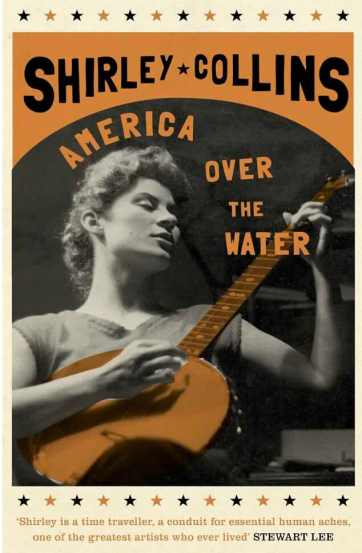

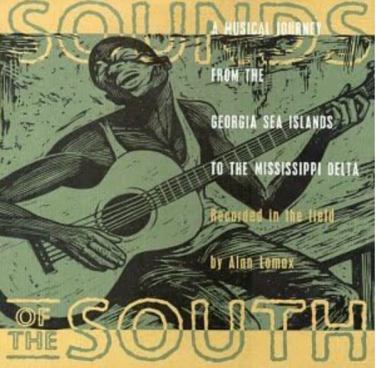


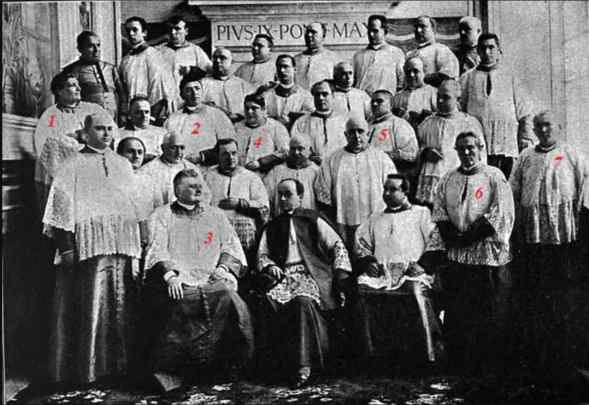


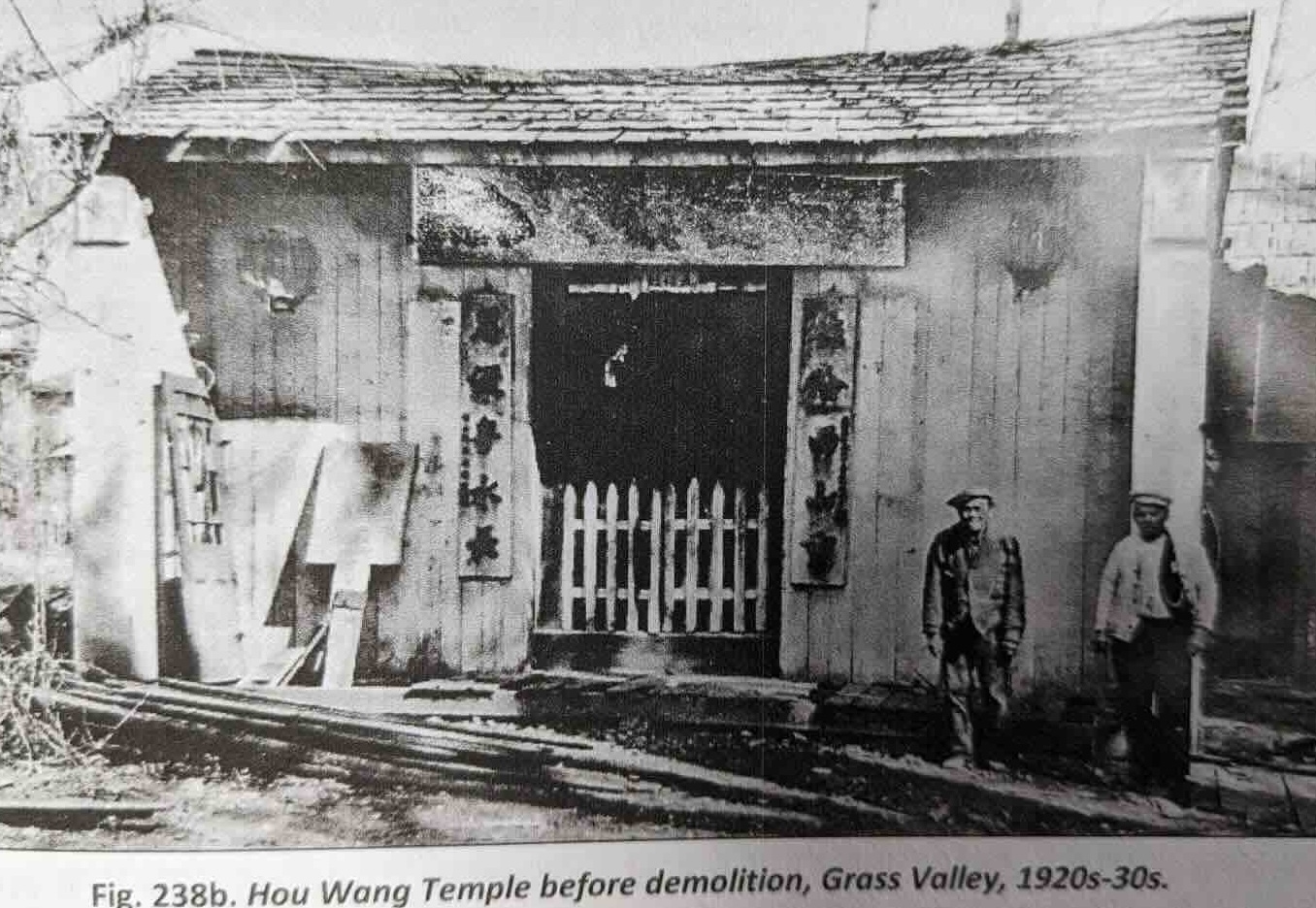


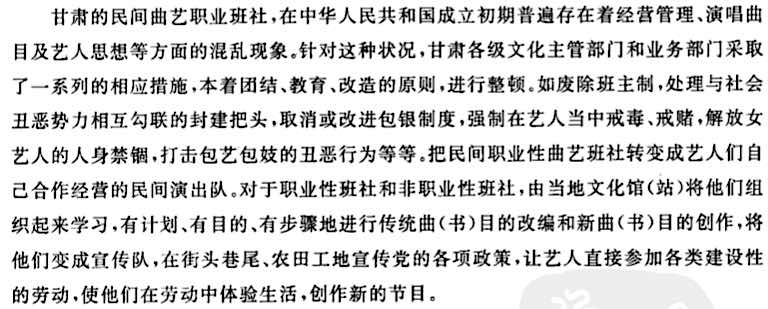
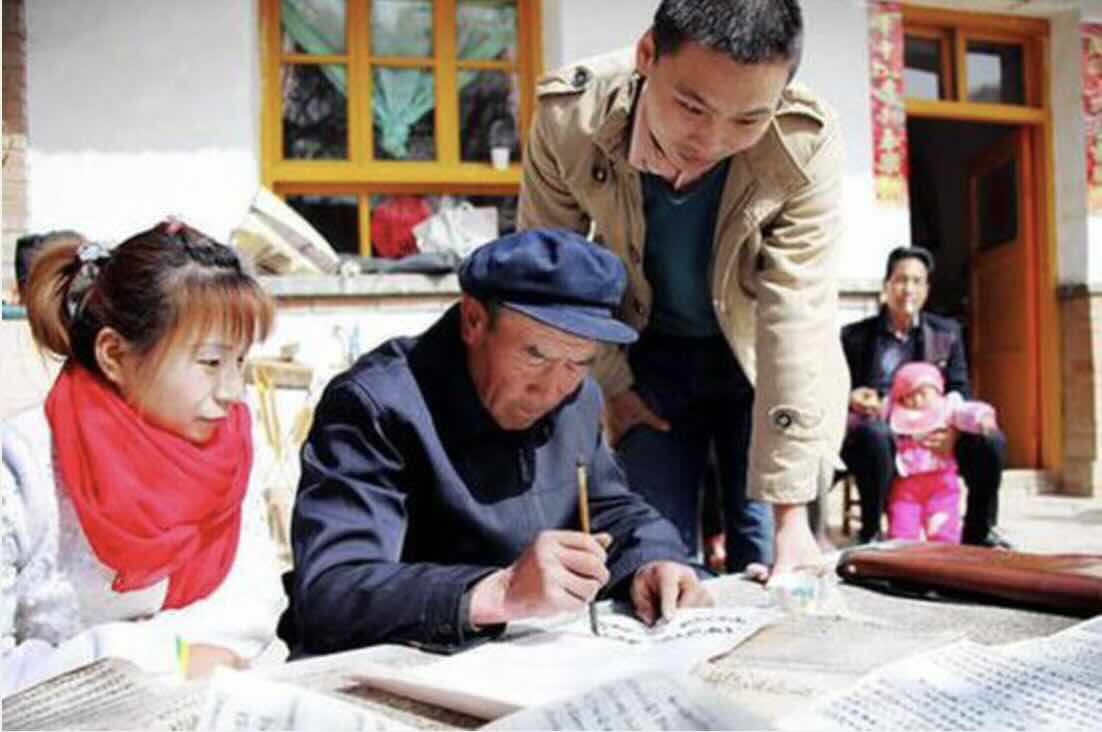



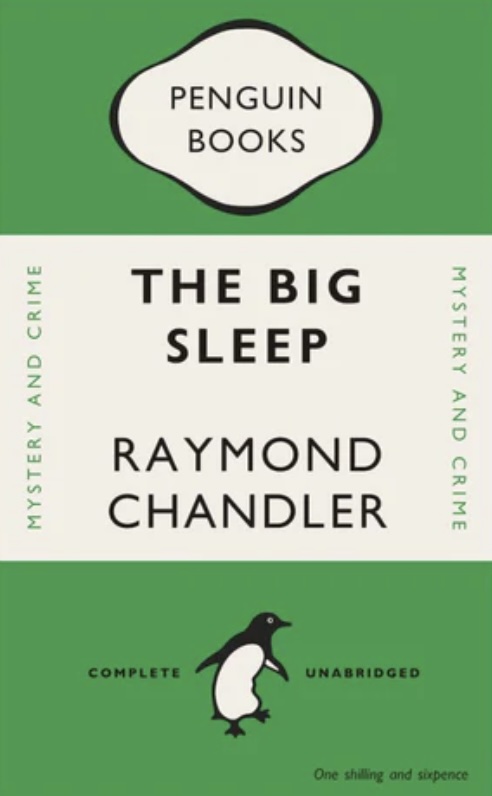 The film does justice to Raymond Chandler’s brilliant prose style. Roger Ebert, always a perceptive reviewer, made some
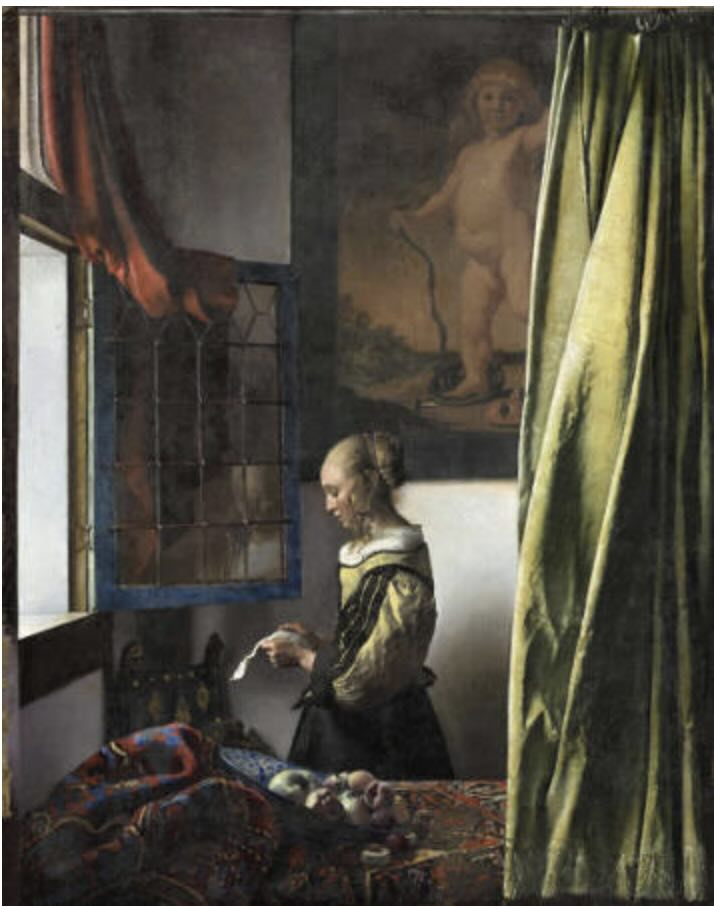


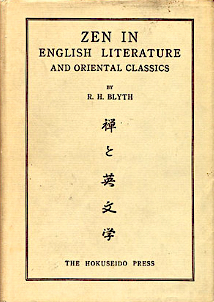

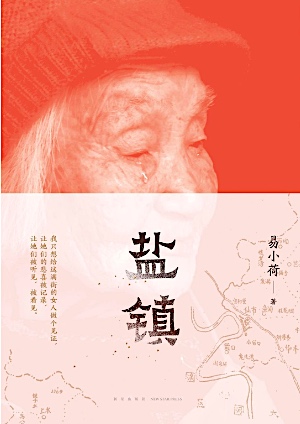


 Nobody embodies more fully the connection between the African-American spiritual, the blues, R&B, rock and roll—the way that hardship and sorrow were transformed into something full of beauty and vitality and hope. American history wells up when Aretha sings. That’s why, when she sits down at a piano and sings “A Natural Woman”, she can move me to tears […] because it captures the fullness of the American experience, the view from the bottom as well as the top, the good and the bad, and the possibility of synthesis, reconciliation, transcendence.


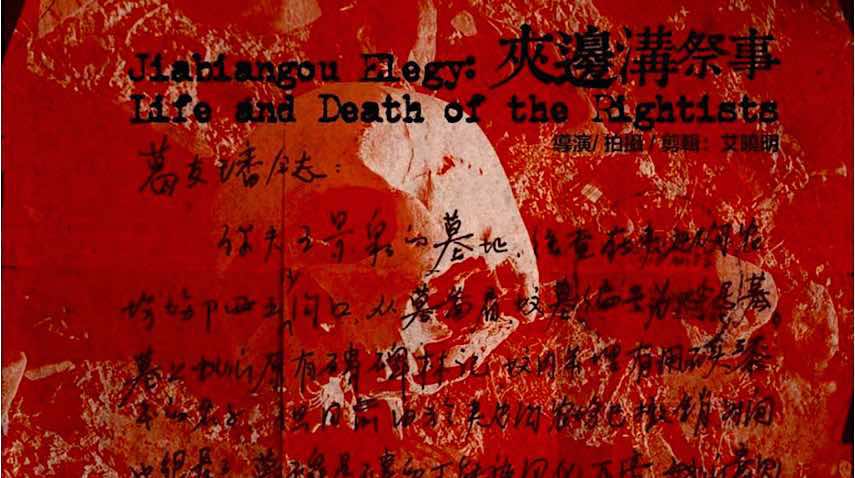

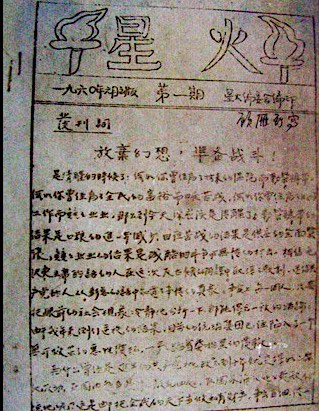


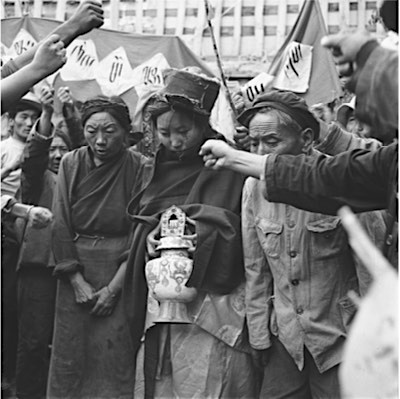


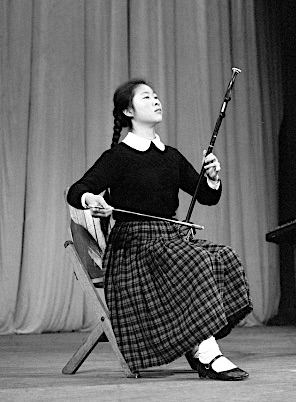
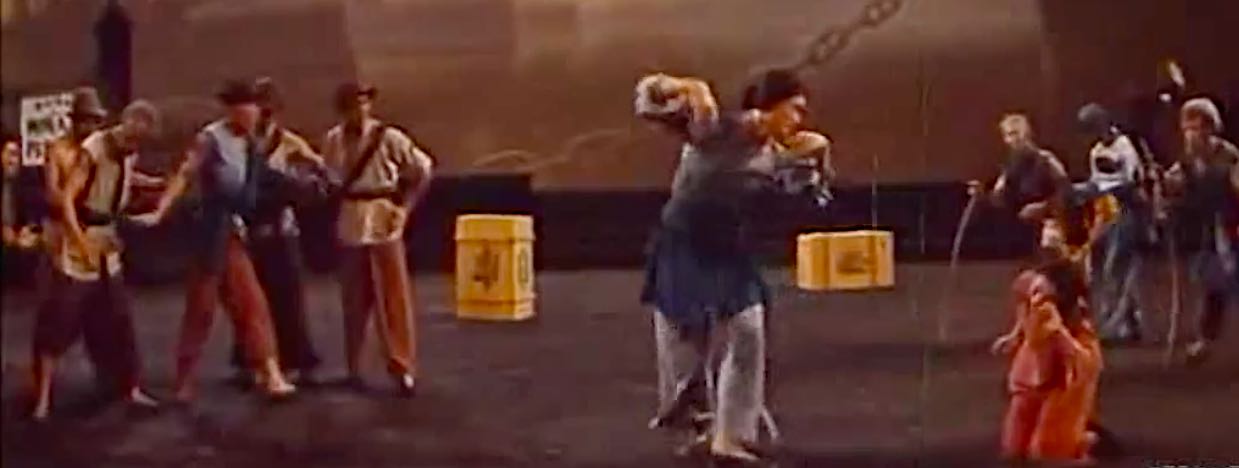



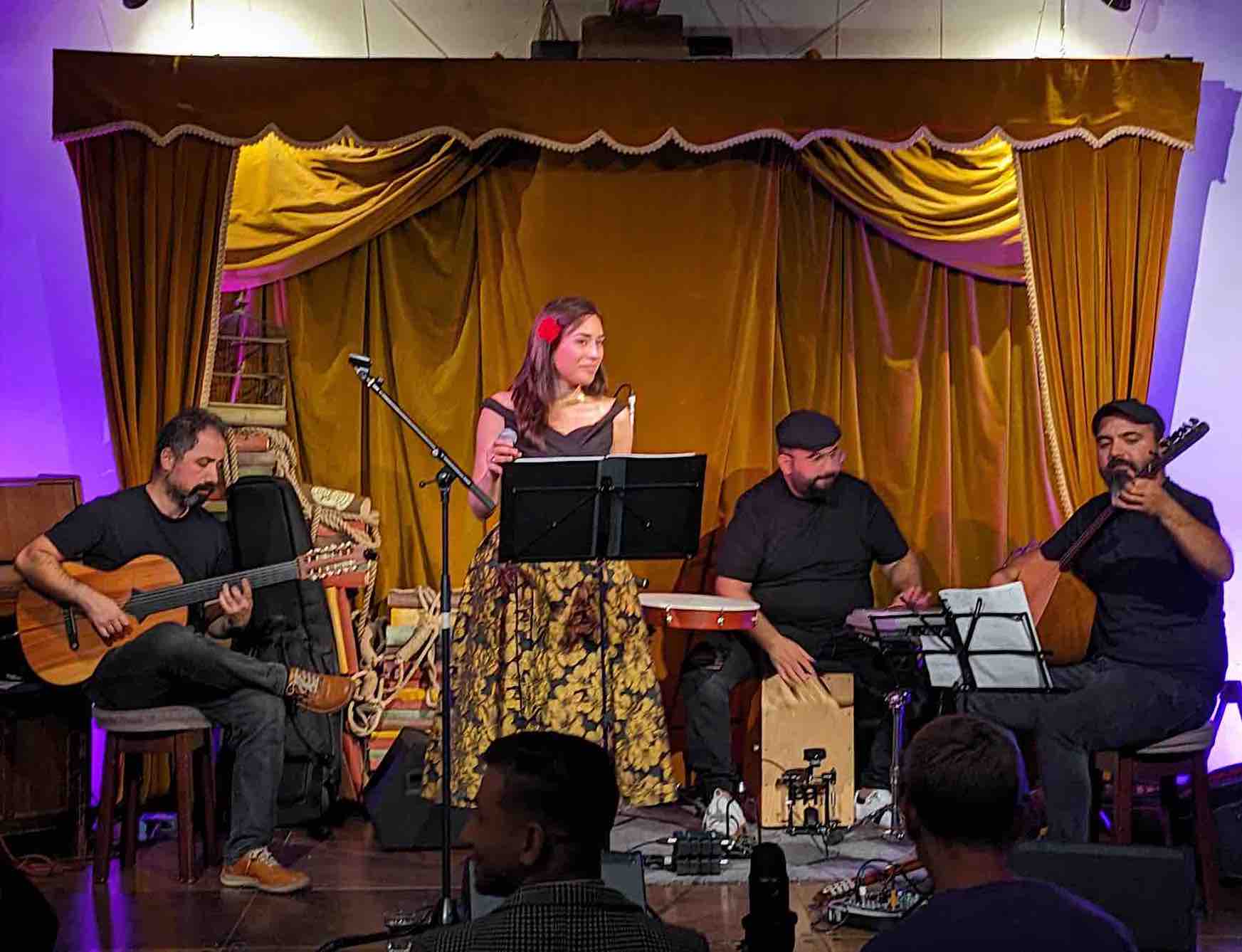


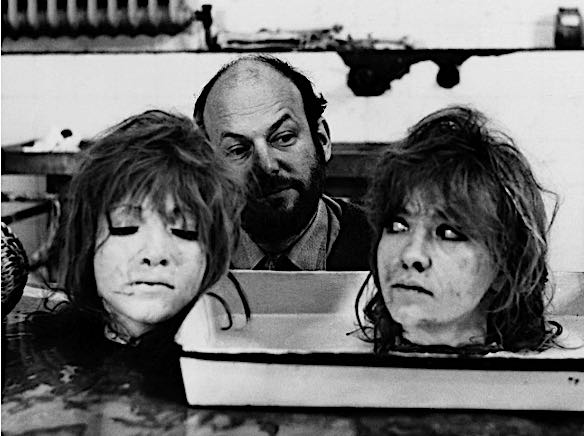
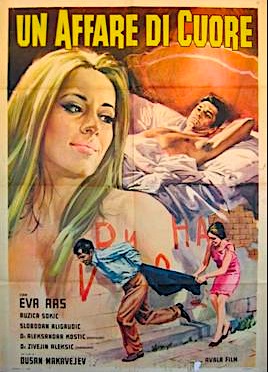

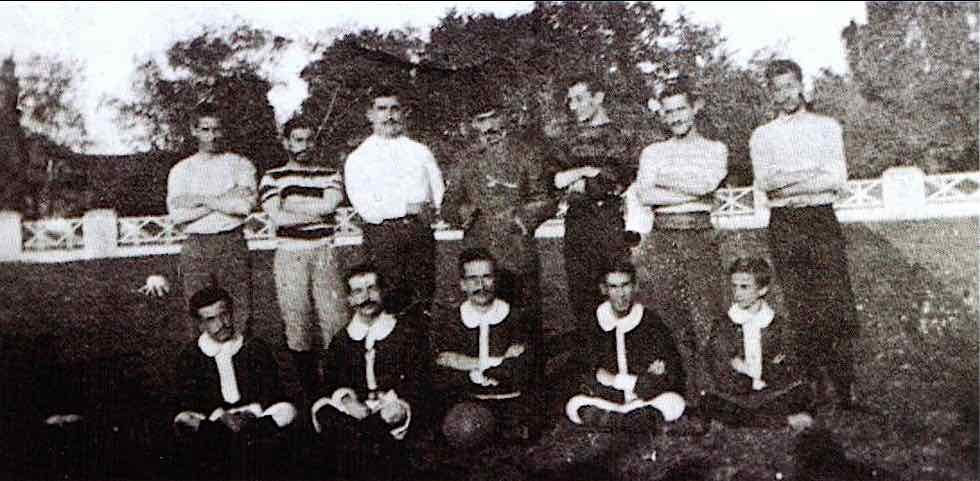






 Transcription by Diego Carpitella.
 Among all the






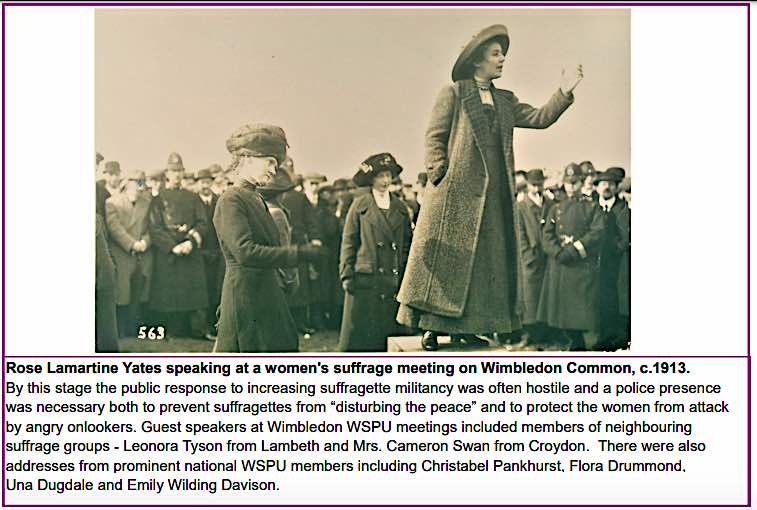


 Eliza Carthy with her mother Norma Waterson.


 The Turkish music scene in Germany was far from homogeneous. Cem Kaya elicits some excellent comments from characterful musicians. The film opens and ends strikingly with İsmet Topçu, the Hendrix of the bağlama, putting the story in wacky extra-terrestrial context…



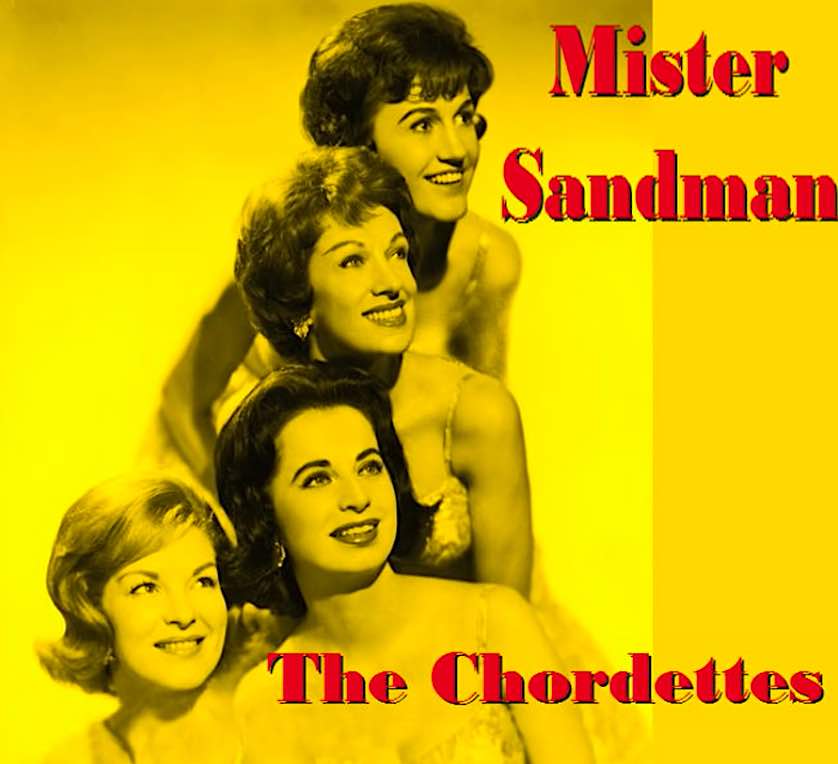

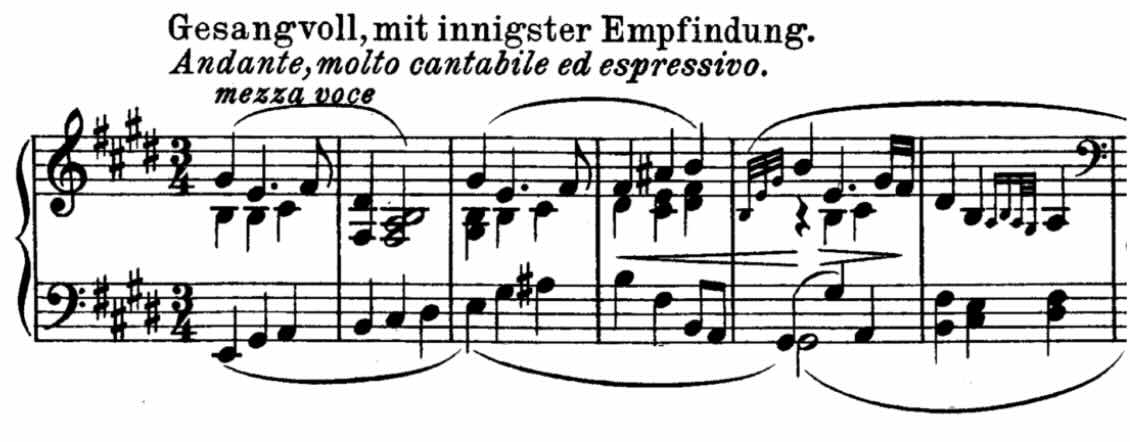
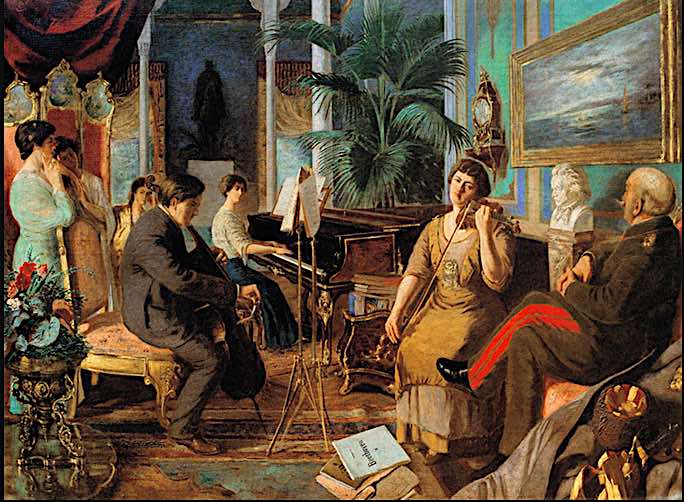
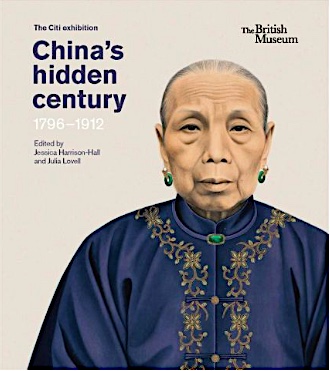
 So I’m grateful to the exhibition for stimulating me to revisit some of my own material from the field. In this I’m always in awe of the incomparable erudition of
 This reflects another common difficulty: we often seek to document history through major, exceptional events, whereas for peasants customary life is more routine. And apart from artefacts, much of the history of this (or any) period lies in oral tradition—which doesn’t lend itself so well to exhibitions.
 From
From 
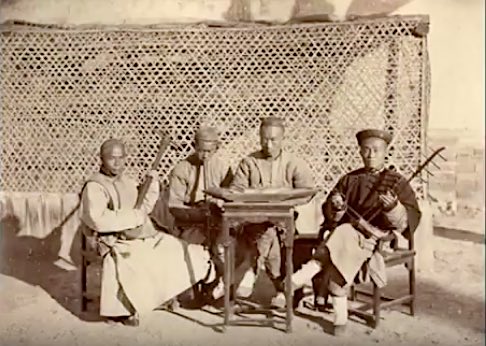


 From Qing-dynasty Tianjin Tianhou gong xinghui tu 天津天后宫行會圖.
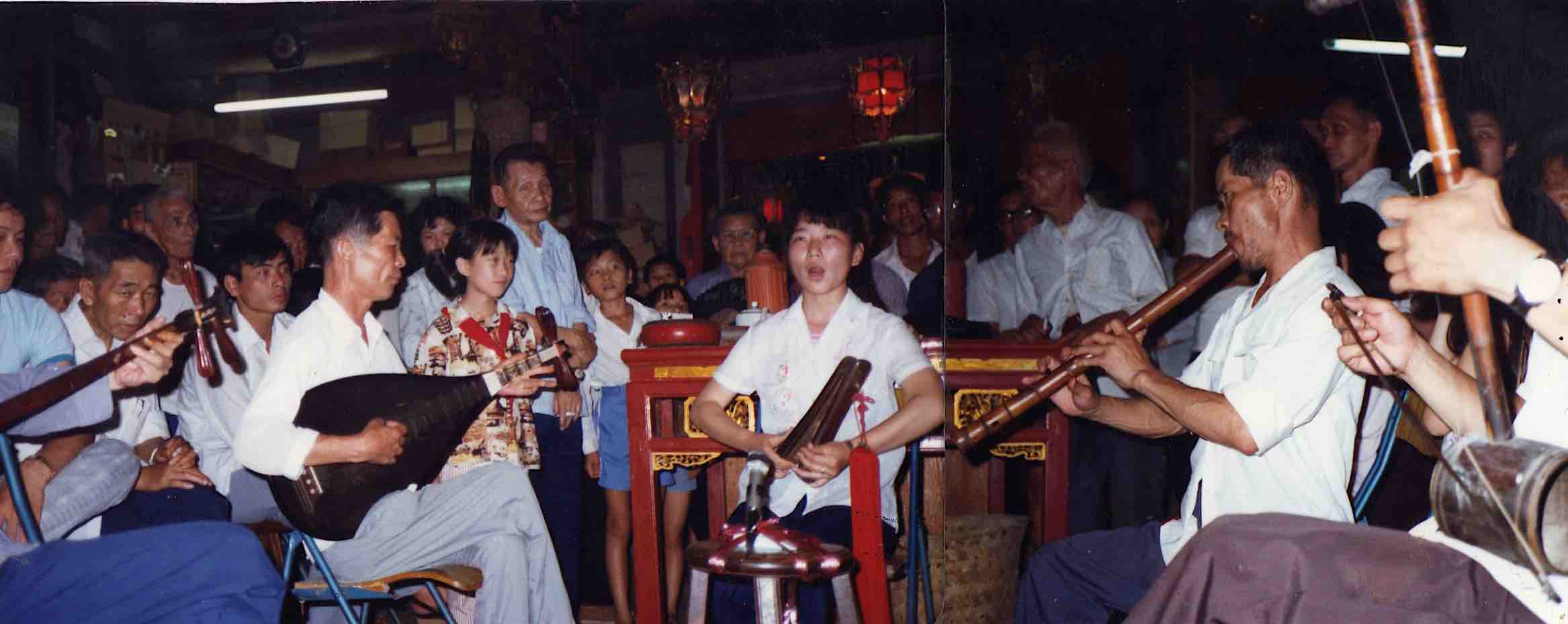
 Mural (detail),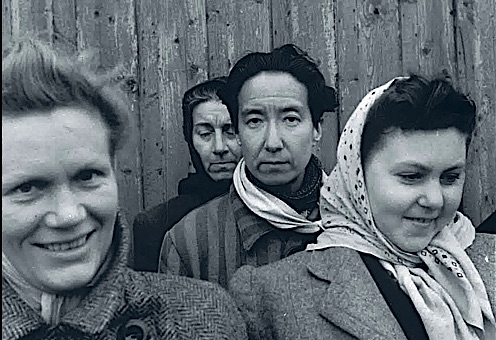

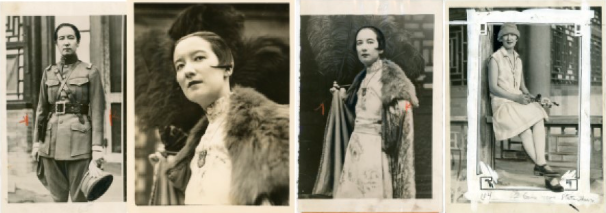

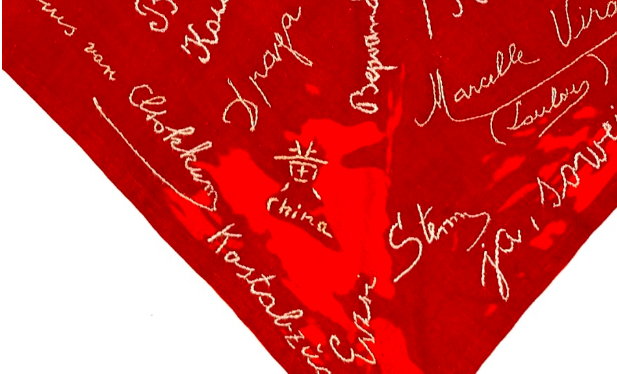
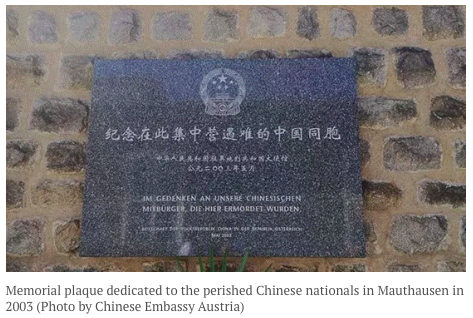


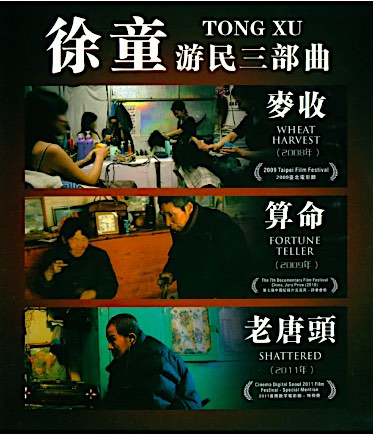


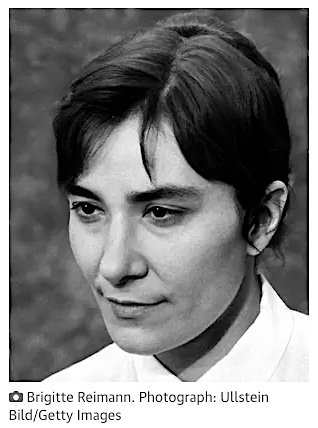 Hofmann also remarks, rather too sweepingly, that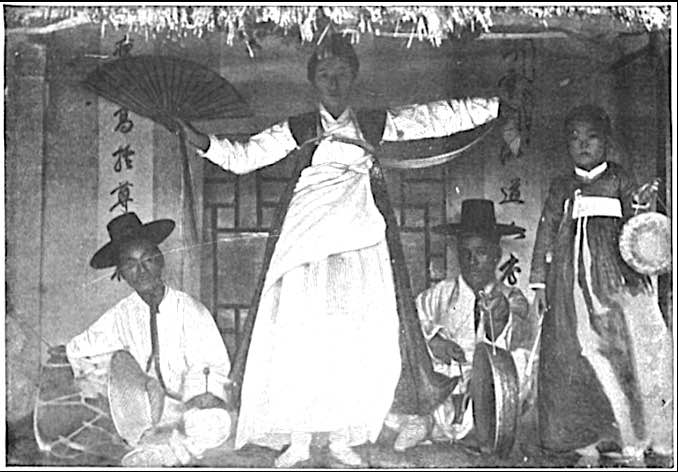


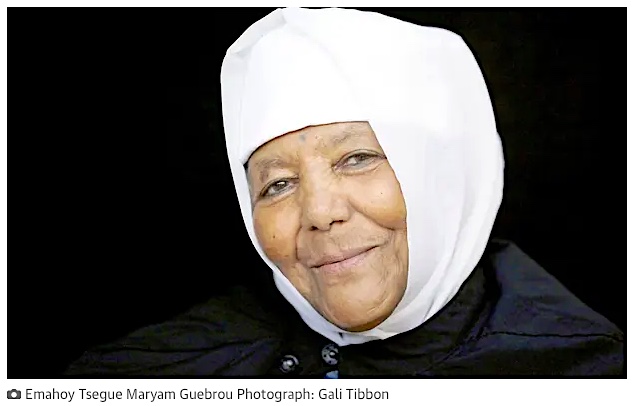


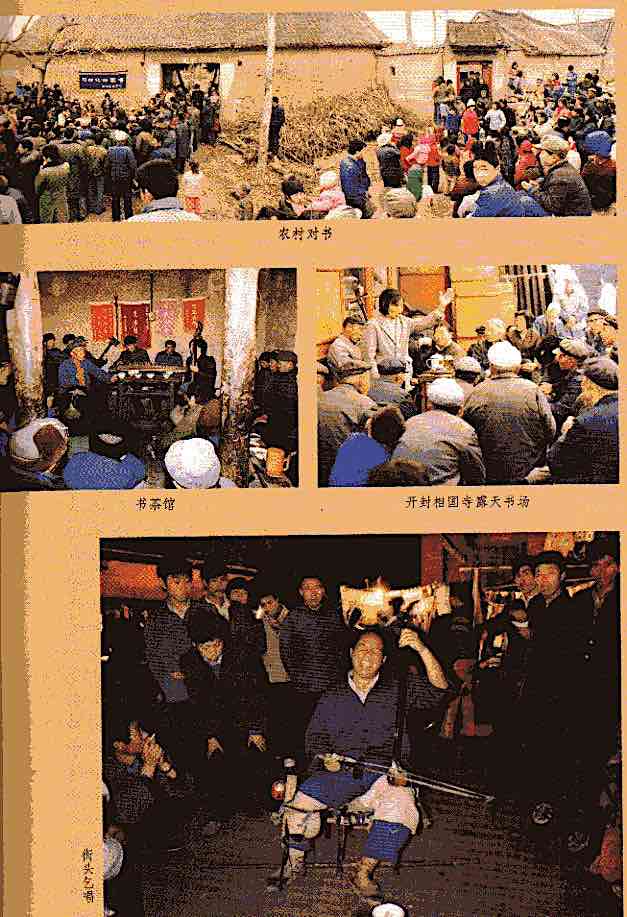


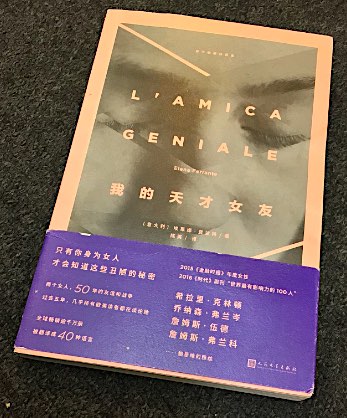


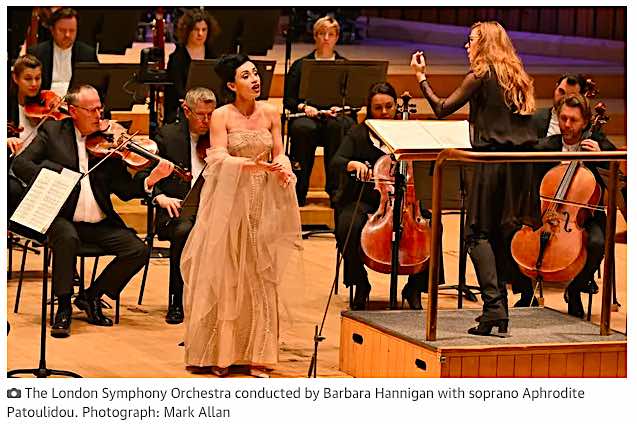


 Stephen Jones: a blog

