Erlangen made a suitable and nostalgic venue for the film, having been the scene of the last concert on the delightful 2013 German tour of the Li family Daoists—my post on which I’ve just augmented. I even stayed in the same hotel, bringing back many fond memories of them.
Partly because I can now take a further step back, and partly because I’ve just been editing my new documentary about Gaoluo, I’m all the more aware how demanding the Li Manshan film is—longer, I think, than the new one will be. But I remain amazed at all the technical and personal detail it contains, and all the work that went into it.
In the discussion following the screening, the bright audience made stimulating comments. Among them was Fabrizio Pregadio, * scholar of early Daoist internal alchemy, whose own work as editor of The encylopedia of Taoism and an invaluable reference guide to the Daoist canon doesn’t render him unmoved by the modern practice of peasant Daoists in the poor countryside of north China!
Click here for more thoughts arising from screenings of my film, here for reflections on the Erlangen showing, and here for a roundup of posts on the Li family Daoists.
Left: outside the hotel, where the Li family Daoists relaxed in 2013 Right: Bell Street, after my Chinese name…
* I often wonder if his surname predestined him to become a scholar of religion!
The book comes with an audio CD—but its taken me all this time (Like, Hello?) to realise that from my video footage I could create a beautiful film devoted entirely to the 1995 New Year’s rituals around 1st moon 15th—my first extended stay in the village.
So I’m admiring the creative editing skills of the splendid Andrea Cavazzuti 老安, himself a fine film-maker. Long resident in Beijing (see this interview; for his photos from the early 80s, click here), and an old friend of the Li family Daoists in Shanxi, he’s currently spending time in Milan, so I’ve just spent a few intensive days with him there crafting a rough cut, while relishing the joys of Italy after a long absence.
It’s been inspiring to revisit the 1995 footage, nostalgic to recall the kindness and good humour of the villagers, and fascinating to collaborate in editing.
Alongside the “heat and bustle” (cf. Chau, Religion in China, pp.67–8) of the village’s four ritual associations exchanging New Year’s greetings as they parade to their respective “lantern tents” adorned with exquisite god images, are the shengguan wind ensemble, the “civil altar” (wentan 文壇) singing hymns (as well as the Houtu precious scroll)—and in particular the moving, exhilarating percussion suite, led by the great Cai An. It’s also moving to see senior masters like He Yi, Li Shutong, and Yan Wenyu, who maintained the village’s ritual life through the tribulations of Maoism. But ritual activities in Gaoluo already belong to another era…
UPDATE: you can now watch the film here, making a worthy companion to my portrait film on the Li family Daoists!
As Nicolas explains, he created the site “rather idiosyncratically” in 1997 during the internet’s early days. It became an archival treasure chest in 2014, containing (in his words):
A mammoth archive documenting over a hundred sarangi players whom I worked with when doing my PhD research in India in the 1990s. This includes biographical and anecdotal information, but most importantly, videos and audio. As of March 25, 2015 there were 300 videos of 52 sarangi players on the site as well as some rare audio of great sarangiyas of the 20th century.
Information about the sarangi, its history and social significance, its construction, maintenance and repair, and its technique.
Information about my own musical journey as well as about my research on South Asian music. My articles and PowerPoint presentations and links to my other publications will appear in due course.
Information about my teaching of sarangi, vocal music and other instruments in London and online. The video archive includes videos of my own lessons with several masters of the instrument and videos of me teaching my own students in London.
As he explains, the site “has remained unique on the internet. There is no site that comprehensively surveys the diversity of players of sitar, sarod, tabla or any other Indian instrument in this kind of detail.” In particular, no other site documents the home life of Indian musicians as in the videos:
People in India sometimes know the public face of sarangi—on the concert stage or how it is represented in Bollywood films. They know nothing about the life of sarangi players, about the gruelling practice sessions, about the intimate relationship sarangi players have with their instruments—repairing and maintaining them themselves. Because I am a sarangi player myself and have enormous sympathy with the plight of sarangi players, both musically and socially, when I was doing my fieldwork in the 1990s, I had unprecedented access to their homes. This video archive comes a long way towards illuminating the real world of sarangi players and sarangi life.
He goes on:
This website also pays tribute to the world of tawayafs, the courtesans whom sarangi players traditionally accompanied, the singing and dancing women who in the words of my dear ustad Abdul Latif Khan “kept this music alive for the last four hundred years”. These women have been excised from the history of Indian classical music as part of the crusade to make the music respectable and suitable for middle class consumption—a crusade which began to take shape in the latter half of the 19th century in tandem with aspirations for Indian independence and statehood.
We are promised further videos of mujhras, courtesan performances in Banaras, Mirzapur, and Calcutta.
Impressively, Nicolas has now created a new supplementary section, “Sarangi Players in 2024“,
which introduces, auspiciously, 108 new videos of young contemporary sarangi players, including some breathtaking pop/fusion sarangi and also some lamentable garbar. Partially because of financial necessity and partially out of a genuine enthusiasm for a more popular music idiom, a few players have moved in really surprising directions, and we see some wild videos—with high production values—in terms of both sound and image. The sarangi is alive and well in 2024, but it has had to adapt—most sarangi players can no longer make a living by accompanying classical vocalists.
The famine, and glimpses of the early 1960s’ cultural revival in response to desperation (for more on the national famine, and Ukraine, see here, and under the famine tag)
Enduring social issues: the films of Jiang Nengjie—with a note on mining elsewhere (now with a link to Hu Jie’s bleak film set in the mountains of Qinghai).
On visits to Istanbul, the curious outsider like me may be inclined to sample a menu of traditional Turkish expressive culture—steering well clear of the commodified Whirling Dervishes, I’ve dabbled in the rituals of the Sufi tekke and Alevi cemevis, rejoiced in the ezan call to prayer (as no locals seem to do), the exhilarating sounds of davul-zurna drum-and-shawm, and so on. Jazz clubs also beckon, and the less geriatric might seek out hip-hop and club culture (see under Landscapes of music in Istanbul).
Back in London, alongside the thriving “world music” scene, I haven’t grown out of my classical background, still regularly attending WAM concerts—but somehow this makes an unlikely choice for me in Istanbul. Still, it’s all part of the city’s cultural scene, with its own history since the late Ottoman and Republican eras (see two articles on the useful History of Istanbul site, here and here).
So I sallied forth to the Süreyya Opera House in swinging Kadiköy for a concert in which Cem Mansur directed the strings of the Gedik Philharmonic Orchestra.
The conductor (şef!) Cem Mansur trained in London, and as a student of Leonard Bernstein in Los Angeles. Besides wiki, here we read:
Mansur is passionate about the importance of music as a powerful tool for affecting change. Through his concept “The Laboratory of Democracy” (an open rehearsal session) Mansur engages both orchestras and audiences in issues such as co-existence, different levels of leadership, the nature of authority, of individual and collective responsibility as well as the difference between hearing and listening, leading and following. The sessions explore the basic concepts of democracy: individual worth, majority rule with minority rights, compromise, personal freedom and equality before the law, all demonstrated through the model of the orchestra as a miniature society. Mansur’s work on the peace-building role of music has also found expression of his conducting of the Greek/Turkish and Armenian/Turkish [youth] orchestras over several years.
He expounds this philosophy in an eloquent informal talk published bilingually as Müzik, İnsan ve Barış / Music, Mankind and Peace (2013), adducing the examples of El Sistema, the West-Eastern Divan Orchestra, and MIAGI in South Africa.
Apart from appearing as guest conductor around the world, Mansur has devoted himself to cultivating the WAM scene in Turkey—most admirably as founder of the Turkish Youth Philharmonic Orchestra (wiki; website; Cornucopia), with major support from the progressive Sabanci Foundation. This 2017 performance of the Sinfonia from Verdi’s Forza del destino gives an impression of their vitality; and here they are joined by Gökhan Aybulus at the Berlin Konzerthaus in Rachmaninoff’s 2nd piano concerto (cf. Historical ears and eyes):
My own training in WAM having taken wing in the National Youth Orchestra of Great Britain, notably under Pierre Boulez, I can just imagine the inspiration that young Turkish musicians gain from such experiences and opportunities.
At the concert last week, Mansur opened by introducing the programme, as he often does—such a good way of establishing rapport with the audience, reminding me of his mentor Bernstein; his remarks were enthusiastically received by the audience (and even by me, although I doubt that he employed any of the dozen eccentric words that I have mastered in Turkish). He was joined on stage by composer Sadık Uğraş Durmuş (b.1978), the world premiere of whose Çengi no.2 opened the concert. Trained in the Netherlands, Durmuş is now on the faculty of Istanbul University. The çengi of the title referring to female dancers of Ottoman times, he evokes an imaginary dance scene, with singing and some shouting from the orchestra.
The new Turkish work led aptly to the neo-classical Concerto in Dfor strings by Igor Stravinsky (aka Gran visits York!), composed in Hollywood in 1946, commissioned by Paul Sacher for the 20th anniversary of the Basler Kammerorchester. Though not designed as a dance piece, it’s akin to the “Balanchine” works of Stravinsky’s middle period—and Mansur recommended the fine ballet The cage that Jerome Robbins set to the concerto in 1951.
The concert ended with the substantial Concerto for piano, violin, and string quartet by Ernest Chausson (1855–99). To the uninitiated, Chausson may seem like a one-trick pony—and even as a violinist I was somehow immune to his Poème—but it’s good to be reminded of the bridges leading to Debussy and Ravel. The soloists Gökhan Aybulus and Esan Kıvrak were accompanied by the string orchestra; even in the original version with string quartet, the piano tends to dominate over the solo violin. Here it is with Kathryn Stott and Janine Jensen in 2011:
I admired the audience’s enthusiasm for such a niche programme; and maybe I’m just in a good mood, but emerging into the nightlife of Kadiköy, I relish the relaxed confidence of this diverse society.
I can’t remember how I came across the name of Éva Gauthier (1885–1958) and the story of how she presented arrangements of Javanese music in her concert recitals.
By the late 19th century the sounds of gamelan were regularly heard at grand exhibitions in the West; Paris 1889 (Exposition Universelle), Chicago 1893 (Columbia Exhibition), and San Francisco 1915 (Panama–Pacific International Exposition) all had a “Javanese village”.
By contrast with Berlioz’s aversion to the music of the Mystic East, Debussy was entranced by the gamelan he heard at the 1889 Exposition. He wrote to a friend in 1895 of “the Javanese music, able to express every shade of meaning, even unmentionable shades… which make our tonic and dominant seem like ghosts, for use by naughty little children.” And in 1913, in a much-cited passage:
There used to be—indeed, despite the troubles that civilization has brought, there still are—some wonderful peoples who learn music as easily as one learns to breathe. […] Their traditions are preserved only in ancient songs, sometimes involving dance, to which each individual adds his own contribution century by century. Thus Javanese music obeys laws of counterpoint which make Palestrina seem like child’s play. And if one listens to it without being prejudiced by one’s European ears, one will find a percussive charm that forces one to admit that our own music is not much more than a barbarous kind of noise more fit for a travelling circus.
(Ravel is also sometimes said to have been impressed by the gamelan at the 1889 Exposition, but he was only 14, and I haven’t yet found a source.)
As to gamelan studies in later years, Michael Church devotes chapter 12 of Musics lost and found to the immersion of Jaap Kunst (1891–1960) and Colin McPhee (1900–1964) in the musics of Java and Bali. On his return from Indonesia to Amsterdam in 1934, Kunst established gamelan as a major theme in ethnomusicology. The Canadian-American composer McPhee lived in Bali through the 1930s; he found the engaging A house in Bali easier to write than his monumental study of the island’s music: “I did not live in Bali to collect material. I lived there because I wanted to, for the pleasure of it”. As Church comments,
he disdained the paraphernalia of scholarship, wanting to purge the book of “all stupid jargon-like aeophones [sic], idiophones beloved by Sachs and Hornbostel”. Yet as Oja points out, his approach to research was fastidious and scholarly.
Such pioneers lay the groundwork for the later gamelan craze; since the time of Mantle Hood few self-respecting ethnomusicology departments are without their own gamelan…
In 1910, disillusioned by being replaced in the opera Lakmé at Covent Garden, she travelled to Java, where she inconsequentially married a Dutch importer and plantation manager. Until 1914 she was based in Surakarta; besides performing there, in 1911 she toured Delhi, Kuala Lumpur, Penang, Singapore, Hong Kong, Shanghai, Tianjin, and Peking, followed over the next two years by Japan, Siam, and India.
But while in Surakarta Gauthier was granted permission to live in the Kraton palace to study its court music. She gained an introduction to this world through the composer and pianist Paul Seelig (1876-1945), former conductor of the royal band, chronicler of gamelan and kroncong. As she learned the basics of gamelan theory, Gauthier’s relations with the all-male gamelan musicians of the court were mediated through the royal wives.
She was taught, for example, that the drum was the “chef d’orchestra”, and that the vocal part “is merely a tone colour in the ensemble, and the singer’s voice counts as another instrument in the orchestra”.
Here’s film footage of a performance at the Kraton from 1912 (part of an interesting playlist):
And here’s the album Court music of Kraton Surakarta (King Records), recorded in 1992:
I sang to them a bit of colorateur and they thought the screaming on the high notes was hideous; they thought I was going to burst. Then I sang to them a melody. But they looked bewildered. They could not grasp it in the least. Then I sang Debussy to them, and they went into raptures.
Anyway,
She became such an enthusiast of Javanese performance that she hatched a plan to produce a tour of Javanese dancers and gamelan to Europe. She was convinced that the srimpi dance would captivate European audiences as much as it had her.
When this plan was thwarted by World War One, Gauthier moved to New York, and began to give recitals of arrangements by Paul Seelig and Constant Van de Wall, inserting short talks on Javanese courtly culture into her programmes. Her 1914–15 recordings of two songs were reissued in 1938:
For a gruelling vaudeville tour of the States she teamed up with the exotic dancer Regina Jones Woody (“Nila Devi”) with an item called Songmotion. As the latter recalled,
We were booed, laughed at, and made targets for pennies and programs. Almost hysterical, Eva and I changed into street clothes and sat down with Mr. Smith [the stage manager] and the conductor to discuss what to do. We had a fifty-two-week tour ahead, but if this was a preview of audience reaction, the Gauthier-Devi act wouldn’t last two minutes in a big city.
The stage manager, Mr Smith, was outspoken. He took Madame Gauthier apart first. “Take off that horse’s head thing you’re wearing and get rid of that sarong with its tail between your legs. Scrap that whiny music. You’re a good-looking woman. Put on your best evening gown, sing the Bell song from Lakmé, and you’ll get a good hand”. Madame promptly fainted.
On being revived, she stalked out of the room, announcing, “We’ll close before I prostitute my art”.
I came next. According to Mr. Smith I look bowlegged as I moved my feet and legs in Javanese fashion. Even he had to laugh. My native costumes were ugly. Why did I have four eyebrows? And if I could really dance, why did I just wiggle and jiggle about? Why didn’t I kick and do back bends and pirouettes?
Substituting Orient-inspired songs by composers such as Ravel and Granville Bantock, they only retained two songs by Seelig and Van de Wall. Gauthier withdrew from the year-long tour after five months, but for Songmotion in 1917, with Nila Devi no longer available, she found another dance partner in Roshanara (Olive Craddock!). This led them to perform in Ballet intime, an altogether more classy affair directed by Adolf Bolm, formerly of the Ballets Russes.
Having premiered Stravinsky’s Three Japanese lyrics in 1913, Gauthier loaned her Java notebooks to Ravel and Henry Eichheim. In November 1917 she premiered Five poems of ancient China and Japan by the talented young Charles Griffes (1884–1920).
and that same year she supplied him with material for his Three Javanese songs:
Much drawn to both French modernism and American popular music, in 1923 Gauthier gave a seminal recital of “Ancient and modern music for voice” at the Aeolian Hall in New York—an early challenge to the boundaries between high and low cultures. In the first half she sang pieces by Bellini and Purcell, as well as modernist works by Bartók, Hindemith, Schoenberg, Milhaud, and others. The second half was still more daring, including pieces by Jerome Kern, Irving Berlin, and George Gershwin (who accompanied these items on piano). This was the first time Gershwin’s music was performed by a classical singer in concert, and led directly to the commissioning of Rhapsody in blue (1924) and his later jazz-classical syntheses.
Through the 1920s Gauthier often performed her “Java to jazz” programme, which typically began with her Seelig and Van de Wall songs, continuing with Beethoven, Bliss, Debussy, and Ravel, and ending with Gershwin, Berlin, and Kern. **
Birthday party honouring Maurice Ravel in New York, 8th March 1928. From left: Oscar Fried, Eva Gauthier, Ravel at piano, Manoah Leide-Tedesco, George Gershwin.
* * *
Griffes is cited as saying “In the dissonance of modern music the Oriental is more at home than in the consonance of the classics”. Cohen again:
Gauthier’s encounters with traditional Asian music, and particularly Javanese and Malay song, at a pivotal point in her career opened her mind to the diversity of world music and made her rethink her cultural values. As she remarked, “It was actually a serious study of all Oriental music that enabled me to understand and master the contemporary or so-called “modern music”.
* For the riches of regional traditions, note the 20-CD series Music of Indonesia (Smithsonian Folkways, masterminded by Philip Yampolsky)—this playlist has a sample.
** From the days before newspaper typesetting rejoiced in the terse and gnomic, the wiki article on Gauthier cites a 1923 headline in the Fargo Forum:
Eva Gauthier’s Program Sets Whole Town Buzzing: Many People Are of Two Minds Regarding Jazz Numbers—Some Reluctantly Admit That They Like Them—Others Keep Silent or Condemn Them
Cf. the over-generous title of an 1877 book cited by Nicolas Slonimsky (in note here). And this roundup of wacky headlines.
Last week on the eve of Nowruz, just back from Istanbul, I was happy toattend a concert of shashmaqom in the Brunei Gallery at SOAS, featuring two fine musicians from the Academy of Maqam in Dushanbe, Tajikistan: Sirojiddin Juraev on long-necked lutes and Khurshed Ibrohimzoda on vocals and tanbur plucked lute.
As I seek a rudimentary education on this suite repertoire of refined Sufi poetry accompanied by instrumental ensemble, in my explorations below (typically) I merely “gaze at flowers from horseback” 走马观花.
Shashmaqom originated from the numinous cultural metropolis of Bukhara, with related traditions evolving in centres such as Tashkent and Ferghana. For the greater region, Theodore Levin has adopted the term Transoxania, favoured by his fieldwork colleague Otanazar Matyabukov (“OM”)—stressing its “underlying geographic and social coherence rather than its more recent ethnic and political divisiveness”.
From The hundred thousand fools of God.
Basic sources on shashmaqom include an essay by Alexander Djumaev, the Musics of Central Asia site; Will Sumits’ chapter 15 in Michael Church, The other classical musics (cf. Musics lost andfound, chapter 17); “Central Asian Republics” in The Rough Guide to world music: Europe, Asia, and Pacific; and sections in the New Grove Dictionary of music and musicians and TheGarland Encyclopedia of world music.
Rather than attempting to define “classical” (cf. What is serious music?!, Joining the elite musical club, and in the introduction to my series on the Beatles) or to regard shashmaqom as a “living fossil” of courtly art music from a bygone society, it surely makes sense to understand such a tradition as part of the widespread, shifting maqam family of repertoires crossing national and class boundaries, albeit subject to canonisation (“maqām-isation”) even before the interventions of modern state regimes (see Rachel Harris, The making of a musical canon in Chinese Central Asia, pp.9–10, 97–9, 107–8).
Under the Soviet era, while shashmaqom was the object of official posturings about its “national”, “elite”, or “popular” status, it “found itself at the centre of a nationalistic tug-of-war” (in Sumits’ phrase), with competing Tajik and Uzbek versions.
So it’s high time for me to revisit Theodore Levin‘s “pioneering cultural odyssey” The hundred thousand fools of God: musical travels in Central Asia (and Queens, New York) (1996, with CD). Despite its brilliant title, I suppose I was somewhat resistant to the book at first: reading it just at a time when I was deep in Chinese traditions of village ritual that were (then) remarkably unmediated by conservatoire-style remoulding, I found it unfortunate that so many of Levin’s interlocutors were representatives of state ensembles. Whereas Veronica Doubleday and John Baily, living in Herat on the eve of the Soviet invasion, had been able to immerse themselves in the grassroots world of social musicking, Tashkent was different; when Levin arrived there in 1977 his institutional base was doubtless inevitable. On that initial stay he can have had little access to the social milieu that OM later described to him (pp.33–4):
The entire unofficial cultural network and economic system that supported the central events in Uzbek social life—the toy (wedding), âsh (literally, “food”—an early morning quasi-religious gathering of men given separately by the fathers of both bride and groom before every Uzbek marriage), and ziyâfat, gap, gurung, or majlis, as intimate evening gatherings of friends for conversation, food, and music are variously called—had existed all along in the shadow of the official cultural life played out in concert halls and theatres, at public ceremonies and on radio and television.
Source: The other classical musics.
The tradition of gap is related to the Uyghur mäshräp, now the object of a new wave of repression in Xinjiang.
But if Levin too was perhaps frustrated that his initial clues to this elusive world were largely based on second-hand accounts rather than direct observation, he writes most insightfully about his encounters, with revealing stories of senior musicians’ lives. On his later visits to Tashkent with OM from 1990, he was able to attend gap and âsh ceremonies, meeting latter-day abdâl Sufi dervish “fools of God” (cf. Uyghur ashiq).
Back in 1977 Levin regarded the shashmaqom as stagnating—”a musical system propped up from above by the policies of Uzbekistan’s culture apparat” (“Frozen music”, pp.47–51):
Though I couldn’t put my finger on it, something had seemed not right about the performances of Shash maqâm I heard when I first came to Tashkent. Put simply, they lacked life. As taught at the Tashkent Conservatory, the Shash maqâm could have been compared to a dying person being kept clinically alive on a respirator. The respirator was controlled by the Ministry of Culture. It was the Ministry that had approved of the resuscitation of the moribund Shash maqâm in the late 1950s and had stage-managed its ideological repositioning as a leading exemplar of Uzbekistan’s “national” music (this after a near-death experience in the early 1950s in which the Ministry had decreed that the Shash maqâm had been too close to the feudal culture of the emirs, too distant from “the people”, too infused with undercurrents of Sufism, and thus had to be suppressed).
Still, as I learned of the troubled maintenance of folk ritual activity in China through the Maoist decades (see e.g. Gaoluo), I doubted if the turgid state ensembles could really have monopolised the musical market before 1990. Indeed, Levin continues with a vivid section on Turgun Alimatov (1922–2008), whom he met between 1990 and 1994. As Alimatov recalled, after his radio ensemble was disbanded in 1952,
I played at weddings with two brothers named Bâbâ Khan and Akmal Khan Sofixânov. Their father, Sofi Khan, was a famous hafiz [classical singer]. In those years, there were several musical dynasties which had a high calling […]. In contrast to other singers, the Sofixânovs performed exclusively songs with a religious content. They were religious people themselves, even during the time when religion was strictly forbidden. People who rejected religion simply didn’t associate with them, and for their part, the Sofixânovs stayed away from atheists. They were invited to the houses of believers.
Alimatov told Levin how he used to take part in many Sufi zikr-samâ rituals at which the Sofixânovs would perform (cf. Turkey). And he contrasted such devout behaviour with that of a lowly class of musician known as attarchi—with whom he also used to associate (cf. the underworld of old Lhasa). On this CD (Ocora, 1995), recorded by Levin, Alimatov moves from long-necked bowed lute sato to the plucked tanbur:
The ghijak spike fiddle is common to Transoxania and Xinjiang. But whereas in Xinjiang the soulful satar had long been at the heart of the Uyghur muqam, in Transoxania the sato had long been dormant when Alimatov revived it in the 1950s, followed by his pupil Abduvali Abdurashidov in Dushanbe (see below). And here is Alimatov on tanbur in 2001, recorded by Jean During, leading scholar of Central Asian maqam:
Levin continues with a revealing account of Arif Xatamov, another “unrepentant traditionalist who bemoaned the spiritual superficiality of contemporary music”—here’s a 2013 CD from Alchemy (as playlist):
And in the following chapter on Bukhara (note Levin’s CD Bukhara: musical crossroads of Asia [Smithsonian Folkways, 1991] and Shashmaqam: the tradition of Bukhara [New Samarkand Records, 1999]), while learning of the depth of Sufi and Jewish traditions he pursues shashmaqom in greater depth, finding more “frozen music”:
The worker’s state whose goal had been to eliminate class barriers in art had vilified the Shash maqâm as an elite art and tried to expunge it from cultural life. When that had failed, it had then tried to transform the Shash maqâminto a popular art. But Soviet cultural stategists had gotten everything reversed. In Bukhara, the Shash maqâm and other “heavy” music had been a popular art. And when they had tried to turn this music into a “national” folk art, they had inadvertently created an elite art: elite, that is, because it had all but lost its audience. No-one wanted to listen to a music whose soul had been usurped by the state.
The ponderous ideology of the state troupes still persisted in the early years after independence from Soviet rule. But since then, as the concert market has liberalised, shashmaqom has found a niche in the “Heritage” and “world music” industries, affording a home for some fine, creative musicians.
The hundred thousand fools of Godcontinues with chapters on musical life in the south of Uzbekistan, Khorezm, the Upper Zarafshan and Yagnâb, and Shahristan, where Levin encounters a range of musical activity in social contexts—Sufi rituals, weddings, epic singers, healers. The book is another accessible classic of ethnomusicology, valuable both as an account of the nuanced views of musicians striving to emerge from the Soviet-style cultural yoke, and in paving the way for detailed ethnographies of traditional musicking in Transoxania.
* * *
Anyway, if I find a radical gulf (or might I say gap) between folk and conservatoire in Han-Chinese musicking, it seems I should be rather more broad-minded on the journey further west. In 1950s’ China, when “old artists” were recruited to the new state song-and-dance ensembles and arts-work troupes, they often found themselves busy accompanying a bland, politicized repertoire quite divorced from their former folk practice, which they now abandoned. [1] Conversely, prestigious musicians in the Uyghur homeland and in Central Asia, rather separately from their duties in the state ensembles, often seem to have quietly maintained more traditional styles and contexts.
While I’m keen to learn more about shashmaqom-related grassroots social life(however attenuated by modernization), this kind of music is always easier to find online in commodified versions on stage—including this short UNESCO presentation. Here’s a film from the Aga Khan Music Programme, which has played a major role in enhancing the global profile of Central Asian musics, and in sponsoring centres such as the Academy of Maqam:
Invisible face of the beloved: classical music of the Tajiks and Uzbeks. Music of Central Asia, vol. 2 (2006):
Vol. 7, In the shrine of the heart: popular classics from Bukhara and beyond (2010), introduces other regional traditions worth pursuing.
Abduvali Abdurashidov, the main guide in Invisible face of the beloved, leads this fine Tajik chamber ensemble on sato at a 2010 Paris concert, with singer Ozoda Ashurova, [2] Pasha Hanjani on ney—and a young Sirojiddin Juraev, whose visit to SOAS inspired this little survey:
Abdurashidov appears on the CD Tadjikistan: chants et musiques classiques (Ocora, 2013):
I’m enthralled by the CD Shashmaqom: Dugoh maqomi (Inédit, 2002), again recorded by Jean During:
For more, see again here, under Audio and video recordings, §8.
Again (cf. Taiwan), I note that one consequence of a superficial survey like mine is an undue attention to the “star” performers, rather than the unsung participants who are at the heart of grassroots musicking (cf. China).
The hundred thousand fools of Godconcludes in Queens, New York, where a notable Bukharan Jewish tradition of shashmuqom has taken root. The Ensemble Shashmaqam there is comprised of emigrés from Uzbekistan and Tajikistan (heard on Levin’s 1991 Smithsonian Folkways CD Central Asia in Forest Hills); in this concert they celebrate the artistry of three leading women performers who have performed with the ensemble over the years. In 2014 Evan Rapport supplemented Levin’s account in Greeted with smiles: Bukharian Jewish music and musicians in New York.
So much for homework. Since China opened my eyes and ears to musicking as a vital part of social gatherings (life-cycle and calendrical ceremonies, and so on; cf. Society and soundscape), I’ve had conflicting feelings about “concerts”—events that we so easily take for granted. Of course I grew up with Western Art Music in concert (see e.g. here), and I’ve been complicit in presenting Chinese ritual traditions on stage (e.g. here, and on tour with the Li family Daoists—contrast my film); just that I’m sometimes struck by how such reification can skew our impression of the vitality of expressive culture in local society.
As Djumaev observes, while the new academies seek to adapt the traditional master-apprentice (ustod-shogird) system, a range of strategies for transmission has emerged in response to changing times. Still, however sensitively accomplished musicians may devise classroom teaching, I still find it an alien, stultifying environment for such a culture (cf. Training Daoists in Shanghai).
At SOAS last week, the concert and the preceding workshop were engagingly introduced by Saeid Kordmafi, new lecturer in the Music Department. In duet Sirojiddin Juraev (YouTube playlist) and Khurshed Ibrohimzodahave a wonderful understanding, their musicking at once natural and intense, never showy. Ibrohimzoda’s vocal items (some incorporating a vertiginously high tessitura—apparently his personal taste rather than a feature of the tradition) alternated with instrumental solos on plucked lutes and an intimate meditation on bowed sato. For all my concerns about the academy, their spiritual focus would surely have impressed venerable senior masters like Turgun Alimatov and Arif Xatamov. The dancer Madina Sabirova adorned two items, the singing in the lively finale revealing a more popular folk style.
Across the muqam world, as Levin (pp.55–6) notes, “rigidly structured, closed repertoires like the Shash maqâm had given way to autonomous pieces performed in a relatively personalised style”. The innovations of Turgun Alimatov remind him of Jean During’s remarks on modern change in Persian art music, characterising the shift as a “transformation from classical formalism to Romanticism”,
in which music is cleansed of its status as a sacred object in order to become recentred in the interiority of the individual. […] The values of inspiration, creativity, originality, and personality of style and improvisation have become exalted to the detriment of conformity to standards, fidelity to repertoire, and fixed composition.
While I might suspect that this downplays the creative individuality of the master musicians of Yore, it looks like an inexhaustible topic for debate.
In its latest reinvention of tradition for the concert platform, shashmaqom is most beguiling—I just wonder whether it might be creating a new kind of “frozen music”. As always, I’d like to learn about its prospects for a viable social life beyond the concert hall.
[1] See e.g. A Daoist serves a state troupe. Though the opera and narrative-singing troupes were also the objects of intense remoulding (see e.g. my post on Gansu, and sequel), their musicians were often better able to preserve a more traditional style. Re my aversion to the conservatoire, I’m reminded of the Chinese text on the SOAS T-shirt, magnificently misread by one of my Daoist mentors as “anti-academy”…
[2] For the modern admission of female singers into maqam ensembles, see again Djumaev. For the Ferghana tradition, a female star of maqom is Munojot Yoʻlchiyeva (b.1960), also introduced by Levin (pp.77–80). In Europe, CDs have been issued by Ocora (1994, 1998) and World Network (1997). Here she is in concert:
In 1998 Maria João Pires * received a last-minute phone call asking her to stand in for another pianist at a lunchtime performance the next day in the form of an open rehearsal directed by Riccardo Chailly at the Concertgebouw. Only when the orchestra started playing, before a live audience, did Pires realise she had prepared the wrong Mozart piano concerto—not K466 but K488. The film—part of Attrazione d’amore (Frank Scheffer, 1998)—shows “an extraordinary moment of pained realisation and miraculous recovery, that has gone viral several times over the last ten years”. **
The core of the concert was Mahler 5; as Chailly observes, “Mahler was a great Mozart conductor”, so he scheduled the D minor concerto K466, whose agitated mood is somewhat akin to that of the Mahler symphony.
Classic FM’s Joanna Gosling shared the video on Twitter and reinstated its place in the Internet hall of fame all over again. A few days later, Joanna sat down with Maria to speak about the famous incident, and the thoughts that were racing through her mind during those crucial moments at the piano, 25 years ago.
I don’t find the interview (here) so revealing. WAM pundits inevitably make it into another story of triumph over adversity—the classic ethos of the romantic concerto (see Zen in the art of the baroque lute, under Beethoven). To be sure, it’s a high-risk test of brain memory and muscle memory.
I totally agree that in terms of seeking complete fidelity to the notes dictated in the score (like a canonical sacred text), it’s a remarkable feat. Modern WAM audiences expect “perfection”—in this narrow sense (cf. Rhapsody in blue). Now, don’t get Me Wrong: I love Pires’s musicking, I love Mozart, and once she sets forth on the tightrope it’s really moving; *** it just got me thinking outside the box in that ethno-lite way that sometimes befalls me (e.g. here, and under Mahler 3)…
In the audience, some listeners might know the piece, others might not; most will be familiar with Mozart’s style. This wouldn’t help Pires relax much. But pianists like her will have known most of the Mozart concertos since at least their teens, and performed them regularly ever since; her fingers and brain would be instinctively attuned to playing pieces in D minor in the classical style, with all their harmonic, melodic, and expressive permutations, all the predictable sequential modulations. As she explains, she had performed K488 a couple of weeks before, K466 not for about ten months. I wondered if the Concertgebouw librarian might have rushed to their archive find the score for her.
While Mozart couldn’t have played any of his concertos nearly so often as a modern soloist, he would surely have been happy to rise to the challenge; to some extent, in concert he would expect to diverge from the score—as does his modern avatar Robert Levin, such as on his recording of K488 (!) (try the slow movement), and notably in his improvised cadenzas.
Anyway, in that video the challenge for Pires was to regain memory, not to respond by creating something new and original. I’m just curious what might happen if one just went with long experience and built on it, as in jazz (such as Kind of Blue, one of the great unrehearsed albums). Pianists might welcome the challenge more readily with a solo sonata, but it becomes hard with a rigid orchestral accompaniment—perhaps it could work with string quartet. The tuttis, and the accompanied passages, would at least help the pianist recognise the harmonies which she is to embellish.
It probably wouldn’t sound quite like this:
Back with the Concertgebouw incident, Pires doesn’t appear so keen to join in with all the celebration:
Gosling: How do you feel about it, in terms of where it sits in your career? Is it a high moment for you? Pires: No.
The pros and cons of soloists performing with or without the score have been much discussed in articles such as this—where I love the shock-horror heading
Advantages of using a score in concert People might think you’re improvising otherwise!
The niche of WAM (highly pressurised whether or not you know what you’re going to play) is inflexible, reified—or rather, it has become so. In this it seems rather exceptional among traditions around the world (see Unpacking “improvisation”), in which (whether or not they have notation to consult) there are always rules, but a certain creative latitude is built into the performance event (some examples: maqam, folk-song, shawm bands).
Still, even in north Indian raga, I imagine some singers who, having practised (say) rāg Malkauns from young, might be disconcerted to be asked to perform it at short notice, when it’s not a regular part of their repertoire. Does anything similar happen in rock? It seems unlikely in blues; in jazz the amount of “improvisation” and rehearsal varies quite widely. If a bandleader calls up a trumpeter to stand in with a solo in A night in Tunisia but she mistakenly brushes up on A night in Milton Keynes [Fictitious Glen Miller number—Ed.], I doubt it would be such a big deal (among many discussions of the role of memory in music, see e.g. Daniel J. Levitin, This is your brain on music, Chapter 7).
Another impertinent culinary analogy: **** rather than opting for a restaurant where the chef picks vegetables fresh from the garden to create a delicious dish, WAM audiences have ended up ordering a pre-packaged ready-meal.
But I try your patience. For good measure, here’s Maria João Pires in later years with a beautiful, prepared performance of the (“right”!) concerto, with socially-distanced orchestra:
* On the Iberian nasal ão sound, note Ogonek and Til—complete with limerick.
** I still can’t quite imagine the scene. Sure, Pires probably went directly from the airport to the hall, but you’d think conductor and soloist would have a minute or two before going on stage, just to hum through tempi for the three movements; and anyway, if it’s an open rehearsal, surely they can stop, and explain to the audience (charmingly) that there’s been a mix-up but that Pires will do her best?
*** BTW, leading into the pianist’s first entry, a passage like this is an instance of what makes playing Mozart’s 2nd violin parts such a joy:
It’s even more gorgeous in the major the second time round (from 6.00 in the complete video).
**** This complements my critique of over-reliance on silent manuals in the study of Daoist ritual (Daoist priests of the Li family, p.371, cited here):
Scholars of Daoist ritual who avoid addressing music (or more coyly, disclaim expertise in it) are fatally limiting their ability to engage with ritual. It’s like someone with a fine kitchen and loads of glossy cookbooks, who draws the line at handling food or cooking.
In vocal traditions of Chinese expressive culture (as I keep harping, or drumming, on), the neat pigeon-holes of folk-song, narrative-singing, and opera disguise a continuum from solo singing though to fully-staged genres with larger forces, all oscillating between a range of points along the ceremonial–entertainment continuum—see my
“Reading between the lines: reflections on the massive Anthology of folk music of the Chinese peoples”, Ethnomusicology 47.3 (2003), pp.287–337, e.g. §4.4.
Within the Anthology, one often needs to consult all three rubrics: folk-song, narrative-singing, and opera—and indeed dance. Along with my focus on ritual traditions and instrumental ensembles, narrative-singing (aka “story-telling”) is often relevant to my studies. So I’ve recently added a tag in the sidebar for shuoshu说书 (aka shuochang说唱, or in official parlance quyi曲艺)—I’ll try and keep updating this roundup.
Another issue of taxonomy in the Anthology: whereas “religious music” is largely consigned to the instrumental music volumes, some ritual groups accompanying their vocal liturgy only with percussion are found within the narrative-singing volumes, such as the household Daoists of Changwu in Shaanxi. Also classified somewhat uncomfortably under “narrative-singing” is the substantial theme of
“precious scrolls” (baojuan)—surveyed here, with links to Hebei, Gansu, and south Jiangsu.
Of course, rather than being constrained by narrow categories, we need to place the variety of expressive cultures in social context. Studies of “narrative-singing” often highlight the refined urban entertainment of urban stages and teahouses, with a largely sinological, literary approach to late imperial history—itself a worthy topic—tending to reify performances that are in fact animated by a strong element of improvisation. And as with folk-singing, opera, and indeed instrumental music, this may distract us somewhat from the ethnography of changing modern society. In rural China, ritual contexts are strong; much story-telling takes place in the context of temple fairs and domestic blessings. The rural perspective is significant across all genres, but I find it particularly salient in coverage of narrative-singing. It may also remind us of the importance of poverty. Itinerant blind performers are prominent.
Salutary instances include these two posts on Shanxi:
Here I introduce Liu Hongqing’s harrowing exposé of the lives of poor peasant families in the Taihangshan mountains, based on a blindmens’ “propaganda troupe”.
Other regions featured on this site, in more or less depth, include
Based on a 2019 presentation made for Tibetan artists and bureaucrats in Dharamsala for the 60th anniversary of the Tibetan Institute of Performing Arts (TIPA) there, the article deserves a wide readership: many of Isabelle’s findings are applicable to genres both among the Han Chinese and elsewhere around the world, making a valuable addition to the extensive literature on “Heritage” (for a roundup of posts on this site, click here—with my own first rant on the topic here).
She discusses in detail the evolving debate around the system worldwide, as well as the Tibetan notion of “culture”. As she explains, the ICH terminology has been ubiquitously used in the cultural policies of the PRC since 2006—towards Han Chinese communities, but most critically among the so-called “ethnic minorities” (including the Tibetan regions of TAR, Amdo, and Kham), and it has given rise to “a massive output of lavishly funded state programmes, festivals, museums, academic conferences, books, DVDs and commercial by-products for tourism”—a veritable “heritage fever”.
The article sums up the genealogy, aims, language, and logic of UNESCO’s categorisations of culture, contextualising the UNESCO heritage nominations in a comparative worldwide survey. It then explores the political, linguistic and cultural reasons explaining the relative blind spot for the ICH among Tibetan communities, before moving to the specific challenges faced by ICH-nominated traditions and artists in Tibet. Unpacking the notions of “heritage” versus “cultural heritage”, Isabelle notes:
The very idea of “heritage” in the West came up as a sort of nostalgic look at the past, when it was already “too late”, that is, when the cultures supporting these objects were in a great part defunct. Moreover, this nostalgia is imbued with a nationalistic flavour, in the sense that these traditions on the verge of being lost are deemed essential in the shaping of a national bond and belonging. It may be the case that Tibetans feel that their traditions are lively enough that they do not need an objectifying label such as “heritage”. But the very idea of the creation of (what would later be called) the Tibetan Institute of Performing Arts in 1959 draws exactly from that same double logic of nostalgia and nationalism.
While ICH policies are “aimed at preserving songs, dances, dramas and cultural practices—not unlike what TIPA has been attempting to do for six decades”,
this politicised “catalogue” view of culture is also remote from how anthropologists understand culture: as ever adaptive and organically articulated in the multiple layers of the lives of people.
Thus “the recurrent effect of ICH proclamations is that they, in effect, isolate the practice from its context, and lead to its further endangerment”.
Yet
The phrase ICH remains obscure for nearly all Tibetans in exile—actually, as we will see, for most Tibetans in Tibet as well […] The idiom remains obstinately abstract for the great majority of Tibetans, even for those who are involved in ICH… and sometimes even for the local Chinese administrators in charge of the programmes. *
Isabelle goes on:
Cultural reluctance to the concept of ICH can be seen in two ways. On one hand, despite strong assaults on Tibetan culture that some authors have termed “cultural genocide” or “assimilation”, aspects of Tibetan of culture are still felt by Tibetans as being very strong and alive. Tibetans do not easily identify with a nostalgic contemplation of “culture” in terms of the ways in which it is embedded in ICH and UNESCO objectified conceptions. For most Tibetans, culture is not (yet) something distant, staged, or at least it is not only that. On the other hand, another cultural reluctance may concern the very notion of “culture”. ICH presupposes a democratic, or rather a “people’s view” of culture, where “culture” is that everyday life content which is shared by most people. This differs from an elevated and exclusive conception of “culture” (rig gnas) by Tibetans, that carries connotations of virtuous knowledge transmitted by role models. The idea of honouring “simple” singers, dancers or ache lhamo performers as cultural heroes of the community seems odd to most conservative Tibetans. Prestigious seats at official functions are meant for “cultural heroes” that inspire devotion and respect, such as lamas, politicians, and more recently (in exile) resistance fighters who bravely confronted the enemy. In a deeply religious and perhaps exclusive diasporic society, where the very survival of the community rests upon keeping the culture homogenised and extolling role models, the idea to give money, titles, and public acknowledgement to “simple” TIPA artists (if we consider Tibetan exiles) seems at best out of place, if not outright unacceptable. Finally, the third possible reluctance I see of Tibetans with the ICH concept is political. For those who are informed, they know that UNESCO is a cenacle of recognised independent States, and that Tibetans, not having this legitimacy, do not stand much of a chance to be heard, so why bother?
So I might consider this “blind spot” of the Tibetans not so much “unfortunate” as wise, suggesting a reluctance to play the Chinese game or pander to commodification.
Calling ICH “yet another tool to milk the government”, observers have voiced that ICH boils down to a competition between bureaucrats for their personal benefit, rather than a meaningful way to safeguard traditions for the benefit of the local people.
Still, along with other scholars of ICH, Isabelle recognises that “astute stakeholders” are sometimes able to use the ICH for “manoeuvring and promoting Tibetan culture”—a ploy also adopted among the Han Chinese and communities further afield.
Most rural performers, who are generally not educated (in formal schools), do not understand the underpinnings of the concept of “intangible cultural heritages but retain a rather positive attitude towards ICH, which they construe as bringing them material benefits (money, costumes, equipment, occasions to perform, status and value in the eyes of the State, etc.). They also recognize that ICH garners more visibility of Tibetan traditions that are disappearing fast from rapidly modernising rural areas, after decades of marginalisation and hardships. The ICH program has indeed allowed the revitalisation of derelict traditions in remote parts of the countryside and has brought more awareness about “tradition” among the youth.
On one hand “ICH does enhance visibility, give opportunities to perform (for example at State-run festivals) and sustain, to some degree, the continuous practice of art traditions”. However,
troupes are often limited to performing a short vignette of their style (20 minutes or less). When preparing their troupes for such snippets, troupe directors confess a frustration at not being able to pass down a full tradition to the next generation. A majority of these rarefied translocal art traditions require an immersion into a whole system of knowledge and cultural references to be understood and appreciated, but only a series of “postcard-like” excerpts are allowed to be “displayed” for public consumption and entertainment (and approval).
As she notes, “ICH programmes came about in a situation where performing arts traditions had already been heavily reworked through State-run programmes during the previous six decades.”
Local community traditions versus reified state propaganda: left: Ngagmo female ritual group, Rebkong (Amdo); right: TAR song-and-dance ensemble. Source.
Within the borders of China, for traditions nominated for the ICH, three were promoted simultaneously in 2009: the Gesar epic, Tibetan opera (ache lhamo), and what UNESCO dubs “Regong arts” (a thangka painting tradition in Rebgong, Qinghai). The article goes on to list the later profusion of ICH inscriptions at national, regional, and county levels.
It’s always important to unpack state agendas in promoting culture; I admire much scholarship on ICH, but while the programme has cast an ever larger shadow over local traditions, it seems sad that such authors have to invest so much energy in bureaucratic theory and practice which they might otherwise be able to spend on studying the changing communities themselves.
In her fine Conclusion, Isabelle sums up:
On the global stage, ICH is an exercise in public relations. International identity politics are now done through “spectacle”, and the representation of one’s nation through simplistic reified images. The crucial aspect of UNESCO’s conception of culture is that these cultural expressions are a “property”, an entity that is owned and managed by a State presenting itself as the legitimate custodian of that heritage.
At the level of the PRC, ICH is a crucial notion in understanding the current predicament of Tibetan culture. While definitely allowing for more visibility of folk traditions in the public and media spaces, generating more income, and offering some possibilities to safeguard and sustain cultural traditions, its actual implementation is typically fraught with complications. ICH programmes have reinforced both ancient and new hierarchies of knowledge, power and money and fostered an ever-pervasive State interventionism into the management of folk culture. The staggering budget poured into traditional culture brings about radical transformations in the name of preservation, and economic marginalisation in the name of empowering local communities. But many artists and observers in the performing arts try to stake their claim to these choreographed cultural forms and, at the same time, manoeuvre within the system to try and salvage their traditions in between the dotted lines defined by their duties. I will leave the last word to one of these Tibetan cultural custodians, who perceptively remarked:
The government wears the clothes of “culture” to do politics. We Tibetans wear the clothes of “politics” (obedience, loyalty) to do culture.
* Echoing Musapir‘s findings for Uyghur traditions—on which, note also the work of Rachel Harris, exposing the Chinese state’s sinister agenda in co-opting culture as part of its war on the Uyghur heritage—recently, this article.
Through the Maoist decades after the 1949 Communist takeover, while the society of mainland China was constantly beset by a succession of iconoclastic traumas, the Republic of China on the island of Taiwan was considered a bastion for the maintenance of traditional Chinese culture.
What I suspect hasn’t always been clarified is that Taiwan cannot embody that culture as a whole: naturally, its heritage largely reflects the traditions of the particular regions from which they were descended on the southeastern mainland—and it was that, until the 1980s, which was the only peep-hole through which we could view the enormity of Chinese culture. *
But then, as “reform and opening” swept the PRC, ritual and other folk performance activity—that outsiders could only assume to have been extinguished there after the Communist takeover of 1949—began reviving on a vast scale, along with an array of central and regional scholars keen to resume fieldwork and research. And at the forefront of discoveries was the region of south Fujian, just across the strait from Taiwan (see e.g. C.K. Wang, Kristofer Schipper, Ken Dean, John Lagerwey). As fieldwork expanded to other parts of the southeast (see Daoist ritual in south China), it soon became clear that there was a vast repository of local traditions of ritual and expressive culture to document all over China (see The resilience of tradition)—if not eclipsing the reputation of Taiwan’s heritage, then at least putting it into perspective. The research of Taiwanese scholars was now able to inspire fieldwork on the mainland.
Still, the main genres of Taiwan have rather little bearing on the kind of ritual traditions that were coming to light in the north Chinese countryside, or even in east-central China; indeed, they only represent a small selection from the diverse range of genres around Fujian, as becomes clear by consulting the volumes of the monumental Anthology (for now, see here, with a further post to follow).
I also think of the transformation of Tibetan studies. After 1950, exile communities (led by TIPA in Dharamsala—see e.g. Zlos-gar, 1986) had been considered as the sole heirs to the culture of Tibet; but by the 1990s scholars began shifting towards the mature ethnographic assessment of its vicissitudes under the Chinese yoke (under Recent posts on Tibet, see e.g. Labrang 1). In her wise article “Easier in exile?, Isabelle Henrion-Dourcy ponders the different challenges of doing fieldwork among Tibetans in Lhasa and Dharamsala (see The enchanting world of Tibetan opera).
* * *
Taiwan Besides the small minority of aboriginal groups (c2%), the main populations of Taiwan are Hoklo (Holo, c70%), Hokkien speakers originating from the Quanzhou and Zhangzhou regions of south Fujian; and Hakka (c15%), descended from the mainland regions of east Guangdong and west Fujian (click here and here for the expressive cultures of both groups). Refugees from elsewhere in China fleeing to Taiwan in the 1940s also brought some staged vocal genres with them.
With Taiwanese society subject to far fewer traumatic social upheavals than on the mainland, cultural forms were certainly better maintained there. But as in any modern society, there are no “living fossils”: besides the island’s complex colonial legacy, performers and patrons have to negotiate the incursions of modernity and popular media (see Society and soundscape, notably the work of Bruno Nettl).
Since the clampdown in the PRC under Xi Jinping, perspectives regarding the mainland and Taiwan are modifying (see The Queen Mother of the West); having myself been busy studying the maintenance of local ritual cultures in the PRC, it’s high time for me to re-assess my approach. So as sometimes happens on this blog (e.g. Precious scrolls, and even A jazz medley), this basic overview of music–ritual traditions is as much for my benefit as yours…
Surveys In English, starting points include articles in The New Grove Dictionary of music and musicians, TheGarland encyclopedia of world music (Wang Ying-fenpp.423–9, Hsu Tsang-houei pp.523–9), Wang Ying-fen in The Rough Guide to world music, Europe, Asia & Pacific (3rd edition, 2009), and even wiki.
At the forefront of studies of traditional music in Taiwan was Hsu Tsang-houei許常惠 (1929–2001), who gravitated from WAM-style composition to fieldwork on folk traditions. ** Among his surveys are Taiwan yinyue shi chugao台灣音樂史初稿 (1991, I think) and (with Cheng Shui-cheng) Musique de Taiwan (1992). See also Lü Ch’ui-k’uan 呂錘寬, Taiwan chuantong yinyue gailun台灣傳統音樂概論 (2005, 2007), in two volumes on vocal and instrumental music.
Genres Among the most popular topics are nanguan and Daoist ritual—both, since the 1980s, informed by fieldwork on either side of the strait. Amateur nanguan 南管 music societies, performing exquisite chamber ballads for calendrical and life-cycle ceremonies, have long been deeply embedded in community life (see this post). Nanguan is the subject of much research, both in Fujian and Taiwan. Wang Ying-fen has published extensively on the Taiwan scene in both Chinese and English—I particularly admire her articles on the risks inherent in state promotion of nanguan (such as this), worthy contributions to studies of the thorny issue of heritage.
Temple fairs, with vibrant processions, remain a major part of life in Taiwan. Regional traditions of Daoist ritual (for the north, click here) are the focus of generations of Taiwanese and foreign scholars. For the former, alongside many distinguished scholars, Lü Ch’ui-k’uan 呂錘寬 has paid notable attention to ritual soundscape (e.g. Daojiao yishi yu yinyue道教儀式與音樂, 1994). Another major theme in ritual studies is the worship of the female deity Mazu, widespread both in Taiwan and around the southeastern coast of the mainland.
The composite genre of beiguan 北管 (good wiki page here, with links) is again performed mainly for calendrical and life-cycle ceremonies, largely by occupational groups; while closely related to vocal drama, it’s best known for its loud outdoor shawm-and-percussion bands. Here’s a short documentary about the master Qiu Huorong 邱火榮 (b.1937):
Most flexible of popular operatic forms is gua-a-hi (gezai xi歌仔戲). And more popular in Taiwan than shadow puppets and marionettes, glove-puppetry (budai xi 布袋戲) has adapted to changing times; the former tradition was transmitted by masters such as Li Tianlu 李天祿 (1910–98), whose early life is evoked in Hou Hsiao-hsien’s 1993 film The puppetmaster.
Narrative-singing is best known through Chen Da陳達 (1905–81) on the Hengchun peninsula. He was “discovered” in 1967 by Hsu Tsang-houei and Shih Wei-liang 史惟亮 as part of their fieldwork for the Folk-song Collection movement, forerunner of several state-sponsored organs in Taiwan. Here’s Shih Wei-liang’s recording from 1971:
In the north of the island, the blind female singer Yang Xiuqing楊秀卿 (b.1934) is also renowned.
(As in the PRC, please excuse me if I fall into the old Songlines trap of giving undue attention to “star performers”—whereas in-depth ethnography soon uncovers the myriad unsung bearers of tradition, such as Vincent Goossaert’s “ordinary Daoists”, or rank-and-file members of festive groups.)
Like beiguan, the Hakka bayin 八音 ensemble is dominated by shawms and percussion. Here’s the CD Taiwan: mountain songs and bayin instrumental music (Inedit, 2006; as playlist):
As in mainland China, the vocal polyphony of minority peoples (notably Amis, Bunun, Tsou, Paiwan, Rukai—around 2% of Taiwan’s population) has attracted much attention, with many recordings issued of aboriginal singing, such as Polyphonies vocales des Aborigènes de Taiwan (Inedit, 1989):
and Taiwan: music of the Aboriginal tribes (Jecklin, 1991) (playlist):
As in mainland China, while such traditions struggle to remain relevant in a modernising society, national cultural bodies have adopted particular genres as symbols of identity. Expressive culture has made a major component in the rapprochement between the PRC and overseas Chinese communities. Wind Records in Taipei issued a succession of CDs of mainland genres in conjunction with the Music Research Institute in Beijing, notably an important series of archive recordings (folk-song, narrative-singing, opera, and instrumental music, as well as minority polyphony), and of the qin zither. The journal Minsu quyi, with its detailed studies (mostly in Chinese) on ritual, theatre, and folklore, also expanded its scope from Taiwan to the mainland.
* * *
Growing political tensions encourage us to pay renewed attention to Taiwan, and to support beleaguered democracy. While it’s fruitful to study the genres introduced above on both sides of the strait, the island remains a conducive environment for both performance and research. Now I’m keen to see someone with fieldwork experience in both societies, such as C.K. Wang, Wang Ying-fen, Ken Dean, or Adam Yuet Chau, expounding the different trajectories of the diverse traditions there, and the challenges that they face.
* Now, none of these comparisons quite work, but… While it’d be far too parochial to imagine the Isle of Wight as a refuge from a radical government in mainland UK, perhaps we might visualise Cuba becoming a liberal sanctuary from a Gilead-style fundamentalist north America (see The handmaid’s tale)—or even Sicily as the sole isolated outpost for tradition while mainland Europe languishes in the grip of authoritarian regimes.
In chapter 10 of In search of the folk Daoists of north China I made a similarly rash comparison, seeking to incorporate north China into our overview of Daoist ritual (cf. this post, again):
It is rather as if our knowledge of Christianity in the whole of Europe were based almost entirely on Sicily and Puglia, with the odd footnote on the Vatican and Westminster Abbey. We may like what we find in those places, perhaps considering it more exalted, mystical, and ancient—but that is another issue.
Without at all playing into the greasy hands of PRC propaganda, one might consider Taiwan (culturally, not politically, since it is clearly an independent nation! Cf. China has always been part of…) as just one among over thirty provinces of China, all of whose forms of expressive culture are dominated by long-established local folk traditions while also featuring some “national” genres and styles from other regions.
** If Yang Yinliu wasn’t the Chinese Bartók, then Hsu Tsang-houei wasn’t the Taiwanese Yang Yinliu (whereas Bill Evanswas the Bill Evans of jazz).
Rona LIghtfoot (b.1936), inspiration for new generations.
I rarely dip my toes into the folk cultures of these isles (So we’re not good enough for ye, that it? Off cavorting with all them non-nationals—The Plain People of Ireland). I’ve made so bold as to delve a little into Irish music (series here); in an obscure connection with Chinese yangge (Typical!), I learned a little about Morris dancing, and I’ve only recently made a bit of an effort to catch up on English folk-singing. Songlines is good on the changing scene, and I really should listen more to Late junction on BBC Radio 3. I had a passing acquaintance with Irish piping through the sterling work of Séamus Ennis, so now for some Scottish Gaelic piping.
I was reminded to listen up to the Scottish Highland smallpipes by an interview with Brìghde Chaimbeul. While grounded in the Skye tradition, she is pleasantly resistant to the “tartan and shortbread” image—as I am to kilts. From her YouTube channel, here’s her 2019 album The reeling (playlist):
Both the current scene and recordings are dominated by “the great Highland bagpipe” (GHP), but the mellower sound of smallpipes also creates an enchanting timbre. Historical evidence for the smallpipes is just as early: “used for dancing and entertainment in court and castle, later they became popular amongst burgh pipers, and town minstrels [,] until the early 19th century, when the demise of the town pipers led to their disappearing from the record.” But always suited to chamber ensemble playing, the smallpipes have enjoyed a revival since the 1980s.
While I don’t at all propound “the other classical traditions” (cf. What is serious music?!, and Joining the elite musical club), pibroch Is considered as “art music” (ceòl mòr “great music”), as opposed to ceòl beag ”small music” (more popular genres such as dances, reels, marches, and strathspeys). It appears to have been commonly played on the bagpipes since the 16th century. As aristocratic patronage and musical tastes shifted, pibroch migrated over time from the clàrsach harp and the fiddle, which have also taken part in cycles of revival—partly based on early manuscripts notated from canntaireachd oral mnemonics. The pibroch repertoire is common to both the GHP and smallpipes.
Niall Mòr MacMhuirich (c1550–1630), poet to the MacDonalds of Clanranald, didn’t mince his words:
John MacArthur’s screeching bagpipes, is like a diseased heron, full of spittle, long limbed and noisy, with an infected chest like that of a grey curlew. Of the world’s music Donald’s pipe, is a broken down outfit, offensive to a multitude, sending forth its slaver through its rotten bag, it was a most disgusting filthy deluge…
This contrasts aptly with a poem by Alasdair mac Mhaighstir Alasdair (c1695 –1770) in praise of the pipes:
Thy chanter’s shout gives pleasure, Sighing thy bold variations. Through every lively measure; The war note intent on rending, White fingers deft are pounding, To hack both marrow and muscles, You shamed the harp, Like untuned fiddle’s tone, Dull strains for maids, And men grown old and done: Better thy shrill blast, From gamut brave and gay, Rousing up men to the destructive fray…
The simple distinction between large and small pieces, doubtless found in many cultures, reminds me of Chinese instrumental suites—as does the structure of large pieces:
Pibroch is a theme with variations. The theme is usually a very simple melody, though few if any pibroch contain the theme in its simplest form. The theme is first stated in a slow movement called the ground or in Gaelic the ùrlar. This is usually a fairly stylised version of the theme, and usually includes numerous added embellishments and connecting notes.
This passage from the wiki article strikes a chord:
While the conventional accounts of the origins of pibroch are largely characterised by an aggrandising romanticism common to antiquarian appropriations of remnant historical traditions in the late 18th century and early 19th century, there are substantial surviving authentic musical documents that concur with a living tradition of performed repertoire, providing a grounding for any debate over authoritative accounts of the tradition.
While the soundscape of the pipes is beguiling, until we immerse ourselves in the style—monophony with drone, only not recalling Indian raga much at all!—a little goes a long way. Laments, salutes, and gatherings feature prominently in the pibroch repertoire. Among rich documentation for the GHP, a useful starting point is the website of the School of Scottish Studies Archives (introduction, specifically here). On YouTube, here’s a playlist of 209 early recordings:
Among the leading lineages of modern times are Cameron and MacPherson. For the former, here’s an early recording of Robert Reid (1895–1965):
The going was tough for the members of the BBC Symphony Orchestra in the years following the regime of William Glock. A rigorous, ear-scouring diet of avant-garde music was leavened only occasionally by returns to the core symphonic repertoire, as well as dutiful lip service to the “cowpat” school of early-20th-century English composers—although I recall being impressed by Arnold Bax’s Tintagel.
The first cycle of Five songs from the Chinese poets (score) set English texts by Bantock’s friend the euphoniously-named Launcelot Cranmer Byng, after Tang poems by Zhang Zhihe, Du Fu, Li Bai, Tong Hanqing, and Sikong Tu. All but one appear in A lute of jade (1909)—one of the first collections of Chinese poetry that I bought (probably from Watkins) while still at school. The cycle was arranged for string quartet in 1933 as In a Chinese mirror. According to this post, some of the lyrics of Songs of China were written by Bantock’s wife Helen.
From the second set (score), here’s John McCormack singing a version of a text by the Tang poet Cen Shen in 1927:
* * *
Bantock also composed Chinese-inspired works on a larger canvas. Besides Choral suite from the Chinese (1914, again to texts by Cranmer Byng), I note the orchestral Four Chinese landscapes (1936)—the latter mostly directed by Walter Collins in 1946:
To the modern ear, such sketches are no more enticing than the works of Chinese composers trained in the WAM idiom such as Xian Xinghai, Nie Er and He Luting (a focus for much ideological wrangling in China over the following decades). But “it is what it is“: Bantock and others were part of a lasting European fascination with the Mystic East (see e.g. More East–West gurus), as yet largely uninformed by later fieldwork in the folk cultures of a vast region.
For later Eastern-inspired works, see e.g. Messiaen, and the ambivalent reaction of Toru Takemitsu to Japanese tradition. For the great Bruno Nettl‘s taxonomy of responses to the growing hegemony of Western musics in developing societies, click here. For Tang poetry, see under A Tang mélange.
I may seem like a fully-paid-up member of the Guardian-reading, tofu-eating wokerati, but the Guardian‘s end-of-year cultural lists can be mystifying, serving largely to enhance my sense of becoming an Old Fogey (cf. Staving off old age).
As to “new music” (an article with the peak Guardian comment “it’s been an incredible year for Brazilian baile funk”), WTAF?! For me, still catching up on the stile nuovo (n.1 here), even an end-of-year playlist for 1707 (Bach, Handel) would be rather modern—and how about the New Music of the Tang dynasty, eh, with Sogdian dance grooves All the Rage through the reign of Xuanzong. Take THAT, Guardian!
In her memoir she evokes her journey with Lomax around Virginia, Kentucky, Alabama, Mississippi, and Arkansas, recording mountain ballad singers, pentecostal choirs, blind fiddlers, and inmates of a state penitentiary. Lomax had already visited some of the venues and musicians with his father John in the 1930s and 40s. It’s most rewarding to read Collins’s book for the texture it provides on the excitement and challenges of fieldwork—all the more to do so while dipping into some of the audio material available online, as I do below. Some of her accounts are taken from letters she sent home to her mother and sister Dolly.
All these vignettes alternate with her account of her early life in drab post-war England. Her disappointing experiences working at Cecil Sharp House, the gradual blossoming of the folk music scene (rippling out from the Troubadour in Earls Court), singing trips to Warsaw and Moscow. And after she got to know Ewan MacColl, in 1954 he invited her to a party where she met Alan Lomax—just back from three years collecting songs in Spain and Italy—and they soon moved in together, Shirley working as his editorial assistant. At their home in Highgate they often hosted visiting American bluesmen. Shirley recorded her first two solo LPs.
After Lomax returned to the States in 1958, he invited her to join her on a fieldtrip around the south. So in April 1959 Shirley embarked on the five-day voyage by liner to New York. After the cloistered austerity of the British diet, food looms large in her account—starting on board:
French exotic fruit for breakfast, fruit that I’d never seen outside a tin, eggs cooked in ways I’d never heard of. […] thick beef steaks, turkey […] seafood… delicious dressings and sauces….
And once In New York, pizza, avocado, ice-cream…
I was unworldly and twenty years his junior. What I had in my favour was youth, energy, intelligence, a capacity for hard work, and an innately sound instinct and understanding of the music we both loved.
Driving to Chicago they stayed with Studs Terkel and his wife, before taking the train to California—Shirley still constantly amazed by the opulence of the food.
Shirley Collins with Alan Lomax at the Berkeley Folk Festival, June 1959. Source.
Appearing at the Berkeley Folk Festival, she met some fine singers. But she had reservations about the Cali lifestyle:
Nothing seemed quite real, nothing had bite or zest. There seemed little that was robust about urban Californians, they were just too bland—extremely and instantly friendly, but insubstantial, and I couldn’t help but wonder what the pioneers would have made of it all.
Returning to Chicago (Shirley’s first flight), they set off by car for more folk festivals. She delighted in local radio stations (jaunty ads for family bibles, and country music, with songs like Let’s have a lot more Jesus and a lot less rock and roll—recorded by Wayne Raney that very year.
* * *
They now set off on their epic journey south, funded enterprisingly by Atlantic Records. Among their tribulations, they were often confronted by both severe poverty and racism. In the Blue Ridge mountain villages of Virginia
we drive up and down rough old tracks to tumble-down wooden shacks, decaying wood and furniture, and there’s always a couple of mangy hound dogs who race and bark at the car.
Arriving at the port of Norfolk, Alan drove off to the black quarter, telling Shirley to stay in the car (cf. David McAllester among the Navajo). In Suffolk and Belleville they visited churches:
Nobody was welcoming us; I could understand why people would be wary of white strangers, even though we were accompanied by a black man, but it was dispiriting.
In Salem they visited the ballad singer Texas Gladden, whom Lomax and his father John had already recorded in 1946, and they drove over to see her brothers Hobart Smith and Preston, also fine musicians. With the apologetic disclaimer “We ain’t got much to offer ye”, Hobe’s family presented a table
laden with yellow corn-bread, country ham, scrambled chicken, fried potatoes, apple sauce, cinnamon apple jelly, home-preserved beans, macaroni cheese, sweet country butter, salad, peaches, grape jelly…
Shirley was much taken by banjo-player Uncle Wade Ward of Galax (first recorded by the Lomaxes in 1939), 81-year-old Charlie Higgins, claiming to play on a 200-year-old fiddle, and Dale Poe on guitar. Here’s a taste of their sessions:
I loved watching Alan at work, building affection and trust. Recording in the field is a difficult task, but Alan brought to it his years of experience, wide-ranging knowledge, unfailing patience, humour, enthusiasm, judgement, and integrity. He could calm a nervous performer with his informal approach or give confidence to an anxious one.He had an infectious chuckle and a down-to-earth friendliness and warmth that charmed people. It was obvious that he loved them and their music, and they responded to him by giving their best. Strangers became friends.
Shirley’s own voice can be heard only in a few of the recordings on the archive.
They came across a gang of black railroad workers:
By now Alan had shaved off his beard so as not to draw more attention to his “foreignness”. Moving on to Kentucky, as they glimpsed hardship, deprivation, and feuds, Shirley started to feel afraid. At Mount Olivet the Old Regular Baptists were not exactly hostile—she just felt unnerved by their watchfulness and silence. Their voices were “harsh, strangled, and fervent” (audio e.g. here)—”people in torment”. They also track down old-timers of the Memphis Jug Band.
In Alabama Shirley found it thrilling and enthralling to hear the Sacred Harp Singers—a tradition that uses ”shape-note” notation. Here’s a diachronic compilation:
One of the older ladies expressed surprise that I spoke their language so well, evidence, not of ignorance, but of the isolation of their lives.
There, for once, they received a warm welcome—but they were soon jolted back to the racist reality, with KKK signs in evidence.
It pointed up the paradoxes of the South: cruel and kind, mean and hospitable, illiterate and witty.
They recorded a gospel competition and a baptism at a black church. And so on to Mississippi, and three days at the Parchman Farm state penitentiary, where the Lomaxes had recorded work-songs, blues, and field hollers since the 1930s—though Shirley wasn’t allowed out into the fields, having to stay inside. This programme discusses recordings at Parchman from 1933 to 1969—here’s a song later made famous by the Coen brothers’ film O Brother where art thou? (2000):
They drove to Senatobia to find the blind fiddle player Sid Hemphill (1876–1963), whom again Lomax had recorded in 1942 (click here for both sessions). He was also an exponent of a most remarkable genre, the ecstatic fife and drum music of the region, for which he directed them to Lonnie and Ed Young in Como (cf. later film clips in The land where the blues began [below], from 8.00; and e.g. this footage from 1966).
And then… Lonnie invited his neighbour Fred McDowell over, perhaps the most legendary of Lomax’s “discoveries” (wiki; YouTube channel, e.g. this playlist). Shirley recalls:
I am ashamed to say that at first I resented the intrusion by a younger man into the atmosphere made by the old musicians with their ancient and fascinating sounds. I didn’t want that spell broken. Fred started to play bottleneck guitar, a shimmering and metallic sound. HIs singing was quiet but strong and with a heart-stopping intensity. By the time he’d finished his first blues we knew we were in the presence of a great and extraordinary musician. [….] I shall never forget the first sight I had of Fred in his dungarees, carrying his guitar and walking out of the trees towards us in a Mississippi night.
In Arkansas they arrived in Hughes, Alan again leaving Shirley in the car while he got a lead to a gambling den with good blues singers—another place it seemed better for him to visit without her. Meeting up again in Memphis a couple of days later, they visited more black churches, whose music Shirley found “wild and terrifying”. They drove up into the Ozarks to meet Jimmy Driftwood, whose home “was full of fiddles, banjos, and mouthbows, most of them home-made, the finest of which he’d made from a bed-head, and the roughest from a fence-post!”. They also recorded 84-year-old Charlie Everidge accompanying his songs with a mouthbow:
They ended their field trip with a visit to St Simons in the Georgia Sea Islands, finding singers like Bessie Jones (audio here), with songs and folklore from the days of slavery—while witnessing further racism. The long trip back up north was eventful too.
Atlantic Records issued the LP “Sounds of the South” in 1960 (playlist):
* * *
After Shirley returned to England in January that year, she and Alan went their separate ways. As outlined in my first post, in the 2022 edition she updates the progression of her life thereafter—teaming up with Davy Graham and her sister Dolly, with the folkies entering an alliance with the Early Music movement and David Munrow, her time with the Albion band; divorces, disphonia, and being rediscovered in her later years. The 2017 film The ballad of Shirley Collins is punctuated by reflections on the 1959 trip with Lomax, which remains a remarkable instalment in the history of song collection.
* * *
Chapter 10 of Michael Church’s book Musics lost and found makes a good introduction to the work of Alan Lomax and his father John.
John brought celebrated singers including Lead Belly into the limelight; the classic songs he collected and anthologised helped redefine American culture. Alan Lomax’s effect on that culture was seismic, as he made his own discoveries, and as a singer-collector-impresario led folk-blues revivals in both America and Britain. His books, plays, and radio programmes championed the music of the dispossessed; he played a leading part in the musical revolution which threw up Bob Dylan, the Rolling Stones, and the Beatles. Meanwhile with his researches in Haiti, Spain, and Italy he opened up new fields in musicology. And drawing on his archive of films, videotapes, and sound recordings he promoted “Cantometrics”, a system of song-classification which he himself had created, and which he messianically believed could unify—musically at least—the world.
The Lomax Archive (1959–60 recordings here) has enough material to last us a lifetime (further material on YouTube, also here). While they could only make audio recordings for the 1959 trip, later projects were much enhanced by video. Among five films made from footage shot by Alan Lomax between 1979 and 1985, he makes an engaging host in Appalachian journey (1991):
And do watch the 1979 documentary The land where the blues began (which he adapted into a book of the same title in 1993)—e.g. here, as playlist.
The definitive biography of Alan Lomax is John Szwed, The man who recorded the world (2011). Beyond the States, having already recorded in the Bahamas and Haiti (1935–6, the latter trip with Zara Neale Hurston), Lomax went on to make celebrated trips collecting song in Spain (1952, coming into conflict with the fascist authorities) and Italy (1954–5).
I’ll end on a lighter note. As Michael Church relates in Musics lost and found,
a 1957 issue of the London magazine Punch carried a cartoon of a ragged farmer sitting outside his shack and disconsolately singing “I’ve got those Alan-Lomax-ain’t-been-round-to-record-me blues”.
As an Early Music performer manqué, I (along with most of my colleagues) never delved deeply into theoretical issues. Akin to factory workers, we were more concerned with turning up for the gig, getting the notes right, and keeping together. Only quite recently have I begun to admire the work of scholars like Richard Taruskin and John Butt.
Andrew Parrott’s book The Pursuit of Musick (2022) is astutely reviewed for the LRB (“Hickup over the Litany“) by Peter Phillips, based on his own experience in the Early Music world as director of the Tallis Scholars over half a century. Phillips opens by observing:
One of the abiding mysteries in presenting music from the past is what the singers sounded like. There is no evidence for it, apart from written descriptions, all of which fall far short of telling us anything precise.
Citing a description of the singing in the Chapel Royal in 1515, written by the Venetian ambassador to Henry VIII’s court: “More divine than human; they were not singing but jubilating [giubilavano]”, Phillips comments: “the exact meaning of ‘giubilavano’ has been long debated, to no avail”. He goes on to ask
And what does this résumé of national styles, written in 1517, tell us? “The French sing; the Spaniards weepe; the Italians, which dwell about the Coasts of Genoa, caper with their Voyces; the others bark; but the Germanes … doe howle like wolves.”
Thus in recreating the sounds of early music, instrumentalists had more to build on than singers:
Performing on copies of old instruments produced cleaner textures. Research indicated lighter and quicker tempi, and suddenly the colours inherent in the orchestration became apparent, like the colours concealed under centuries of varnish on Old Master paintings. Singing followed suit. Romantic slush became almost morally unacceptable, when it was realised that vibrato in singing, as in playing, had gone too far by the 1960s. The only difference was that the instrumentalists were building on solid foundations, and the singers on what was sometimes no more than guesswork.
He refers to Parrott:
In 1707, Thomas Brown wrote that some of the singing men at St Paul’s Cathedral and Westminster Abbey “dayly come wreeking hot out of a Bawdy-House into the Church; and others Stagger out of a Tavern to Afternoon-Prayers, and Hickup over a little of the Littany, and so back again”.
—observing that “at times one wonders whether Parrott, after all, isn’t out to persuade us that standards in the past weren’t as high as they are now”.
Whereas Parrott was always more radical, sometimes even contrary, Phillips is among those choral directors who concluded that
the cake isn’t worth the candle, and one might as well go back to basics, look at the music carefully and create a sound which seems to suit what the composer may have wanted, as seen through his scores, and which pleases a modern public.
He notes the common accusation that
the reinvention of the past was doing no more than anaesthetising and colonising it, to give modern people a comfortable sense of nostalgia and possession. And in fussing about minutiae of detail, which might have been misleadingly reported and interpreted, it could distract performers from giving themselves wholeheartedly to a convincing, living interpretation.
Indeed, the Early Music revolution gave way to box-office pragmatism (see e.g. here, and here).
Among those criticising the Early Music movement was Pierre Boulez—here he offered a more recent example:
It is not clear that one would really be pleasing the composer […] by re-establishing performance circumstances that could never have been entirely satisfactory. Stravinsky asserted the unique documentary value of his own recordings and maintained that future interpreters should study them and be obliged to refer to them. Unfortunately, though, his precarious gifts as a performer, the circumstances and time pressures under which the recordings were made and the quality of the forces at his disposal do not let us regard this evidence as any sort of absolute model. In any case, can there be such a thing? Every interpretation conveys an essentially transitory truth.
Along with notes on falsetto, and pronunciation, Phillips cites Richard Sherr on the Sistine Chapel Choir in Palestrina’s time,
when it was the premier choir in Christendom. What indeed would Palestrina say, given the standards of the choir that habitually sang his works at the time, if he could hear modern performances? His music, so perfectly formed, so gleaming, cries out for the kind of choral discipline which is rare today, but must then have been non-existent. [Sherr:] “What is surprising, perhaps, is the number of papal singers throughout the 16th century who were thought by their contemporaries not to have been competent.” […]
The adjectives used to describe them include “harsh” (aspra), “hoarse” (rauca), “dissonant” (disona: “untuned”) … and they are occasionally associated with the noun imbecillitas (“weakness”). Many of them were routinely ill, or absent, some were very old but couldn’t be sacked, and some had been admitted without taking an audition. “In short,” Sherr concludes, “we may really not want to hear the music the Sistine Choir sang in the age of Palestrina in the way that they sang it.”
Phillips too reflects,
I have no doubt that if we were really to recreate an evening with an 18th-century orchestra, or a service with a 16th-century choir, we would be horrified by the standard of performance, and disgusted by the smells.
Phillips adduces Parrott’s 1987 recording of Allegri’s Miserere, shorn of its famous high C:
He moves on to the earliest surviving recordings of (WAM) singers—Caruso, and (also eschewing vibrato) this remarkable 1904 version of Ave Maria by Alessandro Moreschi, then 45 “and reportedly past his prime”:
(Moreschi was part of the Sistine Chapel Choir when they recorded Mozart’s Ave verum corpus in 1902, but not so you’d hear..).
If trends can change that much in a century, how much more must they have changed in five hundred years?
His review ends gloomily:
You are left with the impression that old music, when presented narrowly, is for old people.
* * *
Of course, the sound of early singing is still with us, perhaps not so much in the world of Western Art Music as in folk and popular musics (cf. Peter Burke on Popular culture in early modern Europe), in “world” traditions (e.g. Peter Jeffery for liturgy) —and, one might say, in daily life (on a lighter note, click here for a London taxi-driver’s interpretation of the term “early music”). I’m also keen to learn what Phillips has to say about the way that vocal and instrumental sounds of North Africa and the Middle East have been incorporated by interpreters of medieval music, such as Jantina Noorman with Musica Reservata, or in the work of Jordi Savall and Hespèrion XX. And in European regional folk genres we might find clues in living traditions to the way “Spaniards weepe” in the cante jondo of Andalucian flamenco, or how “the Italians, which dwell about the Coasts of Genoa, caper with their Voyces” in trallalero (under Italy: folk musicking). However imprecise, such oral/aural material may supplement early textual sources, adding further pieces to the jigsaw.
like a suburban Sisyphus doing and undoing a jigsaw, having gone to great lengths to mix up the daily sequence of my diverse topics in a stimulating fashion, it’s that time of year when I try and reassemble them into some kind of thematic order.
In order for this exercise to be worthwhile, you’ll have to click on the links! Ideally, spread the word by reposting on one of those “Social Media” Thingies They Have Nowadays… Even if you only read a dozen of these posts, then my labours will not have been in vain!
I’m going to adopt Stella Gibbons’ drôle device in Cold Comfort Farm, drawing attention with *** to passages (mostly posts, in this case—indeed, the book’s protagonist is Flora Poste) Not To Be Missed. And this list isn’t even exhaustive—the committed masochist can consult the monthly archive in the sidebar, scrolling waaay down.
I’ll begin with Nicolas Robertson, who alas joined the Heavenly Choir in November (see my tribute). His extraordinary anagram tales (introduced and listed here***), a kind of fantasy Esperanto fiction, are among the highlights of this blog, and in further tribute to his brilliant mind I have recently added two more:
So here are listings under some main themes (many, of course, belong under several themes, which is the point of giving them categories and tags, listed in the sidebar):
I’ve written about the nine meditations of Messiaen’s monumental organ work La nativité du Seigneur(1935), but only last week did I hear it live, played by Roger Sayer (replacing Samuel Ali) at St John’s Smith Square, * making the building resound (like the mouth-organs of the Li family Daoists in Heidelberg…). Organ recitals may not lend themselves to rapport (that of Vingt regards sur l’enfant Jésus on piano being more conducive), but after a break from Messiaen, it’s always astounding to enter his unique sound-world again.
To encourage you to bask in this amazing piece, here’s the glorious finale, Dieu parmi nous:
And don’t miss the remarkable film of Messiaen himself at the organ of Saint-Trinité (under French organ improvisation!). My Messiaen series begins with a post on the mind-blowing Turangalîla, where you can find links to more of his most cosmic masterpieces. Along with Bach, Mahler, and Ravel, Messiaen remains my deepest engagement with Western Art Music…
* St John’s Smith Square has happy memories for me, both of memorable concerts (Bach Passions…) and recording sessions (Mozart piano concertos…). In My Day the posh restaurant in the crypt made a comical contrast with the ludicrously cramped backstage facilities, never designed to accommodate an orchestra and choir—an issue I doubt if the recent revamp can have solved.
Dating from 1728, the church was gutted by fire after a bombing raid in 1941. It was eventually restored as a concert hall in 1969. Deconsecrated, it’s not quite a church, but has more atmosphere than a concert hall (see Buildings and music).
In ethnomusicology—if not in the echelons of Western Art Music—a canonical text is
Judith Becker, “Is Western Art Music superior?” (Musical Quarterly 72.3, 1986)
(text here).
As she observes,
Among musicologists, music educators, and even some ethnomusicologists, the doctrine that Western European art music is superior to all other musics of the world remains a given, a truism. […]
A more subtle form of this dogma is the concept that Western art music is intrinsically interesting and complex, while other musical systems need their social context to command our serious attention. According to this version of the theory of Western superiority, some exceptions are allowed, and music systems such as Persian classical music, Hindustani and Carnatic music, or Javanese gamelan music are classified among those musics which can stand on their own, be usefully extracted from context, are susceptible to intricately complex analyses, and are aesthetically satisfying in their own right. This, the most liberal edge of the theory of Western music superiority, has adherents of great persuasiveness among scholars who are deservedly respected within the disciplines of musicology and ethnomusicology.
1) that Western music generally, and art music in particular, is based upon natural acoustic laws, the natural overtone series providing a link between man and nature, that is between culture and the phenomenal world; this intrinsic bond provides a physical and metaphysical base (with its Pythagorean transcendental orientation) which informs all music so created;
2) that Western art music is structurally more complex than other music; its architectural hierarchies, involved tonal relationships, and elaborated harmonic syntax not only defy complete analysis but have no parallel in the world;
3) that Western art music is more expressive, conveys a greater range of human cognition and emotion, and is thus more profound and more meaningful than other musical systems in the world.
She goes on:
No-one, I think, denies that Western art music has a foundation in the natural world, is very complex, and is deeply meaningful to its musicians and audiences. The problem lies in denying these attributes to other peoples’ music. Because we often cannot perceive it, we deny naturalness, great complexity, and meaningfulness to other musical systems. Despite all protestations to the contrary, to deny equivalences in all three pillars of belief -that is, naturalness, complexity and meaningfulness, to the musical systems of others-is ultimately to imply that they are not as developed as we are. The doctrine of the superiority of Western music is the musicological version of colonialism. Thus the issue is not only an intellectual problem, it is also a moral one.
Becker takes the three axioms in turn, showing how naturalness, complexity, and meaningfulness are common attributes claimed or evident in musical cultures around the world. For nature and acoustics she adduces the musical bow and mbira in southern Africa. Furthermore,
To say that a musical system is “natural” is to endow it with a kind of necessity, a kind of power which it otherwise might not have. One way musical systems gain “naturalness” is to be conceptually linked with some other realm of discourse which is highly valued and whose validity is unquestioned. The linkage of music with acoustics, that is, science, is to create a coherence between a very powerful realm of discourse (science) and a less powerful one (music). Another way of linking music with a highly valued system is the interpretation of music as the setting of texts, as in logocentric Arabic cultures. Another powerful linkage, this time metaphoric, is found in the idea that music is mimetic and imitates the sounds of nature. Music as the organisation and elaboration of the sounds which would be in the world even if men were not is a theory fairly widespread in China, Indonesia, Melanesia, and ancient Greece. […]
What is felt to be natural, correct, and true depends upon the correspondence between the musical event and some other realm of human experience. Naturalness has to do with relationships, with what aspect of the world outside of man is believed to be intimately connected to musical expression: natural, believed iconicities between music and the world outside music.
As to complexity,
We tend to equate complexity in music with one particular kind of complexity, and then look for that kind in other musics. Not finding it, we designate that music as simpler.
and
Calculated, deliberate alteration of pitch, duration, rhythm, overtone structure (tone quality), attack, or release according to prescribed constraints creates a kind of complexity in a single line which is as demanding of the artist as any single passage in a Beethoven symphony. A Japanese shakuhachi player or a solo singer of a Mongolian “long song” are particularly striking examples of this kind of complexity. Closer to home are the iterative songs of many American Indian traditions…
Noting complexity in polyphony and polyrhythms, she presents an initiation chant from Benin:
That musicologists were slow to appreciate all this reflects both ignorance and a prejudice against cultures seemingly lacking in notation or theory. Becker cites Hugo Zemp’s work on the panpipe ensembles of the ‘Are ‘Are in the Solomon Islands (preview here).
Like a violin, a digeradoo [sic] may be played simply or complexly. All degrees of complexity of intent, along with degrees of ability to carry out complex intent, exist in all cultures. If, with or without instruction, we cannot readily perceive the complexity of a digeradoo performance, the fault does not rest with the musician. One must always assume that a musician of another culture is as sensitive to fine musical distinctions, is as caring about tone, attack, and phrasing, as our good musicians are. Not all are, of course, but variations in complexity of intent, and skill in carrying out intent, are not determined by geography, race, or culture.
As to meaningfulness, Becker starts with WAM:
Two ideas of musical meaning predominate in Western Europe, both in the scholarly and philosophical literature and in the common everyday realm of the intuitions or expressed concepts of lovers of Classical music. One is that music has no meaning outside of itself, that meaning is inherent in its structure. The other is that music expresses human emotions. While it might seem that one could hold both these views simultaneously or sequentially, in the history of musical scholarship of the past century and a half they have tended to be mutually exclusive and antagonistic.
Meaning is diverse among different cultures. Steven Feld’s study of the Kaluli people of Papua New Guinea has become a routine exhibit. Becker concludes:
Individual reactions to Western Classical performance may be as intense as among the Kaluli, but musical performance is more commonly felt to be somewhat abstracted from a personally felt emotion. We feel the sorrow or the joy vicariously, through the skill of the composer and performer, and we are not required to make any direct introspection of our own past.
One cannot say which music is more expressive, or meaningful, or which refers to a greater range of human cognition. Each should be studied and understood on its own terms; one cannot usefully be evaluated against another.
Evaluation is only viable within a culture, particularly within a genre. Standards of excellence are as stringent and as clear cut for a gisalo performance as for Schubert lieder. Expressiveness appears to be closely related to skill in all cultures. The difficulty with comparison and evaluation arises when one compares an intimately known musical genre with one barely understood. Musical systems are radically contextualised and intermeshed with other realms of culture and demand particularised analyses. Western art music is neither superior nor inferior to other musical traditions. Musical systems are simply incommensurable.
This way of thinking has also given rise to impressive ethnographies of Western Art Music by scholars such such as Ruth Finnegan, Henry Kingsbury, Christopher Small, Kay Shelemay—and Bruno Nettl, most articulate advocate for the equality of the world’s musical cultures (among many expositions, see e.g. his reflections on Blackfoot aesthetics).
The theme that Becker spelled out underlies my reflections in What is serious music?!; note also posts under Society and soundscape. And of course, one should take the critique further: as the anthropologist (big brother of the ethnomusicologist) would say, the claimed superiority of “Western culture” rests on an assumption that the whole “civilisation” of the Western bourgeoisie is itself superior—leading us to pundits such as Edward Said and the many critics of colonialism…
The London Jazz Festival crams so many fabulous events into just over a week that one inevitably misses a lot. I didn’t even manage to hear Ron Carter, Aynur, or Hiromi, but I delighted in young musicians’ tribute to Tomasz Stańko.
After Ronnie Scott’s (NB my post on Ray Man, covering a lot of ground!), another site for Soho jazz history is the conducive ambience of Pizza Express in Dean street. Besides the endless subtleties of the rhythm section, I’ve always delighted in trumpet playing (see e.g. Fats Navarro, Clifford Brown, Lee Morgan, and several posts on Miles, to be found under A jazz medley), but it’s good to refocus on the sax, in the hands of the great David Murray (b.1955). Raised in Cali, in 1975 he moved to New York, taking part in the loft scene; soon he founded the World Saxophone Quartet. Like Rahsaan Roland Kirk, he benefits from circular breathing. Since 1998 he’s spent periods living in Paris (working on projects such as Banlieu Blues), and collaborating with Afro-Cuban musicians. No longer an enfant terrible, and not yet quite a veteran, he’s constantly exploring.
I relish this, live at the Village Vanguard in 1986, with Ed Blackwell (drum), Fred Hopkins (bass), and John Hicks (piano):
In 2018 Murray formed Class Struggle (see e.g. here) with his son Mingus (guitar), Rashaan Carter (bass), Russell Carter (drums), Craig Harris (trombone), and Lafayette Gilchrist (piano).
As tenor players get older, we tend to play fewer notes, but with more authority. We play the truer tones. Even in the kind of music I play, I feel my notes are getting more selective. I don’t have to fool around with unnecessary notes. Some of my predecessors—Archie Shepp, Paul Gonsalves, Lester Young, Coleman Hawkins—got a chance to mature in their sound. Part of the maturation process on the tenor is to become more frugal with your note selection. Some notes ring on the tenor saxophone more so than on other instruments. There are certain notes inside of a chord—if you hit the right tones in the measure, you don’t need to spell out every note inside of a chord. It takes experience to do that. You have to tell a story on the tenor saxophone. A young musician won’t tell the same stories as an older musician—a musician who has been through divorces, who has been through the travails and tribulations of life. Some of the truest stories in jazz have been told on the tenor saxophone. When you hear a story being told, you take note.
Fred Jung called him “the Madonna of jazz, reinventing himself in a contemporary union with the times”. Murray laments the lack of individuality in the factory approach and the Lincoln Center treadmill. He speaks highly of Jerry Garcia and the Grateful Dead.
Blues for Memo (2018; playlist), with rapper Saul Williams, was recorded in Istanbul (see here). It’s a tribute to Turkish jazz promoter, Mehmet “Memo” Uluğ. “We try to remember him with this album. He was a bass player and he and his brother, Ahmet, owned the Babylon jazz club and Positive Productions. They’ve done great things in Istanbul” (cf. Nardis, and Jazz in Turkey). Here’s an introduction, opening with the sounds of kanun zither:
Here’s a “teaser” for the documentary I’m a jazzman (Jacques Goldstein, 2008):
* * *
For how jazz musicians learn and develop their voice and style, it’s always going back to Paul Berliner, Thinking in jazz. Jazz genealogies are notoriously hard to trace (dig the trumpet family tree here)—for the sax, see e.g. this basic outline. Murray may sound “avant-garde”, but he recognises his influence from players of previous generations such as Paul Gonsalves, Lester Young, Coleman Hawkins, and Dexter Gordon. From the next generation, he’s inspired more by Albert Ayler and Ornette Coleman than by Coltrane. The sax lineage moves on through the likes of Pharaoh Sanders, Wayne Shorter, Art Pepper, Sonny Rollins, and Archie Shepp, then extending to Britain with musicians like Courtney Pine and Nubya Garcia.
At the LJF gig Murray appeared with Luke Stewart (bass), Russell Carter (drums), and Marta Sanchez (piano). His gutsy honking in the bass contrasted with some amazing squealing way up the top of the register, just like a high trumpet. He ended with vocals reminding us of his advocacy for the African-American cause. Here’s his 2004 album Gwotet with the Gwo-Ka Masters and Pharaoh Sanders:
The creativity of jazz never ceases to astound me. David Murray exudes an air of authority, at once dynamic and benign—it was a delight to hear him.
Uh-oh, I’ve been cajoled into giving local partygoers another burst on the erhu fiddle—* I’m more used to people asking me not to play it… This gives me another pretext to roll out my old excuses, such as “It was in tune when I bought it”, and “I just sort of… picked it up” (cf. my early days with Ray Man).
Along with Abing’s inescapable Erquan yingyue (immortalised in Yang Yinliu‘s 1950 recording), the plangent Jianghe shui (literally “River waters”, but often rendered, suitably, as “Song of suffering”) has been a mainstay of the erhu concert repertoire since the 1960s (see here, and David Badagnani’s notes).
The concert piece derives from a melody of traditional shengguan ritual wind ensembles in south Liaoning—sadly, I can’t find a rendition, so we’ll just have to imagine it from other recordings, such as the guttural shawms on #6 of my Audio Gallery in the sidebar (notes here). Soon after the 1949 “Liberation” it was adapted to the conservatoire style (for which see here, and here) as a solo for the double guanzi oboe (shuangguan)—here’s Gu Xinshan with the Lüda Song and Dance Troupe of Dalian in 1956:
Hu Zhihou on (single) guanzi, with a sparsely-inflected rendition:
Indeed, the melody has re-entered the folk repertoire in Liaoning, as we can hear on #12 of the Ocora CD Chine: musiques de la première lune.
But Jianghe shui soon came to be known mainly as an erhu solo, accompanied by yangqin dulcimer, following Huang Haihuai’s 1962 arrangement—click here for his recording from 1963.
Min Huifen, 1963.
It became a signature piece of the great Min Huifen—here she is in 2007:
Even conservatoire solos were largely a male preserve until the 1980s (see e.g. the archive CD-set Xianguan chuanqihere), when women players began to dominate; see e.g. Song Fei’s lecture-demonstration on her own highly emotive interpretation.
In between the flexibility of the traditional wind ensemble style and the rigidly-prescribed conservatoire version, all I might add is that while playing Jianghe shui on erhu it’s always worth bearing in mind the plaintive timbre of the double reed. And I learn much from the sheer physical dynamism of the great players, their kinetic grace with both hands and arms. Of course I can’t even begin to emulate the sheer technical perfection of conservatoire virtuosos, but I can just about get away with it before an audience that has never heard real Chinese musicians who can actually play it. And as a change from my usual diet of rural funerals and temple fairs, it’s an interesting challenge to think myself into the heart-on-sleeve romanticism of the conservatoire style.
Just can’t seem to keep away from Jamboree at the moment. After the Kurdish party last week, the club hosted a flamenco evening with Leo Power accompanied by guitarist Ramon Ruiz, joined by dancer Alba Heredia Villalobos.
Leo Power (website; YouTube)—based in Cádiz before settling in London—is a commanding presence on stage, while Ramon Ruiz (website; YouTube), guitarist of choice on the London flamenco scene, is a truly creative musician, his reflective, nuanced explorations balancing Leo’s more earthy, driven style. Here they are with Anita La Maltesa:
Emerging naturally from the cante was the passionate dancing of 19-year-old Alba Heredia— who, coming from a distinguished flamenco family in Jerez, has been dancing since she was a toddler.
Like Indian raga or Middle-Eastern maqam, flamenco is a miraculous microcosm. No longer aspiring to even a basic grasp of the palmas metres and rhythms, instead I just bask in the endless adaptability of the performers—the guitar harmonies and timbres, along with the singing, all urging the dancers to respond with the endlessly varied percussive barrage of hands and feet.
I may relish the anguish (aka “posturing, self-pitying machismo”) of the slower cantejondo genres, but as is clear from the great cantaores of yesteryear, lighter genres like bulerias and alegrias can also be intensely expressive.
On a rainy evening, the gig had a certain informality reminiscent of the juerga, with friends and aficionados among the small audience—clapping out the patterns, joining the musicians on stage towards the end for some festive dancing.
Here’s Ramon in Granada with a gifted young local singer:
Last week we went along to Jamboree, a lively little venue near King’s Cross, for an evening of Kurdish song—and dance—led by the singer Suna Alan (see e.g. here, and YouTube), with a band featuring bağlama plucked lute, guitar, and funky percussion, for an audience with a substantial Kurdish component.
The Kurdish/Alevi singer, now based in London, moved in early childhood with her family to Izmir (whose culture remains cosmopolitan despite the expulsion of the Greeks a century ago), and through her formative years she was imbued with the music of Kurdish dengbêj bards and Kurdish-Alevi laments. Alongside Kurdish folk songs, she sings Greek, Sephardic, Arabic, and Turkish songs; her set last week featured several Armenian ballads.
While well aware that most of the audience had come to dance, she gave instructive spoken introductions to her slow ballads of suffering—often alluding to political persecution—that are at the heart of her message; but their intensity might have come across better had the audience listened with more attention. Online, I like her more intimate acoustic songs where she sings seated—here’s a session with Greek musicians (cf. Songs of Asia Minor):
The persecution of the Kurds within Turkey is illustrated by the fate of Suna Alan’s cousin İlhan Sami Çomak (b.1973; see e.g. here, and here). At Jamboree Suna sang for Nûdem Durak, jailed for 19 years for singing in Kurdish, and for all political prisoners:
I’m a white dove I’m wandering outside of your window but I can’t see you I’m a white dove
I’m flying over your walls, but I can’t reach you.
The door, the door, the door is also closed,
you are the prisoner/flower of freedom
The Ivy under the wall! Raise your head, and sing a song
I’m a white dove The friend of the Ivy in the prison. Grow Ivy! Through the concrete, through the prison walls …
Grow from the walls, raise your head to the sky The ivy under the wall! Raise your head, sing a song Sing a song, Ivy From that dark room to freedom!
Back at the gig, the climactic dancing, soon dispelling the taint of conga, displayed the vitality and energy of such communities.
And then, to my delight, in a seamless transition to the world of traditional festivity, a piercing dahol–zurnadrum-and-shawm duo showed up to inspire the dancers still more, with a caller leading the group singing—a truly joyous occasion.
Yet again I’m struck by the riches of London musical life, beyond the pop, jazz, and “classical” scenes: every night one could relish such events among communities from around the world (see e.g. Indian raga, flamenco—including Flamenco at Jamboree!).
I’ve featured taranta in several posts, starting with the 1959 fieldwork of Ernesto De Martino (The land of remorse) and Diego Carpitella in Salento. Reading the new Italian translation of KlausVoswinckel‘s novel Tarantella oder Hölderlin tanzt (2016), set in the same region, inspires me to seek further leads (see also my tribute to Klaus).
Klaus’s story, a synthesis of his lifelong immersion in literature, music, film, and his devotion to the folk culture of Salento, is animated both by the apparition of authors past (Hölderlin, Novalis, Beckett, Celan) and by living characters in the taranta scene—such as Titina, Maristella, the musicians of Officina Zoè, and notably the singing and charisma of the great Enza Pagliara (to whom I paid homage here). I can’t attempt to convey the depths of the novel, but it’s permeated with evocative accounts of musicking in local communities around Salento, as well as reflections on the changing modern history of taranta.
* * *
It’s important to bring to life the individuality of folk performers immortalised in seemingly anonymous old photos and recordings. Biography has become a popular thread in ethnomusicology; the intersecting of social change and people’s life stories is a major theme of my work on Gaoluo and Daoist ritual.
While the black-and-white images from De Martino and Carpitella’s fieldwork are renowned, I had never sought more on the stories of the musicians shown there. Klaus’s novel led me to the great healer-violinist Luigi Stifani[1] (1914–2000).
Resident in Nardò, Mesciu [Maestro] Gigi started training to become a barber from the age of 8. At first learning guitar and mandolin, he then bought a violin for 2 1⁄2 lire—paying in instalments! By age 14 he was taking part in taranta healing sessions, shutting up shop whenever he was needed to attend a domestic exorcism. [2] Even after the 1970s, as taranta was relocating to the public stage, he was still occasionally required to play on behalf of the mildly possessed.
Over the years following his initial encounters with De Martino and Carpitella, Stifani maintained contacts with scholars and the media, his barbershop becoming a kind of centre for taranta studies (see e.g. this series of interviews from 1998). His own diaries are published in Elenco del tarantolismo: biografie delle tarantolate di Nardò e della provincia e fuori provincia and Io al Santo ci credo.
Among Stifani’s notes is this passage, cited by Klaus:
1959, Rita di Surano, bitten by a black spider, 22 years old. She danced for eight days continuously in the month of August. Her dance was rather swift, but always on the ground. We began playing from 9 in the morning and stopped at 6 in the evening. It was only that she couldn’t see any colours while she was dancing—she only wanted to see black. Indeed, her relatives and neighbours had to wear black. And if someone didn’t, she would chase them and rip off their shirt.
The violin doesn’t always feature alongside the tamburello, organetto, and chitarra, but its invigorating energy can play a crucial role in healing.
Transcription by Diego Carpitella.
Besides the startling 1959 films (in my original post), here’s the famous 1967 stage performance in Milan in the Sentite buona gente series, curated by Diego Carpitella and Roberto Leydi:
Playlists such as this show his influence on later generations, even as the social function of taranta shifted—such as Mauro Durante:
Mesciu Gigi died on 28th June 2000, the very day of the festa of San Paolo (patron saint of the tarantate), so memorably described in The land of remorse.
* * *
As media awareness of taranta grew, two feature films appeared:
What survives the transition from domestic ritual to the world-music stage is the essential somatic energy of life: voice, percussion, dance, gathering together. But as with flamenco or ahouach, while musicians can bring vigour to the spectacle of grand festivals, nothing can compare to the ambience of a smaller-scale communal event where the distance between performers and audience dissolves.
[2] Stifani later gave recollections of 29 cases from 1928 until 1972—only a partial list (he also wrote “I have cured over fifty”); and his was just one of numerous such groups in the region.
Kundera worked on the book in the years following his expulsion from the Party in 1950. Published briefly before the Prague Spring was crushed, it shows personal and political to be enmeshed, as well as the degradation, nihilism, and duplicity of life under state socialism—through a brilliant exposé of the “fakelore” indignities to which the regime subjected traditional culture in Moravia.
For insights on the musical elements of The joke, I recommend
Michael Beckerman, “Kundera’s musical joke and ‘folk’ music in Czechoslovakia, 1948–?”, in Mark Slobin (ed.), Retuning culture: musical changes in central and eastern Europe (altogether a useful volume—see under Musical cultures of East Europe).
With The Ride of the Kings pageant as the novel’s climax, Kundera saw through the propaganda:
… Tereza, when she met the chairman of the collective farm at the spa, conjured up an image of the countryside (a countryside she had never lived in or known) that she found enchanting. It was her way of looking back, back to Paradise. […]
The state supported folk music and festivals in an attempt to show, quite simply, that in this “people’s paradise” the folk, at least, were alive and well.
Cynical as Kundera’s alter ego Ludvik is, he has a genuine attachment to the folk culture that was now being distorted. But his revenge is hollow. Here’s an excerpt from the 1969 screen adaptation by Jaromil Jireš:
Just as fascinating is Jireš’ short film about the Ride of the Kings:
* * *
All this, and more, is brilliantly evoked in the Polish movie
Ravishingly filmed in black-and-white, it’s a visual and musical tour de force. The early scenes, soon after the Communist takeover, are revealing in themselves. Fieldworkers Wiktor and Irena avidly record folk musicians in the countryside, then help develop the sanitised style of the “Mazurek” song-and-dance ensemble (based on the real-life Mazowsze troupe), until the folk ethos is further compromised by numbers in service of the Party agenda.
My post on folk traditions of Poland opens with this brief period of energy in the collection of folk music after the Communist takeover. The soundtrack, masterminded by Marcin Masecki, illuminates the whole drama. Opening strikingly with a gutsy song accompanied by bagpipe and fiddle in a snowy village, the early scenes, with Irena and Wiktor inspired by the project, communicate the whole excitement of discovering folk culture through fieldwork (see also Musics lost and found).
As in The joke, prescriptive apparatchiks play a disturbing role. Their companion Kaczmarek, soon to become director of the new state troupe, doesn’t share their enthusiasm; this revealing exchange is horribly familiar to me from meetings with cultural cadres in China:
You’re not afraid it’s too crude, too primitive? No, why?
Where I come from, every drunk sings like this.
Kaczmarek is also a believer in racial purity. Listening to a beautiful recording they’ve just made:
What language are they singing in? Lemko.
Thought so. Shame. Why?
That it’s not ours. Mr Kaczmarek, whether it’s ours or not is none of your business.
They record a young girl singing an unadorned Dwa serduszka (Two hearts)—a song which punctuates the story in successive reincarnations:
Kaczmarek soon becomes director of the new state troupe, spouting sonorous platitudes. As Peter Bradshaw comments:
Of course, they are not “welcoming tomorrow”—they are welcoming the past, a hyperreal, state-sanctioned, quaintly fabricated time of “folk” tradition that will combine Soviet obedience and ethnic conformity. […]
This kind of genteel artistic display is vital for foreign diplomacy, for establishing relations with Russia and a prestigious display for the west. It is a world of privileged foreign travel, with fears of defection.
Auditioning for the troupe is young singer Zula. Though she looks the part, she’s “a bit of a con”— not from politically-correct peasant stock, on probation, and choosing to sing a song learned from a Russian movie. Himself resistant to ideology, Wiktor is charmed by her energy, spirit, and originality. As Zula goes “from victim to victor and back again”, their fatal attraction now unravels over fifteen years from Poland to East Berlin, Paris, and Yugoslavia.
While many peasants were nonplussed by the state troupes’ misappropriation of their culture, the film does well to observe that this new sanitised style was welcome to some audiences who perhaps (like Kaczmarek) found folk music unpalatable in its raw form. After one glossy spectacle, an audience member comes up to Wiktor and Irena:
I never believed in all this folky stuff. But this—it moved me. You are a genius. To take something so… and make it so beautiful. Thank you both—this is the most beautiful day of my life!
At a tense meeting a stony-faced Party Boss dictates the direction the troupe is to take:
In your repertoire you access priceless treasures of our People’s culture. This is highly commendable. We want you to become a living calling-card for our Fatherland. But I think it’s time for you to add something new to our repertoire—about Land Reform, World Peace and the threats to it. A strong number about the Leader of the World Proletariat. And we, in turn, will do everything in our power to show our gratitude. […]
Irena politely protests:
I would like to express gratitude on behalf of the whole ensemble for your appreciation of our hard work. But when it comes to our repertoire, it’s based on authentic folk art. The rural population doesn’t sing about Land Reform, Peace and Leaders—simply doesn’t do it, so it would be difficult.
But the canny Kaczmarek hastily reassures the Boss:
Comrade Bielecka, I assure you that our nation is not so ignorant, including its rural elements. Quite the contrary. And it will sing about those issues—as long as it is encouraged, and given direction. This, I believe, is exactly what I believe the role of our ensemble should be.
The principled Irena soon quits, while Wiktor (a male archetype straight out of a Kundera novel) bides his time as musical director—and as Zula’s lover. Not to toe the new ideological line could destroy lives.
And all that’s just in the first half-hour—essential viewing for the impact of state socialism on expressive culture, more eloquent than volumes of worthy academic analysis.
While the ensemble is in East Berlin on tour in 1952, Wiktor defects, going on to eke a living at a jazz club in Paris. Over the following years the lovers’ brief encounters become ever more bleak as they come together and pull apart, until the degradation of their final meetings back in Poland, crossing paths again with Kaczmarek. Peter Bradshaw again:
A love affair thrashes and wilts in the freedom of a foreign country, and then begins to submit to the homeland’s doomy gravitational pull.
Cold war richly deserves all the praise it has gained. Now I’m also keen to watch Pawlikowski’s 2013 film Ida (trailer here), set in 1962.
The state’s manipulation of folk culture that Kundera and Pawlikowski evoked was a common element throughout the Soviet bloc, such as sharovarshchyna in Ukraine—and also a major theme in China.
And the impasse has continued in the “Golden Age” myth, idealising the Glorious Past (see Debunking “living fossils”). Even in cases where local cultures have not been explicitly targeted by the state for remoulding, scholars may unwittingly impose their own agendas, notably in the flummery of “Intangible Cultural Heritage“. See also Different values, and The politics of ethno-trad.
In traditional societies, most public performers are male; women’s musicking—largely considered under “domestic” contexts—can be quite hard to discover (for some readings, see Flamenco 2, under “Gender”; for China, see e.g. here).
In rural Anatolia, some Kurdish dengbêj bards are female. And in Çaltı village in the southwestern municipality of Denizli, Sultan Bacı (Sultan Torun) comes from a nomadic family, overcoming prejudice in her youth to accompany her songs on bağlama plucked lute. Typically (again, for Turkey and much of the world) she sings of hardship. Recent videos of her singing for village gatherings, or as she herds the goats, have made her something of a media celebrity (e.g. here, and here), the mise-en-scène feeding into urban images of picturesque rural life.
From her YouTube channel, videos like these have become popular online:
Even as outsiders, such plaintive songs remind us of the depth of folk culture. As we begin to absorb ourselves in the musical style, we might also seek to learn more about the diverse genres in the soundscape of the region. It’s worth pondering the public/domestic continuum further; while women sing in a range of informal contexts, perhaps Sultan Bacı’s accompanying herself on bağlama is considered more of a public statement? However alluring such soundbites may be, ethnographies of changing societies are always to be desired.
This blog is full of “world music“, from far and near. I’ve always been a great fan of Irish music, but somehow I’ve never quite paid attention to the English folk scene. While I’ve made a modest attempt to get to grips with Morris dancing, I struggle to get over the quaint “Hey Nonny No” shtick—which is an irrelevance for English folkies like the women featured below; they keep ploughing their own furrow (sic), nestling in a niche alongside (and branching out towards) pop and rock.
So I welcomed Eliza Carthy’s delightful recent chat with John Wilson on BBC Radio 4.
Eliza Carthy with her mother Norma Waterson.
Eliza Carthy (website; wiki) comes from a tradition of domestic musicking in a family of musicians that goes back at least seven generations (cf. Bach, household Daoists in China, flamenco, India, and so on). She was brought up with the singing of her parents Martin Carthy and NormaWaterson—here’s their album Frost and fire: a calendar of ritual and magical songs (1965):
Eliza tells a nice story about singing on stage with her folks for the first time when she was 6, and she fondly remembers joining the family for the Vancouver folk festival in 1989, aged 13. Touring the States, she got the opportunity to hear regional traditions she could recognise as derived from the British Isles.
Having focused on a cappella singing, as a fiddler she began exploring instrumental music in more depth. She didn’t rate classic folk-rock, but was inspired by the Scottish band Shooglenifty. She also pays tribute to Billy Bragg. Of her many collaborations, such as The Imagined Village, I’m keen on Ratcatchers, with Jon Boden and John Spiers of Bellowhead:
More recently Eliza relished touring with the Wayward band—some great tracks on their YouTube channel. And she still appeared with the family; here they are live in 2007:
She sees nothing particularly bold about her rather edgy updating of the heritage, a bit punk: tradition was always evolving, and “I was never going to float around in a tree!”. She believes in the importance of every generation developing their own sound.
How do you make a song your own?
[laughs] Well, I sing it… […]
As to “traditional” songs,
You take out what’s not you, and you put in what is you…
We thought—my generation of musicians—that we’d all get old and grey and there’d be nobody left. And then all this new generation of young musicians came up, and we all said, “Thank God”. So if people say traditional music has got to be like that, or like that, then you’re going to freeze it. You may as well put something in a museum or bury it in the ground in a time capsule and dig it up so many years later to see what it was like then. You can’t do that with tradition. You have to hope each generation brings their own thing to it, so it keeps going forever.
Here mother and daughter sing Psalm of life:
Now that Eliza is President of the English Folk Dance and Song Society, she reflects, “It’s strange being the president of something that nobody really knows exists—and I’m not talking about the society…” She gives a suitable tirade against the government’s philistine disregard of culture.
Alas, another programme, in which Kathryn Tickell visited the family home, with more generous sound excerpts, isn’t currently available.
* * *
Moving from north to south England, another senior doyenne of the English folk scene is Shirley Collins (b.1935) (website; wiki; articles e.g. here, with a fine playlist, here, and here). She and her sister Dolly were steeped in the songs of Sussex from young.
Left, Shirley Collins in her youth (photo: Brian Shuel/Redferns)
right, after her comeback (photo: Andrew Hasson/REX).
After meeting Alan Lomax in 1954, they made a song collecting trip to the USA in 1959 (as described in her book America over the water), making some major discoveries—notably Mississippi Fred McDowell:
Also in 1959 Shirley recorded her debut album Sweet England—here’s Barbara Allen:
There was some controversy surrounding Anthems in Eden, but most of it came from the Ewan MacColl lot who wouldn’t brook any other way of singing than, you know, putting your hand behind your ear so that everyone knew you were serious about it.
And she was underwhelmed by the political link:
For me, Pete Seeger bashing his bloody banjo and exhorting an audience to join the chorus of We Shall Overcome never seemed to advance any causes.
Her songs were championed by John Peel; more recently another great fan is Stewart Lee—in this chat they discuss “music, creativity under lockdown, civil rights, the government’s support of the arts, and the importance of having the right spoons”.
There’s a wealth of material on English folk to explore on Topic records alone. And Songlines is always a good source for updates—including #189 (July 2023).
As the scope for debate in China shrinks, the recent sentencing of human rights lawyers Xu Zhiyong and Ding Jiaxi for “subversion of state power” has drawn much media attention (e.g. here; for Xu, see translations and interviews by David Ownby, Geremie Barmé, and Ian Johnson—note also this interview).
I gave some links to the work of other righteous dissenting scholars in my lengthy post on Guo Yuhua, who gave me such a valuable education in rural Shaanbei as she collected material for her brilliant book Shoukurende jiangshu [Narratives of the sufferers].
As I suggested, one might expect that exposure to the lives and cultures of poor rural dwellers would prompt us to ponder their situation and stimulate a social conscience. Even if it rarely surfaces clearly in fieldwork on China, perhaps that’s why authoritarian governments are likely to be wary not just of human rights lawyers but of anthropologists and “experts” in general.
The twin disciplines of anthropology and ethnomusicology (see Society and soundscape, and the canonical work of Clifford Geertz and Bruno Nettl, with a roundup of posts on the latter here) seek to study all of human behaviour (not only elites, but including them too, as well as popular genres such as karaoke and Eurovision); still, the lives of the under-represented subaltern poor, women, and minorities emerge as major themes (see also The reinvention of humanity). So perhaps ethnographers make natural allies with the righteous activists.
Thus “world music” should be more than just a fashion accessory. Even Songlines features articles on groups promoting the cause of liberation from oppressive regimes.
In China after the 1949 “Liberation”, all kinds of religious activities persisted, with difficulty, at local level under Maoism—even during the Cultural Revolution—until they could be observed more openly since the 1980s’ reforms, as shown in numerous posts on this blog. Among the diverse cast of practitioners in local communities are spirit mediums, who constitute an important resource consulted by those seeking to resolve various physical, psychological, and practical afflictions (see this roundup of posts).
From Manshin: ten thousand spirits (see below).
In Korea (where they are mostly women), there’s a range of terms, among which mudang and manshin are commonly heard; in English they are widely, if controversially, known as “shamans” (see the useful discussion in wiki). While their practices in the south are well documented, they have clearly also maintained clandestine activity under the severely impoverished conditions of the DPRK in North Korea—a regime often likened to an ongoing Cultural Revolution. [1]
So I write these notes mainly out of curiosity; for whereas scholars who were previously limited to fieldwork in Taiwan have been able since the 1980s to turn their attention to religious life under state socialism in mainland China (see e.g. The resilience of tradition, Kristofer Schipper, Ken Dean), no such thaw has occurred in the DPRK, so clues to their activities there, gleaned mainly from defectors, remain highly elusive.
Two jangseung tutelary deities outside a Korean village, 1903. Source.
After the Korean war, the ecstatic shamanic tradition of the Hwanghae region (now the southwest of the DPRK) was introduced by many shamans taking refuge in the south. It seems important to distinguish the large-scale kut rituals performed by the mudang and the less public divination sessions of jeomjaengi fortune-tellers. An NPR article from 2021 provides some clues to the recent situation:
In South Korea, shamanistic rituals are visually flashy and involve a lot of sound, whereas in the North, from what I’ve heard, they are very small-scale and quieter. […] Practitioners can be jailed, sent to reeducation and labour camps, or executed for taking part in what’s considered an illegal superstition.
As in China, where religious activity increased in response to periods of extreme deprivation (such as in Hunan), an article on North Korea from 2015 suggests that consulting shamans (or at least the jeomjaengi fortune-tellers) has surged in popularity since the 1990s’ famine. As one defector commented:
North Koreans widely believe in shamanism. Before marriage they check their marital compatibility, when moving houses they check the site of their future home, and before they leave for business people used to ask me whether the journey would be comfortable or not.
Despite severe deterrents, the law may be overlooked at local level (again as in China, e.g. Officials without culture, and One eye open, one eye closed; for Chinese cadres maintaining their local ritual traditions, see e.g. here)—not least because local cadres are themselves among the shamans’ main clients (cf. this article from 2022). In a 2018 report on religious freedom in North Korea, the US State Department reported
an apparent continued increase in shamanistic practices, including in Pyongyang. […] Authorities continued to react by taking measures against the practice of shamanism. […] Defector reports cited an increase in Party members consulting fortune-tellers in order to gauge the best time to defect.
A South Korean scholar consulted for the 2021 article commented:
Because North Korean shamans who hold rituals risk being discovered and arrested, some shamans there simply do fortune-telling, which can still be effective in explaining the reasons for clients’ problems.
The article goes on:
Lee Ye-joo told fortunes in North Korea before defecting to the South in 2006 at age 33. She now lives in Chungnam province, south of Seoul. When she was 12, Lee began studying a book of divination called the Four Pillars of Destiny, based on the Chinese calendar system. She began telling fortunes eight years later. “All people who came to me were officials”, she recalls. Because ordinary North Koreans “don’t even have enough to eat, the only people who seek out fortune-tellers are those with money, like big-name officials. They usually ask when they might lose their job or who their children should marry.” Lee built up her clientele surreptitiously, by word of mouth. She had to be careful not to get caught, she says—but then again, so did her clients. “They were all linked to other officials who introduced me to them”, she says. “So if one of them got me into trouble, I could tell on all the others.” Telling fortunes didn’t pay well, so she turned to trading. She says she bought and smuggled goods out of a special trade zone to sell, often making a perilous trek through the mountains to evade authorities.
In the late 1950s, the state began to conduct campaigns against “superstitions”—a term that often included more institutionalized forms of religion as well. Since women made up the majority of fortune-tellers’ customers, the Women’s Union carried out most of these actions. […]
There are even reports about shamanistic rituals occasionally being performed in the countryside in the 1960s and 1970s—but a limited number of participants carried out such rites quietly, without music or singing, to avoid discovery. […]
The situation began to change in the early 1990s. Economic crisis and famine seriously damaged the once hyper-efficient surveillance system, and poorly-paid enforcers lost much of their erstwhile zeal. Simultaneously, the new world of trade, starvation, opportunities, and dangers made all kinds of superstitions far more popular. Amid capitalist uncertainties, it was too tempting to believe that a skilful shaman would persuade spirits to guide the newly established venture to prosperity. […]
Though sacrificial offerings, called jaesa, remained banned for a few decades, the state partially permitted some graveside rites from 1972. […]
As to geomancy and physiognomy, palm reading and dream interpretation,
North Korean refugees report that during the “Arduous March” famine it became common to consult with kunghap specialists about a would-be spouse.
Just as in China, assaults on custom are often made in the name of anti-extravagance campaigns:
In April 2007, Choseon Yeoseong (Korean Woman) magazine criticised large celebrations for the “four family events” of coming of age, weddings, funerals, and ancestral worship. “This extravagance leads to the waste of grain which was harvested with such great labour, and creates conditions for drunkenness.”
* * *
In South Korea, besides having to adapt to commercial pressures and competition from Christianity (the latter also a significant underground presence in the DPRK), shamans have also experienced periods of state repression. A celebrated figure since the 1980s, when the mudang first came to wider attention and were documented by scholars and the media, is Kim Keum-hwa (1931–2019). [2] The vicissitudes of her life are brilliantly depicted in the splendid Manshin: ten thousand spirits (Park Chan-kyong, 2013), both documentary and biopic, a must-watch (here) even without English subtitles—which are at least provided in this trailer: [3]
Born in Hwanghae province—now part of North Korea, and then under Japanese occupation—Kim was subject to disturbing sinbyeong visions in her youth (such psychic crises commonly indicate that one is “chosen” to become a medium, in China and elsewhere); by the time she was 17, her parents could no longer resist, and her grandmother (who was also a mudang) initiated her with the naerim-gut ritual.
After the outbreak of the Korean War, [4]Kim Keum-hwa’s “superstitious” practices came under attack from troops of both sides. For this turbulent period, the film (from 23.44) has some intriguing detail, which Simon Mills has kindly summarised:
During the war, Kim recalls seeing someone’s head explode and their guts fly up into the branches of a tree—she still feels disturbed when she thinks of it. One day a man wearing a communist-style cap and trousers said “You! Come out here!” As she came out, he said “So you’re a mudang, eh? Bring out all your things and we’ll burn them!” So she has nothing remaining from that period. At the time it was a case of do or die.
[Recreation] A woman asks Kim: “Could you help us? I hear that you’re a new mudang! Please do a kut just this once for us, to save my son-in-law Mr Park!” Kim replied: “I sense that his fortune is good. Let’s figure out a suitable date for the kut.”
(Still, as she recalls: “When the Communists retreated, the home guard treated us even worse—thinking that mudang were corrupting people’s minds and spying for the communists [presumably because they held discussions with many people and travelled around to see clients—SM]. In that period, we never thought we’d be able to hold rituals, but even people in the army would come to me for help.”)
So Kim makes the risky decision to head out to heal Mr Park—a spy from the South. During the ritual, she declares “He’ll get better” but in her head she’s hearing “He’s going to die”—and as she sings, her unconscious thoughts come out. A man points a gun at Kim and says “an unskilful novice just kills people; you should die right now!”, but both the woman who invited her and the afflicted man intervene. Kim comments: “That kind of thing happened all the time—people saying that it was all superstition and illusion… When they accused me, I just said: “My only sin was being born as a mudang…”
“As it turned out Mr Park returned to full health, but as the war situation became worse I escaped, fleeing from island to island in the West before arriving in Incheon.” She almost died in a sea storm, clinging onto some cymbals for protection, and hearing others speak of the River Jordan, wondering what they meant…
Ritual specialist attacked in anti-superstition campaign, South Korea 1972. Still from Manshin: ten thousand spirits.
Kim Keum-hwa eventually managed to relocate to Seoul, going on to master major rituals from great shamans. She started promoting the artistic features of shamanic rituals to the public, going on to win an award at the National Folk Art Competition in 1974.
But even in South Korea the mudang‘s trade was vulnerable. Coinciding with the Cultural Revolution in China, as part of the Saemaul campaign the authoritarian president Park Chung-hee unleashed a Movement to Overthrow Superstition. As mudang Kim recalled (here):
Anything that hinted at superstition was frowned upon. I was persecuted day and night. I detested that I couldn’t be a normal housewife, raising a family that loves me. I loathed my fate for that. As I encountered one obstacle after another and saw how happy other people were, I was envious. Then I told myself off for coveting things that weren’t mine. My path was clearly in front of me, and I made up my mind to live it the best I could. After 40, I stopped envying the lives of others.
By the 1980s shamanism began to enjoy a vogue, and Kim Keum-hwa received the title of Living National Treasure in recognition of her work in preserving rituals, notably the baeyeonshin-gut fishing-boat blessing.
The film also shows a ritual for unification that Kim performed in 1998 near the demilitarized zone, during which she became possessed by the spirit of DPRK leader Kim Il-sung, behaving exactly as he did, to everyone’s amazement.
Still in South Korea, several other renowned mudang have perpetuated the northern Hwanghae style (see e.g. this 1988 article, and here on Yi Hae-gyŏng). Here’s a short film on the younger shaman Seo Gyunguk:
Back in the DPRK [unreleased Beatles track?], under the state ideology of juche “self-reliance”, the intense fervour for the Supreme Leader that is demanded at public demonstrations has led scholars to suggest influences from traditional Korean religions, such as the ecstasy of shamanic ritual. I would need to read up more on this before being convinced, since such politically-induced veneration appears across diverse cultures.
If grass-roots religious practices in China like those of spirit mediums have become a sub-theme of research alongside the formal institutions of Daoism, Buddhism, and Christianity, it remains impossible to conduct such ethnographic fieldwork in North Korea. Still, it’s clearly not a religious void, even if tantalising clues from defectors suggest that “shamans” there mainly practise surreptitious divination, rather than the grand public rituals of the south. If only we could somehow gain access to internal reports from local Public Security and Cultural bureaus on the continuing need to suppress “superstitious practices” among the people, such as we have for Maoist China (see e.g. under Hunan).
With thanks to Simon Mills.
[1] For the opaque society of the DPRK, note Barbara Demick’s fine book Nothing to envy: ordinary lives in North Korea (2010); and the Inspector O crime novels of James Church are both imaginative and well-informed. For divided Germany after the war, see links here, under the GDR.
[4] For the story of the goddess Houtu rescuing a Chinese brigade during the Korean war, see The Houshan Daoists, under “Houshan before and after Liberation”—another article that shows the tenacity of religious faith under Maoism. Cf. the deified young soldier shown on the pantheon of a Shanxi medium (here, under “Dongye township”).
To accompany my post on Ethio-jazz, the whimsical piano music of Emahoy Tsegué-Maryam Guèbrou (1923–2023) made another great coup for Buda Musique producer Francis Falceto in the CD series Éthiopiques. Vol. 21 (2006) opens with the enchanting sounds of The homeless wanderer (playlist):
From Addis Ababa’s upper classes, she was immersed in Ethiopian traditional song, then trained in classical violin and piano, embraced early jazz, and later took holy orders. […]
Her father, the European-educated diplomat and former vice-president of Ethiopia, Kentiba Gebru Desta, was 78 years old when she was born, making her possibly the only person on the planet alive in 2023 with a parent born in 1845. The young Guèbrou was a glamorous society girl, educated at a Swiss boarding school and fluent in several languages. She had piano and violin lessons at a classical conservatoire in Cairo (learning under the Polish violinist Alexander Kontorowicz), immersing herself in the music of Bach, Beethoven, Brahms, and Schumann. On her return to Addis Ababa, she started to write her own compositions, and assisted Kontorowicz when he led the Emperor Haile Selassie’s Imperial Guard Band (she recalls playing the Emperor some solo piano pieces and singing him a ballad in Italian).
Following Mussolini’s invasion of Abyssinia, Emahoy spent time in confinement with her family on an island near Sardinia (cf. this post). In 1948 she was offered a scholarship at the Royal Academy of Music in London, but for some reason she couldn’t take up the offer. Depressed and apparently disillusioned, she abandoned high society life to take holy orders, going to live barefoot at an austere convent on the holy mountain of Gishen Mariam north of Addis Ababa.
There she stayed for a decade before returning to Addis to live with her mother, when she started playing the piano again; her recordings between 1963 and the mid-70s have become the basis for her canon. She remained in Ethiopia after the 1974 coup, but was increasingly involved in charity projects with the Ethiopian Orthodox church in Jerusalem, where after her mother’s death in 1984 she lived in a convent for the rest of her life.
In the words of John Lewis, her compositions are a “curious fusion of fin de siècle parlour piano, gospel, ragtime, Ethiopian folk music, and the choral traditions of the country’s Orthodox church… pitched somewhere between Keith Jarrett, Erik Satie, Scott Joplin, and Professor Longhair”, using
a series of pentatonic scales, or kignits [useful intro here], which are the building blocks of all Ethiopian music, from its ancient liturgical chants to its folk songs and funky pop music. These five-note scales are similar but musicologically quite distinct from Arabic maqams or Indian modes. They have names like the anchihoye, the tizita and the bati, and most have major and minor-key variations (some, like the ambassel, don’t have a minor or major third at all, and so have a wonderfully ambiguous, open-ended feel). Guèbrou’s piano playing manipulated these modes to draw us in and hypnotise us, like a snake charmer with a pungi.
I’m keen to see the long-awaited documentary Labyrinth of belonging. And as of 2024, thanks to Mississippi Records we can admire the homely vibe of Emahoy’s singing too:
Barbara Hannigan’s concerts with the LSO are always stimulating (for more, see under Conducting: a roundup).
Their programme at the Barbican last week (notes here) was intense right from the start, with Berio’s hieratic Contrapunctus XIX, an arrangement of the final unfinished work in Bach’s Art of fugue, completed with an enigmatic B-A-C-H chord. Then came Berg’s violin concerto (1935), mourning the death of 18-year-old Manon Gropius, daughter of Alma Mahler—with another homage to Bach. Having been entranced by the piece through my teens, I was glad to hear it again, played by Veronika Eberle. Though this was the only piece requiring larger forces, the way she blended with the orchestral sonorities reflected the whole intimacy of the concert, reminiscent of chamber music.
Image: Mark Allen, via @londonsymphony.
After what is known as an “interval”, * Haydn’s Trauersinfonie, more Sturm und Drang than sombre, was delightful. Symphony orchestras venturing back into Early Music can sound ponderous and drab, but scaled down, in the hands of a tasteful director, they’re perfectly capable of bringing such works to life. Not an obvious choice, the symphony is full of the light and shade highlighted in the rest of the programme, and juxtaposing it with new works, Hannigan and the LSO reminded us of Haydn’s creative originality. The oboes and horns shone, the strings with some fine pianissimos between bursts of manic, angular noodling (1st and 2nd violins seated antiphonall, YAY!); and the Adagio (in E major!) was radiant (I couldn’t help imagining Haydn beating Henry Mancini to it with a minor-key variation on the Pink Panther theme).
And so to a most original finale: Lonely child (1980) (see e.g. here and here) by the Canadian Claude Vivier (1948–83) (wiki, and here)—yet another composer whose sound-world was enriched by gamelan (cf. Debussy, Eichheim, McPhee). Without knowing of his traumatic, short life, his text may seem more dreamlike and reassuring, with its “great beams of colour”, stars, magicians, sumptuous palaces, and mauve monks. But Vivier’s music is “forever grasping at a place of security and eternity that is just beyond reach”, in the words of Jo Kirkbride’s programme notes. Hearing it live, I felt a certain remote Arctic chill—suggesting a link with Hans Abrahamsen’s let me tell you, already a modern classic thanks to Hannigan.
Lonely child was first sung by Marie-Danielle Parent, for whom Vivier wrote it. Whereas Hannigan often combines singing and conducting, here she accompanied the evocatively singing of Aphrodite Patoulidou—here they are in 2019:
* At this point my keyboard was hijacked again by a Martian ethnographer, whose note I append here:
Interval: an interruption in the proceedings that appears to be widely accepted by the participants, when they take leave of the ritual building to partake further in the ingestion of mind-altering substances.
Isole che Parlano Festival, Sardinia, September 2022.
At the Turkish weekend of the London Jazz festival in November I relished Ozan Baysal’s rock gig on double-necked bağlama, but I missed his previous appearance at SOAS with the more traditional Anatolian Groove ensemble (both bands introduced here). So I was happy to hear him there last week in duet with Melisa Yıldırım on kamencha/kamene fiddle (website; YouTube; interview, and Songlines #166; note also her latest album with tabla-player Swarupa Ananth, Hues of imagination).
They stood to play—Melisa’s kamane equipped with one of the lengthiest spikes ever to adorn a spike fiddle. Along with extended taksim improvisations, zeybek dances, and an Azeri song, they explored Havada Turna Sesi Gelir, by the âşıkHisarlı Ahmet (1908–84)—who sings it here:
For more on the âşık tradition, see e.g. Thomas Korovinis’s chapter here, linking to a 1952 biopic on Âşık Veysel, and Anatolian bards rock.
As a lively finale they played Nikriz Longa by Tamburi Cemil Bey (1873–1916)—again, here’s his own recording:
Still, while it’s interesting to return to early recordings, the concert never felt remotely like a homage to a hallowed past—Ozan and Melisa make a fine combo, exploring new timbres as they create a distinctive style. I like it when gifted musicianship makes me oblivious to unwieldy clichés like old or new, Eastern or Western…
On 12th March, also at SOAS, a benefit concert for the earthquake in Turkey and Syria:
Much of my education on the fate of Uyghur expressive culture under the Chinese regime derives from Rachel Harris (in my series, see e.g. Uyghur culture in crisis, and Soundscapes of Uyghur Islam). Her recent report with Aziz Isa Elkun for the Uyghur Human Rights Project,
The authors note the “heavy securitization, mass incarcerations, and attacks on local languages and other aspects of cultural identity” since 2014, with detainees in the camp system “subjected to systematic torture and rape, cultural and political indoctrination, and forced labor. Outside the detention facilities Uyghurs and other Turkic peoples are subject to a pervasive system of mass surveillance, controls on movement, forced sterilization, and family separation”. […] Regional authorities have destroyed large swathes of built heritage, including mosques, shrines and graveyards; destroyed Uyghur language books and restricted the use of Uyghur and other indigenous Turkic languages; and imprisoned hundreds, possibly thousands, of Uyghur, Kazakh and Kyrgyz intellectuals and cultural leaders”.
As acknowledged in the 2021 International Criminal Court framework on cultural heritage, acts of dispossession and destruction of cultural heritage are often inseparable from—or the precursor to—acts of genocide.
Yet despite international condemnation,
UNESCO continues to acknowledge China as a protector of Uyghur, Kazakh and Kyrgyz heritage in the Uyghur region through the inclusion of several items on its lists.
With “heritage” widely exploited as a tool of governance, the Chinese regime regards the Intangible Cultural Heritage (ICH) system as
a resource to develop the tourism industry, and a propaganda tool used to present heavily stage-managed images of normality in the region. […] In the same way that mosques and shrines are closed to local communities but open for tourist business, community gatherings are transformed into glamorous stage shows purveying messages of interethnic harmony within the framework of Chinese nationhood, while local communities are terrorized and torn apart.
The report criticises UNESCO’s continuing recognition of several genres.
The Uyghur muqam The Chinese authorities supported muqam from the 1950s, and by the late 1990s there were several institutions in Ürümchi dedicated to its study, performance, and promotion. But
since 2017, several well-known professional muqam performers employed in government-supported troupes have been arbitrarily detained, along with unknown numbers of Sufi followers who performed muqam in religious contexts. The regional authorities have closed institutions previously tasked with researching the tradition, and introduced radical changes to the teaching and performance of the muqam in order to align with Xi Jinping’s policy of promoting a “pluralistic-unified” Chinese nation.
One informant stated that around 30–40% of the employees of the Xinjiang Arts Centre were sent to the camps, including celebrated performers such as Shireli Eltekin, Abduqadir Yarel, Aytulla Ela, and Sanubar Tursun. By 2022 the Xinjiang Muqam Research Office was among 160 organizations devoted to researching traditional Uyghur culture that were closed, with those remaining being used as a propaganda tool for government policy. UNESCO-inscribed heritage was now “deliberately manipulated and staged as part of a wide-ranging disinformation campaign to deny crimes against humanity in the Uyghur region”.
Rahile Dawut.
The performance of muqam played a role in the religious context of Sufi gatherings, which had previously survived but were now attacked, as was informal secular music-making. Whereas performers have often been released on condition that they sing songs in public praising Xi Jinping, scholars have been sentenced to longer imprisonment or “disappeared”—notably Rahile Dawut, a fine ethnographer whose work had previously gained official support.
UNESCO has supported rival programmes in both China and Kyrgystan for the Kyrgyz vocal epic manas. But in Xinjiang, again, performers and researchers have been coerced and detained, and the genre has been exploited by the Chinese regime.
The meshrep A most incisive section of the report concerns the meshrep, “an umbrella term for Uyghur community gatherings that typically include food, music, joking, and storytelling, and an informal community court”. *
Meshrep: left, singing the Dolan muqam; right, village dancing. Images courtesy of Rahile Dawut. Source.
Both before and after the nomination, grassroots community meshrep gatherings have been designated by the Chinese authorities as criminal activities, meshrep leaders and participants have been arbitrarily detained, and Uyghur communities which formerly nurtured meshrep have been uprooted. In their place, staged meshrep shows have been used as tourist entertainment and for cultural diplomacy.
As one interviewee explained,
We don’t regard meshrep as just for playing music, singing and dancing, community entertainment. It is an unofficial form of self-government, a core social structure for the Uyghur community. Meshrep helps the community to take care of its social issues. It’s an essential social gathering to preserve Uyghurs’ cultural and social existence and development.
The authors comment,
These are core values in UNESCO’s heritage framework and they are also the direct reason why the Chinese authorities have consistently and sometimes violently suppressed the grassroots practice of meshrep over the past thirty years.
They remind us of the suppression of a grassroots meshrep movement in the northern city of Gulja in the 1990s, part of the backdrop to a massacre in 1997. Still, in 2010 UNESCO ratified China’s nomination of meshrep for the ICH—which led to draconian restrictions, denying local communities the right to organise their own gatherings. And in 2014 meshrep was co-opted for “anti-religious extremism” campaigns in Aqsu prefecture (see Rachel Harris, “A weekly mäshräp to tackle religious extremism: music-making in Uyghur communities and Intangible Cultural Heritage in China”). Meshrep participants are among innumerable performers and scholars who have been detained since 2017 .
The “natural heritage” is also exploited and implicated in human rights violations. The Chinese nomination of the Tianshan (Tengritagh) mountain range as “an area of outstanding natural beauty and ecological diversity” was ratified by UNESCO in 2014. Forced relocations and suppression of protests had already begun by 2005, leading to “forcible displacement of indigenous Kazakh communities and the sale of their ancestral lands to Chinese tourist companies for commercial development”. The Uyghur karez irrigation system met a similar fate, formerly “an integral part of an ecosystem, providing water for domestic use, farm irrigation, native plants and wildlife habitats”—yet another aspect of Uyghur culture that has fallen foul of Chinese development projects. At the same time, history was being rewritten, just as with the intangible heritage.
The report’s Conclusion is devastating:
Heritage management is not an innocent celebration of culture, but a selective process that leads to hierarchies and exclusion. […] When the management of heritage is used in tandem with the hard modes of governance currently in play in the Uyghur region—ones that states and international bodies have designated a form of genocide—then the heritage system is complicit in those acts of genocide. […] China’s approach to heritage in the Uyghur region takes the heritage out of the hands of its rightful owners, by expelling communities from their ancestral lands and polluting the environment, by destroying built heritage and de-sacralizing religious traditions, and by criminalizing grassroots cultural practices, while using their staged representations to promote new political narratives. Culture bearers are dispossessed and imprisoned while their history is rewritten, and the economic benefits of heritage accrue in the hands of the ethnic majority and flow back to eastern China.
The authors list points requiring urgent intervention by the international community—including a request for the removal of muqam, meshrep, and manas from the UNESCO lists, “given the serious and substantiated evidence set out in this report that the elements no longer satisfy the criteria for inscription on those lists”.
Despite numerous instances of co-option and suppression since 1949, it’s disturbing to think that Uyghur culture somehow coexisted with Party rule for many decades before the clampdown escalated. And while Xinjiang makes a particularly shocking instance, I have always felt uncomfortable with the ICH system as applied to Han Chinese communities, promoting reified, staged performances rather than providing genuine support for cultural activity among local communities.
For an another astute article on the topic, click here.
Mukaddas Mijit’s The Thirty Boys (Ottuz Oghul, 2022) is a fine film on Uyghur meshrep gatherings in Kazakhstan, “occupying an uneasy space, one eye towards the growing ethnic nationalism of their host country, one eye towards China’s ongoing policies of securitisation, incarceration and cultural erasure in their homeland”:
More from the Kazakhstan Uyghurs on the YouTube channel of the Uyghur meshrep project. See also Rachel Harris and Ablet Kamalov, “Nation, religion and social heat: heritaging Uyghur mäshräp in Kazakhstan”, Central Asian Survey40:1 (2020).
We can also find footage from the Xinjiang homeland (before 2014, naturally)—here’s a brief excerpt from a 2010 meshrep in Yarkand:
And though heavily staged, this reconstruction contains the core elements of the traditional meshrep:
This 2010 introduction (under the bizarre Chinese transliteration maxirap) shows how UNESCO was under the thrall of the official promotional style then current in Xinjiang (again, note Rachel Harris, “A weekly mäshräp to tackle religious extremism. pp.36–43):
This week at SOAS, Nicolas Magriel introduced his recent magnum opus Sarangi style in Hindustani music, a splendid large-format paperback of 614 richly-illustrated pages, based on his PhD thesis.
Left, with Ghulam Sabir Qadri
Right, Magriel’s Ganda Bandan ceremony to become Abdul Latif Khan’s shagird disciple, 1995.
As he documents the sarangi’s history, he introduces the home life, cloistered musicianship, and training of its hereditary exponents—based in accompanying vocalists, including the popular songs of tawayaf courtesans (see e.g. the opening videos on this page).
Magriel devotes chapters to the art of two among around a hundred players whom he visited through the 1990s, Ghulam Sabir Qadri (1922–c2000) and Abdul Latif Khan (1934–2002). His detailed transcriptions and analyses supplement the rich audio-video archive on his website, elucidating melodic patterns, ornamentation, and technique. On the website even his brief musical descriptions of videos are instructive, such as the page on Chanda Khan accompanying Lakshmi Bai (e.g. notes on variant tunings, and a solo improvisation “vaguely in rāg Yaman with some impressive tans, and a bit of Maru Bihag”).
Along with performances on the concert platform that dominate our image (a context to which sarangi players gained admission belatedly), what I find just as remarkable as the musical detail is the panorama of domestic musicking that Magriel unfurls naturally, without labouring ethnographic points—ritual and commemorative gatherings, practising and teaching, dance parties…
The Appendices give technical details of the instrument’s construction and maintenance, with images and discussion of 321 sarangis. Also fascinating are minutiae of gut strings, bows, rosin, and tuning pegs, as well as the craft of repairing skins, fingerboards, and so on. He notes the instrument’s curious decorative fish motif.
The book is so fascinating that I take scant comfort in the thought that it’s no more likely than my work on north Chinese ritual to soar up the best-seller charts…
countries with high levels of support for populist, radical right parties voted more for songs from other countries that featured what the authors call “ethno-traditional” cues.
At first this may confuse the “Guardian-reading tofu-eating wokerati”, many of whom are doubtless devotees of “world music” in some form. But while traditional cultures, the world music scene, and Eurovision may not always be clearly distinguishable, they are not congruent; moreover, the agendas of ethnomusicologists may differ from those of performers and audiences in the societies concerned—among whom there’s a wide spectrum of tastes, amidst widely differing political contexts.
The music of “the folk” has long been regarded as a counterpart to elite culture. As Bruno Nettl observes (The study of ethnomusicology: thirty-three discussions, p.406, under “Diversity and difference”), academic research tends to champion diversity, speaking out for neglected minorities. But one finds an overlap between nationalism and liberation from empires on one hand, and regional pride or Kumbaya-esque world music fusion on the other, with the lines often blurred. Nettl (p.435, under “Trying to make peace”) also observes the role of music in national and ethnic conflicts for contexts such as sporting events, political rallies, and wars.
Michael Church’s Musics lost and found makes a convenient survey. In the early days of collection, folklore was often conscripted to nationalist goals, as in east Europe (see e.g Fiddles and racism). In Franco’s Spain (Musics lost and found, pp.124–5), the culture of sub-groups (Galician, Catalonian, Basque) was downplayed; while flamenco seems to have been largely exempt, in Portugal fado was linked to fascism.
While the political allegiances of local communities may be hard to discern, in the USA and Britain the folk scene has long been associated with the left. In England, the “Christian socialist” Cecil Sharp was followed by a succession of left-leaning collectors and performers. But quite apart from the socialist heritage of British folk music, the Last Night of the Proms has become a focus of Brexit nostalgia. In the States, the Lomaxes were joined by singers like Woody Guthrie and Peggy Seeger; folk was the soundtrack for post-war protests. (In rock music, also commonly assumed to be anti-establishment, there’s a similar unease when ageing rock stars turn out reactionary—see e.g. here).
Modern nation-states have adopted a prescriptive, and proscriptive, stance towards their indigenous peoples. A classic case is the Chinese regime’s portrayals of its ethnic minorities, notably the Uyghurs (e.g. here) and Tibetans (e.g. Sister drum, and How *not* to describe 1950s’ Tibet). Within the socialist bloc around east Europe, whose heirs are perhaps the main breeding-ground for the ethno-trad movement, there was considerable resistance to state fakelore (tellingly evoked by Milan Kundera in The joke).
So besides the winning Eurovision entries of Ukraine, we can’t celebrate the Buranovo Babushki so innocently:
On one hand, the Eurovision voting blocs may regard each other as allies; on the other, beyond the media bubble, Brexiteers are not renowned for their enthusiasm for Balkan turbo-funk; and Greek-Turkish fusion is unlikely to feature on playlists of the far-right denizens of those countries. The Guardian article comments:
The populist radical right tends to be associated with very national narratives, a kind of inward-looking, nativist defence of domestic cultural traditions against the modernising, homogenising influence of globalisation.
This seems a worthy agenda—but Nettl’s comment that “ethnomusicology values a cultural mosaic, rather than forcing everyone into a melting pot” needs unpacking too. While regional diversity indeed tends to undermine narrow nationalist agendas, whatever one feels about the world-music fusion scene, it can lead to another kind of homogenizing grey-out (cf. the “Rough Guides phenomenon”, and Songlines).
However inconclusive, the Eurovision analysis makes a reminder that different performers and audiences will attribute different meanings to music (see e.g. Terylene).
Just as Aleppo was receding from the news, it suffers yet again, the devastation of civil war now compounded by the earthquake. How will the city’s renowned musical life be further transformed amidst the ruined buildings and traumatised residents?
A handy introduction to the city’s history is
Philip Mansel, Aleppo: the rise and fall of Syria’s great merchant city (2018),
with a succinct main text at 73 pages (forming the framework of my outline below), the second half consisting of early travellers’ accounts.
Aleppo was yet another of those “global bazaars” (an image that masks tensions), populated by Arab, Turkish, Kurdish, Armenian, Venetian, and French peoples. Muslims, Christians, and Jews coexisted rather than living in harmony; while the town had no major religious shrines to exacerbate conflict, rival Christian groups (Armenian, Maronite, Orthodox, Syriac) had a long history of enmity. While the diversity and tolerance of the Ottoman empire is an article of faith, conflicts became increasingly acute after the Ottoman empire crumbled.
The late-17th-century traveller Evliyâ Çelebi made several visits to Aleppo, listing 61 mosques, 217 Koran schools, 5,700 shops in the central market, 7,000 gardens, 105 coffee shops (a regular venue for musicking), and 176 dervish convents.
By the 18th century, the town’s Janissaries were mainly shopkeepers and artisans, in conflict with the ashraf gentry. Tensions between rival power groups grew through the 19th century. Long linked with Constantinople and other regional cities, from 1890 railway lines connected Aleppo to Beirut and Damascus.
Aleppo was a major hub in the deportation of Armenians from Anatolia in the Long March of 1915. Despite obstruction from the Ottoman authorities, the Armenian community there made great efforts to provide relief for the refugees (see e.g. here).
Even in 1922, T.E. Lawrence still found “more friendship between Christian and Mohammedan, Armenian, Arab, Turk, Kurd, and Jew than in perhaps any other great city of the Ottoman empire”. While the city remained multi-denominational, under the French mandate from 1920, Aleppo became subordinate to Damascus. Syria gained full independence in 1944. Many Jews left from 1947, not only to the new state of Israel but around the world, such as Beirut, New York, São Paulo, and Buenos Aires.
Though the city thrived in the 1950s, people continued to emigrate. Tensions, based on religion, increased after the Ba’ath party came to power in 1963 (cf. Everyday life in a Syrian village). In 1986 the Old City was listed as a UNESCO World heritage site. Aleppo was already being described as a “city of memories”. Even the 2011 book My Aleppo portrayed the city as a living culture—but under Bashir Assad, Aleppo, like Syria, was in crisis.
Since the outbreak of civil war In the early days after the outbreak of the war in 2011, Aleppo seemed immune from the conflict. But by July 2012 it became a centre of the uprising, and the population was soon at the mercy of both the brutal government and rebel militias. The latter established themselves in the sprawling industrial zones in east Aleppo, home to poor migrants with little or no investment in the cosmopolitan culture of the hitherto prosperous west of the city.
Channel 4 reports through the period are impressive (archive here). Meanwhile Waad al-Kateab was making the moving documentary For Sama. Note also the reports of Charles Glass, such as this from 2017 (cf. wiki).
Government forces finally regained control of east Aleppo in December 2016. While the situation remains tense, with predatory militias still operating, the painful process of rebuilding could begin among transformed demographics (detailed report here, and for the collection of cultural memory, see e.g. here).
Musicking Aleppo has long been renowned for its musical life.
Among the accounts of early European travellers that make up the second half of Mansel’s book, some bear on music. He cites Alexander Russell’s A natural history of Aleppo (1756), including this passage:
The coffee-houses are only frequented by the vulgar. The masters of these houses have often, for the entertainment of their customers, a concert of music, a story-teller, and in time of Ramadan particularly, an obscene, low kind of puppet-show, and sometimes tumblers and jugglers; and these, properly speaking, are all their public diversions. […]
The music of the country is of two sorts, one for the field, the other for the chamber. The first makes part of the retinue of the bashaws, and other great military officers, and is used also in their garrisons [cf. The Janissary band]. It consists of a sort of hautboy, shorter, but shriller than ours; trumpets, cymbals, large drums, the upper head of which is beat upon with a heavy drumstick, the lower with a small switch. A vizier-bashaw has nine of these large drums, while a bashaw of two tails has but eight, the distinction by which the music of one may be known from that of the other. Besides these, they have small drums, beat after the manner of our kettle-drums. This music at a distance has a tolerable good effect.
Their chamber-music consists of a dulcimer, guitar, dervises flute, blown in a very particular manner; Arab fiddle, a couple of small drums, and the diff, which serves mainly to beat time to the voice, the worst of all their music; for they bellow so hideously that it spoils what without it would be to some degree harmonious. This diff is a hoop (sometimes with pieces of brass fixed to it to make a jingling), over which a piece of parchment is distended. It is beat with the fingers, and is the true tympanum of the ancients… […]
Besides the above mentioned instruments, they have likewise a sort of bagpipe, which numbers of idle fellows play upon round the skirts of the town, making a pretence to ask a present of such as pass. […]
From A natural history of Aleppo, 2nd edition, 1794.
The print annexed represents a Turkish concert, drawn from the life; in which care has been taken also to show, through a window, the inner court-yard of a house, with the little garden, fountain, &c. and through another is seen part of a mosque, with the minaret, from whence the imams call the people to prayers. The dress of the performers also shows the different kinds wore by the ordinary people, according to their sect, &c. The first, who bears the diff, represents that of an ordinary Turk; the next a slovenly ordinary Christian; the middle figure is a Dervise; the fourth is a Christian of a middle rank, playing upon the Arab fiddle. What is peculiar in his dress is, that the sash of the turbant is strip’d with blue, and his slippers red. The last is an ordinary fellow, beating the small drum with his fingers, as they often do, instead of drumsticks. His head-dress is such as is worn by many Janizaries and commonly by the Arabgarlees, a race of Armenians, who attend upon the Europeans.
Moving on to modern times, I can’t really judge this, but whereas the Ottoman musical heritage of Istanbul has long become a niche market, the Sufi-tinged chamber music of Aleppo seems to play a greater role in the imagined soundscape of outsiders. Long before the civil war, the city had already become regarded as a kind of musical museum—a reified, nostalgic image at odds with the diverse changing genres that are universal in modern cities amidst the growing challenges of daily life.
The liturgy of Aleppo, largely a cappella, was renowned. On CD an introduction to the style is
Syrie: muezzins d’Alep, chants religieux de l’Islam (Ocora, 1980/1992, recorded in 1975), with notes by Christian Poché.
After a solo adhancall to prayer sung by Sabri Moudallal (1918–2006; for a playlist devoted to him, largely featuring concert groups, click here), the CD continues with devotional songs led by the qāriʾ Reader of the Qur’an. Following a solo free-tempo qaṣīda is a choral muwashshah hymn, accompanied by frame-drums. The disc also includes instances of salawāt prayer and du’a’ invocation. Here it is:
And here’s a track from Nawa: ancient Sufi invocations and forgotten songs from Aleppo, recorded just before the war (reviews here and here):
Like the liturgy of mosques and lodges, the polished, commodified versions of chamber music traditions that have attracted attention in the niche world-music scene are imbued with Sufism, but they differ in both context and sound. Formerly heard at intimate gatherings in hawsh private houses and public cafés, [1] these groups showcased long wasla suites (including qaṣīda and muwasshah vocal sections) accompanied by takht instrumental ensemble. The Ensemble Al-Kindi became prominent exponents of this style on the concert stage. Here’s their first album, then comprising an instrumental trio (1988):
One of their early albums was with Sheikh Hamza Shakkûr, Qadiri Sufi singer from Damascus:
Even if to my taste their shows are flawed by the Curse of the Whirling Dervishes, the ensemble went on to work with distinguished singers from Aleppo. Here’s their 2-CD album with Sheikh Habboush:
This playlist includes tracks from The Crusades and The Aleppian Music Room, featuring singers Sabri Mudallai and Omar Sarmini:
Here’s the album Orchestre Arabe classique d’Alep (Musiques du Monde, 2006):
I surmise that the social context of lodges and mosques was more enduring than that of the “secular” gatherings, so such recordings were largely an attempt at “salvage” (among many such instances around the world, cf. the suites of late-imperial Beijing); of course, they can never replace detailed studies of changing cultural life. This brief report describes the revival of qudud singing in Aleppo since the end of the war—and hints at its maintenance even under the bombings.
Joseph Eid’s viral image of Abu Omar listening to gramophone, 2017. Source.
The musical life of Syria will now be substantially in the hands of refugees and the diaspora. As music helps people come to terms with pain and loss, this 2015 documentary shows music-making in Zaatari camp, Jordan:
And we should spread the musical net beyond the “classical” genres imbued with Sufism—this article introduces the Aleppo metal scene.
[1] The booklet to The Aleppian music room CDs mentions a “blind men’s café” still functioning until after World War Two, where blind instrumentalists accompanied parties of women (cf. Blind musicians in China and elsewhere).
Left, Dilber Ay; right, Büşra Pekin in the title role of the 2022 movie.
Flying on Turkish Airlines, to follow the safety video (Trailer for a thriller) and a dodgy dervish movie (note here), I’m also grateful to them for introducing me to arabesk[1] singer Dilber Ay (1956–2019), subject of a recent biopic (Ketche, 2022) that captivated me, even without subtitles. Here’s a trailer with German subtitles:
Dilber Ay was brought up in a Yörük-Kurdish tribe of Kahramanmaraş province, south Turkey. Her family migrated north to Ankara and then Düzce, where she was discovered by TRT scouts at the age of 13. Constantly abused at the hands of men, her story chimes in with what seems to be a dominant genre in Turkish cinema. This interview doubtless reads better in Turkish, but you get the gist…
Like much of the most moving music around the world (see e.g. under flamenco, or the Matthew Passion), Dilber Ay’s music expresses anguish—often stressing the theme of imprisonment, as in her Flash TV series Kadere Mahkûmları (Prisoners of fate, 2011–15). It’s always the plaintive slow laments that captivate me, often with exquisite free-tempotaksim preludes on violin. Two songs featured in the film:
Antepten Ötedir:
Meyrik (1981)
Among her other songs,
Kader:
Barak havasi, with further contributions on zurna:
[1] I featured İbrahim Tatlıses under The call to prayer. On the changing arabesk scene, Izzy Finkel’s instructive BBC radio programme “Istanbul’s factory of tears” (2019) includes contributions from various singers and producers, as well as Martin Stokes, author of The arabesk debate (1992).
Assessing sentimentality in music seems to be rather subjective (more on wiki here and here). I offer these random jottings largely as a reflection of my personal tastes.
It’s hard to police taste. In our times the term “sentimental” has come to have pejorative connotations—as wiki suggests, “a reliance on shallow, uncomplicated emotions at the expense of reason”; meretricious (and a Happy New Year), trite, even false. Other items on the word-cloud of sentimentality include maudlin, mawkish, tear-jerking, schmaltzy, manipulative, heart-on-sleeve, and self-indulgent—restraint being a virtue fraudulently claimed by the elite. Apparently emotions, and the declaration of sentiment, have to be earned (Oscar Wilde: “A sentimentalist is one who desires to have the luxury of an emotion without paying for it”).
Gender is a major element in the discussion, with the often-unpacked trope of rational/repressed men and emotional/communicative women. The “sentimental novel” (indeed, empathy itself) is often associated with the rise of female authors, although Dickens is a notable suspect, as well as some poetry of Wordsworth. In daily life, while objects of “sentimental value” seem exempt from censure, much-noted contexts include family, cute pets (the main content of social media, grr), teddy bears for Princess Diana, nature (the sentimental/pathetic fallacy; think sunsets), and Christmas cards. For a brilliant antidote, do listen to Bill Bailey’s Love song!
I note that my own playlist of songs is heavily weighted in favour of women singers, who seem most capable of emotional expression. By contrast with bubblegum/wallpaper music, at last the songs I’m considering are intense. Apart from the lyrics (even assuming we know or care what they mean!), much depends on the framing, the dramatic context. Irrespective of genre, one would suppose it difficult to “earn” the declaration of sentiment within the limits of a song lasting only a few minutes; but it’s perfectly legitimate to plunge right into a mood, as do many WAM songs. Performance is also crucial, the establishment of rapport: the vocal quality of the singer, the arrangement, harmonies, instrumentation (smoochy strings being a giveaway), and tempo. Some may find “the same song” sentimental (or not) according to such variables.
I’m not entirely fascinated by philosophical discussions, such as this from Charles Nussbaum (I’m somewhat thrown by his idea that “passion excludes sentimentality”—really?). He distinguishes sentimental music from the musical portrayal of sentimentality, which is OK, apparently. While critics defend such music by detecting layers of irony, detachment, and distance, isn’t it just those qualities that expose a song as false, a device for feigning passion? Surely we want sincerity; there’s nothing intrinsically superior about ironic detachment. It seems that a song can be both denigrated and excused for being fake.
I’m wary of Posh People claiming the cerebral high ground of lofty moral sentiments, trying to belittle the experience of the Plebs, moving the goalposts; as if their own emotions were noble, but those of the lower classes unworthy of expression. Corduroyed Oxbridge professors (and perhaps even the “tofu-eating wokerati”) pretend to more legitimacy in channelling feelings than a hairdresser from Scunthorpe, but if there was ever a time when this mattered, then fortunately it has receded. Responses to music can’t be policed (cf. What is serious music?!).
So the term is often used as a simple dismissal of a nuanced spectrum. WAM is a broad church, within which pundits make distinctions. Some more austere ideologues, still hooked on “autonomous music” (debunked by Small et al.), might claim to relegate emotion entirely, but WAM is full of it. Puccini is a classic case who appears to need defending (see e.g. here, and here), such as O mio babbino caro:
Predating anxieties over sentimentality, while I refrain from considering the courtly love of medieval ballads, we might now find sentimental some elements in the music of Bach (“O Jesulein süß, o Jesulein mild!”)—set within a religious frame. In WAM (as in Sufism) the portrayal of divine love can be controversial; some critics shrink from the sumptuous string harmonies that are part of Messiaen‘s unique musical lexicon. Baroque arias such as Handel‘s Lascia ch’io pianga, or Purcell’s When I am laid in earth, are never rebuked for sentimentality. Mozart arias too are presumably “rescued” by dramatic irony—such as La ci darem la mano (cf. Holding Don Giovanni accountable), the Terzetto from Così, or the Countess’s aria:
But many audiences, even “high-brow”, are presumably moved by such arias irrespective of the dramatic context.
Moving on to the Romantic era (generally considered OK, you gather), the OTT pathos of the finale of Tchaikovsky’s 6th symphony is clearly “earned”. For Mahler, the kitsch of popular folk music made an essential and utterly moving counterpoint to his more metaphysical strivings. But he weaves layers of “sentiment”, such as the slow melody that contrasts with the monumental opening of the 5th symphony (above). The Adagietto, of course, is easily co-opted to what we might consider sentimental ends—a not uncommon fate, like Rachmaninoff in Brief encounter. Again, a lot rests on interpretation: conductors are often praised for toning down the sentimentality in Mahler’s music—WAM pundits are dead keen on restraint (cf. Susan McClary on the denial of the body). Returning to gender, this article by Carolyn Sampson on performing Schumann songs may also be relevant.
Modern times (1936).
Just as in opera, music manipulates us strongly in film (e.g. “weepies”), such as The way we were or Cinema paradiso. Again, our dour WAM pundits tend to disdain the art of film composers such as Korngold.
Turning to popular musics, I revisit my (not to be missed!) playlist of songs. Again, in such pieces a certain dramatic distance seems to help. Charlie Chaplin’s Smile is a parody of the domestic bliss of which most people are deprived. The nuanced ballads of the Beatles seem sacrosanct—besides Yesterday and Michelle, She’s leaving home is a masterpiece of empathy. I’ve sung the praises of Dream a little dream (again, “elevated” by Mama Cass’s delivery, by contrast with that of Kate Smith). Am I “allowed” to relish Michel Legrand’s You must believe in spring? “Am I bothered?” Country music is more anguished than saccharine (indeed, the lyrics of the Countess’s aria could be from a Country song!)—I like the tone of this post. In jazz, the ballad was blown away by bebop, but survived despite recastings in a more edgy manner, like Coltrane‘s My favorite things. But while the modern reaction to sentimentality has been quite widespread, I can’t help wondering if it’s a handy slur used by the elite to denigrate popular culture.
While such concepts change over time, they clearly vary by region too. If WAM and popular musics share a considerable affinity in conceptual and musical language, the context broadens out widely with folk musicking around the world, where sentimentality doesn’t seem to be A Thing, confounding our narrow Western concepts. In the Noh drama of Japan, a transcendental message and austere sound-world pervade the common recognition scenes at the scenic site of an ancient tragedy. Conversely, the cante jondo of flamenco, its “brazen, overwrought, tortured, histrionic” style expressing “self-pity, posturing machismo, and hypersensitive adolescent egos”, doesn’t quite fit within the norms of sentimentality; nor does the heartache widely expressed in the anguished nostalgia of saudade and sevda. As in WAM or the sentimental pop song, the performance is exorcistic, cathartic.
So for some reason I seem to be requesting permission to be moved by certain songs—Pah! By contrast with some WAM-lite singers like Katherine Jenkins, Billie Holiday had a unique gift for singing sentimental lyrics without ever sounding remotely sentimental—such as Lover man, or You’re my thrill (“Here’s my heart on a silver platter”):
What knots we tie ourselves up in! In both WAM and popular genres, it’s worth positing all kinds of fine distinctions, and interrogating them; but pace the self-styled arbiters of taste, there’s little consensus on what is “legitimately” moving, and I’m reluctant to exclude any music along the spectrum of mood. Hmm, “I don’t know much about art, but I know what I like”…
After our trip to Nardis in Istanbul, to supplement the myriad delights of Kuzguncuk, who’d have thought there’d be a dinky new jazz club there too!
We heard the vocalist and songwriter Fuat Tuaç, based in Canada since 2011, with Baturay Yarkın on keyboard and Aydın Balpınar on bass. It’s great to hear an acoustic gig. Singing without the protection of a mic must pose a challenge, the singer further exposed. Whereas I invariably gravitate to women singers (at least in popular music, as is clear from my Playlist of songs), Fuat has a great voice, with a strong, unaffected presence. He enjoys the variety of singing in six languages —notably Turkish, French, and English, as well as Italian, Spanish, and Portuguese.
including clips from Nardis (#7, #9) and from a house concert at Kuzguncuk (#8, #10).
I found his Turkish songs most affecting, like the Ayten Alpman classic Söyle buldun mu aradığın aşkı:
as well as Bu aralar and (in a cameo with Yeşim Akın) Uzun ince bir yoldayım. I also enjoyed his classic French chansons, like Ne me quitte pas (#4), and Sous le ciel de Paris:
Here’s the title track from his album Late bloomer:
and here he introduces his new album The immigrant.
Anyway, it’s great to have this club on our doorstep. All we need now is a meyhane where Greek, Armenian, and Jewish singers can sing their soulful amanedhes… Yeah right.
The British jazz musician Gilad Atzmon (b.1963) (YouTube topic; website), leader of the Orient House Ensemble, is a versatile wind player. A vocal advocate of the Palestinian cause, he renounced his Israeli citizenship in 2002. While his novels and political writings have prompted accusations of antisemitism, his musicking is more widely acclaimed.
Brought up in Jerusalem, Atzmon went into exile in London in 1994. Here I’ll just focus on his early albums with the Orient House Ensemble (named after the PLO’s former HQ in East Jerusalem), which he founded in 2000. Among the original lineup was drummer Asaf Sirkis, who worked in the band until 2009.
Of their seven albums from this period, here are some playlists—in the “global bazaar” of London, I admire the way that they never flaunt the various Asian/Balkan elements in their vocabulary, integrating them into their jazz language.
Gilad Atzmon &* the Orient HouseEnsemble (2000) (with Nard-ish as #4!):
Nostalgico (2001) (creative tributes to the classics—some great tracks, including #4 Singin’ in the rain!):
Exile (2003)—whose more oriental flavour is enriched in the opening tracks by British-Palestinian singer Reem Kalani:
Refuge (2007):
In loving memory of America (2009), embellished by string quartet:
* * *
The albums are less challenging than their live gigs (“I don’t think that anyone can sit in a house, at home, and listen to me play a full-on bebop solo. It’s too intense. My albums need to be less manic”). Here’s Liberating the American people in 2006, full of contrast:
Some more recent examples: with Frank Harrison (piano), Asaf Sirkis (drums), and Chris Hill (bass):
2012 (vimeo):
2013:
Atzmon has remained loyal to his bebop inspirations—here’s another tribute to John Coltrane, from 2014:
* Pedants’ corner (yet again: see note here): the ampersand is authentic, if not to my taste…
Like a suburban Sisyphus doing and undoing a jigsaw, having gone to great lengths to mix up the daily sequence of my diverse topics in a stimulating fashion, it’s that time of year when I try and reassemble them into some kind of thematic order (cf. 2018, 2019, 2020, 2021). In September I essayed a handy roundup of roundups, covering some of this ground; and in November I listed Some recent *MUST READ* posts. As ever, in the sidebar you can consult the tags and categories, and even the monthly archive (scrolling waaay down); the homepage still provides useful orientation.
Disturbingly, the items featured below are just a selection, but do click away on all the links…
Perhaps I can begin with a story that combines several of my interests:
Well, that’ll keep you busy—as a reward, in future perhaps I’ll try posting every three days, rather than every other day, and I might even reblog earlier posts a tad less avidly—not wishing to try your patience (“You must come over and try mine sometime”—Groucho).
The prime of CHIME, the European Foundation for Chinese Music Research, coincided with a heyday for Chinese music studies, encompassing a range of historical topics, regional traditions of ritual, opera, narrative-singing, folk-song, and instrumental music, as well as pop and avant-garde music. The CHIME journal is full of valuable information—articles, field reports, and reviews of books, CDs, films, and concerts—for the PRC, Taiwan, and the diaspora.
1989 seminar at Kingston, London, hatching the idea of CHIME.
A recent discussion of the board, when we hinted at an issue that I’m only just beginning to see more clearly, is doubtless relevant not only to China but further afield. From around 1985 to 2010 there was a remarkable energy in fieldwork, research, and pooling information. In the PRC after the collapse of the commune system from the late 1970s, along with the vast revival of traditional culture (see e.g. Testing the waters, and Ken Dean: discovering Fujian ritual life in the early reform era) came a renewed vigour in fieldwork and research. The work of the Anthology of folk music of the Chinese peoples, along with the major institutes in Beijing and Shanghai, open to new ideas (notably from anthropology), all rippled out to the provinces, counties, and villages. At the same time, Chinese and foreign researchers were able to collaborate on fruitful fieldwork and research projects. Outside China, apart from CHIME, ACMR in the USA made a useful forum (cf. Chinoperl); funding for tours was available, and recording companies like Ocora and Pan were keen to release CDs.
Antoinet Schimmelpenninck in Amdo-Tibetan area, south Gansu, 2001 (photo: Frank Kouwenhoven).
But as China has changed, so have we; much of that energy has since been deflected. CHIME was based in Leiden, where Antoinet Schimmelpenninck and Frank Kouwenhoven devoted a charming old house to a growing archive, where they hosted lively gatherings. Since the sad loss of Antoinet in 2012, the bulk of the collection has been moved to Heidelberg, the instruments to Lisbon (both major tasks); meanwhile leading lights on the committee had found academic jobs, developing their own projects.
The CHIME journal: first (1990) and most recent (2019) volumes.
Of course, political constraints always had to be negotiated in the PRC, but the scene there was now deteriorating, first under the stultifying reification of the Intangible Cultural Heritage project (from around 2005), and then (since Xi Jinping came to power) with increasing limitations on research and publishing. Today, our research in the humanities is inevitably coloured by the spectre of Xinjiang, Tibet, and Hong Kong; state surveillance is ever more extensive.
Apart from CHIME’s annual conferences, I keep hoping that its online Newsletter can be maintained—but now I finally realise that it’s hard to do so. All the diverse material was relatively simple to collate when we were all going to China regularly, and when there was a wealth of stimulating activity to document. Despite the shrinking scope within the PRC, there must still be plenty to report, but one would now need to find other people to draw attention to it. While in the early days CHIME could serve as a clearing house for such information, one wonders who might be able or willing to do so now: various names have been mentioned, mainly younger European scholars currently based in China.
But another crucial factor in CHIME’s changing dynamics is the internet revolution, wondrous yet indigestible, with WeChat, Facebook, Instagram, and so on creating new, more immediate forums, as material (both textual and A/V) has become available online in China. Even so, outside China, if someone could take on the task, a comprehensive index would still be useful: a revamped CHIME website could make a useful focus for all the diverse information that emerges. Hopefully it will also include A/V material uploaded from the archive—working with Heidelberg, now its home. Apart from inclination, time and money are inevitable hurdles. Like Life.
For Sunday’s World Cup final, a paean to the genius of Lionel Messi. Watch his magical dribbling skills in awe, click here for a compilation of some of his great solo goals (the magnificent finale adorned with suitably ecstatic commentary!), and admire this longer compilation. Among innumerable tributes, here’s a detailed analysis, and I like this recent article by Anita Asante. See also this BBC documentary.
The vision of Messi dancing his way through flailing defenders reminded me to expand my limited acquaintance with Argentine tango—don’t worry, I’m not going to try and dance. [1]
As with flamenco, fado (here, with sequel), and rebetika, the demi-monde roots of tango in the ports and bordellos were soon co-opted in a typical progression from banning (like the waltz) to bourgeois respectability, as the genre’s sleazy, predatory background gave way to the elegant sensuality of polished cabaret and ballroom performance (for critiques of artistic competition, click here). Please excuse me if I round up some of the Usual Suspects below, and for focusing on music rather than dance.
The early years, and the Golden Age In the traditional style, the habanera rhythm, with the jagged, staccato syncopation of its 3+3+2 accents (cf. Taco taco taco burrito), is common to other Latin American genres (see this useful wiki page). The tango sound became more distinctive from the late 19th century with the addition of the bandoneón, originally used for church music in Germany (cf. Accordion crimes—including an early Polish tango).
The dance, with its sinuous intertwinings, spread around Europe from 1910. Echoing the “posturing machismo” of flamenco, Ricardo Guïraldes wrote in homage (sic):
Hats tilted over sardonic sneers. The all-absorbing love of a tyrant, jealously guarding his dominion, over women who have surrendered submissively, like obedient beasts…
Naturally, in recent years the sexism of tango dance has been subjected to much critique.
The global fame of tango was spread by the new radio, recording, and film industries. Here’s Rudolph Valentino with a tango-travesty in The four horsemen of the Apocalypse (1921):
Here’s a playlist of early 78s:
And this playlist includes tracks by a host of bandleaders, including Osvaldo Pugliese and Uruguayan violinist Francisco Canaro:
Here’s a remastered album of Julio de Caro’s band in the 1920s:
and the great Aníbal Troilo on bandonéon with singer Edmundo Rivero in Cafetín de Buenos Aires (1948):
Tango is part of a widespread musical family expressing heartache (duende, saudade, sevda, and so on), whose letras lyrics enhance its melodic melancholy; however, in vocal timbre I find none of the harsh anguish of flamenco cante jondo. The quintessential tango singer was Carlos Gardél(1890–1935), heard on playlists like this:
To redress the macho dominance, women singers from the Golden Age—some great tracks here:
With the lyrics it’s quite transformed—I like Carlos Gardél’s version (#5 in playlist above), reminiscent of fado. Like most performers, he sang the Si supieras version by Pascual Contursi, which is maudlin enough—but the anguish of tango is rarely expressed so extremely as in Matos Rodríguez’s own lyrics, heard in this 1945 recording:
La cumparsade miserias sin fin desfila The parade of endless miseries marches en torno de aquel ser enfermo around that sickly being que pronto ha de morirde pena… who will soon die of grief…
Well, that’s the last time I’m inviting him to one of my parties.
The piece must have become a millstone around the necks of tangueros—but its immortality was confirmed by Tom and Jerry:
Piazzolla Meanwhile, as juntas and Perónism rose and fell, Buenos Aires was in flux; with an ever-swelling immigrant population and changing tastes, “old-guard” tango declined amidst the rise of pop music. And so to the nuevo tango of Astor Piazzolla (1921–92) (Songlines; wiki), “the Boulez of the bandoneón” (an epithet attributed to L’Éxpress, making one worry about its readership figures), who “elevated” the genre to the status of art music in the concert hall (NB What is serious music?!). After his youth working with some of the great bands of Buenos Aires, Piazzolla was drawn to the style of modern WAM composers like Bartók and Stravinsky, studying with Alberto Ginastera and Nadia Boulanger—who, to her credit, insisted that he follow his own path.
Studying with Nadia Boulanger in Paris, 1955.
He also recruited jazz musicians to his groups, although by the standards of jazz his arrangements were over-prescribed (cf. Unpacking “improvisation”).
Again, just a selection. Tres minutos con realidad (1957):
And the gorgeous Oblivion (1982; danced here, and here):
I’m keen on his late Quinteto Tango Nuevo, with Fernando Suarez Paz (violin), Pablo Ziegler (piano), Horacio Malvicino (guitar), and Hector Console (bass)—click here for their 1984 gig in Utrecht (playlist).
As the “world music” scene took wing and boundaries were breaking down, Piazzolla became a legend. A definitive book is María Susan Azzi and Simon Collier, Le Grand Tango: The life and music of Astor Piazzolla (2000). And here’s the documentary Tango maestro (Michael Dibb, 2004):
Joining a long list of London gigs that I kick myself for missing, in 1985 Piazzolla performed for a week at the Almeida Theatre! Awww…
* * *
The scene has continued to develop, with nuevo tango supplemented by neotango. But as Adam Tully observed,
It’s too easy to think that [Piazzolla] was leaving it all behind or rejecting it; in truth he was completely a part of this music and wanted it to be ever greater, to grow rather than to stagnate. And the dead end is to think that since Piazzolla innovated, then the natural progression of tango is the language that he invented. The danger there is for other composers, arrangers, and performers to get absorbed into Piazzollean language, which is what happened in the 80s and 90s.
Finally, some bonus tracks. Dance, with its complex technique, remains a vital part of tango’s social life, deserving greater attention than I can offer; but here are some staged representations. Carlos Suara’s 1998 movie Tango:
For Last tango in Paris and The conformist, click here. A scene from Frida (2002):
Hmm. Like I’d know—I was just admiring Messi weaving his way through yet another helpless defence, and recalling his time at Barcelona, comparable only to Bach at Leipzig [Late entry for 2022 Pseuds’ Corner Award—Ed.].
As a follow-up to Turkish jazz in London and our visit to Nardis in Istanbul, I delighted in the documentary Jazz in Turkey (Türkiye’de Caz, Batu Aykol, 2013; review here). You can watch it online here, and it’s on Mubi.
Opening with the elegant Emek Theatre in Beyoğlu (1924), the film recalls the early years of the jazz scene (cf. Midnight at the Pera Palace), dominated by non-Muslim musicians (cf. Songs of Asia Minor), mingling with foreigners (notably White Russians)—Armenians like Hrant Lusigyan and Gregor Kelekian, and Turkish Jews such as Leon Avigdor (here and here) and Gido Kornfilt. Here’s Gregor Kelekian’s band in 1933:
Also delightful is trumpeter Muvaffak “Maffy” Falay, whose priceless story about how his name was gleefully heard in the States (cf. Lives in jazz) accompanies the final credits—rather like the joke at the end of my portrait film on Li Manshan! And Dan Morgenstern introduces Atlantic Records under the Ertegün brothers.
Musicians note the effects of the pogrom of 6th–7th July 1955, whereafter the non-Muslim minorities who had nurtured the early scene disappeared. Still, as a new craze for American culture thrived (cf. Japan), jazz became a kind of “diplomatic weapon” in the Cold War, with some of the great musicians like Dizzy Gillespie and Quincy Jones visiting from the States, going on to recruit young Turkish students to the Berklee College of Music in Boston. At the heart of the film is Cüneyt Sermet as he listens enraptured to a blues by Arif Mardin:
And despite the 1980 coup, the scene kept developing, with what became the Istanbul Jazz Festival. Also driving the scene at the time were musicians such as Onno Tunç, and drummer Erol Pekçan, also an influential publicist on radio and TV—he even broadened public taste to jazz from Poland and Spain. Here’s a track from his 1978 album Jazz Semai with Tuna Ötenel & Kudret Öztoprak:
While İlhan Mimaroğlu explored electronic music under the aegis of Atlantic, Neşet Ruacan and his sister Nükhet made a mark, as well as the great keyboard player Aydin Esen. Among those offering insights here are Kerem Görsev.
Özdemir Erdoğan on guitar and wind player İsmet Siral made early experiments in incorporating an Anatolian folk vibe—here’s the latter’s Vay Sürmeli:
and, with Okay Temiz:
Further stimulus came with influence from the “world music” boom, borrowing in particular from the Balkan brass sound—even if commentators observe appositely that this taste is more popular among foreigners (the tofu-eating wokerati, I suspect) than within Turkey. Kerem Görsev and Can Kozlu make some sound points. Here’s Ilhan Erşahin’s band Wonderland:
The topic turns nicely to the importance of the master-pupil relationship, and respect for senior figures like Tuna Ötonel, while featuring the work of the younger generation such as trumpeter İmer Demirer. Finally, Can Kozlu points out that rather than relying on some antiquated cachet, it’s a positive sign that jazz now has to justify its place among other new genres in a “tough, fast, and merciless” new world.
Completed in 2013, Jazz in Turkey was clearly a labour of love for Batu Aykol. The Emek Theatre, which opens the film, was demolished in May that year—just one of the events that stimulated the Gezi Park protests. In 2016 Aykol also published a book with interviews and material that didn’t make it into the film.
The Silk Road has long been an alluring marketing slogan, but it made a spectacular pretext to gather musicians and craftspeople from all along the route—a remarkable feat of organisation, particularly only a few months after 9/11.
In tents set up on the National Mall (Xi’an Tower, Kashgar Teahouse, Nara Gate, Samarkand Square, Istanbul Crossroads, Venice Piazza…), a wealth of groups performed daily over ten hot summer days. To name but a few: Turkmen, Kazakh, Kyrgyz, Tajik, Uzbek, Mongolian, Afghan; [1] Bukharan Jewish traditions from the USA; Peking opera, narrative-singing from Beijing and Suzhou; Indian folk, notably Kathputli string puppets and Manganiyar musicians from Rajasthan; Persian classical, Khakasian, Armenian, Azeri, Turkish, Uyghurmuqam… And for sacred cultures, besides Tibetan monks from Drepung monastery in exile (cf. The Cup), Bauls from Bengal, and Syrian Christians, a group of Alevis from Turkey performed their sema ritual. Also featured were martial arts and wrestling from Mongolia, India, and Iran, as well as a range of craft and food traditions.
Here’s the thing: I hardly managed to catch any of these performances!!! My role was to look after the Hua family shawm band (2004 CD Walking shrill, my 2007 book, and Dissolving boundaries)—the shawm (suona/zurna) having reached China via the Silk Road, you dig. Having visited them at home in Yanggao county, north Shanxi, in 1991 and 1992, I had returned there in 2001 with a view to inviting them for the festival, and I then focused on Yanggao shawm bands for some time—only managing to devote my attention fully to the Li family Daoists from 2011. Anyway, I had to be constantly at the service of the band as minder and roadie, both on the Mall and at our hotel—handling their Byzantine (sic) family dynamics, keeping them happy, varying and refining the repertoire for two gigs of 30’ or 45’ each day, while augmenting my notes on their part in the ceremonial life of Yanggao. The Hua band were accompanied by the genial Li Hengrui from the county Bureau of Culture, who occasionally made himself useful—though I didn’t have the foresight to veto the yellow silk pyjamas that the bureau had designed for them.
Bureau Chief Li teased me for bringing them all this way just to play for “another bloody temple fair”, but the band found it a rather familiar setting. They also played on parade, with Yoyo Ma (figurehead of the festival) making a valiant effort to count to 4 on the gong—the band worked out that he was a Big Cheese, but couldn’t imagine that he would ever make it as a musician (cf. Learning the gong).
All the participants stayed at the same hotel, where our meals were provided; during the day on the Mall we rested in the performers’ area, where we were fed.
With able organiser Shuni, herself a gifted musician.
Impressive as the daytime gigs were, most delightful were the nightly parties back at the hotel, with everyone dancing to the Indian singers, Turks on zurna, Armenians on duduk, and so on. I did a routine with Indian juggler Kishan while Hua Yun did his amazing tricks on wind instruments.
On their first trip outside Shanxi, the Hua brothers were remarkably sociable. They particularly enjoyed hanging out with the Rajasthani musicians—significantly, both came from peasant backgrounds, whereas some of the other groups had rather more conservatoire training. Perhaps some of the musicians who shared an overarching tradition, like the various maqam groups or Central Asian bards, were able to forge more meaningful relationships. Any political tensions were swept under the (brightly decorated) carpet. I’m wary of the modern cliché “International Cultural Exchange” (click here, and here), even if the Silk Road embodies the idea—but the main point was simply for audiences to be able to hear all this wonderful unfamiliar music, as a gateway to further explorations.
The Hua brothers also met up with Zhang Fengxue, a paper maker from a village in Chang’an county south of Xi’an—their dialects made it hard for them to communicate, so sometimes I had to try and interpret (Yeah Right). Zhang recalled going on rain processions with the village “water association” (shuihui) to Taibaishan in 1952, 1976, 1979, and 1992.
Left, Kathputli puppets; right, Hua Yun with Drepung monk.
In the hotel’s outdoor pool, the Tibetan monks practised underwater meditation, their swimwear matching the colours of their robes. They offered me a Mañjuśrī mantra that they suggested could cure stammering:
OM A RA PA CA NA DHI
Left, blues; right, with Roksonaki.
I took the younger members of the Hua band out to hear blues at Bar Lautrec; everyone met up in the hotel bar early in the morning to cheer on Brazil for the World Cup final. At the 4th July party we admired the fireworks; a nice Turkish volunteer shaved my head, long before I became a regular with my Kurdish barber in Chiswick (cf. At the barbers). The Hua band did an impromptu gig with the Kazakh folk-rock band Roksonaki. Finally we admired a Silk Road fashion show, and Yoyo played a moving Bach solo alap in gratitude to the legion of helpers.
It was the most exhilarating time. There I was, rubbing shoulders daily with a wealth of musicians with whom I would now love to hang out; but there was nothing to be done—I gladly devoted myself to the Hua band.
So far, my dabblings in the ritual traditions of Istanbul have consisted mainly of exploring the cem ceremony of the Alevis—itself a substantial topic, both in the city (here, with sequel) and around Anatolia. In its values, gender inclusiveness, and ritual style, Alevism is closely related to Bektashi beliefs, but is quite distinct from other Sufi orders (tariqa) active in Turkey. Click here for a fine critique of the concept of Sufi music.
Naqshbandi traditions Like other tariqat, the Naqshbandi order has a wide presence around west, central, and south Asia. [1] It is influential in Turkey, where it is largely urban, supported by literati, bureaucrats, and merchants.There its pronouncements evince a less than liberal strain, vocally opposing perceived social decadence; opposing Westernising reforms, its leaders are critical of “heterodoxy”.
Hakan Yavuz, in his chapter “The matrix of modern Turkish Islamic movements: the Naqshbandi Sufi order”, observes that “the Sufi orders have turned out to be the major institutions for the aggregation of economic and political interests”. Focusing on Istanbul, he considers the Naqshbandis under the rubrics of inner cultivation and religious salvation, a tool for upward mobility, a network for social and political services, and a model for a community—headings that one might well apply to other orders too.
As to the Ottoman background, Sultan Mahmud II (1808–37), suspicious of charismatic popular leaders and competing loyalties within the state, banned the Naqshbandiyya-Khalidiyya order in Istanbul, as well as the Bektashis. But under later Sultans the Naqshbandis expanded their influence, often taking over Bektashi lodges, becoming “one of the most important forces between ruled and ruler”.
In the early years of the Republic, despite their support for Atatürk’s War of Liberation, the Naqshbandi and other Sufi lodges were banned. Still, their
ability to adjust to new situations and to develop new arguments neutralises the hostile propaganda of opponents who seek to identify the movement as fundamentalist or an “enemy” of modernity. For example, the Naqshbandis fully supported the Turkish War of Independence but protested against the radical and authoritarian secular transformation of the system by Mustafa Kemal.
Most of the eighteen rebellions against state policies between 1924 and 1938 were led by the Naqshbandiyya. But they were better able to survive persecution than some other orders.
In response to repression, most of these orders gradually transformed from strictly religious associations into competing educational and cultural informal associations with religious underpinnings. They gathered support from sections of traditional society, which regarded the Kemalist variant of secularisation as too radical and destructive for Turkey’s social fabric.
Indeed, “the post-Republican elite, which shaped the opinion and identity of the leading Muslim movements, evolved among local Naqshbandi groups in Istanbul and Anatolia”, and “the Turkish Muslim understanding of Islam is very much filtered through Naqshbandi concepts and institutions”. In modern Turkey, Naqshbandi is the most politically active of the Sufi orders; like others, they are closely involved in education, healthcare, commerce, and media promotion. Of the four main branches in Istanbul, most wealthy and influential is the lskenderpaşa, based at their Mosque in Fatih. But Hakan Yavuz argues that the remarkable adaptive powers and pragmatism of the Naqshbandi
may lead to decline, not so much because of state suppression or rivalry from other orders, but because of its smooth adaptation to capitalism and its integral involvement in Turkish politics, both of which may undermine the spiritual and cultural aspects of the order.
As he suggests, along with a reduction in the mystical and heterodox features of Islam and Sufism, Islam has been delocalised and a new, abstract, highly centralised and economically conscious faith created to cater for the modern urban population.
Dhikr On the Anatolian side of Istanbul, we visited the village of Beylerbeyi, just along the Bosphorus from Üsküdar and Kuzguncuk, to attend the Thursday evening dhikr (zikr) ritual at a Naqshbandi dergah (see here, and wiki), where Sheikh Mesud Efendi (d.1908) was influential. Set in a picturesque old quarter up the hill, the wooden building is just as fine.
The practice of collective dhikr (zikr) is intense. Among the Naqshbandiyya it is traditionally classified as either khafi “silent” or jahri “loud”; they seem to find both acceptable—see e.g. Isenbike Togan’s chapter on the historical controversy between them in Central Asia, n.1 below.
Glimpses from the women’s gallery.
Directing prostrations in a packed hall, the sheikh chanted a series of invocations, with occasional simple group responses. As the lights were switched off, the worshippers turned to sit in a circle facing the sheikh, the repetitive group invocations becoming more intense. In a segregated area on the upper floor a substantial group of women was also deeply devout, as my companions reported.
* * *
With such a very basic grounding in live ritual, I turned to YouTube for the wider picture, where several videos suggest the deeply immersive somatic experience of Naqshbandi dhikr. In her Introduction (n.1 below), Elisabeth Özdalga observes:
Many Sufi orders practice the dhikr collectively, with intensive and emotion-laden expressions, where the partakers move their bodies rhythmically as they loudly pronounce the names of Allah. The Naqshbandis are traditionally known for greater self-restraint. […] [They] have generally been regarded as more sober and orderly in their religious practices than other Sufis.
I can’t assess this as a general characterisation, but from the clips below it seems to need modifying. This substantial excerpt from a haḍra ritual in Bosnia is well annotated, featuring both Arabic qasidahs and Turkish ilahis:
Still more imbued with emotive expression are the rituals of Uyghur Naqshbandis, in a region of Central Asia that was invaded by the Chinese Communists in 1949. In retrospect, the Chinese state’s approach towards Islam in the decades before the clampdown under Xi Jinping may now appear relatively benign (see here). This zikr was recorded by Jean During in southwest Xinjiang in 1988, during a period when Uyghur traditions were enjoying an impressive revival after the end of the Cultural Revolution:
And the remarkable excerpts below show Uyghur Naqshbandis performing zikr in south Xinjiang on the eve of the Chinese campaign to obliterate Uyghur culture:
As to the Western diaspora, Naqshbandi groups meet in Europe and north America (cf. Alevi ritual), such as the Osmanli Dergahi in New York, transmitting the teachings of Shaykh Nazim Al-Haqqani (1922–2014), who moved from Istanbul to Syria, while also based in his native Cyprus (cf. wiki)—this 2017 video is among many on their YouTube site:
* * *
I’m acutely aware that outsiders like me cannot even begin to comprehend Sufi ritual. But my visit to the Naqshbandi lodge in Beylerbeyi reminded me again that (as in much Daoist and Buddhist temple ritual) the heart of ritual performance lies in The Divine Word, embodied through the pure a cappella vocal liturgy of the mosques and Sufi orders. In this case, the observance is unmediated even by percussion.
Hot on the percussive heels of Israel Galván’s flamenco reinvention of The Rite of Spring, I paid another visit to the splendid Bhavan Centre in west London, where resident vocal guru Chandrima Misra led her students in the first of two evenings displaying their progress learning a variety of north Indian ragas—the latest in a series of courses over many years.
Chandrima Misra directing students, Founders’ Day, March 2022.
Between the opening and closing numbers (with nearly a hundred students seated on stage) we heard a variety of solos and for two, three or more singers—mostly women—in the popular khyal style, discreetly supported by Chandrima Misra on harmonium, with Rajkumar Misra on tabla, whose own students also took turns. Students paid eloquent tributes to the diligence and inspiration of their unassuming guru.
Framed by rāgs Bhairav and Bhairavi (introduced here as part of my extensive series on north Indian raga), the programme illustrated a variety of ragas roughly in their proper sequence prescribed over the course of the day, such as Bhimpalasi, Multani, Puriya, and Bihag. Many used chromatic scales with augmented intervals—none more complex than Lalit (introduced here).
As I observed on a previous trip to the Bhavan, it’s always intriguing to hear how young students learn the building blocks of a raga, memorising increasingly lengthy bandish compositions before going on to develop their own voice. The event had a celebratory family charm that rather conjured up an image of the Tring Amateur Dramatic Society; and it suggested the core of the mehfil aficionados who attend concerts of the great visiting artists—a strong amateur basis for the appreciation of raga in the UK.
* * *
In this concert footage, Chandrima Misra sings rāg Multani (flat 3rd ga, sharp 4th Ma, with re and dha—both flat—only sounded in descent), again with Rajkumar Misra on tabla, and Prabhat Rao on harmonium:
Munawar Ali Khan was the son of Bade Ghulam Ali Khan (1902–68)—who, as wiki notes, while agreeing that the beauty of classical music lies in leisurely improvisation, favoured shorter expositions of lighter ragas, reluctant to impose long alaps on his audience. In this brief excerpt he sings Bhairavi in thumri style:
And here he is heard in a selection of clips:
Chandrima Misra’s other main teacher was Vidushi Sanjukta Ghosh—in this radio concert from c1983/84 she sings rāg Lalit:
I’ve long been hooked on the gritty art of flamenco (series rounded up here), and The Rite of Spring is utterly compelling in both orchestral and ballet versions, always a rich source of inspiration for new interpretations. It makes perfect sense for them to come together, and the other day I was delighted to attend a solo dance performance of La Consagración de la primavera by the ever-innovative Israel Galván at Sadlers Wells.
It’s hard to unhear the sonorities of the orchestral score, but the pared-down arrangement for two pianos (played by Daria van den Bercken and Gerard Bouwhuis) worked well, and Galván was mesmerising, embodying Stravinsky’s vision with his chthonic percussive energy.
Here are excerpts from a performance last year:
The dance complemented the agonised ethos of flamenco—modifying its ”self-pity, posturing machismo” (Timothy Mitchell) and the “culture of victimage” (William Washabaugh) (see Flamenco, 2). Blurbs for Israel Galván typically remark on how he “challenges gender norms”. While stressing the angular syncopations of Stravinsky, he added his own rhythmic counterpoints. His whole body became a sound-box, with relentless stomps and shimmies (his legs sometimes concealed beneath a huge billowing skirt) and expressive arms. Much as he deserved a nice sit-down, you might not think that the hectic Danse sacrale that concludes the piecewould be quite the moment, but he spent most of it on a chair—legs, feet, and arms frantically busy as ever.
The Rite of Spring usually makes a climactic finale, but here it was the centrepiece of a continuous event, amidst two contrasting musical works, Frederic Rzewski’s Winnsboro Cotton Mill Blues and a sonata by Domenico Scarlatti—also making suitable vehicles for Galván’s style. The programme brought out the highly percussive nature of the piano, even if I couldn’t help imagining a version on bandoneón and xylophone.
I relished the Anatolian fusion ensemble, led by Ozan Baysal on bağlama plucked lute. Rather as the only word that makes any sense in the “Hengshan Daoist Music Troupe” is “Daoist”, I wasn’t hung up on the Anatolian connection or the fusion, but the ensemble was exhilarating.
My ears having become attuned to the bağlama by its use to accompany the nefes hymns of Alevi ritual (click here, and here), I admired the creativity of Ozan Baysal (YouTube; and e.g. this intro), playing with Tolga Zafer Özdemir on keys and synth, Bora Bekiroğlu on electric bass, and Burak Ersöz on drums, all currently based in London.
While Ozan remains steeped in the traditional style, * the double-necked bağlama opens up new possibilities for him in a rock-based vibe, as he explores the şelpe style with a variety of left- and right-hand techniques. Being keen on free-tempo preludes, I appreciated his fine taksim intros, unfolding into long numbers in exhilarating dialogue with Tolga Zafer’s funky keys and synth. The band clearly loves playing together, and I’m All Agog (a complete gog, or perhaps ğöğ—cf. kösk) to hear more from them.
For a visit to the Nardis jazz club in Istanbul, click here!
* * *
* In more traditional mode, here’s Ozan Baysal at SOAS earlier this year with the different lineup of Anatolian Groove, including the Kurdish/Alevi singer Suna Alan, and Melisa Yıldırım on kamancha fiddle (website, YouTube):
Click here for Ozan’s recent collboration with Melisa Yıldırım. For my belated education in Turkish culture, see under West/Central Asia: a roundup. And click here for a roundup of posts on jazz, including not just the Golden Age but also Ethiopia, Poland, and Japan.
* The tabloid Leitmotif “pop-up brothel”has recently segued seamlessly into “pop-up Prime Minister”…
Apart from feeling mildly guilty at defecting from Tang history, another spinoff of my current decluttering is rediscovering random notes from my time editing and indexing volumes of The Cambridge History of China. I’ve already listed some jocular citations from Han and Tang history, so here’s a sequel with gems that I may not have sneaked into the indexes.
An Lushan the Man
beauty, no harem
cleavage
climax, early
horse-dung
Liang, Later dynasty; Liang, Even Later dynasty
nincompoop, feckless
nonentity, pliant
obsequiousness
riff-raff
wife, monopoly tax
* * *
Meanwhile, here are some out-takes from my index to the 1981 English translation of Henri Maspero’s Taoism and Chinese religion:
Divine Man
euhemerism, naïve
Eating Filthy Things
forgetting the body
hairdressers
Heavenly Kitchen
heavy breathing ho-ho hot breath
knitting, spontaneous
latrines
massage
orgies
Purple Dame
pustules
sitting down and losing consciousness
Transcendent Pig
vermin, buried in
* * *
I also discovered some more drôle pronouncements on Tang music—we can probably hazard a guess at their author:
“Secular, amnesic, notational dyslexia in the reading of post-13th century flute notations of Tōgaku pieces”
—apparently “people forgetting how to play old scores”:
Perhaps this was a piece in which interest was quickly lost, a piece picked up as an item of temporary fashionable interest, but for which no interest remained after the Chinese court itself had lost interest following the An Lushan rebellion.
The process occurs, however, no matter what the fermented vegetable substrata may be; and the title is not to be regarded necessarily as referring to wine from fermented grape-juice.
And
There can be no gainsaying the powerful atropaeic significance of the wild duck in East Asian folk belief.
On my penchant for wacky indexes, see The joys of indexing; Lexicon of musical invective; and my draft index to Nicolas Robertson’s outstanding series of anagram tales. For my early spoofs on Tang poetry (“precocious signs of the pointless inanity that was to distinguish my later writings”), click here. And do read Denis Twitchett’s informed spoof on An Lushan, and the faqu series (under A Tang mélange).


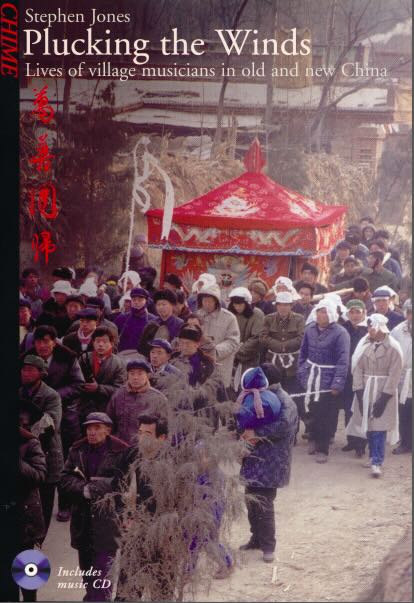


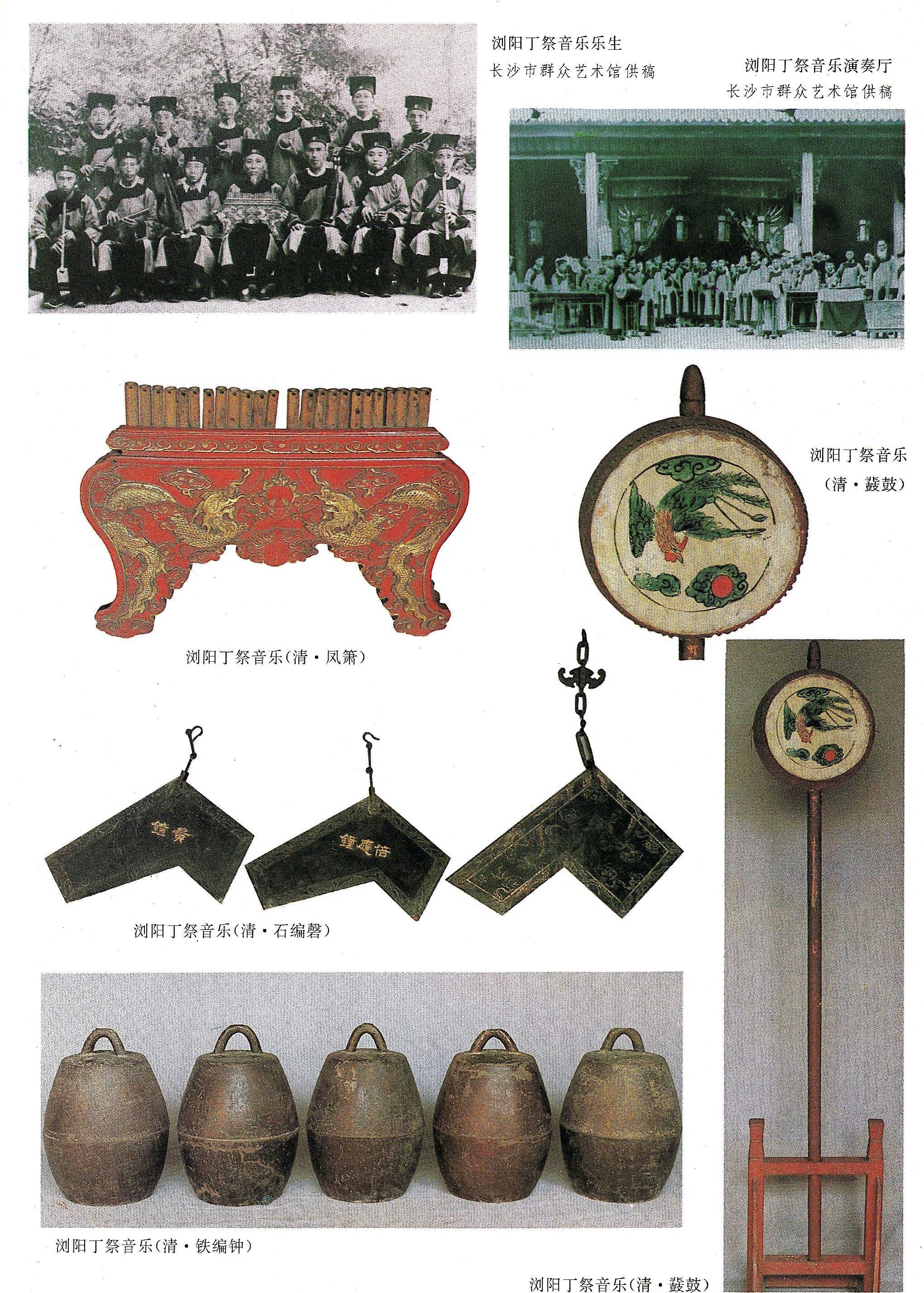


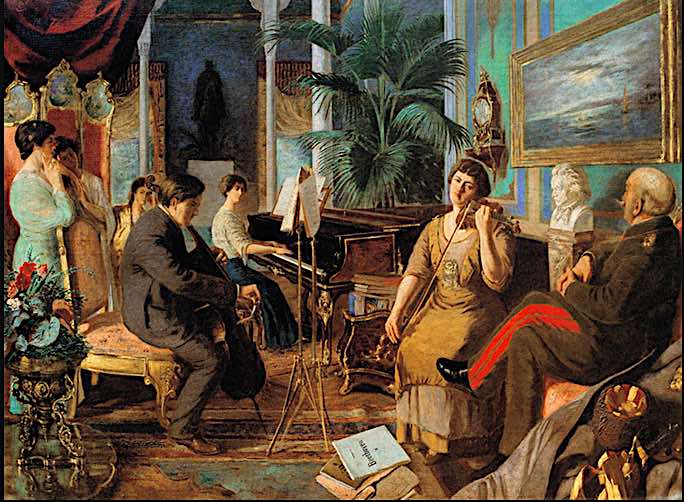
 My photo.
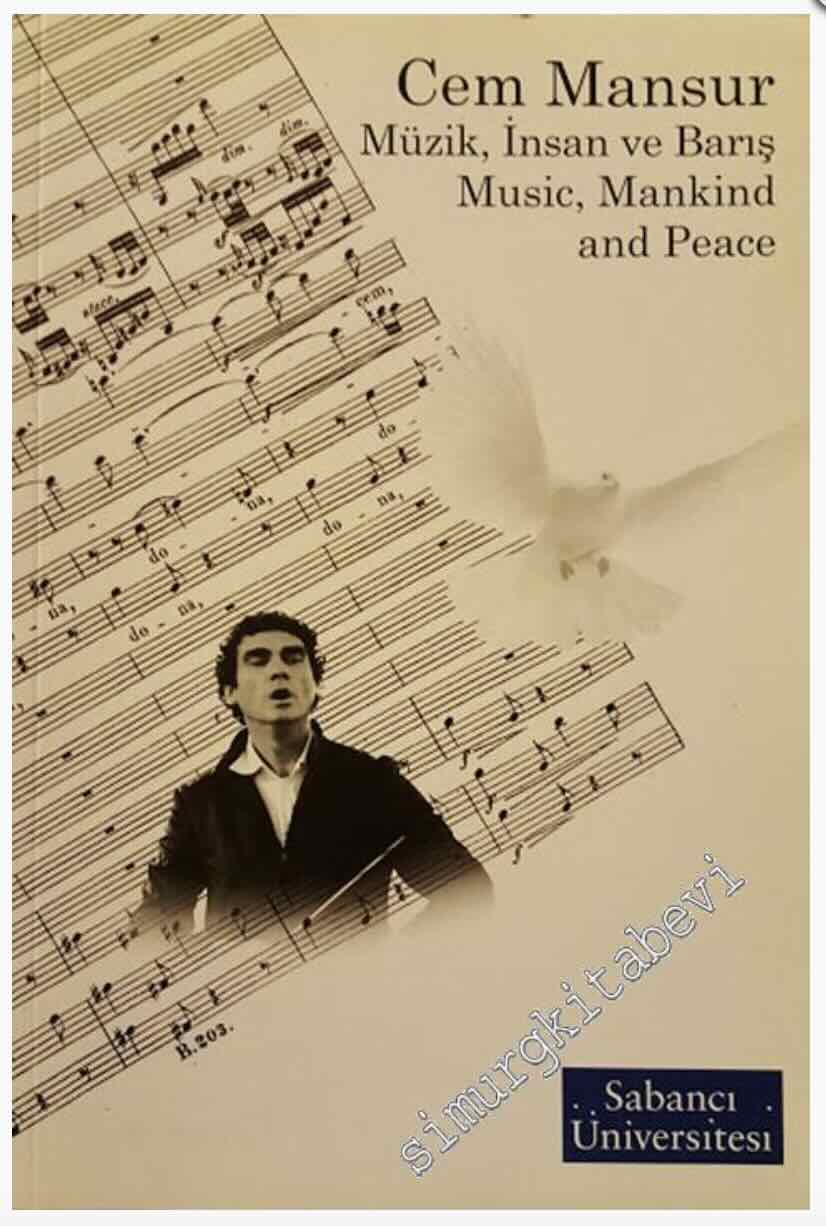 Mansur is passionate about the importance of music as a powerful tool for affecting change. Through his concept “The Laboratory of Democracy” (an open rehearsal session) Mansur engages both orchestras and audiences in issues such as co-existence, different levels of leadership, the nature of authority, of individual and collective responsibility as well as the difference between hearing and listening, leading and following. The sessions explore the basic concepts of democracy: individual worth, majority rule with minority rights, compromise, personal freedom and equality before the law, all demonstrated through the model of the orchestra as a miniature society. Mansur’s work on the peace-building role of music has also found expression of his conducting of the Greek/Turkish and Armenian/Turkish [youth] orchestras over several years.


 Éva Gauthier, 1905. All images from


 From The hundred thousand fools of God.


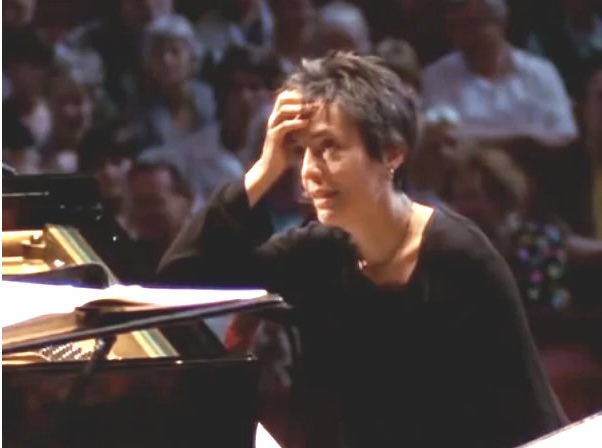



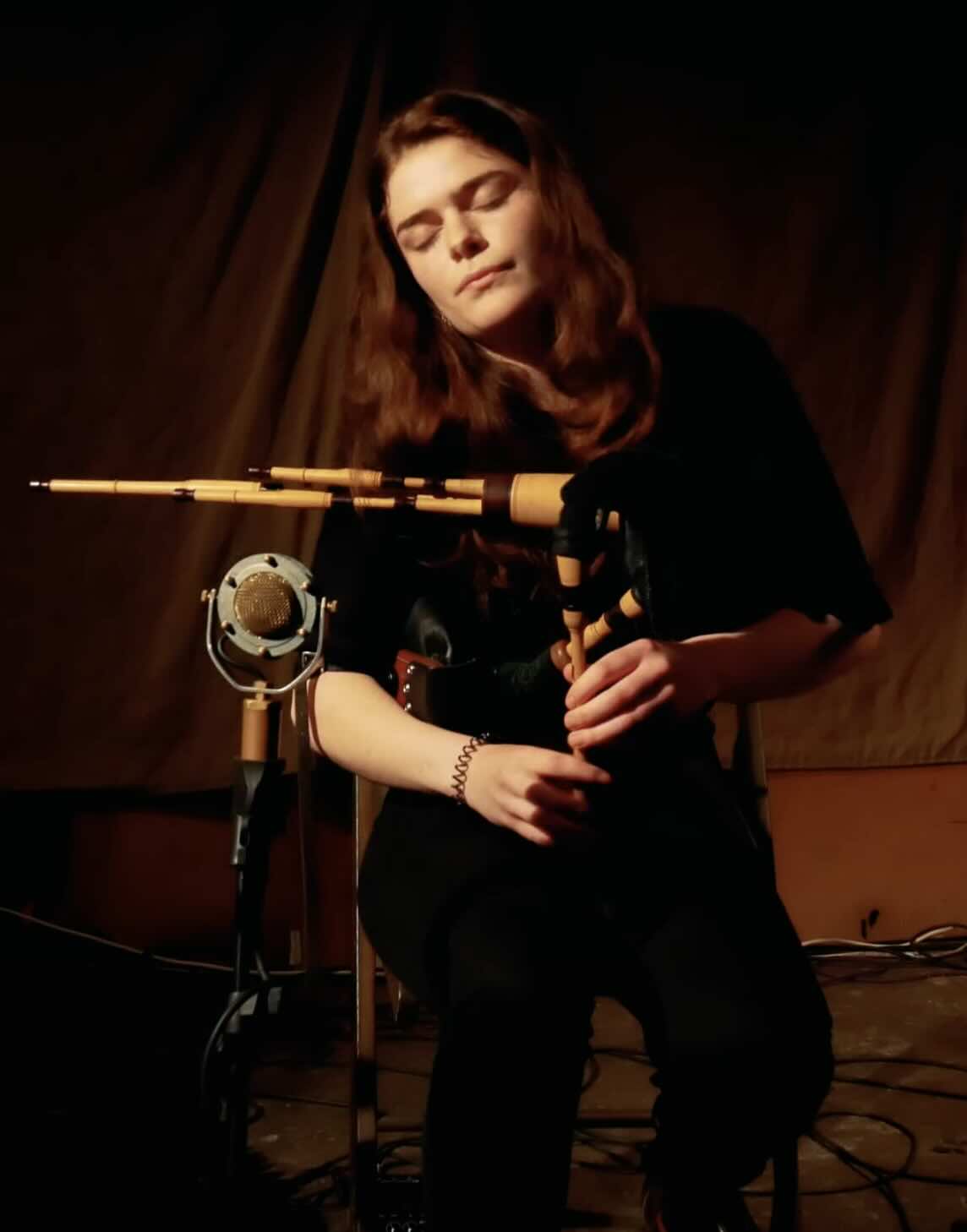
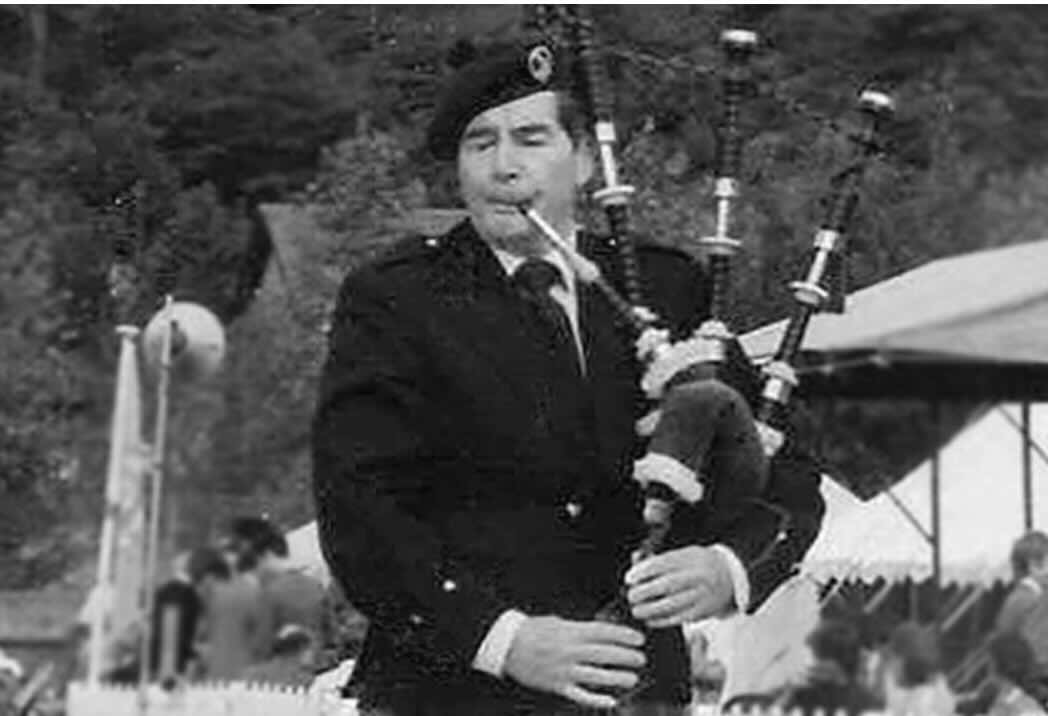


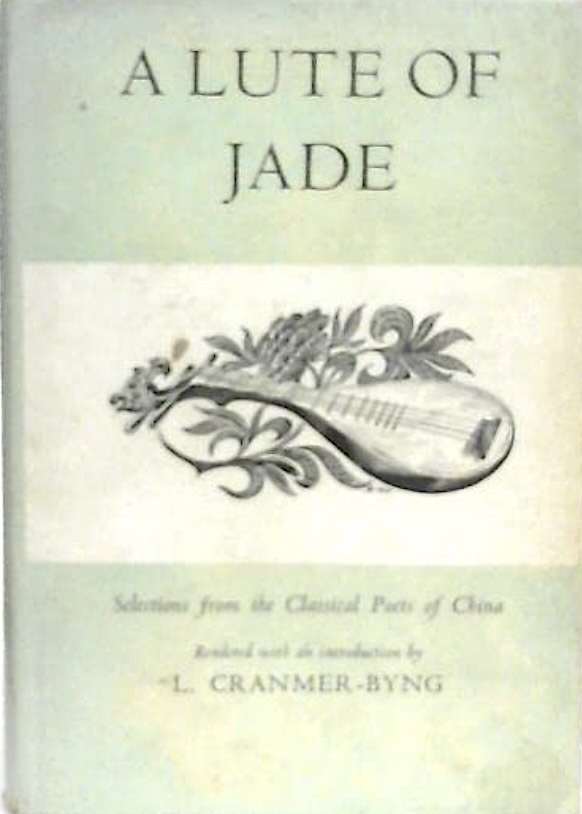 The first cycle of Five songs from the Chinese poets (







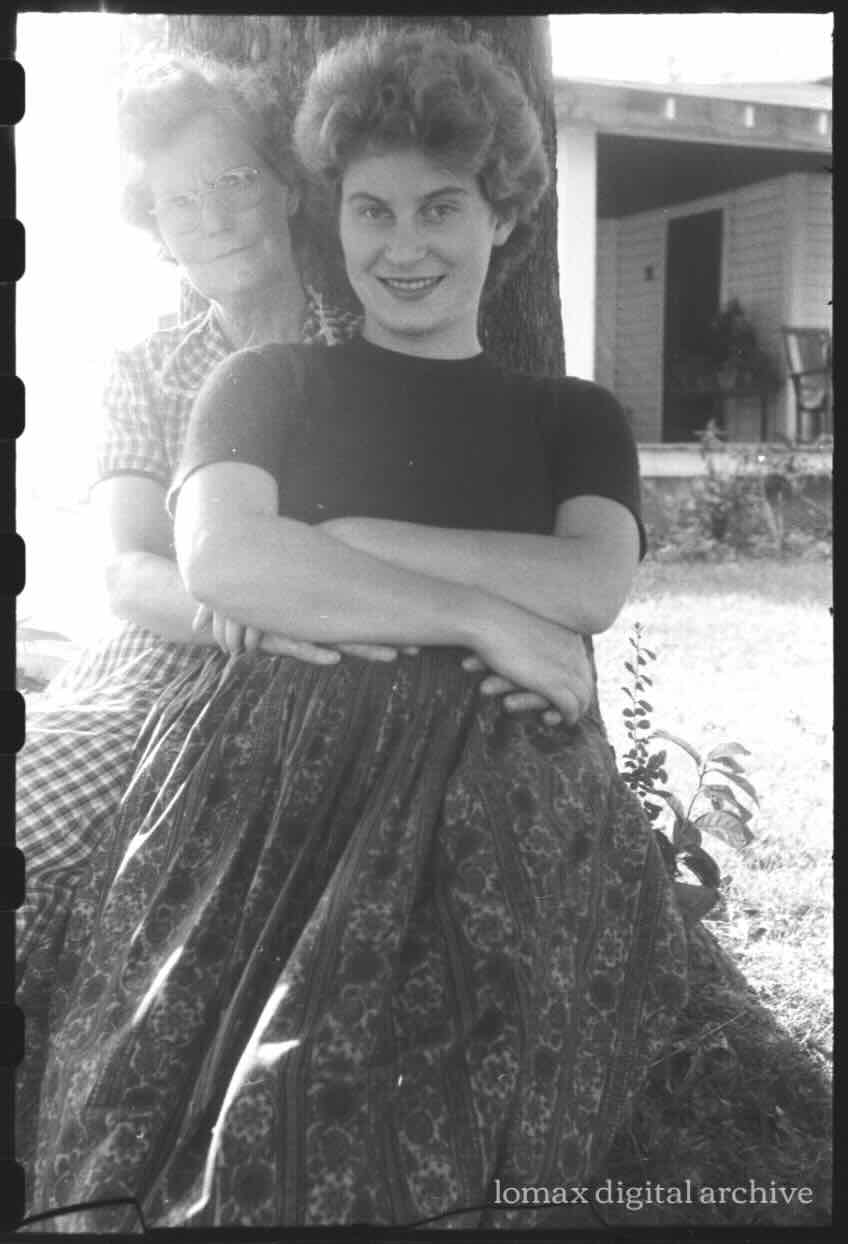



 *
*  That musicologists were slow to appreciate all this reflects both ignorance and a prejudice against cultures seemingly lacking in notation or theory. Becker cites Hugo Zemp’s work on the panpipe ensembles of the ‘Are ‘Are in the Solomon Islands (preview
 This way of thinking has also given rise to impressive ethnographies of Western Art Music by scholars such such as



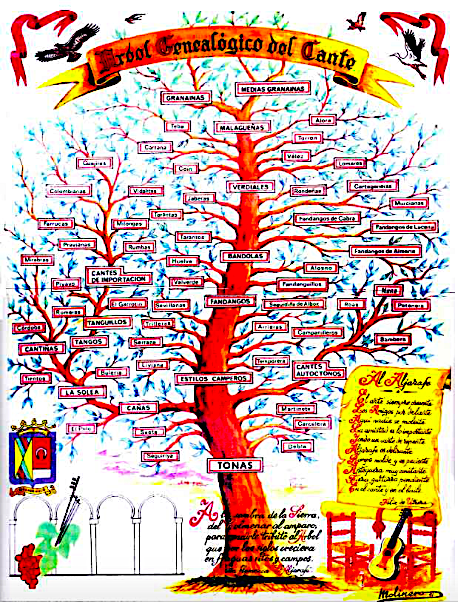 I may relish the anguish (aka “posturing, self-pitying machismo”) of the slower

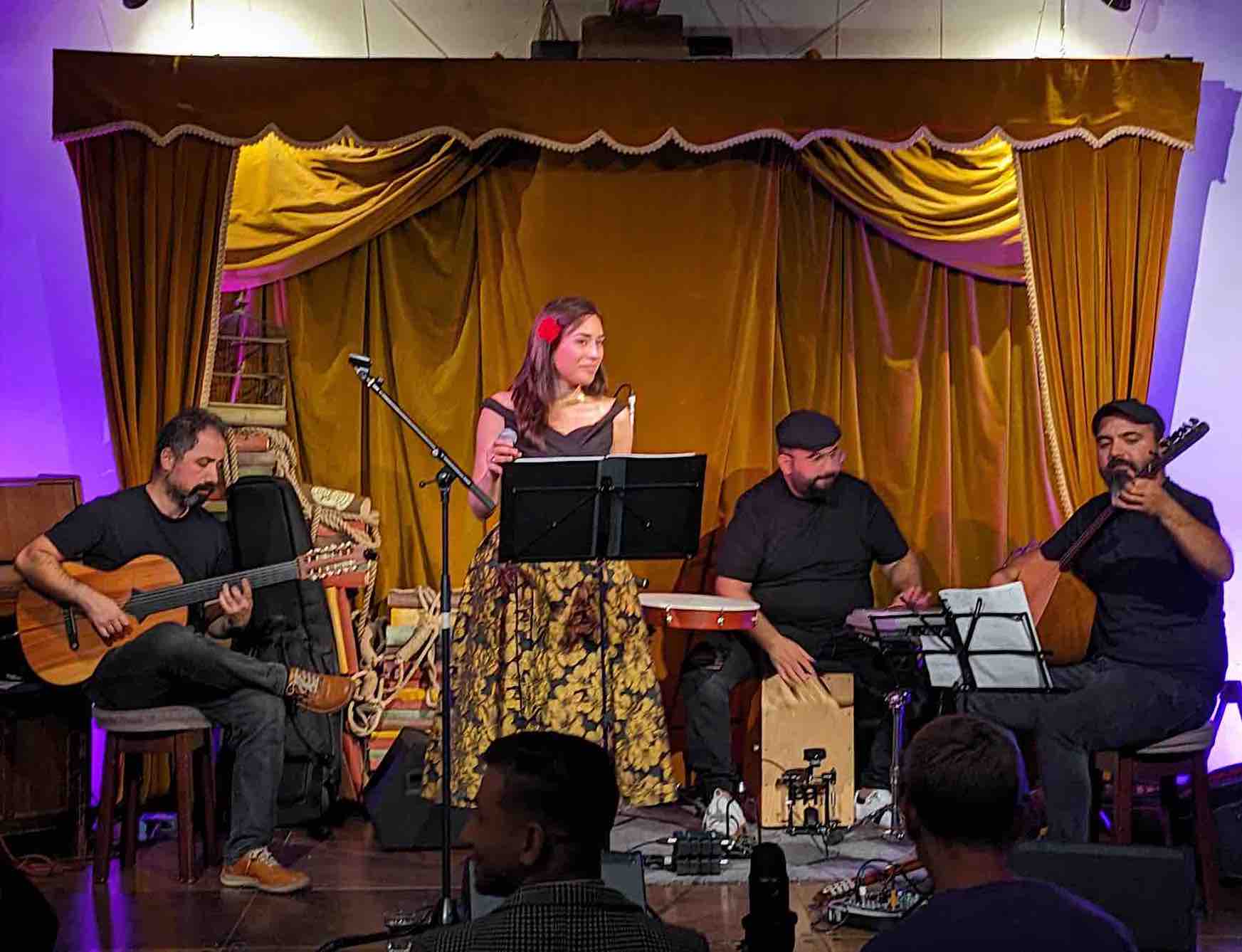



 Transcription by Diego Carpitella.


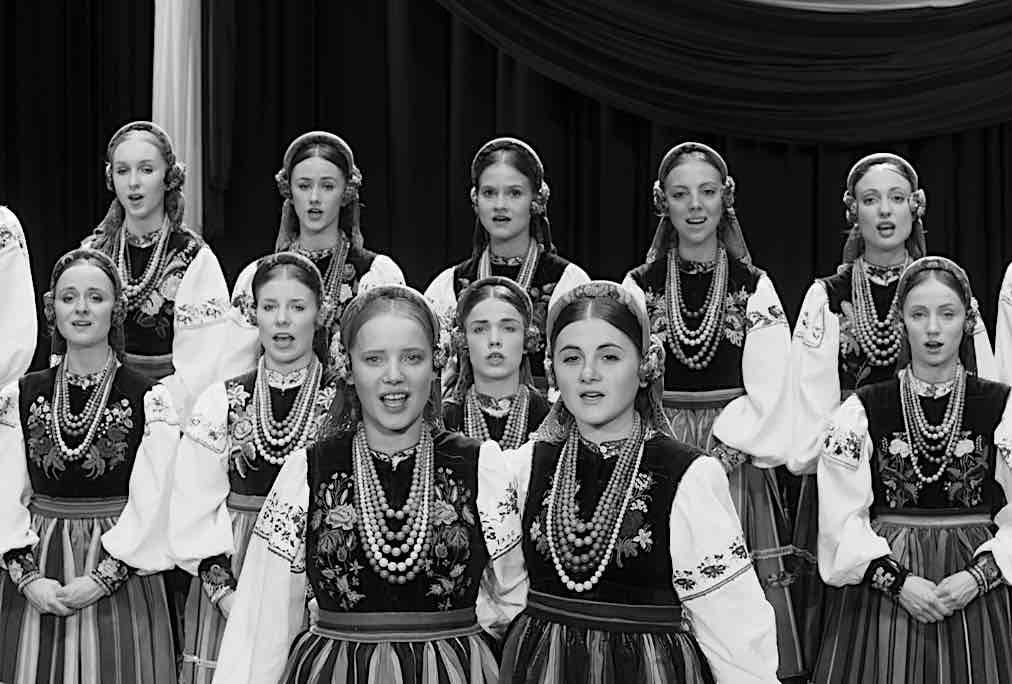


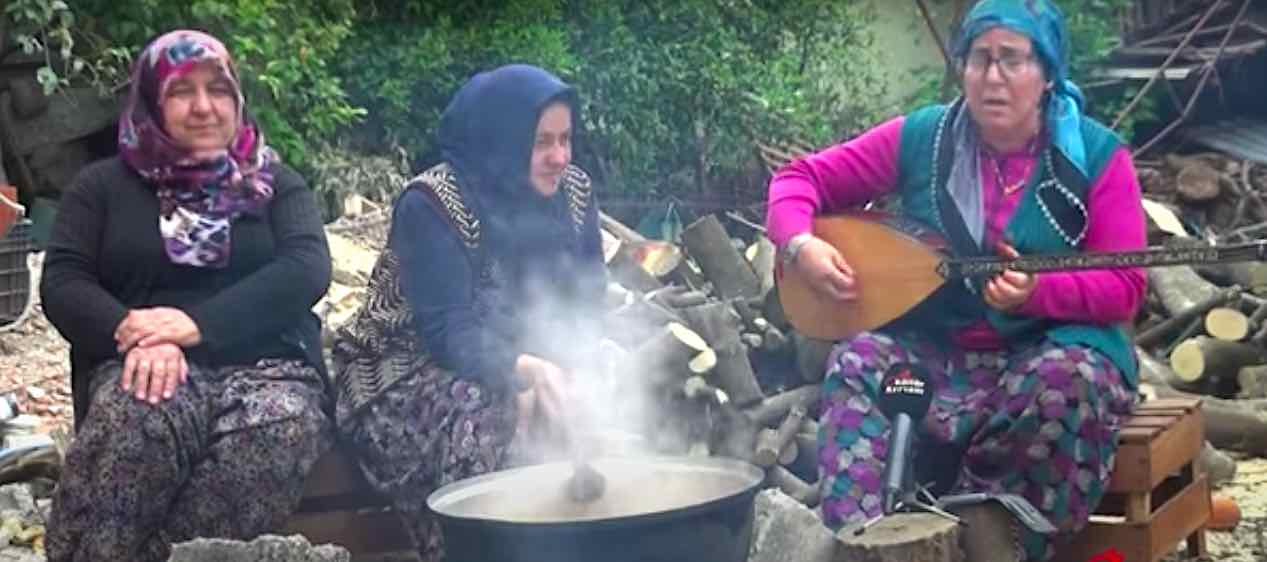
 Eliza Carthy with her mother Norma Waterson.


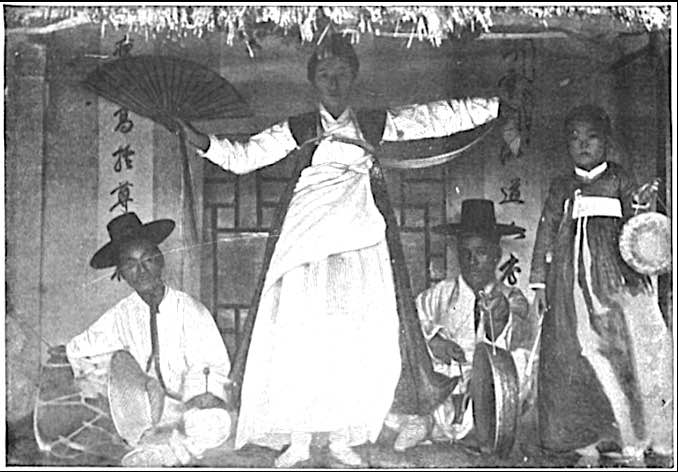


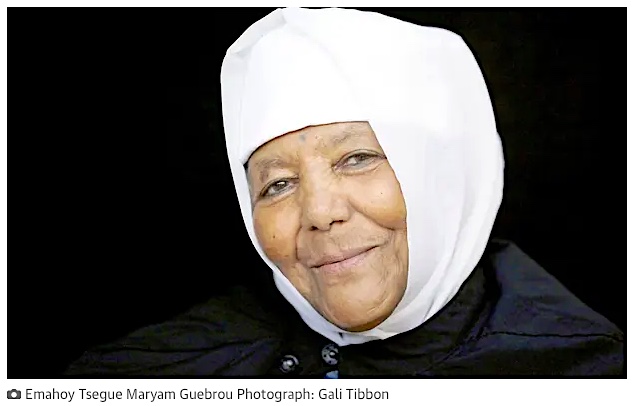

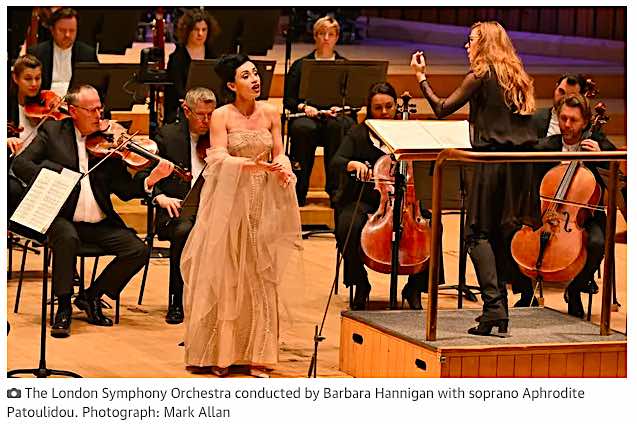



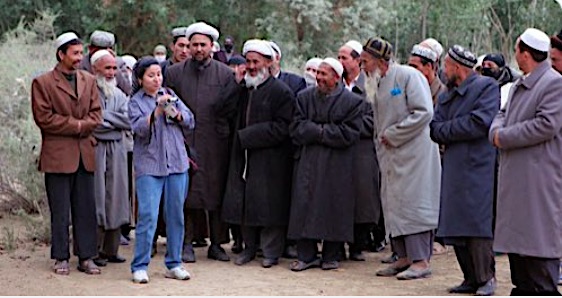


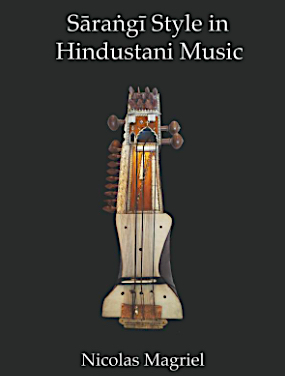


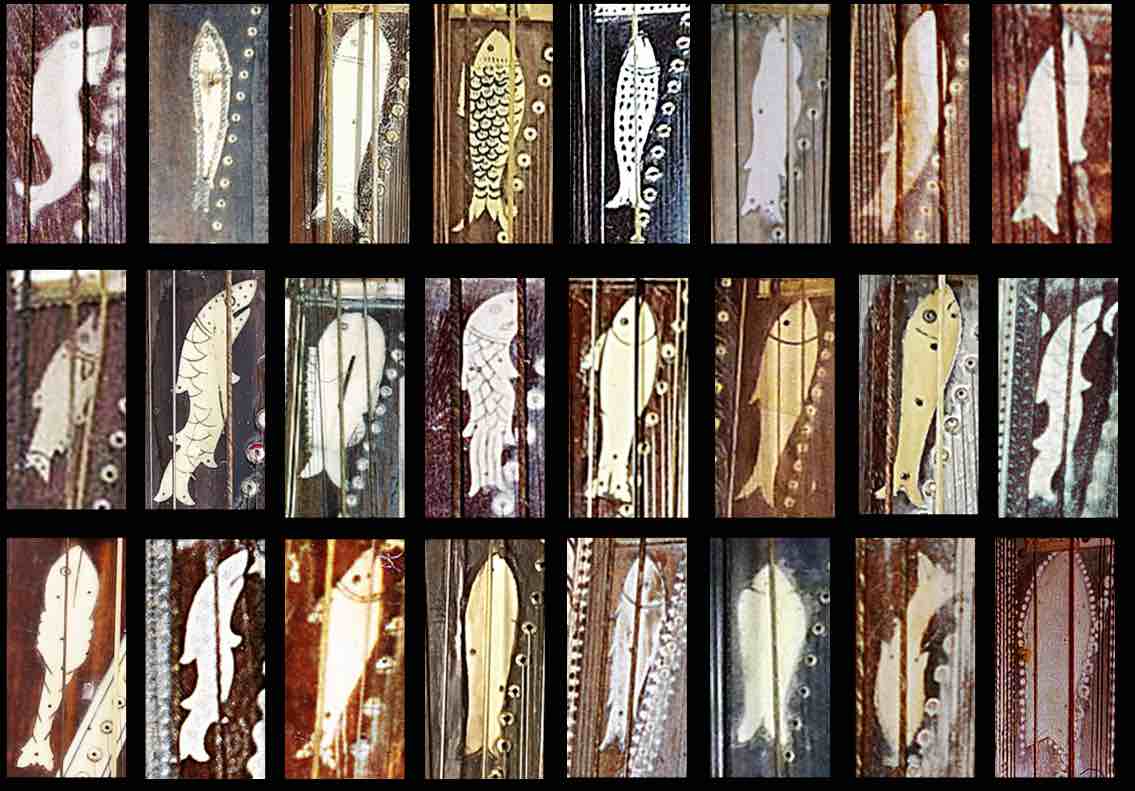

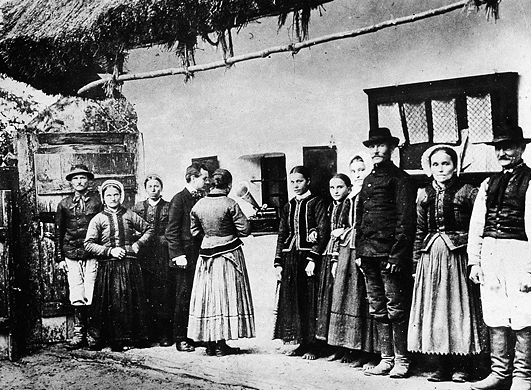
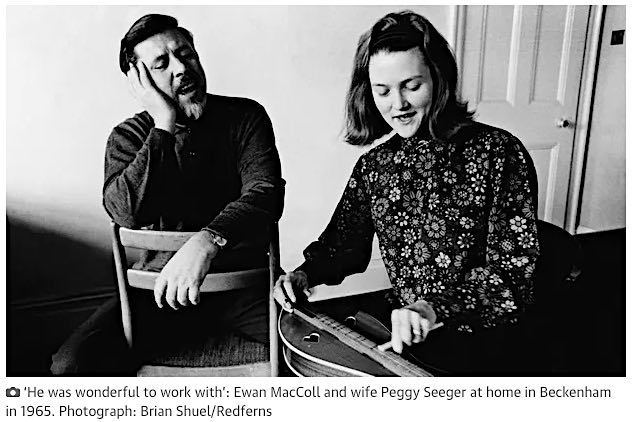
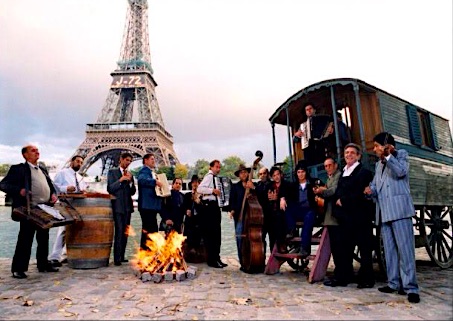
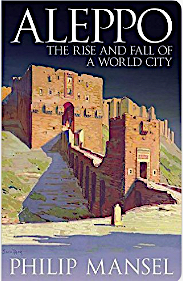 Philip Mansel, Aleppo: the rise and fall of Syria’s great merchant city (2018),





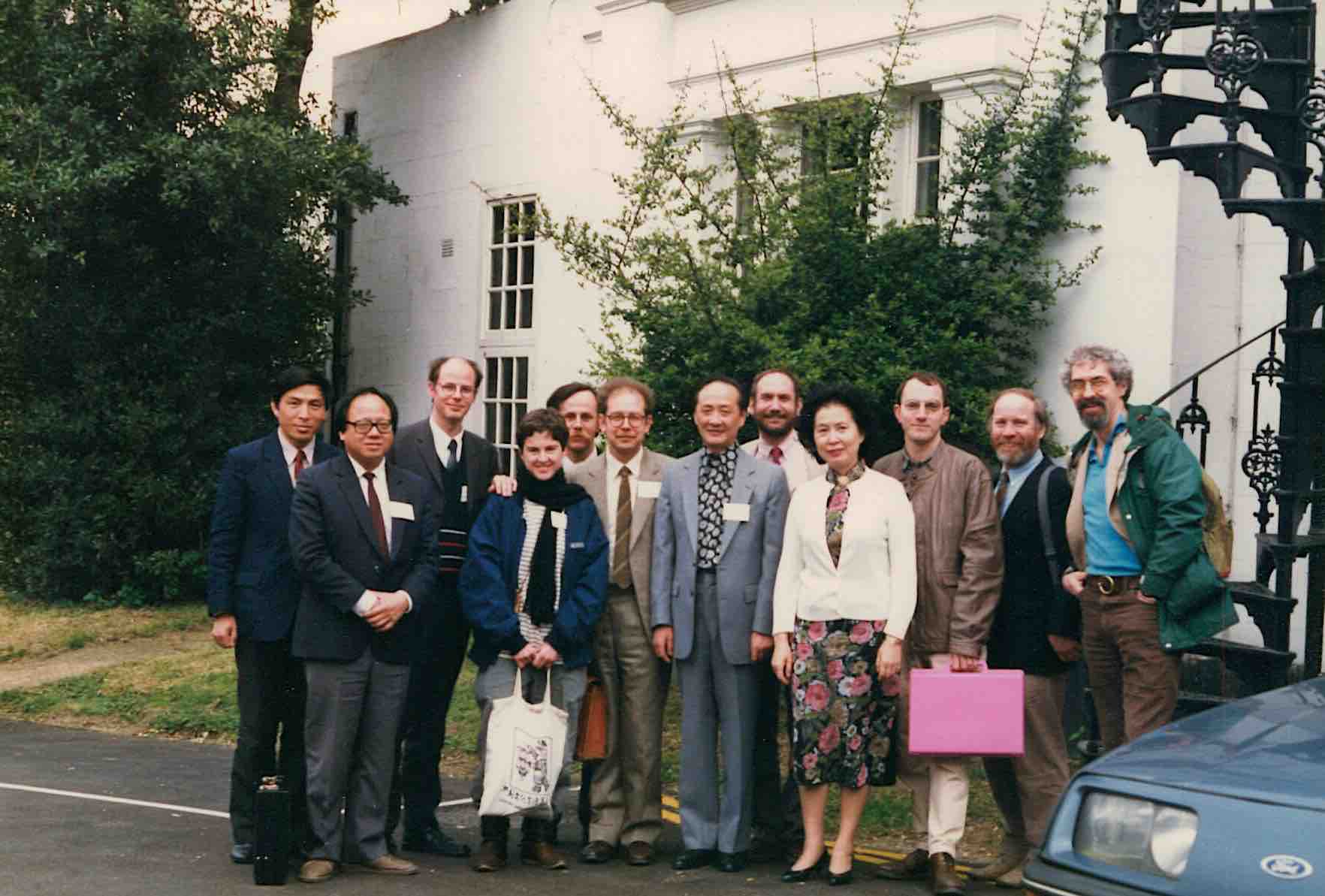
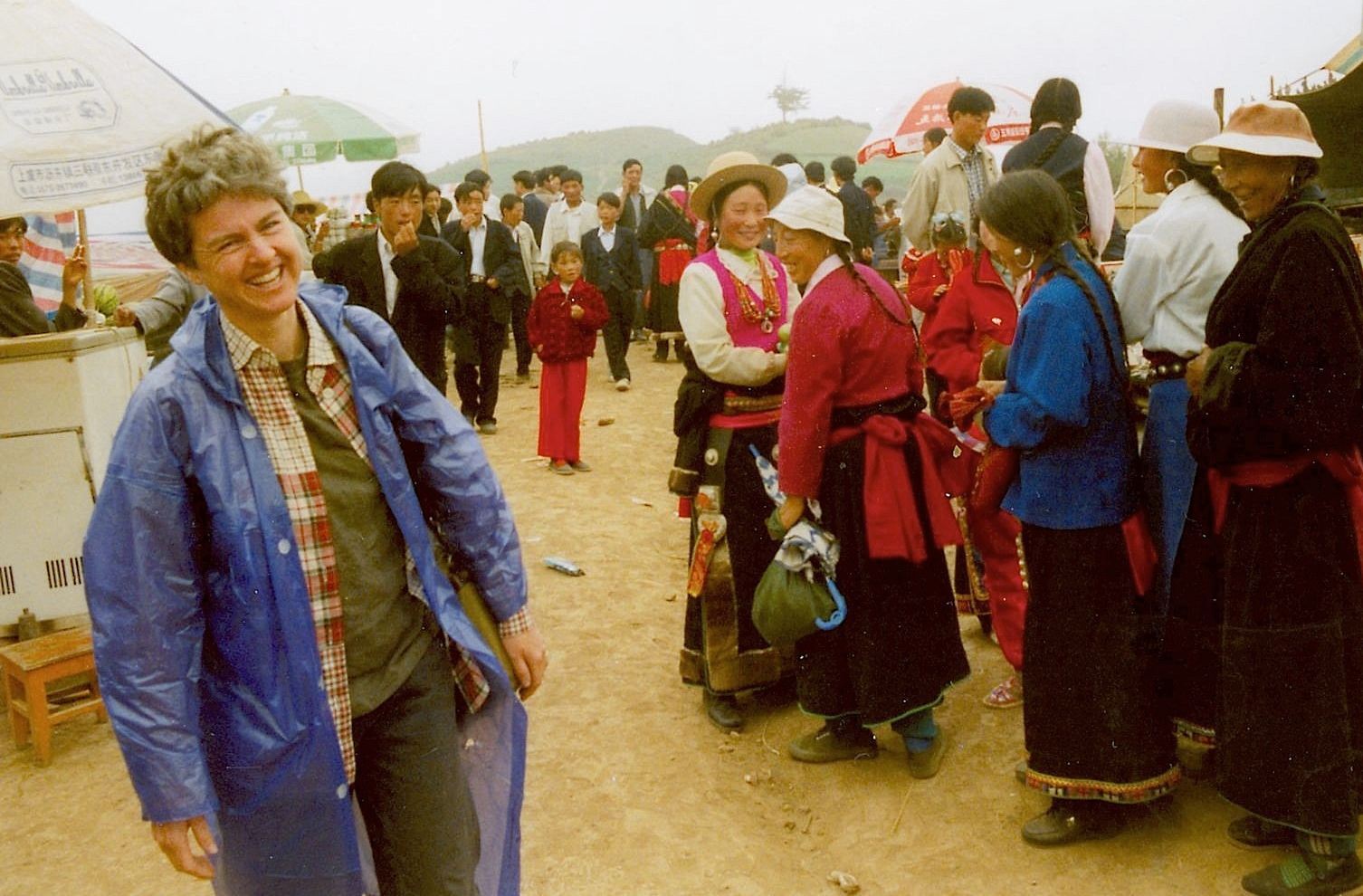




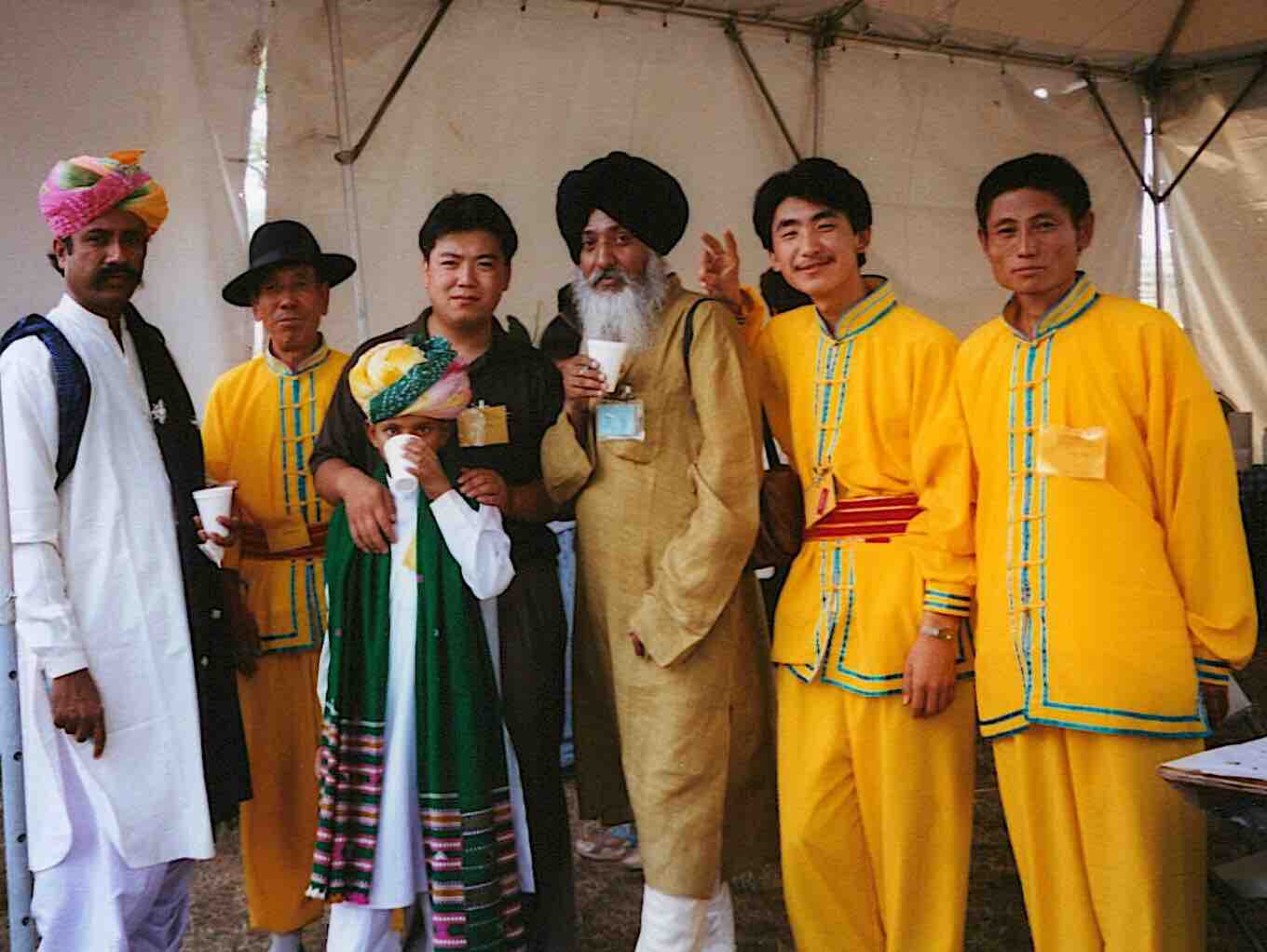


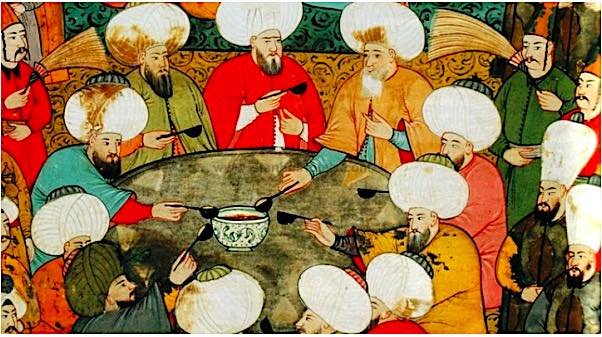



 Chandrima Misra directing students, Founders’ Day, March 2022.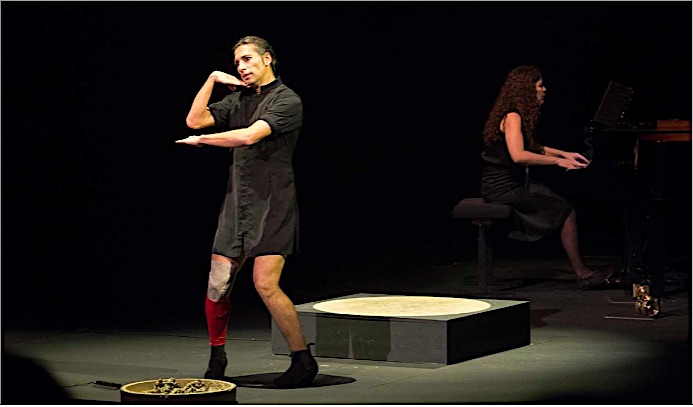
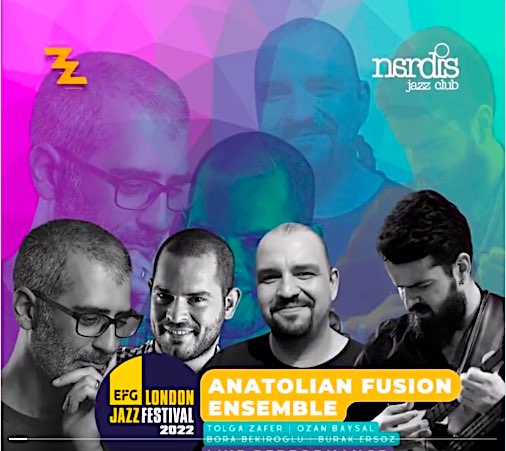

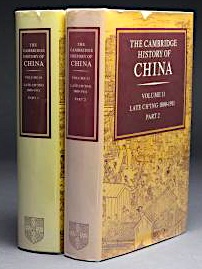

 Stephen Jones: a blog
