Adorning my newly-transformed house is calligraphy that my old friend Tian Qing wrote for me over thirty years ago, rather before he became an eminent cultural pundit. Among his endless stories, I’m always amused by the telegram he sent me from Beijing as we prepared for the Wutaishan monks’ UK tour in 1992, and the one about misreading a restaurant sign…
The couplet comes from a poem by the early-Tang poet Chen Zi’ang (661–702), who served as an advisor to Empress Wu Zetian, and (by an interesting coincidence) spent time in prison.
Chen composed the poem (see e.g. here and here) in 692 in praise of the illustrious Chan Buddhist master Yuanhui 圆晖. It’s generously titled
《同王员外雨后登开元寺南樓因酬晖上人獨坐山亭有贈 》
鐘梵經行罷,香床坐入禪
岩庭交雜樹,石濑瀉鳴泉 水月心方寂,雲霞思獨玄
寧知人世里,疲病苦攀缘
The couplet in question evokes Yuanhui’s meditation:
Moon in water, heart at last tranquil Clouds and haze, pondering particularly profound
The moon reflected in water is a Buddhist metaphor for the illusory nature of life (cf. the early-Qing-dynasty Shunzhi emperor’s long poem on impermanence, recited for rituals by the Li family Daoists until the 1960s). Tang poets frequently extolled their interactions with Chan Buddhist masters (see e.g. here).
Tian Qing, Beijing 1987.
I don’t know if this was at the back of Tian Qing’s mind, but apart from our proclivity for Chan (Zen), the opening character of the poem is zhong 鐘 (bell), my Chinese surname, accompanying the vocal liturgy that I was just getting to know (mainly among household rather than temple ritual specialists)… I can’t find an English translation of the complete poem by someone who actually knows about Tang poetry, so here’s my very approximate rendition (“Hey, I’m just a fiddle player”: revisions welcome!):
Finished are sounds of bell with chant, and scripture ambulation On incense platform he sits to enter meditation
Rock garden interspersed with trees Eddying of rocks, swirling round resounding spring
Moon in water, heart at last tranquil
Clouds and haze, pondering particularly profound
How could he know, among the human world, Our fatigueand disease at the bitter social climb?
Besides Tian Qing’s many reflections on the Intangible Cultural Heritage (in English, see this interview with Ian Johnson), for his calligraphy and painting, see Fayu chanfeng: Tian Qing shuhua zuopin ji 法雨禅风:田青书画作品集 (2014). For his writings on Buddhism, see e.g. his book Chan yu yue 禅与乐 [Zen and music] (2012) and Liu Hongqing 刘红庆, Foxin 佛心 (2007)—for Liu’s harrowing study of blind bards in Shanxi (whom Tian Qing also promoted), click here. And for the bond between qin zither, chess, calligraphy, and painting, see masters featured in The qin zither under Maoism.
Following The souls of China (2017), Ian’s valuable survey of the diverse manifestations of religious activity in the PRC, this is a most admirable study—thoughtful and eminently readable. Ian’s website lists the many rave reviews by people far more qualified than me, so I need hardly add to them; but I’d really like to spread the word still further. For his teaching notes, click here.
Sparks revolves around the control of history (“a battleground for the present”), and the role of memory in countering official propaganda. While “dissidents” are well documented for the Soviet bloc (for the USSR itself, Ian refers to Orlando Figes’ The whisperers; see also under Life behind the Iron Curtain), their Chinese counterparts have been less prominent in the public eye (see e.g. China: memory, music, society).
The book’s protagonists are “underground historians” (Sebastian Veg: “amateur or one might say guerrilla historians”), waging an “asymmetrical battle between a few, often beleaguered citizens opposing an overwhelmingly strong state”. While much of the material here is available in niches of academia (the work of the counter-historians has been highlighted by Western scholars such as Geremie Barmé, David Ownby, and Sebastian Veg), Ian portrays even activists who are already quite well-known with great clarity and perception. A major thread through all this is the personal missions of Ai Xiaoming and Jiang Xue.
Ai Xiaoming (left) and Jiang Xue—among the images by Sim Chi Yin that enrich the book.
As noted in a review by Han Zhang, Ian’s first book on China, Wild grass (2004), covered a not dissimilar group of activists during a relatively liberal period. Whereas after the authoritarian clampdown since 2016 his tone might seem less upbeat, nonetheless the work of those introduced in Sparks continues to inspire hope, even amidst the gruesome litany of atrocities, persecutions, and cover-ups that they document.
Ian meshes the successive eras of modern China: pre-Liberation, Maoism, the “reform and opening” of the 1980s and the early 21st century, back to the current retrenchment under Xi Jinping.
This conviction of history’s importance drives a movement of underground historians that has slowly gained momentum over the past twenty years. I call these people historians as a shorthand for a broad group of some of China’s brightest minds: university professors, independent filmmakers, underground magazine publishers, novelists, artists, and journalists. Some are outsiders and might be thought of as dissidents, but most have one foot inside the system, where they continue to hold jobs, own property, and raise families. All of them risk their careers, their futures, and prison to publish samizdat journals, banned books, and independent documentary films. They seek to correct the Party’s misrepresentation of the past and change their country’s slide toward ever-stronger authoritarian control. And they do so by using new technologies to publicize the regime’s failings, often linking current problems to debacles of the past.
It’s long been clear that not all Chinese people gullibly accept Party propaganda. As the state reverts to more draconian policies, while the growth in new technology helps the security surveillance apparatus, righteous Chinese historians also use it to find ways to evade censorship. And their mission is important for our understanding of China:
If people grow up thinking that the Chinese Communist Party played a key role in fighting the Japanese, took power thanks to popular support, and is led by a group of meritocratic patriots, then they will have a hard time understanding why China is prone to purges, corruption, and political violence.
* * *
Sparks is in three parts, The Past, The Present, and The Future. The chapters are interspersed with vignettes on Memory.
Part One opens with the labour camp of Jiabiangou in the poor northwestern province of Gansu, a series of determined investigations culminating in the long documentaries of Ai Xiaoming and Wang Bing. And this is no mere documenting a traumatic past, as Ai Xiaoming’s experience spells out:
The “hit, smash, loot” tactics of the Cultural Revolution that she and her family had experienced were not unique and are not dead; it is how the party regularly deals with people who have different views—especially when they dare touch on Communist Party history.
Still in the northwest, the memoirs of Gao Ertai (a Jiabiangou survivor) reveal the political turmoil at the Buddhist cave complex of Dunhuang in the 1960s.
Members of the Spark group, 1960:
Tan Chanxue, Sun Ziyun, Zhou Shanyou, Ding Hengwu.
A major theme is the work of Hu Jie and Jiang Xue on the short-lived magazine Spark, published by a group of students in Tianshui in 1960. At first they had the upright resolve to make the people’s desperate plight during the famine known to the central leadership, but soon, as it became clear that the latter had compelled the chain of regional and local cadres to report fictitious, exaggerated grain yields, they penned cogent critiques denouncing the people’s communes and the whole socialist edifice. Forty-three of those involved were soon arrested and sentenced to long prison terms; two of the leaders, Zhang Chunyuan and Du Yinghua, were executed in 1970.
Ian cites the solitary anti-Nazi propaganda of Otto and Elsie Hampel under Hitler, driven to tell the truth even if the attempt was futile—a story evoked in Hans Fallada’s novel Every Man Dies Alone / Alone in Berlin.
Spark 1st edition, 1960: “Give up your fantasies and prepare to fight!”.
From 2008 Hu Jie filmed compelling interviews with many of the original Spark group, still passionate in their determination to speak the truth. He released a moving documentary online in 2013 (note the mournful shawms from 3.00 to commemorate Du Yinghua):
In “Memory: Snow’s visit”, Ian introduces Jiang Xue’s own work on Spark with a vignette on her extended, intimate interview with Xiang Chengjian in 2016—here’s the film, edited by Tiger Temple (see below) (slightly different edit here):
Just as moving is an earlier film by Hu Jie, Searching for Lin Zhao’s soul (2004), on the horrifying fate of a young Peking University student, unable to compromise her democratic ideals as society disintegrated in the wake of the Anti-Rightist campaign, who was imprisoned for six years before she was executed in 1968.
Ian looks back at the Party’s machinations, casualties, and pathological purges at Yan’an in the wartime Shaanbei Base Area, with the stories of Liu Zhidan and Liu Jiantong’s banned 1962 novel about him; of Gao Gang, Wang Ming, and Xi Jinping’s father Xi Zhongxun. Even after a palatable version of the Maoist era was being fabricated in the 1980s, and as “Red tourism” swept the country, Gao Hua embarked on a scathing indictment of the Yan’an period.
Ian gained experience of the Party’s control of archives in his study of the fate of the Maoshan temples since the 1930s (see Ritual life around Suzhou). Under Xi Jinping, with history ever more rigidly controlled, the National Museum of China has become a mere propaganda showcase.
In Part Two we meet the novelist Wang Xiaobo and his wife Li Yinhe, documenting subaltern lives; and the anthropologist Guo Yuhua, whose research on “the sufferers” in Yangjiagou village thoroughly demolished the Shaanbei myth. In Xi’an (setting for the cult novels of Jia Pingwa) Ian accompanies Jiang Xue to visit citizen journalist Zhang Shihe (“Tiger Temple”), with his bitter past as a child labourer in the Cultural Revolution. We eavesdrop on meetings of the editors of the Zhiwuzhi public forum.
Returning to Ai Xiaoming, Ian explains her background, and her support for rights-defender lawyers. Assessing the current retrenchment she comments,
The severe political pressure unleashed through governmental response has made it clear that it is unshakable, it does not need to listen, it has idolized itself. What happened in the past, the demonization of those critical of the government, is taking place once again.
The mass murders of the early Cultural Revolution in Daoxian county, Hunan, where—at the instigation of the Party—over 9,000 were murdered in August 1967, have been exhaustively researched by Tan Hecheng, and published in English as The killing wind: a Chinese county’s descent into madness during the Cultural Revolution. Ian provides a vignette on Yu Luoke’s exposé of the massacre in Daxing county in the Beijing suburbs at the same time. Yu was arrested and executed in 1970, but since 2016 his story has been circulating again.
A couple of instances of how such scars should impact on our fieldwork: in the 1990s I was impressed to find amateur Daoist and Buddhist ritual groups in Daxing, but I never learned of the 1967 massacre there. Ian comments further:
One survey of local gazetteers [Yang Su, Collective killings in rural China during the Cultural Revolution] shows that between four hundred thousand and 1.5 million people perished in similar incidents, meaning there were perhaps another one hundred Dao County massacres around this time.
And, from a distance, I’ve long been curious about the expressive culture of Gansu province—including its household Daoist traditions. The counties that scholars of religious and musical life should do fieldwork are among those where the most disturbing abuses under Maoism took place—so somehow we have to integrate society and culture into our studies.
Ian visits retired film historian Wu Di, co-founder of Remembrance (one of a whole series of samizdat journals), taking up the shocking topic of high-school girls in Beijing torturing and beating their vice-principal Bian Zhongyun to death in 1966—subject of another harrowing film by Hu Jie, Though I am gone, recounted by her bereaved husband:
This leads the Remembrance group to debate the career of Red Guard poster-girl Song Binbin, who witnessed (at least) the murder.
In Sichuan we meet Huang Zerong, who, undaunted by over two decades in labour camp as a “Rightist”, in his old age began publishing an unofficial history magazine, Small scars of the past—earning him another prison sentence, a fine, and close surveillance. In a reproach to the reluctance to “dwell on the past” (common among many traumatised peoples), he explains the importance of the 1958 Anti-Rightist Campaign:
Without the Anti-Rightist Campaign there would have been no Great Leap Forward; without the Great Leap Forward, people would not have starved to death. If people didn’t starve to death, there would not have been the Cultural Revolution. Without the Cultural Revolution, there would have not have been Tiananmen.
Fanning out from Beijing, Cui Yongyuan (Oral History Centre) and Wu Wenguang (Village Documentary Project and Folk Memory Project, focusing on the Great Famine) have done impressive work.
Li Wenliang.
Part Three, “The Future”, reveals shifting concerns. Ian documents the Coronavirus in Wuhan and whistle-blower Li Wenliang; while the Party was busy suppressing the truth, the awful realities of life under a draconian lockdown were again exposed by independent counter-historians, including Ai Xiaoming, along with front-line diarist-reporters like Zhang Zhan and the reputable novelist Fang Fang. Ian’s account is always nuanced:
The events in Wuhan show the potential anger, dissatisfaction, and critical thinking that lies beneath the surface. People like Ai Xiaoming, Jiang Xue, Tiger Temple, and Tan Hecheng represent a minority of Chinese. But their well-articulated critiques resonate when people are shaken from their lethargy.This is why one way to look at the Wuhan outbreak is as an example of government power. But a more convincing explanation is that it was a classic example of the repeated eruptions against unchecked government authority.
Lhasa, 1966: from Woeser’s Forbidden memory.
The ever more vexed flashpoints of Xinjiang, Tibet, and Hong Kong are another major area for underground historians. Ian introduces the work of Tsering Woeser on her father’s photos of the Cultural Revolution in Lhasa, and the Tibetan stories collected in Conflicting memories. We learn of the travails of Hong Kong and the elimination of the free publishing world there. Part Three ends, perhaps rather more tangentially, with another trip with Jiang Xue to visit the Zhongnanshan hermits (also outside society), alongside an account of the lockdown in Xi’an.
The excellent Conclusion confronts the underlying questions: are the odds too great, is resistance to the authoritarian state useless, are those few who resist doomed to failure? Ian ponders how we should engage with China, challenging conventional wisdom on how to view it—when
the dominant way of understanding China is that nothing happens there except a string of dystopian horrors: surveillance, cultural genocide, mindless nationalism.
But
Government propagandists can flood the media with their version of reality or slow down unwanted information. This sophisticated form of censoring means that most people will still agree with the government version of events. And yet enough people now have access to alternative interpretations of the past that questioning has become widespread and persistent, despite harsher and harsher crackdowns. […]
The fact that people still resist and do so in a more coordinated form than at any time in the past, seems more significant than the banal point that an authoritarian regime is authoritarian.The fact is that independent thought lives in China. It has not been crushed.
He goes on,
The Party does not always win. Despite overwhelming odds, people inside China today still publish works and make films that challenge authority. Their ideas continue to spread, and when problems in society reach a critical point, people look to them for ways of thinking about their country. This is why Xi Jinping has made control of history one of his signature policies—because he recognises counter-history as an existential threat.
Thus Ian queries whether amnesia has really triumphed:
Saying that “most people” don’t know or care is a truism applicable to almost every society in every era; what matters is that many Chinese do know and continue to battle, today, to change their society.
Moreover,
Prosperity is not inevitable. For any country, it requires constant self-reflection and an ability to think up new solutions to new problems. The Chinese Communist Party’s ability to do so is open to question, especially when we consider its decade-long aversion to meaningful economic reform and its failure to build a top-ranked education system for non-elites.
Before the extensive Bibliography comes a useful Appendix on Exploring China’s Underground History. Ian notes dGenerate Films, Icarus Films, and the Chinese Independent Film Archive, while on YouTube there are channels for Hu Jie, Ai Xiaoming, and Tiger Temple—I’ve featured some of his recommendations above. He also offers a succinct list of recommended books. And an important new site, the China Unofficial Archives, has just gone live (see my introduction). Endnotes (a system that I much admire, cf. Eat the Buddha) provide detailed further references.
* * *
One naturally characterises such figures as “brave”. Guo Yuhua, herself long punished by the authorities and harassed by state security, told me she doesn’t feel particularly brave: rather she acts out of a sense of duty—part of a long tradition of righteous scholars throughout Chinese history, as Ian observes. One can only feel the deepest respect for the people who have stood up for truth, and for those who document their labours.
Still, these are people whom most of us wouldn’t normally encounter—or might not be aware of encountering. So where might The Masses stand on all this—those who swallow their scruples for the sake of a quiet life for themselves and their families? One finds plenty of resentment, of course, and even resistance—such as from organised religious groups; and individual cynicism is often heard, both from those clearly targeted, like “reactionaries”, and from the peasantry, who suffered just as grievously and in larger numbers. But just as distressing are the fates of the many who fervently believed in the Party, yet were assaulted in successive campaigns.
Foreign scholars may visit China for a variety of reasons. However much we may wish to eschew politics, and however much we like and esteem our friends in China, the gruesome history of the Party, trampling people’s lives, is the essential backdrop to all the topics that we study in modern (and indeed imperial) China—including history, culture (art, architecture, music, literature), and religion (see my post Cultural Revolutions). Mao was right about one thing: “There is no such thing as art that is detached from or independent of politics”. No walks of life have been untouched by all this, and Sparks should be essential reading for us all.
Aaron Smith leading the All Blacks in the haka. Source.
The Rugby World Cup is coming to the boil nicely (if not “reaching a crescendo”). Last night’s quarter-final between the All Blacks and Ireland was remarkable (if you missed it, do watch highlights on ITV). The final phase, when the All Blacks held out against wave upon wave of attacks (37 phases!), was a tense dénouement. Much as I love football (see under A sporting medley), the visceral impact of rugby, with its variety of team and individual skills, brute force and artistry, are on another dimension.
The All Black haka makes an awe-inspiring overture (I introduced it here, with some history, and flippant suggestions on suitable ripostes from other nations, including Bring me sunshine and The Rite ofSpring!). The current edition additionally features a hoe carved wooden paddle:
Local Maori cultures evince variations in styles, handles, and blades of the hoe (some instances were presented to Captain Cook in 1769.). Its use in the haka reminds me impertinently of that of the chaoban in Daoist ritual (e.g. here).
I still find it extraordinary how rugby players (in few of whose daily lives traditional customs or ceremonial performance can play a major role) can enter the groove with such focus, and how an apparently secular situation can be instantly transformed into a ritual of such intensity.
Today we can also admire the Fiji team performing the cibi before their quarter-final with England!
Craig Clunas gleefully spotted this clip (posted by Tong Bingxue on what I still like to call “Twitter”), performed by the Yuzhang Daoist Music Troupe 豫章道乐团 (original here):
The troupe (YouTube playlist) is based at a temple in Nanchang (in Jiangxi province, where some of the most vibrant household traditions of Daoist ritual are to be found, BTW)—but regional style is irrelevant here. There are two issues in need of unpacking:
First, Beethoven—much as I like to blame him, in this case he’s obviously Not Guilty (cf. Monty Python: “the second tune, which Beethoven said on his arrest was ‘just a harmless bit of fun’…”). Anyway, the Yuzhang Daoist Music Troupe clearly aren’t in the market for a Beethoven work that might evoke a suitably profound and abstruse mood, like the HeiligerDankgesang of the A minor string quartet—rather, they’ve gone for the ultimate cliché, Für Elise—such a heavy albatross around the necks of generations of hapless piano students. And if we have to hear it yet again, this arrangement has a certain charm, I suppose, in a cutesy chinoiserie kinda way—a step up from its use for the garbage trucks of Taiwan (“Whenever I hear Für Elise, I feel like I need to take out the garbage as well”).
But quite apart from the choice of piece, far more insidious is the style of instrumental ensemble itself. Adopted in recent years by such “Daoist music troupes” (a concept that I dismantled here!), it’s based on the modernised “national” conservatoire style.
In both musical and religious affairs, it would clearly be wrong to expect central authorities to have more taste than local cultural officials. Since the White Cloud Temple in Beijing led the way, * the chimera of the Intangible Cultural Heritage also plays a dodgy role in encouraging this kind of style, with Disneyfied staged performances of “Daoist music” given by temple groups such as the White Cloud Temple in Shaanbei.
So here we have a mixed-gender ensemble (itself an affront to tradition, but hey) playing modernised sheng, erhu, yangqin, ruan—a Veritable Smorgasbord™ of kitsch. The style is garish enough when it’s just accompanying Daoist hymns, but with this video, what ARE they thinking?! To imagine that Furry Lisa (as it’s known in the biz) would be just the thing to enhance their international credibility—just picture the troupe’s apparatchiks in a meeting:
After decades creating a debased concept of “Daoist music” to delude the ignorant masses, what more can we do to consolidate our reputation? Aha, I know!!!
Beat that, Richard Clayderman. One can only look forward to a Yubu Can-can. Re-education required (though not in a 1958-labour-camp kinda way). Meretricious (and a Happy New Year)!
I mean, Don’t Get Me Wrong, I’m all for experimentation—in a suitable context (e.g. “world music” versions of Bach). Of course there is a certain audience for this kind of thing in China, and even abroad; some listeners whose taste monitor isn’t programmed for China may find it charming, and It’s a Free Country (Yeah right—Ed.]. It is what it is. The ethnographer may feel obliged to document all kinds of activities, but whether or not we believe in the Wisdom of the Ancient Sages, it’s our solemn duty to ridicule such folly, which distorts and cheapens the whole notion of Daoist ritual and its soundscape [Go for it—Ed.].
Meanwhile, away from the concert platform, household Daoists like the Li family in Shanxi continue to perform life-cycle and calendrical rituals for their local communities—and so do temple priests, even in Shanghai and Beijing.
The only way I can bear to hear Furry Lisa is with the brilliant Two Set Violin (complementing their Mahler 5 and Pachelbel’s capon):
* Under the misguided rubric of “Daoist music”, the style was “developed” in the 1980s at the White Cloud Temple (Baiyun guan 白云观) in Beijing, headquarters of the national Daoist Association and official showcase for the acceptable face of Daoism under Party control. By 1985 the venerable Min Zhiting (1924–2004)—whose former priestly career had hitherto been based in Shaanxi—was chosen to teach at the temple, going on to serve as figurehead of the Daoist Association. But despite his great wisdom, the temple authorities were adept at serving the demands of Party conformity.
There’s a certain merit in the temple’s performance of the daily services, or occasional rituals such as Flaming Mouth (yankou), as they still practise the tradition of vocal liturgy accompanied only by percussion—albeit in the “southern style” that has been widely promoted in recent years. Among many videos on YouTube, here’s the final part of a yankou in 2015:
I’ve just updated my list of Great Chinese stammerers with the Southern Tang dynasty muralist Dong Yu—joining early luminaries such as Deng Ai, Han Feizi, and Sima Xiangru; and for the modern era, Feng Youlan and Gu Jiegang.
The music of Corinne Bailey Rae (website; wiki) is on an ever-growing list of Things No-one Ever Told Me About—as my mother said about the Beatles, “Well I’ve never heard of them—they can’t be famous!”.
So in a futile effort to stem the tide of my eighth decade (cf. Staving off old age), I’ve been admiring her new album Black rainbows—her fourth, after a seven-year break, “a scream through the letterbox” by contrast with the “coffee-shop staples” of her previous work. * Inspired by visiting the Stony Island Arts Bank archive in Chicago, as Damien Morris comments in the Guardian,
its audacious mix of rock, electronica, jazz and Afrofuturism forms an epic soundtrack narrating journeys to freedom.
The title track:
Erasure, channelling punk:
They tried to erase you They tried to erase you They tried to eviscerate you, hide behind the curtain Make you forget your name They tried to erase you They tried to erase you They tried to eviscerate you, hide behind the curtain Make you forget your name
New York transit queen:
He will follow you with his eyes:
Peach velvet sky:
And the final track Before the throne of the invisible god, “in which, metamorphosis complete, she becomes an east Pennine Alice Coltrane”:
Uh-oh, I’ve been cajoled into giving local partygoers another burst on the erhu fiddle—* I’m more used to people asking me not to play it… This gives me another pretext to roll out my old excuses, such as “It was in tune when I bought it”, and “I just sort of… picked it up” (cf. my early days with Ray Man).
Along with Abing’s inescapable Erquan yingyue (immortalised in Yang Yinliu‘s 1950 recording), the plangent Jianghe shui (literally “River waters”, but often rendered, suitably, as “Song of suffering”) has been a mainstay of the erhu concert repertoire since the 1960s (see here, and David Badagnani’s notes).
The concert piece derives from a melody of traditional shengguan ritual wind ensembles in south Liaoning—sadly, I can’t find a rendition, so we’ll just have to imagine it from other recordings, such as the guttural shawms on #6 of my Audio Gallery in the sidebar (notes here). Soon after the 1949 “Liberation” it was adapted to the conservatoire style (for which see here, and here) as a solo for the double guanzi oboe (shuangguan)—here’s Gu Xinshan with the Lüda Song and Dance Troupe of Dalian in 1956:
Hu Zhihou on (single) guanzi, with a sparsely-inflected rendition:
Indeed, the melody has re-entered the folk repertoire in Liaoning, as we can hear on #12 of the Ocora CD Chine: musiques de la première lune.
But Jianghe shui soon came to be known mainly as an erhu solo, accompanied by yangqin dulcimer, following Huang Haihuai’s 1962 arrangement—click here for his recording from 1963.
Min Huifen, 1963.
It became a signature piece of the great Min Huifen—here she is in 2007:
Even conservatoire solos were largely a male preserve until the 1980s (see e.g. the archive CD-set Xianguan chuanqihere), when women players began to dominate; see e.g. Song Fei’s lecture-demonstration on her own highly emotive interpretation.
In between the flexibility of the traditional wind ensemble style and the rigidly-prescribed conservatoire version, all I might add is that while playing Jianghe shui on erhu it’s always worth bearing in mind the plaintive timbre of the double reed. And I learn much from the sheer physical dynamism of the great players, their kinetic grace with both hands and arms. Of course I can’t even begin to emulate the sheer technical perfection of conservatoire virtuosos, but I can just about get away with it before an audience that has never heard real Chinese musicians who can actually play it. And as a change from my usual diet of rural funerals and temple fairs, it’s an interesting challenge to think myself into the heart-on-sleeve romanticism of the conservatoire style.
Following the March on Washington for Jobs and Freedom on 28th August 1963, the United States Information Agency (USIA) broadcast a “Hollywood roundtable” (useful summary here), with Harry Belafonte, Marlon Brando, Charlton Heston [hmm], * Sidney Poitier, Joseph Mankiewicz, James Baldwin, and moderator David Schoenbrun:
The Hollywood Roundtable did not portray the United States as a perfect nation. Instead, the USIA used honesty and humility in an attempt to relate to foreign audiences. Throughout the film, the celebrities emphasised the nation’s faults while still promoting American values. Writer and director Joseph Mankiewicz perhaps put this best: “This is the only country in the Western world where this [the march] is possible, but also the only country where this is necessary.” (11.45)
The emphasis on hope and potential is another theme meant to lure foreign viewers to the American way of life. James Baldwin states, “No matter how bitter I become I always believed in the potential of this country. For the first time in our history, the nation has shown signs of dealing with this central problem.” (18.58)
When word spread that the government was broadcasting images of domestic inequality to foreign nations, many Americans were not pleased with USIA officials. Shortly after, Edward R. Murrow stepped down as USIA president and was replaced by Carl Rowan. At the time, this made Rowan the highest ranked African American in public office.
That such an articulate, enlightened debate was aired at the time seems all the more impressive today, with the media perilously dumbed down and Republicans renewing their energies in assaulting the rights of minorities and women. The March was a predecessor of later demonstrations leading up to those for George Floyd and for womens’ rights. Here’s a film of the March itself:
As Michael Thelwell of SNCC commented:
So it happened that Negro students from the South, some of whom still had unhealed bruises from the electric cattle prods which Southern police used to break up demonstrations, were recorded for the screens of the world portraying “American Democracy at Work”.
As in the Roundtable, women were conspicuously absent as speakers at the March. Gloria Richardson, Rosa Parks, and Lena Horne were escorted away from the podium before Martin Luther King’s speech. Women who were allowed to sing included Marian Anderson and Joan Baez; and here’s Mahalia Jackson singing How I got over and I’ve been buked and I’ve been scorned:
Martin Luther King delivering his I Have a Dream speech at the March.
For the tragic end of Martin Luther King, see Memphis 1968.
Today I was wondering, “why does a frisbee appear larger the closer it gets?”.
And then it hit me.
With builders still perfecting the house, we’ve had plenty of opportunities to retreat to the local park to play frisbee, recalling my distant youth—the beauty of frisbee on Mediterranean beaches by the water’s edge, like playing Bach or juggling.
Walter Frederick Morrison and his future wife Lucile had fun tossing a popcorn can lid after a Thanksgiving Day dinner in 1937.
The name frisbee became common from 1957, after a pie company.
As in all walks of life including music and religion, an impressive taxonomy has evolved, of throws ranging from the basic three to more advanced manoeuvres that are the preserve of the frisbee nerd, such as high- and low-release backhand, chicken wing, elevator pass, roller throw, scoober, wheeler, airbrush, pizza throw, paintbrush, bogo, and ninja…
Inevitably frisbee has been marshalled into a competitive sport (cf. Alexei Sayle) since the early 1970s; sadly, there’s even disc golf.
Just can’t seem to keep away from Jamboree at the moment. After the Kurdish party last week, the club hosted a flamenco evening with Leo Power accompanied by guitarist Ramon Ruiz, joined by dancer Alba Heredia Villalobos.
Leo Power (website; YouTube)—based in Cádiz before settling in London—is a commanding presence on stage, while Ramon Ruiz (website; YouTube), guitarist of choice on the London flamenco scene, is a truly creative musician, his reflective, nuanced explorations balancing Leo’s more earthy, driven style. Here they are with Anita La Maltesa:
Emerging naturally from the cante was the passionate dancing of 19-year-old Alba Heredia— who, coming from a distinguished flamenco family in Jerez, has been dancing since she was a toddler.
Like Indian raga or Middle-Eastern maqam, flamenco is a miraculous microcosm. No longer aspiring to even a basic grasp of the palmas metres and rhythms, instead I just bask in the endless adaptability of the performers—the guitar harmonies and timbres, along with the singing, all urging the dancers to respond with the endlessly varied percussive barrage of hands and feet.
I may relish the anguish (aka “posturing, self-pitying machismo”) of the slower cantejondo genres, but as is clear from the great cantaores of yesteryear, lighter genres like bulerias and alegrias can also be intensely expressive.
On a rainy evening, the gig had a certain informality reminiscent of the juerga, with friends and aficionados among the small audience—clapping out the patterns, joining the musicians on stage towards the end for some festive dancing.
Here’s Ramon in Granada with a gifted young local singer:
A kneeling man staring into the camera as a member of Himmler’s Einsatzgruppen brings a gun to his head. Behind him, an assortment of men—Hitler Youth members, marching band musicians, off-duty rank-and-file, watch with anything between mild interest and boredom.
Amidst the current war, Channel 4’s recent documentary Ukraine: Holocaust Ground Zero (review here) makes a grim reminder of one of the most horrifying episodes in world history.
While the Nazi death camps have become an indelible image of inhumanity, it is far less well-known that more Jews were killed by execution than in the death camps; and that one out of four Jews who died in the Holocaust resided in what is the territory of Ukraine today.
Following Hitler’s invasion of the Soviet Union in 1941, Himmler’s Einsatzgruppen (see e.g. here, and wiki) moved through the territories along the Eastern Front, committing open-air mass shootings, town to town, village to village. Beside Ukraine, Belarus and the Baltic states were also deeply scarred, their populations decimated. Commandants ordering the mass murders included monsters such as Friedrich Jeckeln.
The programme uses archive photos and footage, with commentary from well-informed scholars (and some survivors). It should lead us back to Timothy Snyder’s Bloodlands: Europe between Hitler and Stalin, which I introduced at some length here.
The mass murders began at Kamianets-Podolskyi, on to Bila Tserkva and the notorious massacre on 29–30 September 1941 at Babi Yar ravine, near Kyiv, where 33,771 people were killed over two days. Many further executions took place at sites such as Lubny.
For a roundup of posts on Ukraine—including its soundscapes—click here. Note Philippe Sands’ books East-West street and The Ratline, and the work of Anne Applebaum.
Last week we went along to Jamboree, a lively little venue near King’s Cross, for an evening of Kurdish song—and dance—led by the singer Suna Alan (see e.g. here, and YouTube), with a band featuring bağlama plucked lute, guitar, and funky percussion, for an audience with a substantial Kurdish component.
The Kurdish/Alevi singer, now based in London, moved in early childhood with her family to Izmir (whose culture remains cosmopolitan despite the expulsion of the Greeks a century ago), and through her formative years she was imbued with the music of Kurdish dengbêj bards and Kurdish-Alevi laments. Alongside Kurdish folk songs, she sings Greek, Sephardic, Arabic, and Turkish songs; her set last week featured several Armenian ballads.
While well aware that most of the audience had come to dance, she gave instructive spoken introductions to her slow ballads of suffering—often alluding to political persecution—that are at the heart of her message; but their intensity might have come across better had the audience listened with more attention. Online, I like her more intimate acoustic songs where she sings seated—here’s a session with Greek musicians (cf. Songs of Asia Minor):
The persecution of the Kurds within Turkey is illustrated by the fate of Suna Alan’s cousin İlhan Sami Çomak (b.1973; see e.g. here, and here). At Jamboree Suna sang for Nûdem Durak, jailed for 19 years for singing in Kurdish, and for all political prisoners:
I’m a white dove I’m wandering outside of your window but I can’t see you I’m a white dove
I’m flying over your walls, but I can’t reach you.
The door, the door, the door is also closed,
you are the prisoner/flower of freedom
The Ivy under the wall! Raise your head, and sing a song
I’m a white dove The friend of the Ivy in the prison. Grow Ivy! Through the concrete, through the prison walls …
Grow from the walls, raise your head to the sky The ivy under the wall! Raise your head, sing a song Sing a song, Ivy From that dark room to freedom!
Back at the gig, the climactic dancing, soon dispelling the taint of conga, displayed the vitality and energy of such communities.
And then, to my delight, in a seamless transition to the world of traditional festivity, a piercing dahol–zurnadrum-and-shawm duo showed up to inspire the dancers still more, with a caller leading the group singing—a truly joyous occasion.
Yet again I’m struck by the riches of London musical life, beyond the pop, jazz, and “classical” scenes: every night one could relish such events among communities from around the world (see e.g. Indian raga, flamenco—including Flamenco at Jamboree!).
Few “Great Artists” are angels. Occupational musicians around the world are prone to “deviating from behavioural norms”—not just those of lowly social status, or rank-and-file orchestral musos letting off steam on tour, but composers, maestros and prima donnas throwing their toys out of the pram.
After last month’s incident involving the “venerated” John Eliot Gardiner was exposed on Slippedisc, it soon went viral (e.g. here), making clickbait even for the tabloids. We riff-raff seem to derive particular pleasure from deflating authority figures; orchestral musicians, only too aware that maestros can be difficult, find a paltry safety valve in maestro-baiting.
Setting forth from Norman Lebrecht’s stimulating The maestro myth, Michael Landor Brodeur has written a perceptive article in the Washington Post. With the age of the dictator largely over (he cites Solti, Reiner, Szell, Ormandy, Böhm, Toscanini—“bullies with batons”—do watch the “scary and fascinating” video clips of rehearsals here), recent decades have seen a general improvement in behaviour. As Richard Morrison wrote in The Times, “young conductors today tend to be well-schooled, well-mannered technocrats, good at their jobs but rarely making outrageous demands.”
While Gardiner is highly demanding, generally he is the soul of charm, most cordial with singers and players. Still, for musicians who have worked with him (and I played for the English Baroque Soloists and the Orchestre Révolutionnaire et Romantique for nearly two decades—see e.g. The Mary Celeste) the incident came as no surprise (see e.g. here). Brodeur cites this 2013 talk by Gardiner:
The article goes on:
Listen to him talk about that composer’s own “combative” personality and “deeply flawed” character. Listen to him rail against the “deplorable tendency” among biographers to omit this side of Bach, and in doing so, “imply that great music requires a great man and a great human being and a great personality to be behind it.”
“Of course great music requires a creator, but he doesn’t have to be a paragon of virtue,” Gardiner says to the viewer. “And Bach certainly wasn’t.”
It’s hard not to hear him pleading his own case.
After the Incident the language of Gardiner’s press releases may seem formulaic—withdrawing from engagements to focus on his mental health while engaging in a course of counselling, “taking a step back in order to get the specialist help I recognise that I have needed for some time. I want to apologise to colleagues who have felt badly treated and anyone who may feel let down by my decision to take time out to address my issues. […] I am heartbroken to have caused so much distress and I am determined to learn from my mistakes”. Still, he appears genuinely contrite—by contrast with Tory ministers today, who would never dream of apologising for anything.
Musicians agree that Gardiner’s concerts are astounding, albeit unduly stressful. I can’t help contrasting S-Simon Rattle—who, when a passage doesn’t sound quite right in rehearsal, will work out how to communicate better, rather than blaming the musicians for deliberately sabotaging his artistic vision.
For Gardiner’s journey in performing early music, click here; for his brilliant book Music in the castle of heaven, here and here; his recordings feature in many posts listed under A Bach retrospective. For what the future for early music may hold without him, click here. See also The art of conducting: a roundup. For Freud and Mahler, see Men behaving badly.
Both the immediate logistics and the consequences of the expulsions caused immense suffering. The relocations posed severe social and economic challenges in both countries. Yet both Bruce Clark and Louis de Bernières observe the disjunct between simplistic political ideology and a popular yearning to reconnect.
I wasn’t previously aware of The Irishman (Martin Scorsese, 2019; reviewed by Roger Ebert and Mark Kermode), but it’s just as compelling, with a star-studded cast. For me, among all the immortal dialogue, two scenes stand out with Robert De Niro, as he tries to relay the unwelcome news from Jo Pesci to Al Pacino, and as it becomes clear that his best friend is gonna have to get whacked:
and
We may be used to “It is what it is”, but here “It’s what it is” makes an even stronger line. Cf. Pilate’s pithy line in Bach’s John Passion, n. here.
The female gaze is only fleeting in The Irishman, but the revulsion in the face of Frank’s daughter Peggy offers a rare glimpse of a moral core to the story. These movies are particularly topical amidst the current mafia state prosecutions in the USA.
It will come as no surprise to regular readers if I note that “It is what it is” makes a suitable bumper-sticker for the descriptive anthropologist of Daoist ritual, by contrast with the prescriptive agenda of scholars seeking clues in modern ritual to the religious doctrine of ancient times (see Debunking “living fossils”) [Oh FFS—Ed.].
On a more topical note, the astoundingCoco Gauff used the expression in her wise reflections after her semi-final in the US Open was (briefly) disrupted. She is Good People.
At the Proms last week, to follow Mahler’s 3rd and 7th symphonies, S-Simon Rattle marked his final concert as Musical Director of the LSO with the 9th.
I wrote about the 9th symphony in my Mahler series soon after observing his climactic use of quintuplets, “struggling to emerge from the stone”; I reflected here on a Barbican performance last year with Daniel Harding and the Concertgebouw. The chamber arrangement, far from a mere curiosity, is also most affecting.
Mahler 9 has inhabited me since my teens, even when I wasn’t actually listening to it. How amazing to get hold of tickets—”of all the performances I’ve heard in my life,” that was one of them—no really, it’s always overwhelming, but nothing could be so as Rattle bidding farewell to London with this symphony, the LSO in fabulous form. Yet again, conducting from memory made the occasion even more intense. The Prommers extended the silence of the long final Abschied.
* * *
S-Simon began the concert with Poulenc’s challenging Figure humaine, an acappella hymn to Liberté from occupied France to texts by Paul Éluard. It was brilliantly sung by the BBC Singers, who gave the first performance in 1945. Rattle began another Mahler concert with the piece in April this year, in solidarity with protests over the philistine government’s threat to axe the choir—his speech then is well worth reading.
I’m most resistant to new-fangled kitchen gadgets, but, um, splashing out on a splatter guard for my little Moka makes a delightful early birthday present.
In a felicitous coincidence, the Norwegian centre-forward Einar Splåtergørd was the first footballer to break the £10 transfer-fee barrier, going on to score the winning goal for Burnley in their legendary 1959 Cup Final victory over Tranmere Rovers [You nearly had me there—The Plain People of Ireland].
Talking of kitchen gadgets, the African American businessman and inventor Alfred L. Cralle patented the “Ice Cream Mold and Disher” in 1897, forerunner of the ice-cream scoop.
Between the typical Proms fare of monumental romantic symphonies, the Royal Albert Hall also make a wonderful setting to tune in to the more intimate sound-world of early music—even Bach’s suites for unaccompanied violin and cello have featured in the large hall.
The ensemble projects a classy image, with Iestyn Davies occupying his own niche in the counter-tenor superstar gallery carved by singers such as Alfred Deller, Michael Chance, and Andreas Scholl. Kristian Bezuidenhout, a versatile early keyboard specialist, is clearly supportive of the band’s creativity. The upper strings stood to play, adding another layer of communicative energy.
I’m always fascinated to imagine the original Leipzig congregation, steeped in Lutheranism—Bach’s new music must have amazed them every week. By contrast, today our sound-world is infinitely more diverse (and secular), subsuming Mahler, film music, rock, and ringtones; and the way we rejoice in Bach is quite different too.
The programme notes cite an 1898 review of a Bach Prom, praising music that was probably “new for the very large majority of those present, for it is doubtful if it had ever been played before in the metropolis”.
The intensity of the occasion was enhanced by Davies singing without a score—Bach’s own counter-tenor (clearly outstanding, though we don’t know who he was) must have used one, having only got hold of it a few days earlier, with the copyist’s ink barely dry. The music was entirely new to performers and audience—and they would be lucky if they ever heard it again, whereas today both performers and audience can also listen to a range of recordings. Tom Foster relished Bach’s solo organ writing, while oboes enriched the string sound.
The group played two cantatas first performed in Leipzig in 1726:
Cantata170, Vergnügte Ruh, beliebte Seelenlust (Bach cantatas site, and wiki), for the sixth Sunday after Trinity (for those of us who keep track of seasonal rituals), “longing for a virtuous death as a release from the world’s swarming violence and death”.
The opening aria is pure enchantment, a warm, luxuriant dance in 6/8 [?!] in D. You can almost feel Bach’s benign smile hovering over this music, an evocation of Himmelseintracht, “the harmony of heaven”. One of those ineffable Bach melodies that lodges itself in one’s aural memory, it takes a whole bar to get going but once launched, seems as though it will never stop (actually it is only eight bars long, but the effect is never-ending). Yet this expansive melody given to oboe d’amore and first violin acquires its beauty and its mood of pastoral serenity only as a consequence of its harmonic underpinning. The gently lapping quavers in the lower strings are slurred in threes, suggestive of “bow vibrato”, or what the French referred to as balancement, while the downward-tending bass line sounds as if it might be the first statement of a “ground”—in other words, the beginning of a pattern that will repeat itself as though in a loop. Well, it does recur, but not strictly or altogether predictably. With Lehms’ text in front of him, Bach is searching for ways to insist on spiritual peace as the goal of life, and for patterns that will allow him to make passing references to sin and physical frailty.
Here Gardiner accompanies Michael Chance in the first and final arias:
The slow aria Wie jammern mich doch die verkehrten Herzen with organ, is another miracle—the lack of continuo “symbolic of the lack of direction in the lives of those who ignore the word of God”. The violins and violas play a middle-register line in in unison—Gardiner again:
This special texture, known as bassettchen, is one that we have encountered on a number of occasions this year when Bach decides that a special mood needs to be created and removes the traditional support of basso continuo. He uses it symbolically in reference to Jesus (someone not requiring “support”), protecting the faithful from the consequences of sin (as in Aus Liebe, the soprano aria from the St Matthew Passion), and at the other extreme to serial offenders, as in that other marvellous soprano aria, Wir zittern undwanken from BWV105, or (as here) to those “perverted hearts” who have (literally) lost the ground under their feet in their rejection of God. The aria is written from the standpoint of a passive witness to the “Satanic scheming” of the backsliders as they “rejoice in revenge and hate”, so that one can sense the observing singer’s anxiety in the fragmented rhythm of the bassettchen line.
Here’s the complete cantata with Gustav Leonhardt and Paul Esswood in 1985:
Just as astounding is
Cantata35, Geist und Seele wird verwirret (“Spirit and soul become confused”: Bach cantatas site, and wiki), for the twelfth Sunday after Trinity, six weeks later!
In two parts, to be performed before and after the sermon, the Gospel for the day was St Mark’s account of Jesus curing a deaf mute (cf. my stammering series—where’s Jesus when you need him, eh?). Again with obbligato organ and oboes, the cantata expresses both the “sorrow-laden yoke of pain” and a sense of celebration. Here’s Gardiner during the 2000 Bach Cantata Pilgrimage (notes here):
* In the sense of befuddled octogenarians nodding off over a cup of Ovaltine. I mean, 10.15 is a perfectly normal starting time for a regular evening concert in Andalucia…
In the same vein as my penchant for subtitled black-and-white movies with amateur actors [zzzzz—Ed.], you can’t beat 1960s’ Soviet-bloc satire, as Stewart Lee would say.
Makavejev (1932–2019) was a “satirist, political subversive and eroto-evangelist, a performance artist of ex-Yugoslavia’s cinematic Black Wave”. In exile from 1973, his early films are inevitably compared with Godard.
The doomed love affair is between switchboard operator Izabela and Muslim rodent sanitation inspector Ahmed (don’t you love it when you can type a sentence like that?). The film
is about politics, sex and death. Or mostly sex and death. Or mostly sex. Sex is the great rebellion in this film, and the great warning. Izabela is killed by a male figure who for all his own unorthodoxy and boozy indiscipline is a submissive follower of the party line. Sex can be an apolitical form of conflict; it does not explicitly exist in opposition to the government, but the erotic mode is revolutionary by its very nature. This film is a short, sharp shock of exhilaration and artistic dissent.
It’s full of incongruous, stimulating disjunctions. The drama is interlaced with patriotic songs. Izabela may be a “tease”, but Makavejev teases us too. While the seduction is going on, what starts as a scene-setting pan to a TV newsreel of the desecration of churches gets us involved, threatening to distract us from the bedroom action. The camera lingers on bodies, alive and dead.
Roger Ebert’s original review is excellent too, with the fine sentence
He eventually does not exactly hurl her into a deep well.
Makavejev’s first movie Man is not a bird (1965) is on YouTube too:
And his 1994 self-portrait Hole in the soul, for the BBC (fine review here), is no less wacky:
* * *
Also part of the Black wave was I even met happy gypsies (Aleksandar Petrović, 1966; cf. this post, under “Roma”). This upload of the complete film, and these two excerpts, are alas without English subtitles:
Early history (a pitch raid, Greek pre-eminence, Black Stockings FC); Mesut Özil supports the Uyghurs; and a clerical tournament
Football was introduced to the Ottoman empire by English residents of Saloniki in 1875, the teams consisting of Greek, Armenian, and English players (wiki, and here). Over in Smyrna, the numinously-named Orpheus Music and Sports Club was founded in 1890.
James La Fontaine, who developed football in İzmir [Smyrna], moved to Istanbul in 1889, and the game started to become popular there. Expats and non-Muslim Ottoman citizens played in the city’s Kadıköy and Moda districts.
The first document on football in the Ottoman archives is a police report dated Nov. 23, 1890:
Around 20-25 English youth, under the supervision of the sons of Monsieur Witek, a Moda resident, gathered at Kuşdili and played with a ball made of a tire in an encircled area. The play area had two doors at both ends. This incident was investigated and it was understood that they were playing charity matches for schools. After the game, those who won would donate the prize money to schools. The English will do exercises every Saturday until the final match is played. The Üsküdar Lieutenant Governorship is looking into when the real match will be played, how much money will be collected and which schools it will be given to. It is necessary to take precautions and report developments to the police so nothing improper happens.
Black Stockings players (“purportedly”), 1901. Source.
The first club with Turkish players was Black Stockings FC in Kadiköy (wiki—more in the Turkish version), abruptly dissolved after their first and only match on 26th October 1901 when the players were arrested after the Sultan’s detective Ali Şamil Bey and police raided the pitch, suspicious that the purpose of the team was to organise a coup against the Sultan. Fuat Hüsnü Kayacan (right; source), the first ever Turkish football player, was a soldier on assignment in İzmir in 1898.
Elpis FC, Greek team in Istanbul, active 1904–1910. Image from 1905.
The first competitive league was founded in 1904. Galatasaray, the first Turkish football club, was founded in 1905, Fenerbahçe in 1907, Beşiktaş in 1910. But as an impressive TRT article shows, through the years preceding the 1923 population expulsions, Istanbul teams were dominated by Greek players (cf. Songs of Asia Minor). Significantly, the Turkish national team was formed in 1923.
One weekend in Istanbul recently we were invited to a sports ground in a village along the Anatolian shoreline, where a brilliant initiative is under way: an amateur football tournament consisting of forty 7-a-side teams of religious clerics from all over the metropolis (cf. Inter-faith ping-pong). The matches are timed to take place between the dawn and noon calls to prayer.
This weekly social event makes a great opportunity for them all to meet up, beyond formal, intermittent symposiums. They are young and jovial, the matches competitive; we saw one yellow card, and a muezzin later bemoaned the unjust award of a penalty against his team.
Our host, the enterprising organiser of the league, mischievously introduced me as former Real Madrid striker Stefan (none other than the legendary Alfredo Di Stéfano). Fortunately I wasn’t called upon to demonstrate the legendary dribbling skills of my heyday—but it evoked my dream in which I was called up for the England squad (aged 70) and couldn’t work out how to change into the team strip or make my way onto the pitch.
Happy to learn that we are keen on a good ezan, some of the finest muezzin in Istanbul invited us to come and hear them. We also met a standup comedian there who serves worthy social and political causes; even as the Turkish economy collapses, Istanbul seems full of people doing good things. Afterwards we meandered through the lovely shoreline villages for brunch in a fine commune-run restaurant in Beykoz.
Cinema is one of the great strengths of Iranian culture (wiki; playlist of films with English subtitles). I’ve admired works such as Samira Makhmalbaf’s The apple and Blackboards, as well as Marjane Satrapi’s Persepolis (a graphic novel turned into an animated film), turning the spotlight on the plight of women under a repressive regime (see under Iranian lives).
The current “Women, Life, Freedom” movement is the latest and boldest in the decades-long struggles of Iranian women (and men) to overcome oppression (see e.g. here). The issue has receded from world headlines in recent months, but it mustn’t.
What makes this uprising so powerful is that women and cinema are at the heart of it. Both speak to the Iranian people across all social and ethnic divides and both target the heart of the regime’s anti-modern ideology.
By imprisoning the figureheads of Iranian cinema, the regime neither succeeded in silencing them, nor in intimidating the protesters. It even made them more vocal. Filmmakers both in and outside prison have made statements in support of the uprising and have amplified the voice of the protesters. Realising that the detainment of filmmakers had empowered them even more, the regime decided to grant them amnesty. Yet, this amnesty again put the global spotlight back on the filmmakers, who used this as another opportunity to garner worldwide support for the Iranian uprising.
Looking back, the kind of film I’ve been looking for is
The film was shot in 35 days over a 53-day period. As usual, Panahi used non-professional actors, * with the exceptions of Fatemeh Naghavi and Fereshteh Sadre Orafaiy. He saw the lead actress, Nargess Mamizadeh, in a park one day and immediately offered her the role. The film opens with one long, handheld shot that lasts over three minutes and took thirteen attempts to achieve. Panahi adopted a different camera style to depict each of the four main protagonists’ lives. For the first, an idealistic woman he used a handheld camera. For the second woman, the camera is mounted on a constantly moving dolly. The third woman’s story is told at night in darker outside, and the camera is static with pans and tight close-ups. For the last, least optimistic, both the camera and the woman are completely immobile and very little sound is used.
Earlier film of Panahi include The white balloon (1995) and Offside (2006, in six parts starting here, without subtitles). He has been arrested several times, most recently in 2022.
Among woman directors (both in Iran and in exile), note Tahmineh Milani (b.1960). She was briefly imprisoned for her film The hidden half (2001) before pressure from international directors brought her release. Here’s a scene:
* Predictably, as a fully paid-up member of the Guardian-reading tofu-eating wokerati, I’m a sucker for foreign-language films with amateur actors. But seriously though folks, much as I admire Jack Nicholson and Meryl Streep, we just can’t help being aware that they’re Jack Nicholson and Meryl Streep—which, you must admit, is a serious flaw. I dream of a global ban on actors ever appearing in more than one film, but I do realise it might not go down so well.
Since I’ve been spending so much time in the neighbourhood of Kuzguncuk on the Anatolian shore of Istanbul, I’ve followed up Amy Mills’ fine study by reading
Emircan Kürküt, Anti-Greek riots of 6-7 September 1955 and their effects in Istanbul’s Kuzguncuk quarter (2019).
Impressively airing delicate topics, Kürküt uses a range of archival and published sources (notably the work of Nedret Ebcim and Dilek Güven), and like Mills, he’s sensitive to the locals’ own narratives, seeing through the harmonious image. A barely-revised edition of his MA thesis, its English could have done with more editorial polishing, both for sense and fluency of reading.
Since the 198os, media images of Kuzguncuk have congealed, milking the nostalgic fantasy of ethnic minorities—Greeks, Armenians, Jews—happily coexisting with their Muslim neighbours, even though waves of Anatolian migrants have almost entirely replaced those minorities since the 1960s.
The pogroms of 6–7 September 1955 are well known in the central Pera/Beyoğlu area, on the European side of Istanbul; but a polite veil is commonly drawn over how the events unfolded in Kuzguncuk.
Though the chapter devoted specifically to the 1955 riots in Kuzguncuk provides only limited further detail, it’s a diachronic survey, from the millet system of the Ottoman empire right through to the (Muslim) character of Kuzguncuk and Istanbul today—both before 1955 (Armenian genocide, the 1923 Greek-Turkish population exchange, the “Citizen, speak Turkish!” campaign from 1928, Thrace pogroms of 1934, the 1941 conscription of non-Muslims, the 1942 capital tax, the 1948 foundation of the state of Israel), and after (the 1964 deportations, the Cyprus military operation in 1974).
Kürküt outlines studies of the 1955 pogrom in Istanbul, with Turkish security forces transporting people from Anatolia to take part in looting and rioting. As he notes, beyond Pera/Beyoğlu, the substantial non-Muslim populations of neighbourhoods (see map) such as Yeşilköy, Kumkapı, Moda, Fatih, Çengelköy, Ortaköy, Bebek, Eyüp, Kuzguncuk; even the Princes Islands suffered. This 2006 thesis on the long process of homogenization in Cihangir mahalle is cogent, with detailed material.
Focusing on Kuzguncuk, the multi-ethnic discourse was mobilised to deny the effects of the pogrom there. Most residents are aware that the neighbourhood was formerly dominated by non-Muslims, but rarely care to interrogate how the demographic changed. Different faith groups did indeed part in each other’s life-cycle and calendrical events; but such multi-ethnic communities were common throughout Turkey, and they weren’t necessarily a showcase for tolerance.
Population figures aren’t easy to interpret, but a 1933 census of Kuzguncuk shows that 90% of dwellers were non-Muslim. Armenians seem to have become more numerous than Jews until the eve of the 1915 genocide. While migration in the early 1960s brought Muslims from the Black Sea region, non-Muslims were emigrating to Israel, Greece, the USA, Armenia, and Australia..
As to the 1955 pogrom in Kuzguncuk, Kürküt finds archival sources to supplement often-contradictory memories. We find two common narratives (also heard in other neighbourhoods—and in conflict zones around the world): that the violence was instigated by gangs arriving from outside (notably Üsküdar just along the shore), by ship or in trucks; and that Muslims protected their non-Muslim neighbours. But while there were indeed noble instances of the latter, other Muslims helped the gangs.
Another strategy adopted by locals was to downplay the events by comparison with the violence on the European side of Istanbul. But Kuzguncuk houses, shops, and religious buildings were vandalised—displaying a Turkish flag did not necessarily save a building from attack. Rioters set fire to the Greek church, and though the blaze was soon extinguished, the building was desecrated and looted; locals protected the priest.
Four Muslim residents of Kuzguncuk were arrested. Compensation from an aid committee set up by the Istanbul Chamber of Commerce was inadequate. As elsewhere in Istanbul, non-Muslim groups had already suffered from earlier Turkifying measures; some residents claimed that they continued to coexist, but the pogrom inevitably soured relations. Non-Muslims had already been leaving before 1955, and would continue to do so until 1974; by then, those who remained were greatly outnumbered by Muslim immigrants from the Black Sea region.
Chapters 4 and 5 discuss the elimination of the economic power of non-Muslims not just by direct violence but by appropriating their properties, notably with the 1942 Wealth (Capital) Tax but also in various other ways. Here Kürküt focuses on the architectural spaces of Kuzguncuk: religious buildings and schools, houses and workplaces. As Black Sea migrants moved in, gecekondu shanty dwellings encroached on former non-Muslim sites such as the Jewish cemetery on the hill. Both the new migrants and the state colluded in the gradual expropriation. Street names were being Turkified as early as the 1930s. Naturally, shops and restaurants (hitherto owned by the non-Muslim majority) were now taken over by a new Muslim majority. Conversely, any impact from the “Citizen, speak Turkish!” campaigns largely affected people’s behaviour outside the village, such as on ferries.
Following Mills, Kürküt unpacks the founding of the Kuzguncuk mosque in 1952, right next to the Armenian church. Whereas this is paraded by the nostalgists as a beacon of inter-faith tolerance, the very fact that no mosque was needed until 1952 confirms how very few Muslims had been living there, and symbolises their growing presence.
While the 1964 deportation of Greeks took place without violence in Kuzguncuk, the Greek church and cemetery—as well as Armenian schools—were further attacked during the 1974 Cyprus military operation, which also consolidated nationalist feelings among the new Muslim majority.
With the nostalgic fantasy already firmly embedded, when Güngör Dilmen’s play Kuzguncuk Türküsü (Ballad of Kuzguncuk) was staged at the State Theatre in 2009 (excerpts; see e.g. this positive review), locals took exception to his candid portrayal of the 1955 pogrom—see e.g. rebuttals here and here.
Confounding the media portrayal of the neighbourhood, Kürküt concludes,
Kuzguncuk was not special as a result of its tolerance culture, peaceful relationship between non-Muslims and Muslims and multi-cultural property. In other words, Kuzguncuk was Turkified and homogenized by the Turkish Republic throughout history just like other non-Muslim neighbourhoods.
Similarly, I might add, there’s nothing surprising in the reluctance of communities around the world to dwell on a traumatic past. Not all genocides around the world can be publicly commemorated; perhaps the best we can hope is for that history to be publicly acknowledged (as in Germany or the USA) and not suppressed by the state (as in China). In Turkey, more liberal media would be able to counteract state propaganda. But it’s not even so rare for the silence about Kuzguncuk’s past to accompany a rosy media image.
The Miles Davis album Kind of blue (1959) is so iconic that every note has come to seem sacrosanct. But we need to remind ourselves that jazz is improvised; now that covers a lot of ground (as the ever-perceptive Bruno Nettl explains), but no two performances will sound the same—as when Bach and Mozart played, and as with almost any folk music you care to mention. More still than Messiaen’s Messe de la Pentecôte, or Gershwin’s Rhapsody in blue, fossilised by the exigencies of Western Art Music, jazz recordings are merely a snapshot capturing one moment in the life of an ever-changing organism.
The sessions for Kind of blue were almost entirely unrehearsed—Evans opens his liner notes with a tribute to the spontaneity of Japanese painting. * I featured Blue in green, the album’s most meditative track, in my page on Ravel, whose harmonies it very much evokes—how I wish Ravel could have heard it! Its material seems to belong more to Bill Evans than to Miles (who claimed the royalties). Still, Miles appreciated him immensely:
Bill had this quiet fire that I loved on piano. The way he approached it, the sound he got was like crystal notes or sparkling water cascading down from some clear waterfall. I had to change the way the band sounded again for Bill’s style by playing different tunes, softer ones at first.
Anyway, to return to improvisation, we can gently rattle the cage we’ve entered of our own accord by tuning in to other versions of Blue in green, like the three 1960 takes featuring Evans’s “first” trio with Scott LaFaro on bass and Paul Motian on drums—starting with this:
Indeed, even before Kind of blue, a resemblance can be heard in Evans’ recording of Alone together with Chet Baker:
On this collaboration, Michael Quinn wrote:
While both were peerless masters of their instruments and shared a rich, evocatively lyrical playing style that bordered beguilingly on the introspective, Baker and Evans were polar opposites when it came to the discipline of performance.
Though both were heroin addicts, the musically-trained Evans never let it interfere with his meticulously precise flights of invention while the self-taught Baker became increasingly erratic and inconsistent.
After his brief but formative time with Miles, he went on to form his “first” trio—here they are live at Birdland NYC in 1960:
And Gloria’s step, live at the Village Vanguard in 1961:
Grieving at the early death of Scott LaFaro, Evans formed a trio with Chuck Israels on bass and Larry Bunker on drums. Here’s their 1965 London appearance on Jazz 625 (ending with Waltz forDebby, cf. the a cappella version here):
Glenn Gould said of Evans, “He’s the Scriabin of jazz”, to which the classical music critic Robert Offergeld said, “More to the point, Bill Evans was the Bill Evans of jazz. He could produce a broader tonal color in 32 measures than Glenn in his whole career.”
Discuss…
The intense meditation of his style is still evident in Reflections in D, live in Montreux, 1978:
I was interested in Zen long before the big boom. I found out about it just after I got out of the army in 1954. A friend of mine had met Aldous Huxley while crossing from England, and Huxley told him that Zen was worth investigating. I’d been looking into philosophy generally so I decided to see what Zen had to say. But literature on it was almost impossible to find. Finally, I was able to locate some material at the Philosophical library in Manhattan. Now you can get the stuff in any drugstore.
But, like a Zen monk, he didn’t make a meal of it:
Actually, I’m not interested in Zen that much, as a philosophy, nor in joining any movements. I don’t pretend to understand it. I just find it comforting. And very similar to jazz. Like jazz, you can’t explain it to anyone without losing the experience.
The current floods in north China are severely affecting counties on the Hebei plain such as Zhuozhou, Laishui, Bazhou, Xiongxian, and Anxin, whose villages were our fieldbase through the 1990s (see Menu underHebei).
1930 donors’ list, South Gaoluo.
While the climate crisis intensifies, faith in the protection of the gods has diminished under the assaults of Maoism and capitalism. Those villages relatively unaffected by natural disasters traditionally attributed such immunity to the divine blessings afforded by their ritual association—as in Gaoluo, where the floods of 1917 and 1963 are still part of popular memory. The 1963 flood came during a brief cultural restoration between famine and the Cultural Revolution (see Cai An’s story here).
But whether or not villages still have active ritual associations, the current flooding is devastating people’s lives and livelihoods. Political decisions made to protect key economic areas (e.g. here, here) have also led to protests.
* * *
Conversely, the main affliction of north China is drought—as Li Manshan observes at the start of our film, “nine droughts every ten years”. For this the folk recourse for villagers was to make collective processions to pray for rain. Hence the importance of the Dragon Kings and their temples (note images on the website of Hannibal Taubes), and related deities like Elder Hu in north Shanxi.
Rain procession, Shaanbei.
As in much of the third world, for the fieldworker it is a salutary reminder of the precarity of life to wash one’s hands and face over the day in a single shared enamel bowl of water fetched from the well.
Fetching Water, Zhuanlou village funeral, Yanggao 1991.
Template of memorial for Fetching Water to Release the Deceased, no longer displayed. From Li Qing’s volume of miscellaneous ritual documents.
As to ritual, Fetching Water (qushui 取水) or Inviting Water (qingshui 請水) segments are common throughout China, for temple fairs, domestic blessings, and funerals, parading to a nearby well or stream. One might expect them to be especially meaningful in the drought-prone north. Inviting Water is common in temple ritual and in south China (e.g. Hunan), but I have hardly heard of it in northern folk ritual, where Fetching Water is standard (for Yanggao in Shanxi, see my film Li Manshan, from 41.06, and the DVD Doing Things; see also Daoist priests of the Li family, pp.67–8, 209–10).
The text on the right (“I declare, sprinkling the ritual water of the three lumens”) is a shuowen introit preceding the Gātha to Water on return to the soul hall.
Though running water has gradually been reaching more villages since the 1980s, such rituals continue to be a significant component of the whole symbolic repertoire of ritual sequences, perpetuating historical memory.
I’ve featured taranta in several posts, starting with the 1959 fieldwork of Ernesto De Martino (The land of remorse) and Diego Carpitella in Salento. Reading the new Italian translation of KlausVoswinckel‘s novel Tarantella oder Hölderlin tanzt (2016), set in the same region, inspires me to seek further leads (see also my tribute to Klaus).
Klaus’s story, a synthesis of his lifelong immersion in literature, music, film, and his devotion to the folk culture of Salento, is animated both by the apparition of authors past (Hölderlin, Novalis, Beckett, Celan) and by living characters in the taranta scene—such as Titina, Maristella, the musicians of Officina Zoè, and notably the singing and charisma of the great Enza Pagliara (to whom I paid homage here). I can’t attempt to convey the depths of the novel, but it’s permeated with evocative accounts of musicking in local communities around Salento, as well as reflections on the changing modern history of taranta.
* * *
It’s important to bring to life the individuality of folk performers immortalised in seemingly anonymous old photos and recordings. Biography has become a popular thread in ethnomusicology; the intersecting of social change and people’s life stories is a major theme of my work on Gaoluo and Daoist ritual.
While the black-and-white images from De Martino and Carpitella’s fieldwork are renowned, I had never sought more on the stories of the musicians shown there. Klaus’s novel led me to the great healer-violinist Luigi Stifani[1] (1914–2000).
Resident in Nardò, Mesciu [Maestro] Gigi started training to become a barber from the age of 8. At first learning guitar and mandolin, he then bought a violin for 2 1⁄2 lire—paying in instalments! By age 14 he was taking part in taranta healing sessions, shutting up shop whenever he was needed to attend a domestic exorcism. [2] Even after the 1970s, as taranta was relocating to the public stage, he was still occasionally required to play on behalf of the mildly possessed.
Over the years following his initial encounters with De Martino and Carpitella, Stifani maintained contacts with scholars and the media, his barbershop becoming a kind of centre for taranta studies (see e.g. this series of interviews from 1998). His own diaries are published in Elenco del tarantolismo: biografie delle tarantolate di Nardò e della provincia e fuori provincia and Io al Santo ci credo.
Among Stifani’s notes is this passage, cited by Klaus:
1959, Rita di Surano, bitten by a black spider, 22 years old. She danced for eight days continuously in the month of August. Her dance was rather swift, but always on the ground. We began playing from 9 in the morning and stopped at 6 in the evening. It was only that she couldn’t see any colours while she was dancing—she only wanted to see black. Indeed, her relatives and neighbours had to wear black. And if someone didn’t, she would chase them and rip off their shirt.
The violin doesn’t always feature alongside the tamburello, organetto, and chitarra, but its invigorating energy can play a crucial role in healing.
Transcription by Diego Carpitella.
Besides the startling 1959 films (in my original post), here’s the famous 1967 stage performance in Milan in the Sentite buona gente series, curated by Diego Carpitella and Roberto Leydi:
Playlists such as this show his influence on later generations, even as the social function of taranta shifted—such as Mauro Durante:
Mesciu Gigi died on 28th June 2000, the very day of the festa of San Paolo (patron saint of the tarantate), so memorably described in The land of remorse.
* * *
As media awareness of taranta grew, two feature films appeared:
What survives the transition from domestic ritual to the world-music stage is the essential somatic energy of life: voice, percussion, dance, gathering together. But as with flamenco or ahouach, while musicians can bring vigour to the spectacle of grand festivals, nothing can compare to the ambience of a smaller-scale communal event where the distance between performers and audience dissolves.
[2] Stifani later gave recollections of 29 cases from 1928 until 1972—only a partial list (he also wrote “I have cured over fifty”); and his was just one of numerous such groups in the region.
Political satire may be impotent (as in Peter Cook’s “those wonderful Berlin cabarets which did so much to stop the rise of Hitler and prevent the outbreak of the Second World War”), but apart from making us Guardian-reading tofu-eating wokerati feel smug, it affords us a modicum of sanity. On both sides of the pond, this has been a golden age for satirists, whose only problem is that no matter how exaggerated their fantasies, they couldn’t possibly dream up anything so absurd as the behaviour of the politicians themselves.
The Guardian is blessed with a kind of Brian-and-Stewie double act in the form of John Crace and Marina Hyde. The latter’s columns since 2016 have been collected in the handsome tome
Marina Hyde, What just happened? Dispatches from turbulent times (2022; 512 pages).
In her Introduction she addresses the reader:
You have chosen to be reminded that the path to the sunlit uplands goes right through shit creek.
And she reflects:
I know some people like to think of column-writing as an art, but for me, it’s definitely not. It’s a trade. You get up, you write something to fill a space, and you hope it’s not one of your worst shots and that readers enjoy it. Maybe some people are out there imagining they’re writing the first draft of history, but I feel like I’m just sticking a pin in a moment.
While it’s topical to read her dispatches weekly, it’s also salient to digest them enmasse under loosely-grouped themes, or rather characters: not just politicians, but
a queen, various princes and duchesses, celebrities, wicked advisers, reality TV monsters, billionaires, philanthropists, fauxlanthropists, Hollywood sex offenders, judges, media barons, populists, police officers, and all kinds of other heroes and villains.
Ms Hyde is happy to be “the journalistic equivalent of a chocolate digestive or a packet of salt and vinegar crisps”, interspersing showbiz and sport with politics and always thinking associatively (“for me the reflexive way of making sense of a lot of things is by using references to other things”). But beyond the dazzling stylistic brilliance of her satire, many columns evince her genuine passion about events where levity is unthinkable, such as the murder of Jo Cox and the Manchester Arena bombing.
It’s all there—Brexit, Covid and Partygate, with the Orange Baby taking a relatively cameo role. Will our grandchildren ever believe any of this, or will it be eclipsed by duplicities and iniquities as yet unimaginable? Copious columns of Ms Hyde excoriate the Tories floundering over Brexit and its “opportunities”, from Theresa May (“the Florence Foster Jenkins of politics”) to the arch-villain BoJo, “matinee idol of the Tory shires”, “the blond black hole”,
journalist, novelist, Churchill biographer, politician, urban planner, diplomat. At this stage in Boris Johnson’s storied career we have to ask: is there anything he CAN do?
I’ve already featured the classic scene in Outnumbered where a visiting German student refuses to believe that “Boris” could possibly be a real politician (see note here). Ms Hyde’s epithets for him are magnificent:
not so much a statesman as an Oxfam donation bag torn open by a fox
this radioactive haystack, this Frankenstein assemblage of all the rejected personality disorders of the minor Greek gods
puts the “I am” into iambic pentameter
lying, hypocritical degenerate
looks like Chucky if he’d borrowed a suit for a court appearance, or a Yewtree version of Worzel Gummidge, or what would happen if you started making Margaret Rutherford out of papier maché but got bored halfway through
and
The level of self-congratulation with which he produces a phrase like “tricephalous monster” marks him out as the classic stupid-person’s-idea-of-a-clever-person, but among the faithful it is undeniable that some of his most recycled lines still bring the house down. And the lovely thing is, he’s never buried in the rubble.
For pretty much the entire pandemic, right up until about 10 minutes ago, Johnson has been the teacher who wants to be cool. You know the type—messes his hair up and calls you “mate”. High-fives you when you get a right answer but claims that, in many ways, there are no wrong answers. Tells you to call him by his first name. Deals with early speculative breaches in discipline by announcing he’s not going to send you to the headmaster, mate, because he comes at this stuff from different angles. Tells you to rip out the introduction to your pandemic textbooks.
Insists he’s the same as you guys and totally gets what you’re going through, in fact he actually feels it more deeply. Claims to have been expelled from three schools as a teen. Says he hates teaching because he’s “about freedom”. Rides a dirt bike. Raps Cardi B. Chaperones a school trip where 47 pupils die.
And his Rasputin, the éminence grise Dominic Cummings,
shiftily meeting the camera’s gaze with the same defensive sneer you’d see on the proprietor of a holiday caravan park who had just been released on police bail after a fatal gas explosion thought to have been caused by poor maintenance,
whose intrepid research trip to Barnard Castle, at a time when the feckless riff-raff were just lounging around on their own at home, is yet another priceless gift to satirists.
And then there’s the Haunted Pencil, “someone [Boris] would unquestionably have pitied mercilessly at school”, giving him a patrician endorsement:
“Two years ago, in the Conservative Party leadership campaign, I supported Boris Johnson, because I thought he would deliver Brexit extraordinarily well”, Rees-Mogg intoned, suggesting he has inherited all his father’s gifts of prophecy. “I haven’t seen anything that would cause me to change my mind on that.” Not anything?! He should have gone to MonocleSavers.
Among many classic reproaches to his absurd, sinister shtick is this.
at the expense of one of the four great civil rights questions of our era: 1) When are we getting a White History Month? 2) When is International Men’s Day? 3) Isn’t it time we had Straight Pride? and 4) Can you imagine how sexist people would say it was if we had a men’s World Cup? […]
Ways that it can be shoved down his throat include “being on TV” and “being on a website he normally looks at”.
And Oh No, he’s Being Branded Sexist!
No one more than me wants to help the guy whose chief point about the 2019 World Cup is: “I would so much rather watch parks football on a Sunday morning”. I would also rather he did this.
It is, on every level, absurd that it should feel socially necessary for footballers barely out of their teens to pen missives to the nation apologising for missing a penalty, but not for a government to even acknowledge vast and lethal mistakes, much less say sorry for them.
In the section on still more recent débacles (“12 parties, three prime ministers, and a war”), she deplores the shameful failure of the “government” to help refugees from Ukraine—or indeed (one might add), refugees from anywhere, or to help anyone ever, except themselves. And I’ve already cited her riposte to the rabid critics of Nazanin Zaghari-Ratcliffe.
Indexes can give a succinct, drôle flavour of a book’s tone; the index here is entertaining in itself, while somewhat more restrained than those of Paula Clarke Bain, or my own draft index for Nicolas Robertson’s mind-blowing anagram tales. The substantial entry for “Johnson, Boris” includes sub-headings such as
banal psychopathy
dishonesty
self-love
and death of shame
farming sunlit uplands
fridge-hiding
…
Among all the New-Fangled media that are making us feel old, even I can’t help noticing that emoji are a really useful means of communicating (yup, I’m leaping right in there and being geriatically pedantic about the plural already—see also here and here).
Pictograms evolving out of emoticons, emoji have been constantly developing since the early smiley face 😀, and there’s a wealth of discussion (e.g. wiki; and articles such as this). A 2017 study found that
The French use heart emoji ❤️ the most. People in countries like Australia, France, and the Czech Republic used more happy emoji, while this was not so for people in Mexico, Colombia, Chile, and Argentina, where people used more negative emoji in comparison to cultural hubs known for restraint and self-discipline, like Turkey, France and Russia. […]
Linguistically, emoji are used to indicate emotional state, they tend to be used more in positive communication. Some researchers believe emoji can be used for visual rhetoric. Emoji can be used to set emotional tone in messages. Emoji tend not to have their own meaning but act as a paralanguage adding meaning to text. Emoji can add clarity and credibility to text.
Psycholinguistically, the use of emoji differ depending on speaker and setting. Women use emoji more than men. Men use a wider variety of emoji. Women are more likely to use emoji in public communication than private communication [see also e.g. here].
Extraversion and agreeableness are positively correlated with emoji use, while neuroticism is negatively correlated. Emoji use differ between cultures: studies in terms of Hofstede’s cultural dimensions theory found that cultures with high power distance and tolerance to indulgence used more negative emojis, while those with high uncertainty avoidance, individualism, and long-term orientation use more positive emojis.
Succinct and expressive of nuance, emoji may be misunderstood according to the cultural and contextual interpretation of sender and recipient. Of course, verbal language (both written and spoken) can be misunderstood too, and it can also be a useful device; deliberate ambiguity is easier to detect in speech, which can provide more clues to your meaning.
Feminism is also on the agenda (e.g. here, and here). And emoji designers are careful to reflect skin colours:
Emoji use by country has interesting but quite minor variations (see e.g. here, and here).
started to decline in popularity around the early 2020s, because Generation Z began to associate it with older generations, thus perceiving it as “uncool”. It has been predominately replaced by the sobbing emoji (😭) and skull emoji (💀) to express similar emotions. However, CNN did note that “sometimes teens and twenty-somethings use emoji—like the laughing crying one—ironically, such as by sending six or seven of them in a row to friends, to exaggerate it. But, overall, that emoji is a no-go”. Whilst the emoji has maintained its popularity with millennials, Generation Z utilises the emoji as a form of irony. Following the decrease in usage over Twitter, the Face with Tears of Joy emoji was briefly dethroned as the most popular Twitter emoji. Researchers speculate that this decrease in popularity is due to its over-saturation and overuse within online communities. In late 2021 and early 2022, however, it returned to the top of Twitter’s most popular emoji.
Victor Mair writes on its Chinese connotations here.
I’m fond of the angel emoji 😇, also ambiguous, ingenuous. And emoji will keep evolving. The brilliant, useful “HELLO?” (or “Like, Duh”—also “Like, hello?” and in reported speech, “I’m like, hello?”) doesn’t quite seem to be covered yet (see this post featuring the sinister Haunted Pencil 👻✏️, adding emoji for racist sexist Tory bigot)—one could use the basic Waving emoji 👋, the Face with Rolling Eyes 🙄, or something in this range 🤔🤭, but we surely need a more focused one.
After Moby Dick, I look forward to emoji versions of Pride and prejudice and the Matthew Passion.
The likes of The Haunted Pencil may tut, but like Popular Beat Combos and the telephone (see Staving off old age), it looks like emoji might really catch on. YAY!
Kent Nerburn, Neither wolf nor dog: on forgotten roads with an Indian elder (1st edition 1994).
I can only scrape the surface of the wealth of coverage (both academic and popular) of Native American cultures (see this roundup). Within the literature, “as told to” memoirs (mediated by a more or less diligent white amanuensis) make an important way of amplifying the voices of Native Americans. For some early life stories (the field led by the classic Black Elk speaks, 1932), as Arnold Krupat concludes in For those who come after (1985),
Any future examples of the genre will appear in a context increasingly dominated—at least so far as the white world’s awareness is concerned—by autobiographies by Indians who, while deeply interested in the old ways, have become extremely sophisticated in their manipulation of new—Euramerican, written—ways. In their different fashions all of these life histories, and those of their predecessors, deserve study and inclusion in the canon of American literature.
So Neither wolf nor dog belongs to a long tradition. While many of the thorny issues that it poses are basic to fieldwork in many parts of world, this is a famously sensitive area. Nerburn explicitly problematises the relationship between Native American subject and white interlocutor (anger and sadness on one side, guilt on the other). And this, with the road-trip format, gives the book a dramatic impetus, making it more personal and engaging than a dry series of homilies or a litany of white rhapsodies about NA spirituality.
The book’s title comes from Sitting Bull:
I do not wish to be shut up in a corral. All agency Indians I have seen were worthless. They are neither red warriors nor white farmers. They are neither wolf nor dog.
Learning of Nerburn’s previous collection To walk the red road, as NA elder Dan nears the end of his life he contacts Nerburn to ask him to help him commit his insights to paper. While revealing his own conflicts and soul-searching, Nerburn stands up to Dan and his sidekick Grover when they test his endurance and chip away at his values.
I had not come out here to be given an endless series of tests in cultural sensitivity, or to become the butt of some deep and private jokes. Even if the old man didn’t realise it, I was doing him a favor, and at great cost to myself and my family. I was willing to play his Boswell, but I was not willing to play his patsy. And I surely was not willing to have my every action judged, critiqued, and used as the basis to decide if he was going to let me pursue this any further.
As Dan tells him:
White people that come around to work with Indians, most of them want to be Indians. They’re always wearing Indian jewelry and talking about the Great Spirit and are all full of bullshit. […]
Or else they think we need some kind of white social worker telling us what to do. Some of them come here because they can’t find a job anywhere else and end up out on the reservation…
Grover too comments, “White people don’t want real Indians, they want storybook Indians.” Nerburn shares their antipathy to well-meaning hippies and do-gooders. In his Preface he elaborates:
They take on the trappings, they romanticize, they try to right the historical wrong through a great outpouring of cultural compassion, or try to express spiritual solidarity by appropriating Indian values or belief. In the process, they distort the reality of the people about whom they care so deeply, and turn them into a reflection of their own needs.
This is exactly what Dan and Grover and all the others would never let me do in Neither wolf nor dog.
The tragic history has been documented in detail, but Dan’s account is eloquent.
The white people surprised us when they came. […] We had seen other strangers before. But they were just other people like us—other Indians—from different tribes. They would come and ask us to pass through our land. If we wanted to, we would let them. Otherwise they couldn’t.
But you see, it wasn’t our land like we owned it. It was the land where we hunted or where our ancestors were buried. It was land that the Creator had given us.
It was the land where our sacred stories took place. It had sacred places on it. Our ceremonies were here. We knew the animals. They knew us. We had watched the seasons pass on this land. It was alive, like our grandparents. It gave us life for our bodies and the life for our spirits. We were part of it.
So we would let people pass through it if they needed to, because it was our land and they knew it. We did not wish them to hunt or to disturb our sacred places. But they could come to our land if they needed to.
But the new influx soon became a great ocean washing them off their land.
Then something strange happened. These new people started asking us for the land. We did not know what to say. How could they ask for the land? They wanted to give us money for the land. They would give us money for the land if their people could live on it.
Our people didn’t want this. There was something wrong to the Creator in taking money for the land. There was something wrong to our grandparents and our ancestors to take money for the land.
Then something happened that we didn’t understand. The people who came said that we didn’t belong here anymore. […] We thought they were crazy.
As land became property (“We just belonged to the land. They wanted to own it”), Dan goes on,
Your religion didn’t come from the land. It could be carried around with you. Your religion was in a cup and a piece of bread, and that could be carried in a box. Your priests could make it sacred anywhere. You couldn’t understand that what was sacred for us was where we were, because it was where the sacred things had happened and where the spirits talked to us. […]
The worst thing was that you never even listened to us. You came into our land and took it away and didn’t even listen to us when we tried to explain. You made promises and you broke every one.
On naming;
“Do you mind being called an Indian, Dan?” It seemed appropriate, since his granddaughter had just referred to him as an Indian, and it was a question that always lurked beneath the surface when I was involved in conversations with Indian people.
“What the hell else would you call me?”
“Oh, Native American. I don’t know. Something. Anything other than Indian.”
The old man took a deep breath, as if he had explained this many times before.
“It doesn’t bother me. It bothers a lot of our people, though. They don’t like that the name we have was a mistake. Just because Columbus didn’t know where he was, we have to be called Indians because he thought he had found the East Indies. They think it takes away our pride and our identity.”
“That seems like a fair sentiment to me,” I said. The old man waved his hand in front of his face to silence me.
“I guess I don’t mind because we have taken the name and made it our own. We still have our own names in our own languages. Usually that name means ‘first people’, but no-one would ever call us that. So we let people call us ‘Indians’. Does that tell you something about us?”
I wasn’t sure what he was driving at. “It tells me you are willing to accept a certain level of injustice.”
He nodded vigorously. “Sure. What if you called black people Russians or Chinamen? Do you think they’d stand for it?” He laughed at the thought. “Hell, they change what they want to be called every few years.”
“I don’t blame them, though. They’ve been called some pretty bad names. And being called by a color is almost as strange as being called by a place you never lived. But the point is that our people mostly don’t care so much about something like a name. We’re pretty easygoing about things.” […]
“You remember a few years ago? Some Indians decided they would rather be called Native Americans. It’s an okay name; it’s more dignified than ‘Indians’. But it’s no more real than Indians, because to us this isn’t even America. The word America came from some Italian who came over here after Columbus. Why should we care if we’re called Native Americans when the name is from some Italian?” […]
“If some of us want to be called Native Americans, you should call us Native Americans. If some of us want to be called Indians, you should call us Indians. I know it make you kind of uncomfortable, not ever knowing which one is right. But I think that’s good. It reminds you of how uncomfortable it is for us—we had our identity taken from us the minute Columbus arrived on our land.”
In “Junk cars and buffalo carcasses”, another lesson arises from a concern of Nerburn:
I had always been mystified by the willingness of people to live in squalor, when only the simplest effort would have been required to make things clean. I had come to shrug it off to the old sociological canard that it reflected a lack of self-esteem and a sense of hopelessness about life.
But, in my heart, I knew that this was too facile, too middle-class in its presumptions. But it certainly was preferable to earlier explanations—that people who lived like this were simply lazy and shiftless.
Dan gives him another perspective:
“All of these—all these cars and stuff—makes me proud.”
“Proud?”
“Yeah. It means we haven’t lost our traditional ways.”
The anger had faded from his face and been replaced with a placid smile. “We have to live in this world. The Europeans killed all the animals and too all our land. We can’t live our way anymore. In our way, everything had its use then it went back into the earth. We had wooden bowls and cups, or things made of clay.
We rode horses or walked. We made things out of the things of the earth. Then when we no longer needed it, we let it go back into the earth.
“Now things don’t go back into the earth. Our kids leave pop cans around. We leave old cars around. In the old days these would be bone spoons and horn cups, and the old cars would be skeletons of horses or buffalo. We would burn them or leaave them and they would go back to the earth. Now we can’t. We are living the same way, but we are living with different things. We will learn your way, but, you see, you really don’t understand any better. All you care about is keeping things clean. You don’t care how they really are, just so long as they are clean. You see a dirt path with a pop can next to it and you think that is worse than a big paved highway that is kept clean. You get madder at a forest with a trash can in it than at a big shopping center that is all clean and swept.”
Dan and Grover enjoy an old Cowboys ‘n’ Injuns movie on TV:
“My God,” I said. “How can you watch this? Doesn’t it make you crazy?”
“Hell,” Grover said. “I used to go to the movies as a kid and root for the cowboys. I probably even saw this one.”
“Yep,” said Dan. “In the old show houses everyone used to cheer and boo at movies. We all booed the Indians; cheered when the cavalry came. I really liked John Wayne.”
This leads to another worthwhile discussion. At a truck-stop they find some old hippies, wannabe Indians. Dan bemoans his fellow Indians who sell what is sacred, and the whites who want to buy it:
The white people want to own us spiritually. […] Before you wanted to make us you. But now you are unhappy with who you are, so you want to make you into us.
Dan offers an intriguing perspective on the nature of freedom (an overriding American obsession that most outsiders find mystifying). On the early settlers:
When you got here you got scared and tried to build the same cages you had run away from. If you had listened to us instead of trying to convert us and kill us, what a country this would be.”
And more on images:
For white people there are only two types of Indians. Drunken bums and noble Indians. In the old days, we used to be savages, but that’s gone. Now it’s drunks and noble Indians. I like the white men better who think we are all drunks. At least they’re looking at us as people. They’re saying what they see, not what they want to see. Then when they meet one of us who’s not a drunk, they have to deal with us.
The ones who see us all as wise men don’t care about Indians at all. They just care about the idea of Indians. It’s just another way of stealing our humanity and making us into a fantasy that fits the needs of white people.
In a powerful dénouement, they visit the Wounded Knee memorial.
I must also read the sequel, on the iniquitous boarding school system (introduced here and here).
* * *
While I was swiftly converted by the book, I couldn’t quite imagine how it might adapt as a movie. But Steven Lewis Simpson’s 2016 film turns out to be just as thought-provoking. This is largely thanks to the inspired casting of Dave Bald Eagle (1919–2016) as Dan; 95 years old at the time of filming, before he died he commented “it’s the only film I’ve been in about my people that told the truth”. Grover and Nerburn are well cast too; scenes from the book are carefully handled, like Jumbo who Fixes Stuff, and the alcoholic Indian approaching them in a diner. Dave Bald Eagle’s final oration at Wounded Knee is extraordinary.
Here’s a trailer:
* * *
The dialogue that Dan and Nerburn open up has clearly been well received, at least among wasichu white audiences. Neither wolf nor dog gives food for thought not only to the wannabe Indians and do-gooders but to other wasichu, whether or not they welcome the message (Nerburn’s website has some thoughtful reflections here, and here). How Native Americans feel about it is another matter (though their appraisals too will be diverse); but maybe it can go towards helping everyone come to terms with the appalling tragedy at the heart of the American psyche.
Since the carefree Italian musical jaunts of my youth, I’ve become resigned to enduring the English “summer”—resenting long periods of showers and Arctic temperatures, alternating with the occasional stifling heatwave, before the long drab grey August decline.
So—pace global warming, which despite the demurrals of many fuckwit politicians is actually A Thing—how delightful it is, around an island interlude, to spend an extended period in a region (thanks to my enforced homelessness) where heat is just a given, and one’s body just gets into the rhythm, finding shade, working at sensible times of day (if you have a choice, that is), and actually Enjoying Life, freed from the vain, desperate annual scramble to change colour—one of the afflictions of Being English.
Of course, such a sentiment would never have buttered any parsnips for the tanners of Zeytinburnu, nor will they for a waste collector in Tarlabaşı pulling a heavy load up a steep hill at midday (see e.g. here, here). And meanwhile in London, heroic NHS nurses are still slaving away, saving the lives of others, catching crowded buses and juggling childcare; in China and India, peasants are still tilling the fields, seeking water, dreaming of escaping hardship by migrating to urban apartment blocks.
On a linguistic note, I like Stephen Sondheim’s observation about the opening line:
That “and” is worth a great deal of attention. I would write “Summertime when”, but that “and” sets up a tone, a whole poetic tone, not to mention a whole kind of diction that is going to be used in the play; an informal, uneducated diction and a stream of consciousness, as in many of the songs like My man’s gone now. It’s the exact right word, and that word is worth its weight in gold. “Summertime when the livin’ is easy” is a boring line compared to “Summertime and”. The choices of “ands” [and] “buts” become almost traumatic as you are writing a lyric—or should, anyway—because each one weighs so much.
For a fine Native American weather story, click here.
Today we take for granted the colour scheme of the piano keys, with white “natural” notes and black “chromatics” . But the layout was only standardised after around 1810; on most early harpsichords, fortepianos, and organs, the colours are reversed. [1]
Left: harpsichord by Andreas Ruckers (Antwerp, 1646), remodelled and expanded by Pascal Taskin (Paris, 1780). Right: fortepiano by Johann Andreas Stein (Augsburg, 1775). Source: wiki.
Historians are showing ever more clearly how the prosperity of Western imperial nations was built upon slavery (e.g. here; see also the note in Hidden heritage). And as ivory became a prized symbol of affluence,
with the establishment of the early-modern slave trades from East and West Africa, freshly captured slaves were used to carry the heavy tusks to the ports where both the tusks and their carriers were sold.
Meanwhile, worthy efforts are being made to write black composers and performers into the story of Western Art Music (WAM). However, such discussion as I’ve found of the reversal of the keyboard’s colours comes from within the rarefied echelons of musicology—still largely a bastion of “autonomous music” divorced from society (with some honourable exceptions, under Society and soundscape; note also recent initiatives such as this). So even those who take note of the colour reversal (e.g. here, and this) suggest innocent explanations, ignoring the elephant in the room. It’s not exactly a conspiracy of silence, just a scene dominated by white people in their ivory tower. While I can’t see the wider picture here, I’d be intrigued to see what historians of colonialism and the global slave trade might make of this.
Within WAM, some ingenuous commentators seek to explain the change by the practical reason of visual clarity: supposedly, when the adjacent (“natural”) keys were black, they were hard to distinguish since the space between them was also dark, so the new scheme made them easier to identify. Implausibly, this seems to suggest that master performers like Bach and Mozart just couldn’t help playing fistfuls of wrong notes, and that modern players of historical instruments rashly run the same risk.[2]
Mozart’s piano, by Anton Walter—played in our times by the brilliant Robert Levin e.g. here. [3]
Surely such an explanation falls between the cracks. While keyboards with white naturals and black chromatics were quite common (such as those depicted by Vermeer), [4]the reverse system was well-established and long-lived—anything but a fleeting experiment before makers “got it right”. This more common early layout seems to make economic sense: the “natural” keys were larger, longer, and more numerous; black keys were made of ebony (promising article here) or rosewood, while white keys were covered with ivory, which was more scarce and more costly.
But after a couple of centuries of colour diversity, the scheme of white naturals and black chromatics became standardised from the early 19th century, and this coincided with several factors that I have yet to see spelled out. As importing ivory became more efficient (I surmise) it must have become rather less expensive (cf. fluctuating costs of ebony manufacture?); and as industrial production developed, the piano market surged—notably among the social classes making lucrative profits from slavery and the ivory trade. So we might want to find out how piano prices and incomes changed over the period, for German, French, Dutch, and English producers and consumers.
An article on one corner of American piano manufacture since the mid-19th century suggests the kind of approach I’m seeking.
It may be hard to find out how white supremacy came to be inlaid onto the piano keyboard within a couple of decades early in the 19th century. Doubtless both aesthetic and socio-economic factors played a role; but it’s an interesting coincidence that the change occurred just as profits from the trade in ivory and slaves were soaring. So I hope this post will read not so much as a Guardian-reading tofu-eating wokerati rant but as a plea for broader-based and informed research (cf. Empireland).
* * *
Returning to more purely aesthetic concerns, a friend also wonders if a predominantly white keyboard was considered more pleasing in salons and concert halls where musicians wore dark suits and audiences sat at a distance. Another, later story (that, mercifully, I won’t attempt to cover) is the overall contours of the instrument’s body: how the varied shades of elegantly decorated wood yielded to the modern concert grand—massive, impersonal, shiny, and black (white instruments appealing mainly to the tastes of such as R. Clayderman and D. Trump).
It’s hard to gauge if playing on one or the other keyboard had, or has, any effect on performers or audiences—for instance, if modern players who use both early and later models are influenced in some obscure way by playing on instruments of one or the other type.
As a relief from such meretricious speculation, let’s rejoice in one of the funkiest keyboard solos ever:
You will note that this colourised version of The chronicle of Anna MagdalenaBach (featured in my post on Susan McClary’s stimulating political analysis of the cadenza) shows Gustav Leonhardt apparently playing a harpsichord with white natural keys and black chromatics—as is a 1640 instrument by Johannes Ruckers in Antwerp played by Richard Egarr, seen and heard in the same post. Tickling the ivories was never an entirely black and white issue…
Let’s play out with Hazel Scott (in The heat is on, 1943)—the piano on the left presumably a novelty one-off, specially manufactured:
[2] What about blind players, one might ask? An even more dodgy claim is that “the custom of having the naturals a darker colour was said to have originated in France to show off the player’s hands to better advantage”.
Another aside: although the old theory that Beethoven was black sometimes gets exhumed on social media (and is soon reburied), it can still lead to interesting conversations, like this.
[3]More Mozart pianos concertos here. For the different timbres of early pianos—even up to the 1950s—see my note here on Beethoven’s wondrous Op. 109 sonata. For a modern performance of Brahms on a piano of his time, click here. In my tribute to Fou Ts’ong I refer to Richard Kraus’s fine study of pianos and politics in China.
[4] So was this layout, which only achieved a monopoly considerably later, more common in the Netherlands—and if so, might that be because since the Dutch empire prospered earlier than its rivals, its keyboard makers had earlier access to ivory? Maybe someone can direct me to a large image database for early keyboards.
Kundera worked on the book in the years following his expulsion from the Party in 1950. Published briefly before the Prague Spring was crushed, it shows personal and political to be enmeshed, as well as the degradation, nihilism, and duplicity of life under state socialism—through a brilliant exposé of the “fakelore” indignities to which the regime subjected traditional culture in Moravia.
For insights on the musical elements of The joke, I recommend
Michael Beckerman, “Kundera’s musical joke and ‘folk’ music in Czechoslovakia, 1948–?”, in Mark Slobin (ed.), Retuning culture: musical changes in central and eastern Europe (altogether a useful volume—see under Musical cultures of East Europe).
With The Ride of the Kings pageant as the novel’s climax, Kundera saw through the propaganda:
… Tereza, when she met the chairman of the collective farm at the spa, conjured up an image of the countryside (a countryside she had never lived in or known) that she found enchanting. It was her way of looking back, back to Paradise. […]
The state supported folk music and festivals in an attempt to show, quite simply, that in this “people’s paradise” the folk, at least, were alive and well.
Cynical as Kundera’s alter ego Ludvik is, he has a genuine attachment to the folk culture that was now being distorted. But his revenge is hollow. Here’s an excerpt from the 1969 screen adaptation by Jaromil Jireš:
Just as fascinating is Jireš’ short film about the Ride of the Kings:
* * *
All this, and more, is brilliantly evoked in the Polish movie
Ravishingly filmed in black-and-white, it’s a visual and musical tour de force. The early scenes, soon after the Communist takeover, are revealing in themselves. Fieldworkers Wiktor and Irena avidly record folk musicians in the countryside, then help develop the sanitised style of the “Mazurek” song-and-dance ensemble (based on the real-life Mazowsze troupe), until the folk ethos is further compromised by numbers in service of the Party agenda.
My post on folk traditions of Poland opens with this brief period of energy in the collection of folk music after the Communist takeover. The soundtrack, masterminded by Marcin Masecki, illuminates the whole drama. Opening strikingly with a gutsy song accompanied by bagpipe and fiddle in a snowy village, the early scenes, with Irena and Wiktor inspired by the project, communicate the whole excitement of discovering folk culture through fieldwork (see also Musics lost and found).
As in The joke, prescriptive apparatchiks play a disturbing role. Their companion Kaczmarek, soon to become director of the new state troupe, doesn’t share their enthusiasm; this revealing exchange is horribly familiar to me from meetings with cultural cadres in China:
You’re not afraid it’s too crude, too primitive? No, why?
Where I come from, every drunk sings like this.
Kaczmarek is also a believer in racial purity. Listening to a beautiful recording they’ve just made:
What language are they singing in? Lemko.
Thought so. Shame. Why?
That it’s not ours. Mr Kaczmarek, whether it’s ours or not is none of your business.
They record a young girl singing an unadorned Dwa serduszka (Two hearts)—a song which punctuates the story in successive reincarnations:
Kaczmarek soon becomes director of the new state troupe, spouting sonorous platitudes. As Peter Bradshaw comments:
Of course, they are not “welcoming tomorrow”—they are welcoming the past, a hyperreal, state-sanctioned, quaintly fabricated time of “folk” tradition that will combine Soviet obedience and ethnic conformity. […]
This kind of genteel artistic display is vital for foreign diplomacy, for establishing relations with Russia and a prestigious display for the west. It is a world of privileged foreign travel, with fears of defection.
Auditioning for the troupe is young singer Zula. Though she looks the part, she’s “a bit of a con”— not from politically-correct peasant stock, on probation, and choosing to sing a song learned from a Russian movie. Himself resistant to ideology, Wiktor is charmed by her energy, spirit, and originality. As Zula goes “from victim to victor and back again”, their fatal attraction now unravels over fifteen years from Poland to East Berlin, Paris, and Yugoslavia.
While many peasants were nonplussed by the state troupes’ misappropriation of their culture, the film does well to observe that this new sanitised style was welcome to some audiences who perhaps (like Kaczmarek) found folk music unpalatable in its raw form. After one glossy spectacle, an audience member comes up to Wiktor and Irena:
I never believed in all this folky stuff. But this—it moved me. You are a genius. To take something so… and make it so beautiful. Thank you both—this is the most beautiful day of my life!
At a tense meeting a stony-faced Party Boss dictates the direction the troupe is to take:
In your repertoire you access priceless treasures of our People’s culture. This is highly commendable. We want you to become a living calling-card for our Fatherland. But I think it’s time for you to add something new to our repertoire—about Land Reform, World Peace and the threats to it. A strong number about the Leader of the World Proletariat. And we, in turn, will do everything in our power to show our gratitude. […]
Irena politely protests:
I would like to express gratitude on behalf of the whole ensemble for your appreciation of our hard work. But when it comes to our repertoire, it’s based on authentic folk art. The rural population doesn’t sing about Land Reform, Peace and Leaders—simply doesn’t do it, so it would be difficult.
But the canny Kaczmarek hastily reassures the Boss:
Comrade Bielecka, I assure you that our nation is not so ignorant, including its rural elements. Quite the contrary. And it will sing about those issues—as long as it is encouraged, and given direction. This, I believe, is exactly what I believe the role of our ensemble should be.
The principled Irena soon quits, while Wiktor (a male archetype straight out of a Kundera novel) bides his time as musical director—and as Zula’s lover. Not to toe the new ideological line could destroy lives.
And all that’s just in the first half-hour—essential viewing for the impact of state socialism on expressive culture, more eloquent than volumes of worthy academic analysis.
While the ensemble is in East Berlin on tour in 1952, Wiktor defects, going on to eke a living at a jazz club in Paris. Over the following years the lovers’ brief encounters become ever more bleak as they come together and pull apart, until the degradation of their final meetings back in Poland, crossing paths again with Kaczmarek. Peter Bradshaw again:
A love affair thrashes and wilts in the freedom of a foreign country, and then begins to submit to the homeland’s doomy gravitational pull.
Cold war richly deserves all the praise it has gained. Now I’m also keen to watch Pawlikowski’s 2013 film Ida (trailer here), set in 1962.
The state’s manipulation of folk culture that Kundera and Pawlikowski evoked was a common element throughout the Soviet bloc, such as sharovarshchyna in Ukraine—and also a major theme in China.
And the impasse has continued in the “Golden Age” myth, idealising the Glorious Past (see Debunking “living fossils”). Even in cases where local cultures have not been explicitly targeted by the state for remoulding, scholars may unwittingly impose their own agendas, notably in the flummery of “Intangible Cultural Heritage“. See also Different values, and The politics of ethno-trad.
Will you [still] love me tomorrow (Carole King, with lyrics by Gerry Goffin) was a big hit for the Shirelles in 1960, the first song by a black all-girl group to reach no.1 in the USA. While I’m all for evocative string backing arrangements (She’s leaving home, The windmills of your mind—I rest my case), this one is rather naff—still, it’s a wonderful track:
For her own version in 1971 the song’s composer Carole King sang it slower, “less like the pleas for gentleness on the part of a trembling virgin and more like a mature woman requiring parity in a relationship”:
Among numerous covers, no singer can ever compare to Amy Winehouse, who recorded the song for the soundtrack of Bridget Jones: the edge of reason in 2004 (between her albums Frank and Back to black), only released in 2011 on her posthumous album Lioness: hidden treasures:
Early recordings can be inadvertently hilarious, like the French folk-song from 1860 that made Charlotte Green corpse on a BBC news report. The first known recording of Western Art Music is more bemusing than funny. Recorded on wax cylinders (“Mr Edison’s phonograph”) at a grand concert at Crystal Palace on 29th June 1888, it apparently contains excerpts from Handel’s Israel in Egypt—but not so you’d know. The review comments interestingly on the revival of the piece that was then under way:
It is now almost as well known to our choirs in various parts of the country as the “Messiah” itself.
Recalling our own times, the review also notes mixed responses to an audience member:
Among the distinguished persons present at to-day’s performance was Mr Gladstone, who occupied the Royal box, and who on rising at the end of the first part was saluted with marks of approbation, which, originating in the Handel orchestra, soon spread throughout the vast assemblage. The applause was varied here and there with a few hisses, which, strange to say, seemed to proceed in all cases from ladies.
Curiously, the detailed review compliments the solo singers but doesn’t mention the conductor, August Manns, “directing an orchestra of some 500 musicians and a choir of over 4,000 voices, in front of an audience of 23,722 people”.
Here are the salvaged fragments, ingeniously identified in the comments:
The tempi, albeit hard to detect, are very slow, in the romantic fashion that persisted until the spread of the early music movement (e.g. Mengelberg’s 1939 Matthew Passion—link in my post on Richard Taruskin). If someone could make a better restoration, it’d be fascinating to hear. Perhaps we’re fortunate that
Colonel Gouraud, who made the experiment, did not attempt to record any solo pieces, feeling that the phonograph was too distant from the vocalist.
In traditional societies, most public performers are male; women’s musicking—largely considered under “domestic” contexts—can be quite hard to discover (for some readings, see Flamenco 2, under “Gender”; for China, see e.g. here).
In rural Anatolia, some Kurdish dengbêj bards are female. And in Çaltı village in the southwestern municipality of Denizli, Sultan Bacı (Sultan Torun) comes from a nomadic family, overcoming prejudice in her youth to accompany her songs on bağlama plucked lute. Typically (again, for Turkey and much of the world) she sings of hardship. Recent videos of her singing for village gatherings, or as she herds the goats, have made her something of a media celebrity (e.g. here, and here), the mise-en-scène feeding into urban images of picturesque rural life.
From her YouTube channel, videos like these have become popular online:
Even as outsiders, such plaintive songs remind us of the depth of folk culture. As we begin to absorb ourselves in the musical style, we might also seek to learn more about the diverse genres in the soundscape of the region. It’s worth pondering the public/domestic continuum further; while women sing in a range of informal contexts, perhaps Sultan Bacı’s accompanying herself on bağlama is considered more of a public statement? However alluring such soundbites may be, ethnographies of changing societies are always to be desired.
At Wimbledon, the backdrop to astounding feats of sporting virtuosity is a benign celebration for the middle classes (as I remarked here—and do let’s dust off the classic Vitas Gerulaitis story!!!), its genteel image (blazers, straw boaters, flowery dresses) carefully fashioned by the BBC. Everyone knows how to behave (“being British for the British, in front of the British”).
Even the style of this week’s climate protests seemed genteel, when Just Stop Oil activists briefly disrupted matches by scattering a Wimbledon-themed jigsaw and environmentally-friendly orange confetti glitter onto the grass. The planet may be on the brink of extinction, but predictably, “Home Secretary” Cruella Braverman considered the protesters “selfish” (cf. Going too far).
Tucked away on the BBC sport website is an intriguing article on a failed attempt by suffragettes in 1913 to burn down the grounds (see also here)—one of many such incidents that year at major sporting events. The Wimbledon chapter of the WSPU was a hotbed of suffragette activity, led by Rose Lamartine Yates.
Having been educated [Youwere educated?—Ed.] in Wimbledon myself, I had no idea of all this; I wonder if such local history is taught in schools today.
* * *
The suffragette movement was widely recognised by its colours, adopted in 1908: purple representing loyalty and dignity, white for purity, and green for hope. The following year the Wimbledon tennis tournament also chose purple and green for its emblem; but no debt has been acknowledged.
Just as there’s no clear link between the colours of Wimbledon and the suffragette movement, the image of the movement itself (“the largest domestic terror organisation who ever operated on British soil”) has long lost the taint of terrorism—as tends to happen with successful terrorist campaigns. Upon the outbreak of World War One the suffragettes’ arson and bombing campaigns were suspended, and after the war women gradually gained the vote without resorting to further violence.
David Francis Urrows, François Ravary SJ and a Sino-European musical culture in nineteenth-century Shanghai(2021),
is introduced in Sixth tone by Zhang Xiaoyi, librarian at Xuhui District where material has been discovered.
As she observes, some have traced the “first Chinese orchestra”
to the formation of the Shanghai Public Band (now the Shanghai Symphony Orchestra) in January 1879, which was headed by Jean Rémusat—“Europe’s premiere flautist”—and composed largely of Filipino musicians. Others argued that Sir Robert Hart’s brass band, founded in 1885, should be considered the earliest Western orchestra in China because its members were Chinese. And a few pointed instead to a music course taught by American missionaries at Shandong’s Tengchow College in 1876.
The French Jesuit missionary François Ravary (1823–91) arrived at the Collège St. Ignace in the Xujiahui (“Zikawei”) district of Shanghai in 1856 to direct the school choir. Now, thanks to Urrows, we know that he founded an orchestra there, using instruments shipped from Europe by Ravary’s friend Hippolyte Basuiau, a violinist-turned-Jesuit.
Together with fellow Jesuits Louis Hélot and Léopold Deleuze, Ravary also made his own instruments, setting up a workshop in what was then St Ignatius Church and recruiting four Chinese carpenters to help them build a pipe organ out of bamboo, modelled on the sheng mouth-organ.
Organ made by Léopold Deleuze and his team.
Deleuze and a team of Chinese craftsmen later built another organ, this time with three special stops to reproduce the sound of the Chinese xiaoend-blown flute, ditransverse flute, and sheng. Dedicated to the son of Napoléon III, then king of France, it is now preserved at the Musée de la Musique in Paris, though the pipes have rotted and can no longer produce sound.
Once his instruments were ready, Ravary began recruiting Chinese students to take lessons in Western music. In 1864, when a group of orphans was moved near the school in advance of the opening of T’ou-Sè-Wè orphanage, he included them in his orchestra training as well.
After their first performance, Ravary wrote “It is fortunate that in this country, people’s ears are not as discerning as they are on the Champs-Élysées”. Once the performance ended, the nervous student-musicians gorged themselves on steamed buns.
By 1871 the orchestra was more assured: an Austrian baron enthused, “Haydn played in China by the Chinese! … We were all deeply moved.”
In my experiences in China studies, when it comes to music repertoire in the missions from the late 16th century onwards, most of what people write—and then perform—is 10% based on documentation, and 90% based on fantasy, resulting in a kind of musical chinoiserie of a New Age type. I don’t want to promote, much less add to this pile of pseudo-scholarly dreaming, pleasant as it is to listen to…
When Ravary was transferred from Xujiahui, the orchestra declined—until 1903, when the Shanghai-born Macanese Francisco Diniz and his friends organised a military band at the T’ou-Sè-wè orphanage known as the Fanfare de Saint Joseph. With Joseph Tsang, Diniz also co-edited Rudiments de musique, a textbook in question-and-answer format to teach students to play wind instruments like trumpets and tubas—apparently China’s earliest known textbook on Western instrumental music, and the earliest such book written in the Shanghai dialect.
In 1907, Louis Hermand, a Western music teacher who worked with the band, predicted that “In a few decades … we will see a Chinese child take their place among masters like Gounod and Wagner.”
All the while, of course, Shanghai was home to a wealth of musicking, including silk-and-bamboo clubs, Daoist ritual, shawm bands, local opera, narrative-singing, and puppetry. See also China’s hidden century.
Editors can play a most constructive role—such as gently suggesting that it might be inadvisable to use the word “wombat” three times in the same sentence, or explaining the legal repercussions of slagging off evil xenophobic Tory bigots. On my blog, however, as the attentive reader [singular, eh? Mrs Ivy Trellis I presume—Ed.] will have noticed, the main role of my imaginary editor is to constantly snigger at my pretentious ideas and take the piss out of my slavish devotion to PC.
So perhaps we can find some clues to the character and tastes of this elusive figure—like Elena Ferrante, being of indeterminate gender, I like to think of her/him as Ermintrude or Algernon.
The notional editor likes to nominate me for a Pseuds’ Corner Award for passages such as:
I was just admiring Messi weaving his way through yet another helpless defence, and recalling his time at Barcelona, comparable only to Bach at Leipzig…
reminiscent of Mahler’s sudden revelation of alpine pastures adorned with cowbells, or an incandescent Messiaen meditation suffused with ondesmartenot [Steady on—Ed.].
Pondering my early exposure to the ouevre of Godard:
my musical tastes were already imbued with Ravel, Messiaen, and Boulez [Weirdo—Ed.]
As the fleet plies its trade between East and West, like a medieval caravan along the Silk Road weaving its way through the bustling markets of oases like the fabled Bush of Shepherds [That’s enough now—Ed.]
Some of my finest fantasies are met by a suggestion of inebriation:
Often when I seem to overreach myself, a sarcastic put-down suffices—such as a raised eyebrow when I claim familiarity with these new-fangled Popular Beat Combos:
my new acquaintance with Turkish-German rap [Yeah right—Ed.]
The editor’s disinterested eye can be useful, as here:
We shouldn’t allow our fascination with iconography [Speak for yourself—Ed.] to detract from documenting people’s actual religious observances.
Ermintrude/Algernon tries to keep me in check:
One evening after doing the Monteverdi Vespers, or should I say Vespas [No you should not—Ed.]
Could it be that emissaries called out “da-yig!” to announce their arrival, a custom that eventually found its way to Venice via the Silk Road, becoming the gondolier’s cry of O-i? [No it couldn’t. Stop it.—Ed.]
My obsession with Chinese folk music surfaces in the most unlikely places, like this on Irish fiddlers:
What a wealth of creative wisdom under all those nimble fingers, immersed in the style, each with their own lineages and influences, full of regional and personal variation—like shawm players in north China [I was afraid you were building up to that—Ed.].
Craig and any other art historians who have managed to read this far might care to exact revenge by writing Specious Flapdoodle [famous 19th-century Baptist pastor—Ed.] about early music or Daoist ritual…
But in all, I feel most fortunate to have such a tolerant editor, something of a kindred spirit…[Philately will get you nowhere—Ed.] [Hey, that’s my line!—SJ]
At least no confusion in proofreading arises such as befell Guangdong Arts and Crafts when preparing their half-page advertisement for the China Daily:
Fashion note: hard to tell, but I suspect my wearing of this T-shirt in honour of the wise AOC
rarely succeeds in spreading the message of compassionate social justice…
Poised somewhere between Doing Nothing and doing nothing (see Daoist non-action), to punctuate regular swims in the tranquil blue sea I revived my long-dormant juggling skills, framed by olive trees in an enchanted garden. Juggling is another instance of the blending of aşk mystical love and meşkdevotion to practice; in company, one can enliven the diverse patterns to mime a story of charming abstraction.
And our wonderful hosts even found the little violin that their daughter had learned on, so that I could keep practising Bach suites. Despite having long been silent, it was perfectly in tune when I took it out of its case (cf. Muso speak: excuses and bravado)—but no-one would ever know that once I started to play…
Bach, juggling, and swimming make a perfect daily routine.
Being busy doing nothing, I had limited curiosity to explore Marmara’s history and culture, but it was among many islands that were home to substantial Greek communities until the 1922–23 population exchange. The inhabitants had already suffered from piracy during the War of Independence from 1919, and when the Greeks were expelled, new waves of Turkish migrants took their place—from Crete, Thrace, and particularly the Black Sea region of Trabzon. With Marmara’s architecture and economy already devastated, a further trauma was the earthquake of 4th January 1935 (click here).
Anywhere in the world, the stories of elderly people are always fascinating (such as that of my orchestral colleague Hildi, a distressing autobiography from Tibet, and among many Chinese lives, e.g. A village elder). The way that Turkish folk from all walks of life gladly share their reminiscences with Augusta has a particular resonance (e.g. Fatma Hanım here). Their accounts not only remind us of the complexities of modern migrations, but hint at the ethnic tapestry of the former Ottoman empire—such as the recollections of Ünal Bey (85), benign baba of our island friends, who was sent alone to Istanbul from the Black Sea when young (like our Tophane wood-turner), becoming a tailor and eventually travelling as a Gastarbeiter to Bremen, where he soon established his business. By contrast with some interviewees in Love, Deutschmarks, anddeath, both he and his son Mehmet, who received a fine education in Germany, are full of praise for their hosts’ welcome. When Ünal Bey retired to Marmara in the 1980s, he created a beautiful home on a stretch of coast that then still lacked basic amenities.
Readers will be familiar with the way my warped mind works, so now that I’m in Istanbul again, to follow our visit to a wood-turner in Tophane, I can’t help imagining taking brunch with a celebrated rapper near the Galata bridge, as reported in the local press:
And it’s not just me—many men * as well as Onumonu, striker of the Nigerian woman’s football team, might manage a minimal menemen with Eminem in Eminönü.
For a roundup of wacky headlines, both real and imaginary, click here.
* Gender-neutral language sacrificed at the altar of euphony—Ed.
This blog is full of “world music“, from far and near. I’ve always been a great fan of Irish music, but somehow I’ve never quite paid attention to the English folk scene. While I’ve made a modest attempt to get to grips with Morris dancing, I struggle to get over the quaint “Hey Nonny No” shtick—which is an irrelevance for English folkies like the women featured below; they keep ploughing their own furrow (sic), nestling in a niche alongside (and branching out towards) pop and rock.
So I welcomed Eliza Carthy’s delightful recent chat with John Wilson on BBC Radio 4.
Eliza Carthy with her mother Norma Waterson.
Eliza Carthy (website; wiki) comes from a tradition of domestic musicking in a family of musicians that goes back at least seven generations (cf. Bach, household Daoists in China, flamenco, India, and so on). She was brought up with the singing of her parents Martin Carthy and NormaWaterson—here’s their album Frost and fire: a calendar of ritual and magical songs (1965):
Eliza tells a nice story about singing on stage with her folks for the first time when she was 6, and she fondly remembers joining the family for the Vancouver folk festival in 1989, aged 13. Touring the States, she got the opportunity to hear regional traditions she could recognise as derived from the British Isles.
Having focused on a cappella singing, as a fiddler she began exploring instrumental music in more depth. She didn’t rate classic folk-rock, but was inspired by the Scottish band Shooglenifty. She also pays tribute to Billy Bragg. Of her many collaborations, such as The Imagined Village, I’m keen on Ratcatchers, with Jon Boden and John Spiers of Bellowhead:
More recently Eliza relished touring with the Wayward band—some great tracks on their YouTube channel. And she still appeared with the family; here they are live in 2007:
She sees nothing particularly bold about her rather edgy updating of the heritage, a bit punk: tradition was always evolving, and “I was never going to float around in a tree!”. She believes in the importance of every generation developing their own sound.
How do you make a song your own?
[laughs] Well, I sing it… […]
As to “traditional” songs,
You take out what’s not you, and you put in what is you…
We thought—my generation of musicians—that we’d all get old and grey and there’d be nobody left. And then all this new generation of young musicians came up, and we all said, “Thank God”. So if people say traditional music has got to be like that, or like that, then you’re going to freeze it. You may as well put something in a museum or bury it in the ground in a time capsule and dig it up so many years later to see what it was like then. You can’t do that with tradition. You have to hope each generation brings their own thing to it, so it keeps going forever.
Here mother and daughter sing Psalm of life:
Now that Eliza is President of the English Folk Dance and Song Society, she reflects, “It’s strange being the president of something that nobody really knows exists—and I’m not talking about the society…” She gives a suitable tirade against the government’s philistine disregard of culture.
Alas, another programme, in which Kathryn Tickell visited the family home, with more generous sound excerpts, isn’t currently available.
* * *
Moving from north to south England, another senior doyenne of the English folk scene is Shirley Collins (b.1935) (website; wiki; articles e.g. here, with a fine playlist, here, and here). She and her sister Dolly were steeped in the songs of Sussex from young.
Left, Shirley Collins in her youth (photo: Brian Shuel/Redferns)
right, after her comeback (photo: Andrew Hasson/REX).
After meeting Alan Lomax in 1954, they made a song collecting trip to the USA in 1959 (as described in her book America over the water), making some major discoveries—notably Mississippi Fred McDowell:
Also in 1959 Shirley recorded her debut album Sweet England—here’s Barbara Allen:
There was some controversy surrounding Anthems in Eden, but most of it came from the Ewan MacColl lot who wouldn’t brook any other way of singing than, you know, putting your hand behind your ear so that everyone knew you were serious about it.
And she was underwhelmed by the political link:
For me, Pete Seeger bashing his bloody banjo and exhorting an audience to join the chorus of We Shall Overcome never seemed to advance any causes.
Her songs were championed by John Peel; more recently another great fan is Stewart Lee—in this chat they discuss “music, creativity under lockdown, civil rights, the government’s support of the arts, and the importance of having the right spoons”.
There’s a wealth of material on English folk to explore on Topic records alone. And Songlines is always a good source for updates—including #189 (July 2023).
In Beyoğlu, near Galata, the Tophane quarter (here, and wiki) is now home to art galleries, vintage-clothing shops, and vegan restaurants. * But on the steep climb up Kumbaracı Yokuşu street, leading towards the Crimea memorial church, is a little lathe workshop where İsmail Hız (b.1950), one of Istanbul’s few remaining traditional turners (tornacı), still contentedly crafts furniture legs, the floor ankle-deep in sawdust.
My companion Augusta feels perfectly at home here; having grown up in a long line of Swabian watch- and clock-makers, tables and shelves laden with tools attract her like a magnet (and do listen to her father’s spellbinding zither playing!). Moreover, she tunes right into İsmail‘s opening comments on loving what one does and devoting oneself to it—reminding her how our wise local imam evoked the discipline of vocal training with the proverb Aşk olmayinca meşk olmaz “Without [mystical] love, dedication is to no avail”. And as İsmail observes, not only is working in harmony with wood good for the soul, ** but rejoicing in his craft has kept him young at heart.
* * *
Master artisans (usta) were part of the social fabric in Ottoman Istanbul. Carpenters were among the artisan guilds taking part in the huge 1638 procession for Sultan Murat IV, so vividly documented by Evliya Çelebi. Even in the early 20th century, as the crumbling Ottoman empire was giving way to Atatürk’s Republic, the street still bustled with artisan activity. *** Until the 1960s the street was lined with the workshops of engravers and furniture makers—and despite the ethnic cleansings earlier in the century, most were still Greek, Armenian, and Jewish.
Migrants from Anatolia had been settling in Tophane to work in the docks and factories since the early 1900s (images here); with the surge of migration after World War Two, Istanbul’s non-Muslim populations dwindled further, coming to a head with the pogroms of 1955 and 1964. Still, the new migrants coexisted with Armenian and Greek master artisans—İsmail Usta reminds us that many people of these origins had long since Turkified their names in order to assimilate.
Among those migrants was İsmail’s father. He was born in 1930 in Kastamonu just inland from the Black Sea, but, separated from his parents, in 1934 he was taken to Istanbul into the household of a master tornacı. He was able to open his own workshop by 1950, the year İsmail was born.
In 1960, after just five years of primary school, İsmail became an apprentice in his father’s workshop, Even then, living conditions were terribly poor. After his father died he carried on the little business; until a few years ago he worked twelve hours a day, and even now, aged 73, he still works from noon till 7. While proudly recalling trips with his wife to Paris and London, he’s content to live modestly, uncomfortable with the material ostentation of younger generations.
In keeping with his youthful spirit, he has also developed a sideline of toys and spinning tops.
İsmail Usta still embodies the harmonious social values of mahalle life. ****
* * *
Interviews from 2016, 2017, and 2019 include short videos. Here’s a longer one from 2013:
**** To help us imagine the soundscape of İsmail Usta’s youth, he delights in the songs of Zeki Müren—whose first recording was Bir muhabbet kuşu (1951):
He also likes Selami Şahin—here’s his album Aşk biter dostluk bitmez [“Love may not last, but friendship does”] (as playlist):
Further afield, İsmail Usta is very keen on Tom Jones, whose songs he even used to sing in public! Here, instead of choosing from his classic playlist, I can’t resist proposing “a song likely to be popular with” wood-turners—a recent version of Michel Legrand’s enchanting The windmills of your mind:
Round Like a circle in a spiral Like a wheel within a wheel Never ending or beginning On an ever-spinning reel As theimages unwind Like the circles that you find In the windmills of your mind…
Musapir is a Uyghur scholar now based in the west, publishing under a pseudonym. Until the clampdown she/he was carrying out research for the Xinjiang Folklore Research Centre (XFRC), led by Uyghur anthropologist Rahile Dawut, working with local communities “to create a digitised knowledge base that could both exist within the state’s ICH framework and honour local cultural protocols and knowledge”.
Rahile Dawut on fieldwork, before she was detained.
The project was “abruptly shut down when Dawut was disappeared in 2017 and the XFRC was abolished as part of the state’s crackdown in Xinjiang”. But there was already a widening gulf between the lives and practices of knowledge-holders and the discourse of “intangible cultural heritage”:
the entanglement of ICH and stability discourses and policies created a highly sensitive and confusing environment within which villagers were constantly trying to understand what was “heritage” and what was illegal practice. […]
Musapir illustrates this with a telling vignette about “Hesen Aka”, a Uyghur elder from one of Kashgar’s vibrant oasis villages, “a holistic practitioner of Uyghur narrative, musical, and healing traditions who has spent his life transmitting Indigenous knowledge and lifeways through prose, poetry, melodies, and ritual practices that have been passed from master to student for generations”:
As a designated regional-level bearer of Intangible Cultural Heritage (ICH) for Uyghur folk songs, Hesen Aka had been assigned to perform “red songs” in villages and at regional events. At that day’s meshrep, he played a traditional two-stringed instrument as he sang There is no New China if there is no Communist Party, The East is Red, and other songs praising the state’s family-planning and poverty-alleviation policies. That night, when it was almost midnight, a woman with a small toddler in her arms knocked softly on his door, affixed to which was a sign in both Chinese and Uyghur, “Glorious Red Singer”. The woman asked Hesen Aka to perform a healing ritual for her son who had a fever and was groaning with pain. “It’s too dangerous”, Hesen Aka said. “If I use the drums, it might draw attention, so it is not good for you or me.” But the woman insisted, pleading very softly, and he finally agreed. He told me to bring some warm water and candles, and then started the ritual, presenting some dried fruit, nuts, and pieces of white cloth as offerings before starting to gently tap upon a drum. He recited some verses in Arabic from the Quran and in another language that I did not recognise, and lastly offered some Uyghur-language munajet [supplications] in the Yasawi style. When he finished, he offered the food and cloth to the woman, telling her that her child had caught the evil eye and she must ensure he rests well. The mother thanked him with tears and quietly left.
I’ve always recoiled from the flummery of UNESCO’s “Intangible Cultural Heritage” (ICH) programme, both generally and for Han Chinese traditions. If its effects have been bad enough for the latter, its alienating effects are even more flagrant among ethnic minorities, as Rachel Harris and others have noted. It has been “used to further Chinese state nation-building in ways that do not meaningfully include the grassroots knowledge and holistic practices of Indigenous communities.” In Xinjiang, “top-down ICH policies have been implemented in tandem with increasingly repressive security policies and anti-extremism discourse”.
In a fine section entitled “Lost in translation: ICH as ‘Strange Culture”, Musapir unpacks linguistic incongruities. While the Chinese term fei wuzhi wenhua yichan is cumbersome and alien enough, it becomes even more so in the Uyghur version gheyri maddi medeniyet mirasliri. It was “the language of the state, routinely encountered as official jargon or media-speak that was difficult to relate to”. People were widely aware of the term, often heard on TV, but even its designated representatives seldom used it in conversation (cf. Tibetans).
As Musapir explains, gheyri means “different” or “strange”, and carries a negative connotation; thus the term gheyri maddi was often misunderstood by Uyghur villagers to mean “odd” or “weird” rather than “other-than-material”. Rather as the ponderous Chinese term is abbreviated to feiyi, Uyghurs abbreviate gheyri maddi medeniyet mirasliri to gheyri medeniyet, literally “odd culture” or “strange culture”.
The negative connotation of gheyri in everyday life was compounded by its wide usage in the so-called People’s War on Terror. In this context, gheyri was used in the sense of “strange” or “odd” as a descriptor for practices that had been criminalised as “extremist”. For example, public information broadcasts and posters pasted on billboards on the side of the road that announced the ban on Islamic clothing would instruct people: “It is forbidden to wear strange clothes” (gheyri kiyim keymeslik).
Thus “there was a disconnect between what was officially celebrated as ICH and the heritage that knowledge-holders like Hesen Aka carried and embodied.” Mutatis mutandis, I would apply the following account to ICH projects for the Han Chinese too:
Uyghur practices deemed “outstanding” and inscribed on UNESCO or on national- and provincial-level ICH lists have mostly been reduced to the forms of song, dance or handicrafts. Integral parts of these practices that have a religious connotation, as well as associated traditions such as Sufi rituals, healing ceremonies or ancestral relationship, have been disregarded. As such, ICH plays an important role in the long line of China’s civilising projects, constructing and validating “authentic” versions of Uyghur culture that are stripped of religious or “superstitious” elements.
Musapir goes on:
Supporting the carriers of ICH is an important plank of ICH discourse. However, the knowledge-holders whom I met were clearly struggling for survival. The political pressures they were under were tremendous. With almost no public gatherings being permitted, and even private practice of anything with religious content becoming increasingly risky, many had also lost their only source of income. Some, like Hesen Aka, had joined official song and dance troupes or become “red singers” performing at state-approved meshrep and weddings in villages, at regional events and on state media. Others had become farmers or peddlers, but were struggling to adapt, having been professional storytellers, musicians and (in some cases) healers for their whole lives.
Noting the poverty of the region, he comments:
On one occasion, when I enthusiastically tried to explain the difference between tangible and intangible cultural heritage to a local woman, she retorted: “Tangible? Intangible? Are they edible?” This brought me back to the reality of what was important to them at that very moment, and the vast chasm between their lives and the authorised ICH discourse that had marginalised and alienated them from their embodied Indigenous knowledge.
“Hesen Aka” was detained in 2018-19 and died soon after being released—just one among innumerable victims of the Chinese state’s repressive policies in Xinjiang.
The Dutch–Turkish retro Anatolian psychedelic rock band (YAY!) Altın Gün (“Golden day”; wiki; YouTube channel), headed by singer Merve Daşdemir, have recently been nominated for a Grammy for their arrangements of Turkish songs from the 60s and 70s (see e.g. here and here).
In their albums Gece (2019) and album Yol (2021), Altın Gün pay tribute to great folk musicians of yesteryear such as Aşık Veysel and Neşet Ertaş—both solo bards accompanying their songs on bağlama plucked lute, and both the subjects of several documentaries in Turkish. I hope, perhaps vainly, that Altın Gün’s celebrity will prompt fans to go back to the original songs.
Aşık Veysel (1894–1973) was a celebrated Alevi blind bard (wiki; YouTube topic; see Thomas Korovinis’ chapter here, and note Metin Erksan’s 1952 biopic). Let’s compare some of his original songs with Altin Gün’s versions.
Derdimi Dökersem (“If I pour my troubles into the deep stream…”):
Anlatmam Derdimi Dertsiz insana (“I cannot tell my troubles to one who knows not what trouble is”):
Kara Toprak (“Black earth”)—Aşık Veysel on a 1969 TV programme:
Neşet Ertaş (wiki; YouTube playlists here and here) was an abdal sage from the Turkmen community.
Born in Beijing in 1982, she moved on—via boarding school in London—to LA and New York. Having felt drawn to the vast empty spaces of Inner Mongolia in childhood, once based in the USA she discovered an affinity with the landscapes of the mid-West, and an empathy with subaltern lives (cf. Xu Tong).
Songs my brothers taught me (2015; reviewed e.g. here) evokes the conflicted lives of Native Americans on the Pine Ridge reservation in South Dakota. For the outsider the desolate beauty of the landscape may suggest freedom, but with their choices constrained by a cycle of alcohol, violence, and prison, all attendant on chronic poverty, young people’s only hope seems to rest in leaving. Trailer:
Less eventful, but just as moving, is Nomadland (2020).
Chloé Zhao with the film’s protagonist Frances McDormand.
Photo: AP.
The freedom of the alternative American Dream, and the back-to-nature romance of the nomadic lifestyle, are tempered by tenuous living conditions, dependent on the van and on soulless temporary factory work. Several real-life nomads appear as themselves, as well as simple-living guru Bob Wells. Trailer:
Nomadland observes an America not so much forgotten as ignored, or never seen in the first place. The film redirects attention to where the cinematic gaze is usually fleeting, and often made by those inured to glazing over service work, alternative living situations, older people, women in general, and particularly older single women uninterested in stagnation, cordiality or disappearance. For Fern, there’s no trite redemptive arc or revelation, just as there’s no restoring her town and old memories. Instead she dances on a cliff, gallivants around postcard sunsets, keeps moving, saves herself. She’s dwarfed by the Arizona desert and the larger forces at play in her uprooting, but her single story, one among the many real ones glanced by Nomadland, looms large, if only we choose to listen.
I never know which of my diverse topics will prove popular. In a way I’m not bovvered—you don’t spend half your life doing fieldwork on Daoist ritual if you’re hoping to be an overnight TikTok sensation. Like Flann O’Brian, I write largely
without regard to expense or the feelings of the public.
Still, I sometimes find it perplexing when one post gets a lot of readers while another related one goes down like a one-legged man at an arse-kicking party.
For instance, Shamans in the two Koreas went modestly viral, whereas readers were underwhelmed when I reposted my roundup of essays on Spirit mediums in China. Would that be because the word “shaman” is clickbait—or is it that North Korea seems more exotic than the PRC?
My lengthy reflections on the new British Museum exhibition China’s hidden century have been well received, with many instances of the wealth of material on the late Qing that can be gained from fieldwork among local rural traditions. Just as fascinating is the life of Nadine Hwang—her high-flying early life in Beijing and Paris, then meeting her partner Nelly Mousset-Vos in the hell of Ravensbrück, and living together in Caracas after their release.
To my chagrin, rather few readers seem to share my enthusiasm for either WAM or pop music—both Beethoven’s Op.109 sonata and Mr Sandman are utterly captivating!
My jazz series is naturally dominated by the scene in the USA—with occasional forays to Poland, Germany, Turkey, Shanghai, Japan, and Ethiopia. A 2007 article by Catherine Parsonage and Kathy Dyson documents the history of women’s jazz in Britain; and in a BBC Radio 4 programme from 2014,
Janine H. Jones explores the early years—and “the tragic story of how a burgeoning musical equality was deliberately snuffed out”. Leading women musicians recall the times, with further contributions from pianist Jen Wilson and historian/photographer Val Wilmer. As singers, women have always been put on a pedestal; their early contributions as instrumentalists are less well-known.
After the end of World War One the UK became a hotbed of music, with bars, clubs, and bottle parties hosting bands every night and women jazzing alongside the men. An early black British performer was sax-player and multi-instrumentalist Sadie Crawford (1885–1965; see also here). By the early 1920s the white pianist Natalie Spencer (also 1885–1965?) (listed here) was playing with the visiting Southern Syncopated Orchestra and leading her own trio.
Left, Sadie Crawford, 1935; right, Valaida Snow for a 1945 advertisement.
Valaida Snow (1904–56) was a trumpet player (known as “Little Louis”) and singer from Tennessee who was popular in the UK. She toured throughout the USA, Europe, and China—from 1926 to 1929 she toured with Jack Carter’s Serenaders in Shanghai, Singapore, Calcutta, and Jakarta. On tour in Denmark during World War Two, when the Nazis invaded she was imprisoned for a period in a Copenhagen jail. Her recordings have been unearthed by Val Wilmer. Here’s High hat, trumpet, and rhythm:
Here the broadcast offers a litany of disparaging sexist comments of the day, egged on by Spike Hughes at the Melody maker. The BBC took a similar line for many years, but in 1943 they made Ivy Benson (1913–93) and her All Girls Band their house band.
Benson’s band had a high turnover of musicians, as they frequently left to marry G.I.s they met while touring. She once commented, “I lost seven in one year to America. Only the other week a girl slipped away from the stage. I thought she was going to the lavatory but she went off with a G.I. Nobody’s seen her since.”
Here’s a 1947 recording of Not so quiet, please:
Gracie Cole (1924–2006) played trumpet in the band, and formed her own female band in the 1950s, in which Sheelagh Pearson played drums.
Women constantly had to wrestle with male prejudice. Having struggled to keep them in their place in the inter-war years, men reasserted their dominance after World War Two. By the 1950s the respected sax player Kathy Stobart (obituary here) was still having to fight for recognition. Here she is in 1958 with Humphrey Littleton:
The programme makes a fine introduction to a neglected aspect of British social and musical history.
The film vividly evokes the lives of Turkish immigrants to Germany from their early days as Gastarbeiter struggling for jobs and rights as workers (music making a means of expression for those lacking a voice in society), right through to rap/hip-hop, as their descendants assert their rights as citizens.
The Turkish music scene in Germany was far from homogeneous. Cem Kaya elicits some excellent comments from characterful musicians. The film opens and ends strikingly with İsmet Topçu, the Hendrix of the bağlama, putting the story in wacky extra-terrestrial context…
Among the first wave of Gastarbeiter was the protest singer Âşık Metin Türköz, who found a huge audience among the poor factory workers with his songs reflecting their harsh life:
He became the first Turkish star to sing in German:
Left, Yüksel Özkasap; right, Cavidan Ünal.
We meet the female singers Yüksel Özkasap (“the Nightingale of Cologne”) and Cavidan Ünal, as well as the brilliantly camp Hatay Engin (playlist). Such singers who made their name in Germany become popular in urban and rural Turkey too.
The film shows evocative archive footage of the first waves of Gastarbeiter from 1955. Turkish workers were always at a disadvantage besides their German colleagues, but by the 1970s, as the economy went into recession, they came out together on strike. Paradoxically, the 1980s were a heyday for gazinos (cf. The Club)—more footage of the Türkische Basar in Berlin—and the conspicuous consumption (flashing the cash) of ostentatious weddings, which required musicians to perform in regional styles from all over Turkey. Visiting Turkish stars like İbrahim Tatlıses, Zeki Müren, and Ferdi Tayfur drew huge audiences among their compatriots in Germany.
Like the Black Sea, Germany is a region of Turkey…
The theme of protest continues with the charismatic Türk-rock singer Cem Karaca and his band Die Kanaken. He left Turkey for Germany in 1979, but when the post-1980 coup government issued an arrest warrant for him and other intellectuals, he was unable to return home until 1987. This playlist has 62 tracks—here’s Mein Deutscher Freund:
and Es kamen Menschen an (1984):
Another critical singer was Ozan Ata Canani, here with a variation on the “German friend” theme:
Also impressive are the folk-rock/disko-folk duo Derdiyoklar—here they are performing live for a wedding in 1984:
Perhaps their most successful song was Liebe Gabi—again protesting racism:
As the early Gastarbeiter settled, new German-born generations created their own styles, with arabesk leading to R’n’Besk. We find Derya Yıldırım accompanying her wistful song on bağlama, before she progressed to Anatolian psych-pop with her Grup Şimşek. The film’s third section covers recent years. As anti-immigrant sentiment grew in Germany from the 1980s, increasing after the Fall of the Wall, young hip-hop artists from a “lost generation” born of immigrant parents (multi-ethnic groups like King Size Terror and Microphone Mafia) confronted xenophobia and the rise of the far right. Cem Kaya draws astute comments from popular Turkish-German “oriental” rappers of the day such as the inspirational mentor Boe B. (1970–2000) of Islamic Force (musical wing of the 36 Boys gang):
Also contributing areKabus Kerimand Erci E. of the short-lived but influential Cartel; Muhabbet, who also gained a wide following;Tachi of Fresh Famileeand Volkan T error of EndzeitIndustry. Such rappers creatively combined their mother tongues with German in Kiezdeutsch or Kanak sprak (cf. French slang).
To complement the archive footage and interviews, Cem Kaya has really gone to town on the psychedelic captions.
Written by Pat Ballard in 1954, it’s one of the dreamiest songs “like, ever“—instant nostalgia (in a good way), ambivalent but utterly irresistible. It was soon recorded by Vaughn Monroe, making a pleasant enough jazz ballad. But later in 1954 came an enchanting version by TheChordettes—full of quirky details in harmony, rhythm, and orchestration. Here they sing it live in 1958:
Later that year the Four Aces recorded it too; despite its classy arrangement and snappy rhythms, I find this version more slick, but this was the version chosen for the 1985 movie Back to the future, when Marty is transported back to 1955:
While the sandman references the figure of European folklore, the lyrics suggest, more mundanely, that the (American) dream they want to be brought is closer to a “dreamboat” (m’lud):
Mr Sandman, bring me a dream Make him the cutest that I’ve ever seen Give him two lips like roses and clover Then tell him that his lonesome nights are over […] Give him a pair of eyes with a come-hither gleam Give him a lonely heart like Pagliacci And lots of wavy hair like Liberace
Male and female alternatives of the lyrics were offered all along (Make her complexion like peaches and cream…), though the male gaze doesn’t stretch to a version of the inspired Pagliacci/Liberace couplet.
Among various later versions, Emmylou Harris made an affectionate tribute in 1981:
Following in the footsteps of Kristofer Schipper, John Lagerwey has taken research on living Daoist ritual into new territory, expanding the field for scholars in mainland China. A new volume, published in Hong Kong and edited by Lin Chenyuan and Pan Junliang,
Wandering on the way of history and fieldwork: an anthology of essays by Professor John Lagerwey translated in commemoration of his retirement 優遊於歷史與田野之道:勞格文教授榮休紀念譯集,
consists of Chinese translations of some of the seminal works in his voluminous ouevre, made by many of the scholars whom he has inspired to do their own fieldwork (cf. Daoist ritual in south China, with links), including (besides the editors) Lü Pengzhi, Tam Wai Lun, and Wu Nengchang. David Faure pays tribute to John in a preface. Cf. Daoist ritual in north Taiwan.
Left, Lagerwey with Master Chen Rongsheng, 1975.
Right, with students and colleagues, 2001.
In his own introduction, John expresses his gratitude to his Chinese students, first in Paris and then in Hong Kong, “who gave new meaning to the work of recovery”:
If what I thought to have found in their culture made sense to them, then perhaps what I had found was truly theirs and not some foreigner’s projections or idealisations.
I generally go to some lengths to avoid Beethoven, my wariness confirmed by Susan McClary. I grew up on his late string quartets, but I hardly know the piano sonatas, so Op.109 (1820) came as a revelation. While its improvisatory quality clearly suits Grimaud, to me the manic contrasts of the first two movements often sound like an ADHD diagnosis; but the final movement, with its variations on a tranquil, intense theme (Gesangvoll, mit innigster Empfindung—in the incandescent key of E major, to boot), is a real apotheosis. Here’s her 1999 recording of the movement:
She has a particular affinity with Brahms, and continued with the “private musings” of his late works from 1892–93 (for some reason I’ve always thought of Brahms as mid-century, but the symphonies are from the 1870s and 1880s, and he knew Mahler). First the Three intermezzi, “lullabies in all but name”:
And then after an interval, the Seven fantasias, a contrasting series of intermezzos and capriccios—the fifth movement particularly haunting for me:
In 1877 Brahms had adapted Bach’s monumental solo violin Chaconne (featured here) for piano (left hand—cf. Ravel!). Instead, Grimaud segued from the Seven fantasias into Busoni’s 1893 arrangement of the Chaconne, which I mentioned under Alternative Bach. Here she plays it live in 2001:
Lastly as encores for the rapturous audience she played Rachmaninoff and Silvestrov—the latter part of her latest project.
Averse as I am to the whole mystique of “Pianism”, Hélène Grimaud joins a cohort of celestial musicians of yore for whom the piano is merely a vessel; ** she vanishes deep inside the music, leading us with her. While she’s a devotee of rubato, her playing is unadorned and serious, eschewing mere virtuosity, never glamorising the music. The mood set by her languid stroll on and off stage (gliding, dreamy but not casual—roaming the clouds), once seated at the piano she plays for herself, as if we are but eavesdroppers. To hear her is one of life’s great blessings.


 The couplet comes from a poem by the early-Tang poet Chen Zi’ang (661–702), who served as an advisor to Empress Wu Zetian, and (by an interesting coincidence) spent time in prison.
 Besides Tian Qing’s many reflections on the Intangible Cultural Heritage (in English, see this interview with Ian Johnson), for his calligraphy and painting, see Fayu chanfeng: Tian Qing shuhua zuopin ji 法雨禅风:田青书画作品集 (2014). For his writings on Buddhism, see e.g. his book Chan yu yue 禅与乐 [Zen and music] (2012) and Liu Hongqing 刘红庆, Foxin 佛心 (2007)—for Liu’s harrowing study of blind bards in Shanxi (whom Tian Qing also promoted), click here. And for the bond between qin zither, chess, calligraphy, and painting, see masters featured in The qin zither under Maoism.


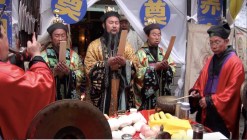


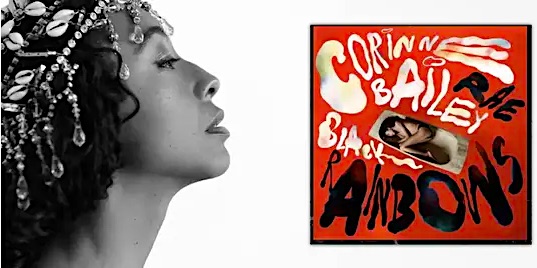

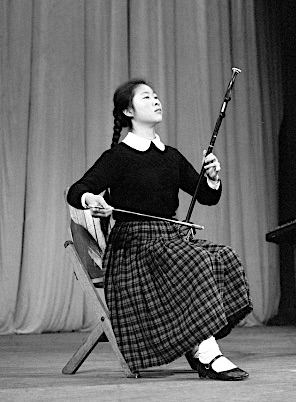




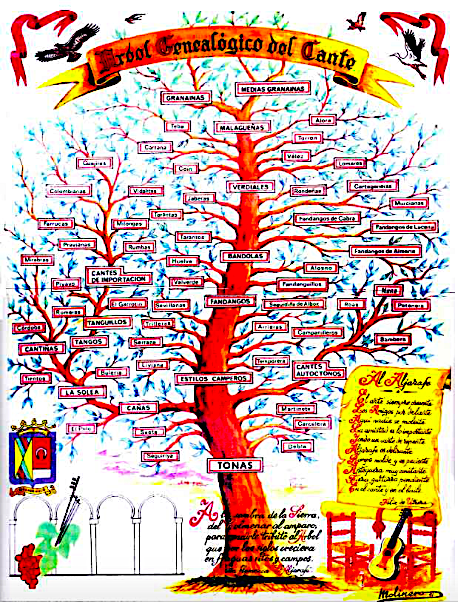 I may relish the anguish (aka “posturing, self-pitying machismo”) of the slower
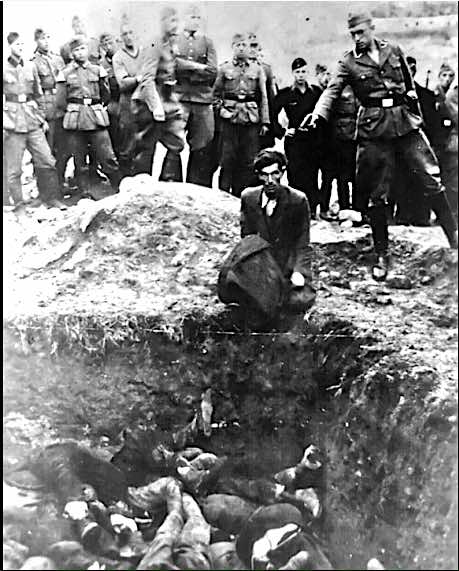
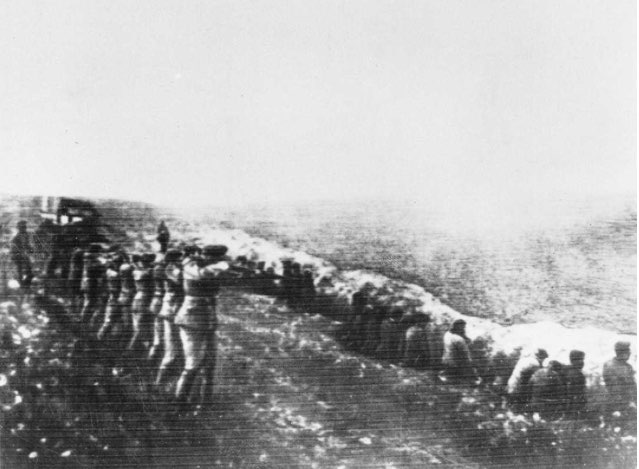

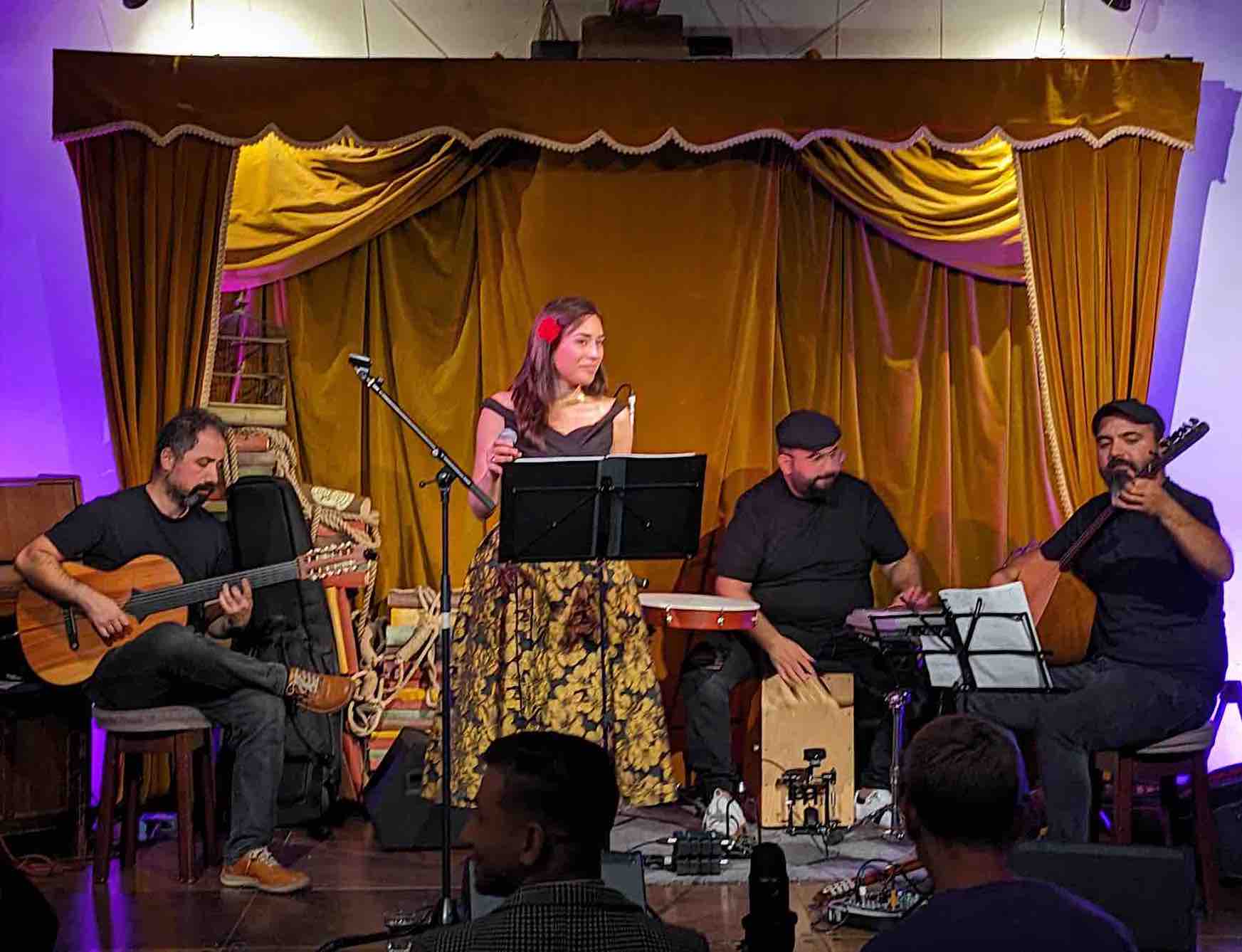




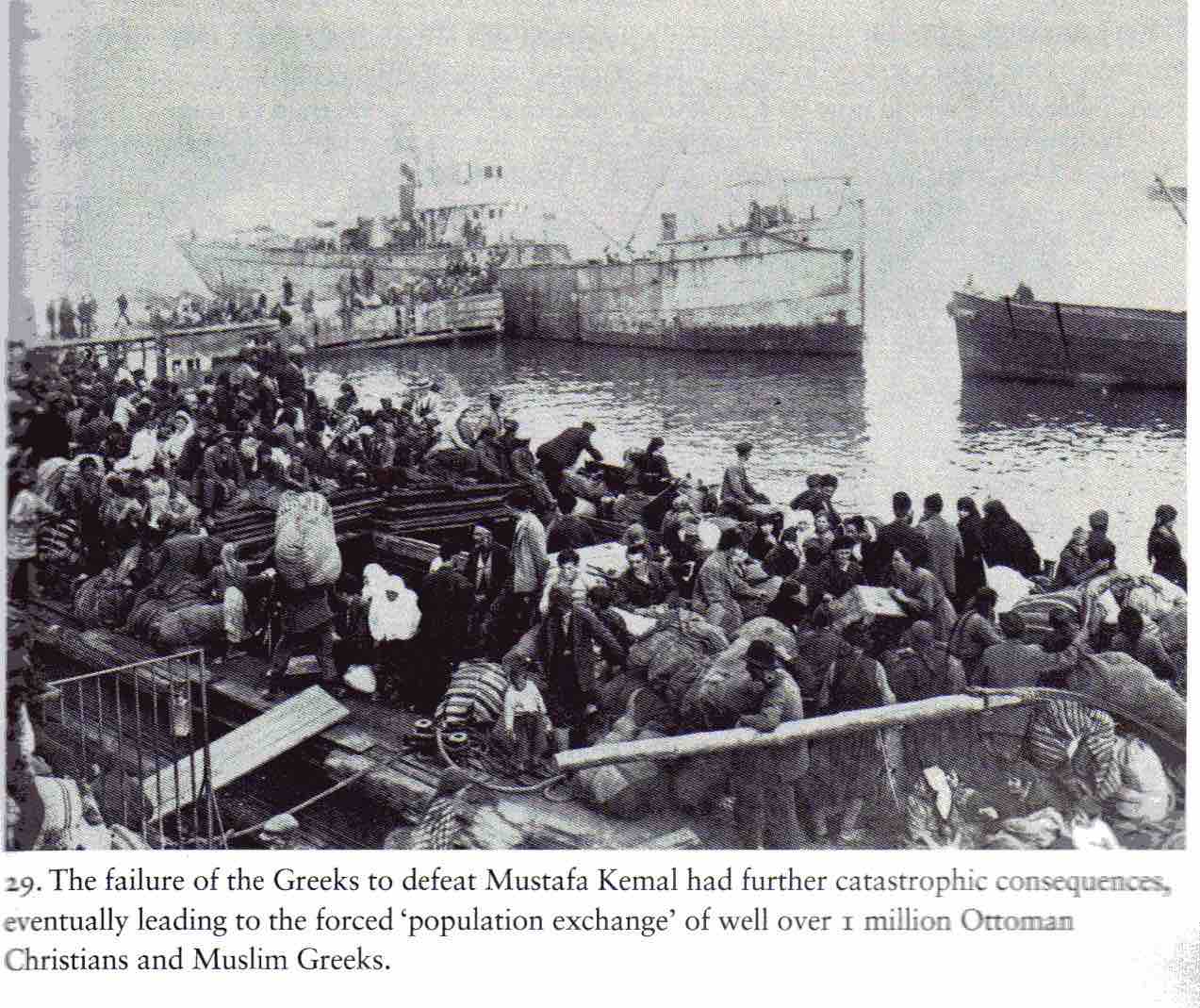


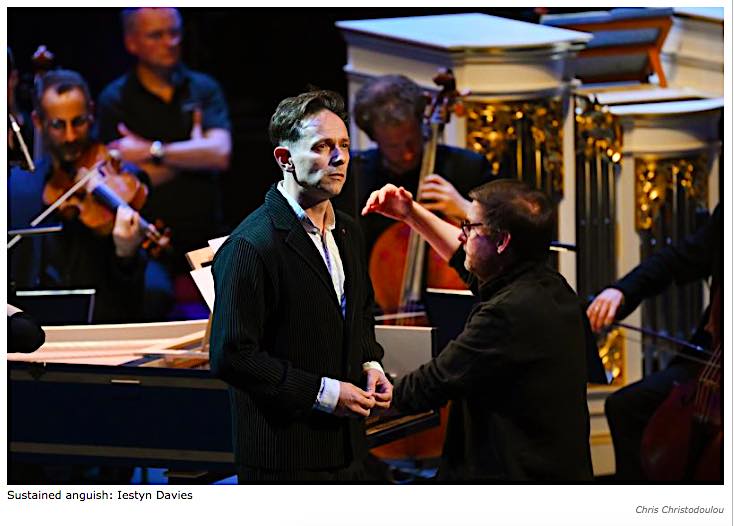
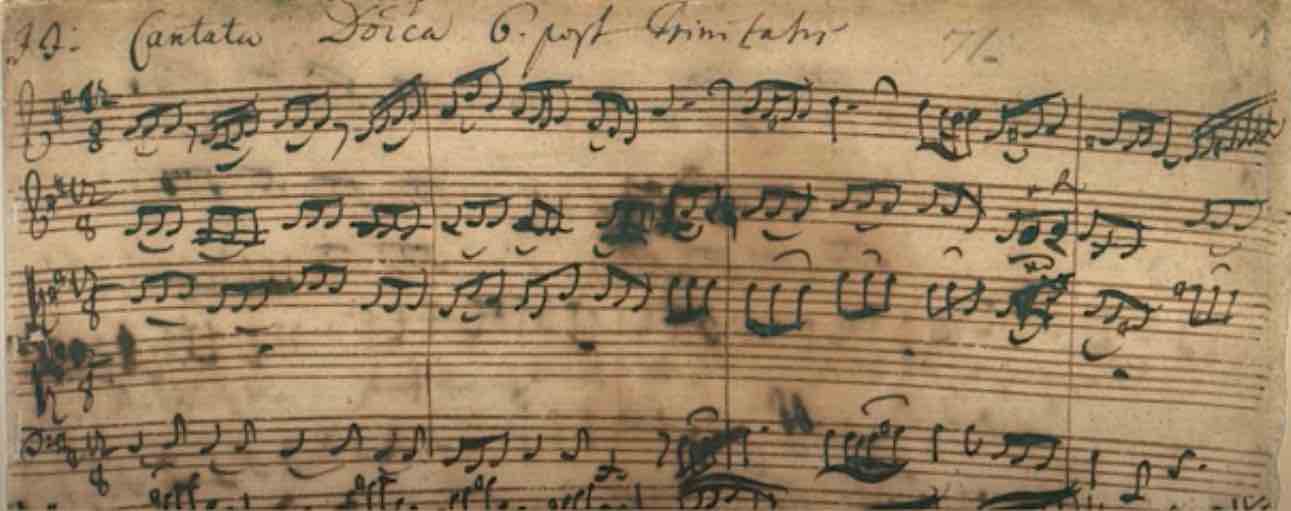

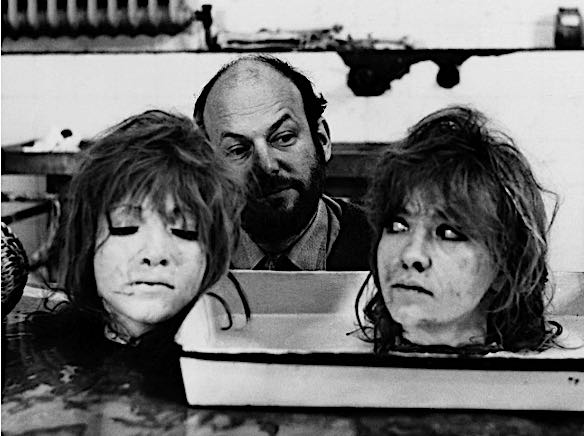
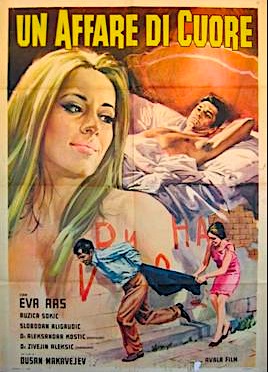

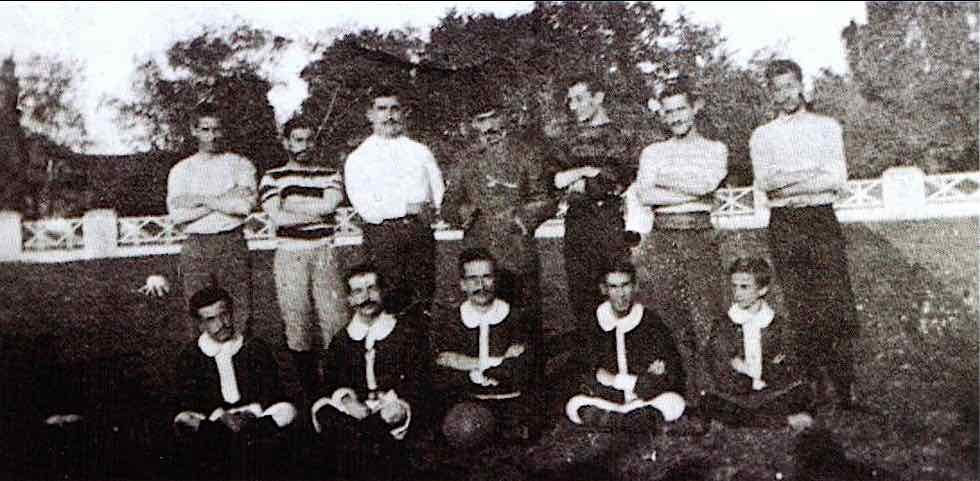
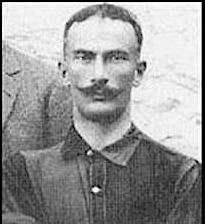








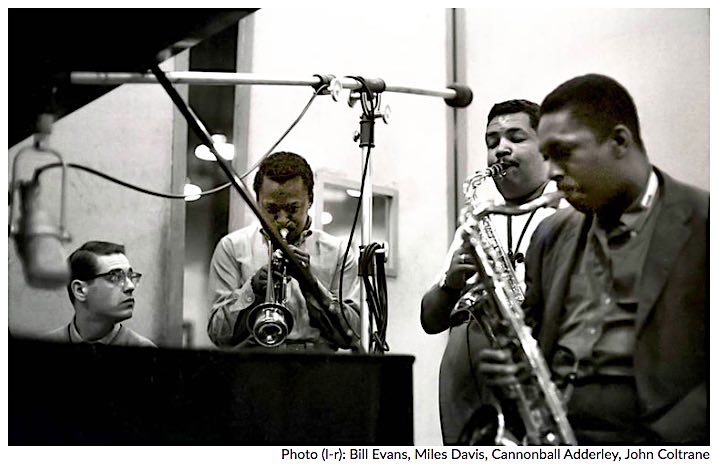
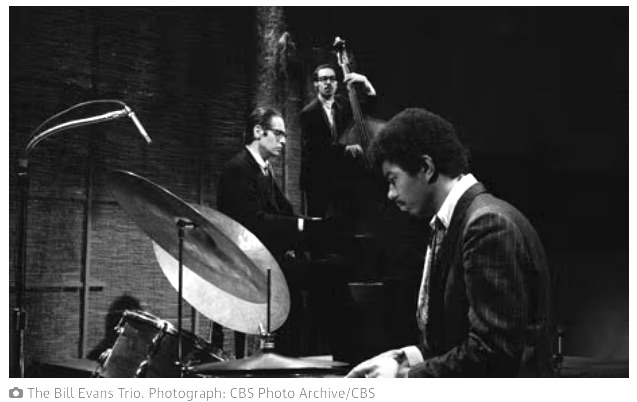


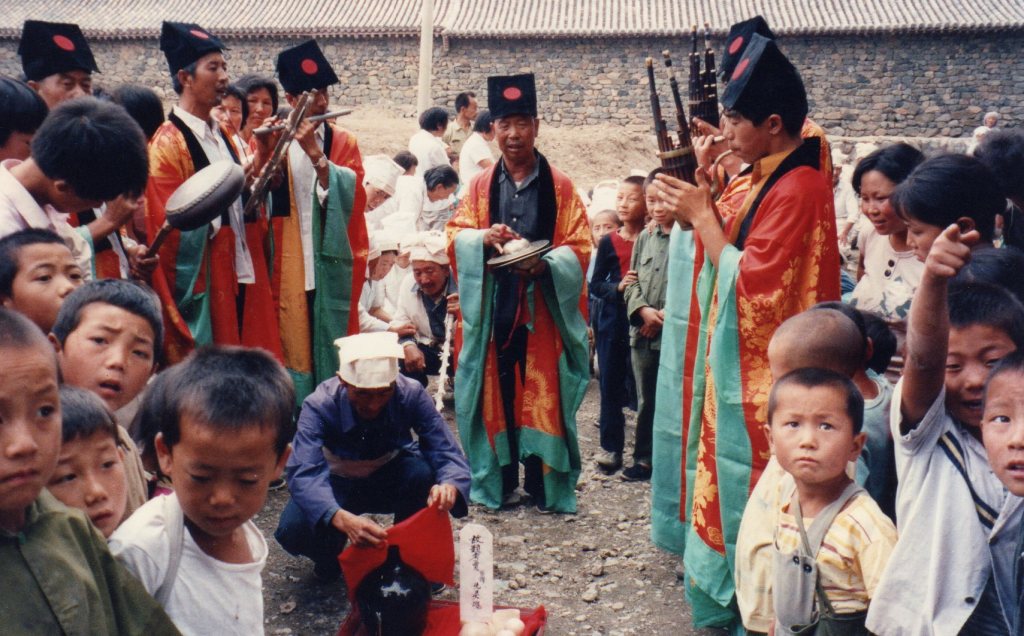
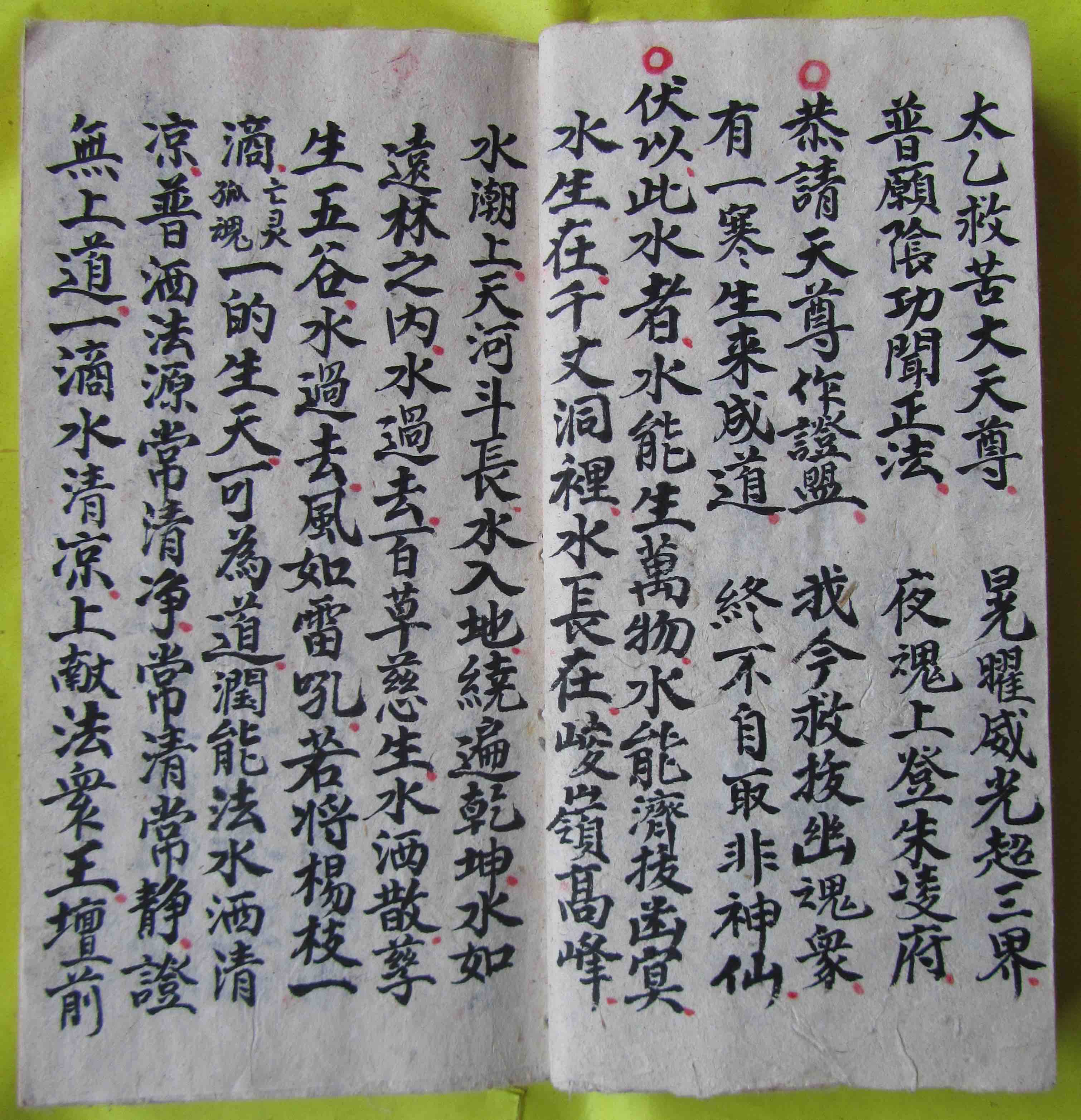
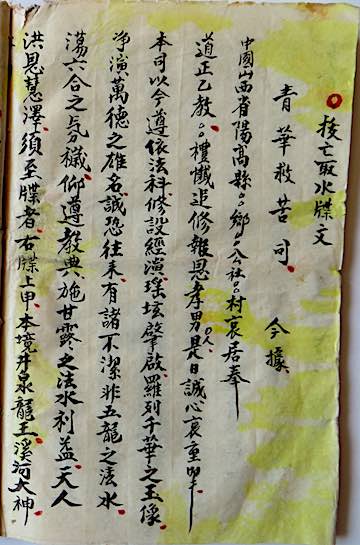
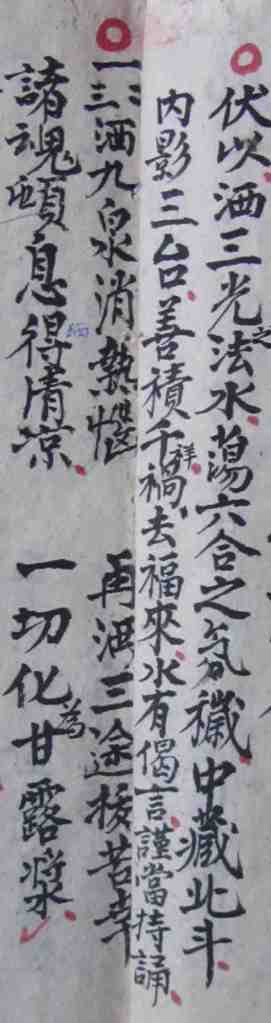
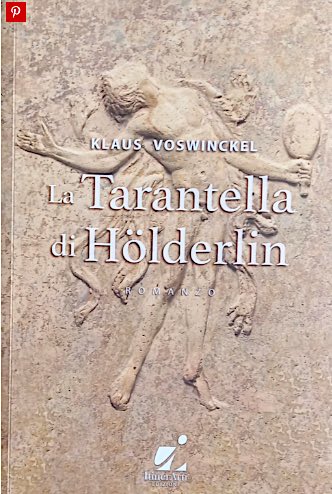

 Transcription by Diego Carpitella.
 Among all the

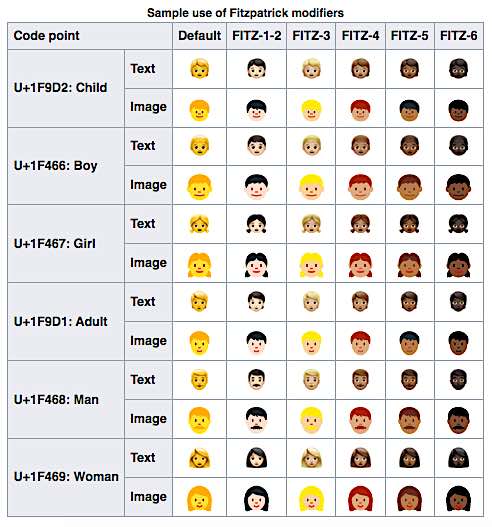


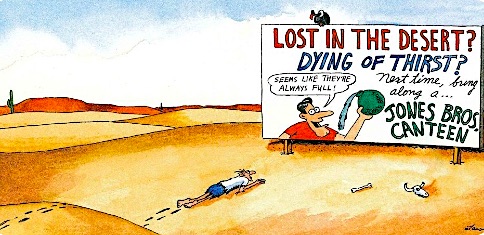
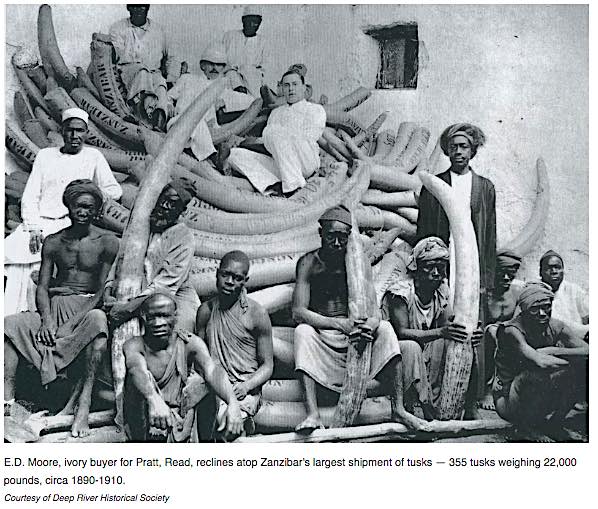


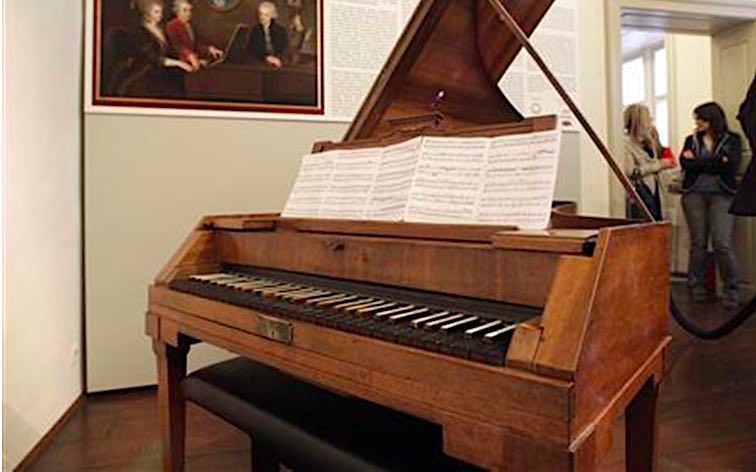


 [2]
[2]


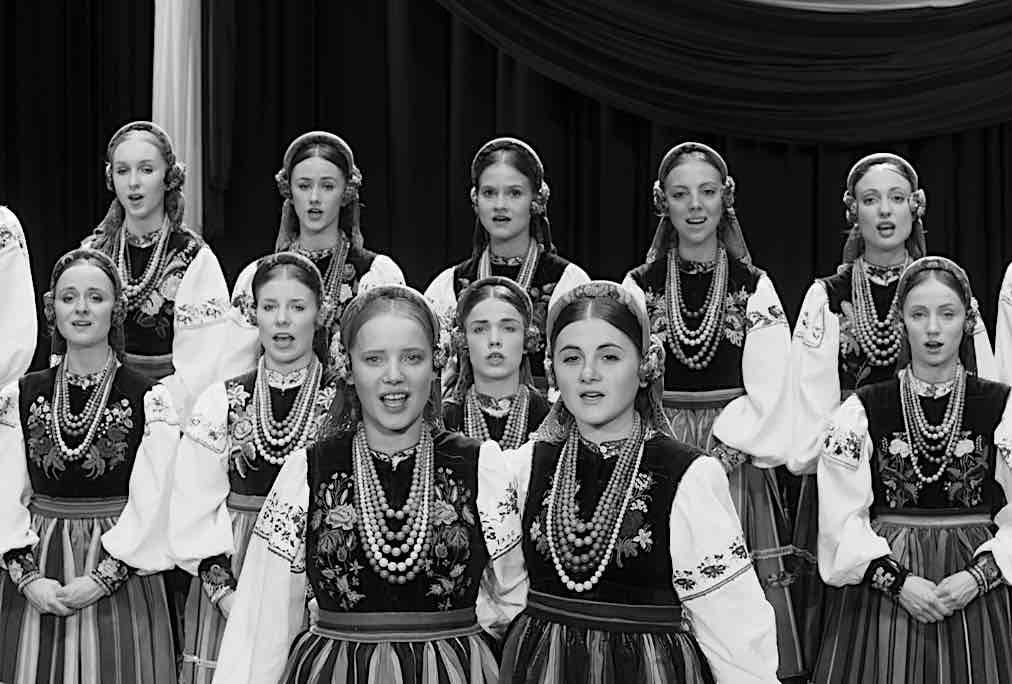




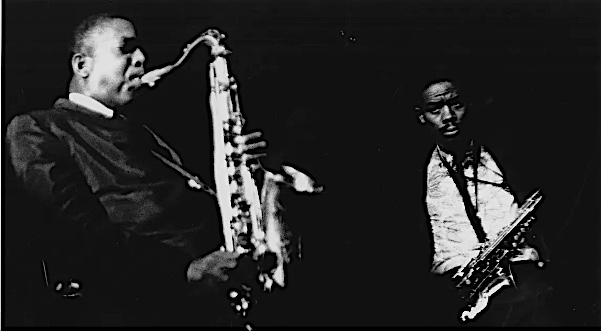



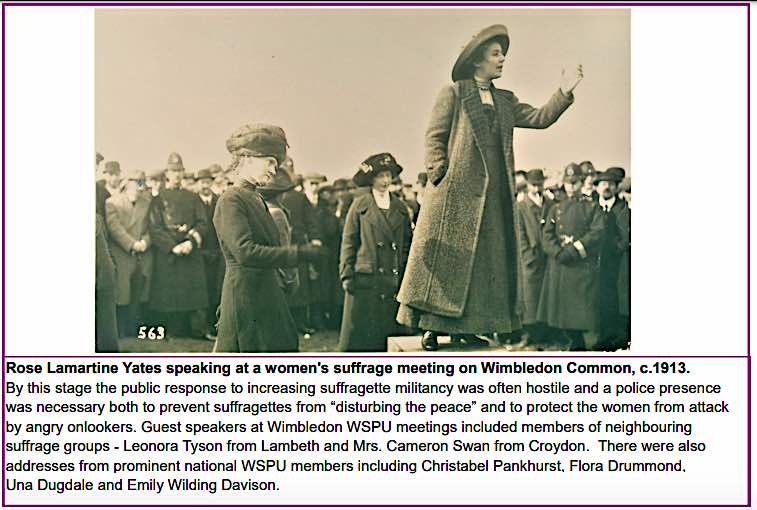


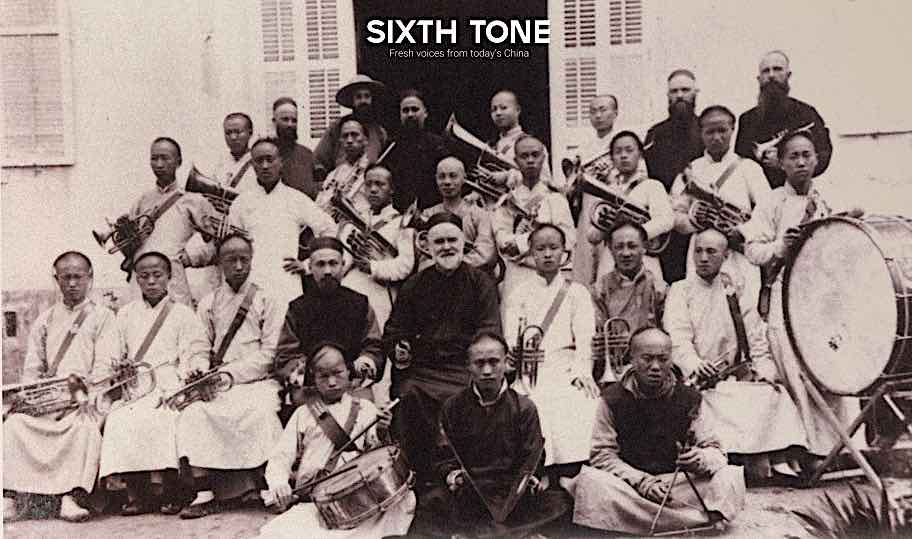

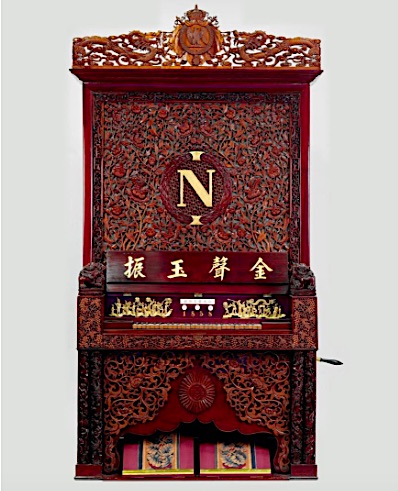


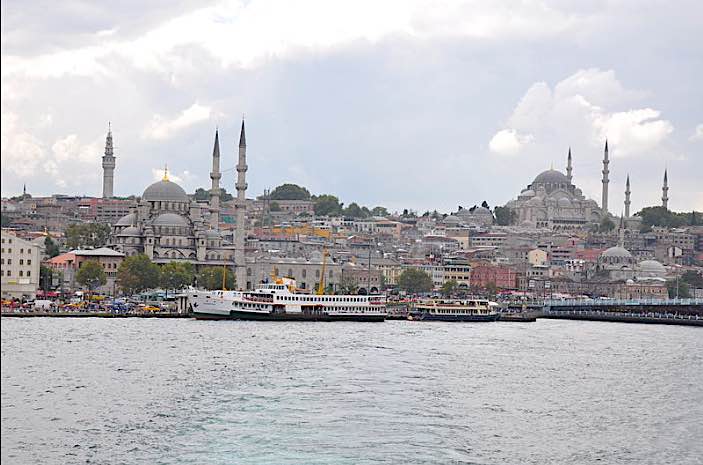

 Eliza Carthy with her mother Norma Waterson.








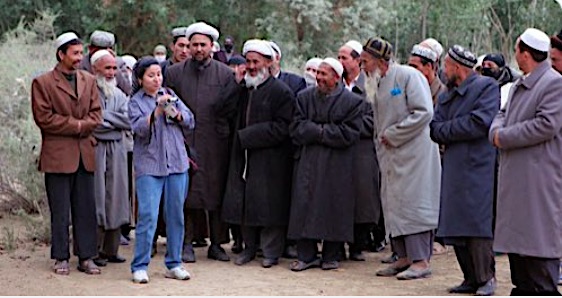


 The Turkish music scene in Germany was far from homogeneous. Cem Kaya elicits some excellent comments from characterful musicians. The film opens and ends strikingly with İsmet Topçu, the Hendrix of the bağlama, putting the story in wacky extra-terrestrial context…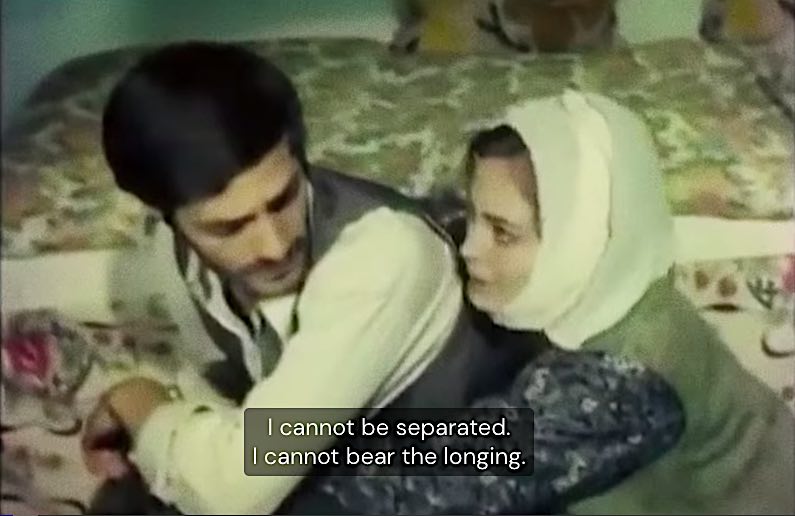






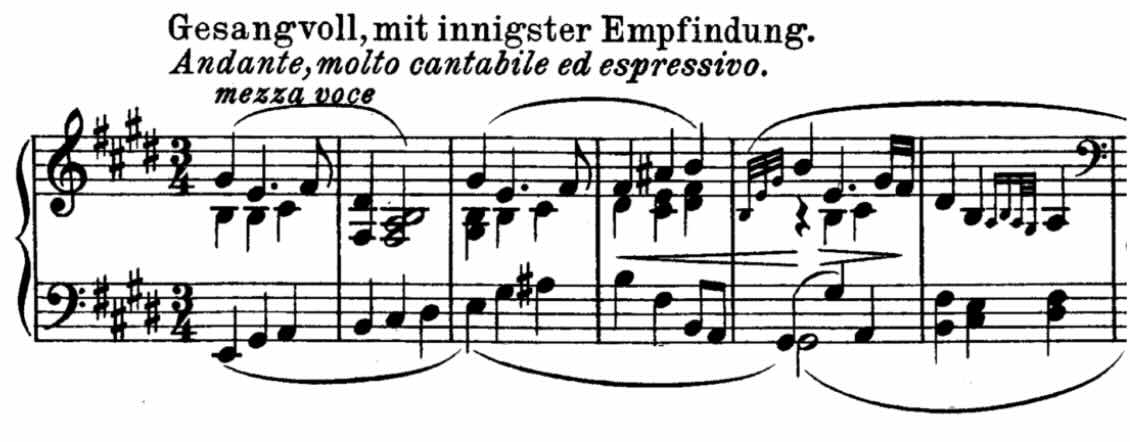
 Stephen Jones: a blog


