Edith Miles (left, in white) with her parents, sister Alice (centre), and brothers Ernest (in uniform) and Charlie, 1918.
My only smidgeon of a literary ancestry appears in the slight figure of my great-aunt Edith Miles (1898–1977; on my mother’s side of the family), who from 1929 published a succession of novels “for girls”.
Along with my granddad (also wonderful) and two other siblings, Edith grew up in Potterne, near Devizes.** Their father, Thomas Draper Miles, was the village craftsman bootmaker, last in a family line said to go back two hundred years. And that may make a distant connection with my work on rural artisans in China…
Here’s a remarkable photo of my great-grandfather (d.1946) taken by Edith’s other brother Charlie, probably in the 1930s:
I don’t know how the Great War affected the teenage Edith, but there was evidently something of a studious air in the house at Potterne. Apparently my Granny used to say that visiting there was a trial because all they did—even during meals—was read books!
Edith went on to qualify as a teacher, and from 1920 she taught in the East End of London—what a contrast from rural Wiltshire! She must have begun writing stories then. What kind of music would she have heard? I wondered if she might have became at all politicised—there’s no hint in her novels. Indeed, I now learn that she corresponded with George Bernard Shaw; and her brother Charlie was an ardent socialist (a rare breed around Devizes, I suspect, though the Liberals were gaining ground). I imagine how Edith might have gone on to emulate not Enid Blyton (born a year earlier) but (for example…) Vera Brittain (who lectured for the League of Nations in the East End in the 1920s) or Stella Gibbons (who didn’t—although she was a wry observer of rural–urban contrasts…).
Wedding of my maternal grandparents, 1925. Edith in back row, second from right.
Meanwhile, after the militant suffragette movement had been put on hold to support the war effort, women over the age of 21 were eventually given the right to vote by 1928. Surely Edith must have come into contact with the movement in the East End, but alas we have no inklings.
But then a cruel blow struck. In 1927, after seven years of teaching, a bout of scarlet fever resulted in the gradual loss of her hearing. A letter from the London County Council, dated 20th April, states:
The School Medical Officer is of the opinion that the state of your health is such as to render it necessary for you to give up your School duties in London.
In these circumstances you should not resume your duties after the Easter holidays.
On 27th April she received a handwritten testimonial from the Rev. Wilfred H. Abbot in Haggerston, E8:
In the whole course of the seven years no single complaint of any kind has ever been made by parents or children against Miss Miles and her work.
No higher recommendation could ever be given about anyone at the present day when parents and children are so apt to find fault [sic!—SJ]. I am quite sure that Miss MIles will always prove herself efficient in any work that she undertakes. We part with her with great reluctance.
The authorities provided Edith with a modest superannuation allowance, but she must have been devastated at her abrupt turn of fate. As a door onto a world that had been opening up for her was abruptly slammed back in her face, she retired back to the family home at Potterne.
The spotted book, the first of her eleven novels, was published in 1929. I am most attached to the copy of The red umbrella (1937) that she gave me; it enjoyed considerable success, running into several reprints. Well, more success than my books on north Chinese ritual, I trust (for more umbrellas, see here)… Perhaps the chapters (“The postman”, “The chimney-sweep”, The baker”) subtly prepared me for writing the lives of ordinary people.
The girl chums of Norland road is a fine title too. I’m not sure if I can also count such works as my feminist ancestry… Over the other side of the world, we shouldn’t neglect the role played by the wives of household Daoists in Yanggao villages.
Visiting Auntie Edith in Potterne when I was little, she seemed as quaint and exotic as the old house. She fitted the bill for what, thankfully, is no longer known as a “spinster”, “maiden aunt”, or “old maid”. A certain spark in her eyes hinted at her alert sense of humour, though even I could pick up an inevitable air of sadness. While she could lip-read, there was a youthful frisson for me in passing little notes across the kitchen table to help us communicate.
Having hardly thought of her for several decades, I now find myself moved both by her fate and by her equinanimous resilience. I also discover further fanciful connections. I was too young to articulate the thought, but the im-p-pediment of my stammer must have made me identify with her (another link to my work with blind shawm players in China?). And looking back, I feel that her enforced isolation made her seem pleasantly unworldly, before I dabbled in the hippy values resisting the growing consumerism of the 60s.
Strangely, I know a lot more about Li Manshan’s family than about my own. Now that I learn of the tribulations of my Chinese mentors through the period, and the convulsions of Europe, I wish I knew more about Edith’s experiences—a bright rural girl setting off to teach in a tough bustling urban environment, later to become a solitary single deaf author in troubled times, striving to eke a living by writing from her silent house in a little Wiltshire village.
With thanks to my uncle John and cousin Mark for precious material.
**Cf. another of my granddad’s favourite jokes (and another story that can be dated quite precisely): “Why do they eat boiled potatoes in Wiltshire?” “Cos they ain’t got no Devizes for Chippenham!”
I recall with deep admiration the unsung scholar Yuan Quanyou 袁荃猷 (1920–2003).
While a student in Beijing she studied with her future husband, the great Ming scholar Wang Shixiang 王世襄 (1914–2009) (see wise and affectionate tributes by Craig Clunas [1] —another great Ming scholar—and now here). After Yuan Quanyou graduated in 1943, they married in 1945.
Yuan Quanyou had studied the qin zither with Wang Mengshu 汪孟舒 from the age of 14 sui. Through the 1940s she took part keenly in the activities of the Beiping qin society, among a dazzling array of illustrious qin masters. She later became a disciple and colleague of the great Guan Pinghu.
Wang Shixiang soon found that his wife’s skills focused on the traditional literati accomplishments of “qin, chess, calligraphy, and painting”, to the exclusion of more mundane activities like cooking. So it was he who became a fine chef; and he considered himself her “qin servant” 琴奴. Several online pages about the couple describe their lifelong rapport by the term zhiyin 知音 “kindred spirits”, a bond whose etymology derives from music.
Complementing Wang Shixiang’s refined literati tastes, through his enthusiasm for falconry, badger hunting, cricket rearing, and pigeon fancying he had gained what Craig Clunas calls “a raffish reputation” (as you do…). I also learn that he loved football, “as anyone who has tried to make conversation while he is watching soccer on the television can confirm”—cool by me. He retained a rare passion for both elite and popular culture.
From the early 1950s Yuan Quanyou worked tirelessly in the archives of the Music Research Institute (MRI) in Beijing, alongside the great Yang Yinliu and Cao Anhe, as well as a whole host of qin masters like Guan Pinghu and Zha Fuxi, and their students—including Xu Jian 许健, and the fine female qin player and scholar Wang Di 王迪 (1926–2005). [2]
60th-birthday photo of Guan Pinghu with his students, 1957: (left to right) front row Xu Jian, Guan Pinghu, Zheng Minzhong; back row Wang Di, Shen You, Yuan Quanyou.
By 1957, while her husband was also busy publishing ground-breaking research, Yuan Quanyou’s close collaboration with Yang Yinliu resulted in the publication of the fine iconographical series Zhongguo yinyueshi cankao tupian 中国音乐史参考图片 [Reference illustrations for Chinese music history] (see also here).
Some treasured volumes in my library.
All this activity took place under extremely trying conditions. As Craig notes:
The published curricula vitae of Chinese scholars often give a false idea of the continuity of their employment, and conceal the long periods of frustrating idleness caused by periodic political campaigning.
After the 1949 “Liberation”, Wang Shixiang was employed at the Palace Museum, but he was wrongly jailed for ten months and expelled from the museum in 1953. In 1957, he was branded a “rightist”, a stigma he bore for twenty-one years. Craig’s account of the couple’s enforced inactivity during the Cultural Revolution is also worth citing. Despite Wang’s undoubted sufferings after being sent down to a “Cadre school” in Hubei province, he could “make the experience sound positively bucolic”. While callow young Red Guards were duped into destroying as much of the heritage as they could find, the exiled Wang wrote poetry in the classical style (“much of it on his work as a swineherd and cowherd, which draws on deep-rooted traditions of verse by those who were out of office and out of favour at court”), and even managed to cook gourmet delicacies.
But the mental pressure cannot but have been considerable, since no term was set to the period of banishment, and little or no news was available as to the fate of family or friends.
Old portrait photos are all the moving when we consider the troubled stories behind people’s lives (intellectuals, urban and rural dwellers alike) under Maoism, as evoked by films like The blue kite and To live (see also my tribute to Li Jin). Craig’s aperçu about Wang Shixiang’s renewed energy in the 1980s, “as if making up for lost time”, also resounds in both Chinese music studies and folk culture. Meanwhile, a discreet amnesia took over. (For the concurrent tribulations of Czechoslovak scholars and artists, see here.)
From 1986 I used to visit Yuan Quanyou in her office at the dilapidated yet numinous MRI compound at Dongzhimenwai, her beaming face greeting me between high stacks of ancient documents. There, with unassuming industry she was still producing further volumes in the MRI’s wonderful annotated series of iconographical collections on Chinese music history, such as the 1988 Zhongguo yinyueshi tujian 中国音乐史图鉴 [Illustrated history of Chinese music].
Even as my interests were moving from Tang history to the modern transmission of folk culture, I relished her detailed article on the medieval konghou harp.
Remarkably, after the end of the Cultural Revolution Wang Shixiang had managed to reclaim much of their precious collection of Ming and Qing furniture and artefacts. By the 1990s he and his wife began the process of bequeathing it to the Shanghai Museum, where it now forms a major and prestigious exhibit.
With her calm acuity and beautiful accent, Yuan Quanyou exemplified the refined virtues of old Beijing. She was closely involved in the remarkable work documenting the history and changing performance practice of the qin zither—including research on the 1425 Handbook of spiritual and marvellous mysteries (Shenqi mipu, aka Wondrous and secret notation), most numinous of all tablatures for the qin, compiled by the Emaciated Immortal (as the early Ming prince Zhu Quan styled himself).
In 1987 Yuan Quanyou was able to devote a tenth volume of the Zhongguo yinyueshi cankao tupian to the qin:
Now, this may hardly atone for my recent challenge to the mystique of the qin, but I treasure the precious copy of the 1956 reprint of the Shenqi mipu tablature (1425) that Yuan Quanyou inscribed to me in her elegant calligraphy in 1987, for me to “study and practise”.
BTW, having chosen that lower page rather casually (mainly for the numinous Daoist title “Zhuangzi dreams he is a butterfly”), I now find myself moved by Zhu Quan’s wisdom—in utter contrast to the “living fossils” flummery of recent years, culminating in the befuddled Intangible Cultural Heritage. The opening of his introduction reads:
The Emaciated Immortal says: “The ancient version of this piece has long since been lost.”
These days it’s all “The ancient version of this piece has been transmitted continuously for 2,000 years.” [Expletives deleted—Ed.].
Jinfeixibi 今非昔比 (“Things ain’t what they used to be”), as Li Manshan reflects at the end of our film.
[2] For an English introduction to the (pre-ICH) Beijing Guqin Research Association, successor to the Beiping qin society, see Cheng Yu, “The precarious state of the qin in contemporary China”, CHIME 10–11 (1997). Zhang Zhentao 张振涛 has written fine tributes to Guan Pinghu and Wang Di.
A new page (under Themes in Menu) introduces changing ritual life around Xi’an, setting forth from my visits since 1986 and the work of the late great Li Shigen.
It accompanies the new track 11 on the audio playlist, with comments here.
As so often for north China, all the musicological studies are very desirable, but there should be far more to it than that. It can’t be left only to musicologists—it’s just as much a topic for historians, ethnographers, and scholars of religion.
As this turns into a lengthy review, I ponder why I’ve been trying, in an amateurish way, to educate myself about the traumas of modern Europe—beyond the obvious answer, that we all must.
I guess it’s related to my studies of China, and my engagement with the lives of people like Li Manshan; a feeling of duty to report the sufferings of ordinary people I encounter in China—including not just their ritual life but their tribulations under Maoism, with famine, struggle meetings, and labour camps; and my growing awareness of the sufferings of Europeans over a similar period. I don’t want to spoil your holidays (or mine), but as we relish the cultures and scenery of these countries, we shouldn’t forget the ghosts that haunt the landscape.
Among the innumerable studies of the Nazi concentration camp system, Primo Levi is justly famed—actually, I find the sequel The truce just as disturbing as If this is a man, after the camp is finally liberated yet their Odyssey of suffering continues, homecoming ever receding. But I’ve also been deeply moved by
Helm’s account is based on amazingly thorough research and interviews with both victims and perpetrators—much of which was submerged until the end of the Cold War. Of course a historian’s account will give different, more holistic, perspectives from those of an individual inmate, but in a way I find Helm’s work even more moving than that of Levi. At 823 pages, it’s hideously readable—both balanced (whatever that might mean) and personal, in a way that ideologically-driven accounts such as those of Dikötter (for the degradations of Maoism in China) can’t achieve. Even the excellent index is harrowing.
I suppose I’m not alone in thinking of the whole catastrophe in terms of a few appalling place-names like Auschwitz and Belsen, but along with the focus on Ravensbrück, over the whole six years of its existence, we see how very extensive was the whole network of camps, subcamps, death camps, work camps, transports and marches, scarring the whole landscape.
At its height, Ravensbrück had a population of about 45,000 women; over the six years of its existence around 130,000 women passed through its gates, to be beaten, starved, worked to death, poisoned, executed and gassed.
The book opens with an arresting and complex image:
“The year is 1957. The doorbell of my flat is ringing,” writes Grete Buber-Neumann, a former Ravensbrück prisoner. I open the door. An old woman is standing before me, breathing heavily and missing teeth in the lower jaw. She babbles: “Don’t you know me any more? I am Johanna Langefeld, the former head guard at Ravensbrück.” The last time I had seen her was fourteen years ago in her office at the camp. I worked as her prisoner secretary… She would pray to God to stop the evil happening, but if a Jewish woman came into the office her face would fill with hatred…
So she sits at the table with me. She tells me she wishes she’d been born a man. She talks of Himmler, who she sometimes still calls “Reichsführer”. She talks for many hours, she gets lost in the different years, and tries to explain her behaviour. (1)
The book goes on to tell the stories of Langefeld, Buber-Neumann (who also had the terrible distinction of already having been incarcerated in a Russian gulag), and a tragic cast of inmates and their tormentors, with chapters focusing on personalities over the years.
Among them were political prisoners, Jehovah’s Witnesses, “asocials”, “useless mouths”, “idiots”, and (later) children; in this camp only around 10% were Jewish. Its shifting population was international, including Germans, Poles (the largest group), Gypsies, Russians, Czechs, French, Hungarians, Scandinavians, and Dutch, all transported there at various stages.
In April 1944 recent arrivals included evacuees from Majdanek, including more Red Army doctors and nurses, as well as 473 Gypsies transferred from Auschwitz. There were Italian partisans, Slovenians, Greeks, Spaniards, and Danes, as well as three Egyptians and seven Chinese. (419)
They were often in desperate straits even when they arrived.
Ravensbrück guards rowing on the Schwedtsee.
Helm also delves into the lives of guards, doctors, and Blockovas (prisoners—at first often criminals—coopted to carry out the day-to-day work of running the camp). The twice-daily Appell roll-call was an ordeal that regularly led to death, as did stays in the Revier “hospital”.
As she observes, the “asocials”, such as prostitutes (pp.56, 96–108, 417–19, and index), have gone largely undocumented:
Unlike the political women, they left no memoirs. Speaking out after the war would mean revealing the reason for imprisonment in the first place, and incurring more shame. […] The German associations set up after the war to help camp survivors were dominated by political prisoners. And whether they were based in the Communist East or in the West, these bodies saw no reason to help “asocial” survivors. (98)
Perhaps the most sickening story (how might one concoct a hierarchy of inhumanity?) concerns the 86 “rabbits” (mostly from a group of 195 women from Lidice near Prague, deported after the 1942 assassination of Heydrich and the punitive razing of the village), objects of unthinkable medical experiments. [1] But it’s also moving for the way in which the whole camp later rallied round to protect them from being murdered so that their terrible story could at least be told—miraculously, 63 of them survived. Again, Holm switches tellingly to the present day:
I found Zofia Kawińska in her tenth-floor flat overlooking the cranes of Gdansk shipyard. She was one of the second group of victims of Himmler’s sulphonamide experiments. A tiny, bent figure, she walks with difficulty, and has done since the war. I ask if she still suffers pain from the experiments. “A little,” she says, as she offers tea and biscuits.
She stoops to show the scars on the sides of her legs. “They put the bacteria in, and glass and bits of wood, and they waited.” She looks up and fixes me with deep brown eyes, as if to see if there is any chance that I understand. “But I didn’t suffer as much as some. Everyone in Poland came home with wounds.” (243–4)
Surviving “rabbits”, 1958.
The smuggled letters of the rabbits were among many acts of defiance.
In similar vein, Nikolaus Wachsmann, in KL: a history of the Nazi concentration camps (perhaps the most authoritative study of the whole system), refines the view of “prisoners as blank and apathetic automatons, drained of all free will”, recognizing the heroism of such agency, “however small and constrained”. But he makes an important caveat:
We must resist the temptation to make our encounter with the concentration camps more bearable by sanctifying the prisoners, imagining them as united, unsullied, and unbowed. For the most part, the prisoners’ story is not an uplifting account of the triumph of the human spirit, but a tale of degradation and despair.
For anthropologists, the most extremely disturbing instance of participant observation is Germaine Tillion (1907–2008), an ethnologist who had done fieldwork in Algeria before being arrested while working for the French resistance. In impossible conditions she comprehensively documented the activities of the camp, somehow managing to hide her notebooks from the guards. After the war she continued her research on “the history of the de-civilisation of Europe”, and returned to her work on Algeria; her distinguished career was recognized by many awards.
While in the camp Tillion even composed and staged an operetta Le Verfügbar aux Enfers, a spoof of Orpheus in the underworld,attempting to help prisoners “resist by laughing” (567). It has been revived since 2007—my post Operetta in extremis includes a complete performance from 2011.
As the camp population grew constantly with prisoners evacuated from camps in the path of the Soviet advance, the 959 French prisoners (known as the “vingt-sept mille” after their camp numbers) who joined Tillion from Paris in February 1944, “jeunes filles biens élevées”, were quite unprepared for what awaited them at Ravensbrück, and adapted badly. Quartered in the “slums” of the camp, soon they were more hated than the Poles; their health quickly failed. Another group of women arrived in August from Warsaw, obliterated after the uprising—reporting to their compatriots, “There is no Warsaw. There is nothing left.” Hungarian Jews were deported to Ravensbrück in October. Babies were soon starved to death.
As it becomes clear that the Nazis are in retreat, the final chapters are just as tense. Desperate to conceal their crimes, with order collapsing, their brutality becomes even more extreme and random. The reader wills the inmates to survive.
By the end of March [1945] the camp was “like a mysterious planet”, said Denise Dufournier, “where the macabre, the ridiculous and the grotesque rubbed shoulders in a fantastic irrational chaos.” Karolina Lanckorońska, watching the crematorium flames shooting higher every night, was reminded of the beginning of the Iliad. She was still giving lectures on Charlemagne and Gothic art as children in Block 27 played a game of selecting for the gas chamber. In the Red Army block the women were making red flags to hang out to welcome their liberators, while the painting gang had been sent to redecorate the maternity block, where, according to Zdenka’s lists, 135 more babies were born in March, of which 130 died. (616)
Despite the shocking complicity of the Red Cross in Geneva, the tireless, heroic work of young Norwegian student Wanda Hjort (1921–2017), using her status to visit the camp and establish contacts, at last achieves results as many prisoners scramble to be taken to safety in the White Buses, with the tense diplomatic negotiations of Folke Bernadotte, Swedish representative of the ICRC, with Himmler.
Wanda Hjort.
But while the buses were being bombed by the Allies, for the majority of women who remained in the camp to await rescue by the Soviet troops, “Liberation” was also horrifying, with widespread rapes perpetrated on women of all nationalities.
* * *
And so into the whole post-war period. Many survivors returning home found there was no home to return to. The Hamburg trials of 1946–8 (a sideshow to Nuremberg)
achieved a great deal. Within a short time the court […] established in the clearest terms the simple fact that everything about the camp was designed to kill. (706)
But the trials were soon followed by amnesia on both sides of the Iron Curtain—and ignominy for the valiant women in the USSR (pp.287–313, 710–11) and the GDR (339–58, 711–14) who had somehow survived only to descend into a new nightmare, now suspected of being traitors. And until 1950, camps like Buchenwald were adopted by the NKVD as gulags for their own prisoners, with many (not only former Nazis) dying in squalor (MacGregor, Germany, pp.468–72).
By 1948 the Allies had lost their appetite for punishing the Nazis and both the war crimes trials and the process of “de-Nazification”—whereby top Nazi supporters were brought to book and denied top jobs—were shut down. (707)
Wachsmann explores the issue in his fine Prologue:
Survivors … were not stunned into collective silence, as has often been said. On the contrary, a loud, polyphonic voice rose up after liberation. … During the first postwar years, a wave of memoirs hit Europe and beyond, mostly searing testimonies of individual suffering and survival.
But as he notes, popular interest soon waned:
Public memory of the camps was being marginalised by postwar reconstruction and diplomacy. With the front line of the Cold War cutting right through Germany, and turning the two new, opposing German states into strategic allies of the USSR and the United States, talk about Nazi crimes seemed impolitic. … Within ten years of liberation, the camps had been sidelined—the result not of survivors unable to speak, but of a wider audience unwilling to listen.
Though popular interest was rekindled to some extent in the 1960s and 70s, more detailed research only took off from the 1990s—with German scholars taking the lead.
By this stage you will be able to decide whether you can face watching this documentary:
* * *
So only now am I beginning to understand the apparent amnesia that took hold all over Europe during my youth—and which still persists in China for the Maoist era (and other more recent events that it’s prudent to bury). Levi explains it well. His If this is a man was published in 1947, but
fell into oblivion for many years: perhaps also because in all of Europe those were difficult times of mourning and reconstruction and the public did not want to return in memory to the painful years of the war that had just ended.
Republished in 1958, it then became exceptionally successful—although even in the 1970s, as Paul Bailey observes in an Afterword, “Primo Levi wasn’t so much forgotten in Britain as totally unknown.”
How did the great humanising traditions of German history—Dürer, Luther’s Bible, Bach, the Enlightenment, Goethe’s Faust, the Bauhaus, and much, much more—fail to avert this total ethical collapse? (473)
In a Postscript to If this is a man and The truce, Levi gives succinct replies to what have come to be called FAQ, like “Were there prisoners who escaped from the camps? How is it that there were no large-scale revolts?” and “How can the Nazis’ fanatical hatred of the Jews be explained?”.
On “ordinary Germans”, I already noted Hans Fallada’s novel Alone in Berlin(now also the subject of a film). Levi expands wisely on the topic “Did the Germans know what was happening?” Observing the authoritarian control of the media (not only in Germany, and not only then), he comments:
Under these conditions it becomes possible […] to erase great chunks of reality. […] However, it was not possible to hide the existence of the enormous concentration camp apparatus from the German people. What’s more, it was not (from the Nazi point of view) even desirable. Creating and maintaining an atmosphere of undefined terror in the country was part of the aims of Nazism. It was just as well for the people to know that opposing Hitler was extremely dangerous. In fact, hundreds of thousands of Germans were confined in the camps from the very first months of Nazism: Communists, Social Democrats, Liberals, Jews, Protestants, Catholics; the whole country knew it and knew that in the camps people were suffering and dying.
Nonetheless, it is true that the great mass of Germans remained unaware of the most atrocious details of what happened later on in the camps. […]
He goes on to cite Eugene Kogon’s Der SS staat:
Even many Gestapo functionaries did not know what was happening in the camps to which they were sending prisoners. The greater majority of the prisoners themselves had a very imprecise idea of how their camps functioned and of the methods employed there. […]
And yet there wasn’t even one German who did not know of the camps’ existence or who believed they were sanatoriums. There were very few Germans who did not have a relative or an acquaintance in a camp, or who did not know, at least, that such a one or such another had been sent to a camp. All the Germans had been witnesses to the multi-form anti-Semitic barbarity. Millions of them had been present—with indifference or with curiosity, with contempt or with downright malign joy—at the burning of synagogues or humiliation of Jews and Jewesses forced to kneel in the street mud. Many Germans knew from the foreign radio broadcasts, and a number had contact with prisoners who worked outside the camps. A good many Germans had had the experience of encountering miserable lines of prisoners in the streets or at the railroad stations. In a circular dated November 8, 1941, and addressed by the head of the police and the Security Services to all… Police officials and camp commandants, one reads: “In particular, it must be noted that during the transfers on foot, for example from the station to the camp, a considerable number of prisoners collapse along the way, fainting or dying from exhaustion… It is impossible to keep the population from knowing about such happenings.”
Not a single German could have been unaware that the prisons were full to overflowing, and that executions were taking place continually all over the country. Thousands of magistrates and police functionaries, lawyers, priests and social workers knew genetically that the situation was very grave. Many businessmen who dealt with the camp SS men as suppliers, the industrialists who asked the administrative and economic offices of the SS for slave-labourers, the clerks in these offices, all knew perfectly well that many of the big firms were exploiting slave labour. Quite a few workers performed their tasks near concentration camps or actually inside them. Various university professors collaborated with the medical research centres instituted by Himmler, and various State doctors and doctors connected with private institutes collaborated with the professional murderers. A good many members of military aviation had been transferred to SS jurisdiction and must have known what went on there. Many high-ranking army officers knew about the mass murders of Russian prisoners of war in the camps, and even more soldiers and member sof the Military Police must have now exactly what terrifying horrors were being perpetrated in the camps, the ghettos, the cities, and the countryside sof the occupied Eastern territories.
Levi adds:
In spite of the varied possibilities for information, most Germans didn’t know because they didn’t want to know. Because, indeed, they wanted not to know. It is certainly true that State terrorism is a very strong weapon, very difficult to resist. But it is also true that the German people, as a whole, did not even try to resist. In Hitler’s Germany a particular code was widespread: those who knew did not talk; those who did not know did not ask questions; those who did ask questions received no answers. In this way the typical German citizen won and defended his ignorance, which seemed to him sufficient justification of his adherence to Nazism. Shutting his mouth, his eyes and his ears, he built for himself the illusion of not knowing, hence not being an accomplice to the things taking place in front of his very door.
Turning to memory, Helm notes:
In the 1950s, as the Cold War began, Ravensbrück fell behind the Iron Curtain, which split survivors—east from west—and broke the history of the camp in two.
…
The abomination wasn’t the only part of the story that was being forgotten; so was the fight for survival.
Even in Britain, where we enjoyed the rare privilege of not enduring occupation, with all its risks and moral compromises, my parents’ generation—even if they hadn’t personally experienced appalling suffering in active service, or in POW and concentration camps—were all scarred by bombed-out buildings, separation and loss, maimings, food shortages, and terrible insecurity. So I shouldn’t wonder that they were relieved to live in peace, unwilling to inflict traumatic memories on children like me, unwittingly blessed to have been born after the war. But there were survivors all around us—like Maria Bielicka, whom Holm visited at her Earls Court flat in 2010:
She said she had rarely spoken of the camp before. When she first came to live in England after the war nobody believed what she had to say. “Nobody here even wanted to know about the camps.” Since then she has “got on with life”, working for Barclays Bank. (175)
How very much more understandable was this amnesia in an utterly devastated continental Europe. So bruised parents retreated to their well-tended gardens and shiny consumer goods, while their children complacently explored the counter-culture of the 60s. For those who cared, politics was about current problems, at home and in the third world. Meanwhile the nightmare continued in East Europe (and China, and the Soviet Union), as the past was buried and distorted even more mendaciously. Victims and tormentors had to coexist.
With all the vast documentation of mid-20th-century abominations that has eventually surfaced, it is hard to comprehend Steven Pinker’s detailed thesis in The better angels of our nature that violence has declined over millenia, and that the two world wars were but minor spikes in the grizzly statistics (see also his website, and FAQ). At least, it seems cruelly irrelevant; of course Pinker himself would be the first to encourage memory of modern trauma.
Sure, for me to write about Amy is rather like a football journalist pontificating on ballet. But she was one singer I was entranced by at the time, rather than decades too late—her music forming a soundtrack while I was getting to grips with the rituals of the Li family Daoists. I continue to listen to her songs in awe. Here’s You know I’m no good, live from the Shepherd’s Bush Empire in 2007:
I cheated myself, Like I knew I would, I told you I was trouble, You know that I’m no good
The comparison with Billie Holiday is inevitable. Rather as Billie isn’t considered a blues singer (astounding exception here!), Amy isn’t necessarily associated with jazz. Pop, like WAM (at leastsince the 19th century!), is at the narrow end of the spectrum of variation in world music (instances of the broader end perhaps including Indian raga or Aboriginal dream songs)—whereas Amy sang with the freedom of a jazz instrumentalist. Listening to all her different versions of the same song with the aid of YouTube, no matter how strung-out she was, you can hear how she couldn’t help exploring constantly: she couldn’t bear to sing anything the same way twice. So I guess the commercial pressure to churn out the same old standards “note-perfect” contributed to her decline.
Back to black is one of the all-time great songs: *
Sifting through different versions of her songs is instructive (more so, for instance, than comparing recordings of Zerfließe). The whole album is a masterpiece. This BBC film by Jeremy Marre in the Classic albums series is a fascinating insight into the process of creation and recording—great contributions from producers Mark Ronson and Salaam Remi, instrumentalists and friends, with Amy always a moving presence.
For all the craft that went into perfecting the studio album, Mark Ronson comments,
Sometimes I’d even go to her shows and I found it a little maddening, cos I was like, “We worked so hard and these are the songs and people wanna hear it this way, but everything is slightly improvisational. She would never sing a melody the same way twice, because it’s almost like, “Why would you do that? I already did it that way.”
She was at her best (and this may be a universal truth) in small-scale informal sessions.
Please excuse the BBC bias here (“Typical!“), but her 2007 session for them makes a good compromise, where she is on her best behaviour yet comfortable in the personal setting of Porchester Hall, with her home crowd.
A definitive film is Asif Kapadia’s Amy (2015). A programme in the Soul music series on Radio 4 also shows how much she moved people.
I’d love to be reincarnated as one of her seriously hot backing singers, though this seems unlikely. I would have settled for her staying alive, and happy.
This week is the fourth anniversary of the loss of my friend Natasha at the age of 34—younger than Mozart, and just less than two years after Amy Winehouse’s death.
Unable to do anything at all for months after, I thought I’d better not cancel my planned stay with Li Manshan in September, and indeed he and the other Daoists were understanding, easing me back to life. The Li family had themselves suffered a family tragedy at just the same time. The funeral rituals they perform are always moving, but now, as the sounds of shengguan blending with the vocal liturgy soared above the kowtowing kin, I felt their grief more personally.
Natasha left barely a trace on the world apart from her wonderful kids. I dearly want to write a book on her, but since I now find I know nothing about her, this tribute will have to suffice.
“Troubled genius” doesn’t do Natasha justice. She deeply touched all who met her; irresistible, she could be impossible. She was the incarnation of Elena Ferrante’s Lila.
Her wild and prodigious early life was spent in Ternopil in west Ukraine. She made her home in London aged 18. Painter and composer, with her icons and Tarot, electronica, Bach, and Arvo Pärt, earth mother and sophisticated cook, femme fatale with her look of heroin chic, chunky jewelry and slinky outfits, finally holding down a mundane job for the sake of surviving as a single mum after teaching and playing in a rock band, childlike and severe, intoxicating and intoxicated, insatiable and hallucinatory, her thirst for knowledge reflected in her multi-coloured notebooks full of sketches and musings, she was on another planet. Hearing Turangalîla, raga, Mozart, or Naturtränethrough her ears, deep in her soul, was overwhelmingly intense.
Natasha’s paintings were both radiant and disturbed—her later works were yet darker. Klimt and Schiele would have lapped her up (and she them). It wasn’t easy for her inhabiting a world of Parajanov:
We were supposed to be going to Mahler 5 at the Proms when she had her first heart attack. This is a perfect version of her song, with Magdalena Kožená and Claudio Abbado:
Thriving on impermanence, that I get. But Natasha, you have to keep living…
The other day, finding myself (in the old-fashioned, not New-Age, sense—what do you take me for?) in Stoke Newington, I recalled this fine routine—a historical vignette that already needs exegesis, given the area’s later vibrant image:
Alexei may have mellowed over the years since his angry standup and his cameos in The young ones, but he hasn’t lost his surreal edge, as we can hear in his recent BBC Radio 4 series Alexei Sayle’s imaginary sandwich bar.
He plans a sultry film noir aimed at the children’s market,
Postman Pat always rings twice.
On rationing:
From 1939 to 1945 the government had permitted, indeed had positively encouraged men to bayonet people in the guts or set them on fire with flame throwers or bomb their houses from 20,000 feet, but when they came home they couldn’t have a tomato until 1957!
With the immaculate credentials of his upringing, he reflects,
I think despite all the chaos we create, the famines, the gulags, left-wing people are basically good people. Admittedly left-wing regimes might over time devolve into authoritarian kleptocracies whose autocratic rule is enforced by terror and torture, but we do mean well.
Everything is wrong with ballroom dancing: the clothes, the music, even the expressions on the dancers’ faces, plus of course the dancing itself. The reason for this is simple—you get points for it. Ballroom dancing is an aesthetic pursuit, an art form, which has been turned into a competition, the result of which is that everything is done to attract the attention of the judges. The competitors must try and fit into a series of rules rather than display emotion, artistry and invention, and so a tawdry, flashy, kitsch aesthetic takes over. […] If you see a couple performing a proper Argentinian tango you are watching a dance created in the brothels of Buenos Aires that reeks of melancholy and sex. Then you watch the ballroom version of tango, all gurning faces and robotic, angular, hideous movements. You are seeing a great popular art reduced to a terrible travesty.
On the topic of TV competitions, he might like the recent Mash Report headline:
Bake Off Winner Discovers You Can Buy Cake From Shops
Alexei elaborates on the Pannacotta Army line (“ancient figures of soldiers, sculpted out of soft white cheese”), and reminds me of the old Snow White and the Seven Samurai joke, which gave Tom Holt the title for his drôle book. Which might lead us to Nick Helm’s line:
I needed a password eight characters long—so I picked Snow White and the Seven Dwarves.
Among many gems is his account in Episode 2 of how a casual expression “Soup, swoop, loop de loop”, recycled as a forgotten piss-take after a London dinner party, came to be exported to New Zealand and immortalised in the dissertation
“Soup, swoop, loop de loop”: shamanistic incantations in Rarotongan food preparation rituals, University of Topeka, 2001.
In China, as in most societies, public performance—of all kinds, including ritual—is still largely a male monopoly. In the course of thirty years of documenting ritual groups in the countryside, it has been distressingly possible for me not to meet any women at all; from local cadres to temple committees, from shawm bands to ritual specialists, public roles remain largely monopolized by men. As until very recently in the Vienna Phil, women are invisible. Their absence from our accounts of household Daoist ritual is understandable, yet partial.
It’s not easy for male fieldworkers to engage with rural women. In Yanggao the potential for such study was suggested by the easy rapport (with both genders) of female scholar Wu Fan, whose fine book Yinyang, gujiangled the way in incorporating women into the picture of Yanggao ritual life.
So in this first of three posts I’ll introduce Li Qing’s wife Xue Yumei, Li Peisen’s wife Yang Qinghua, Li Manshan’s wife Yao Xiulian and their second daughter Li Min, as well as Li Bin’s wife Jin Hua. I give the formal names of women in an egalitarian spirit that is quite misplaced—married women’s formal names are hardly heard.
That I can provide such little sketches is thanks to the wonderful hospitality of Li Manshan’s family since 2011.
* * *
In the “old society” (as in Europe until quite recently) women had many children, of whom rather few might survive. Childbirth was itself dangerous for the mother; many Daoists took successive wives after the early deaths of previous partners. In education, attending sishu private school was costly; only a tiny minority of the more affluent villagers could afford to send their sons to school. In Yanggao until the 1950s only very few males were literate—but no females were.
In 1953, at the same time as he was beginning to learn Daoist ritual with his brilliant father Li Qing, Li Manshan, aged 8 sui, also began attending school, then still in the decrepit Palace of the Three Pure Ones. The village of Upper Liangyuan set up a lower primary school, for years one to four. This was the official requisite age to attend lower primary after Liberation, but he was one of few children in the village who went so young—most of his classmates were four or five years older. Impressively, girls now began to attend too, though boys outnumbered them by two to one. In Year One there were around forty pupils, but as they dropped out after failing exams, by Year Four Li Manshan was in a class of only a dozen. Still, the school had around a hundred pupils in all, the beginnings of a modern education system.
If rural girls seldom advanced far in education under Maoism, they made rapid progress since the 1990s. An utterly unscientific survey among the grandchildren at Yanggao funerals suggests that girls are now going on to tertiary education at least as much as boys.
Xue Yumei From 2013 I finally paid visits to Li Qing’s wonderful widow Xue Yumei (1925–2016; see my film, from 36.46).
Early in 1945, with Yanggao still under Japanese occupation, Li Qing was married, at the age of 20 sui. His bride Xue Yumei, one year older (brides were commonly a year or two older than grooms) came from a common family in Houguantun just west. As usual until at least the 1970s, they were introduced by a matchmaker. Like all village girls, she was illiterate; she had bound feet, again like all girls before the 1930s when warlord Yan Xishan’s campaign had some influence in Shanxi. But she was tall, with poise—a local beauty.
The wedding was one of the last grand events of the old society. Wearing a “python costume” (mangpao) with phoenix headgear, the bride was carried in a sedan—by then, sedan weddings were none too common.
The new couple’s first child, our very own Li Manshan, was born in the first moon of 1946. They went on to have three more sons and three daughters: the second son, Yushan (b.1954) later also become a Daoist. They had another son in 1956, but as Li Qing’s wife had no more milk, after three days they had to give him away to a family living opposite; and then having done so, they had no money to buy him back (he now lives in town, and does well—they sometimes see him). After long years of separation and trauma, the couple would have two more children—the youngest son Yunshan (Third Tiger, b.1969) training as a Daoist too. Xue Yumei had to labour in the production team too, despite her bound feet and the burden of childcare—not alleviated (in Yanggao at least) by notional crèches.
Traditionally only sons, not daughters, learn to perform ritual. Like most Daoists, indeed like most rural Chinese, Li Manshan doesn’t approve of girls learning. In recent years, a few Daoists in the area just northeast of the county-town have taught their daughters, but it remains a curiosity, and they never continue after marriage (Wu Fan, Yinyang gujiang, pp.262–7). Li Manshan’s own second daughter Li Min (see below) is highly intelligent, and graduated from senior secondary—not such a common feat in rural Yanggao. She appreciates the Daoist rituals, but it was inconceivable that she might learn.
During the Cultural Revolution she and Li Qing bore their sufferings with dignity. On his deathbed in 1999, recalling their tribulations under Maoism, he was wise and benevolent as ever, enjoining his children: “After I die, you mustn’t curse the village cadres or bear grudges!” When in 2015 I went with Third Tiger and Li Bin to visit Li Qing’s widow in her 90th year, she was clearly still moved to remind them of his entreaty, her own moral compass shining through.
In her old age, like many of the older generation, she preferred to stay on the land, living on a farm estate that Third Tiger runs in the rural southern suburb of town, where his staff could look after her. Though hard of hearing, she chatted with Li Bin as she sat outside on the ground, trimming green vegetables.
Alas I never observed Xue Yumei’s activities in support of Li Qing, but Yang Qinghua, wife of his Daoist uncle Li Peisen (also known as Li Peisheng, 1910–85) was a respected local personality (for more, see my book, and film from 38.44).
Li Peisen had served as village chief under the Japanese occupation. Like his Daoist cousins, he owned surplus land. But in 1947, towards the end of the civil war, perhaps realizing land reform was imminent, he quietly moved his family to his wife’s natal village of Yang Pagoda in the hills just south, taking his sets of ritual instruments and costumes, as well as two trunks full of scriptures handed down in his branch of the lineage.
Moving to the wife’s village was quite a common expedient when her family lacked male relatives. But more significantly, people from “black” families tended to encounter less scrutiny outside their home village. The family of Li Peisen’s wife were well-off and well connected; both he and his wife are remembered as highly intelligent. Their move was clearly an astute way of sidestepping any investigations into his background—his economic standing, and his connections with the vilified Japanese and Nationalists. Yang Pagoda might make a safer base from which to survey the lie of the land under the new regime—the potential sensitivity of practicing ritual would have been a minor issue.
Anyway, Li Peisen wasted no time in displaying his political correctness. Amazingly, he now gains an honorable mention in the county gazetteer. In March 1949—just as family members back in Upper Liangyuan were being stigmatized with a “rich peasant” label—he was the very first in the whole county to organize a mutual aid co-op, consisting of three households. This is the only tiny glimpse of him in the official account, but with his prior experience as village chief in Upper Liangyuan, and as one of very few literate villagers, he went on to serve as brigade accountant in Yang Pagoda right until the Four Cleanups campaign in 1964 (for a 1965 outbreak of smallpox, see here). And meanwhile, when conditions allowed, he continued to lead a Daoist band. His wife helped him organize his schedule. Li Peisen’s move to this tranquil village, and his wife’s careful assertion of local status, were to play a major role in enabling the lineage to preserve its Daoist traditions.
In 2014 the couple’s children erected a stele to their parents.
Yao Xiulian It took me quite a long time to appreciate Li Manshan’s wife Yao Xiulian (b.1951). Even if we managed to understand each other’s dialects, she wasn’t used to conversing with a foreigner, and I couldn’t break the ice.
They were married in the winter cold late in 1971, when he was 26 sui, she 21 sui, with Li Manshan’s family and the whole society under a cloud. Still bearing the hat of “rich peasant,” he had little choice of bride, despite Li Qing’s repute. Li Manshan’s uncle Li Tao lived in Yaozhuang further north, and his bride came from there. She came from a poor-peasant family, and neither she nor her elder sister attended school, but over the years she has gradually picked up a few characters like their names. It was a very simple wedding—in this period even the shawm bands were only able to accompany life-cycle rituals in the more remote hill villages. Li Manshan remains eternally grateful to an uncle who came from Inner Mongolia for his wedding with a sack of white flour to make the prized gao paste for the wedding meal. The new couple lived in Li Qing’s courtyard complex, part of which had been allocated to another family after land reform.
Staying with them since 2011, I came to admire her unassuming hosting skills— not just with me, but her natural rapport with both female and male guests who constantly arrived for a “determining the date” prescription with Li Manshan—putting them at ease, exchanging local gossip, sympathetic. Though not a smoker, she is always ready to offer a cigarette to male visitors.
Yao Xiulian mending Daoist hats, 2015.
While not in great health, she washes and mends the Daoists’ costumes, and helps out with making the paper artefacts for funerals too. Without making a fuss over me, she worked out what kind of food I like, and prepared a range of delicious meals for the family. We eat meat sparingly; the basis is noodles and mostly home-grown vegetables—potatoes, beans, mushrooms, greens, as well as fresh eggs and succulent tomatoes. Actually, Li Manshan is on the road so much that his wife’s cooking duties are usually modest—though his patriarchal background obliges him to disparage her cooking, even with me (I resist the temptation to ask him, “Why don’t you cook for me, then?”).
Li Min
Li Min with Baobao, 2013.
Apart from Li Bin (Daoist son of Li Manshan and his wife), their three daughters are all highly intelligent too. In growing to appreciate Li Manshan’s wife, their second daughter Li Min (b.1975) (see here, and here) served as a bridge when she brought her young son to stay with us, in an astute move to make my visits more pleasurable for all; she not only interpreted for us, but at informal family meals I relished their thoughtful and humorous exchanges.
Jin Hua
Li Bin’s affable wife Jin Hua is an equal partner in running their busy funeral shop in town. With Li Bin constantly away doing prescriptions, decorating coffins, performing rituals, and networking, she is often left to fend alone with the shop; this is a largely female-driven cottage industry. Along with her own chain of female supporters, they provide all the paper artefacts that will escort the deceased to heaven—houses, carts, treasuries, floral decorations, wreaths, “banner to lead the soul”, and so on. Though these artefacts are less elaborate than in south China, the whole process of making them is complex and skillful. I keep them company as they make the two treasuries, using sunflower stalks to make the frames.
As Jin Hua observes, it takes two people a whole day to make the two treasuries, but only one minute to burn them to ashes. I ask her why patrons still demand such complex structures that will go up in smoke, when they are otherwise so lukewarm about ritual. She explains astutely that the hosts have money and can afford to pay people to spend the time making them—but they themselves can’t be bothered to do all the work that is involved in organizing long complex rituals.
* * *
I’m aware that so far we have mainly found such women assuming domestic and supportive tasks, but their contributions should not be neglected. And in the following two posts (here and here) we will observe women taking more independent roles. For the status of women in Gaoluo, see here.
Wu Fan has not only become a brilliant fieldworker, but (sure, this would be related) has a lively mind, with an inexhaustible supply of jokes. Setting off from some casual phrase in conversation, she links stories up in a long chain. Her book is a valuable companion to my publications on Yanggao—as a prelude to one of her classic lines, here I adapt part of my Introduction to it:
When my trusted long-standing fieldwork companion Zhang Zhentao brought along a young female student on our 2003 trip to Yanggao, I was none too pleased. I had a tried-and-tested routine of fieldwork with Zhang, and was afraid that Wu Fan’s lack of experience would get in the way. Coming from a comfortable urban background, she confesses that the conditions of rural Shanxi were a bit of a shock.
But she soon proved well able to endure the tribulations of fieldwork. After a few days staying at the bustling Xujiayuan temple fair—trudging through the mud, trying to handle complicated guanxi among the gujiang shawm bands, chasing around taking in all the diverse festive behaviour while finding time to talk to all kinds of people, after late nights recording the yankou ritual, sleep interrupted by bits of roof falling on our heads and huge moths practising their kamikaze bombing routine on us helpless victims on the kang brick-bed—she was in her element. Shock and novelty give way to familiarity, and soon she was feeling at ease.
It had been a bold move for her to abandon the security of a good job in Wuhan to embark on the dubious rewards of ethnomusicology—I hope she doesn’t regret it! If her background of “Western food” in a large city didn’t prepare her for fieldwork, her experience working in TV did perhaps give her one advantage: she has a natural ease when talking with people, making friends, earning respect, crucial skills that aren’t so easy to learn from a manual on fieldwork technique. Her rapport with people comes into its own when she visits poor blind musicians. Like her elder teachers, she really cares about these disadvantaged people. Apart from all the hard grind, it’s useful if fieldwork can also be fun, and moving. With her, it is—but it never stops her from analysing objectively.
I have always been immensely fortunate in my Chinese fieldwork colleagues, but before my very eyes Wu Fan transformed from a timid pupil into someone whom I could trust to ask all the questions on my mind, and more—to the point that I quickly became even more superfluous than usual, and I now feel I can look forward to an early retirement. Rolling her eyes every time she realized I was about to try and interrupt the natural flow of conversation to suggest an avenue that she already had on her agenda—all in good time, Zhong laoshi… Behind a demure exterior lurks a ferocious intellectual appetite.
I won’t dwell on the difficulties faced by a female fieldworker in a male-dominated society: the scholarly field looks increasingly dominated by women, and Wu Fan has some astute comments on gender issues. One of my most precious videos is of her comical early attempts to forge a bond with a group of tough young gujiang by perching insecurely behind their drum-kit to accompany them in a pop music medley—a sobering instance of participant observation for our times.
If we ever get round to making any useful general observations about Chinese culture, or even north Chinese ritual culture, it will need an awareness of all the local historical, economic, political, and personal factors that make up the experiences of millions of overlapping communities, and will require a whole new army of scholars with Wu Fan’s determination and aptitude.
So on that first trip of hers to Yanggao in 2003, there we were with the Li band at the Lower Liangyuan temple fair, filming the whole sequence of rituals throughout the day and taking the opportunity between them to seek Li Manshan’s wisdom. It had been a long day, but now we were looking forward to the evening Communicating the Lanterns (guandeng 觀燈) ritual. The writing of this term varies: in many ritual manuals it appears as “Closing the Lanterns” (guandeng 關燈)—which in colloquial Chinese means “switch off the light”.
After supper we all retired to the scripture hall to rest, as Li Manshan prepared while Golden Noble adjusted the tuning of their sheng and Wu Mei checked his reeds. We were all tired, but as time went by there was still no sign when the ritual might begin.
Li Manshan’s son Li Bin, always most solicitous for his visitors, asked Wu Fan:
“Aren’t you tired? Wouldn’t you like to go back and get some sleep?”
Wu Fan came out with the classic line, punning on the double meaning of guandeng:
“你不关灯,我怎么睡觉?!”
“How can I get to sleep if you don’t switch out the light?!”
Meanwhile (see my previous post), the passionate engagement, dignity, and basic human decency of Michelle Obama are desperately needed in these disturbing times.
We may indeed have reservations about her husband’s legacy, and his current conformity to the distressing rule of enrichment (a trail blazed more predictably by our own former “socialist” leader), but if only we had appreciated him more at the time—all the more so, given the dangerous pompous immoral self-serving infantile sulky posturings of his successor.
Even as an orator, while her hubby is no slouch himself, Michelle is in another league. Her passion was movingly evinced in her speeches to schoolgirls on her visits to Britain since 2009:
Now I realize all this is a clichéd bleeding-heart liberal do-gooder Guardian reader’s take, and I quite get the surly defensiveness of the fusty conservative stuck in the 1950s, before their birthright was threatened by uppity women and foreigners, when (or so they thought) the unwashed classes still knew their place. For a fine article on the antithesis to inspirational women like Michelle, see here—and note several BTL comments that throw out the baby with the bathwater by “refusing to be told what to think”.
Anyone unmoved by Michelle’s speeches has a heart of stone. Her inspiration is already bearing fruit here. Still,
On tour in France, spellbound yet again by the Li family Daoists’ performances under the august aegis of the Confucius Institute, who better to cite than the Grand Maître himself:
子在齊闻韶,三月不知肉味,曰: 不图為樂之至于斯也。
《論語·述而》
After Confucius heard the Shao music in the kingdom of Qi, he didn’t notice the taste of meat for three months.* He said, “I had no idea that music-making could reach such heights!”
Analects §7.14.
My comment, precisely 2,534 years later:
鐘注:小子在巴闻道亦是也!
Jones notes: Lil Ol’ Me feels the same on hearing the Way in Paris! [1]
I feel blessed to have found this subject—fieldwork, inspiration, ritual, laughter. And now to take a rocking sextet on tour, all at ease with each other, great mates.
To bring this little French tour to fruition has involved a lot of work. A long chain of people has made it possible, from the Cini people in Venice (2012) and Thomas Roetting in Leipzig (2013) to Adeline Herrou and Hélène Bloch at Nanterre, the brilliant Yan Lu of the Nanterre Confucius Institute, Kersten Zhang our able fixer in Beijing, the Clermont-Ferrand CI team, Nicolas Prevot, the Centre Mandapa, and Li Bin in Yanggao.
Indeed, the roots of our tours, and my whole project on the Li family, go right back to Chen Kexiu’s early research and the 1990 trip to Beijing led by Li Qing.
Again, with the Li band we riff on “Without the Communist Party there would be no new China”:
(me:) Without Chen Kexiu there would be no Steve-and-the-Li-band
(Li Bin:) Without Steve there would be no Li band tours
(me:) Without the Li band there would be no Steve
The audiences go wild, their faces rapt; I love the feeling of turning on audiences to this music that has enchanted me for so many years. Our hosts always latch onto how very special this tour is.
Yan Lu prepared one of the most detailed schedules I’ve ever had in four decades of orchestral touring. And I love it when we’ve done all possible preparation, and then just naturally come together in haste, improvising to make the little details work, carried along on a wave of enthusiasm.
The Daoists fit into it all and always put on an amazing show night after night, so that we and everyone, dazzled by their brilliance, see that it’s all been worthwhile.
Still, all this is merely an occasional interlude for them: their daily “rice-bowl” remains performing rituals for their local community in the Yanggao countryside.
It’s worth rounding off these vignettes of the Li family on tour with some of my daily notes, as a little contribution to the ethnography of one, um, caravanserai on the global bazaar—and also as a further illustration that Daoists are Real People, not mere Faceless Paragons of Ancient Wisdom.
18th May After a long journey from Yanggao via Beijing, the Daoists reach our hotel at 7.30am. Alas, despite my blandishments at the desk, they have to wait all morning for their rooms to become available, but I catch up with them as they rest on sofas in the foyer, letting Li Manshan sleep in my little room.
I take Li Bin, Golden Noble, Erqing, and Wang Ding round the corner to Rue de Rome, helping spendthrift Li Bin buy a preliminary round of gifts for his guanxi network back home: he asks me to help him choose four bottles of olive oil and ten bottles of vin rouge. Confessing my ignorance, I try to muster a little bon goût. He wants to splash out on more posh bottles, but I choose vin pretty ordinaire, trying vainly to control his reckless spending. A friend of Erqing has even asked him to buy him a particular vintage of Château Lafite. I tell him to forget it. Still, imagine—twenty years ago the average annual income for a Yanggao peasant was still only around £100.
We do splash out on an adapter, though. This has become a touring ritual, since they never bring the ones we have bought on previous trips. They keep it busy with recharging their mobiles and i-pods.
At midday we go round the corner to Rue Budapest for Sichuan noodles. They drink Erguotou liquor. We chuckle over our Confucian hosts’ quirky arrangement over expenses: 20 kuai each per meal for them, a mere 15 kuai for me. This causes much mirth: do I get less because I’m too fat?! After lunch, and after a meeting with Teacher Wang, now abbreviated to “hold meeting” (kaihui), their rooms are available—three doubles (sociable types that they are, they wouldn’t even want singles).
It’s so great to be on tour with a brilliant sextet who have been doing rituals together for thirty years, and who are now in the rhythm of touring abroad too. Li Manshan is a wise laissez-faire (wuwei?!) leader, Li Bin an able fixer, Golden Noble and Wu Mei best mates, and Erqing and Wang Ding are cool too. We slot into our secret language, always laughing, dusting off old stories, devising new takes.
At 6pm our hosts Adeline Herrou and Yan Lu, with her assistant Alessandra, come to our hotel to guide us to the conference banquet. Arriving a bit late in a downpour, we are fortunately siphoned off to another quieter restaurant nearby so we can get to know our hosts in peace. Yan Lu is géniale, petite, full of joi de vivre. We give her our favourite ritual couplet written by Li Manshan, and local dried apricots from Yanggao. It’s been a long first day (and their travel from Yanggao itself took nearly 24 hours before that), but after taking the metro home, Li Manshan and I have our usual sweet chat outside the hotel.
19th May We have a good breakfast; they eat plenty of everything, with lashings of coffee. I no longer have to help—they’re even experts with the egg-boiling contraption.
I end up in Golden Noble and Wu Mei’s room, where we have a nice chat. I mention the Wang family Daoists of Shuozhou just southwest of Yanggao. Wu Mei knows Wang Junxi’s guanzi-playing and likes it, having seen his videos online; he has appeared in a secular show with them, but there was nothing much for them to talk about!
Now that my film and book are out, we can relax without my constant pedantic questions. But I’m always in fieldwork mode—I just can’t help taking notes. Li Manshan tells me more about the Temple of the God Palace in the southeast of his village—site of the original settlement Dazhaizhai 大寨寨.
Relaxing in the scripture hall between rituals, Golden Noble and Wu Mei amused by my notebook, 2011.
The Daoists busy themselves preparing for our first gig at the Nanterre conference: while Li Bin packs all the stuff to take, Golden Noble checks their sheng mouth-organs, Wu Mei works on his reeds. Their rooms are scattered with the debris of touring: shavers, battery chargers, mobiles, i-pods, cymbals, a solder (to tune their sheng), fags, pot noodles just in case, cigarette cartons, gifts of dried apricots…
We take the train to Nanterre, and after a canteen lunch the splendid Hélène Bloch takes us on a reccy of our pre-concert route to and through La ferme du bonheur circus on campus—it’s just like being back in Yanggao, as it really is a farm, with sheep, a peacock, and lovely laidback warm people. I dream of running away to join the circus; there’s a new release of La strada just out. The peacock displays for Li Manshan but not for me, a typical show of xenophilia (chongyang meiwai 崇洋媚外)!
La ferme du bonheur. Photo: Hélène Bloch.
After my film screening, the Daoists are waiting outside to lead the audience through the campus to the farm, where we all take a tea-break, and then to the concert hall.
The hall is small, but the gig is amazing, as always. Our encore of the Mantra to the Three Generations, with me joining in, goes well.
For what it’s worth, such northern ritual styles do perhaps lend themselves better to the concert format than many southern Daoist groups, the entrancing wind ensemble supplementing the vocal liturgy and percussion.
We take the train back to our hotel, then go for supper. Li Manshan has given me two bottles of lethal Fenjiu white spirit from Shanxi, which we (all except him—he’s not a drinker) polish off with our meal. I’m TP again. I stagger back to my room to take stock, then around midnight Li Manshan knocks on my door for another “meeting” outside. First we gravitate to my bathroom for me to explain how the taps work, and he tells me his story about a Chinese guy who brought back the hotel soap as a present, and his mate says “Uurgh, this foreign white chocolate tastes disgusting!”.
We adjourn outside for more jokes, and fond reminiscences of Li Qing. As always, our most intimate moments are late at night, tranquil, alone together. These tours just get better and better. Yan Lu and all our hosts love this, and so do we.
My two rules for when the time has come to leave China:
1) when I begin to enjoy drinking baijiu white spirit;
2) when I begin to like Chinese pop.
In the old days such tours were inevitably accompanied by a gaggle of superfluous apparatchiks on a freebie trip abroad. Now the Daoists have their own private passports, and on tour I look after them on my own.
It’s also amazing how much Chinese food abroad has improved over the last couple of decades. “Long gone are the days when” we have to endure sweet-and-sour pork—though even that has a certain nostalgia for me. With a busy schedule, and several good Chinese restaurants on our doorstep, I feel no great need to educate the Daoists in the richesses of French cuisine.
20th May Saturday By 5am I’m chatting with Li Manshan again outside the hotel over a fag. After a quick breakfast we all take the new line 14 to Gare de Lyon. Streetwise Erqing is useful on the metro, noticing our route, watching out for signs—I no longer need to marshall them so closely, but the spectre of losing a national treasure in New York in 2009 still haunts me.
We’re in plenty of time for the 8.59 to Clermont-Ferrand—whose Chinese nameKelaimeng Feilang, preceded by Aofonie (Auvergne) reminds me of one of the Li band’s pseudo-Sanskrit codas, such as the one at the end of the hymn Diverse and Nameless!
I go off with Li Bin to buy lunch for the band to eat on the train.
The lunch-pack of Notre Dame
(How could I resist? Just in case you’re not familiar with this one, it’s the answer to “What’s wrapped in cellophane and goes DONG?”)
Wu Mei and Li Manshan soon nod off, the latter tapping out drum rhythms even in his sleep. Later as I try to photo him chatting with Golden Noble, he tries to mess up my photo with his smelly sock.
They get excited seeing a field. To me it’s just a field. Wisely, they’ve long given up asking me technical questions about European agriculture. Golden Noble and Wu Mei have a beautiful chat—relaxed, thoughtful.
Our train is late, but hey. Valérie Bey-Smith and Wu Yunfeng, our keen Confucian hosts, meet us on the platform. Clermont-Ferrand feels pleasantly remote and eccentric—a bit like one of those Hunan mountain towns (where I’ve never been, BTW). We make hasty preparations for the gig in the conservatoire. After intros from the Confucius Institute and the Chinese consul in Lyon, my talk goes fine, with Valérie translating for me. I’m getting better at this. The gig is great—the audience goes wild.
The concerts only last an hour, but the Daoists are soaked in sweat. Still, it’s no big deal compared to their long rituals in Yanggao. The two sheng players, little trumpeted, have to work especially hard. In the trick sequence, even the way Erqing stays still for Wu Mei to slot the bell of his curved trumpet onto the pipe and then at once starts twirling it, playing all the while, is virtuosic. Wu Mei sometimes gets in a bit of trouble balancing the cymbal on his head, or the false eyes (walnut shells) coming loose, which all adds to the excitement—I observe to him that such little hitches should be a deliberate part of his routine, so as to show the audience how difficult it is, and keep them on edge.
Nanterre. Photo: Nathalie Béchet.
Congratulations from the Chinese Consulate General in Lyon.
I get the usual erroneous compliments from the Chinese about me “discovering” them, and about the Chinese not knowing their own culture. OK, urban educated Chinese may not (I’m no great authority on Morris dancing either), but there has long been a wealth of research from native scholars, which is ongoing; and The Plain People of Yanggao have always been perfectly clear about their local Daoist culture.
After a nice meal with our hosts and innocent young students, they take us for a little tour of town, but we’re all completely knackered, and soon retire to our quaint hotel—next to the Hotel Ravel, I note.
Valérie, like our other hosts, is understandably ému (not Emu, or Rod Hull).
21st May Sunday Up again by 5, I take a little stroll near our hotel with the band, admiring the market, and the murals on the wall next door.
In a nearby square we find five little posts, correctly arranged for a bonsai Hoisting the Pennant ritual (my film, from 44.21) on a future fantasy visit of Li Manshan’s 5-year-old grandson and his schoolmates.
Doing daily travel with a gig is tough—but like my former orchestral life, it incites camaraderie. Our previous tours have been less frantic, but this one is pleasantly condensed.
The touring life. Photo: Wu Yunfeng.
Valérie and Teacher Wu take us to the station, with thoughtful gifts of Gitanes (!) and food for the train. We were also happy to receive Clermont-Ferrand Confucius Institute umbrellas.
Valérie sees us off on the train.
The train ride is fun again. It’s much faster today, so we arrive early at midday, and take the metro to find the Centre Mandapa, a splendid venue for world music since 1978, led by the splendid Milena Salvini.
With Mandapa technician Milou we try out my film for a most successful screening; my intro goes well, and at the end Li Manshan and I take a bow. The Daoists love watching our film too.
It’s a lovely little area, so we have plenty of time to relax. They find the quirky antique emporium over the road. A succession of beggars ask us for fags, which they give gladly. Intriguingly, the Centre Mandapa is also right opposite the 1913 church of the Antoinist cult:
The state stance on “heterodox cults”? My photo.
We set up the stage during a tea-break for the audience, then the Daoists do yet another amazing gig. Though it’s a small room, my fears that the concert will be deafening turn out to be unjustified—it’s a great acoustic. I join them again for the encore (playlist #3, with commentary here).
It’s always good to see friends at our concerts. Several Shanxi people introduce themselves, excited to find the band performing in France; and today fine scholars like Jacques Pimpaneau, Robin Ruizendaal, François Picard, and Nicolas Prevot come along too.
One cultural difference: after a gig, sure we all want to get away, but the Daoists only drink with food, not before or after (usually), whereas we WAM musos make a beeline for the pub as soon as we have taken our final bow.
Our secret language (“black talk” heihua) is as arcane as ever, with all our inside jokes. Recalling a filthy joke that Guicheng told at a hotel party in Leipzig (I can’t possibly tell you that one), I only have to say “Can you sew this up for me?” for Li Bin to burst out laughing. We giggle again at Tian Qing’s “Eat a young monk” joke.
22nd May We have a free day at last before the Daoists’ evening flight home. Last night Old Lord Li had a bath, slept till 1am, watched TV, slept again, and got a call from a family in Pansi village to determine the date for a funeral, so he was up before 4. Meeting up at 5 yet again, I take him to the bar down the road, where Tweety McTangerine comes on TV—Li Manshan hasn’t even heard of him, how enviable! Back to my room together to read Yan Lu’s draft article on the Nanterre events.
Li Manshan calls the Pansi family again at 6am. It’s a village that he likes best, and they most trust him. Then we have a good breakfast.
We stroll down together past the Opéra to the amazing Chinese department of Galeries Lafayette, brilliantly rendered as Laofoye (“Old Buddha Elder”). Li Bin and Erqing buy loads of perfume (“Hey guys, how many lovers have you got?!”)
Later Li Manshan and I buy toys for his young grandson: a trumpet and maracas, to go with the, um, Ming-dynasty instruments I bought him before.
We store our luggage and go for lunch, washed down by Leffe. Old Lord Li is drumming with his chopsticks again. Delightful mood over lunch, as always—everyone chipping in with stories, jokes, reflections. Over delicious yuxiang qiezi, I ask Li Manshan if he has an aubergine tree. Often the subject turns to their hymns, as well as the Zouma suite (playlist #4, commentary here) and funky Yellow Dragon percussion piece, and the whole calibration of the trick sequence—how to improve them, tempi, and so on.
Later we take line 14 to Châtelet, and wander round the little islands. I choose different flavours of Bertillon ice-cream on Île de la Cité for them. After a little guided tour of Notre Dame, we return home for a quick supper of noodles and beer before Adeline and Yan Lu arrive, Lu thoughtfully giving them posh French chocolates. I have to go off to catch the last train back to London, but their taxi for the airport arrives early, so I can wave them off after all, but it’s a hasty parting.
If it’s a quick hop back home to London for me, their journey was not so simple:
22nd: 23.20 flight from CDG to Beijing,
23rd: landing at 15.20, 21.40 train from Beijing station,
24th: arriving in Yanggao at 03.44! But both Li Manshan and Li Bin had to rush off almost immediately to attend to village clients (for Li Bin’s diary after returning, see here).
I’ve been out of love with Paris for a while; the romantic image is hard to square with its gritty realities (rather like China, perhaps?). But this trip with the Li band naturally made me fall in love with it again. In this supposedly homogenised age—as with other cities like Leipzig, Venice, Seville, or Lisbon—we must delight in Parisian culture too!
As I write these notes up, Haitink conducting Mahler 9 comes on Radio 3, live from the Barbican; and then next evening, another live broadcast of Turangalîla! Perfect. I hear echoes of the Li family rituals in both: all the contrasts of monumental tutti and intimate chamber styles that we find in a Daoist ritual. But that’s just me… If only Messaien were still around to hear the Li family in Paris!
Posted at 5am to commemorate daily sessions with Old Lord Li.
Wang Ding learns the ropes, 2011, flanked by Li Manshan and Golden Noble.
Over our various foreign tours since 2005, apart from the core group, we’ve used various people as the sixth member, and Li Manshan’s pupil Wang Ding (on vocals and gongs) fits in well.
Whereas before Liberation the sons of Daoists began learning from the age of six or seven, since the 1990s they only begin when in their 20s at least, whether they start from scratch or adapt from thebackground of gujiang shawm bands. Li Manshan laments that what few pupils he now has only take it up for the money—he considers them unreliable, perfunctory, jobsworths. In 2010 he took a pupil, a twenty-six-sui-old man, but by 2011 he wasn’t “coming out much.”
By then Li Manshan had another pupil who had been learning since earlier in 2011: bespectacled Wang Ding (b.1975), from nearby West Shuangzhai. He left school after junior secondary; by 2013 he had two children. Since West Shuangzhai has its own fine group of hereditary Daoists, he started learning with Yuan Lishan there, but he soon began to get more work with Li Manshan, so informally became his pupil.
Wang Ding takes the job quite diligently. He has a serious demeanour—almost too serious, the Daoists felt. I liked him, but at first Li Manshan didn’t rate him much. It’s not just a question of a talent for singing or instrumental music, or simply looking the part when taking one’s place before the coffin. Fitting in socially is also a major criterion—just as in a London orchestra (or any social group), personality counts.
Happily, by 2013 Wang Ding had grown in confidence. As he learned the ropes, Li Manshan wrote out some hymn texts for him, so he mastered the basic vocal repertoire. As of 2015 he had learned most hymns, and sings well, making a useful addition to the vocals; he sometimes plays the drum on procession, directs the kin for Transferring Offerings, and he decorates altars too. And now he is far more relaxed and sociable; Li Manshan has come to value his diligence and sense of humour, so he too has become one of the lads, and is now a regular member.
After all the complexity, intensity, and exuberance of the main programme, in France we giggle over my inspired idea for an encore in Germany four years ago: the dangdang gong player should come onstage all on his own and solemnly play a solo, one note per slow beat, taking a bow at the end. The audience might even buy it as a somber and austere meditation:
大音希声
The Great Music is sparse in sound
This was Wang Ding’s first trip outside China—indeed, outside Shanxi. It was great to have him in France, and I’m proud for him.
Another essential member of the Li band’s foreign tours is Erqing (formal name Huang Shuangping, b.1978), a son of Li Qing’s oldest daughter, also based in Upper Liangyuan. He dropped out of school at the age of fifteen sui after only one year of junior secondary, and started learning with Li Qing the following year, along with Li Bin.
Physically he reminds me of Li Qing, with his rounded face and occasional wispy whiskers. Apart from singing, he is a fine sheng player, and he’s great on the large bo cymbals in Yellow Dragon. He can play the guanzi well too—he and Wu Mei make a fine team on large and small guanzi on the rare occasions when they use a group of seven Daoists.
Wu Mei and Erqing in ritual performance, 2009.
Performing with great dignity, Erqing would be a core member of the ritual band, but since 2004 he has mainly been doing temporary labor outside; his long-term absence is unfortunate.
If Wu Mei has been persuaded to remain, they couldn’t hang on to Erqing. Alone among the group, Erqing is widely travelled within China. He moved to the county-town in 2004, working as a driver. In 2005 he began finding temporary work outside—as labourer, electrician, driver, and so on, usually working in a team of around twenty Yanggao men. He has worked as far afield as Jiangsu and distant Fujian. He bought a flat in Yanggao town in 2010. He did a little time as a Daoist on visits home in 2012–13, but was mostly working outside, with stints in Inner Mongolia, Shaanbei, Ningxia, and Shandong. Thus he can speak passable standard Chinese when necessary.
Such labouring trips each last about a month. All the places are the same to him: they go to work on the building site, sleeping in grotty communal dormitories with around twenty men; at least they eat OK in restaurants. They just go there and do the gig and take the money. That’s life. From 2009 the Daoists’ fees were increasing modestly, but Erqing was already making at least 6,000 kuai a month, well over twice as much as he could make as a Daoist at home. Perhaps as he gets older he will return to the more modest earnings to be made from doing rituals back home.
He’s cool about taking time out, and says his fee for this tour will be a little more than he usually earns, so I don’t feel bad about insisting that he comes on tour.
When I ask Golden Noble and Wang Ding why they don’t go off to do laboring work, they say they lack the appropriate skills.
Now Erqing only keeps his hand in on his brief returns to Yanggao. But he’s still brilliant. I’m glad he’s making a good living, and maybe he will come back to ritual when he’s older. In Paris he was useful on the metro too. Along with Li Bin, he’s a bit of a foodie.
Wu Mei improvises rainwear with a bin bag, Nanterre.
Wu Mei has become a local star, a true musician renowned for his amazing guanzi playing, just as outstanding as that of his seniors. He plays sheng (if he gets a chance) and percussion too, and sings the vocal liturgy.
Wu Mei on sheng, 2013.
Around 2009 he was often working as a welder in town, having learned the trade from his older brother. For this he received the princely sum of 120 kuai a day, as opposed to 80 kuai for two days working as a Daoist; his monthly earnings as a welder were more than twice what he could make as a Daoist. But during the busy winter season he was still working fifteen to twenty days a month as a Daoist, and seven or eight days a month in the summer. By 2011 he was happy to be working full-time as a Daoist again—not least because as a star attraction he was now able to command an extra half share more than the others.
I’ve described Wu Mei’s constant explorations on the guanzi. I love his new refinements in the exquisite Zouma suite (cf. audio playlist, track 4, from 2013), adding little bits of vibrato on some sultry low passages, like Billie Holiday.
He gets a standing ovation for his trick sequence, and so he should. This year I note a sweet new gesture—yes, it’s an ear trumpet:
Tricks, Clermont-Ferrand.
Nanterre. Photo: Nathalie Béchet.
I’m pleased with myself for thinking of following the exuberance of the tricks with the total contrast of the solemn Invitation ritual, which we first added on our German tour in 2013.
Golden Noble at the soul hall, with conch and flag.
Another indispensable member of Li Manshan’s band is Golden Noble (Jingui, formal name Zhang Shiyu, b.1968).
He is son of Li Qing’s younger sister—so though he is twenty-two years Li Manshan’s junior, they are considered the same generation. Born and raised in Houying village just southwest, he began to learn ritual with Li Qing at the age of twenty-one sui in 1988 after graduating from senior secondary, biking over daily to Upper Liangyuan to study with Li Qing. He has become an outstanding ritual specialist, with a fine voice—his intimate solo recitation of the Invitation verses is so beautiful that Li Manshan always lets him do it. What concert audiences might not realize is that when not required for the vocals, he’s also a fine sheng player. I have come to value him very much.
Li Qing taught both Golden Noble and Li Bin to determine the date, and they decorate coffins too. Wu Mei, being unrelated, wasn’t taught all that solo business.
With his lively interest in ritual, Golden Noble recorded rare vocal items sung by senior Daoist Kang Ren not long before his death in 2010, and he has kept some precious additional notations of Li Qing that he copied (see under Thanking the Earth).
With Li Manshan on the train from Paris to Clermont-Ferrand, 2017.
In France he was good-natured as ever. On tour our concert version of the Invitation ritual is highly condensed; for village rituals, of the twenty verses of “Vowing with hearts at one we Invite” he generally chooses around five, and in concert only three. After the rather long first concert I joked with him that he had sung all twenty! I also noted that he sometimes only went up to top do, whereas usually he descends from a high mi—he’s not even aware of this, which shows how focused he is on delivering the text.
Golden Noble leads the Invitation, Clermont-Ferrand.
Li Manshan’s son Li Bin (b.1977) seems like a typical entrepreneur in the religious market, but he’s a master of all five skills of the Daoist. Ian Johnson writes eloquently about him in his The souls of China.
Li Bin is gradually taking over the reins from his father. For our foreign tours he is our main link to get all the complex paperwork done, and I’m in constant contact with him online. He always answers my queries promptly, in between ritual segments.
Li Bin began learning with his grandfather Li Qing in 1993 after graduating from junior secondary. In awe of the wisdom of his elders, I tended to underestimate him; though seemingly rather concerned with the more mundane aspects of the business, he knows a lot, and his keen sense of humour hints at his acumen. He is not only an anchor on the sheng mouth-organ, but sometimes takes a turn on guanzi or drum, apart from the cymbals and vocal liturgy; he determines the date, decorates coffins and altars, and makes paper artefacts.
Since the 1990s the lineage has spread into the county-town as never before. Li Manshan’s younger brother Third Tiger was first to move to town, to take up a state job around 1990. Since 2006 he has been employed in the county anti-corruption unit, where, with his sincere intelligence, he has risen to high rank. He makes a good living, with several sidelines. But he loves the Daoist rituals, and can offer a lot of detail about the old masters. He even tells me he is keen to get back to ritual practice when he retires!
Since the 1990s it has become common among Daoists for the son to run a funeral shop in town while the seniors remain in the old village home. Of Li Peisen’s sons, Li Huan moved to town in the 1980s to determine the date from a base there; more recently his younger brother Li Hua, and his sons, have opened funeral shops in town as a base for their ritual band; in 2016 Li Hou followed suit. Li Bin moved with his family to the county-town in 2007, initially as a stepping-stone for his son to get a better education—seeing it as a route towards betterment, just as his forebears had done under successive regimes. He went on to buy a first-floor flat there, running a funeral shop with his wife on the ground floor. This is where I stay on my rare forays into town to take a shower and see old friends (in that order)—we call it “the five-star hotel,” as it is handsomely furnished. Li Bin has managed to buy urban registration for his son—that’s always the priority.
In 2010 Li Bin bought a little car for the princely sum of 48,000 kuai. On the bumpy village roads, any car will have a tough time. In 2013 he upgraded to a fine Nissan hatchback, and in nine months had already done 13,000 kilometres, almost all on local business. His car has a posh sound system and, for his rare excursions outside the vicinity, satnav. He did a hundred funerals in 2010, not including countless determining the date sessions, decorating about forty coffins, and all his work in the shop making funerary artefacts. In 2012–13 he did 118 funerals, including eight three-day ones; in the winter he had fifty days’ solid ritual work without a single day off. He knows that Li Manshan’s health is fragile and that he should help him work less as he gets older, but they often have to split into two bands, and don’t like to turn work down. For a diary of Li Bin’s ritual activities after returning from our French tour, see here; for his busy schedule even during the Coronavirus scare, here.
Li Bin has a firm grasp of all aspects of the Daoist arts, but developing his business seems uppermost in his mind, all the more so now that he is based in town. In Adam Chau’s phrase, he is a real “household entrepreneur in the religious market”. Though his earnings can’t compete with those for temporary manual labour, he does quite well (or he would do, if he didn’t spend it all). He has become used to a more comfortable life than those still left behind in the villages. Well connected, he enjoys eating out with a wide network of friends, not only gujiang, singers and members of the county opera troupe, but also cadres, teachers, and so on—a far cry from his father’s tranquil home life.
The diplomat of the group, he is the first port of call for visitors like Chinese and foreign journalists seeking soundbites. He can speak standard Chinese when required, and his “bilinguality” is even evident from the two different kinds of name-cards he distributes—one for his local clientele, one for his diplomatic contacts with visiting dignitaries.
The card he uses locally is headed “Ninth generation of yinyang in Upper Liangyuan,” whereas his diplomatic card reads “Hengshan Daoist music band, Shanxi.” He even uses his elegant given name Bin (“civil and martial”) on his local card, but the more colloquial Bing (“soldier”) on his diplomatic one. The local card reads “the whole chain of supplies for funerals,” with a list of services on the back; instead, the back of his diplomatic card lists their Intangible Cultural Heritage status and foreign tours.
Li Manshan and the others haven’t got a name-card. Neither have I. In a typical exchange one day, I ask him:
“You got a name-card, then?”
“Oh yeah!”
“Um… can you give me one?”
“Sure—whose do you want? I’ve got loads of ’em!”
Li Manshan does have to be a shrewd band boss, maintaining the livelihood of his group. He now goes off to work (rituals, determining the date, decorating coffins, and so on) with a smart shoulder bag bought for him by Li Bin, but he makes a less convincing businessman than his son. Whereas Li Manshan tots up the fees on the paper lining of a cigarette pack, Li Bin works them out on a calculator. Of course all this is a common generational contrast. Li Manshan’s demands on the material world are modest, and he remains firmly rooted in old village culture. He wouldn’t contemplate leaving the village or the land—it keeps him healthy and active, and he doesn’t like the bustle of town life. There’s not exactly a connection with being a Daoist (indeed, urban Daoists are more likely to excel, even without land), but it’s part of his personal discipline.
Remarkably, almost alone among all the rural Daoists whom I know, Li Bin has been devout since his youth. Among various Daoist artifacts that he has ordered from Longhushan (distant headquarters in south China of the Orthodox Unity branch of Daoism) for sale in his shop, he keeps a statuette there of Zhang Daoling, ancient founder of the Orthodox Unity branch. Every morning when getting up at home, and every night on his return, he lights incense before the statuette.
He is simply adapting to circumstances, as Daoists have always done throughout history—competition and syncretism with Buddhism, urbanization and the shift of economic power to the south in the medieval era, and so on.
On our foreign tours, whereas the village-based Daoists carefully hoard their fees, Li Bin spends with abandon on gifts for his guanxi network. In Paris, now dangerously armed with a credit card, he spent with abandon on gifts like vin rouge, olive oil, perfume, watches, and leather bags. To me it seems profligate, when he has a family to support—but I dare say such gifts are a calculated investment for him, consolidating his guanxi. By now he has built up a substantial power-base, and people trust him.
But now Li Bin could well be the last generation of Daoists in this fine lineage. And this is perfectly understandable. Would any of us want our sons to do this job? Many elements mitigate against youngsters taking it up—state education, migration, upward mobility, pop culture… Parents (including Daoists) naturally want their children to do well in school, find a secure well-paid job in town, and get urban registration—whereas working as a Daoist is a tough life, with long days in poor demoralized villages for a rather small fee. I’m not going to pontificate about perpetuating the illustrious ancient Chinese heritage, and nor should anyone else. [1]
I was determined to get to CDG to meet the band off their Air France flight from Beijing, but it arrived early at 5.30am, so in the end I just had to wait for them at our hotel right by Gare Saint Lazare. We met up there at 7.30, Li Manshan giving me a big grin and a hug.
Now 72 sui, he is gradually giving way to his son Li Bin, only doing nearby rituals. But he still can’t turn down requests to go and determine the date, and he still decorates coffins. This process of handing over must always happen, but no-one ever describes it. Personalities within a ritual group, the transmission from father to son as the latter gradually takes over—all such detail is absent from both historical records and most fieldwork reports. If only we could document it in detail for ancient Daoist masters like Du Guangting.
Li Manshan has new headgear, now a more trendy baseball cap, not as sweet as his old one, but hey. He only takes it off, reluctantly, when we enter Notre Dame. He also has a new mobile, the same old make, but with a new ringtone that sounds like The magic roundabout, so another of my names for him is Zebedee—who would have liked the Daoist Pacing the Void. I miss Li Manshan’s old kitsch ringtone of The little wicker basket.
After his lovely gift to me of the old folding stool he made, I gave him a digested translation of The good soldier Švejk, a copy I must have bought in Beijing in the early 1990s. I inscribed it to him:
踏罡步斗的明星李老君
Old Lord Li, superstar Stepping the Cosmos and Pacing the Dipper
“Old Lord Li” references one of our favourite ritual couplets pasted up at the gateway of the scripture hall, hard to translate elegantly:
穩如泰山盤腿座
貫定乾坤李老君
Seated in lotus posture firm as Mount Tai,
Old Lord Li thoroughly resolves the male and female elements.
And Stepping the Cosmos and Pacing the Dipper are rituals in the family’s manual collection.
Old Lord Li is immediately hooked on Švejk. I knew it would be just his cuppa tea—the innocent common man muddling his way jovially through an irrational state machinery. He can’t put it down. Later, suitably, I also give him my old spare toothbrush to use, as he hasn’t brought one.
After catching up together and working out our day, I go off with Li Manshan for the first of many meetings with Teacher Wang, now abbreviated to “hold meeting” (kaihui).
How amazing to be on tour again with this brilliant sextet who have been doing rituals together for thirty years, and who are now in the rhythm of touring abroad too. We use our secret language, always laughing.
In the concerts, the others (like Wu Mei for his amazing tricks on the wind instruments, or Golden Noble with his solo recitation) may attract more attention, but Li Manshan is right at the heart of everything, drumming unerringly, singing intensely, subtly directing. Even the twisting route he improvises on the tiny stage as he leads the final Chase round the Five Quarters, unsheathing the “precious sword” to sketch talismans on the ground, is magisterial.
On the train to Nanterre.
Late at night we have our usual sweet chat outside the hotel. It’s been a long day, but they’re troopers.
Li Manshan is always tapping away on his fingers (even while sleeping on the train) or on his chopsticks as we wait for our meal to arrive.
Clermont-Ferrand: two of my favourite masters.
Following a quick weekend flit to Clermont-Ferrand, after our last gig back in Paris he had a (rare) bath—the concerts are hot work, and they’re all bathed in sweat. He then slept till 1am, watched some TV, slept again, got a call from Pansi village to determine the date after a death, and was up by 4am.
We meet up in the foyer at 5am for fags outside, lovely. I take him to the bar down the road, full of workmen on the early shift, so I can have a café and orange juice as we chat with the Wenzhou people behind the bar. Trump comes on TV—Old Lord Li hasn’t even heard of him, how enviable. Back to my room together to read through a draft article by our wonderful Confucius Institute host Yan Lu that she has just sent me.
Li Manshan calls Pansi again at 6am with more guidance. It’s a village that he likes best, and they most trust him.
After our hectic schedule, we’re all glad to have a final day free for sightseeing and buying gifts. While his son spends a fortune, Li Manshan just wants to find a couple of toys for his young grandson.
With his pupil Wang Ding.
A quick farewell hug, and they embark on their long journey back to Yanggao to resume their busy ritual routine. Hardly had they got back home when both Li Manshan and Li Bin had to rush off to separate villages to determine the date for more funerals, which is the start of another sequence of tasks for them over the next couple of weeks (for Li Bin’s diary after their return, see here).
Just home from Paris after an unforgettable time with the Li family Daoists. It already seems like a dream.
Our encore, Centre Mandapa. Photo: Nicolas Prevot.
As an encore [English term—Ed. When in France say bis!] I joined in with the Li band, singing the Mantra to the Three Generationsa cappella (audio playlist track 3, cf. 2001 version, track 2: commentary here).
For anyone fortunate enough to do fieldwork on Daoist ritual, I thought this might remind us of the benefits (indeed the very possibility) of participant observation; but it was also an opportunity for me to keep my hand in after a year apart from the Daoists. Having remoulded the proverb “Mr Li wearing Mr Zhang’s hat”, I enjoy refuting another popular one, “The monk from outside knows how to recite the scriptures” (wailaide heshang hui nianjing 外来的和尚会念经).
Long schooled by accompanying Mark Padmore and the Monteverdi Choir on my violin, I now have to set aside my instinct to invest words with meaning, instead trying to latch onto the lugubrious timbre of the voices of Li Manshan and Golden Noble, and Wu Mei’s guanzi. Li Manshan’s bushy eyebrows are a useful image here.
During rituals, when we sing a cappella hymns we stand in two rows of three, facing each other across the altar table. So usually I’m either playing small cymbals over the other side from Wu Mei, or playing gong at the other end. But this time I found myself standing right next to him and Golden Noble for the encore, with Li Bin (also brilliant) on my right, all of them subtly supporting me. I realised Wu Mei is not only one of the greatest wind players in the world and a brilliant player of the bo cymbals, but (like Li Manshan and Golden Noble) a fantastic singer too. Not just his nasal timbre and the projection of his voice, but the taste of his choices—where to inject extra volume and fervour, rise up high, or put in a tiny variation. Listening carefully to each other as always, dovetailing, with subtle “rules” about where to take a breath and where to sustain. There’s much more to their singing than meets the ear—the texts of the a cappella hymns are rendered with great intensity and concentration.
Over fags outside the hotel we had worked out an edited version of the Mantra, segueing smoothly from the end of the 1st verse directly into the coda of the 3rd verse. With a very subtle accelerando, its exuberant repeated final couplet begins from a high do the first time, soaring to an exuberant high mi on the repeat:
Vowing this evening to attend the ritual assembly, Leading the deceased spirits to ascend upwards towards the Southern Palace!
We noted a nice pun, glossing “ritual assembly” (fahui) as “French concert” (Faguo yinyuehui)—the extra characters to be recited silently (monian), like a secret formula. Li Manshan congratulates me again on my silent recitation—”The only thing you’ve learned properly, Steve!”
In rituals back home they don’t always give their all, but on tour, wanting to put on a good show, they are magnificent. Standing in with the Li band—whether at a Paris concert or at a Yanggao funeral—is one of the great musical experiences of my life, “and I’ve had a few in my time I can tell you” (take your pick—Christmas Oratorio in Weimar, B Minor Mass in the Barbican after a tour of Japan, and so on…).
After all my tedious academic questions, being right in the middle of the action with these master Daoists (not “musicians”!) is overwhelming for me. Li Manshan, Golden Noble, and Wu Mei are right on my case. There are no passengers—Erqing and Wang Ding (Li Manshan’s pupil, a welcome new recruit to our touring band) are great too. Focusing on the vocal ensemble, surrounded by Li Manshan’s sparse and subtle drum patterns, the regular crotchet beat of the gong, and quavers on the bell, I also have to remember where to beat out the occasional syncopated cadences on the small cymbals with Li Manshan’s drum accents.
It reminds me of my occasional depping with them in Yanggao for funeral segments (my book, pp.325–6) when they’re one short—waiting on the substitutes’ bench. It also has a disturbing echo of my orchestral experience—that’s another depressingly familiar phone-call from orchestral fixers,
“Can you come and do a Messiah next Tuesday in Barnsley? I’ve tried everyone, we’re absolutely desperate!”
Thanks a lot…
Our chats turned to the singing of the revered older generation of Li Qing and his colleagues. Li Zengguang was admired as a vocal liturgist; Li Qing’s own voice declined somewhat with age. Some had fine voices but less mastery of the texts; other masters who knew all the texts perfectly were somewhat variable in intonation and vocal ability. Apart from their astounding instrumental ensemble, I doubt if there’s ever been a more brilliant vocal group than the present band under Li Manshan, working together almost daily for thirty years.
One of the more niche contemporary works in which I have not only taken part but played a star role is Jack Body’s Intimate histories no.2: Ssteve.
Jack Body (1944–2015) was a lovely man, a fine composer and a great proponent of East Asian music. He was much missed (see obituaries here and here, as well as n.3 here), despite recent allegations.
We met at the CHIME conference in Paris in July 2004. He came up to me after my somewhat s-stop-and-s-start presentation, and I braced myself for the usual polite compliments or tedious academic queries. Charming as he was, far from the pious well-meaning sympathy of us Brits, pretending to ignore my herculean struggles (immortalized in A fish called Wanda), he came right out with it: “Hey SSSteve, that sure is an impressive stutter you’ve got there!” For me at least, that’s already half the battle—helping me get it out in the open. Jack was more Kevin Kline than John Cleese.
We had a laugh and a chat, and he asked me if I’d be prepared to record an interview based on my reflections on both my imp-p-pediment and my route to Chinese music, that he could use as the basis for a new electronic piece. I thought it’d be a good way of publicizing the whole issue of stammering. As you see from his notes, we recorded my ch-ch-ch-chat on a break from our 2005 sessions at SOAS with the amazing Hua family shawm band.
Listening now, I am struck by how much more fluent my speech has become since then. Now, for Jack’s purposes I might even have to fabricate a speech impediment—which indeed is one of the most fascinating ways whereby some speech therapists suggest that we can move towards greater fluency. It is the most amazingly liberating feeling to stammer on purpose, varying the severity and style of the blocks, taking control at last—I do recommend it to fellow-sufferers, even if it takes work to sustain and then modify.
Having exposed my most discomfiting “secret” (sic), I could hardly refuse to further embarrass myself by giving him a few samples of my rubbish erhu and shawm playing too.
In the end I didn’t entirely concur with Jack’s treatment—sometimes I found his musical dramatization of my stammer rather too sinister. And I can’t judge its impact on the listener as a composition. But it makes an interesting take on my distinctive sound, and an intriguing byway in my biography.
Hugh Maguire (1926–2013) managed to combine his work as leader of orchestras with making some fine chamber music. I share my admiration for his playing with far more distinguished pupils of his. As he caressed the strings lovingly, his way of turning a phrase was irresistible.
In the NYO another important kind of education for me was pub sessions where he and flautist Norman Knight would swap indiscreet orchestral stories over copious G&Ts.
Blessed with a brilliant Irish sense of humour (see also Irish tag), Hugh could be both charming and tough with conductors; it was he who told me the Hermann Scherchen story. This reminiscence of Jacqueline du Pré, with whom he and Fou Ts’ong loved playing piano trios in the 1960s, gives an idea of his sincerity.
Hugh’s playing appears all too rarely on YouTube, but here’s his wonderful 1964 recording of Scheherazade (Rimsky-Korsakov, not the equally ravishing Ravel version) with Pierre Monteux and the LSO:
Pete Hanson, heir to Hugh’s own spirit, recalls his account of a scary moment during the Scheherazade sessions:
Towards the end of a day’s recording, Monteux turned to him after the first take of the finale, with its ethereal high harmonics, and said “Come on Maguire, get it right!”
Hugh too could be as down-to-earth as his playing was sublime. Here’s Pete again, with a couple of choice comments received during lessons:
“You sound great, Pete, all the shapes and feelings are there—but you’ve got to play all the notes!”
“Pete, even if your strings are out, you must play in tune! Just do it wit’ your fingers!”
Nor is the play of fag-ash on ancient instrument the exclusive province of Li Manshan. Yet again, Cieran Carson has a beautiful description (Last night’s fun, p.54):
So I remember fiddle-players with cigarettes poised between two fingers of their bow-hand, and the ash would wave and sprinkle across their trouser-knees; or the cigarette that drooped between a player’s lips would let drop a little grub of ash into an f-hole of a fiddle, where it disintegrated as it crashed into the ersatz “Stradivari” label. The knees were dusted off, someone rosined up, and a fitful shaft of sunlight would illuminate the dust-motes like a dissolute snowstorm souvenir.
This 1968 recording of the Mendelssohn Octet has long been a favourite, with Hugh leading a star cast including Neville Marriner and Iona Brown (or Iona Brown violin, as she’s known):
On the same LP, the poise of Hugh’s playing in the Minuet of the Boccherini Quintet is charming too—with a bold yet tasteful glissando on the cello (0.37, 1.03, and best of all at 3.15):
Boccherini also makes a priceless backdrop for The ladykillers. For an incident in the middle of a string quartet, see here; and for another string quartet, here.
And here’s Hugh leading the Allegri quartet in the Mozart clarinet quintet, with Jack Brymer:
Talking of calendrical rituals, the World Snooker championship rarely overlaps with Easter, but Ronnie was on divine form again on Easter Day. Sure, he can lose matches, but when he’s at the table we’re in the presence of a genius. The World event is most satisfying in its two-week span and the length of the individual, um, ritual segments, like a grand jiao Offering…
However troubled Ronnie’s personal history, the fluency of his technique and the sheer ease of his style recall those of a master musician.
This week at the Cadogan Hall (among few London concert buildings that I find conducive), luminaries of the early music scene assembled to pay homage to the late great Francis Baines (1917–99) in a concert of music reflecting his wide-ranging tastes.
All-round eccentric and bon viveur, Francis was a true renaissance man, on double bass (sometimes deposited in left-luggage at Victoria because he couldn’t get it onto his barge), viols, hurdy-gurdy, and as composer. Despite being in constant demand on the professional scene, he was a true amateur at heart, a servant of music almost like an ashiq—a dervish whirling with his bass.
From the late 1970s, as the early music world became ever more polished, fragrant, and marketable—the inevitable transition from “knit your own yogurt” to Chanel No. 5 (see also here, and here)—one might imagine him finding his amateur ideal going against the tide, yet being both pragmatic and other-worldly, it never cramped his style. He always maintained a sense of both mischief and awed discovery.
He is also lovingly remembered in a beautiful book Francis Baines: musician of several parts, with reminiscences, both moving and hilarious (including more fine maestro-baiting stories), from a variety of distinguished musicians—a contribution to the ethnographic history of musical life in 20th-century Britain.
I’ll limit myself to one story from the book:
Nimbus recording session sometime in the 1980s. Mozart symphonies, Hanover band. Complete takes of whole movements being the modus operandi of this recording company, the rather inexperienced producer emerged from the box to report back on the first take. He said something along the lines of
“It started off well, and then became a bit confused and not so clear in the middle, but towards the end it got better and finished well.”
For the late great Christopher Hitchens—never one for blind hagiography—the deaths in quick succession of Princess Diana and Mother Teresa (“a simpering Bambi narcissist and a thieving, fanatical Albanian dwarf”) were like a red rag to a bull:
How cute that Hitchens was unfairly misquoted as calling Teresa “a lying, thieving Albanian dwarf.” Not lying, merely thieving and fanatical—so that’s all right then…
“Dragging the icon to the trash” is also a suitable metaphor for some biographies, such as Tony Palmer’s film (and book) Menuhin: a family portrait.
I’ve finally got round to reading her little-trumpeted* sequel to Cold comfort farm, Conference at Cold comfort farm (1949).
(*Little Trumpeted could be one of her local rural names, like Howling and Mockuncle Hill. Bill Bryson is a clear heir to this niche fetish, with his predilection for [real] names like Seething, Wrangle, Nether Wallop, Thornton-le-Beans, Shellow Bowells, and so on.)
In Conference, written at a time when Britain was going through a revolution in the aftermath of devastating war, with social justice briefly in the air, and in certain circles also cultural innovation, Florarevisits the farm some sixteen years after her earth-shattering initial stay, once again putting things to rights.
The book satirizes both the avant-garde and (some five decades in advance) all the Intangible Cultural Heritage flapdoodle—at a time, remember, when it was neither profitable nor popular (indeed, Stella’s mockery of pretence was akin to that of Myles). A few gems:
Hacke, with his sculptures Woman with Child and Woman with Wind.
And Messe: “Of course, I don’t put him within miles of Peccavi. I should put him somewhere between Pushe and Dashitoffski.”
There’s even a dodgy Oriental Sage.
Meanwhile, Reuben reports to the ever-sane Flora on the visit of a Mr Parker-Poke from Th’ Ministry :
“He—he did say as I were niver agricultoorally eddicated.”
“I am very sorry, Reuben.” Flora laid her hand upon her cousin’s for a moment. “No, you are not agriculturally educated; you only know how to make things grow.”
Who ever supposed Stella was a one-trick pony (and I didn’t say “filly”)? Never seduced by the blathering blandishments of Bloomsbury, Not For Nothing has she been Dubbed [sorry—there’s another one for the Catechism of Cliché, or Molvania] the Jane Austen of the 20th century.
And now there are all her other novels, long neglected, for us to read too.
Qiao Jianzhong (left) and Lin Zhongshu (2nd left) documenting nearly three decades of tireless work in 2013.
Still thinking about Lin Zhongshu—further stimulated by chats this week with Chinese friends. Again, my overview of the Hebei ritual associations may come in handy.
However impressive, and amusing, his tenacity in buttonholing the leadership, the outpouring of grief at his loss among the Chinese musical community is remarkable. The Chinese have long surpassed us laowai in their filial piety.
Lin Zhongshu was just an ordinary poor peasant, and we met many other village ritual specialists and local leaders who were also determined to transmit their local ritual culture. By contrast with the actors in the better-known (and apparently better-preserved) ritual cultures of south China, we came to regard such “obstinacy” as a characteristic of the northern peasant, so little esteemed.
Similar tenacity is also etched on the face of Shanxi household Daoist Li Manshan. Small groups of occupational household Daoists are a rather different case from large amateur ritual groups like the Hebei associations. Whereas the latter perform as a duty mainly for their home village (only occasionally, and without reward), household Daoists like the Li band are in constant demand, eking a living for their families. But again, such unsung local heroes embody the “obstinacy” of peasants maintaining their ritual cultures all over north China.
Perhaps it represents, in part, an attempt to rebalance our whole view of China, dominated for so many centuries by the shift to the south. But aside from all the grandiloquent speeches and official meetings, all who met Lin Zhongshu (even otherwise-dispassionate academics) were moved by his determination.
His efforts in those early days were beset by residual anxiety that such activity might still be considered “feudal superstition”—as we saw in the comments of Liu Fu. Doggedly pursuing “the whole dragon” of official connections, Lin was now seeking to establish a role, a “value”, for folk culture, legitimizing his association within the official discourse—but the price was to marginalize its ritual functions.
My mentor Qiao Jianzhong, the very first to take Lin Zhongshu’s own passion to heart, maintained constant contact with him ever since that historic first visit to Qujiaying in 1986. This culminated in his 2014 book
a beautiful piece of meticulously documented oral history of three decades of striving, with Qiao’s own perceptive comments, all completed in a labour of love. [1]Even his catalogue of Lin’s huge archive is astounding. Apart from the details on the village association, I am impressed by Lin’s reminiscences of his experiences before the Cultural Revolution, and Qiao’s analysis. The training of a group of Qujiaying youngsters at the Zhihua temple in the 1990s, who went on to become the heirs to its shengguan tradition, is also described in detail with help from Hu Qingxue, leader of the temple group.
It’s not exactly narcissistic of me to quote one tiny exchange between Lin and Qiao; rather, it hints succinctly that their chats were not only detailed but also pleasingly informal.
[They’re recalling a 1995 conference for which I submitted an article. Knowing that I had also written for the New Grove Dictionary of Music and Musicians, Lin reflected,]
“Old Jonesy’s a stutterer!”
Qiao: “Old Jonesy’s a great bloke.”
Over the years our colleagues Xue Yibing and Zhang Zhentao also took part gladly in the developing topic. More recently Qi Yi, based at Hebei University in the provincial capital Shijiazhuang, has been no less energetic—I’ve posted on his new project on the Hebei associations, which is an expanded restudy of our own in the 1990s.
Many other eminent musicologists, such as Xiang Yang and Zhang Boyu, were also impressed by Lin Zhongshu’s efforts on behalf of his village culture. You couldn’t not be. He was an unstoppable juggernaut.
Perhaps the Hebei associations needed a figurehead. Qujiaying immediately dominated, and despite all the fieldwork we would soon do in other villages, it has maintained this position in the media throughout. Over the following years all the Great and the Good in Chinese culture were cajoled into making the trek to Qujiaying.
It may be seen as a model for the Intangible Cultural Heritage, but a more detached observer might regard it as a negative example. Just as the Zhihua temple monks came singly to represent a far more complex ritual scene in the Beijing temples of yore, this was unfortunate. While there was already less to explore in the traditional social contexts of Qujiaying than in almost any of the other villages, vestiges of such contexts were inevitable casualties of the new reified brand-marketing.
So virtually the only ethnographic study now possible there was the ethnography of official commodification. Even that would have been difficult at the time, since scholars weren’t invited there to stand back and make detached analyses—all were expected to play their own active role in the propaganda drama. Such events may seem like more glamorous recreations of the secular official festivals of the 1950s.
Only recently have the thoughtful reflections of Qiao Jianzhong and Zhang Zhentao provided this kind of picture. Zhang points out the “presence of the state” (guojia zaichang 国家在场), which has been a fine topic of Chinese anthropologists of religion at least since the volume edited by Guo Yuhua 郭于华, Yishi yu shehui bianqian 仪式与社会变迁. In This Day and Age, such analysis must replace the old “living fossil” clichés.
One thoughtful early article on Lin Zhongshu came from Xiao Mei萧梅, most distinguished of musical anthropologists in China:
“Shouwang qingshazhang” 守望青纱帐, Renmin yinyue 1997/7, reproduced in her book Tianye pingzong 田野萍踪 (Shanghai yinyuexueyuan chubanshe, 2004), pp.80–85. The book makes an instructive read altogether.
So for lionized groups like Qujiaying, and indeed later South Gaoluo, fame has come at a cost—both to them and us. With only finite energy available, research was distracted by all the ritualised visits, homages, and posed group photos. Not only did all this flummery take time, but it also tended to ossify concepts. And as Zhang Zhentao observes, one may react to the host of laudatory inscriptions on display there (at the forlorn “concert hall” that Lin somehow got built) rather as people do to the Wailing Wall—Wang Qinghe’s film also hints at this mood.
Lin Zhongshu’s only goal was the success of the association. He achieved widespread personal recognition belatedly in 2012 when—along with Ravi Shankar and Bruno Nettl, no less—he received the inaugural Taichi [sic] Traditional Music Award in Beijing. Perhaps he set no great store by it—he never had selfish motives in mind—but it can’t have been unwelcome; anyway, his peasant world-view never changed.
In recent years, younger recruits to the amateur associations are both drawn away from the tradition by migration, pop music, and so on, and are also eagerly availing themselves of new technology. There are several Weixin online groups on which they enthusiastically discuss their village traditions, doing all the things that the internet can do. Such connections were unimaginable to all of us until recently, but in the case of poor isolated north Chinese villages, where few even travelled further than a day’s walk away until the late 1980s, it is mind-blowing.
My own hippy resistance to grand formal occasions has long been an amusement and a headache for my dear colleagues, to whom I hereby kowtow in belated apology. Over the years I have managed (mostly) not to bite too fiercely the hand that feeds me, but really all I want to do is hang out with ritual specialists informally, and at funerals and temple fairs—and we’ve actually had great success in bypassing the vacuous platitudes of official encounters. It is to my own cost that I would have been more able to enjoy the company of Lin Zhongshu and others at Qujiaying if the village hadn’t become caught up so soon in the media circus.
One further hope of mine is that the study of the Hebei associations should be incorporated far more fully into that of ritual and religion. To be sure, even apart from the reified commodification of the media and Intangible Cultural Heritage, many such groups have indeed been moving further towards the secular end of the spectrum, but I still see them as part of a network of sectarian associations, so they deserve study way beyond the narrow confines of musicology. The topic should encompass the diachronic study of diverse kinds of religious activity, including recent change. [2]
[1] The brief notice in CHIME 20 (2015, p.208), though suitably enthusiastic, lacks any wider background—thus portraying Qujiaying, not untypically, as some unique miraculous phenomenon. [2] E.g. for a broader coverage for Gu’an county (where Qujiaying is situated), we have a volume of articles by local scholar Zhao Fuxing, in Daniel L. Overmyer [Ou Danian] and Fan Lizhu (eds), Huabei nongcun minjian wenhua yanjiu congshu: Gu’an diqu minsu jilu [Studies of the popular culture of north China villages: folklore records of the Gu’an region] (Tianjin: Tianjin guji chubanshe, 2006).
Lin Zhongshu 林中树 (1940–2017), a great village leader deeply concerned, nay obsessed, with maintaining his local culture, died on 18th March, aged 78 sui.
Chinese chat-sites are already buzzing with substantial tributes (here and here), and over the coming weeks and months there will doubtless be many more. So here’s my own tribute—my thoughts here (albeit thirty years too late) may differ somewhat from the many hagiographies within China, but also derive from deep respect for him.
Right into the very end of the 20th century, Qujiaying屈家营 village was an exceptionally poor village in the exceptionally poor county of Gu’an, Hebei province—a short but bumpy trip south of Beijing, and a world away. It’s still nothing to write home about today. Lin Zhongshu was not himself active as a performing member of the village’s amateur ritual association (another kind of Country music?), but he cared passionately about it. In the early 1980s, just as the liberal reforms were gradually kicking in, he became village chief, and it was entirely thanks to him that scholars became aware that there was far more to ritual culture around Beijing than the Zhihua temple.
Lin Zhongshu’s “obstinacy” (zhizhuo 执着) is legendary. He constantly besieged cultural officials and scholars in Beijing with phone-calls and visits right to the “head of the dragon”, not in the least deterred by the cultural gap. It was as if an unwashed and semi-literate chairman of the Surbiton village choral society just made up his mind to get on the phone to Roy Jenkins, or buttonhole Ted Heath, insisting that they make the journey to Surbiton to hear them performing in their grotty church hall. Actually, that’s easier to imagine.
And to the extent that Qujiaying became renowned not just among musicologists but throughout the Chinese and international media, Lin Zhongshu’s Herculean labours were fulfilled. A more subtle approach would hardly have succeeded.
As we soon discovered, Qujiaying is one of hundreds of similar amateur village ritual associations in the region with a rich tradition of ritual performance—while their vocal liturgy seems to have long dormant, their shengguan wind ensemble, ritual percussion, and reciting of the gongche scores all amazed scholars, some time before we realized it was a widely shared heritage.
Brilliant Feng Wenci leading the magnificent percussion suite on bo cymbals, my first visit 1987. My photo.
The first, historic, visit of scholars to Qujijaying on 28th March 1986 soon became a new calendrical fixture for Qujiaying, annually celebrated with a gaggle of media pundits descending on the village. Thinking back, despite Xue Yibing and Wu Ben’s fine article, I realize the ethnography of ritual life was never on the agenda with Qujiaying; visitors came largely for an “autonomous” musical experience. But it was on my visit in 1987 that I met Xue Yibing, and with Qiao Jianzhong we hatched the scheme of a survey of ritual associations throughout the plain.
But from Wang Qinghe’s fine film (see below) we can also see that media exposure hasn’t succeeded in securing the future of the association. As with other ritual associations like that of Gaoluo, the problem was acute anyway. We advised Gaoluo against “going down the Qujiaying road” (and Lin Zhongshu really did have a road built to the village!), and his tireless initiatives (and later the Intangible Cultural Heritage project) haven’t managed to resolve the issues. But I didn’t have a better solution.
Admittedly, all the ensuing flummery—with grandiose speeches, romanticized fake-antique costumes, official funding way beyond the imagination of a poor Hebei village in the 1980s (not least the incongruous construction of a new “concert hall”), “living fossil” flapdoodle, and so on—inevitably distracted from the association’s declining role in the ritual life of local people, confirming the media reification of ritual cultures.
Meanwhile, back in the late 1980s, scholars soon became aware that beyond the Zhihua temple, and beyond Qujiaying, similar ritual associations were ubiquitous on the Hebei plain. On the whole background to our “discoveries”, apart from the various links here and in my other posts, I’ve just noticed this interesting discussion between Liu Fu, Zhang Zhentao, Qi Yi, and Yin Hubin.
We also soon learned that such identification with their ritual culture was quite standard among village leaders. We met many village cadres who not only led land reform and Maoist campaigns, but preserved and performed the ritual manuals of their village association, like Cai Fuxiang in Gaoluo. But no-one could compare with the obstinate ambition of Lin Zhongshu.
Authoritative figures like this, perceiving no contradiction between Maoism and the gods, were crucial to the maintenance of ritual culture through the commune system.
I was impressed to read young Chinese music students tweeting “yesterday Lin Zhongshu departed, today it’s Chuck Berry“. [1]Times they are a-changin—and they always have been, as any scholar of medieval Daoist ritual can tell you.
If “Without the Communist Party there would be no new China”, then without Lin Zhongshu there would be no project on the Hebei ritual associations, no new Chinese musicology. His departure is another milestone in their history.
Here are some photos from his funeral, taken by Qi Yi 齐易, who has diligently followed up our fieldwork on the Hebei associations.
Led by Hu Qingxue, Qujiaying villagers, later trained in the Zhihua temple style, kowtowing before the soul hall at Lin Zhongshu’s funeral, and playing the classic sequence Jinzi jing, Wusheng fo, and Gandongshan.
The funeral placard
Sources Material on Lin Zhongshu and Qujiaying is too plentiful to encapsulate here. Apart from the links above, and a plethora of journalistic articles, scholarly coverage began with a brief yet brilliant article by Xue Yibing 薛艺兵 and Wu Ben 吴奔,
屈家营音乐会的调查与研究, Zhongguo yinyuexue 1987.2: 87–96,
with all the kinds of musical and social detail that we would later augment. For further sources, see my article here.
Qiao Jianzhong 乔建中, successor to Yang Yinliu as director of the Music Research Institute in Beijing and one of the great instigators of research on north Chinese music, documented Lin Zhongshu’s own account in
Among many rather grandiloquent films, this leads to further links, while a more sober film by Wang Qingren 王清仁 (2013)is both fascinating and disturbing.
For a list of sources on the Zhihua temple and the current group, see here; and for a roundup of some posts under the Gaoluo tag, here.
[1] Actually, both died on 18th March, so perhaps it was a question of time zones. Anyway, this is no time for pedantry.
John Cage, Cuernavaca, 1973. Photographer: Dorothy Norman. Courtesy of the John Cage Trust.
Here’s a treasured letter I received from none other than John Cage (eminent mycologist to boot—Harmony of the Spores, that’s a good one) in 1972, when I was 18—replying to my bold schoolboy enquiry about the Yijing(as we later learned to call it) and impertinently asking if I could become his pupil:
Isn’t that lovely? Writing by hand, charming and to the point. Those were the days… This was long before I got hijacked by Daoist ritual, but it reminds me of my then absorption in Zen and Chinese mysticism. The energy of those times—by contrast with China, just after Li Manshan got married, amidst the stagnation following the worst excesses of the Cultural Revolution…
Apart from all Cage’s aleatoric explorations, and my personal preference for 5’20” over 4’33”, the Sonatas and Interludes for prepared piano (1946–8—the heyday of Bird, Dizzie, Miles, and Billie (You’re my thrill, 1949), while Messiaen was composing Turangalîla; and the eve of the Communist takeover in China) seem to echo gamelan, cimbalom, or santur:
Norman Lebrecht has long laid bare the links of celebrated senior conductors (as well as Karajan…) to Nazism: it’s one subtext of his fine book The maestro myth.
I just read his review of Fritz Trümpi, The political orchestra: the Vienna and Berlin Philharmonics during the Third Reich.
The book actually takes the story through to our own times. As Lebrecht observes, neither orchestra emerges with any credit—indeed, it’s a shocking account.
For me, as a teenager in the National Youth Orchestra (of GB), another inspiring conductor (apart from Boulez) was Rudolf Schwarz (1905–94). Member of the Vienna Philharmonic in his youth, later inmate of Auschwitz and Belsen, after the liberation of the camps he eventually ended up in Bournemouth, remoulding the orchestra there. His Bruckner 7 with the NYO was wonderful—all the more intense with his laboured conducting style, partly the legacy of a broken shoulder-blade in Auschwitz. Never a superstar in the Karajan mould (which was why musicians appreciated him), he was a formative influence on the young Simon Rattle, my contemporary in the NYO.
Bruckner 7 is in the incandescent key of E major, just like the basic scale of the Li family Daoists‘ shengguan ensemble—I often think of it while I listen to the shengguan piercing the bright blue sky of rural north China (e.g. playlist, #4, with commentary here).
Meanwhile, as Rudi was being dragged through the camps, here’s WilhelmFurtwängler conducting the Adagio with the Berlin Philharmonic in 1942. Like Philippe Sands’ choice of Bruno Walter conducting Mahler 9 in 1938— and just as with Daoist ritual—we have to personalise such seemingly disembodied works, and place them in time.
You can find a newly remastered version here. For Celibidache’s Bruckner 7, see here.
Furtwängler’s relationship with Nazism has been much debated. Generally reluctant to collaborate, he did what he could, even helping some Jews escape, and with close ties to the resistance. Yet inevitably people baulk at his participation in events like this Beethoven 9 for Hitler’s birthday, also in 1942:
Lebrecht sums up his legacy (The maestro myth, p.93):
In Furtwängler the Nazis retained an interpreter who performed German music with undiminished conviction while genocide was committed in his name. By opting to remain, he endowed the Nazis with cultural respectability at a crucial moment in their ascent, and in wartime gave moral sustenance to their cause. In his confrontations with tyranny, Furtwängler proved a feeble adversary who was all too easily manoeuvred into outright collusion. The humanity he expressed in music was traduced and travestied by his paymasters. His legacy as a performer may well be among the most significant in the annals of conducting, but his conduct under political pressure compromised the very profession on which he wielded so formative an influence. [for Lebrecht’s more recent exposé, see here.]
Still, it’s easy for us to say that. Reflecting on the Nazi era from the perspective of our blessed safety from invasion and agonising choices, Neil MacGregor poses the disturbing question “What would we have done?”. In his brilliant 2014 book Germany: memories of a nation (and no less enchanting are his podcasts—the perfect Radio 4 voice!), using both works of art and everyday material objects, he ponders how we can fit the great humanistic traditions of Germany into the same picture with Nazi barbarism. And having suffered throughout this whole period, people of Central and Eastern Europe would still have to continue making appalling moral choices for decades to come.
Apart from MacGregor’s astute discussions of earlier historical artefacts, one can’t help being drawn into those from more recent history—like the slogan (“to each what they are due”) above the camp gates of Buchenwald—just a few miles outside the Weimar of Goethe and Bach:
MacGregor observes the noble lineage of words that had once signified an ideal of justice—the very words that Bach used as the title of a cantata in 1715 Weimar. Indeed, as a prelude to John Eliot Gardiner’s epoch-making Bach Cantata Pilgrimage all through 2000, I played a modest role in the Christmas oratorio at the Herderkirche in Weimar—here’s Part One. Next day we all visited Buchenwald.
I’m not sure we can derive any encouragement from MacGregor’s idea that the stylish lettering of those words above the gate (designed by an inmate, Communist and former Bauhaus student Franz Ehrlich) might be read by fellow inmates as a subtly subversive message that the SS would eventually get their just deserts. By the way, Ehrlich survived, also disturbingly, to become a Stasi informant under the GDR.
MacGregor gives a fine diachronic survey of Käthe Kollwitz’s work,
as well as the incarnations and migrations of Ernst Barlach’s Hovering angel (1926, cf. the 1966 GDR film The lost angel),
But he also discusses movingly the “rubble women” (Trümmerfrauen) who rebuilt shattered Germany after the war, and objects such as a little hand-cart pulled by refugees from Eastern Pomerania in late 1945—now reminding us tellingly of the refugee crises of our own day.
But to return to Trümpi’s book, this tale of two orchestras brings us, shamefully, right up to the lives of my generation and later. It was not until 2013 that the Vienna Philharmonic revoked the Ring of Honour it had bestowed on three leading figures in the Nazi genocide—including Richard Strauss’s patron Baldur von Schirach, who (also in 1942) described the deportation he oversaw of 65,000 Viennese Jews to the death camps as a “contribution to European culture”. Indeed, our feelings about those celebrated Viennese New Year’s concerts can’t help being stained by learning that it was Schirach who instigated them.
As an aside, these orchestras haven’t exactly been at the forefront of gender equality either. Competing hotly in the misogyny stakes with “Rear Admiral” Foley, Karl Böhm (a Great Maestro far more flawed than Furtwängler) is quoted as saying that “the Nazis aren’t that bad—they want to eliminate women from politics.” Digging himself into a deeper hole, he went on, “Of course, not all women are worthless—Rainer Maria Rilke [sic] wrote some good poems.”
And now there are new causes for anxiety, threatening all the liberal values that have been achieved so painfully over several centuries.
Shawm-and-percussion bands play a major role in folk ceremonial around the world, notably in the Islamic world and Europe (see this roundup, as well as this sample playlist). In China, male shawm bands are byfar the most common form of instrumental music, performing mainly for life-cycle and calendrical rituals—in extreme contrast to the media image of glamorous female soloists on the concert platform.
Bands are widely known as “drum music bands” (guyueban 鼓乐班), the players as “blowers-and-drummers” (chuigushou 吹鼓手) or just “blowers”. In north Shanxi they are called “drum artisans” (gujiang 鼓匠). There they alternate with household Daoists, and often go on procession together. But overall they are more ubiquitous and indispensable at funerals and temple fairs than groups of ritual specialists.
To give you an idea of just how common these bands are in China, take the Anthology volumes on instrumental music for Liaoning province. No solo pieces are documented, nor any pieces for strings; instead the coverage comprises four wind ensemble genres:
the music of the shawm bands (guyue 鼓乐);
shengguan 笙管 pieces (here a subsidiary repertoire of the shawm bands)
yangge 秧歌 pieces (again played mainly by the shawm bands); and
“religious music” (sic), with subheads for Buddhist and Daoist music, including vocal liturgy, percussion, and shengguan pieces.
This overview for one single province contains 1,491 pages, of which 1,113 pages are devoted to the shawm bands—and as ever, the material published on them was only a tiny proportion of that collected.
That’s an outline for one whole province. In 2001, within the single county of Mizhi in Shaanbei, a local band boss estimated that there were 138 bands working at least part-time there. Again, contrast the qin, with its tiny elite coterie of players, and its vast media presence.
It’s the majestic timbre, heterophony, and complex repertoire of long suites of northern bands, played on XXL shawms, that appeals to me particularly. While my main focus has always been Daoist and Buddhist ritual, its vocal liturgy accompanied by shengguan ensemble, I realised I had to give serious attention to the shawm bands too. So from 1999 to 2005 I took some lengthy time out to document them. My two books Ritual and music of north Chinaare largely about such bands, in north Shanxi and Shaanbei respectively; both include DVDs. [1]
Status and disability Shawm bands were always at the bottom of the social pile. Virtual outcasts, they were often illiterate, bachelors, opium smokers, begging in the slack season, associated with theft and violence. Freelance like household Daoists and carpenters, they had difficulty adapting to the straightjacket of the commune system, but revived by the 1980s.
At least until recently, shawm players often had some disability, notably visual. In north Shanxi, in Yanggao town alone, blindmen Liuru (c1931–2007), Erhur (b.1946), and Yin San (b.c1947), were all fine players and delightful people (for more on blind shawm players in Yanggao, see here; for posts on blind musicians, here).
Liuru (left) and Yin San, 2003.
In China and much of the world, blind musicians are thought to have special musical gifts. Erhur learned, and loves to sing, the gongche solfeggio, but pointed out playfully, “Only a stupid musician needs notation”! Take that, qin players (see also here)!
Erhur, 2003.
Elderly Liuru, living in pitiful conditions, was also devoted to the gongche of the suites.
Liuru’s shack in Yanggao county-town, 2003.
I also met several stammering shawm players. Like the fraternity of one-legged men in The third policeman, as a stammerer myself I naturally identified with fellow sufferers like Yuanr, the young shawm band boss in Zhenquan township, Shaanbei—bluntly known as “The Stammerer” (Jiekazi). When I introduced myself he thought I was taking the piss. Both his colleagues and mine had a terrible time trying to conceal their mirth once we got ch-ch-chatting. Imagine the number of tapes you’d need to record the interviews.
Blind boys also often become itinerant bards. For Shaanbei, see here; for a harrowing tale of blind bards in Zuoquan, Shanxi, here; and for blind bards in Gansu, and great songs on the Coronavirus by stammering folk-singer Zhang Gasong, here.
North Shanxi I studied the Hua family shawm band in Yanggao county (also home of the Li family Daoists) on and off from 1991 to 2005. Over the years I got to know many other bands in Yanggao too; since 2011 it’s been a pleasure to continue meeting them at funerals. Yang Ying, a regular dep for Li Manshan’s Daoist band, is also the leader of his own family shawm band, one of the finest in the area. Shi Ming, Li Qing’s friend from their days in the regional troupe, led a great band in Wangguantun just west.
Shi Ming’s band, Wangguantun 2001.
The Hua band played magnificently, despite being totally dysfunctional as a family. Led by two senior brothers on shawm and drum who were barely on speaking terms, they played in perfect ensemble, with complex heterophonic melody, and meticulously graded tempi. I still admire their artistry as much as I admire the Li family Daoists.
We did some great tours together (Washington DC, Holland, England), and made the most spectacular CD, Walking shrill, that should be part of everyone’s collection—go on, order it, it’ll blow your head off! Otherwise, there’s this playlist:
While we’re about it, I wrote a long detailed analysis:
“Living early composition: an appreciation of Chinese shawm melody”, in Simon Mills ed., Analysing East Asian music: patterns of rhythm and melody, Musiké vol.4 (Semar, 2010), pp.25–112.
Only slightly less complex is this intriguing excursion—and there are two tracks (#5 and 11) on the audio playlist in the sidebar, with commentary here. See also these notes on our first visit.
Here the classic style consists of long suites for large shawms. But since soon after I began visiting (“Typical!”), as my books show, such majestic music has largely become a casualty of the “big band” pop style adding trumpet, sax, electronic keyboard, and drum-kit. Hey ho.
Shaanbei
Chang Wenzhou’s big band at village funeral, Mizhi 2001.
Further west, the barren loess hills of Shaanbei (see under “Elsewhere” in main Menu), heartland of the revolution, are renowned inter alia for their shawm bands (chuishou). We met many bands there.
Shawm players from Mizhi county, assembled for a regional festival in 1981.
Scholar Huo Xianggui, who began collecting Shaanbei shawm music as early as 1971 (!), had regular contacts with some of the great players, including Jin Wenhua, Hao Yongfa, and Chang Wenzhou. In another a revealing story about status, revealing the chuishous’ own sense of inferiority, he tells of an incident with the great shawm player Li Daniu—a poor illiterate opium-addicted bachelor. The Party hoped to cultivate Li’s talent by recruiting him for a state troupe, but he found it hard to adapt. One morning Huo invited Li Daniu to his room, and wanted to take him out for breakfast, but Li wouldn’t go. As Huo was about to go off to get food to bring back, Li insisted on squatting outside to wait for him, with the room locked; only half-joking, he said, “How am I supposed to explain if something in your room goes missing?”
By the 1990s, most distinguished of shawm players in the area was Chang Wenzhou, also a fine luthier, though he could be almost as difficult as the Hua brothers. Li Qishan’s rival band was also very fine.
By contrast to the mercenary atmosphere in Mizhi county-town, I enjoyed my time in the hill village of Yangjiagou with the lowly and unsung village band there. Of no great technical distinction, they merely supplemented their livelihood by doing occasional funerals. The two leading shawm players there, Chouxiao and “Older Brother” (on the left of the photo), semi-blind, were delightful unassuming people.
The Yangjiagou band playing for a village funeral there, 1999.
The 1999 funeral sequence from Yangjiagou is one of the highlights (§B) of my DVD Notes from the yellow earth, that comes with my 2009 book.
The northeast As a kind of footnote, both to this post and to my account of our 1992 fieldwork, in summer 1992, just after our trip to Shanxi, we visited southern Liaoning province to seek shawm bands there.
Northeast China is also renowned for its majestic bands with large shawms. [2] The editor of the Anthologyfor Liaoning (see above), Yang Jiusheng 杨久盛, had a rare grasp of the material—like his fine colleague in Jilin province, Li Laizhang 李来璋.
Through Yang Jiusheng we found a wonderful young scholar in Panjin county called Li Runzhong 李润中. He was himself son of a fine shawm player—so he had already done rather well for himself. Besides making the usual transcriptions from his recordings, he had diligently collected rich material on social contexts (including photos, maps, and diagrams), and written brief biographies of some of the leading shawm band players and ritual specialists in the county. Locally published in several thick volumes, his work, like the music of his county, is likely to remain unknown.
This was a period when the Anthology was in full swing, but it was also an insecure time after the chipped “iron rice-bowl” of the commune era. Under Maoism people, in their villages and secure work-units, knew they were screwed; now they had to go out and fend for themselves, and would probably still get screwed. But Li Runzhong, like our friends in Hebei, was passionate about doing the fieldwork.
A vast archive of precious recordings for the Anthology languishes unpublished. Perhaps it was then that I realised someone would have to document this major aspect of Chinese musical life for outsiders.
Liu Yongqing (b.1922) at funeral, Liaoyang city, 1992: #6 in Audio gallery, with commentary here.
Here are two pages of images from the Anthology volume on Jilin province:
Further south many bands play a rather light repertoire, though there are some fine genres. Fujian province, not commonly associated with shawm bands, is full of them, as shown in the Anthology coverage—such as the longchui 笼吹 of south Fujian (#15 on playlist in sidebar, with commentary here); the Shiyin bayue 十音八乐 of Putian, better known for its “civil” ensemble with strings, also has a ceremonial repertoire for shawms:
Technique Using circular breathing, the two shawms play continuously in heterophony, often an octave or two apart. Home base (cf. the sheng) is the lowest note, do in the basic scale; the upper player often “walks shrill” with soaring and searing high notes. With drum, cymbals, and gong thwacking away too, the sound is deafening even from a hundred metres away, but sitting in the band is a serious yet intoxicating challenge to the ears.
Our SOAS shawm band Now from the sublime to the ridiculous.
Having taken part occasionally, and sketchily, in the ritual associations of Hebei on yunluo gong-frame and even sheng, I eventually took the plunge with the shawm too. Shawm music is much harder to learn than either the ritual shengguan ensemble of the Daoists or their vocal liturgy; the instrument itself is a challenge (certainly for a baroque violinist…), and the wild improvised decorations can only be learned through prolonged exposure from young. But hey—I knew it would help me get a handle, however rubbish I was.
I accompany Hua band for funeral, Wangzhuang village 2001. Photo: Chen Kexiu.
At first I didn’t try taking part with the Hua band, but when I got to Shaanbei in 1999 I thought I might have a go on the shawm. Chang Wenzhou showed me the ropes, and I tried a few pieces out with Dage and Chouxiao in Yangjiagou.
With Feng Xiaoping’s band, Yulin 2001.
In 2001, after more fieldwork in Shaanbei with my Beijing colleagues, I spent some time alone in Yulin, the regional capital. Putting aside my scruples about such a culturally inappropriate context, I went for daily “lessons” several times a week, one-to-one with a younger folk player, Feng Xiaoping. He got his band together for an informal “graduation concert” in his courtyard for bemused neighbours (well, they didn’t have much choice). After getting through a little suite I was completely knackered. The place names used at the dentist sprung to mind. As in Teach yourself Japanese, I drank a little beer.
In Yanggao with the Hua band in 2003, I mainly stuck to cymbals or gong—like their sons do from aged six!
In 1999 I had come down from the mountain, like Moses (also a stammerer, I note), with a whole set of instruments made by Chang Wenzhou. At SOAS I now had a little coterie of like-minded ethnos: Rachel Harris, Simon Mills, Manuel Jimenez, and Morgan Davies, all fine musicians, experts in their own various genres (Uyghur, Korean, Indonesian, Indian), and great mates. So, just for fun and our own instruction, we boldly decided to have a go at learning a few pieces. This is not like learning the erhu in a conservatoire—they are wild complex long semi-improvised pieces.
We made enough progress to give the occasional gig for suitably uncritical audiences—at CHIME conferences in Venice and Sheffield (not Scunthorpe), at SOAS, and even on procession (aha!) at the Lord Mayor’s Parade. We strung a few pieces together in little suites, and had a lot of fun.
Later I also bought a set of instruments in Yanggao (like “the music itself”, they vary from region to region—it’s no good playing Shanxi repertoire on Shaanbei shawms, or vice versa!). We all loved the Hua band’s wild repertoire, but it was considerably more daunting than that of Shaanbei. Still, I had all my recordings and videos, and I was making transcriptions anyway, which served as a useful crutch—another compromise, since picking it up entirely by ear would have been a challenge too far for us. Rachel, Simon, and I took turns on the two shawms, and since the drum is always an anchor, we relied heavily on the intuitive brilliance of Manuel Jimenez.
Then in 2005 I managed to get the Hua band invited for a tour of England. My old friend Bureau Chief Li, from the Datong regional Bureau of Culture, who had acted as “group leader” on the band’s 2002 DC trip, came along for the ride again.
Bureau Chief Li has always been most tolerant, nay supportive, of my fascination for folk culture—like a bemused dad baffled by his son’s obsession with Aston Villa. On the National Mall in DC, taking one look at all the performance tents set up for a mind-blowing array of groups from all over the Silk Road, he exclaimed, “Hey Steve, you bring us all this way and they’re supposed to play for another bloody temple fair?!” In England our most delightful gig was in Portesham Village Hall in Devon, home to a great jazz series. This time Bureau Chief Li chuckled, “WTF?! You’ve gone and done it again, Steve—this time you’ve got us a gig in the sodding village brigade headquarters!”
Anyway, during this visit, SOAS impressively invited the Hua band for a brief residency. We solemnly assembled daily in a little recording studio in SOAS and took turns joining in with the band on all the various instruments. One evening Morgan and I took a couple of the youngsters to a blues bar—though no strangers to the considerable vices of Yanggao town, they seemed a little nonplussed.
Now that we’re dispersed to the far corners of the globe, or at least of England, we’re all deeply nostalgic about those years. It’s not that we did it at all well—it could sound excruciating—but we learnt a lot, and it was the perfect way to work up a thirst for a good session in the nearby art-deco bar of the Tavistock Hotel, not least in memory of hosting the Hua band there in 2005.
Alas, the Hua band has since gone the way of many “blower-and-drummer” families. Drummer Hua Jinshan survived a stroke onstage in Amsterdam later in 2005. Falling ill there doubtless saved his life: if it had happened back home in Yanggao, it would have been curtains. As he recovered in hospital, I could only obey his pleas to wheel him daily to the courtyard for sneaky fag along with a motley crew of inmates. But his younger brother Hua Yinshan died of cancer, and Wuge, Yinshan’s son, was stabbed to death in an unsavoury brawl.
My usual rant (For a similar one, see here; see also this). If you’ve heard me go on about this before, then go and pour yourself a large G&T.
None of what we tried at SOAS could possibly happen in a Chinese conservatoire. Sure, plenty of folk musicians have become professors there, but once enshrined in the big city they have to develop a more, um, “scientific”, more breezy repertoire. No-one there would dream of learning long suites of up to an hour, in the style of local folk genres, or emulating a bunch of peasants.
The brief of anthropologists/ethnomusicologists is to study people in all levels of society, and to show that all kinds of music-making are valid aspects of social activity, local cultures, in constant flux. Different genres have different aesthetics, all based on social practice.
So we mustn’t assume that state education is the norm. Among all the kinds of music in the world, WAM is rather exceptional, in its notation-based classroom training system and its domination by “concerts”. But that’s the ethos of the conservatoire. All kinds of musicians learn in different ways.
Vocal music too is rarely dependent on the state educational system. In England, aspiring bluespeople, like Mick and Keef, learned their art in art schools. Jazz was only seriously institutionalized from the 1980s, though school bands were always an influence. Elsewhere traditional music may be adopted in similar fashion: there are schools for flamenco, Irish music, muqam, and so on, but often they change the flavour of folk style—and anyway they only represent a miniscule tip of the iceberg.
My old friend Matt Forney, long-term Beijing resident whose towels I have often darkened in between my trips to the countryside, is a fine old-time banjo player. How do spirit mediums in Guangxi, or indeed punks in Beijing, learn? Such folk performers have no need of notation, training classes, WAM theory, and so on. It may be a continuum, but we shouldn’t confuse one for the other.
As to instrumental music: solos are rare in China, as you can see from the Anthology. Solos for erhu, pipa, and zheng are neither a norm nor an ideal. Notable aspects of traditional music-making include oral transmission, versatility, flexibility, and not performed for “concerts”. Folk instrumental music remains male-dominated, whereas since the 1980s the conservatoires have become dominated by women.
So look at these differences between local shawm bands and conservatoire suona soloists: different society, different values, different aims, different music. Even the names of the instruments are different: the urban term suona (found in historical sources) is rarely heard in rural China: instead they use a variety of local names, like weirwa, wazi, or laba. That’s why I fall back on the English word shawm.
Shawm bands (chuigushou 吹鼓手, guyueban 鼓乐班)
suona soloists
By far the most common form of instrumental music in China.
Not so numerous, even in conservatoires.
Weddings and funerals.
Concerts on stage; film sessions.
(formerly) Family training, from young; largely oral training, in course of rituals. Some blind or disabled; they may beg in the off season. Partial to liquor and drugs.
Even if from a rural background, they now learn with a “teacher” in the conservatoire. Notation plays a role. Upwardly mobile!
(formerly) Long complex suites derived from imperial tradition.
Short simple pieces derived from 20th-century modern urban values.
The upwardly-mobile conservatoire suona soloist will never aspire to the social context of the blowers-and-drummers. The most one can hope is precisely what does happen: maybe the former will pick up a few techniques from the latter.
Learning in a classroom, whether in China or elsewhere, is very different from the participant observation of the ethnographer. This difference is clear in China, where the former is done in conservatoires, the latter not at all.
If we learn shawm pieces, we’re unlikely to do it for the same reasons that a young boy in a shawm band family does; his reasons are not the ideal for us—we don’t want their lives. The rural bands may be occupational, but it’s not the kind of professionalism to which conservatoire musicians aspire. Suona soloists in conservatoires learn with a view to doing concerts on stage, or making money in pop/film studio sessions, not doing weddings and funerals.
I should stress again that notation may be a badge of elites, but is not so common either in China or elsewhere, nor is it a criterion for superiority! Notation is not at all important as a learning tool in China or elsewhere, though it may be a totem/fetish for those seeking to establish a “canon”. Of course it may be a useful tool for our analyses…
Yang Der-ruey’s study of a Daoist training school in Shanghai (anyway an exceptional case: most Daoists learn through hereditary family training in the course of rituals) shows the school’s break with tradition, and its irrelevance once they begin working in the real world, collaborating with temple patrons and spirit mediums. Even for amateur genres like Shanghai silk-and-bamboo, the point of learning isn’t to win prizes or even to “perform” in stage “concerts”; it’s a social activity, not to be judged by conservatoire standards.
The kinds of music promoted in conservatoires are very selective: mainly solos that can be taught, with precise scores, one-to-one, like a Brahms concerto or a Chopin étude. The flexibility of traditional ensembles, folk-singers, or a spirit medium, is not required here. But this gives people a very narrow picture of what Chinese music is about, both musically, socially, and historically. One may attempt to create a “canon”, but within the whole field of Chinese or world music it will be no more significant than that of WAM. Such a discourse may even play into a dangerous nationalistic, patriotic, narrative.
In China some examples of the chasm between folk and conservatoire aesthetics are the rare attempts by conservatoire musicians to render traditional music; in failing to subscribe to its aesthetic, they entirely lack the “flavour” that makes it effective, as with their polished stage renditions of the shengguan music of the Zhihua temple, or silk-and-bamboo: meticulously rehearsed from fixed parts, with graded dynamics, and so on.
In general, though, conservatoire musicians neither want to nor could learn local folk traditions. They learn a fixed version of “the dots”, overlooking style, and entirely removed from the social context that nurtures it. They may consider this superior, “improved”, more “scientific”. The musical style of rural shawm bands is also ridiculously difficult—but the point is that there’s no reason at all why conservatoire students would want to learn long shawm suites like this.
In sum, the conservatoires do what they do, and that’s fine. It’s just that as ethnomusicologists we seek to offer a broader soundscape and a broader social range. And anyway, for a sensitive musician, the intensity and grandeur of the folk style will be far more rewarding than those cute little conservatoire pieces.
So after all this discussion of urban (and urbane) concert performance, we should return to the rural ceremonial setting by watching the Hua band playing their hearts out at a funeral—see my lengthy analysis here.
[1]See also my Folk music of China, ch.10, and the CD with the 1998 papreback edition, as well as the 2-CD set China: folk instrumental traditions. In Chinese, my colleague Zhang Zhentao has also written well on them. Cf. my “Men behaving badly: shawm bands of north China”, in Gender in Chinese Music, pp.112–26. [2] See my Folk music of China, ch.10, and §4 of the CD. Note also two CDs from François Picard: Chine, Hautbois du Nord-Est, musiques de la première lune, and Chine, Hautbois du Nord-Est, la bande de la famille Li (Buda, Musique du Monde, 1995).
While I was writing with affection and awe on the shengmouth-organ, I recalled that Ciaran Carson has a similar passion for the tactile minutiae of Irish flutes and their human custodians (Last night’s fun, “Hard to fill”, pp.49–57). Each chapter takes the title of a tune, and (like life, and like jokes!) each tune leads into another.
A few excerpts to give a flavour:
He picks up the foot-joint and prises out the little brass pins which hold the C♯ key in place; he turns it over, and there, under the touch of the key, are the initials “A.L.”, the hidden mark of Alexander Little who spent some time with D’Almaine and later set up shop on his own at 24 Chenies Street (1847–54) and then at 35 Devonshire Street (1854–73). This is a six-keyed flute of Jamaican cocus-wood, weathered to a rich dark chocolate brown with oxblood striations glinting under the immediate surface. […] We are in Sam’s workshop at 1 Exchange Place, Belfast. Exchange Place is, in Belfast parlance, an “entry”: a narrow lane between two streets, a backwater or a short-cut, a deviation from the beaten path. Exchange Place is an entry: we talk and breathe in an exhalation, a many-layered scent of shellac, beeswax, raw and boiled linseed oil, tallow, almond oil, aromatic blackwood shavings, nitric acid and ammonia. I believe you can smell the blue steel blades and boxwood handles of the antique tools: gravers, gouges, chisels, pliers, diamond files and flat files, pincers, chasers. You pick one up and feel its oily-sharp edge with grainy specks of sawdust on it. […] And this is not to speak of the unspeakable archaeological layers of things strewn and assembled on every available surface in the workshop: pins, papers, screws, tobacco tins and and coffee jars, thread, waxed paper, empty bobbins, walrus, tusks, billiard balls, sealing-wax and string, envelopes, cigar-boxes, empty glasses, tannin-encrusted teacups, bus tickets, knives, a bottle of Angostura bitters, a drawing-plate, a bicycle repair-kit, two old trade tin trays (Ross’s Mineral Waters and Buckfast Tonic Wine) with rusted pocks in them, bills, invoices, a blue tin of Vaseline, Christmas cards and postcards, a blowtorch, fluxes, solders, coils of silver wire, brass tubing, wine corks, an old cardboard advertisement for Bassett’s Liquorice Allsorts, brass plate, a Swiss Army knife, dust, unaccountable detritus and filings of long-gone operations, a Bo-Peep matchbox which rattles with brass thumb-tacks when you pick it up, washers, drill-bits, oil-cans, tea-pots, files, gimlets, scissors, a copy of the Irish News from last year, a shrivelled chip, Kirby grips, bulldog clips, Jubilee clips and paper-clips, a square damp packet of Saxa salt, Blu-Tack, bits of putty, sealing-wax, a little paper packet of cigarette-lighter flints, a candle stub, a Zippo lighter, cotton-wool, a sticky tin of Tate & Lyle’s Golden Syrup, wisps of steel wool, and the blue glint of methylated spirits shivering in a glass square-shouldered glass-stoppered bottle against a stained, scarred patch of the workbench; on a window-sill, three little tinker-made tin inkwell-shaped receptacles with milled brass screwtops, containing pumice, tripoli and rouge, each bearing the original early Victorian price of three shillings (3/-).
Click here for Pakie Duignan in duet with fiddler Peter Fitzpatrick.
And Last night’s fun is just as wonderful on performance practice. I’ve linked Chinese and Irish musics before; for a change from the usual comparison with silk-and-bamboo (for both social context and heterophonic sound-world), Carson’s recollection of Pakie Duignan reminds me of Daoist guanzi-player Wu Mei:
His way of breathing was a joy: it had economy and grace and power; his management of time was perfect. He had the time to hit whatever note it was that came next, then to extend the breath into the next phrase like a sudden almost-visible extension of the room, as if this phrase had yearned to be united with its predecessor, and now they were together. Then he’d cut the end of that phrase and wander off into the split chink of a twilight zone, momentarily. Normal business would resume some time, but in this instant he had gone down steps he’d never seen till then, that led down to a dark harbour where water clucked against the boats and rocks and a constellation could be seen reflected.
Astounding—go on, read the chapter, and the whole book!
Like Carson’s fantasy on the role of the Irish breakfast in musical life (“Boil the Breakfast early”, pp.15–21), that’s just the kind of loving detail, mutatis mutandis, that we need for China, and Chinese ritual.
As with the syncopated cadential pattern in the hymns of the Li family Daoists, we need to evoke all the practical insider’s detail and the embedding of ritual with daily lives—not just grandiose theory and ancient mysticism. If we’re going to write about music—and ritual—at all, then along with Berliner’s Thinking in jazz, Carson’s book is a paragon. For more, see my series on Irish music!
This is a tribute not just to the sheng mouth-organ, but to the late great Daoist master Li Qing, and to the whole tradition of wind-playing and liturgy among Daoist bands in north Shanxi.
I have already compared the role of the sheng, accompanying the guanzi oboe in north Chinese ritual bands, to that of the keyboard for 18th-century kapellmeisters. And we’ve met sheng tuners and players in other posts. Meanwhile, for historical studies on the instrument, from ancient times right down to today, you can’t beat the works of Zhang Zhentao 张振涛, my old fieldwork companion. Here I approach the sheng not as a historian but as musician and ethnographer.
Apart from its exquisite noble tone, one of the beauties of the sheng is the way the monophonic notes of the melody are harmonized with fifths and octaves in a kind of organum (unlike the cluster chords of Japanese gagaku—surely “going too far“!).
Only now does it occur to me that the position of the pipes around the bowl, seemingly confusing yet brilliantly designed for practical convenience by some ancient genius, is a prototype (“Typical!“) for the layout of the alphabet on a typewriter or computer.
Sheng invariably have seventeen pipes, but the Zhihua temple in Beijing is one of few traditions where they all have sounding reeds; in most groups they have fourteen, or even eleven. The full complement was useful when they needed to play all four scales of the earlier repertoire, but today, now that they play in only two or three scales, fourteen suffice for most genres.
So the sheng of the Daoist bands in Yanggao, including the Li family, have fourteen sounding reeds. With their distinctive curved mouthpiece, evoking the sheng depicted in temple murals of the Ming dynasty, the instruments are made by the hereditary luthiers of the Gao family in nearby Gaoshantun village, friends of the Li family for many generations. Their sheng have the most exquisite sonorous tone—on our 2013 tour of Germany they filled churches like a huge organ. Source: Chen Yu, Jinbei minjian Daojiao keyi yinyue yanjiu ch.4.1.
Fingering
Home base is the various do–so (he-che, in gongchesolfeggio) pipes at the back, played with the third and fourth fingers of both hands (pipes 15, 14, 13, and 11 in the diagram), giving a nice full chord. The middle fingers of the right hand are hooked inside to give access to the inner holes of pipes 3 and 4 (re and mi). The Li band (and many others in north Shanxi) vary the usual position of the ti and its harmonising fa ♯ (dafan 大凡 and gou 勾, pipes 5 and 6)—playing this distinctive chord (featured sparingly in melodies, as it’s not part of the pentatonic scale) with the two thumbs stopping adjacent holes right in front of the player’s face. It’s a great feeling.
As the fingers glide effortlessly from pipe to pipe, it’s really tactile to play, and utterly comfortable to listen to and watch. Sheng players are at ease with their instrument—none so much as the late great Li Qing. You can admire the fluent mastery of his disciples in my film too. With frequent use the pipes are soon gilded with a patina where the fingers have worn them down.
Tuning
The sheng is a bugger to maintain, though. Like a harpsichord, it needs tuning regularly. Most players can do a rough tune whenever necessary. Whenever we return to the scripture hall between ritual visits to the soul hall, while Li Manshan busies himself writing the next set of documents for the upcoming ritual, Li Bin or Golden Noble try out the tuning of the various sheng at their disposal.
After going through the cycle of fifths and octaves, depending on his aural diagnosis Li Bin pulls any errant pipes individually out of the metal wind-chamber (“bowl”) in which they are held. Sounding the pipe by stopping its hole while blowing through the bottom, he then takes a droplet of hot red wax with his soldering iron and applies it carefully to the tiny metal tongue (the “free reed”) to “dot” (dian 點) it, or scrapes off a tiny sliver of wax. He replaces the pipe in the bowl and tries out the fifths and octaves again; then he makes sure the two sheng needed for the next ritual segment are in tune with each other too. It’s a long patient process. Still, at least once a year Li Bin takes all the group’s sheng to Gao Yong in Gaoshantun for a thorough overhaul.
The wind instruments, 2003.
The dizi flute has fallen out of use since then. The curved trumpet can be admired in “catching the tiger” in my film.
This kind of insider detail that I aspire to here is surpassed by Ciaran Carson in Last night’s fun.
Stamina, mastery, and virtue
For some rituals they may be playing continuously for nearly an hour. Since the sheng sounds while both blowing out and sucking in, the two players can, and must, maintain an uninterrupted wall of sound for the guanzioboe to bounce off. Even while accompanying the shorter hymns of around 15 minutes, they use the brief percussion interludes between verses to empty the bowl of all their accumulated saliva onto the ground—and to empty their own noses and throats too. Playing the sheng, apparently so effortless, is a feat of stamina—the guanzi still more so. They have to play all day long, often till after midnight—both seated, standing, and on lengthy processions, outdoors through winter cold and sweltering summers; and they’re busy most days. It’s rather like doing seven cantatas and a few motets over a day, interspersed with three or four Mahler symphonies. Every day. All for little pay. No wonder they no longer want their sons to take up the trade.
Among all Li Qing’s disciples the standard of sheng playing is amazing. Li Bin is the anchor; Golden Noble, when he’s not on vocal duties, is dependable; Wu Mei, when he’s not enchanting everyone on the guanzi oboe, is also a fine sheng player; and Erqing, though often busy doing migrant labour outside the area, is fantastic too. Of the deps, Yang Ying (also a fine guanzi player) is great, as is Li Sheng, in his more folksy, restless way; and Daoists from other lineages who regularly dep with the Li band, like Yan Xuewen and Yuan Xuedong, are also accomplished.
But when they recall Li Qing’s style on the sheng, everyone—pupil or not—is in awe of him. Even urban professional musicians concurred: that was why he was selected for the state troupe in the regional city of Datong in 1958. An old colleague of his from their brief years there together recalled, “He was the greatest musician I ever met”. Li Qing played guanzi too, but spent most of his time leading from the drum, singing the vocal liturgy.
You don’t necessarily get to hear Daoists playing for their own satisfaction outside the context of performing ritual, but sitting in Li Qing’s house while he accompanied Liu Zhong’s guanzi on his sheng, I was in the company of true amateurs, master musicians.
Informal session at Li Qing’s house, 1991. Left to right: Li Qing (sheng), his second son Yushan (yunluo), Liu Zhong (guanzi), Li Zengguang (drum), Kang Ren (sheng), Wu Mei.
And there was another reason why everyone revered him—his gentle benevolent nature. Not all folk artists live up to their obligatory Communist image of selflessly “serving the people”—but Li Qing did. His local reputation was immense. His mastery of ritual complemented his musicianship and his kindly heart.
The Li band may be outstanding instrumentalists, but they’re not “Daoist musicians”! They’re yinyang—household Daoist ritual specialists.
However important the melodic instrumental music may be for the efficacy of their rituals, it’s always subsidiary to vocal liturgy and percussion. And the shengguan players perform those fluently as well: they’re all versatile. Not just the chief vocal liturgists Li Manshan and Golden Noble, but the others sing too. And they all regularly take turns on the various percussion instruments. That’s what it means to be a yinyang; that’s the main thing they know about doing ritual.
Long hooked on the gritty folk intensity of rural Chinese music-making, I’ve never had much time for the suave polished solos of the conservatoire virtuosos (pipa lute, zheng zither, erhu fiddle…) that dominate the media. In rural China, instrumental solos are virtually non-existent: ceremonial life is dominated by ensembles, often for wind and percussion—such as the searing shawm bands.
And if there’s one thing that Gets my Goat more than erhu solos, it’s erhu solo arrangements of WAM classics. So this isn’t the kind of thing you might expect me to say—but this has to be the greatest ever rendition of a piece that I wrestled with on the fiddle through my teens:
That’s a truncated adaptation, of course (even with Sun Huang’s technique, some of the violin arpeggio stuff just won’t translate). Here she is later, playing a fuller version—still heavily arranged:
Seriously though, this is jaw-dropping stuff. OK, it’s part of the whole conservatoire shtick of extreme emoting (yet more distressing when they play “traditional” Chinese solos), and similarly virtuosic techniques are all too abundant in China. But just compare the versions of Heifetz or any other hallowed violin maestro on YouTube—no-one has ever remotely approached that depth of expression and mastery (it’s hard enough with four strings, let alone two). Both Sun Huang’s left-hand technique (like qigong, utterly internalised within the body, all in the service of the music) and the engagement of her bow with the strings, by turns mellifluous and gritty, are beyond belief.
BTW, as with Švejk(Shuaike 帅克),here we have another fine Chinese transliteration of a foreign name—Saint-Saëns is perhaps flattered by the rendition Shengsang 圣桑 “Sage Mulberry”. It sounds like one of those pre-historic deities. So in another post I just have to posit a link between the two great sibilant sages.
In the first video, note how Sun Huang is deluged beneath an avalanche of cuddly toys at the end. Quite right too. Before we begin agonising over sexist infantilising, if Heifetz had ever managed to play the piece even half as well, he would have deserved a similar bombardment.
From the sublime to the ridiculous, here you can listen to my own rendition of Bach on the erhu, and speculate on musical life at the 18th-century Beijing court. For my baptism on the erhu, click here. For other types of Chinese fiddles, see here.
What’s all this fuss about Flann O’Brien, I hear you ask. (One perceptive tribute by Kevin McMahon is penned entirely in the form of a Mylesian pub conversation). [1]Padraig Colman, in a fine series of detailed tributes, sums him up dispassionately as “a morose drunk who led an uneventful life as a senior civil servant in Dublin”. For anyone not O’Fay with O’Brien (as the Great Man must have said somewhere?), here’s a little resumé, before you plunge into sundry other posts under the Myles tag.
Well, for one thing, as fellow Flanneurs will know, he was an astute observer of “Poor suffering Hugh Manity”, that’s why. He was a dedicated chronicler of the Hugh Mann condition—a common and distressing affliction. He had a keen ear for the conversation of The Plain People of Ireland, The Brother, and insufferable bores of any Ilk, whether pretentious or just trite. He had the Cut of their Jib, whatever that is. His intolerance of cant (and doubtless Kant) has brought him a cult following [Autospell running amok?—Ed.].
Apart from The Man Who Has Read It In Manuscript, another snowclone that is constantly on the lips of the aficionado is
The Man Who Spoke Irish At A Time When It Was Neither Profitable Nor Popular.
This meretricious character inevitably takes a bow in the Myles na Gopaleen Catechism of Cliché,
a unique compendium of all that is nauseating in contemporary writing. Compiled without regard to expense or the feelings of the public.
Of what was any deceased citizen you like to mention typical? Of all that is best in Irish life.
Correct. With what qualities did he endear himself to all who knew him? His charm of manner and unfailing kindness.
Yes. But with what particularly did he impress all those he came in contact with? His sterling qualities of mind, loftiness of intellect and unswerving devotion to the national cause.
What article of his was always at the disposal of the national language? His purse.
And what more abstract assistance was readily offered to those who sought it? The fruit of his wide reading and profound erudition.
At what time did he speak Irish? At a time when it was neither profitable nor popular.
With what cause did he never disguise the fact that his sympathies lay? The cause of national independence.
And at what time? At a time when lesser men were content with the rôle of time-server and sycophant.
What was he in his declining years? Though frail of health, indefatigable in his exertions on behalf of his less fortunate fellow men.
Whom did he marry in 1879? A Leitrim Lady.
And at what literary work was he engaged at the time of his death? His monumental work on The Oghams of Tipperary.
And of what nature is his loss? Well-nigh irreparable.
OK, watch this, now I’m going to make a subtle transition (and Myles would have relished the voiceover to Away from it all):
Gondolas, gondolas, gondolas. Everywhere… gondolas. But there’s more to Venice than gondolas […] We pause to reflect that despite its cathedrals, its palaces, its bustling markets, and its priceless legacy of renaissance art, the one thing that Venice truly lacks—is leprechauns. [scene changes] But there’s no shortage of leprechauns here: Yes, Ireland, the emerald island…
Here we are again. Normal service resumed. A critic, and a critic of critics, Flann O’Brien discussed art, music, and theatre acutely—sometimes even more acutely than this:
Literary criticism My grasp of what he wrote and meant Was sometimes only five or six %. The rest was only words and sound— My reference is to Ezra £.
His Keats and Chapman series is full of shameless yet often arcane puns:
“My dear girl”, he said, “You have been living in F. Huehl’s pair o’dice.” When she was gone he turned to Chapman. “F. Huehl and his Monet are soon parted,” he observed.
“Sir, you try my patience!” “I don’t mind if I do—you must come over and try mine sometime.”
For all his withering disdain for pretension, Myles’s essays are liberally sprinkled with French, German, and what Peter Cook, in a not-unMylesian sketch, called “The Latin”:
(or for surly purists, the full authentic urtext here).
Nor is the Catechism of Cliché limited to English. It becomes increasingly unhinged (as one does):
In 2016, writing in The Irish Times (since Myles’s day, allegedly an organ otherwise less hilarious than The China Daily), Frank McNally did a rather good sequel on the elections. Indeed, it’s a fun game to play. One day, if you don’t watch your step, I may regale you with my very own Catechism of orchestral cliché. You have been warned. [Oh all right then, if you insist—here you are. Now I’ve even penned a Catechism of Chinese cliché, and of Chinese music clichés. Is nothing sacred?]
On my visits to Germany I constantly giggle at Myles’s Buchhandlung service:
A visit that I paid to the house of a newly married friend the other day set me thinking. My friend is a man of great wealth and vulgarity. […] Whether he can read or not, I do not know, but some savage faculty of observation told him that most respectable and estimable people usually had a lot of books in their houses. So he bought several book-cases and paid some rascally middleman to stuff them with all manner of new books, some of them very costly volumes on the subject of French landscape painting. I noticed on my visit that not one of them had ever been opened or touched, and remarked the fact. “When I get settled down properly,” said the fool, “I’ll have to catch up on my reading.” This is what set me thinking. Why would a wealthy person like this be put to the trouble of pretending to read at all? Why not [pay] a professional book-handler to go in and suitably maul his library for so-much per shelf? Such a person, if properly qualified, could make a fortune.
And we haven’t even discussed At-swim-two-birds or The third policeman, Begob. Here one may even detect a certain affinity with Cold comfort farm. As Myles observed,
It goes without Synge that many of my writings are very fine indeed.
I can only deplore the paucity in his oeuvre of allusions to fieldwork reports on Daoist ritual. And vice versa. Still, it is pleasant to imagine the travails of the Chinese translator of Flann’s great works.
Flann O’Brien survived longer than Hašek, but drank himself to an early grave (“But it’s not even closing time yet!”, I hear him exclaim) in 1966—sadly not in time to reflect
At what time did he speak Irish? At a time when it was neither profitable nor popular. And of what nature is his loss? Well-nigh irreparable. So what capital adornment do I take off to him? (It’s your turn.)
These notes are partly stimulated by Zhang Lili, currently writing her PhD in Beijing on my relationship with the village of South Gaoluo, subject of my book Plucking the Winds.
A useful idiomatic term evoking the whole spectrum, whether of guanxi contacts or the range of funeral services, is yitiaolong “the whole dragon” (indeed, this blog may itself be considered “the whole dragon”, making links between seemingly diverse topics).
So having praised Yang Yinliu, shining pinnacle of Chinese musicology, I want to pay tribute to two admirable local cultural workers at the opposite end of the dragon (cf. An unsung local hero) whose work has inspired us since 1989:
Liu Fu 刘阜 and Wang Zhanlong 王占龙.
Their only qualification was that they were local, and came to take pride in documenting their local traditions under the stimulus of the new directive from the Anthology of folk music of the Chinese peoples, the vast project that got under way from 1979 as China began to liberalize after the collapse of Maoism.
Let me adapt a passage from my article
“Reading between the lines: reflections on the massive Anthology of folk music of the Chinese peoples”, Ethnomusicology 47.3 (2003), pp.287–337 (for reading between the lines of a Chinese article on 1950s’ Tibet, see here).
Antoinet Schimmelpenninck described the process of collecting folk-song in Jiangsu in the early 1990s.
The collecting of folk-songs is one task, but by no means the only or primary task of the bureaus of culture. They carry out political propaganda, make posters about family planning or about the punishment of local criminals, organize dance parties, stage plays and children’s games for local entertainment, run libraries, and execute various administrative tasks which help the provincial government. […]
It is not, at present, one of the specific tasks of the Cultural Bureaus of the Wu area to collect folk-songs. I visited one wenhua zhan (village cultural post) which was mainly engaged in printing labels for jam jars and other consumer goods.
Censorship may operate throughout the process: first, self-censorship of performers (e.g. what kind of songs singers see fit to sing for fieldworkers), and then editorial adaptation of the material collected. In Baoding, one single region of Hebei province, where ritual associations have important traditions, such fieldwork as was done on “instrumental music” took place mainly from 1983 to 1985, but in only two or three of a dozen counties we have visited did we find knowledgable cadres who had done such work.
One of the most diligent of these was Liu Fu, of the Hall of Culture in Laishui county. He acted early on the Anthology directive, printing a mimeograph (4 pp. introduction, map, list of contents, 128 pp. transcriptions, 22 pp. field report, 8 pp. diagrams of instruments) on the county’s instrumental music as early as 1983, which was an important inspiration for my own work on ritual associations there. I don’t know if the regional editors ever forwarded Liu Fu’s work, but it was entirely omitted from the final provincial publication. The following passages of his “Field report” show some of the problems faced by local collectors, here partly relating to the sensitive and secret nature of ritual music:
The work of collecting folk instrumental music is not always smooth: we have met considerable difficulties. For instance, some elderly folk musicians had been struggled against during past campaigns for this [their music/ritual], and had been labelled as “black cliques” and “ox demons and snake spirits”, so they are still anxious. When they heard that we wanted to collect pieces of music, they suspected that it was once again “luring the snake out of its hole”, and so they refused to play for us.
Some associations are very conservative in their thinking, and are concerned that their distinctive pieces will be taken off and learnt by others—in their own words “something we begged for on our knees, we can’t just throw it out now we’re on our feet”, and so they make excuses not to play for us. Some associations take the opportunity to make economic demands. Some brigade [village] cadres think this work is meaningless, and are afraid it might have side-effects, and so are unwilling to co-operate with us. And so on.
Since these are ritual associations, by “side-effects” he apparently means that the collection may be seen as encouraging feudal superstition. Liu Fu continues:
To tackle this situation, every time we arrive in a place, we explain the document “On the collection and documenting of the Chinese folk musical heritage” from the Ministry of Culture and the Musicians’ Association, and the spirit of the directive from the relevant organs of the province and regions, and we discuss the great academic value of the repertory of the ritual associations in our county, and the great significance of the work of collecting, to make the cadres and musicians have a correct understanding; we then show them that they can play whatever they have to play, they must not leave it to later musicians, but do their best to make their own page in the Anthology of instrumental music.
Poor equipment for sound recording, copying, and photography was the norm. Liu Fu goes on to discuss the problems of recording:
Although there are said to be instructions and directives from the central, provincial, and local authorities for the work of collecting instrumental pieces, no-one has given us a scrap of money, and the expenses of the county Bureau of Culture are reduced year by year. Under present conditions, where they can only guarantee annual salaries, they can’t supply any more money to support the work apart from producing a minimal sum for buying necessary goods like tape and paper. Thus, all the associations have to perform for free. This requires us to record as much as possible in a short time.
I might add that any tapes were poorly annotated if at all, and haphazardly stored. One keen cadre I know in the same area had to use a single tape over and over, transcribing a piece in one village one evening and then re-recording music in another village the next day on top of the old recording. But at least he did some work! Of course there was a lot more that local scholars could have done, given time and money—like copying gongche scores and ritual manuals, filming rituals, documenting the histories of the associations, and giving detailed descriptions of ritual sequences, as we later aspired to do in our project around several nearby counties. But Chinese fieldworkers have now overtaken us.
Central funds barely reached down to grass-roots level, and cultural cadres did what they could. On one hand, they were indigenous to the musics they were documenting, but they were rarely able to afford the time or resources, even if they had the training, to make systematic reports. Still, some of the results are impressive.
Anyway, we knew that we might learn from local cultural officials how to find ritual groups. Besides, in those early days, when the memory of the commune system was still fresh, it was a necessary first stage to go through the chain of local officialdom. Sometimes, when our preliminary research in Beijing failed to suggest any knowledgeable local officials, we simply bypassed them. A couple of times we got our fingers burnt, but the most fruitful leads to ritual groups often came just by stopping to chat to any old melon-seller by the roadside—he would generally tell us where the grand rituals were held, and which villages were worth visiting.
There were actually two types of cultural officials: those inclined towards “cultural work”, and jobsworths. The latter, once we began visiting the villages regularly, realized that we didn’t constitute an excuse to hold another vast banquet; I was clearly not an eminent foreign professor but an ill-dressed and impecunious young researcher, so they soon left us to our own devices.
Times have changed, though: now the local Bureaus of Culture are staffed by administrators, not necessarily even local, with their smartphones and spreadsheets.
Liu Fu himself came from a Laishui village, East Mingyi, with its own tradition of vocal liturgy (including baojuan“precious scrolls”) and shengguan ensemble. After the 1986 “discovery” of the Qujiaying ritual association in nearby Gu’an county, he had already approached officials in Beijing to tell them that there were plenty of similar groups in his county alone, giving them a copy of his fine 1983 mimeograph and a tinny tape he had somehow made of a few of their shengguan pieces.
In Beijing Liu Fu also met my mentor Qiao Jianzhong, Yang Yinliu‘s successor as head of the Music Research Institute, who then made an exploratory trip to two other Laishui villages in 1988. It was this that prompted me and my friend Xue Yibing (a bright musicologist from the distinguished Music Research Institute in Beijing) to visit Liu Fu in his bare dingy office in Laishui county-town as part of our first fieldwork survey in New Year in 1989.
After giving us an outline of the various ritual groups in the county, Liu Fu recommended Gaoluo, so we all sallied forth. Here I adapt from the Prelude of Plucking the Winds:
I first arrived in the village of South Gaoluo on a cold but bright winter’s afternoon, on the 14th day of the 1st moon in 1989, in the middle of the great New Year’s rituals then taking place in every village in China. This was one of many villages just south of Beijing where I was working with Xue Yibing in doing exploratory fieldwork on amateur ritual groups.
Escorted on that first visit by a well-meaning ganbu (“cadre”, as state officials are known in China) from the cultural bureau of the county-town, we made slow progress by jeep along the bumpy track to the village; though it is only nine kilometres from the dingy county-town of Laishui, the journey took over half an hour.
An encounter on the way to Gaoluo, 1989.
First we went to the house of the then village chief Cai Ran, himself a vocal liturgist in the village ritual association, and had to spend over an hour in heated debate before we could cajole him into allowing us to trudge through the alleys to the ritual building a few hundred yards away, where the association was then performing before the god paintings at the altar (photo here).
Cai Ran, 1989.
Diaogua hangings for the New Year’s rituals, 1989.
Donor’s list (1930) of the South Gaoluo association, New Year 1989.
At the time Cai Ran’s caution seemed to me excessive, since we were all clearly sympathetic, and the county cadre was taking responsibility, but in retrospect I felt rather embarrassed: maybe we should have respected his reluctance. Later, when I learned of the 1951 imprisonment of the Italian missionary Bishop Martina, apparently the last foreigner to visit the village, and as I experienced more often the sensitivity of “superstitious” practices in China, I understood his anxieties better. But later Cai Ran recalled that his hostility that day was not related to the revealing of secret rituals to foreigners, nor to fear of criticism from county cadres, but rather to the possible appropriation of his village’s ritual music by the cadre, whom he already suspected of handing on some pieces to the association in his own home village. After this strange introduction, we soon came to enjoy our sessions with Cai Ran: he has a wonderful informality, a great sense of humour, and is full of insight.
Later I liked to share with the villagers another amusing memory of that first afternoon. After finally persuading Cai Ran to escort us to the ritual building, and having gained the musicians’ approval to record and take photos (alas, I didn’t yet have a camcorder!), I had just set up my recording equipment when in walked a severe-looking policeman in uniform. Knowing the sensitivity of what the musicians were doing, and of what I was doing in watching them doing it, my heart sank: feeling irrationally as if I’d been caught in the act (fan cuowu “made a mistake”, as the eloquent Chinese expression goes), I prepared for further lengthy negotations. But the policeman, the splendid Shan Rongqing, back in the village for the New Year holiday, immediately picked up the large ritual cymbals and joined in with feeling. He later took part keenly in our studies of the village traditions; we often admired his musicianship on the ritual percussion, and later too on the “old fellow”, the bowed fiddle on which he accompanied the local opera.
Shan Rongqing, 1989.
That day we felt lucky enough to have been allowed—eventually—to witness the association’s afternoon ritual, and since we had business in the county-town that night, we agreed to return the next day to talk with the members. That next day they were friendly, as always with such amateur associations; we recorded them “singing the score” of some of their shengguan pieces for us (cf. sidebar playlist, #9), and learned the bare bones of the New Year’s rituals and the history of the association—material which later, in view of all that we would gradually learn, came to look ludicrously sparse. And again we took our leave—the time still had not come for in-depth work, since we were only making a general survey.
Somehow, that first visit to South Gaoluo left us with a deep impression: the village seemed isolated (a view we later corrected) and its ritual life intense, with all the beautiful hangings decorating the temporary temple and the alleys outside. But it was not until the summer of 1993 that we were able to go back there. By now we were engaged on a four-year project to document village ritual associations throughout the area; but while we continued to collect basic data on other villages, we naturally felt the need to dig beneath the surface, not just to “gaze at flowers from horseback”. Gaoluo became a magnet for us, and over the following years we made many stays there, having a fantastic time as we learn more about the turbulent experiences of the village and its ritual performers throughout the 20th century.
Wang Zhanlong The very next day after those first visits to South Gaoluo at New Year 1989, in the adjacent county of Yixian, home of the Western tombs of the Qing emperors, we visited the office of the Bureau of Culture to seek clues to local ritual associations. There we found the splendid and unassuming Wang Zhanlong. Like Liu Fu, he too relished the task of collecting material, riding his bicycle through poor villages with a crummy little tape recorder and a notebook. Wang promptly took us to Liujing village, also in the midst of their New Year’s rituals.
Xue Yibing documents pantheon, Liujing, New Year 1989.
This was the start of our studies of the Houshan pilgrimage and the cult of the goddess Houtu.
Wang Zhanlong and Xue Yibing, Houshan 7th-moon temple fair, 1993.
Houshan is just one of those numerous local mountain sites attended several times each year by vast throngs of pilgrims, ritual groups, spirit mediums, and beggars, yet (unlike Miaofengshan to the northwest of Beijing) it had never attracted the attention of outsiders.
Houshan temple fair, 7th moon 1993. Matou village ritual association (left) accompanies a spirit medium (front centre) and disciples (whom she has healed) for boat-burning ritual as they pray.
Right through the 1990s Wang Zhanlong made a wonderful sincere companion on our regular visits to Houshan and the ritual groups of Yixian county, always in sympathy with our project. Here we are in 1995 with erudite ritual specialist Li Yongshu in Baoquan village near Houshan, learning the details of the complex performance practice of the “precious scrolls” to Houtu, the Ten Kings, and so on.
Pantheon, Liujing, hung out for rituals on the 1st day of the 3rd moon, 1995. Right: envelope with petition, to be burned in supplication to the goddess Houtu.
For an intrepid fieldworker in Liaoning, see here. See also surveys based on the Anthology for Fujian and Tianjin.
Since I mentioned Yang Yinliu’s groundbreaking work on the Zhihua temple, he too richly deserves a tribute. Indeed, since soundscape is such a basic aspect of Chinese culture, his work should form a basic training for us all.
Yang Yinliu 楊蔭瀏 / 杨荫浏 (1899–1984) is often described in mediaspeak as “the Chinese Bartók”, but Bartók should rather be described as “the Hungarian Yang Yinliu”. A fine musician and fieldworker, erudite historian, and incidentally a Protestant, Yang’s whole oeuvre was remarkable.
Brought up in the final years of the Qing dynasty in the milieu of the Daoist instrumental music and the refined Kunqu vocal dramas of the Wuxi area near Shanghai, Yang was a fine exponent of qin zither, pipa and sanxian plucked lutes, and the ethereal falsetto singing of Kunqu (I haven’t yet found my copy of the precious recording from the 1920s found recently in Berlin). He learned instruments from Daoist priests (including Abing) from the age of six, joining the elite Tianyun she society.
In Wuxi, under the tuition of the American missionary Louise Strong Hammond, he studied English and Western music theory. He also became an active Christian. He went on to gain a cosmopolitan education in Shanghai, attending St John’s University from 1923. After returning to Wuxi in 1926, he was married in 1928, becoming a professor at Yenching University in Beijing in 1936. Offered a job in the USA heading a Chinese music institute there, he commented, “I can do nothing if I leave Chinese soil, where Chinese music lives.”
After the Japanese occupation in 1937, and through the troubled 1940s, not inclined to join the Communist base area in Yan’an, Yang moved from Nanjing to posts in Kunming and Chongqing, always continuing his research.
The Wuxi Daoists Yang and his cousin Cao Anhe returned regularly to Wuxi, where they were engaged in a long-term project studying the music of the local Daoists. Of their two major books on the theme, their work on Shifan gu was first published in 1957, Yang’s on Shifan luogu not until 1980 (cf. the shifan of Tianjin and Hebei).
In some respects Yang seems like a traditional historical musicologist rather than an ethnographer; but he was well aware of complex social issues. This passage on the position of Daoists in Wuxi society illustrates his sophisticated interest in ethnography and ritual practice, besides his more traditional “musicological” concerns: [1]
In the past [?!], Buddhists in south Jiangsu divided into two types, Chan school (chanmen) and Auxiliary school (fumen).
Those of the Chan school were completely vegetarian, and didn’t have families. They only used percussion like woodblock, bowl, nao and bo cymbals, and tonggu drum to punctuate their vocal liturgy; they didn’t play any melodic instrumental pieces. They never took part in production, living in their temples, some of which had large estates.
The Auxiliary school ate meat and had families. Few in number, they lived scattered in the villages, taking part in agriculture and only reciting the scriptures and litanies as an auxiliary occupation. Among the Buddhists, they are the only ones who play the fanyin [melodic instrumental repertoire] and [separate] percussion items.
Among the Daoists, the Complete Perfection (Quanzhen) school (belonging to the Qingchengshan style of Sichuan) were similar to the Buddhist Chan school, not using separate percussion items or silk-and-bamboo instruments. Those who played the fanyin and separate percussion items mostly belonged to the Zhang Heavenly Masters school of Longhushan in Jiangxi.
Among the latter group, there was a further clear class distinction. A minority of abbots possessed ritual titles of the Zhang Heavenly Masters, like “Master who Guard the Way” (daoweishi) or “Ritual Master” (fashi), and mostly owned land. They didn’t take part in production. They interacted with landlords and the bourgeoisie in the cities and villages, taking ritual work and contacting and hiring the common village Daoists to take part in major rituals (daochang fashi).
These common Daoists mostly took part in agricultural production, being hired ad hoc: performing for rituals was an auxiliary occupation for them. In both agriculture and Daoism, they were an exploited class. These common Daoists—even the indispensable drummers and flute players, with their excellent musical technique—only got a tiny wage for a whole day’s work.
Conversely, the “Masters who Guard the Way” and “Ritual Masters”, having only taken responsibility for quite brief ritual segments of a few hours like Issuing the Talismans (fafu), Reporting the Memorial (zoubiao), and Flaming Mouth (yankou), claimed a reward many times higher than that of the others. Those who played music were mostly the common semi-peasant Daoists; very few of the “Masters who Guard the Way” and “Ritual Masters” could do so. This shows that in the past it was agricultural life that produced and developed music.
Never mind the diplomatic PC spin (for “reading between the lines”, see my article cited under Hunan below), Yang had already observed the important distinctions common to local ritual cultures all over China, long before the major projects on local Daoist ritual since the 1980s. [2]
Shifan gu and Shifan luogu, c1962.
Nearby, the Daoist rituals of Suzhou were also thoroughly documented in an amazing 1956 project. Following such early work, major studies of the Daoist rituals of Suzhou, Wuxi, and Shanghai have been made since the 1990s. [3]
The Music Research Institute After the 1949 “Liberation” Yang’s erudition was much needed. Managing to adapt to the new Communist regime, he was appointed director of the newly-formed National Music Research Institute of the Central Conservatory of Music (predecessor of the Music Research Institute [MRI] of the Chinese Academy of Arts), beginning a golden age for research there. Under his committed guidance they accumulated a large archive of field recordings and traditional notations.
A qin player himself, he was closely involved with all his eminent colleagues’ research on qin (see my series on The qin zither under Maoism, starting here).
In due course the MRI was given a new building (typically, soon dilapidated) in Dongzhimenwai in the northeast of the city. Even in the 1980s, when it became my home base between field trips, its bare dingy corridors were animated by the spirits of the old masters. The new compound, further out in Huixinxijie, is less characterful.
Yang Yinliu and Cao Anhe at the MRI, 1961.
Both before and after Liberation, until the early 1960s, in collaboration with other fine scholars—notably his cousin and lifelong companion Cao Anhe (1905-2004)—Yang managed both to perform remarkable research on a range of living traditions and to compile major collections and transcriptions of traditional notation. Just as important was his monumental history, first in draft from 1944, covering with unique erudition the whole of Chinese music history, and elite as well as folk genres, albeit couched in the language of its time.
His most renowned recording—on another trip home to Wuxi in summer 1950—of pipa and erhu solos by the blind beggar Abing, is perhaps his least interesting. Abing was once among the Daoists whose company Yang kept in his youth, but the 1950 recording was a casual event, on a day off from working with the Daoists who were his main focus.
His work on the Zhihua temple followed on from his 1952 monograph (with Cao Anhe) of the “Songs for Winds” band from Ziwei village in Hebei during their 1950 visit to Tianjin—a band still active when Xue Yibing and I visited them from 1989. In summer 1953 Yang made an important visit to Xi’an to investigate the music (and scores) of local ritual groups; and he drew attention to the ritual music of Shanxi, notably the Buddhist mountains of Wutaishan—also later to become major scholarly themes in China. [4] With Cao Anhe and Jian Qihua he also took part in a project to transnotate a rare score of the “suite plucking” repertoire of old Beijing. For more evidence of his good taste, see here.
Hunan, 1956 Along with his historical research, Yang Yinliu did all kinds of fieldwork. Just as remarkable as his studies with the Wuxi Daoists was a major fieldwork trip he led to Hunan province in 1956, amidst escalating collectivisation. There Yang Yinliu headed a team documenting all kinds of ceremonial music-making, notably ritual and customary musics. Despite the politically correct language of the published volume, they seem to have taken what they found. The resulting “Report on a survey of the musics of Hunan” (Hunan yinyue pucha baogao, 1960) has 618 pages, besides separate mimeographs on Confucian and Buddhist ritual. I’ve written about it at greater length here.
This, the first general survey of all the genres of a given area, was an influential blueprint for later regional surveys from the 1980s, notably the Anthology of folk music of the Chinese peoples, on which see my
“Reading between the lines: reflections on the massive Anthology of folk music of the Chinese peoples”, Ethnomusicology 47.3 (2003), pp.287–337.
The energy of those times at the MRI, in the midst of increasing political control, was remarkable. Also wide-ranging was an early fieldtrip to Fujian for two and a half months in the winter of 1961–62, led by Li Quanmin, and published in 1963. [5]
In 1962 Yang Yinliu published a masterly overview of Chinese notation in his Gongchepu qianshuo 工尺谱浅说.
All this extraordinary work was carried out under the most taxing conditions. Worse was to come: academics and peasants alike, as representatives of the “Four Olds”, suffered grievously after the Four Cleanups campaigns began in 1963. In May 1965—after the end of the campaigns, when over thirty MRI employees had undergone Socialist Education in Chang’an county, Shaanxi—they celebrated their temporary freedom with a visit to Huashan:
In the row behind, fifth from left is the trusty Li Wenru (for whom, see here). Source: Yang Yinliu jinian wenji.
As the Cultural Revolution broke out, even in the Hebei village camp where Yang and others were sent for “re-education” he furtively continued research, including studies (along with Huang Xiangpeng, another distinguished colleague) of the 1972 excavation of the Han tombs at Mawangdui (see e.g. Micic, p.104). During this period Yang’s colleagues members of the elite qin fraternity were also given permission to continue their studies.
“How to assess religious music”
Within the confines of the day, Yang Yinliu paid just as much attention to “literati” and “religious” culture as to more popular genres (paceJoseph Lam). Indeed, Yang was perhaps predisposed to studying early music history; and it wasn’t so much post-Liberation ideology that drew him to popular living genres, but his own training in performance (Kunqu, Daoists and so on).
he discusses Yang’s own article “Ruhe duidai woguode zongjiao yinyue” 如何对待我国的宗教音乐 [How to treat religious music], Wenhui bao 1961.3 (also reproduced in the 2013 Yang Yinliu jinian wenji), written just as a very brief lull in extreme leftist policies followed the climb-down after the terrible famine.
Meanwhile scholars had been discussing the classification of genres; their framework was enshrined in the 1964 Minzu yinyue gailun [Survey of Chinese music]. Despite the separate and subsidiary place of “religious music”, they were aware that ritual practice pervaded all genres of rural performance. Indeed, Yang seems to have been the first to use the term “ritual music” (yishiyinyue ) in China. [1] From 1959 he also spent many years revising his masterwork Zhongguo gudai yinyue shi gao [Draft history of Chinese music], which was finally published in 1981. Covering literati, palace, folk, and religious traditions required him to take great care over how to couch his language.
So in his 1961 article he was subtly, and boldly, justifying the very need to study ritual traditions, using the language of class struggle while attempting to refine it. It will hardly satisfy modern anthropologists of religion; indeed, it makes a rather severe test of our ability to interpret writings of the time. Of course, in the 1950s the tenets of ethnomusicology were still far from common even in the West. Yang’s use of language shows the hoops that scholars had to jump through in order to get on with documenting the diverse genres.
After the downfall of the Gang of Four in 1976 and the demise of the commune system, Yang Yinliu finally saw his great history formally published, and cultural and academic life restored. Though he lived long enough to witness the revival of tradition, he could hardly have imagined how widespread it would become, and how important the study of ritual and its soundscape was to be. How he would have delighted in the renewed energy of the Anthology and later fieldwork projects! His interests may have been more directed towards the “salvage” of genres common in his own youth and throughout imperial history, but I think he would have understood the value of documenting their fortunes since Liberation, even if that was still to remain a sensitive subject.
The Protestant hymns of Yang Yinliu Unlike Bartók, Yang wasn’t also a composer. Except…
As a coda to this little tribute, the 2-CD set from Wind Records ends with a touching hymn that Yang wrote in 1934, a simple harmonization of the qin piece Yangguan sandie:
I was most moved to hear the Beijing Protestant Church Choir sing it at a memorial concert for Yang in November 1999. His Christian background has long been recognized, but only with the liberalizations since his death did it become possible in China to admit, sotto voce, that he remained a Christian all his life. This makes his hymns all the more moving, especially bearing in mind all the silent tribulations since the 1940s of Chinese Christians, along with artists, intellectuals, and peasants.
* * *
Along with my Chinese friends, some of whom were his pupils, I can’t help feeling a deep nostalgia for the golden days of the MRI. Yang Yinliu’s combination of encyclopedic knowledge and musicianship are likely to remain unmatched. If only my other great mentor, Laurence Picken, had been able to confer with him!
Like many ethnomusicologists, I no longer want to be limited by the narrow association with “music”, but while Yang Yinliu’s writings are wide-ranging as well as profound, his focus on “music” was also admirable.
Finally, two suitable quotes from a junior colleague of Yang and a pupil, who were also to become my mentors:
Yang Yinliu was a large tree full of lush leaves and branches reaching high into the sky. I can only caress each branch and leaf with my hands.Yang was a bridge between the ancient and the modern, Chinese and foreign. I’m still walking along that bridge that Yang built. —Huang Xiangpeng [6]
Through him, Chinese music history was freed from the shackles of the text, allowing the music and the musicians to take centre stage. —Qiao Jianzhong
With two distinguished successors of Yang Yinliu at the MRI, 1989: Huang Xiangpeng (left) and Qiao Jianzhong.
Alas, I arrived in Beijing in 1986 a couple of years too late to pay homage to Yang Yinliu in person. But his spirit animates us all.
Zhongguo gudai yinyue shi gao [Draft history of ancient Chinese music] (Beijing, 1981)
Yang Yinliu yinyue lunwen xuanji [Selected articles by Yang Yinliu on music] (Shanghai, 1986)
Qiao Jianzhong and Mao Jizeng, eds.: Zhongguo yinyuexue yidai zongshi Yang Yinliu (jinian ji) [Yang Yinliu, master of Chinese musicology, commemorative collection] (Taipei, 1992)
Chuancheng: Yang Yinliu bainian danchen jinian zhuanji/Heritage: in memory of a Chinese music master Yang Yinliu (2-CD set, Wind Records, 2000) [with detailed booklet]
Yang Yinliu quanji [Complete works of Yang Yinliu] (13 vols, Jiangsu wenyi chubanshe, 2009)
Yang Yinliu jinian wenji [Collected articles commemorating Yang Yinliu] (Beijing, 2013)
Han Kuo-huang, “Three Chinese musicologists: Yang Yinliu, Yin Falu, Li Chunyi”, Ethnomusicology 24.3 (1980), pp.483–529
Stephen Jones, “Yang Yinliu”, in The new Grove dictionary of music and musicians (2001)
Peter Micic, “Gathering a nation’s music: a life of Yang Yinliu”, in Lives in Chinese music, ed. Helen Rees (University of Illinois Press, 2009), pp.91–116. Note also references.
[1]Sunan chuidaqu, 1957 edition, pp.11–12. This passage was cut from the 1982 edition. There may be a story to tell here: perhaps such material was still more sensitive when they revised the text around 1980 than it had been even in 1957.
[2] See also Meng Fanyu 孟凡玉, “Lun Yang Yinliude yishi yinyue yanjiu” 论杨荫浏的仪式音乐研究, Yinyue yishu 2017.6.
[3] For a simple introduction to the musical and ritual culture of south Jiangsu, see my Folk music of China, pp.246–8.
[6] Cited in Peter Micic, “Gathering a nation’s music”, pp.105–106. For Huang Xiangpeng, see e.g. Micic’s article “Value is proven in the fire”; Huang Xiangpeng jinian wenji黄翔鹏纪念文集 (2018); Zhang Zhentao 张振涛, “Yinyuexuejia Huang Xiangpeng he tade yishu rensheng”” 音乐学家黄翔鹏和他的学术人生.
The whole topic of amateur ritual associations on the Beijing plain, and indeed north Chinese ritual, was first suggested by a 1953 monograph, slim yet astounding, by the great musicologists (and musicians) Yang Yinliu and Zha Fuxi on the shengguan music of recently-laicised Buddhist monks throughout the north and east of Beijing city, commonly associated with the famous Zhihua temple—just at a time when they found themselves in difficult circumstances after the radical social transformations around Liberation, suddenly deprived of their ritual livelihood. [1]
You can hear a haunting track from Yang’s 1953 recordings in the playlist in the sidebar, #14 (commentary here). For a roundup of posts on the Zhihua temple and related ritual activity, see here.
One of the most moving sections of the monograph [2] is a remarkably frank and perceptive letter that Zha Fuxi wrote to the former monks, dated 30/12/1952. As a qin master and scholar, his aesthetic world was remote from theirs, but he deeply valued their music, and quite understood how disgruntled they were.
While I realize that you are trying to pursue your livelihood on the basis of your knowledge of the new society, you will try to consign your repertoire to the cultural sphere… […]
But you bitterly regret that you shouldn’t have to sacrifice your youth of studying this music to the point of damaging your health and wasting your opportunities to study culture [sic]. You are particularly resentful that because you are uncultured [sic] you can’t express how these heritages of your elders in the temple—its two great arts of intangible music and material architecture—are worth preserving.
Zha goes on to itemise all the respects in which their music was such a valuable resource for musicology, partly seeking to bolster their self-esteem. He concludes by recognising how very tough their learning process was, and suggests patience, in the hope that
even if some people in the old society despised you, their moral character has been raised in the new society and they will gradually recognize you.
But of course he was unable to suggest how their position in the new society might be practically ameliorated; the ritual business of their youth would never be restored. Under Maoism both the monks and the scholars would suffer in various ways (for ritual artisans at the time, see here).
Fast-forward to the reform era since the 1980s. For two decades, whenever I returned to Beijing from the countryside, I would go and visit the former monks, notably the late lamented Benxing, and by the 1990s they were training a new generation—a group of teenage boys from Qujiaying village.
But they continued to feel resentful, despite social liberalizations and the ongoing efforts of well-meaning scholars and cultural officials to reinstate the prestige of their music, with frequent conferences and TV appearances, propaganda for the whole “living fossil” “cultural heritage” shtick. Media publicity was one thing, the reduction of their busy ritual “rice-bowl” since 1949 quite another. Today the new recruits are rather good; led by the bright Hu Qingxue, they even manage to do folk rituals as well as obligatory tourist “performances” of the shengguan music at the temple.
Former monks performing a funerary yankou ritual, Beijing suburbs 1993
This film features cameos from Hu Qingxue and our revered master Benxing, but also illustrates the current media style of presenting such culture…
* * *
Anyway, I digress. The 1953 monograph soon attained an iconic status in Chinese musicology, as indeed did Yang Yinliu and Zha Fuxi themselves. [3] But Beijing and the Zhihua temple are only the tip of the iceberg. In his monograph Yang Yinliu mentioned a hereditary sheng-repairer (dianshengde 點笙的) called Qi Youzhi, who used to mend and tune the instruments of the Zhihua temple. Thoughtfully, he even provided Qi’s address:
South of the capital, Baxian county east, Xin’an town, Zhongyong street.
Thirty-six years later in 1989, with my brilliant fieldwork companion Xue Yibing I began a survey of ritual associations on the plain south of Beijing. Baxian county was to be on our route, so I copied the page—just on the off-chance that anyone there might still remember Qi Youzhi. Arriving in Xin’an town, as soon as we mentioned him, the members of the ritual association exclaimed, “Sure! We’ll go and get him for you!” He was still only 70 sui, a mere youngster by the standards of many ritual specialists we were now finding everywhere. Our chats with him yielded some interesting material on the transmission of shengguan music throughout the area.
Qi Youzhi (right) with Xue Yibing, Xin’an 1989.
The Qi family was among many lineages of sheng-repairers active around Beijing and the countryside just south. According to Yang Yinliu, Qi Youzhi was the sixth or seventh generation of sheng-repairers in his lineage—though he told us he was the fourth. His grandfather Qi Baoshan had worked for the imperial palace lamas in Beijing. Before the fall of the Qing dynasty in 1911, Qi Youzhi’s father Qi Lanpu used to play sheng in the Tianqiao district of Beijing. Later, through contacts with palace eunuchs, he learnt to repair sheng, building a reputation with temple musicians. His older brother Qi Lanting and his oldest son Qi Youcai also took up the business, and they also repaired sheng in Tianjin.
Qi Youzhi, Qi Lanpu’s second son, [4] was born in 1920. In 1929 he began to play sheng in the Shifan association in Xin’an town, and from 1931 until the Japanese invasion in 1937 he helped his older brother with his sheng business in Tianjin and Beijing. There he learned to make and repair sheng; they also made guanzi oboes, dizi flutes, and shawms (laba).
They used to go out to find work repairing sheng, making the rounds of all the Buddhist and Daoist temples. At the North Great Gate of Tianjin, Qi Youzhi recalled, the Buddhist monks at the “Buddhist temple” and the Daoist priests at the Chenghuang miao had many sheng. We asked him if nuns (called “juvenile monks”, youseng!) also played shengguan music; indeed, the Qi family used to tune sheng for the Taishan miao nunnery and the one in Xiaomalu (“Small road”). They used to go to tune sheng not only for the Tianjin and Beijing temples, but also throughout the villages, tuning and mending sheng for both types of ritual association, “northern” and “southern”—the latter also known by the fine terms qie 怯 (“rustic”) and kua 侉 (“with an outsider’s accent” or “bumpkin”); he maintained sheng for shawm bands too. But after the Japanese invasion in 1937 their activities were highly restricted.
Based in Xin’an in the mid-1940s the family resumed its work, apparently even through the 1946–7 civil war. Twice a year Qi Youzhi used to go on a long trek by foot to Beijing with his uncle, staying in villages on the way and tuning sheng wherever there was work. In Beijing, he recalled that temples like the Guandi miao in Sitiao, and the Guangji an at Chaoyangmenwai dongdaqiao, used the classic “capital” (“northern”) shengguan music. But the Baita si, Huguo si, and Longfu si temples seem to have been “rustic” or “southern” in style, since they included small shawms (laba) in their shengguan ensemble. This whole landscape of old Beijing has been destroyed gradually, and bulldozed most radically since the 1990s.
After the 1949 Liberation, Qi Youzhi could no longer find work in Beijing, since priests were returning to lay life and temples were now largely inactive—but significantly there was still plenty of work repairing sheng for the village ritual associations. Indeed, this work continued until the Four Cleanups in 1964. By 1980 Qi Youzhi was 61 sui, and, despite the revival, seems to have been much less active.
We went to see him again in 1993, between visits to two amazing village ritual associations near Xin’an: Gaoqiao (Buddhist—another sheng-making/repairing lineage; audio playlist track 8, and commentary) and Zhangzhuang (Daoist).
By then our team was joined by Zhang Zhentao, who has since published detailed work on the sheng and its history. Meanwhile Yuan Jingfang made detailed studies of the Zhihua temple style, further adding to the list of its clerical exponents.
Everywhere we went on the Hebei plain, we made a point of seeking out sheng-repairers—often they were themselves members of a ritual association, but anyway they always knew precisely where other groups were active in the area. We also valued sheng players, always most knowledgeable about scales and pitch systems—in Hebei, Shanxi, and throughout north China.
* * *
I still marvel at that miraculous thread which linked us so vividly to Yang Yinliu’s time with the Zhihua temple monks, and further back to the world of palace eunuchs and the ritual life of the Qing dynasty.
[1] Yang Yinliu (1953) Zhihuasi jing yinyue caifang jilu [Record of visits to the capital music of the Zhihua temple], 3 parts, Beijing: Zhongyang yinyuexueyuan Zhongguo gudai yinyue yanjiushi, mim., now available in his complete works. This post is based on my In search of the folk Daoists of north China, p.146. For Buddhist and Daoist ritual life in Beijing and Tianjin, see ibid., Appendix 1, whose citations include Vincent Goossaert’s splendid 2007 book The Taoists of Peking, 1800–1949. As I note in the Appendix (p.222), only five of the nineteen former monks assembled came from the Zhihua temple. On ritual life in old Beijing I must also mention the works of Chang Renchun 常人春; for many more links, click here. [2] Part 2, pp.40–45, signed with his other name Zha Yiping. [3] Cf. Tian Qing, “Shijimo huimou: Zhihua si yinyue yu Zhongguo yinyuexue” [A fin-de-siecle retrospective: the music of the Zhihua temple and Chinese musicology], Zhongyang yinyuexueyuan xuebao 1998/2: 38–45. [4] As you see from the page from Yang Yinliu’s notes, he had learned that Qi Youzhi was adopted son of Qi Fu, another distinguished sheng-repairer. We didn’t clarify this—such family relations can be hard to elicit on a brief acquaintance. [5] See In search of the folk Daoists, pp.145–55.
in the category cloud of the sidebar, I’m toying with a ***star-rating (now called *MUST READ!*)—not so much to help you separate the wheat from the chaff, but rather in homage to the great Stella Gibbons(1902–89), who wrote in her Foreword to Cold comfort farm:
And it is only because I have in mind all those thousands of persons not unlike myself, who work in the vulgar and meaningless bustle of offices, shops, and homes, and who are not always sure whether a sentence is Literature or whether it is just sheer flapdoodle, that I have adopted the method perfected by the late Herr Baedeker, and firmly marked what I consider the finer passages with one, two or three stars. In such a manner did the good man deal with cathedrals, hotels, and paintings by men of genius. There seems no reason why it should not be applied to passages in novels.
The “Loam-and-lovechild” style that Gibbons parodied is perhaps a cousin of what Elisabeth Lutyens—there, another fine female composer—christened the “cowpat school” of English music (“folky-wolky melodies on the cor anglais”, and so on). Here’s a *** passage from Cold comfort farm:
***His huge body, rude as a wind-tortured thorn, was printed darkly against the thin mild flame of the declining winter sun that throbbed like a sallow lemon on the westering lip of Mockuncle Hill, and sent its pale, sharp rays into the kitchen through the open door. The brittle air, on which the fans of the trees were etched like ageing skeletons, seemed thronged by the invisible ghosts of a million dead summers. The cold beat in glassy waves against the eyelids of anyone who happened to be out in it. High up, a few chalky clouds doubtfully wavered in the pale sky that curved over against the rim of the Downs like a vast inverted pot-de-chambre. Huddled in the hollow like an exhausted brute, the frosted roofs of Howling, crisp and purple as broccoli leaves, were like beasts about to spring.
Miss Stella Gibbons published Cold comfort farm in 1932. What a genius. The sequel is also brilliant, not least for her opera parody.
I’ve been revisiting my account of the amateur ritual association of South Gaoluo, my field-base through the 1990s, and I’ve just added a page (click here) on two major characters in the association. Now I’ve also given a roundup of posts on the village.
The New Year’s rituals 1989, our first visit
In my sojourns with the Li family Daoists in Yanggao I am mainly chatting with one extended family, seemingly detached from politics—not even on my early visits in 1991 and 1992 did we ever have any contact with local cadres. The headquarters of the village “brigade” have long stood derelict. Indeed, the experience of household Daoists—as freelancers, like shawm bands or carpenters—was different from that of peasants tied to the land, and they largely felt at a distance from the efforts of the leadership to rebuild society, more concerned for their own livelihood, always straining to gain some independence from the production teams. Moreover, Li Qing’s family was among the “black elements” in the village, suffering discrimination. Even if I had spent more time with the senior generation, I suspect their experiences of Maoism would have been similar: though inevitably deeply affected by political vicissitudes, they had little investment in the public affairs of the village.
By contrast, through the 1990s our team from the Music Research Institute in Beijing was doing a survey of villages on the plain south of Beijing, documenting amateur village ritual associations. These groups perform vocal liturgy, ritual percussion, and haunting shengguan wind music, mainly within their own village for funerals and calendrical festivals for the gods, so they are basically supported by the whole village.
While doing “hit-and-run” missions to several dozen villages in the area, I was increasingly attracted to one, South Gaoluo. Apart from the well-preserved condition of all aspects of the association’s ritual practice, I was drawn by the musicians’ personalities, and I ended up doing a detailed study on the fortunes of the village and its ritual association through the 20th century. What I tried, and failed, to write was a kind of cross between The Archers, Wild swans, and Philharmonia.
As I compiled the history of the association, several sources helped me to put its ritual and social culture in political context. There, many of the members of the association held positions of authority under all three periods of 20th-century history, so we naturally talked with the village leadership. With their detailed knowledge of the modern history of the village, several senior men, past and present cadres, were able to offer clear accounts of major events in the area and to connect them to the village’s ritual association.
But in both cases (occupational household Daoists and village-wide amateur ritual associations) the complexities of local relations can have a deep influence on ritual practice. Perceived cultural capital also changes. As with my work on the Li family Daoists, dry timeless disembodied lists of ritual sequences and vocal and instrumental items are far from adequate. What is fascinating is the interaction of personal biographies, the whole social and political environment, with changing ritual practice.
So on the new page I illustrate all this with the stories of two outstanding members of the South Gaoluo association, Cai Fuxiang (c1905–79) and Cai An (1942–2012). In the official discourse, Cai Fuxiang would merit a polite footnote as an “old revolutionary” who preserved the ritual manuals and the performance of the vocal liturgy under Maoism; whereas the great Cai An might hardly feature at all. For more on the liturgists, click here.
Following my tribute to Lin Youren, I should explore my ambivalent relation with the qin zither. Such a dominant image of Chinese musical culture, it is as if the whole varied spectrum of European musics were represented mainly by the clavichord.
In my first few years studying Chinese music I was obsessed with the qin, practising constantly while seeking out the Great Masters of the day—Wu Jinglue, Zhang Ziqian, Wu Zhaoji, and so on. Later I came to feel less involved with it, partly because I found less time to devote myself to playing—not exactly that I no longer felt worthy, rather that my studies of local folk culture and ethnography gradually distanced me from elite culture (see also here).
Immersing myself in the culture of shawm bands—by far the most common form of instrumental music in China for many centuries—performing for life-cycle and calendrical rituals, I found myself among poor people, many disabled and former opium smokers—virtual outcastes, like gypsies. See my
“Men behaving badly: shawm bands of north China”, in Rachel Harris, Rowan Pease and Shzr Ee Tan eds., Gender in Chinese Music (University of Rochester Press, 2013), 112–26.
But their music too was always played at the behest of the imperial elite, even if the latter wouldn’t dream of playing it themselves; the musicians often consider notation superfluous, but it was of great complexity, sophistication, and, well, antiquity. So too for the vocal liturgy and shengguan ensemble of ritual specialists. In this detailed analysis I compared a qin piece with a suite for shawm band.
In China at least, I don’t find terms like “classical” (or “art”) and “folk” very useful. “Classical” musics are somehow old and prestigious, favoured by social elites, and often handed down partly by means of notation; folk music (like herpes, as observed in Molvania) is largely handed on by oral transmission.
Our image of Asian culture is still largely based on the “art” traditions, like sitar in India—at the expense of local folk traditions. In China the qin is represented by several hundred CDs and a wealth of material online. But however wonderful we may find it, in imperial times, despite its prominence as an image for poets and painters, there were never more than a few hundred people who could play it. A solo amateur tradition, its main life, still today, is not on the concert stage but in gatherings of amateurs, called qinhui “qin meeting” (perhaps “qin wag”), and there are lively little qin communities all round the world.
Great—but in China and elsewhere a lot of music (like folk-song or ritual opera) is presumably “old” too, although it never stands still, and it’s dangerous to make assumptions about the superiority of one or the other: any music is valued, or not, within its social context. But if you think how many people there must be in China who sing folk-songs—at least a few tens of millions, at a conservative estimate. So how many CDs are there of genuine Chinese folk-singing (he asked polemically)? Putting aside vast numbers of recordings of conservatoire-trained performers on stage, and apart from several CDs of ethnic minority singing, I know of precisely two. The diverse repertoires of the shawm bands are similarly under-represented.
When we know so little about most Chinese musical cultures, it seems fair to say that the qin is one topic that is over-subscribed.
Of course, elite culture is clearly part of the whole fabric, but—until recently—it has naturally dominated the discourse of the elite. In most social groups in the West, few people have heard of Bach. And when qin scholars do study the social background of the qin, they describe not temple fairs or funerals, but poetry, painting, calligraphy—the inner life of the imperial literati and their modern evolution. But its sanitized image, and the lack of broader social context, seem to feed into the whole patriotic spiel about the glory of ancient Chinese culture.
So I now find the qin something of an autonomous zone, even a fetish. We have plenty of recordings, and its distinctive notation (a form of tablature) is of course a rich historical treasury. But I’m somewhat disturbed by the slavish adherence to the reified text. As with Daoist ritual studies, scholarship concerns texts more often than social ethnography. The process of dapu, recreating early scores whose performing tradition has long been lost, has become popular since the 1950s. The qin’s codification and fetishization of timbre, too, is overestimated; folk-singers, shawm players, and so on, are just as sensitive to timbre.
“Just saying, like…” Still, the qin is a wonderful way into the elite culture of the imperial literati, and its music is mesmerizing. I explore this issue in musical detail here.
Clothes clothes clothes music music music boys boys boys [1]
(to give it its full title—her mum’s reproach to her as a teenager)is a beautiful inspiring book, full of sincere humanity and insight. We can draw a veil over the story of her messy “dalliance” (dunno why I’m suddenly coming over all Jane Austen) with Johnny Rotten. The account of her post-punk life is no less compelling than that of her time in The Slits, with their amazing singer Ari Up (RIP). Women, and sexism, in punk are justly favoured topics in musicology and glossies alike—more so, I note, than Daoist ritual (funny, that). For female punk band Vulpes in Madrid, see here.
I was sadly unaware of all these brilliant singers at the time, except (for some reason) for Nina Hagen—Naturträne (1978) has long been one of my favourite songs (see this playlist):
You can, and must, watch her singing it live on video too, but that recording is astounding. I was busy being a Boulez groupie… OK, there’s room for technique in punk too, but it’s not quite the point; I could presumably square that song with my snobby sensibilities long before I also learnt to rejoice in the Sex Pistols or the Ramones. Or Daoist ritual…
Just as much as the Matthew Passion, or Wozzeck, it makes want to learn German:
Natur am Abend, stille Stadt Verknackste Seele, Tränen rennen Das alles macht einen mächtig matt Und ich tu’ einfach weiterflennen
We can save punk in China for another time—but again, it’s all part of the rich ethnographic tapestry. Not quite punk, but Cui Jian’s classic song Nothing to my name
prompted a fine complaint from Wang Zhen, veteran of the Long March:
“What do you mean, you’ve got nothing to your name? You’ve got the Communist Party haven’t you?”
Mutatis mutandis, Thatcher might have concurred.
[1]Pedantic note: most superior reviews abide by the title’s lack of punctuation.
I was one of Laurence Picken’s more tangential disciples, but he remains among the great inspirations of my life. [1]
I know several of us have fond memories of turning up for lunch at his little house overflowing with books, a sherry followed by a carefully prepared meal, listening to him explaining, non-stop for four or five hours (for all his encyclopaedic erudition, he knew nothing of small-talk; see also here) how the marker to the right of the column in some 11th-century Japanese zither manuscript had been misinterpreted—with liberal asides on plainchant, birdsong, and medieval Sogdian viniculture—to which I occasionally managed to interject “I say, fancy that…” And that’s how it went, every couple of months for about twenty-five years.
Apart from his immense scholarly arsenal, he was a true amateur, an enthusiast. He maintained a network of like-minded people, communicating extraordinary enthusiasm for a topic that, even by the high standards of obscurity of those topics that many of us here today pursue, was pretty arcane. His devotion to scholarship was nothing to do with conforming to institutional demands; as a bit of a Lone Ranger myself, I now realise where I got it from.
He corresponded indefatigably with scholars all over the world (not least Eastern Europe)—he had to wait far too long for the invention of email. Though I think his influence on Western scholarship on Chinese music has been disappointingly slight, his work on Tang music had echoes in that of Chinese scholars, including He Changlin and a group of musicologists in Shanghai, from Ye Dong and Chen Yingshi to a newer generation. Senior scholars like Yang Yinliu, Huang Xiangpeng, Ren Erbei, and Yin Falu were themselves engaged in similar work through the 1950s, and would have relished a chance to exchange ideas with Laurence (cf. Soundscapes of Dunhuang).
Having assisted him with his magnum opus Music from the Tang court for many years, I finally began going to China in 1986. The reason for my first visit was to seek clues to Tang performance practice in living traditions there—how to recreate his transnotations in a convincing style. Except for his early and late visits, most of his life coincided with a period when few foreigners could gain meaningful access to living traditions in the PRC. And immediately I discovered a vast unknown treasury of living folk and ritual music, soon putting historical musicology to one side in favour of contemporary ethnography (see e.g. my Plucking the Winds, pp.169, 184–5). But what I really appreciate is that Laurence entirely understood, and was immensely generous and supportive of this churlish choice of mine.
A special edition of Early Music, edited by Richard Widdess, includes my succinct thoughts on the relation between “early music” and living traditions in China, with thoughts on notation and recreation:
“Source and stream: early music and living traditions in China”, Early Music August 1996: 375–88.
As I published a lengthy analysis of some of the pieces from the Hua family shawm band’s suites introduced in my 2007 book (and the accompanying DVD, and an amazing CD; cf. Dissolving boundaries), it reminded me that while Chinese and Western scholars have described the scales and macro-structure of Chinese instrumental music, few have done any serious analysis of its melodic progression—so Laurence’s project with Noel Nickson (however traditional in style) on the Tang repertoire remains a bold, comprehensive, and detailed body of work. My only reservation is that I’m not so keen on analysing old scores when we can’t hear how they actually sounded; doing fieldwork in rural China, I’m happy if we can make an educated guess—within a living tradition—about how a score no longer in use was performed 100 years ago, let alone 1,000!
A distant relative of the Cambridge early music movement (Dart, Munrow, Hogwood…), Laurence’s Tang music project was controversial, not least in Japan, where it challenged deeply-held assumptions about the sanctity of gagaku. [2] Most striking is his theory that in Japan the Tang scores were gradually retarded—ending up being played up to sixteen times more slowly, robbing the melodies of their melodic coherence. Generally this remains convincing, though our later experience of living genres in China like the temple music of Beijing, or nanguan in Fujian, might prompt us to refine it.
Unlike some scholars, I quite accept that the Tōgaku scores that Laurence collected do indeed represent Tang music. But I wish I could debate with him now. His tenet that we should read the scores “with no more information than that given in the manuscripts themselves” [3] may seem at odds with his following comment, “the attempt to determine what an ancient text meant at the time when it was written”. So I think he might concur with my response:
I agree absolutely that we mustn’t assume the way a piece is performed now is the way it was performed before; this was his way of explaining an alternative to the passive acceptance of modern-day gagaku performance practice in Japan. However, one cannot possibly “use only the information contained in the scores themselves”! Recreations of European medieval music (a tradition to which Laurence belonged) always try to extract as much information as possible from early instruments, treatises, anecdotal literature, iconography, society, and so on—and also, notably, from living traditions which have remained relatively stable, as performers of European medieval music do for folk singing and instrumental heterophony in Europe and North Africa. All such material is abundant for the Tang, and Laurence would have loved to make more use of it; one cannot possibly treat the score (a skeletal outline) as if it provides all the information necessary to performance (it doesn’t even do that for Bach or Mozart!), in some kind of cultural void. Of course, we need to select judiciously which cultures we use as our material. Music is never merely notes on a page! See also More Silk Road soundscapes.
Laurence remained committed to the qin zither after his initial studies in wartime Chongqing, along with Robert van Gulik (imagine…). In the 1960s he provided notes for John Levy’s Lyrichord recordings of Daoist and Buddhist ritual in Taiwan and Hong Kong, a rare initiative for the time—Laurence would have been excited by later projects on the mainland. (I note, en passant, that one online catalogue, under Genre listing, gives “Non-music”!)
The interminably long titles of his articles were endearing—my prize goes to
“The musical implications of Chinese song-texts with unequal lines, and the significance of nonsense syllables, with special reference to the art songs of the Song dynasty”.
And his language was charming, with formulations like
In this context, sheng 聲 is to be understood as an acoustic phenomenon with extension in time—something organized so that (again in time) it may be complete or incomplete; in fact, a tune.
Apart from his chamber music gatherings, I have another cherished memory of Laurence playing Bach on the clavichord—above which a magnificently garish framed picture (gift from a friend in China) of the workers, peasants, and soldiers clutching the Little Red Book, celebrating the “achievements” of the Cultural Revolution.
* * *
And for what it’s worth (not, you realize, for what it’s not worth), here are my notes for Laurence’s memorial service:
Music from the Tang court: Qinghai bo (Waves of Kokonor)
Laurence worked for several decades on recreating the Tang court music of the early 8th century. His insights from deciphering scores exported from Tang China to Japan still deserve wider recognition.
We tried playing these transcriptions in the 1970s, with more enthusiasm than ideas about Tang performance practice, or indeed any Chinese performance practice—given that this was during the Cultural Revolution, when we had virtually no access to the practice of traditional music in China. I still have little idea of Tang practice, but trying to play such pieces under the influence of “ancient” genres still performed today for rituals in the north Chinese countryside—notably the shengguan wind ensemble of ritual specialists around Xi’an, Wutaishan, and Beijing—yields what I find rather attractive results.
Laurence changed the course of my life. I first went to China in 1986 in search of clues from living music there about how to perform these scores, and he was most generous, as ever, in understanding my rapid conversion to the documenting of living traditions in China, postponing historical reconstruction—well, until now.
In returning to the piece Qinghai bo (Waves of Kokonor), we ornament the simple outline of the tune, in 12 bars of 8/4, as Laurence suggested; we model our version on shengguan music, and are also influenced by our playing of Shanghai teahouse music. Whereas Laurence convincingly showed that Japanese performance practice had retarded the melody substantially, we begin with a very slow ornamented version, and gradually strip the ornaments away as we speed up, as they still do in Shanghai. I have no evidence that this practice was used in the Tang—given that the piece seems to be in 8/4, the first, slow, version is most likely to be “original”, but the faster versions are closer to the way that Laurence would have heard it, so these successive versions are more like alternatives.
Today we use dizi flute, sheng mouth-organ, and zheng zither, all of which have early scores for this melody; accompanied by a small Korean changgo drum (a rough approximation to the Tang jiegu), and a pair of small cymbals, as in north Chinese ritual music today.
Laurence didn’t allow purism to delay his exploratory renditions of these pieces: one of my enduring memories of him is his playing of the melodica, with a completely straight face—I’m sure he would have recognised that modern ritual specialists’ style on the sheng, with its addition of fifths and octaves to the melodic line, might make a more suitable model.
While this is far from a historically informed rendition, it marks an advance from our versions of the 1970s; Laurence would doubtless have many comments! The music at last sounds Chinese—if not necessarily Tang Chinese…
[2] Among much discussion, Richard Widdess provides context: “Historical ethnomusicology”, in Helen Myers (ed.), Ethnomusicology: an introduction (The New Grove handbooks in music), pp.219–37.
Which reminds me, a noted baroque conductor (or “semi-conductor“, to use Norman Lebrecht’s term) was rehearsing the opening of a slow aria in the Matthew Passion. One of the wind players suggested he might try subdividing:
“Could you give us 7–8 into it?”
Conductor, indignantly: “I didn’t get where I am today by giving 7–8!”
“I didn’t get where I am today by…” soon became another musos’ snowclone.
This Larson cartoon reminds me of the “catching the tiger” tricks of the Li band—a rare moment of secular entertainment within the liturgical sequence.
In my film (from 42.52), Wu Mei’s tricks are charming (see also §B8 on the DVD with my 2007 book)—interesting also to compare (from 51.22) the more leisurely 1991 version of his predecessor Wang Chang.
Wu Mei [1] (b.1970; film from 53.52; see also this vignette), known as Zhanbao 占宝, is one of the great wind players in world music. Of course he does everything—also singing the liturgy, playing the large cymbals for a cappella sequences, and occasionally giving another Daoist a turn on the guanzi while he plays sheng mouth-organ. He’s a Daoist, not a “musician”, yet his musical genius is indispensable to the success of the Li band.
He was the fourth of five children from a poor family—his blind younger brother spent some time learning the shawm, and their father was an old friend of Li Qing. Wu Mei was at once enchanted by the sound of the funeral ritual, and there and then he went up to Li Qing and asked him if he could become his disciple. He went to live with him for the first year, and then commuted by walking an hour from his village, five li away.
Wu Mei recalls that the first time he played guanzi for a ritual was for a funeral at Lower Liangyuan in 1990, during his third year, playing small guanzi along with the aged Li Yuanmao on large guanzi. This might remind us of young, pre-punk, Nigel Kennedy in duet with venerable Yehudi Menuhin. But Wu Mei doesn’t remember much about it—they just got on with it; anyway, the seniors were satisfied with his playing.
When the hymns are accompanied by shengguan, a good guanzi player makes all the difference. Like Li Yuanmao or Li Tong in the old days, Wu Mei is not just totally reliable, he is inspired, helping the other Daoists to sing to the best of their ability, complementing them perfectly—managing to combine a deeply mournful tone with an almost playful way of weaving in and out of the melodic line, ducking and diving, sometimes soaring. The singers recognize that a good guanzi player is a great help to them in rendering the text.
Wu Mei soon became a local star. With his radiant innocence, he is on another planet, floating in the clouds above this world of dust. Here there is no empty display; he is a vessel, a puppet for the gods, like Bach. On guanzi—and not just in slow hymns but even in the zany “catching the tiger”—he has none of the posturing of the virtuoso. And not even just when he is actually playing: it is delightful when he takes a little break in the instrumental suite or the popular errentai sequence, doodling a little phrase reflectively on the guanzi before plunging back into the fray.
Concert performance in Rome, 2012
He is always devising new decorations, like renaissance divisions—experimenting, seeking new ways of making transitions. The others are attuned to all this as they accompany him. While the decorations of the older generation remained within strict confines, Li Manshan and Golden Noble observe that in recent years Wu Mei has been experimenting beyond the “rules”. To me, there was always an element of playfulness even in the slow solemn style (like Liu Zhong, although he wasn’t so admired); and if this is modernizing, then I’m cool with it. When I suggest to Li Manshan that Wu Mei’s ornaments are still serious and spiritual, he defers to my musical ears—but obviously he is a master musician with way more experience of the style. Perhaps the way to see it is as an innovation that began with Liu Zhong and has culminated in Wu Mei—it’s amazing, even if not strictly kosher. Bach would have adored Wu Mei’s guanzi playing.
The way he plays the large bo cymbals is childlike and adorable too; you can sense how utterly comfortable he is as a musician. Again he has a particularly charming way of decorating the patterns, tastefully testing his partner’s creativity and probing the possibilities. The most exhilarating, and by far the longest, cymbal piece is Yellow Dragon Thrice Transforms Its Body, now played only as a coda for Transferring Offerings (for which, apart from the edited version in my film [from 1.11.07], you can enjoy a fantastic complete concert rendition in the 2014 DVD), but also prescribed upon ascending the platform in the Pardon (film from 50.31). Wu Mei and Yang Ying can’t help showing their delight in it, whereas Erqing and Li Bin maintain their serious demeanour. This is the only percussion piece that ever attracts an audience, and even applause. Local or urban, Chinese or foreign, no-one remains unmoved by this exhilarating piece.


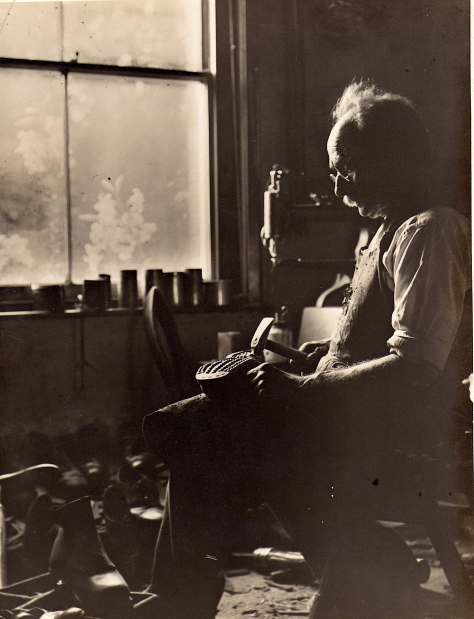

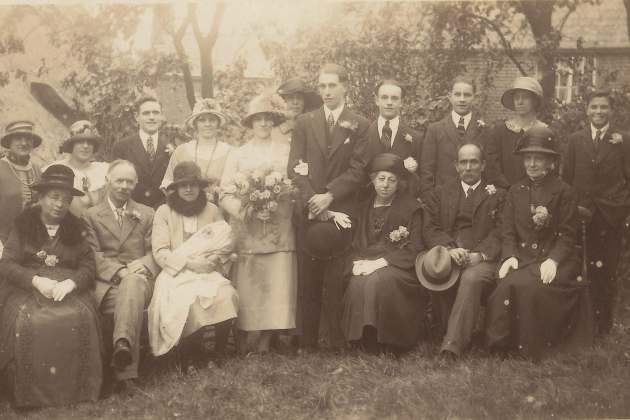

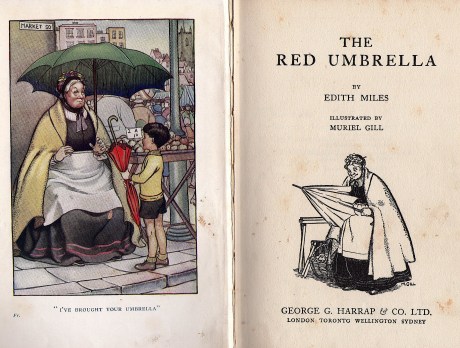
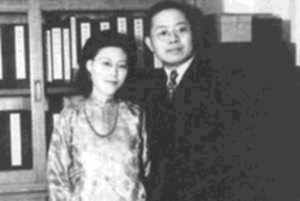


 From 1986 I used to visit Yuan Quanyou in her office at the dilapidated yet numinous MRI compound at Dongzhimenwai, her beaming face greeting me between high stacks of ancient documents. There, with unassuming industry she was still producing further volumes in the MRI’s wonderful annotated series of iconographical collections on Chinese music history, such as the 1988 Zhongguo yinyueshi tujian 中国音乐史图鉴 [Illustrated history of Chinese music].

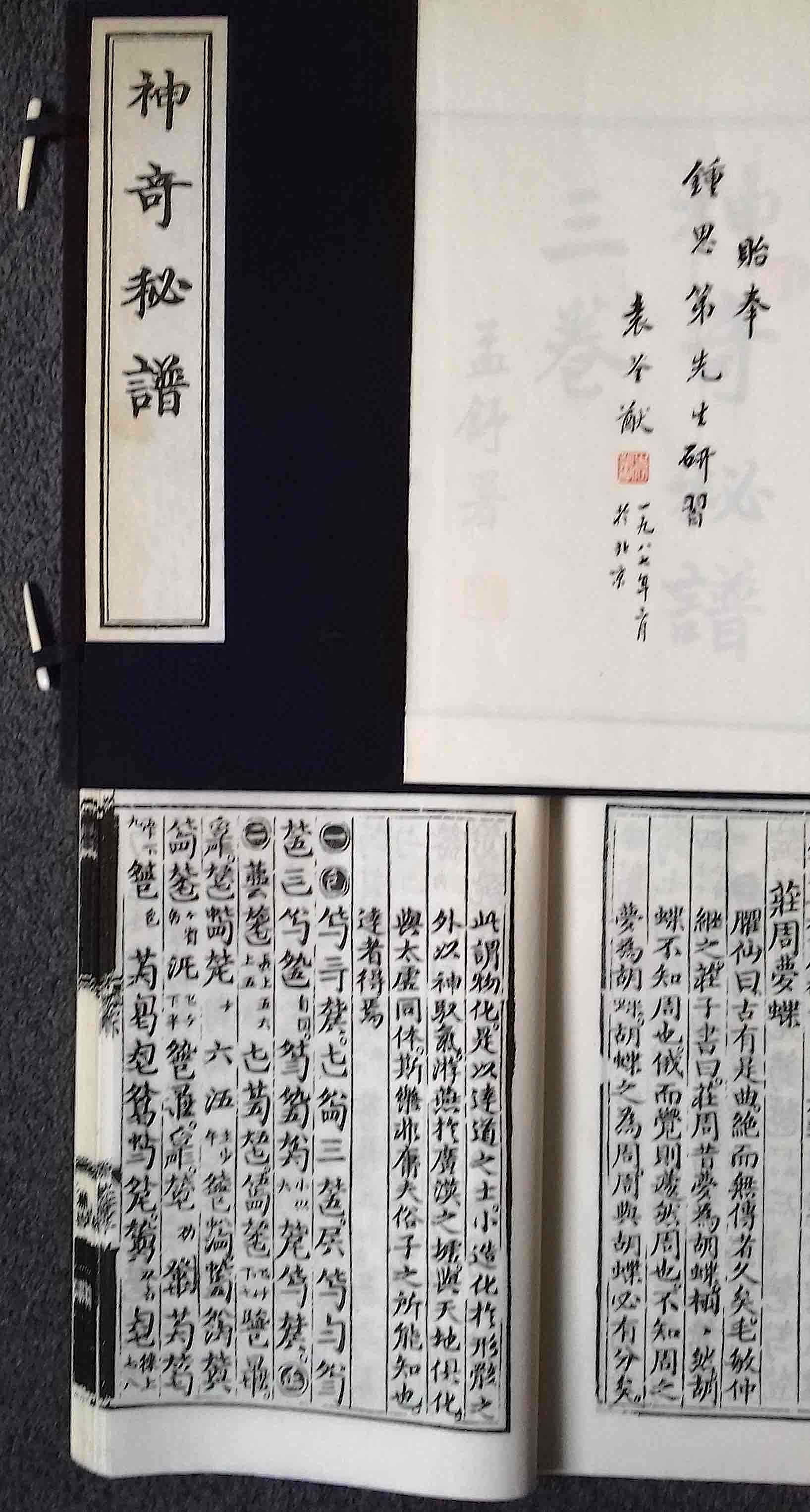
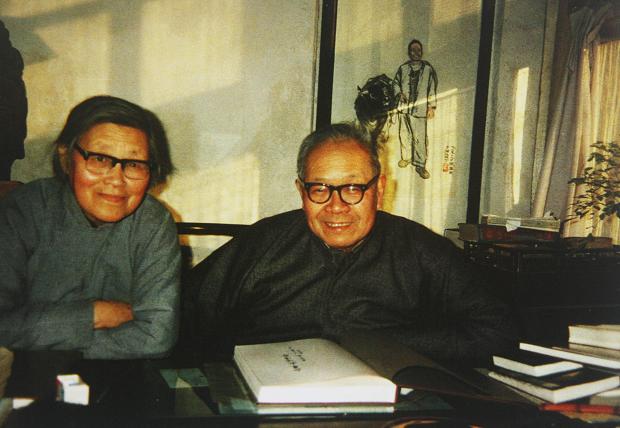
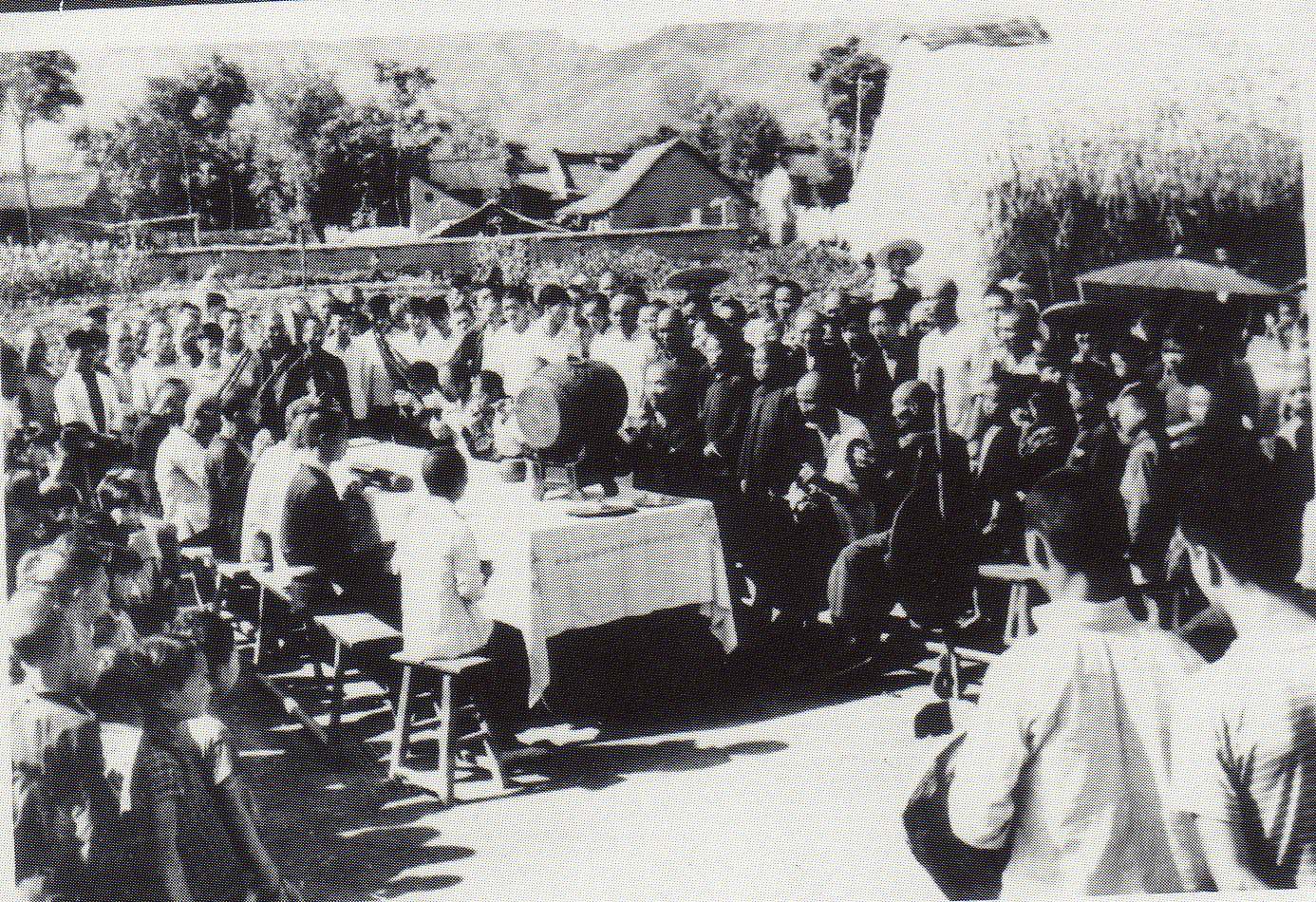


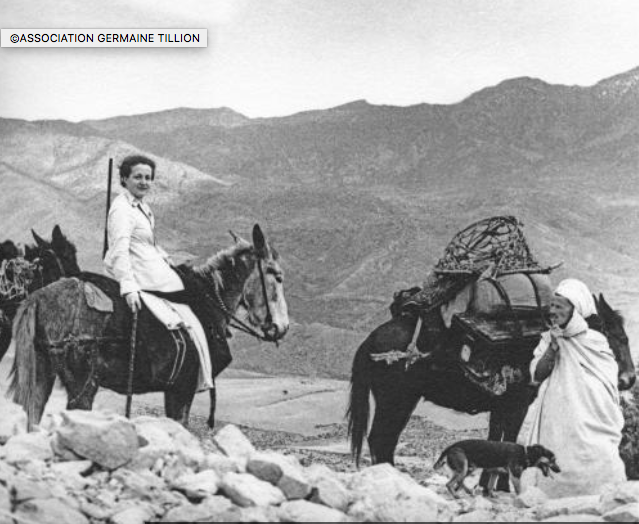


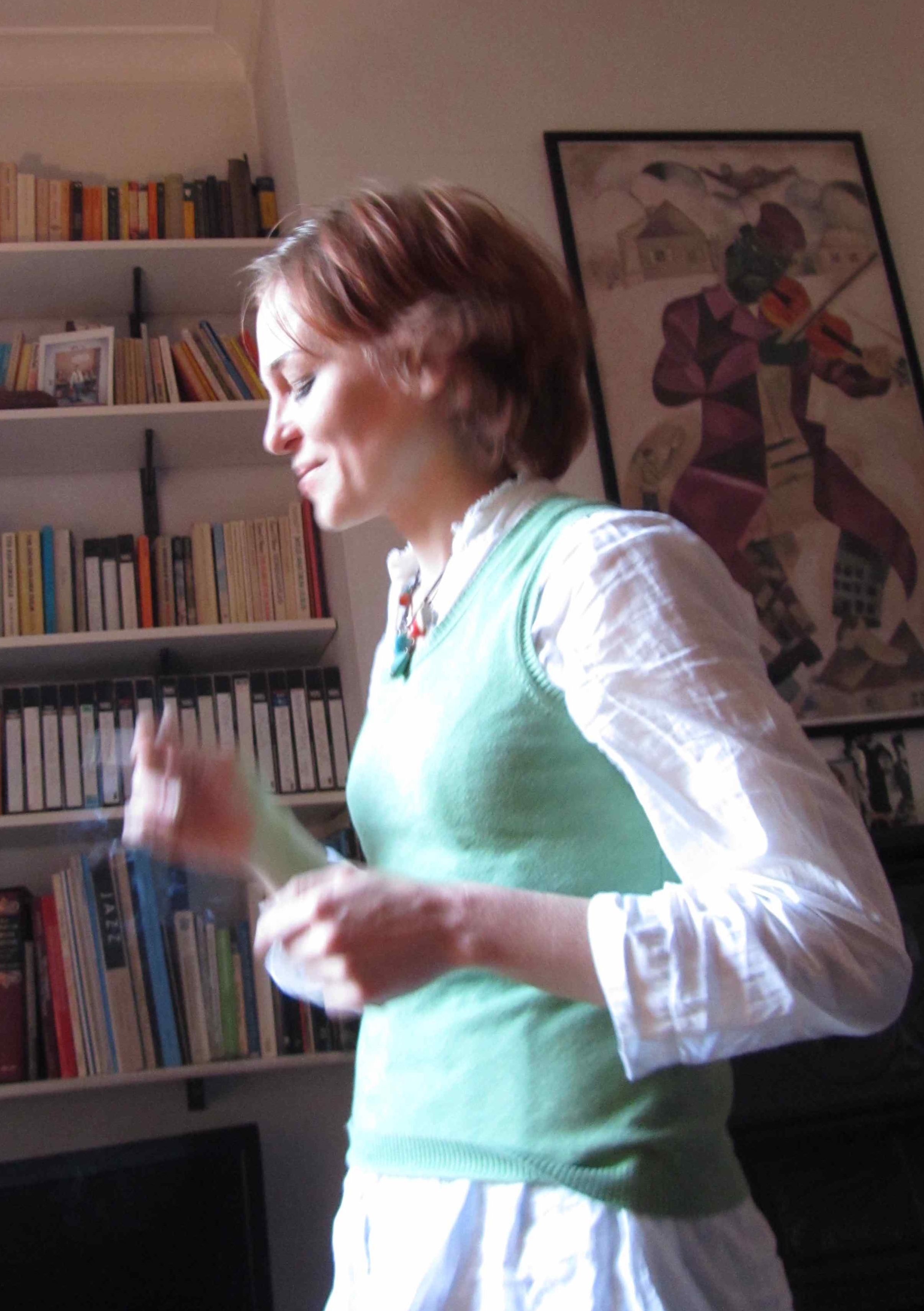


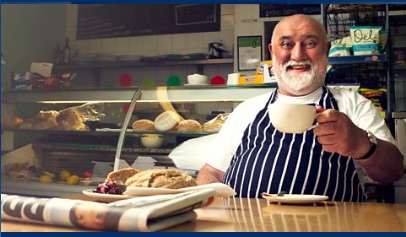


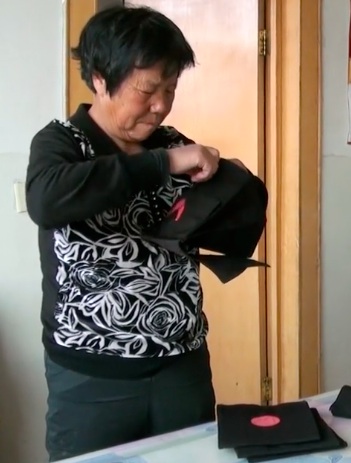
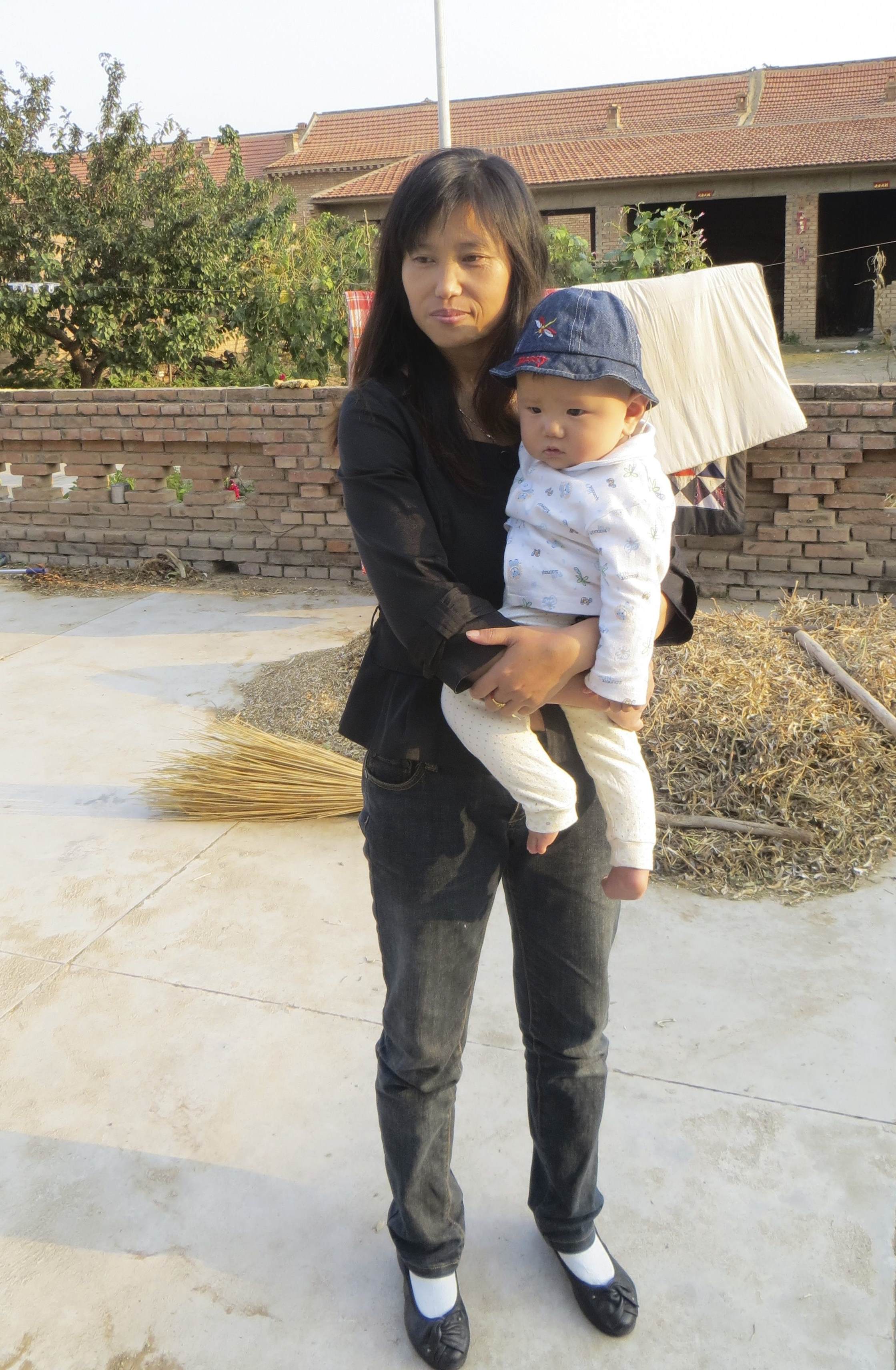
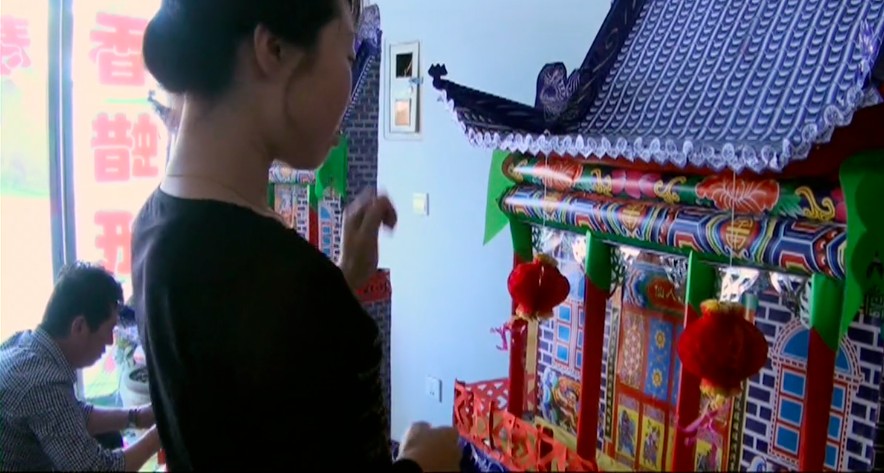




 We’re in plenty of time for the 8.59 to Clermont-Ferrand—whose


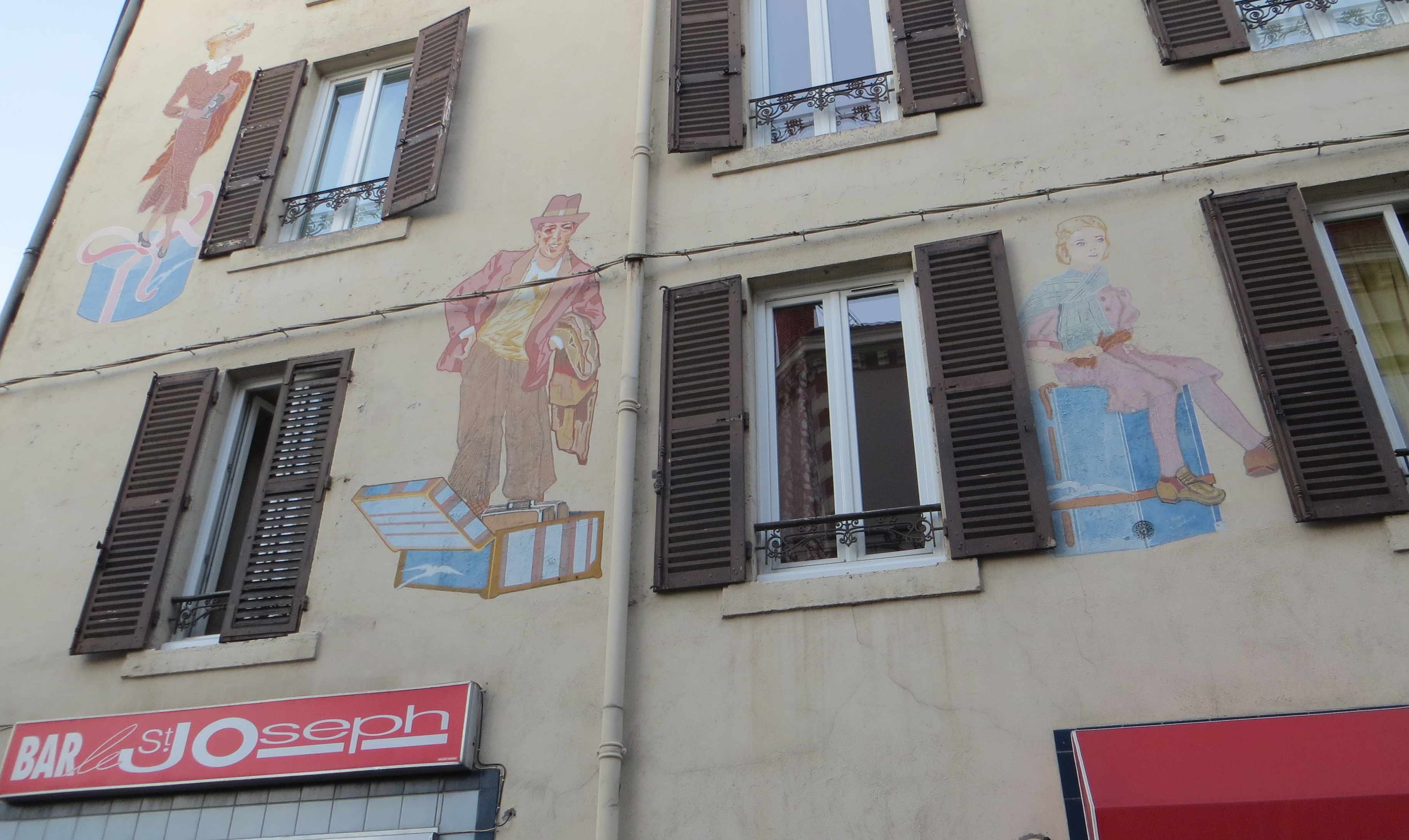

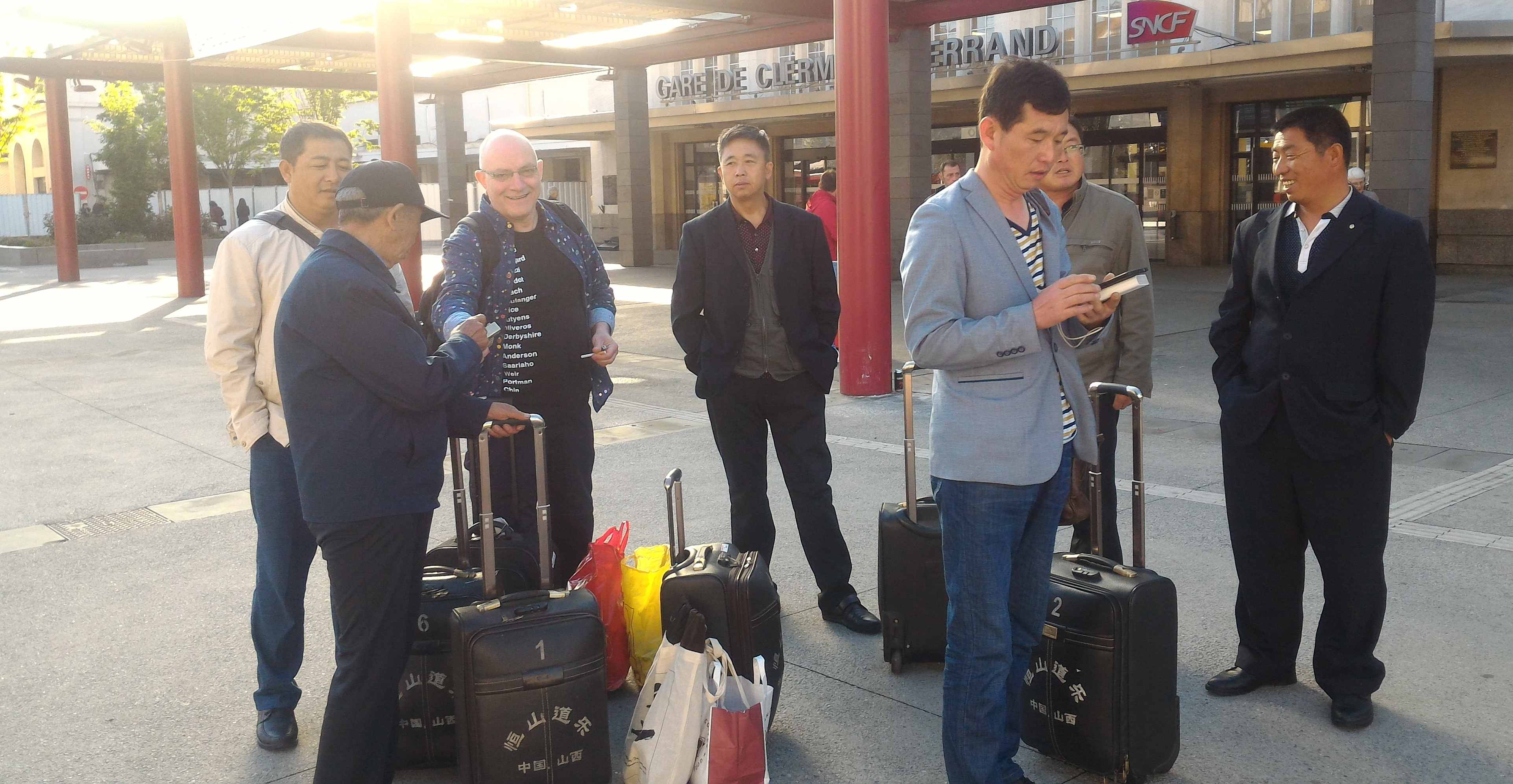



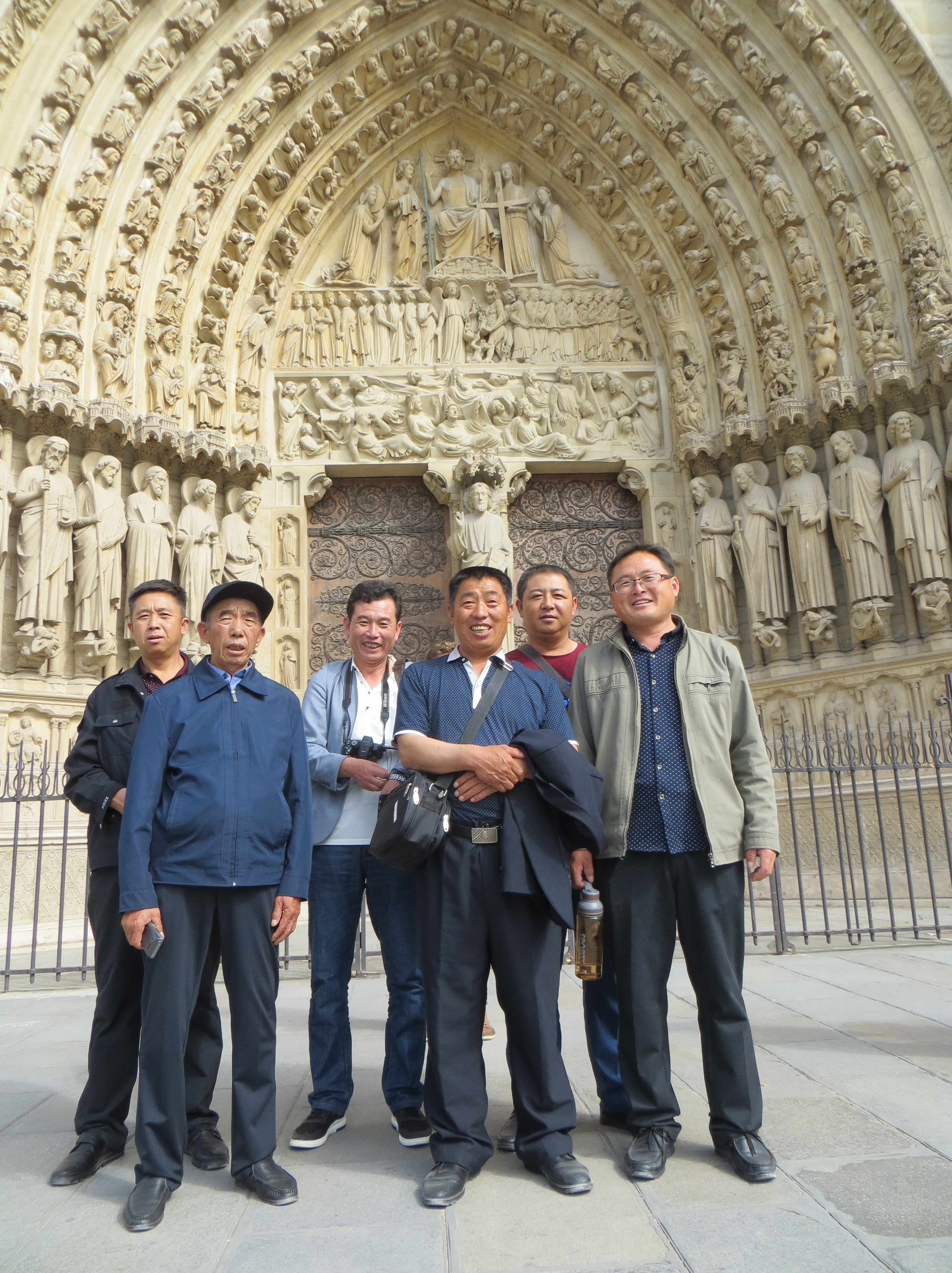
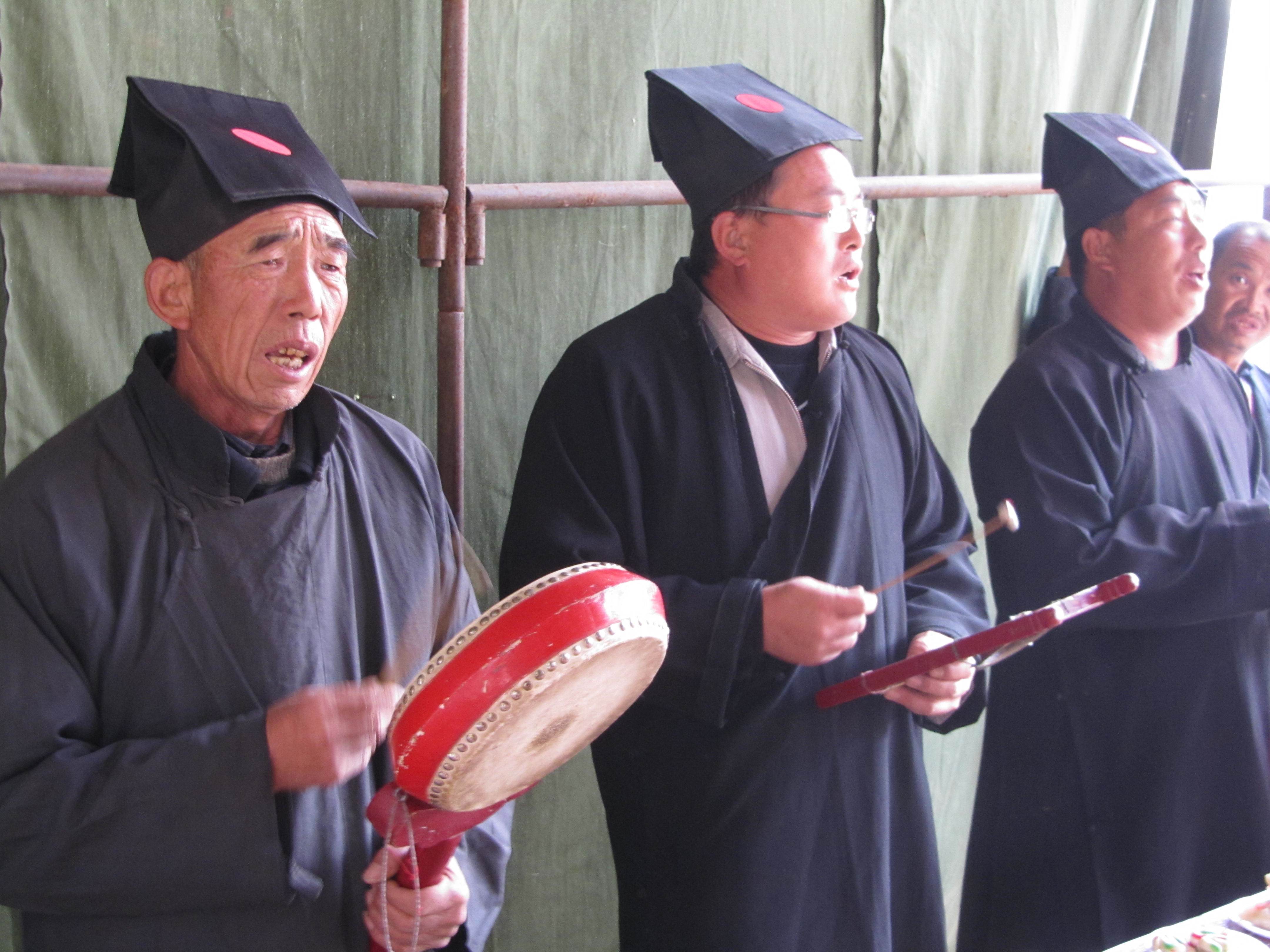

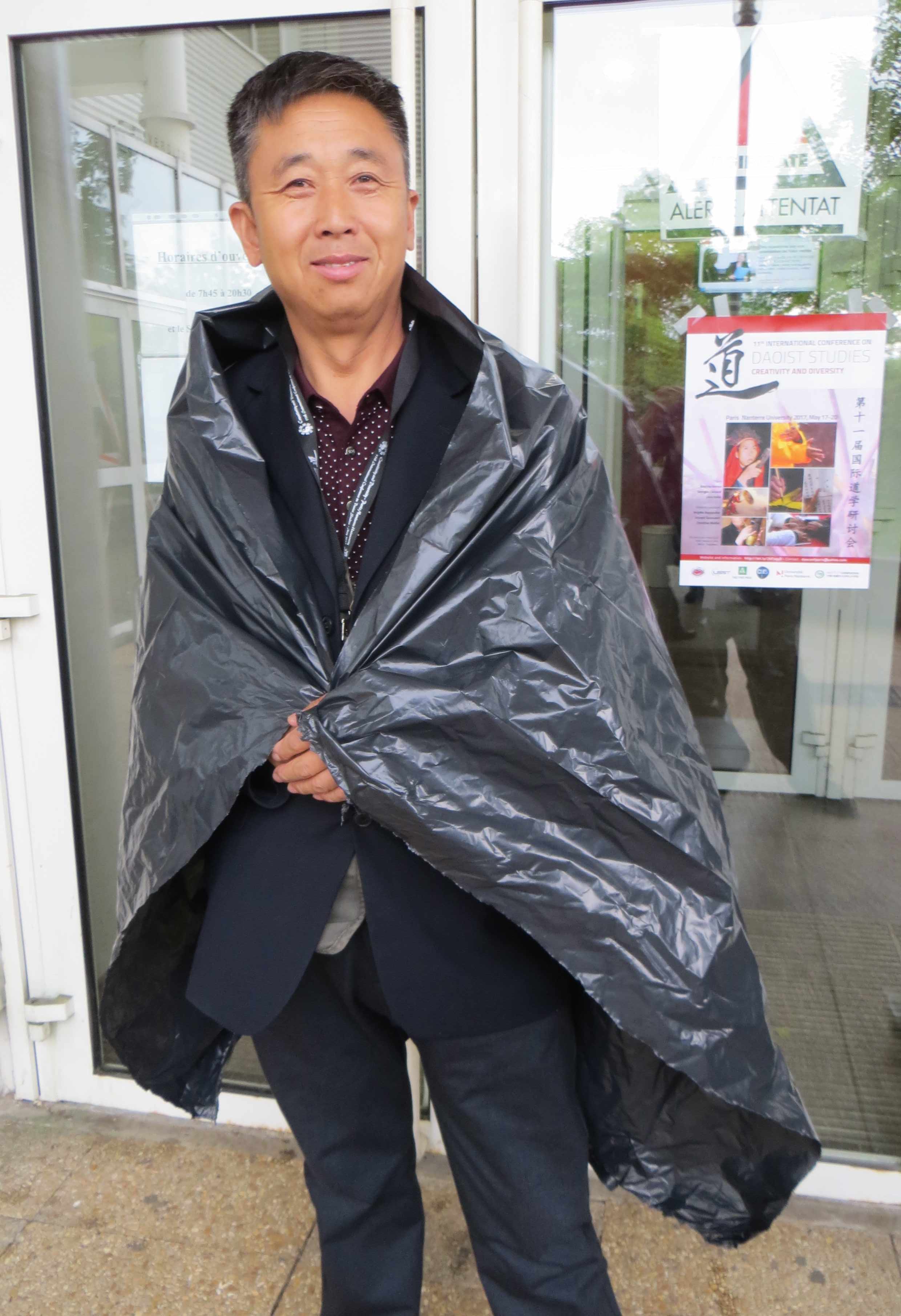
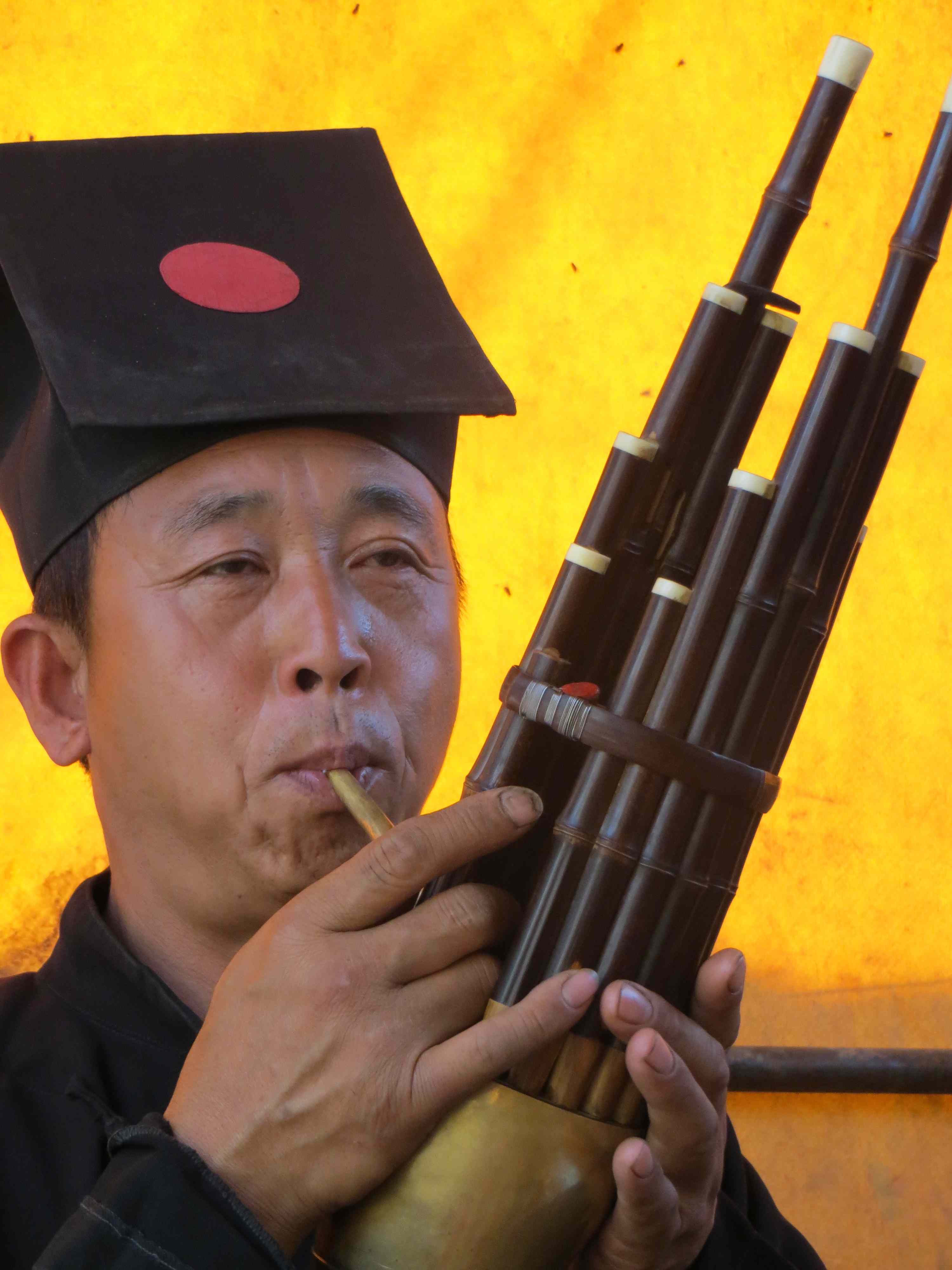
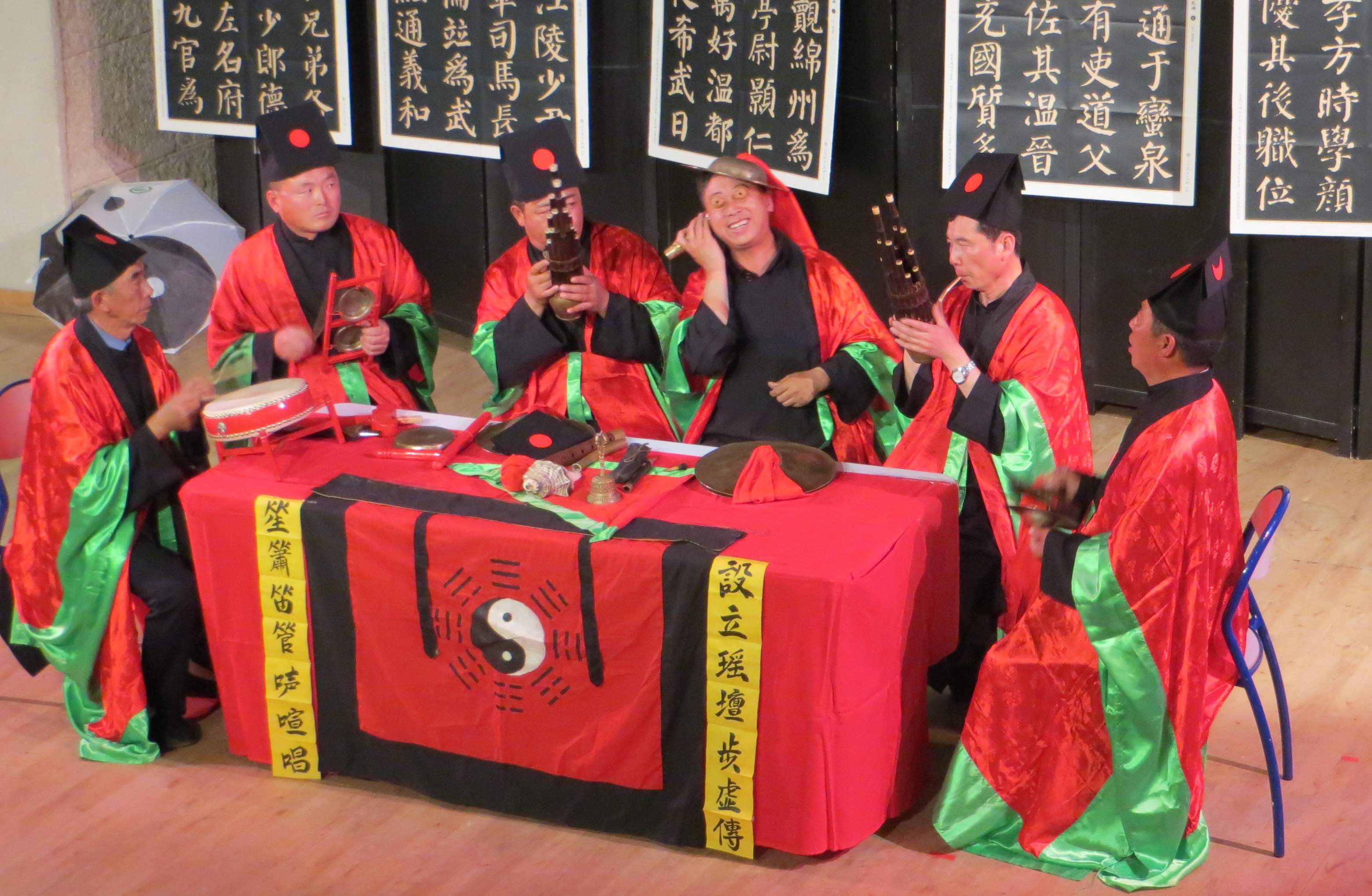

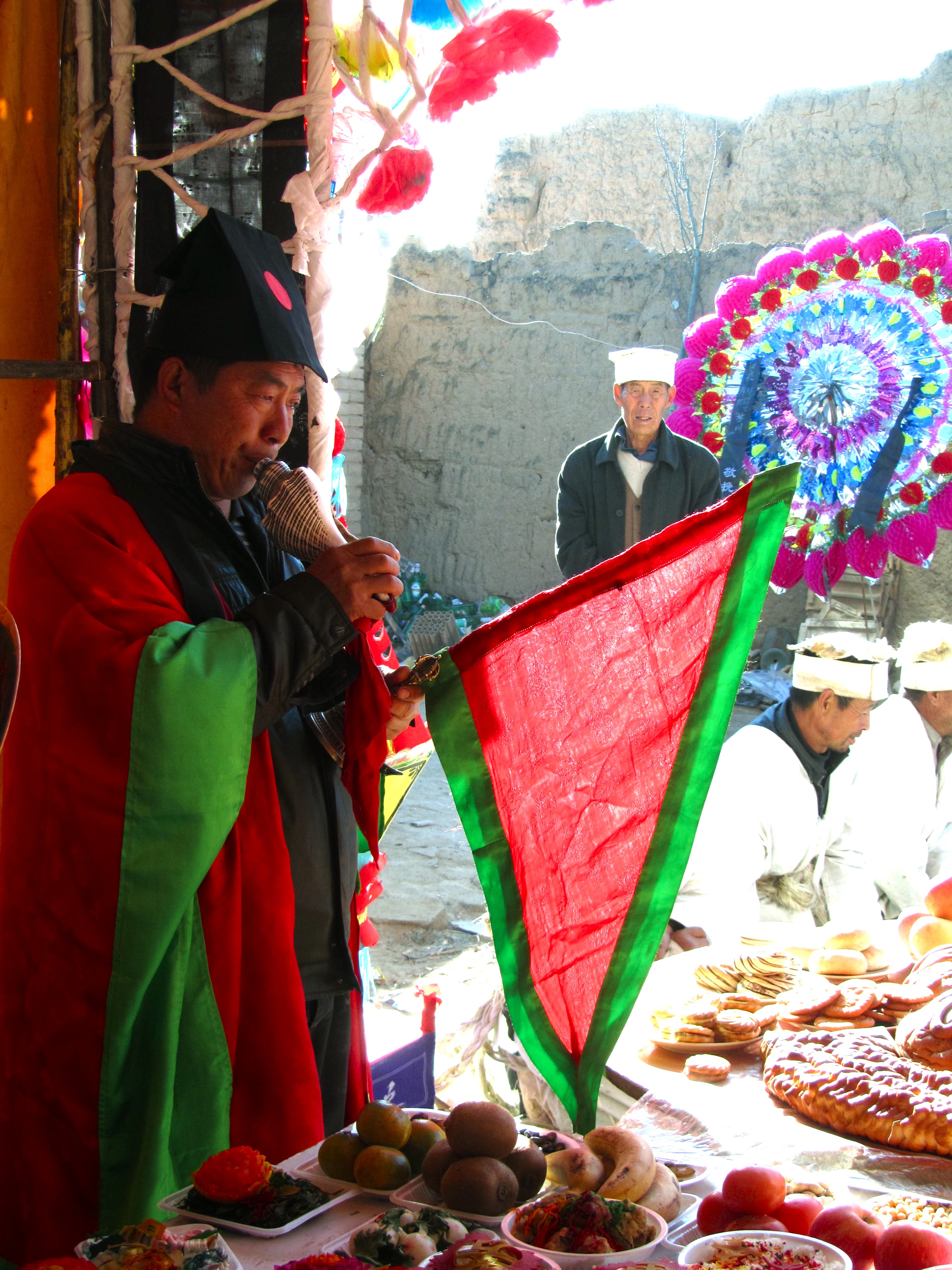

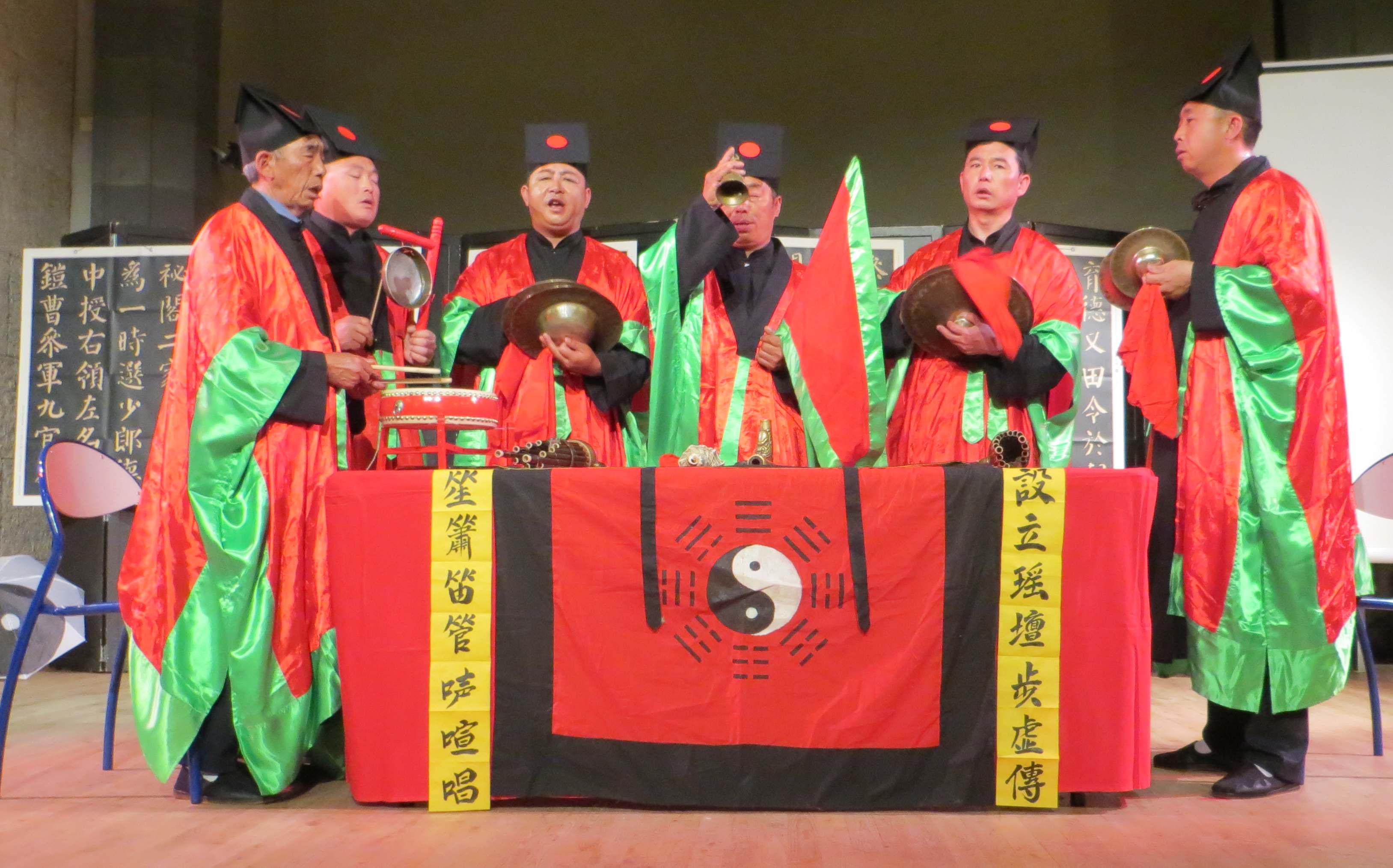


:format(jpeg):mode_rgb():quality(40)/discogs-images/A-843647-1270908146.jpeg.jpg)


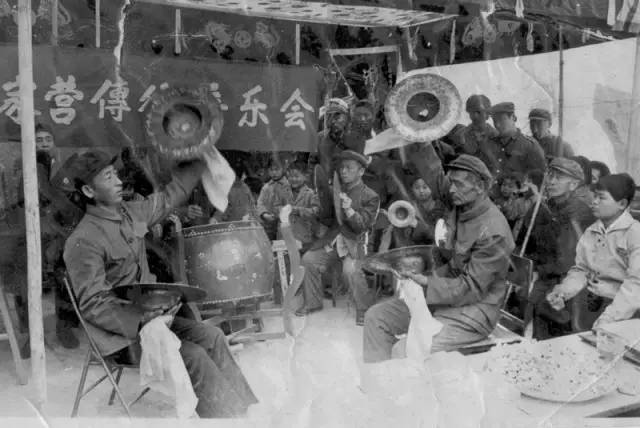
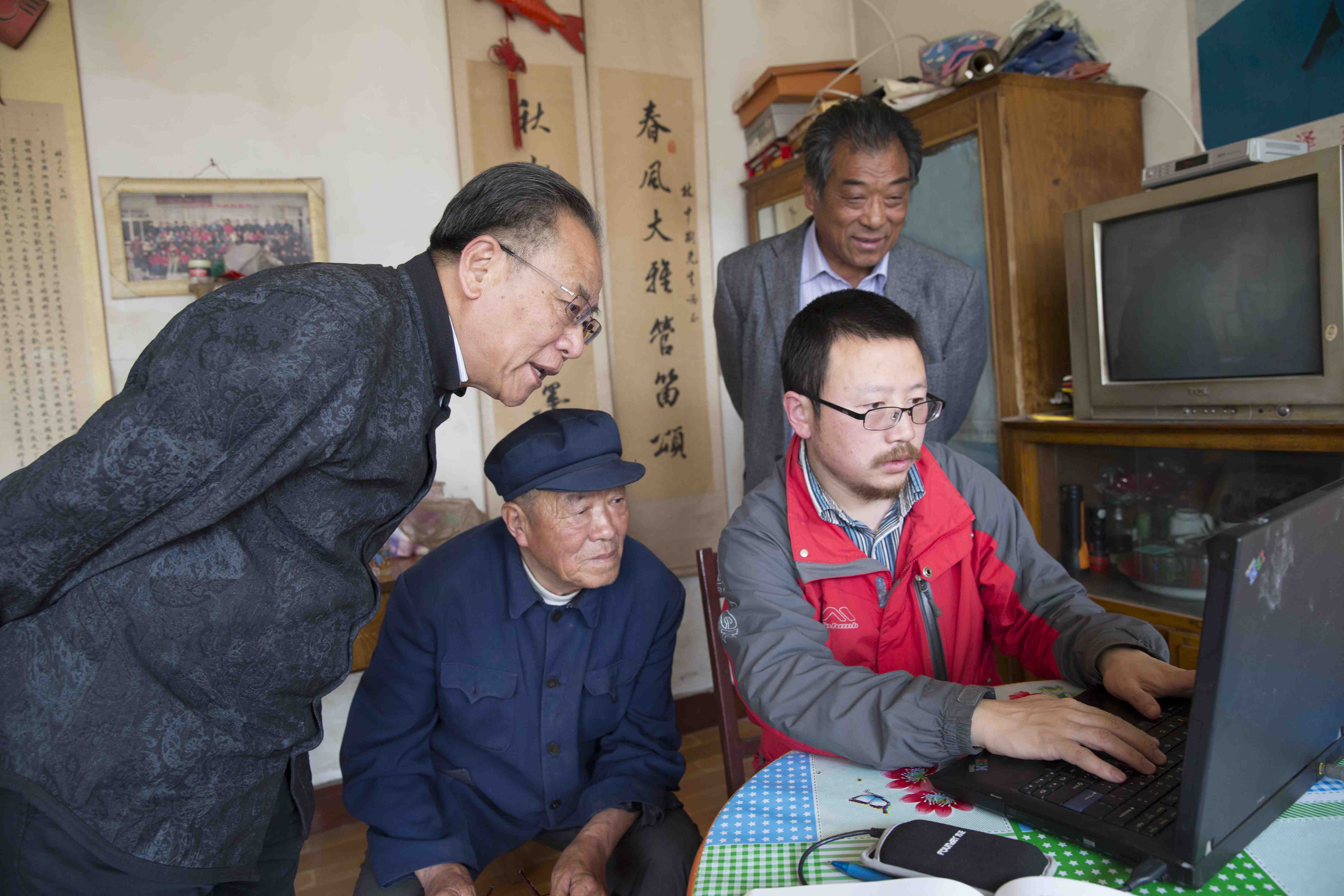
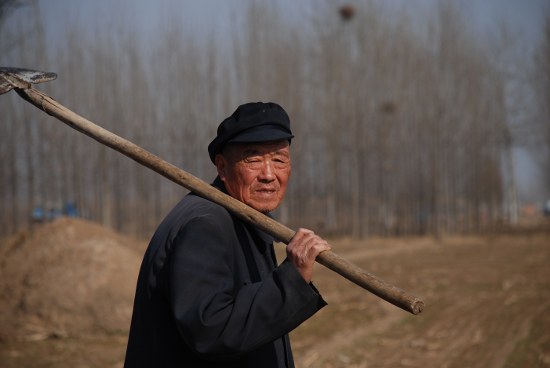
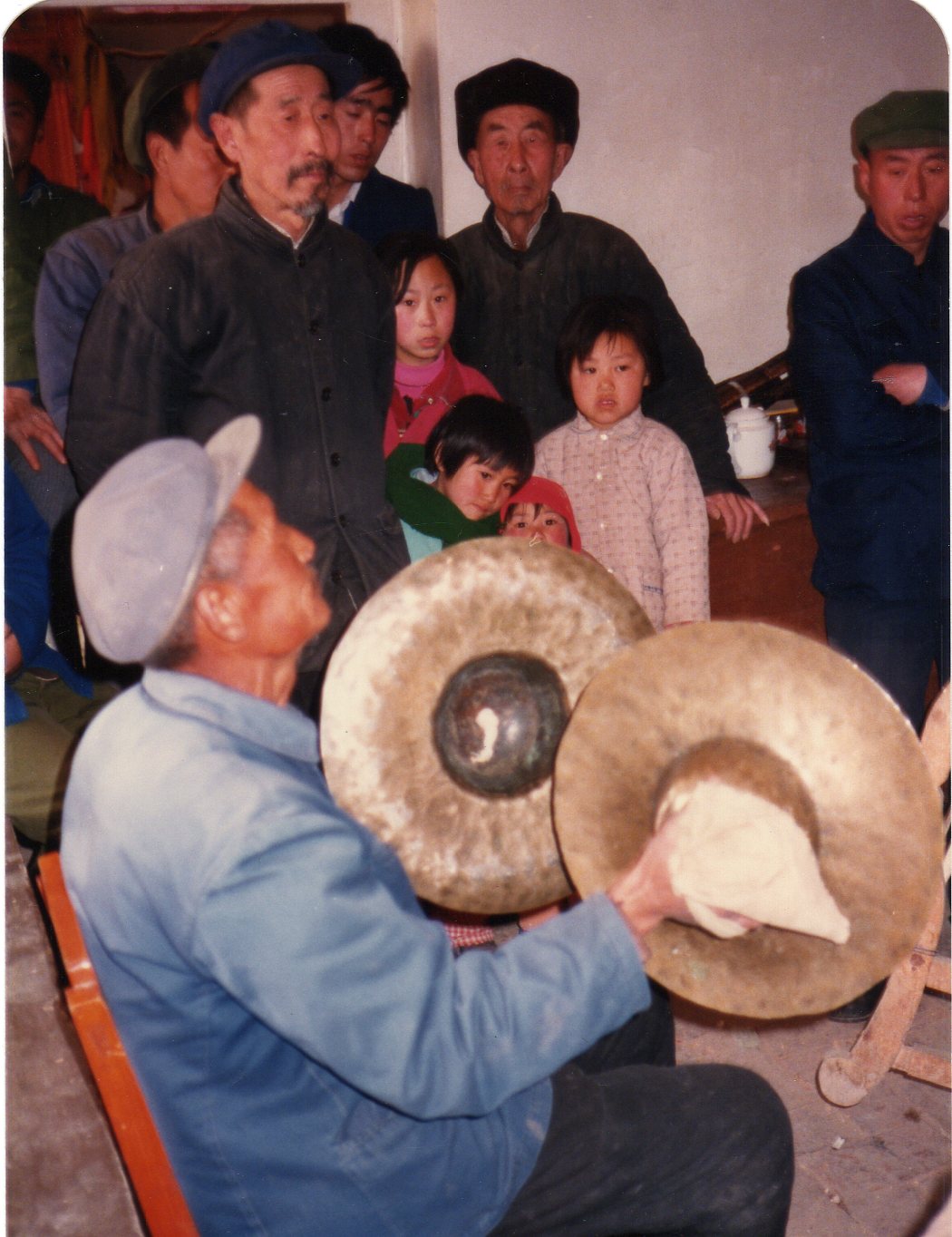
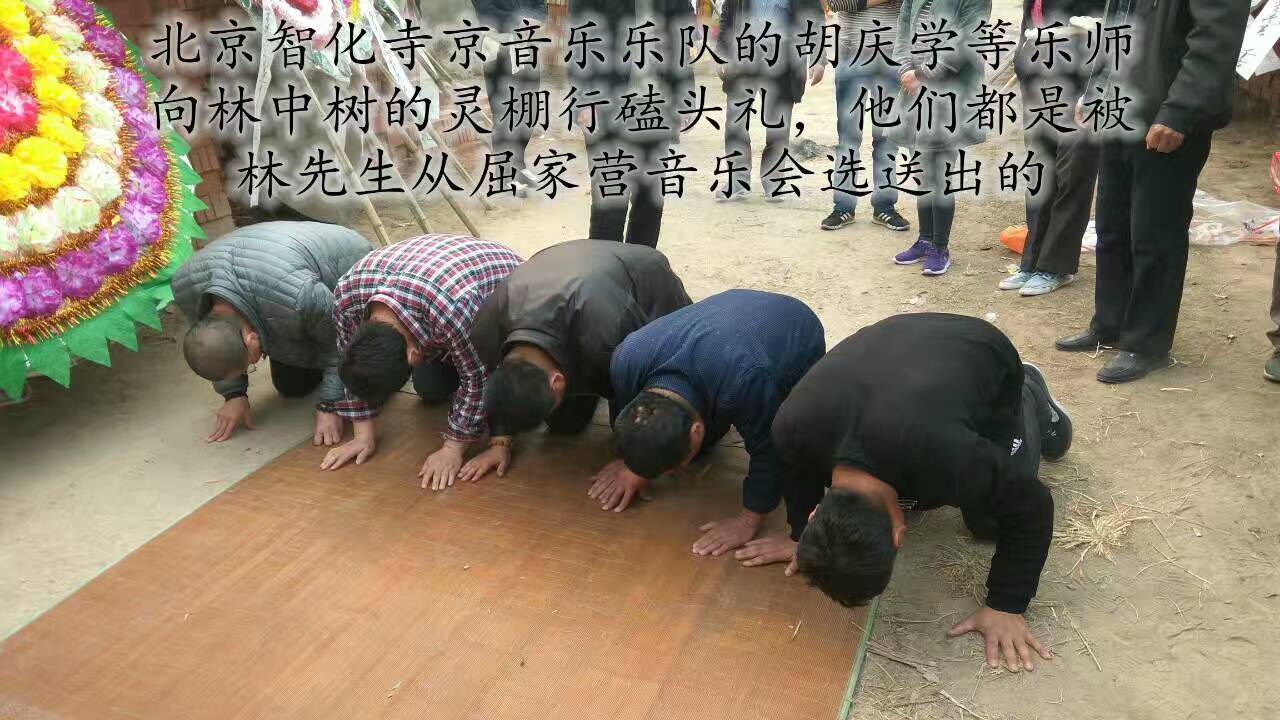
 Led by Hu Qingxue, Qujiaying villagers, later trained in the Zhihua temple style, kowtowing before the soul hall at Lin Zhongshu’s funeral, and playing the classic sequence Jinzi jing, Wusheng fo, and Gandongshan.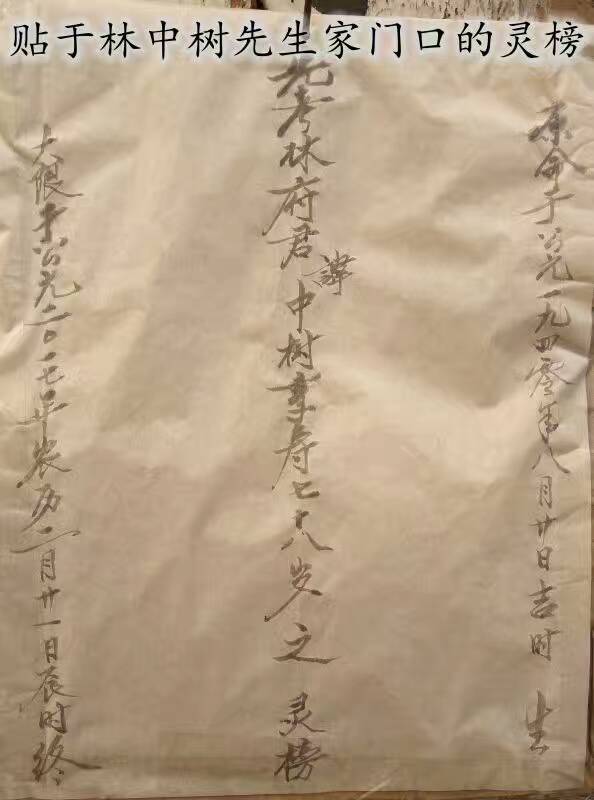


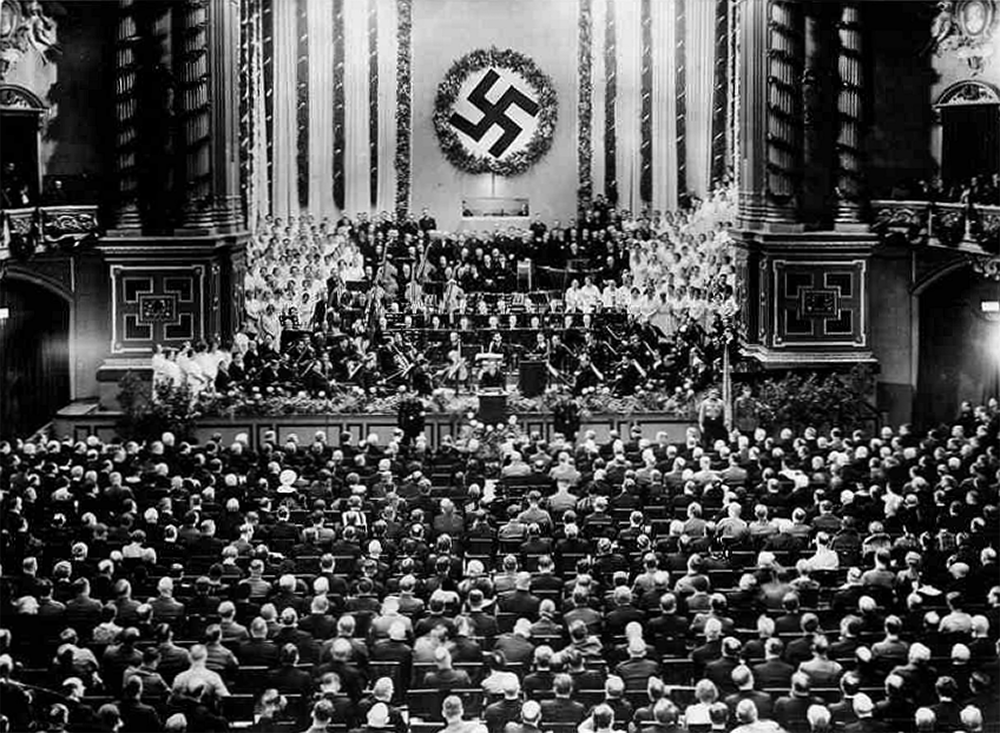
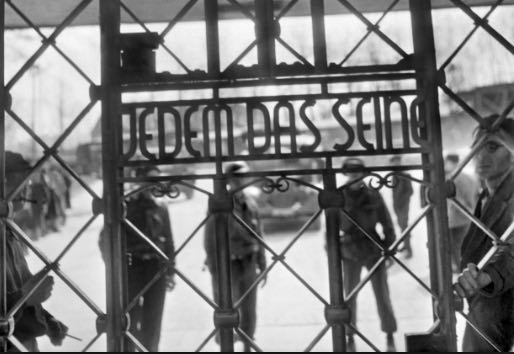


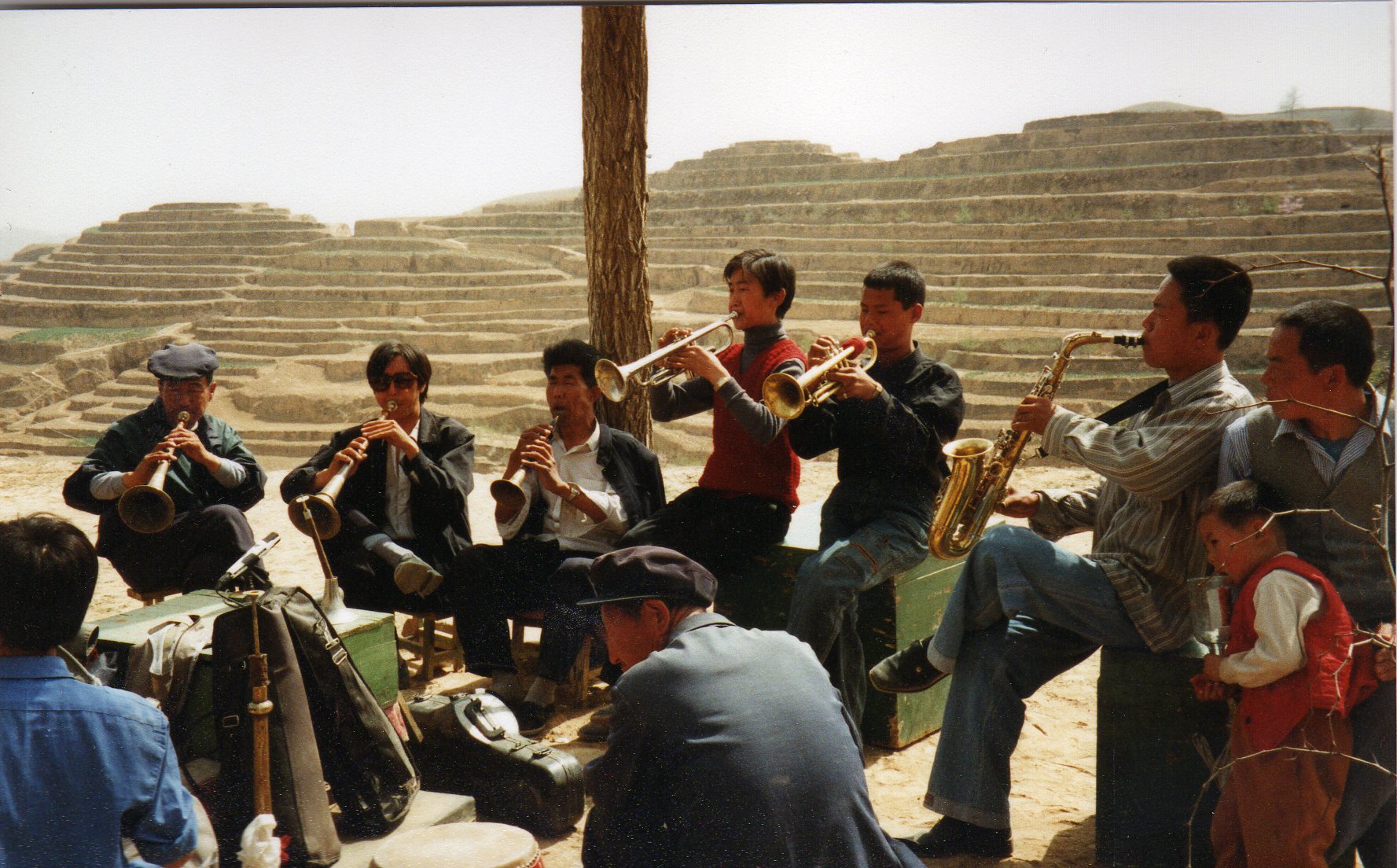
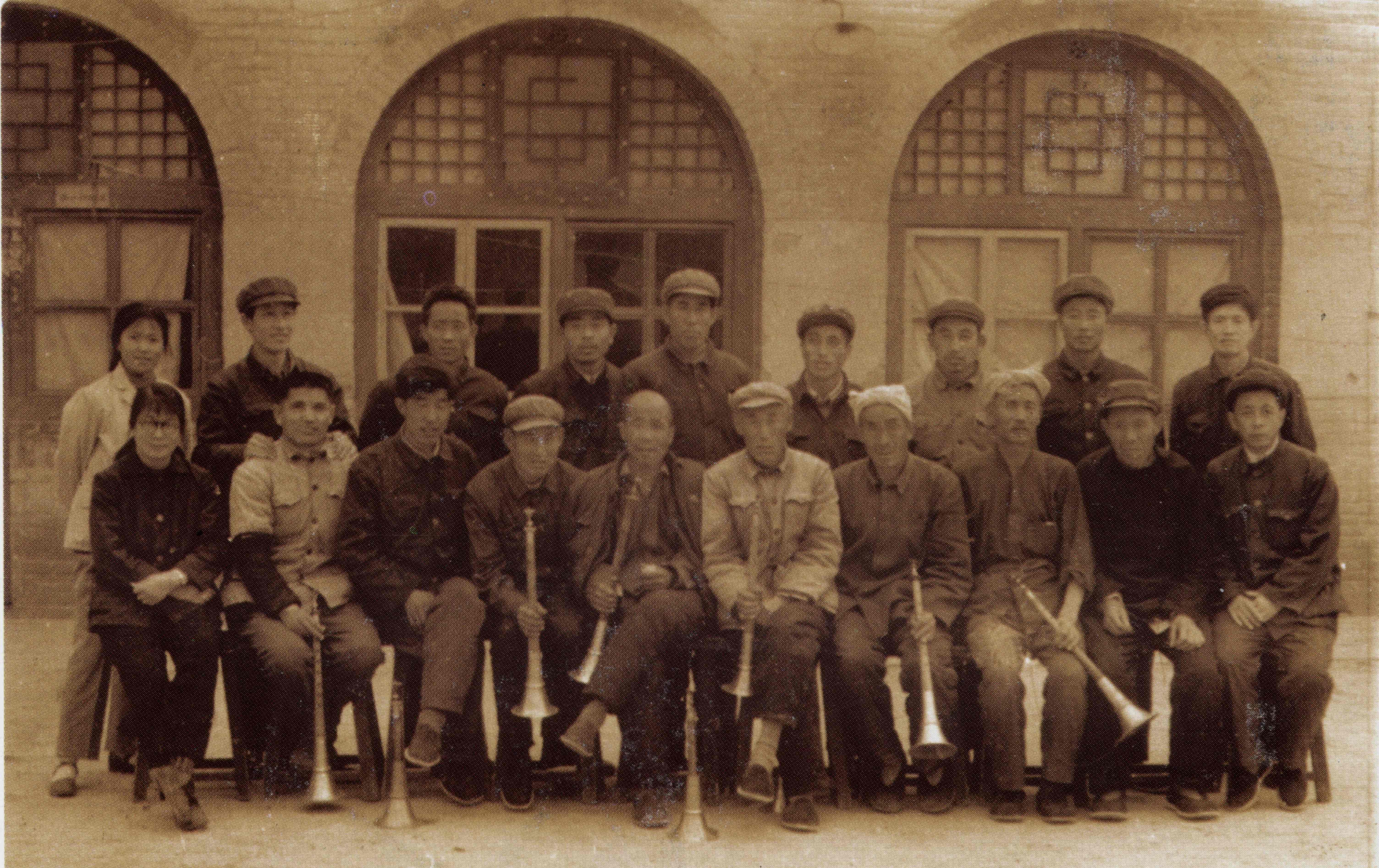 Shawm players from Mizhi county, assembled for a regional festival in 1981.
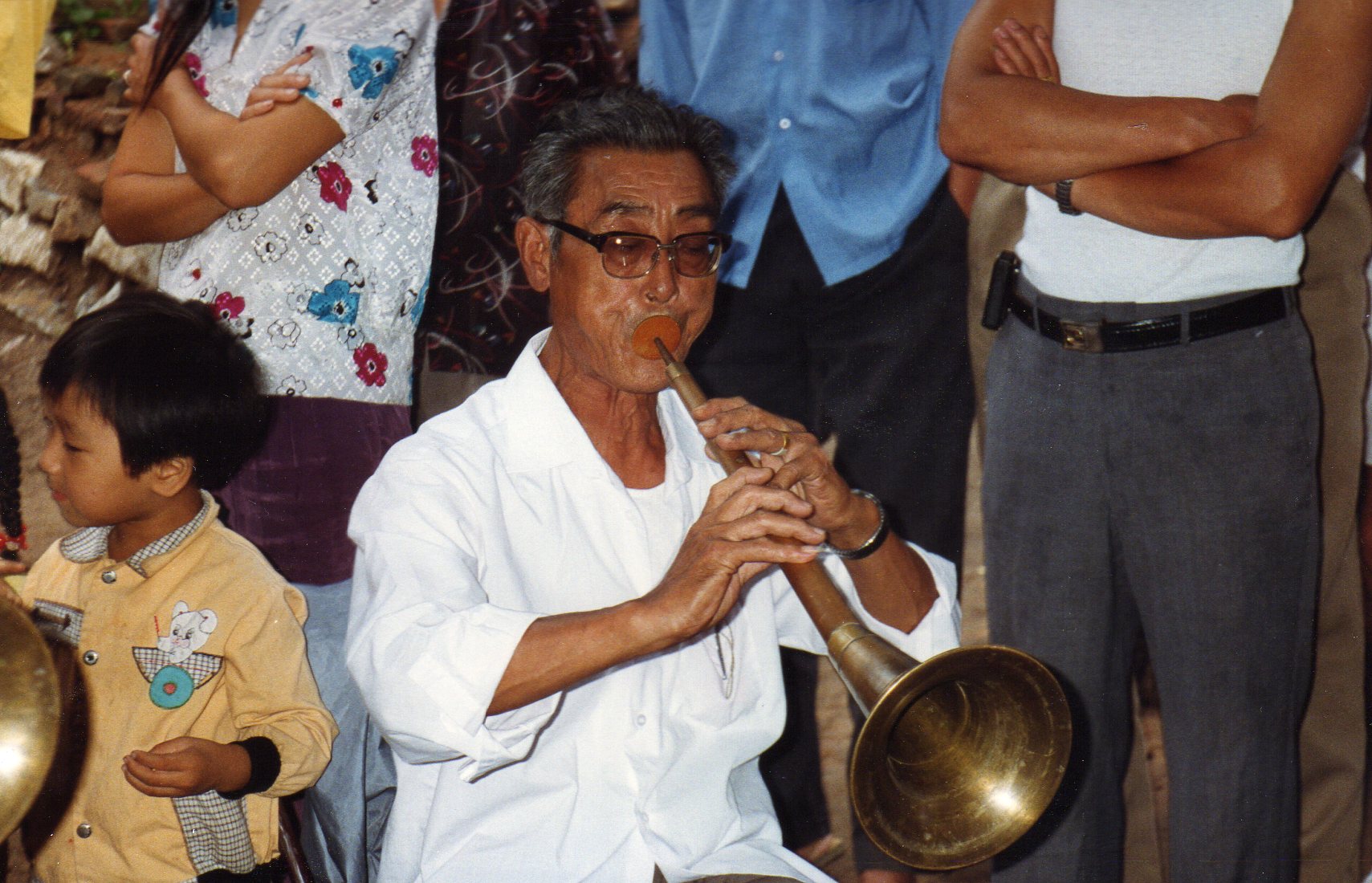


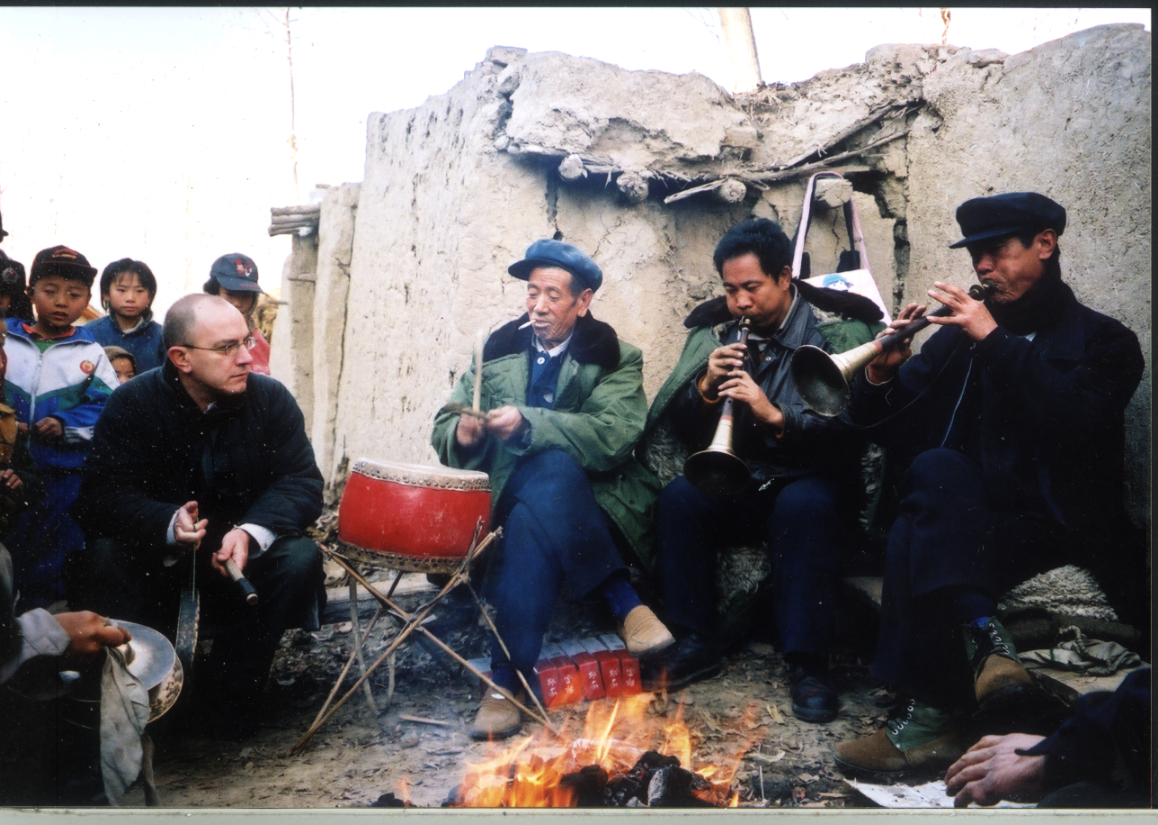


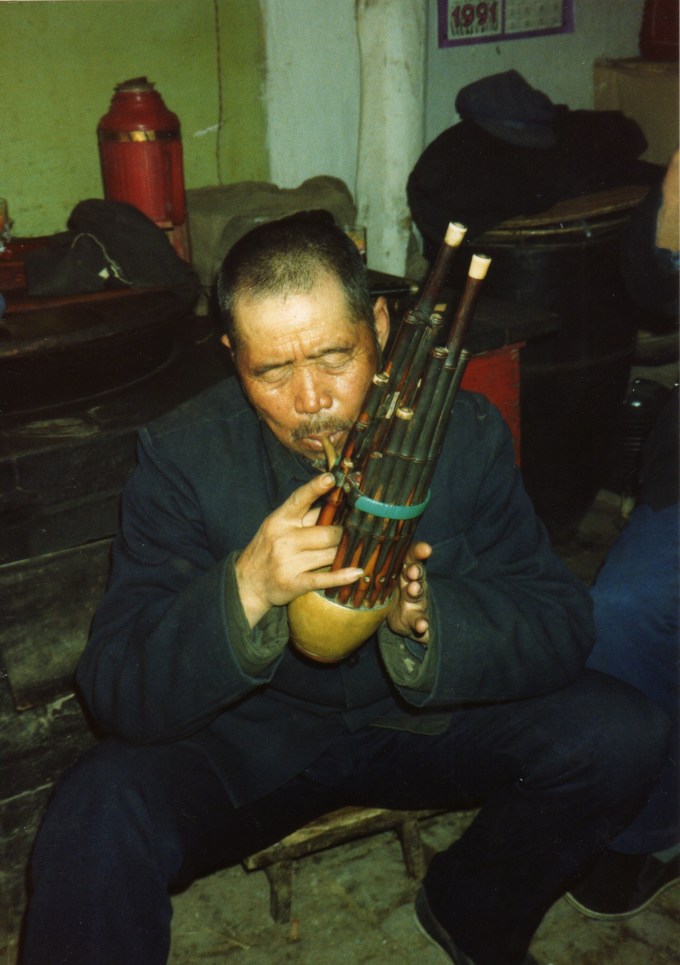
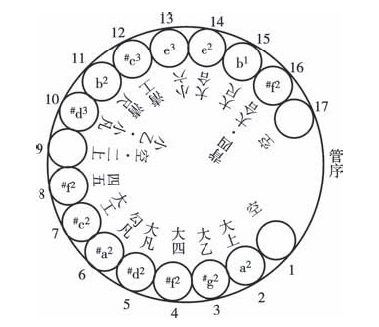
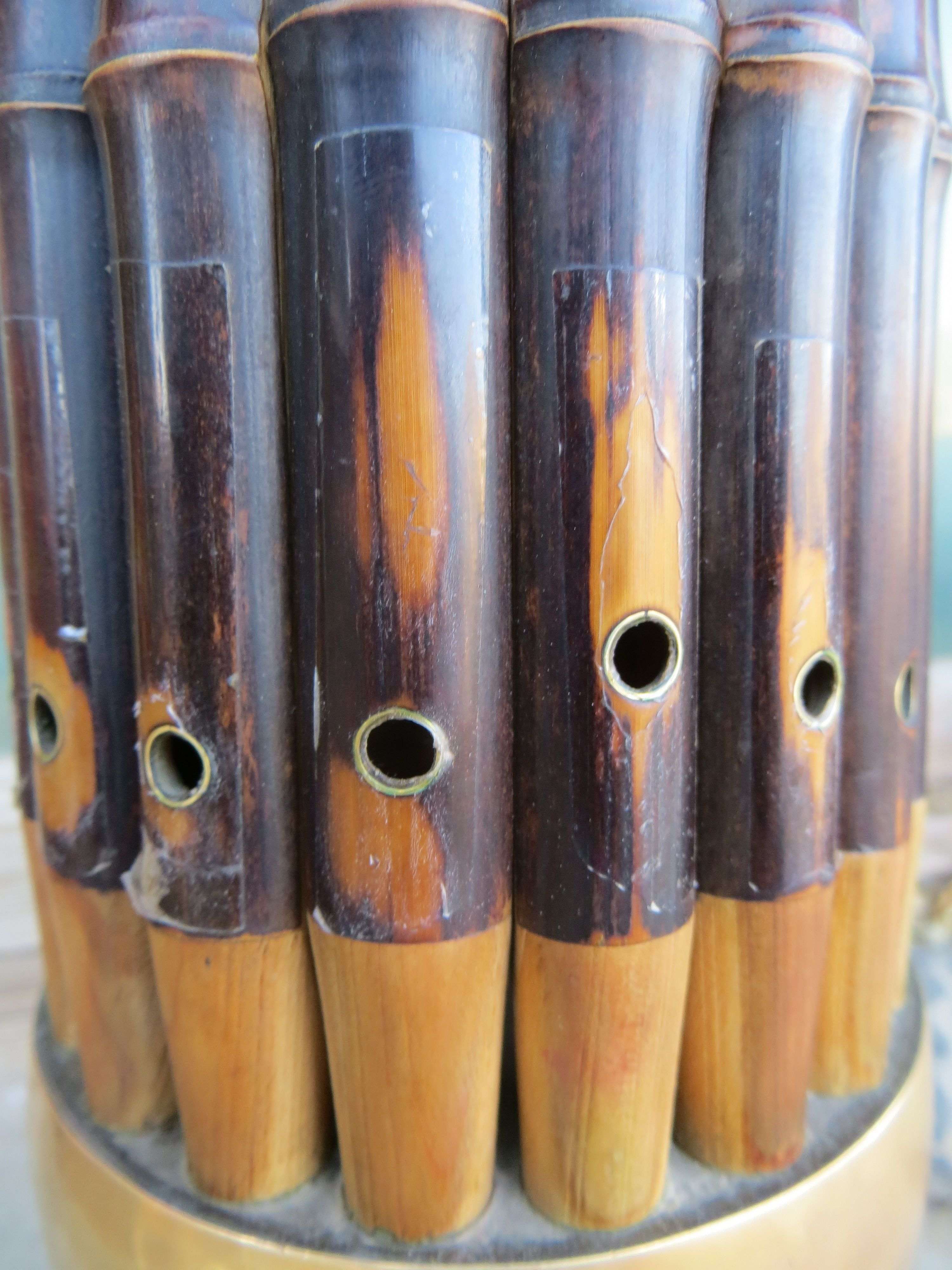



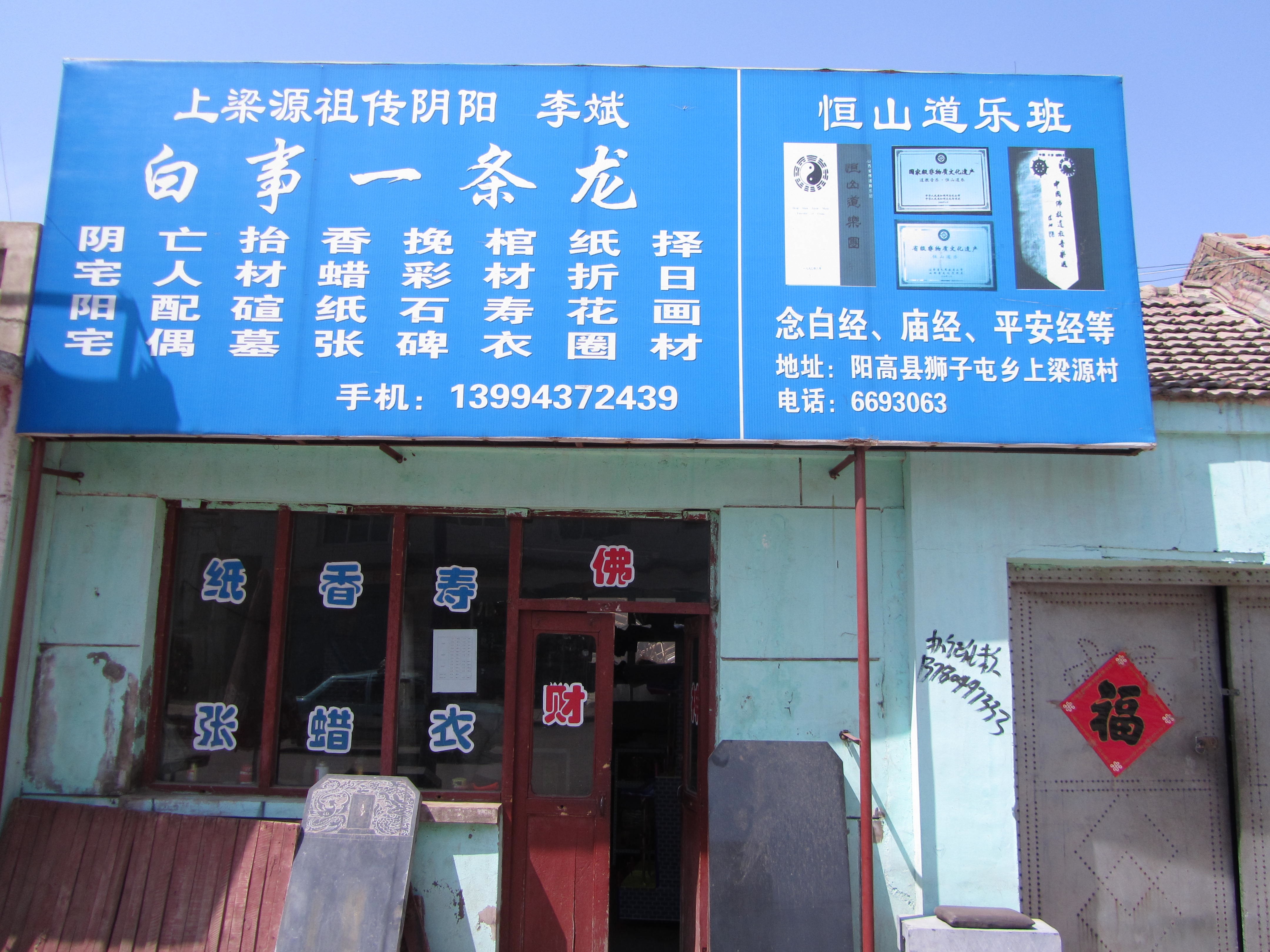


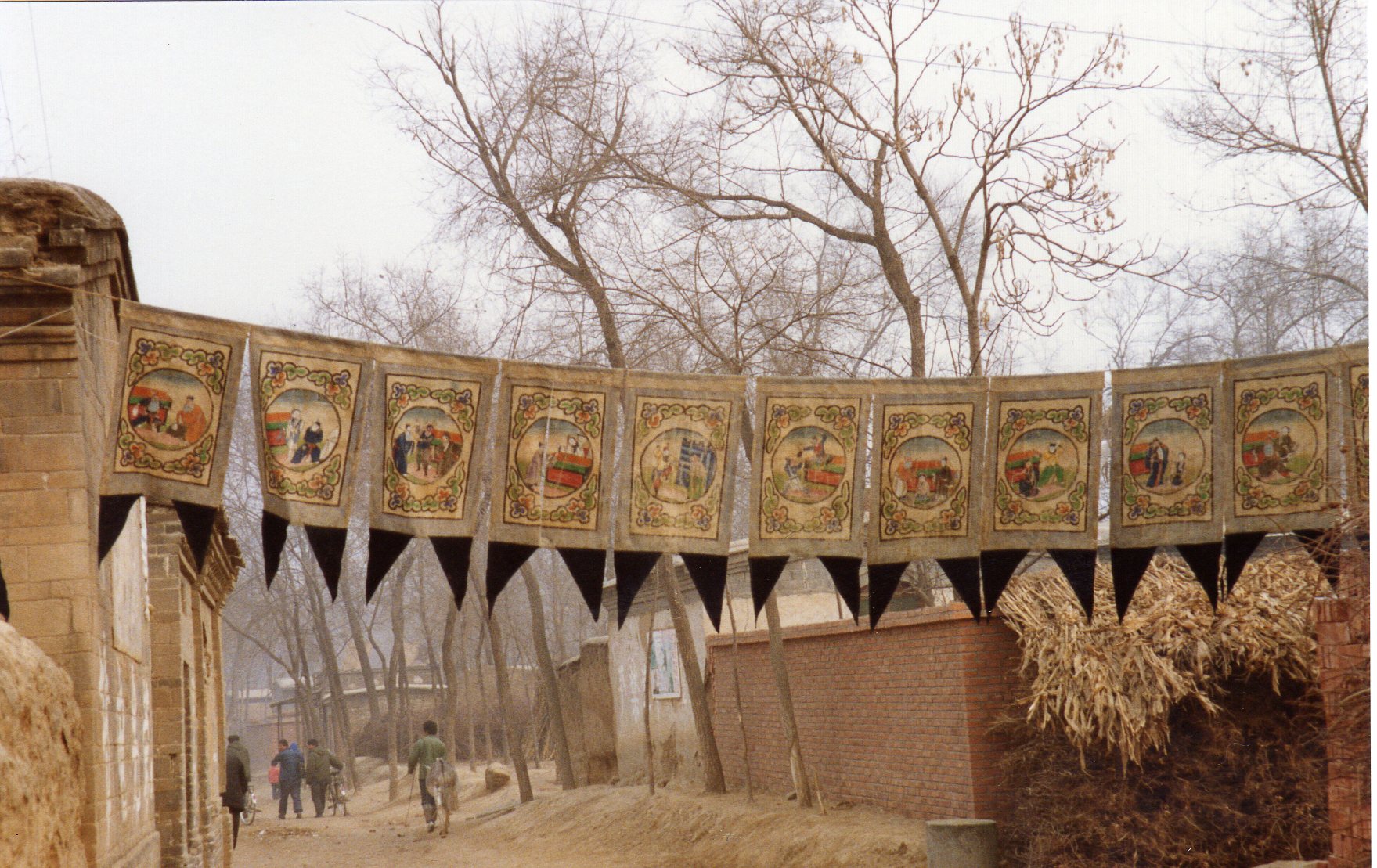

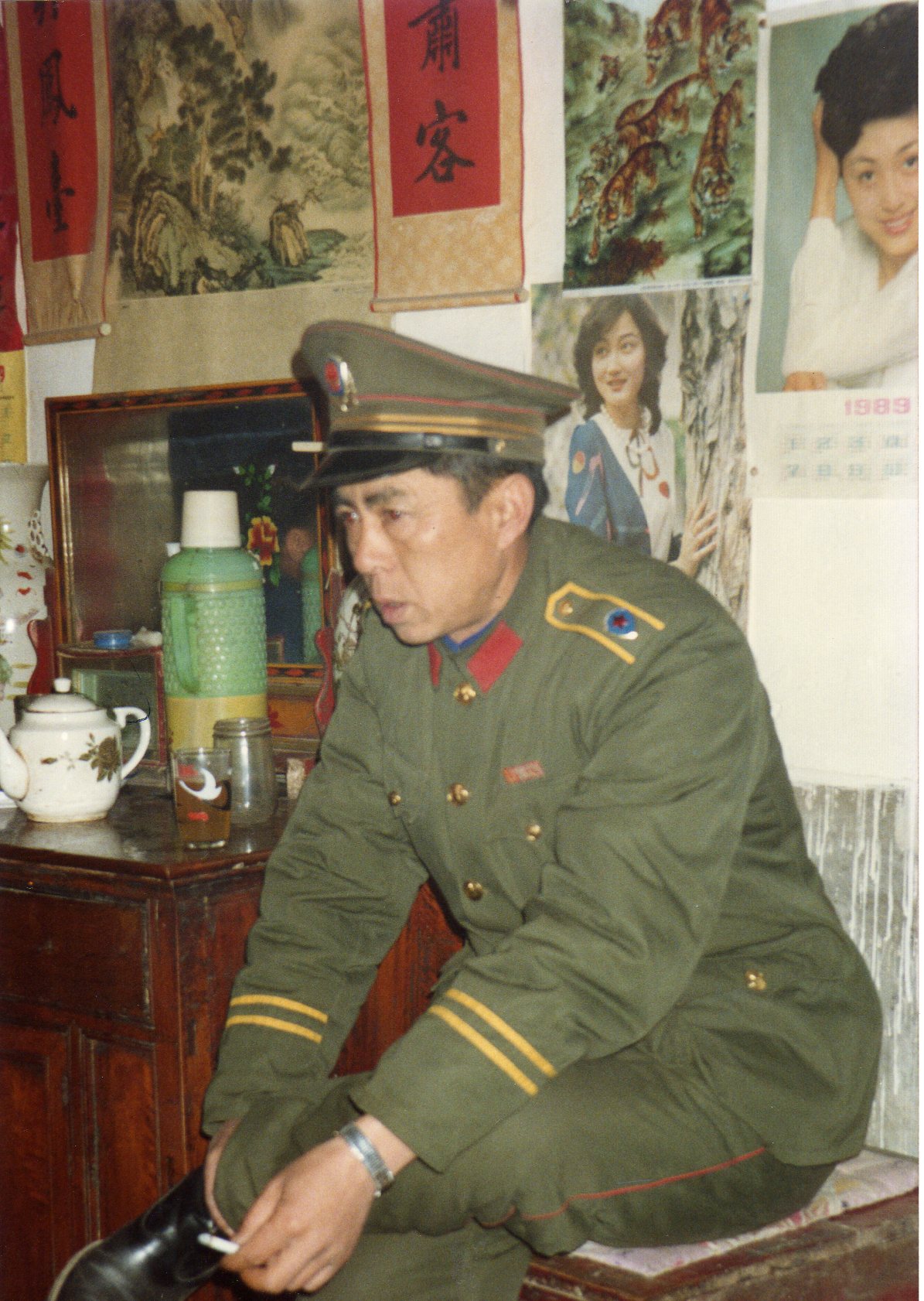


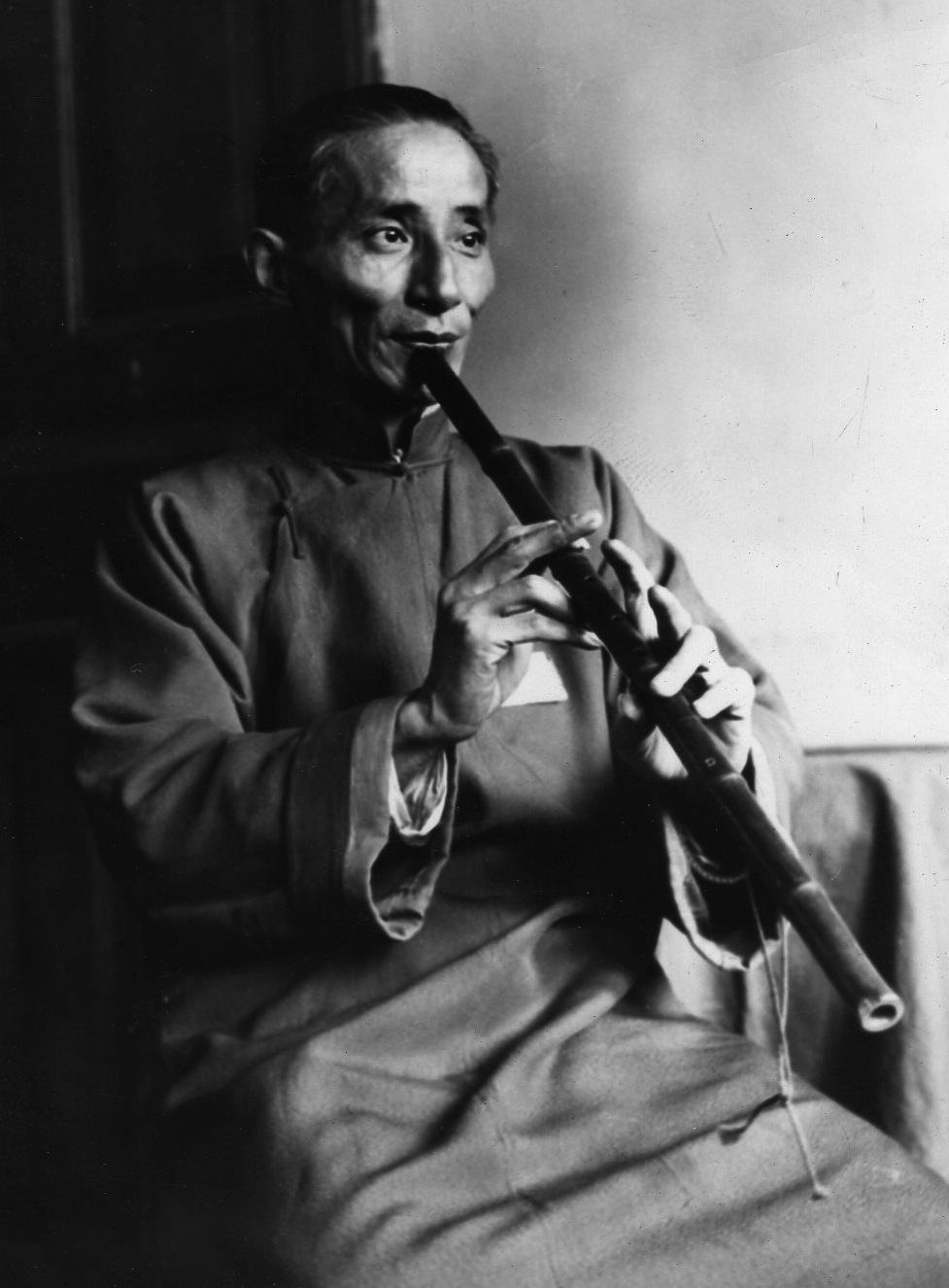
 In Wuxi, under the tuition of the American missionary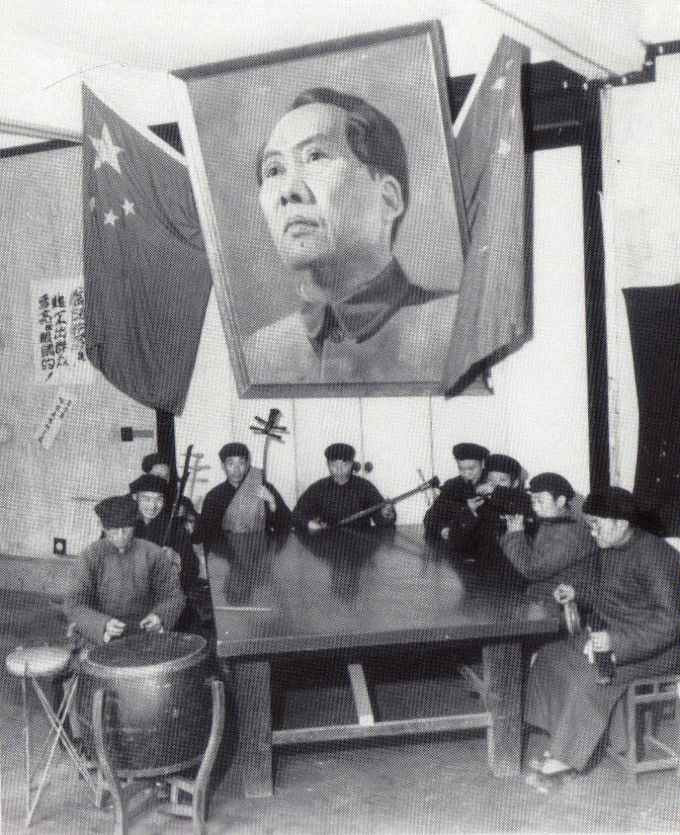




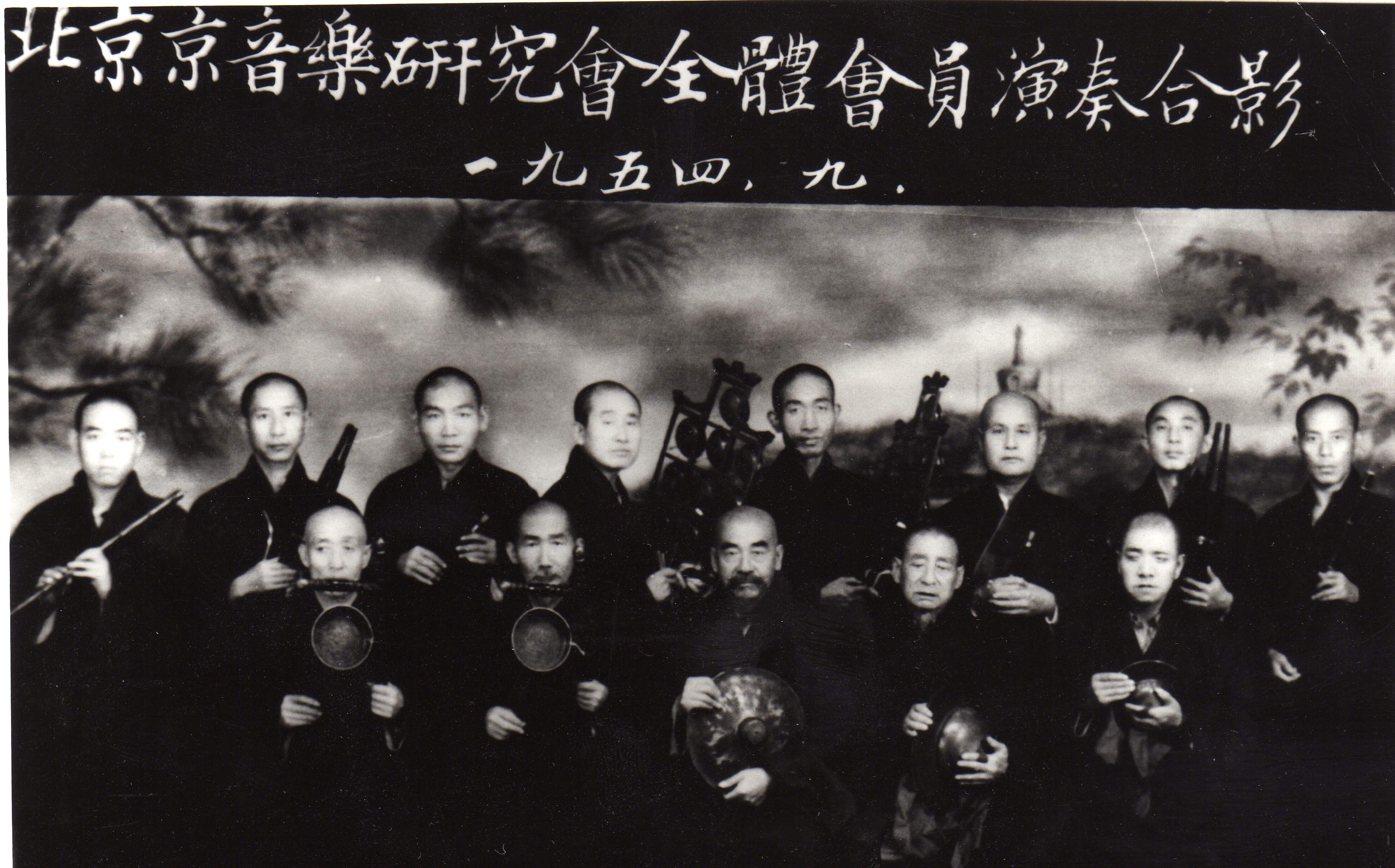

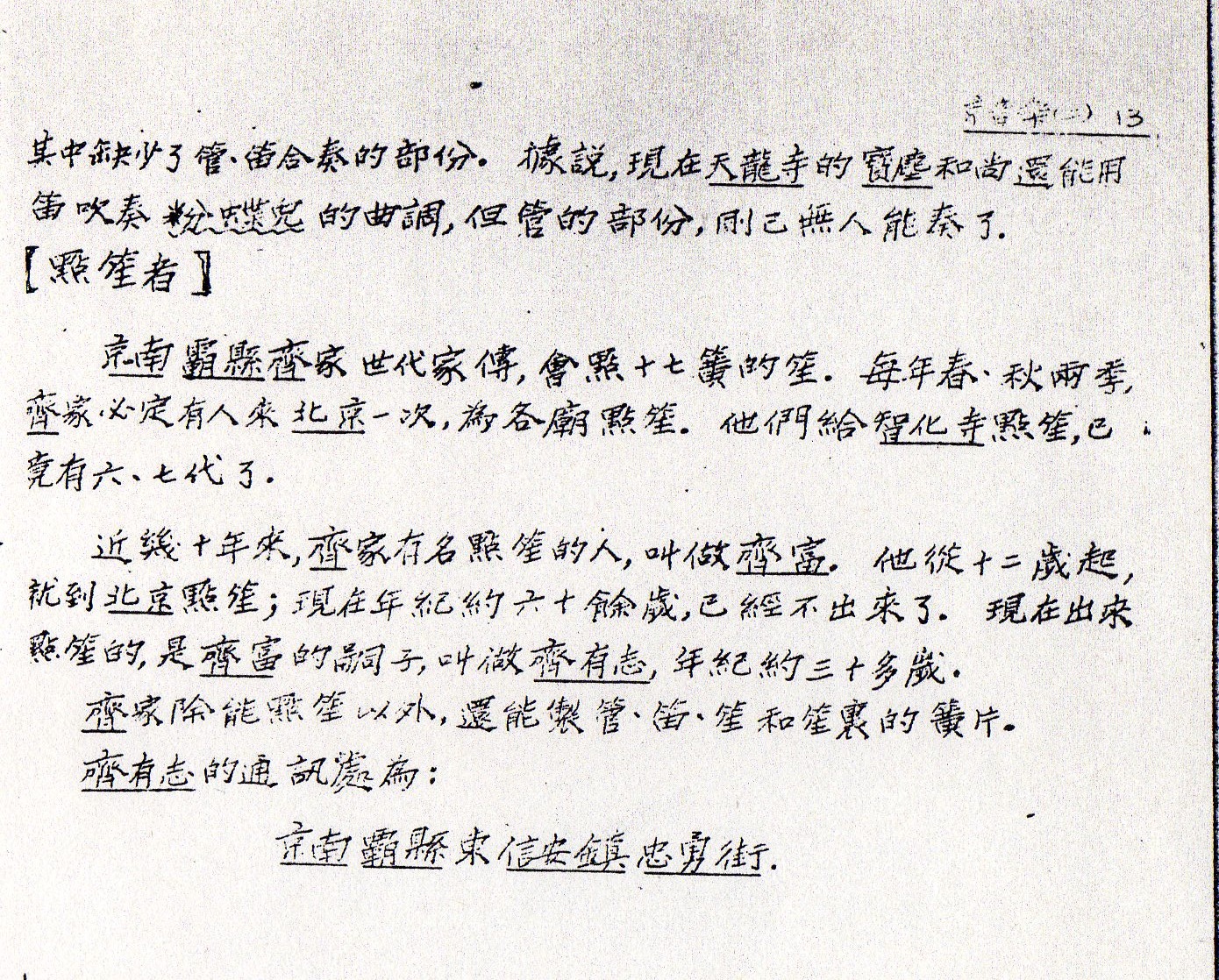


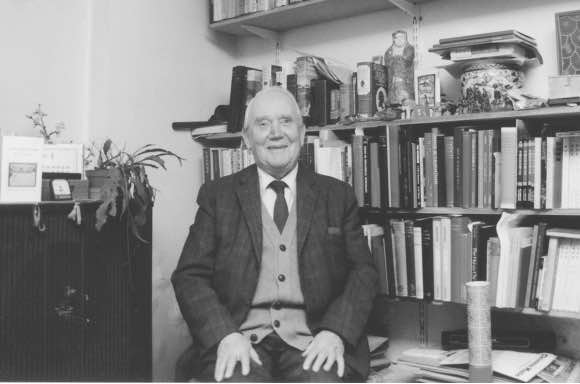

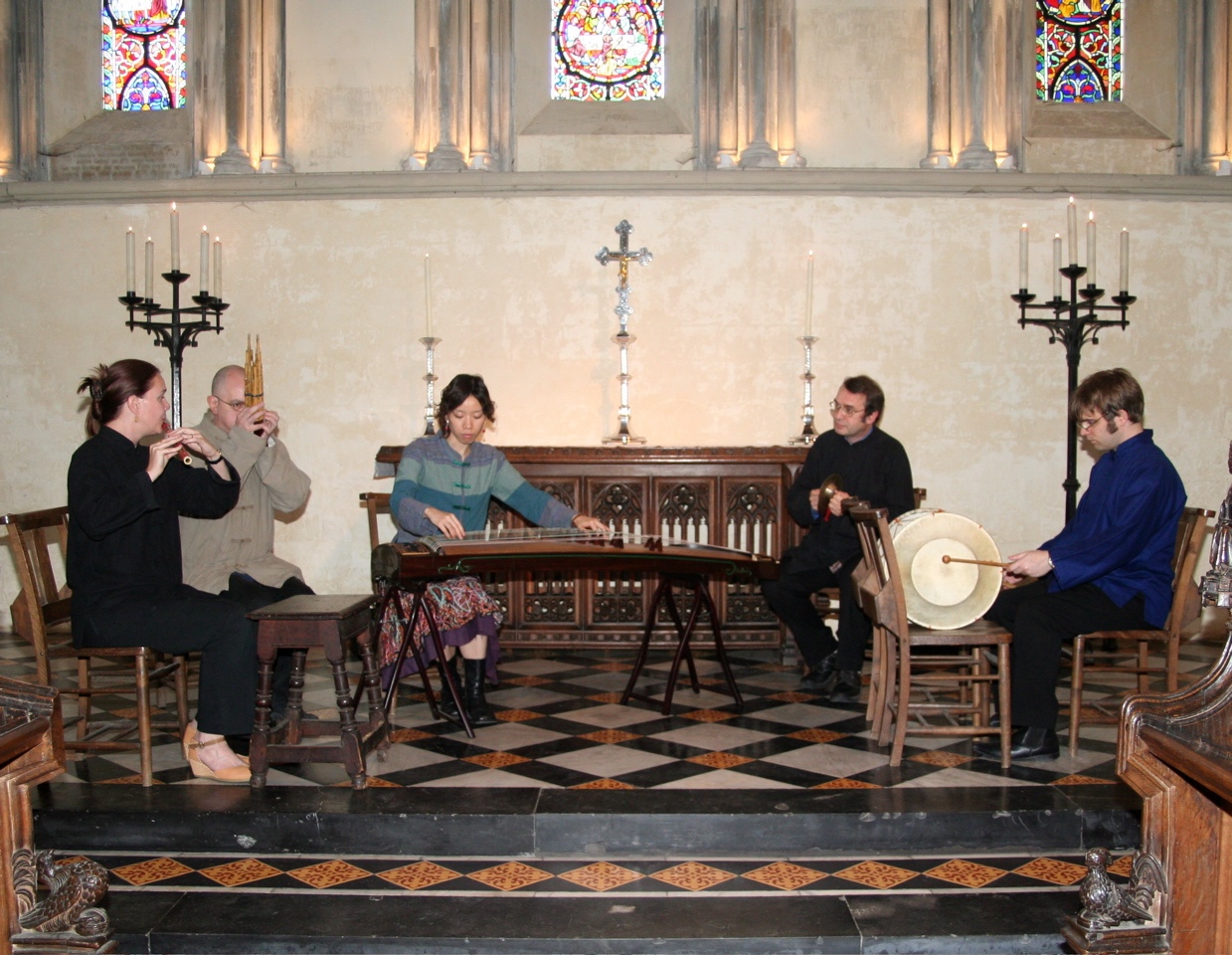
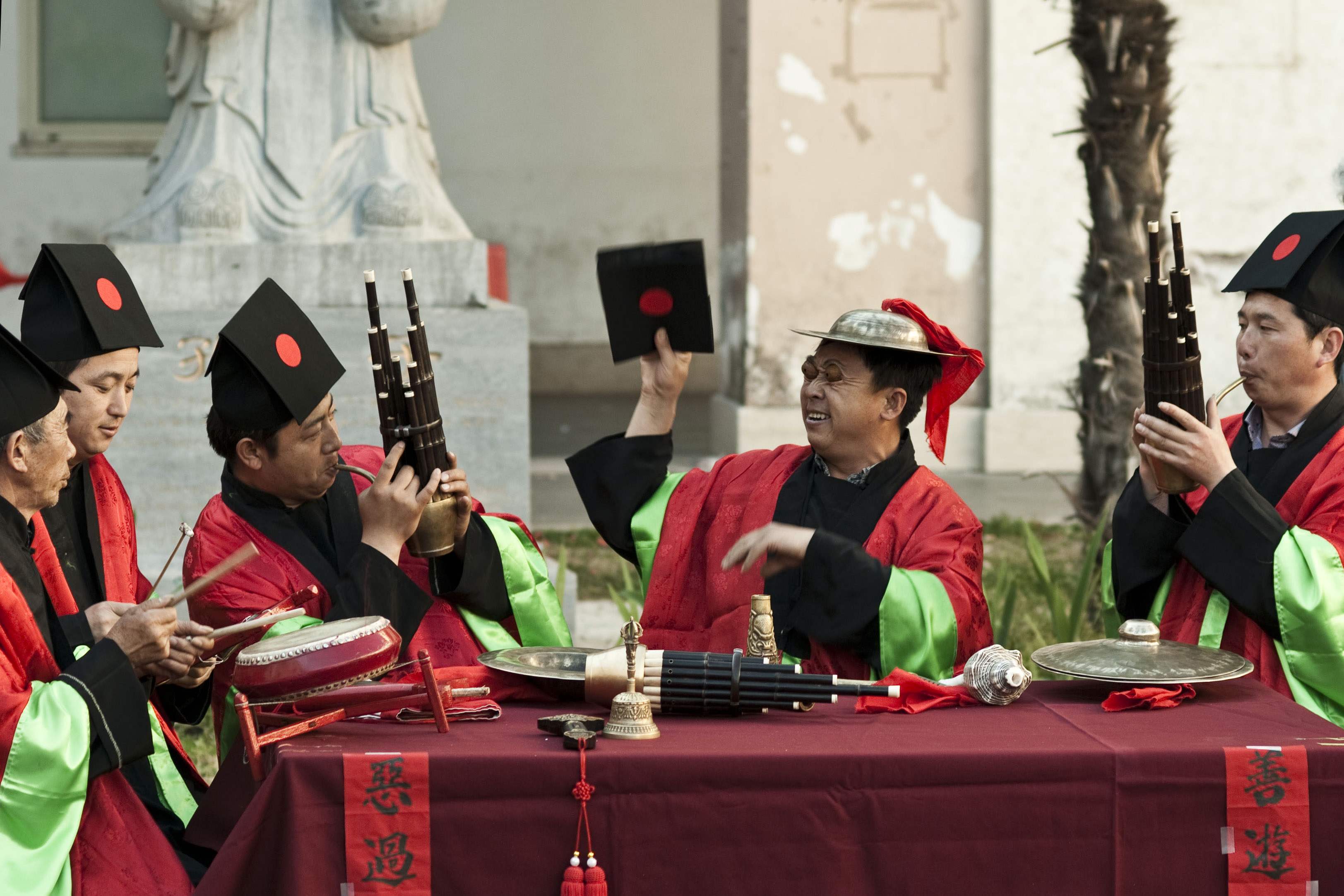

 Stephen Jones: a blog

